



Small to medium public high schools face unique challenges when it comes to celebrating student achievements. Limited budgets stretch thin across competing priorities. Small administrative teams juggle multiple responsibilities. Physical trophy cases overflow with no room for new accomplishments. Traditional recognition methods require constant manual updates that nobody has time to manage.
Meanwhile, these schools need recognition systems just as much as larger institutions—perhaps more so. Students deserve to see their accomplishments celebrated. Athletes, scholars, artists, and club members all contribute to school pride and deserve equal visibility. Parents and community members want to see their investment in local education producing results. Prospective families touring schools judge institutional quality partly by how schools honor student success.
Digital recognition platforms solve these challenges, but smaller schools often dismiss these solutions as “too expensive” or “too complex” for their needs. This assumption costs schools the exact benefits that would address their most pressing challenges: unlimited recognition capacity, minimal ongoing maintenance, professional presentation quality, and long-term cost savings compared to physical alternatives.
Small to medium public high schools represent the ideal use case for modern digital recognition technology. These institutions gain disproportionate benefits from platforms designed to maximize impact while minimizing administrative burden and cost. Here’s why solutions like Rocket Alumni Solutions work exceptionally well for schools with 400-1,200 students.

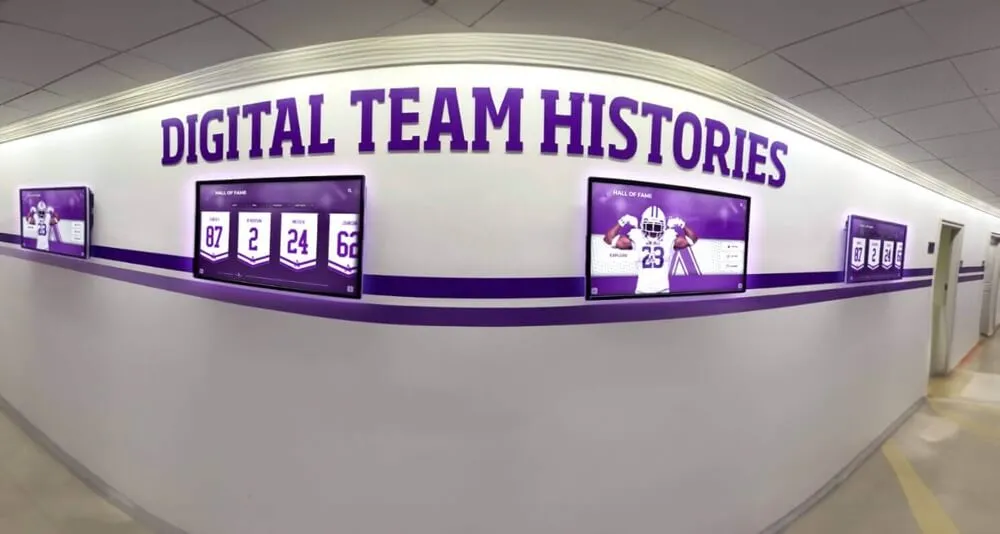
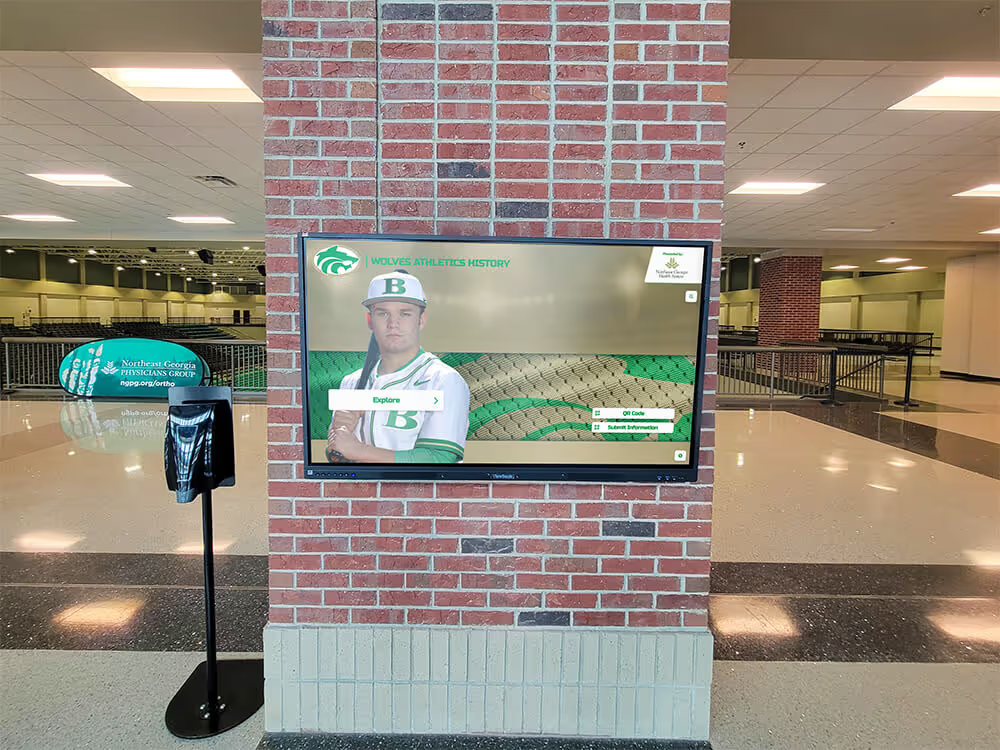
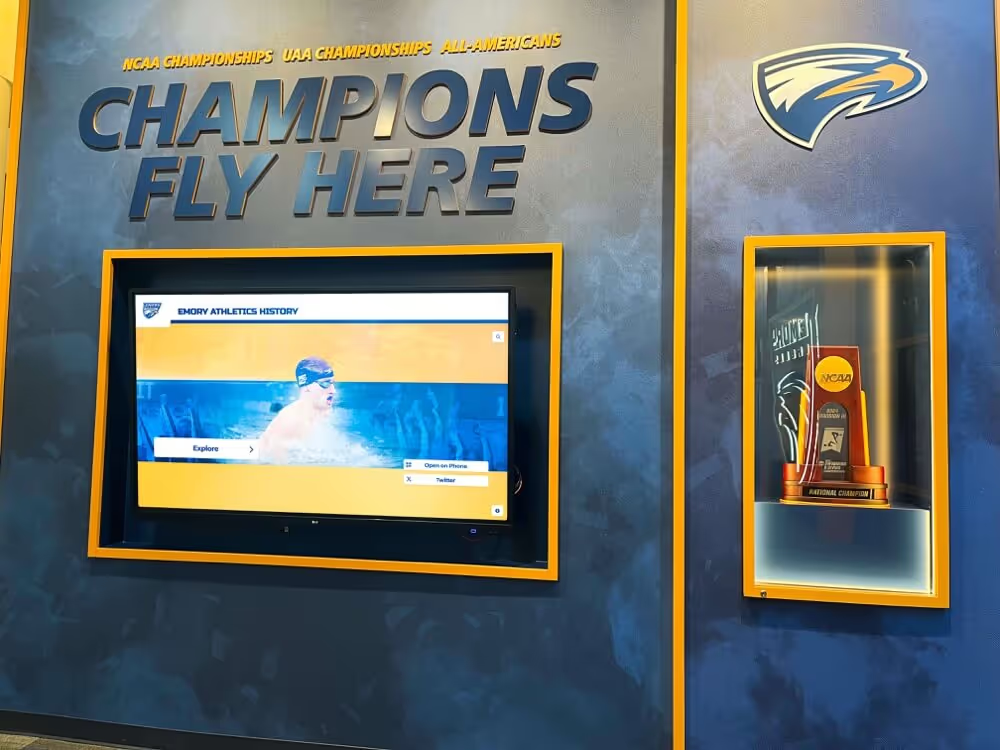
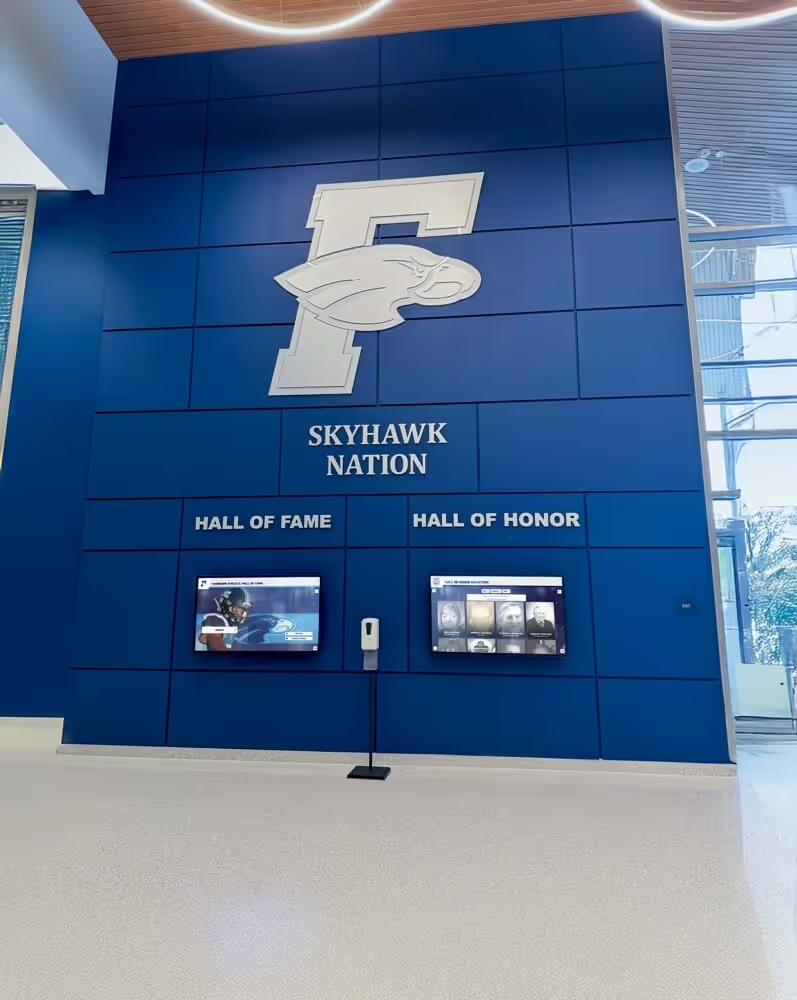
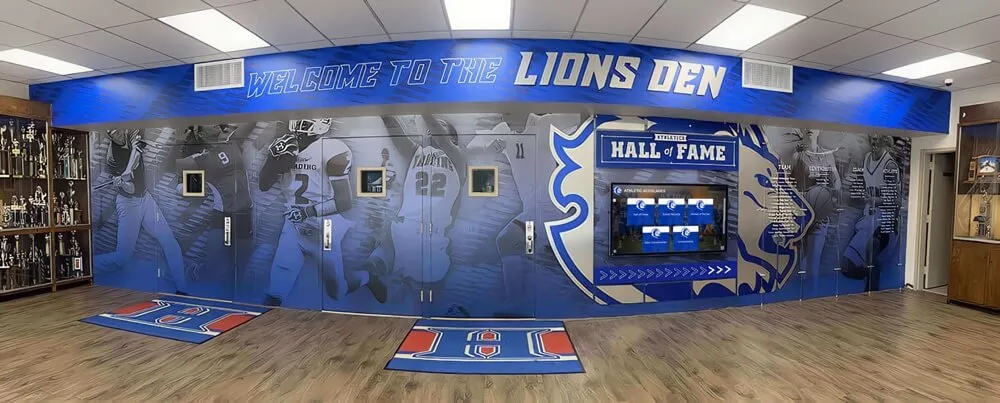
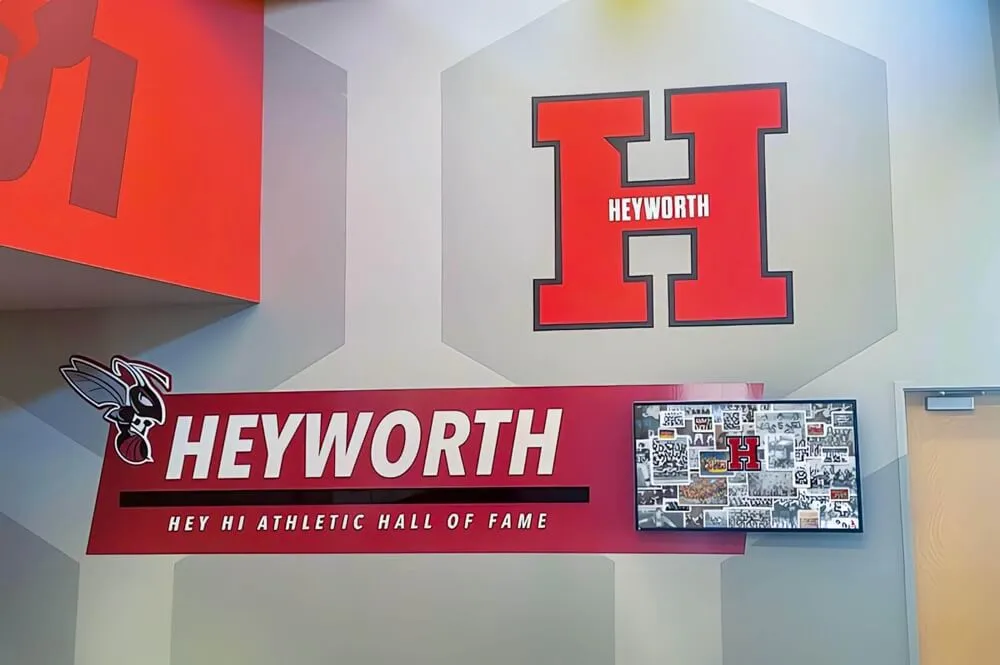
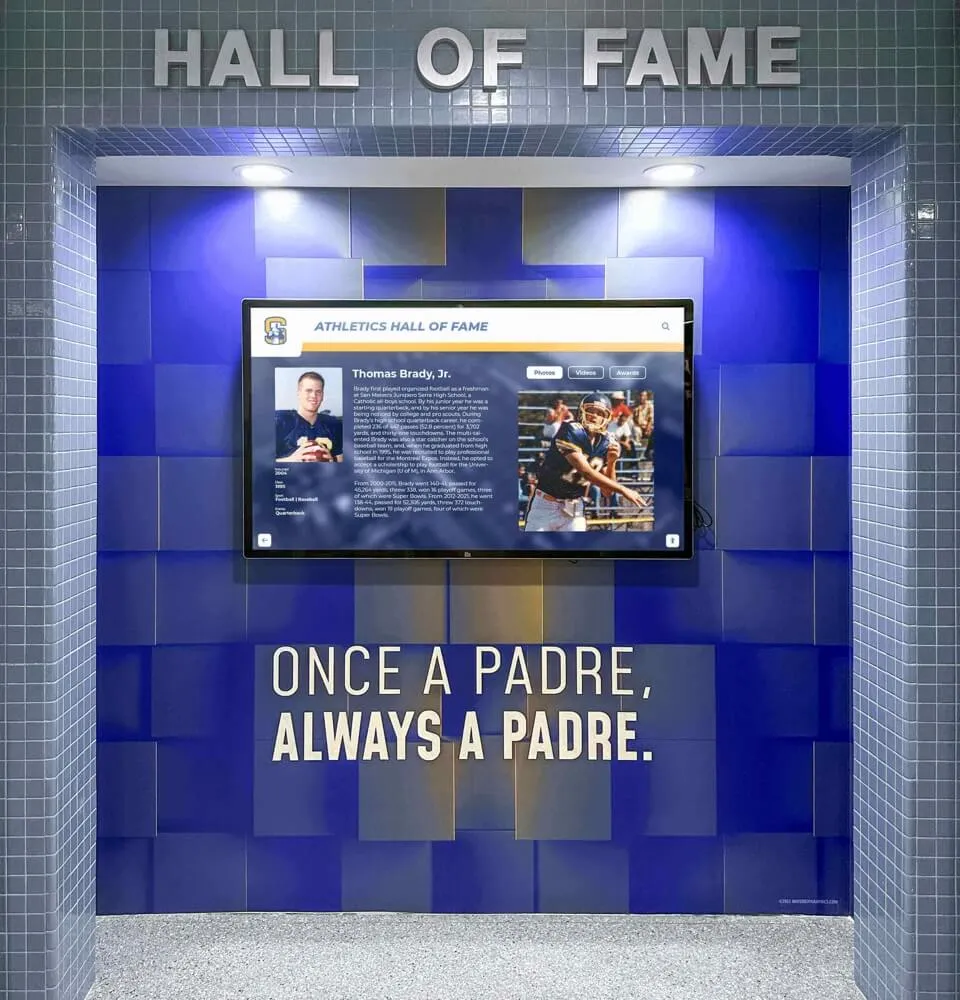
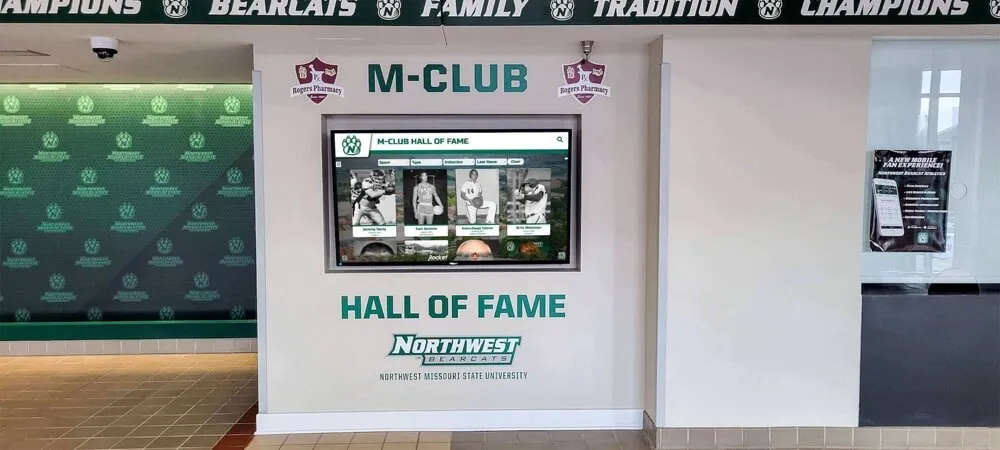
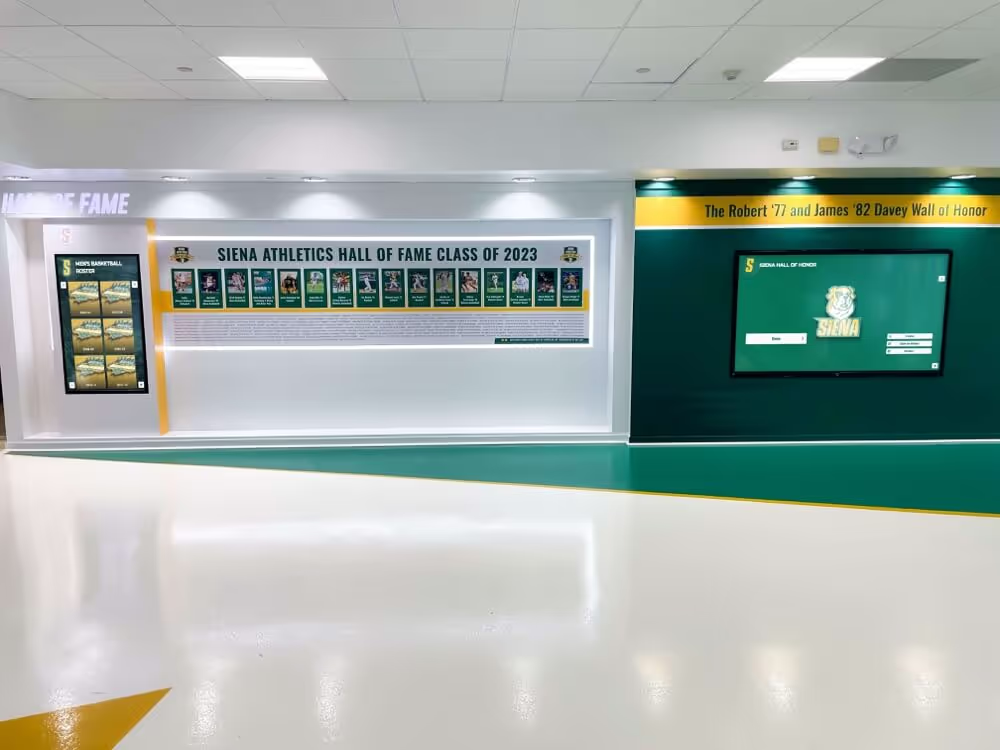
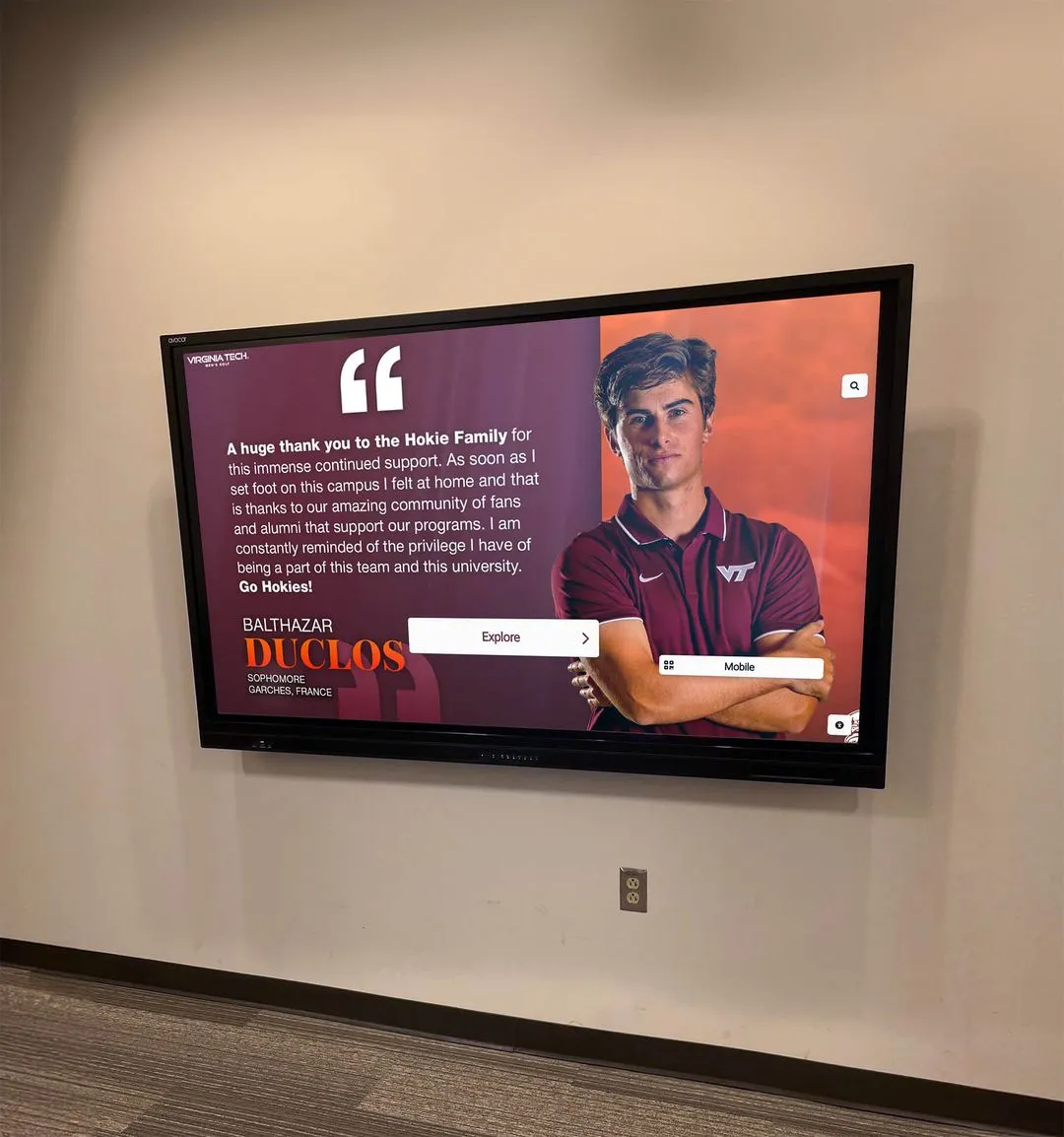
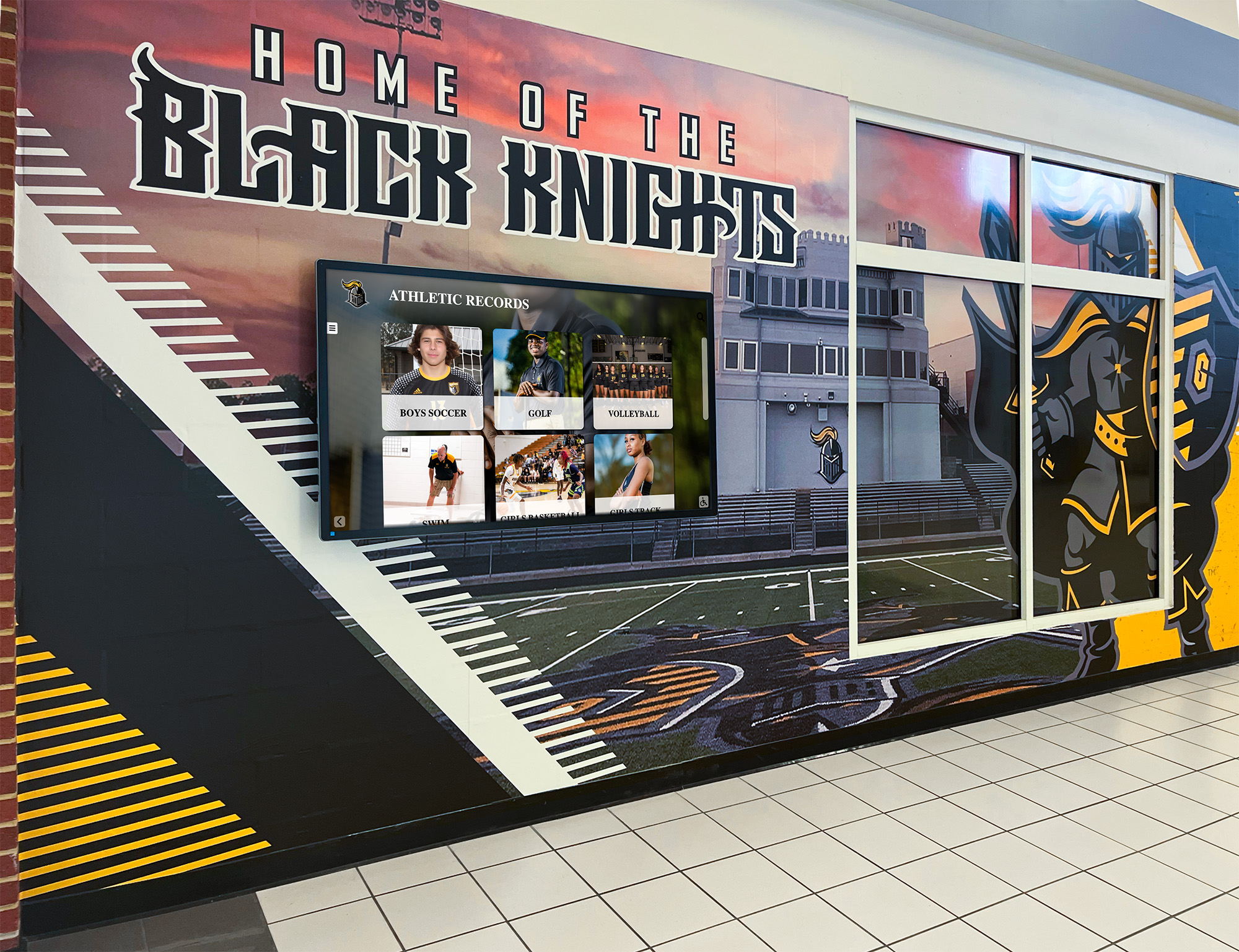
Small and medium high schools create professional recognition experiences rivaling larger institutions through digital displays
The Small to Medium Public High School Recognition Challenge
Before exploring solutions, understanding the specific challenges facing smaller public high schools helps contextualize why digital recognition addresses critical needs.
Budget Constraints and Competing Priorities
Small to medium public high schools typically operate with $7,000-$12,000 per student annual budgets—substantially less than larger suburban districts or private schools. Every expenditure faces scrutiny, with recognition often competing against athletics, academic programs, technology infrastructure, and facilities maintenance.
Traditional recognition approaches carry hidden costs:
- Physical trophy cases require carpenter installation, glass replacement, lighting, and periodic refinishing
- Engraved plaques cost $75-$300 each with 6-8 week production timelines
- Banner printing runs $150-$400 per banner with annual replacement needs
- Wooden name boards require professional installation and filling space constraints
- Gym banners fade, fray, and eventually need costly replacement
These recurring expenses accumulate over decades, yet budget discussions typically focus only on initial purchase prices rather than total ownership costs.
Limited Administrative Capacity
Smaller schools typically employ 2-4 administrative staff covering all non-teaching responsibilities: principal, assistant principal, athletic director, and perhaps a counselor or activities coordinator. These individuals already juggle:
- Student discipline and attendance management
- Teacher evaluation and professional development
- Parent communication and community relations
- Budget administration and facilities oversight
- Athletic scheduling and event coordination
- Curriculum planning and assessment management
Adding recognition updates to already overwhelming responsibilities means updates often get delayed or forgotten entirely. Trophy cases stagnate. Honor roll lists remain outdated. Championship banners never get hung. Students who earned recognition months ago see nothing acknowledging their accomplishments.
Space Limitations
Physical buildings built decades ago allocated specific areas for recognition: a trophy case near the main entrance, perhaps hallway display cases, gym wall space for championship banners. Once filled, these spaces create impossible decisions.
Which trophies get removed to make room for new ones? How do you honor this year’s state champion when the trophy case already overflows? Where do academic achievements get displayed when athletic accomplishments consume all available space? How do you recognize the theater program, robotics team, debate squad, and service clubs when only athletics has dedicated recognition areas?
These spatial constraints force schools to choose between equally deserving students and programs—choices that damage morale and community pride.
Staff Turnover and Institutional Memory
Smaller schools experience higher staff turnover as teachers and administrators use them as stepping stones to larger districts offering higher salaries. When the athletic director who maintained the trophy case leaves, or when the activities coordinator who updated honor roll displays retires, their successors inherit systems without documentation or training.
Recognition maintenance stops. Historical information gets lost. Nobody remembers which alumni earned specific honors or where certain achievements get recorded. Institutional memory disappears with departing personnel.
Digital recognition systems with cloud-based content management preserve this information permanently, accessible to anyone with proper credentials regardless of staff changes.

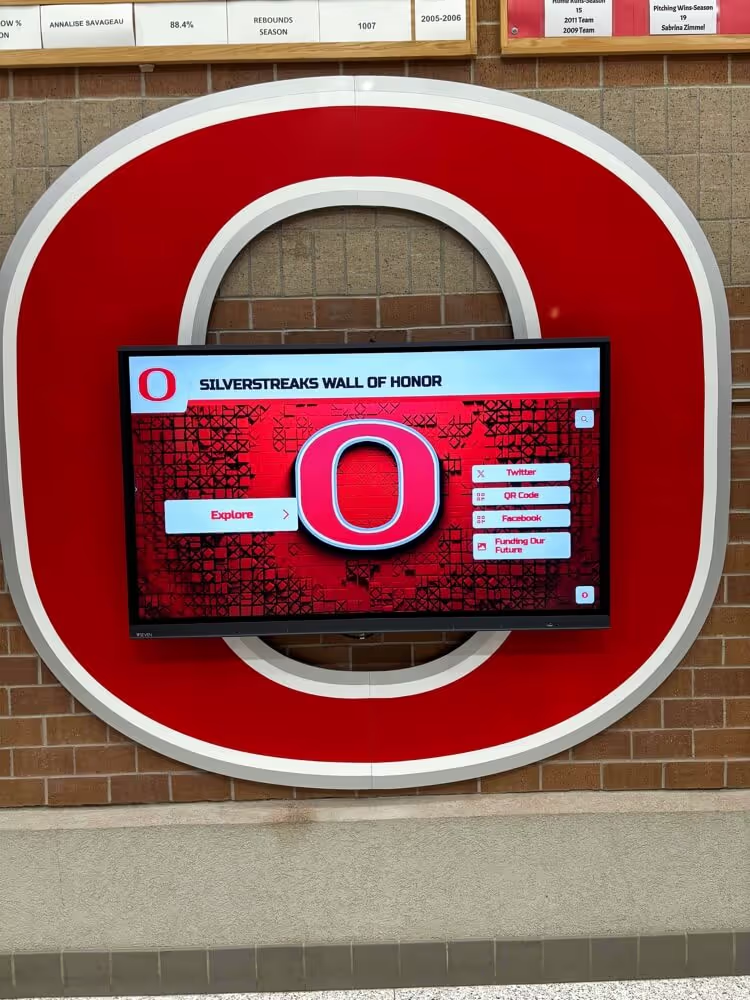
Traditional recognition displays require physical space, manual updates, and ongoing maintenance resources
Why Digital Recognition Platforms Work for Smaller Schools
Understanding these challenges reveals why digital recognition specifically addresses small to medium public high school needs better than traditional alternatives.
Affordable Entry Points with Long-Term Value
Modern digital recognition platforms offer pricing structures specifically designed for smaller institutions. Rather than requiring enormous upfront investments, schools can implement professional recognition displays starting around $3,000-$5,000 for hardware and initial setup, with flexible subscription options accommodating different budget cycles.
This compares favorably to traditional recognition costs over time:
Traditional Trophy Case Over 10 Years
- Custom trophy case with installation: $8,000-$15,000
- Annual engraved plaques (20 per year at $100 each): $20,000
- Trophy replacements and repairs: $2,000-$3,000
- Glass replacement and cleaning: $1,500-$2,500
- Total 10-year cost: $31,500-$40,500
Digital Recognition Platform Over 10 Years
- Initial hardware and setup: $4,000-$6,000
- Annual subscription (varies by provider): $1,500-$3,000 per year
- Minimal maintenance (software updates included): $0
- Unlimited recognition additions: $0
- Total 10-year cost: $19,000-$36,000
The digital approach costs less while providing unlimited capacity, instant updates, and professional presentation quality impossible with physical alternatives.
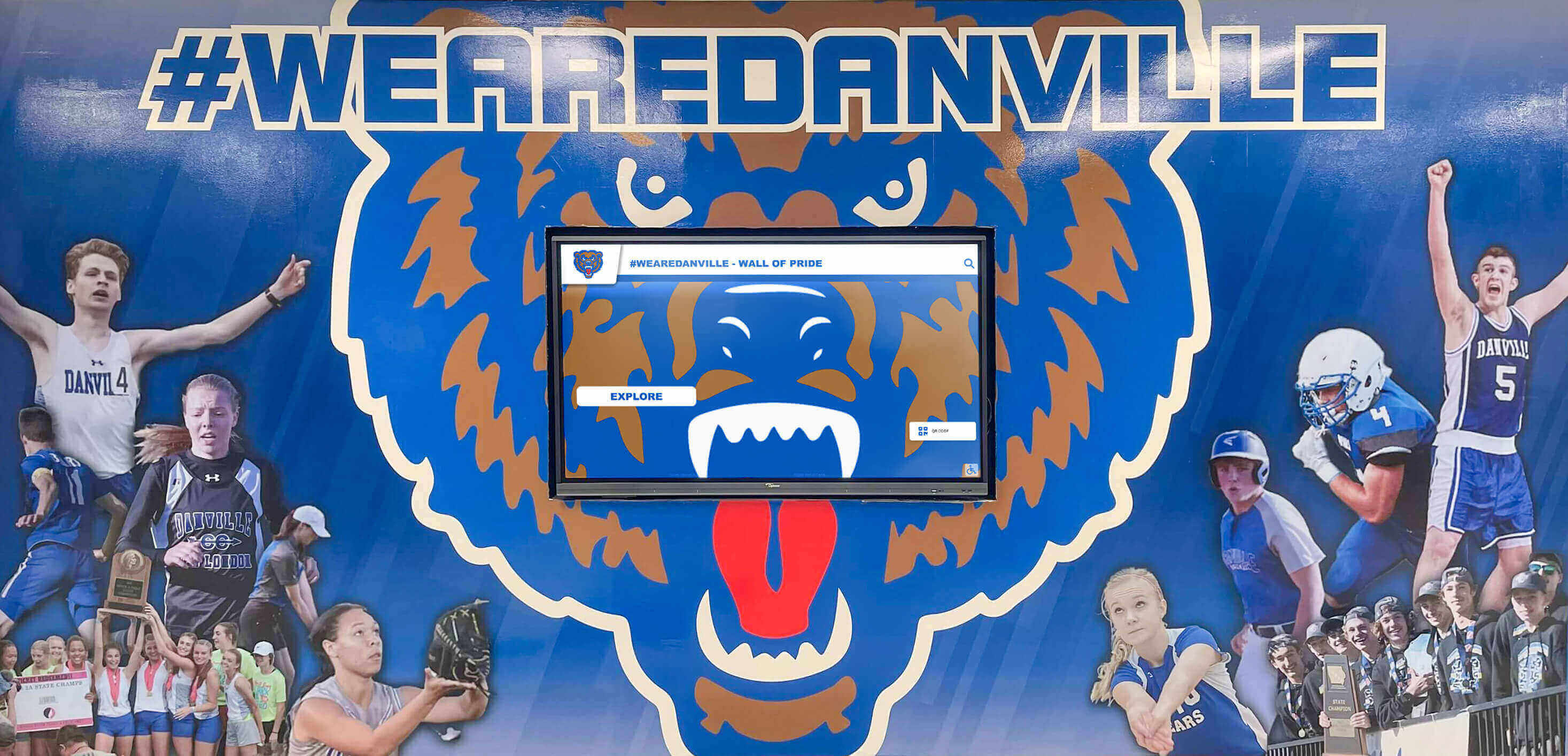
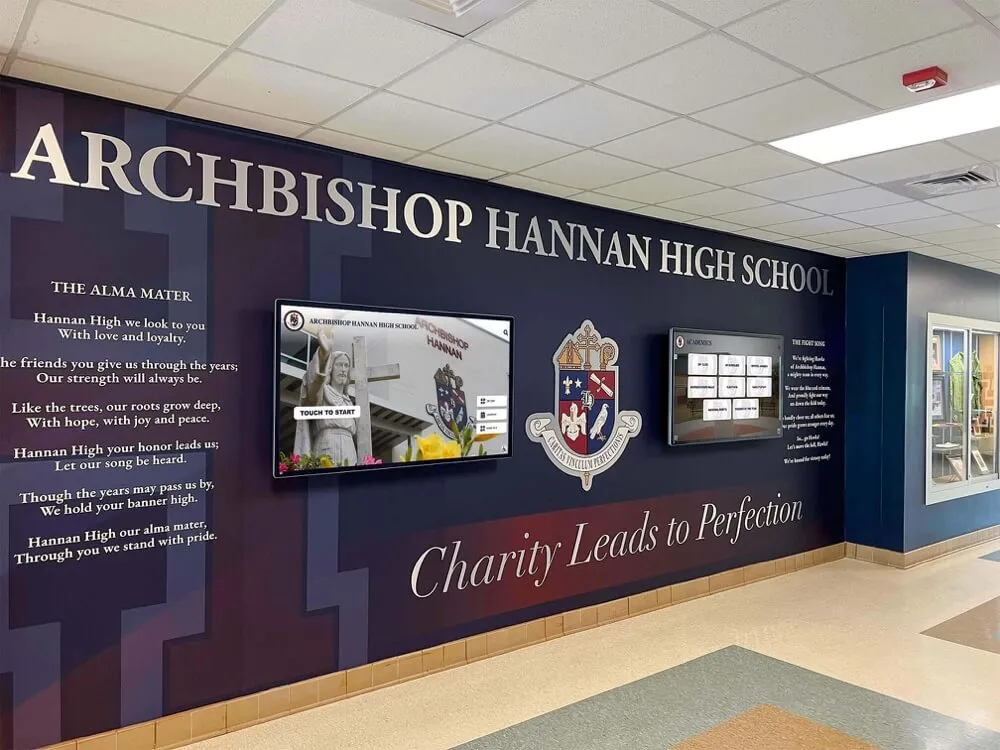
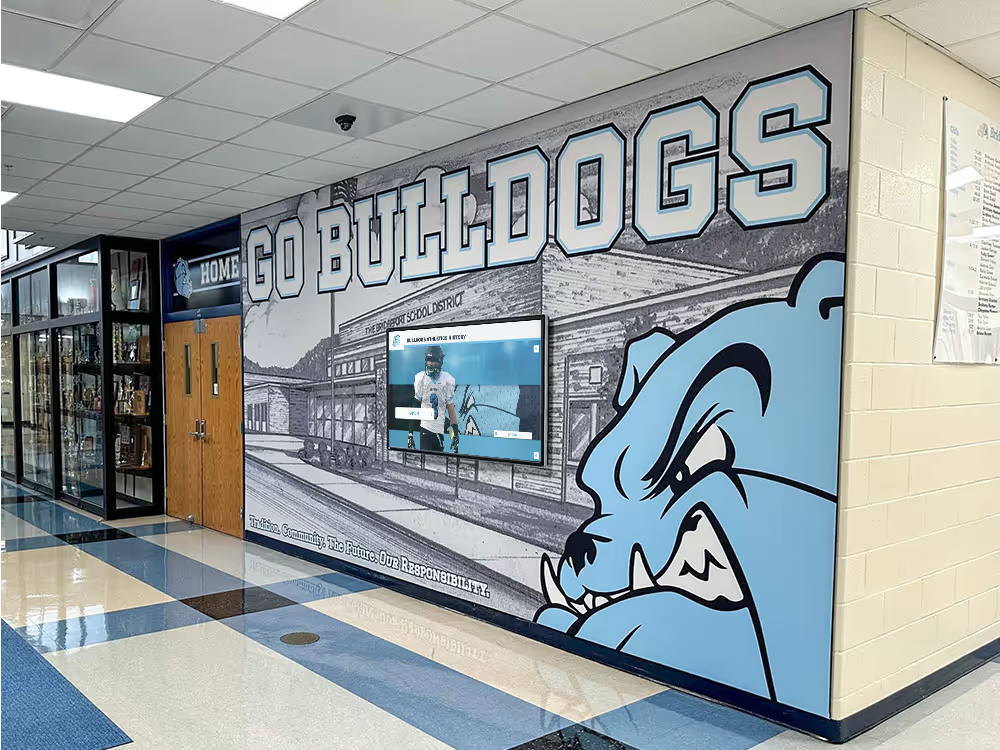
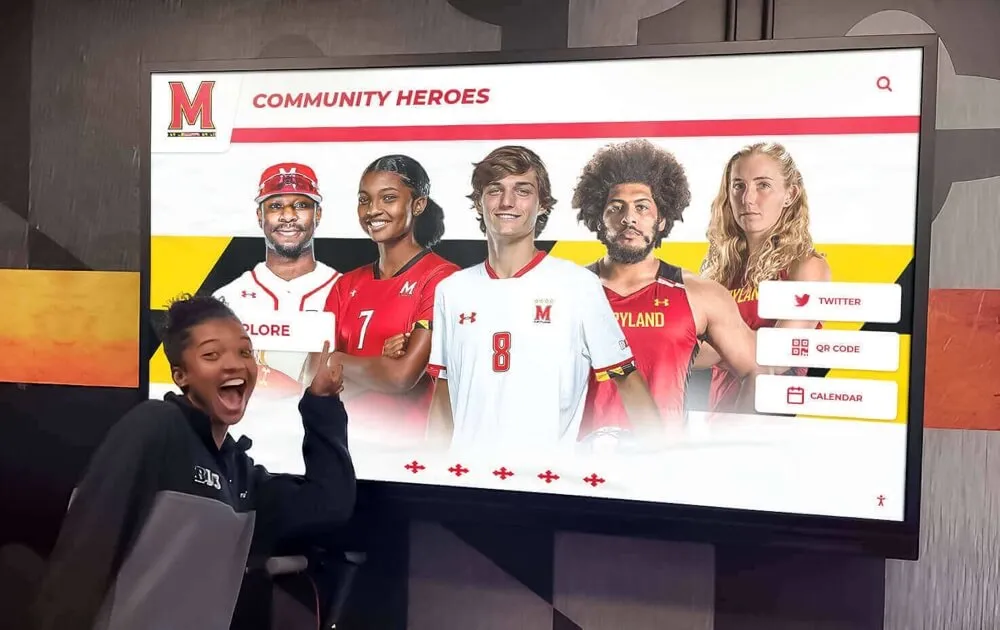
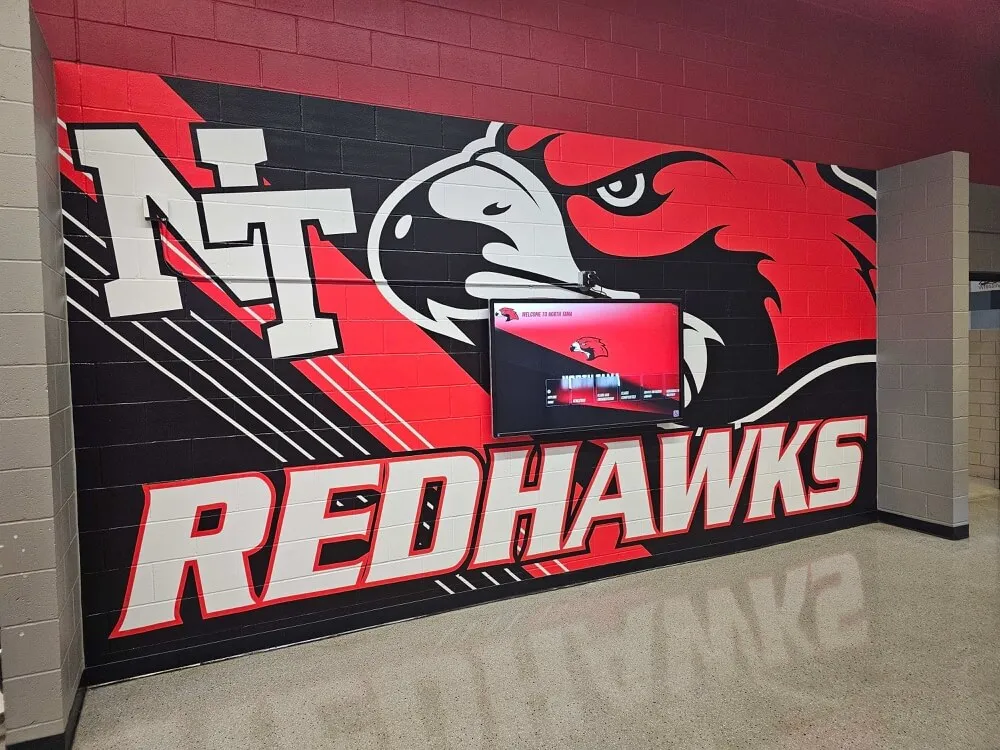
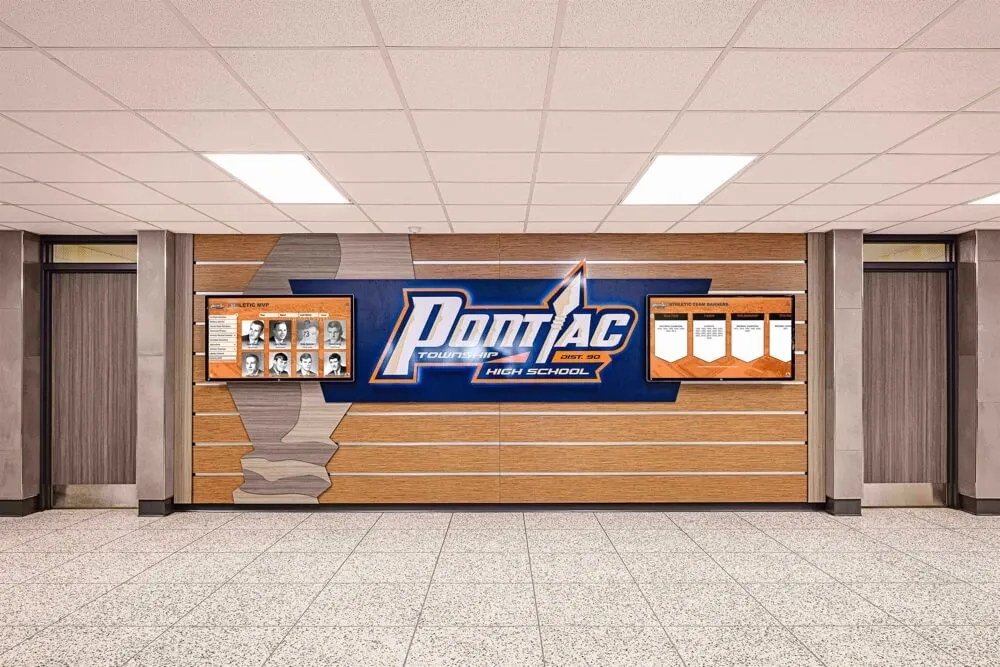
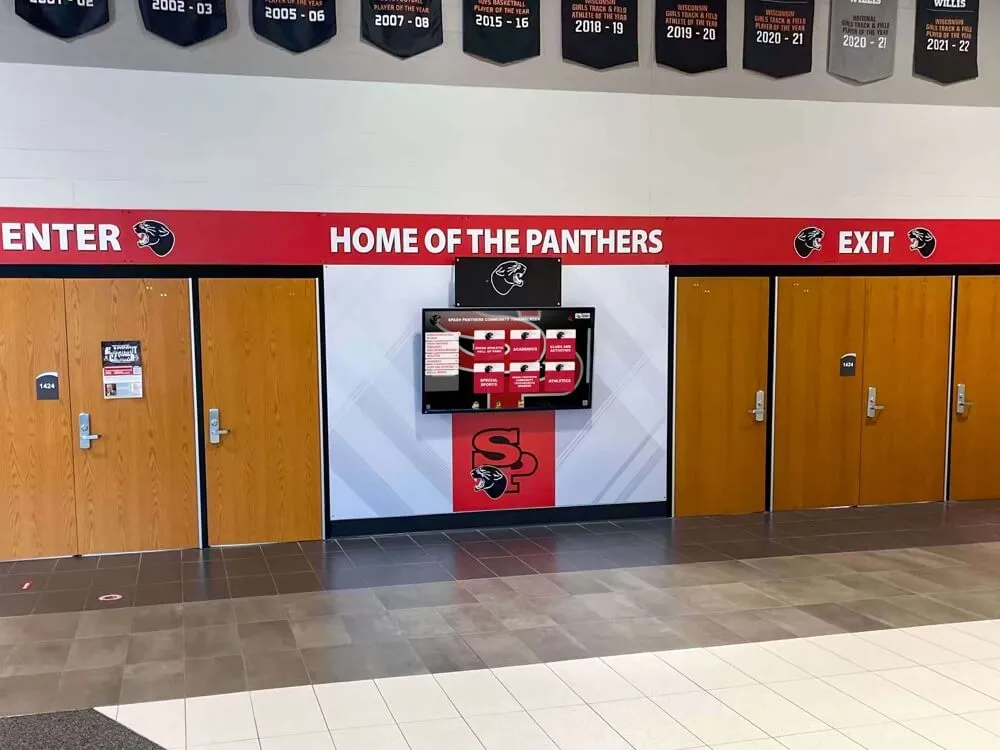
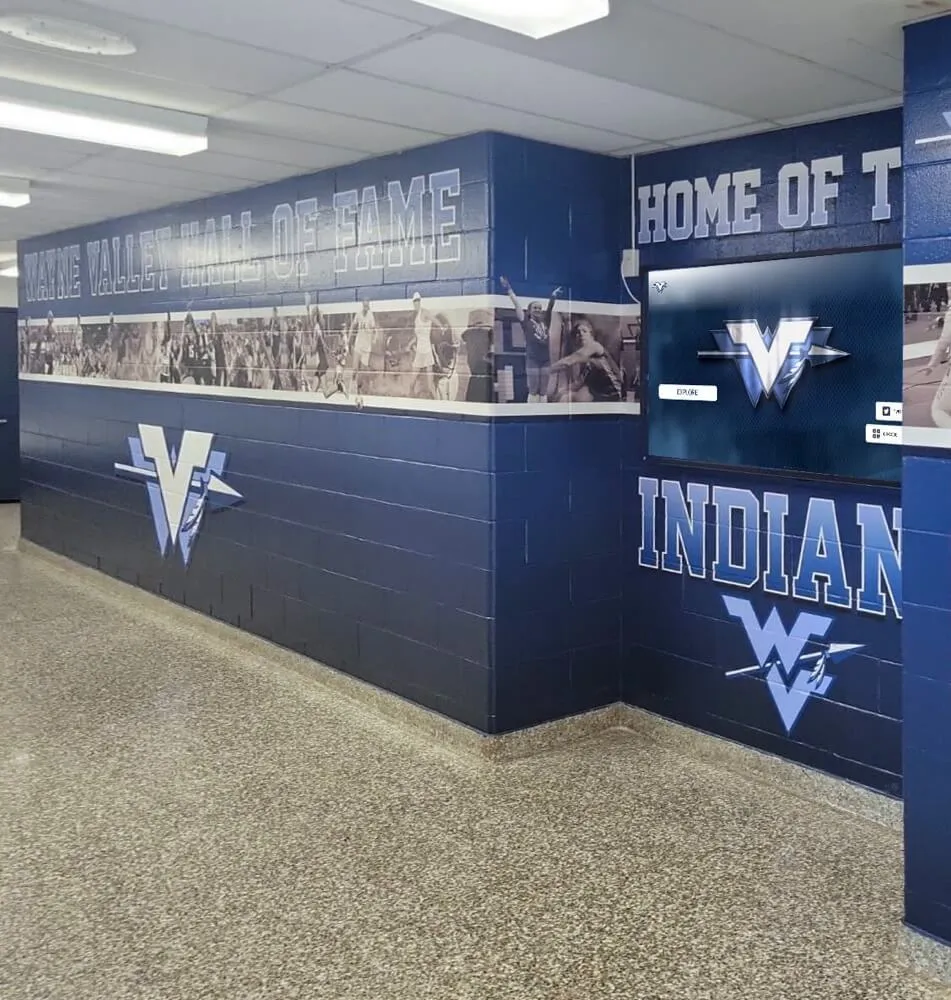
Digital displays integrate seamlessly with existing hallway murals and school branding while providing modern recognition capacity
Minimal Administrative Burden
The “complex technology” concern that keeps smaller schools from exploring digital recognition proves unfounded when examining actual implementation. Modern recognition platforms prioritize ease of use specifically because they serve schools with limited IT resources.
Cloud-Based Content Management
Recognition updates happen through web-based interfaces accessible from any device with internet connection. Athletic directors update championship rosters from home. Counselors add honor roll students from their office computers. Activities coordinators upload club achievements from tablets. No specialized software installation required. No IT department involvement needed for routine updates.
The platform handles all technical complexity behind the scenes: automatic image optimization, responsive layout adjustment, database management, backup scheduling, and security updates. School staff simply add content through straightforward interfaces similar to social media platforms they already use daily.
Scheduled Publishing and Automation
Rather than requiring someone to remember to update displays at specific times, digital platforms allow scheduling content in advance. Add next semester’s honor roll format in advance, schedule it to appear automatically on the appropriate date, and move on to other tasks. The system handles publication without human intervention.
This automation proves especially valuable for smaller schools where one person often manages multiple recognition responsibilities. Schedule the fall sports championship updates in November, winter recognition in February, spring achievements in May, and graduation honors in June—all during a single planning session.
Template-Based Consistency
Physical recognition requires design decisions for every addition: layout, typography, spacing, materials, mounting. Digital platforms provide professional templates ensuring visual consistency without design expertise. Select a format, enter information, and the system generates professional presentations automatically.
This consistency becomes especially important for schools recognizing diverse achievements across athletics, academics, arts, and activities. Every category receives equally professional presentation rather than varying quality based on who created each recognition piece.
Unlimited Recognition Capacity
Perhaps the most significant advantage for smaller schools is unlimited capacity. Physical limitations disappear entirely with digital platforms.
Every Achievement Gets Celebrated
Small schools often face impossible choices: recognize only varsity athletics, or somehow make room for JV teams? Honor top academic performers while excluding students who made significant improvement? Celebrate state championships while ignoring conference titles and personal records?
Digital recognition eliminates these forced choices. Recognize all achievements:
- Varsity and JV athletics equally
- Individual and team accomplishments
- Academic honors at all GPA levels
- Arts performances and exhibitions
- Club leadership and participation
- Community service contributions
- Athletic records and milestones
- Scholarship recipients
- Perfect attendance
- Character awards
Space constraints no longer force schools to value some achievements over others or create hierarchies of recognition. Every student who earns acknowledgment receives proper celebration.
Historical Preservation
Small schools have rich traditions, but limited physical space means older recognition often gets removed to make room for recent achievements. This creates unfortunate situations where the 1987 state championship gets displaced because the trophy case needs space for 2025 accomplishments.
Digital recognition platforms preserve everything permanently. Current students see their recent achievements alongside historical accomplishments from decades past. Alumni returning for class reunions find their achievements still celebrated. Prospective families touring facilities see comprehensive institutional history demonstrating sustained excellence.
This complete historical record becomes a powerful recruitment tool, showing families that the school honors students consistently across generations rather than forgetting them once trophy cases overflow.
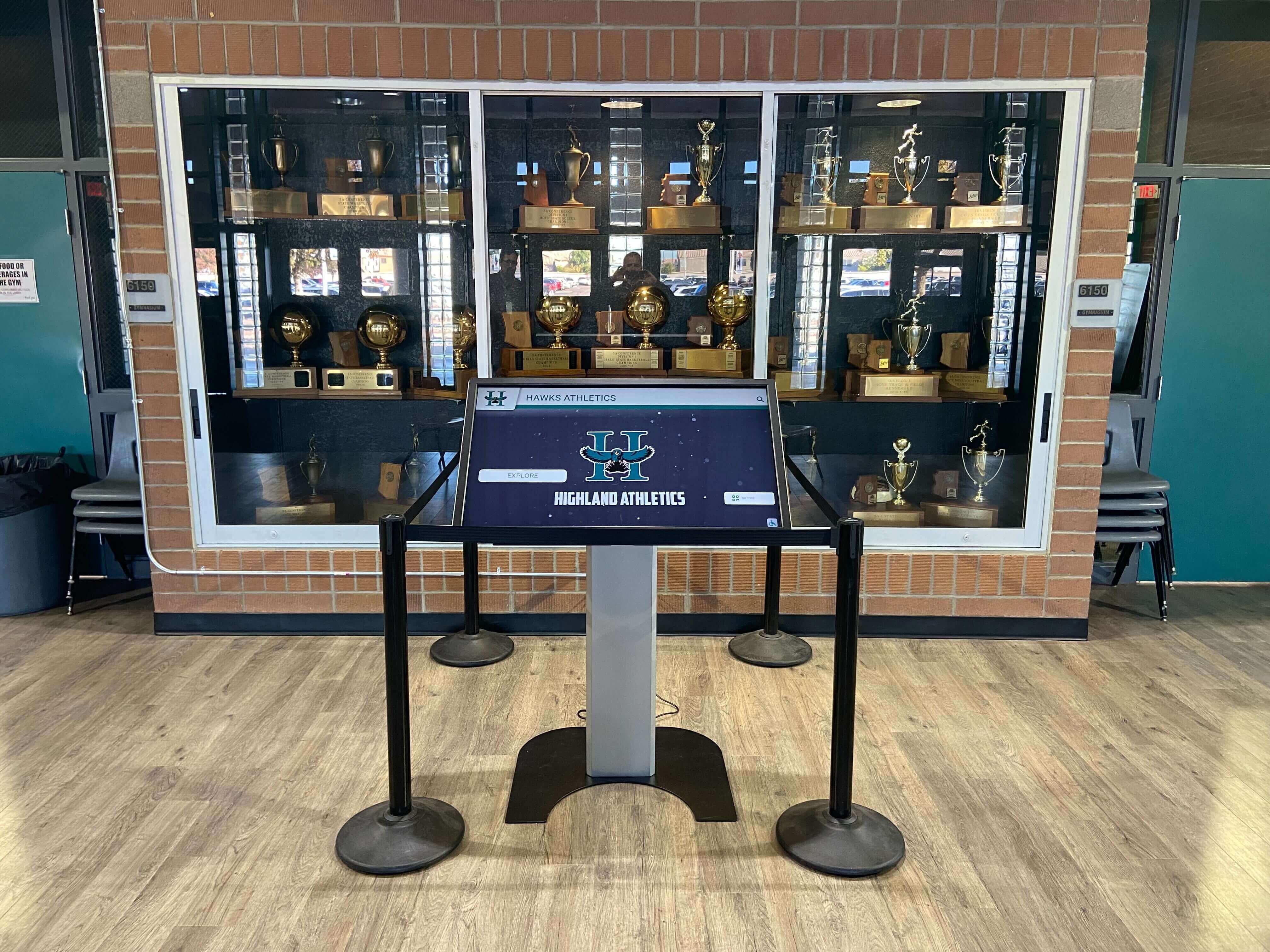
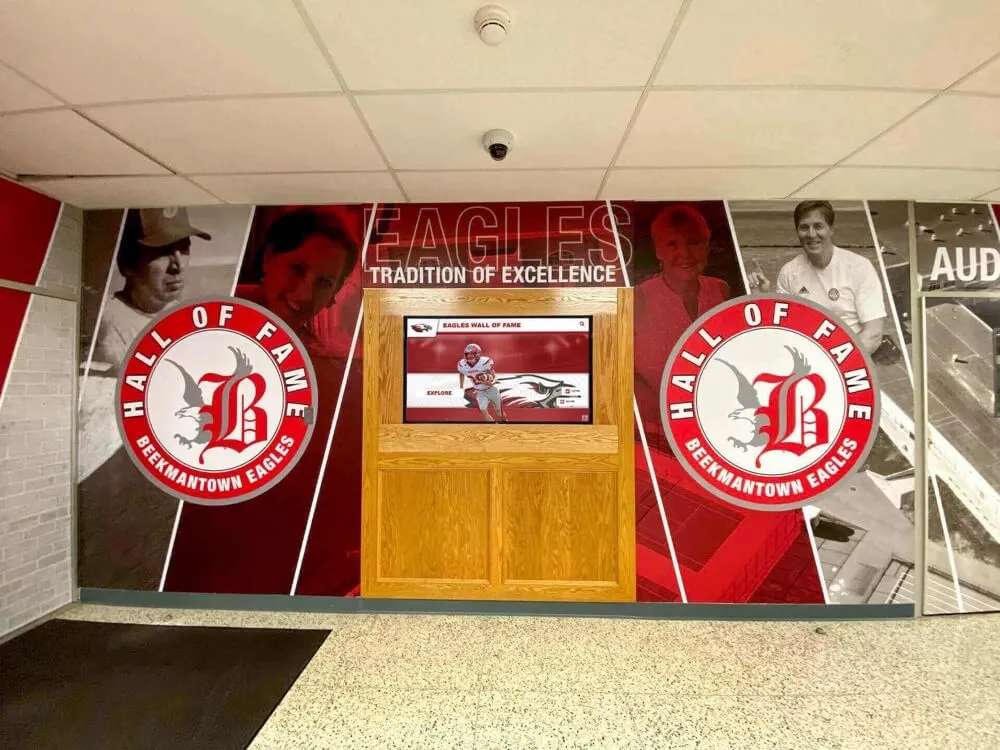
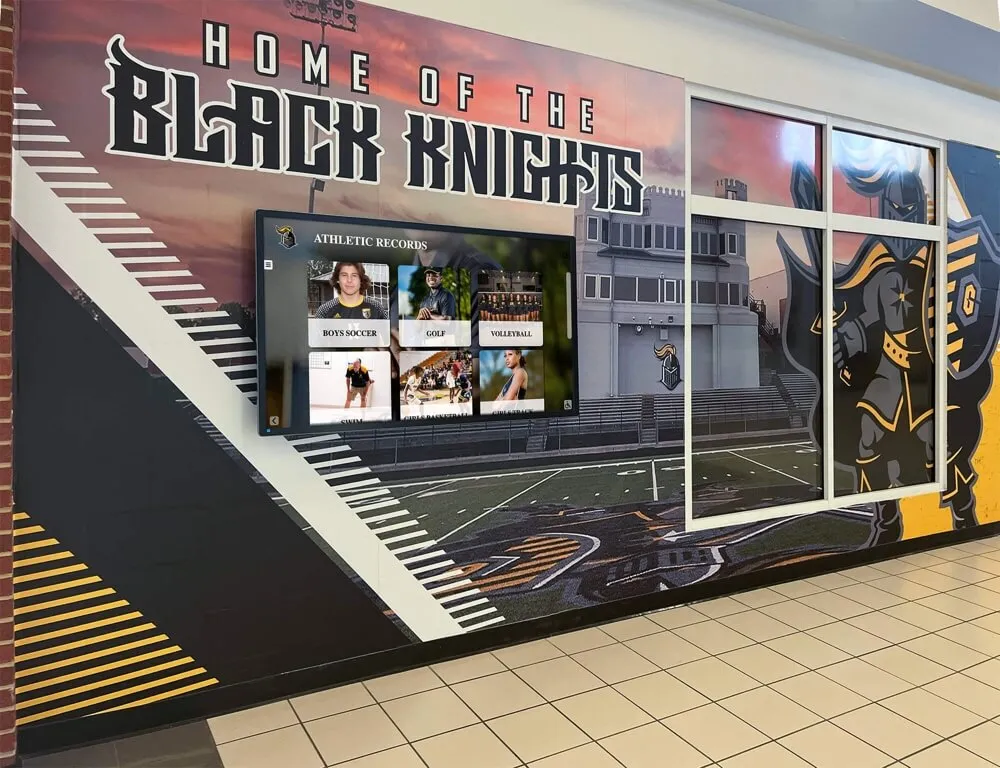
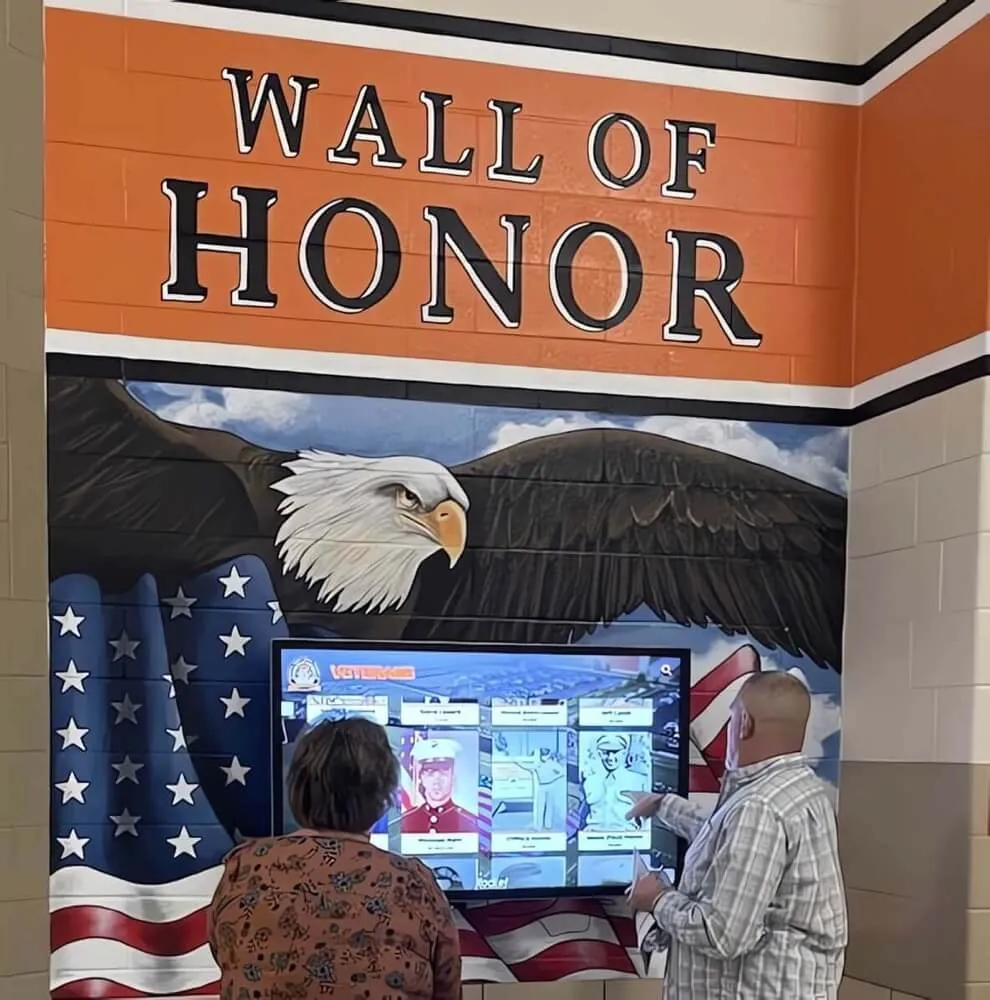
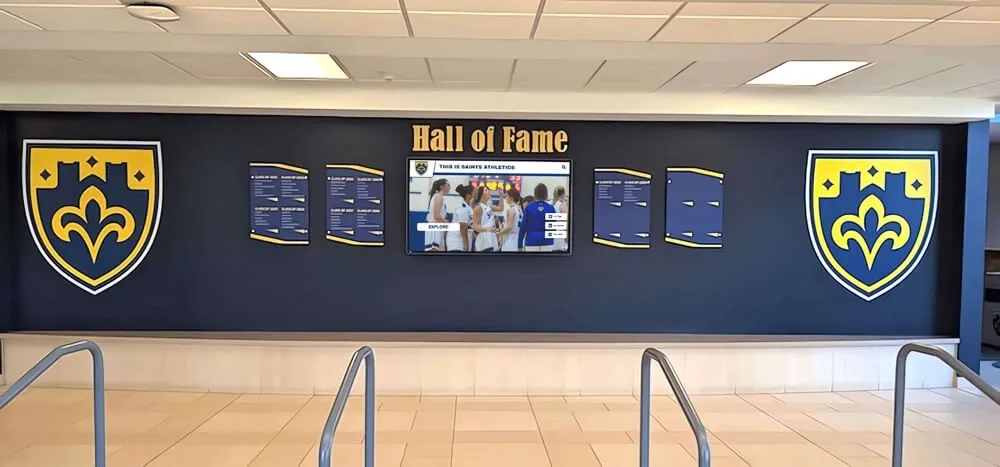
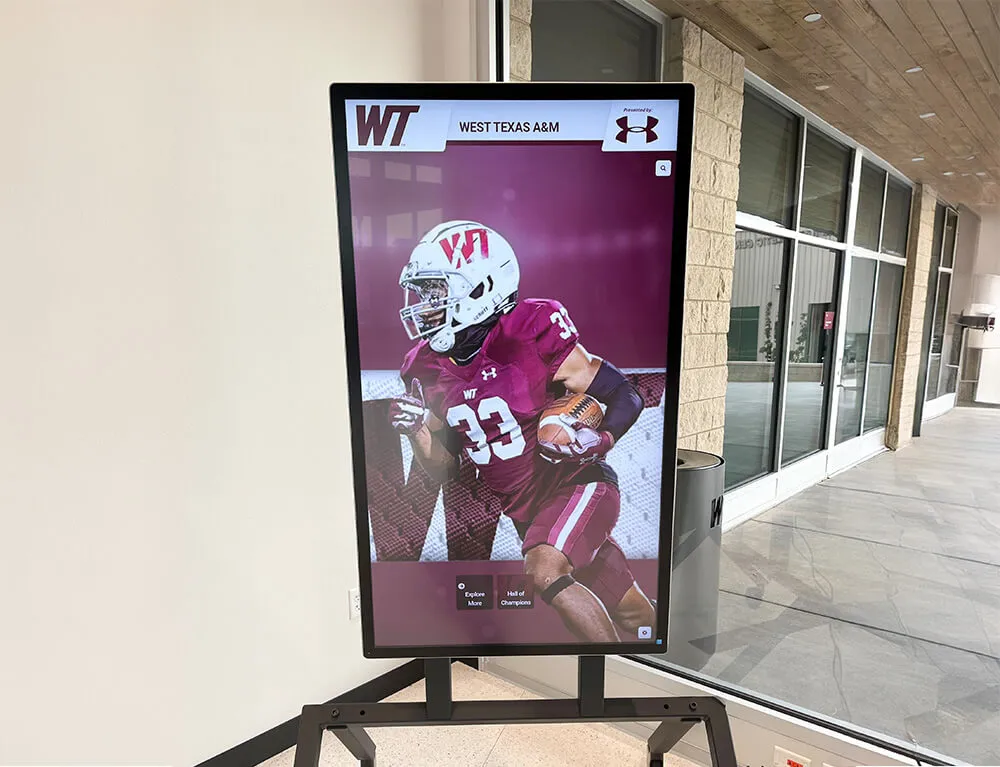
Modern touchscreen displays complement existing trophy cases while providing unlimited additional recognition capacity
Professional Presentation Quality
Smaller schools sometimes struggle to create recognition that looks as polished as what larger, wealthier districts produce. Physical recognition quality depends heavily on budget: expensive engraving and custom fabrication look impressive, while budget alternatives often appear amateurish.
Digital platforms equalize presentation quality. A small rural high school with 500 students can produce recognition displays as visually impressive as wealthy suburban schools with 3,000 students. The technology makes no distinction based on school size or budget—everyone accesses the same professional design capabilities.
This quality matters for multiple audiences. Current students see their school investing in their recognition, building pride and motivation. Parents see professional presentation suggesting institutional excellence. Community members viewing displays at events judge school quality partly by recognition quality. Prospective families touring schools compare recognition standards across multiple institutions.
Specific Applications Perfect for Small to Medium Schools
Understanding how smaller schools actually use digital recognition reveals practical applications addressing real needs.
Athletic Recognition Across All Levels
Small schools typically field teams across 15-20 sports with varsity and junior varsity levels. Traditional trophy cases force impossible choices about which teams and athletes get recognized.
Digital platforms display comprehensive athletic recognition:
Team Championships and Records
- Varsity conference and state championships
- JV conference championships
- Tournament results and playoff appearances
- Season records and winning streaks
- Historical championship years across decades
Individual Athletic Achievements
- All-conference and all-state selections across all sports
- School records in every track and field event, swimming stroke, and measurable performance category
- 1,000-point scorers in basketball
- Career statistical leaders in all sports
- Individual state qualifiers even without team advancement
- Athletic scholarship recipients
Season Recognition
- Roster photos for every team
- Season schedules and results
- Coaching staff acknowledgment
- Team captains and letter winners
- Special awards and honors
This comprehensive recognition addresses a specific small school challenge: athletes in less prominent sports often see minimal acknowledgment. The basketball and football state champions get physical trophies and banners, while the swimmer who qualified for state or the golfer who made all-conference receive nothing visible.
Digital platforms ensure equal recognition visibility across all athletics programs, strengthening participation and school spirit across entire athletic departments rather than just prominent sports.
Academic Excellence Recognition
Small schools excel academically but often lack visible recognition systems celebrating intellectual achievement as prominently as athletic success.
Honor Roll Recognition
Rather than printing outdated paper lists posted on bulletin boards, digital displays present current honor roll students with:
- Student photos creating personal connection
- Academic categorization by achievement level
- Semester-by-semester historical records
- Searchable databases enabling families to find specific students
- Automatic updates at each grading period
Scholarship Recognition
Small schools often see many graduating seniors earning college scholarships. Traditional recognition might announce scholarship recipients at graduation, but this information disappears afterward.
Digital platforms maintain permanent scholarship recipient records showing:
- Student photos and biographical information
- Scholarship names and awarding institutions
- Scholarship amounts when appropriate
- College attendance plans
- Accumulation over years demonstrating sustained academic excellence
This visible scholarship recognition serves multiple purposes. Current underclassmen see college possibility modeled by recent graduates. Parents see concrete educational outcomes. Community members see return on their tax investment. Prospective families touring schools evaluate college preparation quality partly through scholarship results.
National Honor Society and Academic Organizations
Beyond grades, students earn recognition through organizations like National Honor Society, academic honor societies in specific subjects, and academic competitions. Small schools often lack dedicated recognition for these achievements.
Digital recognition showcases:
- NHS induction classes by year
- Subject-specific honor society members
- Academic competition participants and award winners
- Quiz bowl, debate, and STEM competition achievements
- Advanced Placement scholars and test performance recognition
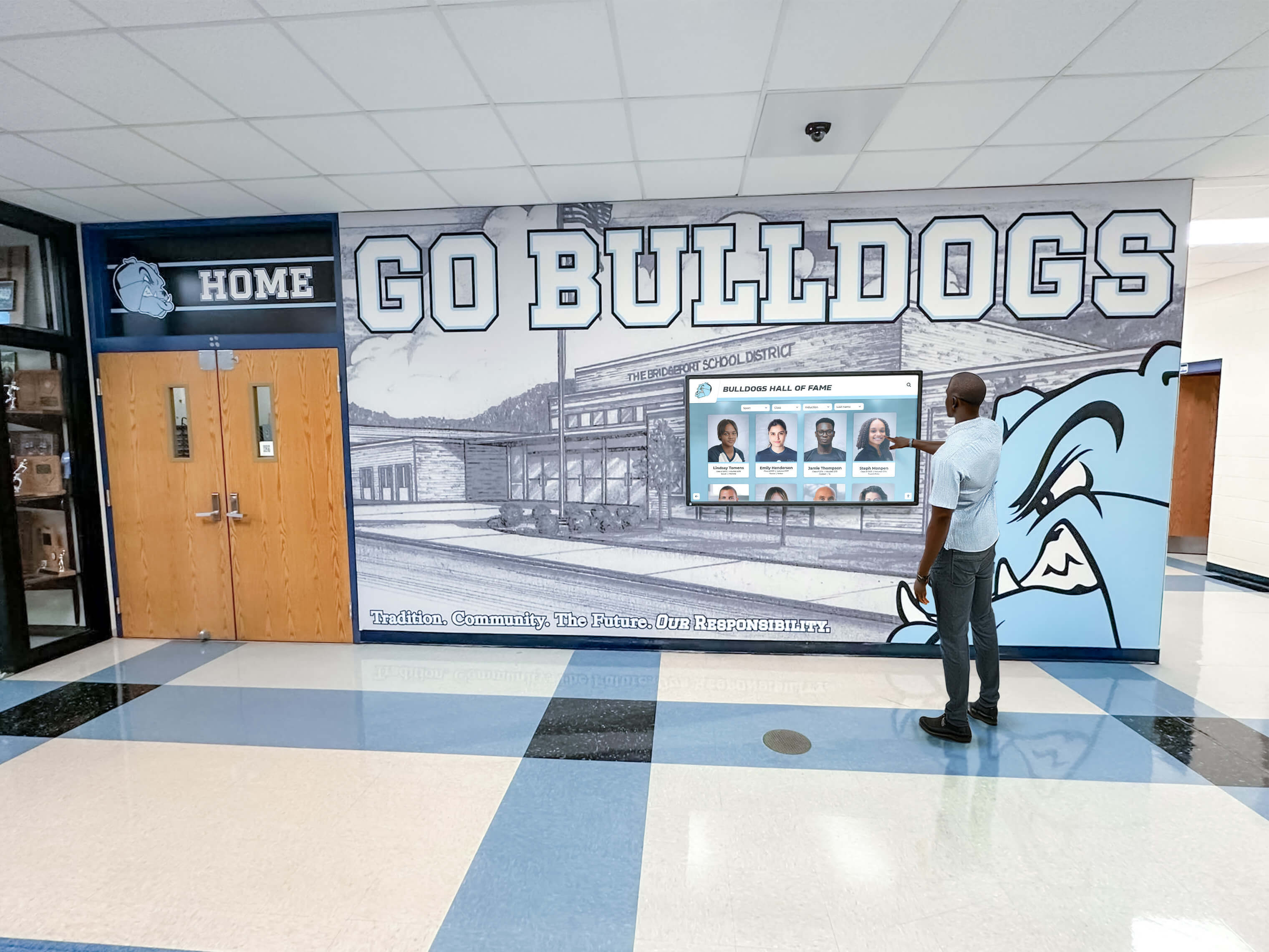
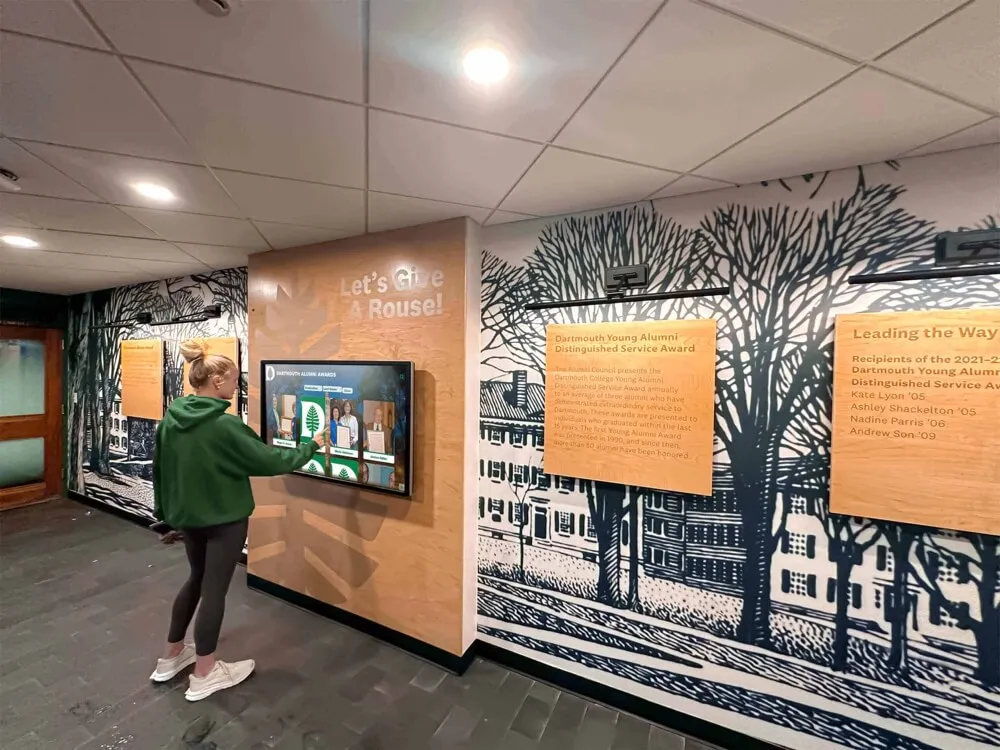
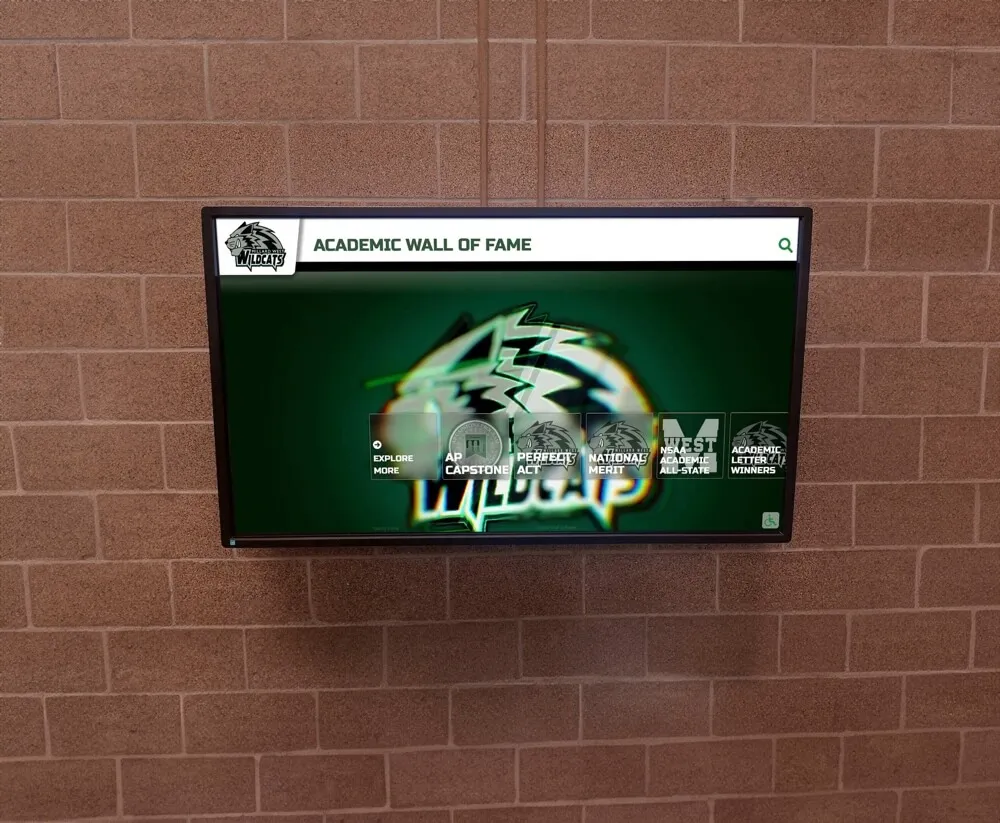
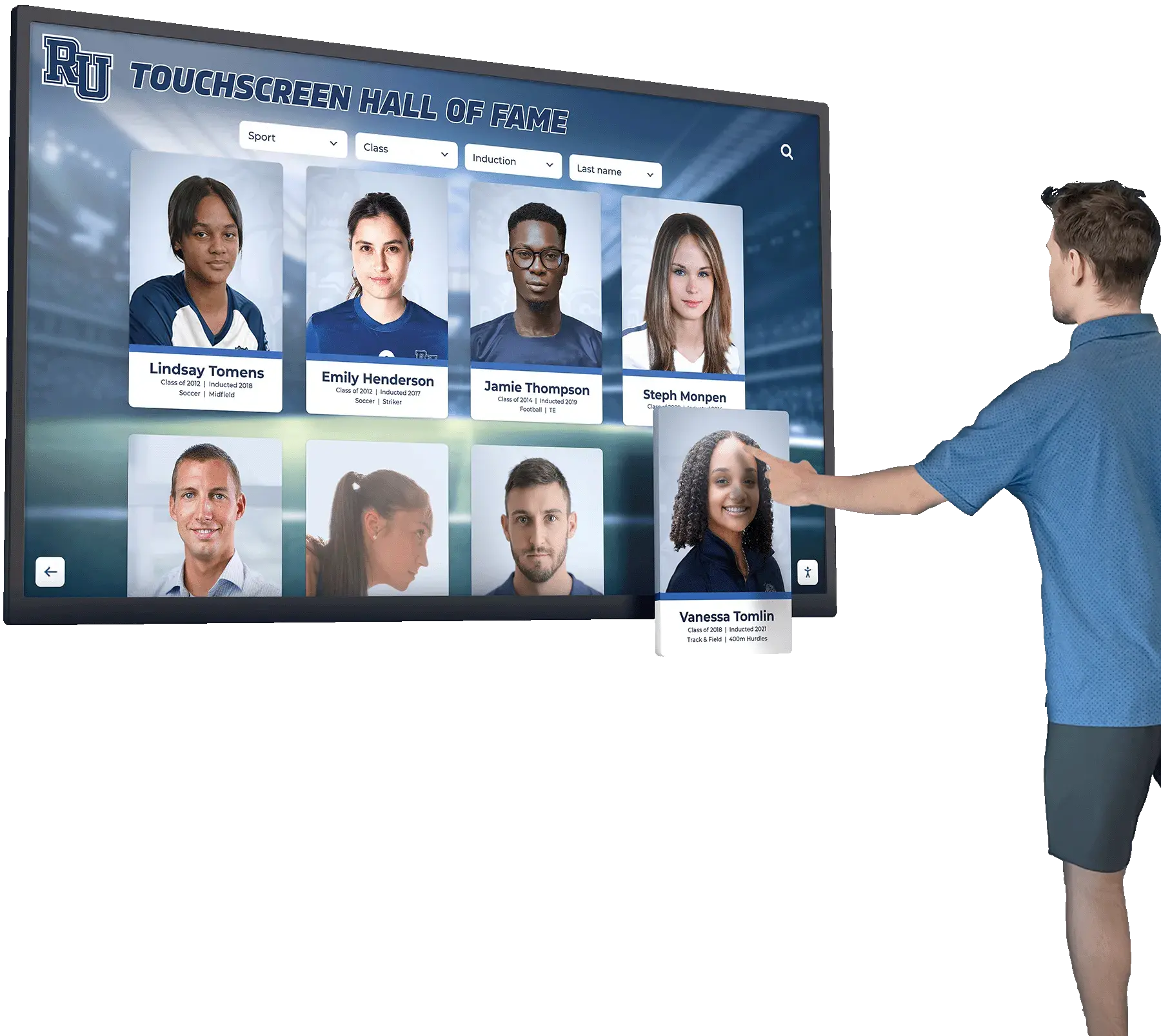
Interactive displays engage students, families, and visitors with comprehensive recognition content
Fine Arts and Activities Recognition
Small schools often struggle to recognize achievements beyond athletics and academics, yet arts and activities programs create significant student engagement and school pride.
Performing Arts Recognition
- Theater production cast lists and photos across years
- All-state music selections for band, choir, and orchestra
- Solo and ensemble competition results
- Drama competition achievements
- Spring musical and fall play historical records
Visual Arts and Creative Recognition
- Art competition winners and exhibition participants
- Scholastic Art Award recipients
- Student publications and journalism achievements
- Yearbook and newspaper staff recognition
Clubs and Activities
- Student government officers by year
- Leadership organization participants
- Service club achievements and volunteer hours
- Special interest club accomplishments
- Debate, speech, and forensics awards
This comprehensive recognition addresses what the best recognition programs understand: students engage in diverse activities, and recognizing this full spectrum of achievement creates inclusive school cultures where all contributions receive validation rather than just athletics.
Community and Alumni Recognition
Small schools maintain strong community connections, with generations of families attending the same high school. Digital recognition strengthens these connections.
Distinguished Alumni Recognition
Small communities take pride in graduates who achieve significant success. Digital platforms create permanent alumni halls featuring:
- Notable alumni biographies and achievements
- Career information and current locations
- Graduation years and school activities during attendance
- Photos showing alumni then and now
- Returning alumni event documentation
Community Supporter Recognition
Small schools depend heavily on community financial and volunteer support. Digital recognition acknowledges:
- Booster club leaders and major contributors
- Business partners and local sponsors
- Volunteer coaches and activity supervisors
- Community members who provide student mentorship
- Donors funding specific programs or facilities
This visible community recognition strengthens relationships between schools and surrounding communities, encouraging continued support and engagement.
Implementation Considerations for Smaller Schools
Understanding specific implementation factors helps smaller schools make informed decisions about digital recognition platforms.
Hardware Selection and Placement
Small schools typically implement 1-3 displays rather than the 5-10 larger schools might install. Strategic placement maximizes impact:
Primary Display Location
The main entrance or lobby serves as the primary recognition display location. This placement ensures:
- Maximum visibility to daily foot traffic
- First impression impact on prospective families touring facilities
- Prominent positioning during community events and evening activities
- Easy accessibility for students between classes
- Central location connecting to multiple hallways and activity areas
A single 55-inch touchscreen in this location can serve the majority of recognition needs for schools with 400-800 students.
Secondary Display Options
Schools with 800-1,200 students often add a second display in high-traffic areas:
- Athletic facilities (gym lobby or main concourse) for sports-focused recognition
- Cafeteria for daily student engagement
- Performing arts center for arts program recognition
- Library or media center for academic achievement focus
These secondary displays don’t require as large screens—42-inch or 49-inch displays work effectively in these contexts.
Physical Trophy Case Integration
Many small schools have existing trophy cases they want to preserve. Digital recognition complements rather than replaces these displays. Schools often install touchscreen displays adjacent to trophy cases, with physical cases holding actual trophies and digital displays providing unlimited additional recognition capacity impossible within physical constraints.
Content Migration and Historical Information
Small schools often worry about the effort required to digitize historical information. Recognition platforms address this through phased approaches:
Immediate Recognition
Start by recognizing current students and recent accomplishments. This provides immediate value without requiring extensive historical research:
- Current year honor roll students
- Recent athletic season results and championships
- This year’s scholarship recipients
- Current club officers and organizational leaders
Gradual Historical Addition
Add historical information over time as resources permit:
- Add previous year’s information when updating current recognition
- Include historical championships when celebrating new ones in the same sport
- Digitize old yearbook photos during summer when time permits
- Engage alumni volunteers to help document historical achievements
- Crowd-source information through social media outreach
This phased approach prevents implementation delays while still creating valuable recognition immediately. Historical information adds richness over time but doesn’t prevent launching with current content.
Training and Ongoing Management
The “who will manage this?” question concerns smaller schools with limited personnel. Modern platforms specifically address this through user-friendly interfaces requiring minimal training.
Initial Training Requirements
Most schools need only 2-3 hours of initial training covering:
- Basic content addition and editing
- Photo uploading and optimization
- Template selection and layout options
- Publishing and scheduling functions
- User account management
This training typically occurs via video conference, allowing multiple staff members to participate without travel time or expense. Recorded training sessions serve as ongoing reference resources.
Ongoing Management Time
After initial setup, ongoing management requires minimal time investment:
- Honor roll updates: 30-45 minutes per quarter
- Athletic recognition updates: 15-20 minutes per season conclusion
- Activity and club recognition: 10-15 minutes as achievements occur
- Historical information addition: varies based on volunteer time available
Total annual time investment typically ranges from 8-15 hours—far less than the physical recognition maintenance alternative of updating displays, ordering plaques, installing banners, and managing physical spaces.
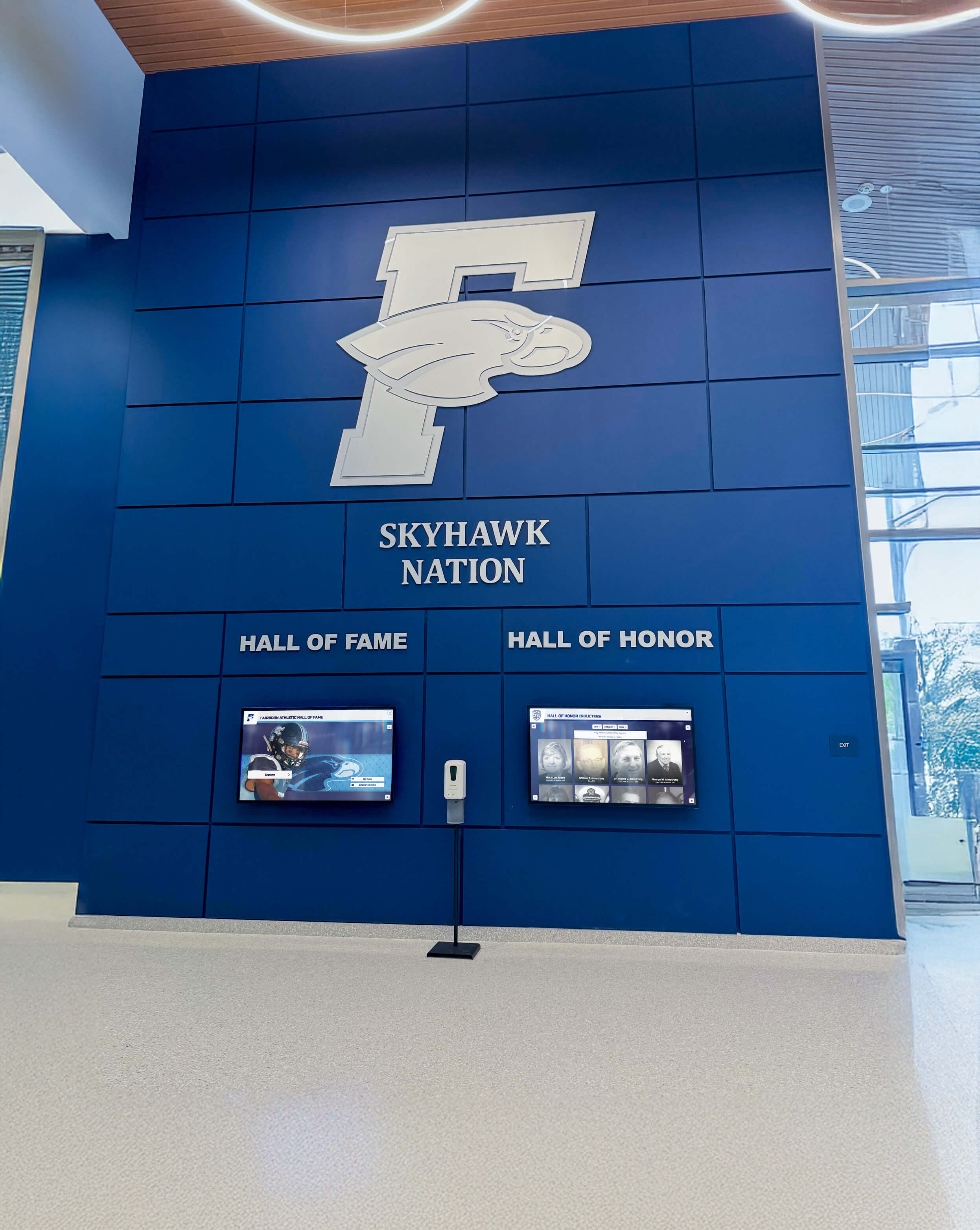
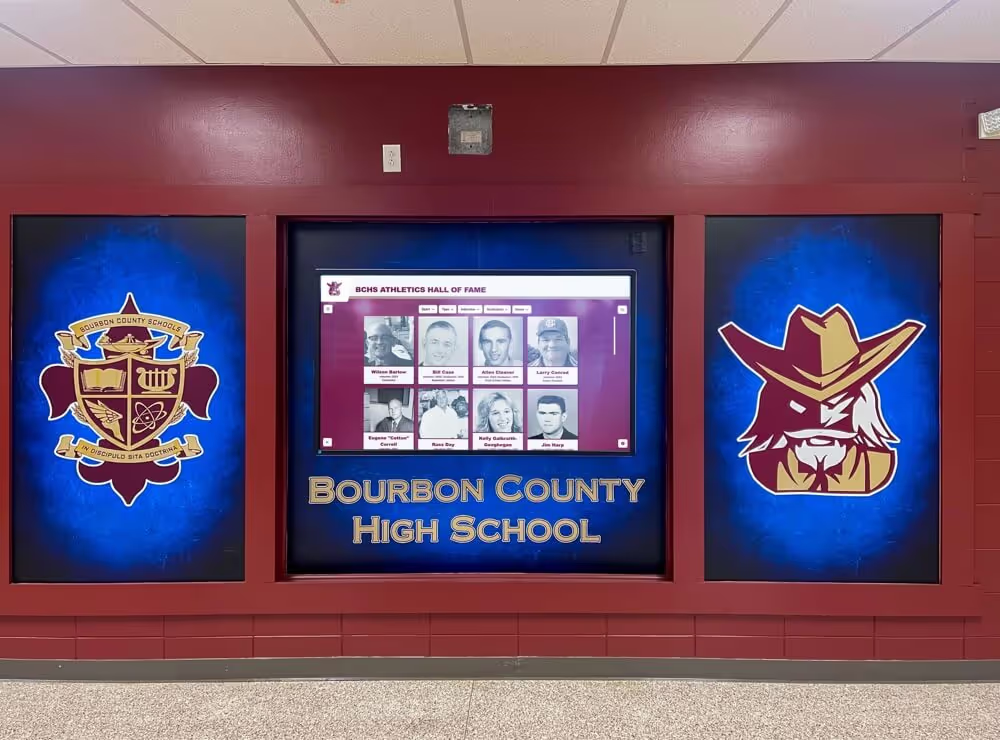
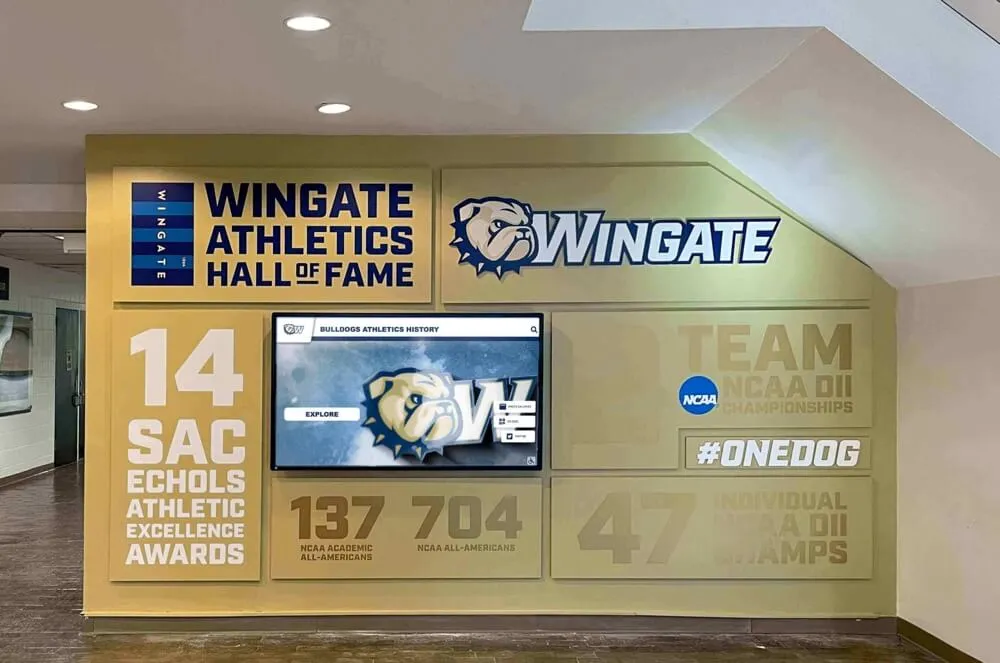
Professional lobby displays create impressive first impressions for prospective families while celebrating institutional achievement
Return on Investment for Smaller Schools
Budget-conscious smaller schools naturally scrutinize return on investment for any significant expenditure. Digital recognition delivers measurable returns.
Recruitment and Enrollment Impact
Small schools, particularly smaller public high schools facing declining enrollment due to demographic shifts, need competitive advantages attracting families with school choice options.
Recognition quality influences enrollment decisions. Families touring multiple schools compare how institutions honor students. Schools with professional, comprehensive recognition systems signal:
- Investment in student celebration and school pride
- Modern approach to education and technology
- Organized administration that maintains current information
- Balanced recognition across academics, athletics, and activities
This professional presentation matters especially for families moving into communities and evaluating multiple school options. The difference between outdated bulletin boards with yellowed paper lists versus professional digital recognition influences perception of overall school quality.
Student Motivation and Achievement
Visible recognition motivates student performance across multiple domains. When students see consistent acknowledgment of achievements in athletics, academics, arts, and activities, they:
- Strive for recognition in multiple areas rather than single focus
- Feel valued by their institution regardless of strength areas
- Develop pride in school affiliation
- Maintain motivation through visible celebration of accomplishment
- Understand that achievement gets remembered beyond graduation
This motivation compounds over time, with younger students observing older students receiving recognition and working toward similar achievements.
Community Engagement and Support
Small schools depend heavily on community financial and volunteer support. Digital recognition strengthens community engagement by:
Visible Return on Investment
Community members and taxpayers see concrete results from their support through visible student achievement recognition. This demonstrated success encourages continued support through:
- Booster club memberships and donations
- Volunteer coaching and activity supervision
- Local business sponsorships and partnerships
- Bond and levy passage support
- Community advocacy during budget challenges
Alumni Connection
Alumni who see their historical achievements preserved feel stronger connections to their schools, translating to:
- Financial contributions and estate gifts
- Career mentorship for current students
- Volunteer time supporting programs
- Advocacy in community discussions about school quality
- Attendance at school events and functions
Staff Morale and Retention
Small schools experience higher staff turnover as educators use them as stepping stones to larger districts. Digital recognition improves staff morale and retention by:
- Reducing administrative burden and frustration around recognition maintenance
- Creating professional environments staff feel proud to work within
- Demonstrating administrative commitment to celebrating school achievements
- Providing tools that make staff jobs easier rather than harder
- Creating visible results from staff efforts in developing student achievement
Teachers and coaches who see their students receiving professional recognition feel greater satisfaction and investment in their institutions.
Addressing Common Small School Concerns
Despite clear benefits, small schools often raise specific concerns about digital recognition. Addressing these directly helps schools make informed decisions.
“We Don’t Have the Budget”
Budget concerns legitimately constrain small school decisions, but digital recognition often costs less than assumed when examining total ownership costs rather than just initial purchase prices.
Compare 10-year costs:
Traditional Recognition Ongoing Costs
- Trophy and plaque purchases: $1,500-$3,000 annually
- Banner production and replacement: $800-$1,500 annually
- Display case maintenance and updates: $500-$1,000 annually
- Installation labor for physical updates: $400-$800 annually
These annual costs accumulate to $31,000-$63,000 over 10 years for schools maintaining traditional recognition across athletics, academics, and activities.
Digital recognition platforms typically cost $1,500-$3,000 annually after initial hardware investment, with no additional per-recognition costs. Schools save money while gaining unlimited capacity and professional presentation quality.
Additionally, many schools fund digital recognition through:
- Booster club contributions designated for recognition improvements
- Alumni donations supporting school modernization
- Community business sponsorships with recognition in display content
- Capital improvement budgets covering technology infrastructure
- One-time fundraising campaigns for recognition upgrades
“We Don’t Have IT Staff”
Small schools rarely employ dedicated IT personnel, relying instead on district technology coordinators who support multiple buildings or contracting with managed service providers for infrastructure maintenance.
Modern recognition platforms require no IT staff involvement for routine operation. Cloud-based content management means:
- No server installation or maintenance
- No software updates to manage
- No backup procedures to maintain
- No security patches to apply
- No technical troubleshooting for content updates
Schools need only consistent internet connectivity and basic computer skills. If staff can post content to social media or update the school website, they can manage recognition content updates.
Technical support from platform providers handles any actual technical issues—typically rare with mature, established systems.
“Our Students Don’t Care About Recognition”
Some educators suggest current students don’t value traditional recognition forms, preferring social media acknowledgment instead.
Reality proves different. Students consistently respond positively to visible, public recognition of their achievements. While social media provides one recognition form, permanent institutional recognition conveys different meaning:
- Institutional validation rather than peer acknowledgment
- Permanent record versus temporary social media post
- Professional presentation rather than casual posting
- Equal visibility rather than algorithm-dependent reach
- Preservation beyond high school years
Digital recognition platforms often integrate with social media, allowing schools to push recognition content to multiple channels simultaneously rather than choosing between institutional displays and social media presence.
“We’re Too Small for This to Matter”
Some small schools question whether professional recognition systems matter for institutions with 400-600 students where “everyone knows everyone anyway.”
This familiarity actually increases recognition importance rather than decreasing it. In small schools:
- Students directly compare their recognition to peers
- Perceived fairness matters tremendously for morale
- Visible institutional investment signals student value
- Alumni connections remain stronger across generations
- Community attention focuses intensely on school achievement
Small schools need professional recognition precisely because their size creates greater scrutiny and higher expectations for individual acknowledgment.
Getting Started: Implementation Steps for Small Schools
Schools ready to implement digital recognition can follow straightforward processes minimizing disruption and complexity.
Initial Planning and Needs Assessment
Define Recognition Priorities
Identify which recognition categories matter most for your school:
- Athletic recognition (all sports, JV and varsity)
- Academic achievement (honor roll, scholarships, academic competitions)
- Fine arts and performing arts
- Clubs and activities
- Community recognition and distinguished alumni
- Historical preservation
This prioritization helps determine content needs and implementation scope.
Identify Key Stakeholders
Determine who will manage different content areas:
- Athletic Director: sports team and individual athletic recognition
- Counseling Office: honor roll, scholarships, academic achievements
- Activities Coordinator: clubs, student government, non-athletic activities
- Alumni Coordinator or Principal: community recognition and alumni
Clear responsibility assignment prevents tasks falling through gaps while distributing workload across multiple personnel.
Budget Development
Work with platform providers to understand total costs:
- Hardware (touchscreen display, mounting, installation)
- Initial setup and content migration
- Annual subscription or licensing
- Optional services like professional design or content creation
Most small schools implement recognition systems for $5,000-$8,000 initial investment plus $1,500-$3,000 annual ongoing costs.
Vendor Selection Considerations
Platform Capabilities
Evaluate platforms based on small school needs:
- Easy-to-learn content management requiring minimal training
- Flexible content types supporting diverse recognition categories
- Dependable cloud-based access from any device
- Included technical support and training
- Scalability allowing future growth
- Accessibility compliance for students with disabilities
Support and Service
Small schools especially need responsive support since they lack internal technical resources:
- Training quality and accessibility
- Technical support responsiveness and availability
- Content migration assistance
- Design resources and templates
- User community and shared resources
Long-Term Partnership
Evaluate vendors as long-term partners rather than one-time purchases:
- Company stability and longevity
- Product development roadmap
- Pricing stability and predictability
- Customer retention rates
- References from similar-sized schools
Installation and Launch
Physical Installation
Work with vendors to plan installation minimizing school disruption:
- Schedule during breaks or non-school hours
- Coordinate with maintenance staff for mounting and power
- Arrange network connectivity with technology coordinators
- Test functionality before launch
Content Population
Launch with current information rather than waiting for complete historical content:
- Current year honor roll students
- Recent athletic season results
- Current organizational officers and club members
- Recent scholarship recipients
Add historical information over time as resources permit.
Launch Communication
Generate awareness and excitement around new recognition:
- Announcement during all-school assembly
- Social media posts highlighting new displays
- Newsletter articles explaining recognition content
- Student demonstrations during orientation or open houses
- Parent communication highlighting recognition access
Ongoing Content Management
Establish Update Schedules
Create predictable patterns for content updates:
- Honor roll: within two weeks of each grading period
- Athletic recognition: within one week of season conclusion
- Activities: monthly or as achievements occur
- Historical additions: ongoing as time permits
Quality Control
Maintain recognition credibility through accuracy:
- Verify spelling of all student names
- Confirm achievement details before publishing
- Update outdated information promptly
- Remove temporary content after appropriate display periods
- Maintain consistent photo quality and formatting
Continuous Improvement
Gather feedback and refine recognition over time:
- Monitor which content students and families view most
- Solicit input from students about recognition preferences
- Ask alumni about historical information gaps
- Survey parents about recognition effectiveness
- Adjust content categories based on program changes
Conclusion: Small Schools Benefit Most from Digital Recognition
Small to medium public high schools represent the ideal use case for digital recognition platforms. These institutions face the exact challenges that digital recognition addresses most effectively: limited budgets, small administrative teams, space constraints, and diverse recognition needs across comprehensive programs.
Rather than representing excessive technology investment, digital recognition delivers disproportionate benefits for smaller schools. The unlimited capacity ensures every student receives appropriate acknowledgment regardless of physical space limitations. The minimal administrative burden means small teams can maintain professional recognition without overwhelming workload. The affordable pricing provides long-term cost savings compared to traditional alternatives while delivering superior presentation quality.
Most importantly, comprehensive digital recognition creates inclusive school cultures where all students—athletes and scholars, performers and leaders, current students and historical alumni—receive equal visibility and celebration. This inclusivity strengthens school pride, motivates student achievement, and demonstrates to families and communities that the institution values every contribution.
Schools with 400-1,200 students shouldn’t dismiss digital recognition as “too expensive” or “too complex” for their needs. These solutions work exceptionally well for exactly these institutional sizes, providing the professional recognition capacity that strengthens smaller schools’ competitive positioning while addressing their specific operational constraints.
The question isn’t whether small schools can afford digital recognition—it’s whether they can afford to continue with traditional approaches that cost more while delivering less comprehensive recognition and requiring more administrative time. Digital platforms provide better solutions at lower total costs while creating school environments where every achievement receives appropriate celebration.
Transform Recognition at Your Small or Medium High School
Discover how schools your size create professional recognition experiences that celebrate every student achievement without overwhelming limited staff or budgets. See how digital recognition platforms provide unlimited capacity, minimal maintenance, and long-term cost savings compared to traditional approaches while creating school cultures where all accomplishments receive appropriate visibility.
Book a Demo