



For high school students pursuing academic excellence, few honors carry more prestige than being named salutatorian. Standing on stage at graduation, delivering a speech before classmates, families, and faculty—it represents years of dedication, countless late-night study sessions, and consistent achievement at the highest levels.
Yet despite its prominence in American high school culture, confusion surrounds exactly what a salutatorian is, how schools determine the honor, what distinguishes it from valedictorian, and what responsibilities come with the recognition. Many students and families wonder whether class rank matters, how GPA calculations work, and what happens when multiple students have identical academic records.
This comprehensive guide explains everything about the salutatorian honor—from selection criteria and speech traditions to how schools celebrate this achievement through lasting recognition that extends far beyond graduation day.
Academic distinction represents more than numbers on transcripts. The salutatorian honor acknowledges sustained excellence, celebrates intellectual dedication, and provides graduating students with platforms to reflect on their educational journey while inspiring classmates preparing to embark on new chapters.

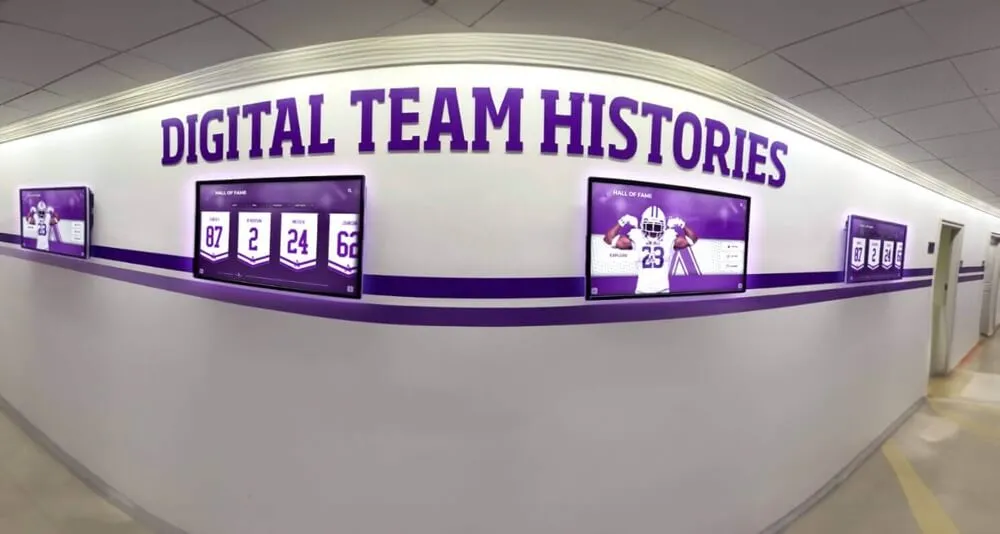
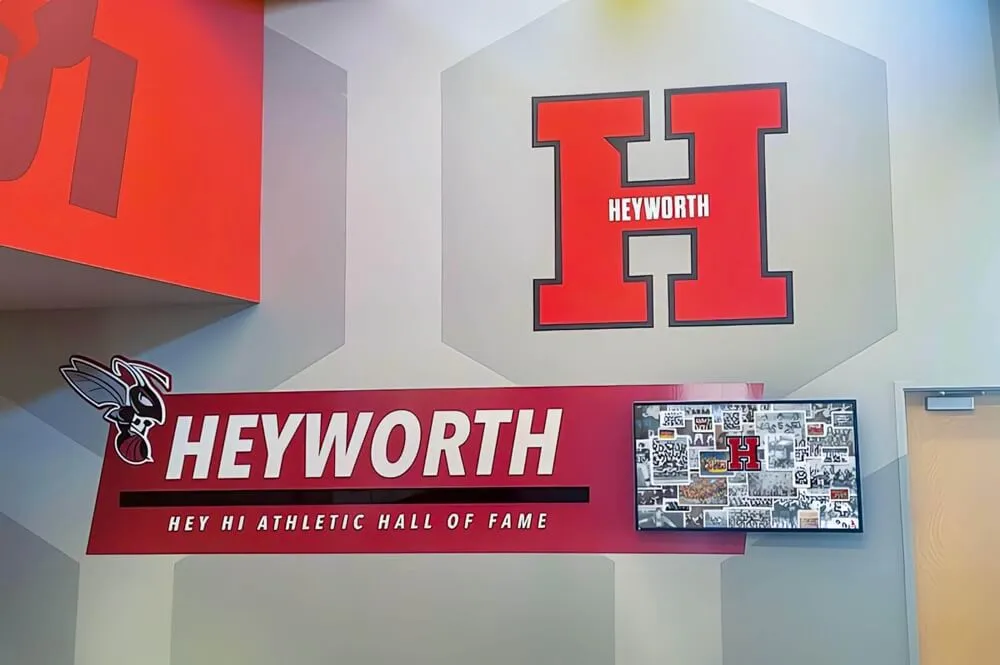
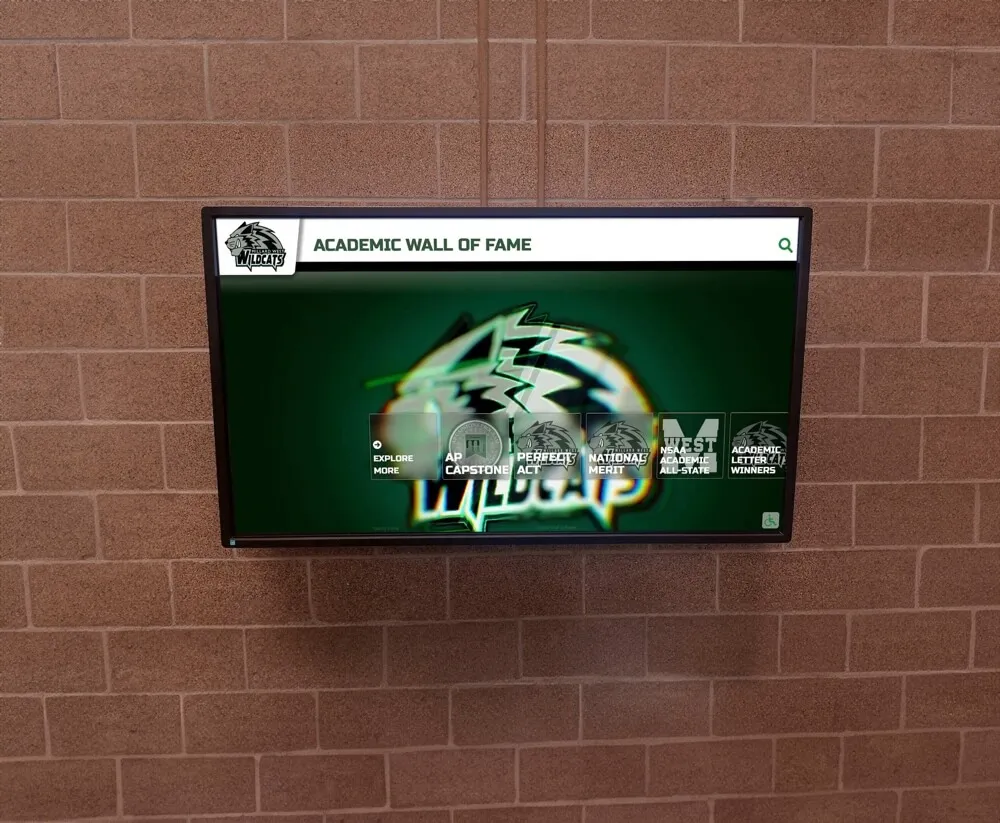
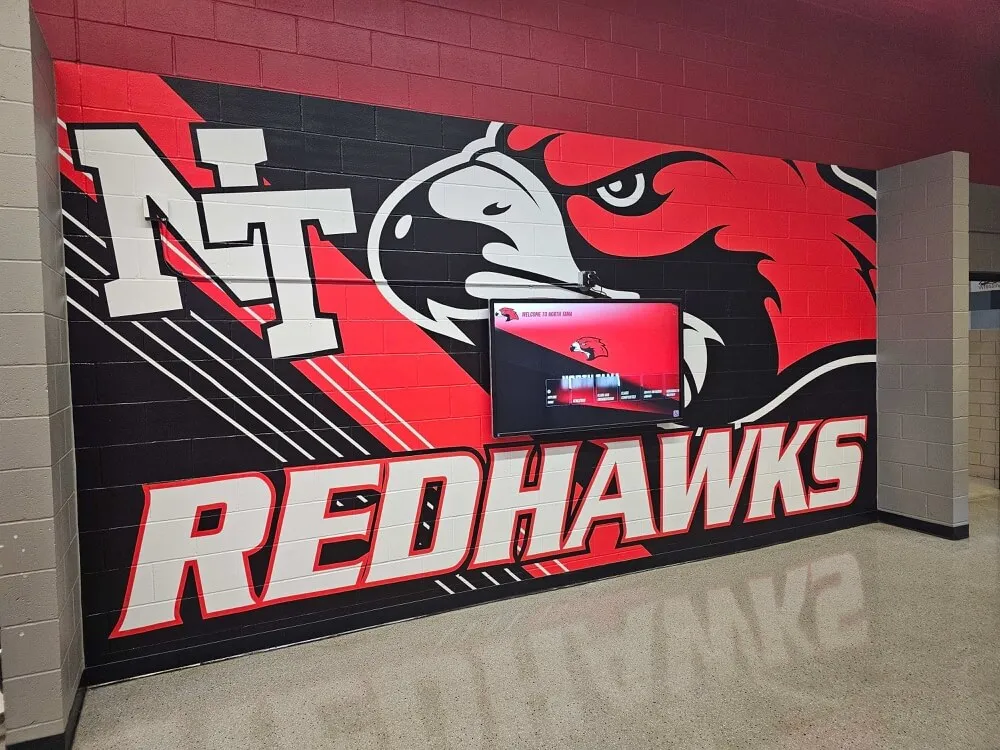
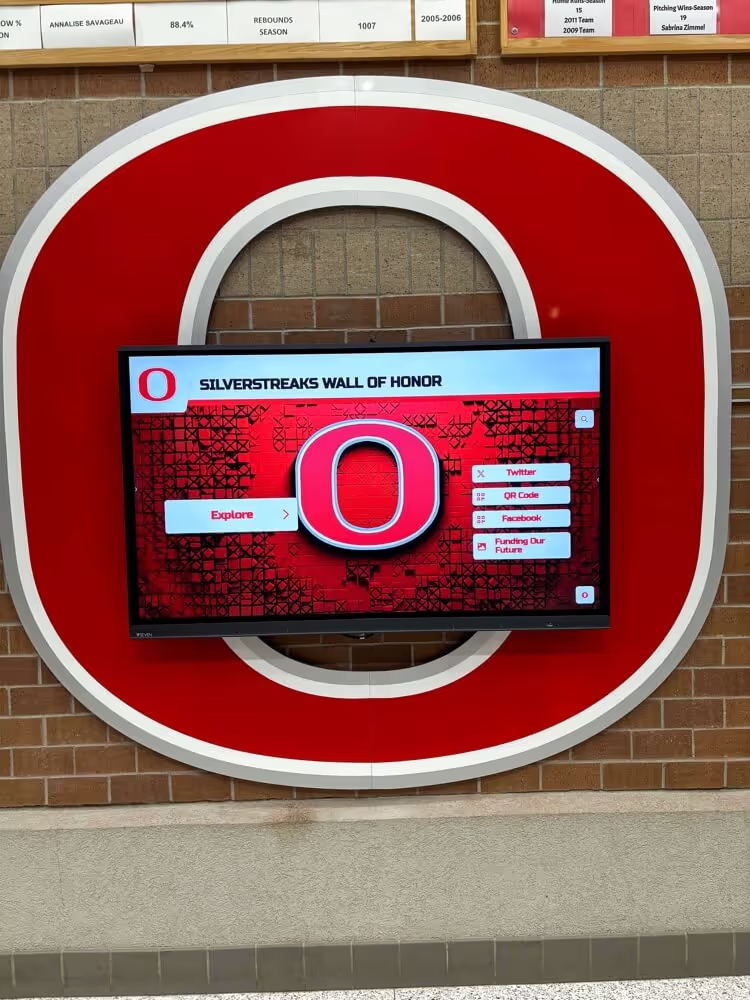
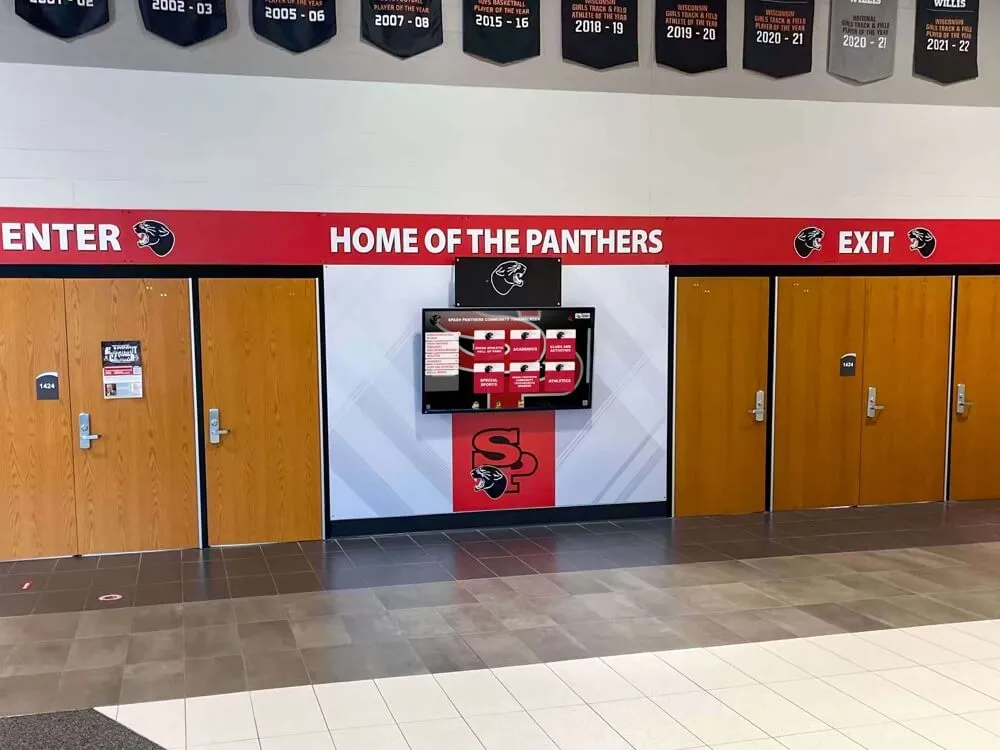
Schools celebrate salutatorians and top academic achievers through prominent recognition displays that honor intellectual excellence
What Is a Salutatorian? Definition and Origin
Understanding the salutatorian designation requires exploring both its formal definition and historical context within American education.
Core Definition
A salutatorian is the student who ranks second highest academically in their graduating class. The honor traditionally includes delivering the salutatory address—the opening or welcoming speech—at graduation ceremonies, though specific practices vary significantly across schools and districts.
The term derives from the Latin salutare, meaning “to greet” or “to welcome,” reflecting the traditional role of welcoming attendees to commencement ceremonies. While valedictorians historically delivered farewell addresses (vale meaning “farewell”), salutatorians opened ceremonies with greetings acknowledging the significance of the occasion.
Academic Standing Requirements
Salutatorian designation depends entirely on academic performance measured through:
Grade Point Average (GPA)
- Weighted or unweighted GPA calculations depending on school policy
- Cumulative GPA across all high school years (typically grades 9-12)
- Some schools use specific coursework criteria excluding certain classes
- Precision often extends to three or four decimal places when distinguishing close candidates
Class Rank Positioning
- Formal ranking of students by academic performance
- Second-highest position within graduating class
- Clear distance between first place (valedictorian) and second place (salutatorian)
- Recognition remains separate even when GPA differences are minimal
Schools without formal class ranking systems typically don’t designate salutatorians, though they may recognize academic excellence through alternative honors programs.
Historical Context and Evolution
The salutatorian tradition emerged from 19th-century American educational practices, particularly at colleges and preparatory academies where Latin remained central to curriculum. Early commencements featured multiple student speeches in Latin, with salutatory addresses welcoming guests and establishing ceremony tone.
As American education evolved through the 20th century, salutatorian recognition spread throughout secondary schools, becoming embedded in high school culture. The honor gained prominence as class ranking systems formalized and graduation ceremonies expanded to include student voices alongside administrative remarks.

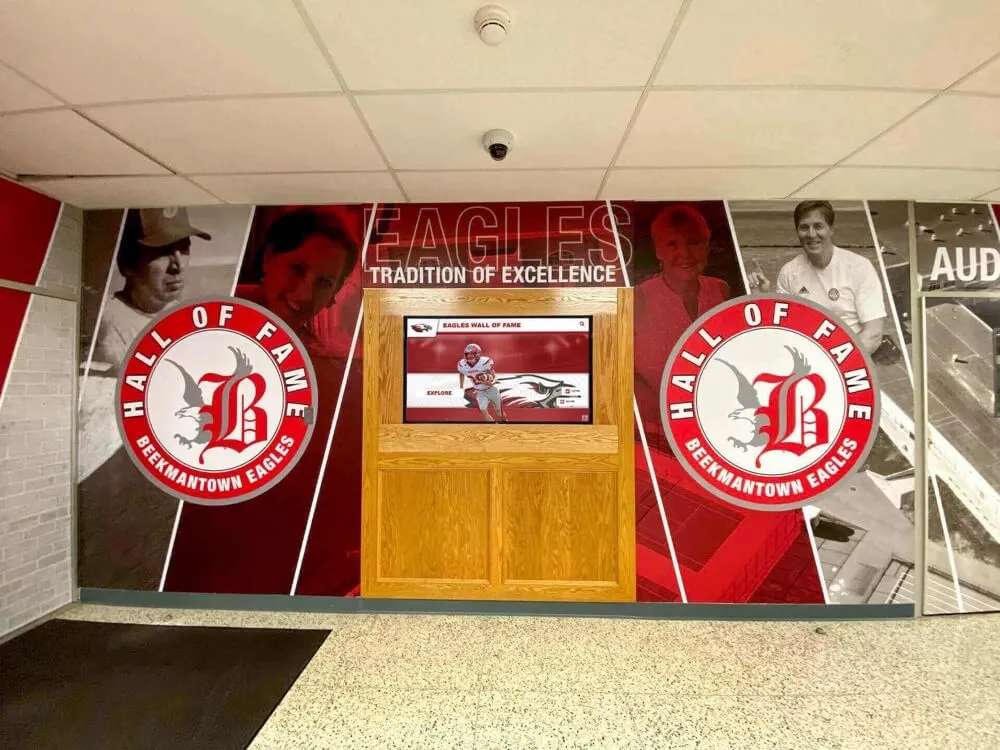
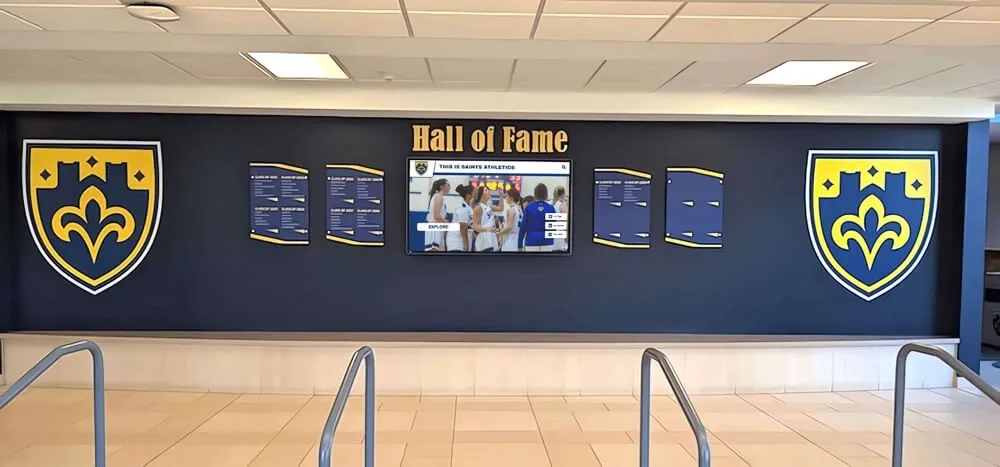
Modern recognition systems showcase salutatorians alongside other distinguished scholars, preserving achievement for future classes
Today’s salutatorian honor reflects changing educational philosophies. While maintaining traditional prestige, many schools grapple with questions about class rank validity, weighted GPA fairness, and whether single numeric rankings appropriately represent complex academic achievement across diverse learning paths.
Salutatorian vs. Valedictorian: Key Differences
Though salutatorian and valedictorian represent the top two academic positions, important distinctions exist beyond class rank number.
Academic Rank Positioning
The primary difference remains straightforward:
Valedictorian: #1 Academic Ranking
- Highest cumulative GPA in graduating class
- First place in academic standings
- Typically separated from #2 position by decimal points
- “Top of the class” distinction
Salutatorian: #2 Academic Ranking
- Second-highest cumulative GPA in graduating class
- Second place in academic standings
- May be separated from #1 by minimal GPA difference
- Recognition for near-top achievement
In practice, GPA differences between valedictorian and salutatorian often prove remarkably small—sometimes just 0.01 to 0.05 grade points separating first and second positions after four years of coursework.
Speech and Ceremony Responsibilities
Traditional graduation roles differ between these honors:
Valedictorian Speech Focus
- Farewell address to graduating class
- Typically final student speech before diploma presentation
- Reflections on shared experiences and future outlook
- 5-10 minutes in length at most ceremonies
- Considered the premier student address
Salutatorian Speech Focus
- Welcome address opening graduation ceremonies
- Often first or early student speech
- Greetings to families, faculty, and guests
- Acknowledgment of collective achievement
- 3-7 minutes typical length
However, many modern schools have moved away from these traditional distinctions. Some alternate speech order, combine addresses, or even eliminate formal salutatorian speeches while maintaining the academic honor itself. Schools implementing comprehensive academic recognition programs often celebrate both honors equally through digital displays and permanent records.

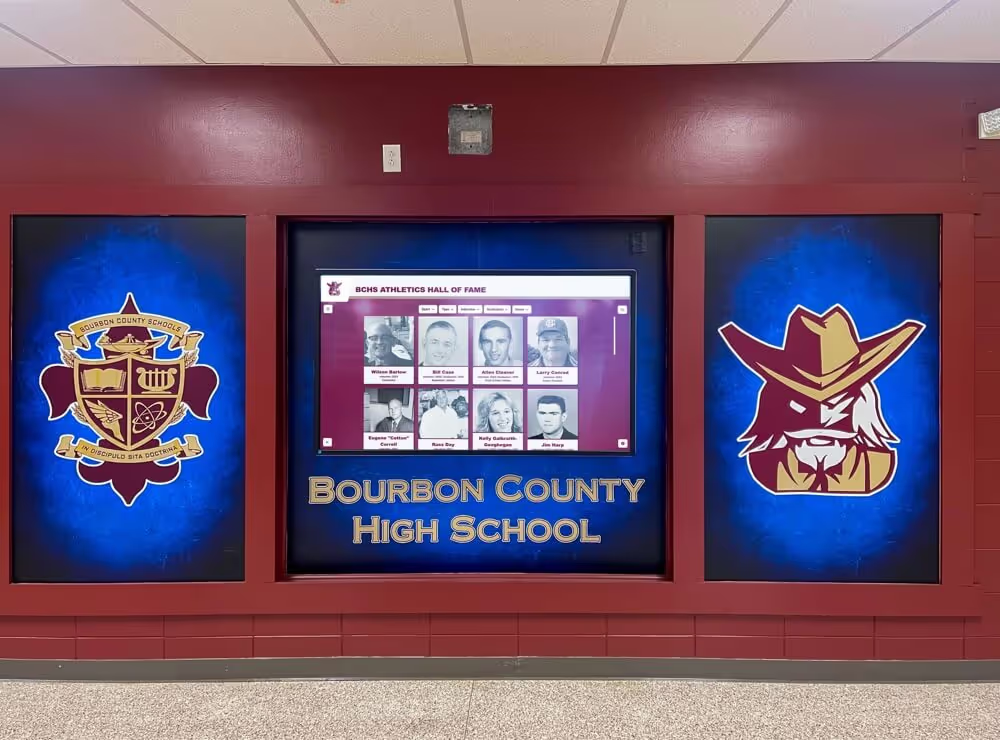
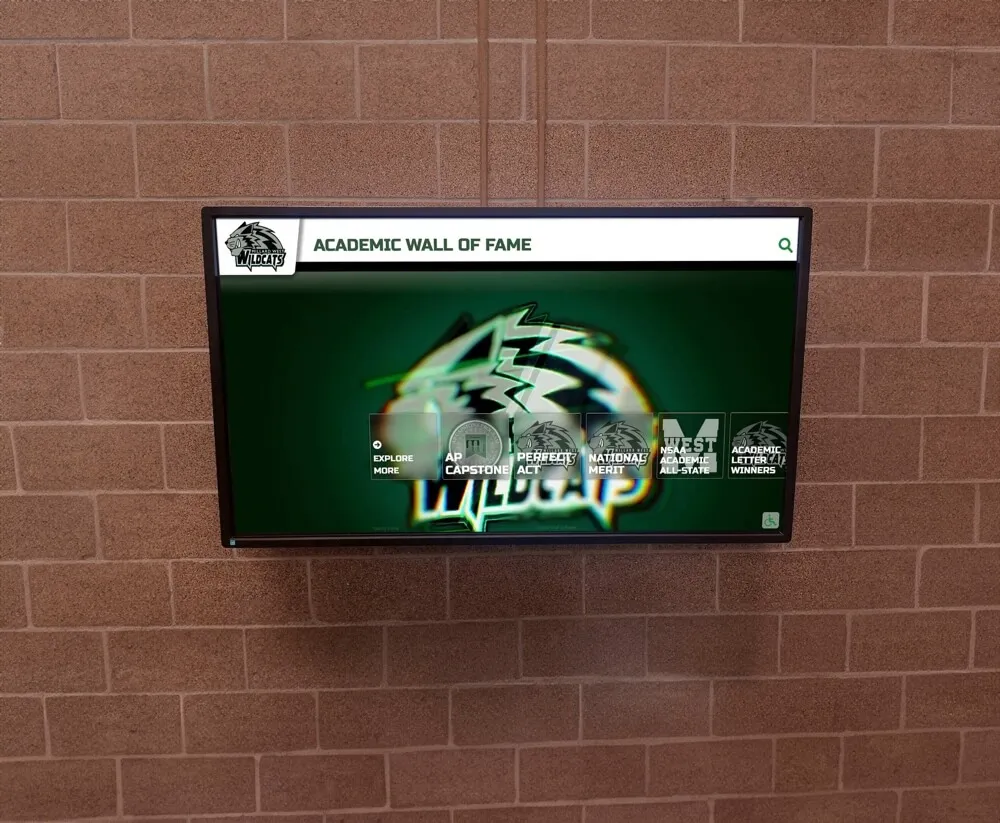
Interactive displays enable schools to showcase both valedictorians and salutatorians with equal prominence and detailed achievement profiles
Scholarship and Recognition Opportunities
While valedictorians often receive slightly higher profile recognition, salutatorians access similar opportunities:
College Applications and Admissions
- Both honors demonstrate exceptional academic achievement
- Admissions officers value sustained excellence over specific ranking
- Salutatorian designation strengthens competitive applications significantly
- Many selective institutions accept both honors as evidence of academic rigor
Scholarship Eligibility
- Local scholarships frequently recognize top academic performers without distinction
- Some merit-based awards specifically target valedictorians and salutatorians
- State-level programs often include both honors in eligibility criteria
- Institutional scholarships may recognize top percentage rather than specific ranks
Professional Recognition
- Both honors appear on academic records and resumes
- Professional recognition values sustained achievement over ranking nuance
- Alumni networks often celebrate academic distinction without hierarchy
The practical differences between valedictorian and salutatorian recognition continue diminishing as educational institutions emphasize holistic achievement over single numeric rankings.
How Schools Determine Salutatorian: Selection Criteria
Salutatorian selection processes vary significantly across schools, though most follow established GPA-based methodologies with specific calculation rules.
GPA Calculation Methods
Schools use different approaches for calculating the cumulative GPA that determines class rank:
Weighted GPA Systems
- Awards additional GPA points for advanced coursework
- Honors classes typically add 0.5 points (4.5 scale)
- AP/IB classes typically add 1.0 points (5.0 scale)
- Encourages challenging course selection
- Creates GPAs exceeding traditional 4.0 maximum
Unweighted GPA Systems
- Maintains standard 4.0 maximum scale
- Treats all courses equally regardless of difficulty
- A grade = 4.0 regardless of course level
- Simpler calculation but doesn’t account for rigor
- Less common for determining top honors
Hybrid Approaches
- May weight only certain subjects or years
- Different weighting schemes for core vs. elective courses
- Calculation methods varying by district policy
- Sometimes creates controversy over fairness
According to educational research, approximately 70% of American high schools use weighted GPA systems for determining class rank and academic honors, though practices continue evolving based on educational philosophy debates.
Which Classes Count
Schools establish specific policies determining which coursework factors into salutatorian calculations:
Typical Inclusion Criteria
- Core academic subjects (English, math, science, social studies)
- World language courses
- Approved electives meeting academic standards
- Advanced Placement and International Baccalaureate courses
- Dual enrollment college classes
Common Exclusions
- Pass/fail courses without letter grades
- Physical education classes (varies by school)
- Teacher assistant or office aide periods
- Some elective courses outside academic departments
- Summer school credit recovery courses (sometimes)
These policies profoundly impact outcomes. A student taking maximum honors-level courses while fulfilling graduation requirements through academic electives may achieve salutatorian status over peers with higher raw performance in fewer weighted classes.
Timeline and Official Determination
The salutatorian selection process follows specific timing:
Typical Timeline
- Semester 7 (Fall Senior Year): Preliminary rankings emerge based on six semesters
- Semester 8 (Spring Senior Year): Final semester grades included in calculations
- 6-8 Weeks Before Graduation: Official class ranking determined
- 4-6 Weeks Before Graduation: Salutatorian notification and speech invitation
- 2-4 Weeks Before Graduation: Speech draft submission and approval (if required)
Most schools wait until final senior year grades submit before official salutatorian determination, though top candidates usually know their approximate standing well before formal notification.

Digital systems track academic achievement throughout students' careers, maintaining comprehensive records for final honor determinations
Tied GPA Scenarios
Schools occasionally face situations where multiple students share identical GPAs, creating ambiguity in salutatorian designation:
Resolution Approaches
- Extended Decimal Precision: Calculating to additional decimal places to break ties
- Multiple Salutatorians: Recognizing all students sharing the second-highest GPA
- Additional Criteria: Using standardized test scores, specific course performance, or earned credit hours
- Co-Salutatorian Designation: Official recognition for two or more students
- Alternative Honors: Creating Latin honors systems (summa/magna/cum laude) alongside or instead of singular designations
Tied scenarios have increased as weighted GPA systems create greater mathematical complexity and more students pursue identical rigorous course patterns. Progressive schools often embrace multiple salutatorians rather than seeking arbitrary tiebreakers, recognizing that multiple students genuinely deserve recognition.
The Salutatorian Speech: Purpose and Expectations
For many salutatorians, delivering the graduation address represents the most visible aspect of the honor—and often the most anxiety-inducing.
Traditional Speech Components
Effective salutatorian addresses typically include several key elements:
Opening Welcome and Acknowledgment
- Greeting to graduates, families, faculty, and distinguished guests
- Recognition of the significance of the occasion
- Acknowledgment of collective achievement reaching graduation
- Warm, inclusive tone setting positive ceremony atmosphere
Reflection on Shared Experience
- Memories from the high school journey
- Challenges overcome as a class
- Growth and transformation over four years
- Inside references resonating with classmates
Appreciation and Gratitude
- Thanks to teachers, administrators, and staff
- Recognition of family support and sacrifice
- Acknowledgment of friends and classmates
- Community appreciation
Forward-Looking Perspective
- Excitement about future possibilities
- Encouragement for next chapters
- Inspiration for continued growth
- Optimistic conclusion
Schools often record salutatorian speeches for permanent archives through digital recognition displays, allowing future students to experience these addresses beyond graduation day.

Modern recognition systems can incorporate recorded speeches and multimedia profiles, preserving salutatorians' voices for future classes
Speech Length and Tone Guidelines
Most schools provide specific parameters for salutatorian addresses:
Typical Length Expectations
- 3-7 minutes standard duration
- 450-900 words typical manuscript length
- Shorter than valedictorian addresses in traditional formats
- Long enough for substance but brief enough to maintain attention
Tone Considerations
- Warm and welcoming rather than overly formal
- Genuine and personal rather than generic
- Inclusive of all classmates regardless of friendship circles
- Appropriate for mixed-age audience including young siblings
- Celebratory while acknowledging seriousness of transition
Content Restrictions
- No inappropriate language or controversial content
- Avoidance of inside jokes excluding most attendees
- No negative references to individuals or groups
- Elimination of partisan political commentary
- Respect for diverse backgrounds and perspectives
Many schools require speech draft approval 2-3 weeks before graduation, allowing time for feedback and refinement while preventing last-minute content surprises.
Writing and Delivery Tips
Successful salutatorian speeches share common characteristics:
Writing Strategies
- Start with authentic personal reflection rather than generic platitudes
- Include 2-3 specific anecdotes or memories that resonate broadly
- Balance humor with sincerity—light moments without trivializing
- Use “we” language emphasizing collective experience
- Keep paragraphs and sentences relatively short for oral delivery
- Write for the ear, not the eye—read aloud while drafting
Delivery Best Practices
- Practice extensively but avoid over-memorization that sounds robotic
- Make frequent eye contact with different audience sections
- Speak slightly slower than conversational pace
- Project voice clearly without shouting
- Use natural gestures without excessive movement
- Pause briefly after important points for emphasis
- Smile and show genuine emotion when appropriate
Remember that audiences extend tremendous grace to student speakers. Authenticity and effort matter far more than polished perfection.
Alternatives to Traditional Speeches
Some schools have moved beyond conventional salutatorian address formats:
Modified Approaches
- Joint valedictorian-salutatorian speeches with shared presentation
- Panel formats featuring multiple top students
- Video presentations instead of live addresses
- Recorded messages played during ceremony
- Recognition without formal speech requirement
- Student representative speeches selected through audition rather than GPA

Interactive touchscreens allow salutatorians to include multimedia elements in their permanent school recognition beyond traditional speeches
These alternatives often emerge from concerns about public speaking anxiety, desire for broader student representation, or philosophical questions about whether singular GPA-based selection appropriately identifies the best ceremony speakers.
How Schools Recognize Salutatorians
Beyond graduation speeches, schools employ numerous methods to honor salutatorian achievement both immediately and long-term.
Graduation Ceremony Recognition
Salutatorians receive prominent acknowledgment during commencement:
Ceremony Elements
- Introduction by principal or ceremony speaker with achievement details
- Designated seating location (often with valedictorian and other honors)
- Special cord, stole, or medallion worn with graduation regalia
- Named recognition during program with GPA or class rank details
- Diploma presentation often includes special acknowledgment
- Photography opportunities with administrators and board members
Program Inclusion
- Name featured prominently in printed graduation programs
- Biography or achievement summary in ceremony materials
- Speech title and introduction in program order of events
- Often includes future plans and college destination
Ceremony recognition provides immediate celebration shared with families and community, though its impact remains limited to those physically attending.
Physical Awards and Certificates
Tangible recognition items commemorate the achievement:
Common Awards
- Official salutatorian certificate signed by administrators
- Engraved plaque or trophy for personal keeping
- Medal or medallion with year and designation
- Special diploma cover or enhancement
- Letter of recognition for academic portfolio
Potential Additions
- Yearbook dedication or special page feature
- Senior portrait display in school hallway
- Name engraved on permanent school recognition plaque
- Addition to academic achievement trophy case
These physical items provide lasting personal mementos, though they may not create enduring school-level recognition visible to future students.
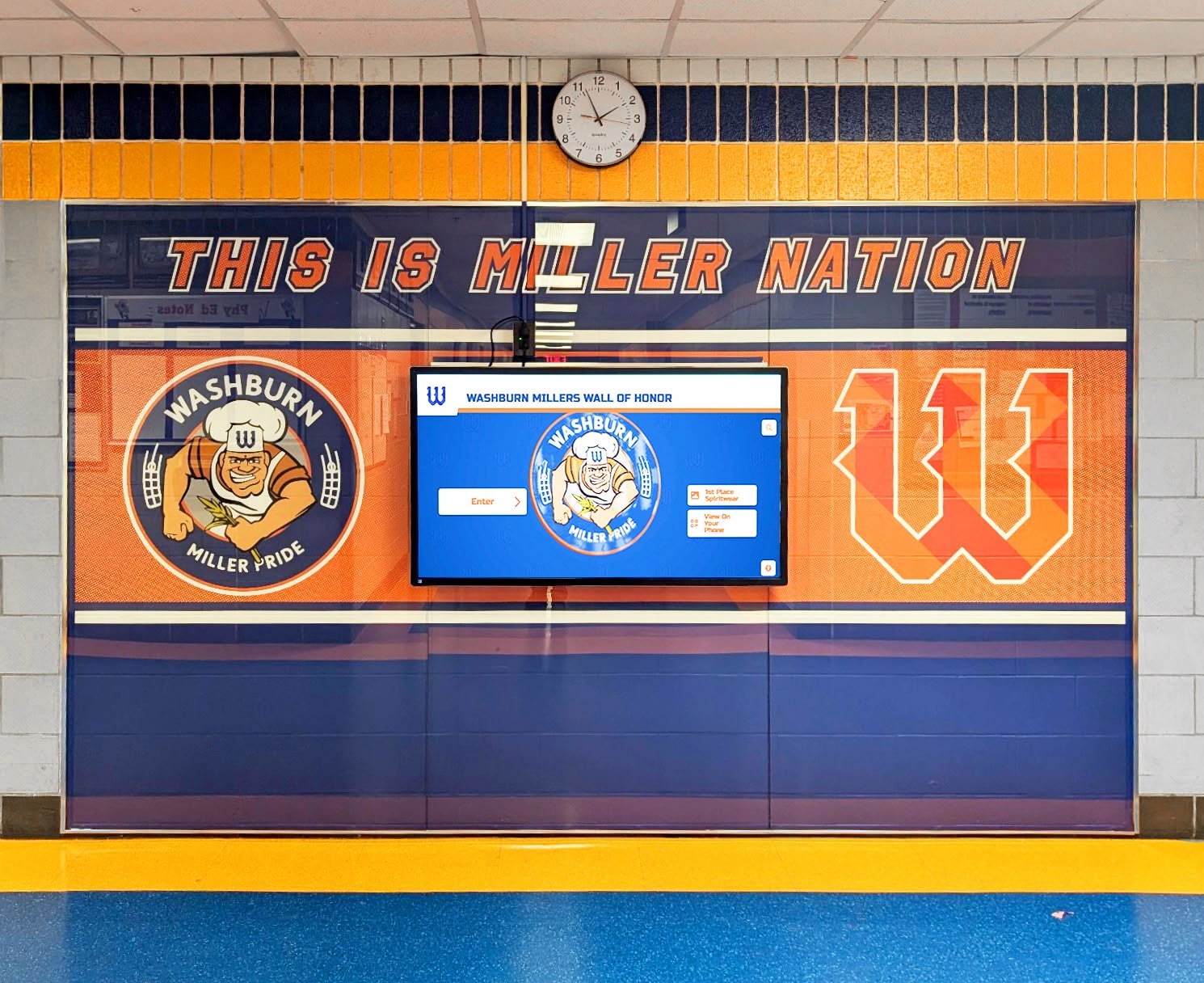
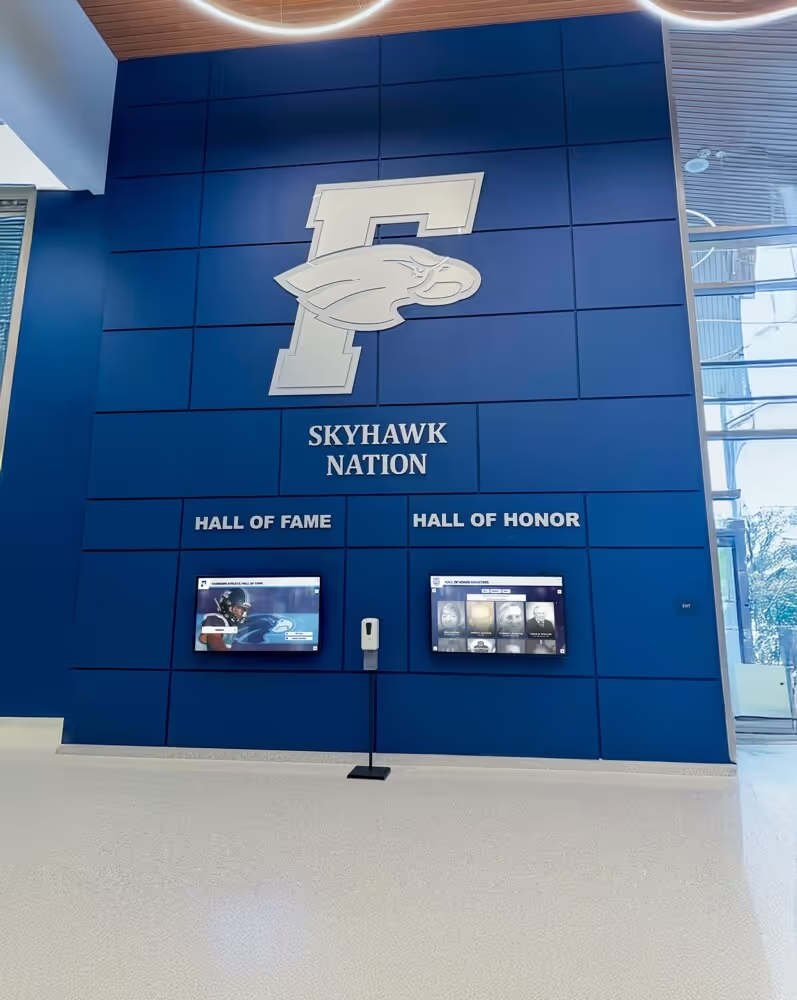
Permanent recognition displays in prominent school locations ensure salutatorian achievement receives lasting visibility beyond graduation events
Permanent School Recognition Systems
Forward-thinking schools implement comprehensive recognition systems ensuring salutatorian achievement receives lasting visibility:
Traditional Permanent Displays
- Bronze or engraved plaques listing salutatorians by year
- Trophy cases featuring academic achievement alongside athletics
- Dedicated hallway or lobby spaces for scholar recognition
- Legacy walls showing decades of academic excellence
Modern Digital Recognition Solutions like Rocket Alumni Solutions enable schools to showcase salutatorians through interactive touchscreen displays that overcome physical space limitations while providing richer recognition:
- Unlimited Capacity: Display every salutatorian in school history without physical constraints
- Multimedia Profiles: Include photos, achievements, post-graduation paths, and even recorded speech excerpts
- Searchability: Enable students, families, and visitors to instantly find specific salutatorians across decades
- Permanent Archives: Preserve achievement details that might otherwise be lost as physical plaques degrade
- Easy Updates: Add new salutatorians immediately after determination without construction or engraving delays
- ADA Compliance: Ensure all community members can access recognition through accessible design
Digital recognition displays positioned in school entrances, main hallways, or library spaces create year-round visibility that extends far beyond single graduation ceremonies, inspiring current students while honoring past achievers.
Community and Local Recognition
Salutatorian honors often extend beyond school walls:
Local Media Coverage
- Newspaper features on top academic achievers
- Local news segments highlighting graduation honors
- School district press releases celebrating academic excellence
- Community organization newsletters
Community Organization Recognition
- Rotary Club, Kiwanis, and civic group acknowledgments
- Local business sponsorship awards
- Chamber of commerce education awards
- Service organization scholarships

Prominent recognition displays in high-traffic areas ensure salutatorian achievement inspires current students while honoring graduates
This broader community recognition validates achievement beyond school context while demonstrating community investment in educational excellence.
The Value and Significance of Salutatorian Honor
Understanding the practical and symbolic value of salutatorian designation helps contextualize the honor within broader educational and professional trajectories.
College Admissions Impact
Salutatorian recognition strengthens college applications, though its specific impact varies:
Direct Benefits
- Clear demonstration of sustained academic excellence over four years
- Evidence of ability to succeed in challenging coursework
- Signal of work ethic, discipline, and intellectual capability
- Differentiation from peers in competitive applicant pools
Contextual Considerations
- Highly selective colleges evaluate achievement within school context
- Salutatorian at rigorous schools may be more impressive than valedictorian at less competitive institutions
- Admissions officers consider course rigor alongside GPA ranking
- Holistic review processes weigh multiple factors beyond academic standing
While salutatorian status doesn’t guarantee admission to any institution, it undeniably strengthens applications when combined with strong test scores, meaningful extracurriculars, compelling essays, and solid recommendations.
Scholarship Opportunities
Numerous merit-based scholarships specifically target top academic performers:
Institutional Scholarships
- Many colleges offer automatic merit awards for students above GPA thresholds
- State university systems often provide full or partial tuition for high achievers
- Private universities use merit scholarships for competitive recruitment
- Salutatorian designation frequently meets or exceeds eligibility requirements
External Scholarship Programs
- National Merit recognition for PSAT performance often correlates with salutatorian achievement
- Local civic organizations prioritize top academic performers
- Industry-specific scholarships target high-achieving students in relevant fields
- Many applications include space specifically for class rank and academic honors
Research consistently shows that high-achieving students combining salutatorian recognition with strong standardized test scores receive significantly higher merit scholarship offers than peers with comparable scores but lower class ranks.

Recognition systems can highlight salutatorians' well-rounded achievements including academics, athletics, and extracurricular leadership
Professional and Personal Significance
Salutatorian recognition extends beyond college admissions with lasting professional and personal value:
Resume and Professional Credentials
- Appropriate to include on resumes through early career stages
- Demonstrates work ethic and achievement to potential employers
- Relevant for graduate school applications years after undergraduate completion
- Professional recognition of sustained excellence under competitive conditions
Personal Development and Confidence
- Validation of years of academic dedication and sacrifice
- Confidence boost entering college or professional environments
- Pride in achievement shared with family and community
- Milestone accomplishment marking educational journey
Alumni Identity and Connection
- Inclusion in school’s legacy of academic excellence
- Connection point with other high-achieving alumni
- Recognition in school communications and reunion materials
- Continued association with academic excellence throughout life
The honor also provides important recognition for students who achieved remarkable academic success while acknowledging that small GPA differences separating first and second positions often reflect course selection timing, teacher grading variations, or other factors beyond pure intellectual capability or work ethic.
Controversies and Criticisms of Class Rank Systems
Despite widespread use, class ranking systems that determine salutatorian designation face significant criticism from educational researchers and reformers.
Arguments Against Class Ranking
Educational experts raise multiple concerns about class rank emphasis:
Discourages Academic Risk-Taking
- Students may avoid challenging courses that could lower GPA
- Fear of grade impact prevents enrollment in interesting electives
- Weighted systems don’t always fully compensate for difficulty
- Creates incentive for strategic course selection over genuine interest
Reductive Assessment of Complex Achievement
- Single number can’t capture diverse learning, growth, and accomplishment
- Ignores important non-academic skills like creativity, leadership, and resilience
- May not reflect who learned and grew most over four years
- Overemphasizes minor GPA differences with little meaningful distinction
Increases Academic Pressure and Competition
- Creates unhealthy competitive dynamics among peers
- Contributes to student stress, anxiety, and mental health challenges
- Can damage friendships and learning community relationships
- Emphasis on ranking over genuine learning and intellectual curiosity
Equity and Access Concerns
- Students from well-resourced backgrounds may have advantages in achieving top ranks
- Access to advanced courses varies by school and district
- Grading standards differ across teachers affecting rank outcomes
- Some students carry family or work responsibilities limiting academic focus
Many selective colleges have reduced or eliminated class rank requirements in admissions, recognizing these limitations and encouraging high schools to move beyond ranking systems.
Schools Moving Away from Class Rank
Growing numbers of high schools have eliminated or reduced formal ranking:
Alternative Approaches
- Latin honors systems (cum laude, magna cum laude, summa cum laude)
- Percentile-based recognition (top 10%, top 25%) rather than specific ranks
- Multiple valedictorians recognizing all students above GPA threshold
- Elimination of formal ranking with GPA reporting only
- Portfolio-based or holistic excellence recognition
According to the National Association for College Admission Counseling, approximately 40% of American high schools no longer provide class rank information, though many still recognize top academic performers through alternative systems.
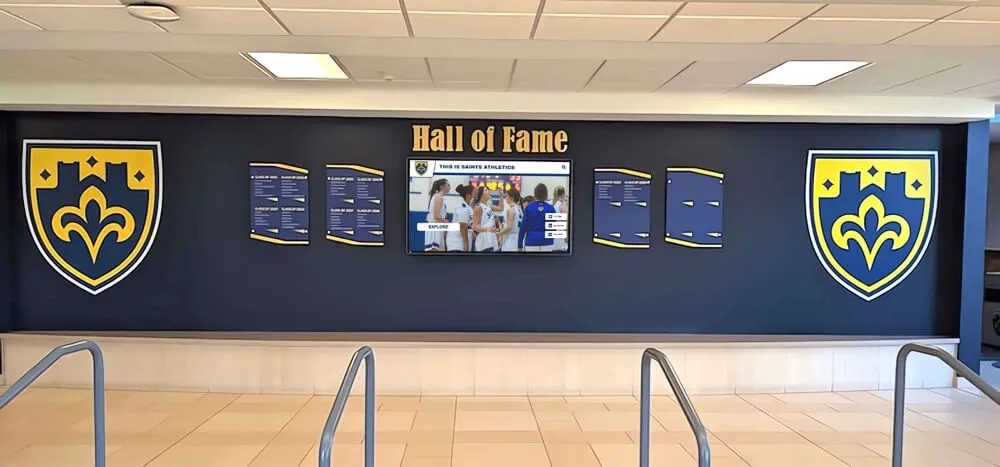
Modern recognition approaches can accommodate multiple honor levels and diverse achievement categories beyond traditional single rankings
Defending Traditional Rankings
Supporters of class rank systems counter with their own arguments:
Clear, Objective Standards
- GPA-based ranking provides transparent, measurable criteria
- Eliminates subjectivity from top honor determinations
- Students understand exactly what determines recognition
- Creates clear incentive structure for academic achievement
Motivation and Goal-Setting
- Visible ranking motivates students to maximize academic performance
- Provides concrete goals students can work toward
- Recognition of sustained excellence over entire high school career
- Celebrates academic achievement as deserving prominence
Historical Tradition and Meaning
- Valedictorian and salutatorian honors have deep educational roots
- Recognition carries meaning to students, families, and communities
- Provides ceremony structure and student voice opportunities
- Preserves traditions connecting generations of graduates
The debate continues as schools balance these competing perspectives, with practices varying widely across districts and regions.
Frequently Asked Questions About Salutatorian
Common questions reveal the practical concerns students and families have about this academic honor.
Can there be multiple salutatorians?
Yes, schools frequently recognize multiple salutatorians when two or more students share the exact same second-highest GPA. Some schools intentionally recognize all students within a very small GPA range (for example, within 0.01 points) rather than using extended decimal precision to differentiate between nearly identical academic records.
When multiple salutatorians exist, schools typically allow all recognized students to deliver brief remarks or may select speech representatives through audition or volunteer processes.
What GPA do you need to be salutatorian?
There’s no universal GPA requirement—salutatorian designation depends entirely on class rank rather than absolute GPA thresholds. The specific GPA needed varies dramatically across schools based on:
- Competitive nature of the student body
- Grading scales and standards (some schools have grade inflation, others deflation)
- Weighted vs. unweighted GPA systems
- Availability of advanced coursework
- School size and number of high-achieving students
At highly competitive schools, salutatorians might have weighted GPAs of 4.7 or higher, while at other schools, a 3.9 unweighted GPA might secure the honor. The only requirement is ranking second academically in your specific graduating class.
Is salutatorian only for high school?
Primarily yes, though some colleges and universities also designate salutatorians. The tradition is most common and well-established at the high school level, where class ranking systems remain more prevalent than at many colleges.
Many colleges have moved to Latin honors distinctions (cum laude, magna cum laude, summa cum laude) or departmental honors rather than identifying single valedictorians and salutatorians, though practices vary by institution.
Does being salutatorian help with college admissions?
Absolutely. Salutatorian designation demonstrates sustained academic excellence and ranks among the strongest indicators of college readiness. However, its impact varies:
- Most beneficial at highly selective institutions where many applicants have strong credentials
- Evaluated within school context—admissions officers consider school competitiveness
- One component of holistic review including essays, recommendations, and extracurriculars
- Particularly valuable when combined with challenging course rigor
- May qualify for automatic merit scholarships at many institutions
While salutatorian status doesn’t guarantee admission anywhere, it significantly strengthens applications across the selectivity spectrum.
Can salutatorian ranking change before graduation?
Yes, until final grades from senior year are submitted and official calculations completed. Final class rankings typically aren’t determined until 6-8 weeks before graduation, meaning:
- Performance in final semester courses can impact calculations
- Students very close in GPA might exchange positions
- Some schools wait until all final exams are graded
- Preliminary rankings earlier in senior year may shift
Students should maintain academic performance through graduation rather than assuming rankings are final.
Celebrating Academic Excellence Beyond Rankings
While salutatorian recognition celebrates remarkable achievement, comprehensive academic recognition systems acknowledge excellence across broader dimensions.
Multi-Dimensional Achievement Recognition
Progressive schools implement recognition programs honoring diverse accomplishments:
Subject-Specific Excellence
- Departmental awards in individual disciplines
- Recognition for exceptional growth in specific subjects
- Acknowledgment of specialized talents and achievements
- Celebration of diverse academic strengths
Effort and Improvement Recognition
- Most improved student awards
- Persistence in face of academic challenges
- Growth mindset and resilience demonstration
- Recognition that achievement isn’t only about final GPA
Schools can recognize diverse achievements through comprehensive academic recognition programs while understanding traditional benchmarks like honor roll requirements ensures more students receive meaningful acknowledgment while maintaining special recognition for top academic performers like salutatorians.

Interactive displays can showcase diverse achievement categories ensuring recognition extends beyond traditional rankings to celebrate varied forms of excellence
Creating Lasting Recognition Systems
Schools committed to honoring academic achievement invest in recognition infrastructure that:
Provides Year-Round Visibility
- Permanent displays in high-traffic locations
- Regular updates celebrating current achievements
- Archives preserving institutional history
- Inspiration for current students pursuing excellence
Adapts to Changing Recognition Philosophies
- Flexibility to accommodate multiple honor categories
- Capacity for unlimited recognition without space constraints
- Easy updates as programs evolve
- Inclusivity for diverse achievement types
Engages Multiple Stakeholders
- Student engagement with achievement histories
- Family pride in permanent recognition
- Alumni connection to institutional legacy
- Community celebration of educational excellence
Modern digital recognition platforms enable schools to honor salutatorians alongside other academic achievers through systems that grow with institutions rather than imposing physical limitations.
Conclusion: Honoring Excellence While Inspiring Future Achievement
The salutatorian honor represents one of the highest academic recognitions American high schools bestow, acknowledging years of intellectual dedication, countless hours of focused study, and consistent excellence under challenging conditions. For students earning this distinction, it validates tremendous effort while providing platforms to address graduating classes and communities about shared experiences and future possibilities.
Yet the most meaningful recognition extends beyond single graduation ceremonies. When schools implement comprehensive systems that permanently honor salutatorians alongside other achievers, they create environments where academic excellence receives visibility equal to its importance in student development and institutional mission.
Whether through traditional bronze plaques or modern digital displays, lasting recognition ensures that salutatorian achievement inspires current students, connects alumni across generations, and demonstrates institutional commitment to celebrating intellectual accomplishment. The honor itself may acknowledge individual distinction, but comprehensive recognition systems benefit entire school communities by reinforcing that academic excellence matters deeply and deserves prominent celebration.
For schools seeking to modernize academic recognition while maintaining traditions like salutatorian designation, schedule a demo to explore how digital recognition platforms can honor top academic achievers through engaging, accessible, and unlimited displays that grow with your institution for decades to come.