



School hallways serve as more than transitional spaces—they represent daily touchpoints where students, staff, and visitors experience institutional identity and values. Yet many schools settle for bland corridors with peeling paint, dated bulletin boards, and uninspiring walls that fail to engage the communities they serve. Traditional approaches like hand-painted murals require significant time and budget, while basic paint jobs offer limited visual impact.
Wall wraps for schools provide comprehensive solutions that transform ordinary hallways, gymnasiums, cafeterias, and common areas into vibrant spaces celebrating achievement, reinforcing educational values, and building institutional pride. These large-format vinyl graphics combine professional design quality with practical installation, creating lasting visual impact at costs substantially below traditional mural painting or facility renovation.
This complete guide explores everything school administrators and facilities managers need to know about wall wraps: design strategies that maximize impact, material selection ensuring durability in high-traffic environments, installation processes minimizing disruption, cost considerations fitting school budgets, and maintenance requirements keeping graphics looking fresh for years.
Schools nationwide are discovering that facility graphics represent strategic investments in learning environment quality and institutional culture. When corridors showcase student achievement, educational content, and school identity through professional graphics, they create daily reinforcement of values while building pride throughout the school community.

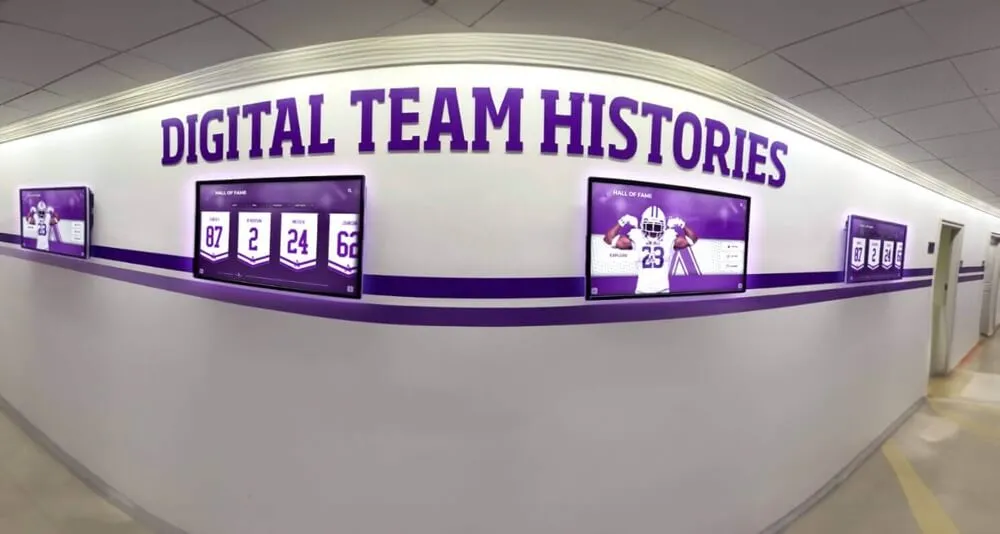
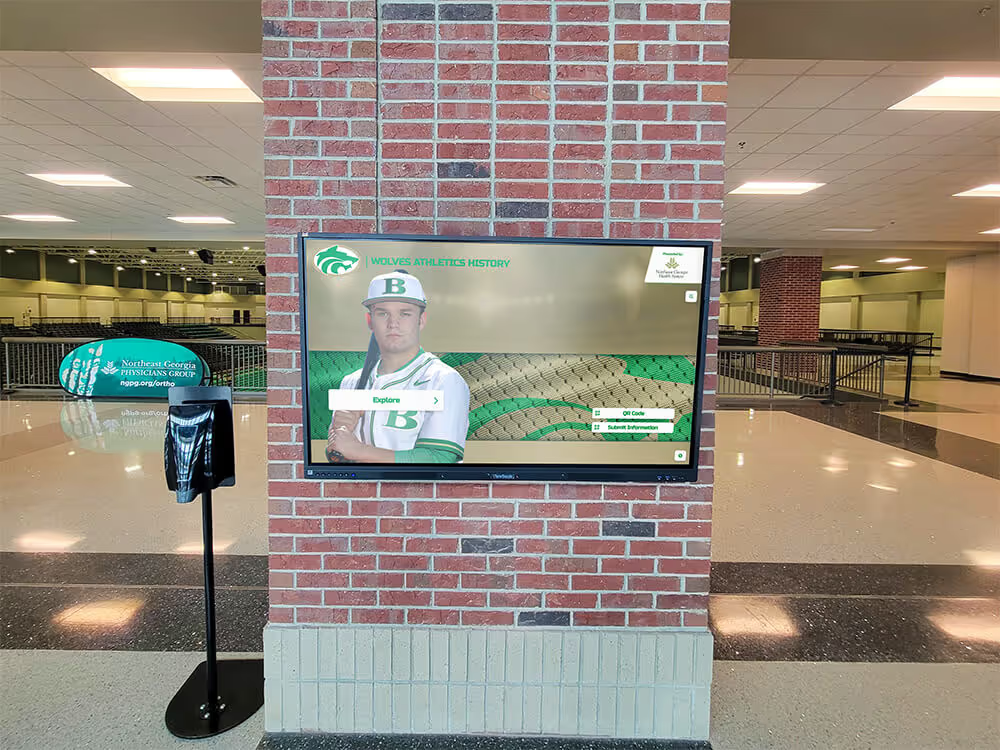
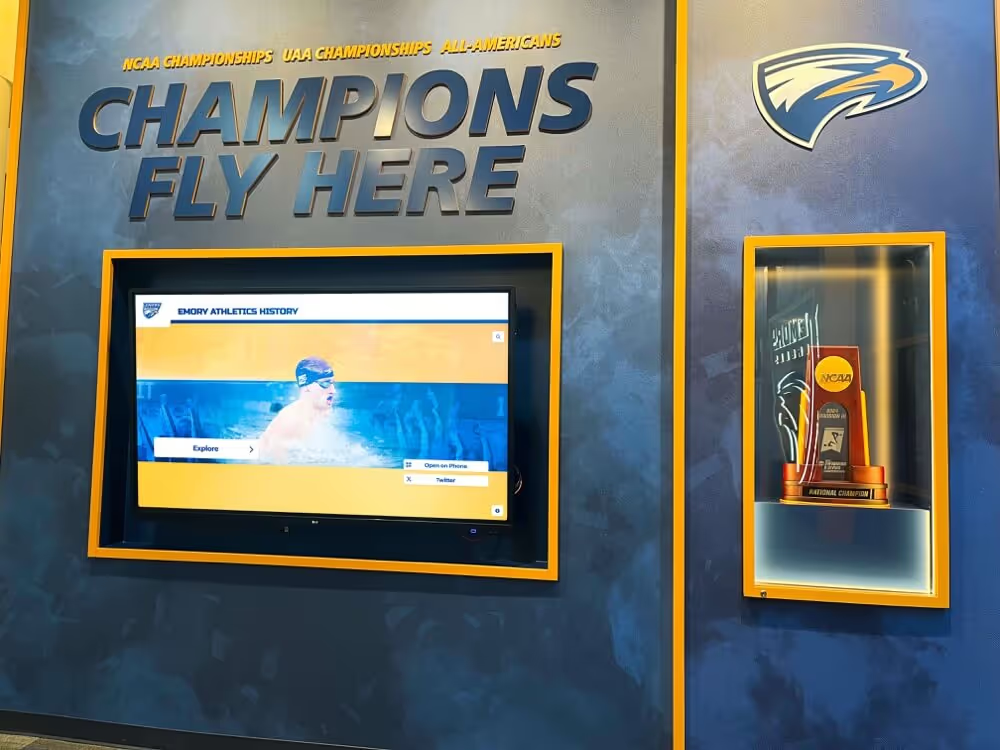
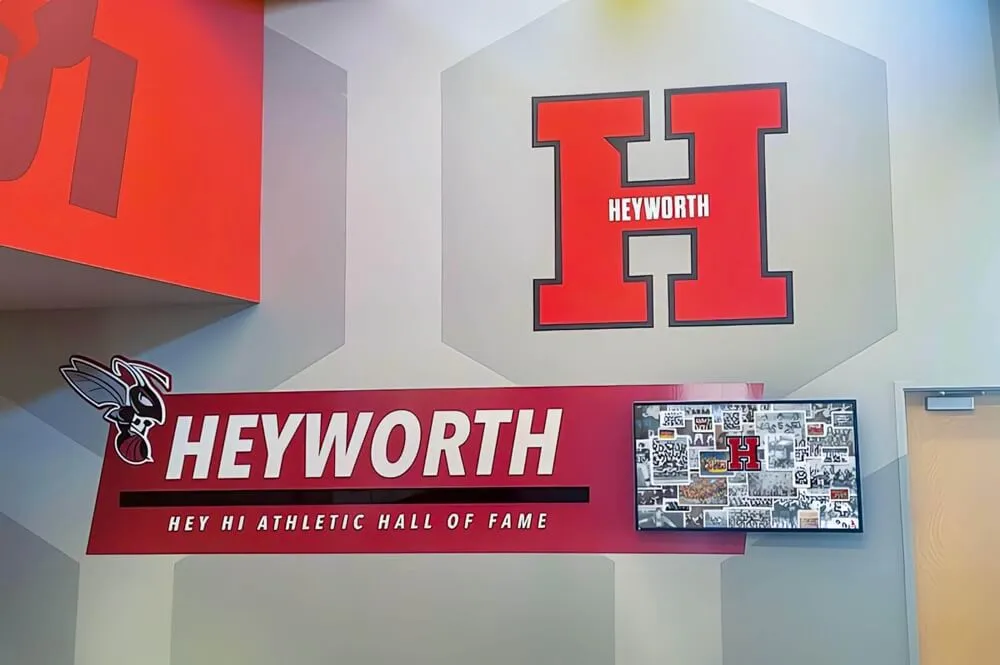
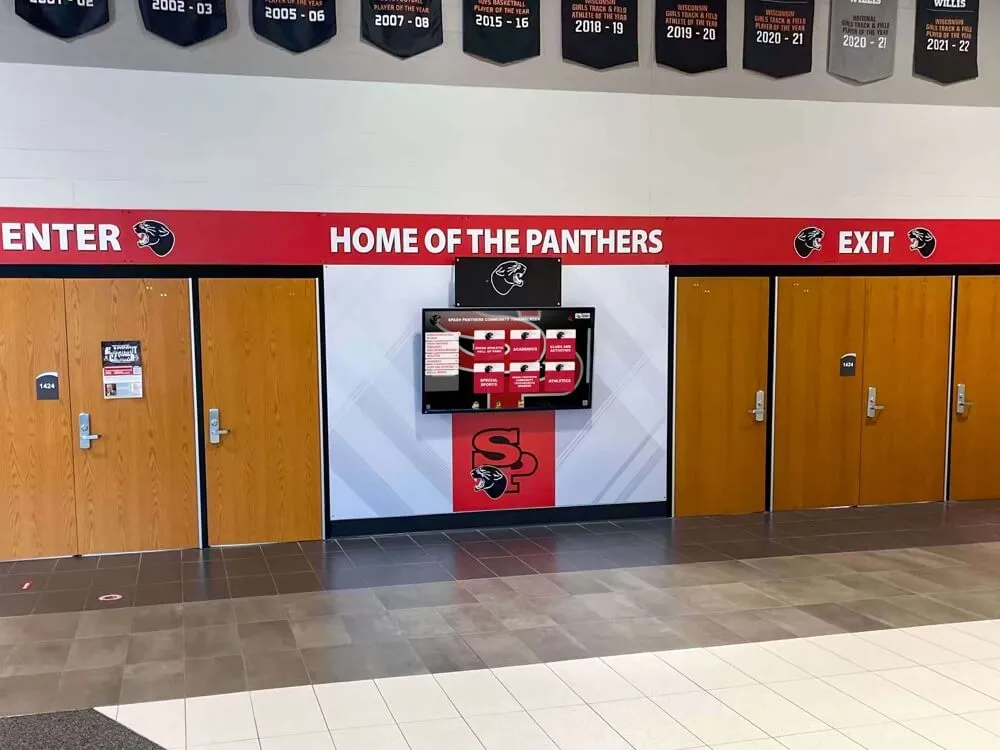
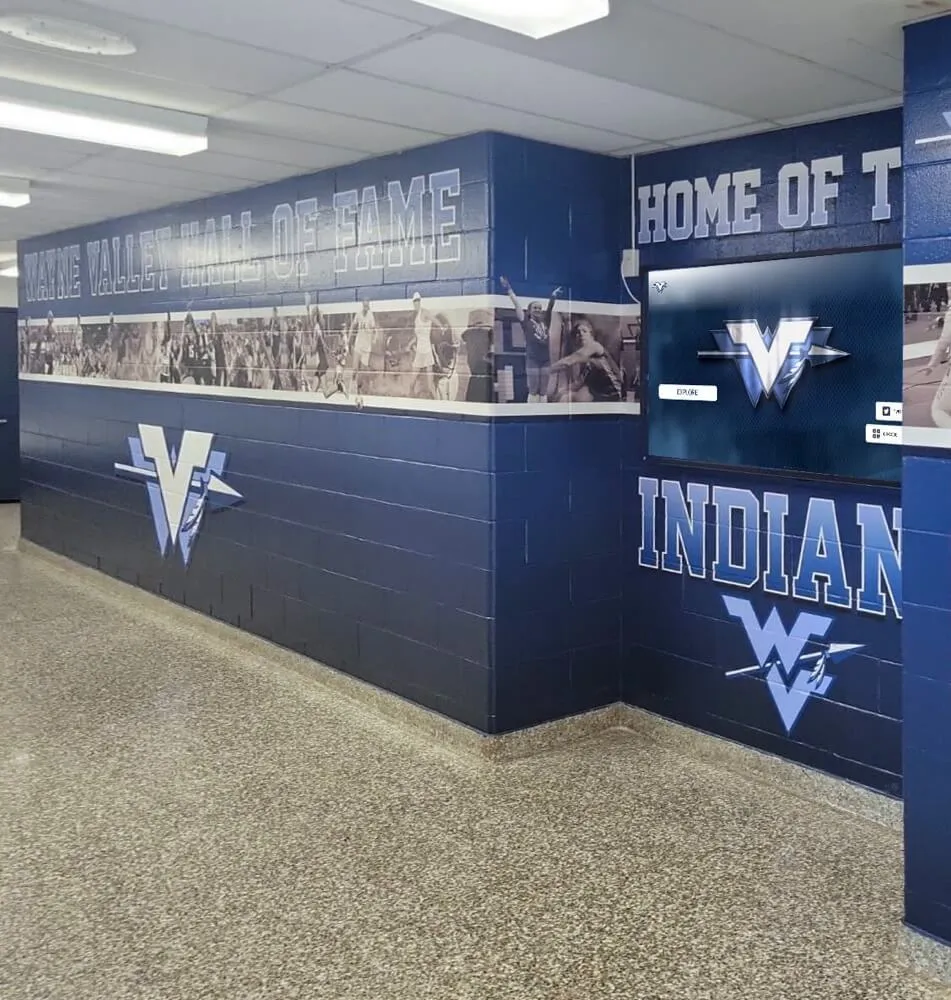
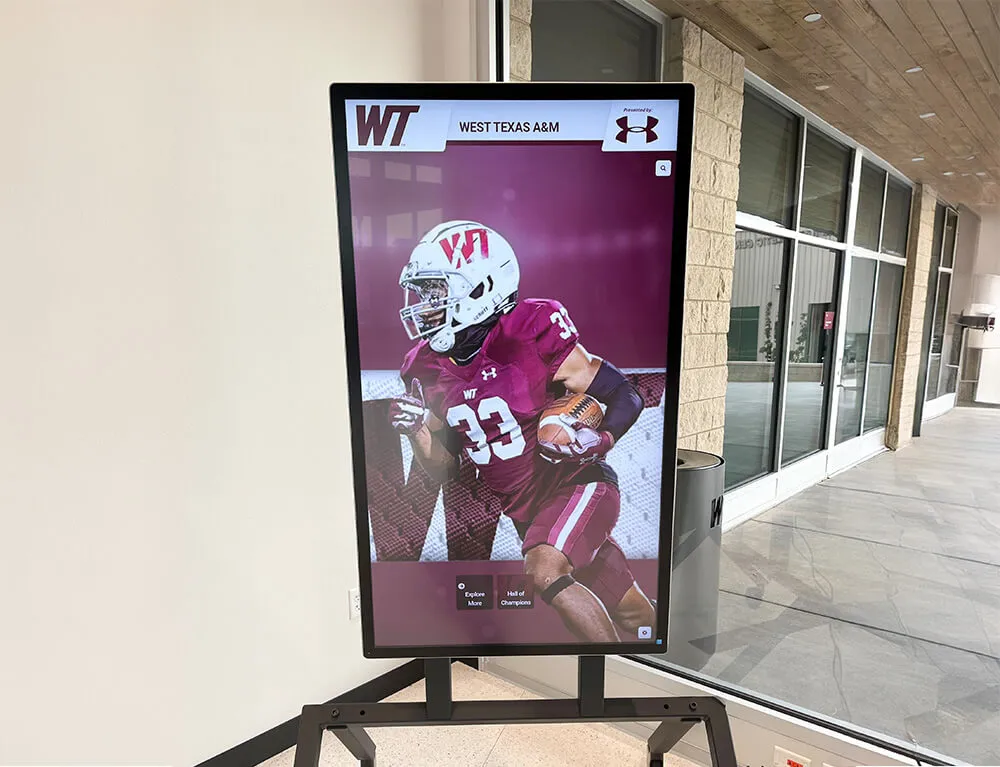
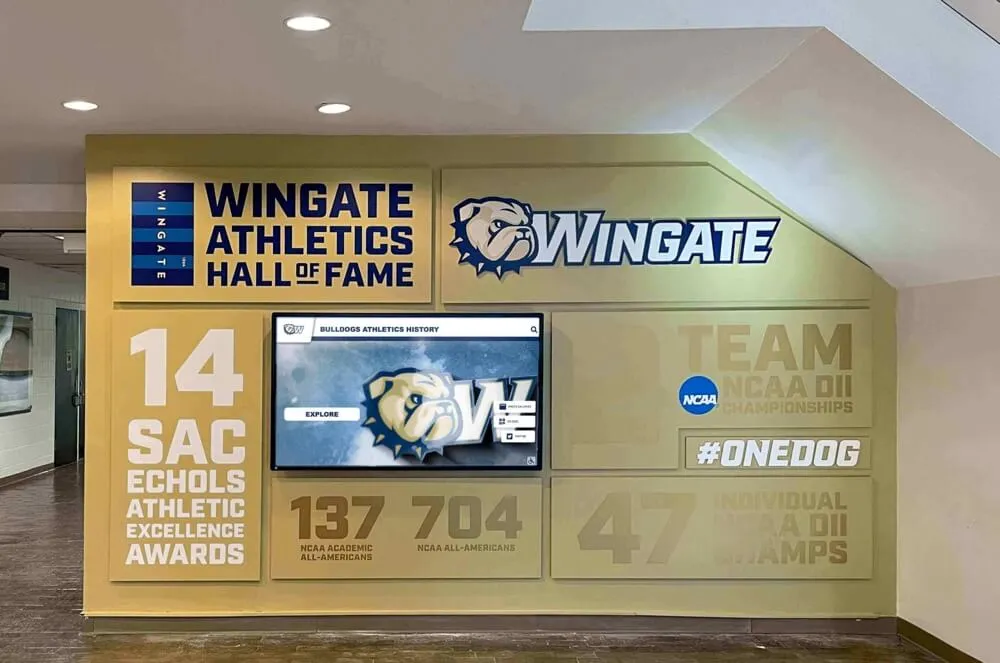
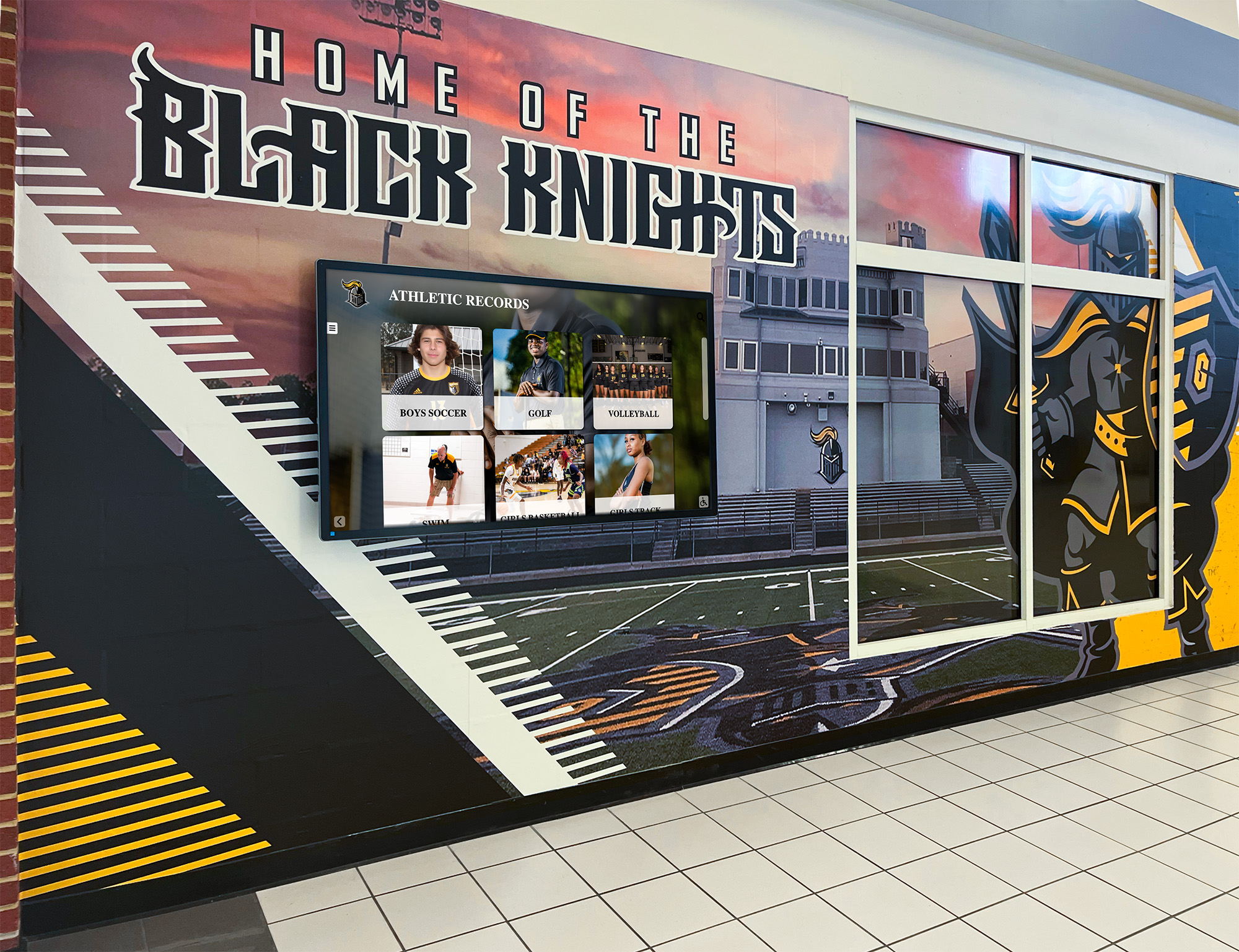
Modern school hallways combine wall wraps with digital displays to create comprehensive recognition and branding environments
Understanding Wall Wraps for Educational Environments
Before exploring specific applications, administrators should understand what wall wraps are, how they differ from traditional approaches, and why they work particularly well in school settings.
What Are School Wall Wraps?
Wall wraps are large-format vinyl graphics professionally designed and precisely manufactured to cover interior walls, creating seamless visual presentations impossible with traditional painting or murals.
Core Characteristics
- High-resolution digital printing producing photographic quality imagery
- Durable vinyl materials engineered for interior wall applications
- Custom sizing fitting exact wall dimensions from floor to ceiling
- Professional installation ensuring bubble-free, permanent adhesion
- Removable options enabling future updates without wall damage
According to industry sources, wall wraps can cover or wrap most interior surfaces in schools—from smooth wallboard to concrete block—using specialized adhesive-backed vinyl materials designed for each surface type.
How Wall Wraps Differ from Traditional Murals While hand-painted murals require artists spending days or weeks on-site, wall wraps arrive pre-printed and install in hours rather than days. This fundamental difference provides schools with predictable costs, precise design implementation, and minimal facility disruption during installation.
Materials and Construction
Understanding wall wrap materials helps administrators evaluate quality and longevity.
Vinyl Types and Specifications
- Cast vinyl for smooth walls providing 7-10 year lifespan expectancy
- Calendared vinyl for textured surfaces with 3-5 year durability
- Specialty adhesive formulations engineered for educational environments
- Matte or gloss finishes depending on aesthetic preferences
- Fire-rated materials meeting building code requirements
Schools should specify commercial-grade materials rather than short-term promotional graphics to ensure graphics withstand daily student interaction and cleaning protocols.
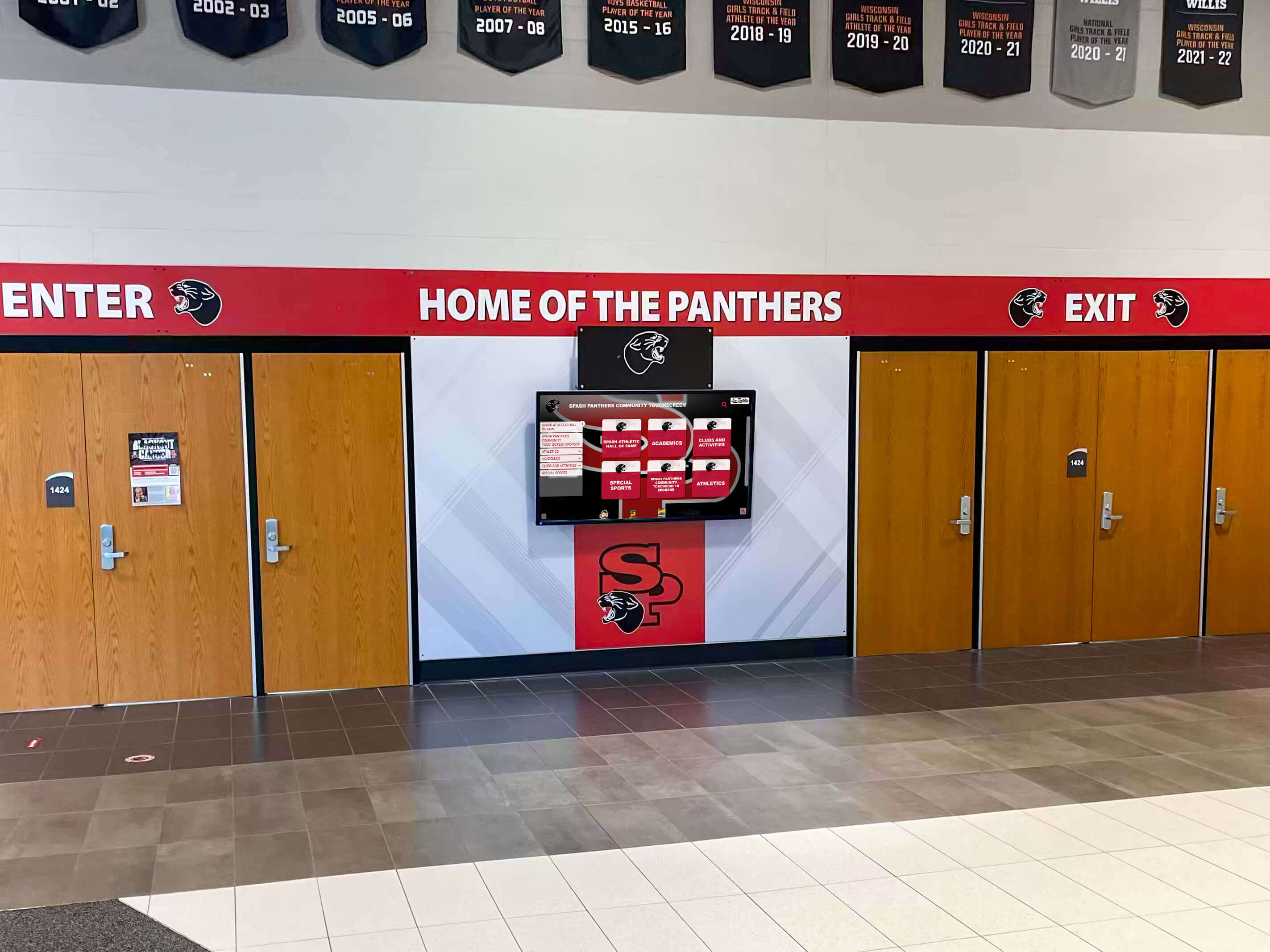
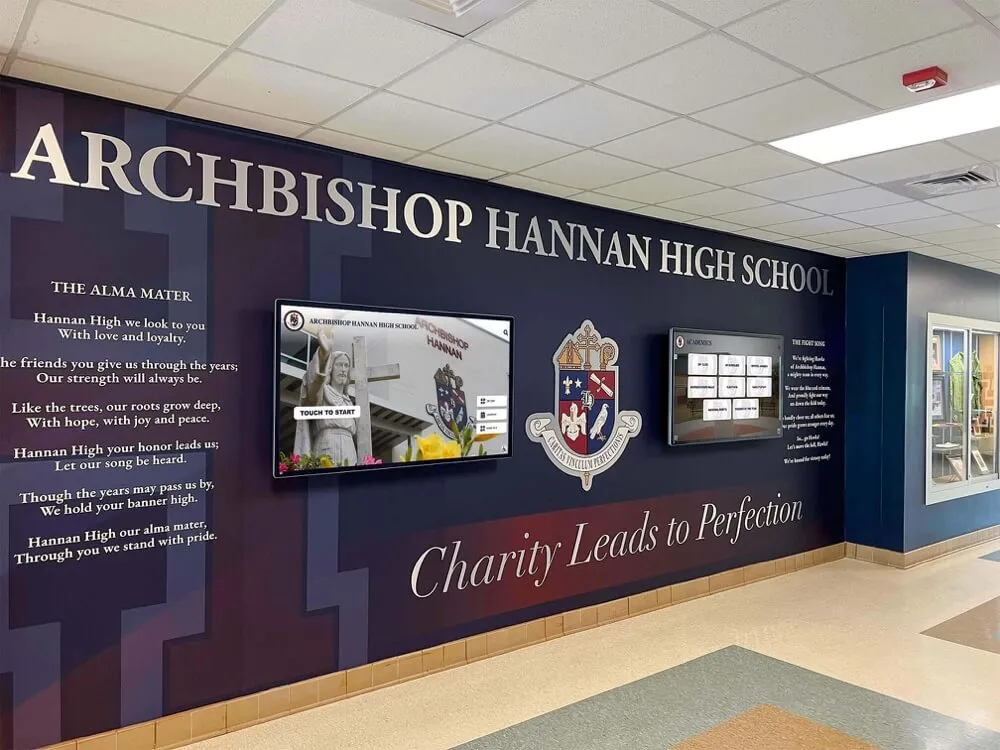
Entrance areas benefit from wall graphics creating immediate visual impact for students, parents, and visitors
Surface Compatibility Professional installers can apply wall wraps to:
- Painted drywall and plaster surfaces
- Concrete block walls common in school construction
- Smooth cement board and paneling
- Previously painted surfaces with stable, non-peeling finishes
- Freshly painted walls after appropriate curing time
Textured surfaces may require specialized vinyl or surface preparation, adding installation complexity and cost.
Advantages Over Traditional Wall Treatments
Wall wraps offer schools several distinct benefits compared to paint or hand-painted murals.
Cost Effectiveness According to research from industry providers, while basic solid-color paint costs less upfront, the comparison shifts dramatically when schools require custom artwork, branding elements, or multiple colors. Wall wraps provide:
- Predictable fixed costs with accurate pre-project quotes
- Elimination of artist hourly rates and multi-day labor expenses
- Reduced facility disruption minimizing school schedule impact
- Professional design services often included in project pricing
- Long-term durability reducing repainting frequency
Schools implementing complex designs typically save 30-50% compared to commissioning hand-painted murals of comparable quality.
Design Flexibility Digital printing enables design possibilities impossible with traditional approaches:
- Full-color photography reproducing images with perfect accuracy
- Complex illustrations and detailed graphics
- Precise logo reproduction maintaining brand standards
- Typographic control ensuring text legibility and visual hierarchy
- Unlimited color palettes without paint mixing limitations
These capabilities let schools implement sophisticated branding and educational content that hand-painting cannot match.
Installation Speed Project timelines strongly favor wall wraps over traditional alternatives:
- Pre-production off-site eliminates school disruption during fabrication
- Installation typically completes in hours per wall rather than days
- No drying time required before space returns to service
- Minimal equipment and workspace needed during installation
- Ability to schedule installation during school breaks or weekends
Schools can transform entire hallways during holiday breaks without extending projects into instructional time.
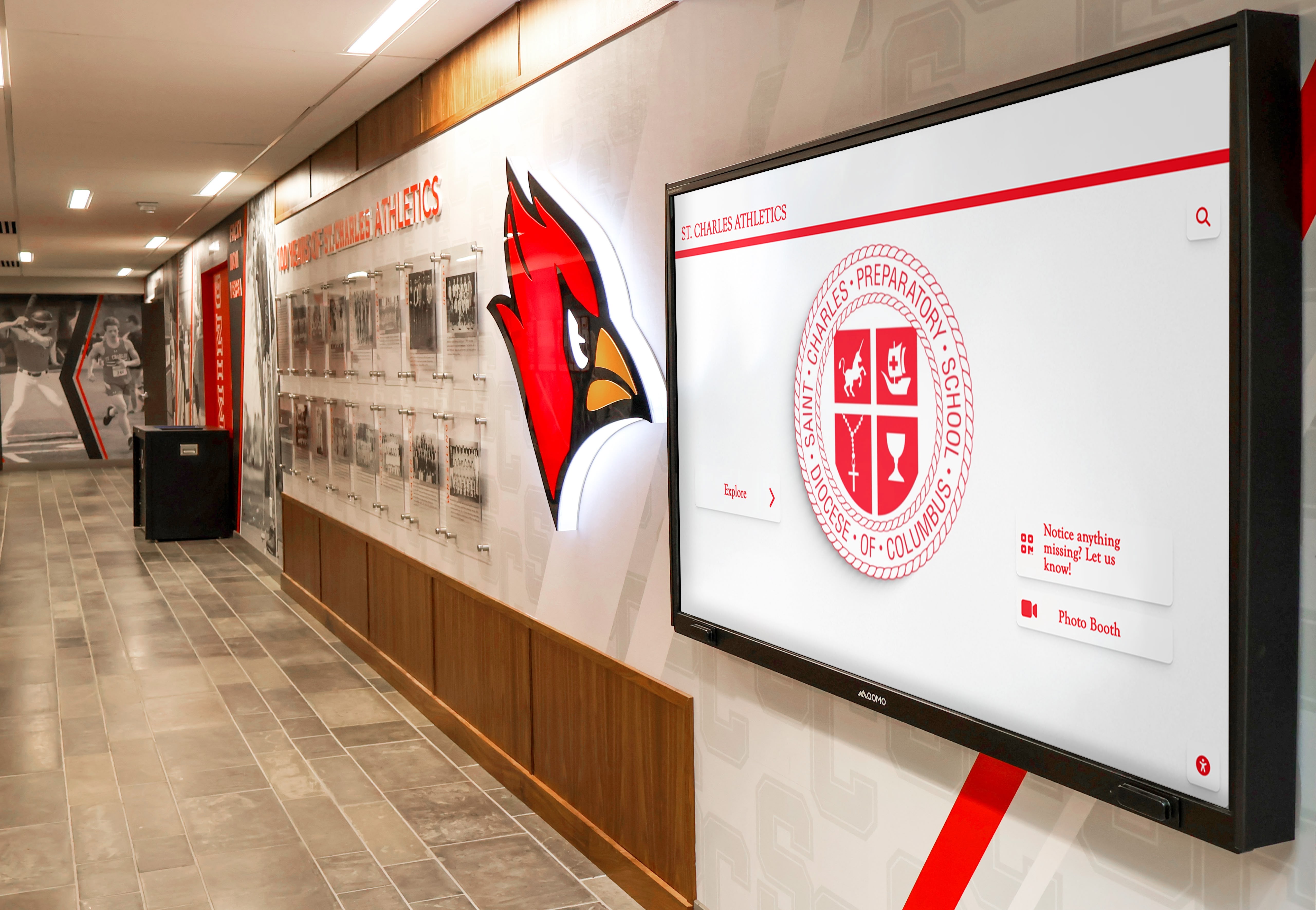
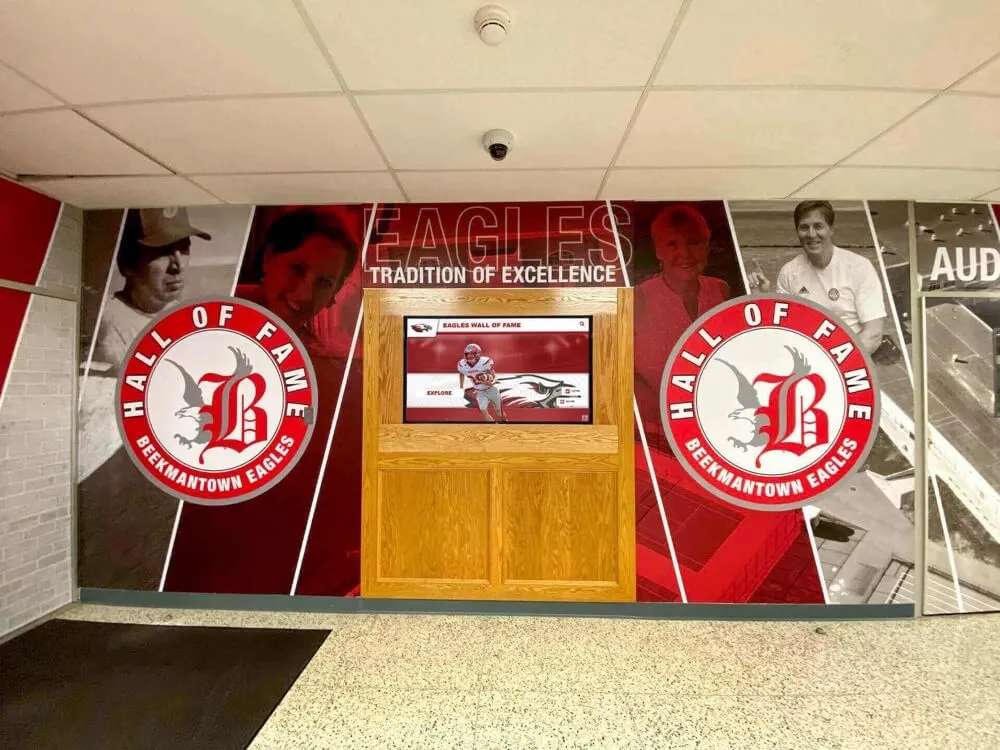
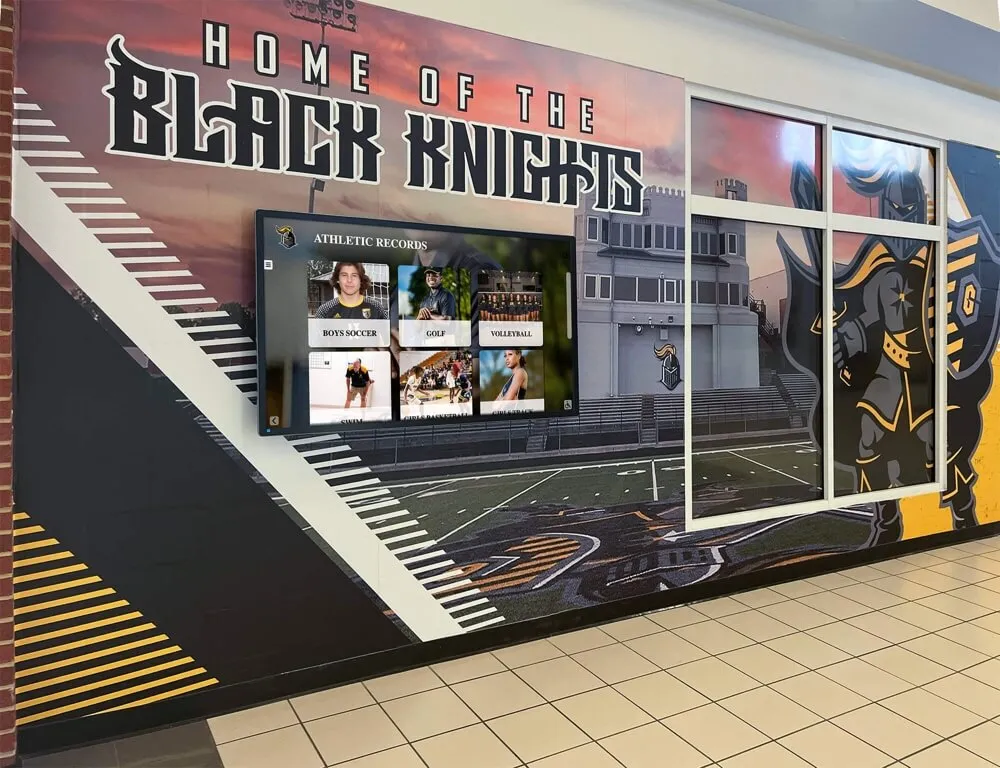
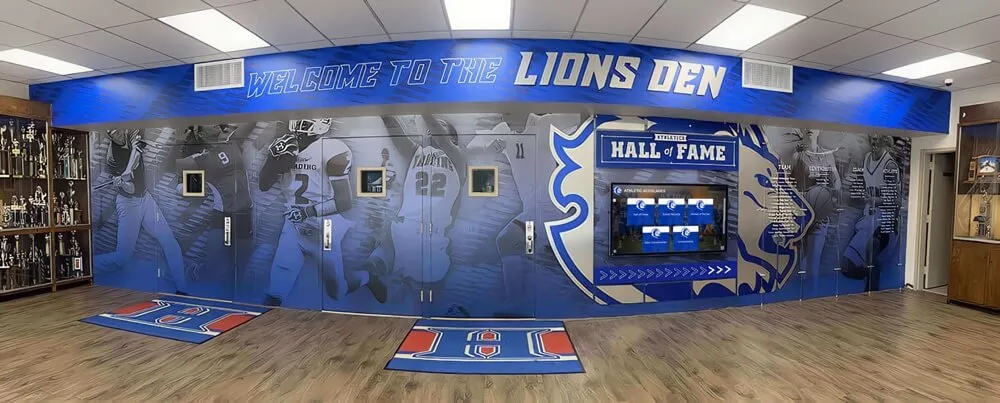
Athletic corridors showcase team branding and create energizing environments for student-athletes
Durability and Maintenance Modern wall wrap materials withstand educational environment demands:
- Scratch-resistant surfaces surviving student contact
- Cleanable finishes compatible with standard disinfectants
- Color stability maintaining appearance without fading
- Moisture resistance preventing peeling in humid conditions
- 5-10 year lifespan expectancy with proper maintenance
Schools report wall wraps requiring significantly less maintenance than painted walls that show scuff marks, require touch-ups, and need repainting every few years.
Strategic Applications in School Facilities
Effective wall wrap programs target specific locations where graphics deliver maximum impact on school culture and learning environment.
Main Entrance and Administrative Areas
First impressions shape visitor perceptions and set tones for student daily experiences.
Entrance Lobby Design Strategies School front entries benefit from wall wraps that:
- Display school mission statements and core values prominently
- Showcase mascots and school branding creating immediate identity
- Welcome visitors with professional, polished visual presentations
- Feature student achievement highlights demonstrating excellence
- Incorporate wayfinding elements guiding visitors efficiently
According to education facility design research, entrance graphics significantly influence prospective family impressions during school tours and open houses.
Administrative Office Enhancements Guidance offices, main offices, and administrative spaces can feature:
- Calming color palettes and positive messaging
- College and career readiness graphics inspiring student planning
- Historical timelines documenting school heritage
- Community value statements reinforcing institutional culture
- Professional branding elevating perceived institutional quality
These applications create environments where students and families engage with school leadership and support services.
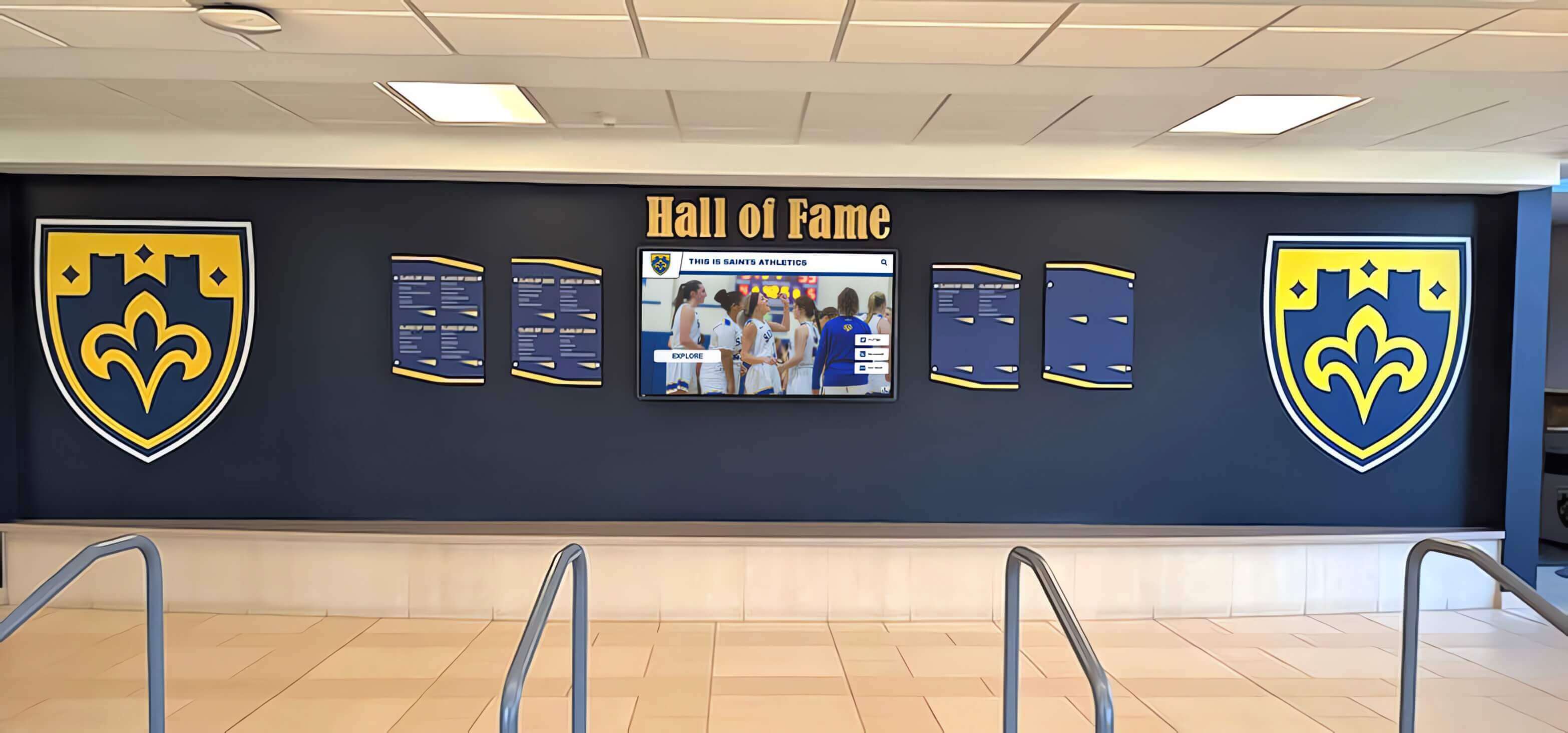
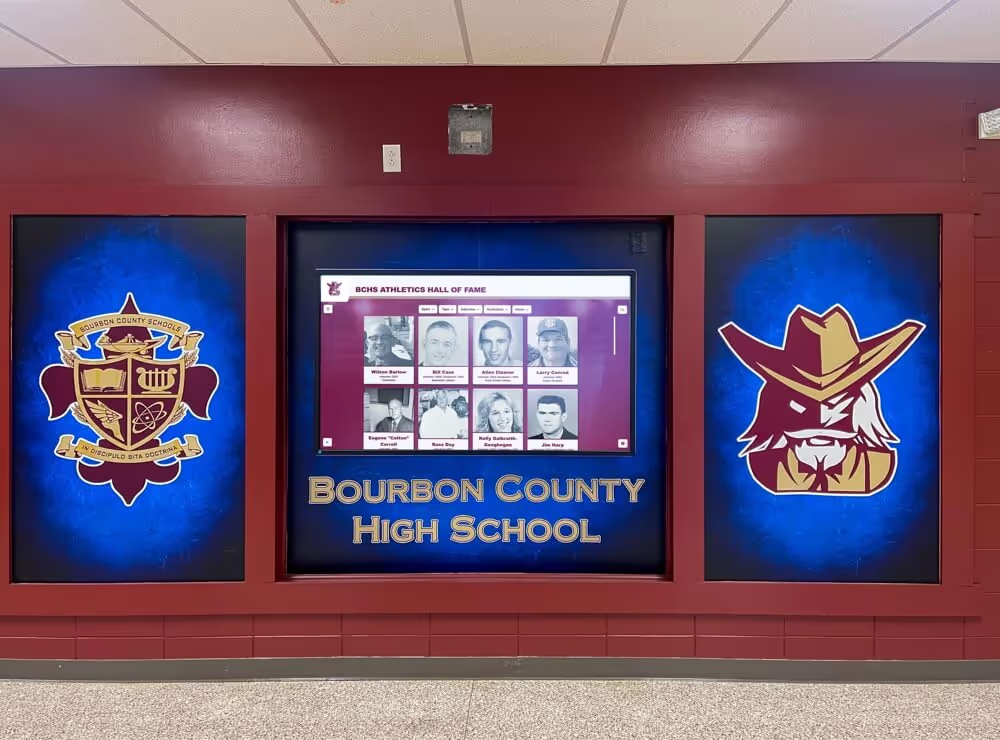
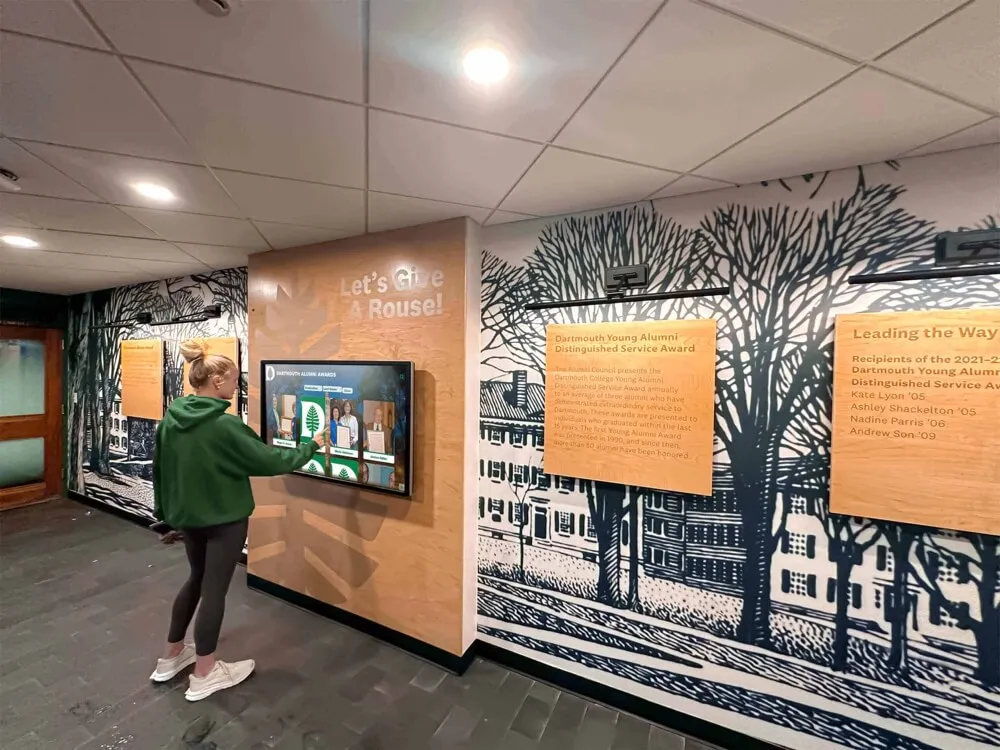
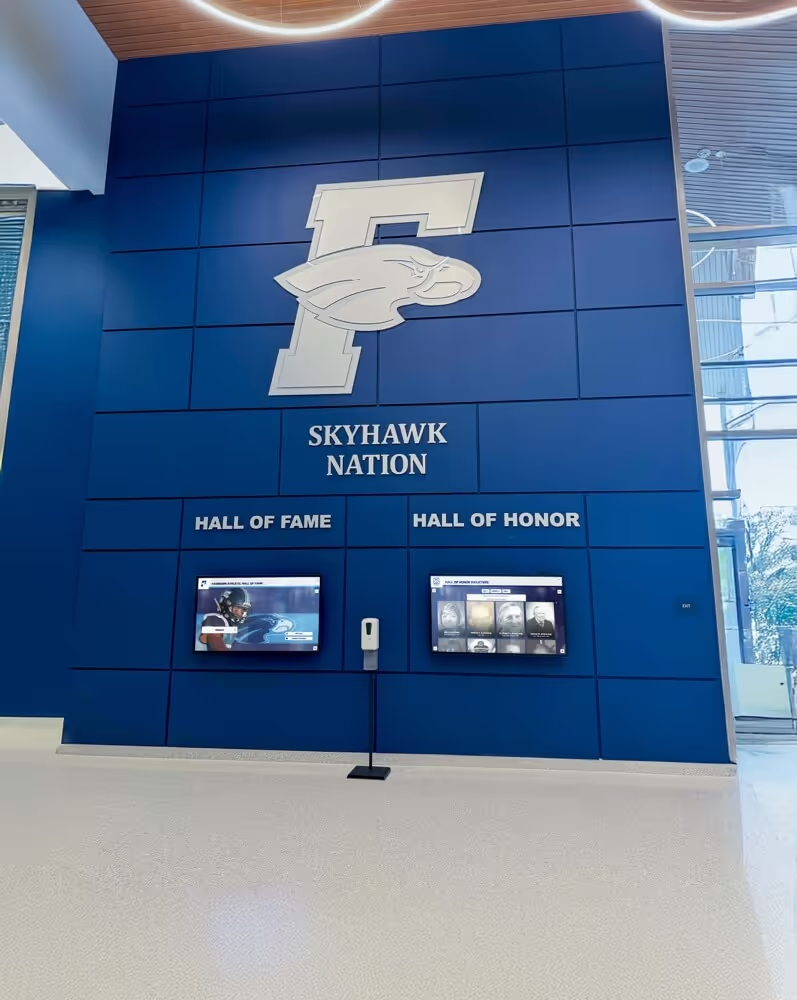
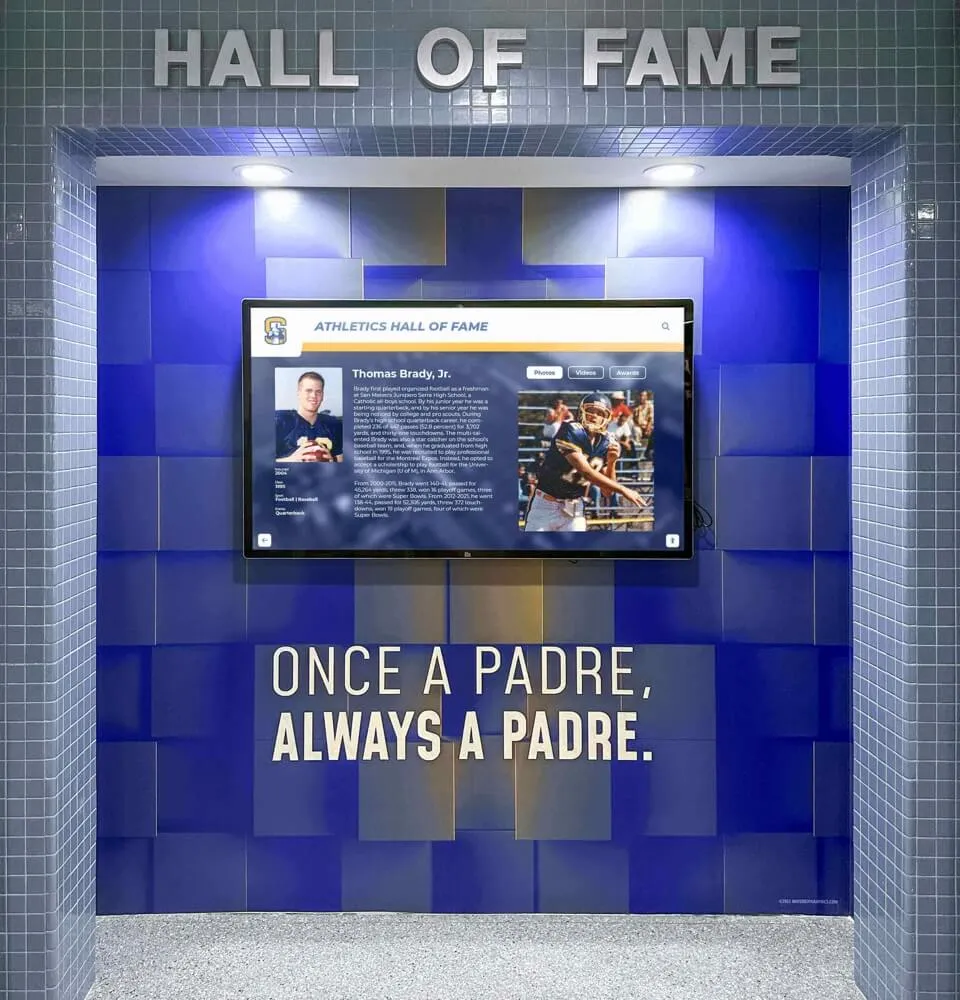
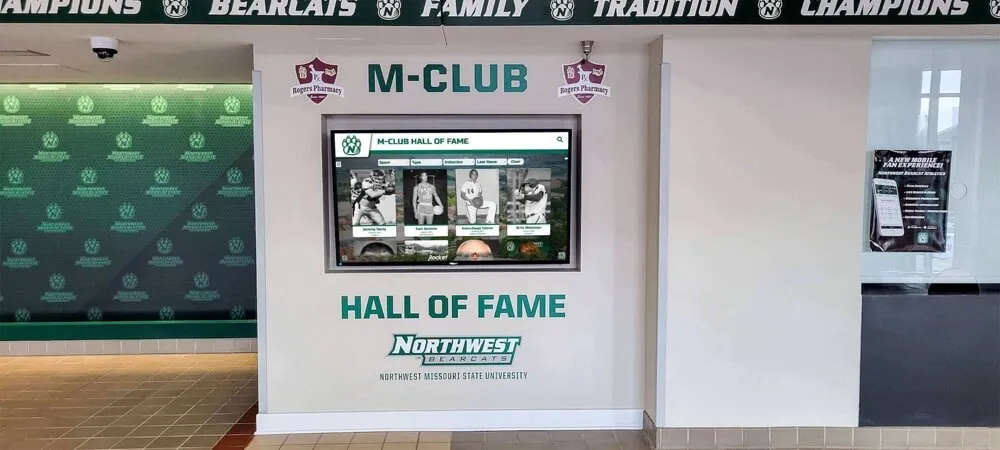
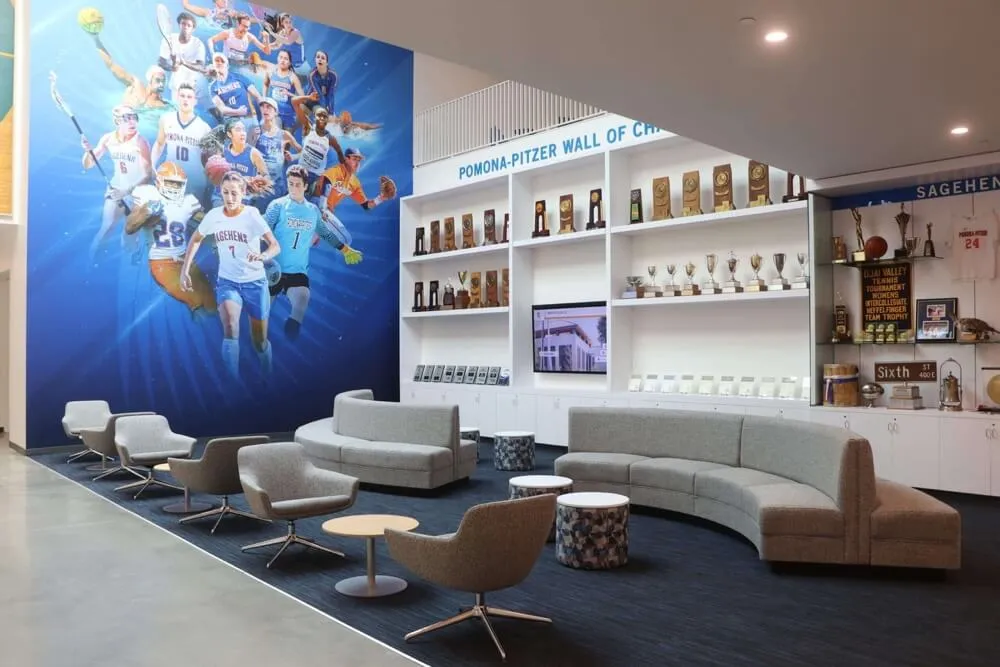
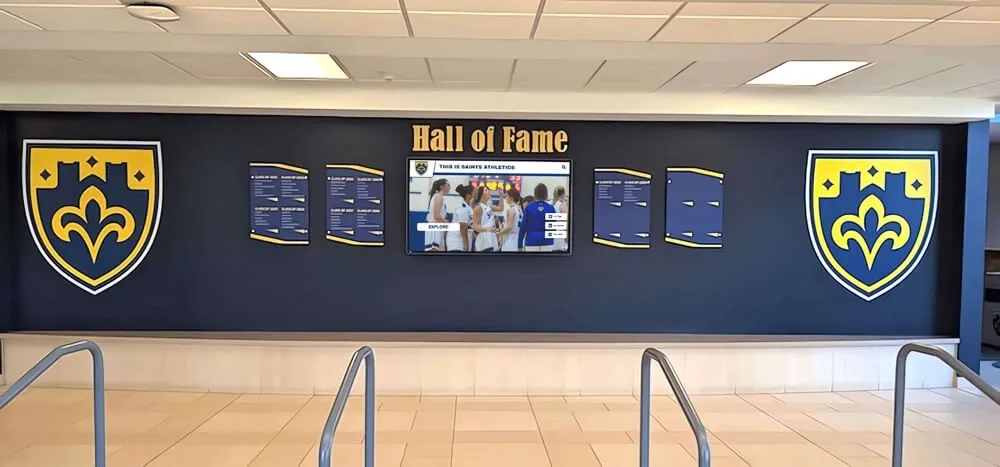
Lobby spaces integrate wall graphics with digital displays to create comprehensive recognition environments
Athletic Facilities and Team Spaces
Sports venues represent high-traffic, high-visibility areas where wall wraps maximize school spirit impact.
Gymnasium and Arena Graphics Large-format gymnasium wall wraps can feature:
- Championship banner reproduction preserving athletic achievements without expensive fabric banners
- Motivational quotes from famous athletes and coaches
- Team rosters and season highlights celebrating current programs
- Mascot graphics creating intimidating home-court advantage
- Safety messaging and emergency procedures
Schools report gymnasium graphics creating energizing environments that players, students, and community members notice immediately during games and events.
Locker Room and Weight Room Designs Athletic training spaces benefit from wall wraps featuring:
- Team mottos and core values reinforcing program culture
- Training technique illustrations demonstrating proper form
- Record boards showcasing top athletic performances
- Recruitment graphics highlighting program achievements
- Before/after transformation imagery motivating athlete commitment
Athletic directors note that professional locker room environments influence recruit impressions and team culture development.
Stadium and Concourse Areas Exterior-rated vinyl graphics can transform:
- Concession stand areas with menu boards and branding
- Restroom corridors with wayfinding and team graphics
- Ticket booth surroundings creating professional appearance
- Entrance tunnels building anticipation for player and fan entrance
- Press box and hospitality suite interiors
Academic Hallways and Classrooms
Educational spaces represent primary environments where wall wraps can reinforce learning objectives and subject-specific content.
Subject-Specific Corridor Themes Academic wings benefit from content-aligned graphics:
- Science hallways featuring periodic tables, anatomy diagrams, and scientific method steps
- Mathematics corridors displaying formulas, problem-solving strategies, and mathematician profiles
- Language arts passages showcasing literary quotes, grammar rules, and author biographies
- History timelines documenting events, figures, and cultural movements
- World language graphics displaying vocabulary, cultural imagery, and conversation phrases
Teachers report curriculum-aligned hallway graphics providing constant visual reinforcement supporting classroom instruction.
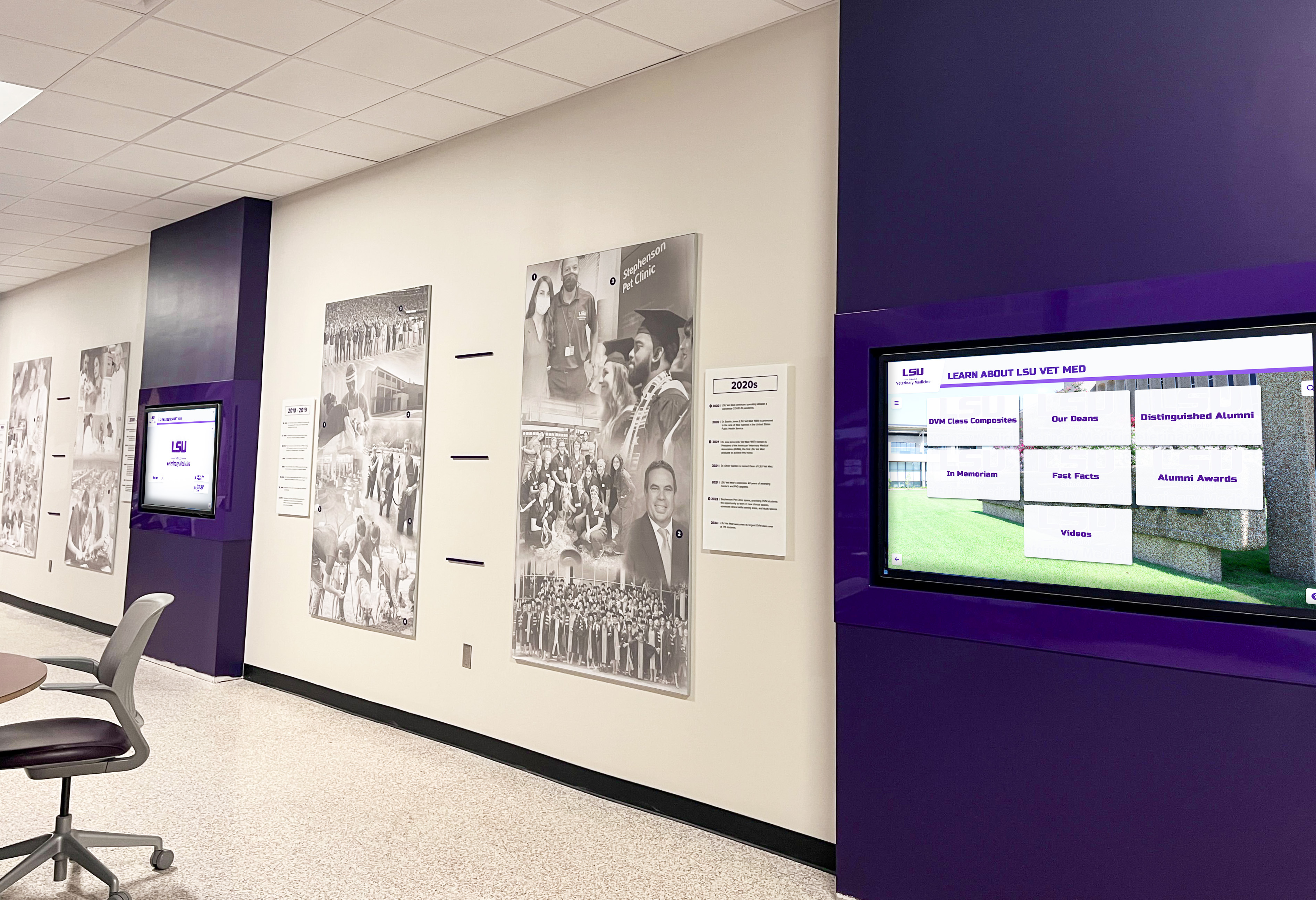
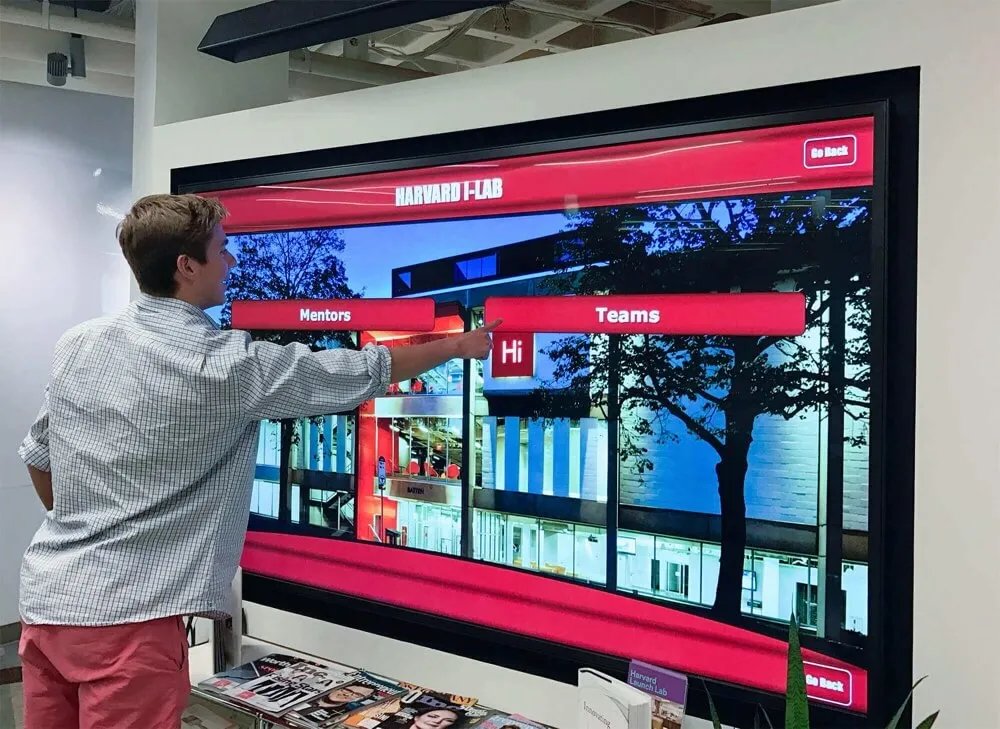
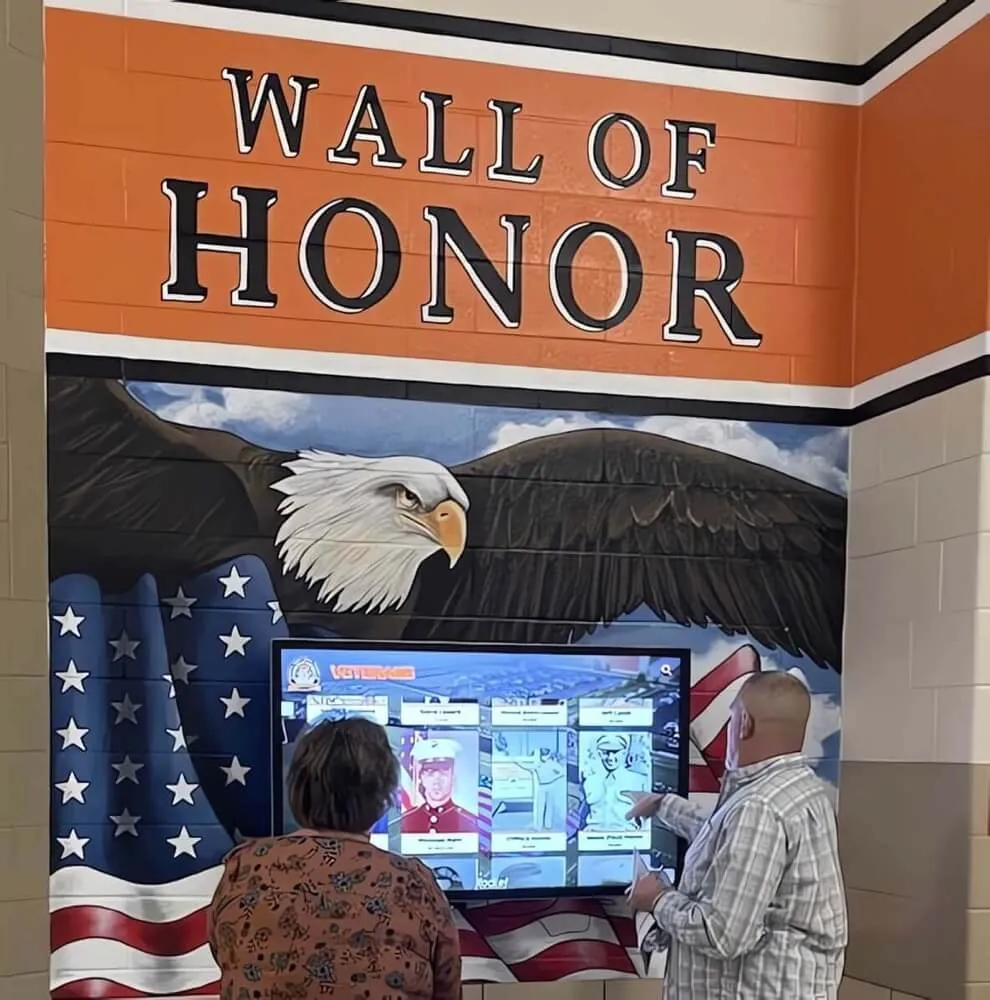
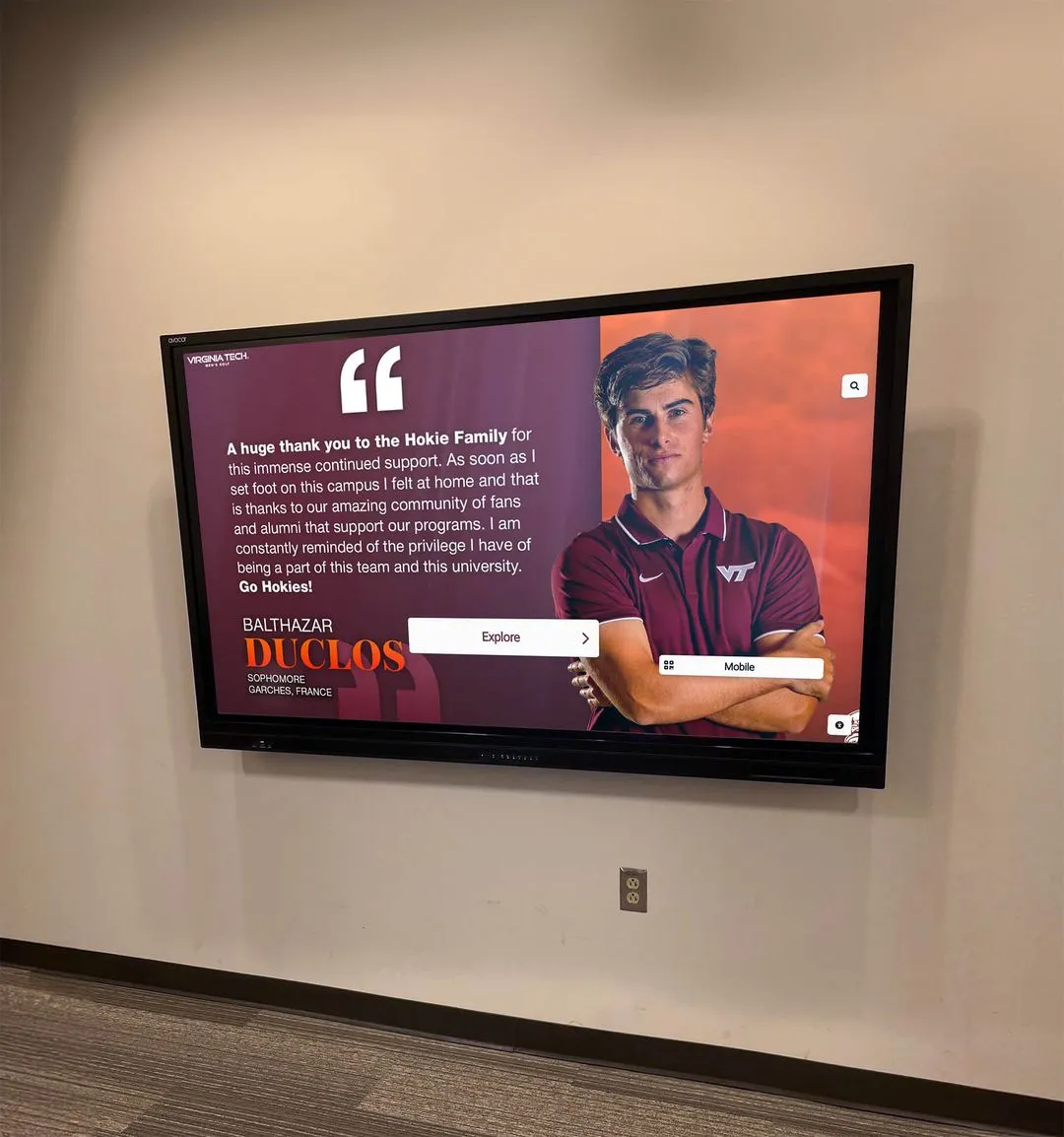
Academic corridors combine wall graphics with digital technology to create immersive learning environments
Career and Technical Education Spaces CTE program areas showcase:
- Industry certification displays celebrating student achievement
- Safety protocols and equipment operating procedures
- Career pathway visualizations mapping education to employment
- Alumni success stories demonstrating program outcomes
- Partnership acknowledgment recognizing business and industry supporters
These applications reinforce CTE program professionalism while helping students visualize career opportunities.
Elementary Educational Graphics Younger students benefit from age-appropriate designs including:
- Alphabet and number displays with engaging illustrations
- Reading corner graphics creating cozy, inviting spaces
- Behavior expectation visualizations teaching social skills
- Growth mindset messaging encouraging persistence
- Interactive elements like maps students can explore during passing periods
Elementary principals note that colorful, engaging hallway environments positively influence student attitudes toward school.
Cafeteria and Common Areas
Social spaces where students gather provide opportunities for graphics reinforcing positive behaviors and institutional identity.
Cafeteria Design Applications Dining areas can feature wall wraps displaying:
- Nutritional information and healthy eating messaging
- Menu boards with daily meal options and pricing
- Historical cafeteria photographs showing school evolution
- Student artwork reproduction celebrating creative achievement
- Multilingual welcome messages reflecting community diversity
School nutrition directors report that professional cafeteria environments influence student dining experiences and food service satisfaction.
Student Gathering Spaces Commons areas, student lounges, and recreational spaces benefit from:
- School values and character education messaging
- Student organization logos and activity promotion
- Recognition displays celebrating achievement across academics and activities
- College pennant walls inspiring post-secondary planning
- QR code elements linking to school resources and information
These applications create environments supporting positive student culture and engagement.
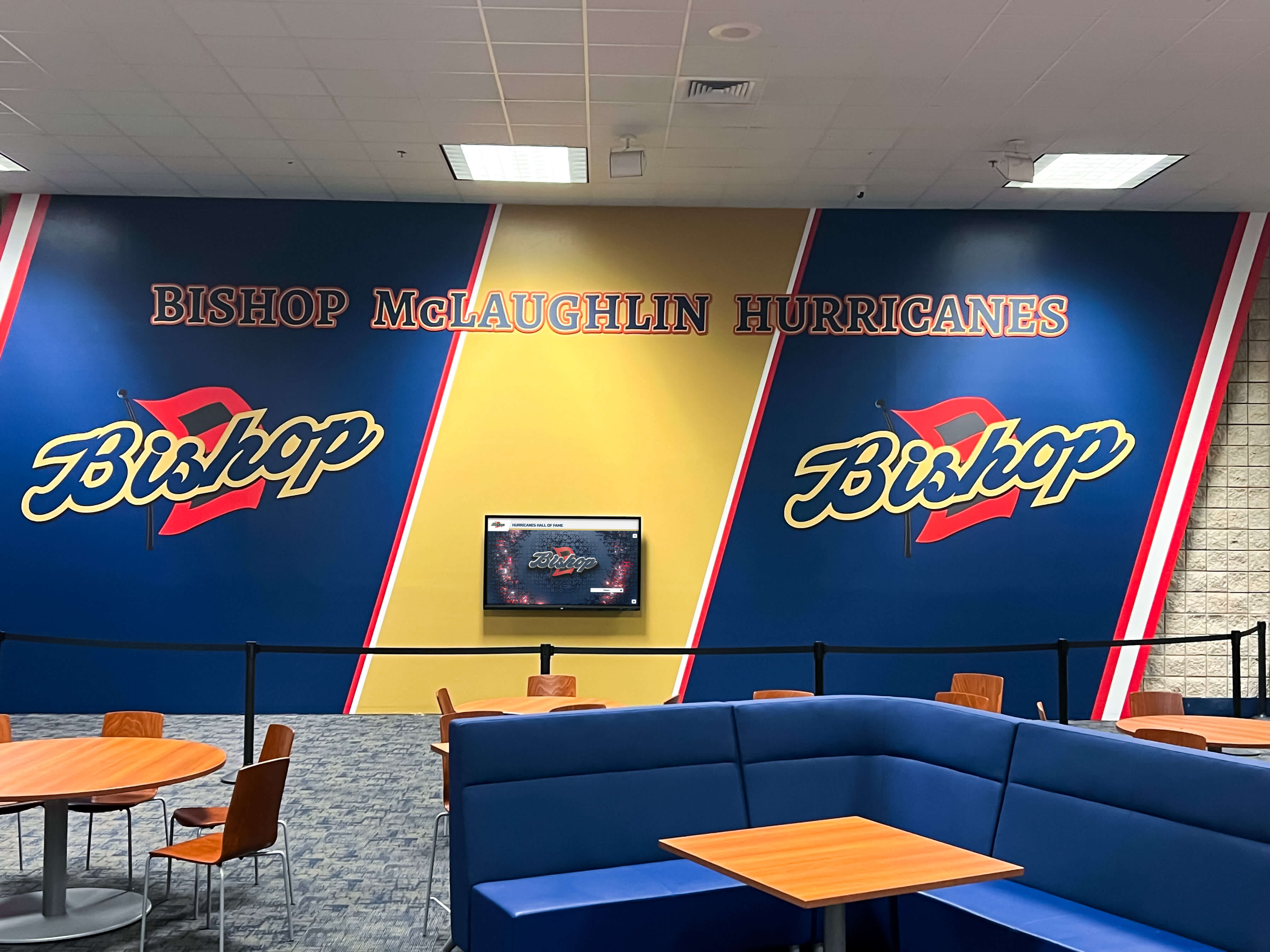
Cafeteria and lounge areas use wall graphics to create branded, energizing environments for student gathering
Stairwells and Transition Spaces
Often overlooked, vertical spaces provide unique opportunities for creative installations maximizing limited square footage.
Stairwell Design Strategies Multi-story schools can use stairwell walls for:
- Vertical timelines ascending chronologically floor by floor
- Inspirational quotes about achievement and perseverance
- Alumni spotlight profiles recognizing notable graduates
- Safety reminders about proper stairwell behavior
- School history photography documenting facilities evolution
These high-visibility spaces ensure every student encounters messaging multiple times daily during class transitions.
Design Development and Planning Process
Successful wall wrap projects require systematic planning addressing aesthetic goals, budgetary constraints, and facility realities.
Establishing Project Goals and Priorities
Clear objectives guide design decisions and ensure stakeholder alignment.
Defining Primary Objectives Schools should identify whether projects primarily aim to:
- Build school spirit and institutional pride
- Support learning objectives with educational content
- Improve facility aesthetics and professional appearance
- Recognize student, staff, and community achievement
- Enhance branding consistency throughout campus
Most effective projects balance multiple objectives rather than pursuing single narrow goals.
Stakeholder Input and Buy-In Successful implementations involve:
- Student focus groups ensuring designs resonate with primary audience
- Teacher input incorporating curriculum connections and educational value
- Administrative approval confirming budget availability and institutional fit
- Facilities staff consultation addressing installation logistics and maintenance
- Community feedback when projects involve donor recognition or historical content
Early stakeholder engagement prevents mid-project changes and builds broad support.
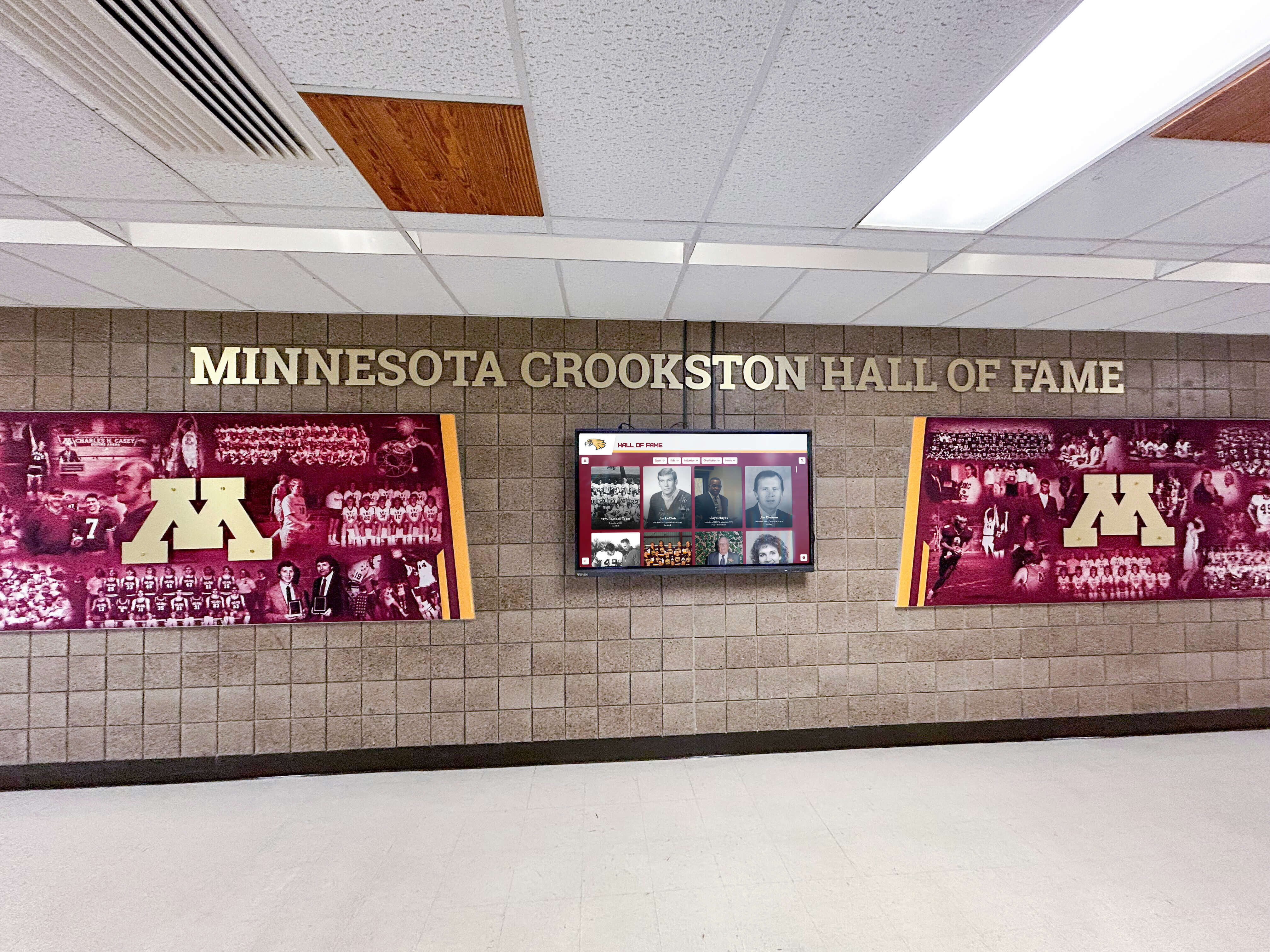
Comprehensive recognition environments integrate wall graphics, traditional displays, and digital technology
Working with Design Professionals
Professional design services ensure polished results that schools struggle to achieve with in-house staff.
Selecting Graphics Providers Schools should evaluate vendors based on:
- Educational facility experience and portfolio quality
- Design capabilities including original artwork and photo manipulation
- Material selection offering appropriate durability grades
- Installation expertise ensuring professional execution
- Warranty coverage protecting school investment
Education-focused graphics companies understand school-specific requirements including budget constraints, installation timing, and content appropriateness.
Design Process Collaboration Typical projects follow structured workflows:
- Initial consultation defining scope, objectives, and budget parameters
- Concept development presenting multiple design directions
- Refinement cycles incorporating stakeholder feedback
- Technical drawing production confirming exact dimensions
- Material specification finalizing substrate and finish selections
- Proof approval establishing final design before production
Schools should budget adequate time for design development—typically 2-4 weeks for comprehensive projects—rather than rushing processes and compromising quality.
Content Development Requirements Design teams need schools to provide:
- High-resolution logos in vector format (.ai, .eps, or .svg files)
- Photographic imagery at sufficient resolution for large-format printing
- Text content including accurate spelling of names and titles
- Brand standards documentation specifying colors and typography
- Historical information requiring fact-checking and verification
Poor source material quality limits final graphic quality regardless of designer skill level.
Budget Development and Cost Factors
Accurate project budgeting requires understanding variables influencing wall wrap pricing.
Pricing Determinants Wall wrap costs depend on:
- Square footage with most projects priced per square foot
- Design complexity affecting design labor requirements
- Material grade with commercial-quality vinyl exceeding promotional materials
- Wall condition requiring surface preparation or repairs
- Installation difficulty influenced by wall height, texture, and access
- Geographic location affecting regional labor rates
Schools should expect commercial-grade interior wall wrap projects ranging from $12-25 per square foot including design, materials, and professional installation.
Hidden Cost Considerations Comprehensive budgets account for:
- Wall preparation including patching, priming, or texture removal
- Furniture moving and protection during installation
- Electrical work if graphics integrate with lighting
- Project management time coordinating vendors and approvals
- Contingency funding addressing unexpected conditions
Projects without adequate contingency budgets often face quality compromises when unforeseen issues emerge.
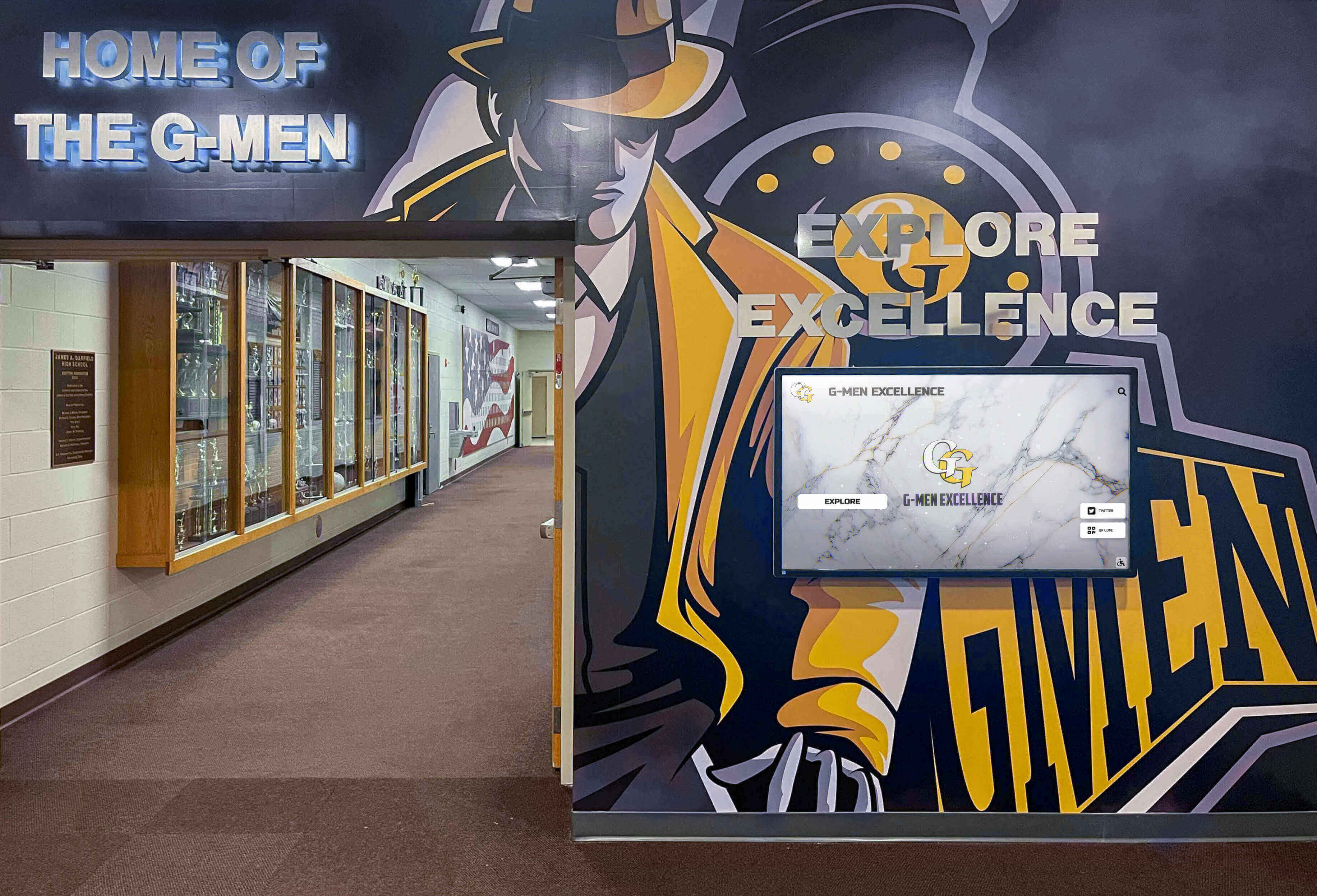
Comprehensive hallway transformations integrate wall graphics with existing trophy cases and digital displays
Cost Comparison Analysis When evaluating wall wraps against alternatives, schools should consider:
- Basic solid-color painting: $2-4 per square foot but limited visual impact
- Hand-painted murals: $25-50+ per square foot with long installation times
- Wallpaper installation: $8-15 per square foot with limited design flexibility
- Wall wraps: $12-25 per square foot with professional design and fast installation
The comprehensive value proposition typically favors wall wraps when schools require custom imagery, branding consistency, and professional quality.
Material Selection and Specifications
Choosing appropriate materials ensures graphics perform well in school environments.
Vinyl Grade Selection Schools should specify:
- Cast vinyl for smooth walls in high-visibility locations requiring longest lifespan (7-10 years)
- Calendared vinyl for textured surfaces or shorter-term installations (3-5 years)
- Specialty textures creating dimensional effects or mimicking materials
- Removable adhesive for graphics requiring periodic updates
- Permanent adhesive for long-term installations without planned changes
Material selection should align with expected graphic lifespan and budget availability.
Finish Options Surface finish affects appearance and maintenance:
- Matte finishes reduce glare and create sophisticated appearance
- Gloss finishes enhance color saturation and visual impact
- Textured surfaces add dimensional interest
- Scratch-resistant coatings protect high-contact areas
- Antimicrobial treatments support infection control protocols
High-traffic school corridors typically benefit from matte, scratch-resistant finishes minimizing visible wear.
Fire Safety Compliance Educational facilities must use materials meeting fire codes:
- Class A or Class 1 fire ratings for most applications
- Low smoke development properties
- Flame spread ratings appropriate for corridor use
- Documentation and certification for building inspector approval
Reputable commercial graphics providers automatically specify code-compliant materials, but schools should verify compliance during procurement.
Installation Process and Project Management
Professional installation ensures graphics adhere properly, appear seamless, and last their expected lifespan.
Pre-Installation Requirements
Proper preparation determines installation success and graphic longevity.
Wall Surface Preparation According to industry installation standards, walls must be:
- Clean and free from dust, oils, and residues
- Dry with appropriate humidity levels
- Smooth or appropriately textured for chosen vinyl type
- Structurally sound without loose paint or crumbling substrate
- Cured if recently painted (typically 30 days minimum)
Inadequate surface preparation causes adhesion failures, bubbling, and premature graphic failure regardless of material quality.
Facility Preparation Steps Schools should complete before installation:
- Remove wall-mounted items including artwork, clocks, and bulletin boards
- Relocate furniture providing installers adequate workspace
- Protect flooring with drop cloths or plastic sheeting
- Ensure adequate lighting for precision installation
- Provide electrical access for tools and equipment
Proper preparation minimizes installation time and reduces project costs.
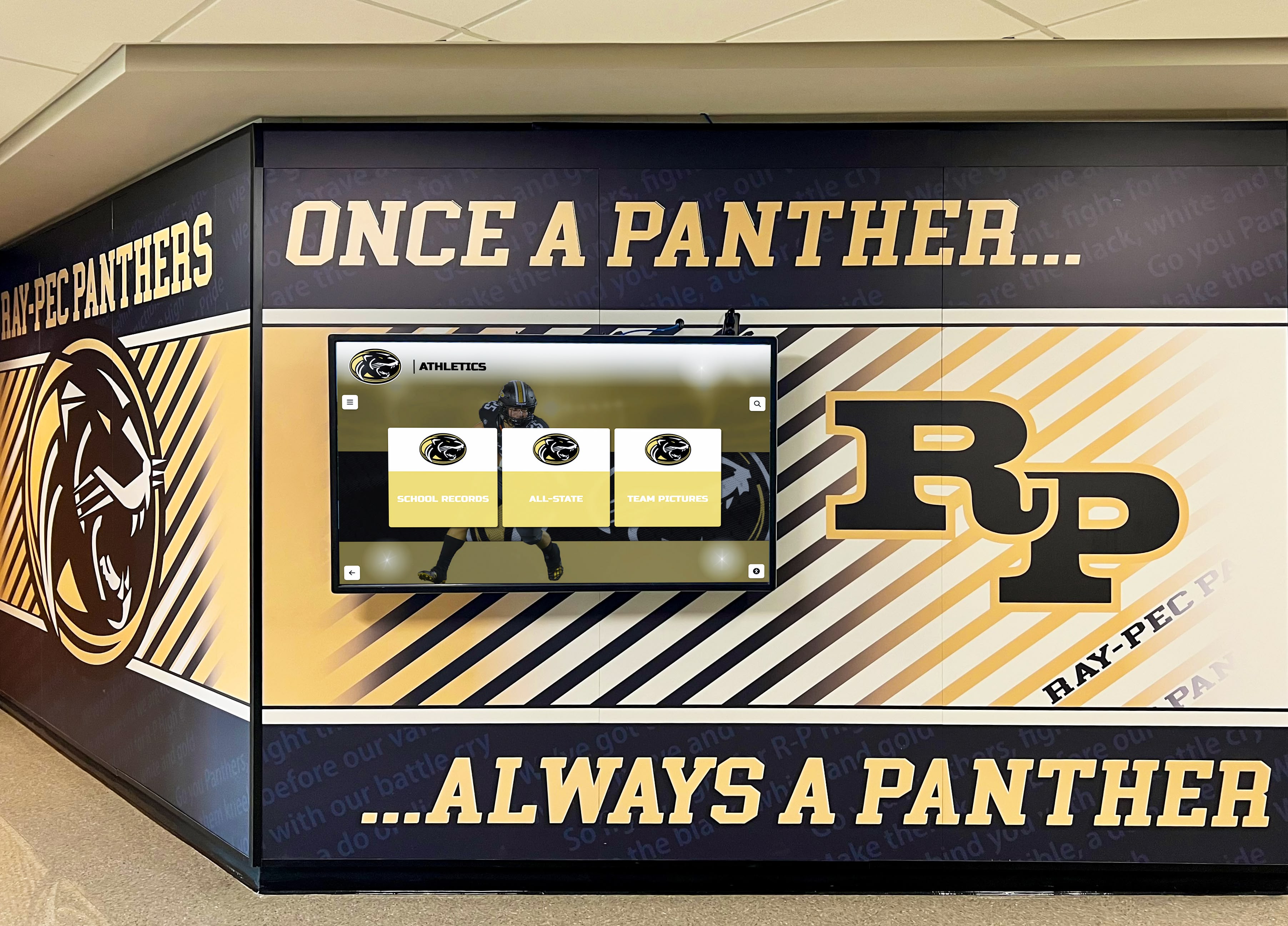
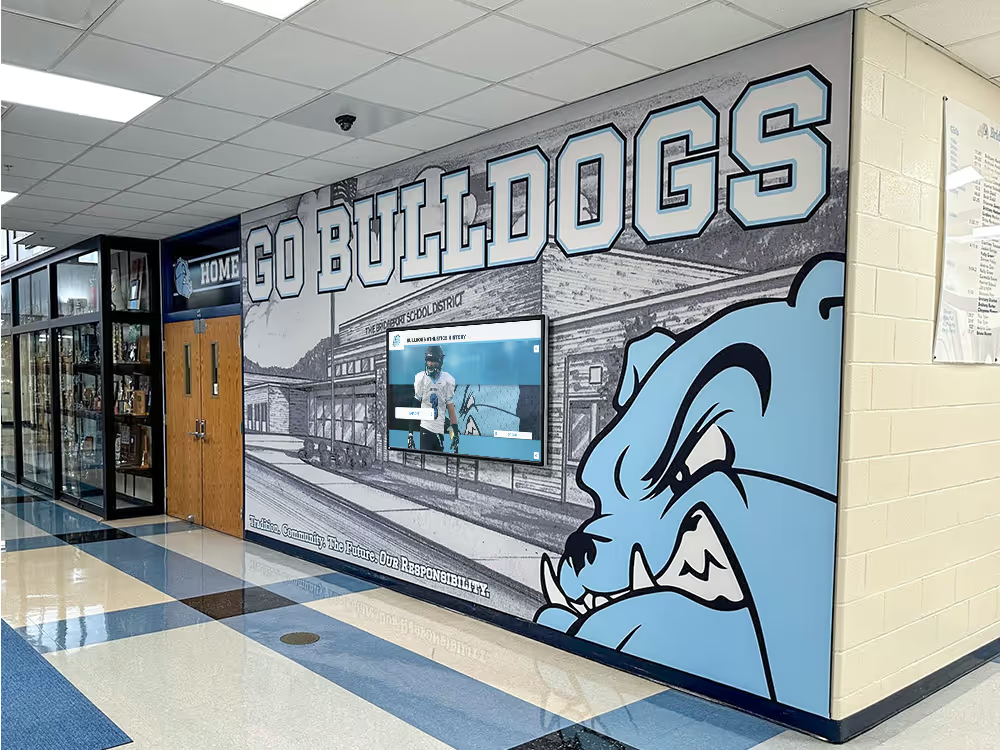
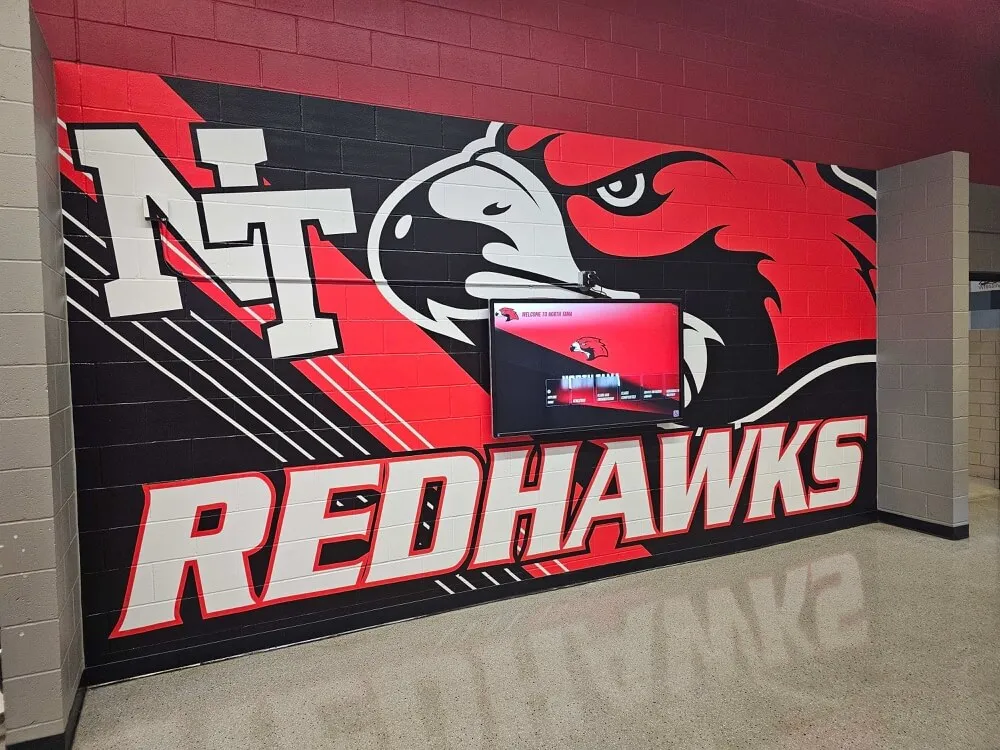
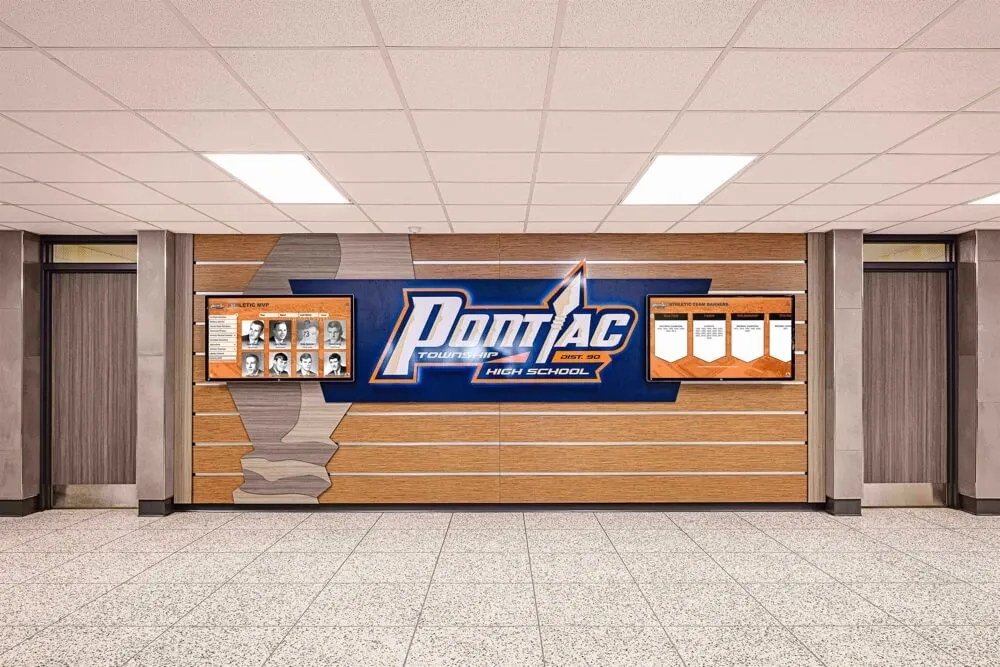
Athletic hallways combine bold mascot graphics with digital displays creating comprehensive branding environments
Professional Installation Procedures
Understanding installation processes helps schools manage projects and set realistic expectations.
Installation Methodology Professional installers follow systematic approaches:
- Verify wall dimensions confirming graphics fit properly
- Mark reference lines ensuring level, plumb installation
- Position graphics beginning from top, working downward
- Apply vinyl using specialized squeegees removing air bubbles
- Trim excess material achieving clean edges
- Apply final pressure ensuring complete adhesion
- Inspect completed installation identifying any issues
According to industry sources, professional installation typically requires only hours per wall rather than the days needed for traditional mural painting.
Installation Timing Considerations Schools should schedule installations during:
- Extended holiday breaks minimizing disruption
- Summer months when buildings have reduced occupancy
- Weekends avoiding interference with instructional time
- Evening hours in facilities with flexible access
- Planned facility closures for other maintenance work
Strategic timing reduces project impact on school operations while providing installers uninterrupted workspace.
Quality Control Measures Professional installations include verification that:
- Graphics align properly with architectural features
- Seams between panels remain virtually invisible
- No air bubbles or wrinkles compromise appearance
- Color accuracy matches approved proofs
- Edges adhere completely preventing future peeling
Schools should conduct final walkthroughs with installers addressing any concerns before project completion.

Systematic installations create cohesive visual environments integrating multiple graphic elements
Post-Installation Care and Maintenance
Proper maintenance extends graphic lifespan and preserves appearance.
Initial Curing Period Newly installed graphics require care during first 72 hours:
- Avoid cleaning or touching graphics while adhesive fully cures
- Maintain stable temperature and humidity in installation areas
- Do not reinstall wall-mounted items until full cure
- Monitor graphics for any edge lifting or bubble development
- Contact installer immediately if issues emerge
This curing period allows adhesive reaching full bond strength.
Ongoing Maintenance Protocols Schools should establish routines including:
- Regular dusting with soft cloths or microfiber materials
- Spot cleaning with mild soap and water solutions
- Avoiding abrasive cleaners or scrubbing that damage vinyl
- Promptly addressing any edge lifting or damage
- Periodic inspection identifying areas requiring attention
According to material manufacturers, proper maintenance enables graphics maintaining appearance throughout their 5-10 year expected lifespan.
Damage Repair Options When graphics sustain damage:
- Minor scratches often remain unnoticeable requiring no action
- Small tears can receive patch repairs using matching material
- Larger damage may require panel replacement
- Professional graphics companies can reproduce sections from original files
- Complete replacement becomes cost-effective for extensively damaged installations
Schools maintaining design files and material specifications simplify future repairs.
Integrating Digital Recognition with Wall Graphics
The most effective school environments combine traditional wall wraps with interactive digital displays creating comprehensive recognition systems.
Complementary Technologies
Wall wraps provide static visual foundations while digital displays offer dynamic, updatable content.
Coordinated Design Strategies Schools implementing both technologies should:
- Use consistent color palettes and branding across both media
- Position digital displays as focal points within graphic environments
- Design wall graphics complementing rather than competing with screens
- Create visual hierarchy directing attention appropriately
- Plan electrical and mounting requirements during graphic design phase
This integrated approach creates cohesive environments greater than either technology alone.
Content Coordination Effective programs align messaging across media:
- Wall graphics establish permanent themes and institutional identity
- Digital displays showcase current students, recent achievements, and timely information
- Recognition systems celebrate unlimited students without physical space constraints
- QR codes on wall graphics link to expanded digital content
- Social media integration extends recognition beyond physical campus
This layered approach provides depth impossible with either system independently.
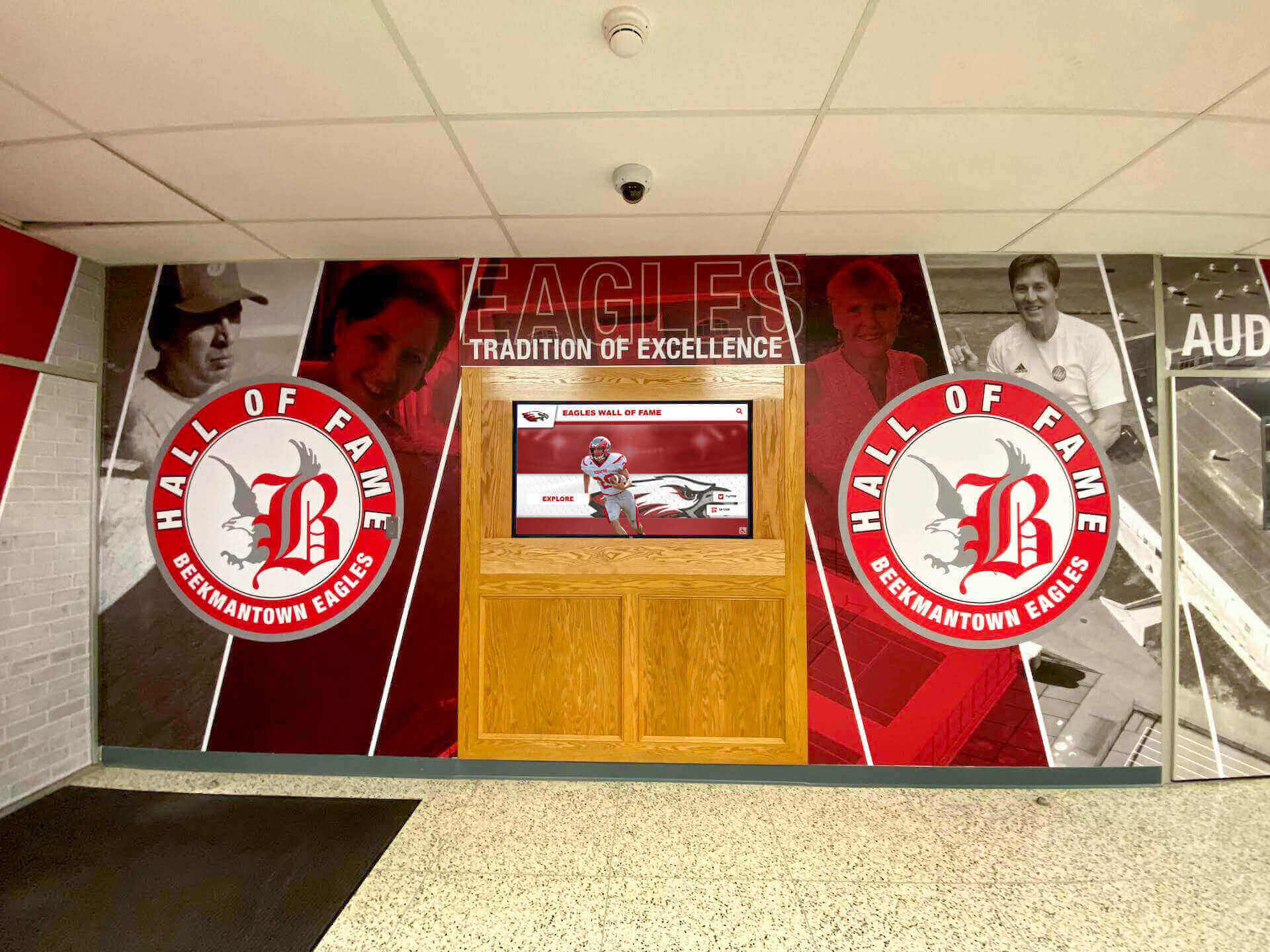
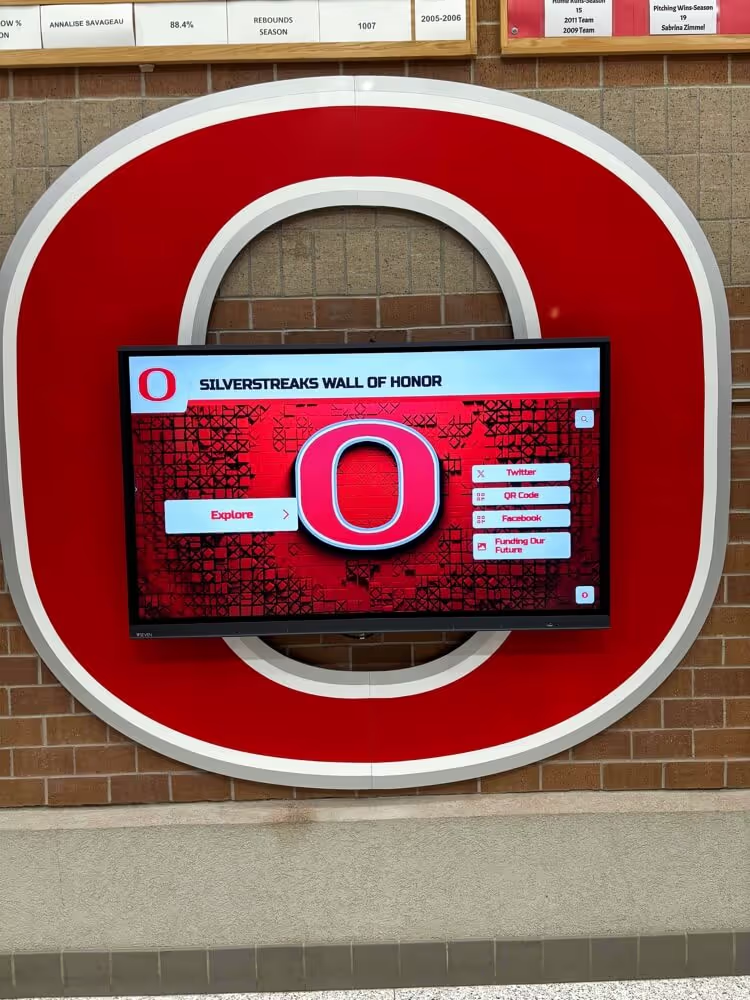
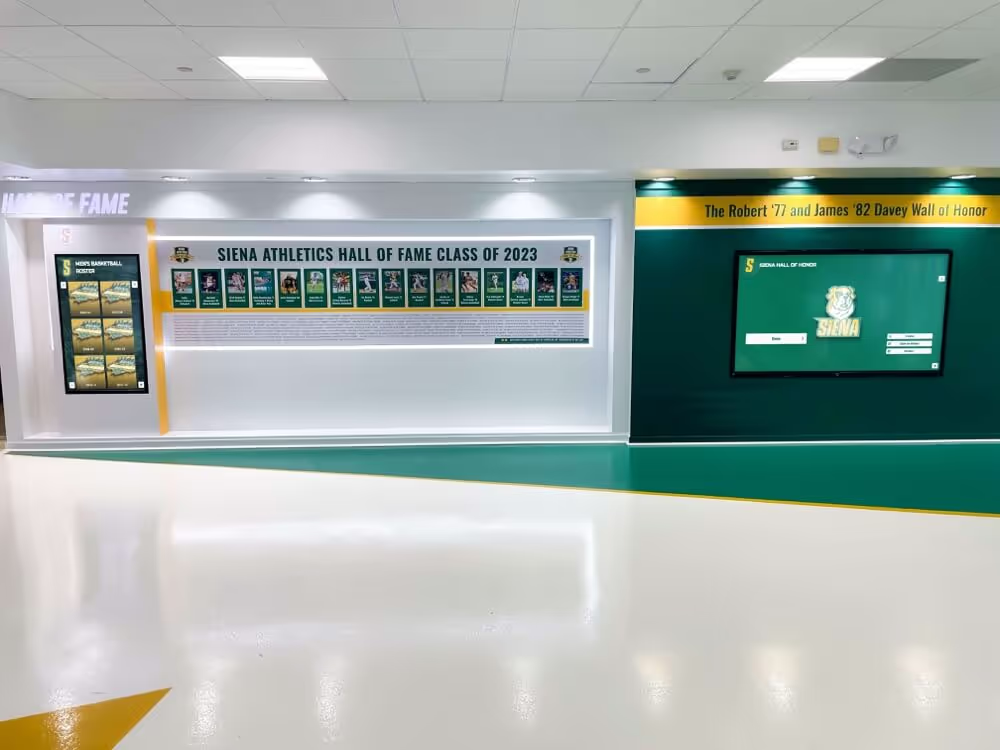
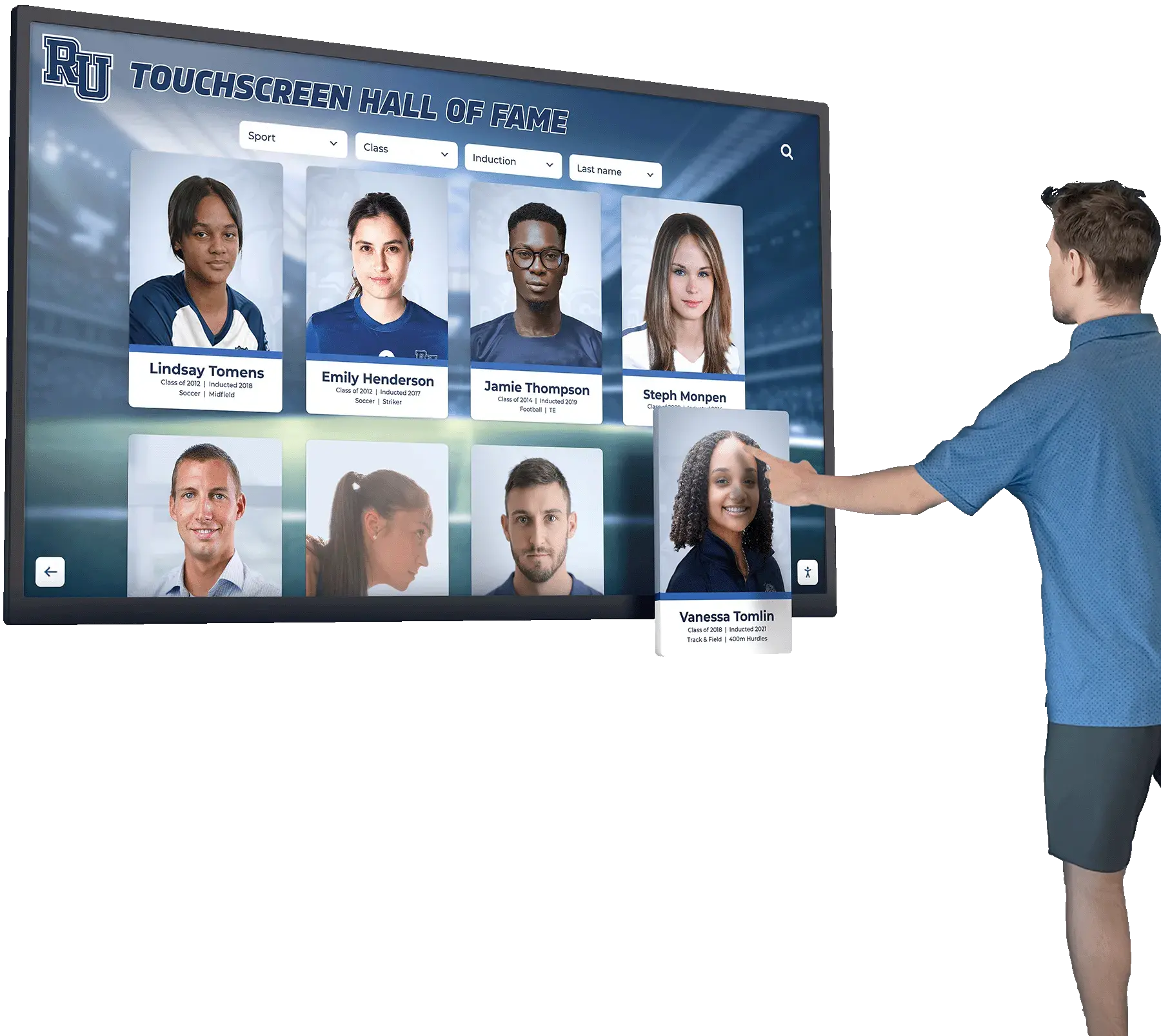
Successful integration combines static wall graphics with interactive digital displays creating comprehensive recognition environments
Digital Wall of Fame Solutions
While wall wraps provide beautiful branded environments, digital trophy case systems offer unlimited recognition capacity that traditional approaches cannot match.
Digital Recognition Advantages Interactive touchscreen displays enable:
- Unlimited student profiles without space constraints
- Easy content updates requiring no reinstallation or repainting
- Searchable databases helping visitors finding specific individuals
- Multimedia presentations including photos, videos, and detailed achievements
- Remote management updating content from any internet-connected device
Schools report digital recognition systems engaging students far more effectively than static name plaques or trophy cases.
Hybrid Implementation Models Many schools create comprehensive recognition by:
- Installing wall wraps establishing branded visual environments
- Integrating digital displays showcasing current achievement and historical archives
- Maintaining traditional trophy cases for physical artifacts
- Implementing mobile-accessible online directories extending recognition reach
- Creating QR code links connecting physical spaces to digital content
This comprehensive approach ensures recognition reaching all stakeholders regardless of how they engage with the school.
Special Considerations for Different School Levels
Wall wrap strategies should adapt to student age, facility characteristics, and institutional priorities.
Elementary School Applications
Younger students benefit from age-appropriate designs emphasizing learning support and positive environments.
Design Considerations for Young Learners Elementary wall wraps should feature:
- Bright colors and engaging illustrations capturing attention
- Educational content at appropriate reading levels
- Character education messaging reinforcing behavioral expectations
- Lowercase and uppercase letter pairings supporting literacy
- Interactive elements encouraging exploration during transitions
Elementary principals report that colorful, engaging environments positively influence student attitudes toward school attendance and learning.
Durability Requirements Elementary facilities require materials withstanding:
- Frequent touching as students explore graphics
- Occasional marking from pencils, crayons, or markers
- Higher cleaning frequency due to hygiene protocols
- Lower mounting heights placing graphics within student reach
Schools should specify commercial-grade materials with enhanced scratch resistance and cleanability.
Middle School and Junior High Implementations
Transitional students respond to graphics balancing educational content with age-appropriate design sophistication.
Adolescent-Appropriate Design Middle school graphics should:
- Feature contemporary design aesthetics avoiding childish imagery
- Incorporate student voice through design participation
- Balance educational content with inspirational messaging
- Celebrate diverse achievement types recognizing varied student interests
- Create recognition displays honoring academic and extracurricular success
Middle school administrators note that students at this developmental stage respond positively to recognition systems acknowledging their growing maturity.
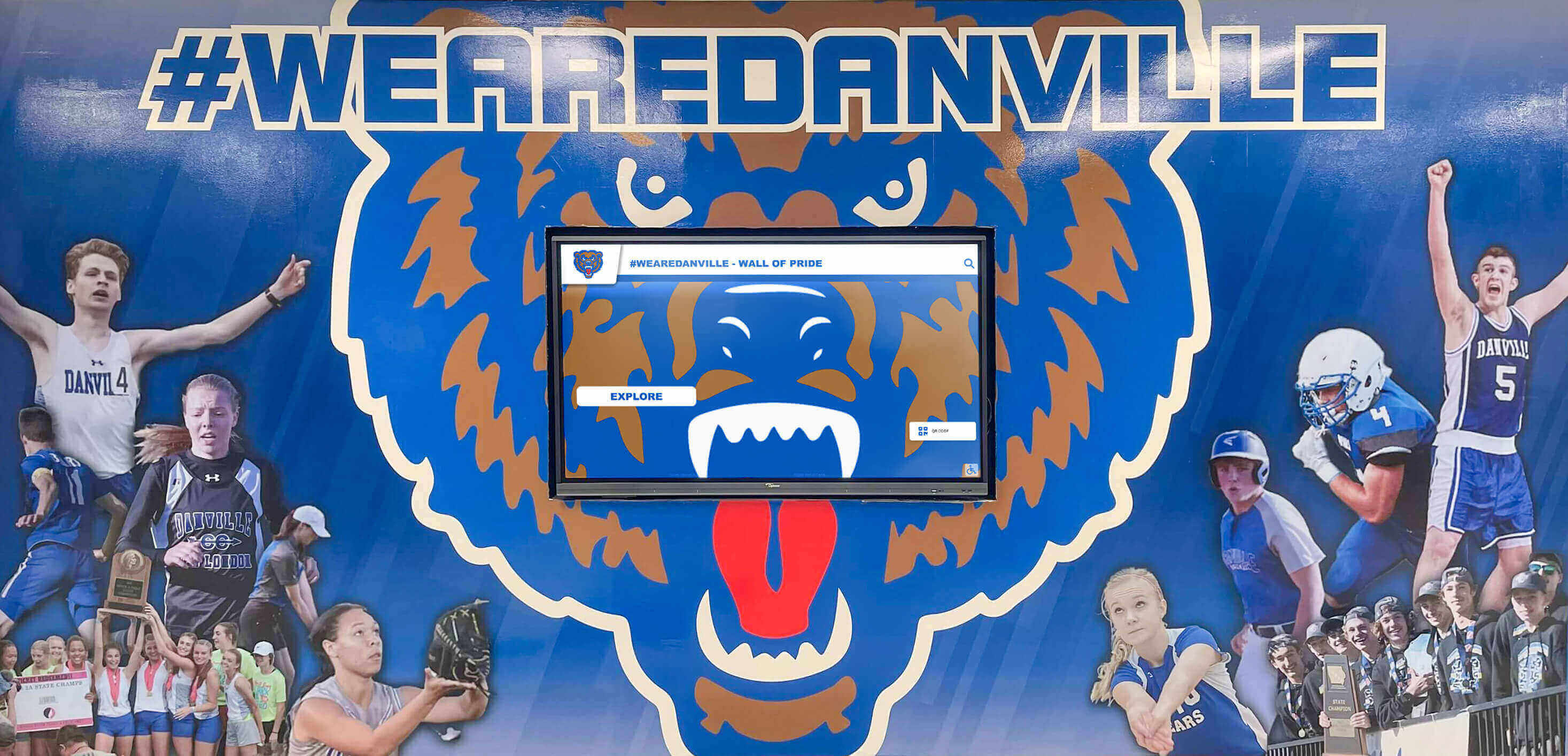
School-specific branding creates identity and pride through professional graphic installations
High School and Secondary School Projects
Older students benefit from sophisticated designs emphasizing achievement, college preparation, and institutional tradition.
High School Design Priorities Secondary school graphics should:
- Feature professional design quality reflecting student maturity
- Showcase athletic hall of fame achievements building program tradition
- Display college acceptance information inspiring post-secondary planning
- Recognize academic achievement with same visibility as athletic success
- Document school history connecting current students to institutional legacy
High school graphics create environments preparing students for college and career expectations while celebrating current achievement.
College and Career Readiness Integration Secondary schools can use wall graphics supporting transition planning:
- College pennant walls displaying where graduates matriculated
- Career pathway visualizations mapping education to employment
- ACT/SAT preparation tips and test-taking strategies
- Scholarship recipient recognition inspiring financial aid pursuit
- Alumni success stories demonstrating long-term outcome possibilities
These applications extend wall wrap value beyond decoration to strategic educational support.
Measuring Impact and Return on Investment
Schools should evaluate wall wrap investments against institutional objectives and student outcomes.
Quantitative Performance Indicators
Measurable metrics demonstrate project value to stakeholders and decision-makers.
Facility Perception Metrics Schools can track:
- Prospective family enrollment decisions influenced by facility tours
- Community satisfaction survey responses regarding facility quality
- Staff recruitment candidates citing professional environment appeal
- Student attendance patterns in areas with enhanced graphics
- Vandalism rates comparing before and after installations
Many schools report reduced vandalism and improved student behavior in areas with professional graphics that students feel proud to preserve.
Recognition and Pride Indicators Digital integration enables tracking:
- Student interaction with digital displays in graphic environments
- Social media engagement when students share facility imagery
- Alumni return visits during reunions and homecoming events
- School spirit assessment showing pride increases
- Donor engagement in capital campaigns featuring facility improvements
Qualitative Impact Assessment
Beyond numbers, wall wraps influence school culture in important qualitative ways.
Stakeholder Feedback Collection Schools should gather input through:
- Student focus groups discussing facility environment perceptions
- Staff surveys assessing workplace quality and professional pride
- Parent feedback about facility impressions during school visits
- Community member observations during public events
- Administrative assessment of unintended benefits or challenges
This qualitative data provides context that quantitative metrics alone cannot capture.
Cultural Transformation Documentation Schools implementing comprehensive graphic programs report:
- Enhanced institutional pride among students, staff, and community
- Increased visibility for underrecognized achievement areas
- Improved student attitudes toward school attendance and engagement
- Stronger connection to school history and tradition
- Elevated community perception of institutional quality and investment
While attributing specific outcomes to facility improvements proves challenging, stakeholder testimonials consistently cite environmental quality as meaningful factor in school culture.
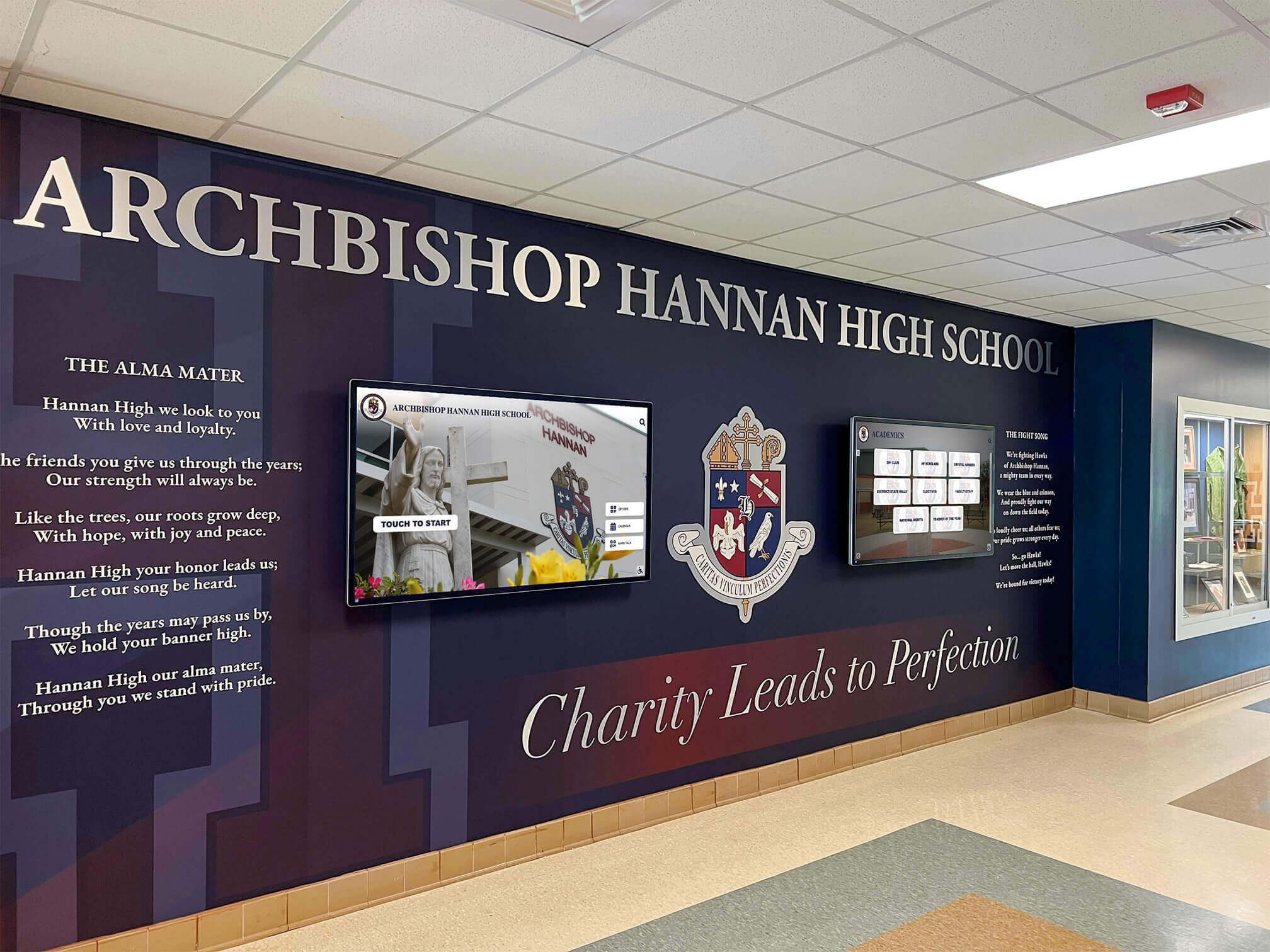
Comprehensive lobby transformations create professional environments making positive impressions on students, families, and visitors
Future Trends in School Wall Graphics
Wall wrap technology continues evolving with emerging capabilities expanding design possibilities.
Emerging Material Technologies
New vinyl formulations and specialty materials enable innovative applications.
Advanced Material Capabilities Schools can expect:
- Enhanced durability formulations extending lifespan beyond current 7-10 year standards
- Antimicrobial surface treatments supporting infection control
- Textured surfaces creating dimensional interest and tactile engagement
- Specialty finishes including metallics, holographics, and luminescent effects
- Environmentally sustainable materials using recycled content and reduced VOCs
These advancing materials maintain or reduce costs while improving performance characteristics.
Interactive and Digital Integration
Wall graphics increasingly incorporate technology creating responsive environments.
Augmented Reality Integration Emerging applications include:
- QR codes triggering augmented reality experiences when scanned
- Historical photographs linking to video oral histories
- Achievement displays connecting to expanded digital archives
- Educational content launching interactive lessons on student devices
- Campus maps providing navigation assistance through mobile apps
These technologies transform static graphics into gateways to expanded digital content.
Responsive Environmental Systems Future installations may include:
- LED backlighting creating programmable accent illumination
- Projected content overlays updating messaging on static backgrounds
- Sound integration coordinating audio with visual displays
- Sensor-triggered content responding to viewer presence
- Integration with building automation systems coordinating with schedules
While these advanced systems exceed typical school budgets currently, costs decline as technologies mature.
Conclusion: Transforming Schools Through Strategic Wall Graphics
Wall wraps represent powerful tools for schools seeking to transform ordinary hallways, gymnasiums, and common areas into vibrant environments celebrating achievement, supporting learning, and building institutional pride. When schools move beyond basic paint and static bulletin boards to comprehensive graphic installations, they create daily touchpoints reinforcing values while making spaces feel more professional, engaging, and inspiring.
The comprehensive strategies explored in this guide provide frameworks for planning successful implementations that balance aesthetic goals with practical constraints including budgets, installation timing, and maintenance requirements. From understanding material specifications to managing design processes, coordinating installations, and maintaining finished graphics, these approaches enable schools creating professional results that serve communities for years.
Modern wall wraps offer schools compelling value propositions through professional design quality unattainable with in-house resources, installation speed minimizing facility disruption, durability withstanding high-traffic educational environments, and cost-effectiveness compared to hand-painted alternatives. Schools nationwide report that graphic investments generate returns through enhanced recruitment, improved student attitudes, elevated community perceptions, and stronger institutional pride.
Transform Your School Environment
Discover how combining wall graphics with interactive digital displays creates comprehensive recognition environments celebrating unlimited students while building lasting school pride. Schedule a demo to see how schools nationwide are transforming facilities through integrated solutions.
Explore Recognition SolutionsThe most effective implementations recognize that wall graphics work best as components of comprehensive facility strategies rather than isolated projects. Schools integrating wall wraps with digital recognition systems, traditional trophy cases, and online platforms create layered environments engaging students through multiple touchpoints while accommodating unlimited achievement recognition without space constraints.
As schools plan facility improvements, wall wraps should feature prominently in discussions about cost-effective transformations delivering immediate visual impact and lasting value. Whether schools focus on athletic branding, academic achievement celebration, educational content integration, or comprehensive school spirit initiatives, wall graphics provide flexible solutions adaptable to virtually any objective or budget level.
Start by identifying high-priority spaces where graphics will deliver maximum impact on school culture and stakeholder perceptions. Engage students, staff, and community members gathering input about content priorities and design directions. Partner with experienced educational graphics providers who understand school-specific requirements and constraints. Then implement systematically with attention to quality, appropriate timing, and long-term maintenance planning.
Your school facilities represent significant investments deserving environments reflecting the important educational work happening within them. With thoughtful planning, professional execution, and integration with complementary recognition technologies, wall wraps can transform ordinary spaces into extraordinary environments where students, staff, and communities feel proud to learn, work, and gather. The comprehensive approach ensures your investment generates lasting dividends through enhanced institutional pride, improved stakeholder satisfaction, and strengthened school culture supporting student success.
Sources: