



The volleyball jump serve represents the most dynamic and intimidating weapon in a player’s arsenal. Unlike the traditional standing serve, this explosive technique combines the approach of an attack with the precision of a serve, generating power and velocity that can overwhelm even the best defensive systems. When executed properly, the jump serve transforms routine serving opportunities into offensive strikes that directly score points or create defensive chaos.
Elite volleyball programs recognize the jump serve as more than just a flashy skill—it’s a strategic tool that shifts momentum, pressures opposing passers, and creates opportunities for your team’s defense. College recruiters consistently identify strong jump servers as valuable prospects because this skill demonstrates athleticism, dedication to technical development, and the confidence to perform under pressure. Schools that celebrate athletic excellence understand how mastering advanced techniques like the jump serve contributes to both individual recognition and team success.
This comprehensive guide breaks down the volleyball jump serve into learnable components, providing step-by-step instruction on proper technique, identifying common mistakes that limit effectiveness, and offering proven drills to develop consistency and power. Whether you’re a beginner attempting your first jump serve or an experienced player refining your approach, you’ll find actionable insights to elevate this game-changing skill.
The journey to mastering the volleyball jump serve requires understanding both the biomechanical principles that generate power and the technical precision that ensures consistency. By breaking down this complex skill into its fundamental components, players can systematically develop each element before combining them into the explosive serve that defines elite-level play.

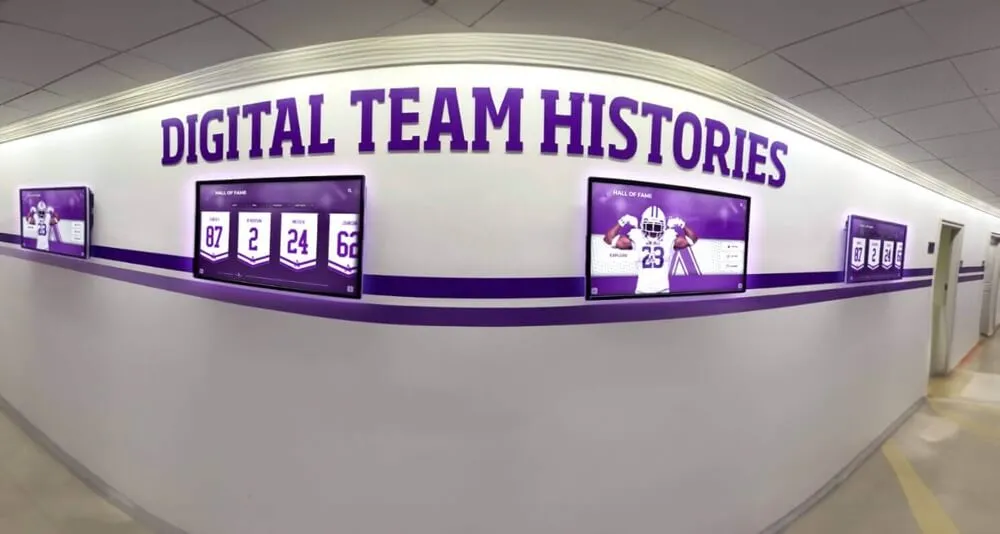
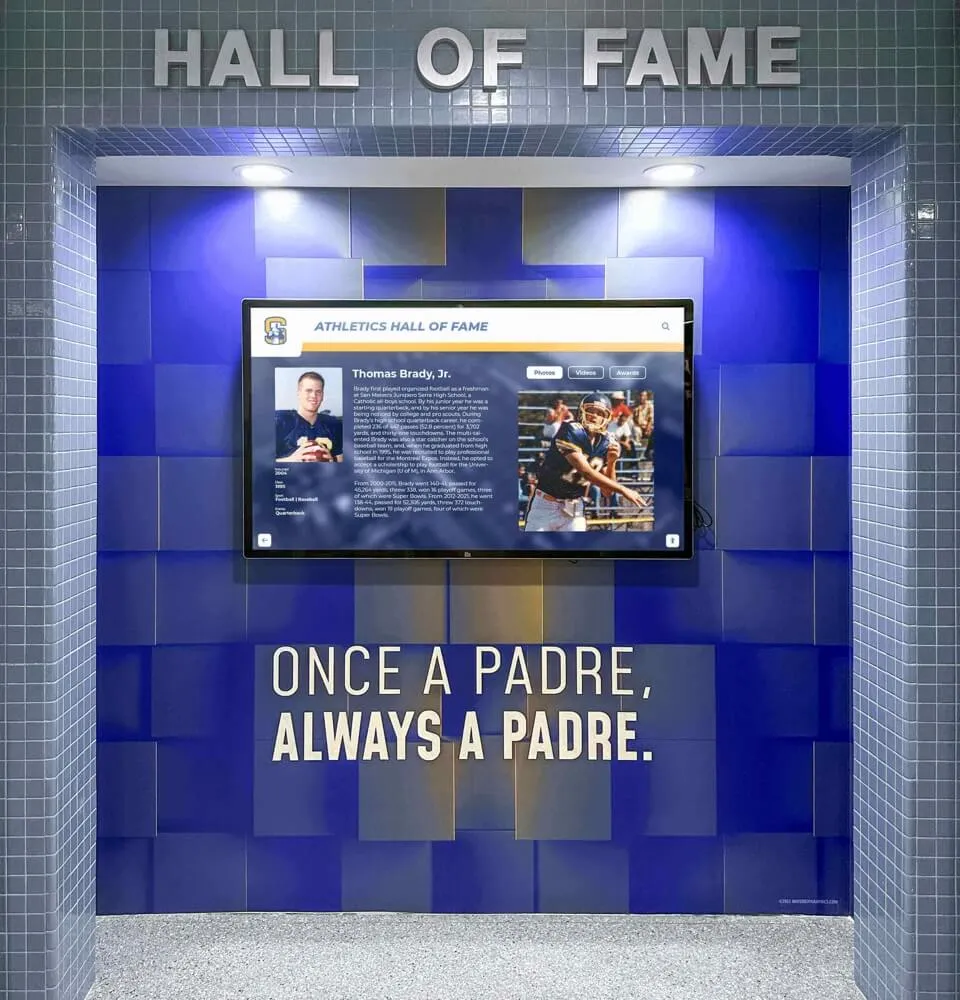
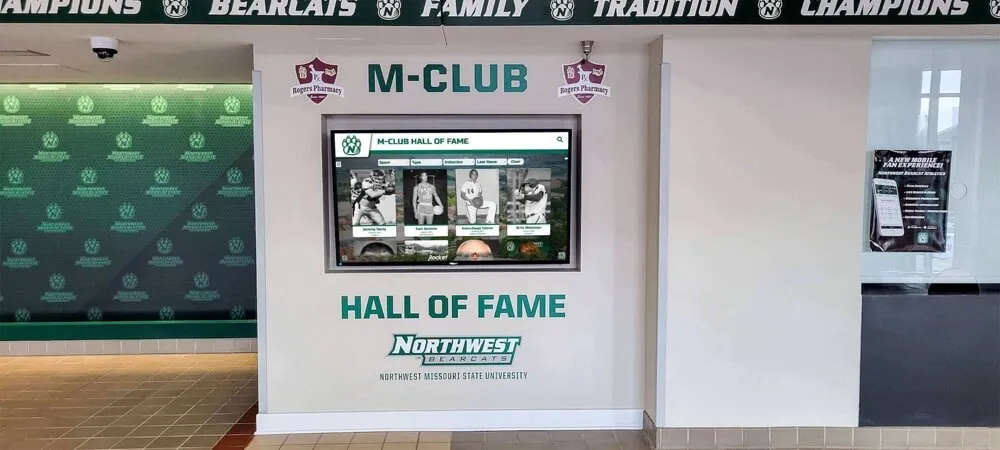
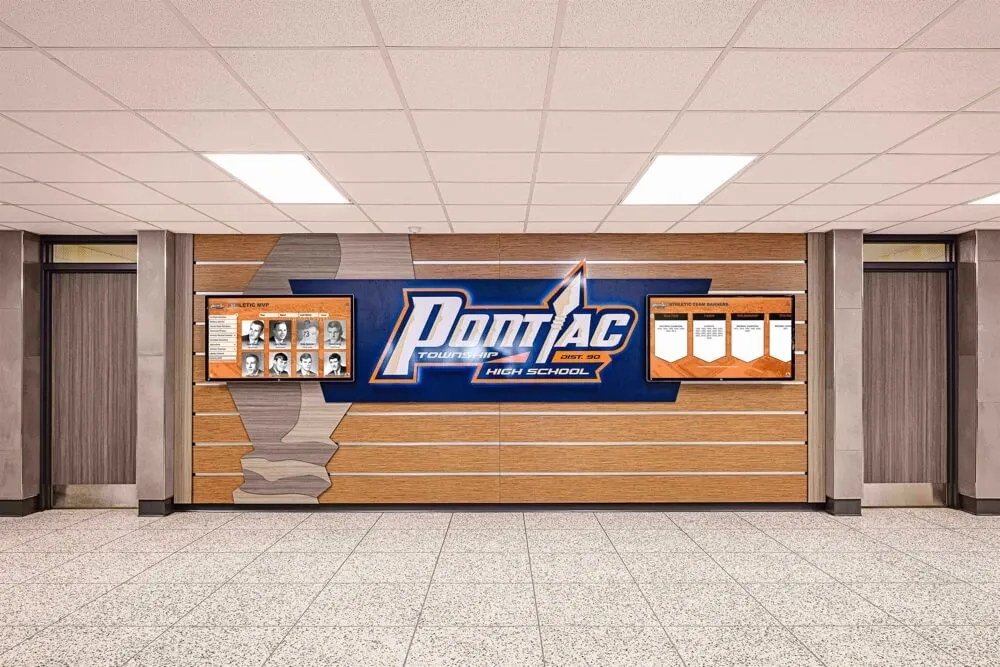
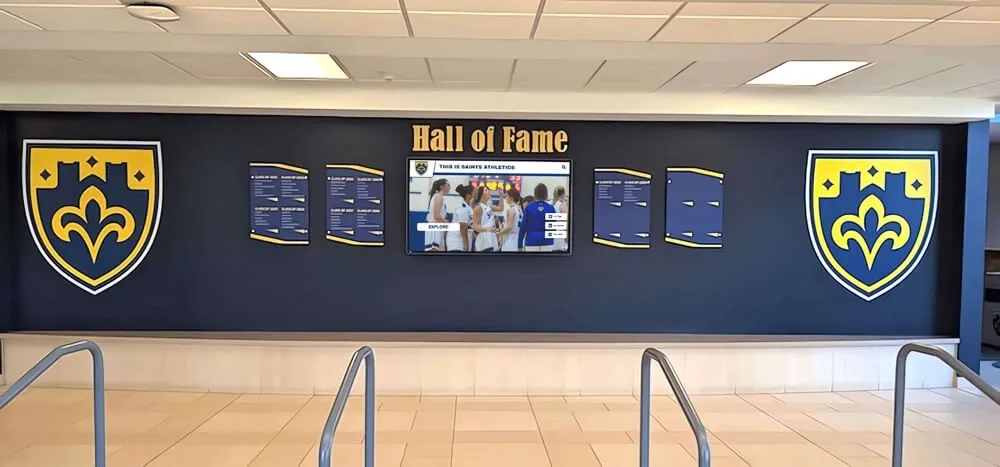
Schools recognize athletic excellence through permanent displays that celebrate championship achievements and inspire future athletes to master advanced skills
Understanding the Volleyball Jump Serve
Before attempting the physical mechanics, understanding what makes the jump serve effective helps players appreciate why each technical element matters.
Why the Jump Serve Works
Physics of Power Generation
The jump serve generates significantly more power than standing serves because it allows players to utilize multiple force-producing mechanisms simultaneously. When you approach and jump, you convert horizontal momentum into vertical lift while transferring that combined energy through your arm swing into the ball. This kinetic chain—similar to an attack approach—can produce serves traveling 70+ mph at the highest levels.
Tactical Advantages
Beyond raw power, the jump serve creates specific tactical problems for opponents:
- Higher contact point allows steeper downward trajectory making it harder to pass
- Approach momentum generates topspin that drops the ball sharply after crossing the net
- Visual intimidation affects opposing passers’ confidence and decision-making
- Serve-receive pressure forces opponents into defensive formations that limit offensive options
- Scoring potential creates direct point opportunities through aces or overpasses
Types of Jump Serves
Jump Float Serve
This variation prioritizes unpredictable movement over raw power. By contacting the ball with minimal spin, the jump float creates erratic flight patterns that challenge passers’ ability to track and control the ball. Many elite servers prefer this option because its deceptive movement generates passing errors even at moderate velocities.
Jump Topspin Serve
The topspin version emphasizes maximum power and downward ball movement. By brushing up and over the ball at contact, servers create heavy topspin that causes the ball to drop sharply after crossing the net. This serve requires exceptional timing and generates the highest velocities but demands more physical strength and technical precision.
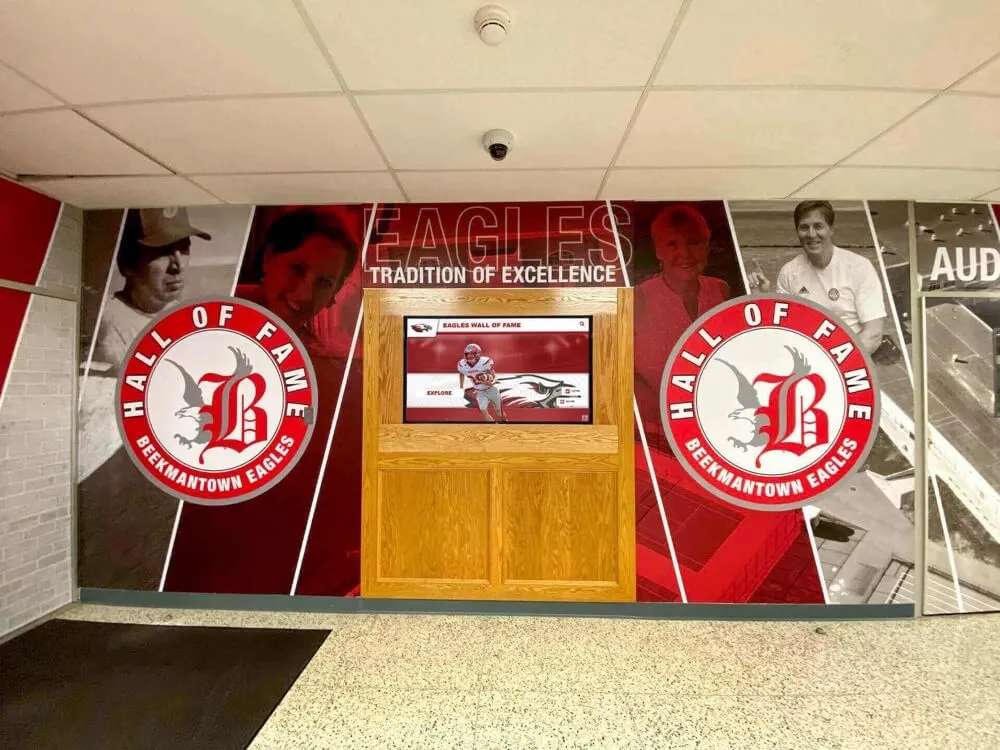
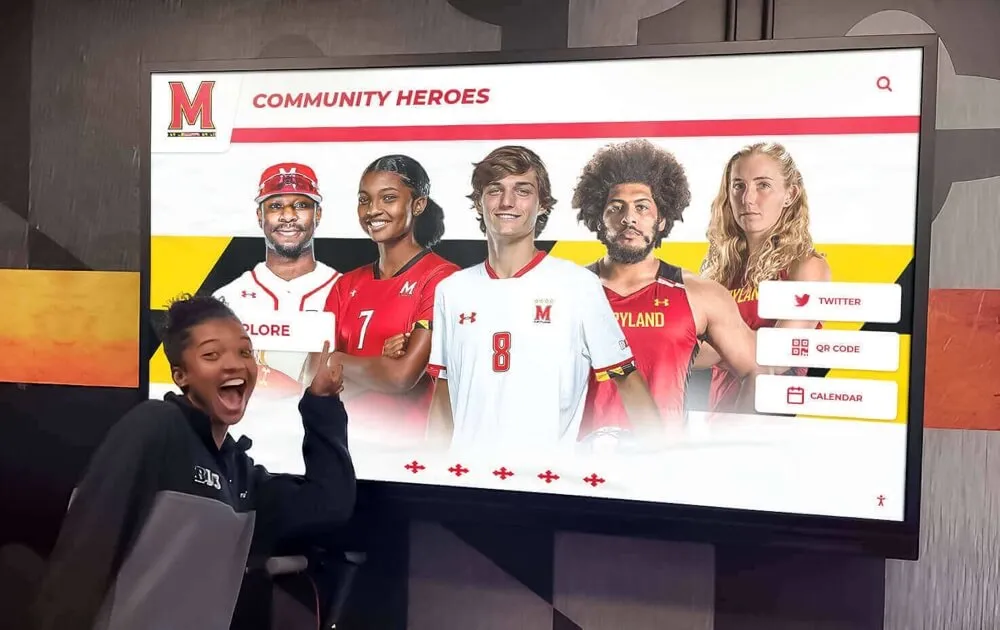
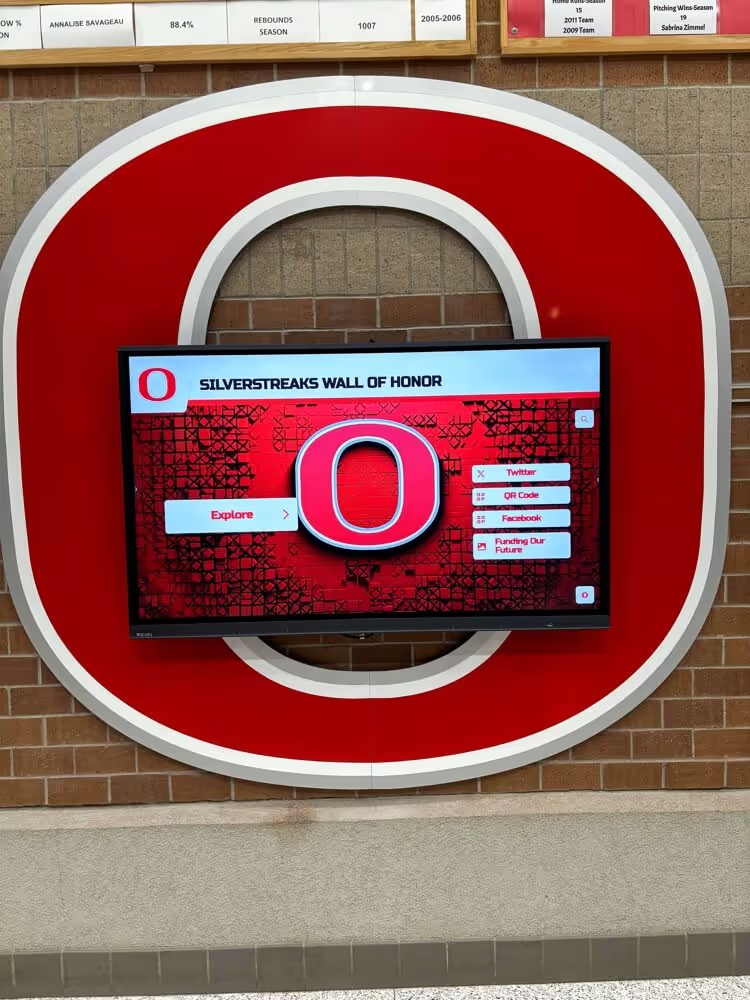
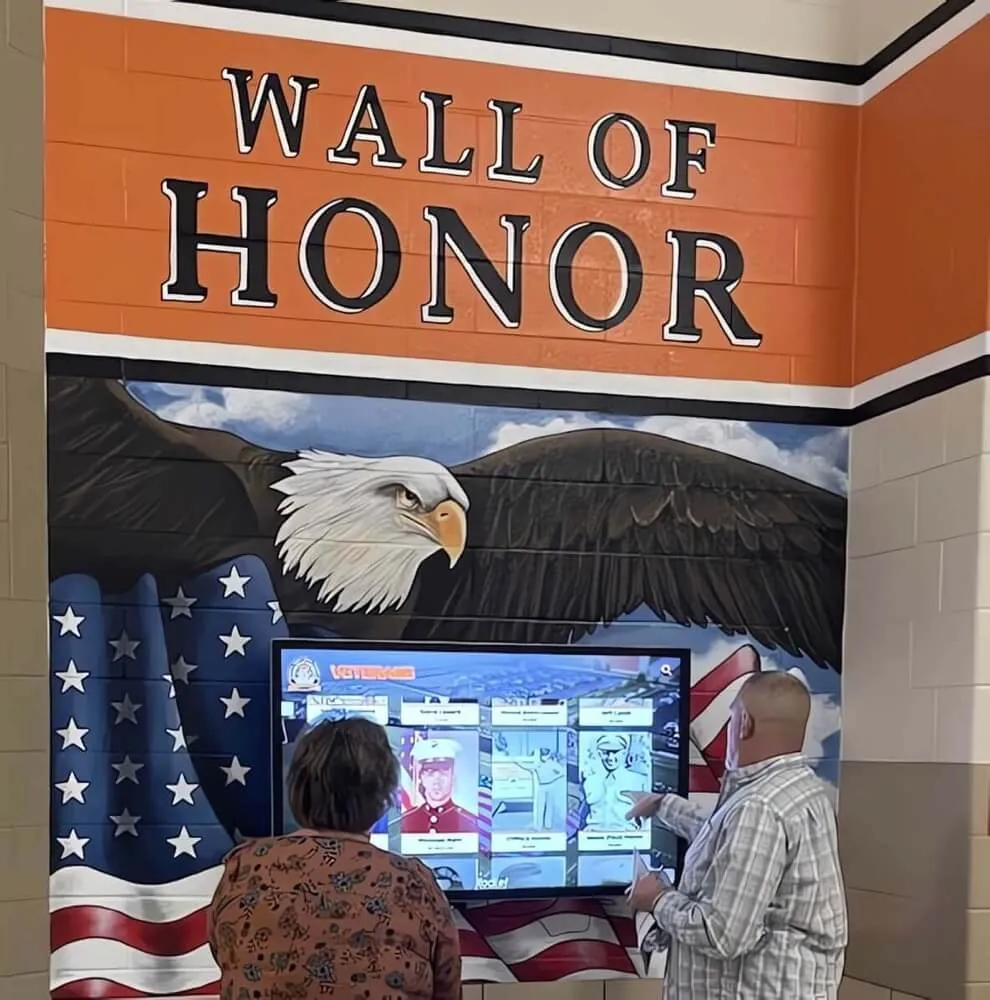
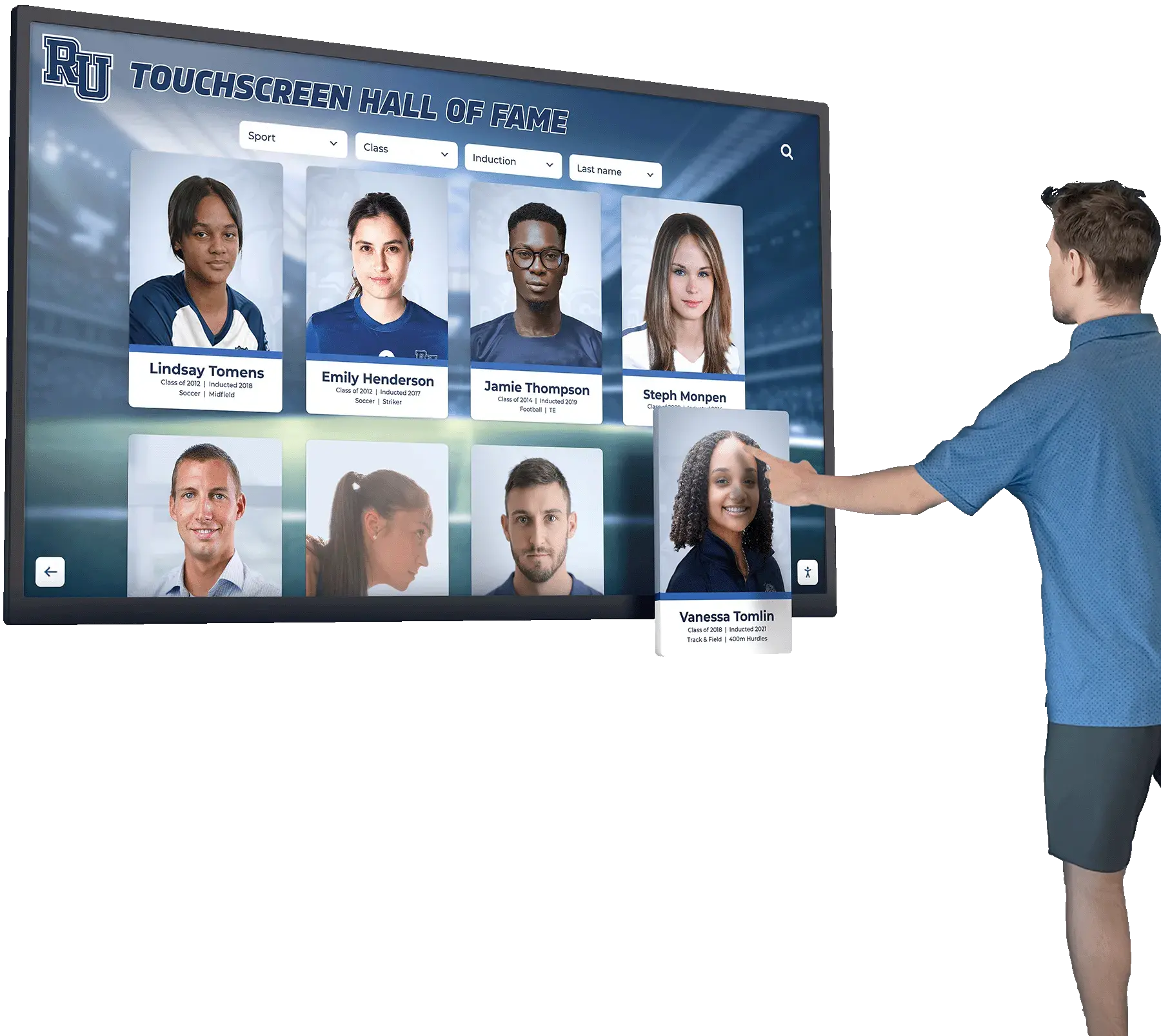
Modern schools showcase exceptional athletes who master advanced skills through interactive displays that highlight individual achievements
Hybrid Approaches
Many players develop personalized serving styles that blend float and topspin elements, adjusting their technique based on match situations, opponent weaknesses, and court conditions. The versatility to modify your jump serve gives you strategic flexibility that keeps opponents guessing.
Step-by-Step Volleyball Jump Serve Technique
Breaking the jump serve into sequential phases allows players to master each component before integrating them into the complete motion.
Phase 1: The Starting Position and Ball Toss
Body Positioning
Begin 10-15 feet behind the end line (adjust based on your approach speed and power). Face the target area with feet shoulder-width apart, weight slightly forward on the balls of your feet. Hold the ball in your non-dominant hand at chest height, keeping your shoulders relaxed and your vision focused on your intended target across the net.
The Toss
The toss quality determines everything that follows. Unlike standing serves where you toss directly overhead, the jump serve toss must be forward to accommodate your approach:
- Height: Toss the ball 3-5 feet higher than your maximum reach
- Distance: Place the toss 3-4 feet in front of your starting position
- Spin: Minimize rotation by using your fingertips to guide the ball upward
- Consistency: Practice tossing to the exact same location until it becomes automatic
The toss should follow a predictable arc that you can time your approach to meet. Many beginners toss too low or too far forward, forcing them to rush their approach or reach awkwardly at contact.
Phase 2: The Approach
Step Sequence
The approach typically follows a three-step or four-step pattern similar to attacking:
Three-Step Approach (Right-handed servers)
- Step 1: Small step with right foot as ball leaves your hand
- Step 2: Longer step with left foot, beginning to accelerate
- Step 3: Plant right foot while bringing left foot alongside (quick two-foot takeoff)
Four-Step Approach (Right-handed servers)
- Step 1: Small step with left foot
- Step 2: Right foot accelerates forward
- Step 3: Longer left step builds momentum
- Step 4: Plant right foot with explosive left foot closure
Schools that develop strong volleyball programs, like those recognized for all-state athlete achievements, emphasize the importance of consistent footwork that allows players to replicate their approach under competitive pressure.
Approach Mechanics
- Direction: Angle your approach slightly left of your intended target (right-handers) to open your hitting shoulder
- Acceleration: Build speed gradually—don’t sprint from the first step
- Arm swing: Let your arms swing naturally during the approach; bring them back during your final steps to load for the jump
- Body position: Maintain an athletic posture with slight forward lean; avoid standing too upright

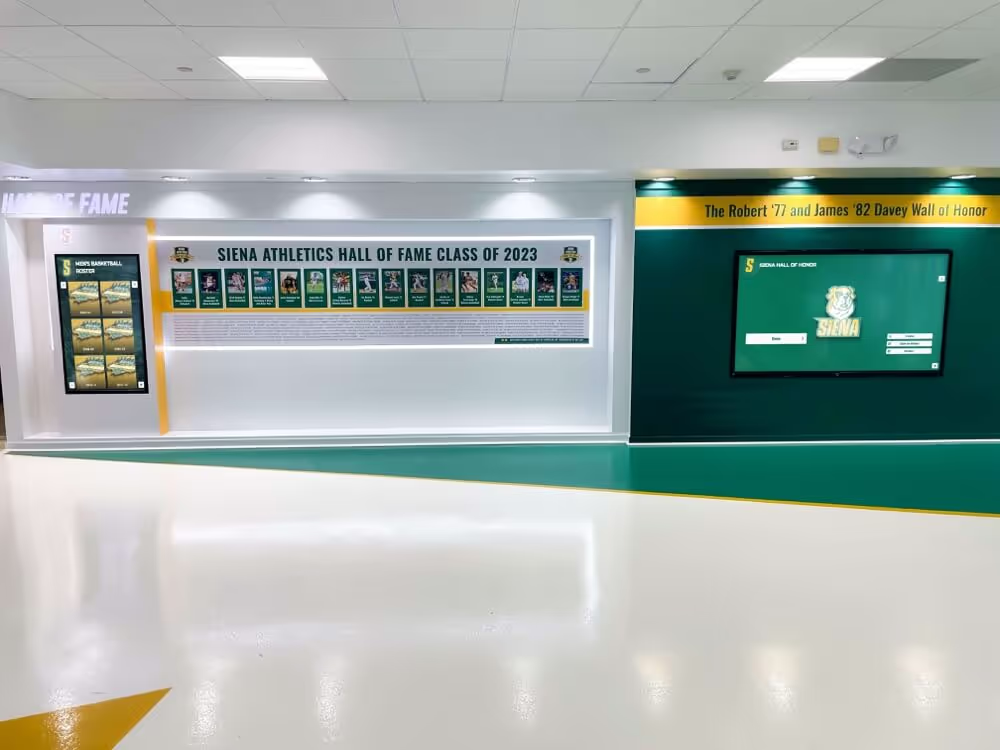
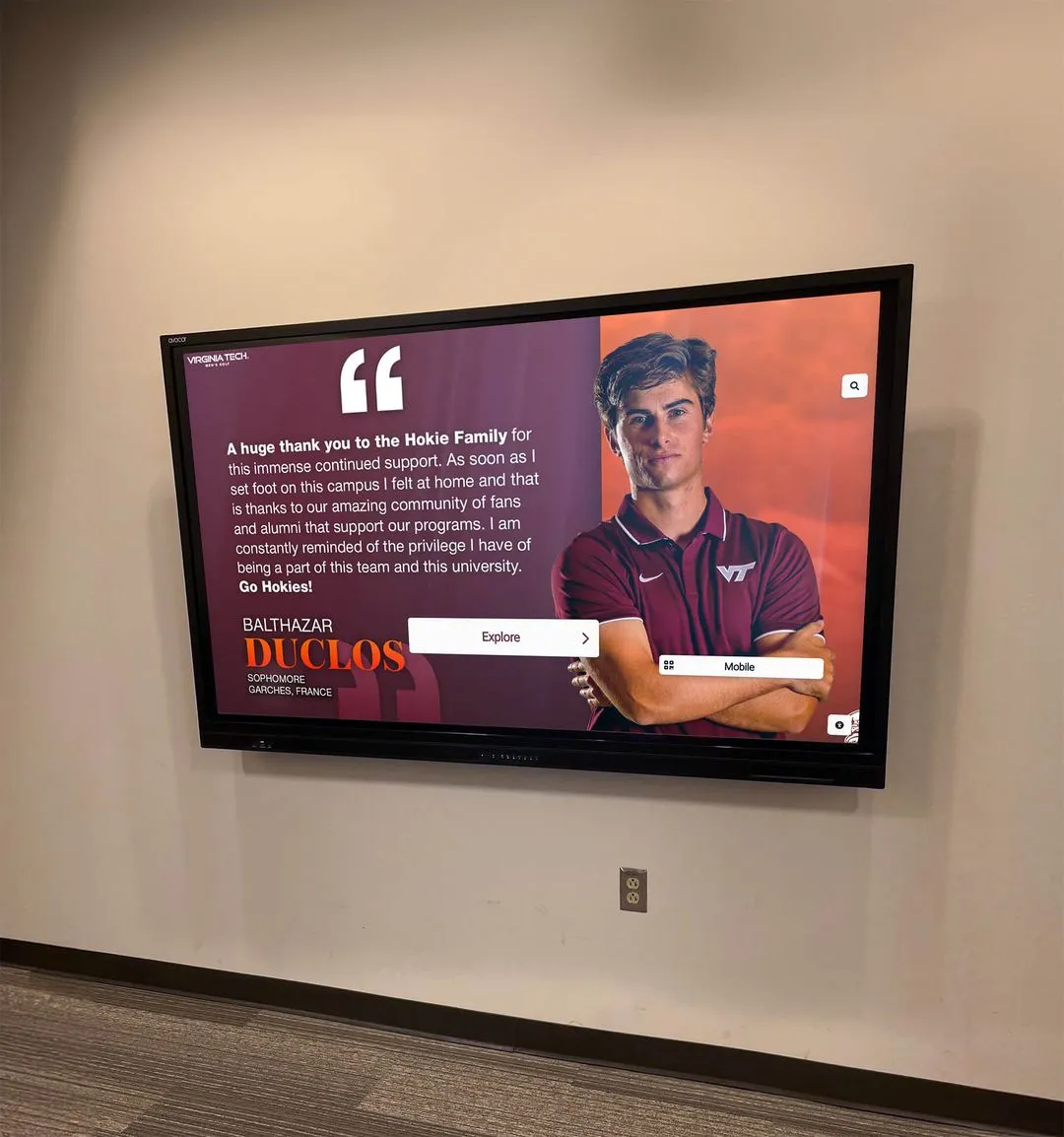
Athletes who master advanced techniques earn recognition through programs celebrating skill development and competitive excellence
Phase 3: The Jump and Contact
Explosive Takeoff
The final two steps transform your horizontal approach momentum into vertical explosion:
- Plant: Drive the heel of your second-to-last foot into the ground
- Block: Bring your last foot alongside quickly to create a blocking action
- Arms: Swing both arms back during the plant, then drive them forcefully upward
- Extension: Explode upward through your legs, achieving maximum vertical lift
Arm Swing Preparation
As you leave the ground, your hitting arm should:
- Draw back with elbow high and hand near your ear (bow-and-arrow position)
- Keep your elbow above shoulder level throughout
- Rotate your shoulders to create torque
- Maintain core tension to transfer lower body power
Contact Mechanics
Contact represents the critical moment where technique determines effectiveness:
For Jump Float Serve:
- Contact the ball directly behind its center with a firm, flat palm
- Follow through briefly without excessive wrist snap
- Aim to “punch” through the ball rather than swing through it
- Keep your hand rigid at impact to eliminate spin
For Jump Topspin Serve:
- Contact slightly below the ball’s equator
- Snap your wrist over the top of the ball as you make contact
- Follow through with full arm extension toward your target
- Generate brushing action that creates forward rotation
The contact point should occur at the peak of your jump or just before, when your body has reached maximum height but maintains upward momentum. Many players contact too early (while still ascending) or too late (while descending), both of which reduce power and control.
Phase 4: Follow-Through and Landing
Arm Follow-Through
After contact, your hitting arm should continue its path toward your target:
- Extend fully through the hitting zone
- Allow your arm to naturally decelerate across your body
- Avoid cutting off your swing prematurely
Safe Landing
Proper landing protects your knees and ankles while preparing you for quick court coverage:
- Land on both feet simultaneously when possible
- Absorb impact by bending your knees and hips
- Maintain balance to transition quickly into defensive position
- Land inside the court (after contact) since you’re allowed to enter after serving
Common Volleyball Jump Serve Mistakes
Identifying and correcting these frequent errors accelerates skill development significantly.
Mistake 1: Inconsistent Toss Placement
The Problem
Varying toss locations force you to adjust your approach and timing on every serve, making consistency impossible. Some serves feel effortless while others require awkward reaching or rushed timing.
The Fix
Develop a pre-serve routine that standardizes your toss:
- Mark a specific spot on the floor where your toss should land if not hit
- Practice 20-30 tosses without serving, focusing solely on placement
- Use video to analyze toss consistency from multiple angles
- Establish a mental checklist you execute before every serve
Elite servers can place their toss within a 6-inch radius on every repetition. This consistency provides the foundation for developing timing and power.
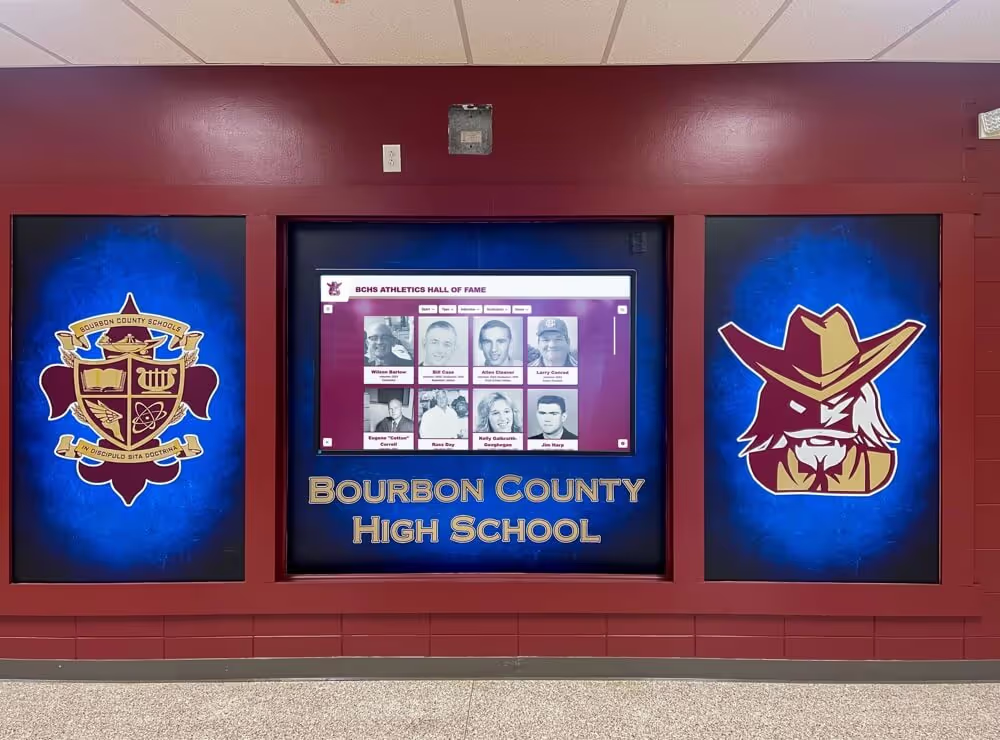
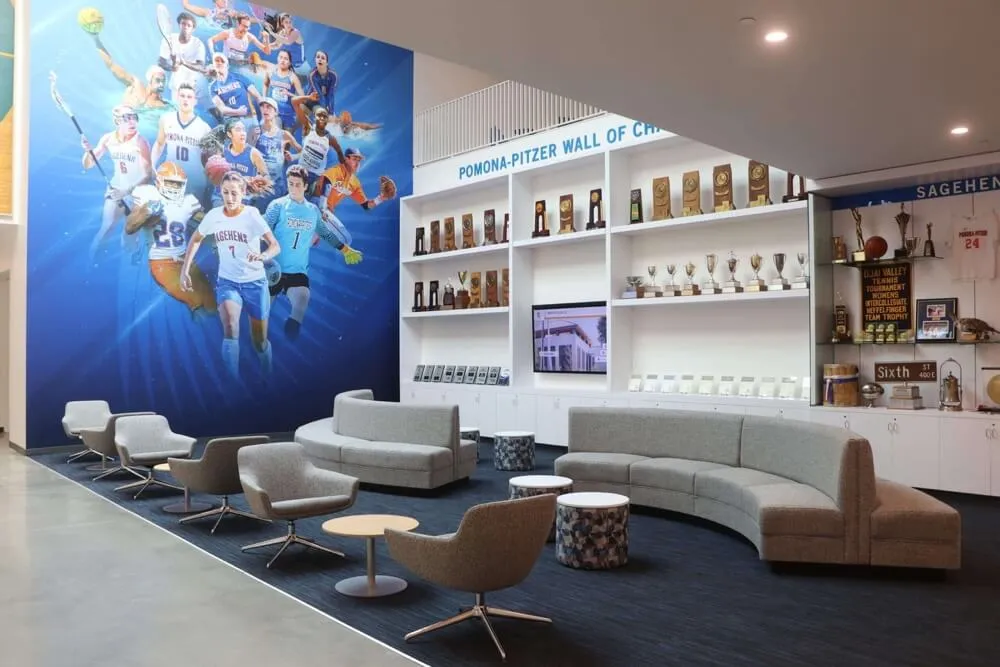
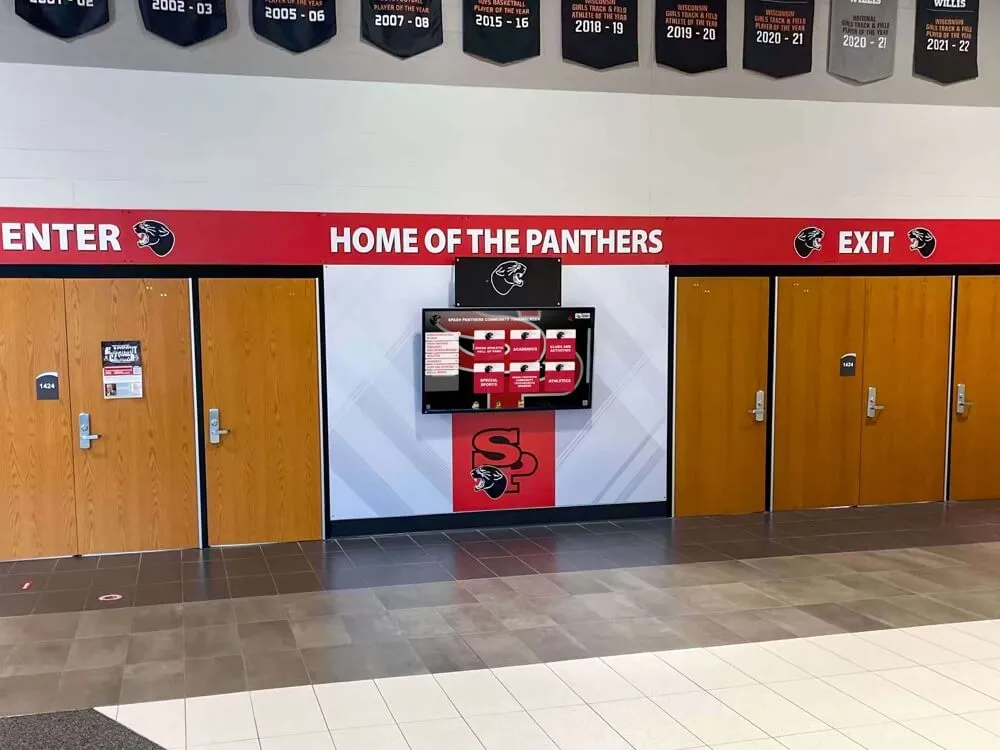
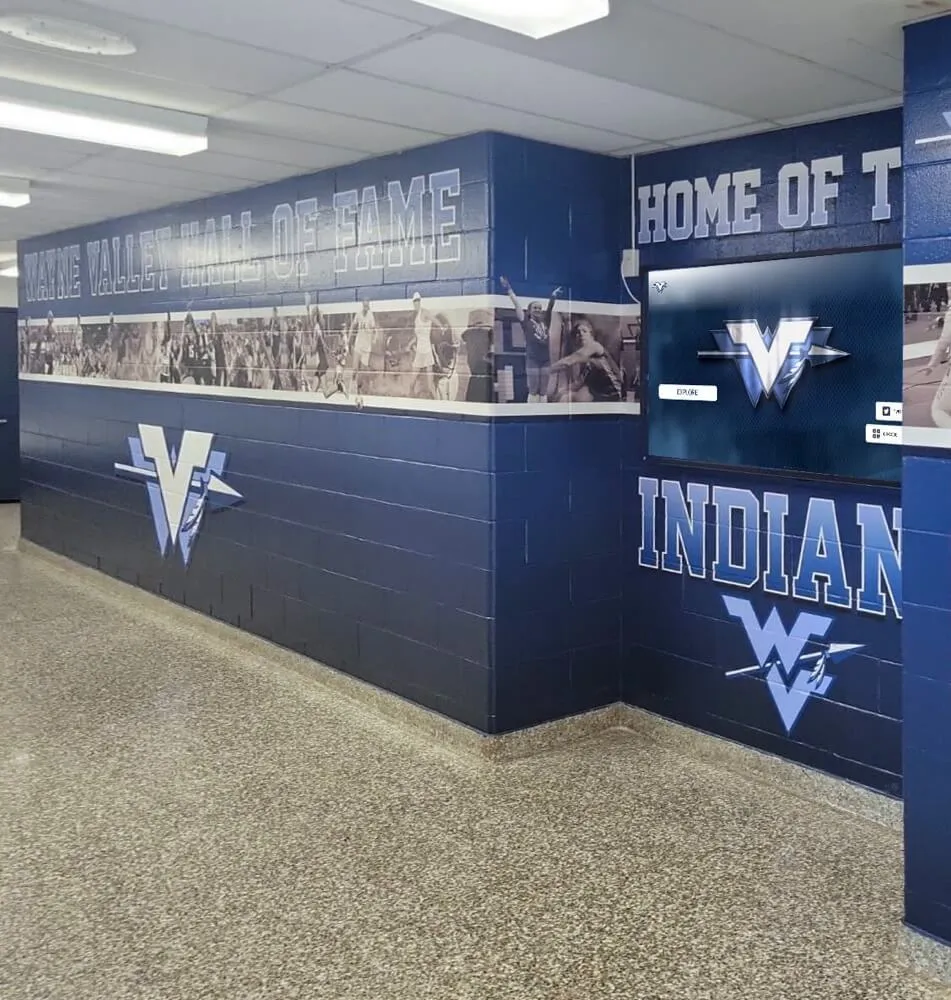
Consistent excellence in athletics earns permanent recognition in school hallways where achievements inspire current and future athletes
Mistake 2: Approaching Too Fast or Too Slow
The Problem
Excessive approach speed causes loss of control and mistimed jumps, while insufficient speed fails to generate adequate power. Finding your optimal approach tempo is crucial.
The Fix
- Start with a walking-pace approach and gradually increase speed over multiple practice sessions
- Video yourself to identify if you’re rushing your final steps or arriving too slowly
- Practice approach timing without the ball to develop rhythm
- Focus on controlled acceleration rather than maximum speed
Your approach should build momentum progressively, with the final two steps being your fastest. Think “slow-slow-fast-fast” for a four-step approach.
Mistake 3: Poor Arm Swing Mechanics
The Problem
Dropping your elbow, swinging across your body, or making contact with a bent arm reduces power generation and accuracy.
The Fix
- Practice arm swing shadow movements in front of a mirror
- Use resistance bands to strengthen the proper motion pattern
- Have a coach or teammate watch your elbow position during serves
- Break down the arm swing into separate components before combining them
Strong programs that celebrate athletic development, similar to those showcasing senior night volleyball traditions, emphasize technical refinement as the foundation of advanced skill development.
Mistake 4: Mistimed Contact Point
The Problem
Contacting the ball while still rising, too early in the descent, or at an awkward side angle reduces effectiveness and consistency.
The Fix
- Practice approach and jump timing without a ball, focusing on reaching peak height
- Toss the ball and let it drop without hitting it, observing where it falls relative to your jump
- Work with a partner who tosses for you, allowing you to focus purely on timing
- Gradually integrate your own toss as timing improves
Your contact should feel effortless when properly timed, requiring minimal adjustment at the moment of impact.
Mistake 5: Landing Off-Balance
The Problem
Landing awkwardly increases injury risk and delays your transition into defensive position after serving.
The Fix
- Strengthen core and stabilizer muscles that control landing mechanics
- Practice jumping and landing exercises without a ball
- Focus on symmetrical loading during takeoff to promote balanced landing
- Video your landings to identify patterns of one-sided weight distribution
Mistake 6: Neglecting Target Specificity
The Problem
Serving without specific targets leads to general inconsistency and fails to exploit opponent weaknesses.
The Fix
- Establish six specific zones in the opponent’s court as targets
- Track your serving accuracy to each zone during practice
- Identify which zones you consistently hit versus struggle with
- Develop the ability to serve to any zone on command
Programs that track and display team achievements create cultures of excellence where athletes continuously refine their skills
Volleyball Jump Serve Drills to Build Mastery
Progressive skill development requires structured practice that isolates and refines specific technique components.
Drill 1: Stationary Toss Consistency
Purpose: Develop automatic toss placement
Setup:
- Stand at your normal serving position
- Place a target marker (cone or towel) 3-4 feet in front of you
- Have a basket of volleyballs nearby
Execution:
- Execute 20 consecutive tosses without attempting to serve
- Focus on placing the ball’s landing spot within 6 inches of your target
- Track successful tosses versus misses
- Rest and repeat for 3-5 sets
Progression: Reduce target size as accuracy improves, eventually aiming for a 3-inch radius.
Success Metric: Achieve 18/20 tosses within your target zone before progressing to full serves.
Drill 2: Approach Timing Without Contact
Purpose: Develop consistent approach rhythm and timing
Setup:
- Mark your starting position behind the end line
- Set up a standing reach marker (tape on a wall or pole) at your maximum jump height
Execution:
- Toss the ball with your normal technique
- Execute your complete approach and jump
- Attempt to touch the reach marker at the peak of your jump
- Allow the ball to drop without contacting it
- Observe where the ball lands relative to your jump location
Focus Points:
- Consistent step timing on every repetition
- Achieving maximum vertical height
- Ball position relative to your jump peak
Sets: 3-5 sets of 10 repetitions
This drill, similar to training methods used in programs developing student-athlete excellence, separates timing development from the pressure of contact accuracy.
Drill 3: Progressive Distance Serving
Purpose: Build power gradually while maintaining technique
Setup:
- Start serving from 15 feet behind the end line
- Place distance markers at 15, 20, 25, and 30 feet
Execution:
- Serve 5 consecutive successful serves from the 15-foot line
- Move back to the 20-foot marker and repeat
- Continue progressing backward as you maintain success
- Return to a closer line if you miss 2 consecutive serves
Key Points:
- Maintain identical technique regardless of distance
- Generate additional power through improved timing, not increased effort
- Track the distance at which your technique begins breaking down
Goal: Successfully serve from 10 feet behind the end line with consistent technique.
Drill 4: Target Zone Accuracy
Purpose: Develop directional control and tactical serving
Setup:
- Divide the opponent’s court into six zones (left-back, middle-back, right-back, left-front, middle-front, right-front)
- Place visual markers or cones identifying each zone
- Assign point values to zones (harder targets worth more points)
Execution:
- Call your target zone before each serve
- Serve with full jump serve technique
- Award yourself points based on accuracy
- Track points over 20-serve sets
Scoring System:
- Direct ace: 5 points
- Target zone: 3 points
- Wrong zone but in-bounds: 1 point
- Service error: -2 points
Progressive Challenge: Reduce zone size as accuracy improves, eventually targeting specific passers rather than general areas.
Programs that emphasize skill refinement, like those recognized through varsity letterman awards, understand that consistent practice with specific targets separates competent servers from exceptional ones.
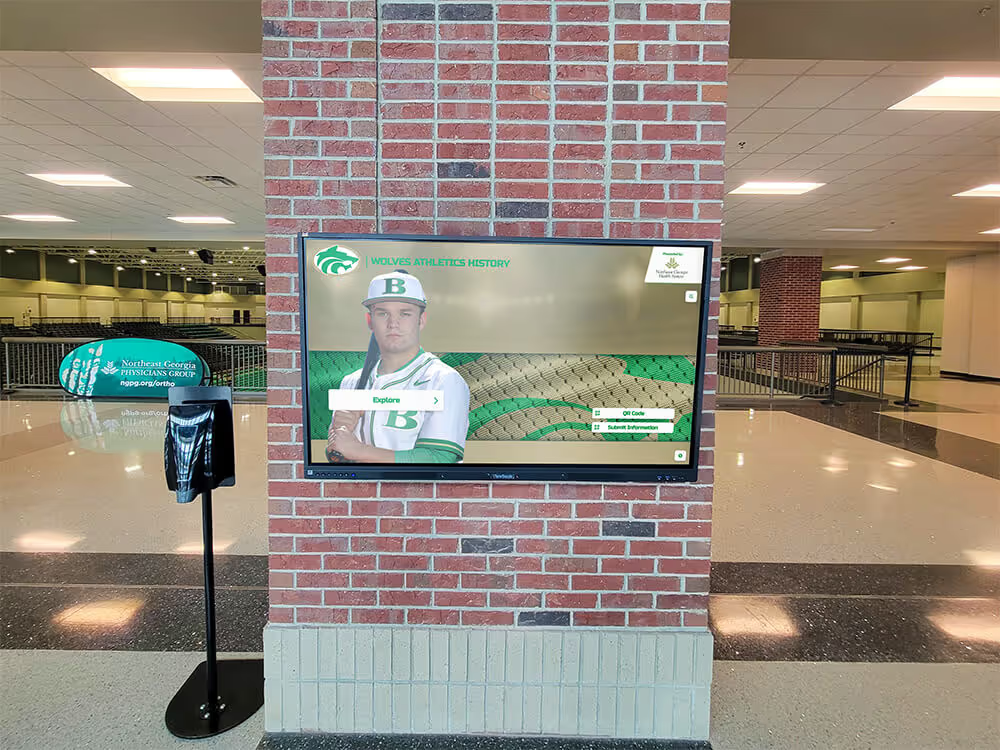
Trophy displays and achievement walls inspire athletes to dedicate themselves to mastering advanced skills that contribute to team success
Drill 5: Competitive Serving Pressure
Purpose: Simulate match pressure and develop mental toughness
Setup:
- Practice with at least one teammate or coach
- Establish a consequence for missed serves (sprint, push-ups, etc.)
- Set specific serving goals under pressure
Execution:
Version 1: Consecutive Makes
- Set a goal (e.g., 5 consecutive successful serves)
- Reset to zero on any miss
- Complete the set or face the consequence
Version 2: Point Threshold
- Earn points for successful serves in target zones
- Lose points for errors
- Reach 20 points before 15 total serves
Version 3: Match Simulation
- Simulate actual game situations (serving at 24-24, serving for match point, etc.)
- Add crowd noise or distractions
- Practice visualization before each serve
Mental Focus:
- Develop pre-serve routines you can replicate under pressure
- Practice controlled breathing between serves
- Build confidence through successful repetitions in challenging scenarios
Drill 6: Video Analysis and Technique Refinement
Purpose: Identify technical flaws and track improvement over time
Setup:
- Record yourself serving from multiple angles (side view, front view, behind)
- Review footage immediately after serving sessions
- Compare your technique to professional servers
Analysis Points:
- Toss consistency and placement
- Approach tempo and footwork
- Arm swing path and elbow position
- Contact point and follow-through
- Landing balance and court coverage transition
Implementation:
- Record baseline footage when beginning jump serve development
- Take progress videos every 2-3 weeks
- Create a technique checklist based on ideal mechanics
- Focus on one technical correction at a time rather than fixing everything simultaneously
Elite programs, including those celebrating achievements through digital trophy displays, utilize video analysis to accelerate skill development and document athlete progression over time.
Training Progressions for Different Skill Levels
Appropriate progressions ensure players develop proper technique before adding power or complexity.
Beginner Progression (Weeks 1-4)
Week 1-2: Fundamentals
- Master stationary toss consistency (Drill 1)
- Practice approach footwork without ball (Drill 2)
- Develop vertical jump through plyometric exercises
- Serve from shortened distance (15-20 feet from net)
Week 3-4: Integration
- Combine toss and approach timing
- Attempt contact from close distance
- Focus on technique over power
- Achieve 50% in-court success rate from shortened distance
Key Benchmarks:
- 15/20 tosses within target zone
- Consistent three-step or four-step approach
- Contact at peak jump height
- Balanced landing on every attempt
Intermediate Progression (Weeks 5-12)
Week 5-8: Distance and Power
- Progress backward using distance drill (Drill 3)
- Introduce topspin or float variations
- Serve from regulation distance (behind end line)
- Develop 60-70% in-court success rate
Week 9-12: Accuracy and Tactics
- Implement target zone accuracy work (Drill 4)
- Practice serving to specific opponent weaknesses
- Develop ability to change serving style mid-match
- Achieve consistent placement in chosen zones
Key Benchmarks:
- 70% serving percentage from regulation distance
- 50% accuracy to called target zones
- Ability to serve 10+ consecutive attempts without major form breakdown
- Generate serves with noticeable movement or power
Advanced Progression (Weeks 13+)
Ongoing Development:
- Fine-tune serving under competitive pressure (Drill 5)
- Develop multiple serving variations (float, topspin, hybrid)
- Create tactical serving strategies based on opponent analysis
- Build mental resilience for high-pressure serving situations
Elite Benchmarks:
- 75-80% serving percentage in matches
- 60%+ accuracy to target zones
- Consistent aces or overpasses (1+ per set)
- Ability to execute serve strategy under pressure
Athletes who reach these advanced levels often earn recognition similar to those celebrated in state championship displays, where individual skill mastery contributes to team achievements.
Physical Conditioning for Jump Serve Development
The jump serve demands specific physical attributes that require dedicated conditioning.
Explosive Power Development
Plyometric Exercises:
- Box jumps (3-4 sets of 6-8 reps)
- Depth jumps (2-3 sets of 5 reps)
- Broad jumps (3 sets of 5 reps)
- Single-leg bounds (3 sets of 10 each leg)
Olympic Lifting Variations:
- Power cleans (4 sets of 3-5 reps)
- Push press (3 sets of 5 reps)
- Jump squats with light weight (3 sets of 8 reps)
Perform explosive training 2-3 times per week on non-consecutive days.
Core Strength and Stability
Rotational Power:
- Medicine ball rotational throws (3 sets of 10 each side)
- Cable woodchops (3 sets of 12 each direction)
- Russian twists (3 sets of 20 total)
Anti-Rotation Stability:
- Pallof press (3 sets of 10 each side)
- Dead bugs (3 sets of 15)
- Planks with variations (3 sets of 45-60 seconds)
Strong core development transfers directly to serving power and consistency.
Shoulder Health and Arm Strength
Strengthening:
- External rotation with bands (3 sets of 15)
- Internal rotation with bands (3 sets of 15)
- Scapular push-ups (3 sets of 12)
- Shoulder press variations (3 sets of 8-10)
Mobility and Recovery:
- Shoulder circles and arm swings (daily)
- Cross-body stretches (hold 30 seconds each side)
- Doorway pec stretches (hold 45 seconds)
- Foam rolling upper back and shoulders (5 minutes post-training)
Prioritize shoulder health to prevent overuse injuries common among heavy servers.
Conditioning for Serve Endurance
While individual serves are explosive, matches require repeated high-quality serving over extended periods:
- Interval sprint training (8-10 sets of 20-30 meter sprints)
- Circuit training combining jumping, serving motions, and defensive movements
- Practice serving 50+ consecutive attempts to build serving-specific endurance
- Recovery protocols between serving sessions (48-72 hours for maximum efforts)
Mental Approach to Jump Serve Mastery
Technical and physical development must be supported by proper mental preparation.
Building Serve Confidence
Positive Repetition:
- Track successful serves to build evidence of capability
- Celebrate technical improvements even when serves miss
- Visualize successful serving before practices and matches
- Create personal highlight videos of your best serves
Progressive Challenge:
- Set achievable short-term goals that build confidence
- Gradually increase difficulty as success breeds belief
- Accept that developing elite skills requires patience and persistence
Pre-Serve Routines
Develop consistent pre-serve rituals that calm nerves and focus attention:
Sample Routine:
- Take deep breath while receiving ball from referee
- Walk to serving position with specific number of steps
- Identify specific target across net
- Execute one or two practice tosses
- Visualize successful serve trajectory
- Execute consistent toss and serve motion
Routines reduce mental interference by creating automatic patterns you can rely on under pressure.
Handling Service Errors
Every server misses. Elite servers distinguish themselves by how they respond:
- Reset mentally after errors rather than dwelling on mistakes
- Maintain consistent routine regardless of previous result
- Trust your technique even after several consecutive misses
- Focus on process (good toss, solid approach) rather than just outcomes
- Learn from errors without being defined by them
Athletes who develop this mental resilience often achieve recognition in programs celebrating comprehensive athletic excellence, similar to senior night celebrations that honor dedication and growth over time.
Tactical Application of the Jump Serve
Mastering technique is only valuable when applied strategically within competitive contexts.
Identifying Opponent Weaknesses
Pre-Match Analysis:
- Observe which players struggle most with serve reception during warm-ups
- Identify passers who prefer receiving on specific sides
- Note defensive formations and where gaps exist
- Watch for players who struggle with specific serve types (float versus topspin)
In-Match Adjustments:
- Target passers who have made recent errors
- Serve players immediately after substituting into matches
- Exploit weak-side receivers (most teams have one)
- Change serving style when opponents adjust to your pattern
Strategic Serving Situations
Early Set Serving:
- Establish serving presence early with aggressive serves
- Build confidence through early successful serves
- Force opponents to respect your serving from the beginning
Momentum Shifts:
- Use jump serves to stop opponent runs
- Take strategic risks when your team needs a spark
- Increase aggression after timeouts when opponents adjust formations
Late-Set Pressure:
- Balance aggression with consistency in close games (20-20+)
- Consider more conservative serving when protecting leads
- Increase risk-taking when trailing and needing quick points
Match-Point Situations:
- Trust your routine and technique under maximum pressure
- Serve opponent’s weakest passer unless they’ve adjusted to protect them
- Consider float serves if your topspin has been inconsistent
Serving Patterns and Sequences
Avoid becoming predictable:
- Vary target zones between serves
- Alternate between aggressive and placement serves
- Change serving style within matches
- Develop at least three distinct serving looks opponents must prepare for
Documenting Your Jump Serve Journey
Track your development to maintain motivation and identify improvement areas:
Performance Metrics to Track
Technical Metrics:
- Serving percentage by practice/match
- Aces per set
- Serving errors per match
- Target zone accuracy percentages
Physical Metrics:
- Vertical jump height
- Serve velocity (using radar gun if available)
- Approach consistency scores
Video Documentation:
- Monthly technique comparison videos
- Match serving footage showing tactical decision-making
- Practice sessions highlighting specific technique focus
Celebrating Progress and Achievement
Recognition of skill development motivates continued dedication. Schools and programs that celebrate athletic milestones through permanent recognition—from digital hall of fame displays to athletic achievement walls—create environments where athletes feel valued for the effort they invest in mastering complex skills.
Modern recognition platforms allow schools to showcase specific athletic achievements, including serving statistics, all-conference selections earned through serving excellence, and match-winning aces that contribute to team championships. These displays inspire younger athletes to dedicate themselves to skill development while honoring the athletes who have already achieved mastery.
Conclusion: From Practice to Performance
The volleyball jump serve represents one of volleyball’s most exciting and impactful skills. While mastering this technique requires dedication, proper coaching, and countless repetitions, the payoff—both in competitive advantage and personal achievement—makes the investment worthwhile. By systematically developing each technical component, avoiding common mistakes, and implementing structured practice drills, players at any level can transform their serving from a simple rule requirement into a legitimate weapon.
Remember that every elite jump server started as a beginner struggling with toss consistency and approach timing. The difference between those who master this skill and those who abandon it comes down to persistence, deliberate practice, and willingness to accept temporary discomfort in pursuit of long-term excellence. Whether your goal is earning a spot on a varsity team, attracting college recruitment attention, or simply developing a skill you can take pride in, the jump serve journey offers challenges and rewards that extend far beyond the volleyball court.
The most successful volleyball programs understand that individual skill mastery contributes to collective team success. When schools celebrate both team achievements and the individual skills that make those achievements possible, they create cultures where athletes push themselves to develop advanced techniques that elevate everyone’s performance. That’s the power of recognition done right—inspiring excellence while honoring the dedication required to achieve it.
Celebrate Athletic Excellence and Skill Development
Schools that inspire athletic excellence create environments where dedication to skill mastery is recognized and celebrated. Rocket Alumni Solutions provides digital recognition displays that showcase individual athletic achievements, team championships, and the specific skills that contribute to competitive success. From highlighting all-conference servers to displaying serving statistics and career aces, modern recognition platforms create lasting tributes to athletes who dedicate themselves to excellence. Discover how your school can inspire the next generation of elite athletes through meaningful, permanent recognition that celebrates both achievement and the journey to mastery.