



Intent: Demonstrate how the most unbreakable sports records in history inspire athletic programs and provide powerful content for modern digital trophy cases and record board displays.
When Wilt Chamberlain scored 100 points in a single NBA game in 1962, or when Cal Ripken Jr. played 2,632 consecutive Major League Baseball games without missing a single one, these athletes didn’t just set records—they established benchmarks so extraordinary that decades later, experts still consider them virtually unbreakable. These achievements represent the pinnacle of human athletic performance, combining physical dominance, mental fortitude, and circumstances unlikely to ever align again.
For schools, universities, and athletic programs, these legendary sports records serve multiple purposes beyond historical curiosity. They provide inspirational context for current student-athletes striving for excellence, demonstrate what sustained commitment can achieve, and offer compelling content for recognition displays that connect local achievements to broader sports history. When athletic directors showcase these unbreakable records alongside school achievements, they create environments where students understand that today’s practice sessions contribute to tomorrow’s legacy.
This comprehensive guide explores the most impressive unbreakable sports records across multiple disciplines, examines what makes certain achievements truly untouchable, and demonstrates how modern digital displays help schools leverage these inspirational benchmarks to motivate athletes and celebrate program milestones within the broader context of sports excellence.
The most unbreakable sports records share defining characteristics: they were achieved under conditions unlikely to be repeated, they require statistical performances far beyond normal excellence, or they demand sustained consistency over timeframes that modern athlete management strategies would never permit. Understanding these records helps athletic programs identify meaningful benchmarks and create recognition systems that honor both legendary achievements and local milestones.

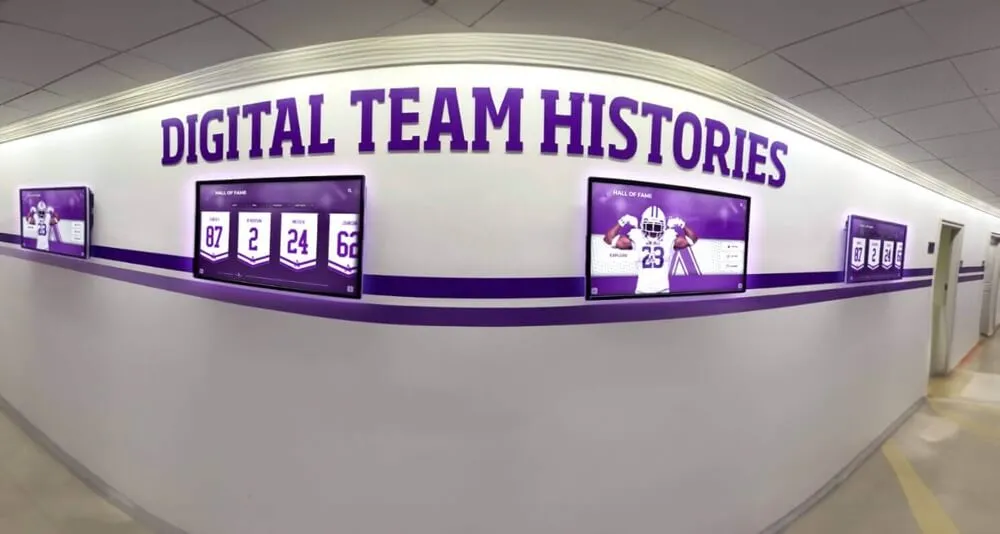
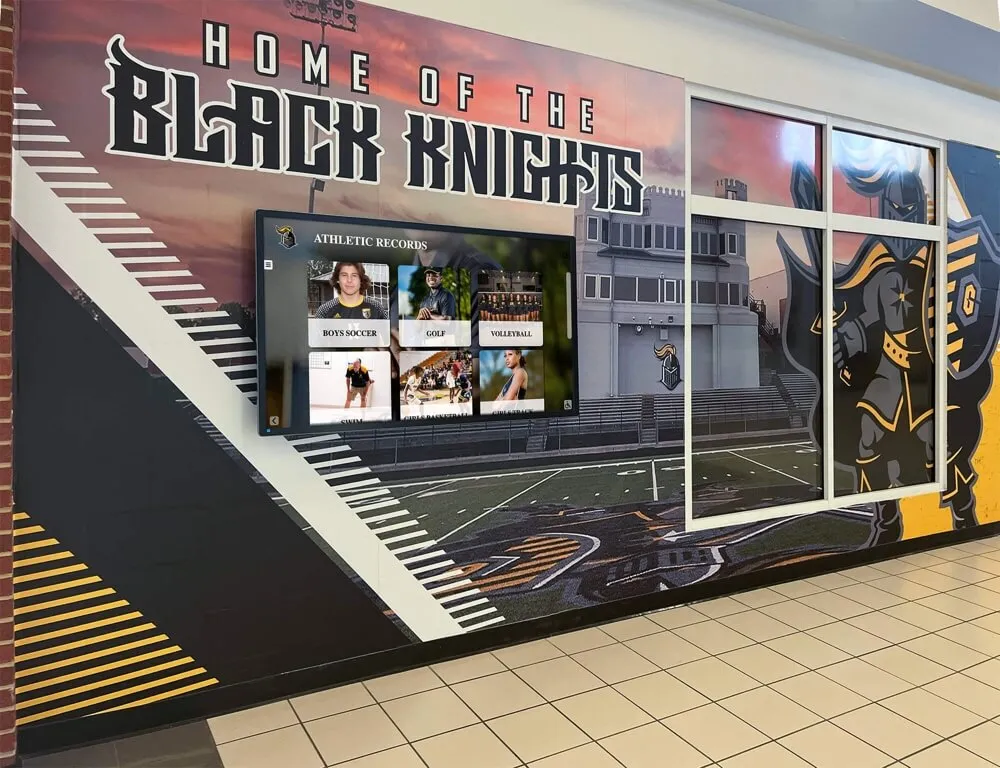
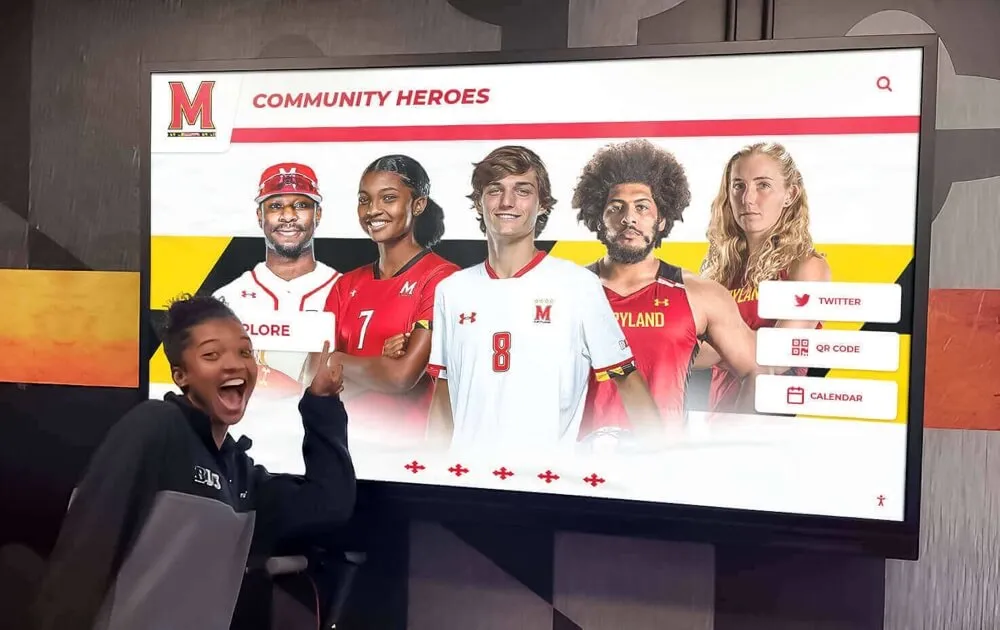
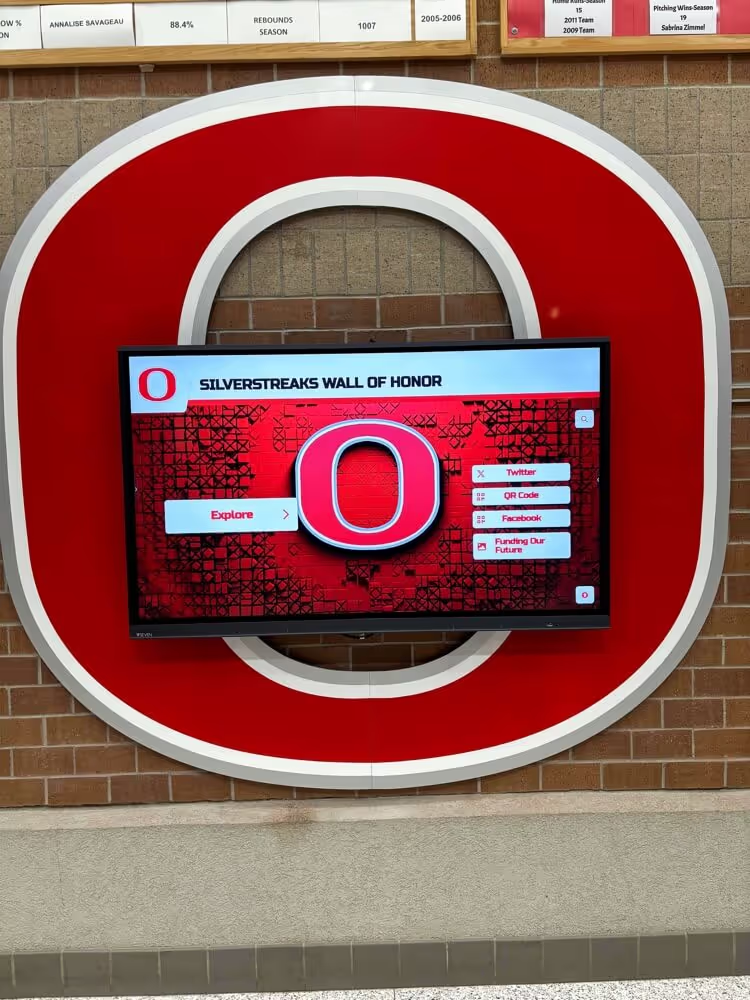
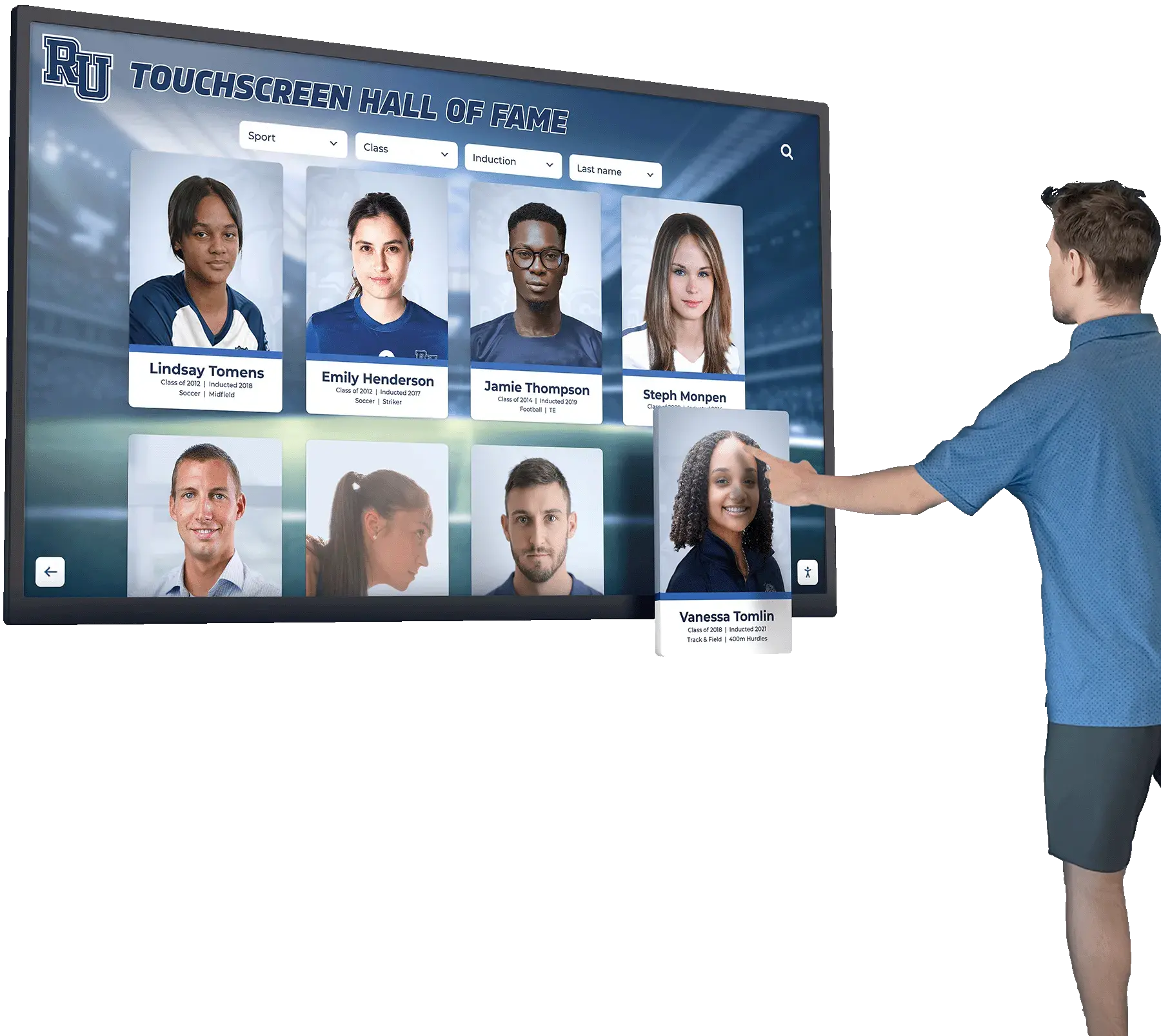
Modern digital displays showcase both legendary sports records and local athletic achievements, creating comprehensive recognition programs
Why Unbreakable Records Matter for Athletic Programs
Understanding the cultural and motivational significance of legendary sports records helps athletic directors leverage these narratives effectively within their programs.
Creating Context for Excellence Standards
Unbreakable records establish reference points that help student-athletes understand different levels of athletic achievement:
Performance Benchmarking
- Legendary records define the absolute ceiling of achievement in specific athletic categories
- Historical context shows how today’s “dominant” performances compare to all-time greats
- Record progression reveals how training, nutrition, and strategy have evolved
- Unbreakable achievements demonstrate the intersection of talent, opportunity, and timing
- Statistical benchmarks help athletes set realistic yet ambitious personal goals
Athletic programs that regularly reference historical records during team meetings and recognition events help athletes develop proper perspective on performance. When student-athletes understand that their personal records exist within broader historical contexts, they develop healthier relationships with achievement and competition.
Schools implementing comprehensive digital record boards often include sections comparing school records to state, national, and all-time benchmarks, providing athletes with clear achievement pathways.
Inspiring Through Seemingly Impossible Achievement
Records considered “unbreakable” provide unique motivational value precisely because they seem beyond reach:
Inspirational Impact
- Impossible achievements challenge athletes to question perceived limitations
- Historical dominance demonstrates what complete dedication can accomplish
- Unbreakable records show that extraordinary results require extraordinary commitment
- Statistical anomalies reveal how preparation meets opportunity
- Legendary performances prove that mental strength amplifies physical talent
Athletic programs discussing youth sports development often reference age-appropriate record achievements to help young athletes understand the progression from participation through elite performance.
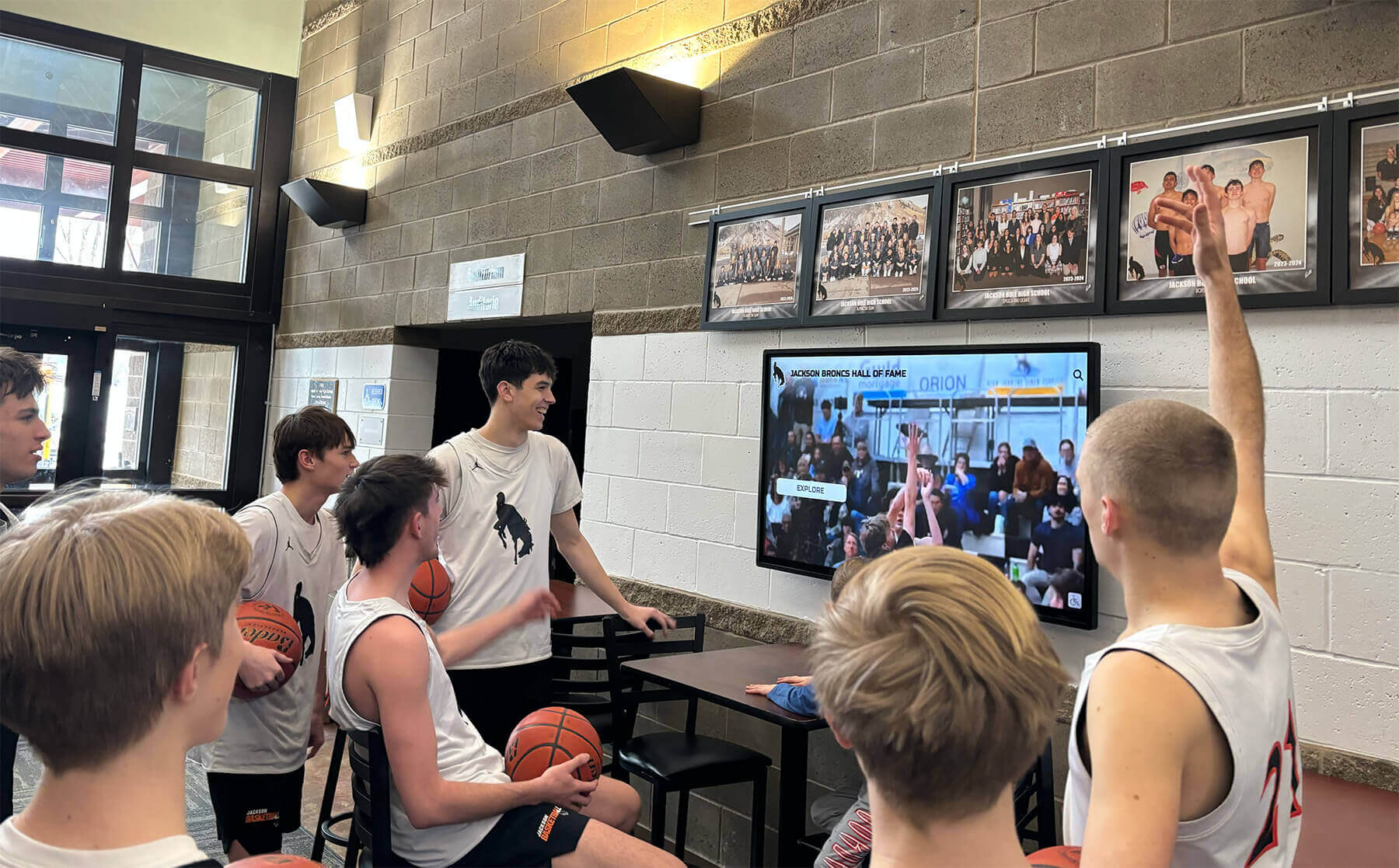
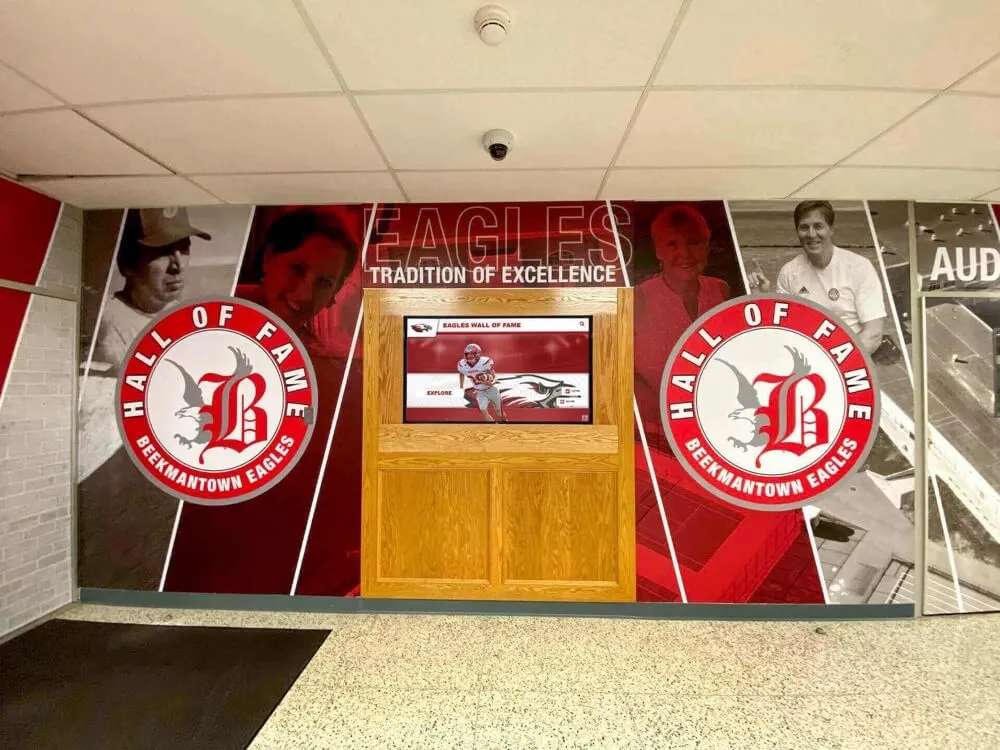
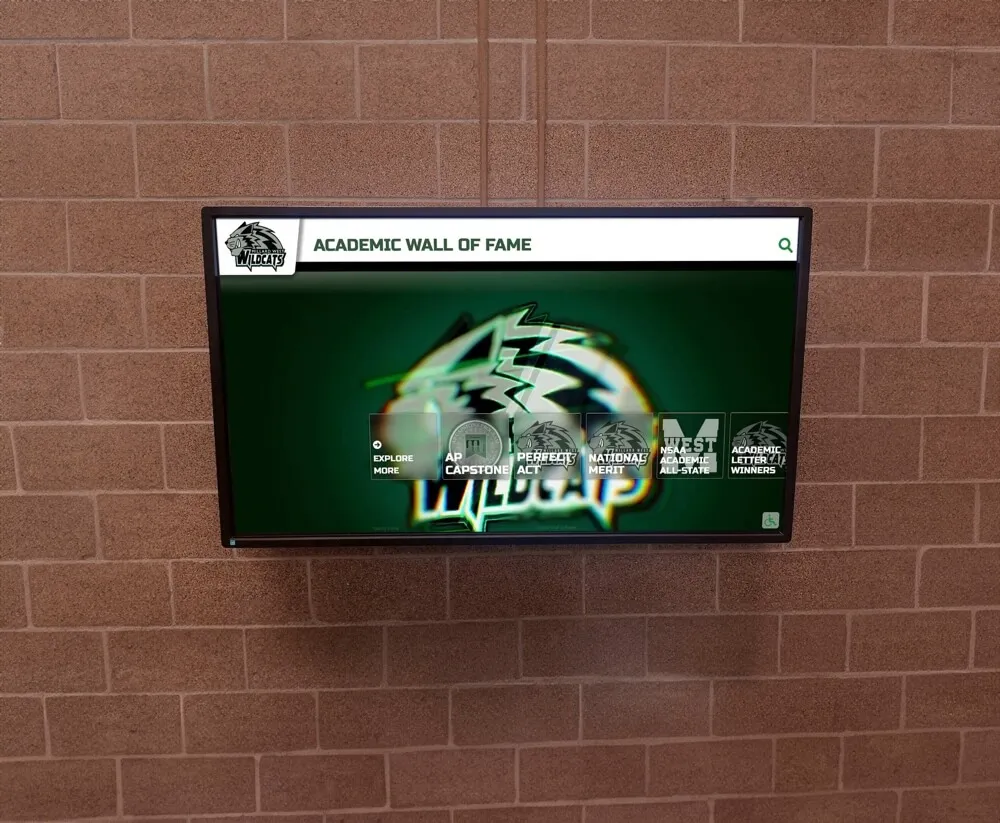
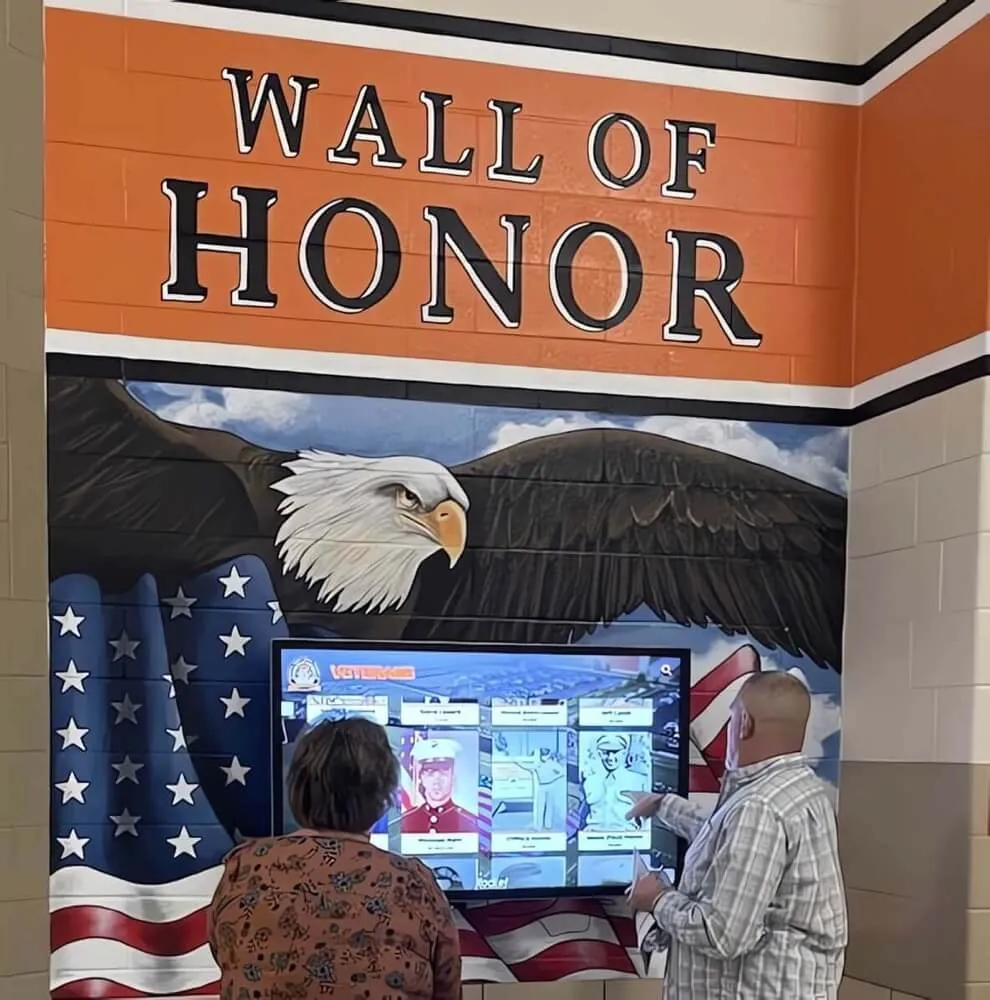
Interactive displays bring sports history to life, allowing athletes to explore legendary records and achievements
Building Recognition Program Content
Unbreakable records provide compelling content for athletic recognition displays and trophy cases:
Content Development Applications
- Historical records create engaging compare-and-contrast opportunities with school achievements
- Statistical milestones provide context for celebrating local program records
- Achievement timelines show progression of records over decades
- Record-holder profiles demonstrate diverse paths to athletic excellence
- Statistical graphics make abstract numbers tangible and understandable
Programs implementing player highlight displays often include “Did You Know?” sections featuring legendary sports records that provide entertaining context during game-day viewing.
Most Unbreakable Individual Records
Certain individual achievements stand so far beyond normal excellence that modern athletes rarely approach these benchmarks.
Wilt Chamberlain’s 100-Point Game
On March 2, 1962, Wilt Chamberlain scored 100 points in a single NBA game, a record that remains untouched more than six decades later.
Why This Record Stands Alone:
- The modern NBA game emphasizes team basketball over individual scoring
- Strategic fouling prevents dominant players from remaining in games during blowouts
- Contemporary playing time management limits minutes for star players
- The second-highest single-game total remains Kobe Bryant’s 81 points (2006)
- No player has scored 70+ points in a game since Devin Booker’s 70 in 2017
This record demonstrates the intersection of individual dominance, team circumstances, and era-specific playing styles. Modern load management strategies, designed to preserve athlete health over 82-game seasons, make this sustained single-game output virtually impossible to replicate.
Athletic programs can use this record to discuss how achievement contexts change over time—what was possible in 1962 differs from 2026, yet both eras produce excellence worth celebrating.
Cal Ripken Jr.’s Consecutive Games Streak
Baltimore Orioles shortstop Cal Ripken Jr. played 2,632 consecutive games from May 30, 1982, to September 19, 1998, breaking Lou Gehrig’s previous record of 2,130 games.
Why This Record May Never Fall:
- Modern sports medicine emphasizes rest and recovery over playing through injuries
- Teams prioritize long-term athlete health over consecutive game participation
- Strategic rest days for veteran players have become standard practice
- Minor injuries that players once competed through now result in precautionary absences
- The second-longest active streak belongs to Whit Merrifield with 553 games (ended 2021)
This achievement represents a philosophy toward athletic participation that has fundamentally changed. Where previous generations viewed playing every game as an honor and duty, contemporary sports science recognizes that strategic rest enhances long-term performance and career longevity.
Schools can reference this record when discussing athletic program values and how definitions of commitment evolve while remaining equally meaningful across generations.
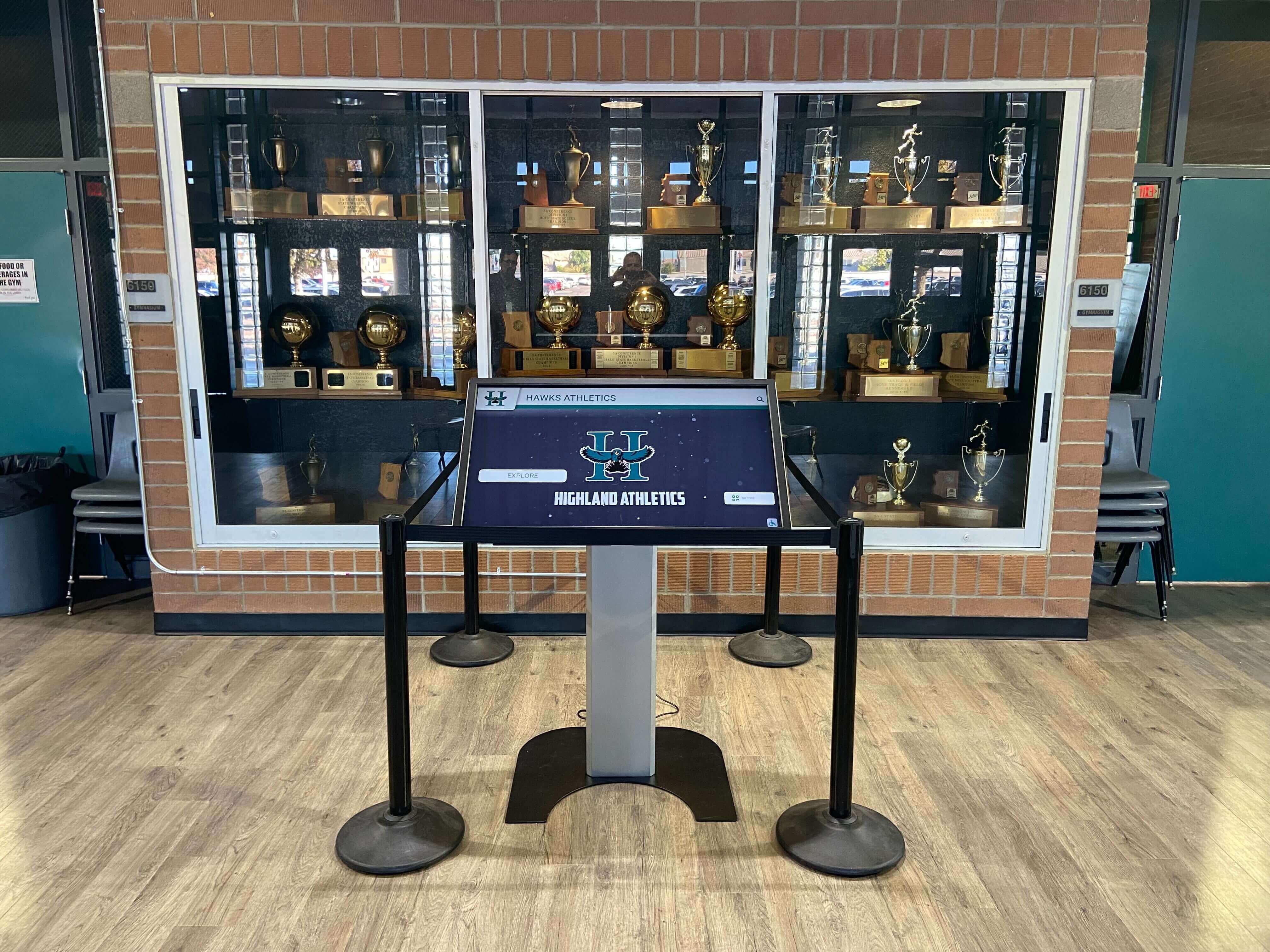
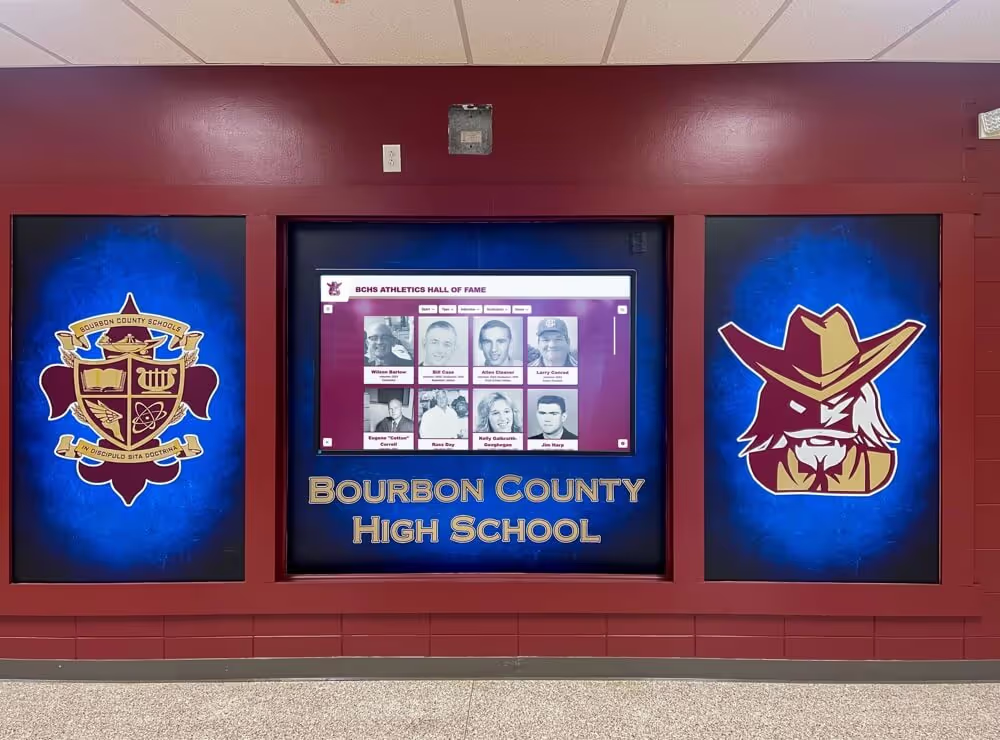
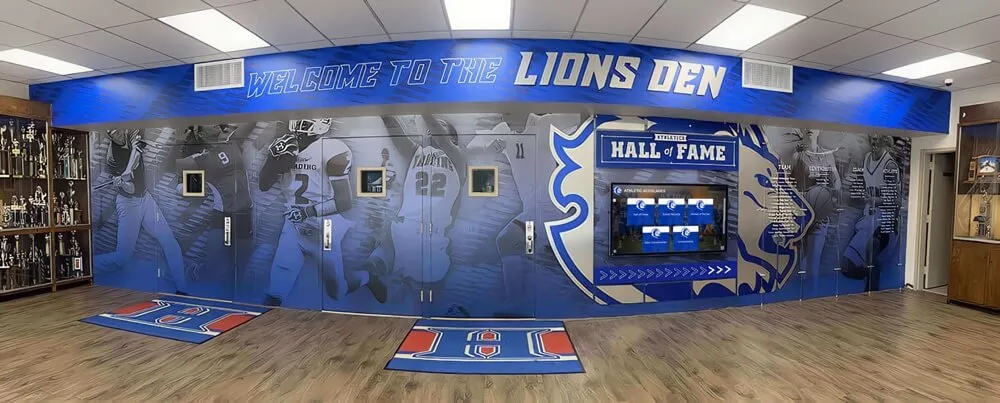
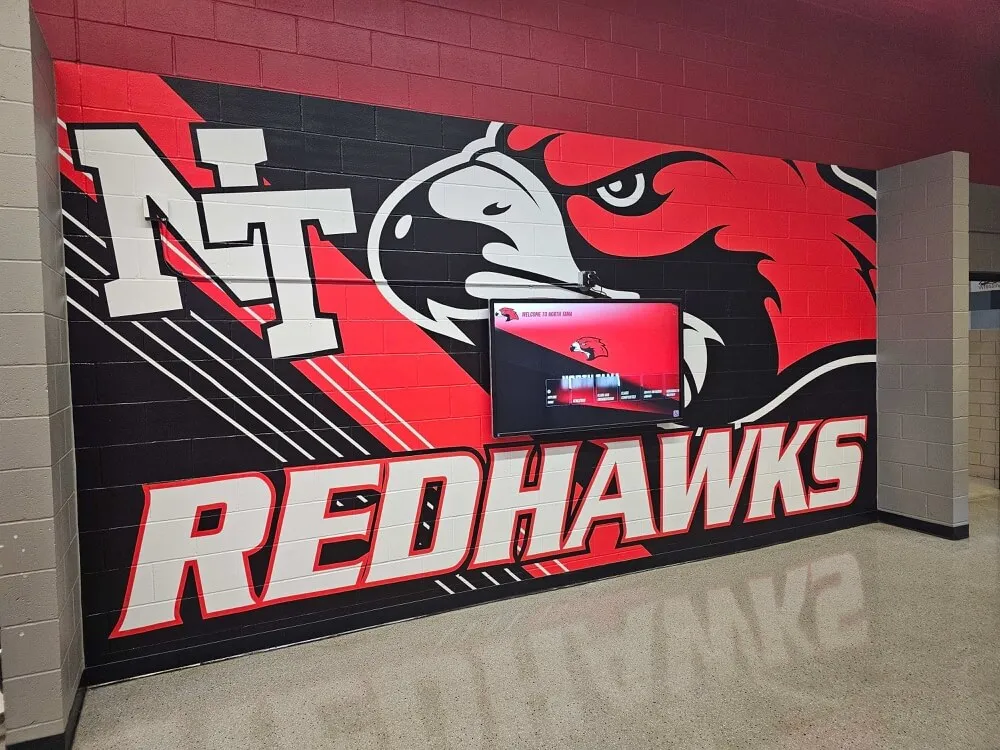
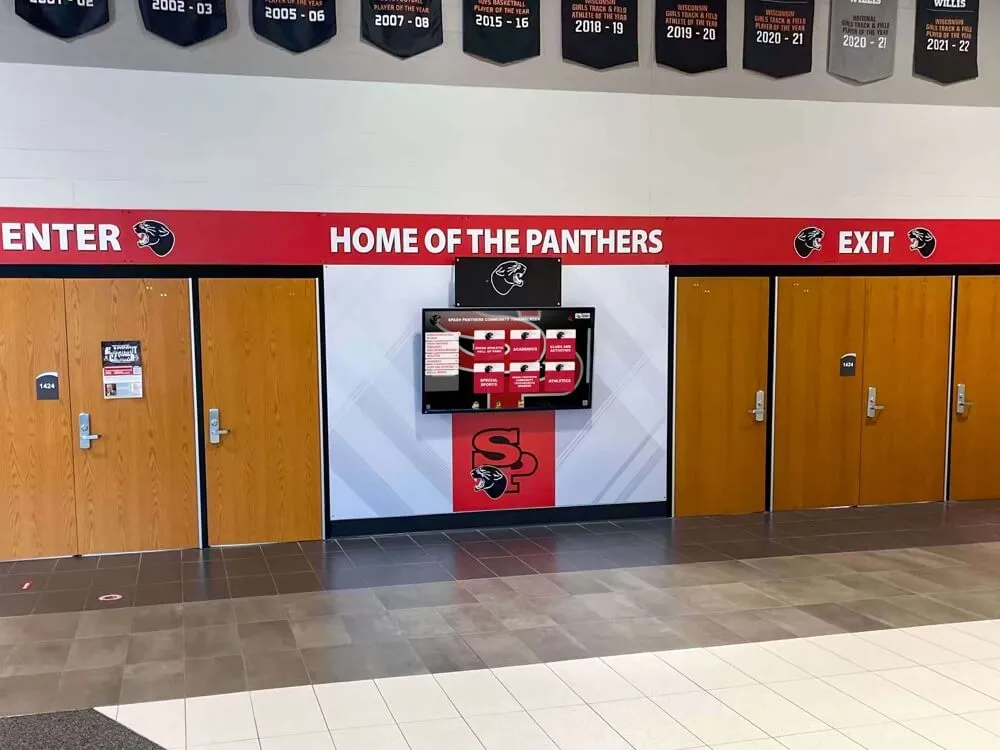
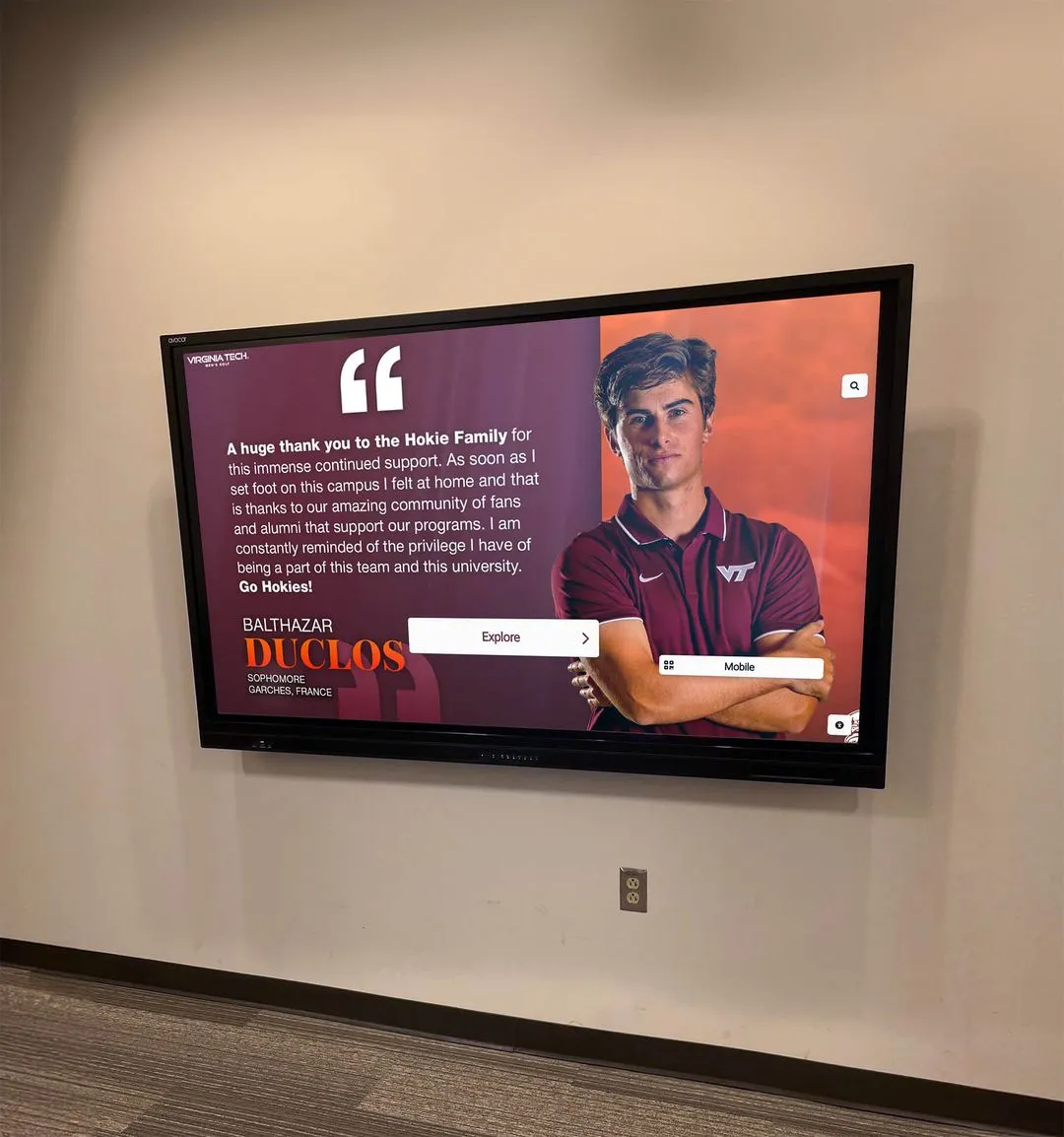
Digital trophy cases showcase record achievements with interactive content that engages students and visitors
Byron Nelson’s 11 Consecutive PGA Tour Wins
In 1945, golfer Byron Nelson won 11 consecutive PGA Tour events, a streak that remains unmatched in professional golf.
Factors Making This Record Unbreakable:
- Modern tournament fields include hundreds of world-class competitors
- Course difficulty and setup have increased dramatically since 1945
- Weather delays and course conditions create more variability
- The depth of talent on today’s tours makes consistent winning extraordinarily difficult
- Tiger Woods’ longest winning streak reached only four consecutive events
Nelson’s achievement occurred during a unique period when many top competitors were serving in World War II, and tournament fields were smaller. While this context doesn’t diminish the accomplishment, it illustrates how historical circumstances contribute to certain records’ untouchable status.
This record demonstrates that “unbreakable” sometimes means “achieved under conditions that will never exist again” rather than simply “too difficult to match.”
Unbreakable Team Performance Records
Team records requiring sustained excellence across entire rosters present different challenges than individual achievements.
UCLA’s 88-Game Winning Streak
From January 30, 1971, to January 19, 1974, UCLA’s men’s basketball team won 88 consecutive games under coach John Wooden.
Why This Streak Remains Untouchable:
- Increased competitive balance in college basketball makes sustained dominance harder
- Conference tournament and early-round NCAA tournament matchups create upset opportunities
- Transfer portal mobility distributes talent more evenly across programs
- The second-longest Division I streak is 54 games (also UCLA, 1967-1968)
- Modern tournament expansion creates more potential loss scenarios
This record showcases complete program excellence—recruiting, coaching, player development, and team chemistry all functioning at peak levels simultaneously for three full seasons. The combination of factors necessary to approach this achievement seems unlikely to align again.
Schools can reference this record when discussing championship culture development and how sustained excellence requires organizational commitment beyond individual talent.
The New England Patriots’ 21-0 Start (2007)
The New England Patriots won their first 18 games of the 2007 NFL season and 21 consecutive games including playoffs before losing Super Bowl XLII.
Elements Making This Achievement Rare:
- The 17-game NFL regular season creates more potential loss opportunities
- Increased competitive parity through salary caps and draft systems
- Strategic rest decisions for key players during clinched playoff scenarios
- The physical toll of football makes late-season excellence difficult
- Only the 1972 Miami Dolphins finished a season undefeated (14-0 regular season, 17-0 including playoffs)
While the Patriots ultimately lost the Super Bowl, preventing a perfect season, their regular-season dominance demonstrates the difficulty of maintaining excellence when every opponent treats each game as their most important contest.
This record illustrates how target effects—where dominant teams receive opponents’ best efforts—make sustained winning streaks increasingly difficult at higher competition levels.
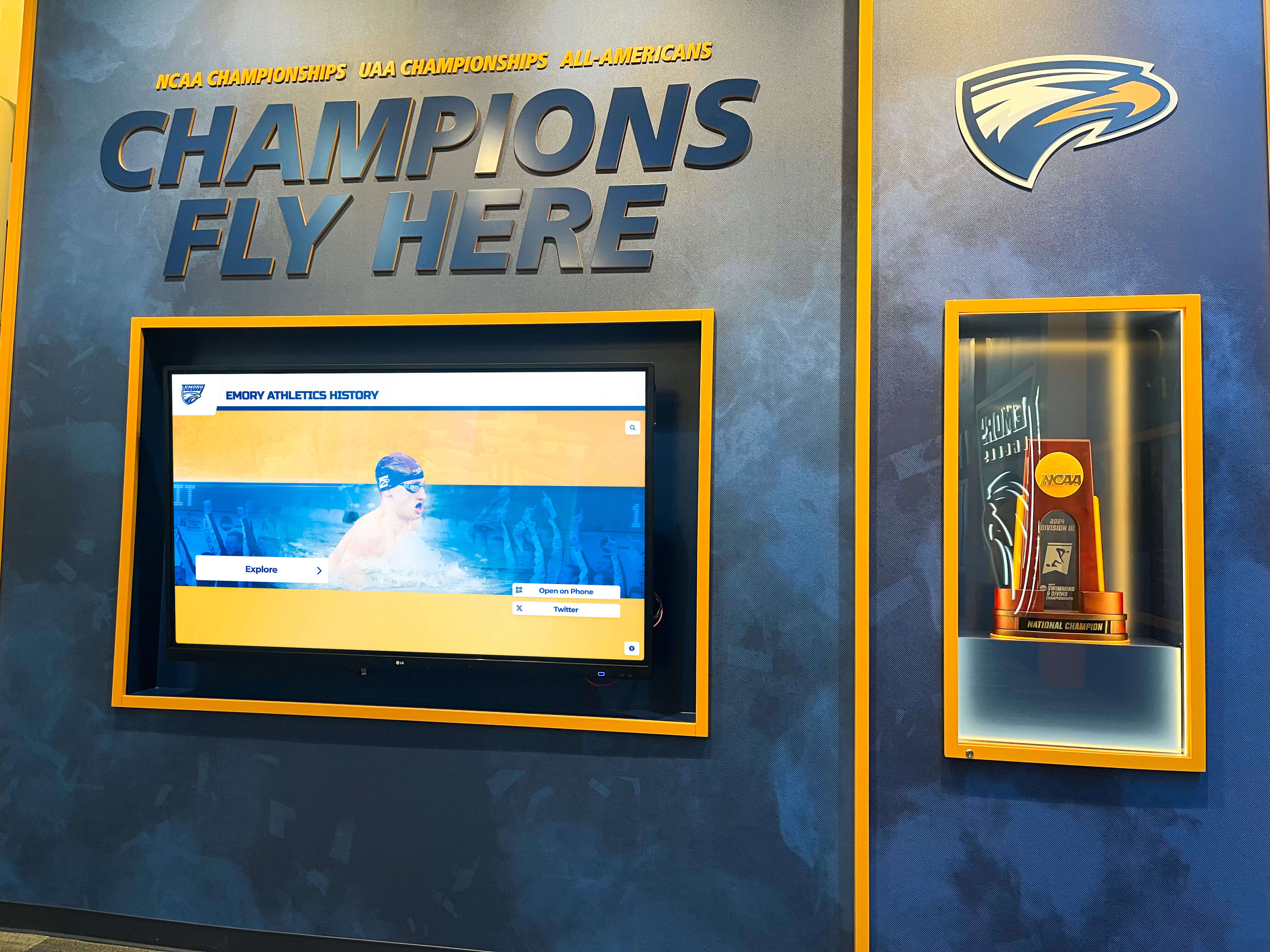
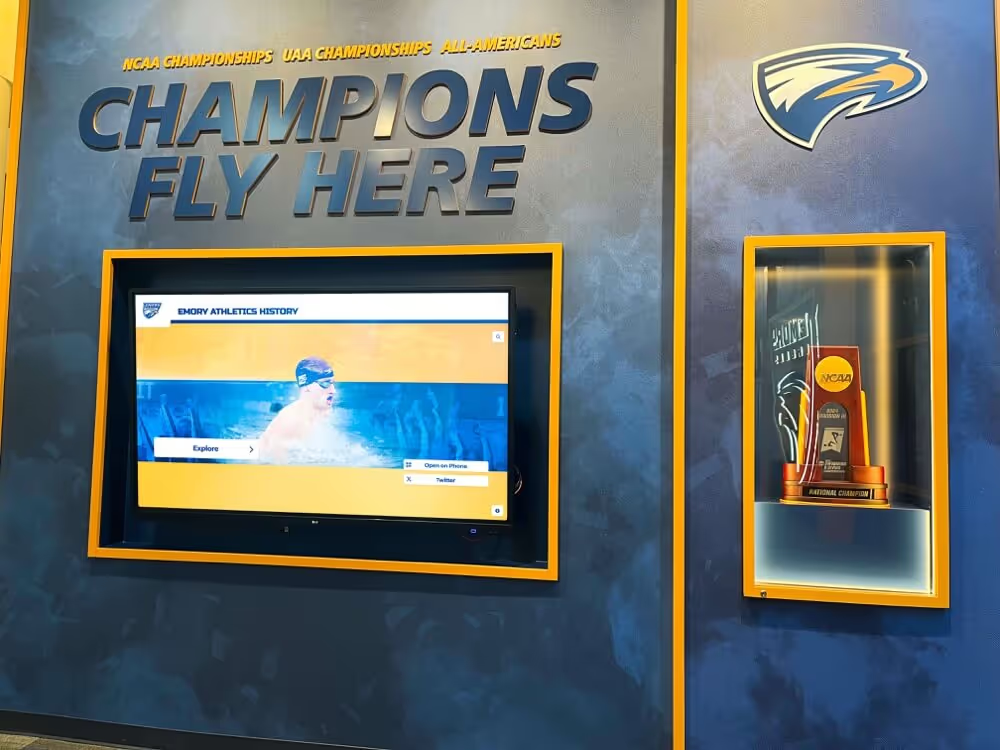
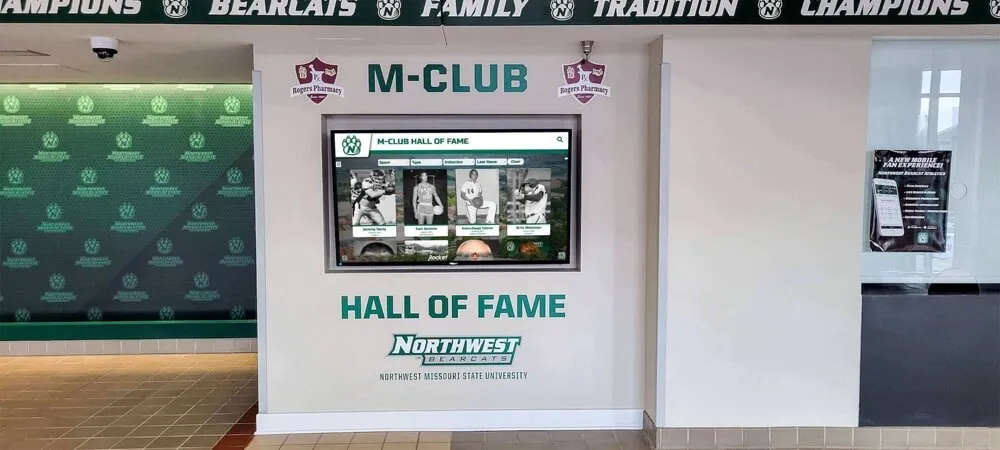
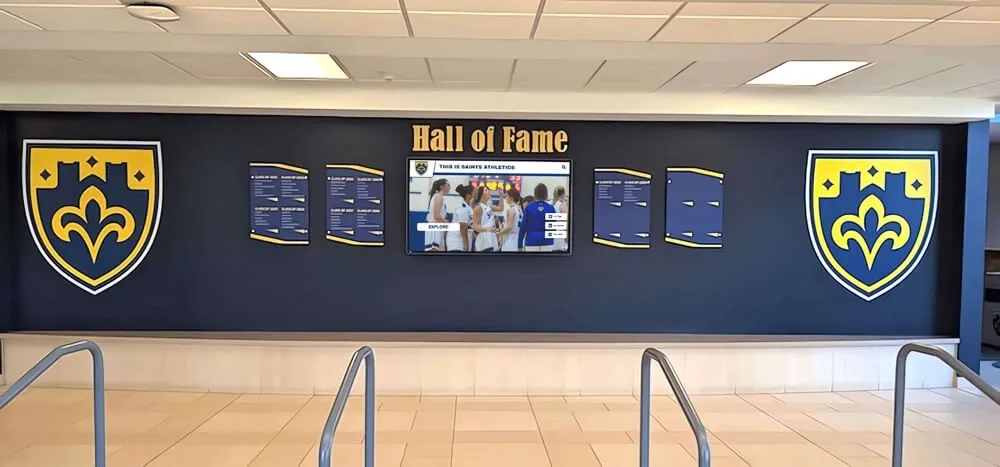
Championship recognition walls showcase team accomplishments and historic achievements that define program excellence
Records Unlikely to Be Broken in Modern Sports
Certain achievements face structural impediments that make them virtually impossible under contemporary athletic circumstances.
Joe DiMaggio’s 56-Game Hitting Streak
New York Yankees center fielder Joe DiMaggio hit safely in 56 consecutive games during the 1941 season.
Modern Barriers to This Record:
- Specialized relief pitching makes late-inning hits more difficult
- Defensive shifts and advanced positioning reduce hit opportunities
- The second-longest streak is Willie Keeler’s 45 games (1896-1897)
- Pete Rose’s 44-game streak (1978) represents the modern-era record
- No player has exceeded 40 games since Rose
This record requires not only exceptional hitting ability but also consistent health, favorable matchups, and a degree of luck across eight weeks of daily competition. One hitless game resets the count, making sustained excellence across nearly two months extraordinarily difficult.
Athletic programs can use this record when discussing sustained performance excellence and how consistency over time defines greatness as much as peak performance.
Kareem Abdul-Jabbar’s 38,387 Career Points
Kareem Abdul-Jabbar scored 38,387 points across his 20-year NBA career (1969-1989), a record that stood until LeBron James broke it in February 2023.
Factors Required for Career Scoring Records:
- Exceptional longevity playing at elite levels for two decades
- Consistent health allowing participation across 20+ seasons
- Offensive efficiency maintained throughout career arc
- Team situations allowing high-volume scoring opportunities
- LeBron James needed 20 seasons to surpass this total
While LeBron has now claimed the record, the achievement demonstrates what’s required: two decades of elite performance with minimal injury interruption. Few athletes maintain NBA starting roles into their late 30s, making this total exceptionally rare.
This record illustrates that some “unbreakable” records eventually fall, but only to athletes whose careers themselves represent extraordinary statistical anomalies.
Cy Young’s 511 Career Wins
Pitcher Cy Young won 511 games during his Major League Baseball career (1890-1911), a total that modern pitching usage makes virtually impossible.
Why Modern Pitchers Won’t Approach This Total:
- Five-man pitching rotations limit individual start opportunities
- Pitch count restrictions prevent pitchers from working deep into games
- Strategic bullpen usage reduces decisions attributed to starting pitchers
- The active career leader is Justin Verlander with 260 wins
- No active pitcher under 35 years old has more than 120 wins
This record reflects an era when starting pitchers completed most games they started and pitched every fourth day rather than every fifth. Modern understanding of arm health and pitcher longevity has fundamentally changed how teams deploy pitching staffs.
Schools can reference this record when discussing how athletic program philosophies evolve while respecting both historical and contemporary approaches to excellence.
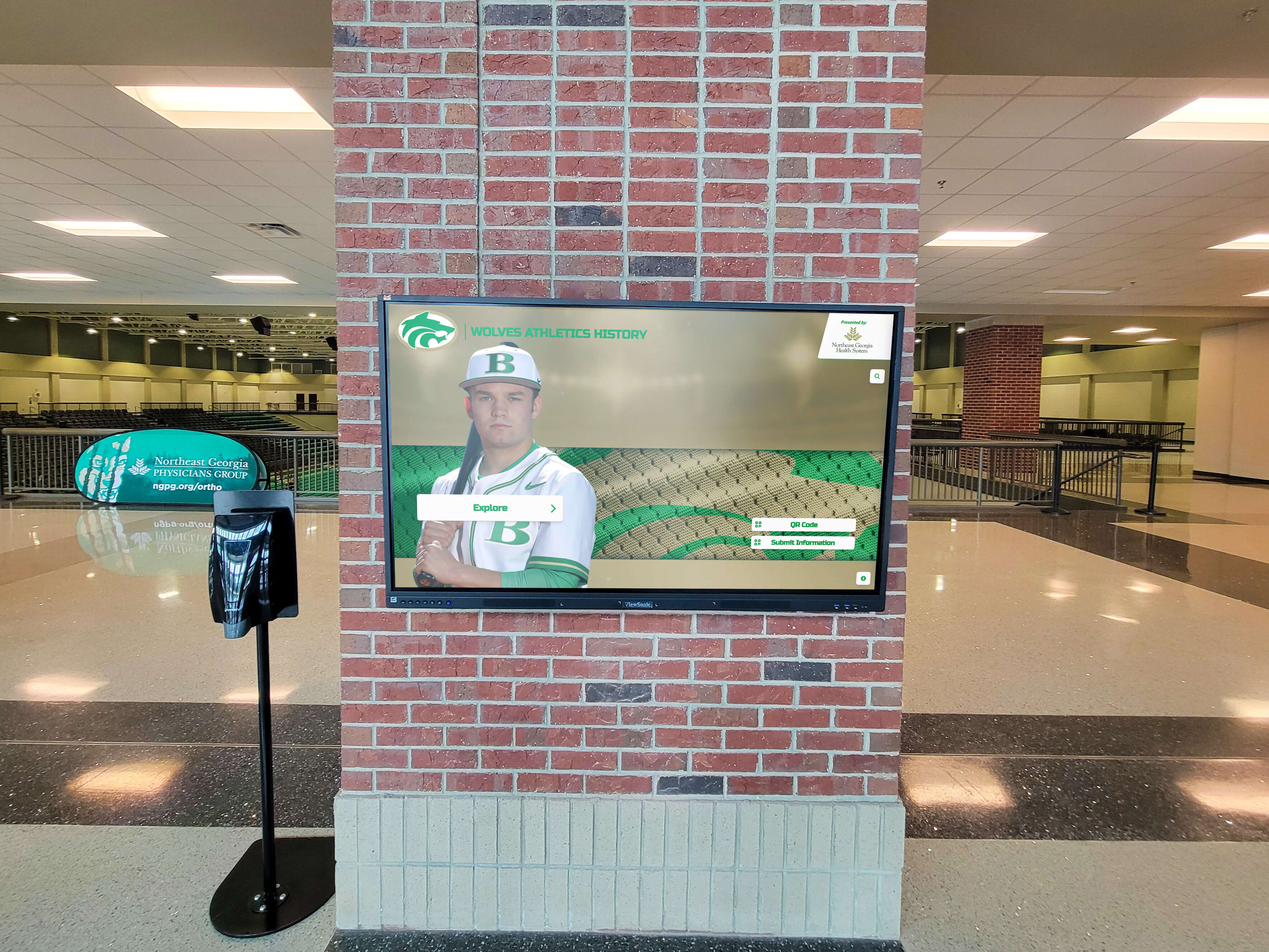
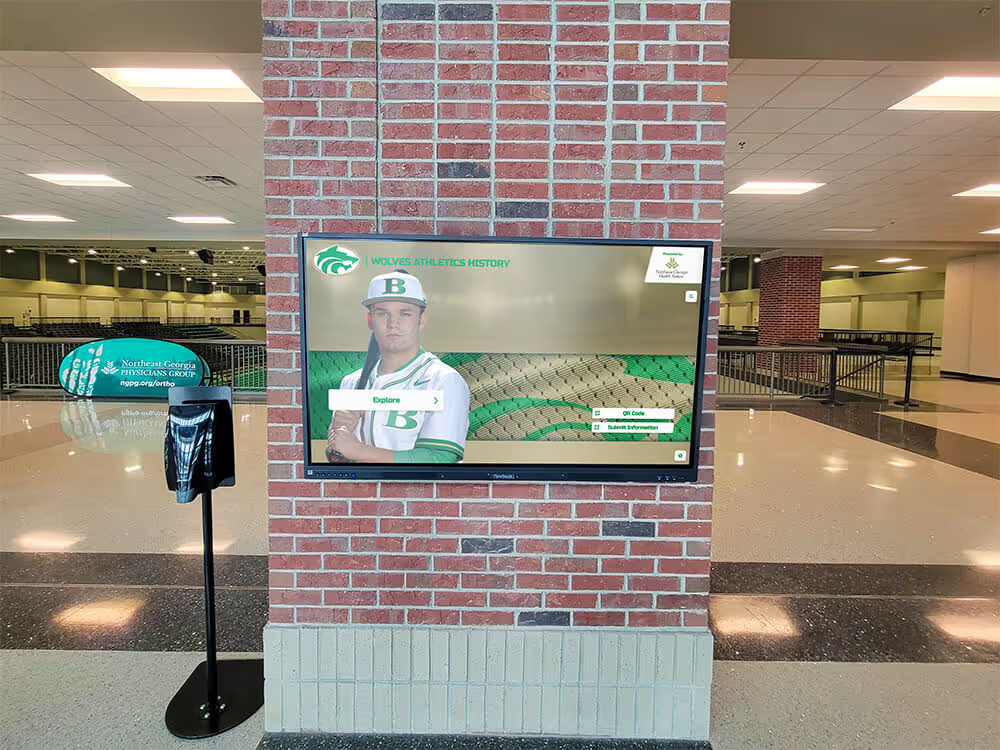
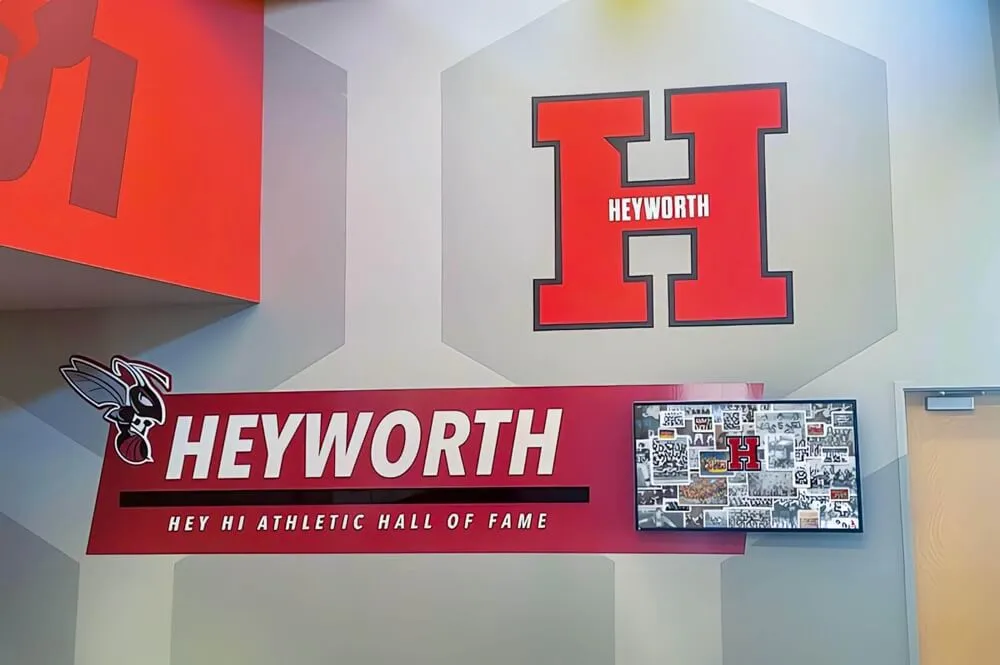
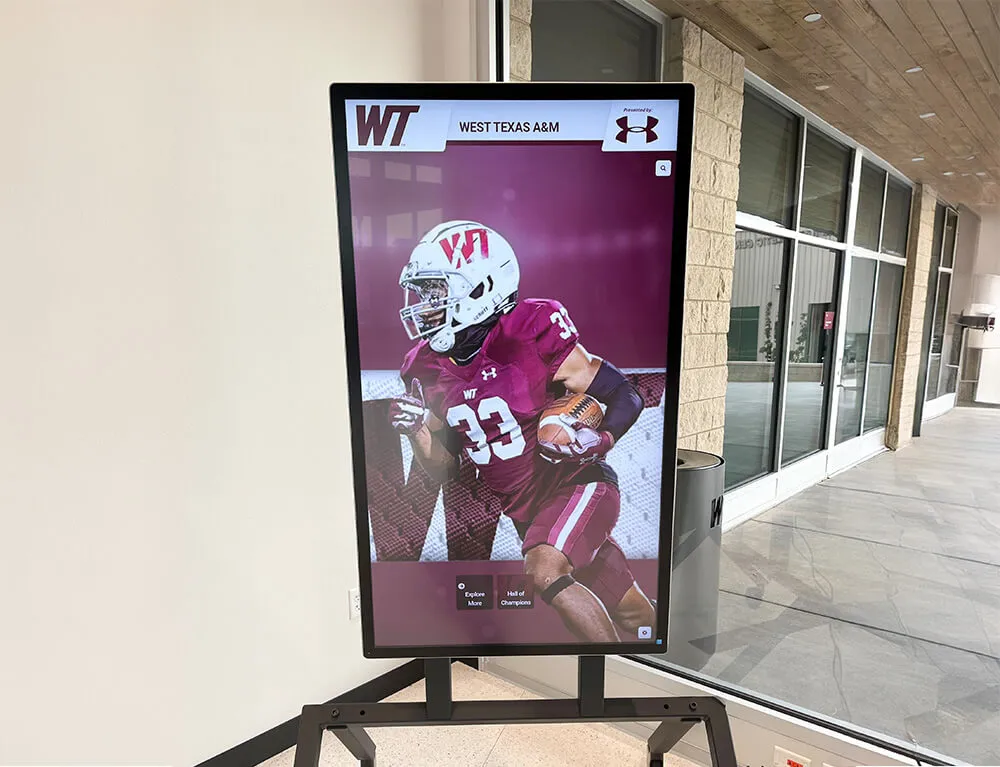
Modern digital displays bring individual athletic achievements to life with dynamic content and engaging presentations
Olympic and International Sports Records
International competition produces records that combine national team selection processes with once-every-four-years opportunities.
Michael Phelps’ 23 Olympic Gold Medals
Swimmer Michael Phelps won 23 Olympic gold medals across four Olympic Games (2004-2016), more than double any other Olympian’s total.
Elements Making This Achievement Unique:
- Swimming offers more medal opportunities per Olympics than most sports
- Phelps competed successfully in individual events spanning multiple disciplines
- Relay participation added additional medal opportunities
- The second-most decorated Olympian has 9 gold medals (Carl Lewis, track and field)
- Few athletes maintain Olympic-level performance across four Olympic cycles
This record required exceptional versatility (butterfly, freestyle, individual medley), sustained excellence across 12 years, and the physical capacity to compete in multiple events per Olympics without performance decline.
Athletic programs can reference this achievement when discussing specialization versus multi-sport participation and how diverse athletic development creates unexpected advantages.
Usain Bolt’s 100-Meter World Record
Jamaican sprinter Usain Bolt ran 100 meters in 9.58 seconds at the 2009 World Championships, a record many experts consider the most untouchable in athletics.
Why This Record May Stand Forever:
- Bolt’s physical dimensions (6'5" for a sprinter) created unique mechanical advantages
- The combination of stride length and stride frequency appears biomechanically optimal
- Sixteen years have passed with no credible approaches to this time
- Advanced training methods and technology have failed to produce faster times
- The improvement rate in sprint times has slowed dramatically
This record represents human performance at its theoretical limit. While sports science continues advancing, biomechanical analysis suggests Bolt’s combination of physical attributes and technical execution may represent the fastest any human can run 100 meters.
Schools can use this record when discussing individual athletic excellence and how certain achievements represent perfect intersections of genetics, training, and competitive execution.
Showcasing Records Through Modern Recognition Displays
Athletic programs effectively leveraging legendary sports records create engaging recognition environments that inspire current athletes.
Digital Record Board Integration
Modern digital displays allow schools to showcase multiple record categories simultaneously:
Record Display Capabilities
- School records alongside state, national, and world records
- Historical progression showing how records improved over decades
- Athlete profiles explaining training and competitive approaches
- Video highlights of record-breaking performances
- Interactive comparisons allowing students to explore different sports
Schools implementing digital record board systems report significantly higher student engagement with athletic recognition content when legendary records provide context for local achievements.
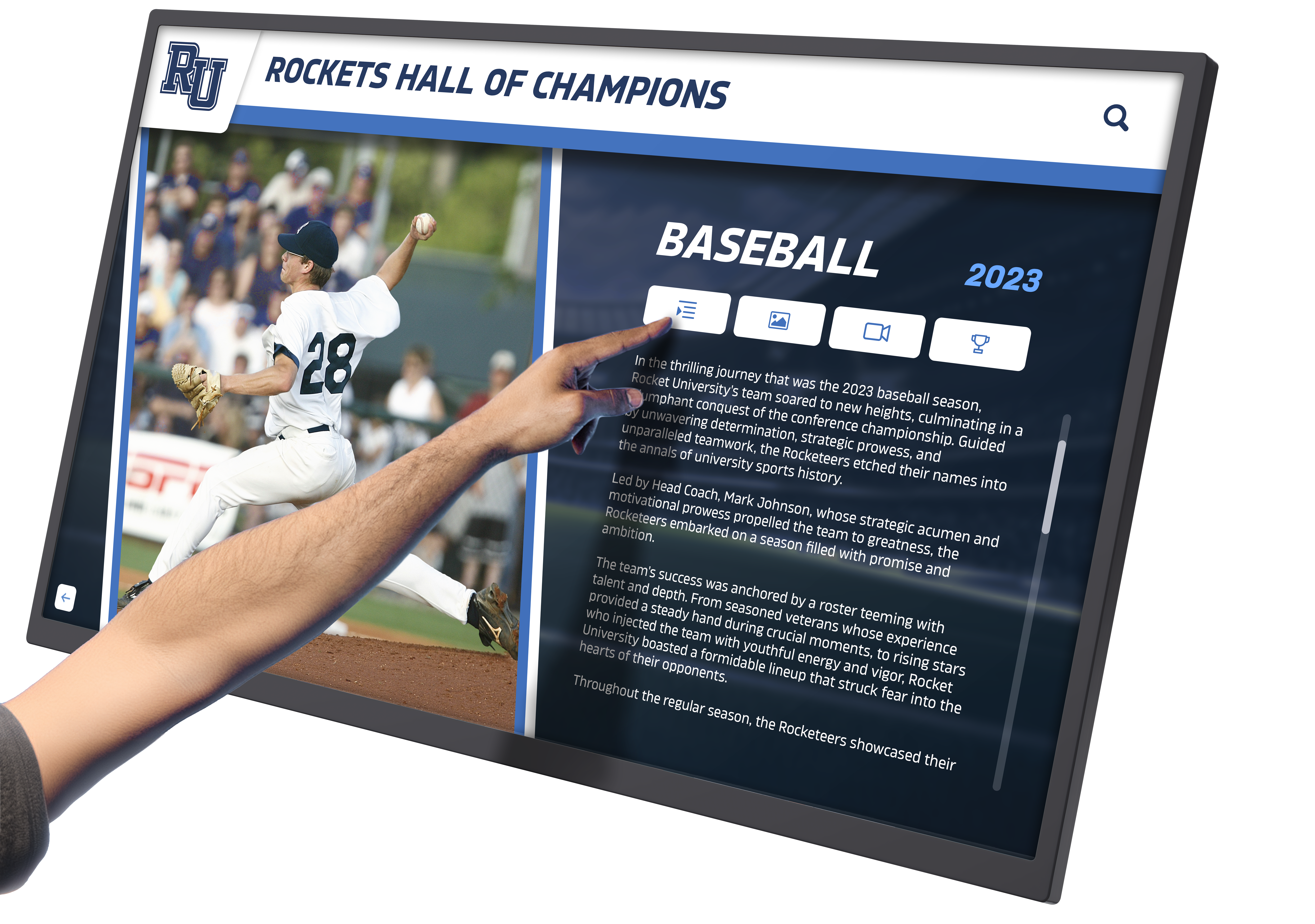
Interactive touchscreen displays engage visitors with detailed record information, athlete profiles, and statistical comparisons
Creating Motivational Narratives
Effective recognition displays connect unbreakable records to current program goals:
Narrative Development Strategies
- Feature “Did You Know?” sections comparing school records to legendary achievements
- Create visual timelines showing record progression from school through Olympic levels
- Highlight training principles that produced both legendary and local records
- Showcase how current athletes work toward school records within broader achievement contexts
- Include coach commentary connecting historical records to current team development
Athletic programs that thoughtfully integrate legendary sports records into recognition displays create environments where student-athletes understand their achievements exist within rich historical traditions while building toward personal and team milestones.
Accessibility and Engagement Considerations
Modern recognition displays ensure all students can explore and learn from legendary sports records:
Inclusive Design Elements
- WCAG-compliant interfaces allowing all students to interact with record content
- QR code access enabling mobile exploration of detailed record information
- Multiple presentation formats accommodating different learning preferences
- Scheduled content rotation keeping displays fresh and engaging
- Remote updates allowing immediate recognition of new achievements
Schools implementing accessible digital recognition programs ensure that legendary sports records inspire all students regardless of physical abilities or learning differences.
Educational Value of Unbreakable Records
Beyond motivation, legendary sports records offer educational opportunities across multiple disciplines.
Mathematics and Statistics Applications
Sports records provide engaging real-world data for mathematical learning:
Educational Applications
- Statistical analysis comparing records across different eras
- Probability calculations examining the likelihood of records being broken
- Rate calculations determining points-per-game or wins-per-season averages
- Historical trending showing performance improvement over decades
- Comparative statistics highlighting how rule changes affect records
Athletic recognition displays incorporating mathematical elements help students develop quantitative literacy while engaging with sports content that naturally interests them.
Historical and Social Context
Unbreakable records often reflect broader social and historical circumstances:
Contextual Learning Opportunities
- Understanding how World War II affected sports competition and records
- Examining how Title IX changed women’s sports opportunities and records
- Exploring how integration transformed sports excellence and achievement
- Analyzing how technological advances in equipment affect record-breaking
- Discussing how changing health and safety standards influence longevity records
Schools incorporating these contextual elements into athletic recognition displays create cross-curricular learning opportunities that connect sports achievements to broader historical narratives.
Science and Human Performance
Record-breaking achievements illustrate principles from multiple scientific disciplines:
Scientific Concepts Through Sports
- Biomechanics explaining why certain records seem physically impossible to break
- Nutrition science demonstrating how dietary advances support athletic performance
- Psychology exploring mental aspects of sustained excellence
- Exercise physiology showing how training methods have evolved
- Technology examining how equipment innovations influence records
Athletic programs partnering with science departments to create recognition content that explores these connections help students understand how academic disciplines apply to real-world challenges.
Building Local Records Within Historical Context
Understanding legendary sports records helps athletic programs create meaningful local recognition systems.
Establishing Appropriate Benchmarks
Schools benefit from record-keeping systems that acknowledge achievement without creating unattainable standards:
Balanced Recognition Approaches
- Multiple record categories recognizing different types of achievement
- Historical record tracking showing program progression over decades
- Seasonal records celebrating annual excellence
- Career records honoring sustained contribution
- Single-game/single-meet records acknowledging peak performance
Athletic programs implementing comprehensive digital displays can showcase all these record categories simultaneously, ensuring diverse types of achievement receive appropriate recognition.
Celebrating Record-Breaking Moments
When student-athletes break school records, thoughtful recognition creates lasting memories:
Record Recognition Strategies
- Immediate digital display updates acknowledging new records
- Formal recognition during subsequent athletic events
- Social media celebration sharing achievement with broader community
- Historical context explaining the previous record and its significance
- Athlete interviews capturing the personal meaning of the achievement
These recognition moments become defining experiences in student-athletes’ high school careers, creating memories they carry into adulthood.
Maintaining Accurate Record Documentation
Reliable record-keeping systems ensure historical accuracy and fair recognition:
Documentation Best Practices
- Verified statistical tracking for all competitive events
- Digital record systems preventing data loss over time
- Regular audits ensuring historical accuracy
- Clear verification processes for record claims
- Accessible archives allowing community members to explore record history
Schools implementing comprehensive digital archives ensure that current and future generations can explore athletic program history and understand how today’s achievements connect to broader program traditions.
Creating Lasting Recognition Through Modern Technology
The most effective athletic recognition systems combine legendary sports records with local achievements through technology that engages contemporary students.
Modern touchscreen displays allow schools to showcase unlimited athletic content without physical space constraints. Cloud-based management systems enable immediate updates when records fall, ensuring recognition remains current and relevant. Interactive features let students explore detailed statistical breakdowns, compare performance across different eras, and understand the training and dedication required for record-breaking achievement.
Schools investing in professional digital display installations create recognition environments where legendary sports records inspire current athletes while celebrating local achievements that define program culture.
When athletic directors effectively integrate unbreakable sports records into comprehensive recognition systems, they create environments where student-athletes understand that their daily practice sessions contribute to legacies connecting them to the broader history of athletic excellence. These recognition displays demonstrate that while few will ever approach Wilt Chamberlain’s 100-point game or Cal Ripken’s consecutive games streak, every athlete who commits to excellence, supports teammates, and pursues personal improvement adds meaningful chapters to their program’s unique story.
Ready to create a recognition system that celebrates legendary sports records alongside your program’s achievements? Rocket Alumni Solutions specializes in interactive touchscreen displays that bring athletic excellence to life. Our cloud-managed digital trophy cases and record boards showcase unlimited achievements, engage students with interactive content, and update instantly when new records are set—all while meeting WCAG 2.2 AA accessibility standards. Schedule a demo to discover how modern recognition technology can inspire your athletes and celebrate your program’s unique legacy.