



Championship trophies tell powerful stories. Each one represents countless practice hours, team dedication, breakthrough moments, and the culmination of seasons defined by pursuit of excellence. Yet in many schools, these symbols of achievement sit crowded in outdated cases, collecting dust in forgotten hallways, or worse—stored in boxes because there’s simply no room left to display them.
Designing an effective trophy room means creating a space that doesn’t just store hardware—it celebrates legacy, inspires current athletes, and connects generations of competitors. Whether you’re planning a dedicated trophy room from scratch, renovating an existing space, or exploring alternatives to traditional glass cases, the right approach transforms championship recognition from static storage into dynamic storytelling.
This comprehensive guide explores trophy room design strategies that address space constraints, engagement challenges, and maintenance realities while ensuring every championship receives the prominence it deserves.
The most effective trophy rooms balance honoring tradition with embracing modern solutions. Schools that succeed create environments where physical trophies command attention while comprehensive digital systems ensure unlimited achievements remain accessible without forcing impossible choices about what deserves visibility.

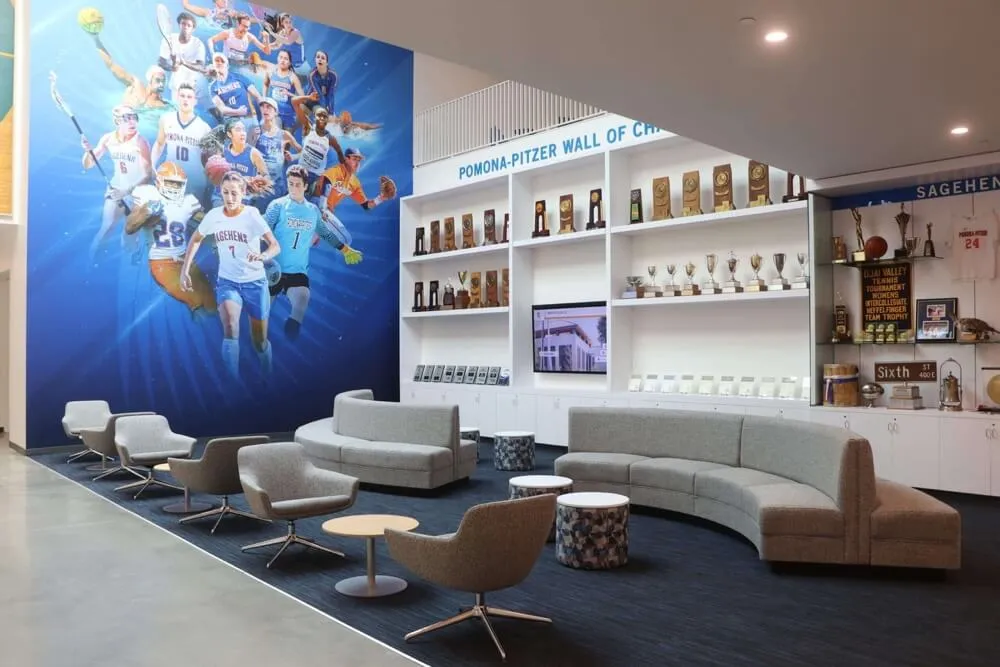
Athletic lounges integrate trophy displays with team gathering spaces, creating environments where championship history surrounds current athletes
Understanding Trophy Room Purpose and Goals
Before selecting display cases or choosing wall colors, clarifying what your trophy room should accomplish guides every subsequent design decision.
Defining Your Trophy Room Objectives
Different stakeholders view trophy rooms through distinct lenses:
Student-Athlete Perspective
- Inspiration through visible examples of past excellence
- Understanding program standards and achievement expectations
- Connection to athletic program legacy and tradition
- Motivation during challenging training periods
- Pride in institutional athletic identity
Current athletes should see their potential future selves reflected in championship displays, creating aspiration rather than intimidation.
Alumni and Community Perspective
- Preservation of personal athletic memories and achievements
- Connection to current program success and progress
- Demonstration that contributions receive lasting recognition
- Physical touchpoint for maintaining school relationships
- Validation of athletic program investment and support
Alumni who see their championships prominently displayed develop stronger connections to current programs and greater willingness to support athletic initiatives.
Administrative and Recruiting Goals
- Showcase program excellence to prospective student-athletes
- Demonstrate institutional commitment to athletic achievement
- Create compelling spaces for campus tours and visits
- Build school pride and institutional identity
- Provide evidence of sustained athletic quality
Impressive trophy displays communicate program seriousness and tradition during crucial recruiting interactions.
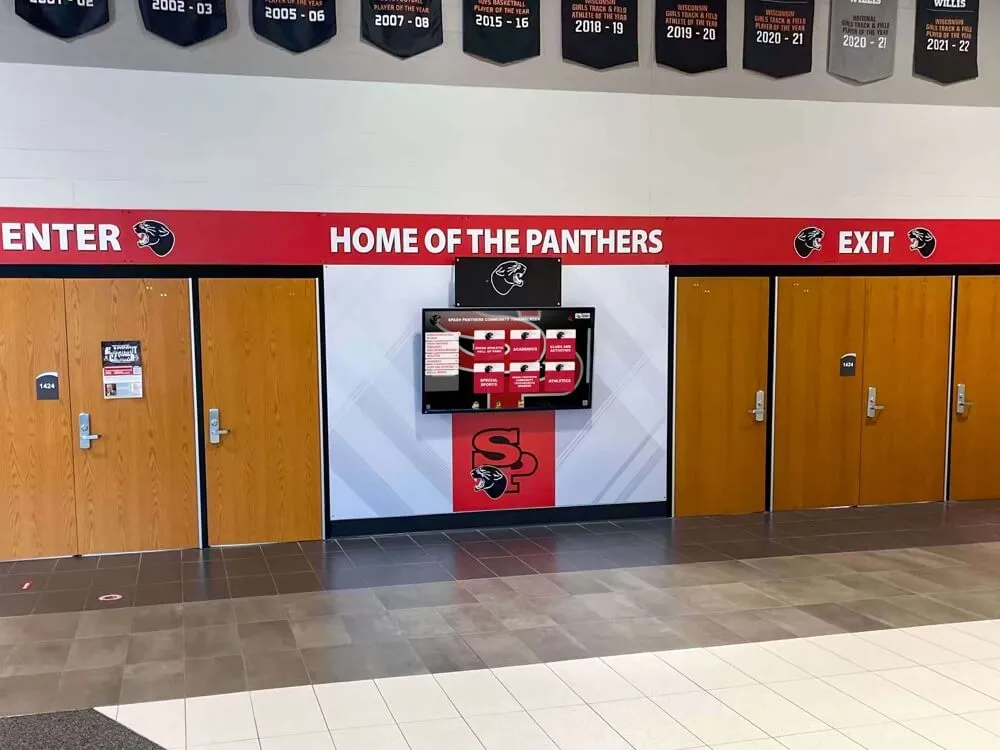
Main lobby trophy displays create immediate visual impact for visitors while establishing institutional athletic identity
Traditional Trophy Room Design Elements
Physical trophy rooms remain popular for schools with available space and budget for dedicated recognition areas.
Space Planning and Layout Considerations
Effective trophy room design starts with strategic space utilization:
Room Size and Configuration
- Minimum 200-300 square feet for dedicated trophy rooms
- 400-600 square feet enables comprehensive display plus viewing space
- 800+ square feet accommodates lounge areas and interactive features
- Long, narrow spaces versus square rooms create different display opportunities
- Ceiling height affects vertical display potential and visual impact
Schools converting existing spaces (former classrooms, storage areas, alcoves) should assess structural features like support columns, windows, electrical access, and HVAC locations during planning.
Traffic Flow and Viewing Patterns Strategic layout guides visitor experience:
- Main entrance positioning to create immediate visual impact
- Circular or U-shaped paths enabling complete display viewing
- Central display areas for championship trophies and major awards
- Peripheral zones for secondary achievements and historical context
- Adequate space between display cases for comfortable viewing (minimum 4-5 feet)
- Seating areas for extended viewing and reflection
Consider how people naturally move through spaces when positioning your most impressive displays along primary sight lines and traffic paths.
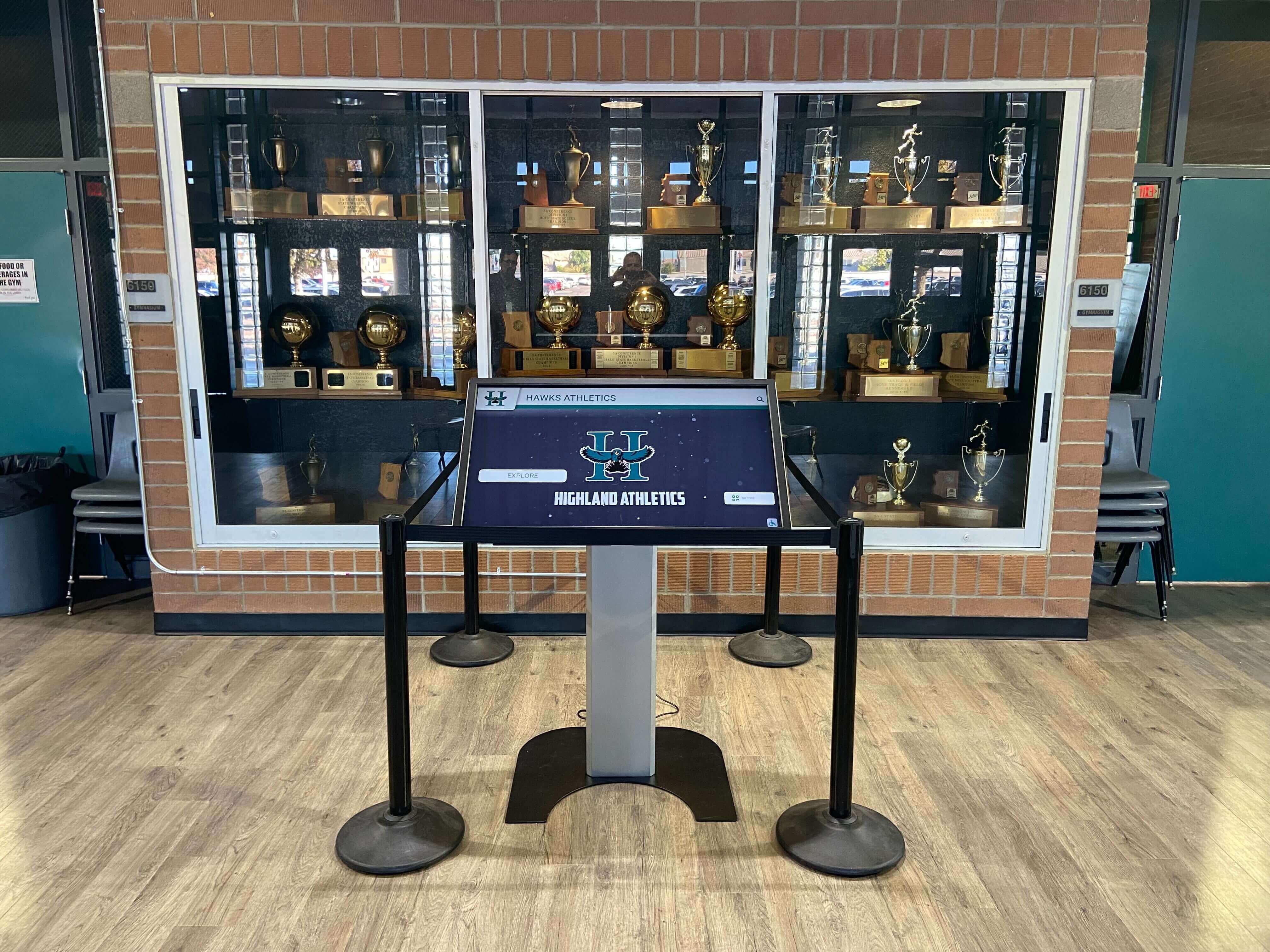
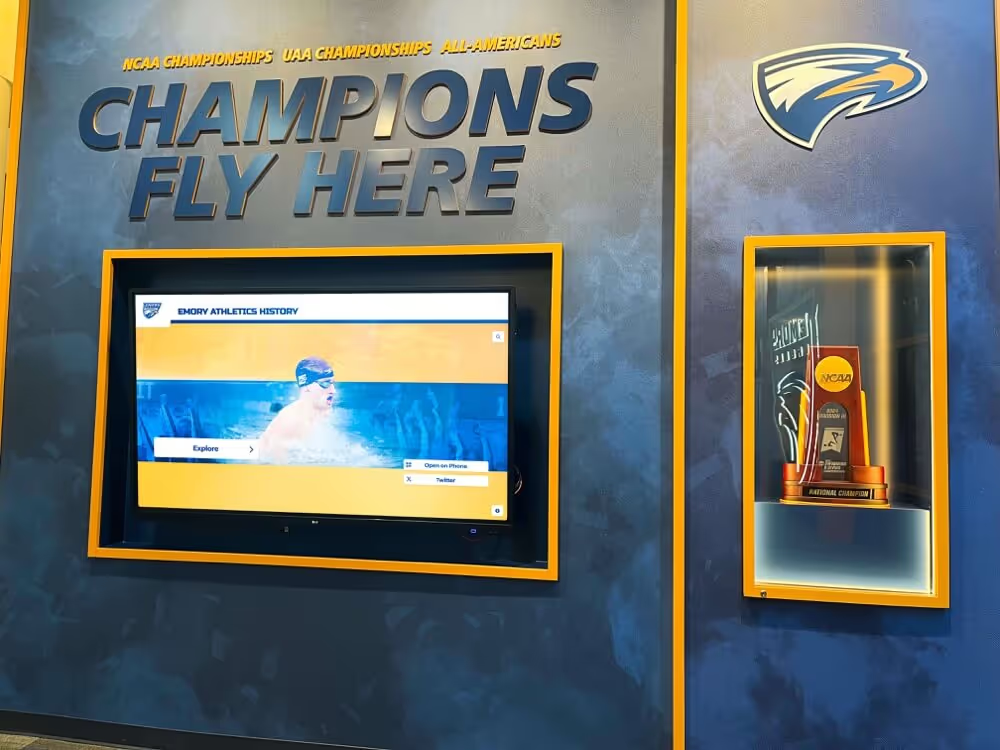
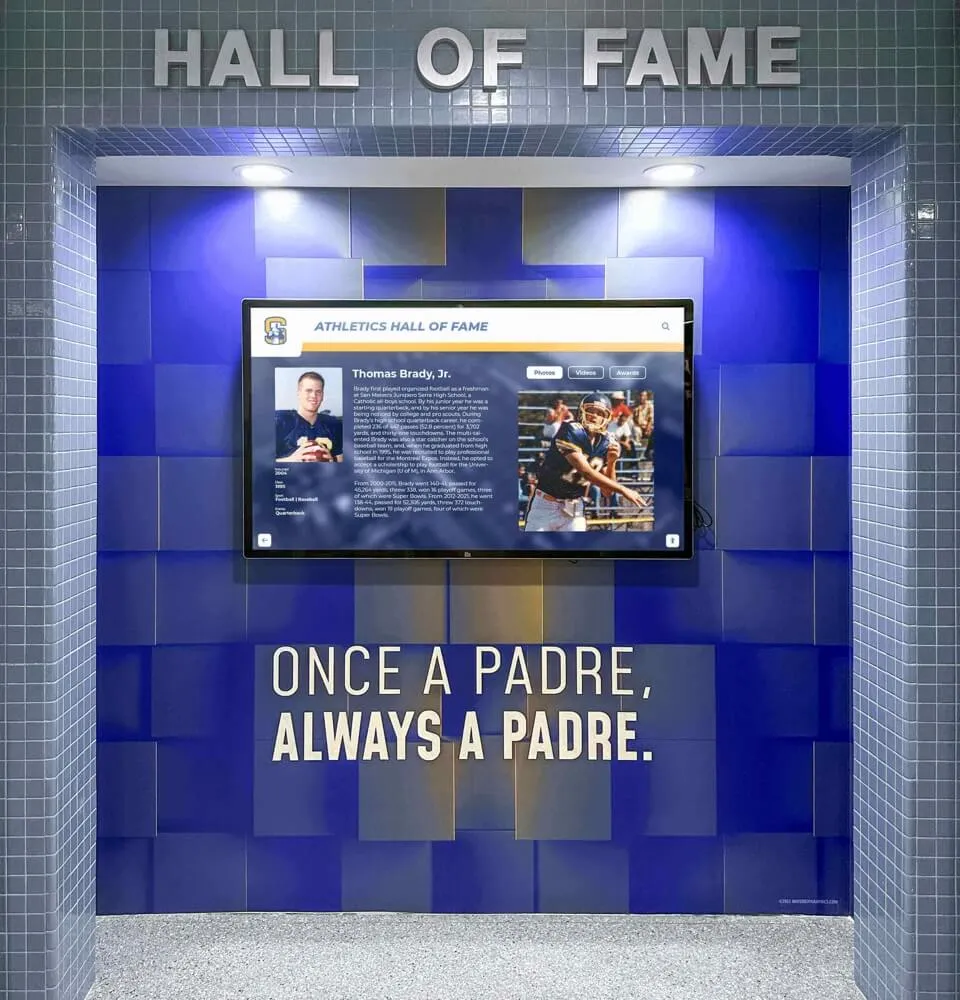
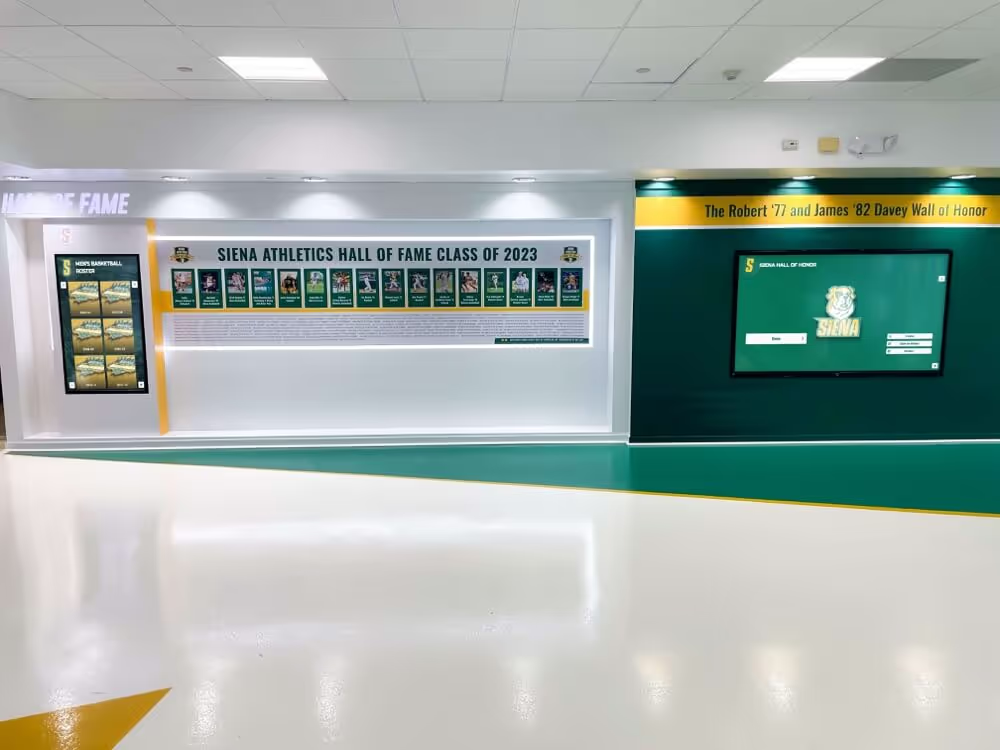
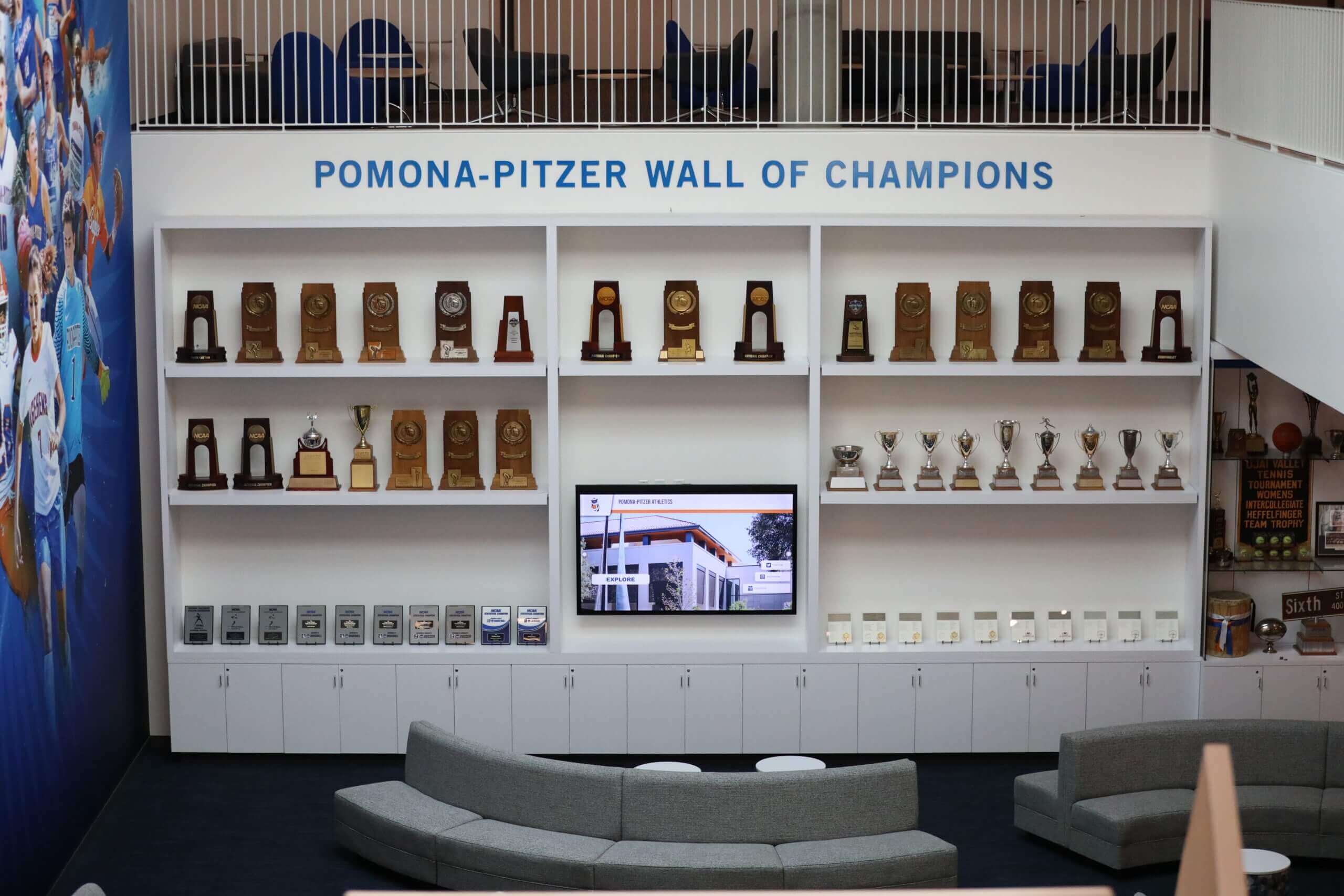
Modern trophy rooms often integrate digital displays with traditional cases, combining familiar trophy showcases with unlimited digital capacity
Traditional Trophy Case Selection
Physical display cases remain core elements of many trophy rooms:
Built-In Wall Cases
- Custom carpentry creating seamless architectural integration
- Coordinated finishes matching institutional aesthetic
- Professional lighting integration for optimal trophy presentation
- Recessed designs maximizing floor space
- Typical cost: $3,000-8,000 per 8-foot section
Freestanding Display Cases
- Flexibility for reconfiguration as needs change
- Viewable from multiple angles in room centers
- Lower initial investment: $1,500-4,000 per unit
- Tower cases (6-7 feet) providing vertical display capacity
- Mobile options with locking casters for special events
Case Configuration Options
- Glass-front cases with rear access doors
- Corner display cases maximizing space efficiency
- Rotating display cases creating interactive elements
- Illuminated pedestal cases highlighting individual championships
- Wall-mounted shadow boxes for smaller items
When selecting cases, consider security features (locks, tempered glass), accessibility for updates, and maintenance requirements alongside display capacity. For more display case strategies, explore trophy display case ideas.
Lighting Design for Trophy Displays
Proper illumination transforms trophy rooms from dim storage to vibrant showcases:
Lighting Techniques
- LED strip lighting along case shelves and tops
- Adjustable track lighting enabling spotlight positioning
- Recessed ceiling lights for ambient room illumination
- Accent lighting creating focal points on championship trophies
- Backlighting for transparent materials and engraved plaques
- Motion-activated systems reducing energy consumption
Technical Specifications
- Color temperature: 3000-4000K creates warm, inviting displays
- Adjustable dimming enables special event customization
- UV-filtered bulbs preventing trophy deterioration
- Separate circuit controls for case lighting versus room lighting
- Emergency lighting compliance for public spaces
Strategic lighting design elevates trophy displays from simple storage to dramatic presentations celebrating achievement
Quality lighting makes championship trophies shine while ensuring engraved details remain legible and visually compelling.
Maximizing Limited Trophy Room Space
Most schools face capacity constraints requiring creative organization approaches.
Strategic Trophy Organization Systems
When physical space is limited, organization becomes critical:
Championship Hierarchy Display
- State championships and major titles in premium front-center positions
- Conference championships in prominent secondary locations
- Tournament victories and invitational awards in supporting displays
- Regular season accomplishments and participation awards in peripheral cases
- Historical championships grouped by decade or era
Sport-Specific Organization
- Dedicated sections for each athletic program
- Seasonal groupings (fall sports, winter sports, spring sports)
- Equal space allocation reflecting program equity values
- Coordinated color-coding or labeling systems
- Sport-specific backdrop materials or graphics
Chronological Versus Thematic Arrangements
- Timeline displays showing program evolution across decades
- “Greatest moments” collections highlighting peak achievements
- Coaching era groupings showing program development
- Milestone celebrations (100th win, program anniversaries)
- Record-breaking performance spotlights
Clear organization helps visitors quickly locate specific achievements while understanding broader athletic program narratives. Schools implementing comprehensive athletic recognition programs ensure consistency across all recognition displays.
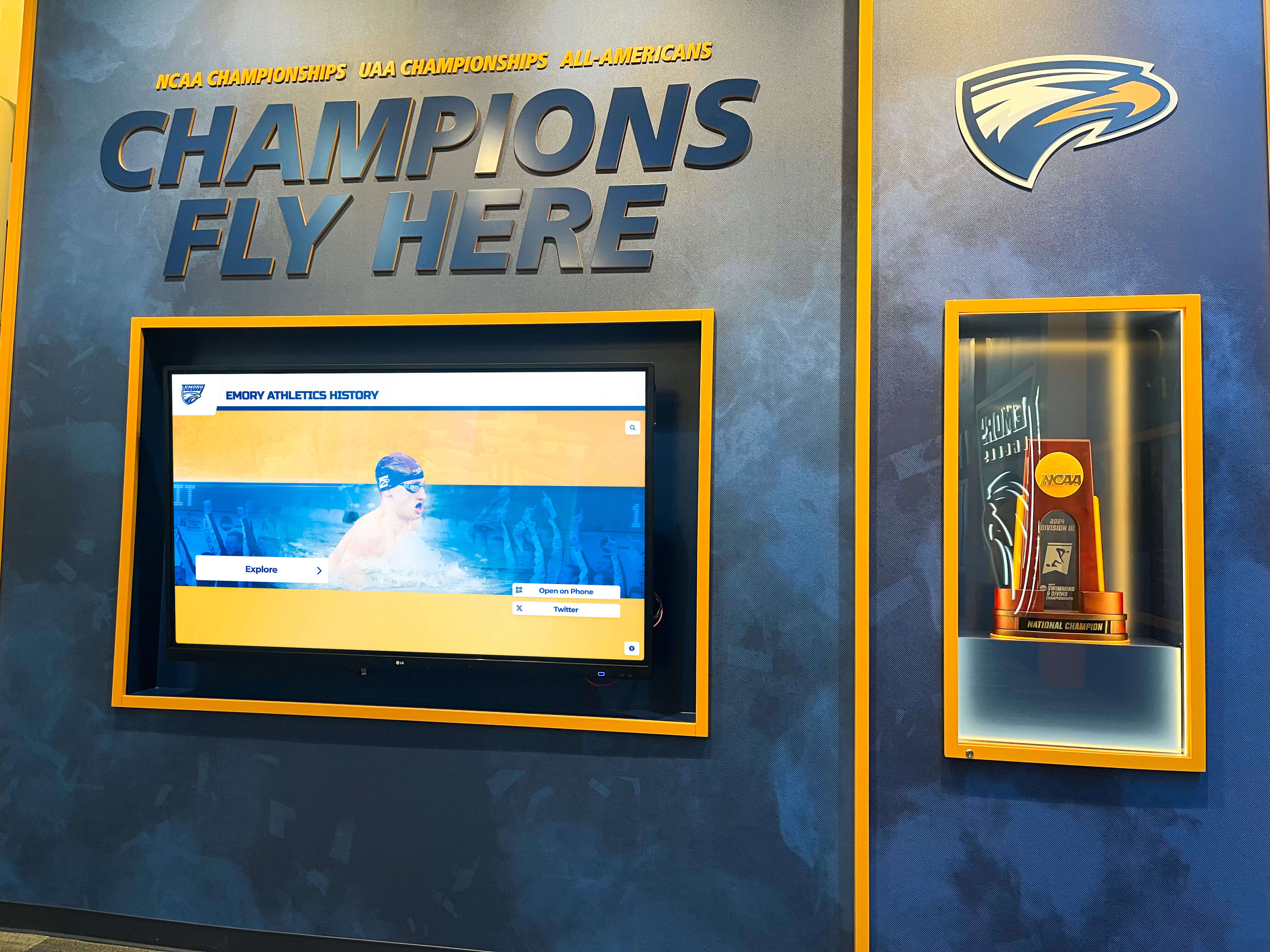
Championship walls dedicate premium space to major competitive achievements, ensuring top accomplishments receive appropriate recognition
Rotating Display Strategies
When trophy quantities exceed available space, rotation systems maintain visibility:
Seasonal Rotation Schedules
- Current season sports receive prominent display during their competitive periods
- Off-season programs occupy secondary positions or storage
- Championship anniversaries trigger temporary special displays
- Homecoming and reunion events prompt historical exhibition rotations
Annual Recognition Cycles
- Recent achievements (last 5-10 years) maintain permanent visibility
- Historical trophies rotate through featured displays on regular schedules
- Decade retrospectives highlighting specific eras
- Sport-specific spotlight months showcasing individual programs
Documentation and Tracking Systems Schools should maintain:
- Complete inventory of all trophies and championship recognition
- Rotation schedules ensuring equitable visibility across sports and eras
- Storage protocols protecting trophies during off-display periods
- Photographic documentation of all achievements
- Digital archives preserving championship information permanently
Rotation systems acknowledge space realities while ensuring all achievements receive periodic recognition rather than permanent storage.
Modern Digital Trophy Room Solutions
Digital recognition platforms fundamentally transform trophy room design by eliminating physical space constraints.
Interactive Touchscreen Displays
Digital systems complement or replace traditional trophy cases:
Unlimited Recognition Capacity Physical space limitations create impossible choices:
- Traditional trophy rooms hold 50-200 major trophies depending on size
- Active programs accumulate 10-15+ championships annually across all sports
- Within years, schools face removing older achievements to accommodate new ones
- Multi-sport programs struggle providing equal visibility across all teams
Digital recognition displays eliminate these constraints entirely, presenting unlimited championships, teams, and individual achievements through intuitive touchscreen interfaces.
Solutions like Rocket Alumni Solutions enable schools to showcase achievements from founding seasons through current years, creating comprehensive institutional memory impossible with physical-only displays.
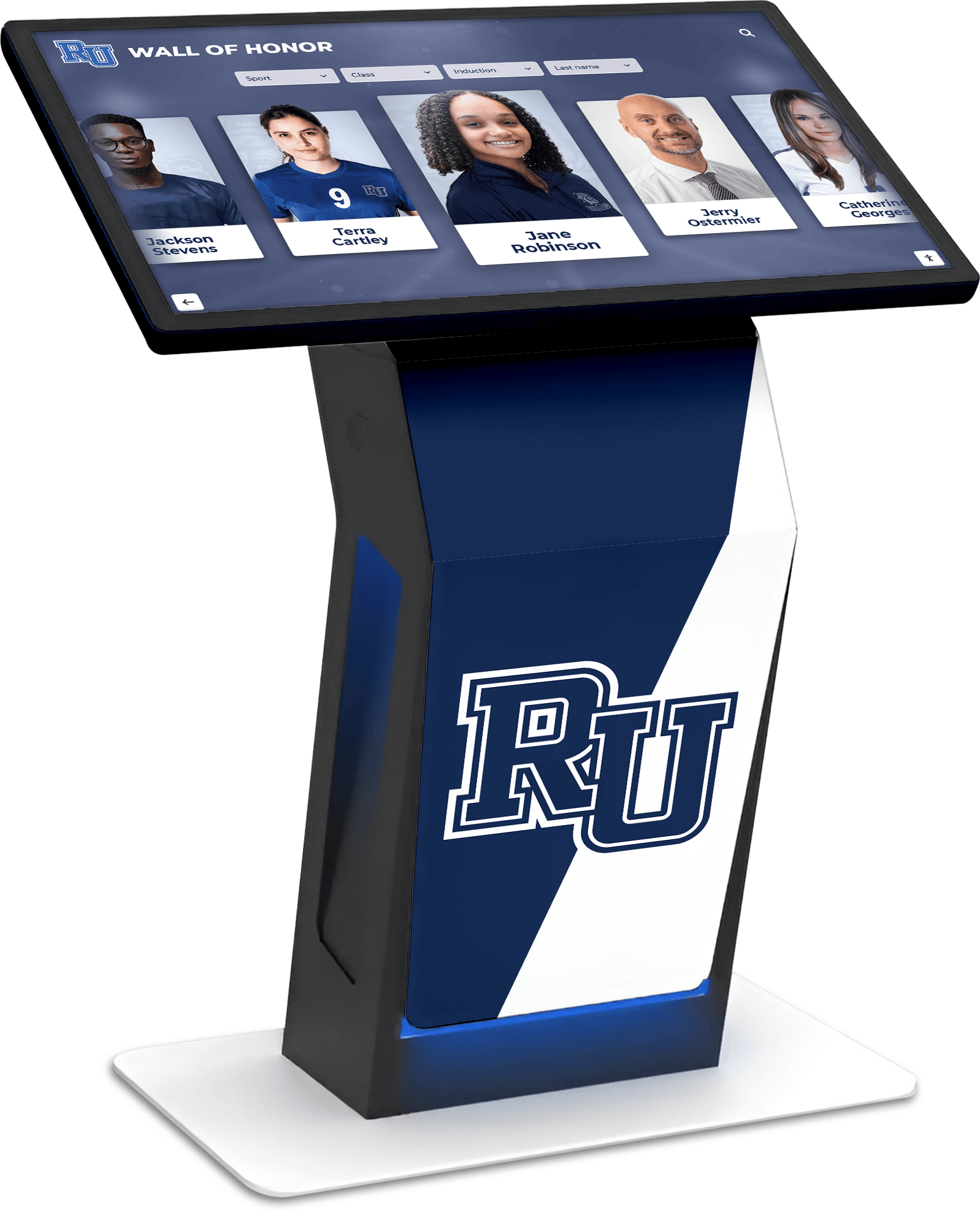
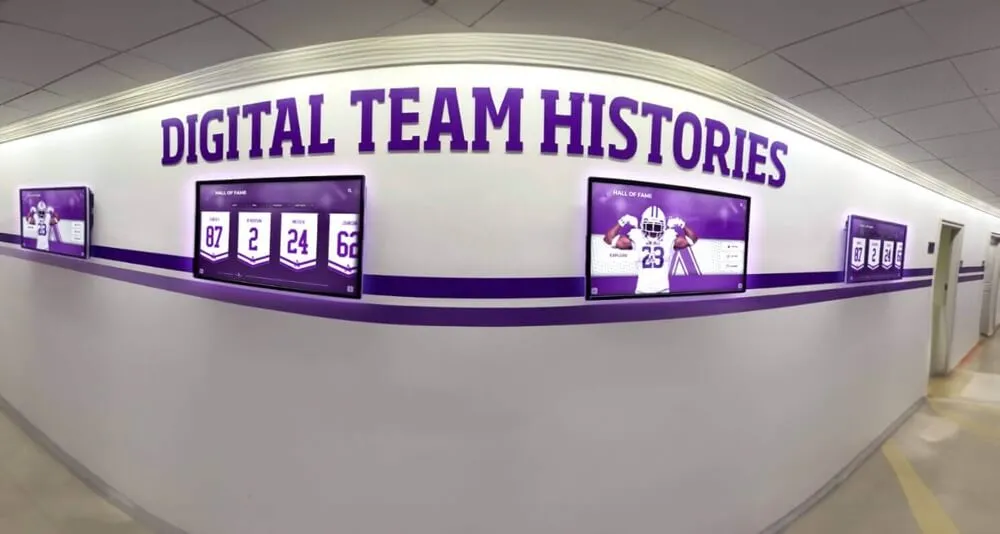
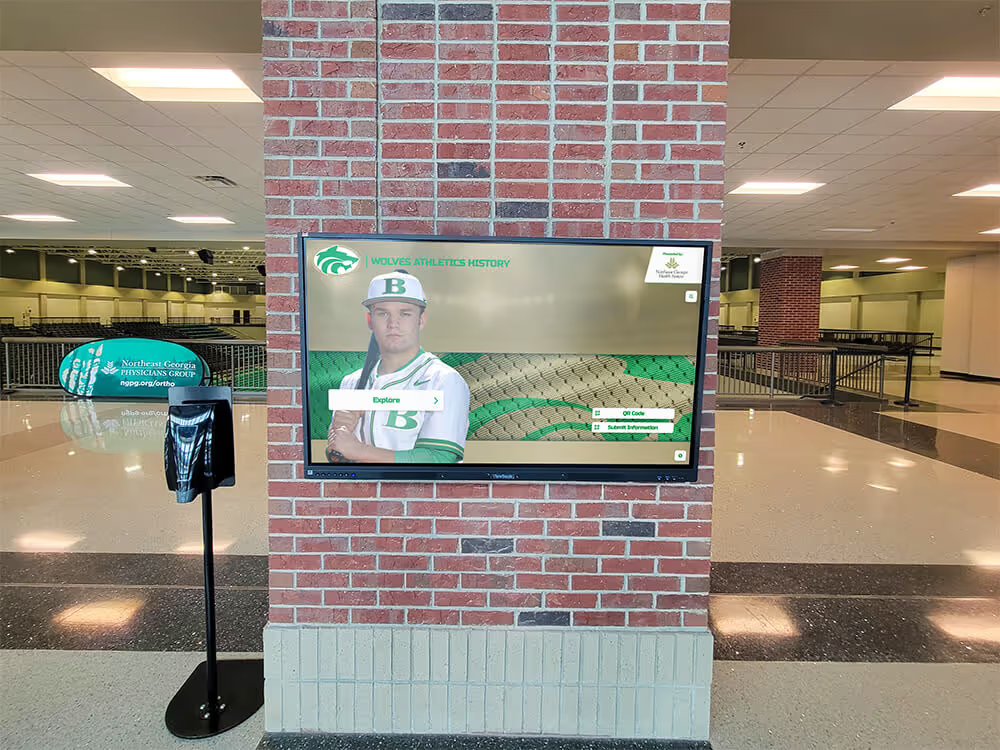
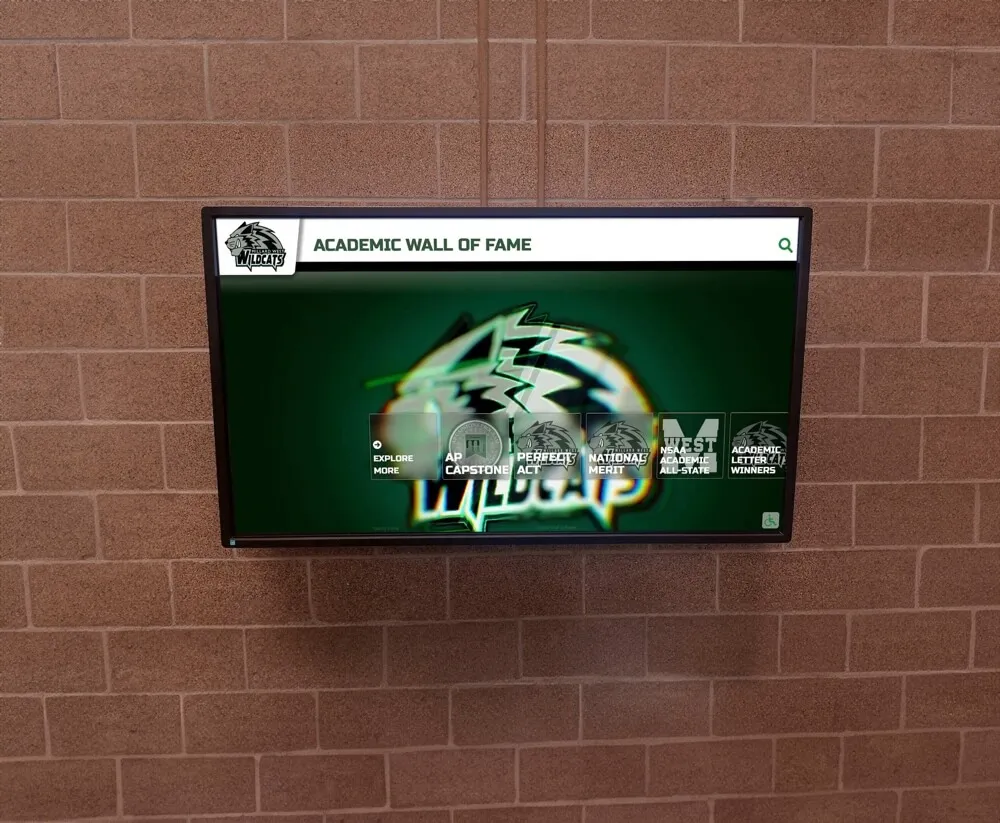
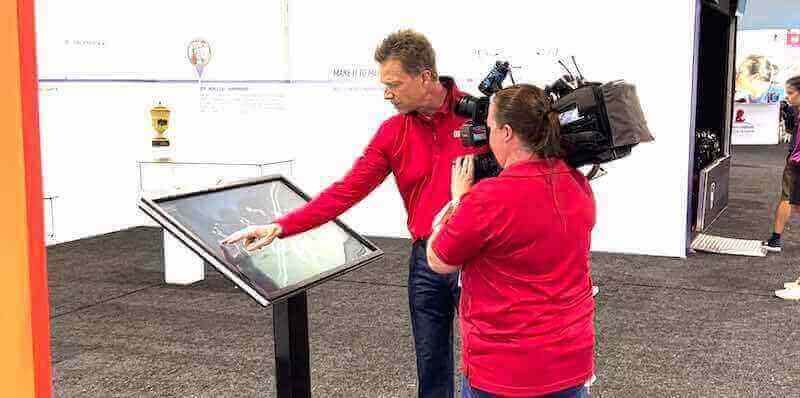
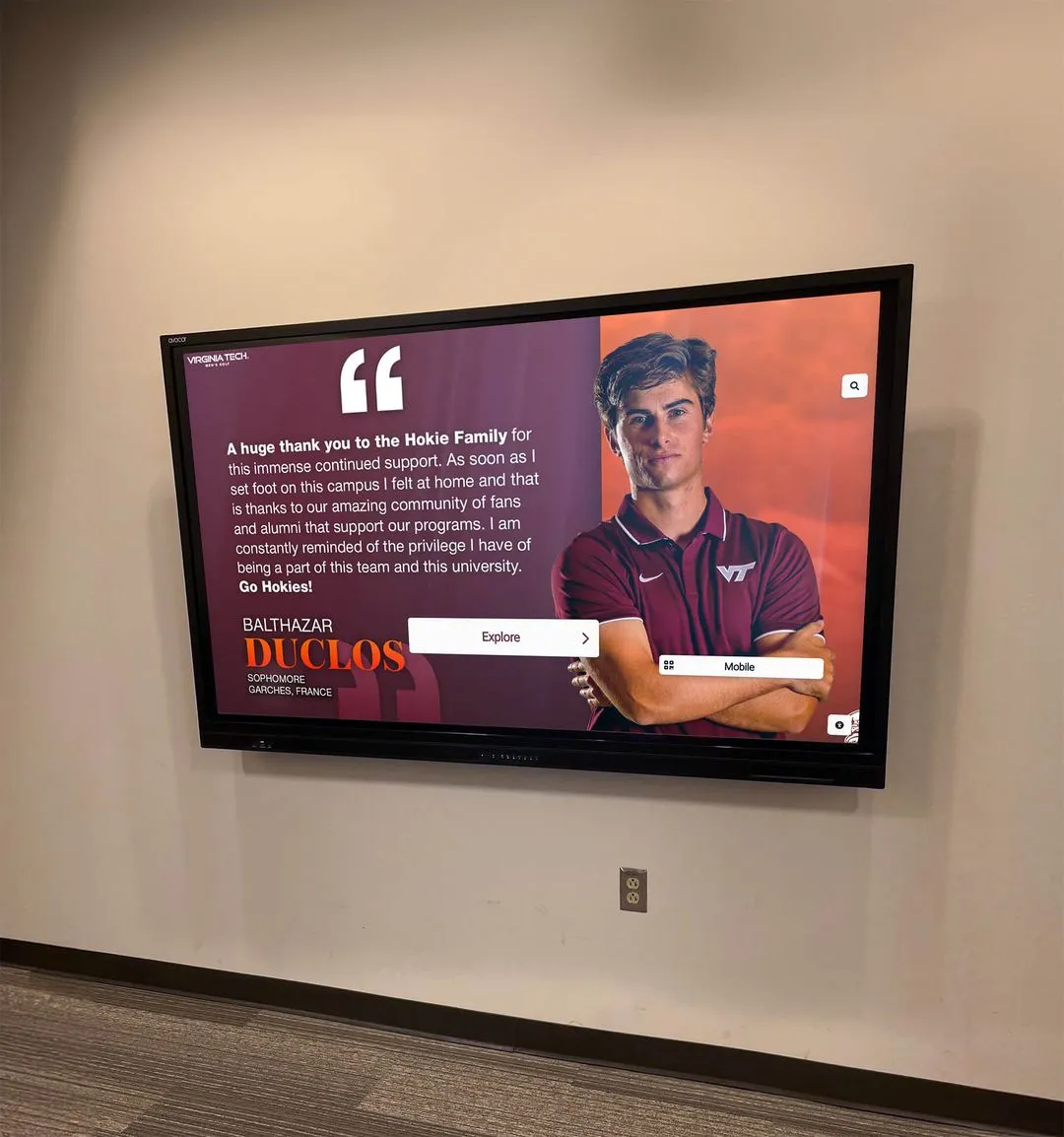
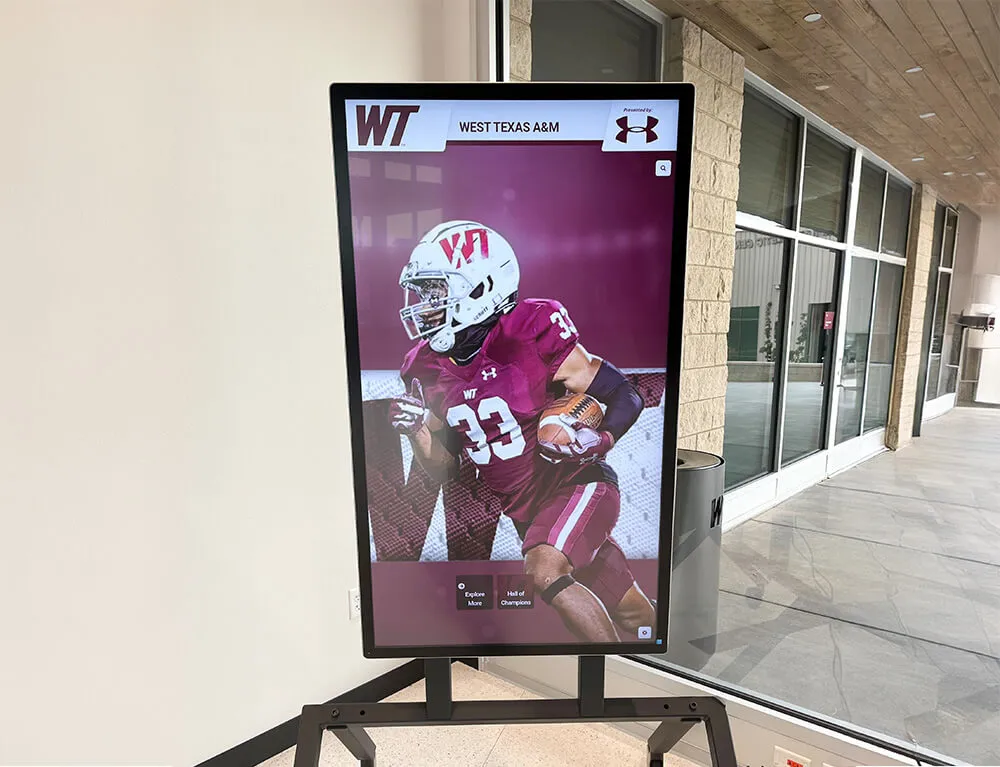
Touchscreen kiosks enable exploration of decades of championship history through intuitive digital interfaces
Enhanced Storytelling Through Multimedia Digital platforms transform championships from static trophies into rich narratives:
- Photo galleries showing championship team celebrations and game moments
- Video highlights from tournaments and record-breaking performances
- Detailed season statistics and game-by-game recaps
- Individual athlete profiles within team championship pages
- Coach interviews and player testimonials
- Newspaper articles and media coverage preservation
- Championship bracket displays showing tournament advancement
This multimedia approach creates emotional connections that physical trophies alone cannot achieve, helping students understand the dedication and circumstances behind visible hardware.

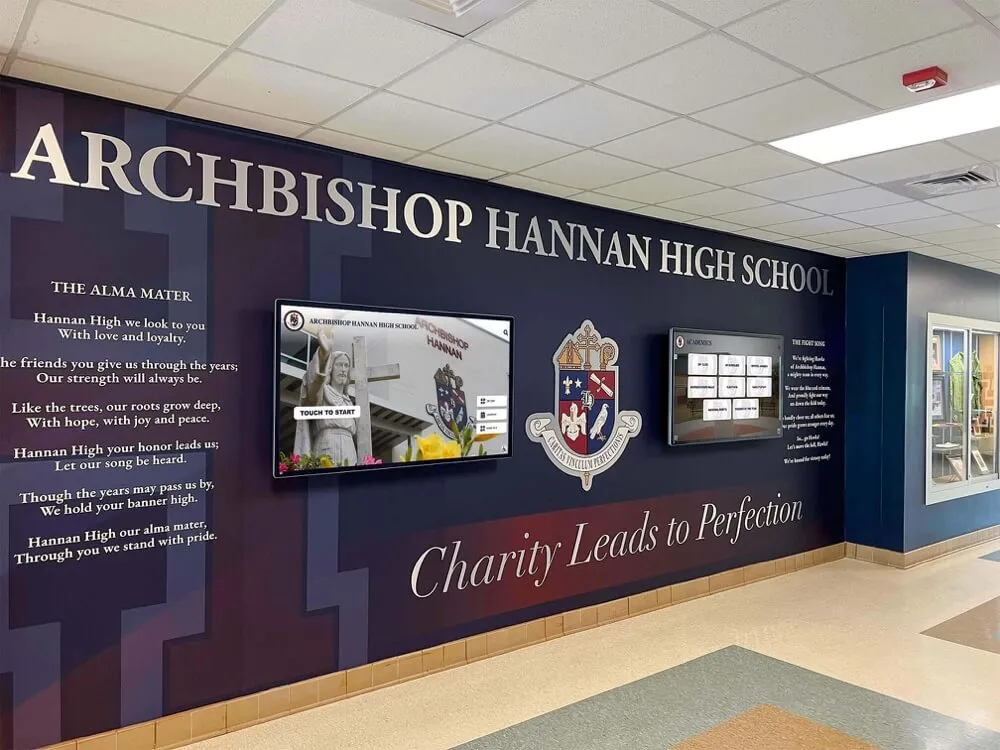
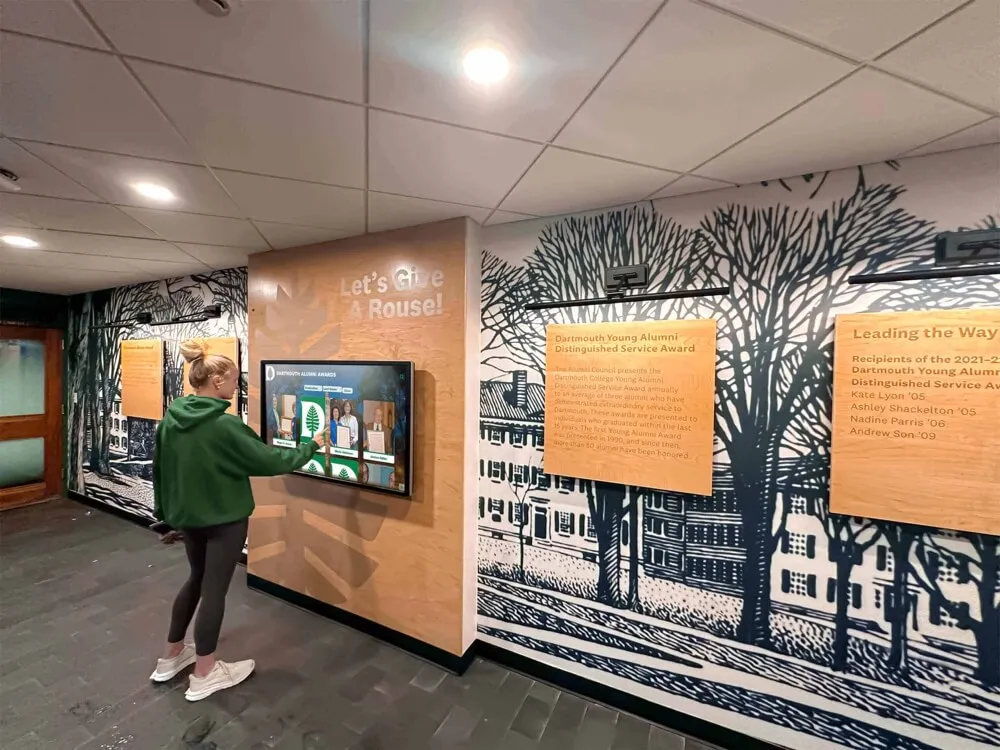
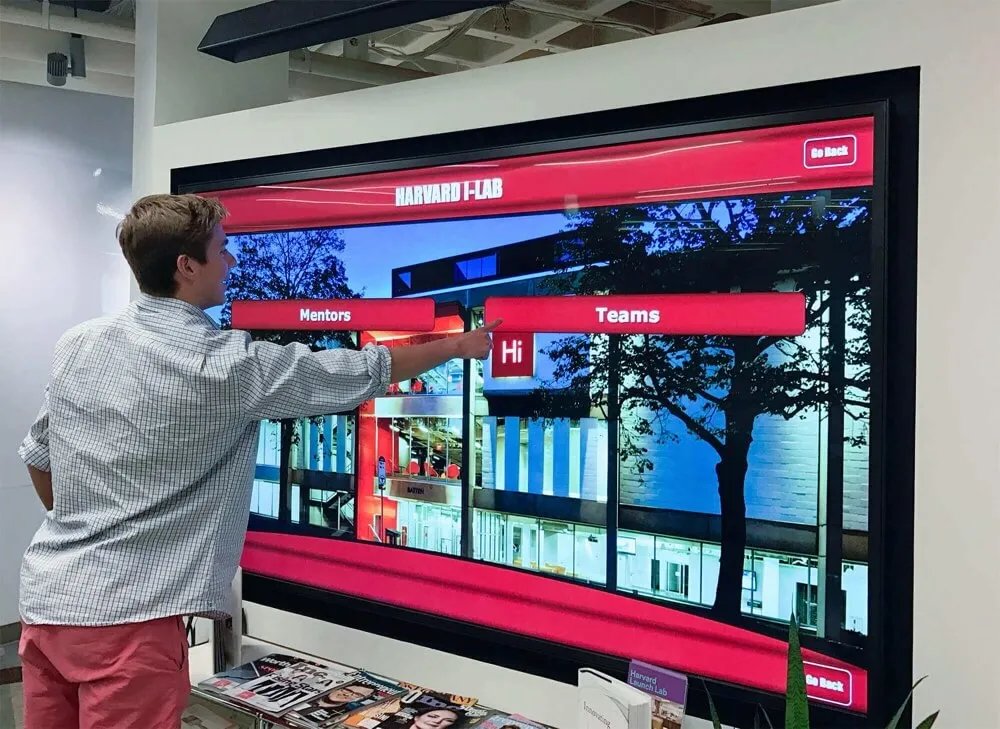
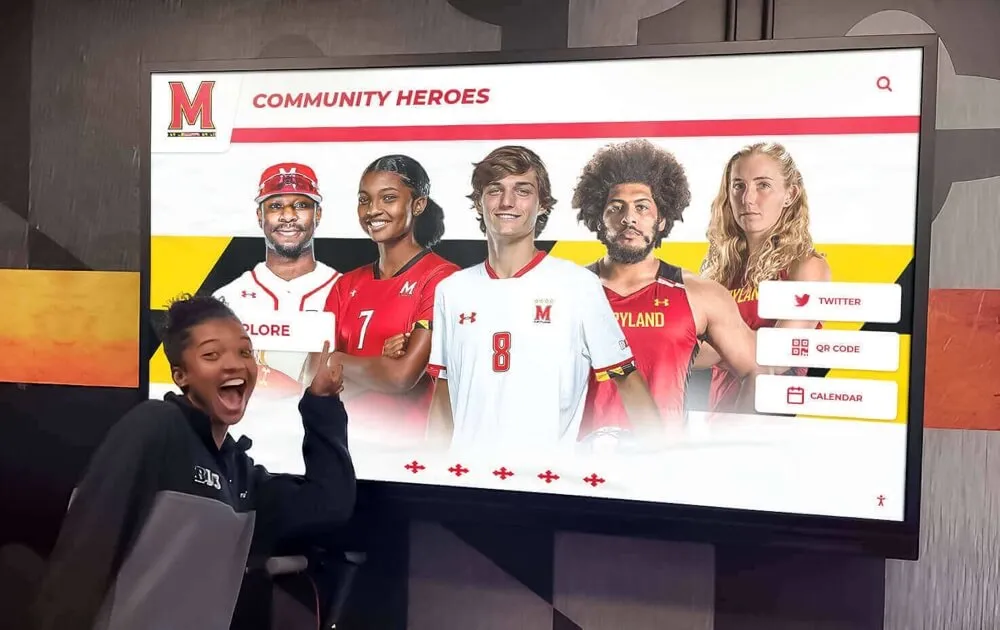
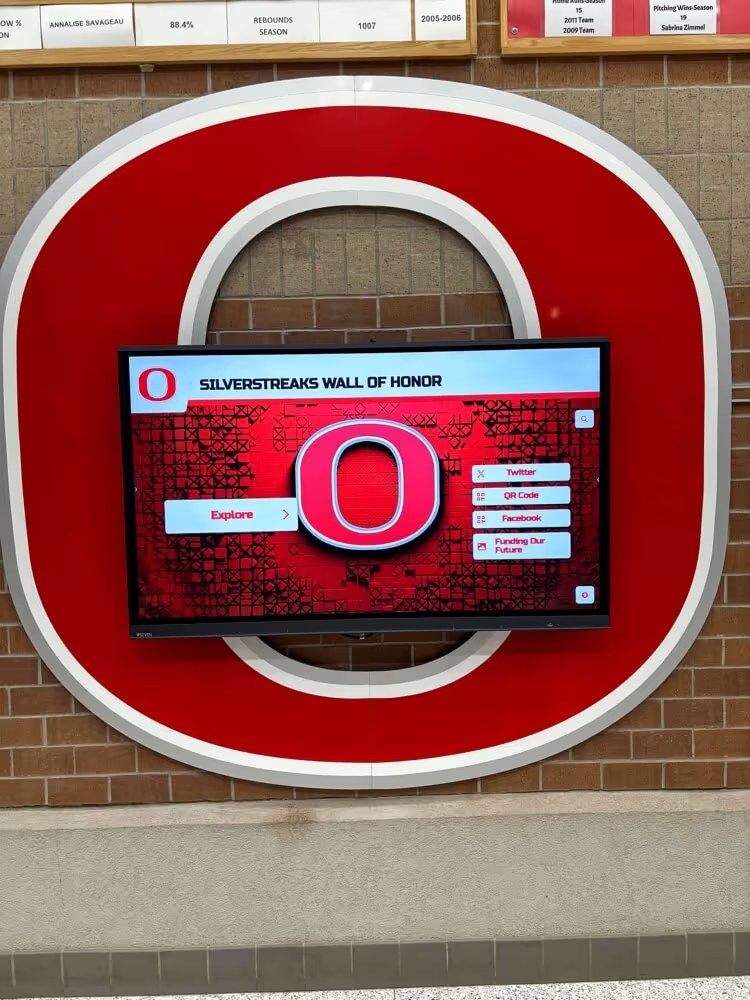
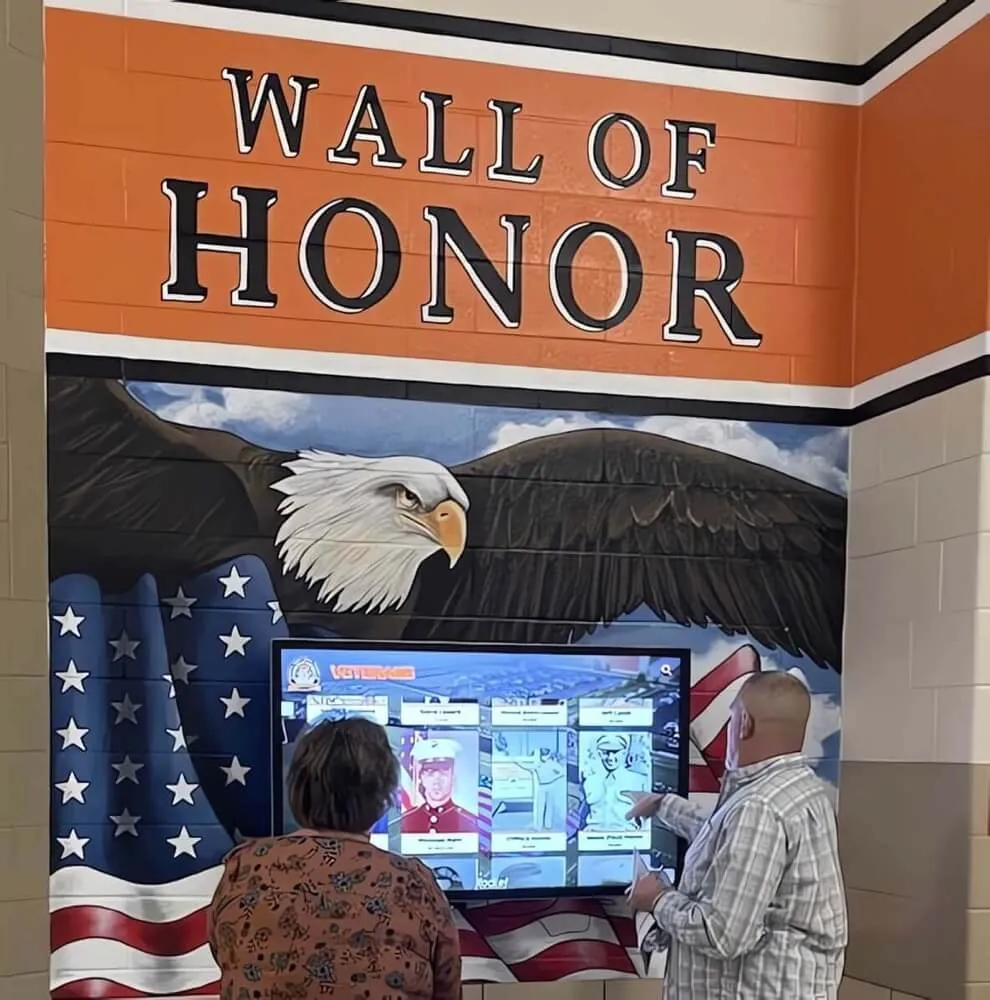
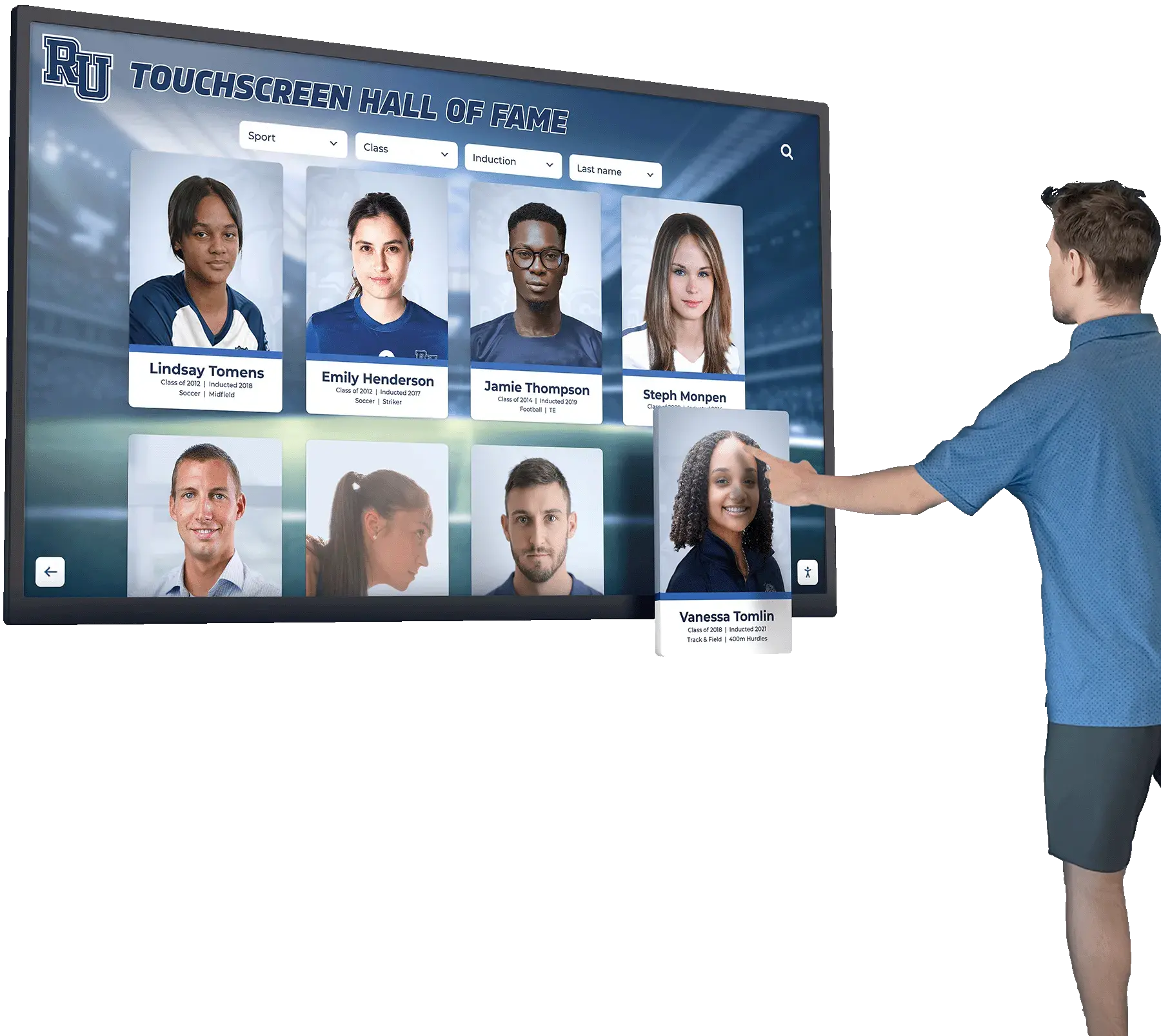
Intuitive touch interfaces make exploring championship history natural and engaging for students and visitors
Search and Discovery Features Interactive functionality changes how people engage with championship history:
- Students search for specific sports, years, or championship types
- Filtering options narrowing displays by decade, sport, or achievement level
- Alphabetical athlete directories enabling name-based searches
- Statistical leaderboards across different eras and categories
- Timeline views showing program evolution chronologically
Schools implementing digital recognition displays report 5-10x higher student engagement compared to traditional static trophy rooms.
Cloud-Based Content Management
Modern digital trophy rooms eliminate traditional maintenance challenges:
Remote Administration Benefits
- Update displays from any internet-connected device without campus visits
- No keys, glass cleaning, or physical rearrangement required
- Scheduled publishing for championship additions coordinating with award ceremonies
- Bulk import capabilities for historical championship data
- Role-based permissions enabling appropriate staff access
- Template systems accelerating championship profile creation
Athletic directors report 75-85% reduction in time spent managing championship displays after implementing digital systems, freeing resources for program support rather than maintenance tasks.
Instant Recognition Updates Digital systems enable immediate championship acknowledgment:
- Add tournament victories hours after championship games
- Publish season achievements the day they occur
- Update records and statistics in real-time throughout seasons
- Feature current championships prominently while preserving complete historical access
- Coordinate recognition timing with team celebrations and award ceremonies
This immediacy creates relevance that traditional trophy rooms cannot match, ensuring current athletes see fresh content rather than displays frozen in past decades.
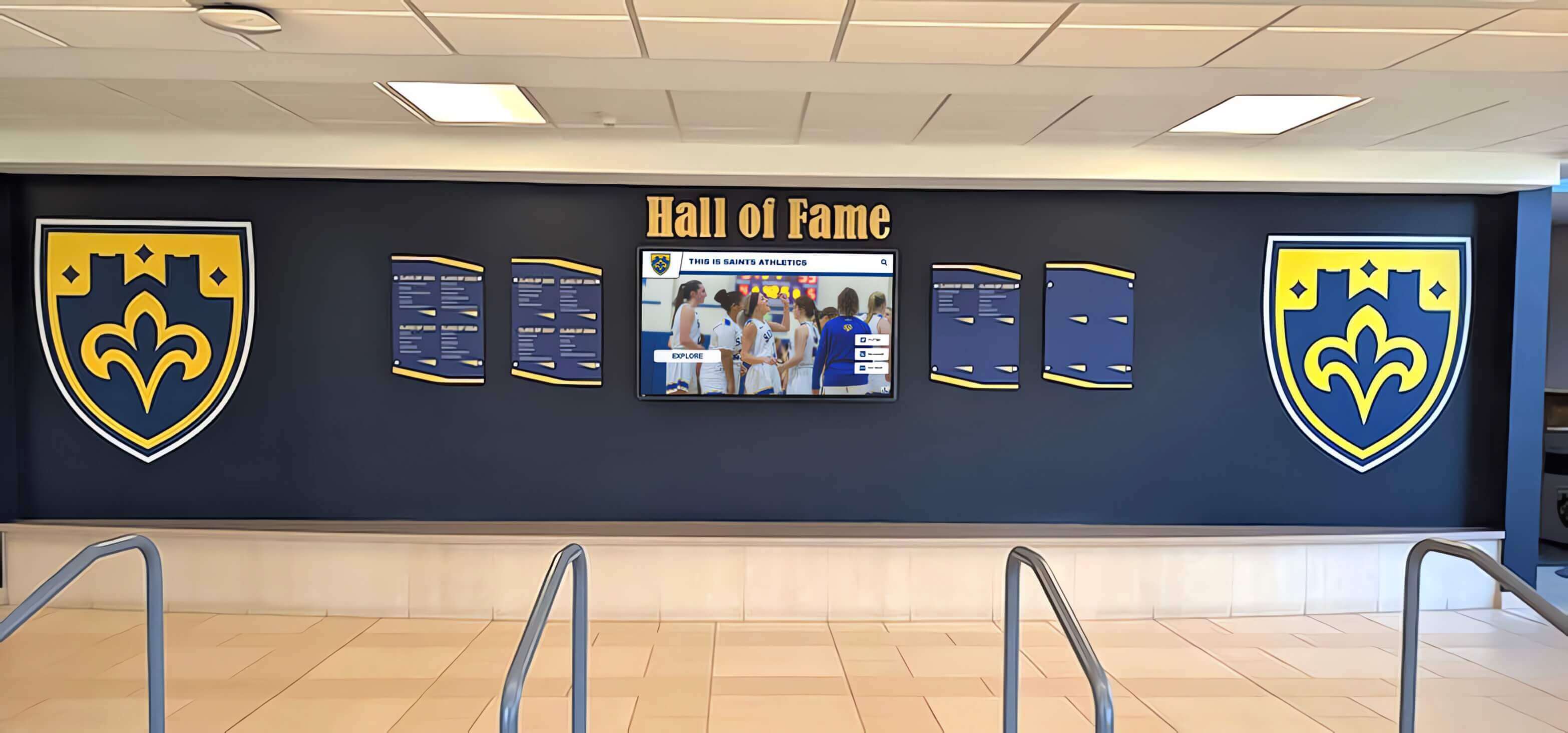
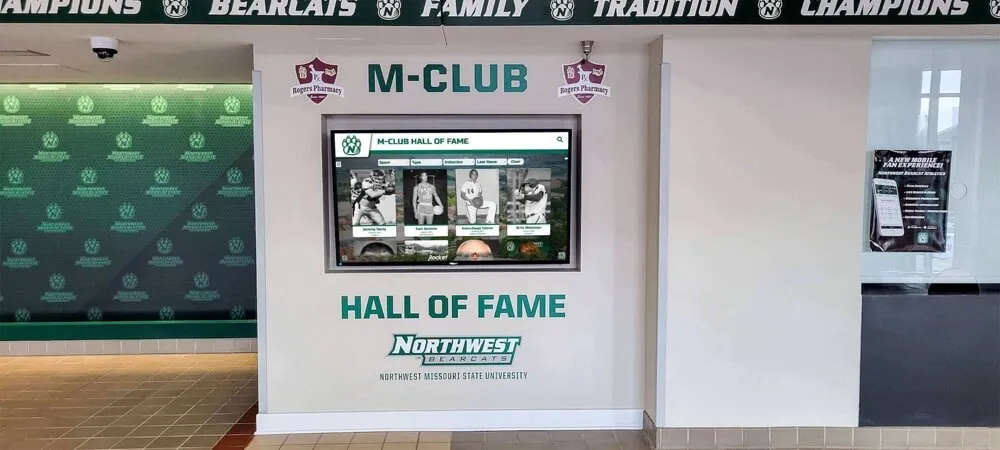
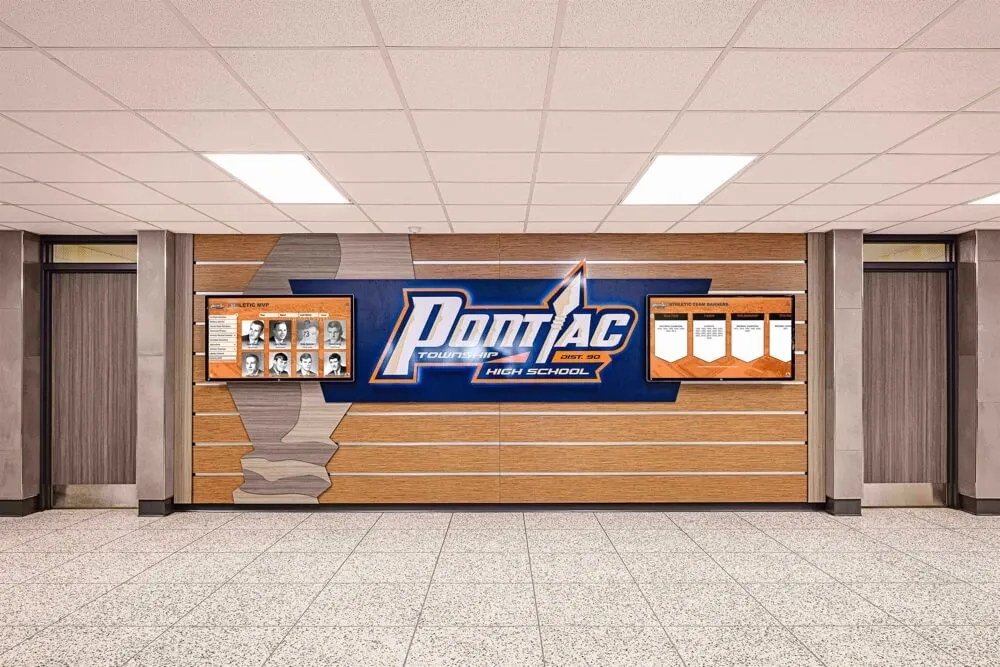
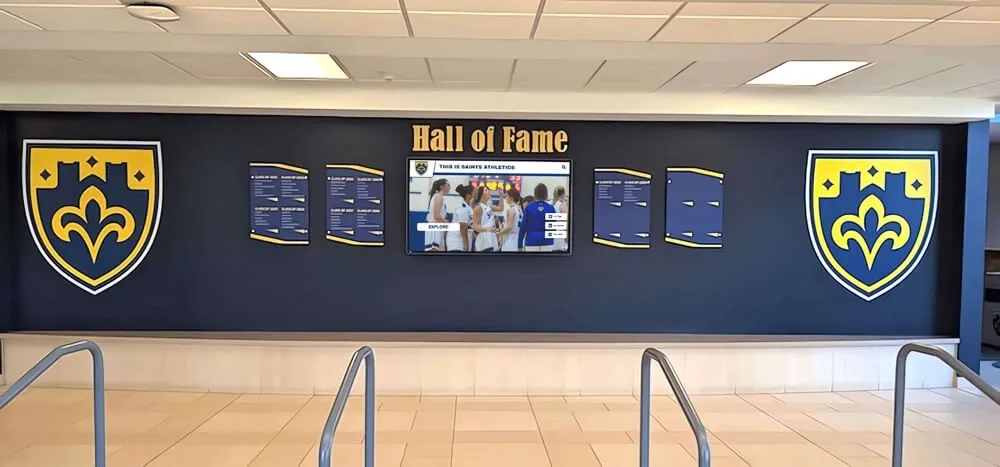
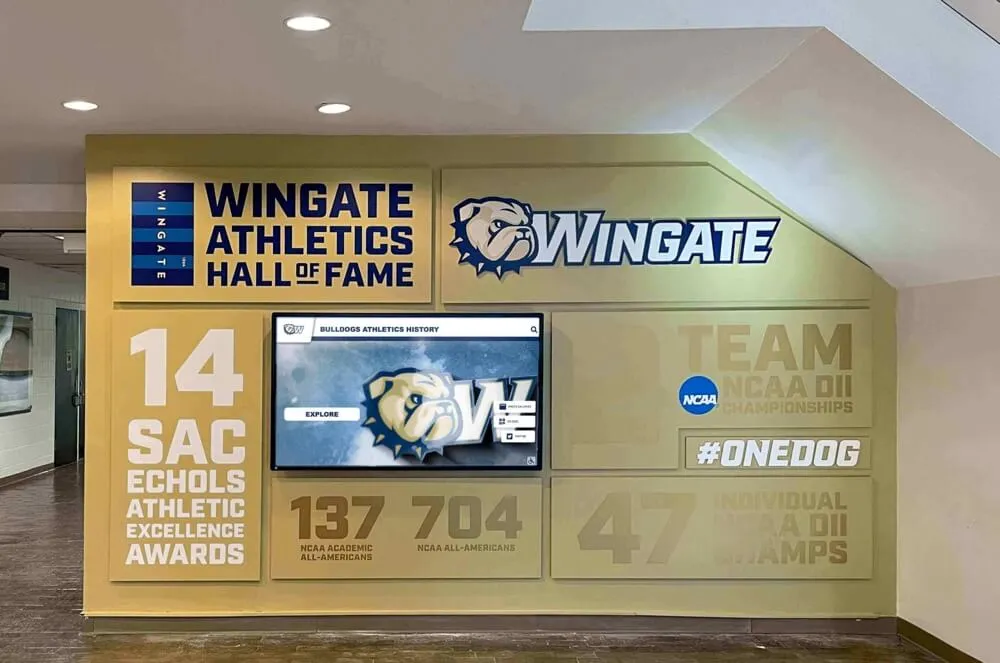
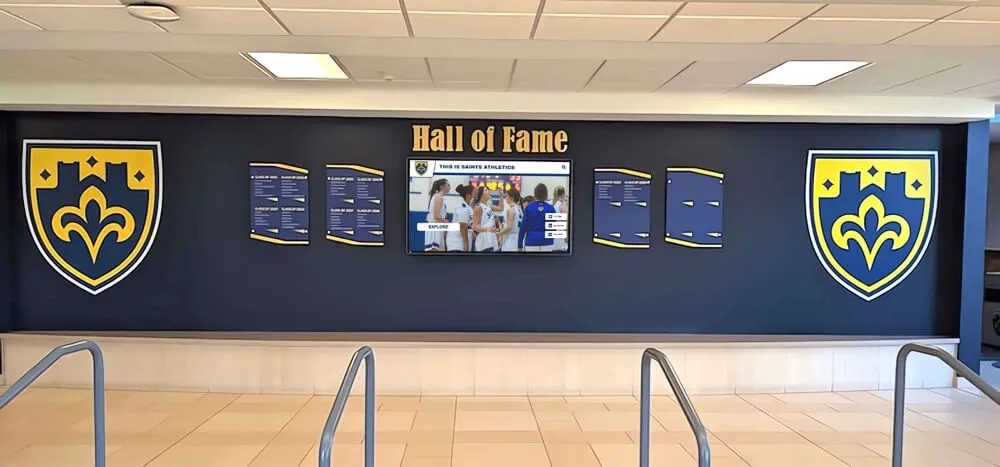
Modern installations combine physical elements like shields with digital displays, creating layered recognition experiences
Hybrid Trophy Room Approaches
Many schools implement solutions combining traditional and digital elements:
Physical-Digital Integration Strategies
- Traditional trophy cases displaying championship hardware for major titles
- Adjacent digital displays providing unlimited capacity for all achievements
- QR codes near physical trophies linking to expanded digital championship stories
- Physical “greatest hits” showcases complemented by comprehensive digital archives
- Synchronized content ensuring consistency across display formats
Balancing Strengths of Both Approaches
Traditional Trophy Room Strengths:
- Tangible championship hardware creates immediate visual impact
- Physical presence provides impressive focal points
- Traditional aesthetic appeals to certain alumni and stakeholders
- Trophy presentation ceremonies remain meaningful ritual moments
- Physical objects connect to athletic participation memories
Digital Display Strengths:
- Unlimited capacity eliminates forced choices about visibility
- Multimedia storytelling provides rich context and emotional connection
- Instant updates maintain relevance and currency
- Interactive exploration encourages active student engagement
- Accessible beyond campus for alumni and community members
This integrated approach satisfies stakeholders valuing traditional trophy presentation while providing comprehensive recognition impossible with physical displays alone. For comprehensive strategies, explore displaying your school’s history.
Design Elements That Enhance Trophy Rooms
Strategic design choices transform functional spaces into compelling athletic environments.
Creating Branded Athletic Environments
Trophy rooms should reflect school identity and athletic culture:
School Color Integration
- Painted accent walls in institutional colors
- Color-coordinated display case finishes and backgrounds
- Carpeting or flooring in school colors
- Branded signage and header treatments
- Mascot imagery strategically positioned
Environmental Graphics and Murals Comprehensive design extends beyond trophy cases:
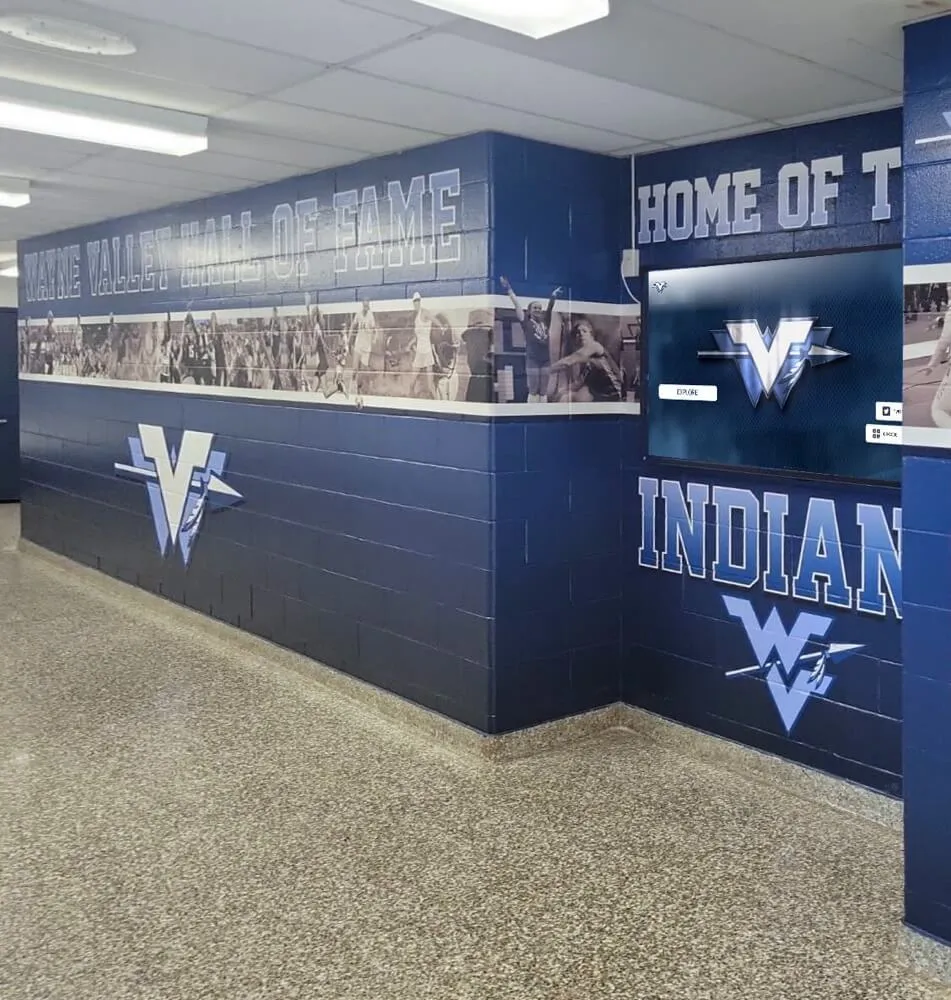
- Athletic facility murals celebrating program identity
- Historical timeline graphics showing program evolution
- Inspirational quotes from coaches and accomplished athletes
- Action photography from championship moments
- Retired jersey displays with athlete biographies
- Championship banner displays coordinated with trophy presentations
Strong environmental design creates immersive spaces where trophy displays become elements within larger recognition ecosystems celebrating athletic excellence.
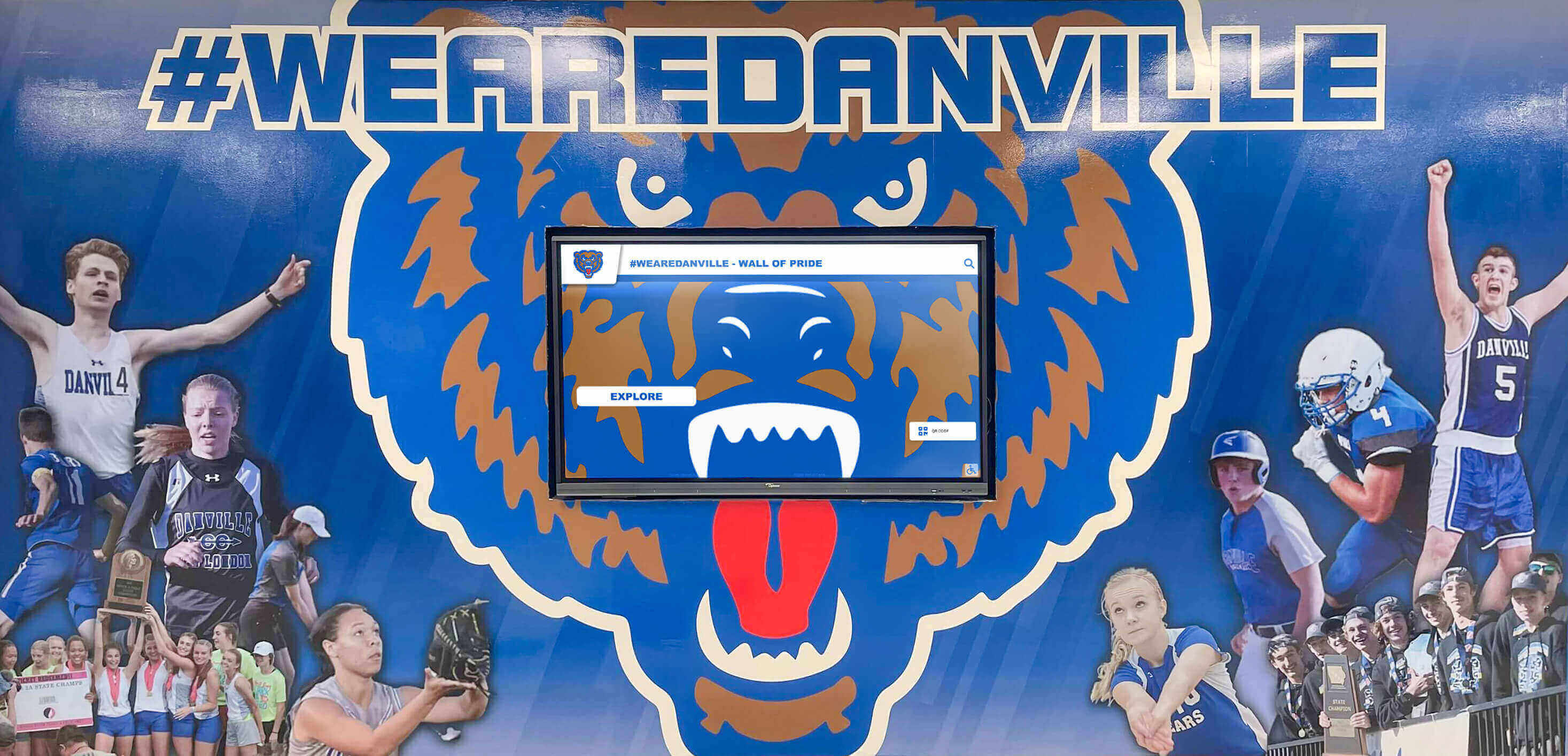
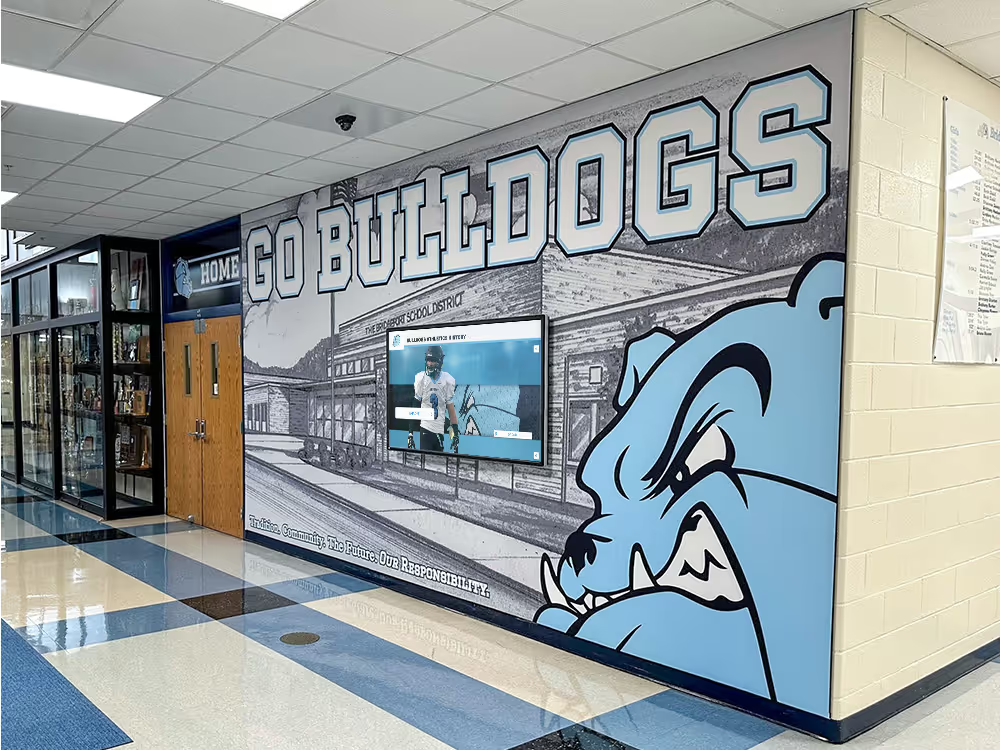
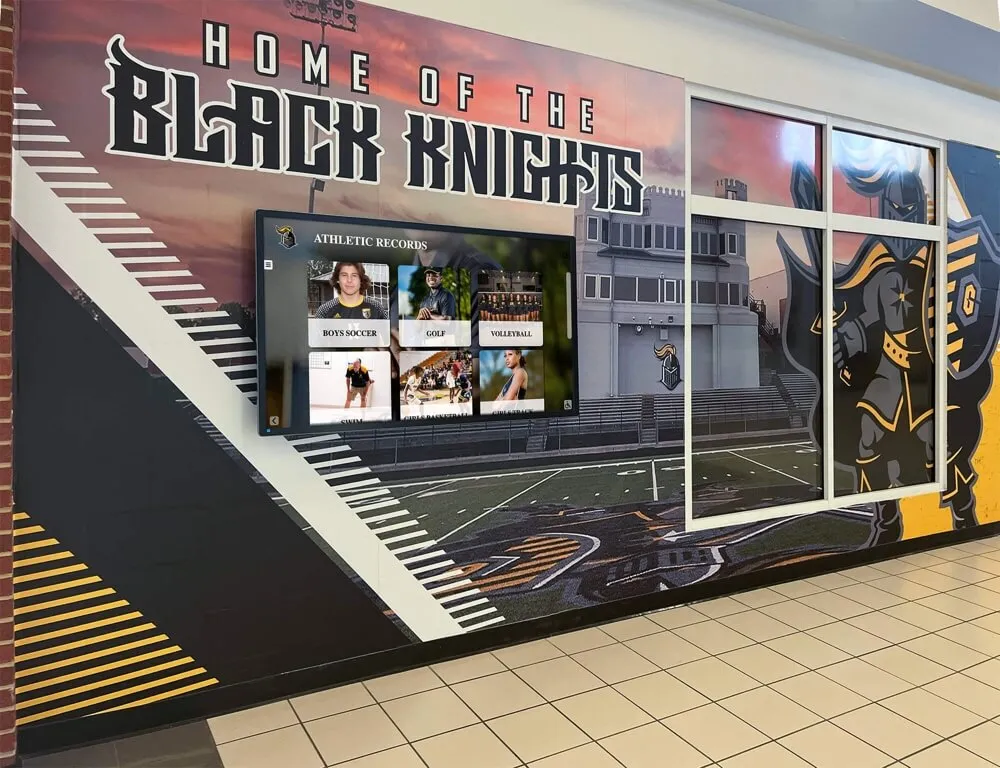
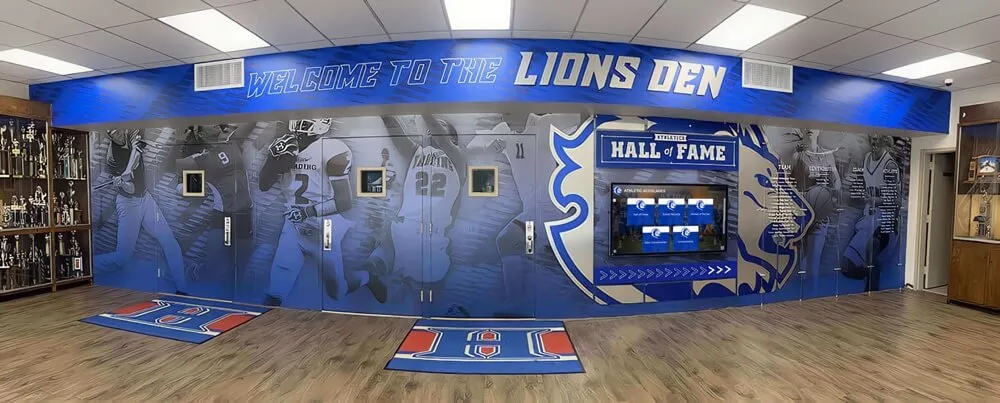
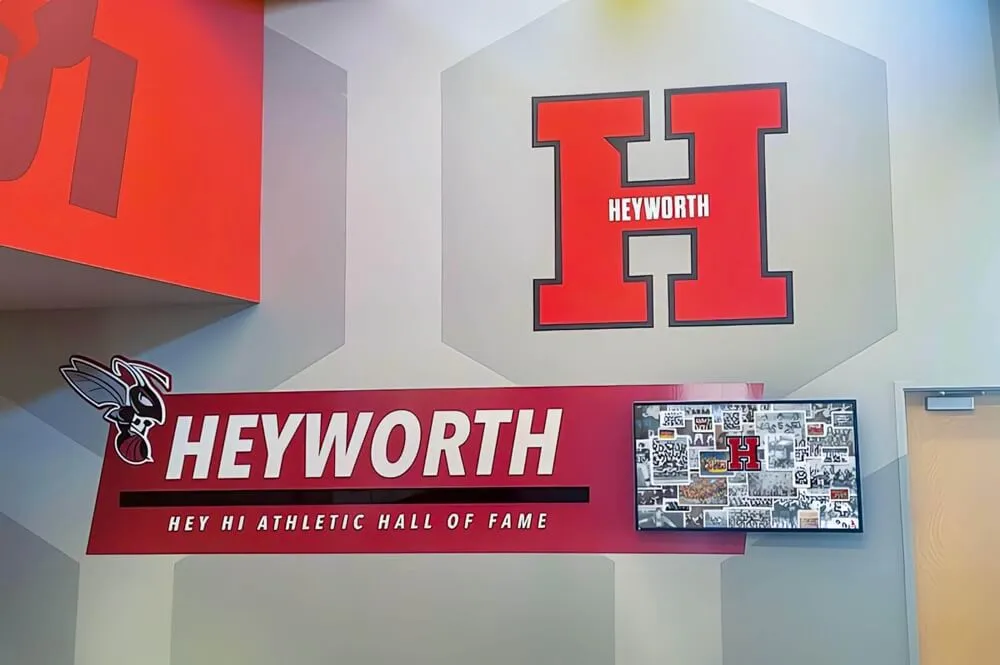
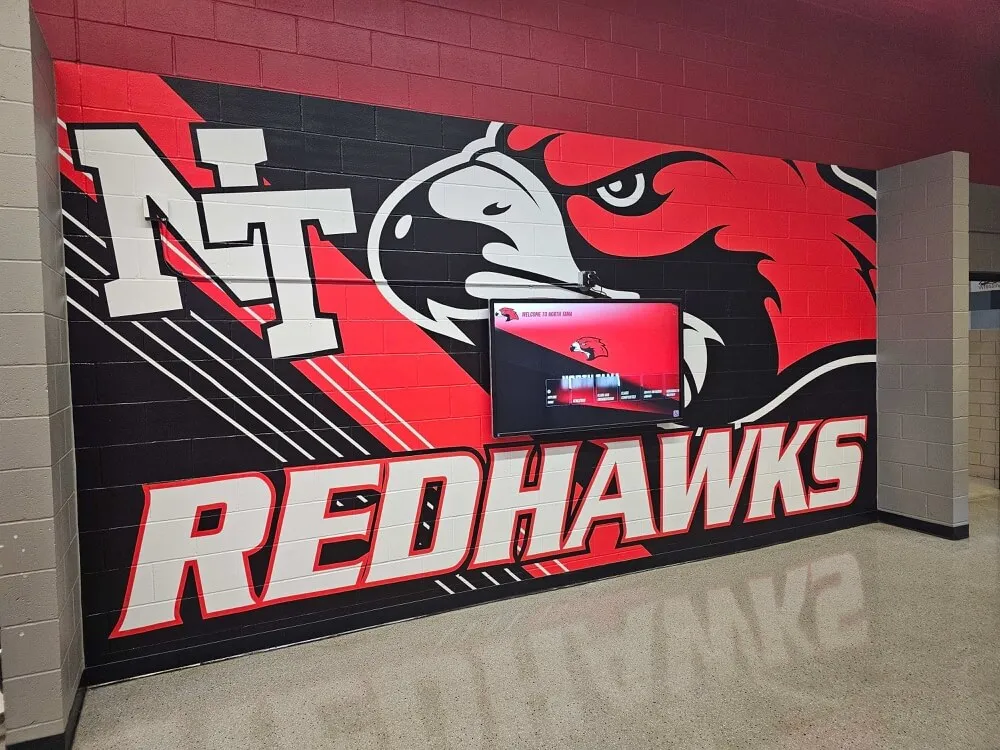
Athletic murals create immersive branded environments where trophy displays integrate within comprehensive recognition spaces
Adding Context and Storytelling Elements
Championships become more meaningful with proper context:
Descriptive Information Integration
- Championship plaques explaining competitive circumstances and achievement significance
- Season records and tournament performance statistics
- Opponent information and scoring details
- Historical context about program development during championship eras
- Roster information identifying team members
- Coaching staff recognition and acknowledgment
Narrative Elements
- Adversity and challenge stories showing championship difficulty
- Game-by-game recaps of tournament advancement
- Player and coach quotes about championship experiences
- Media coverage and newspaper clippings
- Championship ceremony and celebration photographs
- Impact statements about program legacy
Additional context transforms trophy displays from simple hardware showcases into engaging narratives that students actually read and discuss rather than ignore. Consider interactive kiosk solutions for comprehensive storytelling.
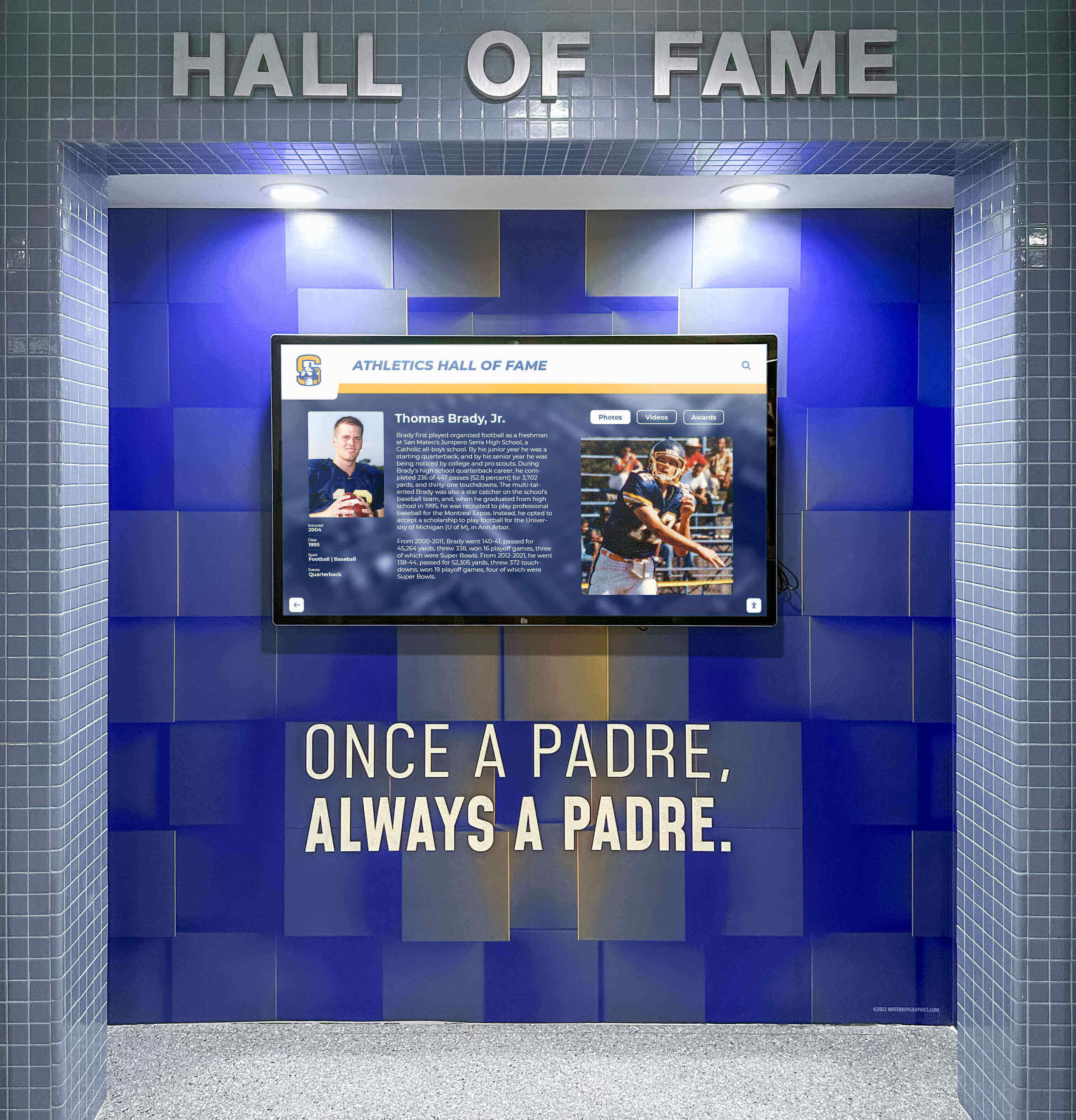
Dedicated athletic recognition spaces allow comprehensive championship showcases celebrating program history
Incorporating Seating and Gathering Spaces
Trophy rooms function best as active spaces rather than pass-through corridors:
Furniture and Amenities
- Comfortable seating enabling extended viewing and conversation
- Tables for studying or team meetings surrounded by championship inspiration
- Standing height surfaces for casual gathering
- Charging stations for mobile devices
- Wi-Fi connectivity for digital content access
Multi-Purpose Functionality
- Team meeting spaces surrounded by program history
- Pre-game gathering areas for motivation and focus
- Alumni reception locations during reunions and homecoming
- Recruiting visit destinations showcasing program excellence
- Student lounge areas building athletic community
Trophy rooms designed as destinations rather than storage closets receive significantly higher utilization and create stronger impact on student-athletes and visitors.
Budget-Conscious Trophy Room Design
Effective championship recognition doesn’t require enormous investments when schools prioritize strategic spending.
Cost-Effective Traditional Options
Budget Physical Display Approaches
- Tabletop display cases: $200-600
- Wall-mounted shadow boxes: $100-300 each
- Floating shelves with security brackets: $50-150 per shelf
- Repurposed furniture adaptations: $0-400
- DIY carpentry projects using volunteer labor
- Acrylic cases: $300-800
Enhancement Investments
- Professional vinyl graphics and lettering: $200-600
- Custom backdrop panels and displays: $150-400
- LED strip lighting installations: $50-150 per case
- Paint and color-coordinated finishes: $100-300
- Security upgrades and locking systems: $30-80 per case
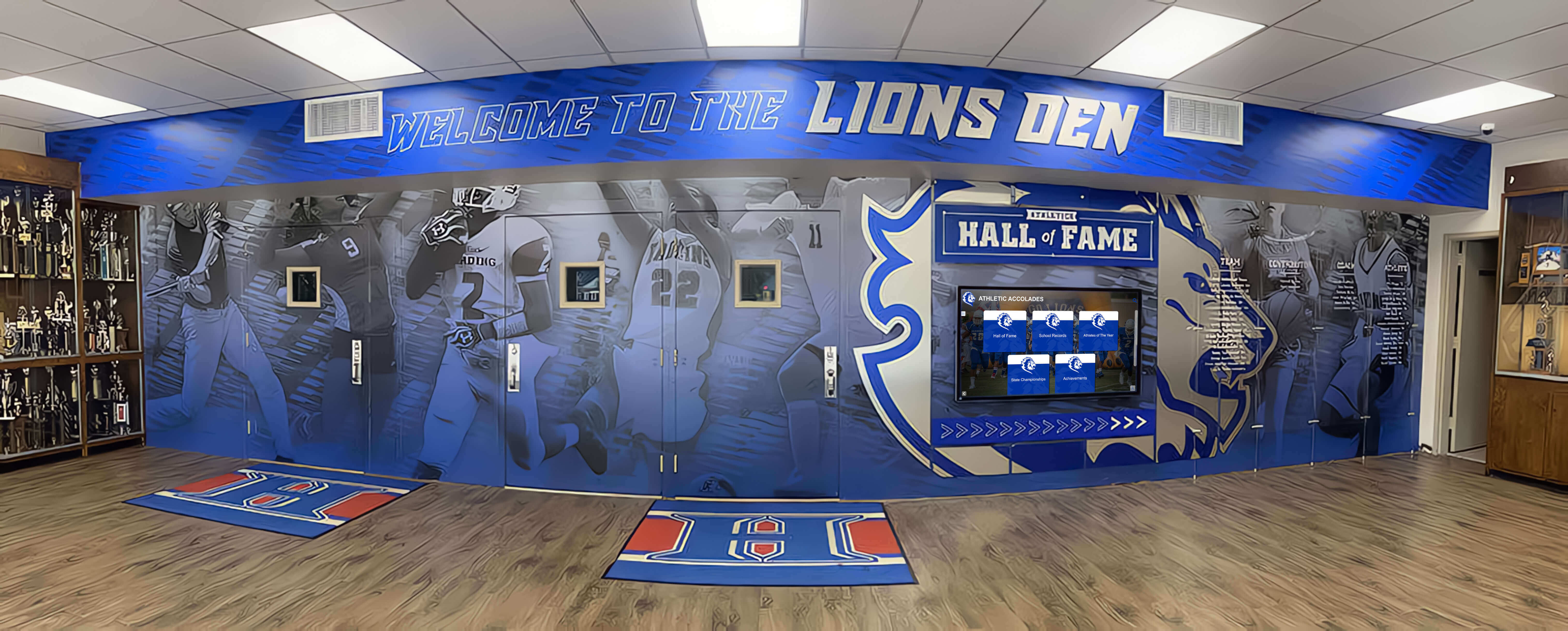
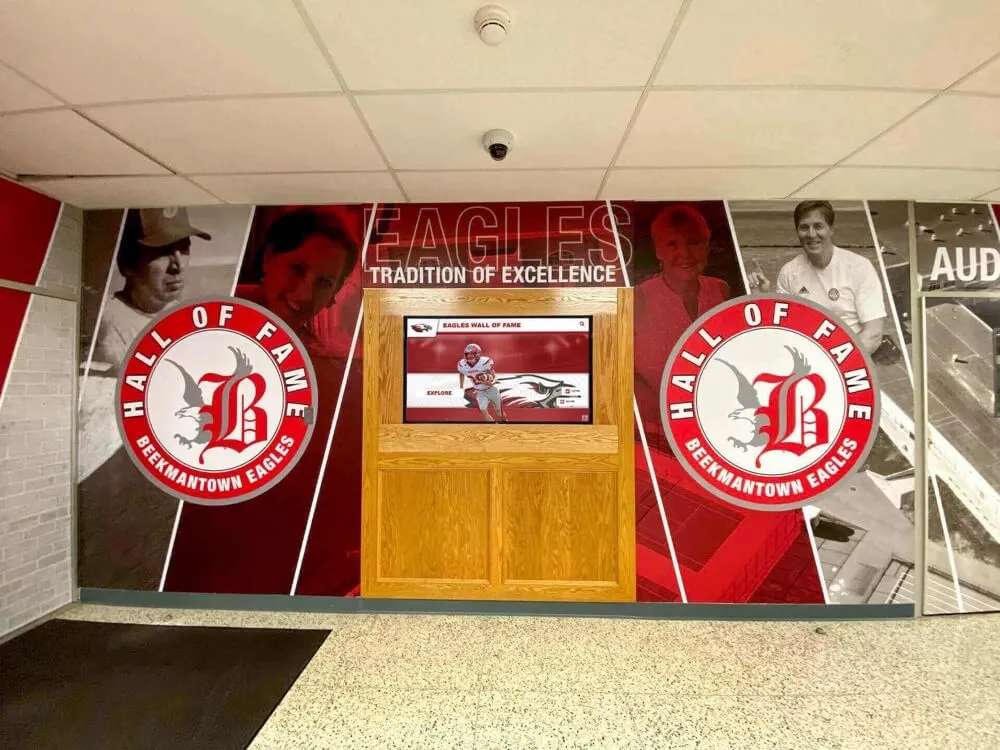
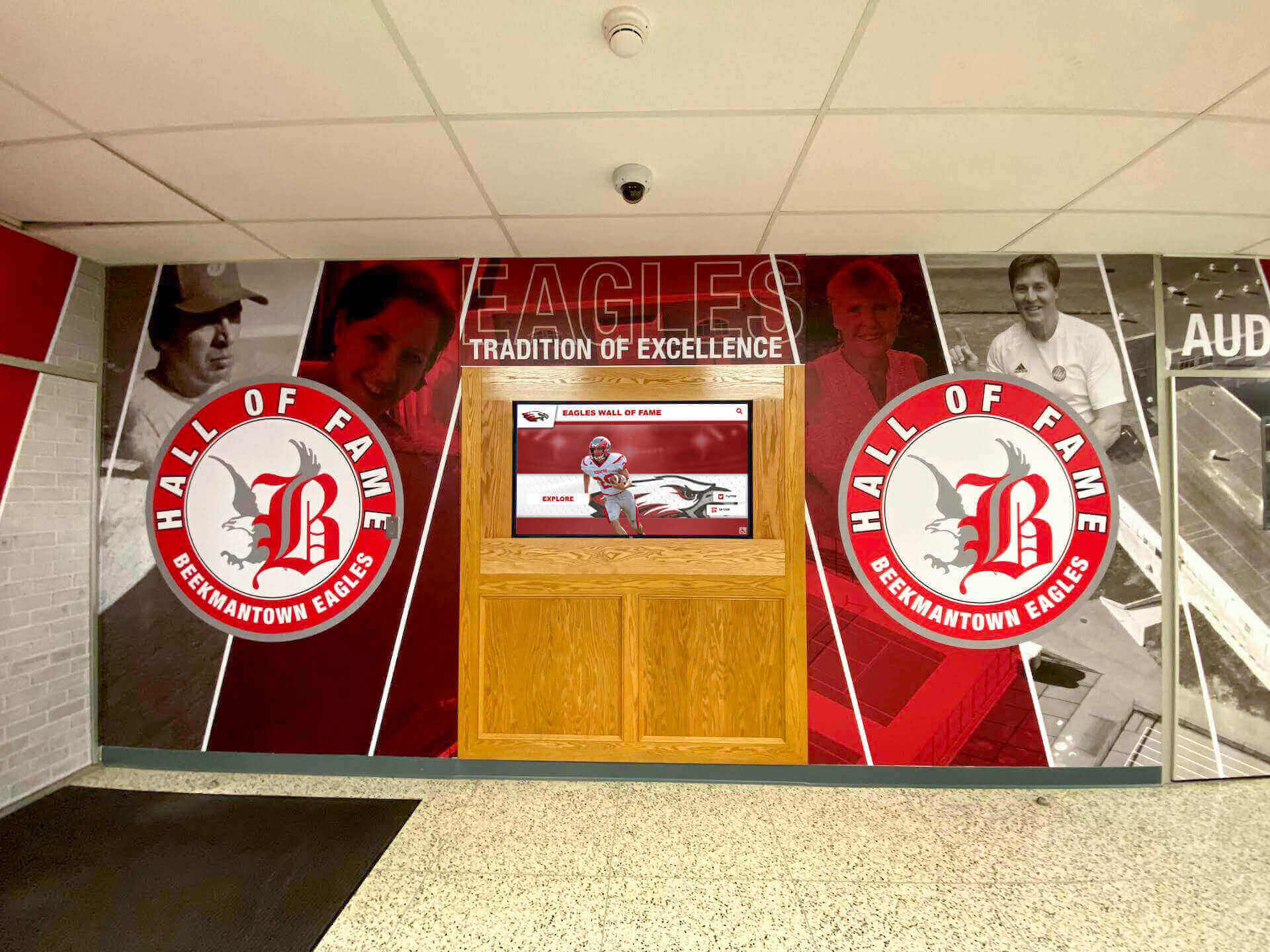
Traditional trophy cases remain effective when integrated with environmental graphics, maximizing impact within budget constraints
Budget-conscious approaches enable meaningful recognition while schools build toward more comprehensive solutions over time.
Digital Display ROI Analysis
Understanding digital system economics enables informed decisions:
Initial Investment Requirements
- Commercial touchscreen display (55-75 inches): $3,000-7,000
- Professional installation and mounting: $400-1,000
- Digital recognition software subscription: $2,500-7,000 annually
- Initial content development and setup: $2,000-5,000
- Total initial investment: $8,000-20,000
Long-Term Value Calculation Digital systems provide superior ROI for active programs:
- Unlimited ongoing recognition without per-trophy costs
- Elimination of trophy room expansion construction expenses
- Administrative time savings (80-85% reduction in maintenance hours)
- Enhanced engagement creating motivational value beyond cost metrics
- Alumni connection tools supporting development efforts
- 10-year total cost typically 45-65% lower than equivalent traditional expansion
Schools recognizing 50+ championships annually typically see digital solutions reaching cost parity with traditional approaches within 3-5 years while providing substantially superior capacity and engagement. Explore state championship trophy case displays for comprehensive cost comparisons.
Phased Implementation Strategies Budget-conscious schools can implement gradually:
- Begin with single touchscreen display in high-traffic location
- Maintain existing traditional trophy cases during transition
- Add digital content progressively building championship library
- Expand to additional screens as budget allows
- Eventually use physical trophy room for major championships only
This approach manages cash flow while building toward comprehensive digital recognition without eliminating valued traditional elements.
Trophy Room Maintenance and Long-Term Management
Sustainable championship recognition requires planning for ongoing care and evolution.
Physical Trophy Room Maintenance
Traditional displays demand regular attention:
Scheduled Maintenance Tasks
- Weekly glass cleaning (interior and exterior surfaces)
- Monthly trophy polishing and dusting
- Quarterly lighting inspection and bulb replacement
- Annual case hardware lubrication and adjustment
- Periodic content reorganization as championships accumulate
- Temperature and humidity monitoring preventing trophy damage
Many schools assign maintenance responsibilities to specific staff or student groups (booster clubs, athletics assistants, facilities) ensuring consistent execution rather than depending on ad-hoc attention.
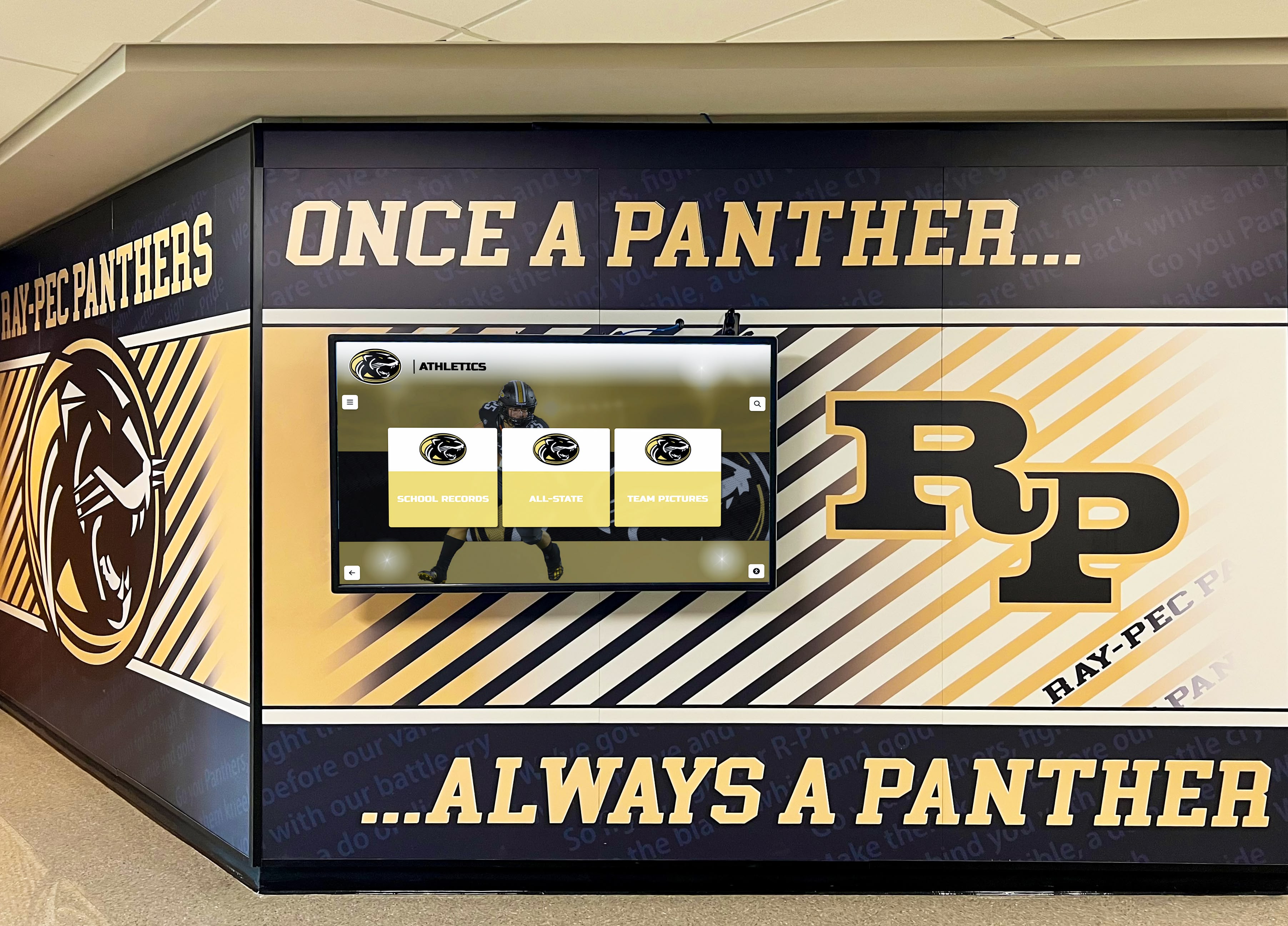
Modern display formats reduce maintenance burdens while increasing impact, freeing staff time for program development
Digital System Administration
Digital trophy rooms require different but less intensive maintenance:
Content Management Best Practices
- Weekly content review ensuring accuracy and currency
- Immediate updates after championships and tournaments
- Seasonal content refreshes highlighting current programs
- Annual comprehensive audits verifying complete championship documentation
- Regular photo and video additions maintaining visual freshness
- Analytics review tracking engagement and usage patterns
Administrators report digital trophy displays requiring approximately 30-45 minutes weekly compared to 2-3 hours for equivalent traditional trophy room maintenance.
Technology Lifecycle Planning
- Display screens: 7-10 year replacement cycle
- Software subscriptions: Annual or multi-year commitments
- Content management systems: Periodic version updates
- Network infrastructure: Ongoing IT support requirements
- Hardware warranties and service agreements
Schools should budget $1,500-2,500 annually for digital system maintenance, software, and eventual hardware replacement reserves.
Special Trophy Room Considerations
Different contexts require tailored approaches to championship recognition.
Location-Specific Design Approaches
Trophy room placement affects design decisions:
Dedicated Trophy Rooms
- Climate control for trophy preservation
- Security systems protecting valuable championship hardware
- Controlled access versus open public viewing
- Hours of operation and supervision requirements
- ADA accessibility compliance for all visitors
Athletic Facility Integration
- Gymnasium lobby displays capturing game-day traffic
- Locker room area installations inspiring athletes daily
- Training facility showcases motivating during workouts
- Athletic office suite displays for recruiting visits
- Multi-purpose room installations serving various functions
Main Building Placement
- School lobby locations maximizing community visibility
- Hallway displays reaching broader student populations
- Library or commons integrations connecting academics with athletics
- Administrative suite showcases for prospective family tours
Each location creates different design opportunities and constraints requiring customized approaches. For guidance, explore team celebration ideas.

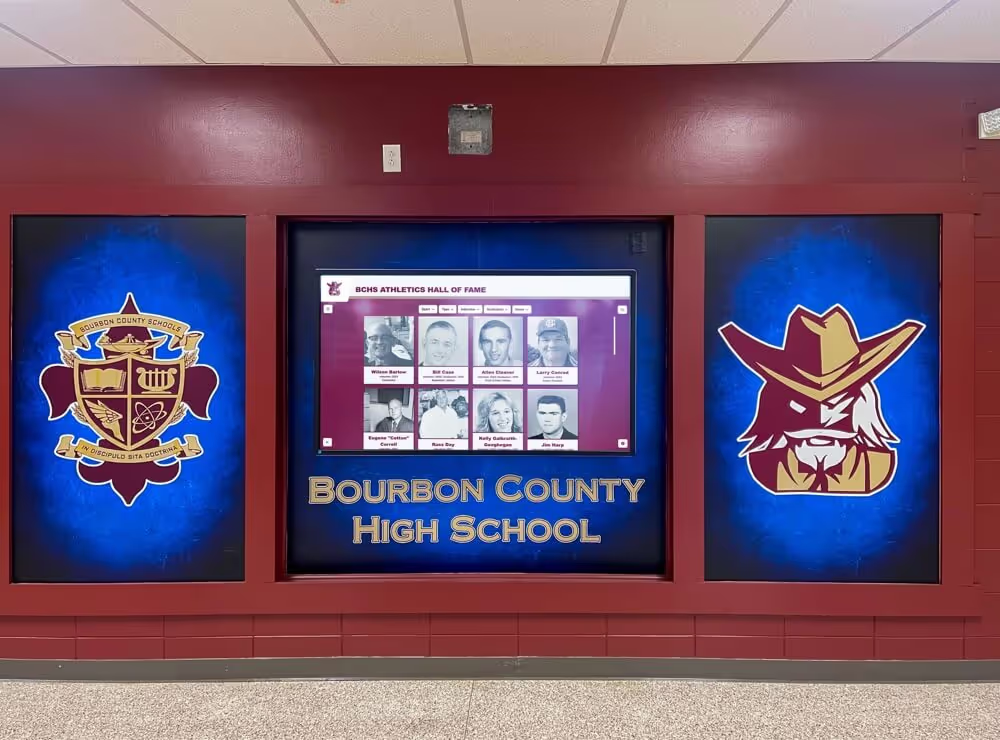
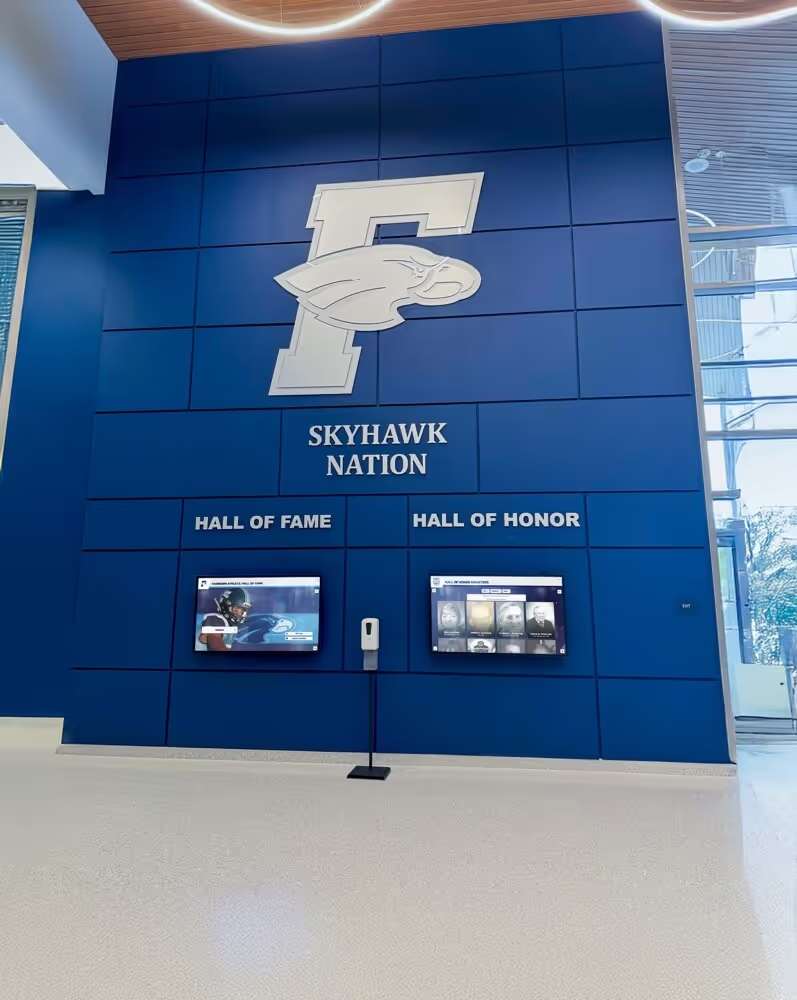
Professional installations in main lobbies create impressive focal points demonstrating institutional commitment to championship recognition
Equity and Inclusion in Trophy Room Design
Modern trophy rooms should reflect all athletic achievements:
Sport Representation Balance
- Equal space allocation across all sports regardless of program profile
- Proportional recognition reflecting actual championship achievement levels
- Discontinued program acknowledgment preserving institutional history
- Emerging sport inclusion as programs develop
- Academic achievement recognition alongside athletic championships
Gender Equity Considerations
- Equal visibility for comparable men’s and women’s championships
- Historical display updates reflecting Title IX progress
- Balanced storytelling featuring female and male athletes
- Recognition of women’s program pioneers and breakthrough achievements
Inclusive Recognition Categories
- Individual statistical achievements alongside team championships
- Sportsmanship and character awards complementing competitive success
- Coaching excellence recognition across all sports
- Support staff and contributor acknowledgment
- Student-athlete academic achievement celebration
Trophy room design decisions send powerful messages about institutional values. Comprehensive approaches ensure all athletes see themselves reflected in championship celebration.
Implementing Your Trophy Room Project
Strategic approaches ensure successful trophy room development or renovation.
Assessment and Planning Process
Current State Evaluation Begin by honestly assessing existing recognition:
- Inventory all current trophies and championship items
- Evaluate available space and physical constraints
- Assess maintenance burden and resource requirements
- Measure student engagement with existing displays
- Identify equity issues in current representation
- Survey stakeholders about recognition priorities and preferences
Goal Definition and Prioritization Clear objectives guide effective solutions:
- Championship showcase capacity targets
- Student engagement and interaction goals
- Budget parameters and funding sources
- Maintenance capability and staff time availability
- Timeline expectations and implementation phases
- Equity requirements across sports and eras
Stakeholder Engagement Strategies
Successful trophy rooms require broad support:
Key Stakeholder Groups
- Athletic directors and head coaches
- School administrators and principals
- Booster clubs and parent organizations
- Alumni associations and former athletes
- Facilities and maintenance staff
- Student government and current athletes
Each group brings unique perspectives about championship recognition priorities and implementation considerations.
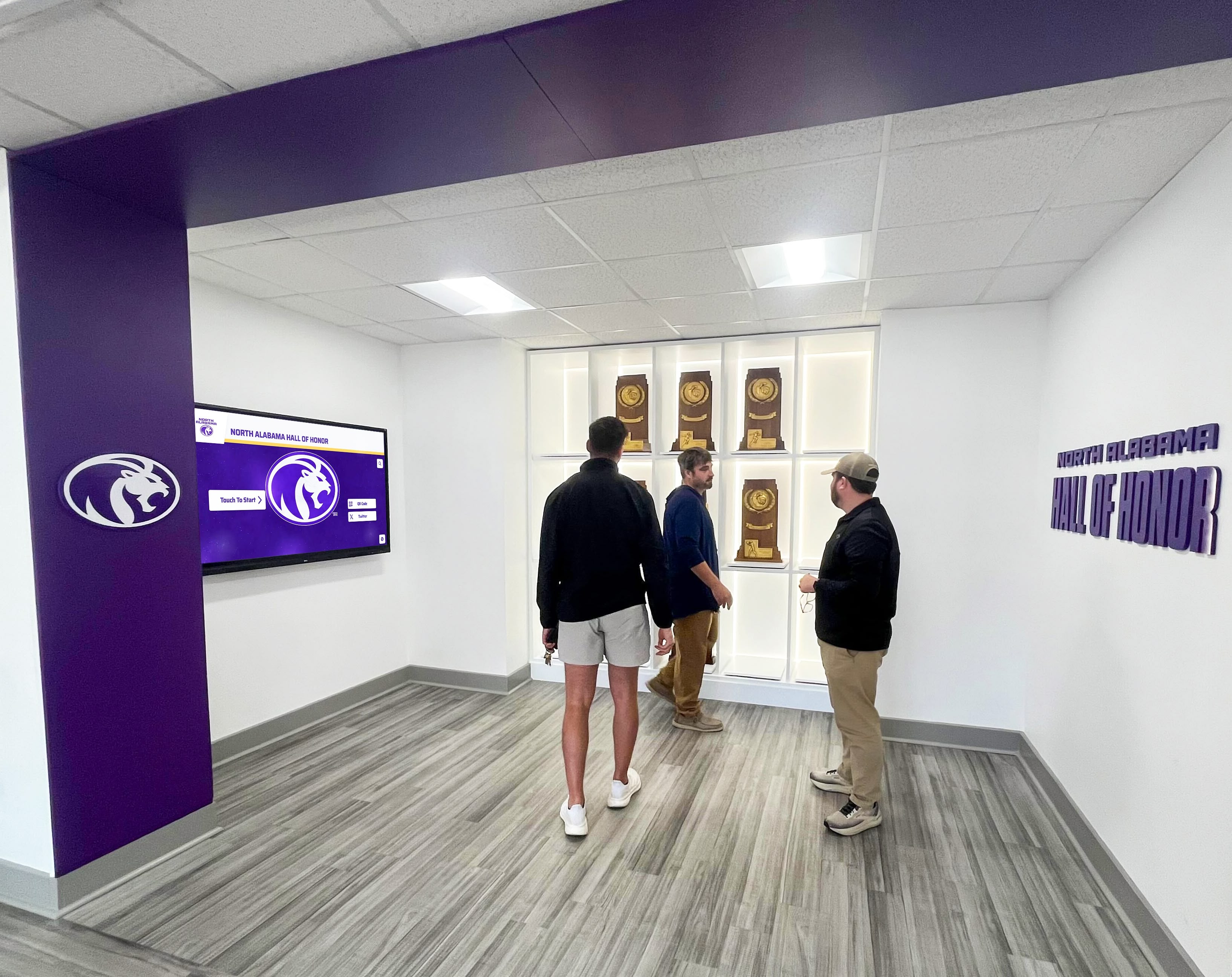
Trophy rooms create gathering points for alumni, connecting former athletes to current programs through shared championship celebration
Vendor Selection and Project Management
Traditional Trophy Case Vendors
- Manufacturing quality and material durability
- Customization capabilities and design flexibility
- Installation services and project management
- Warranty coverage and ongoing support
- Lead times and delivery reliability
- Local references and portfolio examples
Digital Display Providers
- Software functionality and user experience quality
- Content management ease and staff training
- Technical support responsiveness
- Implementation services and assistance
- Pricing models and long-term cost structures
- Educational customer references
Schools should request proposals from 3-5 vendors, conduct reference checks with similar institutions, and when possible view existing installations before making significant investments. For digital solutions, explore digital hall of fame guides.
Future Trends in Trophy Room Design
Championship recognition continues evolving with technology and design innovation.
Augmented Reality Integration
Emerging technologies add dimensions to physical trophy displays:
- Smartphone apps revealing video content when pointed at trophies
- AR overlays providing championship details and game statistics
- Virtual trophy room tours for remote viewing and exploration
- 3D trophy models preserving damaged or lost historical items
- Interactive game highlights triggered by physical trophy proximity
Mobile and Web Extensions
Recognition increasingly extends beyond physical campus:
- Dedicated championship websites and online portals
- Mobile apps for exploring achievement databases
- Social media integration enabling celebration sharing
- Alumni network connections to institutional recognition
- Recruiting tool showcases demonstrating program excellence
Schools implementing comprehensive digital recognition strategies increasingly view physical trophy rooms as entry points to expanded online recognition ecosystems rather than standalone destinations.
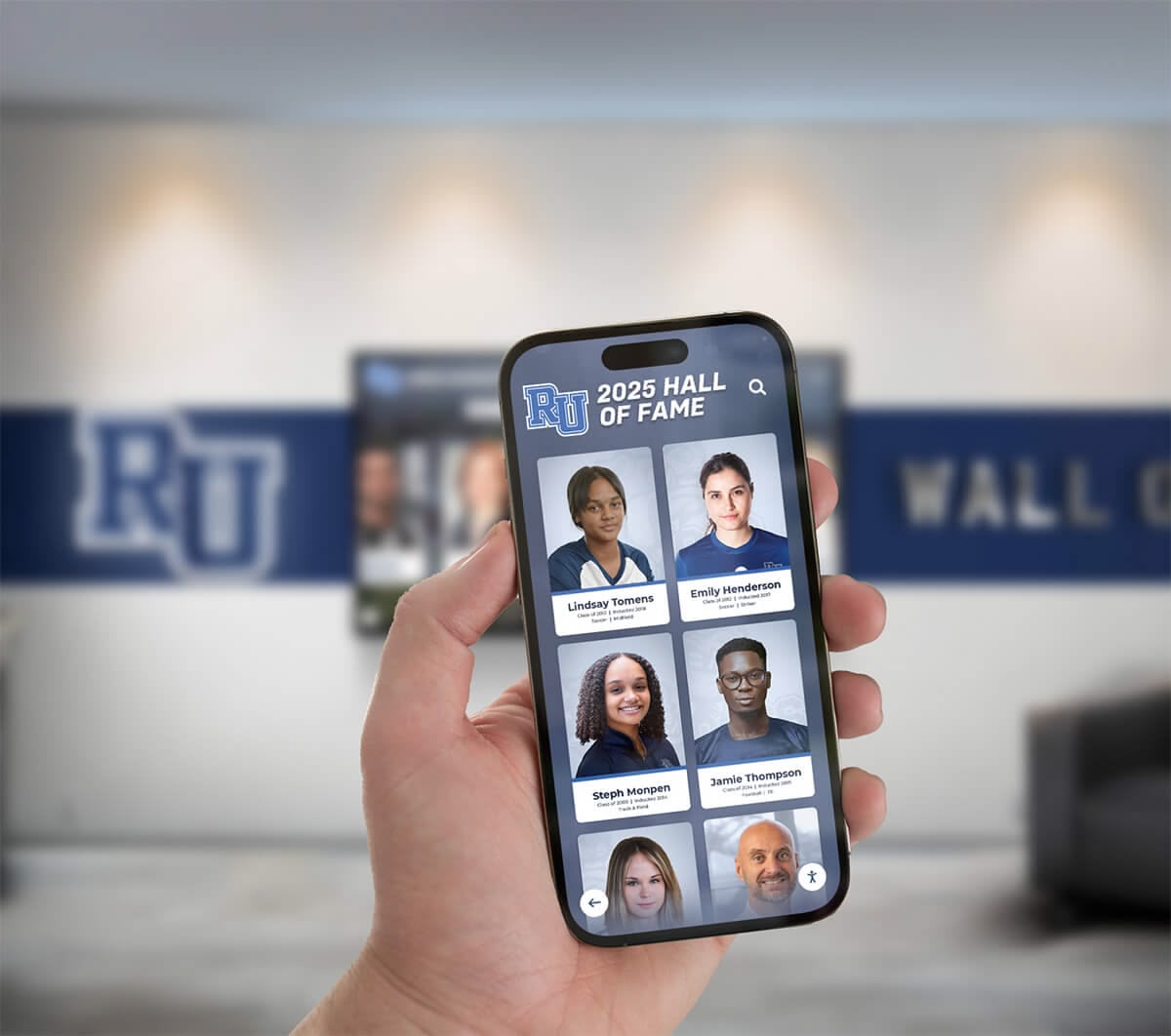
Mobile accessibility extends championship recognition beyond physical trophy rooms, enabling alumni worldwide to explore achievements
Data-Driven Recognition Displays
Advanced systems leverage analytics and automation:
- Automatic statistical updates from athletic management software
- Dynamic leaderboards showing current season performance
- Predictive analytics highlighting approaching milestone achievements
- Engagement tracking informing trophy room design decisions
- Personalized displays responding to viewer proximity or interaction
Conclusion: Creating Trophy Rooms That Inspire Excellence
Effective trophy room design extends far beyond selecting display cases and arranging hardware—it creates strategic environments that preserve championship legacy, celebrate diverse athletic excellence, inspire current student-athletes, and strengthen connections between past achievement and present program commitment.
Whether implementing traditional trophy rooms with custom carpentry and professional lighting, modern digital touchscreen systems, or hybrid approaches combining both formats, the underlying design principles remain constant: make championship recognition visible, accessible, engaging, and equitable across all sports and achievement types.
Traditional trophy rooms will always hold appeal for stakeholders who value tangible championship hardware and physical presence. These displays can be optimized through strategic layout, quality lighting, thoughtful organization, and regular maintenance creating impressive showcases within space limitations. For many schools, traditional trophy rooms displaying major championship hardware while digital systems provide unlimited capacity for comprehensive recognition represents the optimal balance.
Transform Your Championship Recognition
Discover how modern digital trophy room solutions eliminate space constraints while providing unlimited recognition capacity, multimedia storytelling, interactive exploration, and simple remote management. See how schools nationwide showcase decades of championships and athletic achievements through engaging displays that students actively explore.
Book A DemoDigital recognition platforms like Rocket Alumni Solutions address fundamental limitations of physical trophy rooms by providing unlimited showcase capacity, eliminating impossible choices about which championships receive visibility. Touchscreen interactivity transforms passive viewing into active exploration, with students discovering program history through intuitive interfaces. Cloud-based content management enables instant updates after tournaments and championships, maintaining relevance that static displays cannot match. And multimedia storytelling capabilities turn simple trophy acknowledgments into rich narratives connecting students emotionally with championship achievements.
Schools succeeding at trophy room design take honest inventory of current limitations, engage stakeholders in defining priorities, evaluate both traditional and digital solutions against actual needs rather than familiar defaults, implement strategically within budget constraints, and commit to ongoing maintenance ensuring trophy rooms remain effective long-term. Championship recognition represents strategic investment in student motivation, alumni engagement, and institutional athletic pride—not merely facilities decisions or storage expenses.
Your school’s championships deserve recognition reflecting the dedication, skill, teamwork, and character they represent. With thoughtful planning, appropriate technology choices, strategic design implementation, and sustained maintenance commitment, you can create trophy rooms that truly honor athletic accomplishment while inspiring the next generation of student-athletes toward their own championship excellence.
Ready to explore how digital recognition displays can complement or enhance your existing trophy room while providing unlimited capacity for comprehensive championship showcases? Discover modern solutions helping schools nationwide transform championship recognition from static storage into dynamic celebration engaging students, honoring diverse athletic achievements, and preserving institutional legacy for generations.