



The words engraved on a trophy transform a simple award into a lasting tribute. While trophies themselves represent achievement, trophy engraving creates the personal connection that makes recognition meaningful—the recipient’s name permanently etched alongside the specific accomplishment that earned the honor. For students who may display these awards for years or even decades, thoughtful engraving choices ensure the trophy continues telling its story long after the achievement moment has passed.
School administrators, athletic directors, and activities coordinators ordering trophies for academic competitions, athletic championships, or extracurricular excellence face numerous engraving decisions: Which font style appropriately reflects the achievement’s significance? How much text fits legibly on different trophy sizes? What wording strikes the right balance between formality and personal warmth? Should personalization extend beyond names to include specific accomplishments or memorable quotes?
This comprehensive guide explores proven trophy engraving ideas, font selections, wording frameworks, and best practices that schools consistently find valuable—approaches that create recognition awards students genuinely treasure while avoiding common engraving pitfalls that diminish impact or create disappointment.
Effective trophy engraving requires understanding the interplay between aesthetic choices (fonts, layouts, decorative elements) and content decisions (what information to include, how to phrase it, what details matter most). Schools that approach engraving thoughtfully create awards that feel personal and significant rather than generic and forgettable.

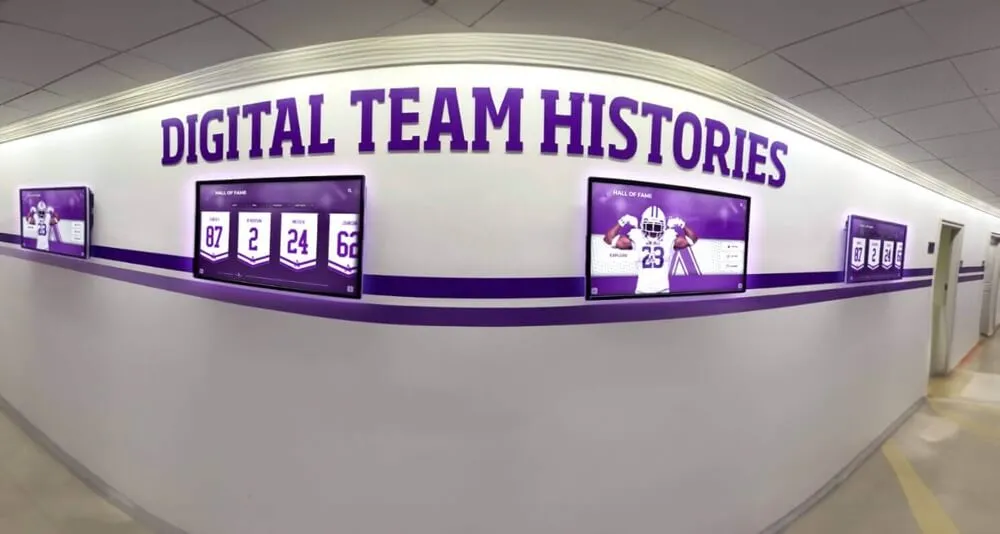
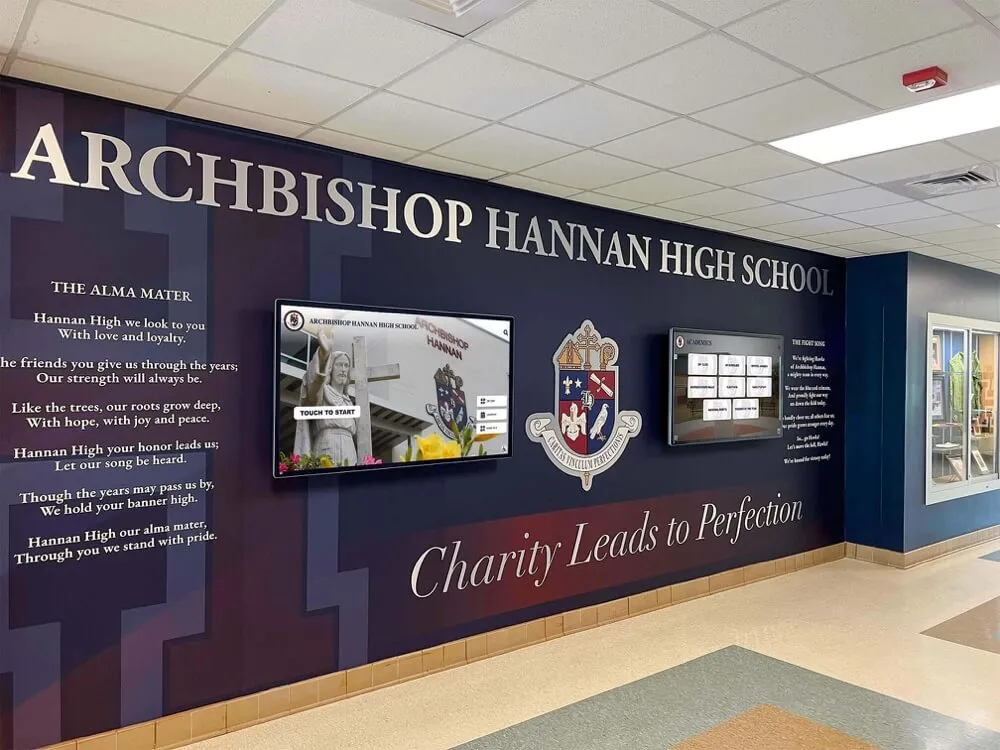
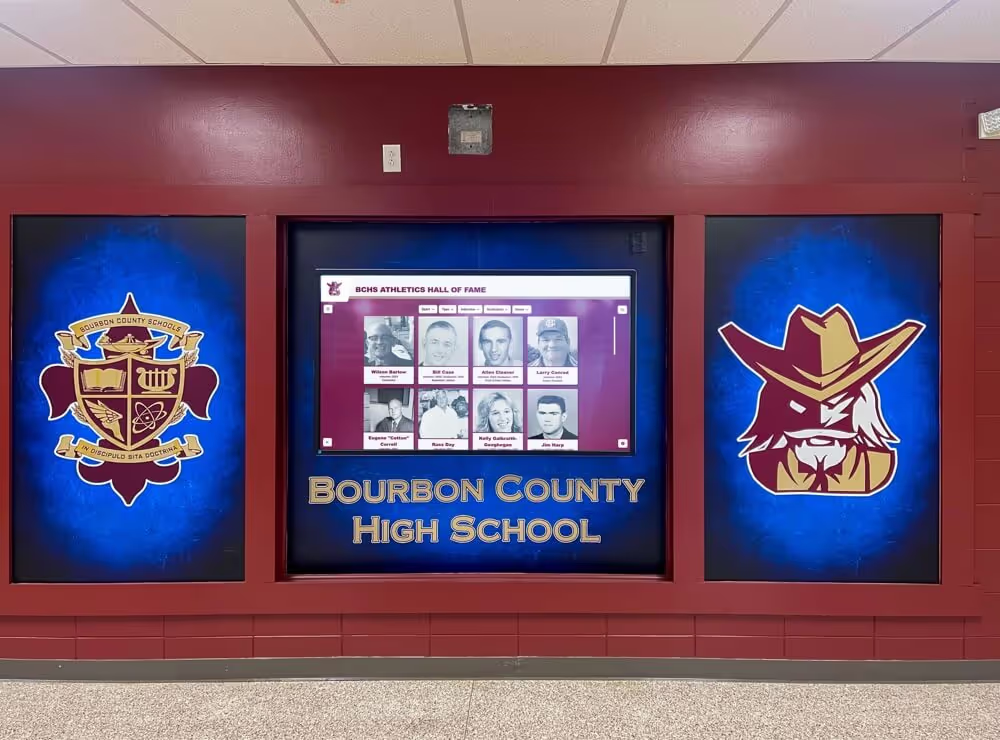
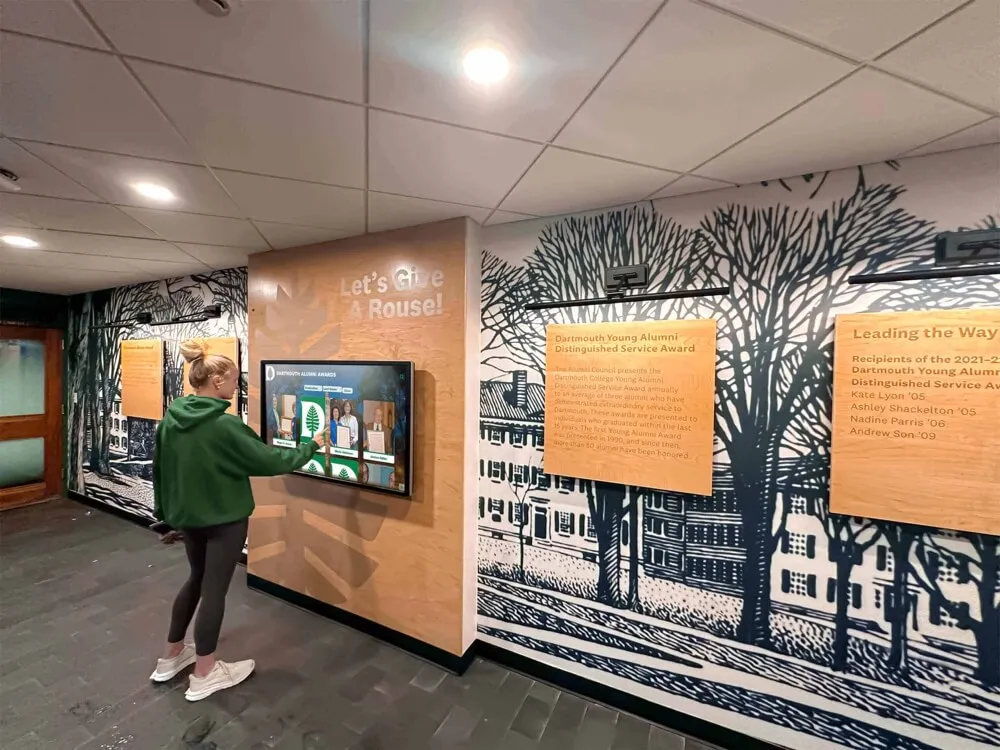
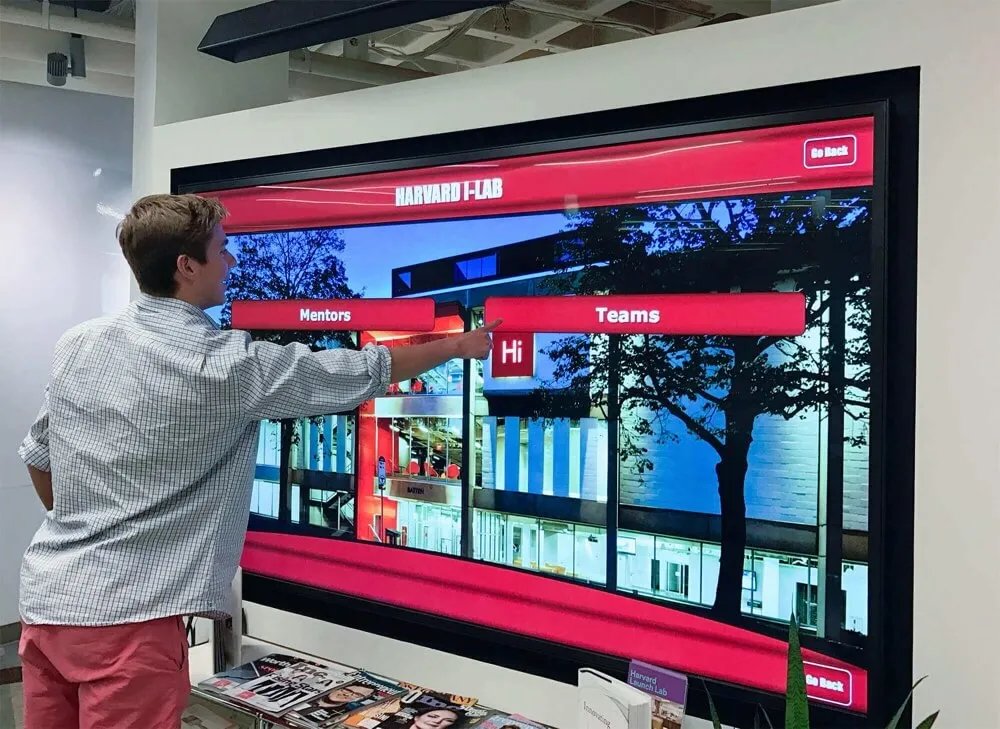
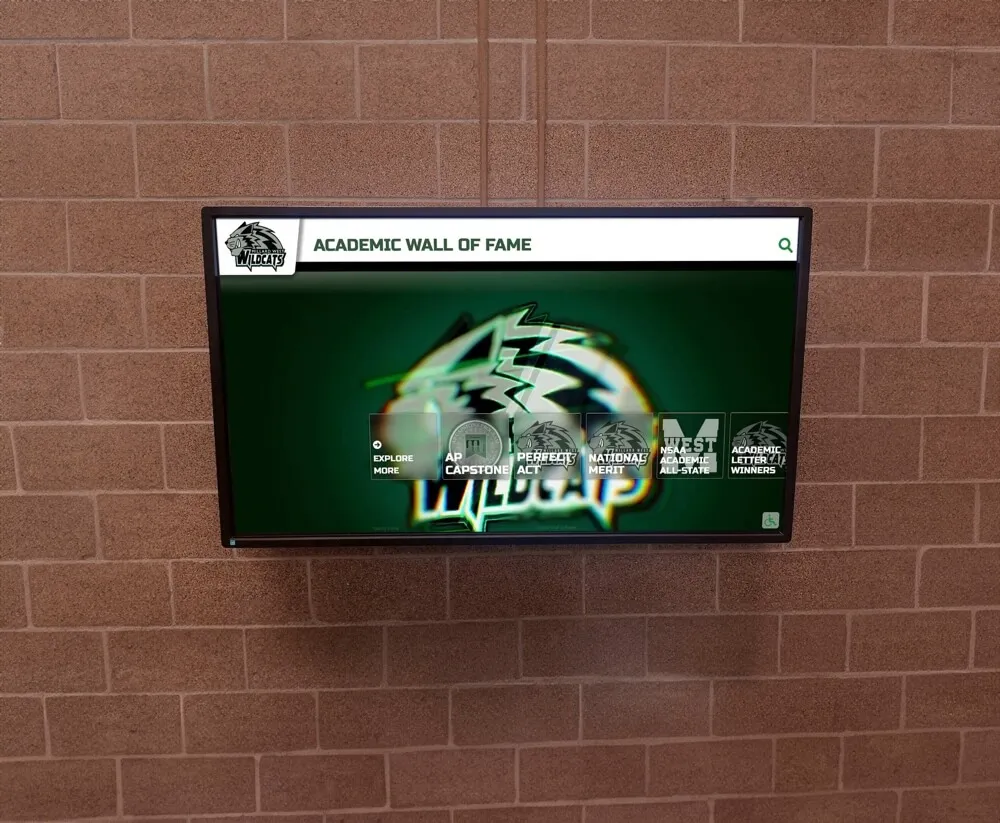
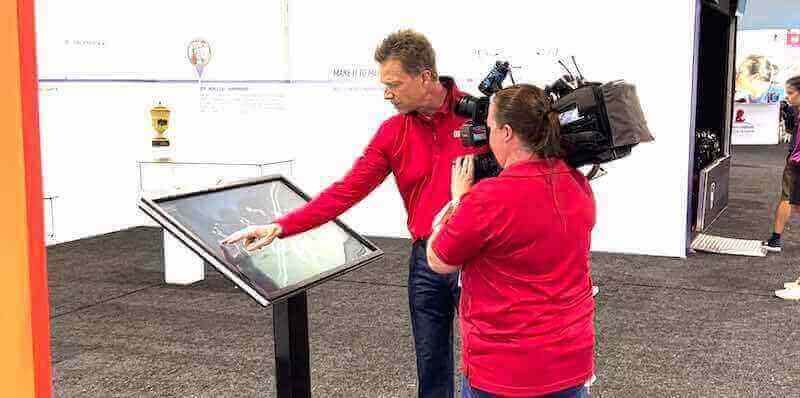
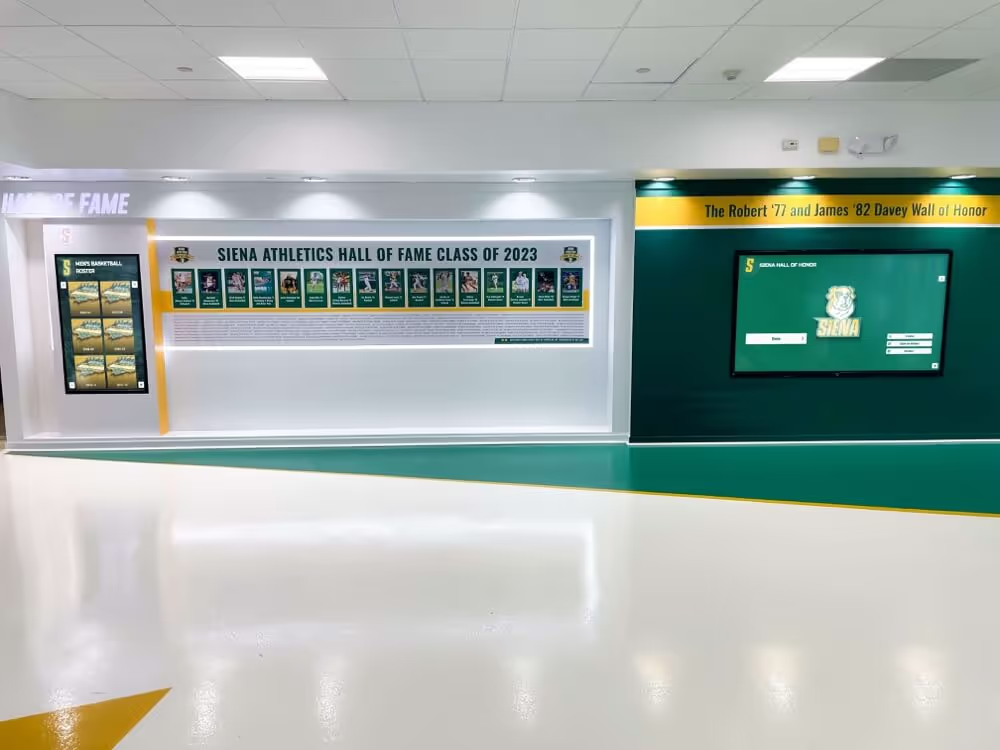
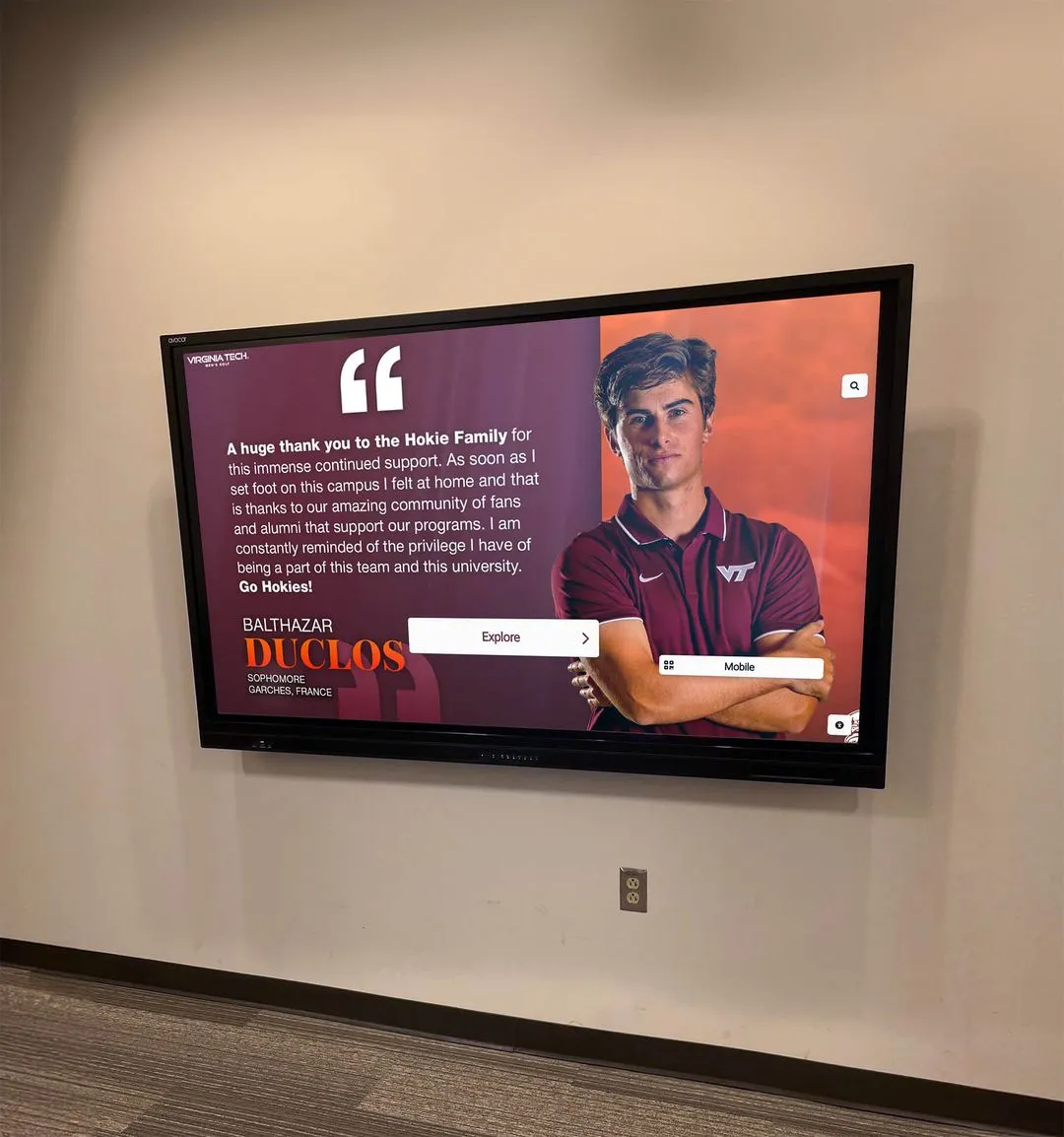
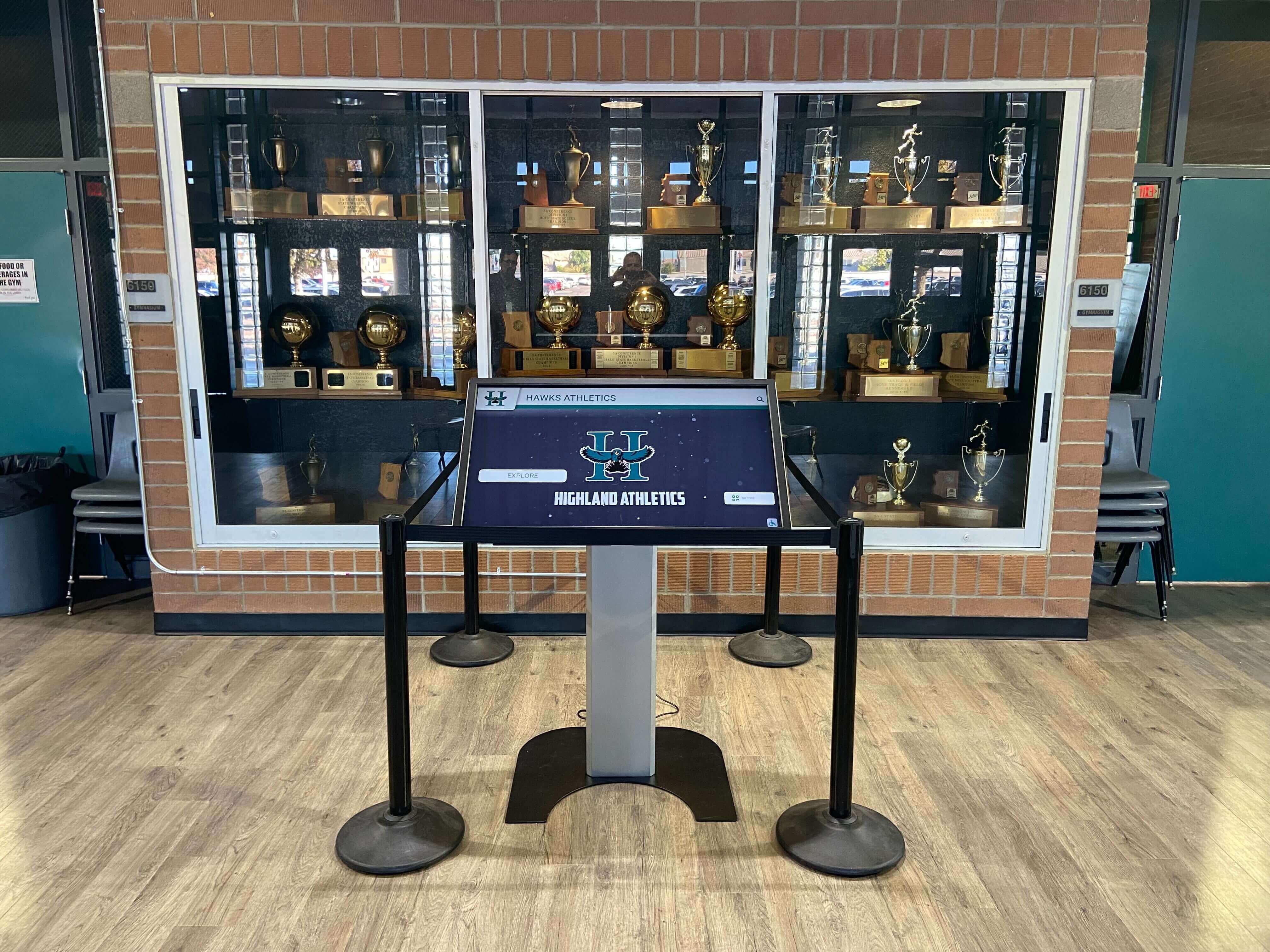
Modern trophy displays showcase engraved awards alongside digital recognition systems that provide expanded achievement storytelling
Understanding Trophy Engraving Fundamentals
Before selecting specific fonts or drafting wording, understanding basic engraving capabilities and limitations helps schools make informed decisions.
Engraving Methods and Their Implications
Different engraving techniques affect appearance, durability, and cost:
Traditional Mechanical Engraving
The most common method for metal trophies uses rotating cutting tools to remove material, creating grooves that form letters and designs:
- Advantages: Extremely durable, works on various metals, creates professional appearance, cost-effective for standard text
- Limitations: Limited font options compared to other methods, challenging for very small text, not suitable for complex graphics
- Best for: Traditional trophy plates, nameplates on wooden bases, metal cups and plaques
Mechanical engraving produces the classic look most people associate with formal award recognition—crisp, permanent lettering that won’t fade or wear off through handling.
Laser Engraving
Laser systems use focused light beams to etch or mark surfaces:
- Advantages: Extremely precise, wider font selection, can reproduce complex logos and graphics, consistent results
- Limitations: Higher cost, appearance varies by material, may create less depth than mechanical engraving
- Best for: Acrylic awards, glass trophies, detailed designs, photo reproduction
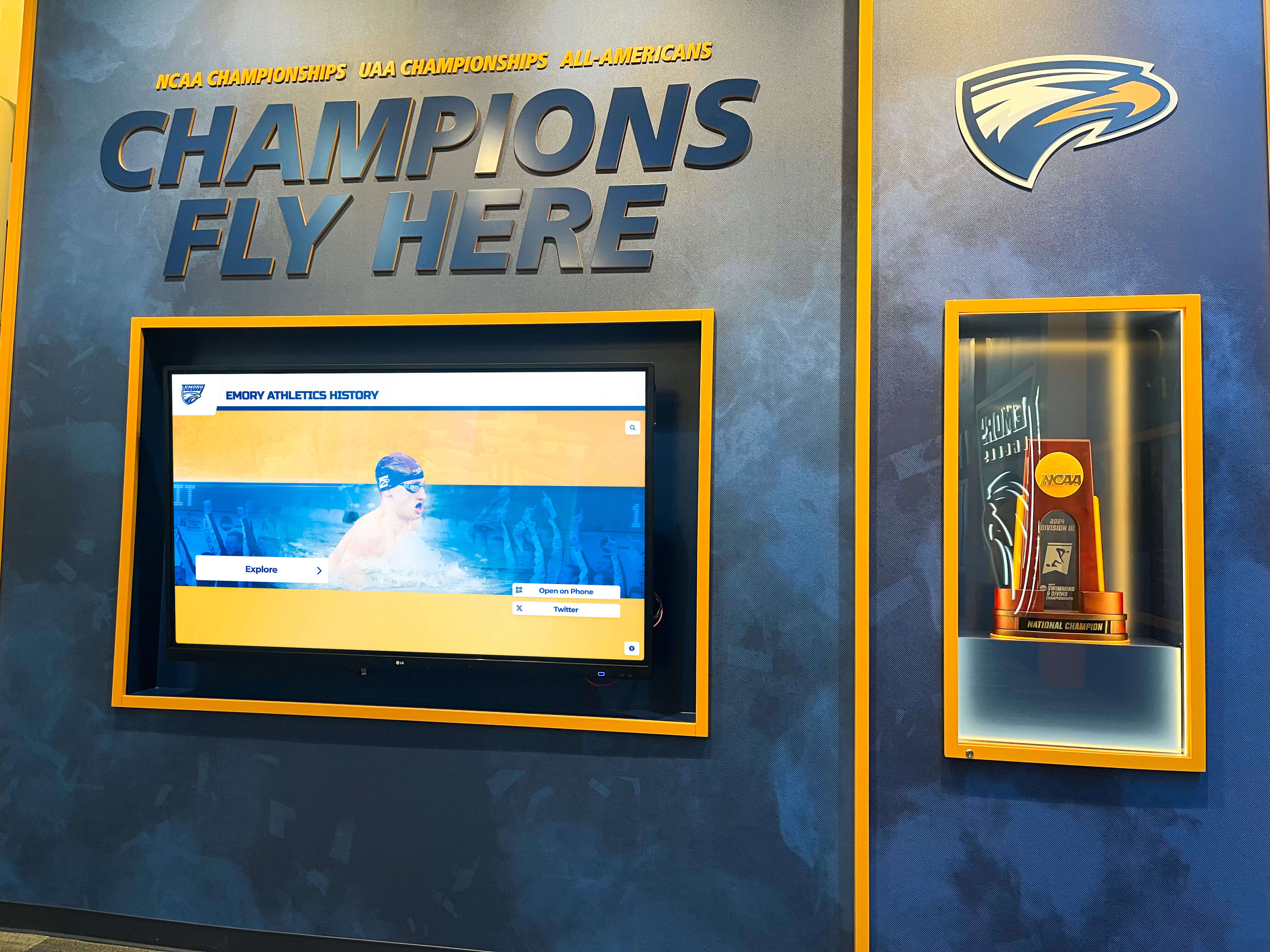
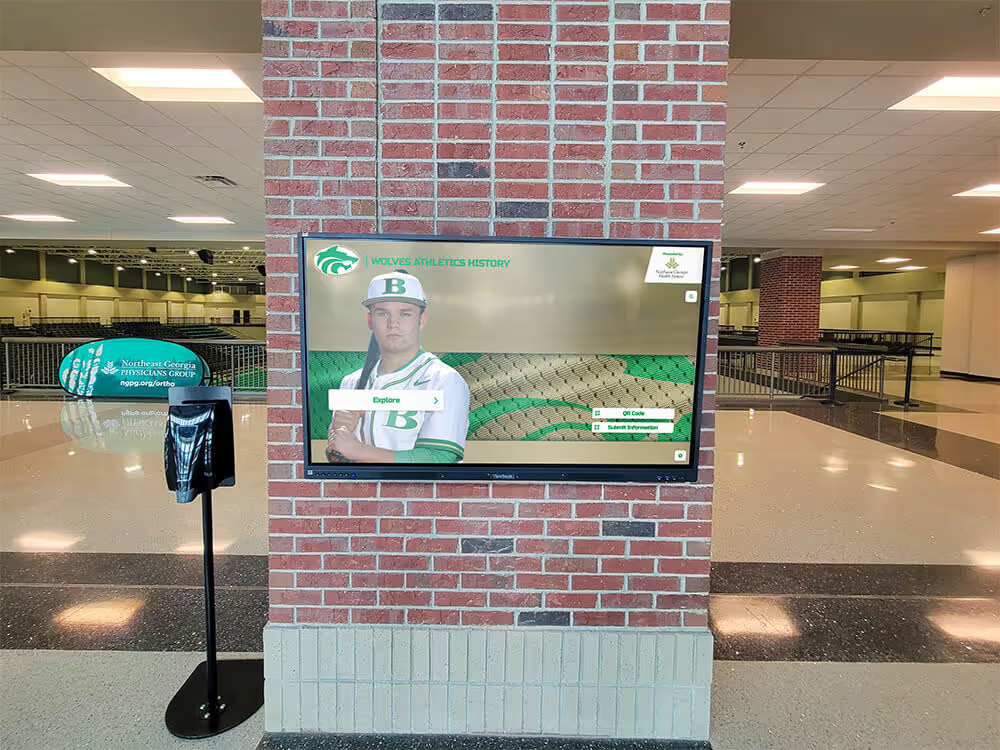
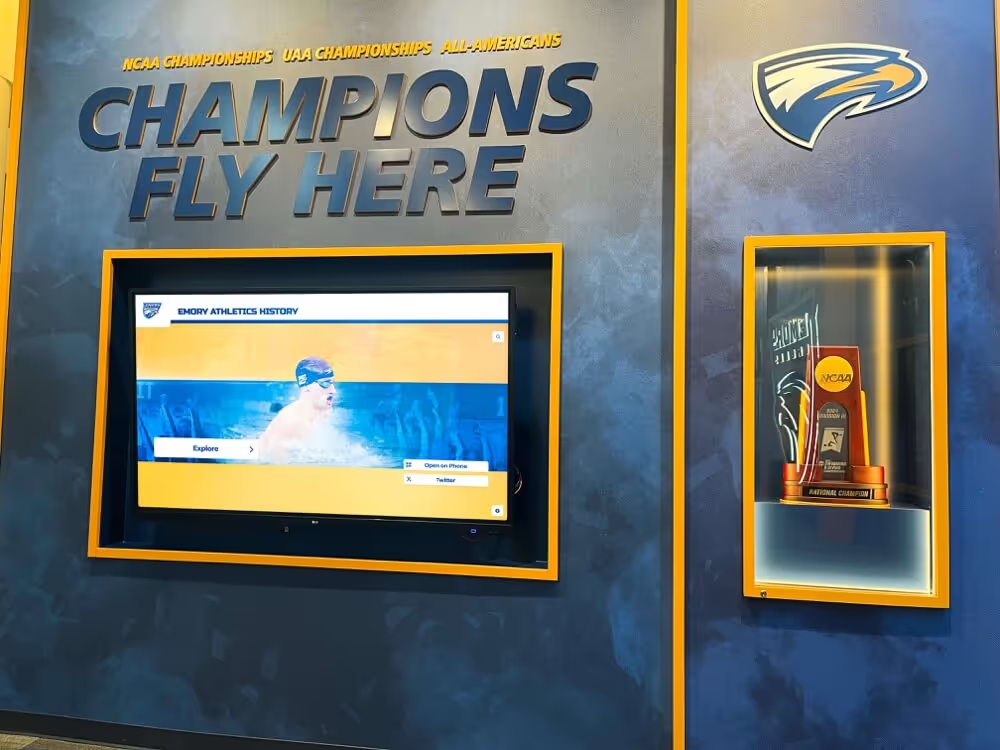
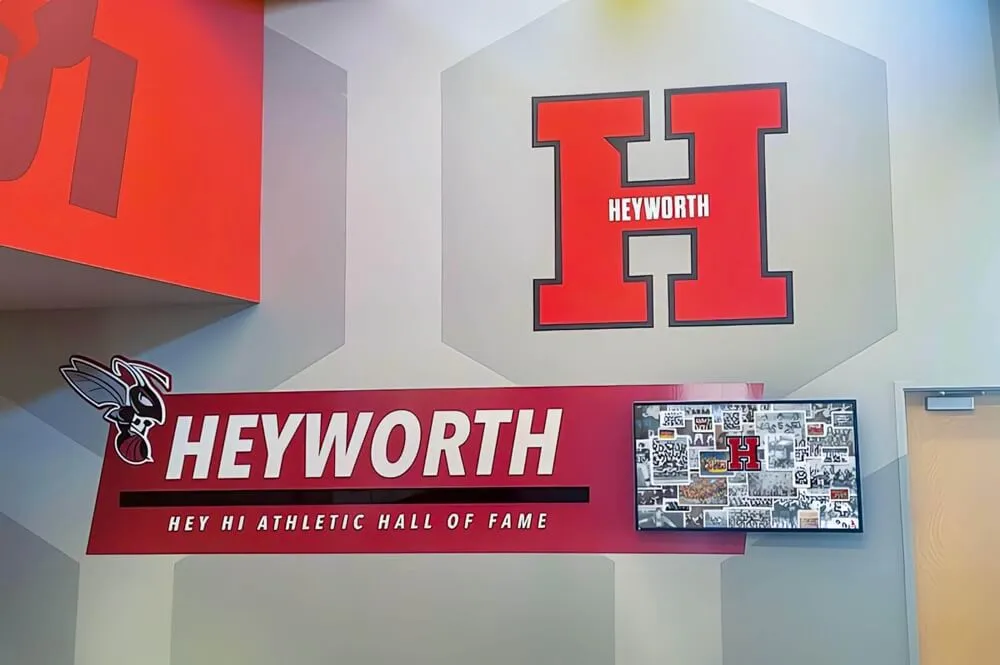
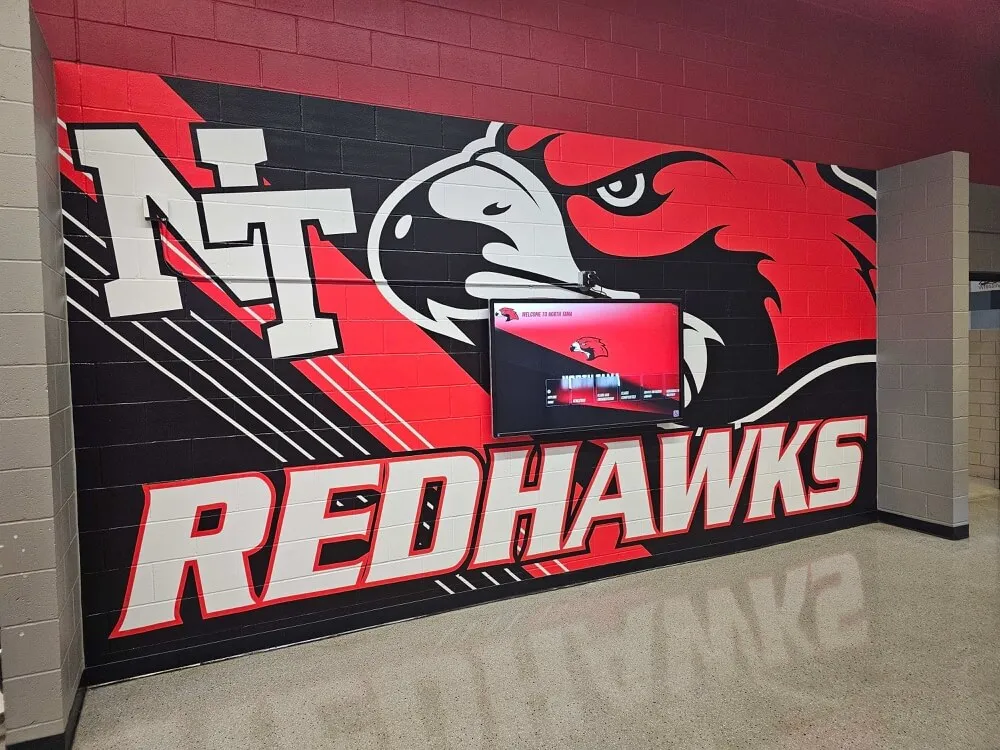
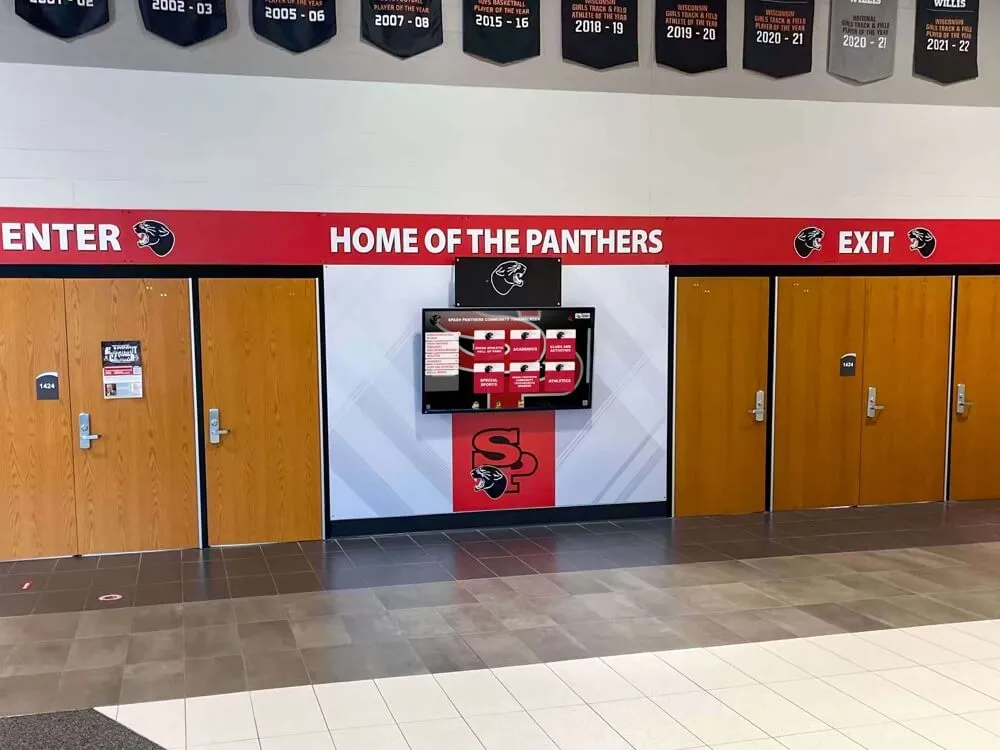
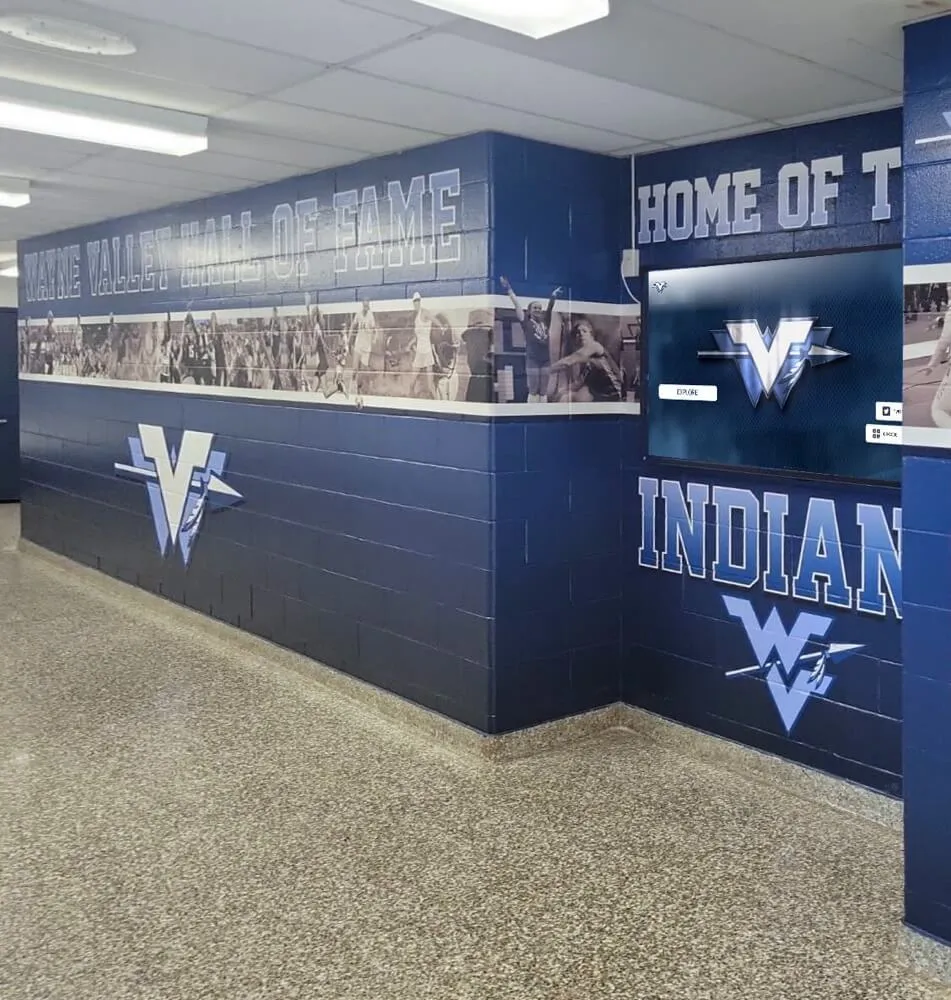
Championship trophies with thoughtful engraving anchor recognition displays celebrating team achievements
Laser engraving particularly excels for awards requiring school logos, mascot graphics, or detailed decorative elements alongside text.
Sand Etching
Primarily used for glass awards, sand etching creates frosted appearances:
- Advantages: Beautiful on glass and crystal, can create shaded effects, elegant presentation
- Limitations: Limited to glass materials, surface etching only (minimal depth), special handling required
- Best for: Academic achievement awards, appreciation gifts, formal recognition events
Character Limits and Sizing Considerations
Trophy engraving space is finite. Understanding practical limitations prevents disappointment:
Standard Trophy Plate Dimensions
Common nameplate sizes dictate text capacity:
- Small plates (2" x 3"): Typically accommodate 2-3 lines with 20-30 characters per line
- Medium plates (3" x 5"): Allow 4-5 lines with 30-40 characters per line
- Large plates (4" x 6" or larger): Support 6+ lines or larger text with fewer lines
These are general guidelines—actual capacity depends on font choice, character spacing, and whether logos or graphics share the space.
Legibility Requirements
Engraved text must remain readable for the trophy’s lifetime:
- Minimum practical character height: 1/8 inch for most viewing distances
- Ideal character height: 3/16 to 1/4 inch for primary information like names
- Heading text: Can be larger (1/2 inch or more) if plate size permits
Attempting to fit too much text by reducing font size creates awards where engraving becomes difficult to read—defeating the recognition purpose.
Font Selection for Trophy Engraving
Typography choices significantly impact trophy appearance and formality level. Selecting appropriate fonts ensures awards convey the intended tone.
Classic Engraving Fonts
Traditional fonts communicate formality and timelessness:
Times New Roman
The quintessential formal serif font:
- Character: Traditional, authoritative, academic
- Best for: Academic achievement awards, formal recognition, traditional school honors
- Considerations: Highly readable, universally recognized, communicates seriousness and permanence
Times New Roman remains the default choice for schools wanting classic, dignified trophy presentation.
Old English (Blackletter)
Ornate medieval-inspired lettering:
- Character: Ceremonial, historical, prestigious
- Best for: Championship trophies, major awards, historical recognition
- Considerations: Limited legibility in small sizes, works best for headings rather than body text, can feel overly formal
Use Old English sparingly—typically for award titles or main headings while employing more readable fonts for names and details.
Script Fonts
Cursive-style fonts add elegance:
- Character: Personal, graceful, sophisticated
- Best for: Appreciation awards, individual honors, special recognition
- Considerations: Vary widely in legibility, avoid overly ornate versions for trophy engraving, ensure adequate sizing
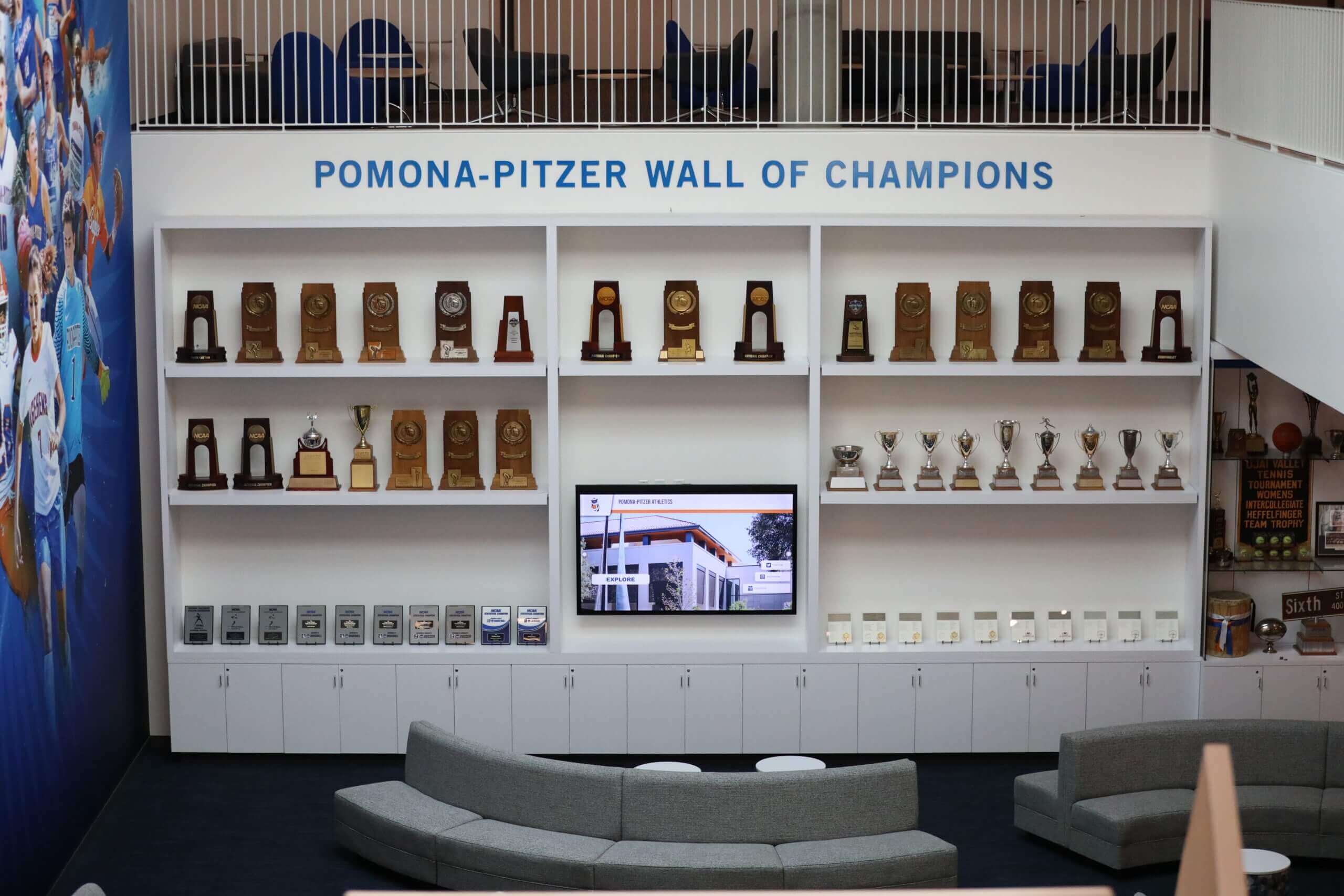
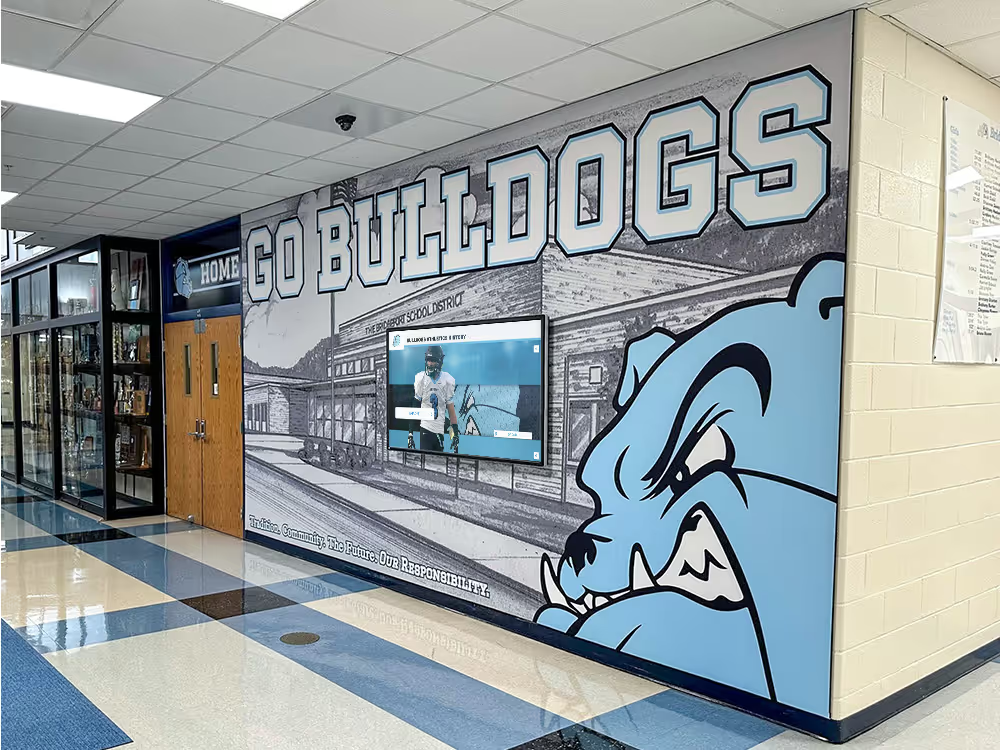
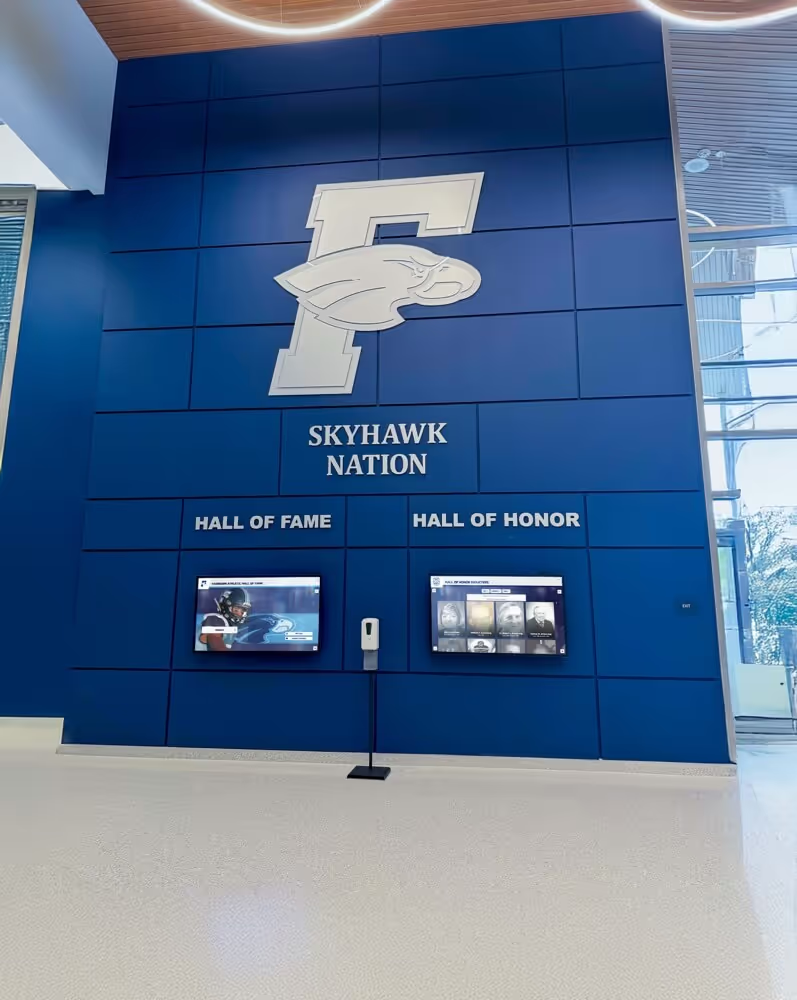
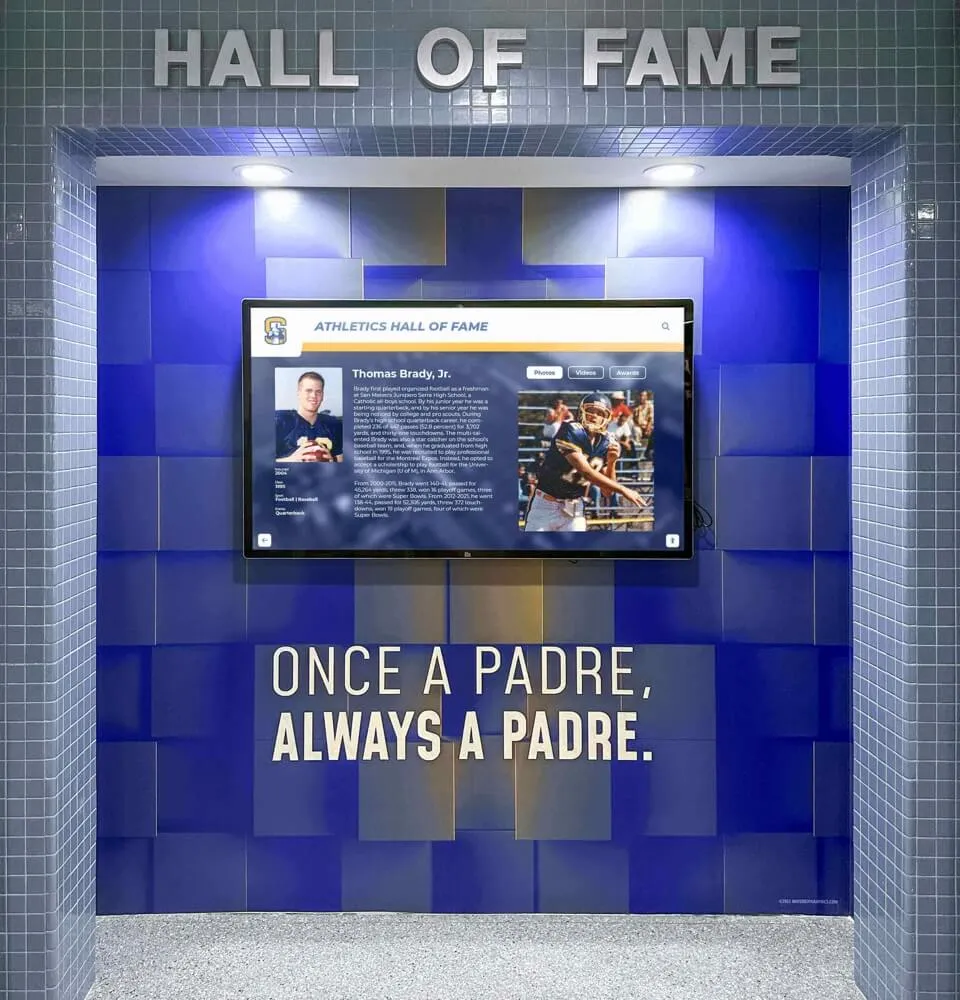
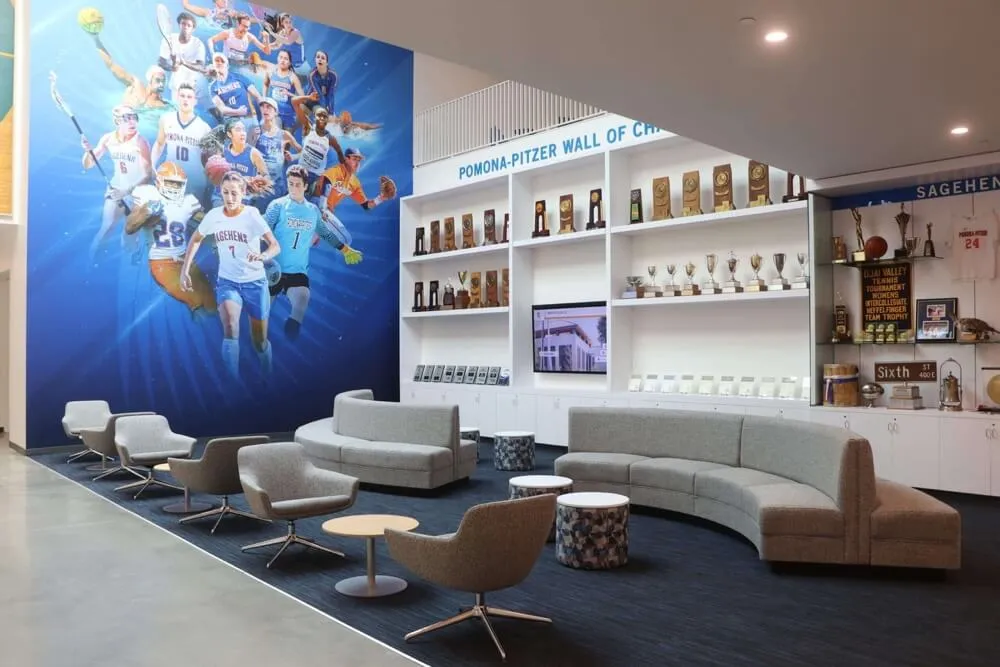
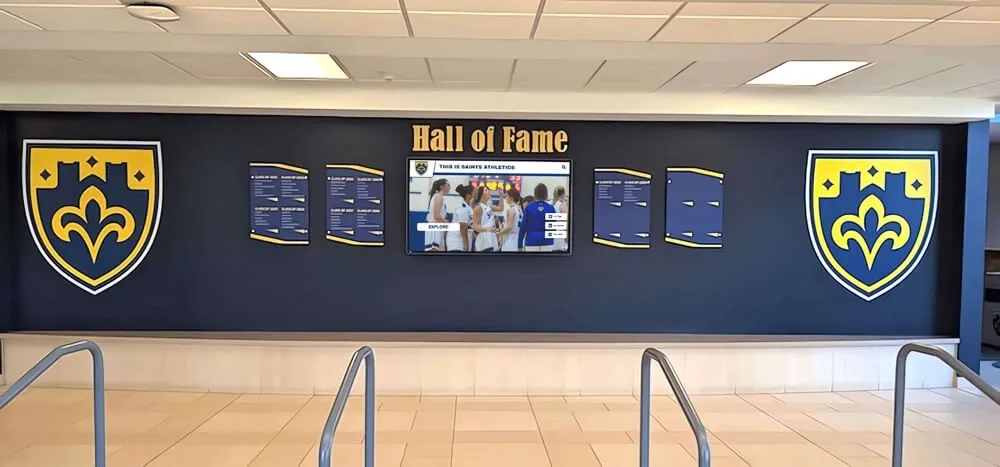
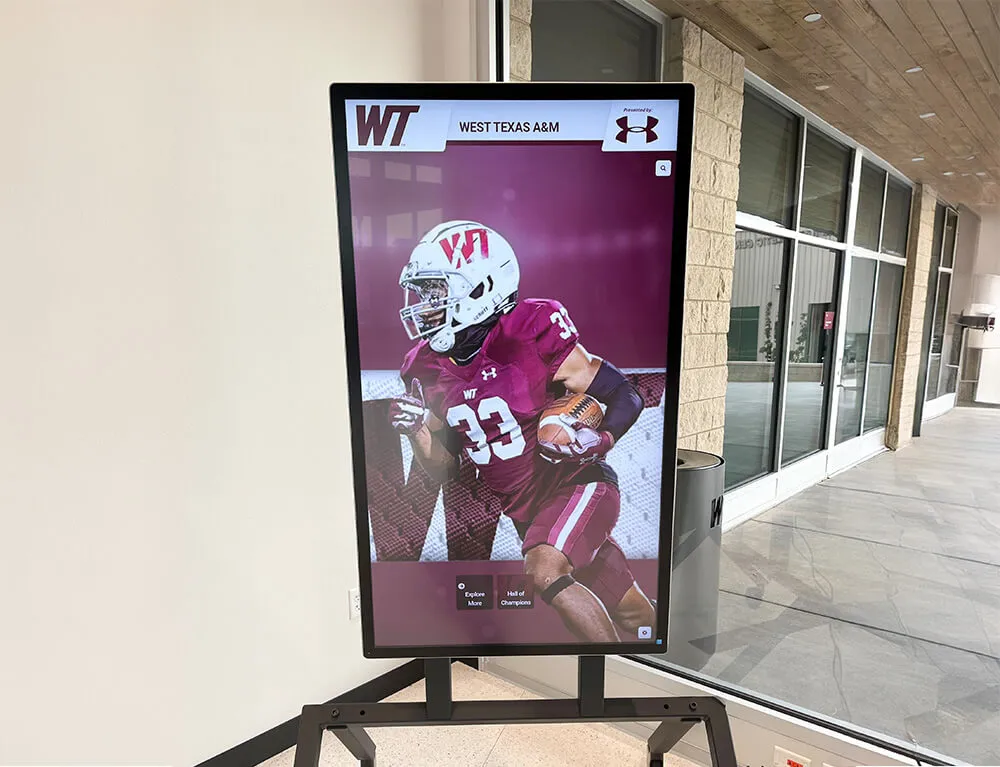
Trophy display lounges showcase awards with various engraving styles celebrating different achievement types
Popular script options include Lucida Handwriting for casual warmth or Edwardian Script for more formal elegance.
Modern and Contemporary Fonts
Less traditional fonts suit certain recognition contexts:
Arial or Helvetica
Clean, sans-serif simplicity:
- Character: Modern, straightforward, approachable
- Best for: Participation awards, team recognition, contemporary design preferences
- Considerations: Extremely legible, works well in small sizes, less formal than serif options
Sans-serif fonts communicate accessibility and contemporary sensibility—appropriate when formal gravitas isn’t the primary goal.
Block or Gothic Fonts
Bold, strong lettering:
- Character: Athletic, powerful, assertive
- Best for: Sports awards, athletic championships, competitive recognition
- Considerations: Highly readable from distance, masculine presentation, communicates strength
Many athletic programs select block-style fonts specifically to convey competitive achievement and physical excellence.
Font Combination Strategies
Using multiple fonts within single engravings creates visual hierarchy:
Title Font + Body Font Approach
Combine decorative heading fonts with readable body fonts:
- Example combination: Old English for “ATHLETIC EXCELLENCE AWARD” paired with Times New Roman for recipient name and details
- Advantage: Visual interest while maintaining complete legibility
- Guidelines: Limit to two fonts maximum, ensure adequate size difference between heading and body text
This approach allows incorporating traditional or decorative fonts without sacrificing readability for critical information like names and dates.
Trophy Engraving Wording: Essential Information
Determining what information to include ensures awards tell complete achievement stories.
Core Elements to Include
Most trophy engravings incorporate these fundamental components:
Recipient Identification
The most critical engraving element:
- Full name: First and last name at minimum (some awards include middle initial)
- Name formatting: Capitalize appropriately; avoid all-caps for names unless matching overall style
- Verification: Double-check spelling before engraving—errors become permanent
- Title or year: Consider including class year or title (e.g., “Sarah Johnson, Class of 2027”)
Many schools maintain engraving proofing processes requiring multiple verifications before finalizing orders to prevent costly name misspellings.
Achievement Description
Identify what the trophy recognizes:
- Award name: Specific recognition title (Most Valuable Player, Honor Roll, etc.)
- Achievement level: State, regional, conference, school, or specific competition level
- Category or division: Relevant classifications (Varsity, Division III, Advanced Placement, etc.)
Clear achievement description ensures anyone viewing the trophy understands its significance.
Time Identification
Date recognition appropriately:
- Year: Always include the year (2026, 2025-2026, etc.)
- Season or term: Add season for sports (Fall 2026) or term for academics (Spring Semester 2026)
- Date formats: Use consistent formatting across all school awards
Time identification prevents confusion when multiple awards accumulate and helps recipients recall achievement context years later.
Presenting Organization
Identify the awarding institution:
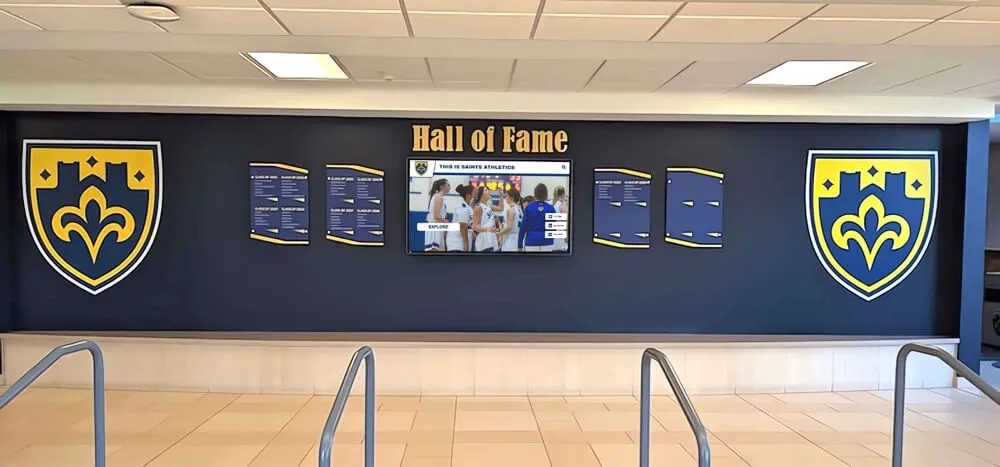
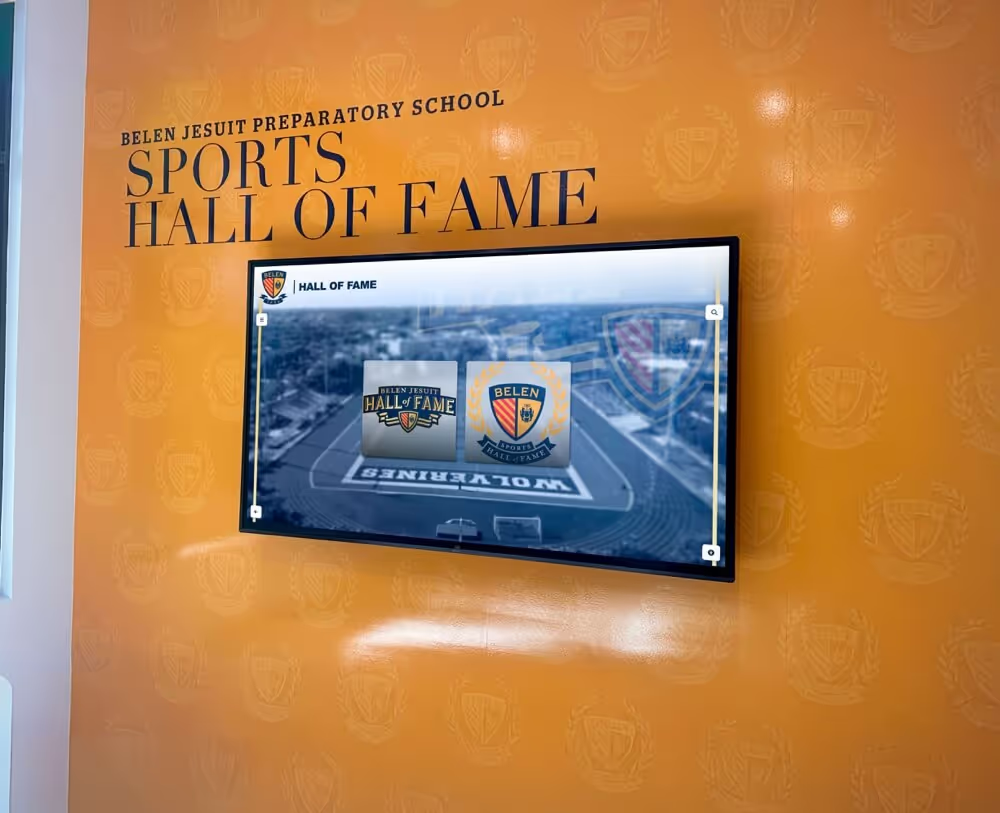
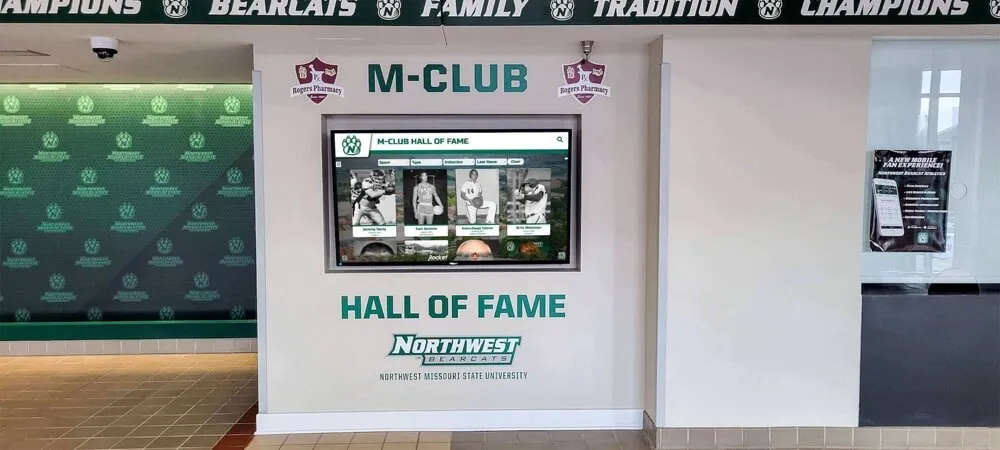
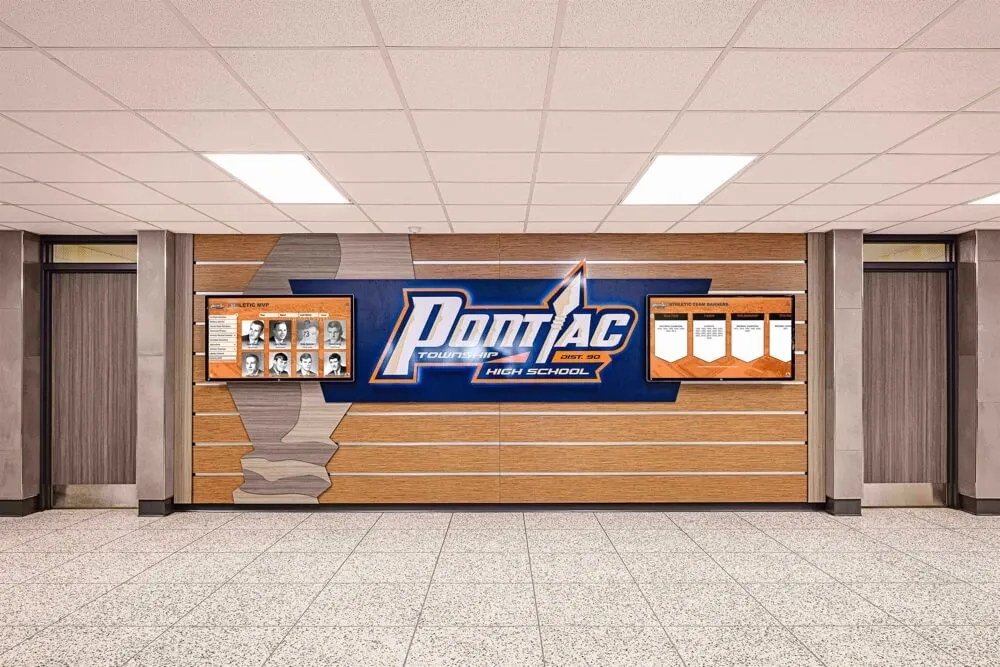
Recognition displays blend engraved awards with [digital hall of fame systems](https://touchwall.tv/blog/digital-hall-of-fame-complete-guide/?utm_source=organic&utm_medium=seo-auto&utm_content=digital-trophy-case&utm_campaign=trophy-engraving&utm_term=seo) that expand storytelling capacity
- School name: Full or abbreviated institution name
- Department or program: Specific program if relevant (Athletic Department, Math Team, etc.)
- Association or league: Conference or league affiliation if appropriate
This element creates lasting institutional connection and identifies achievement context.
Wording Examples for Different Award Types
Effective engraving varies by award category. These frameworks provide starting points for different recognition contexts.
Academic Achievement Awards
Academic recognition emphasizes intellectual excellence and scholarly accomplishment:
Honor Roll Recognition
Standard format:
PRINCIPAL'S HONOR ROLL
EMMA RODRIGUEZ
Spring Semester 2026
Jefferson High School
Enhanced version with GPA:
HONOR ROLL EXCELLENCE
MICHAEL CHEN
4.0 Grade Point Average
2025-2026 Academic Year
Washington High School
Subject-Specific Excellence
Mathematics achievement example:
MATHEMATICS EXCELLENCE AWARD
OLIVIA MARTINEZ
Outstanding Achievement
Advanced Placement Calculus
2026
Lincoln Academy
Science competition recognition:
REGIONAL SCIENCE FAIR
FIRST PLACE - BIOLOGY
JAMES THOMPSON
March 2026
Presented by Roosevelt High School
Academic Competition Awards
Debate tournament recognition:
STATE DEBATE CHAMPIONSHIP
VARSITY POLICY DEBATE
FINALIST
SOPHIA PATEL
November 2025
Madison High School
Spelling bee award:
COUNTY SPELLING BEE CHAMPION
NATHAN WILLIAMS
Grade 8
2026
Franklin Middle School
Athletic Championship Awards
Sports recognition celebrates competitive excellence and team achievement:
Individual Athletic Excellence
Most Valuable Player award:
MOST VALUABLE PLAYER
AIDEN RODRIGUEZ
Varsity Football
2025 Season
Jackson High School
Conference Champions
All-Conference recognition:
ALL-CONFERENCE SELECTION
FIRST TEAM
MAYA JOHNSON
Girls Basketball
2025-2026
Jefferson High School
Team Championship Recognition
State championship trophy:
STATE CHAMPIONS
GIRLS SOCCER
2025
UNDEFEATED SEASON (18-0)
Lincoln High School
Division II
Conference title award:
CONFERENCE CHAMPIONS
VARSITY VOLLEYBALL
Fall 2025
Washington High School
Northern Conference
Individual Performance Records
Record-breaking achievement:
SCHOOL RECORD
100-METER DASH
10.89 SECONDS
TYLER ANDERSON
May 14, 2026
Roosevelt High School
Leadership and Service Recognition
Leadership awards honor contribution beyond competitive achievement:
Student Government Awards
Class leadership:
CLASS PRESIDENT
ISABELLA MARTINEZ
Junior Class 2025-2026
Madison High School
Student council recognition:
OUTSTANDING STUDENT LEADER
ETHAN BROWN
Student Council Vice President
2025-2026
Franklin High School
Community Service Recognition
Service hour achievement:
COMMUNITY SERVICE EXCELLENCE
200+ VOLUNTEER HOURS
SOPHIA NGUYEN
2025-2026 School Year
Jefferson High School
Service leadership award:
HUMANITARIAN AWARD
OUTSTANDING SERVICE
TO COMMUNITY
DANIEL KIM
National Honor Society
2026
Lincoln Academy
Citizenship and Character Awards
Character recognition:
CITIZENSHIP AWARD
EXEMPLARY CHARACTER
AND LEADERSHIP
AVA WILSON
Grade 12
Washington High School
2026
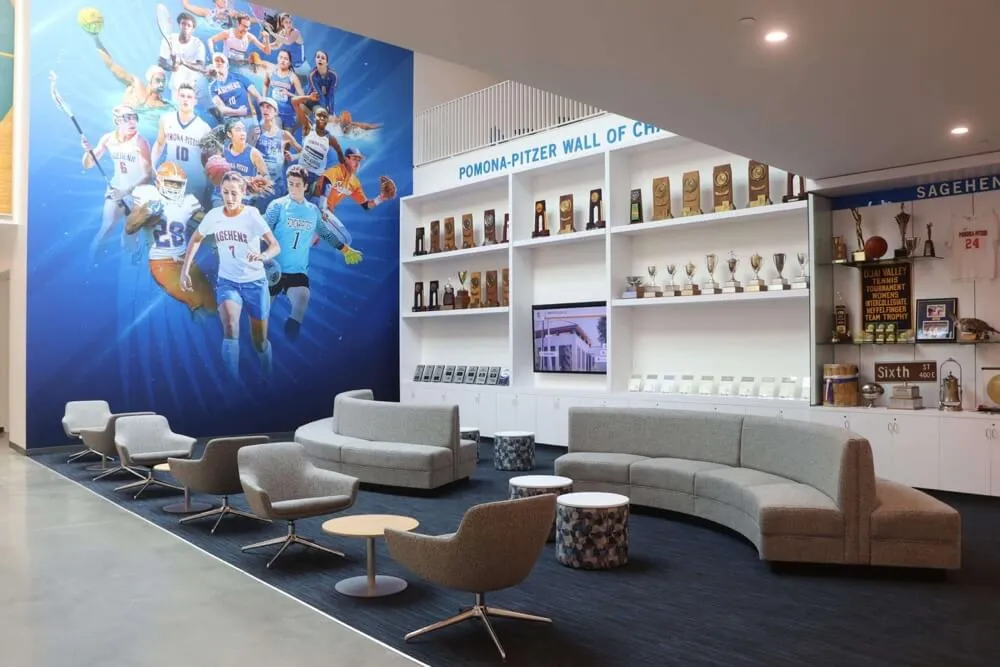
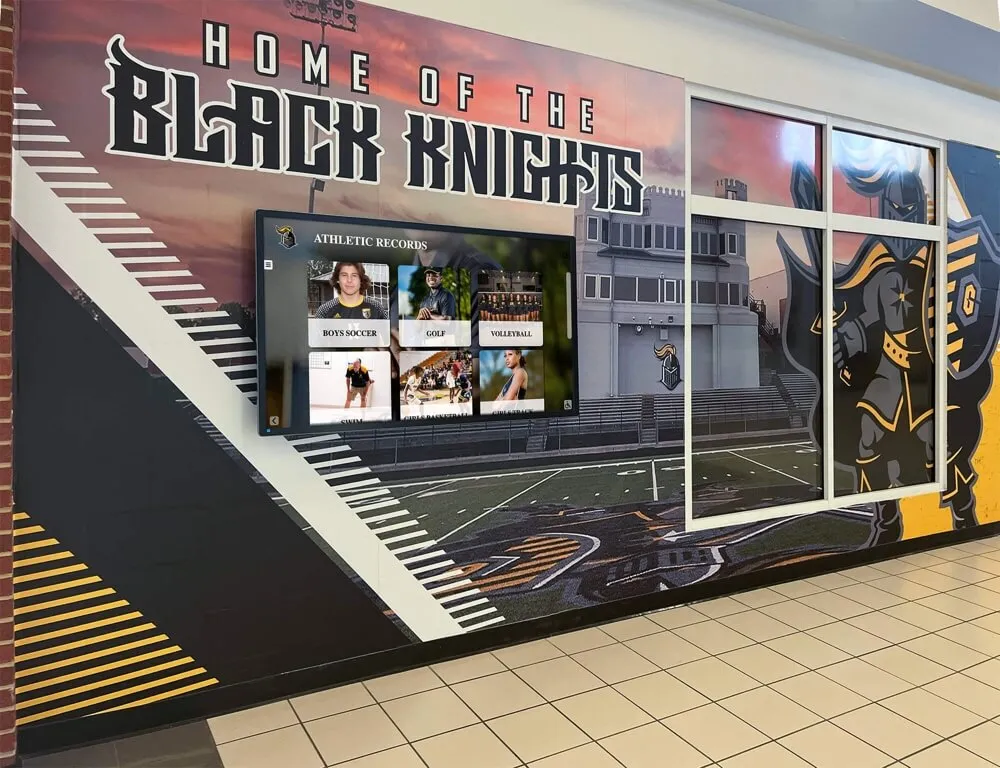
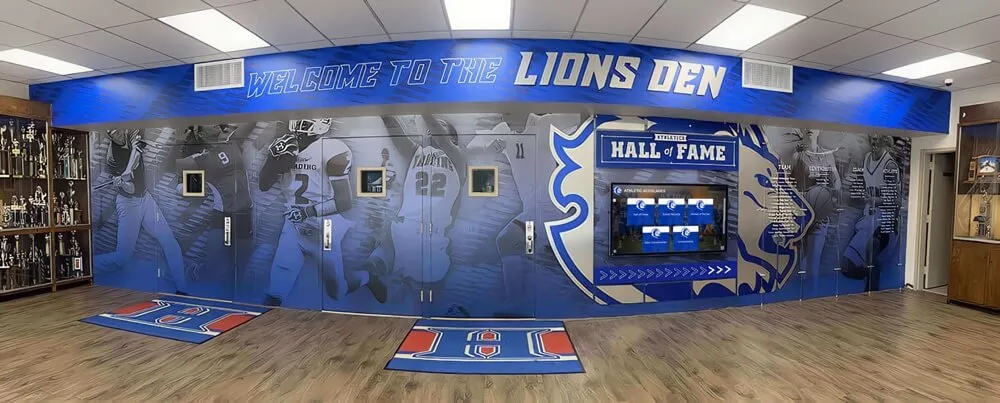
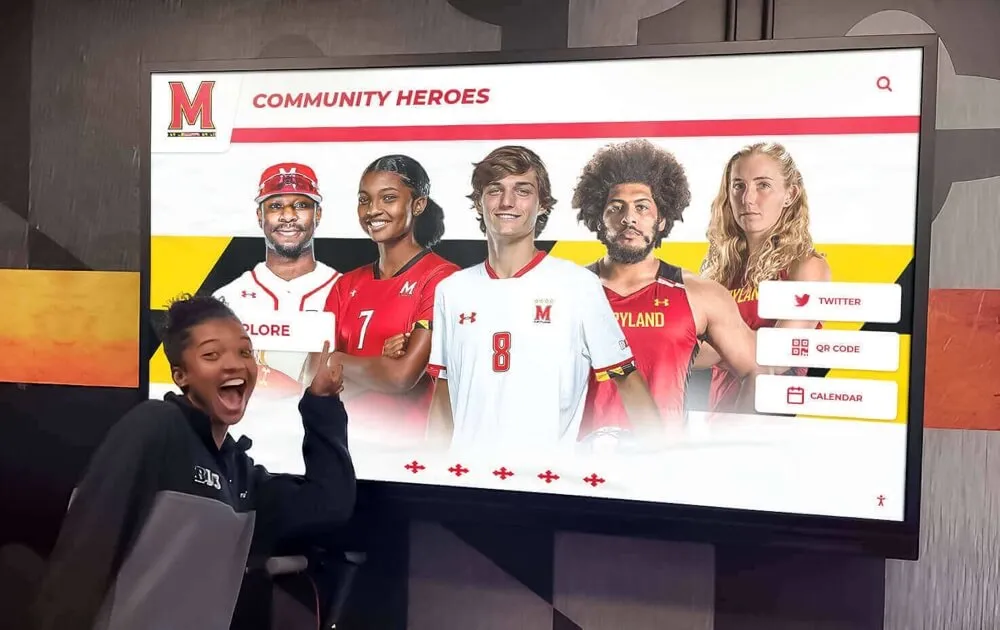
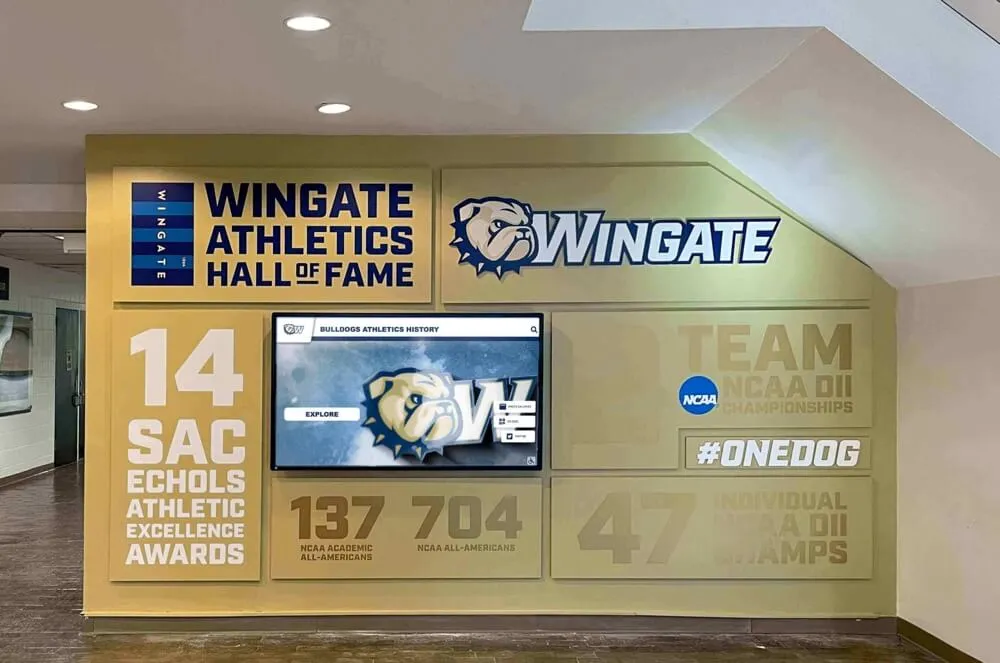
Athletic lounges display diverse trophies celebrating individual excellence and team championships
Arts and Extracurricular Awards
Creative and activity-based recognition celebrates diverse talents:
Performing Arts Excellence
Music achievement:
OUTSTANDING MUSICIAN
ALL-STATE BAND
FIRST CHAIR CLARINET
EMMA DAVIS
2026
Roosevelt High School
Theater recognition:
BEST ACTRESS
"OUR TOWN"
OLIVIA TAYLOR
Spring Production 2026
Madison Drama Company
Fine Arts Awards
Visual arts excellence:
SUPERIOR RATING
REGIONAL ART COMPETITION
PAINTING - WATERCOLOR
NOAH MARTINEZ
February 2026
Franklin High School
Club and Activity Recognition
Robotics team achievement:
ROBOTICS COMPETITION
REGIONAL CHAMPIONS
FIRST ROBOTICS TEAM 4892
March 2026
Jefferson High School
Chess championship:
STATE CHESS CHAMPION
INDIVIDUAL COMPETITION
GRADE 10-12 DIVISION
LUCAS ANDERSON
2026
Washington High School
Schools with diverse recognition programs often feature chess and other academic competitions that develop strategic thinking alongside traditional athletics.
Personalization Ideas That Add Meaning
Beyond standard information, thoughtful personalization creates deeper connections between recipients and awards.
Incorporating Meaningful Quotes
Brief inspirational messages add personal or motivational dimensions:
Achievement-Related Quotes
Success and excellence themes:
- “Excellence is not a skill, it’s an attitude”
- “Champions are made when no one is watching”
- “Success is the sum of small efforts repeated”
- “Hard work beats talent when talent doesn’t work hard”
Keep quotes brief—trophy space limits lengthy inscriptions. One concise line creates impact without crowding other essential information.
School Mottos and Values
Institutional phrases connect awards to broader school identity:
- School motto or Latin phrase
- Core value statements
- Mission-related inspirational text
- Traditional school sayings or rally cries
These connections reinforce that achievement represents living school values, not just individual accomplishment.
Statistical and Achievement Details
Specific accomplishments make recognition more concrete:
Performance Metrics
Athletic statistics:
- Final season record (24-3, Undefeated, etc.)
- Individual statistics (32 goals, .485 batting average, etc.)
- Tournament progression (Regional Champion → State Finalist)
- Ranking or placement (1st Place, Top 5%, etc.)
Academic metrics:
- GPA or grade percentage
- Test scores (when relevant and appropriate)
- Class ranking (if recognized)
- Competition scores or ratings
Memorable Game or Event References
For particularly significant achievements:
- Championship game score
- Playoff progression
- Perfect game or no-hitter details
- Record-breaking performance specifics
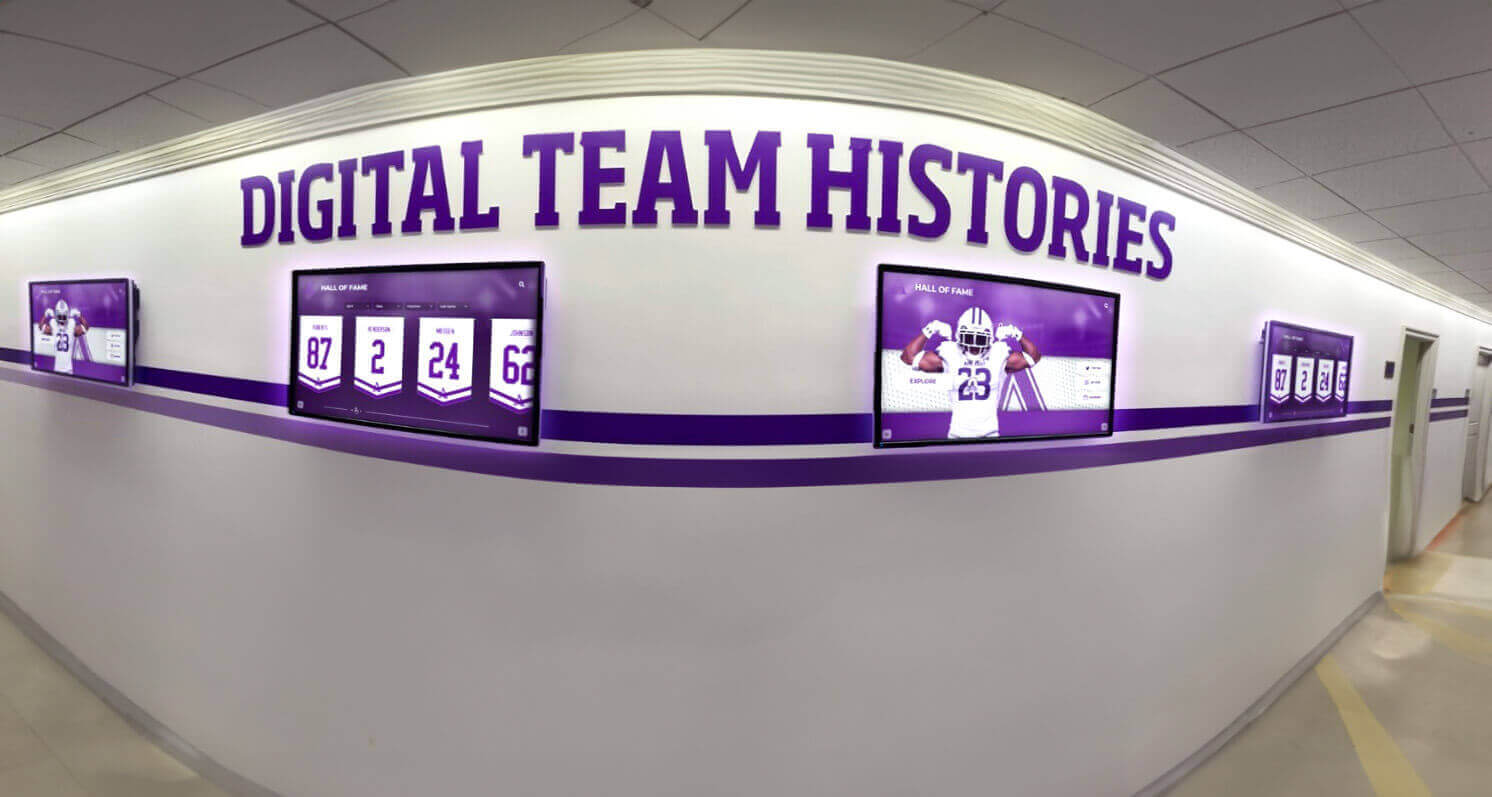
Digital displays supplement engraved trophies by providing detailed achievement narratives and team statistics
Example championship detail:
STATE CHAMPIONS
VARSITY BASKETBALL
30-1 Record
Championship Game: 68-64
March 12, 2026
Jefferson High School
Position, Role, or Specialty Identification
Adding specific role information personalizes team awards:
Athletic Position Details
- “Goalkeeper” or “Point Guard”
- “Team Captain” or “Co-Captain”
- “Offensive MVP” or “Defensive Player of Year”
Academic or Activity Role
- “Lead Researcher” for science projects
- “Section Leader” for music groups
- “Team Captain” for academic bowls
These details help recipients remember their specific contribution to team achievements years after the moment.
Trophy Engraving Best Practices
Following proven approaches ensures professional results and recipient satisfaction.
Verification and Proofing Processes
Preventing errors requires systematic checking:
Multiple Review Stages
Implement verification at several points:
- Initial data collection: Verify spelling when gathering names and information
- Order submission review: Have second person check before submitting to engraver
- Proof approval: Carefully review vendor proofs before authorizing engraving
- Post-engraving inspection: Check finished products against order specifications
Many schools report that name misspellings represent their most common engraving disappointment—frustrating because they’re completely preventable through adequate verification.
Common Error Categories to Check
Focus verification attention on frequent mistake areas:
- Name spellings: Verify against official school records, not memory
- Date accuracy: Confirm year, season, and event dates
- Title accuracy: Ensure award names match official recognition titles
- Formatting consistency: Check capitalization, punctuation, and spacing
- Information completeness: Verify all required elements included
Creating Verification Checklists
Formal checklists reduce oversight errors:
□ Recipient name verified against school database
□ Achievement/award title matches official designation
□ Year and date information confirmed accurate
□ School name spelled correctly and matches preferred format
□ Special characters (accents, apostrophes) rendering correctly
□ Font selection appropriate for trophy style
□ All text fits within available engraving space
□ Proof reviewed by award coordinator and supervisor
Consistency Across Award Programs
Maintaining formatting standards creates professional, cohesive recognition systems:
Establishing Engraving Style Guides
Document preferred approaches for consistency:
- Name formatting: First Last, First Middle Initial Last, etc.
- Date formats: Year only (2026), Academic year (2025-2026), or Month Year (May 2026)
- School name presentation: Full name vs. abbreviation
- Font standards: Preferred fonts for different award categories
- Capitalization rules: Title case, sentence case, or all caps preferences
Style guides prove particularly valuable when multiple people order awards or when ordering spans several years—preventing each award from looking different based on whoever placed that particular order.
Category-Specific Templates
Create templates for common award types:
- Academic achievement template
- Athletic MVP template
- Championship team template
- Participation award template
- Service recognition template
Templates ensure consistent information inclusion while allowing personalization for specific recipients and achievements.
Timing and Planning Considerations
Adequate planning prevents rushed orders and disappointment:
Standard Engraving Timelines
Allow appropriate production time:
- Simple plate engraving: 3-5 business days typically
- Complex custom engraving: 7-10 business days commonly
- Rush orders: Often available but increase costs significantly
- High-volume orders: May require 2-3 weeks during peak seasons
Schools ordering awards near graduation, sports banquets, or year-end ceremonies should plan especially carefully—these represent peak demand periods when vendors experience highest volume.
Building Buffers for Verification
Include time for checking:
- Internal verification: 3-5 days for gathering and confirming information
- Proof review: 2-3 days to review vendor proofs and request corrections if needed
- Production: Vendor’s stated timeline
- Shipping: Ground shipping time or pickup scheduling
- Pre-event buffer: 2-3 days minimum before award presentation
Total timeline from starting order process to award ceremony should include all these components rather than counting only engraving production time.
Modern Alternatives to Traditional Trophy Engraving
While engraved trophies remain recognition staples, schools increasingly supplement or replace traditional awards with alternative approaches.
Digital Recognition Systems
Technology-based recognition offers advantages traditional trophies cannot match:
Unlimited Capacity
Physical trophy cases eventually run out of space, forcing difficult decisions about which achievements to display and which to relegate to storage. Digital recognition systems eliminate space constraints entirely—every achievement can receive prominent recognition without displacing earlier honors.
Schools implementing digital trophy displays report particular appreciation for capacity to recognize academic achievements, extracurricular excellence, and community service contributions alongside athletic championships—creating more equitable recognition visibility across all student accomplishment areas.
Enhanced Storytelling Capability
Digital displays provide context traditional trophy engraving cannot accommodate:
- Photos and videos: Game highlights, performance recordings, competition photos
- Extended narratives: Complete achievement stories rather than brief engraved text
- Statistics and records: Comprehensive performance data and historical comparisons
- Team rosters: Complete team member lists without space limitations
- Multiple views: Different information layers accessed through touchscreen interaction
This expanded storytelling helps current students understand achievement context while preserving institutional memory more completely than engraved trophy plates allow.
Dynamic Updates and Corrections
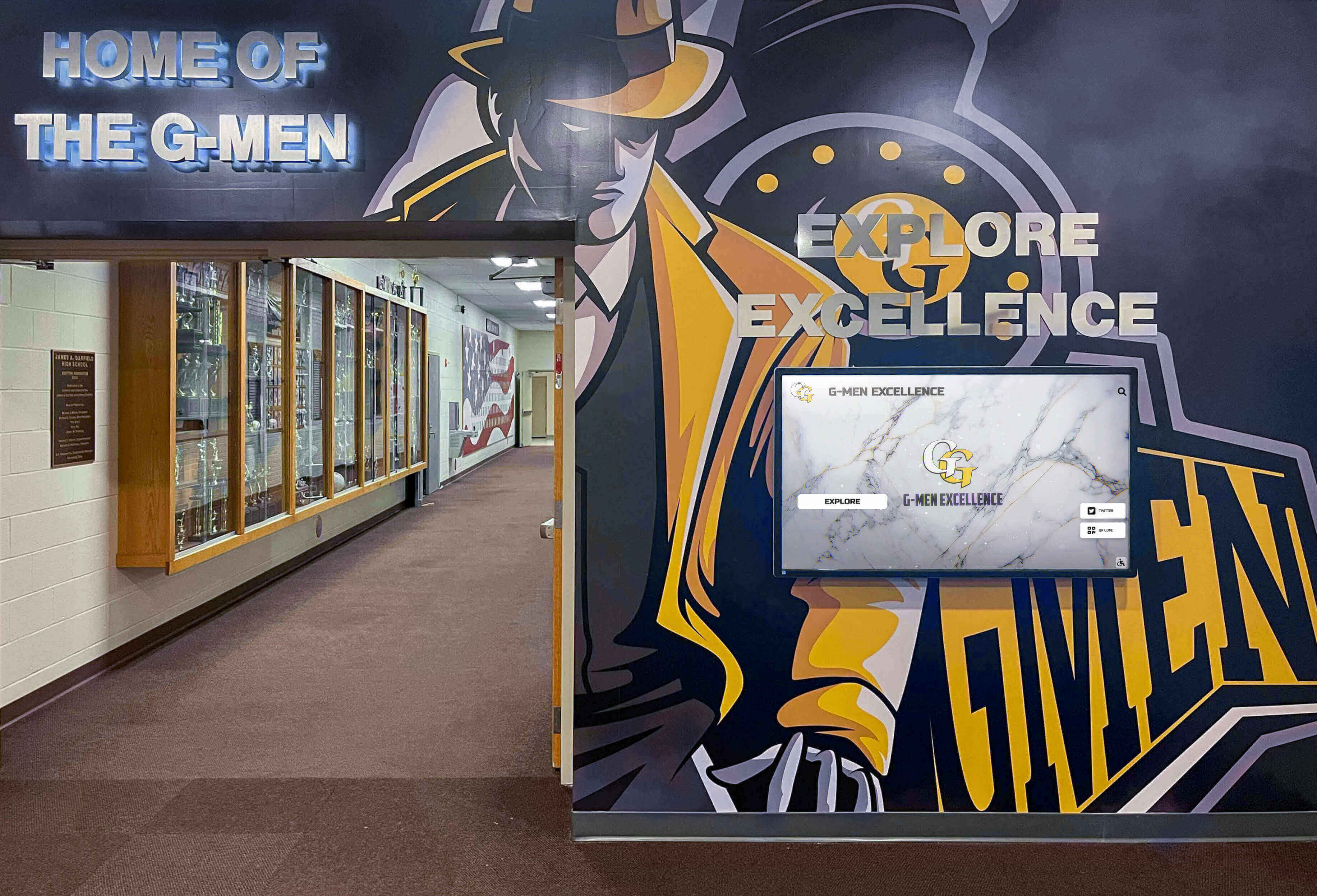
Hybrid recognition systems combine traditional engraved trophies with digital displays offering expanded achievement documentation
Unlike permanent engraving, digital content can be updated:
- Correcting errors: Fixing misspellings or inaccurate information without replacing physical awards
- Adding information: Including additional context, statistics, or achievements as they occur
- Seasonal relevance: Highlighting current season achievements while maintaining historical access
- Search functionality: Allowing students to find specific athletes, achievements, or years instantly
These capabilities make digital systems particularly valuable for institutions with extensive achievement histories where finding specific information in traditional displays becomes challenging.
Hybrid Approaches
Many schools find combining traditional and digital recognition provides optimal results:
Trophy Cases with Digital Companions
Maintain physical trophy tradition while adding digital expansion:
- Physical championship trophies in traditional cases
- Adjacent digital displays providing detailed team information, photos, and statistics
- QR codes on trophy cases linking to digital achievement archives
- Touchscreen kiosks near trophy displays offering searchable achievement databases
This approach honors traditional recognition values while addressing modern capacity and storytelling limitations.
Several institutions feature end-of-semester honor roll displays that rotate academic achievement recognition throughout the year, complementing permanent athletic trophy displays.
Individual Awards with Centralized Digital Archives
Students receive personal trophies while achievement details populate digital systems:
- Traditional engraved trophies presented at ceremonies
- Same achievement information added to searchable digital hall of fame
- Digital archive accessible to graduates long after physical trophies may be lost or damaged
- Institutional achievement history preserved regardless of individual trophy disposition
This combination gives students meaningful physical recognition while preserving institutional memory digitally.
Maintaining Engraved Trophy Displays
Proper care ensures engraved awards continue looking impressive years after presentation.
Cleaning and Preservation
Different trophy materials require specific care approaches:
Metal Trophy Maintenance
Brass, pewter, and other metals need regular attention:
- Regular dusting: Weekly dusting prevents buildup in engraved areas
- Gentle cleaning: Soft cloth with mild soap and water for routine cleaning
- Metal polish: Appropriate metal polish for periodic deep cleaning (brass polish for brass, silver polish for silver, etc.)
- Engraving protection: Avoid abrasive materials that could wear engraved lettering
Tarnish in engraved grooves actually enhances readability by creating contrast—some intentional patina improves rather than detracts from appearance.
Acrylic and Crystal Award Care
Clear awards require careful handling:
- Microfiber cloths: Prevent scratching during cleaning
- Acrylic-specific cleaners: Avoid ammonia-based products that can cloud acrylic
- Scratch minimization: Handle carefully and dust regularly to prevent particle scratches
- Display positioning: Avoid direct sunlight which can cause yellowing over time
Wood Base Preservation
Many trophies feature wooden bases or plaques:
- Furniture polish: Occasional application maintains wood finish
- Avoid moisture: Keep away from water sources that can damage wood or loosen plates
- Secure attachments: Periodically check that plates remain firmly attached
- Climate consideration: Stable temperature and humidity prevent wood warping
Display Environment Considerations
Trophy placement affects longevity:
Protected Locations
Position trophy cases and displays strategically:
- Out of direct sunlight: Prevents fading, yellowing, and material degradation
- Away from water sources: Prevents moisture damage to wood, paper, and certain metals
- Climate-controlled areas: Stable temperature and humidity extend trophy lifespan
- Secure mounting: Prevents accidental falls and damage
Lighting Choices
Appropriate illumination enhances without damaging:
- LED lighting: Generates minimal heat compared to incandescent
- Indirect lighting: Prevents glare on reflective surfaces
- Adjustable brightness: Allows appropriate illumination for different viewing times
- UV-filtered options: Protects materials from ultraviolet degradation
Schools modernizing trophy displays often explore interactive kiosk solutions that showcase achievements in climate-controlled digital environments requiring minimal maintenance compared to traditional cases.
Budget Considerations for Trophy Engraving
Understanding cost factors helps schools maximize recognition impact within budget constraints.
Factors Affecting Engraving Costs
Multiple variables influence final pricing:
Engraving Complexity
More elaborate engraving increases costs:
- Text quantity: More lines typically cost more
- Font complexity: Simple fonts may cost less than ornate options
- Graphics inclusion: Logos, mascots, or decorative elements add cost
- Multiple sides: Engraving trophy sides or back increases price
Most vendors charge base engraving fees plus additional costs for extra lines, graphics, or special requests.
Production Volume
Order size affects per-unit costs:
- Individual orders: Highest per-unit costs
- Bulk orders: Significant per-unit savings for large quantities
- Annual agreements: Some schools negotiate annual engraving contracts for predictable pricing
Schools ordering 50+ trophies annually might negotiate volume pricing arrangements with engravers for consistent cost savings.
Timeline Urgency
Rush orders carry premium pricing:
- Standard turnaround: Base pricing
- Expedited production: Typically 25-50% premium
- Rush orders: May double or triple base costs
Planning adequate lead time represents one of the simplest cost-saving strategies.
Cost-Effective Approaches
Schools can maintain quality recognition while managing expenses:
Standardized Trophy Selections
Limiting trophy variety simplifies ordering and may reduce costs:
- Select 3-5 standard trophy styles for different recognition levels
- Negotiate better pricing through higher volume of standardized models
- Simplify decision-making for award coordinators
- Maintain consistent recognition aesthetics across programs
Strategic Engraving Simplification
Include essential information while avoiding unnecessary complexity:
- Focus engraving on critical details (name, achievement, year)
- Place school name and logo on trophy itself rather than requiring engraved duplication
- Use standard fonts requiring no special setup
- Limit decorative elements that increase cost without adding meaning
Plate Replacement Systems
Reusable trophies with replaceable plates reduce long-term costs:
- Purchase higher-quality perpetual trophies
- Replace only nameplates annually rather than entire trophies
- Particularly cost-effective for traveling trophies and annual awards
- Creates tradition as the same physical trophy passes between recipients
Many schools use this approach for “Player of the Year” awards and similar annual recognitions where trophy tradition matters more than recipients keeping physical awards.
Special Considerations for Different Recognition Programs
Specific award contexts require adapted approaches:
Team vs. Individual Recognition
Group and individual awards require different engraving strategies:
Team Championship Trophies
Large team awards face space challenges:
- Roster inclusion decisions: Full roster listing vs. representative recognition
- Multiple plates: Use additional plates or trophy sides for complete rosters
- Tiered information: Highlight captains or key players separately
- Digital supplementation: Reference digital archive containing complete team information
Some schools engrave only the year and championship designation on large team trophies, maintaining separate digital team history archives with complete rosters and statistics.
Individual Achievement Awards
Personal recognition allows greater detail:
- More space for personal statistics and achievements
- Opportunity for meaningful quotes or messages
- Specific accomplishment details rather than team results
- Personalization that makes award uniquely meaningful to recipient
Perpetual vs. Keep Awards
Different purposes require different engraving approaches:
Perpetual Trophies
Awards that remain at school require special handling:
- Annual plate additions: Add new plates each year listing that year’s recipient
- Space planning: Ensure trophy design accommodates multiple years of plates
- Consistent formatting: Maintain identical plate layout across years
- Full trophy display: All years remain visible showing award history
Individual Keep Awards
Recipients take these home, affecting engraving choices:
- Complete information: Include all context since recipient won’t have access to institutional records
- Personal meaning: Consider what will remain meaningful decades later
- Display-friendly: Design engraving assuming home display rather than school case
- Durable materials: Select materials that will age well in varied environments
Schools often photograph keep awards before presentation, maintaining digital archives even after students take physical trophies home. Some institutions preserve achievement records through digitized yearbook archives that complement physical award distribution.
Recognition for Different Age Groups
Appropriate engraving varies by student age:
Elementary School Awards
Younger students benefit from:
- Simpler language: Age-appropriate wording and concepts
- Encouraging messages: Positive, motivational text
- Visual elements: Graphics and decorative touches appeal to younger recipients
- Achievement clarity: Very clear, specific recognition (“Perfect Attendance,” “Math Excellence”)
Middle School Recognition
Transitional age appropriate for:
- Growing formality: Slightly more formal than elementary but not overly serious
- Specific achievements: Particular accomplishments rather than general excellence
- Emerging identity: Recognition connecting to developing interests and abilities
- Peer context: Appropriate social-emotional consideration
High School Awards
Mature recognition suitable for:
- Professional presentation: Formal engraving reflecting achievement significance
- Detailed information: Statistics, specifics, and context
- Adult-level language: Sophisticated wording appropriate to maturity level
- College/career relevance: Recognition students might reference for applications or resumes
Creating Meaningful Recognition Beyond Engraving
While thoughtful trophy engraving creates lasting recognition, the presentation context significantly impacts meaning.
Award Ceremony Considerations
How awards are presented matters as much as the awards themselves:
Public Recognition
Ceremony presentation adds significance:
- Achievement narrative: Explain why recipient earned recognition beyond reading engraving
- Specific examples: Share concrete instances of excellence
- Peer witness: Public recognition before classmates, teammates, or school community
- Photo documentation: Capture presentation moments for institutional archives and personal memories
Many schools maintain digital archives of recognition moments that preserve award ceremony photos long after events conclude.
Personal Presentation Elements
Beyond reading engraved text:
- Share specific achievement stories
- Explain recognition significance within program or school history
- Connect achievement to school values or tradition
- Acknowledge supporting coaches, teachers, or teammates
These personal touches transform trophy presentation from simple object handoff to meaningful recognition moment.
Connecting to Broader Recognition Ecosystems
Individual awards gain additional meaning within larger recognition contexts:
Hall of Fame Integration
Link award recipients to institutional honor systems:
- Indicate award winners may earn future hall of fame selection
- Display current awards near hall of fame recognition
- Reference hall of fame selection criteria during award presentations
- Create clear pathway from current excellence to long-term institutional honor
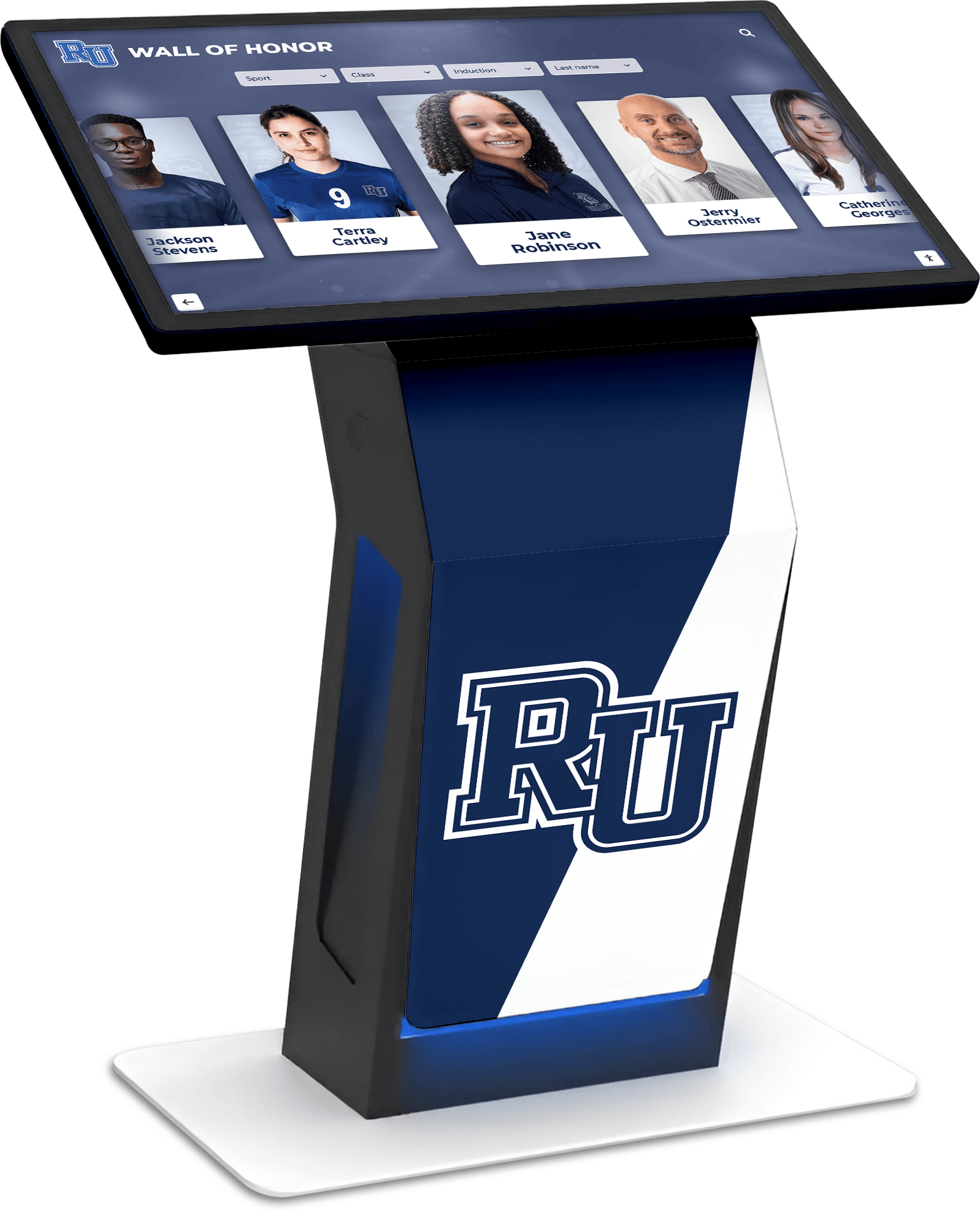
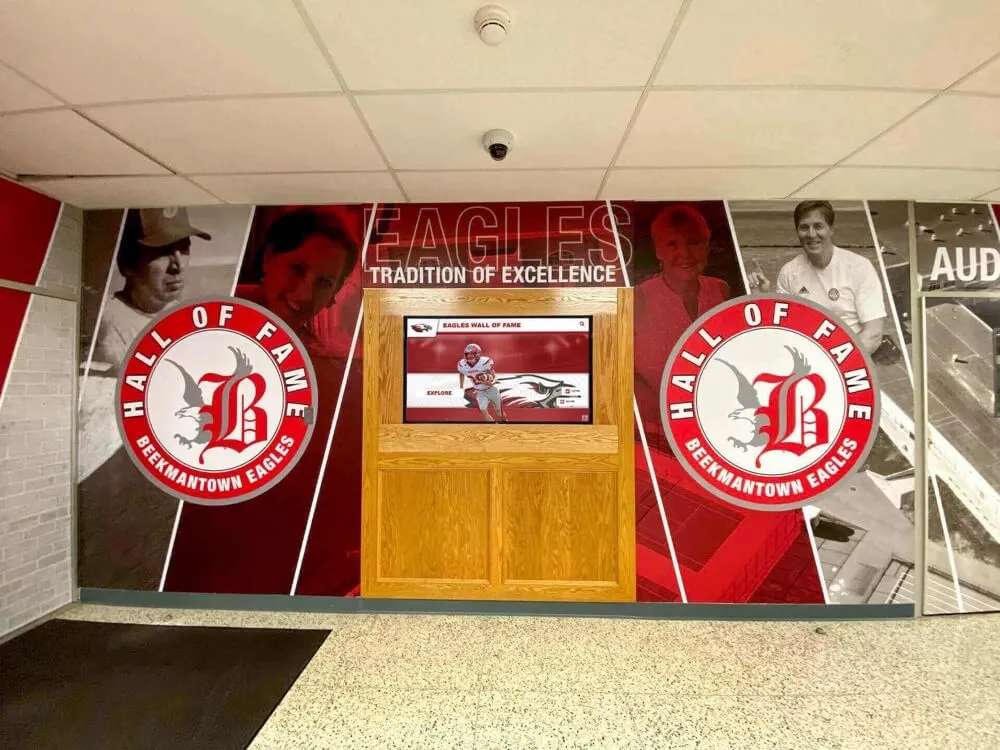
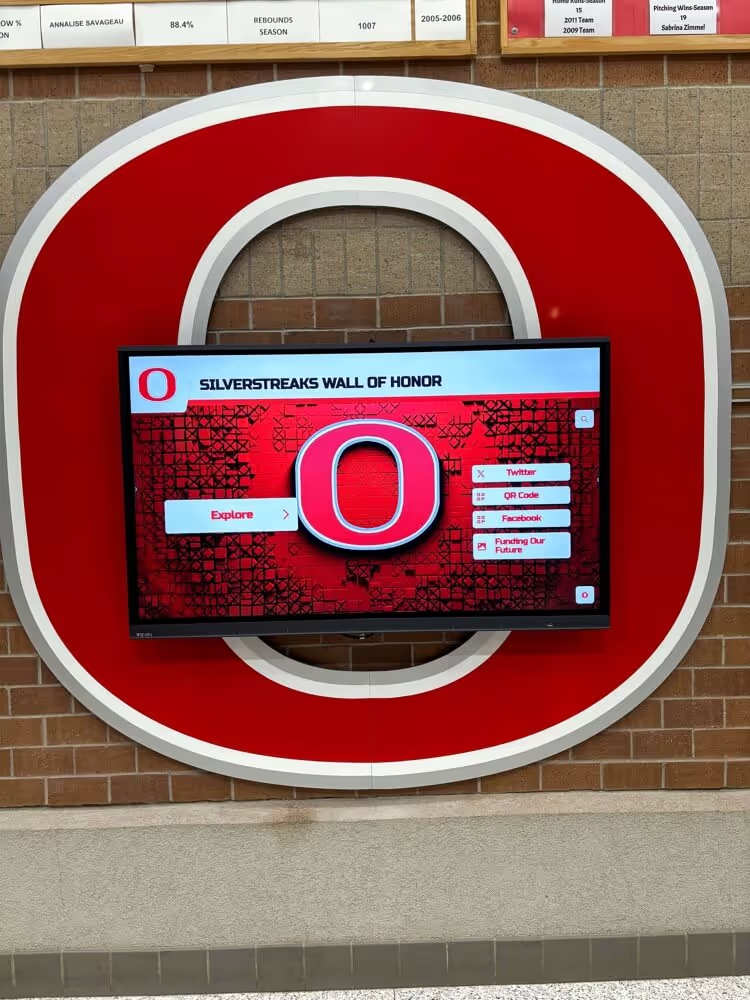
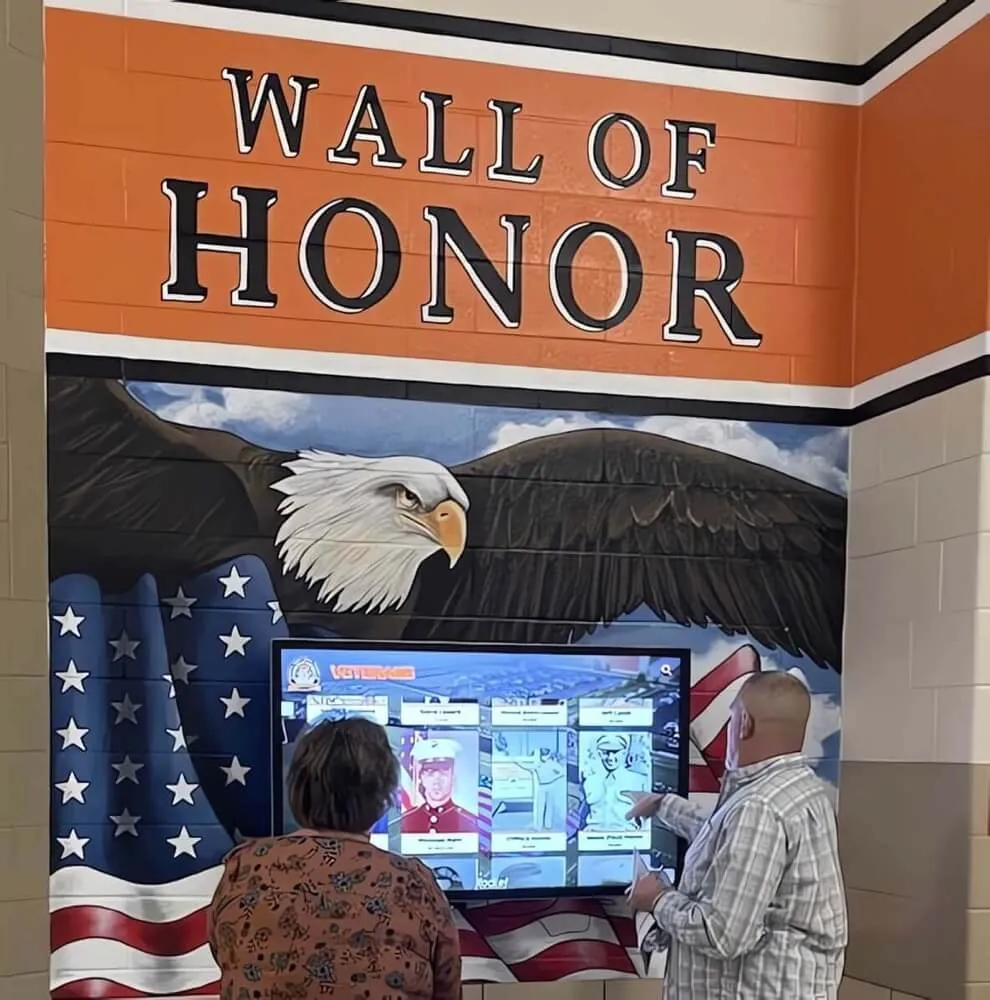
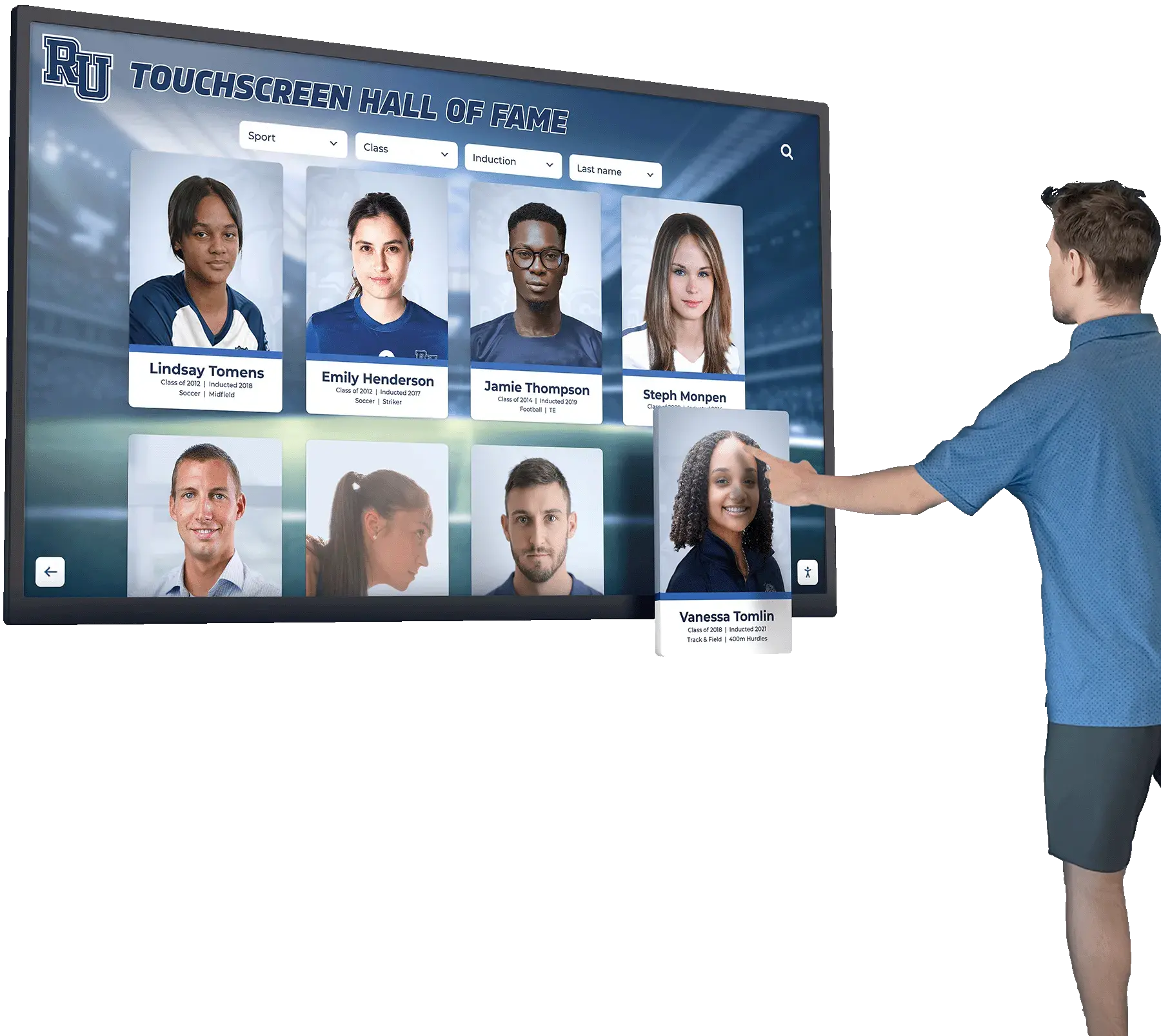
Interactive recognition systems archive every award and achievement without the space limitations of engraved trophies
Schools with established recognition traditions often recognize first-generation college students and diverse achievement types alongside traditional athletic and academic honors.
Digital Archive Connection
Even traditional engraved trophies benefit from digital documentation:
- Photograph each trophy before distribution
- Create searchable database of all awards and recipients
- Provide online access to achievement archives for alumni
- Maintain institutional memory beyond physical trophy lifespan
This digital preservation ensures achievement recognition survives even if physical trophies are lost, damaged, or disposed of years later.
Common Trophy Engraving Mistakes to Avoid
Learning from common pitfalls prevents disappointment:
Content Errors
Information mistakes diminish recognition impact:
Spelling and Name Errors
The most frustrating and preventable problems:
- Prevention: Multiple verification steps before engraving authorization
- Solution if occurred: Some vendors offer re-engraving services; severely rushed timelines may require accepting error
- Future avoidance: Implement formal verification checklists
Incorrect Dates or Years
Surprisingly common mistakes:
- Academic year confusion: Clarify whether 2026 means graduating class year, academic year, or calendar year
- Season dating: Ensure fall sports dated correctly when spanning calendar years
- Event date errors: Verify championship or competition dates against official results
Title or Achievement Inaccuracies
Award designation mistakes:
- Verify official titles: “Most Valuable Player” vs. “MVP,” “All-Conference” vs. “All-Conference Honorable Mention”
- Confirm achievement level: State vs. Regional, Division I vs. Division II, etc.
- Check final results: Verify champion vs. finalist vs. participant
Design and Formatting Problems
Aesthetic mistakes affect trophy appearance:
Overcrowding Text
Attempting to include too much information:
- Problem: Text becomes illegibly small or appears cramped
- Solution: Prioritize essential information; use secondary plates or digital supplementation for extensive details
- Prevention: Request vendor layout preview before engraving authorization
Inconsistent Formatting
Awards with mismatched styles look unprofessional:
- Problem: Different fonts, capitalization, or layouts across similar awards
- Solution: Develop and follow engraving style guides
- Prevention: Maintain templates for common award types
Poor Font Choices
Typography that doesn’t match award context:
- Problem: Overly casual fonts for serious achievements or illegible decorative fonts
- Solution: Select fonts appropriate to recognition formality and ensure legibility
- Prevention: Limit font choices to proven, appropriate options
Vendor and Process Issues
Operational problems that create disappointment:
Inadequate Timeline
Rushed orders create problems:
- Problem: Errors increase under time pressure; rush fees inflate costs; limited correction opportunity
- Solution: Build adequate lead time including verification, production, shipping, and pre-event buffer
- Prevention: Plan award timelines early; order well before needed dates
Insufficient Proof Review
Failing to carefully check vendor proofs:
- Problem: Errors discovered only after engraving completion when correction impossible
- Solution: Require vendor proofs; review thoroughly; confirm corrections before authorizing production
- Prevention: Make proof review a required step; never authorize engraving without verification
Conclusion: Creating Trophy Recognition That Lasts
Thoughtful trophy engraving transforms simple awards into meaningful recognition that recipients treasure throughout their lives. By carefully selecting appropriate fonts, crafting purposeful wording that captures achievement significance, including relevant personalization details, and following proven best practices, schools create awards that communicate genuine appreciation while preserving institutional achievement memory.
The most effective recognition programs combine traditional engraved trophies with modern systems that address capacity limitations and storytelling constraints. Digital recognition platforms expand achievement celebration capacity beyond physical space limitations, provide rich achievement context through photos and detailed narratives, and ensure institutional memory preservation regardless of individual trophy disposition.
Whether maintaining traditional trophy case approaches or exploring contemporary digital alternatives, the fundamental goal remains constant: creating recognition that makes students feel genuinely valued for their accomplishments while building school pride and inspiring future excellence. Trophy engraving represents one component of comprehensive recognition strategies that celebrate diverse achievements across academics, athletics, arts, leadership, and service—ensuring every student who contributes to school community receives appropriate acknowledgment.
Transform Your School’s Recognition Program
While traditional engraved trophies create personal keepsakes, modern recognition challenges require expanded solutions. Rocket Alumni Solutions provides interactive digital recognition systems that complement trophy cases with unlimited capacity to celebrate every achievement—academic excellence, athletic championships, arts accomplishments, and community service contributions.
Our touchscreen displays showcase achievement details, photos, statistics, and complete team rosters that engraved trophy plates cannot accommodate. Create searchable archives preserving institutional achievement history while providing prominent recognition for current success.
Discover how digital recognition enhances traditional trophy programs by exploring our solutions designed specifically for schools, universities, and athletic programs.
Schools that thoughtfully approach trophy engraving create awards that remain meaningful decades after presentation—physical reminders of excellence achieved, hard work rewarded, and accomplishments permanently recognized. Combined with modern digital systems that expand recognition capacity and preserve institutional memory, comprehensive recognition programs celebrate every student contribution while building the pride and tradition that define exceptional educational communities.