



Your school’s main hallway trophy case tells a story—but is it the story you want to tell? Walk past most school trophy displays and you’ll find championship hardware crammed together behind smudged glass, achievement plaques stacked so tightly that individual honors become indistinguishable, and newer awards pushing decades-old trophies into dark corners where no one will ever see them again. The display that should inspire pride and celebrate excellence instead communicates something different: we’ve run out of room, run out of ideas, and frankly run out of ways to honor the achievements that matter most to our community.
Athletic directors and administrators face an impossible equation. Every season brings new championships, tournament placements, individual honors, and team achievements worthy of recognition. Yet the trophy case anchoring your school’s entrance lobby has the same dimensions it had when installed twenty years ago. Something has to give—and too often, it’s the visibility of hard-won honors that athletes, coaches, and families worked years to achieve.
This comprehensive guide explores trophy cases from every angle: traditional display options and their limitations, materials and construction quality differences, sizing and capacity planning strategies, security and maintenance considerations, budget-conscious solutions, and modern digital alternatives that fundamentally solve the space constraint problem. Whether you’re selecting your first trophy case, replacing an aging display, or seeking better ways to showcase an ever-growing collection of achievements, these insights help you choose displays that honor your school’s competitive legacy while creating presentations that actually engage students and visitors.
Effective trophy case selection balances immediate display needs against long-term capacity realities, weighs upfront costs against ongoing maintenance expenses, and considers how recognition displays will function across the next decade as championships accumulate and programs grow.

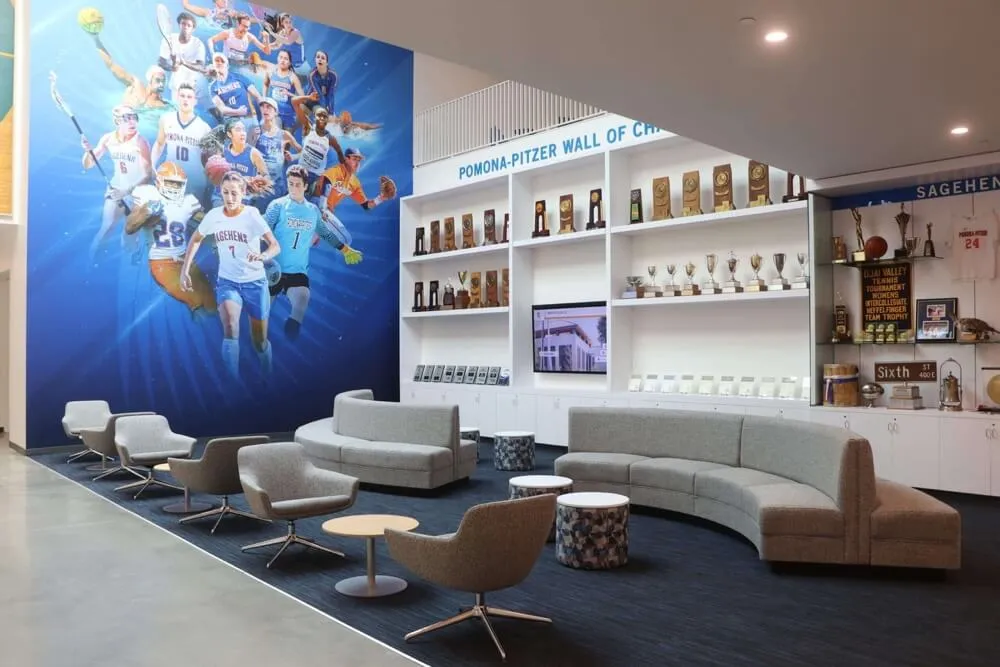
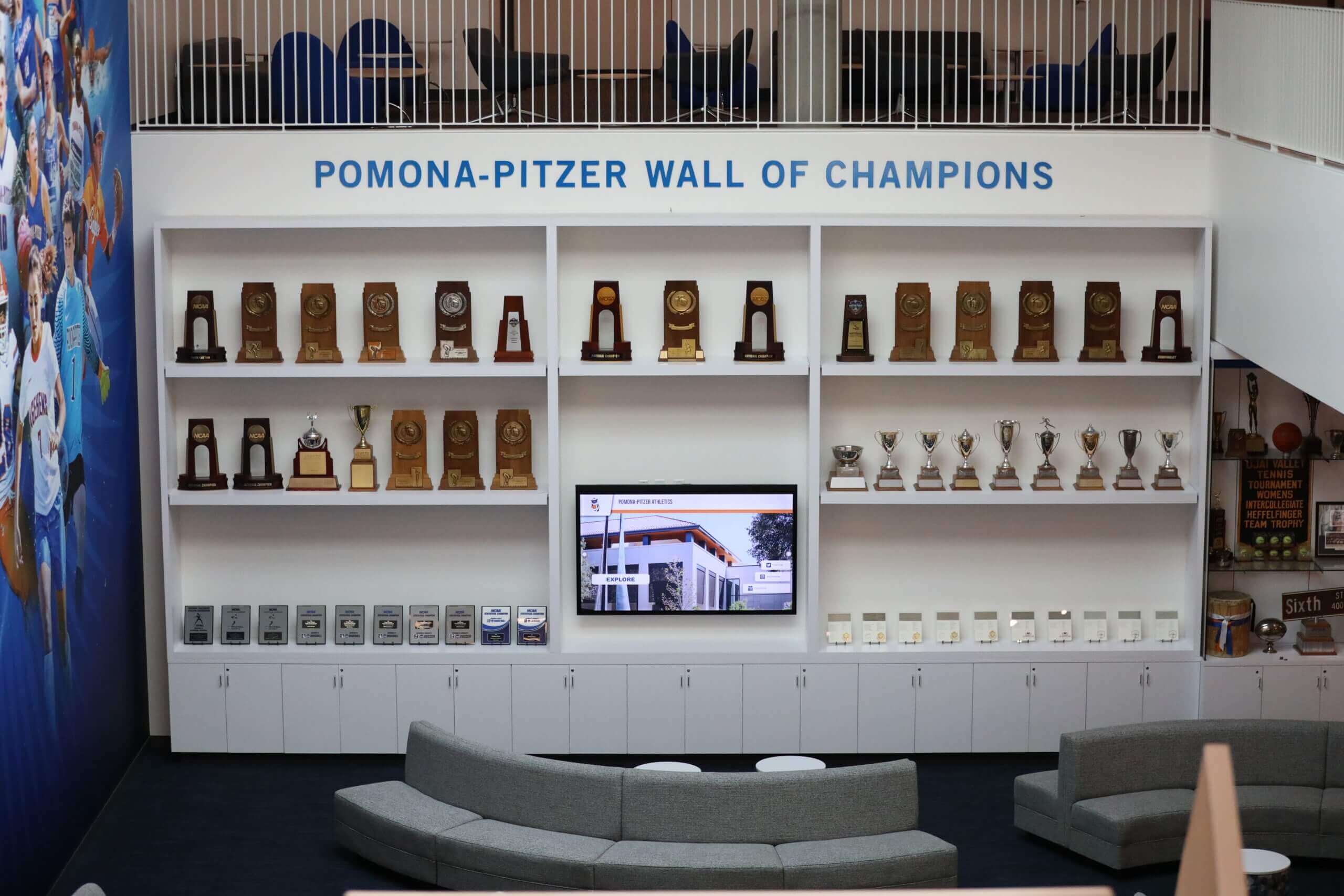
Athletic lounges showcase championship trophies as centerpiece displays, creating dedicated spaces celebrating program excellence
Understanding Trophy Case Fundamentals
Before exploring specific display options, understanding core trophy case categories and their intended applications helps schools match solutions to actual needs.
The Space Constraint Reality
Why Traditional Trophy Cases Reach Capacity
Physical trophy cases impose fundamental limitations that worsen over time:
Fixed Display Dimensions
- Cabinet sizes remain static while achievement volume grows annually
- Successful programs accumulate trophies faster than available space expands
- Twenty years of championships can’t fit in displays designed for five years
- Capacity decisions made decades ago constrain current recognition options
- Expansion requires construction projects, budget allocation, and facility disruption
The Recognition Displacement Problem When trophy cases reach capacity, schools face difficult choices: remove older achievements to storage, reduce display density until individual trophies lose impact, or stop recognizing new accomplishments appropriately. Each option undermines the purpose of maintaining trophy displays—celebrating excellence and inspiring current athletes through visible program legacy.
Schools implementing thoughtful trophy shelf ideas often discover creative arrangements that maximize existing space, though ultimately physical dimensions impose absolute limits that creativity alone cannot overcome.
Primary Trophy Case Categories
Display Type Overview
Trophy cases fall into several distinct categories, each serving different purposes:
Wall-Mounted Display Cases
- Shallow depth designed for hallway and corridor installation
- Glass or acrylic front panels with wood, metal, or composite frames
- Typical dimensions: 48"-96" wide, 36"-48" tall, 12"-18" deep
- Locking mechanisms securing contents
- Interior lighting options available
- Ideal for high-traffic areas with limited floor space
Floor-Standing Trophy Cases
- Freestanding units placed in lobbies and open areas
- 360-degree viewing options or backed units against walls
- Greater depth capacity than wall-mounted options
- Multiple shelf configurations for varied trophy sizes
- Typical dimensions: 36"-48" wide, 72"-84" tall, 18"-24" deep
- Professional museum-quality presentation capabilities
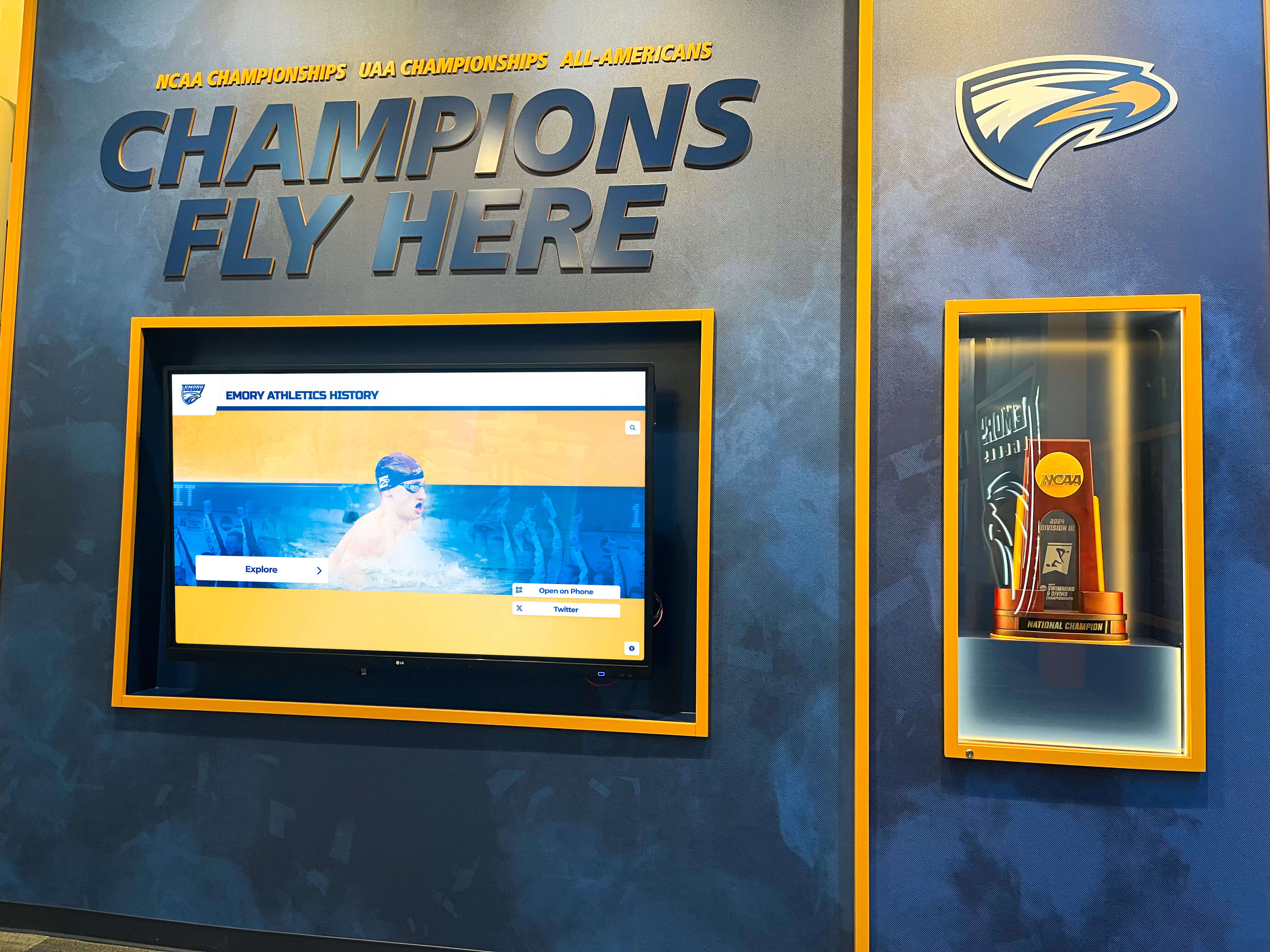
Championship walls integrate trophies with photos and achievement displays, creating comprehensive recognition environments
Built-In Display Systems
- Custom architectural integration during construction or renovation
- Recessed installations maximizing space efficiency
- Coordinated design matching facility aesthetics
- Permanent installations requiring long-term planning
- Highest initial cost but superior visual integration
Programs exploring diverse medal and trophy display ideas discover that effective trophy presentation extends beyond basic case selection to encompass creative arrangement, lighting, and contextual information that transforms displays into engaging showcases.
Material and Construction Quality Considerations
Trophy case materials significantly impact durability, presentation quality, and long-term maintenance requirements.
Frame Material Options
Comparing Construction Approaches
Frame material selection affects both aesthetics and functionality:
Aluminum Frame Construction
- Lightweight yet durable metal construction
- Powder-coated finishes in various colors
- Resistant to warping, moisture damage, and temperature fluctuation
- Modern appearance suitable for contemporary facilities
- Mid-range pricing between wood and steel options
- Minimal maintenance requirements over decades
Wood Frame Construction
- Traditional appearance matching classic institutional aesthetics
- Available in oak, maple, cherry, and other hardwood species
- Stained or painted finishes coordinating with school colors
- Requires periodic maintenance preventing moisture damage
- Higher upfront cost for quality hardwood construction
- Premium appearance valued in established facilities
Steel Frame Construction
- Industrial-strength durability for high-traffic environments
- Powder-coated or painted finishes
- Maximum security for valuable trophy collections
- Heavier weight requiring substantial wall mounting
- Long service life with minimal degradation
- Contemporary aesthetic appropriate for athletic facilities
Glazing Material Selection
Glass vs. Acrylic Comparison
Display panel material impacts visibility, security, and cost:
Tempered Glass Advantages
- Superior optical clarity without distortion
- Scratch-resistant surface maintaining appearance over decades
- Professional presentation suitable for prestigious displays
- Greater weight requiring robust mounting systems
- Higher cost than acrylic alternatives
- Potential breakage concerns in high-traffic youth environments
Acrylic (Plexiglass) Advantages
- Shatter-resistant construction improving safety
- Lighter weight simplifying installation and mounting
- UV-resistant formulations preventing yellowing over time
- Lower cost than comparable glass panels
- Surface scratching more likely with repeated cleaning
- Slight optical distortion compared to glass
UV Protection Considerations Regardless of material selection, UV-protective glazing prevents trophy deterioration, ribbon fading, and material discoloration from sunlight and artificial lighting exposure. Quality trophy cases incorporate UV-filtering treatments extending the lifespan of displayed achievements.
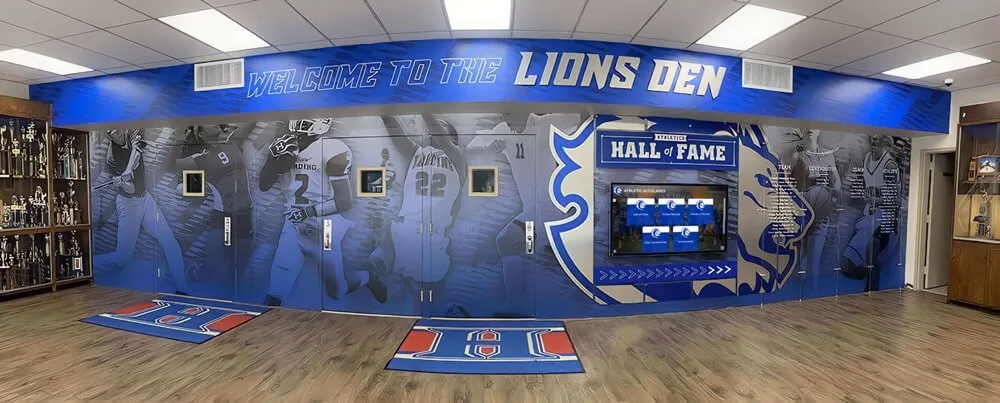
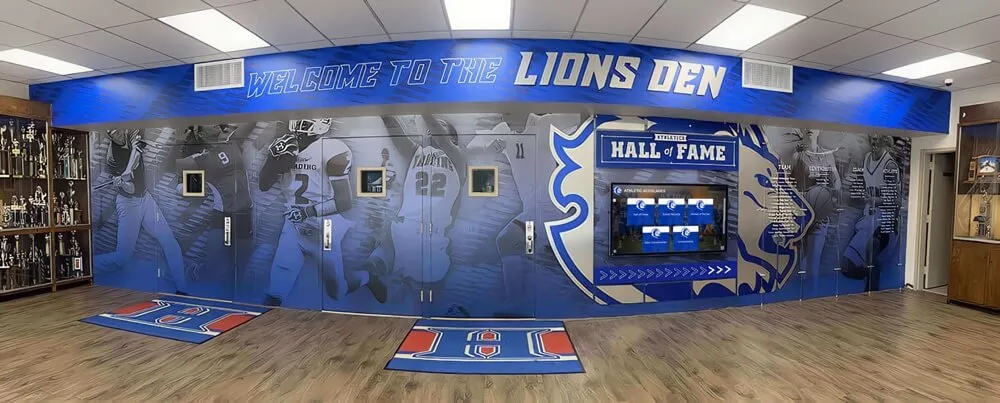
Traditional trophy case installations combine multiple display units with branded murals, creating comprehensive athletic recognition zones
Size and Capacity Planning
Accurate capacity assessment prevents purchasing trophy cases that will be outgrown within a few years of installation.
Calculating Display Capacity Needs
Space Requirement Analysis
Systematic planning identifies appropriate trophy case sizing:
Current Trophy Inventory Assessment
- Count existing trophies requiring display space
- Measure largest trophies determining minimum case depth requirements
- Identify championship hardware requiring prominent placement
- Document stored achievements awaiting display opportunities
- Calculate total linear shelf footage needed for current collection
Future Growth Projection Successful athletic programs generate new achievements continuously. Capacity planning should accommodate at minimum five to ten years of anticipated growth:
- Annual championship trophy additions per sport
- Conference, regional, and state tournament placements
- Individual achievement awards (all-conference, all-state selections)
- Coaching milestone recognitions
- Special event commemorations
Programs that plan team awards ideas beyond standard MVP categories discover that comprehensive recognition systems generate more awards requiring display space than initially anticipated.
Shelf Configuration and Flexibility
Adjustable Display Systems
Trophy cases with flexible shelving accommodate diverse trophy sizes:
Adjustable Shelf Advantages
- Removable shelves repositioning for tall trophies
- Variable shelf spacing accommodating mixed trophy heights
- Future reconfiguration as display needs change
- Shelf strength ratings supporting heavy championship hardware
- Tool-free adjustment systems enabling quick rearrangement
Display Depth Considerations Trophy base dimensions vary dramatically. Championship football trophies may have 12"-18" base plates, while smaller individual awards occupy minimal depth. Cases with sufficient depth prevent trophies from pressing against glass panels while allowing adequate front-to-back arrangement capacity.
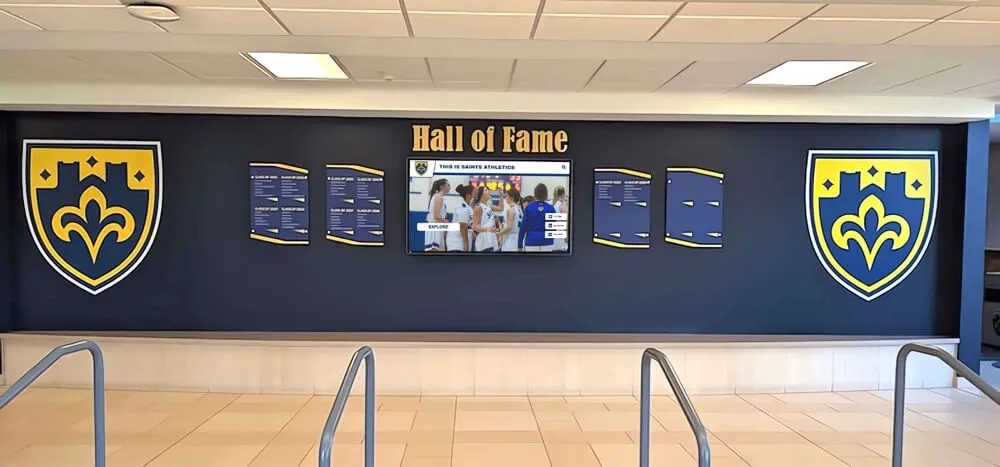
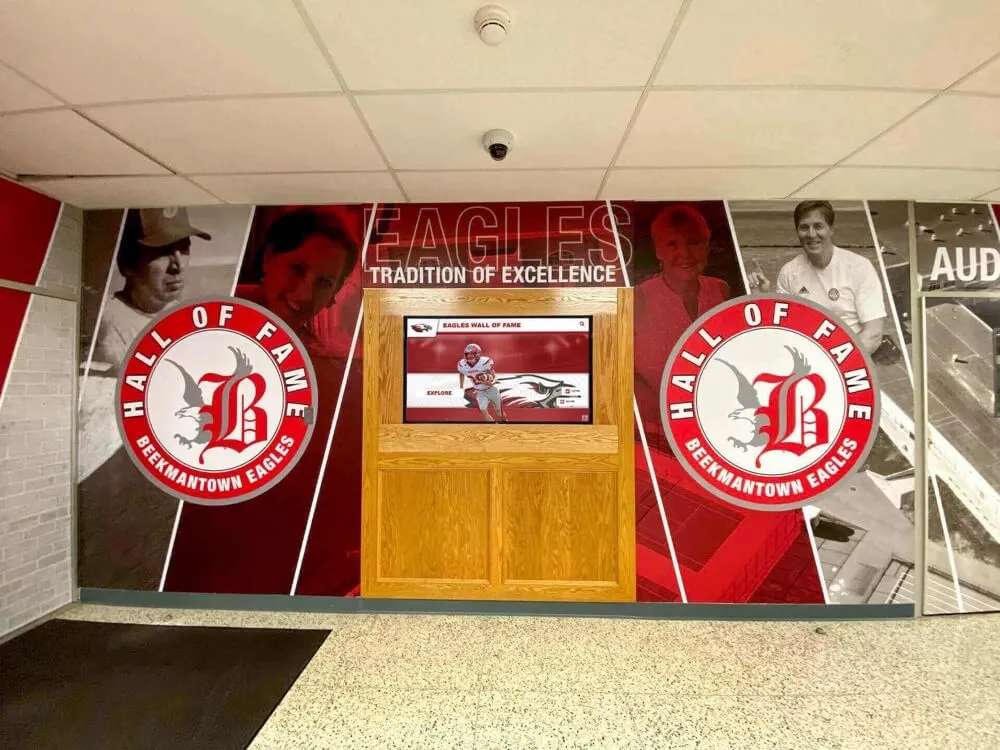
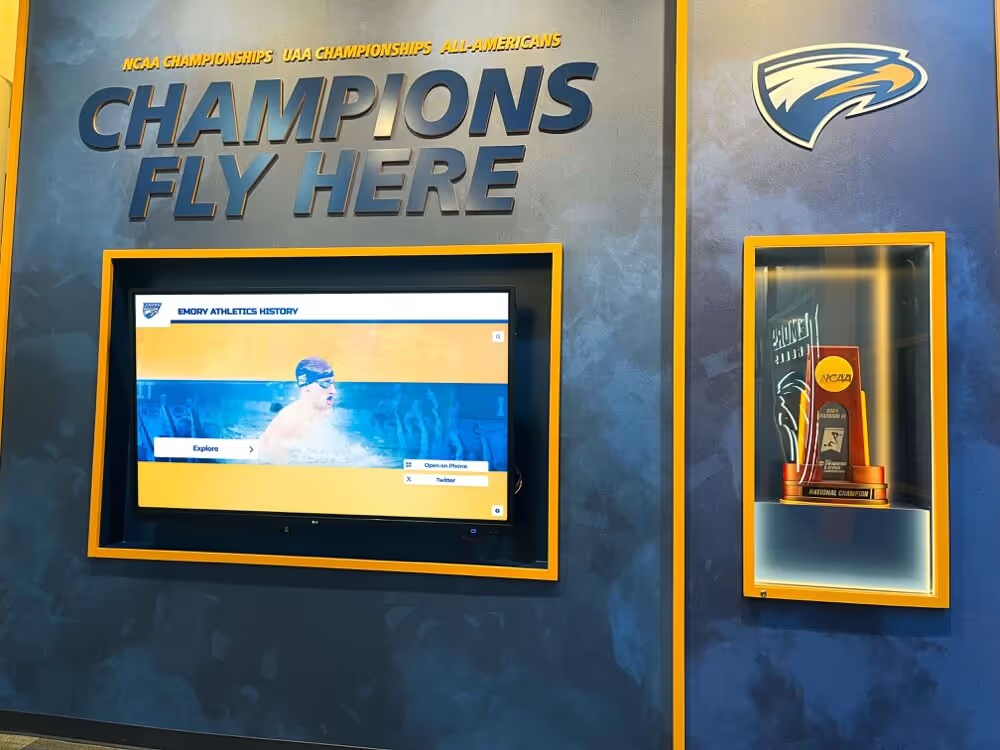
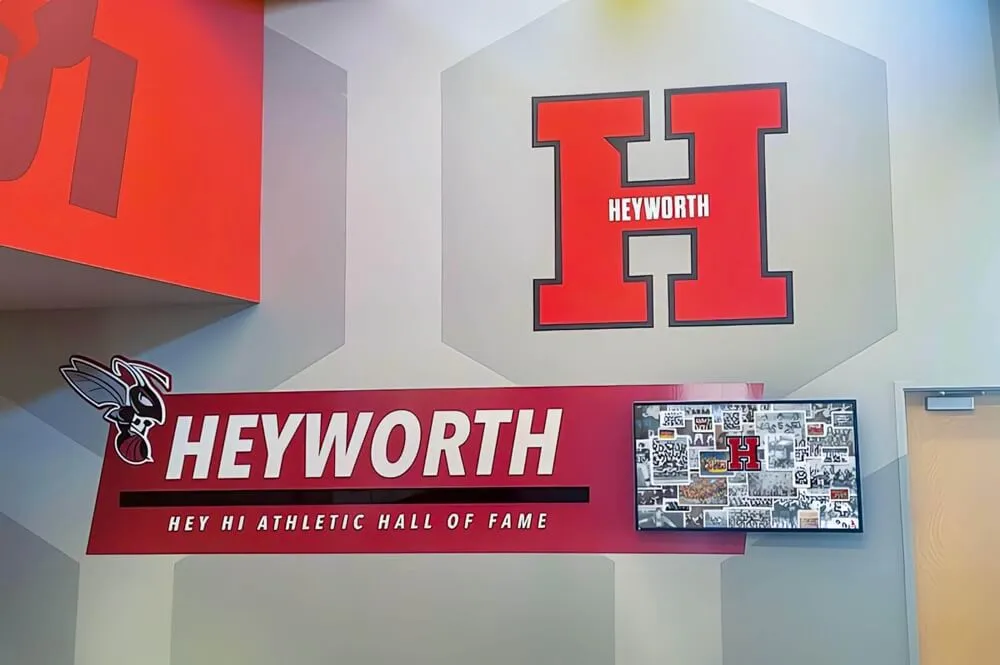
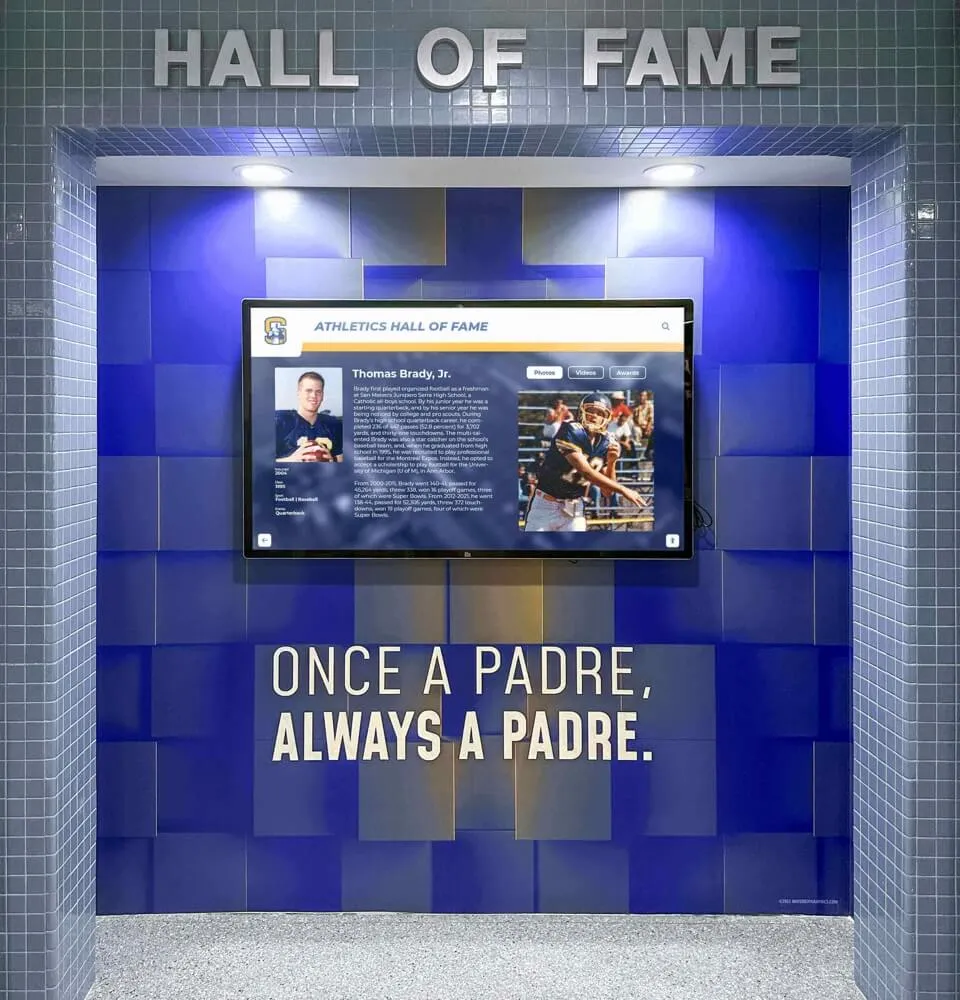
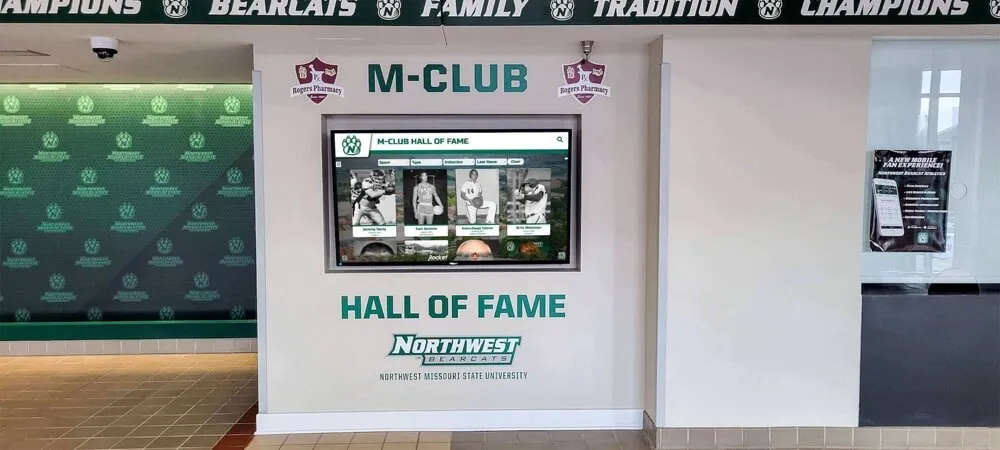
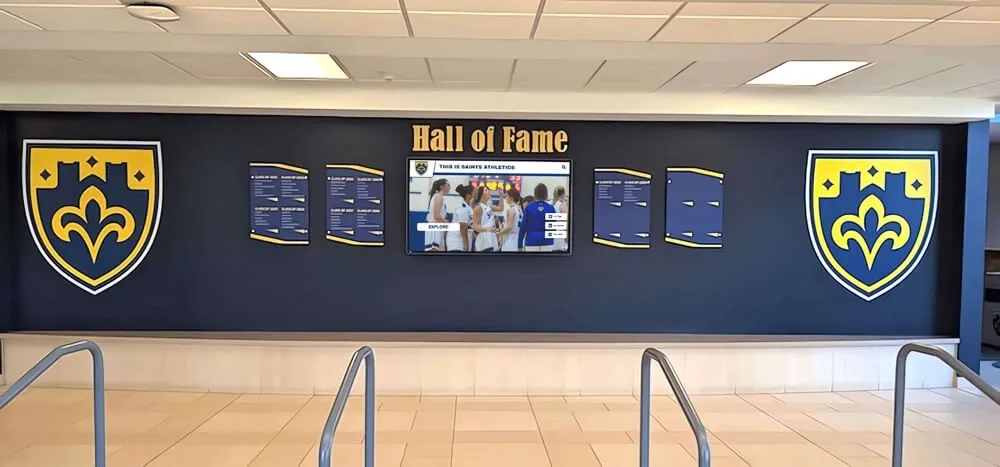
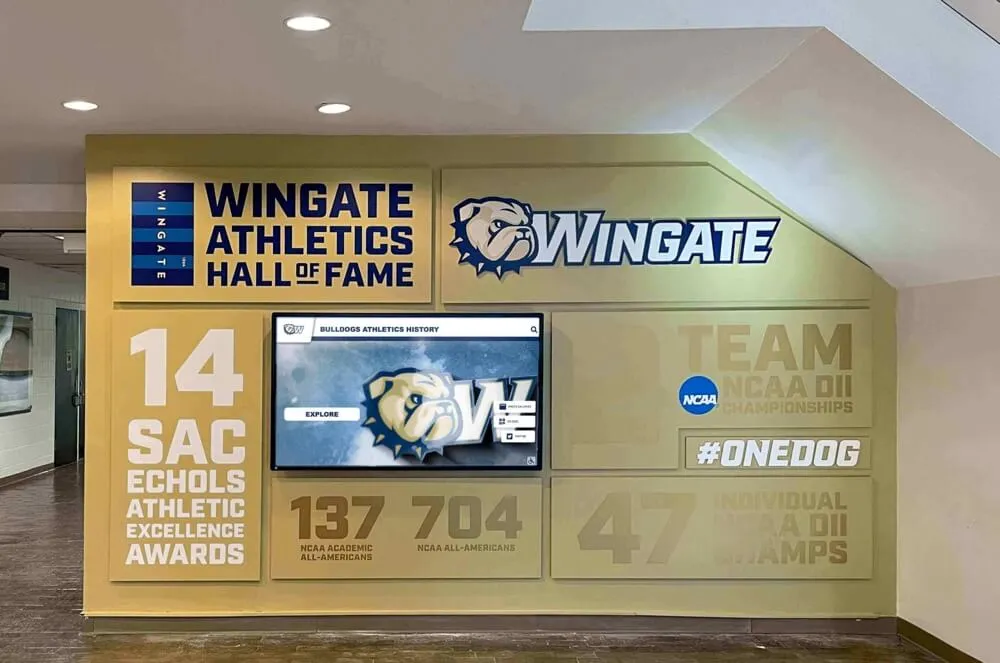
Hybrid recognition walls combine physical championship shields with digital displays, merging traditional trophy presentation with modern technology
Lighting Systems for Trophy Cases
Proper illumination transforms trophy cases from functional storage into engaging showcases that draw attention and create visual impact.
Interior Lighting Options
Illumination Strategy Comparison
LED lighting has become the standard for trophy case illumination due to energy efficiency, minimal heat generation, and long service life:
LED Strip Lighting
- Continuous illumination along case edges or shelves
- Even light distribution eliminating dark spots
- Low heat output preventing trophy material degradation
- 50,000+ hour lifespan reducing maintenance
- Available in various color temperatures (cool white, warm white, daylight)
- Minimal electrical consumption compared to traditional lighting
LED Puck Lighting
- Individual fixtures creating focused illumination pools
- Adjustable positioning highlighting specific trophies
- Dramatic visual effect drawing attention to featured achievements
- Simple installation in existing cases during upgrades
- Dimmable options creating varied presentation moods
- Battery-operated options eliminating electrical wiring requirements
Integrated Lighting Systems Higher-end trophy cases incorporate factory-installed lighting with proper electrical integration, eliminating installation complexity while ensuring safe, code-compliant implementation.
Lighting Control Features
Advanced Illumination Management
Modern trophy case lighting includes control features extending functionality:
- Motion sensors activating lights when viewers approach
- Timer controls scheduling operation during facility hours
- Dimmer systems adjusting brightness for different settings
- Color-changing RGB LEDs coordinating with school colors or events
- Emergency battery backup maintaining visibility during power outages
Schools creating comprehensive athletic environments often coordinate trophy case lighting with gym banner ideas and facility branding elements, establishing cohesive visual presentations celebrating program excellence.
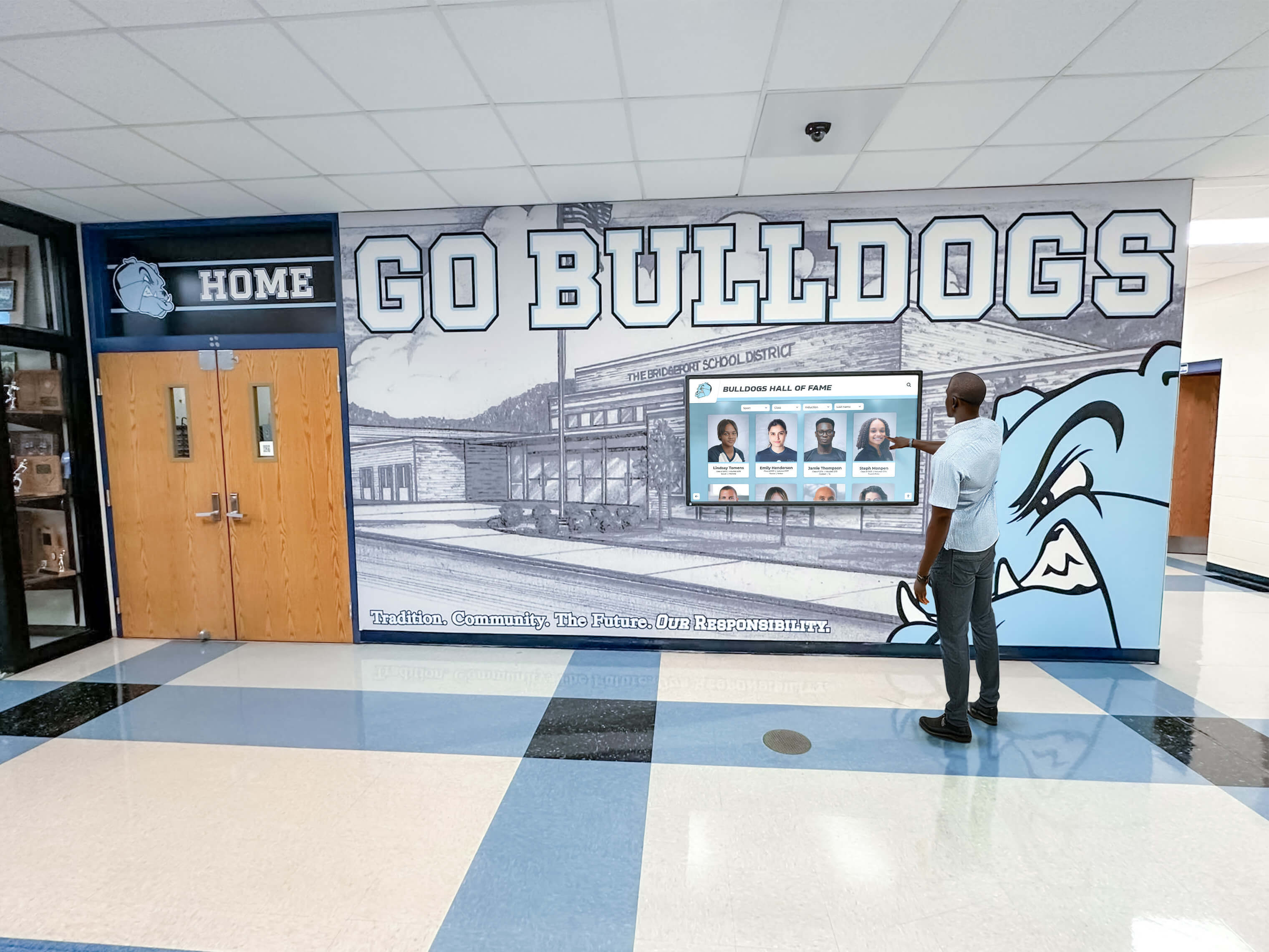
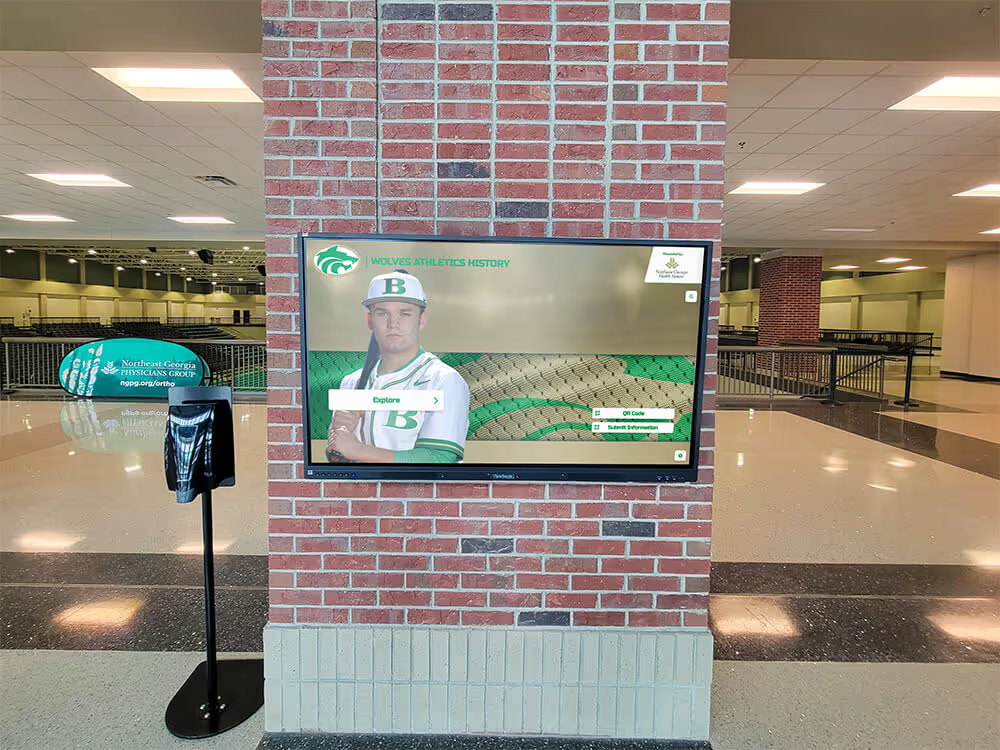
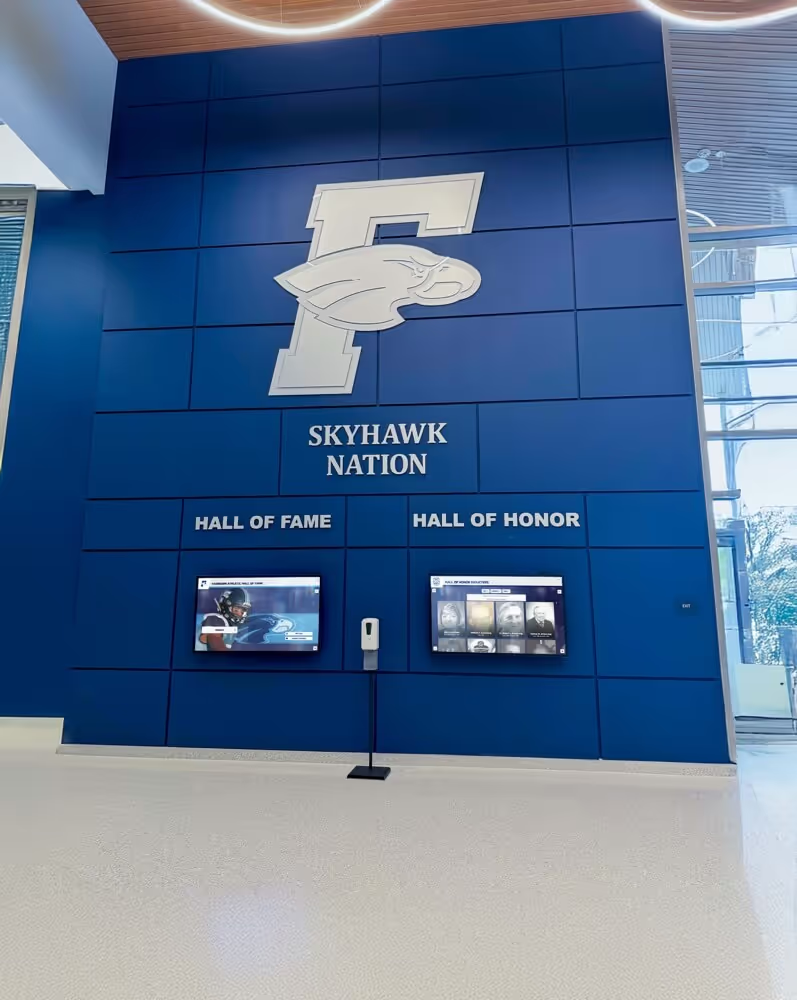
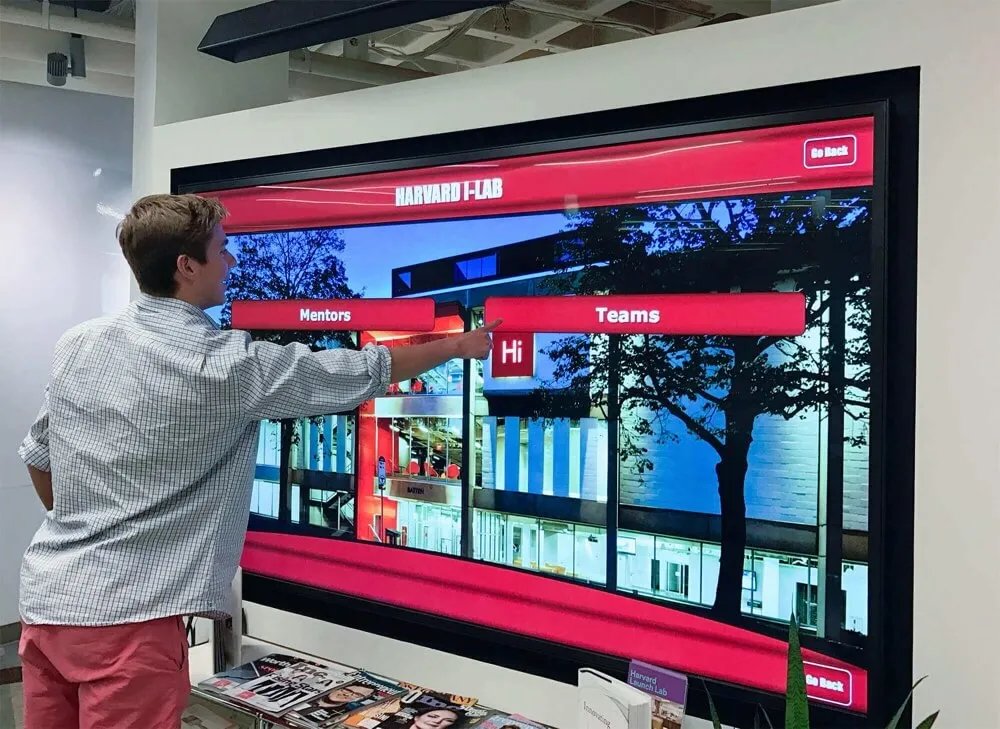
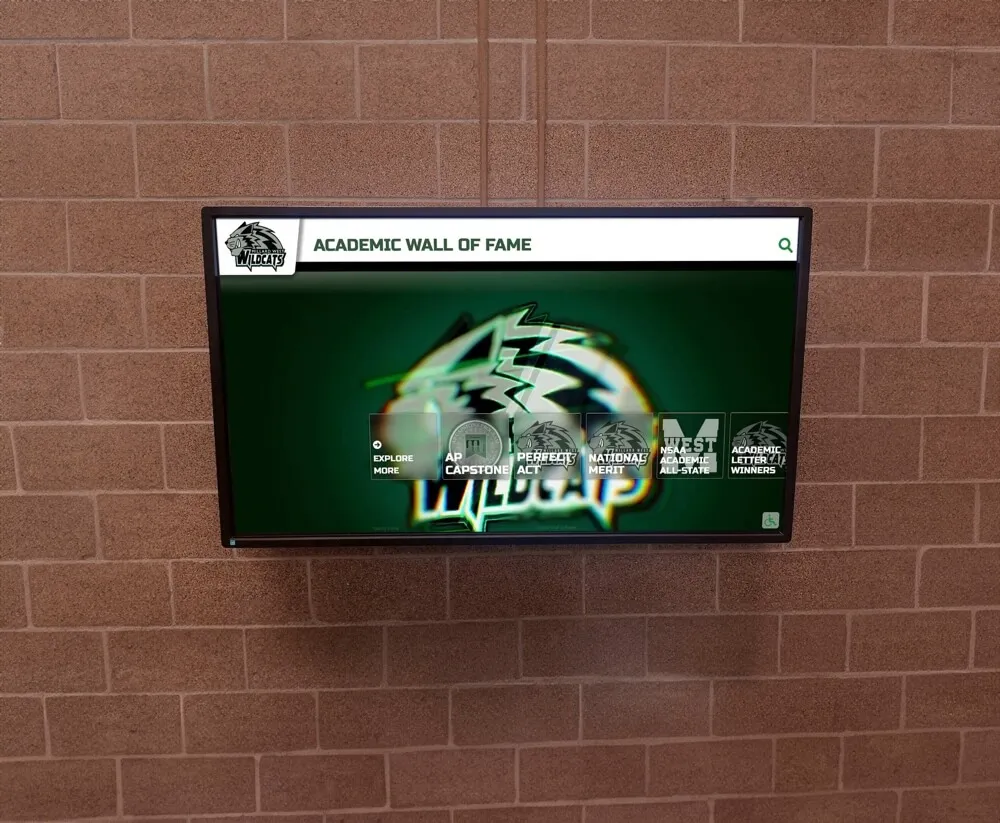
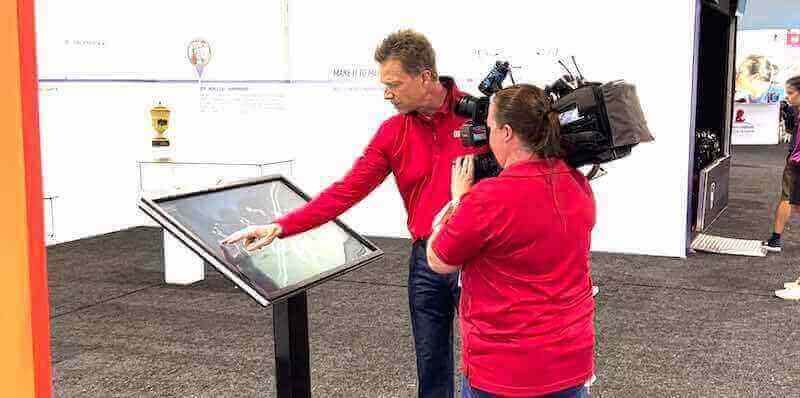
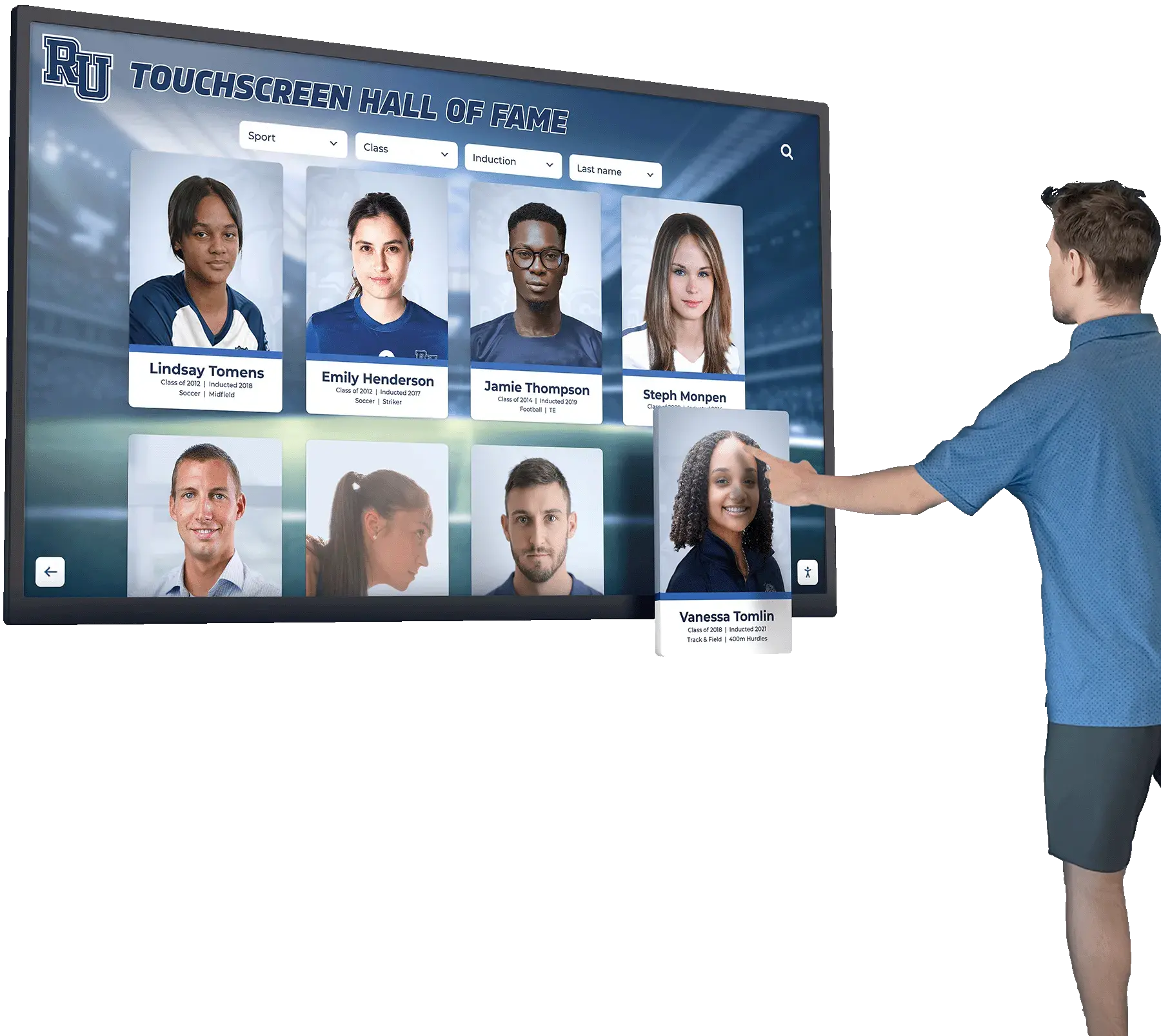
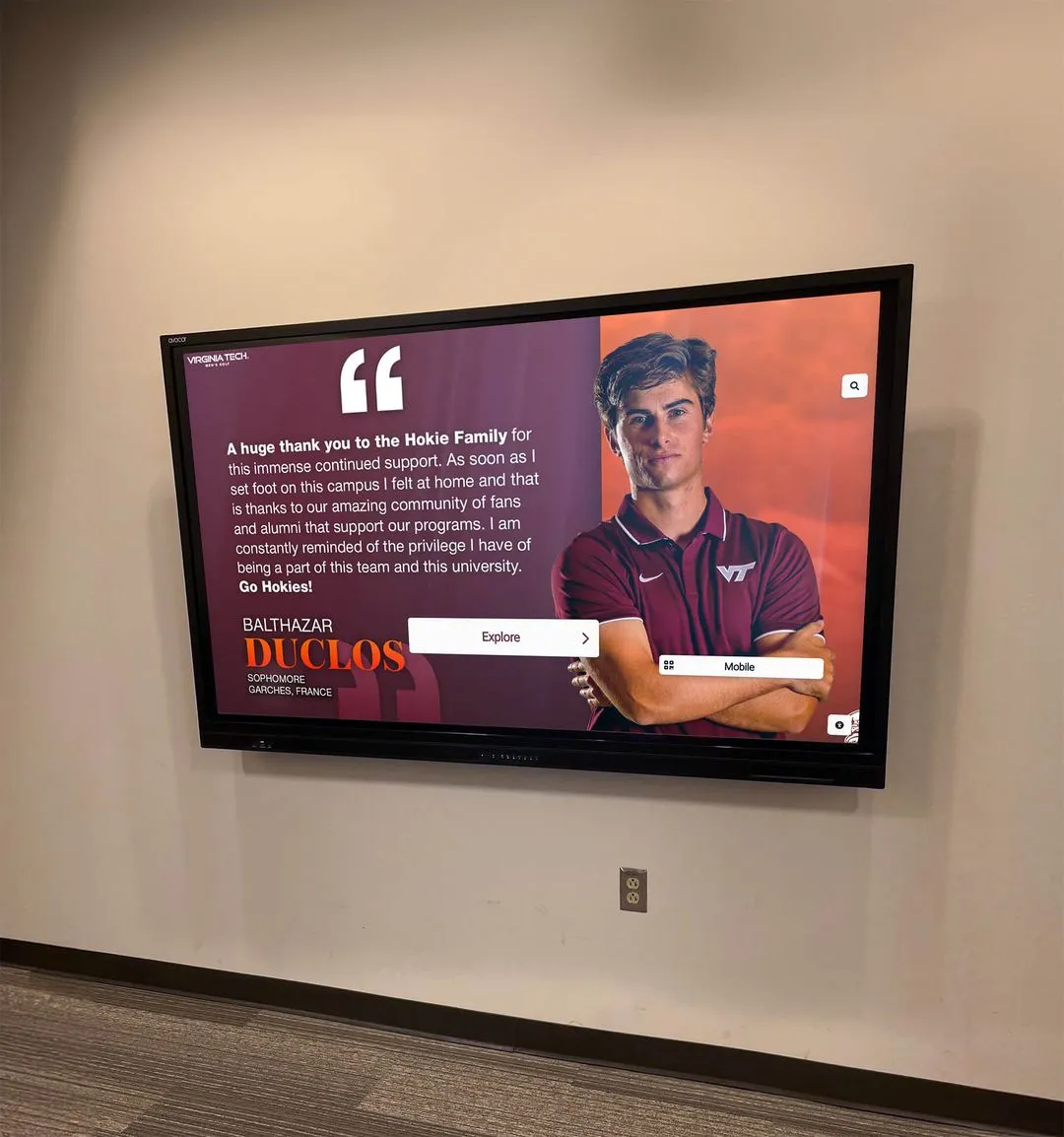
Interactive digital displays enable visitors to explore comprehensive achievement databases, eliminating physical space limitations
Security and Protection Features
Trophy cases protect valuable championship hardware and irreplaceable historical memorabilia from theft, vandalism, and environmental damage.
Physical Security Systems
Access Control Mechanisms
Locking systems range from basic to sophisticated depending on security requirements:
Standard Lock Options
- Key-operated cam locks standard on most trophy cases
- Multiple-point locking systems securing full panel perimeter
- Master key systems allowing administrative access across multiple cases
- Concealed locking mechanisms maintaining aesthetic appearance
- Heavy-duty hinges preventing forced entry
Enhanced Security Features
- Laminated or tempered safety glass resisting breakage
- Alarm system integration detecting unauthorized access
- Sensor systems triggering alerts when cases open unexpectedly
- Reinforced frame construction preventing prying
- Anchoring systems securing floor units preventing tipping
Schools maintaining trophy displays in high-value collections or areas with limited supervision benefit from enhanced security features protecting irreplaceable championship hardware and historical memorabilia.
Environmental Protection
Preservation Considerations
Trophy cases should protect contents from environmental factors causing deterioration:
Climate Control Elements
- Sealed construction preventing dust and pollutant entry
- Ventilation systems preventing moisture accumulation
- UV-protective glazing preventing sun damage and fading
- Temperature stability preventing expansion/contraction damage
- Humidity control for facilities in extreme climates
Material Preservation Strategies Championship trophies, especially those incorporating ribbons, photos, or fabric elements, require protection from light exposure, moisture, and temperature fluctuations. Quality trophy cases incorporate preservation features extending the lifespan of displayed materials indefinitely.
Location and Placement Strategy
Where schools position trophy cases dramatically affects recognition visibility and community engagement with athletic achievements.
High-Traffic Area Selection
Maximizing Display Visibility
Strategic placement ensures maximum exposure:
Primary Location Options
- Main entrance lobbies where all visitors encounter displays immediately
- Athletic facility hallways connecting parking to gymnasium
- Cafeteria approaches with sustained daily student traffic
- Administrative office corridors visited by prospective families
- Gymnasium lobbies where game attendees gather
Visibility Optimization Factors
- Natural and artificial lighting conditions
- Sight lines from multiple approach angles
- ADA compliance ensuring accessible viewing heights
- Traffic flow patterns preventing congestion
- Background wall colors enhancing trophy visibility
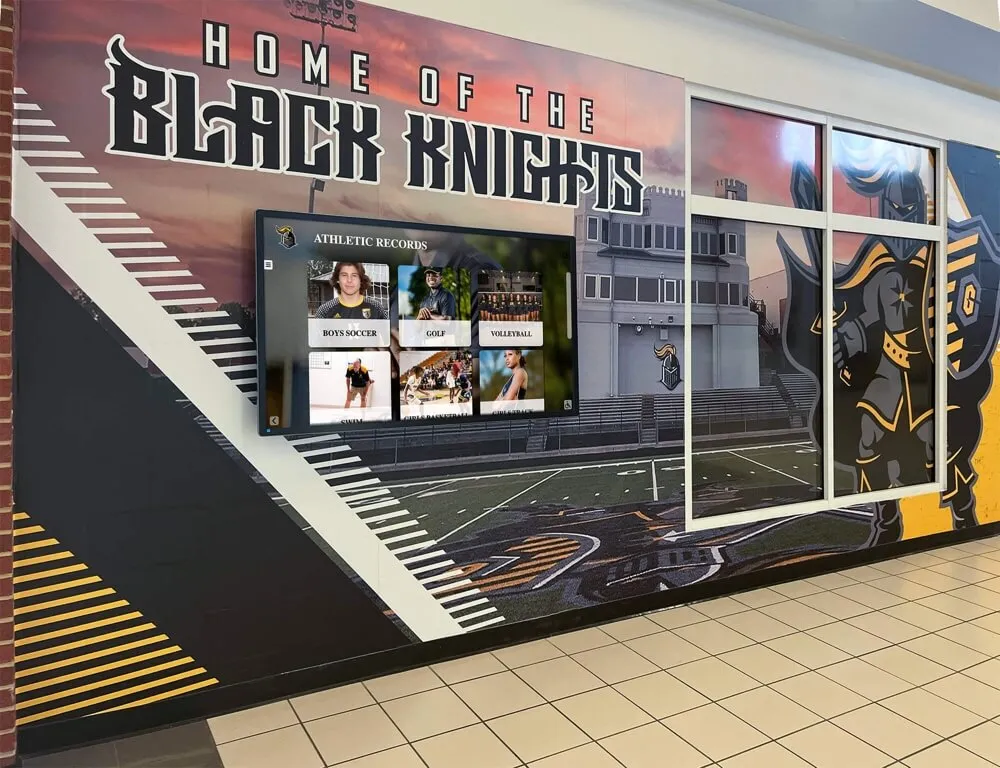
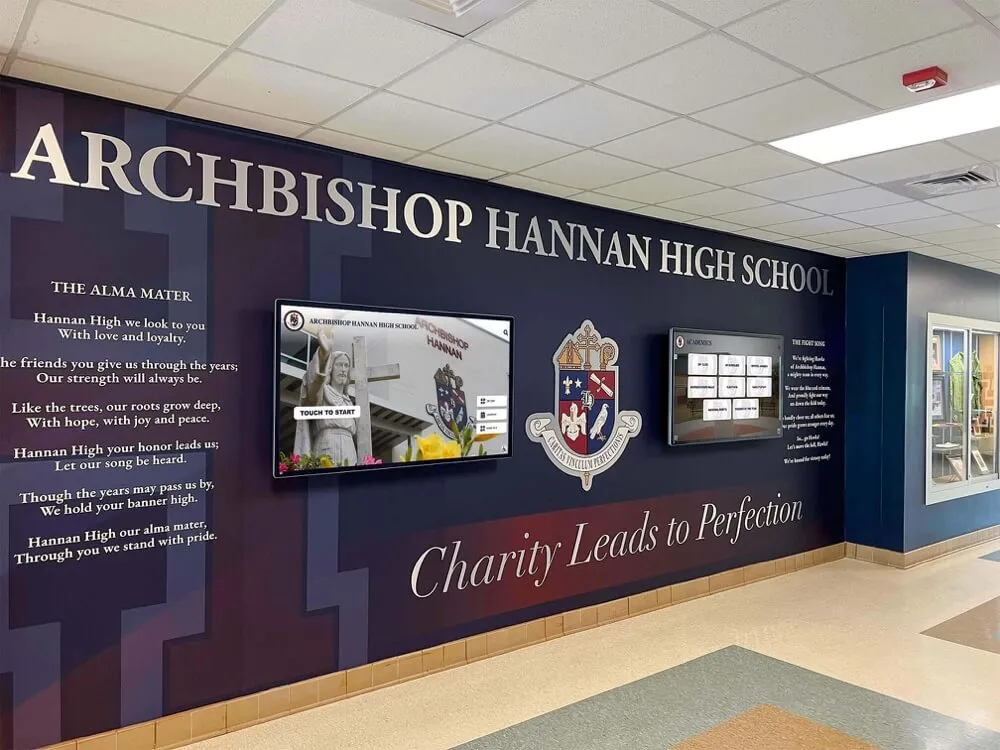
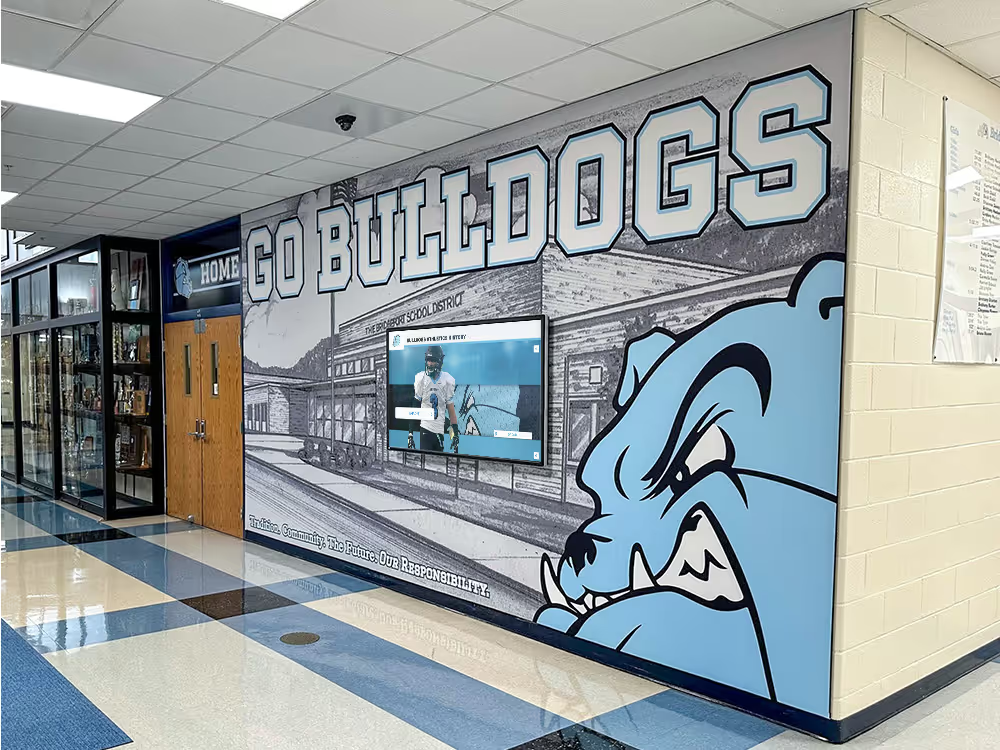
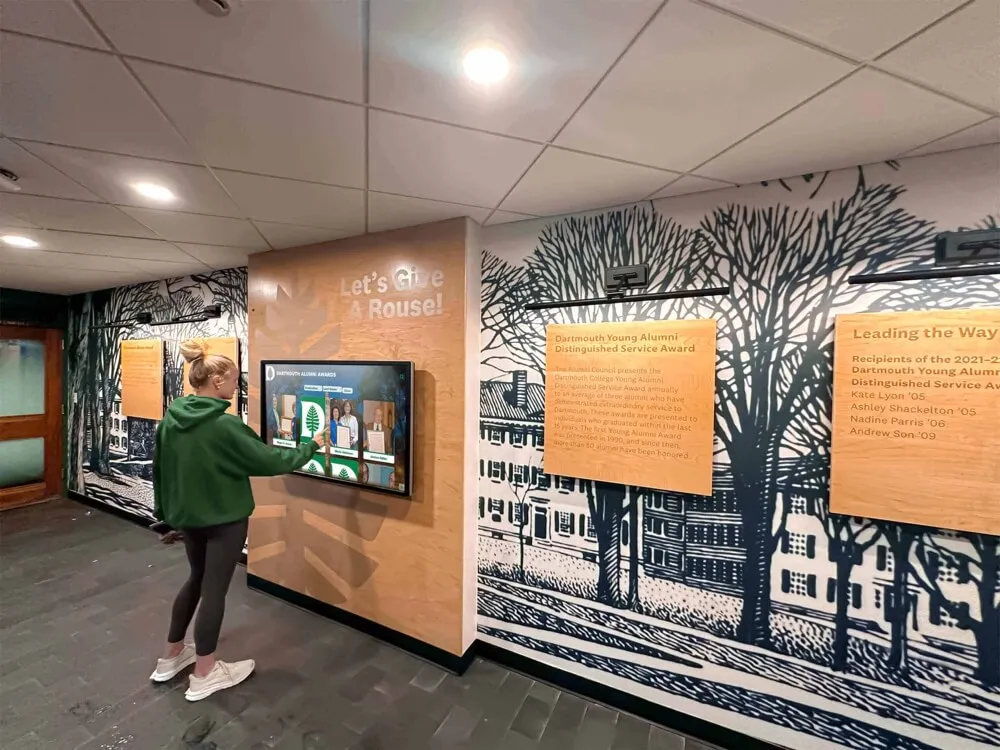
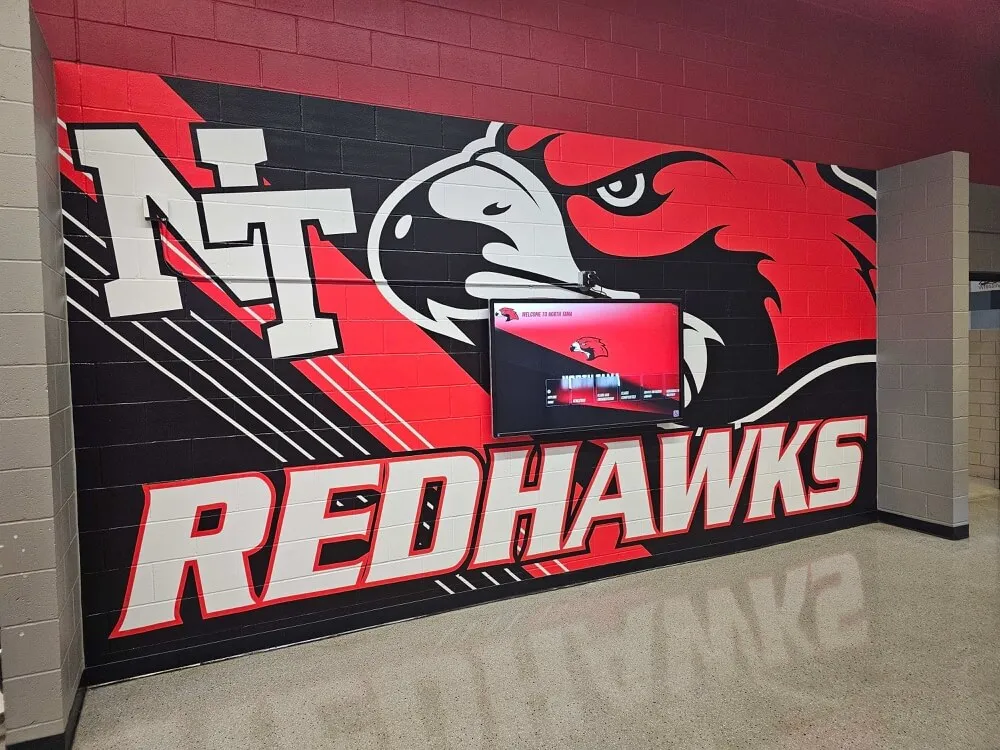
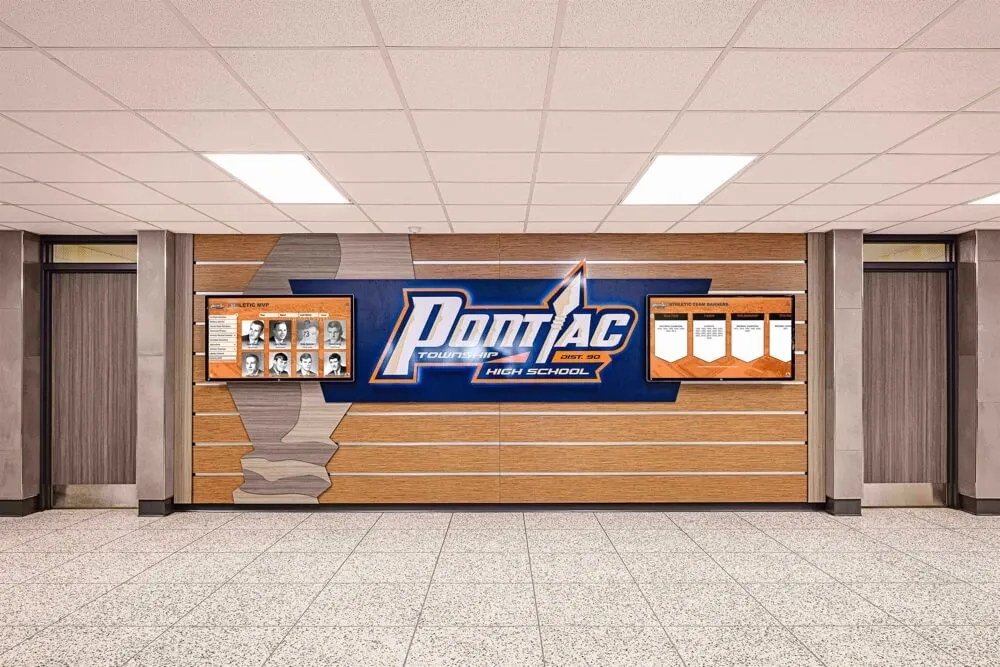
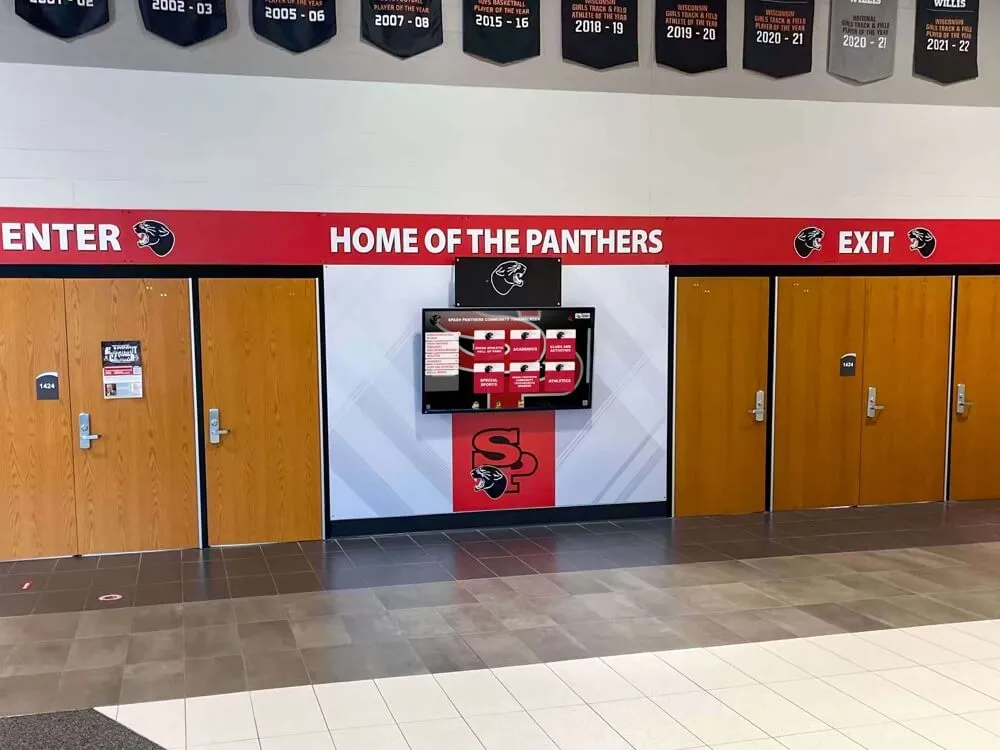
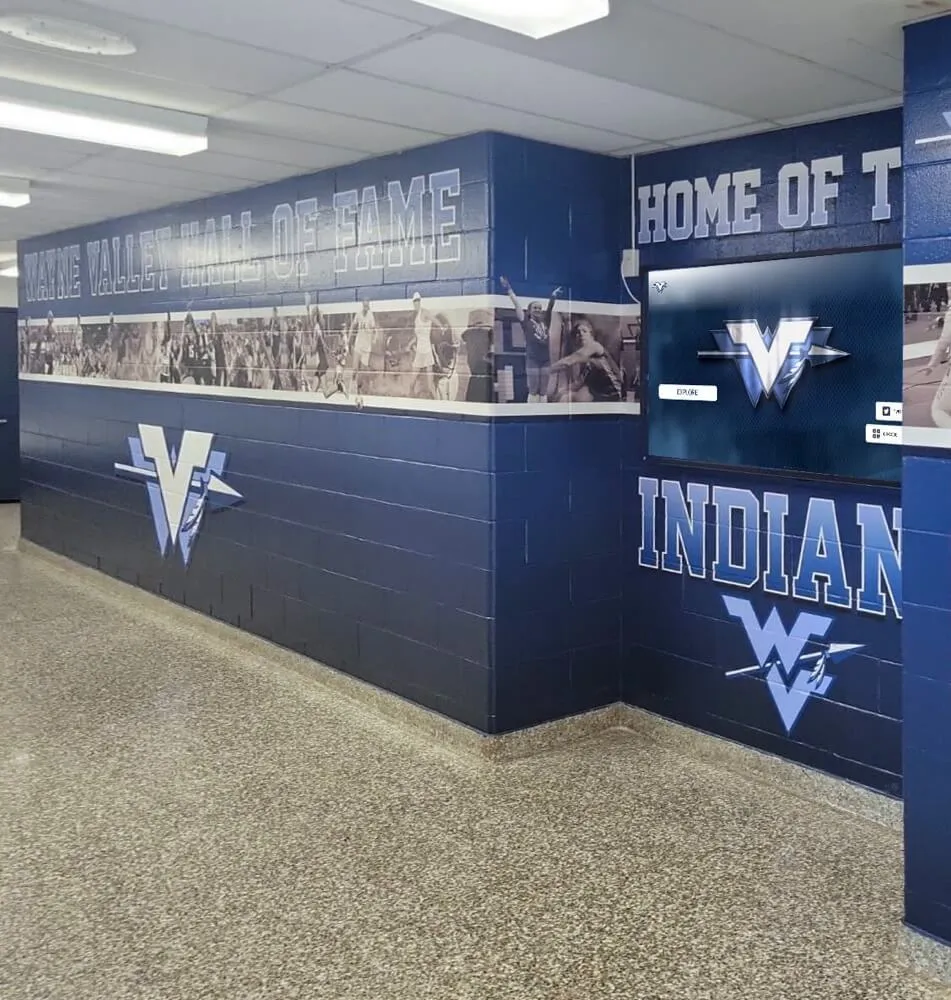
Modern athletic hallways integrate branded murals with digital recognition displays, creating immersive environments celebrating program excellence
Multi-Location Display Strategies
Distributed Recognition Approaches
Large schools benefit from trophy displays in multiple locations:
- Main lobby featuring comprehensive championship overview
- Individual sport facilities showcasing program-specific achievements
- Academic buildings highlighting student-athlete balance
- Alumni visiting areas creating reconnection opportunities
- Athletic department offices displaying coaching milestones
Distributed displays ensure diverse audiences encounter athletic recognition while allowing sport-specific showcases that might be overwhelmed in combined presentations.
Programs incorporating inspiring sports motivation quotes alongside trophy displays create motivational environments that inspire current athletes while celebrating historical achievements.
Maintenance and Longevity Considerations
Trophy cases require ongoing care maintaining presentation quality and protecting valuable contents across decades of service.
Routine Maintenance Requirements
Sustaining Display Quality
Regular maintenance preserves trophy case appearance and functionality:
Cleaning Protocols
- Weekly glass/acrylic panel cleaning removing fingerprints and smudges
- Quarterly interior dusting preventing accumulation on trophies
- Annual deep cleaning including frame, shelving, and locking mechanisms
- Proper cleaning products preventing surface damage to glazing materials
- Trophy polishing maintaining award appearance and legibility
Mechanical Maintenance
- Hinge lubrication ensuring smooth door operation
- Lock mechanism inspection maintaining security
- Lighting component replacement as needed
- Shelf adjustment system verification
- Mounting hardware inspection preventing structural failure
Damage Assessment and Repair
- Immediate glazing replacement if panels crack or break
- Frame touch-up addressing chips and scratches
- Seal inspection preventing moisture intrusion
- Structural integrity evaluation for aging installations
- Professional conservation consultation for historical displays
Schools planning senior living touchscreen awards and recognition systems benefit from low-maintenance digital alternatives that eliminate many traditional trophy case upkeep requirements.
Long-Term Durability Factors
Lifespan Expectations
Trophy case quality dramatically affects service life:
- Budget cases (particle board, thin acrylic): 5-10 years
- Mid-grade cases (aluminum, tempered glass): 15-25 years
- Premium cases (hardwood, museum quality): 30-50+ years
- Digital display systems: 10-15 years (with component upgrades)
Initial cost savings from budget trophy cases often disappear when factoring replacement cycles. Higher-quality displays amortize costs across extended service lives while maintaining superior appearance throughout.
Budget Considerations and Cost Factors
Trophy case investments span a wide price spectrum based on size, materials, features, and customization requirements.
Traditional Trophy Case Pricing
Cost Range Overview
Understanding typical pricing helps budget planning:
Wall-Mounted Display Cases
- Basic models (4’ wide, particle board frame, acrylic): $500-$1,200
- Mid-range (6’ wide, aluminum frame, tempered glass, lighting): $1,500-$3,500
- Premium (8’ wide, hardwood frame, museum glass, integrated lighting): $4,000-$8,000
Floor-Standing Trophy Cases
- Basic models (single-side viewing, simple construction): $800-$2,000
- Mid-range (quality materials, lighting, adjustable shelving): $2,500-$5,000
- Premium (museum-quality, 360-degree viewing, custom design): $6,000-$15,000+
Custom Built-In Installations
- Architectural integration and custom fabrication: $10,000-$50,000+
- Large-scale recognition walls and comprehensive systems: $50,000-$200,000+
Additional Cost Factors
- Shipping and freight (especially for large glass panels)
- Professional installation and mounting
- Electrical work for lighting systems
- Ongoing maintenance and cleaning supplies
- Engraving and labeling for new achievements
- Insurance for valuable trophy collections
Digital Display System Pricing
Modern Alternative Cost Comparison
Digital trophy recognition platforms represent different investment structures:
Initial Hardware Investment
- Commercial-grade touchscreen displays (43"-55"): $3,000-$8,000
- Professional installation and mounting: $1,000-$3,000
- Content management platform subscription: $100-$500/month
- Initial content creation and migration: $2,000-$10,000
Long-Term Cost Advantages
- No physical space expansion costs as achievements accumulate
- Minimal maintenance compared to traditional cases
- Remote content updates eliminating physical access requirements
- Unlimited display capacity without additional hardware
- Easy updates keeping recognition current and relevant
Programs exploring digital hall of fame solutions often discover that five to ten-year total cost of ownership favors digital platforms when accounting for traditional trophy case expansion, maintenance, and update labor costs.
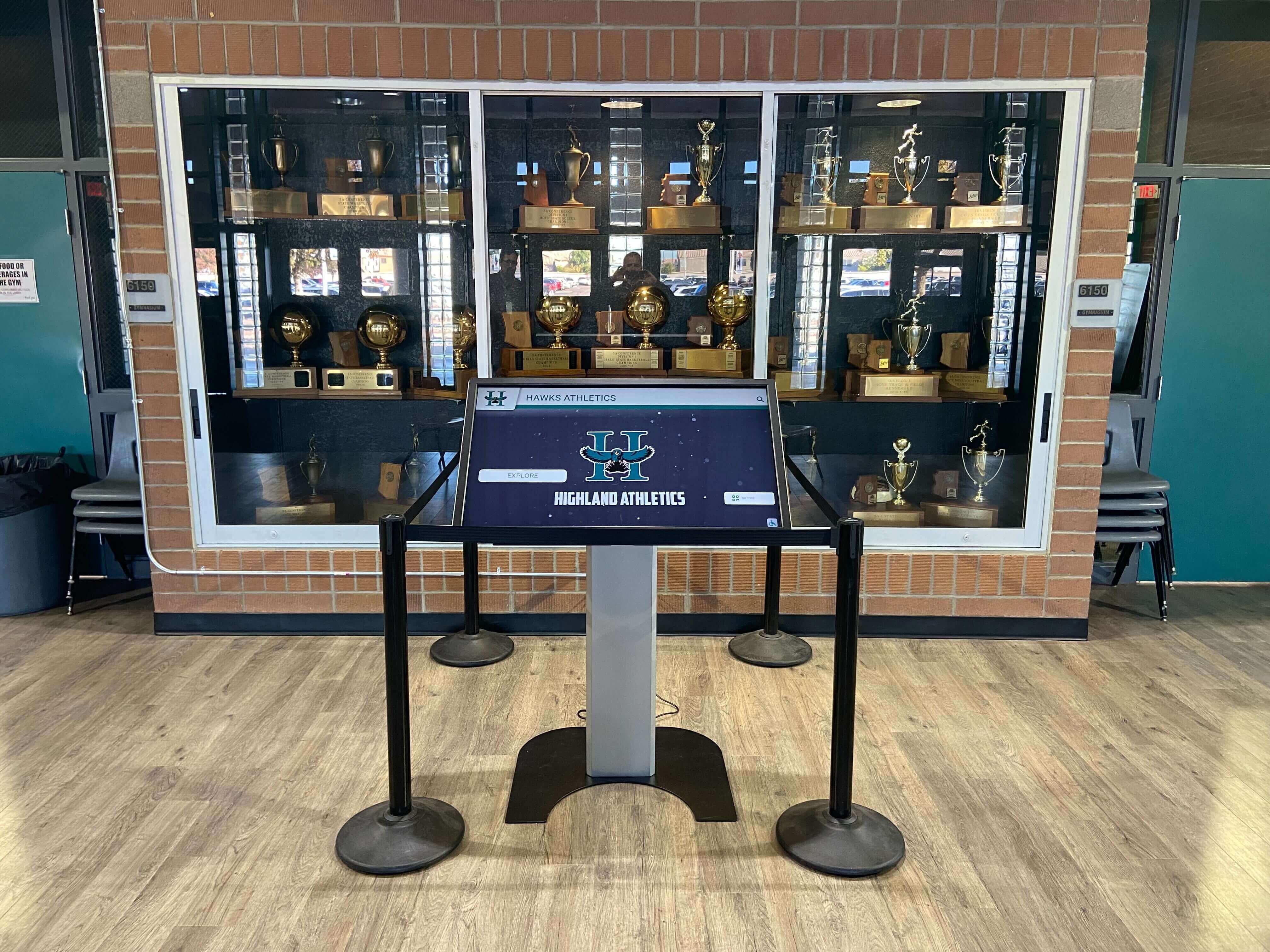
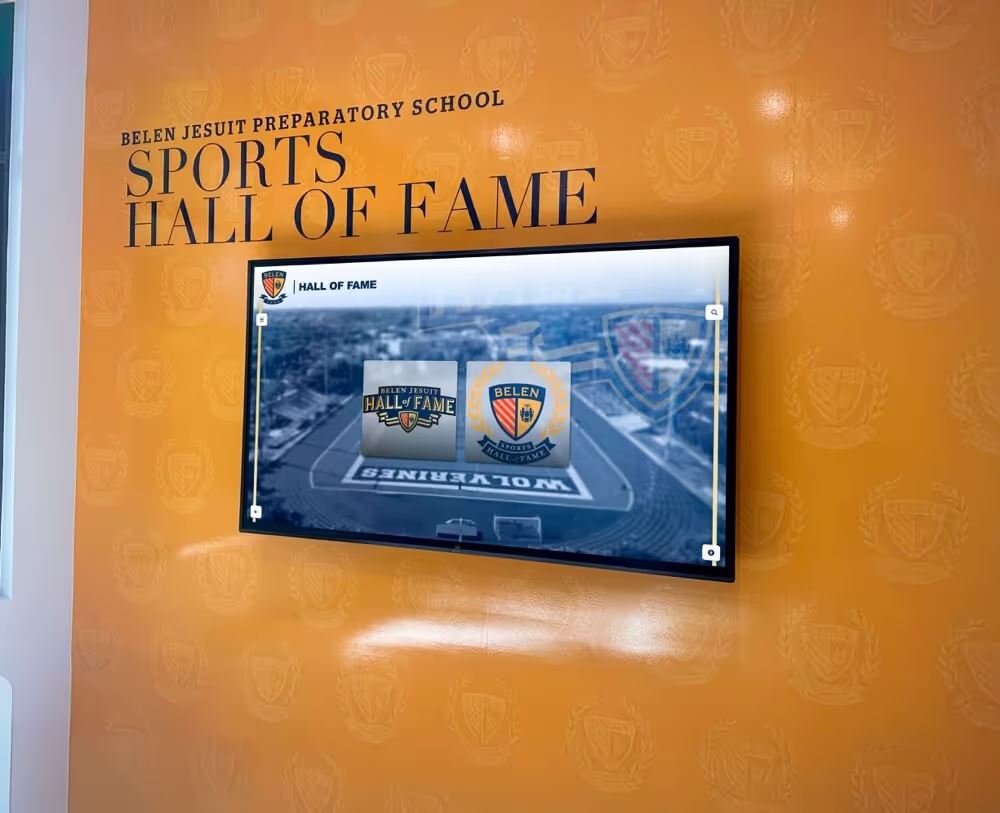
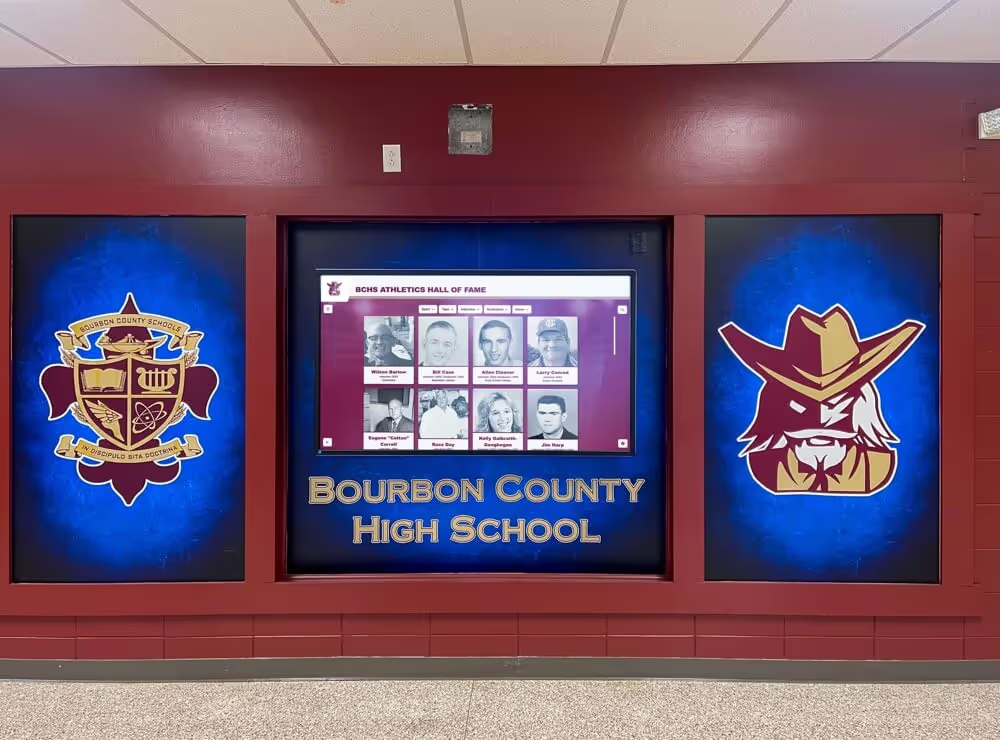
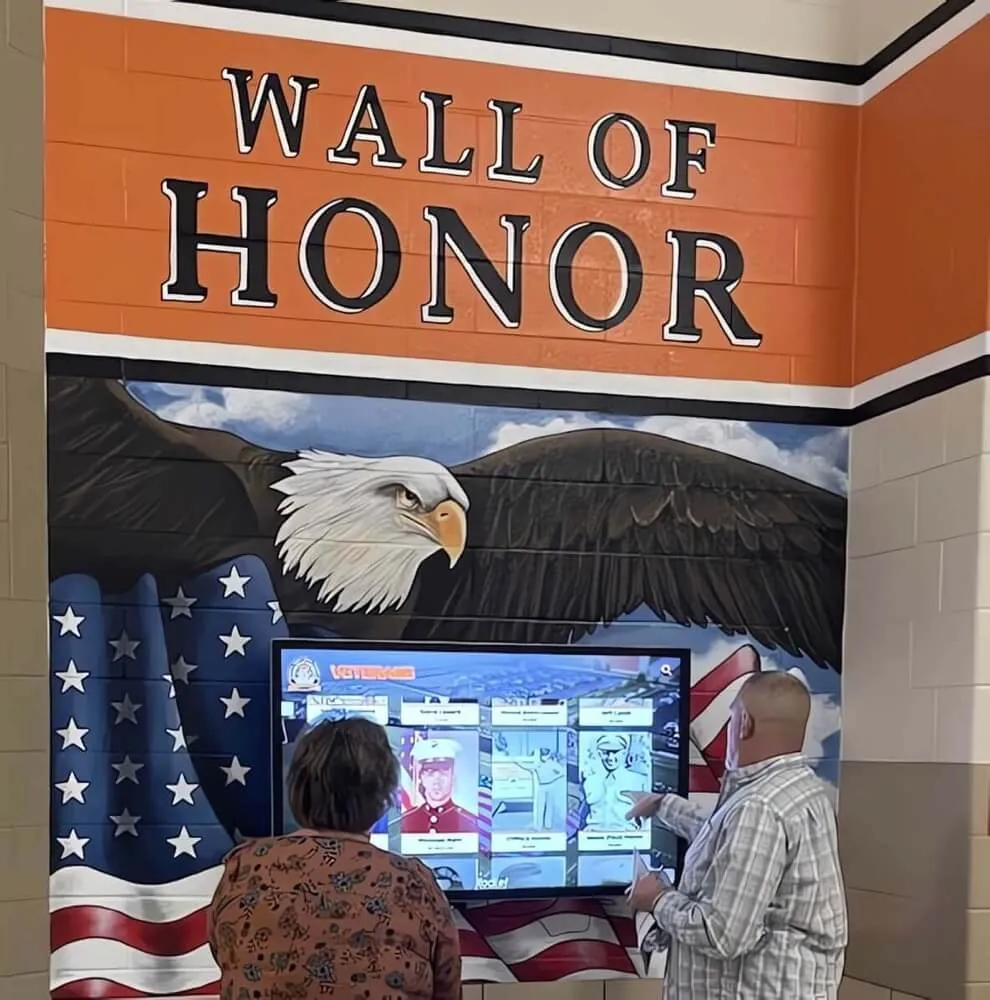
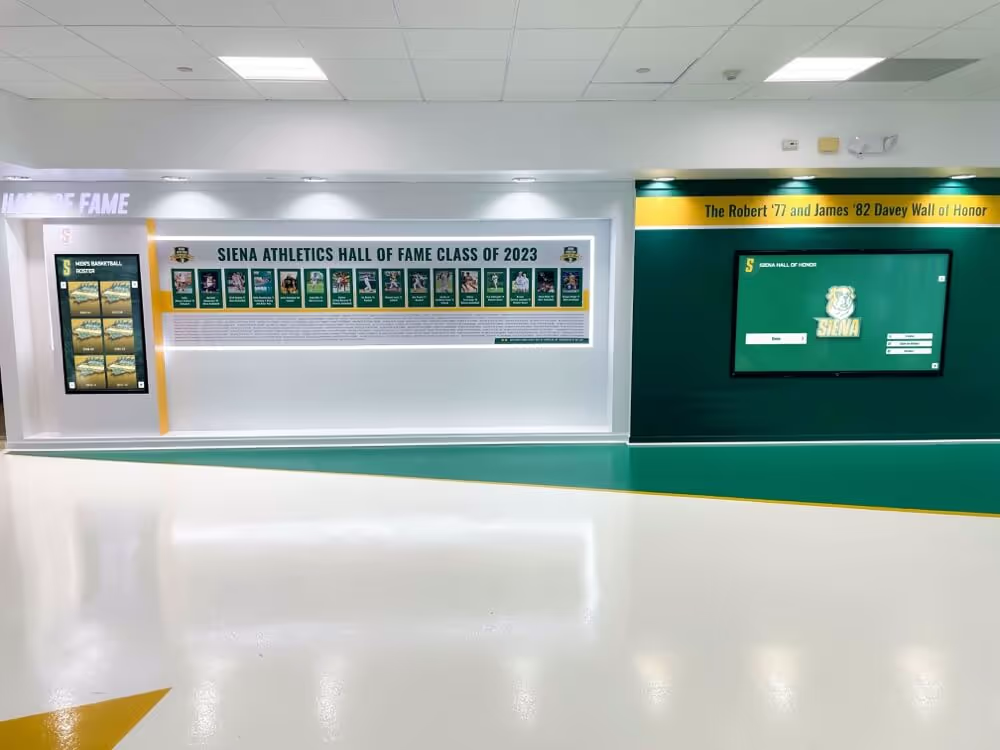
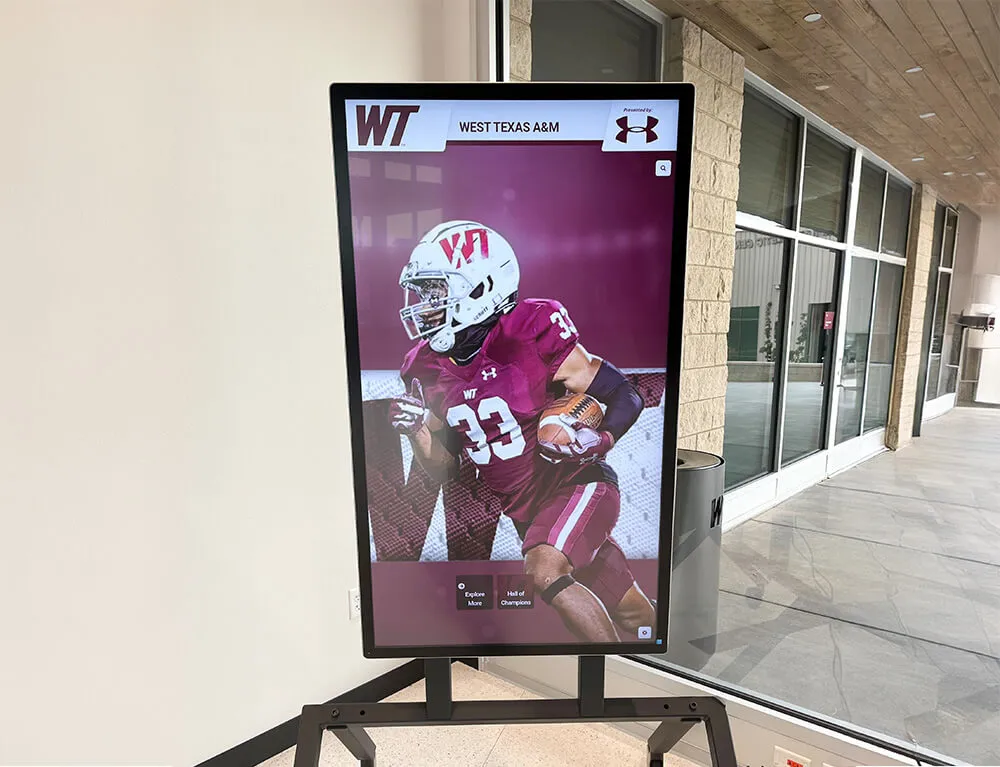
Digital kiosks complement traditional trophy cases, providing unlimited recognition capacity through interactive touchscreen technology
Modern Digital Trophy Case Solutions
When physical space constraints become insurmountable, digital platforms fundamentally solve the capacity problem while introducing engagement capabilities impossible with traditional displays.
Overcoming Physical Limitations
The Unlimited Capacity Advantage
Digital trophy case systems eliminate fundamental constraints:
Space Independence
- Display unlimited championships, tournaments, and achievements
- Accommodate decades of program history without physical expansion
- Add new recognition instantly without displacing existing honors
- Showcase individual athlete achievements alongside team trophies
- Include comprehensive context impossible in physical displays
Enhanced Storytelling Capabilities Traditional trophy cases display hardware with minimal context—a championship plaque shows the year and sport but rarely provides the full story. Digital platforms enable:
- Complete team rosters with athlete photos and profiles
- Season statistics and tournament progression details
- Championship game highlights and video content
- Coach reflections and athlete testimonials
- Historical context connecting achievements across decades
- “Where are they now” updates for alumni athletes
Schools implementing recognition systems for soccer awards for kids through professional athletics benefit from platforms accommodating recognition at every competitive level.
Interactive Engagement Features
Active Exploration vs. Passive Viewing
Digital displays transform trophy recognition from passive glances to active exploration:
Visitor Interaction Capabilities
- Touch navigation browsing achievements by sport, year, or athlete
- Search functionality finding specific teams or individuals instantly
- Filter options displaying conference championships, state titles, or individual honors
- Social sharing enabling community celebration of recognition
- QR code unlocks allowing mobile device viewing and extended content
- Comment and memory submission creating ongoing community engagement
Analytics and Insights Digital platforms provide data about recognition engagement:
- Most-viewed achievements and popular content
- Time spent exploring different sports or eras
- Search patterns revealing what visitors seek
- Peak usage times informing content strategy
- Demographic insights where appropriate
Students encountering interactive displays spend significantly longer exploring athletic history compared to quick glances at static trophy cases—three to five minutes of engaged exploration versus fifteen-second walk-bys typical of traditional displays.
Remote Management Benefits
Operational Efficiency Advantages
Cloud-based trophy recognition eliminates physical access requirements:
Administrative Simplicity
- Remote content updates from any internet-connected device
- Instant recognition additions following championship victories
- Scheduled publishing for future-dated content
- Multi-user access without physical key distribution
- No engraving delays, construction scheduling, or rearrangement labor
- Professional design templates maintaining quality aesthetics
Athletic directors traveling to playoff competitions can update displays immediately following championship wins rather than waiting weeks for engraving and physical installation—ensuring timely recognition when excitement and community interest peak.
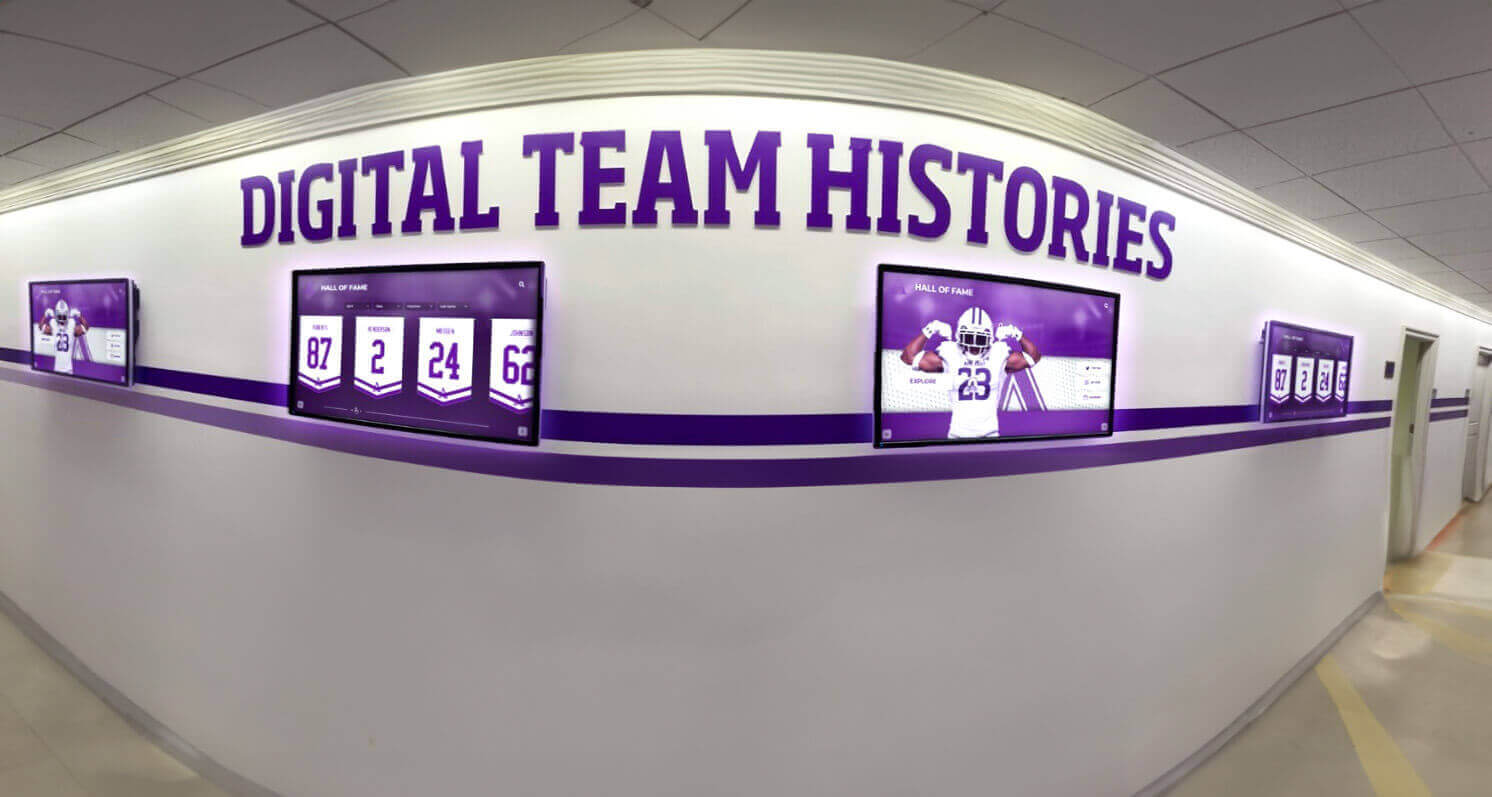
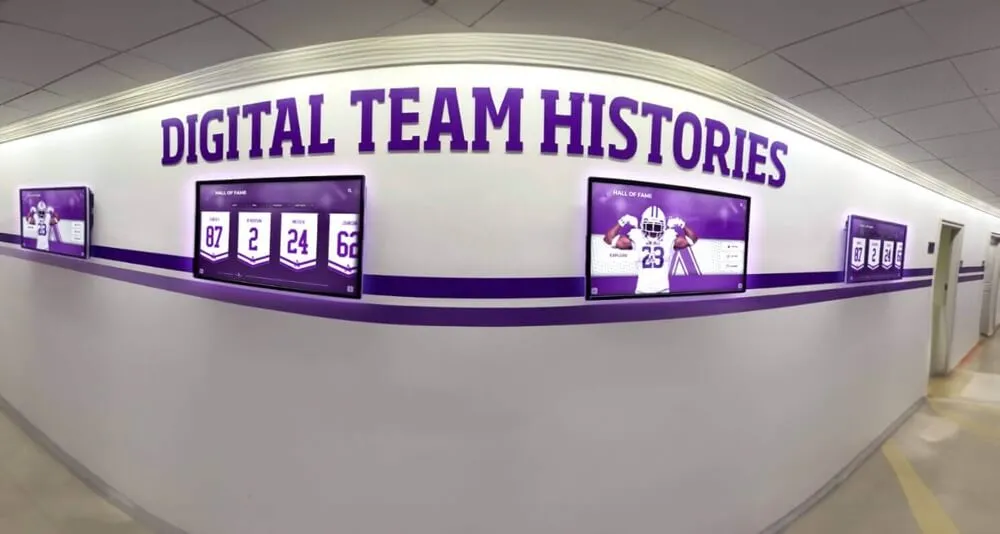
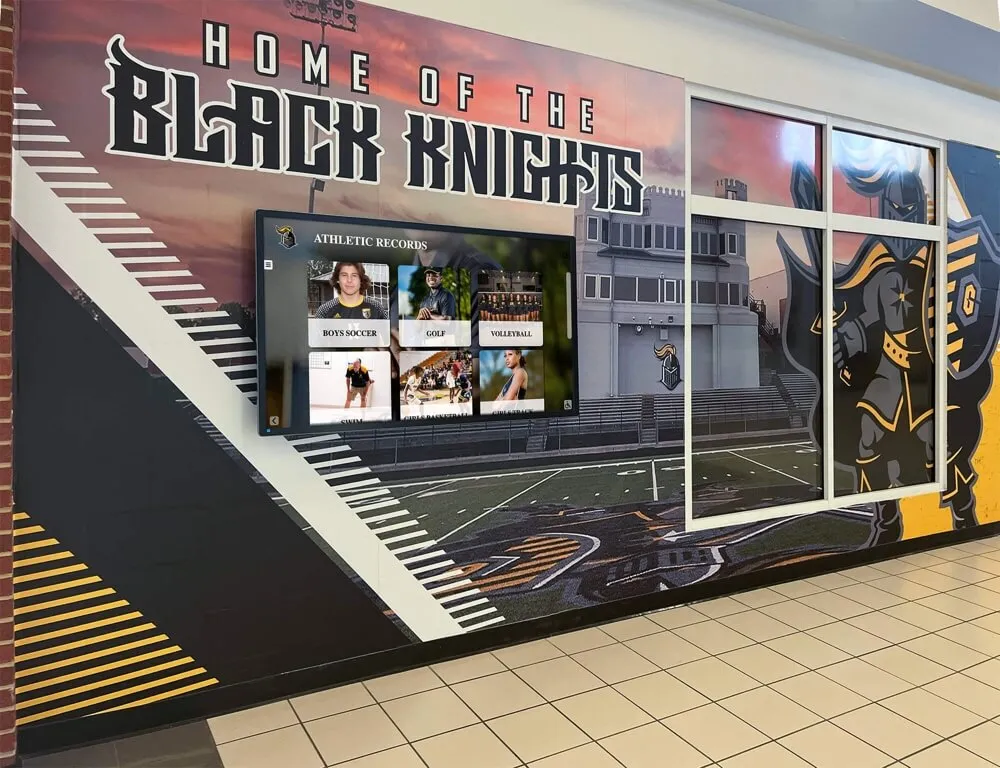
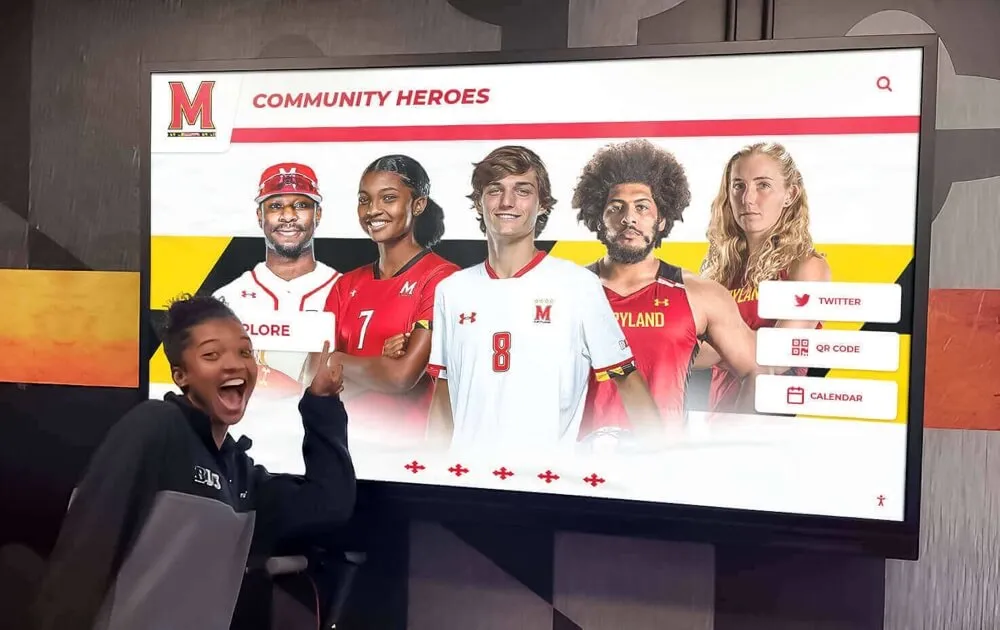
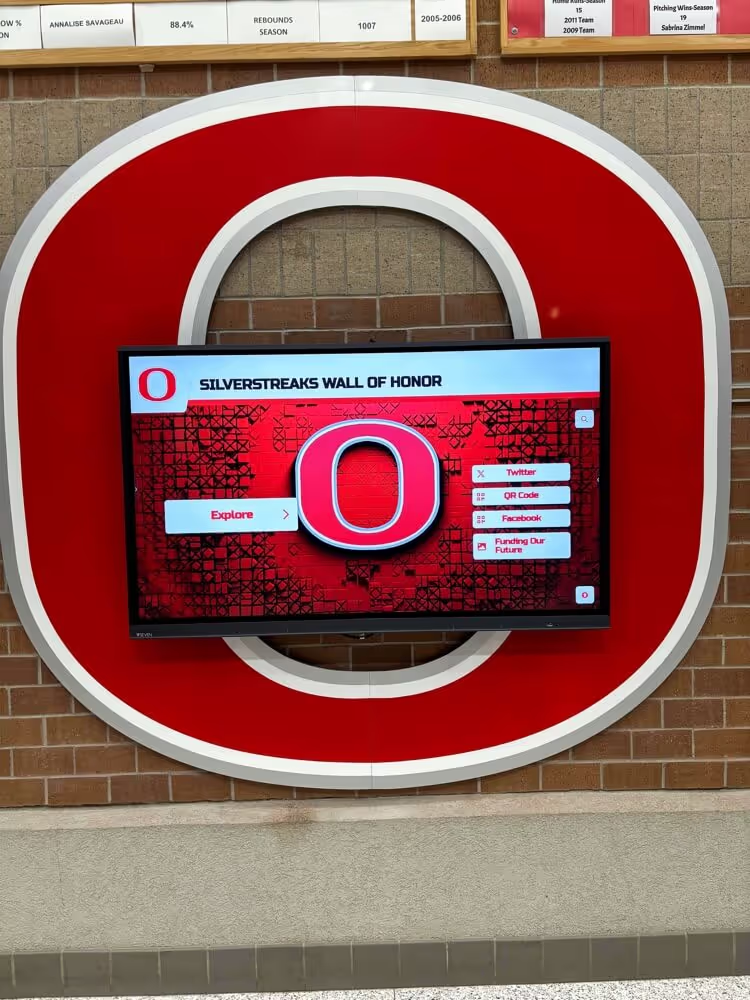
Multiple coordinated digital displays create comprehensive team history presentations impossible with physical trophy case space constraints
Hybrid Recognition Approaches
Many schools implement combination strategies preserving physical trophy traditions while incorporating digital enhancement capabilities.
Physical Display with Digital Companion Systems
Complementary Recognition Strategy
Maintaining physical trophy cases for significant championships while adding digital displays for comprehensive archives:
Implementation Approach
- State championship trophies remain in prominent physical displays
- Digital screens showcase complete tournament histories and conference championships
- Individual athlete achievements highlighted through digital profiles
- Physical trophies create tangible centerpiece anchors
- Digital systems provide unlimited depth beyond featured items
This approach satisfies community members valuing traditional trophy presence while solving capacity limitations through digital expansion, creating recognition systems that honor past traditions while embracing modern capabilities.
Seasonal Rotation with Permanent Digital Archives
Maintaining Fresh Physical Presentations
Schools with substantial collections rotate physical displays seasonally while maintaining permanent digital access:
- Fall sports trophies prominently displayed during football and volleyball seasons
- Winter sport recognition rotated into cases during basketball season
- Spring achievements featured during baseball, track, and tennis seasons
- Complete year-round access to all achievements via digital displays
- Physical rotation creates fresh presentations without permanent removal
This strategy maximizes limited physical display space while ensuring every achievement receives regular visibility, preventing the “storage box” problem where worthy trophies never see display space.
Selection Criteria and Decision Framework
Systematic evaluation helps schools choose trophy cases matching specific needs, constraints, and priorities.
Needs Assessment Questions
Clarifying Requirements
Before shopping for trophy cases, answer these fundamental questions:
Current State Evaluation
- How many trophies currently require display space?
- What is the size range (smallest to largest trophies)?
- Do existing trophy cases meet current capacity needs?
- What is the condition of current displays?
- Are stored trophies worthy of display but lacking space?
Future Projection
- How many new trophies does the program generate annually?
- Are athletic programs expanding with additional sports?
- What is the anticipated recognition growth over 5-10 years?
- Will individual athlete recognition expand beyond current practices?
- Are there planned facility renovations affecting display locations?
Budget Reality
- What funding is available for trophy case investment?
- Are there donor opportunities for recognition infrastructure?
- What is the acceptable ongoing maintenance cost?
- Should investment prioritize longevity or immediate affordability?
- Are phased implementations viable if comprehensive solutions exceed budget?
Comparing Traditional vs. Digital Solutions
Decision Factor Analysis
Traditional Trophy Cases Make Sense When:
- Display needs are static with minimal annual growth
- Budget requires lowest possible upfront investment
- Community strongly values physical trophy presence
- Available wall or floor space accommodates foreseeable needs
- Physical security of valuable trophies is a priority
- Facilities lack reliable power for digital displays
- Technical support for digital systems is unavailable
Digital Displays Become Compelling When:
- Physical space constraints limit recognition capacity
- Achievement volume grows continuously requiring expansion
- Remote management capability provides operational value
- Enhanced storytelling with photos and videos is desired
- Analytics about recognition engagement provide planning value
- Budget includes consideration of long-term costs, not just upfront
- Accessibility compliance (ADA/WCAG) is required
- Integration with school communications systems adds value
Neither solution is universally superior—the right choice depends on specific circumstances, priorities, and constraints. Many schools discover that hybrid approaches combining physical displays for featured achievements with digital systems for comprehensive archives provide optimal results.
Installation and Implementation Considerations
Successful trophy case projects require thoughtful installation planning addressing technical, operational, and safety requirements.
Professional Installation vs. DIY Approaches
Implementation Method Comparison
Professional Installation Advantages
- Proper wall anchoring ensuring structural safety
- Electrical wiring for lighting meeting code requirements
- Level and plumb installation maintaining appearance
- Manufacturer warranty compliance (often requiring professional installation)
- Liability protection through insured contractor work
- Time efficiency compared to inexperienced DIY attempts
DIY Installation Considerations Wall-mounted trophy cases, especially large units with glass panels, require substantial weight capacity. Improper installation risks property damage, personal injury, and warranty voiding. For any but the smallest, simplest cases, professional installation represents wise investment protecting both safety and display quality.
Timeline Planning
Project Schedule Expectations
Realistic timeline planning prevents frustration:
Traditional Trophy Case Projects
- Selection and ordering: 2-4 weeks
- Manufacturing and shipping: 6-12 weeks (custom cases longer)
- Installation scheduling: 1-3 weeks
- Installation completion: 1-2 days
- Trophy arrangement and setup: 1-2 weeks
- Total project timeline: 10-20 weeks
Digital Display Projects
- System selection and customization: 2-4 weeks
- Hardware procurement: 3-6 weeks
- Content creation and migration: 4-12 weeks (depending on volume)
- Installation and configuration: 1-2 weeks
- Training and launch: 1 week
- Total project timeline: 11-25 weeks
Rushed implementations compromise quality. Schools planning trophy recognition upgrades should begin planning at least six months before desired completion dates, allowing adequate time for thoughtful decision-making, proper procurement, and quality installation.
Making Your Trophy Case Decision
Selecting appropriate trophy cases represents an important investment in recognizing athletic achievement and celebrating program excellence—decisions that will impact your school’s recognition capabilities for years or decades to come.
Key Takeaways for Selection
Decision Summary Points
- Capacity planning is critical: Choose systems accommodating realistic growth projections, not just current needs
- Quality matters for longevity: Premium materials and construction extend service life dramatically
- Lighting transforms presentation: Proper illumination converts functional storage into engaging showcases
- Location affects impact: Strategic placement maximizes recognition visibility and community engagement
- Maintenance is ongoing: Budget for and plan sustainable upkeep maintaining display quality
- Digital alternatives solve space constraints: Modern platforms eliminate capacity limitations fundamentally
- Hybrid approaches balance tradition and innovation: Combining physical and digital displays leverages strengths of both
Next Steps for Implementation
Action Planning
- Assess Current Situation: Inventory existing trophies and evaluate current display adequacy
- Define Requirements: Clarify capacity needs, budget constraints, and timeline expectations
- Research Options: Explore traditional cases and digital alternatives matching requirements
- Gather Stakeholder Input: Involve athletic directors, coaches, and community members in decisions
- Request Proposals: Obtain detailed quotes including installation and long-term costs
- Plan Implementation: Schedule installation coordinating with facility availability
- Launch and Celebrate: Unveil new recognition systems with appropriate ceremony
Showcase Unlimited Achievements with Digital Trophy Cases
Traditional trophy cases reach capacity, forcing difficult choices about which achievements receive recognition. Digital trophy case platforms eliminate space constraints entirely while providing engaging interactive experiences that static displays cannot match. Discover how schools showcase comprehensive athletic legacies with unlimited capacity, remote management convenience, and professional presentations that inspire pride and celebrate excellence.
Book A DemoConclusion
Choosing the right trophy cases for your school’s hard-won honors requires balancing immediate display needs against long-term capacity realities, weighing traditional aesthetics against modern capabilities, and considering how recognition systems will serve your program not just today but across the decades as championships accumulate and athletic excellence continues.
Traditional physical trophy cases offer tangible presence that athletes and communities value deeply—championship hardware displayed behind glass creates permanent tributes to competitive success that inspire current athletes while honoring past excellence. Quality construction, proper lighting, and thoughtful placement transform simple storage into impressive showcases celebrating program legacy.
Yet honest assessment reveals that physical trophy cases impose fundamental limitations. As successful programs generate achievements year after year, even well-designed displays reach capacity. The choice becomes removing older trophies to storage, overcrowding displays until individual achievements lose impact, or investing in continuous expansion that strains budgets and consumes facility space.
Digital trophy case solutions fundamentally solve the capacity constraint through unlimited recognition space, comprehensive storytelling capabilities traditional displays cannot match, remote management eliminating physical access hassles, and interactive engagement transforming passive viewing into active exploration of athletic history. For programs facing space limitations, digital platforms provide compelling alternatives or powerful complements to traditional trophy cases.
The trophy case anchoring your athletic hallway represents more than furniture—it embodies how your school values achievement, preserves program history, and inspires future generations. Whether selecting traditional displays, embracing digital innovation, or implementing hybrid approaches combining both, thoughtful trophy case decisions create recognition systems worthy of the dedication, teamwork, and excellence they celebrate.
Begin with honest assessment of your current situation, realistic projection of future needs, and clear understanding of available resources. Then explore options—traditional, digital, or combined—that will honor your program’s hard-won achievements while creating recognition systems that will continue serving your school effectively across the many championships yet to come.