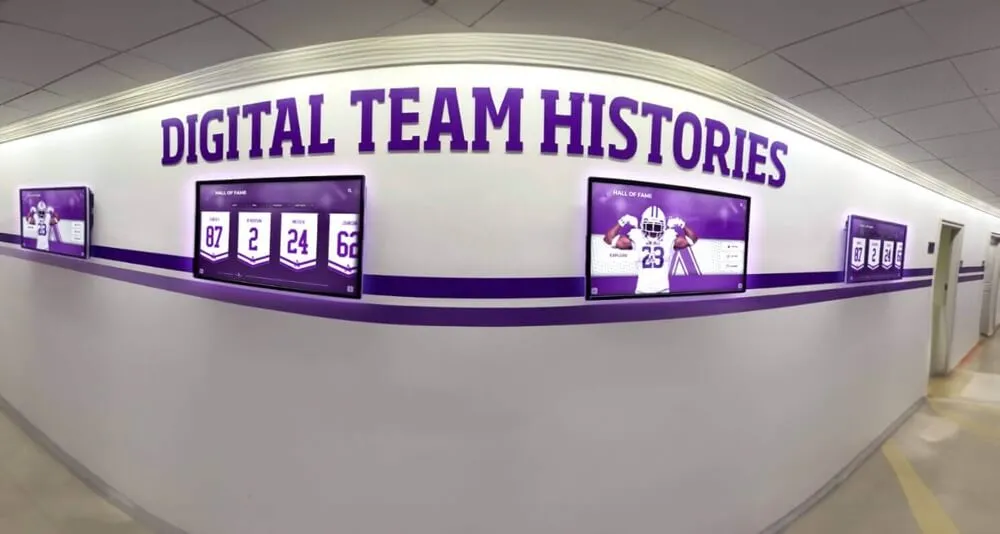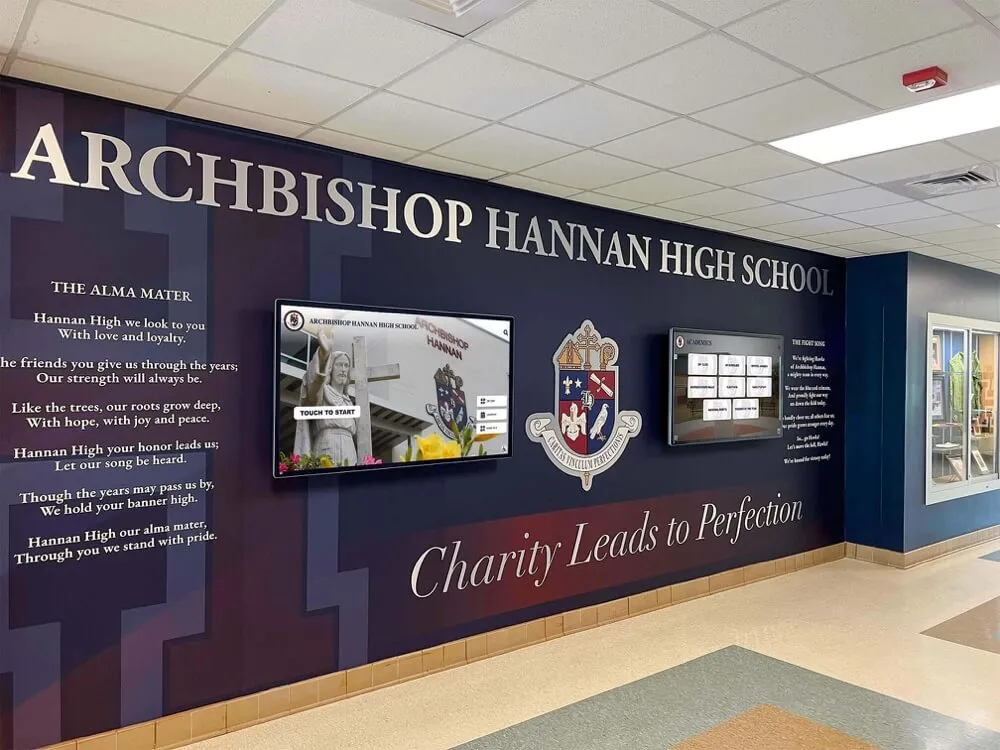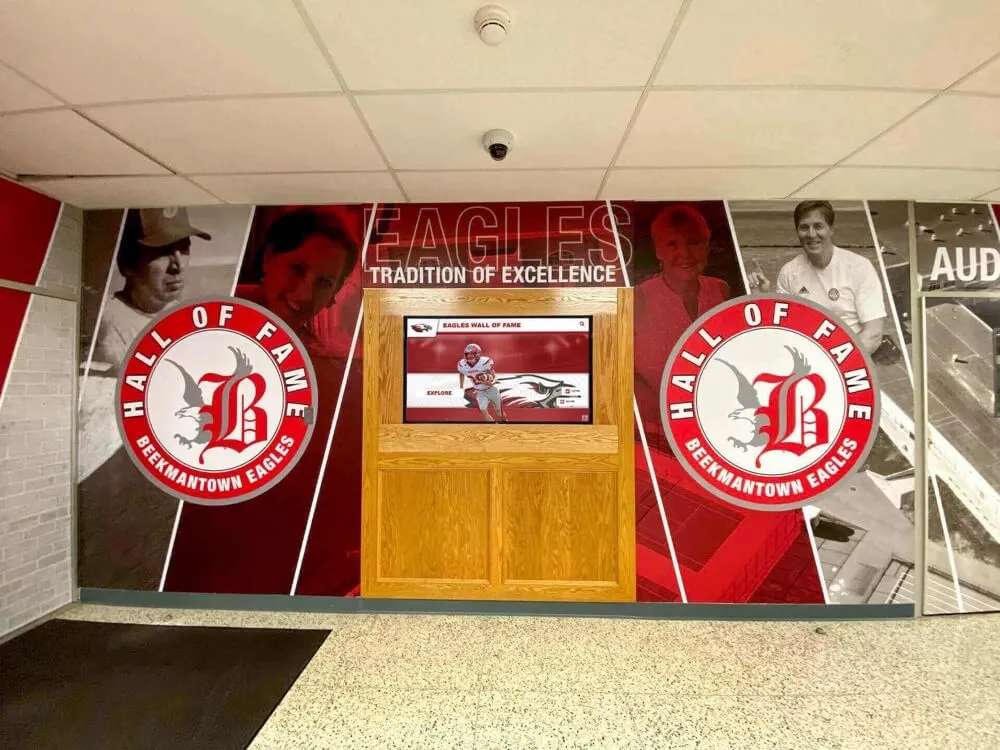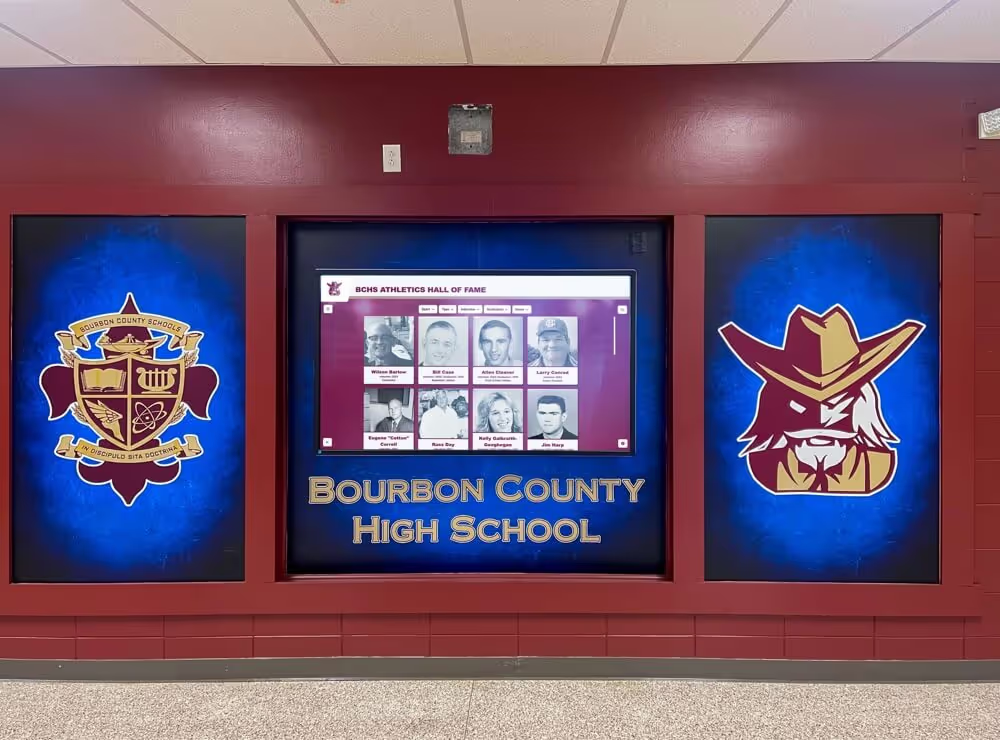




Intent: define — a trophy case water damage response plan is a documented, phase-by-phase protocol that helps school administrators, athletics staff, and facilities personnel respond safely to leaks, pipe bursts, roof intrusion, or flooding that threatens a school’s trophy case, awards, and physical memorabilia. The plan covers people safety first, then condition documentation, award stabilization, material-specific drying, and permanent digital archiving so that no championship record or honoree name is ever lost to a water event, regardless of what happens to the physical items.
Water damage does not announce itself. A roof leak during an overnight storm, a burst pipe above a gymnasium lobby, a slow seep from a faulty HVAC drain line — any of these can reach a trophy case before anyone on staff is aware it is happening. When facilities or athletics staff arrive on Monday morning to find standing water near a display case stacked with decades of championships, plaques, and memorabilia, the decisions made in the first hour determine how much is recovered and how much is permanently lost.
This guide gives school administrators, athletic directors, and facilities staff a clear, actionable trophy case water damage response plan structured around five phases: immediate response, documentation, stabilization and removal, drying and treatment, and long-term digital backup. A responsibility table, a material-specific treatment reference, and a FAQ section follow the phase-by-phase guidance.

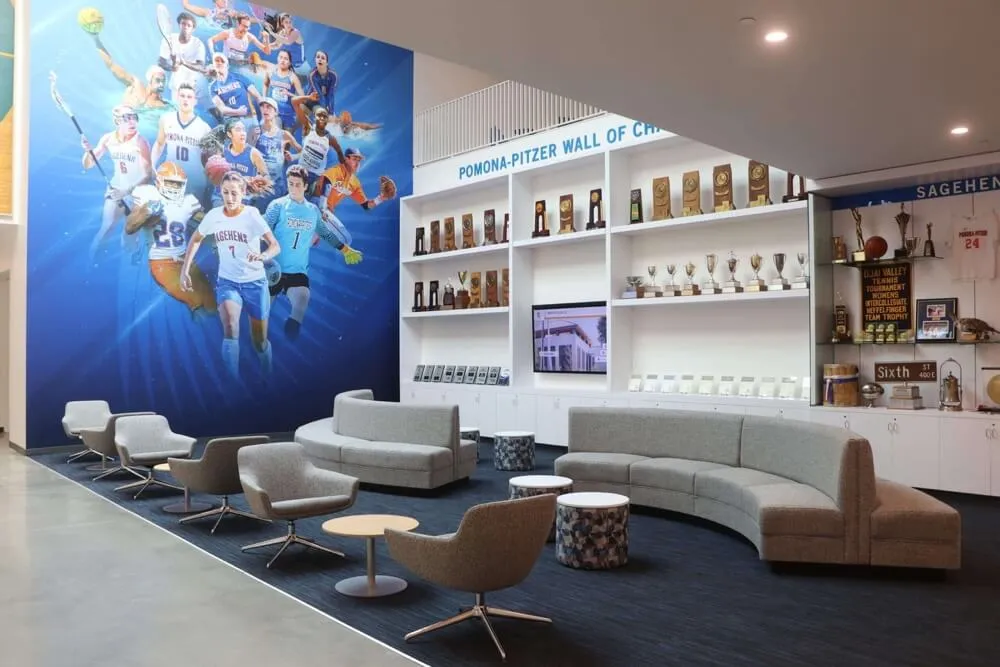
Trophy cases in school corridors and athletic lobbies can be reached by water damage from multiple sources — a documented response plan determines how quickly and completely the recognition record can be recovered
Phase 1: Immediate Response — First 60 Minutes
The first hour of a water damage event is the most consequential for both safety and recovery. Do not enter standing water near a trophy case until the electrical safety of the space has been confirmed.
Safety actions before any recovery work:
- Contact facilities or maintenance staff immediately — do not enter a flooded area alone
- Confirm that electrical power to the affected area has been shut off at the breaker panel; never assume power is off without verification from facilities staff
- If the water source is an active pipe break, confirm with facilities that water supply to the affected line has been shut off before entering
- If the water is from an external source (roof, drainage backup), assess whether the volume continues to increase before committing staff to recovery work in the space
Once the space is confirmed safe to enter, take a single photograph of the overall scene before touching anything. This initial documentation record is relevant for insurance purposes and for reconstruction of the pre-disturbance state.
Immediate physical containment:
- Place absorbent materials (towels, dry mop heads, commercial absorbent pads) at the base of the trophy case and around the perimeter of the affected area
- Do not drag the trophy case across a wet floor — floor contact can damage the case base, compromise anchoring, and redistribute contaminated water
- If water is actively dripping onto the case from overhead, use a tarp or plastic sheeting to interrupt the drip path before it soaks into the case further
Phase 2: Document Conditions Before Removal
Condition documentation before disturbing any item serves two purposes: it creates an accurate record for insurance claims, and it establishes a baseline from which recovery priorities can be determined.
Documentation steps:
- Photograph the entire trophy case from multiple angles, showing water contact levels, any visible damage to the case exterior, and the overall state of the contents
- Open each door and photograph the interior shelves from the same position — document which shelves are wet, which items have water contact, and where any visible mold or discoloration already exists
- Note the approximate water level that reached the case (floor level, base of case, first shelf, mid-case, etc.) — this guides the treatment priority for each item
- Record the date, time, and name of each person involved in the documentation step
- If a facilities management or insurance contact has been reached, send the documentation photographs immediately — do not wait for the recovery process to be complete
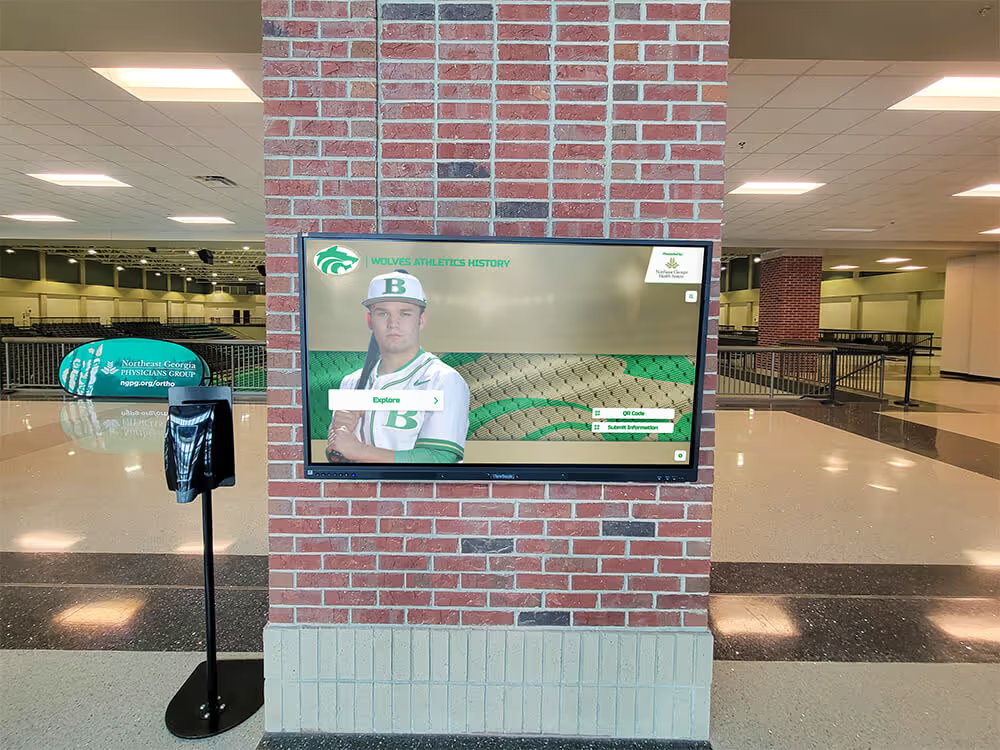
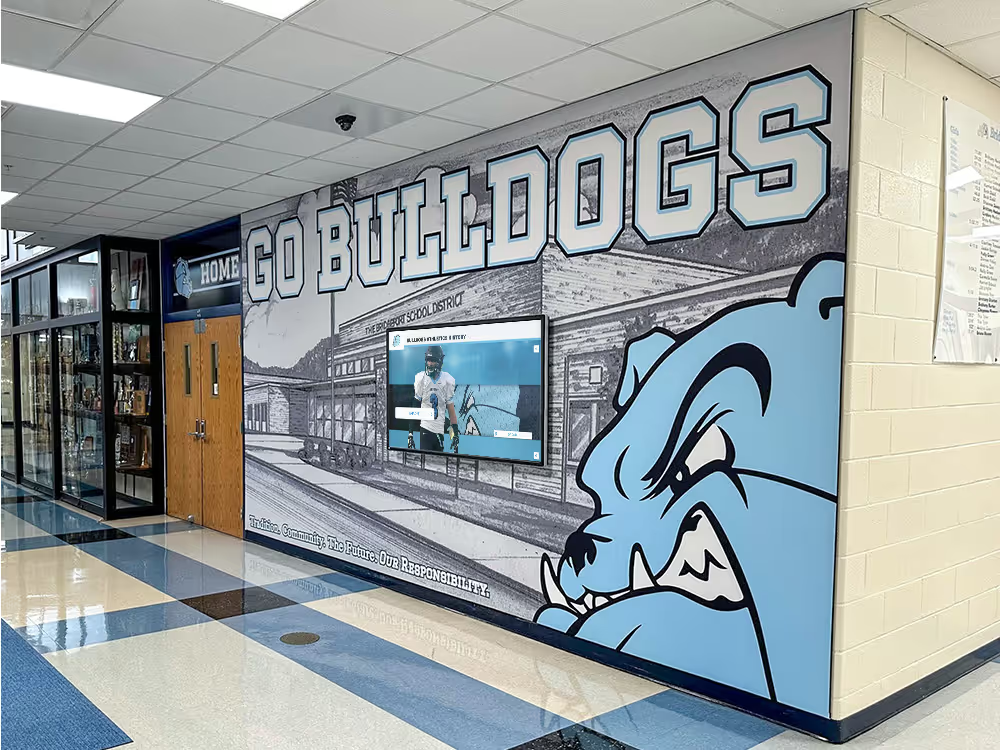
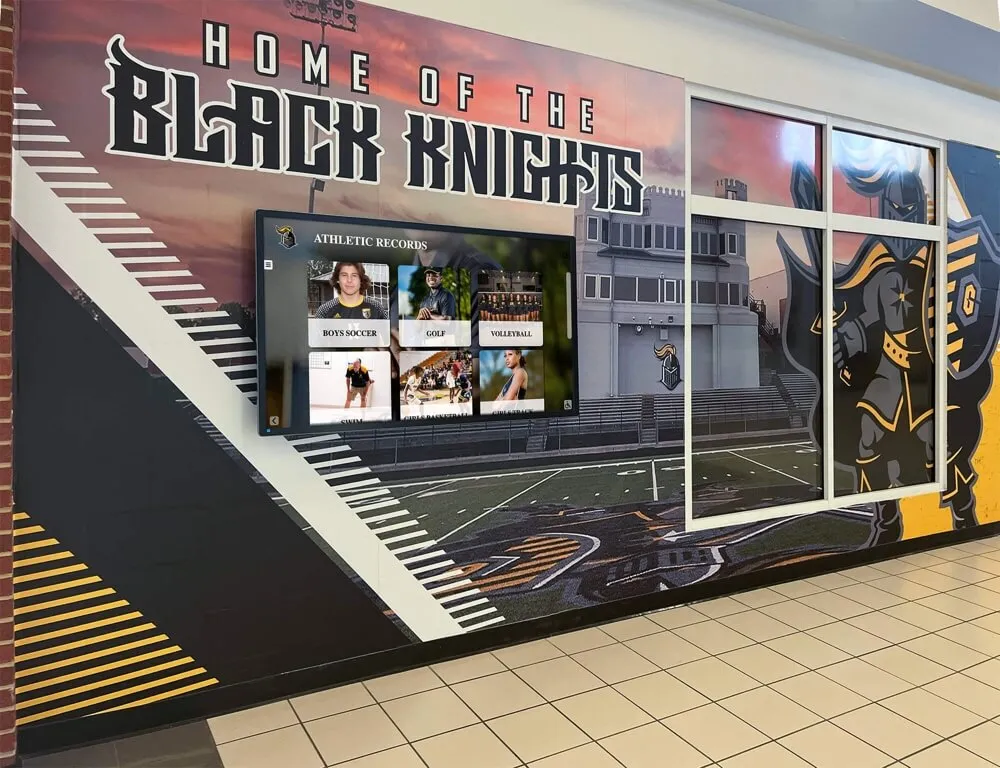
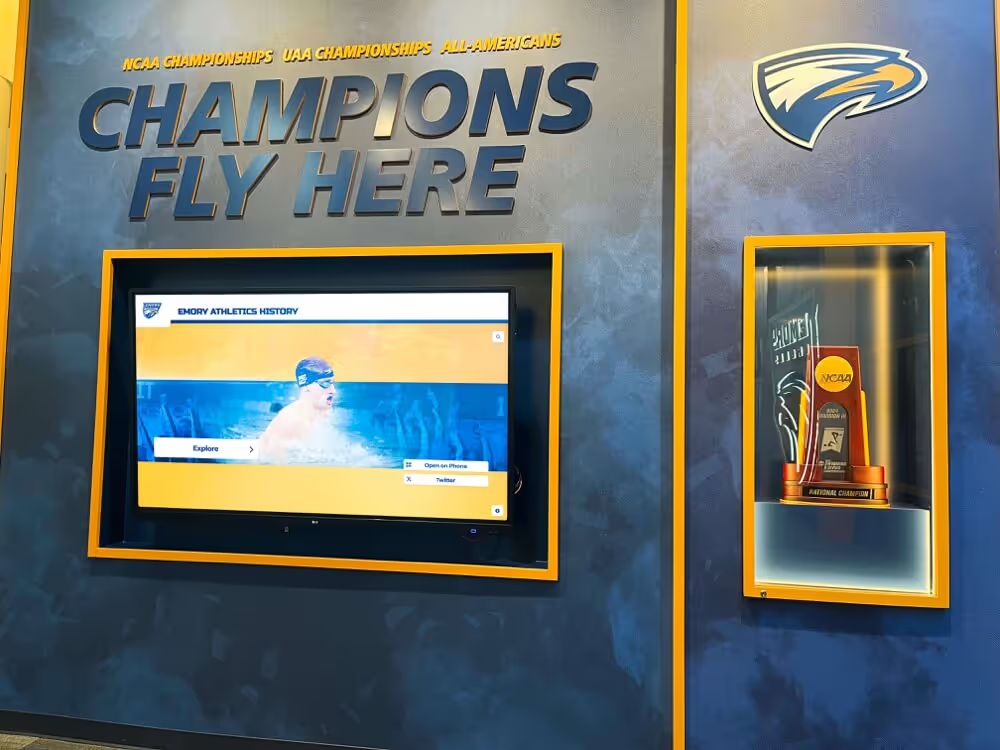
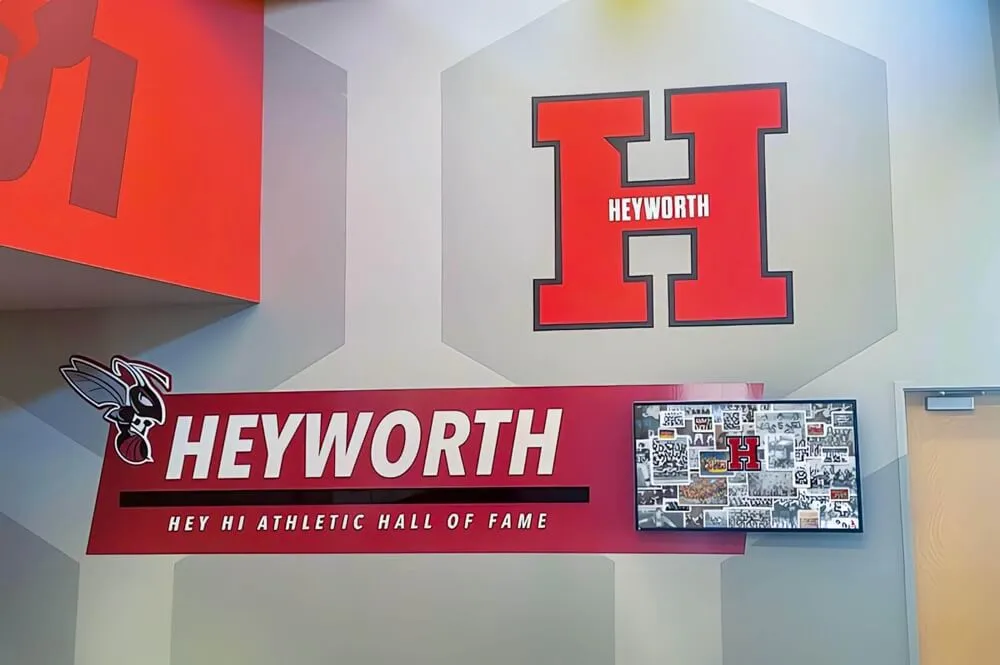
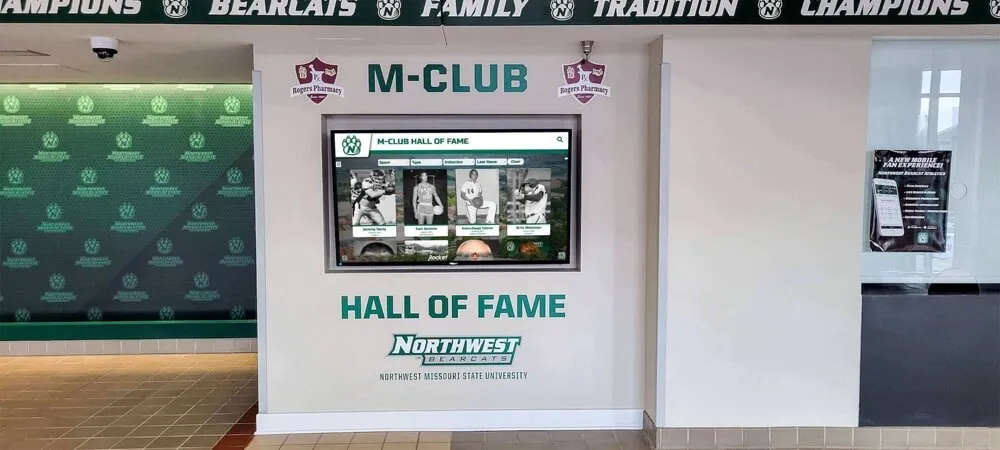
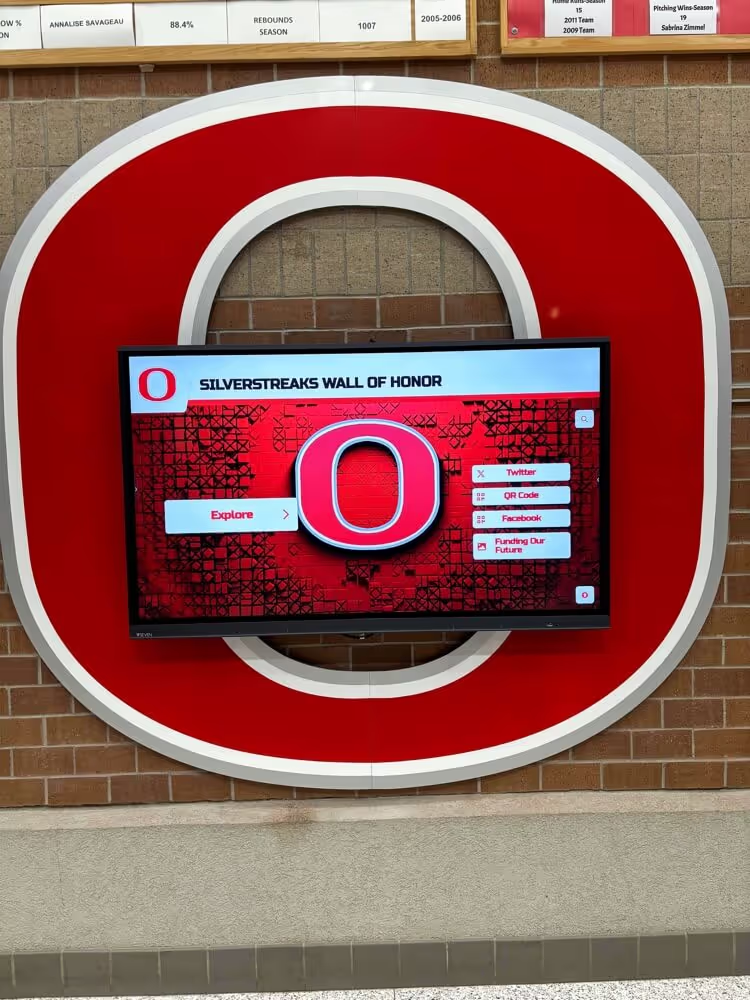
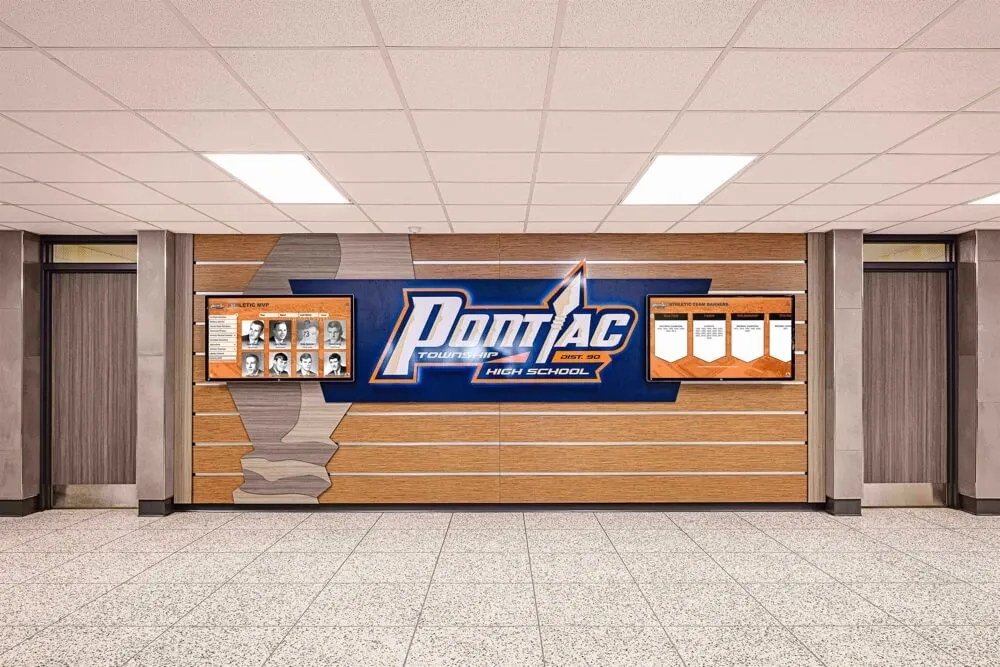
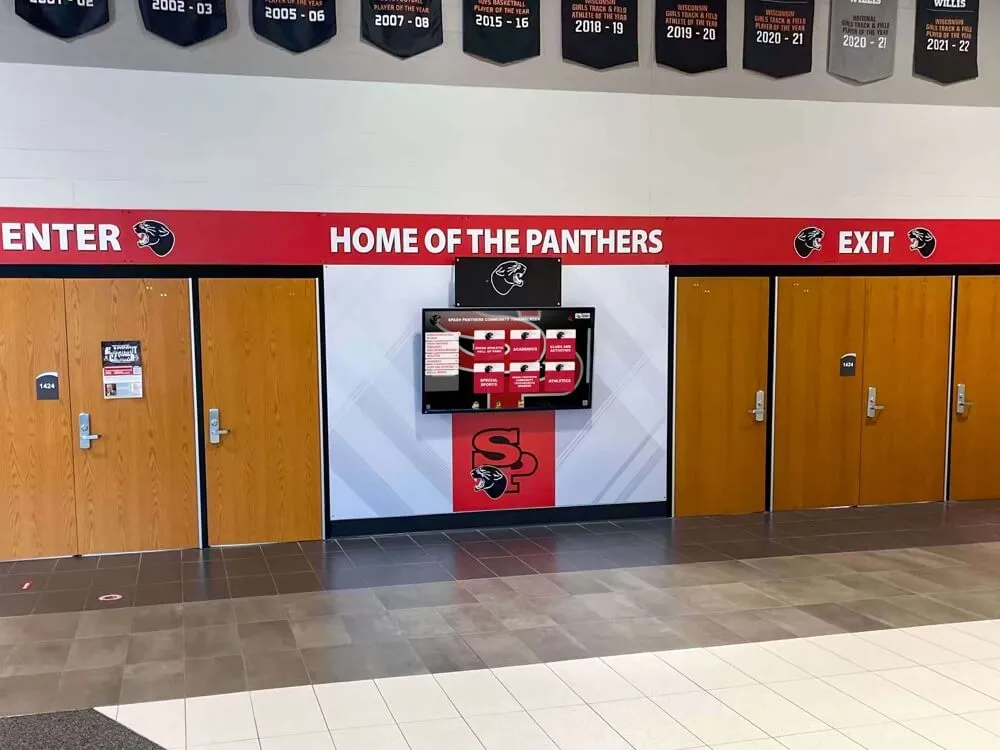
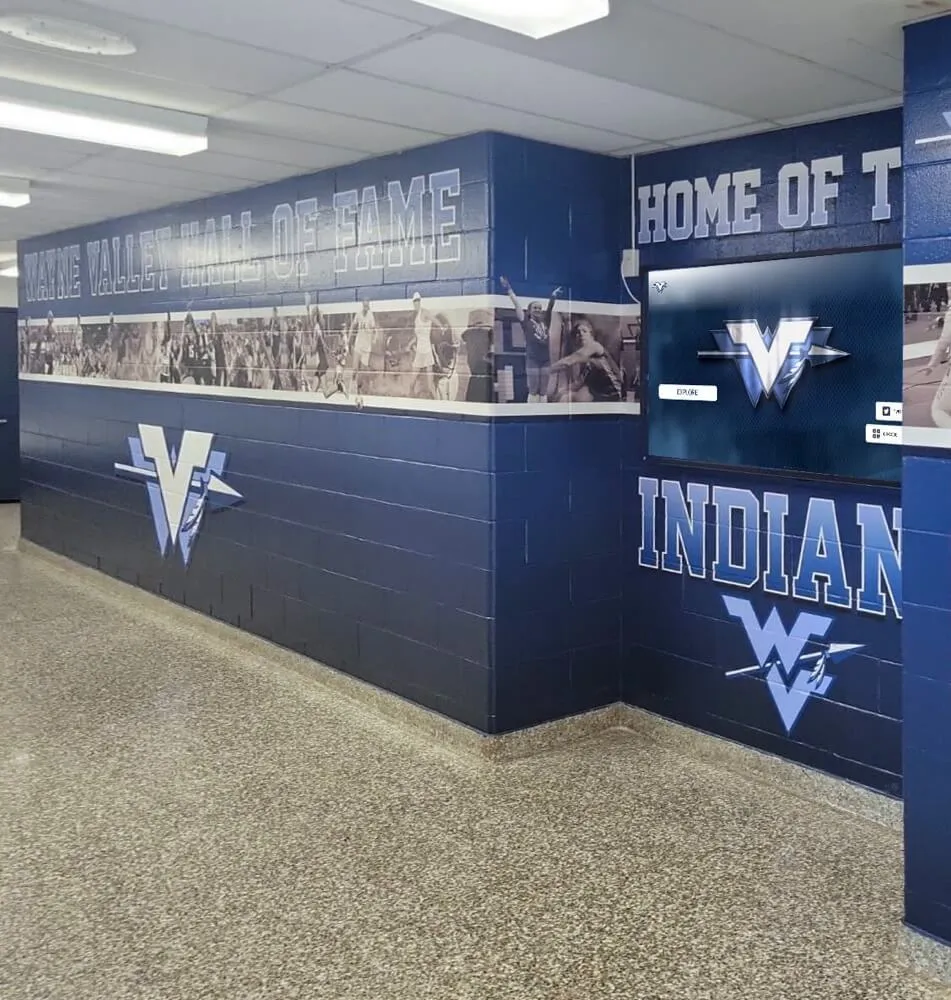
For schools with a large athletics program, the breadth of awards potentially at risk can span decades. The diversity of materials involved — from metal trophies to framed photographs to vinyl lettering — is part of what makes documentation essential before recovery begins. Schools that have invested in interactive touchscreen recognition for programs like wrestling and athletics already understand how many categories of achievement a single school’s recognition record can encompass — and how irreplaceable that history is if physical items are lost.
Phase 3: Stabilization and Safe Removal of Awards
Once documentation is complete, awards should be removed from a wet or actively threatened case in a deliberate sequence — heaviest and most water-exposed items first, fragile items last, with protective materials used for each item category.
Removal sequence:
- Remove any items from the floor of the case first — these have had maximum water contact time
- Work upward through shelves, removing items from the most water-exposed areas before areas with only humidity or condensation contact
- Handle engraved metal trophies with clean cotton gloves — fingerprints accelerate corrosion on wet metal surfaces
- Wrap fragile items (glass-front plaques, framed photographs, items with paper labels) individually in clean paper or soft cloth before placing them in labeled recovery containers
- Keep items from different shelves or categories in separate labeled containers — mixing awards during recovery makes identification and tracking significantly harder
Labeling recovery containers:
Mark each container with: the case location, the shelf position, the approximate time of removal, and a brief count of items inside. This label system is the minimum needed for tracking items through the drying process and returning them to their correct positions after recovery.
Phase 4: Material-Specific Drying and Treatment
Different award materials respond differently to water exposure. The following reference covers the most common materials found in school trophy cases.
Metal trophies and components: Rinse gently with clean water to remove any contaminated water residue, then pat dry with a clean cloth — do not use heat. Allow to air dry in a well-ventilated space. Check for corrosion on metal columns and figure bases once dry; trophies with hollow metal columns may hold water internally and require longer drying time.
Engraved plaques (metal face): Same rinse-and-pat process as metal trophies. For plaques with mounting hardware, remove hardware if possible to allow the backing to dry independently.
Wood-backed plaques: Wood swells with water exposure. Place face-down on a clean dry surface in a well-ventilated space. Do not force wood to dry quickly with heat — rapid drying causes splitting and warping. Allow two to five days for natural drying depending on thickness. Plaques with severe swelling may not return to original dimensions.
Framed photographs and paper certificates: Remove from frames immediately if the paper has water contact — paper sticks to glass as it dries and cannot be separated without tearing. Place each sheet face-up on a clean absorbent surface. If multiple wet sheets are stacked together, separate them now regardless of how difficult handling becomes — stacking wet paper leads to total loss.
Glass-front display cases and plaques: Inspect all glass for cracks introduced by water stress. Handle cracked glass only with gloves. For intact glass panels, clean and dry separately from the backing.
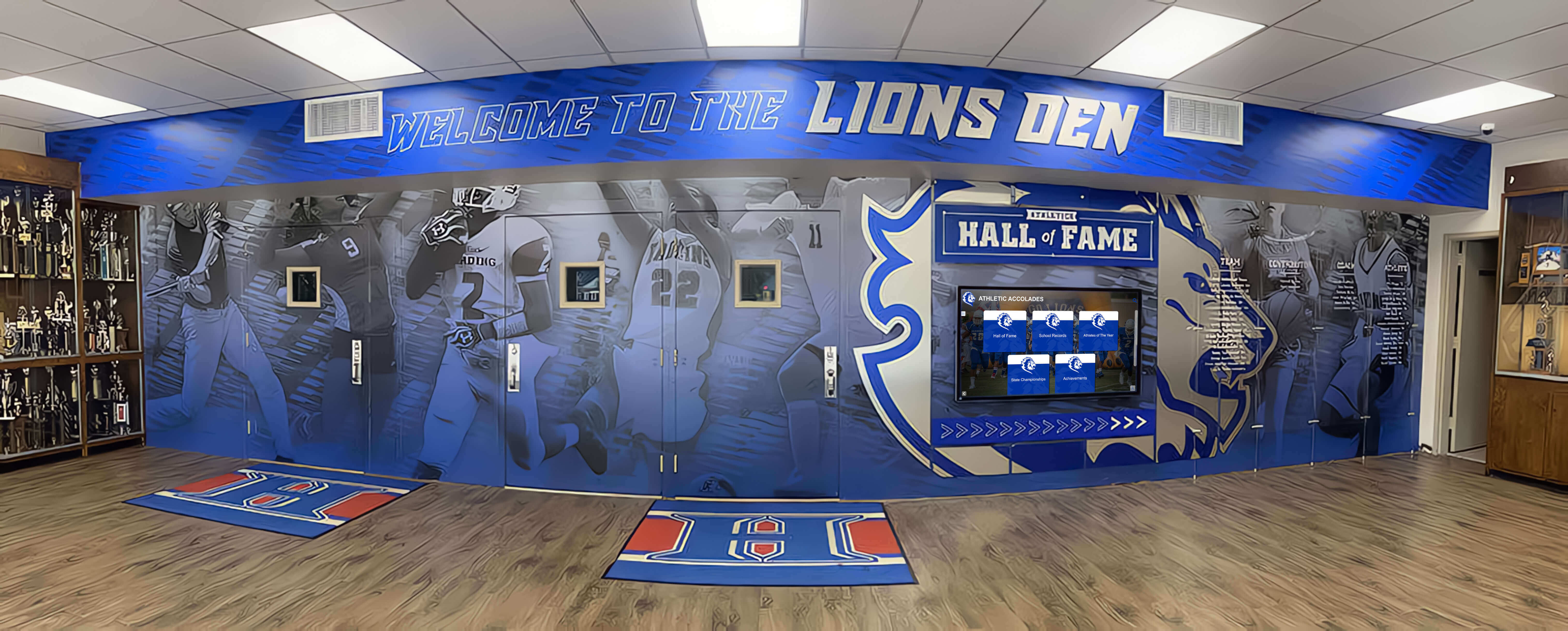
Trophy cases in athletic corridors hold materials across every category — metal, wood, paper, glass, and fabric — each of which requires a different immediate treatment approach after water contact
Material Response Reference Table
| Award Material | Immediate Action | Drying Approach | Common Risk |
|---|---|---|---|
| Metal trophy (solid) | Rinse, pat dry, wear gloves | Air dry, ventilated space | Surface corrosion, joint oxidation |
| Metal plaque (engraved) | Rinse, remove hardware | Air dry face-up | Edge corrosion, backing separation |
| Wood plaque / base | Pat dry, do not rinse | Face-down, slow air dry | Warping, splitting, paint lift |
| Framed photograph | Remove from frame immediately | Face-up on absorbent surface | Sticking to glass, tearing |
| Paper certificate | Separate from all other wet surfaces | Single-layer face-up drying | Ink bleed, tearing, mold |
| Fabric (banners, patches) | Lay flat, do not wring | Hung or flat in ventilated space | Color bleed, shrinkage |
| Glass panel / frame | Inspect for cracks, handle with gloves | Wipe and air dry | Stress fractures not visible until handled |
| Vinyl lettering / decal | Blot gently, do not scrub | Air dry in place if possible | Edge lift, adhesive failure |
Phase 5: Digital Backup as a Permanent Resilience Layer
The most consequential action a school can take in the aftermath of water damage — or better, before a water event ever occurs — is to build a digital archive of every award, honoree, championship, and recognition record the trophy case contains. A physical trophy that is lost to water damage can sometimes be replaced as hardware; the name, year, sport, and story it records cannot be recovered if no digital copy exists.
Building a digital record before a water event:
- Photograph every item in the trophy case during annual or semi-annual trophy case maintenance, not only during an emergency
- Record each award’s key data: honoree name, sport or activity, award type, year, and any engraving text
- Store photographs and data in a cloud-based system accessible from outside the school building — a local server or USB drive kept in the same building as the trophy case is not a backup from a disaster recovery standpoint
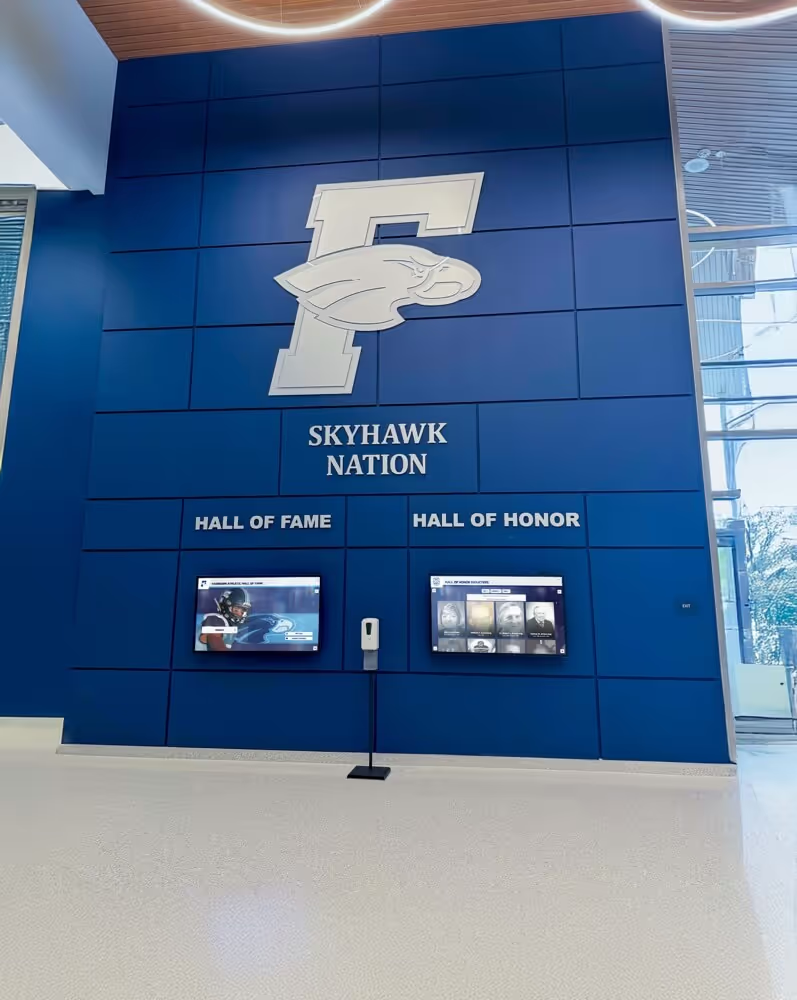
For schools managing the full scope of athletic records — records boards, program histories, individual performance records — a structured digital approach to preservation pays long-term dividends far beyond water damage preparedness. The complete guide to digital record boards for schools covers how schools are moving performance records, championship histories, and recognition data into accessible digital formats that survive any physical event.
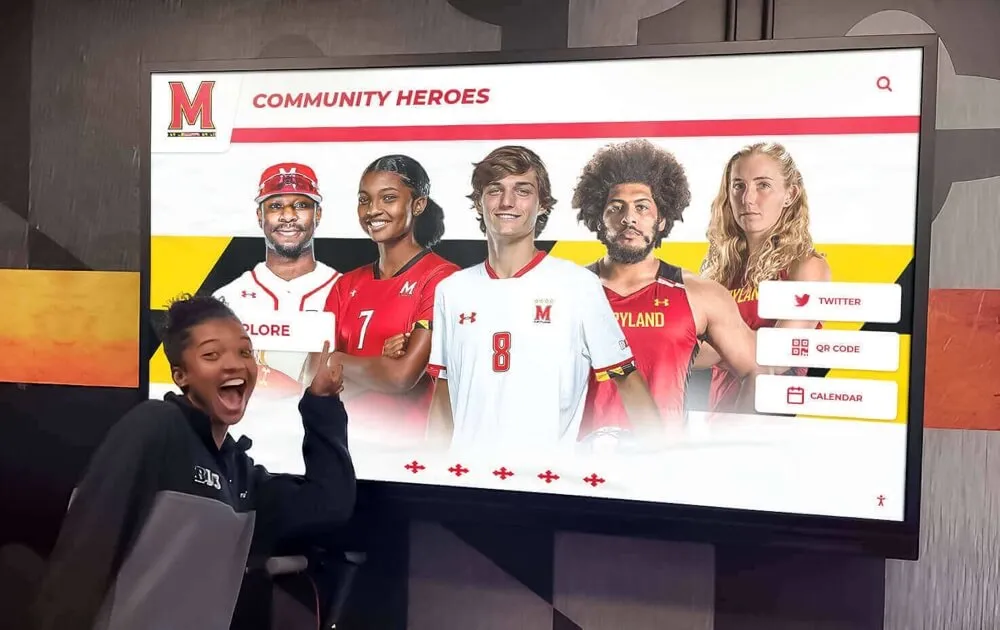
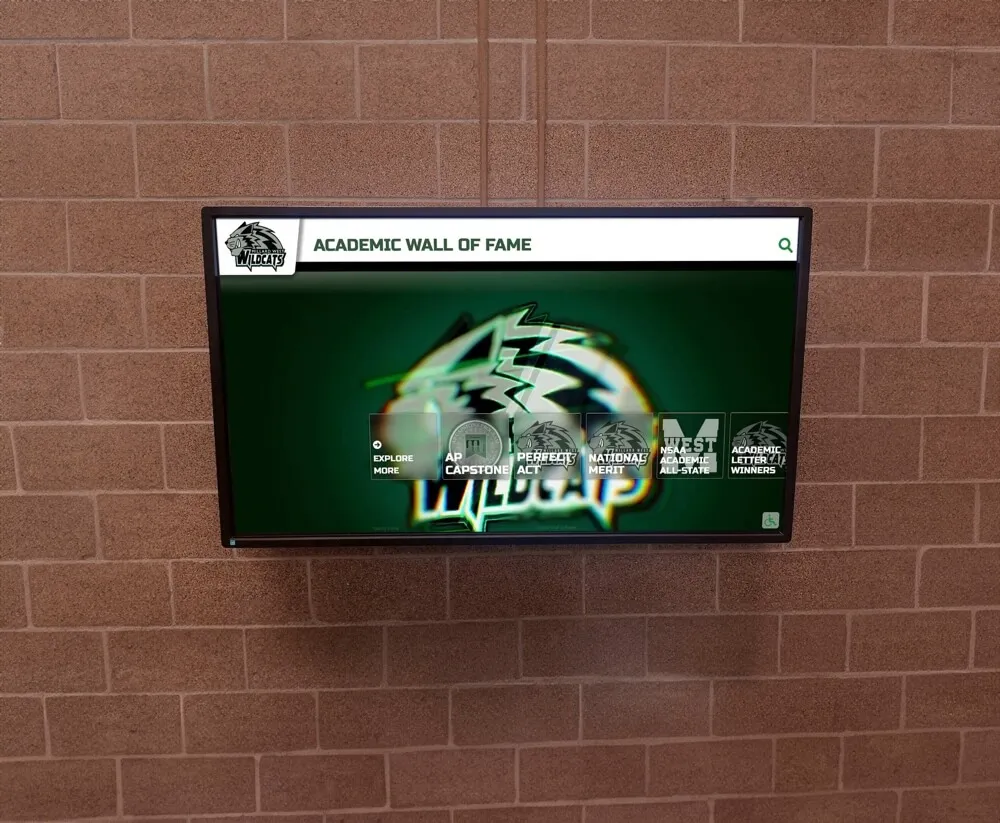
Recognition programs that extend beyond athletics — including class officers, academic achievers, and student leadership — represent an equally irreplaceable institutional record. Schools building comprehensive digital archives increasingly use platforms that can hold all recognition categories in one place. The guide to digital showcases for high school class officers and student recognition illustrates how that broader digital record can be built and maintained alongside athletic recognition.
Organizations outside the K-12 school context face the same challenge with irreplaceable recognition records in physical displays. The growing adoption of digital recognition infrastructure across institution types — from schools to faith communities to corporate campuses — reflects a broad understanding that digital resilience is not optional for organizations that value their recognition history. The guidance on digital donation and recognition systems for community organizations provides useful context on how diverse institutions are approaching the transition from physical to digital-first recognition.
Returning the Trophy Case to Service
After drying is complete and all items have been assessed, the return-to-service process requires the same deliberateness as removal. Do not reinstall items until both the items themselves and the trophy case interior are fully dry — residual moisture inside a closed case creates the conditions for mold growth on wood, paper, and fabric items within days.
Return-to-service checklist:
- Case interior surfaces are fully dry, including back wall, shelf surfaces, and floor of case
- All items removed are dry to the touch with no moisture in hollow components
- Items with visible mold or irreversible damage are set aside for assessment — do not reinstall damaged items without review
- Anchoring hardware and wall attachment points are inspected for water damage before case is re-loaded
- All items are returned to their documented pre-incident positions
For schools re-establishing their recognition displays after a water event, a return to the new school year can serve as the natural milestone for a full recovery of the recognition space. The guide to back-to-school ideas for recognition displays addresses how athletics and administrative staff can approach the fresh school year as an opportunity to improve and modernize recognition areas, not simply restore the prior state.
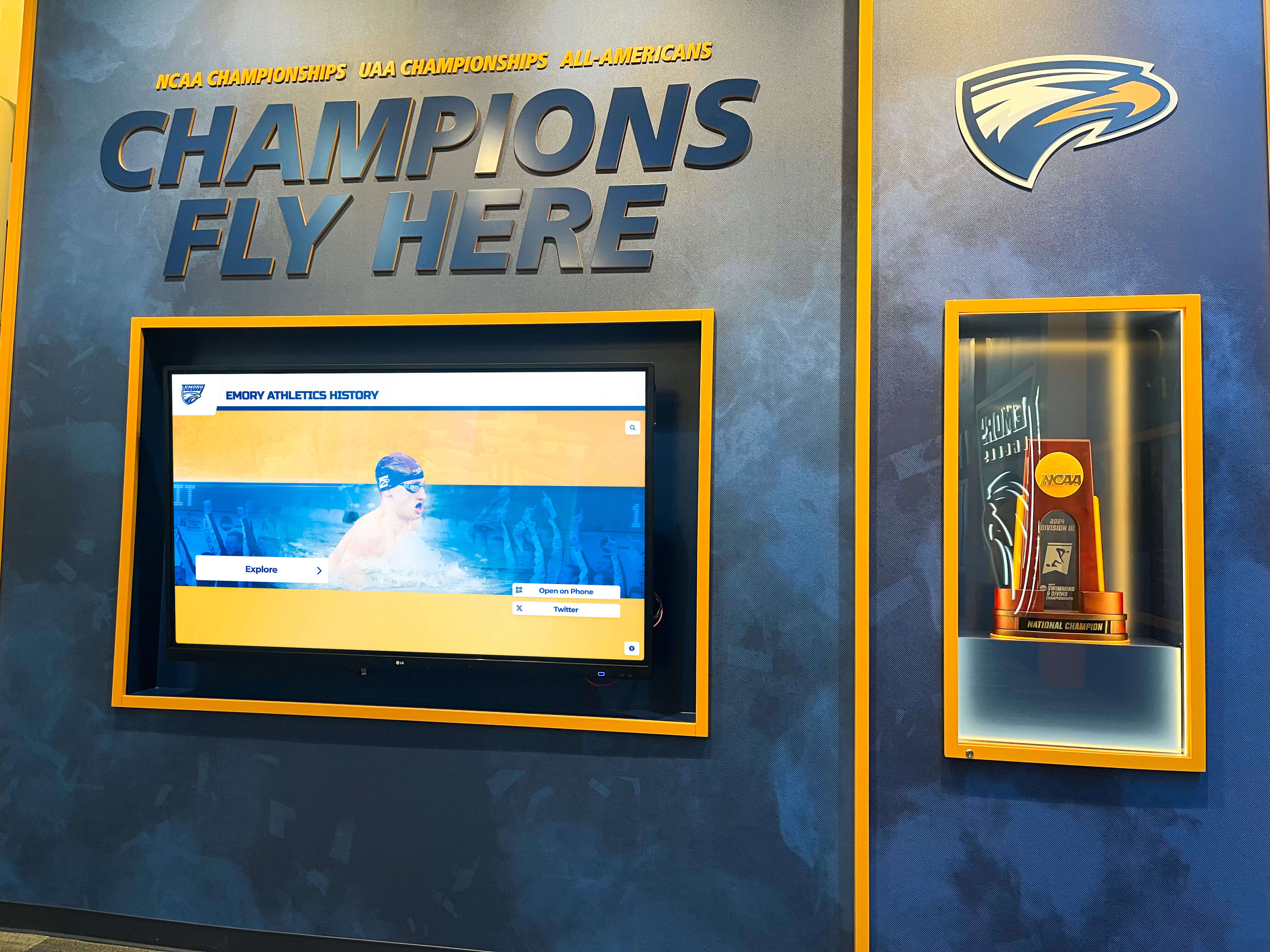
Championship hardware represents institutional history that cannot be re-created if physically destroyed — digital backup before any water event is the only reliable protection
Responsibility Table: Trophy Case Water Damage Response
| Response Phase | Primary Responsibility | Secondary / Support | Escalation |
|---|---|---|---|
| Electrical and physical safety | Facilities Director | Maintenance Staff | Building Principal / Emergency Services |
| Initial documentation (photos) | Athletic Director or Facilities Staff | School Administrator | Insurance Contact |
| Award removal and stabilization | Athletic Director | Facilities Staff | Facilities Director |
| Material-specific drying | Facilities Staff | Athletic Director | Professional conservator (for high-value items) |
| Insurance documentation | School Administrator | Facilities Director | District Risk Management |
| Digital backup and archiving | School Administrator or IT | Athletic Director | Digital recognition platform vendor |
| Return-to-service inspection | Facilities Director | Athletic Director | Licensed structural engineer (if case anchoring affected) |
How Digital Trophy Cases Change the Recovery Picture
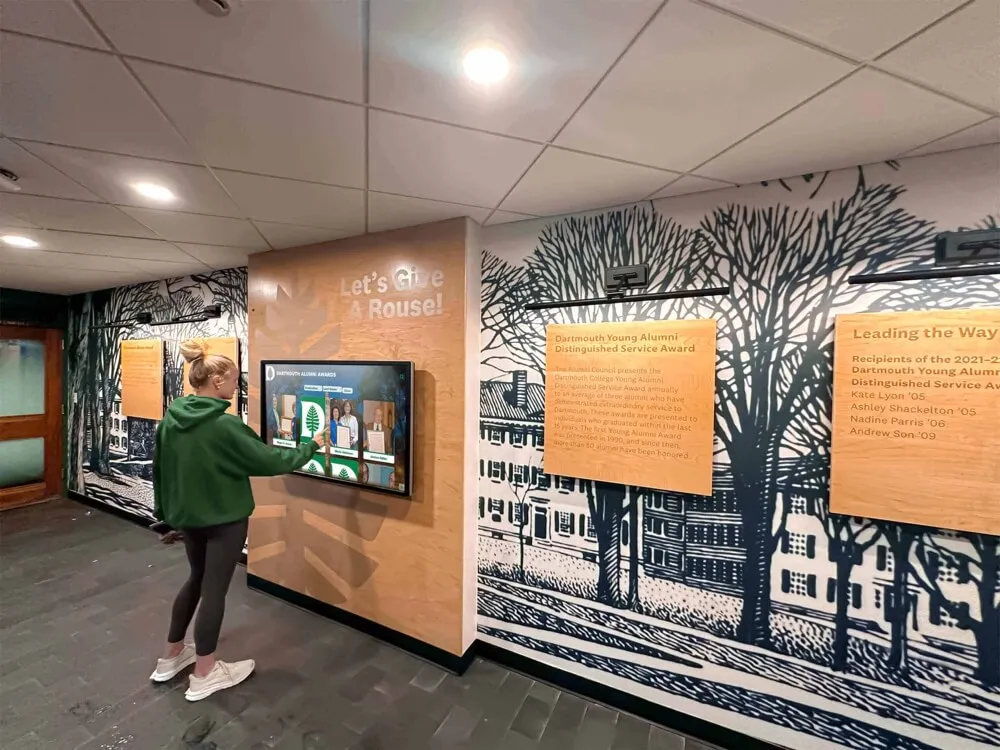
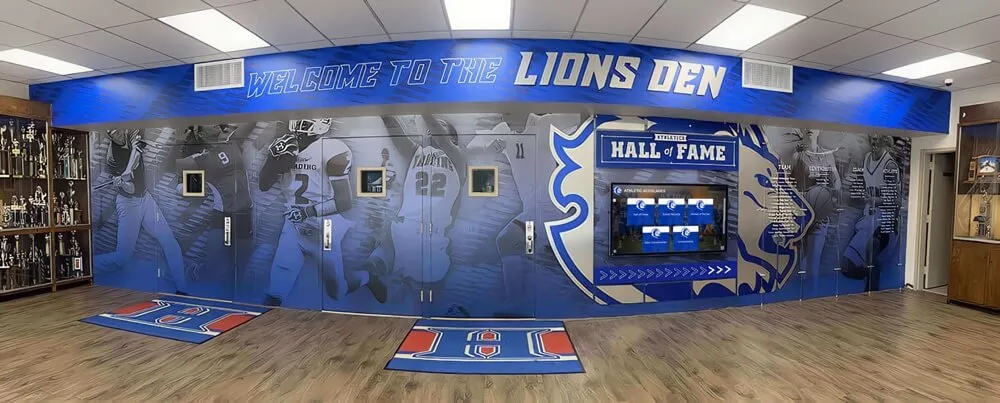
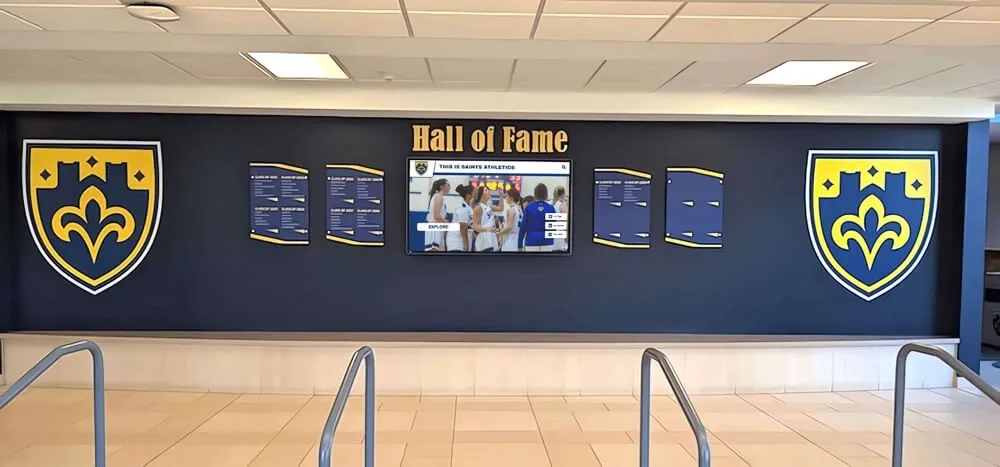
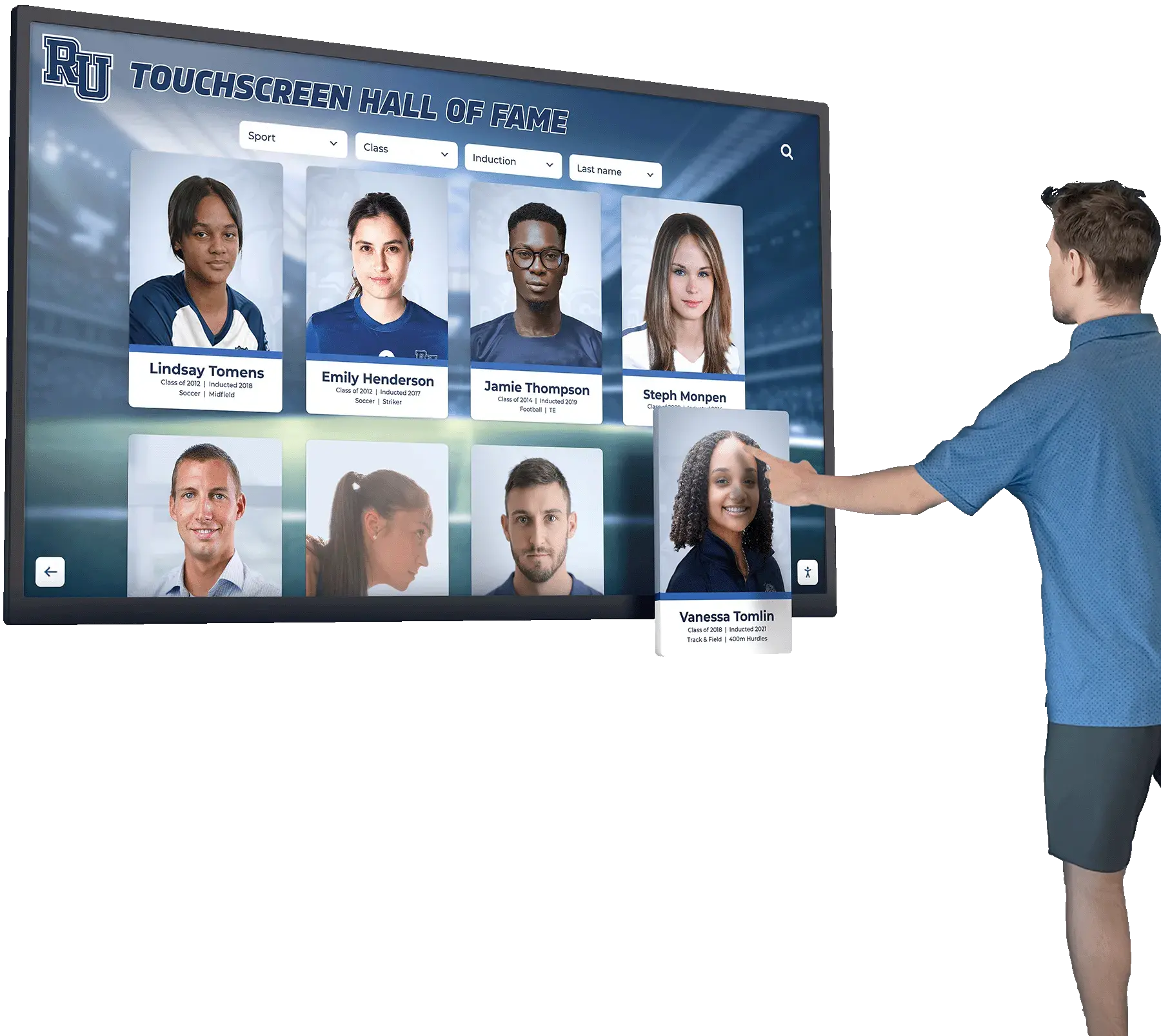
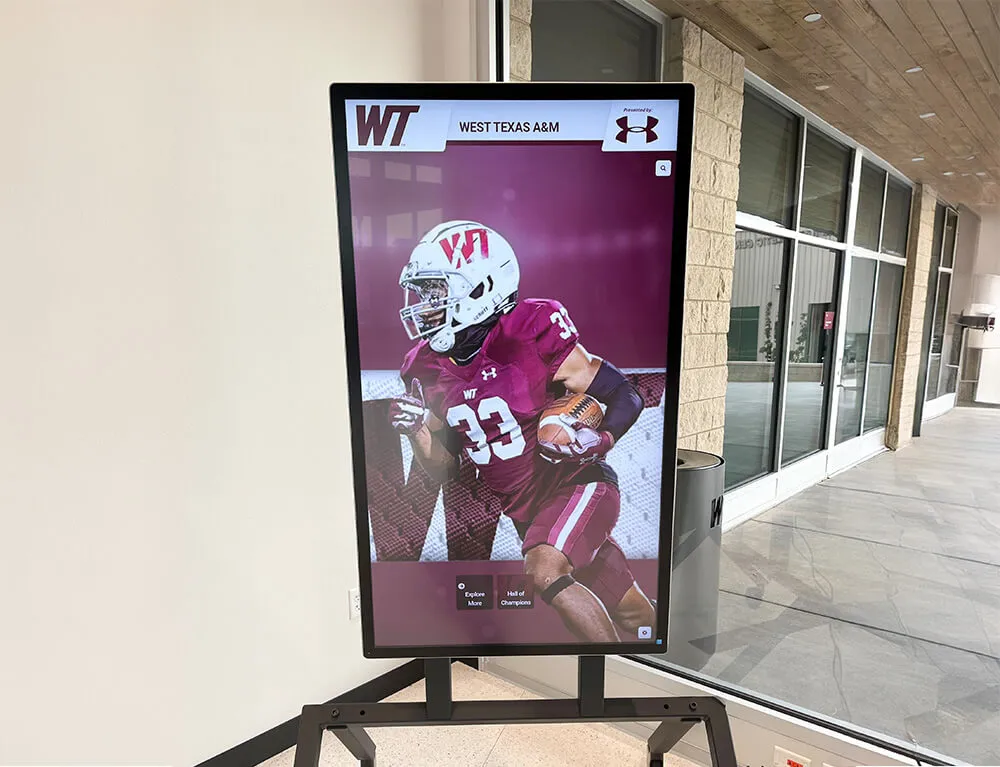
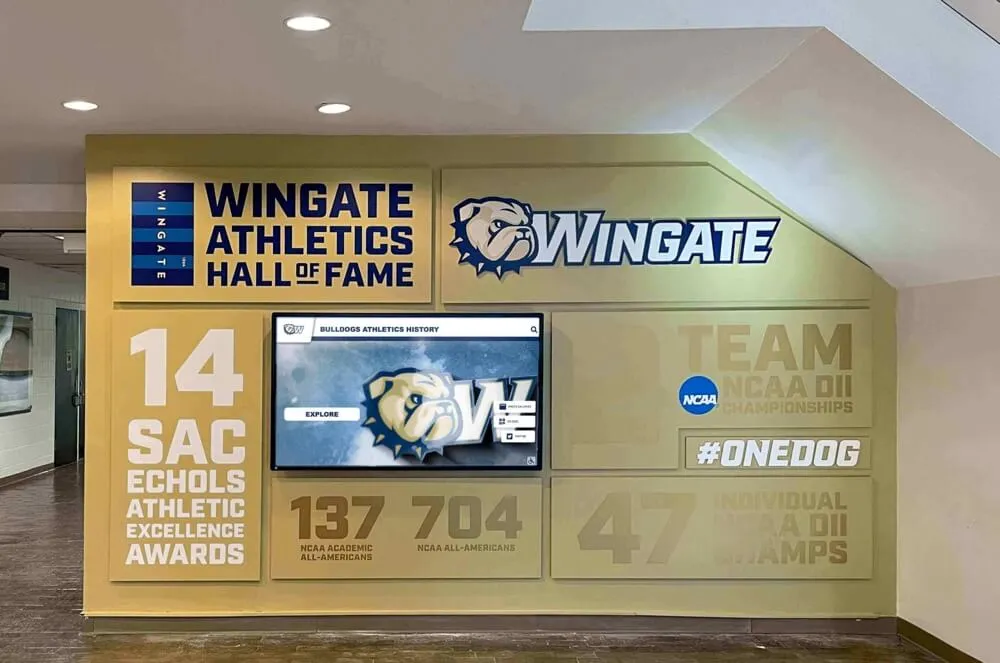
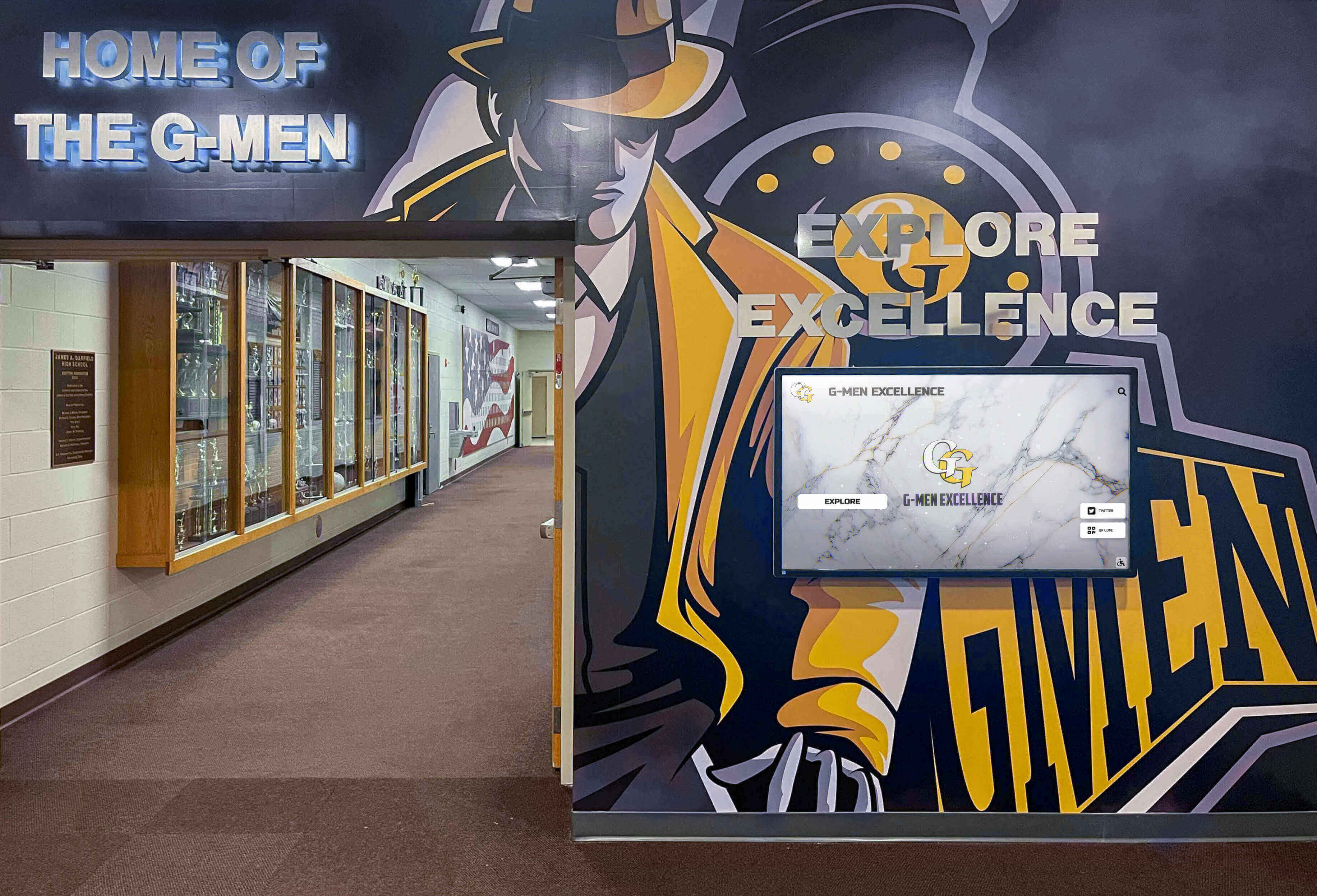
A school that has already transitioned its recognition program to an interactive digital touchscreen platform faces a fundamentally different recovery scenario when a water event affects the trophy case area.
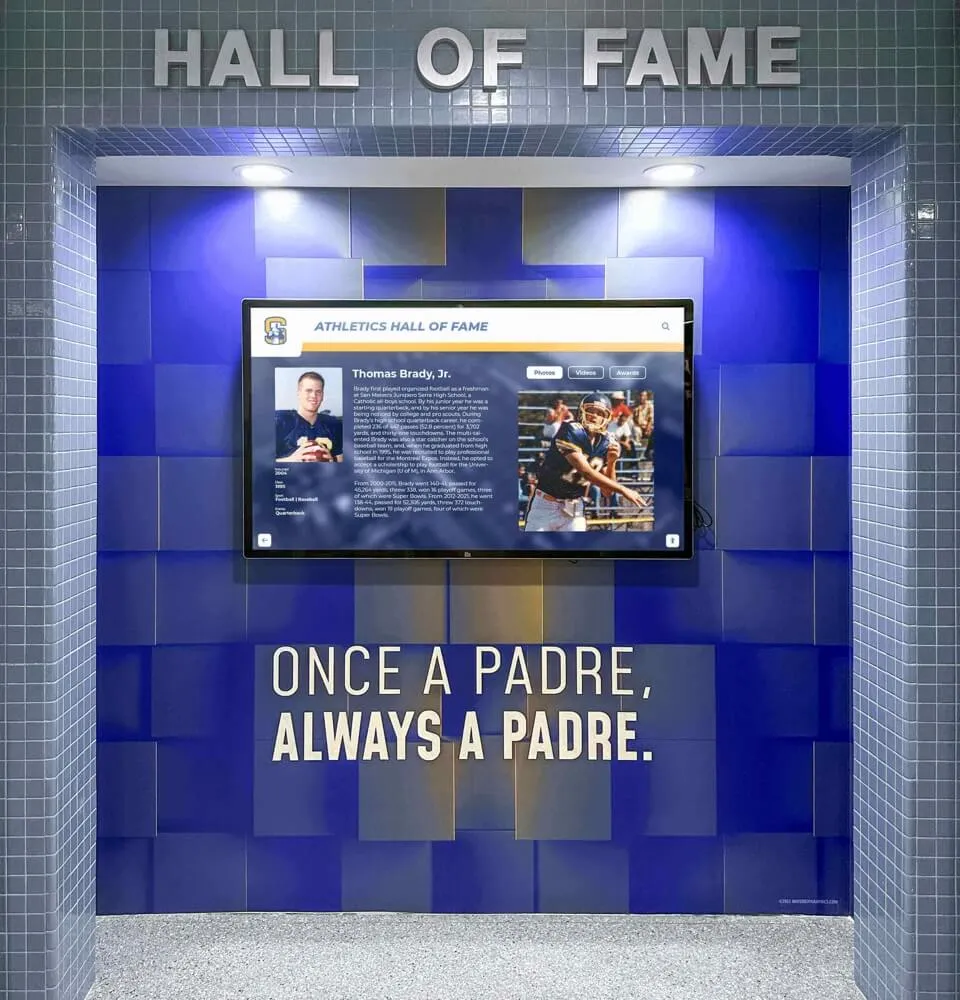
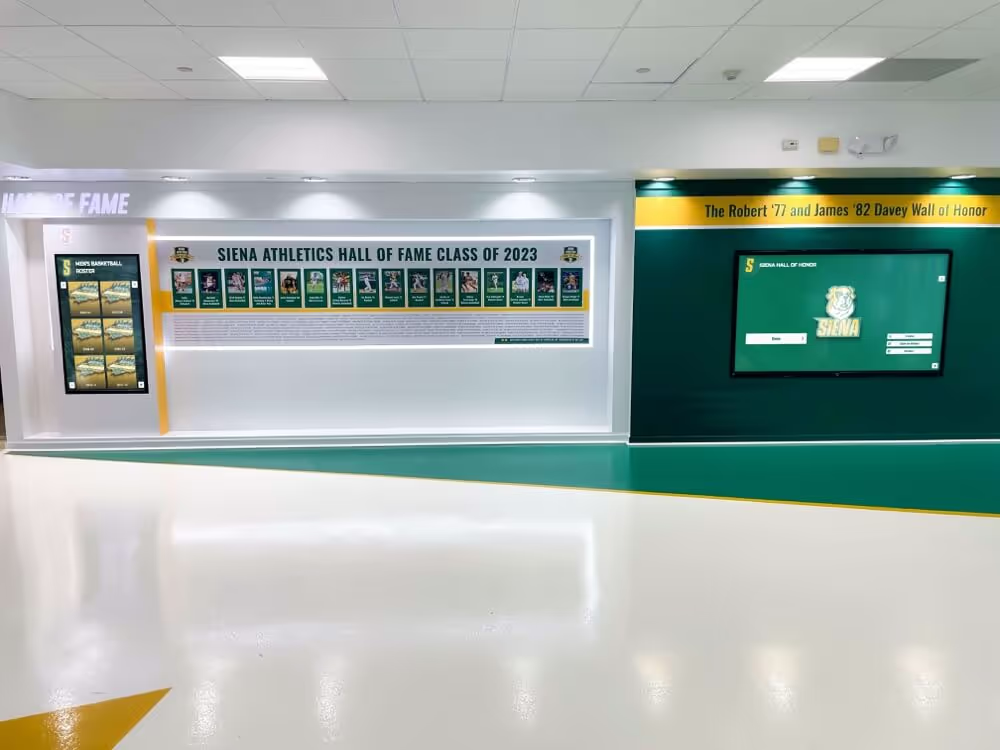
Reduced physical inventory at risk. A digital display replaces the physical case and its contents — the championships, individual award records, and honoree histories live in a cloud-managed system rather than on physical shelves. A water event that destroys the display hardware does not destroy the recognition record.
Defined hardware recovery path. A commercial flat-panel display or kiosk has a known replacement process — a vendor call, a warranty or insurance claim, and a hardware swap. Recovering a glass-and-wood trophy case containing fifty years of metal, paper, fabric, and wood awards from a single institution has no such clean recovery path.
Remote access to the full archive. With a cloud-managed digital recognition platform, the complete recognition history of an athletics program — every champion, every honoree, every record — is accessible from any device, anywhere, at any moment, including in the hours after a water event when the physical space is closed. Families, alumni, and current students do not lose access to the recognition record during the physical recovery period.
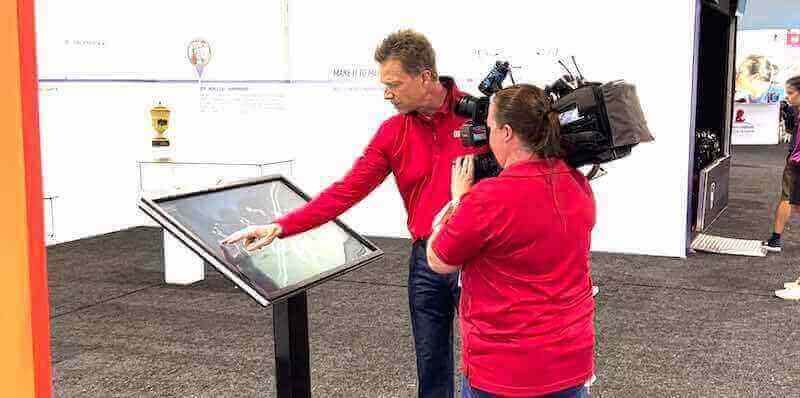
Schools that sponsor recognition events, athletic banquets, and hall of fame ceremonies often need to display recognition content at off-site venues as well as on campus. The guide to interactive recognition at major venue installations illustrates how cloud-managed recognition content travels with the program regardless of the physical state of any single installation.
For athletic programs thinking through what a comprehensive digitization of team histories, individual records, and awards would look like across all sports including baseball and other team sports, the baseball awards ideas and creative recognition guide provides a useful frame for how individual sport award histories can be structured for both physical display and digital preservation.
Water damage recovery in recognition programs mirrors, in a small way, the broader story of institutional resilience — the determination to recover what matters, document what was lost, and build forward stronger. Schools that integrate digital recognition infrastructure into their campus systems find that the design principles for accessible campus touchscreen displays apply directly to recognition kiosks and trophy case replacements in hallways and athletic lobbies, creating a consistent digital environment across the campus that is both functionally robust and easier to maintain.
Annual Water Risk Prevention Checklist
| Prevention Action | Timing | Responsible Party |
|---|---|---|
| Inspect roof condition above trophy case locations | Before fall semester | Facilities Director |
| Confirm HVAC drain lines serving adjacent equipment are clear and functional | Before summer and before fall | Facilities Staff |
| Inspect trophy case sealant and weatherstripping for gaps that allow humidity intrusion | Semi-annually | Facilities Staff |
| Verify no active pipe runs directly above trophy case display areas without leak diverters | Annually | Facilities Director |
| Complete photographic inventory of all trophy case contents | Annually (July–August) | Athletic Director |
| Confirm cloud backup of recognition archive is current and accessible | Annually | School Administrator or IT |
| Confirm water shutoff valve locations for mechanical spaces adjacent to trophy case areas are marked and accessible | Annually | Facilities Director |
Frequently Asked Questions
What is the first step in a trophy case water damage response plan? Confirm electrical safety before any staff enter a water-affected area. Water contact with live electrical circuits is a life safety hazard. Once the space is confirmed safe, document current conditions with photographs before touching any items in or around the case. The documentation record supports insurance claims and establishes recovery priorities.
How quickly does mold become a risk after a trophy case water event? Mold can begin to develop on porous materials — wood, paper, fabric — within 24 to 48 hours in a warm, humid environment. This timeline makes immediate removal of wet items from enclosed cases and placement in ventilated drying conditions essential. Do not reinstall any item that is not fully dry, and do not close a cleaned case interior until all surfaces are confirmed dry.
Can water-damaged trophies be restored? Many metal trophies can be cleaned, dried, and returned to display in good condition if treated promptly. Wood-backed plaques and framed paper items are more vulnerable — significant water contact can cause irreversible warping, staining, or separation of materials. Items with historic or irreplaceable engraving that cannot be recovered physically can often be preserved through high-resolution photography and digital archiving of the text before disposal.
Who should be notified when water damage affects a school trophy case? The immediate notification list includes: the building principal or school administrator, the facilities director, and the athletic director. If the damage appears significant, the school’s insurance contact and district risk management should be reached within the same business day. A licensed structural engineer should be consulted if the case anchoring or the wall or floor behind the case shows structural damage.
Should we replace a heavily damaged physical trophy case with a digital display? A water damage event that compromises a trophy case’s structure, glass panels, or anchoring system is a natural point to evaluate whether replacement with an interactive digital display is the right path forward. Digital touchscreen platforms carry a fraction of the ongoing maintenance burden of a glass-and-steel case, hold the full recognition history in a cloud-managed archive that is immune to future physical events, and provide significantly greater engagement for current students and visiting families. The replacement decision should also account for the cost of restoring or replacing the physical case structure, refinishing the interior, and re-installing or replacing items that the water event damaged.
How should schools handle irreplaceable trophies that are too deteriorated to restore? Before disposal of any trophy that cannot be restored, ensure the full available record has been photographed and documented. For a championship trophy where the engraving is partially legible, transcribe whatever text survives. For trophies where a prior photograph exists in yearbooks, team archives, or athletic department records, pull and preserve that image as part of the digital record. A trophy whose physical form is lost does not have to take its recorded history with it.
What is the “comeback” principle for recognition programs after a water event? Schools that treat a water damage event as the catalyst for a comprehensive recognition modernization — digitizing historical records, upgrading display infrastructure, and building cloud-managed archives — often emerge with a stronger, more accessible recognition program than before the event. The discipline of documenting and preserving what matters most, applied under pressure during recovery, builds lasting organizational practices around recognition stewardship. For athletics programs specifically, the resilience required to rebuild a recognition program after a setback mirrors the values those programs celebrate — the guide to comeback recognition in athletics offers a useful perspective on how schools frame recovery and renewal in their recognition culture. Event-driven damage scenarios — flooding tied to an on-campus banquet, an awards ceremony, or an end-of-season event — are also worth planning for; facilities staff who review organizational event planning guides often find that venue safety reviews for event setups surface water-adjacent risk zones that overlap with trophy case locations.
Protect Every Award — Before the Next Water Event
Rocket Alumni Solutions builds interactive digital trophy cases and halls of fame for schools nationwide. Cloud-managed touchscreen displays hold your entire recognition history — every champion, every honoree, every record — in a secure, remotely accessible archive that survives any physical event that could damage a traditional glass case. ADA WCAG 2.1 AA compliant, updated remotely without IT involvement, and accessible via QR code from any mobile device. See how schools are building recognition programs that are both compelling and physically resilient.
Book A DemoA trophy case water damage response plan is not a document that sits in a binder until disaster strikes — it is an active, practiced protocol that assigns ownership, defines the sequence of decisions, and ensures that the most irreplaceable elements of a school’s recognition history survive whatever the building throws at them. Run the annual prevention checklist, keep the photographic archive current, assign clear response owners across facilities and athletics, and treat digital archiving as a non-negotiable layer of protection for your recognition program. For schools ready to build a recognition system that holds history beyond any single physical installation, exploring interactive digital recognition platforms is the most durable next step.