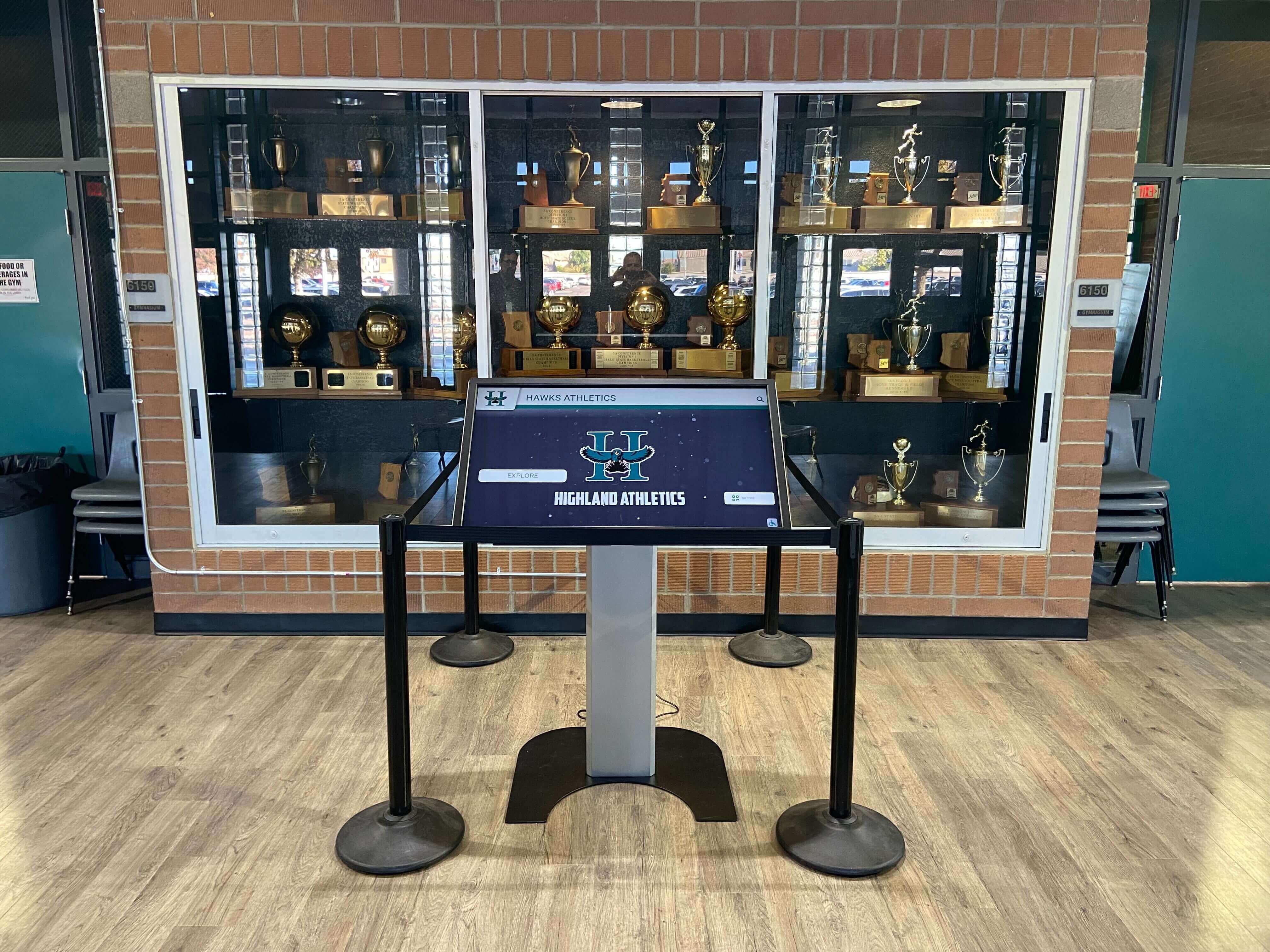




Intent: research — Trophy case vibration monitoring is the practice of measuring and managing mechanical vibration near display cases that hold trophies, crystal awards, framed photographs, championship banners, and signed memorabilia. Schools positioned near gymnasiums, retractable bleacher systems, rooftop HVAC units, or heavily trafficked hallways expose fragile awards to repeated micro-stress that can crack crystal bases, loosen trophy figurines, dislodge plaques from walls, and accelerate the structural fatigue of glass-fronted cases. This guide explains where the real vibration risks originate in a typical school building, how facilities and athletics staff can conduct a practical inspection and monitoring workflow without specialized engineering equipment, what thresholds to reference, and how physical mitigation paired with digital recognition tools reduces both the risk of damage and the long-term cost of protecting your school’s athletic legacy.
Vibration thresholds and preservation standards vary by material type and institutional context; for collections of significant historical or monetary value, consultation with a qualified conservator or structural engineer is appropriate before finalizing isolation or relocation decisions.
School trophy cases often sit at the intersection of two competing realities: the desire to showcase championship hardware prominently near the gymnasium or main entrance, and the structural reality that those same high-traffic, high-activity locations generate the most mechanical vibration. A retractable bleacher system deployed for a Friday night basketball game, a rooftop HVAC compressor cycling on and off twenty feet above a hallway display case, or hundreds of students slamming lockers during passing periods — each source contributes cumulative stress to fragile awards that were designed for static display, not repeated mechanical agitation.

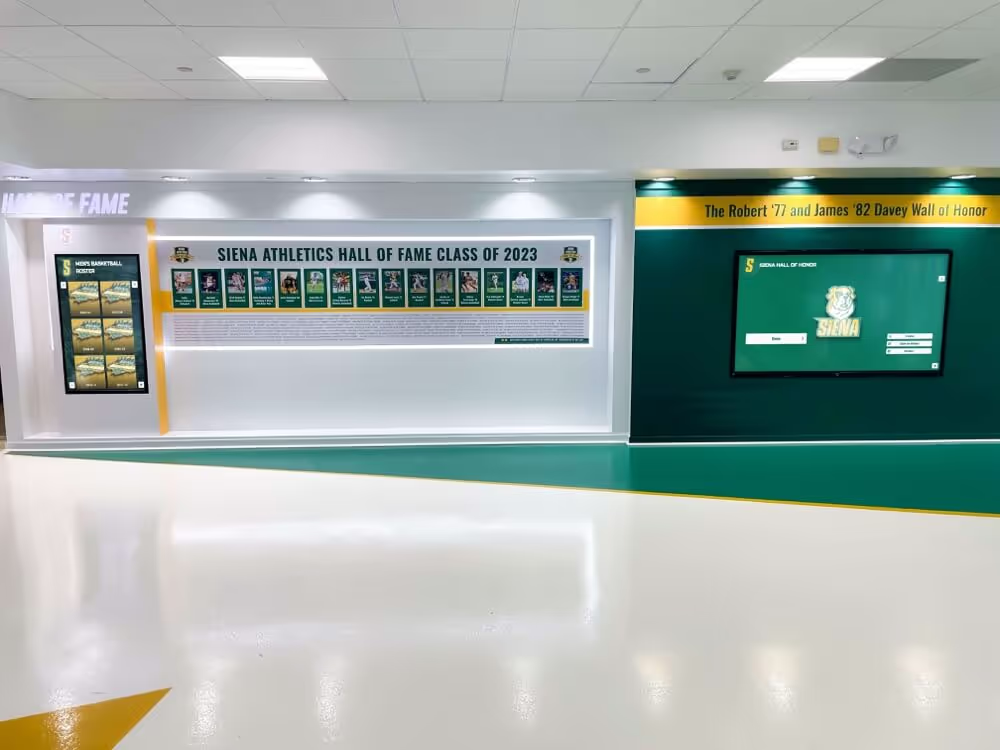
Trophy cases near gymnasium entrances are often the most vibration-exposed locations in a school building — a factor that facilities teams rarely assess until damage appears
Why Vibration Damages Trophy Case Contents
Understanding the failure modes helps prioritize which items need the most protection.
Fragile Materials at Highest Risk
Not all trophy case contents respond to vibration the same way. The materials most vulnerable to mechanical stress include:
Crystal and glass components: Cut crystal bases, glass-enclosed awards, and trophy risers develop micro-fractures under repeated vibration — especially when the dominant frequency of the vibration source approaches a natural resonance frequency of the glass piece. Cracks that develop invisibly over months can produce sudden failure during a high-amplitude event like a bleacher deployment.
Tall figurine assemblies: Thin metal or resin columns supporting figurines at height act as cantilever beams. Repeated horizontal acceleration — even at low amplitude — creates bending stress at the junction between column and base. This is a known failure point in older trophies where adhesive bonds have degraded over decades.
Framed photographs and documents: Frames hung on trophy case backing panels shift incrementally with each vibration event. Over time, hanging hardware loosens, frames tilt, and glass panels make contact with adjacent trophies. Signed documents inside frames can also experience compression damage if glass panels migrate.
Ceramic and resin castings: Painted or glazed ceramic awards are susceptible to surface cracking when substrate vibration causes differential stress between the base material and the surface coating.
Multi-component stacked awards: Trophies assembled from multiple plate components held together by a central screw depend on friction fit for stability. Vibration loosens this friction progressively, eventually producing rattling or complete disassembly.
Cumulative vs. Single-Event Damage
Most vibration damage in trophy cases is not the result of a single dramatic event. Instead, it follows a fatigue model: each vibration cycle introduces a small increment of stress, and failure occurs once accumulated stress exceeds the material’s endurance limit. This means a trophy case that has survived a decade of gymnasium events without obvious damage is not necessarily safe — it may have accumulated significant fatigue without visible indication.
Common Vibration Sources in School Buildings
Mapping vibration sources in your building is the first step in a meaningful monitoring program.
| Vibration Source | Typical Frequency Range | Distance Effect | Relative Risk to Cases |
|---|---|---|---|
| Retractable bleacher deployment | 1–10 Hz (impact events) | High within 30 ft | High |
| Gymnasium floor during games / pep rallies | 2–8 Hz (footfall, jumping) | Moderate within 50 ft | Moderate–High |
| Rooftop HVAC compressor cycling | 10–50 Hz (mechanical) | Low–Moderate within 20 ft | Moderate |
| Hallway traffic and locker impacts | Broadband impulse | Very localized | Low–Moderate |
| Doors slamming (gymnasium, exterior) | Broadband impulse | Moderate within 15 ft | Low–Moderate |
| Nearby construction activity | Variable, 1–100+ Hz | Significant at any distance | High during active work |
| Mechanical room equipment (pumps, fans) | 15–60 Hz (rotating machinery) | Low–Moderate through structure | Moderate |
Frequency ranges are illustrative. Actual transmission depends on floor construction type, structural coupling between building sections, and the isolation characteristics of the specific floor or wall assembly. For precise characterization, a structural engineer or vibration measurement specialist can place accelerometers and produce a site-specific spectrum.
The Bleacher Problem
Retractable bleacher systems are among the most underappreciated vibration sources affecting trophy cases. When a motorized bleacher assembly extends or retracts, the mechanism produces low-frequency impulse loads transmitted directly through the gymnasium floor slab and, in many buildings, through shared wall and floor structures into adjacent corridors.
A trophy case mounted on a wall shared with the gymnasium — or positioned on a corridor floor slab that is structurally continuous with the gymnasium floor — can experience peak particle velocities well above thresholds that conservators consider safe for fragile objects, particularly during the deployment phase when the bleacher motor generates its highest loading.
HVAC and Mechanical Equipment
Rooftop HVAC units, in-line duct fans, and building mechanical rooms introduce sustained, low-amplitude vibration at characteristic frequencies tied to motor RPM and fan blade count. Unlike impact events, this vibration is continuous during equipment operation — potentially running eight to twelve hours per day in a climate-controlled facility. Sustained low-amplitude vibration at resonance frequencies for specific trophy components (particularly tall figurine assemblies) can accumulate damage faster than brief high-amplitude events at non-resonant frequencies.
Trophy Case Vibration Monitoring: A Step-by-Step Inspection Workflow
This workflow is designed for facilities managers, athletic directors, and school administrators who do not have access to specialized vibration measurement instruments. It combines visual inspection, source mapping, and practical monitoring methods to identify and prioritize risk reduction.
Step 1: Map Your Trophy Case Locations Against Vibration Sources
Before inspecting cases themselves, document the building context for each display location.
- Identify the structural zone of each trophy case: Is the case on an exterior wall, an interior wall shared with the gymnasium, a corridor wall, or a lobby partition?
- Note proximity to retractable bleachers, mechanical rooms, rooftop units, and main entrance doors.
- Mark floor continuity: If the case sits on a floor slab that is structurally continuous with the gymnasium or a mechanical room, transmission paths exist even if physical distance seems adequate.
- Record any recent complaints about rattling, shifted frames, or fallen items — these are the strongest indicators that a location has a live vibration problem.
Step 2: Conduct a Seated Observation Test During High-Activity Events
The simplest monitoring method available to any facilities team is direct observation during a known high-vibration event.
- Position a staff member or administrator near each trophy case during: (a) retractable bleacher deployment or retraction, (b) a home basketball game or pep rally, (c) peak HVAC load cycling (typically mid-afternoon on hot days).
- Place a coin, small ball bearing, or similar object on the flat top of a trophy inside the case. Visible movement or travel of the object during the event confirms meaningful vibration transmission at that location.
- Listen for audible rattling from trophy components, glass, or hanging frames. Audible vibration in display cases almost always indicates peak particle velocities exceeding thresholds that preservation organizations consider safe for vulnerable materials.
- Document findings: which location, which source event, estimated severity (inaudible / audible but minor / significant rattling / item movement observed).
Step 3: Assess Individual Items Within Each Case
Once you know which locations are problematic, inspect the specific contents at highest risk.
- Open each case and examine all tall figurine assemblies at the column-to-base junction. Look for hairline cracks, loosening adhesive, or any lateral play when the figurine is gently pressed horizontally.
- Inspect crystal and glass components under a flashlight for micro-fractures radiating from contact points or base edges.
- Check hanging frames for shifted position relative to their original hang marks on the backing board.
- Examine multi-component trophies for loosened center screws or component separation.
- Note any items that are already showing damage — these require immediate relocation away from the vibration zone or placement in padded mounts regardless of whether you proceed with formal monitoring.
Step 4: Implement Basic Passive Monitoring
For cases that show concerning results in Step 2 but where formal instrumented monitoring is not immediately feasible, passive methods provide a record of ongoing exposure.
- Tilt indicators: Small adhesive tilt-indicator labels (available from laboratory and shipping supply vendors) placed on vulnerable trophies provide a permanent record if a figurine or frame has shifted beyond an acceptable angle since the last inspection. These require no power and cost very little.
- Vibration indicator cards: Shock and vibration indicator cards used in shipping applications detect threshold exceedances and retain the record visually. Place cards at the base level of the case interior, oriented to capture horizontal acceleration in the axis most relevant to the dominant source (perpendicular to the gymnasium wall, for example).
- Dated photograph log: Photograph the interior of each case at the start of each semester with a ruler or grid reference visible. Comparing photographs over time documents cumulative drift of objects and hanging items that individual inspections might miss.
Step 5: Evaluate Relocation, Isolation, or Mitigation Options
Monitoring data that confirms a live vibration problem at a trophy case location triggers a decision about remediation.
- Relocation: Moving the case or its most fragile contents to a structurally isolated zone of the building (a different wing, an interior room without direct structural connection to the gymnasium floor) eliminates the transmission path entirely. This is the most reliable solution.
- Anti-vibration matting: Elastomeric isolation pads placed under trophy case bases attenuate high-frequency vibration. Their effectiveness at the low frequencies (1–10 Hz) characteristic of bleacher and gymnasium floor events is limited, but they meaningfully reduce transmission from hallway traffic and HVAC equipment.
- Case-internal cushioning: Placing fragile trophies on thin foam museum mounting pads within the case reduces relative motion between trophies and the case surface. This does not reduce vibration reaching the case, but it reduces the mechanical coupling between vibration and the trophy itself.
- Structural engineering assessment: For cases in high-priority locations (main entrance, hall of fame corridor) where relocation is not practical, a structural engineer can assess whether floor stiffening, wall decoupling, or other building-level interventions can reduce transmission at the source.
Step 6: Establish a Recurring Inspection Schedule
Vibration risk is not static. Building systems change, programs expand, and new events introduce new sources.
- Inspect all trophy case locations at the start of each academic year and following any construction activity within the building.
- Revisit locations classified as moderate risk whenever a new retractable bleacher system is installed, a mechanical room is upgraded, or the building undergoes structural modification.
- Conduct a post-season inspection following any major athletic event that generated unusually large crowd attendance or prolonged gymnasium use.
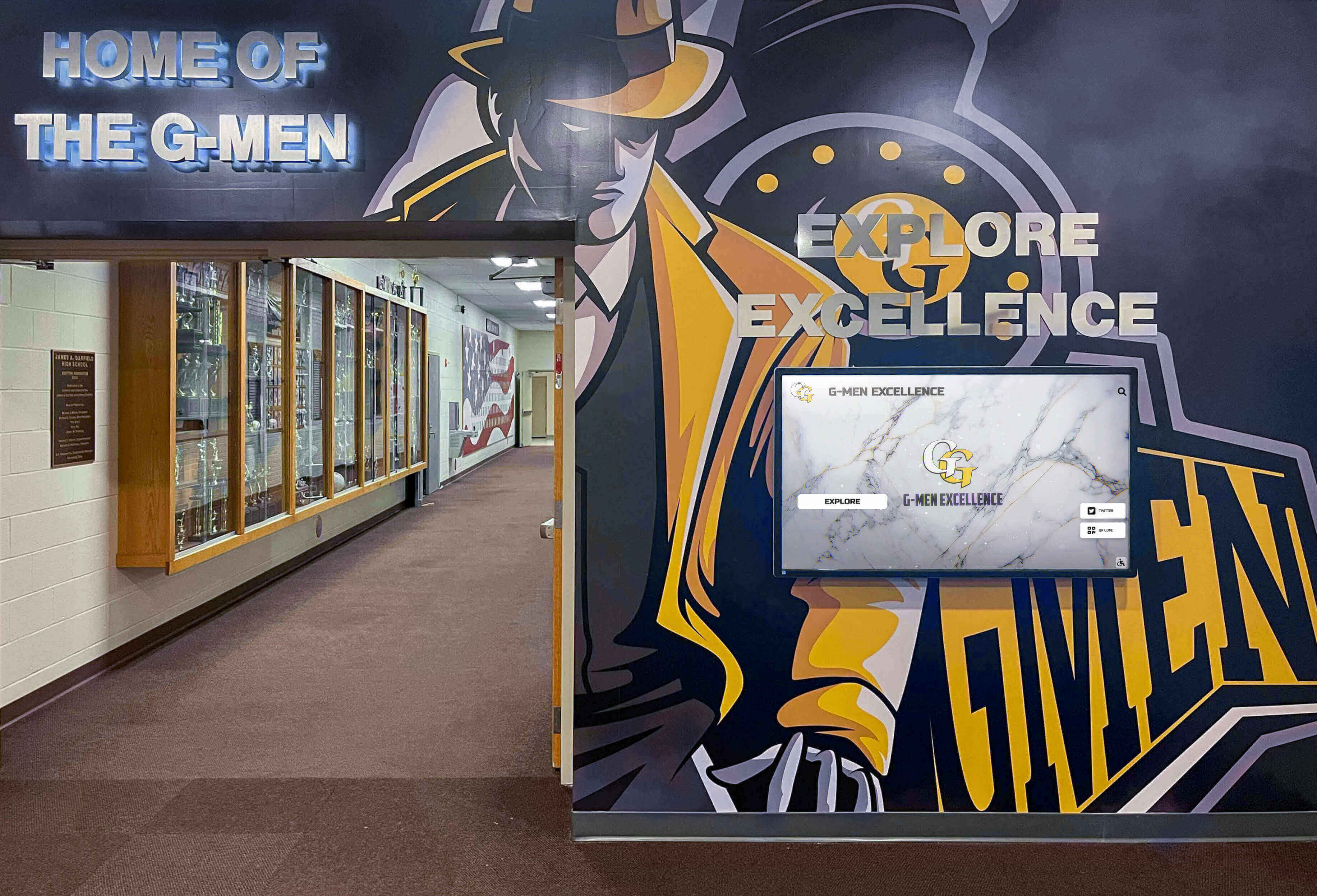
Corridor trophy cases adjacent to gymnasium walls are among the highest-risk locations for vibration exposure — position mapping is the first step in any monitoring program
Vibration Thresholds: What the Preservation Literature Says
Vibration thresholds for fragile objects in museums and archival settings have been studied by conservation organizations including the Getty Conservation Institute and the Smithsonian Institution’s Museum Conservation Institute. While specific numeric thresholds depend on material type, object geometry, and mounting condition, the preservation community generally uses peak particle velocity (PPV) measured in millimeters per second as the primary metric.
The Getty Conservation Institute’s research on vibration and museum collections (Hanson, 1991; further discussed in subsequent conservation literature) identified thresholds below which vibration-induced damage to vulnerable objects is unlikely for most material types. Building codes such as the German DIN 4150-3 and British Standard BS 7385 establish PPV thresholds for structural damage to buildings, but conservation thresholds for objects are typically more stringent than structural thresholds for building components.
As a practical reference point, many conservation professionals target PPV values below 0.5–1.0 mm/s for fragile historic objects, a range substantially lower than the 5–15 mm/s range often referenced for structural building damage. If instrumented monitoring data shows PPV values approaching 1 mm/s at a trophy case location during bleacher operations or gymnasium events, relocation or isolation of the most vulnerable items is warranted.
Mitigation Strategies by Vibration Source
Different vibration sources call for different mitigation approaches.
Gymnasium and Bleacher Vibration
Administrative controls:
- Notify facilities staff before bleacher deployment events so that fragile items can be temporarily secured or removed.
- Establish a written policy that no new trophy cases be installed on walls structurally continuous with gymnasium floor slabs without a vibration assessment.
- Coordinate with the athletic department so that trophy case inspection occurs following high-attendance events where sustained gymnasium floor loading occurred.
Physical mitigation:
- Consider mounting trophy cases on wall brackets that include neoprene or silicone isolation elements rather than direct bolting to the wall. These do not eliminate low-frequency transmission but reduce the amplitude of high-frequency components.
- For cases that cannot be relocated, use internal foam mounting pads for crystal and glass components and add non-slip matting between trophy bases and case shelving.
Schools planning comprehensive academic and athletic display upgrades often find that the construction process itself represents a vibration risk, making it worthwhile to relocate the most fragile existing trophies before work begins.
HVAC and Mechanical Equipment Vibration
Equipment-level mitigation:
- Ensure rooftop HVAC units are mounted on properly maintained vibration isolation spring or elastomeric mounts. Degraded isolator pads are a common source of increased building vibration in older facilities. A mechanical contractor can inspect and replace isolators as part of a routine maintenance cycle.
- Confirm that ductwork connected to units near trophy display areas includes flexible connections that prevent direct structural transmission of equipment vibration to building elements.
Distance and structural decoupling:
- In buildings where mechanical room equipment is the primary source, assess whether a structural break (expansion joint) exists between the mechanical room floor slab and the trophy case corridor slab. If not, this is a factor to raise with a structural engineer if vibration levels are confirmed to be problematic.
Hallway Traffic and Door Impacts
Impact dampening:
- Install hydraulic or pneumatic door closers on gymnasium and exterior doors adjacent to trophy case locations. Door slams generate broadband impulse energy that is transmitted to nearby wall-mounted cases; controlled closing substantially reduces peak impulse amplitude.
- For trophy cases positioned near locker banks, a rubber or felt bumper system on locker doors reduces the transmitted impulse from student use during passing periods.
Case mounting:
- Wall-mounted cases should use threaded fasteners into structural backing (studs or blocking) rather than toggle anchors in drywall. Cases that flex at their wall connection point under impulse loads transmit more energy to their contents than rigidly anchored cases.
Planning Athletic Recognition Displays With Vibration Risk in Mind
The best time to consider vibration risk is before a trophy case is installed rather than after fragile items have already been damaged.
Site Selection Criteria for New Installations
When planning new trophy case installations as part of a facility renovation or a recognition program expansion, include vibration risk in the site assessment alongside traffic visibility and lighting:
- Prefer locations on exterior walls or walls of interior rooms not structurally connected to gymnasium slabs.
- Avoid positioning cases directly below mechanical penthouses or adjacent to mechanical rooms.
- When display cases must be placed in high-vibration zones due to visibility requirements, specify cases designed for higher-vibration environments and plan for internal isolation mounting of fragile items.
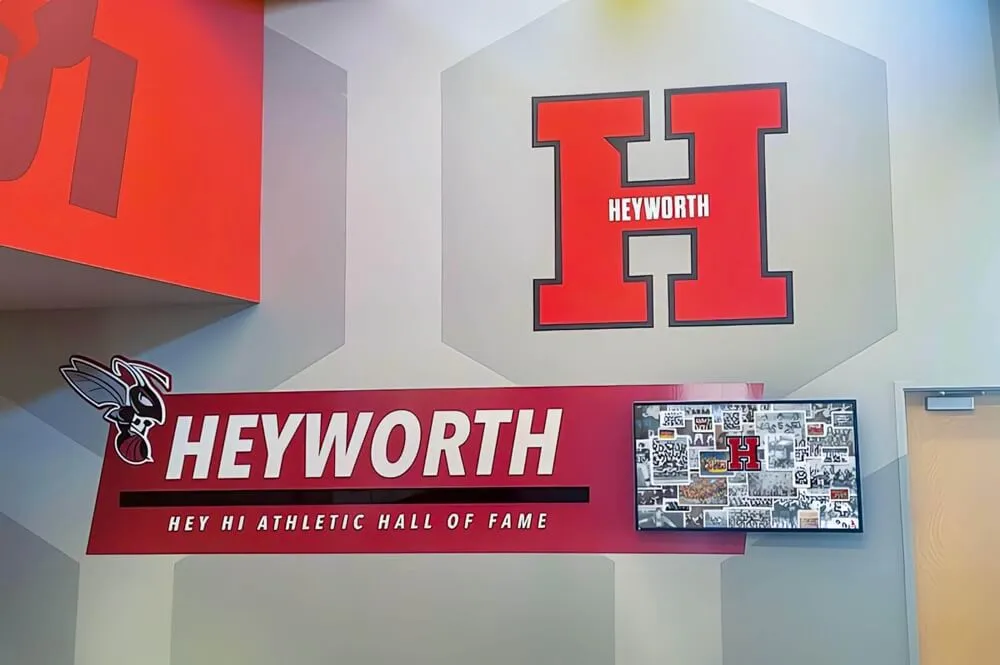
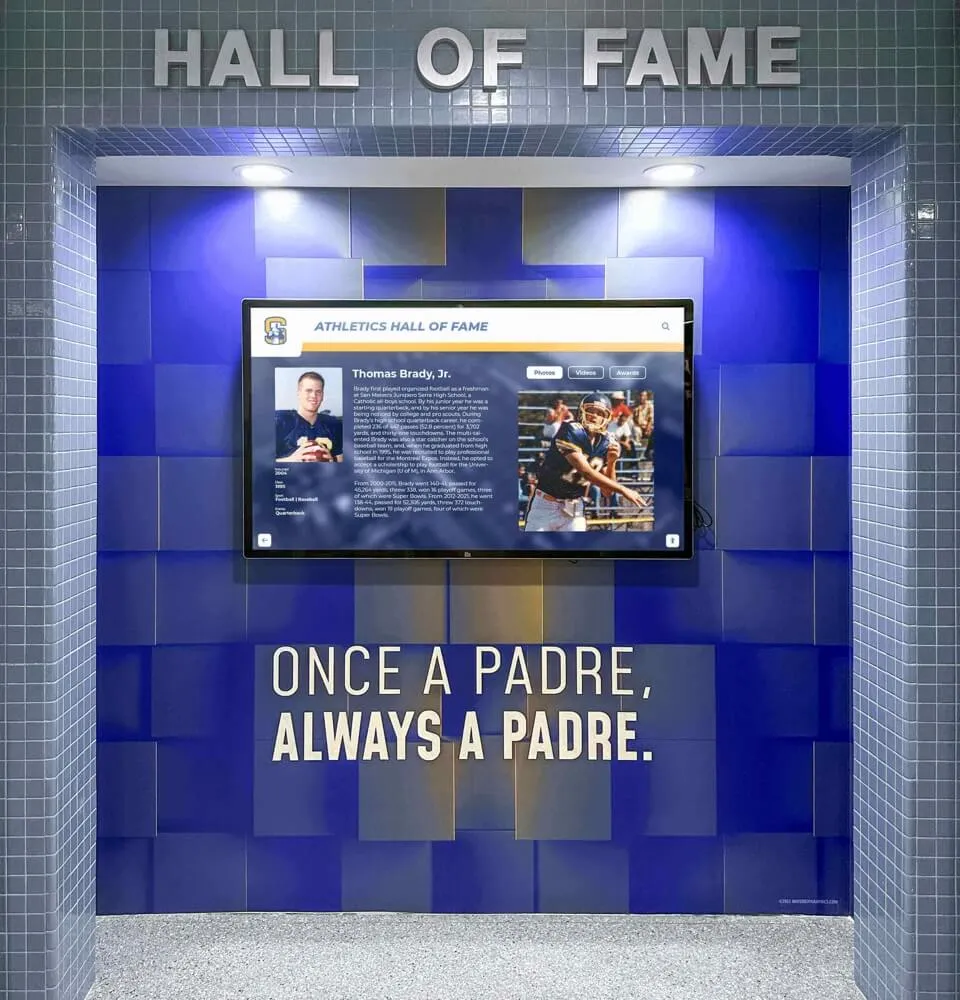
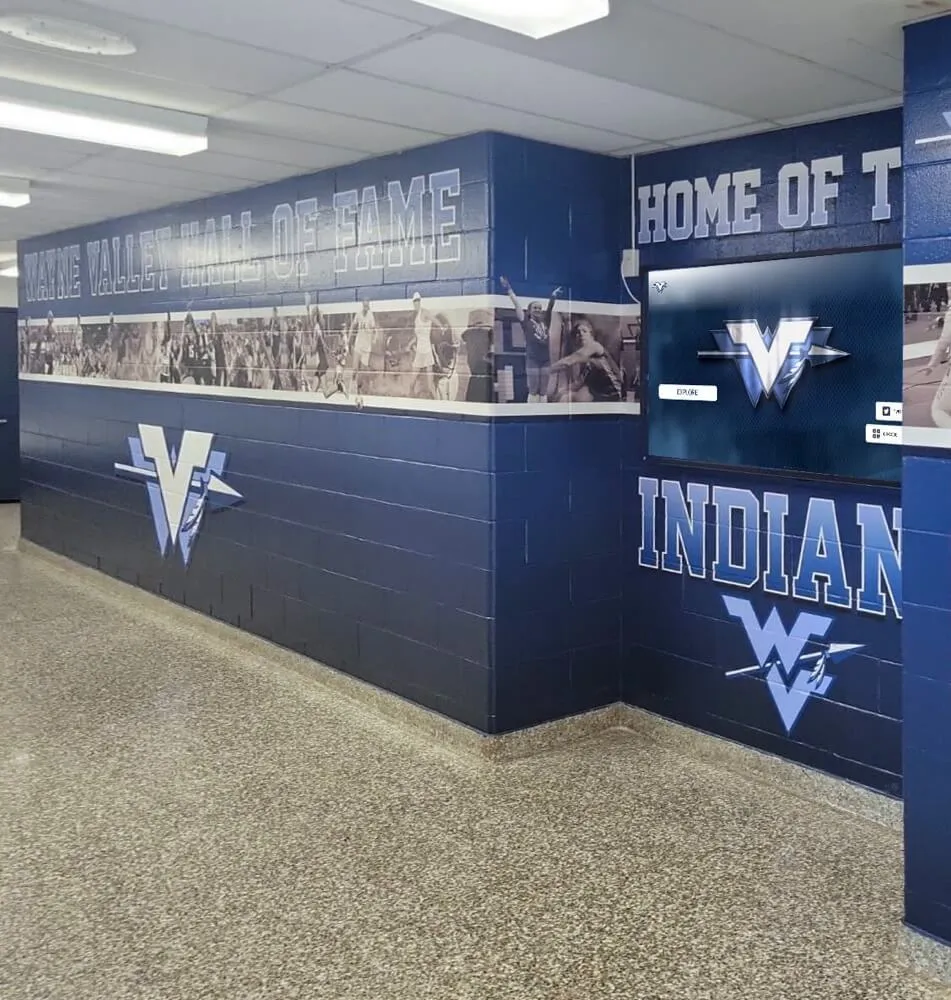
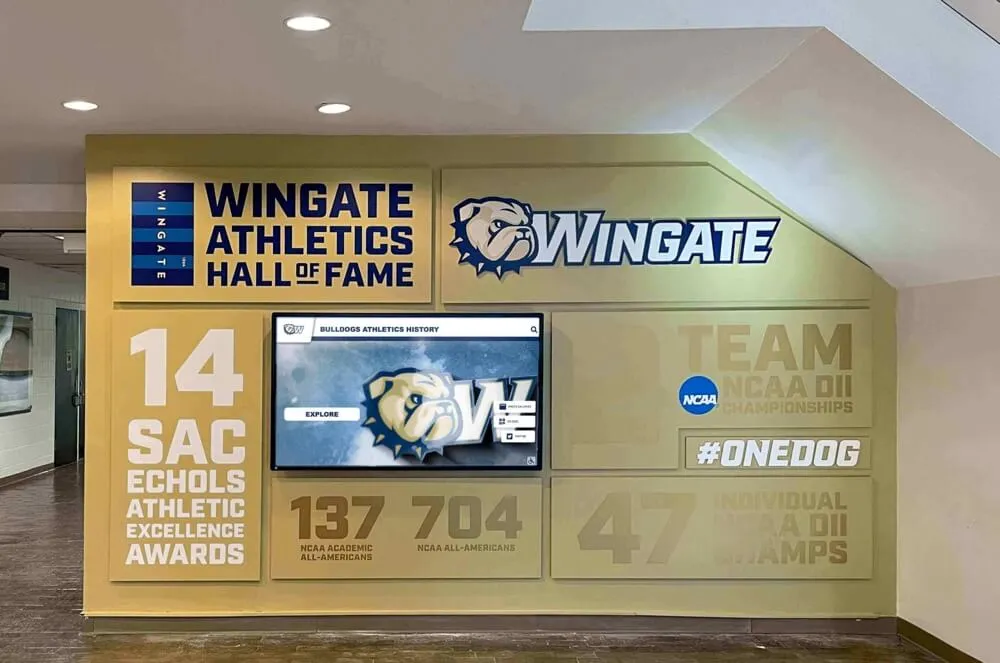
Schools developing long-term recognition strategies — including interactive recognition corridors and hall of fame installations — benefit from addressing vibration risk in the initial design phase, when structural modifications to reduce transmission paths are still economical.
Integrating Vibration Planning Into Your Athletic Records Program
For athletic directors managing both current recognition and historical archives, vibration planning connects directly to long-term preservation of athletic records. Signed jerseys, championship game programs, historic photographs, and original award plaques are often irreplaceable. A vibration event that cracks the crystal base of a recent award can be addressed by contacting the award vendor. A vibration event that shatters a framed 1968 state championship photograph or displaces a trophy signed by a legendary coach eliminates an artifact that cannot be reproduced.
Recognizing the full scope of what schools are protecting is important context for student-athlete recognition programs that draw on decades of historical documentation to celebrate current athletes in the context of program tradition.
Digital Trophy Cases as a Vibration-Immune Alternative
Physical trophies and memorabilia require active vibration management because they are fragile. Digital recognition platforms introduce a fundamentally different approach: the historical record, imagery, achievement data, and multimedia content associated with every trophy, award, and honor in a school’s collection are stored in a cloud-managed system that is immune to mechanical vibration entirely.
This does not mean physical trophies should be eliminated — it means that schools protecting their most fragile physical items from vibration damage can simultaneously ensure that the recognition value those items represent is preserved and accessible even if a physical item is moved to a protected storage location, removed from active display for restoration, or eventually reaches the end of its physical display life.
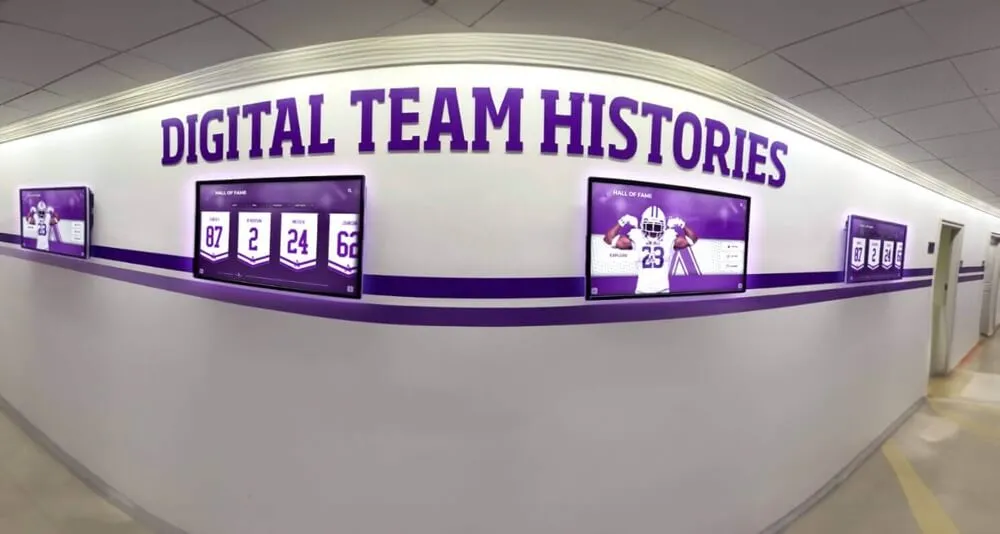
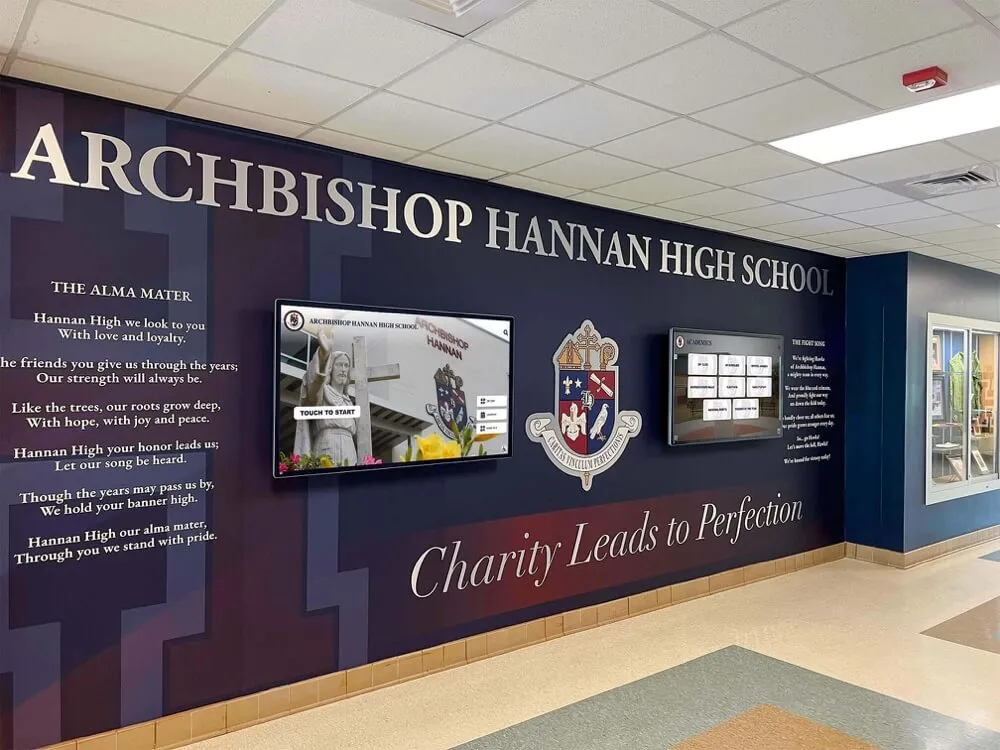
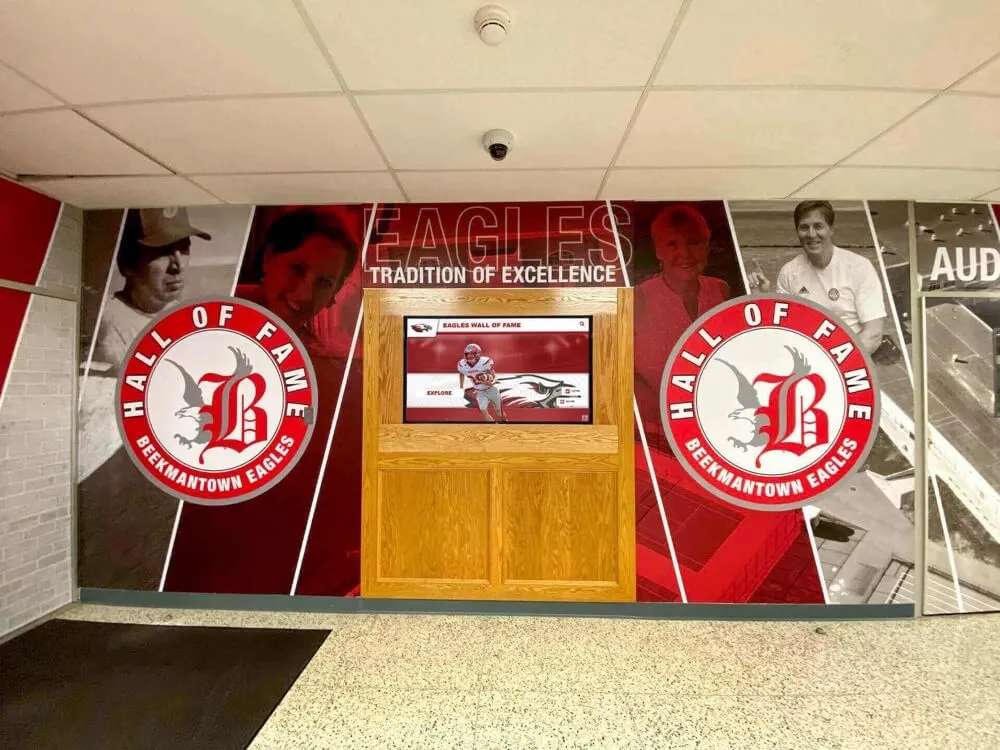
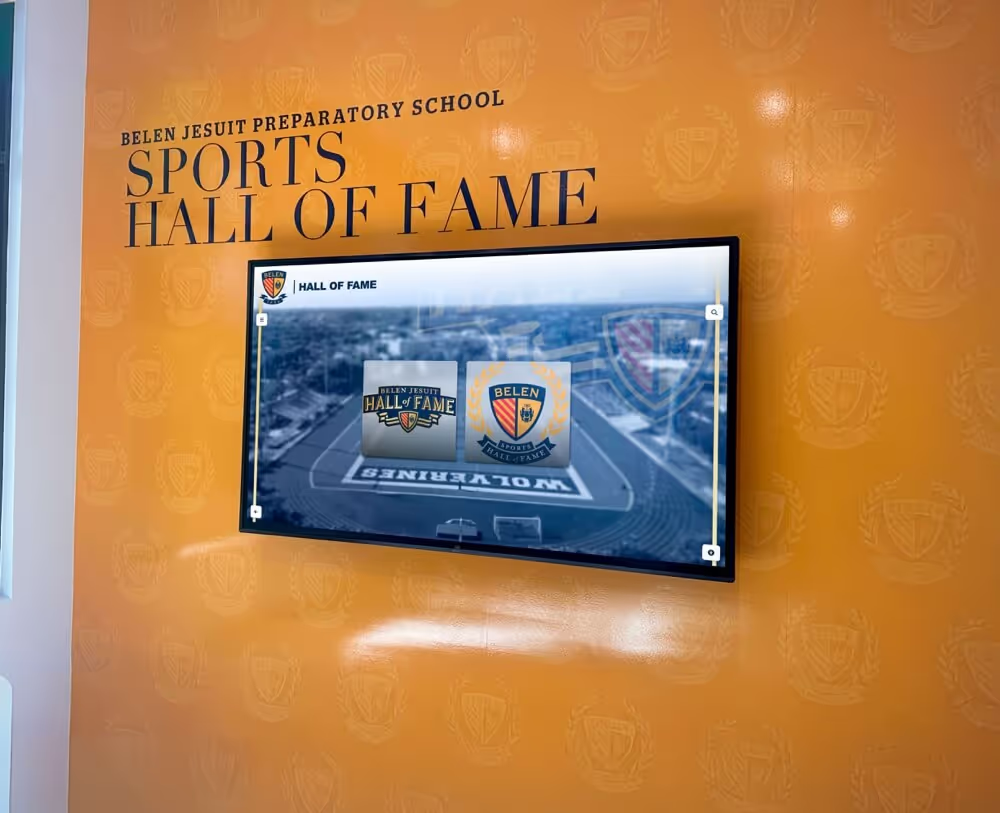
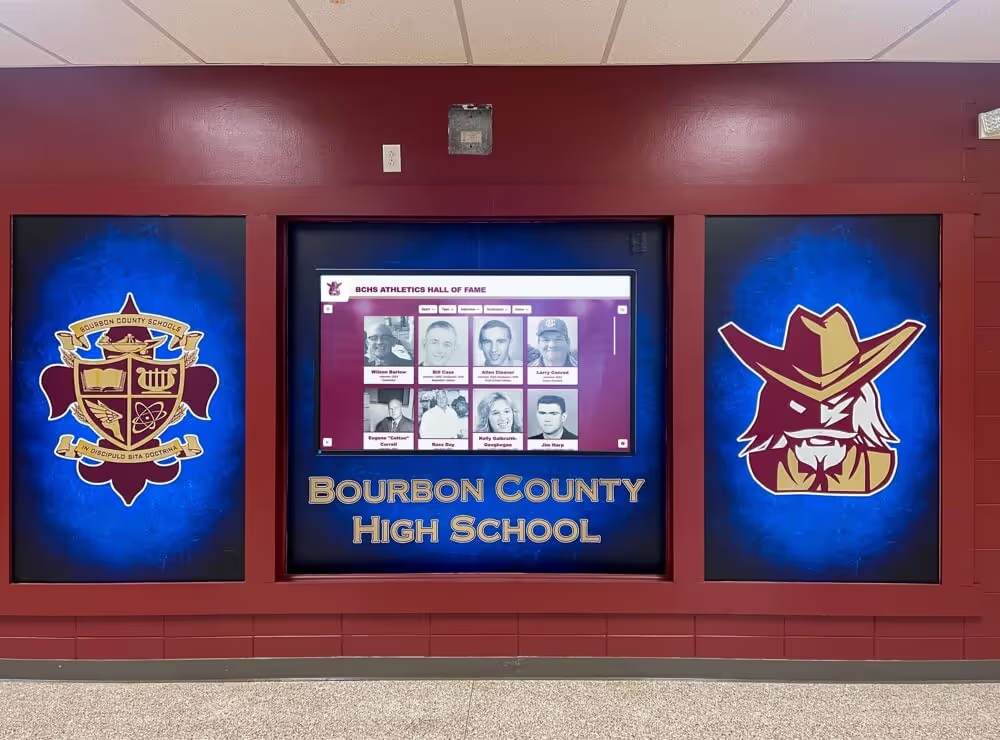
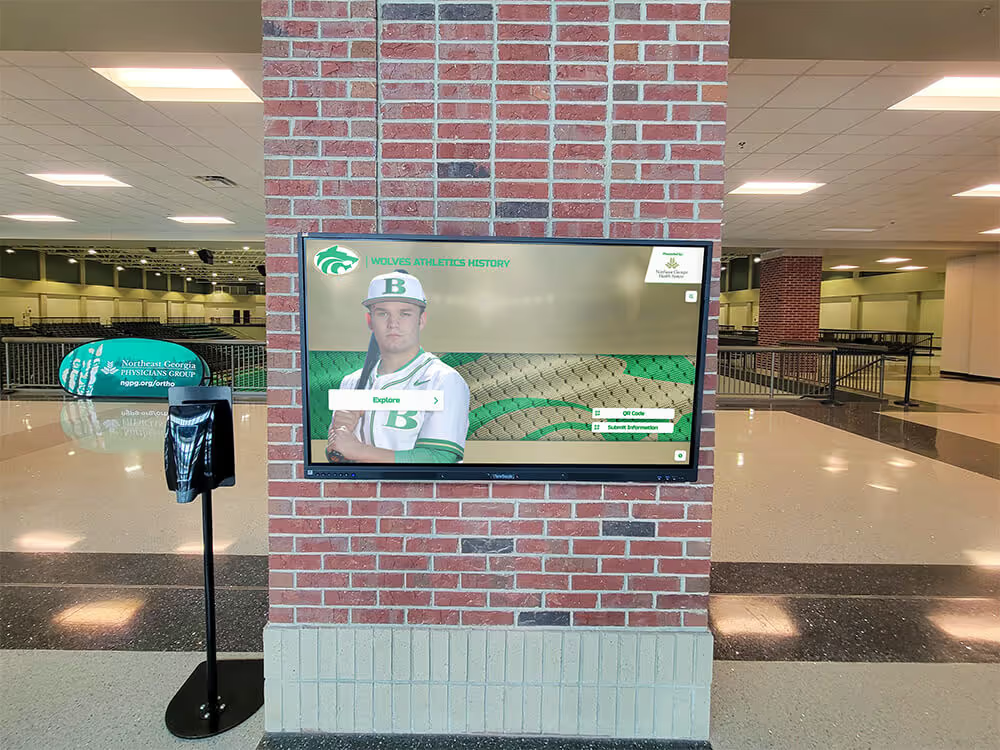
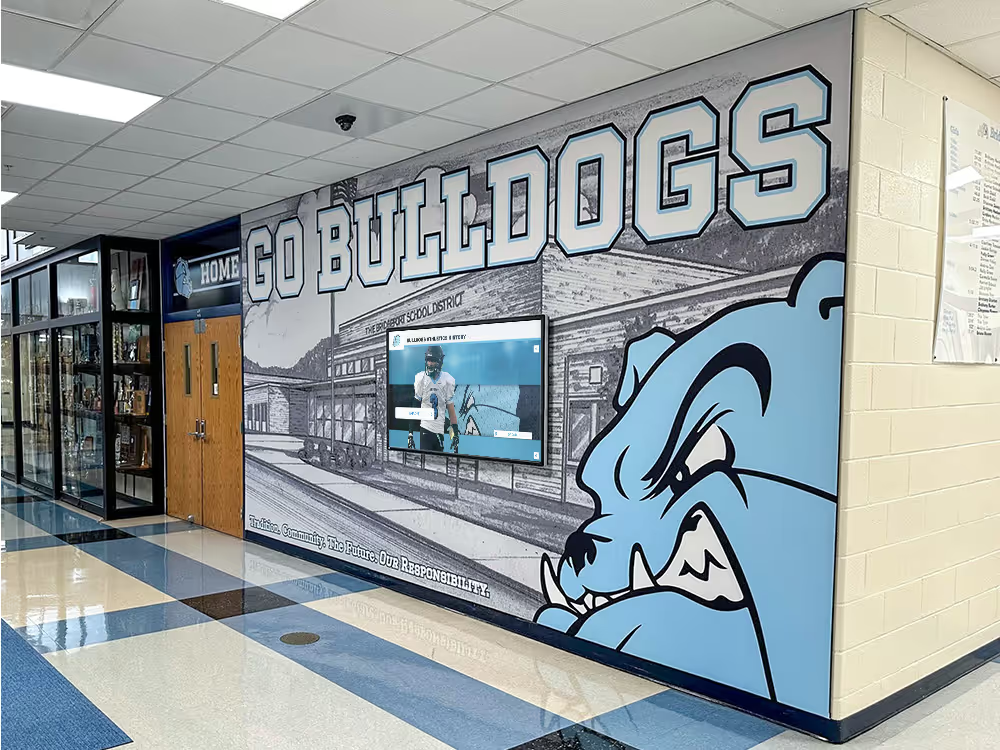
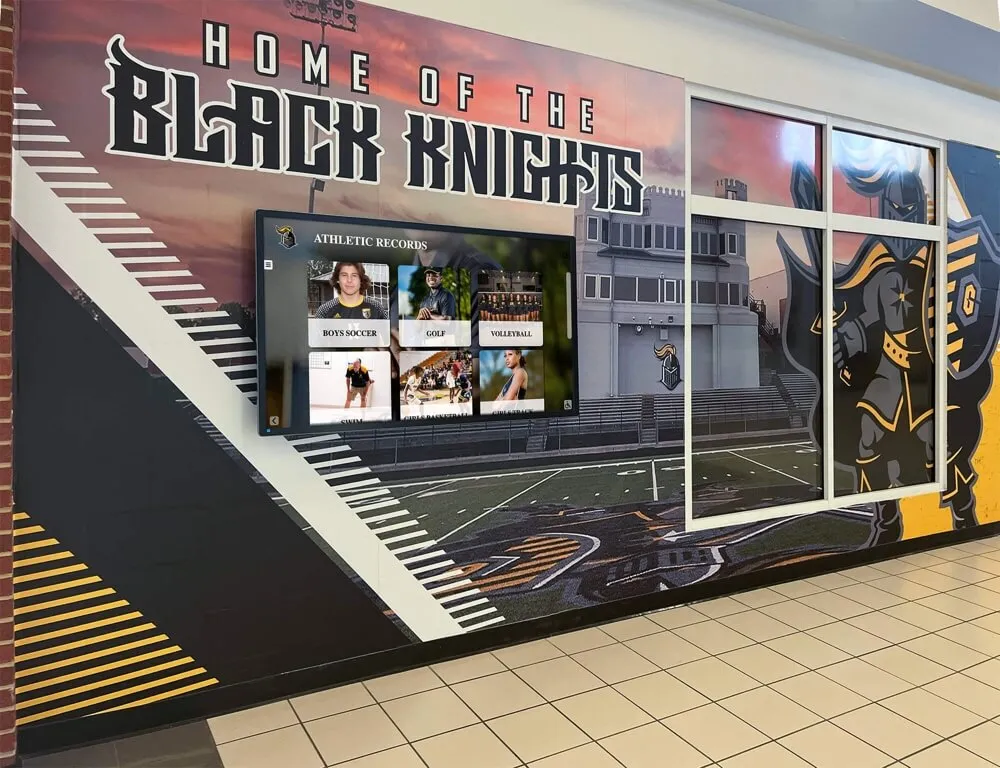
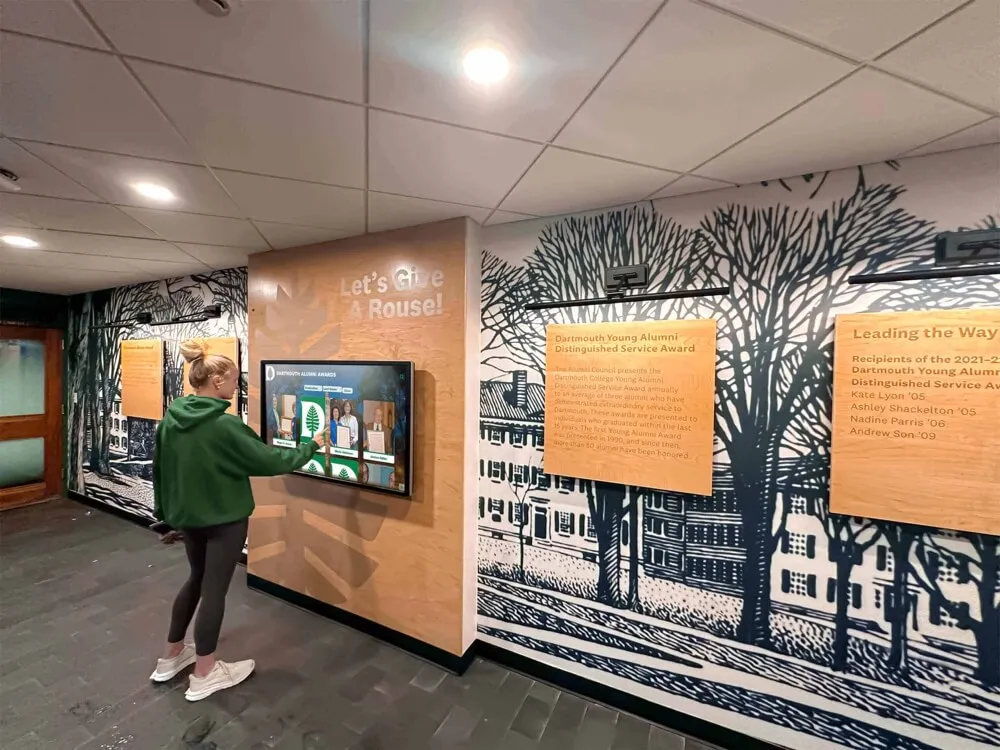
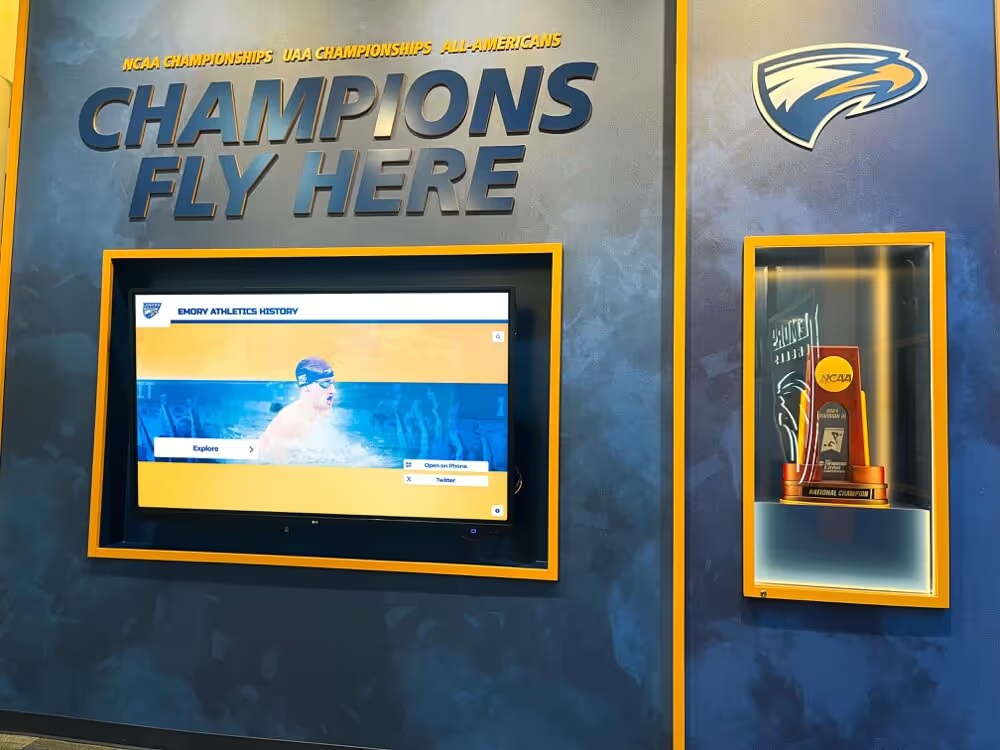
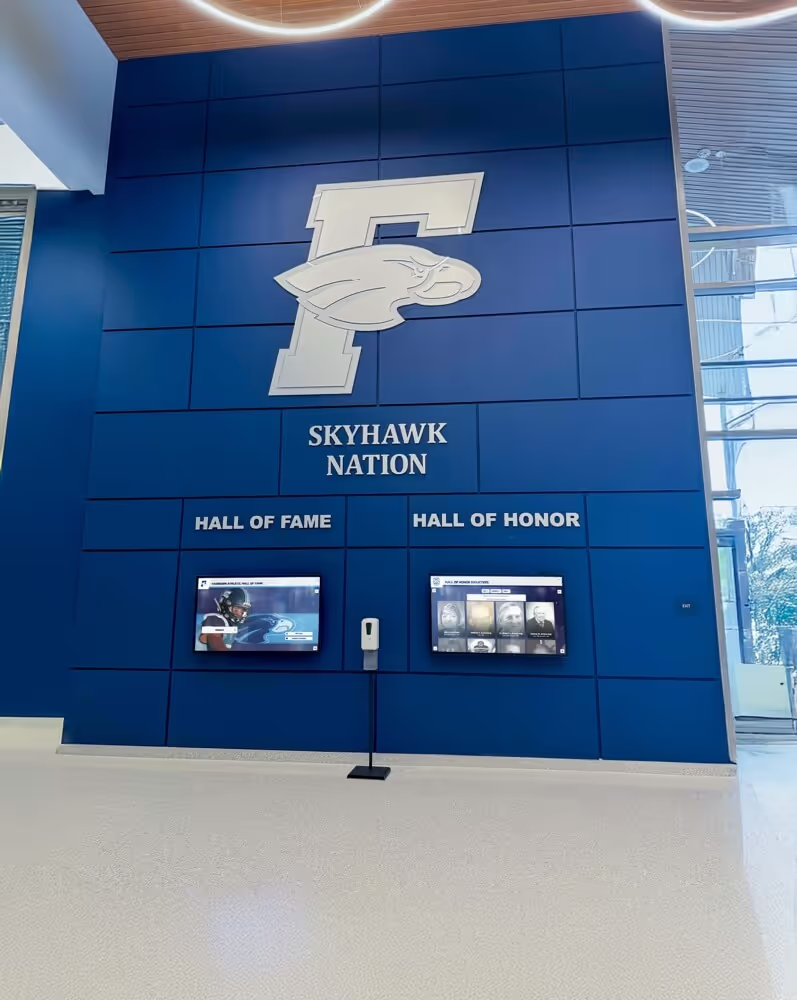
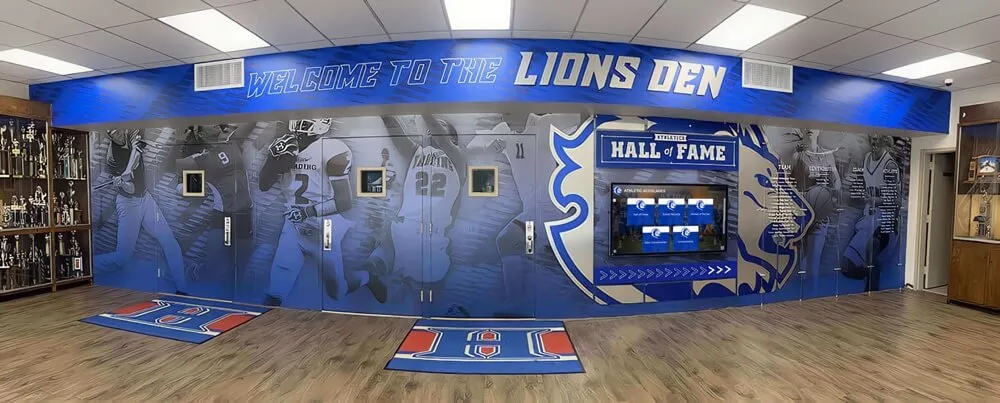
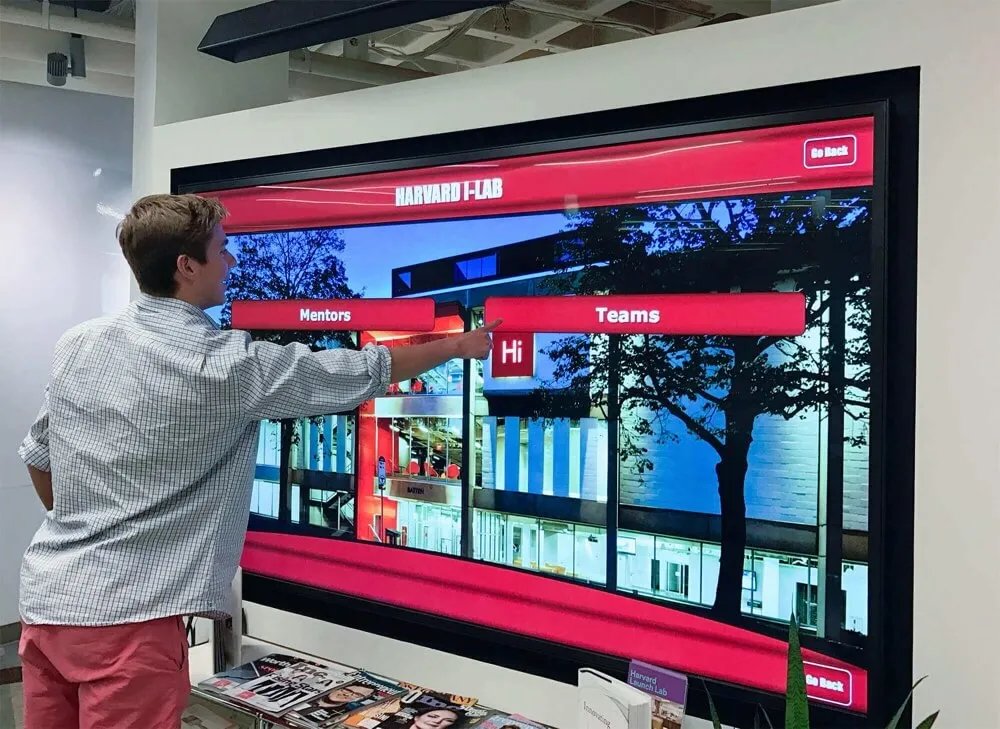
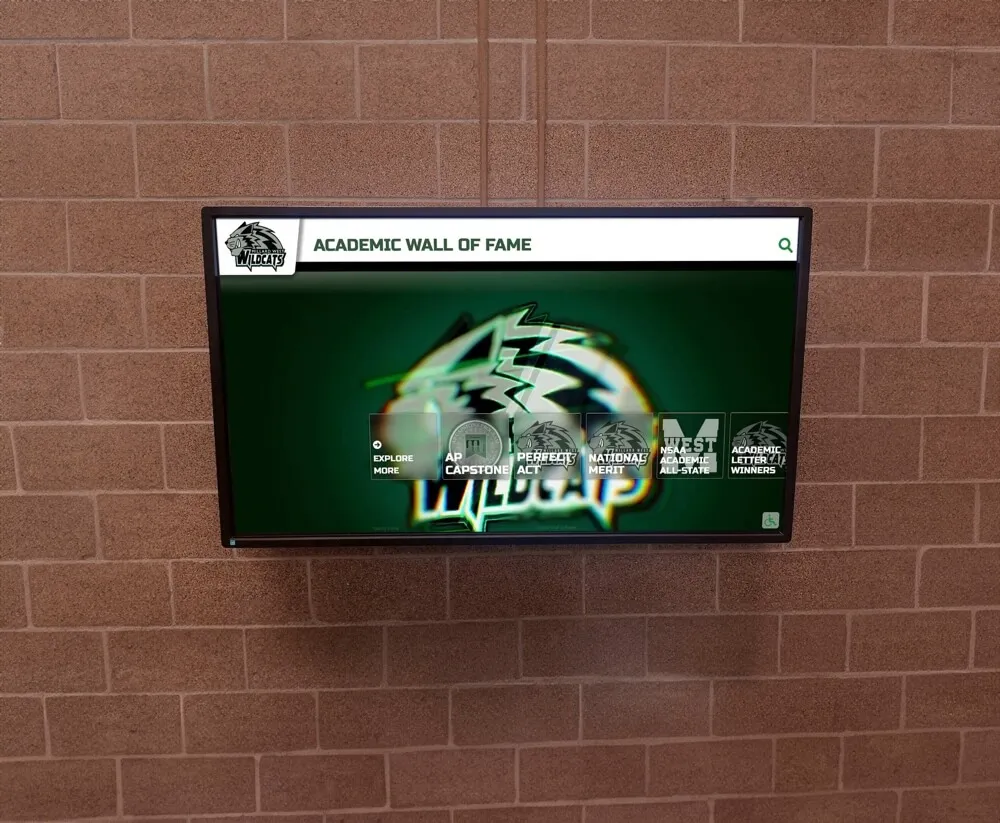
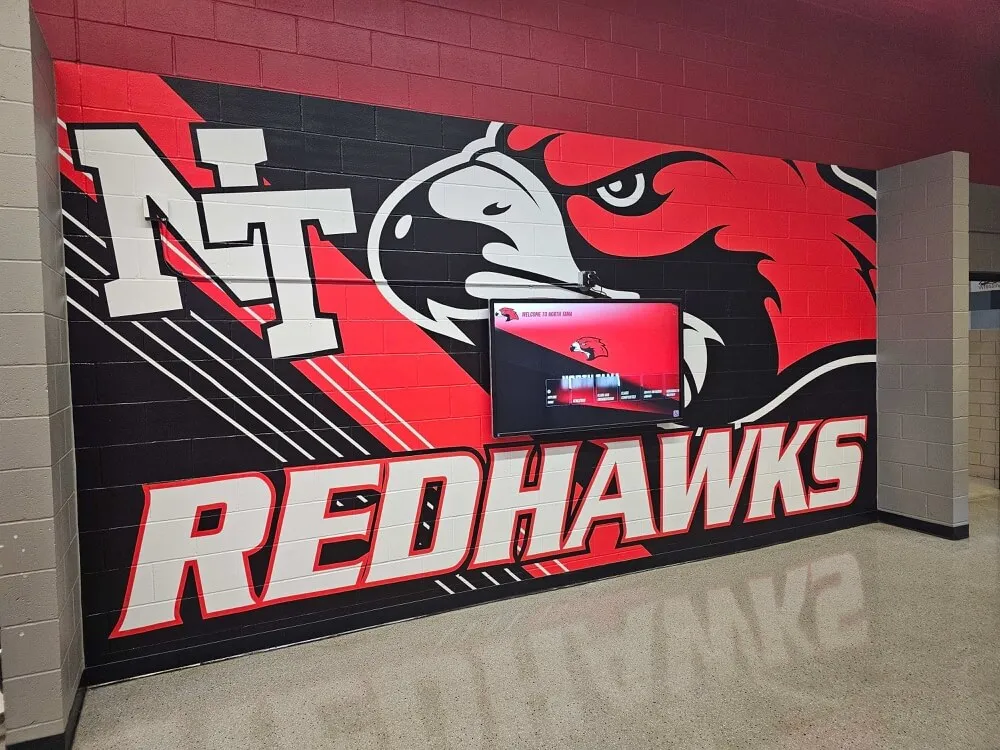
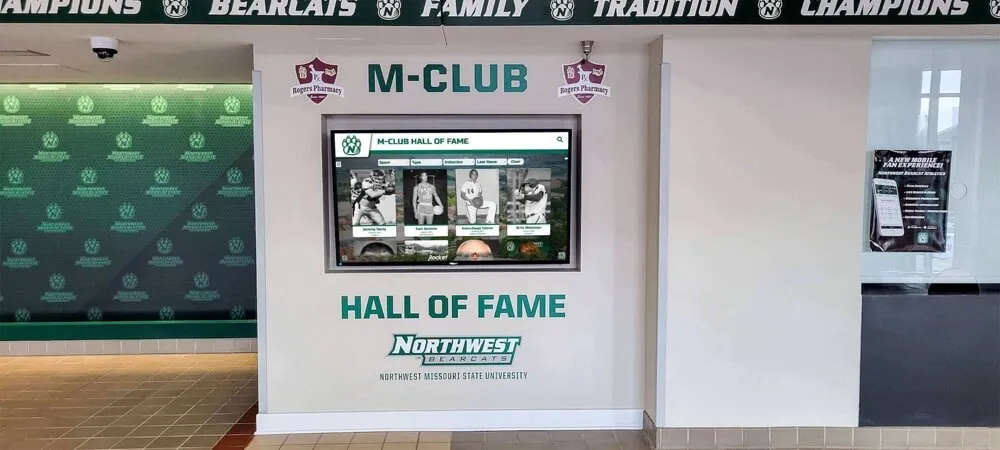
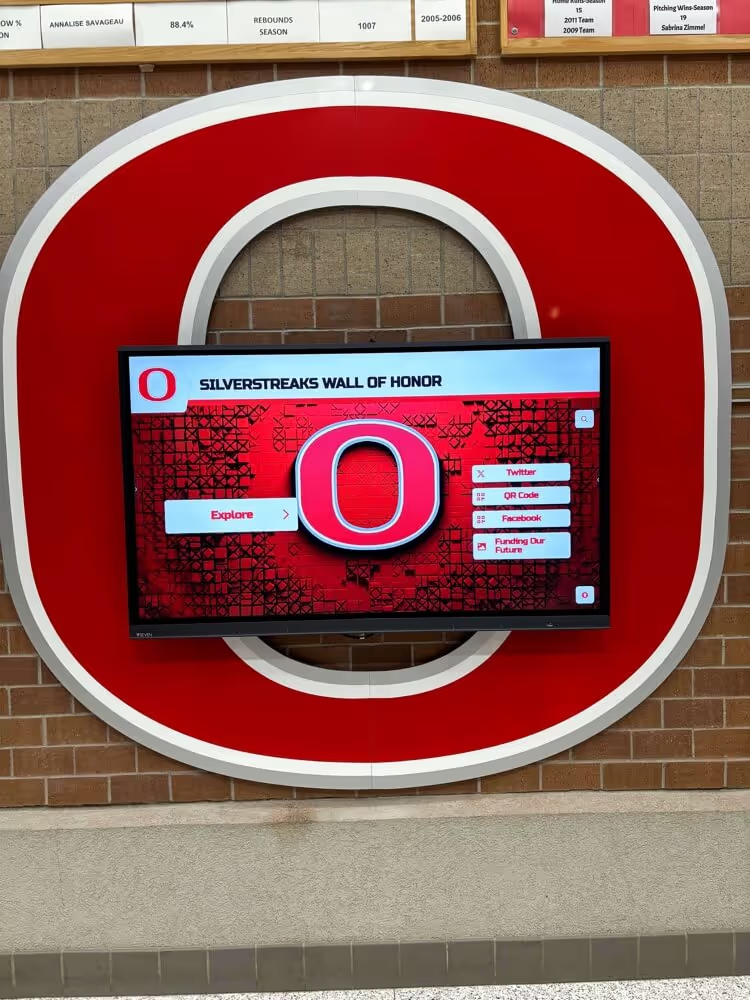
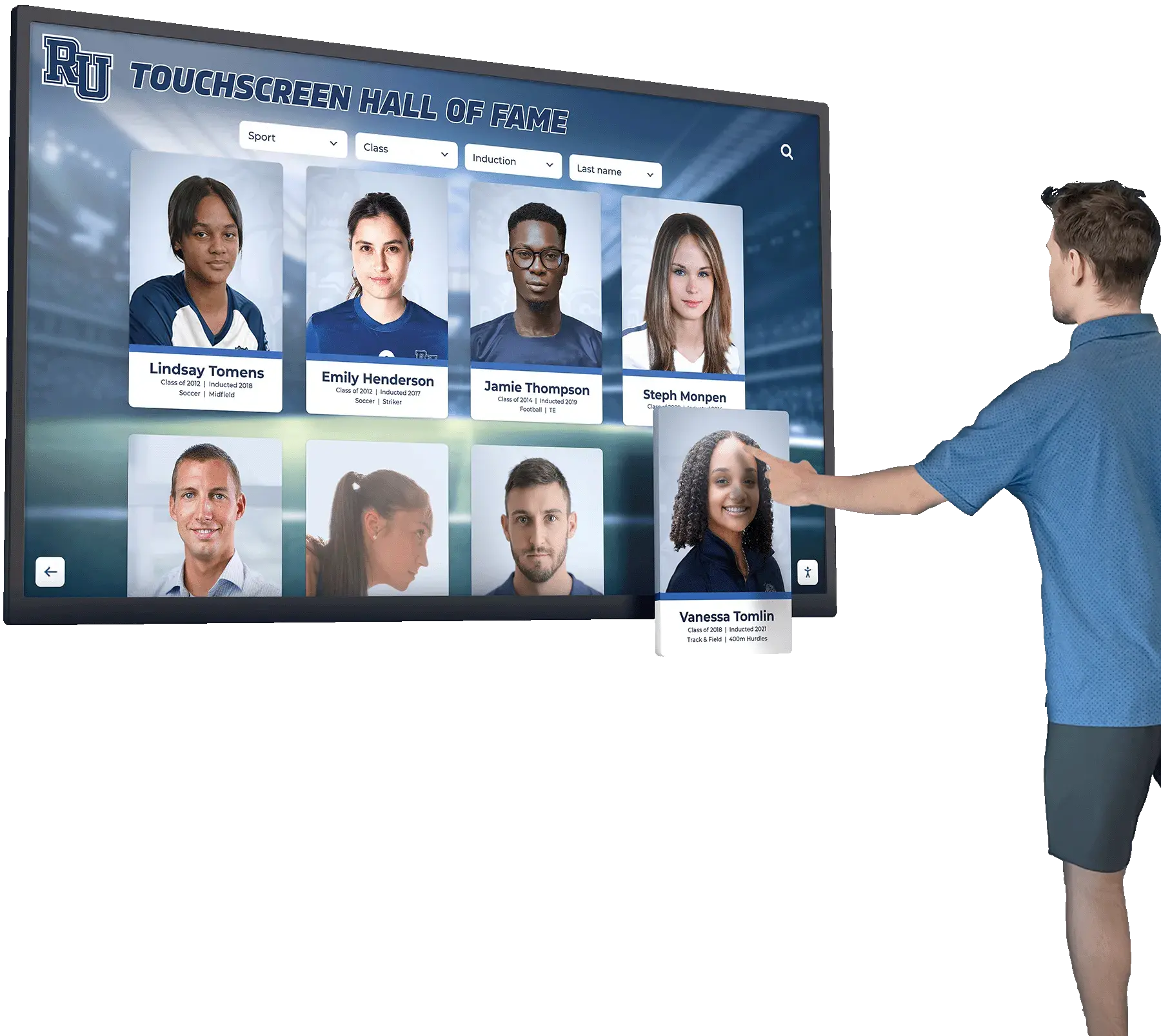
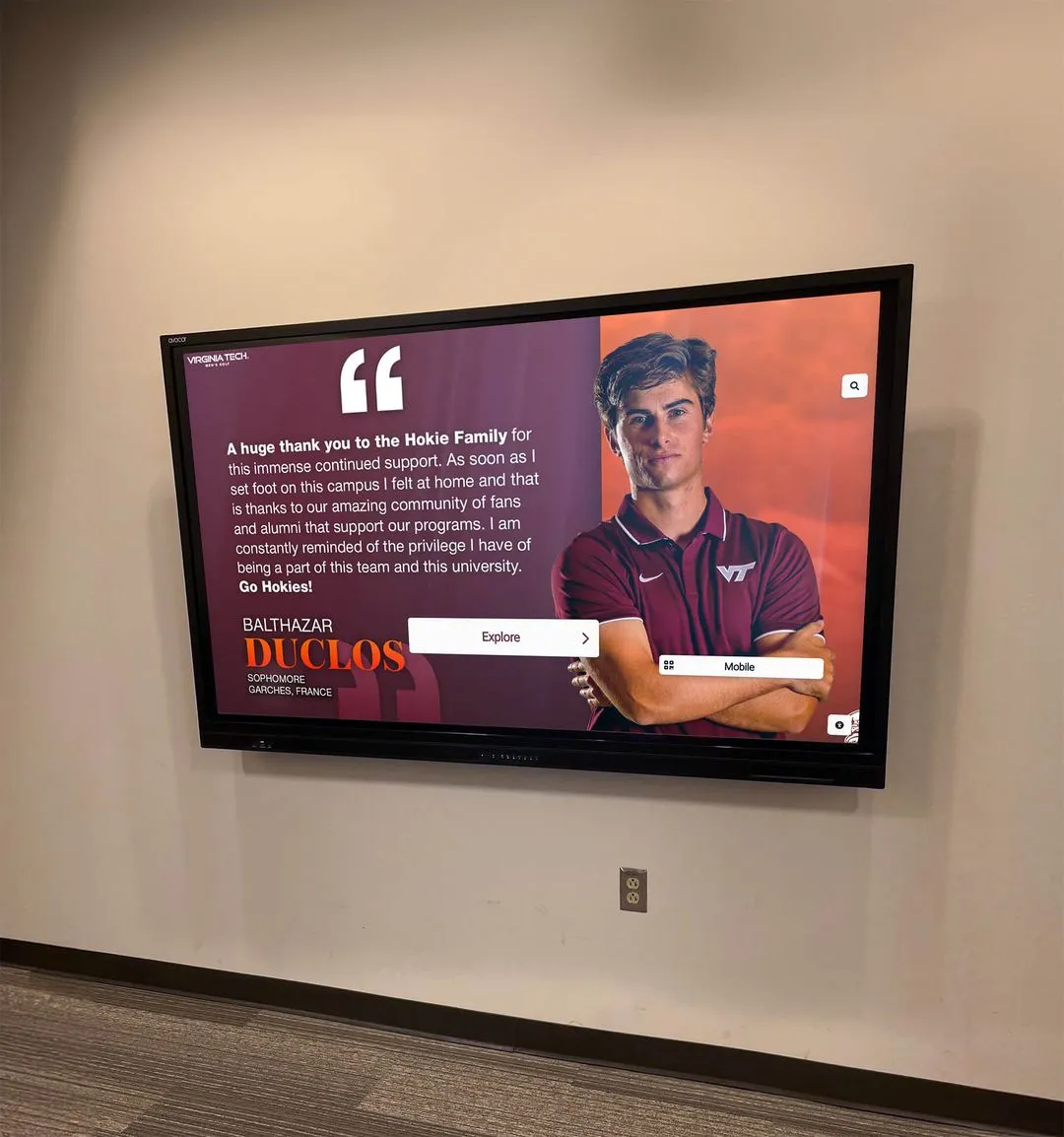
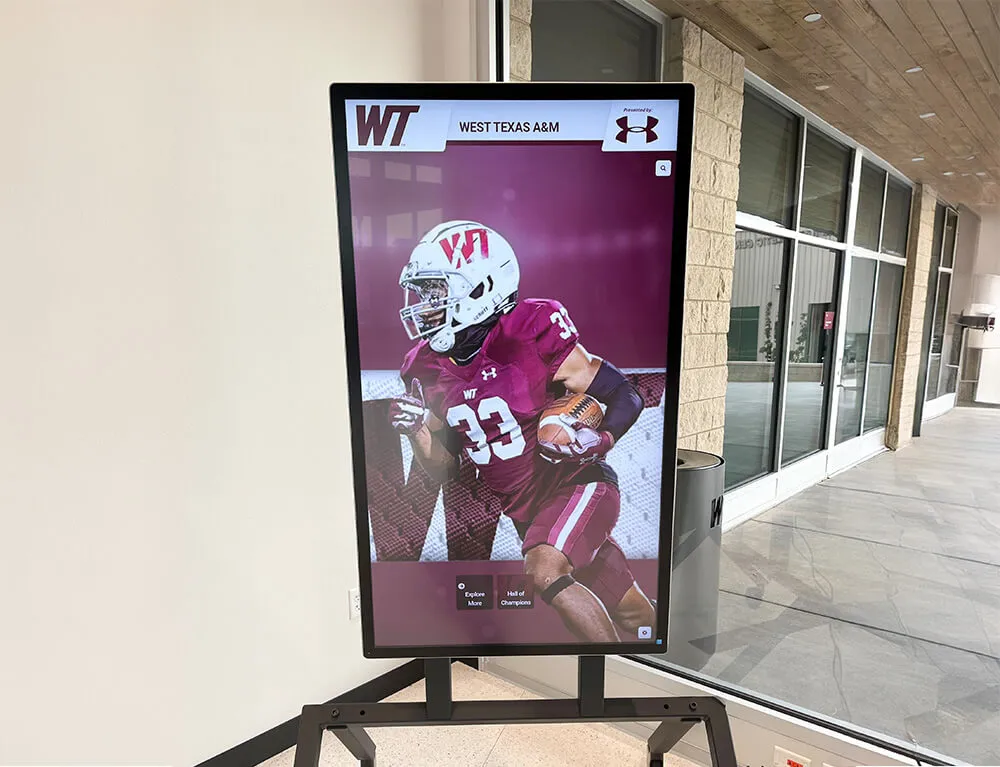
A school that digitizes its trophy collection — adding photography, roster data, season records, and achievement context for each item — creates a recognition archive that persists regardless of what happens to the physical objects. Student-athletes, alumni, and community members can explore that archive through a touchscreen display positioned wherever visibility and traffic dictate, without any concern for whether that location is adjacent to a gymnasium or a mechanical room.
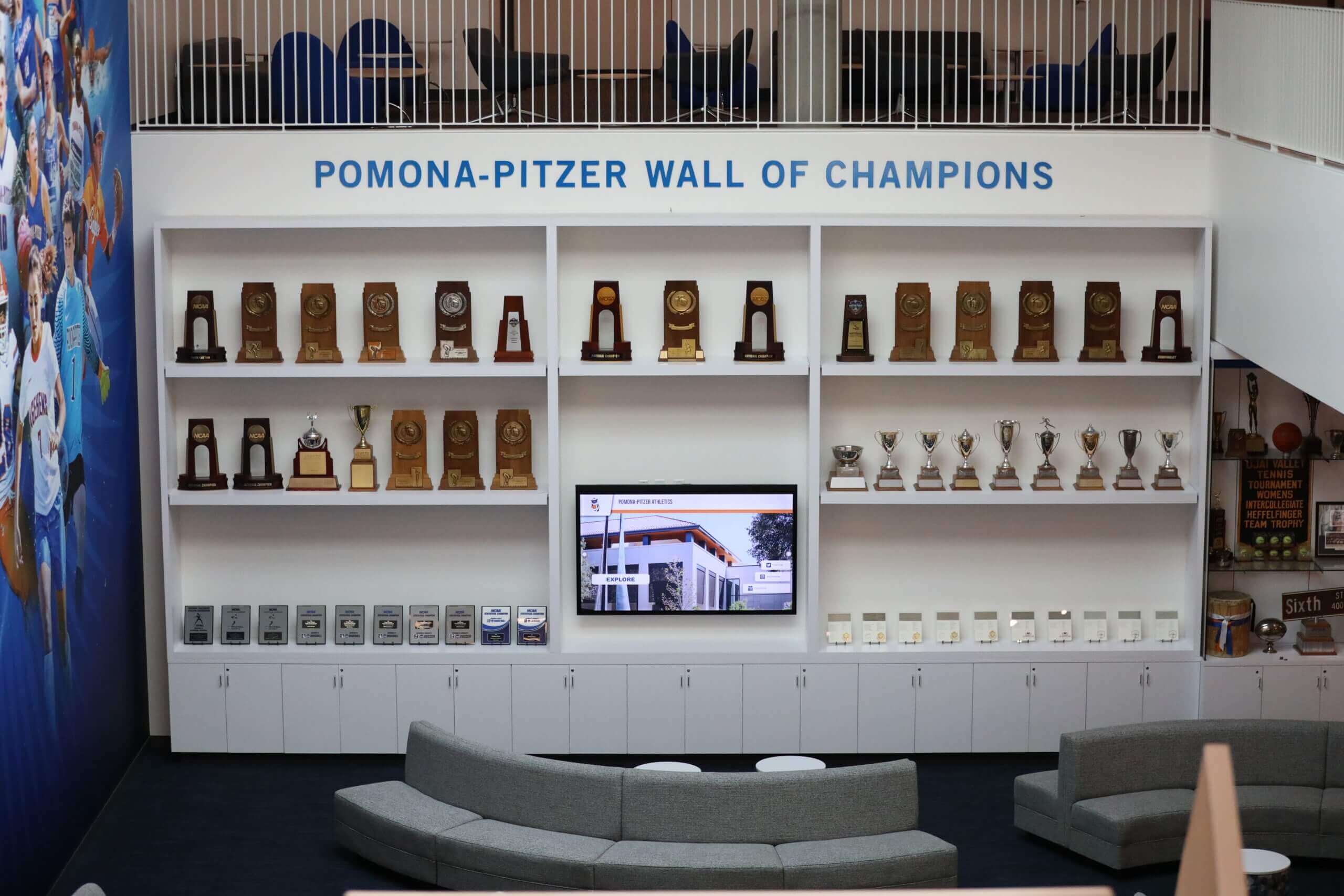
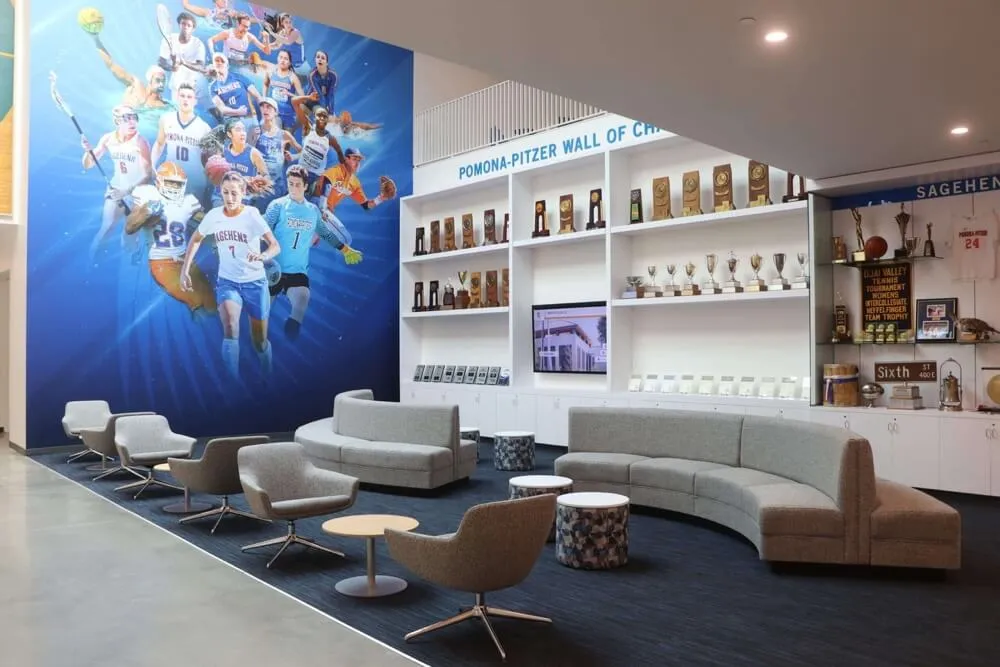
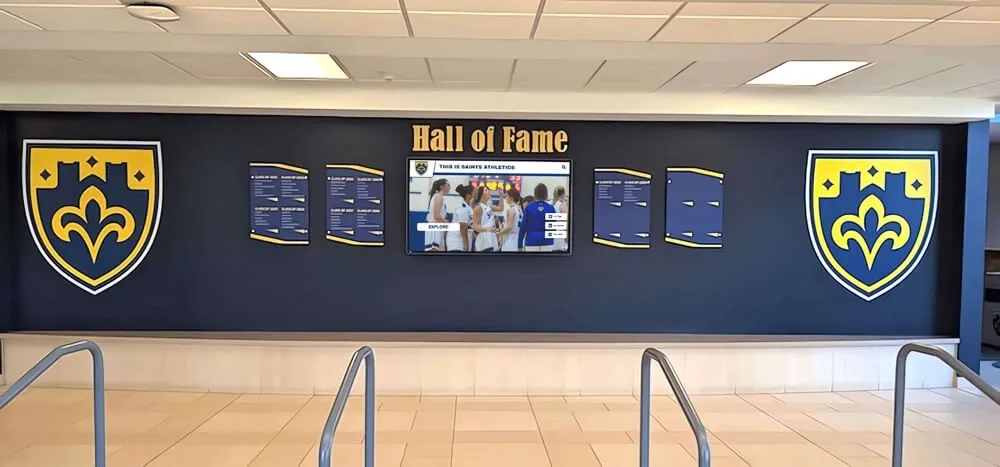
Prominent trophy displays near athletic facilities often occupy the highest-vibration zones in a school building — digital archives protect recognition value independent of physical item condition
What a Digital Archive Preserves That Physical Trophies Cannot
Physical trophy cases display the artifact but provide limited context. A digital recognition system built around your school’s athletic history preserves:
- Full team rosters for every championship season, searchable by athlete name
- Season win-loss records, conference standings, and tournament brackets
- Photography galleries including team portraits, action shots, and ceremony documentation
- Video highlight content from championship seasons where footage exists
- Individual award histories linking athlete recognition to team achievement context
- Coach and program milestone documentation
For programs recognizing exceptional contributors across multiple roles — from coaches to managers to long-serving volunteers — digital systems provide the depth of recognition that physical trophies cannot accommodate.
Protecting Band, Music, and Fine Arts Awards in the Same System
Schools with vibration concerns near trophy cases often have parallel concerns about fragile awards in music and fine arts display areas — crystal conducting batons, glass-enclosed music competition plaques, and framed ensemble photographs occupy similar environments. A unified digital recognition platform handles music award recognition alongside athletic recognition, allowing schools to protect fragile physical items across departments while maintaining a comprehensive visible record of all program achievements.
Planning Physical Exhibits Alongside Digital Recognition
Schools transitioning from purely physical trophy cases to hybrid or fully digital recognition systems often ask how to handle the most prominent physical items — conference championship trophies, retired numbers, state championship banners — that carry genuine community significance.
The practical approach involves three categories:
Category 1 — High-significance, vibration-exposed items: Relocate to a protected storage or low-vibration display location. Create high-resolution digital documentation and incorporate the item into the digital archive with full context. A QR code near its original display location (or near the digital screen) can link visitors to its complete history.
Category 2 — Moderate-significance items in acceptable vibration zones: Maintain in place with internal case isolation (foam mounting pads, non-slip matting) and add to the digital archive for depth of recognition.
Category 3 — Low-significance or high-volume items: Consider whether these items are better represented as digital records rather than physical display items. Many schools discover that the majority of their stored trophies — items that never had adequate display space — receive more recognition through a searchable digital system than they ever did behind glass.
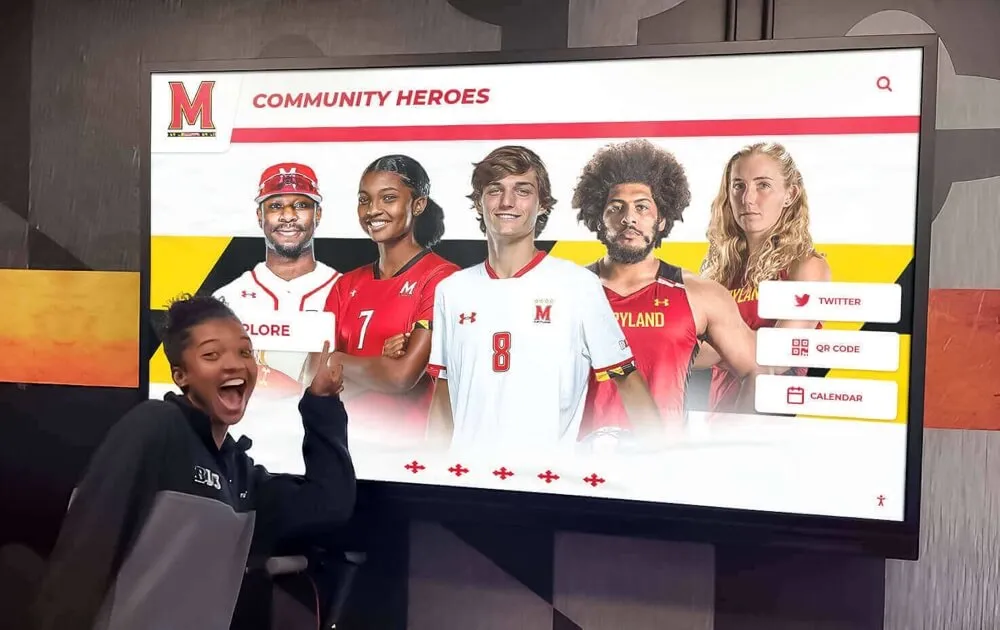
Schools developing recognition strategies for all-conference and academic award recipients alongside athletic honors find that a digital platform handles the volume of recognition far more effectively than physical cases regardless of vibration considerations.
For programs also serving performing arts recognition, all-state music recognition workflows illustrate how digital systems accommodate the full breadth of student achievement beyond athletics.
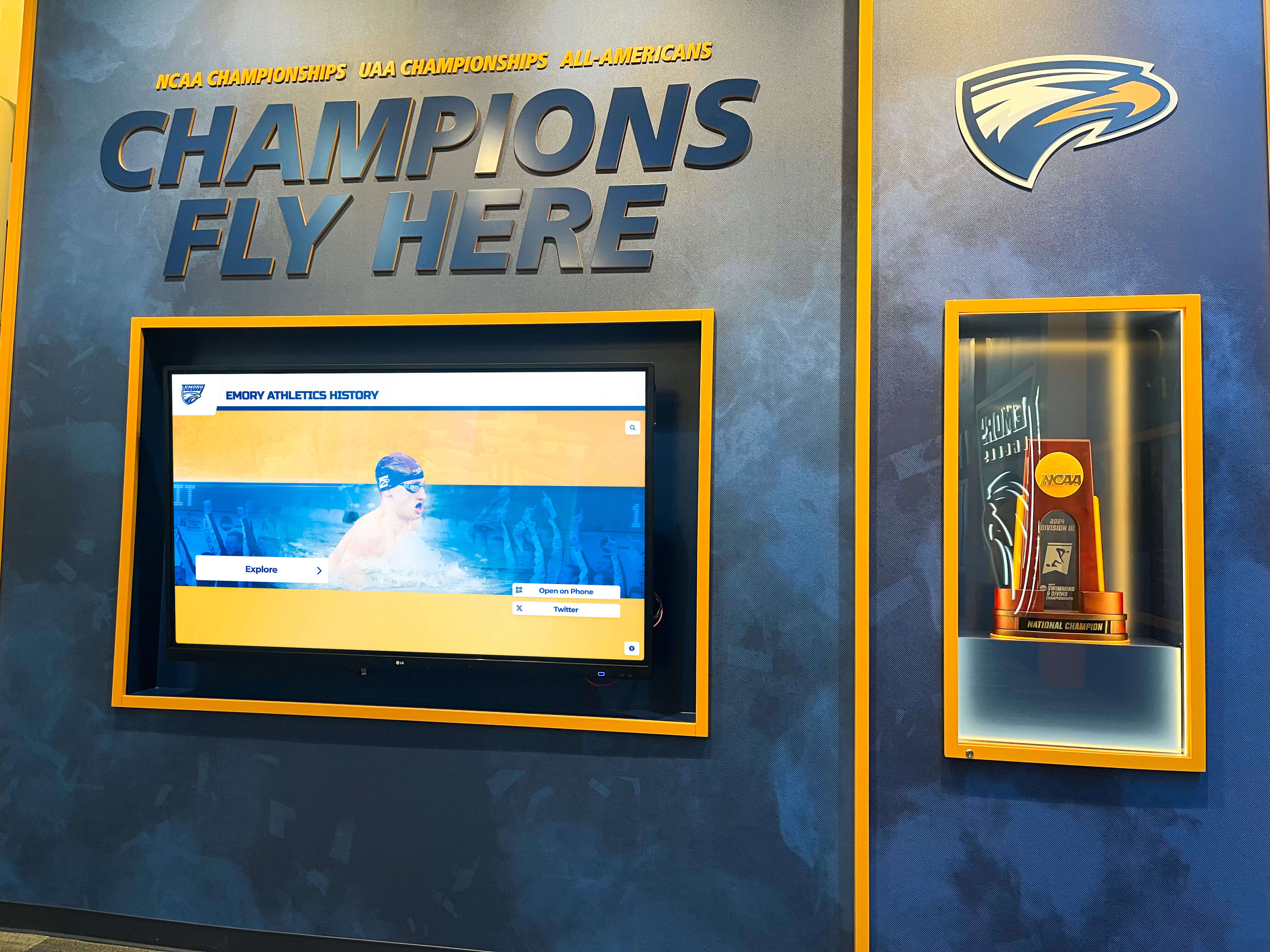
Championship hardware representing program milestones deserves both proper physical protection and permanent digital documentation — vibration risk in display locations makes the latter especially important for irreplaceable awards
Frequently Asked Questions
Q: How do I know if my trophy case location has a real vibration problem without hiring an engineer?
A: The coin-on-shelf test during a high-activity event (bleacher deployment, basketball game, or pep rally) is the most accessible first indicator. If a coin or small object placed on a flat trophy surface visibly moves or travels during the event, the location has meaningful vibration transmission. Audible rattling from case contents is also a reliable indicator. If neither is present, the risk at that location is likely low, though passive tilt or shock indicators can provide ongoing confirmation between inspections.
Q: What does “peak particle velocity” mean and do I need to measure it?
A: Peak particle velocity (PPV) is the standard metric used by engineers and conservators to characterize vibration intensity. It represents the fastest speed at which a point on a structure moves during a vibration event, measured in millimeters per second. For most schools, instrumented PPV measurement is not necessary unless a specific high-value item (a historic artifact, a signed championship item of documented monetary value) requires formal documentation of exposure or a structural engineer is engaged for a building assessment. The practical inspection methods in Step 2 of this guide provide adequate prioritization information for typical school trophy cases without instrumentation.
Q: Should we stop using retractable bleachers to protect the trophy cases?
A: No — this would be an inappropriate trade-off. Retractable bleachers serve essential functions for athletic events. The appropriate response is to assess which trophy case locations are in the vibration transmission path of bleacher systems and address those locations through relocation, internal case isolation, or digital archiving of the most fragile items. The goal is to remove the fragile items from the vibration zone, not to remove the vibration source from a building where it belongs.
Q: Is anti-vibration matting under a trophy case effective?
A: Anti-vibration matting provides meaningful attenuation for vibration at higher frequencies, including HVAC mechanical transmission and hallway traffic. It is less effective for the low-frequency (1–10 Hz) vibration associated with bleacher deployment and gymnasium crowd events. If your primary concern is bleacher-related vibration, matting alone is unlikely to be sufficient for the most fragile items; relocation or structural assessment is a better path.
Q: Our school is planning a new hall of fame installation. How should vibration factor into the design?
A: Raise vibration risk explicitly during the site selection phase. Ask the project architect or mechanical engineer to identify whether proposed case locations share structural continuity with gymnasium floor slabs or are directly below mechanical equipment. Request that case mounting details include vibration isolation elements if any moderate-risk sources are present. And budget for a digital recognition component that archives the recognition value of your collection independent of physical display location — this provides resilience against any vibration, light, humidity, or other environmental challenge that the physical items may encounter over a multi-decade program horizon.
Q: Can a digital trophy case replace the need for vibration monitoring entirely?
A: Not entirely, but it significantly reduces the stakes. A digital platform preserves the recognition value of every award regardless of what happens to the physical object. However, physical trophies often carry genuine community significance — particularly championship hardware from milestone seasons — and monitoring protects those items from damage that cannot be undone. The practical combination is digital archiving for comprehensive recognition plus targeted vibration management for the physical items whose community significance warrants active protection.
Signing Day and Athletic Recognition: Context for Vibration Planning
Schools that invest in comprehensive athletic recognition — from athletic signing day ceremonies to historical hall of fame installations — understand that the physical trophy case is one part of a recognition ecosystem. Vibration monitoring is not a standalone facilities concern; it connects directly to decisions about how the school presents its athletic legacy to recruits, returning alumni, and current students who use that legacy as motivation.
A trophy case that is visibly damaged, improperly maintained, or displaying cracked crystal and toppled figurines communicates the opposite of what an athletic recognition program intends. Vibration monitoring, paired with appropriate mitigation and digital backup, ensures that your school’s most significant awards remain in a condition that honors the athletes and programs they represent.
Protect Your Athletic Legacy With a Digital Recognition Platform
Physical trophy cases face real risks from vibration, light, humidity, and space constraints — risks that grow over decades as collections expand and buildings age. A cloud-managed digital trophy case platform protects the recognition value of every award in your collection, makes your entire athletic history searchable and interactive, and gives administrators the ability to update and showcase achievements remotely without physical case access. See how schools are building resilient, engaging recognition programs that complement their physical displays.
Schedule a DemoEffective trophy case vibration monitoring is a practical, achievable goal for any facilities or athletics team willing to invest structured observation time into the process. The step-by-step workflow in this guide — mapping vibration sources, conducting seated observation tests during high-activity events, assessing individual item vulnerability, implementing passive monitoring, and establishing recurring inspection schedules — provides a framework that does not require specialized equipment or engineering expertise for most school environments.
The most important action for any school is to connect vibration risk assessment to recognition program planning before installation decisions are made and before fragile items accumulate damage that cannot be reversed. Paired with digital archiving of your complete athletic history, physical vibration management ensures that the awards representing your school’s most significant competitive achievements remain in a condition worthy of the athletes and programs they celebrate.