



Intent: research — A trophy case UV exposure monitoring log is a structured record tracking cumulative light levels that jerseys, framed photographs, trophies, and documents inside a display case receive over time. Schools that maintain this log can rotate or remove vulnerable items before permanent fading, yellowing, or brittleness sets in—extending the life of athletic archives and recognition collections by years or even decades.
Physical trophy cases are the most visible expression of a school’s competitive history. Championship trophies, signed jerseys from state title seasons, original team photographs, and handwritten award certificates all share one silent enemy: light. Ultraviolet radiation from overhead fluorescents, natural sunlight through nearby windows, and halogen spotlights inside cases degrades dyes, bleaches paper fibers, and weakens fabric threads continuously and invisibly.
This guide walks school administrators, athletic directors, archive teams, and facilities stakeholders through creating and maintaining a practical UV exposure monitoring log—without specialized conservation training or a large budget. It also explains how transitioning recognition content to a cloud-managed digital display protects irreplaceable originals while keeping achievements fully visible to the school community.
A well-maintained trophy case UV exposure monitoring log does not require expensive equipment or daily attention. A UV data logger or inexpensive UV card reader, a simple spreadsheet, and a documented rotation schedule give facilities teams everything they need to keep artifacts safe. The key is consistency: measuring at the same intervals, recording results in the same format, and acting on threshold alerts before damage accumulates.

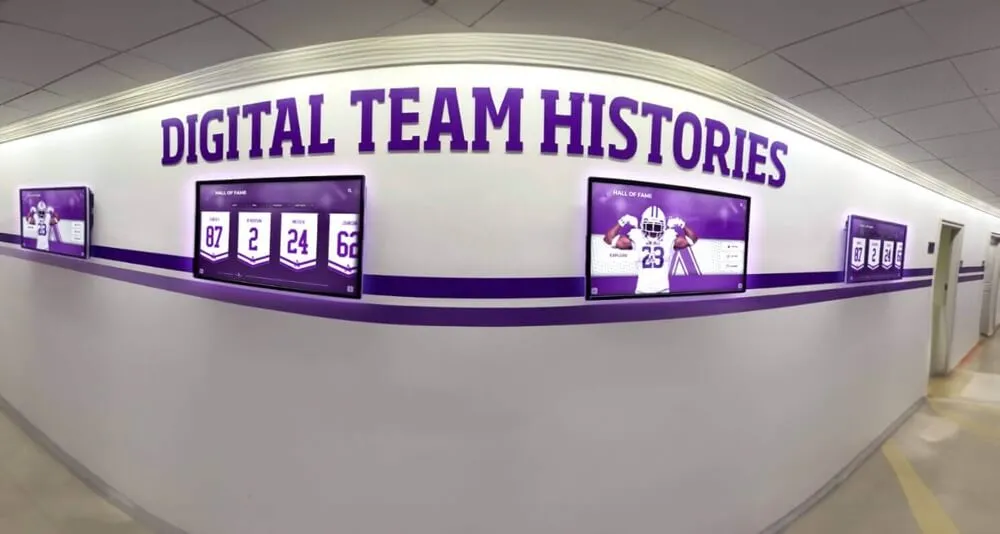
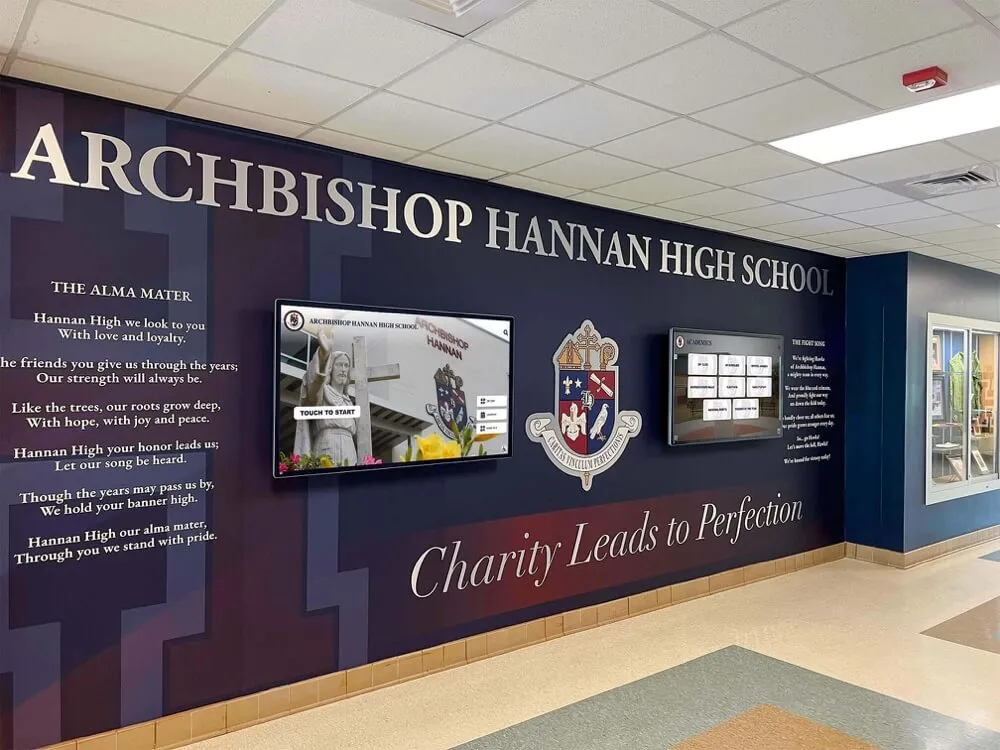
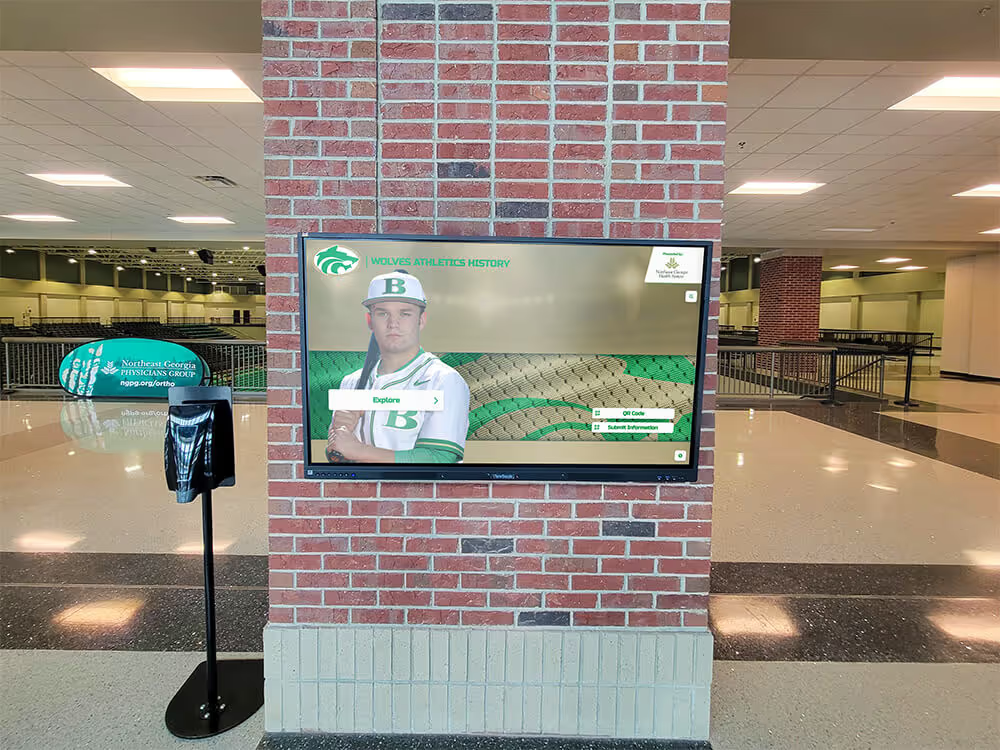
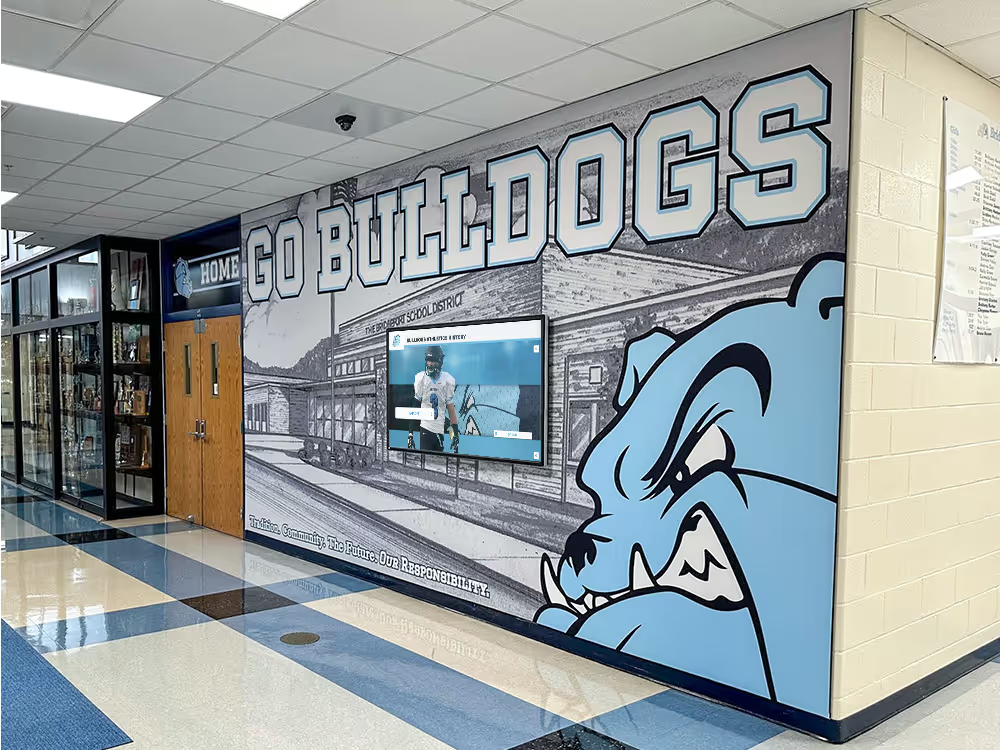
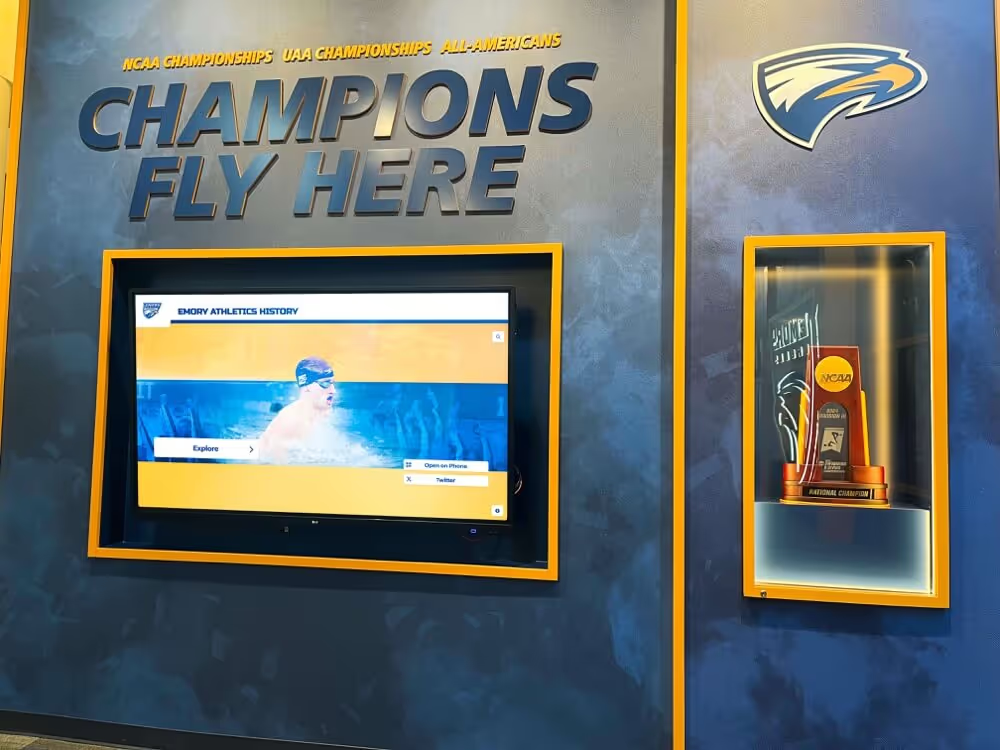
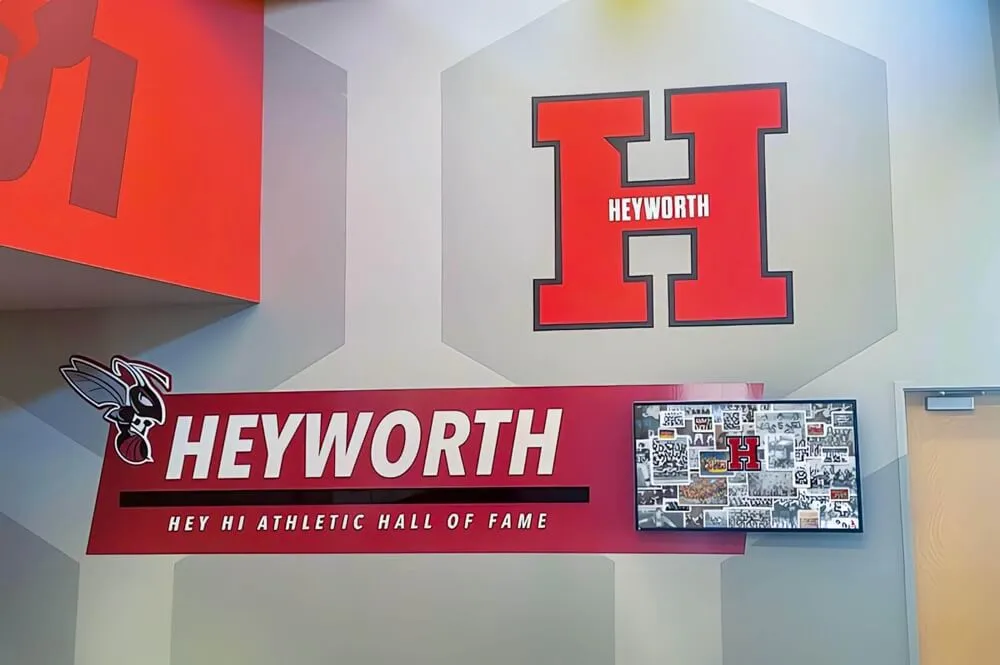
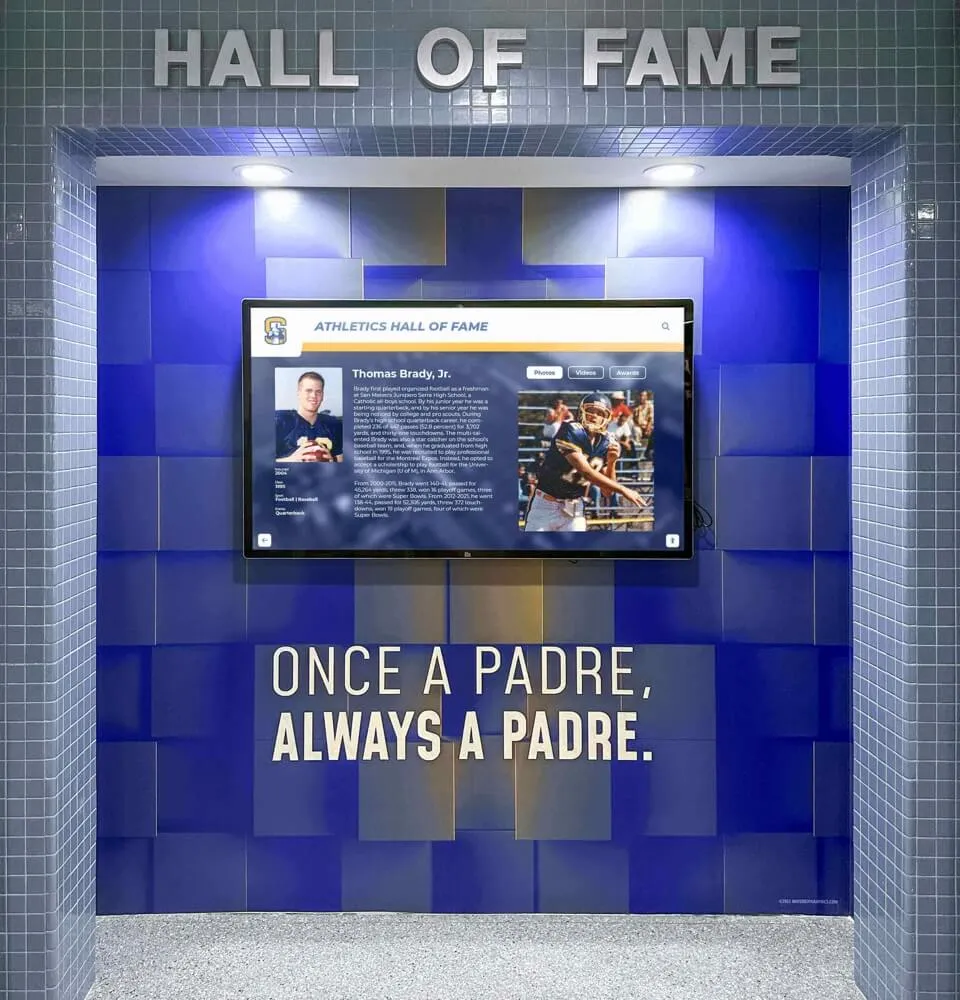
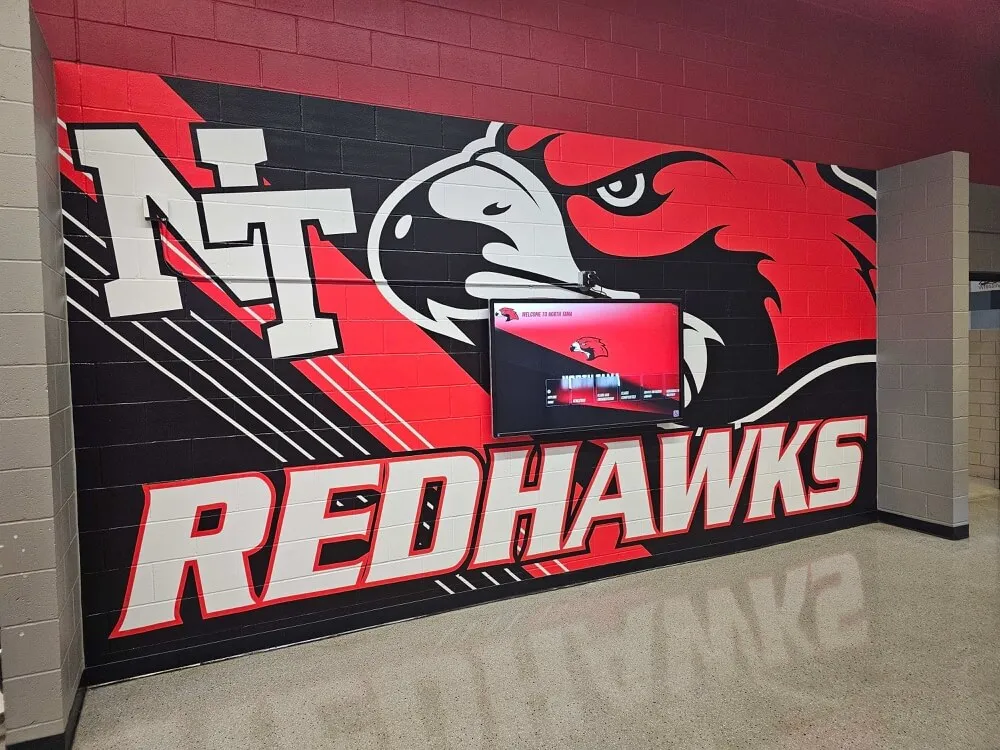
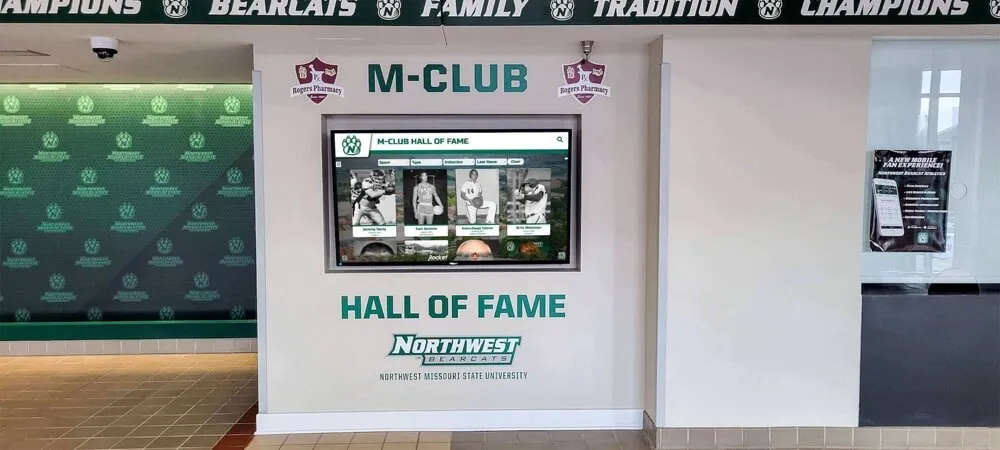
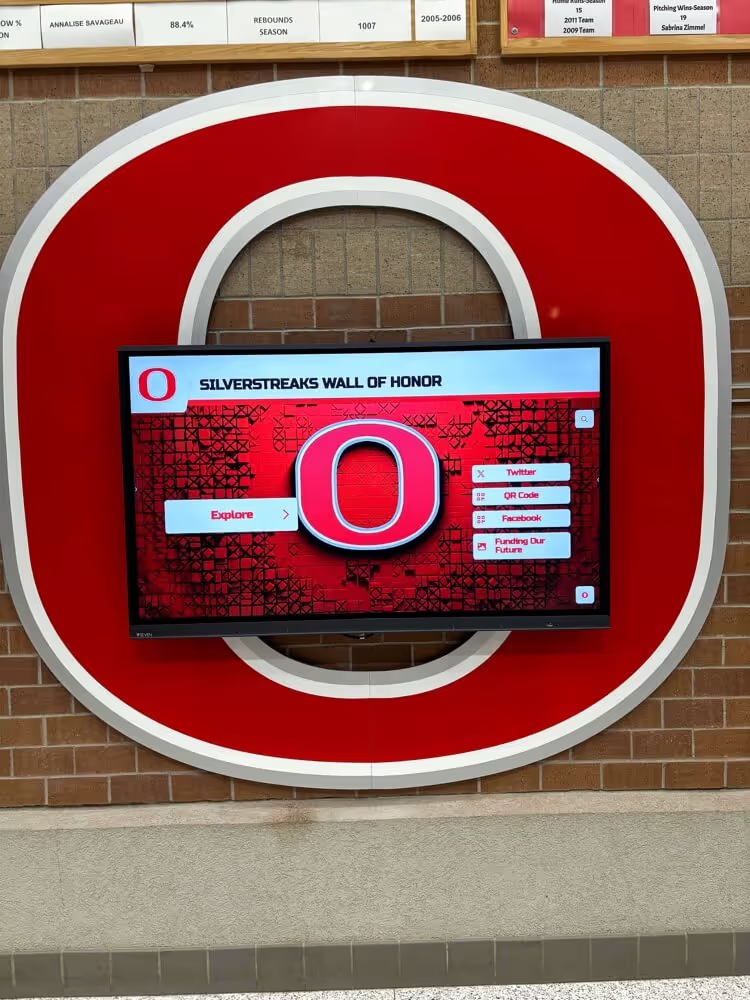
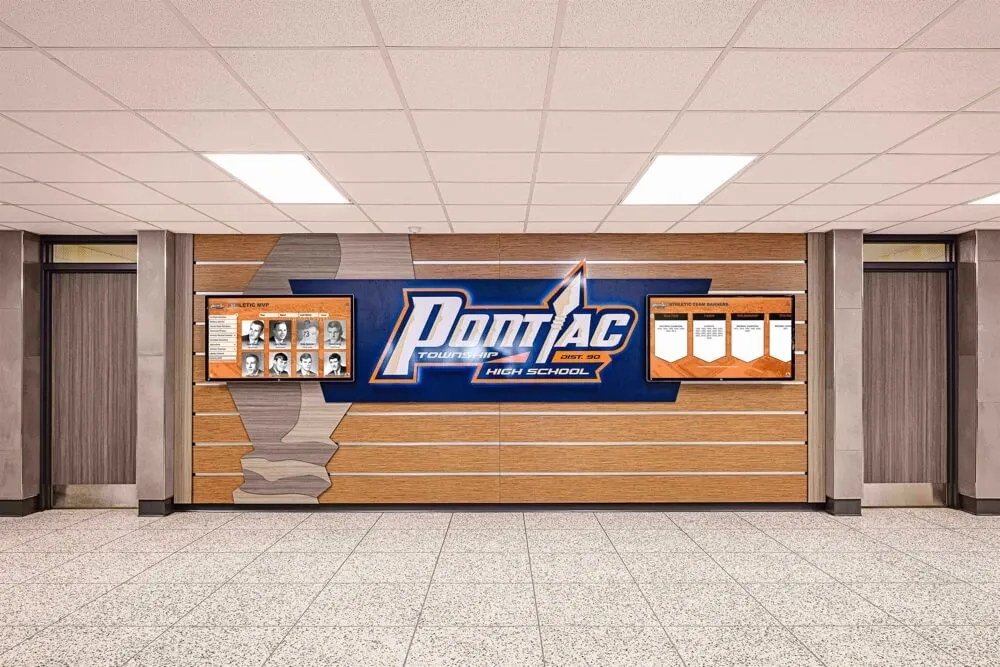
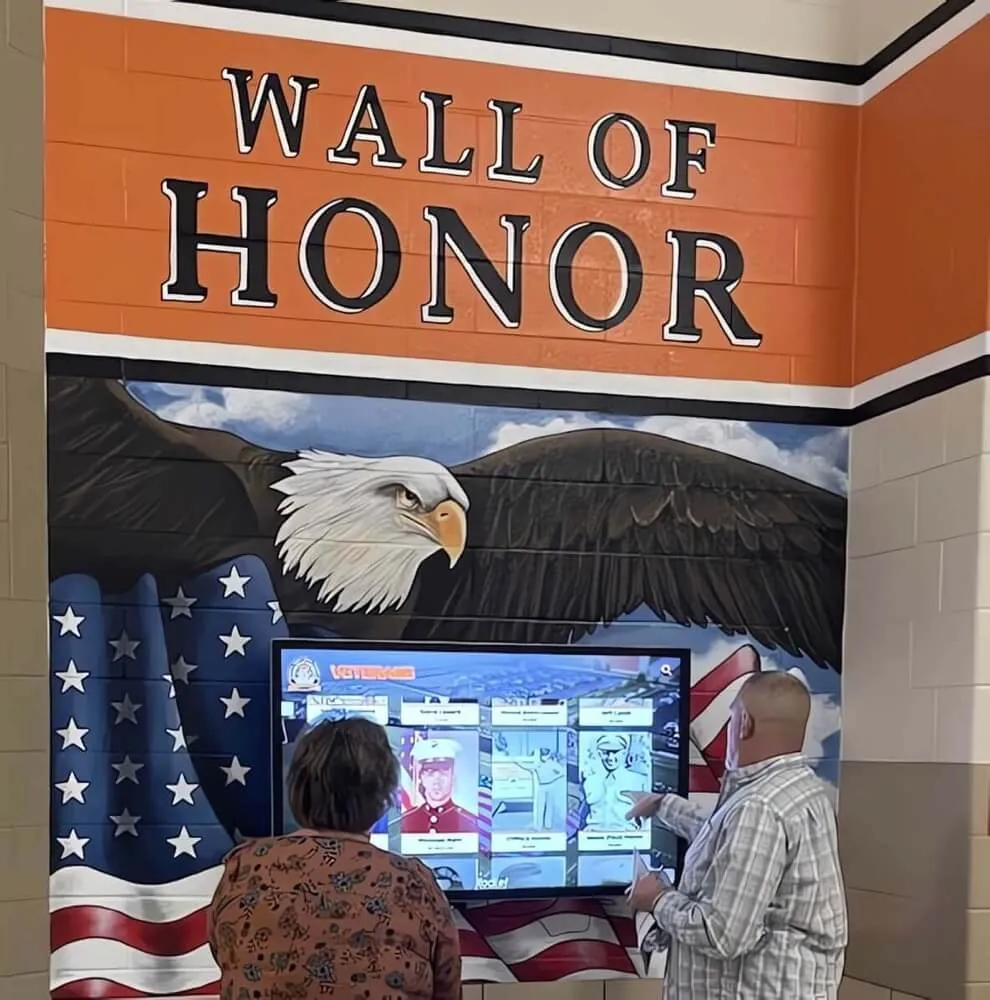
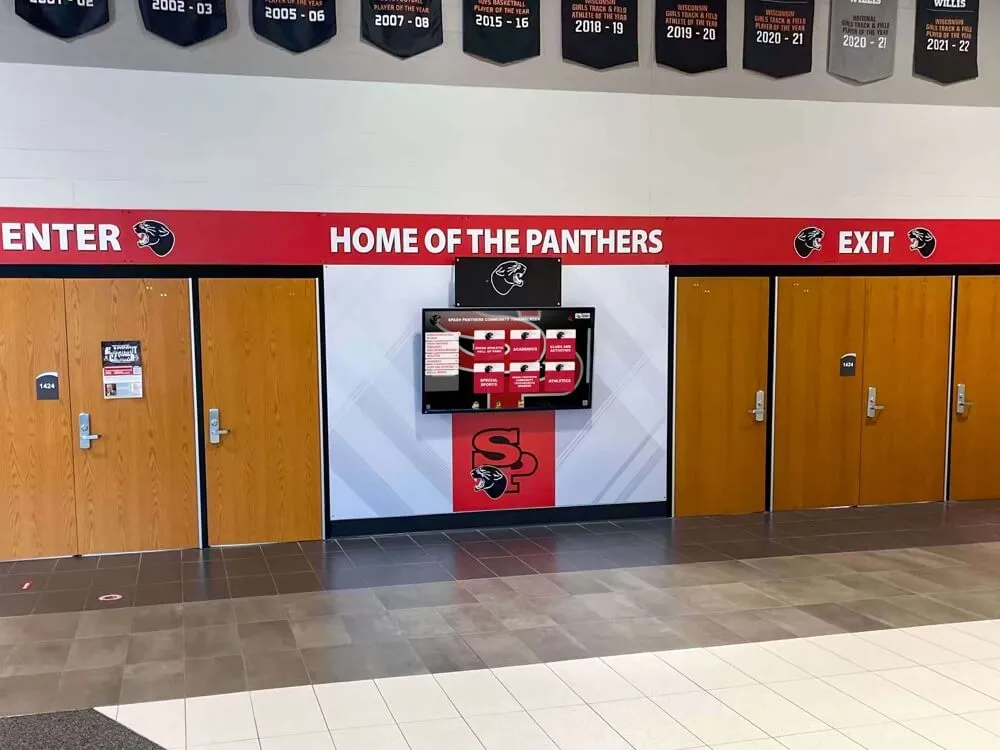
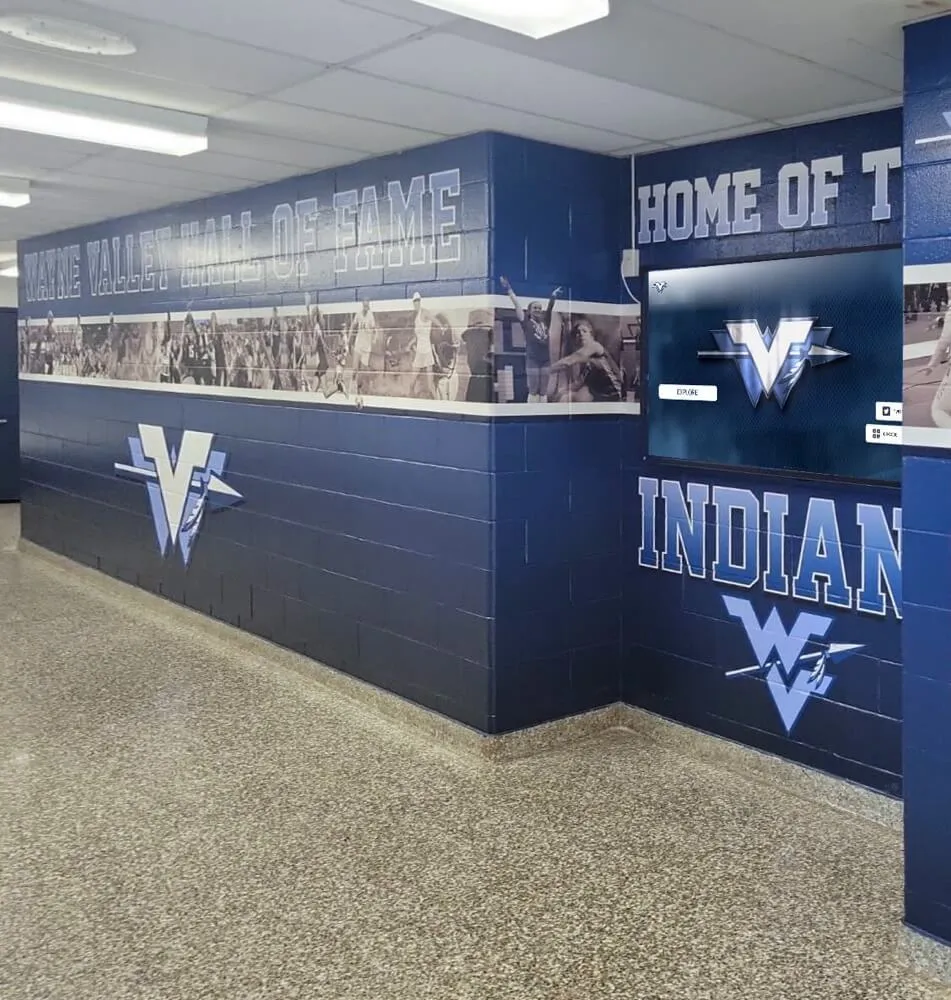
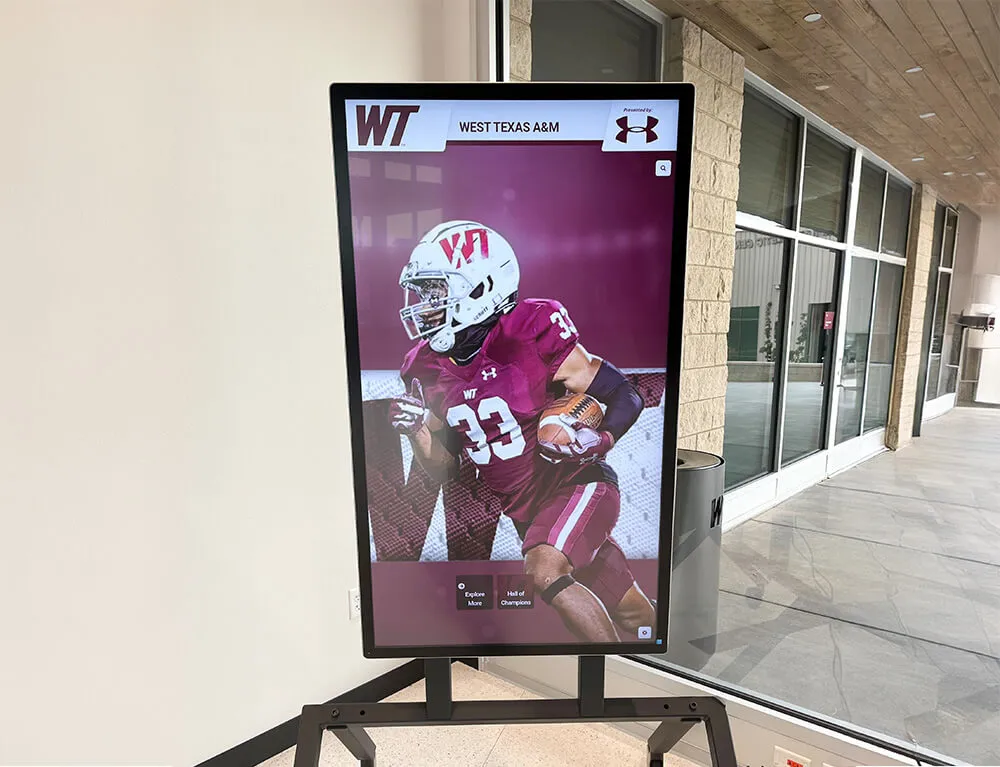
Modern schools increasingly pair digital recognition kiosks with physical trophy cases—protecting originals from light exposure while keeping achievements visible and searchable year-round
Why UV Exposure Is the Biggest Threat Inside a Trophy Case
Light damage is cumulative and irreversible. A jersey that looks vibrant today may show noticeably faded lettering within two to three years if it sits under fluorescent lighting without UV filtering. The damage compounds invisibly until it crosses a visible threshold—at which point no restoration returns the item to its original state.
Three light-related threats affect every trophy case collection:
- Ultraviolet radiation (wavelengths below 400 nm) — the primary driver of photochemical degradation. It breaks down dye molecules, oxidizes paper cellulose, and causes plastic trophy components to yellow.
- Visible light (400–700 nm) — contributes to fading even without UV. The blue and violet portions of the visible spectrum carry the most photon energy and cause the greatest color shift in organic dyes.
- Heat from light sources — incandescent and halogen bulbs raise internal case temperatures, accelerating the chemical reactions that UV and visible light initiate.
Most Vulnerable Items in a Typical School Trophy Case
Some items fade far faster than others. Knowing which materials carry the highest risk helps prioritize monitoring and rotation decisions.
| Item Type | Primary Risk | Relative Sensitivity |
|---|---|---|
| Colored athletic jerseys | Dye fading, fiber weakening | Very High |
| Color photographs (pre-digital) | Dye-layer shift, yellowing | Very High |
| Inkjet-printed photos or certificates | Pigment bleaching | High |
| Newspaper clippings | Cellulose oxidation, brittleness | High |
| Handwritten award certificates | Iron-gall ink fading | High |
| Laser-printed documents | Toner stable; paper yellows | Medium |
| Metallic trophy components | Oxidation, logo fading | Medium |
| Acrylic and plastic plaques | Yellowing, surface crazing | Medium |
| Marble and glass awards | Minimal photochemical risk | Low |
| Metal engraving plates | Minimal photochemical risk | Low |
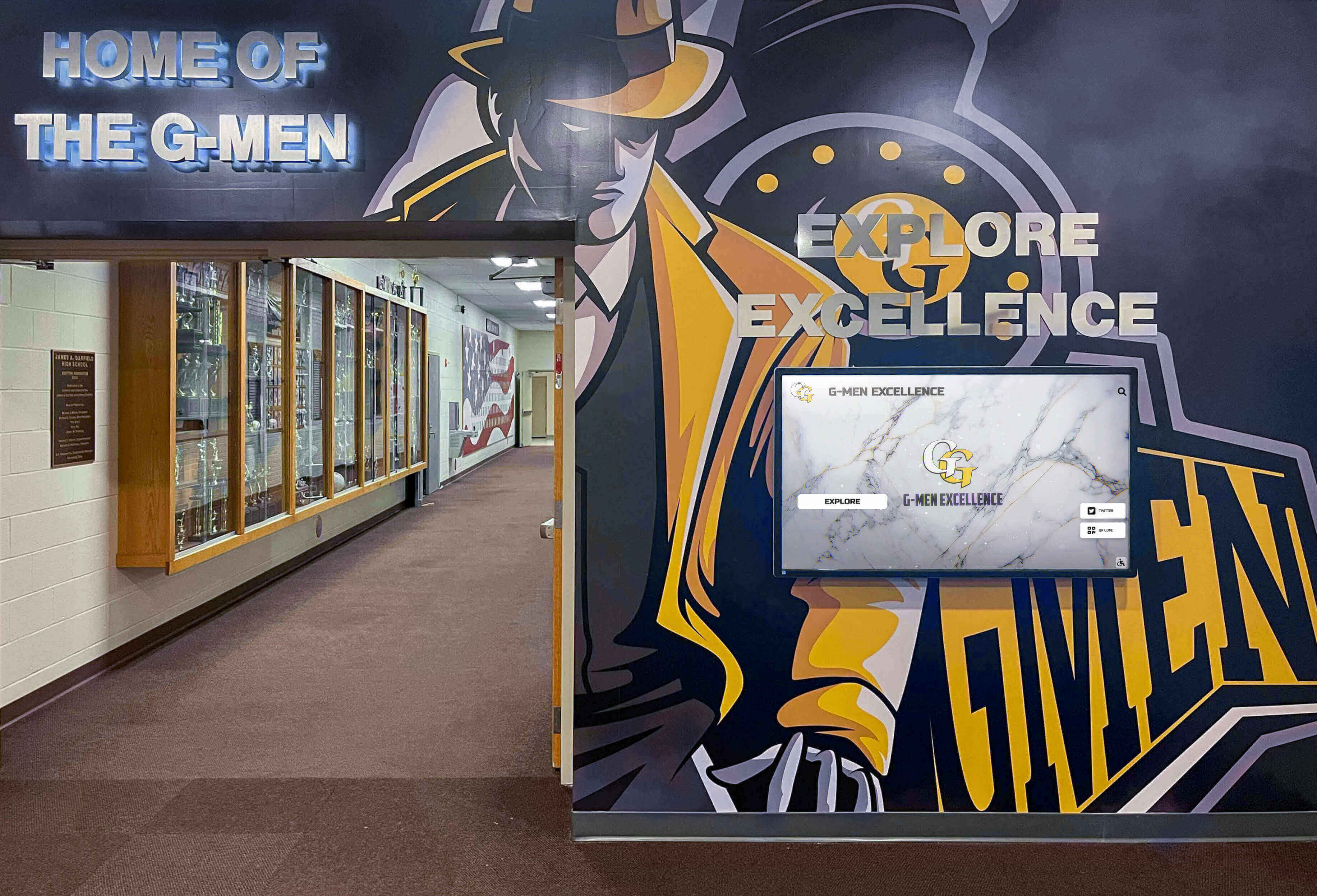
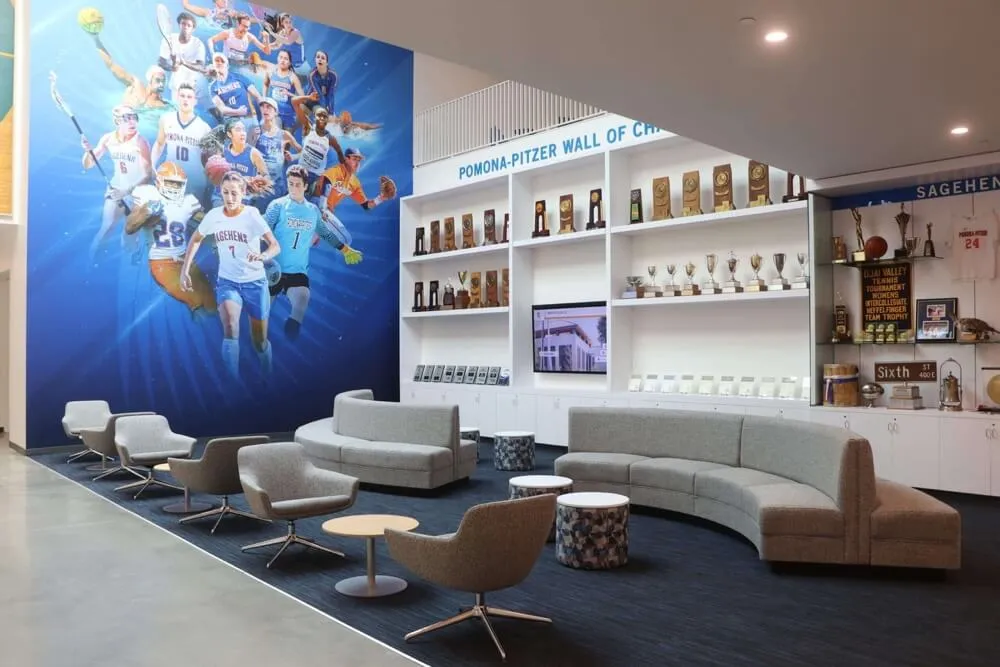
Schools with large trophy case collections include both high-risk organic items—jerseys and photographs—and lower-risk awards like metal trophies and engraved plates
Schools managing donor recognition walls alongside trophy collections face an identical challenge: original donor portraits and signed certificates carry the same UV sensitivity as athletic archives. Resources on digital recognition walls during school renovations discuss how institutions handle both display contexts when upgrading facilities.
Understanding UV Measurement Units
A monitoring log is only useful if staff record consistent, comparable measurements. Two units appear most often in school archive contexts.
| Unit | What It Measures | Typical Range of Concern |
|---|---|---|
| Microwatts per lumen (µW/lm) | UV energy relative to visible light output | Aim for below 75 µW/lm inside cases |
| Lux | Visible light illuminance at the artifact surface | Below 50 lux for high-risk items; below 200 lux for lower-risk items |
| Lux-hours (annual) | Cumulative annual light dose | Below 50,000 lux-hours for paper and textiles |
| Foot-candles | Illuminance in imperial units | 1 foot-candle equals approximately 10.76 lux |
Many facilities teams begin with inexpensive UV indicator cards that change color to confirm UV presence, then upgrade to a handheld UV and lux meter for numeric readings. For high-value collections—original championship pennants, founding-year photographs—a USB data logger that records readings continuously throughout the day provides the most defensible record.
Step-by-Step: Building Your Trophy Case UV Exposure Monitoring Log
Step 1 — Audit Every Item in the Case
Before logging light levels, document what you are protecting. Create a master item inventory listing the item name and description, date of acquisition or event year, material type (textile, paper photograph, metal, acrylic, or mixed), sensitivity category based on the table above, and current condition notes covering any existing fading, yellowing, or brittleness.
Number or tag each item so log entries can reference them unambiguously. This inventory also becomes the foundation of a broader athletic archive that administrators, historians, and alumni mentorship and career guidance programs can access for storytelling and community engagement long after the original item has been moved to storage.
Step 2 — Map Light Sources Affecting Each Display Zone
Walk through the trophy case area with all lights on and note:
- Position and type of every light source (overhead fluorescent, LED spotlights inside the case, exterior windows, skylights, gymnasium clerestories)
- Whether existing case glazing contains UV-filtering film or UV-absorbing acrylic
- Times of day when direct sunlight strikes case surfaces
Photograph each zone with a timestamp so future staff can replicate the mapping without reinterpreting written descriptions. Divide large cases into named zones—Zone A for the left bay, Zone B for the center shelf, and so on—and assign items to zones in the inventory.
Step 3 — Take Baseline Measurements
Using a UV and lux meter or data logger, record readings in each zone:
- Measure at the artifact surface, not at the light source
- Record readings at the brightest time of day when natural light peaks
- Note the date, weather conditions, and whether interior lights are on or off
- Repeat at the darkest typical operating condition to establish the full range
Enter results in the log immediately. Baseline measurements tell you whether existing UV protection is adequate before any additional damage accumulates.
Step 4 — Calculate Annual Lux-Hour Exposure
For each zone, estimate the annual cumulative light dose using this formula:
Annual lux-hours = average lux at artifact × daily exposure hours × operating days per year
As an example, a jersey in Zone B receives 180 lux average during 8 hours of school operation on 180 school days. That equals 180 × 8 × 180 = 259,200 lux-hours per year. This exceeds the 50,000 lux-hour guideline for sensitive textiles by more than five times, signaling the need for immediate intervention—repositioning the jersey to a darker zone, adding UV-filtering glazing, or transitioning the original to archive storage and displaying a high-quality reproduction.
Step 5 — Set Threshold Alerts and Rotation Triggers
Define the specific conditions that trigger a review action.
| Threshold Level | Condition | Recommended Action |
|---|---|---|
| Advisory | UV reading between 75 and 150 µW/lm | Add UV-filtering film to case glazing; recheck in 30 days |
| Caution | Annual dose approaching 40,000 lux-hours | Rotate high-sensitivity items to a darker zone or storage |
| Action Required | Annual dose exceeds 50,000 lux-hours | Remove originals; display reproductions or digital images |
| Emergency | Visible fading or yellowing observed | Remove immediately; consult a conservator for irreplaceable items |
Step 6 — Design the Log Format
A practical trophy case UV exposure monitoring log contains three sections.
Section 1: Periodic Readings Log — a time-stamped table with columns for date, zone, lux reading, UV reading in µW/lm, light sources active, weather conditions, and technician initials. Monthly readings are the minimum; quarterly is acceptable for low-risk collections.
Section 2: Cumulative Dose Tracker — a running total of lux-hours per zone updated at each reading interval. Color-code zones approaching threshold levels in green, yellow, and red so the current exposure status is visible at a glance without calculations.
Section 3: Action and Rotation Record — each time an item is moved, removed, reproduced, or protected with additional filtering, log the date, item ID, action taken, reason, and staff name. This creates accountability and allows future administrators to understand the conservation history of any artifact.
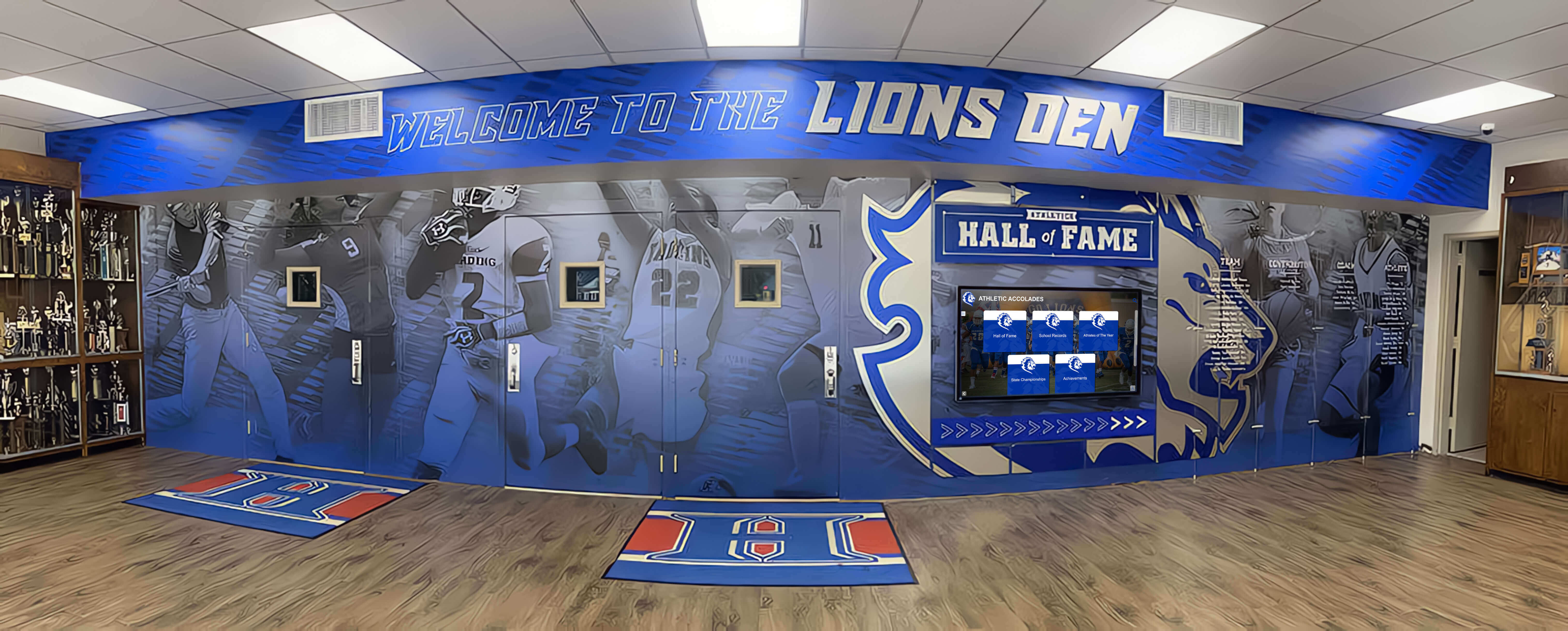
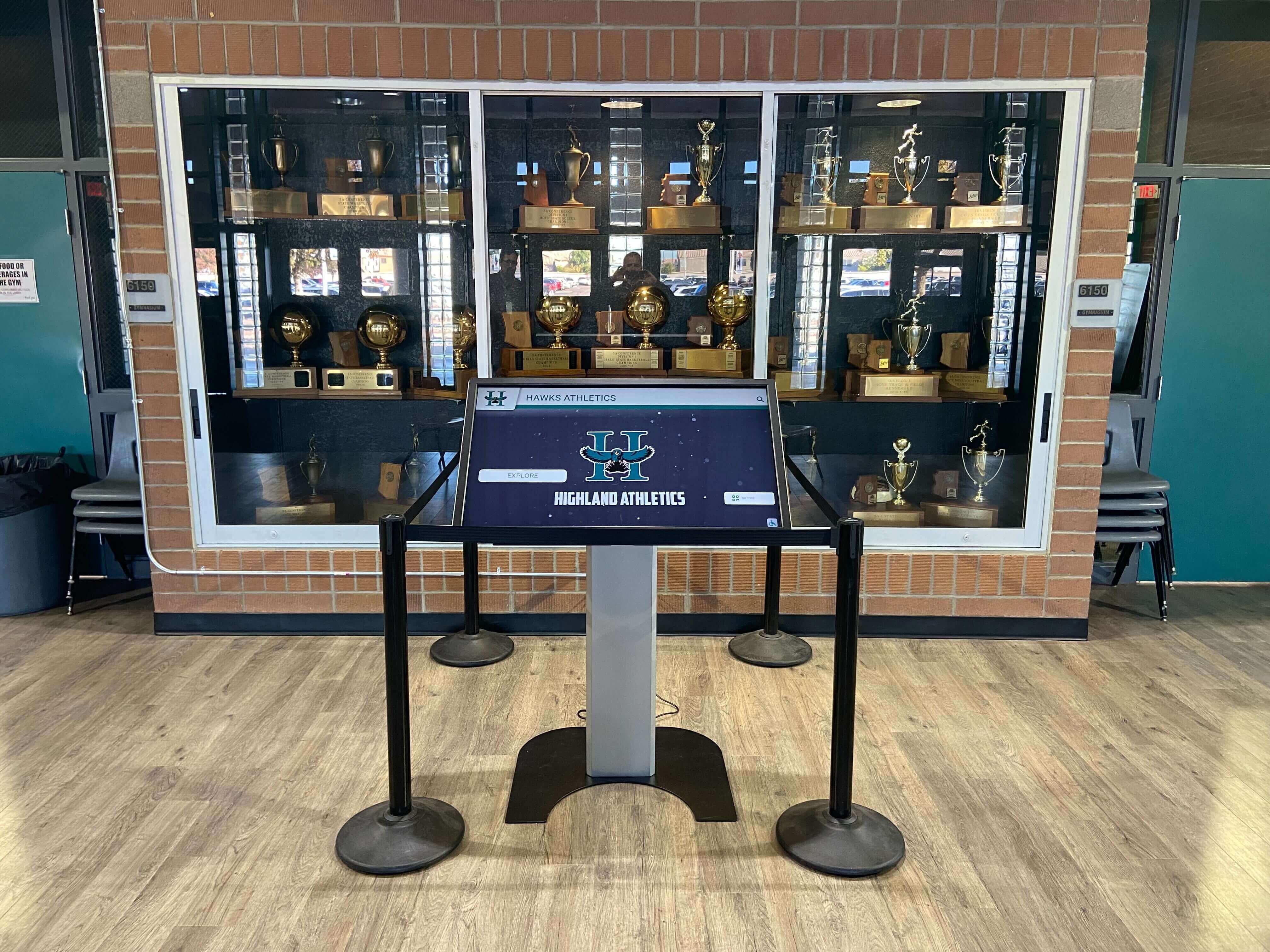
Trophy cases containing original jerseys, photographs, and paper certificates require structured UV monitoring to prevent irreversible fading over time
Step 7 — Implement Protective Measures
Logging alone prevents nothing—it creates the evidence base for protective actions. Prioritize interventions by cost-effectiveness.
- Retrofit UV-filtering film on case glazing — polyester UV-blocking film applied to glass or acrylic surfaces cuts UV transmission by 97 to 99 percent. Self-adhesive film typically costs three to eight dollars per square foot, making this the highest-impact and lowest-cost intervention available.
- Switch to LED lighting with UV-filtering sleeves — standard LEDs emit negligible UV, but older fluorescent case lighting can emit significant UV radiation. Replacing bulbs costs ten to forty dollars per fixture. UV-absorbing acrylic sleeves over remaining fluorescents work as an effective interim step.
- Reduce lux levels — dimmer switches or lower-output bulbs cut annual dose proportionally. Reducing illuminance from 300 lux to 150 lux at an artifact surface halves the cumulative annual exposure without changing which items are on display.
- Use museum-grade archival enclosures — for highest-value items, acid-free document sleeves, UV-protective photograph enclosures, and archival jersey display cases reduce UV transmission even within an already-filtered display case.
- Create a rotation schedule — even with filtering, high-sensitivity items should rotate into cool, dark archival storage periodically. A 90-days-on and 90-days-off rotation for original jerseys and pre-digital photographs keeps annual lux-hour doses within safe ranges while preserving the display tradition families value.
Step 8 — Assign Responsibility and Set a Recurring Calendar
A monitoring log only works if someone owns it. Designate a primary contact—a facilities coordinator, athletic director, or archive volunteer—and schedule recurring log entries as calendar events.
- Monthly — lux and UV spot check for high-risk zones
- Quarterly — cumulative dose calculation for all zones; review the rotation schedule
- Annually — full item inventory audit; photograph condition of all items; review and update threshold alerts; confirm UV film on glazing is intact (film degrades over five to ten years and should be tested or replaced on a documented schedule)
Schools implementing interactive recognition displays for class presidents and student leaders apply the same recurring-calendar discipline to content governance—demonstrating that structured maintenance schedules are equally important for physical archives and digital recognition systems.
Sample Trophy Case UV Exposure Monitoring Log Template
The table below shows the format for the Periodic Readings Log section. Copy it into a spreadsheet and extend it with one row per measurement session per zone.
| Date | Zone | Lux at Artifact | UV (µW/lm) | Light Sources Active | Weather | Cumulative Lux-Hours (YTD) | Action Triggered | Technician |
|---|---|---|---|---|---|---|---|---|
| 2026-01-15 | Zone A | 85 | 42 | Case LED, overhead fluorescent | Overcast | 4,250 | None | J. Martinez |
| 2026-02-15 | Zone A | 120 | 38 | Case LED, overhead fluorescent, west window sun | Clear | 12,690 | Advisory — check window film | J. Martinez |
| 2026-03-15 | Zone A | 95 | 36 | Case LED, overhead fluorescent | Partly cloudy | 19,910 | None | S. Park |
| 2026-01-15 | Zone B | 310 | 88 | Interior halogen spotlight | Clear | 11,020 | Caution — plan bulb replacement | J. Martinez |
Keep a separate tab for each calendar year so multi-year trends are easy to compare across seasons and after building changes such as new windows or lighting upgrades.
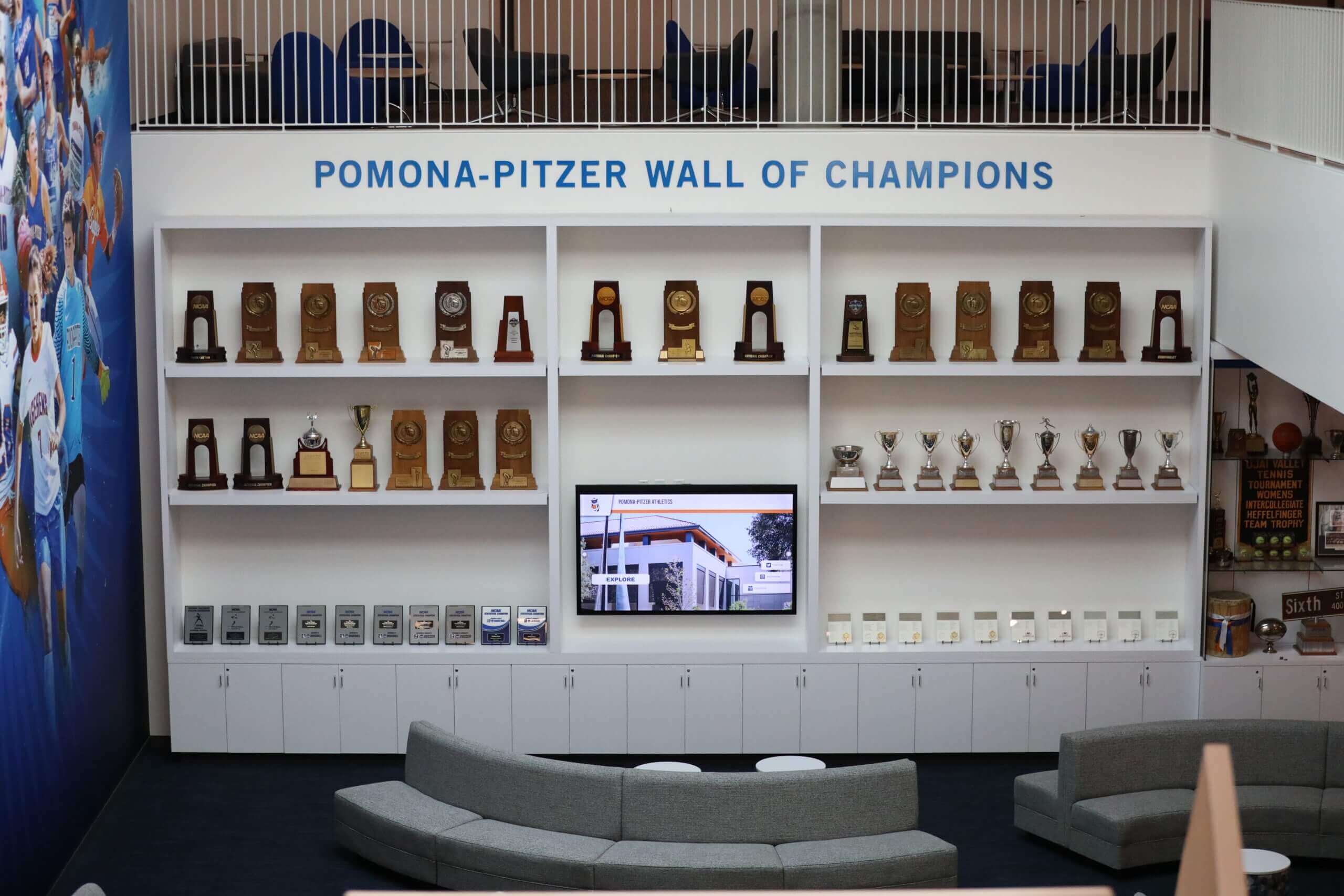
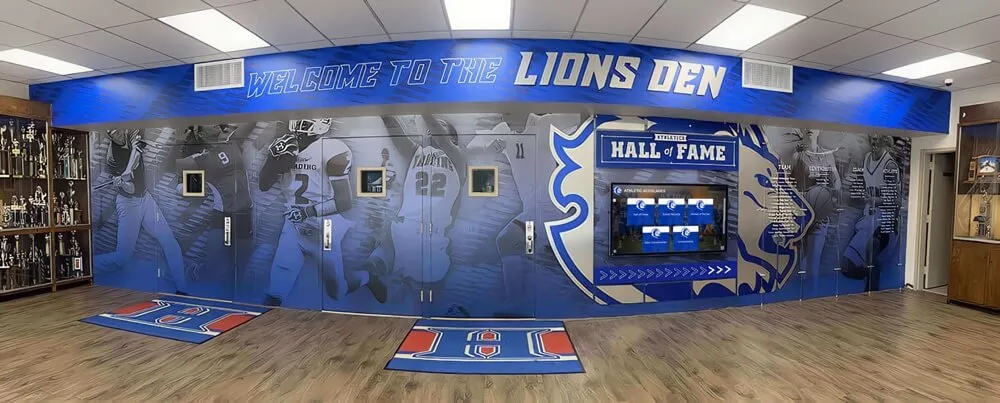
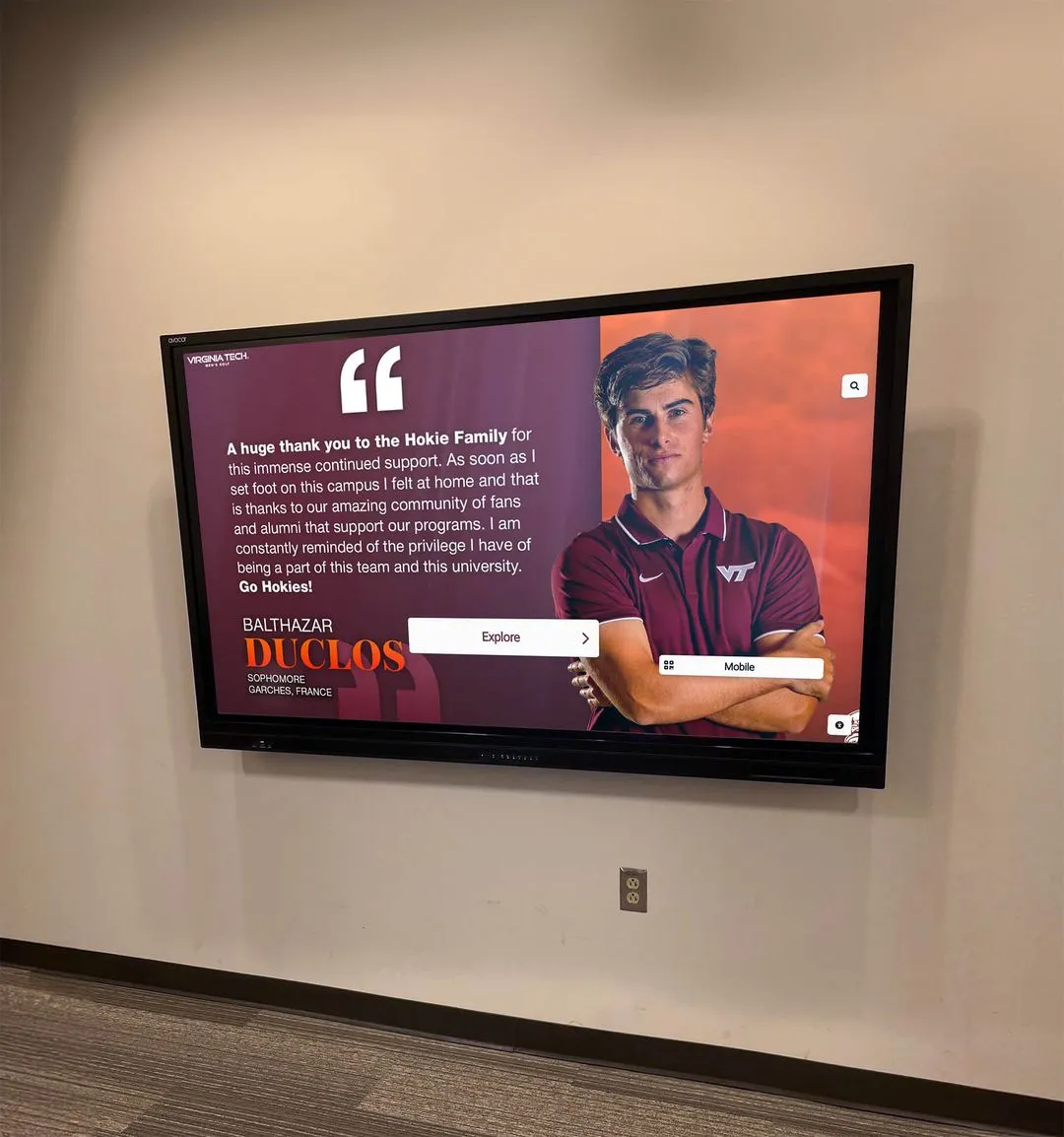
Athletic lounges and dedicated trophy display areas require the same UV monitoring discipline as main corridor cases, particularly when natural light enters through nearby windows
Frequently Asked Questions
What UV level is safe inside a trophy case displaying jerseys and photographs?
For jerseys and pre-digital photographs, target below 75 microwatts per lumen of UV at the artifact surface, combined with illuminance below 50 lux. At those levels, a typical athletic jersey can remain on continuous display for approximately five to seven years before rotation becomes necessary, depending on dye composition and initial condition. For handwritten certificates and newspaper clippings, aim for the same UV level but keep lux as close to 30 as practical lighting allows.
How often should I take UV readings in a school trophy case?
Monthly readings are the recommended minimum for cases containing jerseys, pre-digital photographs, or handwritten documents. Cases holding only metal trophies, glass awards, or laser-printed documents can be checked quarterly. Cases near west- or south-facing windows—where seasonal sun angles shift dramatically—benefit from an additional reading in late March and late September when solar altitude changes most rapidly.
Can I use a smartphone to measure UV in a trophy case?
Most smartphone cameras block UV, so standard camera apps are not reliable UV meters. Some apps measure lux using the front-facing camera with reasonable accuracy for initial screening. For defensible monitoring records—particularly if the case contains historically significant items—use a dedicated handheld lux and UV meter or a USB data logger rather than a smartphone application.
What is the difference between UV-filtering glazing and UV-filtering film?
UV-filtering glazing is glass or acrylic manufactured with UV-blocking compounds integrated into the material itself. UV-filtering film is a polyester laminate applied to the interior surface of existing glass or acrylic. Both block 97 to 99 percent of UV when properly specified. Film is lower-cost and can retrofit existing cases without replacement; glazing is more durable and the preferred option when the original case glass is being replaced for other reasons such as damage or renovation.
Should schools display original championship jerseys in trophy cases at all?
Many schools display originals for cultural reasons—authenticity matters to athletes, families, and alumni who recognize the specific garment from championship seasons. A practical middle path: display originals for a defined period of one to three years after the championship season, then transition them to archival storage while displaying a high-quality reproduction or a digitized image on an interactive screen. This preserves the original indefinitely while keeping the achievement visible to current students. Schools planning football banquet celebrations and athletic recognition events often use this transition moment—the banquet—to formally announce that an original jersey is moving to the permanent archive collection.
How does digital display technology connect to UV monitoring for school trophy cases?
A cloud-managed touchscreen recognition platform creates a path for schools to reduce UV risk without reducing community visibility. When championship jersey imagery, team photographs, and award certificates are digitized at high resolution and loaded into a digital trophy case platform, the originals can move to archival storage away from light entirely. The community still sees every achievement—interactively, with full search and historical context—while the irreplaceable original is safe. Resources on showcasing athletic achievement awards digitally walk through this transition in more detail.
Who is responsible for maintaining a UV monitoring log in a school?
Responsibility depends on school structure, but three roles typically share ownership. The facilities coordinator or building manager handles physical measurements and light source management. The athletic director or archive custodian owns the item inventory, rotation decisions, and condition assessments. IT or AV staff support any data logger hardware installation and network connectivity for digital displays that complement the physical case. Clear assignment in writing prevents the monitoring log from lapsing when staff turn over.
How Digital Trophy Case Technology Complements UV Protection Efforts
Schools that invest in monitoring logs often arrive at the same conclusion: the safest long-term strategy for original championship jerseys, founding-year photographs, and historic documents is archival storage—with digital representations handling the ongoing visibility function.
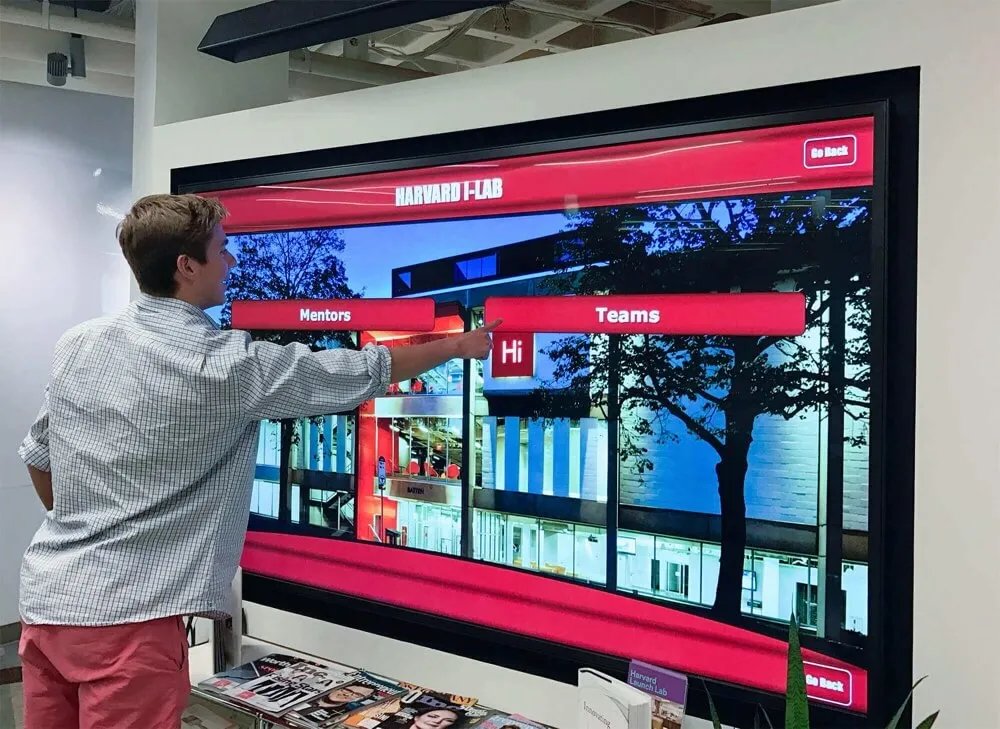
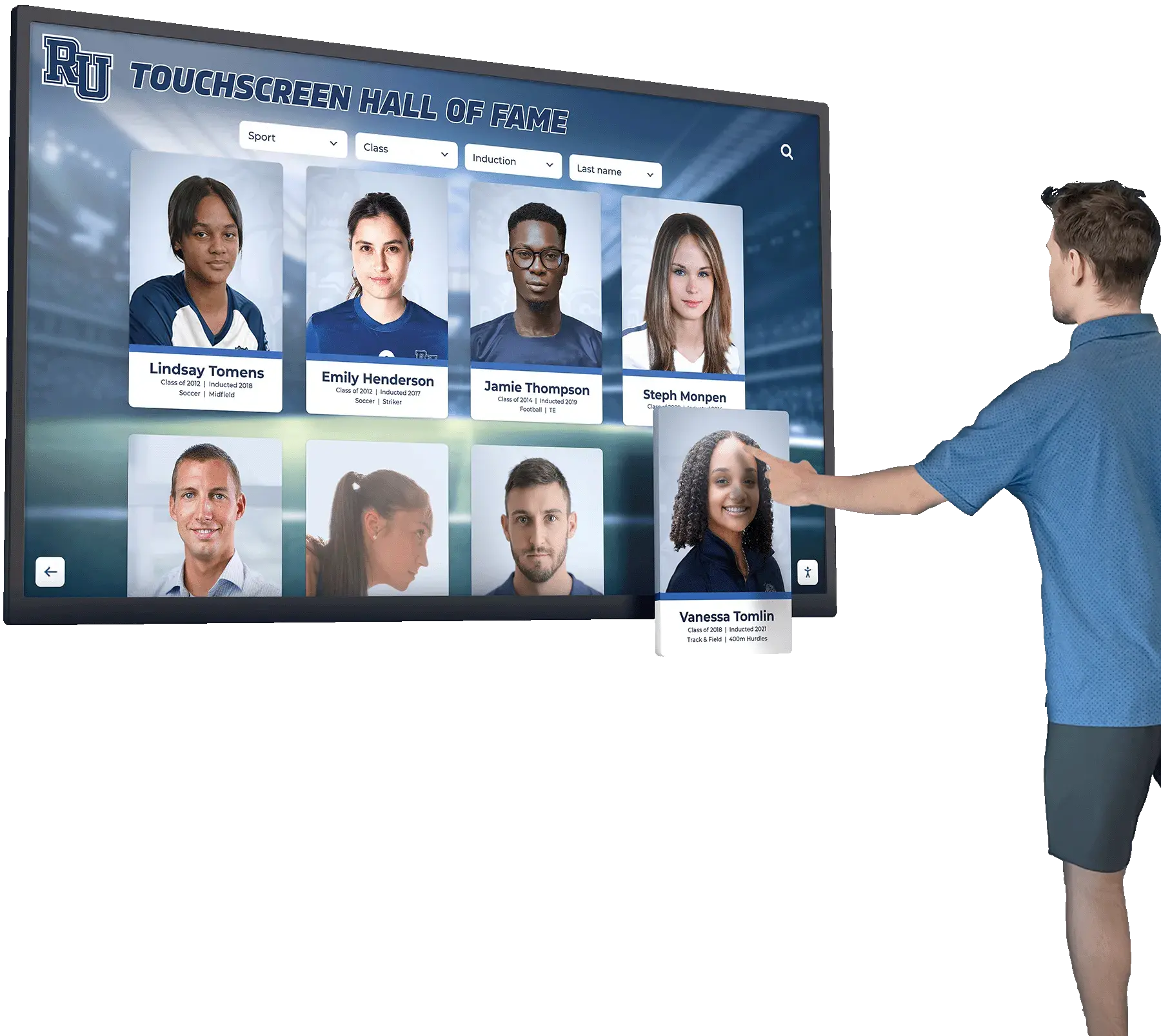
Modern interactive touchscreen displays allow athletic directors to upload high-resolution scans of archived items alongside current recognition content. Visitors browse the full athletic history through intuitive touchscreen navigation, see the original photograph of the 1988 state championship team at full resolution, and access context like rosters, scores, and season records—none of which a physical trophy case can provide.
Cloud-managed content means staff update recognition from any device, adding new season results without waiting for engraving or case redesign. Schools that have transitioned to this model describe the physical case evolving from a static storage problem into a curated highlight space—displaying only the most durable, lower-risk items (metal trophies, engraved plaques, glass awards) while originals remain safely archived.
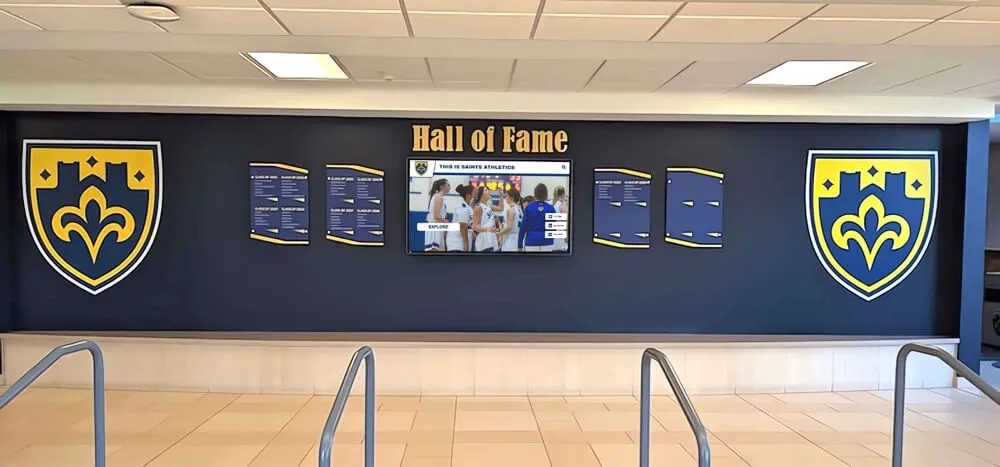
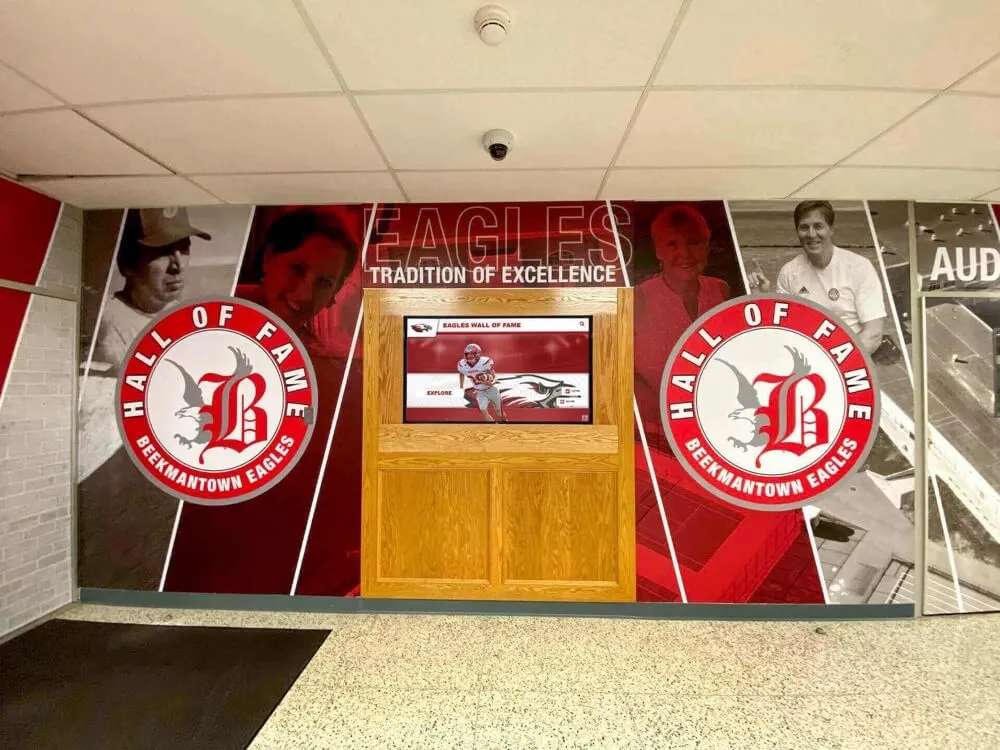
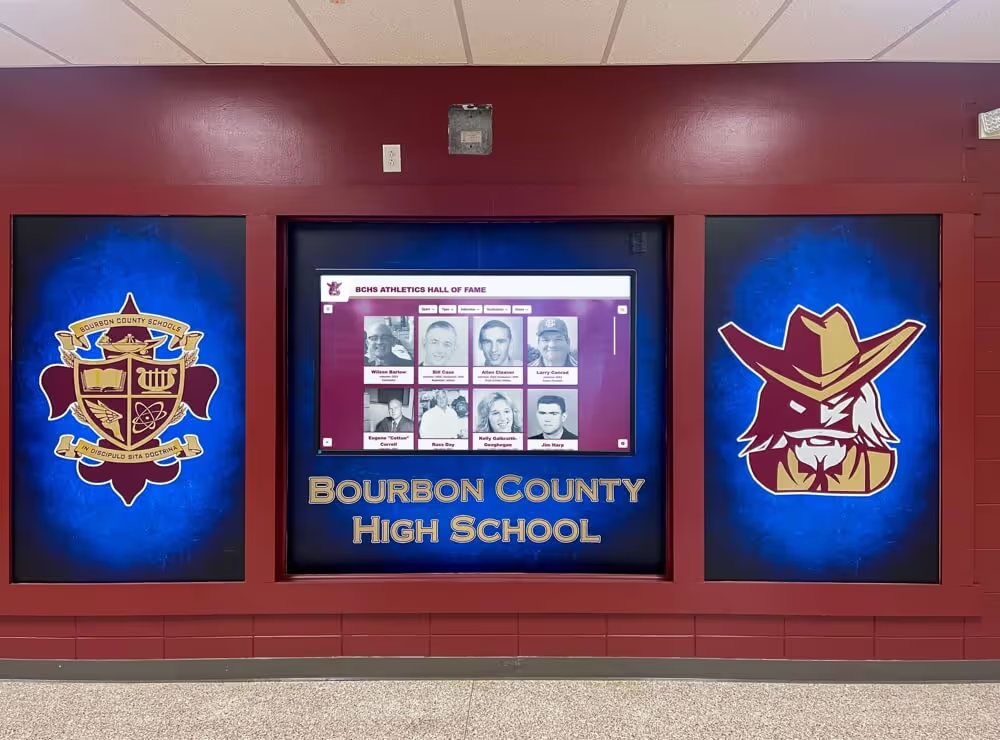
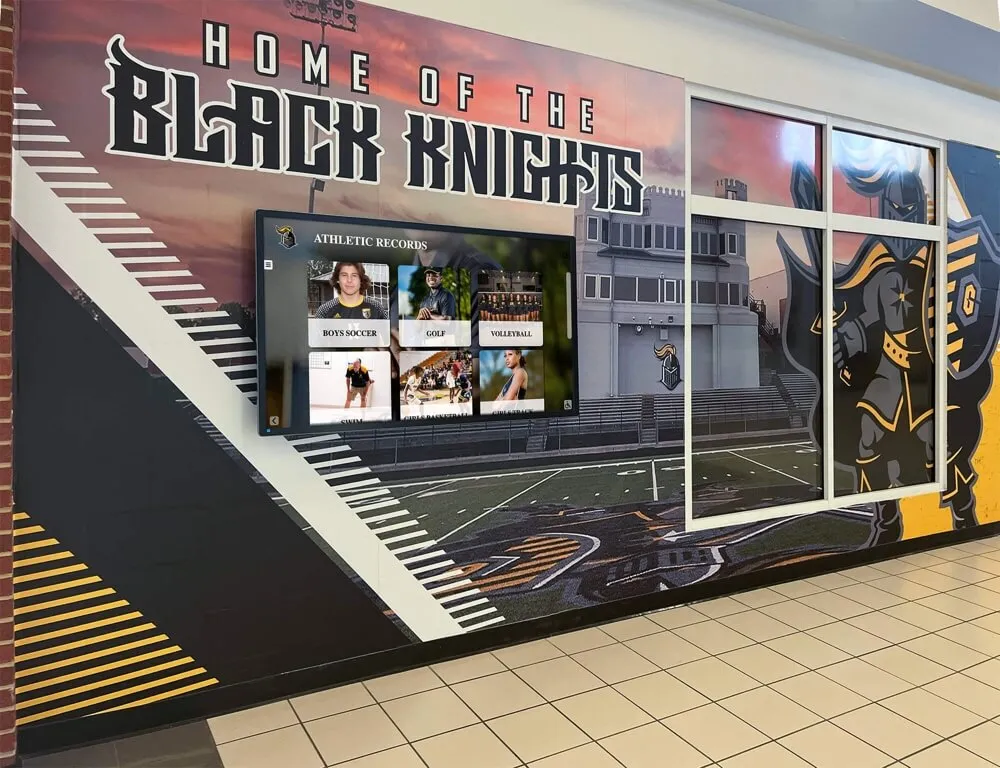
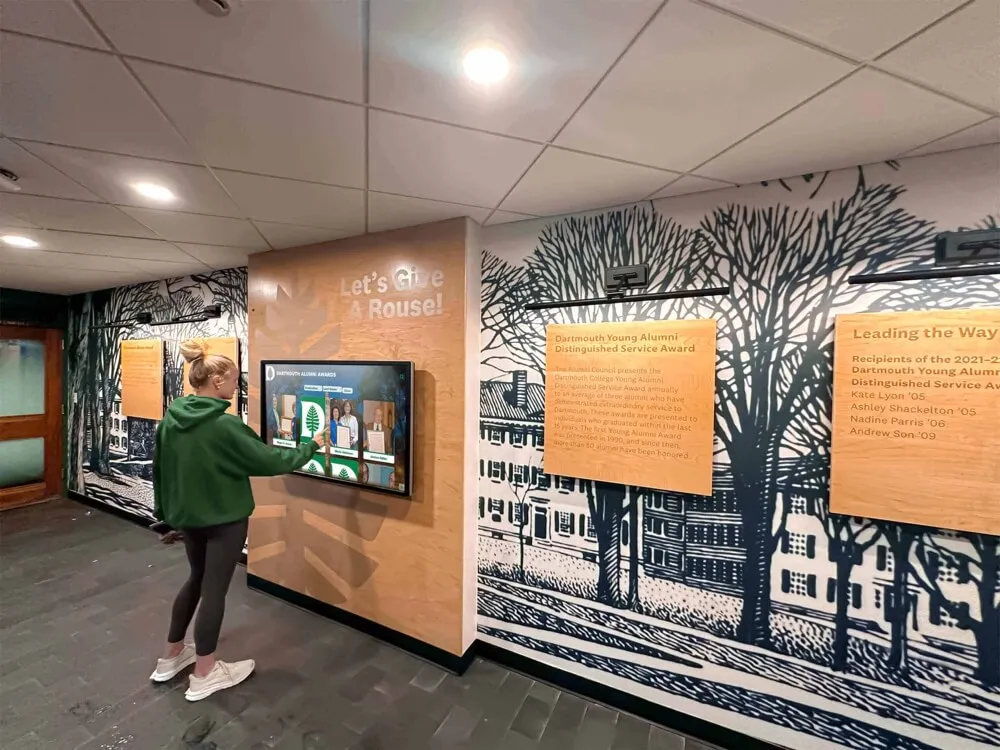
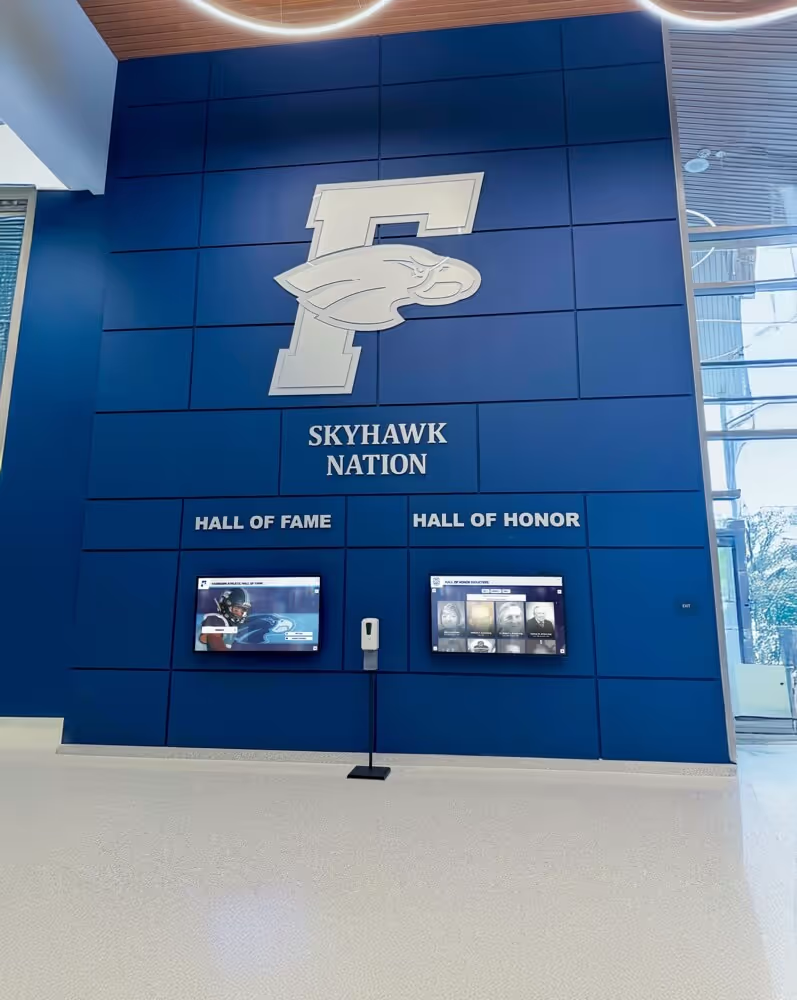
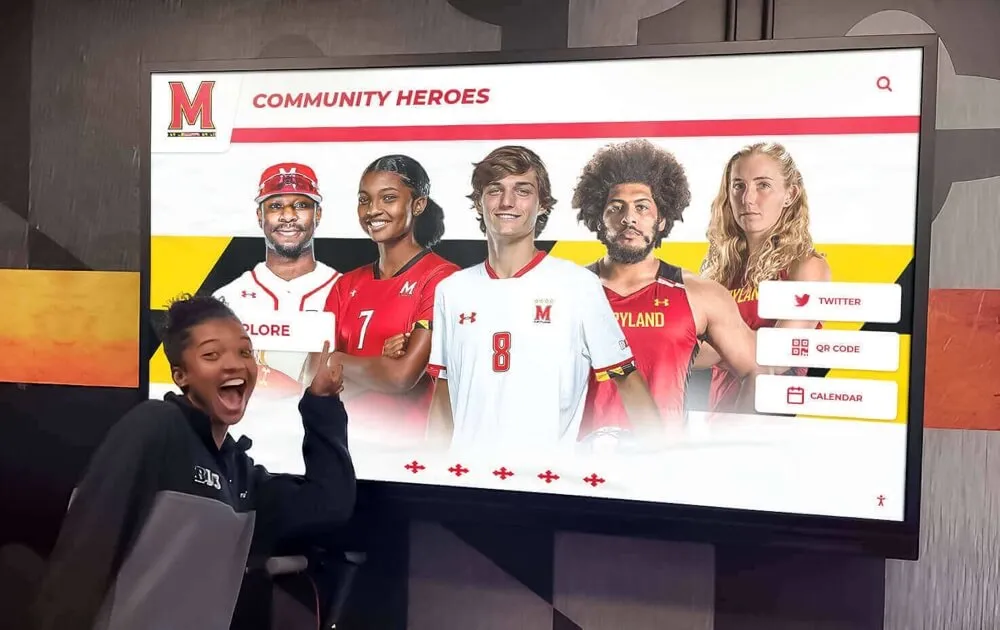
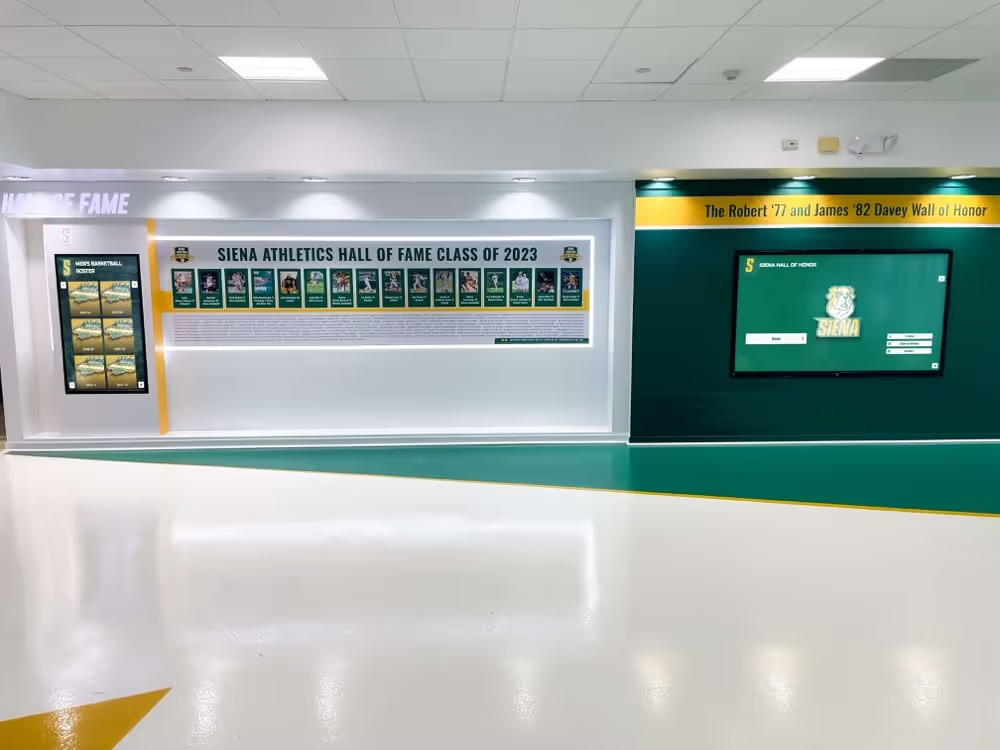
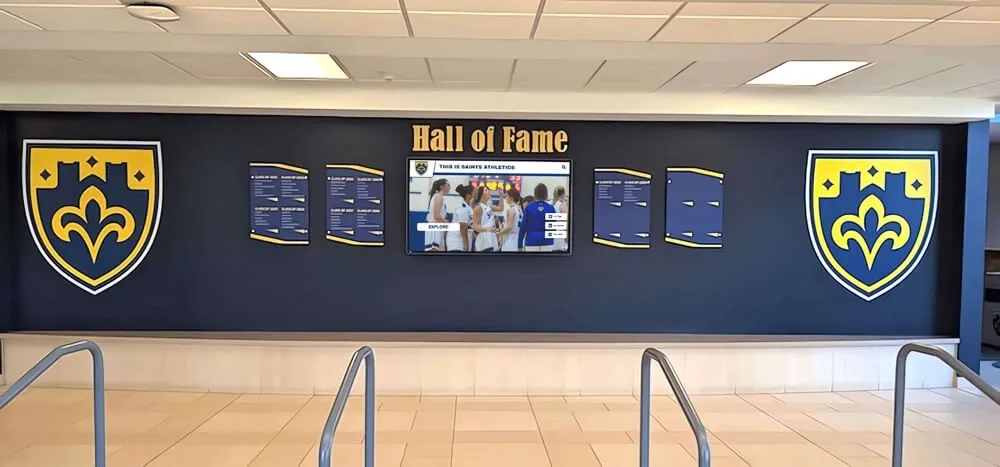
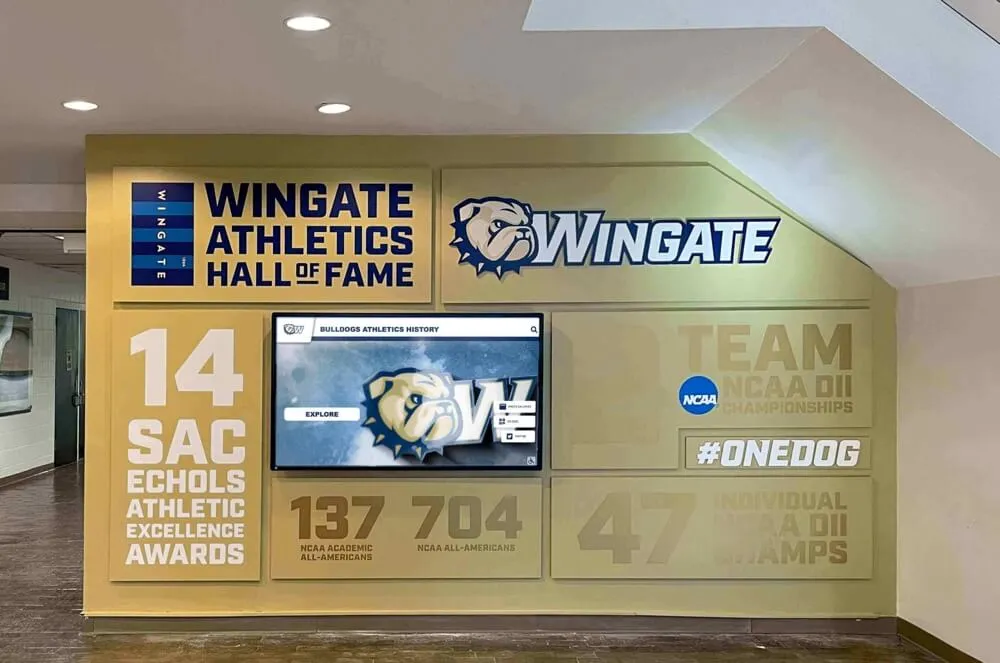
A hybrid approach—traditional plaques and shields alongside a digital display—lets schools protect sensitive originals in archival storage while maintaining full recognition visibility in the building
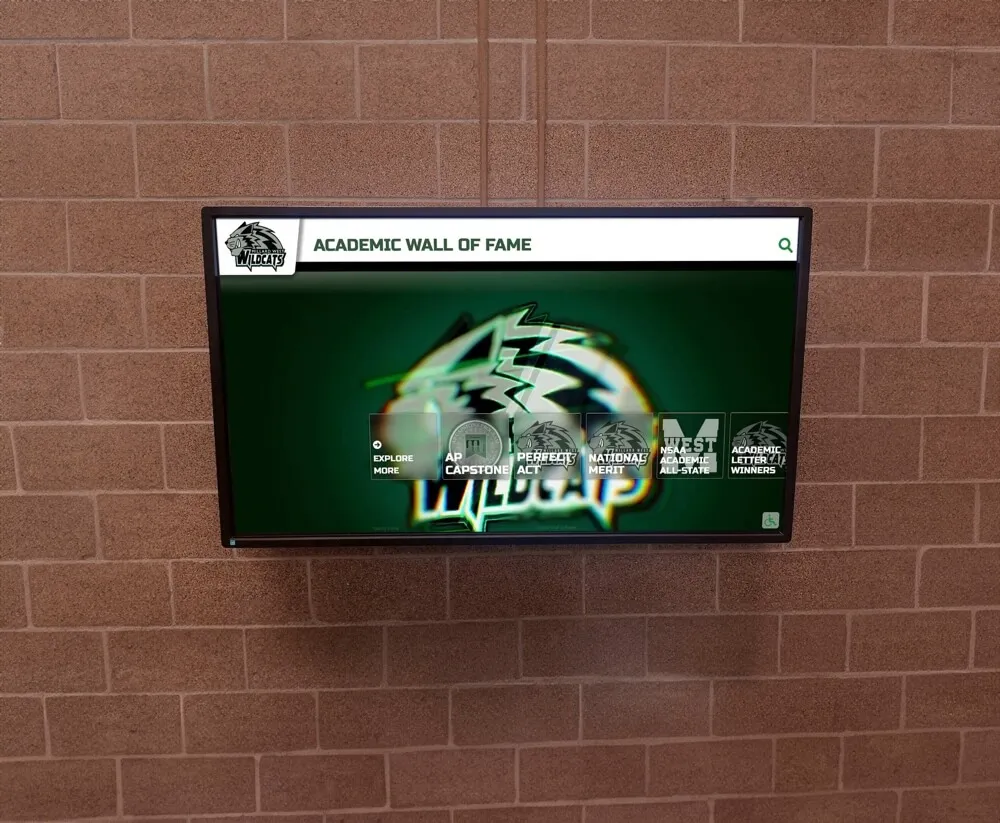
Schools exploring touchscreen software options for recognition displays find that modern platforms offer unlimited entries, WCAG 2.1 AA accessibility compliance, QR code unlocks for mobile viewing, remote cloud-based CMS, and scheduled publishing—all capabilities that a physical trophy case fundamentally cannot replicate. Event planning resources for school programs also highlight that interactive digital displays create stronger engagement during banquets and alumni events than static trophy cases, giving families and visitors a richer connection to athletic history.
Integrating UV Monitoring into a Broader Athletic Archive Strategy
A UV monitoring log is one component of a complete preservation workflow. Schools that treat it as part of a broader strategy—rather than a standalone spreadsheet—see the most consistent results.
Digitization as preservation insurance — high-resolution scanning of photographs, certificates, and documents before any UV damage occurs creates an archival copy that survives regardless of what happens to the physical item. This scanning effort also populates digital recognition platforms with historical content that engages current students with program history. For schools building comprehensive donor and alumni recognition programs, the same digitization workflow applies to donor portraits, founding documents, and inaugural year materials.
Integration with facilities maintenance schedules — UV monitoring readings belong on the same calendar as HVAC filter changes, fire extinguisher inspections, and security camera reviews. Treating it as infrastructure maintenance rather than a special project ensures it receives consistent attention without requiring annual advocacy from the athletic director.
Documentation for insurance purposes — schools with documented condition assessments and monitoring logs are better positioned when insurance claims involve damage to athletic artifacts from water intrusion, fire, or vandalism. The log demonstrates active stewardship and provides baseline condition evidence for any items affected.
Communication with incoming staff — athletic director and facilities coordinator turnover is common in schools. A well-documented monitoring log with clear procedures allows incoming staff to continue the program without disruption. Include a one-page quick-start guide as the first page of the log binder or digital folder covering where to find equipment, what readings to take, and who to contact when a threshold is exceeded.
Protect Your Athletic Legacy with a Digital Trophy Case
Digitizing your championship jerseys, historic photographs, and award history means originals can move safely to archival storage while your community explores the full recognition story through an engaging, searchable touchscreen display. Cloud-managed updates, unlimited entries, ADA-compliant design, and QR code mobile access give schools a recognition platform that physical cases cannot match—while eliminating the UV exposure risk that threatens every organic artifact on display.
Book a DemoConclusion: A Monitoring Log Protects What a Trophy Case Cannot Replace
Every framed photograph from a championship season, every signed jersey from a state title run, and every handwritten letter of commendation represents history that cannot be recreated once it fades. A trophy case UV exposure monitoring log is the institutional commitment to treating those items with the care they deserve—measuring the invisible threat, acting on data before damage becomes visible, and maintaining a record that future administrators can rely on.
The process does not require a conservation budget or specialized expertise. It requires consistent measurement, a structured log, clear thresholds, and assigned ownership. Schools that build these habits protect their athletic heritage while demonstrating to students, families, and alumni that the institution takes its history seriously.
And when the combination of high lux-hour totals and aging originals makes physical display no longer the safest option, a cloud-managed interactive display platform ensures those achievements remain fully visible, searchable, and engaging—for every visiting family, returning alumni, and current student who walks through the building.
Ready to see how a digital trophy case platform can complement your UV protection strategy and extend your athletic archive indefinitely? Explore the full recognition platform and schedule a demo to see cloud-managed, touchscreen recognition in action.