



Intent: research — a trophy case TM-30 lighting evaluation measures two metrics that CRI cannot provide: how faithfully fixtures render the full color spectrum (Rf, the Fidelity Index) and whether they compress or expand the gamut of colors in the case (Rg, the Gamut Index). Together, Rf and Rg tell facilities teams and athletic directors whether the LEDs currently illuminating jerseys, medals, championship plaques, and school-color banners are presenting those items as designed — or quietly distorting them in ways that no casual walkthrough will catch.
This guide walks through the full evaluation process: what TM-30 measures, how it differs from CRI, what threshold values mean for a school recognition environment, and how to use the results to make confident replacement and procurement decisions.
CRI has been the default specification for school trophy case lighting for decades, but it was designed with eight test colors that do not include the deep reds, saturated golds, bright blues, or forest greens that appear on championship banners and team jerseys. A fixture can measure CRI 85 while producing an Rf of 62 — a score that, under TM-30’s broader 99-sample assessment, signals a real problem for color-critical display environments. The trophy case TM-30 lighting evaluation provides the metrics that actually reflect how award finishes, fabric school colors, and engraved plaque fills will look under a given fixture.

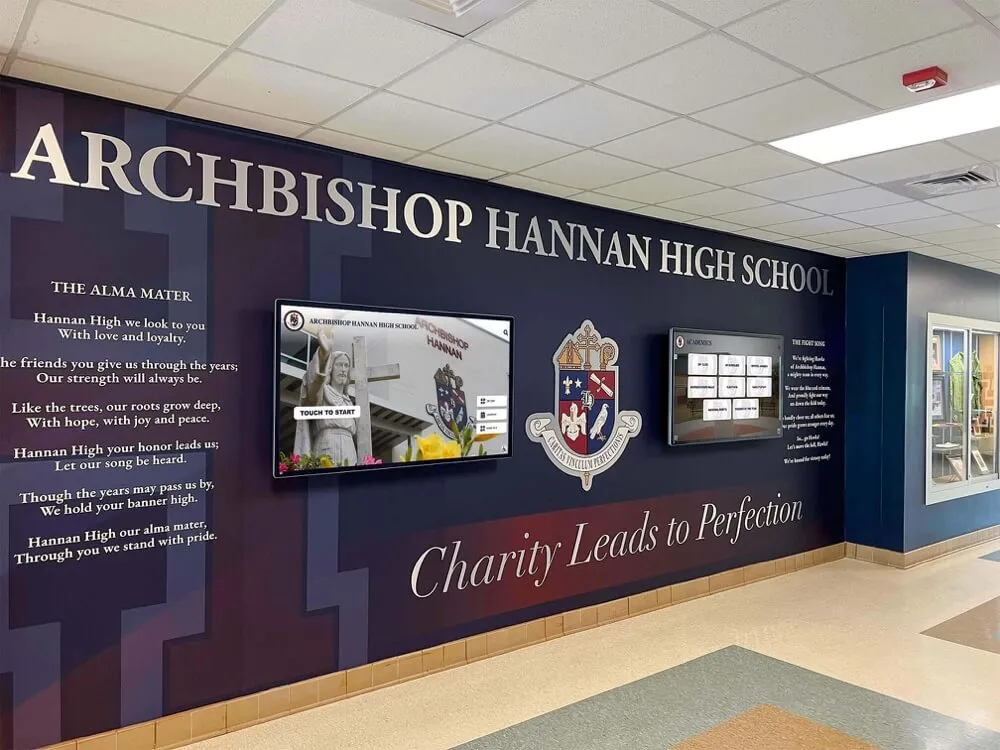
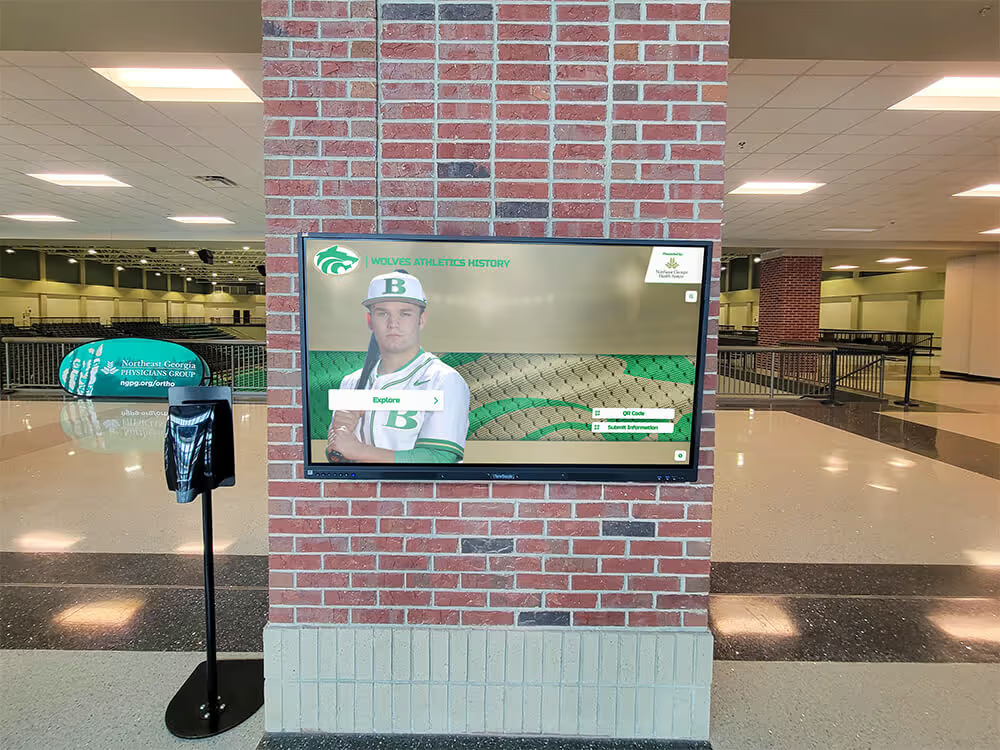
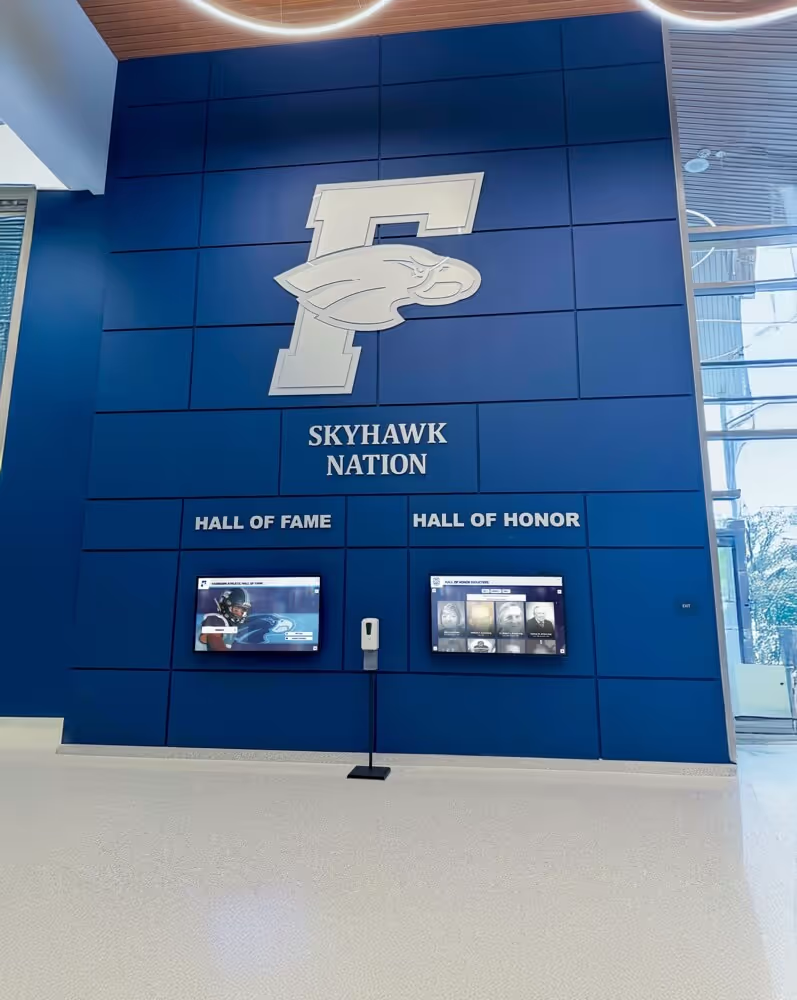
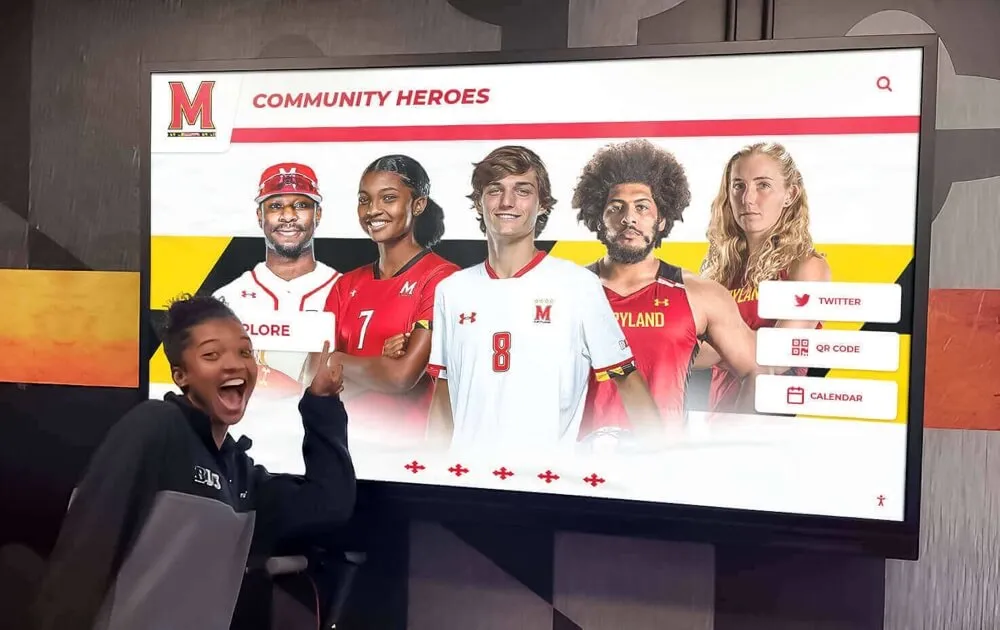
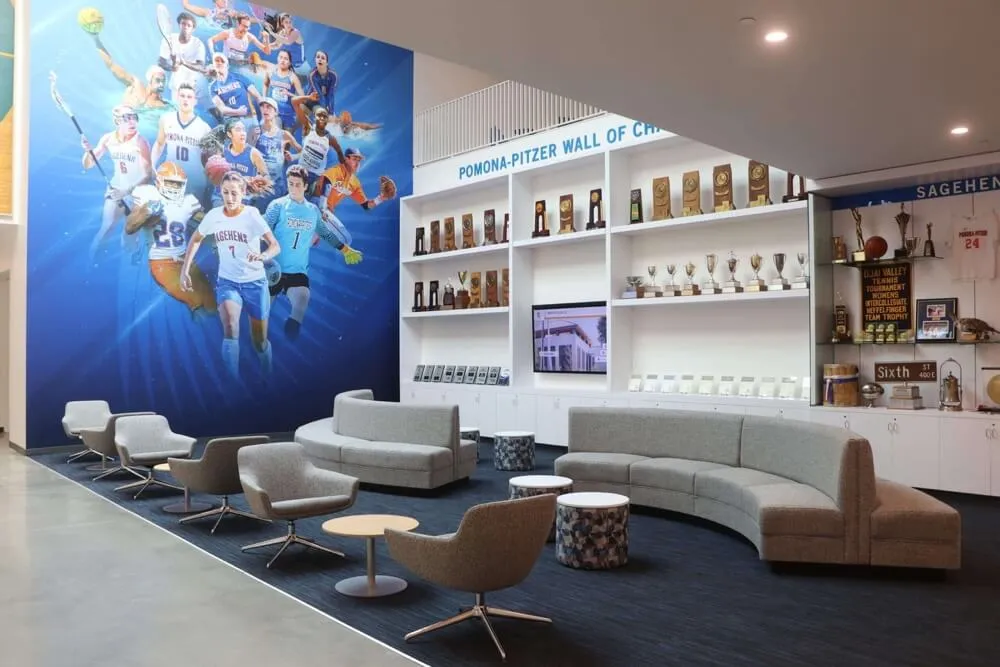
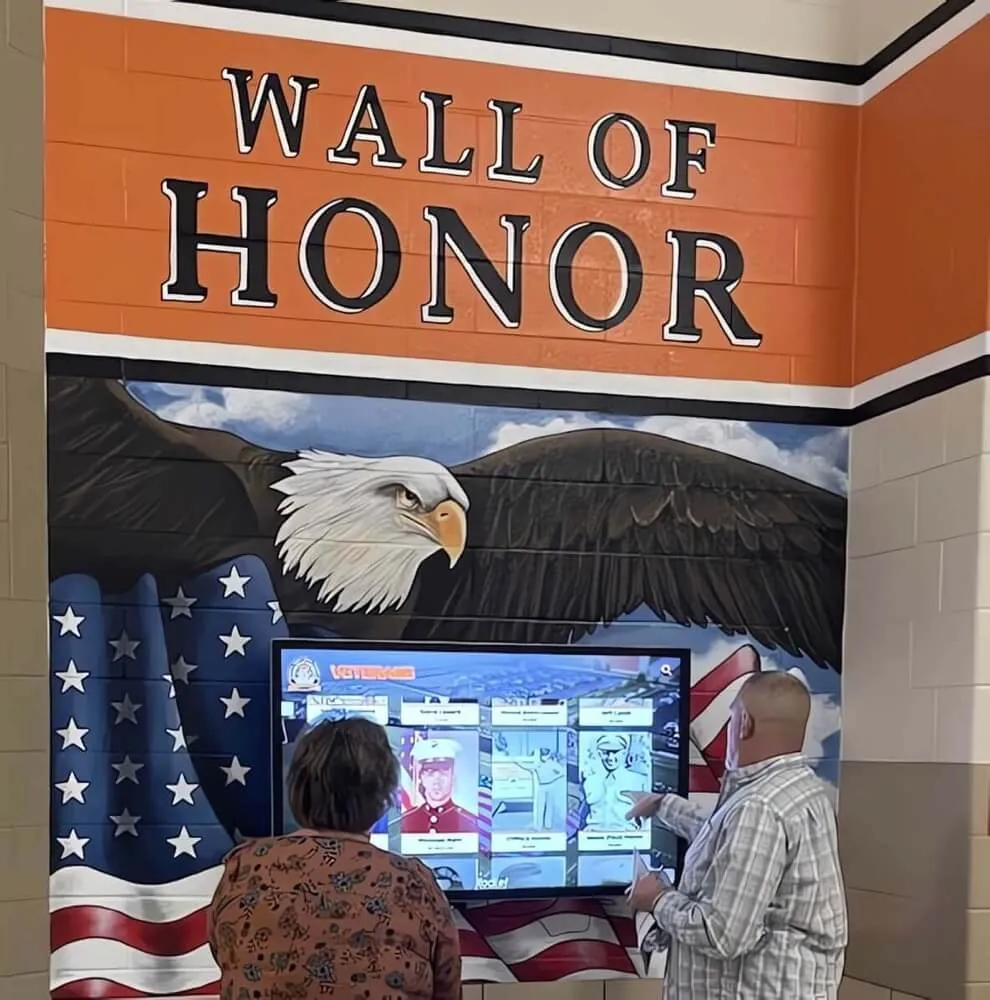
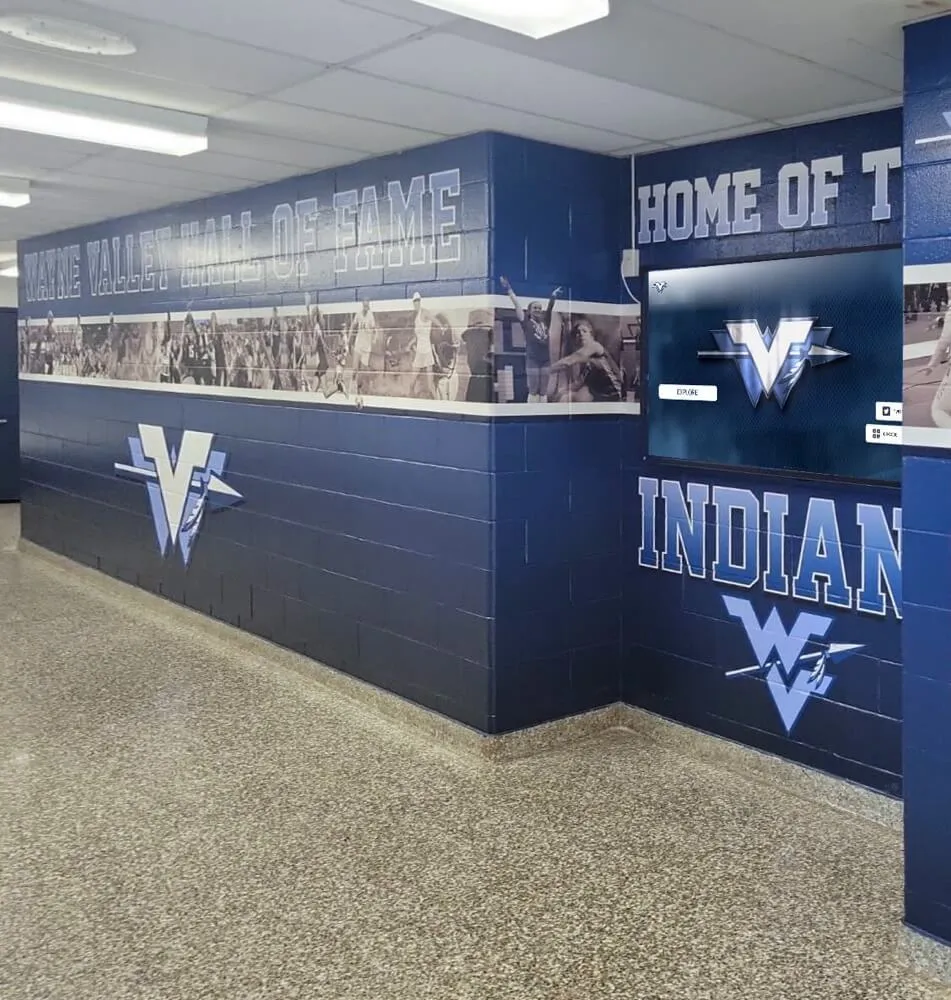
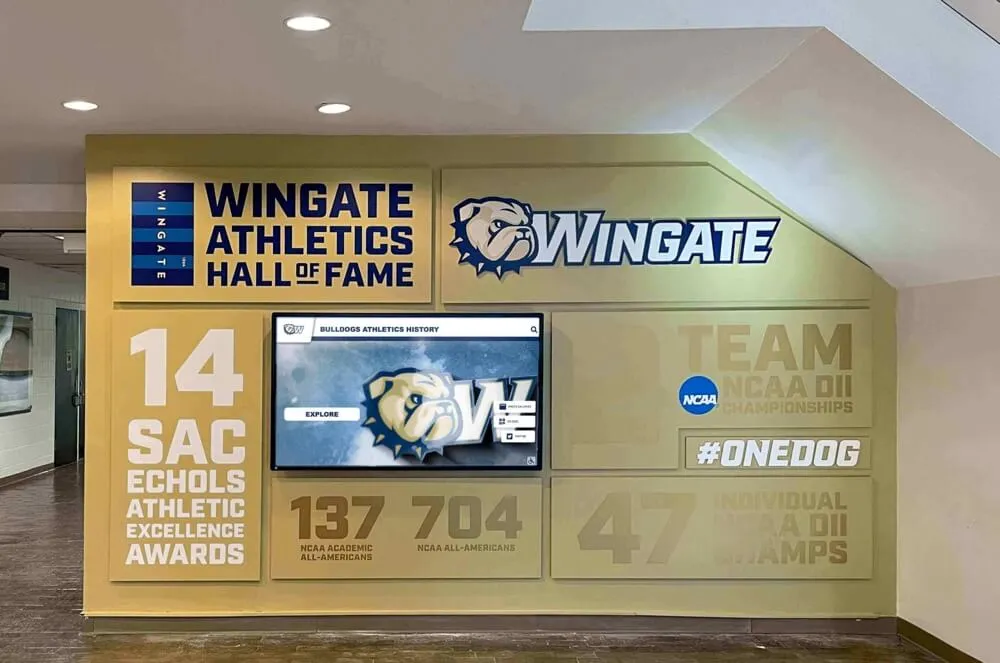
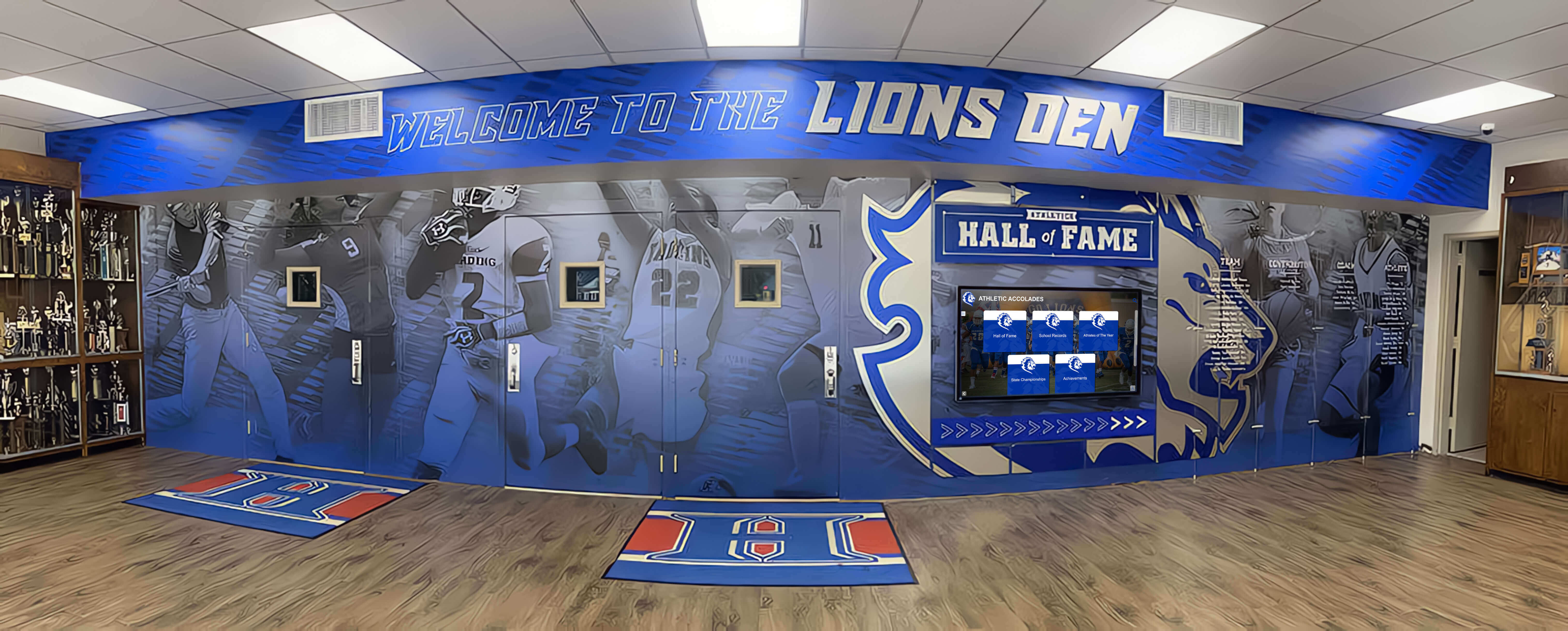
School recognition hallways combine mural art, physical trophy cases, and digital displays in the same lighting environment — TM-30 evaluation ensures fixtures render every element accurately for visitors and cameras
What TM-30 Measures: Rf and Rg Explained
IES TM-30-20 (the current version of the IES Technical Memorandum 30 standard) replaced the single-number CRI approach with two complementary metrics that together describe how a light source affects color appearance. Understanding both is essential before running an evaluation.
Rf — Fidelity Index
Rf measures how closely a light source reproduces colors compared to a reference illuminant of the same correlated color temperature. The scale runs from 0 to 100, where 100 represents a perfect match to the reference. Unlike CRI, which averages results from 8 test samples, Rf is calculated across 99 Color Evaluation Samples (CES) drawn from real-world objects spanning the full visible spectrum. The larger sample set makes Rf a more reliable predictor of how a fixture will perform across the range of colors present in a school trophy case — including hues that CRI never tests.
Rg — Gamut Index
Rg measures whether a light source expands or compresses the volume of colors it renders compared to the reference. A value of 100 indicates no change in gamut; values above 100 indicate that colors appear more saturated than under the reference; values below 100 indicate color compression — that objects appear less vivid than their actual color. For trophy cases, a modest positive Rg (in the 100–110 range) makes award finishes and school colors appear vibrant without distorting their hue. An Rg below 90 produces the “washed-out” trophy case where gold looks flat and team colors lack the presence that athletes and parents expect.
Why Rf Matters for Jerseys and Plaques
Championship jerseys, engraved plaque fills, and printed award certificates contain colors across the full visible spectrum. Rf's 99-sample assessment includes the deep reds (R9, absent from standard CRI), saturated yellows, and cool blues that appear on school athletic materials. A fixture with Rf 70 is misrendering roughly 30% of those color samples relative to a reference — and that distortion is visible when a parent holds up a phone camera to photograph a jersey under that light.
Why Rg Matters for School Colors
Rg tells you whether fixtures are "saturating" or "washing out" the colors in the case. Schools whose colors include gold, crimson, or forest green are especially sensitive to Rg values below 92 — these hue families lose visible depth under gamut-compressing fixtures. The Color Vector Graphic that accompanies TM-30 data pinpoints exactly which hue-angle bins are affected, making it possible to evaluate fixtures against a school's specific primary colors rather than a generic average.
Why CRI Is Insufficient for Trophy Case Lighting Evaluation
CRI has two limitations that make it a weak specification for award display environments.
Limited test samples: Standard CRI is calculated from 8 test colors (R1–R8), all of moderate saturation and spanning only a subset of the visible spectrum. The optional R9 (saturated red) and R13 (skin tone) values are not included in the headline CRI number, even though saturated red is a component of many school colors. A fixture can achieve CRI 85 by rendering those 8 moderate samples accurately while performing poorly on the deep golds, navy blues, and bright greens that make school identities recognizable.
No gamut information: CRI measures only fidelity — it cannot tell you whether fixtures are expanding or compressing the gamut. A fixture that makes all colors slightly more saturated and a fixture that makes all colors slightly less saturated can produce identical CRI values. For trophy cases where the difference between vivid school gold and muted khaki matters to every visitor who looks at the display, Rg provides the answer that CRI cannot.
| Metric | CRI | TM-30 (Rf + Rg) |
|---|---|---|
| Test color samples | 8 (R1–R8) | 99 Color Evaluation Samples (CES) |
| Saturated color coverage | Limited — no deep reds, golds, or cyans in standard calculation | Full — CES includes saturated hues across the spectrum |
| Gamut information | None | Rg shows gamut expansion or compression on 80–120 scale |
| Hue-specific diagnosis | Not available | Color Vector Graphic identifies which hue angles are most distorted |
| Relevance for school colors | Moderate — misses colors most common in athletic identity palettes | High — evaluates the full gamut relevant to jerseys, banners, and plaques |
TM-30 Threshold Reference for Trophy Case Lighting
The following thresholds draw from IES TM-30-20 guidance and lighting design practice for display-critical environments. Apply them as a starting framework for school trophy case contexts; specific applications may warrant adjustment based on the colors and materials in your case.
| Rf (Fidelity Index) | Rg (Gamut Index) | Rating | Verdict for Trophy Case Lighting |
|---|---|---|---|
| ≥ 90 | 95–110 | Excellent | Pass — museum/gallery quality; school colors and award finishes rendered accurately |
| 78–89 | 92–115 | Good | Pass — suitable for active trophy cases; log for review at next procurement cycle |
| 65–77 | 87–92 or 115–120 | Moderate | Review — visible color distortion likely under direct comparison; plan replacement within 60–90 days |
| < 65 | < 87 or > 120 | Poor | Fail — school colors, jersey tones, and award finishes are being misrepresented; replace before next public event |
Practical notes on applying these thresholds:
- A fixture can pass on Rf but fail on Rg, or vice versa. Record both scores for each position and apply the lower-rating threshold when determining the action required.
- The Color Vector Graphic is especially useful when your school’s primary colors fall into specific hue-angle bins — a fixture with overall Rf 80 may be performing poorly on the exact hue range (e.g., hue angles 200–240°, where navy blues sit) that matters most for your display.
- Fixtures rated for “museum” or “display” applications by their manufacturers typically publish TM-30 data and target Rf ≥ 90. Requiring published TM-30 data as a procurement condition removes ambiguity.
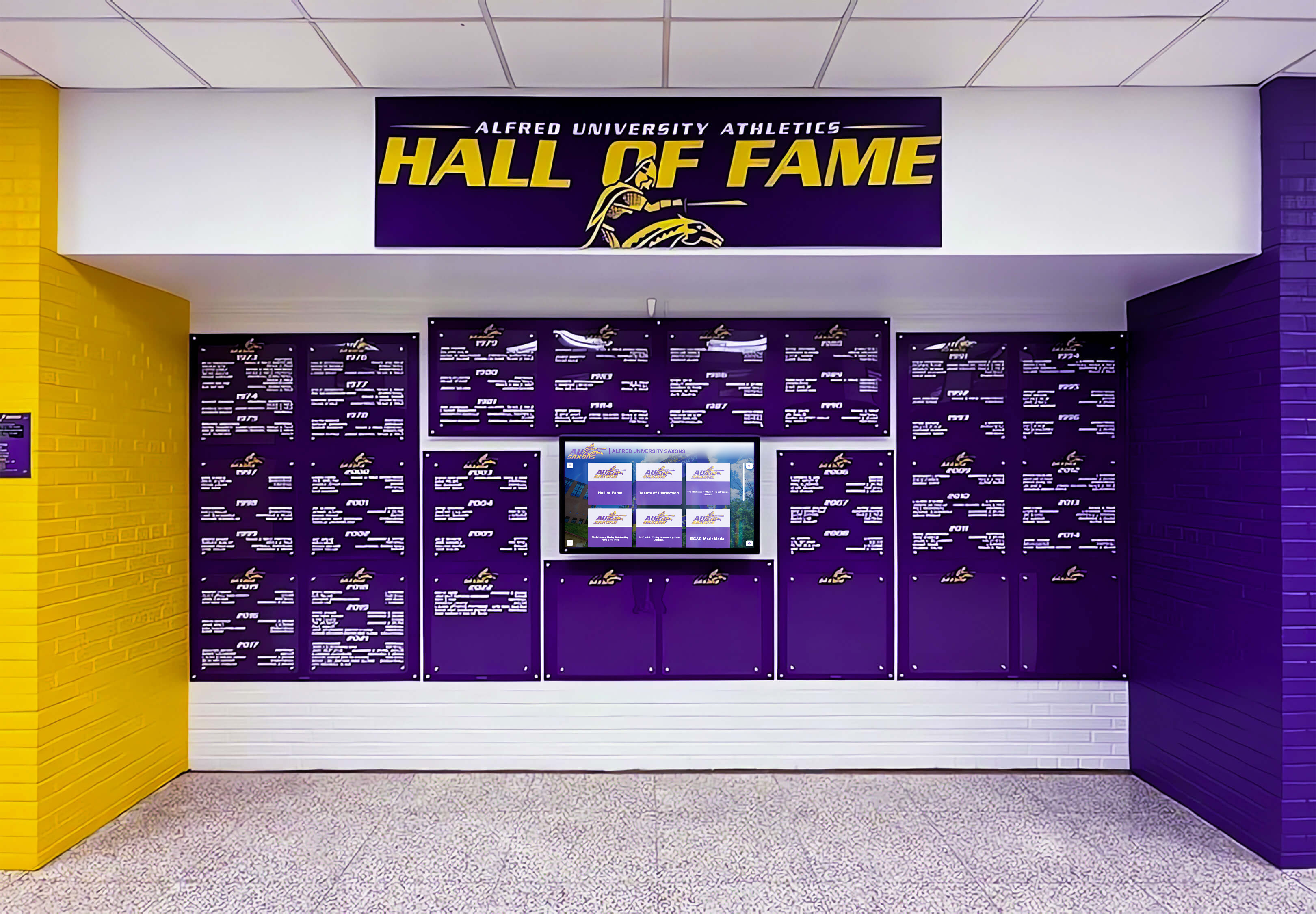
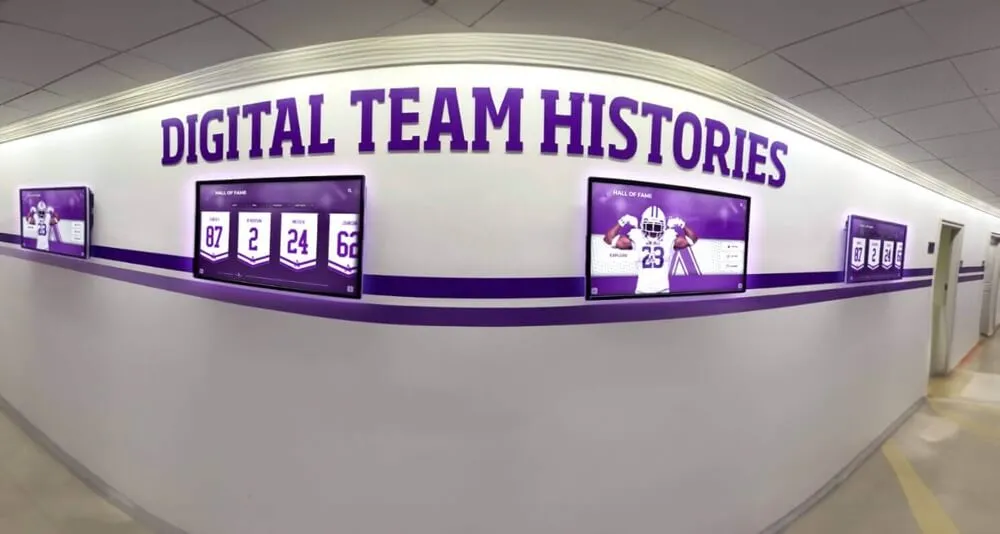
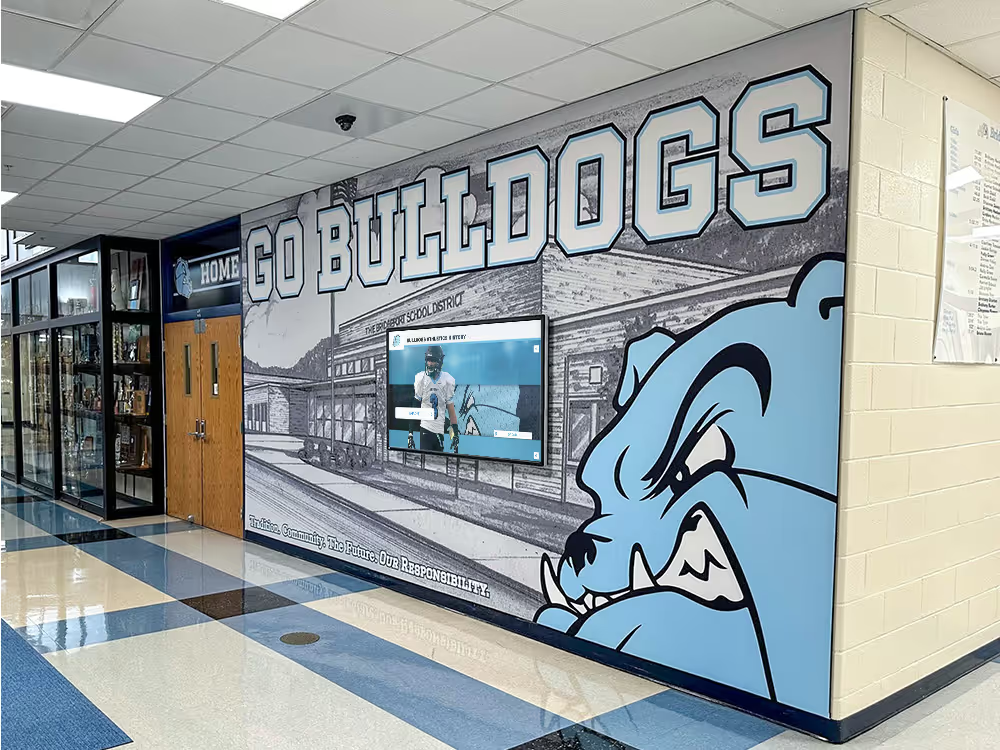
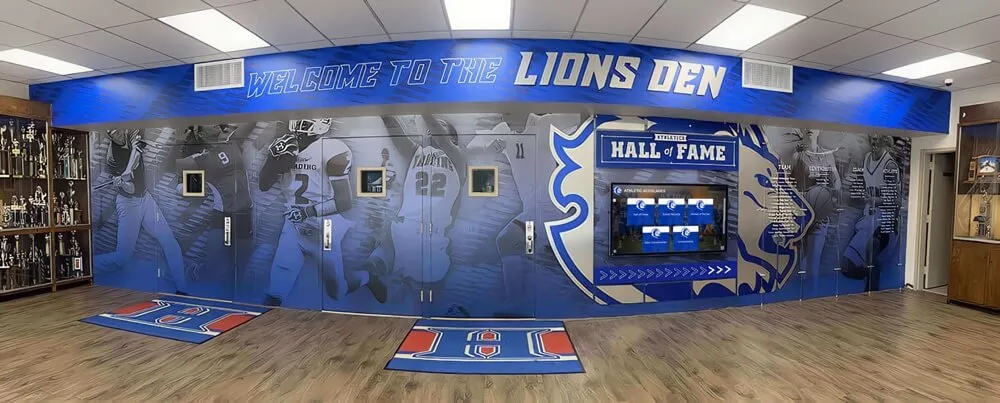
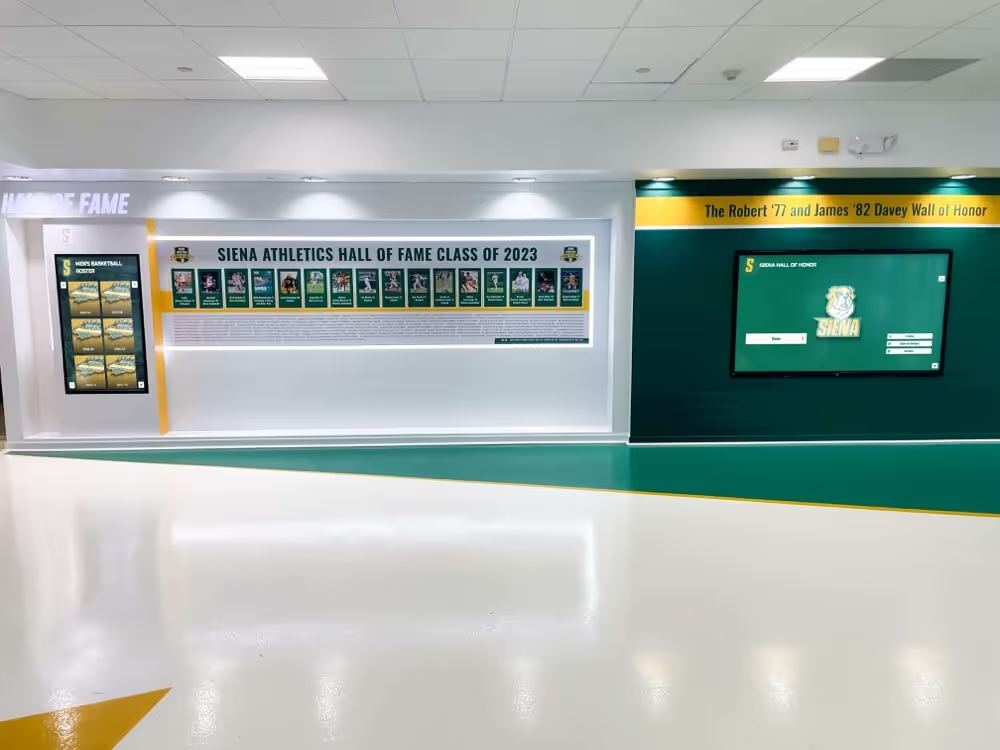
Recognition displays representing a school's specific colors — purple, gold, crimson, navy — depend on lighting that scores well in the hue-angle bins TM-30's Color Vector Graphic directly identifies
The Trophy Case TM-30 Lighting Evaluation: Step-by-Step Checklist
A TM-30 evaluation requires a spectroradiometer — not a standard colorimeter. Spectroradiometers measure the full spectral power distribution of a light source, from which software calculates Rf, Rg, and the Color Vector Graphic. Many entry-level spectroradiometers now include TM-30 calculation as a standard report output. The instrument manufacturer’s documentation will specify the correct measurement geometry and warm-up procedure.
Step 1: Pre-Evaluation Preparation
- Confirm that the spectroradiometer is calibrated within the manufacturer’s recommended interval
- Gather fixture documentation: manufacturer, model number, CCT label, CRI label (for comparison), and installation date for each position
- Create a fixture map: assign each lamp position a numbered identifier (F1, F2, F3, etc.) and photograph each numbered position
- Note fixtures replaced within the past 12 months — procurement-lot variation between recent replacements and original fixtures is a common source of Rf/Rg mismatch
- Turn on all trophy case lighting at least 30 minutes before beginning measurements — LED spectral output and CCT drift during warm-up and reach stable values after thermal equilibration
Step 2: Establish the Reference Fixture
- Select the fixture whose color quality appears most accurate to visual inspection — typically the newest installed or the one producing the most vivid, accurate rendering of a known school color item
- Measure and record the reference fixture’s Rf, Rg, CCT, and CRI using your spectroradiometer’s TM-30 report mode
- Save the Color Vector Graphic for the reference fixture as the visual benchmark against which all other positions will be compared
Step 3: Measure Each Fixture Position
- Position the spectroradiometer sensor at the distance specified by the instrument manufacturer, centered on the lamp and perpendicular to its axis
- Record Rf, Rg, and CCT for each fixture position on the fixture map
- Note CRI alongside Rf for each position — documenting both allows you to demonstrate the difference TM-30 analysis reveals vs. the CRI label on the package
- For cases with dimmer controls, repeat measurements at 75%, 50%, and 25% dimming levels — spectral content can shift with PWM dimming, affecting both Rf and Rg at operating levels below full output
- Record the Color Vector Graphic for each position; flag any fixture where the graphic shows significant distortion in hue bins corresponding to your school’s primary colors
Step 4: Evaluate Rf Against Thresholds
- Compare each fixture’s Rf against the threshold table above
- Flag any fixture at Rf < 78 as a Review candidate; flag any at Rf < 65 as a Fail requiring prompt replacement
- Note whether low-Rf fixtures cluster at specific positions (e.g., upper shelves near ventilation gaps where thermal management differs) or occur randomly — patterns can indicate a systemic procurement or installation issue vs. isolated driver failure
Step 5: Evaluate Rg Against Thresholds
- Compare each fixture’s Rg against the threshold table above
- Flag any fixture with Rg < 87 (color compression) or Rg > 120 (excessive saturation) as a Fail
- Apply particular scrutiny to fixtures serving positions directly above items in your school’s primary colors — gamut-compressing fixtures (Rg < 92) will make gold or crimson materials look noticeably flat, even when Rf is in the acceptable range
Step 6: Review the Color Vector Graphic for School-Color Hue Bins
- Identify the hue-angle bins corresponding to your school’s primary colors using a standard color wheel:
- Deep reds and crimsons: hue angles approximately 0–30°
- Golds and yellows: hue angles approximately 60–90°
- Forest greens: hue angles approximately 120–150°
- Navy and royal blues: hue angles approximately 210–270°
- Purples: hue angles approximately 270–330°
- Flag any fixture whose Color Vector Graphic shows inward vectors (gamut compression) in the hue bins corresponding to your school’s colors
- A fixture with overall Rf 82 but significant inward compression in the gold hue bins is a higher-priority replacement for a school with gold as a primary color than its overall score suggests
Step 7: Pass/Review/Fail Decision and Documentation
- Pass — No Action Required: Rf ≥ 78 AND Rg 92–115 AND no significant distortion in school-color hue bins → Document result and schedule next evaluation
- Pass — Monitor: Rf 78–85 OR Rg approaching threshold limits → Log; flag for priority replacement at next regular fixture cycle
- Review — 60-to-90-Day Replacement: Rf 65–77 OR Rg 87–92 OR 115–120 OR notable hue-bin distortion in school-color range → Order replacements with Rf ≥ 90 specification; communicate timeline to athletic director and facilities coordinator
- Fail — Replace Before Next Public Event: Rf < 65 OR Rg < 87 OR Rg > 120 → Replace before next scheduled recognition event, photograph session, or athletic banquet
- Retain documentation: fixture map, Rf and Rg values by position, CCT, Color Vector Graphics, replacement procurement records, and next scheduled evaluation date
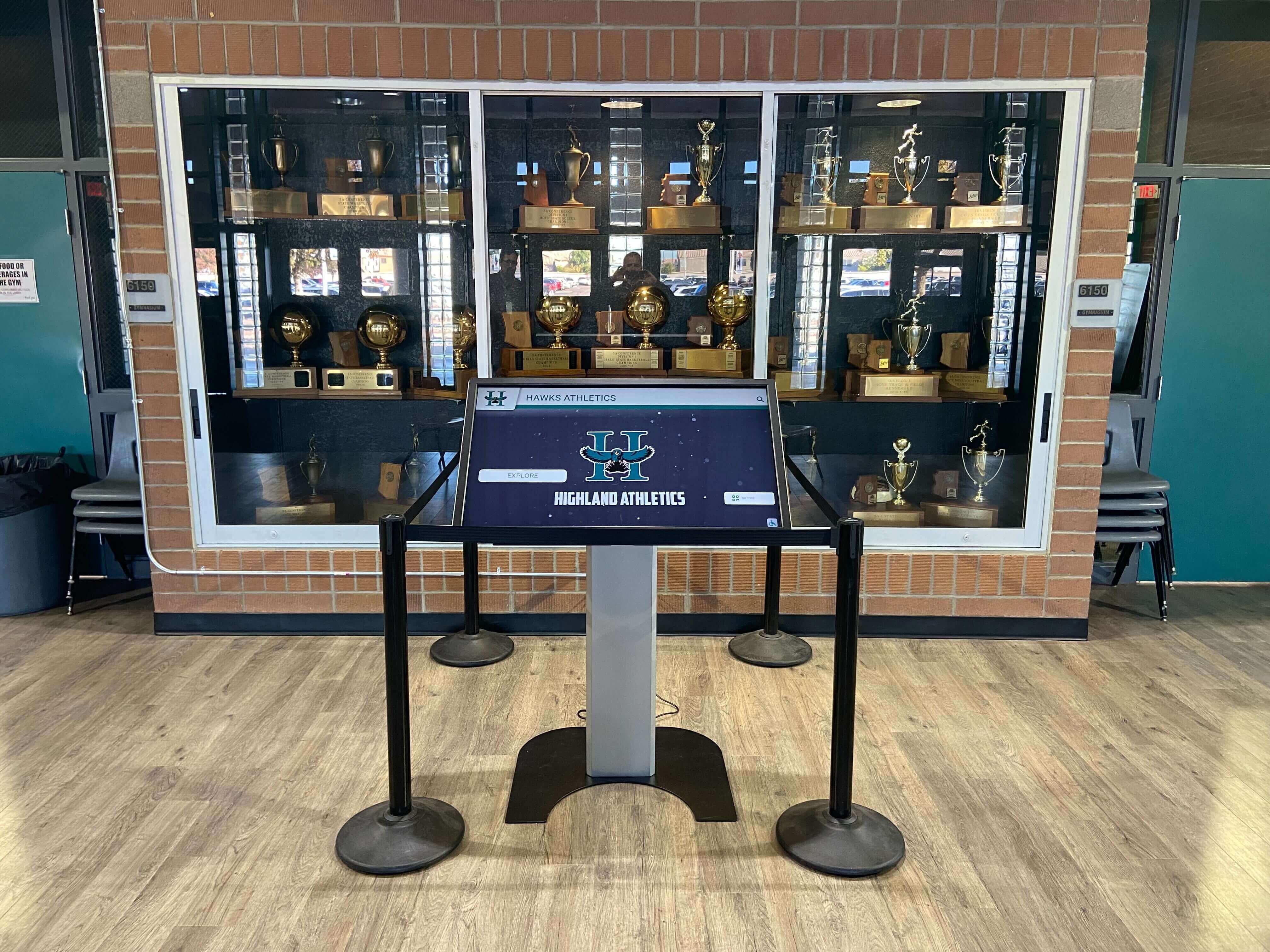
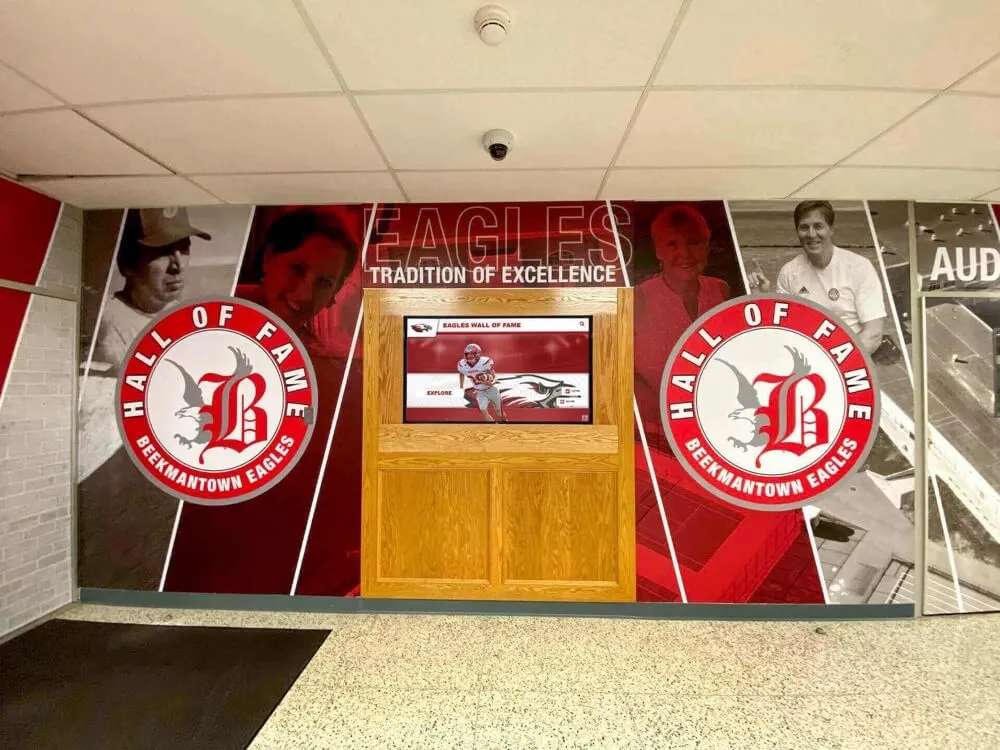
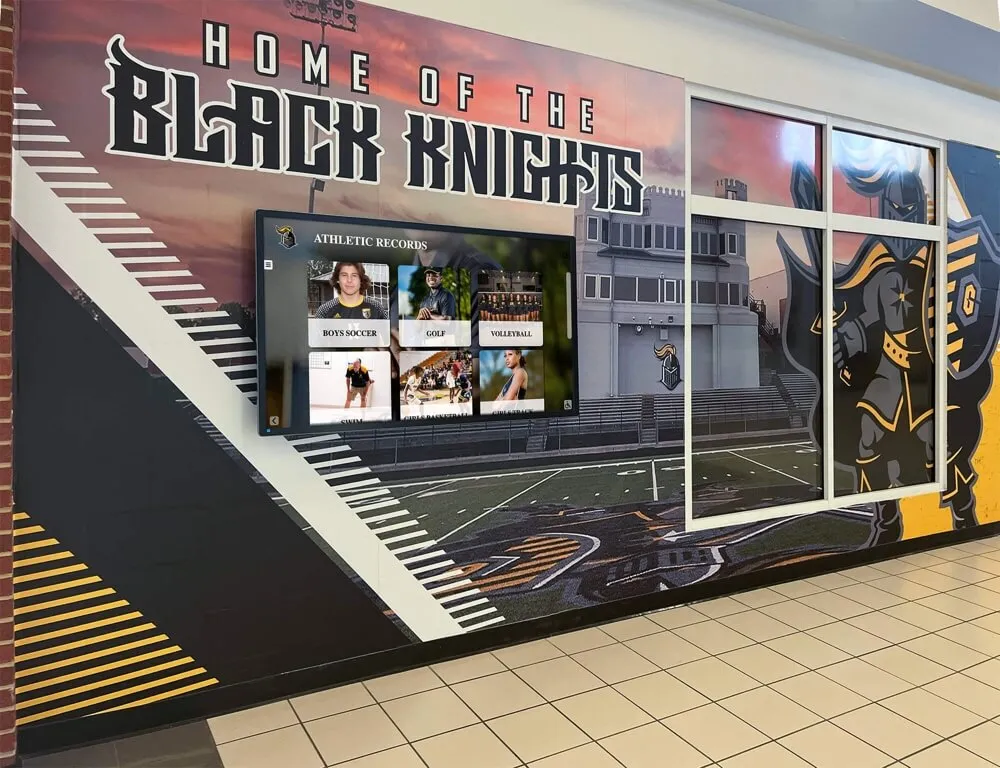
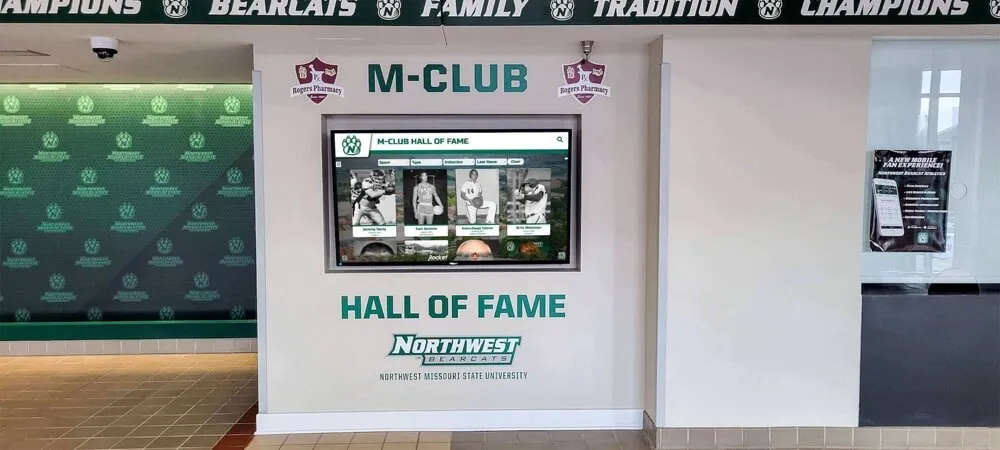
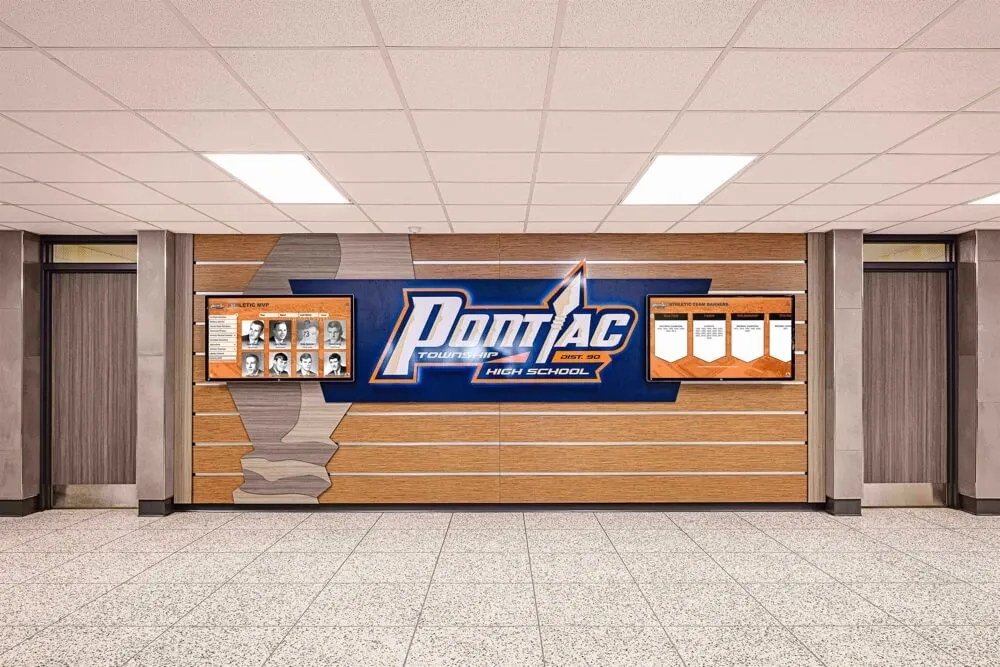
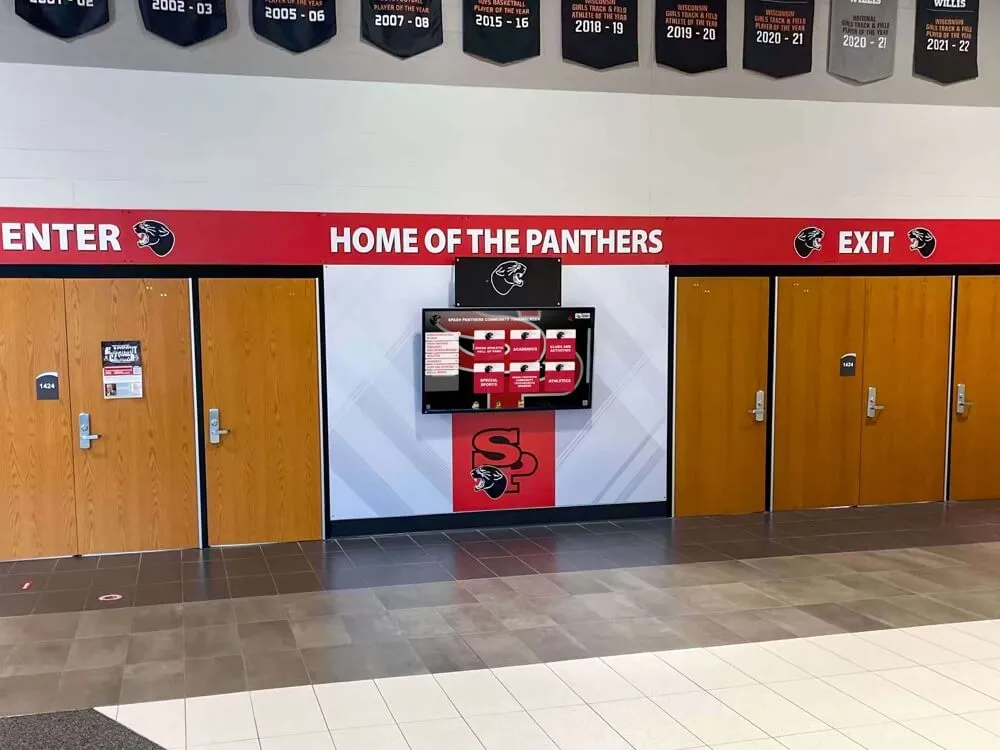
Trophy case corridors combining physical awards with digital recognition panels require consistent TM-30 performance across all fixture positions to present both elements accurately under the same ambient lighting
See What Accurate Color Rendering Looks Like in a Digital Recognition Display
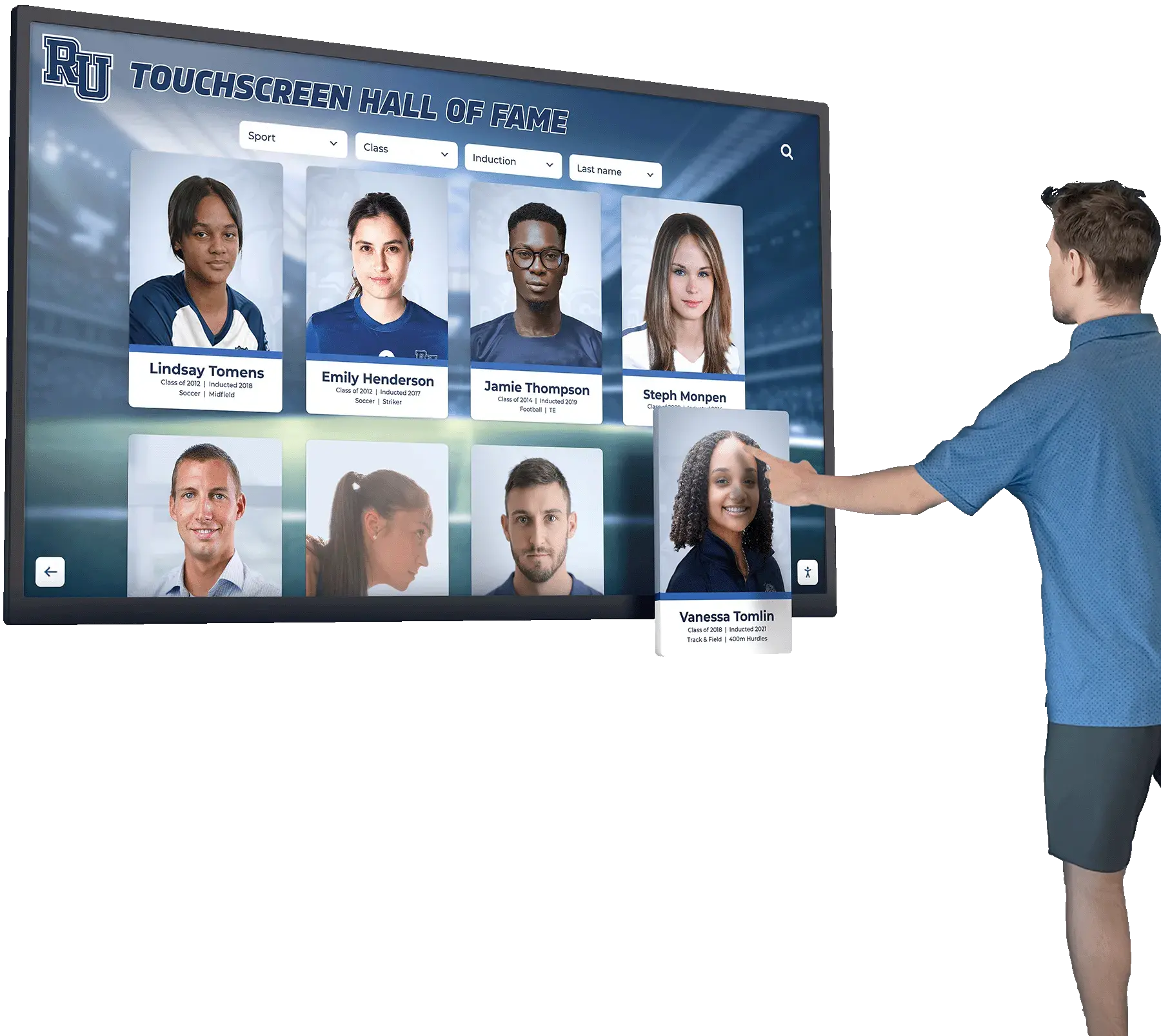
If your TM-30 evaluation surfaces the same fixture problems year after year, a digital recognition platform eliminates the color rendering maintenance cycle. Factory-calibrated commercial panels maintain consistent Rf-equivalent performance across their rated lifespan — no annual spectroradiometer audit required. See how schools display jerseys, championships, and school colors with vivid, stable accuracy.
Book a DemoHow School Colors Translate to TM-30 Hue-Bin Performance
The connection between TM-30 hue bins and specific athletic identity colors is the most practically useful element of the evaluation for recognition program owners — and it is the one aspect that a CRI score entirely misses.
TM-30’s Color Vector Graphic divides the color wheel into 16 hue-angle bins. Each bin has a vector showing whether the fixture expands (outward) or compresses (inward) colors in that range, and whether those colors shift in hue. For a school with navy blue and gold as primary colors, the evaluation is specific: check the vectors in the 60–90° range (gold/yellow) and the 210–240° range (navy). A fixture with an overall Rf of 80 that shows inward vectors in both school-color bins is a more urgent replacement candidate than a fixture with Rf 76 that shows neutral vectors in those same bins.
This hue-specific analysis matters in practice because:
- Jerseys in the case are read as “school color accurate” or “something looks off” by every alumni visitor, parent, and student who walks past
- Championship banners with fabric school colors show gamut compression as a subtle but cumulative dullness — a banner installed under Rg 88 fixtures for three years develops a reputation for “looking faded” that has nothing to do with the fabric
- Gold and silver trophy hardware sits in the hue bins most frequently compressed by budget LED fixtures; a systematic TM-30 evaluation identifies exactly which positions are undermining the appearance of the school’s most prominent awards
Recognition programs that apply similar rigor to how athletic awards candidates are evaluated and documented naturally extend the same standards to the physical environment where those awards are displayed — the lighting quality and the recognition policy are both expressions of how seriously the program takes its responsibility to the athletes it honors.
Equipment for a Trophy Case TM-30 Evaluation
The single hardware requirement that distinguishes a TM-30 evaluation from a basic colorimeter check is the spectroradiometer. Standard colorimeters measure chromaticity coordinates and CCT but do not capture the full spectral power distribution needed to calculate Rf and Rg. If your facilities team does not own a spectroradiometer, several paths are available:
Purchase or rent from a lighting equipment supplier: Entry-level spectroradiometers with TM-30 reporting now start at accessible price points for educational institutions. Rentals are available from lighting equipment distributors for teams running periodic audits rather than continuous monitoring.
State energy programs and utility audits: Some state energy efficiency offices and regional utilities offer loaner photometric instruments or on-site lighting audit services for educational facilities. Contact your state energy office to determine program availability before purchasing dedicated equipment.
Manufacturer data sheets as a partial substitute: For new fixture procurement decisions — before a purchase, not after installation — request the manufacturer’s published TM-30 data sheet. Reputable suppliers of museum, gallery, and display-grade LED products publish Rf, Rg, and the Color Vector Graphic in their product documentation. Reviewing this data before purchase is more efficient than measuring after installation.
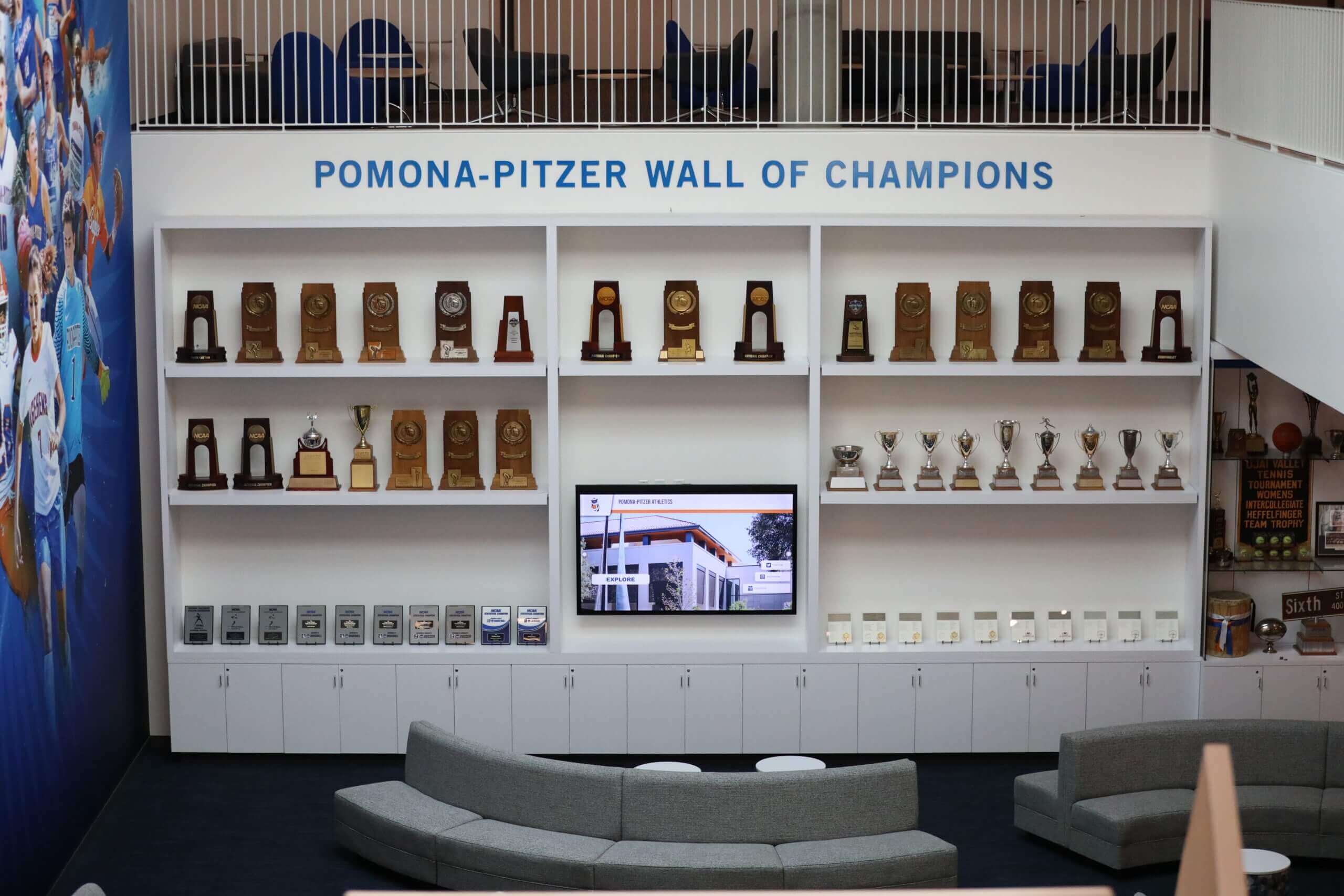
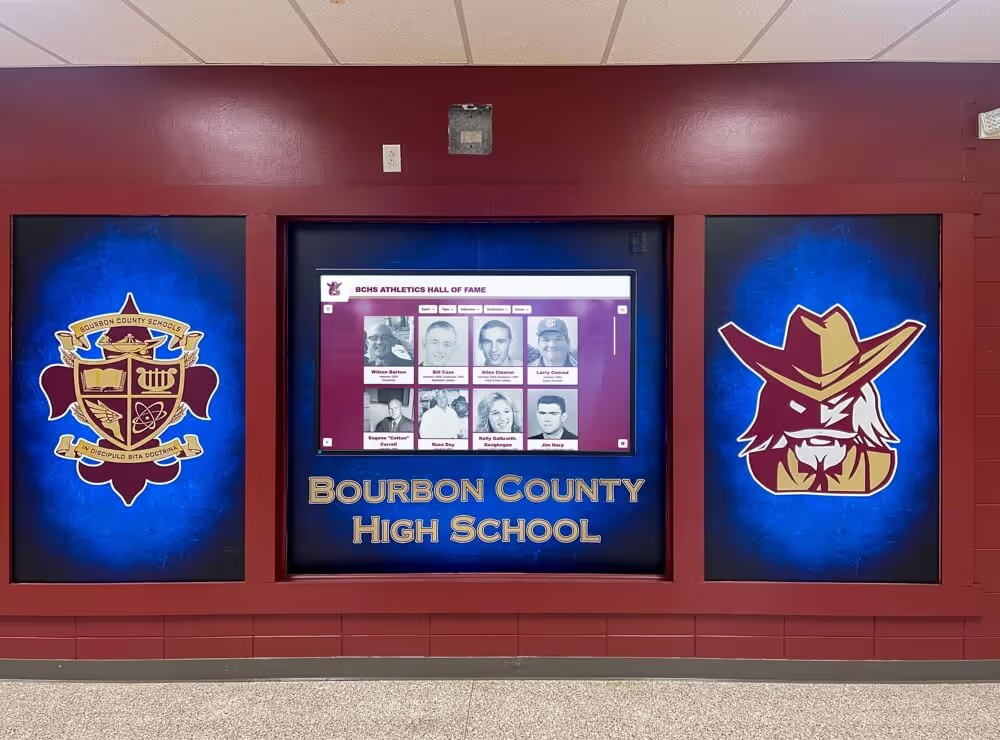
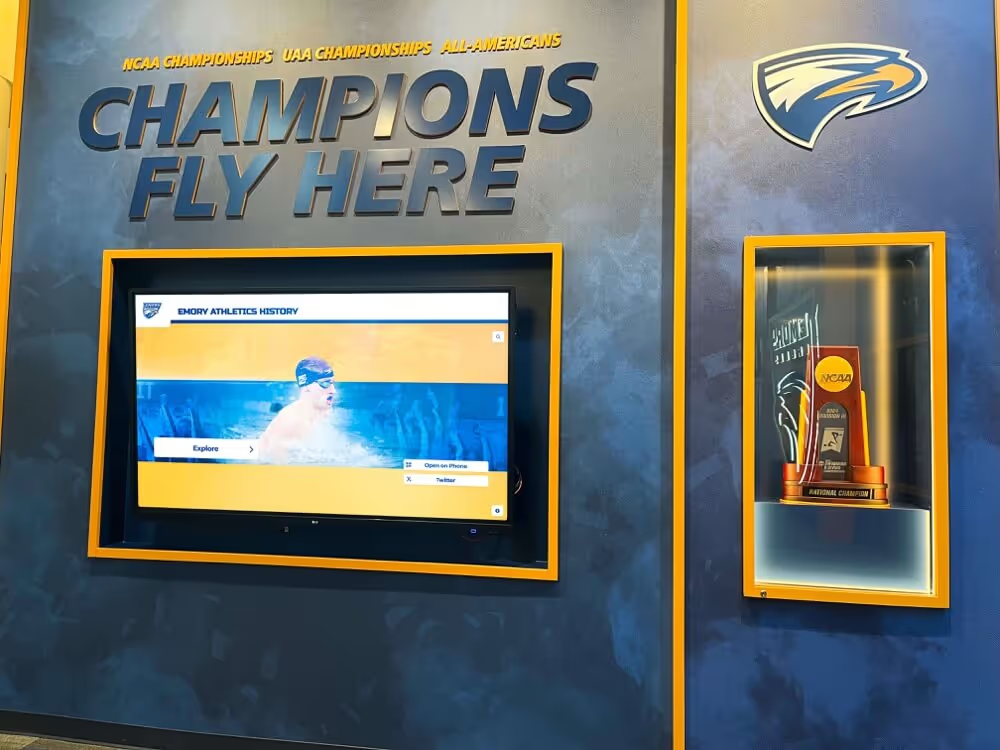
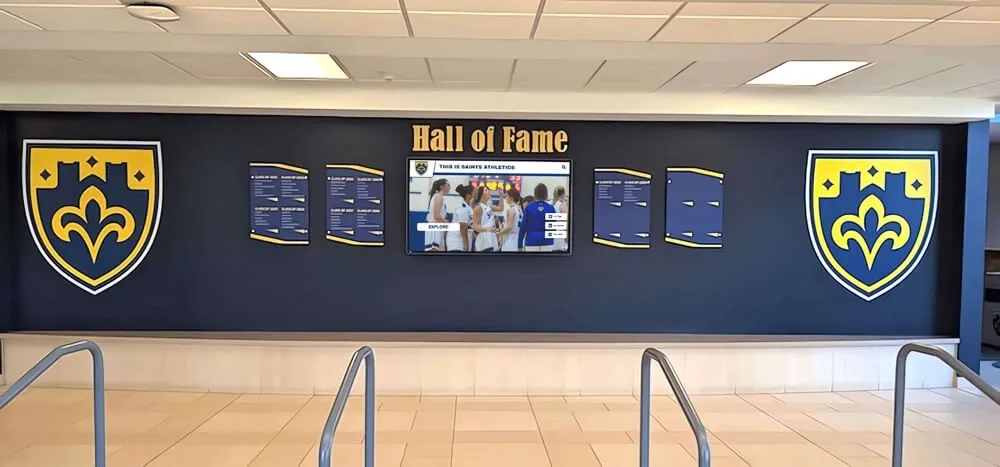
Trophy display environments receive scrutiny from athletes, alumni, and families who know exactly what the awards should look like — accurate lighting is what ensures the display meets that expectation
Connecting TM-30 Results to Procurement Standards
The most practical outcome of a TM-30 evaluation is a set of written specifications that prevent the problem from recurring at the next fixture replacement. Standard commercial LED procurement rarely includes TM-30 data — most specification sheets lead with CRI and CCT, and the Rf/Rg data, if available at all, requires a direct request to the supplier.
To close that gap, include TM-30 specifications in purchase orders rather than accepting generic LED equivalents:
- Minimum Rf ≥ 90 at rated output
- Rg between 95 and 110
- Published TM-30 data sheet available from manufacturer on request
- CCT within 200K of the existing reference fixture (or specify the target CCT directly)
- SDCM ≤ 3 from the specified target point (pairing TM-30 with a MacAdam ellipse specification addresses both color rendering and color consistency)
Including these specifications in writing — in the purchase order, not just in a conversation with the supplier — creates an enforceable standard and provides grounds for return if delivered products do not meet the requirement. Suppliers serving museum, gallery, and professional display markets routinely document at this level; general commercial LED suppliers may require some education, but the data exists for products that genuinely meet display-grade standards.
Schools building youth and high school sports award programs with ongoing recognition calendars benefit from procurement standards that maintain display quality automatically, rather than requiring individual attention at each replacement cycle. A written specification that travels with the fixture map survives staff transitions in a way that institutional knowledge does not.
Supplementary Metrics to Include in the TM-30 Evaluation
Rf and Rg are the primary TM-30 outputs, but two additional measurements round out a complete lighting evaluation for trophy case environments.
Illuminance uniformity (lux distribution): Measure lux at the award surface directly below each fixture immediately after completing the spectroradiometer readings. A lux variance greater than 3:1 across the case is a display quality concern independent of Rf and Rg scores — the combination of gamut-compressing fixtures and uneven illuminance in the same position identifies the highest-priority replacements. Fixtures that fail both checks should be at the top of every replacement list.
CCT spread across positions: Record correlated color temperature for each fixture alongside Rf and Rg. Fixtures with matching Rf and Rg but CCT values separated by more than 200K will still create a visually inconsistent display because the warmth of the light shifts noticeably across shelves. Pairs of failing metrics are more common than isolated problems — a fixture from a different procurement lot often diverges simultaneously on Rf, Rg, and CCT, making the full-measurement approach worth the added instrument time.
Comparison with adjacent digital displays: If the trophy case corridor includes interactive recognition panels or digital hall of fame screens alongside physical cases, note their displayed white-point color temperature. Commercial display panels are factory-calibrated to stable specifications, but the surrounding fixture temperature affects how the overall display environment reads to a visitor. A school migrating toward digital signage and recognition platforms for school hallways will produce the most coherent visual result when physical fixture CCT is harmonized with the display panels’ standard white point.
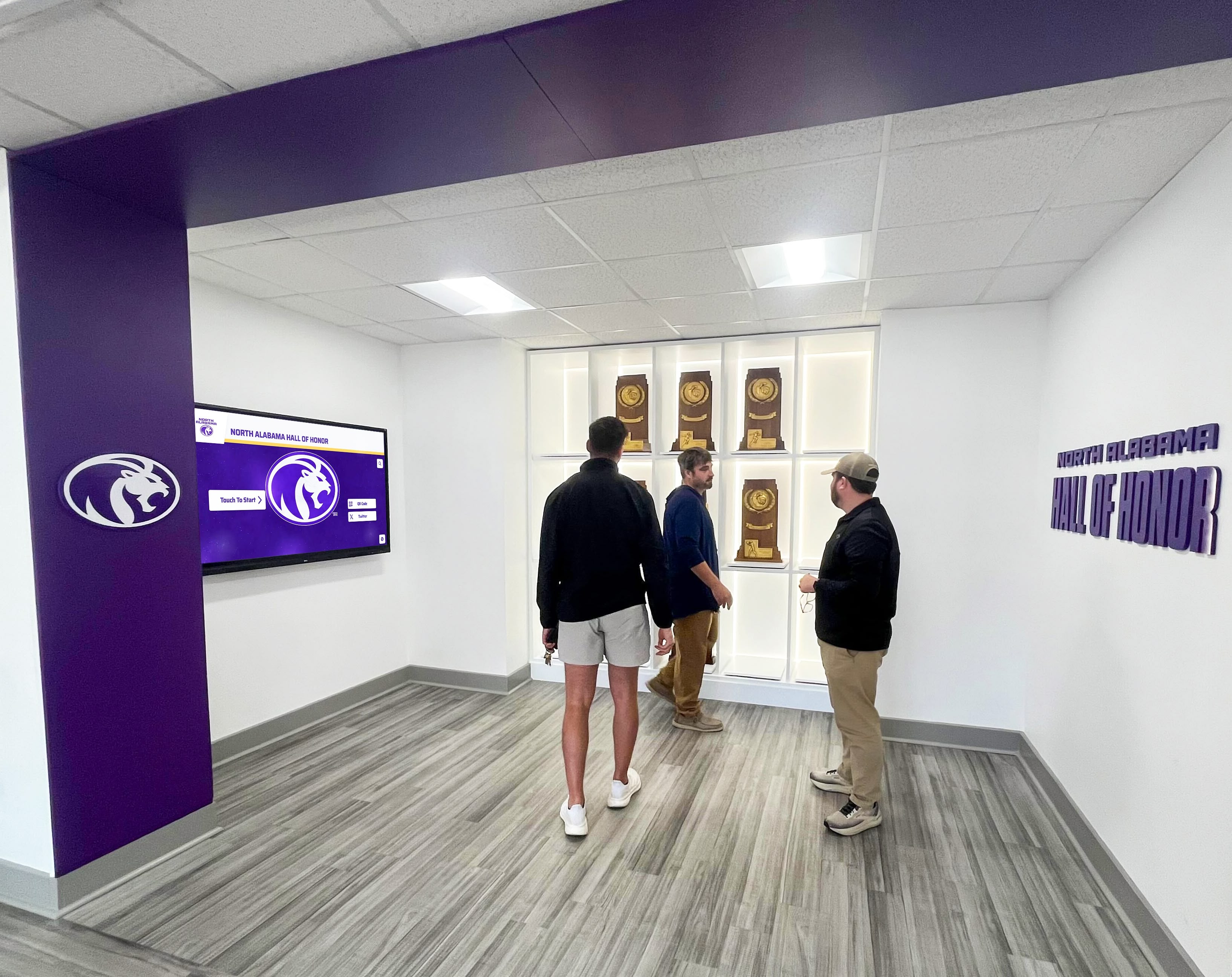
Recognition spaces where staff and visitors spend extended time benefit from lighting that is both color-accurate and consistent — TM-30 evaluation documents both dimensions in a single structured process
Scheduling the TM-30 Evaluation as Part of a Broader Lighting Program
A single TM-30 evaluation produces a useful baseline. An annual program creates institutional continuity and prevents the gradual fixture drift that turns a once-accurate trophy case into a display where nobody can quite articulate what has changed — only that the case “used to look better.”
| Audit Interval | Scope |
|---|---|
| Annual | Full TM-30 evaluation (Rf, Rg, CCT) for all fixture positions; update fixture map; record next scheduled date |
| After any fixture replacement | Spot-check replacement against documented reference Rf and Rg before closing the case |
| Before major recognition events | Visual check and lux measurement; trigger full TM-30 evaluation if color appearance complaints or camera color issues have been reported since the last audit |
| When complaints are received | Immediate full evaluation; prioritize positions nearest reported problem area |
| Every 3–5 years | Full fixture fleet review against current IES guidance; evaluate whether LED technology improvements since installation justify systematic upgrade |
Recommended documentation to retain after each evaluation:
- Fixture map with numbered positions and position photographs
- Rf and Rg values by fixture position and measurement date
- CCT and CRI (for historical comparison) by position
- Color Vector Graphics for each position (save as PDF alongside the log)
- Replacement procurement records including manufacturer TM-30 data sheets
- Next scheduled evaluation date and responsible party
Documentation that persists across staff transitions protects the recognition program’s quality standards in the same way that digital hall of fame platforms built to transparent, verifiable specifications protect schools from vendor uncertainty — the documented standard is what holds regardless of who is managing the program at a given moment.
When TM-30 Evaluations Point Toward Digital Recognition
Physical LED trophy case lighting requires ongoing TM-30 monitoring because individual fixture replacements create procurement variation, because LED drivers drift over time, and because the mixed-lot accumulation that occurs across years of sequential replacements gradually erodes the display quality that the original installation was designed to achieve.
Commercial-grade digital recognition displays operate on a different maintenance model. Factory-calibrated LCD and LED-LCD panels maintain stable color performance across their rated lifespan, and the color rendering performance of display-grade panels is engineered to the display industry’s own color accuracy standards — equivalent to or exceeding Rf ≥ 90 in the spectral ranges most relevant to color-critical content. For schools whose TM-30 evaluations repeatedly surface the same fixture positions or whose physical cases have accumulated years of undocumented procurement decisions, a digital recognition platform may offer a more durable path to consistent, accurate color presentation.
The transition also unlocks recognition capabilities that no physical trophy case can match: searchable archives across decades of championship history, video content from recognition ceremonies, unlimited entries without space constraints, and school spirit and identity content that connects current students to the achievement history displayed in the corridor — all of which is accessible without the recurring lighting maintenance cycle that a physical case requires. Schools evaluating this path benefit from understanding how digital hall of fame providers approach quality assurance and vendor accountability before making platform decisions.
Recognition archives spanning multiple decades are a natural part of school history; yearbook and records archives reflect the same institutional continuity that trophy case lighting is designed to honor. Platforms built for the long term manage that continuity without requiring a spectroradiometer.
Frequently Asked Questions
Conclusion: From Specification Labels to Verified Display Quality
A trophy case TM-30 lighting evaluation converts a fixture’s CRI label — a metric that misses the saturated colors most relevant to school recognition environments — into two objective, actionable scores: Rf for fidelity and Rg for gamut. When a facilities team knows the Rf and Rg at each fixture position, the pass/review/fail decision is a matter of comparing numbers to documented thresholds, not debating whether the display “looks a little off this year.”
The process is structured: document fixture positions, allow thermal stabilization, measure Rf and Rg with a spectroradiometer, review the Color Vector Graphic for school-color hue bins, and apply the checklist to determine what each position requires. Ordering replacement fixtures with published Rf ≥ 90 and Rg 95–110 from the same manufacturer closes the procurement loop and prevents the unspecified substitutions that are the most common root cause of trophy case color quality decline.
Embedding this evaluation in an annual lighting program — alongside a MacAdam ellipse check for color consistency and a flicker index test for camera and visitor safety — gives the school’s recognition space a documented quality standard that holds across staff transitions and keeps the display as credible as the achievements it represents.
See How Rocket Alumni Solutions Delivers Consistent Award Color Without Ongoing Calibration
Digital recognition platforms built to commercial display standards maintain the color accuracy that TM-30 evaluations are designed to verify — without requiring annual spectroradiometer audits. See how schools create vivid, accurate award displays with unlimited recognition capacity and factory-calibrated color performance that holds across the display's full rated lifespan.
Schedule Your Demo