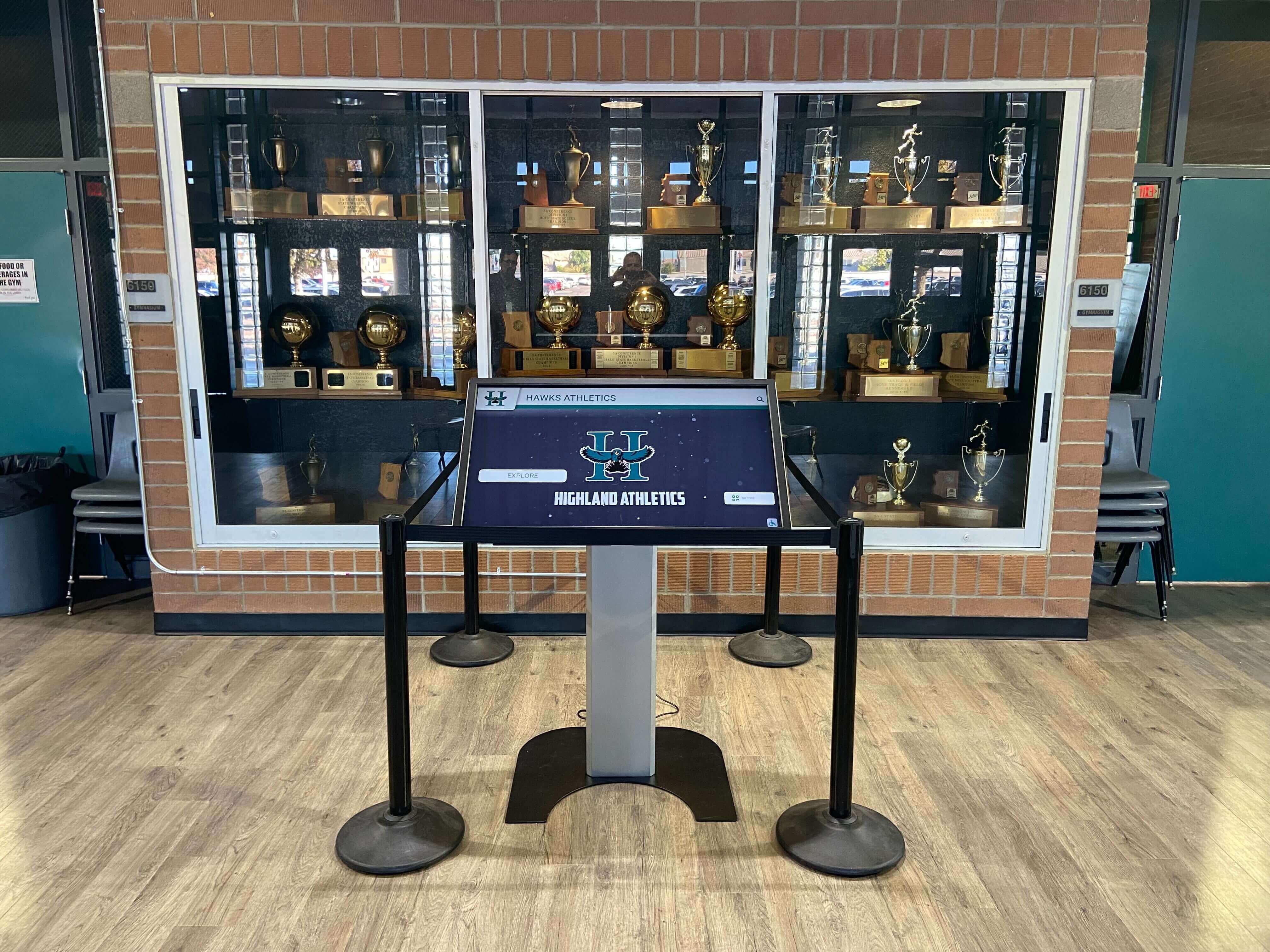




Intent: decide — a trophy case shelf load inspection checklist gives school administrators, athletic directors, and facilities teams a documented process for verifying that every shelf, mount, bracket, and anchor point in a display case can safely support the weight of trophies, plaques, championship hardware, and historic artifacts before those items are placed. This guide provides a copyable inspection table, a numbered eight-step workflow, weight load guidance for common trophy case contents, and guidance on connecting physical findings to corrective actions — and to a digital recognition system that preserves your school’s collection regardless of what happens to the physical cases over time.
The standard trophy case shelf load inspection checklist begins with a question most facilities teams have never formally asked: how much weight is this case actually holding, and how does that compare to what its hardware was designed to support?
A trophy case shelf that has been holding the same assortment of items for fifteen years looks stable. The wood panel on which a state championship trophy rests appears sound. The glass shelves holding a row of all-sport trophies do not visibly sag. The case has not moved or rattled, and no one has complained.
None of that is a structural inspection. It is an absence of obvious failure — which is not the same thing as a confirmed capacity assessment.
Shelf load failures in institutional display cases share a common story: discovered the hard way. A newly acquired trophy — larger and heavier than the others — joins a shelf already near its practical load limit. A facilities renovation repositions the case from a load-bearing wall to a partition wall that cannot adequately anchor it. Summer humidity causes a wooden shelf to bow across its center span, redirecting weight toward brackets designed for a flat load profile. The result is damage to irreplaceable championship hardware, a disrupted display, and a preventable liability.
A trophy case shelf load inspection checklist makes these risks visible before they materialize. Done once and filed, it provides a baseline. Done on an annual cycle, it builds the documentation trail that protects both the collection and the staff responsible for it.

Trophy cases hold decades of irreplaceable recognition items — a documented shelf load inspection protects both the artifacts and the students, staff, and visitors who share the display space
Why Shelf Load Capacity Matters for School Trophy Cases
School trophy cases are rarely engineered to specific load calculations the way industrial shelving or archive racking is. Most are furniture-grade or custom millwork installations — a distinction that matters when cases accumulate awards across multiple decades.
A case installed in 1995 to display items from recent seasons may now support artifacts from thirty years of championship history. The original hardware — shelf brackets, anchor bolts, mounting cleats — was specified for a display that weighed considerably less than what currently occupies the case. Schools that grow their recognition programs year over year, adding new championship trophies, retired jerseys, framed team photographs, and engraved plaques, gradually test the load margins of fixtures that nobody formally recalculated.
Athletic directors who oversee comprehensive recognition programs understand that the physical infrastructure of a display is as much their responsibility as the recognition content itself. The qualifications and daily responsibilities that define the athletic director role include oversight of athletic facilities and equipment — and trophy cases, however decorative they appear, are facilities infrastructure.
Shelf load inspection connects directly to three concerns that facilities staff and administrators share:
Safety. A failed shelf that drops heavy trophies from height poses an injury risk to students, visitors, and staff. In hallway cases with glass panels, a structural failure creates additional hazard from broken glass combined with falling metal hardware.
Preservation. Overcrowded shelves, undersized brackets, and uneven weight distribution contribute to accelerated wear on trophy bases, plaque hardware, and case interiors. Items compressed against adjacent artifacts develop surface damage that would not occur in a properly loaded, properly spaced display.
Documentation. School administrators who conduct and record shelf load inspections create a paper trail that demonstrates responsible stewardship of district property. In the event of a failure or insurance claim, documented inspections are the foundation of defensible record-keeping.
Trophy Case Shelf Load Inspection Checklist
The table below provides a complete field set for a single-case shelf load inspection. Run one instance per trophy case per inspection cycle. For schools with multiple cases — main hallway, gymnasium lobby, administrative suite, field house — complete a separate checklist for each unit.
| Inspection Item | What to Check | Condition | Notes |
|---|---|---|---|
| Case identification | Case number, location, year installed | — | Record location precisely: “Main Hallway — South Wall, near main entrance” |
| Case type | Freestanding / Wall-mounted / Built-in / Illuminated | — | Affects anchor and structural considerations |
| Case material | Wood / Metal / MDF / Laminate / Mixed | — | Affects shelf deflection and moisture sensitivity |
| Number of shelves | Count adjustable and fixed shelves separately | — | Adjustable shelves use different bracket hardware than fixed |
| Shelf material | Solid wood / MDF / Glass / Metal / Laminate | Good / Fair / Poor | Glass shelves require separate load rating inquiry |
| Shelf deflection (center) | Press lightly at center of each shelf — does it flex noticeably? | None / Slight / Moderate / Significant | Significant deflection under hand pressure warrants load reduction |
| Visible shelf damage | Check for cracks, chips, warping, sagging, or delamination on each shelf | None / Minor / Moderate / Severe | Document shelf number and location of damage |
| Bracket condition | Inspect all shelf brackets or clips — seated fully, no corrosion, no bending | Good / Fair / Poor | Loose or corroded brackets should be replaced before adding load |
| Bracket count per shelf | Count support points — minimum two, with center support for spans over 24 inches | — | Long spans without center support are at higher risk of deflection |
| Case anchor (wall-mounted or built-in) | Verify anchor screws or bolts are present, tight, and penetrate into studs or masonry | Secure / Loose / Unknown | “Unknown” requires facilities investigation before case is loaded |
| Freestanding stability | For floor-standing cases: does case rock or shift when lightly pressed from front? | Stable / Slight movement / Unstable | Anti-tip anchoring required for cases showing any movement |
| Case leveling | Is the case visibly level? Use a level tool if available | Level / Slight lean / Off-level | Off-level cases place uneven load on brackets and can shift contents |
| Weight of current contents | Estimate total weight currently on each shelf — use item weights from catalog if available | — | Compare against any manufacturer shelf load rating if available |
| Item spacing | Are items spaced to distribute weight evenly, or is weight concentrated in one area? | Even / Uneven | Heavy items centered over bracket support points reduce deflection risk |
| Item overhang | Do any items extend beyond the shelf edge? | None / Minor / Significant | Significant overhang concentrates stress at the shelf front edge |
| Heavy item anchoring | Are unusually heavy trophies or bases anchored to prevent tipping? | Anchored / Unanchored | Tall trophies in high-traffic areas may require adhesive bump stops or museum putty |
| Lighting fixture load | If case has internal lighting, are fixture mounts secure and not adding stress to shelves? | Secure / Needs review | LED strip retrofits sometimes add unexpected bracket loads |
| Glass panel condition | Check case glass for cracks, chips, or failed seals on framed glass panels | Good / Fair / Poor | Cracked glass panels should be replaced before further loading |
| Case floor (bottom shelf area) | Inspect the case floor for deflection, damage, or moisture staining | Good / Fair / Poor | Moisture damage to the case floor can indicate ongoing humidity or water intrusion |
| Planned new additions | List any trophies or artifacts being considered for this case | — | Estimate added weight and confirm shelf capacity before placing |
| Corrective action required | Summarize any items requiring follow-up before the case is loaded or reloaded | Yes / No | Assign a responsible party and a target completion date |
| Inspector name and date | Full name of inspector and inspection date | — | Required for documentation trail |
| Next inspection date | Date scheduled for next inspection | — | Annual cycle recommended; semi-annual for heavy-use or older cases |
Eight-Step Shelf Load Inspection Workflow
A checklist is only useful when followed consistently. The numbered workflow below guides facilities staff and athletic administrators through a complete single-case inspection.
Step 1: Assemble your tools and documentation. You will need a flashlight for examining bracket hardware and case interiors, a flat-head screwdriver or similar probe for testing bracket seating, a bubble level, a clipboard with the inspection form, and a camera or phone for photographing any findings. If your school has manufacturer documentation for the case, retrieve it before the inspection begins — load ratings and hardware specifications are often printed or included in original installation records.
Step 2: Identify and label the case. Every case in your inspection cycle should have a unique identifier. Use a permanent, consistent format: “Trophy Case 01 — Main Hallway,” “Trophy Case 02 — Gymnasium Lobby,” and so on. Record the identifier at the top of each checklist form before beginning.
Step 3: Inspect the case structure and anchoring before looking at contents. Start from the outside in. Check the case’s mounting or anchoring to the wall or floor before examining anything on the shelves. A structurally compromised case anchor is a more serious finding than any individual shelf problem — the case itself may need to be cleared before safe inspection or remediation can continue.
Step 4: Inspect each shelf systematically from top to bottom. Work shelf by shelf, top to bottom, completing every line in the checklist before moving to the next shelf. Do not inspect all shelves for one issue and then revisit for another — systematic single-pass inspection is faster and less likely to produce omissions.
Step 5: Photograph every issue you record. Any checklist item marked “Fair,” “Poor,” “Moderate,” or “Significant” should be photographed before you leave the case. Photograph from enough distance to show context — which shelf, which area — and from close enough to clearly document the specific issue. These photographs are the supporting documentation for any corrective action request.
Step 6: Assess planned additions against current load. If the purpose of the inspection is to prepare the case for new trophies or artifacts, estimate the weight of planned additions and compare to any available shelf load rating. Schools with active recognition programs that regularly add new awards — including academic recognition platforms that add AP scholar designations and honor roll displays — should build shelf capacity review into the standard award-cycle workflow.
Step 7: Complete the corrective action section. Every finding that requires follow-up — a loose bracket, a deflecting shelf, an un-anchored case — should produce a named corrective action with a responsible staff member and a target completion date. Do not leave corrective actions as open-ended findings. Assign them before the inspection form is filed.
Step 8: File the completed inspection form and schedule the next cycle. The inspection form should be filed in a facilities binder organized by location or case number. For schools maintaining a digital inventory of their recognition collection, attach a scanned copy of the completed form to the relevant location record. Set a calendar reminder for the next inspection date before closing the file.
Weight Load Guidance for Common Trophy Case Contents
Individual shelves in furniture-grade and custom-built trophy cases do not carry published load ratings the way commercial shelving products do. Where manufacturer documentation exists, it governs. Where it does not, the table below provides practical weight categories based on common trophy case contents, allowing inspectors to estimate current shelf load and plan additions accordingly.
School facilities teams responsible for maintaining display areas alongside other recognition infrastructure — including bulletin boards, lobby displays, and hallway installations — benefit from consistent documentation practices across all public-facing areas. Back-to-school bulletin board and display planning guides demonstrate how structured setup procedures reduce improvised decisions that create load and mounting issues throughout a facility.
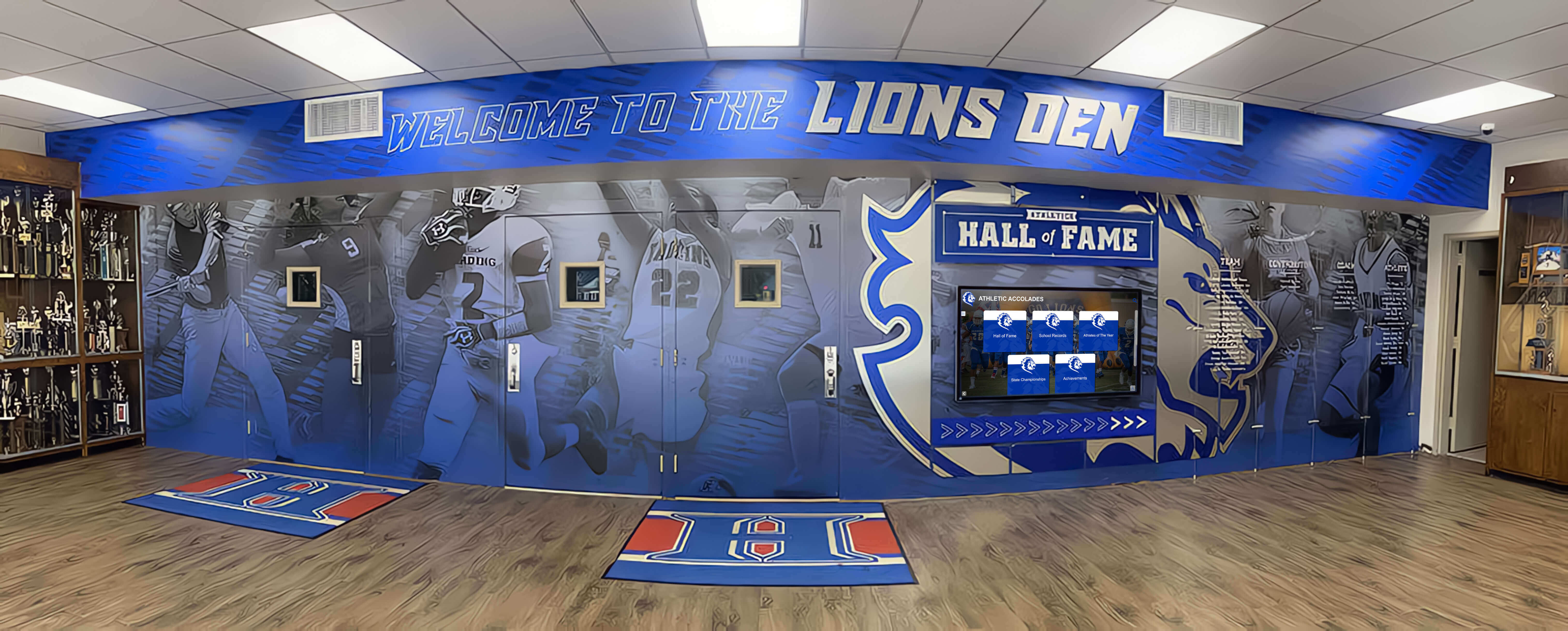
Hallway trophy cases holding decades of championship history accumulate significant weight over time — systematic shelf load inspection prevents structural failures before they occur
| Item Type | Approximate Weight Range | Load Notes |
|---|---|---|
| Small resin or plastic trophy (under 12 inches) | 0.5 – 1.5 lbs | Low individual load; density on a single shelf accumulates quickly |
| Medium metal-and-resin trophy (12–20 inches) | 1.5 – 4 lbs | Most common trophy case item; estimate based on visual density |
| Large metal trophy (over 20 inches, substantial base) | 4 – 12 lbs | A row of large trophies on one shelf can represent significant total load |
| Perpetual traveling trophy (solid metal, large base) | 10 – 30+ lbs | Center these over bracket support points; distribute across shelves where possible |
| Framed team photograph (standard 16×20, glass) | 3 – 6 lbs | Weight concentrates at mount points or where item leans against the case back |
| Framed jersey (shadow box style) | 8 – 15 lbs | Depth and surface area create leverage on mounting hardware |
| Championship banner (folded or rolled for display) | 1 – 3 lbs | Low weight but can create surface area issues in ventilated cases |
| Engraved wooden plaque (standard) | 2 – 5 lbs | Relatively stable load; check back-panel mounting hardware |
| Plaque with multiple accumulated metal plates | 3 – 8 lbs | Metal added to older perpetual plaques over years can significantly increase weight |
| Display pedestal or riser block | 1 – 5 lbs | Add pedestal weight to supported trophy weight for total load estimate |
| Championship ring in display case | Under 0.5 lbs | Negligible individual weight; anchor for security considerations, not load |
Common Structural Issues Found During Trophy Case Inspections
Inspectors encountering trophy cases for the first time often find a predictable set of issues that accumulated gradually over years of use.
Bracket creep. Adjustable shelf brackets designed for periodic repositioning slowly work loose from repeated loading and unloading. A bracket that was firmly seated when the case was installed may have developed a small gap between the bracket pin and the support hole in the case side panel. Even a small gap allows the bracket to shift under load, producing progressive shelf lean toward the loose bracket side.
Shelf span sag on long cases. Cases wider than approximately 36 inches without a center vertical divider may develop visible sag at the shelf midpoint under sustained load. This is especially common in older MDF and particleboard shelves exposed to cyclical humidity changes. The sag compresses items toward the center of the shelf and redirects load away from the bracket supports.
Unanchored freestanding cases. Freestanding floor cases in hallways are among the most common findings. Cases positioned against walls for apparent stability may not be anchored to those walls. A case that has stood unmoved for a decade appears stable but remains a tip hazard if nudged by a cart, a door, or a student passing through a narrow corridor.
Failed glass shelf supports. Cases using glass shelves often use small rubber or silicone pads between the glass and the bracket to prevent glass-on-metal contact. Over time, these pads compress, crack, or migrate — allowing the glass to contact the bracket directly, concentrating stress at the contact points, and increasing the risk of glass fracture under load.
Moisture-compromised case floors. Cases positioned near exterior walls, windows, or in buildings with inconsistent HVAC coverage may show moisture damage at the base of the case. Particleboard and MDF case floors absorb moisture, swell, and lose structural integrity — which can affect both the case floor and adjacent shelves in multi-shelf configurations.
Every trophy on your shelves has a story worth preserving permanently. Rocket Alumni Solutions builds cloud-managed digital trophy cases that keep your complete recognition history accessible — even as physical cases age, move, or need structural attention.
Documenting Findings and Planning Corrective Action
An inspection checklist that produces findings but no corrective action is a document that records failure without resolving it. The corrective action section of the checklist is where the inspection converts into a facilities improvement plan.
For each finding rated “Poor,” “Significant,” or “Severe,” the corrective action record should include:
- Issue description — one to two sentences describing the specific finding, including which shelf, which bracket, and what specific condition was observed
- Risk level — Low (monitor at next inspection), Moderate (address within 30 days), High (address before case is loaded or accessed)
- Responsible staff member — the specific person assigned to follow up, not a general role
- Target completion date — a calendar date, not “as soon as possible”
- Resolution note — completed when the corrective action is closed and verified
For findings that require contractor involvement — case anchor replacement, glass panel replacement, structural reinforcement — route the completed inspection form to the facilities director with the corrective action section highlighted. Schools that maintain documented accountability systems for recognition infrastructure benefit from the same disciplined approach applied to booster club financial controls and internal accountability checklists — clear responsibility assignment and completion documentation are what make documentation systems functional rather than ceremonial.
Shelf Inspection in Context: The Full Trophy Case Assessment
Shelf load capacity is one component of a comprehensive trophy case assessment. Schools conducting an annual facilities review of their display infrastructure typically combine shelf inspection with adjacent evaluations:
Environmental conditions. Temperature and humidity levels inside closed cases affect both preservation quality and material stability. High humidity accelerates wood swelling, bracket corrosion, and glass gasket degradation. Tracking environmental conditions alongside shelf load findings produces a complete picture of case health.
Lighting assessment. Internal case lighting — particularly older fluorescent fixtures — generates heat that contributes to material degradation. An inspection cycle that includes lighting review alongside structural review catches both categories of risk in one visit.
Inventory reconciliation. An inspection visit is a natural opportunity to compare physical case contents against your trophy and artifact inventory. Items present but not cataloged, or cataloged but not present, are both worth resolving. Schools expanding their recognition programs — including athletic departments adding debate and academic achievement displays to existing athletic cases — benefit from a reconciled inventory before expansion adds load to an uninspected structure.
Content rotation planning. If a shelf inspection identifies capacity constraints, the inspection creates an opportunity to assess whether current items represent the right content for the space. Schools with digital recognition platforms can surface historical items digitally without occupying physical shelf space — a practical solution when inspection reveals that a case is carrying more load than its hardware was originally specified to support.
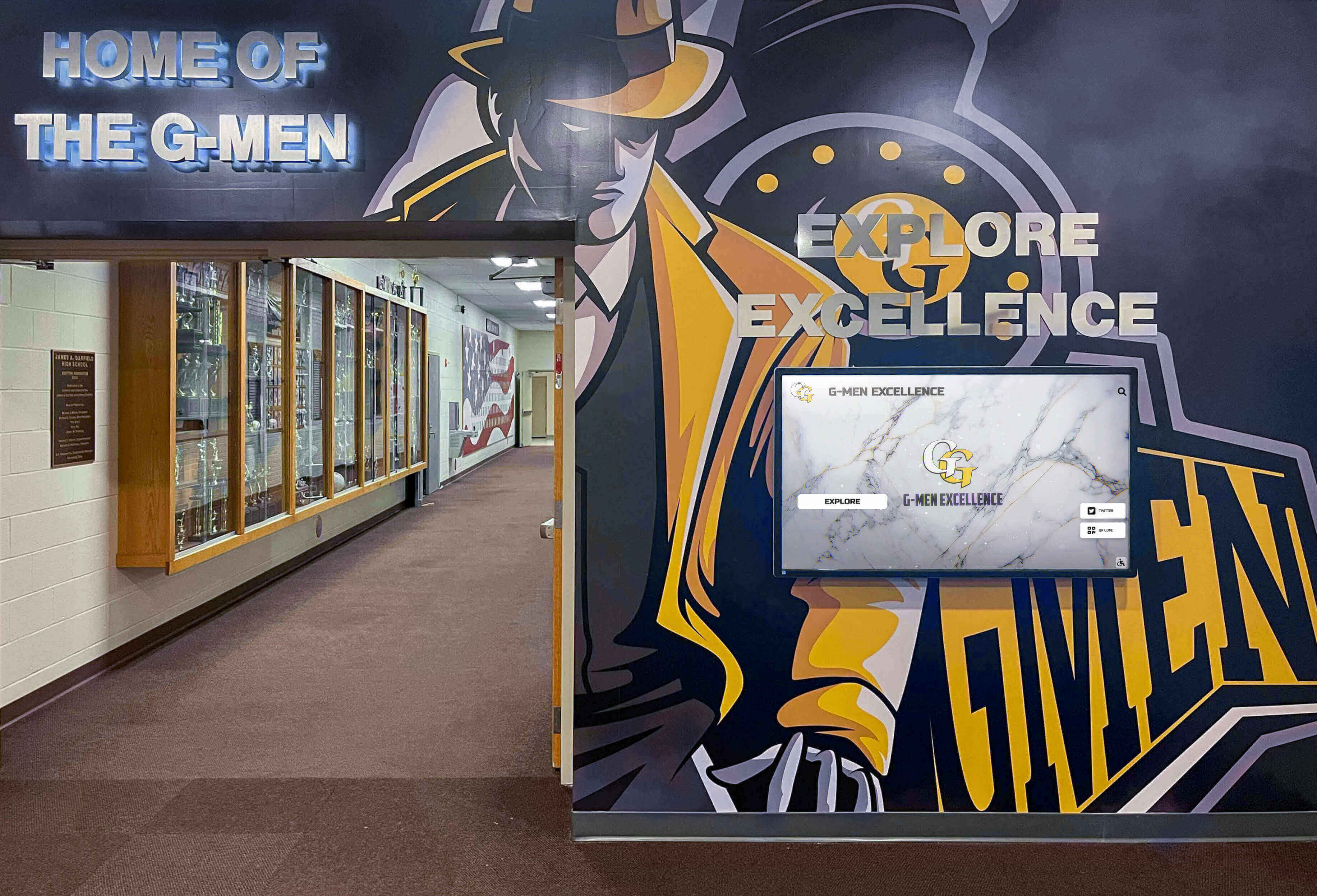
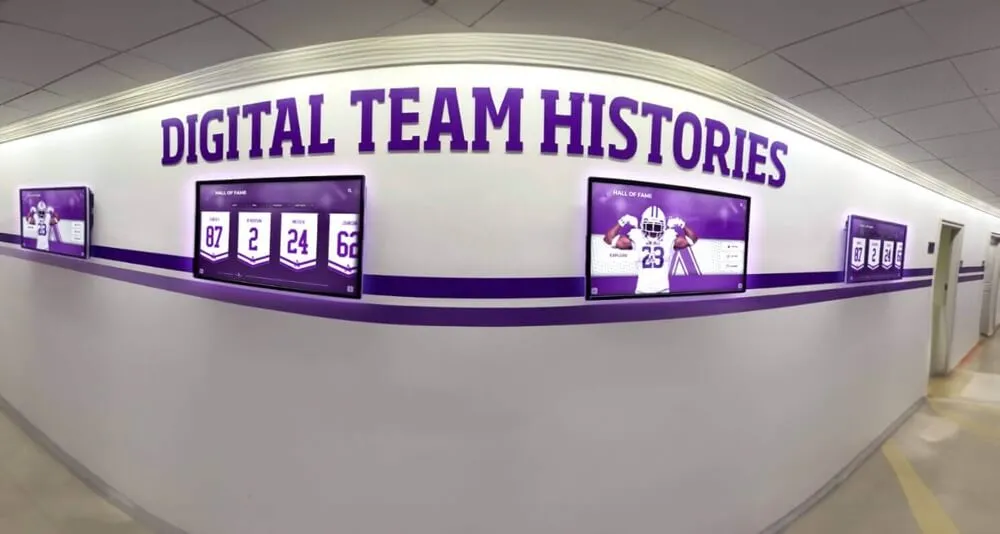
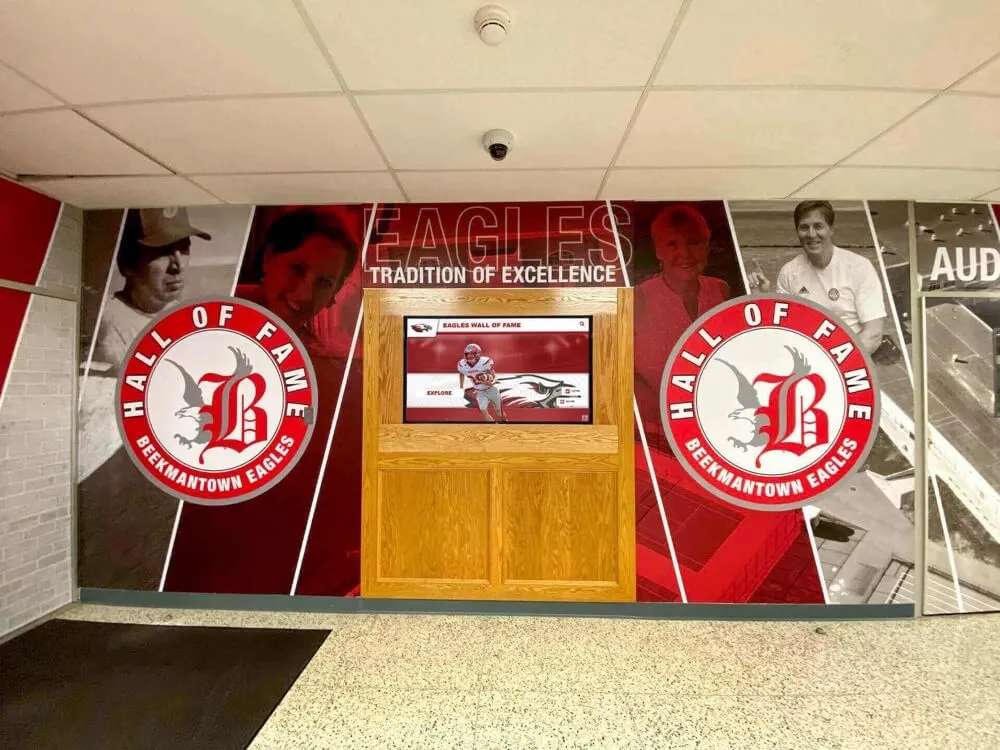
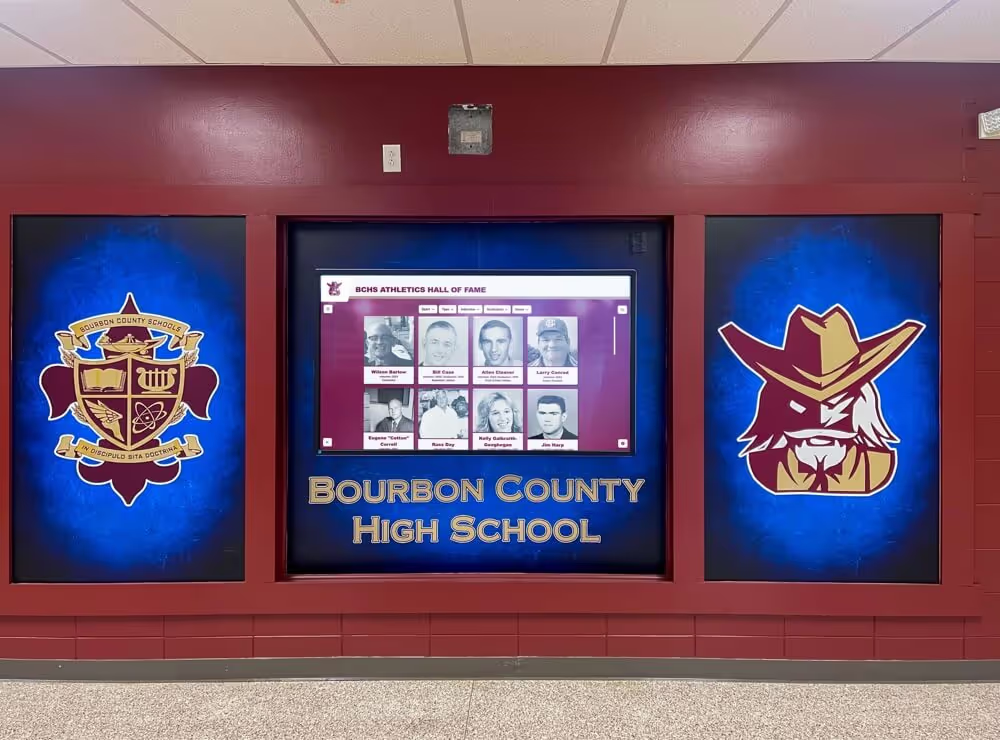
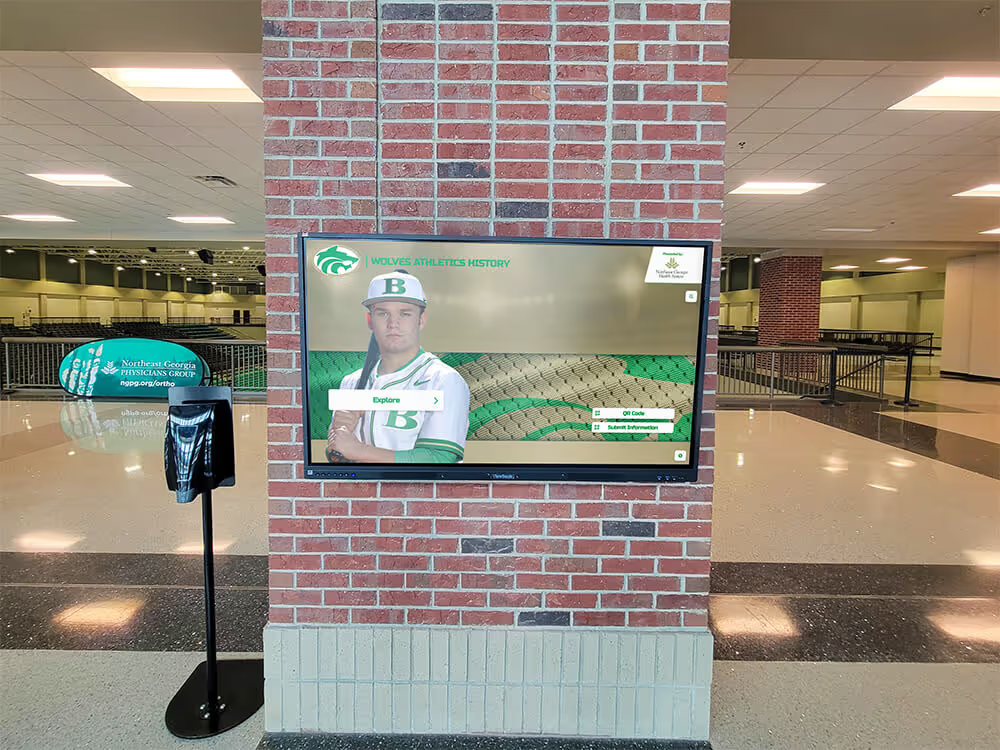
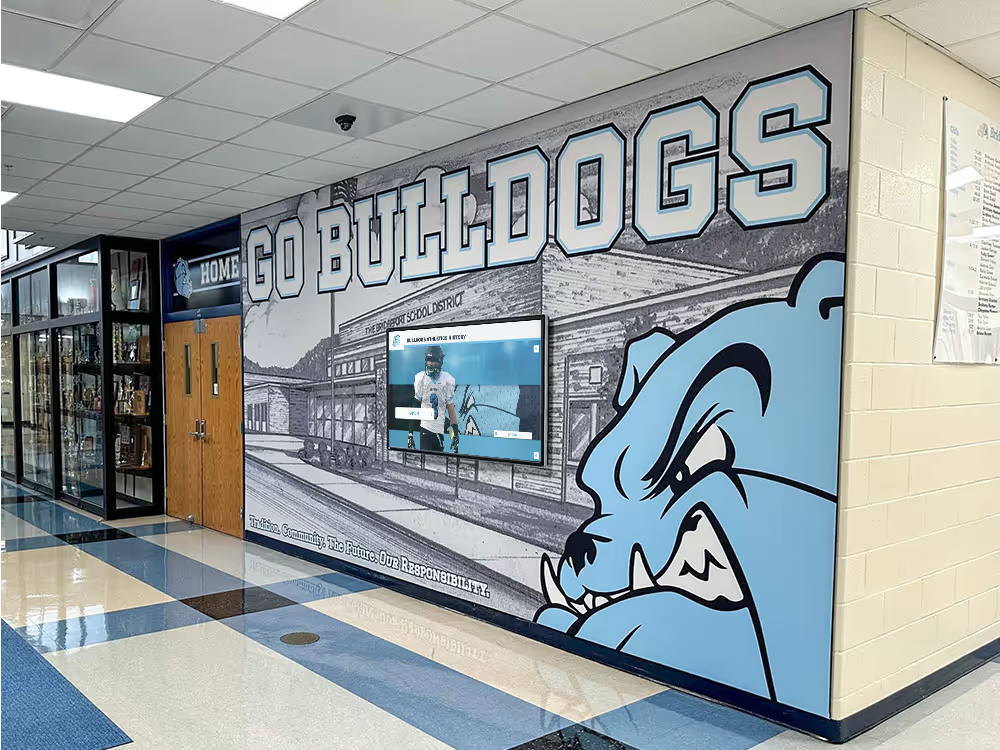
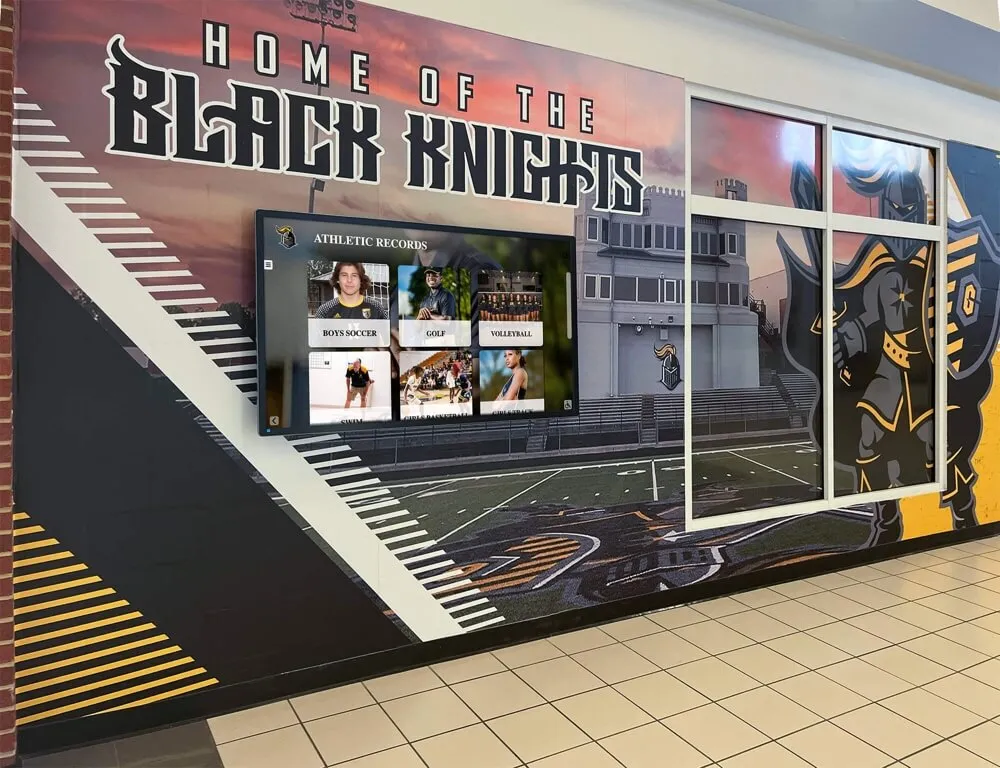
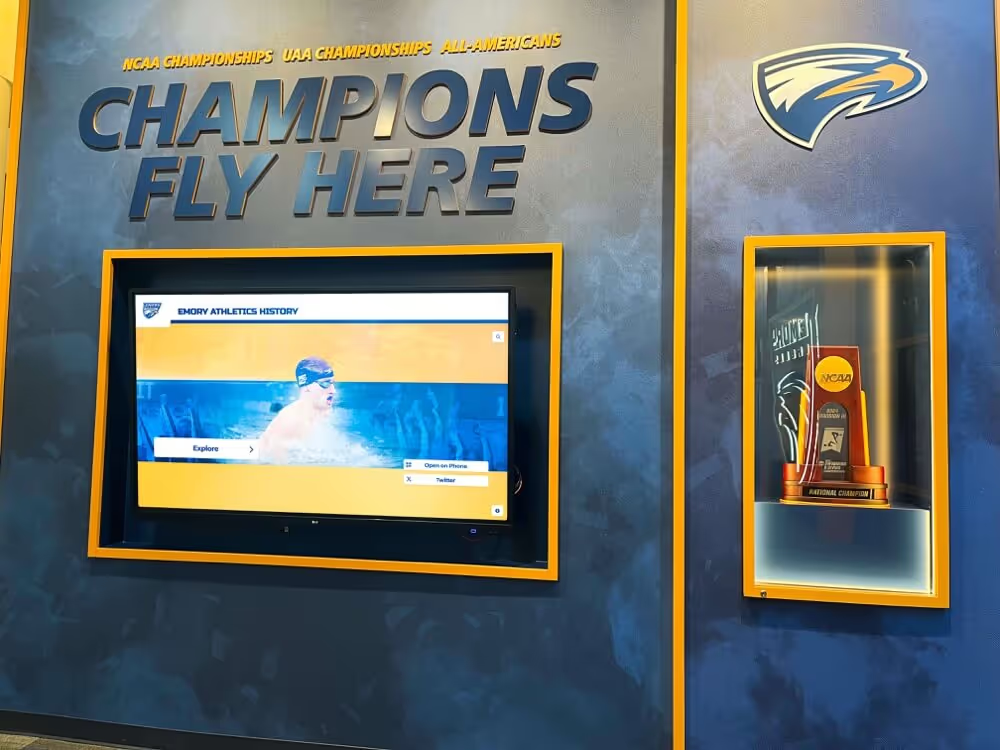
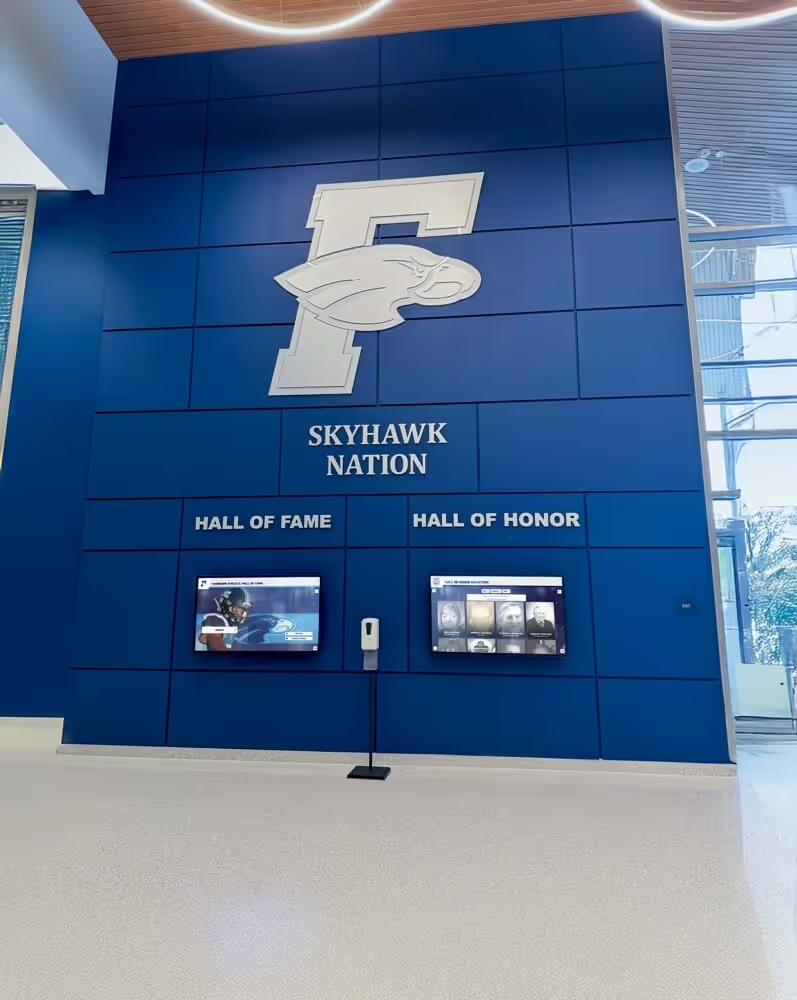
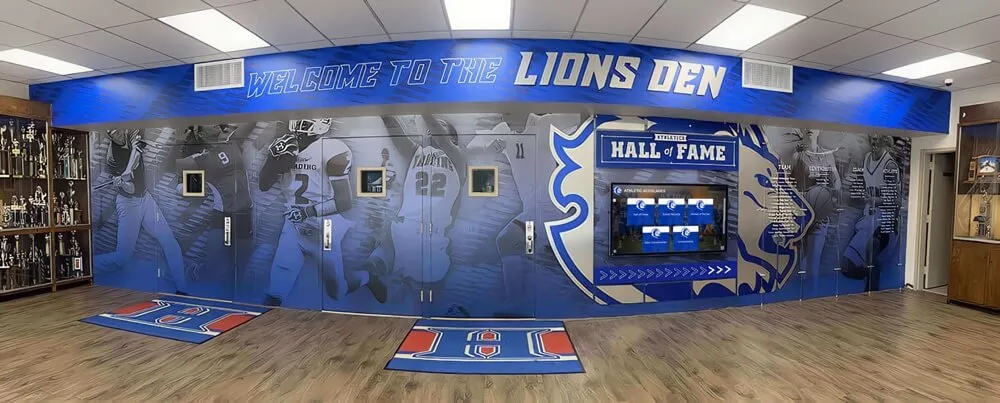
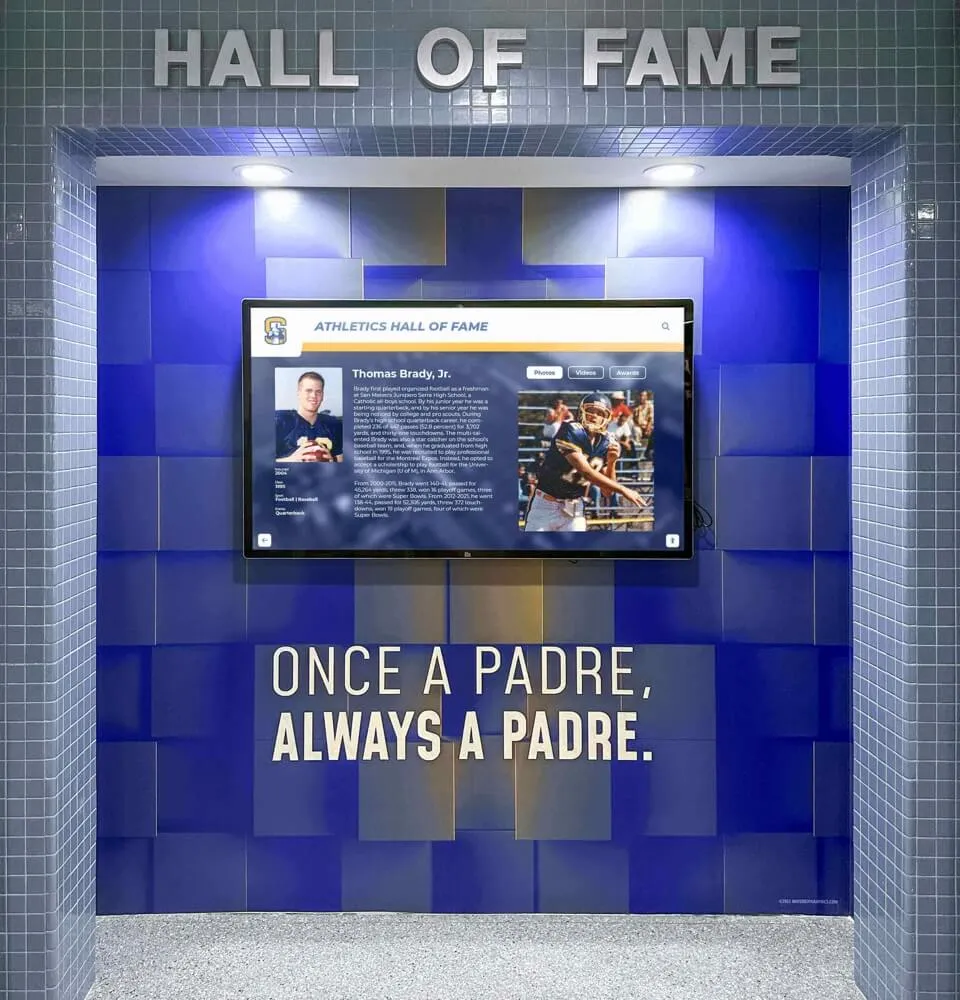
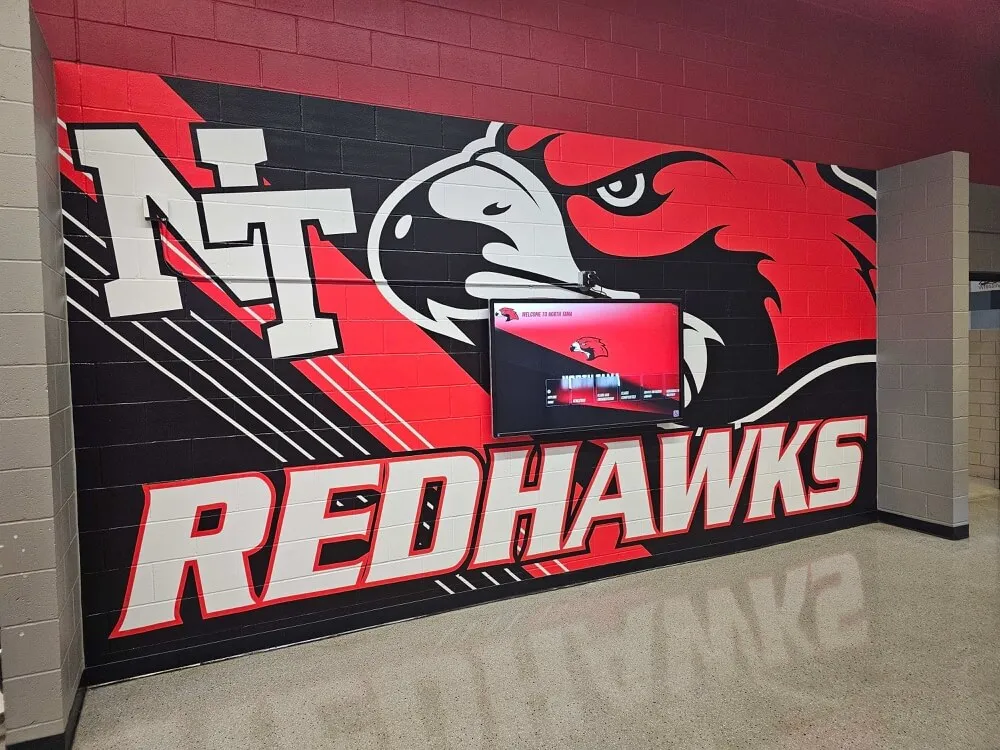
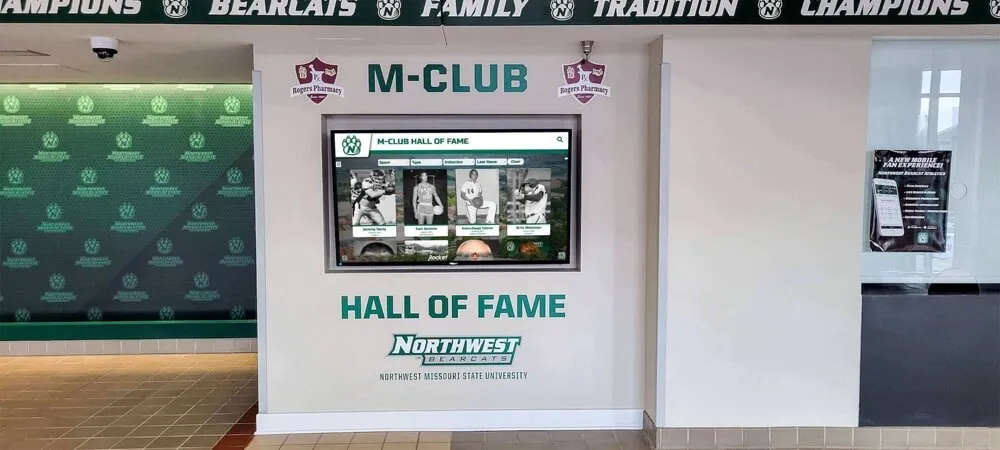
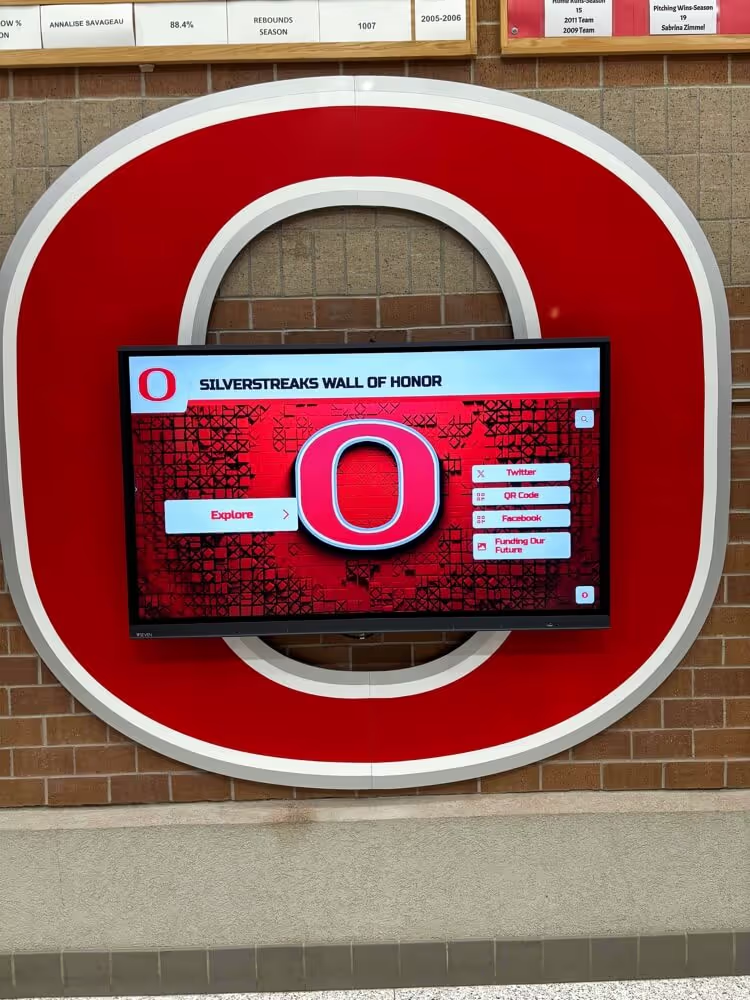
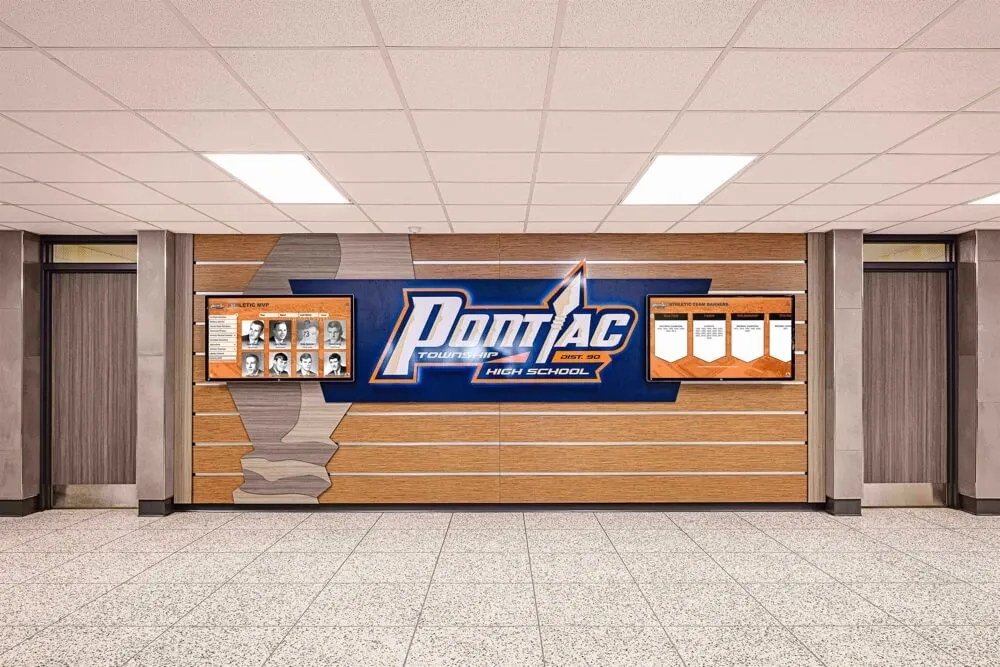
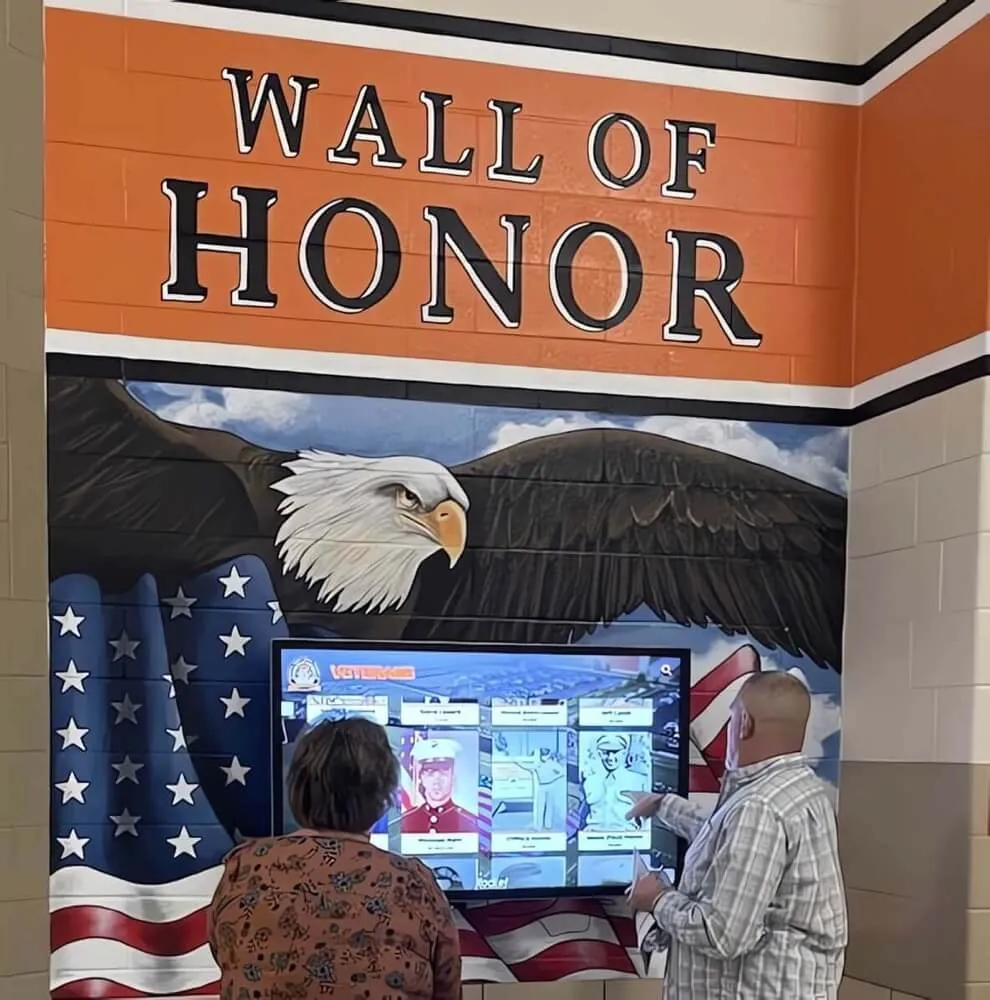
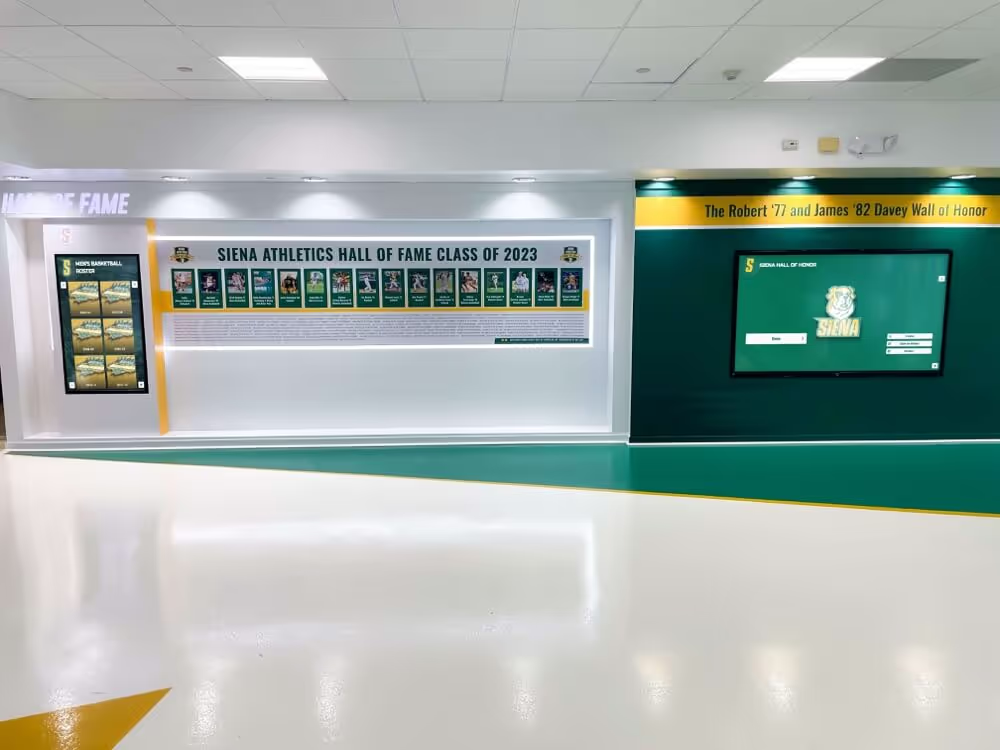
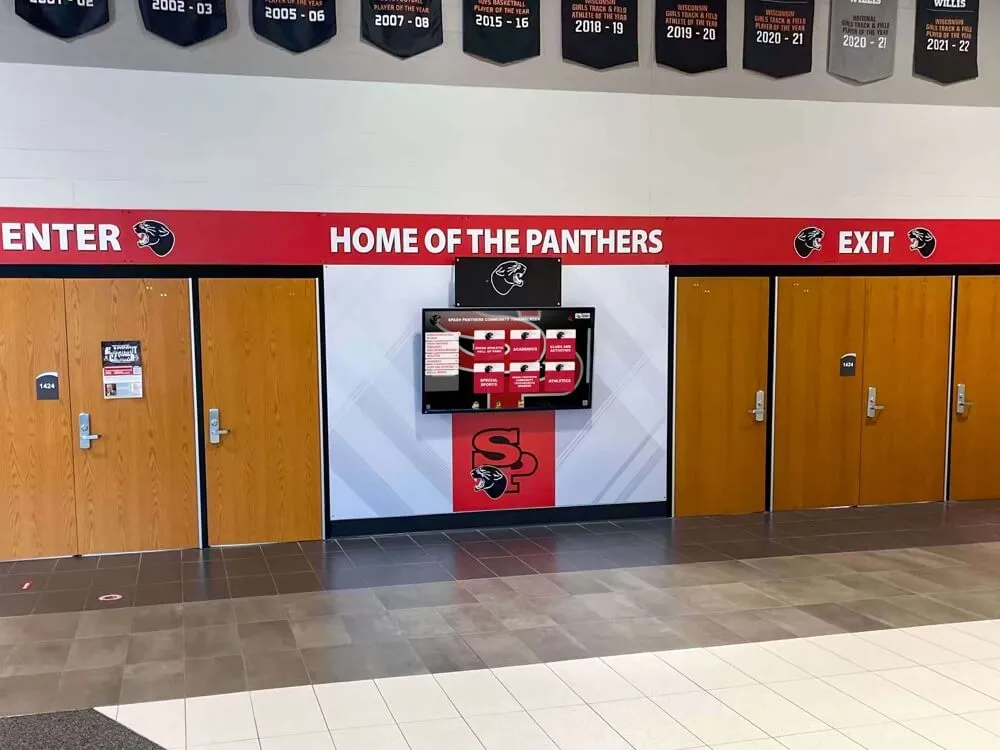
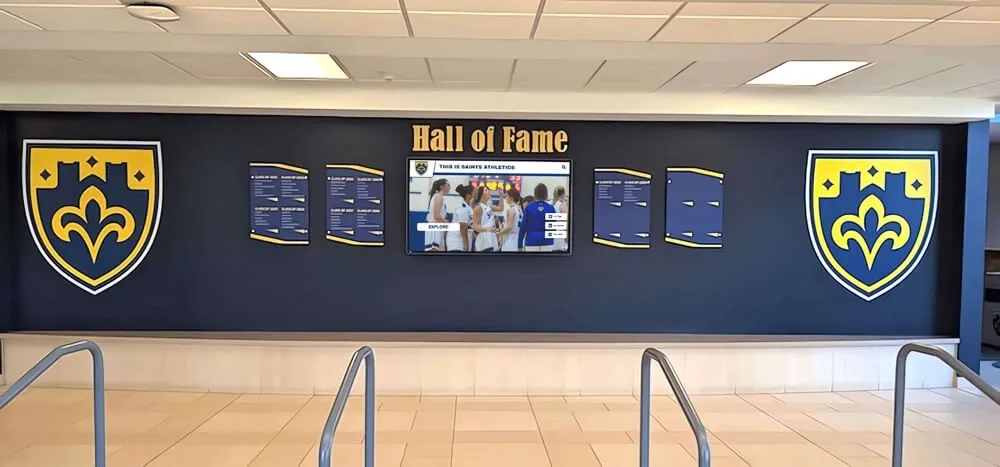
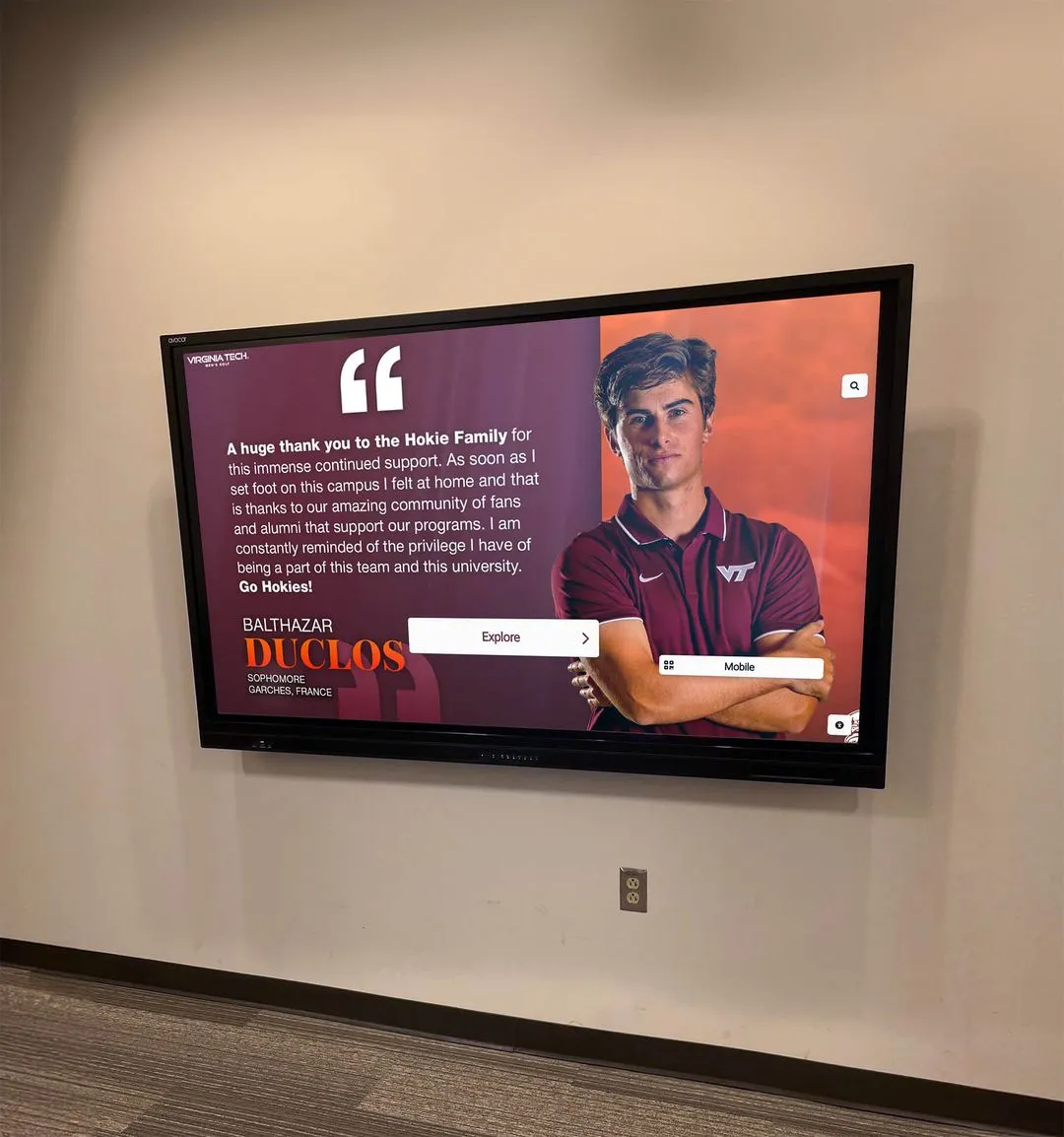
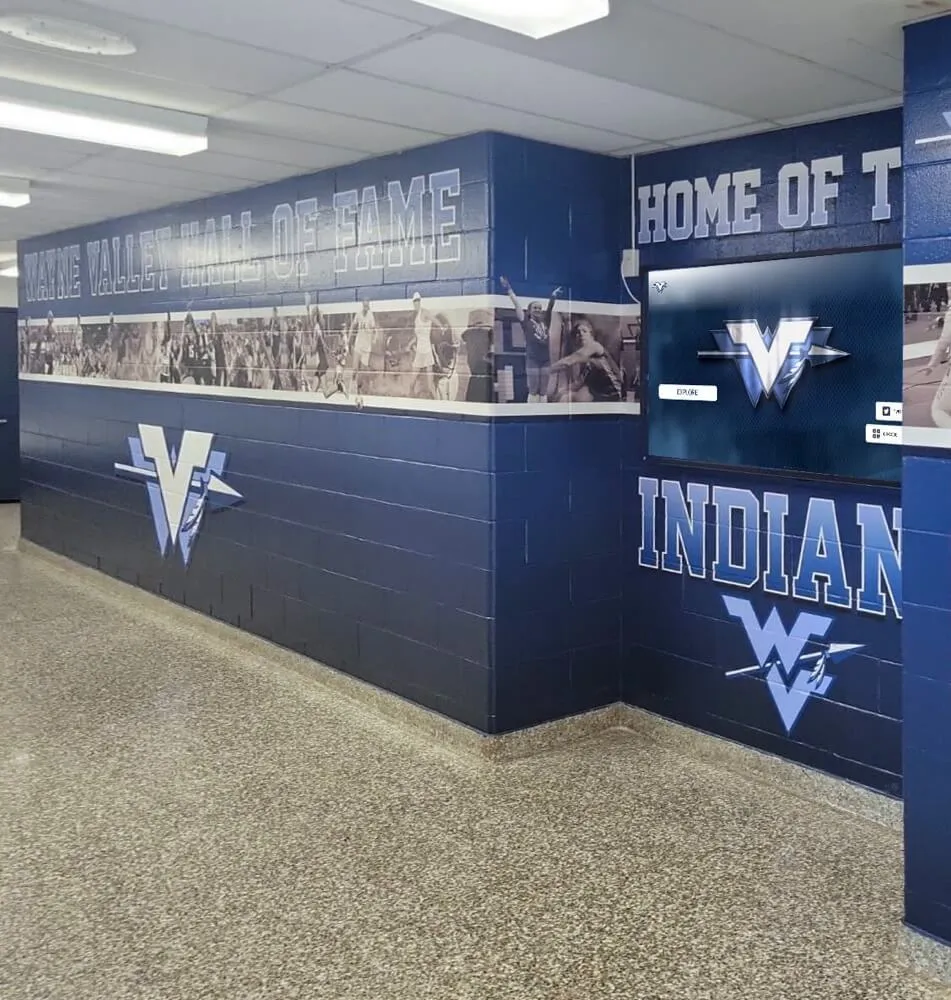
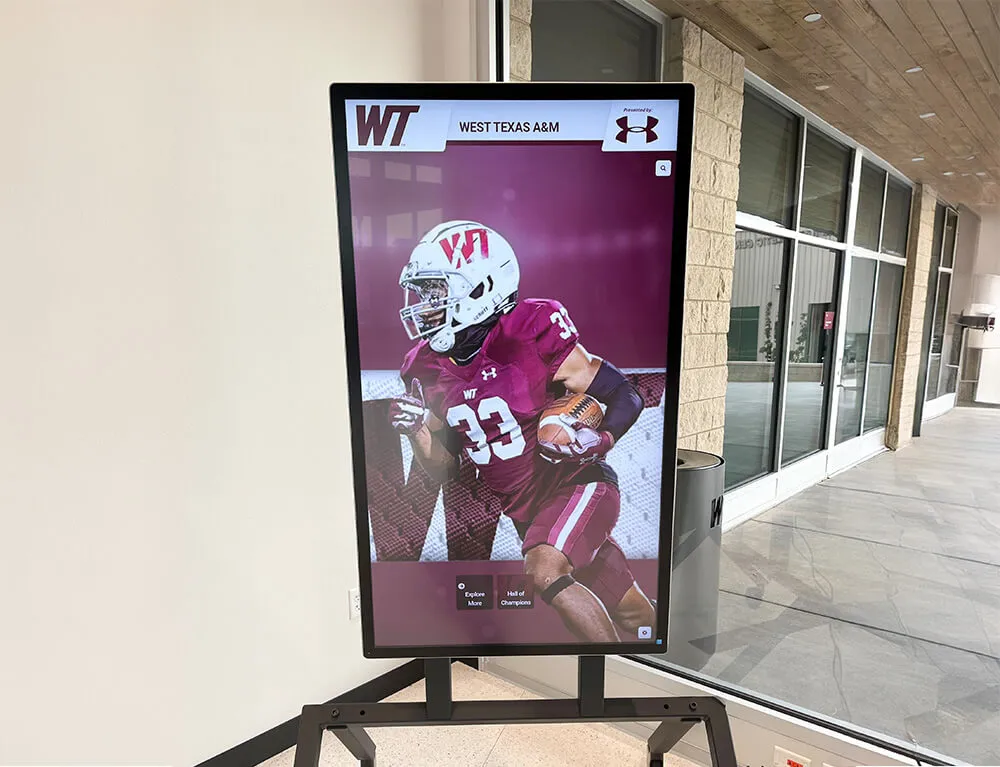
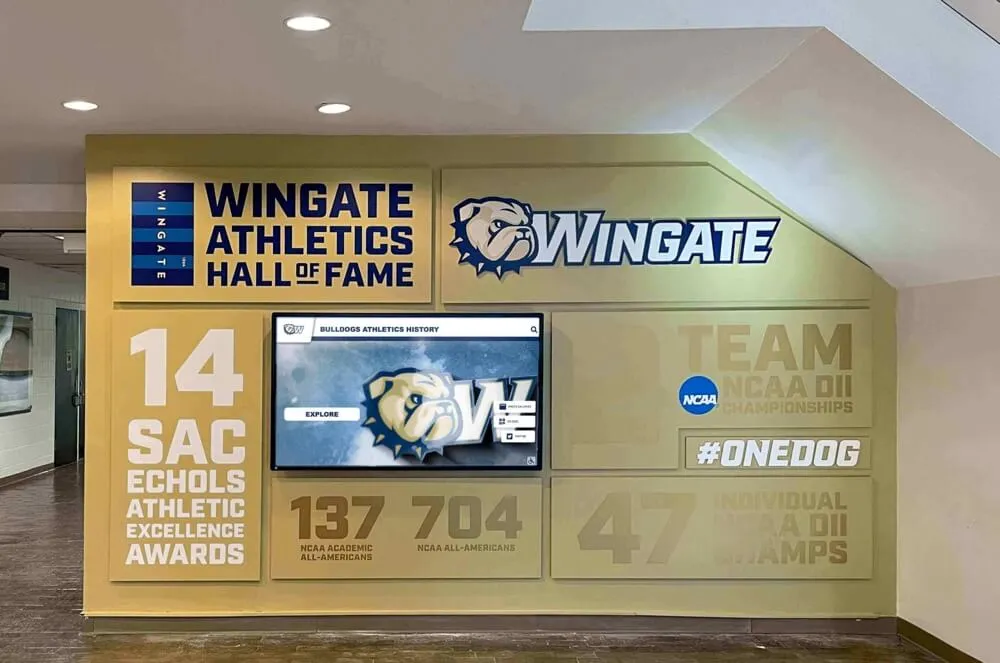
Digital displays integrated alongside physical trophy cases allow schools to surface recognition content without adding weight to case shelves
Connecting Physical Inspection to Your Digital Recognition Record
A trophy case shelf load inspection addresses structural integrity. A digital recognition platform addresses the parallel dimension of preservation — ensuring the historical record survives regardless of what happens to the physical cases.
Schools that maintain digital catalogs of their recognition collections — including high-resolution photographs, achievement descriptions, athlete names, season records, and award histories — protect that history against scenarios that physical trophy cases cannot survive: structural failure, facility renovation, building damage, or the gradual deterioration that even well-maintained cases experience over decades.
Interactive digital trophy case systems surface every championship, every athlete, and every recognition milestone in a searchable, touchscreen format accessible to students, staff, alumni, and visitors. Cloud-managed platforms update in minutes without IT tickets, meet ADA WCAG 2.1 AA accessibility standards, and provide QR codes that extend the display to any mobile device. Museum display professionals applying similar principles to institutional collections describe the same fundamental value: a physical display occupies fixed space, while a digital archive has unlimited capacity for the full depth of an institution’s history.
The practical connection between physical inspection and digital systems works in both directions. When a shelf load inspection triggers content rotation — moving some items to archival storage to reduce case load — a digital catalog ensures those rotated items remain visible in the recognition narrative rather than disappearing from public view. When the inspection reveals capacity constraints that limit future trophy additions, a digital platform eliminates the constraint entirely: every future championship joins the digital display the day it is entered, without competing for shelf space.
Scheduling Your Inspection Cycle
How frequently schools conduct trophy case shelf load inspections depends on case age, use patterns, and the significance of the collection housed in each unit.
Annual inspection is appropriate for most school trophy cases. The start of each academic year — before new trophies are added from the prior year’s championship season — is a practical scheduling point. An inspection at the start of fall semester catches any changes from summer humidity and confirms the case is ready to receive new additions.
Semi-annual inspection is appropriate for cases that are frequently accessed, cases housing particularly heavy or valuable collections, cases in older buildings with less stable environmental conditions, and any case that produced corrective action findings at the prior annual inspection.
Post-event inspection is warranted whenever a significant change occurs: a new large trophy is added, a renovation affects the wall or floor the case is mounted to, a facility experiences water intrusion or a structural event, or a prior inspection finding’s corrective action is completed and should be verified.
Schools that approach alumni events, hall of fame inductions, and recognition ceremonies with structured planning — similar to the planning discipline applied to successful class reunion and alumni event coordination — can integrate trophy case inspection into the standard pre-event checklist, ensuring that any case prominently featured during visiting alumni events is structurally verified before the event.
A well-maintained trophy case inspection record also serves as an asset documentation trail for school facilities audits, insurance reviews, and capital planning processes. Facilities managers who bring documented inspection records to annual budget discussions have a concrete basis for requesting case replacement or renovation when structural findings indicate that lifecycle limits have been reached.
Frequently Asked Questions: Trophy Case Shelf Load Inspection
What is a trophy case shelf load inspection checklist? A trophy case shelf load inspection checklist is a structured form that guides facilities staff and school administrators through a systematic evaluation of every structural component in a trophy case — shelves, brackets, anchors, leveling, and glass — before and after loading with trophies, plaques, and artifacts. It documents findings and assigns corrective actions to ensure cases can safely support their intended contents.
How often should schools inspect trophy case shelves? Annual inspection is the standard recommendation for most school trophy cases. Cases with heavy collections, cases in older buildings, cases that show prior structural issues, or cases accessed frequently should be inspected every six months. Post-renovation or post-event inspections are warranted whenever significant changes occur.
What is a safe shelf load for a school trophy case? Furniture-grade and custom-built trophy cases do not carry standardized published load ratings the way commercial shelving does. Where manufacturer specifications exist, they govern. In their absence, inspectors assess observed deflection, bracket condition, and shelf material as practical indicators of current capacity. Adding weight beyond what a shelf can support without noticeable deflection is the practical upper limit.
Do glass shelves require special inspection attention? Yes. Glass shelves have lower tolerance for uneven load and point-contact stress than solid wood or metal shelves. Inspect glass shelves for chips, cracks, or hairline fractures. Check that rubber or silicone support pads between the glass and the bracket hardware are intact and properly positioned. Do not add new load to a glass shelf showing any visible fracture.
What happens if the inspection reveals the case cannot safely hold its current contents? Remove or redistribute items to reduce load below the observed capacity limit before the next risk event. Document the finding, assign a corrective action to facilities staff, and consider whether a digital recognition platform can absorb the content that cannot be safely displayed physically — preserving the recognition record without requiring physical shelf space.
Can a digital trophy case replace the need for physical shelf inspection? No — physical cases require physical inspection regardless of whether a digital platform is in use. However, a digital recognition platform reduces the dependency on physical cases to hold every award and artifact in the collection, which can meaningfully reduce the load requirements on existing physical cases.
Who should conduct the trophy case shelf inspection? A facilities staff member or athletic director familiar with the case layout should complete the inspection, ideally in consultation with a facilities manager for any findings requiring structural assessment. The inspector should have authority to temporarily clear items from a case if safety concerns are identified during the inspection.
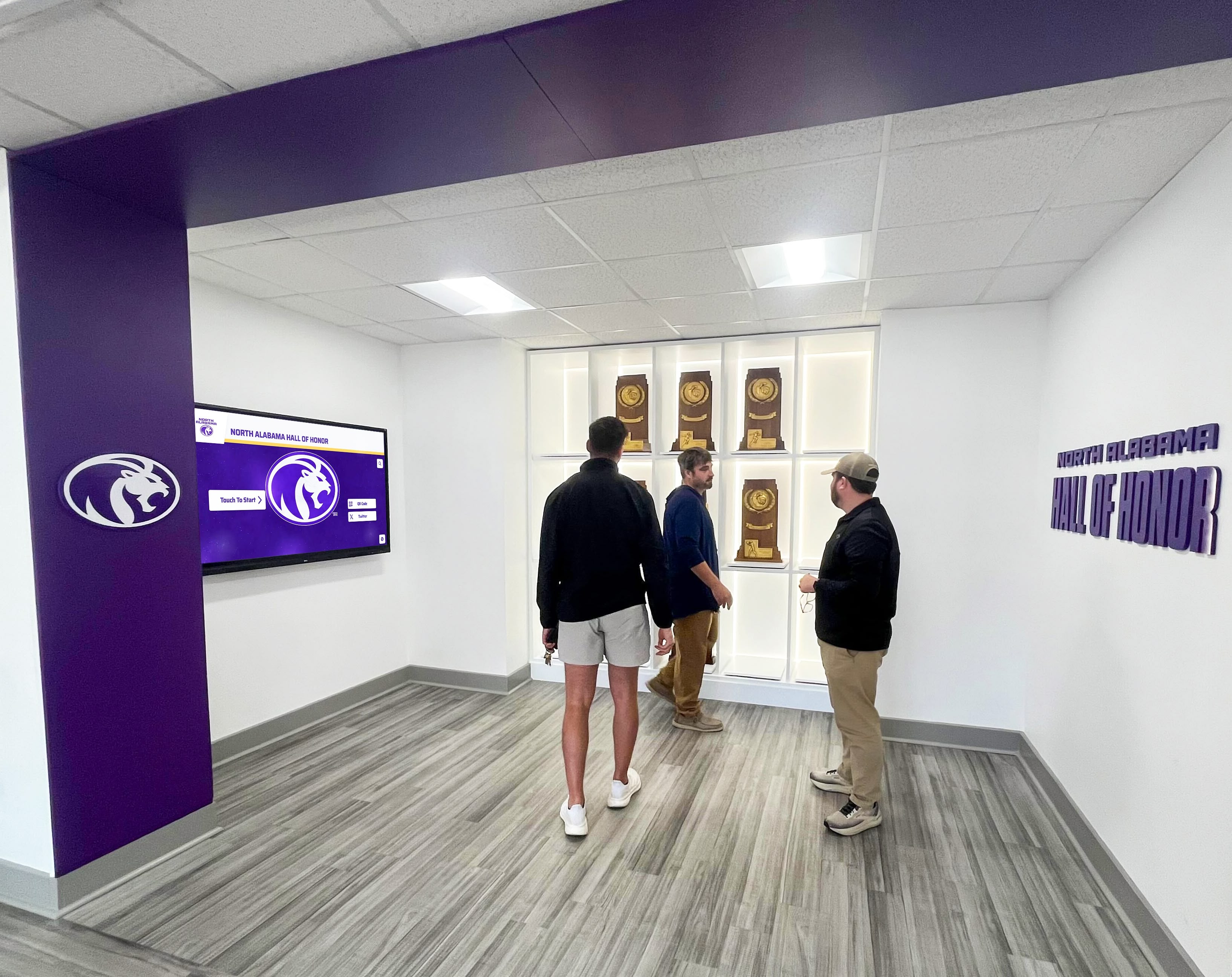
Well-maintained trophy cases — structurally verified and properly loaded — anchor the physical recognition experience alongside digital displays that extend the archive beyond physical constraints
From Shelf Inspection to a Complete Recognition System
A trophy case shelf load inspection checklist closes one risk loop — the structural and safety dimension of physical display management. It does not close the recognition gap that most schools eventually face: a collection that has outgrown the physical space available to display it, with historic artifacts competing for shelf space that has finite load capacity.
The school that conducts a thorough shelf inspection, discovers capacity constraints, and begins rotating items into archival storage is making a responsible decision. The school that pairs that decision with a digital recognition platform — where every rotated championship trophy, every retired jersey, every historic photograph, and every all-time record becomes a permanent searchable entry — turns that constraint into a recognition opportunity.
Employee and community recognition platforms that extend institutional memory beyond physical walls — like the employee recognition systems that surface career milestones and contributions in digital formats — demonstrate how digital platforms transform physical limitations into broader engagement: more history visible to more people, accessible from more locations, without requiring additional shelf space.
A digital trophy case platform built on cloud-managed architecture holds unlimited records, updates remotely without IT intervention, meets WCAG 2.1 AA accessibility standards, and provides QR codes that give alumni and community members access to the complete recognition archive from any device. The physical case remains — inspected, maintained, and purposefully loaded — as the tactile centerpiece of the recognition space. The digital platform ensures the full record extends beyond what any shelf can hold.
Ready to Build a Recognition System That Goes Beyond the Shelf?
Rocket Alumni Solutions builds interactive digital trophy cases and touchscreen walls of fame for schools nationwide. Unlimited record capacity, cloud-managed updates without IT tickets, ADA WCAG 2.1 AA compliant displays, QR code access for remote audiences, and automatic ranking and scheduled publishing — so your complete recognition history stays accessible even when physical case capacity runs out. See how schools are pairing structured display management with a digital platform that preserves every championship permanently.
Book A Demo