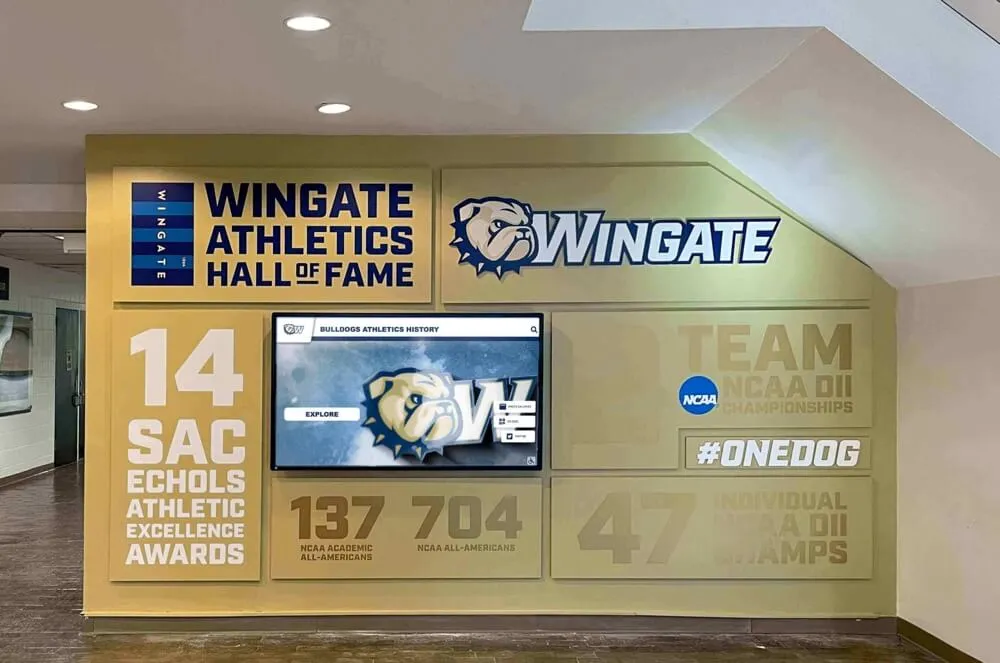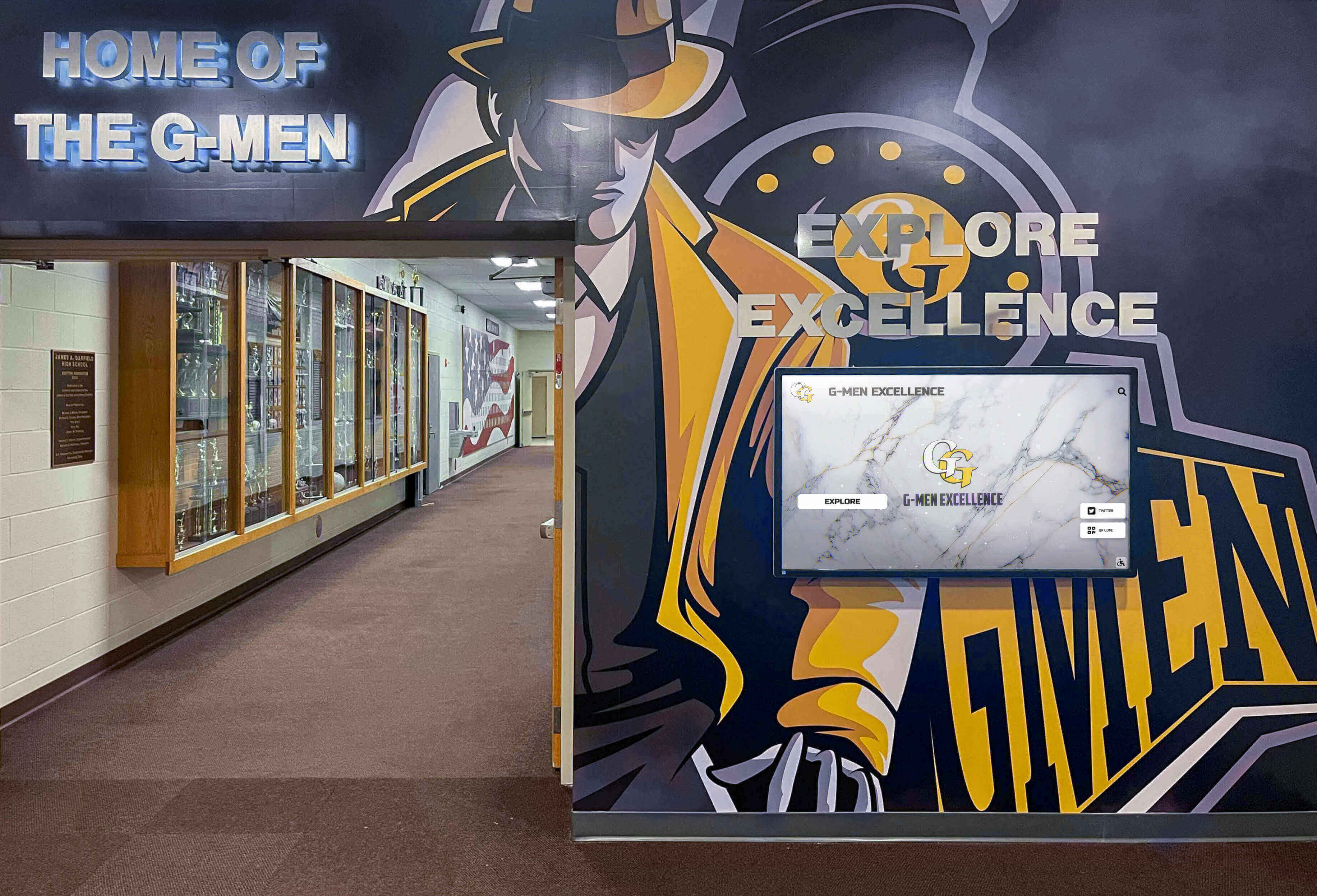




Intent: research — a trophy case seismic anchoring inspection checklist gives school facilities teams and administrators a structured process for documenting cabinet attachment points, wall and floor conditions, fastener integrity, load distribution, lateral clearance, and professional follow-up requirements around school awards and memorabilia displays. This guide delivers a numbered checklist organized by inspection category, a responsibility table, a common-deficiency reference, and guidance on how digital recognition displays reduce the seismic risk profile of trophy display areas. Nothing in this article constitutes structural engineering or legal advice — always engage a licensed structural engineer or qualified seismic specialist for assessments specific to your facility and jurisdiction.
A trophy case in a school lobby or athletic hallway is more than a display of institutional pride. It is heavy furniture — often constructed of glass, steel, and solid wood — anchored to walls or floors in a building that serves hundreds of students, staff, and visitors every day. In regions with seismic activity, and increasingly under the broader practice of preventive facilities maintenance everywhere, the anchoring system that holds a trophy case in place is a genuine life-safety consideration.
Seismic ground motion — even at moderate intensities — subjects freestanding and wall-mounted display cases to lateral forces they were not designed to handle without adequate anchorage. An unanchored or improperly anchored trophy case in a school corridor is a tipping and falling hazard that can cause serious injury during an event and obstruct emergency egress in the immediate aftermath. A documented seismic anchoring inspection is the tool facilities professionals use to identify this risk before it becomes a post-event report.
This checklist gives facilities staff and school administrators a framework for conducting a proactive internal review, assigning clear ownership, documenting findings, and escalating items that require licensed professional assessment.

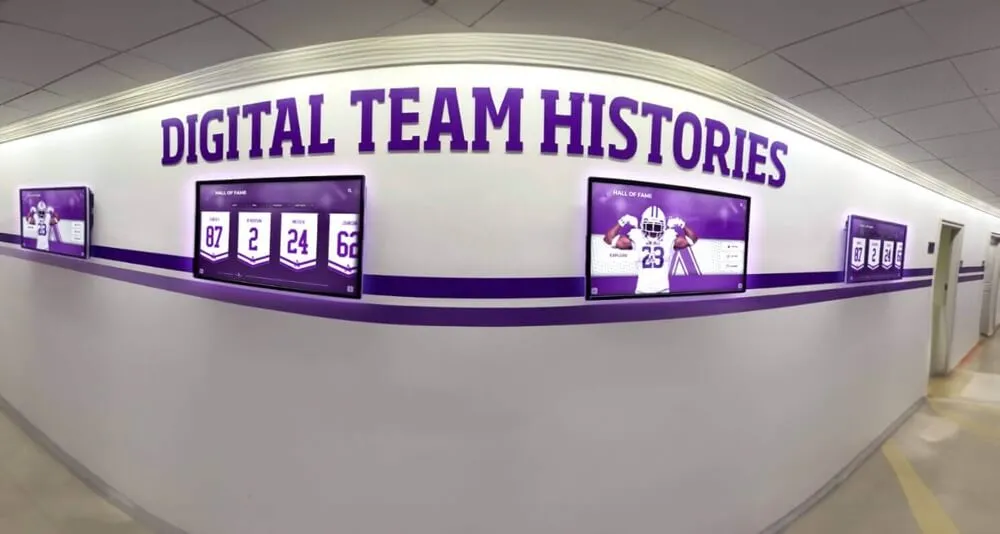
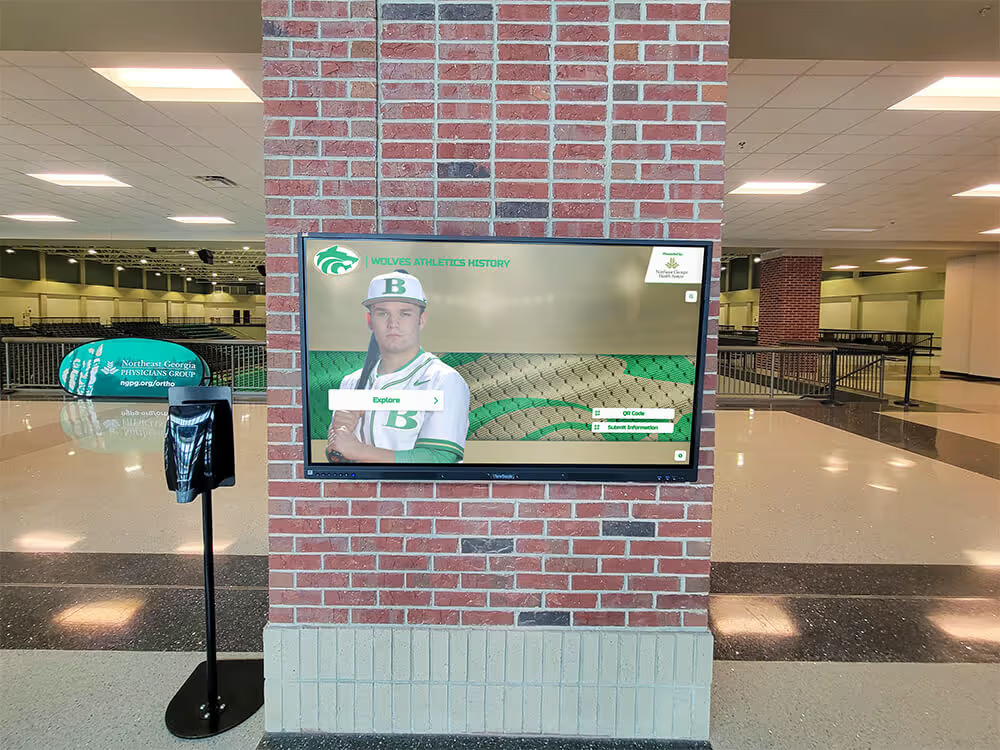
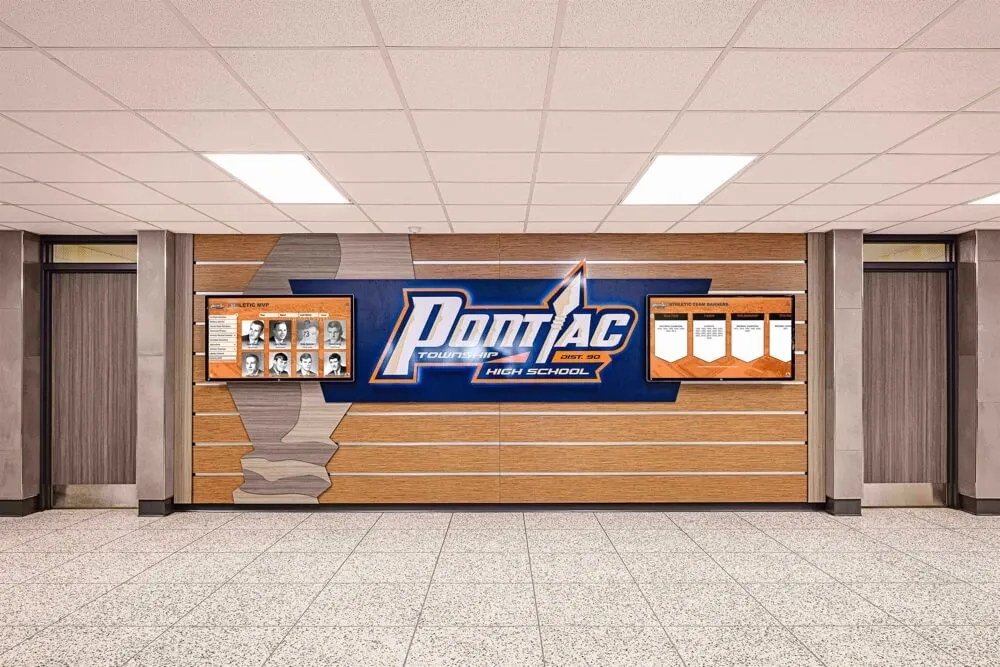
Trophy cases in school corridors carry a seismic risk profile that depends on their anchoring to structural elements — a proactive inspection documents current conditions and surfaces issues before they become incidents
How to Use This Checklist
This checklist is organized into six inspection categories. Work through each category sequentially during a scheduled facilities walk-through. Assign a specific staff member or team to each category, or conduct the review as a joint walk-through with facilities, athletic department, and administration representation.
For each item, record the finding as Pass, Needs Attention, or Escalate (requiring a licensed professional or engineering review). Log the date, reviewer name, and any corrective action planned or completed. Retain all records for a minimum of three years, or as required by your district record-retention policy — whichever is longer.
Important: This checklist supports internal documentation and does not substitute for a formal structural assessment conducted by a licensed engineer or a seismic mitigation specialist. Use it to establish a baseline record, identify obvious deficiencies, and determine which items warrant professional follow-up.
Category 1: Cabinet and Case Structure
Before evaluating anchoring, assess the structural integrity of the case itself. A case with a compromised frame, warped structure, or damaged glass does not provide a reliable anchoring platform regardless of the quality of fasteners installed.
Checklist — Cabinet Structure:
- The case is clearly identified as either freestanding (floor-supported) or wall-mounted — the category is documented for inspection purposes
- The case stands plumb (vertically level) with no visible forward tilt, lateral lean, or rocking when moderate hand pressure is applied to the frame
- The case frame shows no visible warping, cracking, splitting, or corrosion that would compromise the structural integrity of mounting points
- Glass panels are intact — no stress fractures, edge chips, or visible cracking in any panel
- All door hinges are fully functional and doors close squarely within their frames — misaligned doors can indicate frame distortion
- All door locks and latches engage fully and hold without play
- Decorative trim, molding, and base covers are secured — loose trim can become a projectile hazard under lateral movement
- If the case has adjustable shelving, shelf brackets are fully seated and shelves are level — improperly seated brackets are a failure point under vertical load
Structural note: A trophy case frame that shows signs of distortion — doors that no longer close squarely, a case that rocks on its base, or visible bowing of the side panels — should be flagged for structural assessment before re-anchoring. Anchoring a compromised case frame does not correct the underlying structural problem.
Category 2: Wall and Floor Attachment Points
The attachment interface between the case and the building structure is the core of any seismic anchoring inspection. Fasteners that are not engaged with structural framing, masonry, or concrete — regardless of their size — provide minimal resistance to lateral loading.
Checklist — Attachment Points:
- All wall anchor points are visible and accessible for inspection — anchor locations are not concealed by finish materials added after original installation
- For wall-mounted cases: lag screws or anchor bolts are driven into structural framing members (wall studs, concrete block, masonry, or concrete) — not drywall or hollow wall cavities alone
- Stud or structural member locations at anchor points are verified through stud-finder assessment or original installation documentation; anchor alignment with structural framing is confirmed
- For floor-mounted cases: floor anchor bolts pass through the case base plate into structural concrete, concrete block, or wood framing — not into a floating floor finish layer alone
- The wall surface at each mounting point shows no cracking, spalling, delamination, or water intrusion damage that would compromise anchor holding strength
- The floor surface beneath base plates of floor-mounted cases is intact — no soft spots, delamination, or damage beneath the footprint of the case
- Anti-tip straps or top-of-case anchors are present on freestanding cases where the manufacturer’s specifications or local code require them — absence of top anchoring on tall freestanding cases is a common deficiency
- Cases installed adjacently share no common anchoring hardware — each case is independently anchored with its own fasteners
Context: Many school trophy cases were originally installed without seismic anchoring as a primary design consideration. A case purchased and installed two or three decades ago may have anchors that satisfy furniture-stability standards but not lateral-force anchoring requirements under current guidelines. Documenting the original installation year and the basis for the anchoring design is a useful step when escalating cases for professional review.
Category 3: Fastener Condition and Adequacy
The condition of individual fasteners affects holding strength even when their location is correct. Corroded, undersized, or improperly installed fasteners can fail at lower loads than their nominal ratings suggest.
Checklist — Fastener Condition:
- All visible fasteners (lag screws, anchor bolts, through-bolts, expansion anchors) are free of rust, corrosion, or visible damage — surface rust on fastener heads that are otherwise solid is lower risk than fasteners with corrosion extending into the shank
- No fasteners are visibly loose — a fastener that turns or spins without resistance when moderate torque is applied by hand has lost holding engagement
- Fastener head types are appropriate for the substrate: lag screws are used in wood framing; expansion anchors or wedge anchors are used in concrete or masonry
- No evidence of informal repair or improvised anchoring is present — examples include drywall anchors used in lieu of structural fasteners, wire or strap added after original installation, or cases that have been repositioned and re-anchored without documentation
- Fastener quantities appear consistent with the case size and weight — a large floor-to-ceiling case anchored by two small lag screws at the top alone is likely undersized for lateral loading
- Where installation documentation or manufacturer specifications are available, fastener sizes and locations are consistent with those specifications
- Cases flagged in any previous inspection for fastener concerns have documented corrective actions — no open fastener deficiencies remain unresolved from prior reviews
Professional referral guidance: Fastener adequacy for seismic loading is an engineering determination that internal inspection staff are generally not qualified to make. Use this checklist to document observed conditions and escalate any cases where fastener quantity, size, or substrate engagement is uncertain to a licensed structural engineer or certified seismic mitigation specialist for assessment.
Category 4: Load Path and Content Weight Distribution
How a trophy case is loaded — what items are placed where, at what heights, and in what quantities — directly affects the lateral stability of the case and the forces its anchoring system must resist during ground motion. A well-anchored case loaded with all heavy items on the top shelf presents a higher tipping risk than the same case with weight distributed low.
Checklist — Load Path:
- Heavy items — large metal trophies, stone or metal plaques, framed athletic hardware — are positioned on the lowest accessible shelf level rather than the top shelf
- Top-heavy items (tall trophies with narrow bases, awards on tall pedestals) are restrained against lateral movement — rubber non-slip pads, display putty, or soft restraints prevent individual items from sliding or toppling
- No single shelf is noticeably overloaded relative to others — weight is distributed across available shelving rather than concentrated in one area
- Oversize items that exceed standard shelf capacity are supported on dedicated reinforced supports rather than standard bracket-mounted shelving hardware
- The combined weight of items displayed in the case has not increased significantly since original installation — cases retrofitted over years with progressively heavier memorabilia may exceed their original load design
- A visual estimate of case contents can be completed — if contents are too dense to allow a basic visual review, the case is overcrowded and warrants a formal assessment
- Any items added since the last inspection have been assessed for weight impact on existing anchoring and load distribution
Schools reviewing how trophy displays are organized — including height-based placement decisions — will find the guide to trophy shelf ideas and display organization useful for thinking about both aesthetic presentation and practical weight distribution within a cabinet.
Category 5: Seismic Clearance and Lateral Movement Risk
Even a well-anchored case can cause secondary hazards if it is positioned in a way that makes lateral movement — or anchor failure — more dangerous. This category addresses the spatial context of the case within the building.
Checklist — Lateral Clearance:
- Freestanding cases have adequate clearance from adjacent walls, furniture, and other cases to allow for minor lateral movement without immediate secondary impact — cases packed tightly into a row with no separation are a collision chain risk
- Cases are positioned away from primary exit door swing paths — a case that displaces laterally into a door’s swing arc could block emergency egress
- The area directly above each freestanding case is clear — no overhead light fixtures, ceiling-mounted signage, or structural elements would be struck if the case tilted or the top displaced laterally
- Cases are not positioned over mechanical access points (HVAC grilles, floor drains, utility access panels) that would be blocked in the event of case displacement
- The corridor width alongside trophy case installations remains compliant with applicable egress clearance requirements even after accounting for potential lateral displacement — verify with your facilities director for jurisdiction-specific requirements
- Cases positioned in gymnasium lobbies, main entrance foyers, or athletic hallways are not in locations where they would become the first object encountered by occupants evacuating at speed
- The seismic zone classification for the facility’s geographic location has been identified and documented — anchoring adequacy should be evaluated against the applicable seismic design category, not assumed from generic practice
Seismic zone note: The United States Geological Survey (USGS) publishes seismic hazard maps by geographic location. Schools in the western United States, the New Madrid Seismic Zone in the central United States, Alaska, Hawaii, and other seismically active regions operate under higher design requirements than schools in low-activity areas. An anchoring system that is adequate for a low-seismic zone may be insufficient for a high-seismic zone facility. Your state’s building code and your local authority having jurisdiction (AHJ) apply the specific design categories relevant to your location.
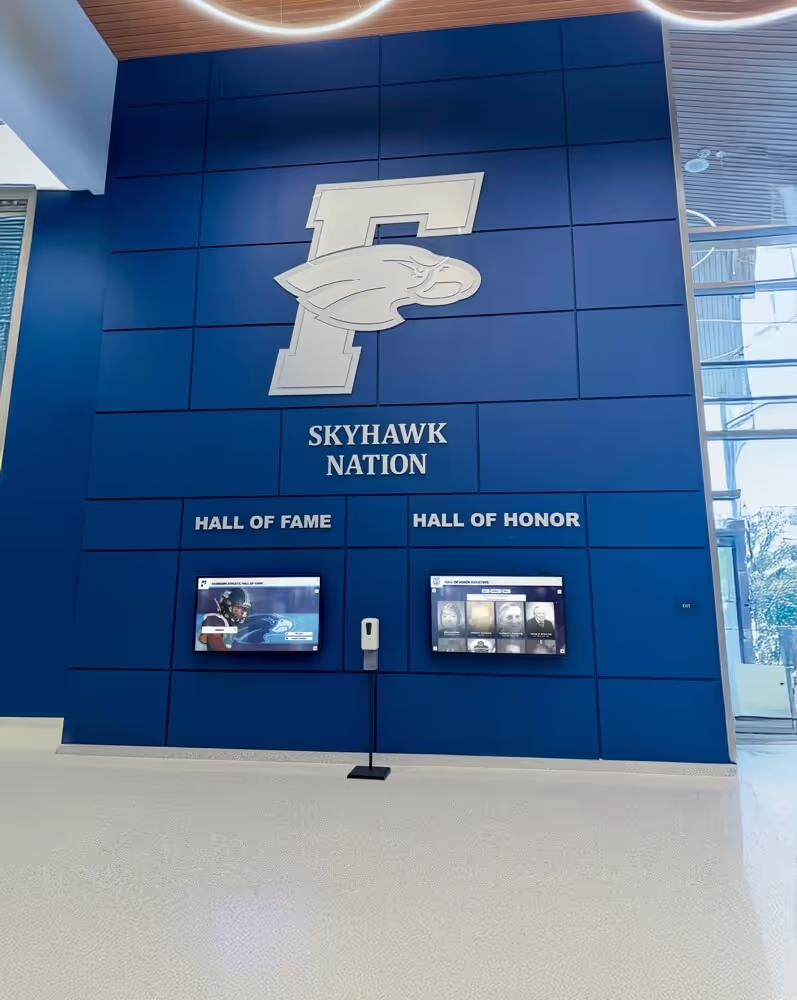
Athletic recognition areas — including hallways and lobbies with large trophy case installations — benefit from seismic clearance planning that integrates with the broader design of the recognition space. For schools thinking through how athletic display areas are arranged from a facilities and safety standpoint, the guide to athletic locker room signage and recognition space design provides context on how recognition spaces can be planned with both aesthetics and safety clearances in mind.
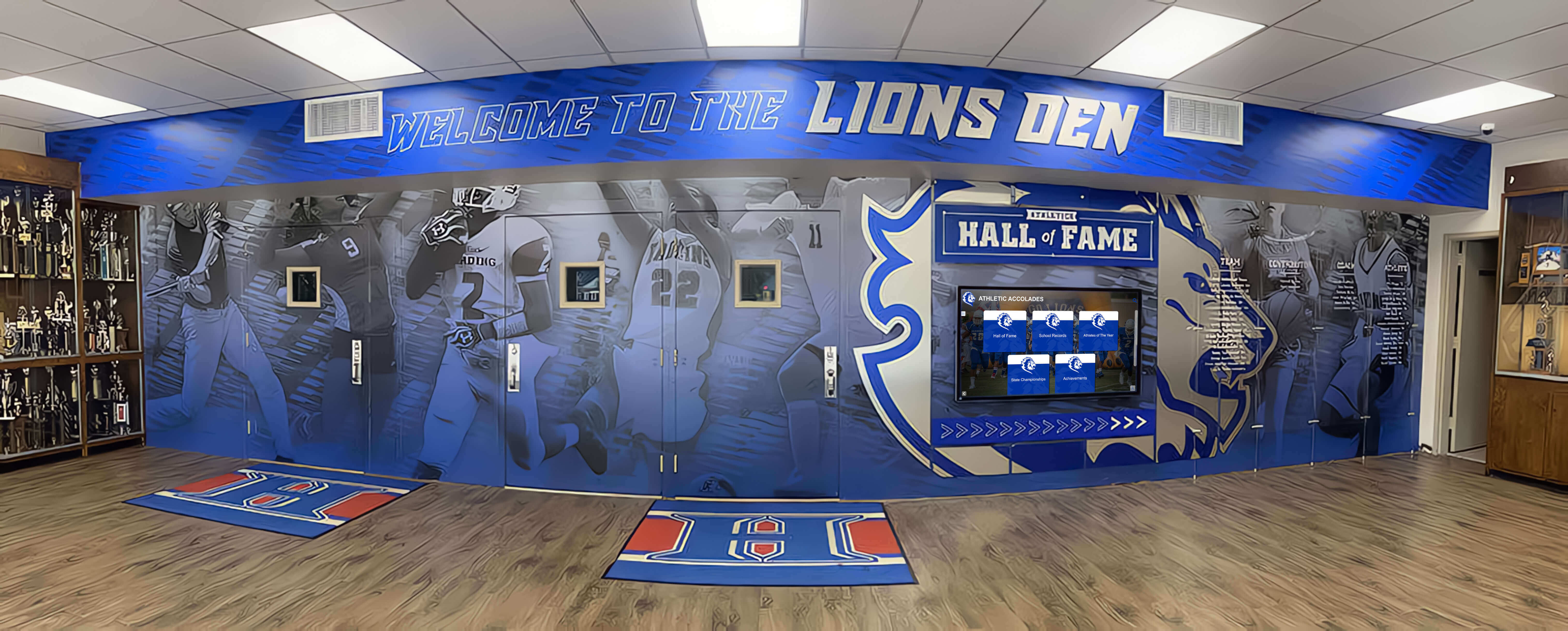
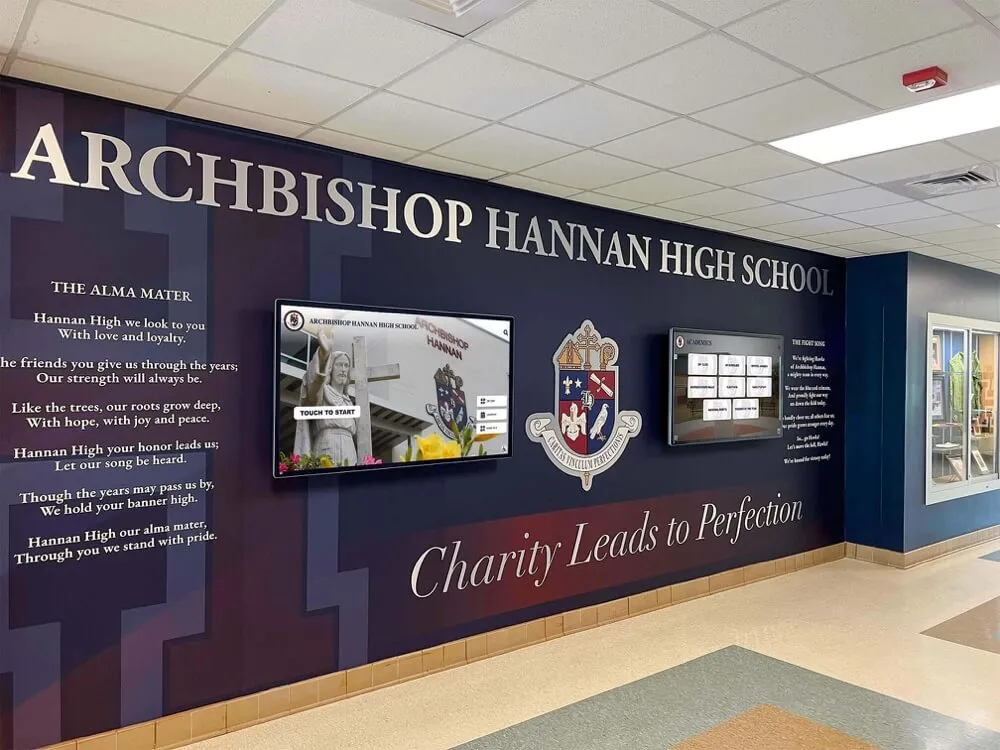
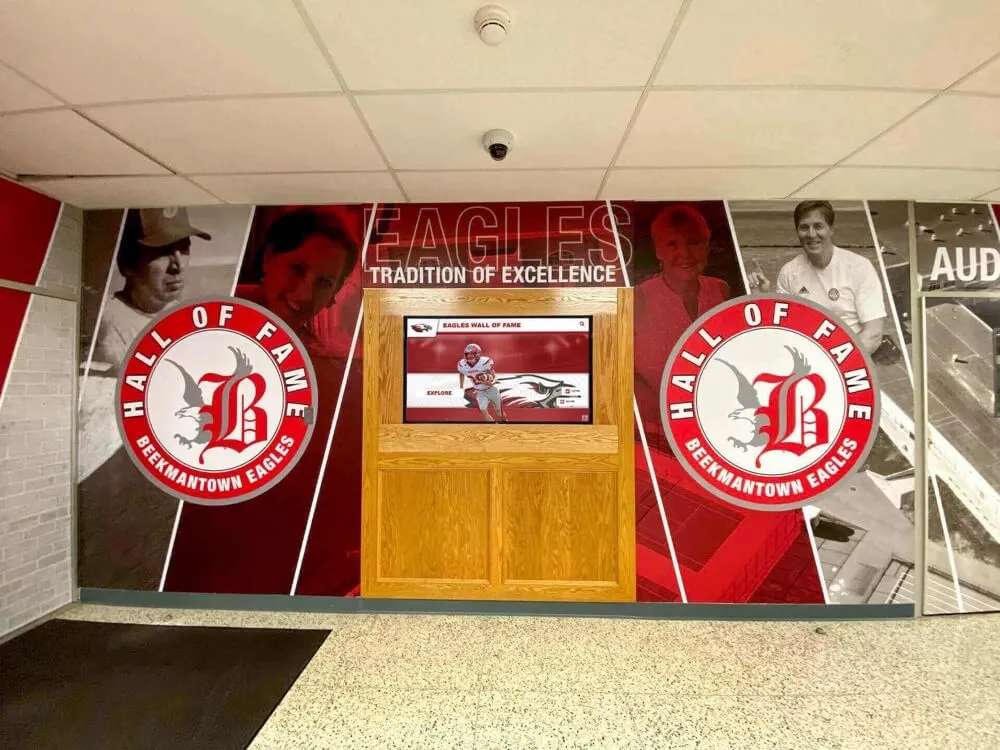
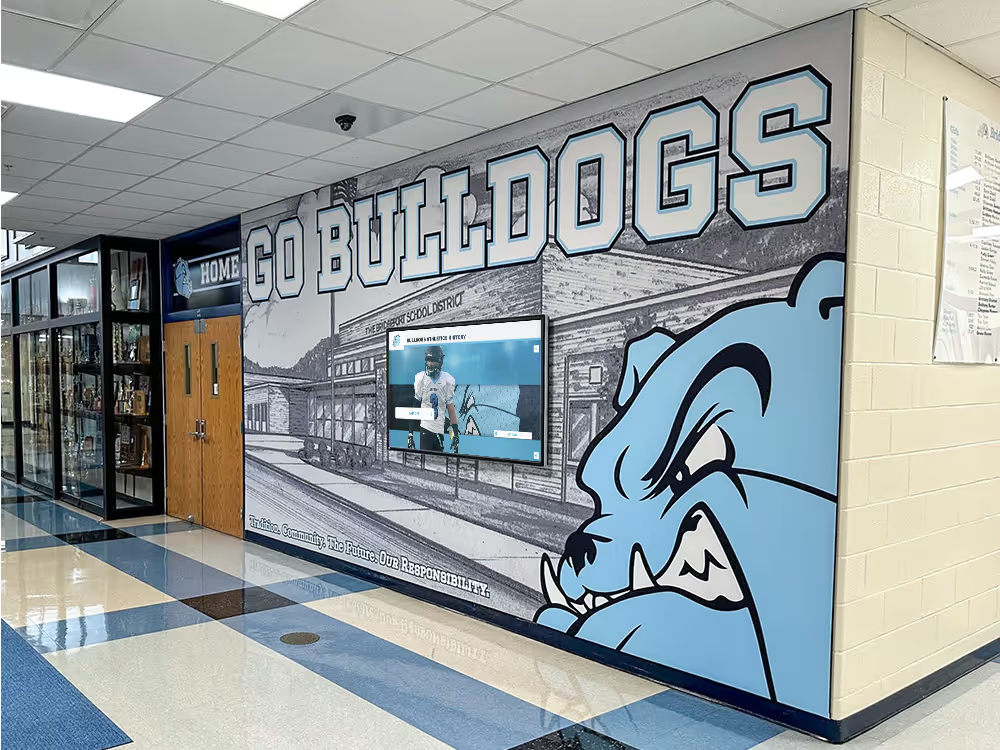
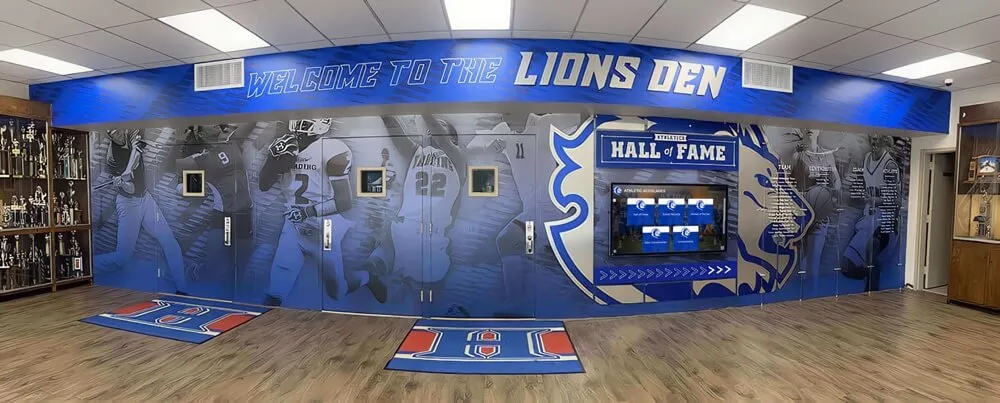
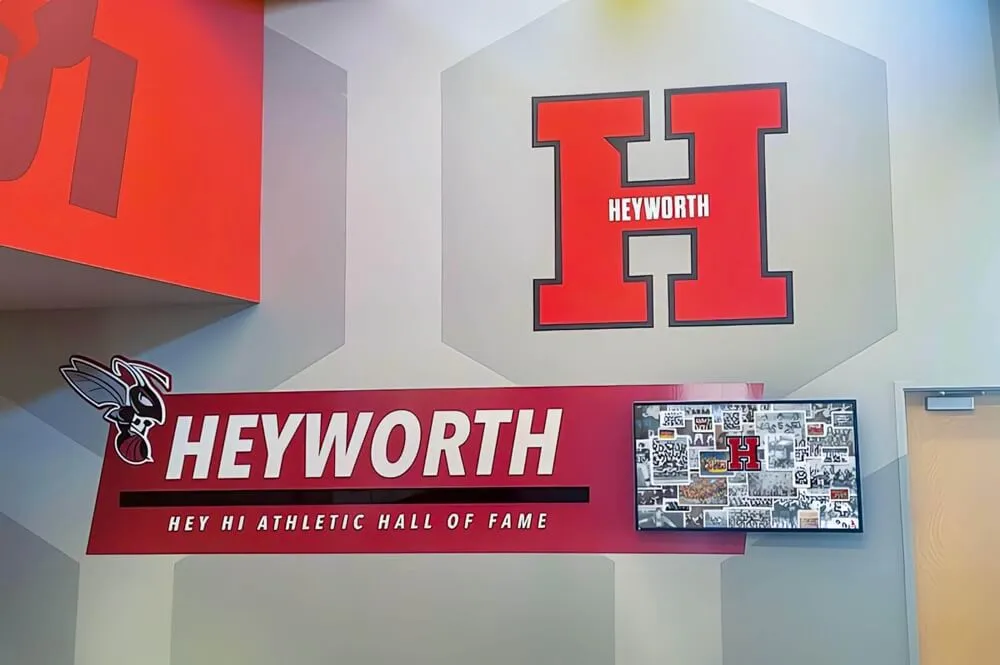
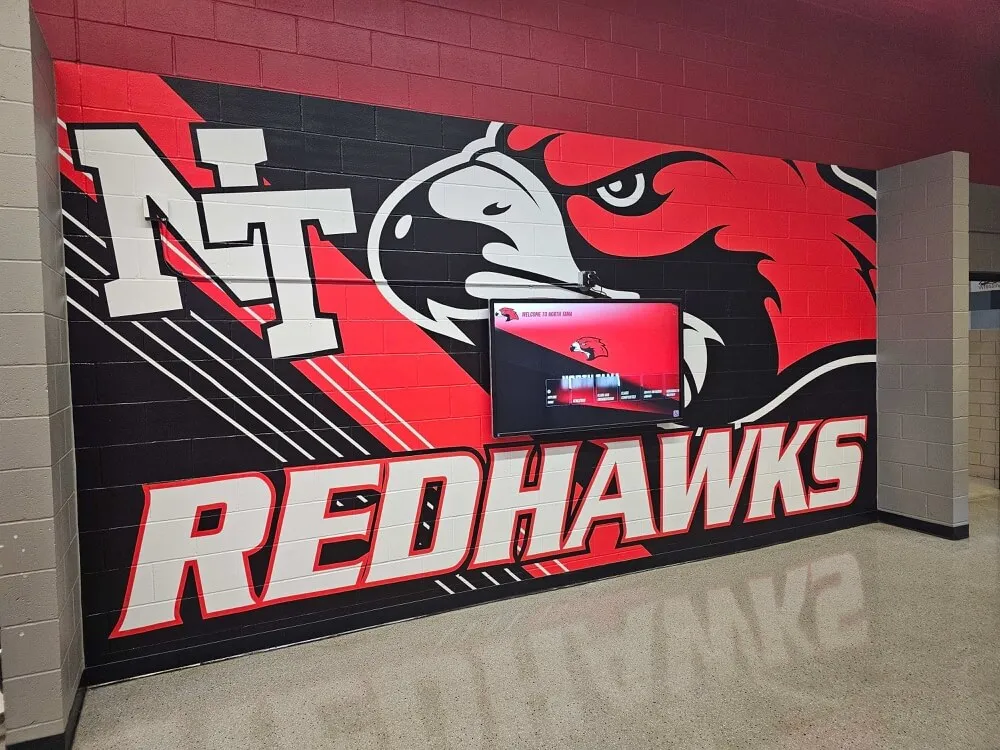
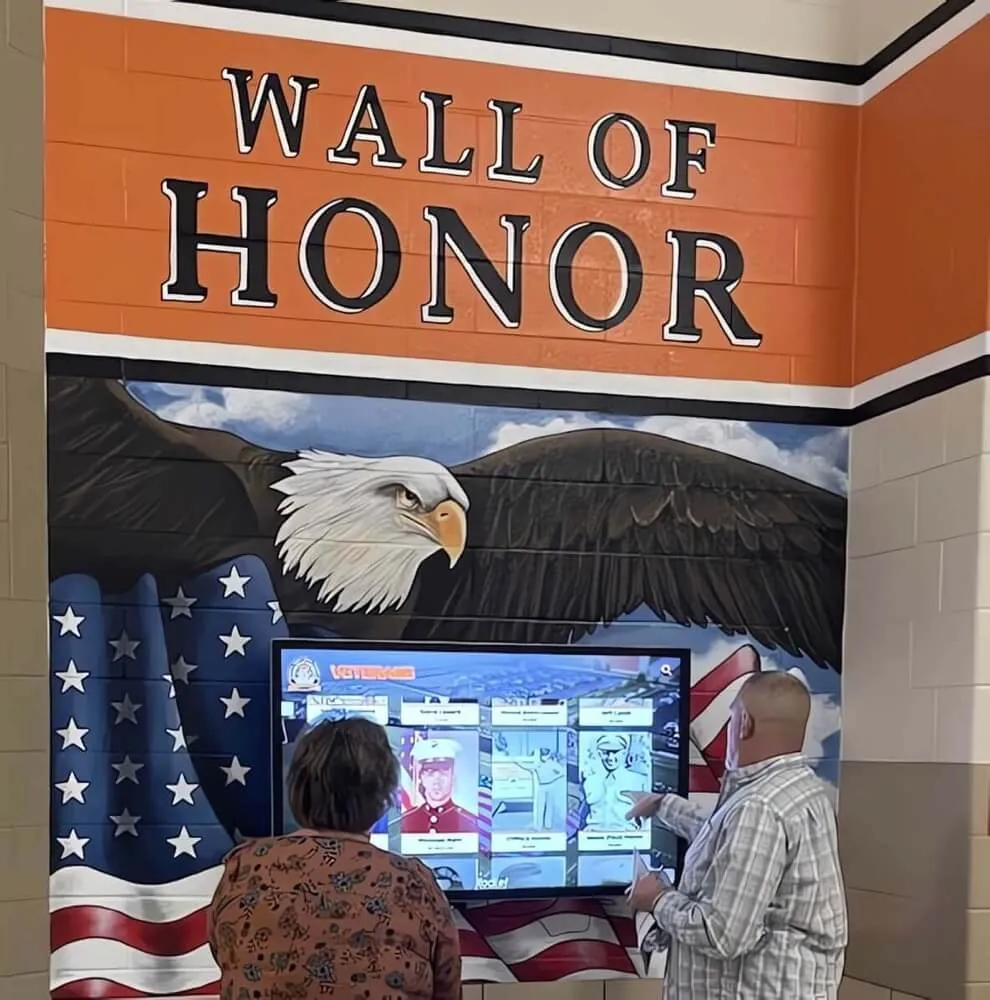
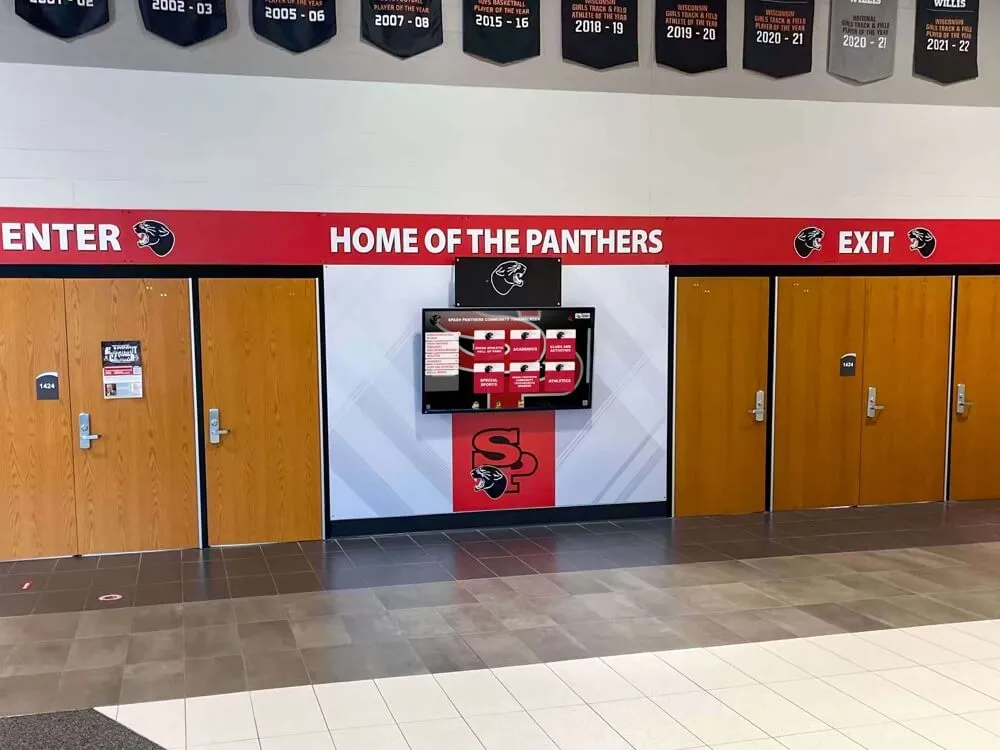
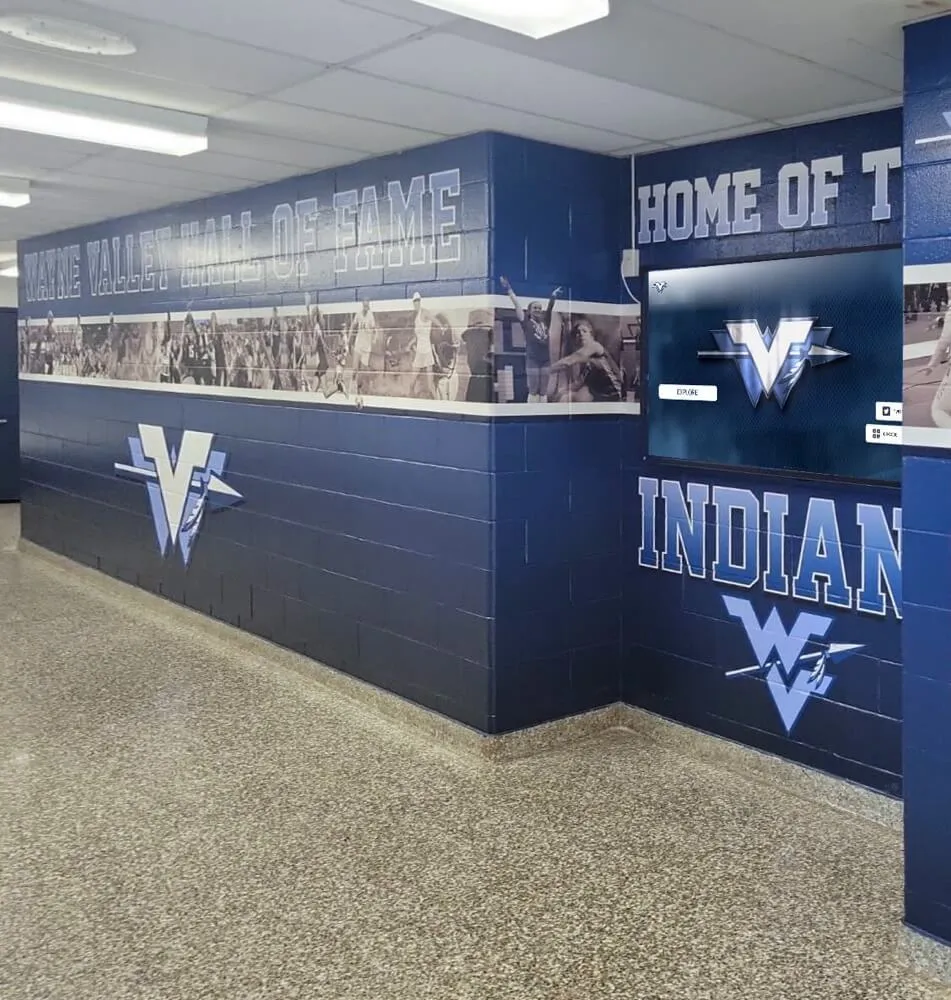
Corridor recognition installations that mix murals, digital screens, and physical trophy cases benefit from a seismic clearance review that addresses each freestanding element separately
Category 6: Documentation and Professional Follow-Up
An internal seismic anchoring inspection is only defensible if it generates and retains adequate records. This category addresses the documentation practices that support professional follow-up and demonstrate ongoing compliance awareness.
Checklist — Documentation:
- A written log of all previous trophy case anchoring inspections is retained and accessible — the log identifies the date, reviewer, scope, and findings of each prior review
- Corrective actions identified in previous reviews have a documented completion date — items that remain open from prior reviews are not listed without explanation
- Original installation specifications, permits, and manufacturer anchoring recommendations are on file — or the absence of this documentation is itself documented and the need for as-built assessment noted
- Any cases that received professional engineering assessment have the assessment report retained in facility records
- Cases flagged as Escalate in any inspection category have a documented escalation path — a named contact (licensed structural engineer, seismic mitigation contractor, or facilities director) and a timeline for engagement
- Staff responsible for trophy case management have been informed of any cases with open seismic deficiencies and the interim risk-management measures in effect pending professional resolution
- The inspection record is complete enough that a new facilities director or administrator could reconstruct the maintenance history of each case without relying on institutional memory
Responsibility Table: Who Owns Each Category
| Inspection Category | Primary Responsibility | Secondary / Review | Escalation Path |
|---|---|---|---|
| Cabinet Structure | Facilities Staff | Athletic Director | Facilities Director / Structural Engineer |
| Attachment Points | Facilities Director | Maintenance Staff | Licensed Structural Engineer |
| Fastener Condition | Facilities Director | Maintenance Staff | Licensed Structural Engineer / Seismic Contractor |
| Load Path and Contents | Athletic Director | Facilities Staff | Facilities Director |
| Seismic Clearance | Facilities Director | Athletic Director | Structural Engineer / AHJ |
| Documentation | School Administrator | Facilities Director | District Compliance Officer |
Post this responsibility table in the athletic office alongside the checklist. When a facilities director or athletic director transitions, the ownership structure should transfer explicitly in writing — seismic anchoring knowledge cannot depend on a single person’s institutional memory.
Common Deficiencies Found During Trophy Case Seismic Anchoring Inspections
| Deficiency | Category | Typical Correction | Priority |
|---|---|---|---|
| Freestanding case with no wall or floor anchors | Attachment Points | Install manufacturer-specified anchors to structural framing; engage facilities professional | High |
| Anti-tip strap missing on tall freestanding case | Attachment Points | Install anti-tip strap to structural stud per case manufacturer specification | High |
| Wall anchors installed in drywall only, not framing | Attachment Points | Relocate anchors to structural framing; consult licensed installer | High |
| Case positioned in exit door swing path | Seismic Clearance | Relocate case to clear emergency egress arc; document AHJ review if relocation requires corridor adjustment | High |
| Heavy trophies on top shelf with no top anchoring | Load Path | Redistribute weight; move heavy items to bottom shelves; install individual item restraints | High |
| Fasteners visibly corroded or loose | Fastener Condition | Replace corroded fasteners; retorque loose hardware; assess substrate damage | High |
| Cases packed with no lateral clearance between units | Seismic Clearance | Separate cases or assess row anchoring as a system; consult structural engineer | Medium |
| No documentation of original installation anchoring | Documentation | Commission as-built assessment; document existing conditions | Medium |
| Previous inspection deficiency still open with no corrective action | Documentation | Escalate to administrator; establish corrective timeline | Medium |
| Top-heavy display items unsecured against lateral movement | Load Path | Install non-slip pads or display restraints on individual items | Medium |
| No seismic zone classification documented for the facility | Seismic Clearance | Identify applicable seismic design category; note in inspection record | Medium |
| Case installed against wall with no anchor documentation | Attachment Points | Inspect for existing anchors; if none, assess and install; document findings | Medium |
How Digital Trophy Case Displays Change the Seismic Profile
Physical trophy cases present seismic anchoring challenges that are structural to how they work: large glass-and-steel enclosures filled with heavy items, mounted in high-traffic corridors, with anchoring systems that vary in quality from installation to installation. A thorough inspection routine documents these conditions — but does not change the underlying physical risk profile.
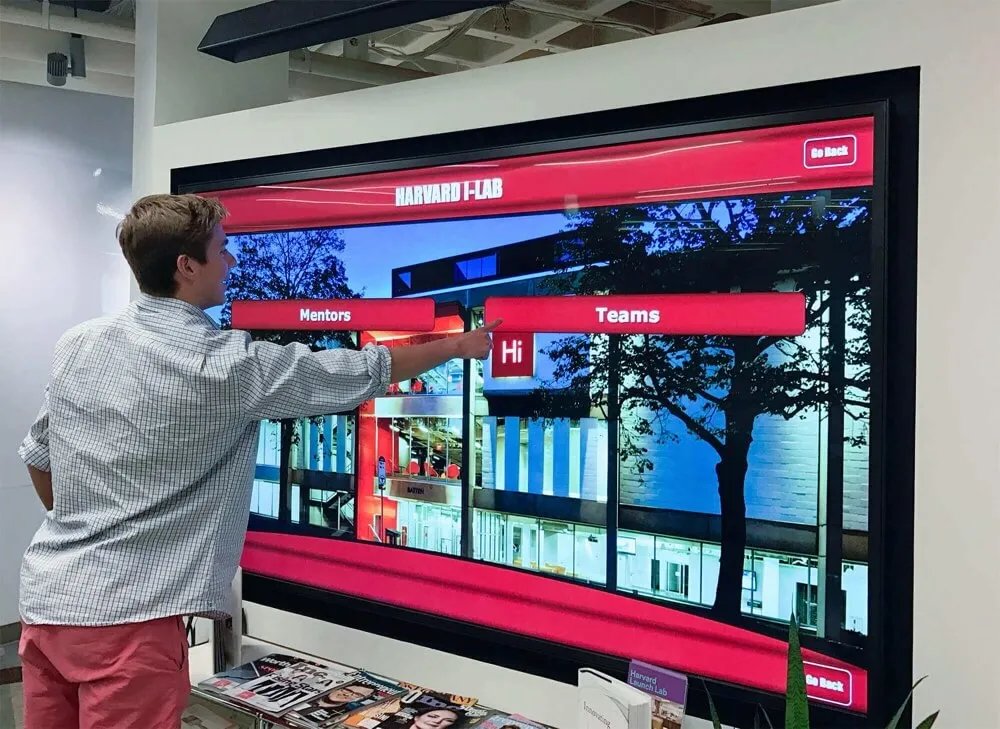
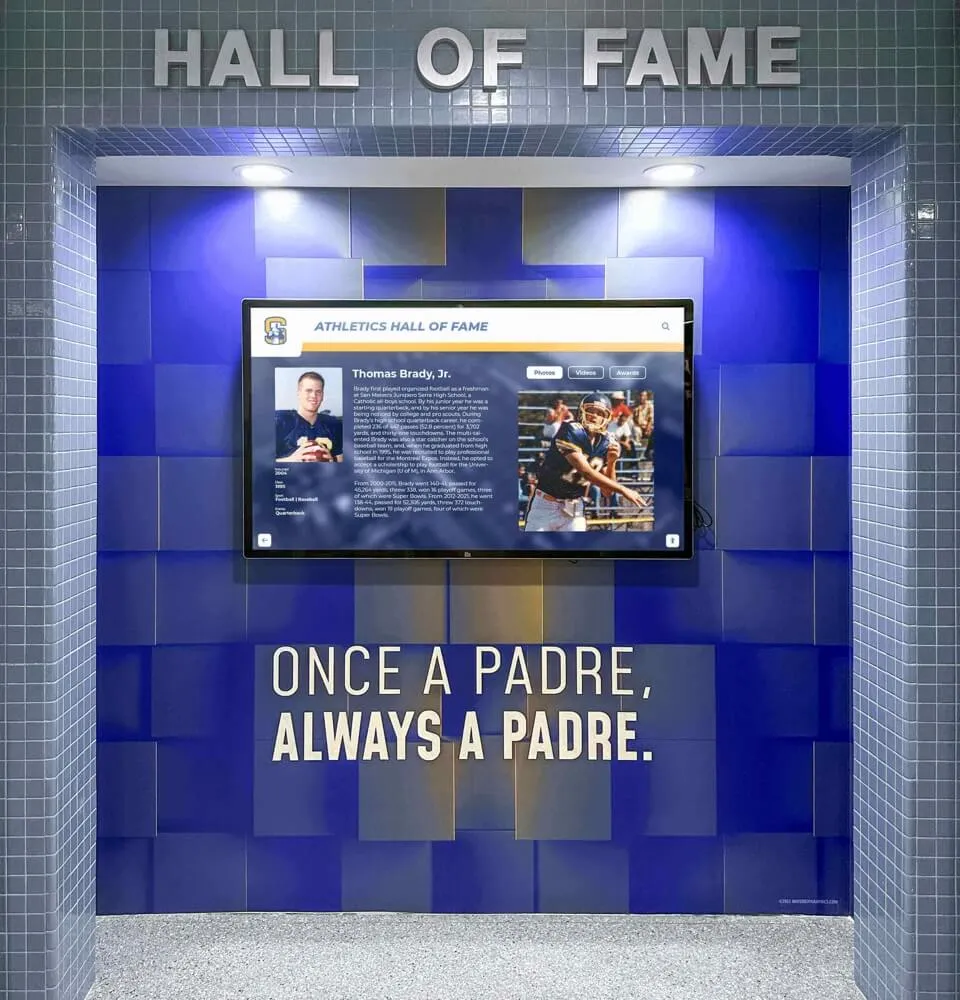
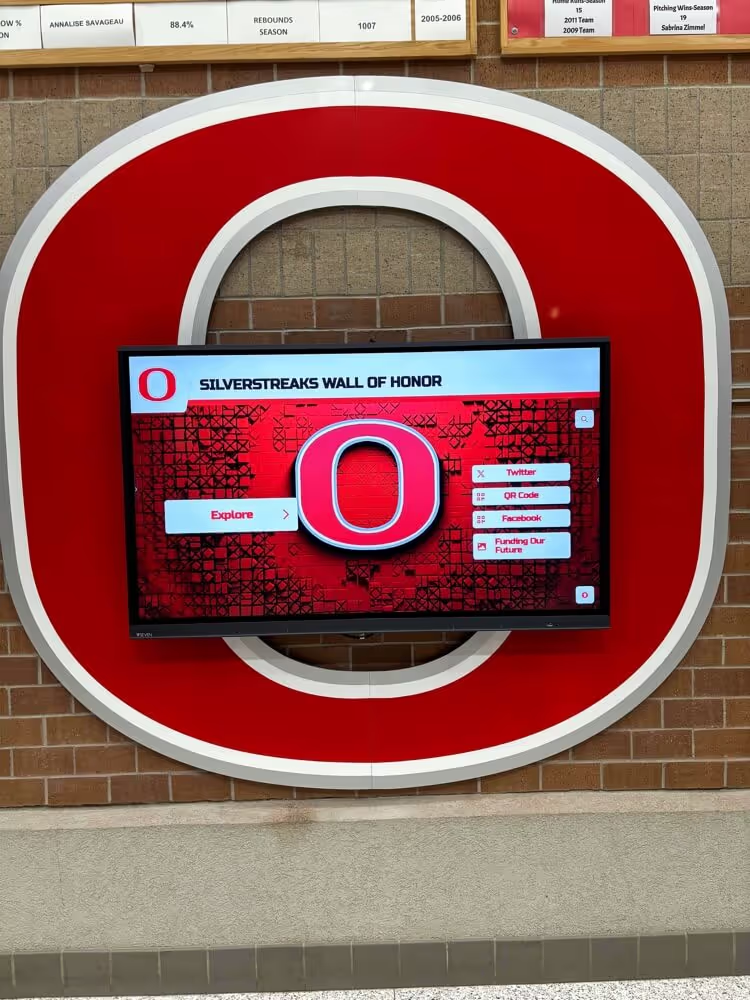
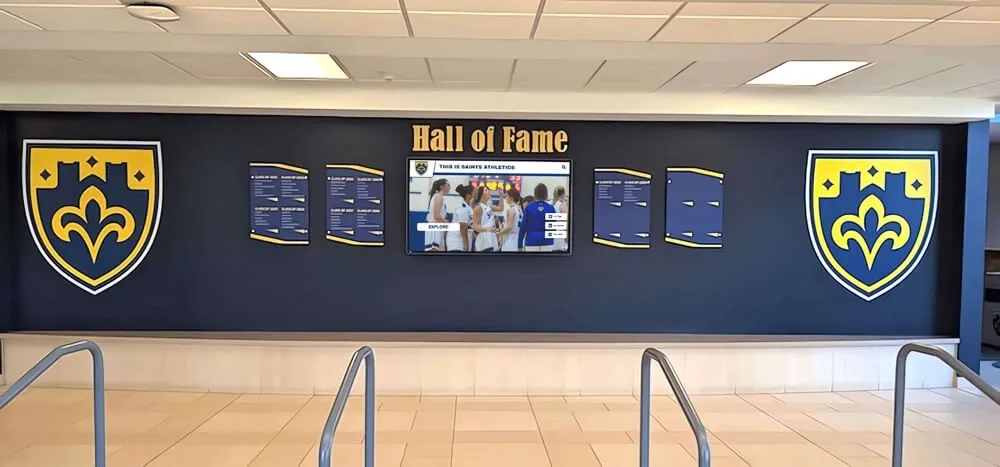
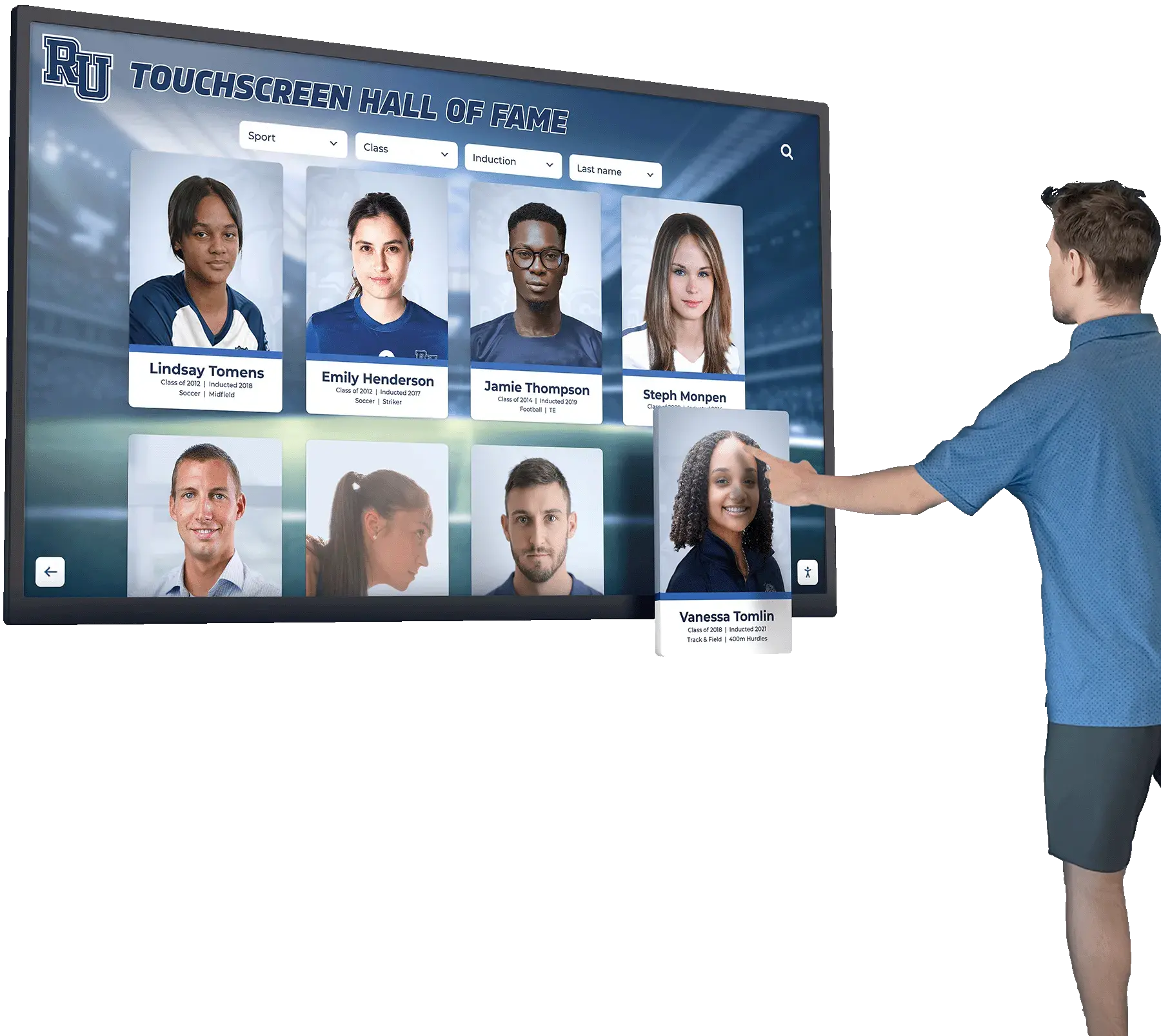
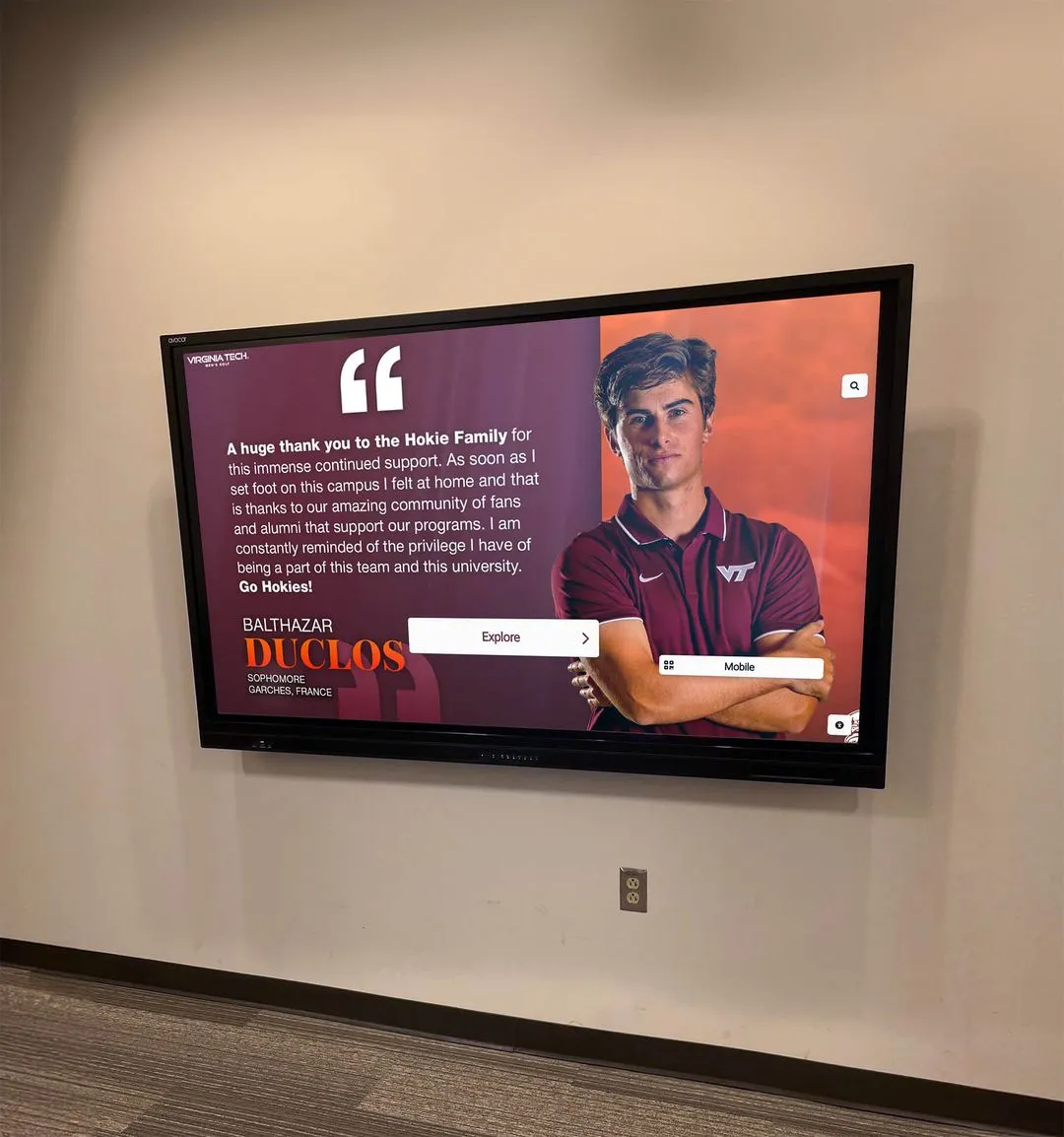
Digital touchscreen displays installed in place of enclosed trophy cases change the seismic risk picture in several concrete ways.
Reduced mass. A flat-panel display mounted to a wall carries a fraction of the weight of a glass-front trophy case stocked with trophies, plaques, and equipment. Lower mass means lower lateral force under seismic loading and lower consequence in the event of anchor failure. The physical items stored in a traditional case — including heavy metal trophies, framed glass-front awards, and dense wood plaques — are removed from the corridor environment when recognition content moves to a digital platform.
Defined and consistent mounting. A commercial display is engineered with a known weight and defined wall-mount anchor requirements. The anchoring system for a flat-panel display is a solved engineering problem with manufacturer-specified hardware, load ratings, and substrate requirements. This is meaningfully different from a trophy case installed without structural engineering input, whose anchoring may reflect installer judgment rather than calculated load capacity.
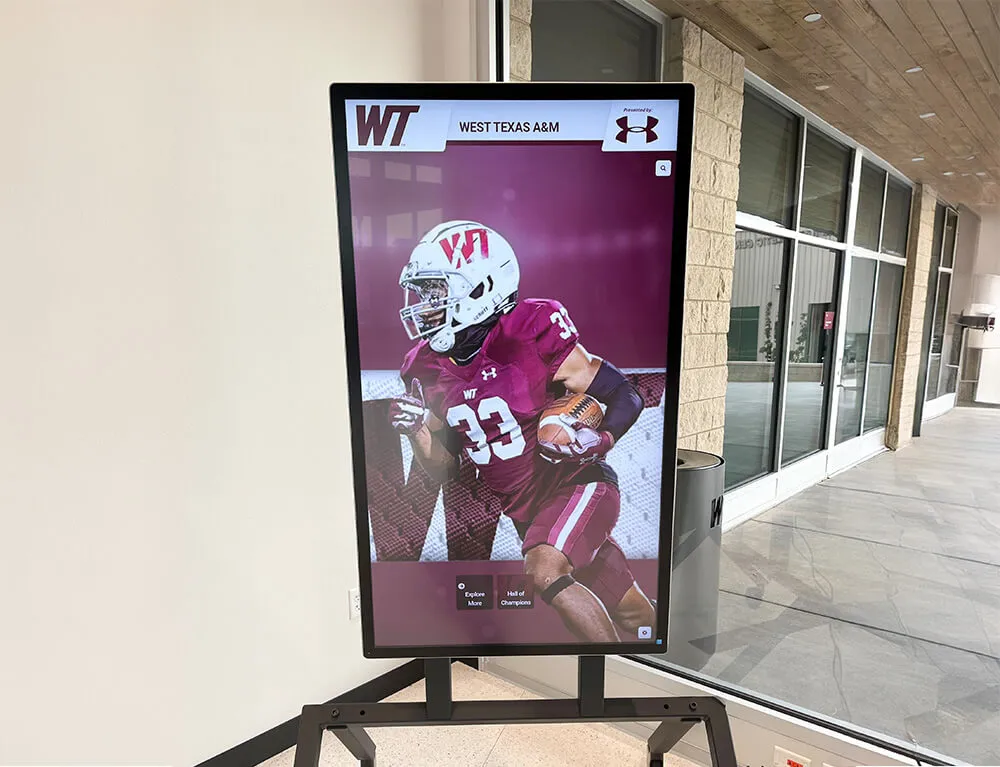
Freestanding kiosk footprint. Where schools choose freestanding kiosk-style digital displays rather than wall-mounted panels, the kiosk footprint is defined and stable — designed to be placed as a display unit with a known center of mass. The risk profile of a kiosk is more predictable than that of a repurposed trophy case, and most commercial kiosk designs include anti-tip anchoring provisions in their installation specifications.
No secondary hazard from falling contents. A digital display, in the event of anchor failure, presents the panel itself as the primary falling hazard — no cascading glass, heavy trophies, or loose memorabilia. The secondary hazard profile of an unanchored trophy case — glass panels, metal hardware, loose items — is substantially greater.
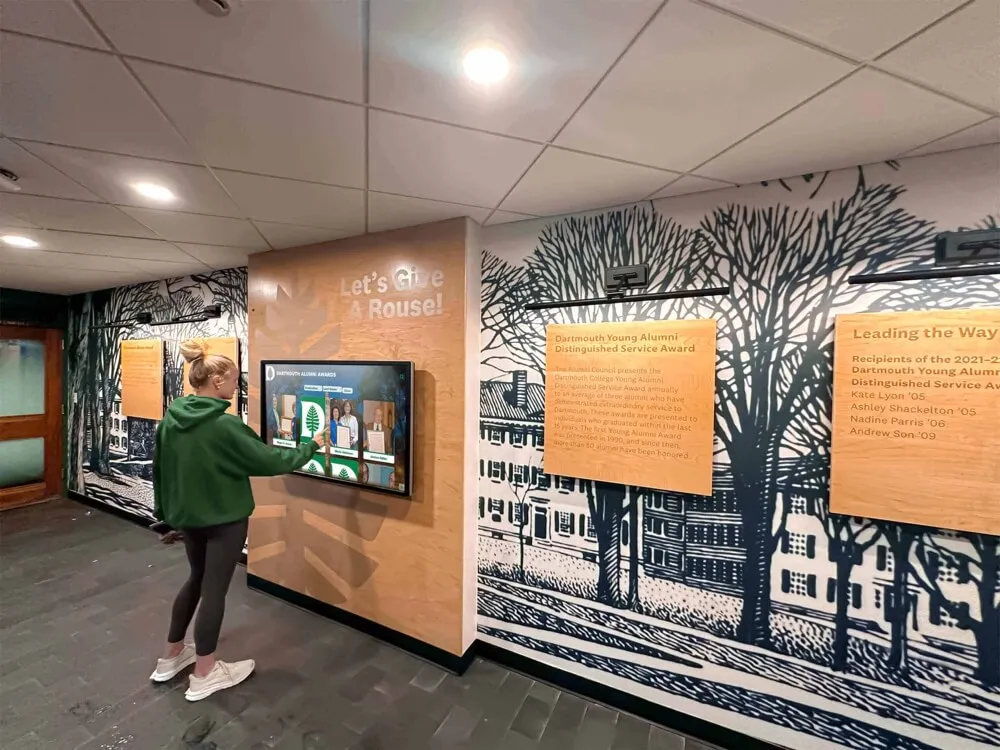
Schools that have transitioned recognition programs from physical cases to interactive digital platforms find that facilities staff spend significantly less time on seismic anchoring maintenance cycles — because the risk categories requiring recurring management are reduced to a single wall-mount installation with documented anchoring specifications.
For schools comparing the capabilities and cost structures of different digital recognition approaches before transitioning, the overview of Rocket Alumni Solutions versus boutique digital hall of fame providers provides useful context on what different platform categories offer from both a recognition capability and a facilities perspective.
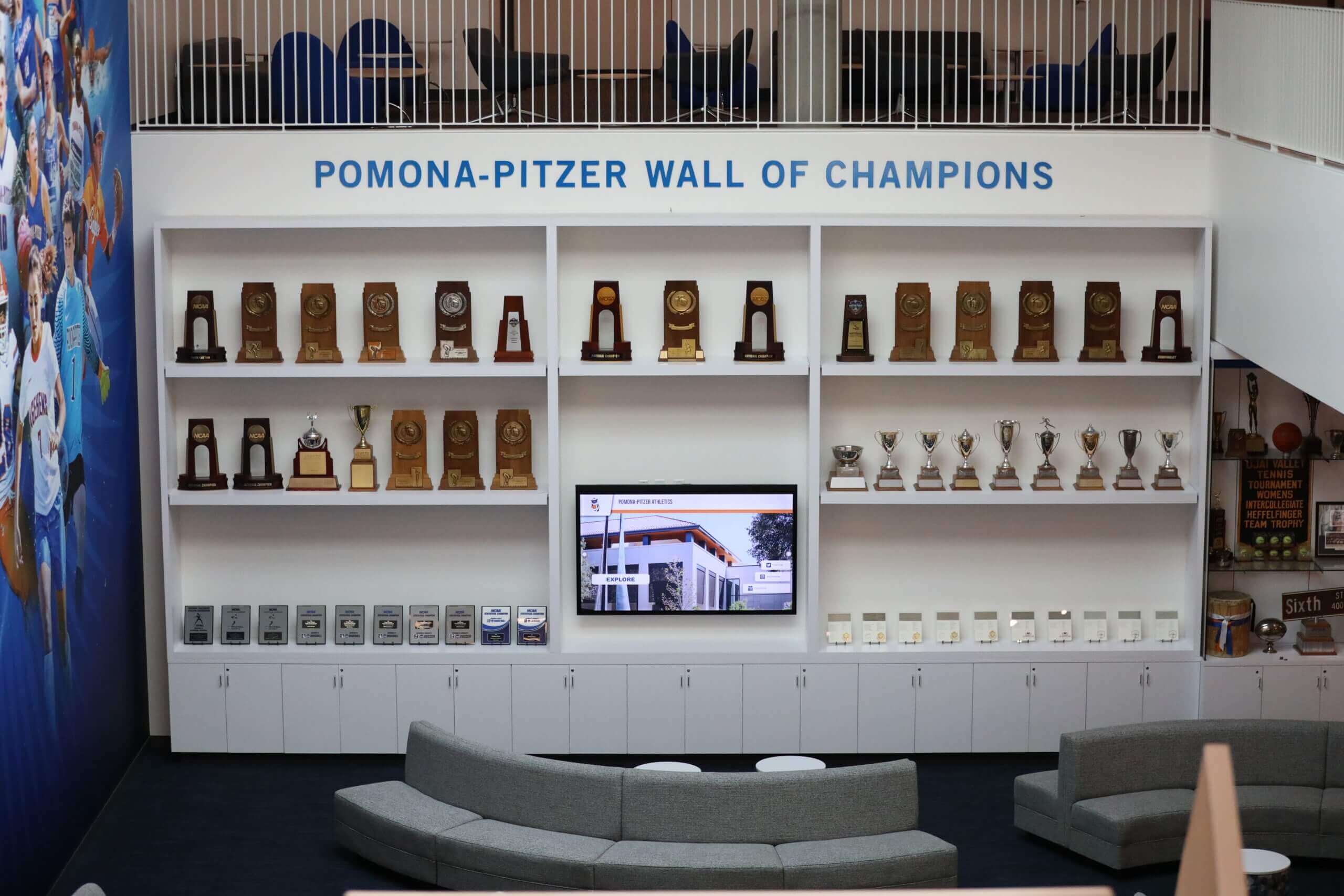
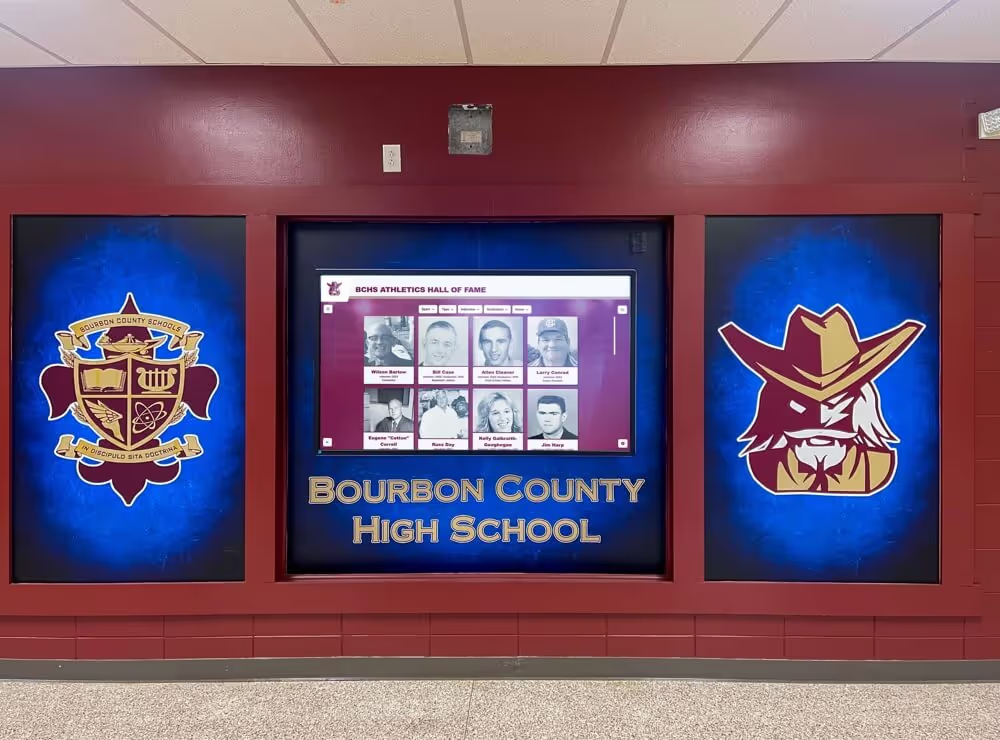
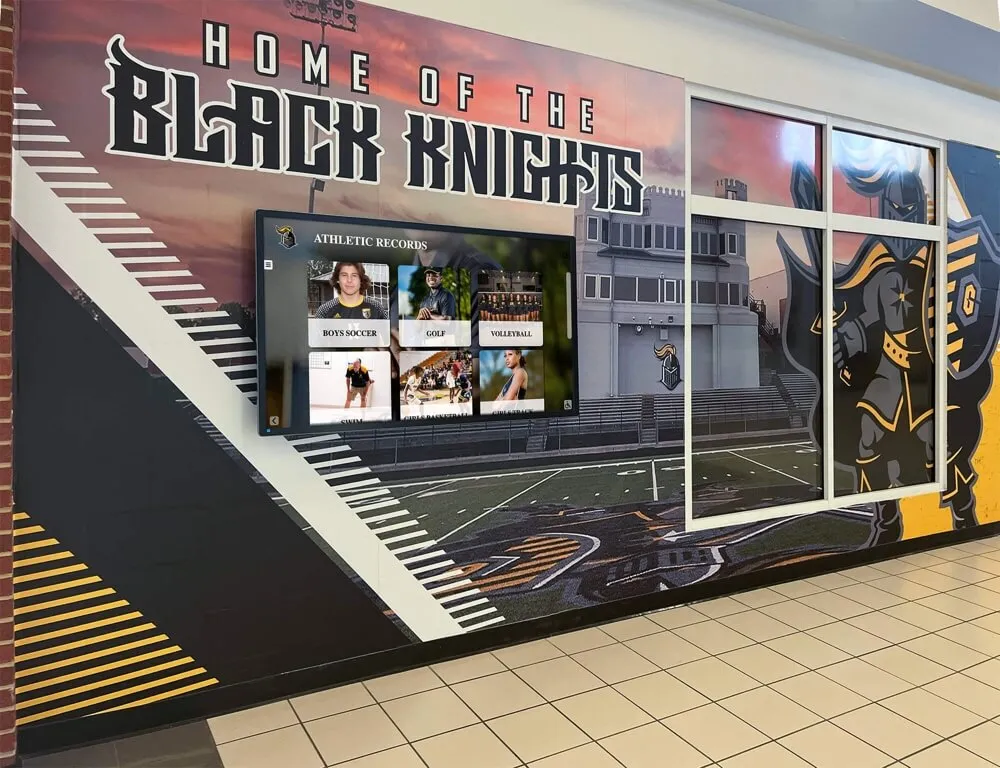
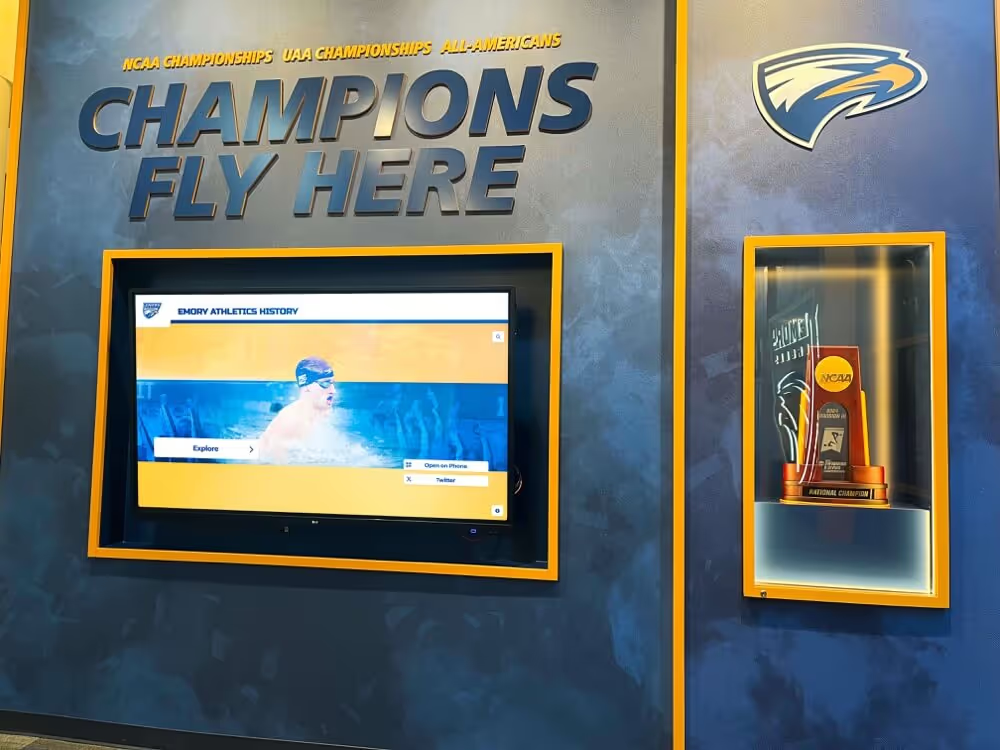
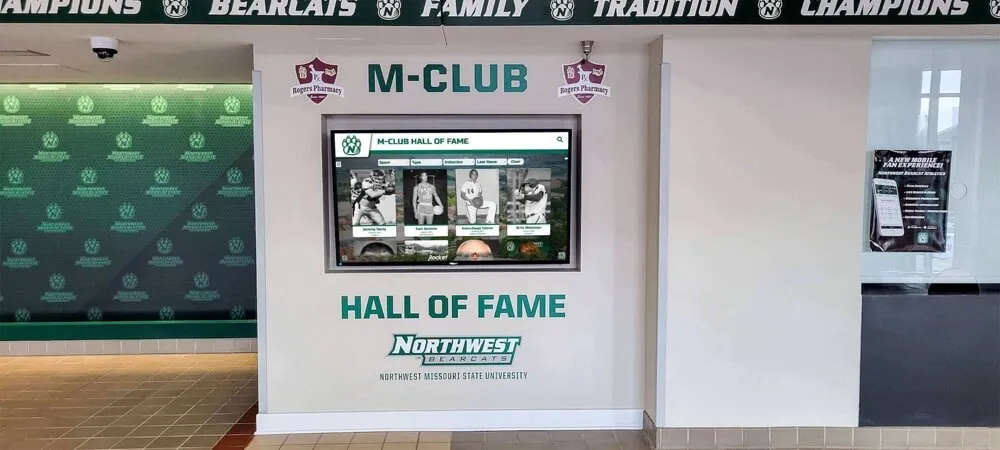
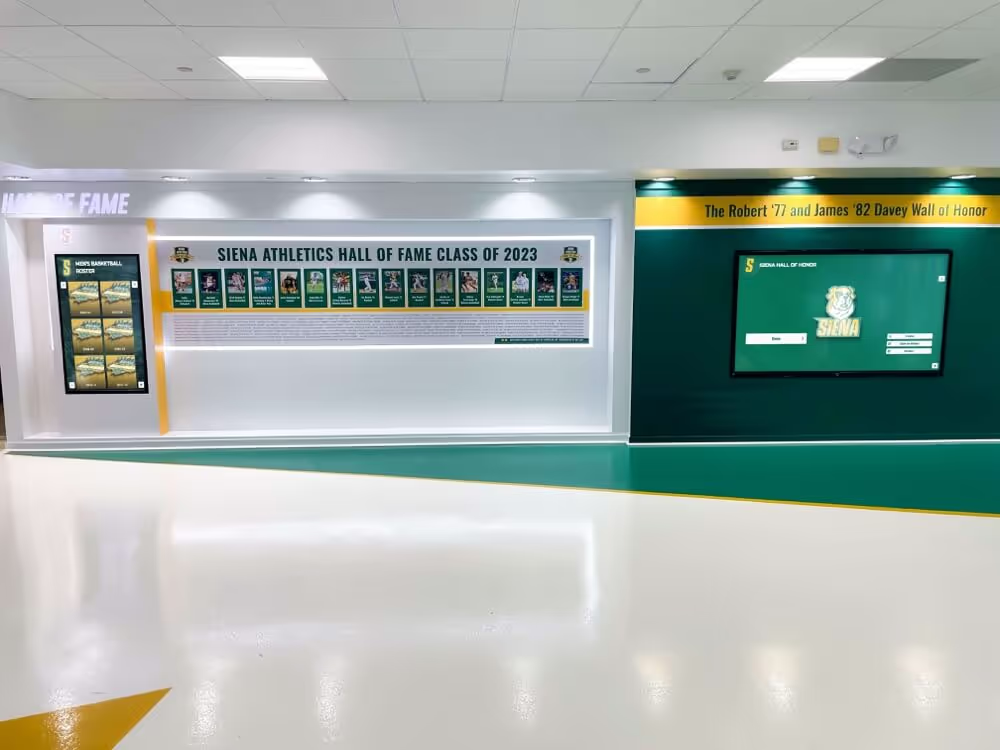
Large-format trophy wall installations in athletic lounges and lobbies should be part of any seismic anchoring review — their scale amplifies both lateral risk and the consequence of anchor failure
Connecting Seismic Safety to Recognition Modernization
For schools undertaking a broader recognition modernization effort, a seismic anchoring inspection often identifies cases that present the practical catalyst for transitioning to digital platforms. A case that requires structural re-anchoring, load redistribution from years of accumulated additions, or relocation to achieve seismic clearance becomes a natural candidate for replacement rather than repair.
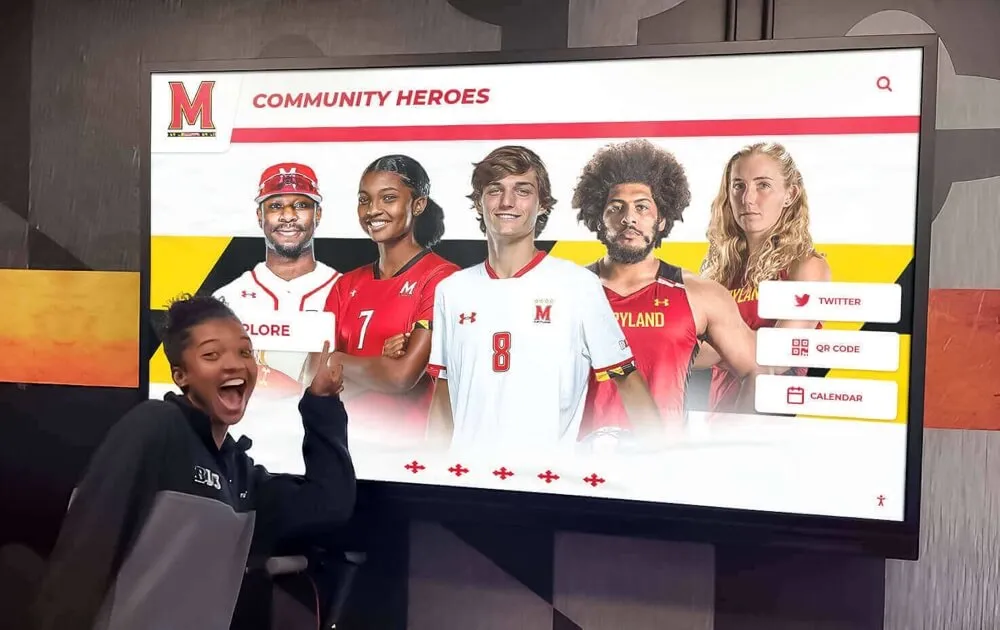
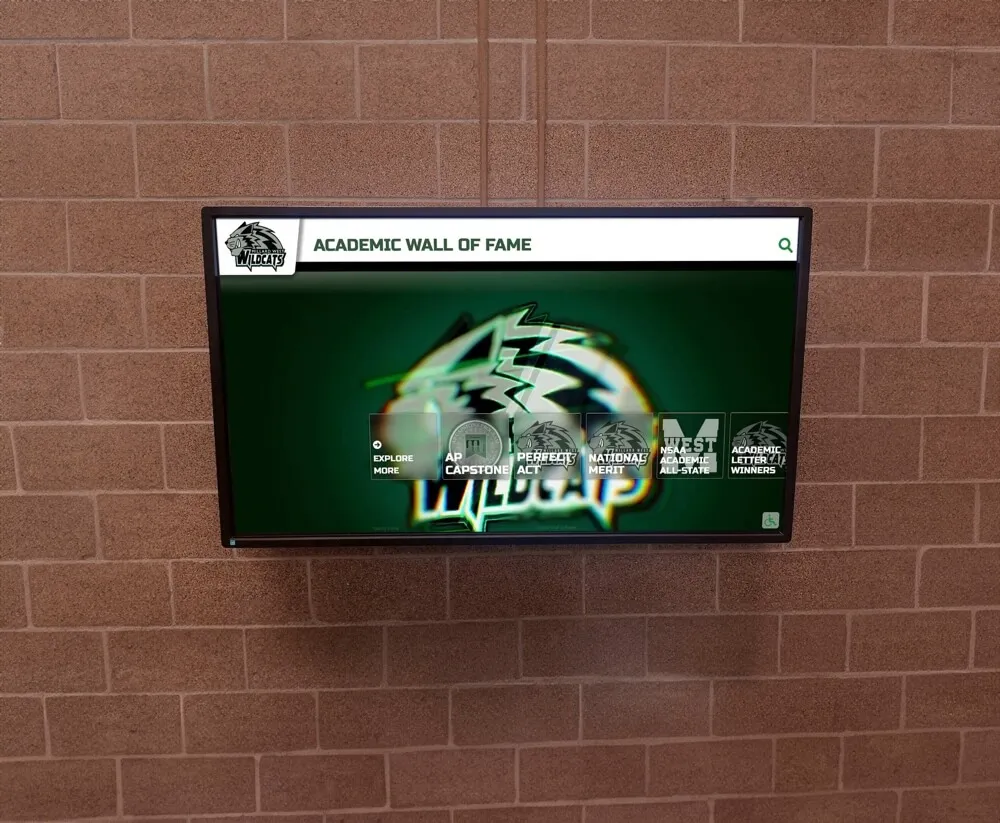
Digital recognition platforms allow schools to preserve the full depth of their recognition history — every trophy, award, championship, and honoree — in a cloud-managed system that is updated remotely, accessible by QR code from any mobile device, and configured to display current and historic content on a schedule set by athletic or administrative staff. The guide to touchscreen recognition displays for schools provides a detailed look at how these platforms function in practice across recognition types.
For schools managing recognition programs that span athletics, academic honors, and community recognition — including programs that recognize cheerleading, performing arts, and student leadership alongside traditional athletics — the perspective on cheerleading hall of fame recognition programs illustrates how digital platforms accommodate recognition categories that would overflow any physical trophy case regardless of anchoring quality.
Annual Seismic Anchoring Inspection Schedule
| Timing | Review Scope | Responsible Party | Documentation Required |
|---|---|---|---|
| August — Before School Year | Full six-category checklist; all corrective actions from prior year verified complete | Facilities Director + Athletic Director | Completed checklist, corrective action log |
| November — Pre-Winter Break | Attachment point spot check; confirm no new cases added fall semester without anchoring documentation | Facilities Staff | Short-form spot-check log |
| February — Mid-Year Check | Visual structural check on cases flagged in August; confirm no new items have shifted weight distribution significantly | Athletic Director | Brief written note in maintenance log |
| April — Pre-End-of-Year Review | Full six-category checklist; flag any open items ahead of summer project planning | Facilities Director | Completed checklist; engineering referrals initiated |
| Following Any Case Addition or Relocation | Full inspection of new or relocated case; attachment points and clearance verified before use | Facilities Director | Written record of installation and inspection date |
| Following Any Seismic Event at the Facility | Immediate visual inspection of all attachment points; professional assessment for cases with any observed movement | Facilities Director | Post-event inspection log; engineer report if movement observed |
Frequently Asked Questions
What codes or standards govern seismic anchoring of trophy cases in schools? Schools are subject to the building codes adopted by their state and local jurisdiction — typically variants of the International Building Code (IBC) and ASCE 7 (Minimum Design Loads for Buildings and Other Structures), which include seismic design requirements. For non-structural components including furniture and display cases, ASCE 7 Chapter 13 addresses seismic design requirements for architectural, mechanical, and electrical components. The specific seismic design category applicable to a given school is determined by the building’s use group, occupancy, and the site’s ground motion parameters. Consult your authority having jurisdiction (AHJ) and a licensed structural engineer for the requirements that apply to your facility.
Who is responsible for seismic anchoring of trophy cases at a school? Shared responsibility between the facilities director (structural adequacy, attachment hardware, and documentation) and the athletic director (load management, case contents, and coordination of display additions). The school administrator carries ultimate accountability and should ensure that inspection records are complete and that escalation paths for professional assessment are documented and followed.
How often should a school inspect trophy case seismic anchoring? At minimum, annually — with a full review before the school year begins and a spot check at mid-year. An additional inspection should occur immediately following any seismic event experienced at the facility, regardless of intensity. Cases added or relocated at any time should be inspected before being returned to service.
What is the difference between anti-tip compliance and seismic anchoring? Anti-tip straps and furniture anchors address the risk of a freestanding case tipping over under slow or static loading — such as a child pulling on a door or a case being bumped. Seismic anchoring addresses dynamic lateral loading: the rapid, cyclical ground acceleration that occurs during an earthquake. Seismic anchoring typically requires more robust fasteners, engineered attachment points into structural framing, and a design basis that accounts for the specific seismic forces expected at the site. An anti-tip strap is a starting point, not a substitute for seismic anchoring in applicable seismic zones.
What should a school do immediately if an inspection reveals a case with no anchoring? Remove heavy items from the unanchored case to reduce tipping risk and lateral momentum, and secure the area if the case presents an immediate hazard. Engage a licensed structural engineer or qualified seismic mitigation contractor for a professional assessment before restoring the case to its previous loaded condition. Document the finding, the interim risk measures, and the engagement of professional assessment in your inspection log.
Does switching to a digital trophy case eliminate seismic anchoring obligations? A digital display installation significantly simplifies the seismic risk profile of a recognition area — reduced mass, defined mounting specifications, no loose contents. A wall-mounted digital display still requires proper installation into structural framing with appropriate anchors, and any freestanding kiosk display still requires anti-tip anchoring per manufacturer specifications and applicable code. The total anchoring obligation for a digital display is smaller in scope and more straightforward to document than that of a large physical trophy case installation.
How does seismic anchoring connect to the broader goal of preserving school recognition? Physical trophy cases that are inadequately anchored put irreplaceable recognition artifacts at risk — championship trophies, engraved plaques, and historic memorabilia that cannot be reproduced if damaged in a seismic event. Protecting the anchoring system is one layer of protecting the recognition record the cases hold. Schools building parallel digital records of their recognition history find that digitized awards, athlete profiles, and championship histories survive a seismic event regardless of what happens to the physical cases — providing a resilience layer that physical-only recognition cannot offer.
What documentation should a school retain related to trophy case seismic anchoring? Retain completed inspection checklists, corrective action logs with dates, original installation documentation and permits, engineering assessment reports, and any AHJ correspondence. A three-year minimum retention period is a reasonable baseline; consult your district’s record-retention policy for the applicable requirement. Documentation that demonstrates a proactive, systematic inspection program is relevant context if a seismic event causes damage that generates a liability question.
Reduce the Facilities Risk — and Keep Every Award on Record
Rocket Alumni Solutions builds interactive digital trophy cases and halls of fame for schools nationwide. Wall-mounted touchscreens and freestanding kiosks replace glass-and-steel display cases with cloud-managed recognition systems that carry a fraction of the seismic risk profile — while giving every student, athlete, and alumnus access to decades of achievement history on an ADA WCAG 2.1 AA compliant display, updated remotely without IT involvement. See how schools are modernizing recognition without the structural overhead of a traditional case installation.
Book A DemoA trophy case seismic anchoring inspection checklist is not an administrative formality — it is a direct investment in the safety of the students, staff, and visitors who pass these displays every day, and in the preservation of the championships and institutional history those cases hold. Run this checklist before the school year begins, assign clear ownership across facilities and athletic staff, document every finding and corrective action, and treat professional escalation as a standard part of the process rather than an exceptional response. For cases that seismic inspection identifies as inadequately anchored, difficult to retrofit, or better served by a lower-risk display solution, exploring interactive digital recognition platforms is a natural next step in building a recognition program that is both compelling and durably safe.