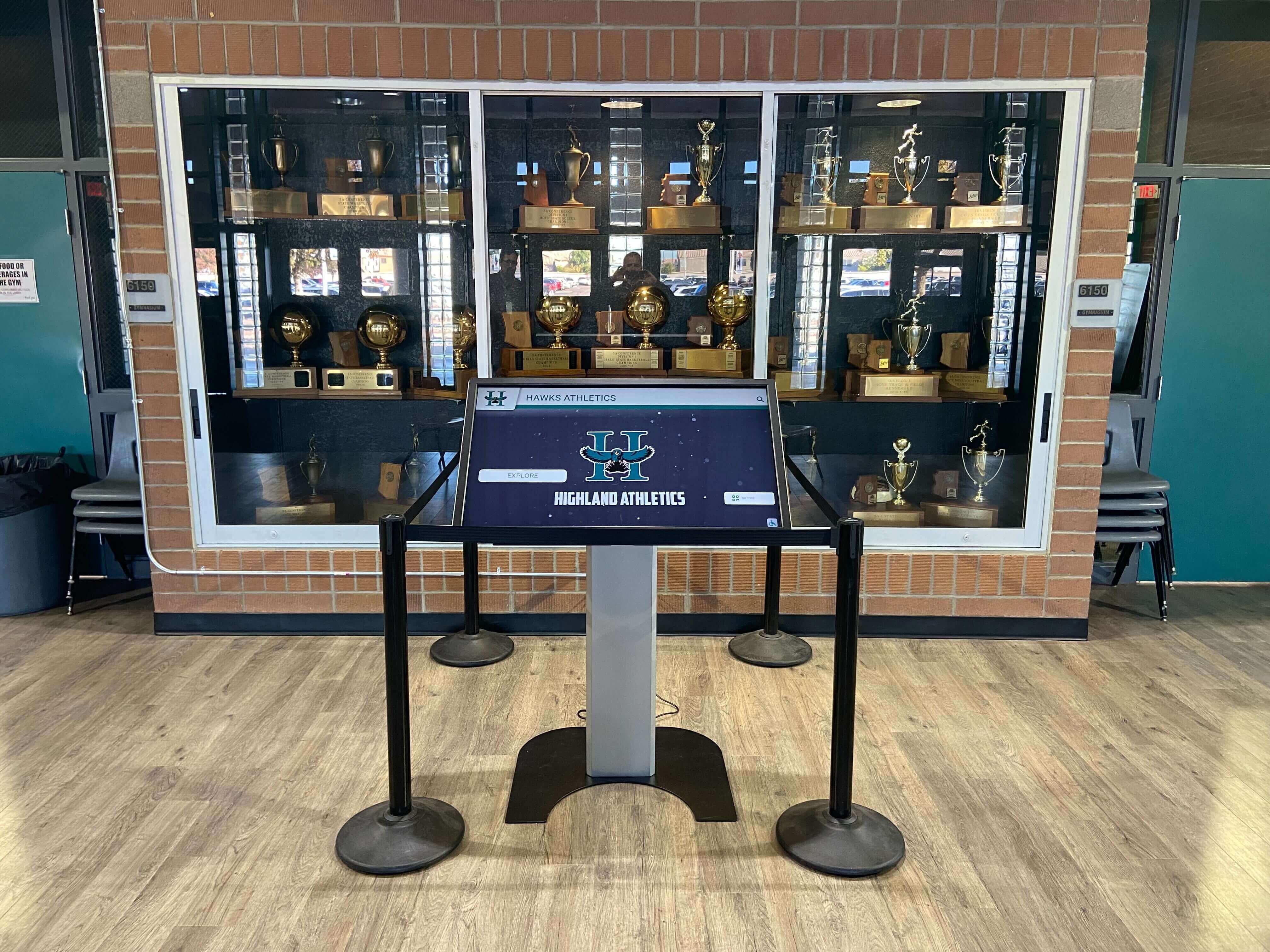
The Easiest Touchscreen Solution




Live Example: Rocket Alumni Solutions Touchscreen Display
Interact with a live example (16:9 scaled 1920x1080 display). All content is automatically responsive to all screen sizes and orientations.
Intent: research — a trophy case metal corrosion inspection checklist gives school administrators, athletic directors, facilities staff, and booster volunteers a structured process for identifying tarnish, rust, verdigris, and dissimilar-metal galvanic damage on championship cups, medals, plaques, and hardware before that deterioration becomes irreversible. Because metal corrosion in enclosed display cases progresses silently — accelerated by humidity, pollutant gases, and direct contact between incompatible metals — periodic visual inspection with a documented severity rating is the most effective early-warning tool available to a school without an on-site conservator. This guide explains what to look for by metal type, how to sequence an inspection, and how to determine when a finding warrants a qualified metal conservator rather than routine cleaning.
A state championship trophy can sit in a school lobby case for thirty years looking largely unchanged, then develop a ring of green corrosion at the base-to-column joint almost overnight. A silver-plated medal displayed since the 1980s may show fine black lines along its engraved edges that deepen each school year. A bronze commemorative plaque donated by a class of alumni can develop a powdery green crust at a single spot — and that spot can spread to adjacent areas if the wrong cleaning product is applied to stop it.
Metal corrosion in trophy cases is not rare, and it is not always slow. Enclosed cases concentrate the humidity and airborne pollutants that drive corrosion chemistry. Wood backing panels off-gas acetic acid over time. Felt liners can trap moisture against metal bases. And when different metals — a silver cup bolted to a brass fitting on an iron base, for example — sit in contact inside a sealed case, galvanic corrosion can progress faster than any other form.
A school that conducts a documented trophy case metal corrosion inspection on a scheduled cycle will catch these problems at a stage where intervention options are still open. A school that waits for visible deterioration to be reported will often find that the most historically significant pieces have suffered the most damage, because they have been on display the longest.

Physical trophy cases accumulate decades of championship hardware and memorabilia — a structured metal corrosion inspection checklist ensures early warning of tarnish, rust, and dissimilar-metal damage before it reaches irreversible severity
Metal Types in School Trophy Cases and Their Corrosion Signatures
Before beginning a corrosion inspection, the inspector should understand which metals are present and what their characteristic deterioration looks like. Applying the wrong cleaning response to the wrong corrosion type can permanently damage an artifact that careful observation and professional treatment would have preserved.
| Metal or Alloy | Common Trophy Case Forms | Characteristic Corrosion | What It Looks Like |
|---|---|---|---|
| Silver (solid or plated) | Championship cups, medals, bowls, presentation trays | Tarnish (silver sulfide) | Gray to black discoloration; begins in recessed areas and engravings; darkens progressively |
| Gold (solid or plated) | Medals, award figures, lettering on plaques | Rarely corrodes; plating can pit or delaminate | Dull spots, peeling surface layer, or dark pits where base metal is exposed |
| Brass (copper-zinc alloy) | Trophy bases, fittings, nameplates, cup handles | Tarnish then verdigris | Yellow-brown dulling → green patina → powdery green crust at advanced stage |
| Bronze (copper-tin alloy) | Commemorative plaques, figurines, medallions | Patina then active corrosion | Brown-green surface → powdery green “bronze disease” in localized spots |
| Copper | Decorative trim, engraved panels, some cup bodies | Verdigris | Blue-green to green surface film; powdery at advanced stage |
| Iron and carbon steel | Trophy internal hardware, shelf brackets, older cup cores | Rust (iron oxide) | Orange-brown surface spots → blistered or flaking reddish-brown material |
| Zinc (as die-cast figures) | Trophy figures, column decorations | Zinc oxide / “zinc pest” | White powdery deposits; surface warping or crumbling at advanced stage |
| Aluminum | Modern trophy components, some plaques | Aluminum oxide | White powdery deposits on surface; generally stable but visually notable |
| Pewter (tin-lead or lead-free) | Older presentation pieces, tankards, decorative cups | Oxidation, lead corrosion (older pieces) | Dull gray surface → white or dark pitting (older lead-containing pewter warrants conservator consultation) |
Important note on lead content: Older pewter alloys, some older solder joints on trophy hardware, and certain antique figurines may contain lead. Do not attempt to clean items with unknown alloy composition using household products. If a trophy predates approximately 1990 and contains visible solder, assume lead content is possible and flag it for conservator assessment.
Pre-Inspection Setup and Materials
A metal corrosion inspection does not require specialized equipment, but it does require consistent conditions. Inspections conducted under inconsistent lighting or without documentation tools produce findings that cannot be compared across inspection cycles.
Materials needed:
- Flashlight with an adjustable-angle beam (for raking light inspection)
- Magnifying glass or jeweler’s loupe (5–10x) for close examination of engraved areas and joints
- A non-contact surface thermometer (optional, but useful for identifying cases with humidity-driving temperature differentials)
- Cotton gloves (to avoid transferring skin oils to metal surfaces during close examination)
- A digital camera or phone with macro capability
- A printed or digital inspection log with fields for case ID, item ID, metal type, location of finding, severity rating, and follow-up date
Before beginning:
- Allow at least 15 minutes for your eyes to adjust to the inspection environment’s lighting conditions
- Do not clean or wipe any surface before completing the corrosion inspection — cleaning before inspection removes the evidence the inspection is designed to find
- Do not move or handle display items more than necessary to examine them; wear cotton gloves when you do
- Ensure you have the previous inspection record available for comparison, if one exists
Schools that include digital trophy wall content alongside physical displays benefit from having both physical condition records and digital documentation of each artifact in a single searchable system — so that a corrosion finding is tied to the correct item’s record, not just a case location.
The Trophy Case Metal Corrosion Inspection Checklist
Complete this checklist for each case. Where a case contains many individual items, apply the per-item rows to any item that shows visible change from its last documented condition — and to all items during an annual full inspection.
Section A: Case Environment — Inspect Before Opening
| Checklist Item | What to Assess | Flag If… |
|---|---|---|
| Case seal condition | Check gaskets, door seals, and glass-to-frame joints for gaps, compression failure, or visible light infiltration | Any visible gap in the door seal or gasket; glass panels that do not close fully flush |
| Case interior moisture indicators | Look through the glass for condensation on interior surfaces, water staining on shelf material, or rust-stained liner fabric | Any visible moisture on interior surfaces; rust transfer marks on shelf liners or backing |
| Interior wood off-gassing risk | Identify backing panels and shelf material — plywood, MDF, and particleboard off-gas acetic acid that accelerates tarnishing | Unfinished wood surfaces inside a sealed case; a sharp vinegar-like smell when the case is opened |
| Lighting heat proximity | Note whether any lighting fixture sits within six inches of a metal display item | Any item positioned with its base or surface directly under or adjacent to a lighting heat source |
| Felt or fabric liner condition | Observe liner material for moisture retention, compression set, or contact with metal bases | Dark spots on liner fabric that correspond to metal base positions; liner material that is visibly damp |
| Air circulation | Cases with no ventilation and a tight seal will concentrate corrosive gases | No ventilation path visible; case has been sealed continuously for more than twelve months without opening |
| Previous cleaning product residue | Residue from ammonia-based or acid-based cleaners can remain active on metal surfaces and accelerate corrosion | White haze, streaks, or chemical odor when the case is opened |
Section B: Per-Item Metal Condition — Inspect Each Significant Artifact
| Checklist Item | What to Assess | Flag If… |
|---|---|---|
| Surface color uniformity | Under overhead light, is the surface color uniform, or are there areas of discoloration, darkening, or whitening? | Localized color change not present at last inspection; any new dark, green, white, or orange area |
| Raking light surface texture | Hold a flashlight at a 10–20 degree angle to the metal surface and observe surface texture | Pitting, surface lifting, powdery texture, or blistering visible under raking light |
| Engraved area condition | Examine engraved text, logos, and decorative lines closely with a magnifier | Dark buildup in engraved areas that has changed since last inspection; active powdery deposits in engraved recesses |
| Joint and seam condition | Examine all joints where different components meet: base-to-column, column-to-figure, handle sockets, hardware connections | Green, orange, or white deposits concentrated at any joint; visible gap opening at a previously flush joint |
| Dissimilar metal contact zones | Identify every point where two different metals are in direct contact | Any corrosion deposit concentrated specifically at the metal-to-metal contact point |
| Base underside condition | Where safe to examine without disturbing display arrangement, note the underside of trophy bases and plaques | Rust, verdigris, or white deposits on the underside that are not visible from the front |
| Plating integrity | For silver-plated or gold-plated items, look for areas where the plating has thinned, lifted, or shows the base metal beneath | Visible base metal (often copper or brass) exposed through a plating surface; peeling or blistering of plating layer |
| Figurine and component stability | Check that cast zinc or lead figurines are structurally stable and not showing dimensional change | Any figurine component that appears warped, cracked, or powdery — particularly if the item is older than 30 years |
| Label, medallion, and attachment hardware | Examine screws, pins, and adhesive-mounted labels for rust or corrosion transfer to adjacent surfaces | Orange rust halos around screws or pins on an otherwise non-ferrous item; rust transfer staining on plaque surface |
| Active vs. stable corrosion | Is the corrosion deposit dry and compact (likely stable) or powdery, flaking, and growing at the edges? | Any deposit that is powdery, actively flaking, or visibly spreading since the last documented check |
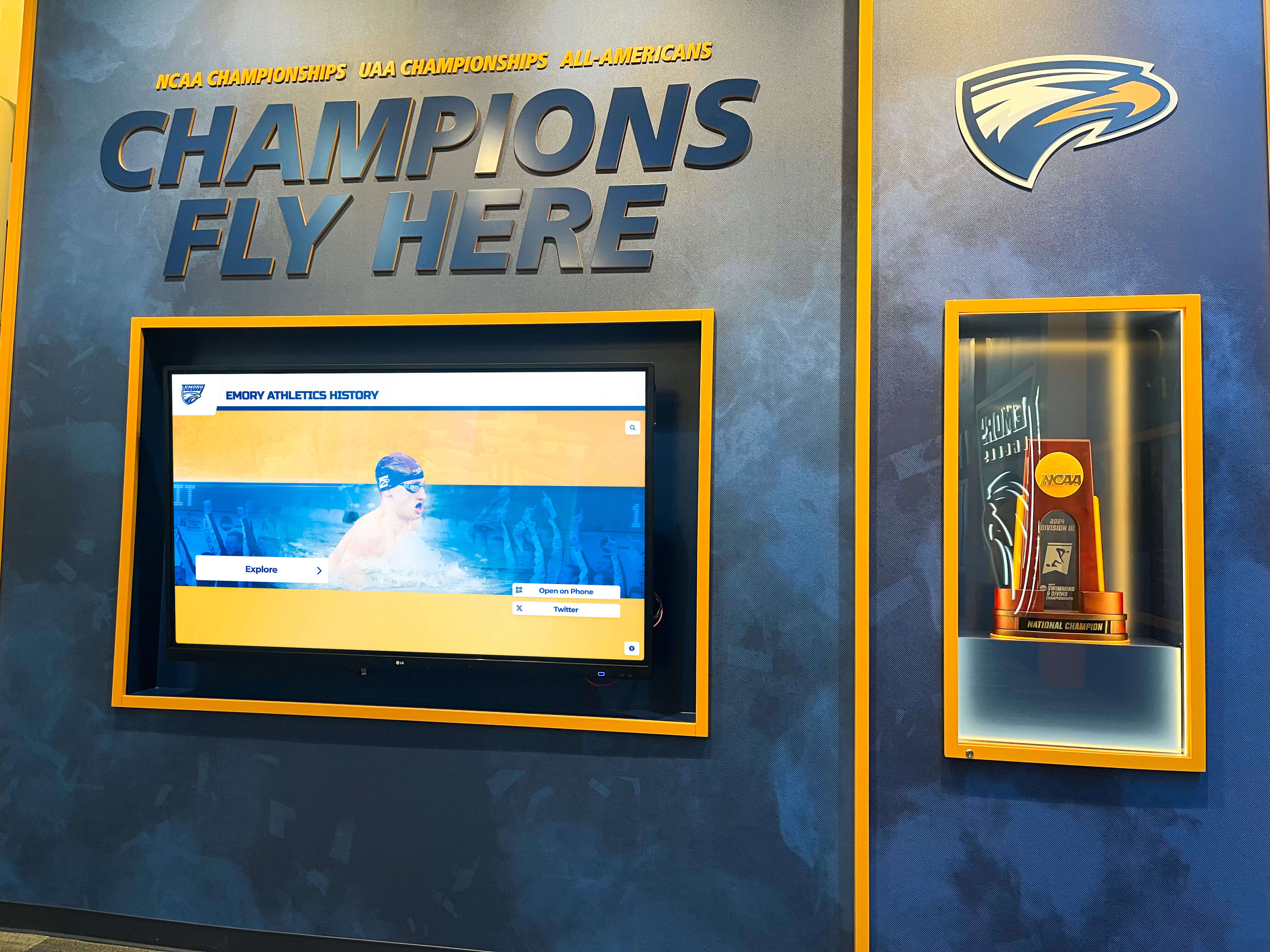
Championship hardware collections that span multiple decades include items made from different metal alloys — a structured per-item inspection log ensures that condition changes are tracked for each artifact independently
Section C: Photographs and Documentation
| Checklist Item | Action |
|---|---|
| Baseline photograph of each flagged item | Photograph under overhead light before any handling; include a ruler or coin for scale |
| Raking light photograph | Photograph flagged areas under low-angle flashlight; raking light reveals surface texture and pitting that overhead light obscures |
| Joint and seam close-up | Photograph any corrosion concentrated at metal-to-metal joints at maximum camera magnification |
| Comparison to prior inspection record | Retrieve the previous inspection photograph for each flagged item and document whether the condition has changed, stabilized, or improved |
| Overall case documentation | Photograph the full case interior before and after inspection for institutional record |
Never attempt cleaning based on a visual assessment alone. Complete the full checklist, photograph all findings, and assign severity ratings before taking any action. Cleaning the wrong finding in the wrong way causes damage that would not have occurred if the item had simply been left alone.
Corrosion Symptom Identification Table
The following table covers the most common corrosion presentations in school trophy cases. Use it alongside the checklist to identify what you are seeing before deciding on a response.
| What You See | Metal Likely Affected | Corrosion Type | Active or Stable? | Response Category |
|---|---|---|---|---|
| Gray-to-black surface film; darkens in recesses and engravings | Silver or silver-plated | Tarnish (silver sulfide) | Stable — progresses slowly in most conditions | Safe to clean with silver-specific polish if no plating damage; do not use ammonia or abrasives |
| Yellow-to-brown dulling overall surface | Brass or bronze | Surface oxidation / beginning patina | Stable at this stage | Document; monitor; professional cleaning optional for displayed items |
| Blue-green or green powdery spots — localized | Brass, bronze, or copper | Verdigris / early-stage active corrosion | Potentially active — powdery verdigris is a sign of ongoing corrosion | Do not attempt to clean; flag for conservator assessment |
| Powdery green deposits in pits or crevices | Bronze specifically | Bronze disease (active corrosion cycle) | Active — will continue and spread without treatment | Escalate to conservator immediately; isolate item from other metals |
| Orange-brown spots or streaks | Iron, steel hardware, or iron trophy core | Rust (iron oxide) | Active if flaking; stable if compact surface film | Identify source; conservator for any significant rust on a historically significant item |
| White powdery deposits | Zinc die-cast components or aluminum | Zinc oxide or aluminum corrosion | Potentially active — especially if crumbling | Do not attempt to clean; flag for conservator if item is irreplaceable |
| Dark pitting in engraved lines | Silver plated over copper; aged silver | Tarnish concentrated in recesses | Stable but worsening without treatment | Silver polish for minor tarnish in engraving; conservator if pitting has exposed base metal |
| Peeling or blistering surface layer | Any plated item | Plating delamination | Stable — but underlying base metal is now exposed | Do not attempt to clean the peeling area; conservator assessment required |
| Rust halo around a screw or pin on a non-ferrous surface | Iron hardware on brass, bronze, or silver | Galvanic + rust staining | Active — iron corrosion products are migrating | Remove iron fastener if possible without damaging item; conservator for rust staining removal |
| Corrosion concentrated only at the joint between two items | Any two dissimilar metals in contact | Galvanic corrosion | Active as long as the metals remain in contact | Separate the metals with an inert barrier; conservator assessment for damage already caused |
Severity Rating Scale
After completing the checklist and identifying the corrosion type, assign each flagged item a severity rating. Use this scale consistently across all staff members who conduct inspections — the rating must be based on observable evidence, not subjective impression.
| Severity Level | Description | Indicators | Recommended Response |
|---|---|---|---|
| Level 1 — Surface Tarnish Only | Uniform light tarnish or oxidation with no localized deposits, pitting, or active corrosion indicators | Gray-silver film on silver items; brown overall tone on brass; no powdery areas; no joint concentration | Document and photograph; clean with appropriate metal-specific product if displaying for a high-visibility event; monitor quarterly |
| Level 2 — Localized Discoloration | Visible discoloration in one area, at engravings, or along seams; no powdery deposits; no structural change | Dark streaks in engraved text; brown patches at a base joint; slight green cast on copper trim | Document and photograph; do not clean with household products; flag for consultation with a metal conservator before treating; monitor at 60-day intervals |
| Level 3 — Active Surface Corrosion | Powdery, flaking, or spreading deposits visible; or corrosion confined to a specific feature (a joint, a fastener, an engraved area) but clearly active | Powdery green verdigris spots; rust flaking from hardware; peeling plating; bronze disease pitting in recesses | Do not clean; isolate from adjacent items if corrosion could transfer; contact a qualified metal conservator before the next scheduled inspection; restrict handling |
| Level 4 — Multi-Zone Active Corrosion | Active corrosion visible across two or more distinct areas of the same item; or Level 3 finding on a historically irreplaceable piece | Verdigris at multiple joints plus rust at hardware on the same trophy; bronze disease spreading beyond a single pit cluster | Remove item from display; store in stable, low-humidity conditions; contact a qualified metal conservator as a priority; document full condition before any movement |
| Level 5 — Structural Compromise or Unidentified Alloy Risk | Corrosion has caused dimensional change, material loss, or the item contains alloys with possible lead content and shows active corrosion | Zinc pest crumbling on a die-cast figure; significant material loss from bronze disease; older pewter with active pitting; any item where cleaning or handling could cause irreversible damage | Do not handle; do not clean; photograph in place; contact a professional metal conservator immediately; flag for administrator notification before further decisions |
Inspection Sequence: The Right Order for a Complete Review
The sequence of a metal corrosion inspection matters. Opening a case and immediately handling items disrupts the environmental evidence — humidity levels, dust patterns, and deposit distribution — that reveal how the case has been performing. Follow this order:
Step 1 — External observation (case closed): Spend two to three minutes observing the case contents through the glass under normal lighting. Note any items with visible color change or deposits that were not present at the last inspection. Photograph the full case before opening.
Step 2 — Environmental check (first open): When the case is first opened, note the smell. A sharp, acidic or vinegar-like odor indicates wood off-gassing; a metallic or sulfur smell may indicate active corrosion gases. Note humidity if you have a meter. Do not reach in yet.
Step 3 — Raking light pass: Before touching any item, hold your flashlight at a low angle through the case opening and scan each item’s surface. Raking light reveals powdery textures, blistering, and surface pitting that are invisible under overhead light.
Step 4 — Close examination of flagged items: For each item that showed anything in steps 1–3, examine closely with a magnifier while wearing cotton gloves. Check joints, engravings, hardware, and the underside if accessible. Photograph each finding.
Step 5 — Systematic item-by-item review: Even items that appeared unchanged deserve a brief check during an annual inspection. Briefly examine each item’s primary surfaces, base joint, and any known dissimilar-metal contact points.
Step 6 — Assign severity ratings and complete documentation before closing: Do not close the case until all findings are documented and photographed. Once the case is sealed, re-accessing specific angles for photography creates additional handling risk.
Step 7 — Determine action items and follow-up dates: For each Level 2 or above finding, record the specific action required, who is responsible, and the deadline. A finding with no follow-up date attached is a finding that will be re-discovered at the next inspection unchanged.
Schools managing broader recognition collections — including donor recognition programs and alumni honor displays — will find that the same structured documentation discipline that governs a virtual donor wall applies equally well to physical artifact condition records: a consistent format, accessible storage, and clear ownership of follow-up actions.
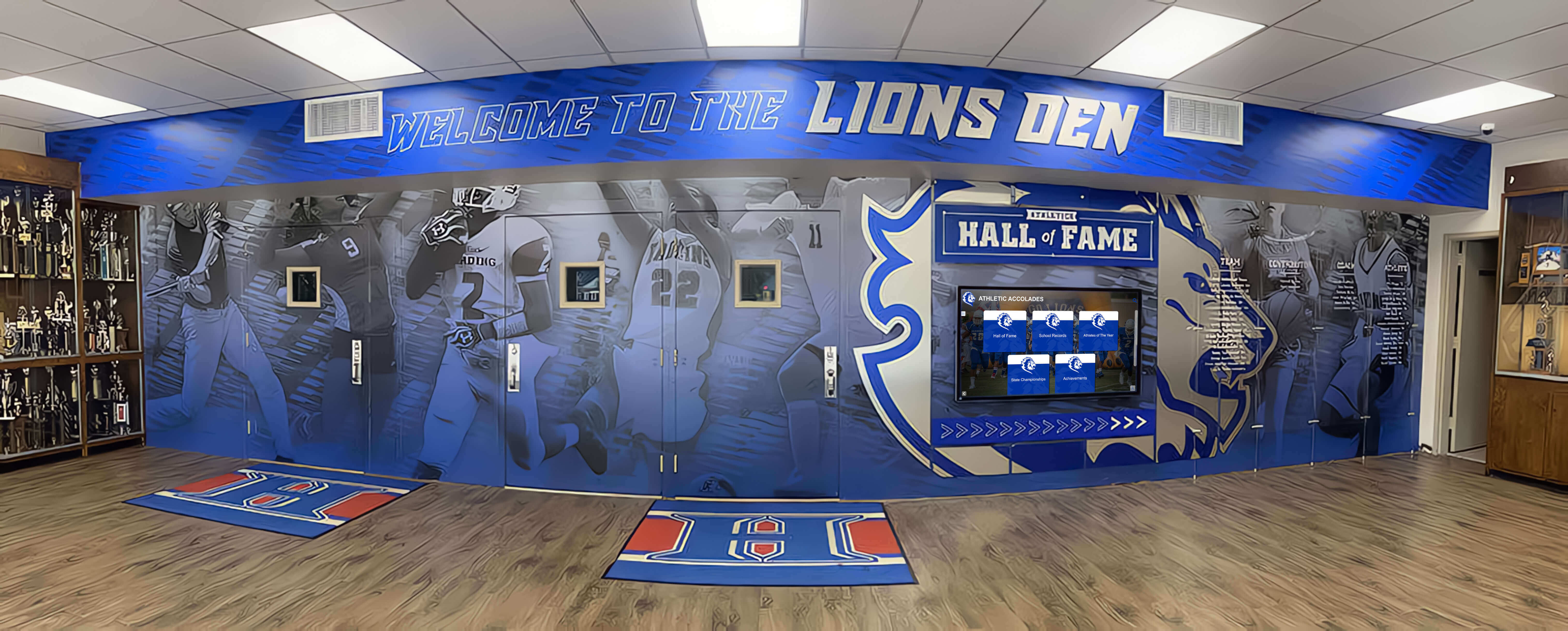
Schools with multiple trophy cases across lobbies and corridors benefit from a standardized inspection sequence — the same checklist applied consistently produces records that can be compared across cases and across inspection cycles
Dissimilar Metal Corrosion: The Most Overlooked Risk
Galvanic corrosion — also called dissimilar metal corrosion — is the corrosion process that occurs when two metals with different electrochemical potentials are in direct contact in the presence of moisture or a conductive electrolyte. In trophy cases, this is common because most trophies are assembled from multiple components made of different alloys: a brass column attached to an iron base with steel bolts, a silver-plated cup on a cast zinc pedestal, a bronze plaque mounted with iron screws to a copper backing.
The critical characteristics that make galvanic corrosion important for inspection:
It concentrates at the contact point. Unlike general tarnish, which spreads across a surface gradually, galvanic corrosion produces a localized deposit exactly where the two metals meet. This makes it identifiable during inspection if the inspector knows to look at joints — and easy to miss if the inspector only examines open metal surfaces.
The less noble metal corrodes preferentially. In a zinc-iron pair, zinc corrodes. In an iron-copper pair, iron corrodes. In a silver-brass pair, brass may show accelerated tarnish at the contact line. Knowing which metal is likely to be the active (corroding) metal helps focus inspection attention on the right location.
Moisture is the catalyst. In a dry sealed case in a climate-controlled building, galvanic corrosion may progress very slowly. In a case with any moisture infiltration — from a failed seal, from seasonal humidity changes in a gymnasium corridor, from condensation inside a cold exterior-facing lobby — the same contact between the same metals can produce visible deposits within a single school year.
Separation is the cure; cleaning is not. Once galvanic corrosion has caused surface damage, the damage cannot be reversed by cleaning. The only way to stop ongoing galvanic attack is to electrically isolate the two metals — by inserting an inert barrier material (a nylon washer, an acrylic spacer, archival-quality felt pads) between them. A conservator can advise on appropriate barrier materials for specific trophy configurations. Cleaning the corrosion product while leaving the metals in contact will result in the same deposit returning within months.
Physical trophy cases need regular corrosion inspections — digital trophy cases do not. Interactive touchscreen recognition displays from Rocket Alumni Solutions present a school’s complete championship history, retired jerseys, athletic hall-of-fame inductees, and memorabilia on cloud-managed screens that never tarnish, rust, or require metal conservation. Explore how schools are building digital trophy walls that preserve every achievement without the ongoing maintenance commitment of physical display cases.
When to Involve a Qualified Metal Conservator
Facilities staff and volunteers conducting a trophy case metal corrosion inspection are performing a detection and documentation function. The detection is valuable; the limitation is that most observable corrosion findings — once they progress beyond Level 1 — require professional conservation judgment rather than routine cleaning.
Contact a qualified metal conservator when any of the following is true:
- Any finding rated Level 3 or above on the severity scale above
- Any item with active powdery corrosion deposits (verdigris, bronze disease, zinc oxide, rust flaking)
- Any item with plating damage that has exposed the base metal beneath
- Any item where corrosion is concentrated at a dissimilar-metal joint and has caused visible pitting or surface loss
- Any older pewter or pre-1990 solder-jointed hardware with active pitting
- Any item of significant historical or sentimental value where an uncertain cleaning decision could cause irreversible damage
- Any item where you are uncertain about the alloy composition and the corrosion type
What a conservator can do that routine cleaning cannot:
A qualified metal conservator can identify corrosion types and alloy compositions accurately using visual assessment and, where necessary, analytical testing. They can apply treatments — barrier coatings, corrosion inhibitors, localized reduction treatments for bronze disease — that arrest active corrosion without damaging the item’s surface. They can advise on whether a surface deposit is a natural patina that should be preserved versus an active corrosion product that should be removed. And they can document treatment for insurance and institutional records purposes in a way that a facilities cleaning log cannot.
The American Institute for Conservation (AIC) maintains a directory of conservators searchable by specialty and geography. For school trophy cases, a conservator with metals or objects conservation specialization is appropriate. State historical societies and museum associations sometimes maintain referral lists as well. For high-value championship hardware, the cost of a conservator consultation for a single session is typically modest relative to the irreplaceable historical value of the items being assessed.
What routine cleaning can address safely:
- Level 1 silver tarnish on solid silver or silver-plated items with intact plating, using a silver-specific polish applied with a soft cotton cloth (not paper towels or abrasive pads)
- Light dust on brass or bronze items where no active verdigris or powdery deposits are present, using a soft dry microfiber cloth only
- Stable surface patina on brass or bronze that has been present for many years without change — this is often best left in place, as the patina can be protective
For academic and heritage contexts, the standards that govern accessible and professionally presented recognition content reflect a broader principle: how an institution presents its history matters, and both digital and physical displays deserve the level of care appropriate to the significance of what they contain.
Corrosion Prevention: Environmental Controls
Identifying corrosion early is the most important action. Controlling the conditions that drive corrosion is the complementary step that slows its return after treatment.
Humidity control is the single most impactful environmental variable. Most metal corrosion is dramatically slower in environments below 50% relative humidity. Cases in gymnasium lobbies, exterior-facing building walls, and ground-floor locations near entries are at elevated risk. Silica gel desiccant packets placed in a trophy case are a low-cost tool for reducing interior humidity — they require periodic replacement or regeneration, which should be scheduled as part of the inspection cycle.
Wood off-gassing mitigation: Unfinished wood backing panels and shelf material inside sealed cases emit acetic acid that attacks tarnishing-sensitive metals, particularly silver. Coating interior wood surfaces with a barrier finish or replacing bare wood with inert materials (archival foam board, anodized aluminum shelf material) reduces this risk. When a case is opened and smells of vinegar, the wood is the cause.
Dissimilar metal isolation: Any trophy item where two different metals are in direct contact should have an inert separator inserted at that contact point. Acid-free archival tissue, nylon washers, or closed-cell polyethylene foam cut to fit can serve this purpose. The separator should be thin enough not to affect the item’s display appearance and should be checked during each inspection cycle.
Case seal maintenance: Check door gaskets and glass-to-frame seals annually. A gasket that has compressed, cracked, or separated allows uncontrolled exterior air — including humid air and pollutant gases — to enter the case and offset all other environmental controls. Replacement gaskets for most standard trophy case designs are available from commercial display case suppliers.
Cleaning product discipline: Ammonia-based glass cleaners, bleach-containing products, and acidic surface cleaners should never come into contact with metal display items or with the interior surfaces of the case. Cleaning products used on the exterior glass should be selected to ensure they will not drift into the case interior when the door is opened during or after cleaning. Store a dedicated, labeled set of case-appropriate cleaning materials separately from general facilities supplies.
Recognition programs that document a school’s athletic history — including senior night celebrations and milestone events — are the context that makes physical preservation of championship hardware meaningful. The hardware is not just decoration; it is the physical record of those programs. Treating it with appropriate care is part of honoring what it represents.
Frequently Asked Questions
What is a trophy case metal corrosion inspection checklist?
A trophy case metal corrosion inspection checklist is a structured, documented process that school facilities staff and administrators use to identify tarnish, rust, verdigris, bronze disease, galvanic damage, and other metal deterioration in trophy display cases. It involves examining each significant metal artifact under multiple lighting conditions, assigning a severity rating to any corrosion finding, photographing the condition for comparison across inspection cycles, and determining whether a finding can be addressed with appropriate routine care or requires escalation to a qualified metal conservator.
How often should a school inspect trophy case metals for corrosion?
An annual full inspection using the complete checklist is a minimum for most school trophy collections. Cases in high-humidity environments — gymnasium lobbies, exterior-facing walls, ground-floor entries — should receive a brief visual check every quarter. Any time a case has been opened for a display change, a cleaning visit, or any event that could have introduced moisture or handling stress, the affected items should be quickly checked before the case is resealed.
Is tarnish on a silver trophy the same as corrosion?
Yes, tarnish is a form of corrosion. Silver tarnish is silver sulfide, formed when silver reacts with sulfur-containing compounds in the air. Unlike more aggressive corrosion forms, silver tarnish is generally stable and surface-level, and it can be removed from intact silver or silver-plated items with a silver-specific polish. The important distinctions are whether the plating is intact (if the item is silver-plated rather than solid silver) and whether the “tarnish” is actually a darker, pitting-type deposit that indicates active corrosion rather than surface film. When in doubt, consult a conservator before polishing.
What is bronze disease and why is it different from regular patina?
Bronze disease is an active corrosion cycle that produces powdery green deposits — primarily cuprous chloride and related compounds — in pits or surface crevices on bronze items. Unlike the stable brown-green patina that forms on bronze surfaces and is often considered protective and aesthetically appropriate, bronze disease is actively destructive: it continues to eat into the metal, the deposits are powdery and expand when touched, and it spreads if not arrested. Bronze disease requires conservator treatment — household cleaning products do not address it and can accelerate the damage. If a bronze plaque or figurine in your trophy case shows powdery green spots that look different from its general surface color, treat it as a conservator referral, not a cleaning task.
Can galvanic corrosion be stopped without a conservator?
The source of galvanic corrosion — two dissimilar metals in contact — can be addressed by inserting an inert barrier between the metals, which stops the ongoing galvanic current. This is something a careful facilities team member can do for items that are not severely damaged. The damage already caused by galvanic corrosion, however — pitting, surface material loss, joint staining — cannot be reversed without professional conservation treatment. Isolate the metals first to stop further damage, then consult a conservator about the existing damage if the item has historical significance.
Do graduation and alumni recognition displays face the same corrosion risks as athletic trophies?
Yes. Plaques, medallions, engraved metal panels, and presentation pieces associated with academic honors, alumni recognition, or donor displays have the same metal alloy compositions and the same corrosion risks as athletic hardware. Alumni engagement programs that include physical honor displays — whether in lobby cases, dedicated hall of fame walls, or alumni recognition spaces — should apply the same inspection discipline to non-athletic metal artifacts that athletic teams apply to championship hardware.
How does a digital trophy case platform relate to metal corrosion management?
A cloud-managed digital trophy case platform does not replace physical artifacts, but it does provide an important complement: digital records that preserve the content, images, and context of every championship, award, and recognition milestone regardless of what happens to the physical hardware over time. When a school digitizes its award records, a corroded or damaged trophy becomes a preservation concern but not an information loss — the championship year, the athletes’ names, the significance of the achievement all remain permanently accessible through the digital platform. For schools planning how alumni and family engage with their athletic history, a digital recognition display that is updated remotely by the athletic director provides the engagement layer that physical cases, however well maintained, cannot deliver on their own.
What should our school do if we discover significant corrosion on an old trophy with no manufacturer information?
Begin with documentation: photograph the item thoroughly before touching it, assign a Level 4 or 5 severity rating if the corrosion is extensive or the item appears structurally compromised, and remove it from the display case to stable storage (low humidity, away from other metal items). Then contact a conservator. For items with no known manufacturer, no documentation, and an unknown alloy composition, a conservator can assess material composition and corrosion type before any treatment is attempted. Do not use any cleaning product on an unidentified metal item with active corrosion — the risk of an incompatible treatment causing additional damage is significant.
Integrating Corrosion Inspection into the Broader Recognition Program
A trophy case metal corrosion inspection checklist answers a specific technical question: what is the current condition of the metal artifacts in this display, and what does that condition require? That question connects directly to a broader institutional commitment that most schools have made implicitly in the act of displaying championship hardware at all — the commitment to preserve these objects well enough that they remain worth displaying.
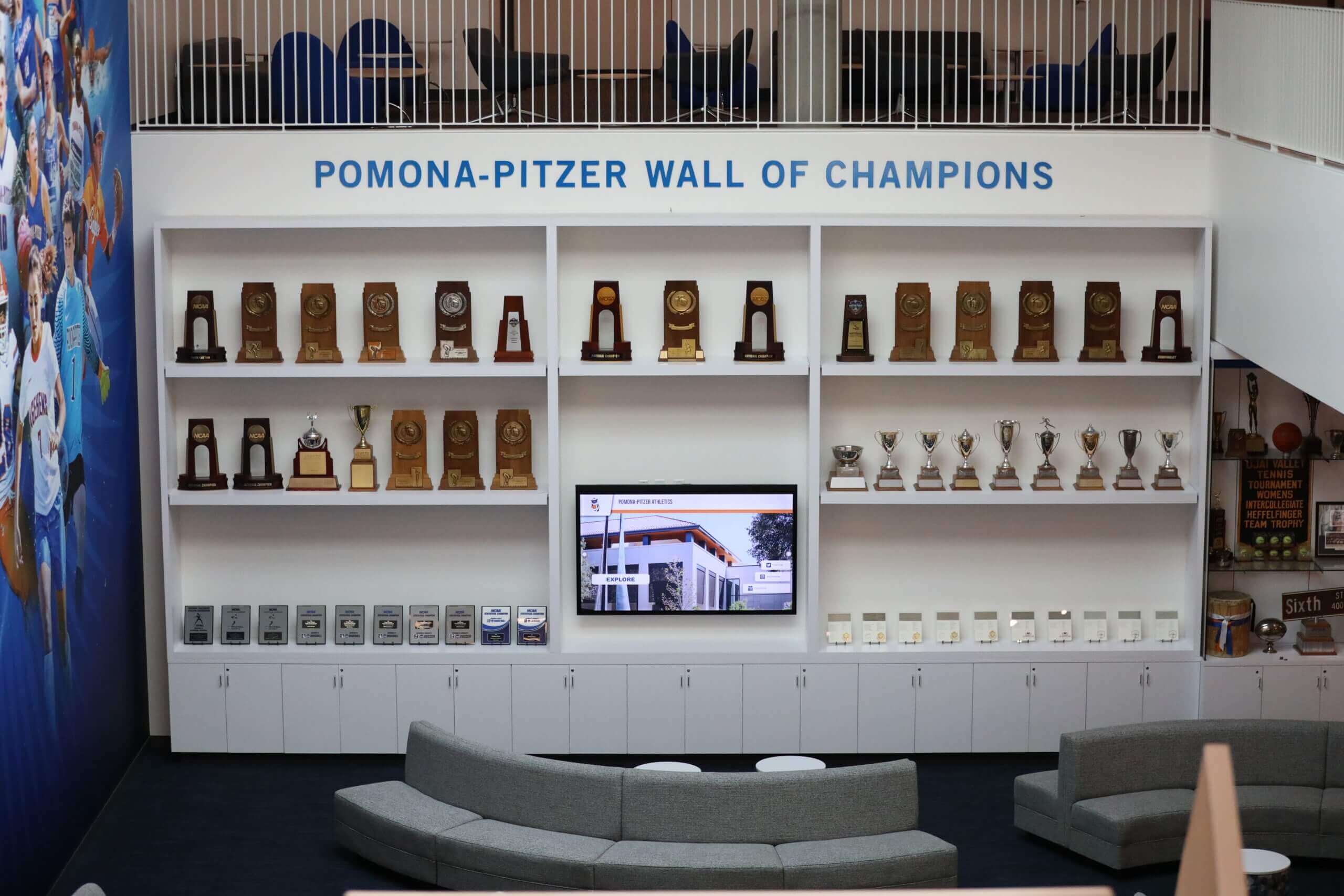
Championship hardware that has accumulated over decades represents a school's athletic history in physical form — a documented corrosion inspection program is the structured commitment to keeping that history presentable and preserved
Physical trophy cases hold something irreplaceable. The original hardware from a championship season cannot be reprinted or reissued. A commemorative plaque donated by a founding donor class has material and historical significance that cannot be duplicated. The facilities team that discovers active bronze disease on a fifty-year-old plaque in October and routes it to a conservator before spring has preserved something the school could not otherwise recover.
That same school may also be evaluating whether a cloud-managed interactive touchscreen display is the right next step for a recognition program that has outgrown its physical case space — a display that can present every championship, every hall-of-fame inductee, every retired jersey, and every alumni milestone on a screen accessible by QR code to students, families, and visitors who cannot physically visit the building. Physical preservation and digital expansion are complementary, not competing, approaches. The corrosion inspection ensures the hardware survives in good condition. The digital platform ensures the history those artifacts represent is accessible and growing.
Both require a structured, documented approach. The checklist above is the starting point for the physical side. The step after a corrosion inspection finding is documented is the same step that a well-run recognition program always takes next: deciding what level of care and investment is appropriate to what is being preserved, and acting accordingly.
Ready to Build a Digital Recognition Platform That Preserves Your School's History Without the Maintenance?
Rocket Alumni Solutions builds interactive digital trophy cases and halls of fame for schools nationwide — cloud-managed displays with unlimited record capacity, ADA WCAG 2.1 AA compliant touchscreens, QR code access for mobile viewing, and remote updates without IT tickets. See how schools are preserving their complete athletic archive on a platform that complements physical trophy cases and keeps every championship, retired jersey, and historic photograph permanently accessible.
Book A DemoLive Example: Rocket Alumni Solutions Touchscreen Display
Interact with a live example (16:9 scaled 1920x1080 display). All content is automatically responsive to all screen sizes and orientations.