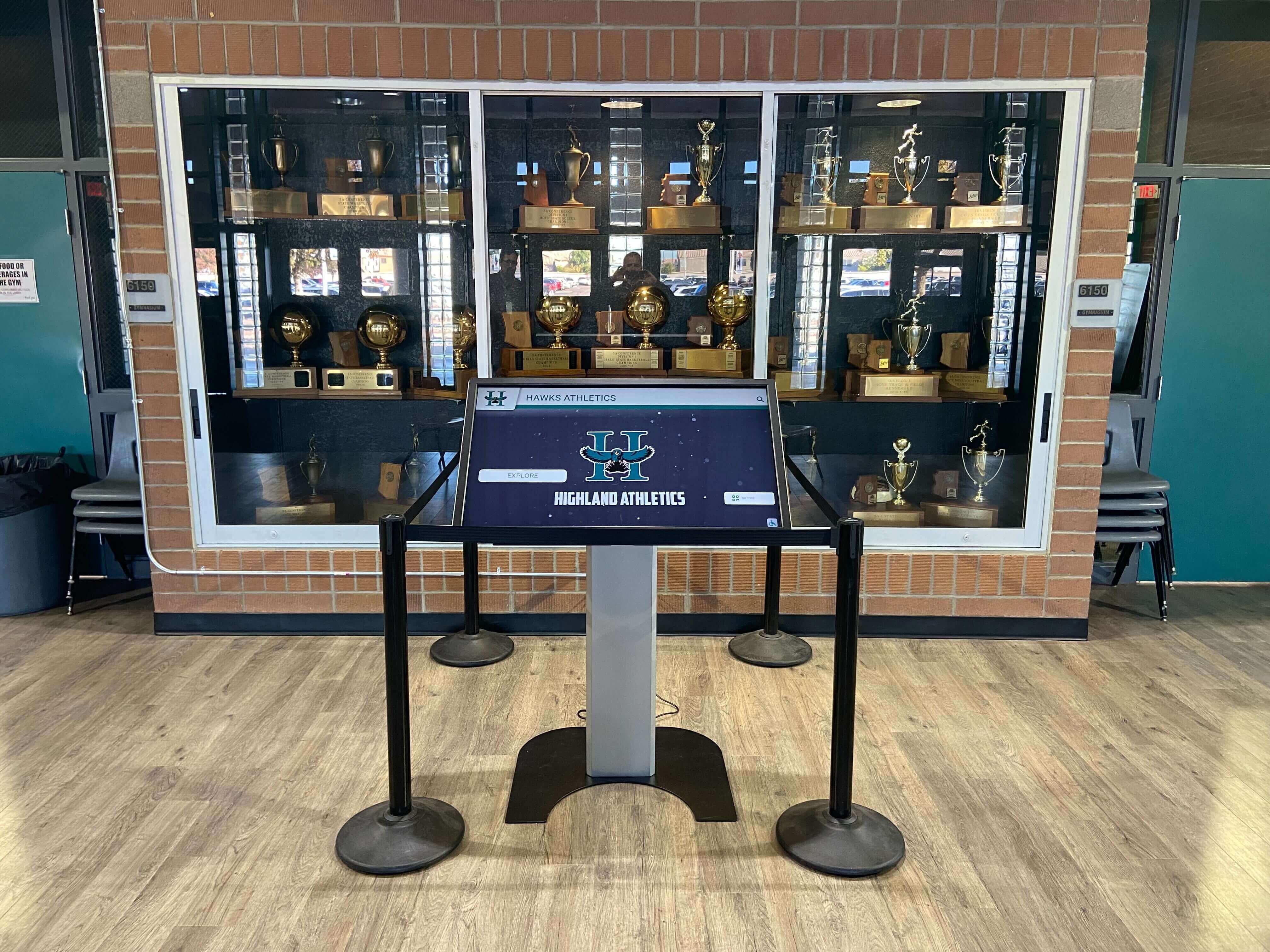




Intent: research — a trophy case LM-80 lumen maintenance check reviews manufacturer test data to verify that LED fixtures illuminating a school award display will maintain adequate light output over time. LM-80 (IES LM-80) is a standardized measurement procedure for quantifying how LED packages, modules, and arrays depreciate in lumen output under defined temperature and drive-current conditions. It does not predict the lifespan of a complete luminaire — that projection requires TM-21 extrapolation applied to the LM-80 dataset — but it is the foundational data source that distinguishes fixtures whose light output will hold steady for a decade from fixtures whose brightness will drop below an acceptable threshold within two or three years of installation.
This guide explains what LM-80 data measures and does not predict, why lumen maintenance matters specifically in school trophy case environments, how to locate and interpret LM-80 documentation, and how to apply a structured fixture-document review checklist to confident procurement and replacement decisions.
Trophy case lighting that looked adequate at installation can degrade so gradually that facilities teams and athletic directors never identify a single failure moment. Each season’s display appears a little dimmer than the last, and championship banners that once commanded the hallway now compete with the brighter ambient light coming through the entrance doors. The cause is rarely a burned-out fixture. It is almost always lumen maintenance failure: LED output declining below the level needed to illuminate engraved plaques, jersey numbers, and award hardware at the brightness that visitors and families expect.

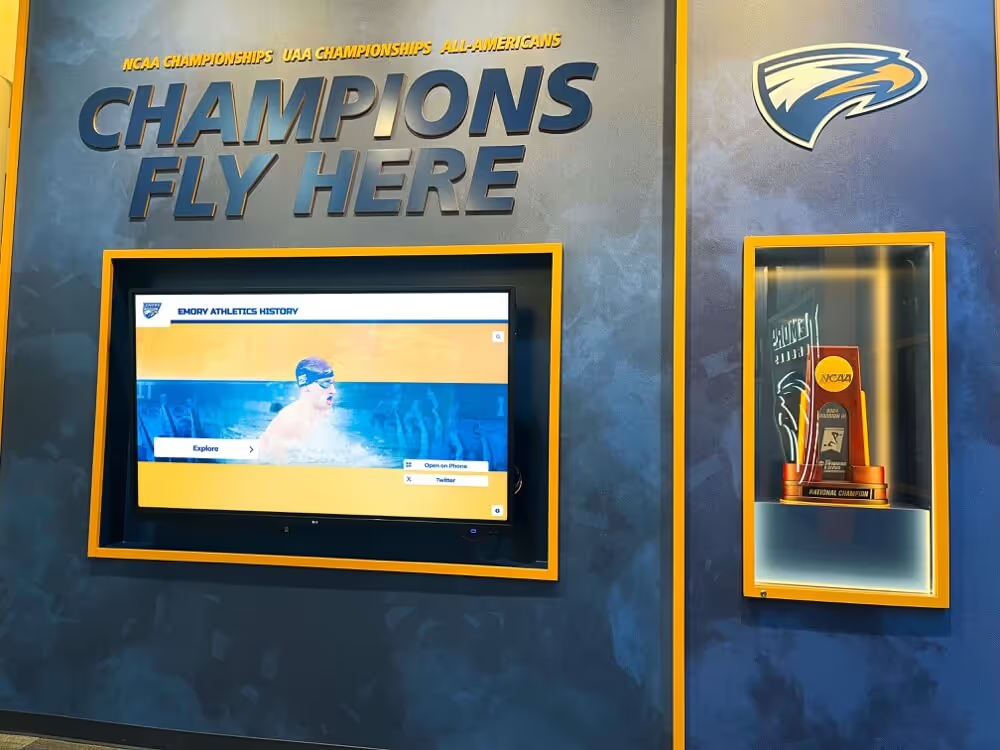
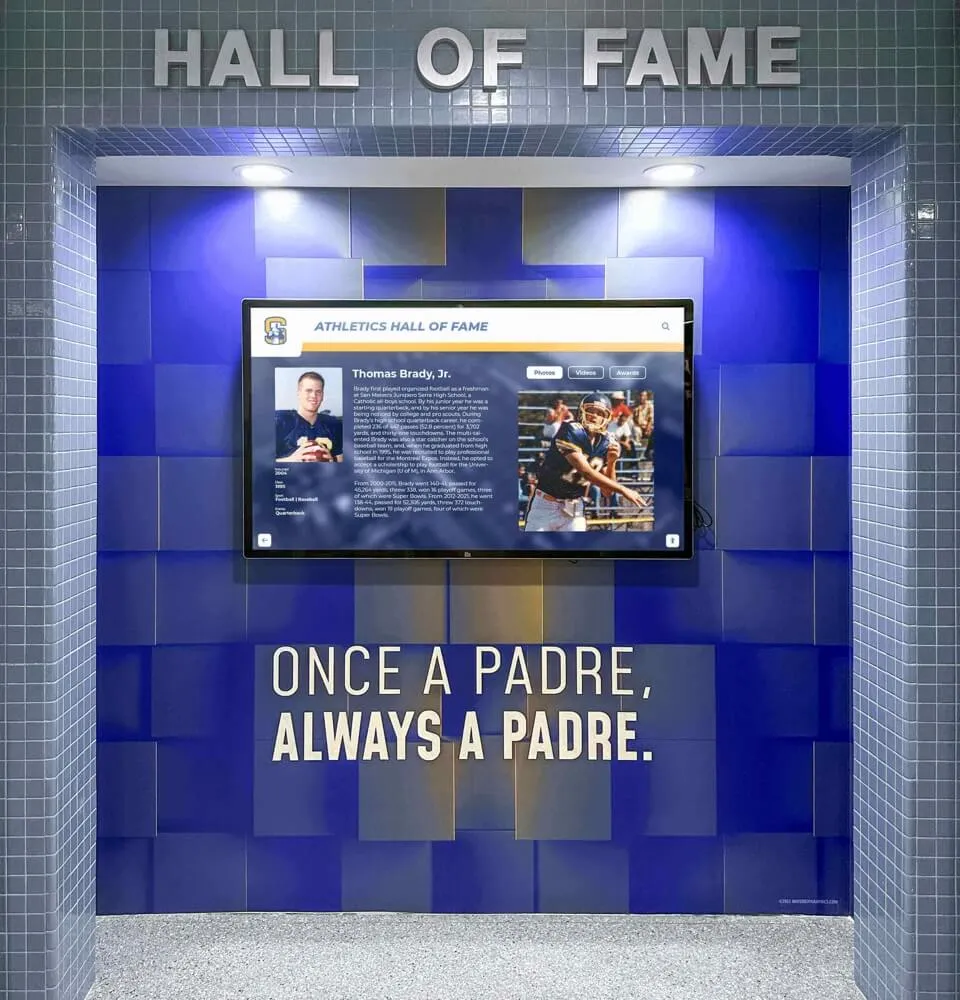
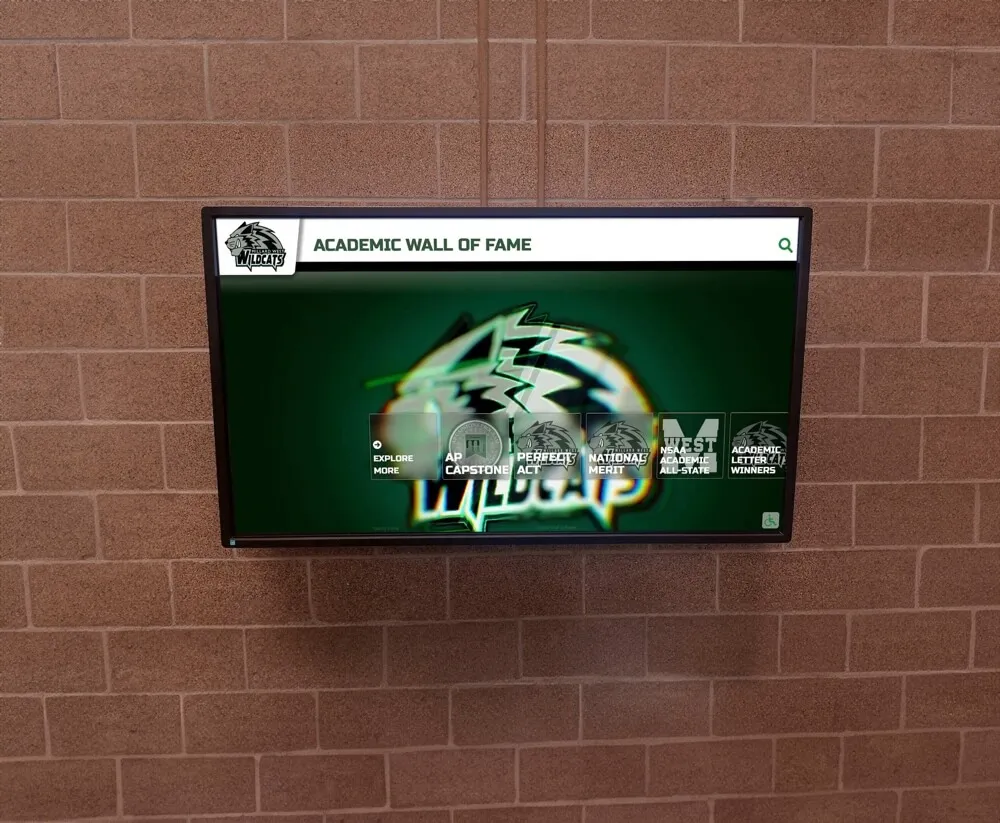
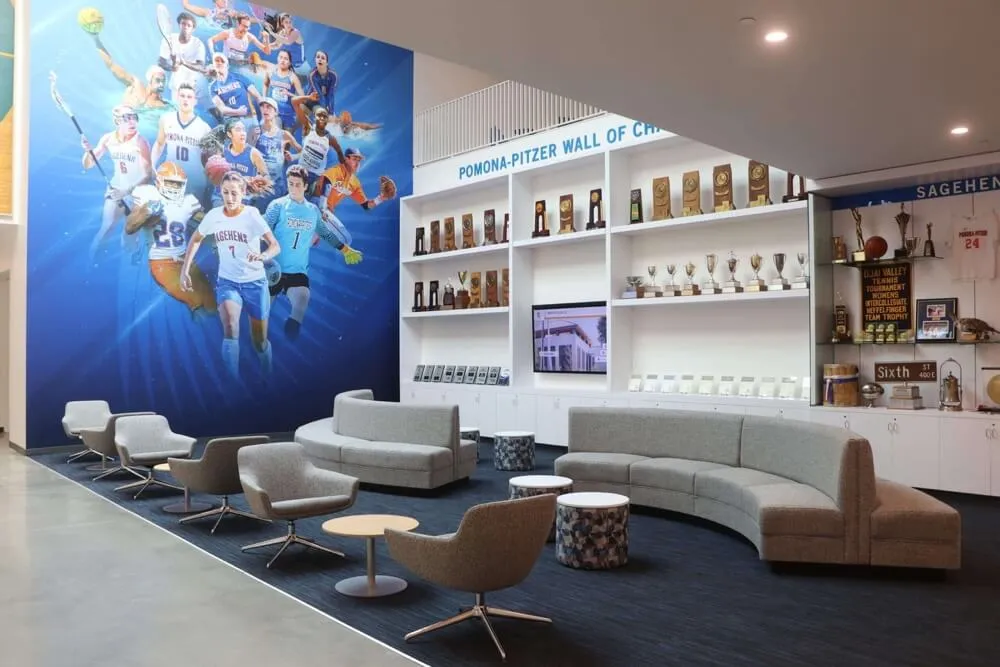
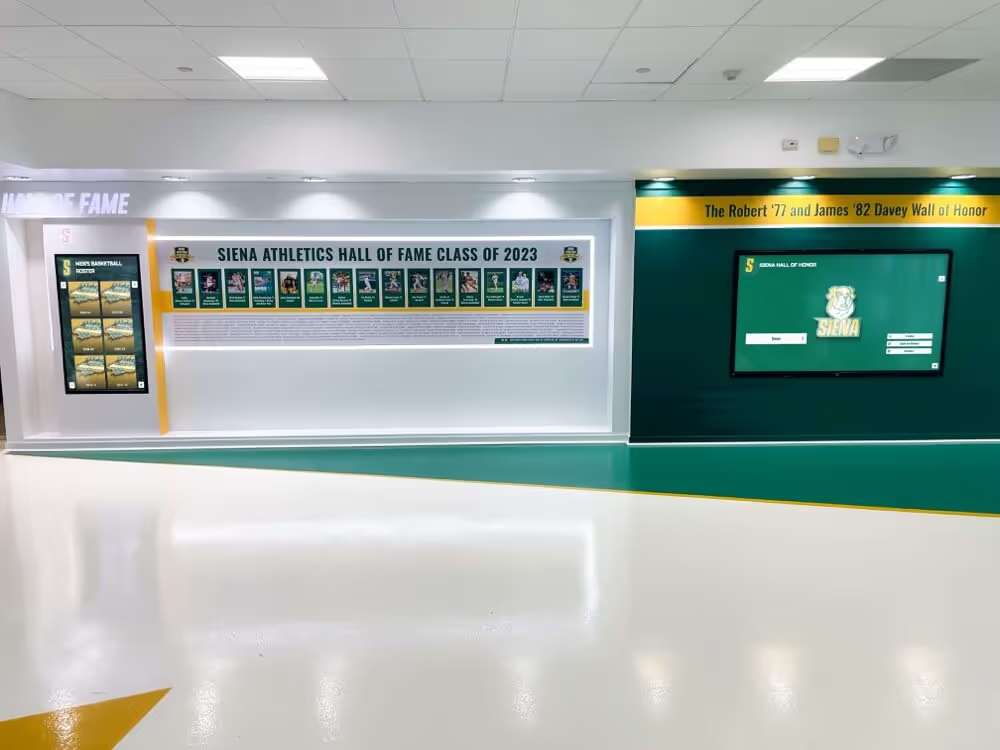
Trophy case environments depend on consistent LED output over years of continuous operation — lumen maintenance data predicts whether current fixtures will hold that output or depreciate below useful levels
What LM-80 Measures — and What It Does Not
Understanding LM-80 requires separating two questions that procurement teams often conflate: what the test measures, and what the results mean for a complete installed fixture.
What LM-80 measures:
IES LM-80 is a test procedure for measuring the lumen maintenance of LED packages, arrays, and modules under controlled laboratory conditions. During an LM-80 test, LED components are operated continuously at defined drive currents and case temperatures — typically three temperature points: 55°C, 85°C, and a manufacturer-selected additional temperature. Output is measured at 1,000-hour intervals for a minimum of 6,000 hours, though 10,000-hour datasets are common and substantially more useful for projection purposes.
The result is a dataset showing the percentage of initial lumen output retained at each measurement interval, for each tested temperature and drive current. A fixture manufacturer can report that their LED array retains 95.2% of initial output after 6,000 hours at 85°C and a specific drive current — that is LM-80 data.
What LM-80 does not measure:
LM-80 data covers the LED component only, not complete fixtures. Driver efficiency, thermal management quality, optical losses, and housing degradation all affect the real-world lumen output of a complete luminaire — and none of these are captured in an LM-80 report. LM-80 also does not itself predict specific L70 or L80 hours for a complete installation. That projection requires TM-21 extrapolation applied to the LM-80 dataset, following the six-times-test-duration limit that governs how far forward TM-21 projections can be reliably extended.
LM-80 vs. TM-21: Two Different Questions
LM-80 answers: "How much lumen output did this LED component retain during a controlled test?" TM-21 answers: "Based on LM-80 data, how many hours do we project before this component reaches L70 or L80 in a specific application?" A procurement decision based only on TM-21 projections without reviewing the underlying LM-80 dataset is analogous to reading a conclusion without reviewing the data it rests on. Both documents belong in a complete fixture evaluation for school trophy case lighting.
Why Temperature Matters in LM-80 Data
Lumen maintenance is temperature-sensitive. An LED component tested at 55°C will show better lumen maintenance than the same component at 85°C — heat is the primary driver of LED output depreciation. A trophy case fixture whose enclosure runs hot due to inadequate thermal design will depreciate faster than the LM-80 data at low test temperatures suggests. Always compare the fixture's rated operating temperature against the temperature point in the LM-80 dataset that governs the TM-21 projection.
Why Lumen Maintenance Matters in School Trophy Case Environments
Physical trophy cases present a specific lumen maintenance challenge that general commercial lighting specifications do not fully address.
Display-critical illuminance thresholds. Trophy case contents — engraved plaque lettering, trophy hardware, award ribbons, jersey numbers — are typically smaller and finer in detail than standard commercial interior signage. Illuminance that is adequate for reading a name plate at installation may fall below readability as lumen output depreciates. The display quality threshold is not a regulatory requirement; it is set by the expectation of the first visitor who cannot read the championship year on a plaque from three feet away.
Continuous operation schedules. Many school trophy cases operate on long daily schedules — open from before first period until after evening athletic events. Annual operating hours in the range of 3,000 to 4,500 are common. A fixture approaching L70 (70% of initial output) on a projected 25,000-hour lifespan arrives at that depreciation point in roughly six to eight years under those conditions. A trophy case fixture with a projected L70 of only 10,000 hours reaches 70% output in approximately two to three years — well within the useful recognition program life of the installation.
Gradual depreciation masking the problem. Because lumen maintenance failure is gradual, trophy case environments rarely generate a service ticket that reads “the lights are getting dimmer.” The depreciation shows up instead as complaints that trophies look dusty (reduced specular highlights on polished hardware), the case looks crowded (low illuminance flattening visual depth), or photographs are hard to read (insufficient contrast at the lumen threshold for detail legibility). LM-80 data tells you whether the fixture timeline matches the complaint date.
Event photography and video production. Trophy cases are photographed during athletic banquets, senior nights, and recognition ceremonies. For families arriving at swim meets and season-end recognition events who want to photograph the trophy case during their visit, cameras operating at fixed ISO and aperture settings require adequate illuminance to avoid introducing noise or requiring flash that washes out the display. As lumen maintenance failure progresses, the same camera settings that produced clean photographs at installation begin to produce underexposed results — and the photography team typically attributes the problem to the lighting without identifying which specific fixture has depreciated below useful output.
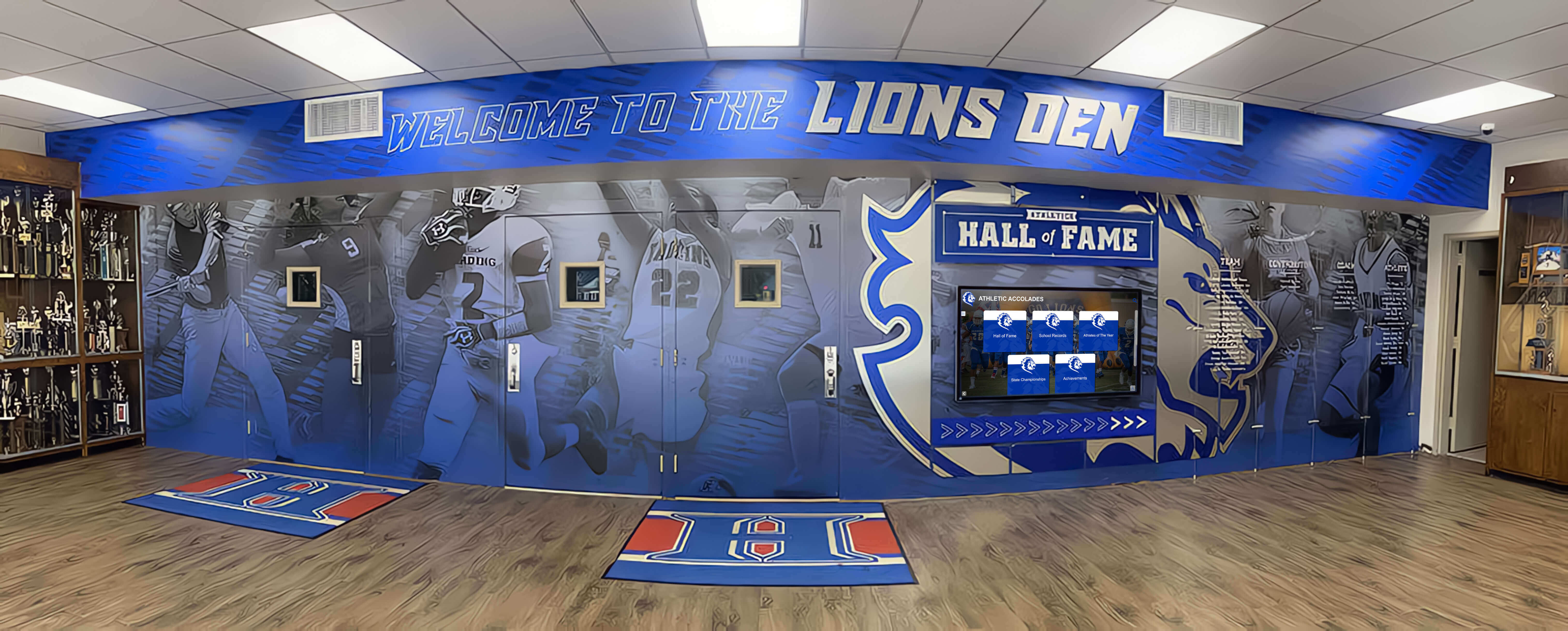
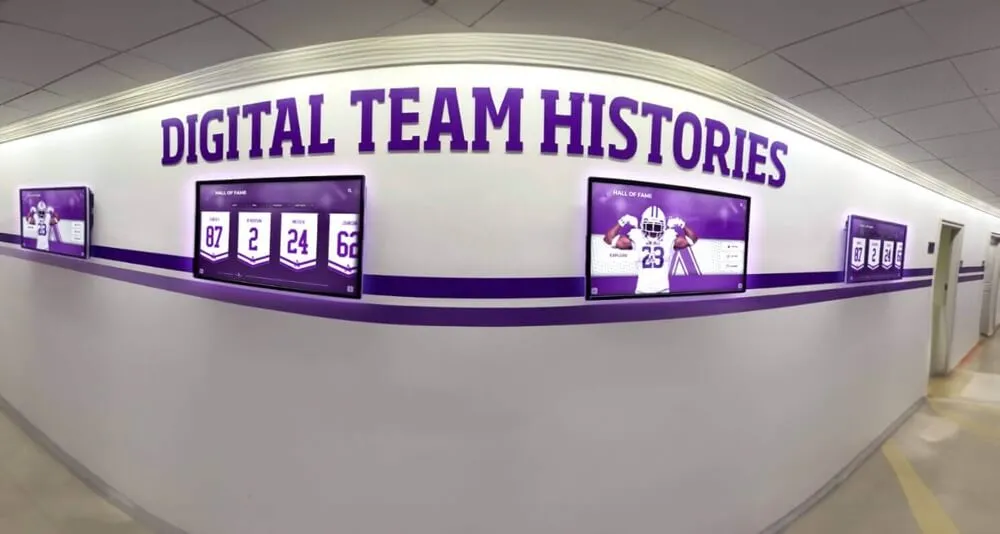
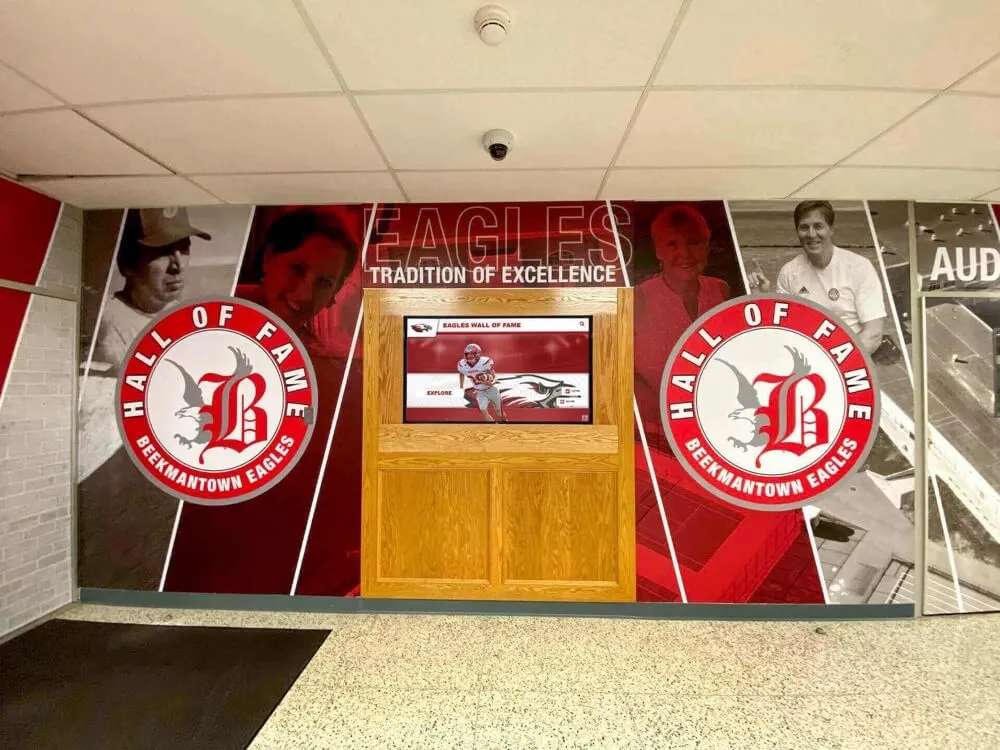
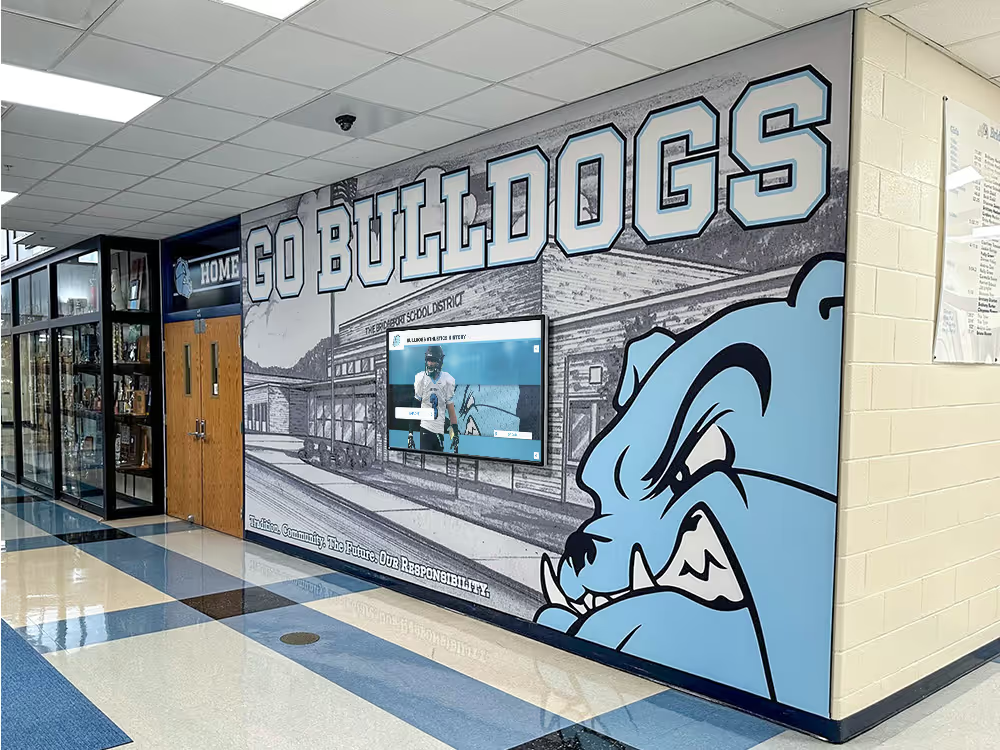
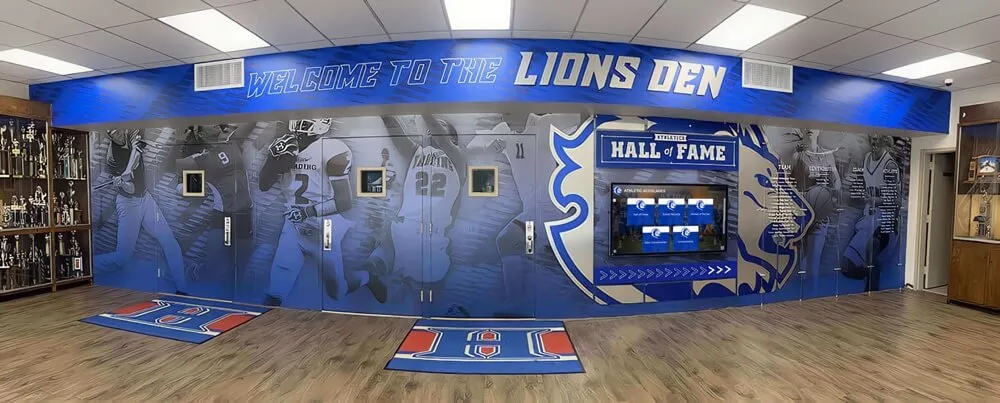
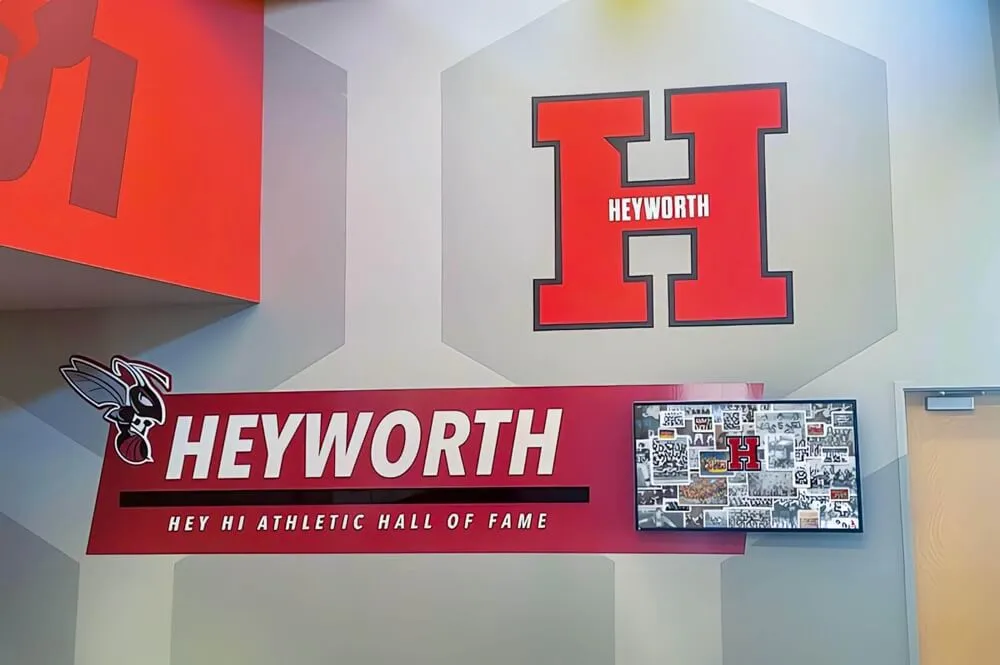
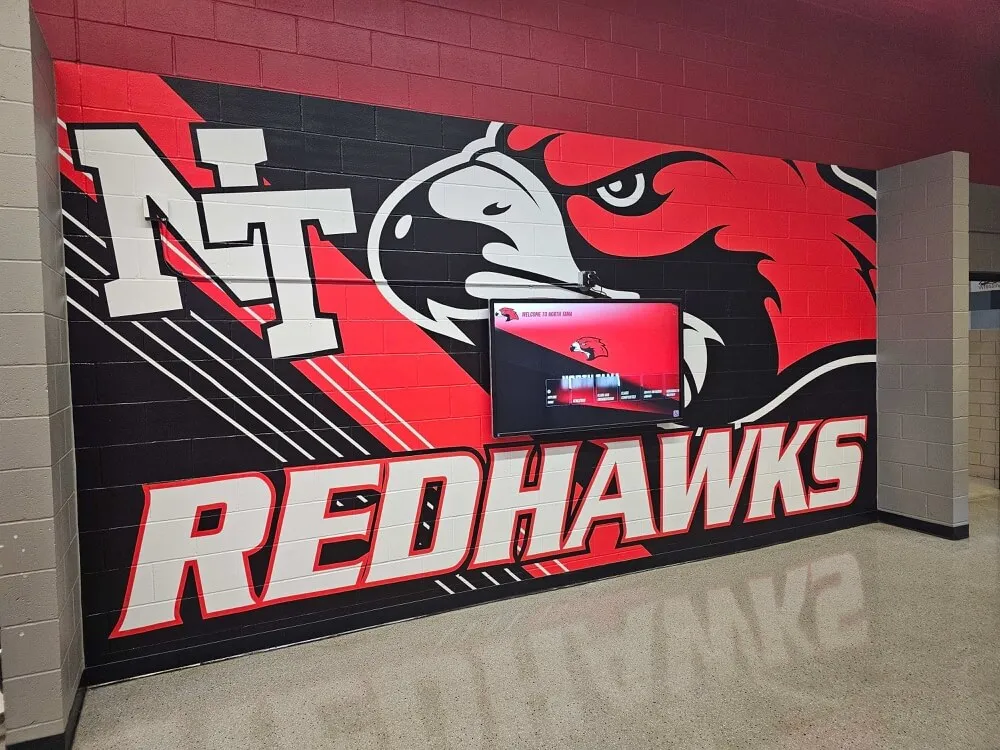
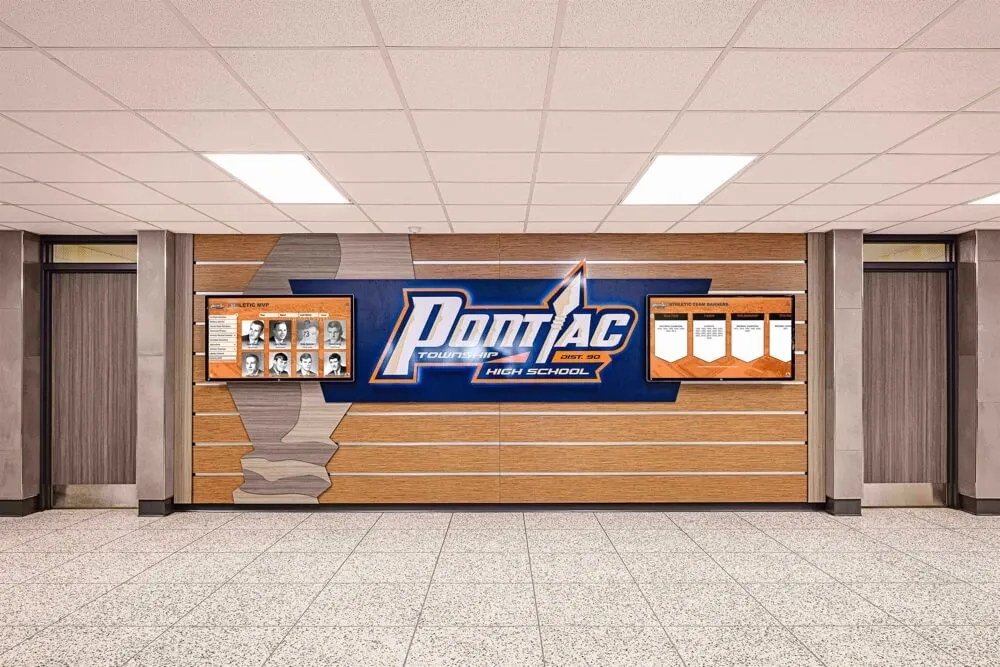
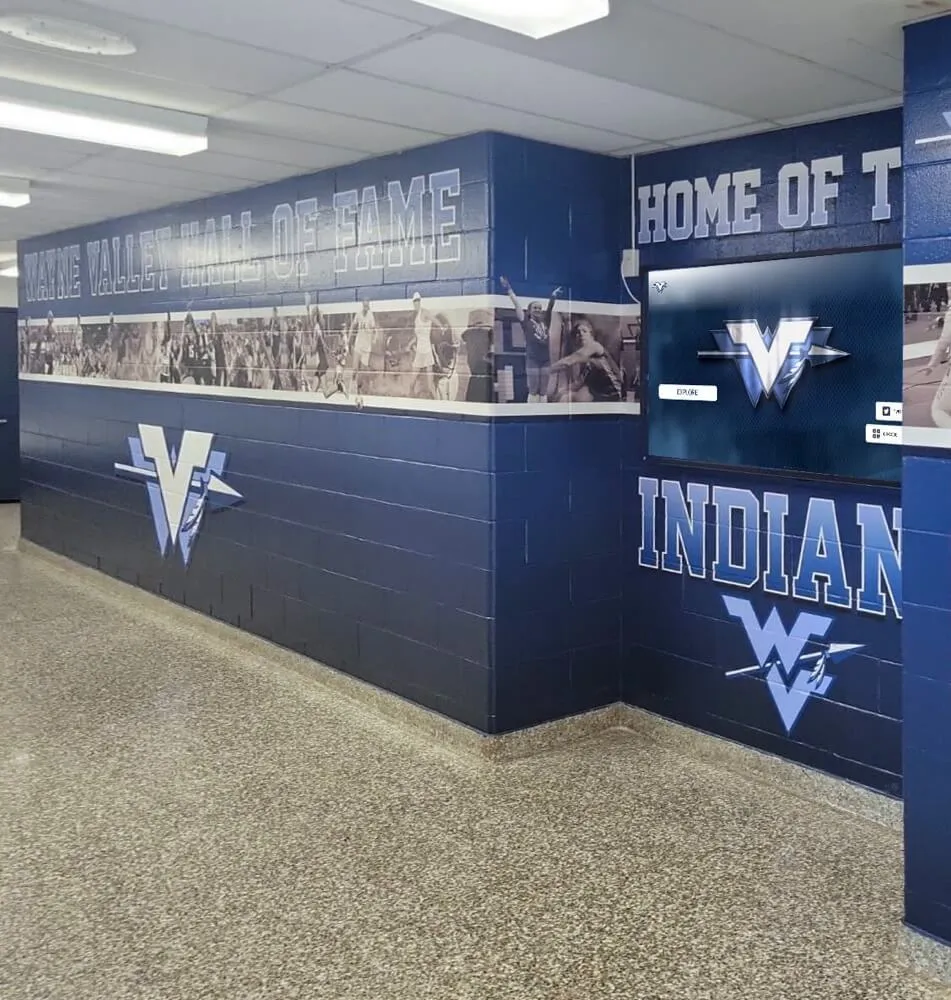
Recognition hallways combining physical trophy cases and mural elements require fixtures with strong lumen maintenance — gradual output depreciation affects every illuminated surface in the corridor, not only the case interior
LM-80 Fixture Document Review Checklist
The following checklist applies to the fixture documentation review that should precede any trophy case lighting procurement or renewal decision. Each item can typically be completed using manufacturer data sheets, IES photometric files, and TM-21 reports — no on-site measurement equipment is required.
Document 1: LM-80 Test Report
| Checklist Item | What to Look For | Red Flag |
|---|---|---|
| Test duration | Minimum 6,000 hours; 10,000-hour datasets significantly increase TM-21 projection reliability and extend the reportable projection horizon to 60,000 hours | Dataset shorter than 6,000 hours — TM-21 projections from shorter datasets carry higher uncertainty and a reduced projection ceiling |
| Temperature coverage | At least three case temperatures tested (55°C, 85°C, and one additional manufacturer-selected point) | Only one temperature point reported — cannot assess how the LED performs across the fixture's actual thermal operating range |
| Drive current match | Test drive current matches or exceeds the actual drive current used in the complete luminaire as specified in the fixture's driver documentation | LM-80 test current significantly lower than the fixture's operating current — actual depreciation will be faster than the data suggests |
| Lumen retention at test endpoint | Retention at 6,000 or 10,000 hours should exceed 90% at the temperature point that matches the fixture's rated operating temperature | Retention below 90% at 6,000 hours at the relevant temperature — accelerated depreciation is likely throughout the projection period |
| Accredited test laboratory | Report identifies the testing laboratory by name; NVLAP-accredited labs are the recognized benchmark for LM-80 compliance | No laboratory identification, or a lab not recognized by IES or the ENERGY STAR program |
Document 2: TM-21 Lumen Maintenance Projection
| Checklist Item | What to Look For | Red Flag |
|---|---|---|
| L70 projected hours | L70 ≥ 36,000 hours is a recommended minimum for school trophy case fixtures expected to serve recognition programs for 10 or more years at 3,000–4,000 annual operating hours | L70 below 25,000 hours — fixture reaches 70% of initial output within five to eight years under typical school schedules |
| L80 projected hours | L80 ≥ 25,000 hours for display-quality applications where 80% output retention is the minimum practical threshold for reading fine engraving and trophy hardware at standard viewing distances | L80 below 15,000 hours — lumen output falls below display-quality threshold within four to five years |
| Projection temperature match | TM-21 projection uses the LM-80 temperature point that matches the fixture's rated junction or case temperature in the manufacturer's thermal characterization | Projection uses the lowest test temperature regardless of fixture operating temperature — this approach overstates projected maintenance life |
| Extrapolation limit disclosed | TM-21 limits reportable projected hours to six times the LM-80 test duration: a 6,000-hour dataset supports projections to a maximum of 36,000 hours; a 10,000-hour dataset supports projections to 60,000 hours | L70 reported as ">50,000 hours" without noting that a 6,000-hour dataset underlies the projection — per TM-21, the correctly limited projection is >36,000 hours, not a higher uncapped number |
| Survival rate disclosed | ENERGY STAR and DLC require that the L70 projection apply to the B50 survival population — 50% of units surviving to that projected point. Some manufacturers report L70 for B10 or B5, which is a substantially weaker claim | Survival rate not disclosed, or L70 reported at a survival rate below B50 |
Document 3: Complete Luminaire Data
For trophy case applications, LM-80/TM-21 component data should be supplemented by complete luminaire documentation:
- Initial Delivered Lumens (LM-79): Measured at the fixture output surface using IES LM-79 protocol — the real-world starting point against which maintenance projections apply, not the LED component’s raw output.
- Luminaire Efficacy: Reported in LM/W. Lower efficacy than the LED component’s lab data indicates driver or optical losses that compound depreciation at the fixture level.
- Complete Luminaire L70 (if provided): Some manufacturers report lumen maintenance projections at the complete luminaire level; these incorporate driver and optical losses and are more accurate for long-term trophy case planning than component-only TM-21 projections.
- Thermal Validation: Evidence that the fixture’s thermal design keeps LED junction temperatures within the range covered by the LM-80 dataset — may appear as a thermal resistance specification, a rated case temperature measurement, or a thermal management diagram.
Evaluating Your Recognition Display Approach?
When trophy case lighting procurement involves navigating LM-80 reports, TM-21 projections, and LM-79 fixture data across multiple vendors, it can also be useful to compare what consistent visual quality looks like on a digital recognition platform over the same time horizon. Rocket Alumni Solutions works with facilities teams, athletic directors, and administrators to assess recognition display options that hold consistent output without recurring document-review cycles.
Request a ConsultationTM-21 Threshold Reference for Procurement Decisions
Use the following table to evaluate TM-21 projected hours from manufacturer documentation before committing to a fixture specification for trophy case or recognition display applications.
| TM-21 Projected L70 Hours | Classification | Estimated Lifespan at 3,500 hrs/yr | Procurement Verdict |
|---|---|---|---|
| ≥ 50,000 hrs | Premium | 14+ years to L70 threshold | Accept — best-in-class lumen maintenance; document specification as procurement reference standard |
| 36,000–50,000 hrs | Good | 10–14 years to L70 threshold | Accept — meets recommended minimum for trophy case applications; note projection ceiling from LM-80 dataset duration |
| 25,000–36,000 hrs | Marginal | 7–10 years to L70 threshold | Caution — below recommended minimum; fixture may reach L70 before end of program replacement cycle; negotiate warranty or plan mid-cycle replacement |
| < 25,000 hrs | Poor | Under 7 years to L70 threshold | Reject for long-term trophy case installations; acceptable only for temporary or event lighting applications where rapid replacement is planned |
| Not disclosed | Unverifiable | Unknown | Request LM-80 and TM-21 documentation before purchase; proceed only after documentation is reviewed; treat absence of data as a quality signal |
Interpreting Retained Output for Fixtures Already in Service
If your trophy case fixtures do not have documented LM-80 data but you know their age and original lumen output, estimate current output by calculating cumulative operating hours (daily schedule hours × school days × years in service) and applying the manufacturer’s published depreciation rate. Use the table below to interpret estimated retained output against display-quality thresholds:
| Estimated Retained Output | Display Impact | Recommended Action |
|---|---|---|
| ≥ 95% | No visible change from installation; award hardware and engraving remain fully legible | Document result; schedule next review in 24 months |
| 90–94% | Slight output reduction; not perceptible under casual observation; camera settings may require modest adjustment | Monitor; flag fixture age for inclusion in next procurement cycle planning |
| 80–89% | Visible loss compared to reference; engraved text at distance requires higher illuminance; shadow depth on trophy hardware reduced | Plan replacement within 12 months; consider supplemental illuminance as interim measure |
| 70–79% | Significant depreciation; trophy case appears dim against ambient corridor lighting; fine lettering on plaques difficult to read from normal viewing distance | Replace at next available maintenance window; include L70 projected hours in replacement procurement specification |
| < 70% | Serious display quality failure; case contents difficult to read; display undersells the school's recognition program to every visitor | Immediate replacement; document as maintenance failure in procurement records for future reference |
Procurement Language for Lumen Maintenance Requirements
The most common cause of premature lumen maintenance failure in school trophy cases is procurement language that specifies lumen output at installation but does not specify maintenance expectations. Replacement purchases made on nominal output and CCT alone introduce fixtures with undisclosed depreciation rates that may be far below the specification set by the original installation. Include the following in purchase orders for trophy case LED fixtures:
“LED luminaires for trophy case and award display applications shall be supported by a compliant LM-80 test report with a minimum 6,000-hour dataset and a TM-21 lumen maintenance projection documenting L70 ≥ 36,000 hours and L80 ≥ 25,000 hours at B50 survival. The applicable LM-80 temperature point shall match the fixture’s rated case temperature as documented in the manufacturer’s thermal characterization. Suppliers shall provide LM-80 and TM-21 documentation before order fulfillment. Products without compliant lumen maintenance documentation will not be accepted.”
This language is modeled on the documentation requirements used in ENERGY STAR and DLC certification programs. It gives the purchasing team a verifiable specification rather than a nominal claim, and signals to suppliers that lumen maintenance is a required quality parameter — not an optional disclosure.
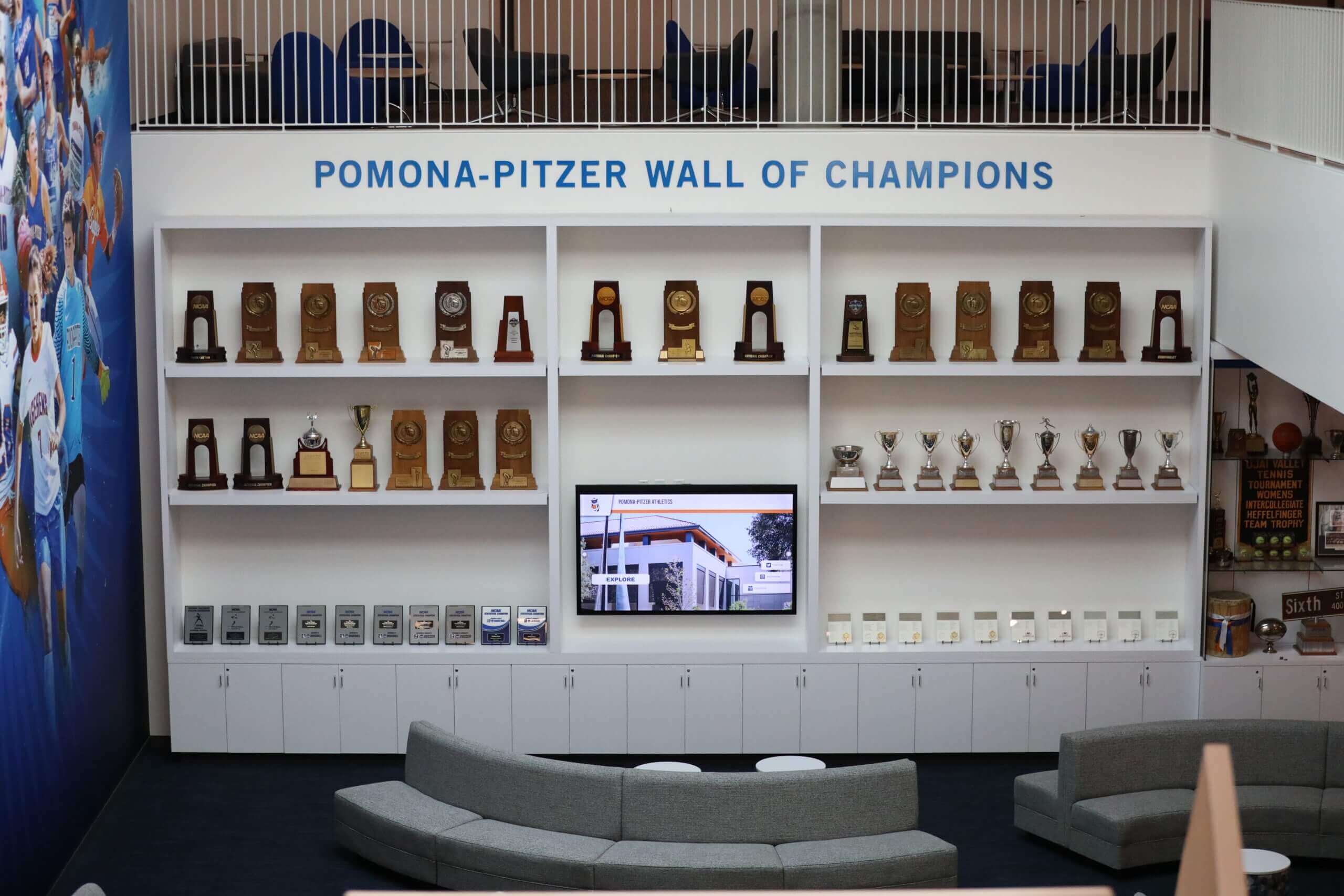
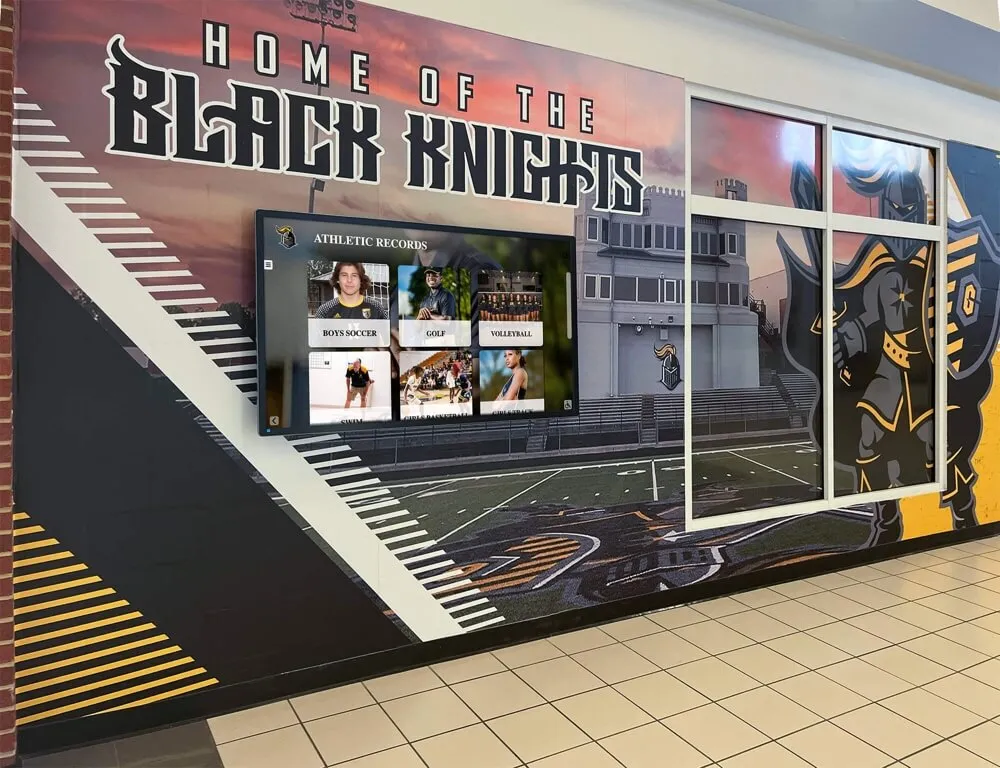
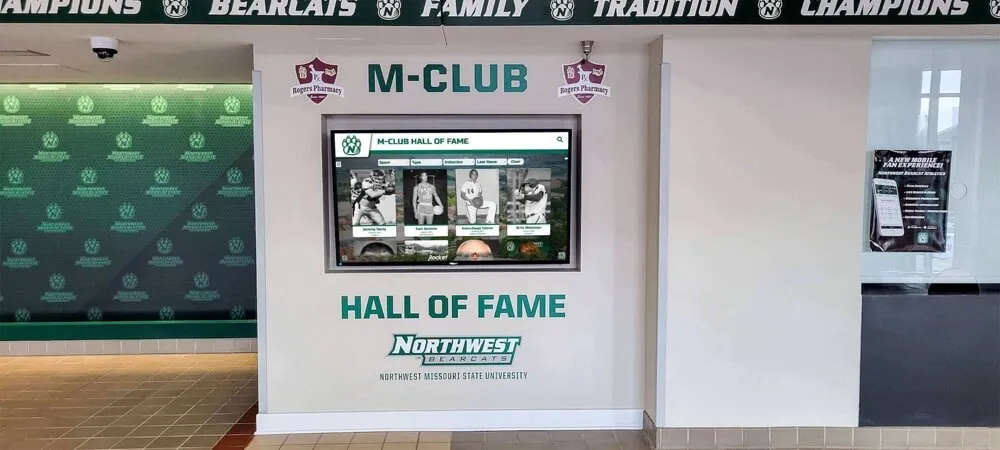
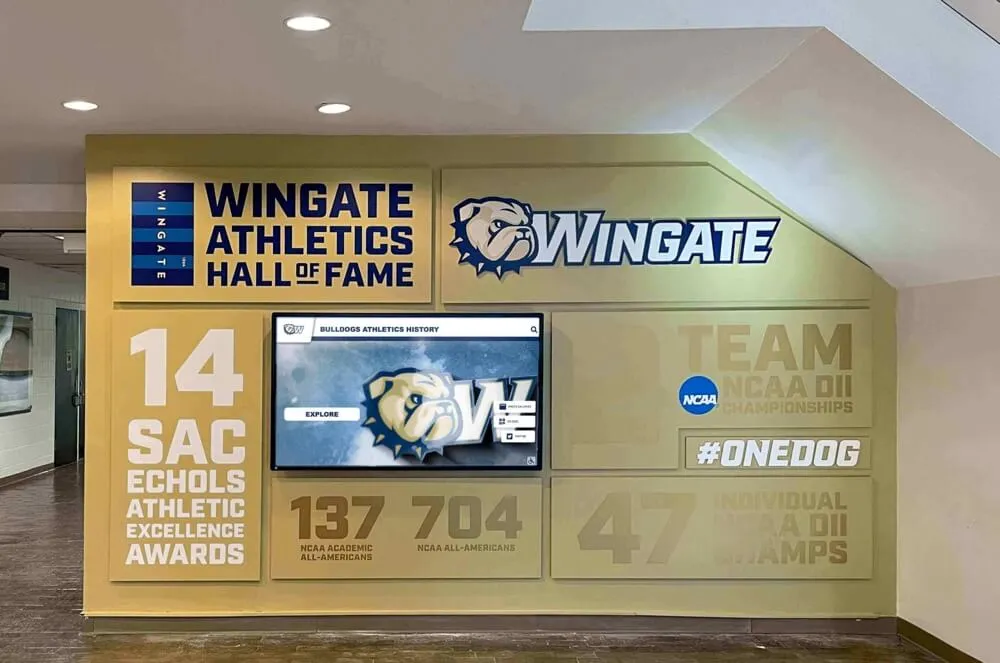
Championship trophy walls built to a documented lumen maintenance specification remain visually consistent across the full investment horizon of the recognition program
LM-80 in Context: A Complete Trophy Case Lighting Maintenance Program
Lumen maintenance is one component of a comprehensive trophy case lighting quality program. The table below shows how the LM-80/TM-21 document review relates to adjacent checks that facilities teams address in a coordinated audit schedule.
| Check | What It Addresses | When to Run It |
|---|---|---|
| LM-80/TM-21 document review | LED component lumen depreciation rate; projected time to L70 and L80 | At procurement; review fixture documentation every 2–3 years for installed fixtures |
| Illuminance measurement (lux) | Actual output reaching trophy surfaces; verifies whether fixture performance matches the original specification | Annually; after any fixture replacement |
| CRI and R9 check | Color rendering of school colors, red ribbons, and red-accented trophy hardware | At procurement; when color quality complaints are received |
| TM-30 Rf/Rg evaluation | Full-spectrum color fidelity across 99 test samples and gamut expansion or compression | At procurement; when a more complete color quality picture is needed beyond R9 |
| Flicker index test | Driver ripple stability; camera banding risk and photosensitive visitor exposure | Annually; after any driver replacement |
| MacAdam ellipse / SDCM check | Color consistency between adjacent fixtures from the same installation or replacement lot | At procurement; after mixed-lot replacements |
| Duv tint check | Green or magenta tint cast on white surfaces, portraits, and neutral trophy finishes | At procurement; when tint complaints are received from staff or visitors |
The LM-80/TM-21 document review is the only check on this list that requires no on-site measurement equipment — it is a documentation audit conducted at the procurement stage. This makes it both the most accessible entry point into a structured trophy case lighting program and, in practice, the most commonly skipped step when facilities teams are purchasing under time pressure or without a written specification that requires the data.
Recognition programs that encompass years of athletic and academic achievement — including AP Scholar and honor roll displays, school photo galleries, history timelines, and student profiles, and comprehensive online archives for high school alumni — deserve lighting infrastructure held to the same documentation standard as the content programs it illuminates. An award case representing forty years of athletic history should not lose visual quality due to a procurement decision made under a week of schedule pressure.
How Digital Recognition Platforms Handle Lumen Maintenance Differently
Physical trophy case LED lighting requires LM-80 monitoring because the LED component is a consumable with a measurable depreciation rate that varies substantially across product quality tiers. Facilities teams who manage this proactively — reviewing manufacturer documentation at procurement, tracking cumulative operating hours against TM-21 projections, and scheduling replacements before L80 is reached — maintain display quality across the fixture’s operational life. Facilities teams who do not have this documentation in place discover the depreciation problem only when display quality has already declined below the level that visitors and families expect.
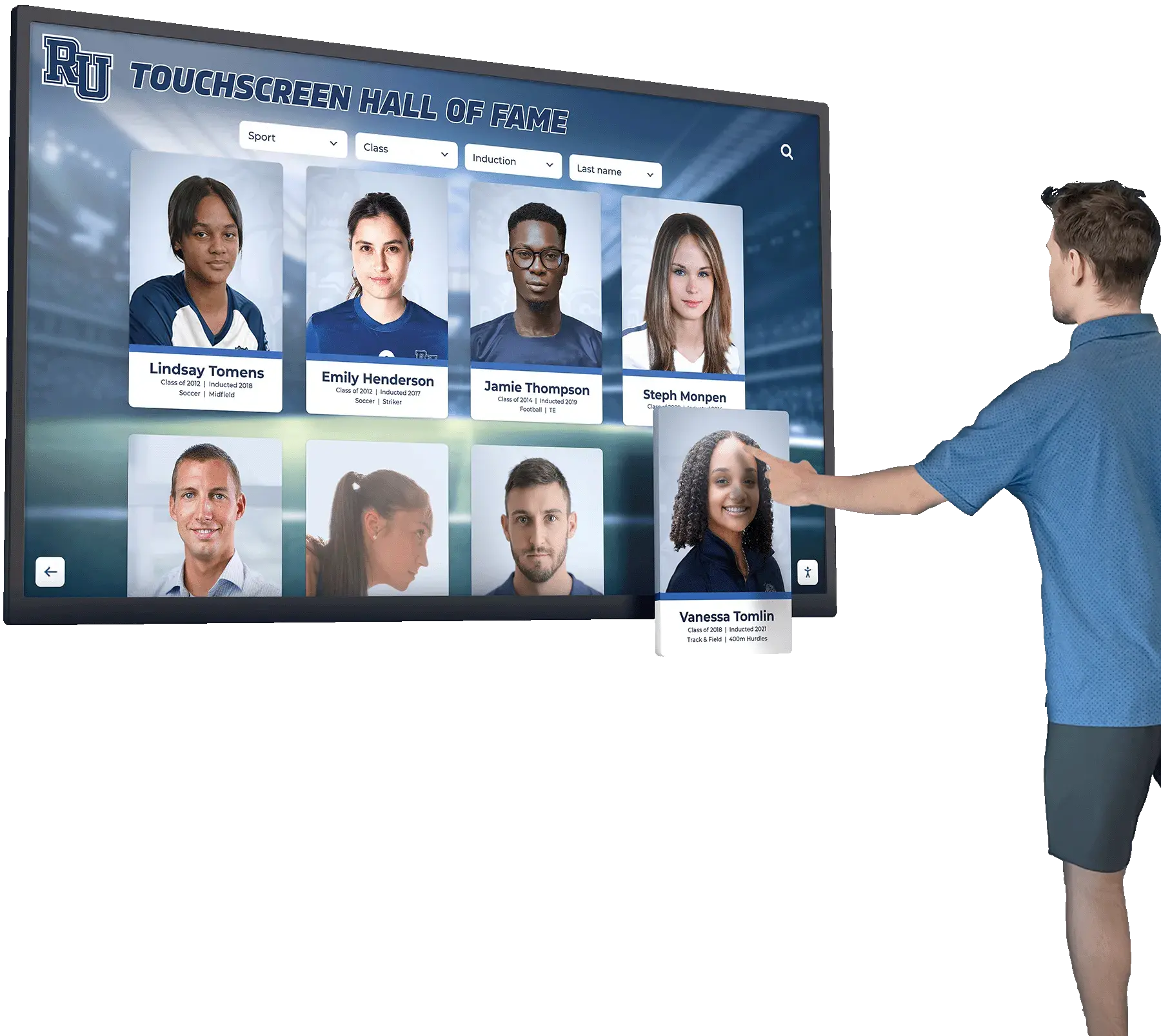
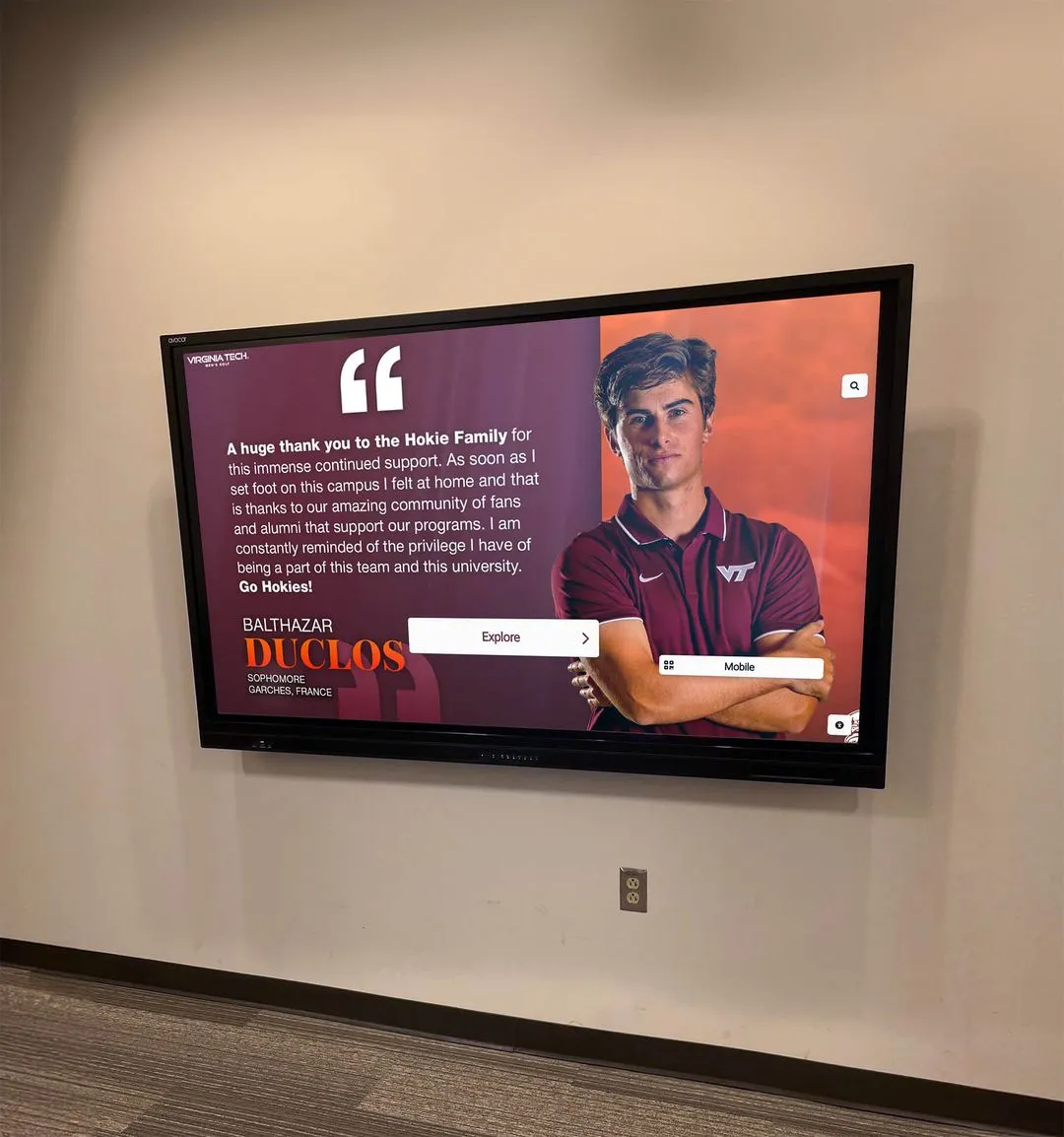
Commercial-grade digital recognition displays are designed to display-industry panel standards where backlight lumen maintenance is integrated into panel warranty and rated-life specifications, rather than requiring a separate document review at each procurement event. The full recognition platform from Rocket Alumni Solutions provides unlimited display capacity, cloud-managed content updates, and WCAG 2.1 AA accessibility compliance for schools evaluating this path — with factory-calibrated brightness consistency built into the hardware specification.
Digital hall of fame and donor wall display programs built on commercial panel hardware also offer a practical advantage for schools managing multi-sport recognition programs: display content can be updated, expanded, and rearranged without physical constraints. End-of-season recognition programs — for volleyball teams, swim programs, and other fall and winter sports — can be featured prominently during their relevant period and then preserved in the digital archive for families to access throughout the year, rather than competing with other awards for physical case space as output slowly depreciates.
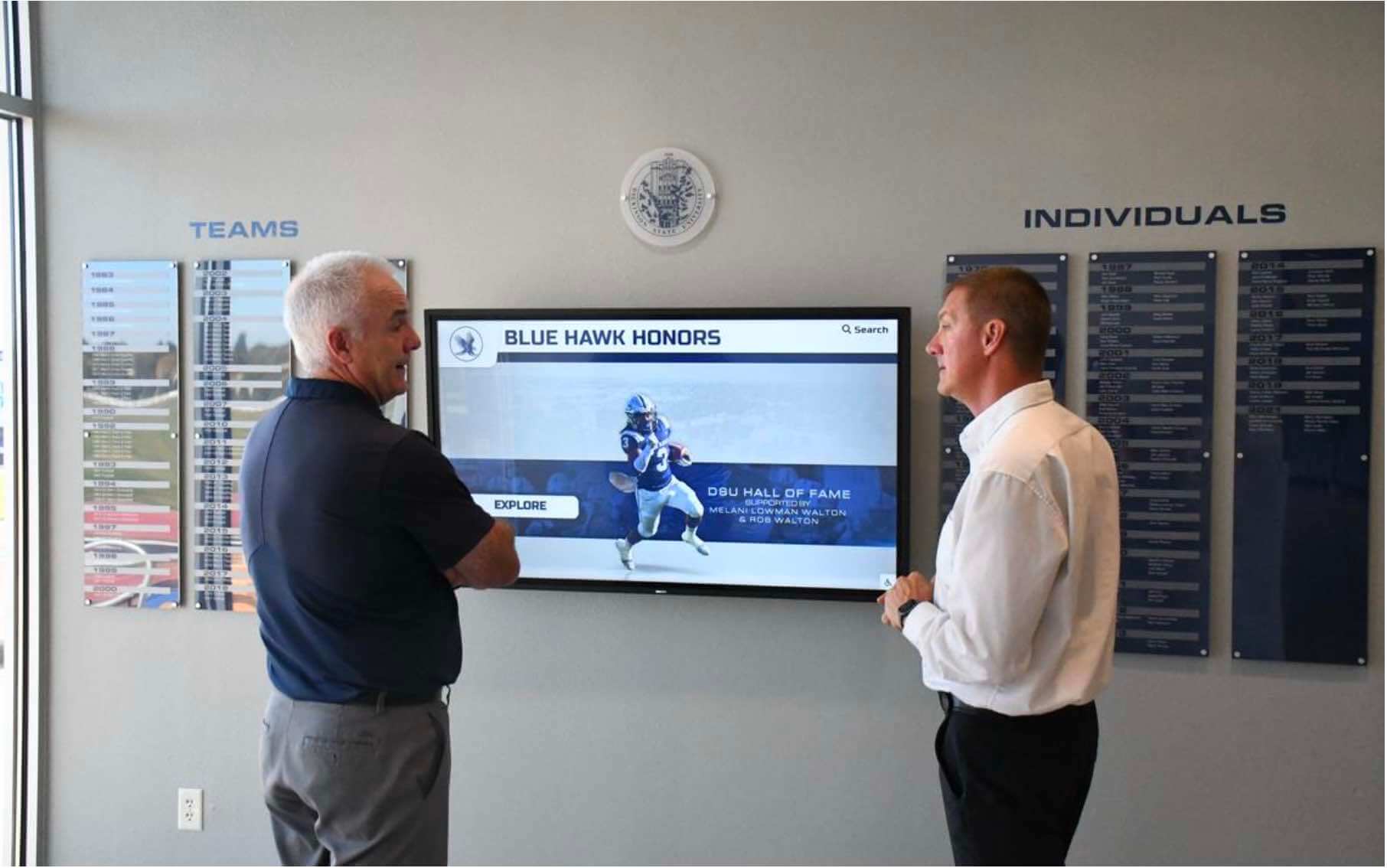
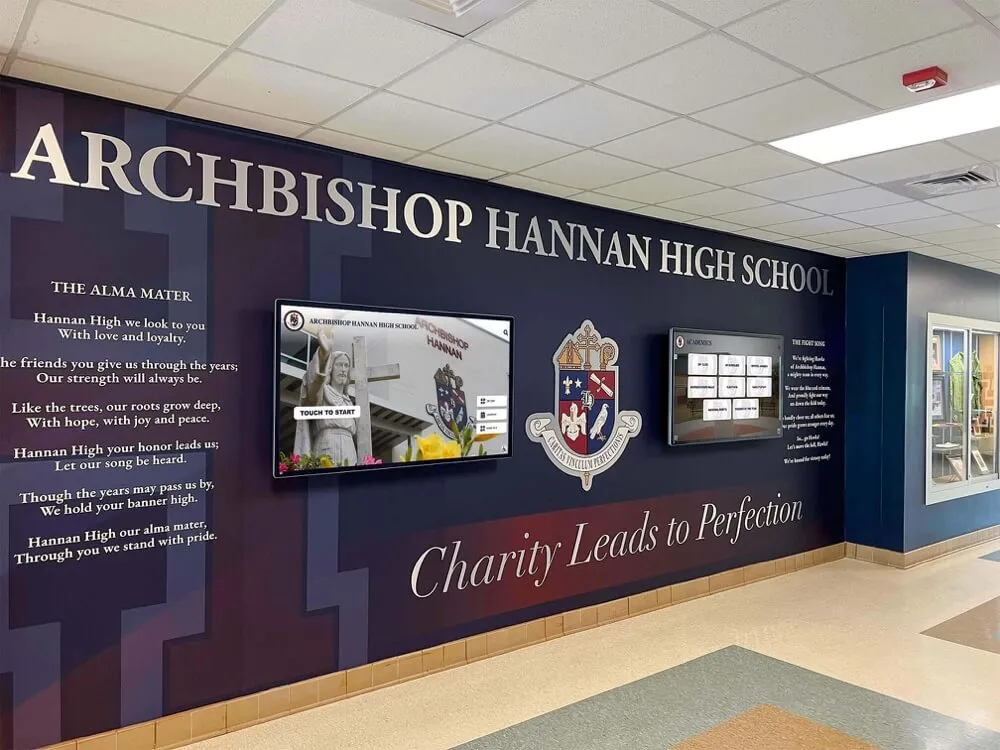
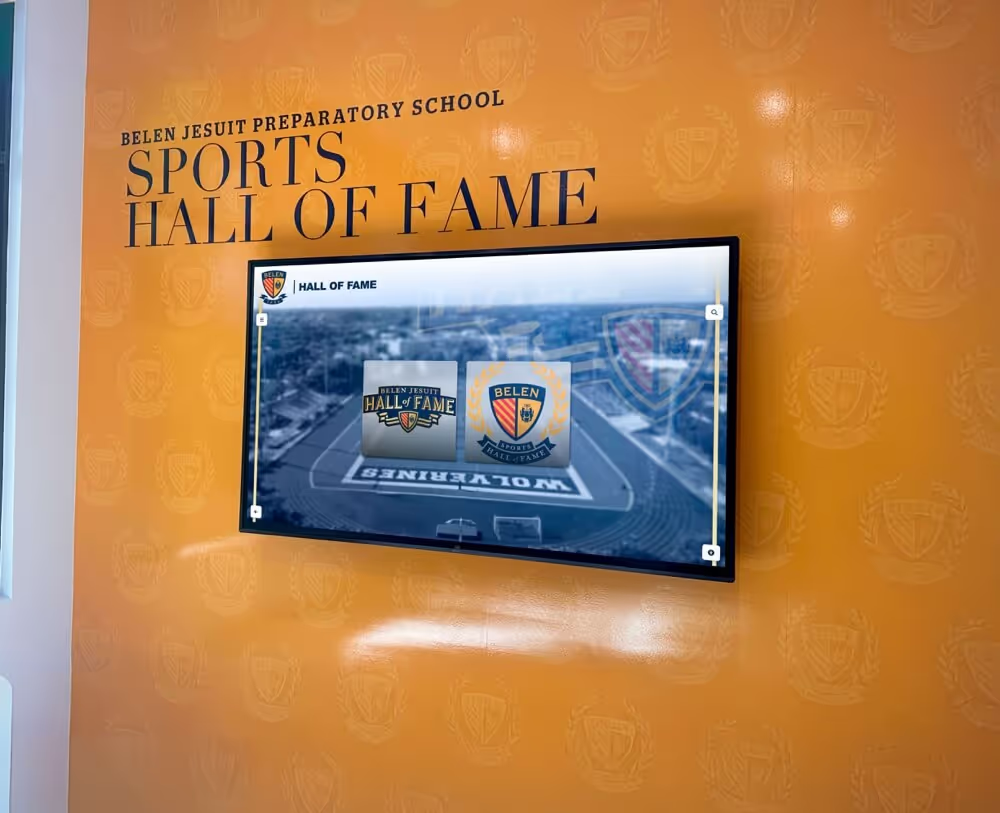
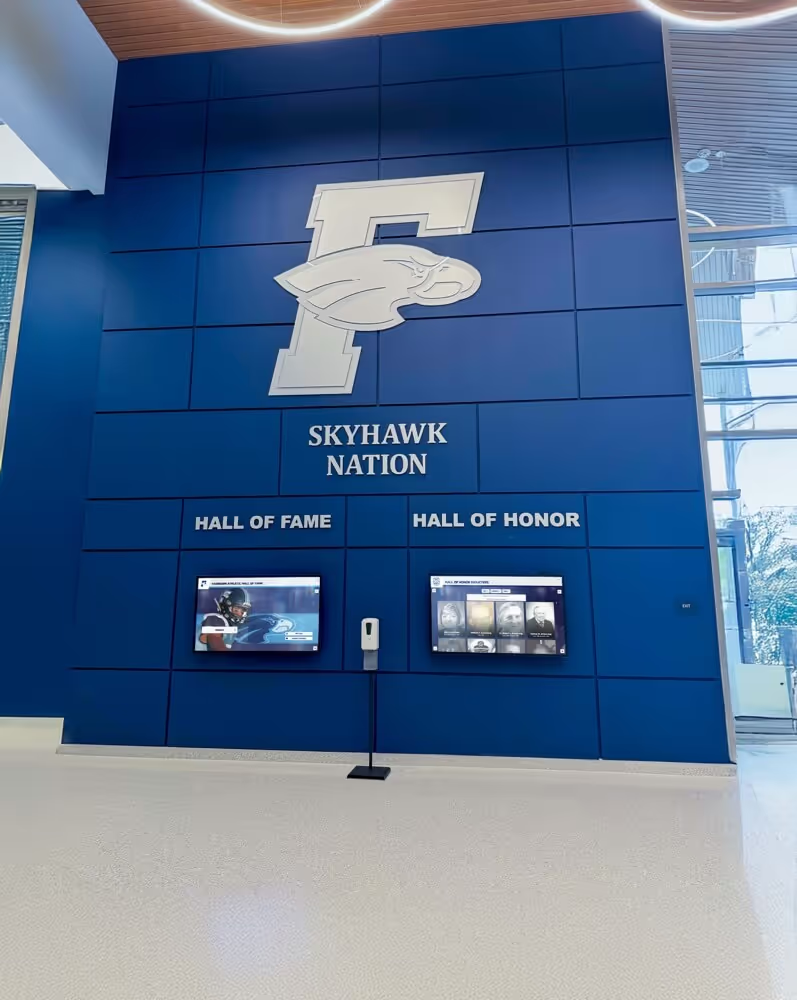
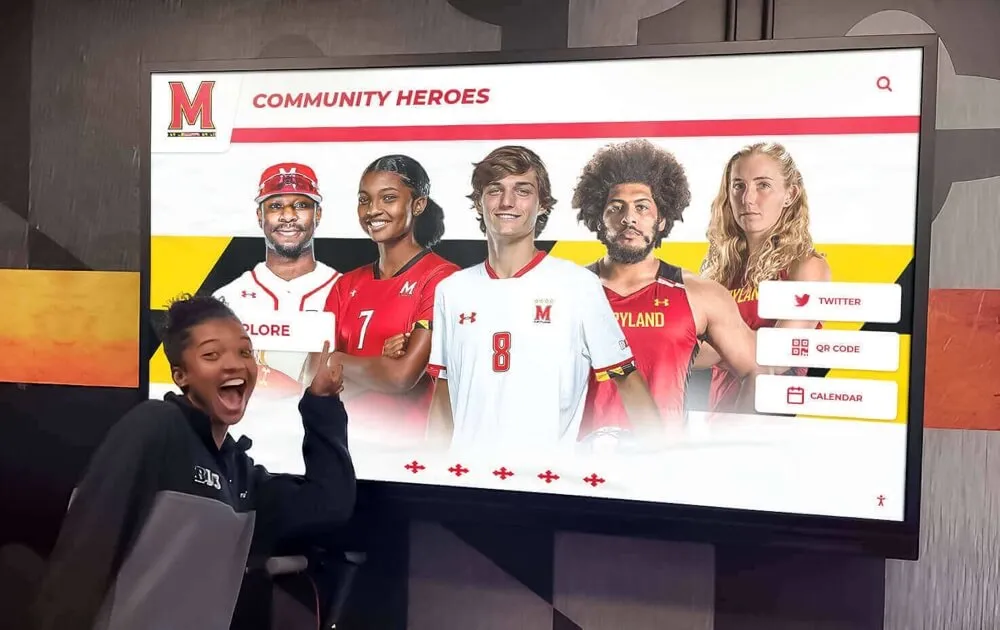
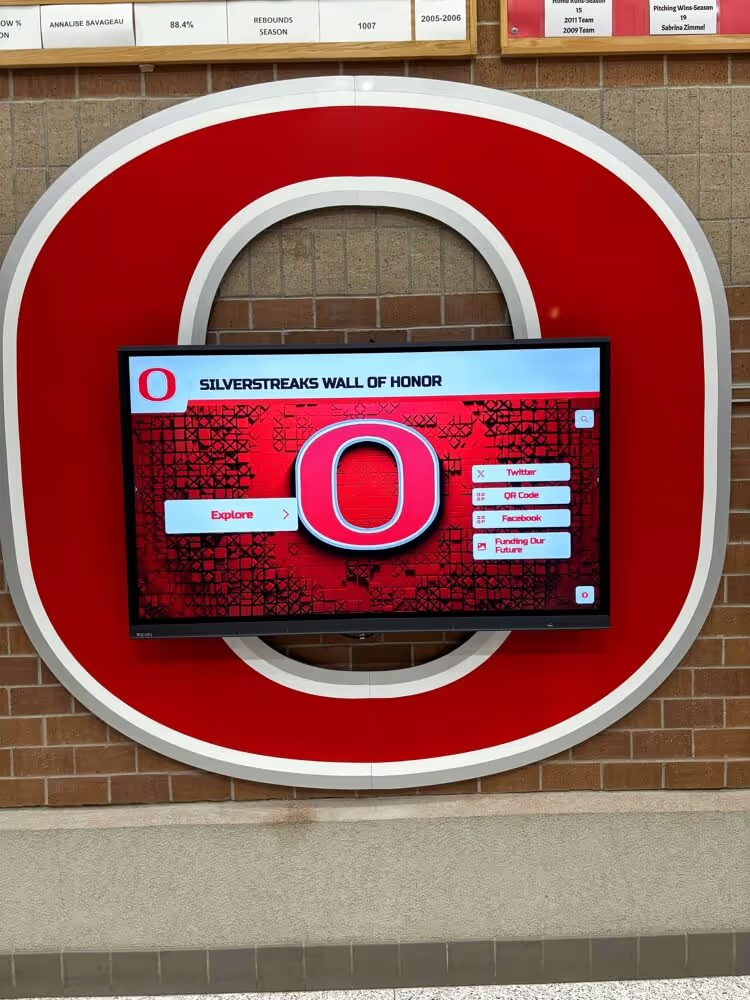
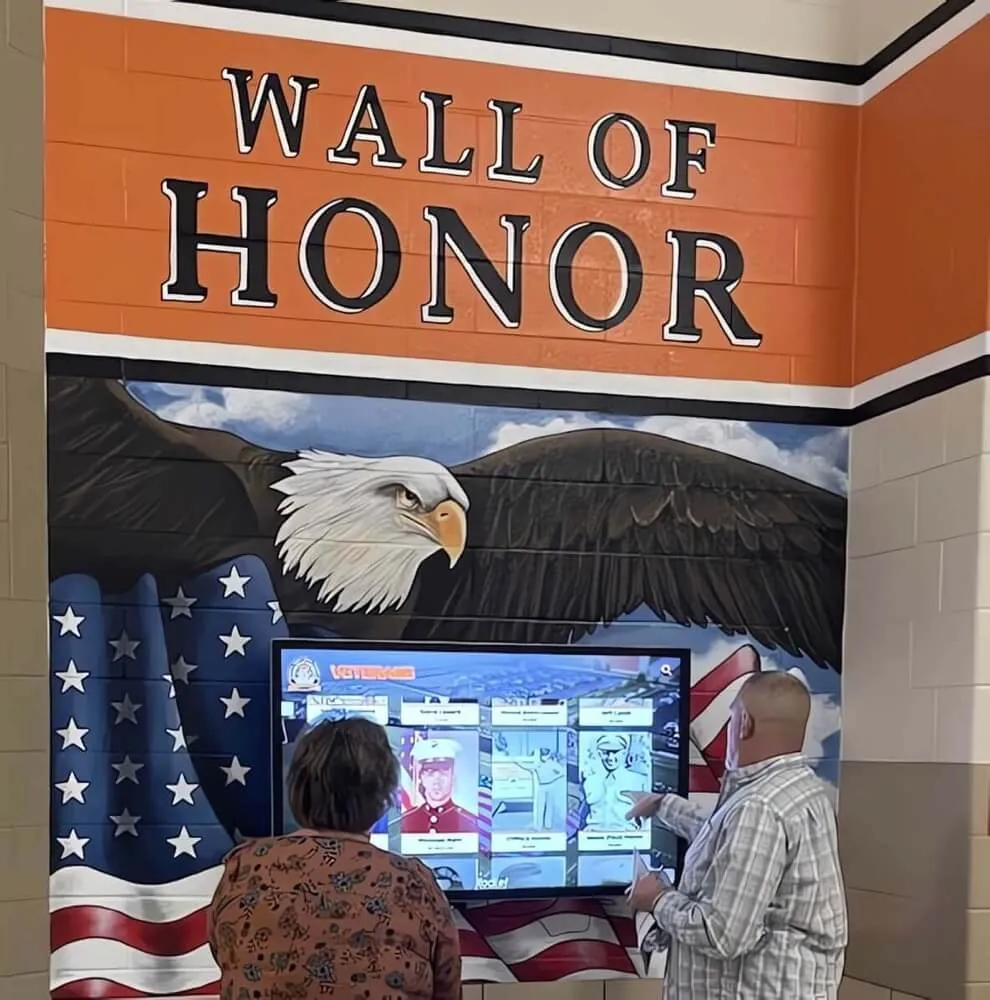
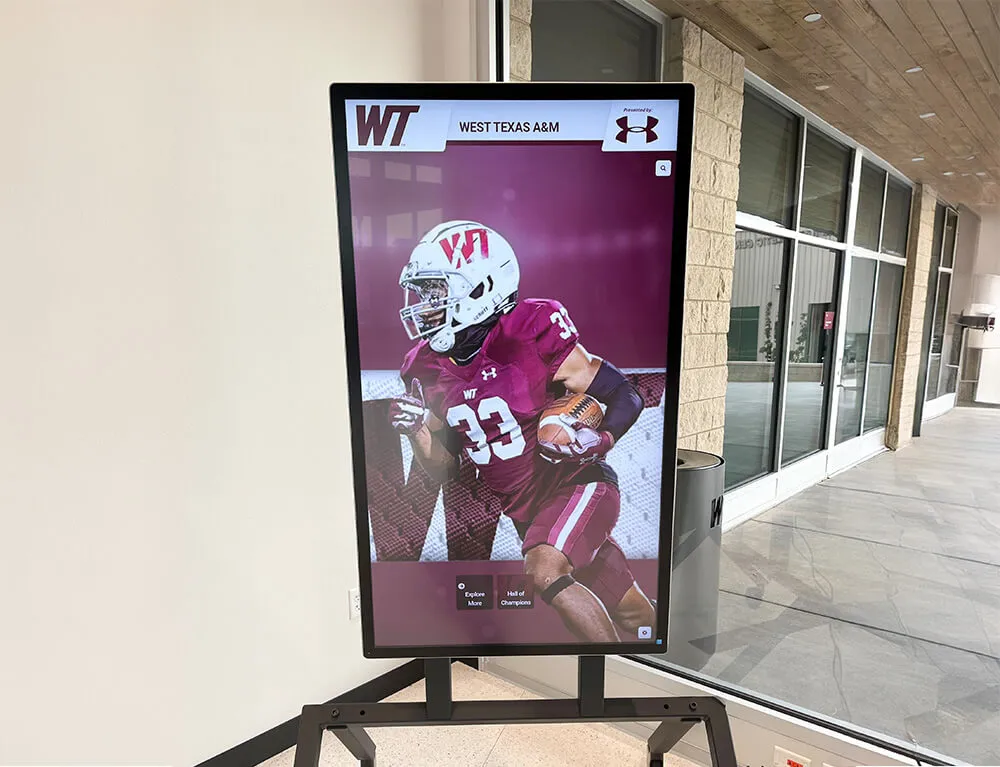
Administrative staff reviewing digital recognition displays benefit from factory-warranted panel brightness standards — manufacturer-documented lumen maintenance replaces the document-review cycle required at each physical fixture procurement event
Frequently Asked Questions
Conclusion: From Documentation Gap to Documented Maintenance Standard
A trophy case LM-80 lumen maintenance check converts LED procurement from a nominal lumen-and-CCT decision into a documented specification with a verifiable depreciation projection. Fixtures that carry LM-80 test reports, TM-21 lumen maintenance projections at the correct temperature point, and LM-79 initial lumen measurements represent a transparent performance commitment — one that facilities teams can track against actual operating hours to plan replacements before display quality declines below the level that visitors expect.
The checklist is structured for the procurement stage, requiring no on-site measurement equipment: request the LM-80 dataset, verify test duration and temperature coverage, confirm TM-21 projections meet L70 ≥ 36,000 hours and L80 ≥ 25,000 hours at B50 survival, and include those specifications in purchase orders. Building this step into every fixture procurement cycle — alongside color rendering, flicker index, and tint specifications — creates an institutional maintenance standard that holds display quality across staff transitions and preserves the school’s investment in recognition program infrastructure for the full life of the display.
See Consistent Recognition Display Quality Over the Long Term
Digital recognition platforms built on commercial-grade panel hardware deliver factory-warranted brightness consistency without the annual fixture documentation review cycle. See how schools manage unlimited athletic and academic recognition content — with consistent visual quality across the full recognition program lifespan — using a cloud-managed touchscreen display platform.
Schedule Your Demo