The Easiest Touchscreen Solution


Live Example: Rocket Alumni Solutions Touchscreen Display
Interact with a live example (16:9 scaled 1920x1080 display). All content is automatically responsive to all screen sizes and orientations.
Trophy case LED thermal management is the practice of monitoring and controlling heat buildup from LED lighting inside enclosed school recognition display cases. When LED strips or fixtures operate inside sealed or poorly ventilated trophy cases, heat accumulates in the enclosure and can accelerate LED degradation, shorten driver lifespan, warp plastic award components, and reduce overall exhibit visibility over time. Schools can assess current thermal conditions using an inexpensive infrared thermometer and the eight-step procedure in this guide — no specialized training is required. This guide addresses general best practices applicable to standard school trophy case installations; for cases with integrated digital screens or complex electrical systems, consult a qualified electrician or the fixture manufacturer for specific guidance.
Trophy cases in school athletic hallways are built to last decades, but the LED lighting inside them often receives far less attention than the recognition it illuminates. When an athletic director replaces a burned-out LED strip or installs new case lighting before a homecoming open house, the installation typically focuses on brightness and color quality — not on what happens to the heat those LEDs generate inside a closed glass-and-wood enclosure over months and years.
Heat is the primary life-limiting factor for LED fixtures. Unlike the UV and visible-light damage that fades jerseys and photographs, thermal degradation operates at the semiconductor level: excess heat accelerates the chemical processes that cause LED chips to dim, shift color, and eventually fail. In a standard school corridor, LEDs in open ceiling fixtures dissipate heat efficiently into moving air. In a sealed trophy case with wood sides, glass front, and limited airflow, the same heat has nowhere to go. The ambient temperature inside the case climbs, the LEDs run hotter than their design specification, and what should be a 50,000-hour fixture begins to visibly dim within two or three years.
The connection to exhibit visibility is direct: LEDs dimming from thermal stress mean championship trophies, retired jersey displays, and award plaques lose the lighting quality that was specified when the fixture was installed. A case that looked excellent at installation begins to look flat and dim — not because anything inside it has changed, but because the LEDs have degraded prematurely from operating in an environment hotter than they were designed for.

Trophy cases housing both traditional hardware and digital displays benefit from thermal management planning — heat from LED lighting can reduce both display quality and fixture lifespan when enclosures limit airflow
Why LED Heat Matters in Trophy Case Enclosures
LEDs produce light through electroluminescence — a process that converts electrical energy directly to photons at a semiconductor junction. This mechanism produces far less heat than incandescent or halogen bulbs, which generate light through resistive heating of a filament. However, LEDs do not convert all input energy to light. A portion becomes heat at the junction between the LED chip and its mounting substrate.
In a standard open fixture, that heat travels through the LED’s thermal pad, through the printed circuit board (PCB), and into a metal heat sink or mounting surface that radiates it into surrounding air. Air circulation carries the heat away from the fixture, maintaining the LED junction at a temperature within the manufacturer’s specification.
Inside a closed trophy case, the same heat pathway faces a different endpoint. Once heat reaches the fixture housing or the aluminum channel of an LED strip, it enters an enclosure that may have no airflow at all. Wood sides absorb and retain heat. The glass front limits convective exchange with corridor air. The ambient temperature inside the case rises until the case itself can radiate sufficient heat through its surfaces to maintain equilibrium — which may happen at a temperature significantly higher than the surrounding corridor.
The consequence for the LED junction is straightforward: it operates at the elevated enclosure ambient plus its own self-generated heat. The U.S. Department of Energy’s Solid-State Lighting program notes that LED device lifetime is strongly temperature-dependent, with higher junction temperatures accelerating lumen depreciation. A fixture running significantly hotter than its design target may produce equivalent lumen output loss in a fraction of its rated hours. For a school running case lighting 10 hours per day, 200 days per year, premature thermal degradation turns a multi-decade fixture into a recurring replacement cost that compounds across every case in the athletic wing.
How Trophy Case Enclosures Trap Heat
Understanding where heat accumulates in your specific cases helps direct the assessment procedure toward the areas most likely to show problems.
Wood and MDF construction: Most school trophy cases are built with wood or medium-density fiberboard (MDF) interiors. Wood is a thermal insulator — it holds heat rather than dissipating it. Trophy cases with wood-lined interiors provide no passive heat sink function for LED fixtures mounted to them.
Glass fronts: The glass front of a trophy case does allow some heat radiation, but it also creates a partial greenhouse effect when the case is illuminated. Glass transmits visible light efficiently while restricting convective exchange between interior and corridor air.
Minimal ventilation gaps: Quality trophy case installations often seal gaps to prevent dust accumulation on display items. This is appropriate for artifact preservation but reduces the passive airflow that helps convect heat out of the enclosure.
LED driver proximity: LED driver units — the power supply components that convert line voltage to the lower DC voltage LED strips require — generate heat independently of the LEDs themselves. Drivers mounted inside or in close proximity to the trophy case interior add a second heat source to the enclosure. An undersized or aging driver running at or near its rated load generates more heat than a correctly sized unit with headroom.
Case orientation and adjacency: Cases mounted against exterior walls in buildings with poor insulation may see higher internal temperatures in summer months. Cases positioned near mechanical rooms or heating equipment face elevated baseline ambient temperatures throughout the heating season.
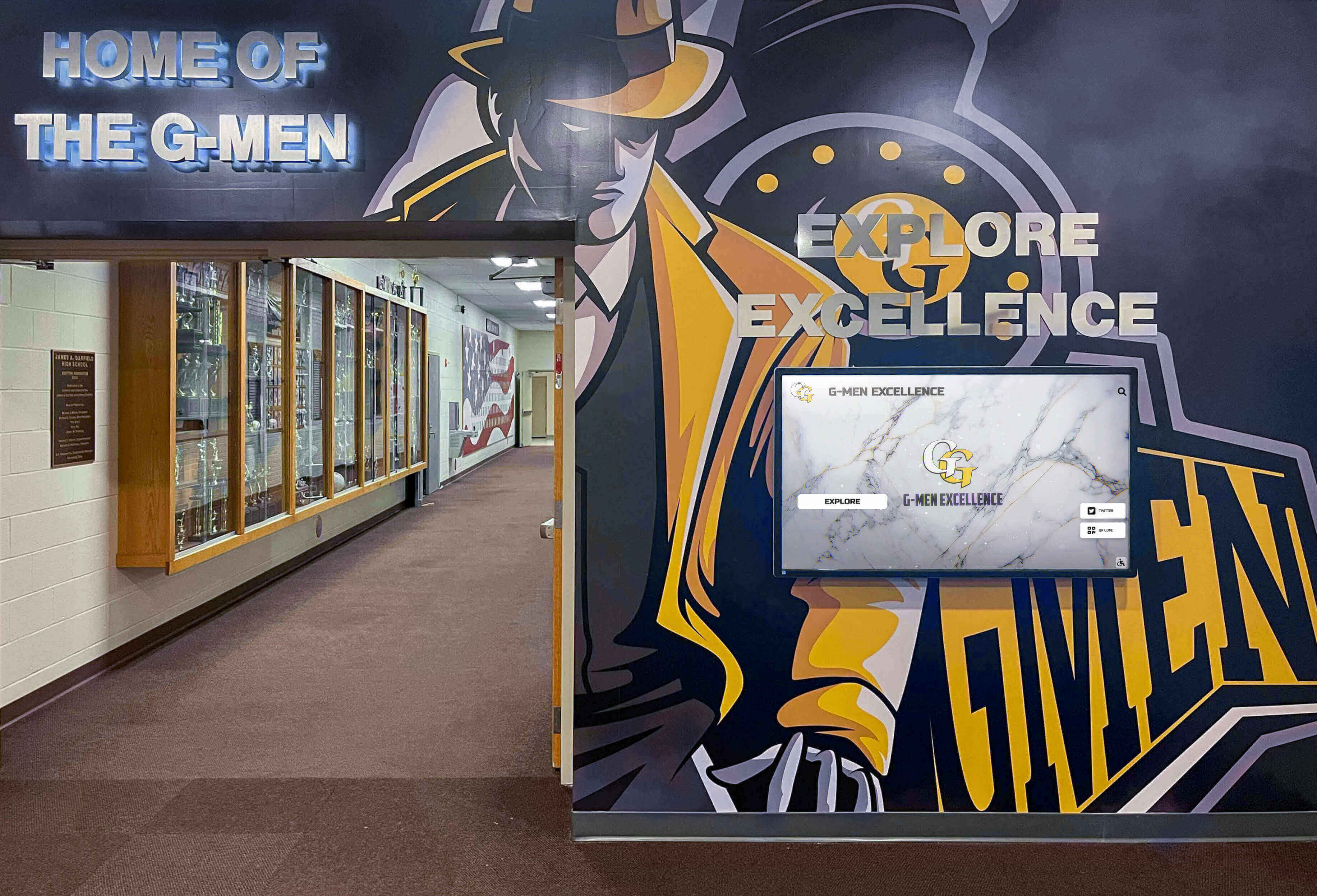
Hallway installations combining digital displays and traditional trophy cases create varied thermal environments — each case type warrants separate assessment because enclosure design and fixture proximity differ significantly
Step-by-Step Trophy Case LED Thermal Management Check
The following procedure can be completed by athletic department or facilities staff without specialized training. An infrared (IR) thermometer — available from hardware suppliers at modest cost — is the only instrument required beyond a standard facilities toolkit. The entire assessment for a single case takes approximately 20 minutes once equipment is at hand; assessments can be batched efficiently by walking each case in sequence along the athletic corridor.
Before you begin: Allow case lighting to run for at least 30 minutes with normal display contents in place before taking any temperature readings. Measurements taken on cold fixtures reflect startup conditions, not operating steady state. Do not remove display contents to take measurements — assess conditions as they exist during normal operation.
Record baseline ambient temperature. Note the corridor air temperature using any thermometer or your building’s HVAC thermostat display. This is your reference point for all in-case readings.
Measure temperature at the LED strip surface. Open the case and aim the IR thermometer at the aluminum channel or backing of the LED strip while lighting is on and at steady state. Take readings at the midpoint of the strip and near each end. Record all readings. LED strip aluminum substrate surface temperature at normal operation typically falls in a moderate range depending on ambient conditions, strip density, and fixture design — readings consistently above 60°C warrant investigation.
Measure driver and power supply temperature. Locate the LED driver — it may be inside the case, in a chase above the case, or in a junction box adjacent to the case. With the driver running at steady state, measure its external housing temperature. A driver housing that is hot enough to be uncomfortable to hold for more than a few seconds, or that reads above roughly 70°C, indicates either inadequate ventilation or a driver operating near or above its design load.
Check interior ambient temperature. Measure air temperature inside the case at a point in the air space, or by briefly placing a conventional thermometer inside and closing the case for 10 minutes. Compare this reading to the corridor ambient recorded in Step 1. An interior ambient more than 8–10°C above corridor ambient suggests meaningful heat accumulation. Differences above 15°C indicate significant enclosure trapping that warrants intervention.
Inspect LED strip for visible thermal stress indicators. With lighting on, observe the LED strip for uneven brightness along its length, yellowing of the lens over individual LED chips, or areas where mounting adhesive appears discolored or is detaching from its mounting surface. These are visual indicators of sustained high-temperature operation. Discoloration concentrated near the driver end of the strip — where input current is highest — is particularly worth noting.
Check for airflow pathways. Examine the back, top, and sides of the case interior for gaps, drilled ventilation holes, or any pathway that allows air circulation between the interior and the surrounding wall or ceiling space. Note whether any intended ventilation gaps have been sealed with caulk, tape, or display materials pushed against them. Document the current airflow situation even if no immediate action is planned.
Review operating hours. Confirm how many hours per day case lighting runs. Verify whether a timer or occupancy sensor controls the circuit, or whether lighting operates on the building’s general lighting schedule. Continuous operation — including nights, weekends, and school closure periods — roughly doubles thermal stress accumulation relative to a 12-hour school-day schedule. Note whether summer operation is controlled separately from the academic year schedule.
Photograph and record findings. Document each measurement, the fixture type, the case dimensions, and any visible stress indicators. Date the record. This baseline allows future staff to assess change over time and provides context for any fixture replacement decisions.
Reading Your Assessment Results
After completing the eight-step procedure, interpret your findings using the following framework before deciding on interventions.
All temperatures within range, minimal interior accumulation: Your current installation is likely within acceptable thermal parameters for the fixture type installed. Schedule reassessment annually and document this baseline for future comparison. No immediate action is required.
LED strip surface elevated, driver within range, interior moderately warm: Heat is accumulating at the fixture but the enclosure is partially managing it. Review operating hours and check whether any airflow pathways can be added or cleared. Consider whether the LED strip wattage is appropriate for the case size.
Driver housing running hot, LED strip elevated, interior significantly above ambient: The combination of a hot driver and hot strip in an enclosed space indicates systemic heat trapping. This configuration accelerates both LED and driver degradation simultaneously. Intervention — typically involving improved ventilation, driver relocation outside the case, or fixture replacement — is warranted before the next season.
Visible stress indicators present (yellowing lens, adhesive failure, uneven brightness): Thermal damage is already in progress. Document what you observe, photograph affected fixtures, and consult with your facilities team or an electrician about replacement timeline. Continued operation of visibly stressed LED fixtures in enclosed spaces can eventually present equipment failure risk; do not defer assessment or intervention once visible stress is observed.
Interior temperature severely elevated relative to ambient: The case is functioning as a heat trap. Even if the LEDs and driver appear undamaged, this condition is unsustainable for long-term fixture life or for heat-sensitive display contents such as paper labels, adhesive-backed plaques, certain plastics, or ribbons on award hardware. Prioritize ventilation intervention before the next assessment period.
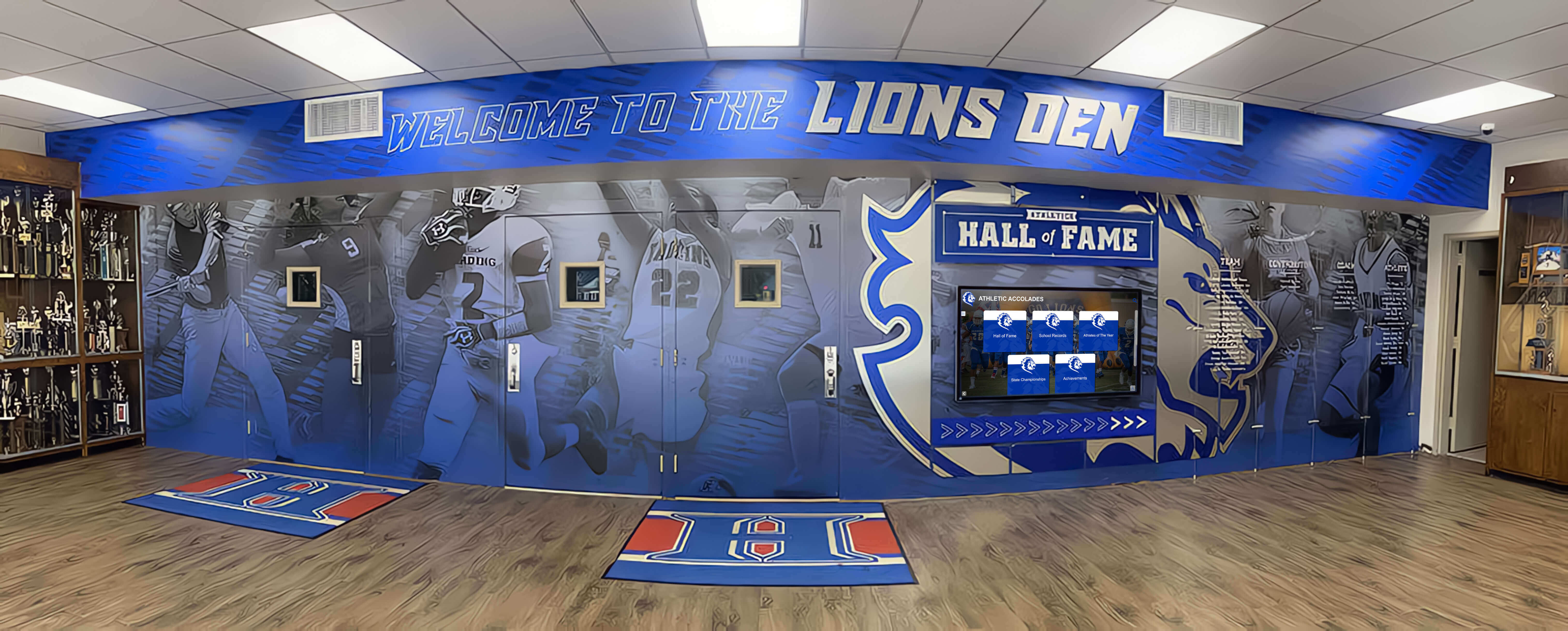
Trophy cases displaying decades of program history are worth the investment of a thermal management check — exhibit visibility depends on consistent LED output, which depends directly on operating temperature staying within design parameters
Thermal Verification Table
The following table summarizes the temperature reference ranges described in this guide. These figures reflect general guidance applicable to most commercial LED strip and driver products; specific products may have different specifications. Consult the fixture manufacturer’s documentation when available, and treat these as planning benchmarks rather than precise engineering thresholds.
| Measurement Location | Acceptable Range | Moderate Concern | Significant Concern | Recommended Action |
|---|---|---|---|---|
| LED strip aluminum substrate surface | ≤50°C | 50–60°C | Above 60°C | Improve ventilation; assess strip wattage |
| Driver housing (external surface) | ≤55°C | 55–70°C | Above 70°C | Relocate driver outside case; assess sizing |
| Interior case ambient vs. corridor | ≤5°C above ambient | 5–10°C above | Above 10°C above | Add ventilation pathway; reduce operating hours |
| Visual stress indicators | None observed | Early or minor signs | Visible deterioration | Photograph and schedule replacement review |
Notes on this table:
- All temperature readings assume measurements taken at steady-state operation (30 or more minutes of continuous operation before measurement).
- Temperatures listed are surface temperatures measured with an IR thermometer, not internal LED junction temperatures, which cannot be directly measured in field conditions.
- Corridor ambient temperature affects all in-case readings proportionally — a building running significantly warmer than typical room temperature will shift all in-case readings upward accordingly.
- For cases displaying heat-sensitive contents — paper labels, wax seal certificates, adhesive-mounted plaques, or synthetic ribbons — the interior ambient threshold is the most important figure even when LED and driver temperatures appear individually acceptable.
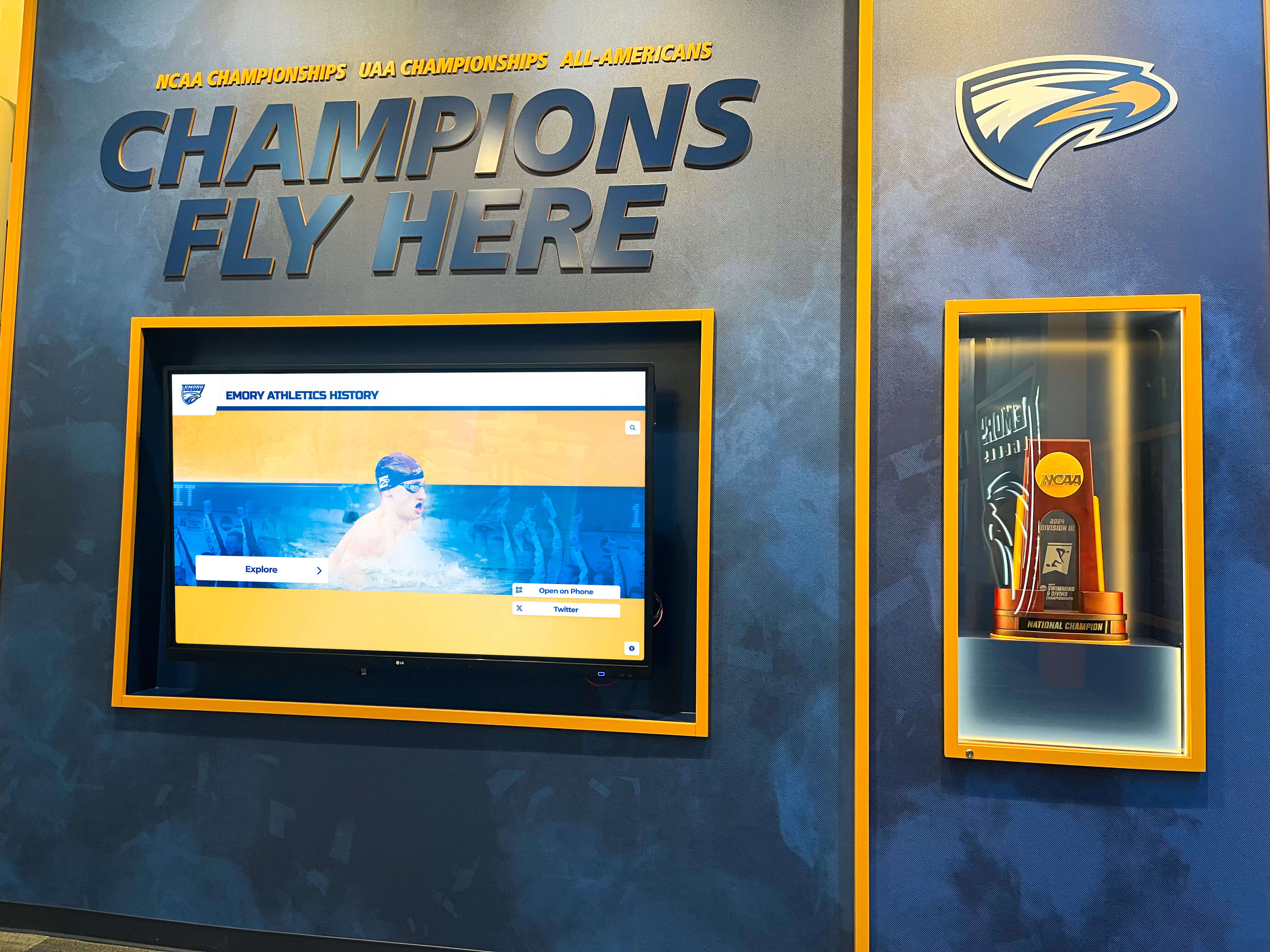
Championship hardware at every level — from high school state titles to university NCAA recognition — benefits from trophy case environments where LED lighting is sized and ventilated appropriately for the enclosure
Practical Interventions for Common Heat Problems
Once an assessment identifies a thermal concern, the following interventions address the most common causes. They are listed roughly in order of complexity and cost, starting with the simplest adjustments.
Reduce Operating Hours
Installing a digital timer on the case lighting circuit is often the most effective low-cost intervention. Reducing daily operating hours from 16 to 10 cuts total thermal load accumulation by roughly 37% — a meaningful reduction that extends both LED and driver lifespan without changing anything about the case or its contents. For schools whose cases run continuously including nights and weekends, timer installation typically pays for itself in extended fixture life within the first operating year.
Clear Blocked Ventilation Pathways
Many trophy cases include small ventilation gaps at the top or rear that were designed intentionally by the case manufacturer. If display contents, backing panels, or maintenance materials have been pushed against these gaps, restoring airflow requires only repositioning those items. Even a small unrestricted gap at the rear top edge makes a measurable difference in convective heat exchange in a case that was previously fully sealed.
Relocate the LED Driver Outside the Enclosure
If the LED driver is mounted inside the case or directly adjacent to the back panel, relocating it to a wall-mounted junction box in the adjacent wall chase or ceiling space removes a significant secondary heat source from the enclosure. A licensed electrician can typically complete this work in a few hours on a standard trophy case installation. Driver relocation alone can reduce interior ambient temperature meaningfully when the driver was contributing substantially to heat accumulation.
Replace Oversized or Undersized LED Strip
LED strips are available in a range of wattages per meter. A high-wattage dense strip installed in a case designed for a lower-output fixture introduces more heat than the enclosure was designed to manage. Verifying that installed strip wattage matches the case manufacturer’s specification — or the original installation documentation — and replacing mis-sized strips is a medium-complexity intervention that addresses heat at its source.
Add Passive Ventilation
For cases with no current ventilation pathways, drilling small ventilation holes in the rear panel — typically at top and bottom to encourage convective air movement — provides meaningful passive cooling. Holes should be positioned to prevent direct contact with display contents and covered with fine mesh to limit dust ingress. This modification is typically within the scope of facilities maintenance staff.
Upgrade to a Thermally Optimized Fixture
When LED strips or fixtures have reached end of life or show visible thermal stress, replacement is an opportunity to specify fixtures with better thermal management: wider aluminum channels that provide more heat sink surface area, lower-wattage strips producing equivalent light output at improved LED efficiency levels, or fixtures explicitly rated for enclosed-space installation. Look for “suitable for enclosed fixtures” or “enclosed-rated” labeling when selecting replacements for trophy case use.
How Heat Affects Display Contents and Exhibit Visibility
Thermal management is usually discussed in terms of LED lifespan, but the effects of excess heat on the physical contents of a trophy case are equally relevant to schools focused on recognition display quality.
Adhesive-mounted award plaques: Many championship plaques, athlete recognition plaques, and donor recognition boards use pressure-sensitive adhesive mounting to attach nameplates, engraved inserts, or photographic panels to a backing. Sustained elevated enclosure temperature accelerates adhesive flow, eventually causing mounted elements to shift, lift at corners, or detach from their backing. A plaque that looked precise at installation begins to show gaps and misaligned inserts within a few years of operation in a thermally stressed case.
Paper labels and certificates: Award certificates, event programs, and paper labels inside trophy cases are vulnerable to heat-accelerated dehydration and oxidative browning. Cases that trap heat from LED fixtures contribute to accelerated paper aging even when light exposure is managed separately.
Plastic components: Trophies, plaques, and display mounts often incorporate polystyrene, acrylic, or ABS plastic components. These materials have varying heat tolerance thresholds, but sustained enclosure temperatures significantly above corridor ambient — particularly in direct proximity to high-output LED strips — can cause softening, warping, or discoloration of plastic elements over years of operation.
Synthetic ribbons and fabric elements: Ribbons on award hardware and fabric display elements are susceptible to thermal discoloration and brittleness in persistently elevated enclosure temperatures, compounding any light-related degradation occurring simultaneously.
For schools working through athletic facility maintenance planning, the athletic facility management guide at Digital Yearbook provides broader context on how individual maintenance disciplines — including display environment management — fit into comprehensive facility planning cycles.
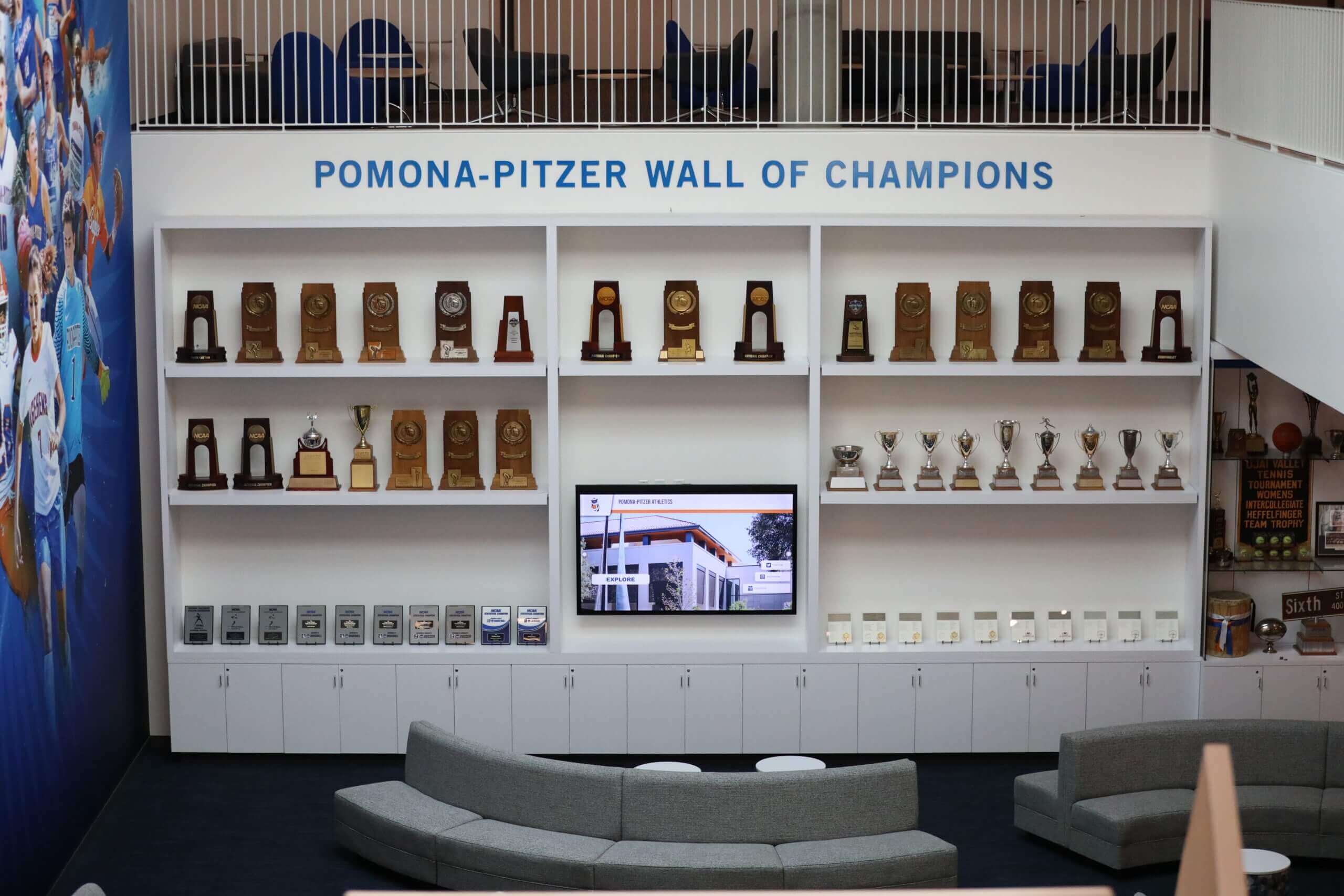
Open lounge-style display environments provide significantly better natural air circulation than enclosed glass cases — thermal management is simpler when the display space allows convective cooling without fixture modification
LED Driver Thermal Management Considerations
The LED driver (power supply) is the component most often overlooked in trophy case thermal assessments, yet it is frequently the highest-temperature element in the system and the most sensitive to its thermal environment.
Driver operating temperature and lifespan: Driver lifespan is strongly temperature-dependent. Most commercial LED drivers are rated for a specified operating range, and running above the rated temperature accelerates capacitor degradation inside the driver — the component most commonly responsible for premature driver failure. A driver in a poorly ventilated case interior consistently running above its rated temperature range will have a substantially shorter service life than the same driver in an appropriately cooled installation.
Sizing headroom matters: A driver running at 90–100% of its rated load generates more heat than the same driver at 60–70% load. When replacing LED strips or drivers, specifying a driver rated for 20–30% more wattage than the strip requires provides both a thermal buffer and protection against efficiency losses as the driver ages.
Identifying driver specifications: Many trophy case LED drivers have a label on their housing showing rated wattage, input voltage, output voltage, and operating temperature range. Photographing this label during your assessment creates a reference record for future replacement procurement and helps your electrician or supplier identify compatible replacements quickly.
Seasonal and Schedule Factors in Trophy Case Thermal Management
Academic buildings present specific seasonal thermal patterns that affect trophy case LED thermal management in predictable ways.
During summer months when school is not in session, building HVAC systems frequently operate in setback mode, allowing corridor temperatures to rise above typical occupied-building levels. If case lighting remains on default schedules during summer — a common condition when timer settings are not adjusted seasonally — the combination of elevated ambient temperature and full LED operating hours creates the highest thermal stress conditions of the year, often when no one is present to notice early warning signs.
During the academic year, occupied building temperatures are generally well-controlled. The thermal concern shifts to after-hours operation: cases illuminated overnight in a building cooled to setback temperature contribute unnecessary thermal cycles to fixture components without any audience benefit.
Recommended seasonal adjustments:
- Reduce case lighting operating hours or switch to timer-off mode during summer building closure periods
- Verify that HVAC setback temperatures during unoccupied hours do not allow building temperatures to reach levels at which case ambient temperatures become concerning
- Conduct the formal thermal assessment in late summer or early fall — the period when cases have accumulated the most thermal stress from the preceding summer and when the coming academic year’s display needs are being planned
Schools that maintain recognition display programs alongside physical trophy cases increasingly treat digital and physical systems as complementary. For context on how recognition environments are being designed to serve both immediate display needs and long-term institutional history goals, the alumni recognition guide at Touch Wall describes how physical and digital recognition formats interact in current school environments.
Building a Trophy Case LED Maintenance Record
A systematic maintenance record for trophy case lighting does three things: it documents conditions before problems develop, gives future staff a baseline against which to measure change, and creates institutional memory that survives staff transitions.
Minimum useful record contents:
- Case identifier (location, sport, primary content)
- Date of most recent fixture installation or last replacement
- LED strip type, wattage per meter, and total length installed
- Driver type, rated wattage, and location (inside case or outside case)
- Date and results of most recent thermal assessment (all measurements from the eight-step procedure)
- Current daily operating schedule (hours on, timer settings, any seasonal variation)
- Any visual stress indicators observed, with photographs
- Next scheduled assessment date
Even a one-page form per case, filed in the athletic department’s facilities binder, gives the school a starting point for maintenance decisions and replacement planning. Without this record, each new staff member approaching a trophy case lighting problem starts from zero — unable to tell whether current conditions represent improvement, deterioration, or simply an unknown baseline.
See How Schools Keep Recognition Visible Beyond the Trophy Case
Rocket Alumni Solutions builds cloud-managed digital trophy cases and hall of fame displays for schools that want recognition visibility that does not depend on LED maintenance windows. Interactive touchscreens with remote content management keep every championship, athlete portrait, and program milestone accessible regardless of what is happening inside the physical case beside it — no heat buildup, no adhesive failure, no dimming timelines. See how schools complement their physical trophy case programs with digital recognition that is immune to thermal degradation.
Book A Demo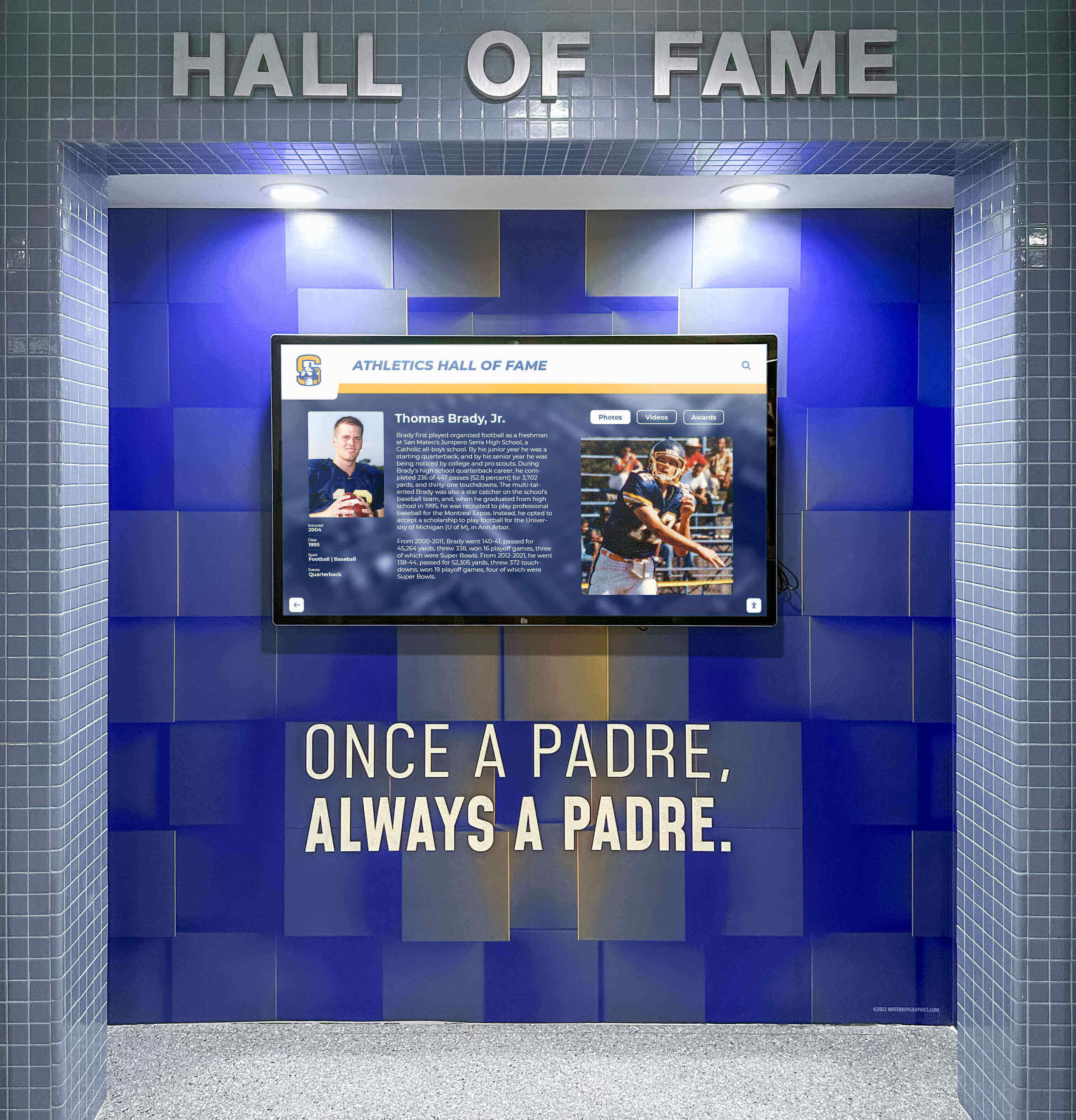
Digital recognition displays mounted on corridor walls operate outside enclosed trophy case environments entirely — their thermal management is handled by the screen manufacturer's engineering rather than by facilities staff monitoring enclosed fixture temperatures
Frequently Asked Questions
What is trophy case LED thermal management? Trophy case LED thermal management is the practice of monitoring and controlling heat buildup from LED lighting inside enclosed trophy case enclosures. Enclosed cases restrict the airflow that normally carries heat away from LED fixtures, causing operating temperatures to rise above the levels LED manufacturers design for. Regular thermal assessment — measuring LED strip surface temperatures, driver temperatures, and interior ambient temperatures — allows schools to identify and address heat accumulation before it shortens fixture life or damages display contents.
How do I know if my trophy case LEDs are running too hot? The clearest field indicator is an IR thermometer reading of the LED strip’s aluminum backing. Surface temperatures consistently above 60°C at steady-state operation, or a driver housing that is uncomfortable to hold for more than a few seconds, suggest the fixture is operating above its thermal design target. Visual indicators — yellowing lens covers over individual LED chips, adhesive-backed LED strips pulling away from their mounting surface, or noticeably uneven brightness along a strip — indicate thermal stress has already caused some degradation. Interior case ambient more than 10°C above corridor ambient confirms significant heat trapping in the enclosure.
Can heat from trophy case LEDs damage the trophies and awards inside? Heat can damage specific components of display items inside a trophy case. Adhesive-mounted nameplates and engraved inserts may loosen or shift under sustained elevated temperatures. Paper labels and certificates experience accelerated aging. Certain plastic components — polystyrene, ABS, and some acrylic formulations — may soften or discolor at elevated temperatures sustained over months and years. Metal trophies themselves are not typically affected by temperatures a trophy case can reach, but associated elements such as ribbons, paper components, and plastic bases are more susceptible.
What temperature should trophy case LED strips run at? LED strip aluminum substrate surface temperatures in a moderate range — generally below 50°C at steady-state operation — are typically within acceptable parameters for most commercial LED strip products. Readings consistently above 60°C warrant investigation. Specific thresholds depend on the product; consult the manufacturer’s documentation when available. These are surface measurements; internal LED junction temperatures are higher than substrate surface temperatures and cannot be directly measured in field conditions.
How often should schools check trophy case LED temperature? An annual thermal assessment — ideally conducted in late summer before the academic year begins — is sufficient for cases with no known issues. Cases that showed elevated temperatures in a prior assessment should be reassessed after any intervention and annually thereafter until readings stabilize within acceptable range. Cases showing visible stress indicators such as yellowing, adhesive failure, or uneven brightness should be assessed and referred for maintenance review promptly rather than waiting for a scheduled cycle.
Does reducing operating hours meaningfully reduce LED thermal stress? Yes. LED operating hours directly determine total thermal load accumulation. A case running 16 hours per day accumulates substantially more thermal wear than a case running 10 hours per day on the same fixture. Timer-controlled circuits that switch off case lighting during unoccupied hours — nights, weekends, and summer closure periods — reduce thermal stress in direct proportion to the hours saved. This is typically the lowest-cost, highest-return thermal intervention available for existing installations and requires no changes to the fixture itself.
When should we call an electrician rather than handle trophy case LED thermal issues ourselves? Visible driver failure signs — burning smell, discoloration of driver housing, or audible buzzing from the driver — require a licensed electrician assessment before continuing operation. Any intervention involving electrical circuit modifications, driver relocation, or fixture replacement should be performed by or under the supervision of a licensed electrician in accordance with local electrical codes. The assessment steps in this guide — measurement and visual inspection — can be completed by facilities staff; electrical modifications should not be. When in doubt about the safety of a fixture showing thermal stress signs, turning off the circuit and scheduling an electrician review is the appropriate response.
What is the difference between an LED strip’s lumen output and its thermal performance? Lumen output measures how much visible light a fixture produces. Thermal performance describes how effectively the fixture transfers heat away from the LED junction to prevent temperature accumulation. High-lumen-output strips are not inherently well-managed thermally; a dense strip producing high lumen output in an enclosed case may also generate substantial heat that the enclosure cannot dissipate. For trophy case applications, both output specification and thermal characteristics matter — the strip must produce adequate light for the recognition display while generating heat within the range the enclosure can manage.
How does digital recognition reduce dependence on trophy case LED reliability? A cloud-managed digital recognition display presents the full record of program achievements, team photographs, and athlete profiles without requiring visitors to see physical hardware inside a glass case. When physical trophy case lighting is out of service for maintenance or replacement, the digital display continues to serve every recognition function that the physical case provided. For schools managing large athletic collections across many cases, a digital display acts as a reliable parallel system — not as a replacement for physical hardware, but as continuity insurance against the recognition gaps that occur when LED maintenance is pending. Schools can schedule a demonstration to see how a cloud-managed system integrates with existing physical trophy cases.
Who is responsible for trophy case LED thermal management in a school? Thermal management works best with clear joint ownership. Facilities staff are best positioned to conduct temperature assessments, install timers, and manage ventilation interventions. Athletic directors and recognition staff know which cases are highest-priority based on display significance. IT staff may be involved when cases include digital elements. Establishing a shared protocol — with one person responsible for scheduling annual assessments and another for acting on findings requiring electrical work — ensures the discipline survives staff transitions without being lost.
Physical trophy cases are among the most permanent features in a school athletic hallway — designed to be present for decades, long after the athletic directors who installed them have moved on. The LED lighting inside them receives far less attention than the recognition it illuminates, yet it is the component that determines whether championship hardware, retired jerseys, and award plaques remain visibly honored or gradually disappear into a dim, unevenly lit case that visitors pass without engaging.
Trophy case LED thermal management is a routine maintenance discipline: an annual assessment, a documented baseline, and targeted interventions when measurements indicate heat is accumulating beyond design parameters. It does not require specialized equipment, significant budget, or electrical expertise to assess. It requires someone with institutional responsibility for the recognition environment to schedule it, complete it, and record what they found.
Schools that manage this discipline consistently have trophy cases that honor their programs with the same visual quality in year fifteen that they delivered in year one.
Live Example: Rocket Alumni Solutions Touchscreen Display
Interact with a live example (16:9 scaled 1920x1080 display). All content is automatically responsive to all screen sizes and orientations.