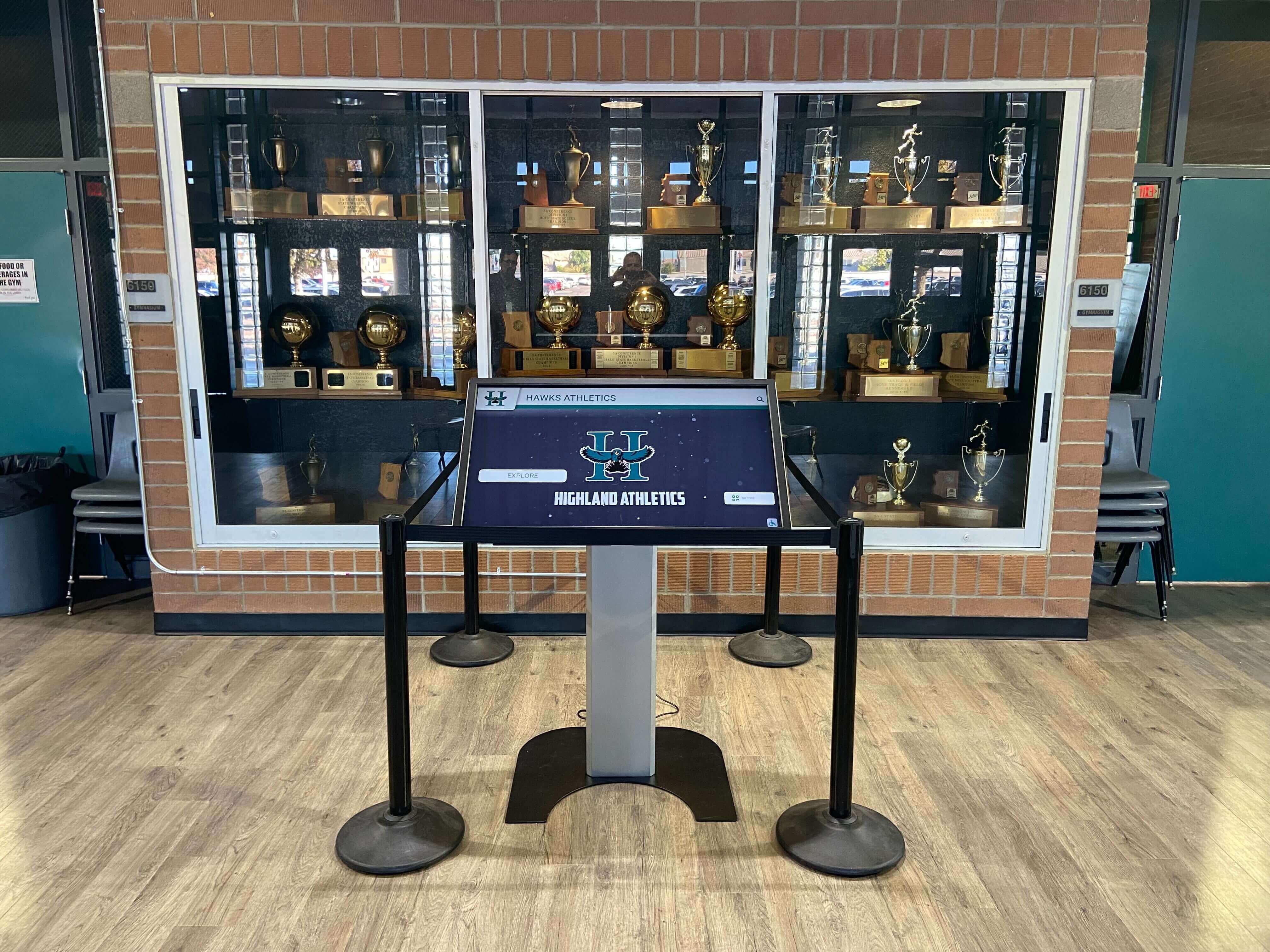
The Easiest Touchscreen Solution


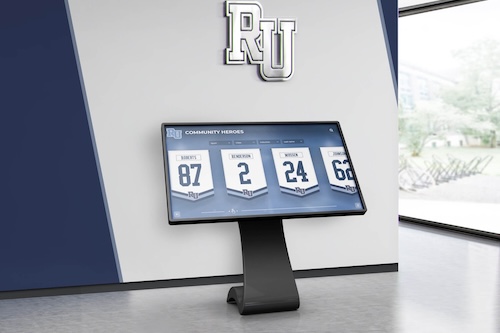
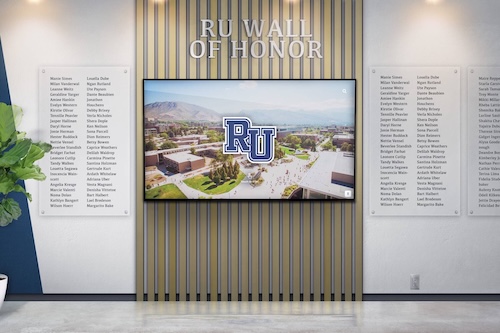
Live Example: Rocket Alumni Solutions Touchscreen Display
Interact with a live example (16:9 scaled 1920x1080 display). All content is automatically responsive to all screen sizes and orientations.
Intent: decide/calculate. Trophy case LED surge protection means installing Surge Protective Devices (SPDs) on the branch circuits that power your school’s trophy case lighting so that voltage transients — from lightning strikes, utility switching events, or HVAC startup on shared distribution panels — are clamped before they reach and damage LED drivers. Unlike fluorescent ballasts, which tolerate transient overvoltages through inductive impedance, LED drivers contain switching power supplies with MOSFETs, filter capacitors, and control ICs that fail at voltage levels well below the driver’s maximum rated input. A single unprotected surge can destroy a driver outright, or degrade it gradually so that fixtures begin failing months later with no obvious cause. This checklist walks facilities teams through a structured nine-step process for assessing, selecting, and documenting surge protection for school trophy case LED lighting circuits.
School athletic corridors rarely appear on the priority list for electrical infrastructure reviews — not because they are unimportant, but because the LED fixtures inside trophy cases run reliably and quietly for years at a time, and it is easy to assume they are protected by whatever surge protection exists elsewhere in the building. The problem surfaces when a summer lightning storm or a utility switching event in the neighborhood takes out three LED drivers in the championship trophy case the week before homecoming. The replacement cost is straightforward. The explanation to the athletic director about why the championship corridor was dark during senior night is harder.
Trophy case LED surge protection is not a complex infrastructure project. It is a documented, coordinated process: identify your circuit’s surge exposure category, verify or install appropriate SPDs at the panel and at the point of use, confirm the ratings are correct for your circuit, and schedule an inspection program so degraded protection does not go unnoticed. The checklist below walks through each step.

Trophy case corridors that combine LED-lit physical cases with interactive digital displays share electrical infrastructure — surge protection that covers the lighting circuit also helps protect digital equipment connected to the same distribution panel
Why LED Drivers Are More Vulnerable to Surges Than Fluorescent Ballasts
The fluorescent fixtures that LED strips replace in most school trophy cases had magnetic or electronic ballasts whose inductive characteristics provided a degree of natural buffering against transient overvoltages. The inductance in a magnetic ballast slows the rate of voltage rise across the coil during a surge, giving protection devices more time to respond and distributing the transient energy across a longer time window.
LED drivers operate differently. The switching power supply in a constant-current LED driver converts AC line voltage to regulated DC using a rectifier bridge, filter capacitors, and a switching controller. Each of these components has a maximum voltage rating, and none of them benefits from inductive buffering during a transient event. MOSFETs used in the switching stage — typically rated at 600V or less for a 120V input driver — can fail in a fraction of a microsecond when a surge voltage exceeds their gate-drain breakdown threshold. Electrolytic filter capacitors, which are already the most failure-prone component in an LED driver under normal thermal stress, are the first component to show degradation after repeated minor transient events even when the driver survives each individual surge.
The practical consequence is that trophy case LED drivers upgraded from fluorescent are more susceptible to surge damage, not less — precisely because the inductive ballast buffer they replaced is gone.
Three surge sources that affect school trophy case LED circuits specifically:
Lightning coupling on utility distribution: A nearby lightning strike does not need to hit the building directly to produce a damaging transient on the building’s electrical system. A strike on the utility distribution line within several hundred feet of the service entrance can produce a surge exceeding 6,000 volts at the service entrance — far above what unprotected LED drivers can survive.
Utility capacitor bank switching: Utility companies switch large capacitor banks on distribution feeders to regulate voltage during load changes. These switching operations generate recurring transients that are lower in peak voltage than lightning surges but occur repeatedly throughout a school year. LED driver components that absorb small transients repeatedly degrade faster than components operating on a protected circuit.
HVAC and motor loads on shared circuits: Compressors, fans, and other inductive loads connected to the same distribution panel as trophy case lighting produce switching transients at startup and shutdown. A trophy case corridor circuit that shares a panel with the gymnasium HVAC system experiences motor-induced transients every time the air handler cycles — a scenario common in older school buildings where electrical panel space has been fully allocated.
Recognition spaces that combine physical trophy cases with digital signage equipment face compounded risk: the same surge event that damages an LED driver can also affect power supplies in interactive display panels. The school recognition display surge protection checklist at Touchscreen Website addresses the full display environment, including digital equipment that shares electrical infrastructure with physical case lighting.
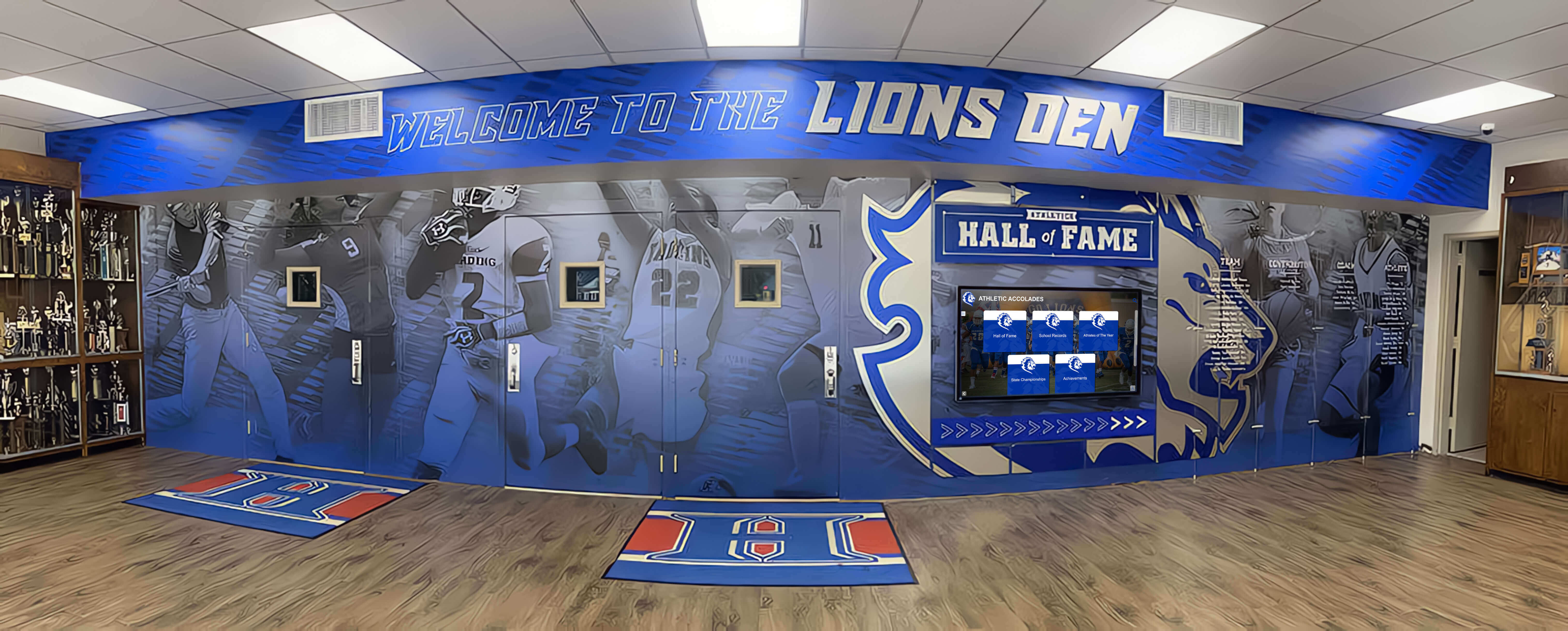
Athletic corridors with multiple trophy case positions share branch circuits and distribution panels — surge protection planned for one segment of the corridor should cover all positions on the same circuit
Trophy Case LED Surge Protection: Nine-Step Checklist
Steps 1 through 5 are information-gathering and assessment tasks that facilities staff can complete in coordination with the school’s electrical documentation. Steps 6 and 7 involve panel-level work that requires a licensed electrician. Steps 8 and 9 are documentation and training tasks that facilities staff complete after installation.
Step 1 — Determine the Building’s Surge Exposure Category
IEEE C62.41.2 defines location categories that describe the severity of surge exposure a circuit is likely to experience based on its position in the building’s electrical distribution system:
- Category A: Wall outlets, long branch circuits, circuits more than 30 feet from the service entrance panel. Moderate surge exposure. Most interior office and classroom circuits fall here.
- Category B: Short branch circuits within 30 feet of the panel, heavy appliance outlets, circuits near capacitor or power factor correction equipment. Higher surge exposure.
- Category C: Service entrance, metering equipment, overhead or underground service conductors. Highest surge exposure.
Trophy case corridor circuits most commonly fall in Category A or B depending on building size and panel proximity. Identifying the correct category determines the minimum surge withstand capability (SWC) required from your SPD. If the corridor is in a wing far from the main panel, Category A applies; if the trophy case corridor is adjacent to the main electrical room, reassess for Category B.
Step 2 — Map the Trophy Case Branch Circuit(s)
Work with a licensed electrician to identify which breakers at the distribution panel serve the trophy case corridor. Document:
- Circuit voltage (120V single-phase is standard for most K–12 trophy case corridors; 277V applies if the circuit was designed for commercial fluorescent)
- Breaker size in amperes
- Number of fixture positions on the circuit
- Whether any digital display panels, AV equipment, or outlet strips for event use share the same branch circuit
This circuit map becomes the foundation for SPD selection and the record for future facilities staff who may not be familiar with the corridor’s electrical history.
Step 3 — Inspect Existing LED Drivers for Integral MOV Protection
Many commercial LED drivers include metal oxide varistors (MOVs) built into their input filter stage. These components clamp transient voltages above their rated threshold, providing a first line of defense against modest surges. However, integral MOVs degrade with each clamping event and fail permanently after absorbing a sufficiently large transient — at which point the driver’s internal protection is gone and the driver itself may fail on the next event.
Request the specification sheet or data sheet for the installed or planned LED driver and look for:
- A statement of transient protection or surge immunity
- A listed surge immunity rating (IEC 61000-4-5 is the common test standard for conducted surge immunity; a Level 3 or Level 4 rating indicates better protection)
- Whether the driver meets DLC (DesignLights Consortium) Premium qualification, which requires a minimum surge rating of 10 kV / 5 kA for indoor fixtures
Drivers with no published surge immunity rating are providing unknown protection. For trophy case circuits in surge-exposed locations, add external SPD protection regardless of whether the driver claims built-in protection.
Step 4 — Select SPD Protection Level and Location
Effective trophy case LED surge protection addresses two distinct layers of the electrical distribution system:
Panel-level SPD (Type 1 or Type 2 per UL 1449) Installed at the electrical panel serving the trophy case corridor, a Type 1 or Type 2 SPD catches the large transients entering from the utility service, lightning coupling on service conductors, or cross-building distribution events. Type 1 SPDs are installed ahead of the main breaker and require a permanent connection; Type 2 SPDs are installed on the load side of the main breaker and are more common in school retrofit applications.
Point-of-use SPD (Type 3 per UL 1449) Installed at the fixture or within the last 30 feet of the branch circuit, a point-of-use SPD captures residual transients that pass through panel-level protection and provides additional protection against locally generated switching transients from adjacent HVAC or motor loads. For trophy case LED circuits where drivers are hardwired, an SPD module installed in the junction box or at the nearest outlet is the appropriate form factor.
For school trophy case LED lighting in a primary recognition corridor — a space used for athletic banquets, championship announcements, community events, and regular daily visibility — both layers are warranted. The incremental cost of point-of-use protection over panel protection alone is small relative to the cost of LED driver replacement and the recognition program disruption caused by an unprotected failure.
Step 5 — Verify SPD Ratings Match Circuit Requirements
For a 120V/20A trophy case branch circuit, confirm the following ratings on any SPD before installation. These parameters appear on the SPD’s nameplate or in the product specification sheet:
Voltage Protection Rating (VPR): The maximum clamping voltage the SPD will allow through during a standard test surge. For a 120V nominal circuit, select a device rated ≤ 700V (UL 1449 Category C2 or better). A VPR of ≤ 500V (Category C1) provides a meaningfully lower clamping voltage and is preferred for circuits serving sensitive LED driver electronics.
Maximum Continuous Operating Voltage (MCOV): The highest continuous line voltage the SPD can withstand without degrading its protective components. For a 120V circuit, MCOV must be ≥ 130V (1.1× nominal, accounting for typical utility voltage tolerances up to ±10%).
Surge Current Capacity (Imax): The maximum surge current the SPD can handle on a single event without permanent damage. For panel-level (Type 2) SPDs serving a trophy case corridor, specify Imax ≥ 20 kA per mode. For point-of-use (Type 3) SPDs, Imax ≥ 6 kA per mode is the standard minimum.
UL 1449 Listing (4th Edition): Confirm the device is listed under UL 1449, current edition. This listing confirms the VPR rating was tested under standardized conditions and that the device includes thermal protection to prevent fire hazard when MOV components degrade. Unlisted devices from online commodity sources provide unknown protection levels and may create fire risk when MOV components fail.
Cloud-Managed Recognition Displays for Schools
While your facilities team works through the surge protection checklist for physical trophy case circuits, Rocket Alumni Solutions can show you how schools are complementing physical cases with cloud-managed digital recognition displays. Interactive touchscreens with remote content management, unlimited recognition capacity, and WCAG 2.1 AA accessibility — no lighting audits, no inrush calculations, and no surge damage to LED drivers inside the display hardware. Explore our full recognition platform to see how digital displays work alongside what your facilities team maintains in the physical cases.
Book A DemoStep 6 — Coordinate Panel-Level SPD Installation with a Licensed Electrician
Panel-level SPD installation requires de-energizing the panel and is not a facilities staff task. When coordinating with your electrician, provide the circuit map from Step 2 and the SPD ratings verified in Step 5, and confirm the following before installation proceeds:
- The selected SPD is listed for the panel type and manufacturer (some panel manufacturers publish approved SPD compatibility lists)
- The available short-circuit current (ASCC) at the panel does not exceed the SPD’s rated interrupting capacity — this is a safety rating, not a surge handling rating, and it matters for panel-mounted devices
- Conductor sizing and overcurrent protection for the SPD connection follow the manufacturer’s wiring diagram and applicable local electrical code requirements
- A disconnecting means is included if required by local code or the authority having jurisdiction (AHJ)
Document the installation: SPD model, manufacturer, installation date, rated VPR and Imax, and the name of the licensed electrician who completed the work. This record supports future assessment and warranty claims.
Step 7 — Install Point-of-Use Protection at the Fixture Level
Point-of-use SPD options for trophy case LED fixture runs depend on how the drivers are wired:
- Hardwired driver configurations: An SPD module installed in a junction box at or within 30 feet of the first driver in the fixture run. Several manufacturers offer DIN-rail-mount SPD modules appropriate for this configuration.
- Plug-in driver configurations: A UL 1449-listed outlet strip SPD, specified with Imax ≥ 6 kA and VPR ≤ 700V, at the outlet serving the driver plug. Confirm the strip is listed under UL 1449 (not merely UL 1363, which covers relocatable power taps without surge protection).
- Integral SPD outlets: Duplex outlets with built-in UL 1449 SPD components, installed at the fixture junction box by a licensed electrician. These provide permanent point-of-use protection without a separate device.
When selecting any point-of-use SPD, confirm that the device includes a status indicator that remains visible after installation — not only at the time of installation. A status indicator hidden inside a junction box or behind a trophy case panel cannot be checked during routine maintenance and defeats the purpose of having an indicator.
Step 8 — Document the Installation and Set an Inspection Schedule
An SPD that degrades silently after absorbing a series of transients provides no protection against the next event — and no visible warning that it has failed. Documentation and a scheduled inspection program are what convert a one-time installation into ongoing protection.
Installation record to complete immediately after installation:
- Building and corridor location (specific trophy case wing or room number)
- Circuit breaker number and panel identifier
- Panel-level SPD: manufacturer, model, serial number if applicable, VPR rating, Imax rating, installation date
- Point-of-use SPD(s): same fields, plus fixture position map reference
- Name of licensed electrician who completed panel-level installation
- Initial status indicator state (photograph recommended)
Inspection schedule:
- Annual: Visual check of all SPD status indicators; photograph any change from the initial state; log result
- After any known surge event: Full visual inspection of SPD indicators plus a review of any LED driver failures in the corridor since the last inspection
- Every 3–5 years: Full SPD assessment by a licensed electrician, including verification that rated capacity still matches the circuit load after any interim modifications
Step 9 — Brief Facilities Staff on SPD Indicators and Warning Signs
Most UL 1449-listed SPDs include a visual status indicator:
- Green indicator illuminated: MOV components are intact and the device is providing rated protection
- Indicator dark or absent: MOV has failed or been consumed; the device is no longer providing surge protection and must be replaced
- Red indicator or audible alarm (on some models): Same interpretation as a dark indicator — protection has been compromised
Facilities staff assigned to trophy case corridor maintenance — including those who perform routine light bulb and filter changes — should know what the normal indicator state looks like for each installed SPD, and should have a clear reporting path for any indicator that does not show the expected state. A degraded SPD that goes unreported leaves the trophy case LED circuit unprotected until the next surge event, which may not occur for months.
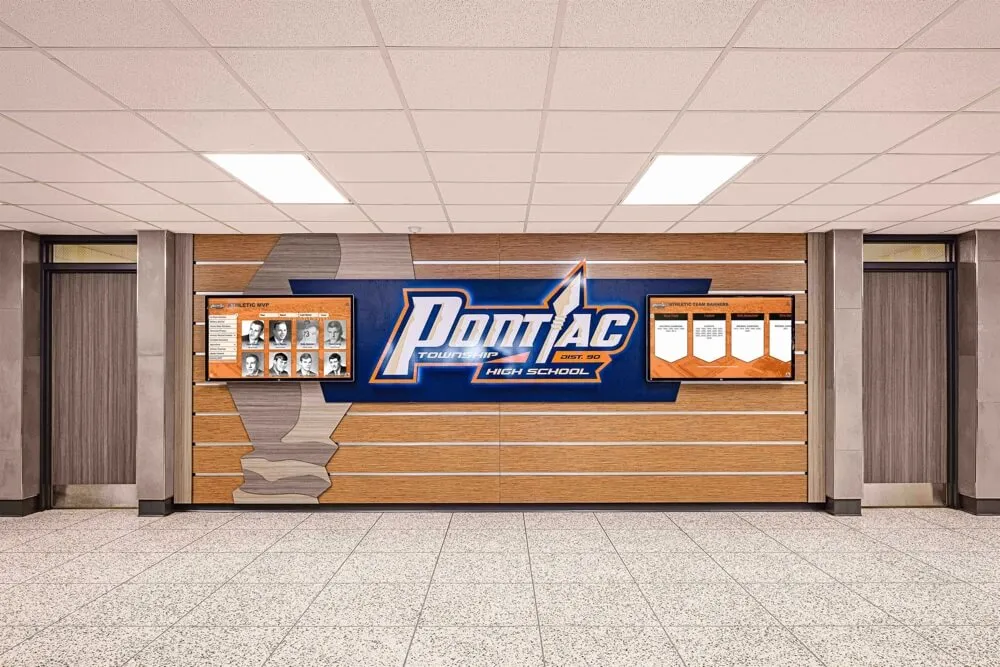
Athletic honor walls and trophy cases along corridor runs rely on LED fixtures that must remain operational through the full school year — surge protection planned and documented before a failure event is far less disruptive than emergency driver replacement during award season
Trophy Case LED Surge Protection Decision Table
The following table summarizes key parameters for assessing whether your trophy case LED lighting circuit has adequate surge protection in place, and what action each condition requires. These thresholds reflect standard practice for commercial institutional LED installations and should be verified against applicable local code and the specific products installed.
| Parameter | Pass — No Action Required | Review Required | Escalate to Electrician |
|---|---|---|---|
| Panel-level SPD | UL 1449-listed Type 2 present and functioning | SPD present but listing or model cannot be verified | No panel-level SPD installed; install before LED upgrade or after any surge event |
| Voltage protection rating (VPR) for 120V circuit | ≤ 500V (Category C1) | 501–700V (Category C2) | Above 700V or rating undocumented |
| Surge current capacity (Imax) — panel-level | ≥ 20 kA per mode | 10–19 kA per mode | Below 10 kA or undocumented |
| Surge current capacity (Imax) — point-of-use | ≥ 6 kA per mode | 3–5 kA per mode | Below 3 kA or no point-of-use protection |
| SPD status indicator | Green / normal; no change since installation | Indicator present but initial state not documented | Indicator dark, red, or absent; replace SPD immediately |
| LED driver surge immunity rating | IEC 61000-4-5 Level 3 or Level 4; or DLC Premium listed | Integral MOV documented but no IEC rating | No surge immunity specification available from supplier |
| Time since last SPD inspection | Less than 12 months | 12–36 months | More than 36 months or never inspected |
| Known surge event history | No known events in the past 24 months | One minor event with no fixture failures reported | Lightning strike, utility fault, or multiple fixture failures in corridor |
Notes on applying this table:
- These pass/review/escalate thresholds apply to 120V single-phase circuits, which cover the large majority of K–12 trophy case corridor lighting circuits. Circuits operating at 277V for direct commercial-fluorescent replacement require SPDs with correspondingly higher MCOV ratings — consult a licensed electrician before applying these thresholds to 277V installations.
- The VPR categories (C1, C2) referenced here follow UL 1449, 4th edition classification. Older SPDs may be rated under the 3rd edition standard with different category designations — these should be assessed by a licensed electrician for equivalence before accepting them as compliant with current guidance.
- “Known surge event” includes any incident causing unexpected circuit breaker trips, LED fixture failures with no other identifiable cause, or visible lightning strikes within one mile of the building. Schools in regions with high lightning density (the Gulf Coast, Florida, and the Southeast corridor) should reduce inspection intervals to six months.
How Surge Protection Connects to the Recognition Environment
Physical trophy cases in school athletic corridors represent decades of achievement — team championships, individual athletic records, retired jersey displays, honor roll plaques, and community recognition programs that generations of students and families have contributed to. The LED fixtures illuminating those cases are a small but foundational part of that recognition infrastructure, and surge damage to those fixtures affects the visibility of every award in the case.
A well-documented surge protection program is the electrical equivalent of the case’s structural maintenance program: scheduled, recorded, and understood by whoever is responsible for the corridor at any given time. Staff turnover at K–12 facilities is a consistent challenge, and recognition programs that depend on institutional memory rather than written documentation tend to discover infrastructure gaps — including missing surge protection — after a failure rather than before.
Schools developing comprehensive recognition programs that span athletic trophy cases, academic honor walls, and community recognition displays apply the same protective planning across all elements. Lobby digital signage installations in schools — like those covered in the practical guide to lobby digital signage for schools at Digital Warming — share electrical distribution panels with corridor trophy case lighting in many buildings, and surge protection planned for one element of the recognition environment typically benefits adjacent display equipment as well.
Digital display hardware sharing the same corridor as physical trophy cases also benefits from network-level protections separate from electrical surge protection. The recognition display network check at Best Touchscreen addresses how schools verify that interactive recognition panels on school networks are protected against configuration-level vulnerabilities — a parallel due-diligence step for facilities teams that manage both physical cases and digital panels in the same space.
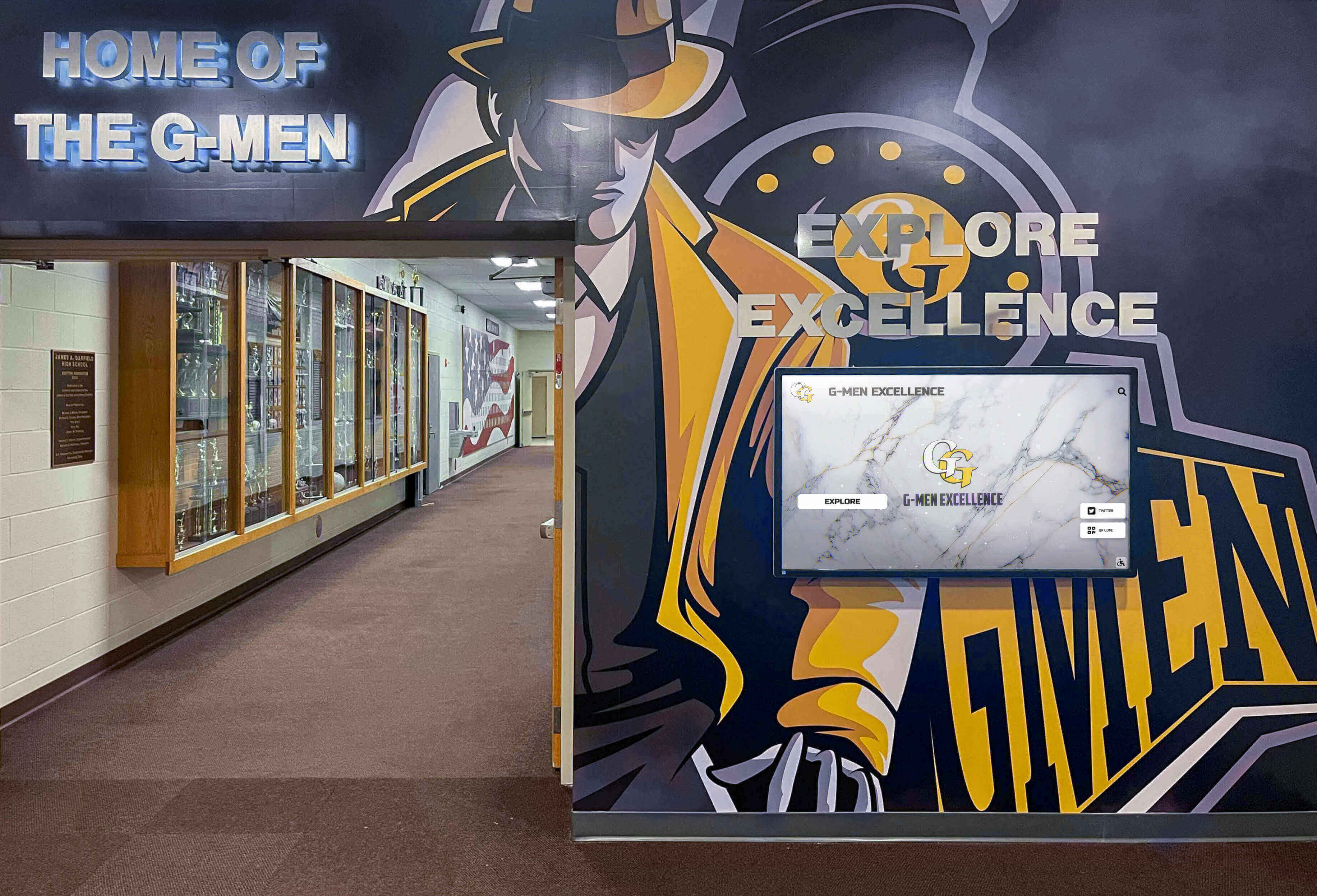
Corridors combining traditional trophy cases with digital recognition panels present a complete recognition environment — electrical surge protection for the LED lighting circuit supports the physical side of that environment, while separate protections apply to the digital display hardware
When the Surge Protection Checklist Points to Broader Infrastructure Questions
Some schools find that the nine-step checklist surfaces electrical infrastructure characteristics that go beyond the scope of an SPD installation. Trophy case corridors served by aging panels with limited available breaker space, or buildings where the main service entrance SPD has never been installed or inspected, may require a broader electrical assessment before adding panel-level surge protection to the trophy case circuit specifically.
Indicators that a broader assessment is warranted before proceeding with the checklist:
- The electrical panel serving the corridor is more than 20 years old and has no installed SPD at any level
- The building has a history of unexplained LED or electronics failures across multiple circuits that cannot be attributed to any specific event
- The campus sits in a high-lightning-density zone with no utility-side surge protection on the service entrance
- Multiple circuits share a single panel that also serves large HVAC or motor loads with no filtering between the load groups
In these cases, coordinating with a licensed electrician for a panel-level assessment before focusing on trophy case circuit protection specifically produces a more durable result — and often identifies protection upgrades that benefit the entire building rather than one corridor.
Recognition programs at schools that manage digital hall of fame displays alongside physical trophy cases should also ensure that the accessibility and technical quality of the digital side of the display receives comparable attention to the physical infrastructure. The digital hall of fame ARIA audit and inductee search controls review at Digital Wall of Fame covers the accessibility review process for interactive recognition panels — the kind of due diligence that parallels the facilities team’s electrical protection review for the physical cases.
Alumni recognition programs that celebrate famous graduates and long-term school legacy depend on consistent, well-maintained recognition infrastructure across both physical and digital displays. The highlighting famous alumni recognition guide at Digital Yearbook addresses the content and recognition strategy side of those programs — the visibility of that content depends, in part, on trophy case LED lighting that has never been dark because of an unprotected surge event.
Frequently Asked Questions
What is trophy case LED surge protection? Trophy case LED surge protection refers to Surge Protective Devices (SPDs) installed on the branch circuits that power LED lighting inside school trophy cases. These devices clamp transient voltage spikes — from lightning, utility switching events, or motor loads on shared panels — before they can reach and damage the LED drivers that power the fixtures. LED drivers are more vulnerable to transient overvoltages than the fluorescent ballasts they typically replace, making dedicated surge protection important for LED-upgraded trophy case circuits.
Why are LED drivers more vulnerable to surges than fluorescent ballasts? Fluorescent ballasts contain inductive components that naturally slow the rate of voltage rise during a surge event, giving circuit protection more time to respond. LED drivers use switching power supplies with MOSFETs, electrolytic capacitors, and control ICs — components with voltage ratings that can be exceeded by surge transients in microseconds. The inductive buffer that the ballast provided is gone after the retrofit, increasing the circuit’s vulnerability. External SPDs replace that buffering function.
What type of SPD do I need for a 120V trophy case circuit? For most K–12 trophy case corridor circuits, specify a UL 1449, 4th edition-listed Type 2 SPD at the panel level with VPR ≤ 700V (Category C2 or better) and Imax ≥ 20 kA per mode. Add a Type 3 point-of-use SPD at or within 30 feet of the LED driver installation with Imax ≥ 6 kA. If the corridor is in a high-lightning-density region or adjacent to large motor loads, target VPR ≤ 500V (Category C1) for the panel-level device. Always confirm ratings with a licensed electrician who can assess the specific panel configuration and local code requirements.
How do I know if my LED drivers already have built-in surge protection? Request the specification sheet or data sheet for the installed driver from your supplier or the manufacturer. Look for a surge immunity rating under IEC 61000-4-5 (Level 3 or Level 4 indicates better protection), a statement of compliance with DLC Premium requirements (which include a minimum surge rating), or a description of integral MOV components. If the supplier cannot provide documented surge immunity data, treat the driver as unprotected when planning external SPD installation.
How often should SPDs be inspected or replaced? Inspect SPD status indicators annually and immediately after any known surge event — a lightning strike near the building, a utility fault, or any circuit event that trips a breaker unexpectedly. Replace any SPD whose status indicator shows degradation (dark or red indicator on devices that should show green). Plan a full SPD assessment by a licensed electrician every three to five years, even if indicators appear normal, since indicator circuits on some lower-cost devices can fail before the MOV does. Replace panel-level SPDs that have absorbed a documented major surge event regardless of indicator state.
Does a whole-building SPD at the service entrance protect trophy case fixtures? A service entrance SPD reduces the magnitude of surges entering the building from the utility but does not eliminate them — it is the first line of defense in a layered protection strategy. Surges generated inside the building by motor loads, capacitor switching, or localized lightning coupling on interior wiring are not fully suppressed by a service entrance device. Panel-level and point-of-use SPDs on the trophy case circuit provide the additional suppression needed to protect LED drivers from residual transients and locally generated events.
Can surge damage cause gradual LED driver failure rather than immediate burnout? Yes. This is one of the reasons surge damage in LED drivers is difficult to diagnose after the fact. A transient overvoltage that does not exceed the driver’s absolute maximum ratings may still degrade the MOV components, electrolytic capacitors, or control IC — reducing the driver’s remaining useful life without causing immediate failure. Fixtures that begin failing within one to two years of an LED upgrade, or that show progressively inconsistent output before failure, may have experienced unrecognized surge damage. A surge protection program installed after the initial LED upgrade cannot recover already-degraded drivers but prevents further damage to replacement units.
What should facilities staff do immediately after a known surge event near the school? Inspect all SPD status indicators in the trophy case corridor and any other recognition display areas that share the same distribution panel. Document the indicator state (photograph if possible). Walk the corridor and note any LED fixtures that are dark, flickering, or showing abnormal color output — these may indicate driver failure caused by the event. Report findings to the licensed electrician on the facilities service roster and schedule a full assessment before the next major recognition event, such as an athletic banquet, championship ceremony, or community awards night. Do not delay inspection until a fixture fails completely: partially damaged drivers can fail at unpredictable times.
How does surge protection connect to the school’s awards and recognition program? The LED fixtures inside trophy cases are the physical infrastructure of the school’s recognition display. Championship hardware, retired jerseys, athletic records, honor roll plaques, and decades of community achievement depend on consistent, reliable lighting to remain visible and honored. A single unprotected surge event that takes out three LED drivers before homecoming affects the entire corridor display — not just the electrical infrastructure. Surge protection documentation that follows staff turnover ensures that whoever manages the corridor next understands what protection is in place and when it was last verified. That continuity supports the recognition program long after the current facilities team has moved on.
School trophy cases are among the most permanent recognition features in any athletic building — designed to display championships and achievements for decades. The LED lighting inside them does not require complex maintenance, but it does require protection from the electrical environment it operates in. A surge that arrives unannounced on a summer evening can darken fixtures that have been reliably illuminating championship hardware for years, and restoring them requires lead time that may not align with the school calendar.
The nine-step checklist in this guide is the structured version of an assessment that many facilities teams handle reactively — after a failure, after a lightning storm, after an athletic director asks why the corridor lights are out the week before senior night. Running the checklist proactively, documenting the result, and setting an annual inspection schedule converts surge protection from a reactive expense into a planned maintenance line item. That is the kind of institutional infrastructure that serves the recognition program reliably, regardless of who is managing the facilities when the next storm comes through.
See How Digital Recognition Eliminates the Lighting Maintenance Cycle
If your athletic wing is overdue for a recognition upgrade that goes beyond circuit protection, Rocket Alumni Solutions builds cloud-managed digital trophy cases and hall of fame displays for schools. Interactive touchscreens with remote content management, unlimited recognition capacity, ADA WCAG 2.1 AA compliance, and scheduled publishing for future-dated content — no surge damage to LED drivers inside the display, no annual lighting audits, and no dark corridor during homecoming. See how schools build recognition programs that grow beyond what any physical trophy case can hold.
Schedule Your DemoLive Example: Rocket Alumni Solutions Touchscreen Display
Interact with a live example (16:9 scaled 1920x1080 display). All content is automatically responsive to all screen sizes and orientations.