



Intent: calculate/decide. Trophy case LED inrush current is the brief surge of electrical current that LED drivers draw the instant a circuit is switched on — typically 10 to 30 times higher than the fixture’s steady-state operating current and lasting only a few milliseconds. In a single-fixture installation that surge is negligible. In a trophy case corridor where a lighting upgrade adds six, eight, or twelve LED fixtures to an aging branch circuit already protected by a legacy breaker or controlled by a phase-cut dimmer, the cumulative inrush can exceed protection device ratings and cause nuisance tripping, dimmer malfunction, or premature relay failure. This guide explains what inrush current is, why it matters specifically before a school trophy case LED upgrade, and how facilities teams can complete a structured eight-step check — without specialized instruments — before fixture installation begins.
Athletic hallway lighting upgrades are among the most common facilities projects at K–12 schools. Fluorescent tube fixtures in trophy cases age at predictable intervals, and the LED replacement market offers clear advantages in brightness, lifespan, and energy savings. The installation itself is often straightforward: remove the fluorescent tube and ballast, install an LED strip and driver, connect to the existing circuit. What facilities teams less often plan for is the electrical behavior that happens in the first 20 milliseconds after the switch is thrown.
Fluorescent fixtures with magnetic ballasts have their own inrush characteristics — primarily inductive, peaking within the first few AC cycles and decaying quickly. LED drivers have a different inrush profile: the capacitors in the power supply draw a large charge current immediately at power-on to reach operating voltage. This capacitive inrush peaks faster and higher per fixture than the magnetic ballast it replaces. When twelve fluorescent tubes on a corridor circuit are swapped for twelve LED drivers at the same time, the circuit’s protective devices — breakers, fuses, dimmers, and timers — see a load profile they may not have been sized to handle.
The consequence that athletic directors notice first is a circuit breaker that trips the moment the trophy case corridor lighting is switched on — an unexplained electrical problem that looks like a failed installation and requires an electrician callback. The underlying cause is inrush current that nobody checked before the upgrade began.

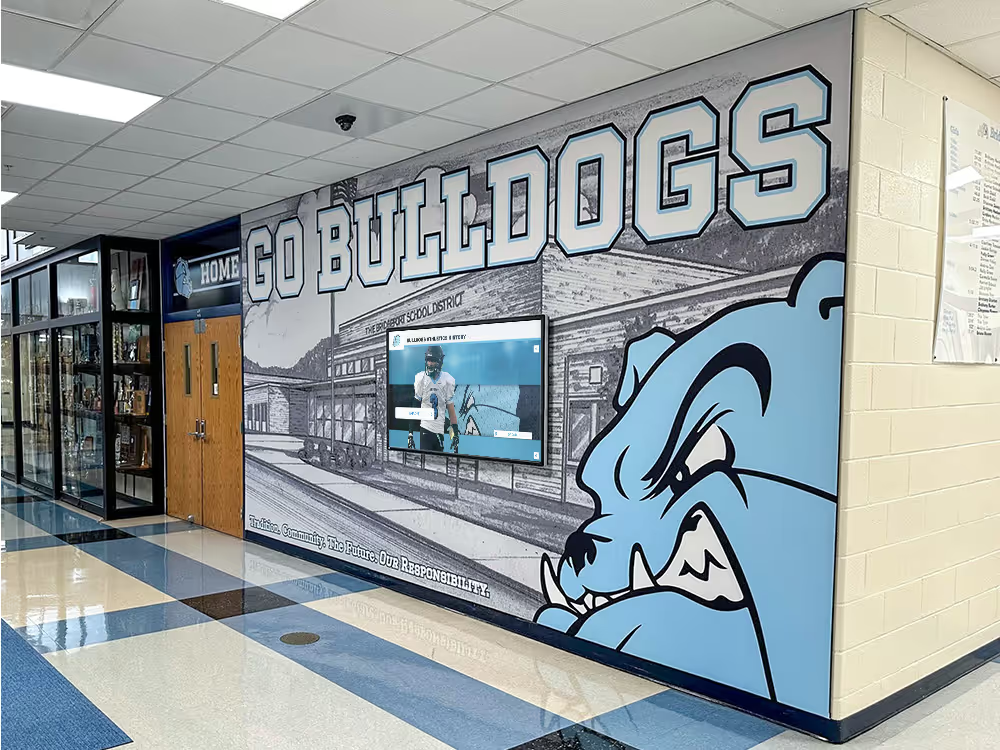
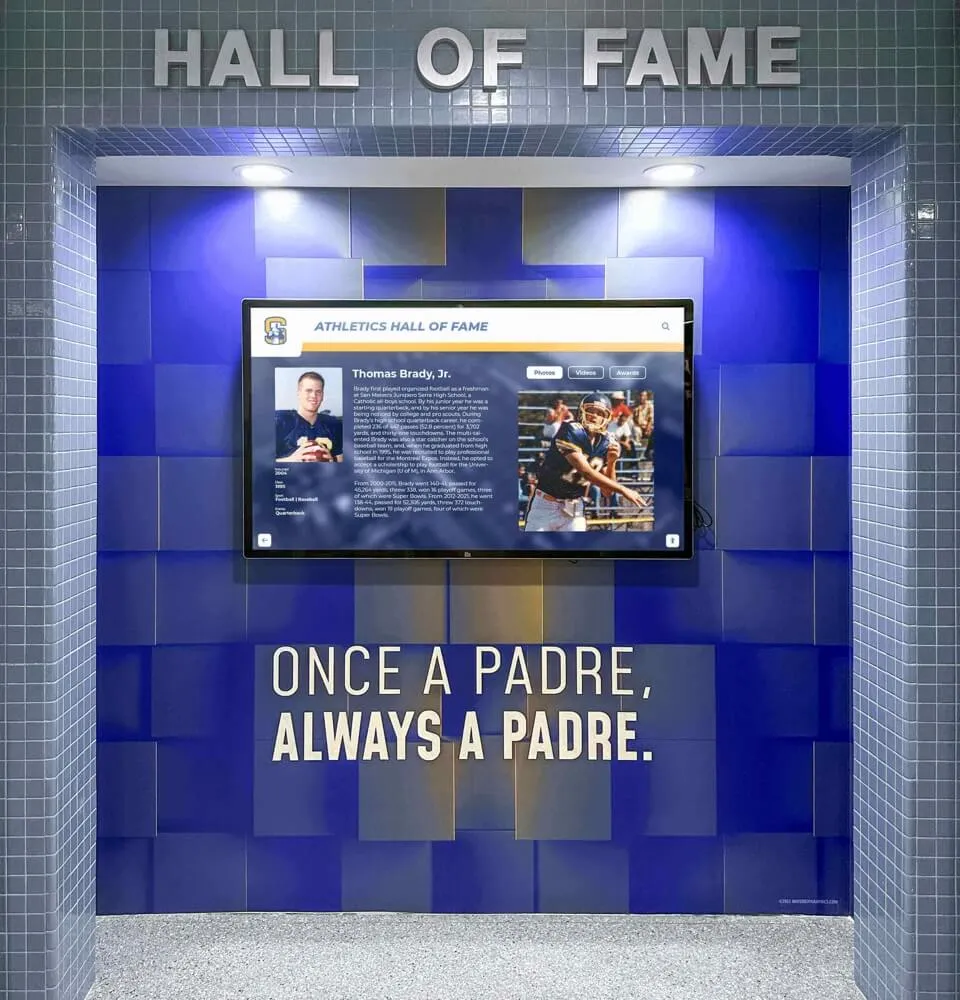
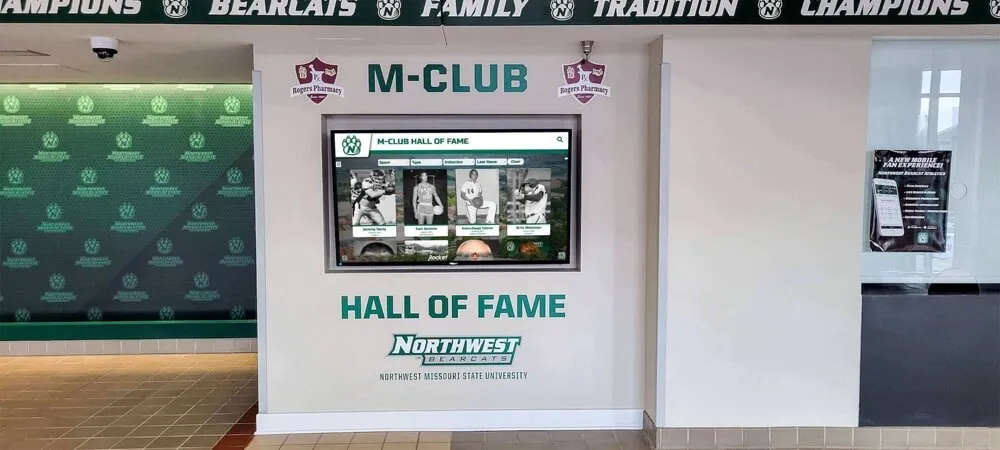
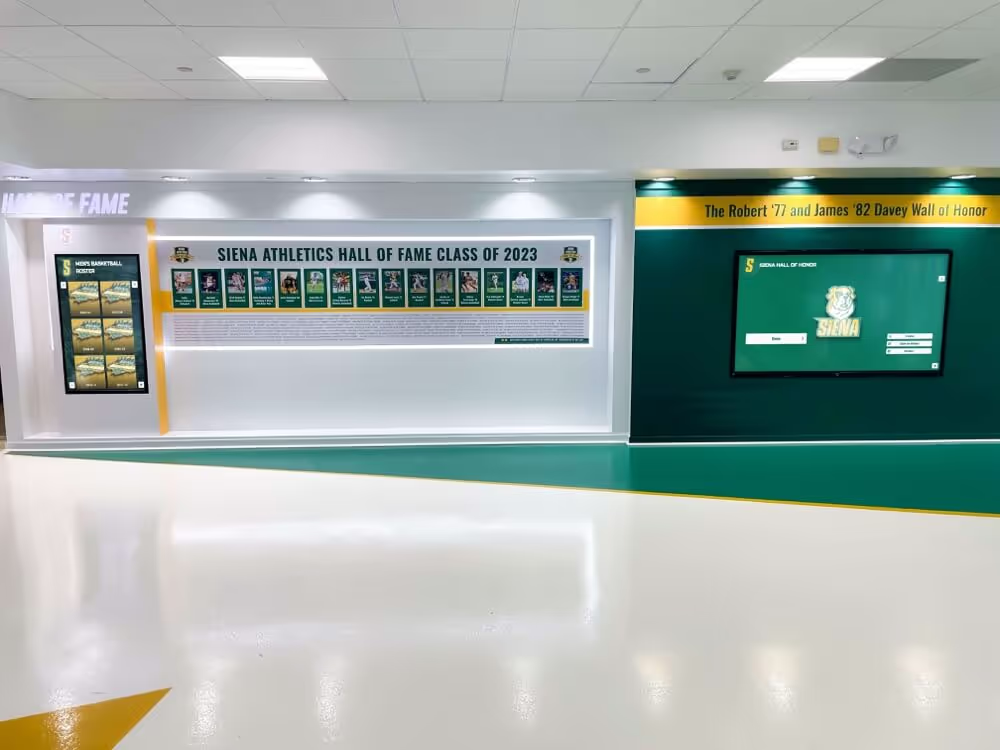
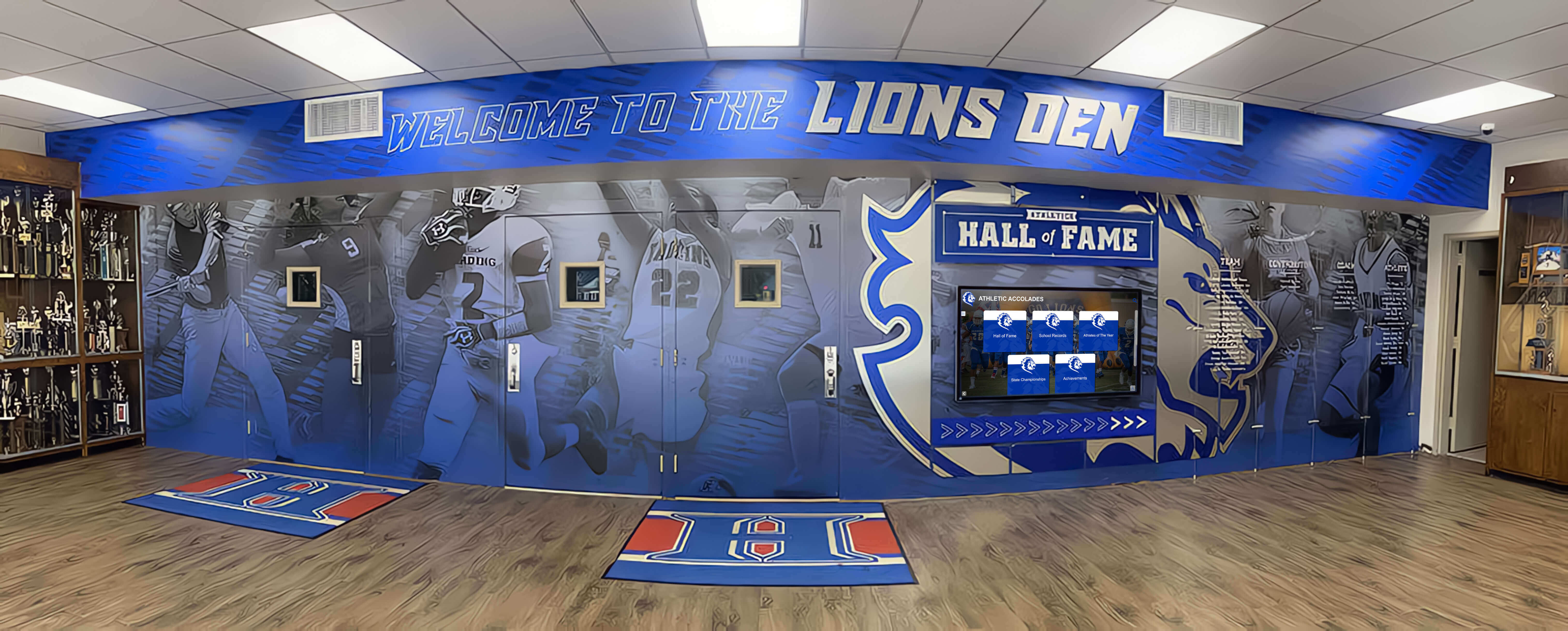
Trophy case corridors with multiple case positions — each receiving its own LED fixture during an upgrade — present cumulative inrush loads that multiply with every additional fixture added to a shared branch circuit
What Is LED Inrush Current and Why Does It Differ From Fluorescent?
Every LED driver contains a power supply stage that converts AC line voltage to the lower DC voltage the LED string requires. At the core of this stage is a bank of electrolytic capacitors that filter the rectified AC into stable DC. At power-on, those capacitors are fully discharged — they present an extremely low impedance to the incoming line voltage and draw current rapidly until they charge to operating voltage.
This charging event is the inrush pulse. It is brief — typically 1 to 20 milliseconds in duration depending on driver design — and large — commonly reaching 10 to 30 times the driver’s rated steady-state current. A driver rated at 20 watts drawing 167 milliamps at 120V may draw 2 to 5 amperes for a few milliseconds at startup.
Fluorescent fixtures with electronic ballasts have their own inrush, which is typically characterized differently. Magnetic ballast inrush is primarily inductive and extends across several AC half-cycles. The distinction that matters for upgrade planning is that LED drivers — especially lower-cost commodity models — frequently produce higher peak inrush and shorter inrush duration than the magnetic ballasts they replace, which means existing circuit protection may have been sized with different assumptions.
Why inrush current matters for trophy case LED upgrades specifically:
Cumulative effect across fixtures: Trophy case corridors typically group multiple cases on a single branch circuit. Each LED driver contributes its own inrush pulse at switch-on. When all drivers start simultaneously — as they do when a wall switch or timer controls the whole circuit — their inrush currents add together.
Legacy breaker coordination: Standard thermal-magnetic breakers tolerate overloads based on a time-current curve designed primarily for resistive and inductive loads. Breakers can trip on short-duration high-current pulses from multiple LED drivers starting simultaneously, even when steady-state current is well within the circuit rating.
Dimmer compatibility: Phase-cut dimmers (TRIAC-based, sometimes called “incandescent dimmers”) rely on a specific voltage waveform to control output. The capacitive impedance of LED drivers interacts with TRIAC dimmer circuits in ways that can cause sustained flicker, oscillation, or early TRIAC failure — symptoms that appear immediately after an LED upgrade replaces fluorescent fixtures on a dimmer-controlled circuit.
Timer relay and contactor sizing: Mechanical timers and contactors used in older building systems are rated for specific inrush multiples. LED inrush profiles may exceed these ratings and cause contact welding or premature relay failure over months of repeated switch cycles.
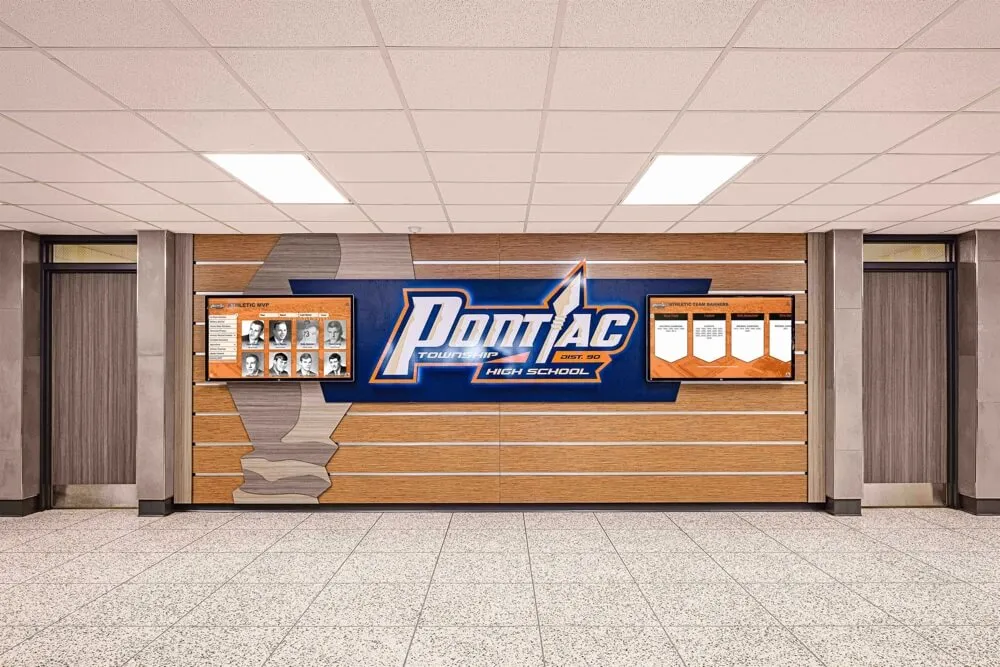
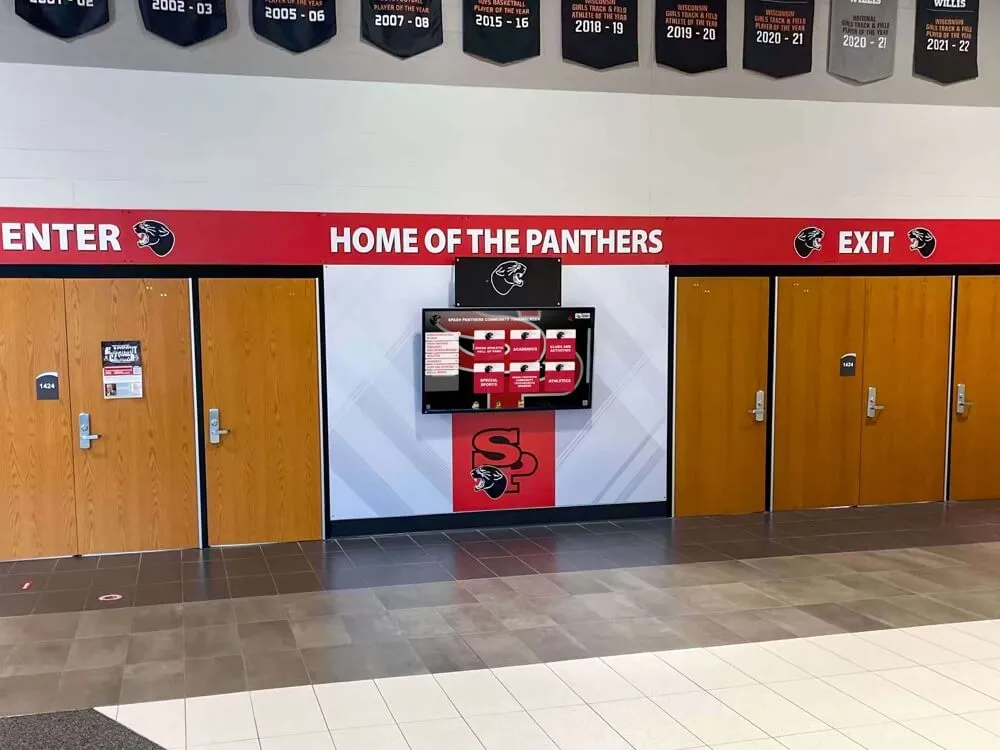
School athletic hallways with multiple trophy case positions share electrical circuits that may span the full corridor length — inrush loads from a full-corridor LED upgrade accumulate across every fixture connected to a shared branch
Gathering the Information You Need Before the Check
A trophy case LED inrush current check does not require an oscilloscope or a current clamp that can capture sub-millisecond transients. It requires manufacturer specifications and a methodical inventory of your electrical infrastructure. Gather the following before beginning the assessment.
LED fixture inrush specifications: Request or download the specification sheet for the LED driver or integrated fixture you plan to install. Look for the following values:
- Inrush current peak (amperes): the maximum instantaneous current at power-on
- Inrush current duration (milliseconds or microseconds): how long the pulse lasts
- These values are sometimes labeled as i²t (a measure of inrush energy) or expressed as “inrush at rated input voltage”
If these specifications are not published, request them directly from the manufacturer or supplier. A supplier who cannot provide inrush specifications is selling a driver whose electrical characteristics are unverified — not an appropriate choice for a trophy case LED upgrade on a shared branch circuit.
Current circuit documentation: Gather the following from the building’s electrical panel and any available as-built drawings:
- Branch circuit breaker size (amperes) for the trophy case corridor circuit
- Breaker type (standard thermal-magnetic, slow-blow, or electronic)
- Number of existing fixture positions on the circuit
- Whether the circuit also serves other loads (switches, outlets, display equipment)
- Timer, relay, or dimmer model if the circuit is time-controlled or dimmer-controlled
Existing fixture list: Document the current fixtures — type (fluorescent, incandescent, or LED if previously upgraded), ballast type for fluorescent (magnetic or electronic), and wattage per fixture position. This is your baseline for comparison after the upgrade.
Step-by-Step Trophy Case LED Inrush Current Check
The following procedure is designed for facilities managers and athletic department staff working in coordination with a licensed electrician. Steps 1 through 5 are information-gathering tasks any facilities staff member can complete. Steps 6 through 8 involve electrical assessment or decisions that a licensed electrician should review before installation proceeds.
Record the branch circuit rating. Identify which circuit breaker controls the trophy case corridor lighting. Note the breaker size in amperes and whether it is a standard instantaneous-trip or a time-delay breaker. Standard thermal-magnetic breakers (15A or 20A) are common in older school electrical panels and have the least tolerance for high-peak short-duration inrush pulses from multiple LED drivers starting simultaneously.
Count fixtures per circuit. Walk the corridor and count every fixture position connected to the trophy case branch circuit. Include overhead corridor fixtures if they share the circuit with in-case lighting. Record whether all fixtures switch on together (single switch or timer) or whether any positions are independently controlled.
Calculate steady-state circuit load after upgrade. Multiply the wattage of your planned LED fixture by the total fixture count and divide by line voltage to get steady-state amperage. This should be well below the circuit rating — LED fixtures are typically much lower wattage than the fluorescent fixtures they replace, and the steady-state load check almost always passes for a trophy case corridor. The inrush check is the variable that requires attention.
Calculate cumulative inrush current. Multiply the per-fixture peak inrush current from the manufacturer specification by the number of fixtures switching simultaneously. This is a conservative estimate — actual cumulative inrush may be slightly lower due to driver tolerances and minor timing offsets — but appropriate for planning purposes. Compare this figure to the circuit breaker’s instantaneous trip threshold. For a standard 20A thermal-magnetic breaker, the instantaneous trip threshold is typically 10 to 14 times the breaker rating (200–280A), but whether a specific peak pulse causes a trip also depends on inrush duration. Your breaker’s published time-current curve, available from the manufacturer, provides the definitive reference.
Check dimmer type if the circuit is dimmer-controlled. Identify whether the circuit uses an incandescent-style leading-edge (TRIAC) dimmer, a trailing-edge (electronic low-voltage) dimmer, or a 0–10V or DALI digital dimmer. TRIAC dimmers are the most common source of LED compatibility problems after a lighting upgrade. If the installed dimmer type cannot be confirmed from the device plate, a licensed electrician can identify it from the wiring configuration. Trailing-edge and digital (0–10V, DALI) dimmers are generally compatible with LED driver inrush profiles; TRIAC dimmers require LED-specific listings on both the dimmer and driver to perform reliably.
Review timer relay and contactor specifications. If a mechanical or electromechanical timer controls the circuit — a common configuration in older athletic wings — locate its specification sheet or nameplate. Check whether it lists an inrush current rating separate from its steady-state current rating. Many school-grade mechanical timers are rated for motor loads (which have inductive inrush) rather than capacitive inrush. A licensed electrician can assess whether the relay needs replacement or an inrush-limiting accessory before the LED upgrade proceeds.
Assess the need for an inrush-limiting device. When cumulative calculated inrush approaches or exceeds circuit protection ratings, or when legacy dimmers or relays are incompatible with LED driver inrush profiles, several options exist. Your electrician may recommend: replacing the breaker with one rated for LED load inrush; installing an NTC (negative temperature coefficient) thermistor in-line with the circuit to limit the rate of inrush current rise; specifying LED drivers with built-in inrush limiting; or splitting the fixture group across two separately controlled circuits to reduce simultaneous inrush load. Document the assessment and any recommendation before installation begins.
Pilot-test one fixture before full installation. Before installing all fixtures in the corridor upgrade, install a single representative fixture on the circuit and switch it on from normal operating conditions (cold start, circuit fully loaded at steady state). Observe whether the breaker holds, whether any dimmer behavior is abnormal, and whether the switch or timer operates normally. A single-fixture inrush pulse is much smaller than the full-corridor cumulative load, but this test confirms that the fixture’s electrical behavior is consistent with the manufacturer’s specifications and identifies any unexpected interaction with existing circuit equipment.
Upgrade Your School's Recognition Display Beyond the Trophy Case
While your facilities team plans the trophy case LED upgrade, Rocket Alumni Solutions can show you how schools are adding cloud-managed digital recognition displays that require no annual lighting audits, no inrush calculations, and no dimmer compatibility checks. Interactive touchscreens with remote content management keep every championship, athlete portrait, and program milestone accessible alongside your physical cases — no heat buildup, no driver sizing concerns, no nuisance trips. Explore the full recognition platform to see how digital displays complement what your facilities team maintains in the physical cases.
Book A DemoReading and Acting on Your Inrush Assessment
Once you have gathered fixture inrush specifications, counted fixtures per circuit, and calculated cumulative inrush, interpret the results using the following framework to determine whether you can proceed as planned, make targeted modifications, or consult your electrician before the upgrade begins.
Cumulative inrush well below instantaneous trip threshold, dimmer and relay compatible: Your circuit infrastructure is appropriate for the planned upgrade. Proceed with installation in coordination with a licensed electrician. Document the inrush specifications for the installed fixtures so future replacement planning can reference them.
Cumulative inrush approaches instantaneous trip threshold: Your circuit is not necessarily problematic — inrush duration matters as well as peak amplitude, and thermal-magnetic breakers have tolerance for short pulses — but proceed cautiously. Install in stages if possible: complete half the fixtures first, confirm breaker behavior, then complete the installation. Request your electrician’s assessment of the breaker’s time-current curve against the calculated inrush peak and duration before committing to the full installation.
Dimmer identified as TRIAC-type (leading-edge incandescent-style): Check whether the LED fixture’s driver is explicitly listed as TRIAC-dimmer compatible. Unlisted combinations produce unpredictable results — ranging from minor humming to complete dimmer failure — that are difficult to diagnose after installation. Replace the dimmer with a trailing-edge or digital dimmer before the LED fixture installation, or select a driver explicitly listed with the installed dimmer model.
Timer relay not rated for LED inrush: Replace or bypass the timer relay before energizing multiple LED fixtures simultaneously on the circuit. A relay that contact-welds on the first switch cycle is a facilities emergency — welded contacts mean the circuit stays on regardless of switch position and requires an electrician callout, often during a weekend or evening event.
Cannot locate inrush specifications for the planned fixture: Do not proceed until specifications are obtained. Select an alternative driver or fixture from a supplier who provides documented inrush data. Proceeding without inrush specifications makes post-installation troubleshooting of nuisance trips or dimmer problems effectively impossible.
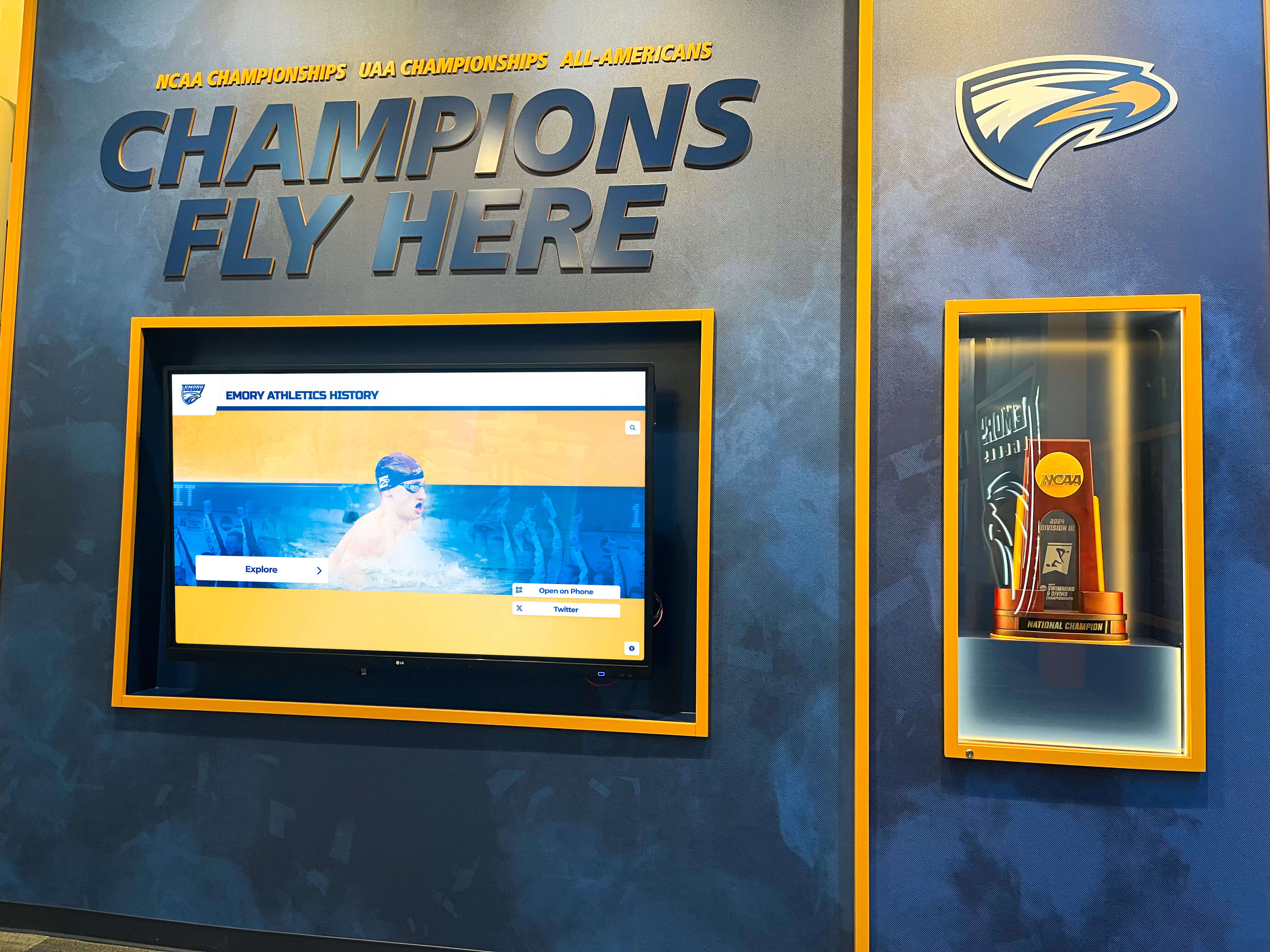
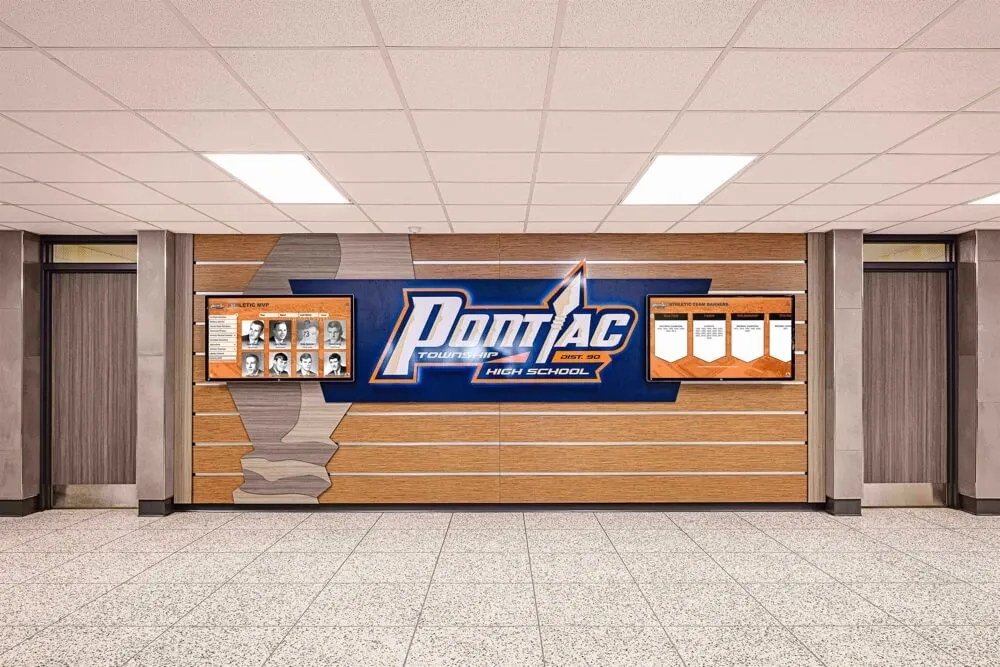
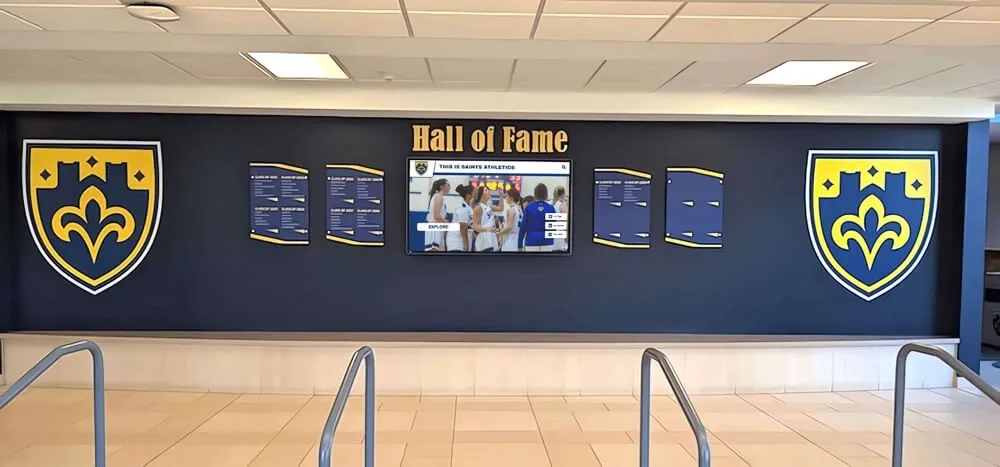
Championship trophy displays at every program level depend on consistent, reliable lighting — a pre-upgrade inrush check ensures new LED fixtures perform as specified from the first day of operation rather than triggering a breaker callback
Trophy Case LED Inrush Current Verification Table
The following table summarizes the key inrush assessment parameters and their pass/review/escalate thresholds for a school trophy case LED lighting upgrade. These figures reflect general guidance for standard branch circuit configurations. Always verify against the specific breaker manufacturer’s published time-current curve and the LED fixture manufacturer’s published specifications.
| Parameter | Pass | Review Required | Escalate to Electrician |
|---|---|---|---|
| Cumulative inrush vs. instantaneous trip threshold | Below 50% of trip threshold | 50–80% of trip threshold | Above 80% of trip threshold |
| Fixture inrush specifications available | Documented by manufacturer per NEMA SSL 7A or equivalent | Estimated from similar products only | Not available from supplier |
| Dimmer type (if controlled circuit) | Trailing-edge or digital (0–10V, DALI) | LED-listed TRIAC with listed LED driver | Unlisted TRIAC or type unknown |
| Timer relay inrush rating | Rated for capacitive or LED load | Rated for resistive load only | Rated for motor/inductive load only |
| Fixtures per switch group | 4 or fewer switching simultaneously | 5–8 fixtures on single switch | More than 8 fixtures on single switch |
| Pilot fixture test result (Step 8) | Normal breaker hold, no dimmer anomaly | Minor dimmer hum or startup delay | Breaker trips or dimmer malfunctions |
Notes on applying this table:
- “Instantaneous trip threshold” for a standard thermal-magnetic breaker is typically 10–14× the breaker’s ampere rating. A 20A breaker has an instantaneous trip threshold of approximately 200–280A, though the precise value depends on the breaker manufacturer’s design. Consult the breaker manufacturer’s published time-current curve for the specific model installed.
- These thresholds apply to simultaneous startup of all fixtures on the circuit. If fixtures are staged across multiple switch groups, calculate inrush per group rather than for the full fixture count.
- LED driver inrush current specifications are typically measured per NEMA SSL 7A (published by the National Electrical Manufacturers Association), which standardizes how peak inrush current, duration, and inrush energy are measured and documented. Confirm the measurement standard with your supplier to ensure comparability between specifications from different manufacturers.
- Schools planning a full-corridor upgrade affecting multiple rooms and circuits should conduct this assessment separately for each branch circuit — conditions may vary significantly between circuits depending on age, protection device type, and other connected loads.
Connection to the Trophy Case Recognition Environment
Facilities teams approaching a trophy case LED upgrade are working on the physical infrastructure of the school’s recognition program. The quality and reliability of case lighting directly affects how championship trophies, retired jerseys, athletic records, and honor roll displays appear to students, families, and visitors every day.
An inrush current check is not paperwork. It is the difference between a lighting upgrade that works correctly on day one — delivering the brightness, color quality, and energy savings that justified the project — and one that requires multiple electrician callbacks, temporary circuit outages during award ceremonies, or a dimmer replacement that the original project budget did not include.
Schools that document their inrush assessment alongside other pre-upgrade planning steps — circuit capacity, fixture wattage selection, dimmer compatibility — have a complete electrical record that serves future facilities staff long after the current team has moved on. That record becomes part of the institutional infrastructure supporting the recognition environment, the same way thermal management and flicker performance logs support the lighting quality program over the fixture’s operating life.
For context on what a similarly structured pre-inspection process looks like for another school athletic program — checking physical components before upgrading an archival media system — the athletic archive capstan speed check guide at Digital Yearbook illustrates the same methodical pre-upgrade approach applied to a different media workflow.
The trophy case setting block inspection guide at Awards Display covers the physical mounting and structural inspection that pairs naturally with an electrical pre-upgrade check — both disciplines should be addressed before new fixtures are installed in an existing case structure.
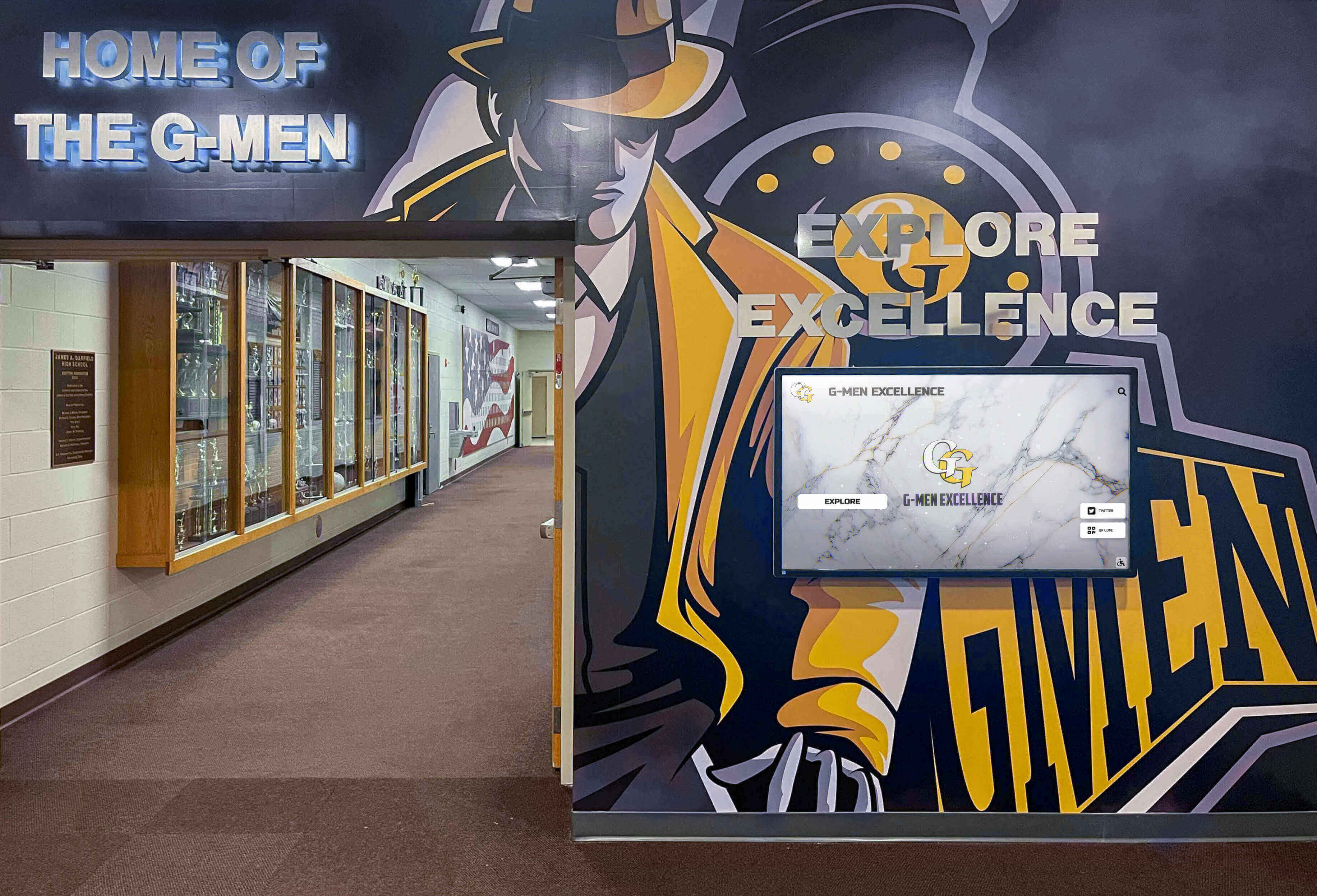
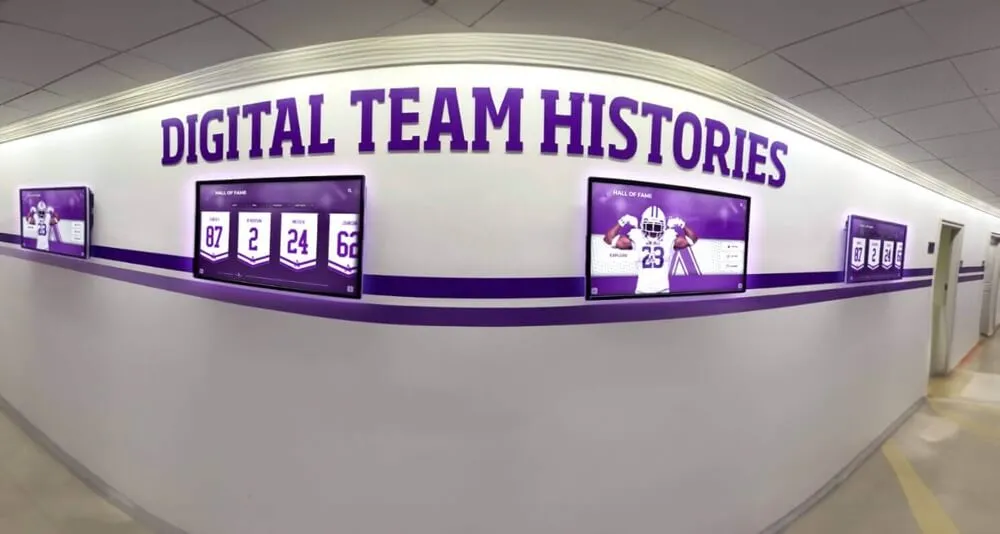
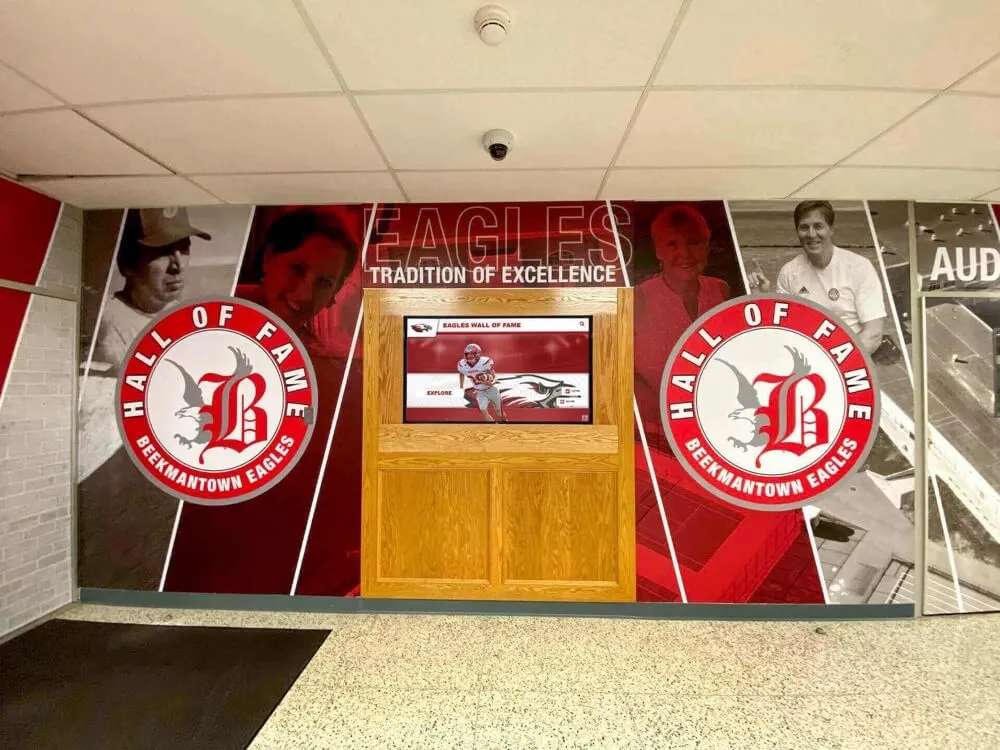
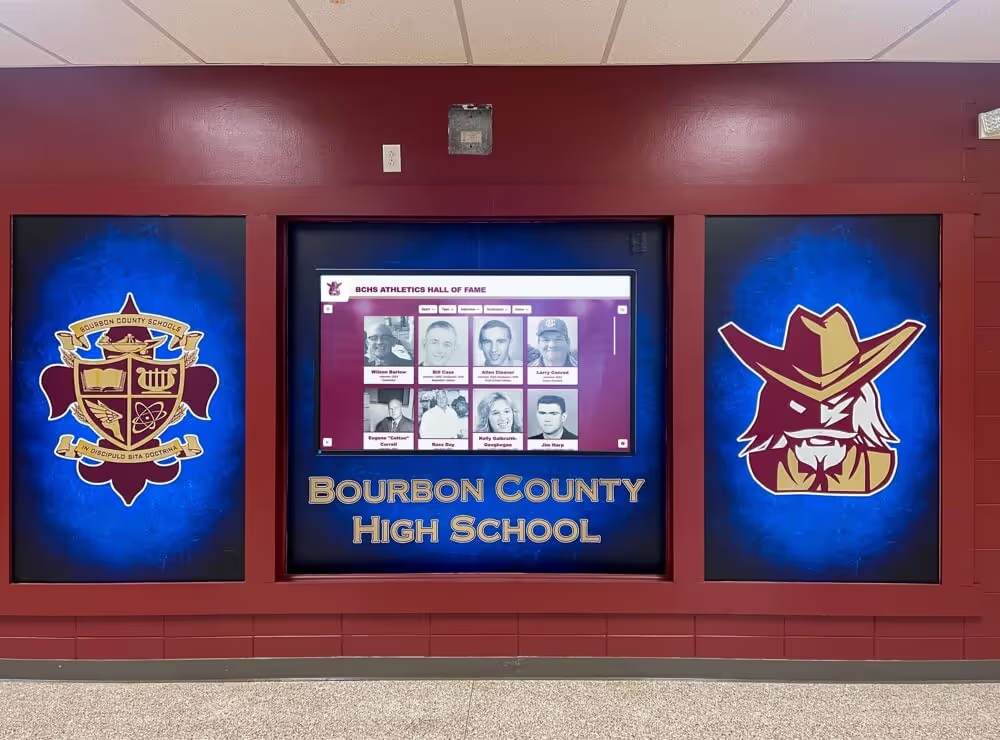
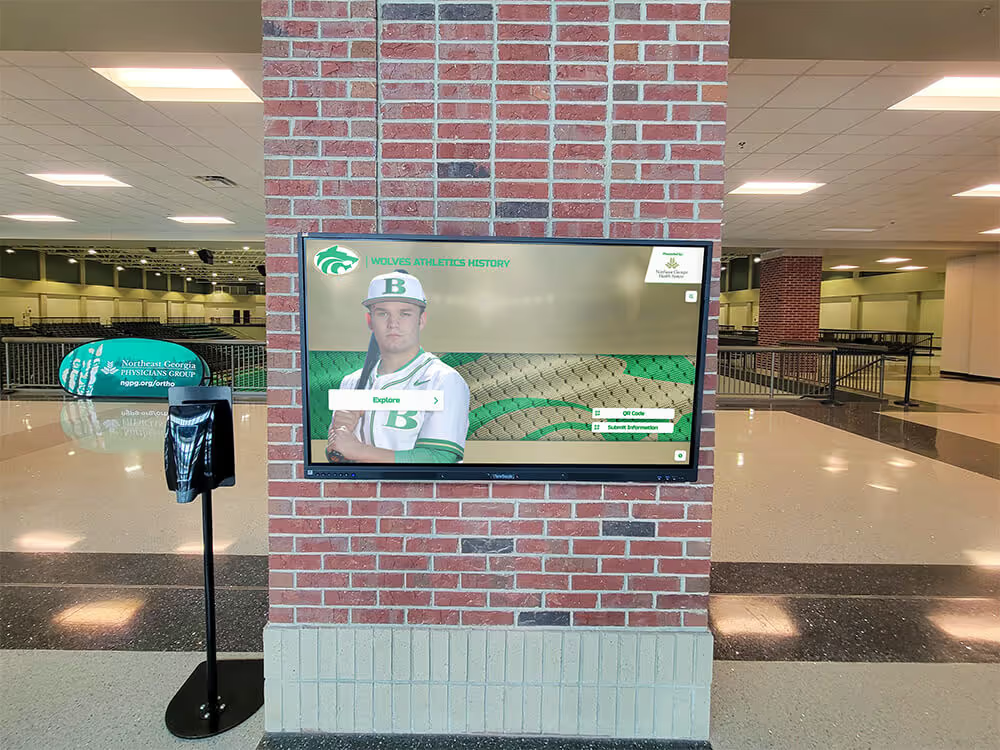
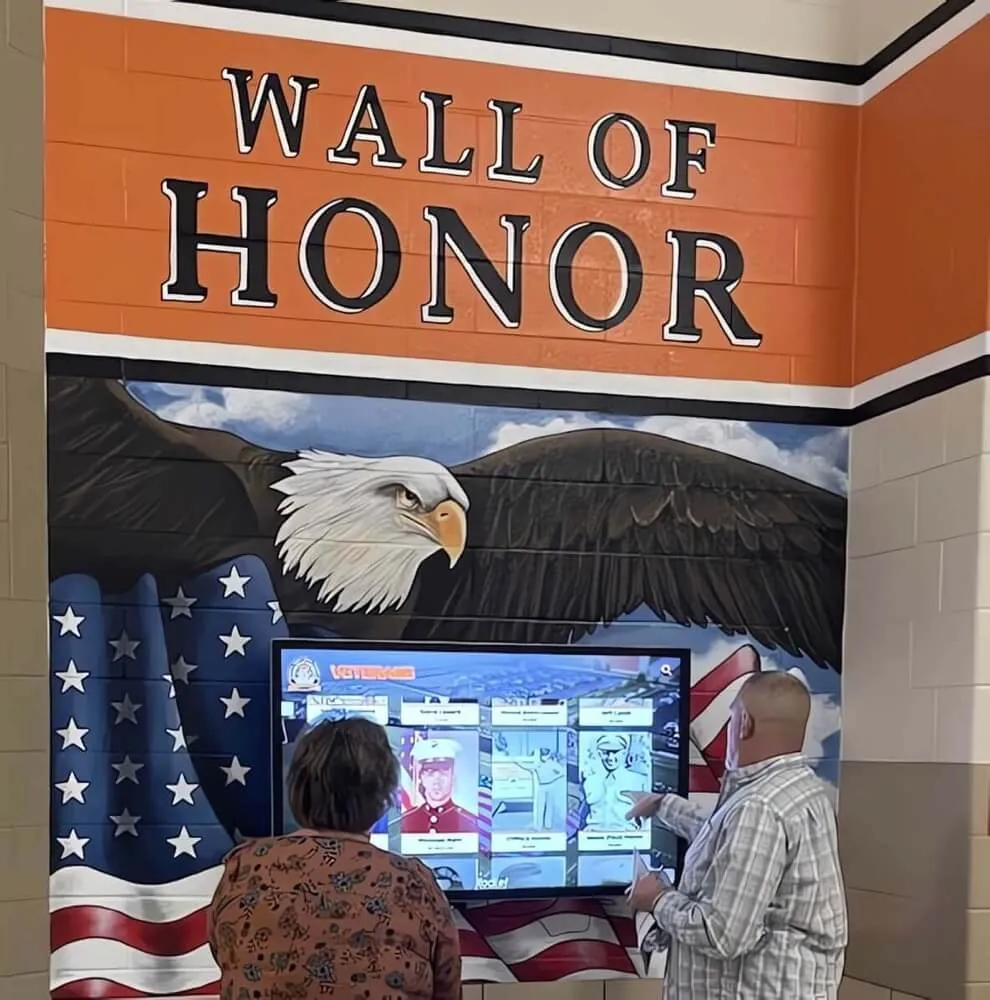
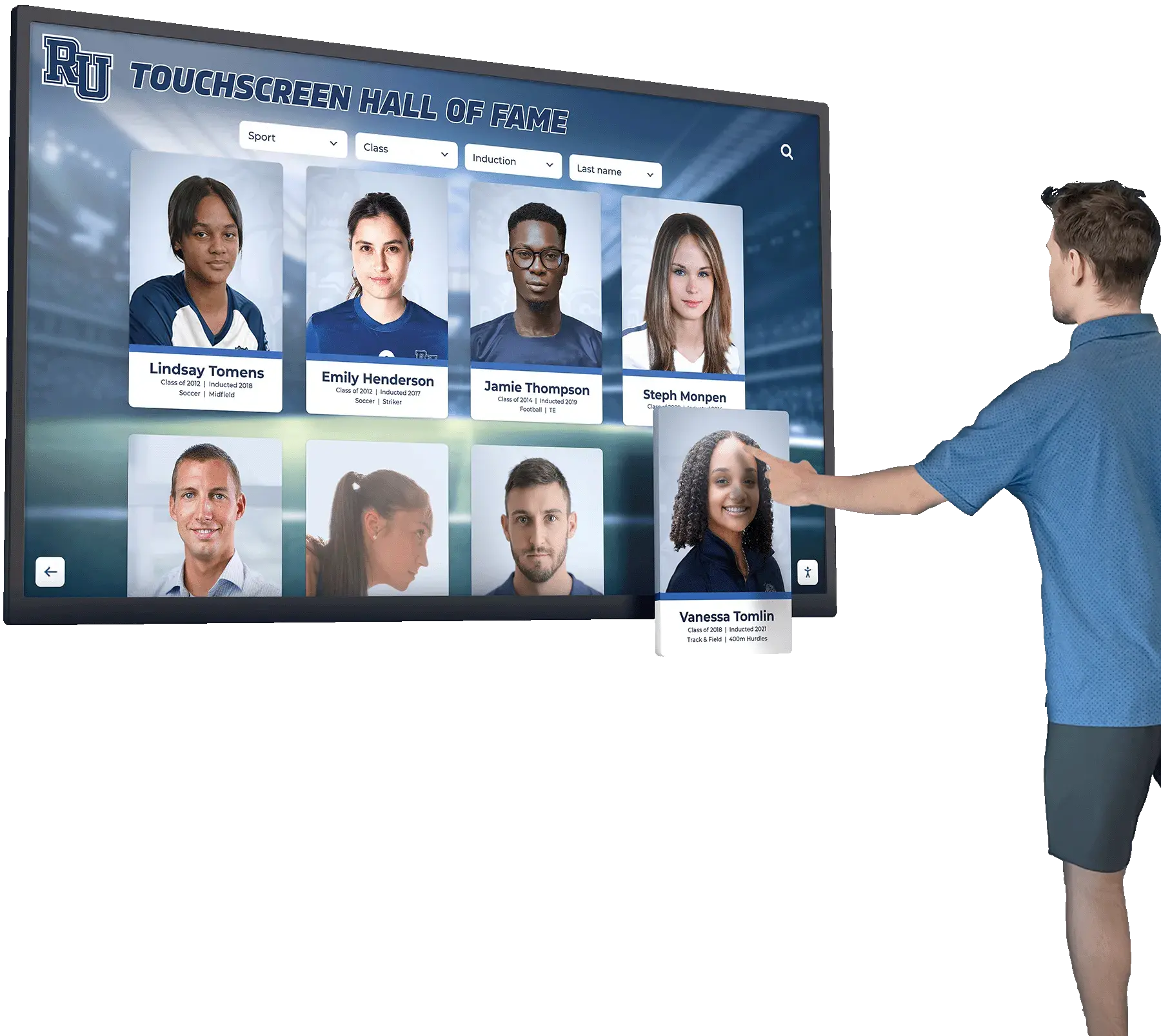
Athletic corridors combining digital recognition displays with traditional trophy cases require electrical planning that addresses both the LED fixtures inside physical cases and the power requirements of digital display hardware sharing the same corridor circuits
When the Inrush Check Points Toward a Broader Electrical Review
Some schools find that the inrush assessment reveals infrastructure constraints that a simple fixture swap cannot solve. Branch circuits sized for fluorescent loads decades ago — using breakers and wiring that have served reliably since installation — may not be the right match for a modern LED installation on a shared circuit that now also powers digital display panels, interactive kiosks, and AV equipment added in subsequent years.
When the assessment shows multiple concerns simultaneously — an outdated relay, a TRIAC dimmer with no compatible LED listing, and a legacy breaker at near-capacity for the corridor’s mixed electrical loads — the right response is a broader electrical planning conversation rather than a piecemeal fixture swap. This is not a failure of the inrush check process; it is the process working correctly, surfacing information before a project is underway that would cost significantly more to address as a callback.
Indicators that a broader electrical assessment is warranted:
- The branch circuit was installed before 1990 and has not been updated since
- The circuit serves trophy case lighting, digital display equipment, and other loads on a single 15A or 20A breaker
- The dimmer model cannot be identified and no documentation exists for the circuit control equipment
- Multiple trophy case positions span a long corridor with no sub-panel between the main panel and the far end of the run
- The building’s electrical panel is at or near capacity, making circuit additions difficult
In these cases, coordinating the LED fixture upgrade with a licensed electrician who can assess the full corridor circuit — not just the fixture selection — produces a more reliable outcome. The inrush current check provides the starting framework for that conversation: specific numbers, documented parameters, and a clear picture of where the circuit infrastructure stands before the first new fixture is installed.
Frequently Asked Questions
What is trophy case LED inrush current? Trophy case LED inrush current is the brief surge of electrical current that LED drivers draw at the moment of power-on, as the capacitors in the driver’s power supply charge from zero to operating voltage. This surge is typically 10 to 30 times the driver’s steady-state operating current and lasts only 1 to 20 milliseconds. In a single fixture, the inrush is negligible. In a trophy case corridor upgrade where multiple LED fixtures start simultaneously on a shared branch circuit, cumulative inrush can become large enough to affect circuit protection devices, dimmers, or relay controls.
Why do I need to check inrush current before a trophy case LED upgrade? Replacing fluorescent fixtures with LED changes the electrical load profile on the circuit. Fluorescent ballasts have inductive inrush characteristics; LED drivers have capacitive inrush with different peak levels and timing. A circuit with protective devices sized for fluorescent ballast inrush may trip, malfunction, or age prematurely under LED driver inrush from a multi-fixture simultaneous startup. Checking before the upgrade identifies these issues while they are still easy and inexpensive to address.
How do I find the inrush current specification for my LED fixtures? Request the fixture’s specification sheet or data sheet from your supplier or the manufacturer directly. Look for a value labeled “inrush current,” “peak inrush,” or “i²t” (a measure of inrush energy). These values should be measured according to NEMA SSL 7A or a similar standard. If the supplier cannot provide this data, select a different fixture or driver from a manufacturer that publishes it. Published inrush data is standard documentation for commercial-grade LED drivers used in institutional applications.
Can a standard 20-amp circuit breaker handle LED inrush from multiple trophy case fixtures? Often yes, but not always. Standard thermal-magnetic breakers tolerate short-duration current pulses above their rated amperage based on a time-current curve — the breaker is designed to withstand brief overloads that do not persist long enough to cause thermal damage. LED driver inrush pulses are very short (typically 1–20 milliseconds), and most standard breakers tolerate the pulse from a small number of fixtures without tripping. The risk increases as the number of fixtures on a single switch group increases. The pilot fixture test (Step 8) is the most reliable confirmation before committing to a full installation.
What type of dimmer works with LED fixtures in trophy case lighting? Trailing-edge (electronic low-voltage) dimmers and digital dimmers using 0–10V or DALI protocols are generally compatible with LED driver inrush and produce stable dimming for most commercial LED drivers. Leading-edge (TRIAC or incandescent-style) dimmers can work with LED fixtures but require explicit LED compatibility listings on both the dimmer and the driver — unlisted combinations frequently produce flicker, oscillation, or premature failure. If the existing trophy case circuit uses a TRIAC-style dimmer, verify LED compatibility before upgrading fixtures or plan to replace the dimmer as part of the upgrade.
How many LED fixtures can I run on one circuit without inrush problems? The answer depends on the per-fixture inrush current, the inrush duration, and the circuit’s protective device characteristics. As a rough planning guide, four or fewer fixtures on a 20A branch circuit with a standard thermal-magnetic breaker rarely presents inrush problems for commercial-grade LED drivers. Above eight fixtures on a single switch group, a formal inrush calculation and electrician review is advisable before installation. Between four and eight fixtures, the pilot test procedure (Step 8) is the practical approach — install one fixture, confirm breaker behavior, then proceed.
Does LED inrush current affect the trophies or display contents inside the case? No. Inrush current affects only the circuit’s electrical protection devices, control equipment, and wiring — not the physical display contents inside the case. The inrush event is too brief and involves too little energy transfer to the lighting fixtures themselves to produce any perceptible effect on display contents. Thermal management (heat buildup over extended operation) is the LED characteristic that can affect display contents over time; inrush current is an electrical infrastructure concern, not a content preservation concern.
What is NEMA SSL 7A and why does it matter for inrush specifications? NEMA SSL 7A (published by the National Electrical Manufacturers Association) is a standard for measuring and reporting inrush current characteristics of LED drivers. It specifies how peak inrush current, inrush duration, and inrush energy are measured and documented so that values from different manufacturers can be compared consistently. When requesting inrush specifications from a supplier, asking whether values are measured to NEMA SSL 7A or a comparable standard helps ensure you are comparing specifications on a common basis rather than using figures measured under different conditions.
Should we consult an electrician before a trophy case LED upgrade? Yes. While the information-gathering steps in this guide can be completed by facilities staff, decisions about circuit protection sizing, dimmer replacement, relay compatibility, and wiring adequacy require a licensed electrician’s assessment. This guide is designed to help you gather the right information before that conversation — so you can ask the right questions, provide useful documentation, and understand the recommendations you receive.
How does reliable trophy case lighting connect to the school’s recognition program? Reliable LED lighting in the trophy case is foundational to the school’s physical recognition display. Championship hardware, retired jerseys, athletic records, and honor roll plaques depend on consistent, well-maintained lighting to remain visible and honorable. A pre-upgrade inrush check ensures the new fixtures perform correctly from installation day rather than creating operational disruptions — a circuit outage during senior night or homecoming affects every recognition display in the corridor, not just the electrical infrastructure behind it. Schools that manage the upgrade methodically protect the recognition environment they have invested in building.
Physical trophy cases are among the most permanent features in a school athletic hallway — designed to be present for decades, long after the athletic directors who installed them have moved on. The LED lighting inside them receives far less pre-installation attention than the recognition it illuminates, yet it is the component that determines whether championship hardware, retired jerseys, and award plaques remain visibly honored from the first day of the upgrade onward.
A trophy case LED inrush current check is a one-time pre-installation step that prevents the most common and most avoidable failure modes in a corridor lighting upgrade: nuisance breaker trips, dimmer malfunction, and relay failure. It requires no specialized test equipment — only manufacturer specifications, a circuit inventory, and the calculation steps described in this guide — and it produces documentation that becomes part of the facilities record for the athletic wing’s electrical infrastructure.
Completing the check before installation starts is the difference between a lighting upgrade that enhances the recognition environment from day one and one that generates callbacks, complaints, and confusion about why a new fixture is causing the same breaker to trip.
See How Digital Recognition Eliminates the Lighting Maintenance Cycle
If your athletic wing is overdue for a recognition upgrade that goes beyond fixture replacement, Rocket Alumni Solutions builds cloud-managed digital trophy cases and hall of fame displays for schools. Interactive touchscreens with remote content management showcase unlimited achievements alongside your physical cases — no inrush calculations, no dimmer compatibility checks, and no annual thermal or flicker audits required for the digital display itself. See how schools build recognition programs that grow beyond what any physical trophy case can hold.
Schedule Your Demo