The Easiest Touchscreen Solution


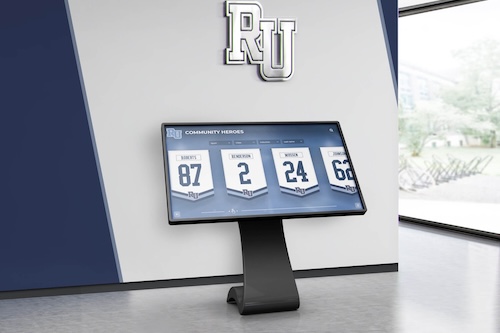

Live Example: Rocket Alumni Solutions Touchscreen Display
Interact with a live example (16:9 scaled 1920x1080 display). All content is automatically responsive to all screen sizes and orientations.
Intent: decide. Trophy case LED binning procurement means specifying correlated color temperature, SDCM tolerance, lumen output class, and bin code documentation before ordering any replacement LED batch — not just matching wattage or a nominal color temperature label. When a school replaces one failed fixture with whatever the supply house has in stock, the replacement LED chip may come from a different production bin, landing several SDCM steps away from the originals and producing a visible color or brightness mismatch that is permanent until every fixture is replaced together. This checklist gives athletic directors, administrators, and facilities teams the specification language to include in every purchase order so that replacement batches consistently match the existing display from the first day they are installed.
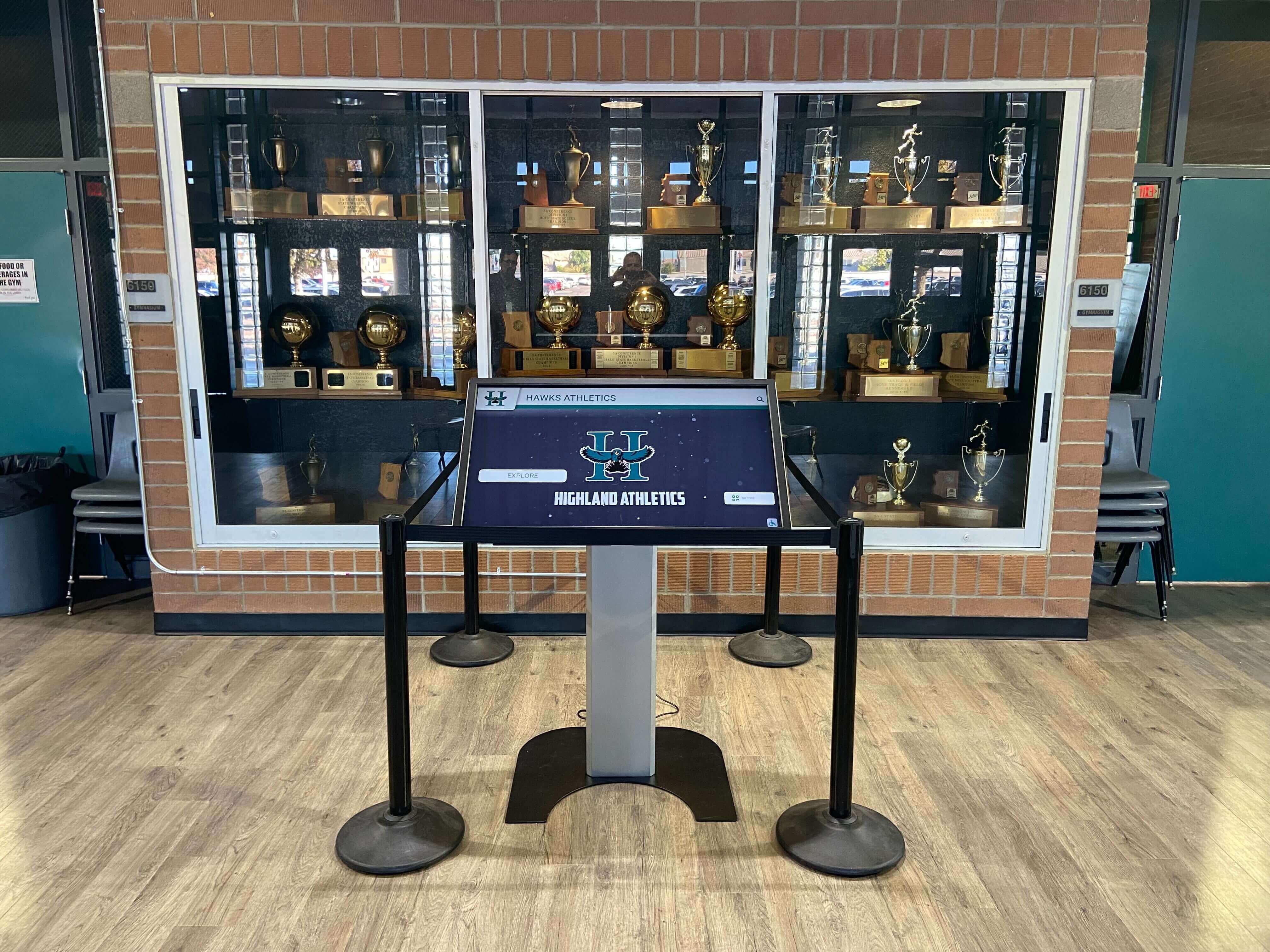
Athletic trophy cases carry championship hardware, retired jerseys, and honor roll plaques that represent years of student achievement. When the LEDs illuminating those displays are inconsistent — one shelf looking warm gold while the next looks cool silver, or one end of a case appearing noticeably brighter than the other — the credibility of the entire recognition display suffers. Visitors notice the inconsistency before they notice the trophies.
The root cause is almost always a procurement decision made without bin specifications. LED fixtures carry nominal ratings — “3000K warm white, 80 CRI, 10W” — but those labels describe a range, not a precise point. Two fixtures from the same label description can produce measurably different light because their LEDs were sorted into different manufacturing bins during production. Ordering replacements by label alone, without requiring matching bin documentation, leaves schools with mismatched displays that degrade recognition program quality over years of individual fixture replacements.
This checklist addresses each specification that matters at procurement so that facilities teams and procurement staff can write purchase orders that produce consistent results.

Trophy cases that combine physical awards with digital recognition displays rely on consistent LED lighting quality — a mismatched replacement fixture is visible against both the trophies and the screen beside it
What LED Binning Is and Why It Affects Your Trophy Case
LED manufacturing begins with a wafer of semiconductor material from which thousands of individual LED chips are fabricated. Each chip is slightly different from its neighbors: the wavelength of light it emits, how bright it is at a given current, and what voltage it requires to operate all vary within narrow but measurable ranges because semiconductor manufacturing cannot produce perfectly identical devices at wafer scale.
To manage this variation, LED manufacturers measure every chip after fabrication and sort them into groups called bins. Chips that fall within a tightly defined range of color coordinates and brightness land in the same bin; chips outside that range go into different bins. The bin code — a letter, number, or alphanumeric designation depending on the manufacturer — identifies which group a chip came from and tells a purchaser what the chip’s measured characteristics are.
When you order a replacement LED fixture without specifying a bin code, the supplier ships whatever is in stock. The replacement may come from a different bin than the original fixtures, producing a light source that is technically within the “3000K” specification range but positioned at a measurably different point within that range. The difference may be small enough to require a colorimeter to quantify, or large enough to be immediately visible to any visitor walking past the case.
Why this matters specifically for school trophy cases:
- Multiple fixture positions: Trophy cases typically have three to eight fixture positions illuminating different shelves or sections. Any replacement fixture that falls outside the same bin as the others creates a visible discontinuity — one section of the case looks different from the rest.
- Replacement happens individually: Unlike a new installation where all fixtures arrive from the same production run, replacements happen one at a time as fixtures fail. Each individual replacement is a new procurement opportunity to introduce a mismatch.
- High-visibility award finishes: Gold and silver trophy finishes, school color banners, engraved plaque backgrounds, and portrait photography all respond sensitively to small color temperature and chromaticity shifts. A 200K difference in correlated color temperature is visually significant on a polished gold surface.
- No automatic correction mechanism: Physical LED fixtures have no mechanism to auto-calibrate to their neighbors. Once a mismatched fixture is installed, it remains mismatched until it is replaced again.
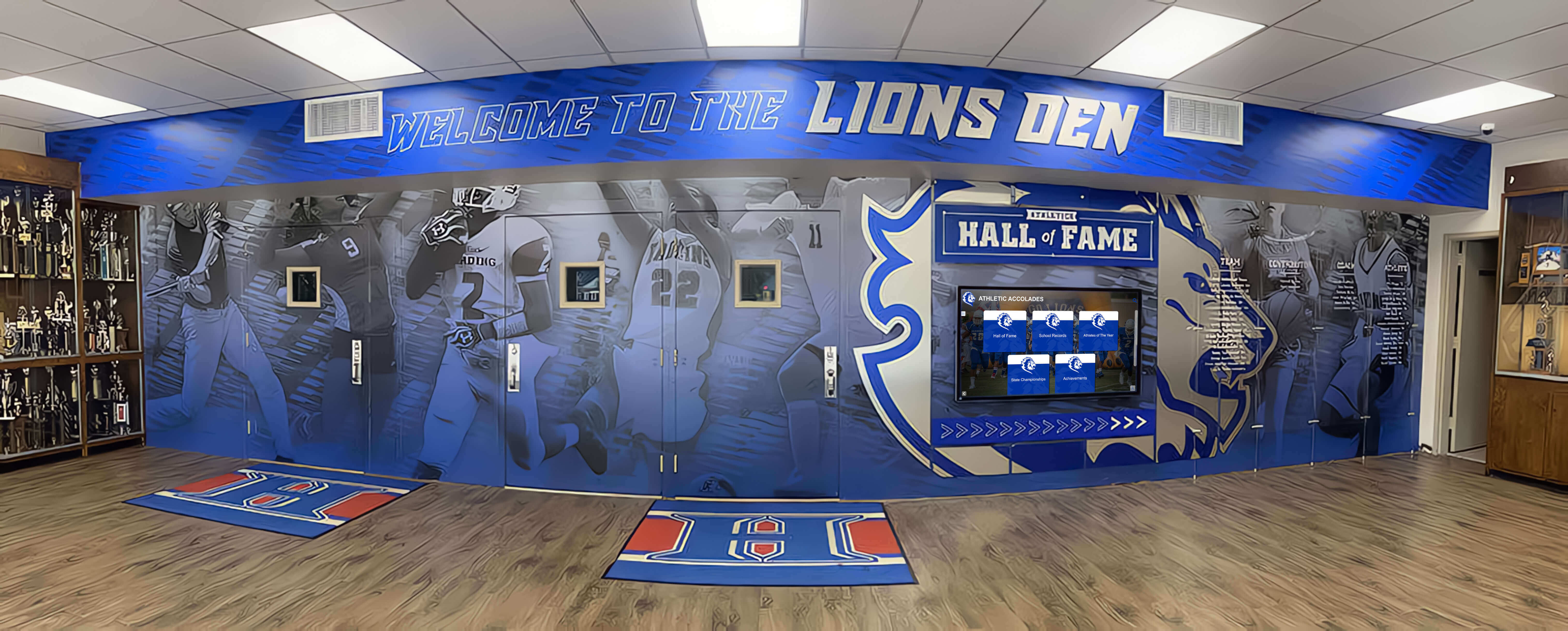
Trophy case corridors with multiple case positions are particularly vulnerable to LED bin mismatch — each position may have received a different replacement fixture over the years, creating cumulative color and brightness inconsistency across the display
The Trophy Case LED Binning Procurement Checklist
Complete each item before ordering any replacement LED fixture or batch. Items 1 through 4 are requirements for every procurement; items 5 and 6 support long-term consistency beyond the immediate order.
1. Record the Existing Fixture’s Bin Code Before Removal
Before removing any fixture for replacement, photograph or transcribe the following from the existing fixture’s label or packaging:
- Manufacturer name and product model number
- Correlated color temperature (CCT) value — the numeric value (e.g., 3000K), not just “warm white” or “cool white”
- SDCM tolerance, if listed (e.g., “3 SDCM” or “within 3 MacAdam ellipses”)
- Chromaticity bin code — the alphanumeric designation from the manufacturer; format varies but is often a two- to four-character code printed on a label inside the fixture housing or on the LED module itself
- CRI value — the numeric rating, not just “high CRI”
- Lumen output — the rated total lumen output at operating temperature
If the existing fixture’s bin code is not legible, contact the original manufacturer with the model number. Most commercial LED manufacturers can look up the bin code for a specific model and production period. This information is the anchor for every subsequent procurement decision.
2. Specify CCT and SDCM Tolerance in the Purchase Order
The purchase order for replacement LED fixtures should include explicit values for correlated color temperature and SDCM tolerance, not just descriptive labels.
Specify CCT as a numeric value: “3000K” is unambiguous; “warm white” allows the supplier to ship anything from 2700K to 3200K depending on their interpretation.
Specify SDCM tolerance: 3 SDCM or tighter is the appropriate requirement for trophy case display applications where fixtures are visible side-by-side. Standard commercial LED products are frequently rated at 5 to 7 SDCM, which is too loose for display applications where adjacent fixtures are compared directly by every visitor.
Example purchase order language: “Replacement LED fixtures must be rated at 3000K ±150K CCT with SDCM tolerance of 3 or better from the target chromaticity point. Supplier must provide documentation of SDCM rating from the shipped production run.”
3. Request Bin Code Documentation from the Supplier
A supplier who stocks the correct fixture model number should be able to provide a bin code document — sometimes called a test report, CoA (Certificate of Analysis), or product conformance certificate — that identifies the chromaticity bin from the shipped production run.
Ask for this documentation explicitly when placing the order:
- Request the chromaticity bin code for the specific batch being shipped
- Ask whether the batch comes from the same production run as any documentation the supplier has on file for that product
- If the supplier cannot provide bin code documentation, consider whether that supplier is appropriate for a display-quality application
Not every supplier routinely provides this documentation, but most can obtain it on request if they source from manufacturers who maintain production records. Suppliers who specialize in commercial display, hospitality, or museum lighting typically have more robust documentation practices than general electrical supply houses.
4. Order the Full Replacement Quantity in a Single Batch
Color consistency within a single trophy case requires that all replacement fixtures in that procurement cycle come from the same production batch — not the same model number, but the same batch. Two orders placed weeks apart for the same model may ship from different production runs with measurably different bin assignments.
For a typical school trophy case:
- Planned batch replacement (replacing all fixtures at once): order the total fixture count plus one or two spares in a single purchase order from the same supplier shipment
- Emergency single replacement: order the failed fixture’s replacement and note the batch documentation for future reference; document the bin code discrepancy between the replacement and the originals so it factors into the next planned batch replacement
- Long-term spares management: if budget allows, purchase a spare fixture from the same batch at initial installation — the spares shelf then has a documented match for any emergency replacement during the original batch’s operating life
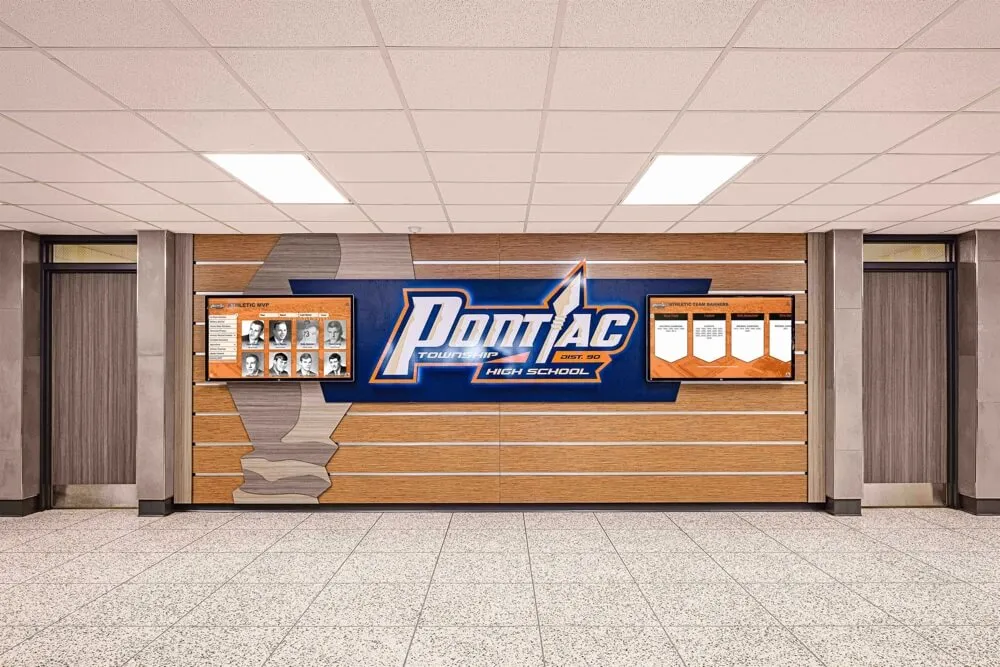
Athletic hallways with multiple trophy case positions require that replacement LED fixtures across every position come from the same production batch — ordering in a single batch from one supplier shipment is the most reliable way to ensure this
5. Verify CRI Against the Display Application
CRI (Color Rendering Index) measures how accurately a light source renders colors compared to a reference illuminant on a scale of 0 to 100. For award display applications, a CRI of 90 or higher is appropriate — lower CRI ratings reduce the vibrancy of gold and silver trophy finishes, cause school color banners to look less saturated, and make portrait photography appear flat.
Standard commercial LED products frequently carry CRI ratings of 80 to 82, which is adequate for hallways and classrooms but noticeably inferior on polished award surfaces compared side-by-side with high-CRI sources.
When purchasing, specify: “CRI ≥ 90 required. Supplier must confirm CRI value for the specific product and batch shipped, not the product line’s maximum rated CRI.”
6. Confirm Driver Compatibility Before the Batch Arrives
If your trophy case lighting is dimmer-controlled — a common configuration in athletic wings with time-based switching — verify that replacement LED fixtures are compatible with the installed dimmer type before the batch ships.
Mismatched driver-dimmer combinations produce flicker, oscillation, or complete incompatibility that is not detectable until the fixture is installed and the dimmer is operated. Confirm:
- Whether the replacement fixture’s driver is explicitly listed as compatible with your installed dimmer model
- Whether the driver type and dimming protocol (0–10V, DALI, TRIAC, or phase-cut) matches what the existing control system provides
- Whether the SDCM and CRI specifications still hold with the driver operating at dimmed levels — some LED products show measurable color shift at low dimming percentages
See How Digital Recognition Eliminates the LED Procurement Cycle
While your team builds LED bin specifications into purchase orders, Rocket Alumni Solutions can show you how schools are using cloud-managed digital recognition displays that require no bin matching, no SDCM audits, and no batch ordering — alongside their physical trophy cases. Explore the full recognition platform to see how interactive touchscreens display unlimited achievements with factory-calibrated color consistency.
Book A DemoSchool Trophy Case LED Procurement Specification Table
The table below provides threshold values for each specification in the procurement checklist. Athletic directors and procurement staff can share this with suppliers as a written specification reference when placing orders.
| Specification | Minimum Acceptable | Recommended for Award Displays | Notes for School Procurement |
|---|---|---|---|
| Correlated Color Temperature (CCT) | Matches existing fixture ±200K | Matches existing fixture ±100K | 3000K is most common for trophy cases; 2700K renders gold finishes warmer; 4000K renders silver finishes more neutrally |
| SDCM Tolerance | 5 SDCM or better | 3 SDCM or better | Require supplier documentation; "within MacAdam ellipse step 3" is equivalent language |
| CRI (Color Rendering Index) | CRI ≥ 80 | CRI ≥ 90 | High-CRI LEDs render gold finishes, school color banners, and portrait photography more accurately |
| Bin Code Documentation | Manufacturer product line data | Batch-specific CoA or test report | Request bin code for the specific shipped batch, not the product line's general specification |
| Lumen Output Match | Within 15% of existing fixture | Within 10% of existing fixture | Compare at same operating temperature; lumen output varies with thermal conditions |
| Driver Dimming Compatibility | Listed compatible with installed dimmer type | Explicitly listed with installed dimmer model number | TRIAC, 0–10V, DALI, and phase-cut require different driver specifications; confirm before ordering |
| Batch Quantity | All replacement fixtures from the same supplier order | All from the same production batch with matching documentation | Two separate orders of the same model may ship from different production batches with different bin assignments |
| Certification | UL or ETL listed | UL or ETL listed; DLC qualified where applicable | DLC (DesignLights Consortium) qualification supports energy efficiency rebate eligibility in most states |
Notes on applying this table:
- “SDCM” (Standard Deviation of Color Matching) and “MacAdam ellipse step” refer to the same measurement expressed differently. A fixture rated at “3 SDCM” falls within 3 MacAdam ellipse steps from the target chromaticity point, meaning its color is indistinguishable or barely distinguishable from the reference under normal viewing conditions.
- CCT tolerance values assume a display application where adjacent fixtures are visible simultaneously. For isolated single-fixture installations with no adjacent comparison, wider tolerance may be acceptable.
- DLC qualification is a separate process from UL listing. A fixture can be UL listed (meeting electrical safety standards) without DLC qualification (meeting energy efficiency criteria). Schools pursuing utility rebates for energy-efficient lighting upgrades should confirm DLC qualification requirements with their state or local utility before finalizing procurement.
- These thresholds apply to the replacement fixture at initial installation. LED output and chromaticity shift over operating life — a fixture procured at 3 SDCM may drift outside that tolerance after extended operation, particularly if running at elevated junction temperatures inside an enclosed trophy case enclosure.
Preparing a Written Procurement Specification for Your School
Verbal procurement guidance disappears when personnel change. A written specification document — attached to every trophy case LED purchase order — survives staff transitions and creates a consistent record that future facilities teams can follow without recreating the rationale.
A functional procurement specification for school trophy case LEDs does not need to be a long document. A one-page reference that travels with every purchase order is enough:
Required specifications (must appear in purchase order):
- CCT value and tolerance (e.g., “3000K ±150K”)
- SDCM rating (e.g., “3 SDCM or better”)
- CRI value (e.g., “CRI ≥ 90”)
- Lumen output at operating temperature (e.g., “700 lm ±10% at 25°C”)
- Driver type and dimming protocol (e.g., “constant-current 700 mA, 0–10V dimming compatible”)
- Certification requirement (e.g., “UL listed; DLC qualified preferred”)
Required documentation (must accompany delivery):
- Manufacturer specification sheet for the specific model
- Batch-specific bin code documentation or CoA
- Confirmation that all fixtures in the order are from the same production batch
Reference information (for context and institutional continuity):
- Original fixture model number and installation date if known
- Case location and number of fixture positions
- Installed dimmer model if applicable
- Date of last full batch replacement
Maintaining this document in a shared facilities folder — alongside the MacAdam ellipse audit records described in the school trophy case MacAdam ellipse lighting check — creates a complete reference that anyone assigned to the next procurement cycle can use without institutional memory from a predecessor.
For schools managing comprehensive recognition maintenance checklists, the approach parallels the systematic documentation standards used in athletic archive compression artifact detection — the same principle of written specifications and documented audit trails applied to a different display medium.
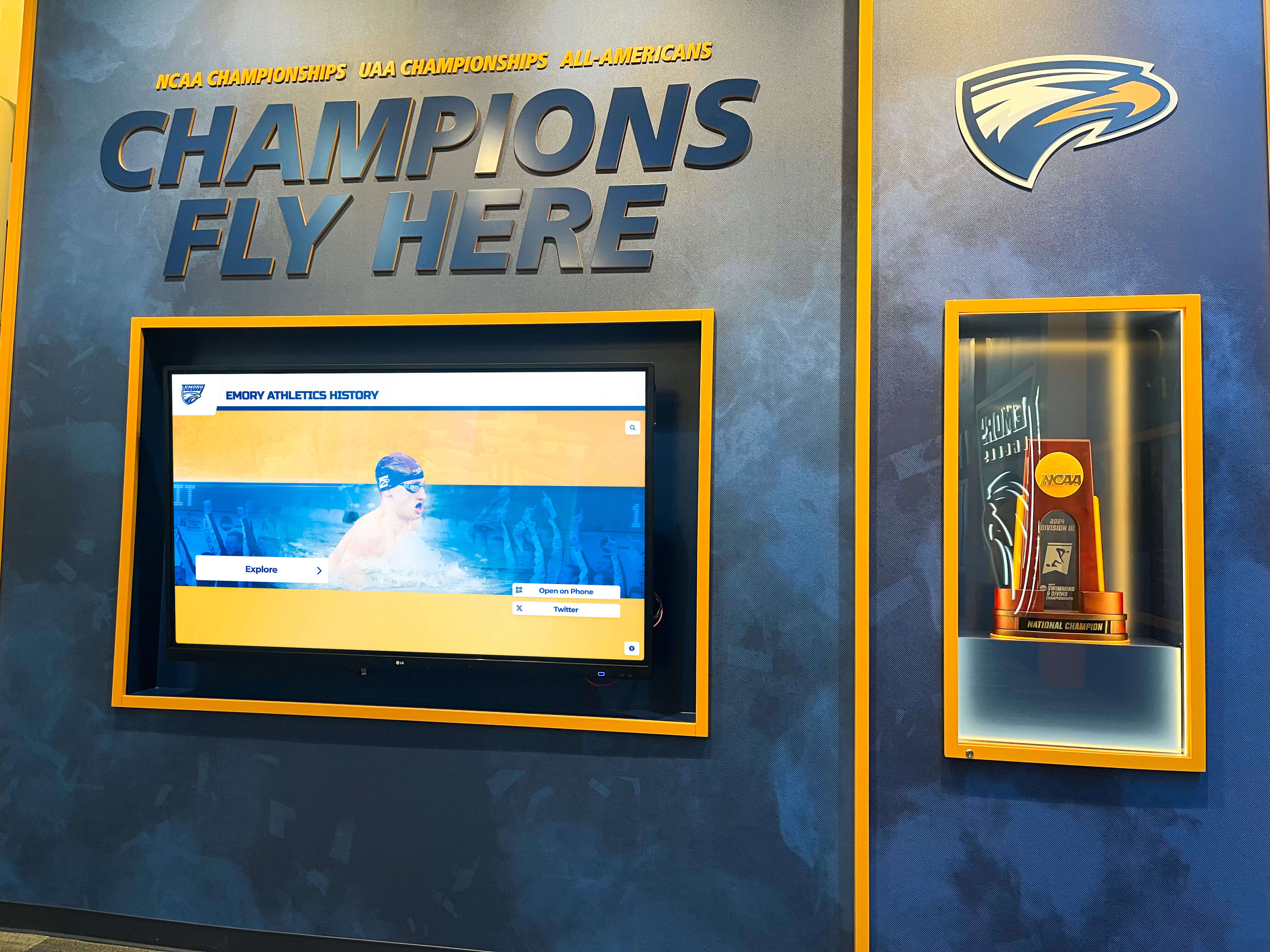
Championship trophy displays at every level depend on consistent LED lighting quality — a written procurement specification ensures every replacement batch meets the same standard, regardless of which staff member places the order
Supplier Selection for Bin-Documented LED Procurement
Not every LED supplier maintains the documentation infrastructure to support bin-level procurement specifications. General electrical supply houses that primarily serve commercial construction projects may not have processes for sourcing specific production batches or providing CoA documentation for individual orders.
For trophy case LED procurement, suppliers that typically provide stronger bin documentation support include:
Commercial display and hospitality lighting distributors: These suppliers serve hotels, restaurants, and retail environments where consistent fixture color across a large space is a core requirement. Bin documentation is standard operating procedure for their commercial clients.
Museum and gallery lighting specialists: Lighting suppliers who serve museum and gallery applications maintain strict bin documentation as a baseline requirement. Their standard product documentation translates directly to trophy case display requirements.
Manufacturer-direct programs: Some LED manufacturers offer institutional direct purchase programs that include CoA documentation as a standard shipment component. For schools that replace fixtures on a regular cycle, establishing a direct relationship with a manufacturer simplifies bin documentation retrieval.
Regional energy efficiency program distributors: Many state and utility-sponsored energy efficiency programs maintain approved product lists with qualified suppliers. These programs typically require detailed product documentation from participating suppliers, which often includes bin-level specifications.
When evaluating a supplier, ask directly: “Can you provide a Certificate of Analysis or batch-specific test report showing the chromaticity bin code for the fixtures in this order?” A supplier who can answer with documentation rather than a description is the right partner for consistent LED procurement.
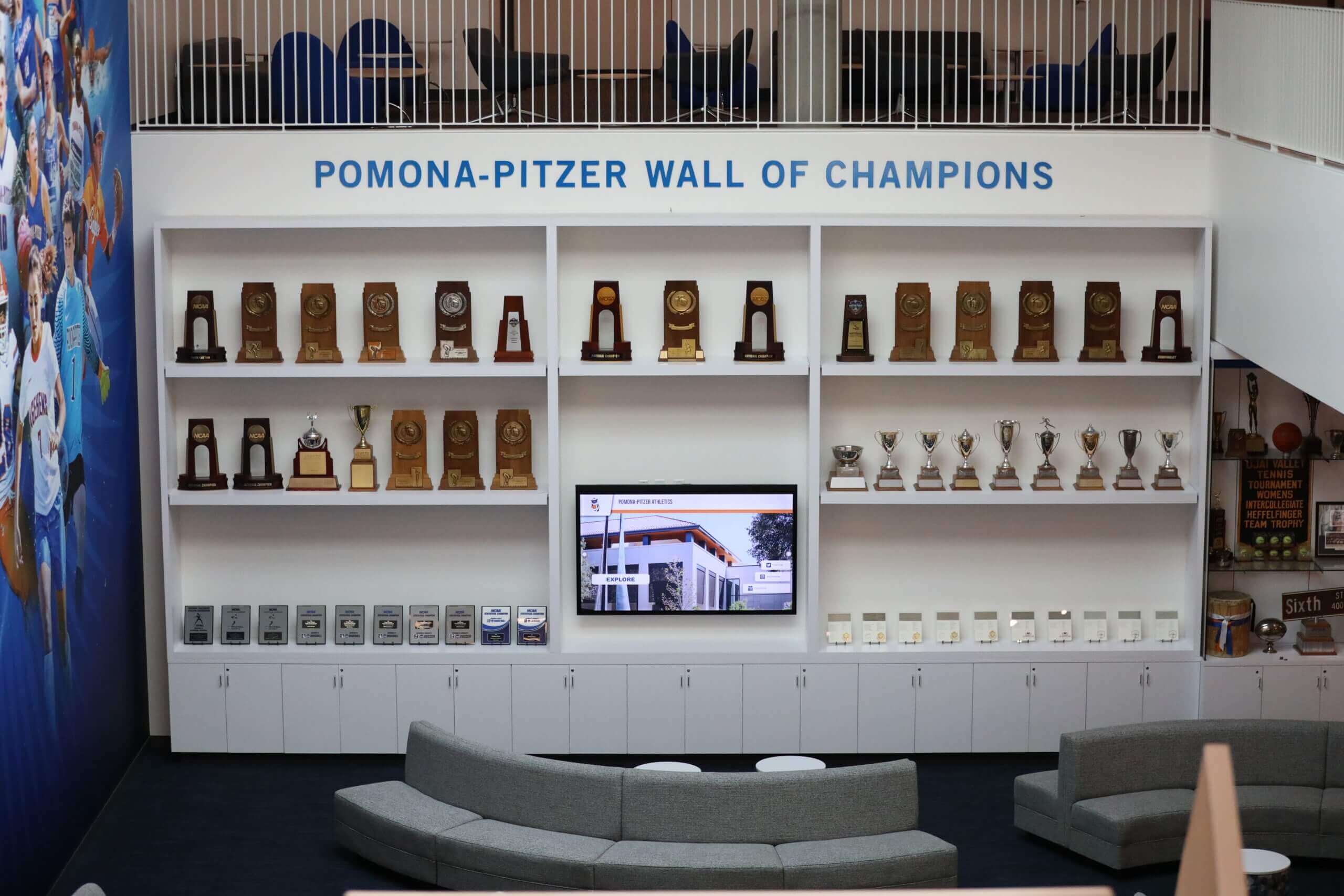
Wall-of-champions displays and trophy lounges require that every fixture across the installation renders award finishes, school colors, and portrait photography consistently — supplier documentation at procurement is the control point that prevents mismatch before installation
The same principle of working with documentation-capable suppliers applies broadly across physical recognition program maintenance decisions. The trophy case condensation prevention checklist at TouchWall illustrates a similarly structured approach to another aspect of the same physical environment — maintaining consistent conditions across the case’s operating life.
Connecting LED Procurement to the Broader Recognition Program
LED binning procurement is a facilities task, but its outcome is visible to every visitor who walks past the trophy case. When the physical recognition environment is consistently lit, trophies look the way they are supposed to look, school colors read accurately, and portrait plaques honor their subjects with appropriate visual quality.
Athletic directors and recognition program owners who care about how their programs are perceived can take a direct interest in LED procurement specifications without becoming lighting experts. The checklist items in this guide translate to specific purchase order language that facilities teams can write and that suppliers can fulfill.
For schools that want a broader perspective on what a recognition display environment can become beyond consistent LED lighting, the Digital Hall of Fame vs. Traditional Trophy Case comparison at Digital Warming examines how the two formats compare in a school hallway setting — a useful context for understanding why some programs supplement physical cases with digital recognition platforms.
ADA accessibility considerations for the broader recognition display environment are covered in the ADA accessibility digital recognition displays checklist at Touch Hall of Fame — an aspect of recognition program planning that complements the physical display quality that consistent LED procurement supports.
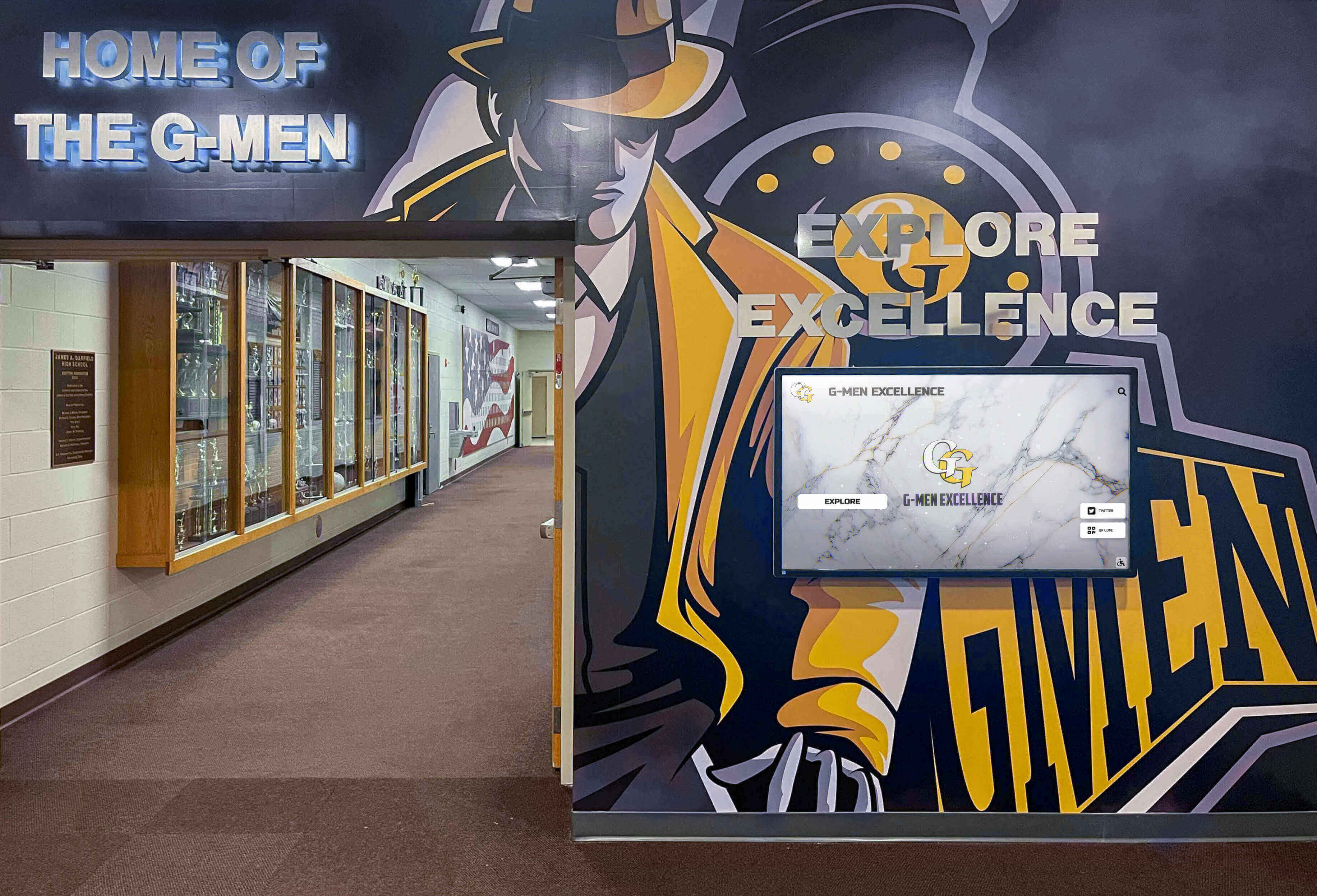
Athletic corridors combining digital recognition displays with traditional trophy cases present the recognition program's best work to every visitor — LED binning procurement ensures the physical case lighting matches the quality standard the rest of the display environment is held to
When LED Procurement Complexity Points Toward a Broader Conversation
Some schools find that the LED binning procurement process reveals a fixture population too fragmented to manage effectively. If existing cases contain fixtures from five different manufacturers installed at different times with no documentation, there is no practical reference bin code to match against. Every replacement becomes a guess.
Two paths forward are available in that situation:
Full fixture batch replacement: Replace all fixtures in the affected cases simultaneously with a single specification, establishing a new documented baseline. This resets the procurement reference point and gives future replacements a clear target to match.
Digital recognition platform integration: Schools that find the ongoing LED maintenance investment — procurement specifications, MacAdam ellipse audits, batch documentation — disproportionate to the recognition program it supports sometimes find that a digital display alongside the physical case provides better recognition outcomes per maintenance hour. Cloud-managed digital platforms maintain consistent display quality without LED batch procurement, bin code matching, or annual color audits.
For programs exploring the full picture of what recognition infrastructure costs and delivers over a multi-year horizon, the athletic website content checklist at TouchscreenWebsite provides a useful comparison framework for the broader digital presence that complements physical displays and recognition programs.
Frequently Asked Questions
What is LED binning and why does it matter for trophy case procurement? LED binning is the process by which LED manufacturers sort individual chips into groups — called bins — based on measured chromaticity, correlated color temperature, brightness, and forward voltage. Two LEDs from the same product line but different bins can produce measurably different colors or brightness levels, even though both carry the same nominal specification label. In trophy case applications where multiple fixtures illuminate adjacent shelves simultaneously, bin differences are visible to anyone who looks at the case. Procurement that matches the original bin code, or that specifies SDCM tolerance tight enough to ensure bin-level consistency, prevents these mismatches.
What SDCM rating should I specify for trophy case LED replacements? Specify 3 SDCM or better. Standard commercial LED products are frequently rated at 5 to 7 SDCM, which is adequate for general illumination but produces visible color differences when fixtures are seen side-by-side in a display setting. Specifying 3 SDCM or better in your purchase order — and requiring documentation from the supplier confirming that the shipped batch meets this specification — is the most reliable way to ensure replacement fixtures match your existing display.
Can I identify the bin code from a fixture I am about to remove? Often yes. Most commercial LED fixtures have a label on the LED module, driver housing, or inside the fixture body that includes the model number, CCT, wattage, and a manufacturer-specific bin code. Photographing this label before removing the fixture gives you the reference information you need for replacement procurement. If the label is not legible, contact the fixture manufacturer with the model number — most manufacturers can look up the bin designation for a specific model and production period.
What is a Certificate of Analysis (CoA) and how do I request one? A Certificate of Analysis is a document from the manufacturer or supplier that reports measured values for a specific production batch — including chromaticity bin code, CCT, CRI, and lumen output — as distinct from the product line’s rated specifications. Requesting a CoA when placing an LED order confirms that the specific batch being shipped meets your specifications, not just that the product model is capable of meeting them. Most commercial-grade LED suppliers can provide a CoA on request; ask for it explicitly when placing the order rather than expecting it to be included automatically.
Do I need a colorimeter to verify LED bin compliance before installation? Not at the procurement stage. The bin code documentation you request from the supplier allows you to verify compliance against your specifications before the fixtures arrive. A colorimeter becomes useful for post-installation verification — confirming that the installed fixtures actually match your existing display within your specified SDCM tolerance. If you already conduct MacAdam ellipse lighting checks as part of regular trophy case maintenance, your existing measurement process covers this verification step.
Is DLC certification the same as UL listing for trophy case LED fixtures? No. UL listing or ETL listing certifies that a product meets electrical safety standards — a minimum code compliance requirement for institutional installation. DLC (DesignLights Consortium) qualification is a separate energy efficiency certification that qualifies products for utility rebate programs in most states. A trophy case LED fixture can be UL listed and safe to install without being DLC qualified and eligible for rebates. Schools pursuing energy efficiency incentives should confirm DLC qualification requirements with their state or local utility before finalizing procurement.
How does LED binning procurement relate to ADA compliance for trophy case displays? LED binning procurement affects illuminance consistency, which is a component of visual accessibility for recognition displays. While ADA standards for trophy cases focus primarily on mounting height, aisle clearance, and tactile elements rather than lighting specifications, consistent LED lighting ensures that recognition displays are equally readable and visible across all positions in the case. For a broader picture of accessibility requirements for recognition environments, the ADA accessibility digital recognition displays checklist at Touch Hall of Fame covers the full range of considerations.
How often should schools update their LED procurement specifications? Review your written procurement specification when the original fixture model is discontinued, when a supplier change requires switching to a different manufacturer’s product, when a MacAdam ellipse audit documents drift from the original specifications, or when a full batch replacement resets the reference baseline. The specification’s value is in its consistency over time; frequent rewrites undermine the continuity benefit it provides.
Physical trophy cases house the most tangible evidence of your athletic and academic program’s history — the hardware, banners, and plaques that students, families, and alumni come to see. The LED fixtures illuminating them are invisible when they work correctly and unmistakably visible when they produce inconsistent color or brightness across the display.
Trophy case LED binning procurement is the process that keeps those fixtures invisible in the right way: a written specification in every purchase order, bin code documentation requested from every supplier, and a single-batch ordering approach that prevents the accumulated inconsistency that years of individual emergency replacements create. Done once correctly at initial installation and maintained through consistent procurement specifications, LED binning is a one-time learning curve that pays forward across the fixture’s entire operating life.
See How Schools Are Modernizing Recognition Beyond the Physical Case
If your recognition program is outgrowing what physical trophy cases and LED procurement cycles can support, Rocket Alumni Solutions builds cloud-managed digital trophy cases and hall of fame displays that showcase unlimited achievements with no bin matching, no colorimeter audits, and no annual fixture replacement cycles. See how schools build recognition programs that grow with their programs rather than against their facilities budgets.
Schedule Your DemoLive Example: Rocket Alumni Solutions Touchscreen Display
Interact with a live example (16:9 scaled 1920x1080 display). All content is automatically responsive to all screen sizes and orientations.