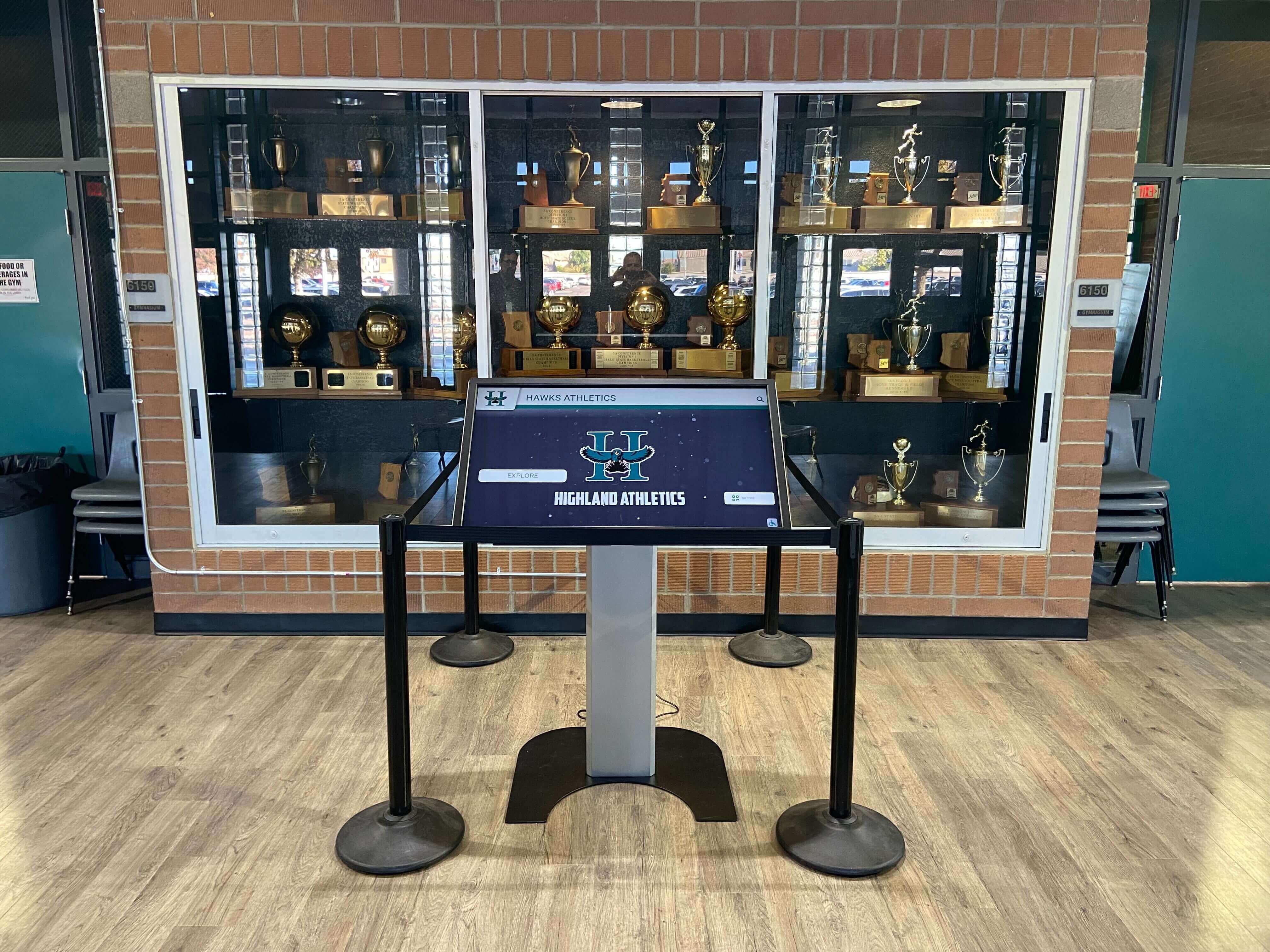




A trophy with no label is a mystery. A trophy with a bad label—misspelled name, wrong year, no sport listed—is almost worse. Schools spend hundreds of dollars on engraved hardware every season, then watch that investment fade into the background of a hallway case where nobody can tell what the award was for, who won it, or why it mattered. Trophy case labels are the connective tissue between the physical object and the story it’s supposed to tell.
This guide gives school administrators, athletic directors, and facilities staff a practical system for labeling every trophy in the case—what fields to capture, how to format information consistently, and why doing this work now makes a future digital display dramatically easier to build.
When a student stops in front of your trophy case and asks “what’s that one for?” the label should answer the question completely. If it can’t, the award has already started to be forgotten—regardless of how significant the achievement was at the time.

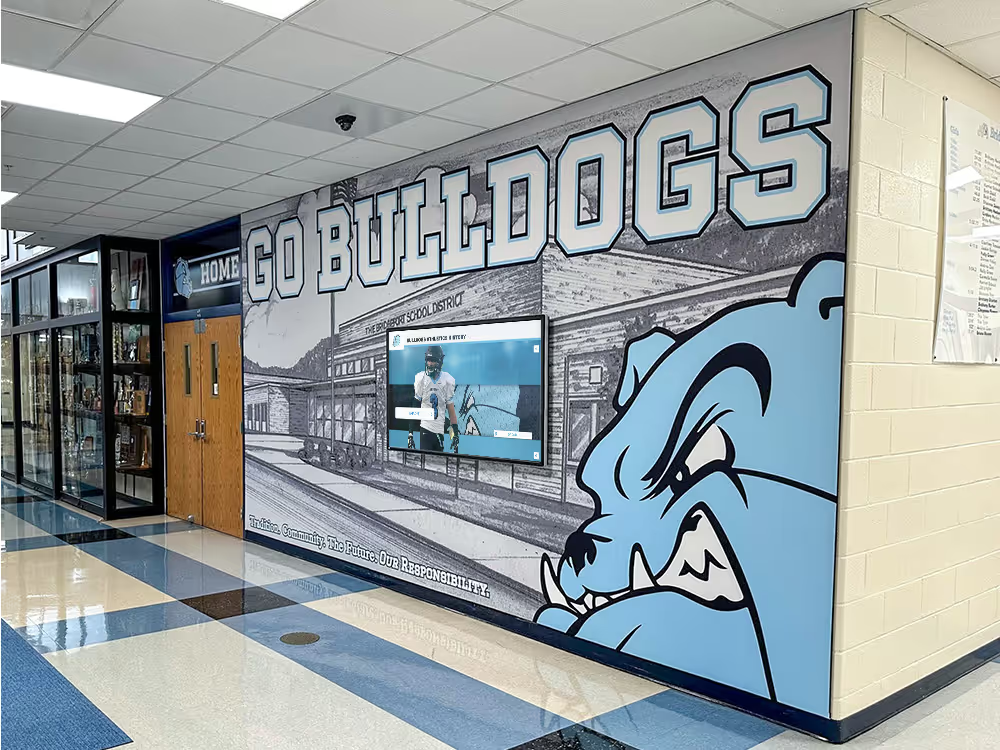
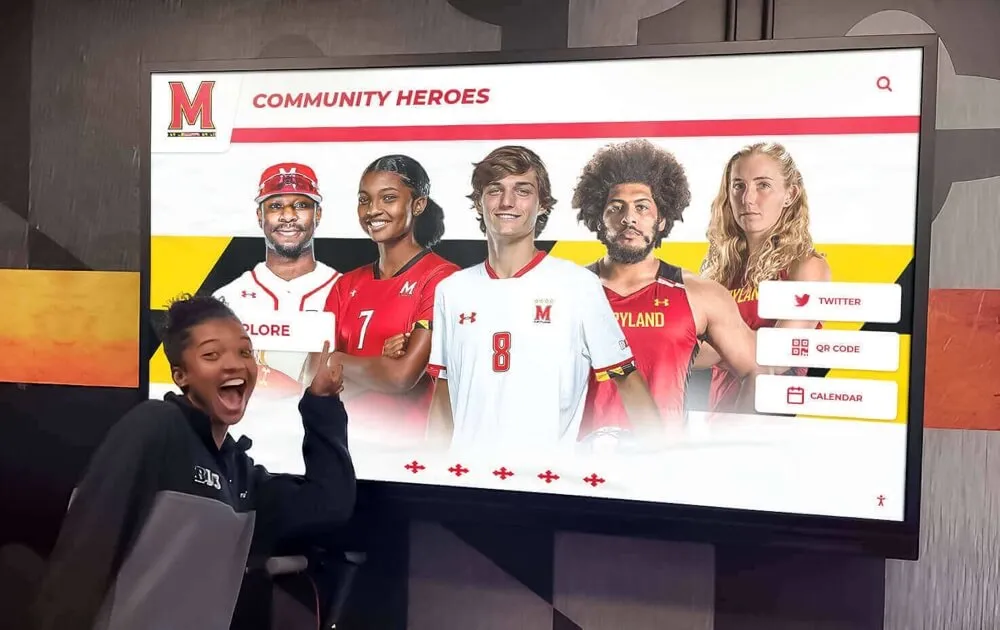
A well-labeled trophy case—physical or digital—lets anyone who stops in front of it understand the achievement without needing to ask a coach
What Trophy Case Labels Actually Do
Labels serve two audiences simultaneously: the people standing in front of the case today, and the administrators managing the archive five or ten years from now.
For today’s audience—students, parents, visiting teams, prospective families—a label provides immediate context. They should be able to read a label and understand the sport, the achievement, the year, and the athletes involved without any additional information. A label that says only “State 2019” fails this test. A label that says “Girls Basketball — IHSA Class 3A State Championship — Season 2018–2019 — Coach Maria Henderson” passes it.
For future administrators, labels are data. When a school decides to migrate its physical trophy case to a digital platform, every well-documented label becomes a clean record ready for import. Schools with consistent, complete labels can build a digital archive in days. Schools with missing or inconsistent labels spend weeks reconstructing history—or simply skip older trophies entirely, erasing decades of achievement from the institution’s public record.
Good trophy shelf organization starts with good labels. The labeling decision affects everything downstream.
What Every Trophy Case Label Should Include
The fields below represent the minimum information a trophy case label should capture. Some schools add additional context; none should have fewer than these core fields.
| Field | What to Include | Example |
|---|---|---|
| Award Name | The official name of the award or championship | IHSA Class 3A State Championship |
| Sport or Program | Full name, not abbreviation | Girls Basketball |
| Season or Year | Academic year (not just calendar year) | 2018–2019 |
| Classification or Level | Division, conference, or competition level | Class 3A — Regional Level |
| Coach | Head coach name at time of award | Coach Maria Henderson |
| Key Athletes | Captain or MVP if applicable | Captain: Jordan Reyes |
| Record or Achievement Detail | Score, time, or specific accomplishment | 34–2 season record |
| Donor or Sponsor | If award was sponsored or donated | Sponsored by Lakeside Booster Club |
| Induction or Award Date | When the trophy was added to the case | Inducted: May 2019 |
For team trophies, include the full roster if space allows on a supplemental card behind the trophy or in a binder kept in the case. For individual awards—most valuable player, scholar-athlete, sportsmanship—include the recipient’s name, graduation year, and sport.
Championship labels deserve one additional field: significance context. A first-ever championship means something different from a third consecutive title. Noting “First State Championship in program history” adds weight that any visitor can immediately appreciate.
Step-by-Step: How to Label Your School’s Trophy Case
Step 1: Conduct a Full Trophy Inventory
Before creating any new labels, audit what is already in the case. Photograph every trophy. Note what information is currently visible and what is missing. Assign each trophy a tracking number in a spreadsheet—this becomes your master record.
You will likely find three categories during the audit:
- Trophies with complete, accurate labels in good condition
- Trophies with partial or damaged labels that need replacement
- Trophies with no labels or labels that have fallen off
Prioritize the last two categories. For trophies where information is missing, consult yearbooks, athletic department records, or longtime staff members before creating replacement labels.
Step 2: Establish a Label Format Standard
Consistency matters more than design sophistication. Choose a label format and stick with it across all new additions. Key decisions include:
- Font: A single readable font at consistent sizes (title 14pt, details 11pt works well)
- Information order: Award name first, then sport, then year, then personnel
- Abbreviation rules: Write out sport names in full; use standard season format (2018–2019, not “18-19” or “Fall 18”)
- Color: School colors are fine, but ensure sufficient contrast for readability
Consider having your format reviewed by your communications or advancement office before printing. A label that matches your school’s visual identity reinforces the recognition rather than looking like an afterthought.
Step 3: Source the Right Label Materials
Adhesive labels printed on standard paper degrade quickly in the temperature fluctuations most trophy cases experience. Better options include:
- Laminated card stock inserted into a label holder attached to the base
- Engraved metal plates for permanent cases where trophies will not move
- Acrylic holders with replaceable card inserts—useful when details occasionally need to be corrected
- UV-resistant vinyl printing for labels that will be directly adhered to bases or case shelves
For schools building toward a digital transition, label holders with removable inserts are worth the extra cost. They allow corrections without replacing hardware, and they signal that your documentation system is designed to evolve.
Step 4: Create Labels for New Awards Immediately
The biggest labeling failures happen during the gap between when a trophy arrives and when it gets placed in the case. That window—sometimes weeks or months—is when details get forgotten. Build a process where the athletic director completes a trophy intake form the same week an award is received, before the trophy goes into storage.
The intake form should capture every field from the table above. File a digital copy in your athletic records system and attach a physical copy to the trophy until the label is created.
Step 5: Archive the Label Data Separately
The label on the trophy is the public face of the record. The spreadsheet or database behind it is the institutional memory. Keep both.
Your master record should be stored in at least two locations—typically a shared drive folder and a physical binder in the athletic director’s office. This redundancy protects against the all-too-common scenario where a staff transition means the only person who knew what “District Champs 2011” referred to has retired.
For a deeper look at structuring athletic archive records, player profile templates for athletic archives offer a useful framework for individual recognition documentation that complements team-level trophy labeling.
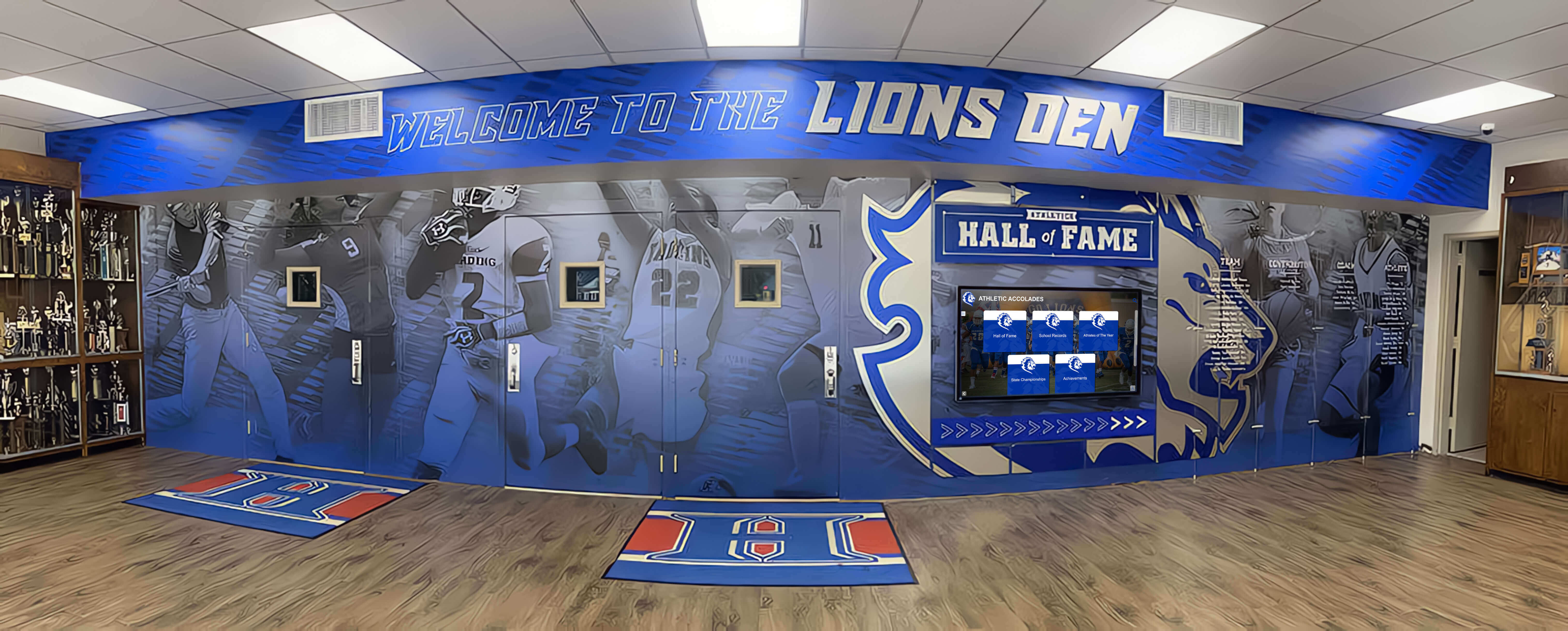
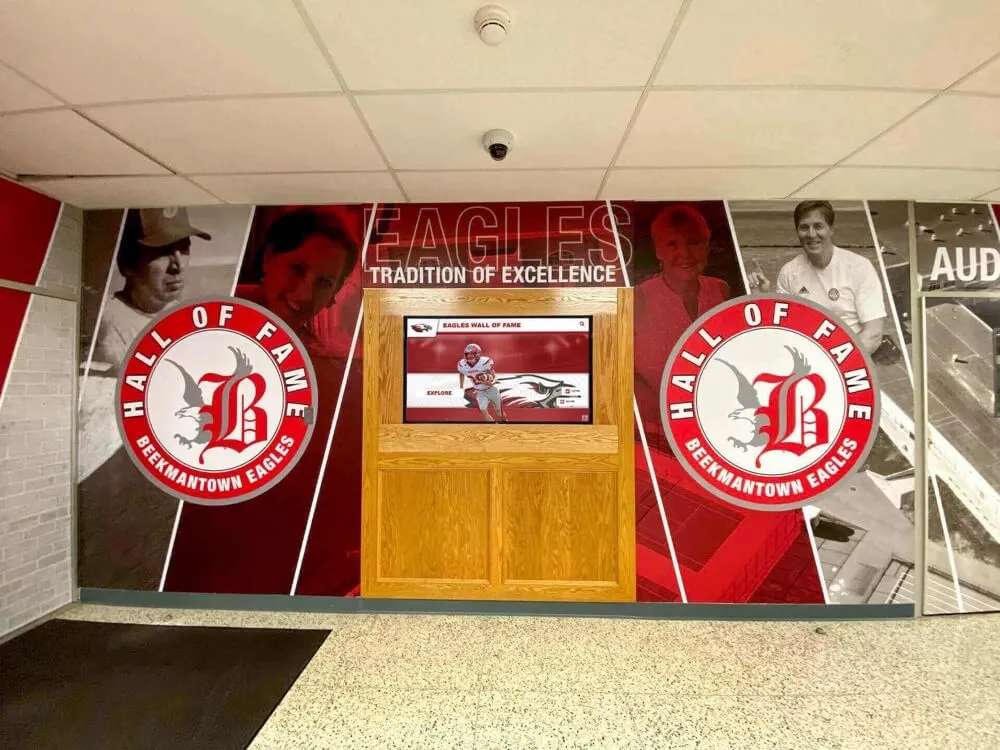
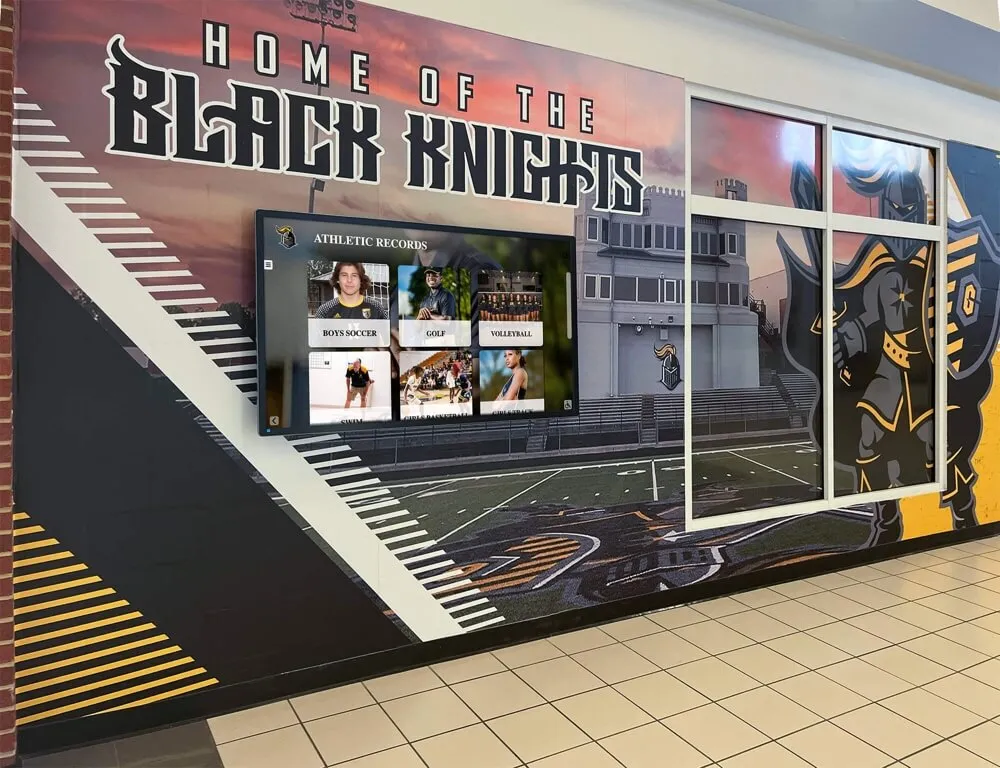
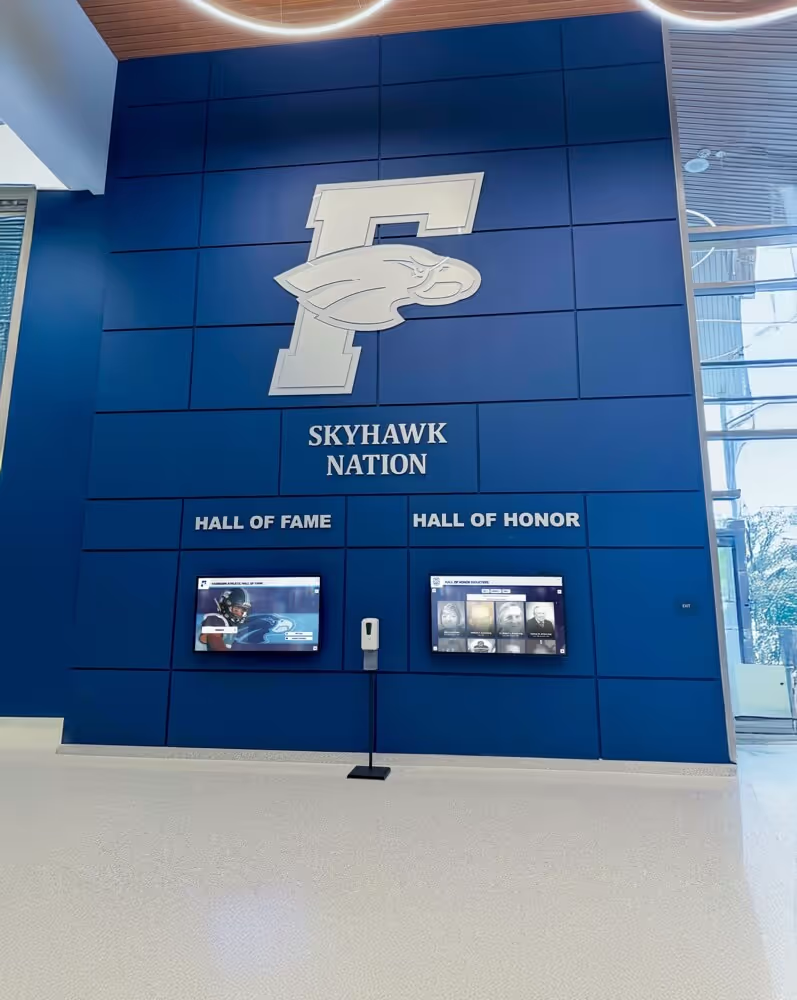
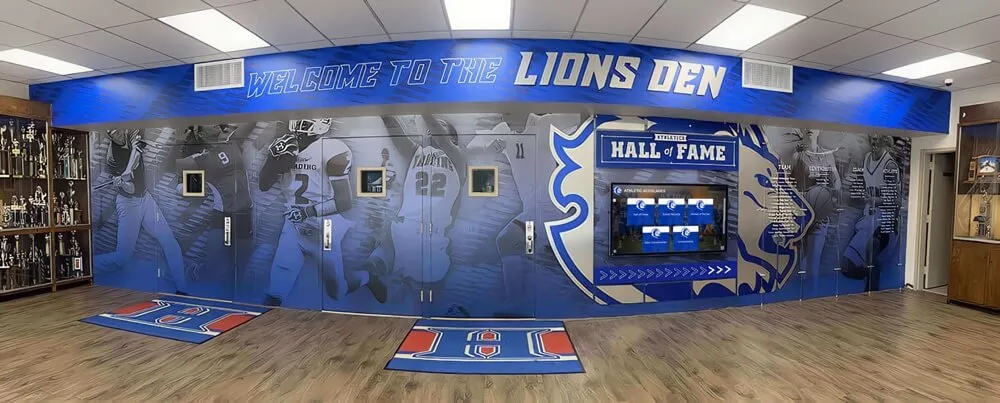
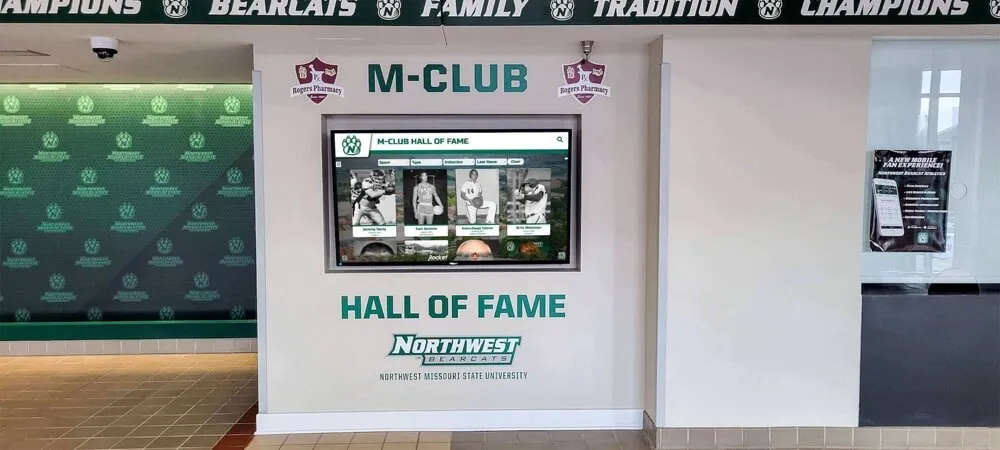
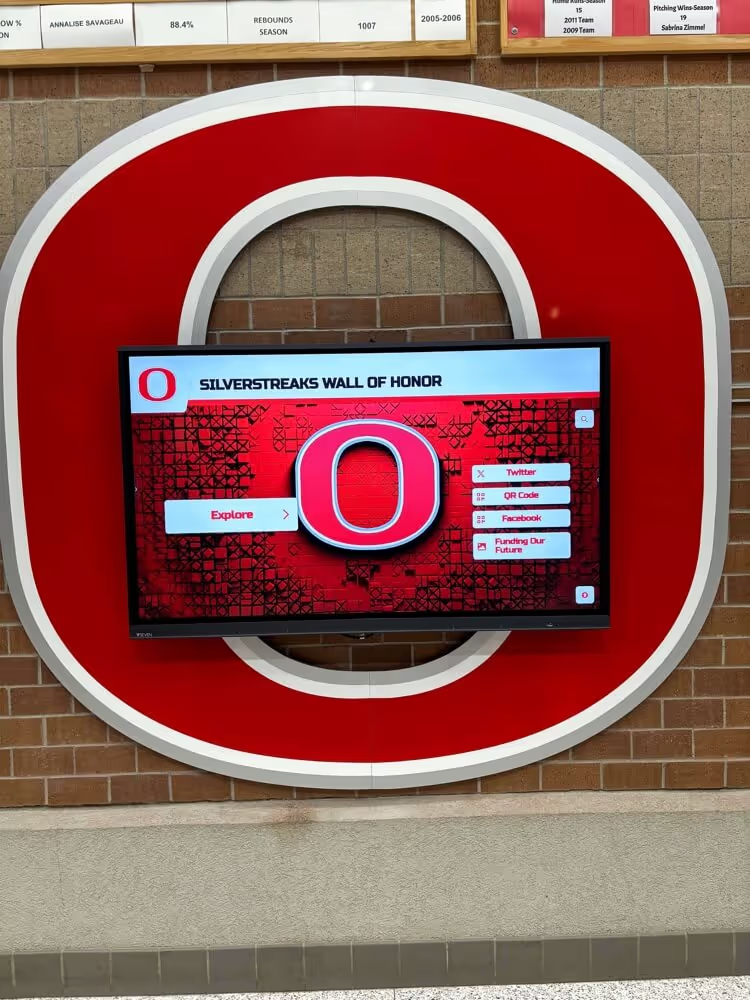
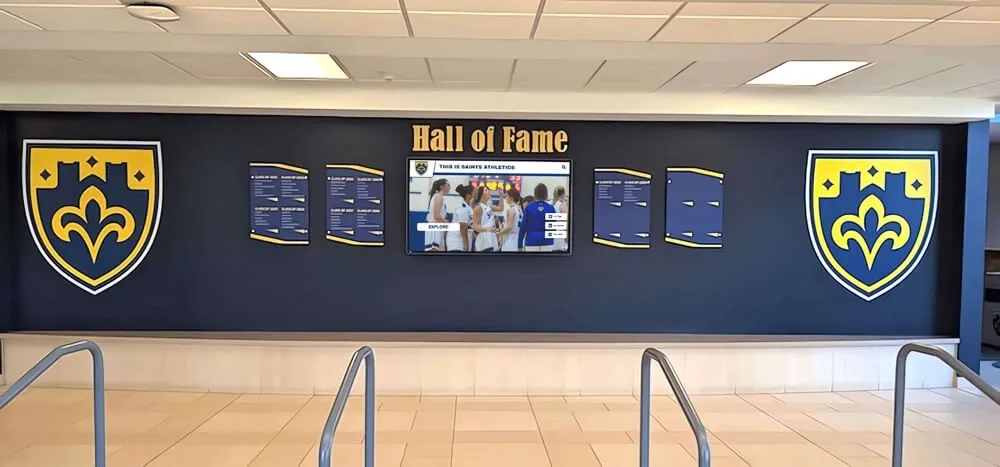
Trophy cases integrated alongside hall of fame murals benefit from consistent labeling that connects physical objects to the broader recognition story on the walls
Common Labeling Mistakes Schools Make
Using calendar year instead of academic year. A basketball championship won in March 2019 belongs to the 2018–2019 season, not “2019.” Labeling it as “2019” creates confusion when comparing to records organized by academic year—and it becomes a problem the moment you try to import data into an athletic management system.
Abbreviating sport names inconsistently. “WBB,” “W. Basketball,” and “Girls Bball” all mean the same thing but will sort differently in any digital system and read differently to casual visitors. Choose a convention and enforce it.
Omitting the competition level. “State Champion” means something different when a school’s enrollment qualifies it for Class 1A versus Class 5A. Including the classification prevents the label from overstating the achievement to outside observers while still honoring it fully.
Leaving donor or sponsor fields blank. Booster clubs and community sponsors often fund the awards they see recognized in trophy cases. Acknowledging them by name on the label closes a recognition loop that motivates continued support. For guidance on broader staff and community recognition, year-round staff appreciation wall ideas show how acknowledgment systems reinforce institutional culture.
Not labeling academic or activity awards. Athletic trophies tend to get systematic attention while quiz bowl championships, debate titles, and band competition trophies sit unlabeled for years. A complete labeling system covers the full range of school achievement—not just sports.
Organizing Labels by Trophy Type
Different trophy types require slightly different labeling approaches. The table below maps trophy categories to recommended label depth.
| Trophy Type | Minimum Label Fields | Recommended Additions |
|---|---|---|
| Team Championship | Award, sport, season, classification | Roster, coach, record |
| Individual Performance | Award name, recipient, sport, year | Stat/achievement detail, graduation year |
| Scholar-Athlete | Recipient, sport, academic year | GPA range or academic honor |
| Sportsmanship / Character | Recipient or team, award name, year | Selection criteria summary |
| Invitational / Tournament | Event name, sport, place finish, year | Hosting school or organization |
| Coach / Staff Recognition | Recipient, role, years of service, year | Program record or highlight |
| Hall of Fame Induction Trophy | Inductee, induction year, sport | Career highlights |
| Memorial Award | Award name, honoree it commemorates, recipient | Brief note on who it honors |
Memorial awards deserve particular care. They carry emotional weight for families and communities that extends far beyond athletic achievement. Thoughtful memorial recognition approaches can inform how schools frame the context behind awards that honor a specific individual’s legacy.
Physical Trophy Case Labels vs. Digital Records: What Each Does Well
Physical labels serve the visitor standing in front of the case. They need to be visible, durable, and readable at a glance. Digital records serve the administrator building the archive, the alumni searching for their year, and the communications staff preparing anniversary content.
Physical Labels Excel At:
- Immediate, always-on visibility without any technology required
- Connecting the object to its story in a single glance
- Durability across years of display
- Creating a professional presentation for campus visitors and prospective families
Physical Labels Struggle With:
- Space constraints that force truncated information
- Updating when information was recorded incorrectly
- Scaling to include full rosters and detailed context
- Surviving trophy case moves, renovations, or storage
Digital Records Excel At:
- Storing unlimited detail—full rosters, photos, game recaps
- Updating instantly when corrections are needed
- Surfacing any trophy or award through search
- Connecting individual awards to athlete profiles and career histories
Digital Records Struggle With:
- Requiring a screen and power to display
- Depending on software that must be maintained
- Recreating the tactile, institutional feel of a physical case
The most effective approach treats these as complementary systems rather than competitors. Physical labels handle the in-person display; a digital record handles the depth. The two stay synchronized because the fields on the physical label are identical to the fields in the database—a design choice made at the labeling stage, not discovered later during migration.
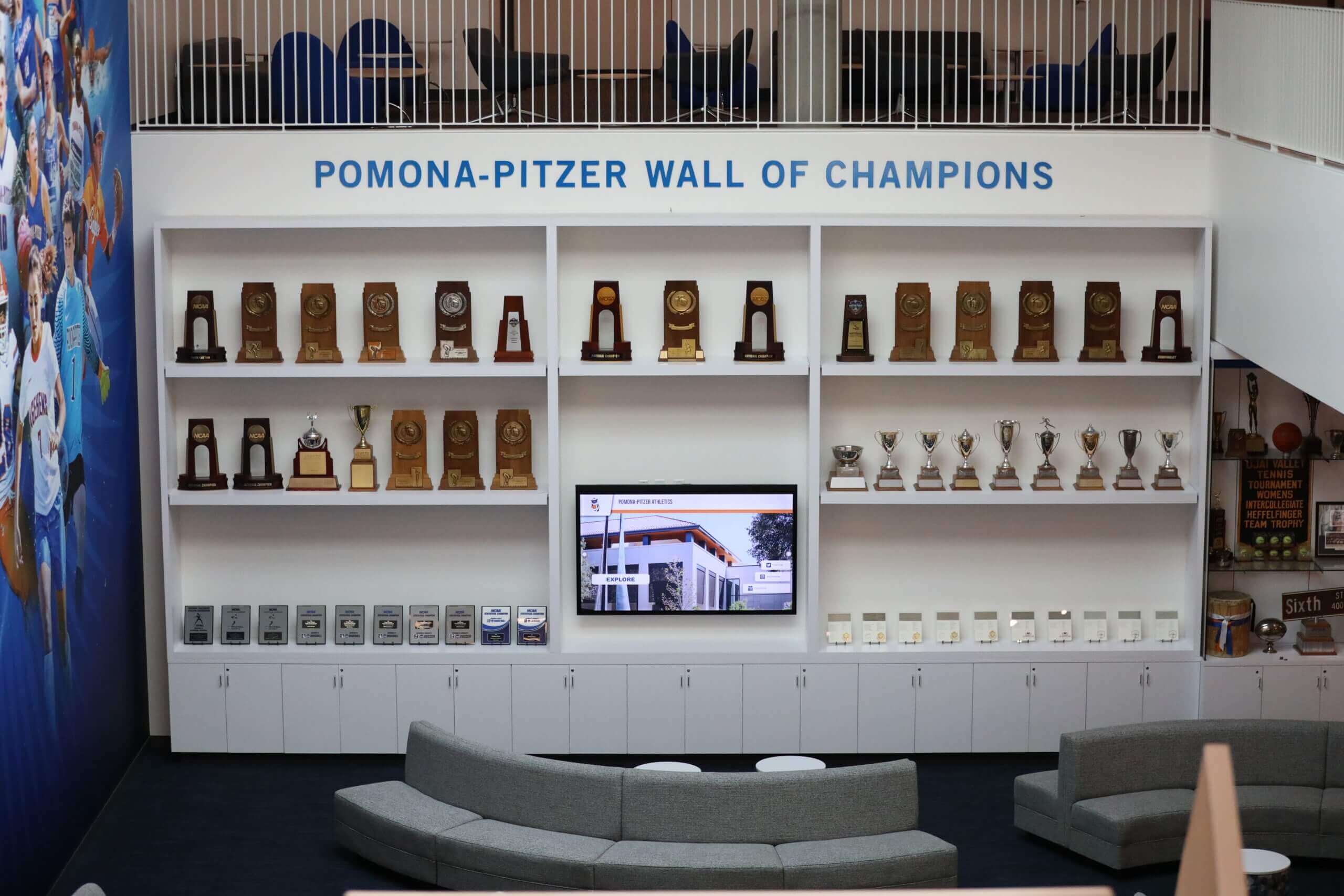
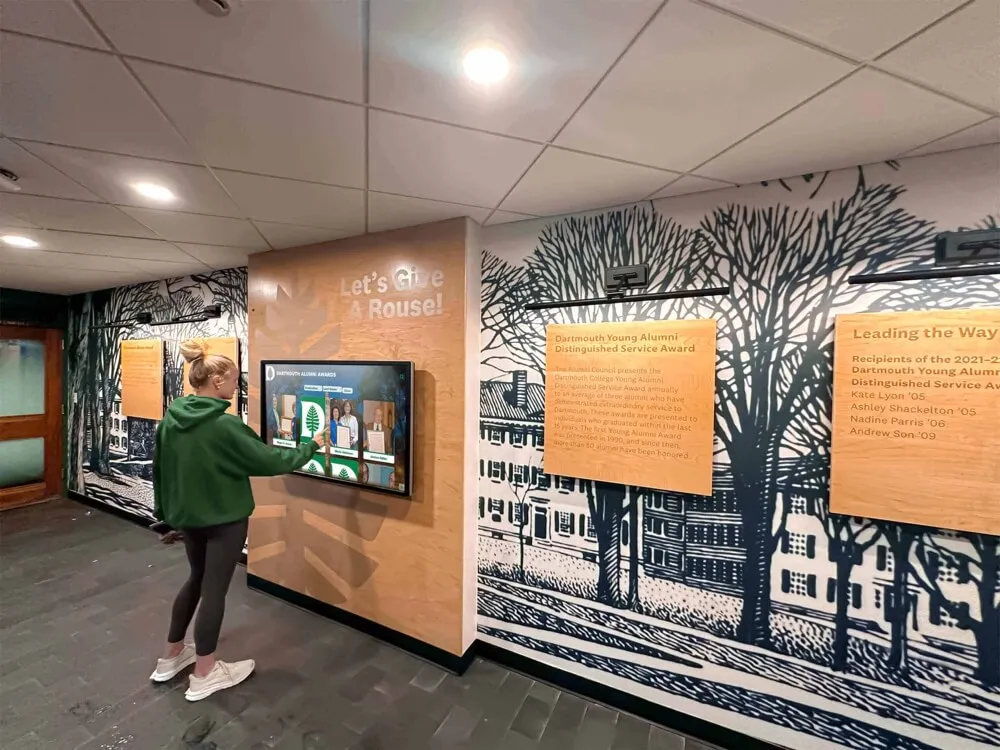
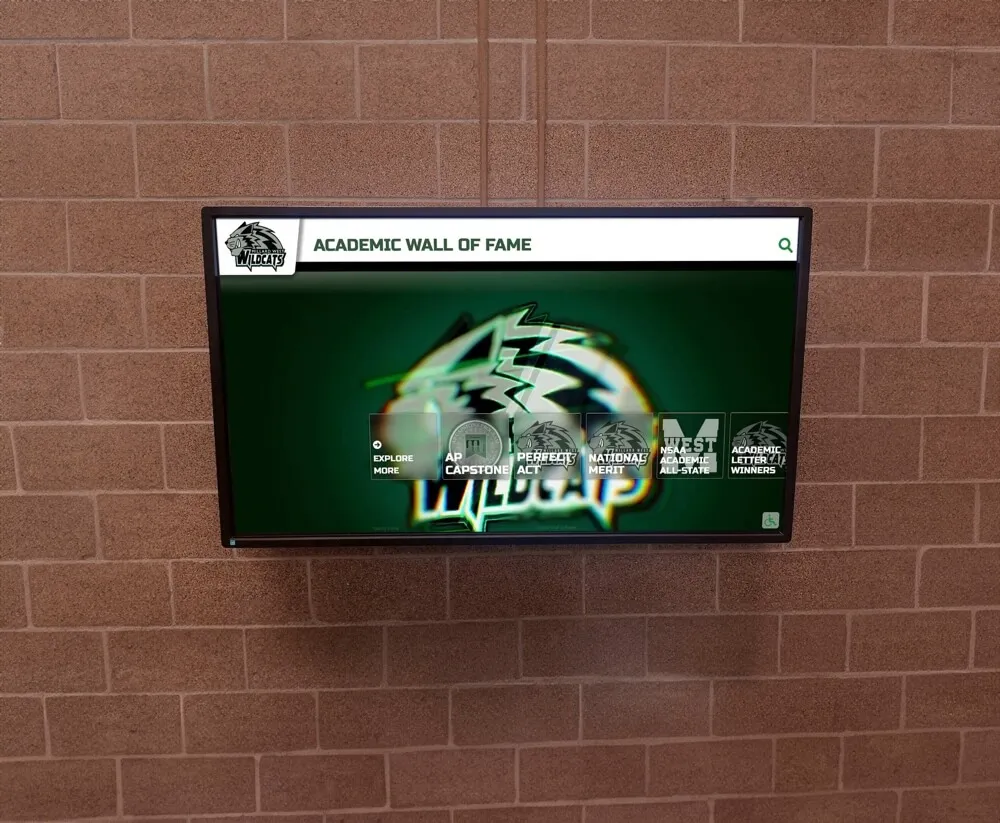
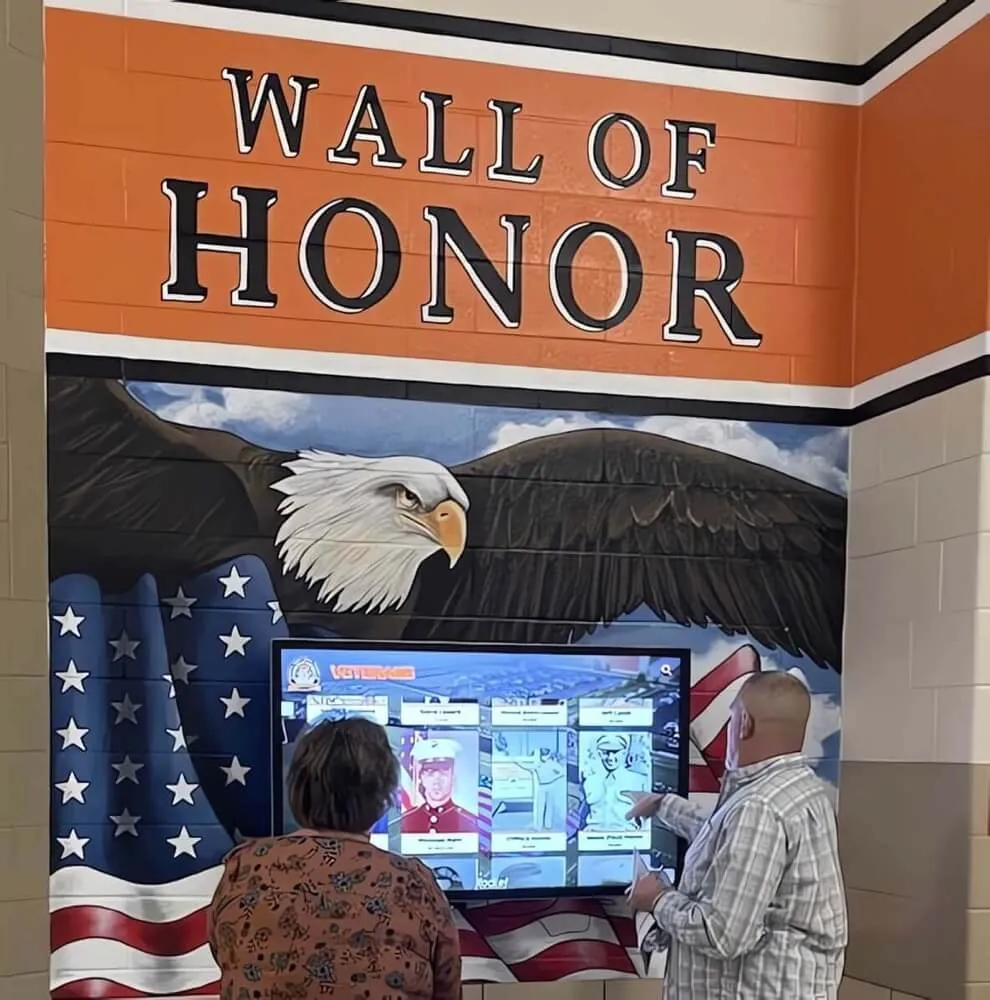
Physical trophy displays create institutional atmosphere; the label data behind them powers any digital system the school builds later
How Trophy Case Labels Prepare You for a Digital Migration
Schools that have invested in comprehensive physical labeling have a significant head start when they move to a digital trophy case platform. Here is why the work transfers directly:
Consistent field names become database columns. When every label uses the same format for “sport,” “season,” and “classification,” those fields map cleanly to a digital system’s data structure. Schools that used ad-hoc labeling must spend time standardizing before importing—often discovering gaps that require research to fill.
Complete rosters become athlete profile seeds. A physical label that lists every team member provides the name list needed to create athlete profiles in a digital system. Combined with yearbook photos, those names become the foundation for a searchable athlete database spanning decades.
Dated records support chronological browsing. Digital platforms typically let users browse by year or era. Trophies labeled with academic-year conventions (2018–2019) rather than calendar year (2019) sort correctly without manual adjustment.
Sponsor and donor fields enable recognition integration. Many digital trophy case platforms support sponsor display capabilities—showing booster club logos, donor names, or community partner acknowledgments alongside the awards they funded. Trophy labels that captured this information from the start make that integration immediate rather than requiring outreach to reconstruct who sponsored what, when.
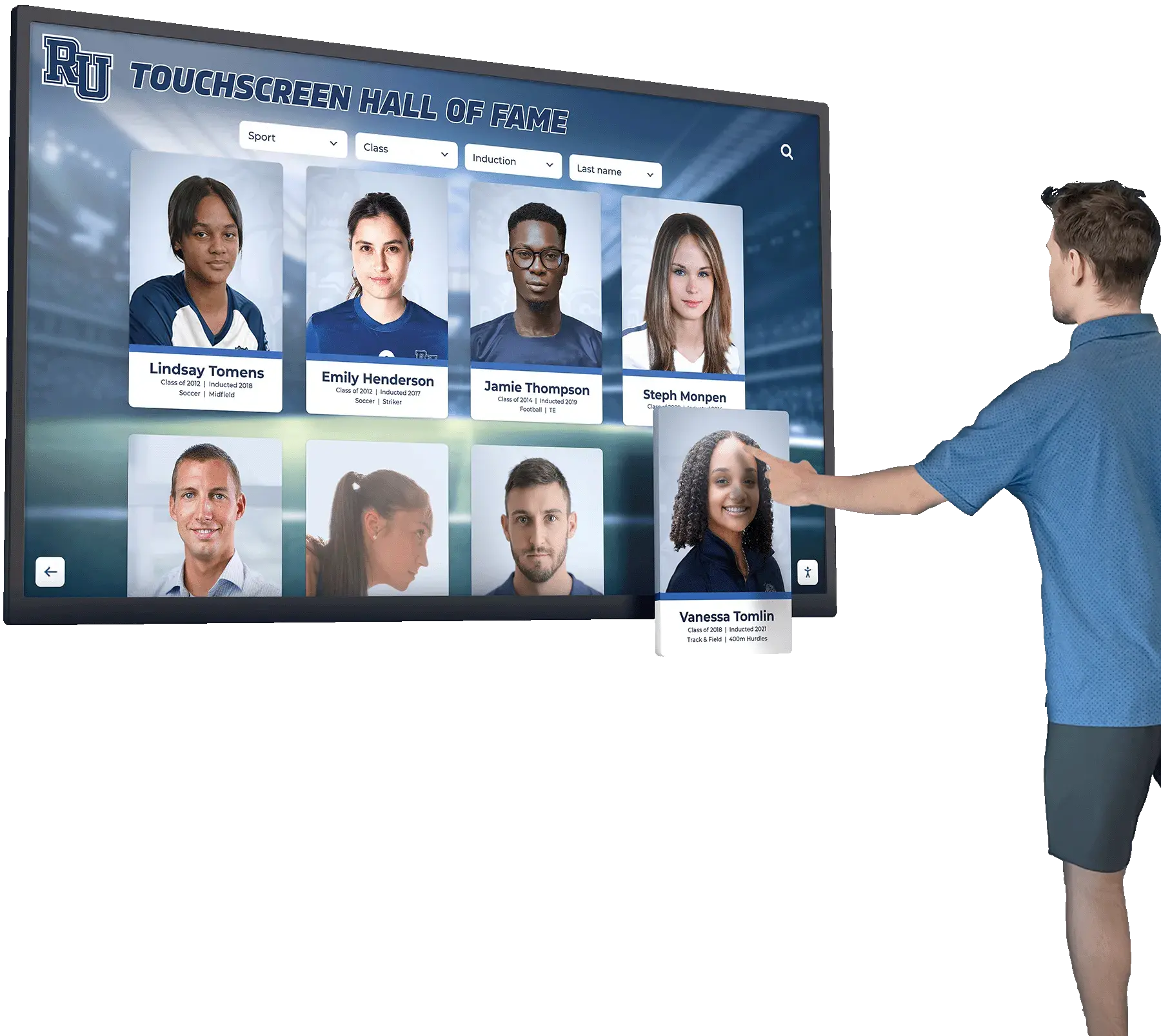
For schools thinking about athletic recognition beyond the trophy case itself—wall boards, touchscreen kiosks, and record displays—allstar achievement touchscreen systems show how comprehensive digital recognition integrates across a facility.
Ready to move beyond physical labels? A digital trophy case platform lets you display every award, every season, and every athlete in a searchable format—with labels that update instantly from a cloud-based CMS, no IT ticket required.
See how Rocket Alumni Solutions builds digital trophy cases →
Labeling Legacy Trophies: Working Backward Through History
Most schools have a collection of older trophies where documentation is incomplete. These require a different approach than labeling new acquisitions.
Start with what is physically on the trophy. Engraving on the base or plate is the most reliable record. Transcribe it exactly before adding any context from memory or secondary sources.
Cross-reference yearbooks. School yearbooks are the most consistent institutional record most schools maintain across decades. Most libraries or archives hold copies dating back to the school’s founding. The athletics section typically lists championship teams and coaches.
Consult athletic department record books. Many programs maintain internal win-loss records and championship histories. These often predate digital record-keeping but provide the season-by-season context labels need.
Talk to longtime staff and alumni. Coaches who have been with a program for 20 or more years often hold institutional memory that was never formally documented. Interview them systematically, not in passing—memory fades, and a structured conversation produces more complete information than a hallway question.
Mark uncertainty explicitly. If you can confirm the sport and approximate year but cannot verify the coach’s name, label what you know and add a note in your master record that the coach field is unverified. An honest gap is better than confidently wrong information on a public display.
For programs building out individual athlete recognition alongside team trophies, retired jersey number display ideas and wrestling hall of fame recognition approaches show how individual honor displays connect to the broader archive.
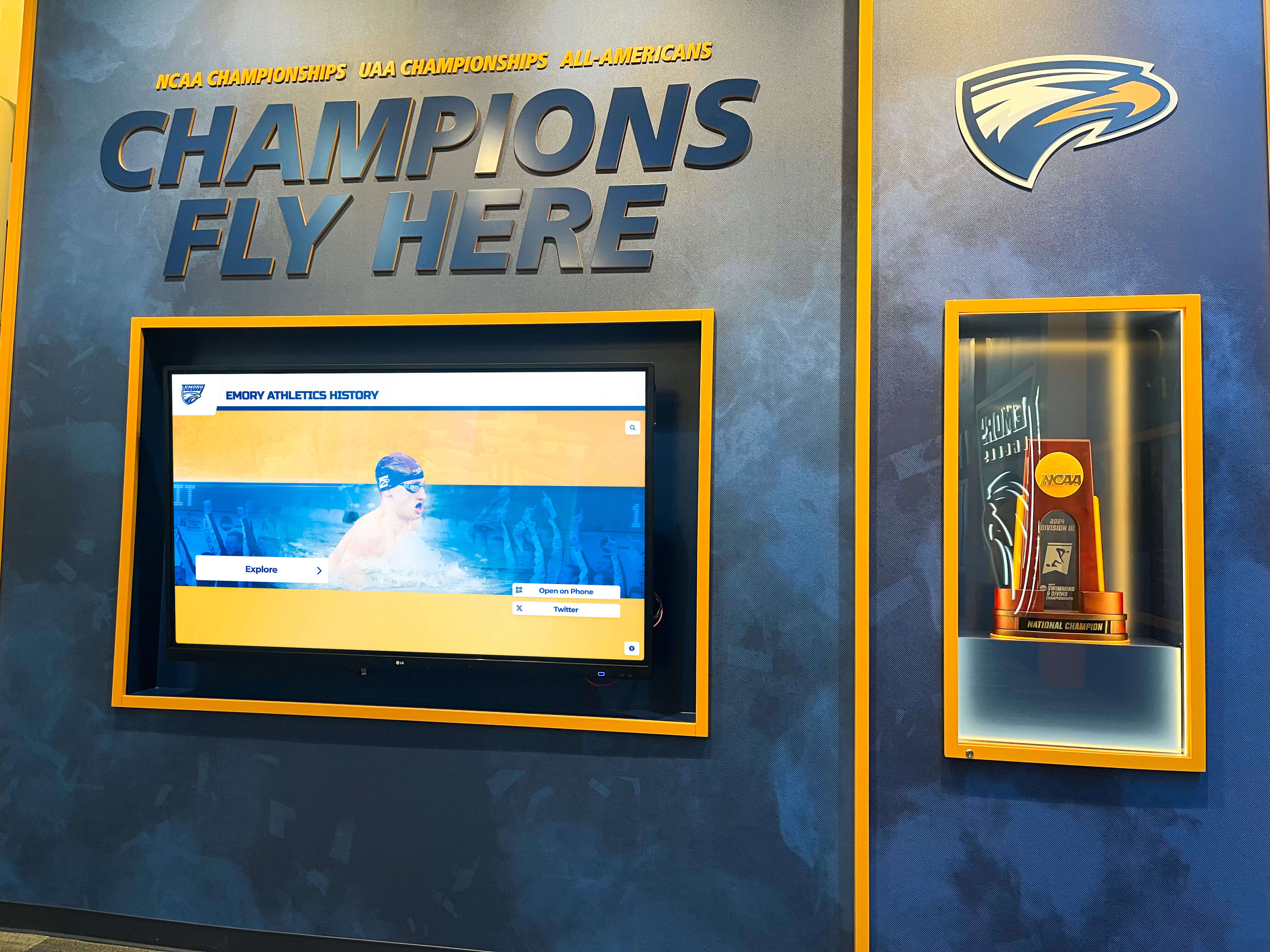
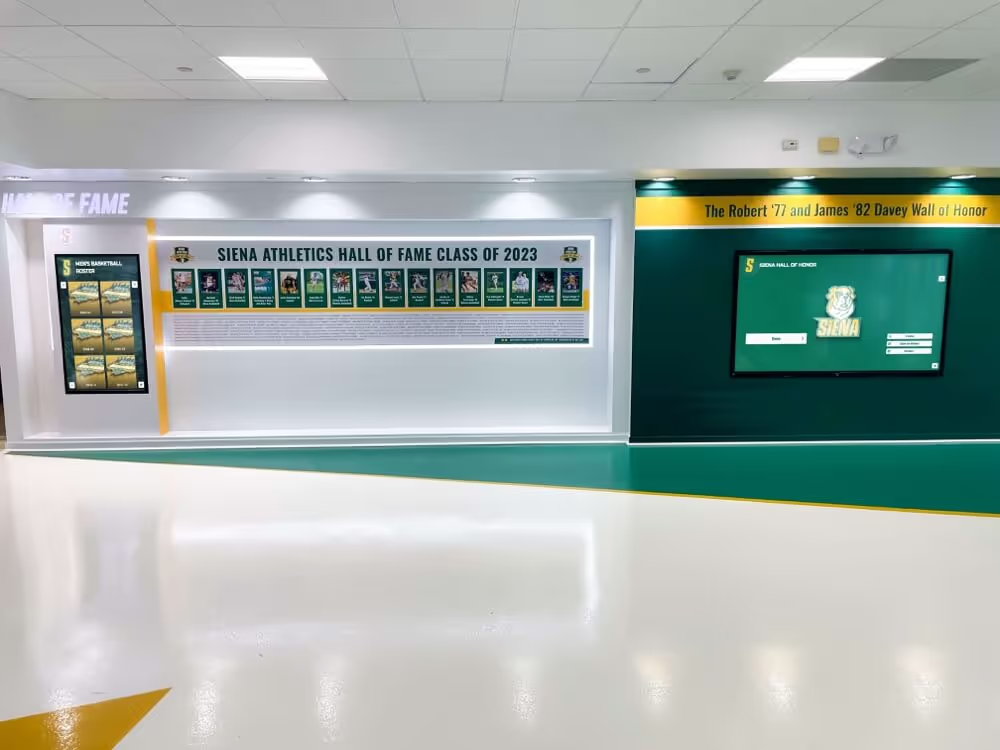
Championship displays earn their impact from the specificity of what they communicate—the label behind the hardware is what converts a trophy into a permanent record
Building a Trophy Case Label System That Lasts
A labeling system only works if it survives staff turnover and remains consistent across years. The administrative steps below make the system durable.
Write it down. Create a one-page trophy case labeling standard and store it in your athletic department’s operations manual. It should specify every field, the format for each, and the materials to use. Anyone hired into the role should be able to follow it without asking a colleague.
Assign ownership. Label maintenance fails when it is nobody’s specific job. Designate one person—typically the athletic director or an assistant—as the trophy case records owner. This person receives new award intake forms, approves labels before they are printed, and updates the master spreadsheet.
Build label creation into the award cycle. Create a checklist item in your end-of-season workflow: award received → intake form completed → label designed and approved → label installed → spreadsheet updated. Treat an unlabeled trophy in the case as an open checklist item, not an acceptable default.
Conduct an annual audit. Once per year, walk the trophy case with your master spreadsheet and verify that every trophy has a label and that the label matches the record. This takes less than an hour for most cases and catches drift before it becomes a reconstruction project.
For classroom recognition projects that extend the labeling mindset beyond athletics, classroom recognition guides provide a framework that academic departments can adapt from the same principles.
Frequently Asked Questions About Trophy Case Labels
How long should a trophy case label be? A physical label should include all required fields in as few words as possible—typically 3–5 lines of text. If the full context cannot fit on the label, place the essential fields on the label and maintain the complete record in your archive spreadsheet or digital system.
Should trophy labels include photographs? Physical labels rarely have space for photos, but supplemental photo cards behind trophies or in display pockets add significant engagement value. Digitally, every record should include at least one photo—team photo, action shot, or image of the award ceremony.
What should I do when a label is wrong? Remove the label and replace it. Do not cover incorrect information with a sticker or correction. In your master record, note what the error was and when it was corrected, in case anyone asks about the change.
How do I handle trophies that belong to discontinued programs? Label them with the same fields as active programs. Add a note in your master record indicating the program ended and the final season. These trophies often carry historical significance precisely because the program no longer exists.
Can a student worker or volunteer handle trophy case labeling? Label installation, yes. Label content decisions, no. A student or volunteer can print and apply labels once they are approved. The content—verifying names, dates, and achievement details—should be reviewed and approved by a staff member with access to athletic records.
How does labeling connect to ADA compliance for digital displays? When physical label data moves into a digital platform, the same field structure supports WCAG 2.1 AA compliant displays—screen readers can navigate award records by field, and every piece of information is available in text form regardless of how it is visually presented. Getting your labeling right at the physical stage means your digital display meets accessibility standards from the first day it goes live.
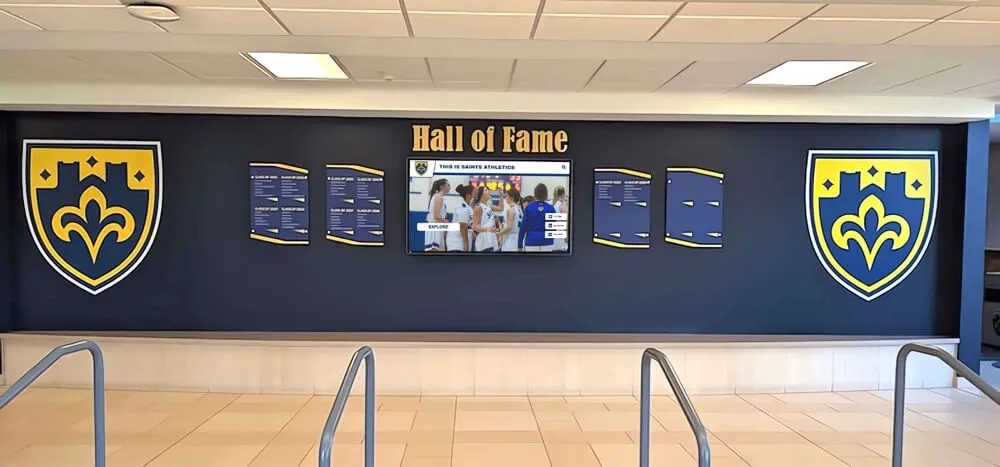
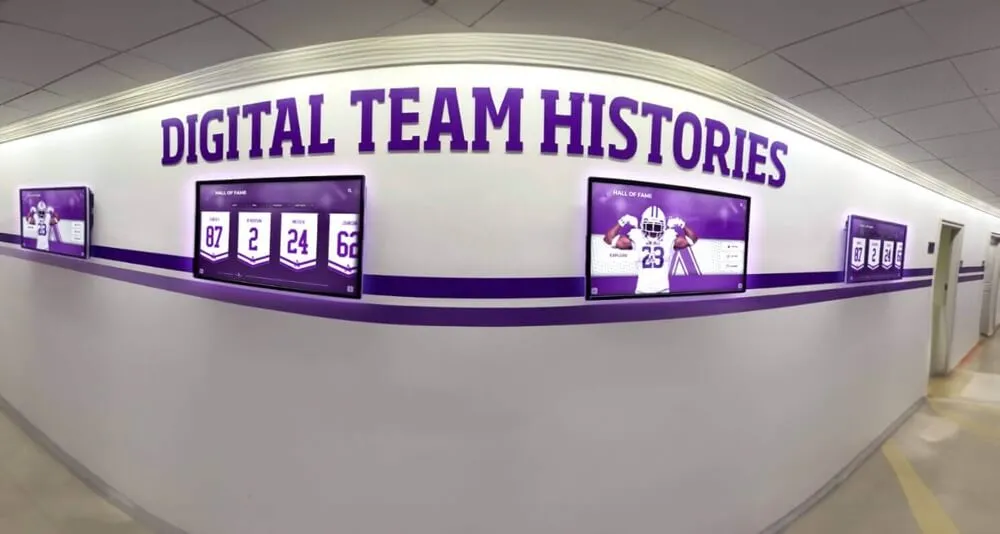
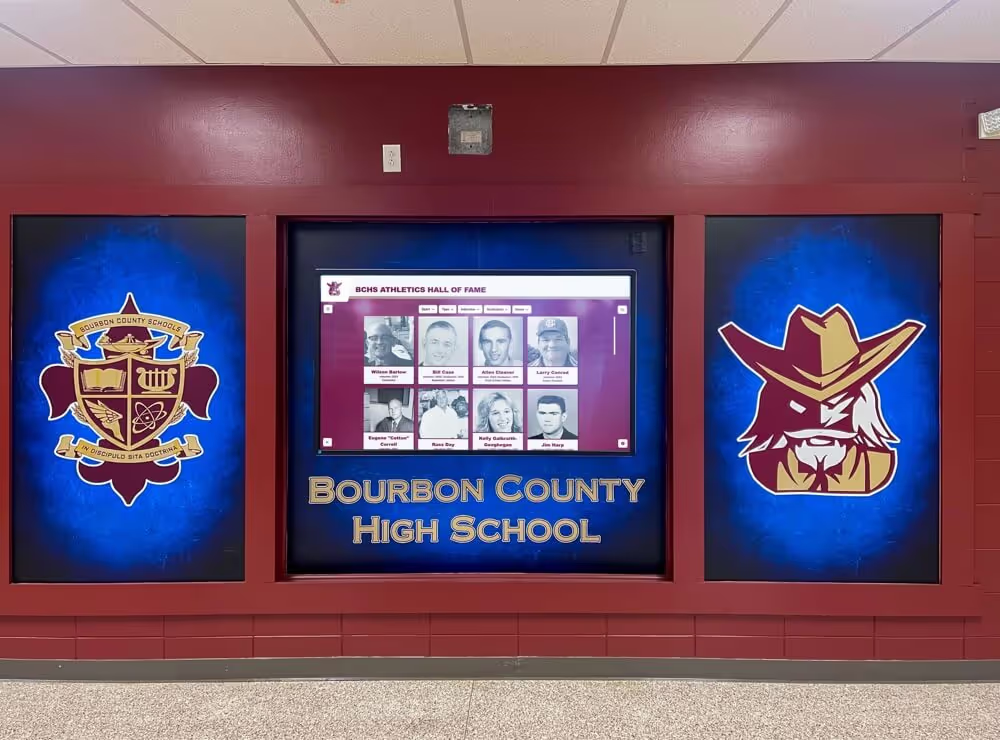
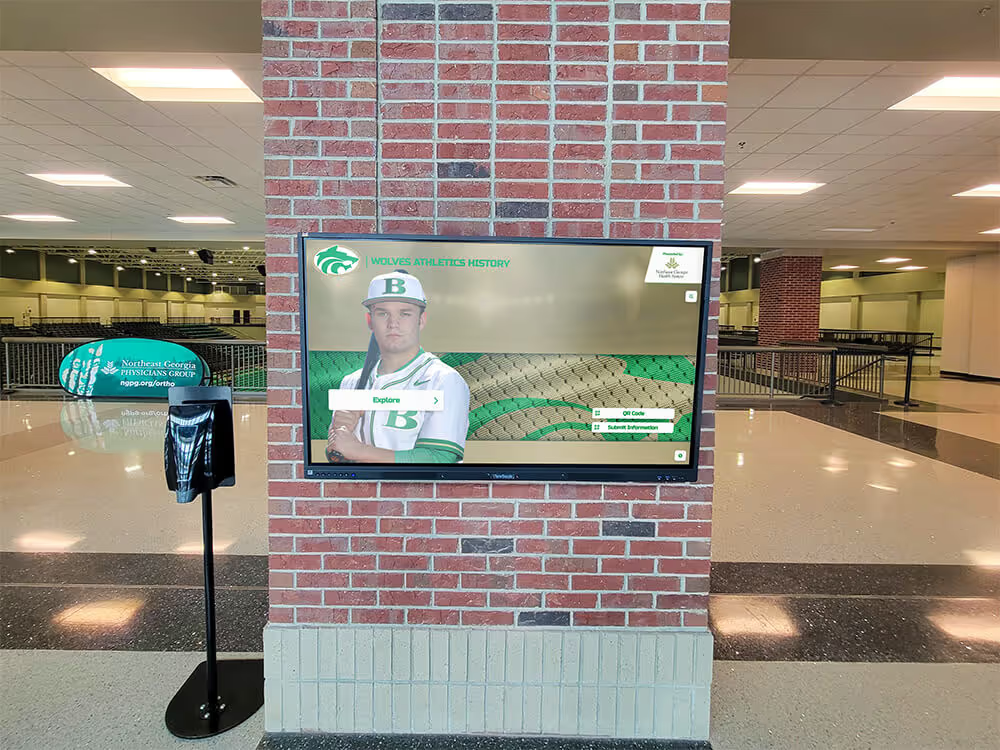
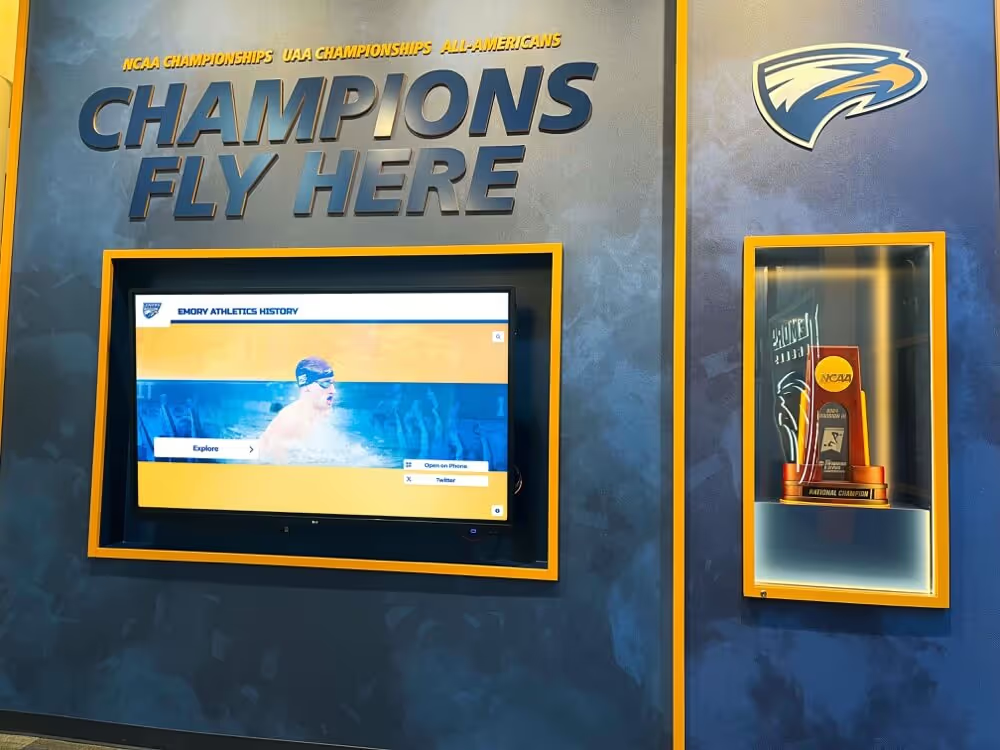
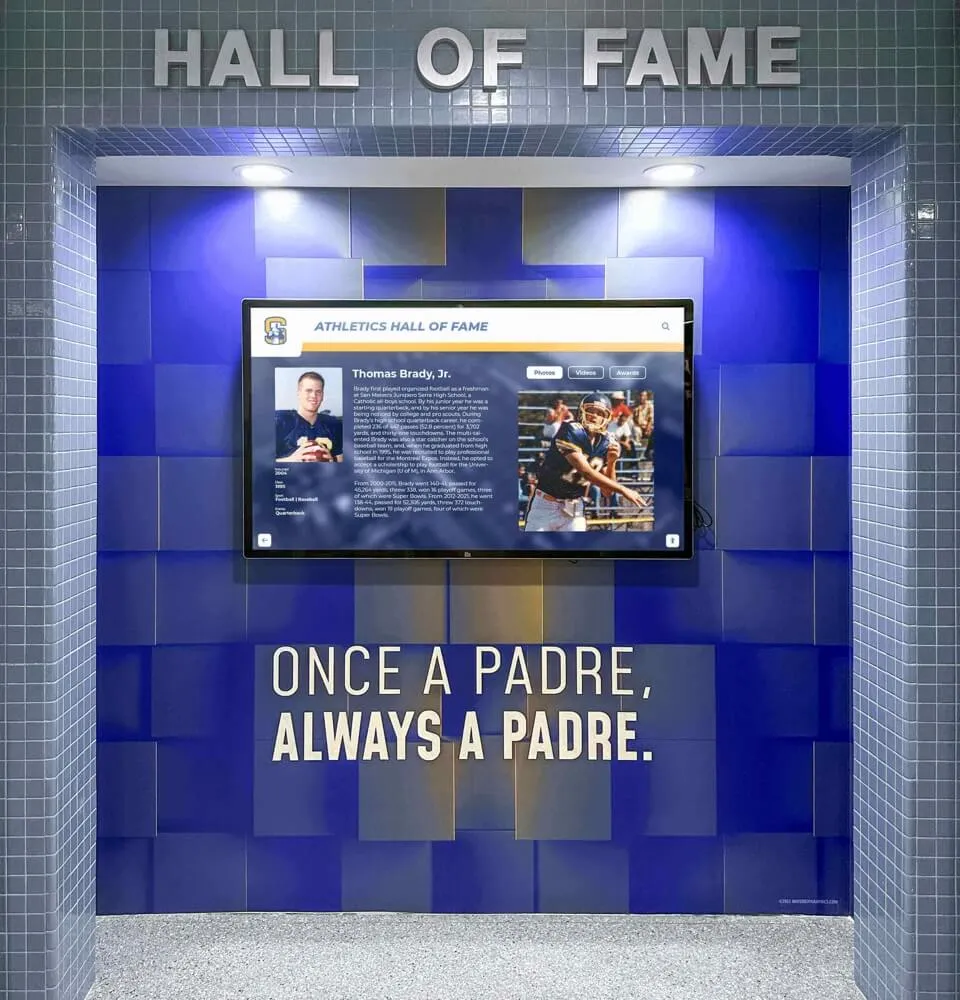
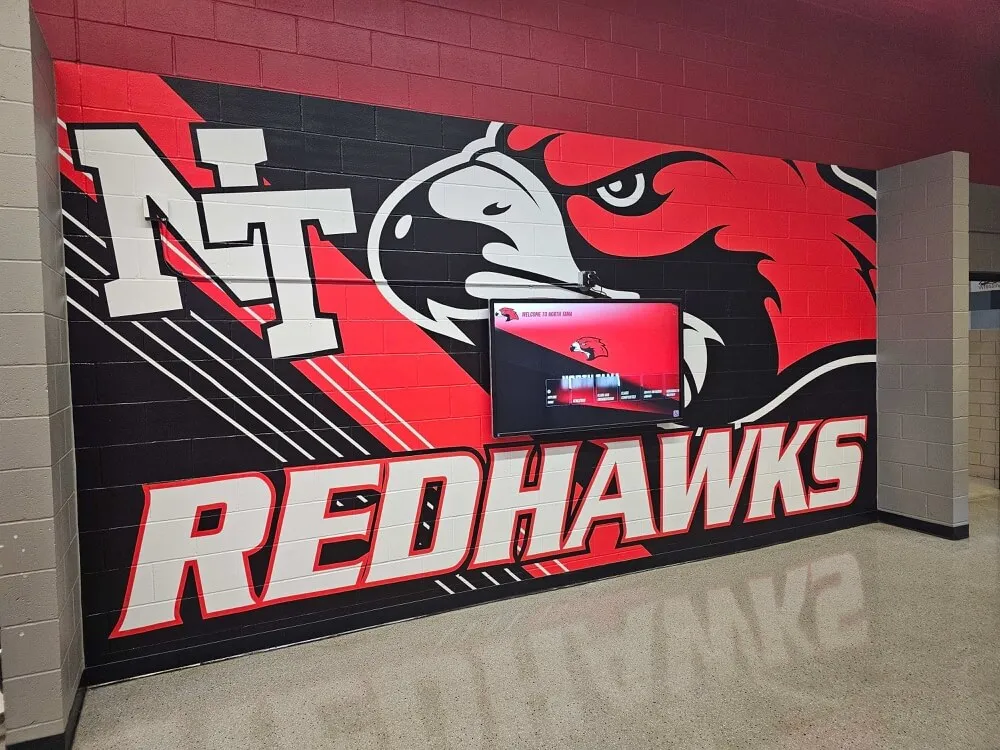
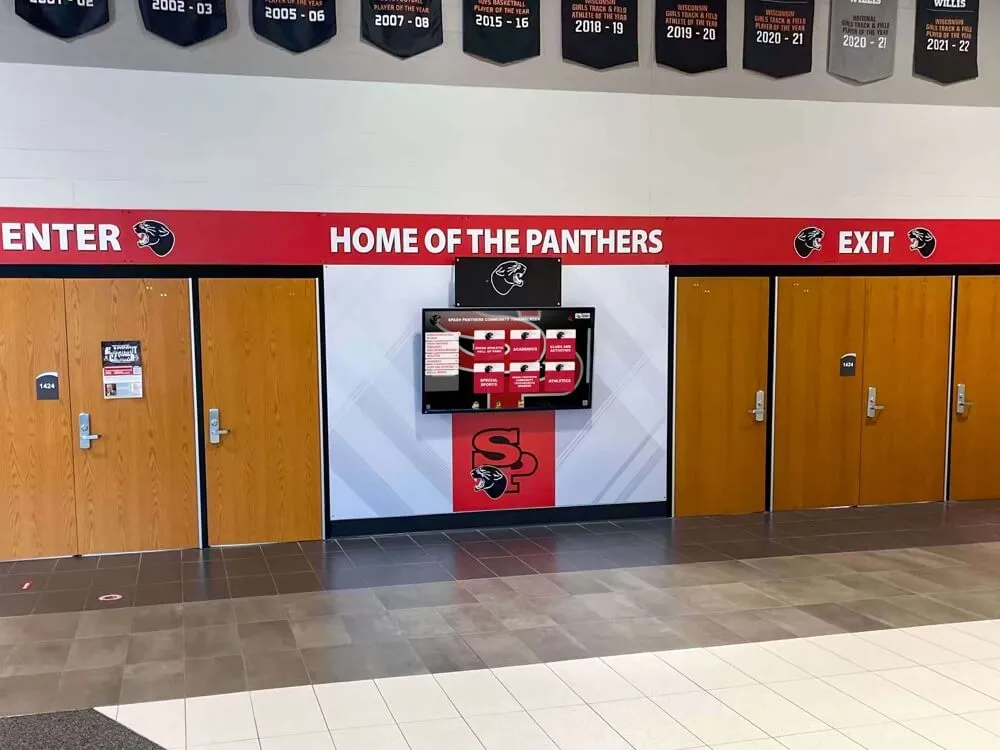
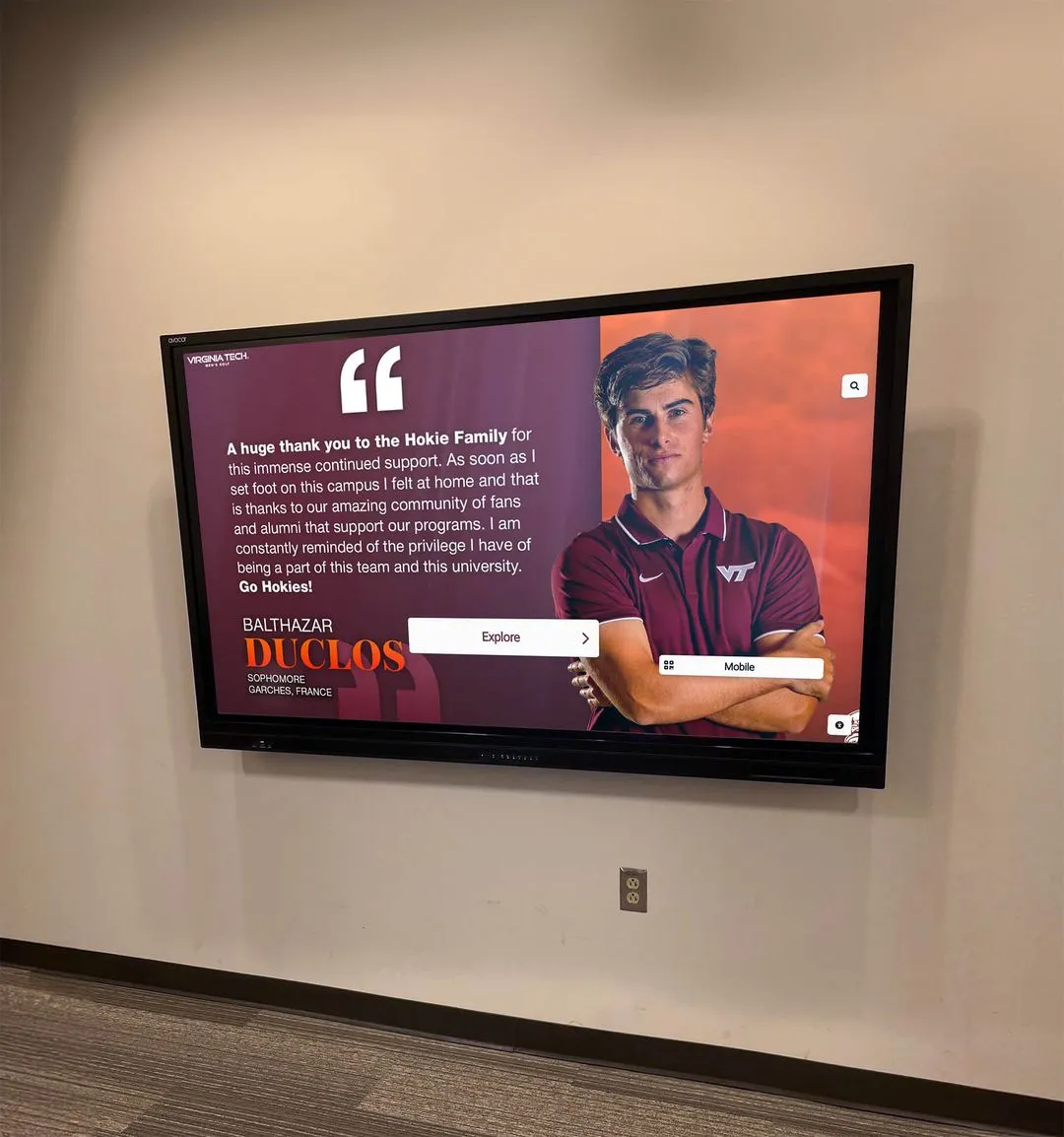
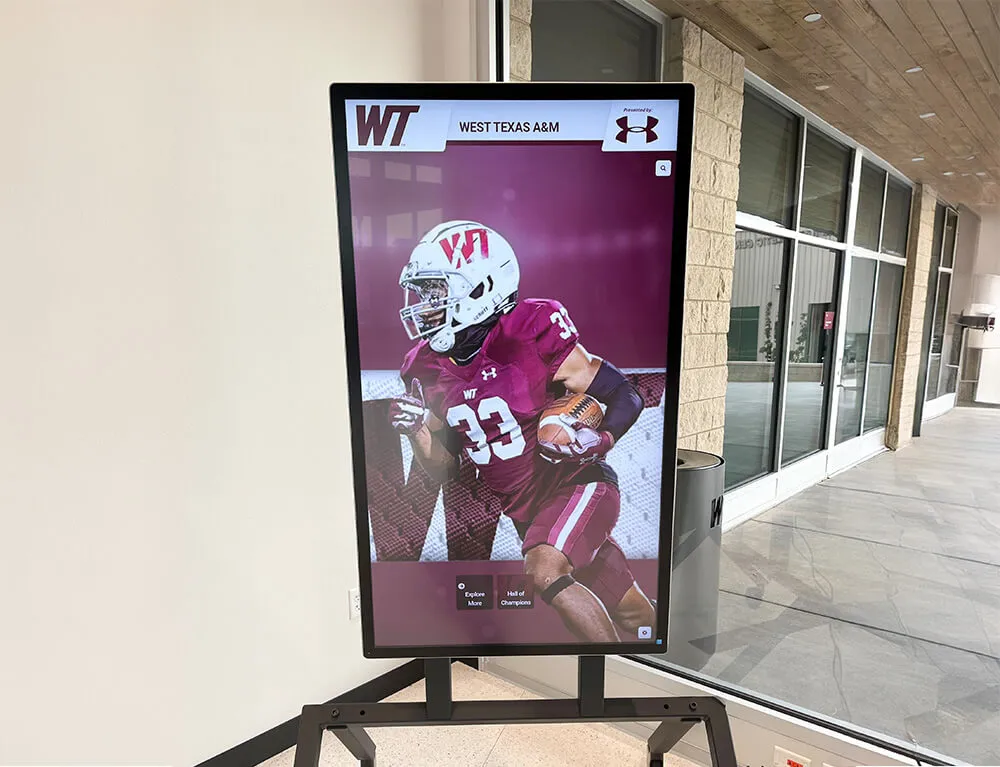
Hybrid displays that combine physical elements with digital screens depend on the same underlying label data—making consistent documentation the foundation of both
From Label to Legacy: What Good Documentation Makes Possible
A trophy case label is a small thing. A system of consistent, complete labels across every award a school has ever given is something else: it is an institutional memory system. Every correctly documented trophy is a record that can surface in a reunion slideshow, appear on a digital touchscreen in the main lobby, or get cited in a grant application demonstrating community impact.
Schools that treat trophy case documentation as administrative housekeeping will always be scrambling to reconstruct history when it matters—during a centennial celebration, an accreditation review, or the first week a digital recognition platform goes live. Schools that build the habit of documenting accurately from the moment an award arrives will never have that problem.
The labels you create today become the records that make your school’s next recognition investment possible.
Turn your labeled records into a living digital trophy case. Rocket Alumni Solutions builds interactive touchscreen platforms that display every award, every season, and every athlete your school has ever honored—with unlimited entries, cloud-based updates, and ADA WCAG 2.1 AA accessibility built in.