



Intent: research — trophy case humidity control is one of the most overlooked aspects of protecting the awards, photographs, retired jerseys, and archival documents stored in school display cases. This guide explains what relative humidity levels are typically recommended for mixed-material display environments, how to monitor conditions throughout the year, and what facilities and athletic staff can realistically do to reduce moisture-related damage — without making conservation guarantees. For collections of significant historical or monetary value, consultation with a qualified preservation professional is the appropriate next step beyond these general practices.
The glass in a school trophy case does not just keep hands off championship hardware — it also creates a microenvironment with its own humidity profile, separate from the hallway around it. What happens inside that microenvironment over months and years determines whether a framed team photograph remains legible, whether a retired jersey stays intact, and whether an engraved plaque continues to reflect light cleanly or develops a mottled corrosion pattern that no polish fully repairs.
Most school facilities teams manage temperature in display areas because temperature complaints are immediate and visible. Humidity problems develop slowly and silently, reaching a critical threshold long before they become obvious. By the time you notice a jersey with mold spotting or a certificate whose paper has cockled and pulled away from its backing, the damage is already done.

Physical trophy cases create enclosed microenvironments — managing humidity inside them requires different thinking than managing the hallway air around them
What Relative Humidity Means for a Trophy Case
Relative humidity (RH) is the amount of water vapor in the air expressed as a percentage of the maximum that air at a given temperature can hold. For most general-purpose school display cases containing a mix of metals, wood, paper, fabric, and photographic materials, preservation literature commonly cites a target range of approximately 45–55% RH, with stability across seasons being as important as hitting any specific number.
This range is a practical starting point for a typical mixed-material school display, not an absolute conservation standard. Precise targets vary by material type: paper-based archival collections often benefit from the lower end of this range, while certain metals tolerate slightly higher levels. If your trophy case holds items of significant historical value — founding-year championship hardware, original documents from early program years, photographs with no duplicates — the appropriate resource is a qualified preservation professional who can assess conditions and recommend a specific approach for your collection.
For general school athletic and academic display purposes, the practical goal is:
- Keep RH between roughly 45% and 55% where feasible
- Avoid sustained readings above 60%, which reliably promote mold growth on organic materials and accelerate metal corrosion
- Avoid sustained readings below 30%, which cause paper brittleness, wood shrinkage, adhesive failure, and emulsion cracking in older photographic prints
- Minimize seasonal RH swings — a case that fluctuates between 35% and 65% across the school year is often more damaging than one that holds steadily at 57%
The Trophy Case Humidity Monitoring Checklist
Monitoring comes before control. Without a baseline understanding of what RH levels actually look like inside your cases across different seasons and weather conditions, any intervention is speculative.
Monitoring Setup
- Place a digital hygrometer/thermometer inside each display case, positioned away from direct light sources and not touching any displayed item
- For cases displaying irreplaceable items, use a data logger rather than a single-point display device — data loggers record readings over time and reveal fluctuation patterns that a one-time spot check misses
- Calibrate or replace monitoring devices at least once per year; inexpensive sensors drift and can produce readings significantly off from actual conditions
- Record baseline readings across at least one full school year before drawing firm conclusions about chronic conditions
Monthly Readings
- Note the current RH and temperature inside the case at the same time each month for consistent comparison
- Record outdoor weather conditions at the time of reading — a spike in summer humidity or a drop during winter heating provides context for anomalous readings
- Flag any reading above 60% or below 30% for follow-up attention before the next inspection
- Document readings in a shared log accessible to both facilities staff and athletic department contacts
Seasonal Checkpoints
- Conduct targeted inspections at the start of each season — particularly the transition from summer into heating season, which produces the sharpest annual humidity swing in most school buildings
- Check readings within two weeks of HVAC system changes — switching from cooling to heating mode significantly alters building humidity levels
- Inspect case seals and door gaskets in fall and spring when temperature differentials cause materials to expand and contract
How Moisture Damages Each Type of Trophy Case Material
Understanding which materials are most vulnerable — and in which direction — helps schools prioritize monitoring and intervention resources.
Metal Trophies and Hardware
High humidity is the primary enemy of metal trophy components. At sustained RH levels above 60%, moisture condenses on cool metal surfaces and initiates or accelerates oxidation. Brass trophies develop green verdigris. Silver-plated pieces show black tarnish that deepens with repeated exposure. Zinc alloy figurines — common in lower-cost trophies produced from the 1970s through the 2000s — are particularly susceptible to surface granulation under fluctuating humidity conditions, where repeated moisture cycling degrades the metal structure over time.
Temperature swings compound the problem: a cold trophy case on an exterior wall in winter creates surface condensation every time indoor humidity rises briefly, even if average RH appears moderate.
Wood Bases and Plaques
Wood is hygroscopic — it absorbs and releases moisture continuously in response to ambient RH. A trophy base manufactured and finished at one humidity level will expand when RH rises and contract when it falls. Over years of seasonal cycling, this movement loosens joints, causes veneer delamination, and warps flat plaque surfaces that were originally straight. The engraving on a warped plaque becomes harder to read as the surface curvature changes the angle at which light reflects off it.
High humidity also activates mold spores naturally present on wood surfaces. Mold growth on trophy bases typically appears as dark spotting that stains the wood permanently even after the mold itself is eliminated.
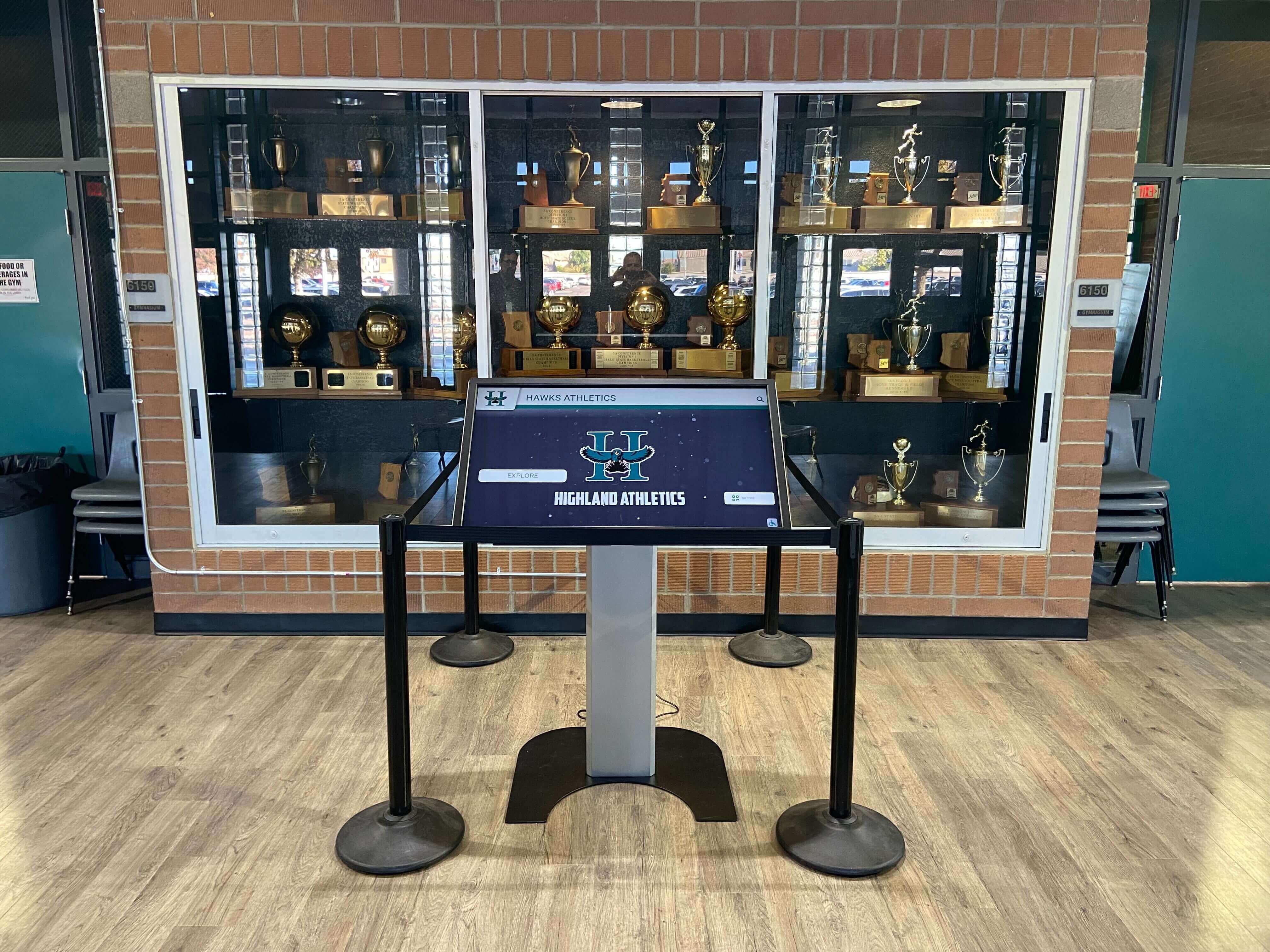
Cases displaying mixed materials — metals, wood, fabric, and paper — require stable humidity rather than targets tuned to any single material type
Photographic Prints and Framed Team Photos
Photographs are among the most humidity-sensitive materials in a typical school trophy case. High RH causes gelatin-silver prints — the most common type produced from the 1950s through the early 1990s — to soften, stick to adjacent surfaces, and develop mold. Color prints lose dye stability under chronically elevated humidity. Low RH causes photographic emulsions to become brittle and crack, particularly in older prints with thick gelatin layers.
Fluctuation is often the greatest risk: repeated expansion and contraction of the paper base against a more stable emulsion layer causes the two to delaminate, producing the crinkled texture visible in many old display photos that have not been stored under controlled conditions.
Jerseys, Banners, and Fabric Items
High humidity promotes mold and mildew on natural fibers — wool, cotton, and linen are particularly susceptible. Synthetic fabrics are more resistant to mold but still retain moisture and can support bacterial growth under sustained elevated humidity. Dyes in older jerseys may bleed or fade when exposed to repeated humidity cycling.
For alumni wall displays that incorporate retired jerseys as centerpiece artifacts, maintaining appropriate humidity is part of the permanent care commitment that comes with mounting fabric items in a public corridor. Low RH causes fiber brittleness, which is less visually obvious but makes fabrics more susceptible to tearing during routine handling — a risk that matters most when jerseys are removed for events, photo sessions, or cleaning.
Certificates, Award Documents, and Archival Paper
Paper-based items in trophy cases — championship certificates, athletic department records, newspaper clippings, and mounted recognitions — face risks at both ends of the humidity spectrum. High humidity causes cockling (a wavy, distorted surface caused by uneven fiber swelling), adhesive failure in mounted items, and ink bleed on documents produced with water-soluble inks. Sustained high humidity, particularly combined with warmth, produces visible foxing — the rust-colored spots common on old paper that indicate mold damage.
Low humidity makes paper brittle and prone to tearing at edges and folds. Documents handled regularly at low RH often show stress damage at fold lines that was not present when they were originally framed.
For schools that catalog recognition documents alongside trophies and photographs as part of a broader institutional archive, the standards governing athletic hall of fame selection criteria provide a useful frame for deciding which paper-based documents deserve archival treatment versus standard display handling.

Championship hardware maintained in stable humidity conditions retains its original finish and remains legible decades after the seasons it commemorates
Where Moisture Problems Come From in School Buildings
Identifying the source of a humidity problem is a prerequisite for fixing it. Several structural and operational patterns are common in school buildings.
Exterior Wall Placement Cases mounted on exterior walls are subject to temperature differentials that do not affect interior cases. In cold climates, the wall behind the case is cooler than the room-facing glass, creating a gradient that draws moisture toward the wall side of the case interior. Cases on exterior walls in cold-weather regions are at higher risk of condensation and localized elevated humidity even when building RH is moderate.
Proximity to Gyms, Pool Areas, and Cafeterias Athletic trophy cases located near gymnasiums, aquatic centers, and food service areas are exposed to moisture sources that most building HVAC systems are not designed to fully compensate for. A natatorium adjacent to a main hallway creates a chronic moisture burden that most building managers underestimate when siting display cases.
HVAC Gaps and Zoning Many school buildings condition occupied academic areas more aggressively than hallways, atria, and display corridors. If trophy cases are in a zone that receives less conditioning — particularly common in older buildings with retrofitted systems — RH in those areas may be consistently higher or more variable than in classrooms.
Seasonal Heating Effects When schools switch to heating mode in fall, indoor RH typically drops significantly as warmer, drier air cycles through the building. A trophy case that held 52% RH in September may drop to 28% by February without any change in the case itself.
Practical Humidity Control Options for Trophy Cases
Control strategies range from passive approaches requiring minimal installation to active HVAC-level interventions that require facilities coordination.
Passive Control: Silica Gel and Buffer Materials
For sealed or tightly gasketed cases, desiccant silica gel packets provide passive humidity management. Silica gel absorbs excess moisture, reducing RH in an enclosed space. Standard indicating silica gel changes color when saturated (typically blue to pink, or orange to colorless depending on formulation), signaling that the packet needs to be recharged or replaced.
Two-way humidity control packets — available from archival supply vendors — are more sophisticated: they absorb or release moisture as needed to maintain a target RH level within an enclosed space. These work in sealed display cases for smaller, well-contained collections.
Practical limitations apply: large cases with loose gaskets or frequent access do not hold a stable enough environment for passive desiccant control to be meaningful. These approaches are most effective in well-sealed smaller cases displaying specific high-value items.
Active Control: Humidity Management at the Building Level
For open or frequently accessed cases, the primary intervention is the building’s HVAC system rather than the case itself. Working with your facilities team to understand the actual RH profile in your display corridor — using monitoring data gathered over several months — is the necessary first step. If readings consistently fall outside the target range, the appropriate discussion is with HVAC professionals about whether zoning adjustments, supplemental dehumidifiers, or humidifiers for winter use are warranted.
Portable dehumidifiers are sometimes placed in display areas during high-humidity periods. This approach can reduce overall area RH but requires regular maintenance and does not provide precise control. If used, monitor case RH directly rather than assuming the room-level improvement translates inside the case.
For trophy cases that display class composites and historical photo collections alongside athletic hardware, controlling humidity is also part of managing an institutional photo archive — a consideration that extends beyond athletics to archives and development staff.
Case Selection and Placement Decisions
For schools designing new display installations or replacing aging cases, several decisions made at the planning stage have significant humidity implications.
Gaskets and sealing: Cases designed for general display rather than archival storage typically use minimal sealing. If the intended use includes photographs or documents, specifying tighter door gaskets at purchase reduces the environmental exchange rate.
Interior materials: Some older case interiors — particularly wood shelving with active off-gassing from adhesives — can contribute to interior humidity and airborne chemical levels. Inert materials such as powder-coated metal shelving or sealed glass shelving reduce this contribution.
Location: Avoiding exterior walls and high-moisture adjacencies at the planning stage costs nothing. Correcting a placement decision after installation requires relocating the case.
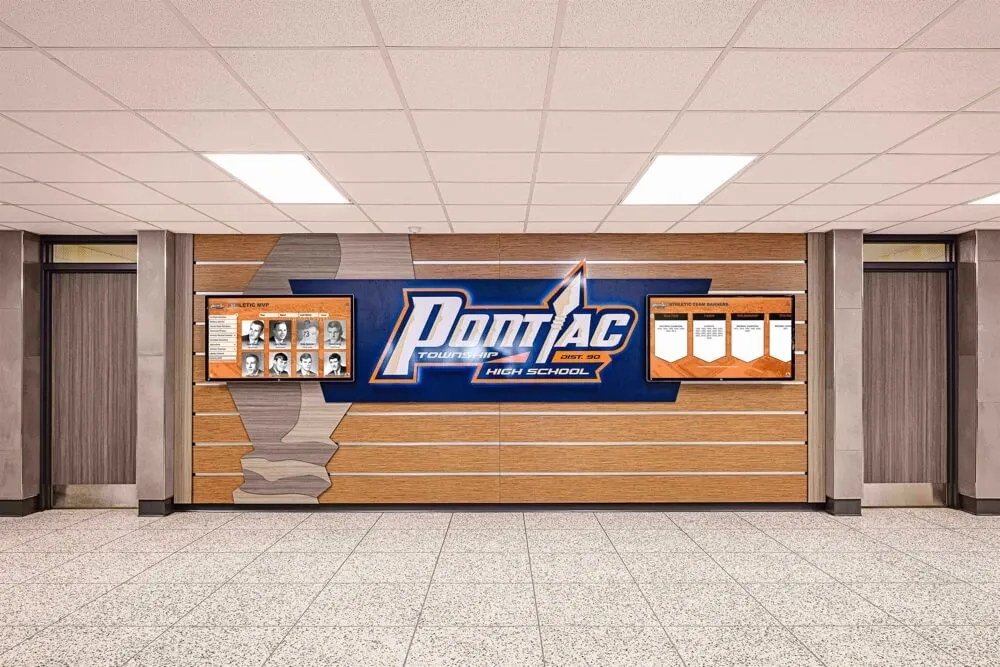
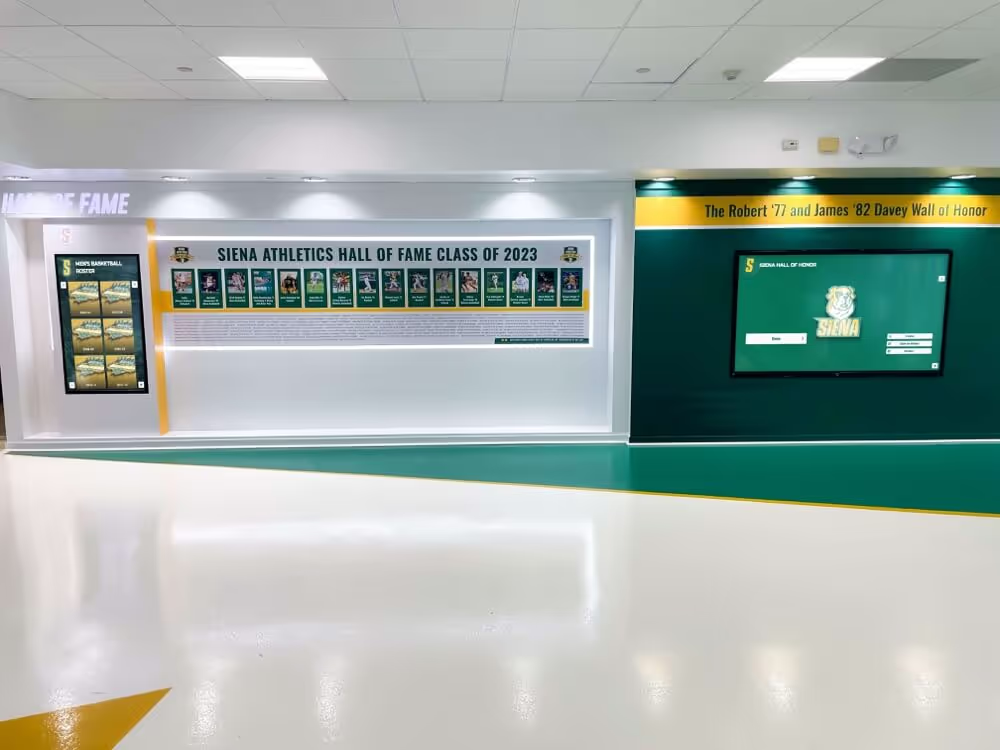
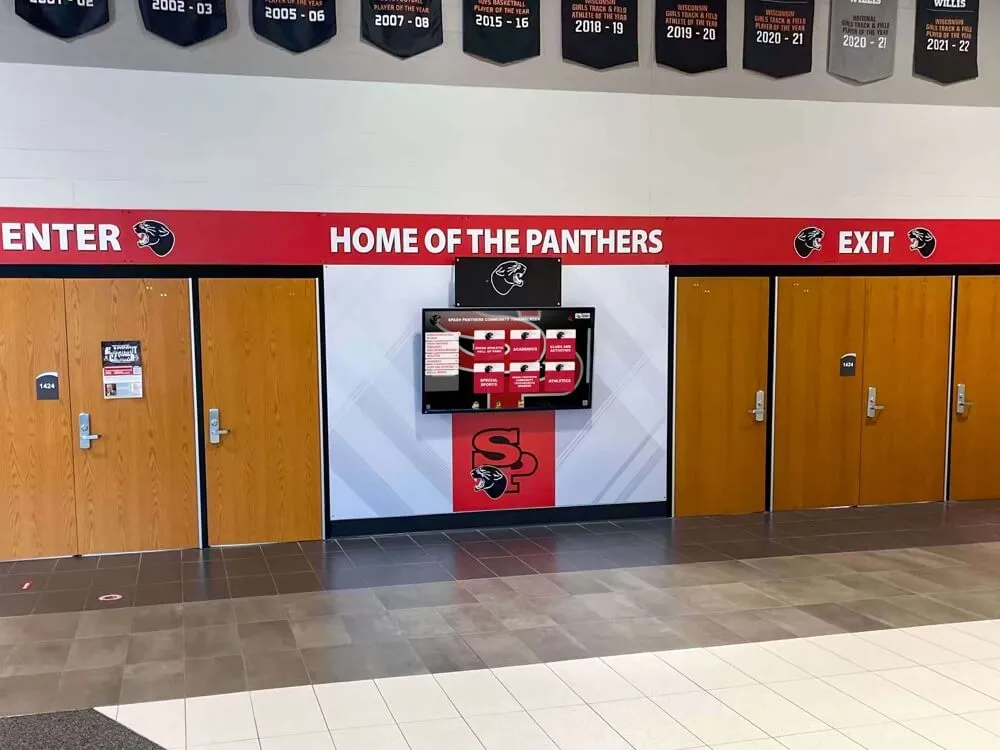
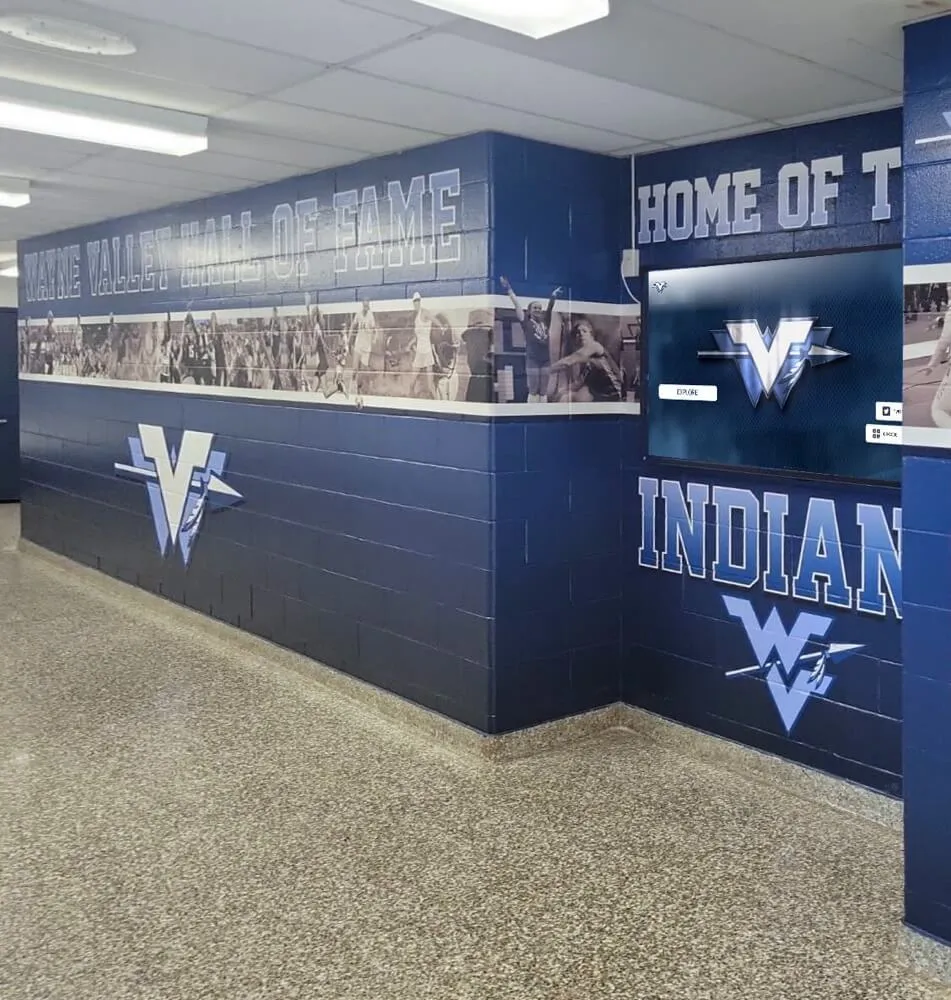
For athletic directors evaluating how a digital hall of fame provider integrates with existing physical display infrastructure, humidity considerations in case location are part of the physical environment assessment that informs where touchscreen kiosks and physical cases are positioned relative to each other.
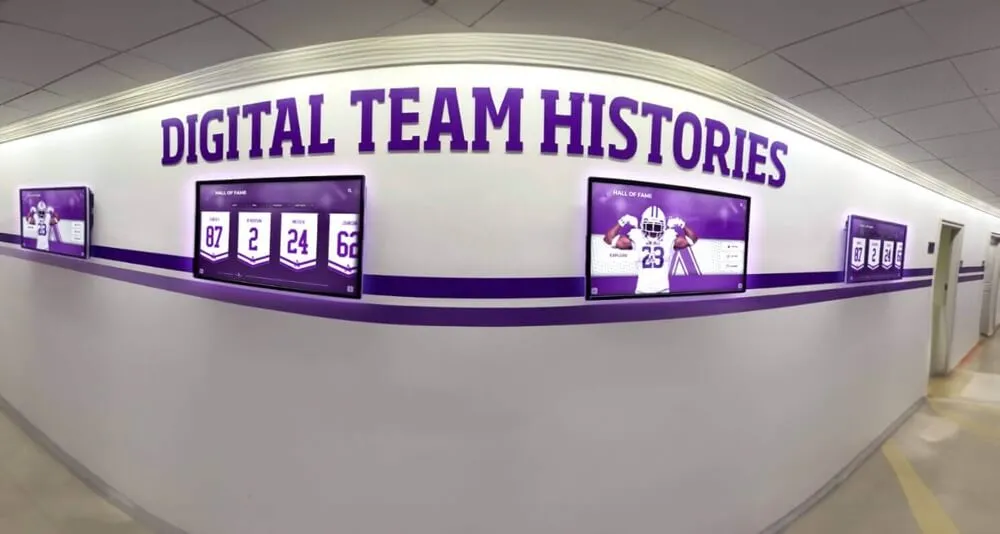
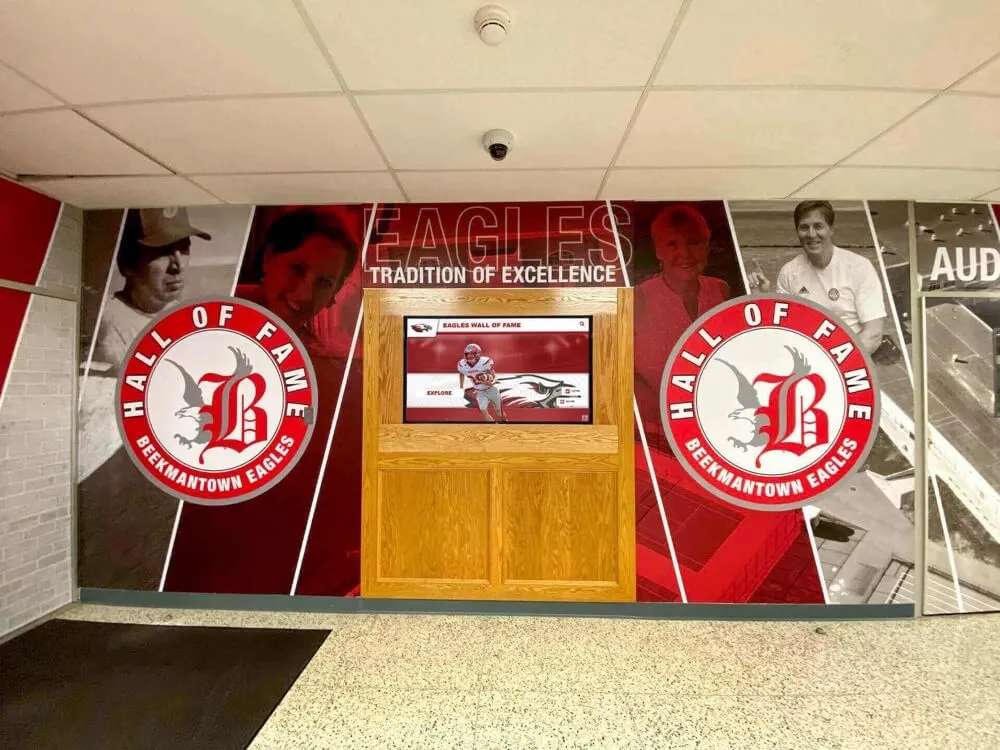
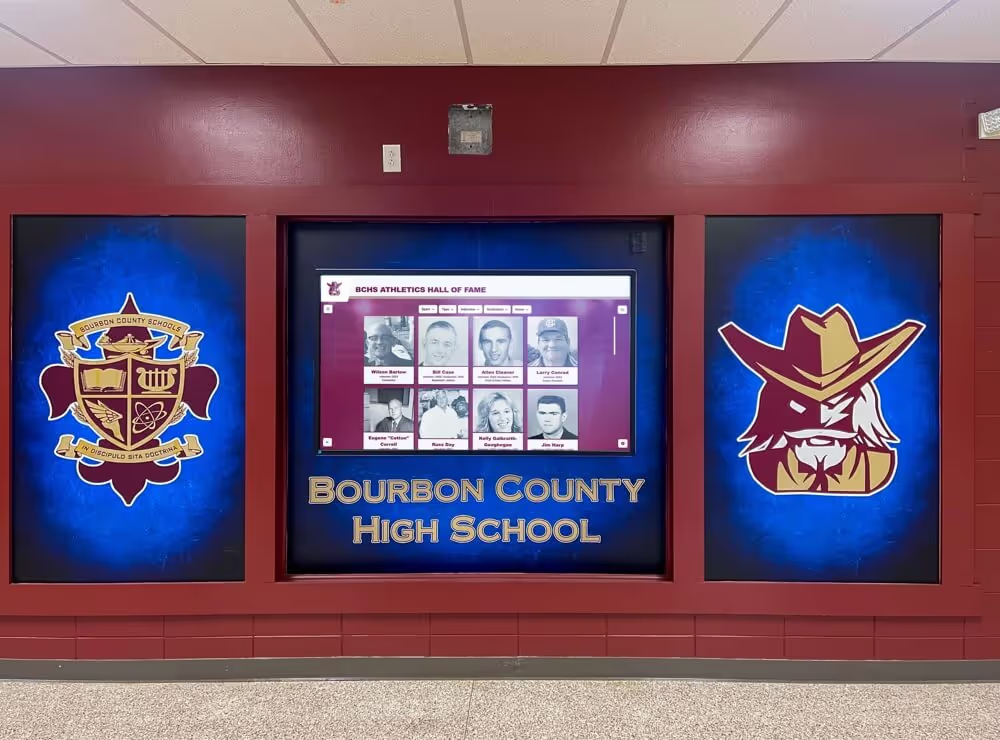
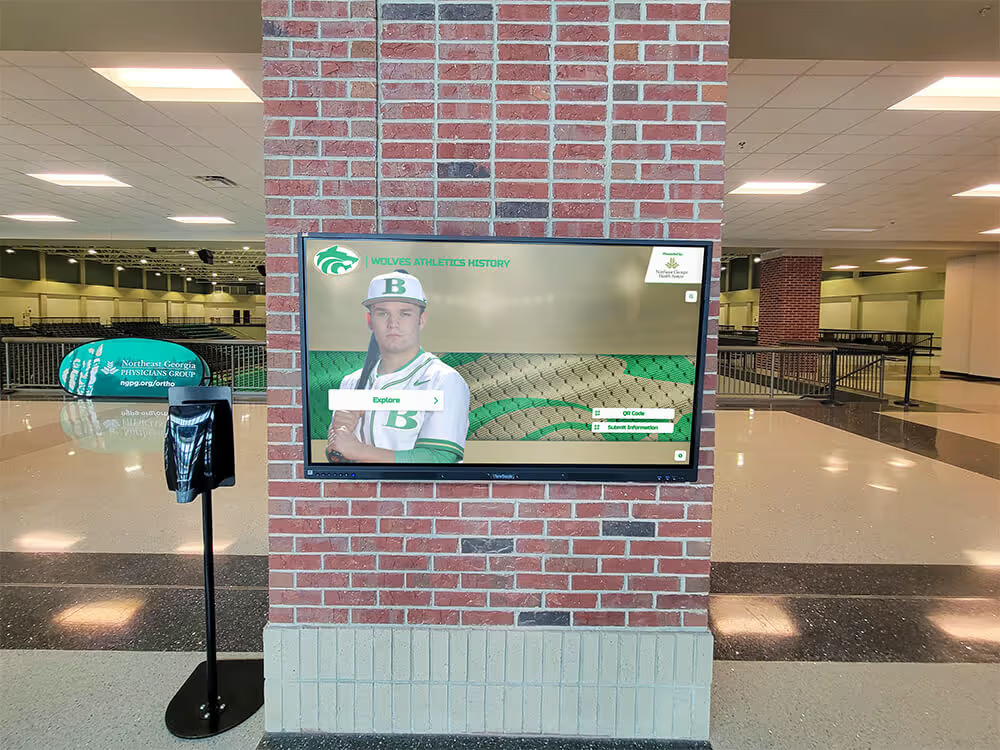
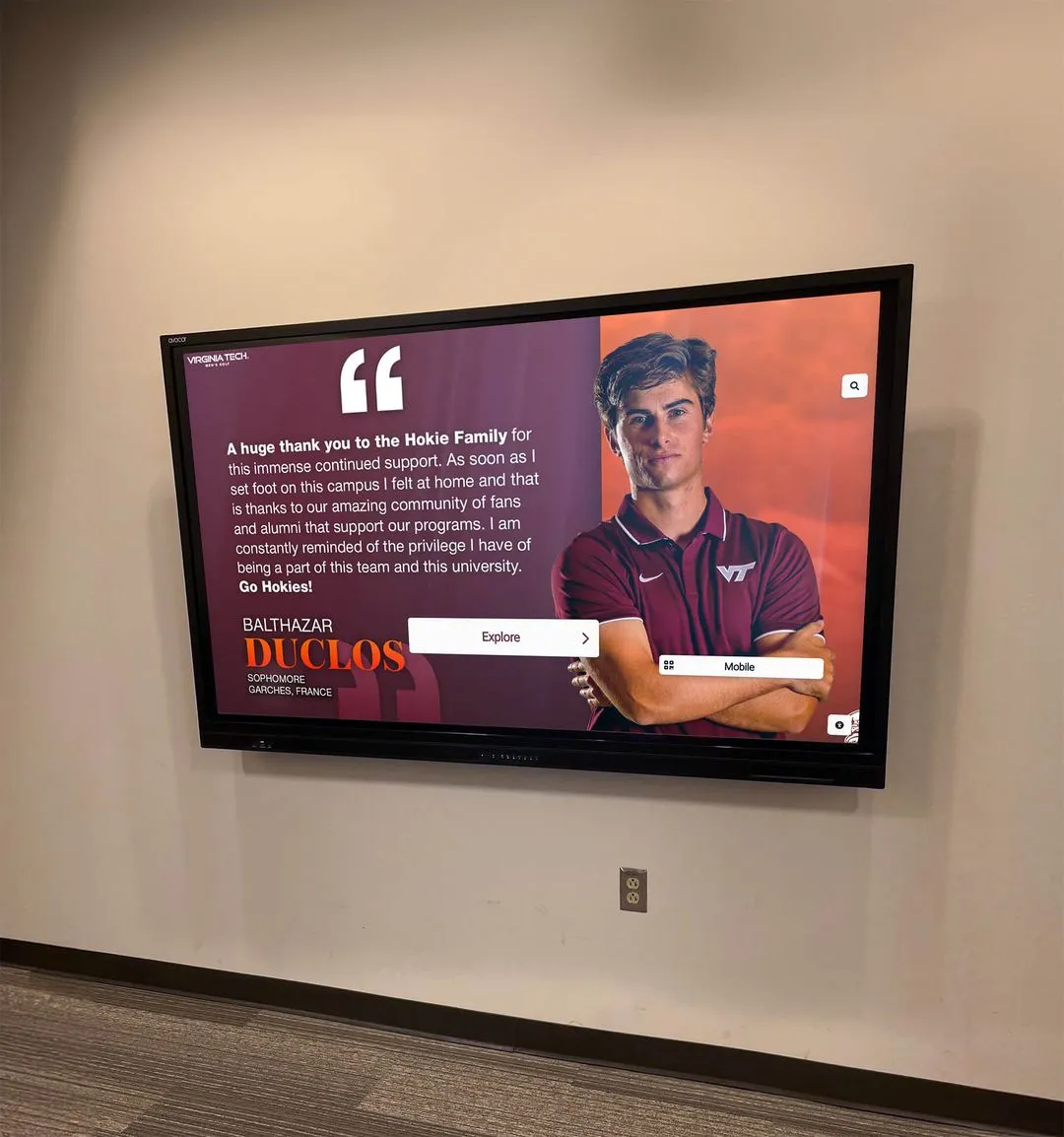
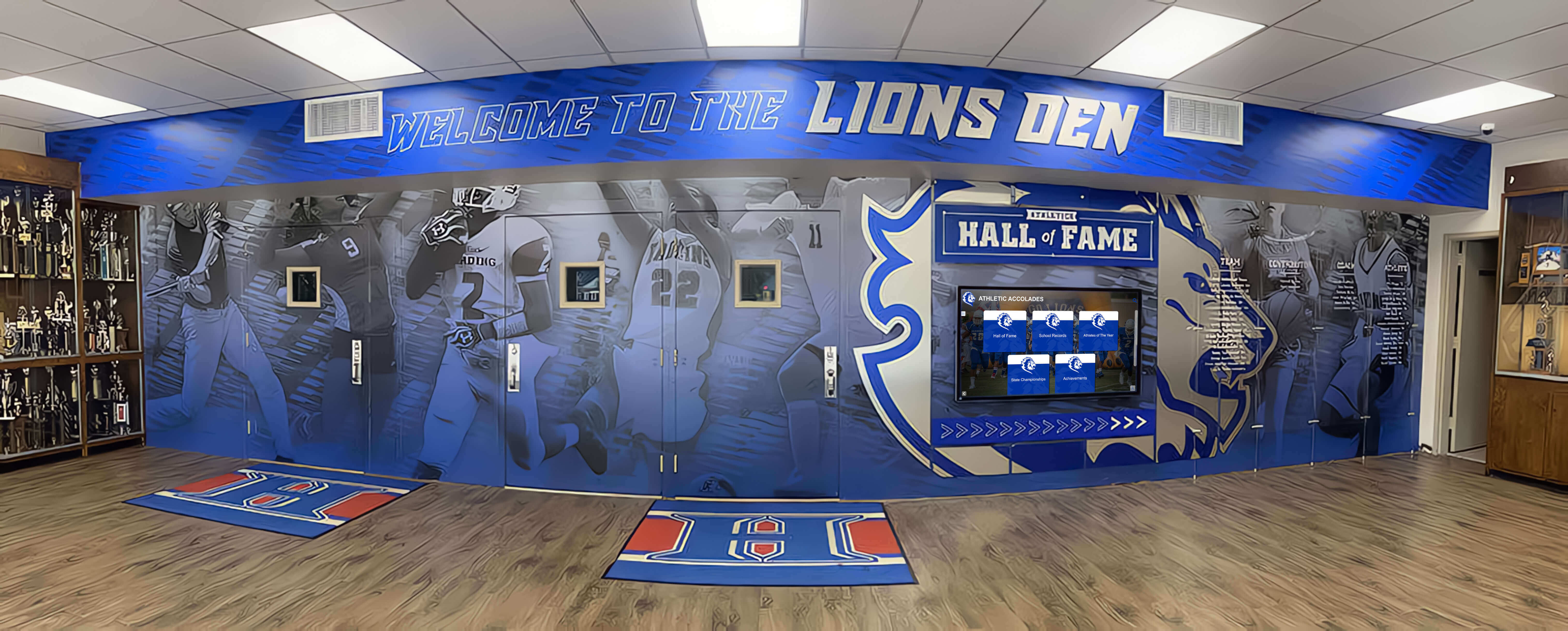
Digital displays complement physical cases by preserving the informational record independently of the physical condition of the artifacts they represent
Humidity and the Case for Digital Preservation Records
A trophy case humidity control program protects physical artifacts. It does not, by itself, protect the information those artifacts carry. A championship plaque that corrodes past the point where engraving is legible has lost its informational content even if the physical object survives. A team photograph that develops emulsion cracking no longer communicates what it was meant to communicate. A certificate whose paper has cockled and separated from its backing may be structurally intact but practically unreadable.
This is why schools serious about long-term recognition preservation treat physical maintenance and digital archiving as parallel programs rather than alternatives.
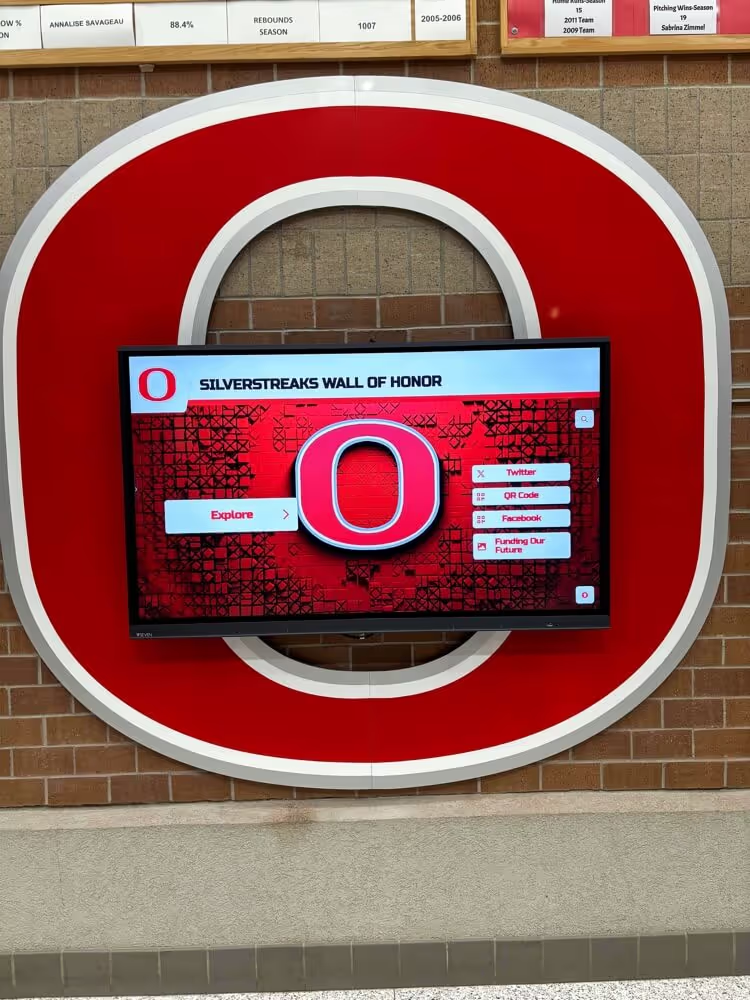
A cloud-managed digital trophy case provides several capabilities that physical humidity control cannot:
Informational redundancy: When a physical artifact degrades past recovery, a digital record of what it represented — the year, the sport, the team roster, the achievement level — survives independently of the physical object’s condition.
Unlimited display capacity: Schools that digitize their complete recognition history, including items too fragile to display or in storage away from the main case, can surface the full scope of a program’s achievement without requiring every artifact to hold up under display conditions indefinitely.
Remote management: Cloud-based systems allow athletic directors and archives staff to update records from anywhere, add new achievement entries within minutes of a ceremony, and schedule content for future dates — without requiring physical access to display hardware.
ADA WCAG 2.1 AA compliance: Digital displays built to accessibility standards extend recognition to all visitors, including those for whom physical trophy cases at standard viewing heights present access barriers.
QR code mobile access: For programs where the physical case is in a controlled-access area or temporarily closed for maintenance, QR codes allow remote audiences and alumni to engage with the full recognition record from any device.
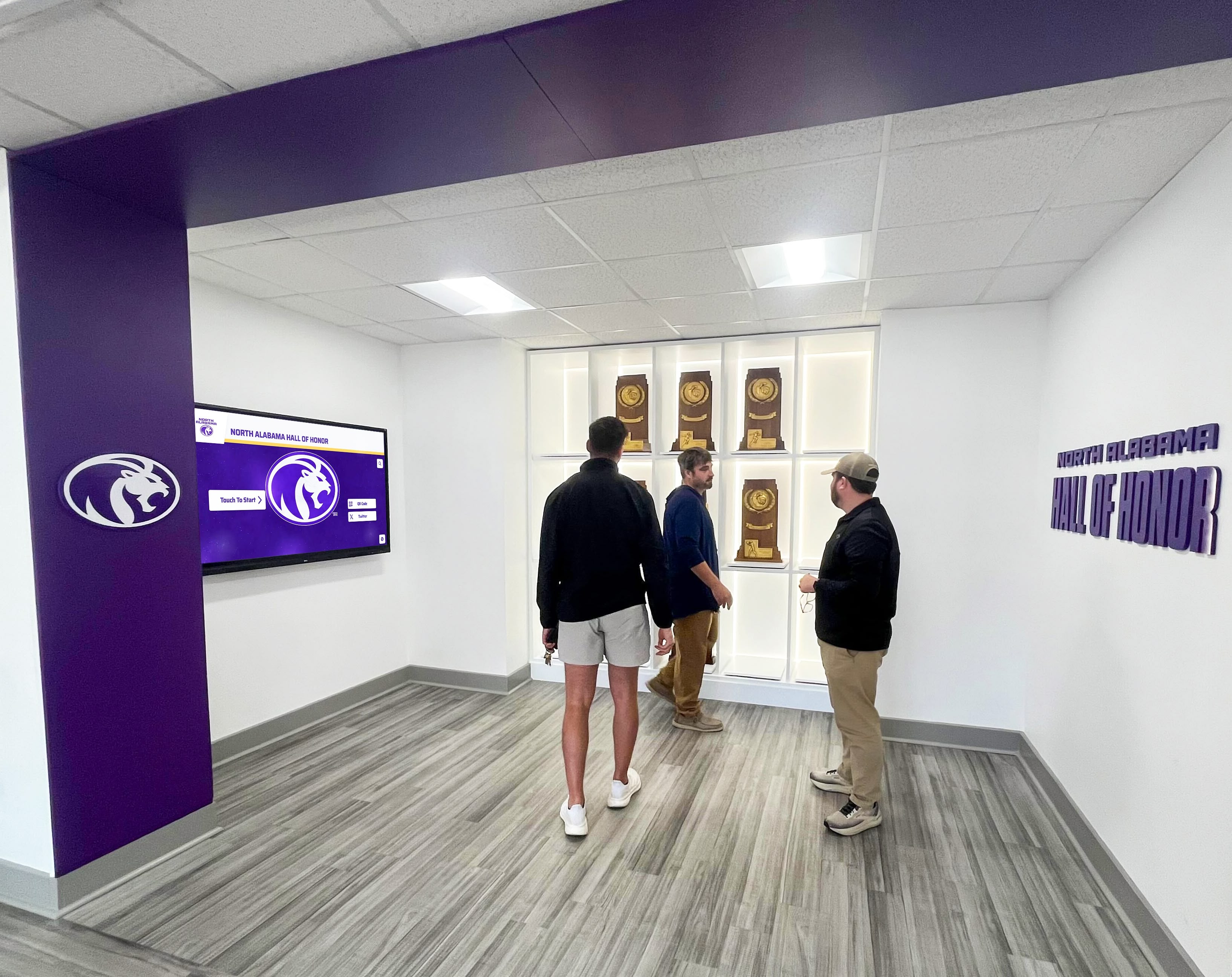
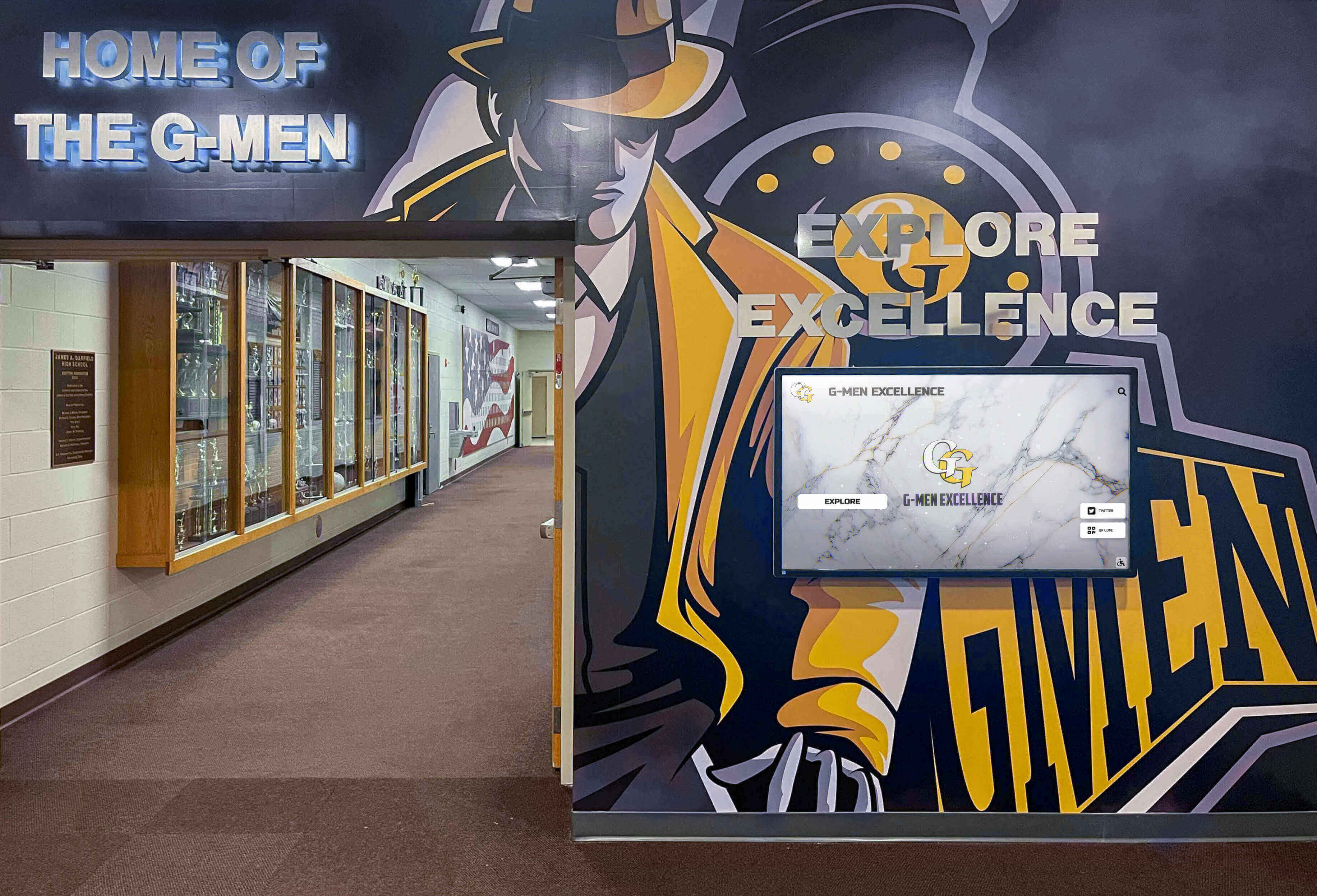
A comprehensive recognition program treats physical case maintenance and digital archiving as parallel disciplines rather than competing priorities
For school archivists and development teams building digital recognition alongside physical displays, the digital storytelling approaches used by leading athletic programs offer practical frameworks for how narrative and artifact presentation translate from physical to digital formats.
Schools with robust donor recognition programs face similar preservation challenges: donor plaques, naming rights signage, and commemorative panels are subject to the same humidity-related degradation as athletic awards. The recognition strategies used for organizational milestones and anniversary displays demonstrate how institutions beyond athletics are approaching long-term preservation of recognition artifacts in shared public spaces.
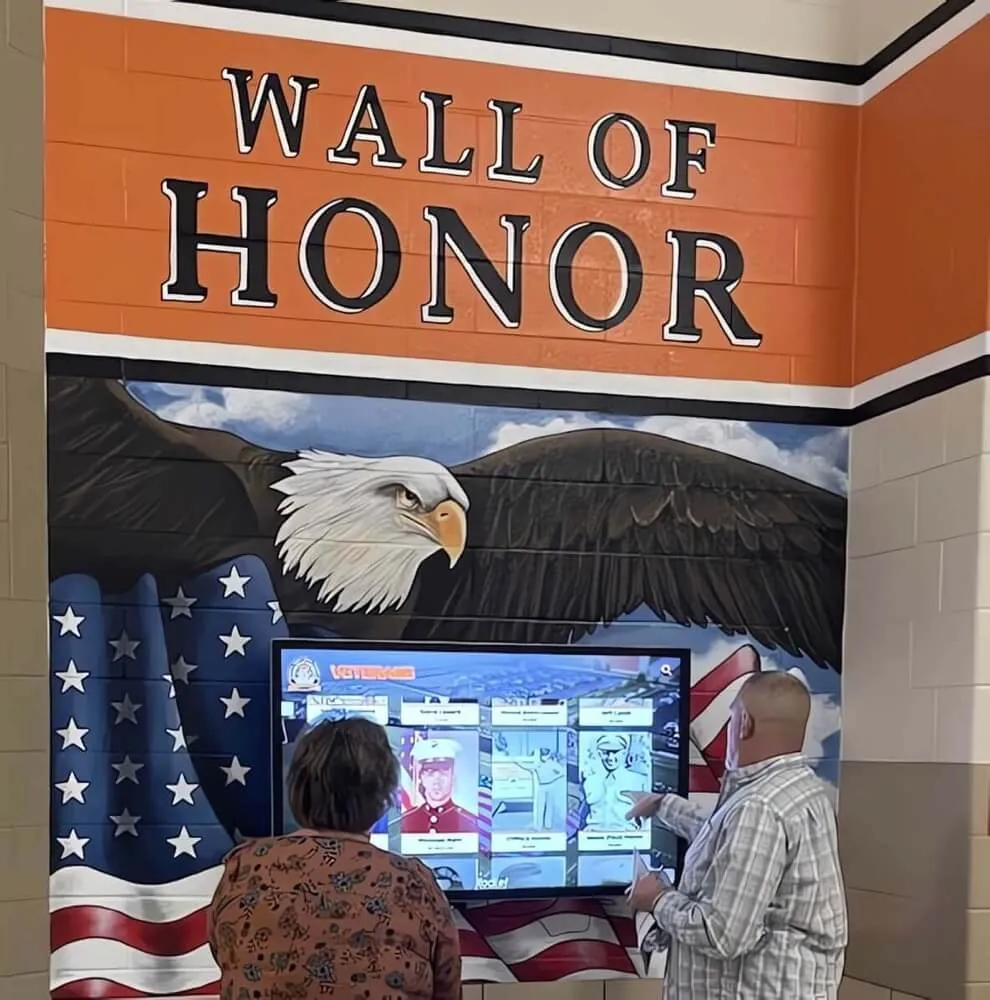
For schools with CTE programs and academic achievement displays sharing physical space with athletic trophy cases, the operational parallels in display management are significant — as the digital touchscreen display strategies used in CTE programs illustrate, the transition from static display to interactive digital recognition addresses humidity-related physical limitations across program types.
Schools exploring digital platforms as part of a broader recognition strategy can schedule a demonstration to see how a cloud-managed system integrates with existing physical displays.
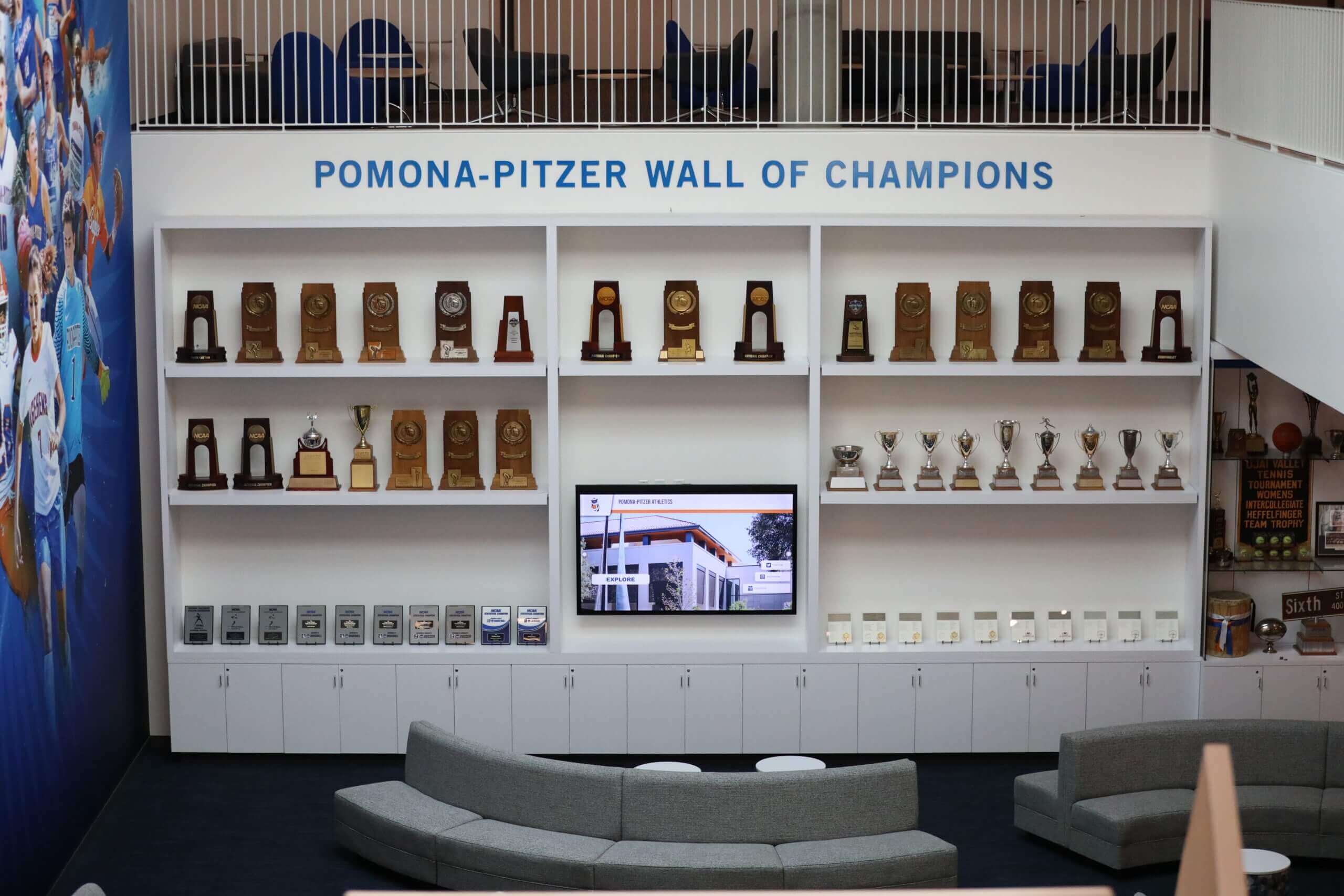
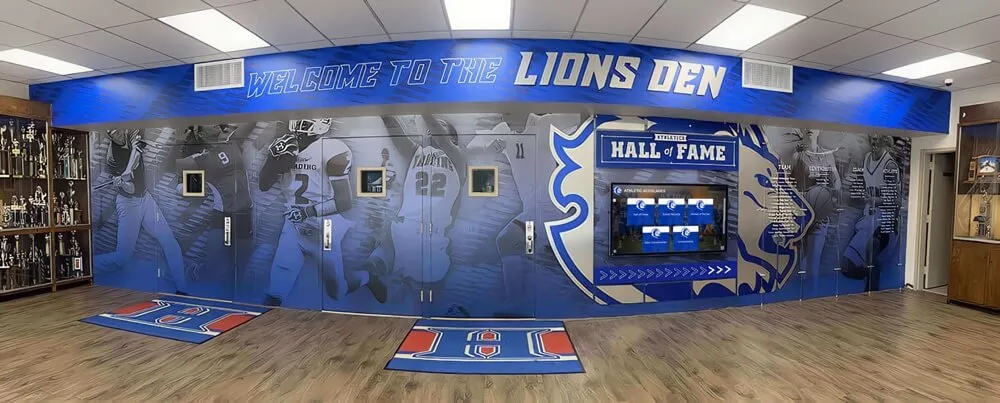
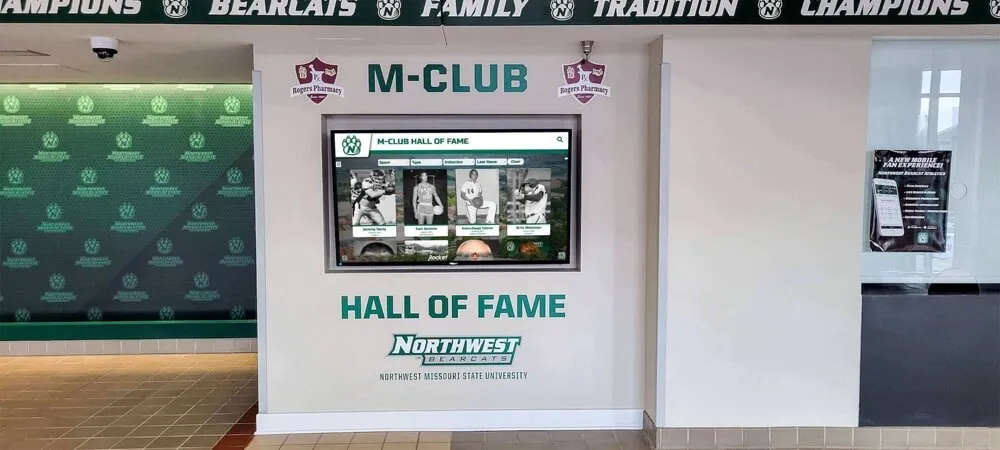
Lounge-style trophy displays in climate-controlled spaces illustrate how thoughtful installation planning incorporates humidity management from the outset
Seasonal Humidity Management Calendar for Schools
Academic calendars create predictable humidity cycles that facilities and athletic staff can plan around rather than react to.
| Season | Typical RH Direction | Key Risks | Recommended Action |
|---|---|---|---|
| Late summer (Aug–Sep) | High — outdoor humidity peaks | Mold on fabric and wood; corrosion on metals | Check case seals; monitor weekly; place desiccant in sealed cases |
| Fall transition (Oct–Nov) | Dropping as heating begins | Rapid RH swing; adhesive stress | Inspect door gaskets; check for condensation on exterior-wall cases |
| Winter heating season (Dec–Feb) | Low — heating desiccates indoor air | Paper brittleness; wood shrinkage; label adhesive failure | Consider supplemental humidity in display corridor; reduce handling of paper items |
| Spring (Mar–May) | Rising with outdoor humidity | Renewed mold risk as RH rebounds | Replace or recharge desiccant; resume monthly readings |
| Summer (Jun–Jul) | Variable — dependent on air conditioning | Condensation if AC overcools near case | Verify AC zoning addresses display corridor; watch for case exterior condensation |
Who Should Own Trophy Case Humidity Management
Humidity control does not naturally fit the organizational chart of most school athletic departments or facilities teams because it requires knowledge across both domains. The practical approach is joint ownership with explicit handoffs.
Athletic directors and recognition staff own the monitoring function: placing and reading sensors, maintaining the RH log, and flagging when readings fall outside target ranges. They understand what is in the case and why it matters.
Facilities directors and HVAC staff own the intervention function: adjusting building systems, evaluating whether supplemental equipment is warranted, and making physical case modifications — better sealing, improved location — when environmental data supports the change.
Booster clubs and hall-of-fame committees often own or co-own the most historically significant items in a school’s collection. Engaging these groups in the monitoring program — as stakeholders who receive RH log data and understand what is at risk — improves both institutional knowledge and long-term commitment to maintenance.
For booster clubs and alumni organizations also supporting community recognition and mentorship programs, the habit of systematic documentation developed through physical display management translates directly to digital recognition recordkeeping practices.
Frequently Asked Questions
What humidity level is recommended for a school trophy case? A commonly cited starting range for general mixed-material display cases is 45–55% relative humidity. Stability matters as much as the specific level — large seasonal fluctuations are often more damaging than a steady reading at the higher or lower end of the target range. For collections of significant historical value, consulting a qualified preservation professional is appropriate before establishing a specific target.
What happens to trophies in high humidity? Sustained RH above 60% promotes oxidation and tarnishing on metal surfaces, mold growth on wood bases and fabric items, adhesive failure on labels and mounted documents, and emulsion softening in photographic prints. The effects develop gradually and are often not noticed until damage is already significant.
What happens to trophies in low humidity? Sustained RH below 30% causes paper and wood to become brittle, wood joints and veneer to separate as the material contracts, photographic emulsions to crack, and adhesive labels to peel. Winter heating seasons are the most common cause of chronic low humidity in school display areas.
How do you monitor humidity in a trophy case? A digital hygrometer placed inside the case provides current readings. A data logger, which records readings continuously over time, is more useful for understanding seasonal patterns and identifying the degree of fluctuation the case experiences. Calibrate or replace sensors annually to ensure readings remain accurate.
Can silica gel control humidity in a trophy case? Silica gel desiccant packets absorb excess moisture and can reduce RH in a sealed or well-gasketed case. Two-way humidity control packets maintain a target RH by both absorbing and releasing moisture as needed. These passive approaches are most effective in smaller, tightly sealed cases with limited access frequency. Large or frequently opened cases exchange air too rapidly for passive desiccant control to be reliable on its own.
Should jerseys be stored differently from trophies from a humidity standpoint? Fabric items are among the most humidity-sensitive materials in a trophy case. If a case contains both metal trophies and fabric items, the fabric items generally set the more conservative humidity management requirement. For particularly significant textiles, consultation with a textile conservation professional is appropriate before committing to a long-term display approach.
When should schools consult a preservation professional about trophy case conditions? When a collection includes items of significant historical value without duplicates — early-era photographs, founding documents, unique championship hardware — a preservation professional can assess actual conditions and recommend specific targets and methods appropriate to the specific collection. General facility management practices are a reasonable starting point for typical school display cases but are not a substitute for specialized guidance on archival-grade collections.
Protect Your Recognition Record Beyond the Physical Case
Rocket Alumni Solutions builds cloud-managed digital trophy cases and halls of fame for schools nationwide — unlimited recognition capacity, ADA WCAG 2.1 AA compliant touchscreens, QR code mobile access, and remote content management that keeps every championship and every name preserved even when physical conditions change. See how schools are building recognition systems that outlast the artifacts they document.
Book A DemoHumidity management is one of the quieter maintenance disciplines in school facility operations — it produces no immediate visible results and rarely generates complaints until damage has already occurred. But for athletic directors, archives staff, and booster clubs overseeing collections that represent decades of student achievement, it is precisely the kind of low-visibility work that determines whether a decades-old championship trophy remains a source of institutional pride or becomes an object whose significance no one can read.
The monitoring checklist, material-by-material risk summary, and seasonal calendar in this guide give facilities and athletic staff a shared language and a shared system for addressing humidity before it becomes a recovery problem. And for the informational record those physical artifacts carry — the names, the dates, the achievements — a parallel digital system ensures that what cannot be maintained in glass indefinitely is preserved in a format that does not corrode, warp, or fade.