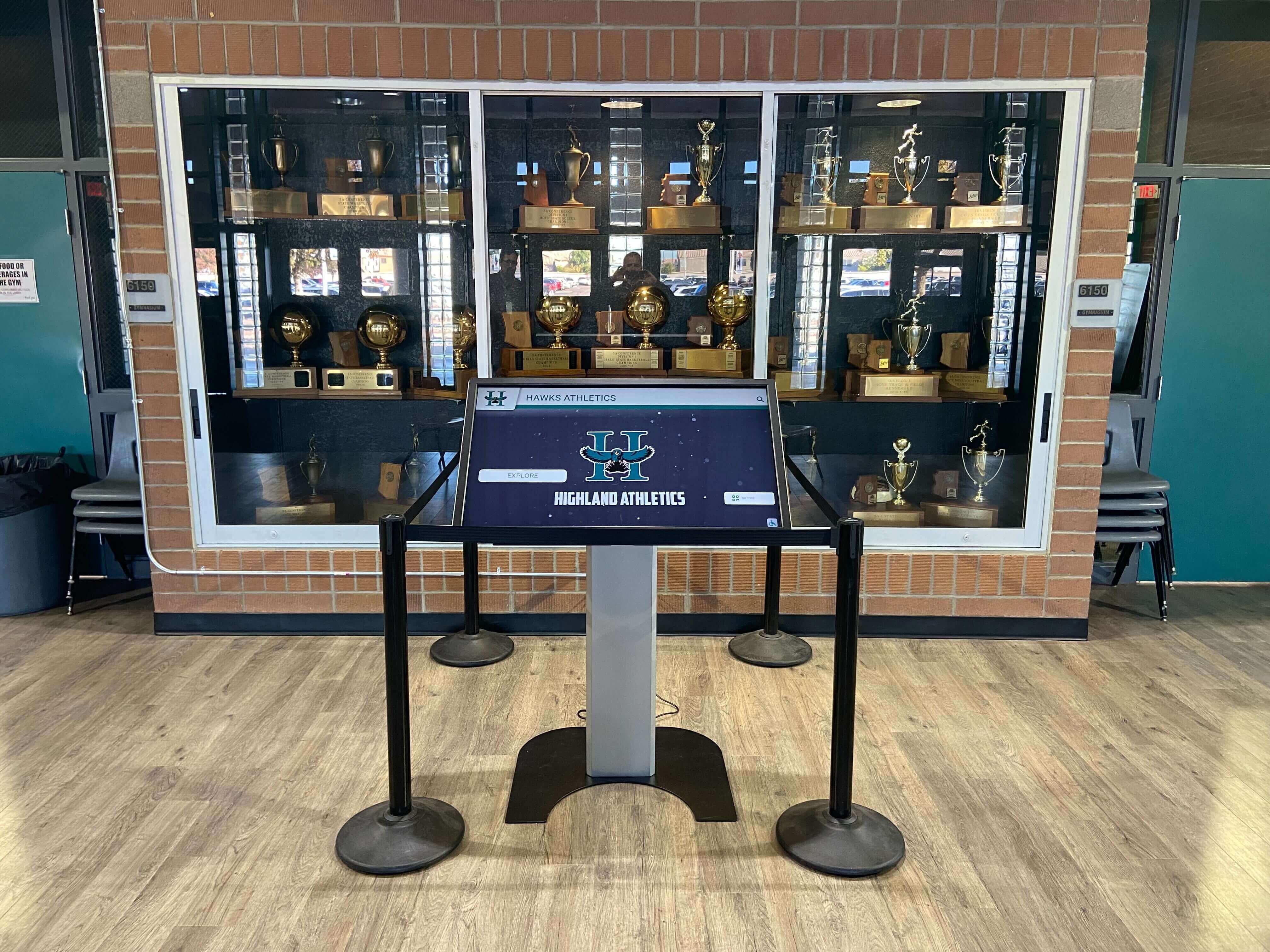




Intent: decide — a trophy case glass scratch assessment log is a structured document that records the location, severity, and display impact of scratches on school trophy case glass or acrylic panels before facilities staff choose between polishing, panel replacement, or full case replacement. This guide provides a copyable severity table, a field-by-field log template, a seven-step assessment workflow, and a repair-versus-replacement decision checklist — so athletic directors, facilities managers, and archive teams have the documentation they need to protect championship hardware, retired jerseys, historic photographs, and memorabilia from the secondary damage that accelerates when scratched glass is left unaddressed.
Scratched trophy case glass is rarely an emergency on the day it is noticed. The scratch is already there, the awards inside are untouched, and the impulse to defer repair or replacement is understandable when facilities budgets are tight and schedules are full. The problem is that what looks like cosmetic damage when it is shallow and isolated tends to deepen under cleaning cycles, expand under temperature changes, and accumulate additional scratches at a faster rate once the surface has been compromised. A panel that could have been polished for a modest cost in September becomes a replacement project — at three to five times the cost — by the following spring.
A trophy case glass scratch assessment log solves the documentation problem that precedes the budget problem. Without a written record of where each scratch is, how deep it runs, when it was first observed, and what it obscures, administrators cannot make a defensible case for facilities spending, cannot compare current condition against a baseline captured months earlier, and cannot demonstrate to donors, parents, or school board members that the collection housing championship trophies and athletic history is maintained with the same care as the programs those trophies represent.

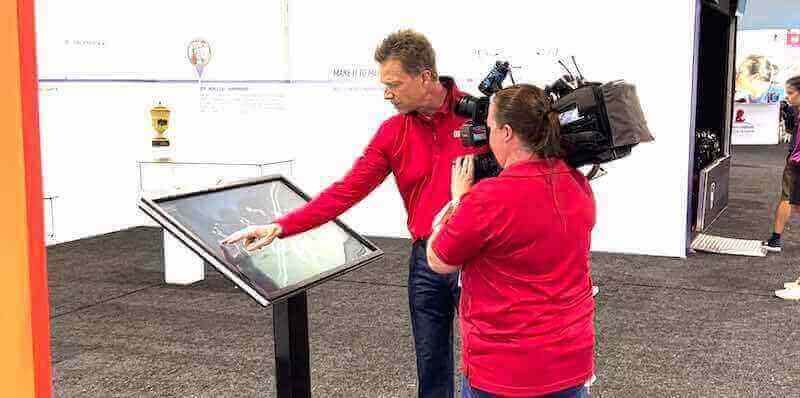
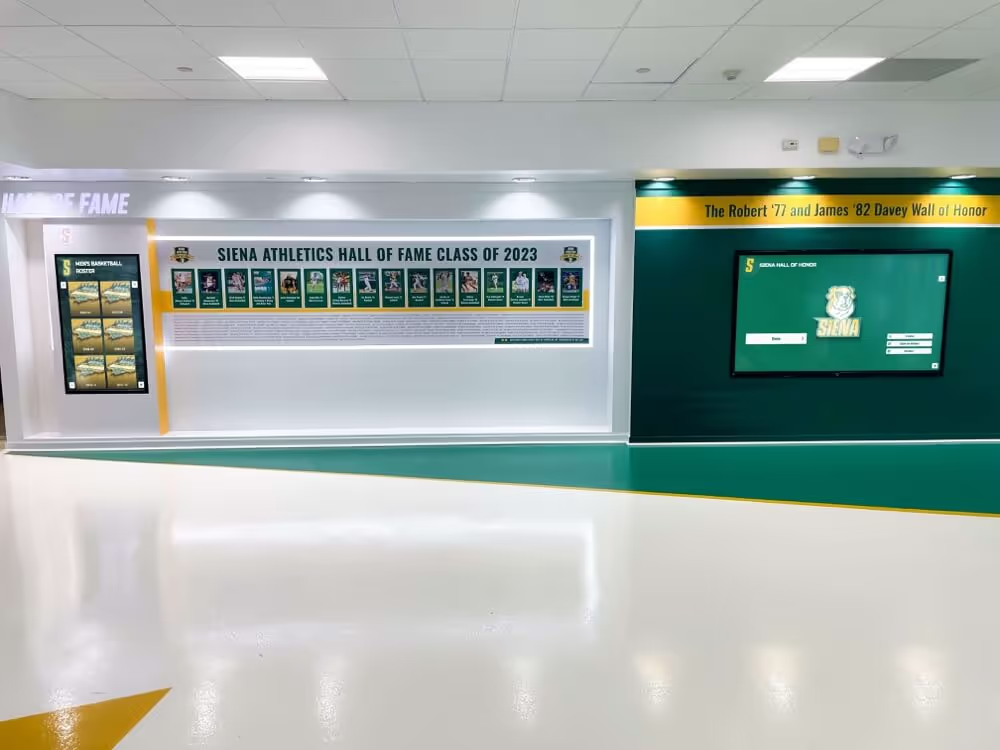
Trophy cases serve as the public face of a school's recognition history — scratched or hazy glass undermines the visual impact of every award, jersey, and photograph inside
What a Trophy Case Glass Scratch Assessment Log Documents
A properly completed scratch assessment log captures five categories of information for each affected panel:
- Panel identification: which case, which panel, and where within the panel the scratch appears
- Scratch characteristics: length, orientation, depth category, and whether the scratch runs through any lettering, number, or item label visible from outside the glass
- Visibility impact: whether the scratch obscures any trophy, photograph, jersey, plaque, or other display item at normal viewing distance
- Condition history: when the scratch was first documented, any previous repair attempts, and whether the scratch has grown since it was last measured
- Recommended action: the specific next step — monitor, polish, replace panel, or escalate to full case assessment — with a target completion date and assigned staff member
That fifth category — recommended action — is what separates a scratch log from a complaint form. The log is a decision-support document. It turns a set of physical observations into a facilities action item with clear ownership.
Glass Scratch Severity Scale
Before beginning an assessment, establish a consistent severity scale. The following five-level scale aligns with the repair options most commonly available for school trophy case glass and acrylic panels. Using consistent terminology across assessments makes it possible to compare panels logged in different years and to communicate with contractors without ambiguity.
| Severity Level | Description | Visible At | Typical Cause | Standard Response |
|---|---|---|---|---|
| Level 1 — Surface Haze | Micro-scratches producing dullness or cloudiness across a broad area; no individual scratch line visible | Close range (under 12 inches) | Abrasive cleaning cloths; chemical cleaners incompatible with acrylic | Polish with appropriate compound; update cleaning protocol |
| Level 2 — Minor Scratch | Single visible scratch line under 3 inches; does not cross display items | Normal viewing distance (2–4 feet) | Key or sharp object contact; edge chips during cleaning | DIY or professional polish depending on depth; monitor for growth |
| Level 3 — Moderate Scratch | Single scratch over 3 inches, or multiple scratches in the same panel quadrant; may cross a display item label or trophy base | Normal viewing distance | Repeated abrasive contact; impact from a cleaning cart or ladder | Professional polishing assessment; panel replacement if depth exceeds compound limit |
| Level 4 — Deep Scratch | Scratch that catches a fingernail clearly; may produce a shadow or refraction line visible from several feet away; distorts items behind the glass | 4–10 feet | Tool contact; significant impact; accumulated un-addressed Level 3 scratches | Panel replacement strongly recommended; document before any attempted polish |
| Level 5 — Structural Damage | Crack, chip at edge or corner, or scratch that extends across a full panel dimension; potential safety concern | Any distance | Impact damage; hardware failure; thermal stress | Remove access to the case; replace panel or full case before reopening; notify administration |
Quick reference: Levels 1–2 are typically addressable without panel replacement. Levels 3–4 require a professional assessment before deciding. Level 5 is a safety issue first and a cosmetic issue second — act before additional access occurs.
Trophy Case Glass Scratch Assessment Log: Field Table
Use the following fields when building your log in a spreadsheet, digital form, or printed binder. One row per scratch or per panel section assessed.
| Field | What to Record | Notes |
|---|---|---|
| Assessment Date | Date the scratch was documented | MM/DD/YYYY; use the date of physical inspection, not the date the form is submitted |
| Assessor Name | Full name of person conducting the assessment | Title optional but useful for accountability |
| Case ID | Unique identifier for the trophy case | e.g., “LOBBY-1,” “GYM-EAST,” “HALLWAY-MAIN” |
| Panel Location | Which panel within the case | Front glass, left side, right side, top panel, door panel |
| Panel Quadrant | Where in the panel the scratch appears | Upper-left / upper-right / center / lower-left / lower-right |
| Scratch Length (inches) | Measured length of the scratch | Use a ruler; estimate for haze areas and note as “diffuse” |
| Scratch Orientation | Direction of the scratch | Horizontal / vertical / diagonal / circular / diffuse |
| Depth Assessment | Does the scratch catch a fingernail? | Yes / No / Partial — this single test distinguishes Levels 2–3 from Level 4 |
| Severity Level | Assigned level from the 1–5 scale above | Use consistent scale across all assessments |
| Display Items Affected | Names or descriptions of items the scratch crosses or obscures | e.g., “1998 State Championship Trophy plaque,” “Team photo 2001-02” |
| Visibility Impact | Does the scratch impair reading or viewing the item? | None / Minor (noticeable at close range) / Moderate (distracting at normal viewing distance) / Significant (item hard to identify) |
| Photograph Taken? | Was a close-up photograph captured? | Yes / No; if yes, note file name or storage location |
| Previous Assessment Date | Date of most recent prior log entry for this scratch | Leave blank if this is the first observation |
| Change Since Last Assessment | Has the scratch grown, deepened, or remained stable? | Grown / Deepened / Stable / New (first observation) |
| Prior Repair Attempts | Any previous polish or compound applied? | Yes / No; if yes, describe and date |
| Recommended Action | Specific next step | Monitor / DIY polish / Professional polish assessment / Panel replacement / Full case assessment / Safety escalation |
| Assigned To | Staff member or contractor responsible for follow-up | Specific name, not a role title |
| Target Completion Date | Calendar date by which action should be resolved | Do not use “as soon as possible” |
| Resolution Date | Date the action was completed | Leave blank until resolved |
| Resolution Notes | What was done and the outcome | e.g., “Panel replaced by contractor; new glass installed 08/14/2026” |
| Follow-Up Inspection Date | Date to re-inspect after repair | Typically 30 days after polish; 90 days after panel replacement |
A log with this level of detail takes roughly ten minutes per case to complete during an initial assessment, and under five minutes for follow-up entries after the baseline is established. That investment pays back in reduced contractor scope confusion, faster budget approval for repair spending, and a clear historical record when a case is due for full replacement.
7-Step Assessment Workflow
Step 1: Establish Your Case Inventory Before You Start
Before inspecting any glass, confirm you have a complete list of every trophy case in the building — including cases in storage hallways, coaching offices, and secondary display areas that may not be on the main facilities inspection route. Assign each case a unique ID and record its location. Cases that do not appear in your inventory cannot appear in your log, which means scratches on uncatalogued cases go undocumented until someone notices them at a high-traffic moment — like homecoming, an awards ceremony, or a facility tour.
For schools maintaining a broad recognition infrastructure — athletic season recap displays, hallway recognition boards, and seasonal exhibit cases — this inventory step also ensures that display-integrated glass panels used in digital recognition installations receive the same documented inspection as traditional trophy cases.
Step 2: Conduct Inspections Under Consistent Lighting Conditions
Scratches on glass and acrylic are highly sensitive to lighting angle and intensity. A scratch invisible under overhead fluorescent light becomes visible — or appears to grow — when viewed from a low angle against natural light coming through a window. For consistent documentation, inspect each panel under the same lighting conditions used during normal viewing hours. Note the lighting source in use during the assessment.
For panels near windows or skylights, inspect at the same time of day across assessment cycles. Morning side light reveals surface haze that flat overhead light misses. If your school’s trophy cases are in a hallway with significant natural light variation, note seasonal lighting conditions as a variable that affects how visible a scratch is to visitors — not just how visible it is during inspection.
Step 3: Photograph Each Scratch Before Touching the Glass
Photograph every scratch at a consistent distance — roughly 12 to 18 inches for close detail, and 4 to 6 feet for context showing where the scratch falls relative to the displayed items. Use a ruler or a standard object in at least one photograph to establish scale. Name the file using the Case ID, panel location, and date (LOBBY-1_FRONT_UPPER-CENTER_20260806.jpg) so it can be linked to the corresponding log entry without ambiguity.
Photographs serve two functions that written descriptions cannot replicate: they document exact position and appearance in a way that makes growth observable over time, and they provide contractors with clear visual references that reduce back-and-forth during repair or replacement estimates.
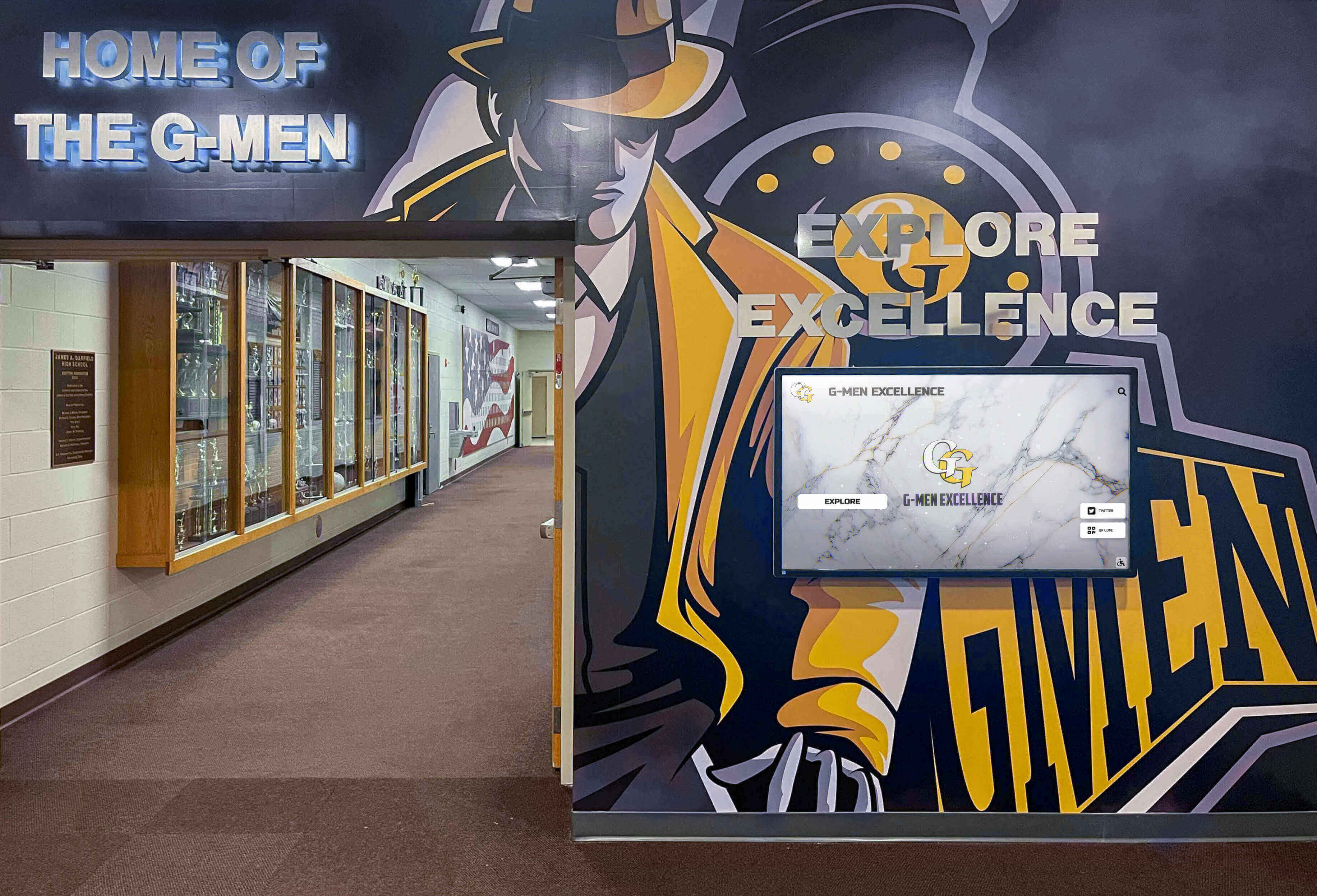
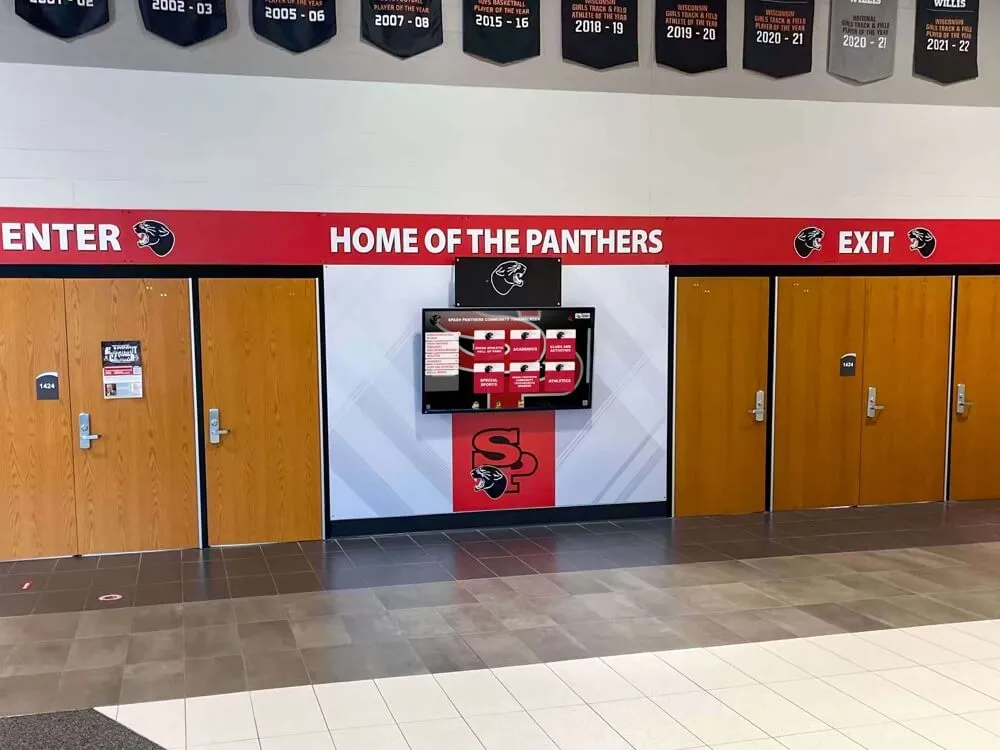
Trophy cases in high-traffic hallways accumulate scratches faster than those in low-traffic locations — hallway case glass should be assessed more frequently than storage or office display cases
Step 4: Apply the Severity Scale and Record the Fingernail Test Result
Work through each scratch systematically: measure it, orient it, and perform the fingernail drag test. Running a clean fingernail across the scratch in a slow, perpendicular motion gives a tactile depth reading that your eyes alone cannot provide. A scratch that catches the fingernail clearly and with resistance is at Level 4 or approaching it. A scratch the nail passes over with minor sensation is Level 2–3. A scratch the nail does not detect at all is typically a surface imperfection addressable with light polish.
Record the fingernail test result explicitly — “catches nail clearly,” “minor catch,” “no catch” — rather than just assigning a number. That language communicates physical reality to anyone who reads the log later without having felt the surface themselves.
Step 5: Assess Visibility Impact on Displayed Items
A scratch that runs through blank glass is an aesthetic problem. A scratch that runs through the nameplate on a 1982 state championship trophy or across the face of a team photograph that cannot be reprinted is a documentation problem and potentially a loss-of-record problem. During the assessment, note specifically which items are affected and describe the severity of obstruction at normal viewing distance.
This step also informs prioritization. A Level 2 scratch crossing the center of a rarely-noticed background plaque may be lower priority than a Level 2 scratch directly over the engraved text on a trophy prominently displayed behind the main lobby entrance. Visibility impact scores — None, Minor, Moderate, Significant — allow you to rank repair priorities by actual effect on visitor experience rather than by scratch length alone.
For schools whose athletic history includes decades of championship hardware, signed photographs, and retired jersey collections — the kind of collection that athletic teams and programs build to connect current students with school history — visibility impact documentation is the difference between maintaining that history as a living record and allowing it to slowly disappear behind scratched glass.
Step 6: Classify the Recommended Action and Assign Ownership
Every log entry must close with a specific recommended action and an assigned staff member. “Monitor” is an acceptable action for Level 1 and stable Level 2 scratches — but it requires a follow-up inspection date, not an indefinite deferral. “Professional polish assessment” is the appropriate action when you are uncertain whether a Level 3 scratch is within compound range or approaching the threshold that makes polishing counterproductive.
Do not assign repair actions to a role (“Facilities team will address this”). Assign to a named individual who can confirm completion. If the action requires contractor involvement, assign to the staff member responsible for soliciting estimates and tracking vendor communication. The log is accountable only when the “Assigned To” field contains a person who has explicitly accepted responsibility.
For schools running booster-supported facilities programs, the same accountability standards that apply to donor recognition display maintenance and booster club oversight apply to trophy case glass repair: documented responsibility, defined timelines, and recorded outcomes.
Step 7: Conduct a Follow-Up Inspection After Each Repair
Every repair — whether a DIY polish on a Level 1 haze or a panel replacement following Level 4 deep scratch documentation — should be followed by a scheduled re-inspection at 30 to 90 days. The follow-up serves two purposes: it confirms the repair held and did not introduce new surface problems, and it re-establishes a clean baseline from which future scratch development can be tracked.
Record the follow-up inspection as a new entry in the log, referencing the prior entry by date. Note the current condition (“no visible scratches,” “minor haze beginning to develop,” “Level 1 haze at lower-left quadrant”) and reset the recommended action and target date accordingly.
Repair Versus Replacement Decision Checklist
Use this checklist when a severity assessment reaches Level 3 or above and the appropriate response is unclear.
| Question | If Yes | If No |
|---|---|---|
| Is the scratch at Level 5 (crack, chip, or full-panel damage)? | Replace immediately — safety priority | Continue checklist |
| Does the scratch catch a fingernail with clear resistance? | Consider panel replacement over polishing | Polishing may be viable — get professional assessment |
| Is the scratch longer than 6 inches or does it span multiple quadrants? | Panel replacement is typically more cost-effective than compound work at this scale | Polishing still worth assessing |
| Does the scratch directly cross a trophy nameplate, photo face, or engraved text? | Prioritize repair — impact is on irreplaceable content | Lower priority; schedule within normal cycle |
| Has the scratch been polished once before without lasting improvement? | Polish has reached its limit — move to panel replacement | Try professional polish before committing to replacement |
| Has the scratch grown measurably since last assessment? | Active growth indicates ongoing stress — panel replacement before it reaches Level 5 | Stable scratch — continue monitoring or polish |
| Is this panel older than 15 years or showing widespread haze in addition to the scratch? | Full panel replacement may be more cost-effective than targeted repair | Consider targeted repair first |
| Does the panel replacement cost exceed 50% of a full case replacement? | Evaluate full case replacement and consider digital display alternatives | Proceed with panel replacement |
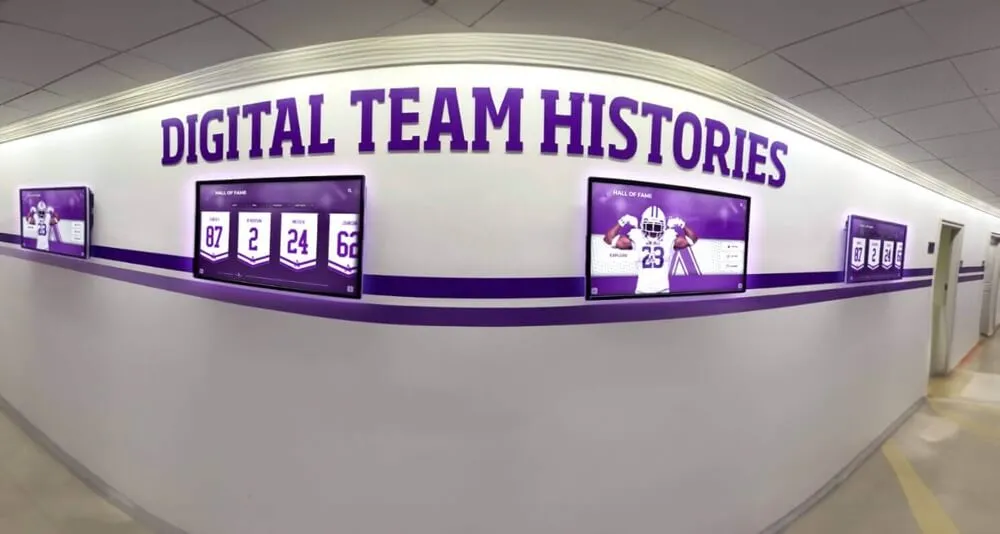
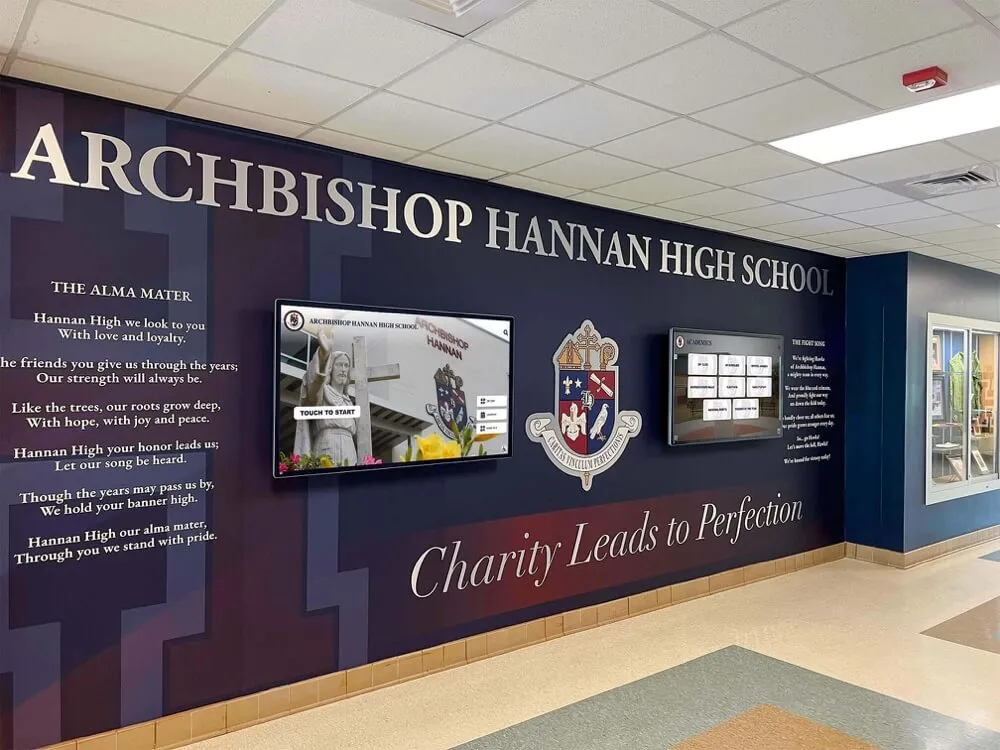
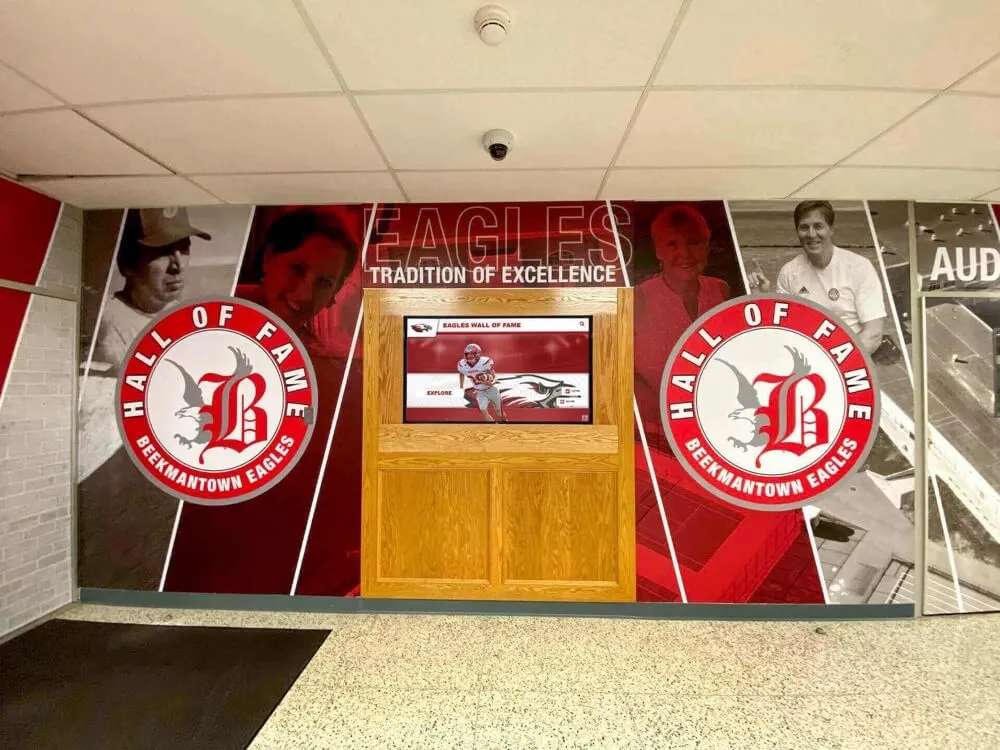
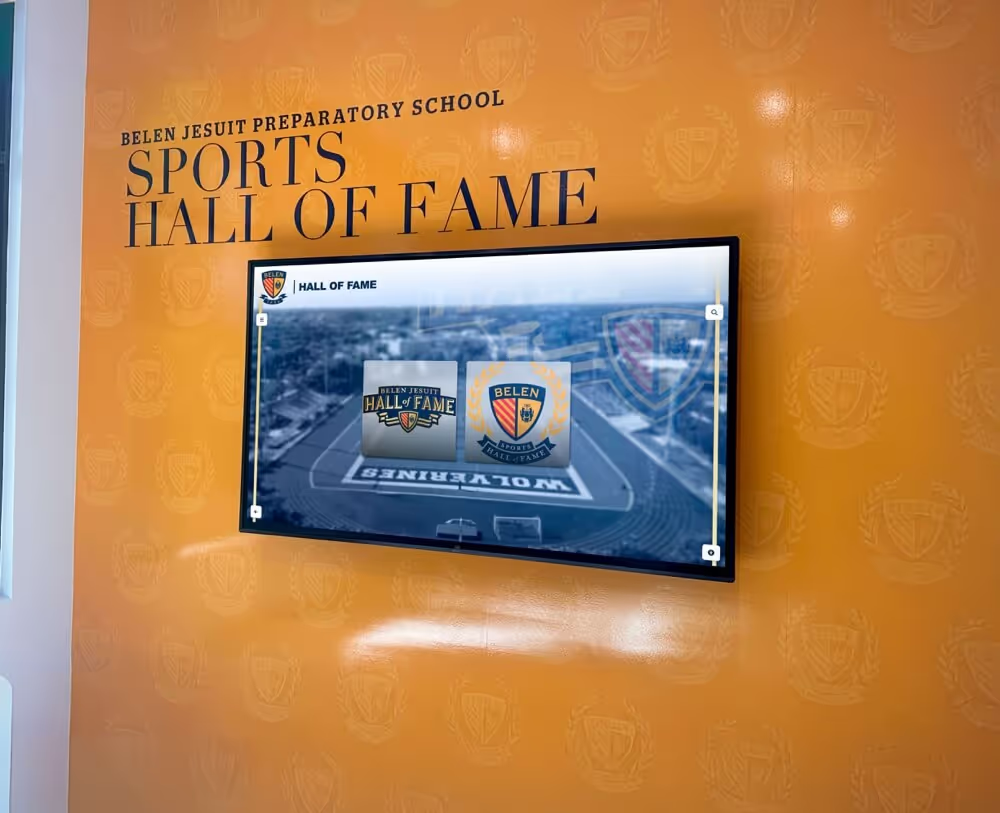
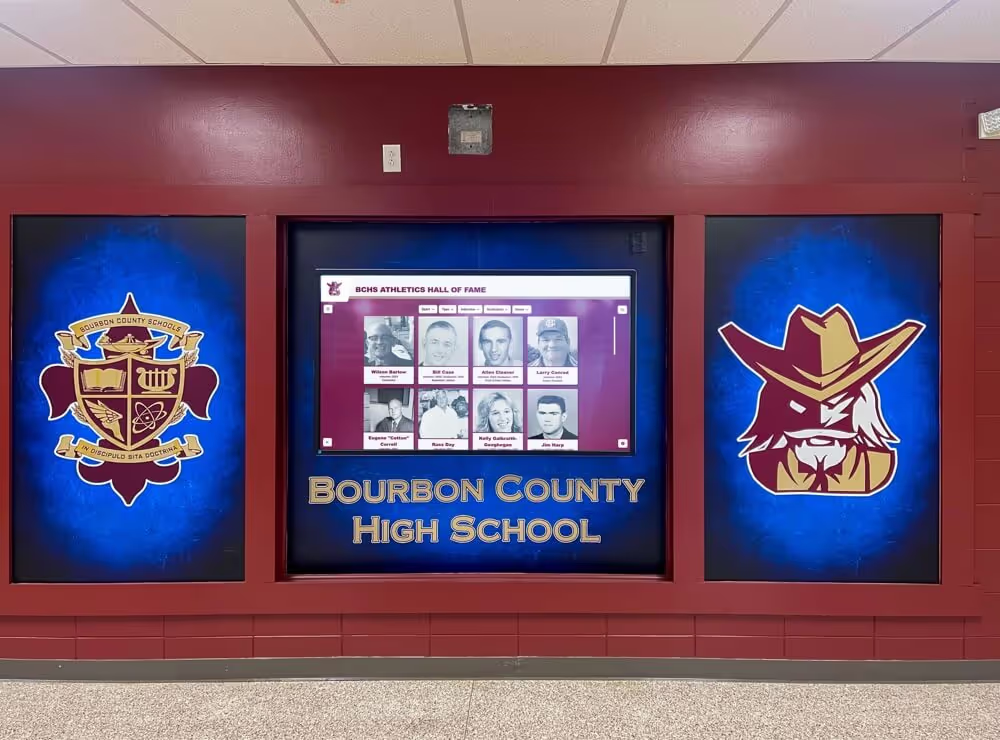
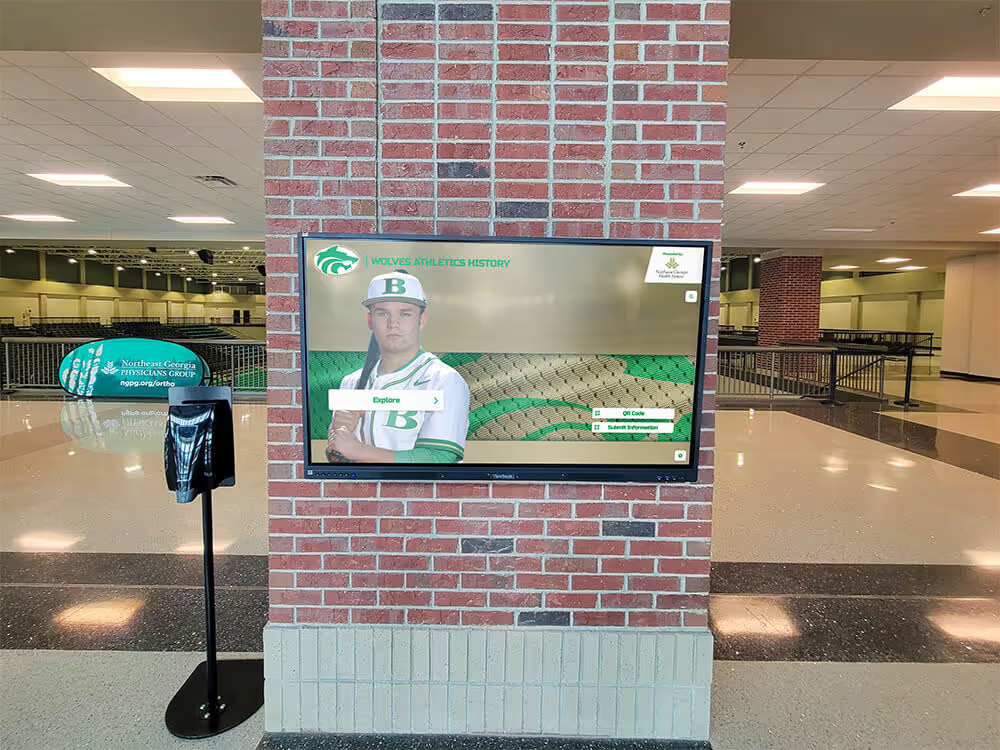
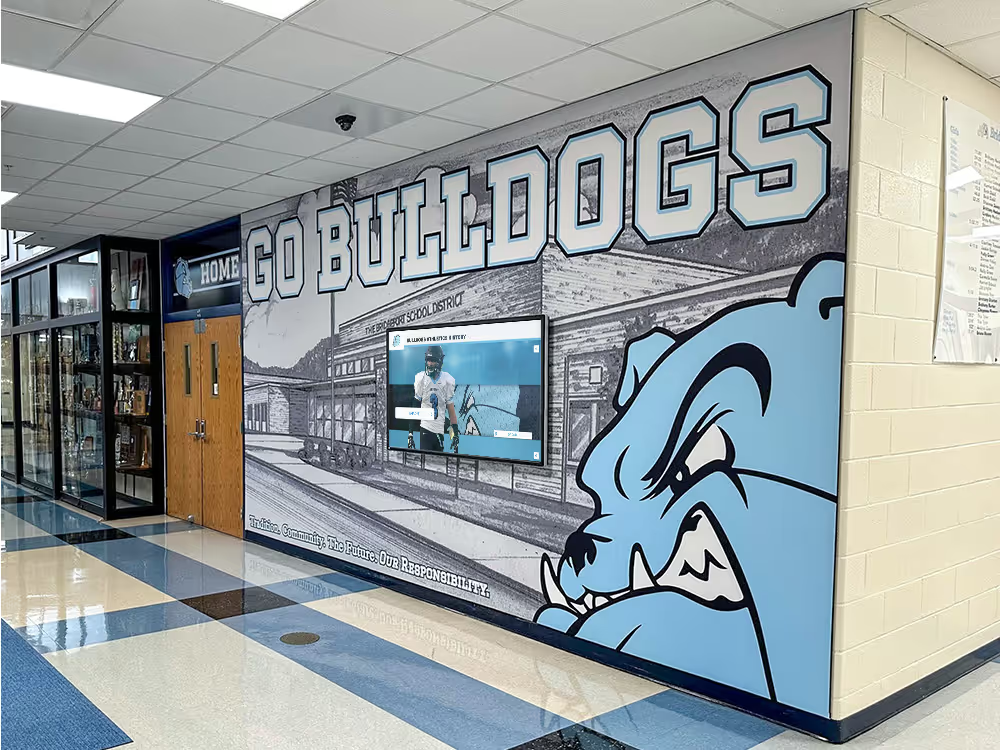
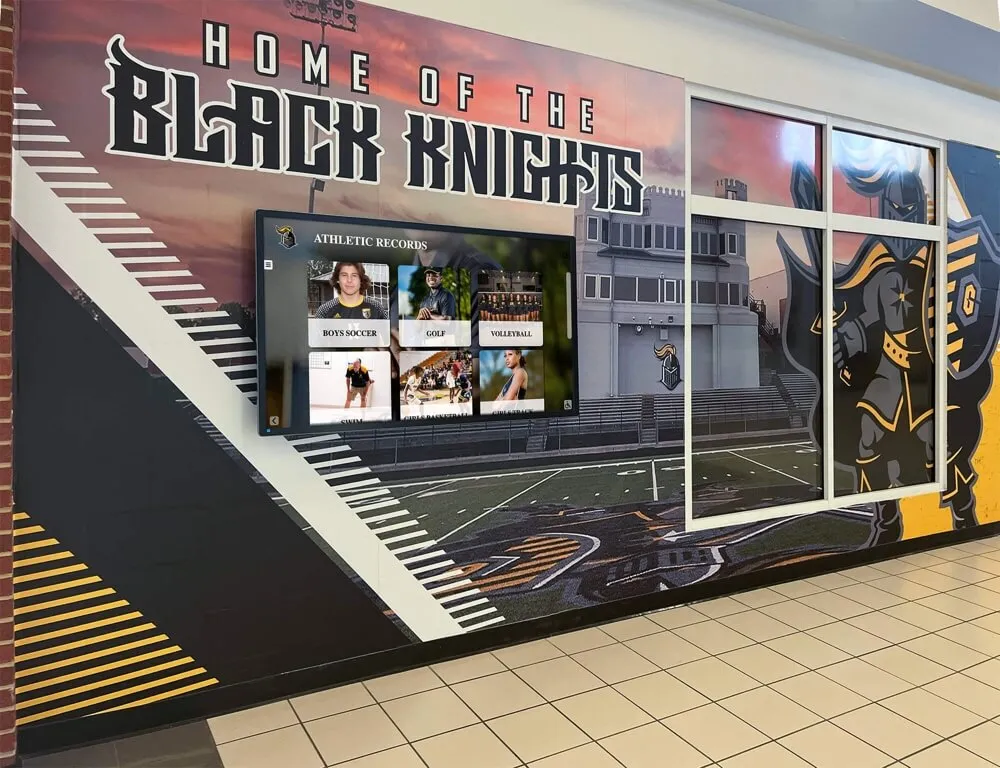
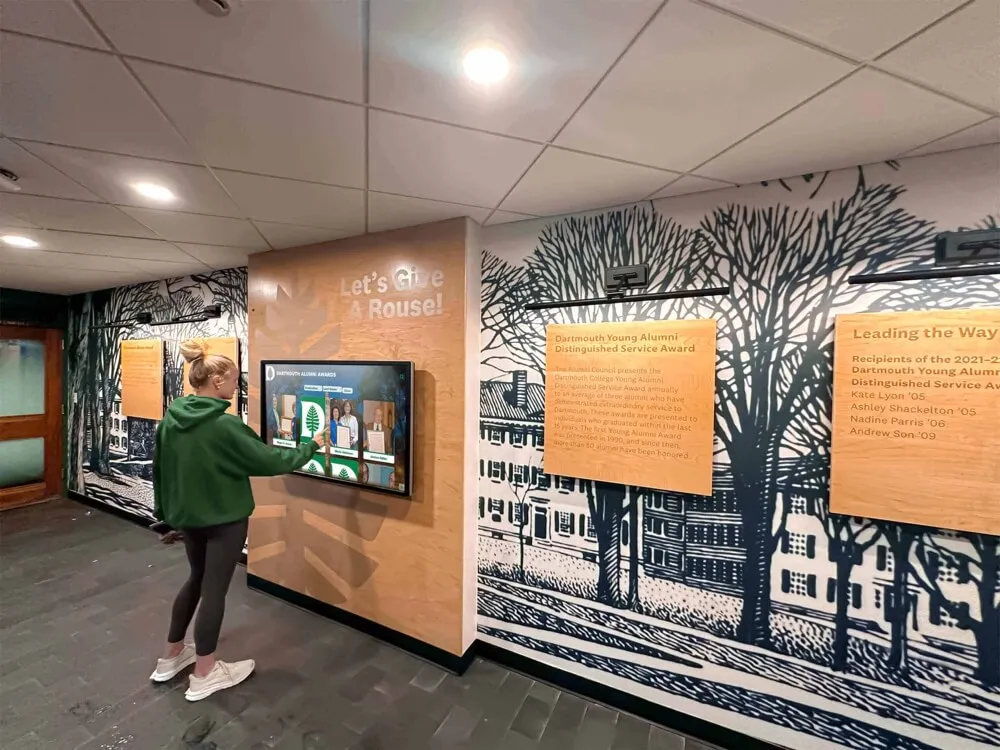
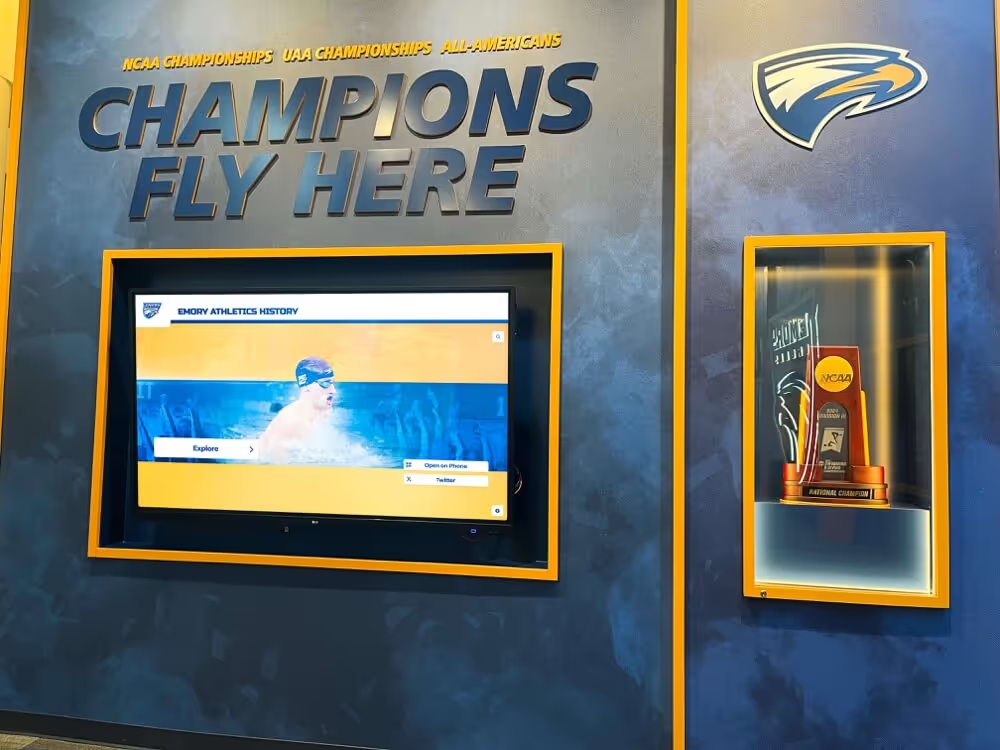
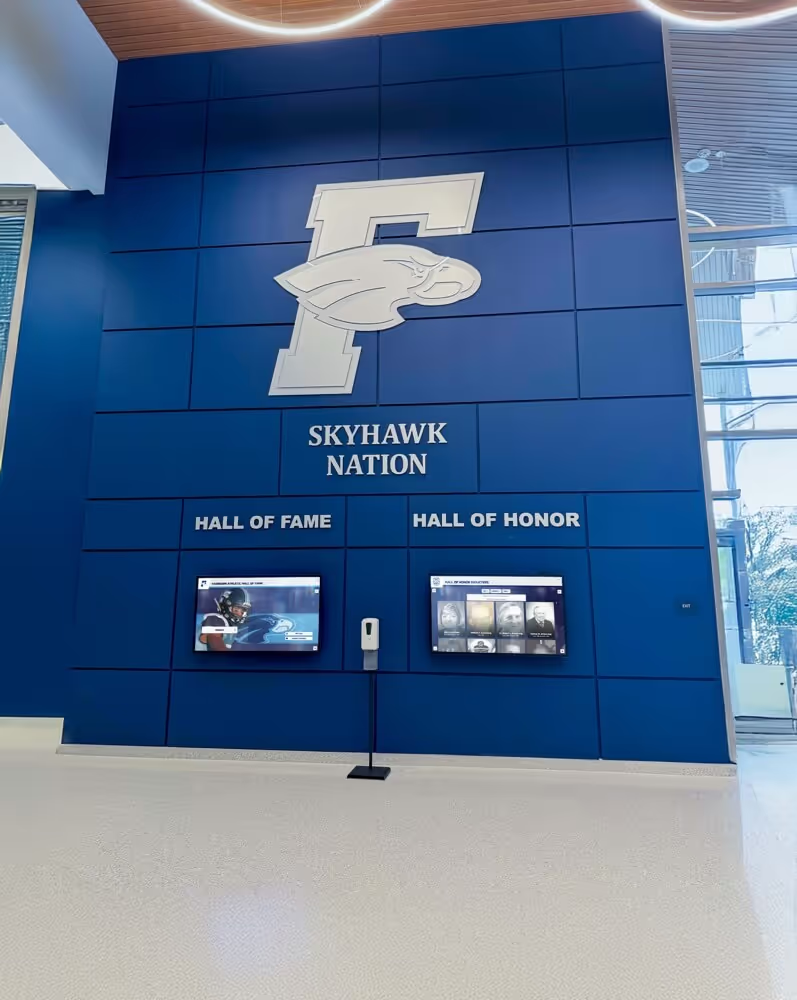
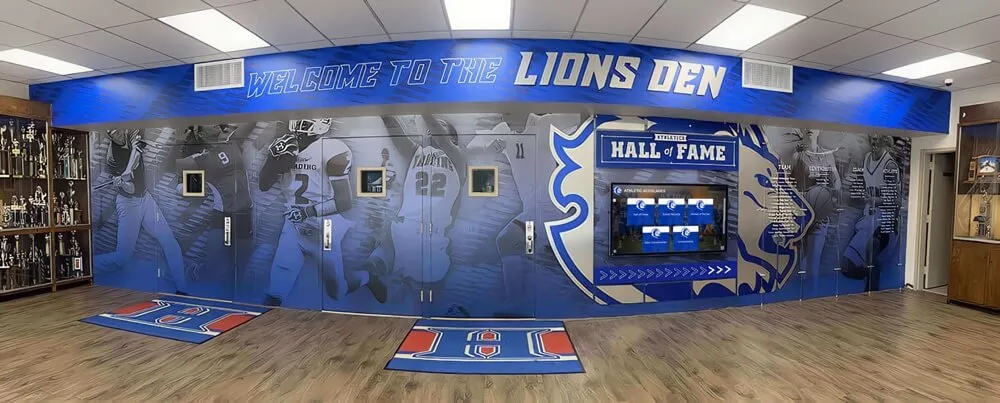
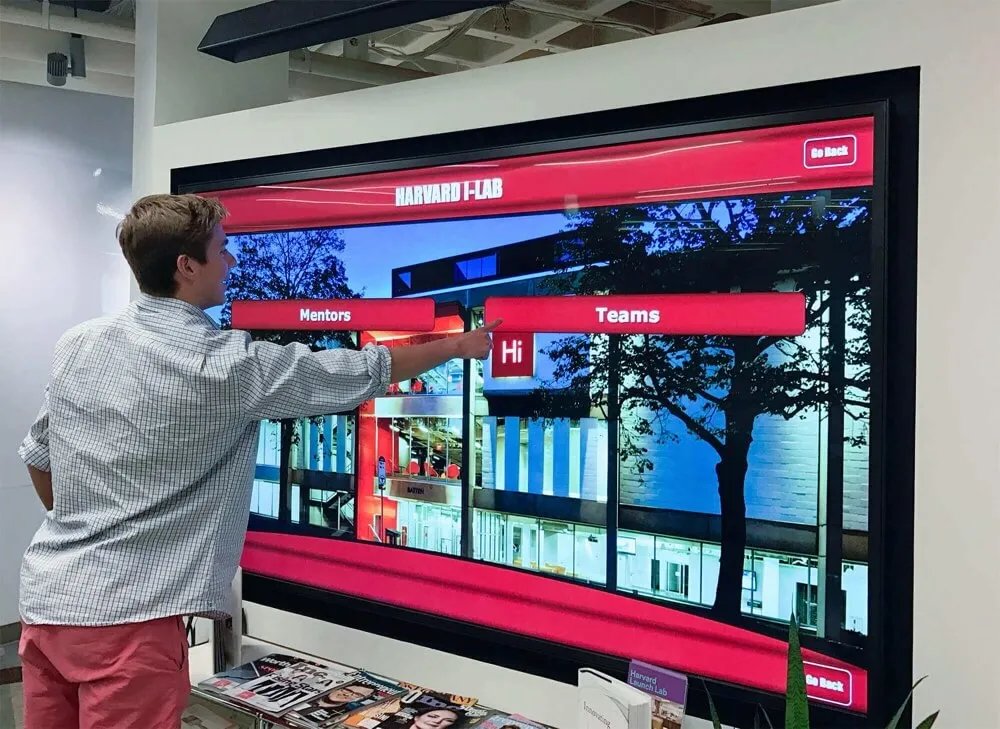
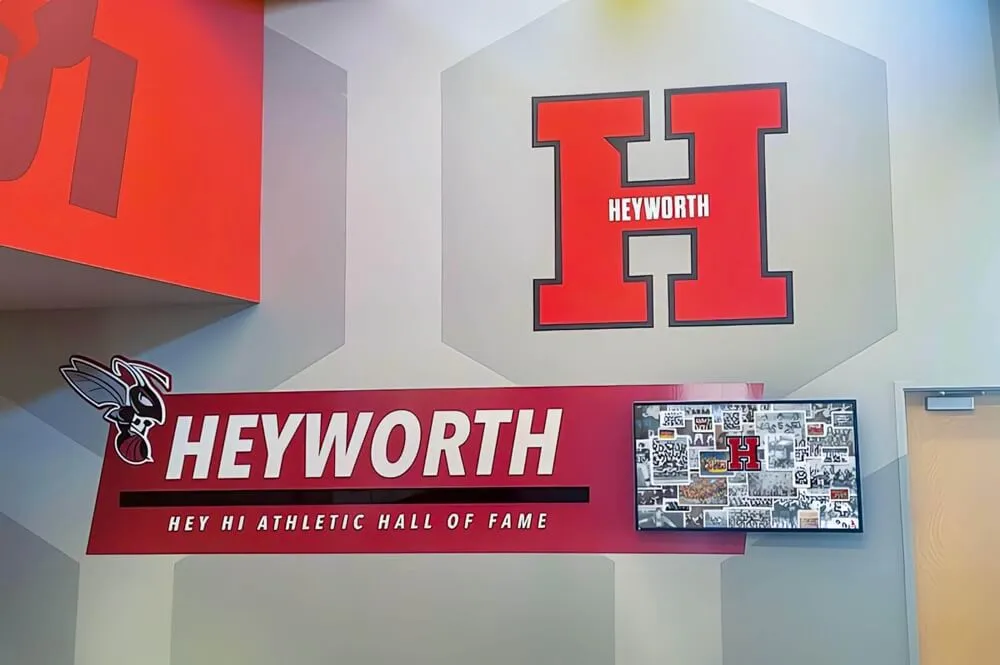
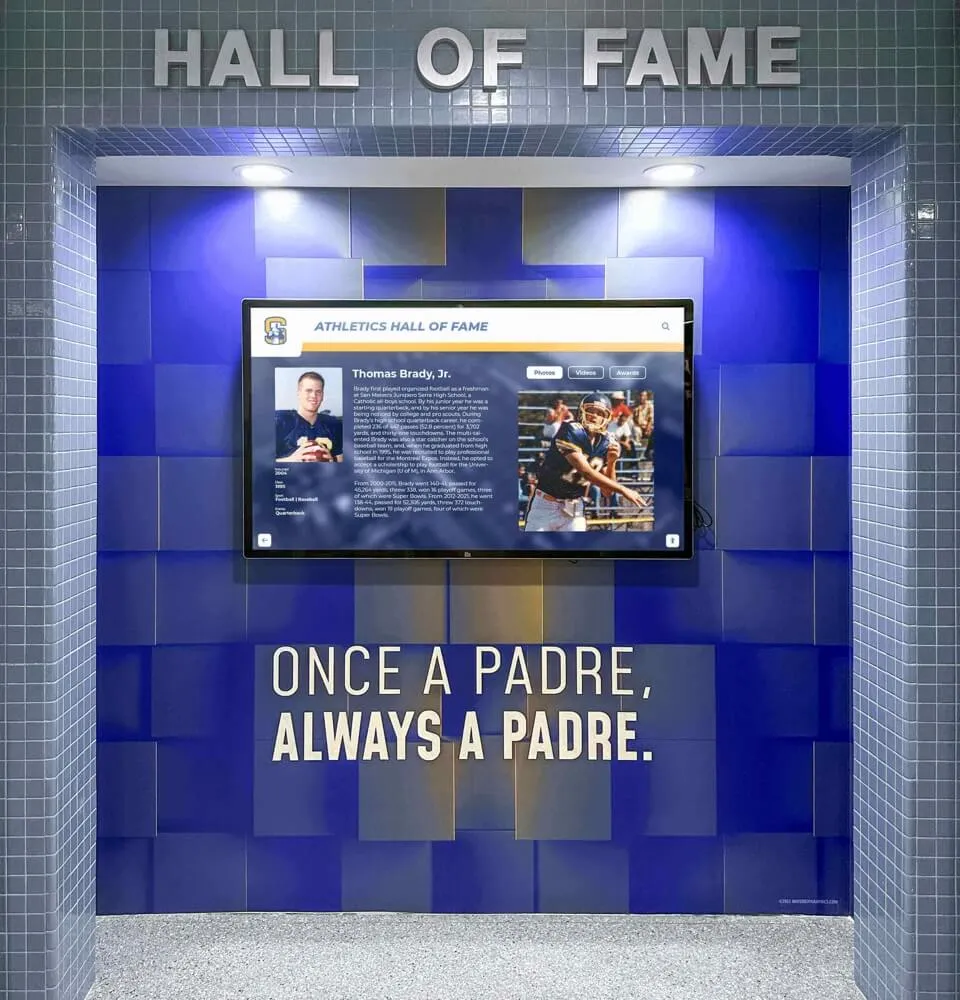
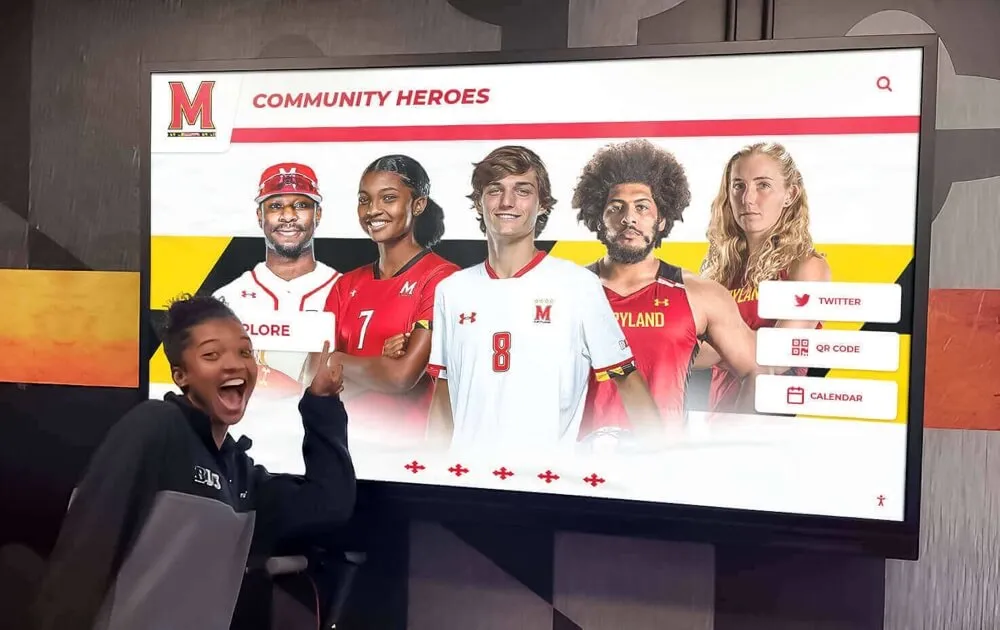
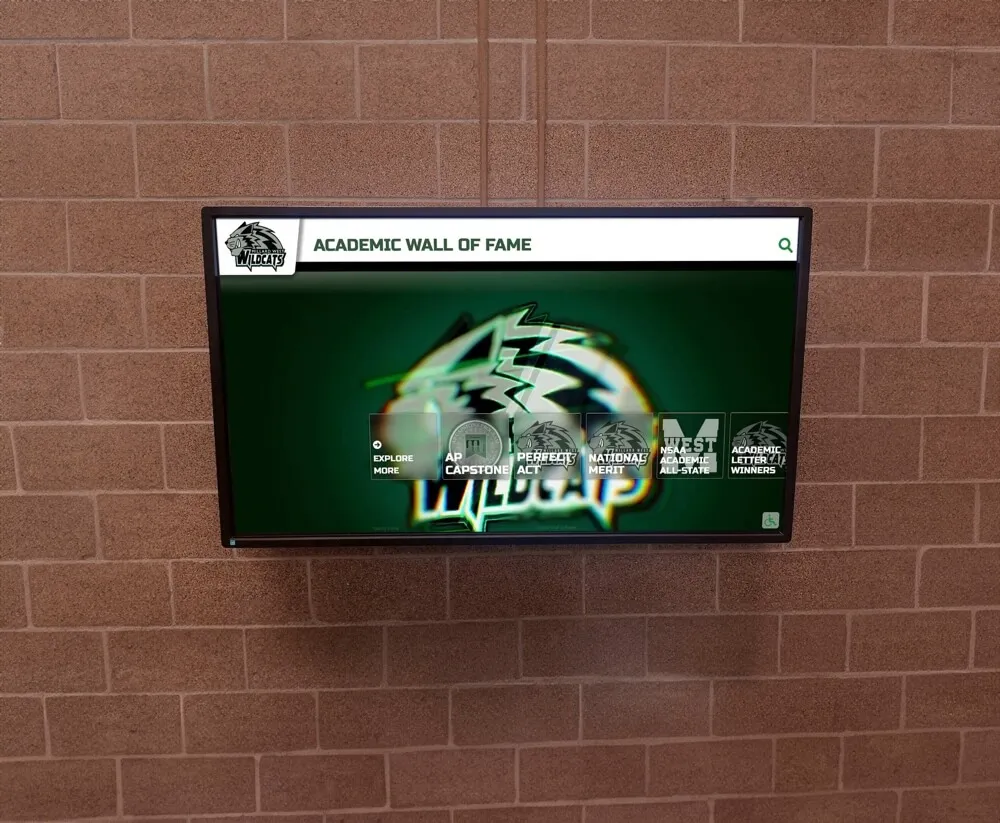
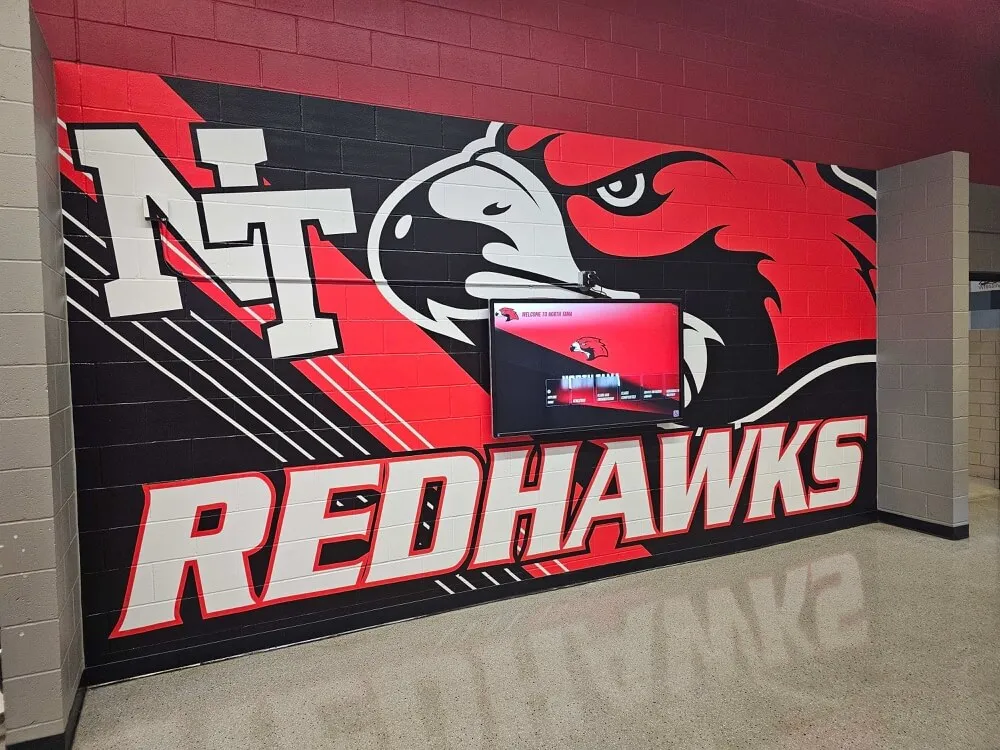
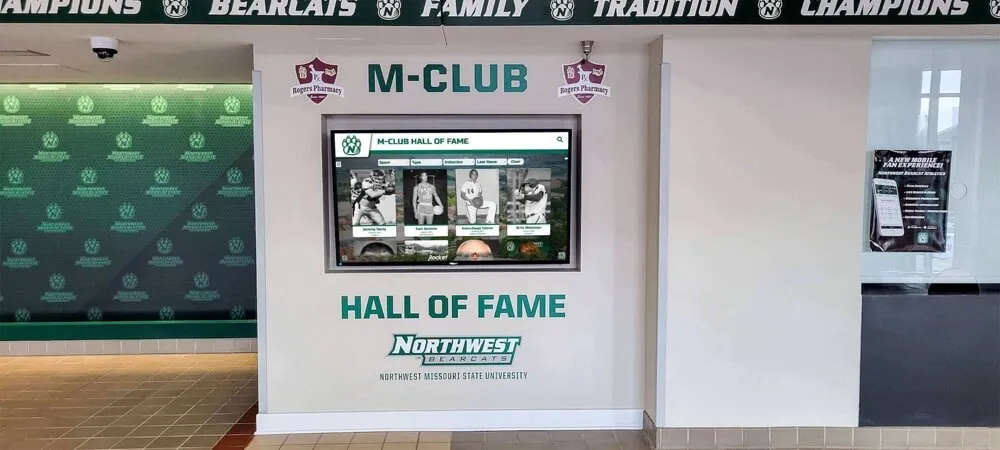
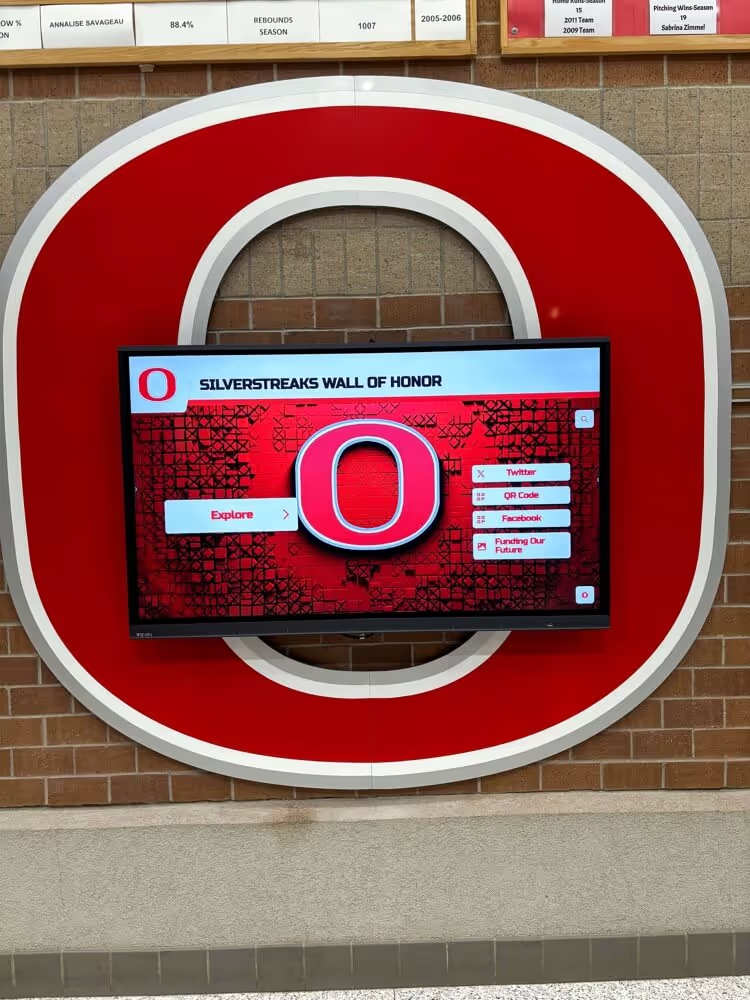
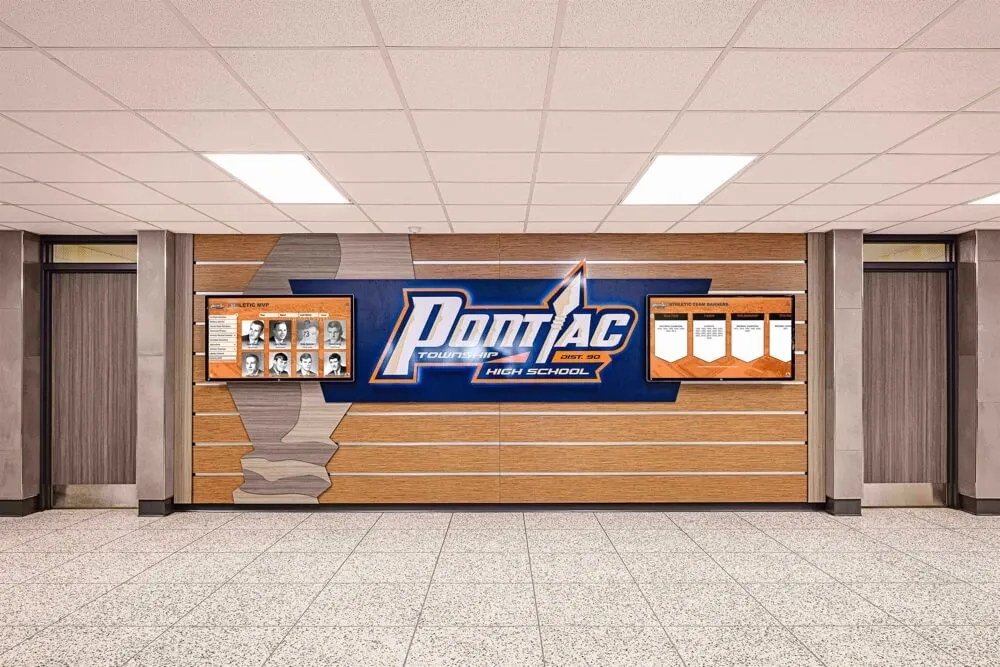
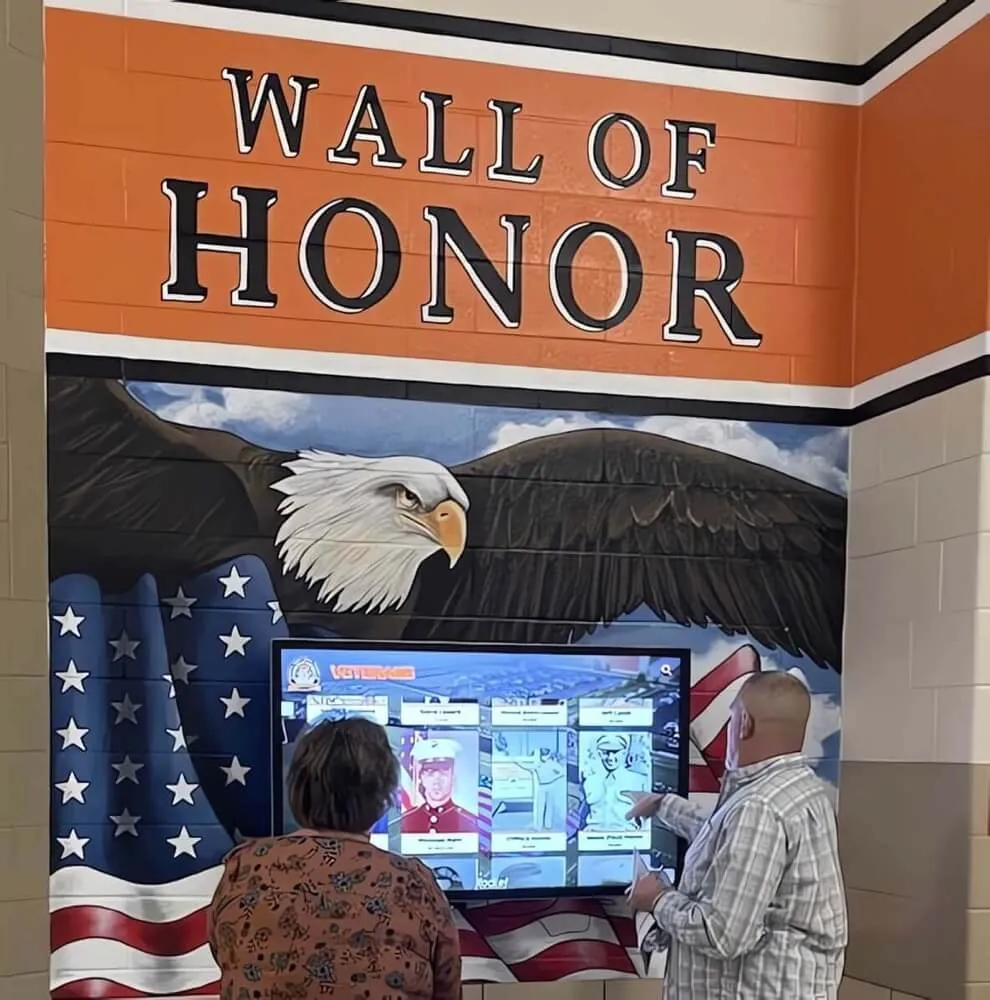
On the final question: when panel replacement costs approach or exceed half the cost of replacing the full case, this is the appropriate moment to evaluate whether a physical case continues to serve the school’s recognition goals — or whether transitioning to an interactive touchscreen display system would better preserve and present the school’s championship history, athletic records, and recognition milestones without the ongoing cost and limitation of physical glass panels.
Frequently Asked Questions
Q: Can scratched acrylic trophy case panels be polished with standard plastic polish products?
A: Light surface haze and minor scratches on acrylic panels can often be improved with plastic-specific polishing compounds designed for acrylic surfaces. Standard glass cleaners and abrasive household products should not be used on acrylic — they create exactly the micro-scratches that generate the surface haze documented at Level 1 in the severity scale. Glass panels require different compounds than acrylic. Confirm which material your panel is before purchasing any polish product. For scratches that catch a fingernail, consult a professional before applying any compound — incorrect technique on a deep scratch can enlarge the affected area.
Q: How often should a trophy case glass scratch assessment be conducted?
A: High-traffic cases — lobby displays, main hallway cases near gymnasium entrances — benefit from a visual check each semester and a documented log entry at least annually. Low-traffic secondary cases may require only an annual documented assessment. After any event that involves significant access to the case (trophy installation, jersey mounting, cleaning by contractors), a post-event visual check should be logged even if no formal full assessment is warranted.
Q: What is the difference between glass and acrylic trophy case panels, and does it affect scratch assessment?
A: Glass panels are harder and more scratch-resistant than acrylic but cannot be polished once scratched without professional equipment. Acrylic scratches more easily under routine cleaning but can often be polished by a skilled technician or facilities staff using the correct compound. The assessment log should note the panel material in every entry, because this single variable determines which repair options are available and which products are appropriate for any polish attempt.
Q: How should scratches that pre-date the assessment program be handled?
A: Document them as “first observation” entries with the current date as the assessment date. Note in the condition history field that no prior records exist. Photograph the existing scratch against a ruler and complete all remaining fields as normal. The absence of a previous baseline is itself a useful data point — it establishes that future growth cannot be measured against a documented prior state, which may affect the appropriate action classification (it may argue for faster action on an ambiguous Level 3 scratch, for example).
Q: Does Rocket Alumni Solutions offer any product that addresses the visibility limitations of scratched or aging trophy case glass?
A: Yes. Rocket Alumni Solutions’ digital trophy case platform removes glass visibility as a constraint entirely by presenting championships, retired jerseys, athletic photographs, and historic records on cloud-managed interactive touchscreen displays. Schools using the platform maintain the physical cases they choose to keep while extending their complete recognition archive — including items that cannot be displayed in physical cases due to space, condition, or access limitations — to a format that does not degrade, fog, or scratch. Interactive display software guides and alumni recognition systems increasingly inform how schools think about the relationship between physical and digital recognition infrastructure.
Connecting Glass Condition to Your Broader Recognition Infrastructure
A scratch assessment log answers a specific facilities question: is this glass in good enough condition to continue presenting awards and memorabilia at a standard that honors the people and teams being recognized? That question is narrower than — but directly connected to — the broader question every school recognition team eventually faces: how do we maintain the integrity of a collection that is growing faster than our physical display capacity?
Physical trophy cases have a fixed panel count, a fixed shelf depth, and glass that degrades over time under cleaning cycles and environmental stress. A scratch on the front panel of a championship display is a symptom of a maintenance relationship that facilities teams must sustain indefinitely, at increasing cost, against materials with a finite lifespan. Documentation through a scratch assessment log makes that maintenance manageable. But the log also creates a paper trail that, over time, makes the cumulative cost of glass maintenance visible in a way that supports an honest conversation about alternatives.
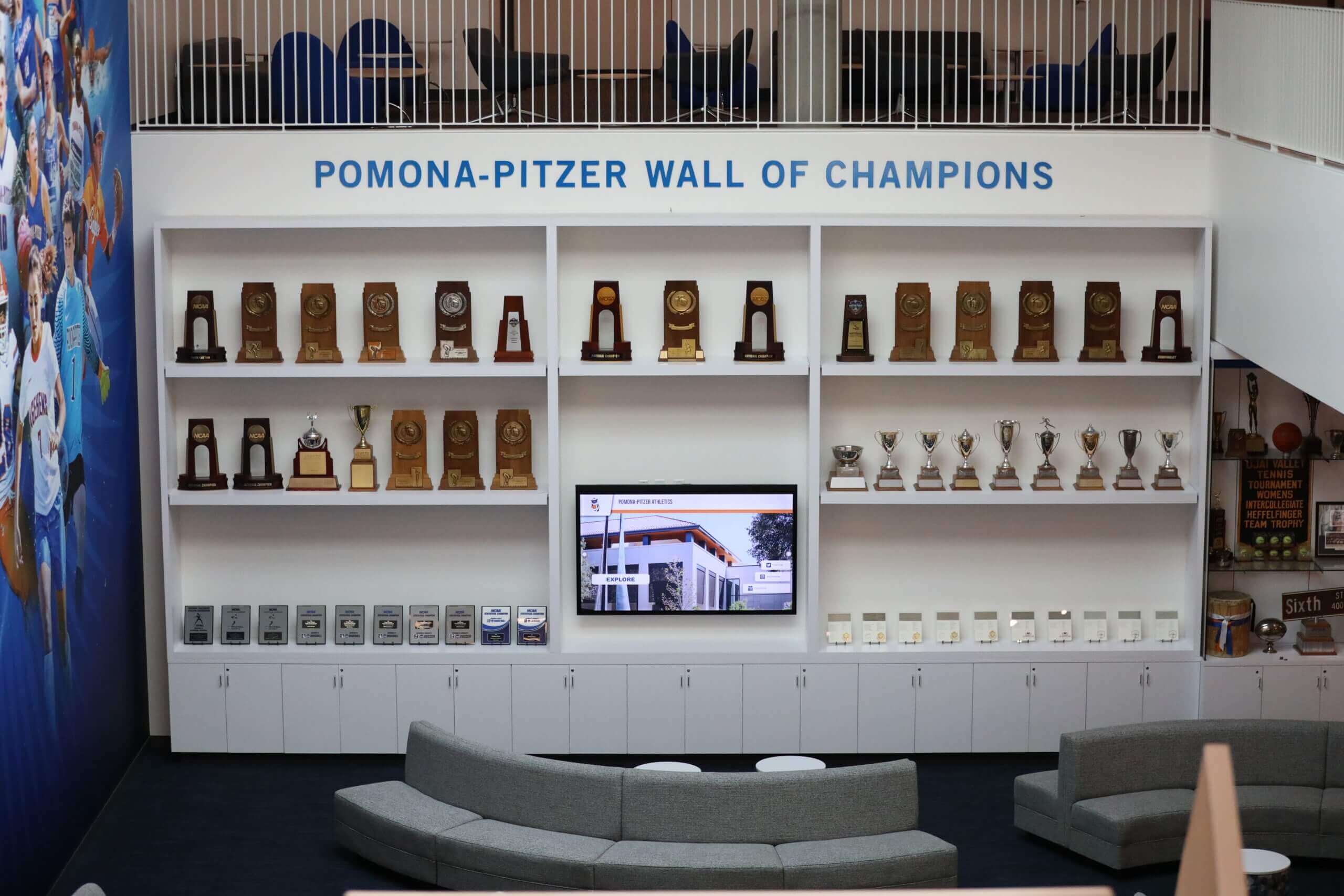
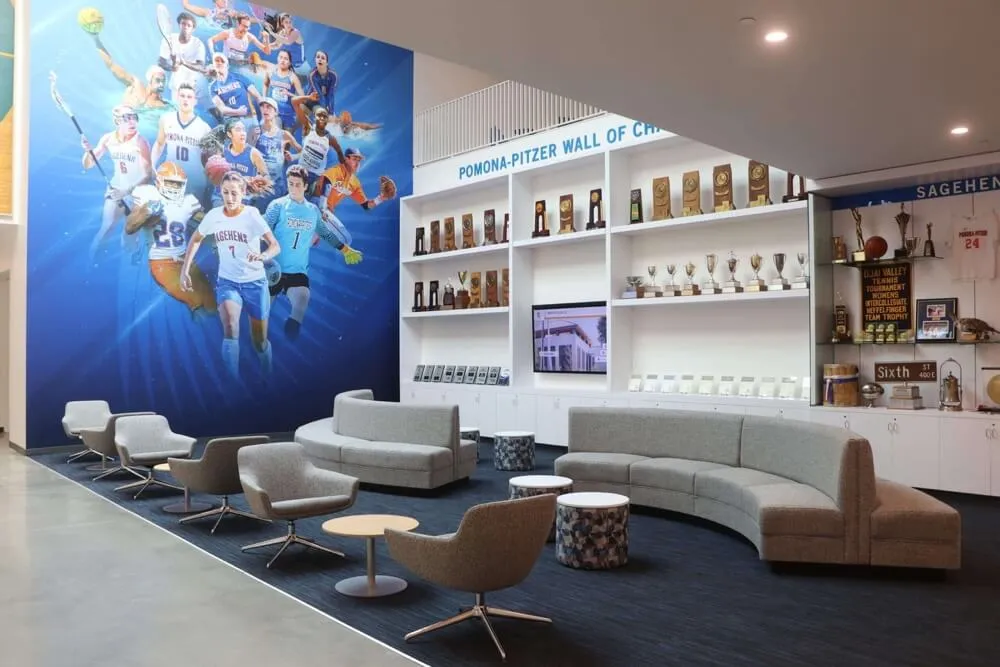
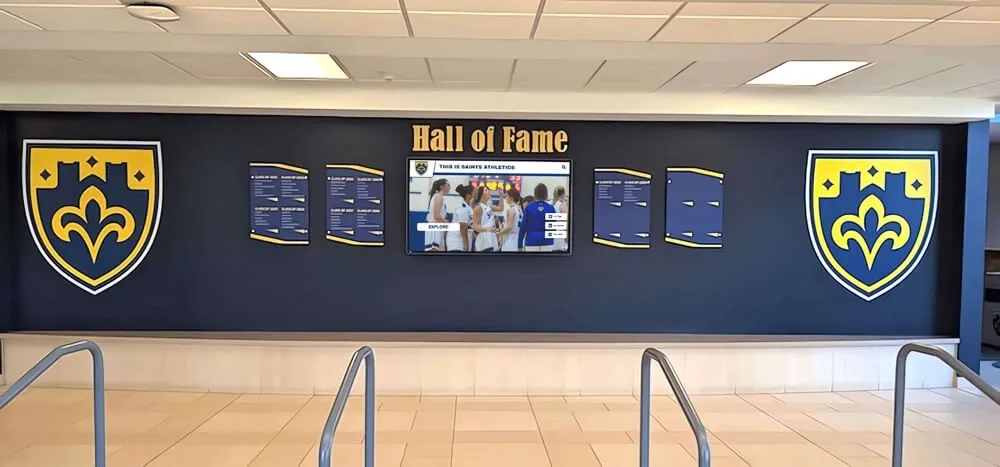
Championship-heavy collections need glass in peak condition to present hardware with the visual clarity those achievements deserve — systematic documentation is the foundation of that standard
Schools that maintain detailed scratch assessment records over multiple years typically find that the documentation itself builds institutional knowledge that transfers across staff transitions. A new athletic director inheriting a trophy case collection does not need to start from zero if a predecessor maintained a complete glass condition log — they can read the history of every panel, understand which cases have required repeated intervention, and make informed decisions about where to invest limited facilities resources.
For schools that have also adopted digital recognition infrastructure, the scratch assessment log integrates naturally with the broader condition monitoring that athletic archive and IT teams conduct for interactive recognition kiosks and digital display systems that complement physical trophy cases. A coordinated documentation approach — physical case glass on the facilities side, digital display condition on the IT side — gives the full recognition infrastructure a shared maintenance foundation.
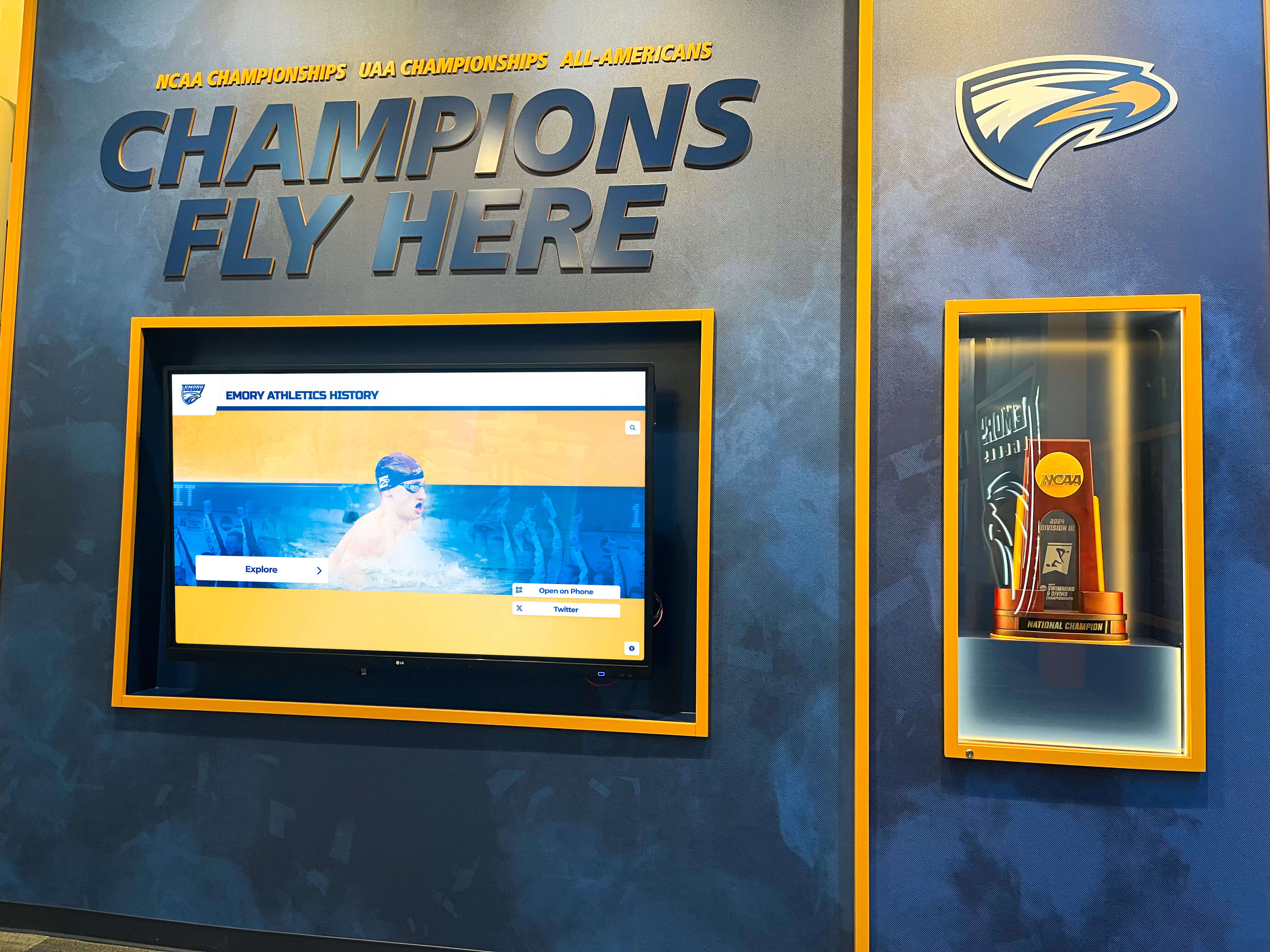
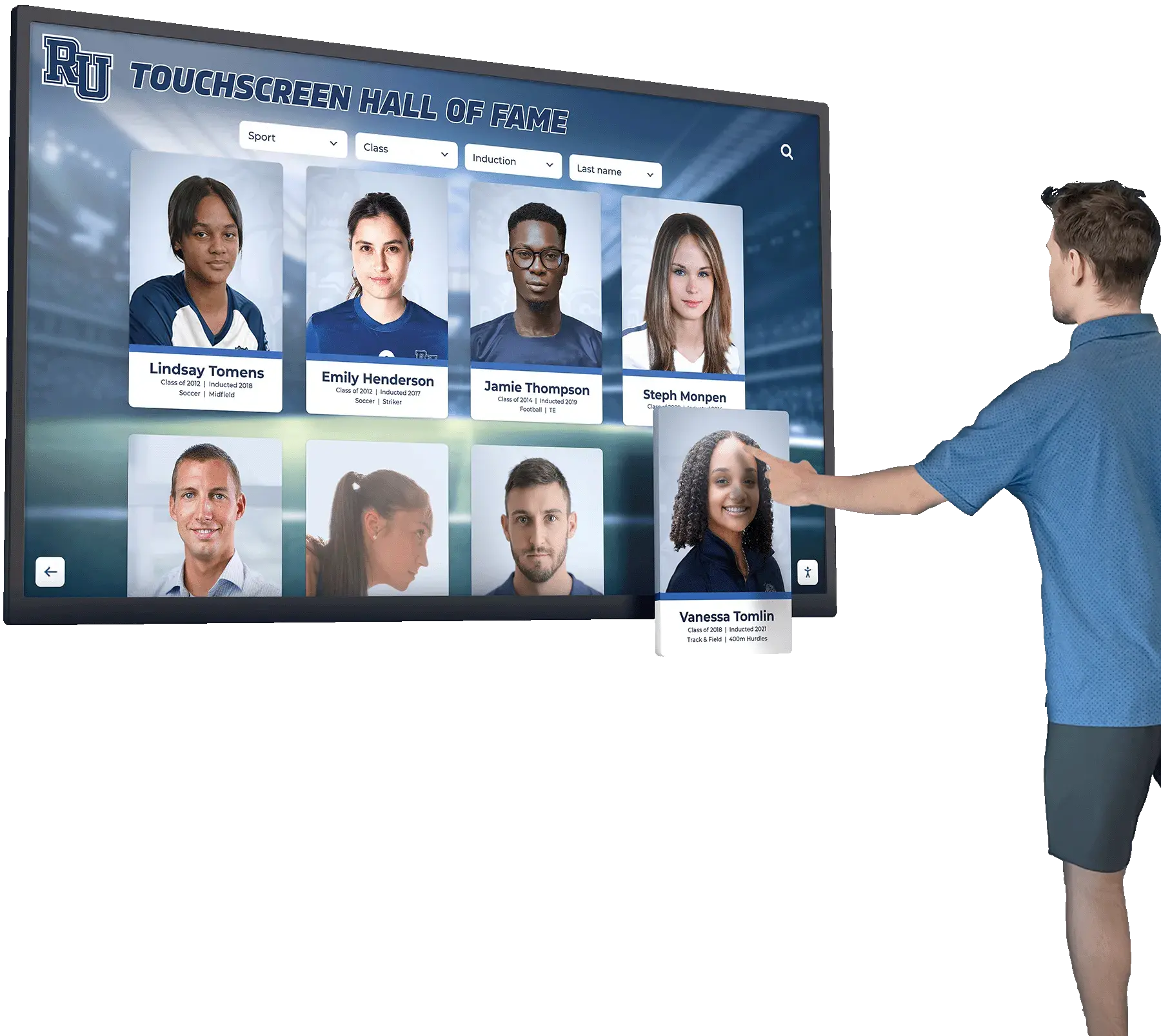
A school's championship history deserves display conditions that match its significance — scratched or hazy glass is the most common and most preventable barrier to that standard
Integrating the Log with Your Annual Facilities Review
A glass scratch assessment log functions best as one component of a broader annual trophy case review rather than as a standalone document triggered only by obvious damage. Schools conducting annual trophy case infrastructure reviews typically combine glass condition documentation with shelf load assessments, lighting condition checks, security hardware evaluations, and inventory audits of displayed items.
Scheduling the glass scratch assessment at the start of each academic year — before fall sports activities and homecoming events bring elevated visitor traffic — ensures that any Level 3 or above findings have time to be addressed before the highest-visibility periods of the school calendar. A second brief check before spring awards seasons or end-of-year events allows facilities teams to catch any new damage that developed during the school year.
For schools that have adopted digital recognition alongside physical cases, the design principles behind effective athletic training room and recognition spaces increasingly inform how glass condition, lighting, and display configuration decisions interact — because physical and digital elements of a recognition corridor are experienced as a unified visual environment by the students, alumni, and visitors who move through it.
When Glass Condition Becomes a Recurring Problem, Consider a Permanent Alternative
Rocket Alumni Solutions builds interactive digital trophy cases and halls of fame for schools nationwide. Cloud-managed updates, unlimited record capacity, ADA WCAG 2.1 AA compliant touchscreens, and QR code access — so your school's complete championship history, jersey collection, and athletic archive stays perfectly visible and accessible, regardless of what happens to physical display glass over time. See how schools are preserving and presenting their recognition collections on displays that never scratch, fog, or degrade.
Book A DemoSchools Balancing Physical and Digital Recognition
The practical question for most schools is not whether to maintain physical trophy cases or adopt digital displays — it is how to manage both thoughtfully over time. A trophy case glass scratch assessment log is part of the answer on the physical side. It extends the useful life of cases that are in repairable condition, provides the documentation needed to justify panel replacement when polishing is no longer appropriate, and establishes the institutional record that supports smart decisions about when the maintenance cost of aging physical infrastructure no longer matches the recognition value it delivers.
On the digital side, platforms like Rocket Alumni Solutions’ interactive touchscreen system offer capabilities that glass-and-shelf cases cannot: unlimited entry capacity, remote CMS updates without IT involvement, mobile QR code access for alumni viewing trophy history from anywhere, and automatic ranking and sorting of achievements by date or category. Schools comparing options will find that alumni engagement tools and recognition platforms have expanded significantly in recent years — the question is not whether digital recognition works, but which implementation model fits the school’s specific collection, traffic patterns, and budget.
A well-maintained physical case, documented through a rigorous scratch assessment log, and a digital recognition platform that preserves the full collection in searchable, accessible form are not competing approaches. They are complementary layers of a recognition infrastructure designed to serve both the artifacts that exist now and the achievements that will continue to accumulate as programs grow.
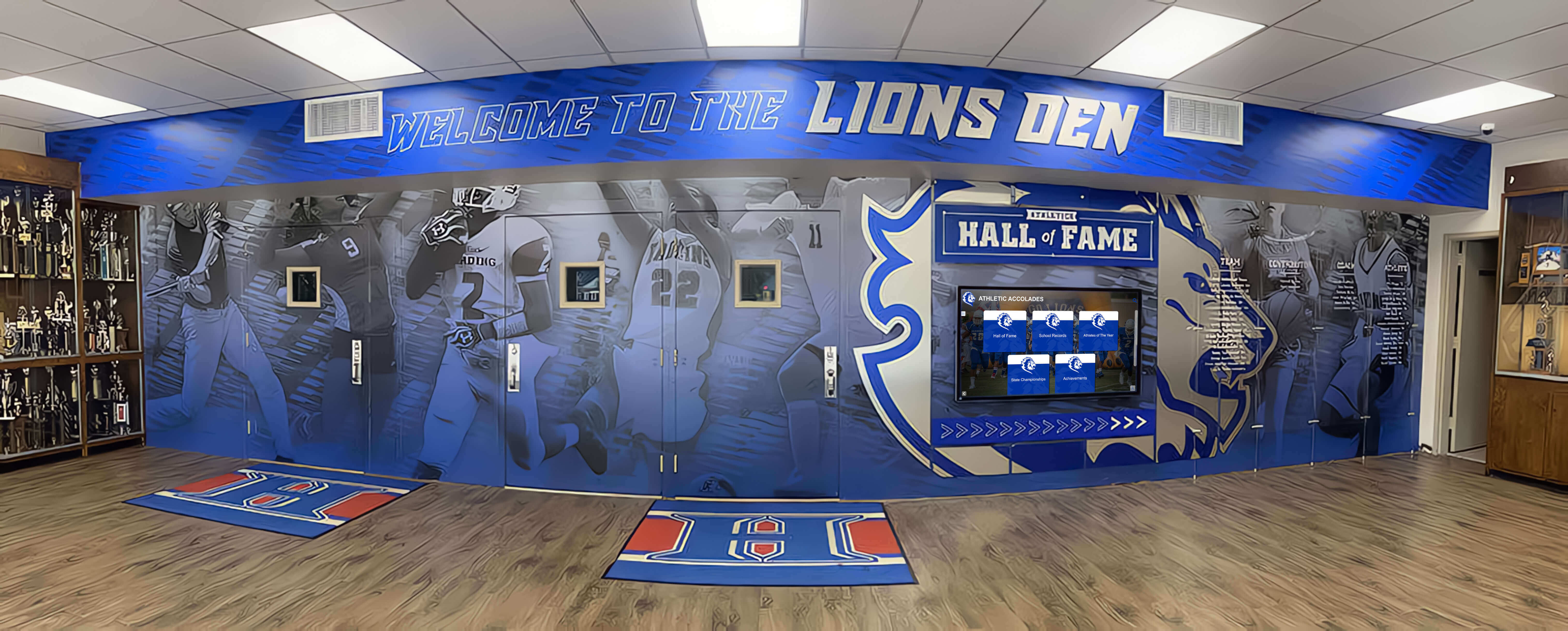
Schools that maintain physical cases and digital archives in parallel give their recognition programs the depth of history and the breadth of access that neither approach delivers alone
The scratch assessment log is where that maintenance commitment becomes concrete: a written record that says this glass, this case, and the awards it holds are worth tracking with the same care the school gives to the programs and people those awards recognize.
Ready to See How Digital Trophy Cases Work?
Schedule a demo to see how Rocket Alumni Solutions can help your school build an interactive, cloud-managed recognition display that complements your physical trophy cases — and preserves your complete athletic history on a display that never scratches.
Book A Demo