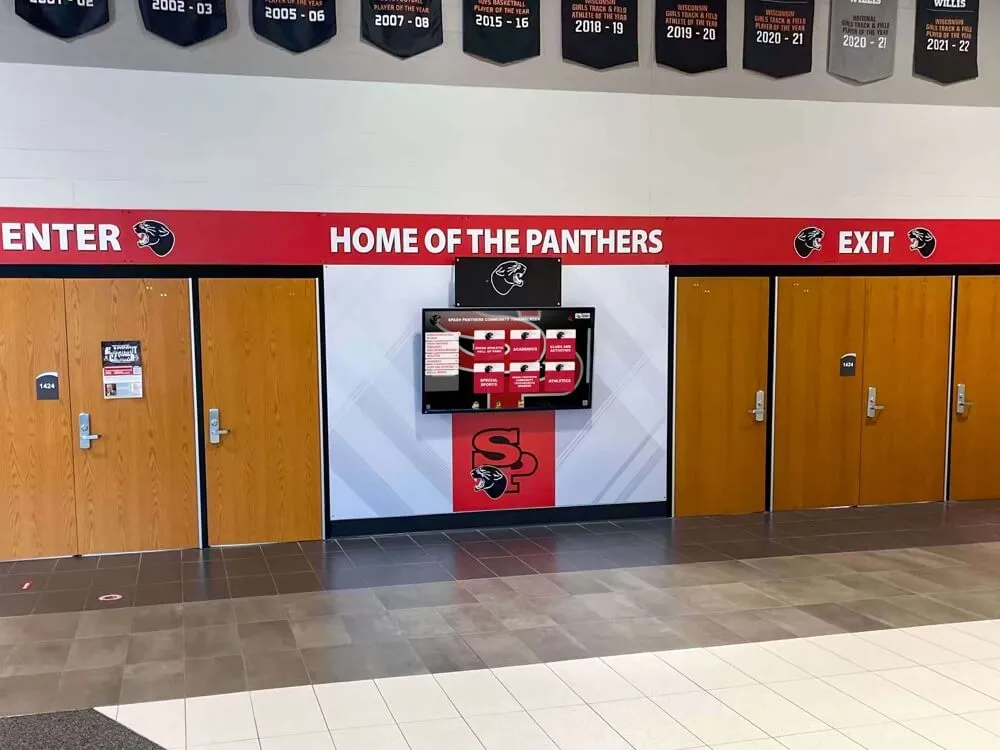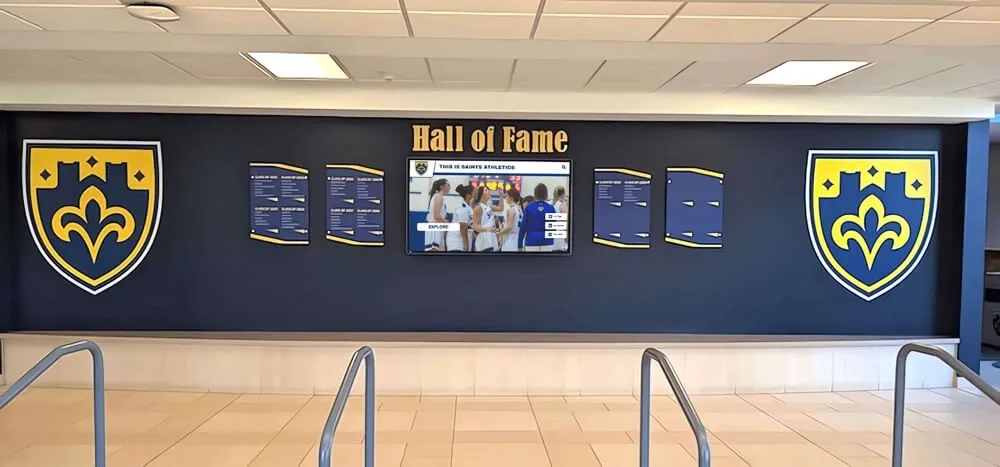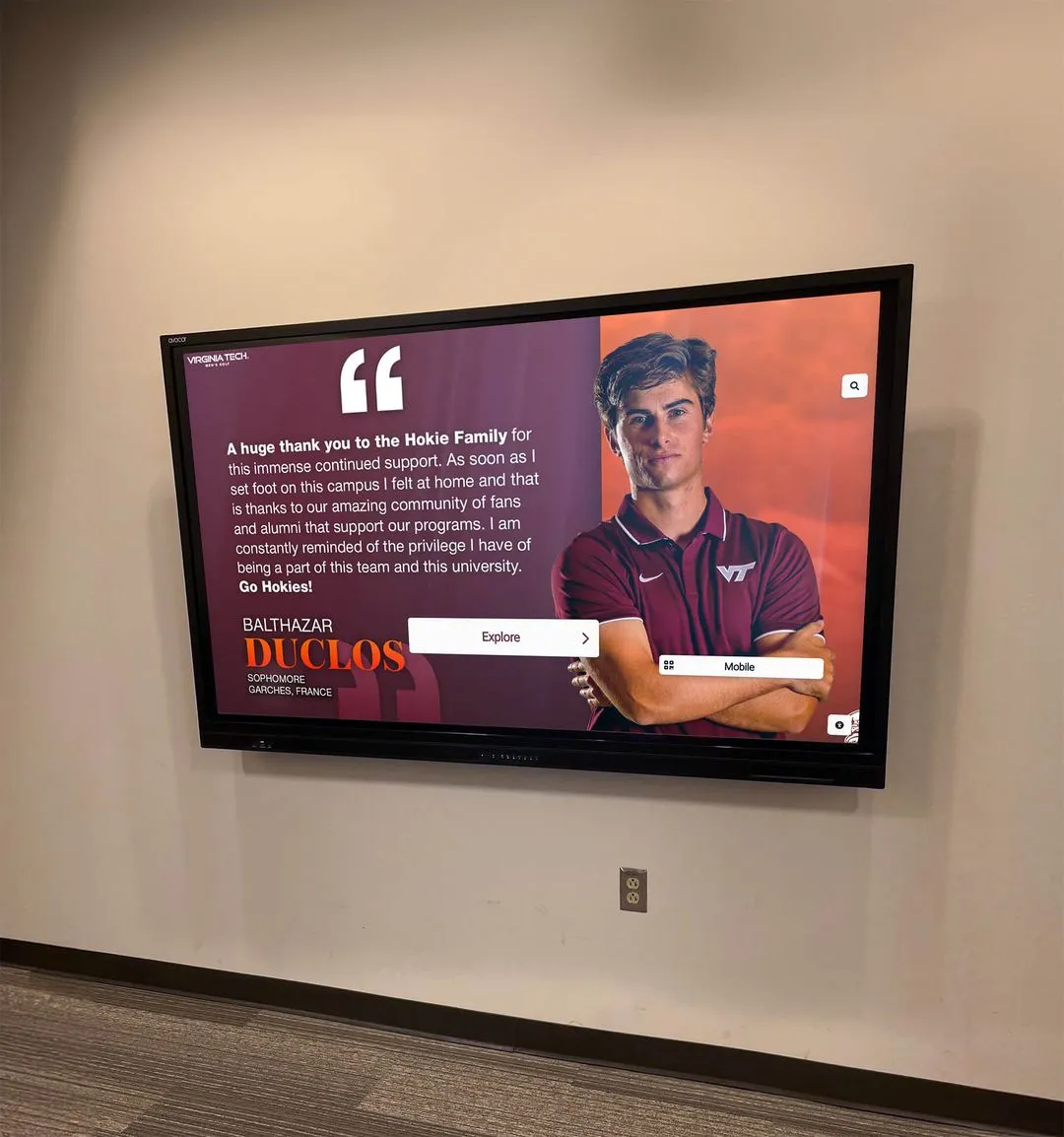




Intent: research — a trophy case glass breakage response plan gives school administrators, athletic directors, and facilities teams a step-by-step process for responding to a shattered or cracked display case: isolating the scene immediately, protecting students and staff from glass hazards, escalating to licensed facilities professionals, safely recovering affected awards and memorabilia, documenting condition and evidence, arranging interim artifact storage, and maintaining recognition continuity through temporary digital display while the case is repaired. Safety requirements and insurance obligations vary by jurisdiction and district policy; consult your school’s facilities director, risk manager, and legal counsel before finalizing any official response protocol.
A trophy case shatters in the school lobby during passing period. Students stop. Staff arrive. The immediate instinct — grab the trophies before more glass falls — is understandable and almost always wrong. Broken display case glass creates a compound emergency: a physical safety hazard, a preservation risk for irreplaceable awards, and a documentation window that closes the moment the scene is disturbed.
Schools that have a written trophy case glass breakage response plan navigate this moment systematically. Those that do not often discover afterward that they have no photographs of the damage, incomplete records of which awards were affected, and no clear chain of accountability for what happened to the contents during cleanup. This guide provides the protocol, the documentation tools, and the recognition continuity options that let schools protect people, awards, and evidence — in that order.

Trophy cases in high-traffic corridors face ongoing risk from accidental impact, structural fatigue, and hardware failure — a written response plan means the first thirty minutes after breakage are spent protecting people and evidence, not improvising
Immediate Response: The First Five Minutes
When a trophy case glass panel breaks, the first five minutes determine whether the scene is managed safely or whether secondary injuries and evidence loss occur. The following steps apply regardless of what caused the breakage — accidental impact, hardware failure, or thermal stress.
Do Not Touch the Case or Its Contents Until the Scene Is Cleared
Glass from display cases — particularly older tempered, laminated, or standard plate glass panels — can shift, fall, and shatter further when disturbed. Trophies, plaques, and memorabilia inside a compromised case should not be removed until a facilities professional has assessed structural stability and cleared the scene for recovery. Premature removal of case contents can displace evidence of the cause, damage awards further, and create secondary injury risk for anyone reaching into or around broken glass.
Step 1: Isolate the Area Immediately
Establish a clear perimeter around the broken case before anyone approaches it. Use whatever is immediately available — traffic cones, chairs, a row of backpacks, or a faculty member stationed at each end of the corridor. The perimeter should extend at least three feet beyond the visible glass debris field, since glass fragments travel further than they appear to land.
If the break occurred during a passing period or other high-traffic moment, redirect student and staff foot traffic to an alternate route. A facilities or administrative radio announcement to redirect hallway traffic is faster than physical barriers when crowds are already moving.
Assign one staff member to hold the perimeter while others proceed with notification. The perimeter stays in place until facilities staff clear it — not until the corridor looks clear.
Step 2: Notify Facilities Within the First Five Minutes
Contact your facilities director or building manager immediately — before photographing, before moving anything, before parent or media contact. Facilities staff determine whether the remaining glass panels are structurally stable, whether the case framework needs to be secured before contents can be safely removed, and whether the breakage pattern suggests a cause that requires documentation before the scene is disturbed.
In most school buildings, the escalation chain is: classroom or hallway staff → front office → facilities director. If your district uses a facilities work order system, that notification should happen in parallel with, not instead of, a direct phone or radio call. Written work orders are for scheduling; verbal notification is for active safety events.
Document the time of notification. Insurance and incident reporting processes frequently ask when facilities were first notified, and a timestamped radio log or phone call record is more reliable than reconstructed recollections.
Step 3: Photograph Before Touching Anything
Once the perimeter is established and facilities has been notified, the next action is documentation — not cleanup. Use a smartphone camera to photograph:
- The full case from multiple angles showing the extent of breakage
- Close-up views of the glass fracture pattern (this can indicate cause: impact fractures radiate from a point; thermal fractures tend to run more uniformly across the panel)
- Any visible damage to awards, plaques, or memorabilia inside the case
- The floor area around the case showing the debris field
- Any objects or surfaces that may have caused or been involved in the break
Photograph with a measuring reference if possible — place a common object such as a standard folder or ruler next to key damage areas so the scale is visible in the photograph.
These photographs serve three purposes: insurance documentation, facilities work order evidence, and the condition baseline for every affected award before anything is moved.
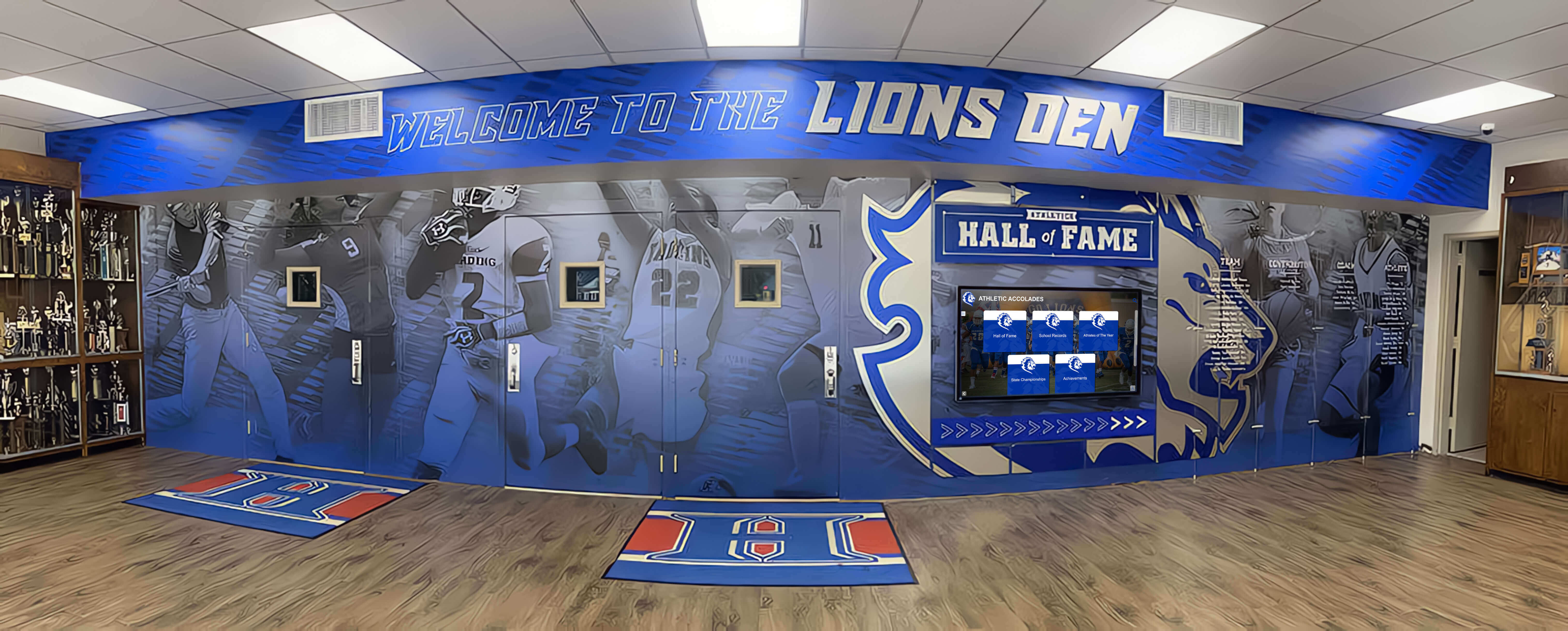
Every award visible in a case at the time of breakage should be photographed in place before removal — this pre-removal record becomes the condition baseline for insurance, restoration decisions, and parent or donor communication
The Trophy Case Glass Breakage Response Checklist
The numbered steps below sequence the full response from initial breakage through case reinstallation. Print this and post it inside your facilities office, athletic director suite, or main office.
Phase 1 — Scene Safety (First 5 Minutes)
- Establish a three-foot perimeter around the debris field using cones, chairs, or stationed staff
- Redirect all foot traffic away from the area via alternate routes
- Call facilities director or building manager directly — verbal notification, not only a work order
- Record the time of breakage discovery and the time facilities was notified
Phase 2 — Documentation (Minutes 5–20, Before Any Recovery)
- Photograph the full case from multiple angles
- Photograph the glass fracture pattern at close range
- Photograph each award or item visible inside the case, in place, before removal
- Photograph the debris field on the floor
- Complete a written incident log entry noting time, location, first observer, and perimeter status
Phase 3 — Facilities Assessment and Debris Clearance
- Facilities staff assess structural stability of remaining glass panels before any entry into the perimeter
- Facilities staff secure or remove unstable glass before artifact recovery begins
- Debris cleanup uses appropriate PPE — cut-resistant gloves, eye protection, closed-toe shoes — and a dedicated vacuum designed for glass or a dustpan-and-broom approach that collects all fragments
- Facilities staff inspect the case frame, mounting hardware, and surrounding wall for damage before recovery begins
Phase 4 — Artifact Recovery and Condition Assessment
- Recover awards and memorabilia in a documented sequence — name each item as it is removed, note its location in the case, and assign it a temporary ID tied to the pre-removal photographs
- Inspect each item for glass contact damage: chips, scratches, cracks, or embedded glass fragments
- Record condition for each item: Undamaged / Surface Contact / Minor Damage / Significant Damage
- Set aside any items with glass embedded in them for specialized cleaning — do not wipe embedded glass with a cloth, as this grinds fragments deeper into engravings or finishes
Phase 5 — Interim Storage
- Wrap each recovered item individually in archival tissue or clean cotton cloth — not newsprint or foam with off-gassing concerns if items have metal surfaces
- Store wrapped items in labeled boxes noting item name, temporary ID, and condition rating
- Move storage boxes to a clean, dry, temperature-stable area — not a damp storage room or a space with ongoing foot traffic
- Complete a written interim custody record noting each item, its condition rating, its current storage location, and the name of the staff member who placed it there
Phase 6 — Communication and Recognition Continuity
- Notify the principal or head of school of the incident, the cause (if known), and the expected repair timeline
- Draft a brief communication for staff — athletic director, advancement, and front office — noting that the case is out of service and when it is expected to be restored
- Activate digital recognition continuity (see section below) so the awards remain visible to students, alumni, and visitors during repair
- Contact your insurance carrier or risk manager with the incident documentation if the damage is likely to meet your deductible or involves historically significant items
Phase 7 — Repair and Reinstallation
- Obtain at least two estimates for glass replacement that specify the type of glazing (tempered, laminated, UV-filtering) being used in the repair
- During reinstallation, photograph the case interior before awards are returned to establish a clean baseline for the restored display
- Return awards to their pre-incident locations based on the pre-removal photographs — do not rely on memory or staff recollection
- Re-photograph the restored display and update your digital catalog entries with the post-repair condition record
Safe Glass Cleanup: What Facilities Needs to Know
Glass cleanup from a trophy case is not a standard corridor cleanup task. Display case glass — particularly older installations — may be standard plate glass, tempered glass, or laminated safety glass, each with different breakage patterns that affect cleanup approach.
Standard plate glass breaks into large, irregular shards with sharp edges. These are highly visible and present a clear laceration risk. Cleanup requires collecting large fragments by hand with cut-resistant gloves before vacuuming fine particles, and inspecting a wide radius around the case since large shards can travel unexpectedly on hard floors.
Tempered glass shatters into small, roughly cubic fragments — the familiar “safety glass” pattern. These fragments are less individually sharp than plate glass but cover a significantly wider debris area, embed readily in carpet or floor texture, and are difficult to see in low light. Tempered glass cleanup requires systematic sweeping of a larger area than the visible debris field and a follow-up wet mopping or damp cloth wipe to collect fine fragments that sweeping misses.
Laminated glass holds together on its inner film when broken but may develop stress cracks that fragment when the panel is handled. Laminated panels that are cracked but structurally intact should be handled as a unit during removal, not broken down for disposal.
For any glass type, restrict cleanup to facilities staff with appropriate PPE. Custodial staff who do not regularly handle glass cleanup may not have appropriate footwear or eye protection and should not be assigned to this task without a facilities supervisor.
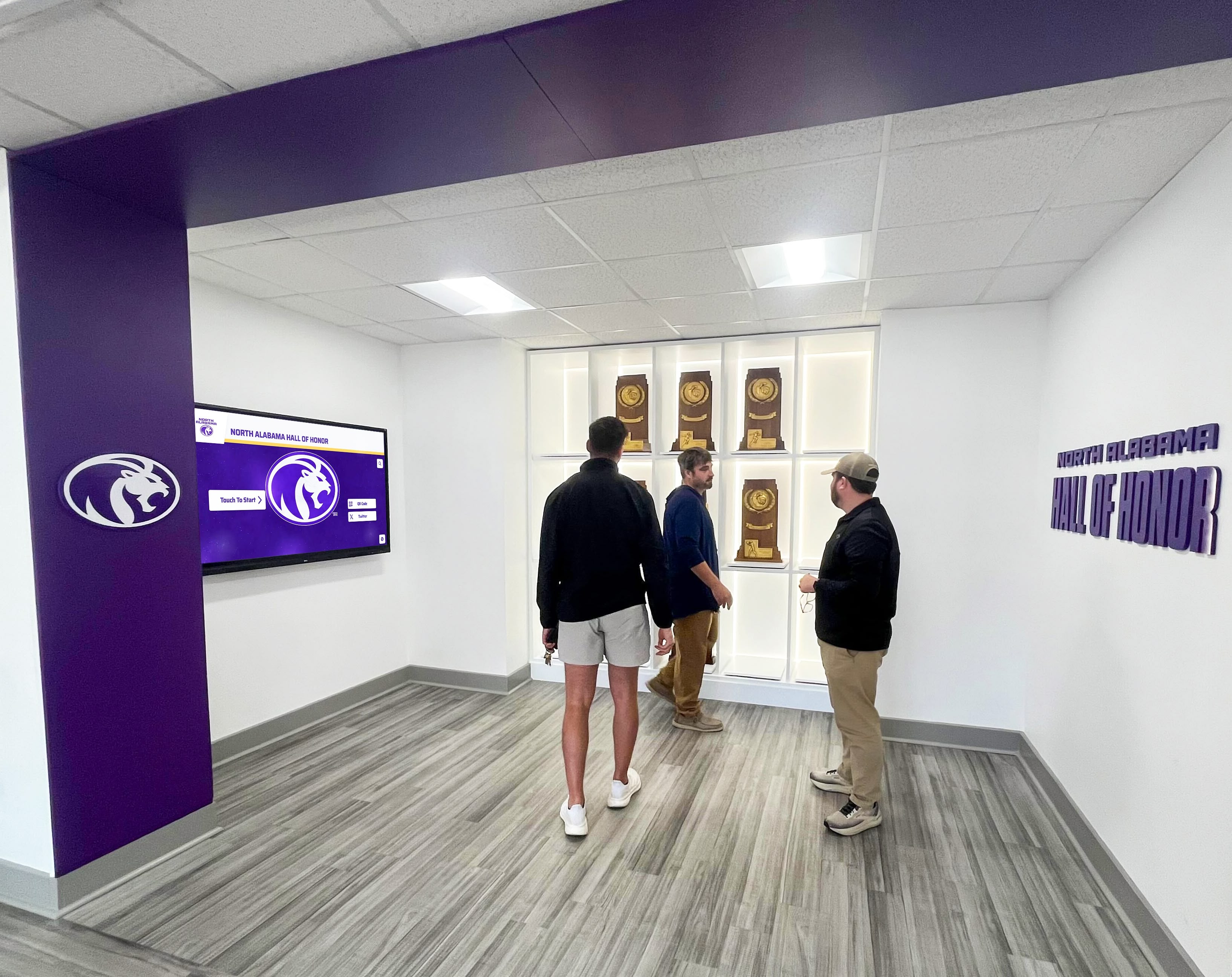
Facilities directors and athletic staff who review glass breakage response protocols together before an incident occurs respond faster and with fewer improvised decisions when a case actually breaks
Condition Assessment for Affected Awards
The condition assessment step is where a glass breakage incident transitions from a safety event into a records management task. Every award, plaque, and piece of memorabilia removed from the broken case needs a condition record before it enters interim storage.
A workable condition assessment for this context uses four ratings:
| Rating | Definition |
|---|---|
| Undamaged | No visible contact with glass; finish and structure intact |
| Surface Contact | Glass dust or fine fragments on surface; no visible damage to finish |
| Minor Damage | Surface scratches, minor chips to base or frame, text or finish partially affected |
| Significant Damage | Structural damage to trophy components, engraving affected, plaque face cracked, finish loss covering more than a minor area |
For each item, record the rating, a brief written description, and a reference to the pre-removal photograph. This creates the documentation baseline for three important conversations:
Insurance review. If damage is significant enough to file a claim, your insurer will want evidence of pre-incident condition (or the closest available proxy), post-incident condition, and an estimated cost of restoration or replacement. The condition assessment provides this.
Donor or family communication. Awards that were donated by families or that honor specific individuals deserve direct acknowledgment when damaged. A condition record allows that conversation to be specific rather than vague — “the base was chipped but the engraving is intact” is more reassuring than “it was in the case when the glass broke.”
Restoration decisions. Trophy restoration vendors — and in some cases award manufacturers — offer refinishing, replating, and structural repair services. A condition record helps them assess scope and cost accurately.
For schools maintaining heritage collections with items of historical significance, the approach to school heritage displays, traditions, artifacts, and alumni stories provides context on how physical artifacts fit into a broader institutional recognition strategy — context that makes condition assessment feel less like paperwork and more like stewardship of the institutional record.
Interim Artifact Storage: Protecting Awards During Repair
The period between glass breakage and case restoration can run from a few days to several weeks depending on glass sourcing, contractor scheduling, and the scope of case damage. Awards held in interim storage during this period face risks that differ from display risks: physical jostling, humidity changes, inappropriate packaging materials, and handling by staff who may not recognize which items are most fragile.
Wrapping. Use archival tissue paper, acid-free packing material, or clean cotton cloth for all items. Avoid newspaper (acid transfer), bubble wrap in direct contact with metal finishes (condensation risk), and foam packing peanuts for engraved pieces (fragments lodge in lettering).
Labeling. Every wrapped package should be externally labeled with the item name, temporary ID from the condition assessment, and condition rating. Do not rely on visual inspection through wrapping to identify contents — labels prevent unwrapping and rewrapping that creates additional handling risk.
Location. Choose a storage location that is clean, dry, and temperature-stable. A school storage room with consistent HVAC is appropriate; a basement storage area with humidity variability is not. The location should be accessible only to designated staff — not a general-use storage space where the items could be moved, misplaced, or borrowed for unrelated purposes.
Custody record. Maintain a written list of every item in interim storage with its location within the storage space. Update this list each time an item is added, inspected, or removed. The interim custody record becomes part of the incident file and supports chain-of-custody accountability when items return to the restored case.
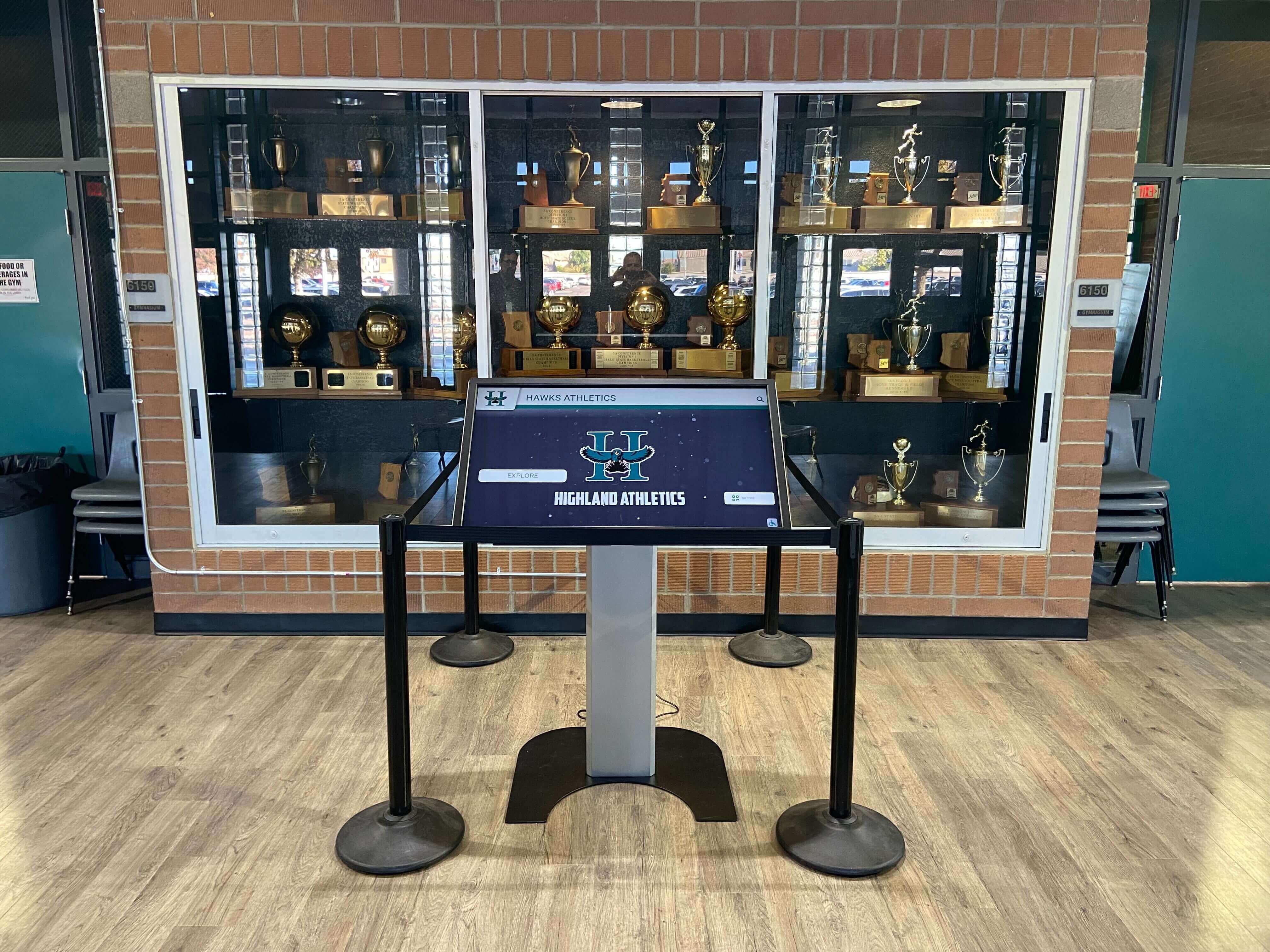
Schools that maintain digital records alongside physical displays can keep every award visible to students and alumni during case repair — the digital record does not depend on the glass being intact
Recognition Continuity: Temporary Digital Display During Repair
A broken display case removes a visible recognition anchor from the school’s main corridor. Students who walk past the empty, blocked-off case no longer see the championship trophies, retired jersey numbers, or hall of fame hardware that communicate program history and school identity every day. For athletic programs building culture, for alumni returning to campus, and for advancement staff managing donor relationships, a weeks-long gap in physical recognition visibility matters.
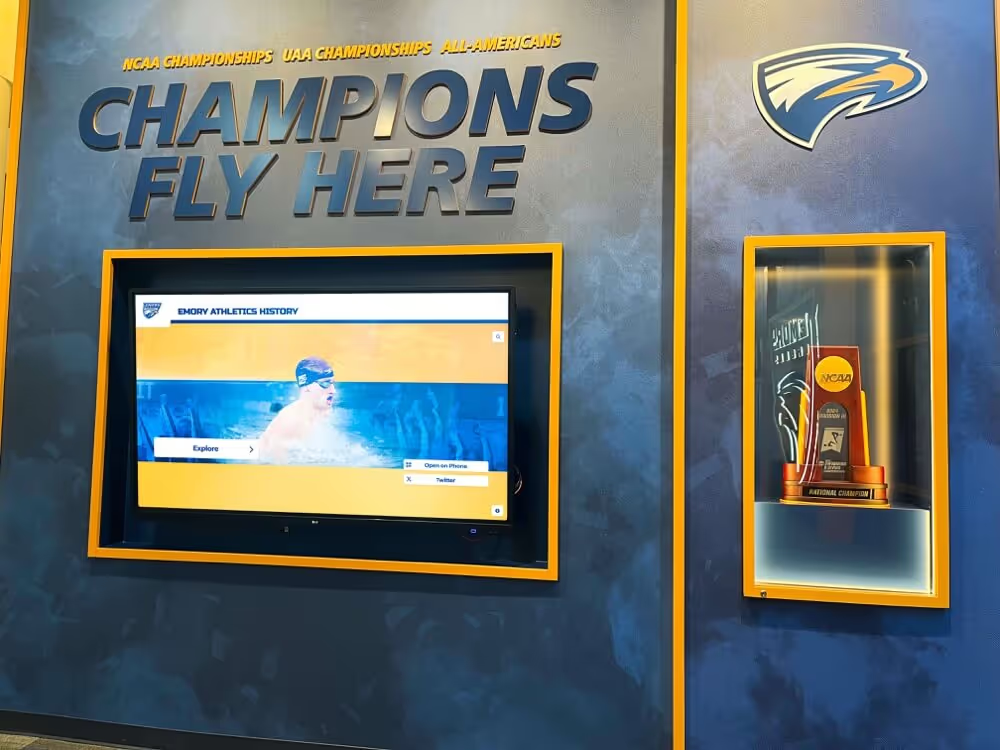
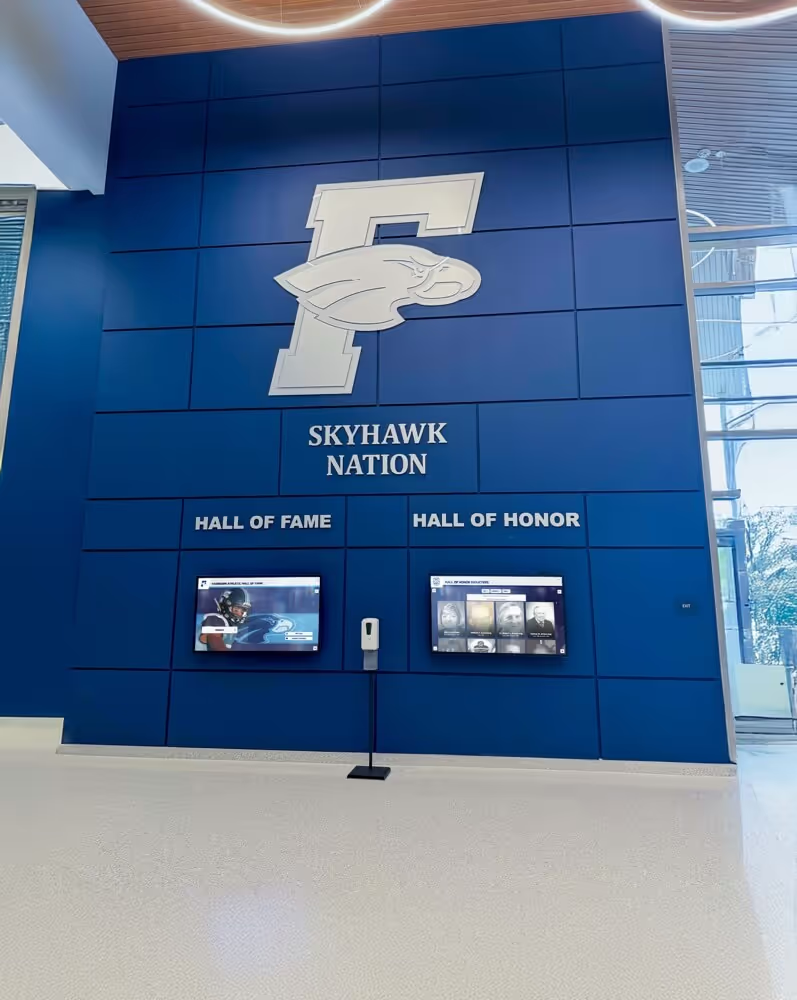
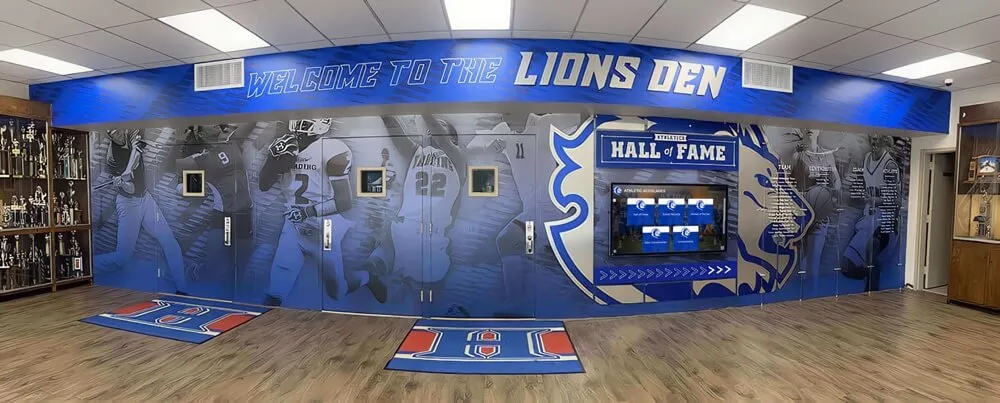
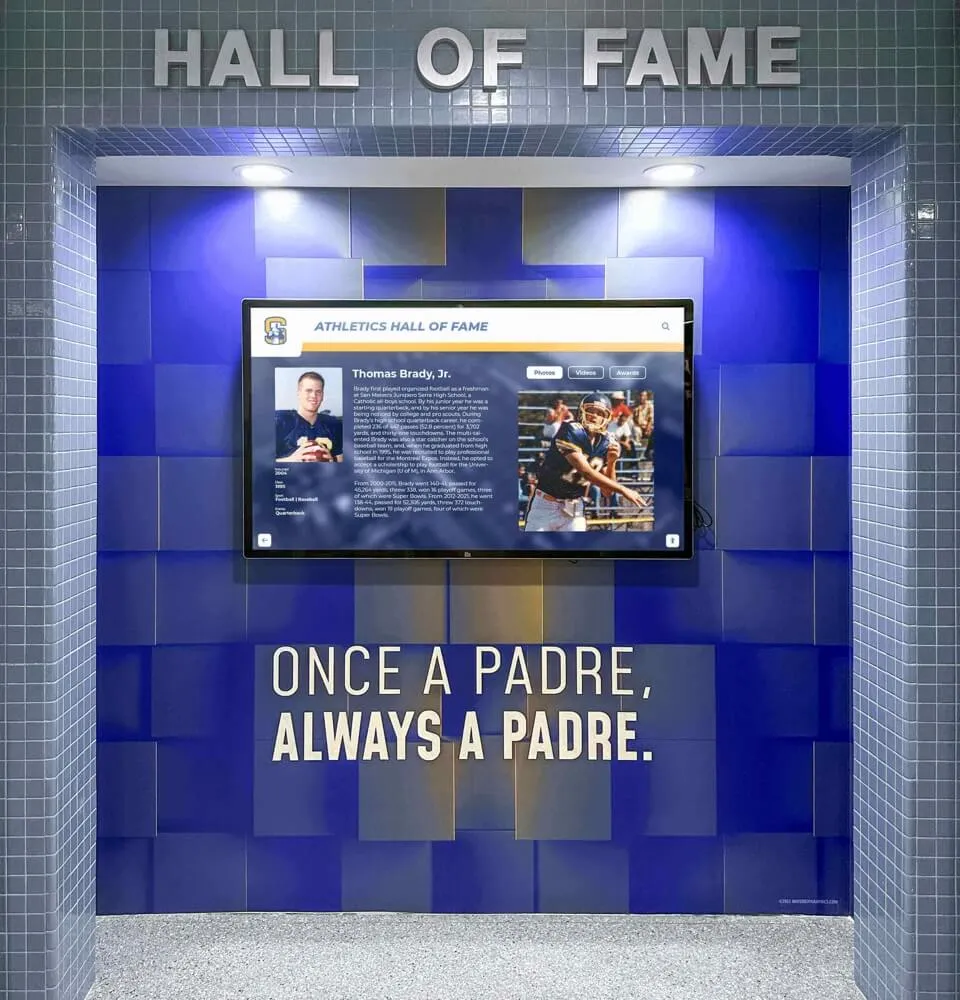
A digital recognition display resolves this without requiring the repaired case to be back in service. Schools using a cloud-managed digital trophy case or hall of fame platform can:
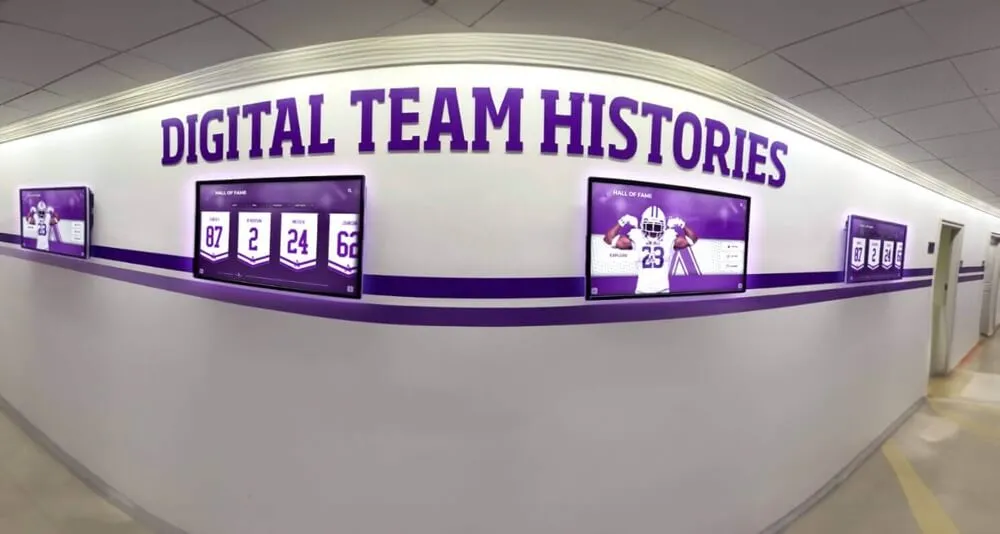
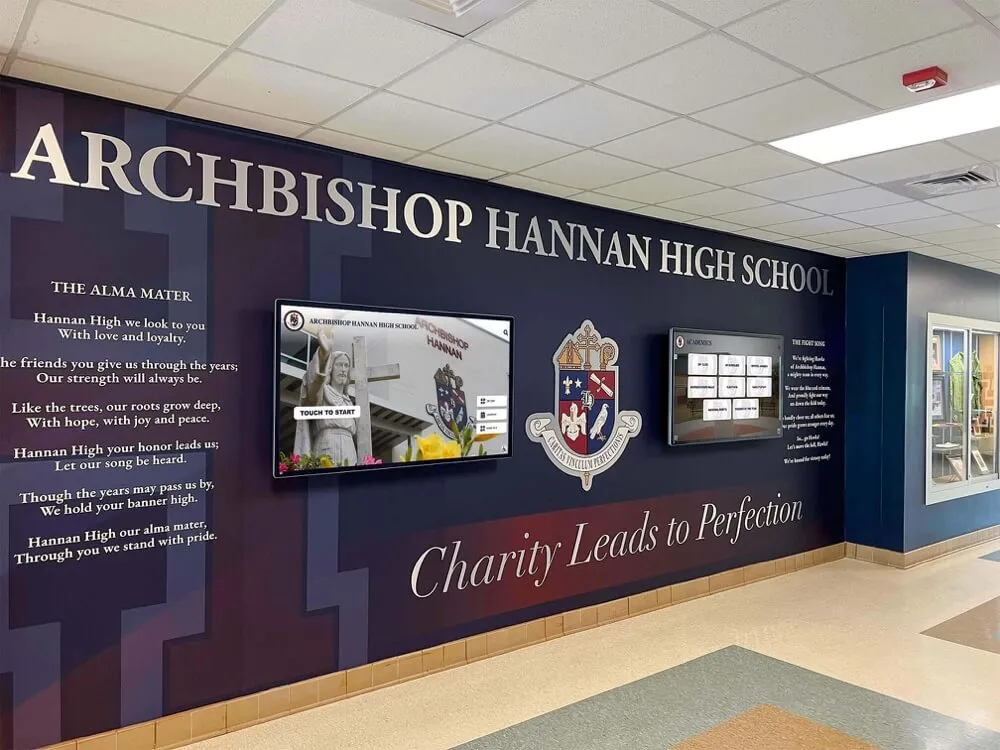
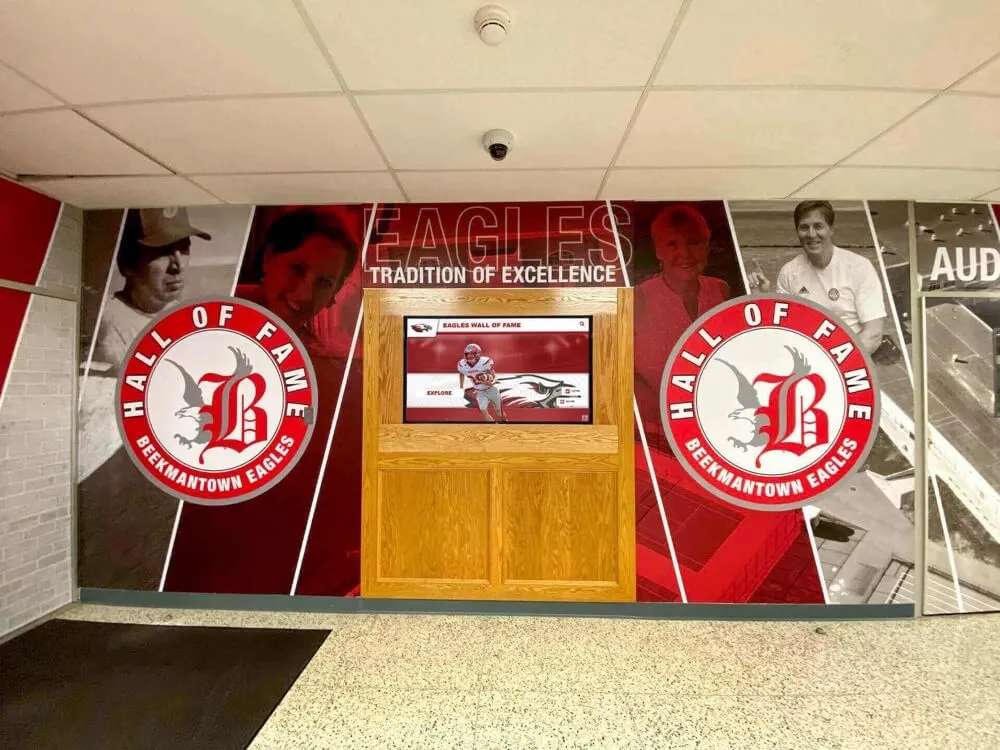
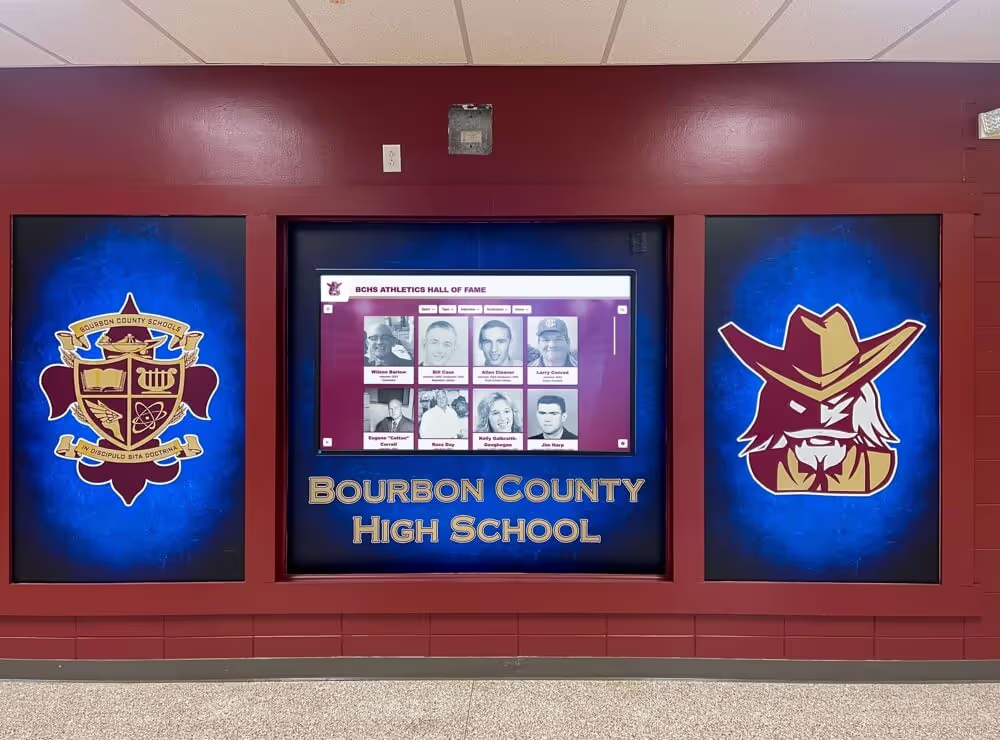
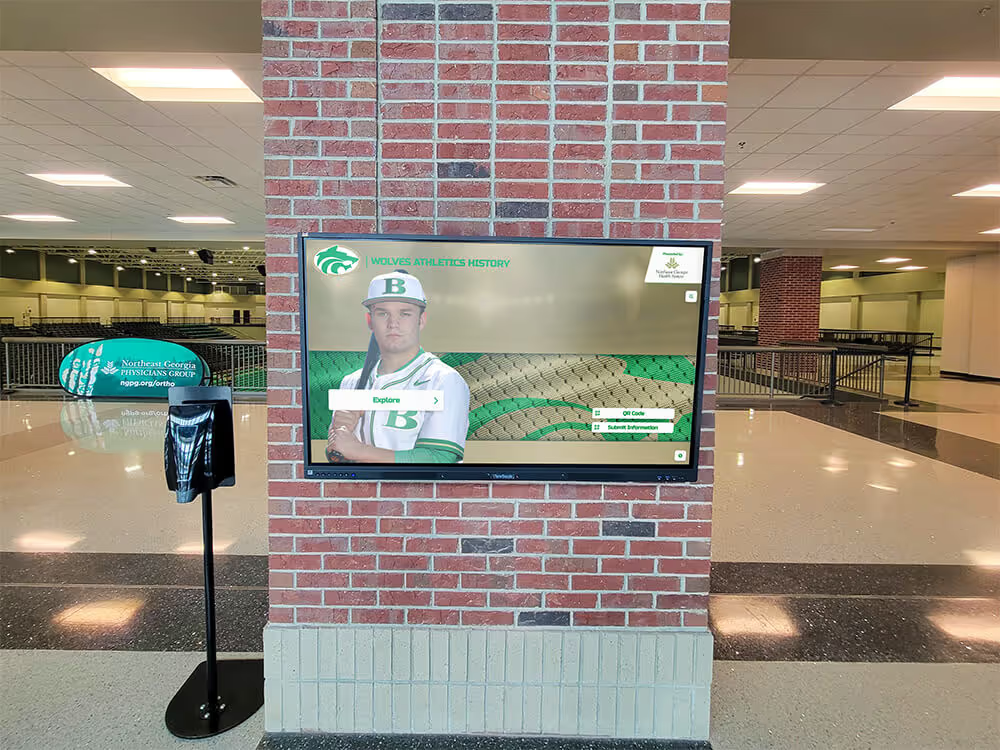
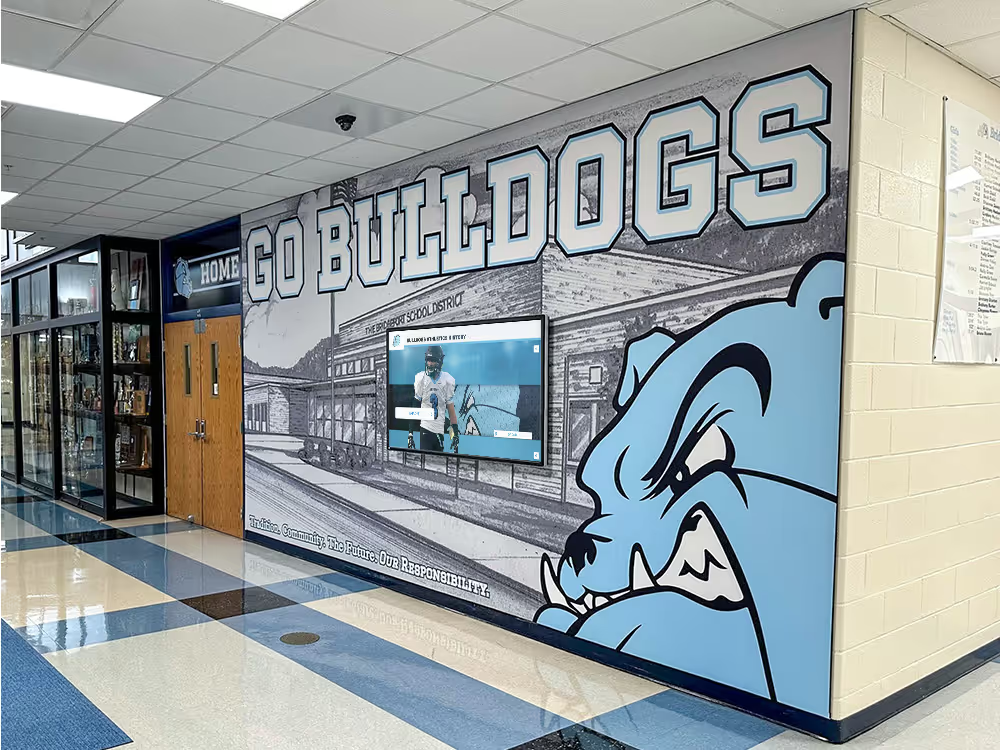
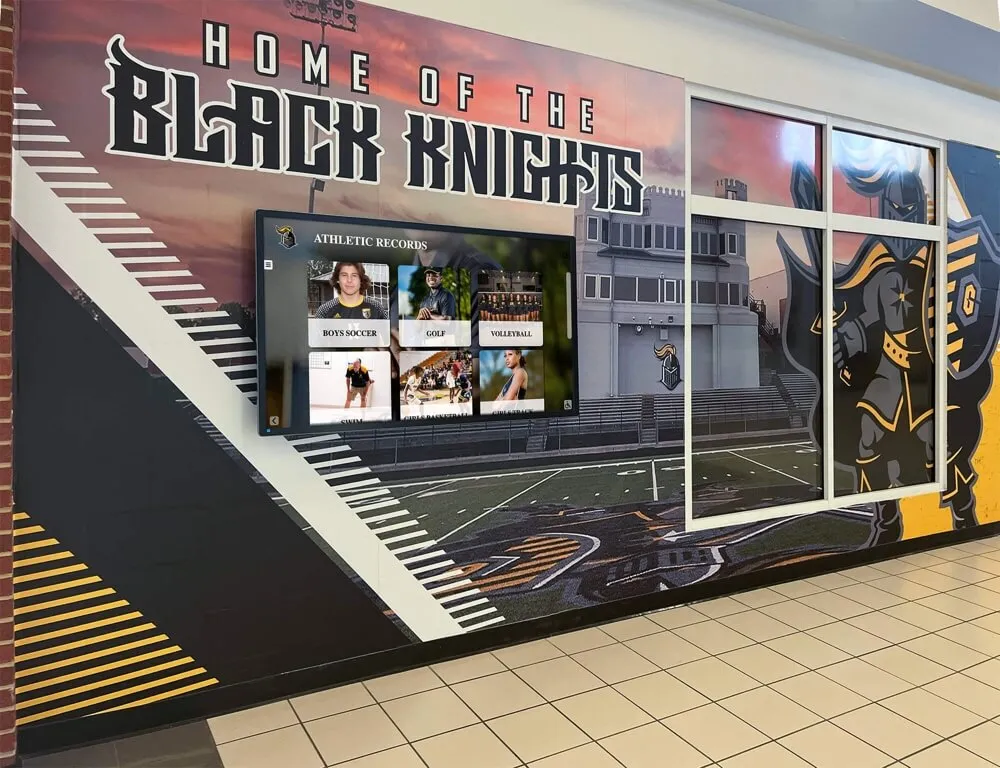
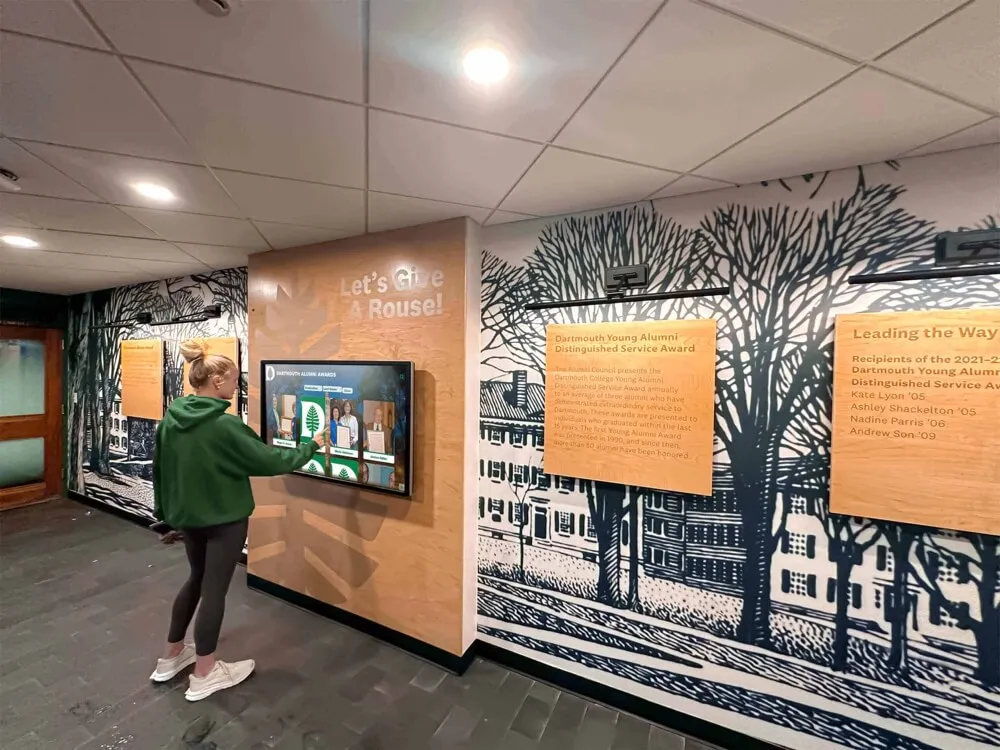
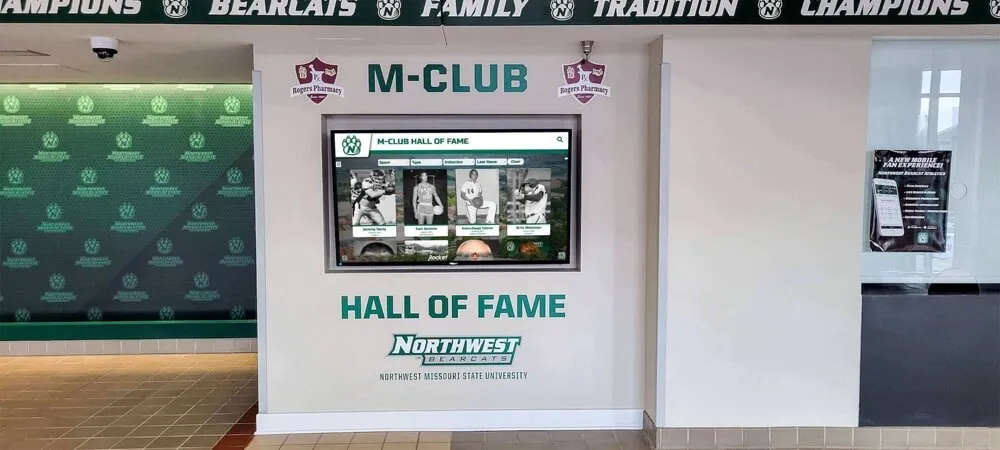
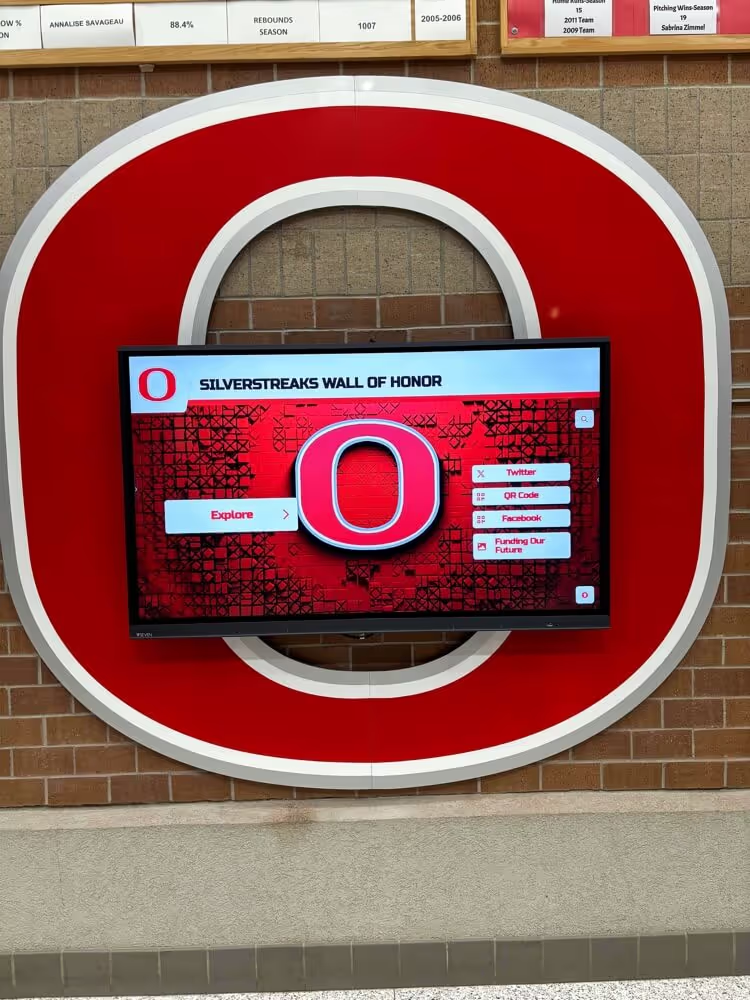
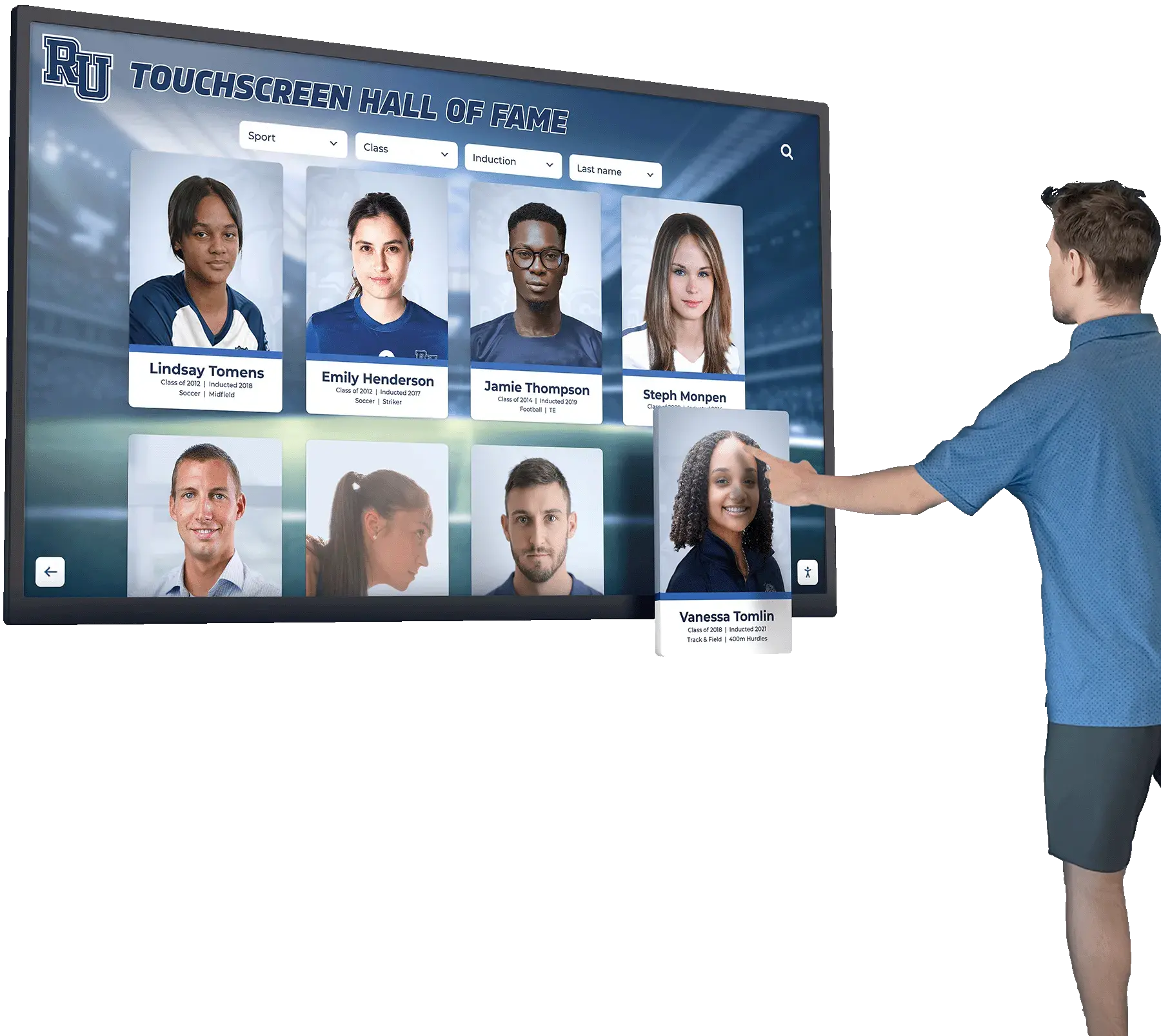
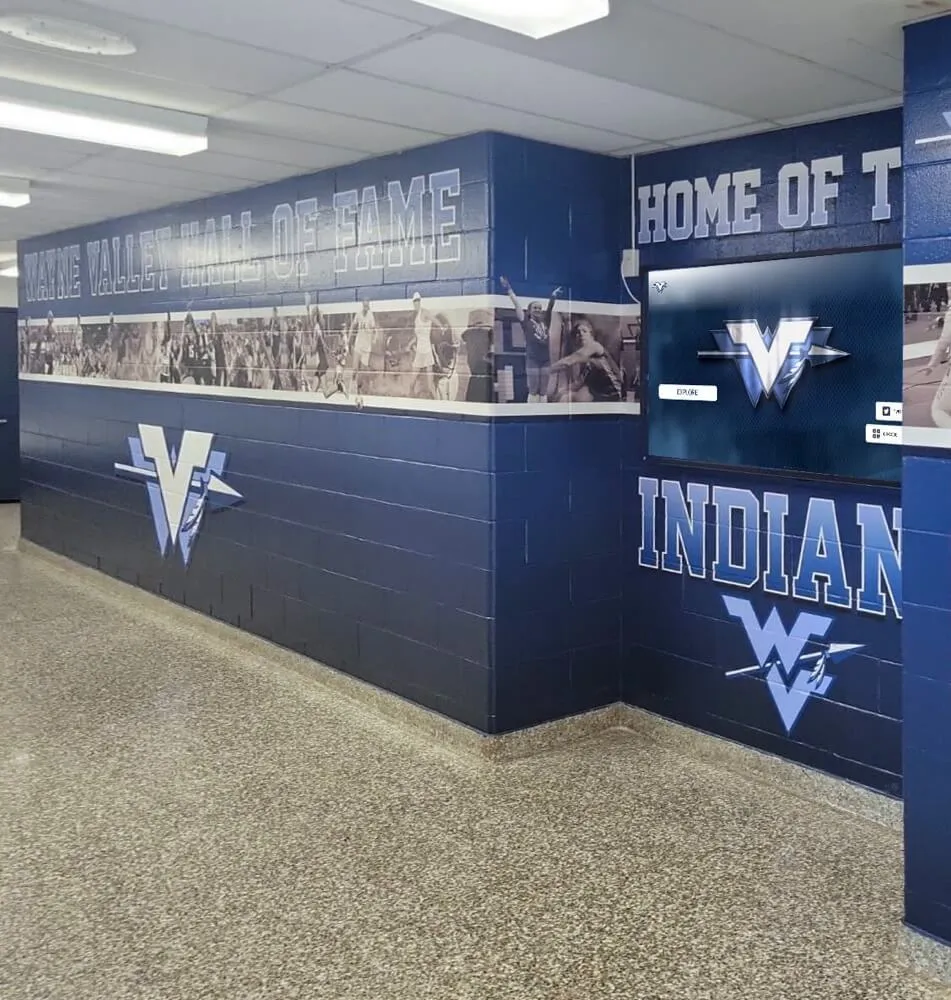
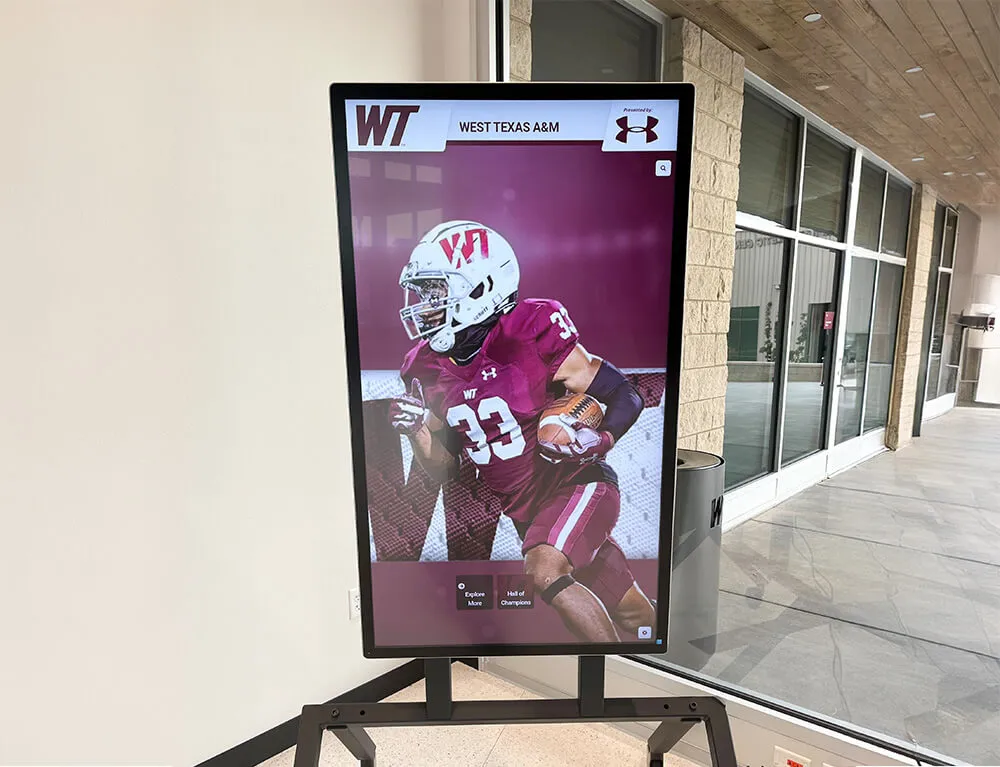
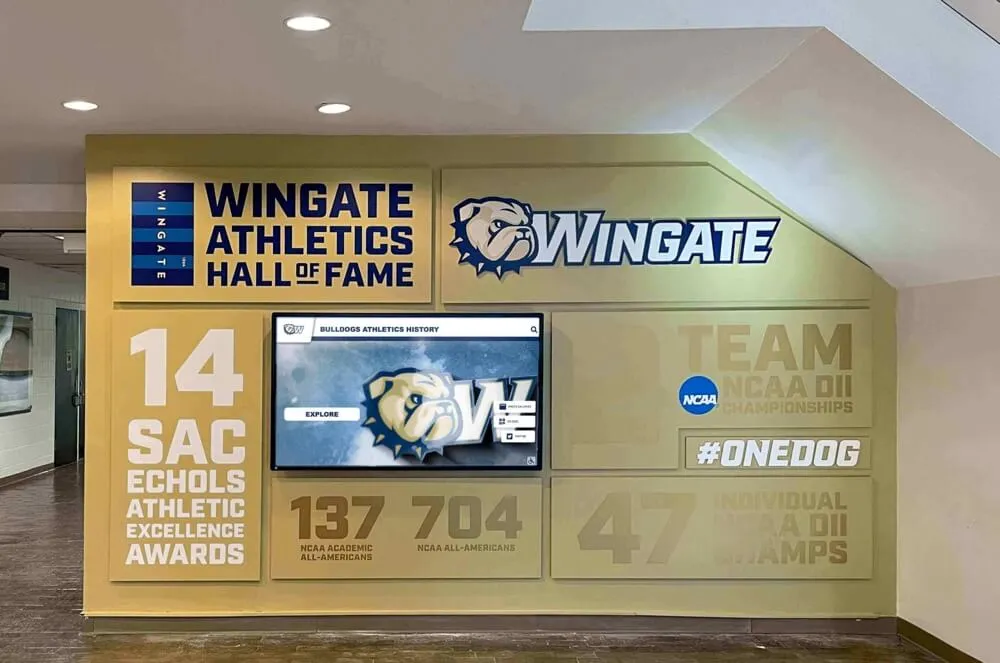
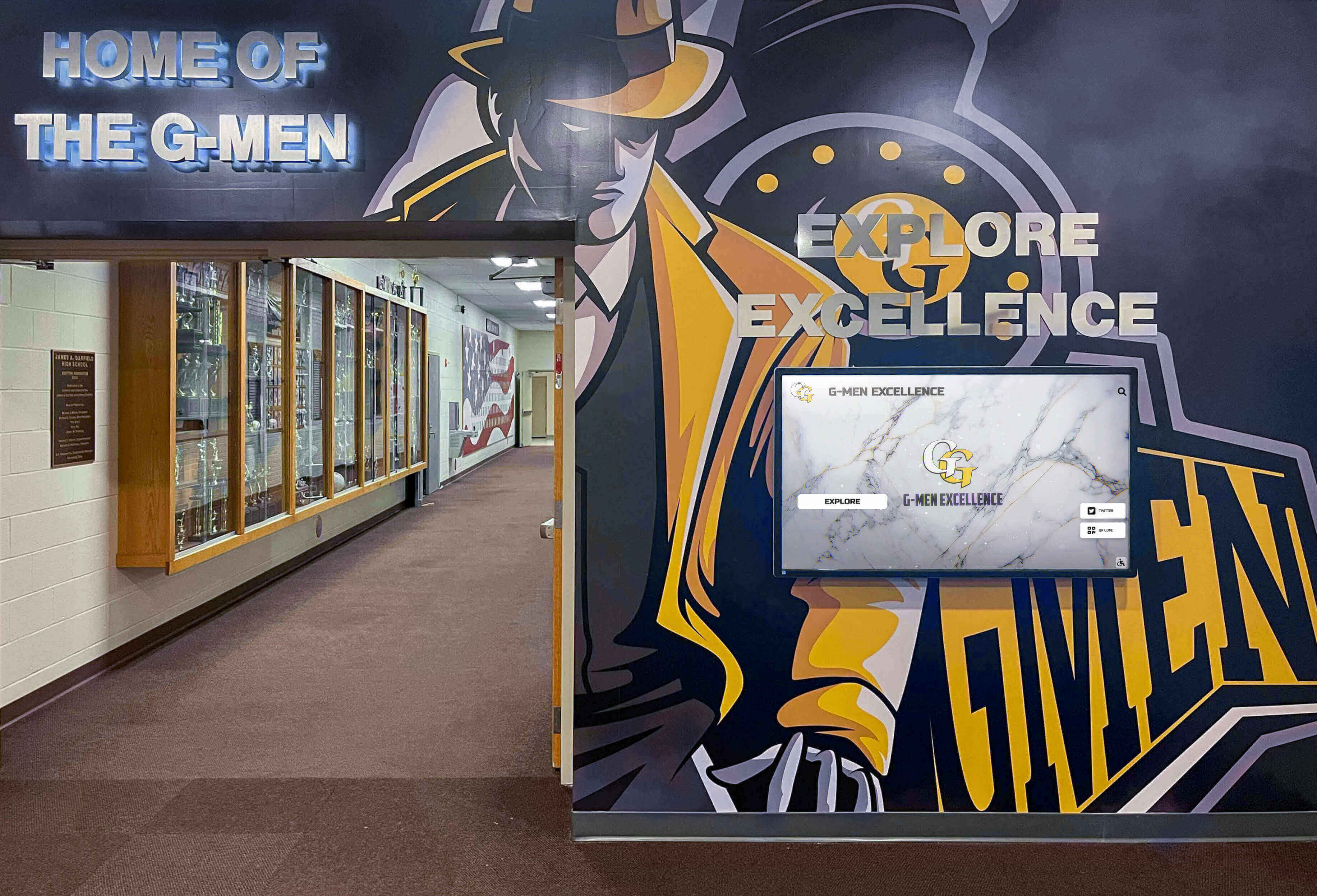
Surface the complete award record digitally during repair. A touchscreen kiosk or lobby display screen showing every trophy, plaque, and award in the collection — with photographs, achievement descriptions, and athlete names — provides recognition continuity that a physical case cannot sustain when its glass is being replaced. Visitors who walk past the blocked-off case can be directed to a nearby screen that shows the full collection.
Post a QR code at the repair site. A printed card posted near the blocked case, showing a QR code that links to the digital recognition record, gives passing students, parents, and alumni mobile access to the award history during the entire repair period. The QR code requires no hardware installation and can be activated within minutes of a decision to use it.
Use the gap to update digital records. The period when physical awards are in interim storage and can be photographed easily from all angles is also the best opportunity to refresh and complete digital catalog entries. High-resolution photographs of award bases, engraving text, and trophy details that are normally difficult to capture inside a closed case can be taken during the interim storage phase and uploaded directly to the digital system.
For schools planning end-of-year recognition cycles, connecting interim digital display to the broader recognition calendar — including end-of-year awards assembly ideas — ensures that a case repair period does not create a visible gap in the recognition cycle that students and families expect.
Insurance and Evidence Considerations
Trophy case breakage may generate an insurance claim, a facilities liability question, or both. The documentation steps in this response plan serve the evidentiary requirements of these processes directly, but there are additional considerations worth building into your school’s protocol.
Establish cause before the scene is disturbed. The glass fracture pattern, the presence or absence of a visible impact point, and the condition of the case frame and hardware all contribute to determining whether the breakage was caused by external impact, structural hardware failure, thermal stress, or manufacturing defect. This determination affects whether the claim falls under general liability, property coverage, or a product warranty. Once the glass is removed and disposed of, this evidence is lost. Photograph the fracture pattern clearly before any cleanup begins.
Retain glass samples if cause is disputed. In rare cases involving significant damage claims or questions about case manufacturer liability, retaining a representative sample of the broken glass for later inspection may be appropriate. Consult your district’s risk manager or legal counsel before this step — it is not routine, but the option closes once disposal occurs.
Document restoration costs. Keep all invoices and estimates for glass replacement, case repair, and award restoration. These feed directly into insurance claim submissions and provide the basis for comparing actual costs against covered amounts.
Photograph the restored case. After repair and award reinstallation, photograph the restored display as a post-incident baseline. This creates an updated condition record that distinguishes the current state of the case and its contents from the pre-incident photographs.
For administrators balancing incident management with ongoing program operations — including high school graduation ceremony planning and other high-profile recognition events that cannot pause for facilities incidents — this documentation discipline ensures that a breakage incident is fully resolved on paper before it fades from institutional memory.
Intent: research — a trophy case glass breakage response plan gives school administrators, athletic directors, and facilities teams a step-by-step process for responding to a shattered or cracked display case: isolating the scene immediately, protecting students and staff from glass hazards, escalating to licensed facilities professionals, safely recovering affected awards and memorabilia, documenting condition and evidence, arranging interim artifact storage, and maintaining recognition continuity through temporary digital display while the case is repaired. Safety requirements and insurance obligations vary by jurisdiction and district policy; consult your school’s facilities director, risk manager, and legal counsel before finalizing any official response protocol.
A trophy case shatters in the school lobby during passing period. Students stop. Staff arrive. The immediate instinct — grab the trophies before more glass falls — is understandable and almost always wrong. Broken display case glass creates a compound emergency: a physical safety hazard, a preservation risk for irreplaceable awards, and a documentation window that closes the moment the scene is disturbed.
Schools that have a written trophy case glass breakage response plan navigate this moment systematically. Those that do not often discover afterward that they have no photographs of the damage, incomplete records of which awards were affected, and no clear chain of accountability for what happened to the contents during cleanup. This guide provides the protocol, the documentation tools, and the recognition continuity options that let schools protect people, awards, and evidence — in that order.
Trophy cases in high-traffic corridors face ongoing risk from accidental impact, structural fatigue, and hardware failure — a written response plan means the first thirty minutes after breakage are spent protecting people and evidence, not improvising
Immediate Response: The First Five Minutes
When a trophy case glass panel breaks, the first five minutes determine whether the scene is managed safely or whether secondary injuries and evidence loss occur. The following steps apply regardless of what caused the breakage — accidental impact, hardware failure, or thermal stress.
Do Not Touch the Case or Its Contents Until the Scene Is Cleared
Glass from display cases — particularly older tempered, laminated, or standard plate glass panels — can shift, fall, and shatter further when disturbed. Trophies, plaques, and memorabilia inside a compromised case should not be removed until a facilities professional has assessed structural stability and cleared the scene for recovery. Premature removal of case contents can displace evidence of the cause, damage awards further, and create secondary injury risk for anyone reaching into or around broken glass.
Step 1: Isolate the Area Immediately
Establish a clear perimeter around the broken case before anyone approaches it. Use whatever is immediately available — traffic cones, chairs, a row of backpacks, or a faculty member stationed at each end of the corridor. The perimeter should extend at least three feet beyond the visible glass debris field, since glass fragments travel further than they appear to land.
If the break occurred during a passing period or other high-traffic moment, redirect student and staff foot traffic to an alternate route. A facilities or administrative radio announcement to redirect hallway traffic is faster than physical barriers when crowds are already moving.
Assign one staff member to hold the perimeter while others proceed with notification. The perimeter stays in place until facilities staff clear it — not until the corridor looks clear.
Step 2: Notify Facilities Within the First Five Minutes
Contact your facilities director or building manager immediately — before photographing, before moving anything, before parent or media contact. Facilities staff determine whether the remaining glass panels are structurally stable, whether the case framework needs to be secured before contents can be safely removed, and whether the breakage pattern suggests a cause that requires documentation before the scene is disturbed.
In most school buildings, the escalation chain is: classroom or hallway staff → front office → facilities director. If your district uses a facilities work order system, that notification should happen in parallel with, not instead of, a direct phone or radio call. Written work orders are for scheduling; verbal notification is for active safety events.
Document the time of notification. Insurance and incident reporting processes frequently ask when facilities were first notified, and a timestamped radio log or phone call record is more reliable than reconstructed recollections.
Step 3: Photograph Before Touching Anything
Once the perimeter is established and facilities has been notified, the next action is documentation — not cleanup. Use a smartphone camera to photograph:
- The full case from multiple angles showing the extent of breakage
- Close-up views of the glass fracture pattern (this can indicate cause: impact fractures radiate from a point; thermal fractures tend to run more uniformly across the panel)
- Any visible damage to awards, plaques, or memorabilia inside the case
- The floor area around the case showing the debris field
- Any objects or surfaces that may have caused or been involved in the break
Photograph with a measuring reference if possible — place a common object such as a standard folder or ruler next to key damage areas so the scale is visible in the photograph.
These photographs serve three purposes: insurance documentation, facilities work order evidence, and the condition baseline for every affected award before anything is moved.
Every award visible in a case at the time of breakage should be photographed in place before removal — this pre-removal record becomes the condition baseline for insurance, restoration decisions, and parent or donor communication
The Trophy Case Glass Breakage Response Checklist
The numbered steps below sequence the full response from initial breakage through case reinstallation. Print this and post it inside your facilities office, athletic director suite, or main office.
Phase 1 — Scene Safety (First 5 Minutes)
- Establish a three-foot perimeter around the debris field using cones, chairs, or stationed staff
- Redirect all foot traffic away from the area via alternate routes
- Call facilities director or building manager directly — verbal notification, not only a work order
- Record the time of breakage discovery and the time facilities was notified
Phase 2 — Documentation (Minutes 5–20, Before Any Recovery)
- Photograph the full case from multiple angles
- Photograph the glass fracture pattern at close range
- Photograph each award or item visible inside the case, in place, before removal
- Photograph the debris field on the floor
- Complete a written incident log entry noting time, location, first observer, and perimeter status
Phase 3 — Facilities Assessment and Debris Clearance
- Facilities staff assess structural stability of remaining glass panels before any entry into the perimeter
- Facilities staff secure or remove unstable glass before artifact recovery begins
- Debris cleanup uses appropriate PPE — cut-resistant gloves, eye protection, closed-toe shoes — and a dedicated vacuum designed for glass or a dustpan-and-broom approach that collects all fragments
- Facilities staff inspect the case frame, mounting hardware, and surrounding wall for damage before recovery begins
Phase 4 — Artifact Recovery and Condition Assessment
- Recover awards and memorabilia in a documented sequence — name each item as it is removed, note its location in the case, and assign it a temporary ID tied to the pre-removal photographs
- Inspect each item for glass contact damage: chips, scratches, cracks, or embedded glass fragments
- Record condition for each item: Undamaged / Surface Contact / Minor Damage / Significant Damage
- Set aside any items with glass embedded in them for specialized cleaning — do not wipe embedded glass with a cloth, as this grinds fragments deeper into engravings or finishes
Phase 5 — Interim Storage
- Wrap each recovered item individually in archival tissue or clean cotton cloth — not newsprint or foam with off-gassing concerns if items have metal surfaces
- Store wrapped items in labeled boxes noting item name, temporary ID, and condition rating
- Move storage boxes to a clean, dry, temperature-stable area — not a damp storage room or a space with ongoing foot traffic
- Complete a written interim custody record noting each item, its condition rating, its current storage location, and the name of the staff member who placed it there
Phase 6 — Communication and Recognition Continuity
- Notify the principal or head of school of the incident, the cause (if known), and the expected repair timeline
- Draft a brief communication for staff — athletic director, advancement, and front office — noting that the case is out of service and when it is expected to be restored
- Activate digital recognition continuity (see section below) so the awards remain visible to students, alumni, and visitors during repair
- Contact your insurance carrier or risk manager with the incident documentation if the damage is likely to meet your deductible or involves historically significant items
Phase 7 — Repair and Reinstallation
- Obtain at least two estimates for glass replacement that specify the type of glazing (tempered, laminated, UV-filtering) being used in the repair
- During reinstallation, photograph the case interior before awards are returned to establish a clean baseline for the restored display
- Return awards to their pre-incident locations based on the pre-removal photographs — do not rely on memory or staff recollection
- Re-photograph the restored display and update your digital catalog entries with the post-repair condition record
Safe Glass Cleanup: What Facilities Needs to Know
Glass cleanup from a trophy case is not a standard corridor cleanup task. Display case glass — particularly older installations — may be standard plate glass, tempered glass, or laminated safety glass, each with different breakage patterns that affect cleanup approach.
Standard plate glass breaks into large, irregular shards with sharp edges. These are highly visible and present a clear laceration risk. Cleanup requires collecting large fragments by hand with cut-resistant gloves before vacuuming fine particles, and inspecting a wide radius around the case since large shards can travel unexpectedly on hard floors.
Tempered glass shatters into small, roughly cubic fragments — the familiar “safety glass” pattern. These fragments are less individually sharp than plate glass but cover a significantly wider debris area, embed readily in carpet or floor texture, and are difficult to see in low light. Tempered glass cleanup requires systematic sweeping of a larger area than the visible debris field and a follow-up wet mopping or damp cloth wipe to collect fine fragments that sweeping misses.
Laminated glass holds together on its inner film when broken but may develop stress cracks that fragment when the panel is handled. Laminated panels that are cracked but structurally intact should be handled as a unit during removal, not broken down for disposal.
For any glass type, restrict cleanup to facilities staff with appropriate PPE. Custodial staff who do not regularly handle glass cleanup may not have appropriate footwear or eye protection and should not be assigned to this task without a facilities supervisor present.
Facilities directors and athletic staff who review glass breakage response protocols together before an incident occurs respond faster and with fewer improvised decisions when a case actually breaks
Condition Assessment for Affected Awards
The condition assessment step is where a glass breakage incident transitions from a safety event into a records management task. Every award, plaque, and piece of memorabilia removed from the broken case needs a condition record before it enters interim storage.
A workable condition assessment for this context uses four ratings:
| Rating | Definition |
|---|---|
| Undamaged | No visible contact with glass; finish and structure intact |
| Surface Contact | Glass dust or fine fragments on surface; no visible damage to finish |
| Minor Damage | Surface scratches, minor chips to base or frame, text or finish partially affected |
| Significant Damage | Structural damage to trophy components, engraving affected, plaque face cracked, finish loss covering more than a minor area |
For each item, record the rating, a brief written description, and a reference to the pre-removal photograph. This creates the documentation baseline for three important conversations.
Insurance review. If damage is significant enough to file a claim, your insurer will want evidence of pre-incident condition (or the closest available proxy), post-incident condition, and an estimated cost of restoration or replacement. The condition assessment provides this.
Donor or family communication. Awards that were donated by families or that honor specific individuals deserve direct acknowledgment when damaged. A condition record allows that conversation to be specific rather than vague — “the base was chipped but the engraving is intact” is more reassuring than “it was in the case when the glass broke.”
Restoration decisions. Trophy restoration vendors — and in some cases award manufacturers — offer refinishing, replating, and structural repair services. A condition record helps them assess scope and cost accurately.
For schools maintaining heritage collections with items of historical significance, the approach to school heritage displays, traditions, artifacts, and alumni stories provides context on how physical artifacts fit into a broader institutional recognition strategy — context that makes condition assessment feel less like paperwork and more like stewardship of the institutional record.
Interim Artifact Storage: Protecting Awards During Repair
The period between glass breakage and case restoration can run from a few days to several weeks depending on glass sourcing, contractor scheduling, and the scope of case damage. Awards held in interim storage during this period face risks that differ from display risks: physical jostling, humidity changes, inappropriate packaging materials, and handling by staff who may not recognize which items are most fragile.
Wrapping. Use archival tissue paper, acid-free packing material, or clean cotton cloth for all items. Avoid newspaper (acid transfer), bubble wrap in direct contact with metal finishes (condensation risk), and foam packing peanuts for engraved pieces (fragments lodge in lettering).
Labeling. Every wrapped package should be externally labeled with the item name, temporary ID from the condition assessment, and condition rating. Do not rely on visual inspection through wrapping to identify contents — labels prevent unwrapping and rewrapping that creates additional handling risk.
Location. Choose a storage location that is clean, dry, and temperature-stable. A school storage room with consistent HVAC is appropriate; a basement storage area with humidity variability is not. The location should be accessible only to designated staff — not a general-use storage space where the items could be moved, misplaced, or borrowed for unrelated purposes.
Custody record. Maintain a written list of every item in interim storage with its location within the storage space. Update this list each time an item is added, inspected, or removed. The interim custody record becomes part of the incident file and supports chain-of-custody accountability when items return to the restored case.
Schools that maintain digital records alongside physical displays can keep every award visible to students and alumni during case repair — the digital record does not depend on the glass being intact
Recognition Continuity: Temporary Digital Display During Repair
A broken display case removes a visible recognition anchor from the school’s main corridor. Students who walk past the empty, blocked-off case no longer see the championship trophies, retired jersey numbers, or hall of fame hardware that communicate program history and school identity every day. For athletic programs building culture, for alumni returning to campus, and for advancement staff managing donor relationships, a weeks-long gap in physical recognition visibility matters.
A digital recognition display resolves this without requiring the repaired case to be back in service. Schools using a cloud-managed digital trophy case or hall of fame platform can surface the complete award record on a nearby screen — with photographs, achievement descriptions, and athlete names — providing recognition continuity that physical glass cannot sustain during a repair period.
A printed card posted near the blocked case, showing a QR code that links to the digital recognition record, gives passing students, parents, and alumni mobile access to the award history during the entire repair period. The QR code requires no hardware installation and can be activated within minutes.
The repair period is also the best opportunity to improve digital catalog entries. Awards in interim storage can be photographed from all angles — details that are normally difficult to capture inside a closed case — and the high-resolution images uploaded to the digital system before items are returned to the restored case.
For schools planning recognition around the academic calendar, this interim period connects naturally to ongoing programming. Schools coordinating end-of-year awards assemblies benefit when every award record is current and digitally accessible, regardless of whether the physical case is in service at the time of the ceremony.
Digital recognition displays in school hallways and lobbies also connect to broader branding conversations. Resources covering school banner ideas for hallways, gyms, and digital walls of fame illustrate how temporary display decisions — including what to show during a case repair — connect to long-term visual identity strategy for the building.
Insurance and Evidence Considerations
Trophy case breakage may generate an insurance claim, a facilities liability question, or both. The documentation steps in this response plan serve the evidentiary requirements of these processes directly, but there are additional considerations worth building into your school’s protocol.
Establish cause before the scene is disturbed. The glass fracture pattern, the presence or absence of a visible impact point, and the condition of the case frame and hardware all contribute to determining whether the breakage was caused by external impact, structural hardware failure, thermal stress, or manufacturing defect. This determination affects whether the claim falls under general liability, property coverage, or a product warranty. Once the glass is removed and disposed of, this evidence is lost. Photograph the fracture pattern clearly before any cleanup begins.
Retain glass samples if cause is disputed. In rare cases involving significant damage claims or questions about case manufacturer liability, retaining a representative sample of the broken glass for later inspection may be appropriate. Consult your district’s risk manager or legal counsel before this step — it is not routine, but the option closes once disposal occurs.
Document restoration costs. Keep all invoices and estimates for glass replacement, case repair, and award restoration. These feed directly into insurance claim submissions and provide the basis for comparing actual costs against covered amounts.
Photograph the restored case. After repair and award reinstallation, photograph the restored display as a post-incident baseline. This creates an updated condition record that distinguishes the current state of the case and its contents from the pre-incident photographs.
For administrators balancing incident management with ongoing program operations — including high school graduation ceremony planning and other high-profile recognition events that cannot pause for facilities incidents — this documentation discipline ensures that a breakage incident is fully resolved on paper before it fades from institutional memory.
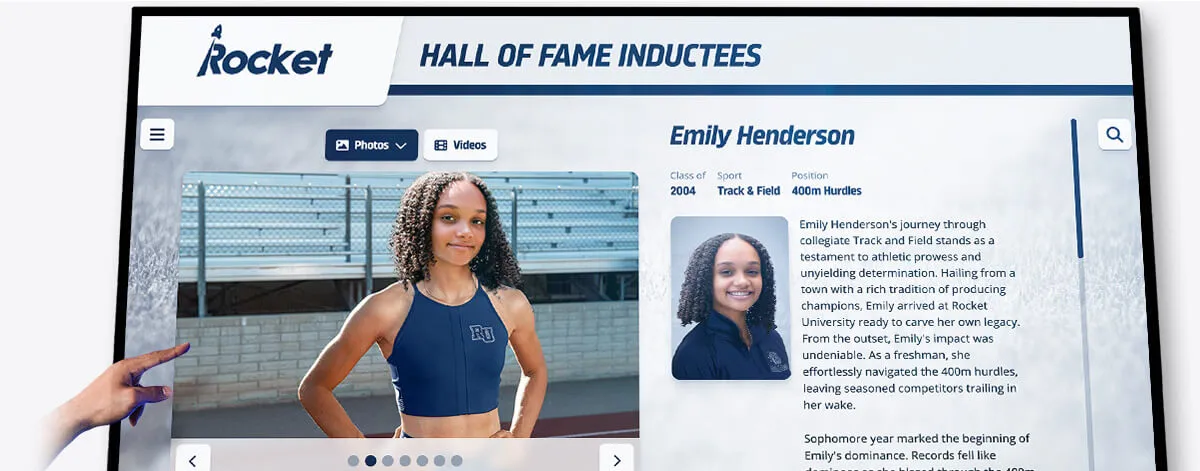
Cloud-managed digital recognition records are unaffected by physical case damage — every trophy, award, and athlete name remains accessible to the school community while the physical case is being repaired
Donor and Sponsor Trust: Communicating After Breakage
Trophy cases in prominent school locations often display items that carry meaning well beyond their physical value. A plaque bearing a donor family’s name, a trophy awarded in honor of a deceased coach, or a championship banner representing a program’s only state title are not interchangeable objects — their loss or damage has relationship consequences for advancement staff and athletic directors.
The communication protocol after glass breakage should be proportional to the significance of the items involved. For standard seasonal awards with no named honoree, an incident report and facilities update are sufficient. For named donor items, memorial awards, or items with direct alumni association:
Contact the relevant party before news travels informally. Donors, alumni, and named honorees learn about incidents from students, social media, or other staff before administrators reach them more often than anyone would prefer. A direct communication — even a brief phone call acknowledging the incident, describing the cause and condition of the item, and outlining the repair timeline — demonstrates the institutional seriousness that named recognition deserves.
Describe what was damaged and what was not. Specificity is reassuring. “The trophy was in the case when the front glass panel broke, the award itself is in secure storage and shows no damage” is a far more useful communication than “we had an incident with the trophy case and are handling it.”
Confirm the reinstatement plan. When the case will be repaired, when the item will be returned to display, and whether any restoration work is needed — these details matter to donors and families who associate the physical display with ongoing recognition of a contribution or honoree.
Schools building long-term alumni and donor recognition programs treat each individual communication as part of the institutional relationship, not a one-time incident notification. Resources covering how schools think about digital hall of fame programs and selection processes — including guidance on digital hall of fame evaluation approaches — reinforce that the trust behind formal recognition extends to how schools handle incidents involving those recognition assets.
Planning Ahead: Reducing Glass Breakage Risk
A response plan addresses incidents after they occur. A maintenance-aware trophy case program also takes steps that reduce the likelihood of breakage in the first place.
Regular hardware inspection. Cabinet mounting hardware, hinge mechanisms, door catches, and frame joints fatigue over time — particularly in cases that see daily opening and closing by students, staff, or facilities teams. A semi-annual visual inspection that checks for loose fasteners, warped frame sections, and door alignment is lower-cost than a breakage event by almost any measure.
Glass type awareness. Older trophy cases may use standard plate glass rather than tempered or laminated safety glass. If your school’s cases were installed more than 15–20 years ago and have not had glass replacement, it is worth confirming what type of glazing they contain. A facilities professional or glass contractor can assess this without disassembling the case.
Traffic management. Cases in heavy-traffic corridors, near locker areas, or adjacent to gymnasium entrances face higher accidental impact risk than cases in administrative wings or lobby alcoves. Physical barriers — display rails, low planters, or offset mounting positions — reduce the likelihood that a passing backpack, door swing, or hallway collision reaches the case glass.
Climate consistency. Thermal stress — glass expanding and contracting unevenly due to temperature shifts near exterior doors, HVAC vents, or sun-exposed windows — can produce spontaneous fractures in glass panels without any external impact. Cases mounted near these features should be flagged for more frequent inspection, particularly at seasonal transitions when temperature differentials are largest.
For administrators building connected digital and physical recognition environments, the planning that goes into display banner programs for hallways and gyms — including choices about creative school banner designs — also informs where and how physical cases are positioned relative to traffic patterns, mounting surfaces, and environmental conditions.
The Long-Term Case for Digital Recognition Alongside Physical Displays
The practical value of a glass breakage response plan is most visible during the two to four weeks of case repair. But the broader argument for digital recognition alongside physical displays operates on a much longer timeline.
Physical trophy cases are inherently fragile — not just from glass breakage, but from every scenario in which a building is renovated, a display is relocated, a case reaches end of physical life, or an award is damaged faster than it can be restored. Schools that have built cloud-managed digital recognition records alongside their physical displays do not experience these events as recognition gaps. The digital record persists regardless of what happens to the glass.
A cloud-managed digital trophy case platform holds unlimited records with no physical capacity constraints, updates remotely without IT tickets, meets ADA WCAG 2.1 AA accessibility standards for all visitors, generates QR codes for mobile access, and allows advancement and athletic staff to publish scheduled recognition content on whatever timeline fits the school year.
The response plan in this article handles a glass breakage event. A complete digital recognition infrastructure handles every event — breakage, renovation, flood, fire, staff transition, or simple institutional growth beyond what physical cases can hold — by ensuring the record never depends on the glass.
Frequently Asked Questions
What should we do immediately when a trophy case glass breaks? Establish a perimeter, redirect foot traffic, and call your facilities director verbally before touching anything. The first priority is preventing secondary injuries from glass movement or debris. Documentation comes second — photograph the case, fracture pattern, and debris field before any cleanup or artifact recovery begins. The order matters: safety first, evidence second, artifact recovery third.
Who is responsible for cleaning up broken trophy case glass? Glass cleanup should be handled by facilities staff equipped with appropriate PPE — cut-resistant gloves, eye protection, and closed-toe shoes. This is not a standard custodial cleanup task. The cleanup approach depends on the type of glass (plate, tempered, or laminated), and a facilities supervisor should direct the process. Do not assign students, volunteers, or administrative staff to glass cleanup without facilities oversight.
Should we remove the awards before calling facilities? No. Awards and memorabilia inside a compromised case should remain in place until a facilities professional has assessed structural stability. Reaching into or around broken glass to retrieve trophies before the scene is cleared creates injury risk and disrupts the fracture pattern evidence that can help determine the cause of the breakage.
How do we document which awards were in the case at the time of breakage? Photograph each item in place before removal, and record its name, case location, and condition as it is recovered. Assigning a temporary ID to each item ties the photograph to the written condition record. If you maintain a digital trophy case catalog, the catalog entry for each affected item becomes the pre-incident reference record — provided it includes a photograph of the item in good condition before the incident.
What do we tell parents or donors whose named awards were in the case? Contact them directly before information circulates through informal channels. Be specific about the condition of their item — whether it was damaged, where it is currently stored, what restoration (if any) is needed, and when it will be returned to display. A specific, prompt communication from the athletic director or advancement office is significantly more reassuring than a general incident notice discovered through a student or social media.
How long does trophy case glass replacement typically take? Replacement timelines depend on glass type, case dimensions, and contractor availability. Standard replacement of a damaged panel with tempered or laminated safety glass in a common case size may be completed within one to two weeks in most markets. Custom-size panels, historic cases with unusual frame dimensions, or cases requiring frame repair alongside glass replacement can take longer. Obtaining at least two estimates gives you both a cost comparison and an independent read on expected timelines.
Can we display awards somewhere else during the repair period? This is possible but creates additional custody events that need documentation — each temporary display location is a chain-of-custody step. A simpler approach for most schools is activating digital recognition continuity during repair: a nearby touchscreen display or a QR code linking to the digital award record keeps the full collection visible without requiring the physical awards to leave interim storage.
What type of replacement glass should we specify for the repaired case? Discuss this with your glass contractor and facilities director. Tempered safety glass is standard for most applications, laminated glass offers additional hold-together properties that reduce debris spread in future breakage events, and UV-filtering options exist in both formats that protect awards from long-term light damage. The replacement decision is also an opportunity to upgrade from whatever glazing type was originally installed if that type contributed to the current incident.
How does a digital trophy case help during a physical case repair period? A cloud-managed digital display can show the complete collection — every trophy, plaque, and award — on a screen during the entire repair period, with no dependency on the physical case being in service. QR codes posted at the repair site give mobile access to the full record. The repair period also presents an efficient opportunity to photograph awards in detail while they are outside the case and update digital catalog entries before reinstallation.
Keep Every Award Visible — Even When the Glass Isn't
Rocket Alumni Solutions builds cloud-managed digital trophy cases and halls of fame for schools nationwide. Unlimited recognition capacity, ADA WCAG 2.1 AA compliant touchscreens, QR code mobile access, and remote content management ensure your complete award history stays visible and accessible — even during physical case repairs, renovations, or any other disruption to your hallway displays. See how schools are building recognition systems that outlast the glass.
Book A DemoLive Example: Rocket Alumni Solutions Touchscreen Display
Interact with a live example (16:9 scaled 1920x1080 display). All content is automatically responsive to all screen sizes and orientations.