



Intent: define — a trophy case exhibit rotation schedule is a documented, repeatable plan that governs which trophies, photos, banners, and plaques are on active display, when they change, and how historical items are preserved when they leave the case. Most schools without a written schedule let displays stagnate for years, which buries recent achievements behind decades of older hardware and signals to current students and visitors that the school’s recognition program is frozen in the past.
A school’s trophy case should tell the current story of its athletic and academic programs — not just document achievements from the 1980s and 1990s that no one alive in the building can personally verify. When a freshly minted conference champion walks past a trophy case dominated by trophies older than their parents, the display has stopped doing its job as a recognition and culture-building tool.
A written trophy case exhibit rotation schedule fixes that problem. It creates a repeatable rhythm for cycling items in and out of active display, ensures that recent achievements appear promptly, and provides a framework for preserving historical pieces with dignity rather than simply shoving them into storage. This guide walks school administrators, athletic directors, and recognition-program coordinators through building and maintaining a practical rotation schedule that keeps displays current without losing institutional history.

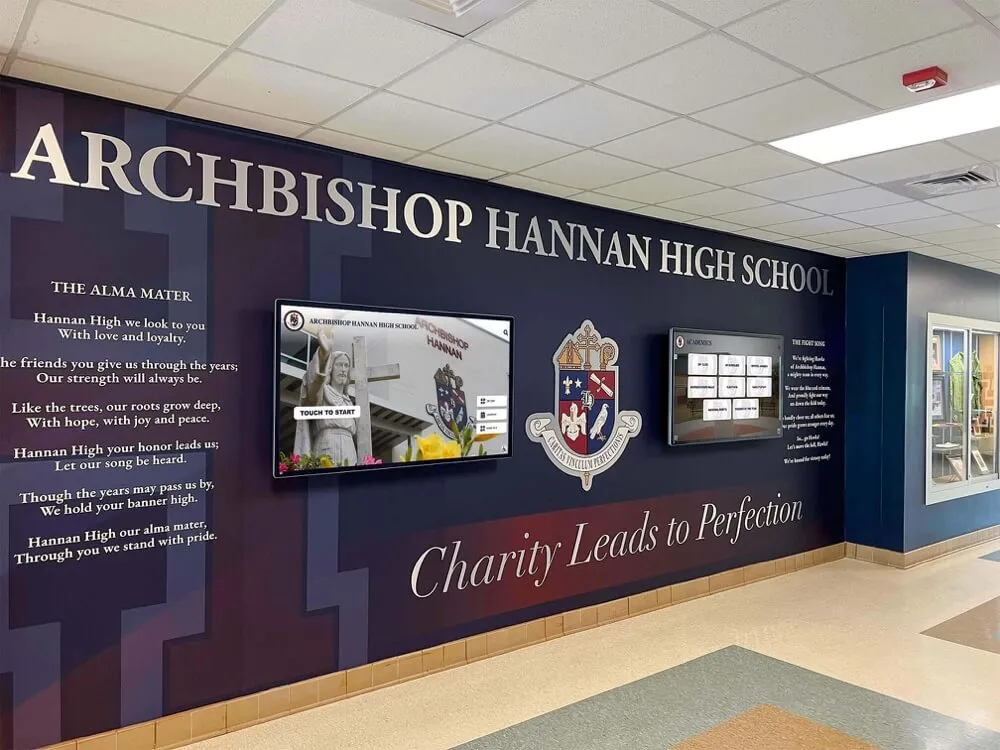
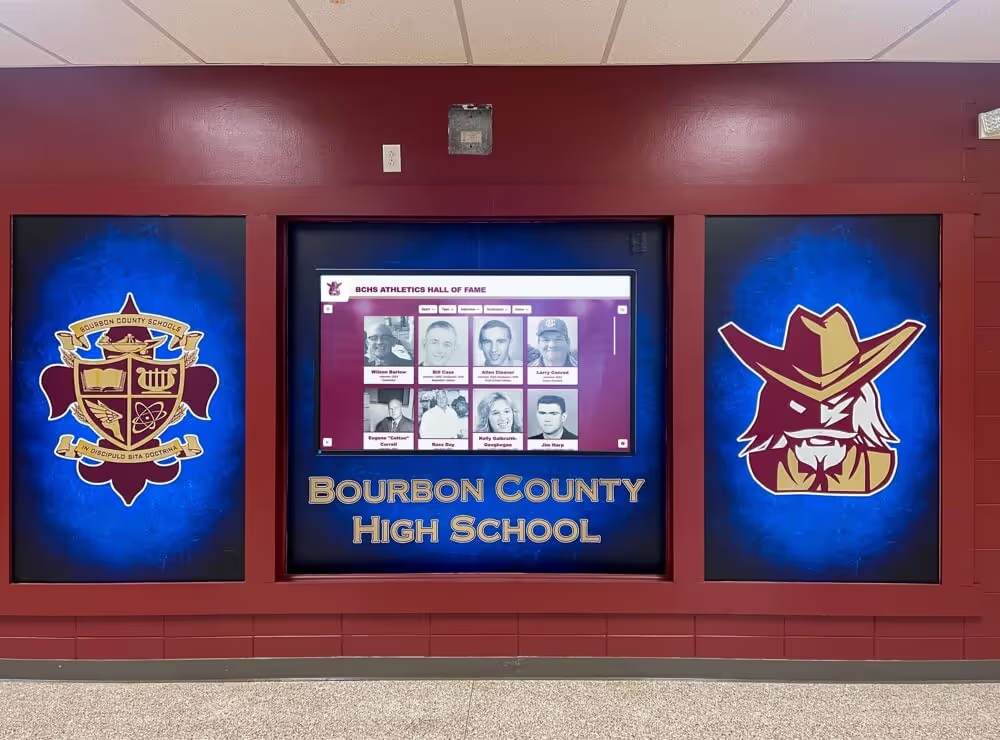
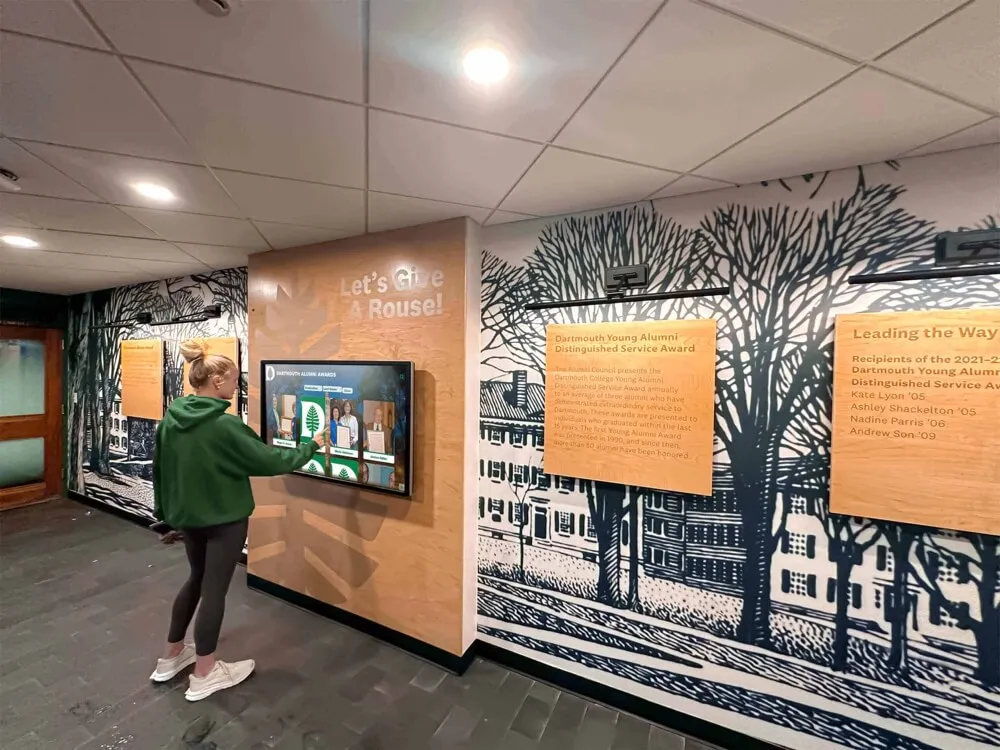
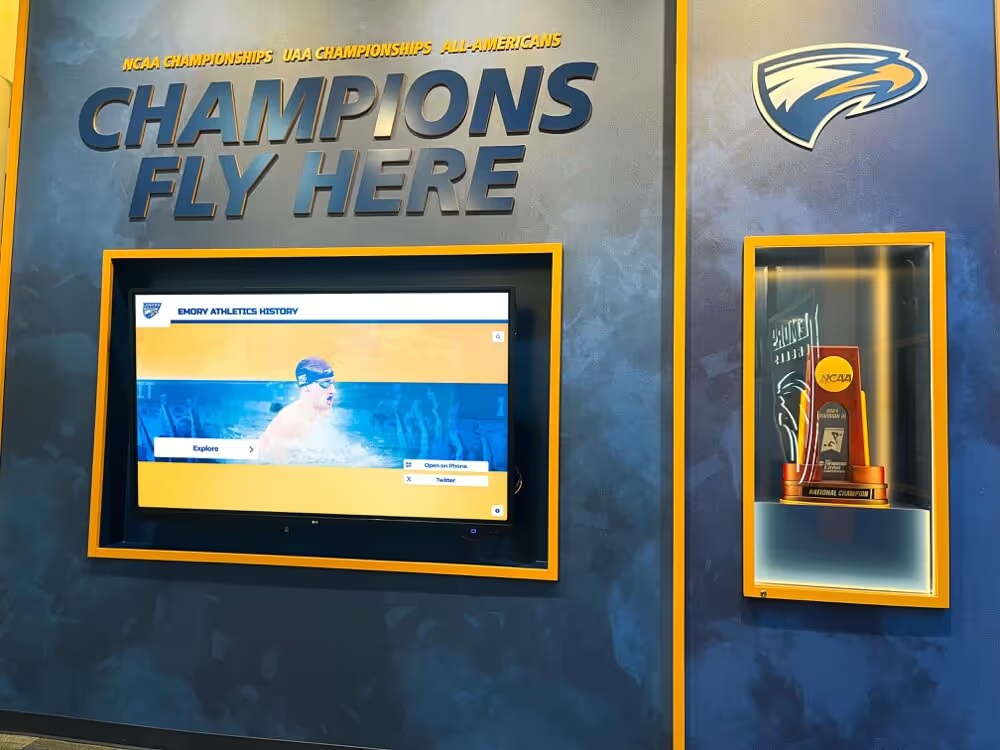
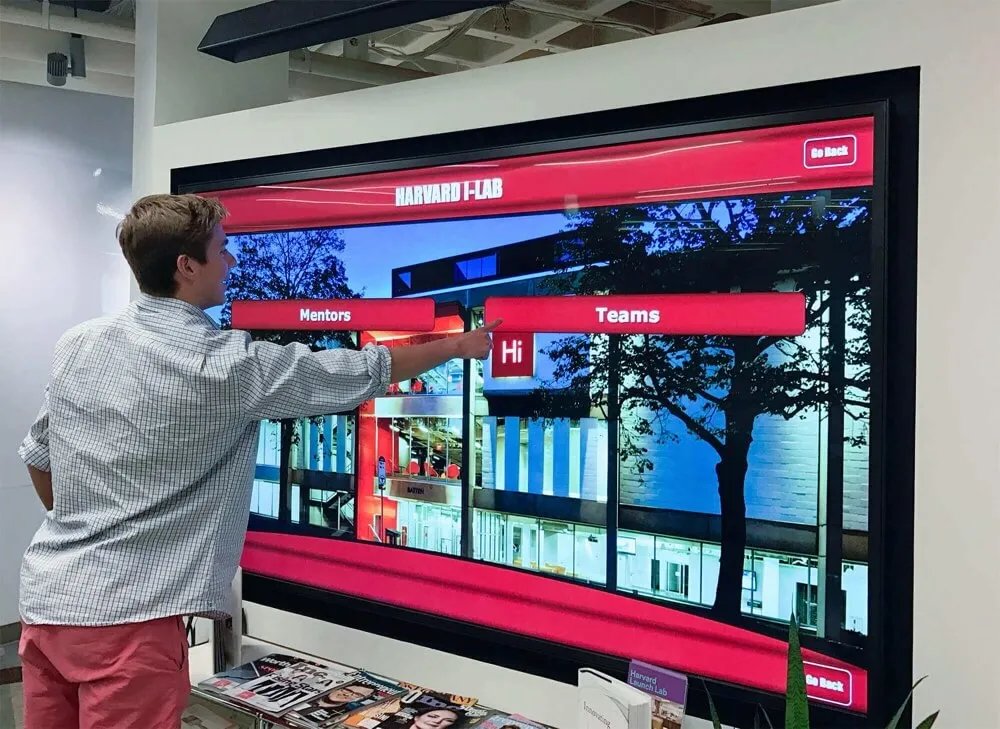
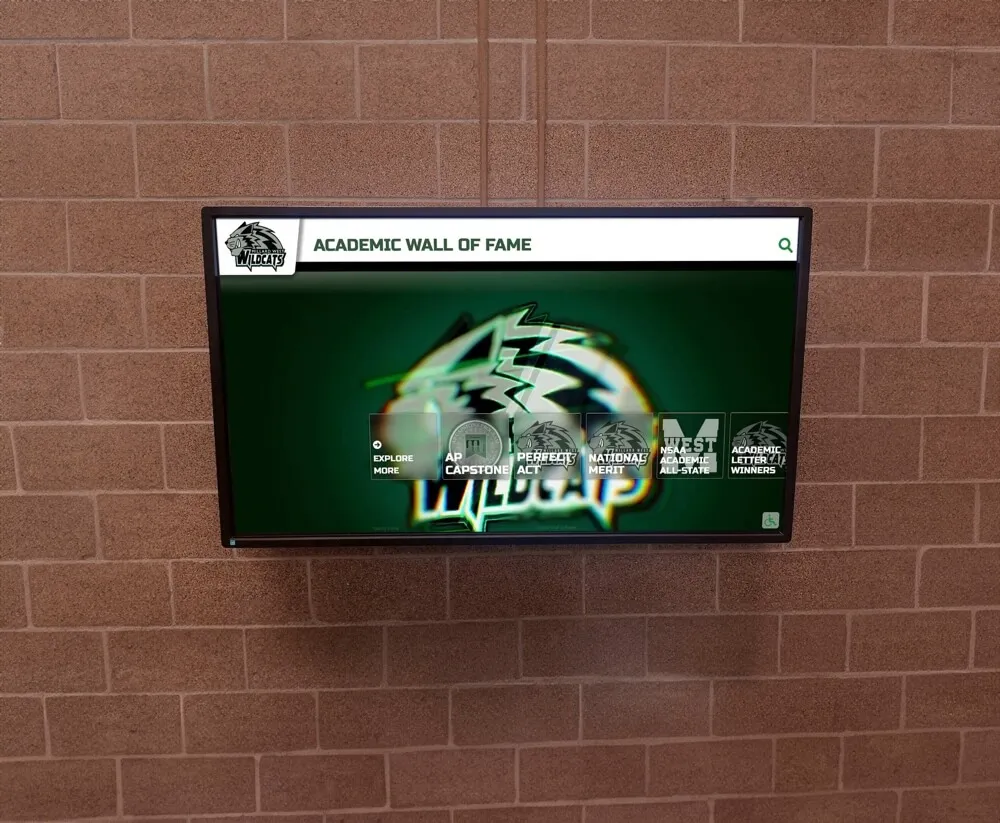
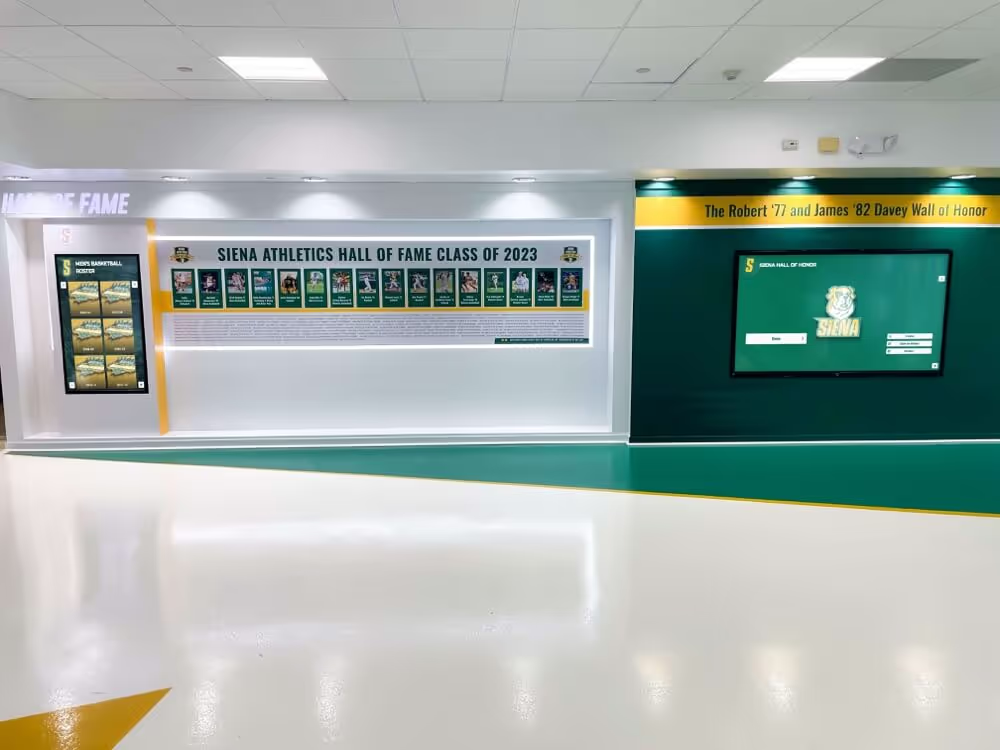
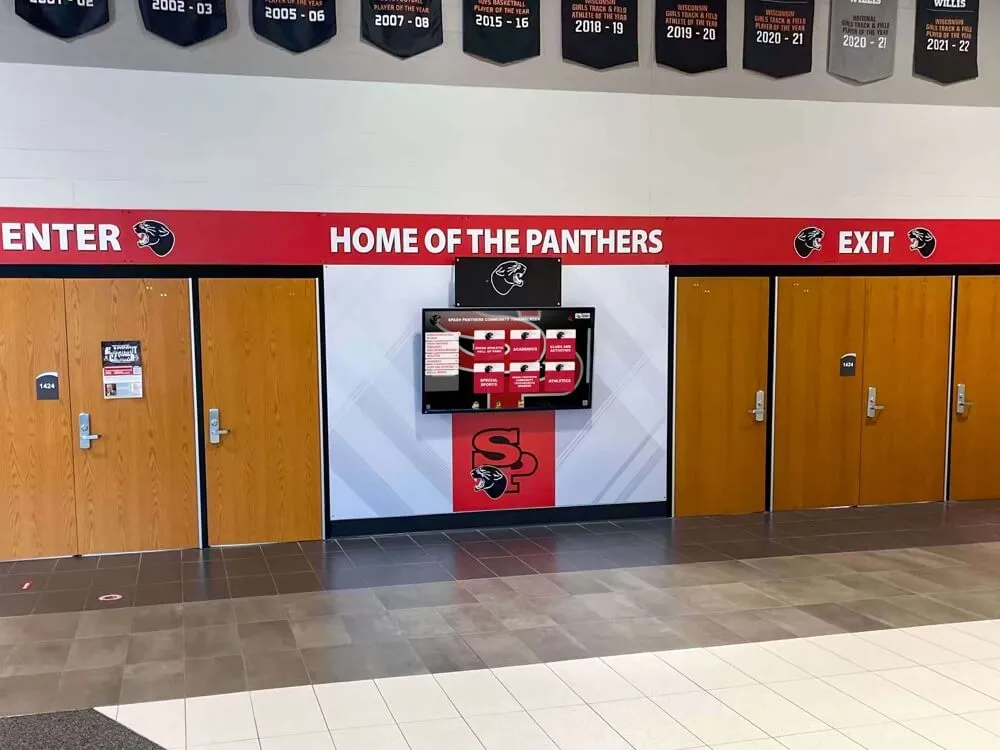
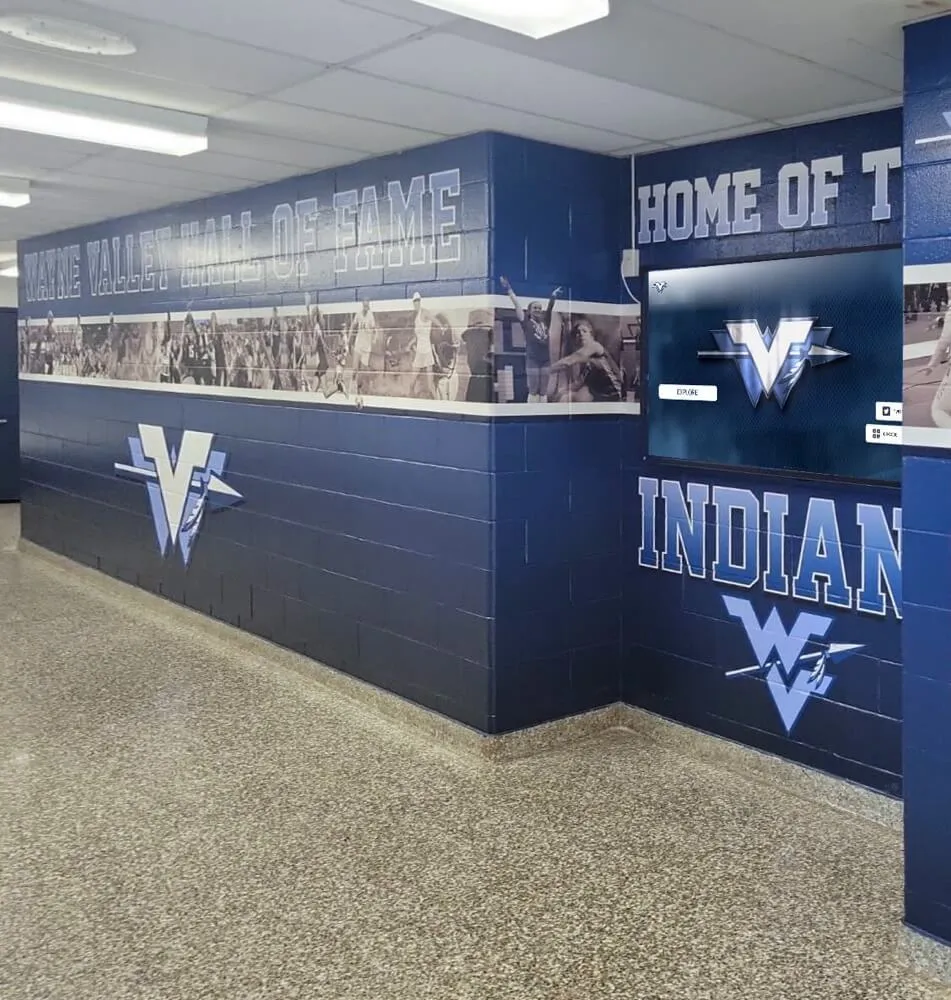
A well-maintained trophy display — physical or digital — tells the school's recognition story across generations without crowding recent achievements behind aging hardware
Why Most Trophy Cases Never Get Rotated
Before building a schedule, it helps to understand why rotation stalls in the first place. Physical trophy cases present a specific set of organizational friction points:
No one owns the decision. Athletic directors manage game schedules, coaches manage practices, and facilities managers manage maintenance. Who is responsible for deciding that the 1994 regional volleyball trophy should come down to make room for last year’s state championship? When no one has explicit ownership, nothing happens.
Removal feels like erasure. Staff hesitate to move trophies because removing a physical object from a display feels — emotionally — like discarding the achievement it represents. Without a clear preservation plan for removed items, rotation triggers anxiety about institutional memory loss.
There is no written plan. A verbal understanding that “we rotate trophies sometimes” is not a schedule. Without written rotation criteria, update frequency, and storage protocols, the display drifts toward stasis.
Display cases are physically awkward. Glass-front cases with locks, non-standard shelving, and items that have been in place so long that shelf layouts have conformed around them create friction that makes rotation feel like a facilities project rather than a content update.
A written trophy case exhibit rotation schedule solves all four of these problems by answering — in advance — who, what, when, and how.
Step-by-Step: Building Your School’s Rotation Schedule
Step 1: Assign a Display Curator
Name a single person responsible for the trophy case display. This is typically the athletic director, their administrative assistant, or an athletic department coordinator. Some schools assign a rotating faculty advisor role with a clear handoff process. The curator does not need to physically move every item — they coordinate the rotation and approve changes. Without a named owner, the schedule will not be followed.
Step 2: Conduct a Full Display Inventory
Before establishing a rotation cycle, document every item currently on display. For each item, record:
- Sport or activity
- Year of the achievement
- Award type (team championship, individual award, record, honor)
- Physical condition
- Whether the item has been photographed and documented in a digital archive
This inventory provides the baseline for deciding what stays, what rotates off, and what should have been retired years ago. It also reveals how much of the current display is dedicated to different eras — a useful diagnostic. Many schools find that 70–80 percent of their display footprint is occupied by items more than a decade old.
Step 3: Define Your Display Priority Framework
Establish clear criteria for what earns active display space. A priority framework removes the subjectivity that causes rotation decisions to stall. A practical hierarchy for most schools:
- Current-season championships and postseason achievements — any team or individual award earned in the past 12 months
- Recent recognition (1–5 years old) — conference titles, all-state selections, school records set within this window
- Historical highlights (5–15 years old) — state championships, hall of fame inductees, milestone achievements from this era
- Institutional legacy items — oldest championships, founding-era artifacts, significant records that define the school’s long-term identity
Items in tiers 3 and 4 rotate on a slower cycle. Items in tiers 1 and 2 should always have guaranteed space in the case.
Step 4: Establish Your Rotation Calendar
Set fixed rotation dates on the academic calendar. Tying rotation to existing rhythms — sports seasons, school year milestones, or board meeting cycles — makes the schedule easier to maintain. Consider:
- Post-season review (May/June): Add spring sport achievements; review fall and winter season items for tier reassignment
- Back-to-school update (August): Refresh the display before students and families return; ensure the case reflects the previous year’s best achievements
- Winter break update (December/January): Add fall sport championship items; preview spring athletic calendar items if relevant
- Induction or awards event (date varies): Update the display to coincide with hall of fame inductions or annual recognition banquets
Four scheduled rotations per year is a practical baseline. Schools with very active athletic programs or limited display space may benefit from monthly reviews, particularly at the tier-1 level.
Step 5: Document the Preservation Protocol
Every item removed from active display needs a documented destination. The removal protocol should specify:
- Primary archive: Where historical items go when they leave the case (a designated storage room, archival display in a secondary hallway, or digital catalog)
- Photography requirement: Every item should be professionally photographed before removal if it has not been documented already
- Return path: Items moved to archive can return to active display when a relevant anniversary, induction, or reunion event makes them timely again
A school that cannot answer “where do the trophies go when they come down?” will not sustain a rotation program. Storage must be organized, labeled, and accessible.
Step 6: Write the Schedule Down and Share It
Draft a one-page rotation policy that specifies the curator’s name and role, the four annual rotation dates, the priority framework criteria, and the preservation protocol. Share it with the principal, athletic director, and facilities manager. Store it in the athletic department’s shared drive. A policy that exists only in one person’s memory is not a policy.
Step 7: Schedule an Annual Review of the Schedule Itself
At the end of each academic year, review whether the rotation calendar worked. Did the four scheduled dates actually happen? Are items reaching the display within a reasonable window of the achievements they represent? Is the storage archive organized and usable? Adjust the schedule based on what the previous year revealed about friction points.
Rotation Cadence Table: Display Types and Recommended Schedules
The table below provides a starting framework for how frequently different types of recognition items should be reviewed for rotation. These are general recommendations — schools with larger or more active programs may adjust cadence based on display capacity and achievement volume.
| Display Item Type | Suggested Review Cadence | When to Prioritize Display | Archive After |
|---|---|---|---|
| Current-season team championship trophies | After each season | Immediately upon receipt | 2–5 years (to historical archive) |
| Individual postseason awards (all-state, MVP) | After each season | Within 30 days of award | 5–10 years |
| Conference and regional championship hardware | Annual (August review) | Current school year | 5–10 years |
| State or national championship trophies | Annual review | Permanent featured position | Rarely — legacy tier |
| Athletic records plaques | When record is broken | Within 60 days of record | Previous record plaques archive after update |
| Hall of fame induction plaques | At induction | Permanently or on slow rotation | After 10+ years if space is constrained |
| Milestone team photos (championship teams) | Annual review | 1–3 years post-championship | Archive to documented storage |
| Commemorative banners | Annual review | Based on anniversary cycles | When condition degrades |
| Coach retirement / longevity recognition | Annual review | Within 60 days of retirement | Permanent legacy display if space allows |
| Academic and fine arts awards | Annual (August review) | Current school year | 3–5 years |
Notes on using this table:
- “Archive after” windows are not automatic expiration dates — they are prompts to review whether an item still belongs in the primary display or would be better honored in a secondary location
- Items from the legacy tier (state championships, hall of fame plaques) should never simply be discarded; they move to a permanent secondary display or a documented digital archive
- Mixed-use cases displaying both athletic and academic recognition should use separate review cycles for each category
Rotating Without Erasing History: The Archive Distinction
The most common concern administrators raise about rotation schedules is that moving items out of the case diminishes the achievements they represent. This concern is legitimate — and it is also solvable.
The distinction that matters is between removing from active display and erasing from the record. An item removed from a trophy case but preserved in a searchable digital archive, a dedicated alumni hallway, or a well-organized physical storage room has not been erased. It has been moved to a different stage of its institutional life.
For schools navigating the balance between physical display and digital access, understanding how digital hall of fame displays compare to traditional trophy cases in school hallways provides useful context for how other institutions have managed this transition. The key insight is that digital archives enable schools to honor more history more accessibly — not less.
Build the archive before you build the rotation schedule. When staff know that every removed trophy exists permanently in a documented record — with photographs, athlete names, and achievement details — the psychological resistance to rotation drops significantly.
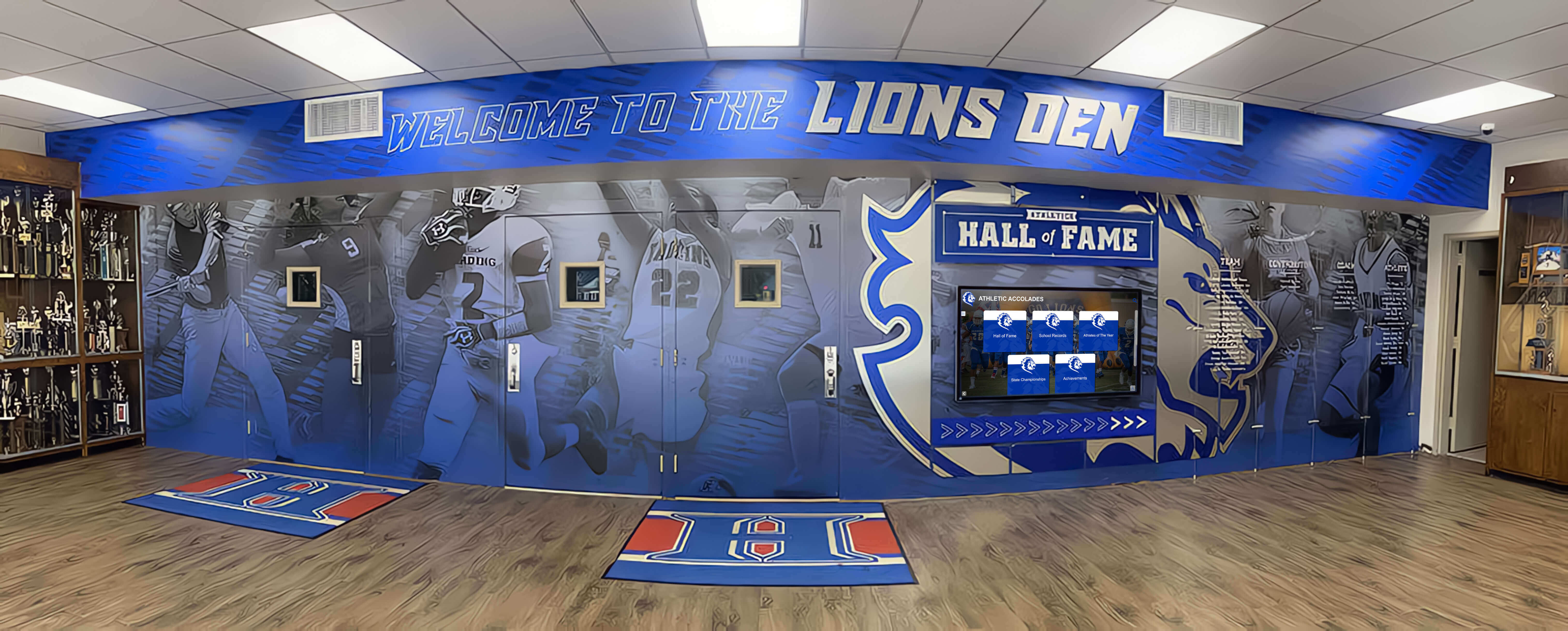
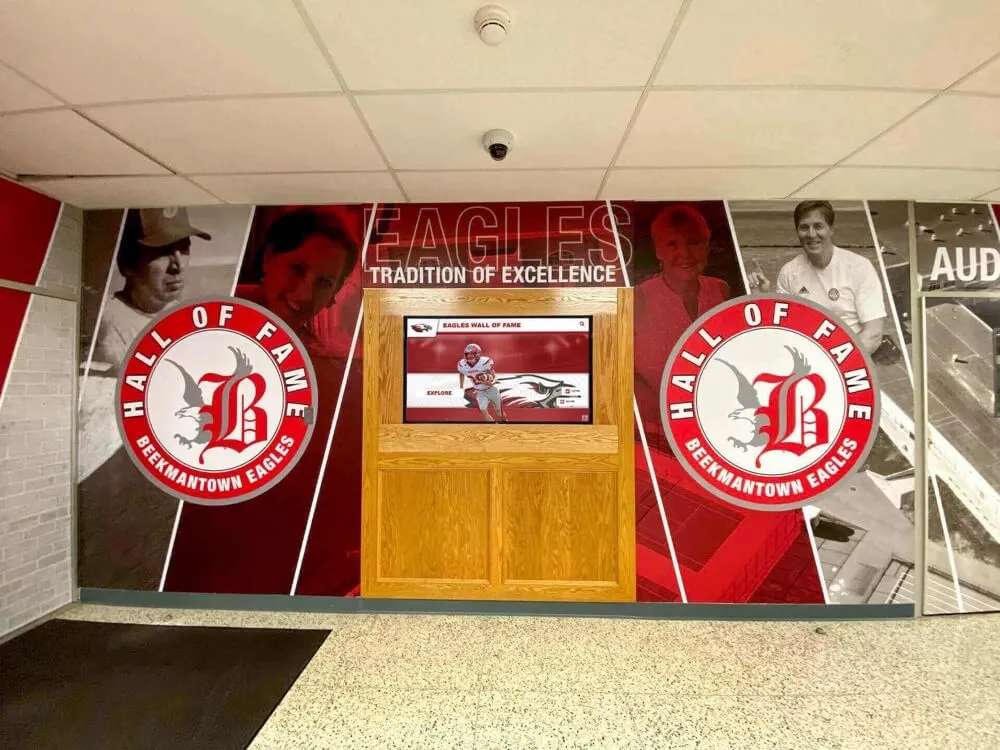
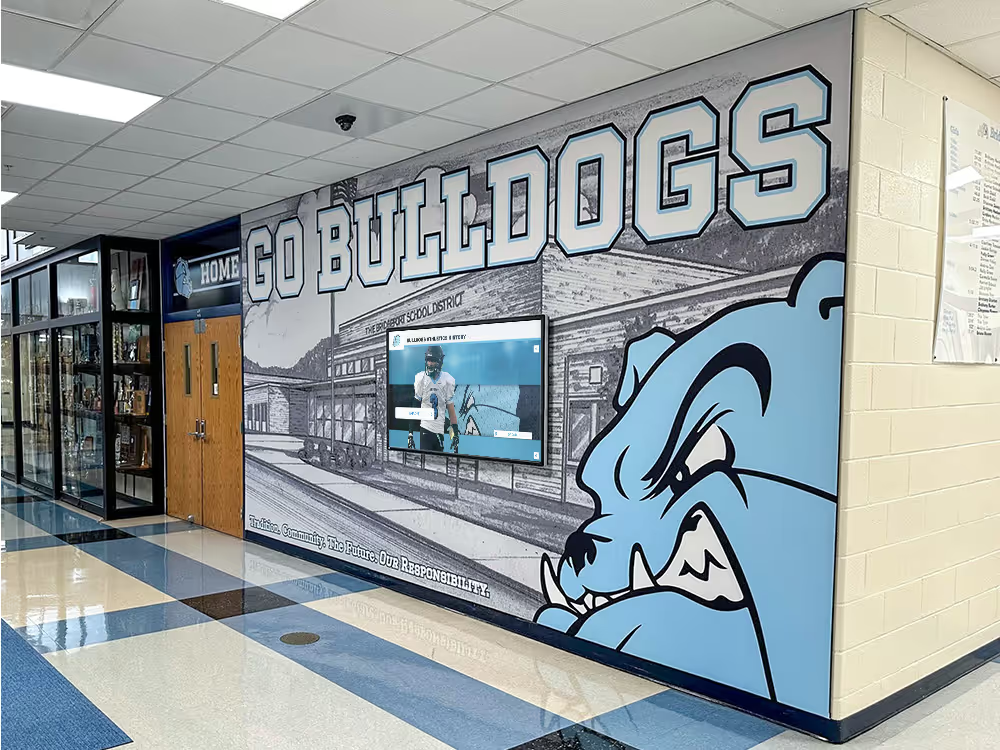
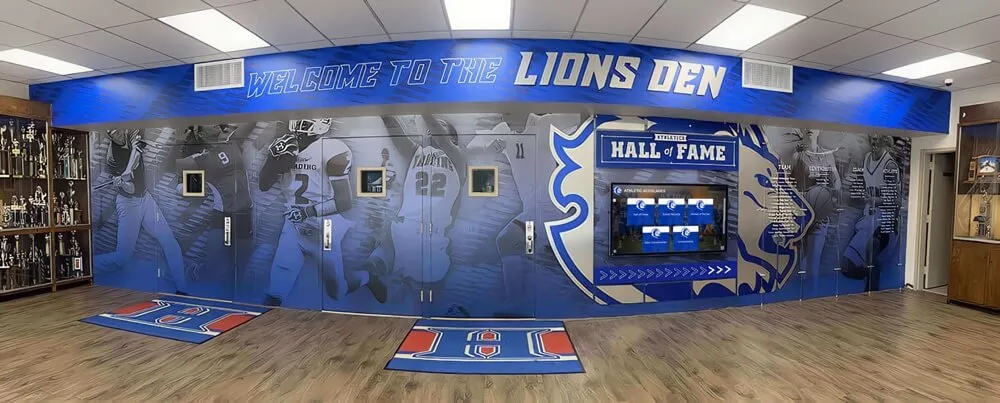
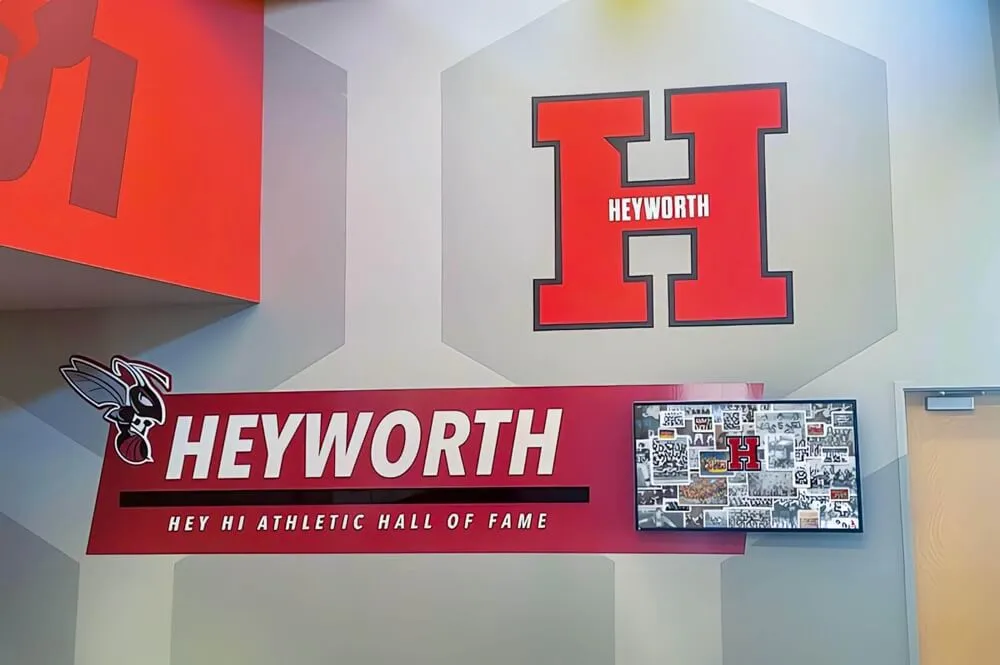
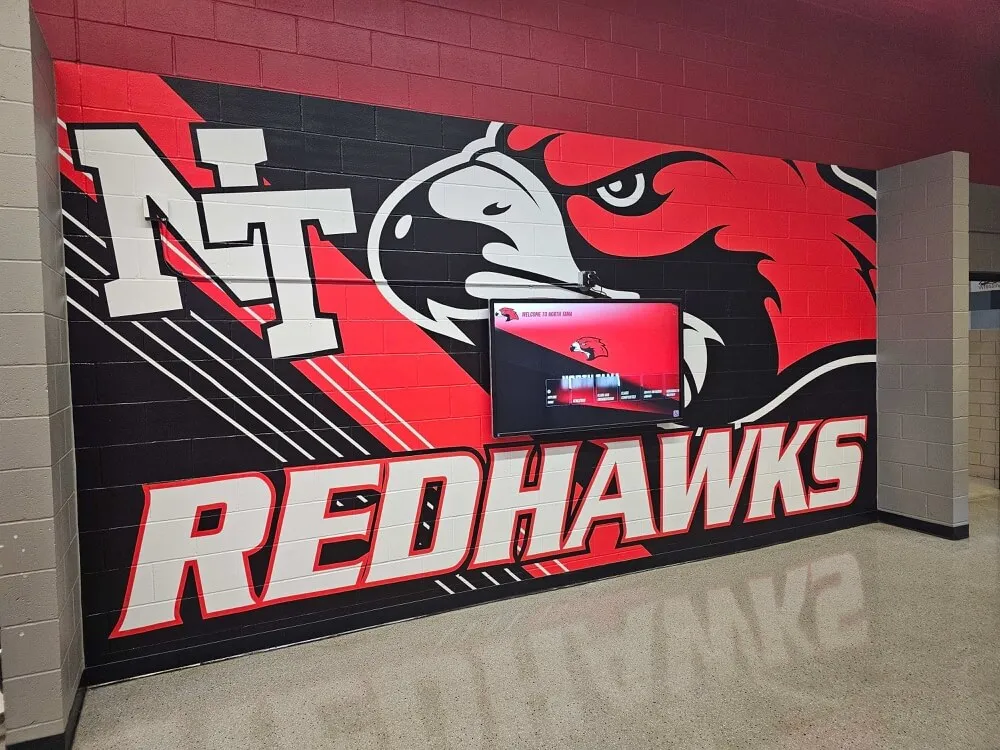
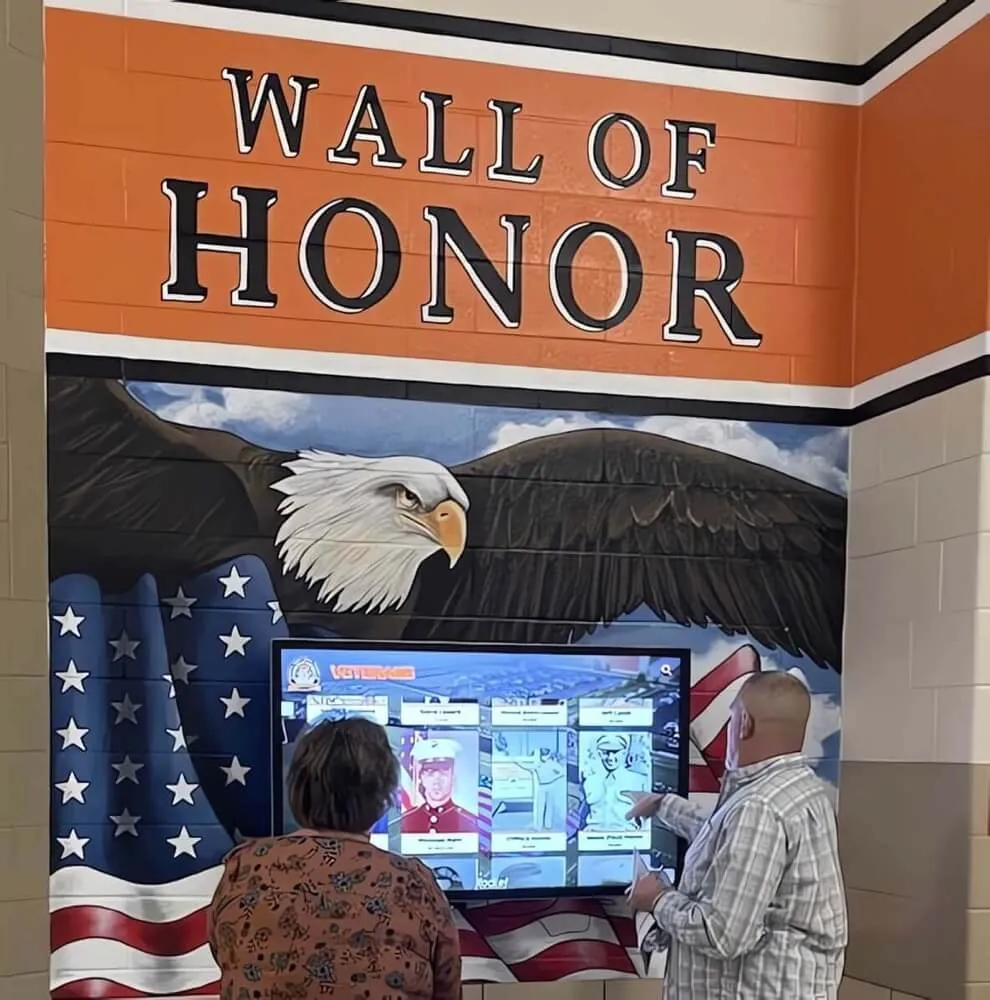
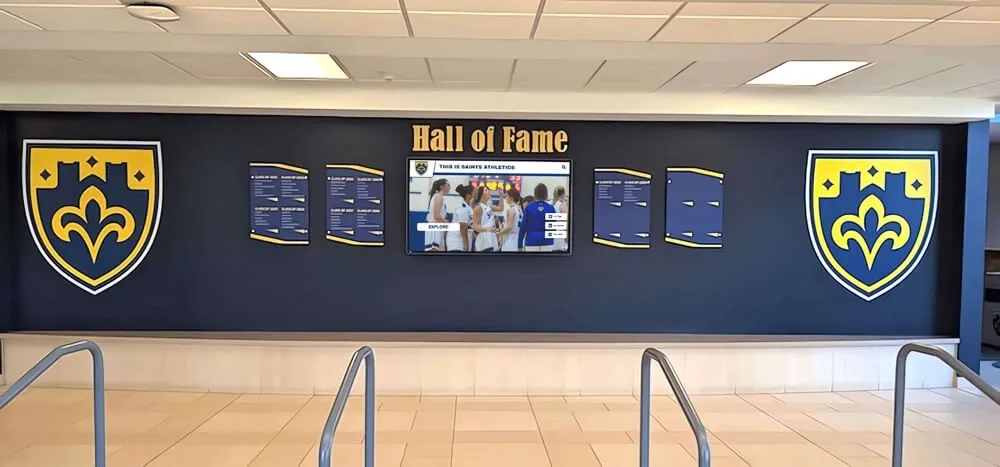
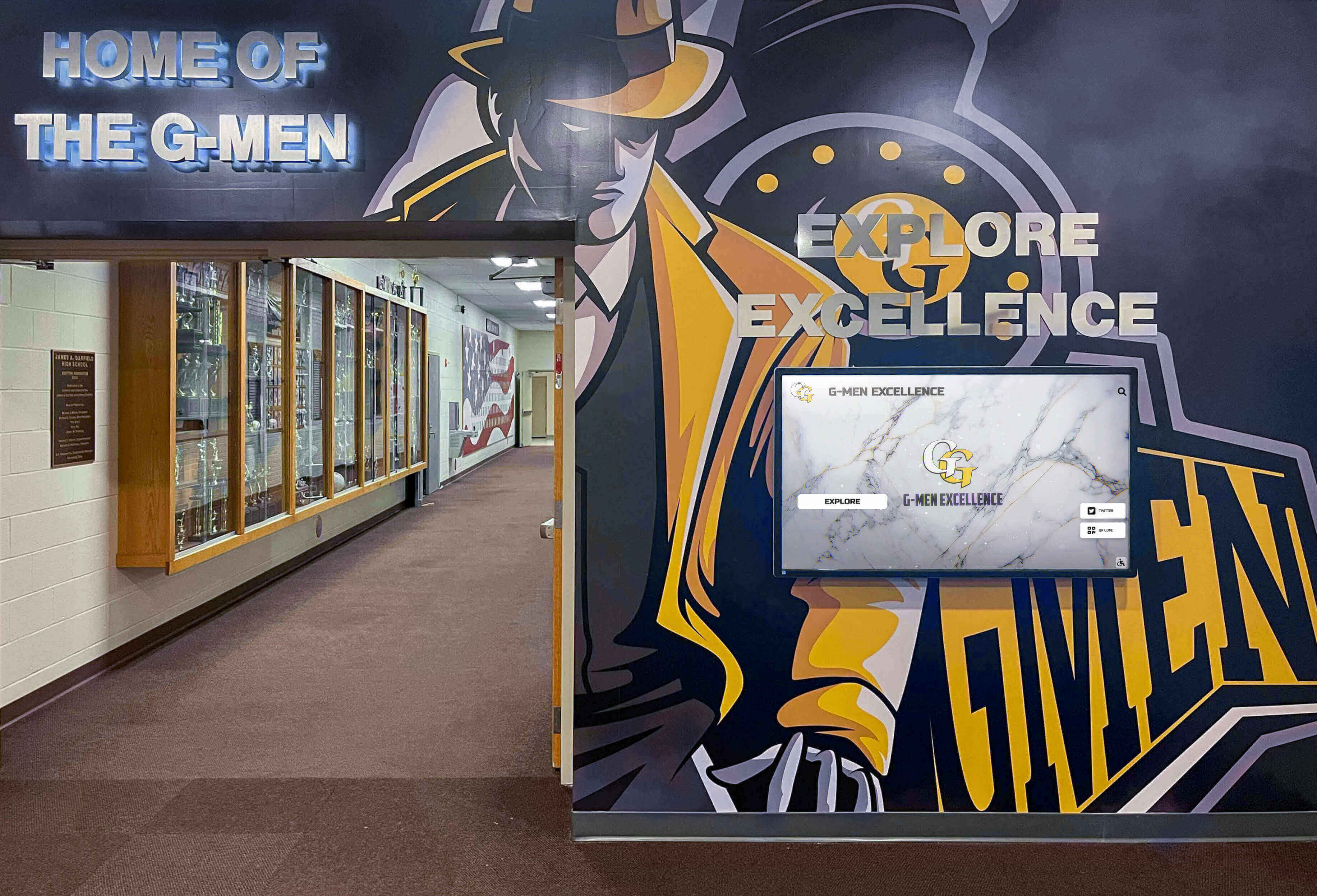
Physical trophy cases paired with a permanent mural create a layered recognition system where historical items can rotate off the shelves while the broader display remains intact
Seasonal Rotation: What to Update and When
A useful mental model is to think of the trophy case the way a school thinks about its bulletin boards and display cases in other contexts: content is current, rotated on a predictable schedule, and tied to what is happening in the school community right now.
August — Back to School Refresh
This is the most important rotation of the year for maintaining relevance. Before students and families return to campus, the display should reflect the previous year’s athletic and academic highlights. New trophies earned over the spring and summer should be installed. Display layouts can be refreshed without changing every item — even a simple reorganization signals to returning students that the case is actively maintained.
Consider connecting the August refresh to how your school presents its recognition wall layout and design approach for K–12 schools across the broader facility, not just the trophy case alone. A coherent recognition environment — from the lobby display to the athletic hallway to the case itself — reinforces culture building more powerfully than any individual display element.
November/December — Fall Sports Wrap
Football, cross country, and fall sports championships resolve in this window. Post-season awards arrive. This is the natural rotation moment for fall sport recognition — add new hardware, review older fall-sport items for tier reassignment, and update any athletic record plaques reflecting fall season performances.
March/April — Winter Sports Wrap
Basketball, wrestling, swimming, and winter sports championships conclude. Follow the same pattern: new hardware in, older winter-sport items reviewed, records updated. Spring sports are beginning their season — preview spring athlete recognition if the display has a “current season spotlight” section.
June — Year-End Comprehensive Review
The final rotation of the school year should be the most thorough. All sports have concluded. All individual awards — all-state selections, coach of the year recognition, senior athlete honors — have been announced. Review every item in the case against the priority framework established in your schedule. Items that no longer meet the threshold for active display move to archive with proper documentation.
Coordinating Rotation With Recognition Events
The most effective trophy case rotation schedules align with the school’s existing recognition calendar rather than running parallel to it. When a rotation update coincides with a recognizable event — a sports banquet, a hall of fame induction ceremony, an alumni weekend — the update gets natural attention and the case becomes a talking point rather than background scenery.
For schools with booster club involvement in athletic recognition, it is worth clarifying in the written policy how booster-contributed items are handled in rotation decisions. A booster club reimbursement policy that addresses donated display items can prevent confusion when items contributed by the boosters are scheduled for rotation off the primary case. Establishing the protocol before the situation arises is far easier than negotiating it after a specific trophy is involved.
Hall of fame induction events, in particular, offer a natural anchor for rotation. When new inductees are honored, their display materials go into the case — and that moment also creates the right context for reviewing which existing items have been displayed long enough to merit rotation to the archive or secondary display.
How Physical Space Constraints Shape the Schedule
Trophy case exhibit rotation schedules are ultimately a response to a physical constraint: there is only so much space in a display case, and that space does not grow as achievements accumulate. Understanding this constraint clearly helps administrators make better rotation decisions.
A standard trophy case — two to four glass panels, four to six shelves per panel — holds perhaps 40 to 80 items at comfortable display density. A school with 50 years of athletic history, multiple sports, and active annual addition of new hardware will accumulate far more items than the case can display simultaneously. The rotation schedule is the mechanism for managing that gap between available space and available material.
For schools exploring how to extend their recognition environment beyond the physical trophy case, reviewing guidance on digital display boards for school lobbies and entrances illustrates how companion digital displays can hold the overflow of recognition content that physical cases cannot accommodate. A lobby screen displaying current season highlights — updated weekly — reduces the pressure on the trophy case to carry all current recognition, which in turn makes the case’s rotation schedule more manageable.
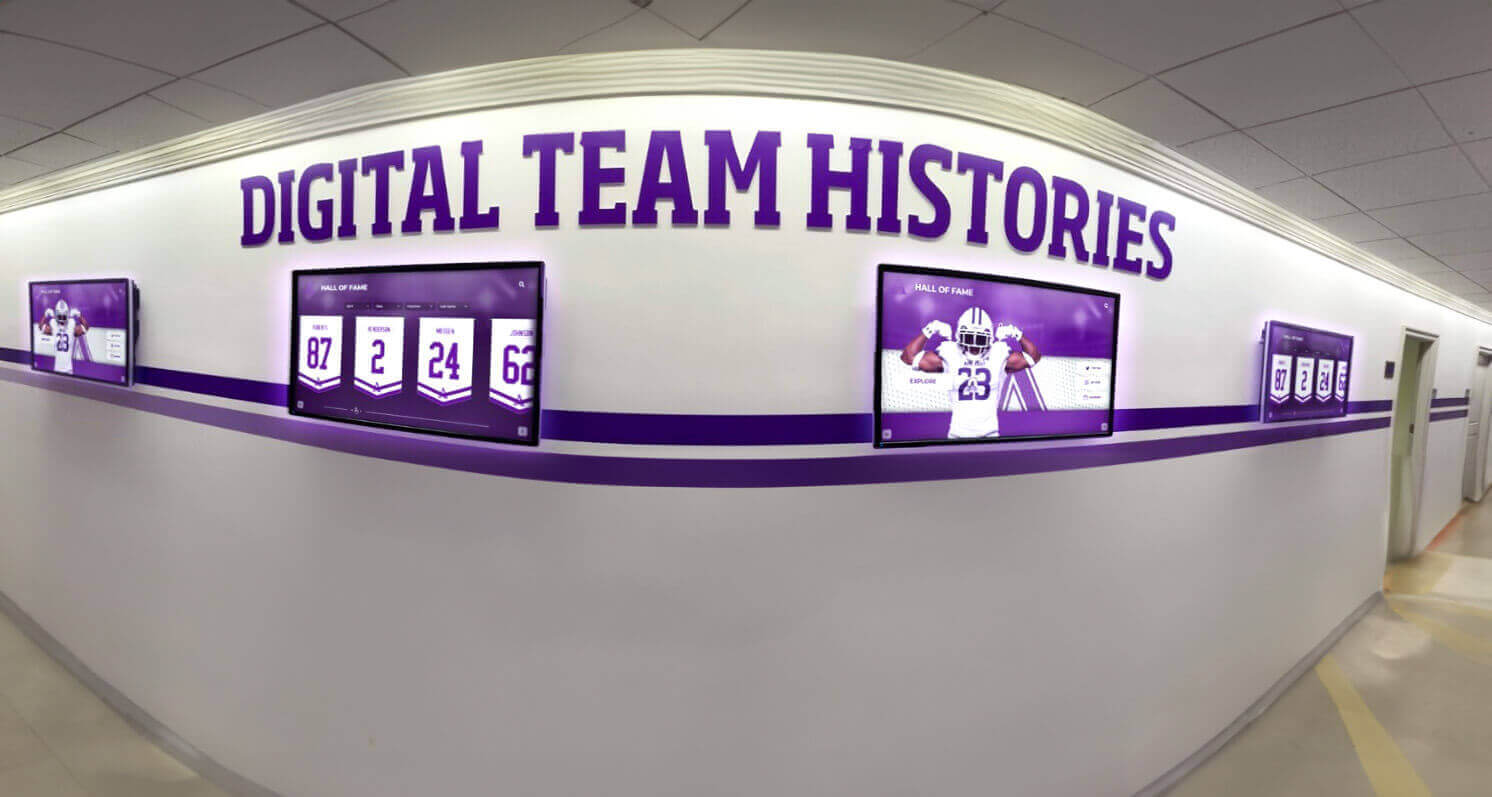
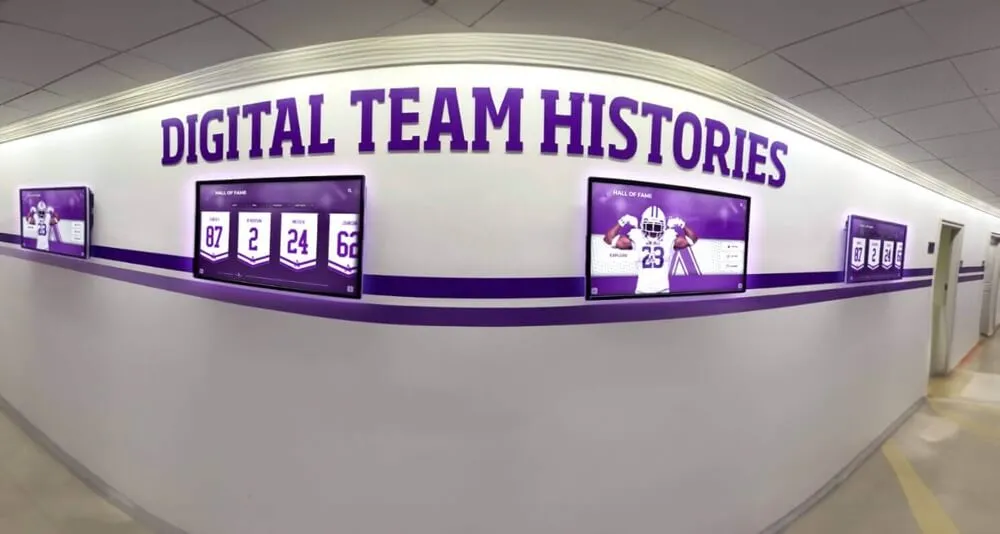
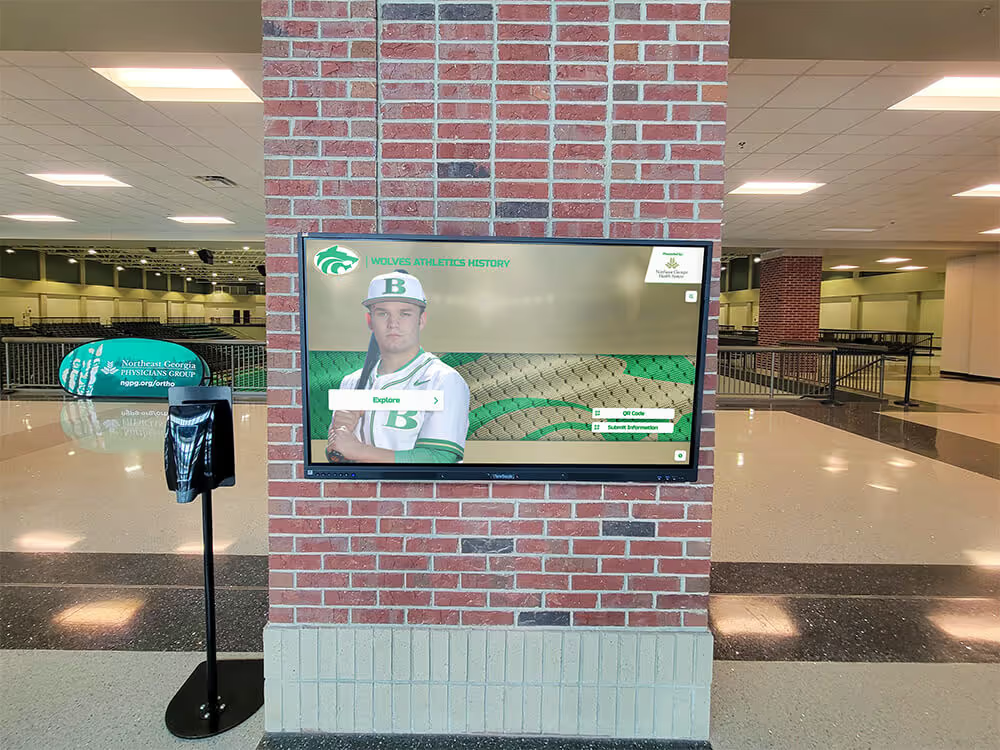
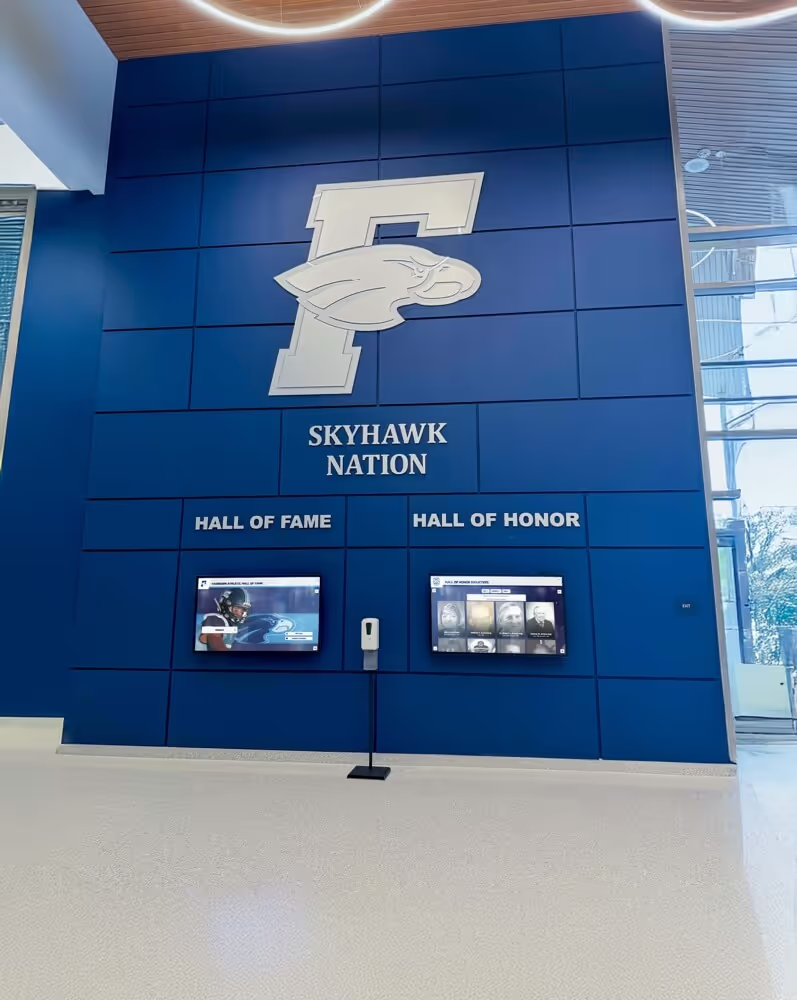
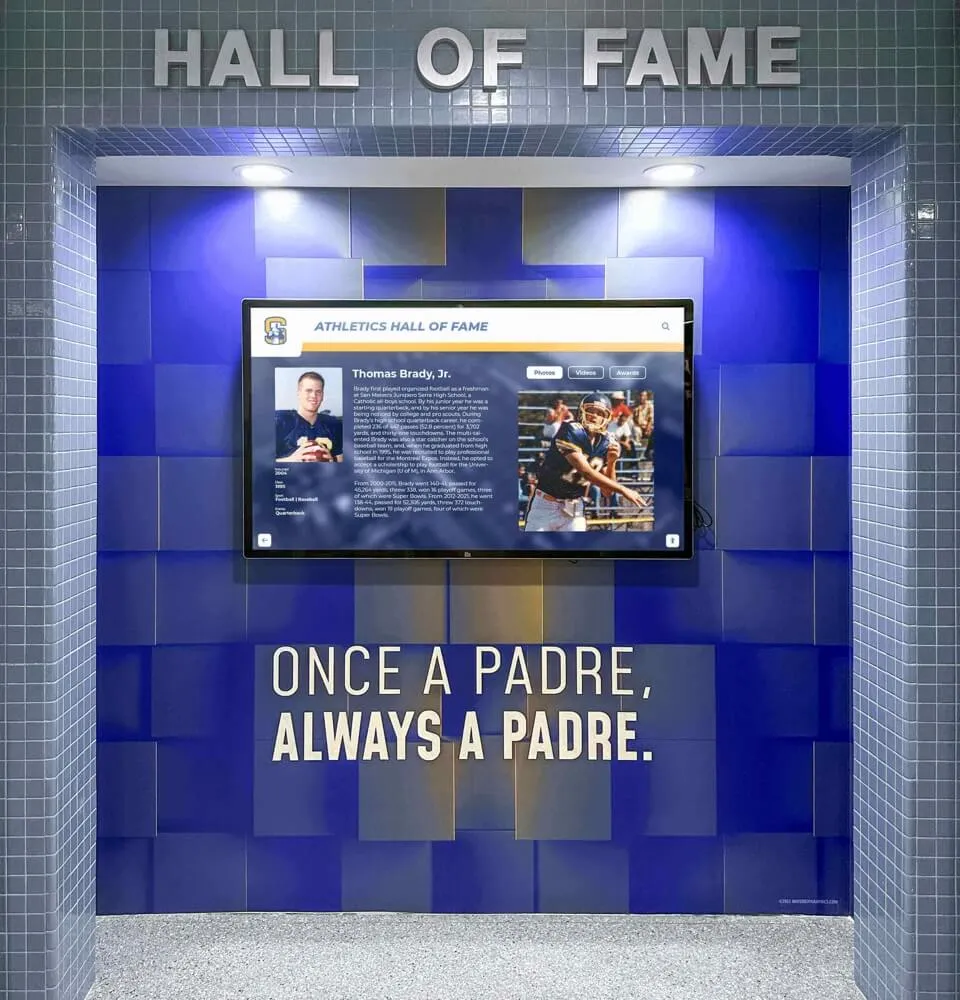
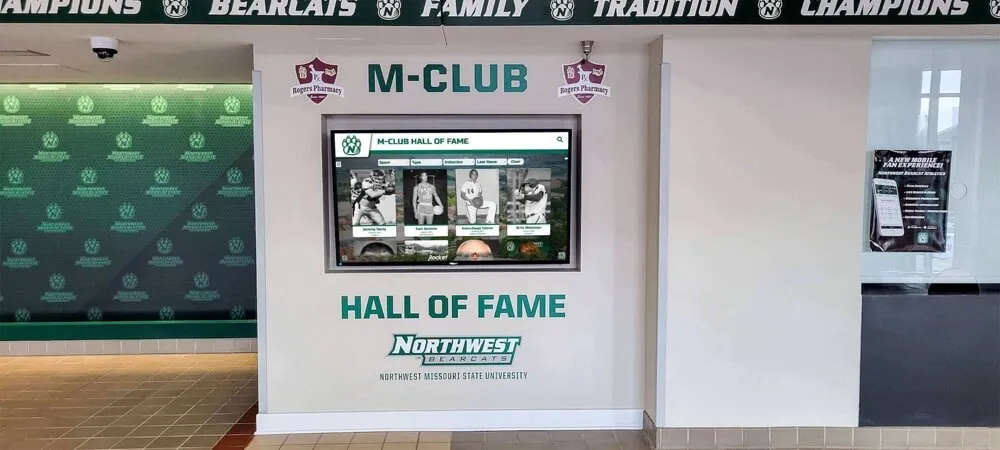
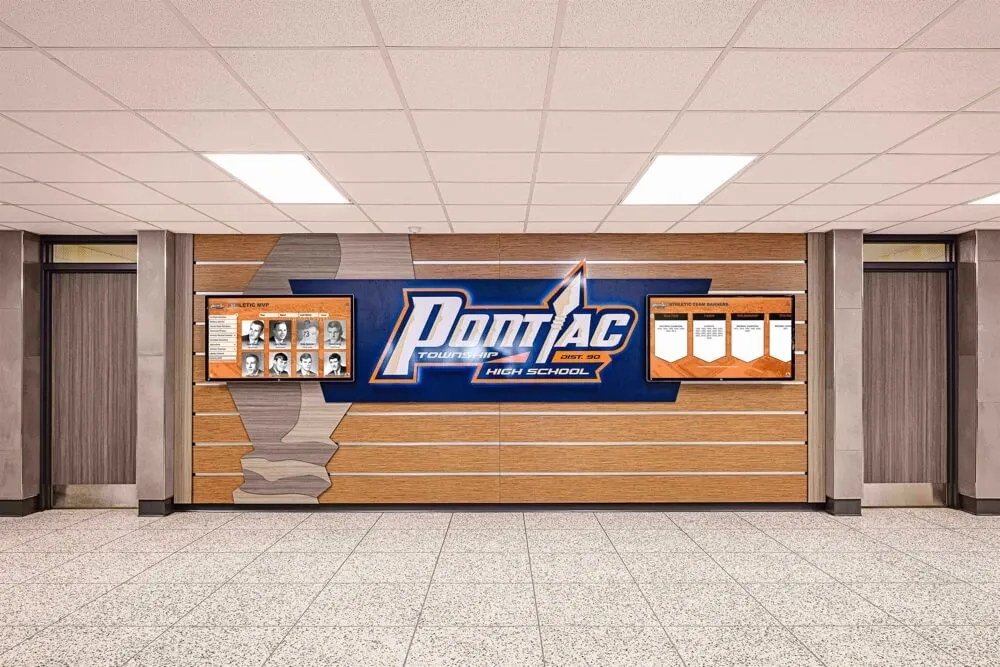
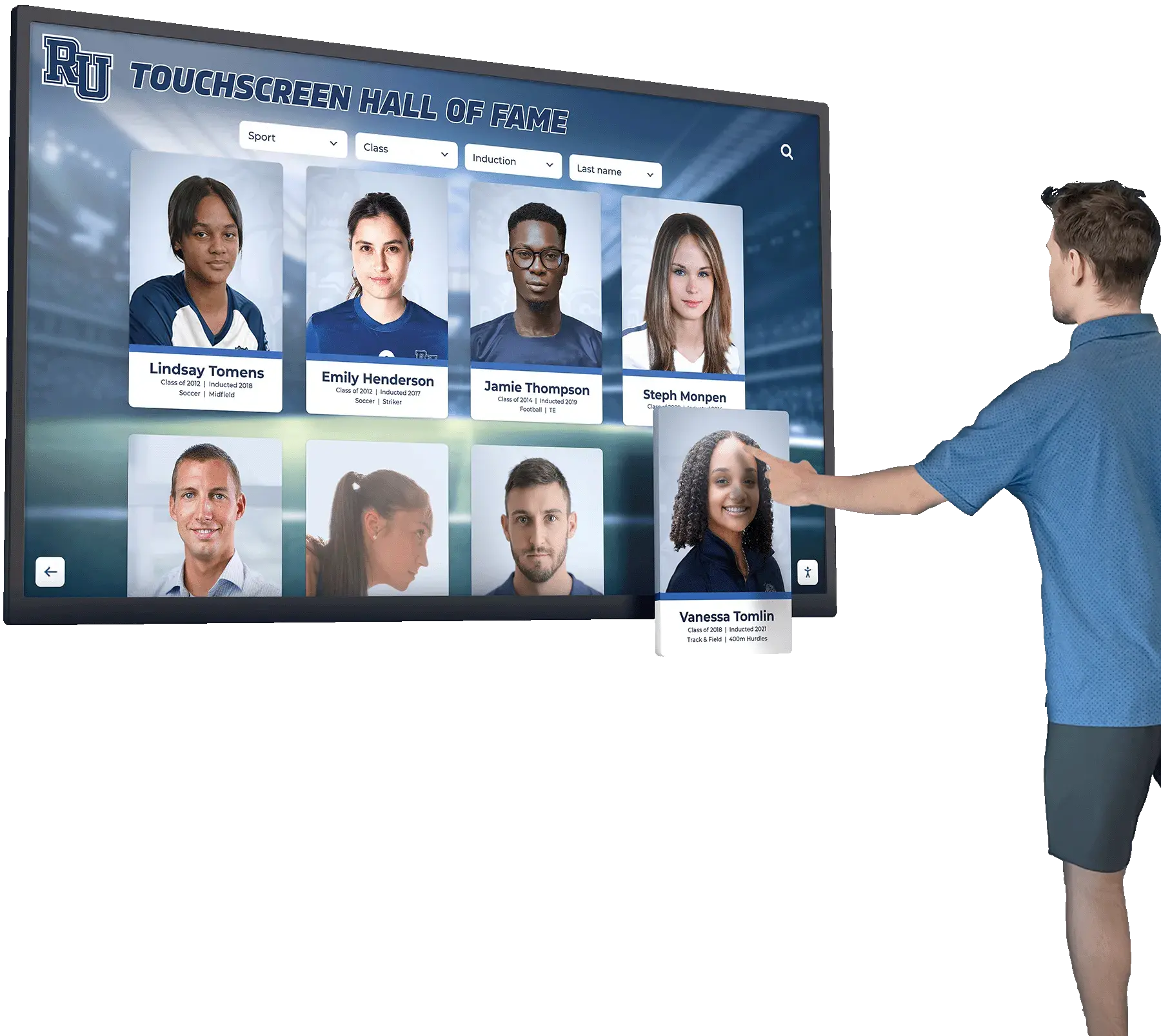
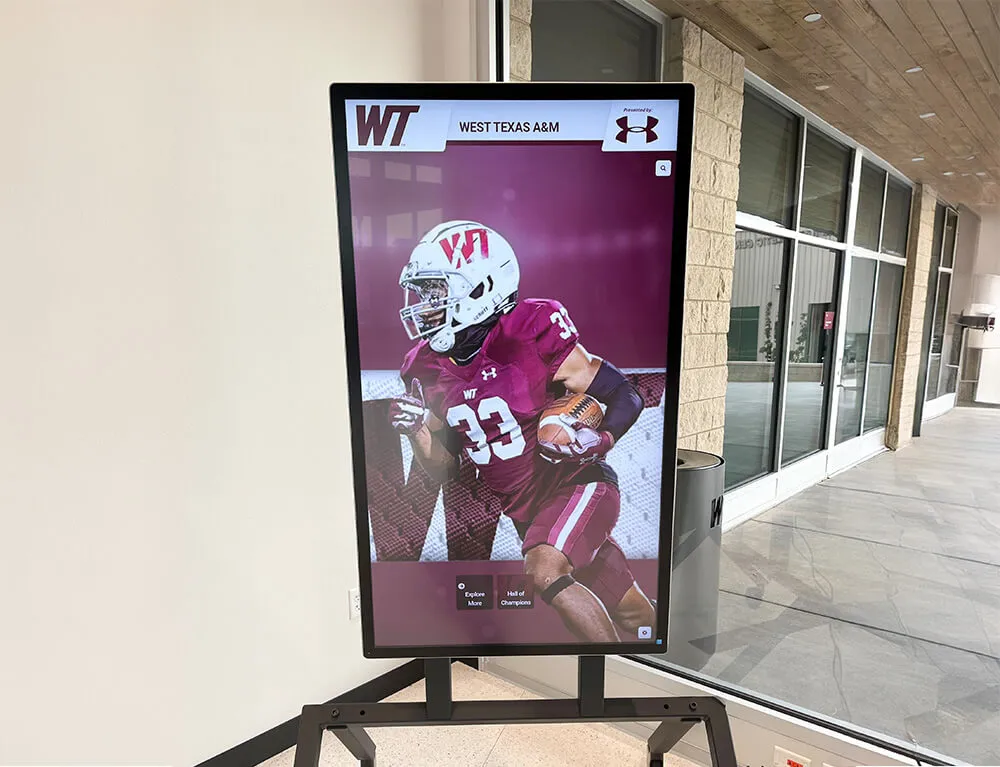
Digital hallway displays carry the weight of current and historical recognition without competing for limited trophy case shelf space — enabling the physical case to rotate more deliberately
When Digital Displays Change the Rotation Equation
A trophy case exhibit rotation schedule solves the management problem of a physical display. A digital recognition display reframes the problem entirely.
Physical rotation is necessary because space is finite. A digital trophy case has no shelf space — it holds thousands of records, searchable by sport, year, athlete, or achievement type, in a footprint smaller than a single panel of a traditional glass case. Adding a new championship record does not require removing an older one. The 1987 state championship team and last week’s conference winners exist in the same system, equally accessible, simultaneously visible.
For recognition-program owners evaluating whether to continue investing in physical rotation logistics or transition to a digital platform, the comparison of digital hall of fame displays and traditional trophy cases in school hallways covers the practical trade-offs in detail. The rotation schedule that takes hours of staff time per update can collapse to a five-minute CMS update — with no physical rearrangement, no storage logistics, and no risk of damaging items during the move.
Key capabilities of a purpose-built digital trophy case platform include:
Unlimited entries. No rotation-driven removal is ever required. Every achievement from every era exists in the system simultaneously — displayed, searchable, and accessible via QR code from any smartphone.
Remote cloud-managed updates. Staff add new trophies, photos, and records from any browser, from anywhere. No IT tickets, no vendor visits, no physical access to the display required.
Scheduled publishing. A new record can be set to go live on the display at a specific date and time — coordinated with a banquet announcement or induction ceremony without manual intervention.
Automatic ranking and sorting. Records self-organize by date, sport, or achievement tier. The display always surfaces the most recent recognition at the top without manual curation.
ADA WCAG 2.1 AA compliance. Touchscreen displays built to accessibility standards ensure every visitor can engage with school history — a standard physical cases cannot meet.
QR code mobile access. Alumni, families, and community members who cannot visit the building access the full recognition record on their phones — extending the reach of every achievement the school honors.
For programs also managing interactive digital recognition walls and kiosks elsewhere on campus, exploring resources like college residence hall informational and interactive displays offers useful perspective on how institutions are designing multi-location recognition ecosystems that maintain consistent historical depth without physical storage burdens.
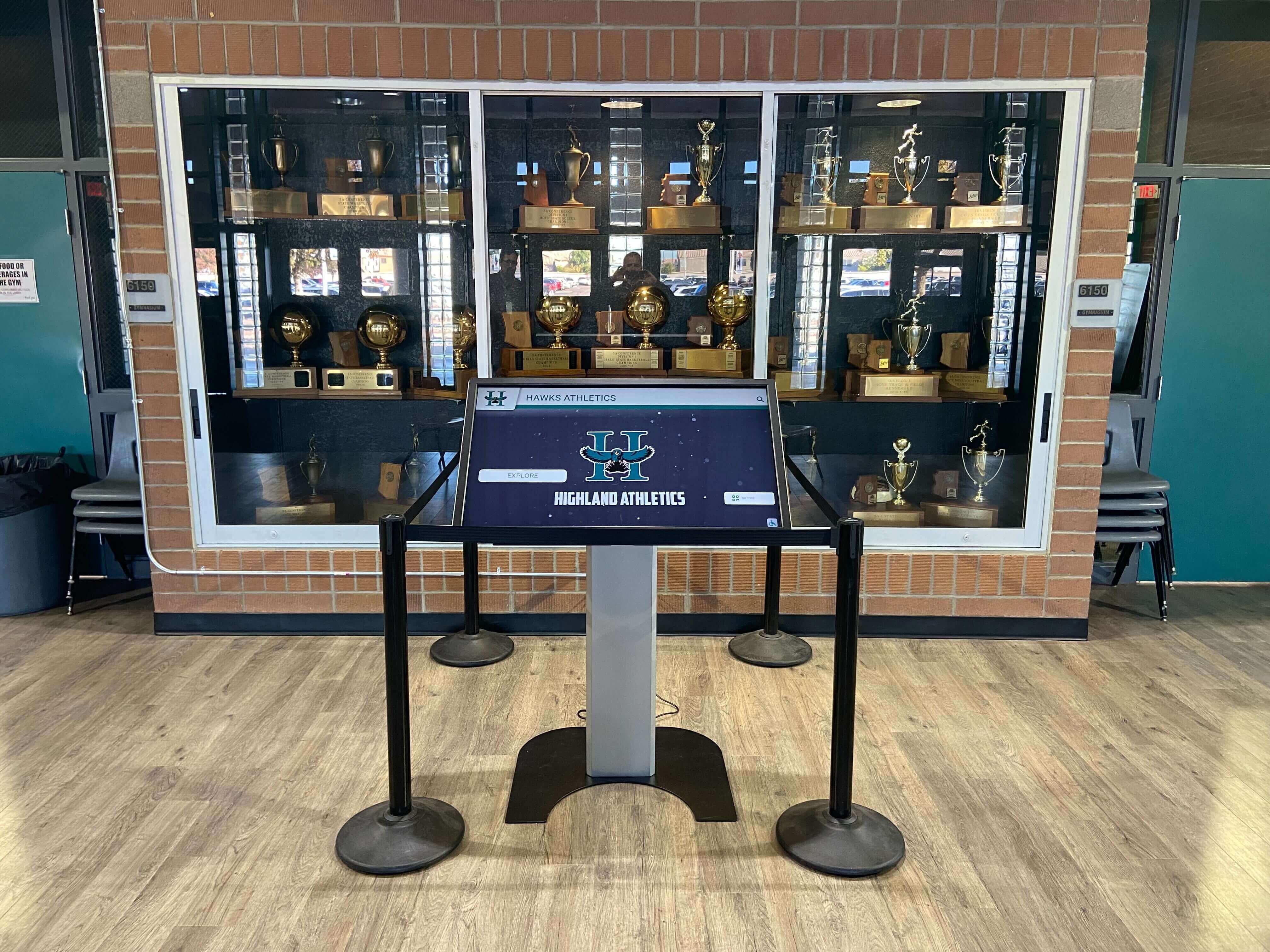
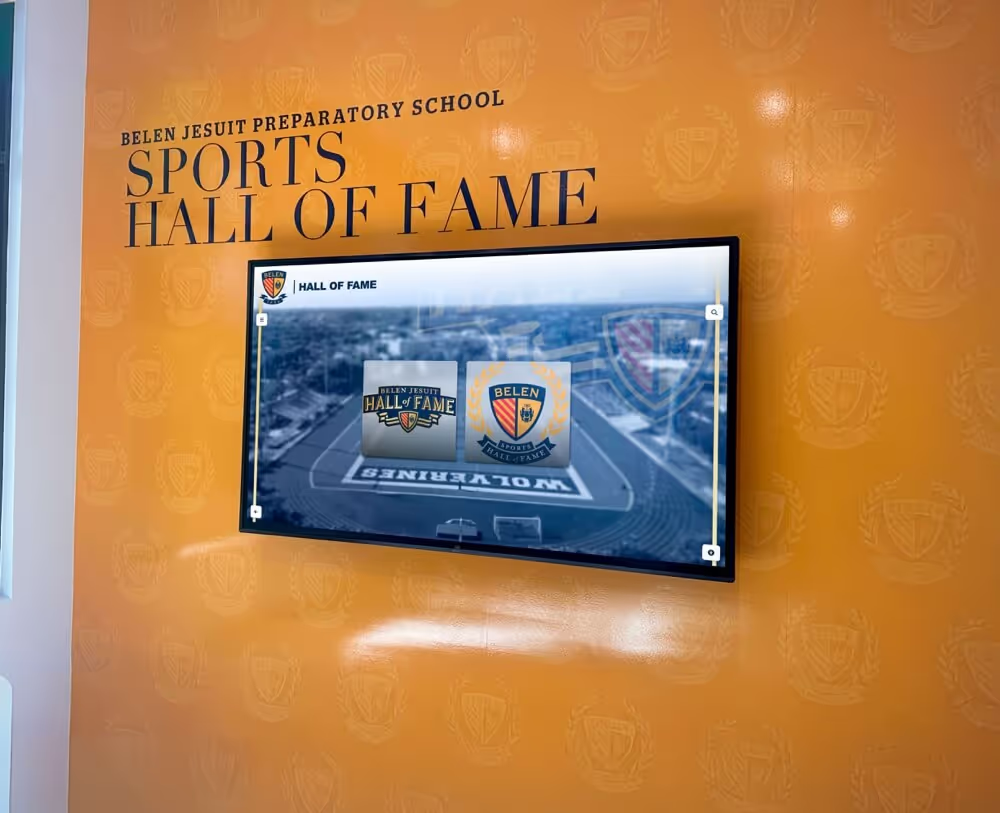
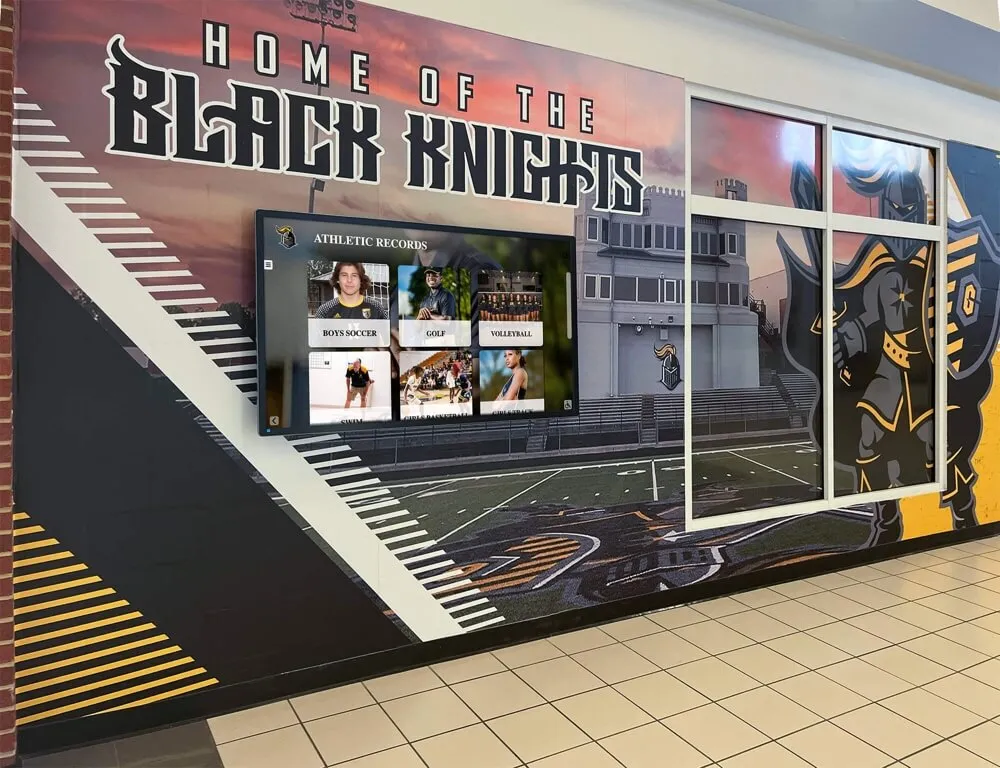
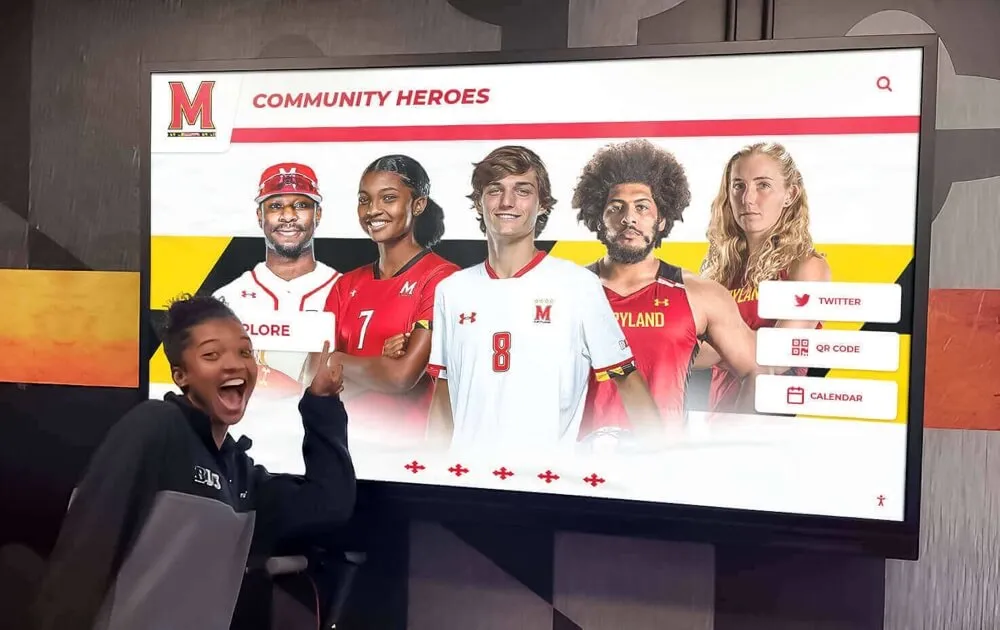
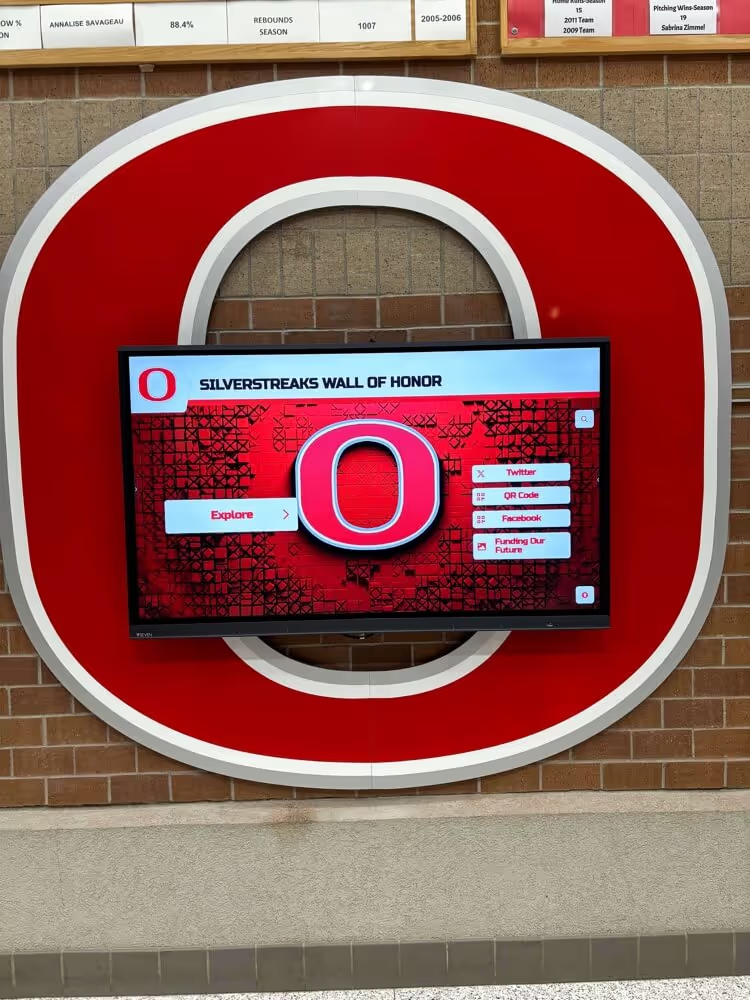
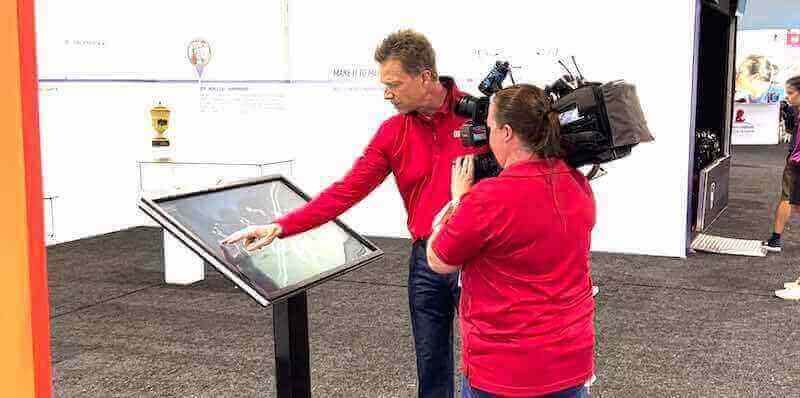
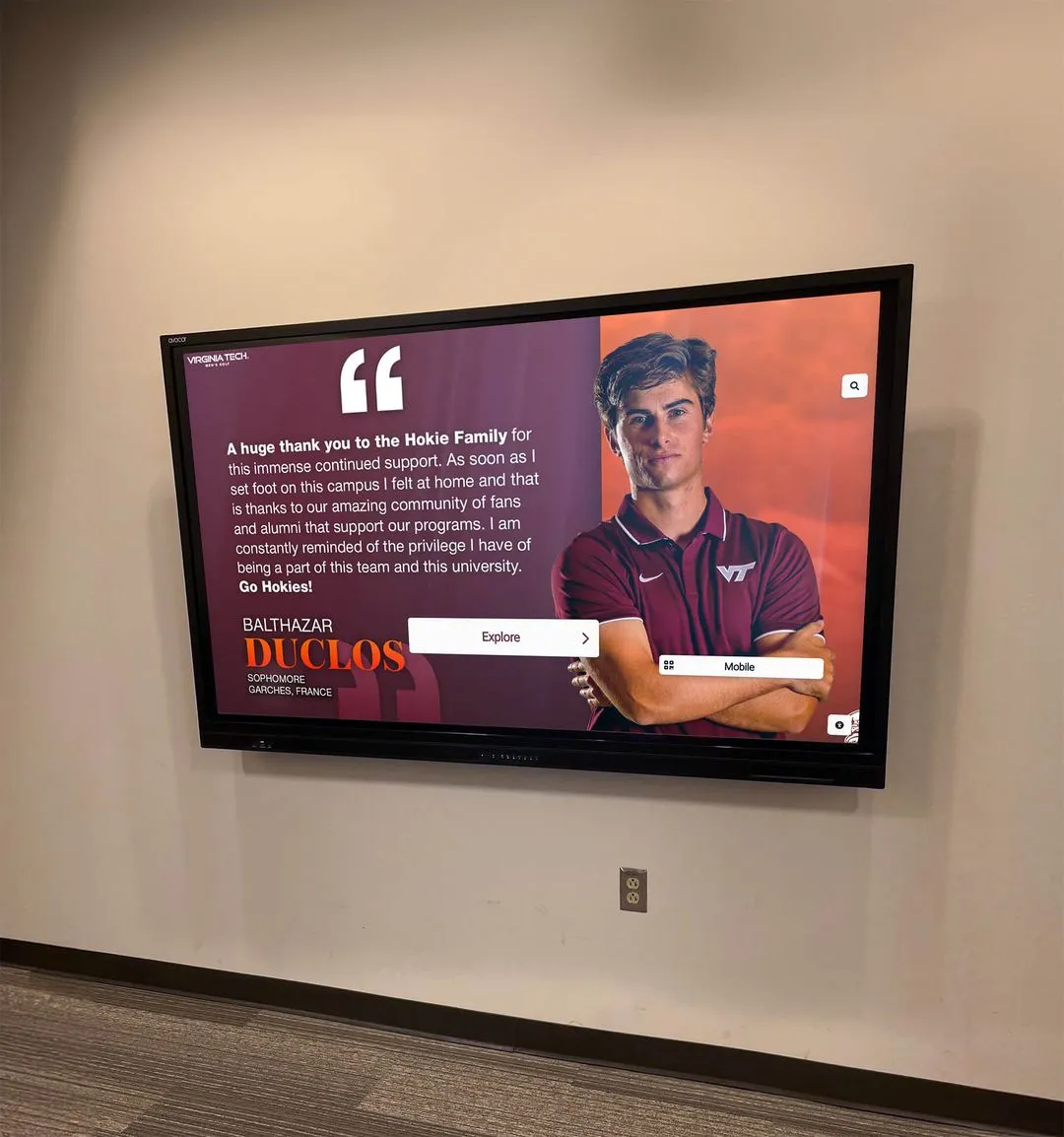
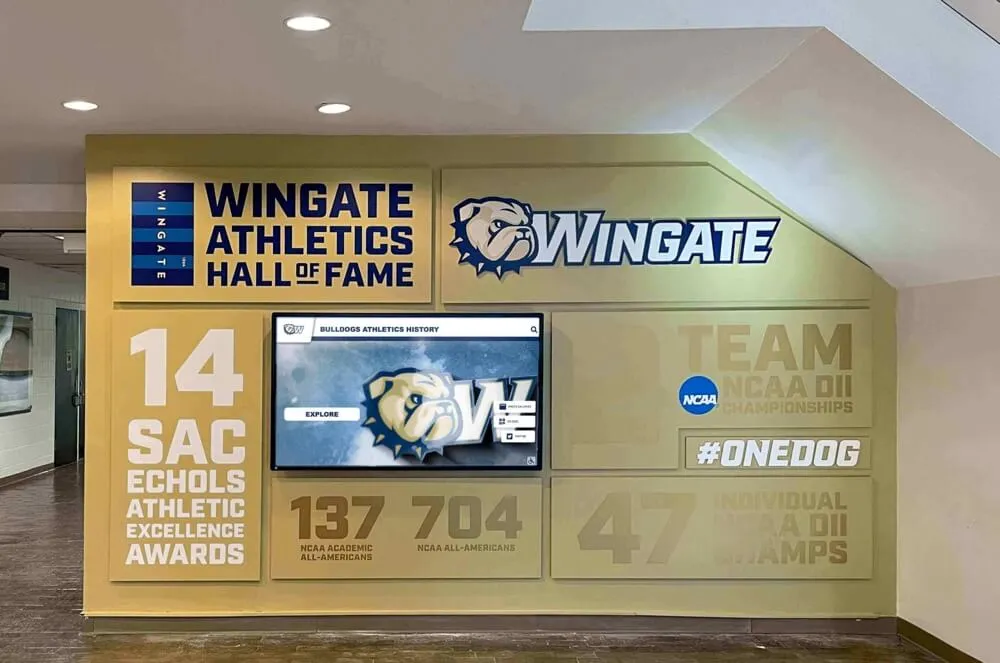
A touchscreen kiosk installed alongside traditional trophy cases bridges physical and digital recognition — current achievements appear instantly on the screen while the physical case holds legacy hardware
Using Digital Tools to Simplify Content Updates
Whether a school maintains a physical rotation schedule or transitions to a digital platform, the content management process benefits from standardized digital tools. Staff who update recognition content need straightforward workflows — not design expertise or IT involvement.
Modern digital recognition platforms offer design integrations that allow non-technical staff to create and update athlete profiles, championship records, and team history pages using familiar visual tools. This lowers the barrier to keeping content current and removes the bottleneck of waiting for a technical team member to make updates.
The principle applies to physical trophy cases as well. Creating a standard digital template for label cards, caption plates, and display signage — even for a traditional glass case — reduces the production time for each rotation update and ensures consistent presentation across all items in the display.
Frequently Asked Questions
How often should a school trophy case be rotated? A practical baseline is four scheduled rotations per year, aligned with the academic calendar: at the start of the school year (August), after fall sports conclude (November/December), after winter sports conclude (March/April), and a comprehensive year-end review in June. Schools with high achievement volume or limited display space may add monthly current-season reviews. The key is that rotation dates are set in advance on the calendar — not triggered ad hoc when the case becomes overcrowded.
Who should be responsible for managing trophy case rotation? A named individual with explicit ownership — typically the athletic director, their administrative coordinator, or a designated staff member — should own the rotation schedule. Without a named curator, rotation decisions stall because no one has authority to make the call. The curator approves what comes in and out; facilities staff handle the physical moves.
What do you do with trophies removed from the display case? Every item removed from active display should have a documented destination: a physical archive in labeled, organized storage; a secondary display in an alumni hallway or academic corridor; or a digital catalog entry with photographs and achievement details. Items should never be discarded without documentation. For historical pieces of significance, consultation with the school’s archives staff or administration is appropriate before permanent removal.
How do you decide which trophies stay on display? A priority framework based on recency and significance is the most workable approach. Current-season championships and recent individual honors (last 1–5 years) get priority. Historical highlights (5–15 years) hold secondary positions on a slower rotation. Legacy items — state championships, long-standing records, hall of fame plaques — occupy permanent or semi-permanent featured positions. When space is contested, recency wins over age.
Can a digital trophy case replace the rotation schedule entirely? For schools that adopt a purpose-built digital trophy case platform, yes — the rotation problem dissolves because unlimited digital capacity means no item ever needs to be removed to make room for a new one. Every championship from every era exists simultaneously in the system, searchable and accessible to anyone with a smartphone via QR code. Schools that retain physical trophy cases alongside a digital platform can reduce their rotation frequency because the digital display carries the current-season load while the physical case holds legacy items.
How do you handle championship trophies that are too large for the display case? Oversized hardware — tournament brackets, large regional championship trophies, championship rings displayed on ring boards — should be photographed and documented in the digital catalog first. Large trophies often work well in a dedicated display niche or glass pedestal case near the main display rather than inside it. Some schools display a high-quality photograph of the trophy in the case and store the physical piece in a secured location, which both protects the hardware and ensures it is represented in the display.
What if staff disagree about what should be on display? The written priority framework is the resolution tool. When the criteria are documented in advance — recency, achievement tier, display-time limits — decisions become policy-based rather than personal. Disagreements about specific items can be escalated to the principal or athletic director, but a clear framework makes most decisions self-evident. The alternative — no written policy — guarantees ongoing conflict because every rotation decision is a fresh negotiation.
Ready to Move Beyond Physical Rotation Entirely?
Rocket Alumni Solutions builds interactive digital trophy cases and recognition displays for schools nationwide. Unlimited record capacity, cloud-managed updates, ADA-compliant touchscreens, QR code mobile access, and automatic ranking — all in a footprint smaller than a single glass panel. See how schools are preserving every championship and every name permanently without rotation logistics, storage headaches, or space constraints.
Schedule a DemoA trophy case exhibit rotation schedule is not a complex system — it is a decision made in advance, written down, and followed consistently. The schools with the most effective recognition displays are rarely the ones with the most trophies; they are the ones where someone has taken ownership of what the case shows, to whom, and when. That ownership is what a written rotation schedule makes permanent.