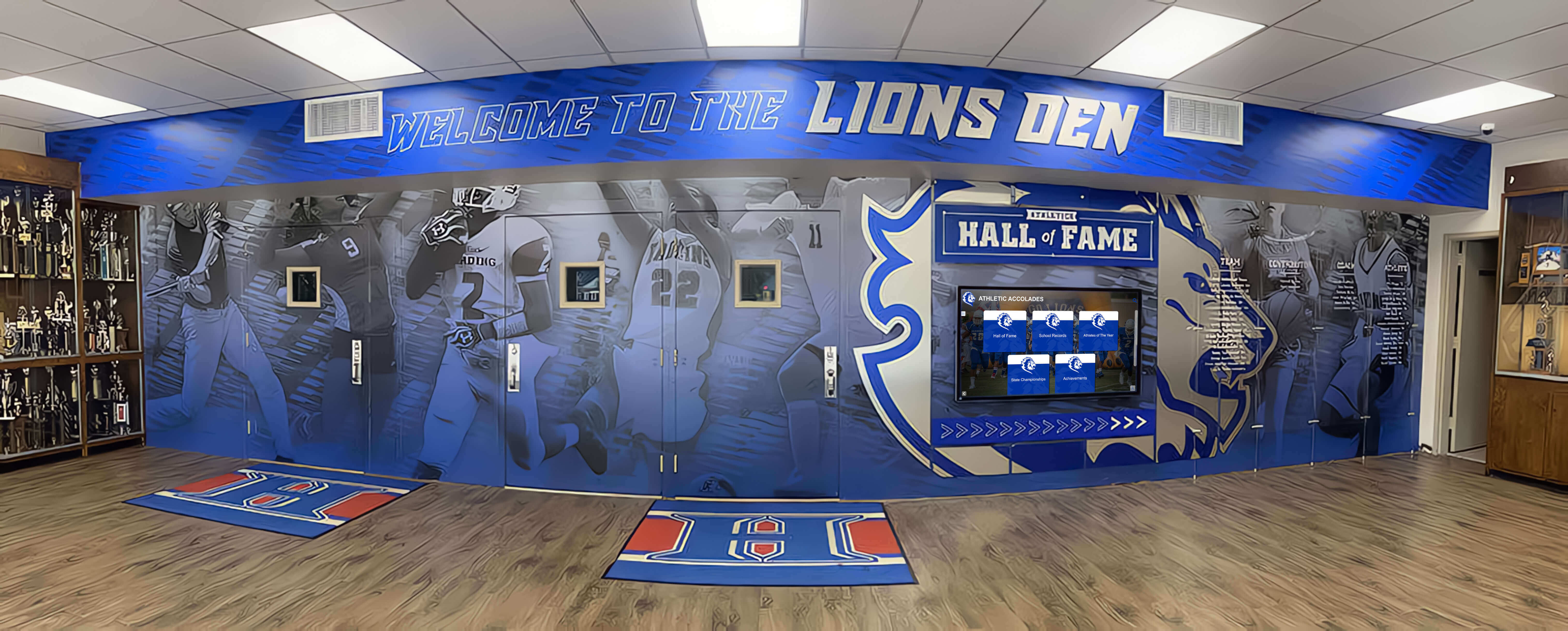
The Easiest Touchscreen Solution




Live Example: Rocket Alumni Solutions Touchscreen Display
Interact with a live example (16:9 scaled 1920x1080 display). All content is automatically responsive to all screen sizes and orientations.
Intent: decide — a trophy case collection condition survey is a structured, building-wide inspection workflow that gives school administrators, athletic directors, and facilities teams a consistent method for assessing every trophy case in the school at once, scoring each case against the same criteria, identifying which cases require immediate repair, which are stable but aging, and which are strong candidates for supplemental digital recognition — so conservation resources and capital decisions are prioritized with evidence rather than guesswork.
Most schools have multiple trophy cases distributed across the building: the main entrance lobby case that visitors see on every tour, the athletic corridor row that accumulates years of championship hardware, the gym lobby case near the bleachers, and often one or two smaller cases in auxiliary hallways that receive irregular attention. Each of those cases has its own hardware condition, lighting performance, structural integrity, and display quality — and they age at different rates depending on foot traffic, HVAC exposure, and how much maintenance attention each location has historically received.
A single-case inspection checklist tells you what is happening in one case today. A trophy case collection condition survey tells you what is happening across all cases, how they compare to each other, and what that comparison means for how the school allocates maintenance attention, conservation effort, and capital investment in recognition infrastructure going forward.
This guide delivers a step-by-step survey workflow that school teams can complete in a single scheduled session, a scoring system that produces comparable results across every case in the building, and a decision framework for what to do with the findings — including how survey results inform the case for supplemental digital recognition when physical display capacity can no longer keep pace with the school’s athletic history.

A collection-level survey treats every trophy case in the building as a single portfolio — individual case scores only become actionable when placed in the context of what the full collection shows
What a Collection Condition Survey Is — and How It Differs from a Single-Case Inspection
A trophy case collection condition survey is not a deeper version of a single-case inspection. The two have different purposes, different outputs, and different decision values.
A single-case inspection answers: Is this specific case in acceptable condition today? The output is a pass/fail or severity rating for that case. It is appropriate for routine maintenance cycles, incident follow-up, or a pre-event check before homecoming.
A collection condition survey answers: How does the school’s entire portfolio of trophy cases compare, and what do the cross-case patterns reveal about where the collection is heading? The output is a relative scoring matrix, a prioritized action list, and a basis for capital and conservation decisions that span multiple cases and budget cycles.
The practical difference is significant. A school might conduct a single-case inspection of the lobby case and find it in acceptable condition. A collection survey might reveal that the lobby case is the only case in acceptable condition — and that the three cases in the athletic corridor are each rated poor, with hardware failures, lighting outages, and structural concerns that have been individually deferred but collectively represent a crisis waiting for a trigger.
Schools that have adopted structured stewardship practices for their recognition programs — including how to plan leadership transitions around physical collections — find useful parallels in the booster club succession planning frameworks that address what happens to institutional knowledge and maintenance responsibilities when key people change roles. A collection condition survey creates the kind of documented baseline that those transitions depend on.
Phase 1 — Pre-Survey Preparation
A collection condition survey done without preparation produces inconsistent results that are difficult to compare across cases or use in future years. Thirty minutes of preparation before the survey session improves the reliability of every score recorded.
Step 1: Build the Case Inventory
Before inspecting a single case, compile a complete list of every trophy case in the building. Include:
- Location (building area, hallway, room number if applicable)
- A short descriptive label (e.g., “Main entrance — north wall, three-section case”)
- Approximate installation year or decade if known
- Whether the case is under a formal maintenance schedule or has been serviced ad hoc
If no inventory exists, walk the building once before the survey session and create the list. It is common for schools to discover cases they had not accounted for — small auxiliary cases in secondary hallways, cases in coach’s offices or meeting rooms, or older cases in storage areas that are still partially in use. All physical trophy cases should appear in the inventory regardless of how frequently they are visited.
Step 2: Assemble the Survey Team and Materials
Assign at least two people to conduct the survey together. One person inspects and calls findings; the other records them. A two-person team reduces the chance that a finding is missed because the inspector is simultaneously trying to write.
Materials needed per case:
- The survey form (paper or tablet — consistent across every case)
- A flashlight or portable work light for raking light inspection
- A microfiber cloth for basic surface tests
- A camera or phone for photographic documentation
- A measuring tape for structural dimension checks if case dimensions are not on record
Step 3: Set a Consistent Rating Scale Before You Start
The survey’s value as a comparative tool depends entirely on applying the same rating criteria to every case. Before the session, review the scoring rubric (detailed in Phase 2) so that both team members are using the same reference when they assign scores. A “good” structural condition rating should mean the same thing at the gym lobby case that it means at the main entrance case.
Phase 2 — The Trophy Case Collection Condition Survey Workflow
Complete the following survey steps for each case in the inventory. Record all findings on the same form format so scores remain comparable.
Step 4: Assess Structural Integrity
Evaluate the case frame, base, and mounting. Look for:
- Visible warping, bowing, or separation in the frame joints
- Case-to-wall anchoring — confirm the case is firmly mounted and does not shift when light lateral pressure is applied (for wall-mounted cases)
- Floor anchoring for freestanding cases — confirm they do not rock or shift on a flat surface
- Door hinge condition — all doors should open and close without binding or dragging
- Door seal and gasket condition — look for gaps, compression loss, or debris in door seals
Score structural integrity on a 1–4 scale: 4 = no concerns, 3 = minor cosmetic issues only, 2 = functional concerns present, 1 = significant structural impairment.
Step 5: Assess Display Panel Condition
Evaluate every panel — glass, acrylic, or polycarbonate — in the case. Inspect under three light conditions: normal overhead light, raking light from a 15-degree angle, and backlight where accessible. Note:
- Scratches, chips, or cracks visible under normal light
- Crazing, stress whitening, or fracture networks visible under raking or backlighting only
- Panel cloudiness or haze that does not clear with a dry cloth
- Evidence of moisture condensation or water intrusion at panel edges
Score panel condition on a 1–4 scale: 4 = no visible damage, 3 = minor surface scratches only, 2 = crazing or chips present, 1 = fracture, significant crazing, or water damage.
Step 6: Assess Interior Lighting Performance
Inspect every interior light fixture. Record:
- Number of functioning light positions vs. total light positions
- Whether lighting is even across all shelves (dark zones in back corners or lower shelves are common in older cases)
- Evidence of overheating — yellowing on fixture housing, discoloration on adjacent wood or metal, or heat marks on display items near light sources
- Functionality of any light switches or timer controls
Score lighting on a 1–4 scale: 4 = all lights functional and even, 3 = one or two outages with minor impact on display, 2 = multiple outages or uneven coverage, 1 = lighting nonfunctional or unsafe.
Step 7: Assess Hardware and Security
Evaluate all locks, hinges, handles, and security hardware. For each case:
- Test every lock with the appropriate key — confirm it engages cleanly without sticking
- Confirm door handles are firmly attached and do not wobble
- Note any lock cylinders that show signs of pick or force damage
- Check that security fasteners (if used on special display items) are in place and functional
- For cases with alarm integration, note whether the system is active and documented
Score hardware and security on a 1–4 scale: 4 = all hardware functional, 3 = minor cosmetic wear only, 2 = at least one functional failure present, 1 = security is meaningfully compromised.
Step 8: Assess Display Condition and Capacity
This step evaluates not the case itself but what is inside it and how it is presented. Note:
- Whether display items are organized, labeled, and positioned appropriately
- Whether the case is at capacity with no room for additional items
- Whether items show visible deterioration (trophy corrosion, fabric fading on jerseys, photograph yellowing)
- Whether any items appear to be stored rather than displayed — placed in the back corners out of view, stacked, or covered
Score display condition on a 1–4 scale: 4 = well-organized, labeled, below capacity, 3 = adequate but without labels or with minor crowding, 2 = significantly overcrowded or items in poor condition, 1 = case serves primarily as storage.
Step 9: Record and Photograph
For each case, photograph the overall exterior, each door panel, all interior shelves under normal light, and any flagged conditions under raking or backlighting. Number photographs by case ID so they can be matched to the survey form.
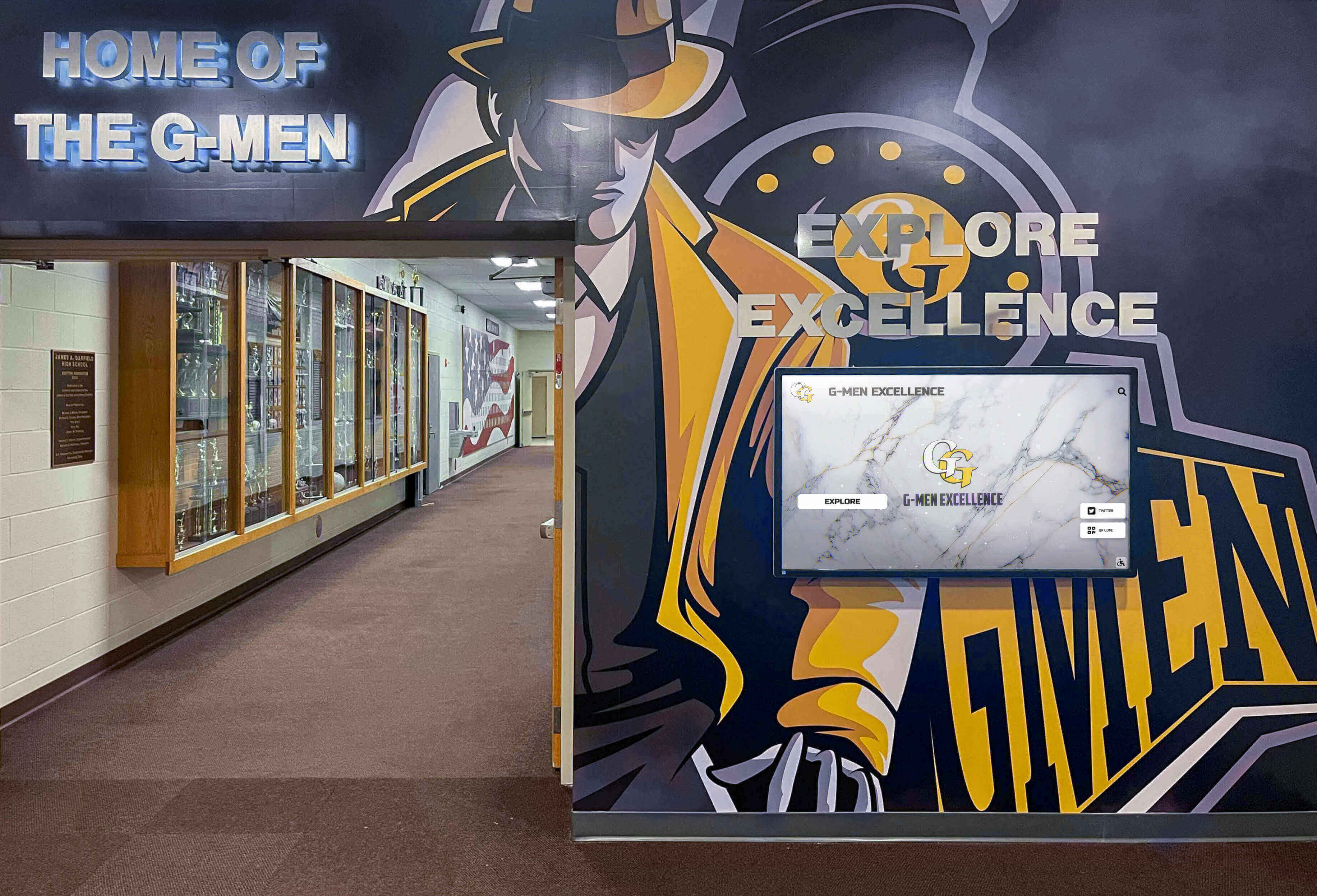
Schools with both physical trophy cases and digital displays should survey all physical cases against the same criteria — the comparison between them informs where digital capacity should supplement a physical collection under stress
Phase 3 — Scoring the Collection
Once the per-case assessments are complete, compile the results into a collection-level scoring matrix. The table below is the format that makes cross-case comparison most useful.
| Case ID | Location | Structure | Panels | Lighting | Hardware | Display | Total (20) | Priority |
|---|---|---|---|---|---|---|---|---|
| C-01 | Main entrance, north | 4 | 3 | 4 | 4 | 3 | 18 | Monitor |
| C-02 | Athletic corridor, east | 3 | 2 | 2 | 3 | 2 | 12 | Repair |
| C-03 | Athletic corridor, center | 2 | 2 | 3 | 2 | 1 | 10 | Urgent |
| C-04 | Gym lobby | 3 | 3 | 3 | 3 | 3 | 15 | Monitor |
| C-05 | Aux hallway, south wing | 2 | 1 | 1 | 2 | 1 | 7 | Evaluate |
Scoring interpretation:
- 17–20: Case is in good condition. Schedule standard annual maintenance. No immediate action required.
- 13–16: Case has specific functional concerns. Schedule targeted repairs within the current quarter.
- 9–12: Case has multiple functional impairments. Prioritize for full assessment and repair plan within 60 days.
- 5–8: Case is significantly impaired across multiple dimensions. Evaluate whether repair, replacement, or decommission is the appropriate response.
The “Priority” column converts the score into an action category: Monitor, Repair, Urgent, or Evaluate. The matrix gives administrators a single-page view of the full collection’s condition — something no set of individual inspection reports can provide.
See How Schools Are Expanding Recognition Capacity Beyond Physical Cases
Rocket Alumni Solutions builds cloud-managed digital trophy cases and halls of fame for schools that have outgrown physical display space — interactive touchscreen displays with unlimited capacity, ADA WCAG 2.1 AA compliance, QR code mobile access, and remote updates without IT tickets. When your survey reveals cases scoring 8 or below, the conversation about alternatives becomes much clearer with a demo in hand.
Book A DemoPhase 4 — Reading the Collection Patterns
Individual scores matter, but the patterns across the full collection are where the most important insights appear.
Pattern: Uniform decline across all cases. If every case in the building scores in the 10–14 range, the issue is likely systemic — a cleaning protocol that uses the wrong products across all cases, a building-wide HVAC condition that affects them all, or deferred maintenance that has accumulated at the program level rather than in any single case. The solution is a program-level intervention, not a case-by-case repair queue.
Pattern: One excellent case, several poor ones. This often reflects uneven maintenance attention — the main entrance case receives regular upkeep because it is the one administrators and visitors see, while corridor cases are maintained only when something visibly fails. The survey makes the imbalance visible and creates the basis for redistributing maintenance resources.
Pattern: Display scores consistently lower than structural scores. Cases that are physically sound but overcrowded or poorly organized are telling a capacity story. The hardware and panels can still serve the school — but the school has more achievements to display than the existing cases can accommodate. This is the pattern most directly addressed by supplemental digital recognition.
Pattern: Multiple cases scoring in the “Evaluate” range. When several cases are simultaneously at the level where repair vs. replacement vs. decommission is genuinely uncertain, the school is making multiple capital decisions at once. Prioritizing the evaluation sequence — which case is most public, which holds the most significant irreplaceable items, which is furthest from any repair budget — prevents decision paralysis.
Schools planning comprehensive recognition programs benefit from connecting the condition survey to their broader institutional calendar. The booster club annual compliance calendar is a useful reference for where to slot survey activities relative to athletic events, budget cycles, and maintenance review windows — so the survey is not a one-time event but an annual anchor in the school’s recognition management routine.
Phase 5 — What to Do With the Results
A completed survey produces three actionable outputs:
Immediate Action List
Extract every case scoring 12 or below and assign a specific next step to each:
- Identify who is responsible for the repair or evaluation
- Set a completion date within the current quarter
- Confirm the budget line or approval path for any work that requires outside contractors
Annual Maintenance Schedule
For cases scoring 13 and above, set the next scheduled inspection date and note what triggered the priority score. A case scoring 14 because its lighting has two outages needs a different follow-up than a case scoring 14 because its display is crowded — the first requires a maintenance work order, the second requires a collection conversation.
Collection-Level Report for Administration
Summarize the survey results in a one-page briefing for the principal, athletic director, or relevant administrator. Include: total cases surveyed, score distribution, cases requiring immediate action, cases with structural concerns, and cases where display capacity is the binding constraint. This report creates the institutional record that supports budget requests and long-term planning conversations.
Schools that maintain comprehensive records of their athletic history — including video footage and photograph archives that feed into trophy case documentation — will find that the digitization of old school video footage and school photo negative archives becomes increasingly relevant as survey results reveal how much of the physical collection is at risk from aging display infrastructure. Digitized records remain accessible even when physical display conditions deteriorate.
The Digital Transition Decision
When a collection condition survey reveals that multiple cases are in poor condition and the school’s athletic recognition history has grown beyond what those cases can adequately display, the survey results become the basis for a specific conversation: should we repair and replace physical cases, expand physical capacity, or invest in a supplemental digital recognition platform?
Physical cases offer tactile presence — the actual championship trophies, retired jersey originals, and signed memorabilia are physically accessible to students and visitors in a way a screen cannot replicate. That value is real and worth preserving for the items that benefit most from physical display.
But physical cases are finite. A case that held adequate capacity eight years ago may now display only a fraction of the school’s championship hardware, with the rest in storage. Current athletes cannot see the records set by athletes from fifteen years prior. Visiting families cannot access the full athletic history that shaped the program they are watching today.
A cloud-managed digital recognition platform — with unlimited entry capacity, remote content updates via CMS, ADA WCAG 2.1 AA compliant touchscreens, and QR code access for mobile viewing — does not replace the physical cases that are worth maintaining. It extends the school’s recognition infrastructure to the complete athletic archive, including every program year that could never physically fit in a trophy case.
Schools that track academic and athletic recognition through the full school year — including honor roll cycles, team championships, and individual awards — benefit from thinking about recognition continuity across formats. The end-of-semester honor roll digital display framework illustrates how digital recognition can carry the regular recognition workload that physical cases were never designed to handle at volume.
For schools evaluating how a digital platform fits within their broader campus engagement strategy, the digital record board campus engagement ideas resource covers a range of use cases that schools have applied to recognition displays across athletic, academic, and community contexts.
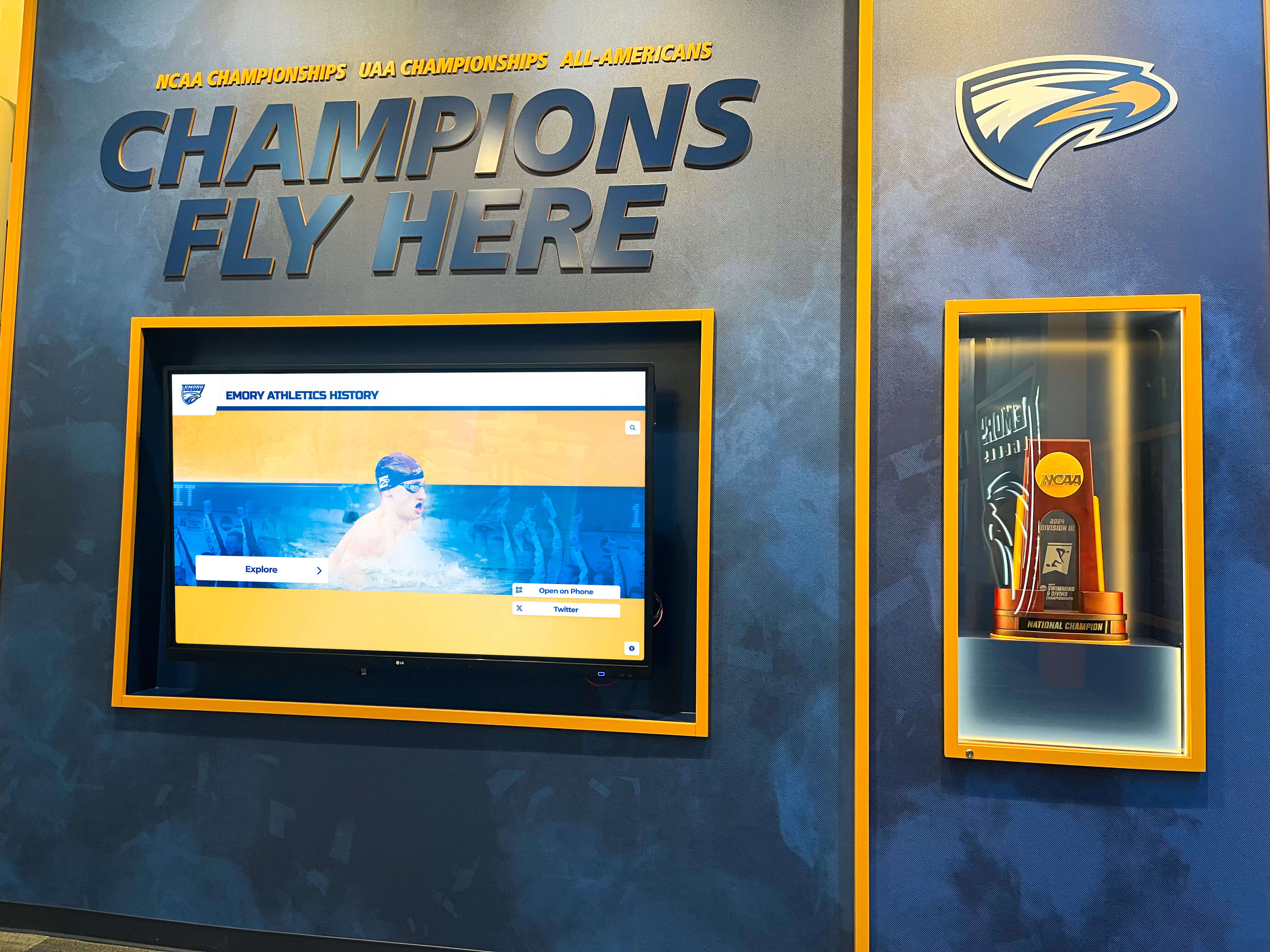
Programs with multi-decade championship histories regularly face physical display capacity limits — a collection condition survey reveals how close the existing cases are to that ceiling
Frequently Asked Questions
Q: How often should a school conduct a trophy case collection condition survey?
A: Once annually is the standard cadence for a full collection survey. Conduct it at the start of the school year — before fall athletics events, homecoming, and facility tours increase foot traffic near display areas. A mid-year visual check in January is useful to catch any cases that changed significantly during the fall semester, but the full scored survey should happen annually so year-over-year comparisons remain valid.
Q: Who should lead the survey — facilities staff, athletic staff, or administration?
A: A two-person team works best when one person has facilities knowledge (structural and maintenance assessment) and the other has program knowledge (display content, athletic recognition context, and institutional history). The athletic director or designated hall-of-fame committee member is well suited to assess display condition; the facilities or maintenance coordinator is better suited to assess structural, panel, and hardware condition. Either can photograph — the important thing is that both people use the same scoring rubric.
Q: What should the school do with cases that score in the “Evaluate” range but there is no immediate budget for repair or replacement?
A: Document the condition thoroughly, restrict access to essentials only (avoid placing new items in a significantly impaired case), and flag the case for the next budget cycle with the survey score and photographs as supporting evidence. A case scoring in the 5–8 range that is documented in November has a clearer path to a budget conversation in the spring than a case that is acknowledged verbally to be “in bad shape” without a formal record.
Q: Can the collection condition survey replace annual single-case inspections?
A: No. The collection survey provides the cross-case comparison that single-case inspections cannot. Single-case inspections provide the frequency and detail that a once-annual collection survey misses. They serve different purposes and both have a place in a complete maintenance program. The collection survey should be scheduled in addition to, not instead of, the regular case-by-case maintenance checks.
Q: How do survey results connect to a decision about digital recognition?
A: The survey produces a scored record of which cases are at or near the end of their functional service life, which are at capacity, and which are adequately serving current display needs. Cases scoring in the “Urgent” or “Evaluate” range — especially those with display scores of 1 or 2 indicating overcrowding or poor item condition — are the strongest candidates for supplemental digital recognition. The survey does not make that decision; it creates the evidence base that makes the decision informed rather than intuitive.
Integrating the Survey Into Your School’s Recognition Planning
A trophy case collection condition survey is most useful as an annual, institutional document rather than a one-time project. The school that surveys its cases in September 2026 and again in September 2027 has two data points; the school that has surveyed every year for five years has a trend line — and trend lines are what make capital conversations straightforward.
The survey should be filed where it can be retrieved by the people who need it: the athletic director preparing a budget request, the principal responding to a community question about why certain trophies are not on display, the facilities team planning summer maintenance, or the incoming staff member who needs to understand what physical condition the recognition collection is in before they can manage it. A survey stored only in the memory of the person who conducted it is a survey that disappears when that person changes roles.
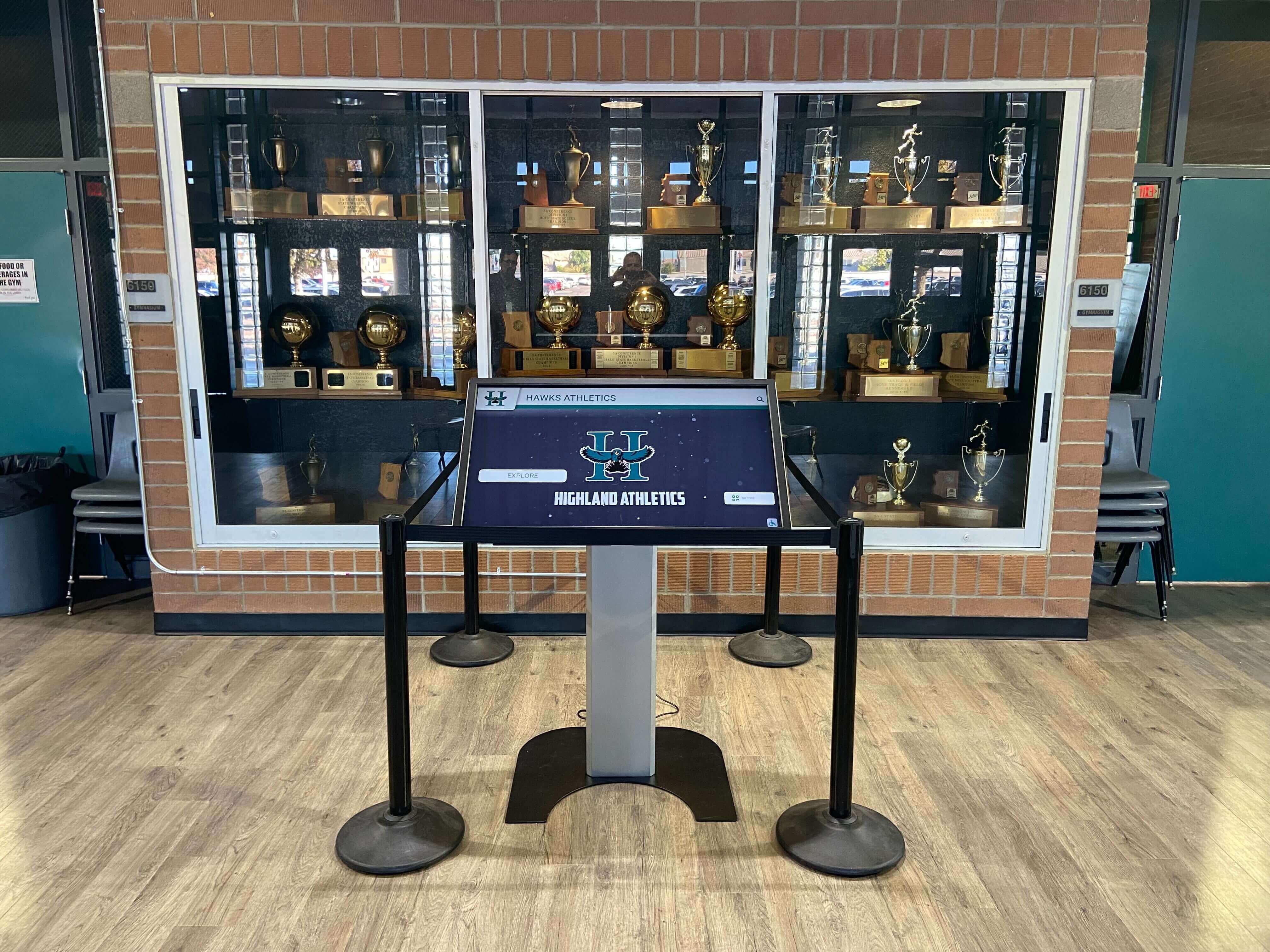
Schools that have integrated digital recognition alongside physical cases conduct collection surveys that cover both — physical case condition scores and digital display performance belong in the same institutional record
For schools where multiple people are responsible for different parts of the recognition program — the athletic director, the facilities coordinator, the hall-of-fame committee, the booster club — the collection condition survey is also one of the few documents that gives each stakeholder the full picture at once. It reduces the likelihood that a case falls through the gap between two people who each assumed the other was handling it.
The schools that manage their recognition collections most effectively are the ones that treat collection maintenance as a program function rather than a reactive facilities task. A structured annual survey, scored consistently, documented with photographs, and used as the basis for maintenance planning, capital requests, and digital expansion decisions, is the foundation of that program function.
The checklist and workflow above give your team the structure to conduct that survey reliably. The next step is scheduling the session and completing the case inventory — so that this fall’s survey is in the record before the first trophy is awarded at this year’s athletic events.
Ready to See What a Digital Trophy Case Can Add to Your Collection?
When your collection condition survey reveals cases at capacity or approaching the end of their service life, Rocket Alumni Solutions' interactive digital trophy case platform gives your school unlimited recognition capacity — cloud-managed, ADA WCAG 2.1 AA compliant, accessible via QR code from anywhere, and updatable without IT tickets. Schedule a demo to see how schools are preserving their complete athletic archive on a platform that grows with the program.
Book A DemoLive Example: Rocket Alumni Solutions Touchscreen Display
Interact with a live example (16:9 scaled 1920x1080 display). All content is automatically responsive to all screen sizes and orientations.