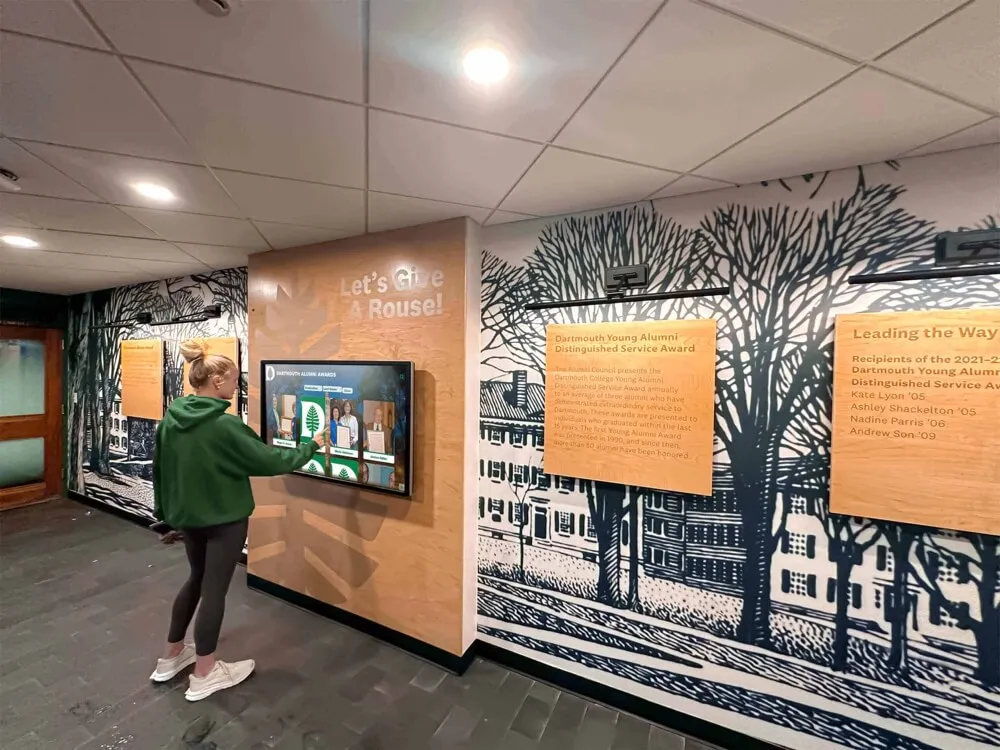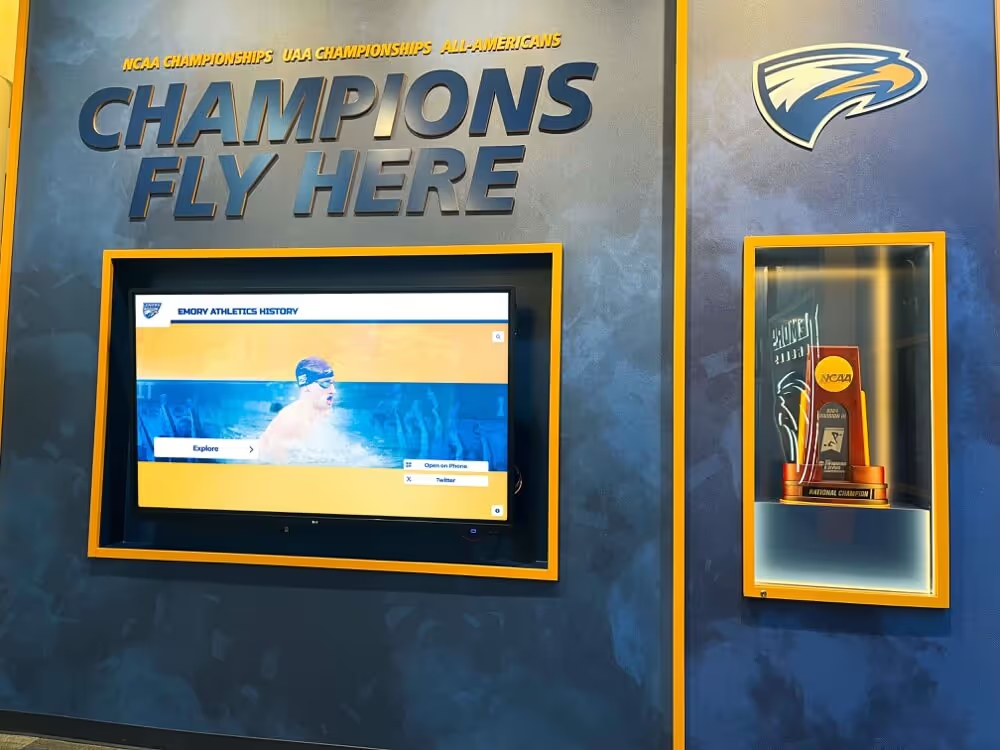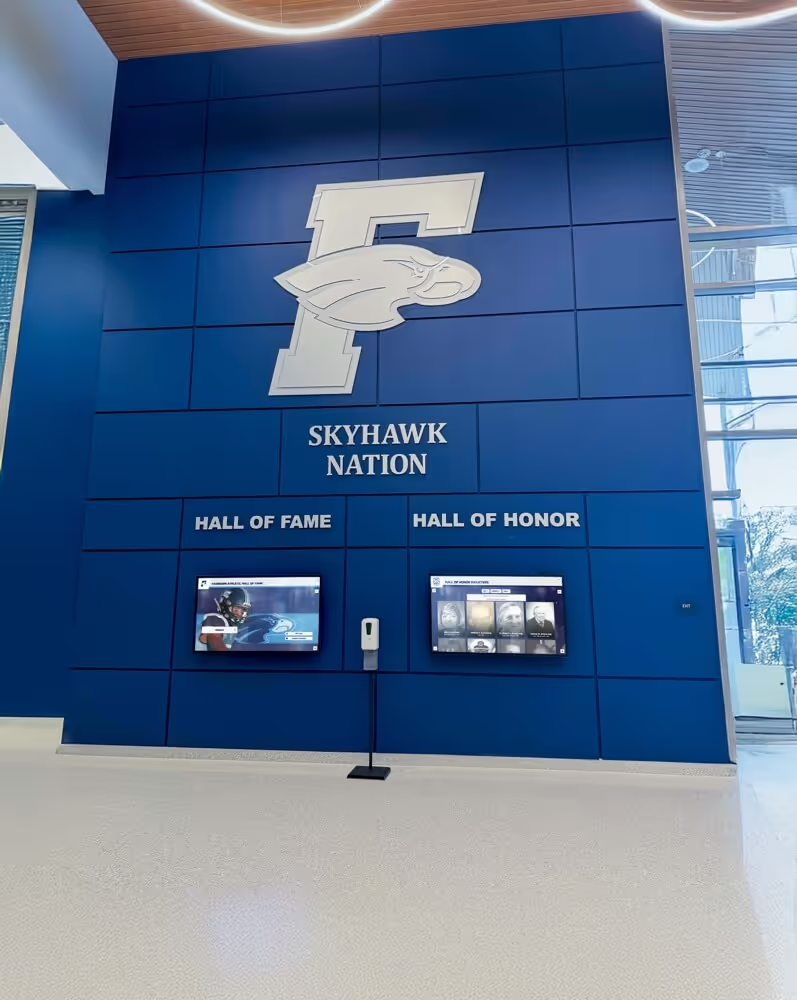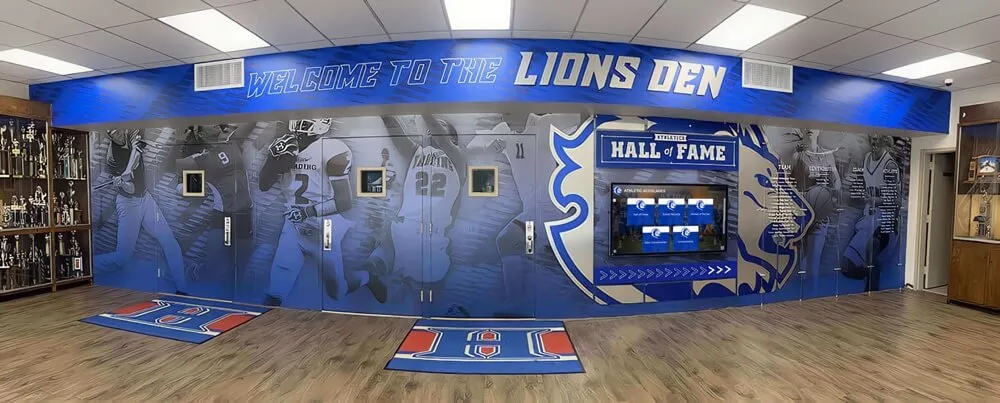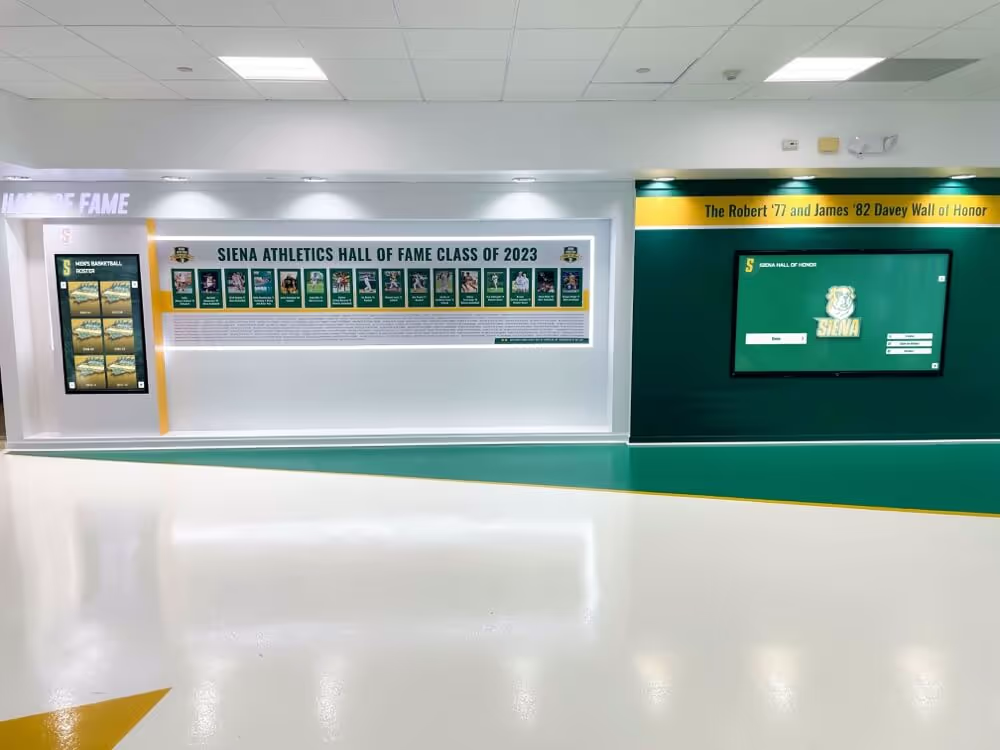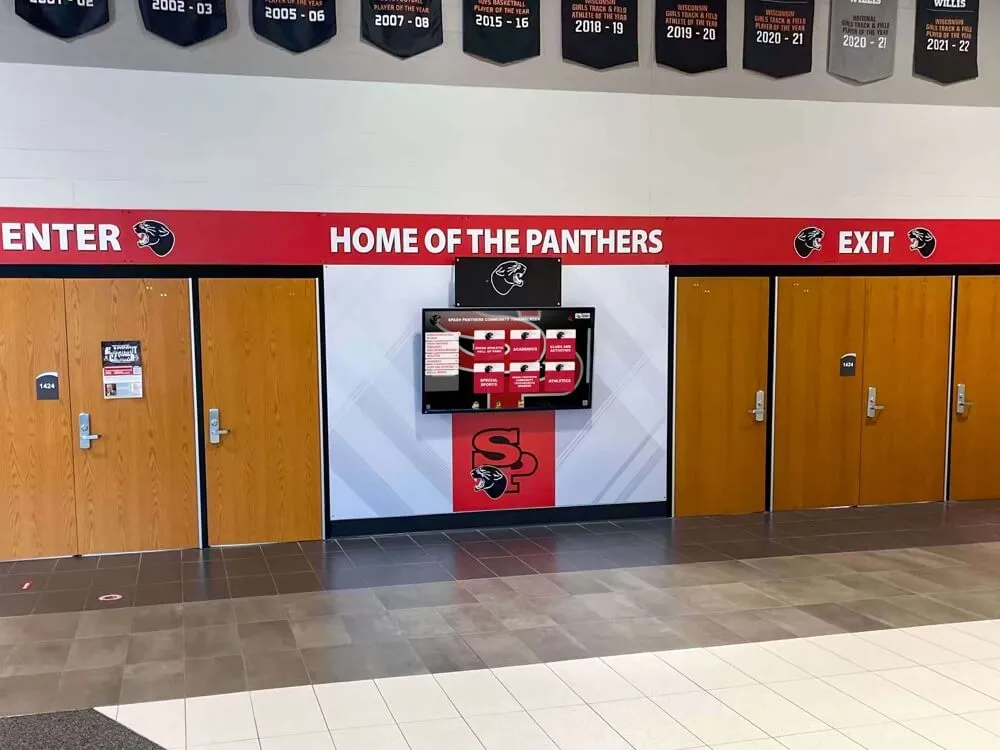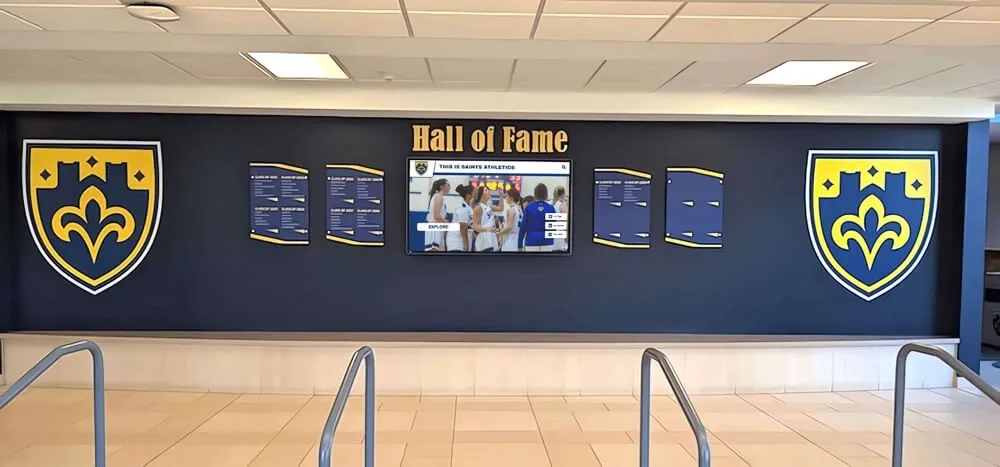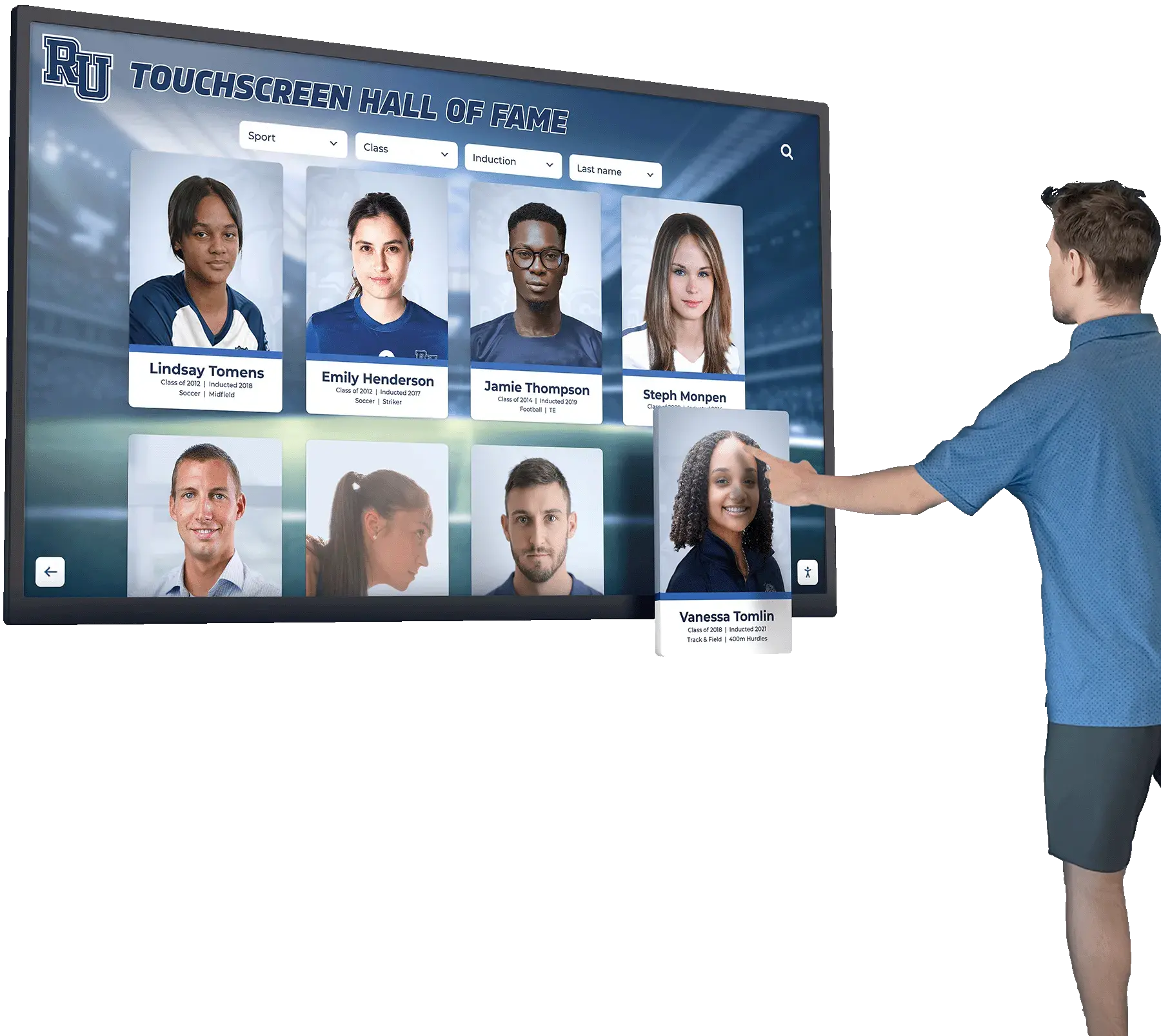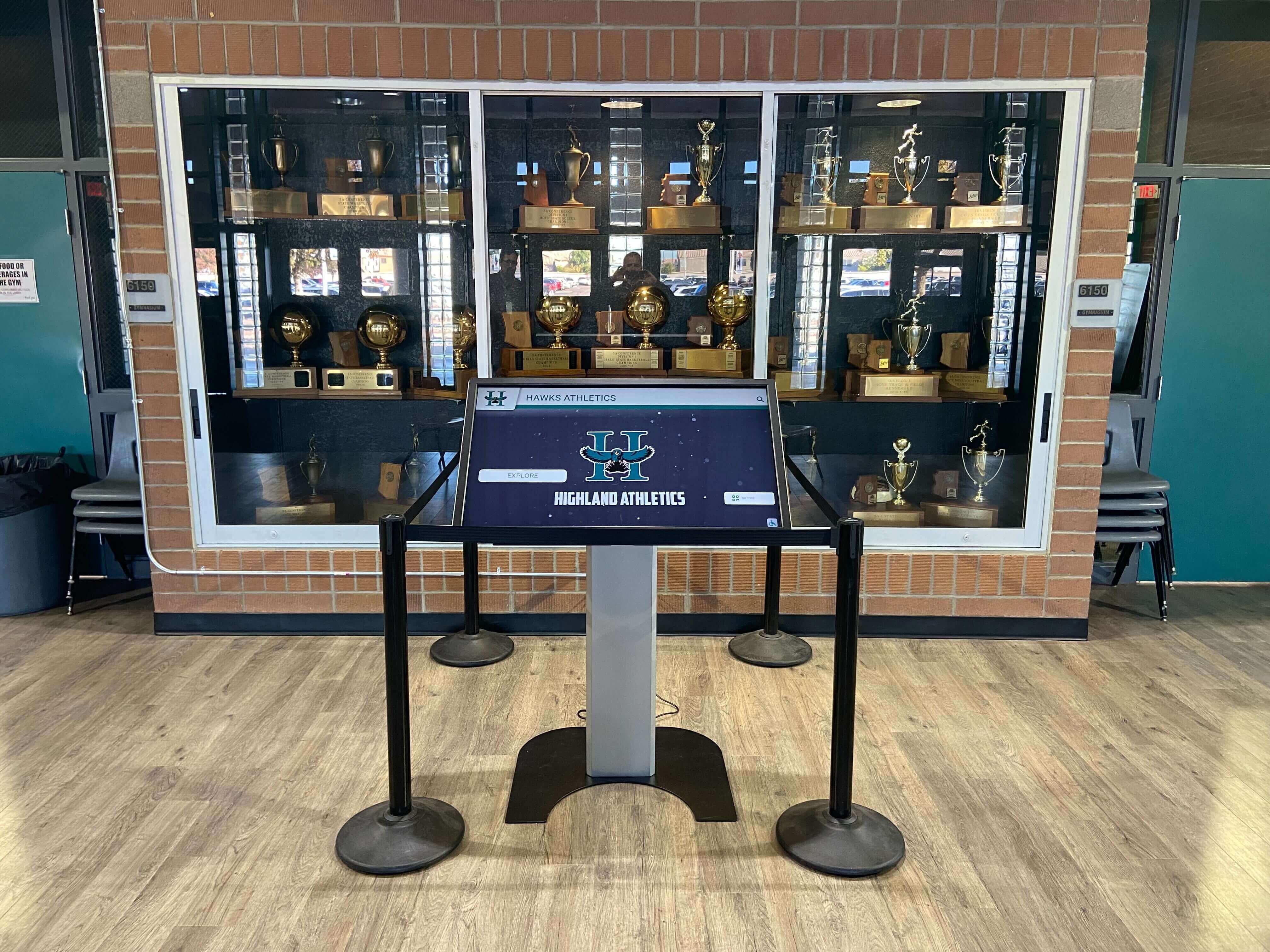




High school athletic directors face a familiar problem: trophy cases overflowing with decades of championship hardware, plaques crowding every available surface, and new achievements creating impossible decisions about what stays visible and what gets relegated to storage. Gym lobbies built decades ago simply cannot accommodate the ongoing accumulation of trophies, medals, and recognition items that successful athletic programs generate year after year.
Traditional trophy cases force schools into uncomfortable choices. Display the football state championship but remove the wrestling conference title? Showcase this year’s achievements but pack away recognition from the 1990s? Give prominent placement to high-profile sports while smaller programs receive back-shelf visibility? These space constraints create recognition inequities that no athletic director wants to navigate.
Touchscreen displays offer a practical solution to trophy overcrowding that addresses space limitations while actually enhancing how schools celebrate athletic achievement. By digitizing trophy recognition, schools gain unlimited display capacity, interactive exploration capabilities, and flexible content management—all in lobby installations that complement rather than replace valued physical trophies.
This comprehensive guide explores how high schools implement touchscreen displays in gym lobbies to solve trophy overcrowding, what technology options work best for athletic environments, how to balance digital and physical recognition, and what schools should consider when planning these installations.

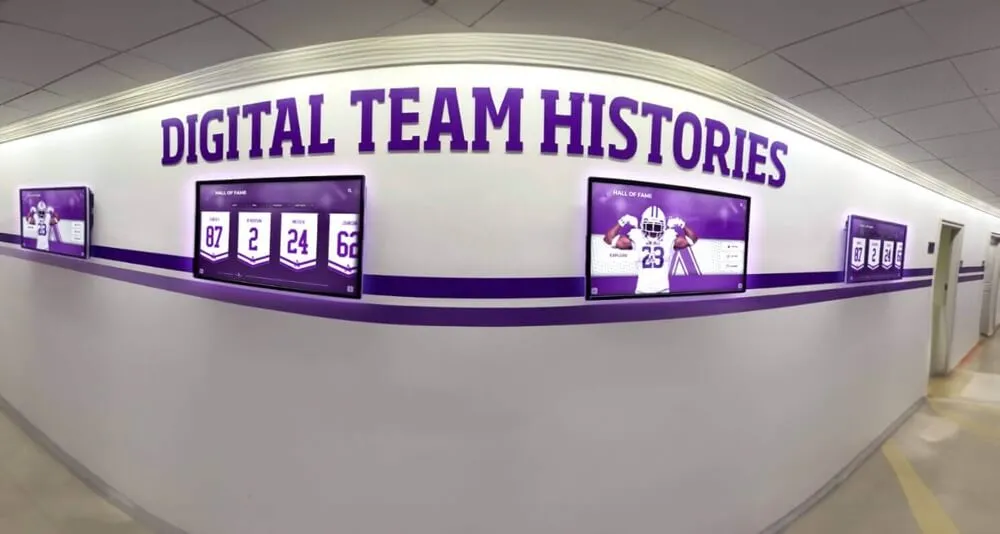
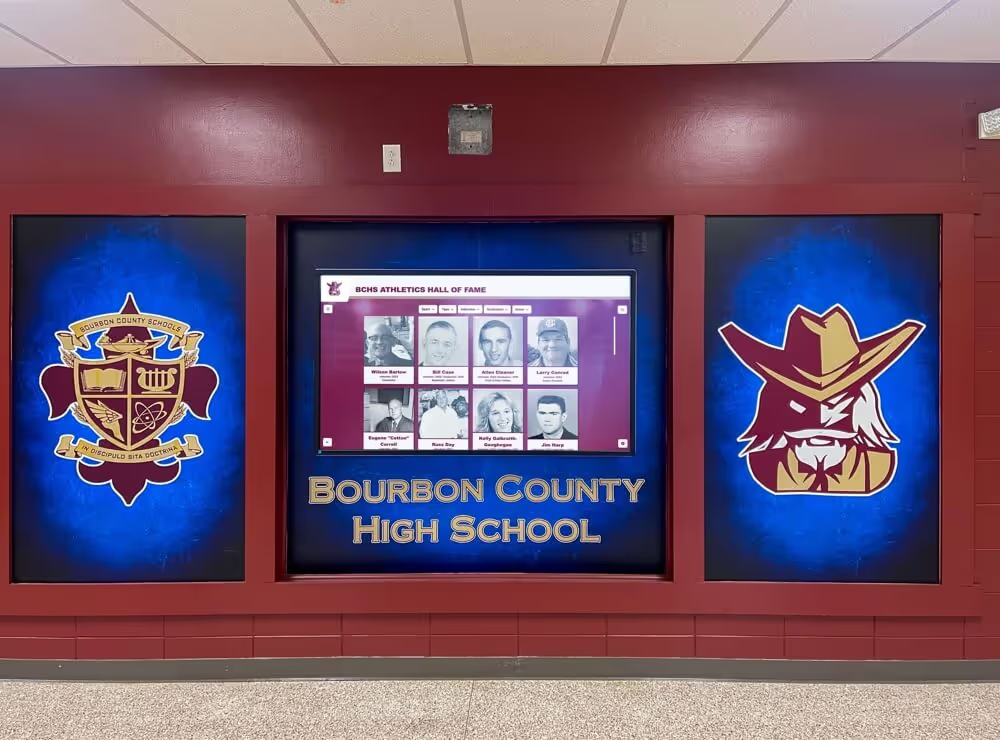
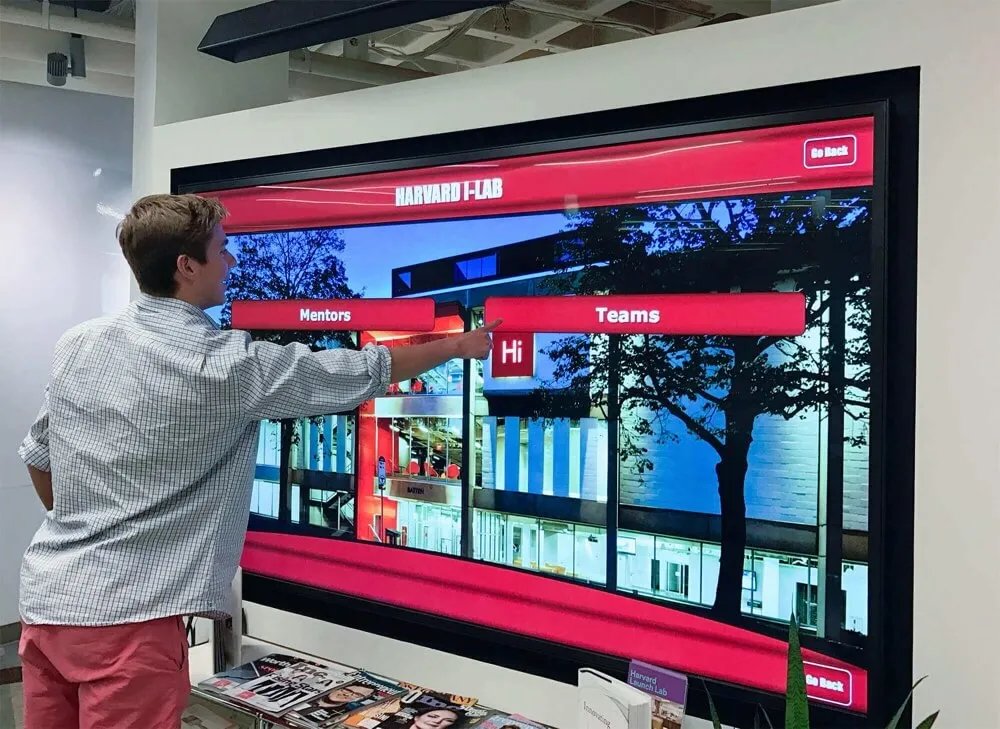
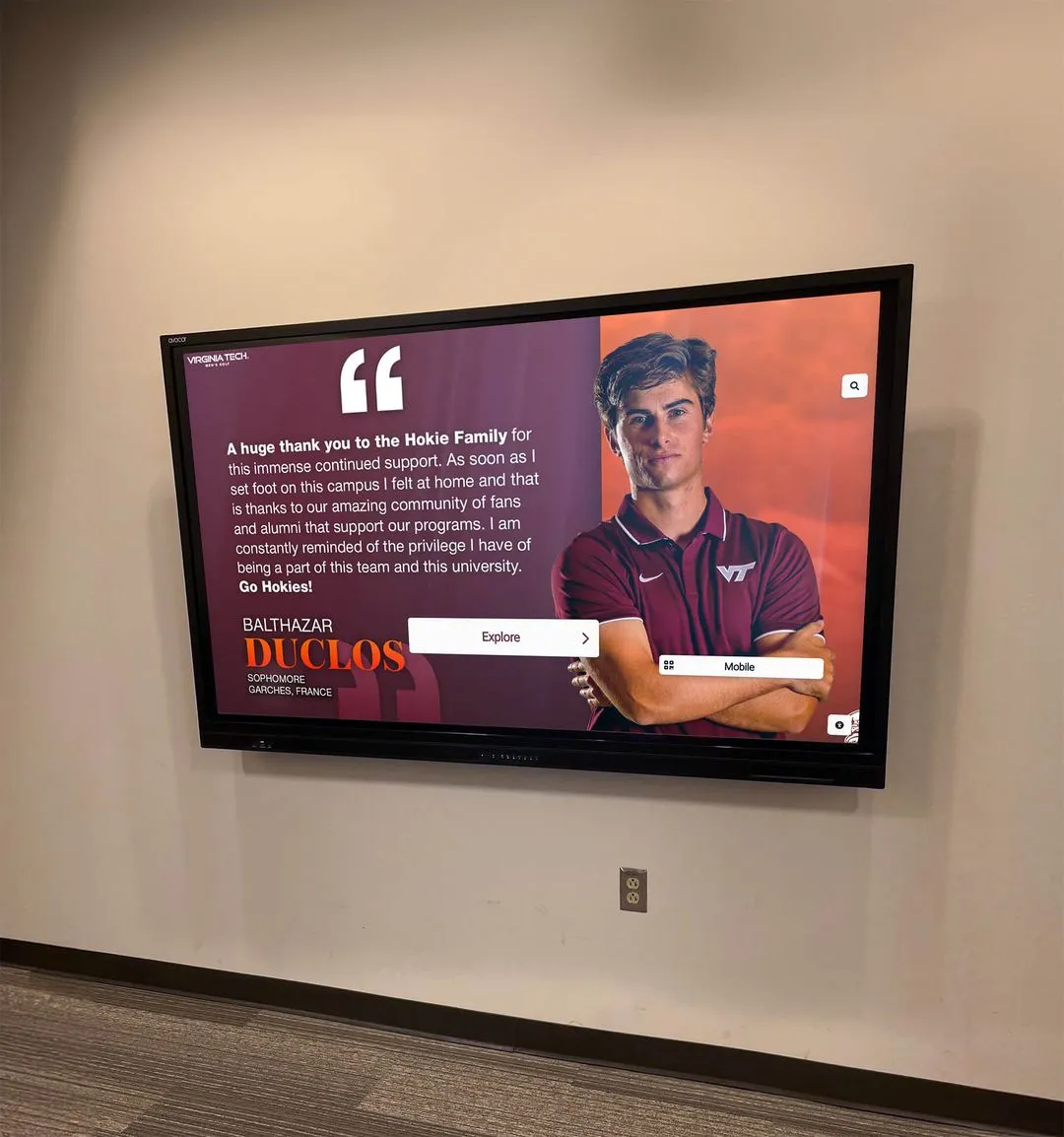
Modern touchscreen displays integrate seamlessly with existing trophy cases, combining physical championship hardware with unlimited digital recognition capacity
Understanding the Trophy Overcrowding Challenge
Before exploring solutions, recognizing the full scope of the problem helps athletic directors understand why touchscreen displays address fundamental limitations that traditional approaches cannot solve.
The Space Limitation Reality
Successful athletic programs accumulate recognition faster than physical spaces can accommodate:
Annual Recognition Accumulation Most competitive high school athletic programs generate significant recognition each year:
- State championship trophies and runner-up recognition across multiple sports
- Conference championship hardware for fall, winter, and spring sports
- Tournament victories and invitational competition awards
- All-conference and all-state individual athlete recognition
- Coach of the year awards and program milestone achievements
- Record-breaking performance plaques and statistical achievement recognition
A typical high school offering 15-20 sports may accumulate 10-20 major trophies and 30-50 individual recognition items annually. Within five years, new achievements alone exceed the capacity of most existing trophy case installations.
Physical Trophy Case Constraints Traditional display spaces impose hard limits:
- Standard 72-inch trophy cases hold 15-25 significant trophies comfortably
- Shelf space for individual recognition plaques fills quickly
- Adding new items requires removing existing recognition or purchasing additional cases
- Trophy case expansion demands construction, carpentry, and significant budget investment
- Many gym lobbies lack available wall space for additional physical cases
Schools implementing comprehensive athletic recognition programs report reaching physical capacity within 7-10 years of initial trophy case installation, creating ongoing management challenges.
Recognition Equity Concerns
Space limitations create difficult allocation decisions:
Sport-by-Sport Competition Limited display space forces prioritization:
- High-profile sports like football and basketball receive premium positioning
- Smaller sports compete for secondary shelf placement
- Individual achievements from less visible sports get minimal recognition
- Discontinued programs lose display space entirely when new sports emerge
- Recent achievements displace historical recognition as space fills
These allocation decisions can create tensions among teams, coaches, and booster groups when certain programs appear more valued based solely on available display real estate.
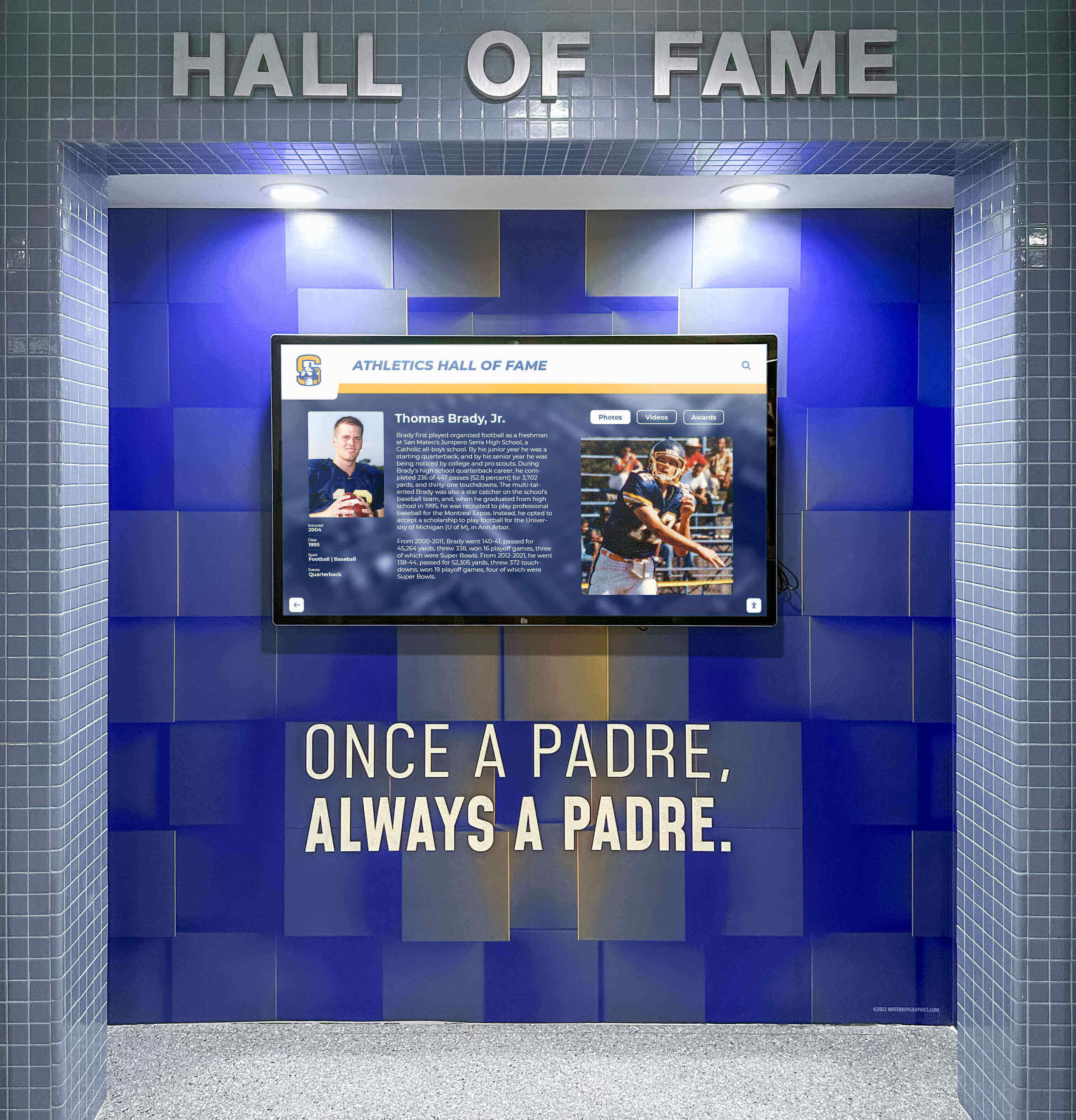
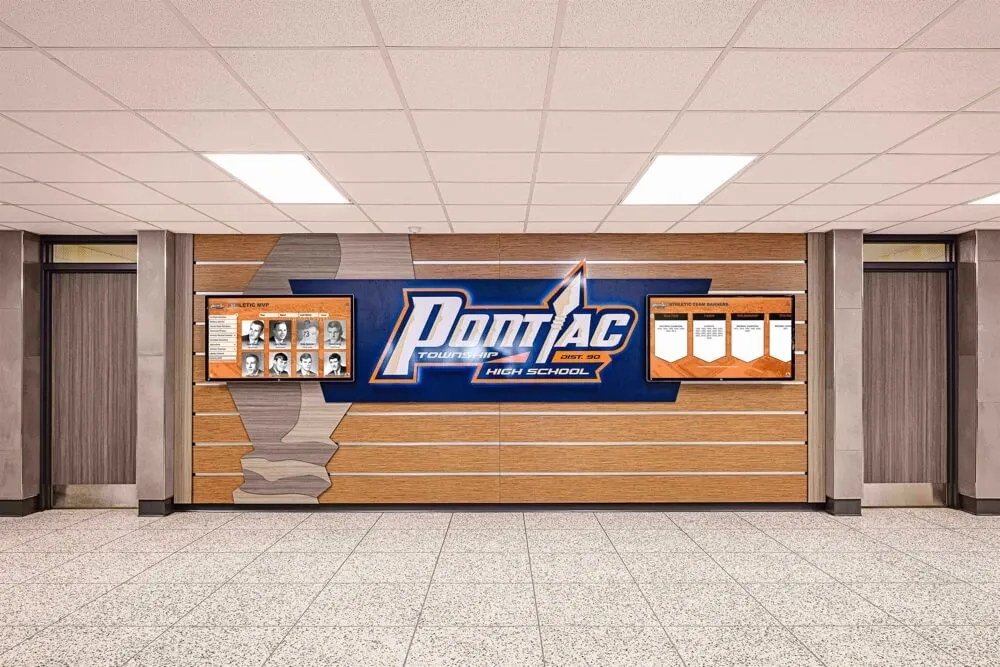
Dedicated digital displays provide every sport equal visibility opportunity without physical space constraints limiting recognition
Gender Equity Issues Trophy case allocation often reflects historical rather than current program quality:
- Boys’ athletic programs historically received more resources and generated more hardware
- Trophy accumulation patterns may not represent current program excellence
- Title IX requirements mandate equal visibility for comparable achievements
- Female athletes may see fewer visible role models in lobby displays
- Display decisions communicate institutional values about different programs
Athletic directors recognize that trophy case management decisions send powerful messages about which achievements and which athletes the school genuinely values.
Maintenance and Engagement Challenges
Physical trophy cases present ongoing operational burdens:
Maintenance Requirements Traditional displays demand regular attention:
- Glass surfaces requiring frequent cleaning due to fingerprints and dust
- Trophy polishing and hardware maintenance preserving appearance
- Locked cases needing key management and access coordination
- Lighting fixture replacement and electrical maintenance
- Periodic reorganization as collections grow and priorities shift
Many schools report that trophy cases receive thorough cleaning only quarterly or less frequently due to competing facilities priorities, resulting in dingy appearances that undermine rather than celebrate achievement.
Student Engagement Issues Static displays become invisible over time:
- Unchanging arrangements fade into background scenery that students stop noticing
- No interaction opportunity means recognition remains passive viewing only
- Information limited to what fits on trophy plaques provides minimal context
- Stories behind championships remain untold without expanded detail
- Alumni and families visiting campus struggle to find specific achievements in crowded cases
Research on institutional recognition indicates that static displays receive decreasing attention over time as viewers become habituated to unchanging environments, dramatically reducing motivational impact on current student-athletes.
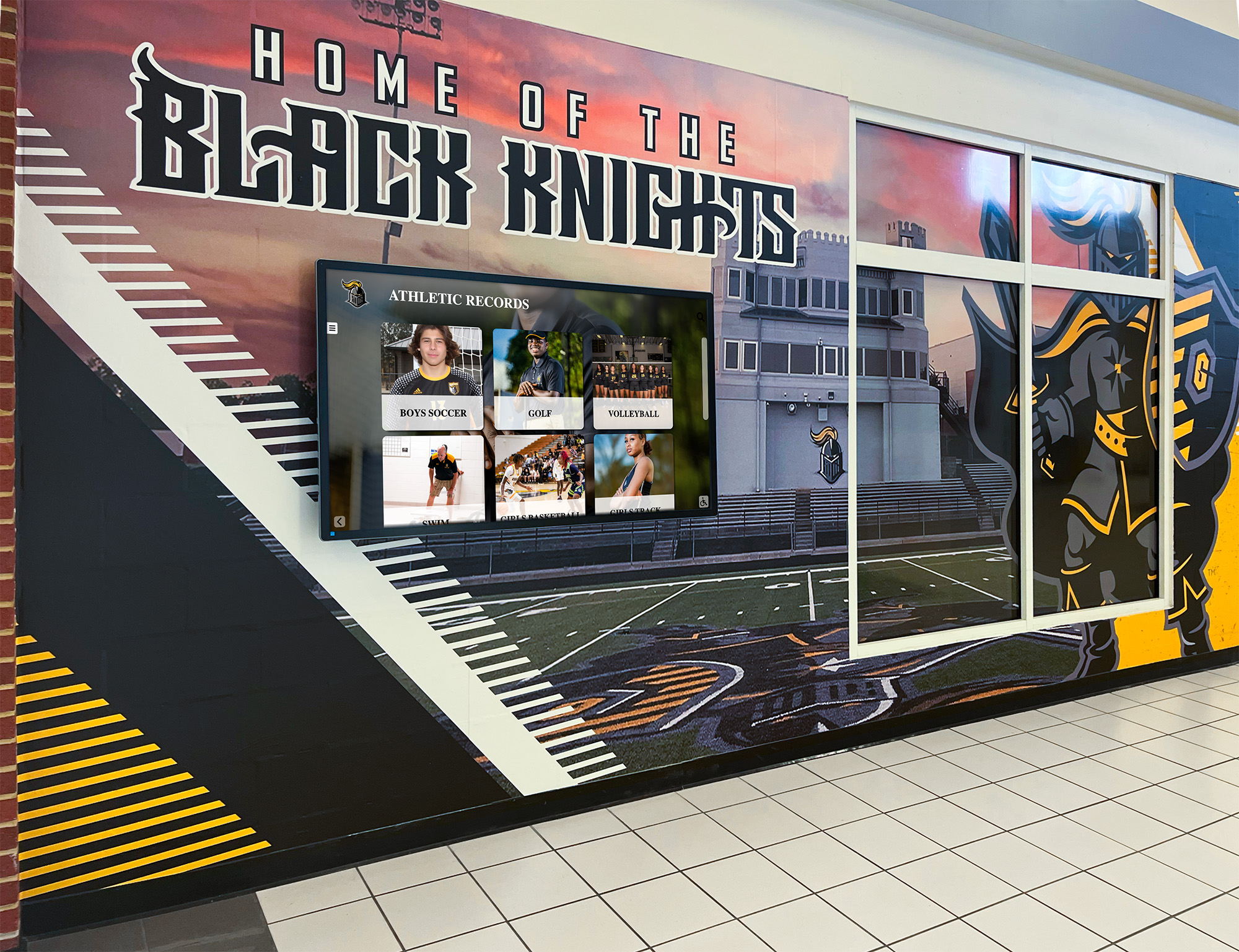
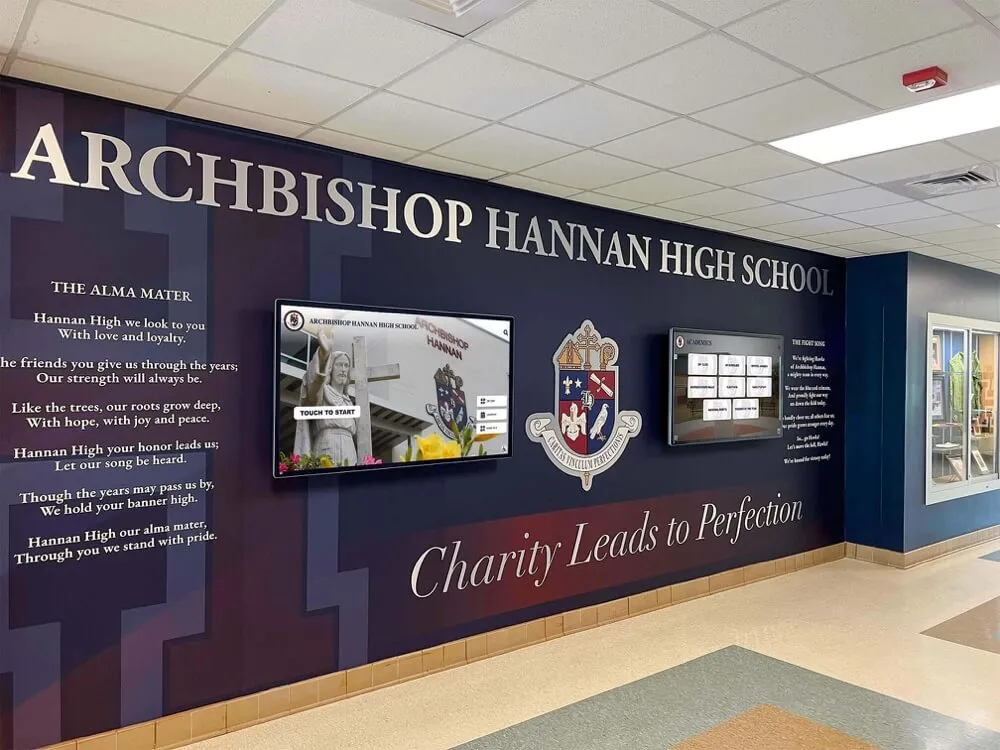
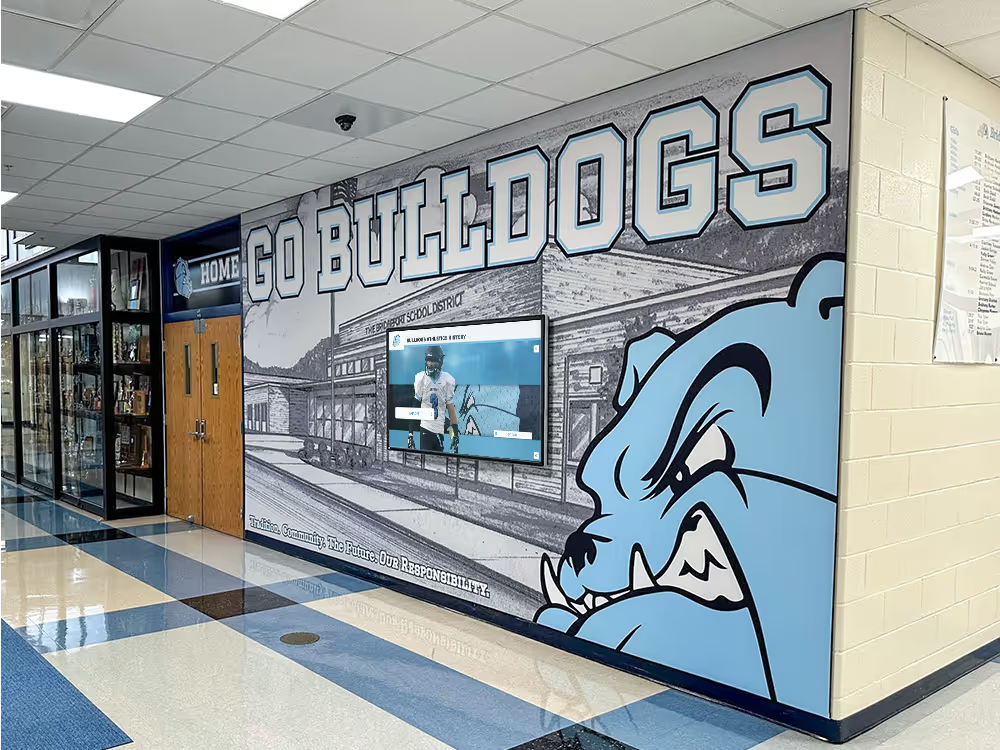
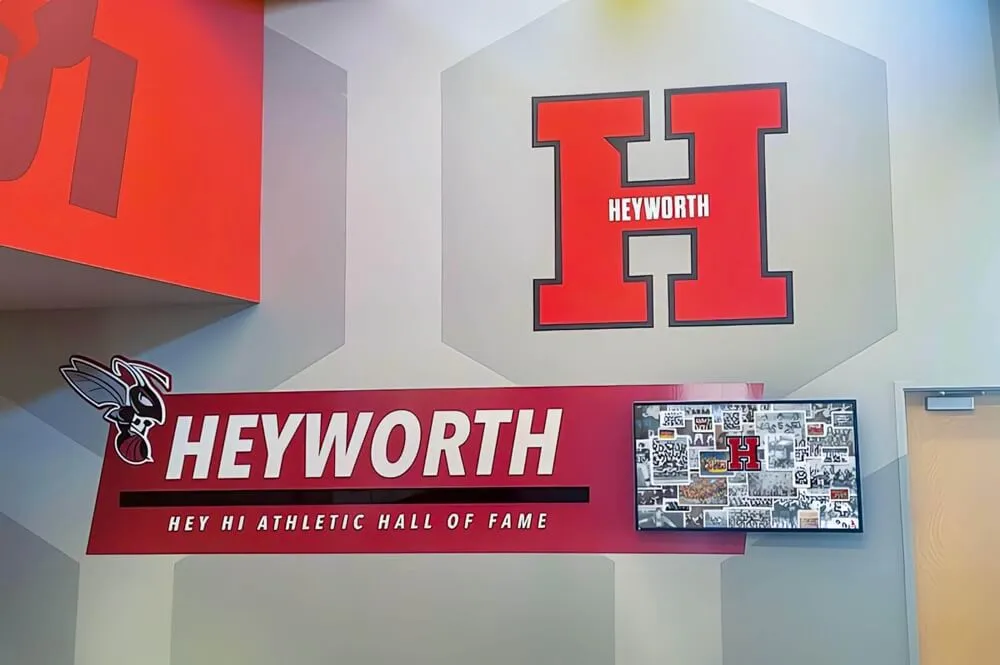
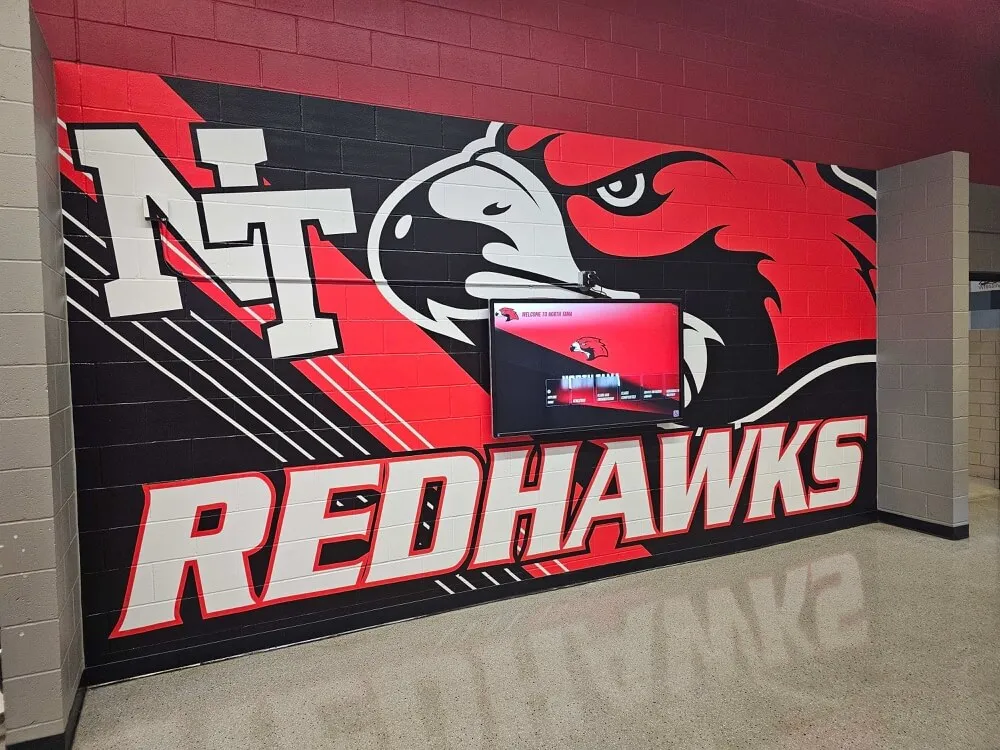
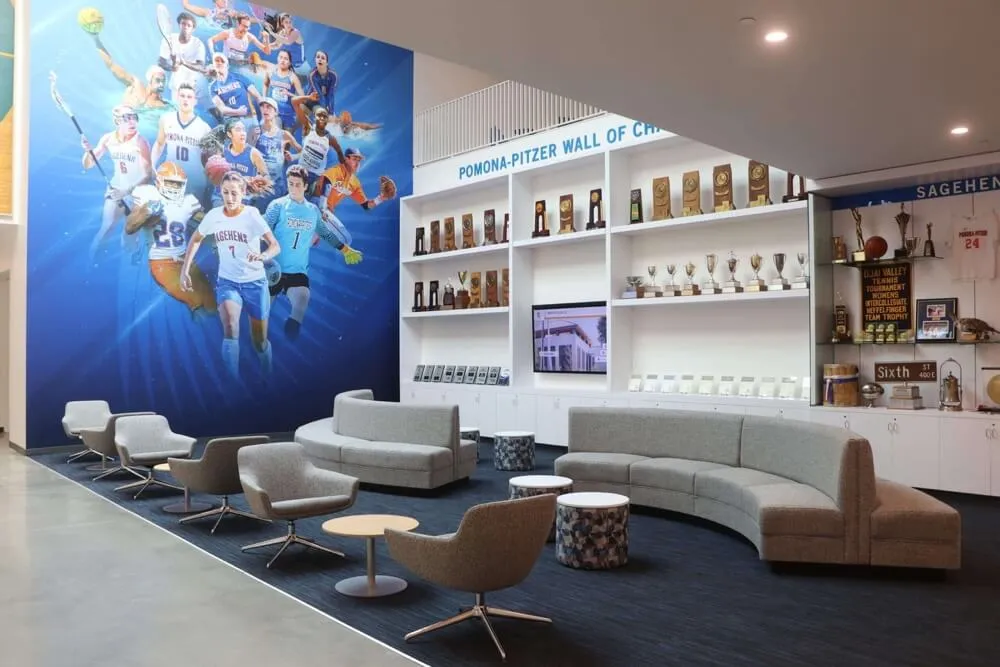
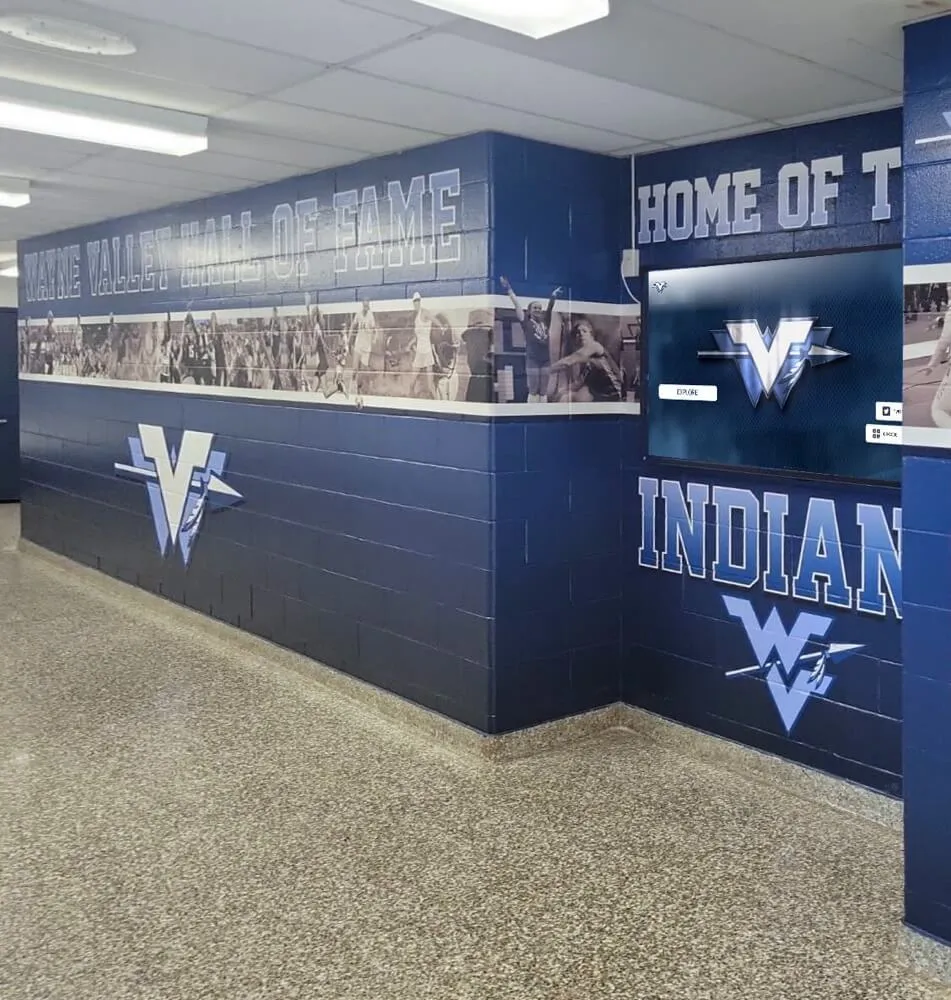
Digital record boards complement lobby murals, creating layered recognition environments that maintain student engagement through dynamic content
How Touchscreen Displays Solve Trophy Overcrowding
Digital recognition technology fundamentally addresses the space constraints and engagement limitations that make traditional trophy cases inadequate for modern athletic programs.
Unlimited Recognition Capacity
The most immediate benefit of touchscreen displays is elimination of physical space constraints:
Infinite Digital Display Space Digital platforms remove all capacity limitations:
- Showcase unlimited trophies, championships, and achievements without removing any items
- Add new recognition instantly without construction or purchasing additional cases
- Display every achievement across all sports, eras, and recognition types equally
- Include championships from program origins through current seasons without storage concerns
- Provide identical visibility opportunities regardless of sport size or trophy quantity
Solutions like Rocket Alumni Solutions enable schools to display achievements from founding teams alongside current season championships, creating comprehensive institutional memory impossible with physical cases.
Sport Equity Through Equal Access Digital capacity eliminates forced prioritization:
- Every sport receives equivalent digital display opportunity regardless of program size
- Individual athlete achievements visible alongside team championships
- Historical recognition preserved while current accomplishments receive prominence
- Small sports and emerging programs gain equal visibility with established programs
- Recognition additions never require removing existing displays to make room
Schools implementing digital athletic recognition systems report immediate relief from the allocation tensions created by physical space constraints, as every program gains adequate recognition without competing for limited positions.
Comprehensive Historical Documentation Digital capacity supports complete program archives:
- Document every championship from program inception forward
- Preserve individual record-holders across all statistical categories
- Include all-conference and all-state selections from every era
- Display coaching milestones and tenure recognition
- Archive discontinued sports preserving institutional athletic history
Athletic directors can finally showcase complete program histories rather than just highlights that fit in available cases.
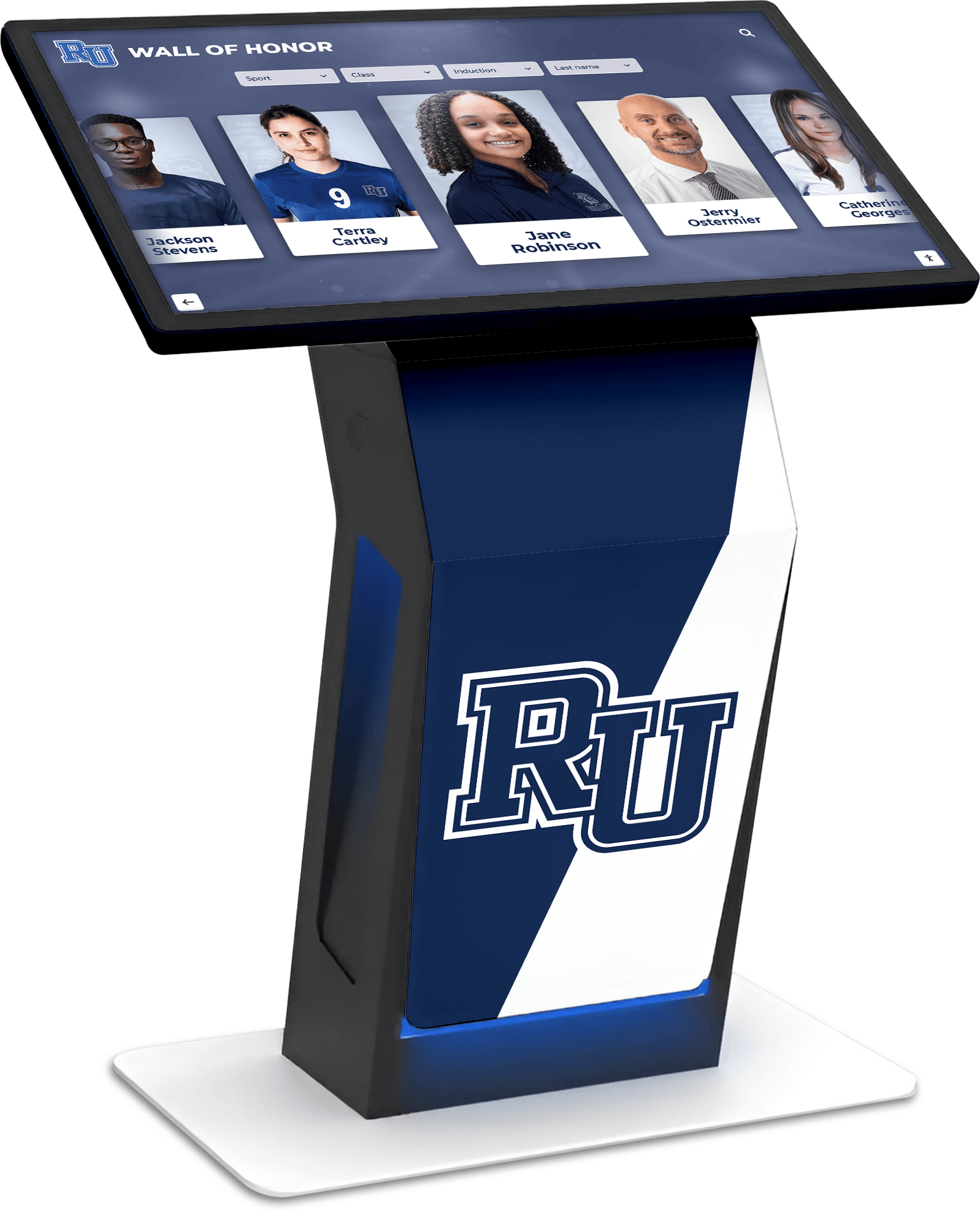
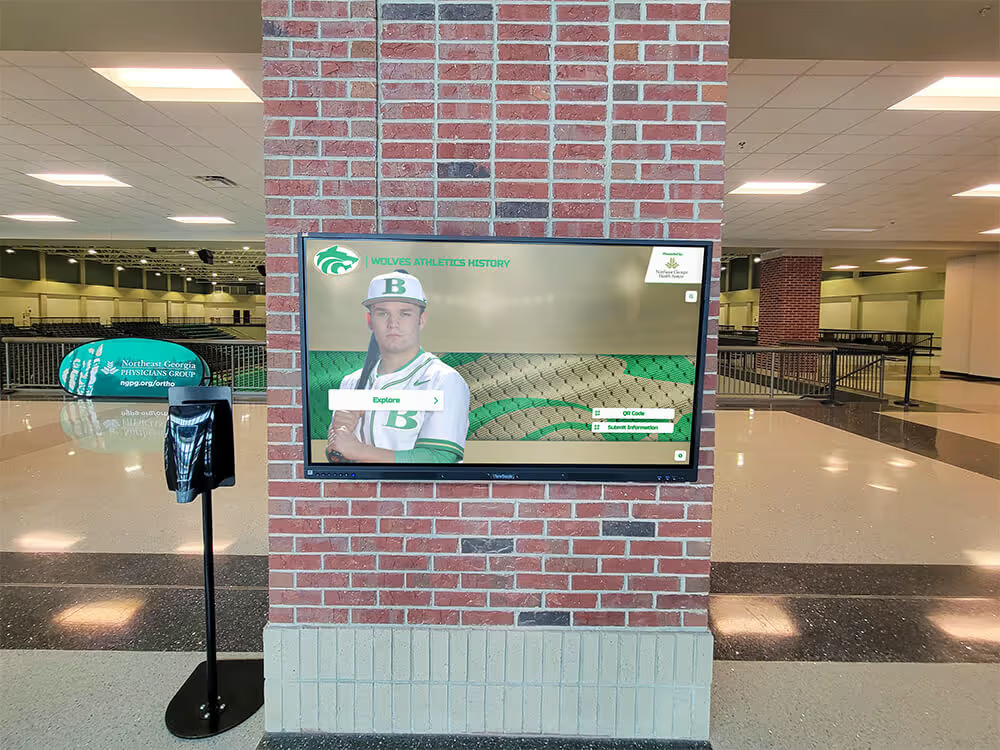
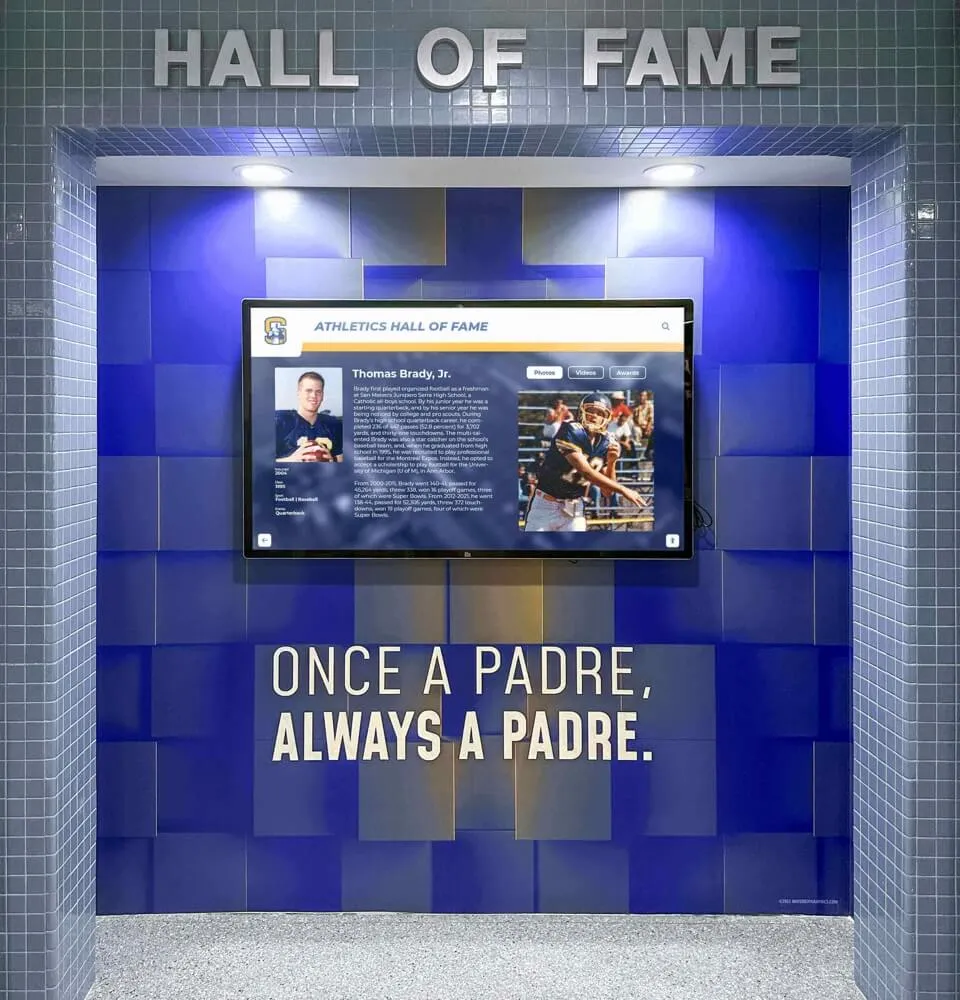
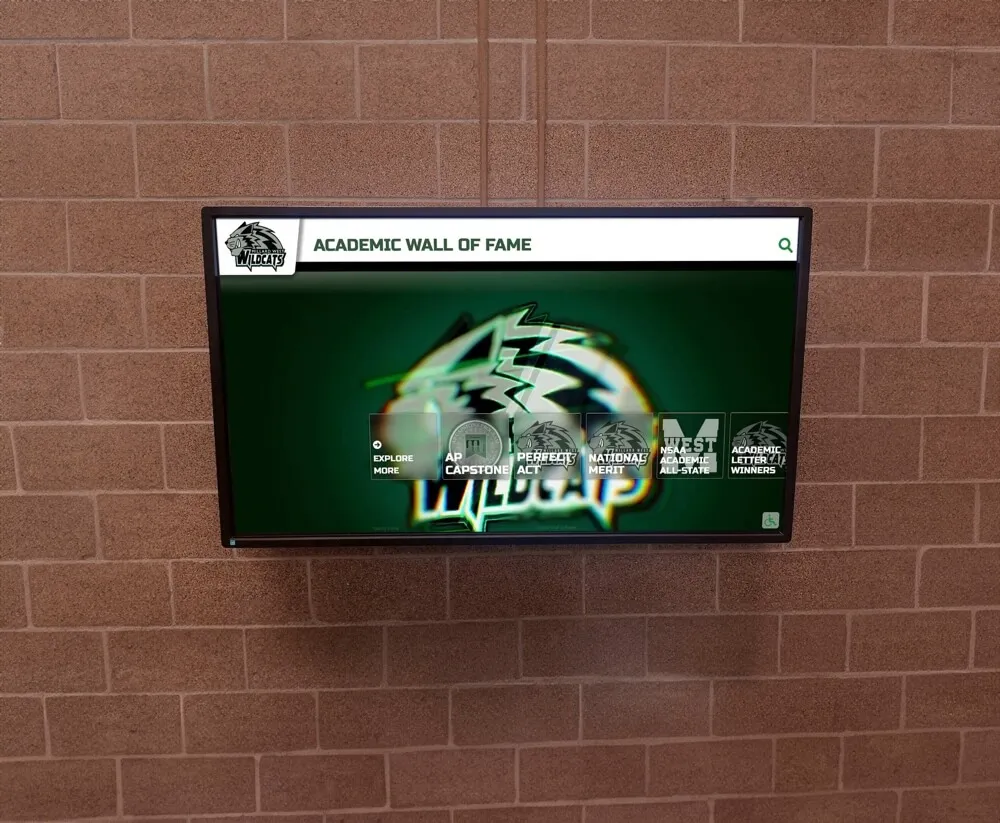
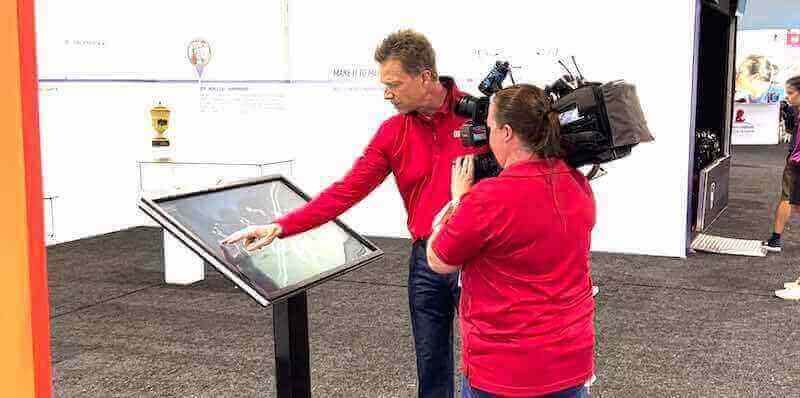
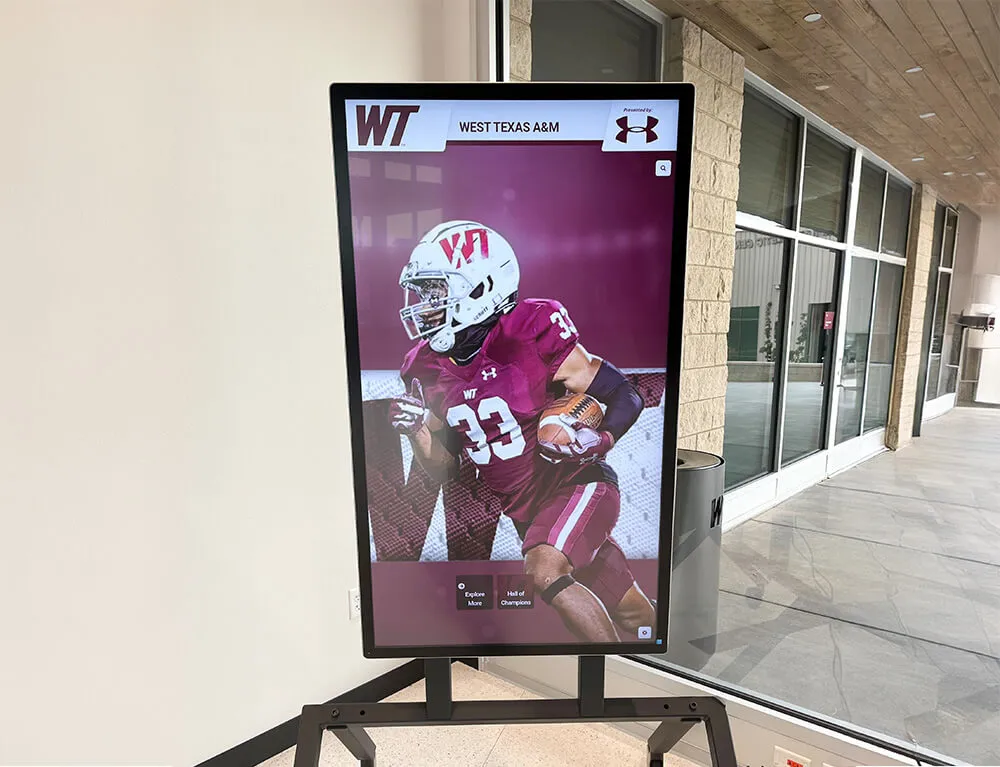
Professional touchscreen kiosks enable students to explore decades of athletic achievement through intuitive interfaces
Interactive Engagement Features
Touchscreen technology transforms recognition from passive viewing to active exploration:
Search and Discovery Capabilities Students interact with athletic history in meaningful ways:
- Search by athlete name finding individual achievements instantly
- Filter by sport, year, or achievement type exploring specific interests
- Browse chronologically through program timeline
- Explore statistical leaderboards across categories
- Navigate alphabetically through athlete directories
This searchability creates personal connections as students discover family members, coaches, or athletes from their own teams throughout program history.
Multimedia Storytelling Digital platforms provide context impossible with physical trophies:
- Photo galleries showing championship teams celebrating victories
- Video highlights from tournament competitions and record-breaking performances
- Game recaps and season summaries documenting championship paths
- Newspaper articles and media coverage preserving historical context
- Athlete and coach profiles providing background about achievements
- Detailed statistics and performance data impossible to fit on physical plaques
Schools implementing comprehensive digital trophy displays report that multimedia content creates emotional connections with achievements that static trophy displays cannot match, helping students understand the dedication behind visible hardware.
Mobile and Remote Access Recognition extends beyond gym lobby visits:
- QR codes enable mobile viewing from personal devices
- Alumni access achievement history from anywhere maintaining program connection
- Parents view current season recognition from home
- College coaches explore program tradition during recruiting evaluations
- Social media sharing celebrates recognition beyond campus
Athletic directors report that mobile access creates ongoing engagement rather than recognition visible only during gym visits.

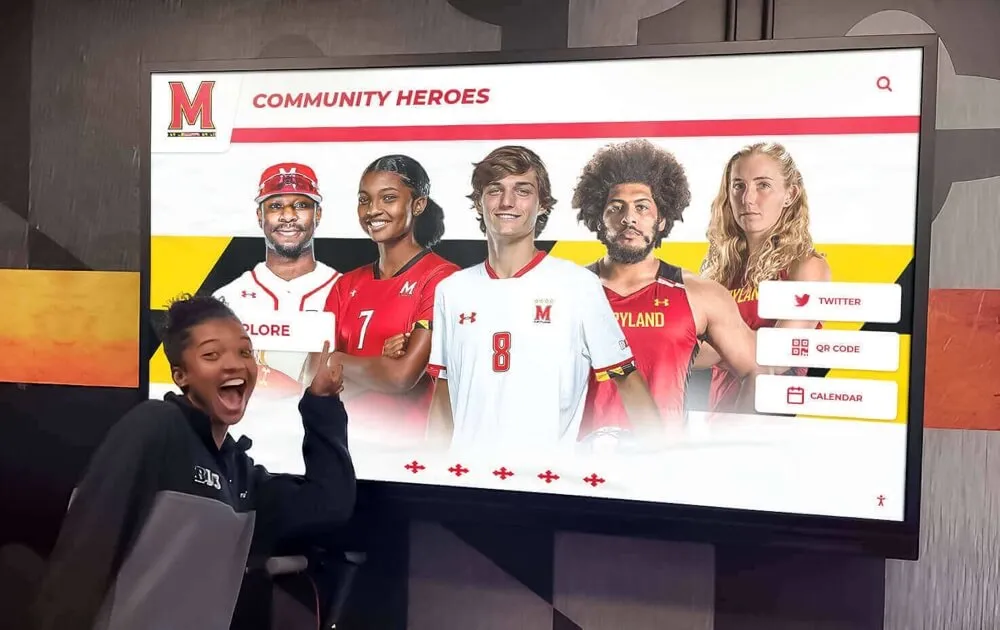
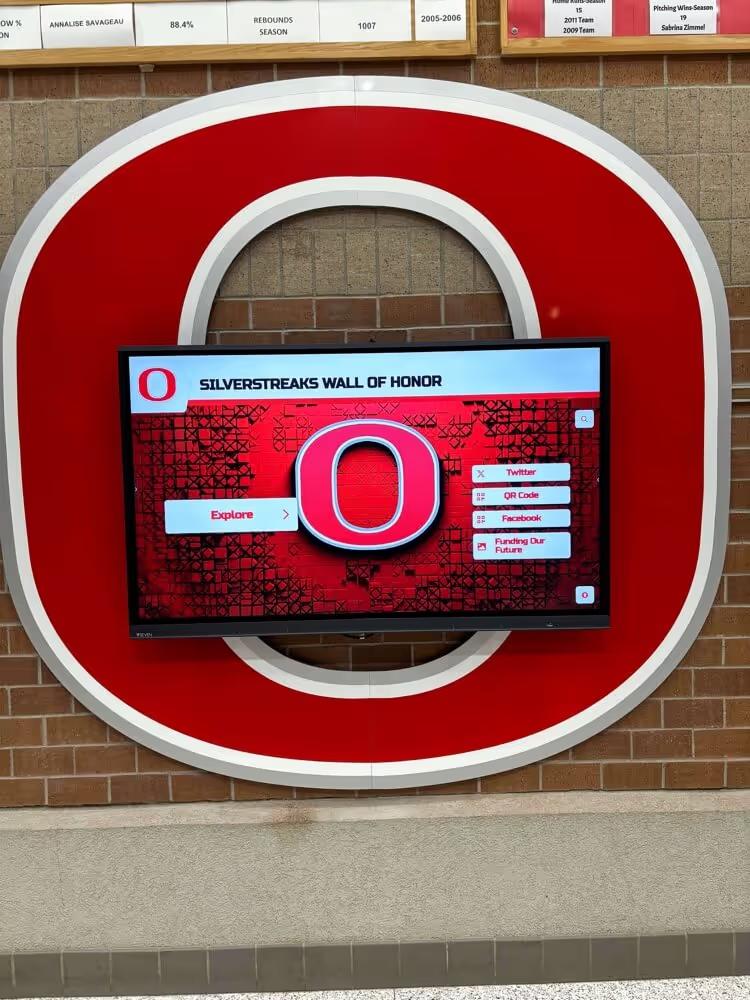
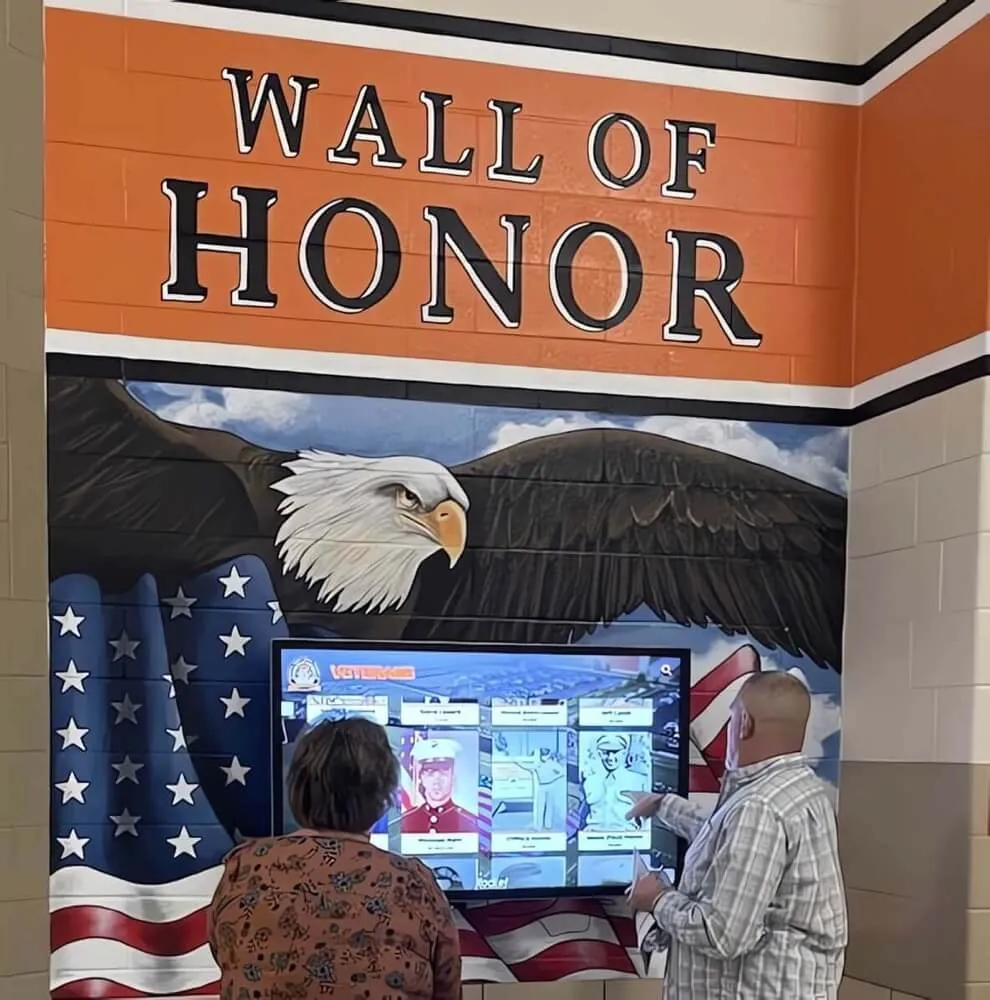
Intuitive touch interfaces make exploring athletic achievements natural and engaging, encouraging repeated interaction and discovery
Simple Content Management
Modern digital platforms address the update challenges that make physical trophy cases burdensome to maintain:
Cloud-Based Remote Administration Update displays from anywhere without gym visits:
- Content management from any internet-connected device
- No keys, glass removal, or physical rearrangement required
- Scheduled publishing for automatic updates coordinating with award ceremonies
- Bulk import capabilities for efficient historical data entry
- Role-based permissions enabling appropriate coach and staff access
- Template systems accelerating achievement profile creation
Athletic directors report 75-85% reduction in time spent managing recognition displays after implementing digital systems, freeing resources for student-athlete support and program development.
Instant Recognition Updates Digital systems enable immediate acknowledgment:
- Add championship victories hours after tournaments conclude
- Publish individual achievements the day records fall
- Update statistics and standings in real-time throughout seasons
- Feature current accomplishments prominently while preserving historical access
- Coordinate recognition timing with award ceremonies and announcements
This immediacy creates relevance that physical trophy cases cannot match, ensuring student-athletes see their achievements recognized promptly rather than waiting months for trophy delivery and case rearrangement.
Maintenance Simplification Digital displays require minimal physical upkeep:
- No glass cleaning or trophy polishing needed
- No lighting fixture replacement or electrical maintenance
- No periodic reorganization moving physical items
- No key management or locked case access coordination
- Screen cleaning only maintenance requirement
Facilities staff report digital displays requiring approximately 10-15 minutes monthly maintenance compared to 2-3 hours monthly for equivalent traditional trophy case upkeep.
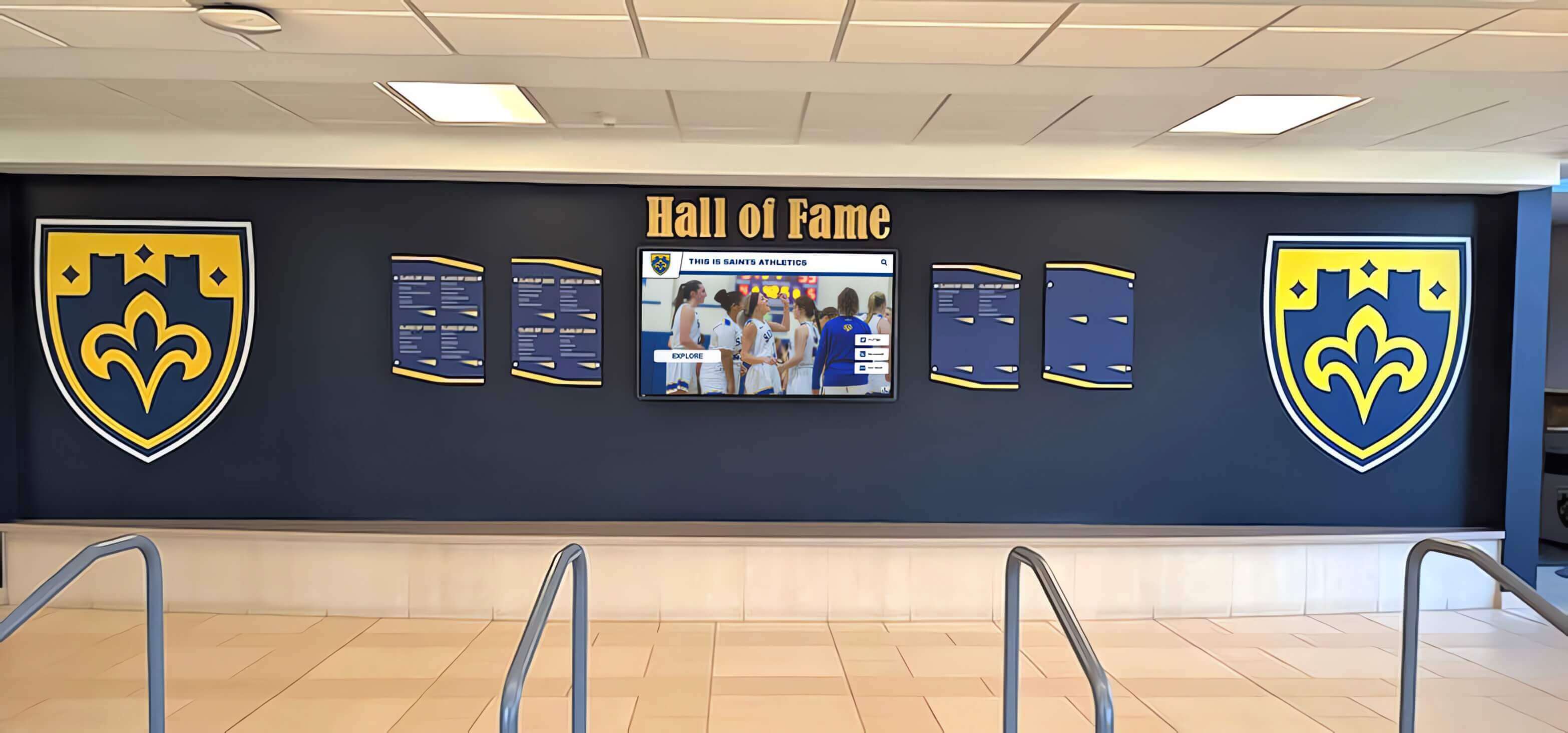
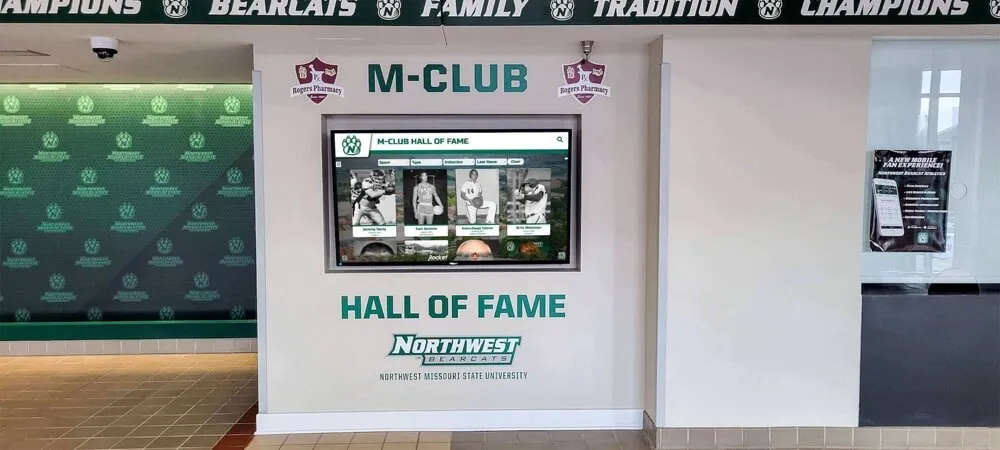
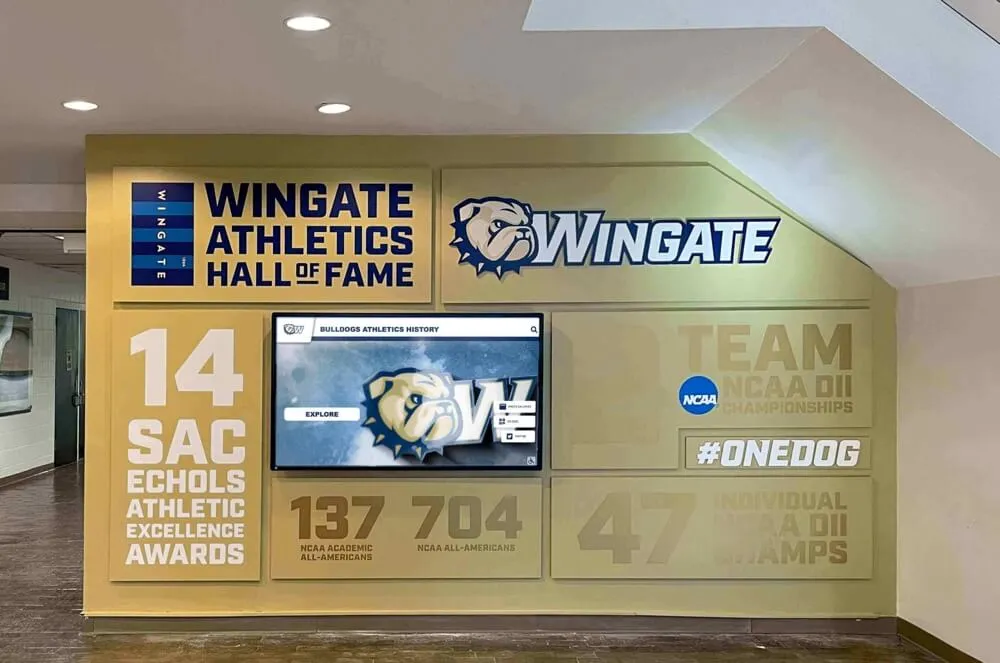
Comprehensive lobby installations combine physical elements like shields with digital displays, creating impressive recognition environments
Planning Touchscreen Display Implementation for Gym Lobbies
Successful implementations require systematic planning addressing technical requirements, content strategy, and stakeholder engagement.
Location Selection and Placement Strategy
Strategic positioning maximizes visibility and accessibility:
Primary Gym Lobby Locations High-traffic areas ensure consistent exposure:
- Main gym entrance lobbies where athletes and fans enter facilities
- Varsity locker room corridors providing daily exposure to student-athletes
- Athletic office areas where recruits and families meet coaches
- Commons spaces connecting gymnasiums to school buildings
- Concession stand areas where game spectators gather
Research indicates that primary lobby placements receive 3-5x more interaction than displays located in secondary hallways or isolated areas.
Display Size Considerations Screen dimensions should match viewing context:
- 55-65 inch displays suitable for most gym lobby installations with moderate viewing distances
- 65-75 inch displays appropriate for large open lobbies or gymnasiums with significant viewing distances
- 43-55 inch displays work in smaller lobby areas or secondary locations with closer viewing
- Multiple coordinated displays enable comprehensive content in expansive lobby spaces
Most high schools standardize on 55-65 inch commercial displays balancing visibility, budget, and installation requirements.
Accessibility Requirements All installations must accommodate diverse abilities:
- Maximum touchscreen height ensuring wheelchair users reach all interactive elements (typically 48 inches maximum to highest touch point)
- Clear floor space providing wheelchair approach room (minimum 30x48 inches)
- Adequate brightness levels ensuring visibility in varied lighting conditions
- High-contrast viewing modes supporting users with vision differences
- Simple navigation accommodating cognitive diversity
ADA compliance mandates specific installation parameters that should be confirmed during planning phases with facilities management.
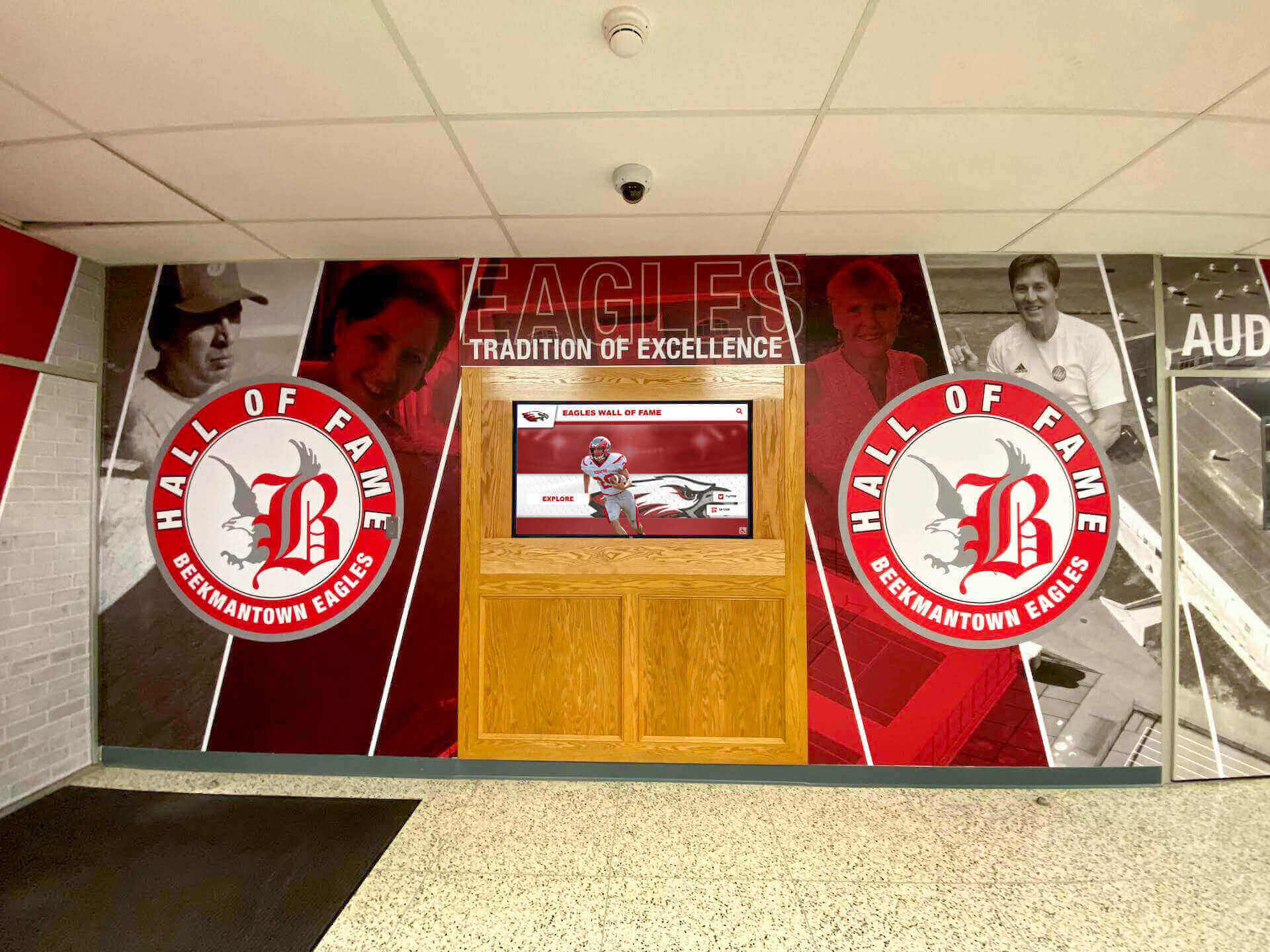
Prominent lobby installations create immediate visual impact for visitors while ensuring maximum student exposure
Hardware Selection and Technical Requirements
Appropriate equipment ensures reliability and longevity in athletic environments:
Commercial Display Specifications Gym lobby installations require commercial-grade equipment:
- Commercial panels rated for continuous operation (24/7 capability)
- Higher brightness levels ensuring visibility in gym lighting (350-700 nits minimum)
- Industrial-grade components designed for years of public interaction
- Extended warranties reflecting commercial application expectations (typically 3-5 years)
- Built-in touchscreen capability using projected capacitive technology
Consumer televisions lack the durability and operational specifications for public deployment in high-traffic athletic facilities. According to Commercial Integrator, commercial displays last 2-3 times longer than consumer TVs in institutional applications.
Mounting and Installation Options Physical installation format depends on space configuration:
- Wall-mounted displays: Most common for gym lobbies, providing clean installations while preserving floor space
- Freestanding floor kiosks: Appropriate when wall mounting proves impractical or when installation flexibility matters
- Recessed installations: Seamless architectural integration in new construction or major renovations
- Trophy case integration: Displays mounted within or adjacent to existing trophy cases combining physical and digital recognition
Installation requires coordination with facilities management for power supply, network connectivity, and structural mounting support.
Network and Power Infrastructure Technical connectivity enables cloud management:
- Dedicated electrical circuits for displays
- Ethernet network connections providing reliable internet access (wireless acceptable when wired impractical)
- Adequate bandwidth supporting video content (2-5 Mbps typically sufficient)
- Firewall configuration allowing content management platform access
- Backup power consideration for critical display locations
IT departments should be involved early in planning to ensure appropriate network access and security configuration.
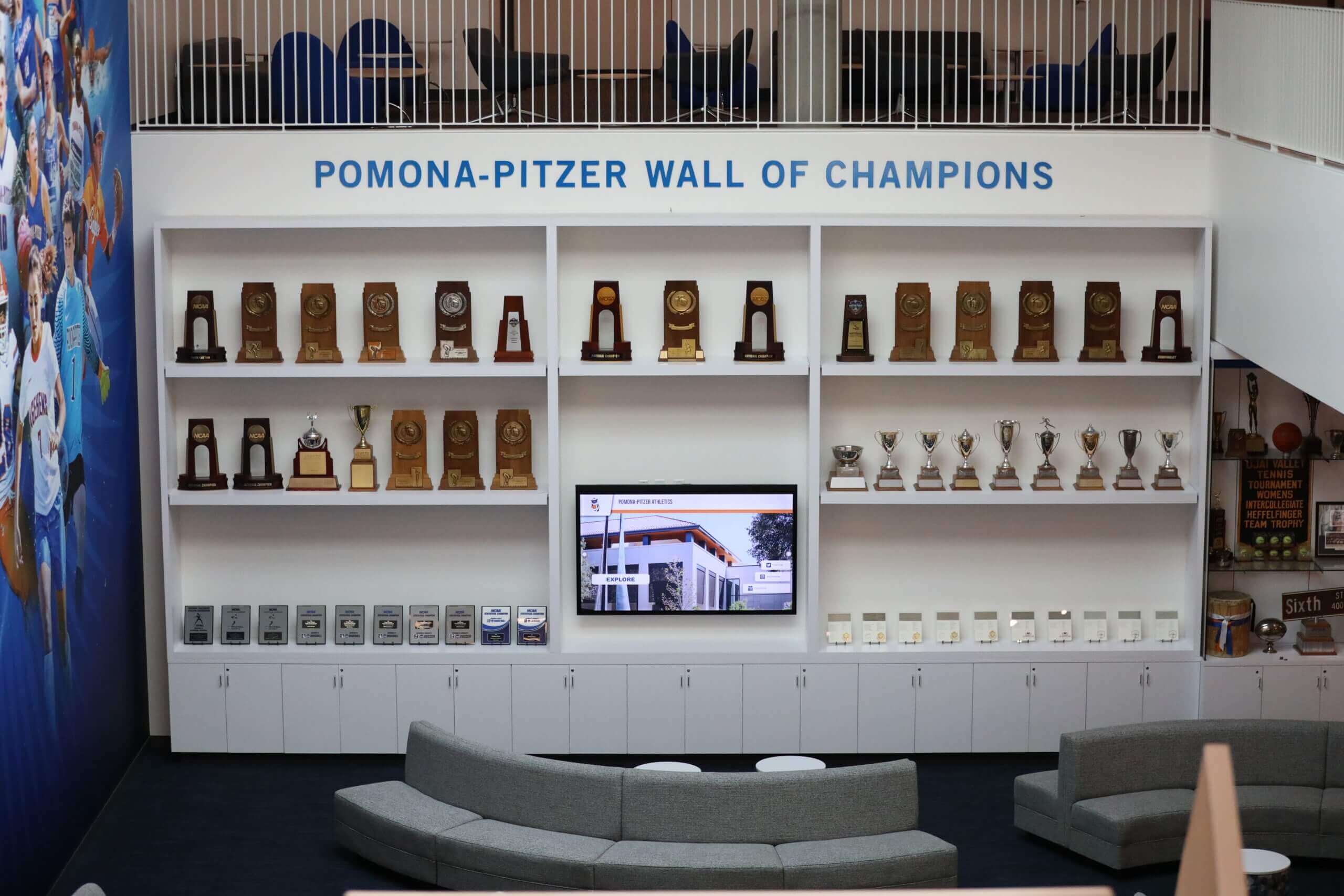
Athletic lounges create ideal environments for comprehensive recognition displays, combining digital technology with trophy showcases
Content Strategy and Development
Strategic content planning ensures engaging displays that maintain student interest:
Initial Content Priorities Launch with high-value recognition categories:
- Current season team rosters, schedules, and standings
- Recent championship recognition and tournament achievements
- School record holders across all sports and events
- All-conference and all-state athlete recognition from recent years
- Coaching tenure recognition and milestone achievements
Starting with current and recent content demonstrates immediate relevance while providing time to develop comprehensive historical archives.
Historical Content Development Systematic expansion builds complete program documentation:
- Championship teams and tournament success throughout program history
- Individual record-holder recognition across all eras
- Hall of fame inductee profiles and achievement summaries
- Coaching history and program development milestones
- Facility evolution and program growth documentation
Schools can reference digital class composite displays for approaches to systematic historical content development that maintains consistent quality across decades of material.
Multimedia Content Integration Rich media creates engagement beyond text and photos:
- Championship game video highlights showing key moments
- Photo galleries documenting championship celebrations
- Newspaper articles and media coverage preserving context
- Interview clips with coaches and athletes sharing memories
- Statistical graphics and performance visualizations
Athletic directors report that multimedia content creates 3-5x longer viewing sessions compared to text-only recognition displays.
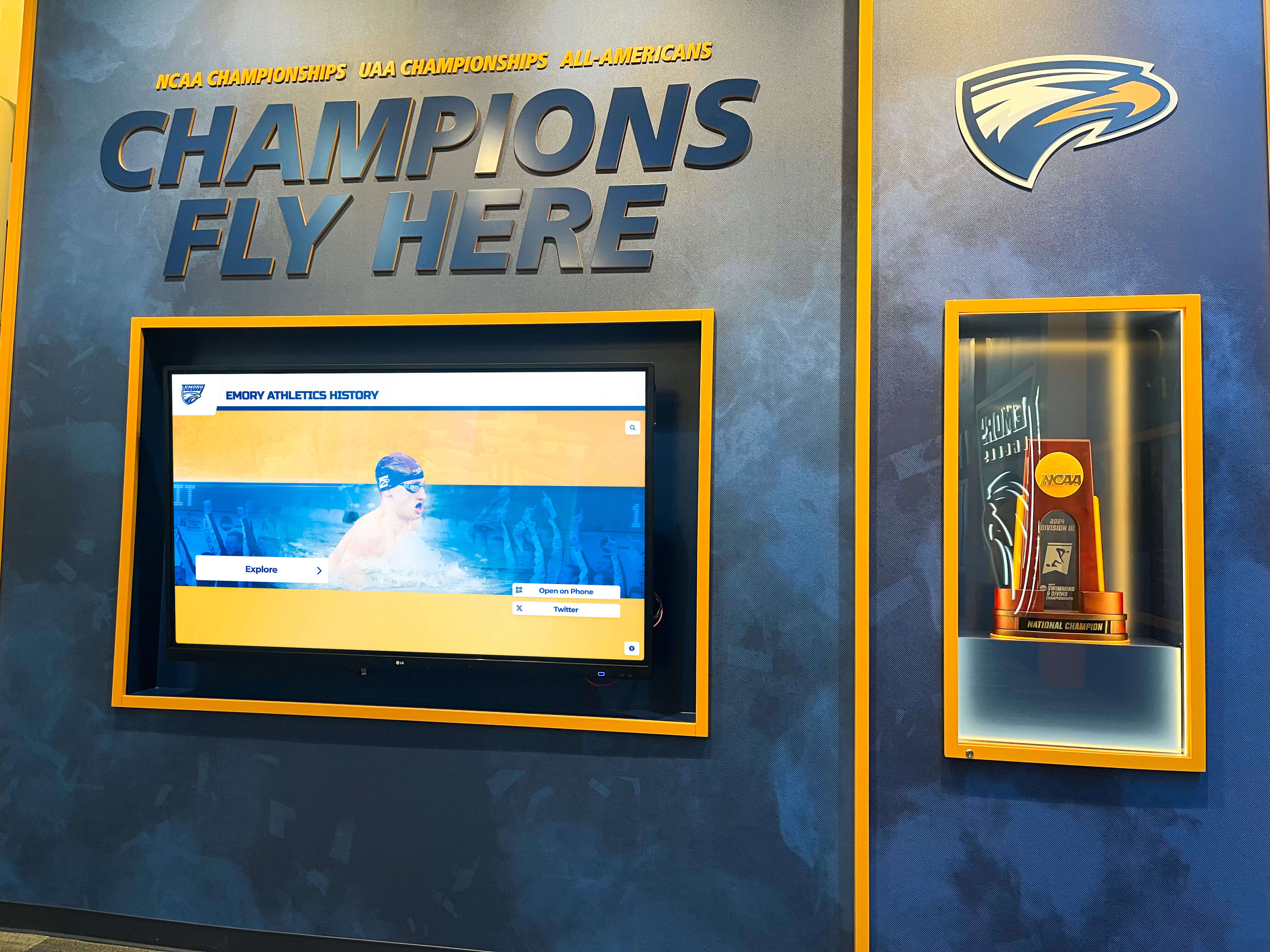
Championship recognition walls create dedicated spaces celebrating major competitive achievements with prominent visibility
Hybrid Approach: Combining Physical Trophies and Digital Displays
Most high schools implement solutions combining traditional trophy cases with touchscreen displays, leveraging the strengths of both recognition formats.
Strategic Physical Trophy Placement
Physical championship hardware retains important symbolic value:
Major Trophy Showcase Reserve physical cases for most significant achievements:
- State championship trophies providing impressive visual focal points
- Current season championship recognition celebrating recent success
- Milestone achievement trophies marking program significance
- Most prestigious awards and honors receiving premium visibility
- Historical championship hardware from significant program eras
Physical trophies create immediate visual impact that digital displays cannot replicate, making them valuable for major recognition while digital systems handle comprehensive coverage.
Trophy Case Capacity Management Physical limitations become manageable with digital backup:
- Rotate seasonal trophies displaying current sport championships prominently
- Implement archival schedules moving older recognition to digital display
- Establish clear criteria determining physical versus digital-only recognition
- Create special exhibition periods for milestone anniversaries
- Maintain flexibility as programs generate new achievements
Schools report that hybrid approaches satisfy stakeholders valuing physical trophies while eliminating the impossible allocation decisions created by space constraints.
Digital Display Strategic Advantages
Touchscreen systems handle recognition categories where physical displays struggle:
Unlimited Individual Recognition Digital capacity enables comprehensive athlete acknowledgment:
- All-conference selections across all sports and all years
- School record holders in every statistical category
- Individual achievement milestones and performance markers
- Senior athlete recognition with profiles and achievements
- Multi-sport athlete acknowledgment across programs
Physical cases cannot accommodate the hundreds or thousands of individual recognition items that comprehensive programs generate across decades.
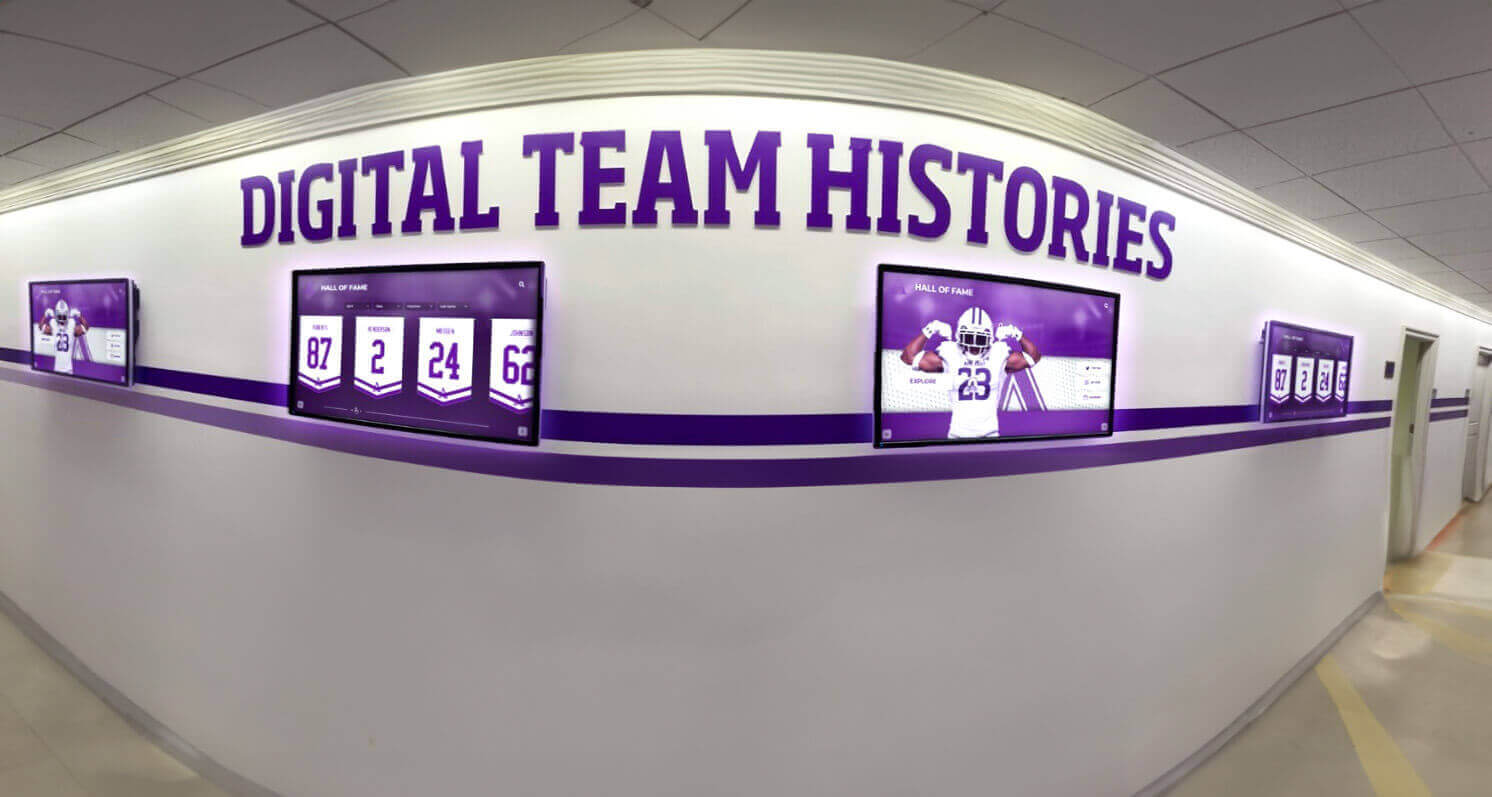
Digital displays excel at showcasing comprehensive team histories including rosters, statistics, and season summaries across multiple decades
Historical Depth and Context Digital storytelling provides detail impossible on physical plaques:
- Complete season recaps for championship teams
- Game-by-game tournament progression to championships
- Athlete biographies and post-graduation achievements
- Coaching tenure summaries and program development stories
- Facility history and program evolution documentation
Dynamic Current Content Real-time updates keep recognition relevant:
- Current season standings and statistics updated continuously
- Schedule information and upcoming game previews
- Recent game results and performance highlights
- Breaking news about athlete achievements and recognition
- Recruitment commitments and signing day celebrations
Schools implementing state championship trophy case displays find that digital systems maintain student engagement through regular updates while physical trophies provide the tangible championship hardware students and alumni value.
Integration Strategies
Thoughtful coordination creates cohesive recognition environments:
Visual and Spatial Coordination Physical and digital elements should complement each other:
- Digital displays positioned adjacent to or within trophy case areas
- Consistent branding and design language across formats
- Coordinated lighting ensuring both formats receive appropriate visibility
- QR codes near physical trophies linking to expanded digital content
- Signage directing visitors to explore both physical and digital recognition
Content Coordination Ensure consistency across recognition formats:
- Physical trophies referenced in digital content with photos and details
- Digital displays acknowledge physical case contents directing attention
- Common naming conventions and achievement descriptions
- Synchronized updates when new recognition gets added
- Cross-referencing enabling visitors to explore both formats
Athletic directors report that well-integrated hybrid approaches satisfy diverse stakeholder preferences while maximizing recognition capacity and engagement.
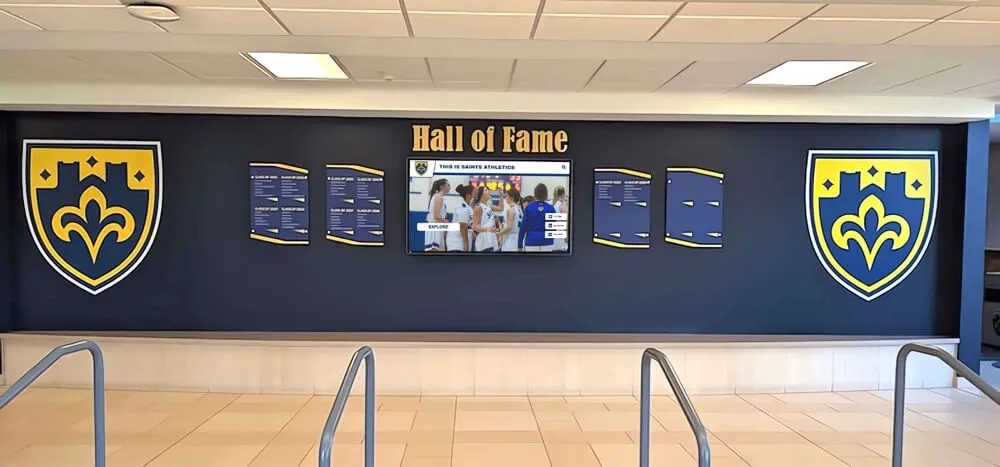
Traditional physical elements like championship shields integrate beautifully with digital displays, creating impressive multi-modal recognition spaces
Budget Considerations and ROI Analysis
Understanding costs and value helps athletic directors secure necessary resources and approvals.
Initial Implementation Investment
Comprehensive budgets include all necessary components:
Hardware and Installation Costs Primary expense categories:
- Commercial touchscreen display (55-65 inches): $3,000-$7,000 per unit
- Professional mounting and installation: $1,200-$2,500 including electrical and network
- Enclosure or kiosk (if freestanding): $1,500-$3,500 for commercial-grade units
- Network infrastructure (if required): $500-$2,000 for additional cabling or access points
Single display pilot implementations typically range from $6,000-$13,000 total hardware and installation investment.
Software and Content Development Platform and initial content costs:
- Content management platform annual subscription: $2,500-$7,000 depending on features and capacity
- Initial content development: $2,000-$8,000 for historical research, data entry, and design
- Training and support: $500-$1,500 for staff education on content management
Total initial project costs typically range from $11,000-$29,000 for comprehensive single-display implementations including first-year software and substantial historical content development.
Phased Implementation Options Budget-conscious schools can implement gradually:
- Begin with single high-visibility gym lobby display
- Launch with current content and recent history only
- Add historical content progressively over 6-12 months
- Expand to additional displays as budget allows
- Eventually integrate with or replace secondary trophy cases
Phased approaches manage cash flow while demonstrating value before requesting additional investment.
Ongoing Operational Costs
Annual expenses support sustained operation:
Predictable Annual Costs Budget for continued operation:
- Software platform subscription or licensing: $2,500-$7,000 annually
- Content management and updates: Staff time or contracted services
- Technical support and maintenance: $400-$1,200 annually
- Power consumption: Minimal (commercial displays typically 100-200 watts)
- Hardware replacement reserves: $500-$1,000 annually toward eventual replacement
Schools report ongoing costs typically represent 15-25% of initial investment annually.
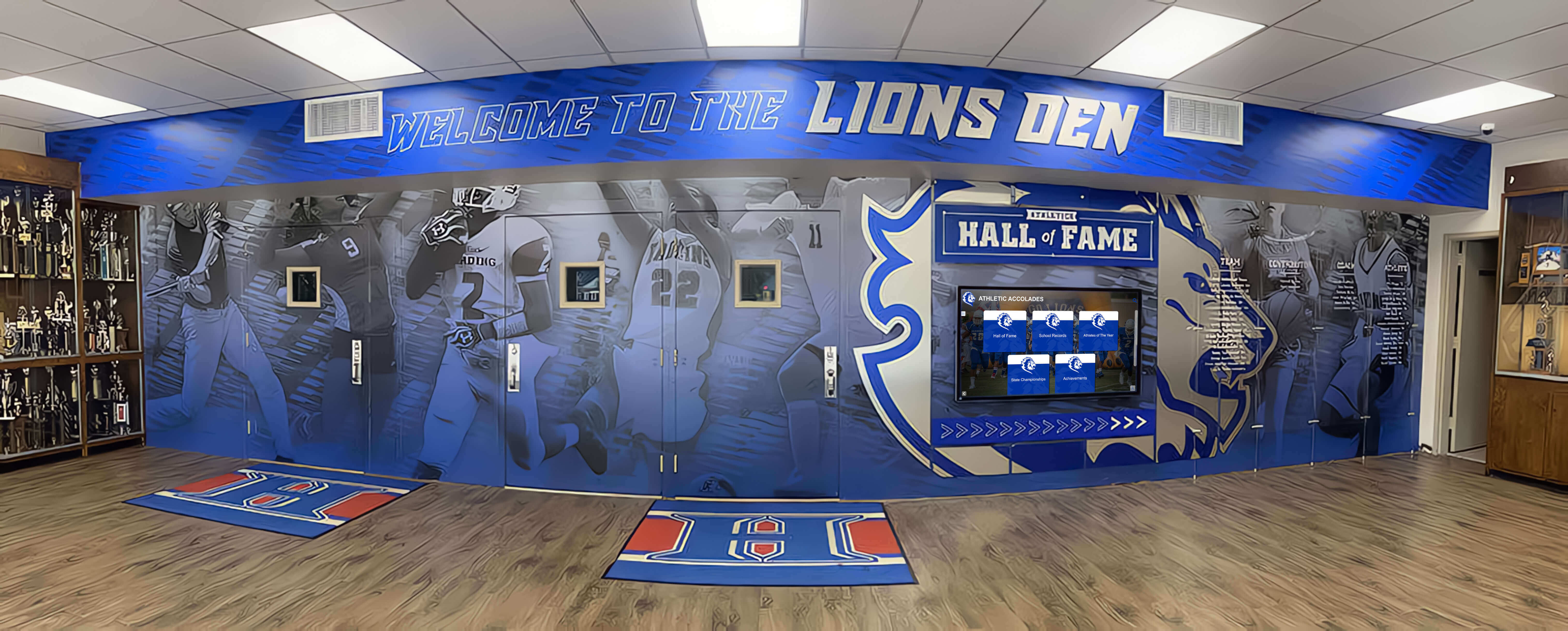
Traditional trophy cases remain effective when integrated with digital displays, maximizing recognition impact within budget constraints
Return on Investment Analysis
Digital systems provide measurable value beyond cost metrics:
Quantifiable Benefits Measurable value creation:
- Administrative time savings: 75-85% reduction in trophy case management time valued at staff hourly rates
- Avoided trophy case expansion costs: $8,000-$25,000 construction expenses eliminated
- Enhanced college recruitment: Improved program presentation supporting athletic recruiting
- Alumni engagement increase: Stronger graduate connection supporting fundraising
Intangible Value Factors Important benefits resisting precise quantification:
- Student-athlete motivation from visible recognition and program tradition
- Gender equity improvements through equal visibility opportunities
- Community pride and institutional reputation enhancement
- Historical preservation ensuring institutional memory retention
- Family engagement from mobile access and sharing capabilities
Schools implementing digital recognition consistently report that engagement and culture benefits justify investment even before considering administrative time savings and avoided construction costs.
Break-Even Timeline Digital systems typically reach cost parity with traditional approaches:
- Schools recognizing 30+ achievements annually: 3-4 year break-even
- Schools recognizing 50+ achievements annually: 2-3 year break-even
- Schools facing trophy case expansion: Immediate savings from avoided construction
Long-term total cost of ownership typically runs 40-60% lower than equivalent traditional trophy case expansion over 10-year periods while providing substantially superior capacity and engagement.
Implementation Best Practices and Success Factors
Schools succeeding with gym lobby touchscreen displays follow common strategies ensuring stakeholder support and sustainable operations.
Stakeholder Engagement and Buy-In
Broad support ensures successful implementation and sustained use:
Key Stakeholder Groups Engage diverse perspectives during planning:
- Athletic director and coaching staff defining recognition priorities
- School administrators approving budget and strategic direction
- Booster clubs and parent organizations potentially providing funding support
- Student-athletes offering feedback on design and content preferences
- Facilities management coordinating installation and technical requirements
- IT department ensuring appropriate network access and support
Early involvement builds ownership while identifying potential concerns requiring attention.
Communication Strategy Systematic outreach builds excitement:
- Planning phase discussions gathering input and addressing concerns
- Design preview sessions showing mockups and content examples
- Installation updates keeping community informed about progress
- Launch celebration generating awareness and encouraging exploration
- Ongoing communication highlighting new content and achievements
Schools report that well-managed communication prevents resistance while creating anticipation for new recognition capabilities.

Professional installations create impressive focal points demonstrating institutional commitment to athletic recognition
Content Management Sustainability
Long-term success requires manageable update processes:
Role Assignment Distribute responsibilities appropriately:
- Athletic director maintains oversight and strategic direction
- Athletic secretary or administrative assistant handles routine content updates
- Individual coaches contribute team-specific content and achievements
- Student managers or assistants support content collection and organization
- Booster club members research and document historical achievements
Distributed responsibility prevents bottlenecks while ensuring those with direct knowledge contribute relevant content.
Update Schedules Systematic processes maintain fresh content:
- Weekly updates during competitive seasons adding current results and achievements
- Monthly updates during off-seasons highlighting upcoming schedules and historical content
- Annual comprehensive reviews ensuring accuracy and completeness
- Special updates coordinating with award ceremonies and recognition events
Regular attention keeps displays current while preventing overwhelming backlog development.
Quality Standards Maintain professional presentation:
- Photo resolution standards ensuring clear, crisp images (minimum 1920x1080 pixels for featured photos)
- Consistent naming conventions and formatting across achievement types
- Proofreading and accuracy verification before publishing
- Brand guideline compliance maintaining school colors, logos, and style
- Periodic audits identifying outdated information requiring updates
Designated content coordinators should review contributions before publication ensuring consistent quality across all recognition content.
Technical Support and Troubleshooting
Reliable operation requires appropriate support resources:
Internal Support Capabilities Staff should handle basic issues:
- Display power cycling and restart procedures
- Network connectivity verification and troubleshooting
- Content management platform access and navigation
- Simple display adjustments (brightness, volume, etc.)
- Issue documentation and reporting protocols
Basic training enables staff to resolve common problems quickly without requiring external support for minor issues.
External Support Arrangements Professional assistance for complex problems:
- Vendor support agreements with defined response time expectations
- IT department escalation procedures for network or infrastructure issues
- Hardware warranty coverage and repair coordination
- Software platform technical support access methods
- Spare display consideration for rapid replacement if needed
Most technical issues resolve quickly when appropriate support resources exist, minimizing recognition disruption.
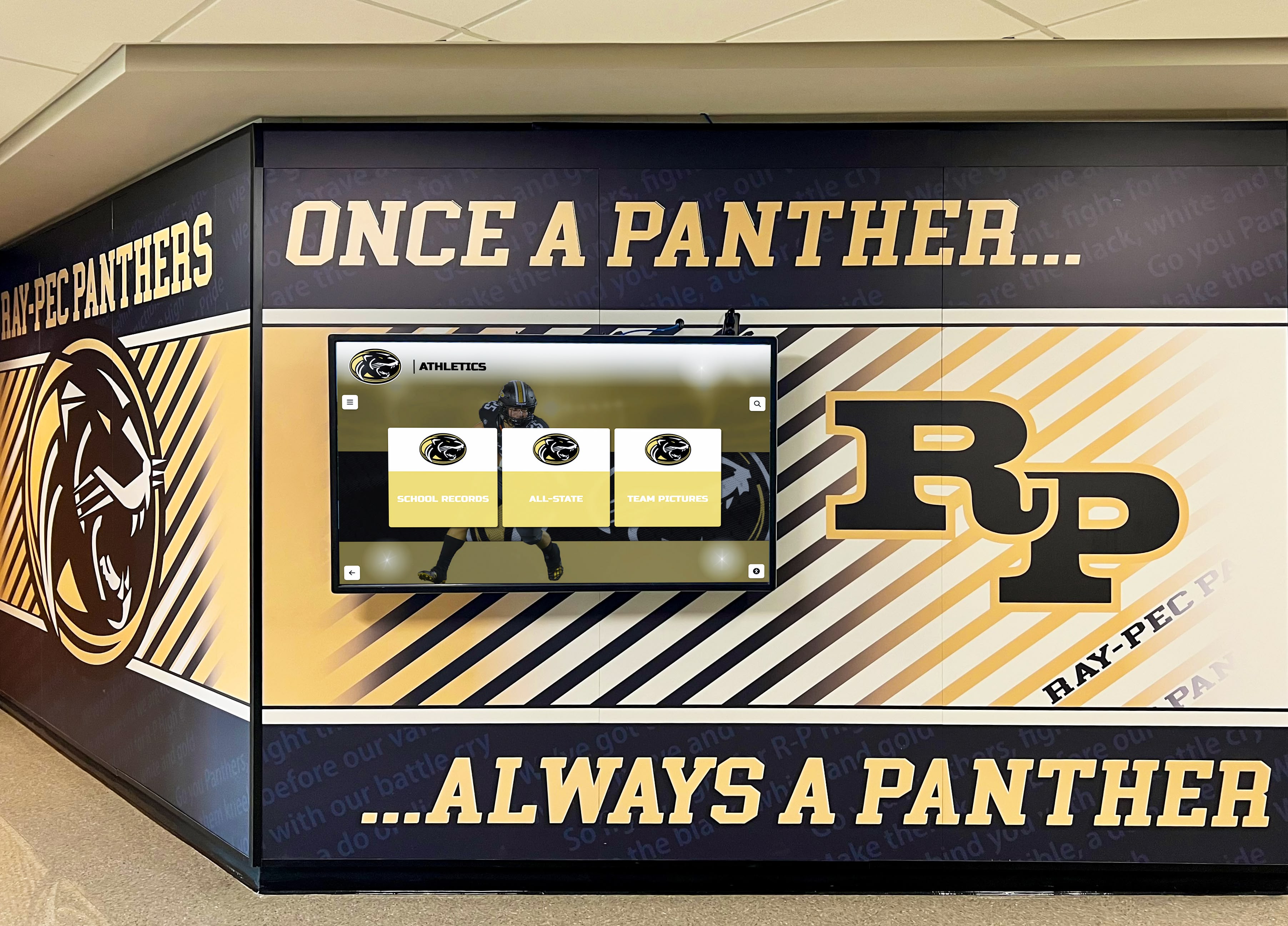
Modern display formats reduce maintenance burdens while increasing impact, freeing staff time for student-athlete support
Future Trends in Gym Lobby Athletic Recognition
Understanding emerging developments helps schools plan for long-term evolution:
Advanced Engagement Features
Technology capabilities continue expanding:
Augmented Reality Integration Enhanced experiences blending physical and digital:
- Smartphone apps revealing expanded content when pointed at physical trophies
- AR overlays providing championship game highlights triggered by trophy proximity
- Virtual trophy room tours enabling remote exploration from anywhere
- Historical team photos superimposed on current gym spaces showing evolution
- Interactive statistics and records appearing when viewing specific sport areas
Social Media Integration Connected recognition and celebration:
- Direct social sharing from touchscreen displays to personal accounts
- Hashtag tracking showing social media posts about achievements
- Live social media feeds displaying game-day posts and celebrations
- Instagram and Twitter integration showing athlete recognition announcements
- Alumni network connections enabling graduate engagement with current programs
Schools implementing comprehensive digital recognition strategies increasingly view physical displays as entry points to expanded online recognition ecosystems rather than standalone solutions.
Artificial Intelligence Applications
AI capabilities begin enhancing recognition displays:
Automated Content Generation Technology-assisted content development:
- Automatic photo enhancement and optimization
- AI-generated achievement descriptions from statistical data
- Automated video highlight compilation from game footage
- Natural language summaries of championship seasons
- Translation services creating multilingual content
Personalized Recognition Discovery Adaptive experiences responding to viewer interests:
- Recommendation engines suggesting related achievements based on viewing patterns
- Search query learning improving content findability over time
- Popular content surfacing based on interaction patterns
- Returning visitor recognition showing personally relevant content
- Coaching staff interfaces highlighting recruitment-relevant achievements
These capabilities remain emerging but may become standard features within 3-5 years as AI technologies mature and integration becomes more accessible.
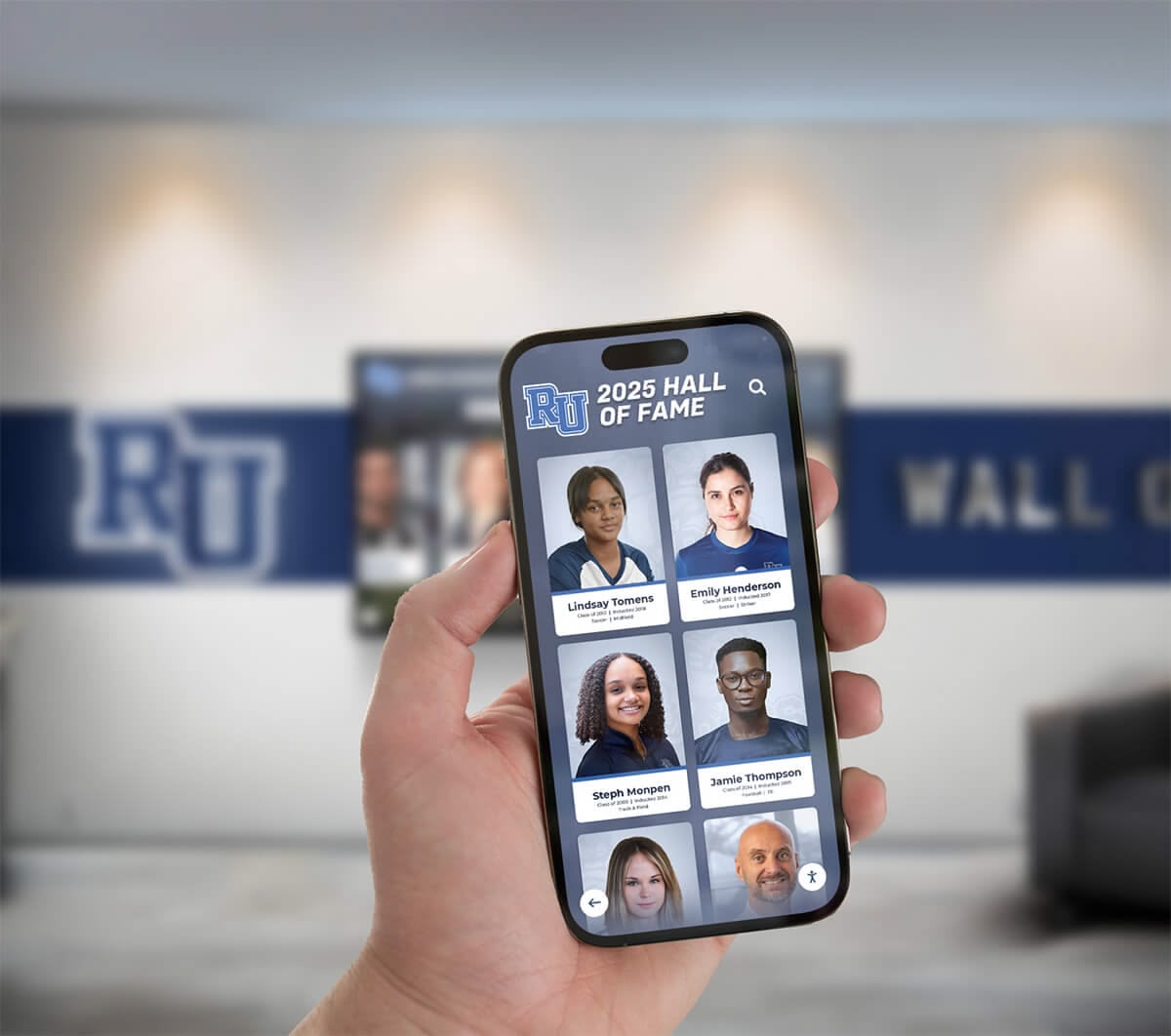
Mobile access extends athletic recognition beyond gym visits, enabling alumni and families to explore achievements from anywhere
Common Questions and Concerns
Athletic directors considering touchscreen displays typically have predictable questions requiring clear answers.
What happens to existing physical trophies?
Physical trophies remain valuable and should be preserved:
- Most schools maintain existing trophy cases displaying major championships
- Digital displays complement rather than replace physical hardware
- Hybrid approaches leverage strengths of both recognition formats
- Some schools rotate physical displays seasonally while digital provides permanent access
- Trophy storage solutions preserve hardware when physical display space is unavailable
Implementation of digital recognition rarely involves discarding existing trophies. Instead, schools gain flexibility to showcase physical championship hardware selectively while ensuring comprehensive recognition through digital capacity.
How much technical expertise is required for content management?
Modern platforms are designed for non-technical administrators:
- Cloud-based systems accessible from standard web browsers
- Intuitive interfaces similar to social media or blogging platforms
- Template systems eliminating design expertise requirements
- Drag-and-drop functionality for image and content placement
- Training typically requires 2-4 hours for basic competency
- Video tutorials and support documentation enable self-service learning
Athletic secretaries, activities coordinators, and coaches with basic computer skills successfully manage content without IT department involvement for routine operations.
Will students actually use touchscreen displays?
Engagement depends on content quality and strategic placement:
- Schools with high-traffic placement and current content report consistent daily interaction
- Multimedia content (photos, videos) generates 3-5x more engagement than text-only displays
- Search and discovery features encourage exploration when students seek specific information
- Regular updates maintain interest while static content becomes ignored
- QR codes enabling mobile access extend engagement beyond physical display interaction
Schools implementing displays in gym lobbies where student-athletes gather regularly report the highest engagement levels, as athletes naturally explore recognition content about their own teams and sports.
How does this compare to updating trophy cases?
Digital recognition provides dramatic advantages:
- Content updates in minutes from anywhere versus hours of physical rearrangement
- No keys, glass removal, or trophy movement required
- Unlimited recognition capacity versus fixed physical space
- Instant publication versus waiting for trophy delivery and installation
- Multimedia storytelling versus information limited to plaques
- Mobile accessibility versus gym-only viewing
Athletic directors report 75-85% time savings managing digital recognition compared to traditional trophy case maintenance while providing substantially superior recognition capacity and engagement.
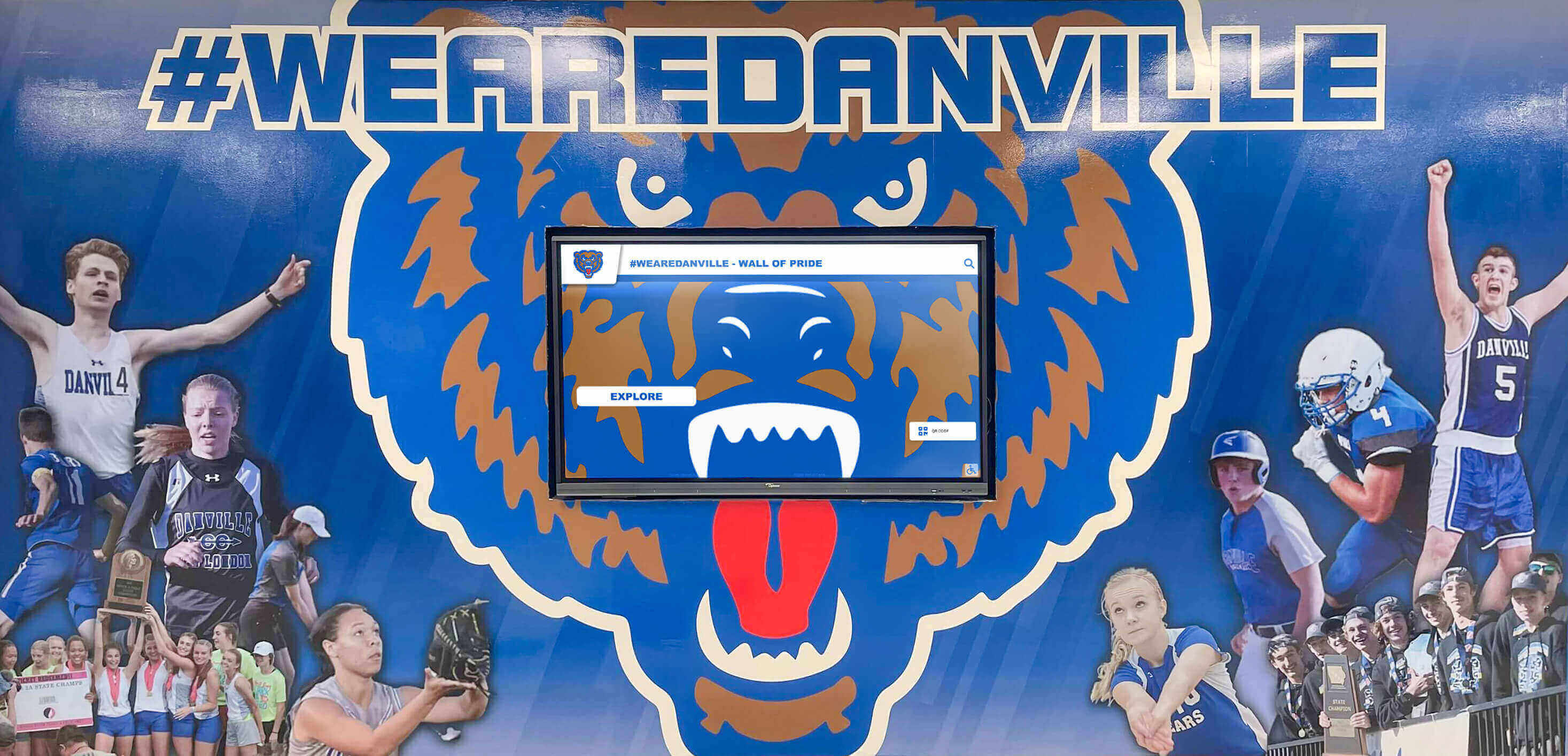
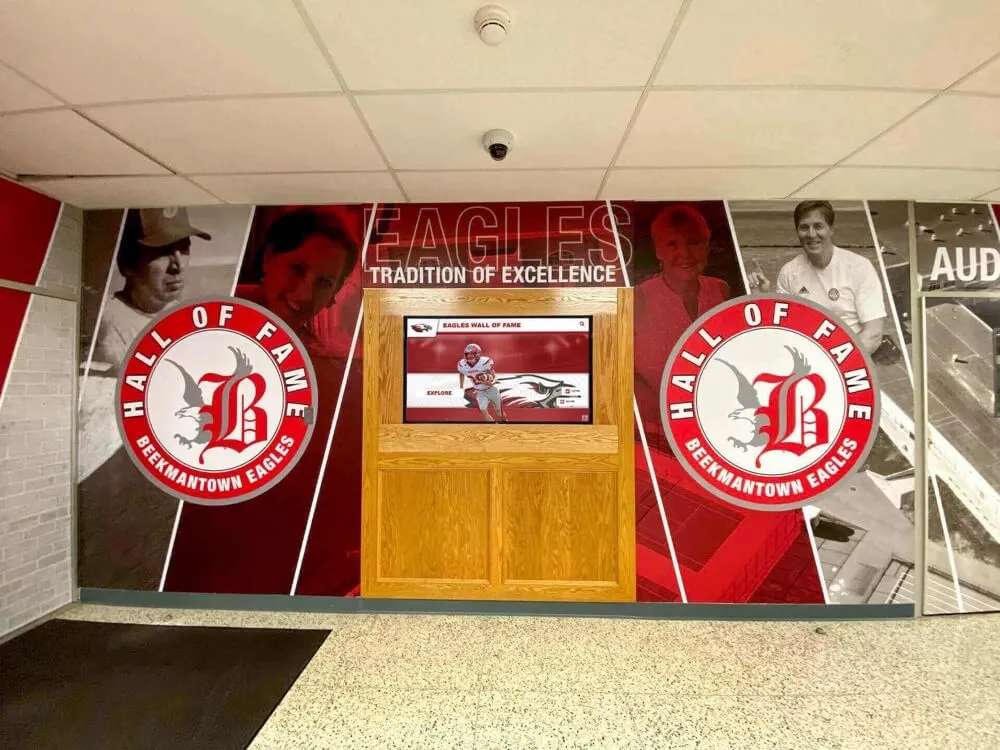
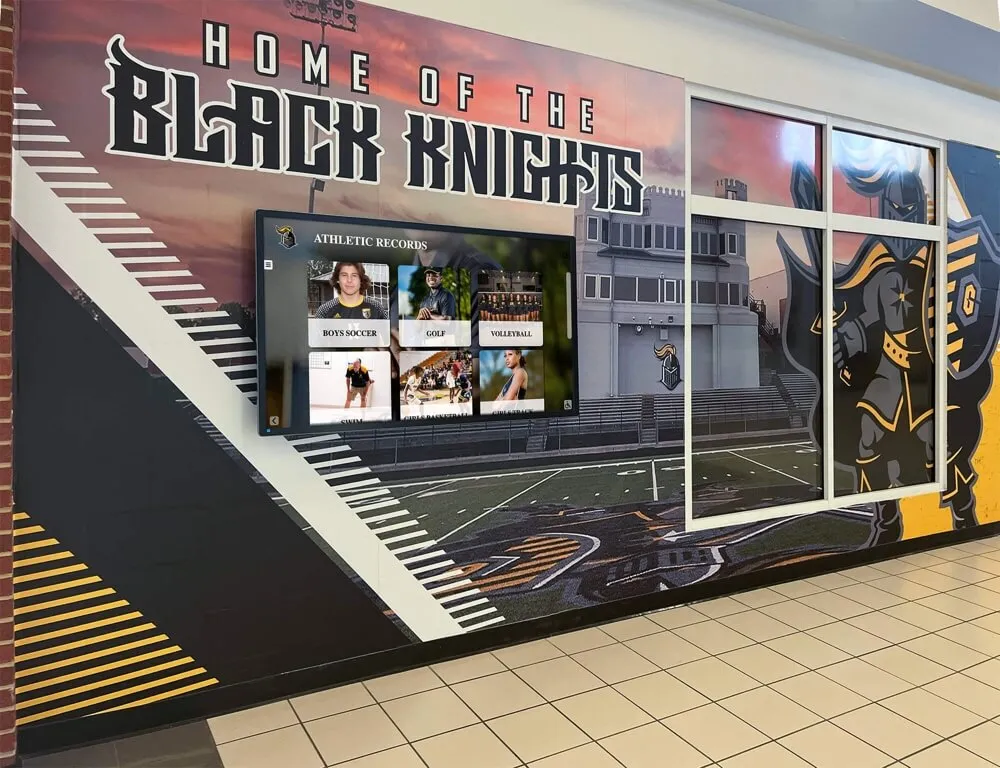
Athletic murals create immersive branded environments where touchscreen displays become elements within comprehensive recognition spaces
Conclusion: Solving Trophy Overcrowding While Enhancing Recognition
Touchscreen displays address the fundamental space constraints that make traditional trophy cases inadequate for successful athletic programs generating ongoing achievements across multiple sports and decades. By implementing digital recognition solutions in gym lobbies, high schools gain unlimited display capacity while actually enhancing how they celebrate athletic excellence through interactive exploration, multimedia storytelling, and mobile accessibility.
The trophy overcrowding problem represents an opportunity to modernize athletic recognition rather than simply a facilities challenge requiring more physical cases. Digital displays eliminate the impossible allocation decisions created by space limitations, ensuring every sport, every athlete, and every achievement receives appropriate visibility without displacing others. This comprehensive approach strengthens program culture while supporting gender equity requirements and recognizing diverse achievement types.
Transform Your Gym Lobby Trophy Recognition
Discover how modern touchscreen displays designed specifically for athletic recognition solve trophy overcrowding while creating engaging interactive experiences for student-athletes, families, and alumni. See implementations from high schools nationwide and explore how cloud-managed platforms make sophisticated displays accessible without requiring technical expertise.
Book a DemoMost high schools implement hybrid approaches combining touchscreen displays with existing trophy cases, using physical hardware for major championships while digital systems provide comprehensive coverage of individual achievements, historical recognition, and detailed storytelling. This balanced strategy satisfies stakeholders valuing tangible trophies while addressing the space constraints that make physical-only approaches unsustainable.
Athletic directors should begin with honest assessment of current trophy capacity, engagement with key stakeholders about recognition priorities, and evaluation of solutions designed specifically for athletic applications rather than generic digital signage systems. Implementation typically proves more straightforward than anticipated when working with providers like Rocket Alumni Solutions who specialize in turnkey athletic recognition rather than requiring assembly from multiple vendors.
Your athletic achievements deserve recognition reflecting the dedication, teamwork, and excellence they represent. With thoughtful planning, appropriate technology selection, and sustainable content management processes, you can solve trophy overcrowding while creating recognition experiences that engage current student-athletes, honor program tradition, and preserve athletic legacy for future generations.
Ready to explore how touchscreen displays can address your gym lobby trophy overcrowding while enhancing athletic recognition? Schedule a demo to see how high schools nationwide are transforming athletic recognition from static trophy cases into dynamic celebration systems that students actively explore and value.