



Every school gym, trophy hallway, and athletic office holds the same familiar sight: shelves and cases filled with hardware earned across decades of competition. Championship trophies, regional titles, league crowns—each piece represents months of early morning practices, long bus rides, and the kind of sacrifice young athletes make in pursuit of excellence. Yet many schools struggle to display these achievements in ways that feel worthy of the accomplishment.
Overflowing trophy cases push older hardware into storage. New championships squeeze onto shelves already crowded with faded banners and dusty plaques. Meanwhile, students walking those same hallways may never know their school won back-to-back state titles in swimming, or that the baseball program claimed five consecutive district championships in the 1990s. The history exists—but the display fails to tell the story.
A strong team trophy display isn’t just about finding shelf space. Done well, it creates visible proof of program excellence, motivates current athletes, welcomes prospective families, and builds community pride across generations of alumni. This guide covers the full range of ideas—from traditional glass cases to modern interactive digital solutions—so your school can find the right approach for honoring championship history.
Choosing the right team trophy display approach shapes how students, staff, and community members experience athletic history every day. Whether your school has a modest collection from recent years or decades of accumulated championship hardware, the display method you choose determines how many people engage with that history—and whether they understand what they’re seeing. Connecting recognition across multiple formats, including ideas from established team recognition programs, helps schools build cohesive athletic culture.

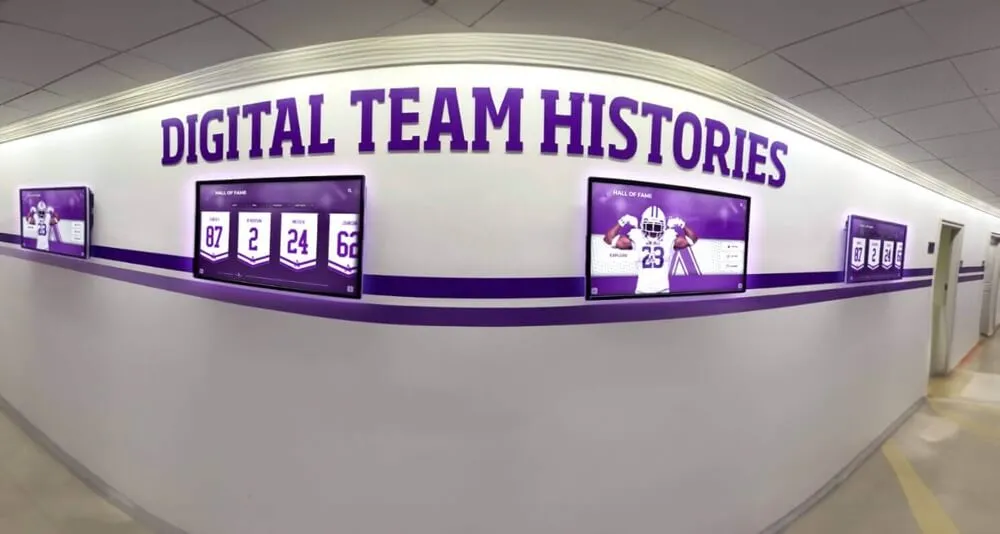
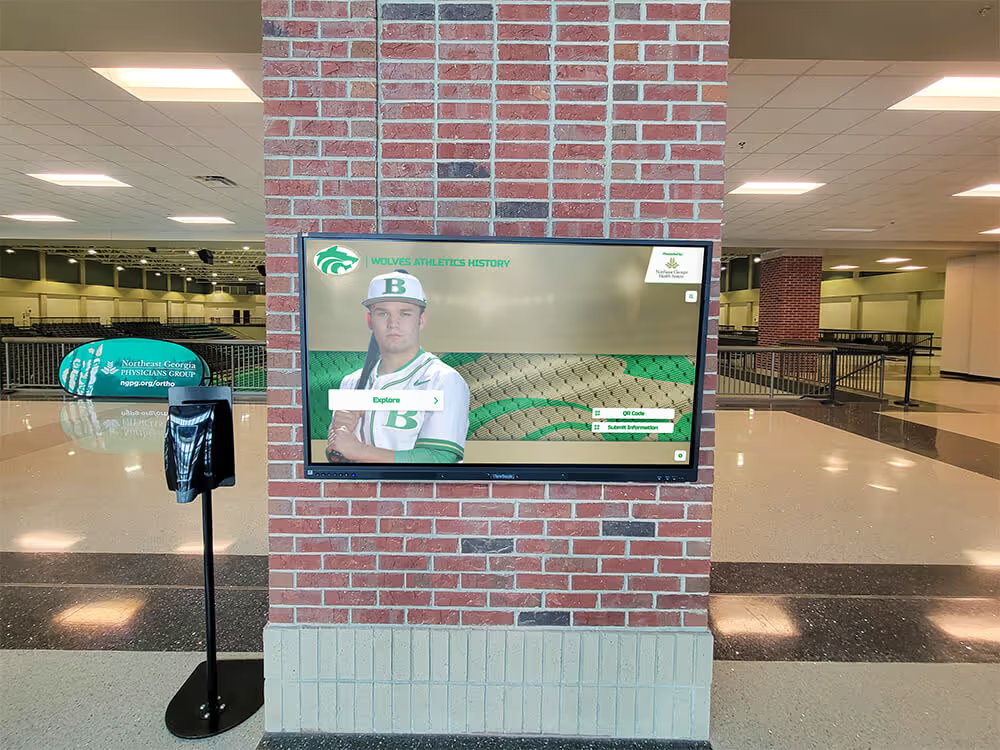
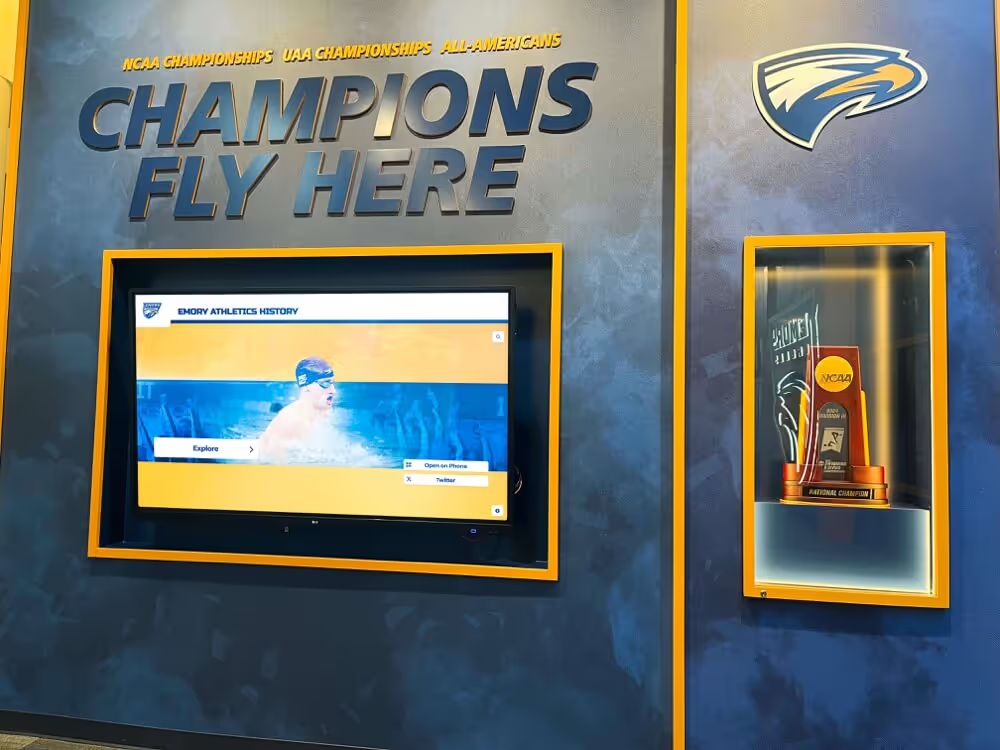
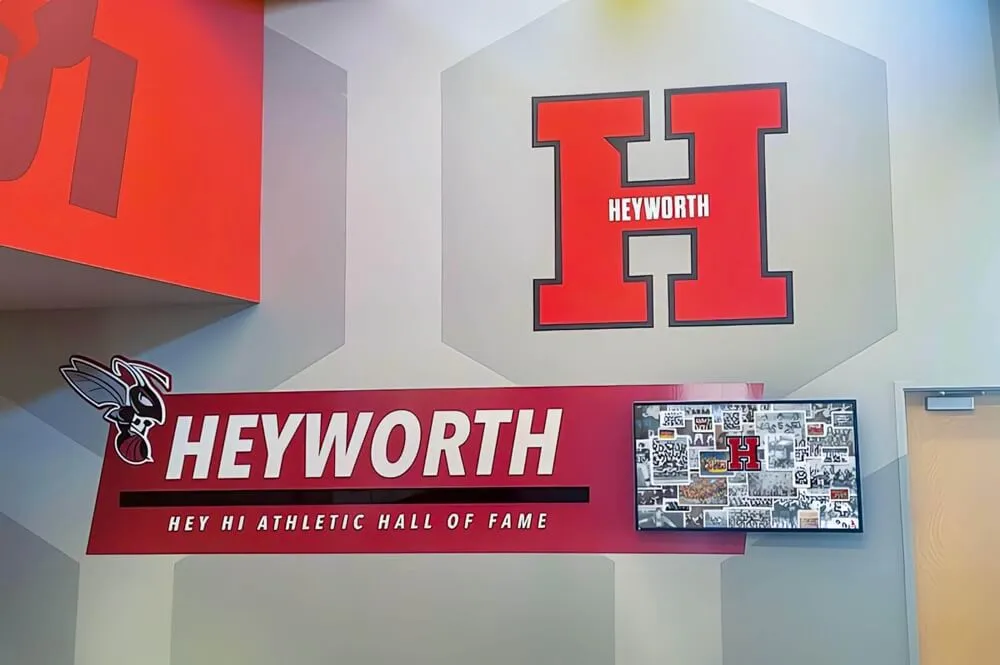
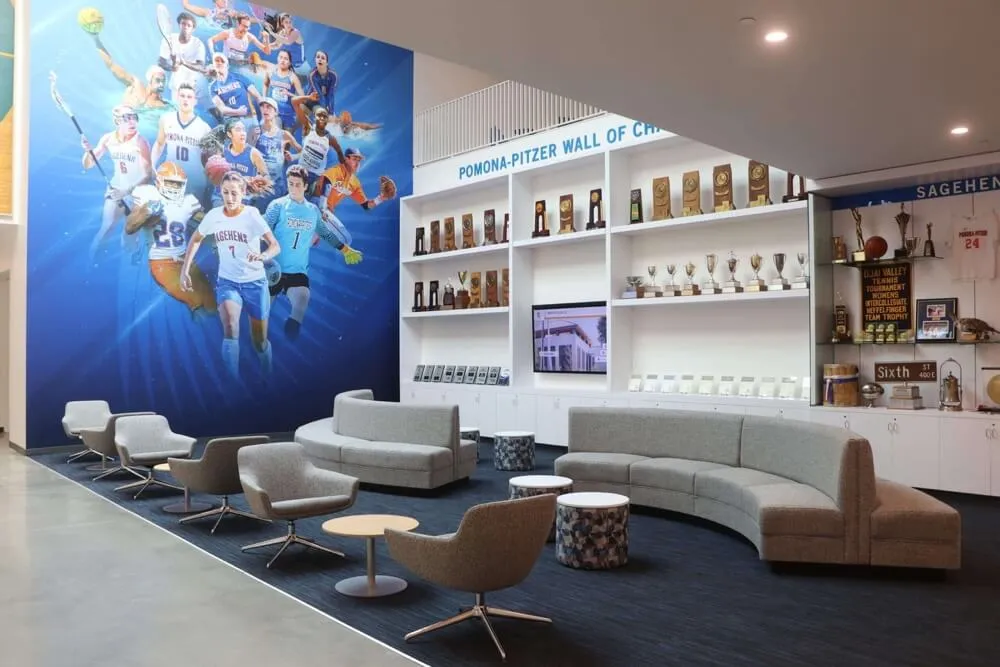
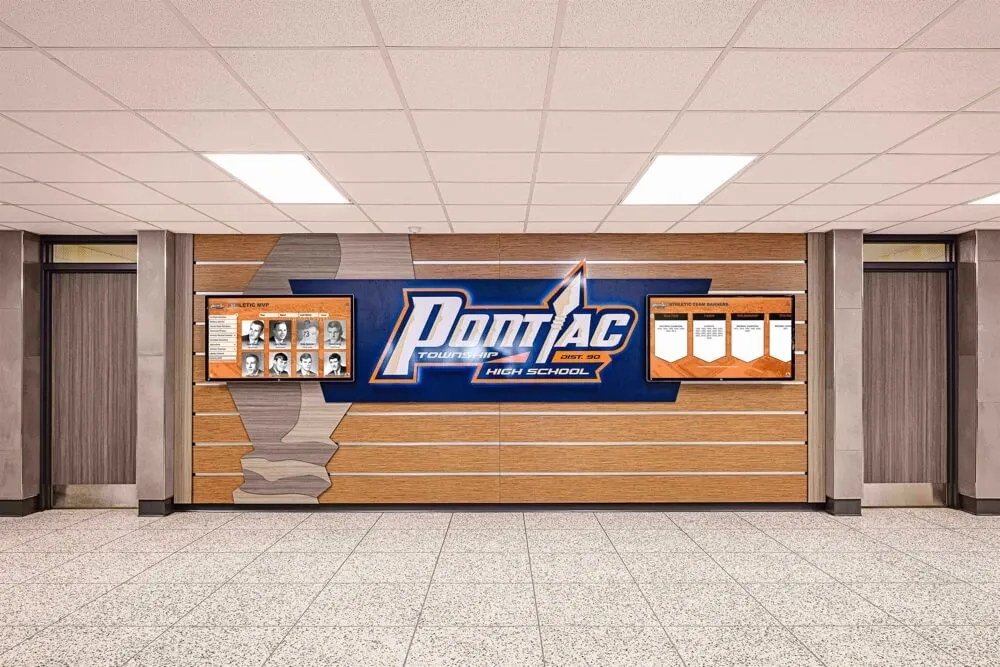
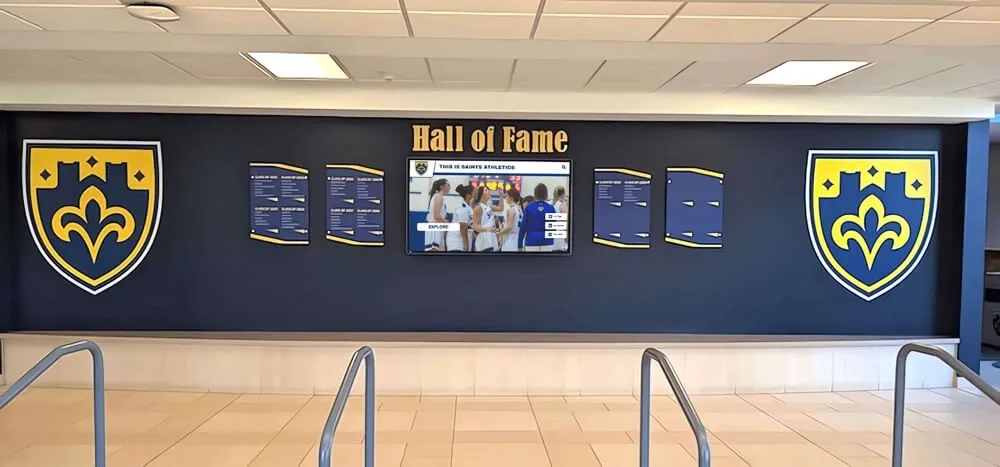
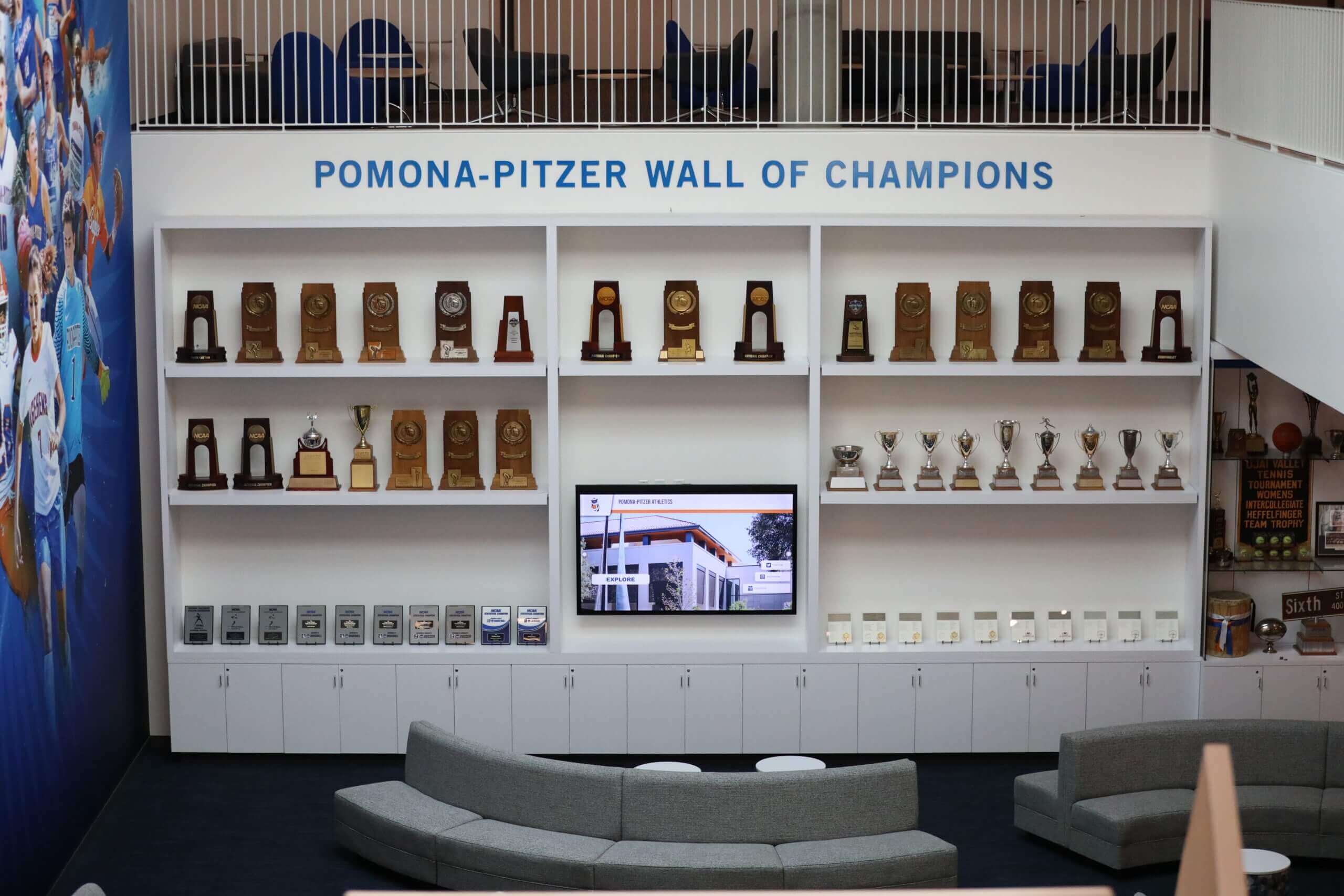
A dedicated wall of champions brings together decades of championship trophies into a cohesive, impressive display that celebrates program history
Why Team Trophy Displays Matter for School Culture
Recognition doesn’t happen in a vacuum. When students see evidence of what past athletes accomplished in the same hallways they walk every day, it shifts perspective. A sophomore cross-country runner who passes a trophy case filled with state championship hardware understands they’re part of something with real history. That context shapes effort and investment in ways that motivational posters never can.
Championship trophies also communicate to prospective families. School tours routinely pass through athletic spaces, and the quality and organization of trophy displays sends a clear signal about how seriously an institution takes its athletic programs. Well-maintained, thoughtfully arranged displays convey professionalism. Dusty shelves with no visible organization suggest the opposite.
Alumni engagement adds a third dimension. Former athletes who return for homecoming, class reunions, or community events want to see their contributions acknowledged. A comprehensive display spanning eras keeps alumni connected to institutional history and reinforces pride in what they built during their own competitive years. Pairing trophy displays with broader sports awards ideas rounds out a complete athletic recognition program.
Traditional Team Trophy Display Ideas
Traditional approaches remain viable for many schools, particularly those with newer construction, ample hallway space, and manageable trophy collections. Understanding the physical display options helps schools make informed choices before exploring digital alternatives.
Dedicated Trophy Cases with Glass Fronts
The classic glass-front trophy case remains the most common team trophy display approach for good reason. Glass cases protect hardware from dust and handling, create clear visual organization, and signal that the contents are valued. Several factors maximize the impact of traditional cases:
- Lighting: Built-in case lighting dramatically improves visibility and perceived value. LED strip lighting produces minimal heat and reduces energy costs.
- Spacing: Overcrowded cases diminish the impact of individual trophies. Displaying fewer items with room to breathe is more effective than jamming in every available piece.
- Grouping: Organize by sport, by year, or by championship level. Consistent grouping helps visitors navigate and understand what they’re seeing.
- Signage: Small plaques or printed cards identifying year, sport, and achievement level add crucial context that makes trophies meaningful to people who weren’t there.
Dedicated Trophy Rooms and Showcase Areas
Schools with significant championship histories sometimes benefit from dedicated spaces rather than hallway cases. A trophy room or championship showcase area creates a destination—a place where teams gather before games, where prospective athletes tour, and where alumni naturally migrate during events.
Elements of an effective dedicated trophy room include a comprehensive collection displayed without overcrowding, photographs and context alongside hardware, chronological organization showing program development over decades, recognition of coaches alongside players, and comfortable gathering space that encourages people to linger.
The challenge with dedicated rooms is maintenance. These spaces require regular dusting, updating, and reorganization as new championships are added. Schools that don’t build this into their administrative calendar often end up with impressive spaces that gradually become neglected.
Trophy Walls and Shelving Systems
Mounted wall systems offer flexibility that freestanding cases don’t. Custom shelving fits specific architectural spaces, accommodates different trophy sizes, and expands as collections grow. Wall-mounted displays also free floor space, which matters in hallways and lobbies where traffic flows regularly.
Consider weight capacity and anchor requirements for larger collections, adjustable shelf heights to accommodate varying trophy sizes, visual coherence through consistent materials and finishes, and protection from accidental contact in high-traffic areas.
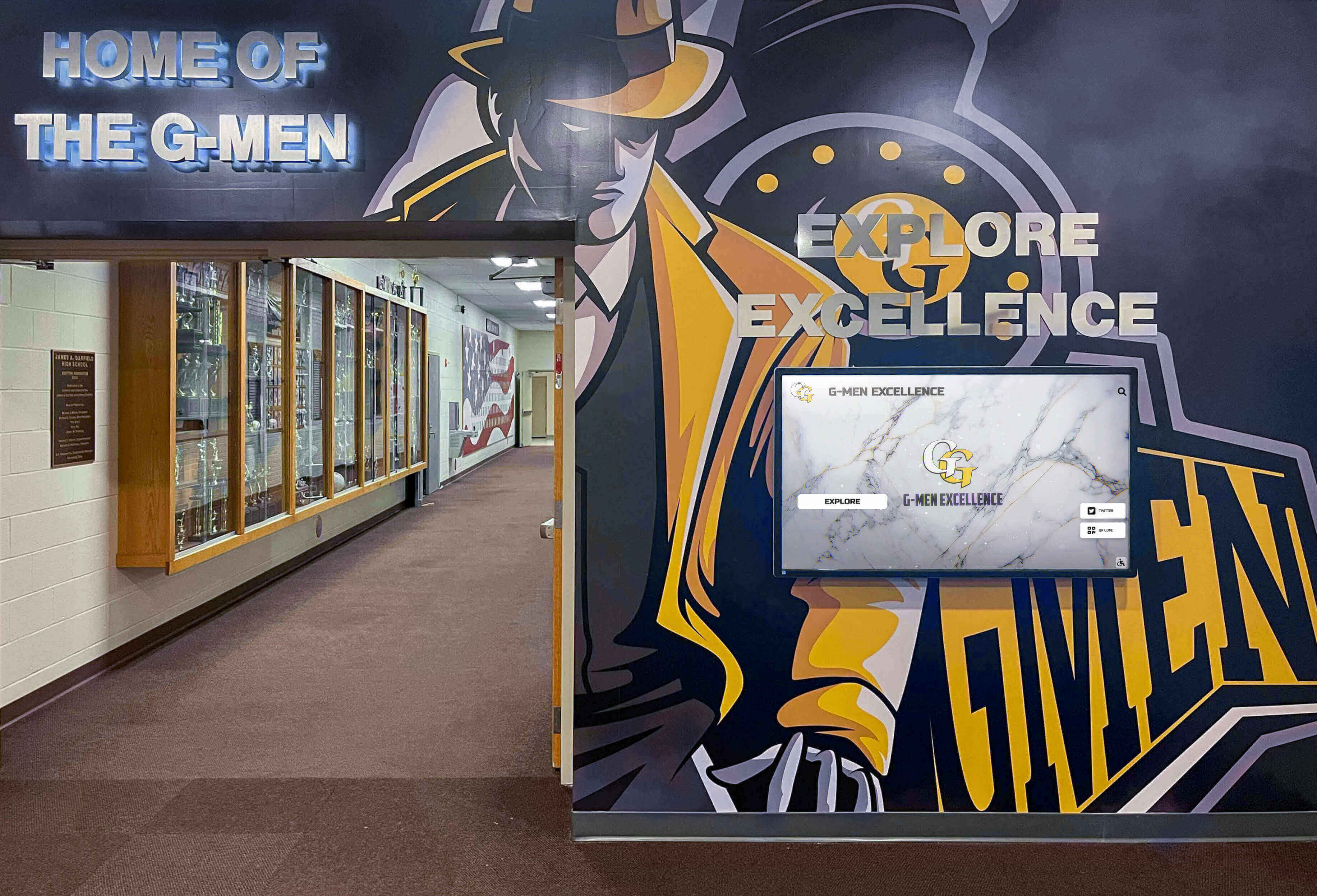
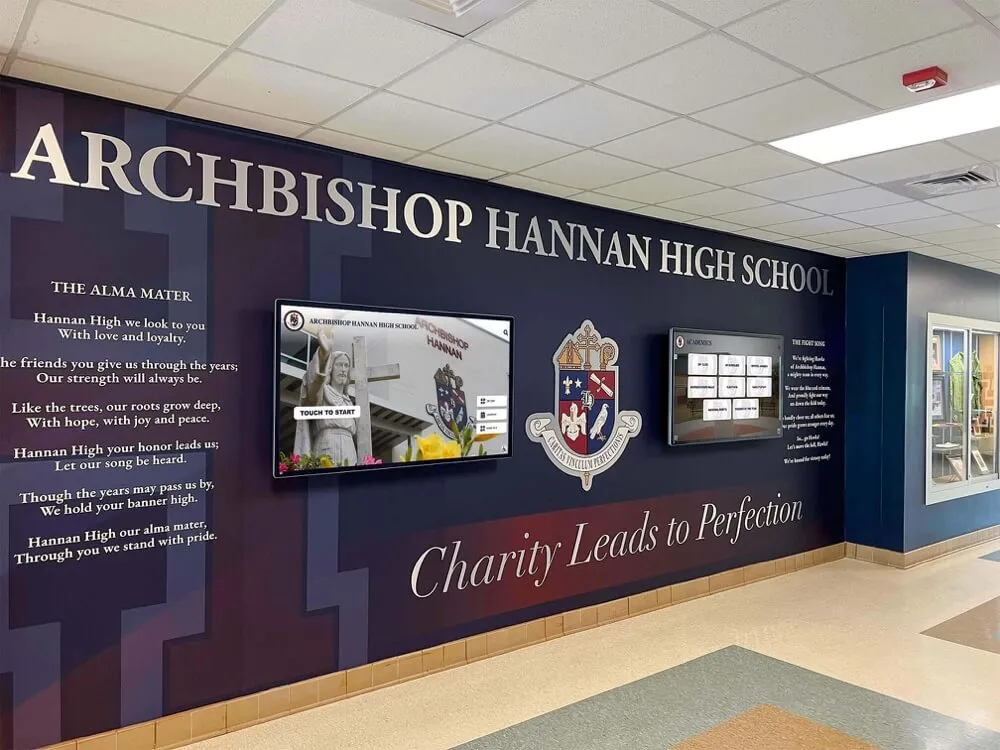
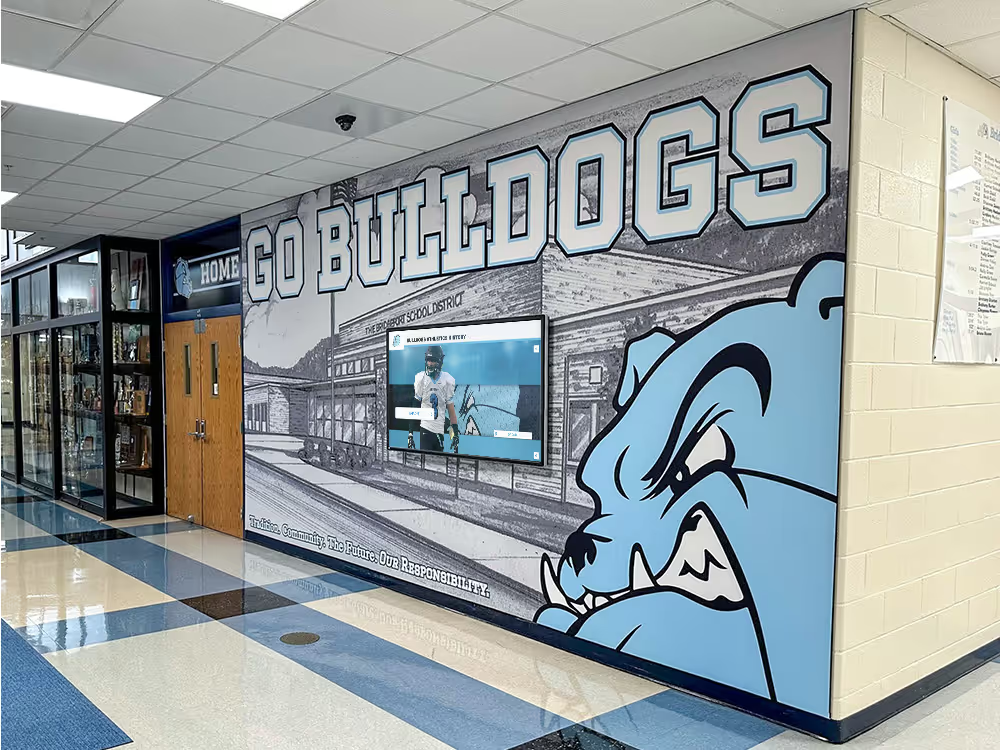
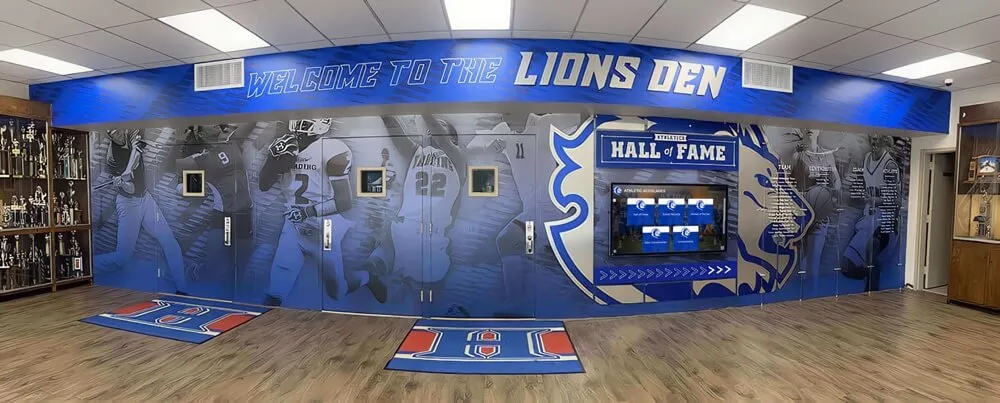
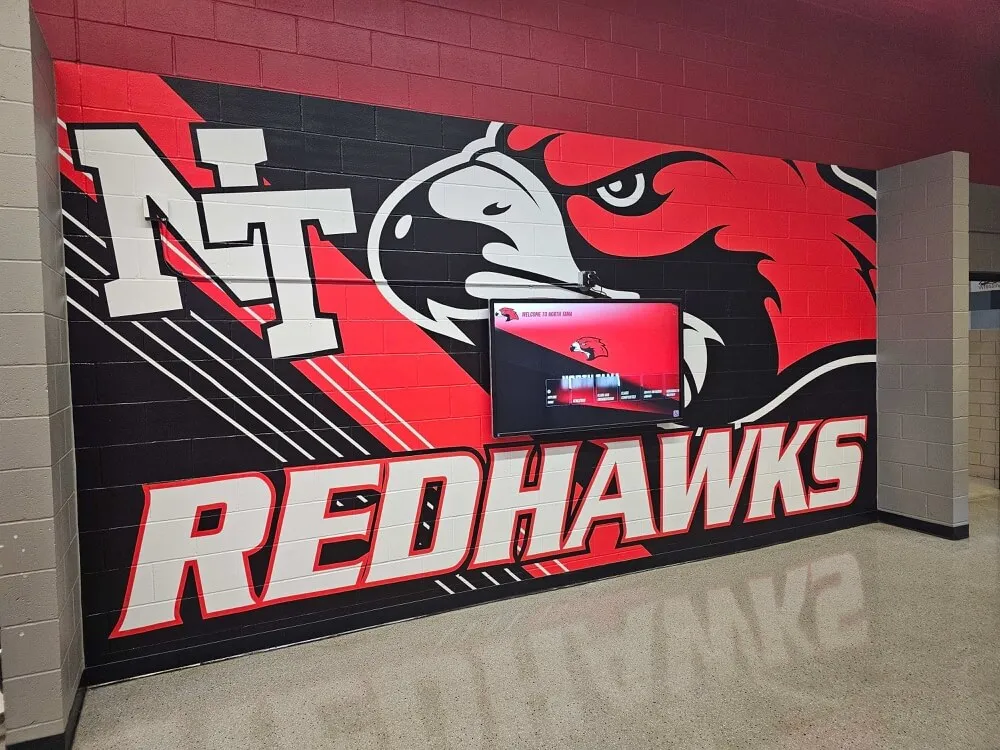
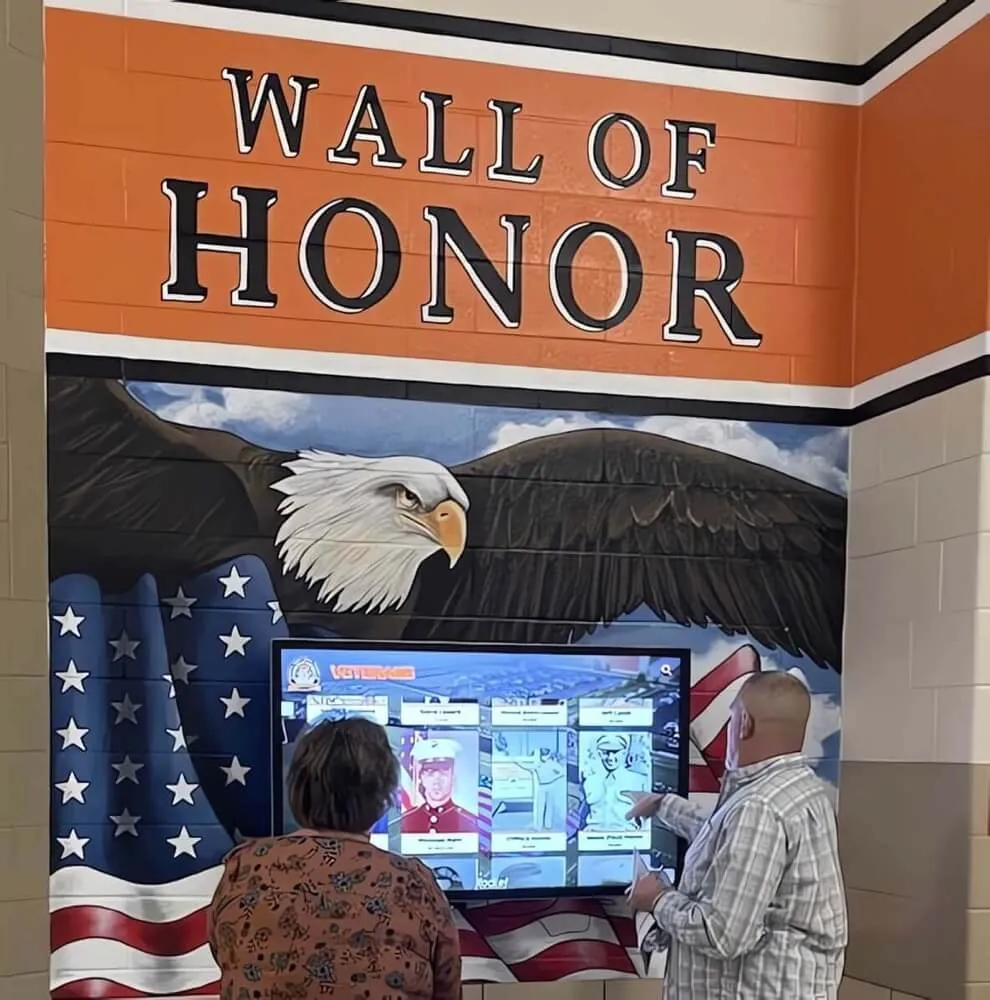
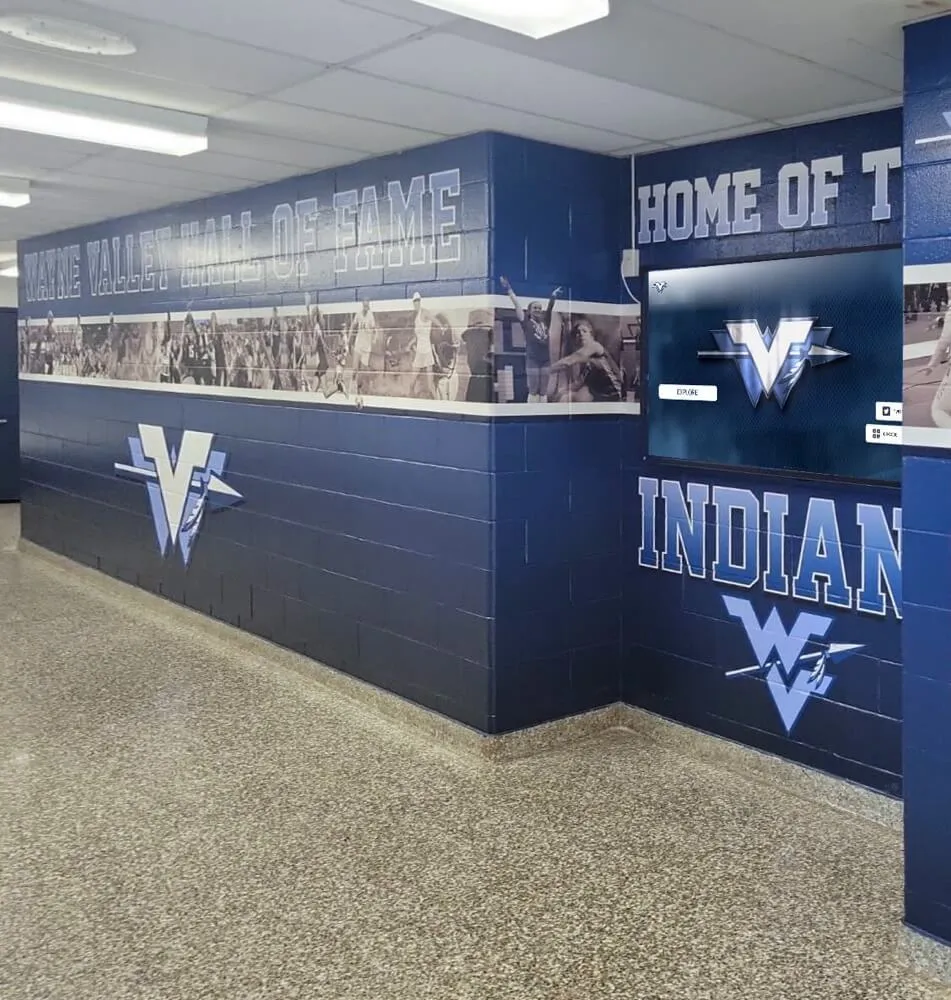
Combining athletic murals with trophy cases creates visually striking hallway recognition environments that tell the full story of a program
Modern Team Trophy Display Approaches
Physical trophy cases solve the visibility problem but create others. Space fills up. Hardware ages. Updates require manual effort. Older achievements get relegated to storage when newer trophies arrive. Modern schools increasingly turn to digital approaches that solve these limitations while creating more engaging experiences.
Digital Trophy Cases and Interactive Touchscreens
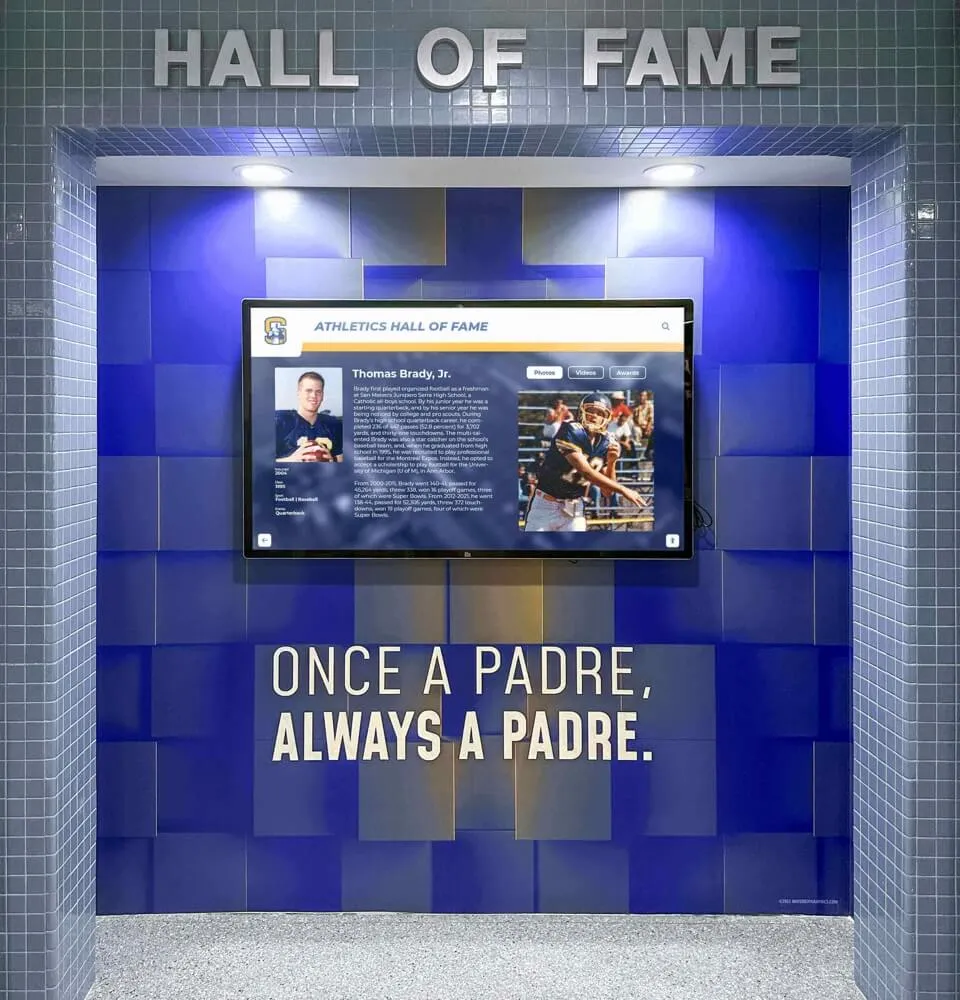
Digital trophy displays replace physical shelves with interactive screens that showcase championship history without space constraints. A school that has won 47 team championships across 12 sports over the past 50 years can display all 47 with equal prominence—not just the ones that fit on available shelf space.
Digital systems offer capabilities that physical cases cannot match:
- Unlimited capacity: Add new championships without removing older ones
- Rich media: Championship trophy photos alongside action shots, team photos, and video highlights
- Contextual information: Season records, memorable moments, and individual standout performances
- Automatic updates: New achievements added remotely without physical installation
- Search and navigation: Visitors explore by sport, year, or championship type
For schools managing multiple sports programs across many decades, all-star achievement touchscreen displays provide the organizational framework to present this complexity in an accessible, engaging format.
Cloud-Managed Recognition Platforms
Cloud-based display management removes the technical barrier that once made digital displays a specialized undertaking. Athletic directors and administrators can update championship records, add photographs, publish new content, and reorganize displays from any internet-connected device—no IT department involvement required.
This accessibility matters because recognition programs only stay current when updates are easy. Schools that need to submit IT tickets to add a new championship banner find their displays gradually falling behind reality. Cloud-managed systems enable regular updates that keep recognition current and relevant.
Modern platforms also include scheduling capabilities that allow administrators to plan content in advance—publishing new championship records immediately after confirmation, scheduling recognition of upcoming anniversary milestones, or queuing future-dated content during summer planning sessions. Unlimited entries, ADA WCAG 2.1 AA compliance, and QR code mobile viewing extend the value of these systems beyond physical display capacity alone.

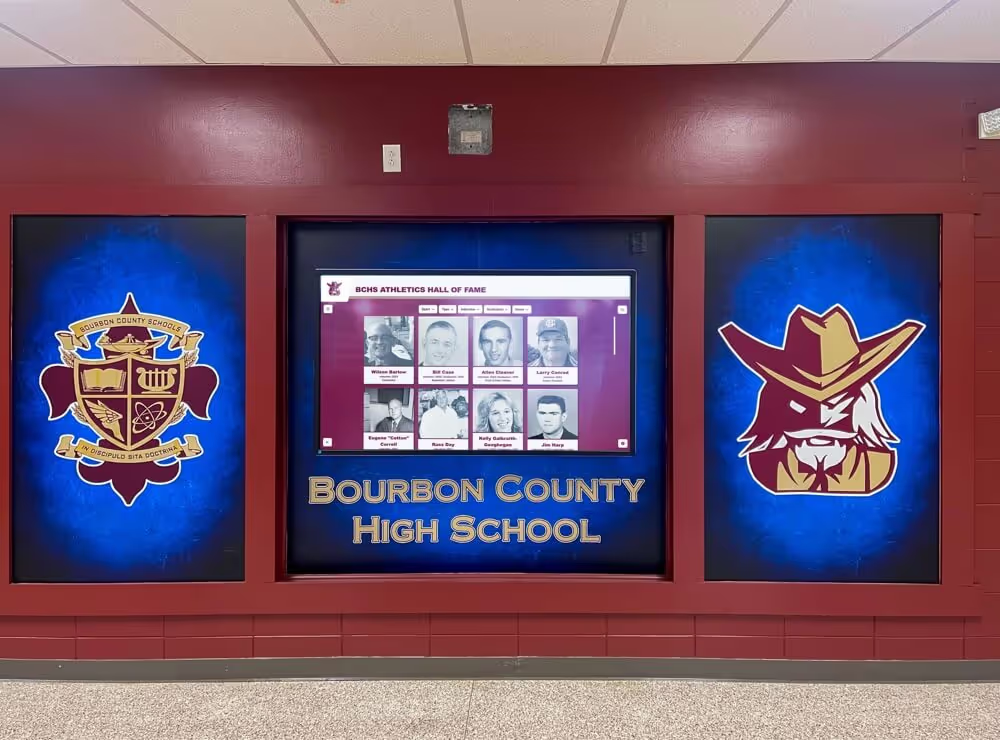
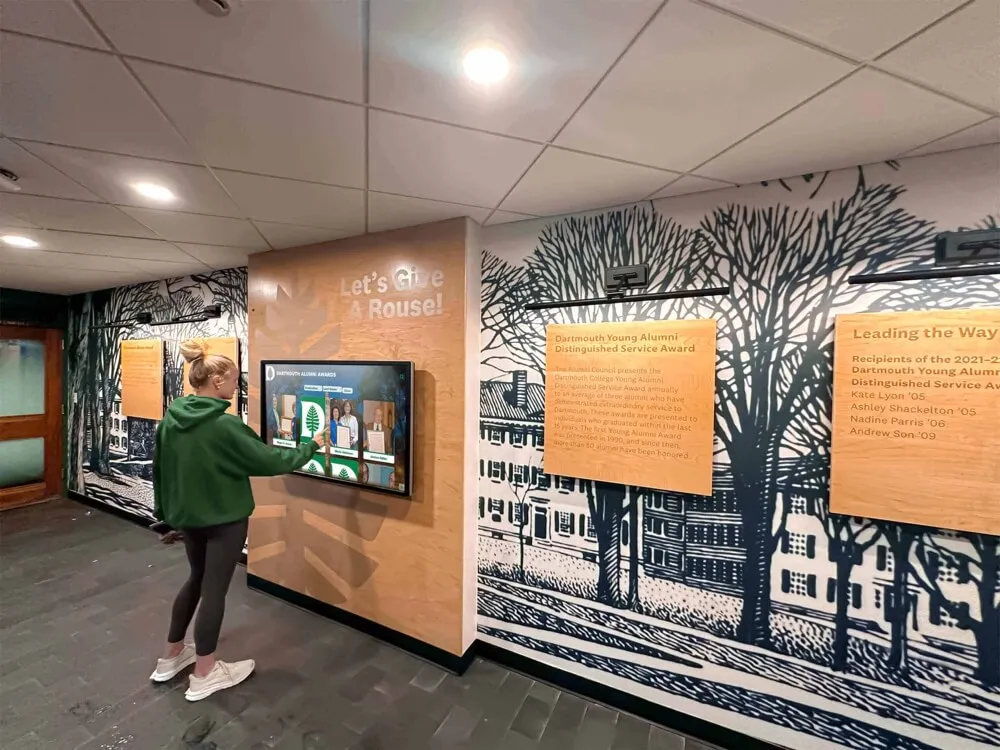
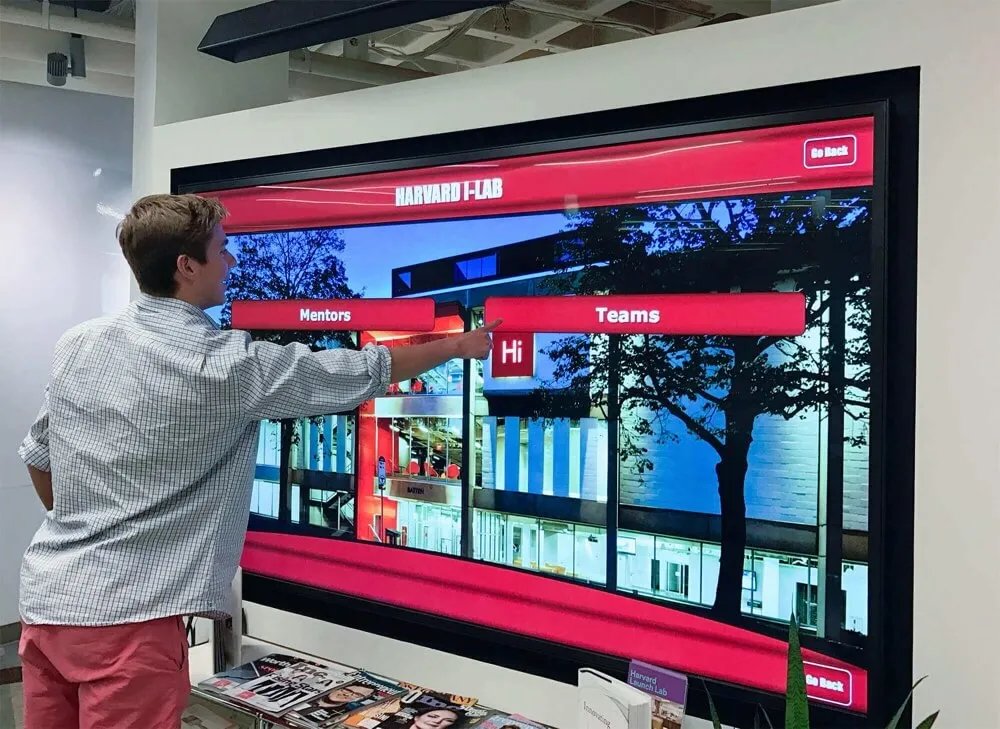
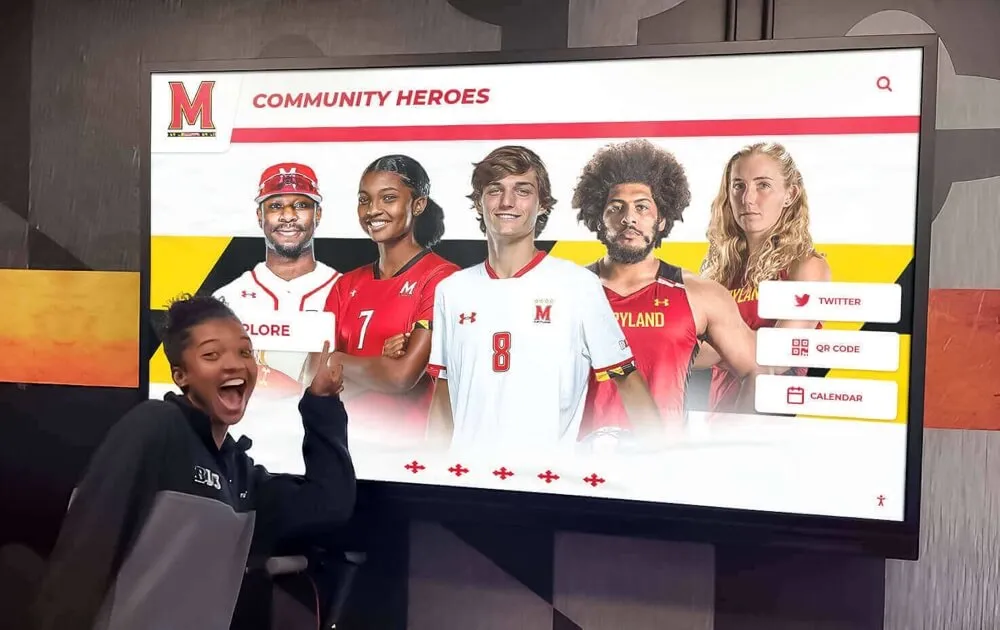
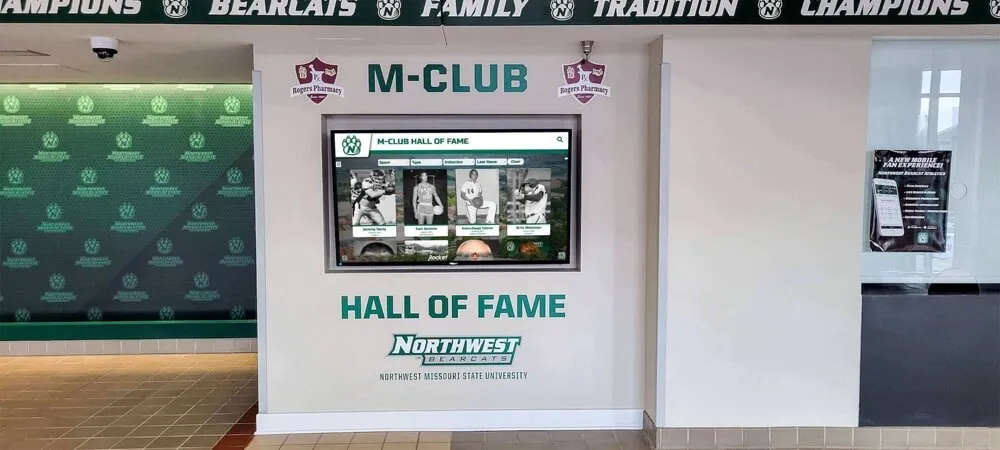
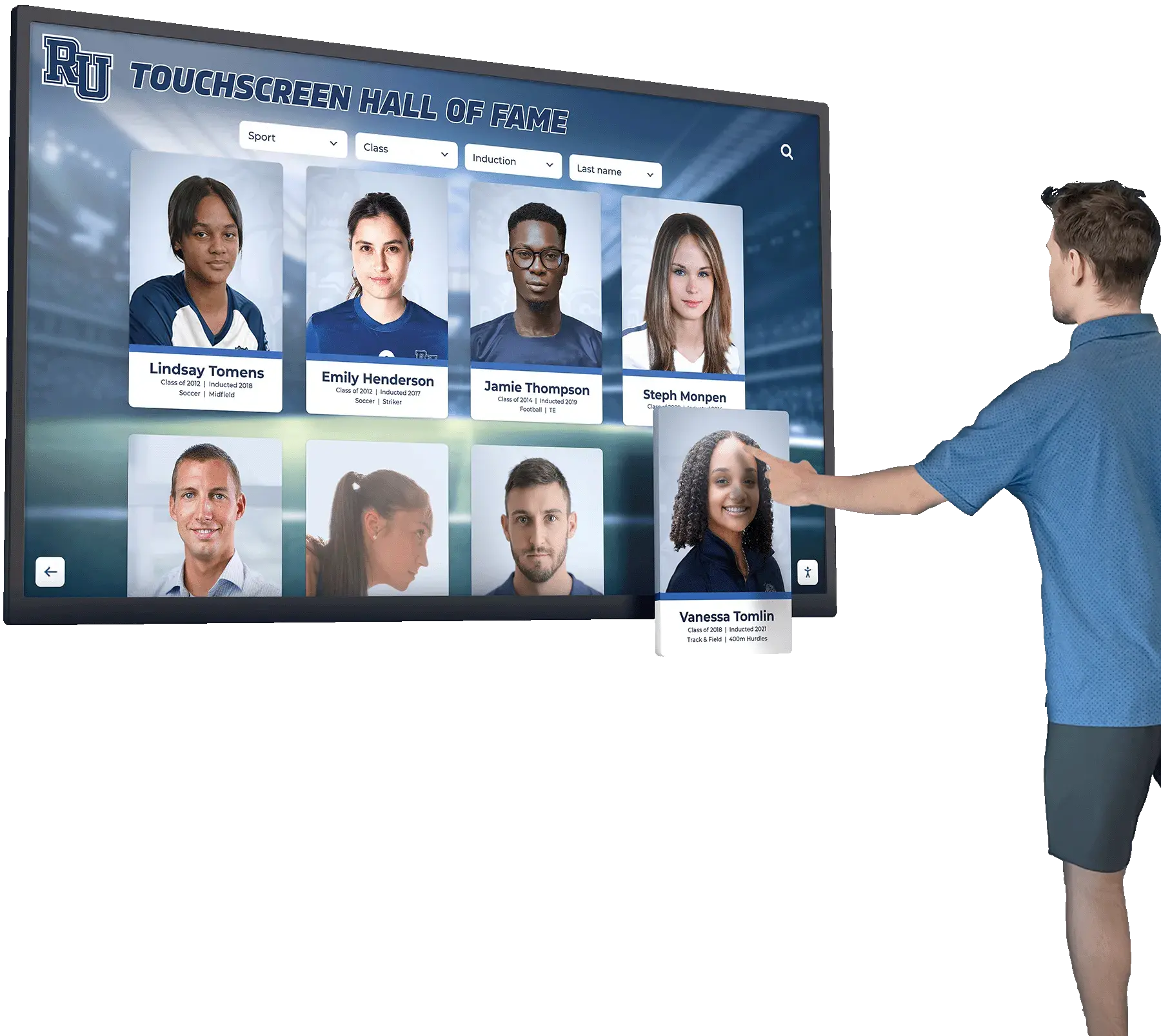
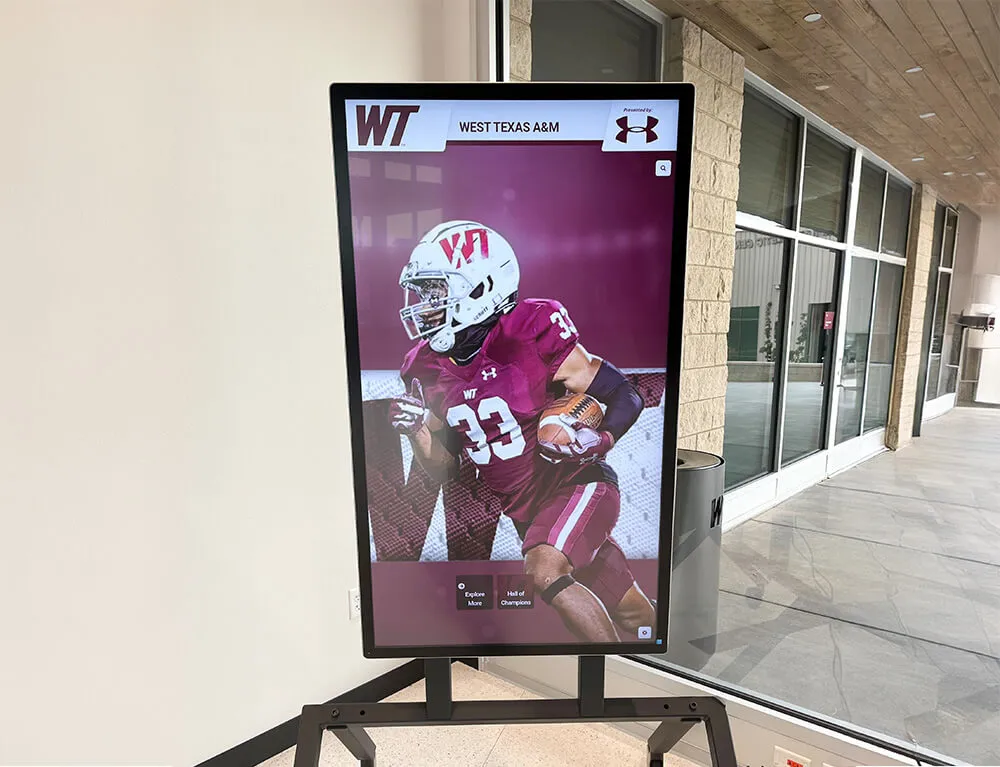
Interactive touchscreen displays invite visitors to explore championship history at their own pace, creating more meaningful engagement than static displays
Creative Display Arrangements and Themes
Beyond the basic choice between physical and digital, creative arrangement approaches significantly elevate how championship history resonates with viewers.
Chronological Championship Timelines
Organizing trophy displays chronologically tells a story. Visitors can see how programs developed—early successes, periods of rebuilding, championship dynasties, and the current era’s accomplishments. Timeline displays make athletic history feel like history rather than just a collection of objects.
Physical timelines work along long hallways with sequential display cases. Digital timelines can span an entire program’s existence, allowing visitors to scroll or tap through decades of achievement within a single screen. The ability to see that a soccer program won three consecutive state titles in the 1980s before a long rebuilding period and then a resurgence in the 2010s creates the kind of narrative context that isolated trophy displays can’t convey.
Sport-Specific Championship Galleries
Schools with dominant programs in specific sports sometimes benefit from dedicated sections celebrating that program’s history comprehensively. A wrestling program with 15 dual-meet championships, 30 individual state champions, and a coaching record spanning 40 years tells a richer story in its own space than when mixed with other sports.
When considering how sport end-of-year awards for individual athletes connect to team trophies, dedicated sport galleries provide natural homes for both types of recognition.
Cross-Sport Championship Collections
Some schools prefer displays celebrating overall athletic excellence across all sports simultaneously. Cross-sport arrangements communicate the breadth of a program—that the institution values and supports diverse athletic pursuits and that excellence isn’t confined to any single team.
Championship counts, state qualifiers, and conference titles across all programs presented together create a cumulative impression of institutional commitment to athletics that no single-sport display can match. For schools whose pride spans many programs, this unified approach reinforces that championships come from throughout the athletic department.
Integrating Championship Banners with Trophy Displays
Championship banners and trophies serve complementary recognition roles. Banners provide high-visibility, large-scale acknowledgment visible from across a gymnasium or athletic facility. Trophies provide tangible, close-up proof of achievement. The most effective athletic recognition programs integrate both.
Gymnasium rafters or walls house championship banners with year and title visible at a distance. Hallway or lobby trophy cases hold physical hardware with detailed context at eye level. Digital displays connect banner acknowledgments to the full story behind each championship—the season record, the key players, the coaches, and the competitive context.
When transitioning from physical-only to hybrid recognition systems, schools often discover that digitizing team photos for an athletic archive allows them to reconnect championship hardware with the faces and moments that made the trophies meaningful.
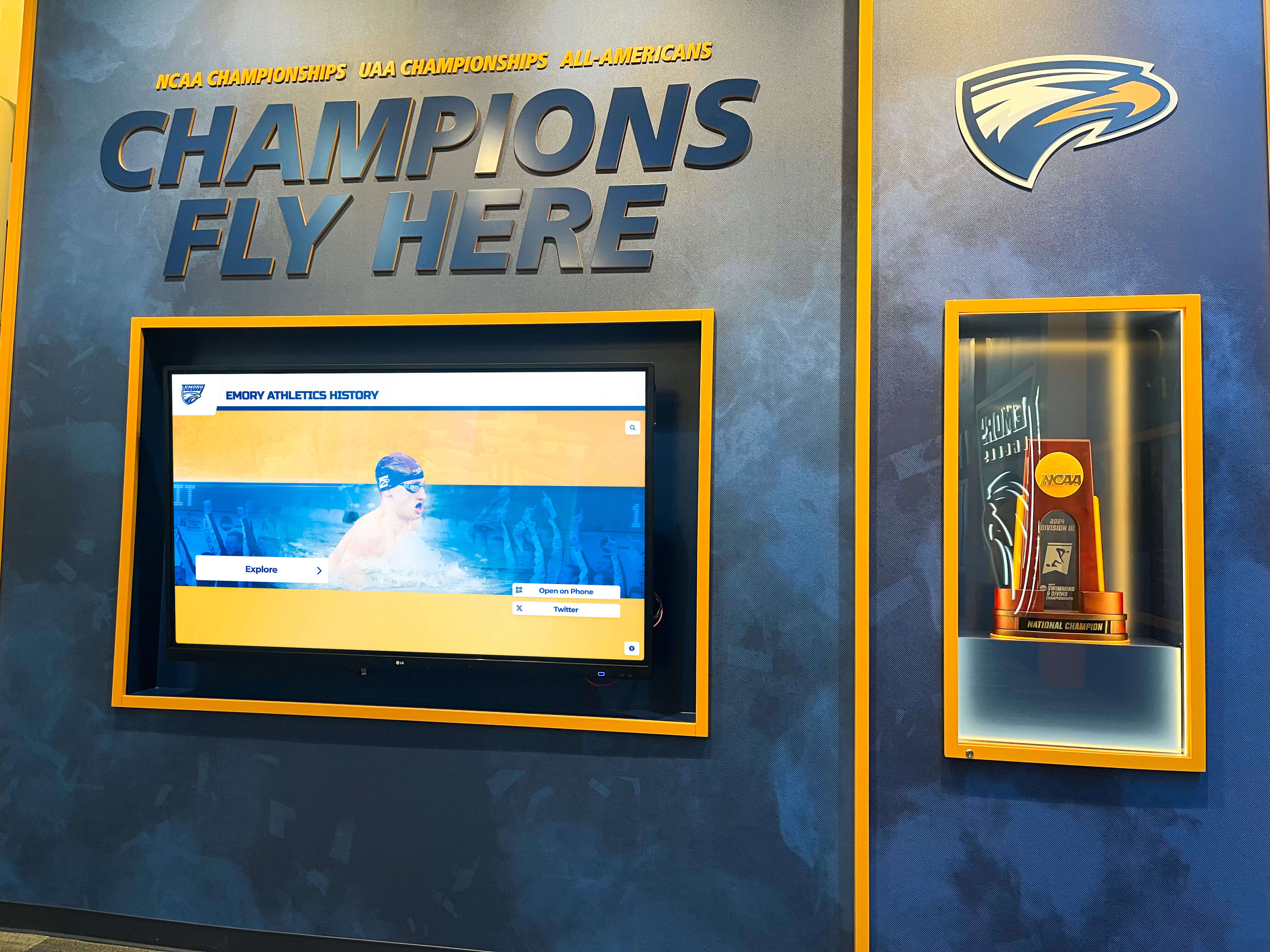
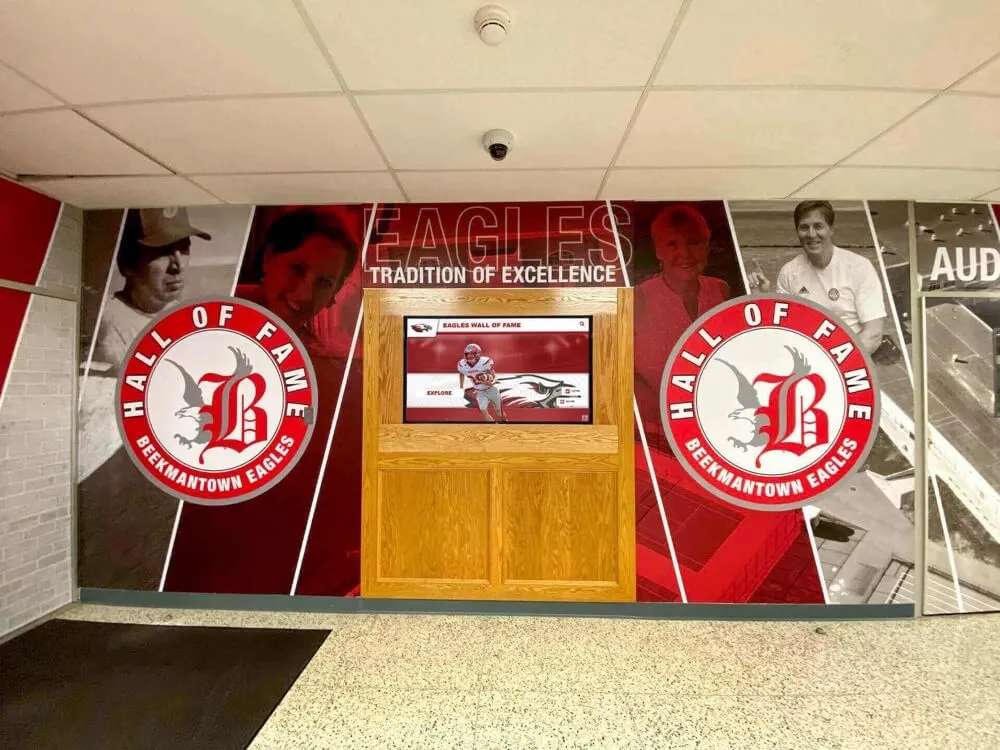
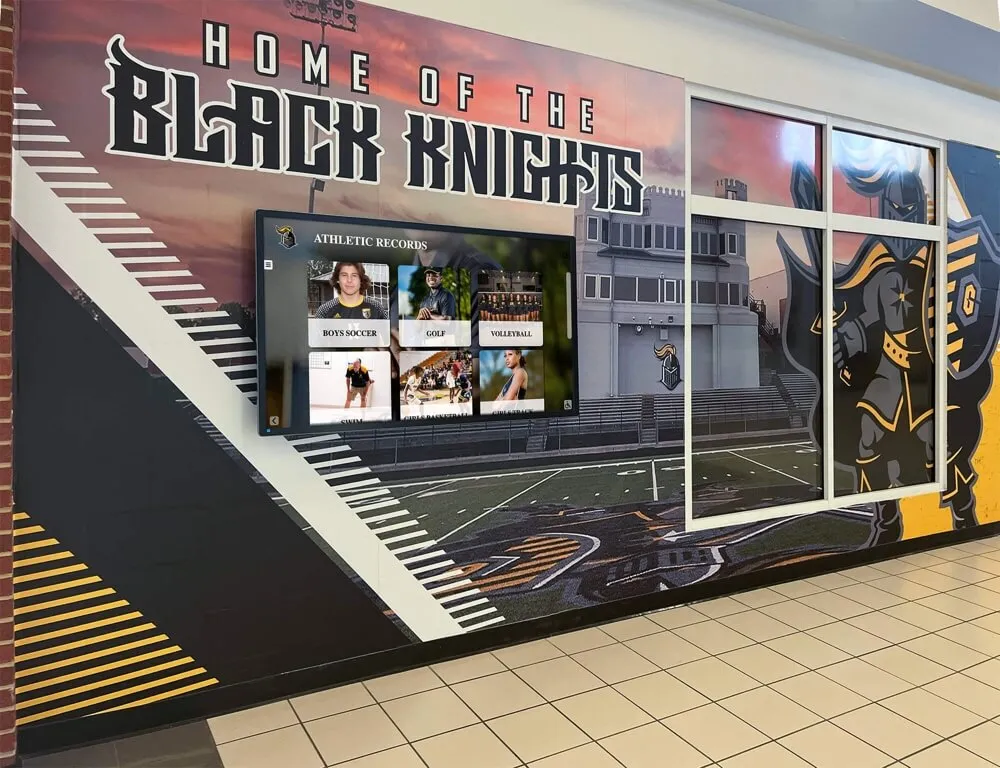
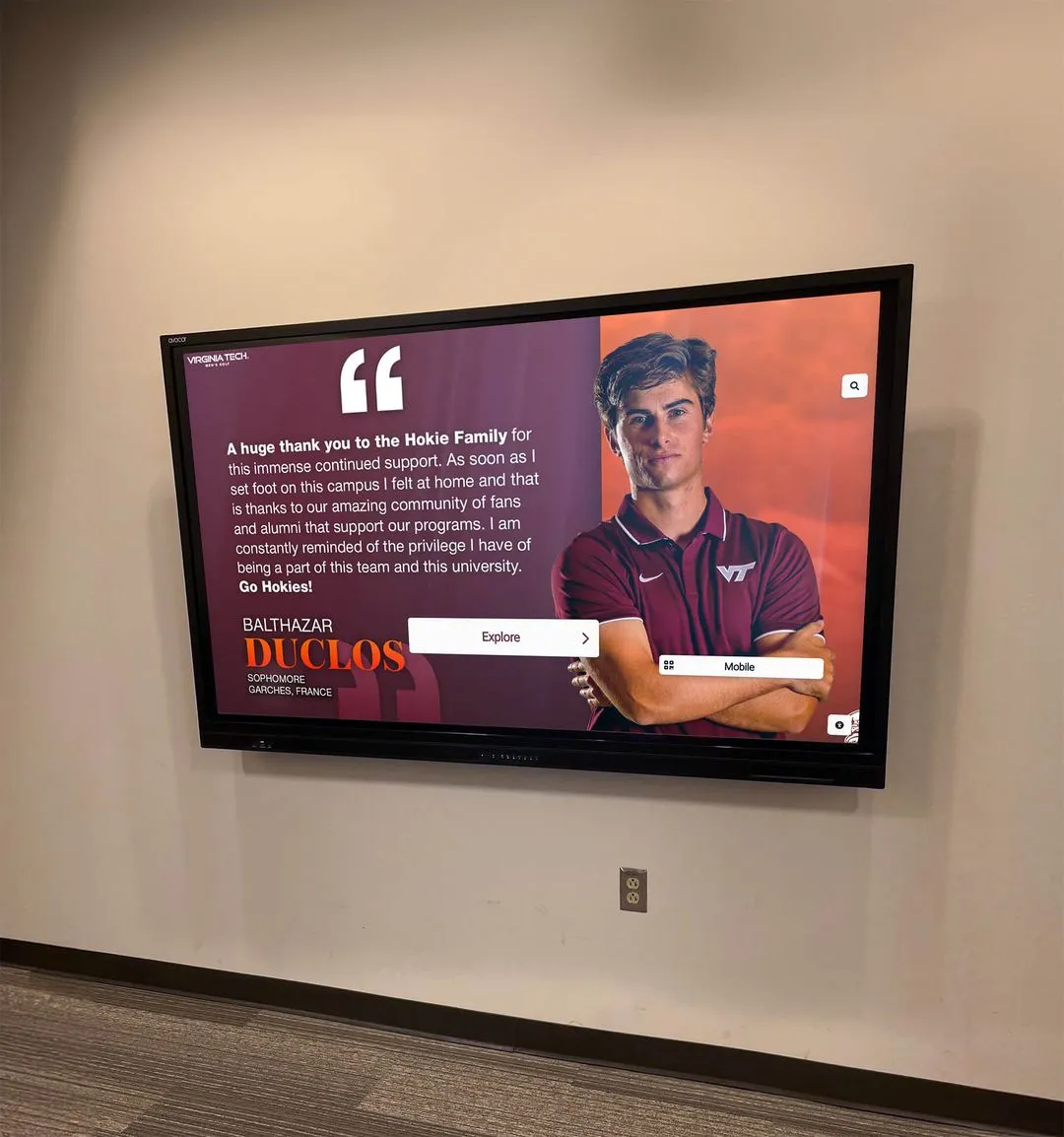
Sport-specific champions walls integrate trophies with championship context to create immersive athletic heritage displays
Organizing Displays by Achievement Level
Not all championships carry equal weight, and display organization can reflect these distinctions without minimizing any individual accomplishment.
Hierarchy of Championships
Many schools organize trophy displays to distinguish between achievement levels:
- National and state championships receive featured placement and greatest visual prominence
- Regional and sectional titles occupy secondary positions but remain fully visible and contextualized
- Conference and league championships complete the picture of program excellence across all competition levels
- Tournament and invitational wins add depth without competing for prominence with signature achievements
This hierarchy helps visitors understand what they’re seeing. A visitor unfamiliar with a school’s athletic history immediately grasps the magnitude of a state championship when its display differentiates that achievement from conference titles.
Including Runner-Up and Finals Appearances
Championship displays gain depth when they include strong second-place and finals appearances alongside outright wins. A team that reached the state finals eight times before winning demonstrates consistent excellence—a story that pure championship counts don’t tell.
Digital displays make this inclusive approach easier to execute. Physical cases require hard choices about space allocation; digital systems can include runner-up hardware, final-four appearances, and semifinal results without crowding out championship trophies.
Digital Trophy Case: The Modern Solution for Unlimited Championship History
Schools accumulating decades of championship hardware face an inevitable reckoning with physical display space. Traditional approaches require periodic decisions about what to keep prominent and what to relegate to storage—decisions that diminish older achievements and create real hurt feelings among alumni who won those trophies.
Rocket Alumni Solutions offers a digital trophy case platform designed to preserve and present unlimited championship history without space constraints. Schools can display every championship from their founding to the present season with equal visual treatment, rich contextual information, and automatic sorting by sport, year, or achievement level.
The platform’s cloud-managed content system allows athletic directors to add new championships immediately after confirmation, update photographs and records throughout the season, and organize displays without technical support. ADA WCAG 2.1 AA compliance ensures the display is accessible to all visitors, and QR code functionality extends the experience to mobile devices so alumni can explore championship history from anywhere.
See How Digital Trophy Displays Transform Athletic Recognition
Discover how schools nationwide showcase unlimited championship history through interactive touchscreen displays—no physical space constraints, no manual engraving, no IT tickets required.
Book A DemoUnderstanding how institutions successfully recognize alumni digitally provides useful context for schools considering how digital trophy displays fit within broader alumni engagement strategies. A team trophy display capturing every championship becomes a powerful alumni connection point—former athletes find their own contributions preserved alongside every subsequent generation’s accomplishments.
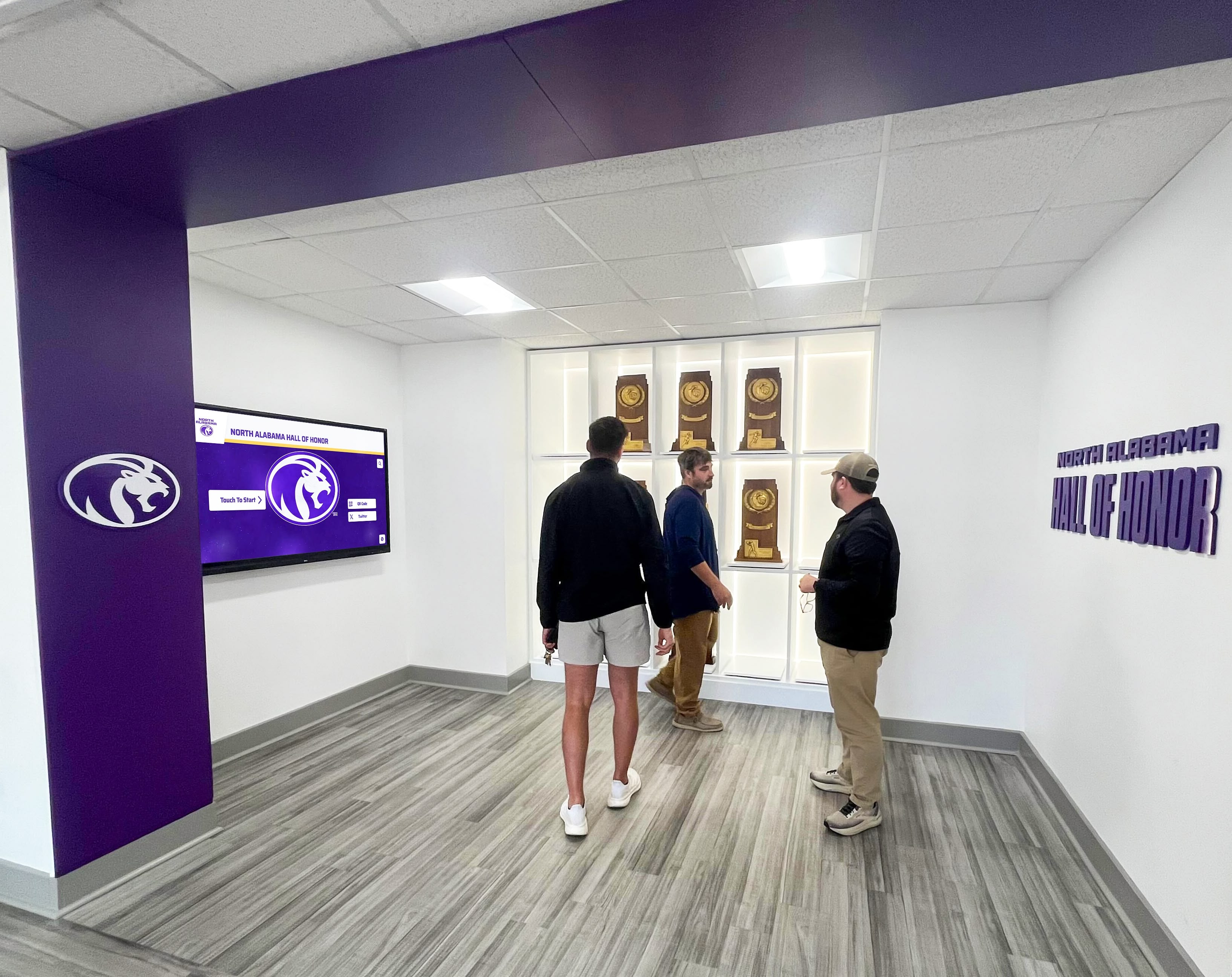
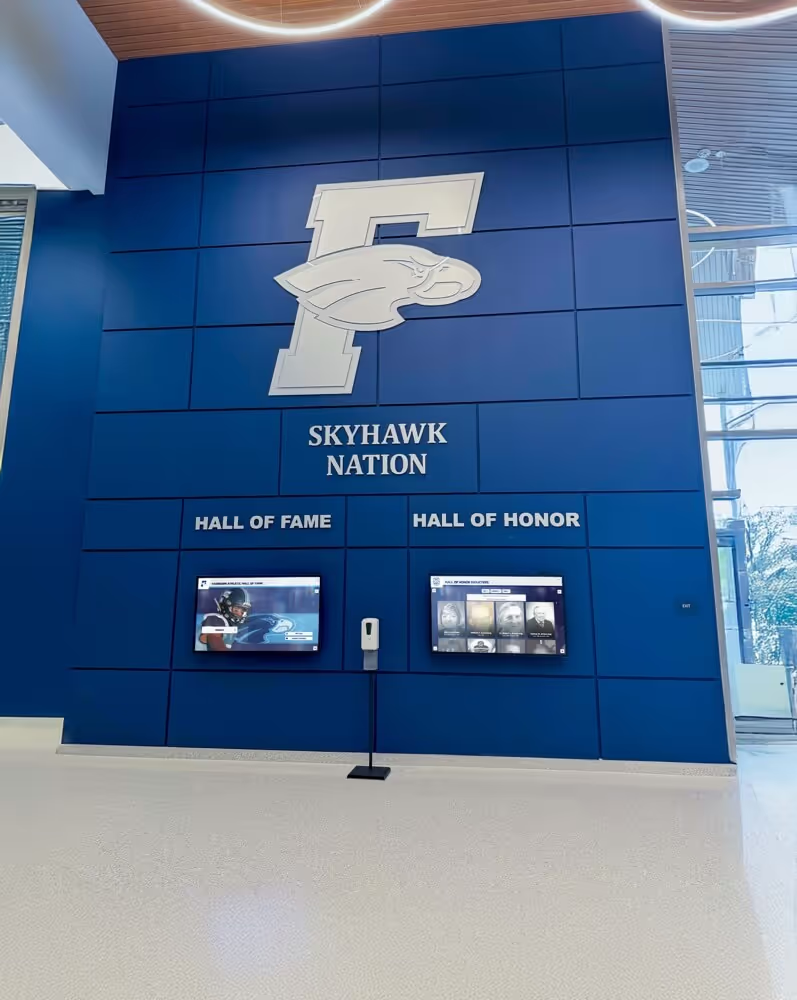
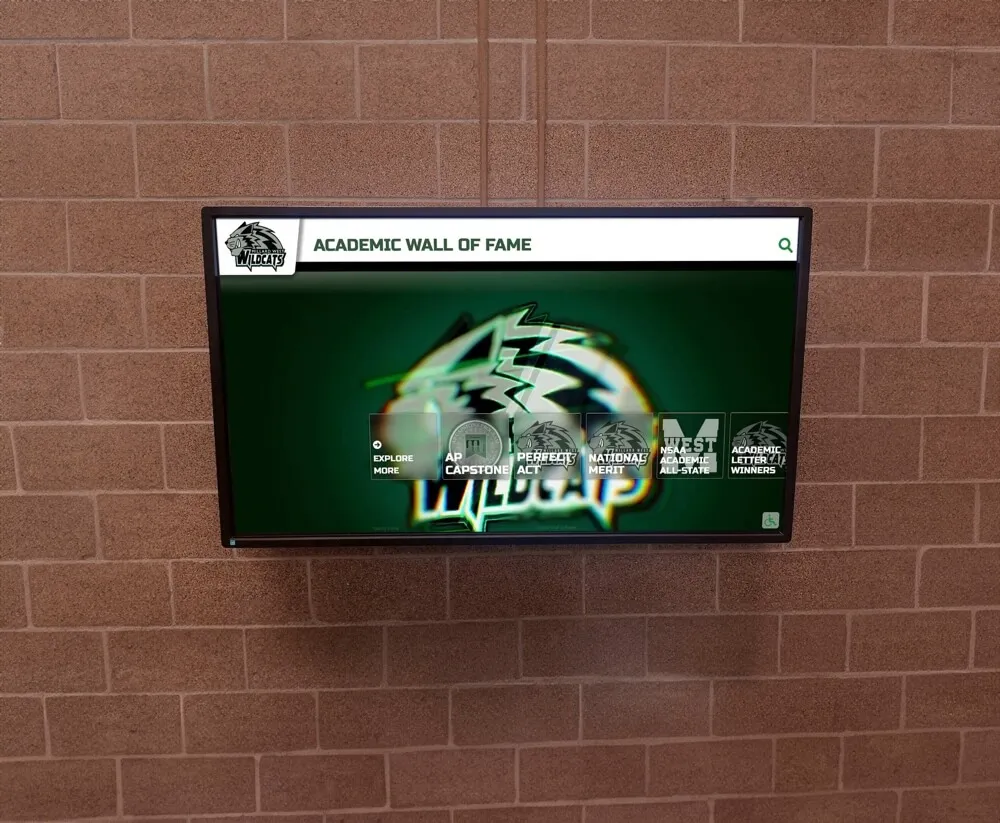
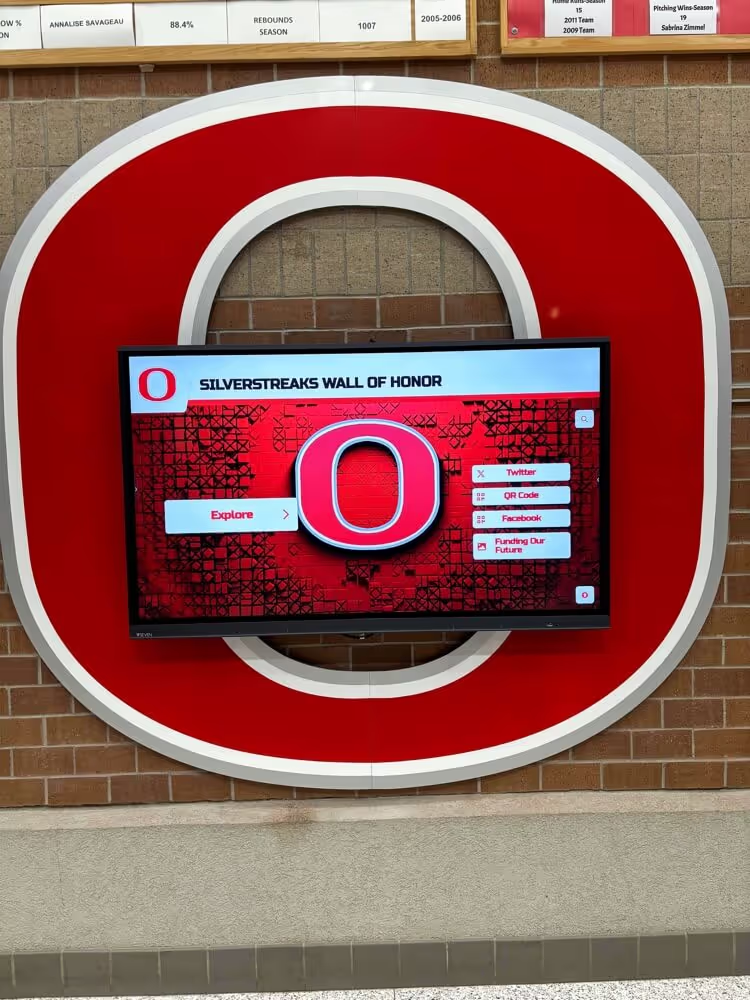
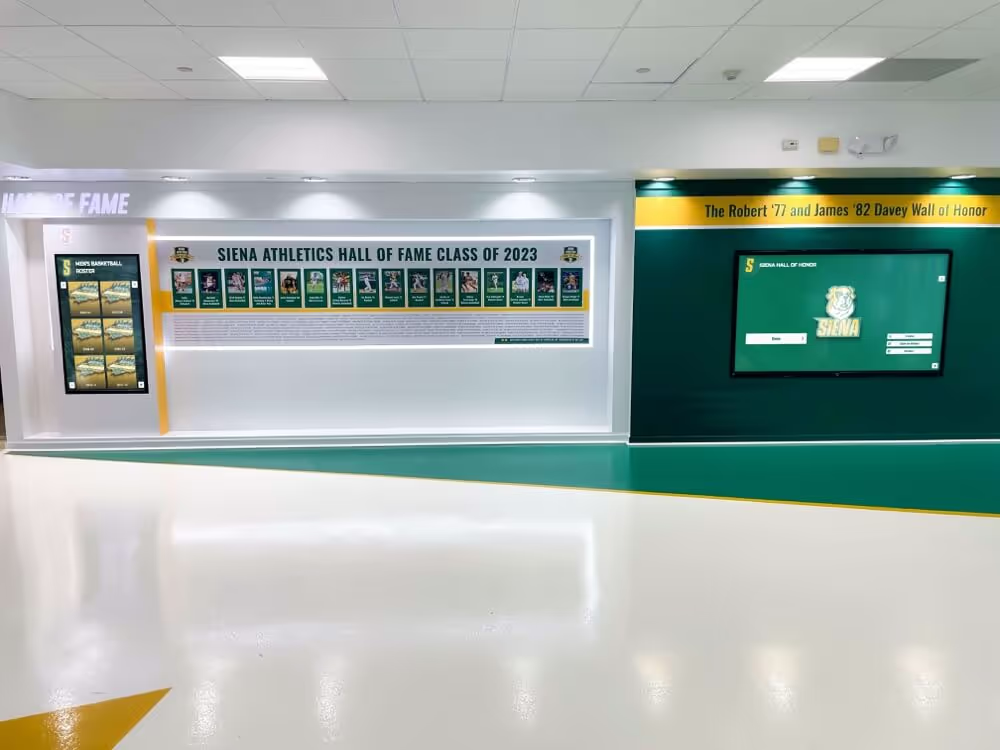
Comprehensive trophy displays draw visitors in and encourage exploration of the full scope of an athletic program's championship history
Making Your Display Interactive and Accessible
Modern visitors—whether current students, prospective families, or returning alumni—expect more from recognition displays than passive viewing. Interactive elements transform a trophy display from a static exhibit into an engaging experience.
Touch Navigation for Exploring Championships
Touchscreen displays allow visitors to explore championship history on their own terms. Rather than reading every placard in sequence, visitors filter by sport, jump directly to a specific era, or search for a particular team or coach. This self-directed exploration creates more meaningful engagement than any fixed display arrangement can achieve.
QR Codes for Mobile Extension
Schools installing digital displays in athletic facilities can extend the experience beyond the physical location through QR codes. Alumni visiting championship display archives from home, parents previewing athletic programs before enrollment decisions, and community members following up on achievements they saw in passing all benefit from mobile-accessible championship records.
Accessibility Requirements
Championship displays in public school facilities should meet ADA compliance standards. Digital displays with WCAG 2.1 AA compliance ensure that visitors with visual impairments, mobility limitations, or other accessibility needs can engage with championship history equally. Physical displays should consider viewing height, lighting quality, and minimum text size.
Budget Considerations: Physical vs. Digital Team Trophy Displays
Cost comparisons between physical and digital trophy display approaches require examining total cost over time, not just initial installation expenses.
Physical Trophy Case Costs:
- Initial installation: $2,000–$8,000 per case
- Engraved plaques: $75–$300 each
- Banner printing and hanging: $200–$500 per banner
- Annual maintenance, lighting, and cleaning: $200–$500
- Replacement and expansion as collections grow: ongoing
- Storage costs for hardware that no longer fits: ongoing
Digital Trophy Display Costs:
- Hardware (touchscreen display and mounting): one-time investment
- Platform subscription: annual fee covering unlimited entries
- Content updates: handled by staff via cloud CMS at no additional cost
- No per-trophy engraving fees
- No storage costs regardless of collection size
- No physical replacement costs as hardware ages
Over a 10-year horizon, schools adding 8–12 new championship trophies annually typically find that digital display systems become cost-competitive within three to five years, while delivering significantly greater recognition capacity and engagement quality throughout. The Rocket Alumni Solutions platform overview provides additional detail on pricing structures and what platform subscriptions include, helping schools conduct accurate total cost comparisons.
Getting Started with Your School’s Trophy Display
Whether upgrading physical cases, adding digital elements, or building a comprehensive recognition system from scratch, the planning process follows similar steps.
Step 1: Audit Your Current Championship Collection
Before designing a display, understand what you’re displaying. Inventory all championship hardware including trophies and plaques currently on display, items in storage, championships won but possibly not reflected in existing hardware, and photographs and supplementary materials associated with championships.
This audit often reveals more history than administrators realized—and creates urgency around finding a display approach that can honor the full scope of a school’s championship record. Resources on school memory book and history preservation offer useful frameworks for cataloging historical materials alongside physical hardware.
Step 2: Define Your Display Goals
Different goals lead to different display decisions. Schools primarily interested in community and alumni engagement may prioritize comprehensive historical coverage and interactive elements. Schools focused on recruitment may prioritize high-visibility displays along prospective student tour routes. Schools with immediate space constraints may need solutions that deliver more from existing square footage.
Clarifying goals before selecting a display approach ensures the chosen solution actually addresses the problem it’s meant to solve.
Step 3: Choose Your Display Approach
With an inventory complete and goals defined, select the display approach that best aligns with your resources and objectives:
- Traditional cases for schools with limited budgets, newer construction, and manageable trophy collections
- Hybrid physical and digital for schools wanting to preserve existing cases while gaining unlimited capacity for historical context
- Full digital systems for schools with extensive championship histories, limited physical space, or strong interest in interactive and accessible displays
Step 4: Plan for Ongoing Maintenance
Every display approach requires maintenance planning. Physical cases need regular cleaning, lighting upkeep, and periodic reorganization. Digital systems require content updates, software maintenance, and hardware care.
Build maintenance responsibility and time allocation into your planning before installation. Displays that were impressive at launch but go months without updates send the wrong message about how much an institution values its athletic history.
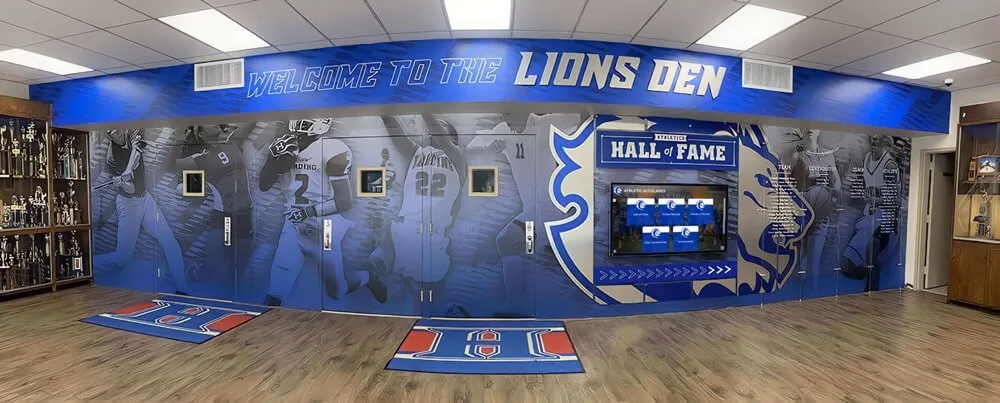
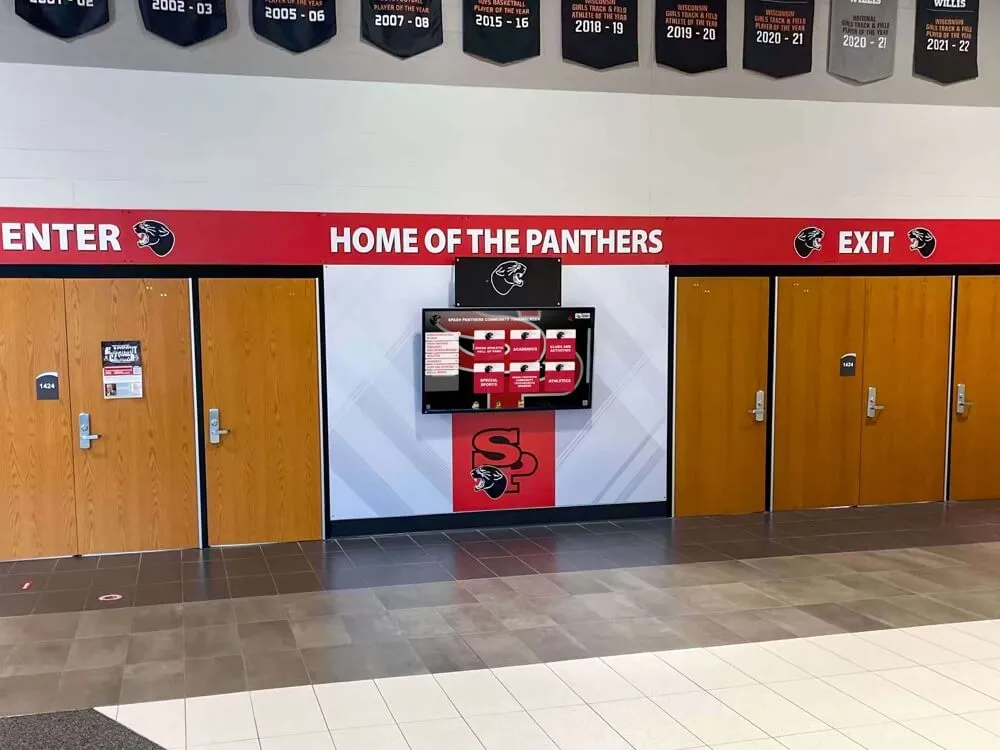
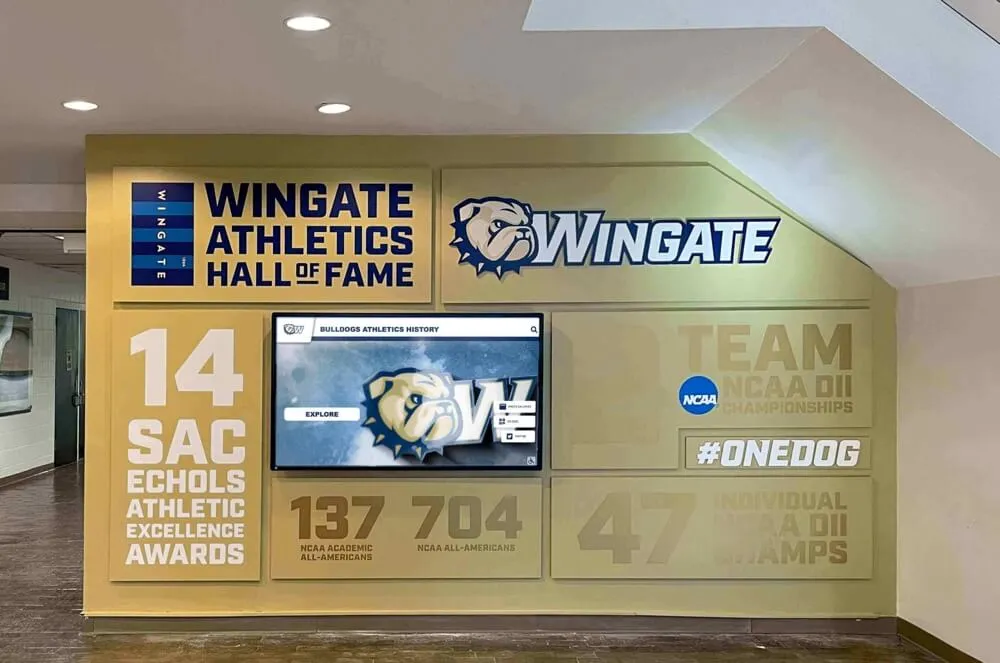
Schools blend murals, traditional trophy cases, and digital displays to create comprehensive athletic heritage environments that honor past and present champions alike
Frequently Asked Questions
What is the best way to organize a school trophy display?
The most effective organization depends on collection size and goals. Schools with smaller collections often benefit from chronological organization that tells a clear story of program development. Schools with extensive histories across many sports may prefer sport-specific sections or filtered digital displays that allow visitors to explore by area of interest. Adding clear signage identifying year, sport, and achievement level is essential regardless of organizational approach.
How do digital trophy displays compare to traditional trophy cases?
Digital trophy displays offer unlimited capacity, remote content management, interactive navigation, rich media integration, and accessibility compliance that traditional cases cannot match. Traditional cases offer tangible physical presence and no technology dependency. Many schools use hybrid approaches—preserving physical cases for recent or signature championships while using digital displays to present comprehensive historical records.
How much does a team trophy display cost?
Costs vary significantly by approach and scale. Traditional trophy cases typically run $2,000–$8,000 per installation, with ongoing costs for engraving and maintenance. Digital display systems involve hardware costs plus platform subscriptions, but eliminate per-trophy costs and offer unlimited capacity. Total cost over five to ten years often favors digital systems for schools adding championships regularly.
How do I display championships from before photography was common?
Digital displays handle pre-photography championships through text records, scanned newspaper clippings, historical documents, and any available photographs. Physical records from school archives, local newspapers, and alumni collections often contain more historical documentation than administrators realize. A thorough archive project conducted before display installation typically uncovers rich material for older championships.
Can digital trophy displays include individual awards alongside team championships?
Yes. Modern digital trophy display platforms support comprehensive recognition programs that include team championships, individual awards, academic honors, and other achievement categories. Schools can present a complete picture of program excellence across all recognition dimensions within a single display system.
Conclusion: Building a Display That Honors Every Championship
A team trophy display done well is more than a storage solution—it’s a living tribute to generations of student athletes who competed hard, represented their school with pride, and left something tangible behind. Whether your school leans toward polished glass cases, sport-specific gallery walls, interactive digital touchscreens, or a hybrid of all three, the goal remains the same: make sure every championship your school has ever won is visible, contextualized, and worthy of the effort it took to earn.
Physical approaches create tangible presence. Digital systems offer unlimited reach. The schools getting this right are the ones that choose an approach matching their history, their resources, and their commitment to ongoing maintenance—and then build displays worthy of the athletes they honor.
Transform Your School's Championship Display
Your school's trophy collection represents decades of athletic excellence, student sacrifice, and community pride. A modern digital trophy case honors that history completely—unlimited championships, rich context, and interactive exploration available to every visitor who walks through your doors.
Book A Demo