



Few things touch educators’ hearts more deeply than genuine appreciation from their students. While teachers dedicate countless hours to lesson planning, grading papers, and supporting student growth, they rarely receive the recognition they deserve for the profound impact they make on young lives. A thoughtful appreciation note from a student can validate years of effort, remind teachers why they chose this profession, and provide encouragement during challenging times.
The most meaningful teacher appreciation notes come directly from students—authentic messages that express specific gratitude for moments that mattered, lessons that stuck, or support that made a difference. These aren’t generic thank-you cards with obligatory sentiments but personal reflections on how a particular teacher changed a student’s academic trajectory, built their confidence, or inspired their future aspirations.
This comprehensive guide provides students, parents, and schools with practical examples, templates, and creative approaches for crafting teacher appreciation notes that truly resonate. Whether you’re a student wanting to thank a favorite teacher, a parent helping your child express gratitude, or a school organizing appreciation initiatives, you’ll find the resources and inspiration to create messages that educators will treasure for years to come.
Teacher appreciation extends far beyond annual recognition weeks. The most impactful appreciation happens when students take time to articulate specific ways their teachers influenced them, whether through a handwritten note at the end of the school year, a digital message during a challenging semester, or a retrospective letter years after graduation.

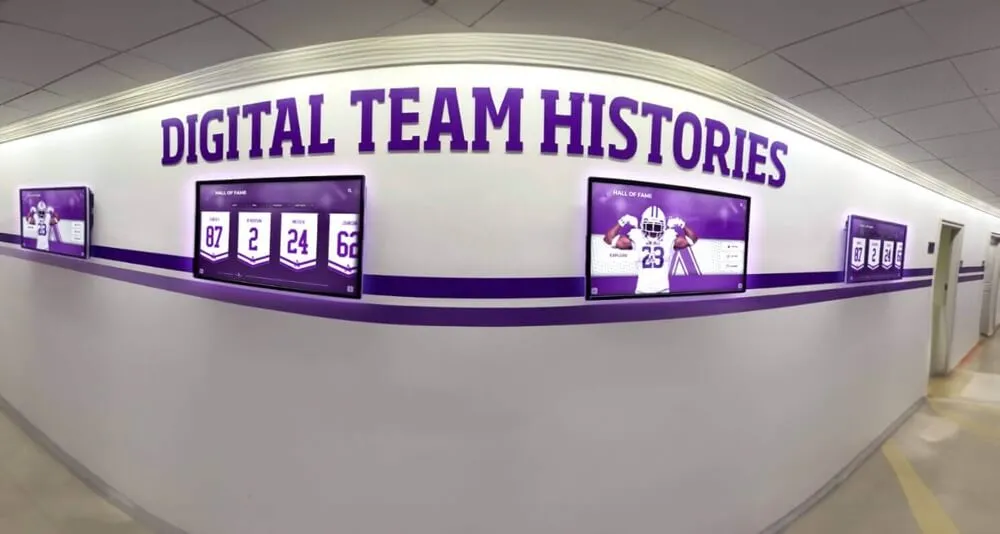
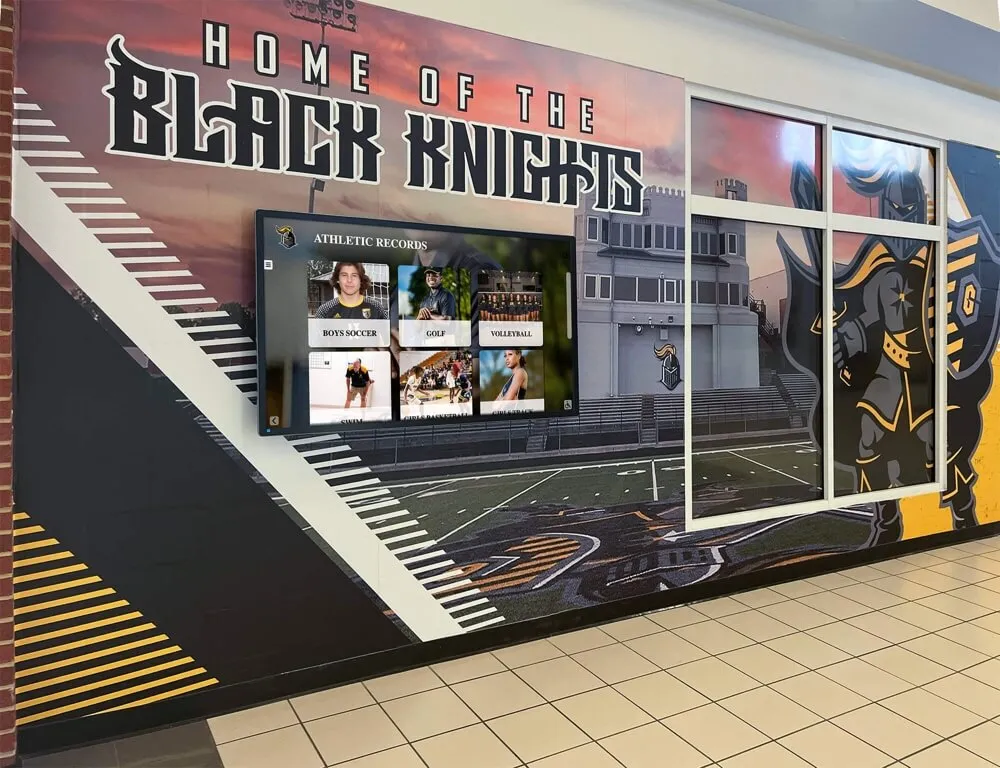
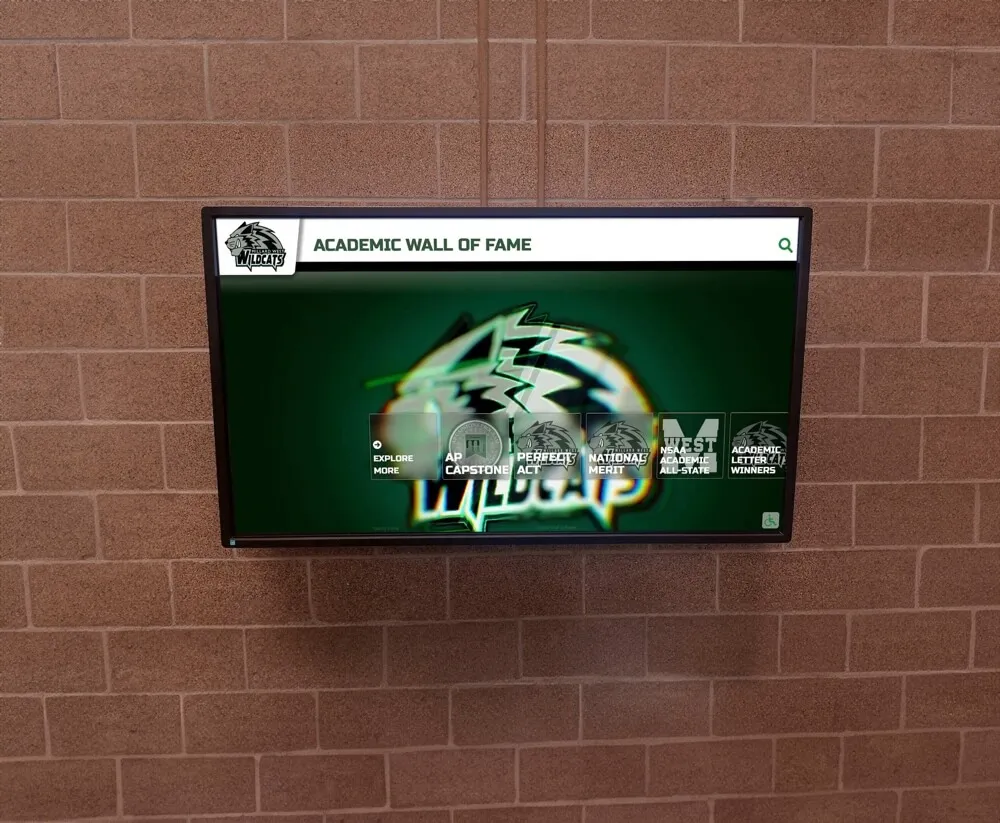
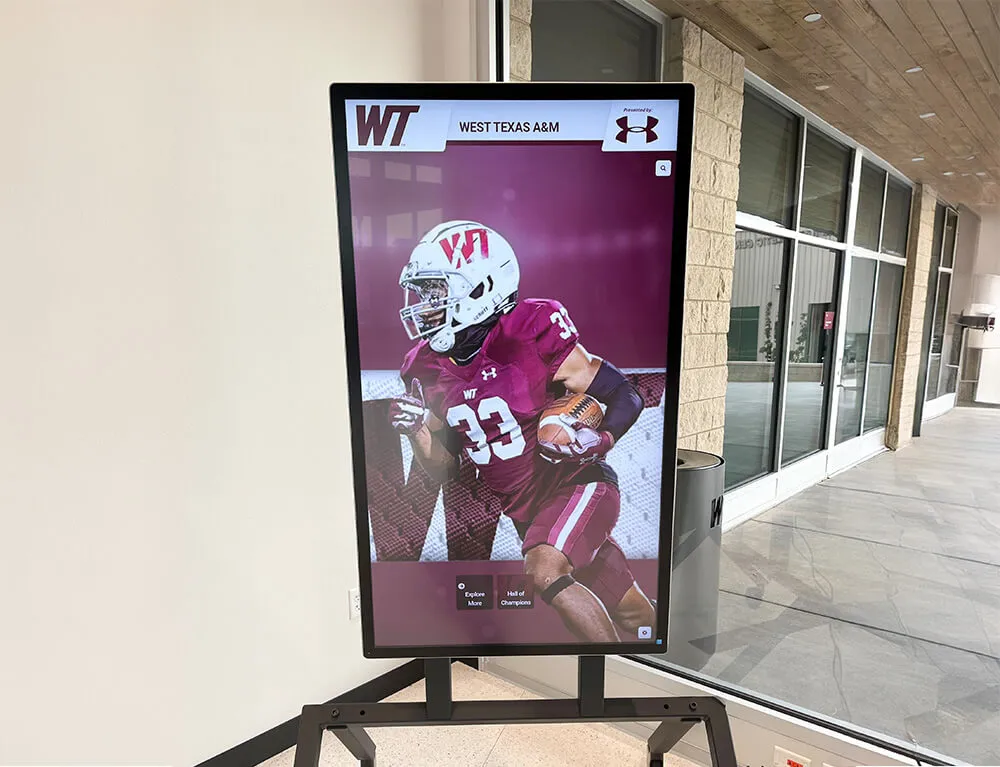
Modern schools create dedicated spaces where student appreciation messages and teacher recognition can be showcased prominently
Why Teacher Appreciation Notes from Students Matter
Before exploring specific message examples, understanding the powerful impact of student appreciation helps frame why these notes carry such significance.
The Emotional Impact on Educators
Teaching represents one of the most demanding yet underappreciated professions. Teachers work extended hours beyond the school day, invest personal resources in classroom materials, and carry the emotional weight of supporting students through academic and personal challenges. National studies consistently show that teacher burnout rates increase annually, with many educators citing lack of appreciation as a significant factor in job dissatisfaction.
Validation During Difficult Times
When teachers receive genuine appreciation from students, it validates their daily efforts and reminds them of their purpose. A heartfelt note can transform a discouraging day into a moment of professional affirmation. Many teachers report keeping student appreciation letters throughout their careers, rereading them during particularly challenging periods to remember why their work matters.
Recognition of Invisible Efforts
Students who acknowledge the extra time teachers spend preparing engaging lessons, providing individualized support, or advocating for student needs demonstrate awareness that extends beyond classroom instruction. This recognition of “invisible work” particularly resonates with educators who often wonder if students notice their additional efforts.
Benefits for Students Who Express Gratitude
Writing appreciation notes benefits students equally to the teachers receiving them:
Developing Emotional Intelligence
Articulating specific appreciation requires students to reflect on meaningful experiences, identify how others contributed to their success, and express complex emotions thoughtfully. These skills translate directly to emotional intelligence development that serves students throughout their personal and professional lives.
Building Positive Relationships
Students who express sincere gratitude strengthen their relationships with teachers beyond the transactional dynamic of instruction and assessment. These positive connections often lead to enhanced mentorship, stronger letters of recommendation, and sustained relationships extending beyond the classroom.

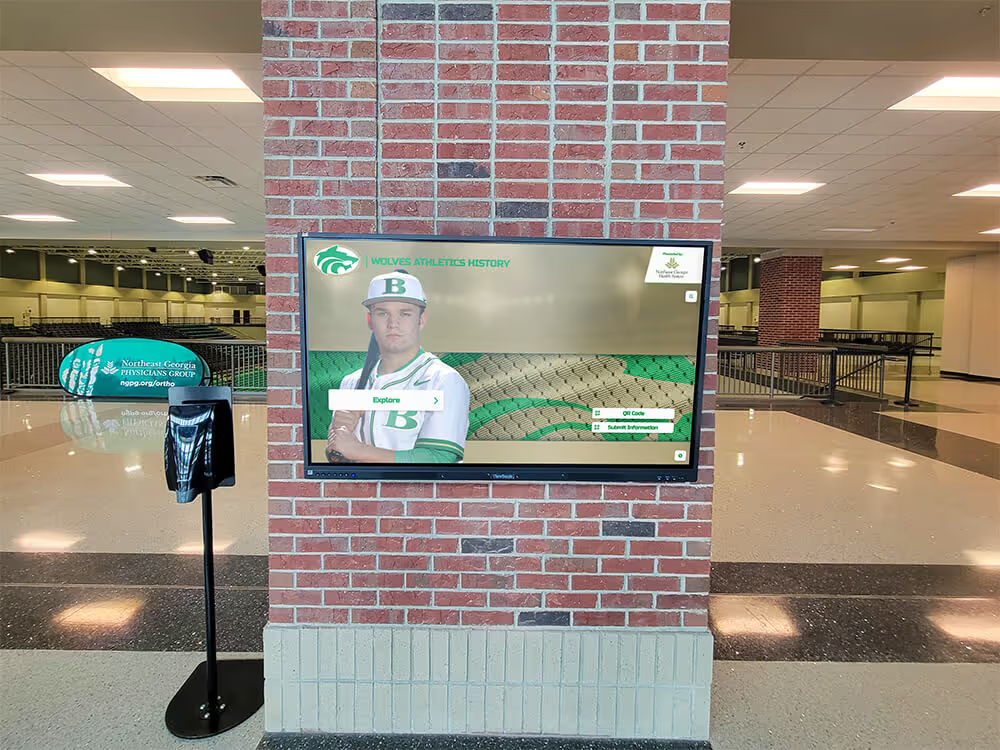
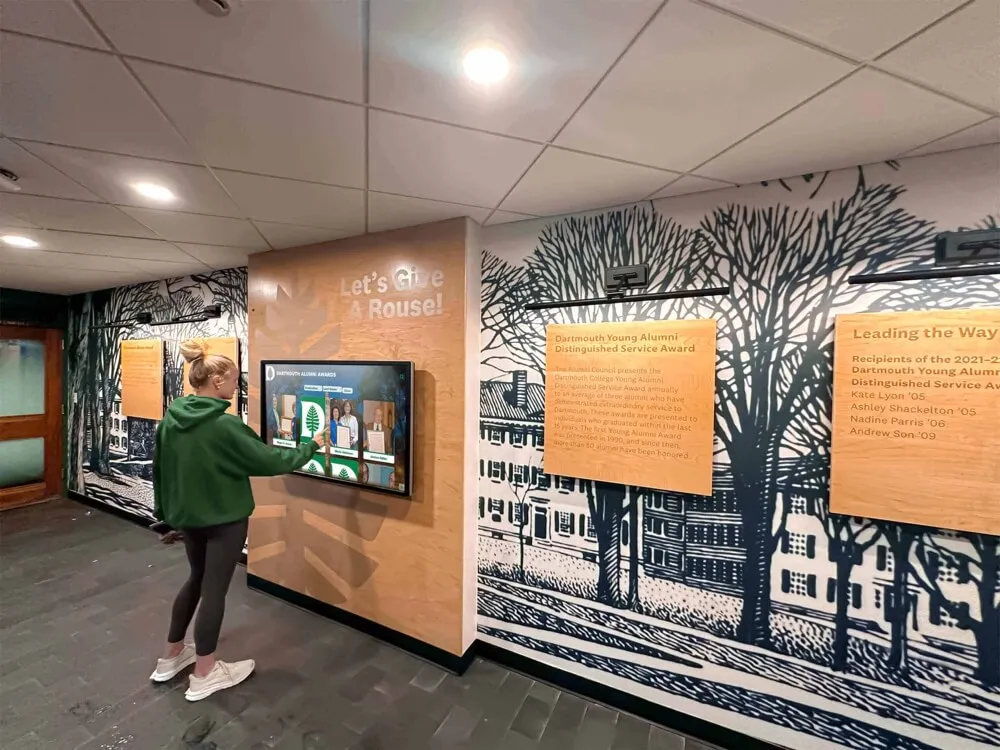
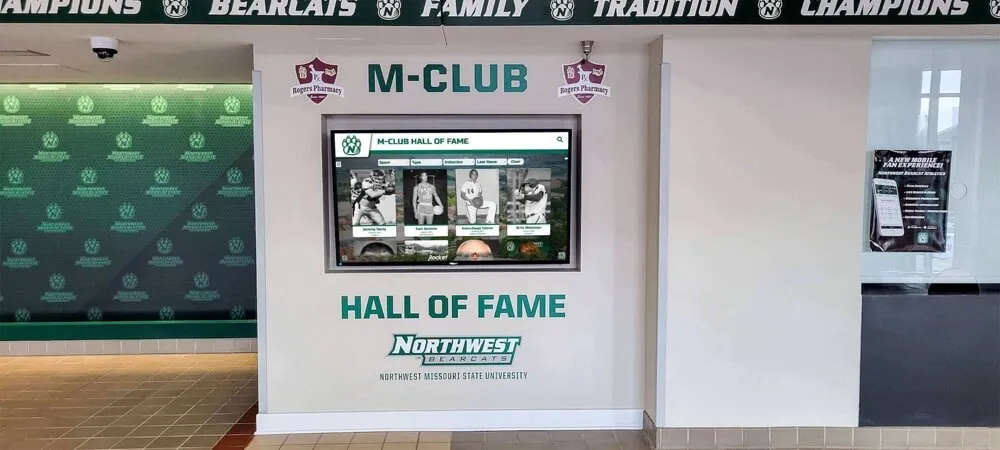
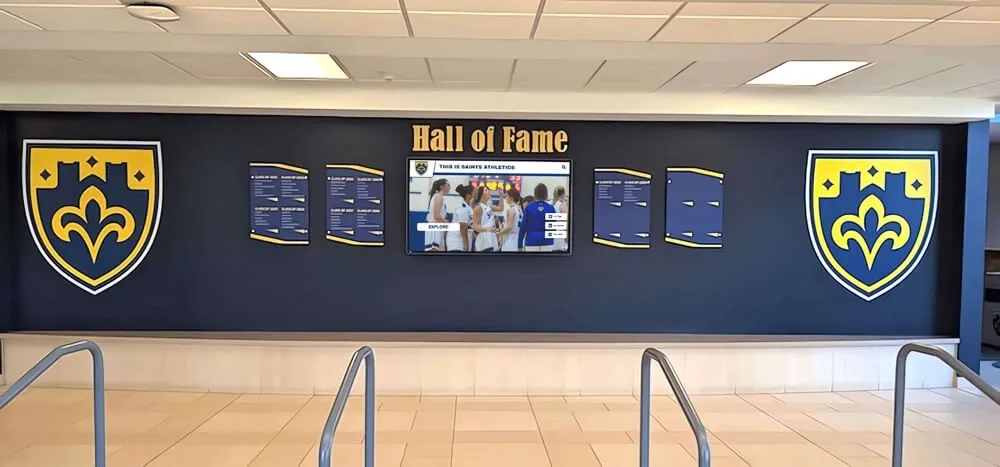
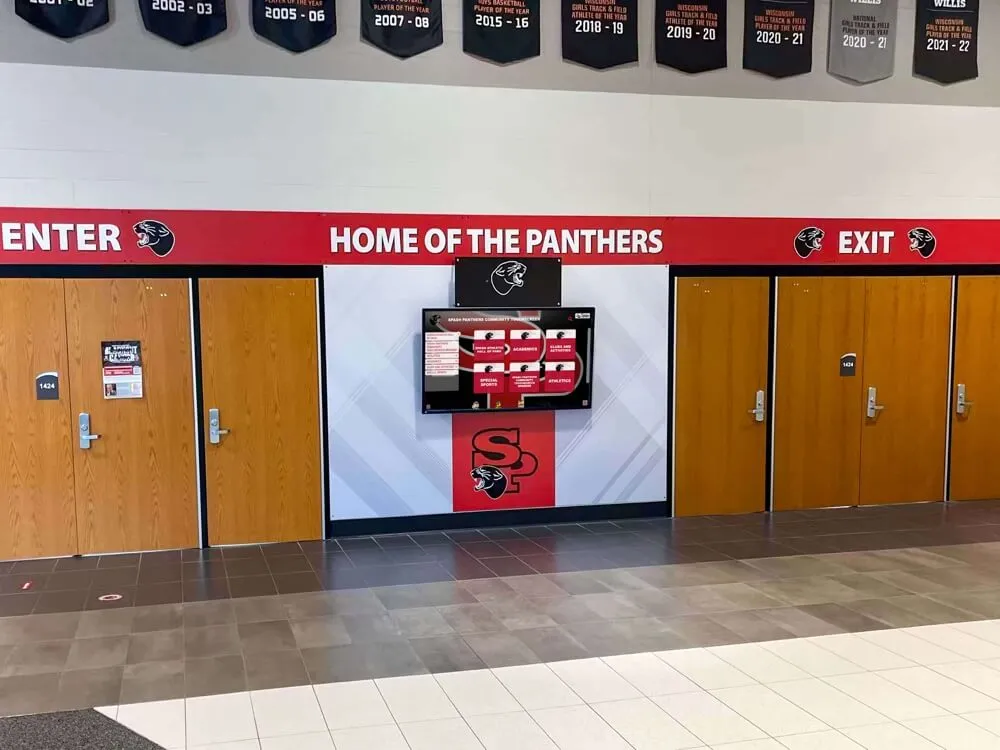
Interactive displays allow students to publicly share appreciation messages that remain accessible to the entire school community
Cultivating Gratitude Practices
Research in positive psychology demonstrates that regular gratitude practices contribute significantly to mental health, life satisfaction, and resilience. Students who develop appreciation expression habits during their school years build foundations for lifelong wellbeing.
Creating School Cultures of Appreciation
When schools systematically encourage student-to-teacher appreciation, they cultivate organizational cultures where recognition flows in multiple directions rather than exclusively from administrators to staff. This multi-directional appreciation strengthens entire school communities.
Schools implementing structured student recognition programs often find that honoring educators through student voices creates reciprocal cultures where both students and teachers feel valued and appreciated.
Types of Teacher Appreciation Notes from Students
Different appreciation note formats serve various purposes and contexts. Understanding these options helps students select the most appropriate approach for their situation.
Handwritten Thank You Notes
Traditional handwritten notes carry particular significance in our increasingly digital world:
Why Handwritten Notes Matter
- Physical notes require intentional time and effort, signaling genuine care
- Teachers can save handwritten letters as tangible keepsakes
- Personal handwriting adds intimacy and authenticity
- Notes can be displayed in classrooms or taken home
When to Write Handwritten Notes
- End-of-year appreciation
- After receiving exceptional support during difficult times
- Upon leaving a school or graduating
- Teacher Appreciation Week recognition
- Retirement celebrations
Digital Appreciation Messages
Electronic messages offer convenience and immediate delivery:
Effective Digital Formats
- Thoughtful emails with specific gratitude details
- Video messages recorded by students explaining teacher impact
- Digital cards created through design platforms
- Social media appreciation posts (with teacher permission)
- Virtual collaborative appreciation boards
Appropriate Digital Contexts
- Distance learning or remote education scenarios
- Quick expressions of thanks after specific lessons
- Coordinated class-wide appreciation efforts
- Alumni reaching out to former teachers
- Situations where immediate delivery matters
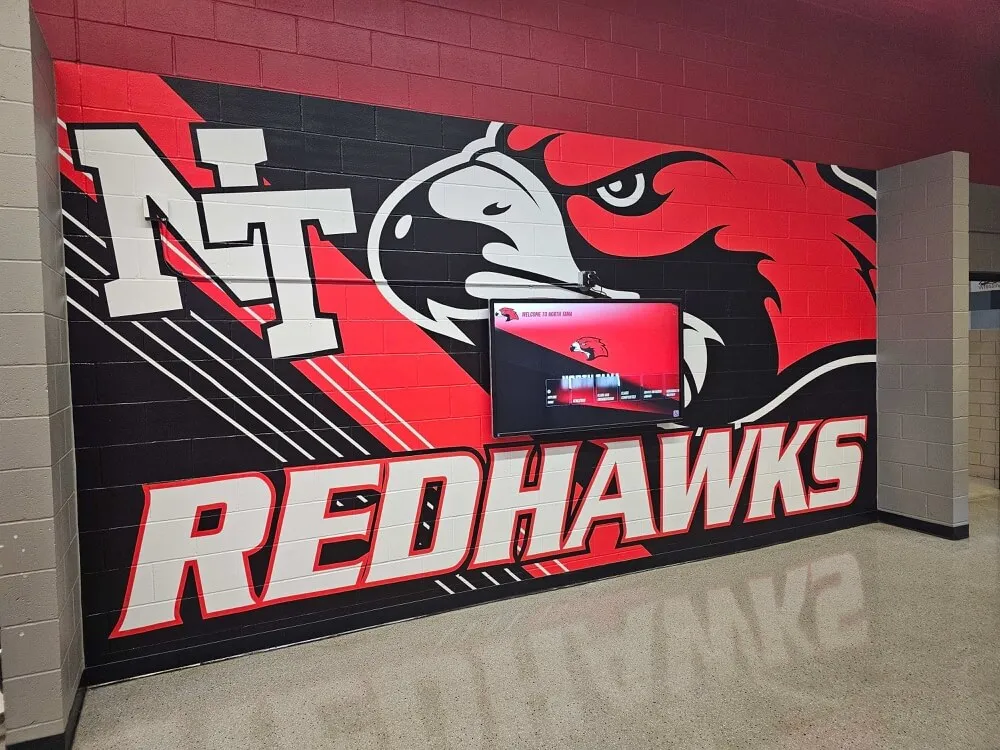
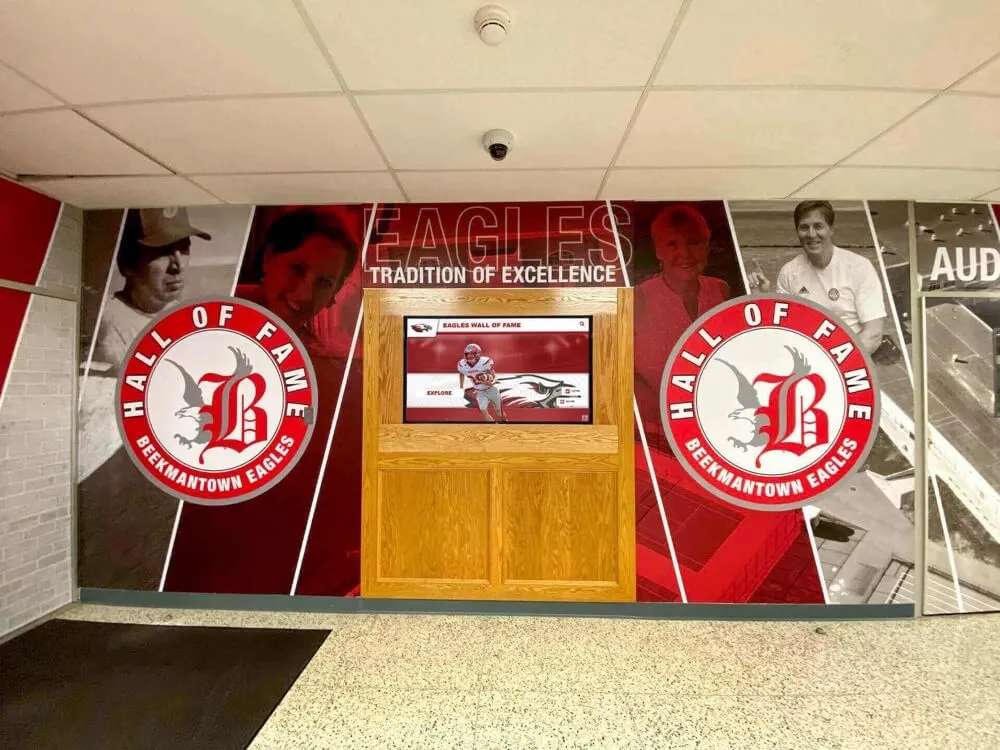
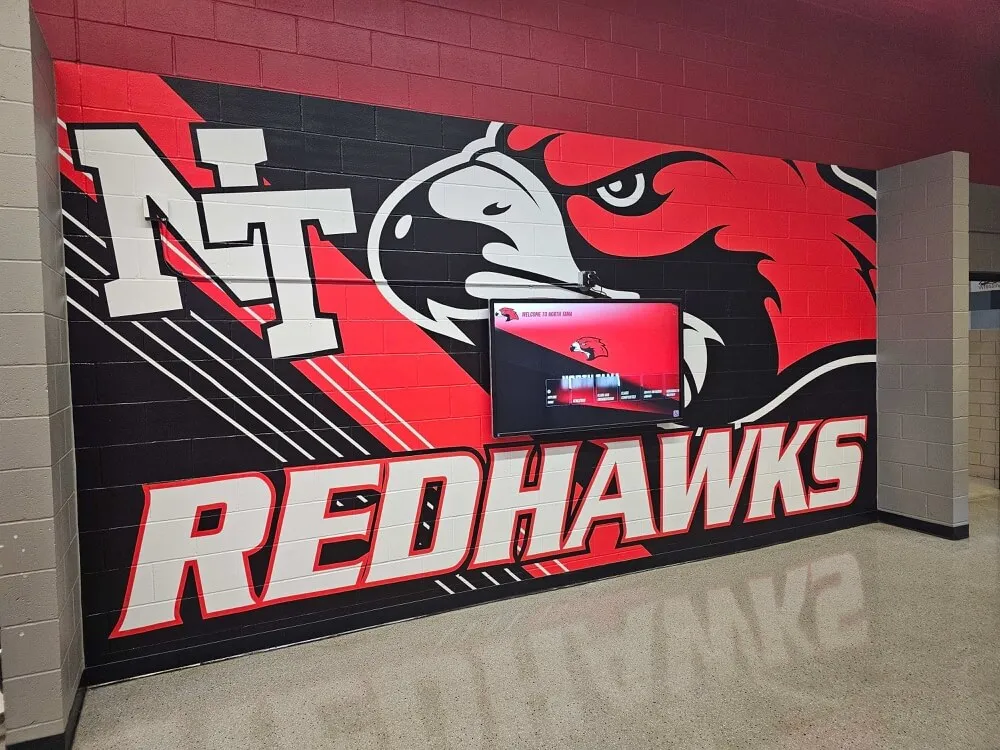
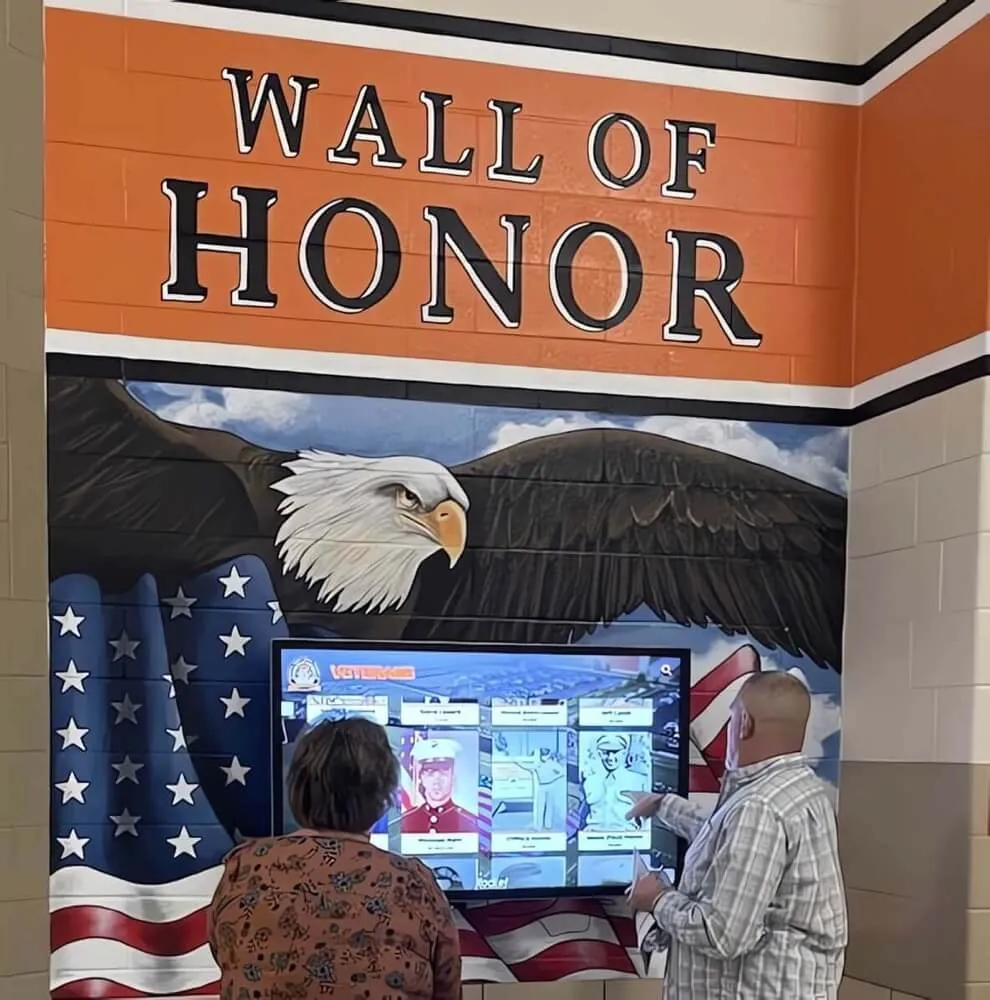
Hallway displays combine traditional murals with digital screens where student messages and teacher recognition can rotate continuously
Public Recognition and Display Notes
Some appreciation messages gain additional impact through public visibility:
Bulletin Board Displays
- Classroom appreciation walls where students post notes
- Hallway recognition boards celebrating specific teachers
- Staff room displays highlighting student testimonials
- School entrance recognition areas
Digital Recognition Systems
Modern schools increasingly implement digital recognition displays that showcase student appreciation messages alongside other honors. Solutions like Rocket Alumni Solutions enable schools to create permanent, searchable databases where student appreciation notes, teacher awards, and professional accomplishments receive ongoing visibility throughout school facilities.
These systems offer advantages including:
- Unlimited capacity for student messages without physical space constraints
- Easy updates enabling real-time appreciation sharing
- Searchable features letting visitors explore messages by teacher, subject, or year
- Integration with school communication platforms
- QR code access enabling mobile viewing of appreciation collections
When Public Recognition Works Best
- School-wide appreciation initiatives and campaigns
- Teacher Appreciation Week celebrations
- End-of-year recognition ceremonies
- Retirement celebrations and milestone anniversaries
- Building school appreciation culture through visible gratitude
Appreciation Notes for Specific Occasions
Different circumstances call for tailored appreciation approaches:
End-of-Year Thank You Notes
The conclusion of an academic year provides natural opportunity for students to reflect on growth and express gratitude for teacher support throughout the year.
Teacher Appreciation Week Messages
National Teacher Appreciation Week (first full week of May) offers dedicated time for organized appreciation initiatives where entire classes or schools participate in systematic recognition.
Retirement and Transition Appreciation
When beloved teachers retire or transfer to new schools, student appreciation notes take on particular significance as lasting tributes to their impact and legacy.
Challenging Circumstances Gratitude
Some of the most powerful appreciation messages acknowledge teachers who provided exceptional support during student struggles—academic challenges, personal difficulties, or unprecedented circumstances like remote learning transitions.
How to Write Meaningful Teacher Appreciation Notes
Generic appreciation feels hollow compared to specific, thoughtful messages. Following structured approaches helps students craft notes that truly resonate.
Essential Elements of Impactful Appreciation Notes
Specific Examples Rather Than General Praise
Weak: “Thank you for being a great teacher. I really enjoyed your class.”
Strong: “Thank you for the creative science experiments you designed, especially the bridge-building project where we applied physics principles to real-world engineering. That hands-on experience helped me understand concepts that seemed abstract in the textbook, and inspired me to explore engineering as a potential career path.”
The specific version identifies particular moments, explains their impact, and connects teacher actions to meaningful outcomes.
Personal Connection and Impact
Effective appreciation notes articulate how teacher actions specifically affected the individual student:
- “Your encouragement during my presentation anxiety helped me develop confidence I still use today”
- “The extra tutoring sessions you offered during lunch made the difference between failing and passing calculus”
- “Your feedback on my writing taught me to value revision as part of the creative process”
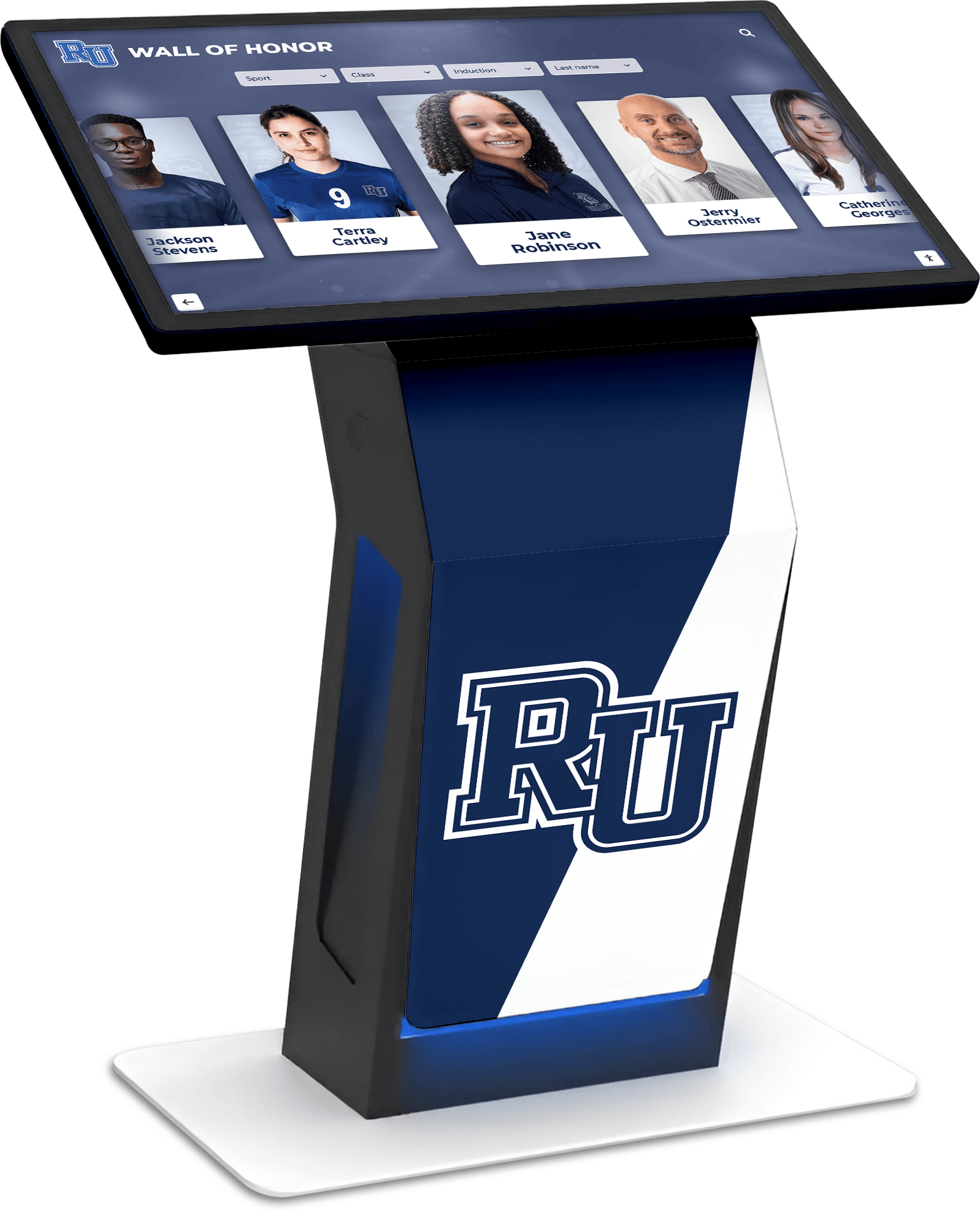
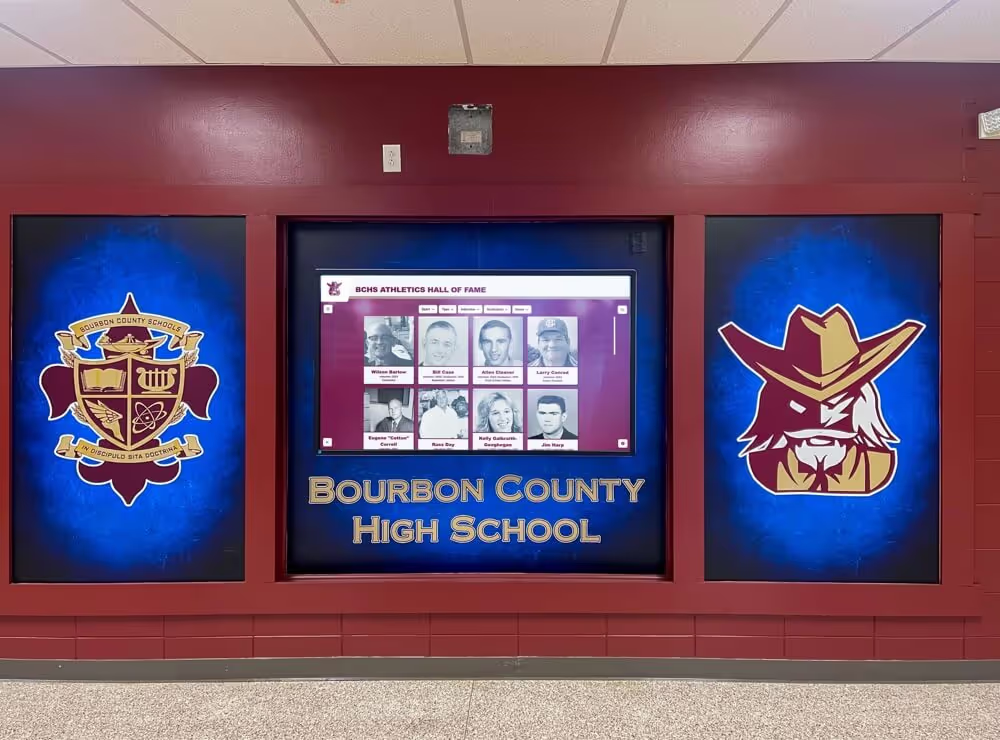
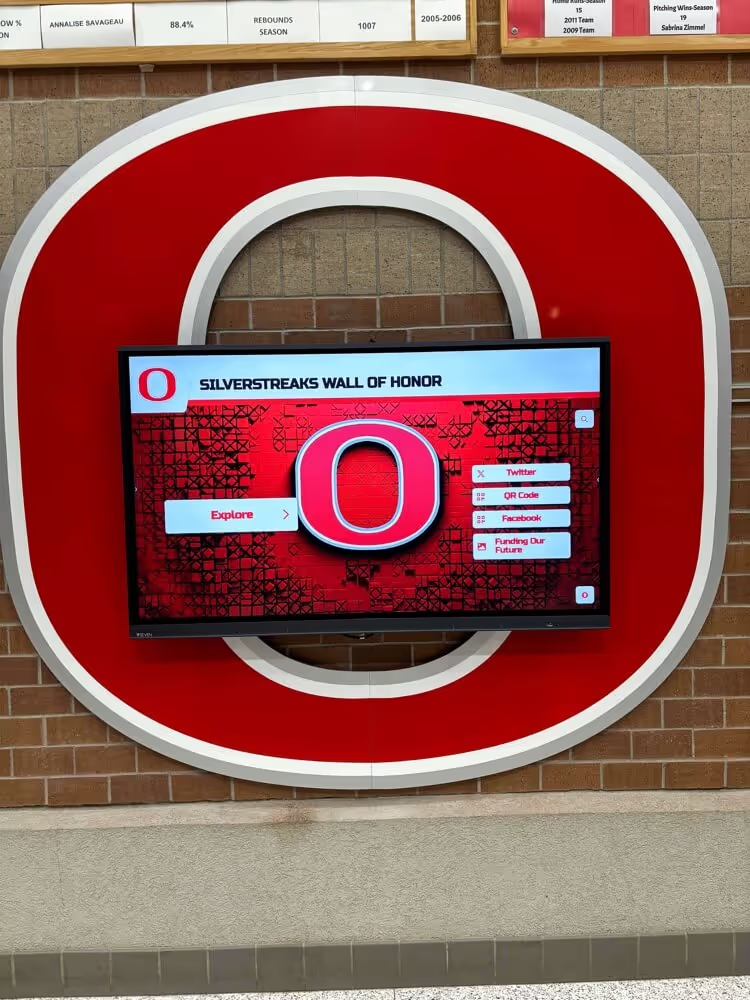
Touchscreen kiosks enable students to browse appreciation messages while also exploring teacher achievements and school history
Acknowledgment of Effort Beyond the Classroom
Teachers appreciate recognition of work students don’t always notice:
- Lesson preparation and planning
- Individualized feedback on assignments
- Availability during office hours or lunch periods
- Sponsoring clubs and activities
- Advocating for students with administration
- Creating inclusive, welcoming classroom environments
Looking Forward or Lasting Impact
Strong appreciation notes often include reflection on how teacher influence extends beyond the immediate class:
- Career or academic path inspiration
- Skills that continue benefiting students
- Changed perspectives or mindsets
- Modeling professional or personal qualities
- Lasting relationships beyond the school year
Tone and Language Considerations
Authenticity Over Formality
While appreciation notes should maintain respectful tone, overly formal or stiff language can feel insincere. Students should write in their natural voice while avoiding casual slang or inappropriate informality.
Balance Between Praise and Gratitude
Notes focused primarily on how “great” or “amazing” teachers are, without specific gratitude for particular actions or impacts, lack the depth of messages explaining exactly what students appreciate and why it mattered.
Age-Appropriate Expression
Elementary students naturally write simpler, more direct messages, while high school and college students can articulate more complex reflections. Both carry equal emotional weight when genuine and specific.
Common Pitfalls to Avoid
Generic Template Language Without Personalization
Pre-written templates help structure thoughts but require substantial personalization to feel authentic. Simply filling in a teacher’s name on a generic template creates hollow messages.
Excessive Length Without Focus
Appreciation notes need not be lengthy to be meaningful. A focused, specific paragraph often carries more impact than pages of general praise.
Inappropriate Personal Comments
Students should keep appreciation notes focused on professional impact and teaching qualities rather than personal appearance, personal life details, or comparisons to other teachers.
Last-Minute, Rushed Messages
Thoughtful appreciation takes time. Notes written hastily without genuine reflection rarely convey authentic gratitude.
Teacher Appreciation Note Examples and Templates
These examples provide frameworks students can personalize based on their specific experiences and relationships with teachers.
Elementary School Teacher Appreciation Examples
Example 1: General Year-End Appreciation
Dear Mrs. Johnson,
Thank you for being such a wonderful third-grade teacher this year. You made learning fun with all the games and hands-on activities. My favorite was when we grew plants from seeds and learned about photosynthesis. I used to not like science, but now it’s one of my favorite subjects because of you.
Thank you also for being patient with me when I struggled with multiplication. The extra practice time you gave me during recess helped me finally understand it. I’m proud that I know all my times tables now!
I will miss being in your class next year, but I’m excited to use everything you taught me in fourth grade.
Thank you for everything, [Student Name]
Example 2: Specific Support Recognition
Dear Mr. Davis,
I wanted to thank you for helping me feel welcome when I started at this school in the middle of the year. Moving to a new place was scary, but you introduced me to everyone and made sure I had friends to sit with at lunch. That really meant a lot to me.
You are a great teacher who makes reading exciting. I especially loved the book we read about the boy who traveled through time. Now I want to read more adventure stories.
Thank you for being kind and making school a fun place to learn.
Sincerely, [Student Name]
Middle School Teacher Appreciation Examples
Example 1: Subject-Specific Impact
Dear Ms. Rodriguez,
I’m writing to thank you for an incredible year in your English class. At the beginning of seventh grade, I dreaded writing assignments and thought I wasn’t good at expressing my ideas. Your detailed feedback on my essays—rather than just giving grades—helped me understand how to improve my writing step by step.
The creative writing unit we did in the spring was transformative for me. When you encouraged me to enter my short story in the school writing contest, I didn’t think I had a chance. Winning second place gave me confidence I never had before as a writer. I’m now considering joining the school newspaper next year, something I never would have imagined.
Beyond academics, I appreciate how you created a classroom environment where everyone felt comfortable sharing ideas, even when they were different from others’ opinions. You taught us to disagree respectfully and listen to diverse perspectives. That’s a skill I’ll use far beyond middle school.
Thank you for seeing potential in me and pushing me to grow as a writer and thinker.
With gratitude, [Student Name]
Example 2: Personal Support Recognition
Dear Coach Thompson,
I wanted to take a moment to thank you for everything you did for me this year, both as my PE teacher and as the basketball coach. When I was going through a really difficult time with my parents’ divorce, you noticed I wasn’t myself and checked in with me. Having a teacher who cared enough to ask how I was doing made a huge difference.
You also didn’t give up on me when my grades started slipping and I almost became ineligible for the team. The study sessions you organized and your conversations about the importance of academics alongside athletics motivated me to get back on track. I finished the year with Bs in all my classes, and I know I have you partially to thank for that.
Your coaching taught me more than basketball skills. You emphasized teamwork, perseverance, and integrity—lessons I’ll carry with me throughout high school and beyond.
Thank you for being more than just a teacher and coach. You’ve been a mentor and positive influence during a challenging year.
Respectfully, [Student Name]

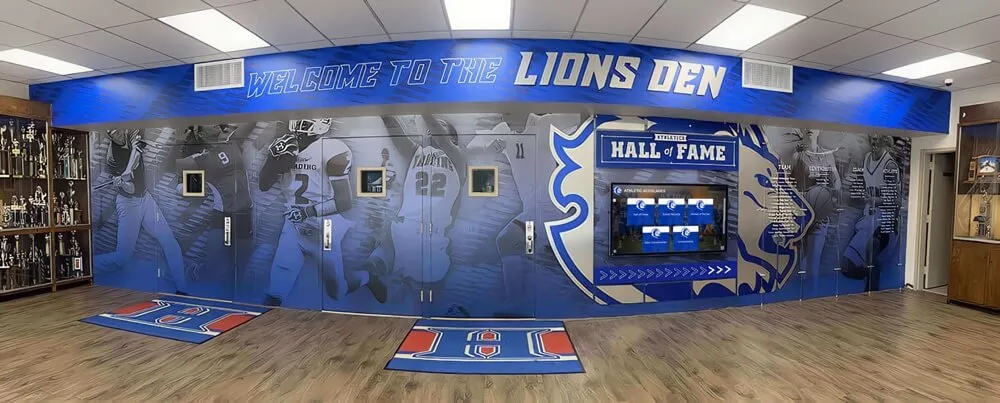
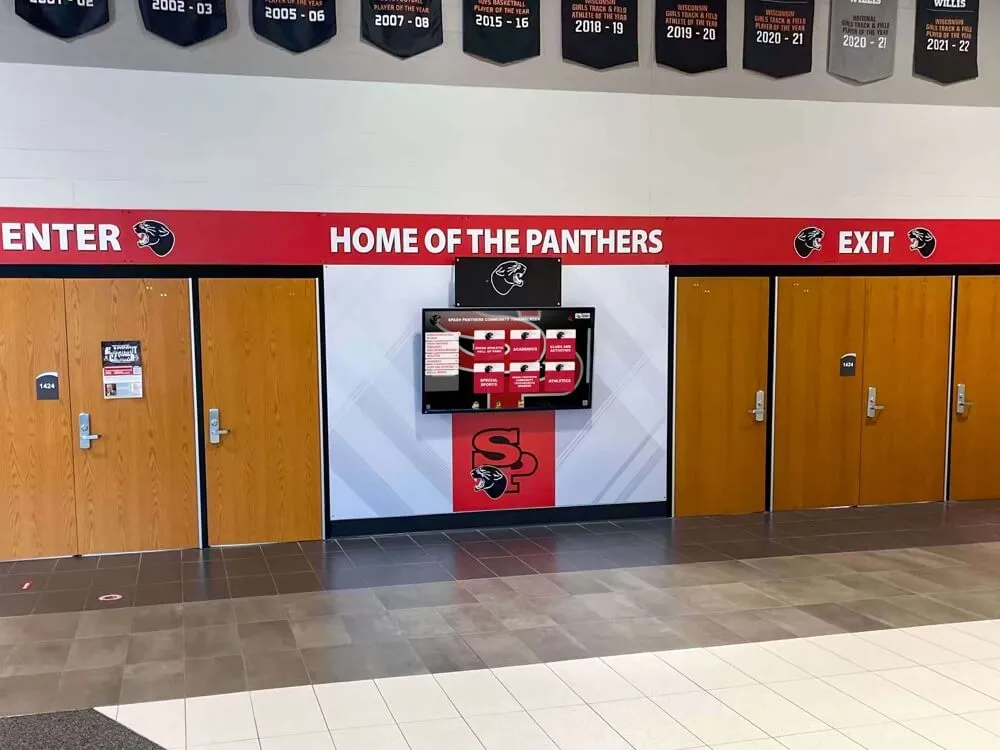
School entrance areas provide ideal locations for displaying student appreciation messages where they're visible to the entire school community
High School Teacher Appreciation Examples
Example 1: Academic Impact and College Preparation
Dear Dr. Martinez,
As I prepare to graduate and head to college this fall, I wanted to express my deep gratitude for the profound impact you’ve had on my academic journey and future plans.
When I entered your AP Biology class as a sophomore, I had only a vague interest in science. Your passion for the subject was immediately evident in every lecture, lab, and discussion. The way you connected biological concepts to real-world applications and current research made the material come alive in ways textbooks never could.
The independent research project you mentored me through during my junior year proved transformative. Designing an experiment, analyzing data, and presenting findings at the regional science fair taught me more about scientific inquiry than any lecture could. More importantly, your encouragement to pursue that project despite my initial doubts built my confidence as a student researcher.
Your letters of recommendation were instrumental in my acceptance to several competitive universities. I know the time you invested in writing thoughtful, detailed recommendations goes well beyond your job requirements. Your support of my scholarship applications also made a significant financial difference for my family.
Beyond academics, I appreciate how you challenged students to think critically, question assumptions, and develop intellectual curiosity that extends beyond test preparation. The skills you taught me about analytical thinking, evidence evaluation, and clear communication will serve me throughout college and my intended career in medical research.
Thank you for being an exceptional educator who genuinely invests in student success. I hope to one day inspire students the way you’ve inspired me.
With sincere appreciation, [Student Name]
Example 2: Personal Growth and Mentorship
Dear Mr. Chang,
I’m writing to thank you for four years of incredible teaching, mentorship, and support that have shaped who I am today. As both my history teacher and debate team coach, you’ve influenced my intellectual development and personal growth more than any other educator.
In your World History class sophomore year, you introduced me to the power of understanding different historical perspectives and questioning dominant narratives. The Socratic seminars you facilitated taught me to articulate arguments clearly, listen actively to opposing viewpoints, and revise my thinking based on evidence. These skills proved invaluable not just in other classes but in how I approach problems and disagreements in all areas of life.
As my debate coach, you pushed me far beyond my comfort zone. I joined the team as a shy freshman who could barely speak in front of small groups, let alone compete in tournaments. Your patient coaching, constructive feedback, and unwavering belief in my abilities helped me develop confidence I never knew I possessed. Winning the state championship our senior year represents the culmination of your dedication to our team’s development.
I particularly appreciate how you made yourself available to students beyond classroom and practice hours. The conversations we had about college choices, career paths, and life decisions helped me navigate crucial crossroads with greater clarity and confidence. Your perspective as someone who genuinely cares about students’ long-term success, not just their immediate academic performance, set you apart as an exceptional mentor.
Thank you for seeing potential in students that we don’t always see in ourselves. Thank you for demanding excellence while providing the support to achieve it. And thank you for modeling the kind of educator, professional, and person I aspire to become.
I’ll carry the lessons you taught me—in history, in debate, and in life—throughout my future endeavors.
With profound gratitude, [Student Name]
College and University Professor Appreciation Examples
Example 1: Transformative Course Impact
Dear Professor Williams,
I’m writing to express my sincere appreciation for your Introduction to Philosophy course, which proved to be one of the most intellectually transformative experiences of my undergraduate education.
I enrolled in your class as a required general education credit, expecting a typical lecture course where I’d memorize philosophical concepts for exams. Instead, you created an environment of genuine intellectual inquiry where students grappled with fundamental questions about knowledge, ethics, and existence in ways that challenged our assumptions and expanded our thinking.
Your Socratic teaching method—asking probing questions rather than simply delivering information—initially frustrated me as a student accustomed to passive note-taking. However, I came to appreciate how this approach developed critical thinking skills that extend far beyond philosophy. Learning to examine arguments for logical consistency, identify unstated assumptions, and consider alternative perspectives has enhanced my analytical capabilities across all my coursework.
The ethical frameworks we studied have particular relevance to my intended career in public policy. Understanding utilitarian, deontological, and virtue ethics perspectives provides invaluable tools for evaluating policy decisions and considering their moral implications. I reference concepts from your course regularly in my political science classes.
Beyond course content, I appreciate your commitment to making philosophy accessible and relevant to students from diverse backgrounds and majors. Your use of contemporary examples and current events to illustrate abstract philosophical concepts made the material engaging rather than esoteric.
Thank you for challenging me intellectually and inspiring a genuine love of philosophical inquiry that I’m now pursuing through a philosophy minor. Your course exemplifies what liberal arts education should be—transformative, relevant, and intellectually rigorous.
Respectfully, [Student Name]
Example 2: Research Mentorship Appreciation
Dear Dr. Patel,
As I complete my undergraduate research thesis under your mentorship, I wanted to express my deep gratitude for the extraordinary guidance and support you’ve provided throughout this process and my broader academic journey.
When I approached you about research opportunities as a sophomore, you took time from your demanding schedule to discuss potential projects, assess my preparedness, and ultimately welcome me into your lab. The opportunity to contribute to actual scientific research as an undergraduate has been invaluable, providing hands-on experience with experimental design, data analysis, and scientific writing that textbooks and lectures cannot replicate.
Your mentorship style balances high expectations with supportive guidance. You challenged me to think independently, troubleshoot problems, and take ownership of my research while remaining available for consultation when I encountered obstacles. This approach developed my confidence and competence as a developing researcher far more effectively than either micromanagement or complete independence would have.
The skills I’ve gained in your lab—experimental techniques, data interpretation, scientific communication, and collaboration—have prepared me exceptionally well for graduate school. The presentations at undergraduate research symposiums and the publication we submitted for peer review provide competitive advantages in PhD applications that most undergraduates never receive.
Beyond technical skills, I appreciate the professional development guidance you’ve offered regarding graduate school selection, application strategies, and career planning in academic research. Your letters of recommendation were instrumental in my acceptance to several top-tier graduate programs with full funding.
Thank you for investing in my development as a scientist and scholar. Your mentorship has profoundly shaped my academic trajectory and career aspirations. I hope to one day pay forward the same dedication to student development that you’ve modeled.
With sincere appreciation, [Student Name]
Retirement and Special Occasion Appreciation Examples
Example 1: Teacher Retirement Tribute
Dear Mrs. Henderson,
As you conclude an extraordinary 35-year teaching career, I wanted to express my heartfelt appreciation for the profound impact you had on my life and the lives of countless other students fortunate enough to learn from you.
Though I was in your fifth-grade class over fifteen years ago, I vividly remember the welcoming classroom environment you created where every student felt valued and capable. You had an exceptional gift for identifying individual student strengths and nurturing them while patiently supporting areas where we struggled. Your classroom felt like a community where we genuinely cared about each other’s success—a culture you intentionally cultivated.
The love of reading you instilled in me during that formative year has remained throughout my life. The independent reading program where you helped each student find books matching their interests and abilities introduced me to genres and authors I continue enjoying today. More importantly, you taught us that reading opens windows to different worlds, perspectives, and possibilities—a lesson that sparked lifelong curiosity and learning.
Beyond academics, you modeled kindness, patience, and genuine care for student wellbeing. I remember how you noticed when students were struggling emotionally and checked in privately with compassion and support. That awareness and caring made a significant difference for students facing challenges at home or with peers.
Schools implementing comprehensive teacher recognition programs ensure educators like you receive the ongoing celebration your dedication deserves.
As you enter retirement, I hope you know that your influence extends far beyond the students who sat in your classroom. The lessons you taught, the care you showed, and the example you set continue influencing how we approach our own work, relationships, and contributions to the world.
Thank you for dedicating your career to shaping young lives with such excellence and heart. Your legacy lives on in every student you taught.
With profound gratitude and respect, [Student Name]
Example 2: Alumni Retrospective Appreciation
Dear Mr. Jackson,
Ten years ago, I graduated from your high school English class. Today, as I work as a professional journalist, I wanted to reach out and thank you for the foundational role you played in my career and personal development.
At the time, I probably didn’t adequately appreciate the effort you invested in teaching us to write clearly, analyze literature critically, and appreciate language’s power to inform, persuade, and inspire. The rigorous writing instruction you provided—emphasizing clarity, evidence, revision, and audience awareness—established skills I rely on daily in my professional work.
The journalism unit you incorporated into our curriculum sparked my initial interest in reporting. When you arranged for us to publish a class newspaper and encouraged me to pursue an internship at our local paper, you set me on a career path I’ve found deeply fulfilling. I doubt I would have discovered this profession without your guidance and encouragement.
Beyond technical skills, you taught us to value truth, examine multiple perspectives, and use our voices to contribute meaningfully to public discourse. In my current work covering local government and community issues, I draw regularly on the ethical framework and sense of purpose you helped instill.
I regret that I didn’t adequately express my appreciation when I was your student. Like many teenagers, I took for granted the dedication and excellence you brought to your teaching. With the perspective of adulthood and professional experience, I now fully recognize the extraordinary impact exceptional educators like you have on students’ lives.
Thank you for inspiring a generation of students to think critically, write effectively, and use language purposefully. Your influence extends far beyond what you likely realize.
With gratitude and respect, [Student Name]

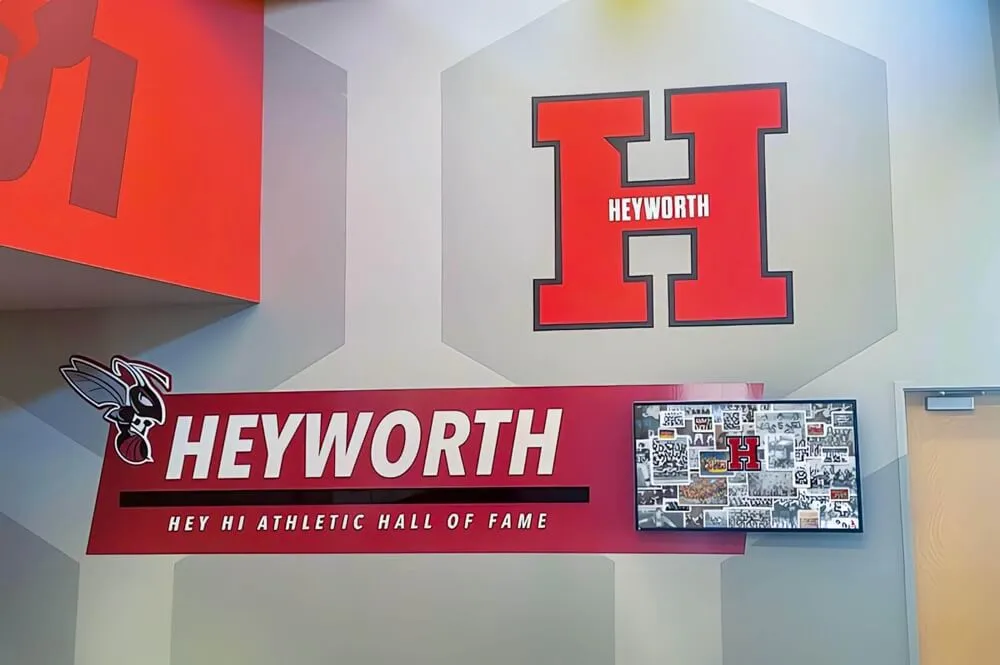
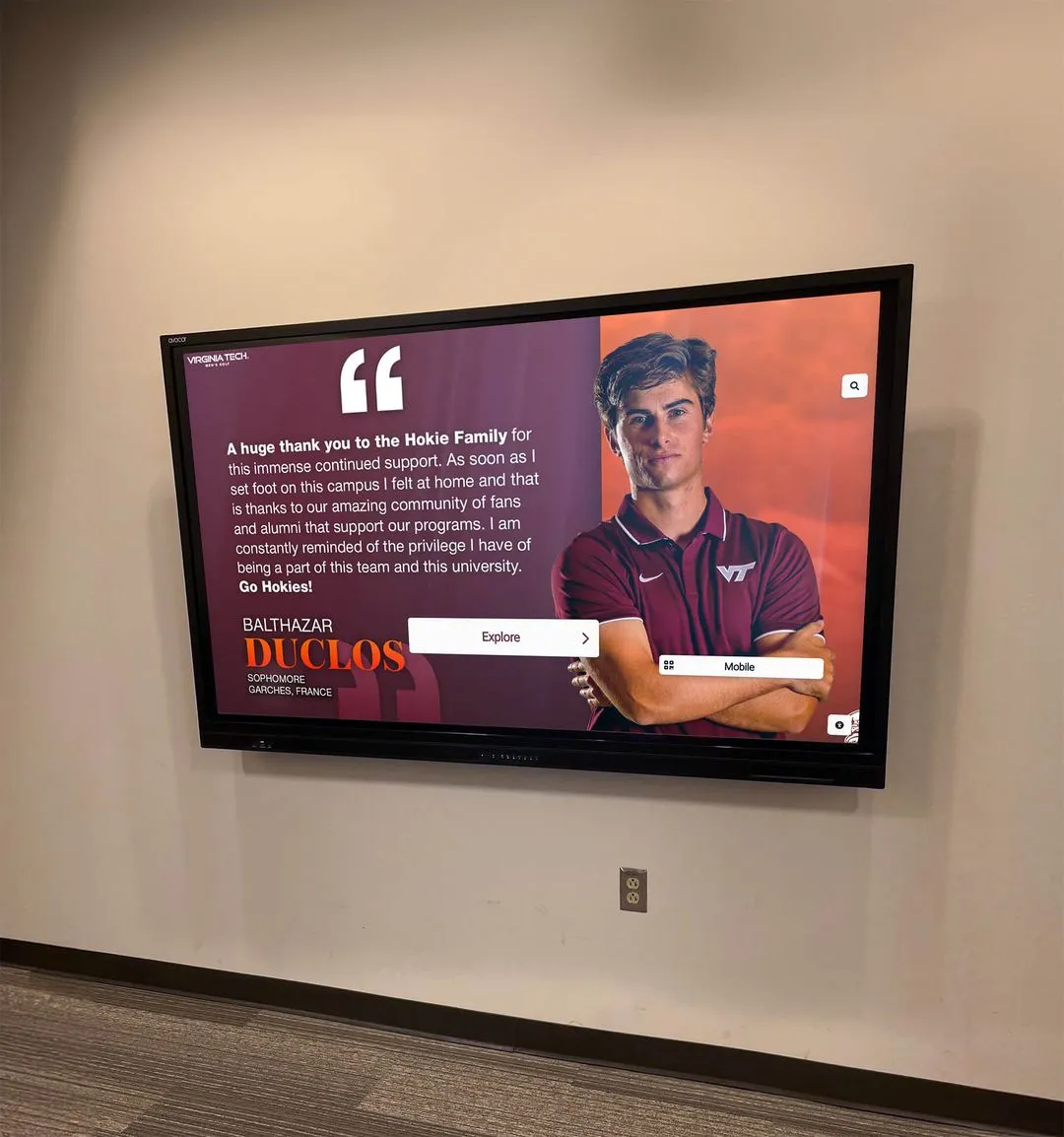
Digital portrait systems enable schools to preserve student appreciation messages alongside educator profiles and achievement documentation
Quick Template Frameworks for Student Use
Basic Thank You Note Template
Dear [Teacher Name],
I wanted to thank you for [specific thing teacher did or quality they demonstrated].
[Explain the specific impact this had on you - how it helped you learn, grow, or change.]
[Optional: Share what you’ll remember most or how you’ll apply what you learned going forward.]
Thank you again for [summary of appreciation].
[Closing], [Your Name]
Impact and Growth Template
Dear [Teacher Name],
When I [started your class/began the year/first met you], I [describe initial state or challenge].
Through [specific things teacher did], you helped me [describe growth or change].
I particularly appreciated [specific example or moment that stood out].
The skills/lessons/support you provided will [explain lasting impact or future application].
Thank you for [summary of appreciation].
With gratitude, [Your Name]
Specific Moment Template
Dear [Teacher Name],
I’ll always remember [specific moment, lesson, or experience from class].
[Explain why this moment mattered and what made it significant.]
This experience taught me [lesson learned or impact it had].
Thank you for creating the kind of [classroom environment/learning experiences/support] that makes moments like this possible.
[Closing], [Your Name]
Organizing School-Wide Teacher Appreciation Initiatives
Individual student notes carry tremendous meaning, but coordinated school efforts amplify appreciation impact and create culture-wide recognition.
Teacher Appreciation Week Activities
Coordinated Student Message Campaigns
Schools can organize systematic appreciation initiatives:
- Daily themes focusing on different teacher qualities or contributions
- Classroom-by-classroom participation ensuring every teacher receives recognition
- Creative delivery methods (decorated bulletin boards, video montages, coordinated cards)
- Student council or leadership class coordination
- Grade-level specific appreciation activities
Student-Created Recognition Displays
Visual appreciation creates lasting impact:
- Hallway displays featuring student testimonials about specific teachers
- Photo collages with appreciation messages
- “Why We Love Our Teachers” bulletin boards
- Digital slideshow presentations during lunch periods
- Social media appreciation campaigns (with appropriate permissions)
End-of-Year Appreciation Programs
Appreciation Ceremony Components
End-of-year celebrations can include dedicated teacher recognition:
- Selected student speakers sharing appreciation messages
- Presentation of class gift to teachers
- Reading of representative appreciation notes
- Video compilations of student messages
- Recognition of teachers receiving special acknowledgment
Permanent Appreciation Archives
Schools implementing digital recognition systems can create enduring appreciation collections:
- Searchable databases of student appreciation messages organized by teacher
- Annual addition of new appreciation notes maintaining complete archives
- Integration with teacher professional achievement displays
- Accessible viewing enabling families and community members to explore recognition
Solutions like Rocket Alumni Solutions enable schools to preserve student appreciation messages permanently alongside other school history and recognition, ensuring teacher impact receives ongoing celebration rather than temporary acknowledgment.
Ongoing Appreciation Culture Development
Regular Recognition Opportunities
Rather than limiting appreciation to designated weeks:
- Monthly appreciation spotlights featuring different teachers
- Ongoing appreciation walls where students add notes throughout the year
- Regular inclusion of teacher recognition in school assemblies and announcements
- Integration of appreciation into school communication channels
- Encouragement of spontaneous appreciation expression
Student Leadership in Teacher Recognition
Empowering students to drive appreciation initiatives:
- Student committees dedicated to teacher recognition planning
- Student-designed appreciation activities and campaigns
- Peer encouragement of appreciation expression
- Student speakers at recognition events
- Student creation of appreciation materials and displays
Digital and Creative Teacher Appreciation Approaches
Traditional handwritten notes remain powerful, but creative approaches offer additional appreciation avenues.
Video Appreciation Messages
Individual Video Notes
Students can record personal video messages:
- Short clips (30-60 seconds) expressing specific appreciation
- Edited compilation videos combining multiple student messages
- Screen recordings with visual elements and text
- Video montages set to music
Class Collaboration Videos
Entire classes can create collective appreciation:
- Each student contributing a segment to complete video
- Coordinated themes or messages throughout
- Professional editing creating polished final products
- Surprise presentations during class or school events
Creative Appreciation Projects
Appreciation Books and Scrapbooks
Compiled collections of student messages:
- Class books where each student contributes a page
- Scrapbooks including photos, artwork, and written messages
- Digital books created through online design platforms
- Professionally printed and bound collections
Artistic Appreciation Expressions
Students with artistic talents can create unique appreciation:
- Custom artwork expressing gratitude visually
- Poetry or creative writing pieces
- Musical compositions or performances
- Multimedia presentations combining various formats
Social Media and Digital Platform Appreciation
Appropriate Public Recognition
With teacher permission, digital appreciation can include:
- Tagged appreciation posts on appropriate platforms
- Coordinated hashtag campaigns
- School website or blog features about specific teachers
- Digital appreciation walls on school platforms
- Email newsletters highlighting teacher recognition
Privacy and Permission Considerations
All public digital appreciation should:
- Receive explicit teacher permission before posting
- Follow school social media and privacy policies
- Avoid sharing personal information inappropriately
- Maintain professional and appropriate content
- Consider potential unintended audiences
Helping Students Craft Authentic Appreciation
Parents, counselors, and administrators can support students in developing meaningful appreciation expression.
Age-Appropriate Guidance
Elementary Students
Young children benefit from:
- Simple prompts focusing on favorite memories or moments
- Drawing or artwork combined with brief written messages
- Adult help with spelling and structure while maintaining student voice
- Emphasis on specific examples rather than abstract concepts
- Encouragement to share what made them happy or helped them learn
Middle School Students
Adolescents can develop:
- More detailed reflection on teacher impact
- Connection between teacher actions and personal growth
- Recognition of effort beyond visible instruction
- Balance between specificity and appropriate length
- Independent writing with optional adult review and feedback
High School and College Students
Older students should:
- Articulate complex impacts on academic and personal development
- Reflect on long-term influence and lasting lessons
- Express mature appreciation for professional dedication
- Write independently with sophisticated language and structure
- Consider retrospective appreciation years after classes end
Supporting Students Who Struggle with Expression
Guided Reflection Questions
Help students identify appreciation topics:
- What’s your favorite memory from this teacher’s class?
- When did this teacher help you when you were struggling?
- What did this teacher do that other teachers don’t do?
- How has this teacher’s class changed what you know or can do?
- What will you remember about this teacher in five years?
Sentence Starters
Provide frameworks for students needing structure:
- “I appreciate how you…”
- “I’ll never forget when…”
- “You helped me understand…”
- “Because of your class, I now…”
- “One thing that made a difference was…”
Encouraging Authentic Voice
Avoiding Over-Editing
Adults supporting student appreciation should:
- Preserve student voice rather than rewriting in adult language
- Focus corrections on spelling and grammar rather than content
- Resist urge to make messages more formal or elaborate
- Trust that genuine, simple appreciation resonates more than polished prose
- Remember teachers value authenticity over sophistication
Balancing Guidance with Independence
Provide structure without dictating content:
- Offer templates as starting points, not rigid requirements
- Suggest topics while letting students choose what resonates
- Review for appropriateness while maintaining student expression
- Encourage revision for clarity without eliminating personal voice
The Lasting Impact of Student Appreciation
Teacher appreciation notes create ripple effects extending far beyond their immediate recipients.
Building Lifelong Educator Motivation
Sustaining Career Commitment
During challenging periods when teachers question their career choice:
- Saved appreciation notes remind educators why their work matters
- Specific examples of student impact validate daily efforts
- Tangible evidence of difference made sustains motivation during difficult times
Many teachers report keeping every appreciation note they receive throughout their careers, organizing them in special places where they can be revisited during particularly discouraging moments.
Strengthening Student-Teacher Relationships
Beyond Transactional Dynamics
Appreciation expression transforms relationships:
- Students who express gratitude often receive enhanced mentorship
- Teachers feel increased investment in students who demonstrate appreciation
- Mutual respect develops replacing purely instructional interactions
- Lasting connections extend beyond classroom or school years
These strengthened relationships often benefit students through:
- More detailed, personalized letters of recommendation
- Additional academic and career guidance
- Continued mentorship after course completion
- Professional networking and support years later
Modeling Appreciation Culture
Developing Lifelong Gratitude Practices
Students who learn to express teacher appreciation:
- Develop skills transferring to workplace recognition
- Build habits of acknowledging others’ contributions
- Cultivate gratitude practices linked to wellbeing
- Model appreciation for their own future children and students
Schools that systematically teach and encourage appreciation expression create generations of individuals who value and recognize others’ contributions throughout their lives.
Schools seeking to build comprehensive recognition programs often explore team recognition strategies that celebrate both student achievement and the educators who support them.
Preserving Teacher Appreciation for Future Inspiration
The most innovative schools implement systems ensuring student appreciation receives lasting visibility rather than temporary acknowledgment.
Creating Permanent Appreciation Archives
Digital Recognition Systems
Modern recognition platforms enable schools to:
- Preserve student appreciation messages in searchable databases
- Organize messages by teacher, year, and subject
- Include appreciation alongside teacher professional achievements
- Provide touchscreen exploration in school lobbies and hallways
- Enable web and mobile access extending visibility beyond campus
These permanent systems transform appreciation from fleeting moments to enduring recognition that teachers, families, and future students can explore indefinitely.
Traditional Preservation Methods
Schools can also maintain appreciation through:
- Dedicated binders or scrapbooks in staff areas
- Framed appreciation displays in hallways
- Annual appreciation booklets distributed to faculty
- Archives of appreciation ceremonies and presentations
Showcasing Appreciation School-Wide
Strategic Display Locations
Maximize appreciation visibility through placement:
- Main entrance areas welcoming visitors with teacher recognition
- Staff rooms providing encouragement during workdays
- Classroom areas where teachers work daily
- Hallways traveled by students, families, and community members
- Digital displays rotating through appreciation messages
Schools implementing comprehensive academic recognition displays often integrate student appreciation messages into broader recognition systems celebrating both student achievement and educator excellence.
Integration with Broader Recognition Programs
Connect student appreciation with other teacher recognition:
- Teacher awards and achievement documentation
- Professional development accomplishments
- Years of service milestones
- Student success stories crediting teacher support
- Community recognition and honors
Celebrate Teachers Through Permanent Digital Recognition
Transform student appreciation from temporary notes into lasting recognition that honors educators throughout their careers. Digital recognition displays provide unlimited capacity to showcase heartfelt student messages alongside teacher achievements and professional milestones. Create school cultures where appreciation remains visible year-round through interactive systems that students, families, and communities can explore continuously. Modern recognition technology ensures teacher impact receives the permanent celebration it deserves.
Explore Teacher Recognition SolutionsCommon Questions About Teacher Appreciation Notes
Students and parents frequently seek guidance about appreciation expression.
When Should Students Write Appreciation Notes?
Optimal Timing
Teacher appreciation notes carry meaning at any time but prove particularly impactful:
- End of school year reflecting on annual growth
- Teacher Appreciation Week (first full week of May)
- After receiving exceptional support during challenging periods
- When leaving a school or graduating
- Retirement or career transition celebrations
- Spontaneously when inspired to express gratitude
The best time is whenever genuine appreciation arises. Teachers value authentic appreciation regardless of timing more than obligatory messages during designated recognition periods.
What If I’m Not Good at Writing?
Focusing on Authenticity Over Polish
Teachers care more about sincerity than sophisticated writing:
- Simple, genuine messages resonate more than elaborate, impersonal ones
- Specific examples matter more than elegant language
- Brief notes focusing on one meaningful moment carry impact
- Students can ask adults for spelling/grammar help while maintaining personal voice
- Alternative formats (drawings, video messages) work equally well
The thought and effort matter more than writing quality. Even brief, simple notes expressing specific appreciation touch teachers deeply.
Should Parents Help with Appreciation Notes?
Appropriate Parental Support
Parents can support appreciation expression by:
- Prompting students to consider teacher appreciation
- Asking reflection questions helping students identify what to say
- Reviewing notes for spelling/grammar without rewriting content
- Providing materials (cards, art supplies, video recording assistance)
- Modeling appreciation through their own teacher recognition
Parents should avoid:
- Writing notes themselves presenting them as student work
- Heavily editing to eliminate student voice
- Forcing appreciation expression when students lack genuine sentiment
- Comparing student notes to others or setting unrealistic expectations
Can Groups Write Collective Appreciation Notes?
Individual vs. Group Recognition
Both individual and group appreciation carry value:
Individual Notes: Provide personal, specific recognition teachers often treasure most. They allow unique reflection on individual student experiences and relationships.
Group Recognition: Demonstrates collective appreciation and can coordinate around themes. Effective for class gifts, retirement tributes, or coordinated campaigns where individual notes might overwhelm recipients.
Ideal approach often combines both: coordinated group initiatives encouraging individual, personal messages rather than generic group cards with signatures.
What About Appreciation for Difficult Teachers?
Finding Authentic Appreciation
Even when students struggled in certain classes or had conflicts with teachers:
- Reflect on what you learned despite challenges
- Consider whether difficulty pushed you to grow
- Acknowledge effort and dedication even if style didn’t match preferences
- Focus on specific positive moments or outcomes
- It’s acceptable not to write notes to teachers with whom you had genuinely negative experiences
Appreciation should be authentic. Forced or insincere messages help no one. However, mature reflection often reveals value even in challenging experiences.
How Long Should Appreciation Notes Be?
Quality Over Quantity
Effective appreciation notes range from a few sentences to several paragraphs:
- Elementary students: 3-6 sentences
- Middle school students: 1-2 paragraphs
- High school students: 2-4 paragraphs
- College students and alumni: Varies widely, often longer for significant impact
Length matters far less than specificity and genuineness. A focused paragraph with concrete examples carries more impact than pages of general praise.
Can You Write Appreciation Notes After Graduation?
Alumni Appreciation
Reaching out to former teachers years after graduation proves exceptionally meaningful:
- Teachers rarely receive retrospective appreciation
- Alumni perspective on lasting impact particularly touches educators
- Updating teachers on career paths and life developments they influenced
- Reconnecting demonstrates enduring relationship value
Many teachers report that alumni messages—arriving unexpectedly years after classes ended—rank among their most treasured recognition. It’s never too late to express authentic appreciation.
Schools can facilitate alumni-teacher connections through digital recognition systems that maintain current contact information and enable ongoing recognition and relationship building.
Conclusion: The Enduring Power of Student Gratitude
Teacher appreciation notes from students represent far more than polite gestures or school obligations. These messages validate educator dedication, sustain professional motivation through challenging periods, strengthen relationships extending beyond classroom walls, and model gratitude practices students carry throughout their lives.
The most meaningful appreciation comes from genuine reflection on specific ways teachers influenced students—particular lessons that resonated, individual support during struggles, inspiration toward future paths, or modeling of qualities students admire. Generic thank-you messages pale compared to thoughtful notes articulating concrete impacts and lasting influences.
Students who develop appreciation expression habits build skills and practices serving them far beyond school years. Learning to recognize others’ contributions, articulate gratitude specifically, and express authentic appreciation creates patterns transferring to professional contexts, personal relationships, and overall life satisfaction.
Schools play crucial roles facilitating appreciation culture through systematic initiatives, permanent recognition displays, and environments normalizing gratitude expression. When student appreciation receives ongoing visibility rather than temporary acknowledgment, entire school communities benefit from cultures where recognition flows naturally in multiple directions.
For schools seeking to honor educators through lasting recognition, modern digital display solutions provide unlimited capacity to preserve and showcase student appreciation messages alongside teacher professional achievements. These systems ensure educator impact receives the permanent celebration it deserves while inspiring current students with visible evidence that gratitude and recognition matter deeply within school communities.
Whether you’re a student wanting to thank a meaningful teacher, a parent supporting appreciation expression, or a school administrator developing recognition programs, remember that authentic gratitude—expressed specifically and genuinely—creates impacts extending far beyond the immediate moment. The few minutes invested in thoughtful appreciation can sustain an educator through years of service while building your own practices of recognizing and valuing those who contribute to your growth and success.
Take time today to express appreciation to teachers who’ve made a difference in your life or your child’s education. Your words carry more power than you might realize.