



Athletic achievements deserve recognition that matches their significance. Yet many schools and organizations struggle with display cases that become cramped and outdated, fail to tell compelling stories, or simply can’t accommodate the growing collection of trophies, jerseys, and memorabilia accumulated across decades of competition.
The most effective sports display case ideas transform recognition spaces from static storage into dynamic showcases that celebrate athletic excellence, preserve institutional history, and inspire current athletes toward similar achievement. Whether you’re designing displays for a new facility, renovating existing trophy cases, or reimagining how your organization honors athletic accomplishments, thoughtful approaches maximize impact while ensuring every achievement receives appropriate recognition.
This comprehensive guide explores creative sports display case strategies that athletic directors, school administrators, and facility managers consistently find valuable—innovative approaches that modernize traditional displays, celebrate diverse achievements, and create recognition systems that genuinely inspire athletes while building lasting institutional pride.
Schools and athletic organizations that excel at sports recognition create display systems extending beyond simple trophy storage. These institutions design intentional showcase environments where championship trophies receive prominent placement alongside individual achievements, where jersey retirements tell athlete stories, and where memorabilia collections preserve institutional legacy for future generations.

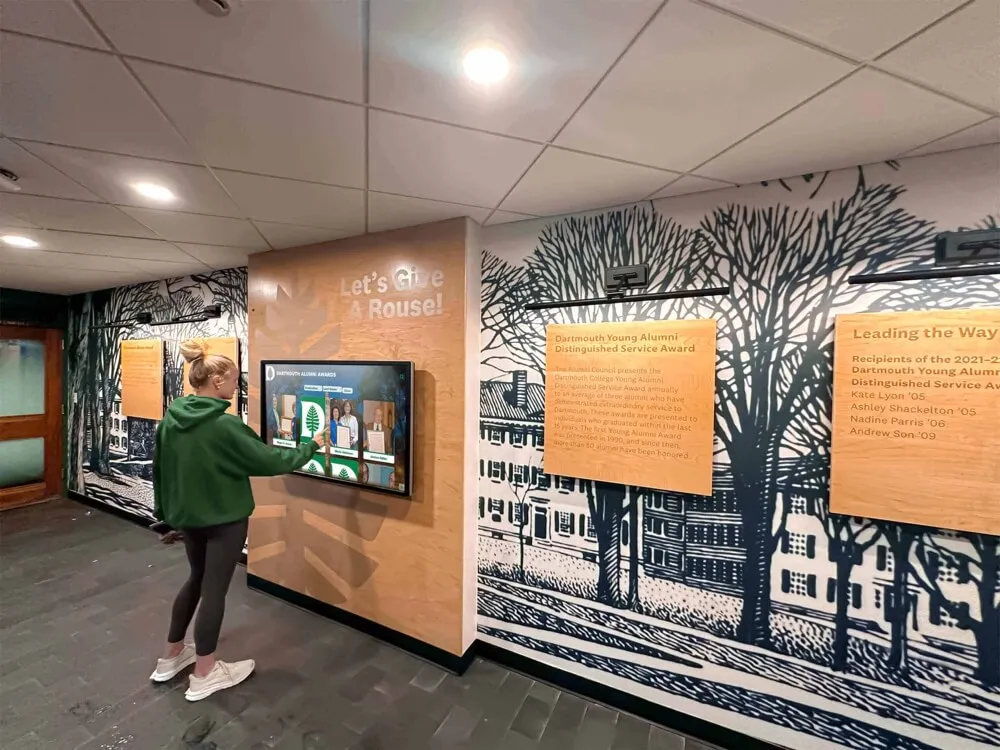
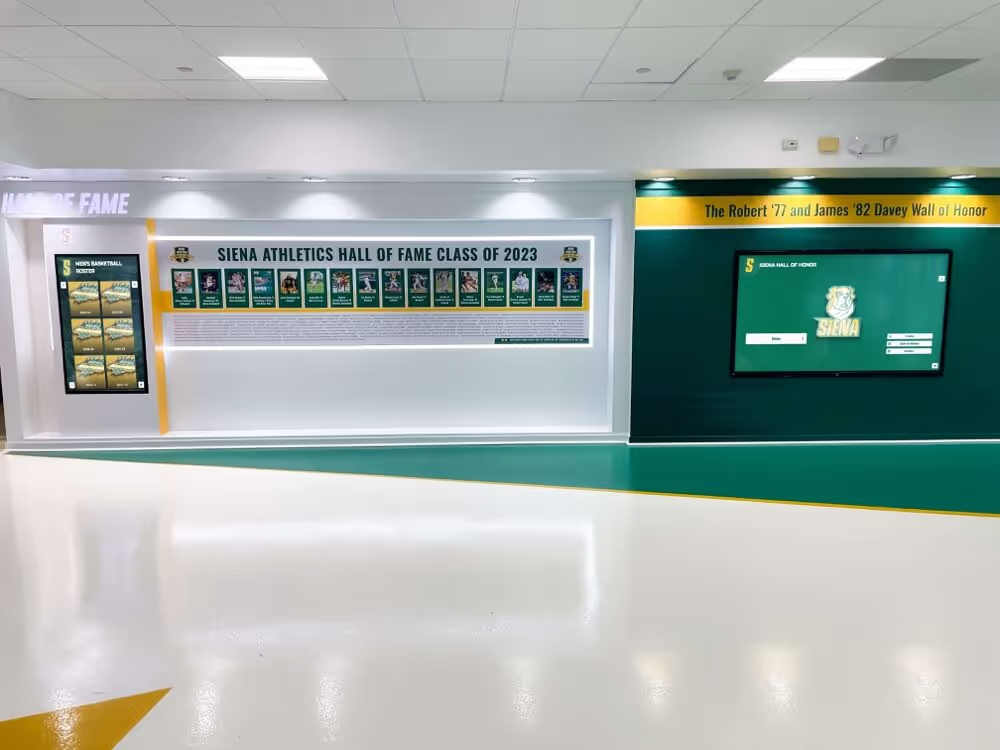
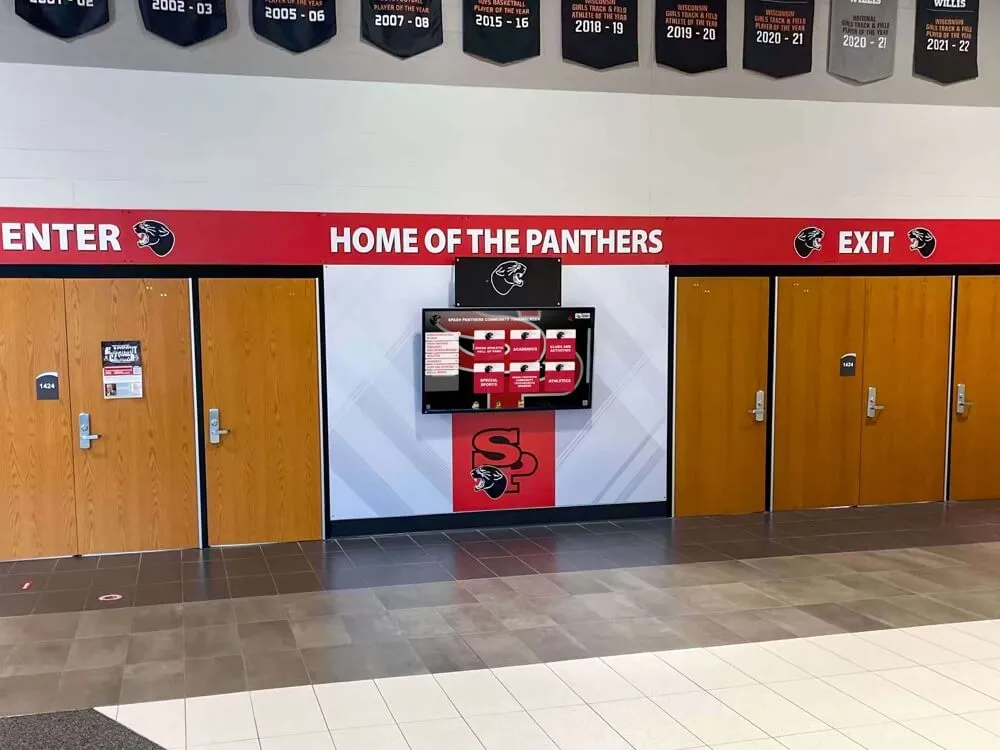
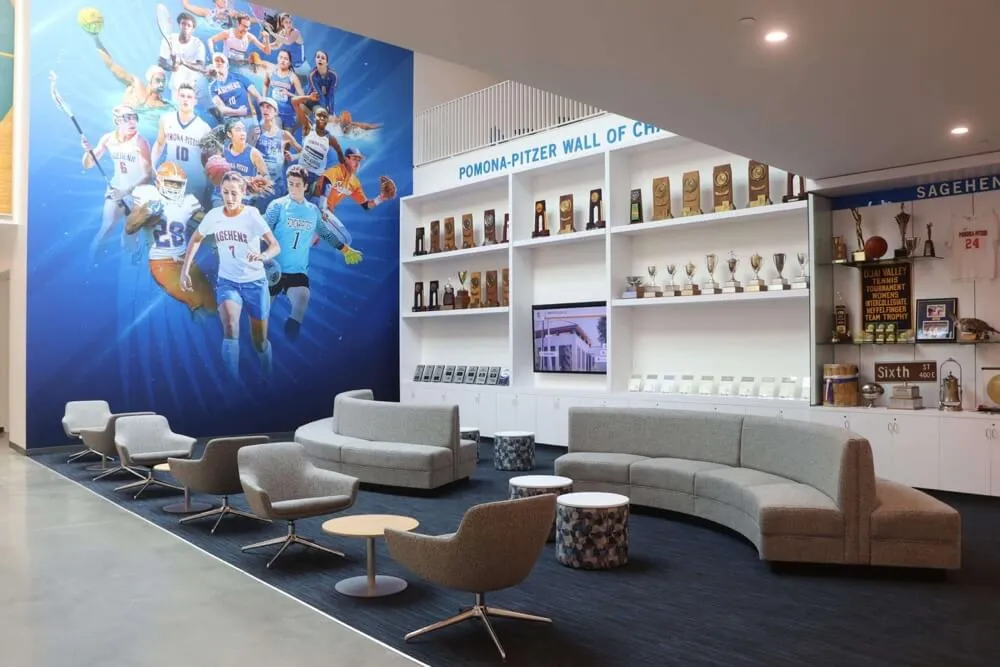
Modern athletic facilities integrate trophy displays, jersey showcases, and memorabilia collections into cohesive recognition environments that celebrate program history
Understanding Your Display Needs
Before selecting specific display case solutions, assessing your current recognition challenges and future needs ensures effective planning.
Inventory Your Athletic Achievements
Start by cataloging what you need to display:
Championship Trophies and Team Awards
- State championships and tournament placements
- Conference titles and regular season championships
- Team awards and special recognition honors
- Historical trophies from different eras
Individual Achievement Recognition
- All-conference and all-state selections
- Individual championship medals and trophies
- Record-breaking performance awards
- Academic-athletic honors
Jerseys and Uniforms
- Retired numbers honoring exceptional athletes
- Championship season jerseys
- Historic uniform collections showing program evolution
- Special game-worn jerseys from milestone victories
Memorabilia and Historical Items
- Team photographs from championship seasons
- Game balls and equipment from significant victories
- Newspaper clippings and program materials
- Signed items from notable athletes and coaches
Understanding the full scope of what you need to display—both current items and anticipated future additions—helps you select display systems with appropriate capacity and flexibility.
Assess Space and Location
Physical environment significantly impacts display effectiveness:
High-Traffic Display Locations
Prime display areas maximize recognition impact:
- Main entrances and lobbies where visitors first enter
- Athletic facility hallways connecting locker rooms to competition venues
- Cafeterias and commons areas with consistent student traffic
- Gymnasium and arena concourses visible during events
Consider how different locations serve different audiences. Displays in academic buildings reach students across all programs, while athletic facility displays primarily engage athletes and sports attendees.
Available Space Dimensions
Measure carefully before purchasing display cases:
- Wall space depth, width, and height
- Floor space for freestanding cases
- Ceiling height for vertical displays
- Lighting conditions and natural light sources
Many schools discover existing trophy cases inadequate after measuring actual display needs against available capacity.
Budget Considerations
Sports display case investments range from basic wall-mounted cases to comprehensive recognition systems:
Traditional Display Case Options
- Wall-mounted glass cases: $500-$3,000 per unit
- Freestanding floor cases: $1,500-$8,000 depending on size
- Custom built-in installations: $5,000-$25,000
- Jersey display frames: $100-$500 each
Modern Digital Integration
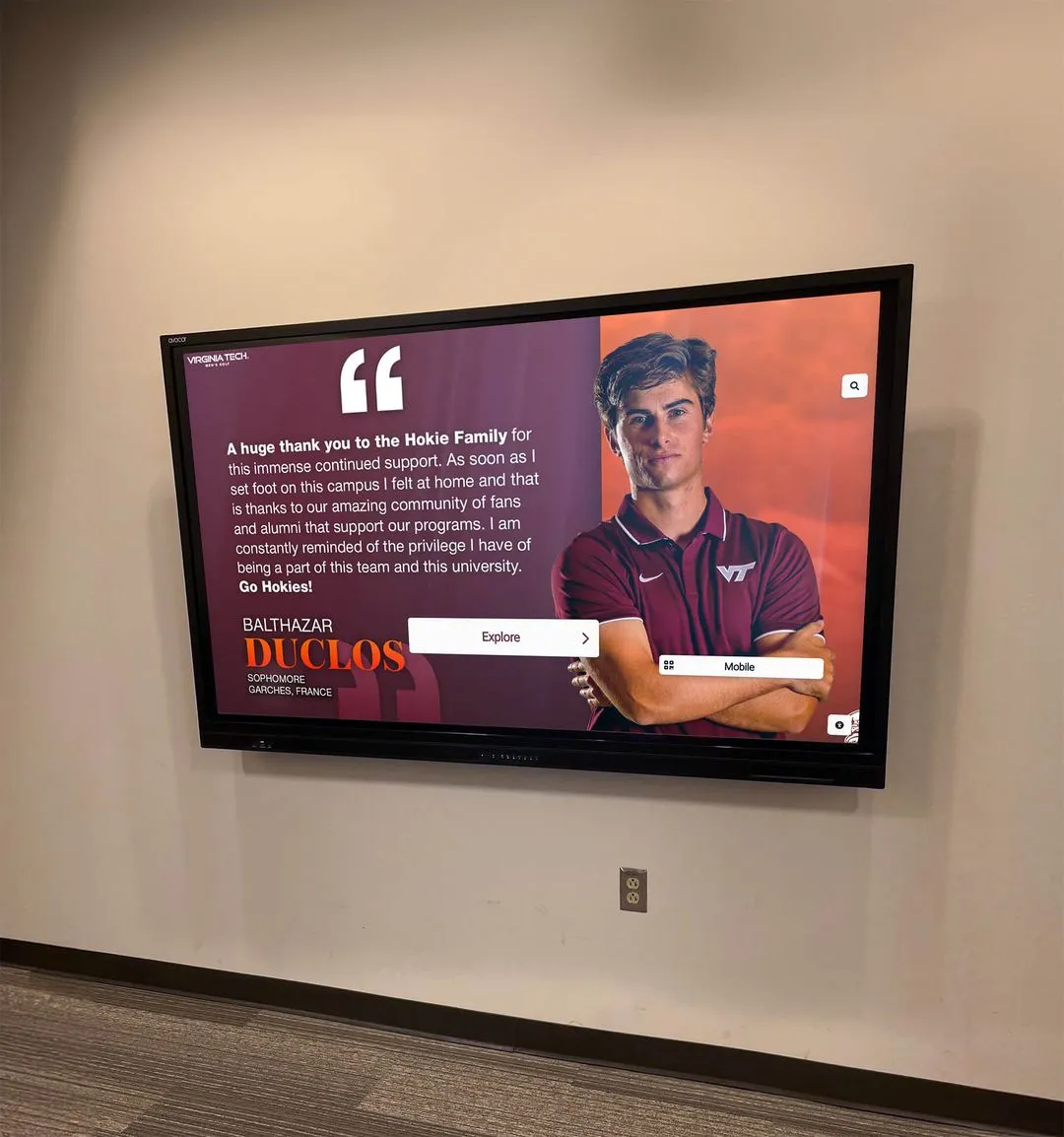
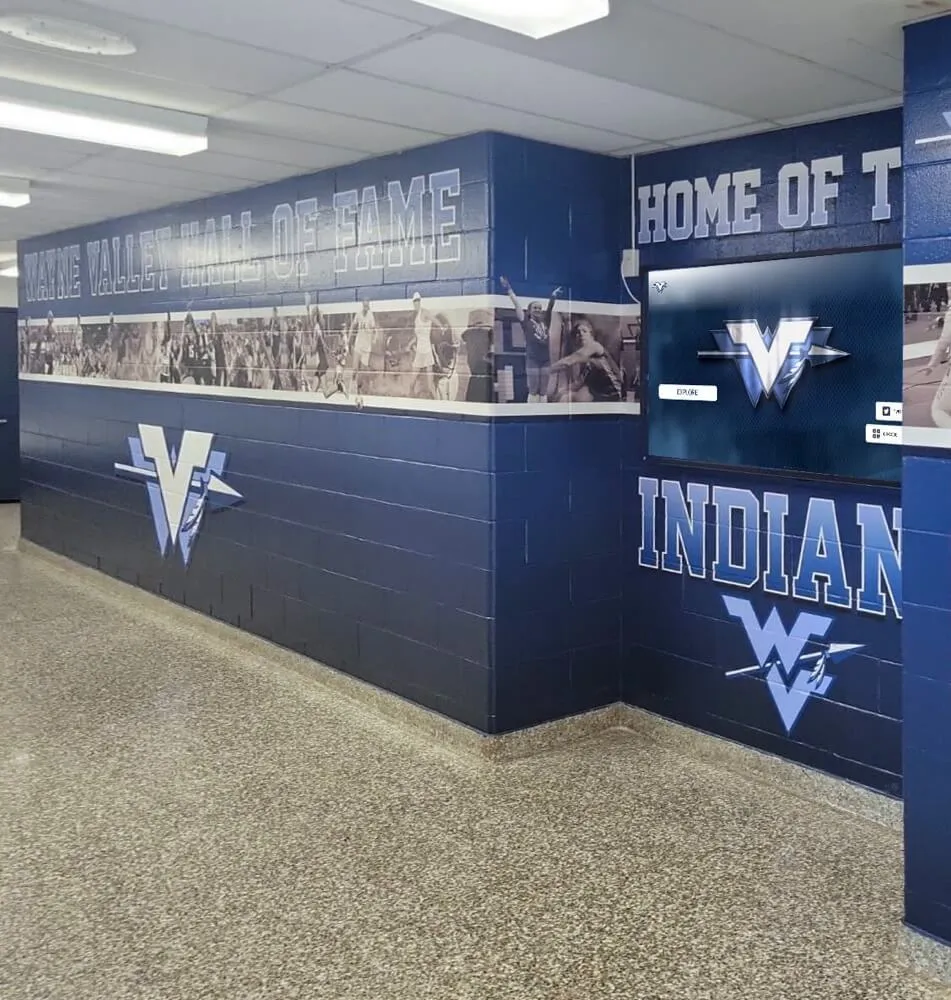
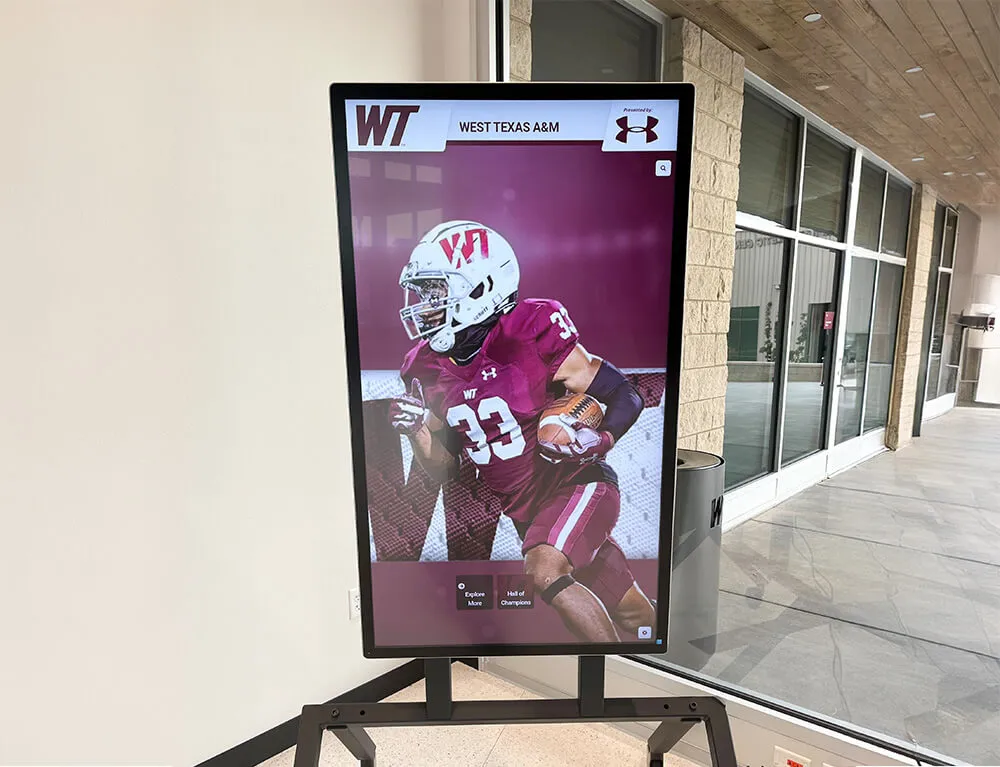
- Interactive touchscreen displays combining physical and digital recognition
- Digital trophy cases with dynamic content: $8,000-$30,000
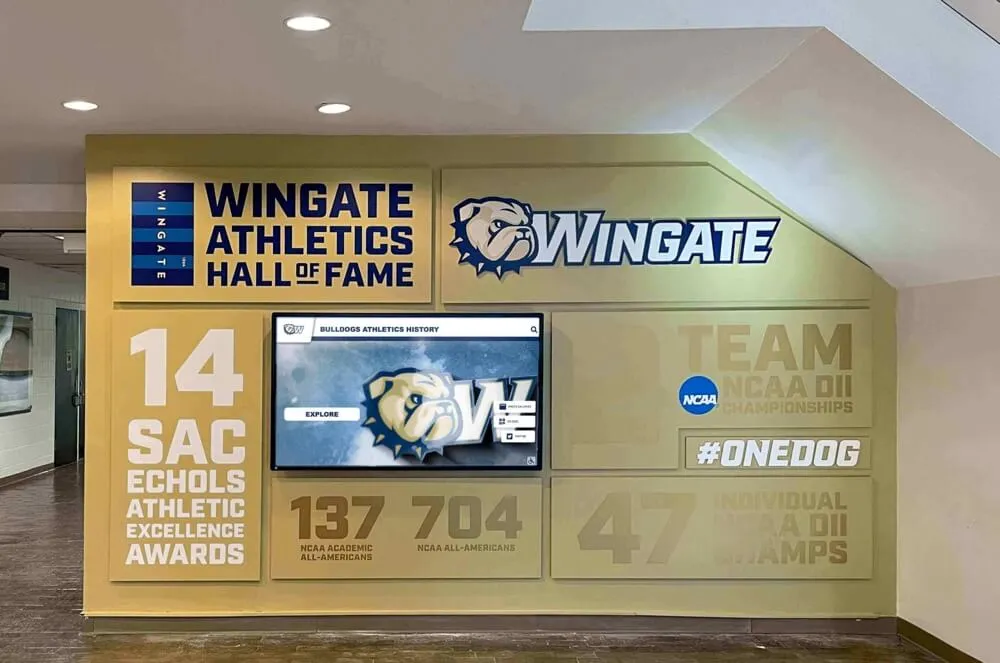
- Hybrid systems blending traditional cases with digital components
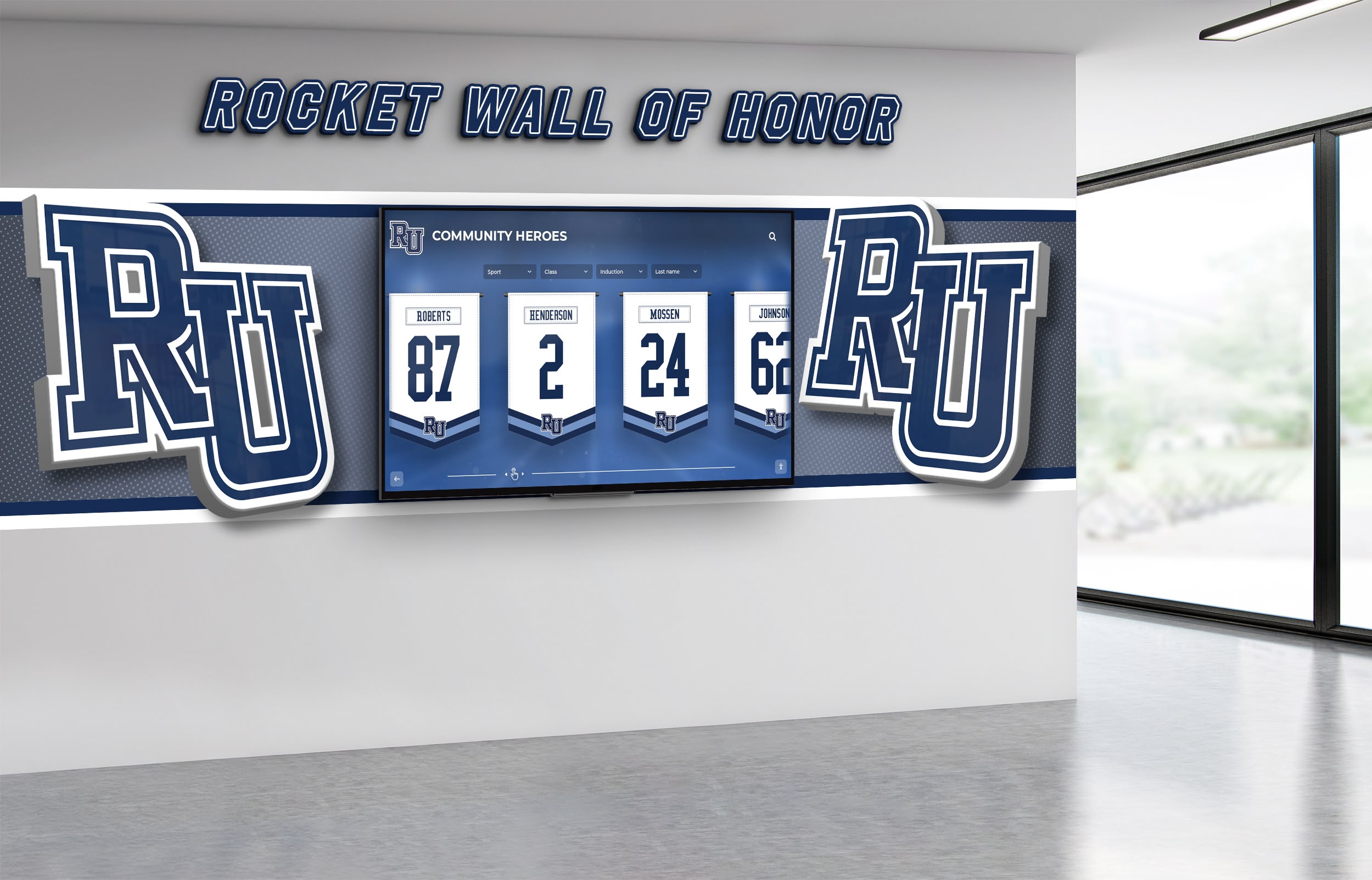
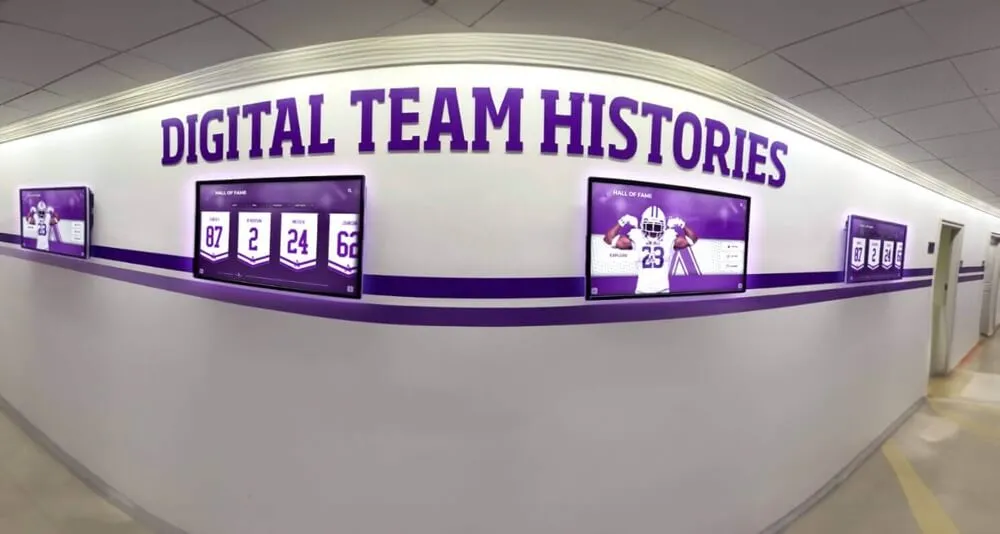
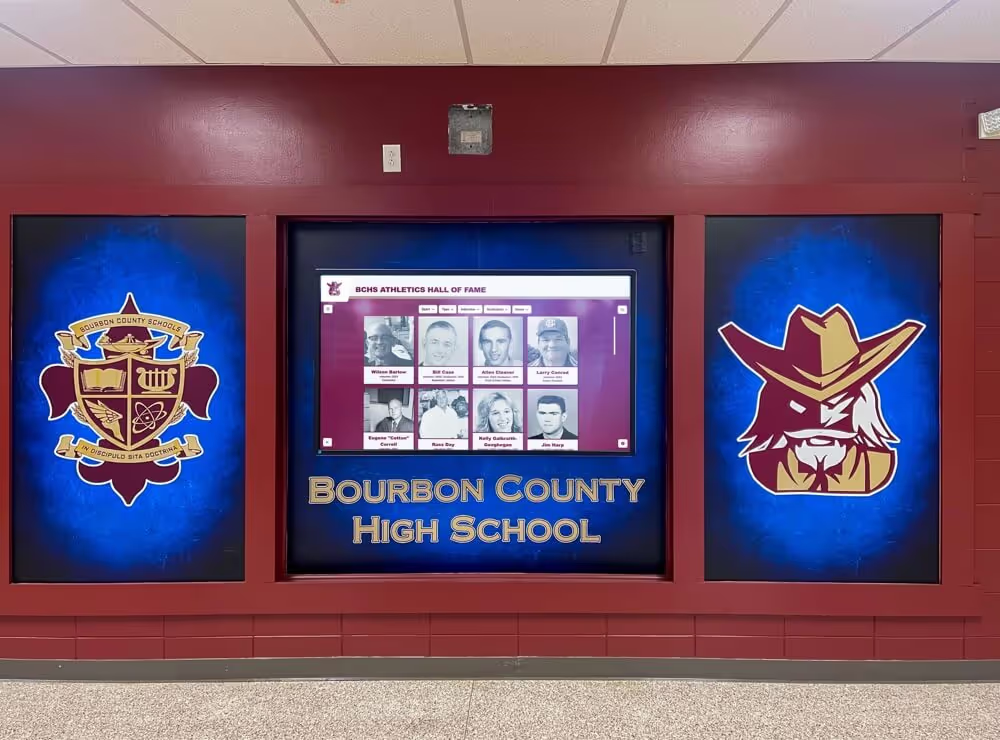
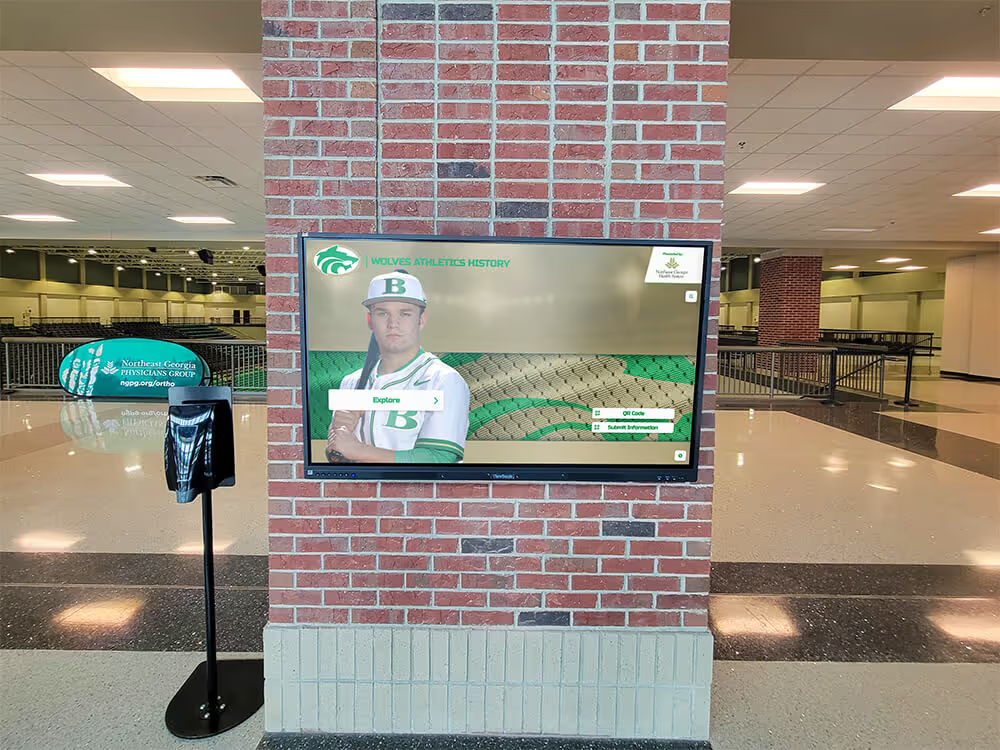
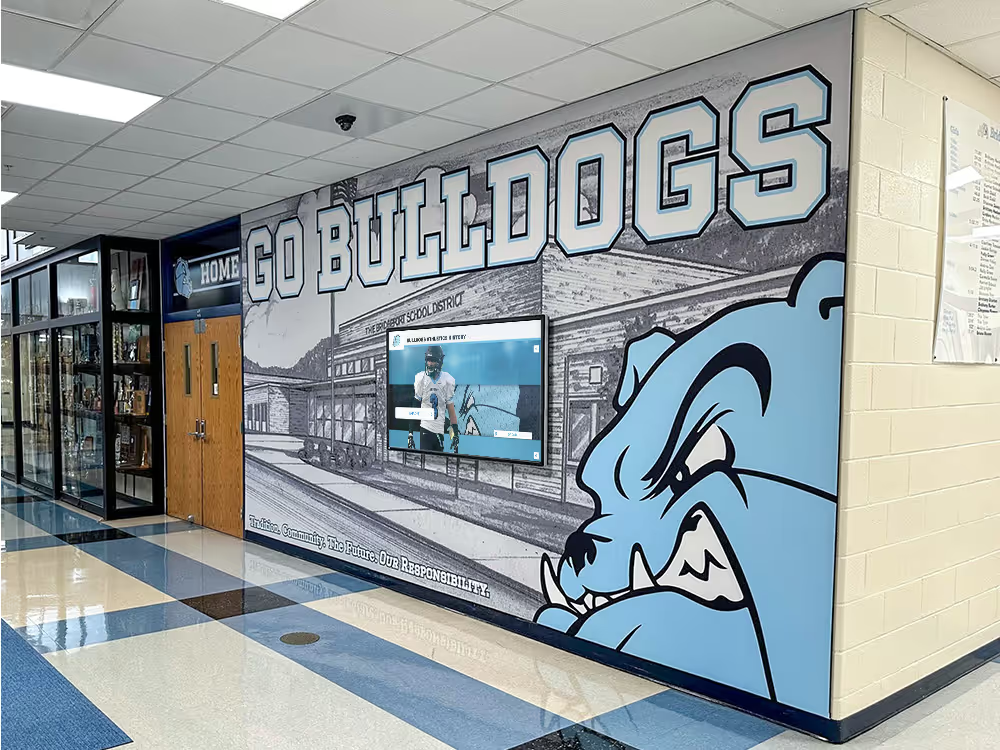
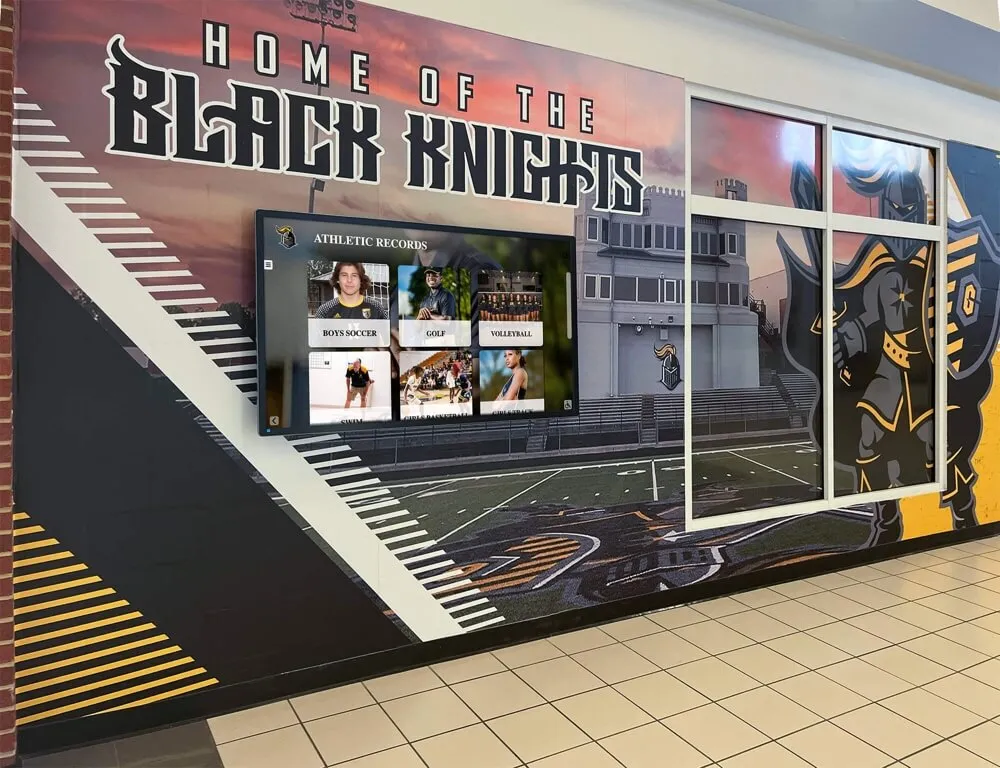
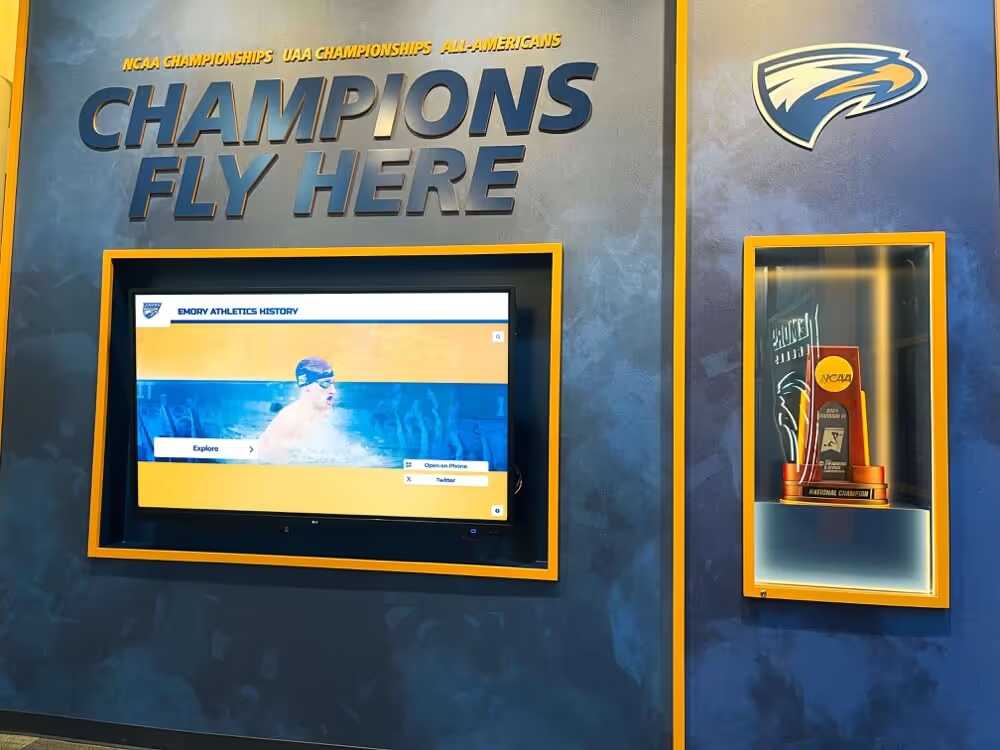
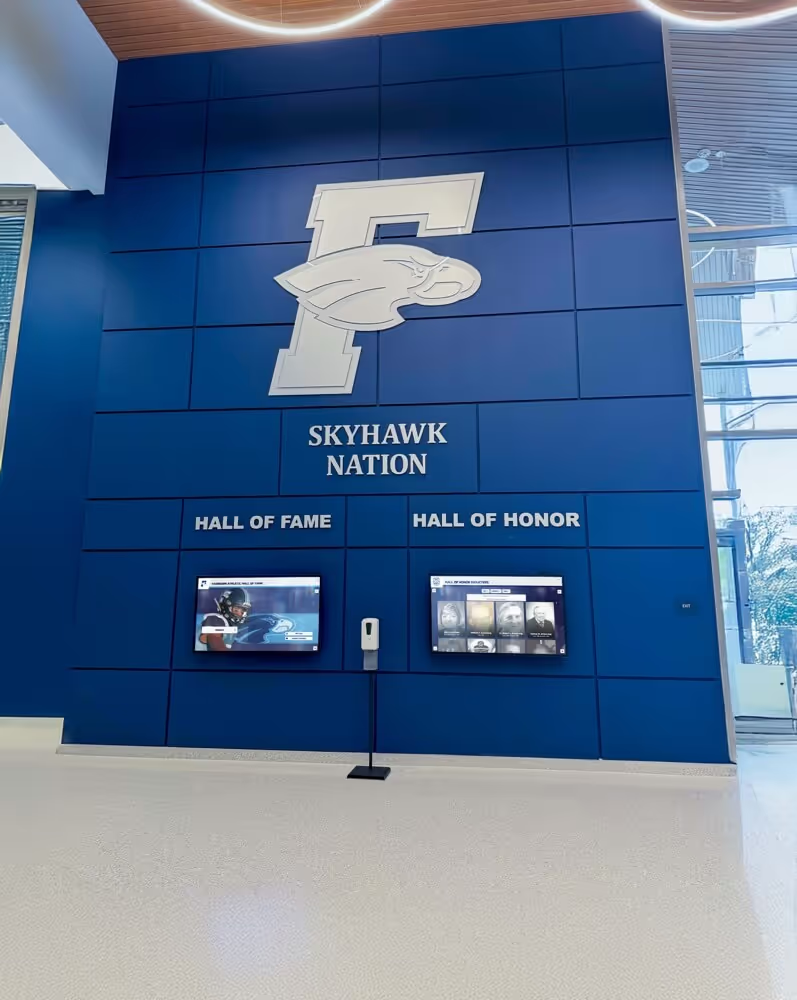
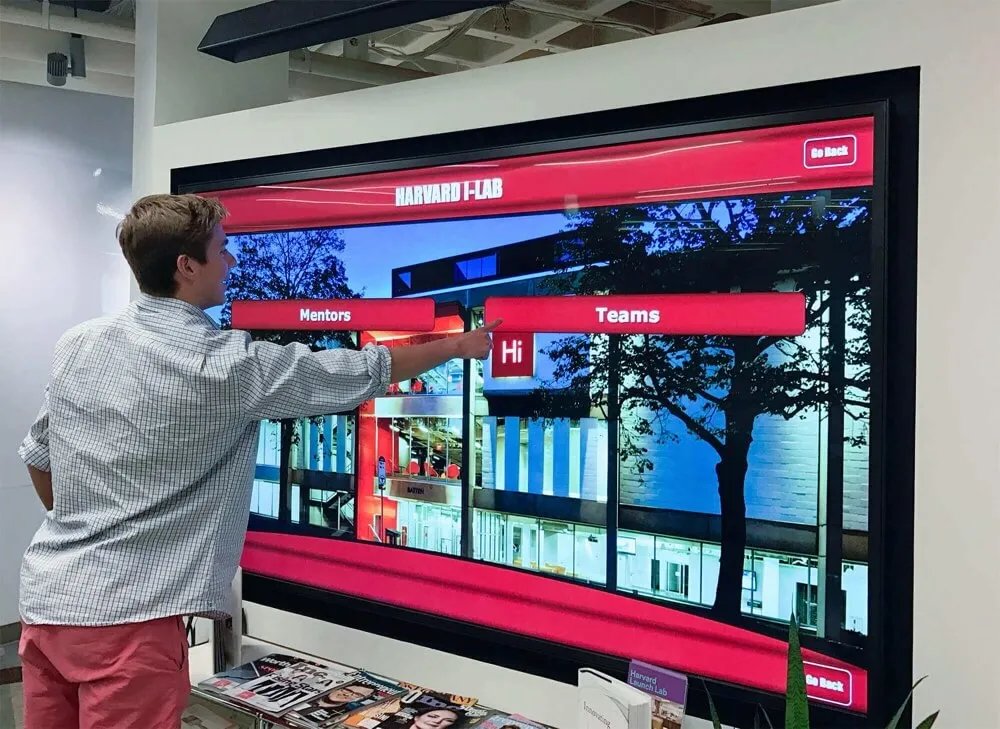
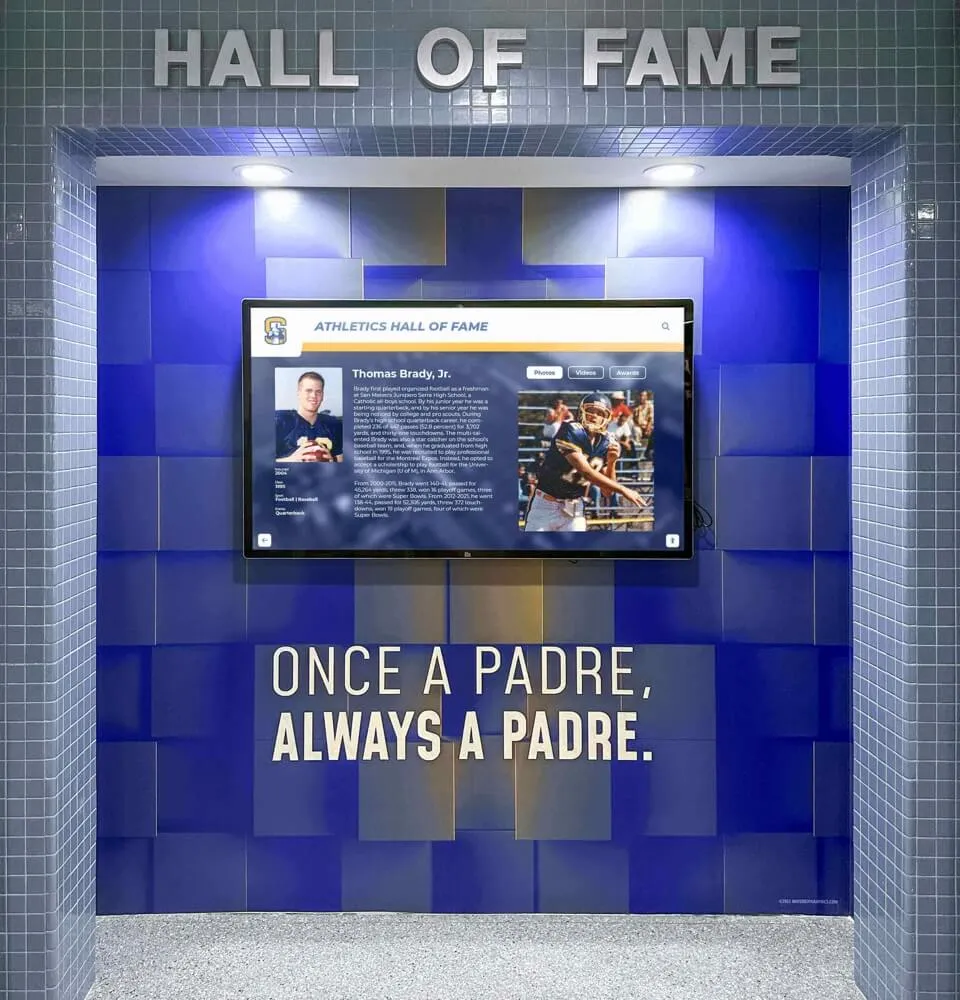
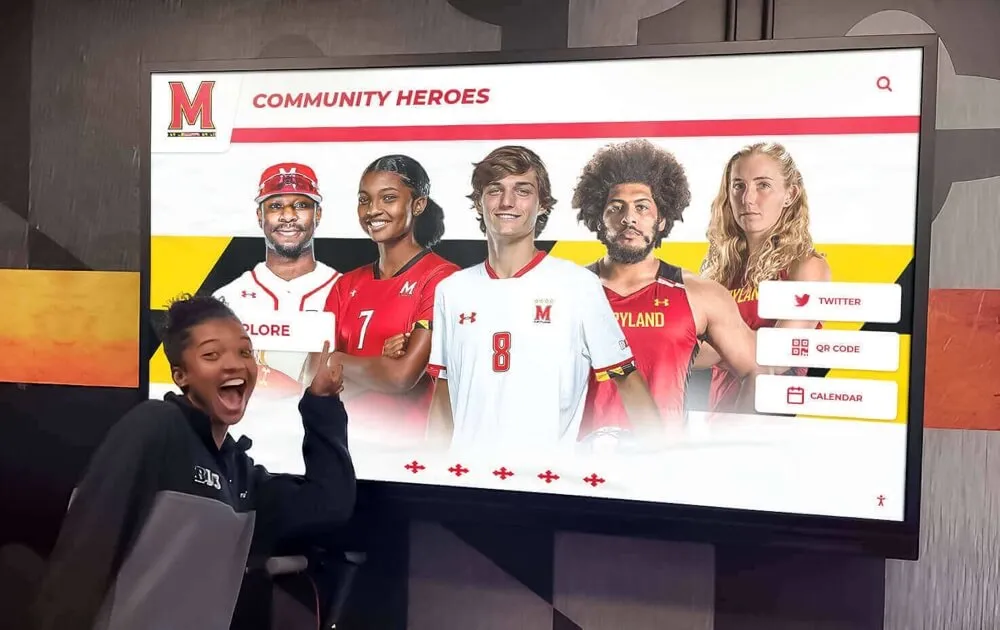
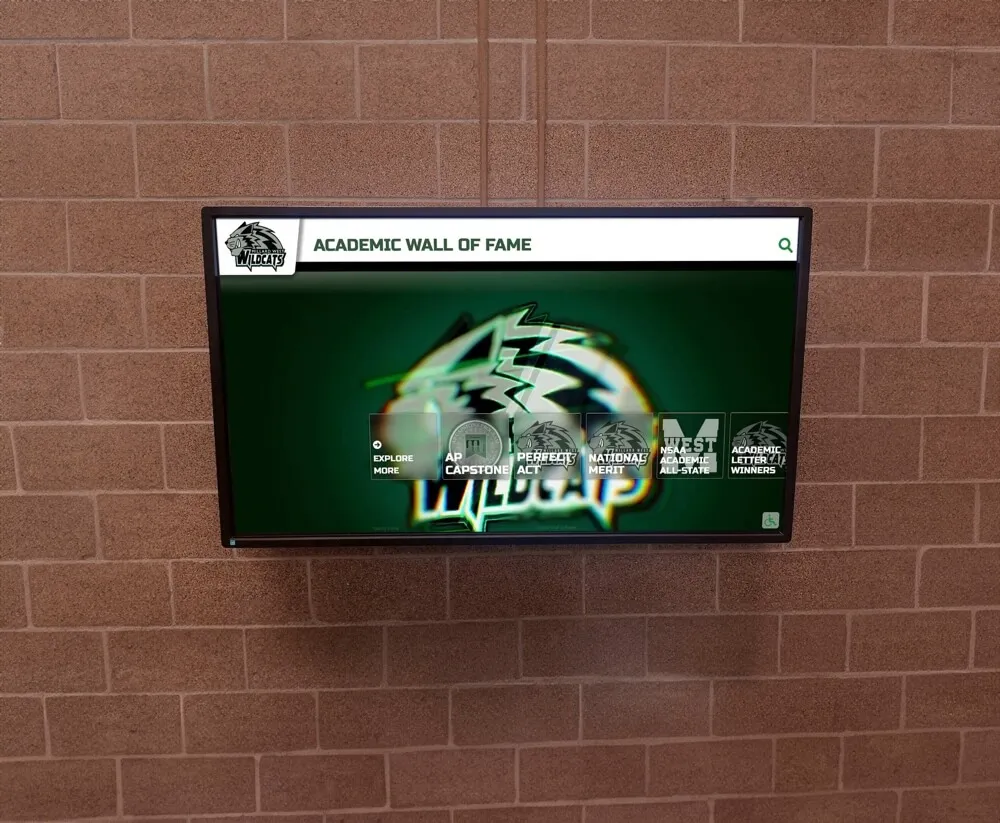
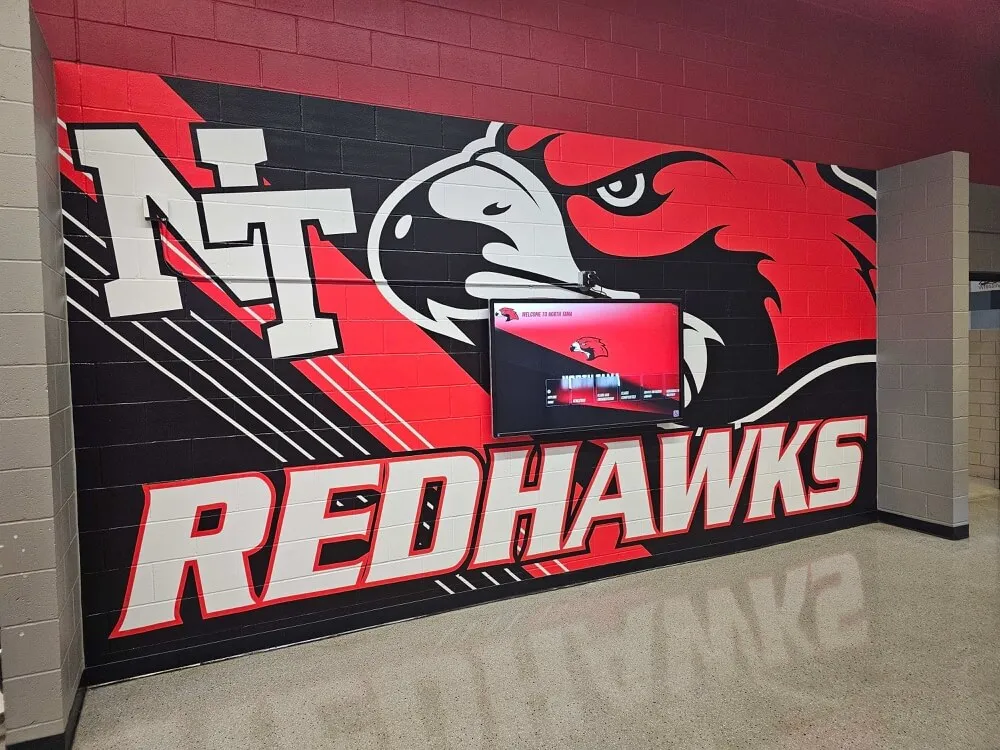
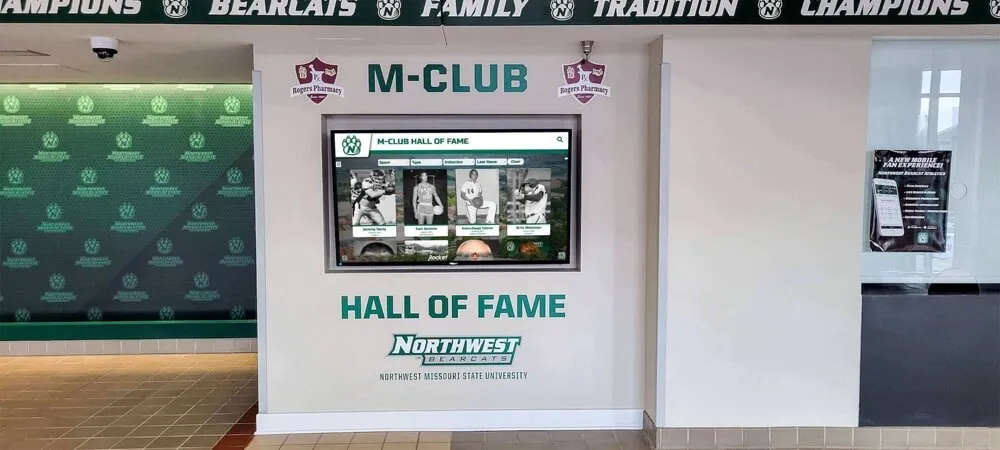
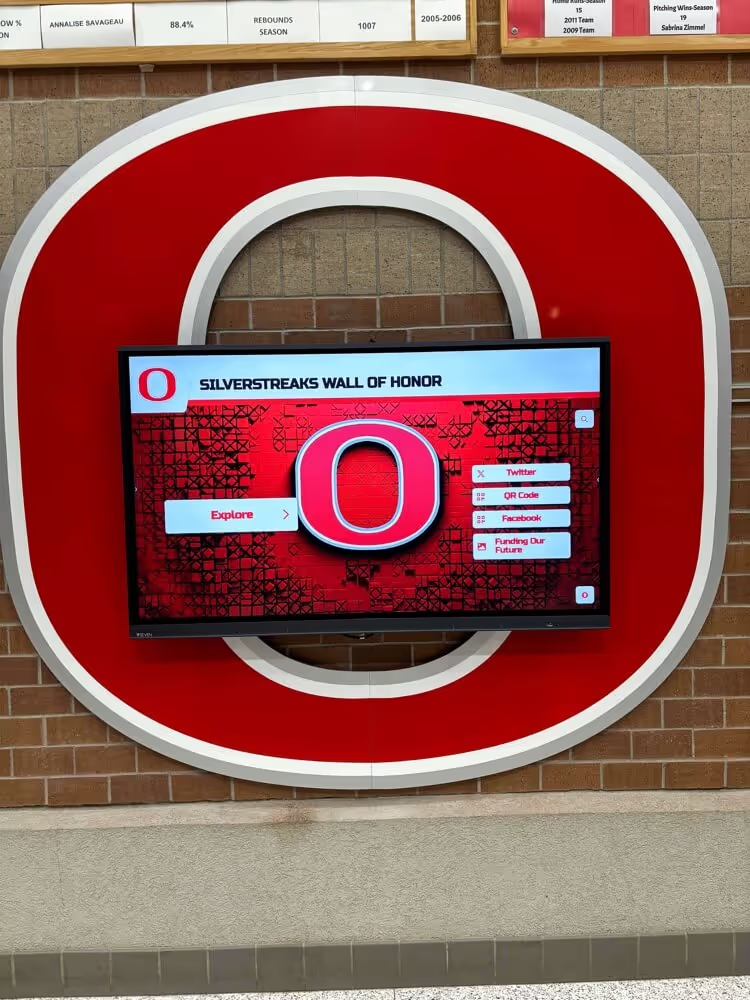
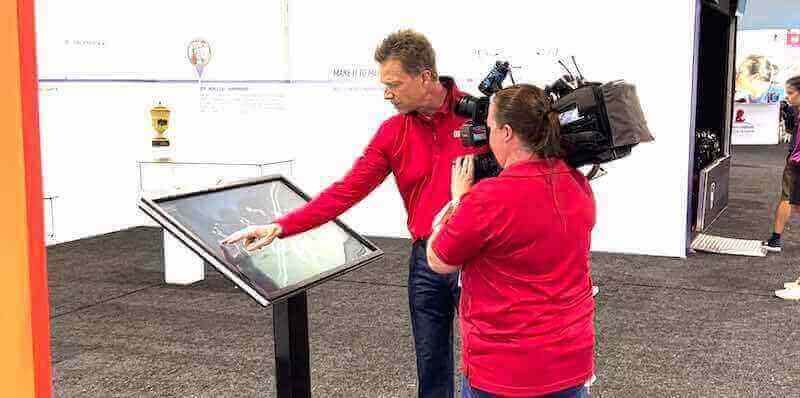
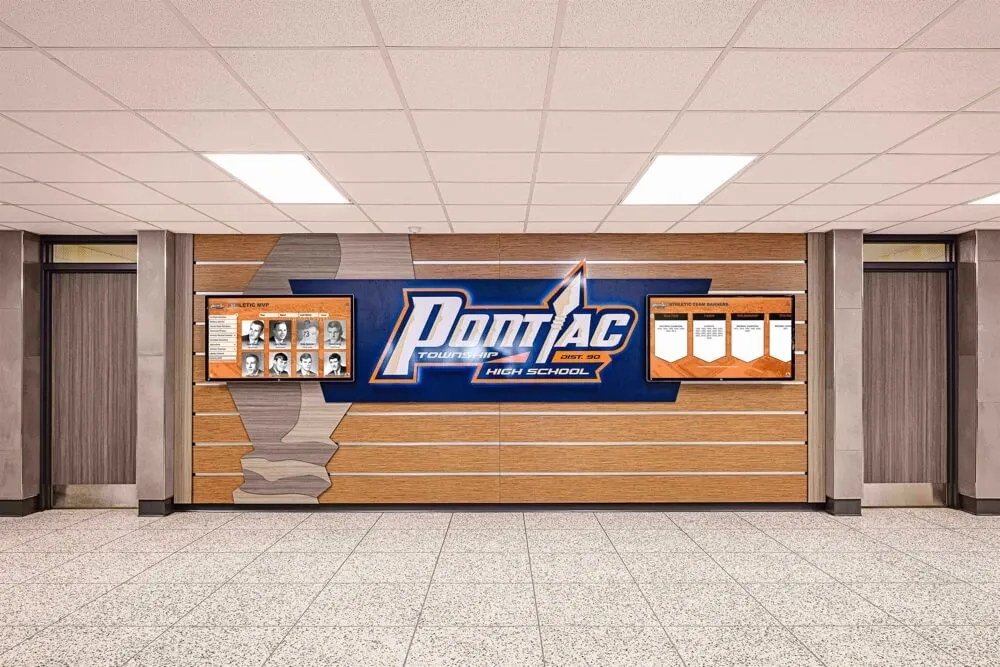
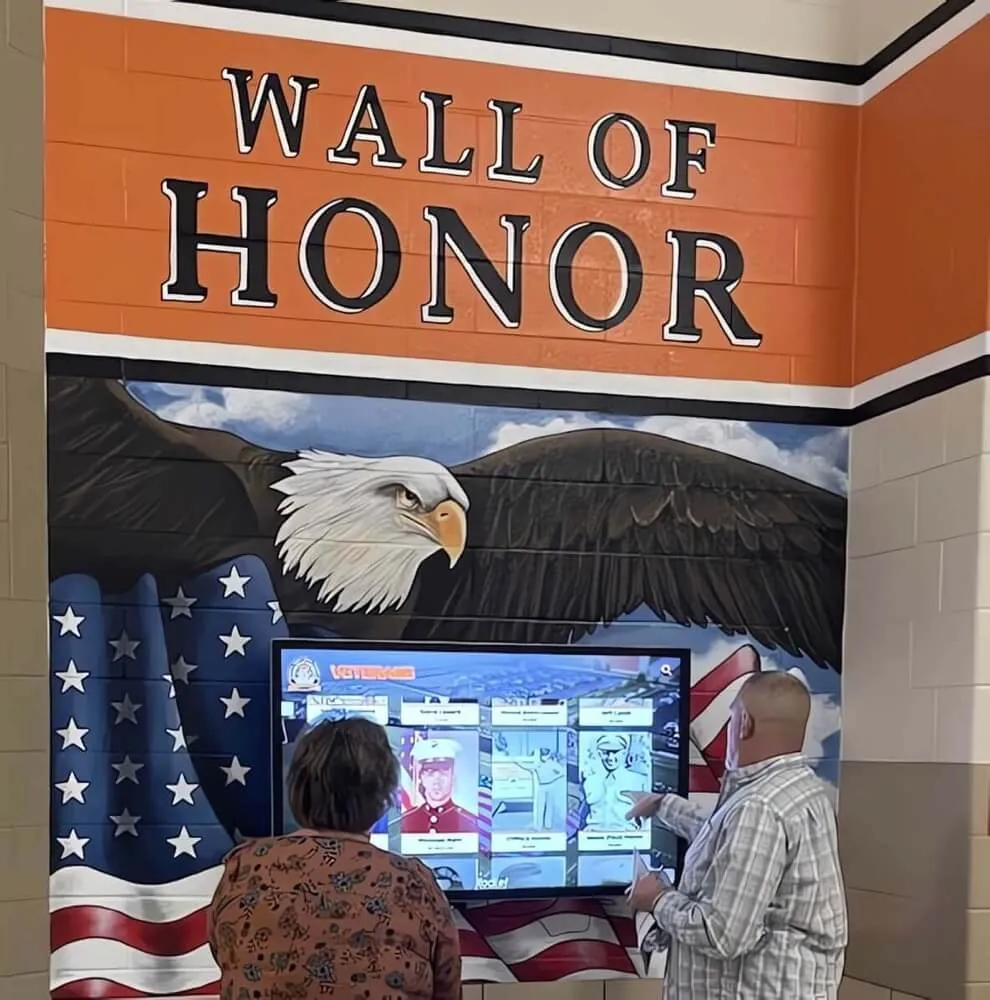
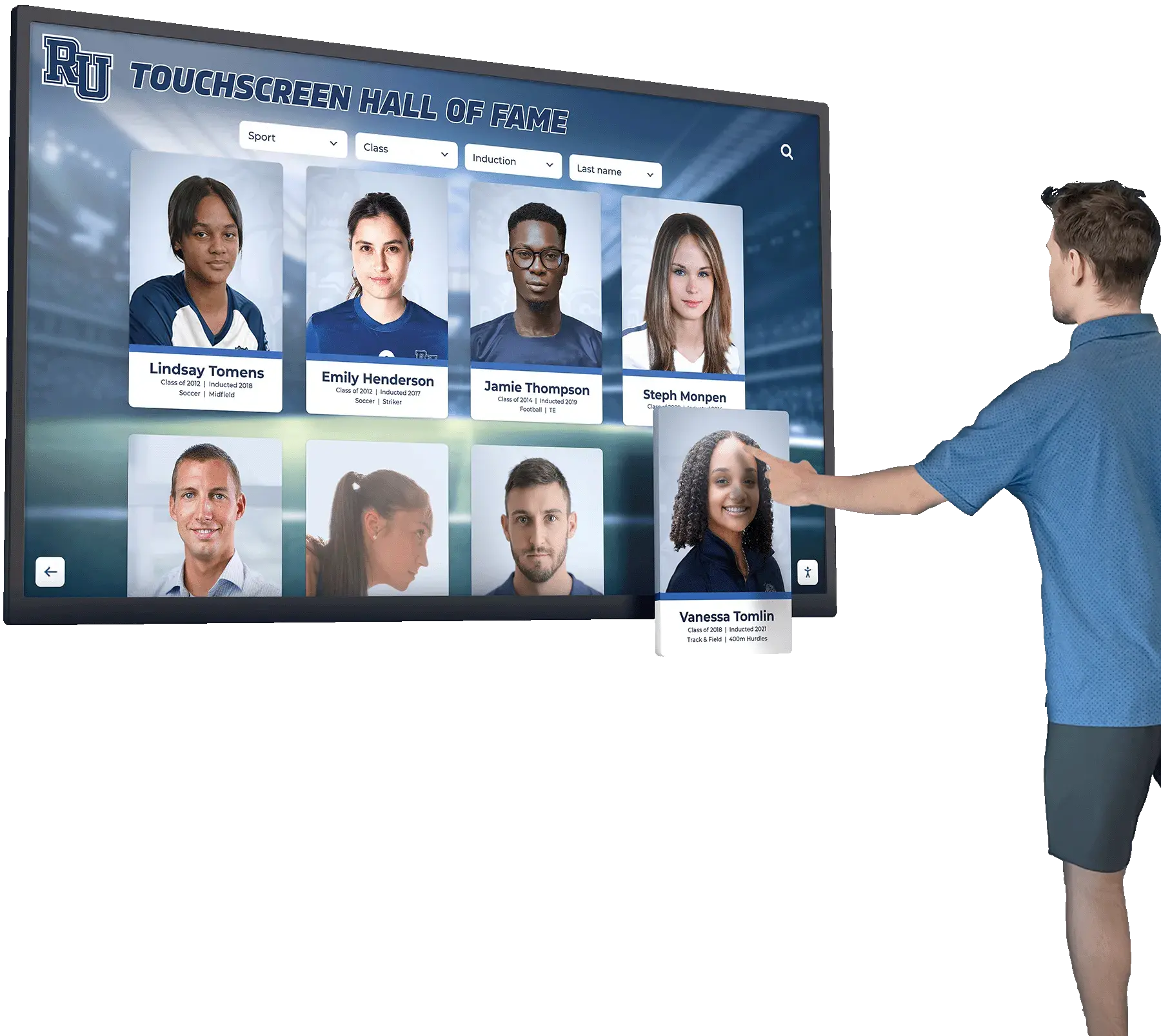
Digital display systems showcase jersey retirements, athlete profiles, and championship histories with unlimited capacity and dynamic storytelling
Budget planning should account for both initial installation and ongoing maintenance, including lighting replacements, case cleaning, and periodic content updates.
Traditional Sports Display Case Ideas
Classic physical display approaches remain effective when thoughtfully designed and properly maintained.
Wall-Mounted Trophy Cases
Wall-mounted cases offer versatility for various recognition needs:
Shallow Profile Cases
Ideal for hallways with limited depth:
- 4-8 inch depth maintains hallway clearance
- Multiple shelves maximize vertical space
- Glass fronts with locking doors provide security
- Interior lighting highlights displayed items
Position wall-mounted cases at appropriate viewing heights—typically 48-60 inches from floor to center—ensuring visibility without requiring excessive bending or stretching.
Deep Display Cases
Accommodate larger trophies and three-dimensional memorabilia:
- 12-18 inch depth allows larger trophy placement
- Adjustable shelving adapts to different item heights
- Mirrored backs create depth and reflect displayed items
- Optional LED lighting systems enhance visibility
Consider purchasing cases with adjustable shelving systems rather than fixed shelves, allowing flexibility as your trophy collection evolves.
Freestanding Display Cases
Floor-mounted cases work well in lobbies and open spaces:
Tower Cases
Maximize vertical display space:
- 6-8 foot height provides substantial display capacity
- Four-sided glass allows viewing from multiple angles
- Internal lighting from top or bottom
- Rotating bases for interactive engagement
Tower cases particularly excel for championship trophy collections, where viewers can walk around displays examining trophies from different angles.
Table-Height Cases
Create interactive viewing experiences:
- 30-36 inch height encourages close examination
- Ideal for smaller memorabilia and historical artifacts
- Accessible to viewers of all ages including children
- Top-loading designs simplify content updates
Table-height cases work exceptionally well for rotating exhibits featuring items from specific seasons, athletes, or championship runs.
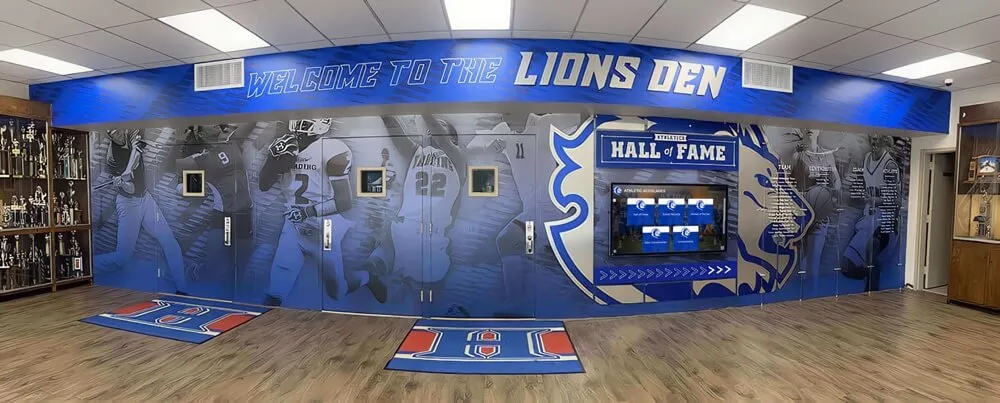
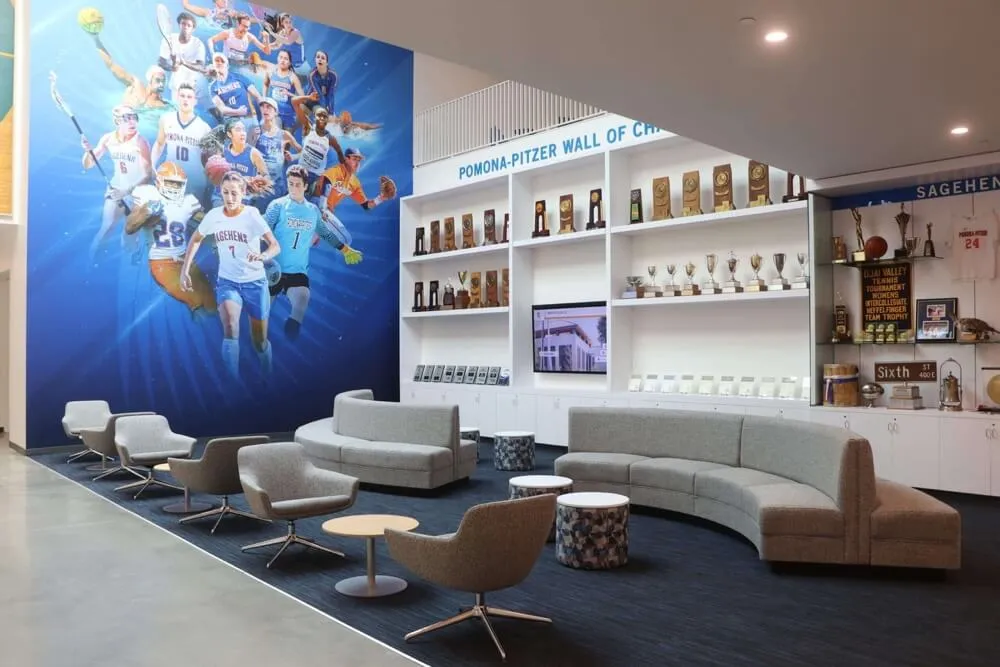
Dedicated athletic lounges combine trophy cases, wall displays, and comfortable seating to create recognition environments where athletes and visitors connect with program history
Jersey Display Solutions
Retired jerseys and significant uniforms deserve specialized presentation:
Shadow Box Frames
Traditional approach for individual jersey displays:
- Deep frames accommodate folded or mounted jerseys
- UV-protective glass prevents fading
- Nameplate areas provide athlete information
- Wall-mounting flexibility for various layouts
Arrange jersey shadow boxes in chronological order, by sport, or by achievement level depending on space and institutional preference. Many athletic programs organizing displays by retired number create powerful visual impact showing the exclusive nature of number retirement.
Jersey Display Rails
Showcase multiple jerseys in unified presentations:
- Horizontal rails display jerseys side-by-side
- Minimal mounting hardware maintains clean aesthetic
- Easy jersey rotation for special recognition periods
- Cost-effective for displaying many jerseys
Rail systems work particularly well when displaying championship team jerseys, creating visual representations of team rosters that celebrate collective achievement.
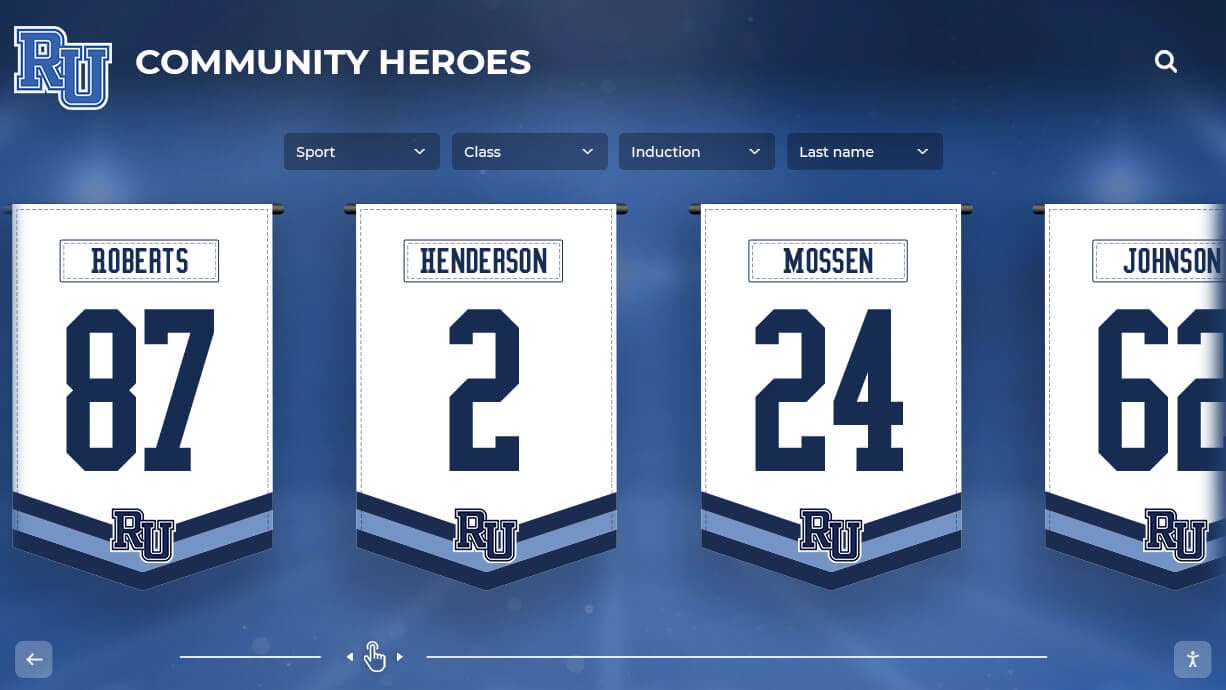
Hanging jersey banners and suspended displays work effectively in gymnasiums and arenas where wall space is limited but ceiling height creates display opportunities
Creative Display Organization Strategies
How you organize displayed items significantly impacts recognition effectiveness and visitor engagement.
Chronological Arrangements
Timeline-based displays tell program evolution stories:
Decade-by-Decade Organization
Create historical narrative structure:
- Separate display areas for each program decade
- Show uniform evolution and design changes
- Document coaching eras and program milestones
- Highlight how competition levels progressed
Chronological arrangements help viewers understand program development, seeing how today’s successes build upon historical foundations.
Season-by-Season Championship Displays
Focus specifically on championship achievements:
- Dedicate space to each championship season
- Include team photos, championship trophies, and key memorabilia
- Provide season records and championship game details
- Feature individual award winners from championship teams
This approach works particularly well for programs with strong championship traditions, where focusing on title-winning seasons creates aspirational examples for current athletes.
Sport-Specific Organization
Separate displays by athletic program:
Individual Sport Recognition Areas
Give each sport dedicated display space:
- Football displays in one case or area
- Basketball recognition in separate location
- Olympic sports receive equal prominent placement
- Emerging programs get display space as achievements accumulate
Sport-specific organization ensures balanced recognition across all athletic programs, preventing dominant sports from overwhelming displays while smaller programs receive minimal visibility.
Multi-Sport Athlete Recognition
Highlight athletes who competed in multiple sports:
- Special display section for multi-sport athletes
- Demonstrate diverse athletic excellence
- Encourage sport participation across programs
- Recognize well-rounded student-athlete development
Many schools find multi-sport athlete displays generate particular interest from prospective students, demonstrating institutional support for broad athletic participation.
Achievement-Based Organization
Group displays by recognition type:
Individual vs. Team Achievements
Create separate recognition categories:
- Team championships and collective achievements
- Individual state champions and record holders
- All-conference and all-state selections
- Academic all-American honors
This organizational approach emphasizes both team success and individual excellence, showing how personal achievement contributes to program accomplishment.
Modern Display Innovations
Contemporary technology creates new possibilities for sports recognition that traditional cases alone cannot provide.
Digital Display Integration
Interactive touchscreen systems expand recognition capacity exponentially:
Unlimited Recognition Capacity
Digital displays overcome physical space limitations:
- Showcase unlimited athlete profiles and achievements
- Display thousands of photographs without physical storage
- Include video highlights and championship moments
- Update instantly without physical case modifications
Schools consistently report that digital integration solves their most persistent display challenge—running out of physical space for growing achievement collections.
Enhanced Storytelling
Digital components add context traditional displays cannot provide:
- Athlete biographies and career statistics
- Championship season recaps and game highlights
- Historical timelines showing program development
- Interactive features letting viewers explore by year, sport, or athlete
Visitors engage significantly longer with displays offering interactive exploration compared to static trophy cases, increasing recognition impact and institutional pride development.
Easier Maintenance and Updates
Digital systems simplify ongoing recognition management:
- Remote content updates without physical case access
- Instant corrections for errors or outdated information
- Seasonal content rotation without manual labor
- Consistent presentation quality across all recognition
Athletic directors report dramatic time savings managing digital displays compared to maintaining traditional trophy cases, with content updates requiring minutes rather than hours.
Hybrid Display Approaches
Combining traditional and digital creates comprehensive solutions:
Physical Trophies with Digital Context
Integrate technologies within traditional cases:
- Small screens beside trophy cases provide championship details
- QR codes link to detailed achievement information
- Digital frames cycle through team photographs
- Interactive elements supplement physical displays
Hybrid approaches honor the tactile appeal of physical trophies while providing the storytelling depth digital systems enable.
Rotating Physical and Digital Content
Create display systems alternating between formats:
- Showcase current season trophies in physical cases
- Move historical trophies to digital displays
- Rotate which achievements receive physical vs. digital presentation
- Maintain comprehensive recognition across both formats
This strategy maximizes limited physical display space while ensuring all achievements receive appropriate recognition through digital inclusion.
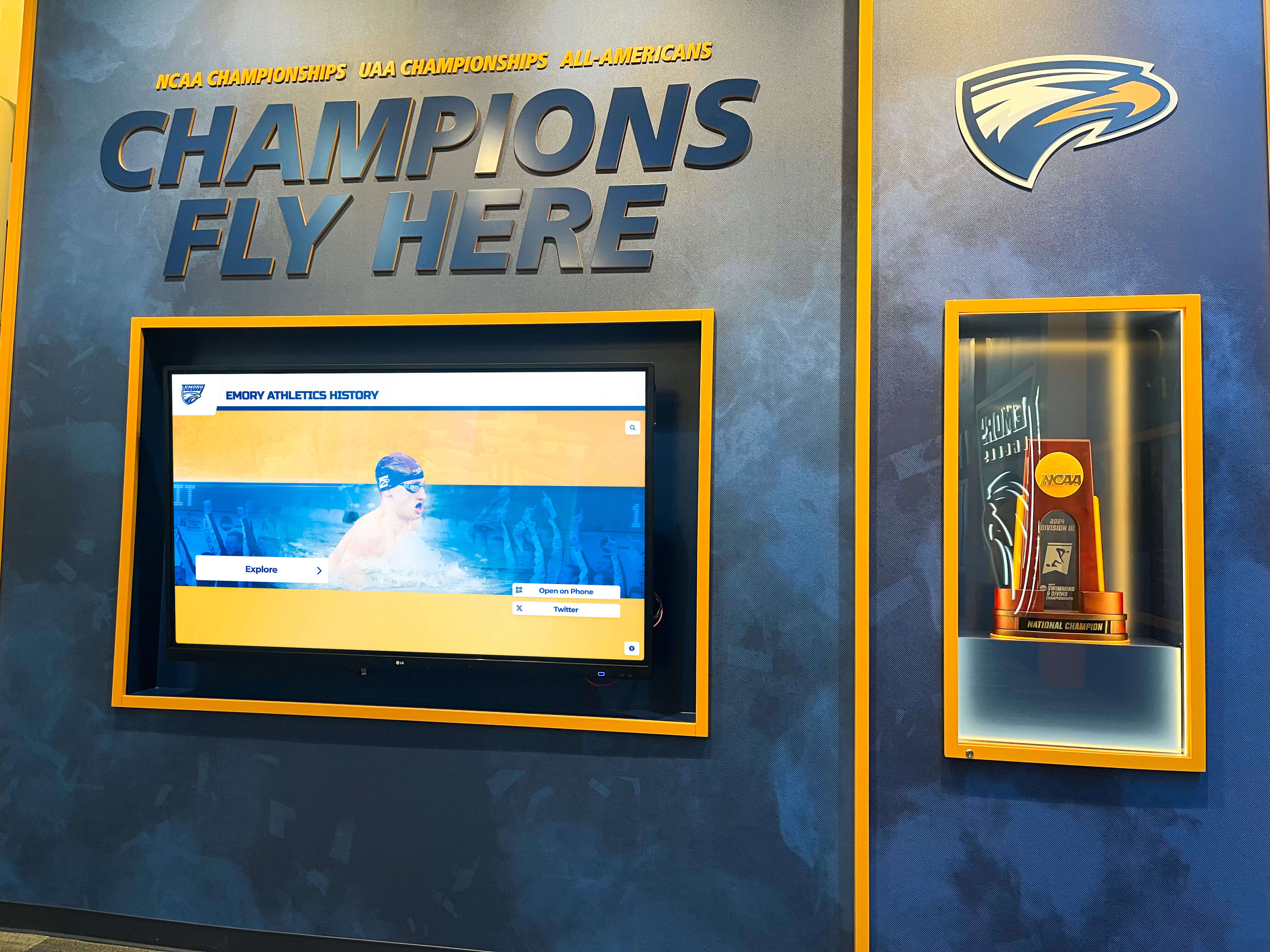
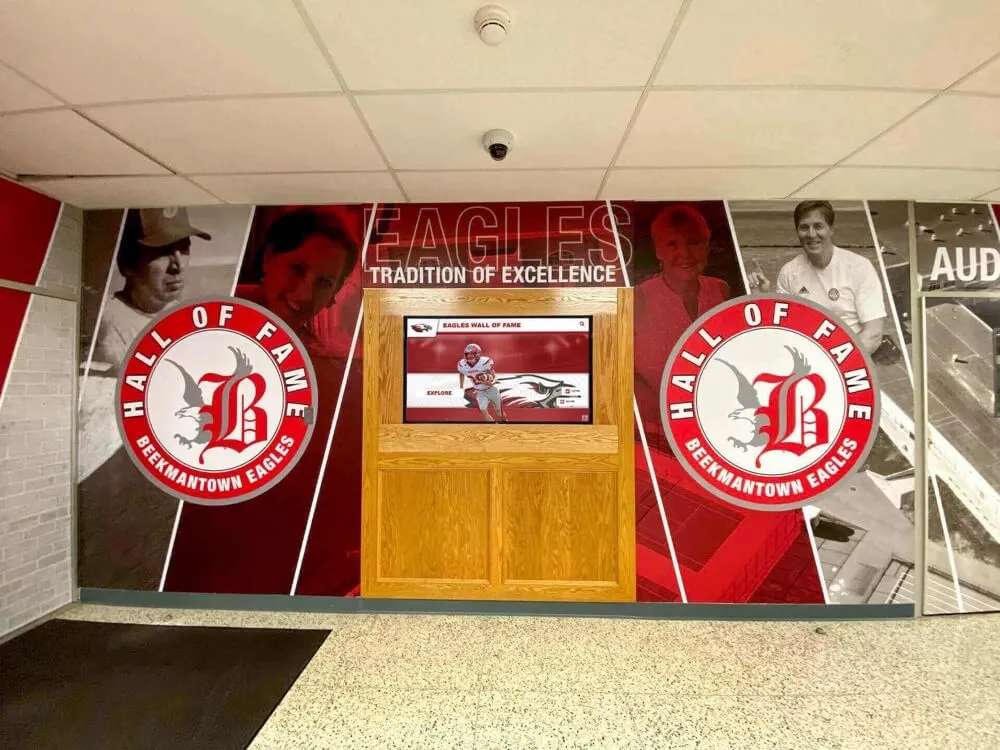
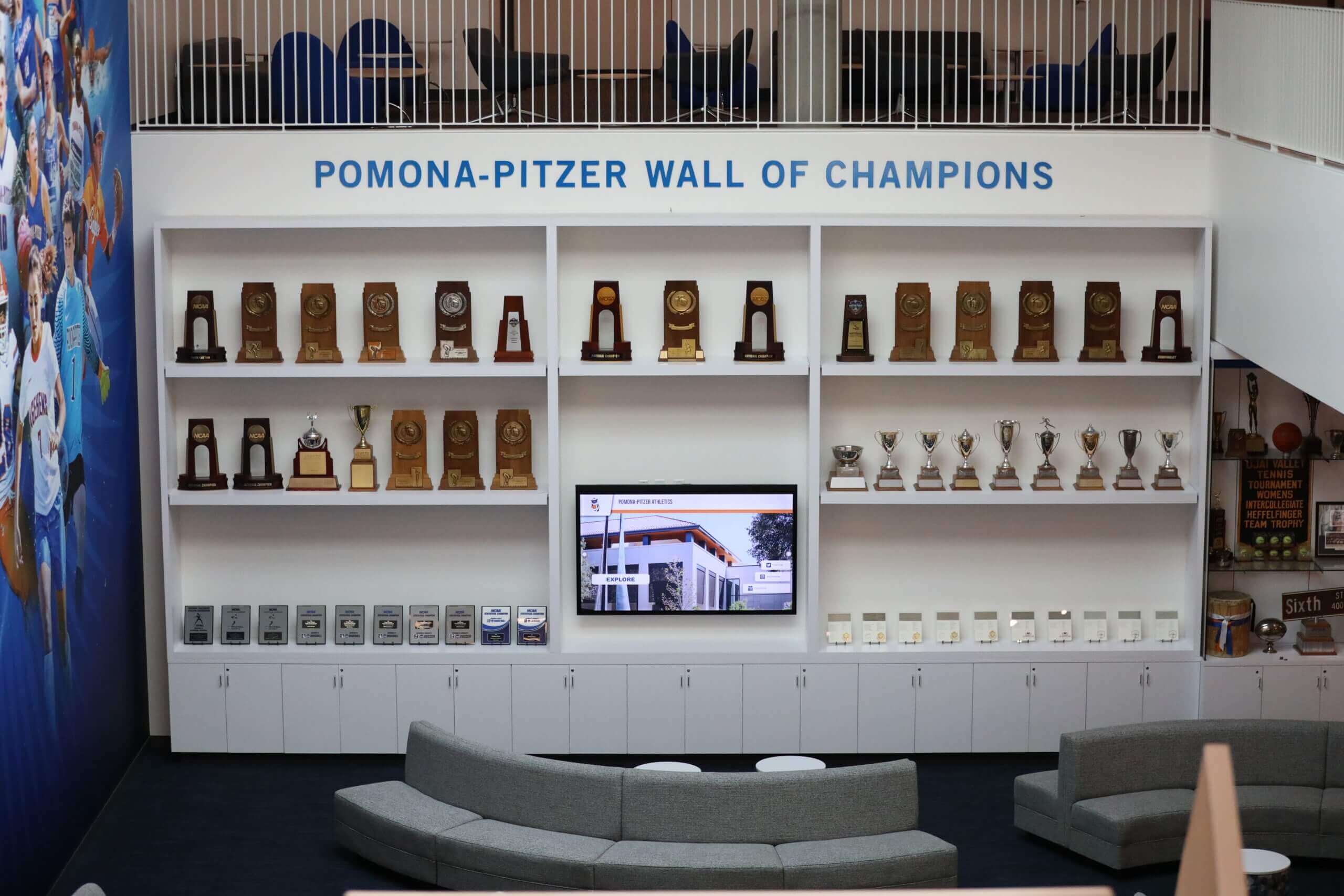
Comprehensive championship walls combine physical trophy displays with team photographs, achievement details, and recognition context that tells complete championship stories
Designing Effective Display Environments
Display case selection represents just one component of effective athletic recognition. The complete environment significantly impacts engagement and inspiration.
Lighting Design
Proper illumination makes displays more engaging:
Internal Case Lighting
Highlight displayed items effectively:
- LED strip lighting along case interiors
- Adjustable spotlights for featured items
- Color temperature selection (warm vs. cool lighting)
- Dimmable systems for different times of day
Position lights to minimize glare on glass and create even illumination across all shelving levels.
Ambient Space Lighting
Ensure overall visibility:
- Adequate overhead lighting in display areas
- Accent lighting drawing attention to recognition spaces
- Natural light considerations and UV protection
- Evening and weekend lighting for facility events
Many schools discover their trophy cases remain poorly visible despite quality displays, simply because surrounding lighting proves inadequate.
Signage and Information
Context transforms displays from object collections into storytelling environments:
Display Headers and Section Labels
Organize recognition visually:
- Clear headers identifying display categories
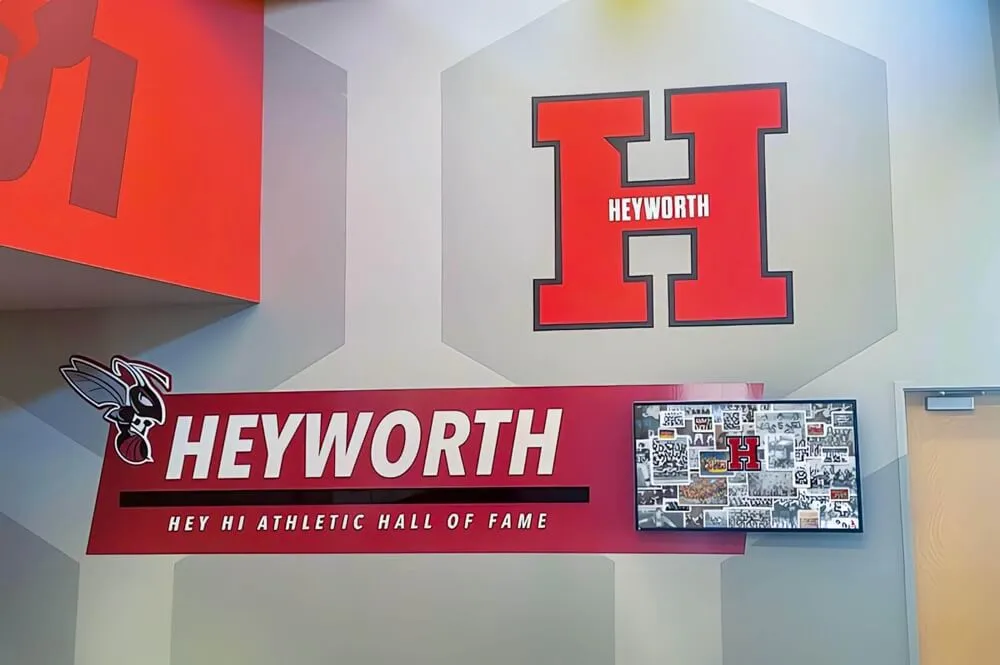
- Sport-specific signage and branding
- Championship year markers
- Achievement type identifiers
Professional signage elevates overall presentation quality, making displays appear intentional and well-maintained rather than haphazard.
Individual Item Information
Provide achievement context:
- Engraved plates or printed labels for trophies
- Jersey display nameplates with athlete information
- Memorabilia descriptions and historical context
- Achievement dates and competition details
Viewers engage longer with displays when information answers natural questions about what they’re viewing and why achievements matter.
Space Design Considerations
Physical environment affects recognition impact:
Seating and Gathering Areas
Create spaces encouraging extended engagement:
- Benches or seating near display areas
- Tables for studying while surrounded by achievement displays
- Gathering spaces for team meetings in recognition areas
- Comfortable environments supporting longer visits
Athletic facilities incorporating seating near displays report stronger athlete connection to program history and institutional traditions.
Thematic Design Elements
Reinforce athletic identity through environmental design:
- School colors in display backgrounds and lighting
- Mascot imagery and team branding
- Inspirational quotes from coaches and athletes
- Championship banners and permanent signage
Cohesive thematic design creates immersive recognition environments rather than isolated display cases, strengthening overall impact on school culture and athletic identity.
Maintenance and Long-Term Management
Even the most impressive displays require ongoing attention to maintain recognition impact.
Regular Cleaning and Upkeep
Establish maintenance schedules:
Weekly Quick Maintenance
- Dust display case exteriors and glass surfaces
- Check lighting functionality
- Ensure display doors remain properly secured
- Address any immediate presentation issues
Monthly Deep Cleaning
- Clean case interiors and displayed items
- Polish trophies and metallic items
- Adjust shelving and displayed item positions
- Replace burned-out lights
Seasonal Updates
- Rotate displayed items for current relevance
- Add new achievement recognition
- Remove or relocate items to storage
- Refresh information cards and labels
Schools assigning specific staff responsibility for display maintenance—whether athletic department personnel, facilities staff, or dedicated volunteers—achieve consistently better presentation quality than institutions where maintenance happens reactively.
Content Management Systems
Systematic approaches prevent displays from becoming outdated:
Achievement Tracking
Document all recognition-worthy accomplishments:
- Maintain comprehensive databases of athletic achievements
- Record individual athlete honors and awards
- Document team championships and milestones
- Capture biographical information for future displays
Proactive tracking ensures no achievements fall through cracks while providing ready information when creating or updating displays.
Display Rotation Schedules
Plan content changes in advance:
- Seasonal rotation calendars
- Special recognition periods (senior nights, championship anniversaries)
- Historical retrospective displays
- Alumni spotlight periods
Planned rotation maintains display freshness while distributing recognition across programs, eras, and achievement types.
Special Display Considerations
Certain recognition scenarios require specialized approaches:
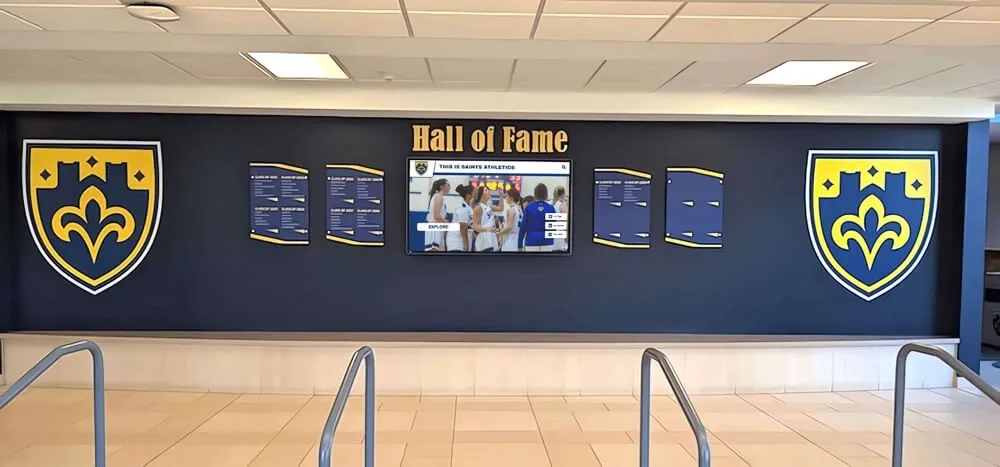
Hall of Fame Displays
Formal hall of fame programs deserve dedicated presentation:
Induction Class Recognition
Honor each hall of fame class appropriately:
- Annual induction class displays showing newest inductees
- Individual inductee profiles with photographs and achievements
- Ceremony programs and special recognition materials
- Historical timeline showing all induction classes
Effective hall of fame displays balance honoring recent inductees while maintaining visibility for entire hall of fame membership across all induction years.
Selection Criteria Communication
Transparent recognition standards strengthen program credibility:
- Display hall of fame selection criteria
- Explain nomination and selection processes
- Show selection committee information
- Communicate how community members can nominate candidates
Making criteria visible demonstrates the prestige of hall of fame recognition while encouraging broader community participation in identifying deserving candidates.
Historical Memorabilia Collections
Older items require special handling:
Preservation Considerations
Protect historical items from deterioration:
- UV-protective glass for light-sensitive materials
- Climate-controlled display cases for delicate items
- Archival mounting materials for photographs and documents
- Regular condition monitoring for valuable pieces
Consult preservation specialists for particularly valuable or delicate historical items, especially materials more than 50 years old.
Digitization for Preservation
Create digital backups of historical materials:
- Photograph fragile documents and materials
- Scan historical photographs at high resolution
- Record oral histories from alumni and retired coaches
- Create digital archives ensuring information survives if physical items deteriorate
Digital preservation allows eventual display rotation while maintaining permanent records of all historical materials.
Multi-Purpose Facility Displays
Athletic facilities serving multiple sports require flexible systems:
Interchangeable Display Components
Design for easy content changes:
- Magnetic mounting systems for changeable graphics
- Digital screens with sport-specific content playlists
- Modular display cases with adjustable configurations
- Removable graphics panels
Flexibility proves particularly valuable in facilities hosting tournaments where temporary displays recognize visiting teams or special events.
Inclusive Multi-Sport Recognition
Ensure balanced representation across programs:
- Proportional display space allocation
- Rotating featured sport schedules
- Equal quality presentation across all programs
- Recognition for both competitive and participation achievements
Athletic directors report that balanced multi-sport displays strengthen facility culture, helping all athletes feel valued regardless of whether they compete in high-profile or less prominent programs.
Budget-Friendly Display Solutions
Effective sports recognition doesn’t require unlimited budgets. Creative approaches deliver impact within resource constraints:
DIY Display Options
Many display elements support in-house creation:
Custom Built Cases
Schools with carpentry capabilities can build displays:
- Plywood or MDF case construction
- Plexiglass fronts as glass alternatives
- LED rope lighting for illumination
- Simple locks for security
While DIY cases may lack the polish of commercial options, proper construction and finishing create acceptable displays at significant cost savings.
Repurposed Display Materials
Look for creative alternatives:
- Retail store fixtures from closing businesses
- Used library display cases
- Architectural salvage materials
- Donated display components from local businesses
Many schools acquire quality display cases for minimal cost through strategic sourcing and business community connections.
Phased Implementation
Spread costs across multiple budget cycles:
Priority-Based Rollout
Start with highest-impact displays:
- Year 1: Main lobby championship trophy display
- Year 2: Hall of fame recognition system
- Year 3: Individual sport-specific displays
- Year 4: Historical memorabilia showcase
Phased implementation allows refinement of earlier phases based on experience before committing to complete systems.
Incremental Upgrades
Improve existing displays gradually:
- Add lighting to existing cases
- Upgrade signage and information cards
- Install digital screens supplement existing cases
- Improve surrounding environmental design
Even modest upgrades significantly enhance overall presentation quality when thoughtfully planned and consistently implemented.
Measuring Display Effectiveness
Assess whether your sports display case investments achieve intended recognition impact:
Engagement Indicators
Observable signs of display success:
- Visitors stopping to examine displays
- Athletes bringing family members to view recognition
- Alumni mentioning displays during facility tours
- Social media sharing of display photographs
Track these informal indicators through observation and social media monitoring to gauge display engagement levels.
Formal Assessment Methods
More structured evaluation approaches:
- Student surveys about display awareness and impact
- Alumni feedback regarding recognition programs
- Prospective athlete family reactions during recruiting visits
- Community member comments during facility events
Regular assessment ensures display investments deliver intended benefits while identifying opportunities for improvement.
Impact on Program Culture
Long-term recognition program effects:
- Athlete motivation and training commitment
- Alumni engagement and program support
- Community pride in athletic excellence
- Recruiting advantages with prospective student-athletes
While harder to measure directly, schools with comprehensive recognition systems consistently report stronger program cultures, higher athlete satisfaction, and improved competitive performance compared to institutions where athletic achievements receive minimal visible recognition.
Common Display Mistakes to Avoid
Learn from typical challenges that diminish sports display case effectiveness:
Overcrowding Displays
Cramming too much into limited space:
- Cluttered cases difficult to view and appreciate
- Individual achievements lost in crowded presentations
- Poor visual appeal reducing overall impact
- Difficult maintenance access for cleaning and updates
Resist the temptation to display everything simultaneously. Rotate items seasonally and move older achievements to digital displays or storage, maintaining clean uncluttered physical presentations.
Inconsistent Presentation Quality
Mixed quality levels within single facilities:
- Some sports receive professional displays while others get handmade presentations
- Older displays deteriorate while newer cases remain pristine
- Inconsistent lighting, signage, and information formatting
- Haphazard placement without cohesive planning
Even budget constraints don’t excuse inconsistent quality. Better to phase implementation systematically than create displays with obviously disparate quality levels.
Neglecting Information and Context
Displays without adequate explanation:
- Trophies without labels or achievement descriptions
- Jerseys displayed without athlete identification
- Memorabilia lacking historical context
- Assumption viewers understand significance without explanation
Remember that viewers—including prospective students and community visitors—may not understand achievement significance without clear contextual information.
Failing to Plan for Growth
Static systems without expansion capacity:
- Fixed shelving that can’t accommodate new trophies
- Display areas with no room for future additions
- Recognition systems assuming achievement levels remain constant
- No consideration for emerging sports programs
Plan displays assuming continued and growing success. Better to have expandable systems accommodating future achievements than displays maxed out within years requiring complete replacement.
Planning Your Display Project
Systematic project planning increases likelihood of successful implementation:
Assessment and Planning Phase
Stakeholder Input
Gather perspectives from key groups:
- Athletic directors regarding program priorities
- Coaches identifying important achievements and memorabilia
- Alumni sharing historical knowledge and items
- Facilities staff regarding maintenance and practical considerations
Inclusive planning processes generate broader buy-in while producing better informed decisions.
Professional Consultation
Consider expert guidance:
- Display case manufacturers and vendors
- Museum exhibit designers
- Preservation specialists for historical items
- Interactive technology providers for digital integration
Professional consultation proves particularly valuable for significant investments, ensuring proper planning before committing substantial resources.
Implementation
Timeline Development
Realistic project scheduling:
- Design and approval phase duration
- Procurement and manufacturing lead times
- Installation scheduling around facility use
- Content preparation and organization
Avoid rushed implementations. Quality display projects require adequate time for proper planning, procurement, and installation.
Budget Management
Control costs without compromising quality:
- Detailed cost estimates from multiple vendors
- Value engineering identifying cost savings
- Contingency budgets for unexpected expenses
- Phasing options if full implementation exceeds available funding
Launch and Ongoing Management
Dedication Events
Celebrate display completion:
- Formal unveiling ceremonies
- Alumni and community recognition events
- Media coverage of new displays
- Social media campaigns showcasing recognition improvements
Launch events maximize impact while demonstrating institutional commitment to athletic recognition.
Maintenance Planning
Establish sustainable ongoing management:
- Assign specific maintenance responsibilities
- Schedule regular cleaning and updates
- Plan content rotation cycles
- Budget for ongoing supplies and replacements
Successful displays require sustained attention. Building maintenance into regular operations ensures long-term success.
Transforming Athletic Recognition
Well-designed sports display cases do more than showcase trophies and jerseys—they create recognition environments that inspire current athletes, honor past excellence, and build institutional pride spanning generations. Whether you’re planning comprehensive display renovations or seeking to improve existing recognition systems, thoughtful approaches to trophy, jersey, and memorabilia presentation deliver lasting benefits extending far beyond simple display functionality.
The most effective displays balance tradition with innovation, honor individual excellence while celebrating team achievement, and create recognition systems that grow sustainably as your athletic programs continue accumulating accomplishments worthy of prominent showcase.
Ready to transform your athletic recognition? Discover how modern display solutions can help your organization create impactful displays that celebrate athletic excellence, preserve institutional history, and inspire future achievement for years to come.