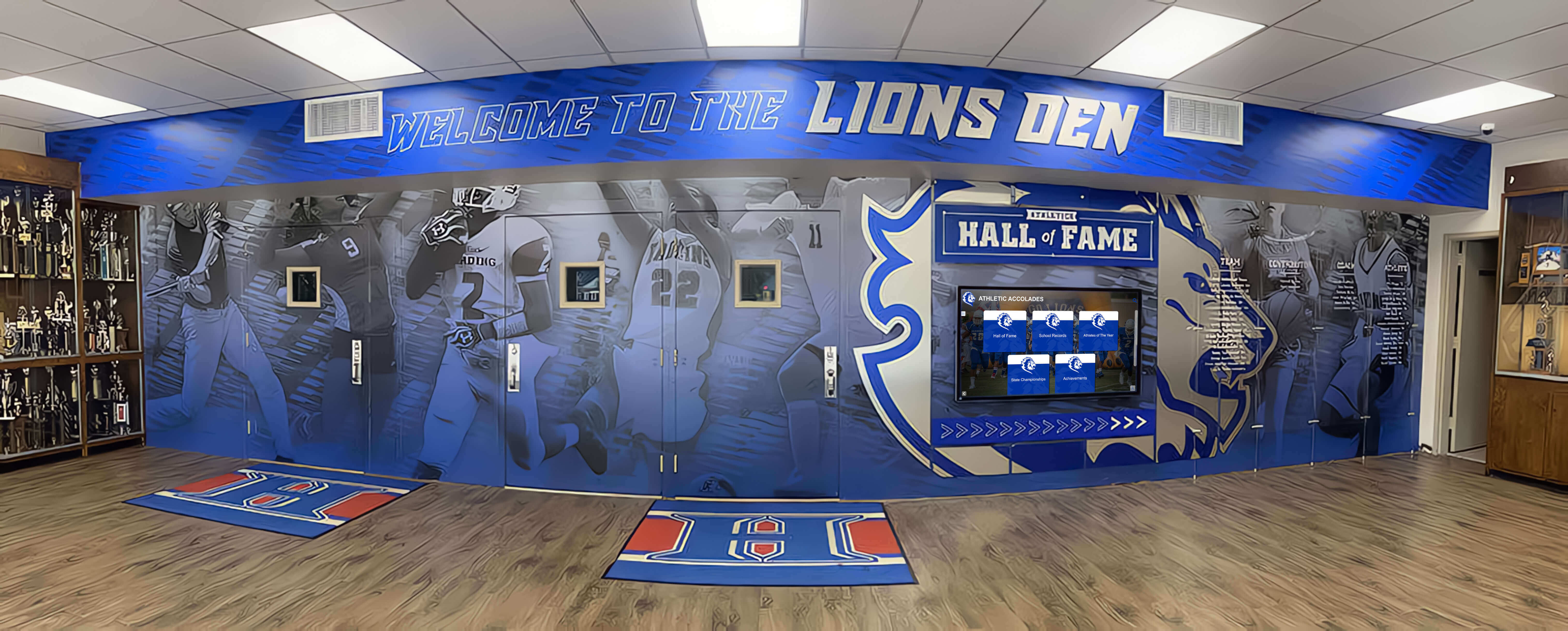




Intent: research — a school trophy case uv filter film inspection is a structured evaluation of the protective film applied to the glass or acrylic glazing panels of enclosed display cases, performed by facilities staff, athletic directors, or archives personnel to assess whether the film’s UV-blocking capability, adhesion integrity, and optical clarity remain adequate to protect the trophies, photographs, jerseys, paper awards, and memorabilia displayed inside. UV-filter film is a thin laminate — applied directly to the interior or exterior face of the glazing panel — that absorbs or reflects the ultraviolet wavelengths of light responsible for photochemical fading, dye degradation, and structural deterioration in organic display materials. When this film delaminates from the glass surface, develops internal haze, or yellows to the point where it alters the visual appearance of the case interior, it requires inspection-triggered replacement rather than continued reliance on a film that may no longer deliver its rated UV-attenuation performance. This guide explains the three primary inspection criteria — adhesion condition, optical haze, and discoloration — provides a step-by-step inspection sequence, a pass/fail checklist table, an inspection frequency table by case type, and guidance on replacement timing.
UV-filter film on school trophy case glazing degrades slowly and without dramatic warning. The film that protected a case’s contents on installation day does not fail all at once — it loses performance gradually as the UV-absorbing compounds within the film exhaust their capacity, as the adhesive layer weakens through thermal cycling, and as the film substrate yellows from accumulated UV exposure. By the time a facilities inspector notices that the trophies inside look slightly faded or that the glass has taken on a faint amber tint, the film has often been underperforming for a full season or more.
A school trophy case UV-filter film inspection addresses this gradual failure before it becomes documented artifact damage. The inspection takes fewer than fifteen minutes per case, focuses on three observable failure modes that any trained facilities staff member can evaluate without specialized equipment, and produces a dated record of each case’s film condition — the same record discipline that supports academic history archiving programs for schools and the physical preservation programs those archives depend on.

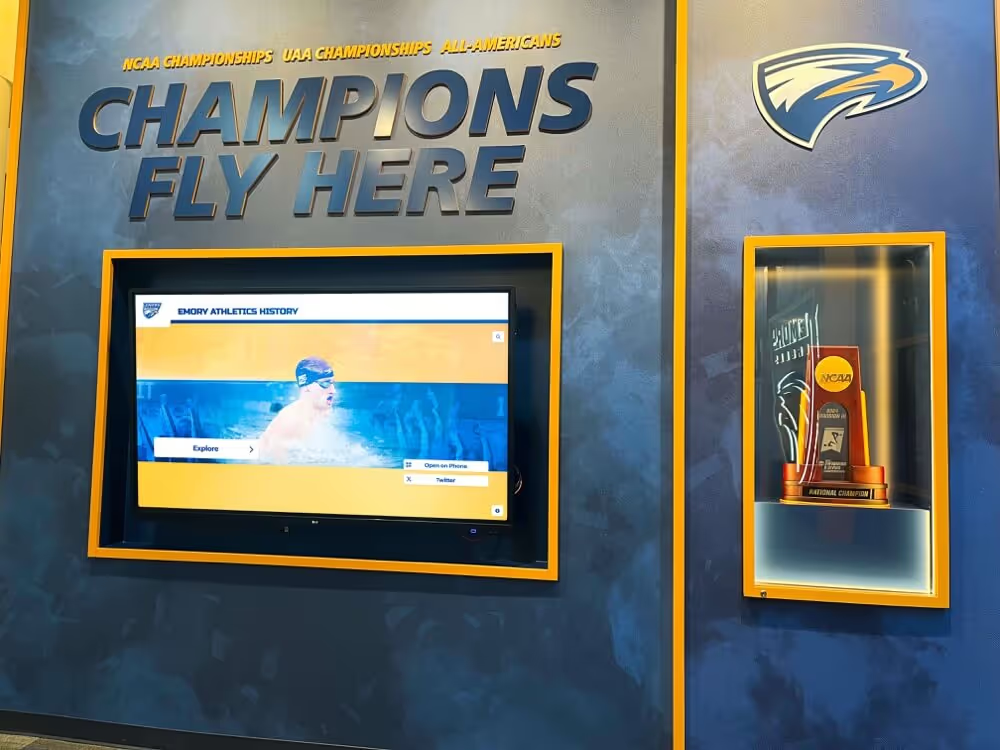
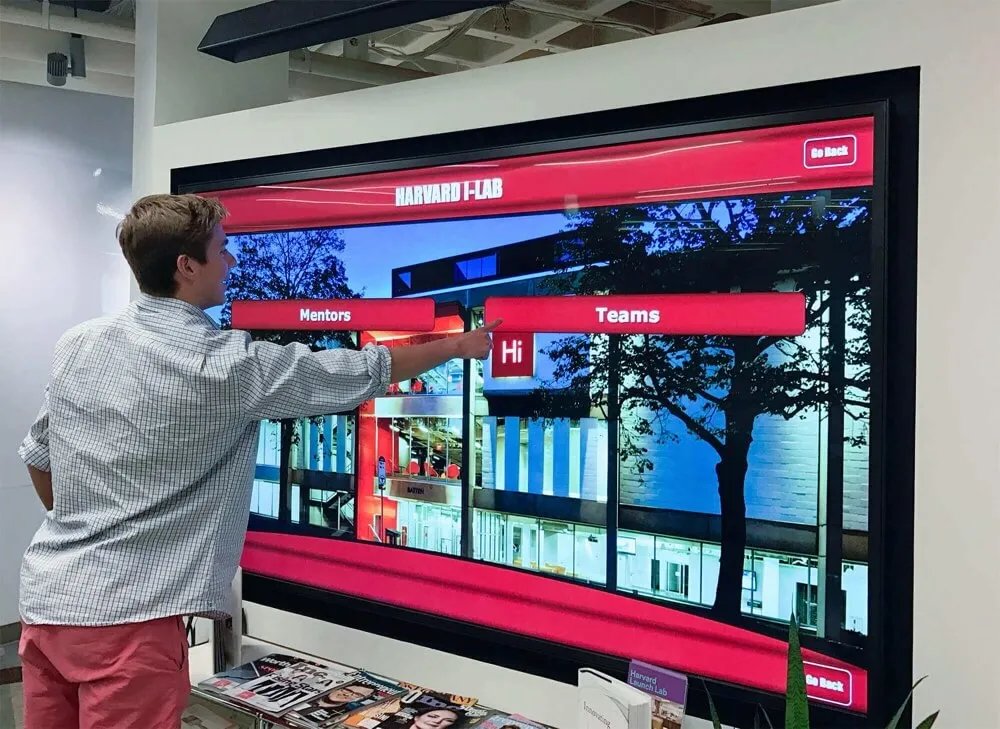
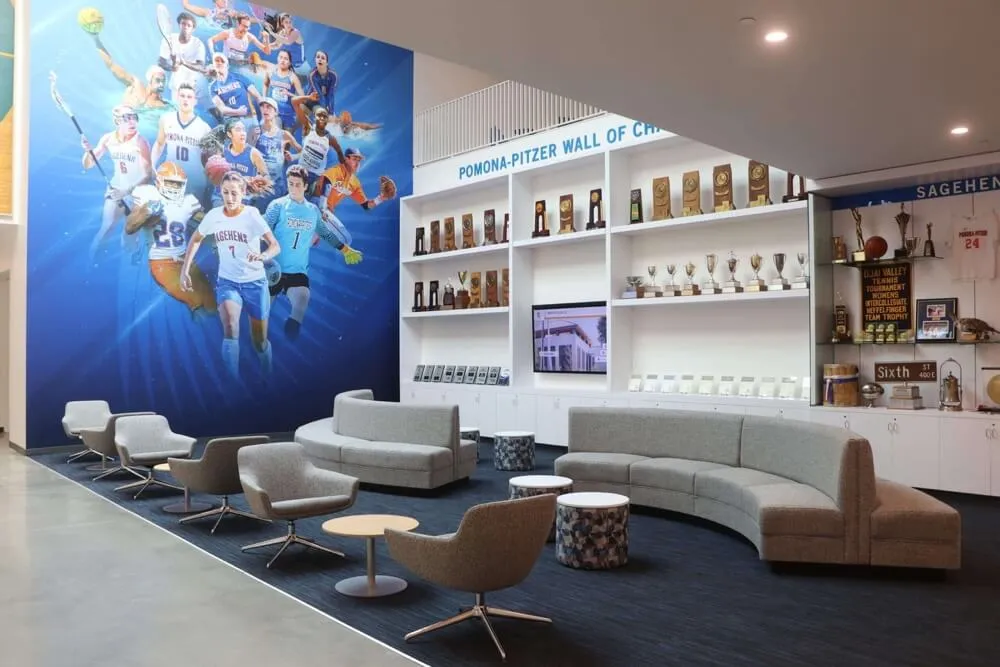
Trophy cases housing championship hardware, retired jerseys, and decades of athletic memorabilia depend on functional UV-filter film to limit the photochemical fading that accumulates with every hour of light exposure — inspection confirms the film is still providing that protection
What UV-Filter Film Is and Why Trophy Cases Use It
UV-filter film is a thin polyester or polycarbonate laminate — typically between 50 and 100 microns thick — that is applied to the glass or acrylic glazing panels of enclosed display cases. The film contains UV-absorbing compounds that intercept ultraviolet radiation before it reaches the case interior, attenuating the portion of the light spectrum most responsible for photochemical degradation of organic materials.
School trophy cases are illuminated environments. Whether the light source is fluorescent, LED, or incandescent, a portion of the light that enters the case carries UV content. Exterior-facing cases or cases positioned near windows receive additional UV load from daylight. Without a UV-filtering layer on the glazing, the cumulative UV dose absorbed by display materials accumulates continuously — fading the dyes in fabric jerseys, bleaching the photographic emulsions in printed photographs and award prints, yellowing paper certificates and honor ribbons, and affecting the surface finishes on some trophy components.
UV-filter film is not a UV-proof barrier — it is a UV-attenuating layer. Its rated performance describes how much UV radiation it blocks under its specified transmission curve. That performance is not permanent: the UV-absorbing compounds that do the work of blocking UV radiation are themselves consumed by exposure over time. A film that provided strong UV attenuation on installation may provide substantially reduced attenuation years later, with no visible change detectable from a casual hallway view of the case.
This performance decay — along with the physical adhesion failures and optical haze that develop independently — makes periodic inspection a functional necessity, not a precaution reserved for unusual circumstances.
What Gets Damaged When UV-Filter Film Fails
Understanding what UV exposure damages in a typical school trophy case helps inspection staff prioritize which cases warrant more frequent assessment.
Photographic prints and award certificates: Photographic emulsions and inkjet or dye-sublimation prints are among the most UV-sensitive materials commonly displayed in trophy cases. Color photographs fade asymmetrically — cyan and yellow dyes typically shift faster than magenta, producing a color cast that becomes permanent. Award certificates printed on standard bond paper are similarly sensitive. Schools that display academic award certificates, recognition categories, and year-by-year honor designations alongside athletic hardware in the same case face a compound preservation challenge: paper-based recognition materials are often more UV-sensitive than the metal and plastic trophy components near them.
Fabric displays: Retired jersey numbers, fabric letter patches, color guard textiles, and banner materials all contain organic dyes that shift under extended UV exposure. Fabric fading is typically irreversible — the dye chemistry cannot be restored once it has photochemically degraded.
Trophy surface finishes: Many trophy components include lacquered or UV-cured surface finishes that develop a chalky, hazy appearance under extended UV exposure. Trophy cups and columns that have yellowed or developed surface irregularities from a failed UV-filter film often resemble general aging — the UV contribution to their condition is not immediately obvious without a film inspection history.
Paper-based archival materials: Schools whose trophy cases include newspaper clippings, program covers, and historical documents from championship seasons face the highest preservation risk when UV film fails. These materials are often irreplaceable — they represent the institutional recognition history that no replacement copy can restore.
Three Failure Modes to Inspect
UV-filter film on school trophy case glazing fails in three distinct and inspectable modes. A complete inspection evaluates all three. Any one of the three can compromise the film’s protective function independently of the others.
1. Adhesion Failure
Adhesion failure describes the loss of bond between the film laminate and the glazing surface. Adhesion failure presents in several visible forms:
Bubbles: Small to large air pockets trapped between the film and glass, visible as raised areas that distort the film surface. Early-stage bubbles are small and may cluster near the edges of the panel; advanced adhesion failure produces bubbles across the central panel area. Bubbles indicate that the adhesive has released locally — the film continues to cover the glass but is no longer bonded to it at the bubble location, and UV attenuation is no longer reliably controlled at that point.
Edge lifting: The film laminate has separated from the glass along one or more edges, creating a visible gap that may curl inward or collect dust. Edge lifting is the most common early sign of adhesion failure and often progresses inward from the corners where thermal stress concentrates. Edge lifting also creates an entry point for moisture and particulate between the film and glass.
Delamination: Large-area separation where the film has pulled away from the glazing over a significant portion of the panel. Delamination may be visible as wrinkling, creasing, or a visibly non-planar surface on the glass face. Once delamination progresses beyond early-stage bubbling, the film cannot be re-adhered without replacement.
2. Optical Haze
Optical haze describes the development of a milky, foggy, or diffuse appearance within the film layer — distinct from dirt on the glass surface, which can be wiped away, or from case interior condensation, which dissipates. Haze within the film itself is a permanent optical change resulting from one of two processes: degradation of the UV-absorbing compounds within the film substrate, or micro-cracking of the film’s polymer structure from repeated thermal cycling.
Haze reduces the optical clarity of the glazing, making case contents appear less distinct from outside the case. More critically, a hazy film may provide reduced UV attenuation even if the film remains physically bonded to the glass — the chemical changes that produce haze indicate degradation of the same compound system responsible for UV blocking.
Testing for haze: view the case contents from a direct, perpendicular line of sight, then from an oblique angle. Haze is often more visible at oblique angles where the film thickness presents a longer light path. Wipe the exterior glass surface clean before evaluating — surface contamination and internal haze can look similar at perpendicular viewing angles.
3. Discoloration and Yellowing
UV-filter film yellows over time as the UV-absorbing compounds within the film substrate accumulate photochemical byproducts. Early yellowing may be difficult to detect against the background of normal case lighting. More advanced yellowing produces a visible amber tint to the glass panel and a corresponding color shift in how case contents appear — whites appear cream-colored, silvers appear warmer, and fabric displays show an overall tonal shift.
Yellowing is distinguished from glass tinting (which the glazing itself may have from manufacture) by comparing the color of the film-covered area against an uncoated area — typically a small edge zone where the film does not fully reach the frame. If the panel center appears significantly more amber than the uncoated edge zone, the film has yellowed.
Pre-Inspection Preparation
Gather the following before beginning the UV-filter film inspection sequence:
- A clean microfiber cloth and glass cleaner for surface cleaning
- A strong flashlight or portable work light for backlighting
- A clipboard and inspection form or digital checklist for recording findings
- A camera or phone for photographing adhesion failures, haze areas, and discoloration
- A measurement tape or ruler for estimating the size and extent of any adhesion failures found
Do not use abrasive materials or solvents on film-coated glazing panels. Standard glass cleaner applied to the exterior surface and wiped with a clean microfiber cloth is appropriate for pre-inspection surface cleaning. Solvents, ammonia-based cleaners applied to the film edge, or scraping tools can damage the film laminate and complicate inspection findings.
Eight-Step UV-Filter Film Inspection Sequence
Apply this sequence to each enclosed trophy case with film-coated glazing on a consistent inspection schedule. A single pass through the eight steps covers adhesion, haze, and discoloration as complete inspection criteria.
Step 1: Record the starting condition and lighting environment. Before touching the case, note the ambient lighting in the inspection area. Cases inspected under direct fluorescent or LED overhead lighting may show haze differently than cases inspected under lower ambient conditions. Record the date, case identifier, and ambient lighting condition in the inspection log. If the case has interior lighting, turn it on for the inspection — some adhesion failures are only visible from the interior face when the interior is lit.
Step 2: Clean the exterior glazing surface. Wipe the full exterior face of each glazing panel with a clean microfiber cloth lightly dampened with glass cleaner. Allow the surface to dry before evaluating. Surface smudges, fingerprints, and cleaning solution residue can mimic the appearance of haze within the film — cleaning the surface first ensures that findings reflect film condition, not surface contamination.
Step 3: Inspect for edge lifting at all four panel edges and corners. Beginning at one corner, examine the film perimeter where the laminate meets the frame or the edge of the glass. Pass the edge of a fingernail gently along the film edge — do not attempt to lift the film, but test for a visible gap or a slight catch that indicates the film has separated from the glass edge. Corners are the highest-risk location for early lifting. Record the location, length, and approximate gap size of any lifting found. Photograph all findings.
Step 4: Inspect for bubbles across the full panel area. With the exterior surface clean and the interior lights on, examine the film surface from a perpendicular viewing angle. Use the flashlight from the interior face — through the open door if accessible, or through adjacent glass panels — to backlight the film. Bubble locations appear as lighter areas against the panel surface. Estimate and record the count, approximate size, and distribution of any bubbles observed. Note whether the bubble pattern is concentrated at edges, at corners, or distributed across the panel center — distribution pattern indicates the failure mode and likely progression rate.
Step 5: Test for haze from perpendicular and oblique viewing angles. With the exterior surface clean, step back two to three feet and examine each panel from a perpendicular angle. The panel should appear optically clear — case contents visible without a milky or diffuse quality. Then shift position to approximately 30 degrees from the panel surface and examine again. Haze that is barely perceptible at the perpendicular angle may be clearly visible at the oblique angle. Record whether haze is absent, faint, or definite. Photograph the panel from both angles.
Step 6: Evaluate discoloration against the frame edge zone. Locate a small uncoated zone at the panel edge — typically a 2 to 5 mm band where the film laminate does not extend fully to the frame — and compare its color to the center panel area. Standard clear glass has a faint green-gray tint when viewed at the edge; the film-coated center area should match this tint or appear slightly cooler depending on the film type. An amber or warm-yellow difference between the edge zone and the panel center indicates yellowing of the film. Record the presence and estimated intensity of any color difference observed.
Step 7: Inspect the interior film face if the case is accessible. Open the case and examine the interior face of the glazing — the film side if the film is applied to the interior face, or the bonded surface visible through the glass if applied to the exterior. Interior face inspection reveals delamination patterns, haze, and adhesive residue that may not be visible from outside. Note any areas where the film surface shows wrinkling, creasing, or silvery adhesive residue that indicates the adhesive has released and recontacted the glass surface.
Step 8: Complete the inspection record. Record findings for each panel with: date, case ID, inspector name, panel location (door, side panel, top panel), adhesion finding (pass/fail with description), haze finding (absent/faint/definite), discoloration finding (absent/present with description), photographs taken, and recommended action. A pass on all three criteria earns a “Serviceable” rating. Any fail on any criterion earns a rating of “Monitor,” “Restricted,” or “Replace” depending on severity.
UV-Filter Film Pass/Fail Inspection Criteria
The checklist below presents the evaluation criteria for each inspection point as a printable field reference. Complete one entry per glazing panel per inspection cycle. Any single “Fail” result warrants the action listed before the case is returned to unqualified service.
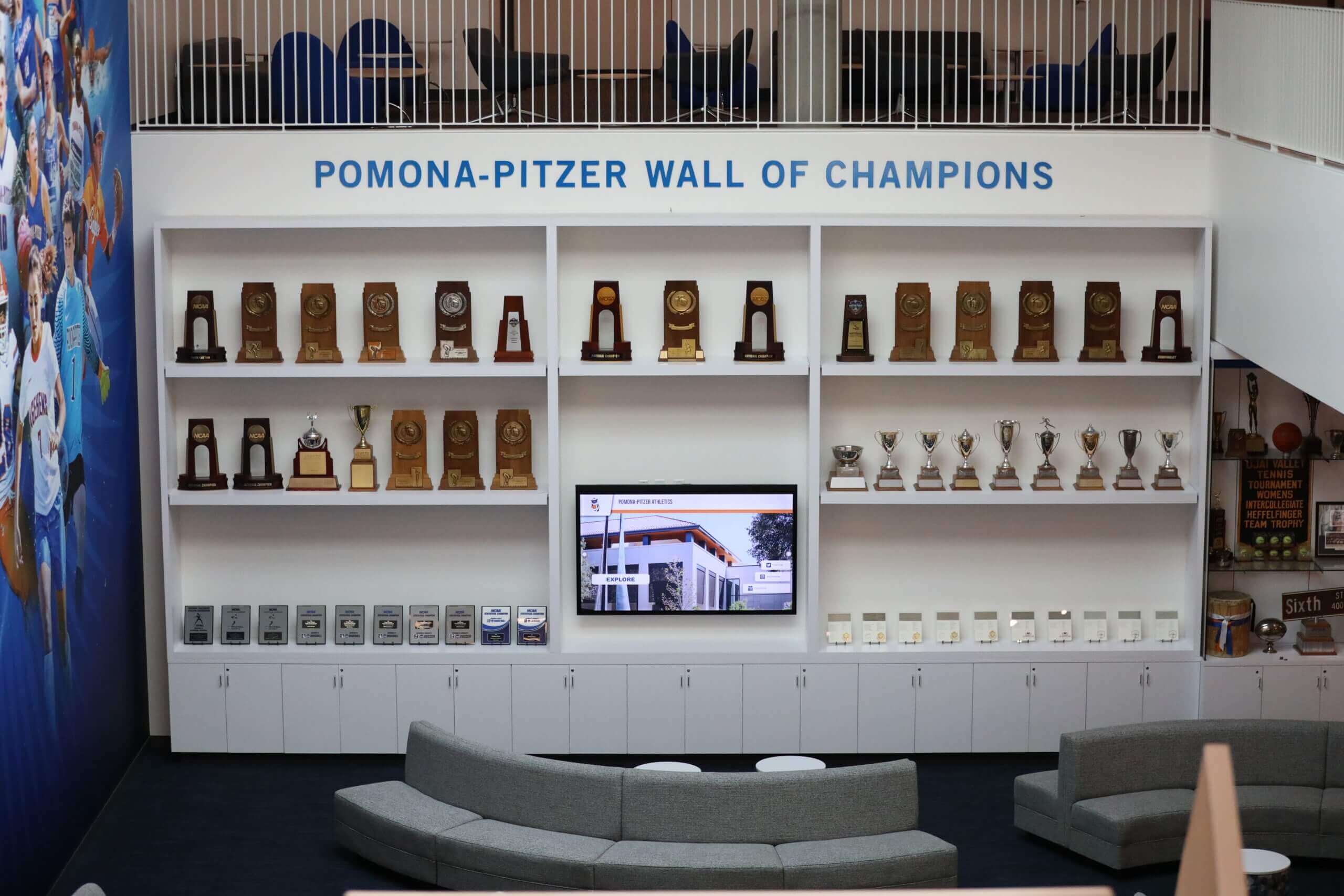
Enclosed trophy display cases housing championship hardware and athletic memorabilia rely on UV-filter film on their glazing panels to limit the cumulative UV dose absorbed by metals, fabrics, photographs, and paper-based recognition materials
| Inspection Criterion | Pass Condition | Fail Condition | Action on Fail |
|---|---|---|---|
| Edge lifting — corners | No gap or separation detectable at corner zones | Any gap or visible lifting at one or more corners | Document size and location; schedule re-inspection in 60 days or replacement if lifting exceeds 10 mm |
| Edge lifting — straight edges | Full panel perimeter bonded flush; no detectable separation | Separation along any straight edge zone | Document; monitor quarterly; replace if lifting progresses past the frame shadow zone |
| Bubble presence — edge zone | No bubbles within 25 mm of panel perimeter | One or more bubbles in the edge zone | Document and monitor; edge bubbles typically indicate early adhesion degradation |
| Bubble presence — central panel | No bubbles in the central panel area | Any bubble in the central panel area | Flag for replacement evaluation; central bubbles indicate advanced adhesion failure |
| Haze — perpendicular view | Optically clear; case contents visible without milky or diffuse quality | Faint or definite milky or diffuse quality at perpendicular view | Document; definite haze warrants replacement recommendation regardless of other findings |
| Haze — oblique view | No additional haze detectable at 30-degree oblique angle | Haze visible at oblique angle not apparent at perpendicular view | Document as early-stage haze; increase inspection frequency; schedule replacement within one academic year |
| Discoloration vs. edge zone | Film-coated panel matches or is cooler than the uncoated edge zone color | Amber or warm-yellow shift relative to the uncoated edge zone | Document intensity; mild yellowing warrants replacement within 12 months; pronounced yellowing warrants immediate replacement |
| Interior face condition (if accessible) | Film surface flat and bonded; no wrinkling or adhesive silvering | Wrinkling, creasing, or silvery released-adhesive pattern visible | Confirm from exterior; confirmed delamination warrants replacement |
A case that passes all eight criteria receives a “Serviceable” rating and is re-inspected at its standard interval. A case with one or more monitor-level findings — early edge lifting, oblique-only haze, mild yellowing — is re-rated “Monitor” and re-inspected one interval sooner. A case with advanced adhesion failure, definite perpendicular haze, or obvious yellowing is rated “Replace.” At that stage the film is no longer reliably providing its rated UV-attenuation performance, and continued reliance on it exposes the case contents to preventable degradation.
Inspection Frequency by Case Type
| Case Type and Location | Recommended Inspection Interval | Notes |
|---|---|---|
| Exterior-facing or skylight-adjacent cases | Every 6 months | Highest UV load; film exhausts faster; check for yellowing at every inspection |
| Main lobby or entrance corridor cases with adjacent window exposure | Every 6 months | Window-adjacent cases carry significant UV load even with window glass attenuating some UV |
| Interior corridor cases with standard overhead lighting (LED or fluorescent) | Annually | Lower UV load; standard inspection sufficient unless staff reports a visual change |
| Archive or storage-adjacent cases accessed infrequently | Annually | Lower daily light dose but film still degrades on UV exposure calendar; do not skip |
| Cases with a documented prior film failure or recent replacement | 6 months post-replacement, then annually if serviceable | Post-replacement inspection confirms installation quality; annual thereafter if findings are clear |
| Any case adjacent to a south-facing window | Every 6 months | South-facing orientation produces the highest cumulative UV dose from direct solar exposure |
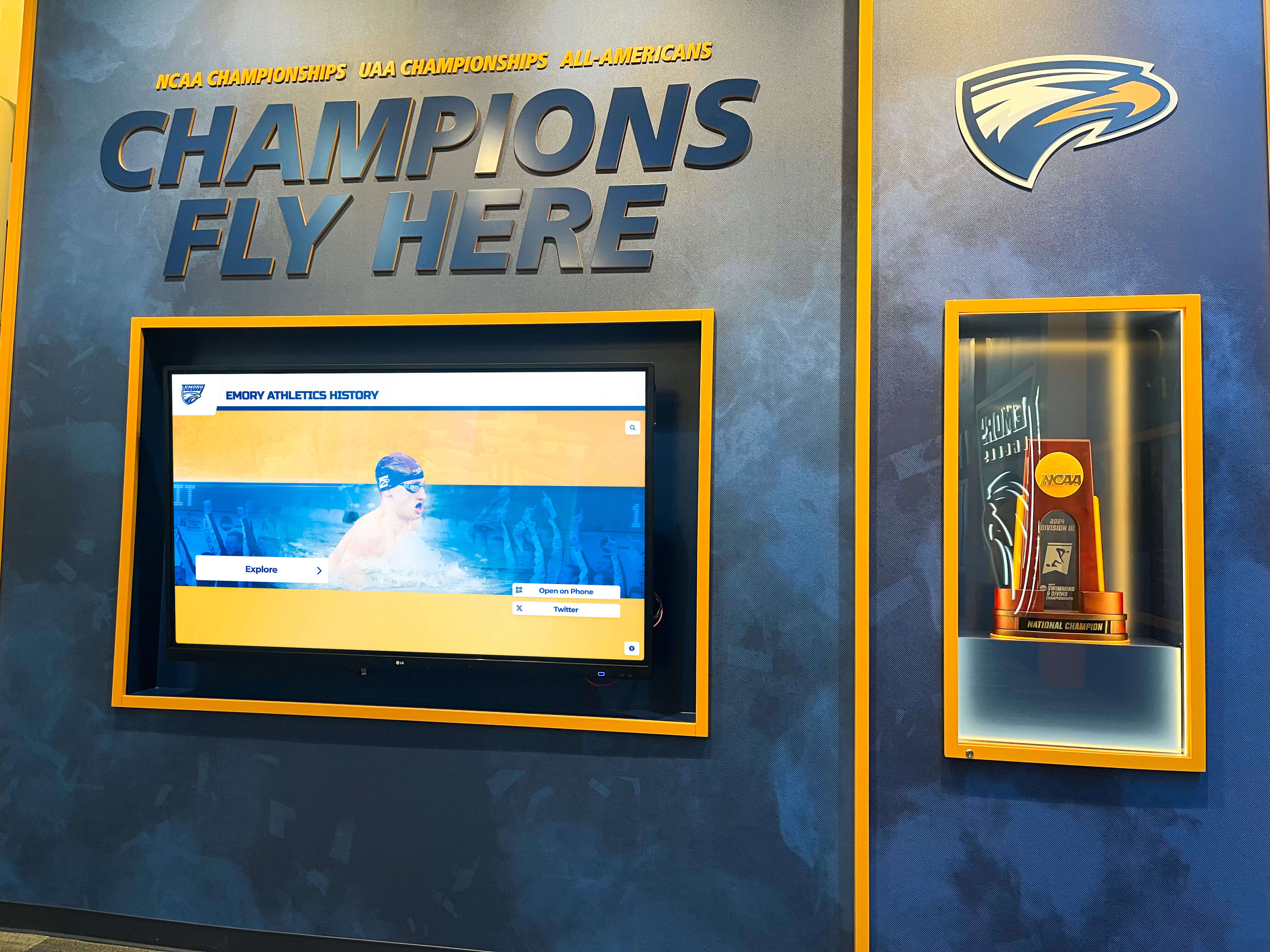
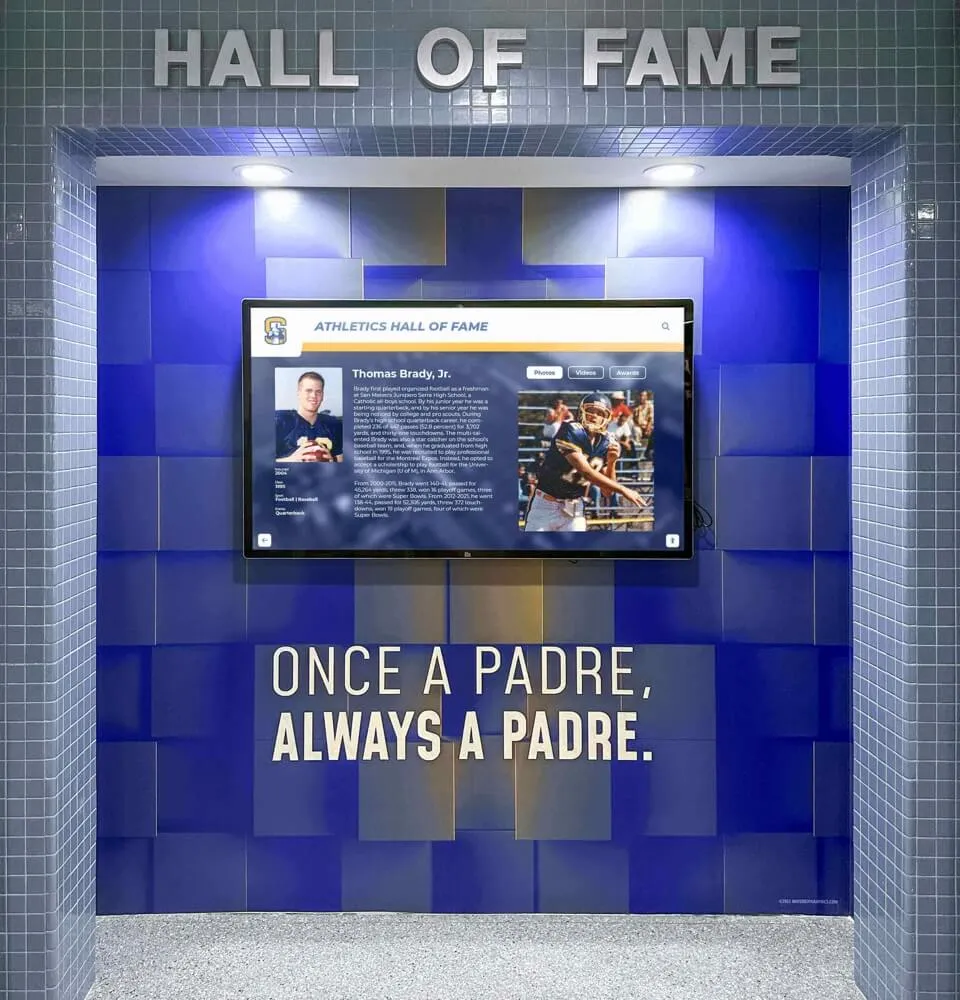
NCAA championship trophies and athletic memorabilia represent irreplaceable institutional records — UV-filter film on display case glazing limits the cumulative light-dose damage that accumulates across every day of display
Replacement Timing: When Inspection Findings Trigger Action
Replacement timing decisions follow directly from inspection findings. The inspection sequence produces pass/fail results on three criteria; the replacement decision follows from which criteria fail and how severely.
Immediate replacement is warranted when:
- Central-panel bubbles are present (advanced adhesion failure across the primary display area)
- Haze is clearly visible from a perpendicular viewing angle without oblique testing
- Yellowing is pronounced — the panel center appears distinctly amber relative to the edge zone
- Delamination is confirmed on the interior face
- Multiple criteria fail simultaneously, even at early-stage severity on each
Replacement within one academic year is appropriate when:
- Oblique-angle haze is detectable but not visible from perpendicular
- Mild yellowing is present (faint amber shift relative to edge zone)
- Edge lifting at corners is documented but not yet progressing toward the central panel
- The film has been in service for a period consistent with typical performance limits for its film type — consult installation records or the film manufacturer’s guidance for the specific product installed
Monitor without immediate replacement applies when:
- Early edge lifting is limited to a corner zone within the frame shadow, not yet exposing case contents to unattenuated light
- No haze or yellowing is detectable at perpendicular or oblique viewing angles
- All other criteria pass
Do not attempt to re-adhere separated film sections with adhesive tape or a squeegee on an already-failing adhesion layer. Partial re-adhesion attempts trap air and contamination between the film and glass, accelerating haze formation and producing a worse optical result than the pre-intervention condition. When replacement is indicated, have the film removed by a professional window-film or display-case installer who can clean the glass substrate completely before applying new film.
Connecting Film Inspection to the School’s Recognition Record
A functional UV-filter film slows the rate at which physical display materials degrade. It does not stop degradation entirely, and it cannot undo degradation that has already occurred before the film was applied or during a period when it was failing. Physical preservation measures are necessary — and also insufficient as the sole protection strategy for an institution’s recognition record.
Schools whose trophy cases include materials representing decades of achievement — championship seasons from athletic programs spanning generations of students and families, honor roll recognition histories, and photographic records of the individuals behind each award — have an institutional interest that extends beyond the physical objects. For programs managing academic recognition programs and multi-category achievement archives, the recognition story cannot be stored only in the physical case. The information embedded in those trophies — who the athletes were, what records they set, what the award represented within the program’s history — survives physical degradation only if a parallel digital record exists.
Schools that connect physical UV-protection discipline to digital archiving understand the complementarity: the UV-filter film slows the rate at which the physical object degrades; the digital catalog ensures that when physical degradation does occur, the institutional record survives in full. For recognition programs that span multiple decades and cover academic history archiving, institutional memory, and cross-generational award documentation, this two-layer approach — physical protection plus digital catalog — provides a resilience that neither layer achieves alone.
Schools implementing honor roll recognition programs and multi-year academic achievement archives alongside athletic trophy collections benefit from digital platforms that present both sets of recognition history in a unified, searchable interface — something that no physical display configuration can replicate regardless of how well its UV-filter film is maintained.
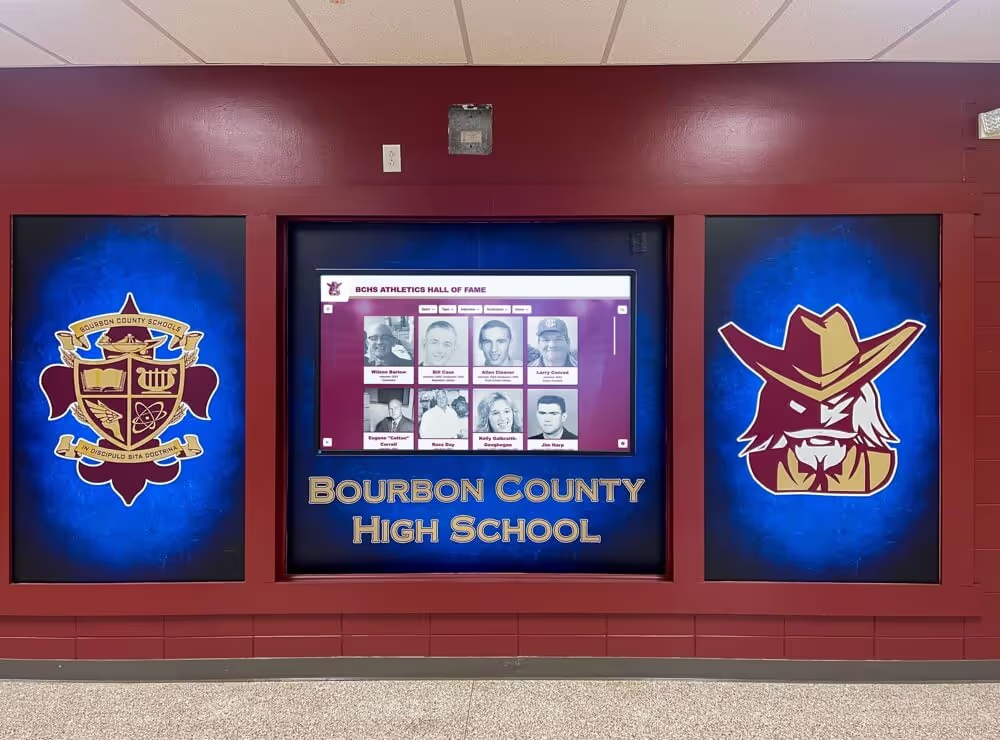
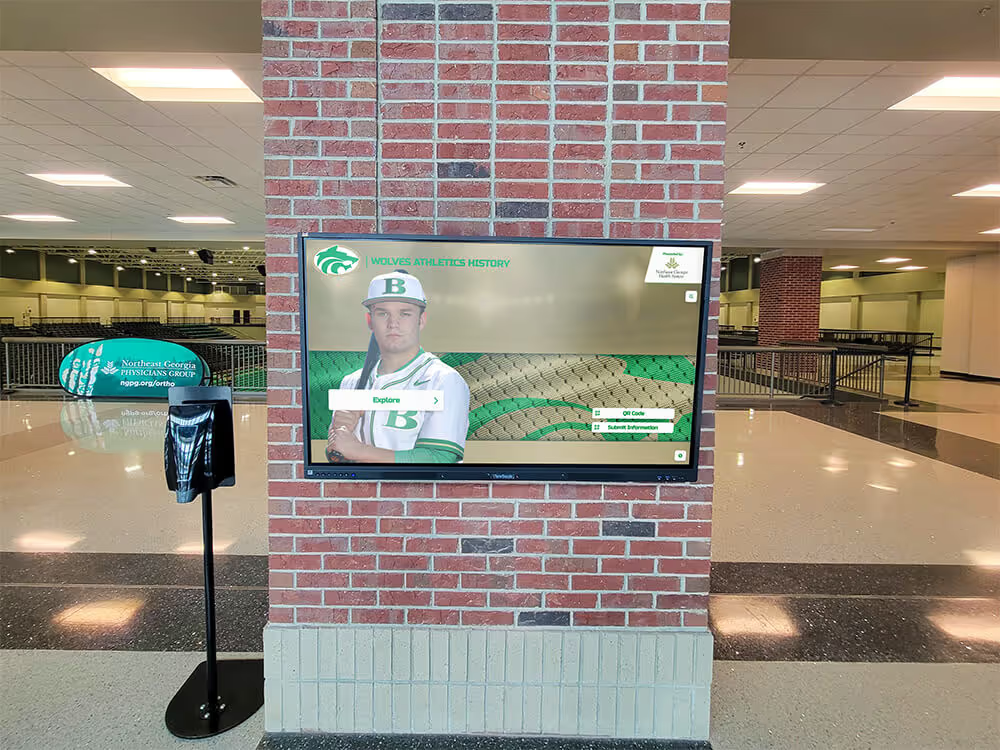
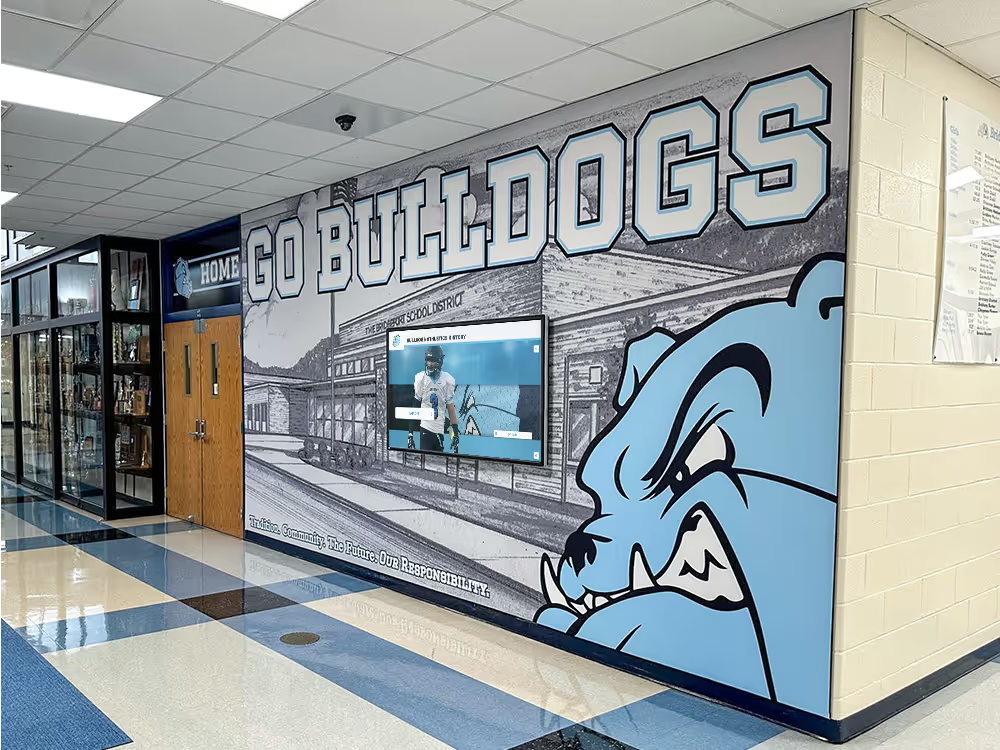
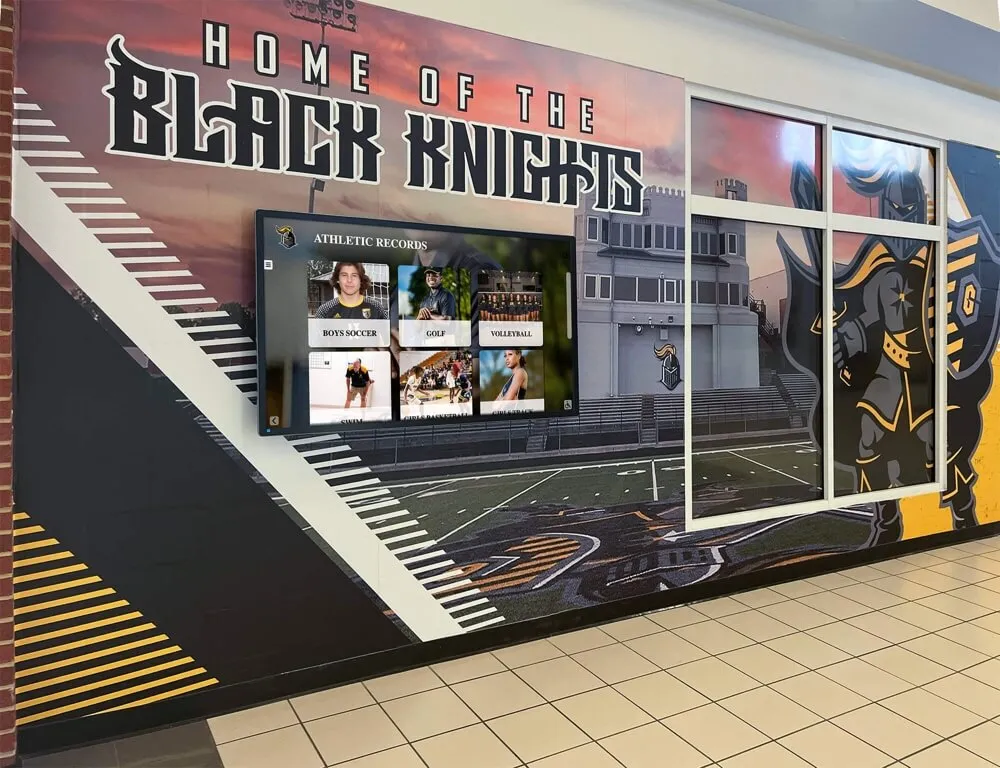
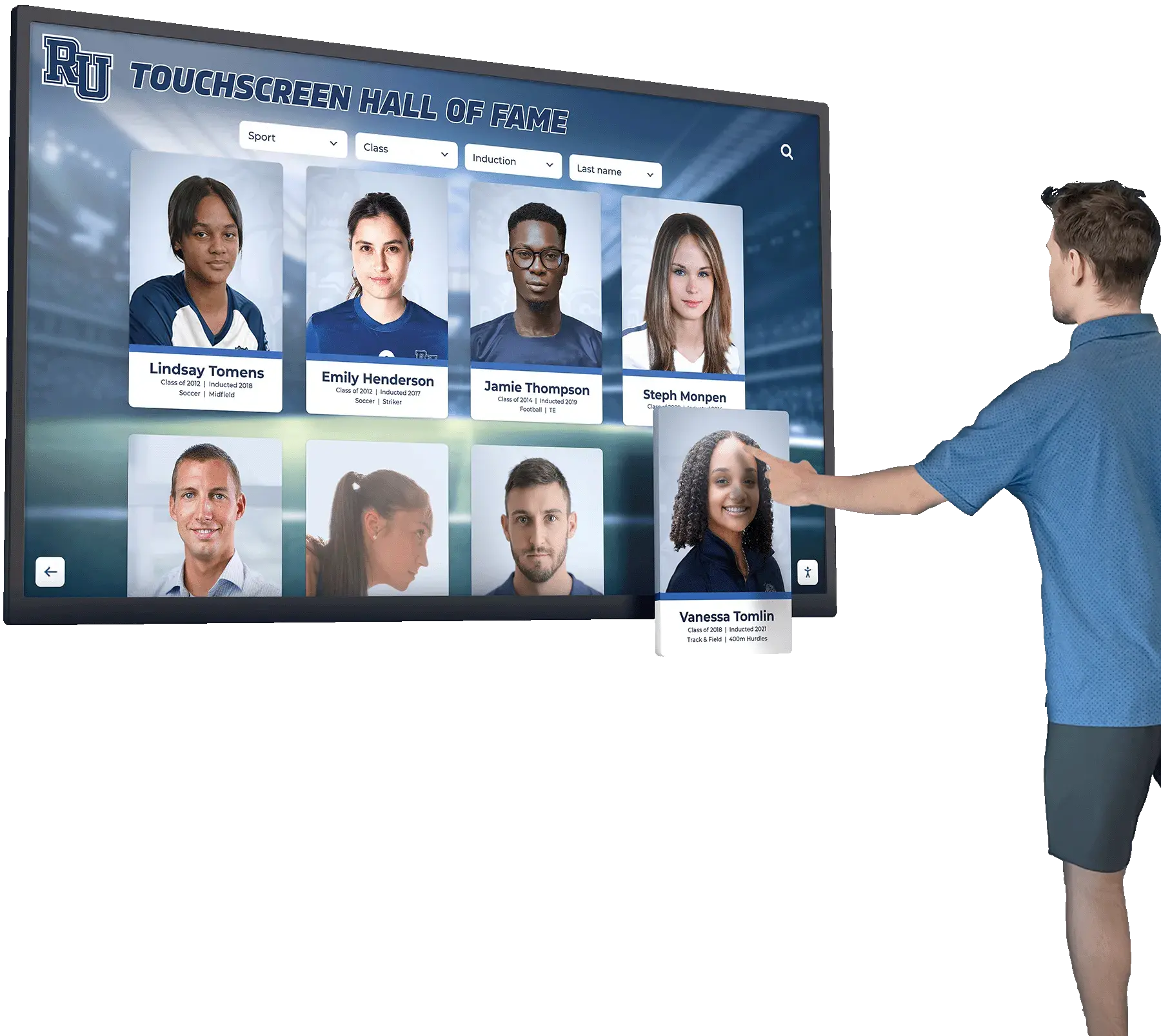
UV-filter film protects the object. A digital catalog protects the history. Rocket Alumni Solutions builds cloud-managed digital trophy cases that hold unlimited recognition records — trophies, honor rolls, hall of fame inductees, championship histories — accessible through touchscreens, QR codes, and remote CMS login regardless of the physical preservation status of your cases. Explore the full recognition platform at Rocket Alumni Solutions’ interactive recognition platform.
Who Performs the Film Inspection — and Who Replaces the Film
The school trophy case UV-filter film inspection is within the capability of any trained facilities staff member who can follow a visual evaluation checklist and record findings accurately. Film replacement requires a professional film installer.
Facilities staff own the visual inspection sequence: cleaning the surface, evaluating adhesion, assessing haze and discoloration, recording findings, and escalating to the facilities manager or athletic director when findings warrant replacement.
The athletic director owns the replacement decision for cases under athletic department control, typically with input from facilities regarding cost and scheduling. For schools managing both athletic and academic recognition displays — including digital recognition systems that complement physical cases in the same corridor — the athletic director often coordinates film replacement to align with display updates and trophy rotation events.
A qualified window-film or display-case installer performs the actual replacement: removing the failed film without damaging the glazing substrate, cleaning the glass completely, and applying new UV-filter film at the correct installation specification. Some case manufacturers offer factory re-film service for their specific case designs. For schools evaluating the full range of their recognition infrastructure options, independent analysis of digital display systems for school recognition programs can help administrators understand where physical display maintenance and digital systems complement rather than duplicate each other.
Document role assignments in writing so incoming staff inherit both the inspection schedule and the vendor contact for film replacement — not a verbal summary of what was done last time.
Frequently Asked Questions
What is UV-filter film on a school trophy case, and what does it do? UV-filter film is a thin laminate applied to the glass or acrylic glazing panels of an enclosed trophy case. It contains UV-absorbing compounds that intercept ultraviolet radiation before it reaches the case interior, reducing the rate at which UV-sensitive display materials — photographs, certificates, fabric jerseys, and some trophy surfaces — undergo photochemical degradation and fading. The film does not eliminate UV exposure entirely but attenuates the UV component of light reaching case contents.
How do I tell if the UV-filter film on a trophy case is failing? The three inspection criteria cover the main failure modes: adhesion failure (visible as edge lifting, bubbles, or delamination of the film from the glass surface), optical haze (a milky or diffuse quality visible at perpendicular and oblique viewing angles), and yellowing/discoloration (an amber shift in the panel color relative to an uncoated edge zone on the same glass). Any one of these independently indicates that the film may no longer be providing reliable UV attenuation.
Can I clean the UV-filter film surface as part of routine case maintenance? Yes. The exterior surface of film-coated glazing panels can be cleaned with standard glass cleaner applied with a clean microfiber cloth. Avoid ammonia-based cleaners applied directly to film edges, abrasive materials, and solvents. Do not apply cleaning solutions to the interior film face if the film is applied on that side — the edge adhesion zone is most vulnerable to solvent penetration.
How long does UV-filter film last on school trophy case glazing? Service life varies significantly by film type, UV load, and installation quality. Films on cases with high UV exposure — exterior-facing cases or those adjacent to south-facing windows — may show performance degradation earlier than films on interior corridor cases with lower UV load. Consult installation records or the film manufacturer’s guidance for the specific product installed. When installation records are unavailable, treat any film with no documented replacement date as a candidate for inspection-driven replacement evaluation.
What happens if failing UV-filter film is not replaced? Continuing to display UV-sensitive materials — photographs, certificates, fabric displays, some trophy surface finishes — behind failed UV-filter film accelerates their photochemical degradation at the rate determined by the unattenuated UV load in the display environment. Fading and discoloration of these materials is typically irreversible. For recognition programs that include materials from decades of school history, the loss is permanent: a faded championship photograph or a bleached honor roll certificate cannot be restored to its original condition.
Is UV-filter film the same as UV-filtering glass or acrylic? No. UV-filtering glass (museum glass) and UV-filtering acrylic have UV attenuation built into the glazing substrate itself. UV-filter film is a separate laminate applied to standard glass or standard acrylic. Trophy cases may use either approach, or a combination. The adhesion and haze inspection criteria described in this guide apply specifically to applied film laminates — they are not relevant to cases where the glazing material itself provides UV filtration. If a case uses UV-filtering glass or UV-filtering acrylic, inspect the glazing for chips, cracks, and surface scratches rather than for film adhesion.
How does a digital trophy case platform relate to UV-filter film inspection? A digital trophy case platform does not replace physical UV-filter film inspection — it complements it by providing a parallel recognition record that does not depend on the physical preservation status of the case contents. Schools implementing comprehensive recognition archives and multi-year award documentation programs alongside physical cases benefit from digital platforms that preserve the institutional record beyond what physical protection alone can guarantee. When a physical case requires film replacement or displays materials that degraded before a film failure was caught, the digital record remains intact and accessible.
Who should replace UV-filter film when inspection findings warrant it? A qualified window-film or display-case installer should perform film replacement — not facilities staff with available adhesive film. Proper removal of failed film requires technique and appropriate tools to avoid scratching the glass substrate; improper removal can etch or contaminate the glass surface, reducing the optical quality of the replacement film. For large trophy case collections, a contract with a local commercial window-film installer for annual inspection support and as-needed replacement simplifies scheduling and ensures consistent installation quality.
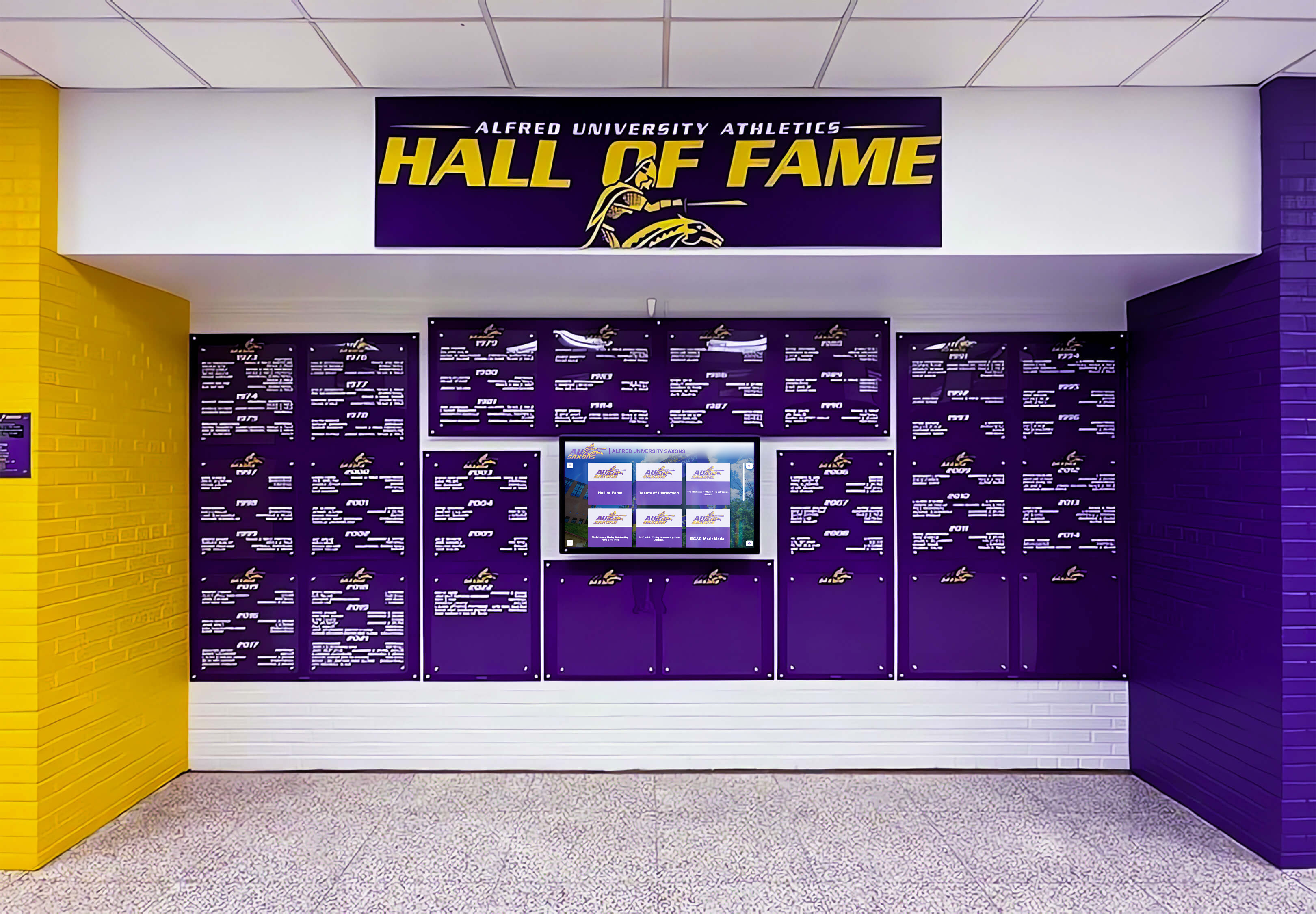
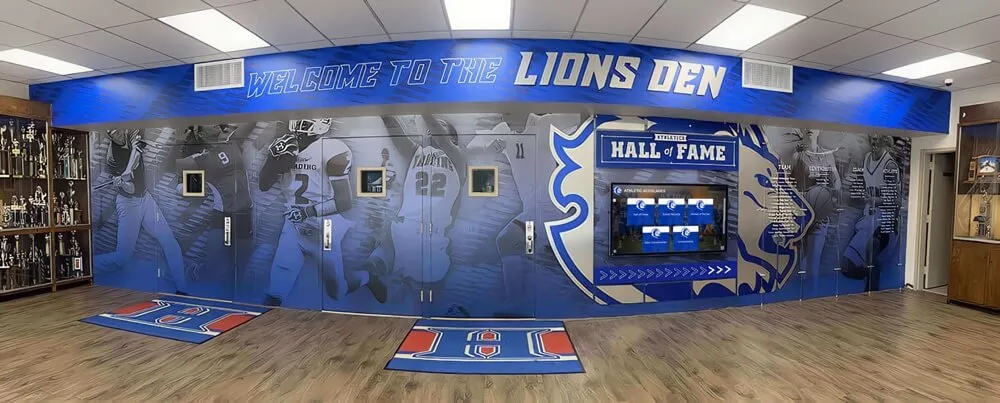
Recognition halls combining trophy displays with photographic and paper-based records represent the full range of UV-sensitive materials that a structured film inspection program is designed to protect
Protect Your School's Recognition History — Beyond the Film
Rocket Alumni Solutions builds interactive digital trophy cases and touchscreen walls of fame for schools nationwide. Cloud-managed updates, unlimited recognition capacity, ADA WCAG 2.1 AA compliant displays, and QR code mobile access — so your complete championship history, hall of fame records, and individual achievement archive stay accessible regardless of the physical preservation status of your display cases. See how schools are building permanent digital recognition programs that complement their physical trophy case maintenance systems.
Book A Demo