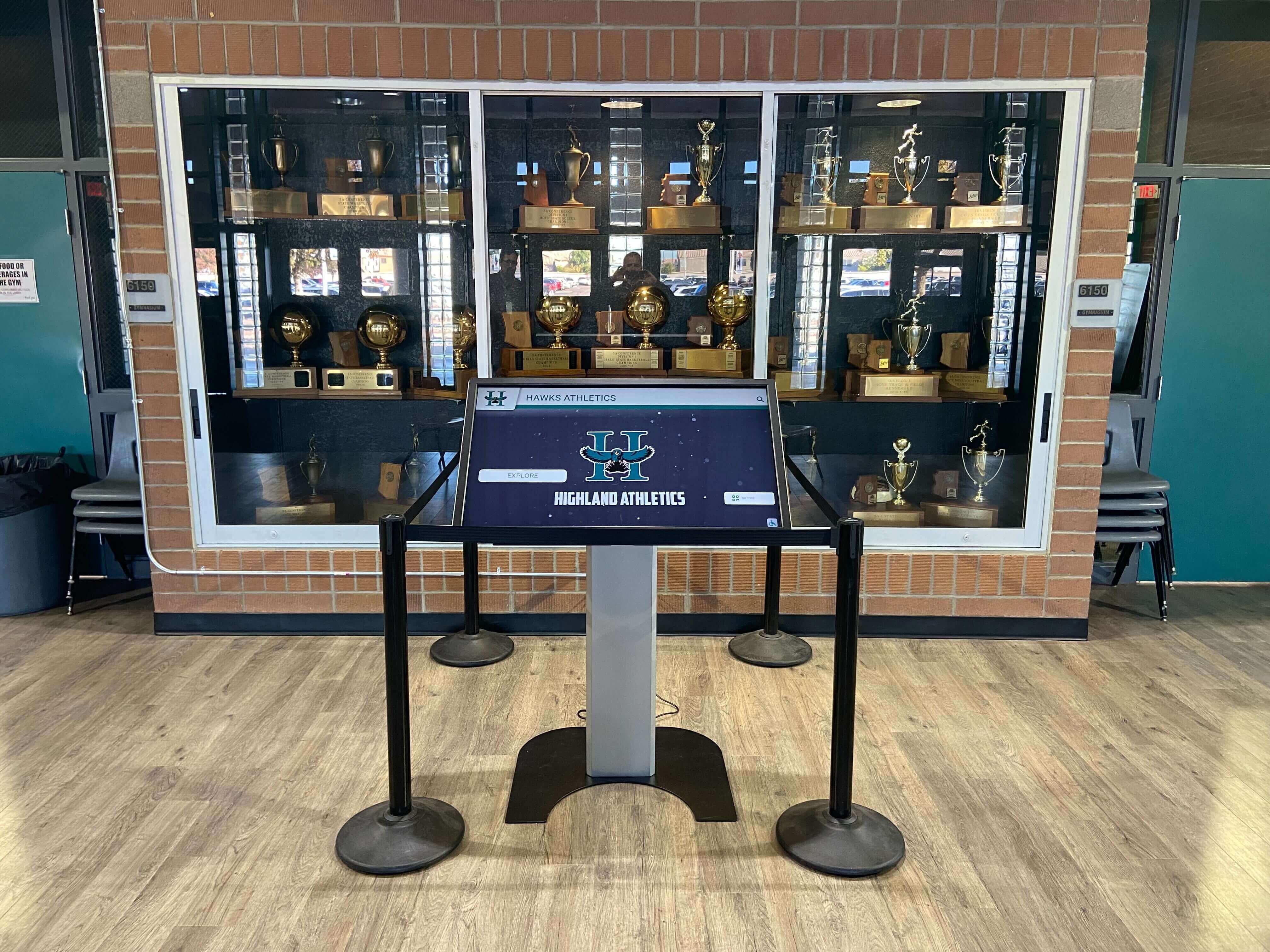




Intent: research — a school trophy case UGR lighting check evaluates whether the luminaires positioned above or around a glass-fronted award display produce discomfort glare or veiling reflections that make trophies, plaques, and mounted photographs difficult to view. UGR — the Unified Glare Rating — is a CIE-standardized metric that quantifies how much glare a luminaire creates for an observer standing in a defined viewing position. In trophy case environments, where glass panels reflect overhead fixtures directly back at approaching visitors, UGR is the practical metric that connects fixture placement and brightness to the actual viewing experience your recognition display delivers.
This guide explains what UGR measures, why glare is a specific problem for reflective trophy case surfaces, and how facilities teams and athletic directors can run a structured inspection to identify and resolve glare problems before they undermine the display environment.
Visitors approaching a school trophy case with a UGR problem often cannot name what they are experiencing. They slow down, tilt their heads, shift their standing position, or simply move on without reading the display content — all responses to glare that registers as visual discomfort before it registers as a named complaint. A school trophy case UGR lighting check converts that vague experience into a measurable parameter with published tolerance thresholds and a clear path to correction.

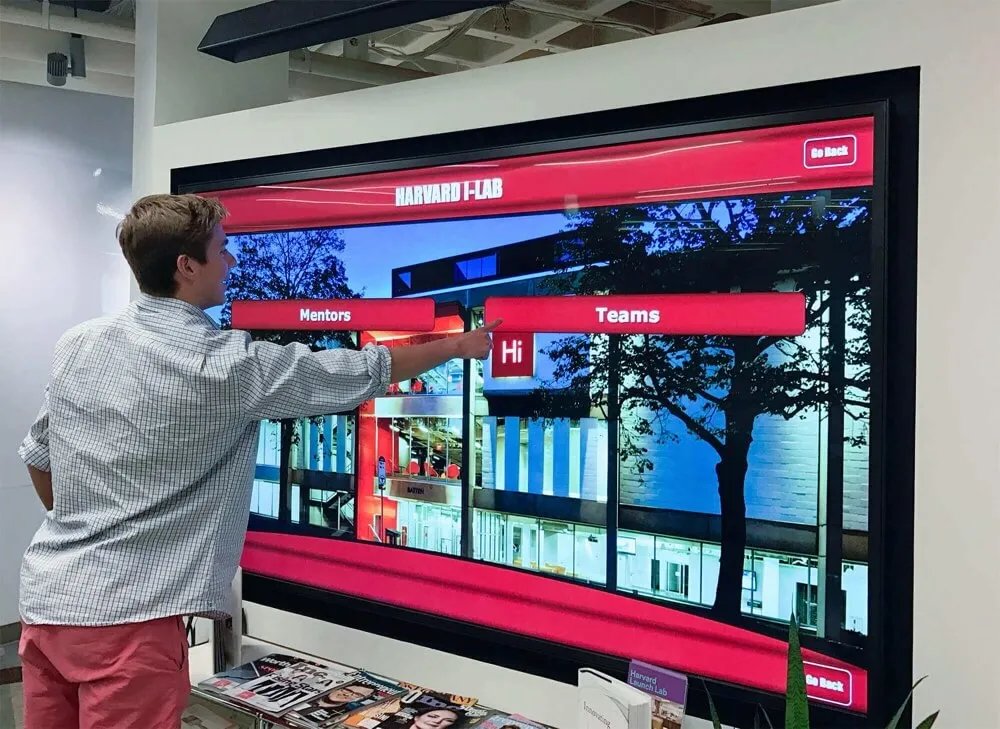
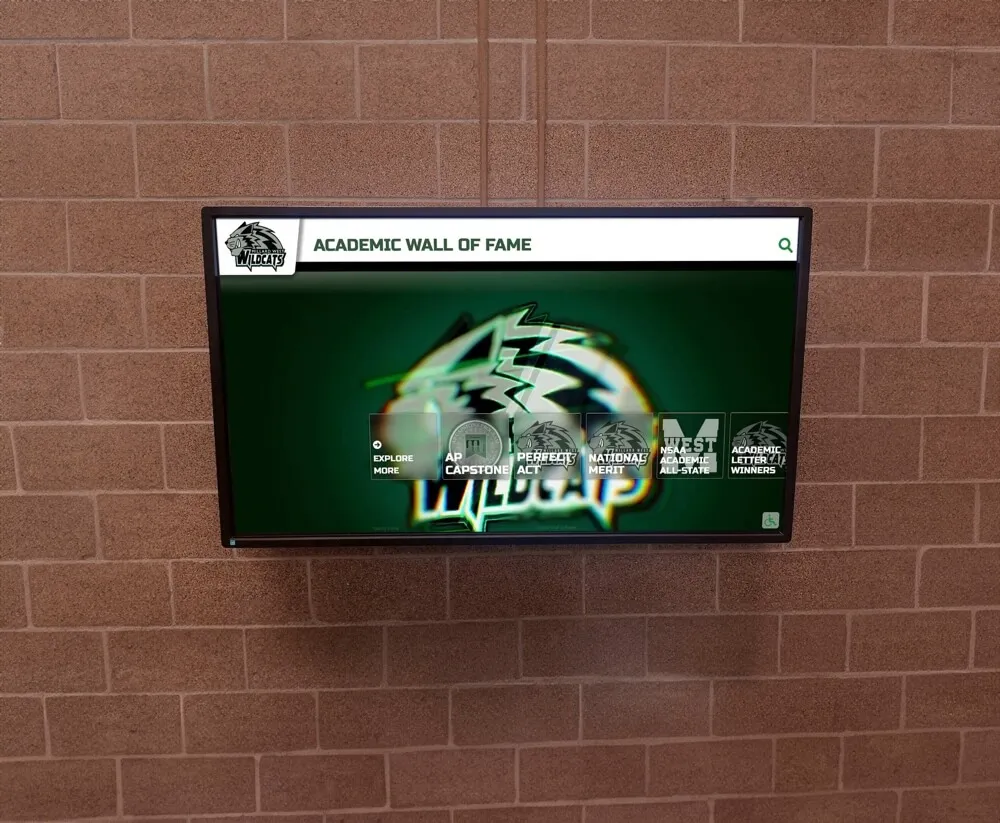
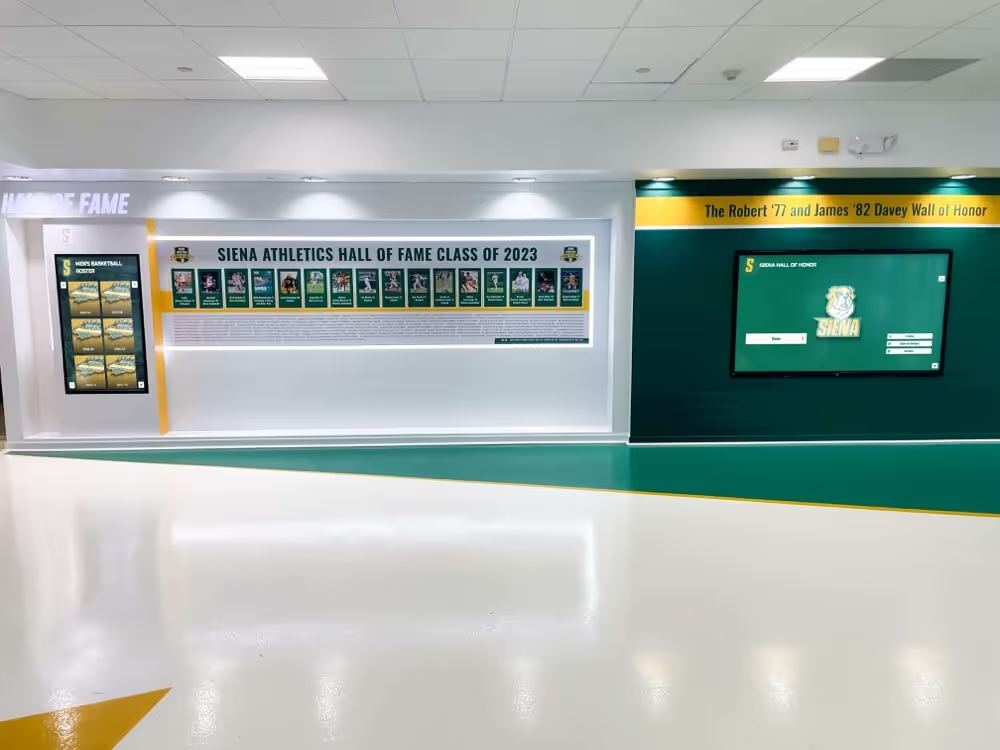
Trophy case displays depend on glare-controlled lighting — UGR above acceptable thresholds reduces viewing comfort and makes the content inside the case harder to see
What UGR Measures and Why It Applies to Trophy Cases
The Unified Glare Rating (UGR) is a formula developed by the Commission Internationale de l’Éclairage (CIE) to quantify discomfort glare from interior luminaires. The rating is calculated from the luminance of each luminaire visible to an observer, the solid angle those luminaires subtend in the observer’s field of view, and the adaptation luminance of the surrounding field.
UGR is a dimensionless number. Practical values range from approximately 10 (imperceptible glare) to 30 (intolerable glare). Each step of roughly 3 points on the scale corresponds to a noticeable change in perceived glare discomfort. The ISO 8995-1 standard for workplace lighting recommends UGR ≤ 19 for most indoor spaces where visual tasks are performed.
How Glare Affects Trophy Case Viewing
A visitor standing in front of a glass-fronted trophy case is performing a sustained visual task: reading engraved nameplates, identifying athletes in portrait photographs, and reading text on award plaques. High luminance from overhead fixtures that appear in the observer's peripheral field — or that reflect directly off the case glass — increases discomfort, reduces contrast sensitivity, and shortens the time a visitor is willing to spend engaging with the display.
Veiling Reflections: A Separate but Related Problem
Veiling reflections occur when a bright luminaire is positioned such that its reflection in the glass case front falls in the same visual field as the display content the observer is trying to see. This is distinct from discomfort glare: veiling reflections reduce contrast on the content surface and can obscure award text and photographs entirely. Glass trophy cases and polished trophy surfaces both act as mirrors for improperly aimed fixtures.
Trophy case environments are glare-sensitive for three reasons that don’t apply equally to classroom or corridor lighting:
Glass front panels create specular reflections. Standard trophy case construction uses flat glass or acrylic fronts that behave as near-perfect mirrors at shallow angles. Overhead luminaires at angles outside the 30–45° preferred incidence range produce reflections that compete with the content on the case shelves.
Observers adopt a fixed, frontal viewing position. Unlike walking through a corridor, a visitor viewing a trophy case stands still and faces the display directly — maximizing exposure to both direct glare from luminaires in the upper visual field and reflected glare from the case glass.
Award surfaces are themselves reflective. Chrome trophy columns, silver medal finishes, glass award components, and metallic plaque inlays all scatter ambient light back toward the observer. Combined with overhead fixture glare, reflective award finishes can make the interior of a brightly illuminated case difficult to resolve.
School Trophy Case UGR Lighting Check: Inspection Checklist
The following checklist can be completed without specialized instrumentation for the qualitative steps, with a handheld luminance meter or suitable app for the quantitative steps. Run this inspection annually, or whenever staff or visitors report that the display is difficult to see.
Step 1: Establish Observer Positions
Before measuring anything, define the viewing positions that represent how visitors actually approach the trophy case:
- Mark a position 1.2 meters (approximately 4 feet) directly in front of the case center — the standard UGR calculation reference height is 0.8 meters above floor level for a seated observer and approximately 1.2–1.5 meters for a standing observer.
- Mark positions at 45° to the left and right of center, at the same distance — visitors often approach from an angle when a case occupies a hallway wall.
- If your case is in a school lobby or corridor that channels foot traffic, mark the approach path entry point — typically 3–5 meters from the case — where the first impression of the display registers.
Label each position (P1, P2, P3) and use the same positions at each annual check for consistent trend data.
Step 2: Identify Luminaires in the Upper Visual Field
At each observer position, look upward and forward through approximately 60° above horizontal (the zone where luminaires contribute most to UGR). Document:
- Each luminaire directly overhead or within the 60° cone from your viewing position
- Each luminaire visible in the glass case front as a specular reflection
- The approximate horizontal distance and angle of each luminaire from the case
Create a simple fixture map with luminaire identifiers (L1, L2, etc.) for each position. This map will track which luminaires cause problems if results require adjustment.
Step 3: Assess Background Luminance
Background luminance — the average brightness of the surrounding surfaces — is an input to UGR calculation and a useful indicator on its own. In a dark hallway with a bright trophy case, the contrast ratio between the fixture luminance and the surround creates more perceived glare than the same fixtures in a well-lit lobby.
Observe the trophy case environment from each viewing position:
- Is the wall surface surrounding the case significantly darker or lighter than the case interior?
- Are the hallway or lobby ceiling and walls illuminated at a level roughly comparable to the case interior brightness?
- Are there any adjacent windows or exterior light sources contributing to background luminance during the inspection?
Note whether the surround luminance appears significantly lower than the luminaire luminance — this condition amplifies perceived glare even when UGR values are nominally within tolerance.
Step 4: Visual Glare Assessment
Perform a structured visual check at each observer position before taking any measurements:
- Face the trophy case squarely and hold your position for 30 seconds. Note whether you experience any urge to look slightly away from center, narrow your eyes, or tilt your head.
- Attempt to read the smallest text visible on a nameplate or award in the center of the case. Note whether the text is clearly legible or whether you need to shift position to find a viewing angle that reduces glare.
- Look for the reflection of any overhead fixture in the glass case front. Note its position relative to the display content — whether it falls over award text, portrait photographs, or trophy surfaces.
- Photograph the case front from each viewing position. Reflections and veiling glare visible in the photograph that weren’t consciously noticed during the walkthrough frequently appear in camera images and confirm what visitors’ peripheral vision registers.
Score each position: Pass (no discomfort, text legible, no significant reflections), Marginal (mild discomfort or minor reflection on peripheral content), or Fail (significant discomfort, text partly obscured, or fixture reflection falls on primary content area).
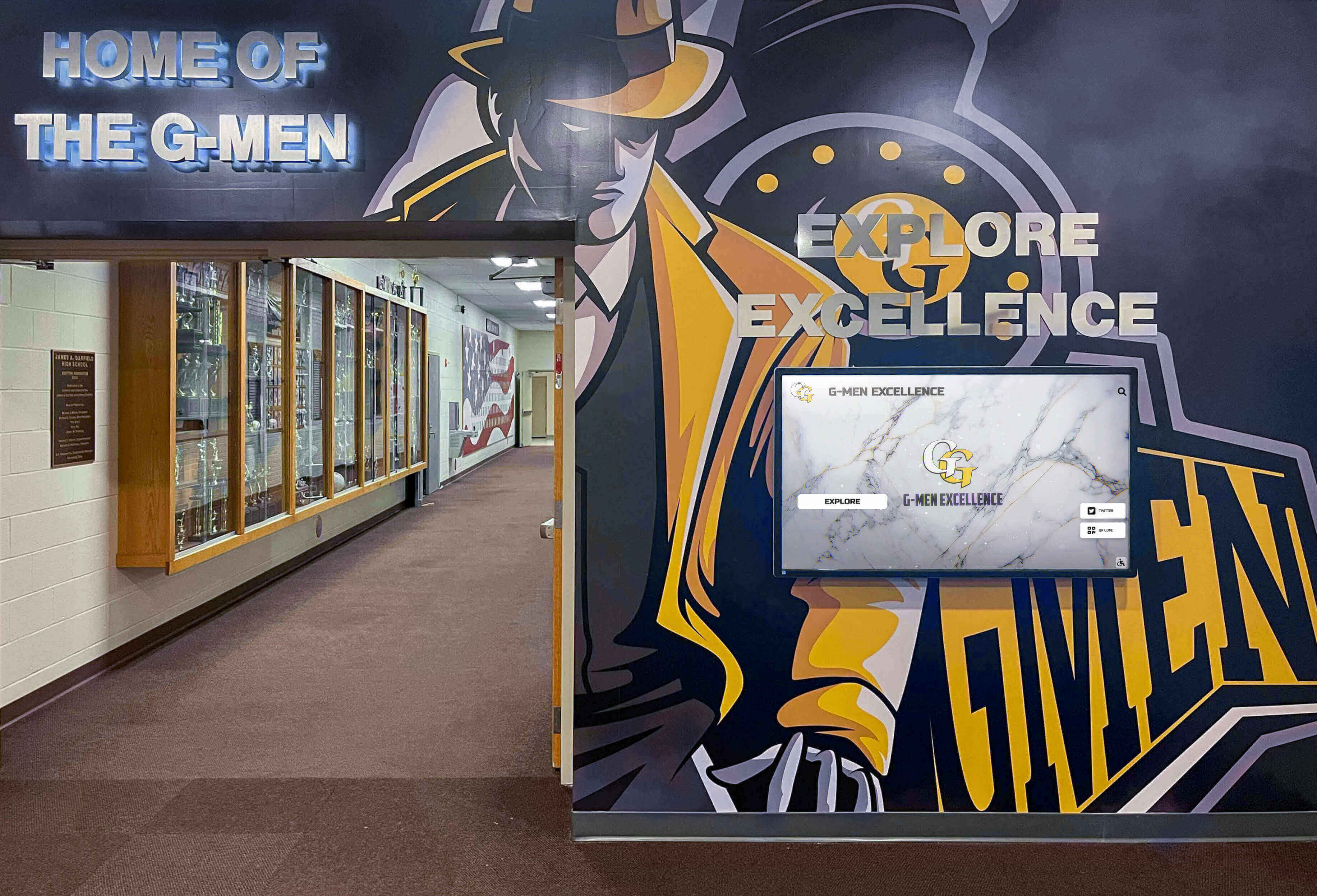
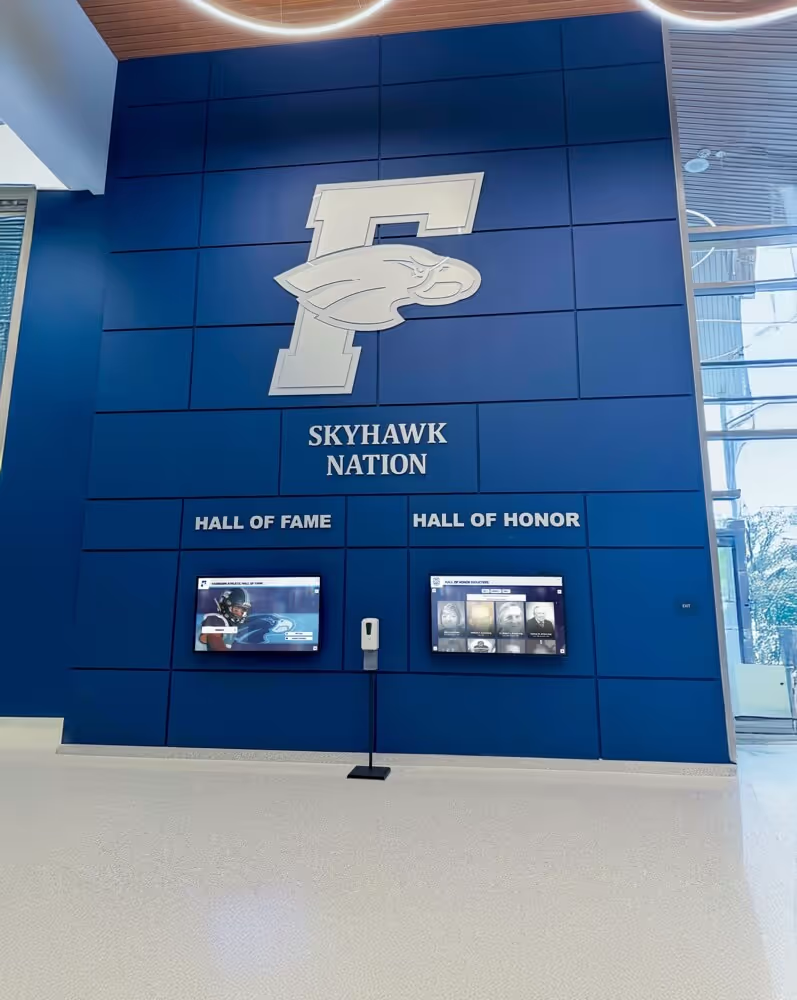
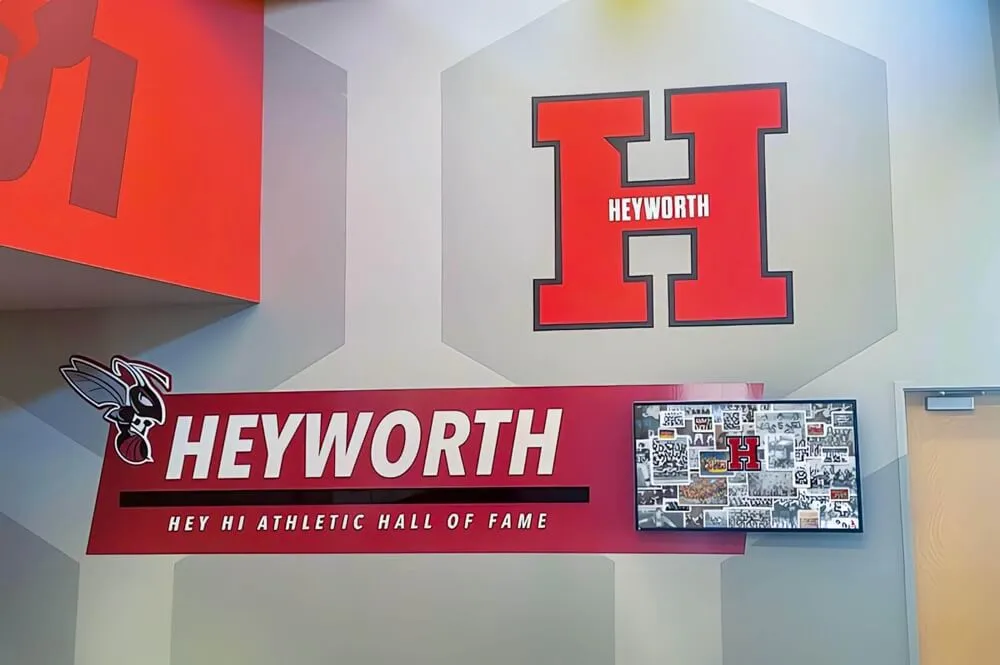
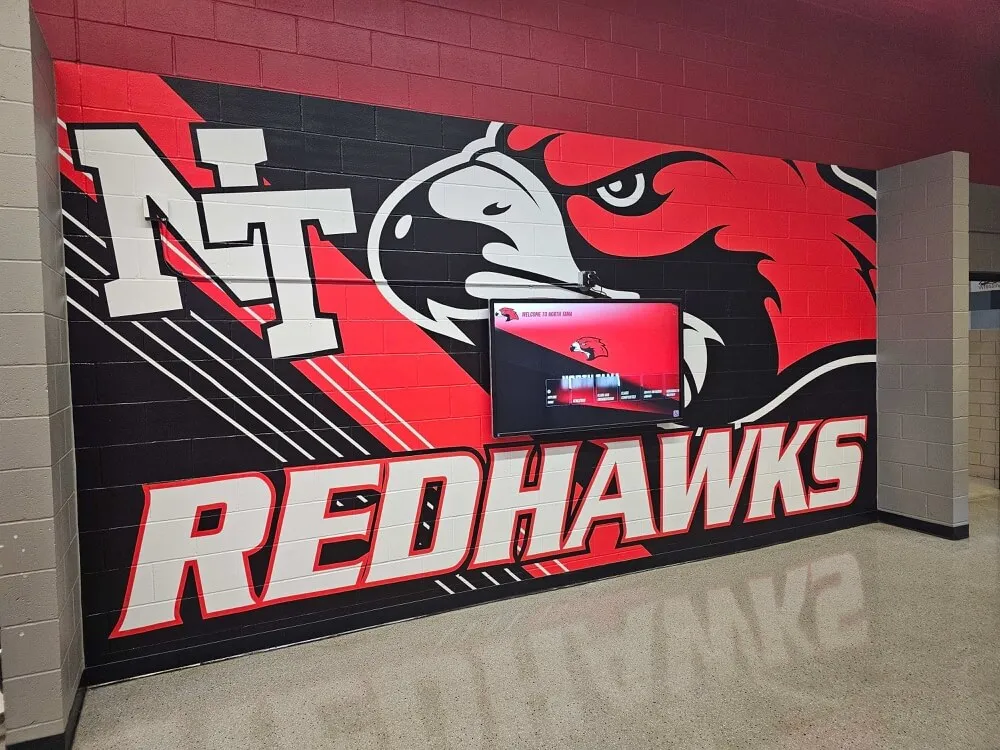
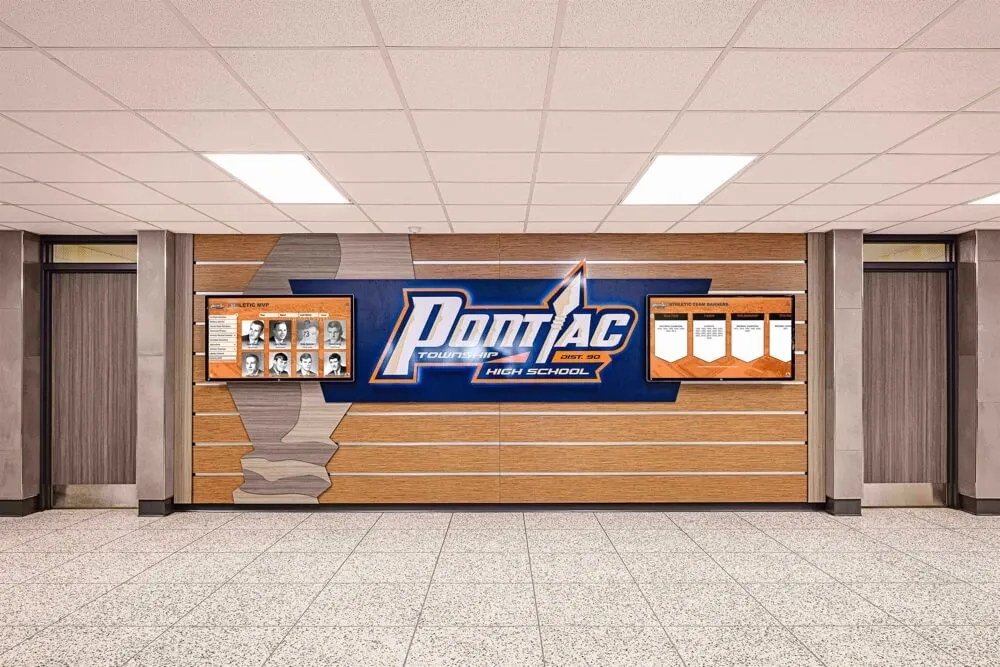
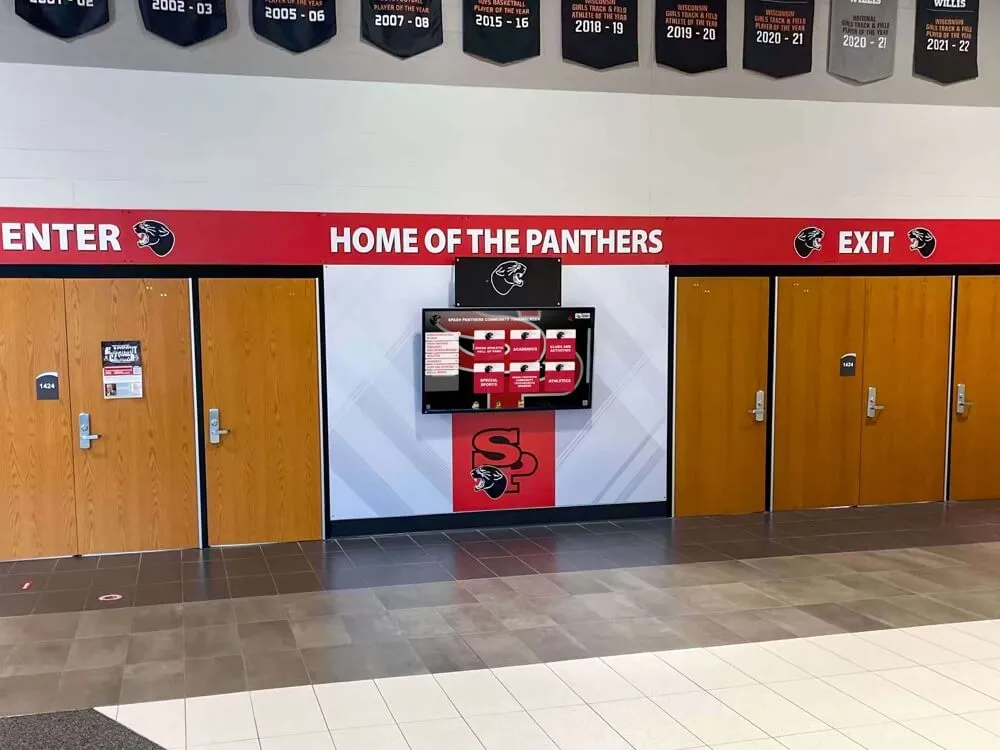
Corridor and lobby trophy case environments require glare-controlled lighting across the full approach path, not only at the display face itself
Step 5: Luminance Measurement (Quantitative)
If a luminance meter is available — or a calibrated smartphone app capable of measuring cd/m² — measure the luminance of each luminaire identified in Step 2 and the luminance of the background wall surface adjacent to the case.
Calculate an approximate UGR using the simplified formula:
UGR = 8 log₁₀ [ (0.25 / Lb) × Σ (L² × ω / p²) ]
Where:
- Lb = background luminance in cd/m²
- L = luminance of each luminaire in cd/m²
- ω = solid angle of each luminaire subtended at the observer’s eye (steradians)
- p = Guth position index for each luminaire’s position in the visual field
Detailed position index tables and the full calculation procedure appear in CIE 117 and CIBSE SLL Lighting Handbook. For most school facilities teams, the qualitative assessment in Steps 3 and 4 combined with the threshold table below provides sufficient guidance for corrective action without a full numerical calculation.
Step 6: Evaluate Against UGR Thresholds
Apply the following thresholds to your visual assessment scores and, where available, to calculated UGR values:
| UGR Value | Perceived Glare Level | Effect on Trophy Case Viewing | Recommendation |
|---|---|---|---|
| Below 10 | Imperceptible | No glare; award content fully legible from all positions | Pass — no action needed |
| 10–13 | Barely perceptible | Minimal glare effect; occasional slight discomfort at close range | Pass — monitor annually |
| 13–16 | Perceptible but not annoying | Glare may limit viewing time; fixture reflections may appear in case glass at shallow angles | Acceptable — consider diffuser or repositioning at next maintenance |
| 16–19 | Just annoying (CIBSE limit for display viewing) | Visitors shift position or reduce dwell time; reflections may overlap award content areas | Action recommended — reposition fixtures or add diffusers |
| 19–22 | Annoying | Significant discomfort; case glass reflects fixtures over primary display content; portrait photographs difficult to view | Correct before next recognition event |
| 22–28 | Very annoying | Most visitors move on without reading the case; extended viewing causes eye strain; reflections obscure award text | Immediate correction required — reposition or replace luminaires |
| Above 28 | Intolerable | Display is functionally unusable as a recognition environment; visitors avoid the area | Urgent replacement — display is not serving its recognition purpose |
The CIBSE (Chartered Institution of Building Services Engineers) SLL Lighting Guide 5 recommends UGR ≤ 16 for display-oriented spaces where specular reflections are a concern. Schools whose trophy cases serve as primary recognition environments in visitor-facing lobbies or athletic corridors should treat UGR 16 as the practical action threshold.
Step 7: Identify and Correct Glare Sources
For each luminaire that contributed to a Marginal or Fail assessment, evaluate the following corrective options in order of cost and disruption:
Repositioning: Moving a fixture 15–30 cm horizontally along the track, or adjusting its beam angle to strike the trophy case at 35–45° rather than steeply from above, is the lowest-cost correction. For adjustable track fixtures, this is a maintenance-level task. Check the inspection using the visual assessment in Step 4 after each repositioning before closing the work order.
Adding diffusers or louvers: Micro-prismatic diffusers and anti-glare louvers reduce luminaire luminance by spreading luminous flux over a larger solid angle. Honeycomb louvers reduce luminance in off-axis directions — which addresses the observer’s view of a fixture from the front — without significantly reducing the light level on the trophy surface directly below.
Reducing lamp wattage or dimming: Lowering fixture output directly reduces luminaire luminance and the UGR contribution. If illuminance at the trophy surface drops below 200–300 lux after dimming, supplementary fixtures aimed at a less glare-prone angle may be needed to maintain adequate display brightness.
Replacing fixtures with lower-luminance alternatives: High-luminance point sources (bare LED arrays, narrow-beam track spots without diffusion) are the most common cause of UGR problems in retrofit installations. Replacing these with panel-style or diffuse-LED sources at the same lumen output reduces UGR contribution substantially.
Digital Trophy Case Platforms Eliminate the Glare Problem Entirely for Digital Content
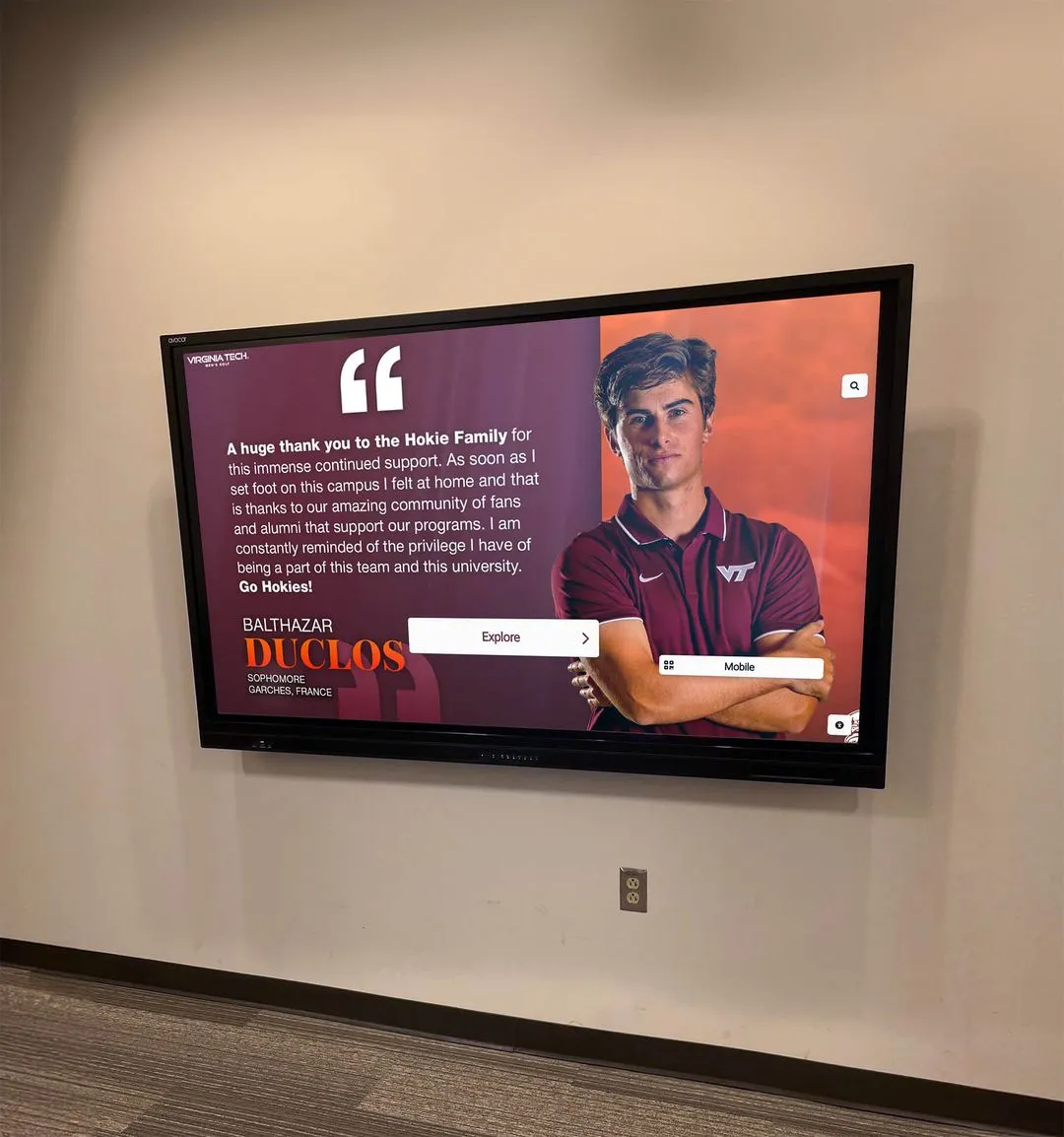
For schools where ongoing lighting corrections are resource-intensive, a digital recognition platform delivers factory-calibrated display brightness, anti-glare screen treatments, and WCAG 2.1 AA accessibility built in — without the annual UGR inspection cycle physical cases require.
See a DemoStep 8: Document Results and Schedule Follow-Up
After completing the inspection and any corrective work, retain the following documentation:
- Observer position map with position labels and distance from case
- Fixture map with luminaire identifiers and assessment score per position
- Photographs from each observer position (before and after any correction)
- Luminance measurements if taken, with instrument noted
- Date of inspection, name of inspector, and next scheduled check date
Store this record alongside your MacAdam ellipse and Duv inspection records to build a complete lighting audit file for the trophy case. The combination of color consistency checks, tint checks, and glare checks covers the three most common lighting quality dimensions that affect how school recognition displays are perceived.
Why Glass-Fronted Cases Require Stricter UGR Control
Standard illuminated spaces — classrooms, offices, corridors — tolerate UGR up to 19 because the visual tasks performed in those spaces involve matte surfaces that do not reflect luminaires back at observers. A glass-fronted trophy case introduces the physics of specular reflection: any luminaire within a critical angle of incidence will be reflected from the glass surface into the observer’s line of sight.
The critical reflection angle depends on the observer’s position relative to the case, the height of the luminaires above the case, and the horizontal distance between luminaire and case front. For a typical corridor trophy case installation — luminaires recessed into a ceiling 3 meters above the floor, case front at approximately 1.8 meters height — overhead fixtures positioned within roughly 60 cm horizontal of the case front will produce specular reflections visible to observers at normal viewing distances.
This geometry means that the UGR threshold for glass-fronted trophy cases should be treated as UGR ≤ 16, not UGR ≤ 19, because the glass front adds a reflected glare path that is absent in standard space calculations. Recognition programs investing in championship portrait photographs, school color banners, and high-quality engraved plaques benefit from holding to the tighter standard — the investment in recognition content is only fully realized when visitors can comfortably see it.
Schools planning end-of-year awards assemblies and recognition ceremonies should also evaluate whether the trophy case area will host photography during those events. Resources on end-of-year awards assembly planning note that lighting environment quality affects how recognition moments are captured and remembered — high UGR in the display area creates challenges for photographers and detracts from the in-person experience.
UGR in Context: The Full Lighting Quality Picture
A school trophy case UGR lighting check addresses discomfort glare and veiling reflections but does not capture all dimensions of lighting quality relevant to recognition displays. A comprehensive inspection program includes:
UGR check (this inspection): Confirms that luminaires do not produce discomfort glare for observers standing in front of the case, and that fixture placement does not produce veiling reflections on the glass case front.
MacAdam ellipse / SDCM check: Confirms that all fixtures in the case produce the same color, so that award finishes and school colors appear consistent across the full display rather than varying by shelf position.
Duv tint check: Confirms that fixtures do not produce a green or magenta tint that distorts white certificate backgrounds, athlete photographs, and school colors.
TM-30 Rf and Rg evaluation: Confirms that fixtures render the full color spectrum — including saturated reds, golds, and blues used in championship awards — faithfully and with appropriate gamut.
Illuminance distribution check: Confirms that lux levels across the trophy surface are sufficiently uniform. A maximum-to-minimum ratio above 3:1 across the case creates visually bright zones and shadow zones that draw the eye toward the bright areas and away from dimmer display sections.
Running all five checks annually and documenting results by fixture position and date creates an institutional audit record that persists across facilities staff changes. For programs managing extensive athletic archives alongside trophy cases, athletic department annual reporting processes benefit from the same kind of systematic documentation — structured records protect the integrity of the information across leadership transitions.
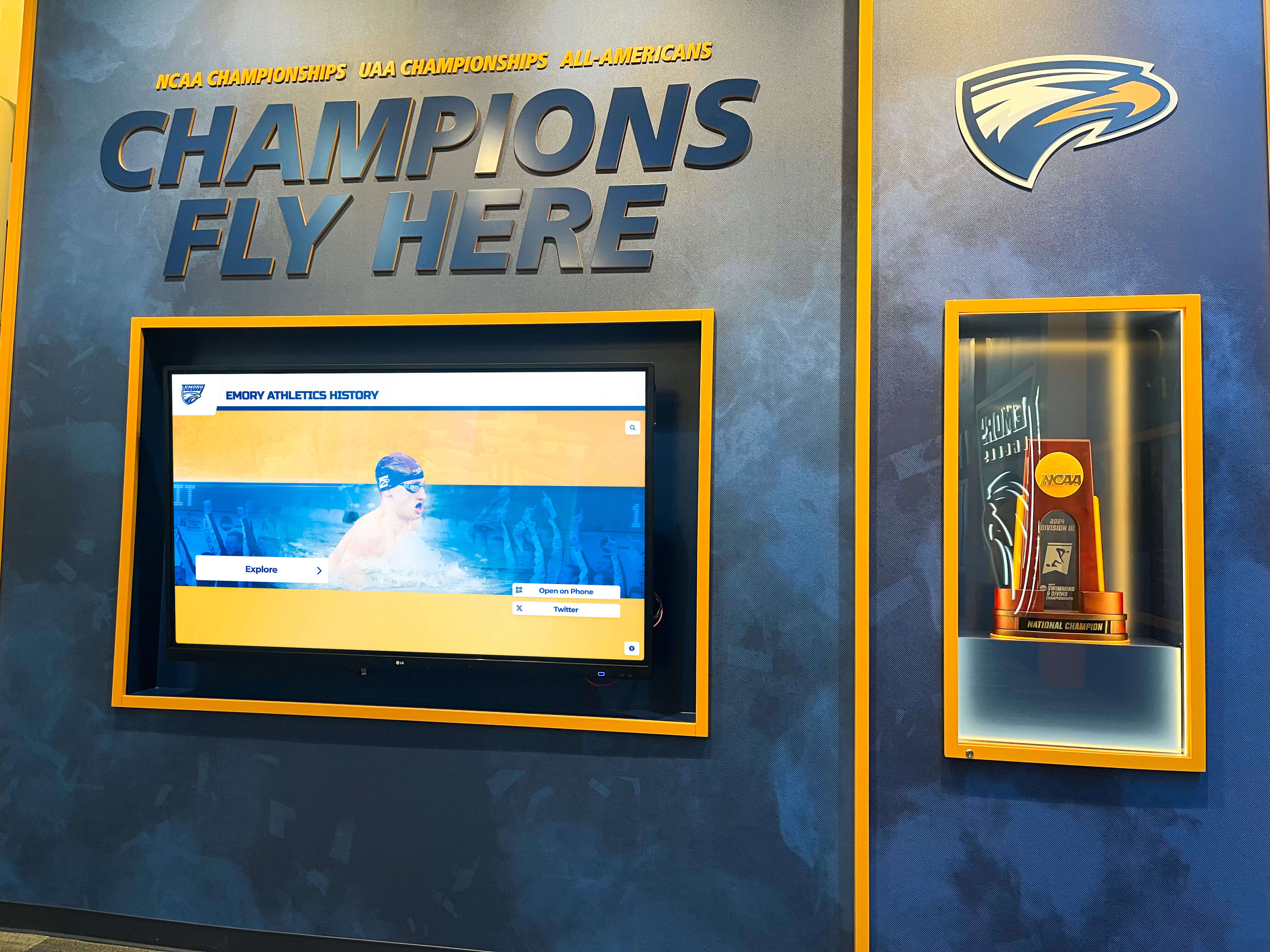
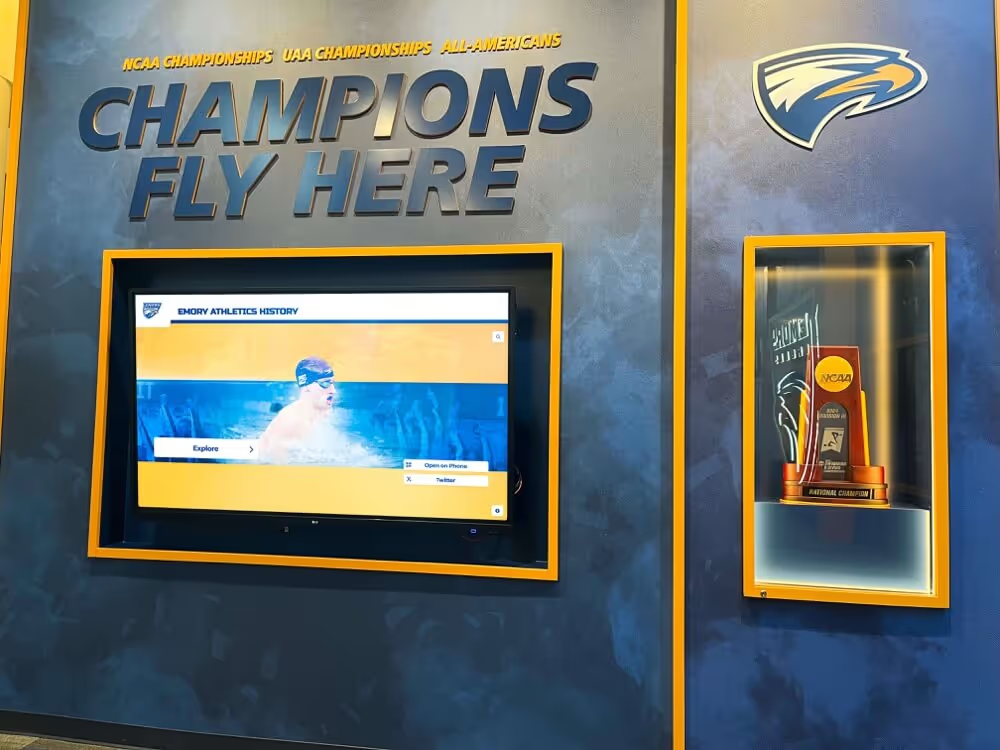
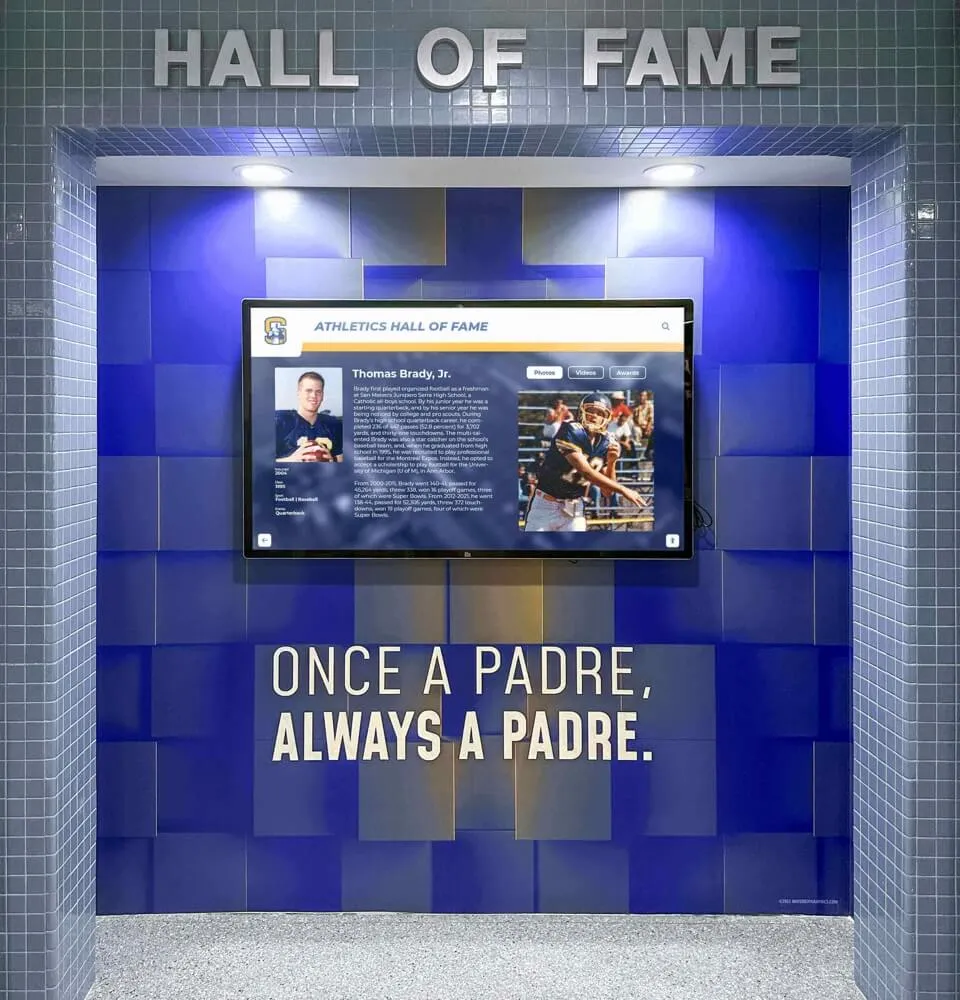
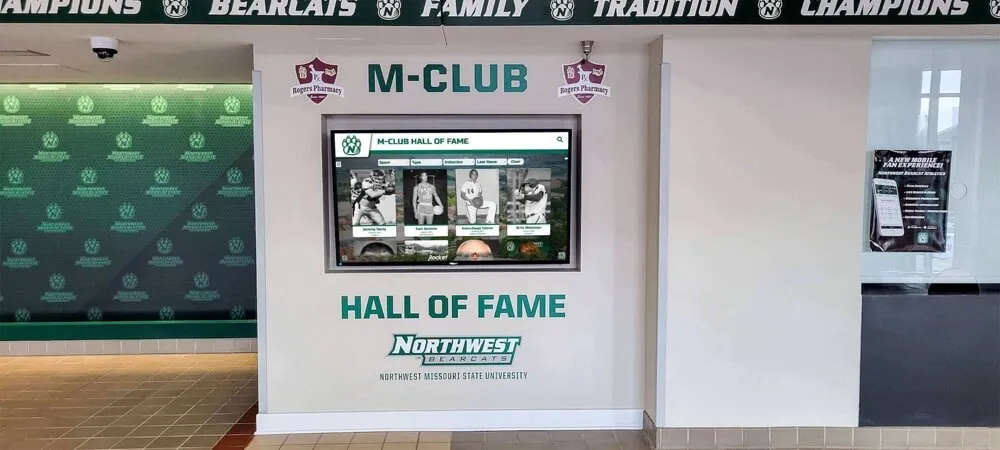
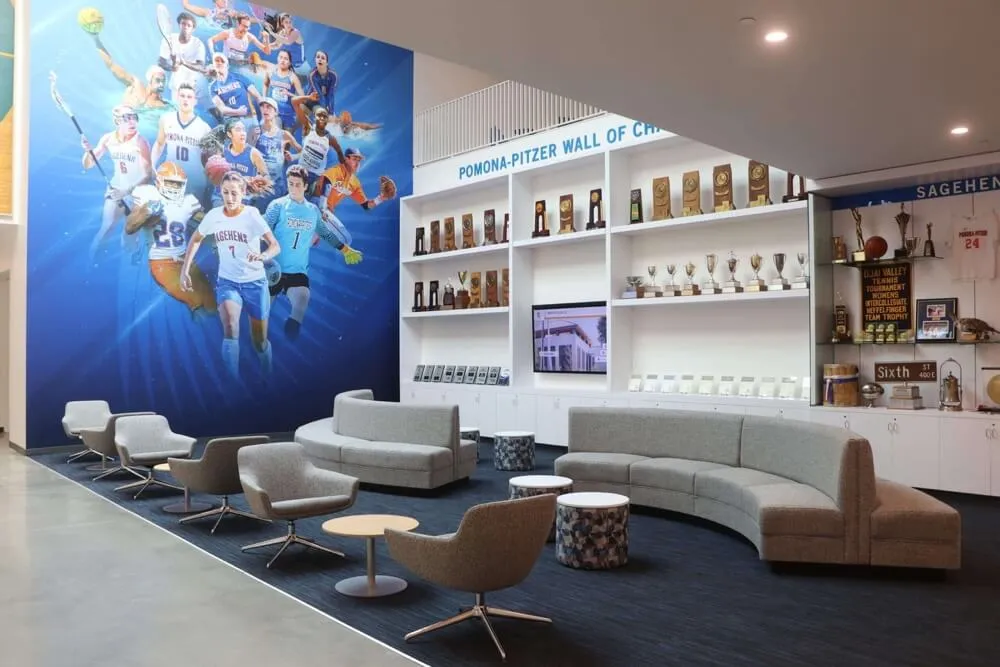
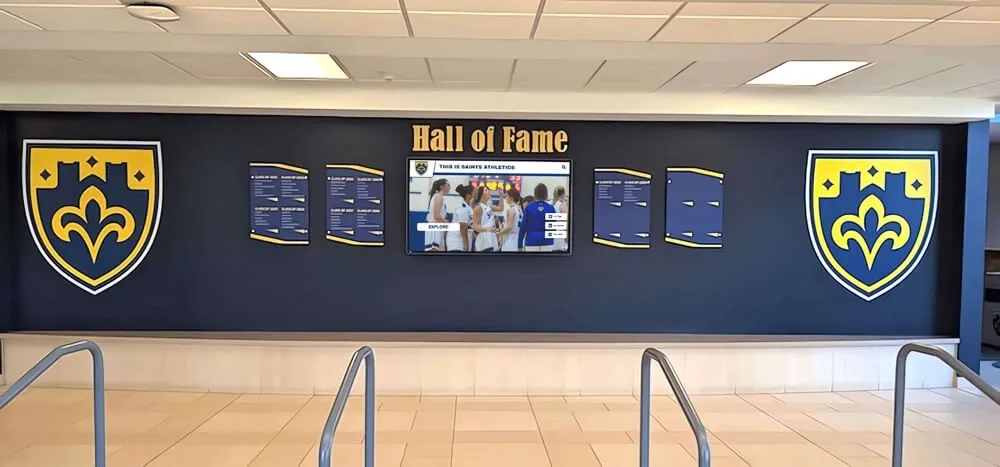
Championship recognition spaces serve visitors who should be able to comfortably read every nameplate and photograph — UGR-controlled lighting supports that engagement
Gym Lobbies, Athletic Corridors, and Trophy Corridor Environments
The UGR considerations for a single glass-fronted trophy case scale up considerably in gym lobbies and dedicated athletic corridors where multiple trophy cases, banner displays, and recognition walls share a common lighting environment. In these environments, the luminaire density is typically higher, fixture positions are less easily adjusted, and visitors encounter multiple reflective surfaces simultaneously.
For gym lobby environments specifically, the combination of high ceilings, exposed structure, and multiple fixture types creates a complex glare field. Gym lobby design resources for schools with records, awards, and display areas note that the lighting environment is a foundational element of display quality — not an afterthought. Running a UGR check in a gym lobby follows the same process as a trophy case check, but the observer positions should cover the full approach path through the lobby, not just the immediate frontage of each case.
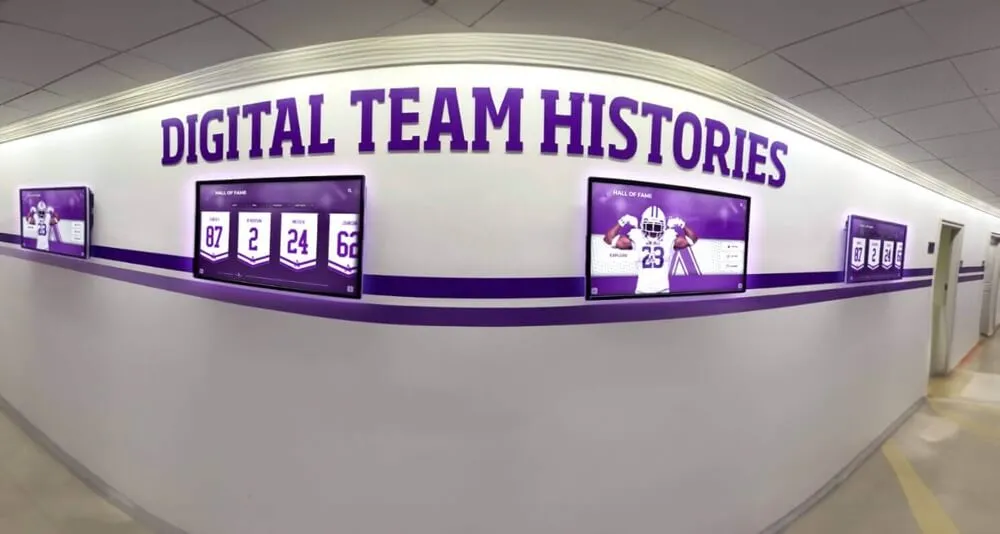
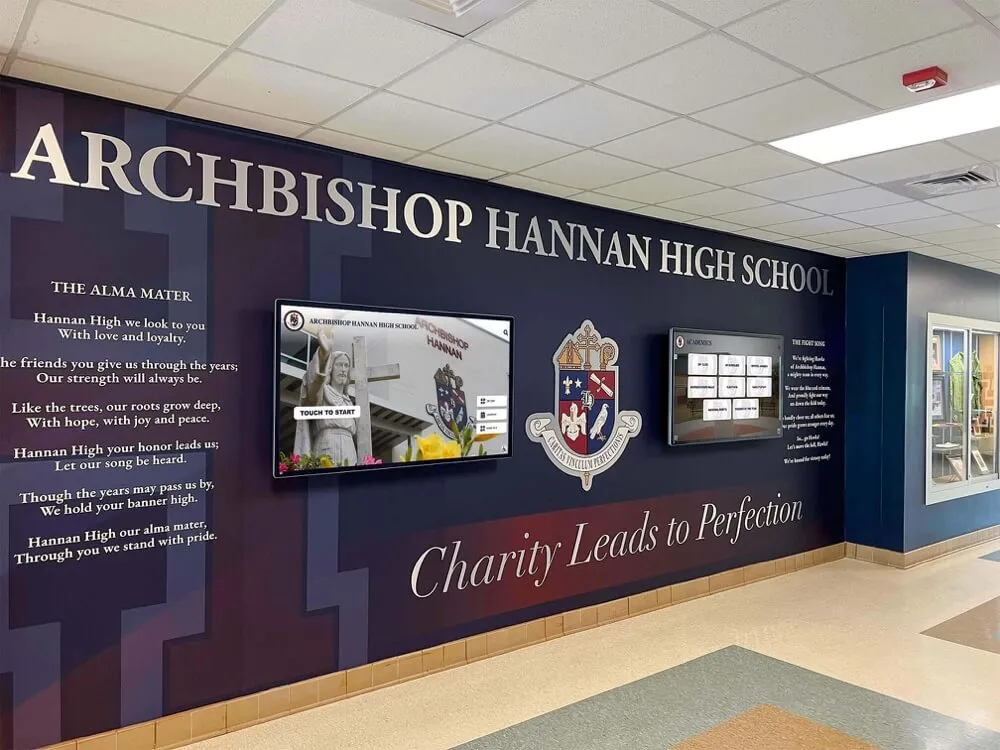
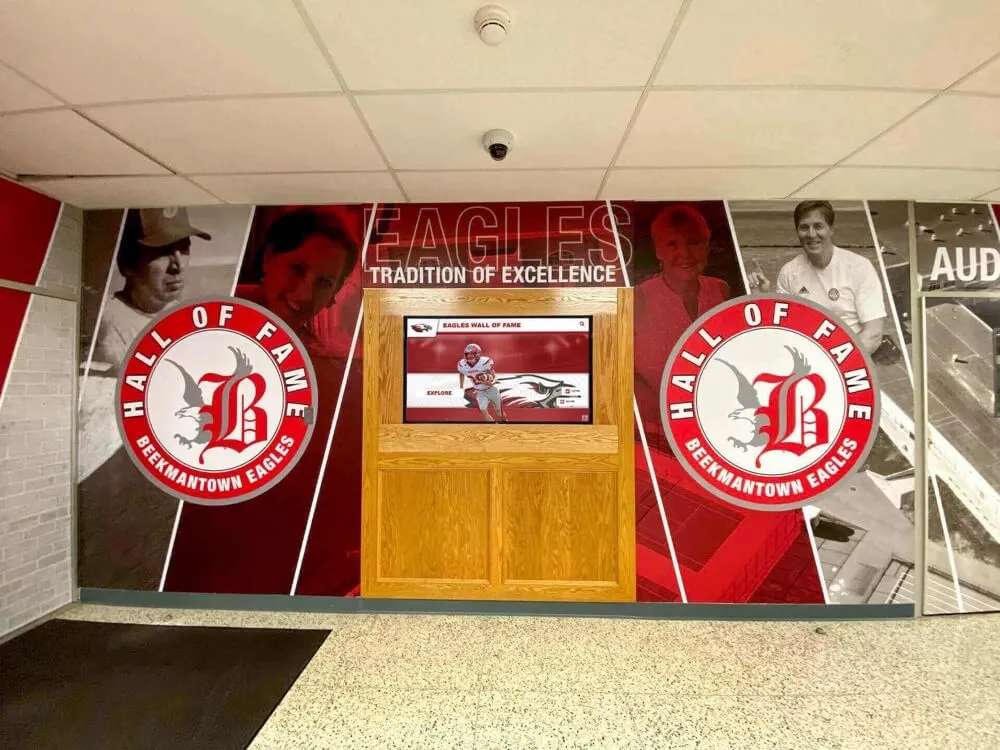
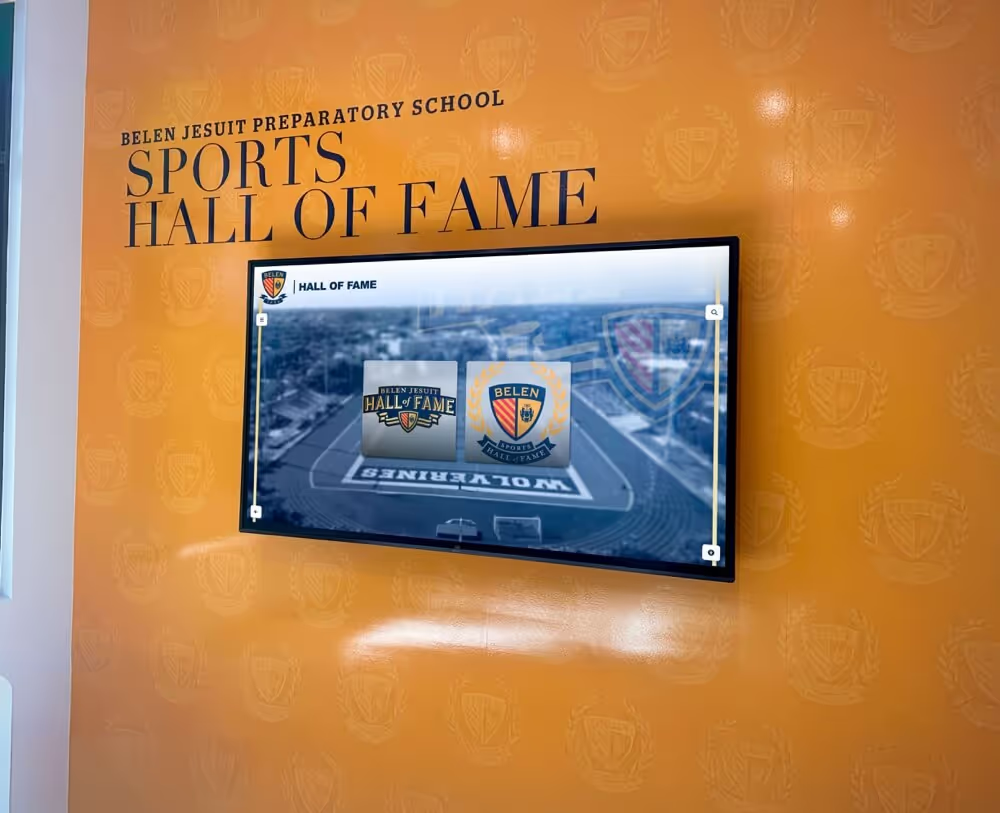
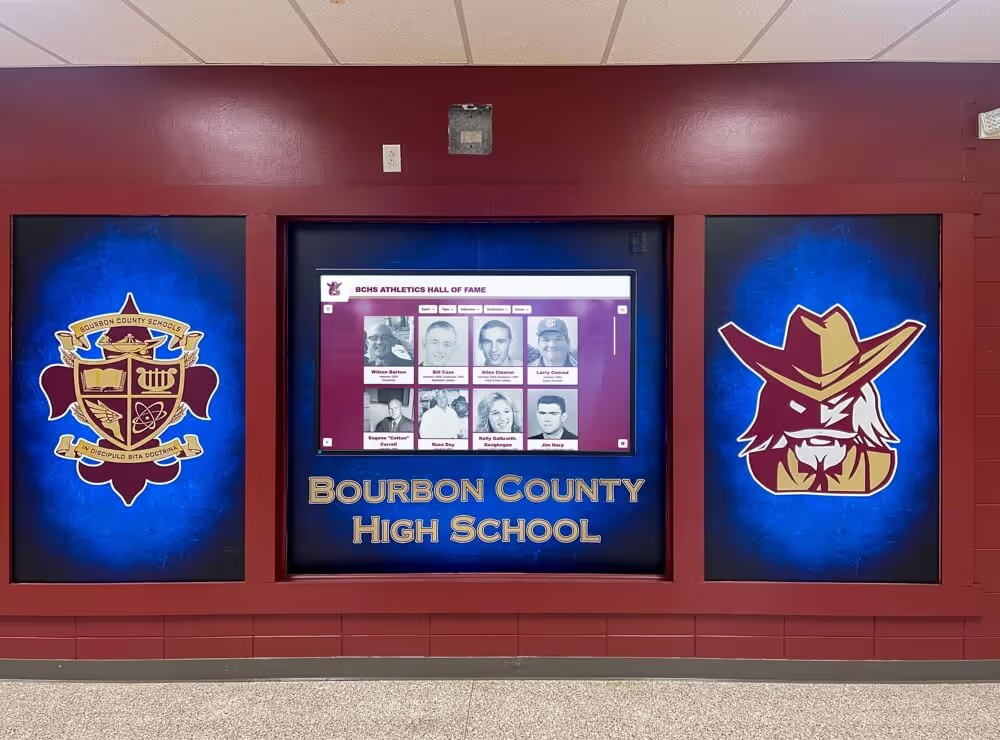
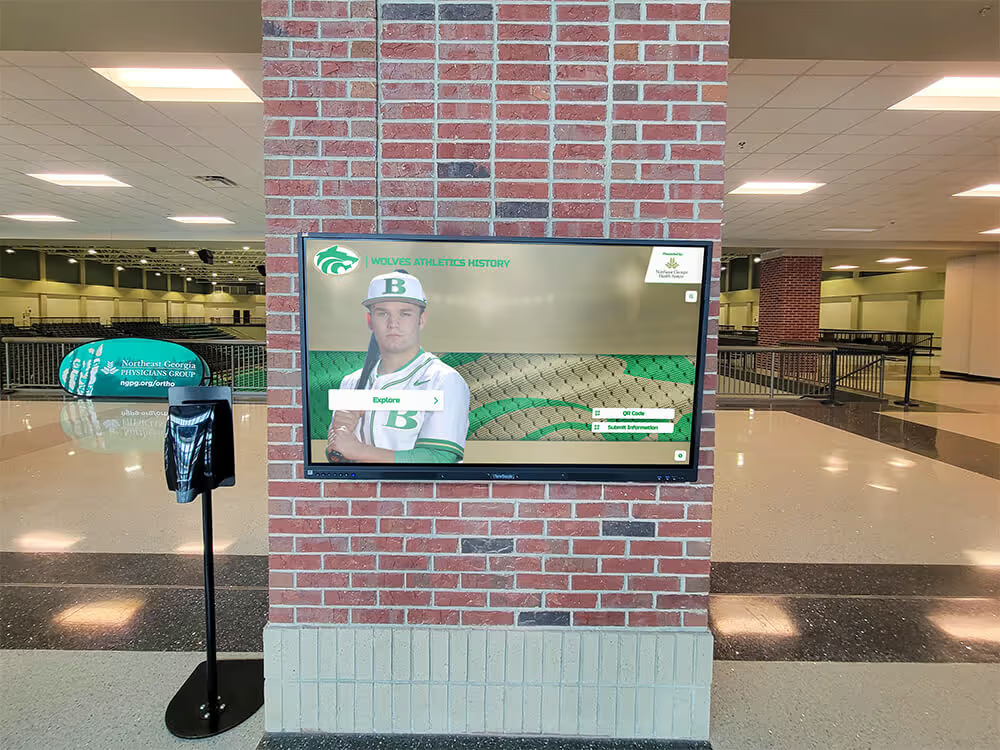
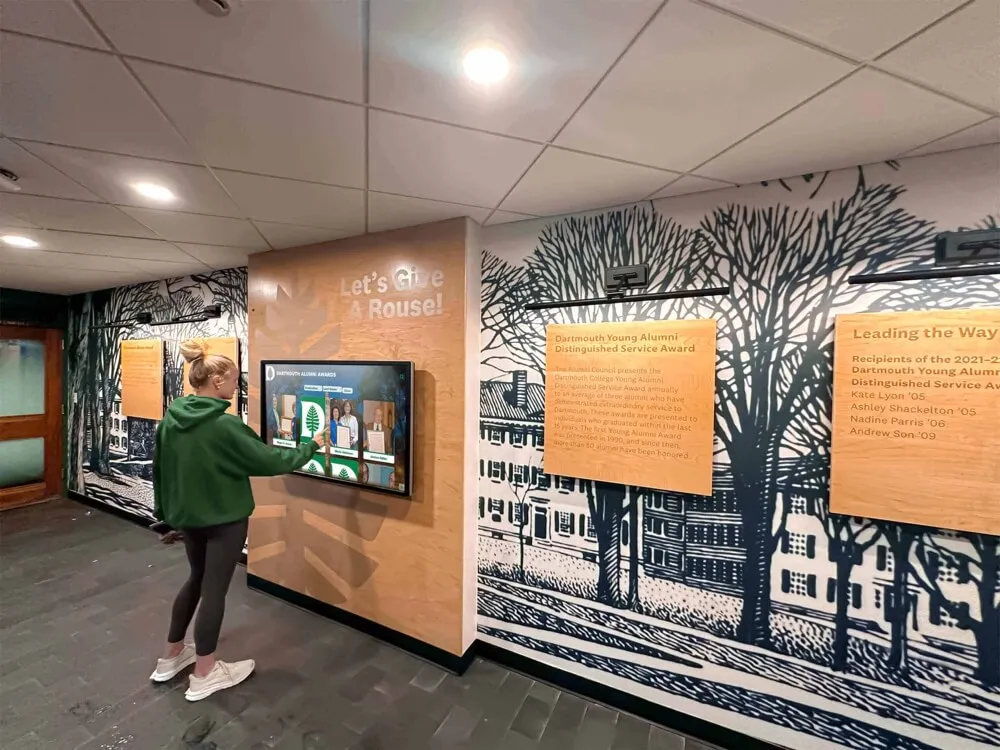
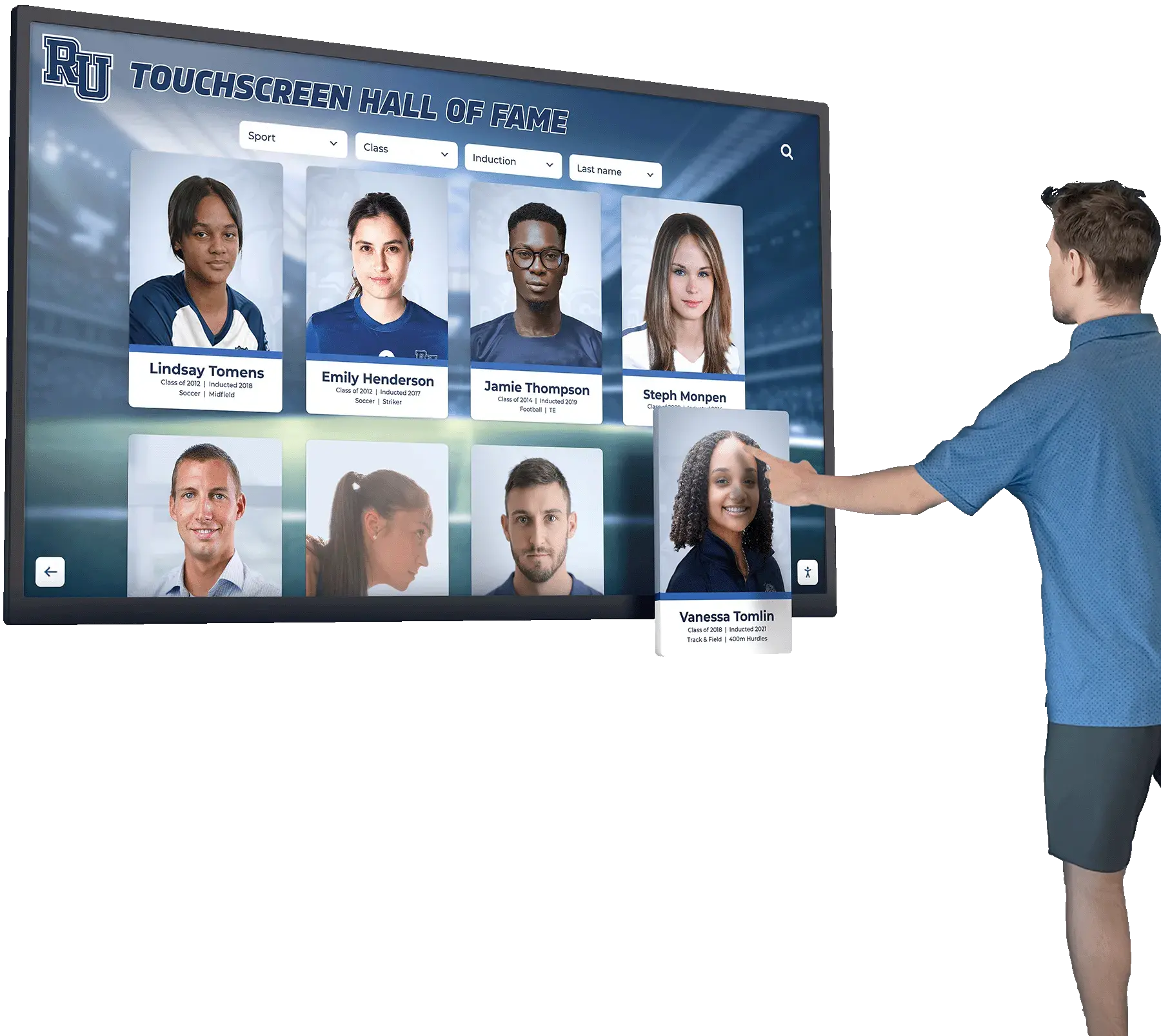
Hallways housing both physical trophy cases and digital recognition kiosks require particular attention because the two display types have different glare sensitivities. A commercial-grade touchscreen kiosk with an anti-glare display treatment can tolerate higher ambient luminance than a glass-fronted case; visitors reading a touchscreen at close range are less sensitive to overhead fixture glare than visitors trying to read through reflective case glass at a distance. When digital and physical displays share a corridor, position luminaires to favor the angle tolerance of the more sensitive element — typically the glass case — and supplement with adjustable fixtures for the digital display area.
For programs considering digital recognition platforms as part of a broader recognition environment upgrade, recognition display network configuration guidance covers the infrastructure requirements that support digital content quality — a complementary layer to the physical lighting quality that this UGR inspection addresses.
UGR and Hall of Fame Recognition Spaces
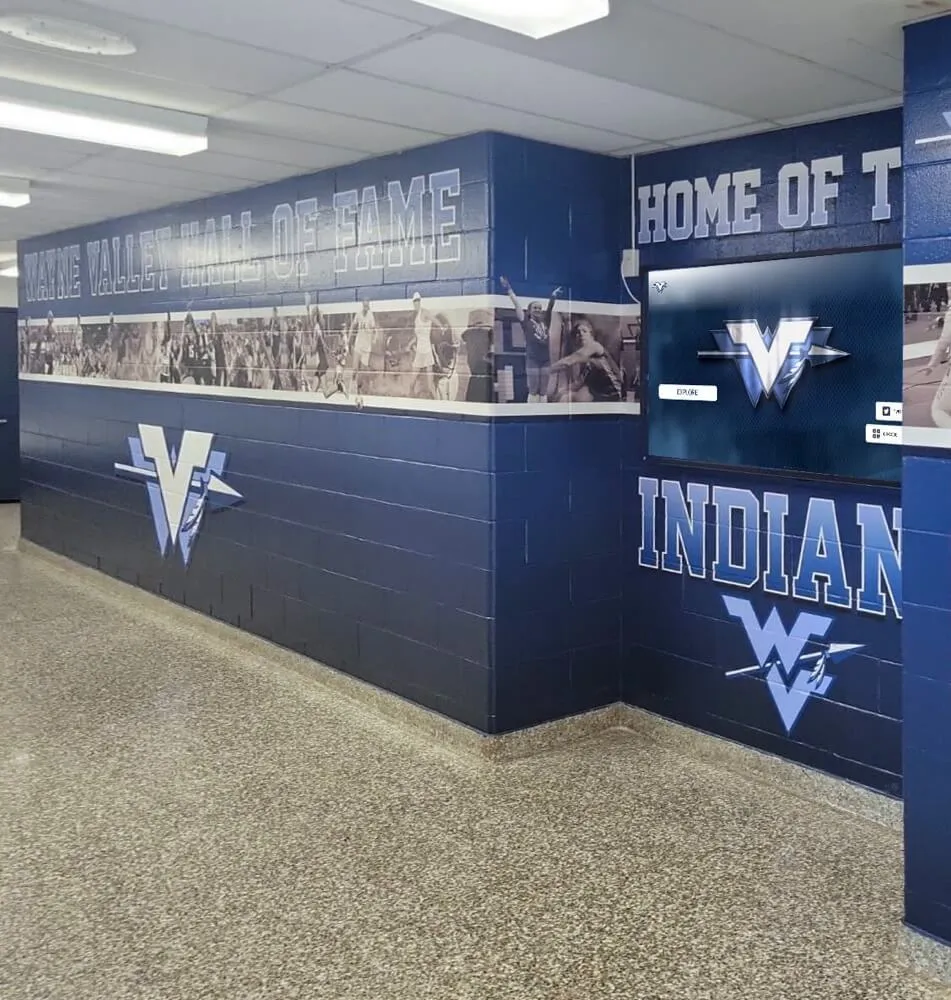
Schools with dedicated hall of fame corridors face the same UGR challenges as trophy case environments, compounded by the larger scale and the expectation that visitors will engage with the space for extended periods. A hall of fame corridor where every fixture is within UGR tolerance at the corridor entrance but one zone midway down the hall has a problem will cause visitors to disengage at that point — and the recognition content in the affected zone receives far less attention than the surrounding material.
Running a UGR inspection across a full hall of fame corridor uses the same observer position methodology: establish positions at regular intervals (every 3–4 meters is practical), perform the visual assessment, and document any positions where fixture reflections appear in glass panels or cases. Recognizing and celebrating athletic achievements appropriately — from award acceptance moments to the full historical record displayed in the hall — depends on a physical environment where visitors can comfortably engage with every element.
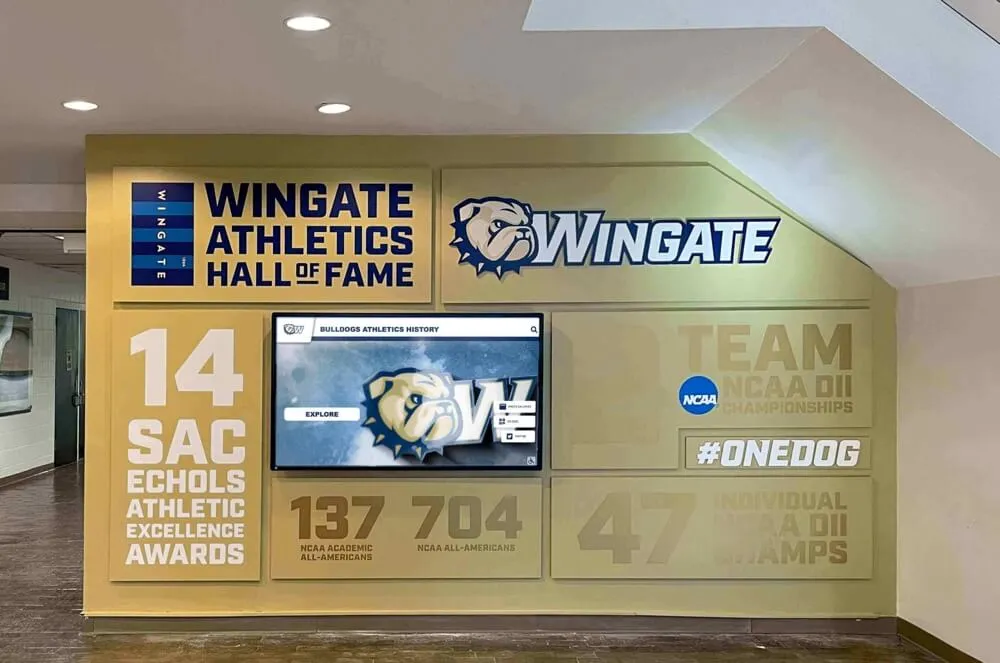
Digital hall of fame kiosks placed within a physical recognition corridor should be checked for accessibility-related display standards alongside the physical lighting environment. Digital hall of fame table header accessibility audits address the digital content layer of the recognition experience; the UGR inspection addresses the physical layer. Programs that maintain quality standards in both dimensions consistently deliver the best visitor experience.
Schools exploring how school history software supports comprehensive recognition archives will find that maintaining a well-lit, glare-controlled physical display environment supports engagement with both physical and digital recognition content — visitors who are comfortable in the space are more likely to stop, read, and explore the school’s recognition history.
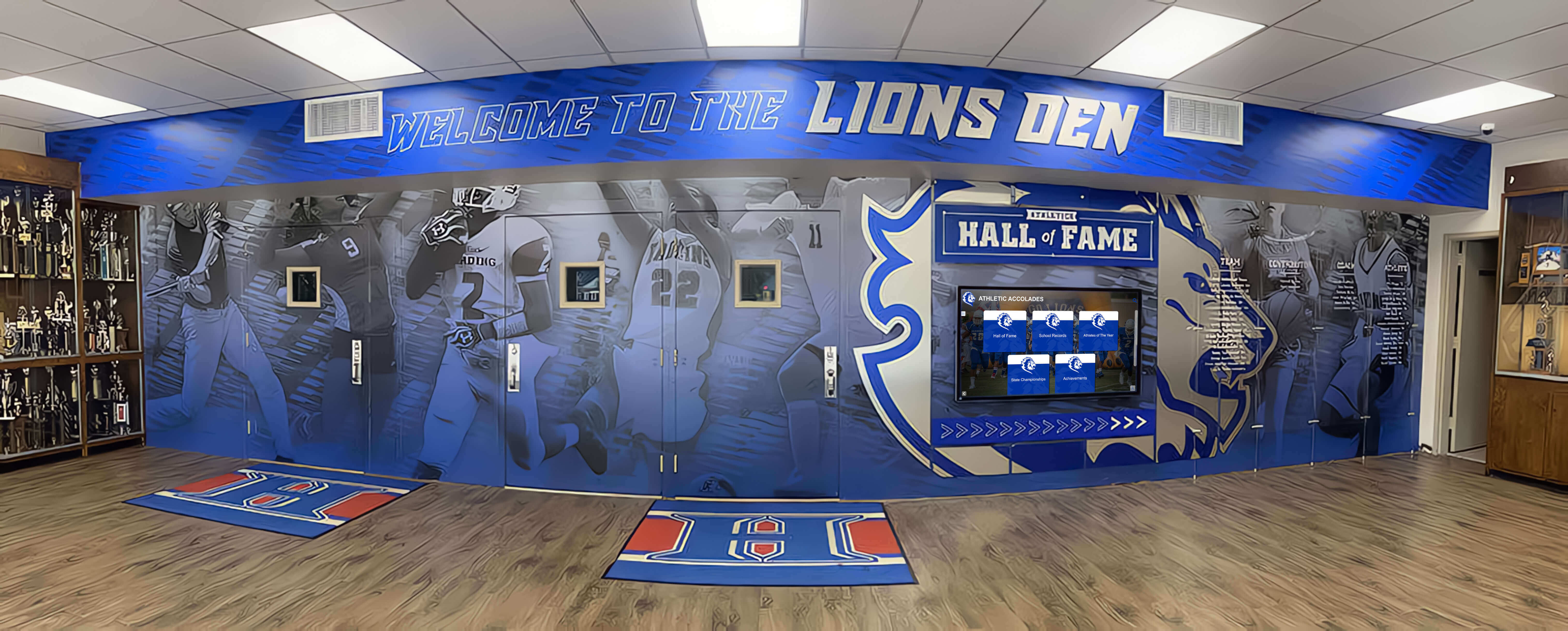
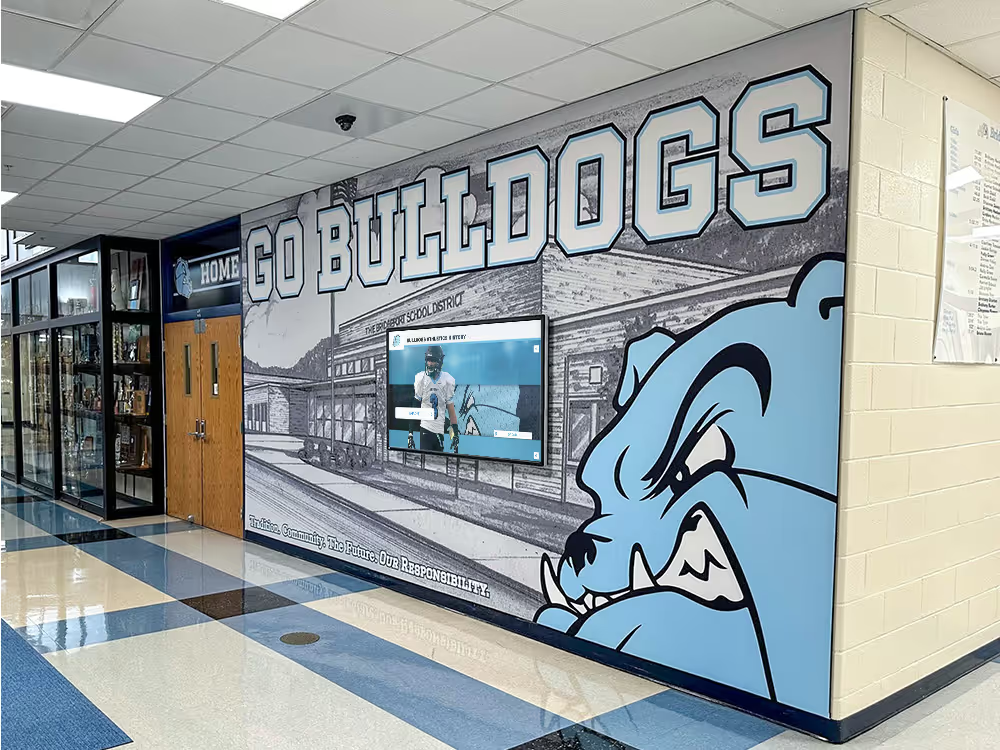
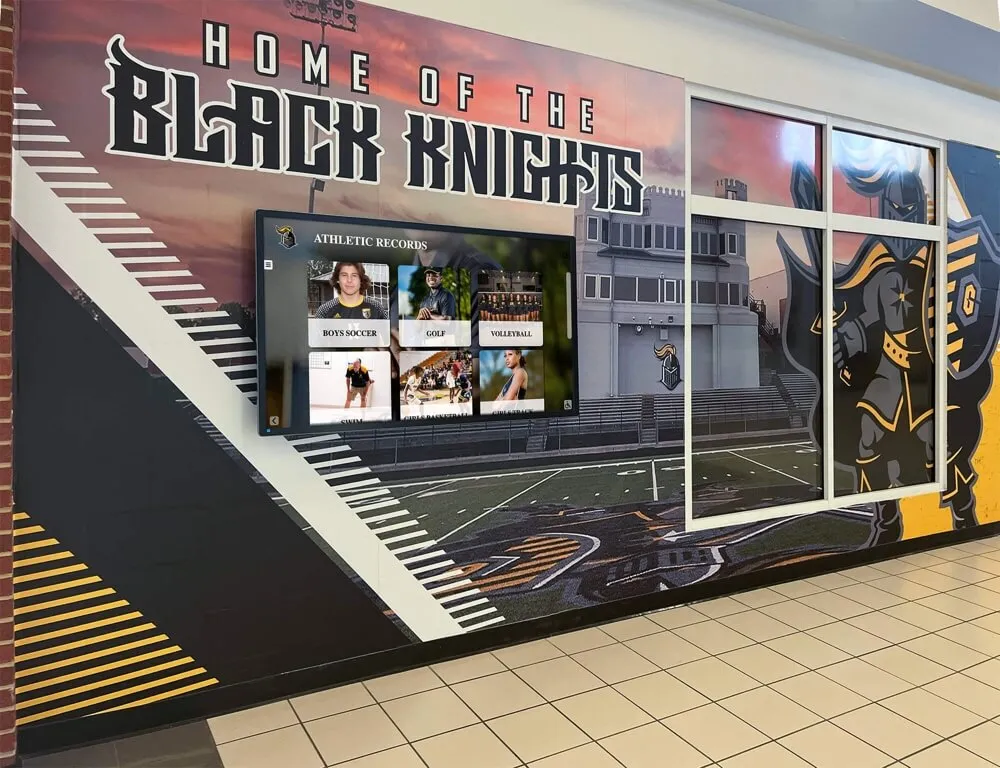
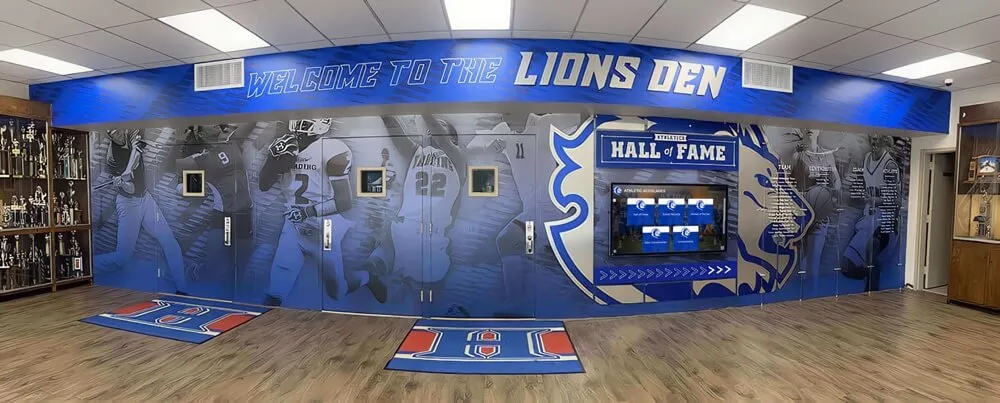
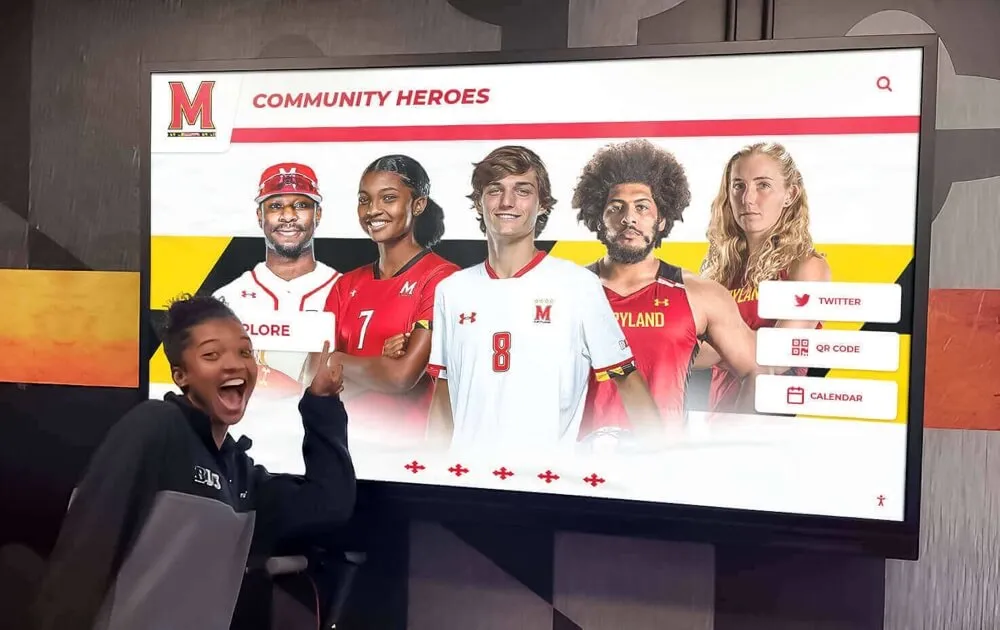
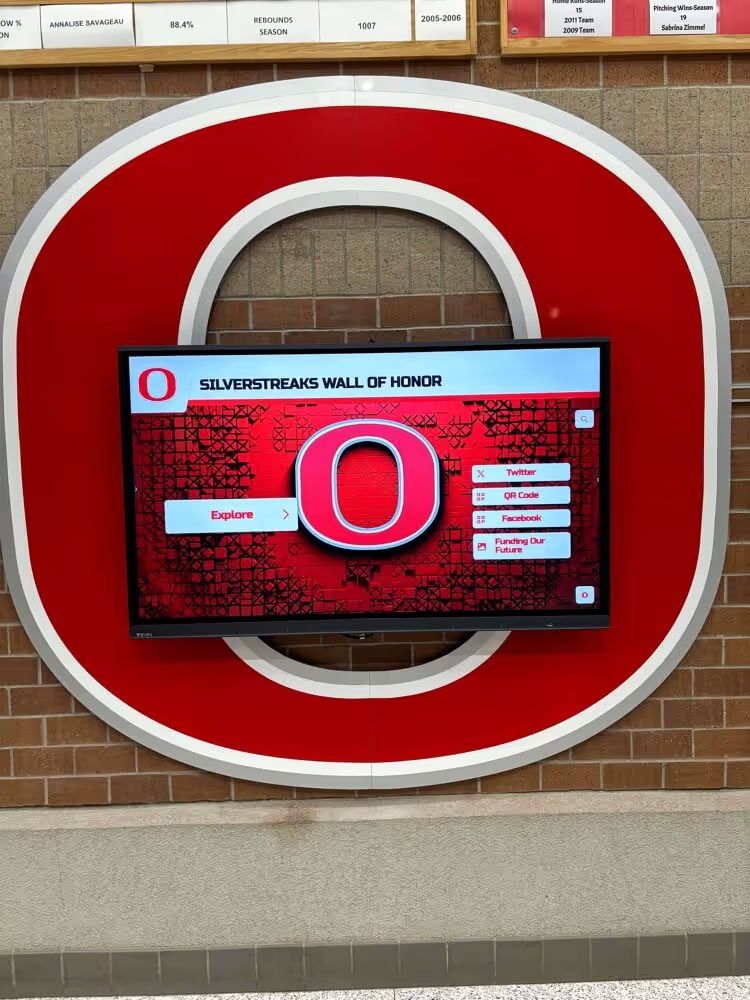
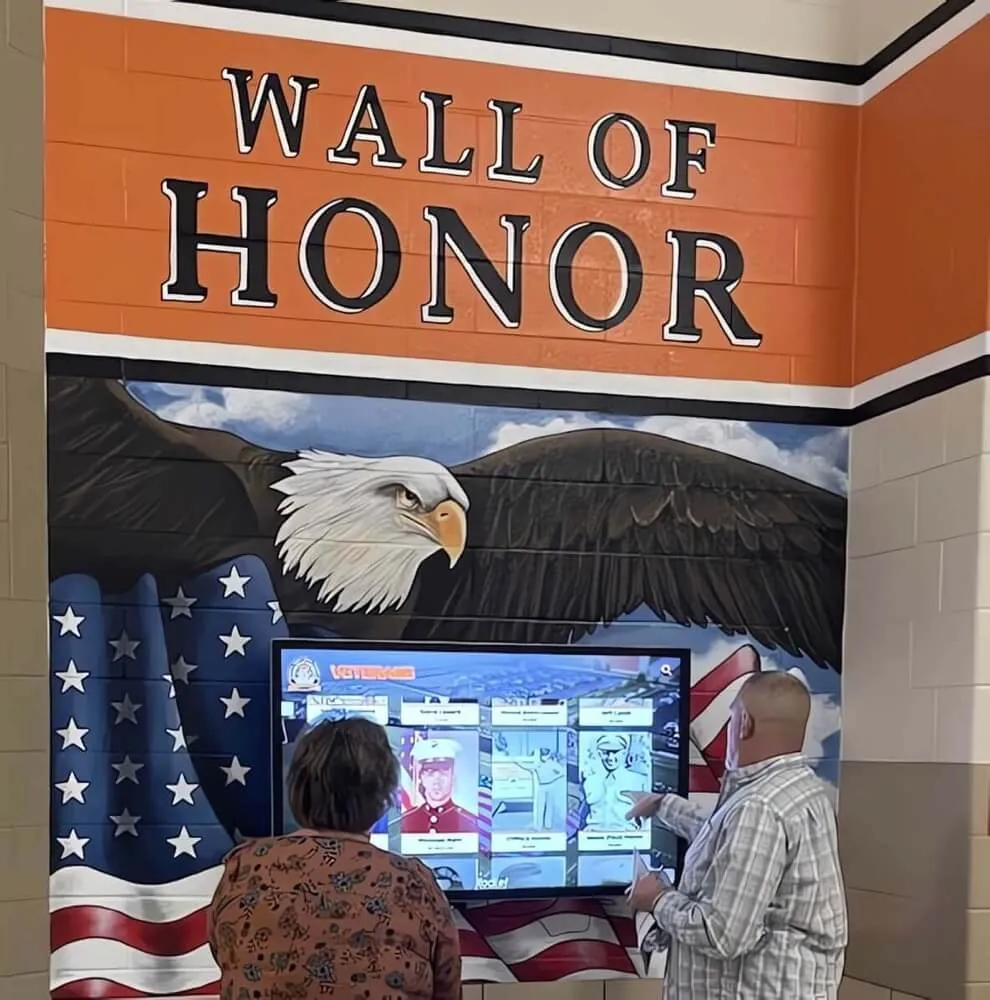
Hall of fame corridors that combine murals, trophy cases, and digital recognition panels require consistent glare control across the full visitor path
Preserving Athletic Records: The Display Environment Connection
Athletic programs that invest in comprehensive record keeping — from athletic archive management and media file standards to the physical display of championship trophies — protect institutional history. That history is only accessible to visitors when the display environment supports comfortable, extended viewing.
A UGR problem in a trophy corridor is, functionally, a preservation problem: award content that exists but cannot be comfortably viewed is not serving its recognition purpose. The inspection checklist in this guide provides a structured path to confirming that the physical display environment does its job — delivering the school’s achievement record to every visitor who approaches, regardless of the time of day, the position they stand in, or the ambient light conditions in the corridor.
FAQ: School Trophy Case UGR Lighting Check
Conclusion: Glare Control as a Recognition Program Standard
A school trophy case UGR lighting check confirms that the most fundamental requirement of a recognition display is met: visitors can comfortably see the awards, photographs, and achievement records the school has invested in displaying. Glare that registers as discomfort before it registers as a complaint is silently reducing the return on every recognition program decision — from the quality of the engraved plaques to the selection of athlete portrait photographs.
The inspection process in this guide requires no specialized equipment for the qualitative steps, integrates naturally into an annual lighting quality program alongside MacAdam ellipse, Duv, and TM-30 checks, and produces documentation that supports consistent maintenance across facilities staff changes. Schools that run this check regularly and act on results when UGR exceeds the UGR ≤ 16 threshold maintain recognition environments where every visitor who approaches the case can read every award, every name, and every achievement without discomfort.
For programs where the complexity of ongoing physical lighting management — glare checks, color consistency audits, tint corrections — diverts attention from recognition program goals, digital recognition platforms offer factory-calibrated display quality with built-in anti-glare screen treatments, unlimited recognition capacity, and cloud-managed content updates without annual fixture maintenance cycles.
See How Rocket Alumni Solutions Delivers Recognition Displays Built for Comfortable Viewing
Digital recognition platforms built to commercial display standards include anti-glare screen treatments, factory-calibrated brightness, and WCAG 2.1 AA accessibility — without UGR checks, fixture repositioning, or annual glare audits. See how schools showcase unlimited award records, championship photographs, and athlete achievements in display environments that visitors engage with comfortably.
Schedule Your Demo