



Intent: research — a school trophy case sealant compatibility inspection is a structured pre-repair assessment that identifies the sealant type currently in a trophy case’s glazing assembly, characterizes the substrate materials it contacts, and determines whether a proposed repair sealant is chemically and mechanically compatible with those substrates before any material is applied. Compatibility failures — adhesion loss, gasket softening, glass staining, metallic corrosion, or acidic off-gassing that damages memorabilia inside the case — are almost always avoidable when the inspection precedes the repair. This guide defines the sealant categories present in school trophy case glazing, describes the failure modes each incompatibility produces, provides a substrate identification protocol, presents a step-by-step inspection sequence, and supplies an escalation table that distinguishes safe-to-proceed findings from conditions requiring a glazier consultation or manufacturer confirmation before work begins.
A school trophy case represents decades of athletic, academic, and community achievement compressed into a display that families, visitors, and athletes encounter every day. The glazing assembly — the sealant, gaskets, and glass panels that protect those contents — is invisible to that audience, but it determines whether the memorabilia inside arrives at its next inspection in the same condition it was in at the last one. When that assembly needs repair, the choice of repair sealant can either restore its protective function or introduce a new failure: staining the display glass, softening the gaskets that seal the frame, corroding the aluminum extrusion, or — most critically — releasing acidic vapors that migrate into the case interior and degrade paper certificates, textile banners, and metal finishes on the trophies themselves.
A sealant compatibility inspection answers the question that glazing repair manuals assume someone has already asked: is the proposed sealant compatible with everything it will touch?

School trophy cases house decades of achievement behind glazing assemblies that require sealant compatibility verification before any repair — selecting the wrong repair sealant can damage the glass, gaskets, frame, or memorabilia inside
Why Sealant Compatibility Matters in School Trophy Case Glazing
Trophy case glazing assemblies are not identical to commercial storefront glazing or residential window applications. They share the same sealant chemistries, but they differ in two ways that elevate compatibility risk: the proximity of the sealant to display contents, and the mixed substrate composition of a typical school trophy case.
Proximity to memorabilia. A storefront sealant contacts exterior environmental conditions on one side and interior building air on the other. A trophy case sealant contacts display contents on its interior side — paper recognition certificates, fabric championship banners, acrylic trophy bases, metal figurines, and painted wood plaques may all sit within inches of the glazing perimeter where sealant chemistry matters. Sealant chemistries that off-gas during cure or degrade over time can release compounds that stain, corrode, or embrittle those materials.
Mixed substrate composition. A single trophy case may combine aluminum frame extrusions, glass panels of varying types, EPDM or neoprene gaskets, anodized or powder-coated glazing beads, painted steel hardware, and — in older cases — hardwood surrounds or lacquered trim. Each substrate has a defined set of sealant chemistries with which it is compatible, and those sets are not identical. A sealant that performs well on glass may corrode bare aluminum; a sealant suitable for EPDM gaskets may swell neoprene gaskets of the same visual appearance.
The sealant compatibility inspection addresses both risks by identifying the specific materials present before repair sealant is selected or applied.
Sealant Categories Present in School Trophy Case Glazing
Four sealant chemistries account for the majority of school trophy case glazing applications. Understanding how each cures and what each is chemically compatible with is the foundation of the inspection.
Neutral-Cure Silicone
Neutral-cure silicone releases alcohol or oxime byproducts during cure rather than acetic acid. It is the most widely compatible silicone type for glazing applications where the sealant will contact aluminum, anodized surfaces, coated glass, EPDM gaskets, or memorabilia in an enclosed display environment. Neutral-cure silicone does not corrode metals, does not stain most glass coatings, and does not off-gas compounds that damage paper or fabric at concentrations present in enclosed trophy cases.
Neutral-cure silicone is identified by the absence of a vinegar odor during cure and by manufacturer labeling. Products marketed specifically for structural glazing or for use with coated and specialty glass are nearly always neutral-cure formulations.
Acetoxy-Cure Silicone
Acetoxy-cure silicone — the most common general-purpose silicone at hardware and home improvement retailers — cures by releasing acetic acid. The acetic acid release is the source of the distinctive vinegar odor during application and throughout the cure period. Acetic acid is corrosive to copper, brass, and some anodized aluminum finishes at cure concentrations, can leave staining on certain glass coatings and mirror surfaces, and can off-gas at levels sufficient to affect paper and textile materials in a confined space such as an enclosed trophy case interior.
Acetoxy-cure silicone is appropriate for bathroom tile, non-porous household sealing, and glazing where the sealant does not contact reactive metals, where the case interior is not enclosed during cure, and where display materials are not paper or fabric. It is frequently the wrong choice for school trophy case repair when the case is enclosed and contains decorative metalwork or paper recognition pieces.
Field identification: Acetoxy-cure silicone has a strong vinegar odor immediately after cartridge opening and throughout the cure period (typically 24–72 hours depending on temperature and humidity). Neutral-cure silicone has a mild alcohol or solvent odor or no detectable odor at application.
Polyurethane Sealant
Polyurethane sealants offer strong adhesion to porous and semi-porous substrates — painted wood surrounds, concrete, masonry — and are used in some trophy case installations where the case frame contacts a masonry or painted wall surround. Polyurethane sealants are paintable and have good UV resistance in exposed applications.
Compatibility concerns: polyurethane sealants are not chemically compatible with all silicone formulations — applying polyurethane directly over a silicone bead without full removal and priming will produce adhesion failure. Some polyurethane formulations contain solvents that can swell or degrade EPDM, neoprene, and PVC gasket materials. Polyurethane over-application in enclosed trophy case environments can also off-gas isocyanate residuals during cure that may affect case contents.
Butyl Sealant and Tape
Butyl sealants and butyl-backed glazing tapes are used as primary or secondary seals in some trophy case glazing assemblies — particularly where the glass panel sits in a glazing channel with butyl tape compressed along the bottom edge to prevent glass slippage. Butyl remains tacky throughout its service life, is chemically inert relative to glass and most metals, and does not off-gas during or after installation.
Understanding that butyl is present in the glazing channel matters for compatibility assessment because some solvent-based cleaners and certain primer formulations used before sealant application can dissolve or displace butyl from its channel, disrupting the primary seal while the inspector is addressing the secondary sealant line.
| Sealant Type | Cure Byproduct | Compatible with Glass | Compatible with Aluminum | Compatible with EPDM | Compatible with Neoprene | Interior Memorabilia Risk |
|---|---|---|---|---|---|---|
| Neutral-cure silicone | Alcohol or oxime | Yes — including coated glass | Yes — including anodized | Yes | Yes | Low |
| Acetoxy-cure silicone | Acetic acid | Yes — uncoated; variable on coated | Variable — may stain anodized; corrosive to bare copper/brass | Yes | Yes | Moderate — acetic acid off-gas in enclosed space |
| Polyurethane | Moisture / isocyanate residual | Yes | Yes — with primer | Variable — confirm with manufacturer | Variable — some formulations swell neoprene | Moderate — isocyanate off-gas during cure |
| Polysulfide | Mercaptan compounds | Yes | Variable — may corrode aluminum without primer | Yes | Yes | Moderate — confirm with manufacturer for enclosed display use |
| Butyl tape/sealant | None (no-cure system) | Yes | Yes | Yes | Yes | Low |
Substrate Identification: What the Repair Sealant Will Contact
Before selecting or applying a repair sealant, the inspector must identify every substrate the sealant will contact. For a school trophy case, that means documenting four categories.
Glass type. Uncoated clear glass, low-iron glass, tempered glass, laminated glass, and glass with anti-reflective or privacy coatings all have different sealant compatibility profiles. Coated glass in particular may be incompatible with acetoxy-cure silicone. Glass type markings on the edge or corner of the panel — required by ANSI Z97.1 and CPSC 16 CFR Part 1201 for safety glazing — provide the glass manufacturer and product code; compatibility data is then available from the glass manufacturer.
Frame material and finish. Aluminum is the most common frame material in school trophy cases; its compatibility depends on whether the surface is bare aluminum, anodized aluminum, painted aluminum, or powder-coated aluminum. Acetoxy-cure silicone can stain anodized aluminum and corrode bare aluminum at the cure interface. Neutral-cure silicone is the appropriate choice for all aluminum finishes. Wood surrounds or trim require a different sealant recommendation than aluminum — many structural silicones do not adhere well to painted or varnished wood without primer.
Gasket material. Gaskets in trophy case frames are most commonly EPDM or neoprene. EPDM is broadly compatible with silicone sealants. Neoprene is generally compatible with neutral-cure and acetoxy-cure silicone but may swell when exposed to certain polyurethane formulations. PVC gaskets, present in some older cases, have a narrower compatibility range — some silicone solvents can cause PVC gaskets to lose dimensional stability.
Adjacent memorabilia materials. When the repair sealant is being applied to a joint on the interior side of the case — or when the case will be closed before cure is complete — the inspector should note what display materials are within the enclosed space. Paper certificates, fabric textiles, copper or brass nameplate hardware, and acrylic or painted surfaces all have specific sensitivity to sealant off-gassing. When any of these are present in a case that will be sealed during the repair cure cycle, neutral-cure silicone is the indicated choice.
Trophy cases that house championship hardware alongside paper recognition materials, metal plaques, and fabric displays require sealant compatibility assessment before any repair — the proximity of display contents to the glazing perimeter means sealant chemistry affects the contents, not only the glass
Sealant Compatibility Failure Modes: What Goes Wrong and How to Identify It
Understanding the failure modes that incompatible sealant selection produces allows the inspector to recognize pre-existing incompatibility failures — whether from prior repair attempts by facilities staff or contractors — and to document them alongside the pre-repair compatibility assessment.
Staining at the Glass-Sealant Interface
Visible discoloration along the perimeter of a glass panel, following the sealant line, may indicate:
- Acetic acid staining from acetoxy-cure silicone reacting with a mirror coating, low-e coating, or decorative film on the glass interior surface. The stain typically appears as a gray or brown haze along the sealant perimeter on coated glass.
- Silicone oil migration from a sealant formulation with high plasticizer content — a rainbow or oily sheen that extends slightly beyond the sealant line onto the glass or frame surface.
- Polysulfide migration on older cases — brownish staining along the sealant line, sometimes extending onto adjacent aluminum or wood.
Staining at the glass-sealant interface does not indicate a safety failure, but it does indicate an incompatibility that will recur if the same repair sealant is reapplied without a substrate-appropriate formulation change.
Gasket Softening and Swelling
A gasket that has lost dimensional stability — that feels mushy when pressed, has cracked along its length, or has shrunk away from its channel — may have been subjected to an incompatible sealant application. Solvent-containing polyurethane or polysulfide formulations can swell EPDM and neoprene gaskets; some primer solvents used before sealant application can temporarily or permanently soften gaskets if contact is not avoided.
A gasket that has swollen may initially appear to create a better seal — the swollen rubber fills gaps it previously bridged — but a swollen gasket is degraded and will fail earlier than an undamaged gasket of the same type.
Adhesion Failure at Sealant-Frame or Sealant-Glass Interface
Sealant that has partially or fully debonded — visible as a gap between the sealant body and one of its two bonding surfaces — may indicate a cross-compatibility failure: for example, polyurethane applied over an existing silicone bead without removal and priming will typically fail adhesively because silicone’s surface energy prevents polyurethane adhesion. Silicone applied over polyurethane faces similar adhesion challenges.
Field identification: run a gloved finger along the sealant perimeter. Any section where the sealant pulls away from the frame or glass with minimal resistance, or where the sealant has visibly pulled back and left a gap, represents an adhesion failure. Document the location and measure the gap — adhesion failure at the interior face of an enclosed trophy case allows moisture intrusion and humidity fluctuation that can damage memorabilia.
Corrosion at the Sealant-Metal Interface
Acetoxy-cure silicone or certain polysulfide formulations in contact with bare copper, brass, or unprotected aluminum alloys can produce localized corrosion visible as pitting, white powdering, or green-blue staining at the point of sealant contact. Schools that store award hardware with copper or brass components — including pieces displayed after sports banquets and seasonal recognition events — inside a case during a sealant repair using acetoxy silicone may find the exposed metalwork affected by acetic acid released during cure.
Acidic Off-Gassing Damage to Display Contents
This failure mode is the most difficult to attribute after the fact, because it occurs invisibly during the cure period and its effects — yellowing of paper, oxidation of metal nameplate surfaces, embrittlement of acrylic — develop slowly over weeks or months after the repair. Schools that display academic recognition pieces alongside athletic awards — including displays featuring Latin honors designations and graduation achievement certificates — face elevated risk because paper certificates are among the most vulnerable materials to acidic off-gassing in an enclosed space.
The inspection prevents this failure by identifying the risk before repair and requiring neutral-cure sealant for any repair on a closed case with paper, fabric, or reactive-metal contents.

Trophy display cases holding mixed materials — metal hardware alongside paper certificates, textiles, and acrylic displays — require a sealant compatibility inspection before repair to prevent off-gassing damage during the cure period in an enclosed space
School Trophy Case Sealant Compatibility Inspection: Step-by-Step Protocol
The following sequence establishes whether the proposed repair sealant is compatible with all substrates it will contact, and whether pre-existing incompatibility conditions from prior repairs need to be addressed before the new repair can proceed.
Step 1: Document the Existing Assembly
Before touching or testing anything, record in the inspection log:
- Case identifier and location
- Glass type (from edge markings if legible; record as “unconfirmed” if markings are absent or worn)
- Frame material and finish (aluminum: anodized, painted, or powder-coated; wood; steel)
- Gasket material if identifiable
- Visible condition of existing sealant: intact, cracked, debonded, stained, missing
- Display contents visible through the glass: trophy hardware only; paper certificates present; fabric materials present; mixed
- Prior repair history if known from case records
Step 2: Identify the Existing Sealant Chemistry
Open the case door and examine the sealant bead in a discreet location — the bottom of an interior door frame corner, for example — and perform field identification tests in order:
- Visual inspection: Is the sealant matte (most silicone; some polyurethane), glossy (some polyurethane; butyl), or semi-rigid (polysulfide)?
- Odor test (existing sealant, not fresh): Does the sealant line have a residual vinegar odor in a confined area? If yes, it is likely acetoxy silicone. No odor is consistent with neutral-cure silicone, cured polyurethane, or butyl.
- Probe test: Press gently on the sealant bead with a gloved finger. Does it deflect elastically (silicone or polyurethane) or remain rigid and brittle (polysulfide in advanced age; some failed polyurethane)?
- Adhesion test at a planned removal location: At the section intended for removal and replacement, attempt to peel back a small section manually. Note whether the sealant releases adhesively from the glass, from the frame, or cohesively (tears through the sealant body) — this characterizes the adhesion condition the repair must address.
If the existing sealant type cannot be confirmed by field methods — common when the case has been repaired more than once — request the glazing specification from the facility’s maintenance records, or use a sealant compatibility test kit from a glazing sealant manufacturer’s technical support program.
Step 3: Confirm Proposed Repair Sealant Compatibility
With the substrate inventory and existing sealant identification complete, obtain the proposed repair sealant’s technical data sheet and confirm each compatibility point:
| Substrate | Check Required | Pass Condition | Fail Condition | Action if Fail |
|---|---|---|---|---|
| Glass type (uncoated) | Silicone: all types OK; polyurethane: OK | No restrictions | N/A | N/A |
| Glass type (coated: low-e, AR, privacy film) | Neutral-cure silicone OK; acetoxy silicone — confirm with glass manufacturer | Manufacturer data confirms compatibility | Manufacturer data lists restriction | Select neutral-cure silicone; obtain written confirmation |
| Aluminum frame — anodized | Neutral-cure silicone OK; acetoxy silicone — risk of staining | Neutral-cure confirmed | Acetoxy proposed | Substitute neutral-cure formulation |
| Aluminum frame — bare | Neutral-cure silicone OK; acetoxy silicone — risk of corrosion | Neutral-cure confirmed | Acetoxy proposed | Substitute neutral-cure formulation |
| EPDM gaskets | Silicone (both types) OK; polyurethane — confirm | Manufacturer confirms EPDM compatibility | Manufacturer lists restriction or “not tested” | Select confirmed-compatible formulation |
| Neoprene gaskets | Silicone (both types) generally OK; polyurethane — confirm | Manufacturer confirms neoprene compatibility | Manufacturer lists restriction | Select confirmed-compatible formulation |
| Existing sealant (over-application without removal) | Cross-compatibility — silicone over polyurethane typically fails | Full removal confirmed; primer applied per manufacturer instructions | Partial removal; no primer; cross-incompatible chemistry | Full removal of existing sealant before application |
| Interior contents (paper, fabric, reactive metals) | Neutral-cure confirmed; acetoxy — not in enclosed case with these materials | Neutral-cure confirmed; or case will remain open through cure | Acetoxy proposed for enclosed case with paper/fabric/reactive metals | Substitute neutral-cure; or plan cure with case open and contents temporarily removed |
Step 4: Test in an Inconspicuous Location
Even when all manufacturer compatibility data confirms a specific sealant is appropriate for the substrate combination, a field test on a small, inconspicuous section of the assembly — before completing the full repair — provides confirmation that the specific surfaces in this installation behave as the manufacturer data predicts.
Apply a 50–100 mm test bead in the least visible corner of the planned repair area. Allow it to cure for the full manufacturer-specified cure time (typically 24–72 hours for silicone; 48–96 hours for polyurethane). After cure, inspect for:
- Staining at the glass or frame interface adjacent to the test bead
- Dimensional change in adjacent gaskets
- Odor inside the closed case at the end of the cure period
- Adhesion quality at the test bead (does it pull away from the substrate with hand pressure, or does it resist cleanly?)
If the test bead passes all four checks, proceed with the full repair. If any check shows an unexpected result, stop and contact the sealant manufacturer’s technical support line with the substrate details before proceeding.
Schools managing recognition programs that include youth athlete of the year awards and plaques displayed in enclosed cases alongside paper documentation benefit particularly from the field test step — the mix of metal, paper, and lacquered wood that characterizes many athletic recognition pieces creates a substrate combination not always covered by a single data-sheet compatibility table, and field confirmation is more reliable than data-sheet extrapolation for mixed-material interiors.
Step 5: Record Findings and Escalation Status
For each case in the inspection, record:
- Case ID, panel locations inspected, glass type confirmed or unconfirmed
- Existing sealant type: confirmed chemistry or range
- Pre-existing failure modes found: staining, gasket condition, adhesion failure, corrosion — yes/no for each; location and severity if present
- Proposed repair sealant: product name, manufacturer, cure chemistry confirmed
- Compatibility table checks: pass/fail for each substrate
- Field test result: pass/fail; notes
- Escalation status: safe to proceed, requires manufacturer confirmation, requires glazier consultation
Trophy display areas in school lobbies and athletic halls require documented sealant compatibility inspection before glazing repairs — the inspection record provides substrate identification, proposed sealant compatibility confirmation, and field test results as a complete pre-repair package
Escalation Table: Safe to Proceed vs. Consultation Required
| Finding | Classification | Action | Timeline |
|---|---|---|---|
| Existing sealant confirmed neutral-cure silicone; proposed repair is neutral-cure silicone; all substrates confirmed compatible; field test passed | Safe to proceed | Complete repair per manufacturer instructions; document in inspection log | Proceed |
| Existing sealant is acetoxy silicone; proposed repair is neutral-cure silicone; all substrates confirmed compatible; full removal confirmed | Safe to proceed after removal | Remove all existing sealant fully; clean substrate; apply neutral-cure per manufacturer | Proceed after removal |
| Proposed repair sealant is acetoxy silicone; case contains enclosed paper, fabric, or reactive-metal display contents | Not safe to proceed as proposed | Substitute neutral-cure silicone, or remove and temporarily store display contents and open case for full cure period | Resolve before repair begins |
| Proposed repair sealant compatibility with coated glass not confirmed by manufacturer data | Requires manufacturer confirmation | Contact glass and sealant manufacturers; obtain written compatibility confirmation | Complete before repair begins |
| Pre-existing gasket softening or swelling found | Glazier consultation required | Glazier assessment to determine gasket replacement need before sealant repair proceeds | Complete before repair begins |
| Pre-existing adhesion failure covering more than 25% of the sealant perimeter | Glazier consultation required | Full sealant removal and re-bedding may be required; glazier assessment determines scope | Schedule within 14 days |
| Corrosion visible at sealant-metal interface | Glazier consultation required | Metal surface treatment and primer required before new sealant can bond; corrosion extent assessment | Schedule within 14 days |
| Existing sealant type cannot be confirmed; case has multiple repair layers | Glazier consultation required | Over-application without confirmed compatibility is not appropriate; glazier to assess removal scope and re-specification | Do not proceed until resolved |
Frequently Asked Questions About Trophy Case Sealant Compatibility
Can I apply new silicone directly over old silicone?
New silicone will not adhere reliably to cured silicone without a specialized silicone primer designed for silicone-over-silicone bonding — and even with that primer, the bond strength is lower than silicone applied to clean glass or metal. For a lasting repair, the recommended approach is full removal of the existing sealant bead using a trim knife and non-abrasive removal tools, cleaning the substrate with an isopropyl alcohol wipe, and applying the new sealant to the clean substrate. Top-coat silicone repairs over existing beads rarely perform as long as a properly prepared surface application.
What does “compatibility” mean for sealants — does it mean the sealant will not damage the substrate, or that it will adhere to it?
Both. Compatibility has two components: chemical compatibility (the sealant’s cure byproducts do not corrode, stain, or degrade the substrate) and adhesion compatibility (the sealant bonds to the substrate with the tensile and shear strength required for the application). A sealant can be chemically compatible with a substrate but still fail adhesively if the surface is not prepared correctly. Both components must be confirmed before repair.
Is acetoxy silicone ever appropriate for school trophy case repair?
Acetoxy-cure silicone is appropriate when: the case is not enclosed during the cure period; the display contents are limited to metal hardware with no copper, brass, or paper materials in the case during cure; the frame is not anodized aluminum with a finish susceptible to acetic acid staining; and the glass is not coated. When those conditions are all met, acetoxy silicone may be used. When any condition is not met, neutral-cure silicone is the appropriate substitute. Given that most enclosed school trophy cases have mixed display contents, neutral-cure silicone is the more broadly applicable default recommendation.
How do I identify EPDM versus neoprene gaskets without a laboratory test?
In the field, EPDM and neoprene gaskets are both black rubber and can appear identical. EPDM typically has a matte, slightly rough texture and a firmer durometer. Neoprene tends to have a slightly glossier surface and a softer, more elastic feel. Neither field test is definitive — the gasket profile and cross-section shape often provide more reliable identification than surface appearance. If the original case glazing specification is available, the gasket type will be identified there. If not, and if the distinction matters for the proposed sealant selection, consult the sealant manufacturer’s technical line with a description of both the gasket appearance and the proposed sealant before proceeding.
What happens if I apply polyurethane sealant over existing silicone by mistake?
The polyurethane will not adhere to the silicone surface and will debond — typically within months of application under UV, thermal cycling, and the differential movement that glazing assemblies experience. The debonded polyurethane creates a new condition requiring removal of both the failed polyurethane layer and the existing silicone before a proper re-seal can proceed. The practical consequence is more material removal work than a proper removal-first repair would have required initially.
Schools with trophy cases in or near natatorium facilities — including those housing aquatic program swim team hardware — face additional sealant selection requirements beyond standard school corridor environments. In natatorium-adjacent applications, the inspection should also confirm that the proposed sealant has been tested for performance in elevated humidity and, where appropriate, in environments with ambient chlorine exposure.
Do I need to test compatibility even when using the same product as the original sealant?
Yes, for two reasons. First, sealant formulations change between product generations — a manufacturer may update a product’s cure chemistry without changing its product name or color. Second, the substrate itself may have changed since the original sealant was applied: the glass may have been replaced with a coated variant, the frame may have been repainted with a different primer, or gaskets may have been swapped for a different material type during a prior repair. Treat each repair as a new compatibility assessment, not a reconfirmation of a prior one.
Sealant Repair Timing: Coordinating with Recognition Program Events
A practical dimension of sealant compatibility management that facilities teams sometimes overlook is timing. The cure period for silicone and polyurethane sealants — typically 24–72 hours for silicone under standard temperature and humidity conditions, longer in cold or dry environments — is a period during which the case should ideally remain open, or its enclosed contents removed, if an acetoxy sealant was necessary. That cure period should not overlap with a recognition event that requires the case to be sealed and presentable.
Schools that schedule trophy case maintenance around the academic calendar — planning repairs in the summer or during breaks — avoid the conflict between cure period and event readiness. Schools that honor top young performers at end-of-season banquets and awards ceremonies face the highest risk of timing conflict, because those events are precisely when trophy cases attract the most attention and when last-minute glazing repairs are most likely to be attempted.
The safest repair schedule: complete sealant removal, surface preparation, and new sealant application at least 72–96 hours before a case must be sealed and presentable, using a confirmed neutral-cure formulation that eliminates off-gassing risk from the cure period entirely.
Schools that include yearbook-era recognition pieces — including senior superlatives plaques and academic achievement certificates mounted inside trophy case displays — face paper material sensitivity that makes timing an especially important planning variable. The inspection protocol includes noting whether paper-based materials are present in the case and confirming that the repair plan either removes those materials during the cure window or uses neutral-cure sealant exclusively.
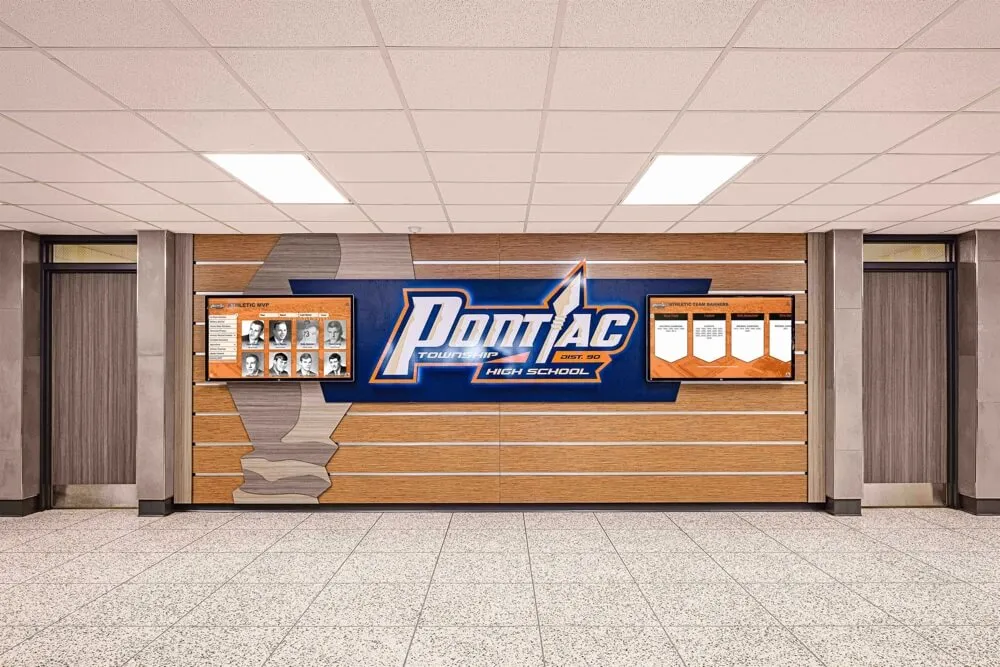
Scheduled trophy case repair should be timed to allow full sealant cure before the case is sealed and in active display use — cases containing paper certificates, recognition pieces, or reactive-metal hardware require neutral-cure sealant and adequate cure time before closing
Connecting the Inspection to Broader Trophy Case Maintenance
Sealant compatibility inspection is one component of a complete glazing assembly assessment. It addresses repair material selection — it does not replace the physical condition checks that address glass integrity (roller wave, glass bow, edge damage), gasket condition, and frame alignment. A complete trophy case maintenance cycle should run these assessments together:
- Glass condition (roller wave, bow, delamination, edge damage): determines whether the panel is repairable or requires replacement
- Gasket condition (dimensional stability, adhesion, cracking): determines whether gasket replacement is needed alongside sealant repair
- Frame condition (alignment, distortion, mounting stress): determines whether the frame needs adjustment before sealant repair can hold
- Sealant compatibility inspection (substrate identification, repair sealant selection, field test): determines which sealant is appropriate for the specific repair being undertaken
Running all four assessments before commissioning any glazing repair eliminates the most common outcome of individual assessments taken in isolation: a sealant that is perfectly compatible is applied to a frame that is out of alignment, and the repaired sealant fails within a year because the underlying structural condition was not addressed.
Schools maintaining recognition displays that also include senior class superlatives recognition and multi-year academic achievement documentation alongside athletic records accumulate a wide variety of materials inside trophy cases over time — materials that were not necessarily anticipated by the original case specification. The compatibility inspection provides the mechanism for detecting that the display contents have evolved away from the original substrate assumptions and adjusting the repair specification accordingly.
When Physical Trophy Cases Reach Their Maintenance Ceiling
Every sealant compatibility inspection, glass condition assessment, and gasket replacement decision is a data point in the maintenance history of a physical trophy case. Schools that document those decisions consistently accumulate a multi-year record that eventually answers a question facilities administrators and athletic directors face: at what point does the cumulative cost of maintaining physical glazing — annual assessments, periodic sealant replacements, gasket repairs, glazier consultations for escalated findings — compare unfavorably with the cost of a digital recognition platform that does not have a glazing assembly to maintain?
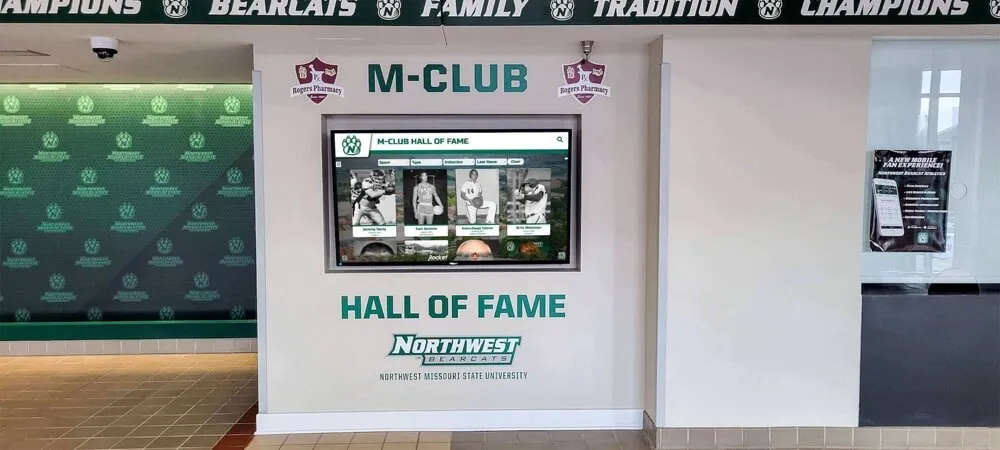
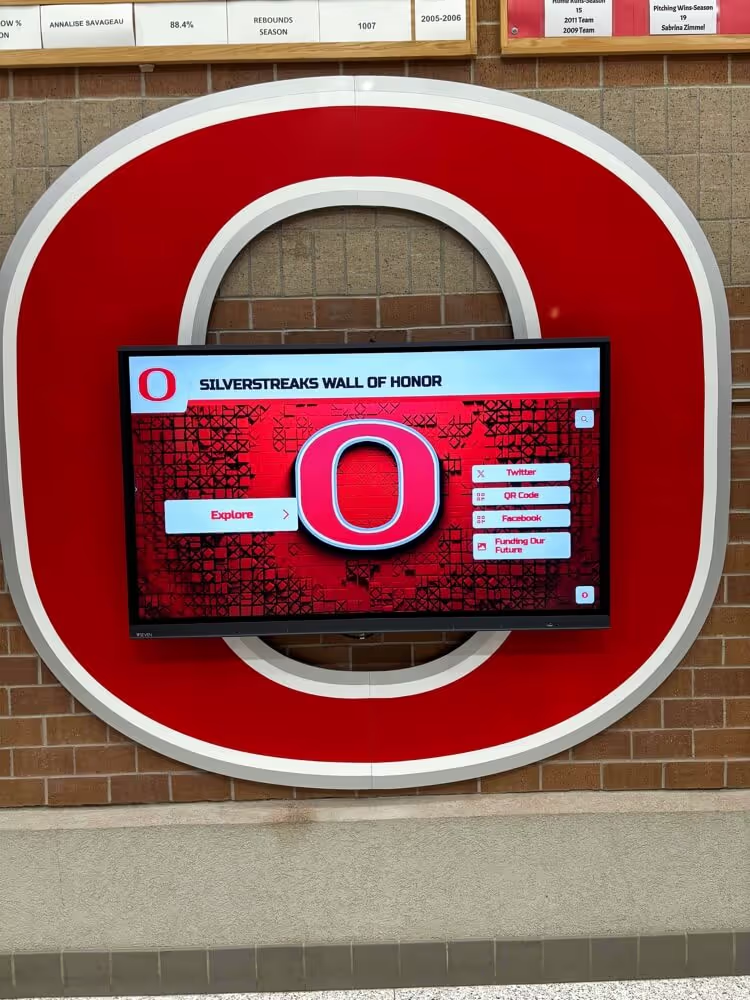
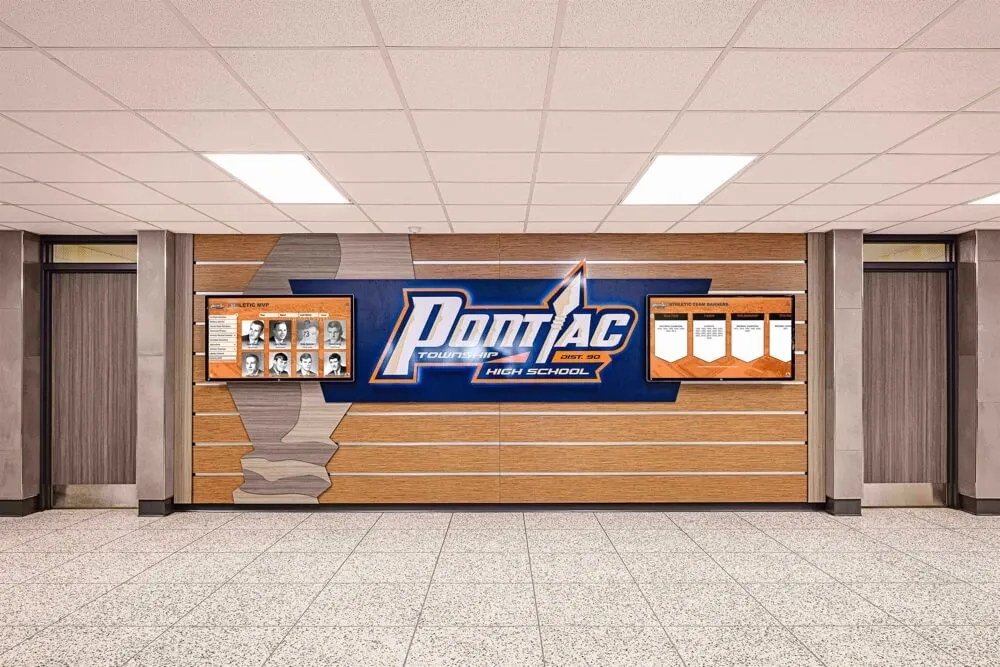
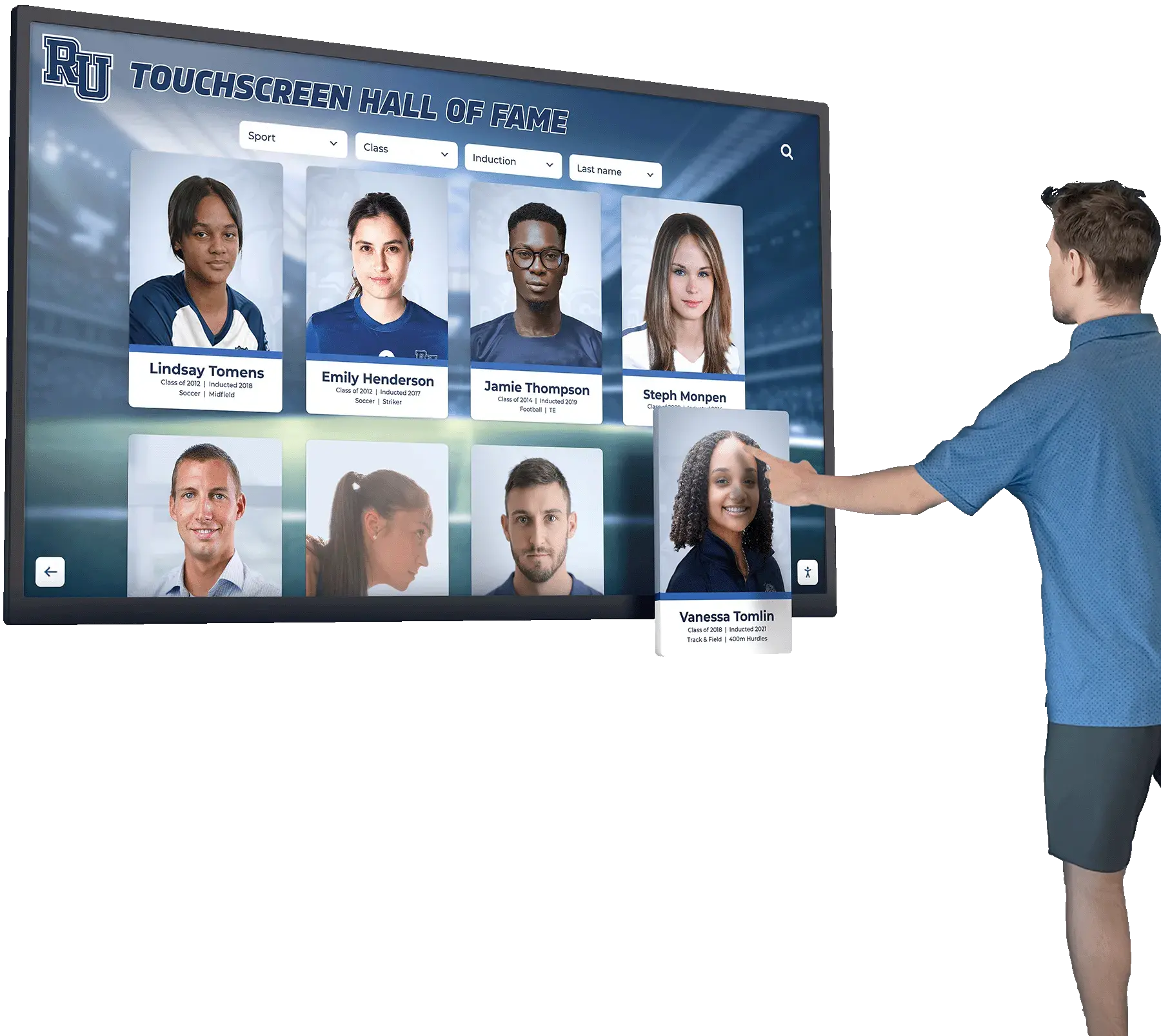
Digital recognition displays from Rocket Alumni Solutions operate without glass panels, sealant joints, gaskets, or frame alignment requirements. Display content is managed remotely through a cloud CMS, updated without physical case access, and scaled to unlimited recognition categories without the capacity constraints that make physical case maintenance a recurring facilities investment. For schools where trophy case maintenance has become a scheduled annual project rather than an exceptional event, the comparison is worth making directly.
The sealant compatibility inspection described in this guide protects the physical cases that will remain in service during any transition period and provides the documentation that makes that transition decision well-supported by a complete maintenance record rather than a series of informal repairs with no paper trail.
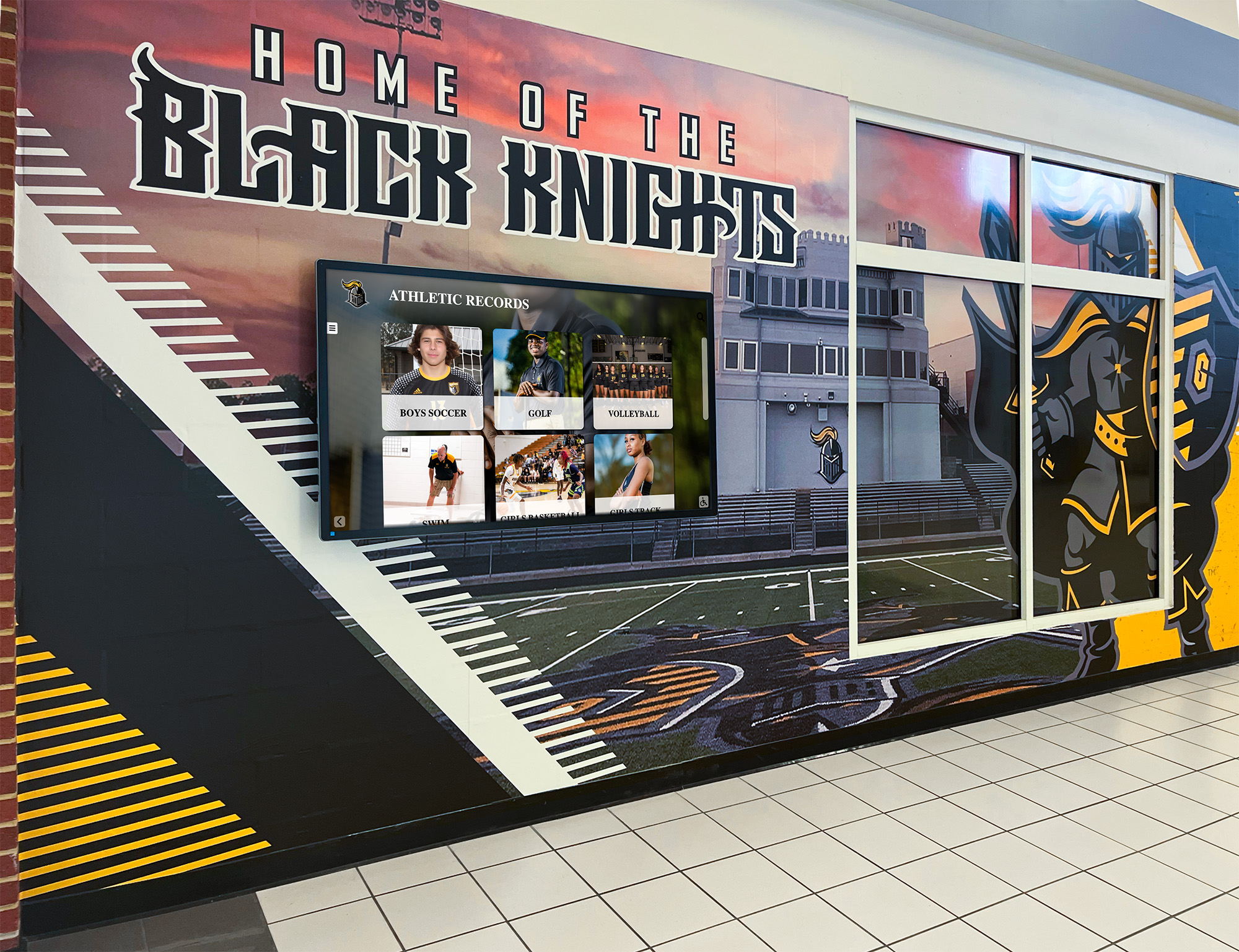
Schools maintaining physical trophy cases alongside digital recognition displays can compare maintenance overhead directly — sealant compatibility inspections, glass assessments, and gasket repairs represent recurring physical case costs with no equivalent in a cloud-managed digital recognition environment
Quick-Reference Sealant Compatibility Inspection Checklist
Use this summary before any trophy case glazing repair. Transfer full findings to the detailed inspection record.
Pre-inspection:
- Inspection log prepared with case ID and location
- Prior maintenance records reviewed for known sealant type and repair history
- Technical data sheets for proposed repair sealant obtained
Substrate identification:
- Glass type confirmed from edge markings, or recorded as unconfirmed
- Frame material and finish identified: aluminum (anodized / painted / powder-coated / bare), wood, steel
- Gasket material identified: EPDM, neoprene, PVC, or unknown
- Display contents inventoried: trophy hardware only; paper materials present; fabric present; reactive metals (copper, brass) present
Existing sealant identification:
- Visual inspection of existing sealant: type range identified (silicone, polyurethane, butyl, polysulfide)
- Odor test performed: vinegar odor (acetoxy) or no significant odor (neutral-cure / polyurethane / butyl)
- Probe test performed: elastic (silicone / polyurethane) or rigid/brittle (aged polysulfide / failed polyurethane)
- Adhesion condition of existing sealant noted: fully bonded / partially debonded / fully debonded
Compatibility confirmation:
- Proposed sealant compatibility with glass type confirmed from TDS
- Proposed sealant compatibility with frame finish confirmed from TDS
- Proposed sealant compatibility with gasket material confirmed from TDS
- Proposed sealant off-gas risk assessed against enclosed display contents
- Over-application cross-compatibility confirmed, or full removal plan documented
Field test:
- Test bead applied in inconspicuous location
- Full cure time elapsed before test bead inspection
- Staining at glass / frame interface: none found
- Gasket dimensional change: none found
- Adhesion quality: test bead resists manual pull-off cleanly
- Odor inside closed case at end of cure period: none noted
Escalation:
- Escalation status assigned from escalation table: safe to proceed / requires manufacturer confirmation / requires glazier consultation
- Findings recorded in inspection log with date, inspector, and proposed sealant product name
Ready to move past glazing maintenance cycles entirely?
If your facilities team is tracking sealant types, gasket conditions, and repair schedules across multiple trophy cases — and the maintenance overhead is growing alongside your recognition program — see how Rocket Alumni Solutions digital displays replace physical case upkeep with a cloud-managed platform your team controls remotely.
Sealant chemistry and compatibility data referenced to ASTM C920 (Standard Specification for Elastomeric Joint Sealants) and manufacturer technical data sheets. Cure chemistry classifications (neutral-cure vs. acetoxy vs. polyurethane) follow industry-standard definitions used in glazing sealant manufacturer specifications. Compatibility findings in this guide are general-category guidance; confirm specific product compatibility with the sealant manufacturer’s technical data sheet and, for coated glass or specialty substrates, with the glass manufacturer before proceeding with any repair.