



Intent: research — a school trophy case safety film inspection is a structured evaluation of the polyester or multi-layer safety film applied to the glass panels of enclosed display cases, conducted to verify that the film is providing effective shatter-containment protection for students and visitors and adequate preservation protection for championship hardware, retired jerseys, historic photographs, and athletic memorabilia stored inside. Safety film that has delaminated at the edges, developed bubbles across its face, yellowed from UV exposure, or sustained puncture damage no longer performs its protective function reliably — yet these failure conditions are frequently invisible in normal corridor lighting and are rarely included in standard facilities inspection rounds. This guide explains how safety film works on trophy case display glass, what inspection indicators to look for, how to conduct a step-by-step checklist assessment, and how to rate severity consistently across a building’s entire case inventory.
The glass panel on a school trophy case looks the same whether the safety film behind it is intact or delaminating. Under hallway overhead lighting, the only visible difference between a panel with functioning film and one with failed film at its edges may be a faint lifted line along the frame that a facilities staff member walking past at normal pace would not notice. But when the glass sustains an impact — from a door-swing, a moved display shelf, a maintenance accident, or an athlete celebrating a posted list of names too enthusiastically — the difference between intact film and failed film is the difference between shards contained in the frame and shards scattered across trophies, photographs, and anyone who happens to be standing nearby.
A school trophy case safety film inspection addresses this protection gap systematically, establishing the actual condition of every glazed panel in the building’s recognition infrastructure rather than assuming that glass that looks whole is glass that performs safely. The inspection serves two goals simultaneously: it confirms that safety film is protecting people as intended, and it documents the condition of the film’s preservation function — because safety film that is yellowing or hazing also reduces UV filtering performance, and UV transmission is one of the primary deterioration drivers for paper documents, photographic prints, and dyed textiles displayed inside enclosed cases.

Every glazed trophy case panel in a school building — including cases in corridors, lobby alcoves, and gymnasium vestibules — carries both a safety function and a preservation function that depends on the condition of its safety film
What Safety Film Does on Trophy Case Display Glass
Safety film applied to trophy case glass panels performs three functions that are relevant to a school facilities and recognition program context.
Shatter containment: The primary safety function. When a glass panel coated with safety film breaks, the film holds the broken pieces together in a matrix pattern rather than allowing them to fall as independent shards. The intact film layer retains broken glass fragments in a form that can be managed as a unit — the entire panel can typically be lifted away from the frame in one piece rather than scattering across the trophy case interior and the surrounding floor. This containment protection is relevant not only during accidental impact events but also during any maintenance access that disturbs the case structure.
UV light filtration: Many safety film products used on display glass include a UV-filtering layer that blocks a significant portion of ultraviolet radiation from passing through the glass into the case interior. UV radiation is one of the primary drivers of deterioration in paper documents, photographic prints, and dyed fabric displays. A yellowed or haze-degraded safety film has compromised UV-filtering performance as well as compromised clarity — the protective function and the preservation function fail together.
Impact resistance: In addition to shatter containment, safety film adds a measure of impact resistance to the glazed panel before breakage — the film layer distributes the force of an impact over a larger area of the glass surface rather than concentrating it at the point of contact. This effect does not make the panel unbreakable, but it can raise the impact threshold at which breakage occurs.
Schools evaluating what school trophy case installations typically require from facilities teams will find that safety film maintenance is less frequently documented than lighting, lock, and panel-condition checks — despite the fact that film failure affects both people safety and artifact preservation simultaneously.
Types of Safety Film on School Trophy Case Glass
| Film Type | Primary Characteristics | Typical Service Life | Common Failure Mode | UV Filtering |
|---|---|---|---|---|
| Clear polyester safety film | Transparent, single or multi-layer; thinnest profile; lowest cost | 5–10 years under indoor conditions | Edge lifting and delamination; yellowing under sustained UV | Minimal unless UV-layer specified |
| UV-filtering safety film | Includes UV-blocking additive layer; slightly tinted or optically clear | 7–15 years | UV layer degradation causing haze; edge delamination from humidity cycling | Significant — may block 99% of UV below 380nm depending on product |
| Anti-reflective safety film | Reduces surface reflection from corridor lighting; maintains transparency | 7–12 years | Anti-reflective coating scratching from cleaning; edge adhesive failure | Varies by product; specify UV layer separately |
| Security-grade multi-layer film | Thicker laminate providing higher impact resistance; used on high-traffic cases | 10–20 years | Adhesive yellowing visible in corners; delamination starting at edges under thermal cycling | Depends on specification; often includes UV layer |
| Frosted or privacy safety film | Partial or full frosting for back panel applications; used where opacity is desired | 8–15 years | Surface abrasion; edge peeling at frame interface | Minimal unless UV layer included |
Identifying the film type on your cases: If installation records are unavailable, the most accessible identifier is film thickness — thinner films (clear polyester) feel noticeably flexible when a lifted edge can be tested, while multi-layer security films have a stiffer, more substantial feel. UV-filtering films often have a faint tint visible at the panel edge when viewed at an oblique angle. If the film type cannot be confirmed, treat the inspection as applying to standard clear safety film for assessment purposes.
Pre-Inspection Preparation
A safety film inspection requires no specialized tools, but systematic coverage requires a preparation step that many facilities teams skip: a complete inventory of which case panels in the building are glazed with glass, which are acrylic, and which glazed panels have confirmed safety film versus panels where film was never applied or was removed during a prior maintenance event.
Supplies needed:
- Flashlight or headlamp (essential — many film defects are invisible without oblique lighting)
- Thin plastic card or credit card (for testing edge adhesion without damaging the film)
- Clean microfiber cloth (dry)
- Ruler or flexible tape measure
- Inspection record form with case identifier, panel position, date, and inspector fields
- Smartphone for photographic documentation of flagged conditions
- Building case inventory or prior inspection records if available
Lighting conditions: Film defects — particularly edge lifting, delamination bubbles, and surface hazing — are significantly more visible under oblique or raking light than under standard overhead corridor illumination. Conduct the inspection with both ambient light and a handheld flashlight held at a low angle to the panel surface. In bright-lit hallways with overhead fluorescents, raking the flashlight at 20–30 degrees to the panel face will reveal texture differences, edge conditions, and bubble patterns that flat lighting conceals entirely.
Timing: Safety film adhesion responds to temperature. Edge lifting that is minimal when a building is temperature-stabilized may be more pronounced during or immediately after a large outdoor temperature swing — early morning in winter when the building has just been heated, or late afternoon in summer before air conditioning catches up to peak heat load. If possible, schedule an initial inspection during a transition period rather than when the HVAC system has fully stabilized interior conditions.
The Safety Film Inspection: Step-by-Step
Step 1: Visual Survey of Film Condition (Panel Face, Ambient Light)
Begin each panel inspection with a full-face examination under ambient corridor lighting, without the flashlight. This establishes the baseline visible condition before oblique lighting reveals the less visible defects.
What to look for in ambient light:
- Overall clarity — is the panel optically clear, or is there a diffuse haze across any portion of the face?
- Yellowing — particularly at corners and edges, which receive concentrated UV from window sources or corridor lighting
- Large delamination bubbles visible without raking light (these indicate advanced adhesive failure)
- Any sections where the film surface texture differs from the surrounding area — a slightly raised or wrinkled zone that suggests film movement over time
Record the ambient-light assessment before moving to raking light. This records the most visible conditions first and provides a comparison baseline when the oblique assessment reveals additional defects.
Step 2: Raking Light Survey (Panel Face and Edges)
Hold your flashlight at a low angle — approximately 20 to 30 degrees from the panel surface — and move it slowly across the face of the panel. Observe changes in the surface reflection pattern as the light rakes across the film.
What raking light reveals:
- Small delamination bubbles: Air or moisture pockets between the film and glass that are invisible in flat light but cast visible shadows when raked
- Wrinkling or ripple patterns: Film that has moved or relaxed from its original application position; common near HVAC supply vents that create rapid air-temperature cycling
- Scratch networks: Fine surface scratches across the film from incorrect cleaning materials (paper towels, rough cloths, abrasive compounds); scratch networks reduce both optical clarity and UV-filtering performance
- Edge-to-center delamination front: A curved line visible when raking light is directed at a low angle from the edge inward — indicates delamination progressing from the edge into the panel face
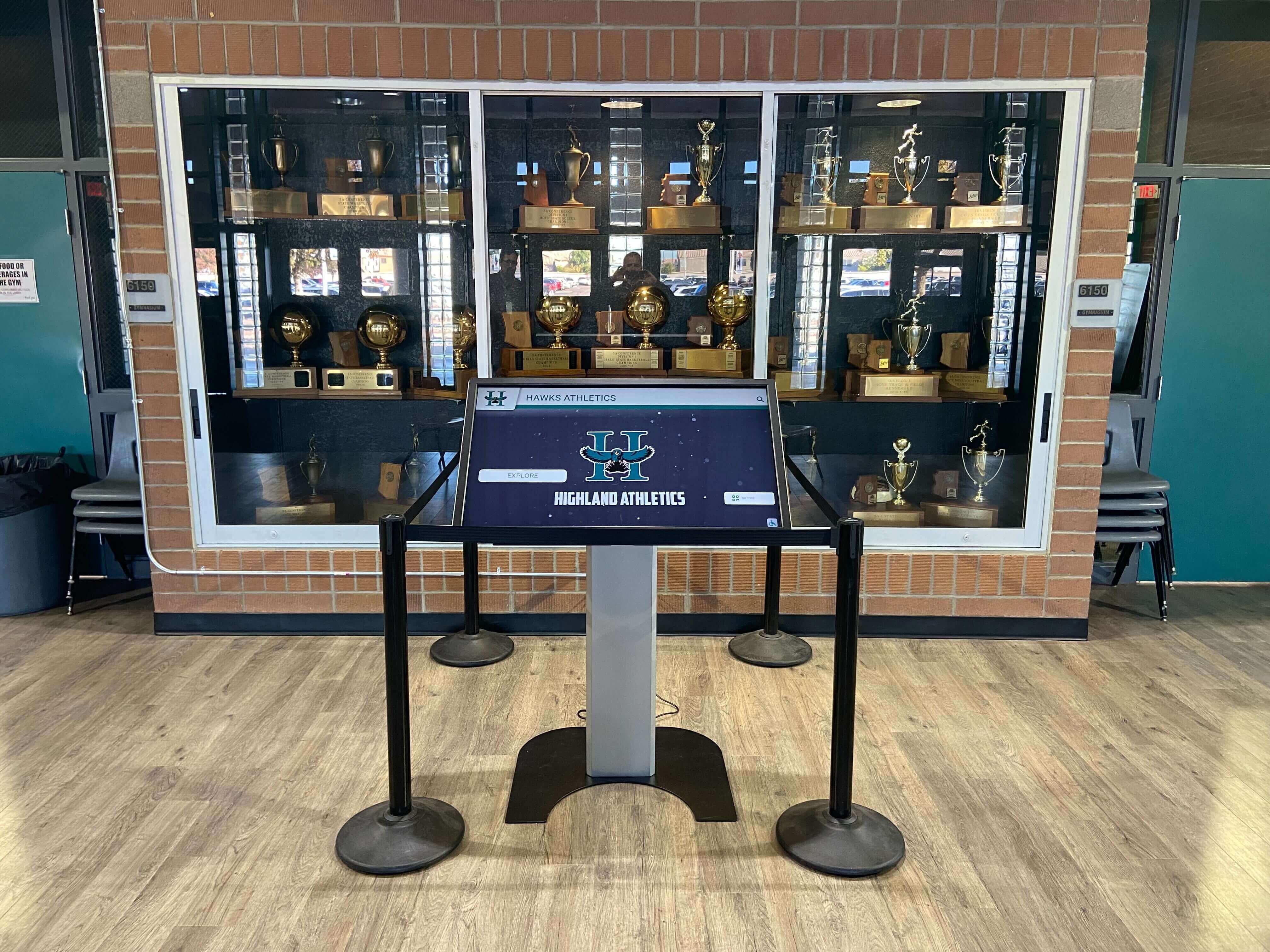
Trophy cases in the same hallway corridor may have glass panels with very different safety film conditions — document each panel as a separate inspection unit rather than assessing a case as a whole
Step 3: Edge and Corner Examination
The edges and corners of a safety film application are where failure almost always begins. The adhesive bond at the film perimeter is exposed to the greatest mechanical stress from temperature-driven dimensional changes in both the glass and the film, and it receives the most mechanical disturbance during cleaning when cloths drag across the frame-to-glass junction.
What to examine at edges:
- Run a clean fingernail or the edge of a plastic card gently along the film edge where it meets the frame channel or the glass border. A properly bonded edge will not respond to this test — the film will lie flat against the glass with no detectable movement. A film edge that lifts, even slightly, under gentle lateral pressure indicates adhesive failure at that location.
- Examine corners closely with the flashlight. Corner lifting — where the film has separated from the glass at the 90-degree corner point — is the most common initial failure location and the point that, if unaddressed, progresses most rapidly toward full edge delamination.
- Look for a visible gap between the film edge and the glass surface — even a gap of less than a millimeter allows moisture to migrate under the film, which accelerates delamination and can permit biological growth if interior humidity is elevated.
Edge measurement: When edge delamination is confirmed, measure and record how far the delamination extends from the film edge toward the panel center. This measurement provides the baseline for comparison in the next inspection cycle — if the delamination has progressed by more than two to three centimeters in a six-month interval, the panel is on an active failure trajectory.
Step 4: Glass Condition Under Film Assessment
Safety film inspection also includes an assessment of the glass panel condition visible through the film, because a glass panel with existing micro-cracks or stress marks has a lower impact threshold than sound glass. When micro-cracked glass breaks, the energy release differs from that of intact glass, which can affect how the film performs its shatter-containment function.
What to look for through the film:
- Visible crack lines in the glass — even hairline cracks that do not penetrate fully through the panel thickness indicate the glass has been stressed beyond its tolerance at that point
- Cloudy or hazy areas in the glass itself (distinct from film hazing, which lies on the surface) — these can indicate glass surface corrosion or deposition of minerals from prior condensation events
- Any evidence of prior impact or stress fracture that was repaired without panel replacement
If glass damage is found beneath intact film, note the location and escalate to facilities management for assessment — the film may be containing a damaged panel that should be evaluated for replacement.
Safety Film Inspection Checklist
| Inspection Item | What to Assess | Flag If… | Priority |
|---|---|---|---|
| Film presence confirmed | Is safety film applied to this panel? (Look for the film edge at the glass perimeter or check against installation records) | No film present on a glass panel — safety protection is absent; all other items below apply only to panels with confirmed film | Critical |
| Overall clarity — ambient light | Does the panel face appear optically clear, or is there diffuse haze visible in normal corridor lighting? | Haze visible without raking light across more than 20% of panel face | High |
| Yellowing — corners and edges | Examine corners and edges for yellow, amber, or brown discoloration of the film layer | Any visible yellowing — indicates UV exposure degradation affecting both clarity and UV-filtering function | Moderate to High |
| Large delamination bubbles — ambient light | Are there visible raised areas or bubbles on the panel face in ambient light? | Any bubble visible in flat ambient lighting — indicates advanced adhesive failure; smaller bubbles only visible in raking light are a lower priority finding | High |
| Raking light — small bubbles | Hold flashlight at 20–30 degrees; count and locate small delamination bubbles | More than three bubbles per panel, or any bubbles larger than 2 cm in diameter | Moderate to High |
| Raking light — wrinkling or ripple | Film surface texture differences visible when raking light crosses the face | Any wrinkle or ripple pattern that does not correspond to a panel edge or frame hardware location | Moderate |
| Scratch network condition | Are there visible scratches across the film surface from prior cleaning or contact? | Scratch network visible in raking light covering more than 10% of panel face; any deep scratches that may penetrate the film | Moderate |
| Edge adhesion — top | Plastic card test at top edge of film: does film lift under gentle lateral pressure? | Film edge lifts more than 1mm under gentle card pressure | High |
| Edge adhesion — sides (×2) | Plastic card test at each side edge | Film edge lifts at any point along side runs | High |
| Edge adhesion — bottom | Plastic card test at bottom edge | Film edge lifts at bottom — bottom edges accumulate cleaning-product residue that accelerates adhesive failure | High |
| Corner adhesion (×4) | Visible gap or lifting at each corner of the film application | Any corner gap visible, even sub-millimeter | Critical |
| Edge delamination measurement | Where edge delamination is confirmed, measure distance from edge to delamination front | Delamination extending more than 3cm from film edge toward panel center | High |
| Active delamination front | Raking light applied from inside the confirmed delamination area: does the delamination front show a curved boundary extending inward? | Active delamination front visible — indicates failure is progressing, not stable | High to Critical |
| Glass condition through film | Viewing through film in raking light: any crack lines, haze areas, or stress marks visible in the glass itself? | Any crack or hairline fracture visible in glass — escalate regardless of film condition | Critical |
| Film edge gap (moisture ingress) | Is there a visible gap between the film edge and the glass surface at any point? | Any gap that allows a hair’s-width of light through between film and glass at the edge | High |
| Photographic documentation | Has each flagged condition been photographed under ambient and raking light? | Complete checklist items before photographing — photograph each flag before proceeding | Required for Priority 2+ findings |
Severity Rating Scale
After completing all checklist items for each panel, assign a priority rating to guide remediation timing.
| Priority Level | Conditions Present | Recommended Action | Next Inspection |
|---|---|---|---|
| Priority 1 — Film Intact | No edge lifting; no delamination bubbles in ambient or raking light; no yellowing; glass sound; scratch level minimal | Continue scheduled maintenance; clean with appropriate film-safe cleaner (ammonia-free); document annual inspection record | Annual |
| Priority 2 — Minor Condition | Minor yellowing at corners; one or two small bubbles visible in raking light only; no edge lifting; no glass damage | Document findings and monitor; schedule re-inspection within six months; review cleaning products in use — ammonia-based cleaners accelerate adhesive failure | Semi-annual |
| Priority 3 — Active Degradation | Edge lifting confirmed at any location; delamination bubbles visible in ambient light; active delamination front progressing; yellowing across more than one-third of panel face; or any scratch network covering more than 10% of panel | Consult facilities director; schedule film replacement within current quarter; temporarily increase cleaning frequency to remove debris from delaminated edge areas; do not apply tape or sealant to lifted film edges — this delays professional assessment without stopping delamination | Quarterly until resolved |
| Priority 4 — Immediate Assessment Required | Corner delamination confirmed; glass cracking or fracture visible through film; large delamination bubbles (over 5cm) visible in ambient light; film edge gap permitting light through; or film absent on glass panel | Remove highest-value items from case if accessible; notify facilities director and school administration; do not apply impact to case until glass is assessed; schedule professional inspection or panel replacement before next routine access | Weekly visual check until resolved |
Remediation: What Facilities Teams Can and Cannot Do
Cleaning film-covered panels correctly: The most common cause of accelerated edge delamination in school settings is the use of ammonia-based glass cleaners on safety film. Ammonia attacks the adhesive layer that bonds film to glass, causing the bond to soften and ultimately fail from the film edge inward. Any facility using standard glass cleaners on trophy case panels should confirm whether those cleaners are ammonia-free before applying them to film-covered panels. Appropriate cleaners for film-covered glass are specifically labeled as film-safe or are plain water applied with a clean microfiber cloth. Do not use paper towels on safety film — the wood-fiber content of paper towels is abrasive to film surfaces and creates the scratch networks identified in raking-light inspection.
Bubble management: Small, isolated delamination bubbles (under 2cm) in the center of a panel — away from edges — do not necessarily indicate imminent failure and can be monitored through the semi-annual inspection cycle. Edge bubbles and corner bubbles, by contrast, indicate failure at the adhesive perimeter and should be escalated rather than managed in place. Do not attempt to push or squeegee bubbles toward the edge to remove air — this applies shear stress to the adhesive and typically accelerates delamination. Document bubble size and location in the inspection record and track whether they grow between inspection cycles.
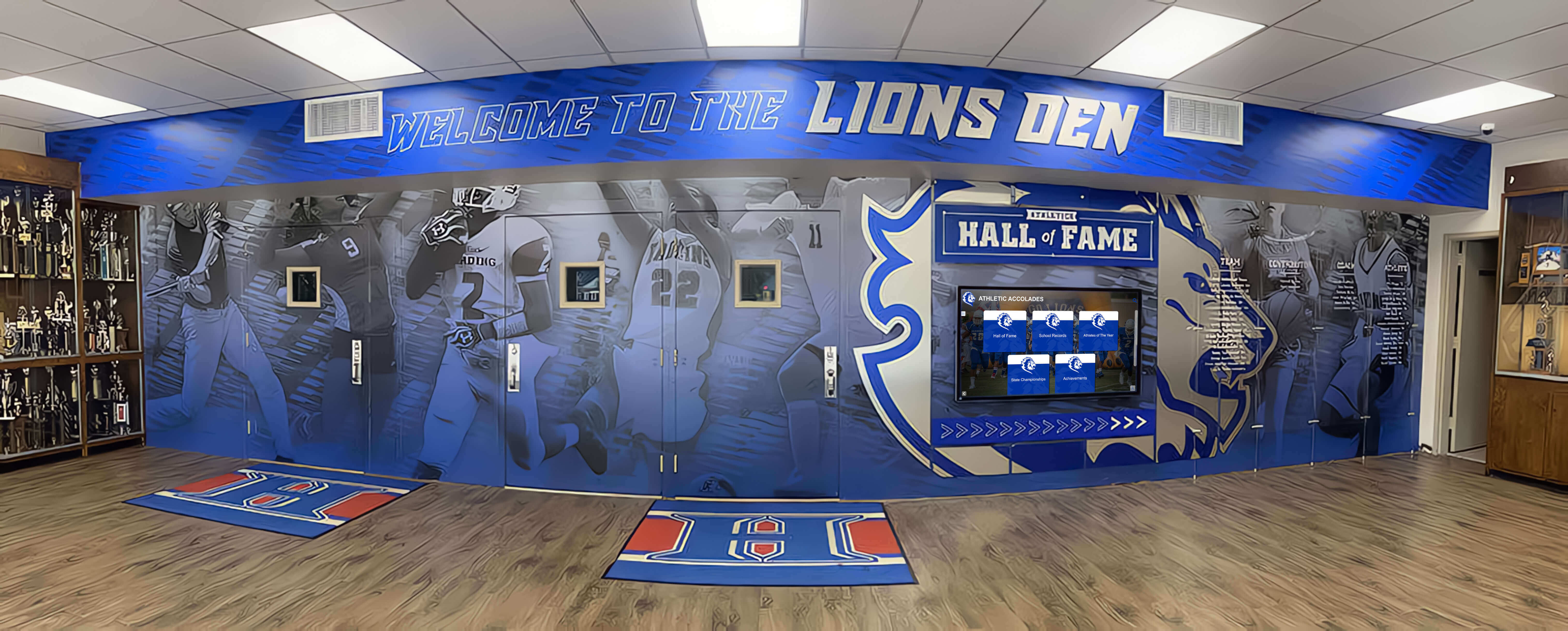
Trophy cases incorporated into recognition corridor installations may have less frequent facilities access than standalone lobby cases — scheduling a documented safety film inspection ensures these panels receive adequate maintenance attention
Film replacement is not a facilities in-house task: Unlike foam weatherstripping or pile seal replacement, safety film replacement requires the correct film specification, proper surface preparation, and application technique that eliminates air pockets. Improperly applied film can introduce trapped bubbles, fail to achieve full edge adhesion, and produce optical distortion. Film replacement on trophy case glass panels should be treated as a vendor or glazing-contractor task. Document the panel dimensions, existing film type (if known from records), and inspection findings before contacting the case manufacturer or a commercial film-application provider.
Escalation when glass is damaged: A glass panel with visible cracking or fracture lines — identified during Step 4 of the inspection — requires escalation to school administration and facilities management regardless of film condition. A cracked glass panel under safety film is technically contained but structurally compromised. The appropriate path is panel assessment and likely replacement, not continued monitoring. Do not assume that functional safety film makes a cracked panel acceptable for continued use.
Schools reviewing structured inspection checklists for school recognition displays and facilities that consult ongoing trophy case maintenance resources for school facilities staff will find that safety film inspection sits at the intersection of people safety and artifact preservation — a combination that justifies treating it as a priority maintenance category rather than a supplemental check.
Connecting Safety Film Inspection to the Recognition Program
The trophy cases that carry safety film are typically the cases that hold the recognition program’s most significant items — state championship trophies, original signed photographs, retired jerseys, and historic plaques that represent decades of institutional athletic achievement. The film is applied to the glass on those cases precisely because the cases are high-traffic, high-visibility installations that the school community accesses frequently. The same conditions that make the cases important in a recognition context — visibility, accessibility, regular handling — are the conditions that subject the film to accelerated wear.
Schools building or expanding their athletic recognition programs across multiple sports — including basketball display case installations in school lobbies and hall-of-fame walls — are typically adding glass-panel cases to the building inventory at a pace that outstrips existing inspection protocols. A facilities team that has a process for inspecting the original four lobby cases may not have extended that process to the eight cases added to the gymnasium corridor when the expanded athletic hall of fame was installed. The safety film inspection checklist needs to follow the recognition infrastructure as it grows.
For athletic directors managing recognition programs that span multiple decades of competition, modernizing high school trophy case design and athletic displays often involves adding new glass-panel cases to sections of the building that previously used acrylic or had no enclosed display at all. Each new glass-panel installation is also a new safety film installation — and the inspection protocol should be extended to cover the new case inventory from the moment it enters service.
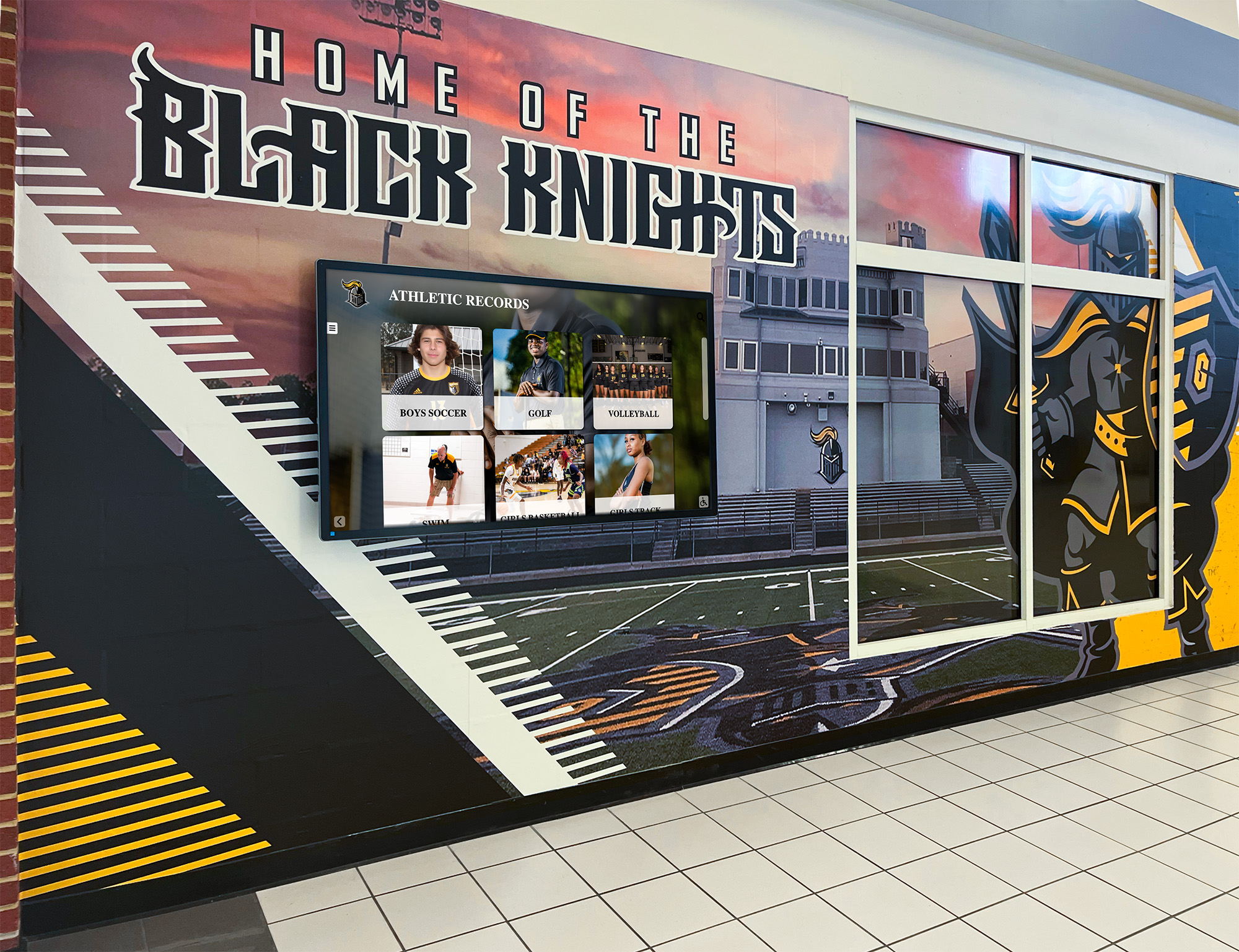
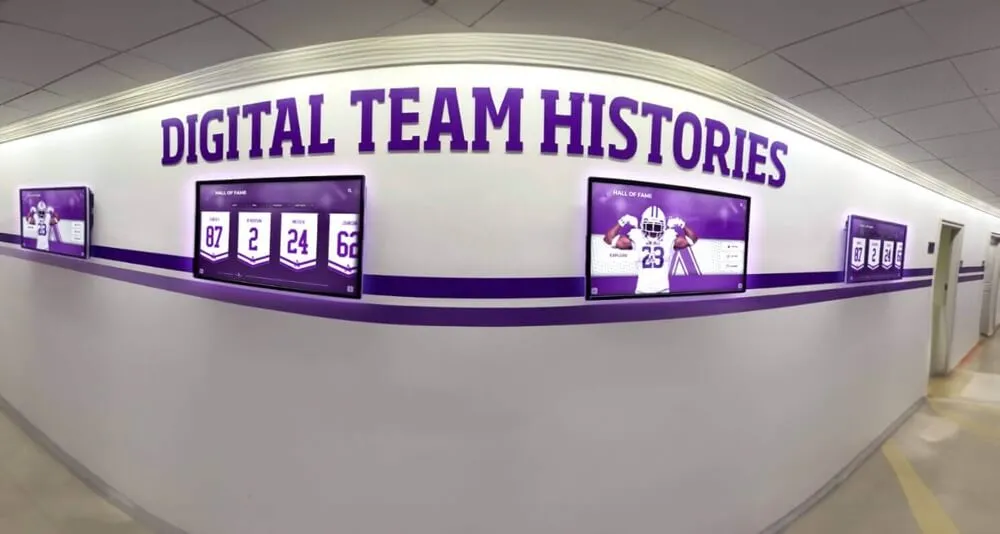
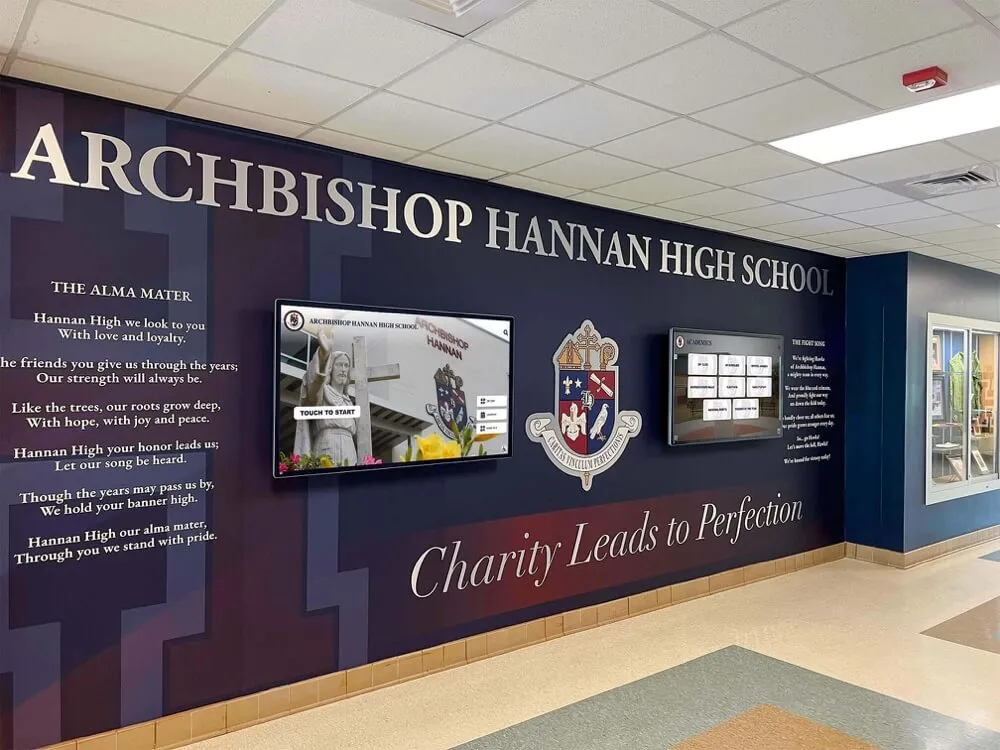
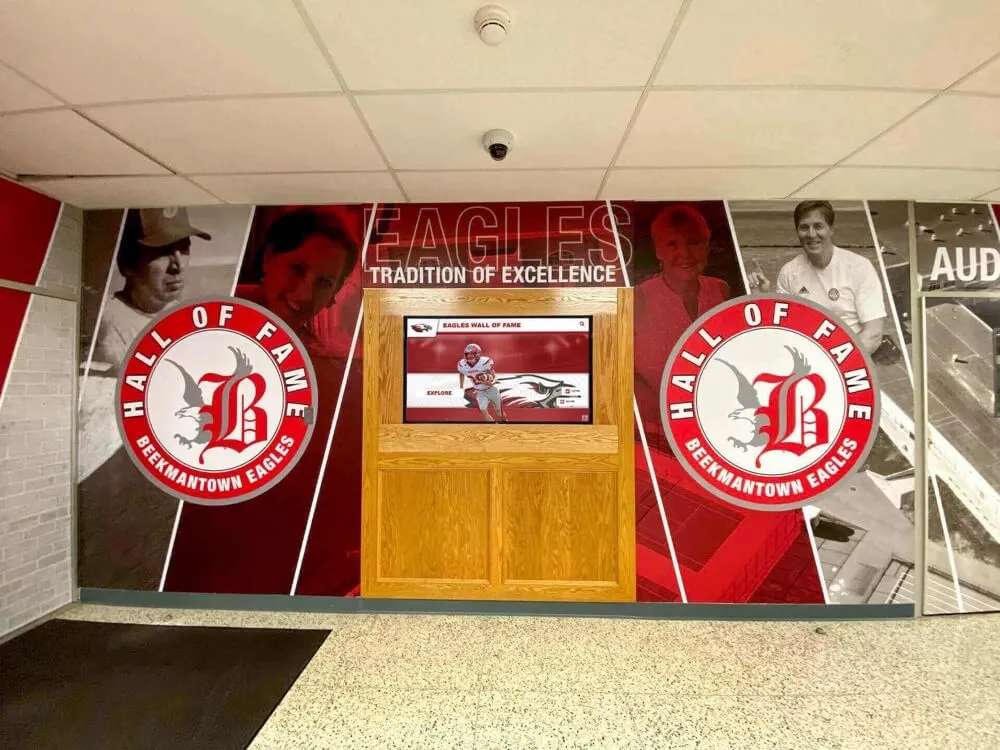
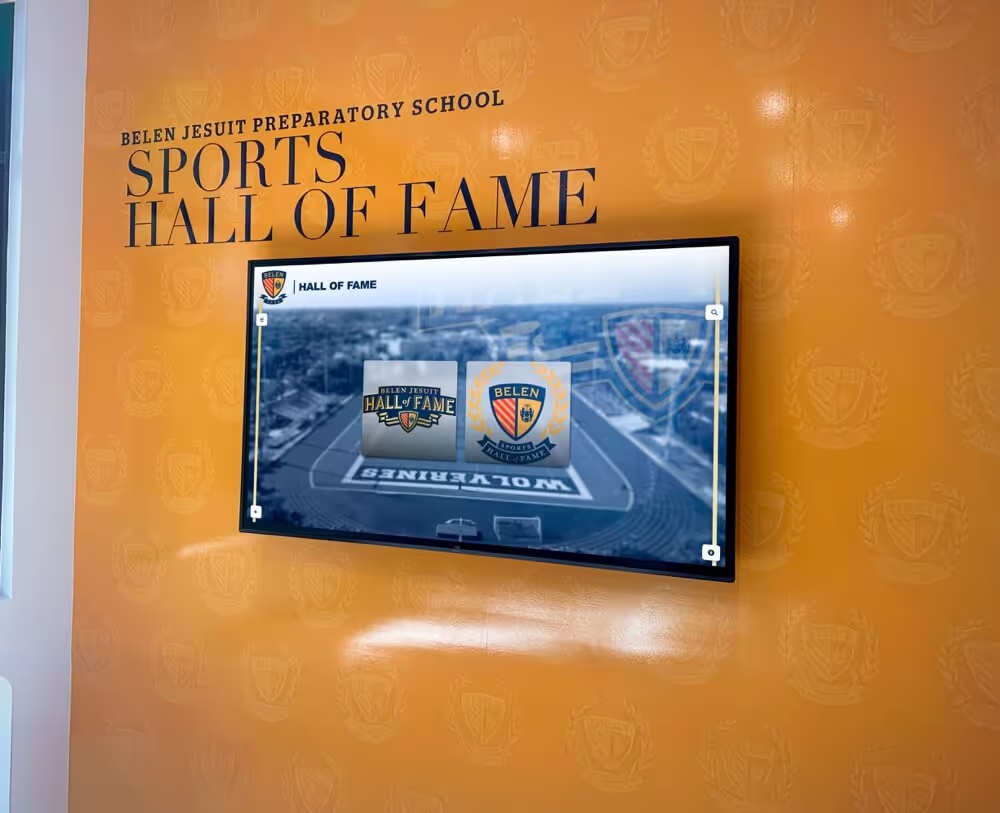
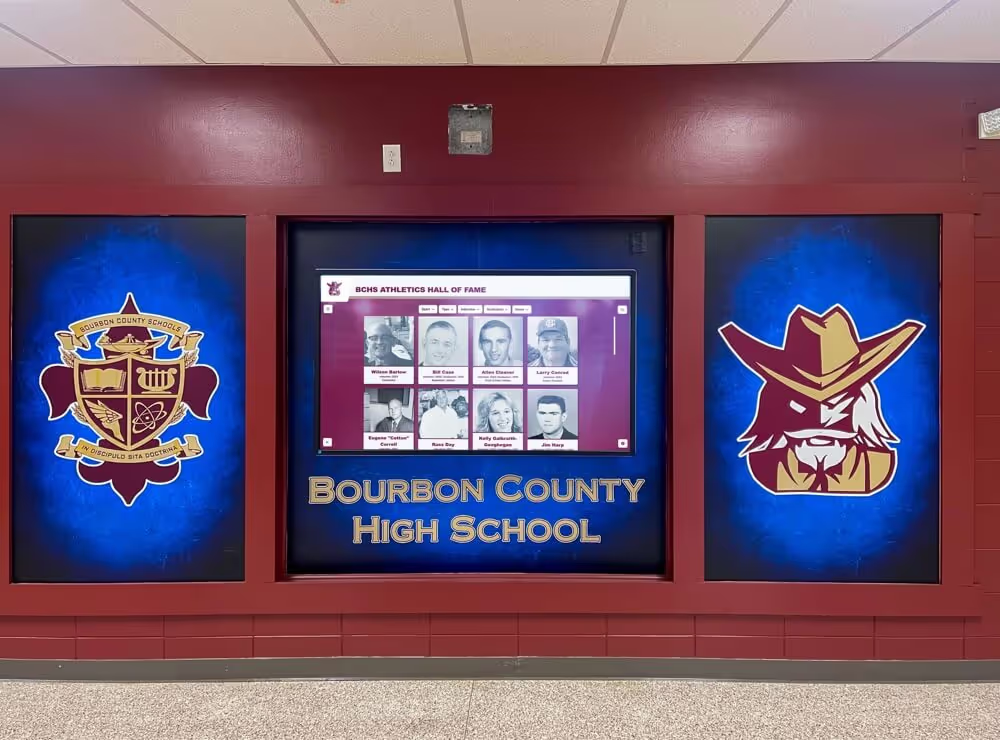
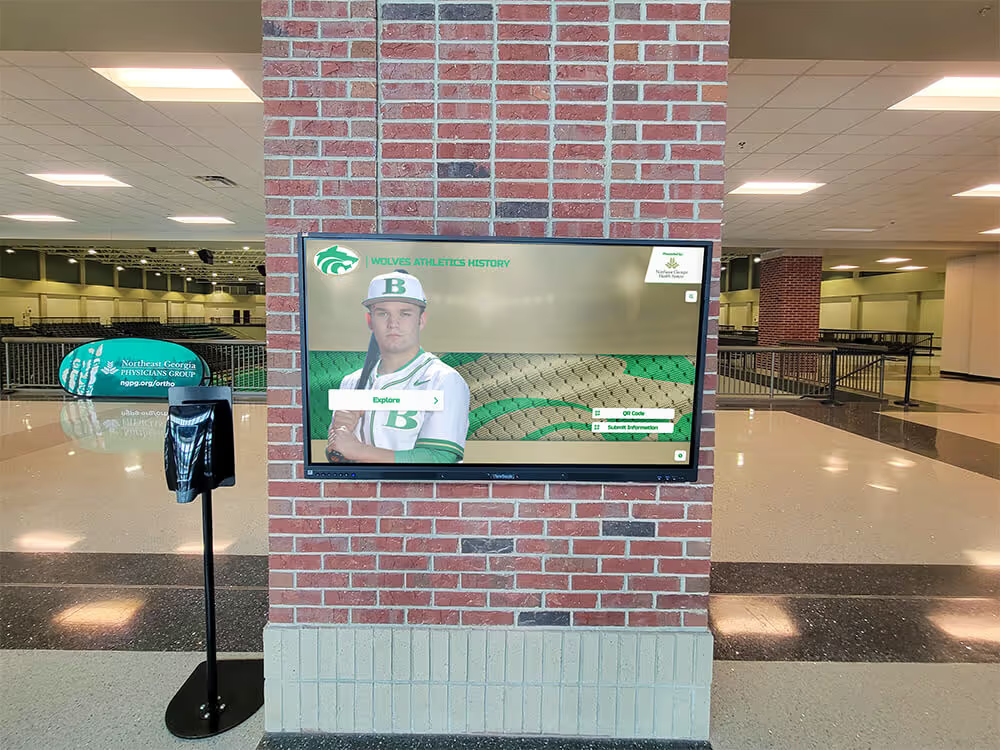
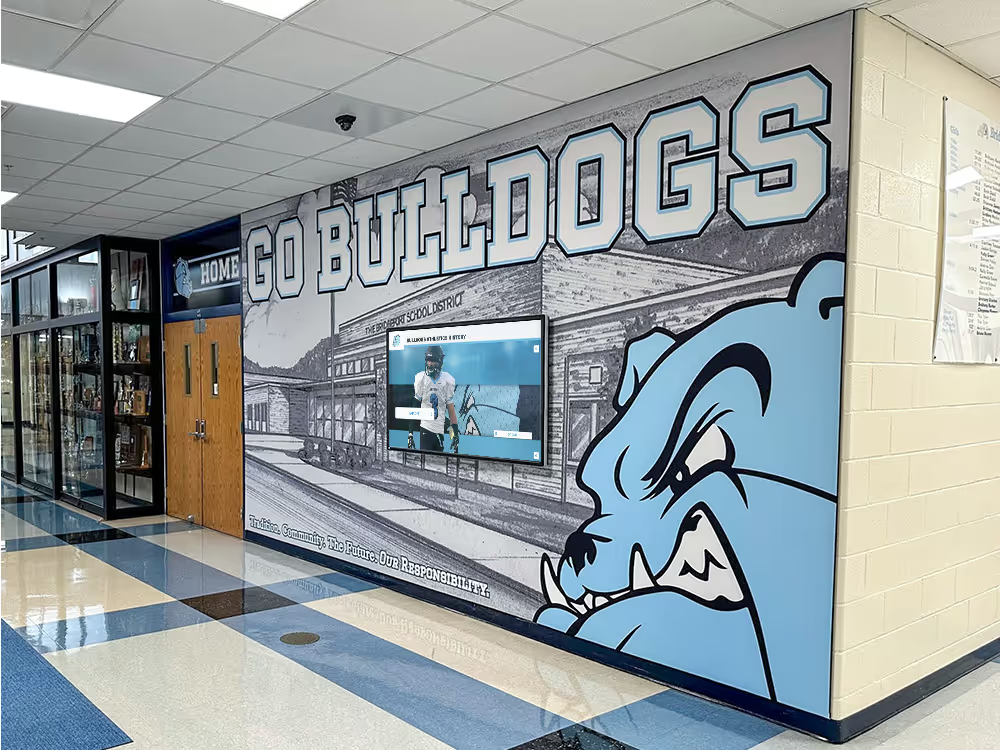
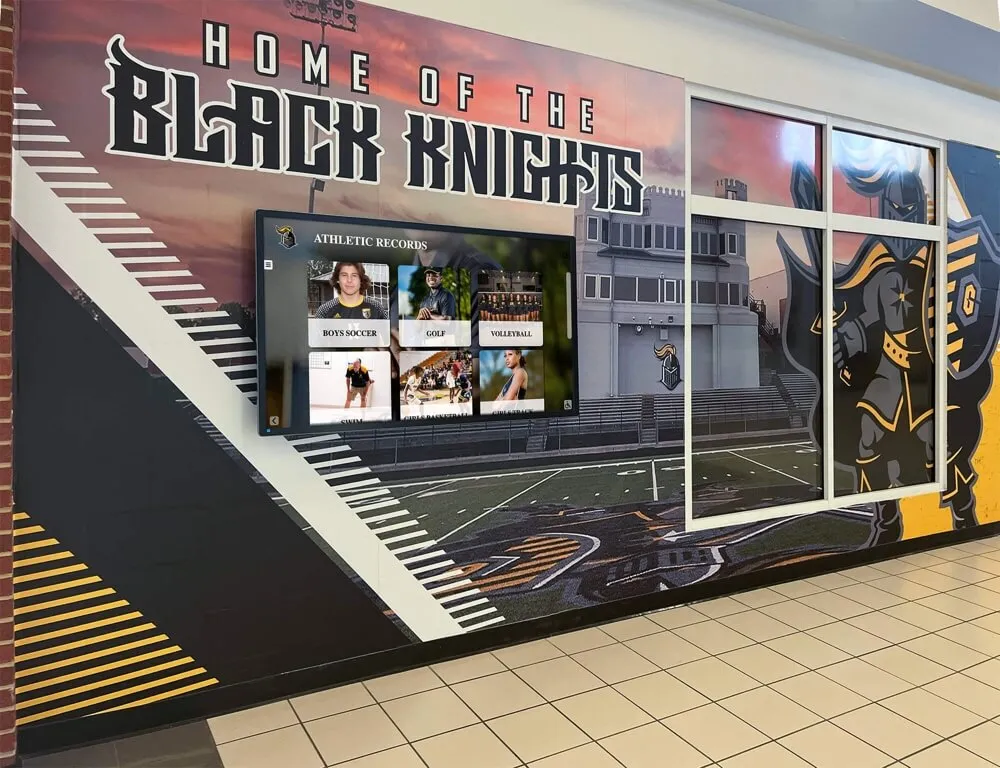
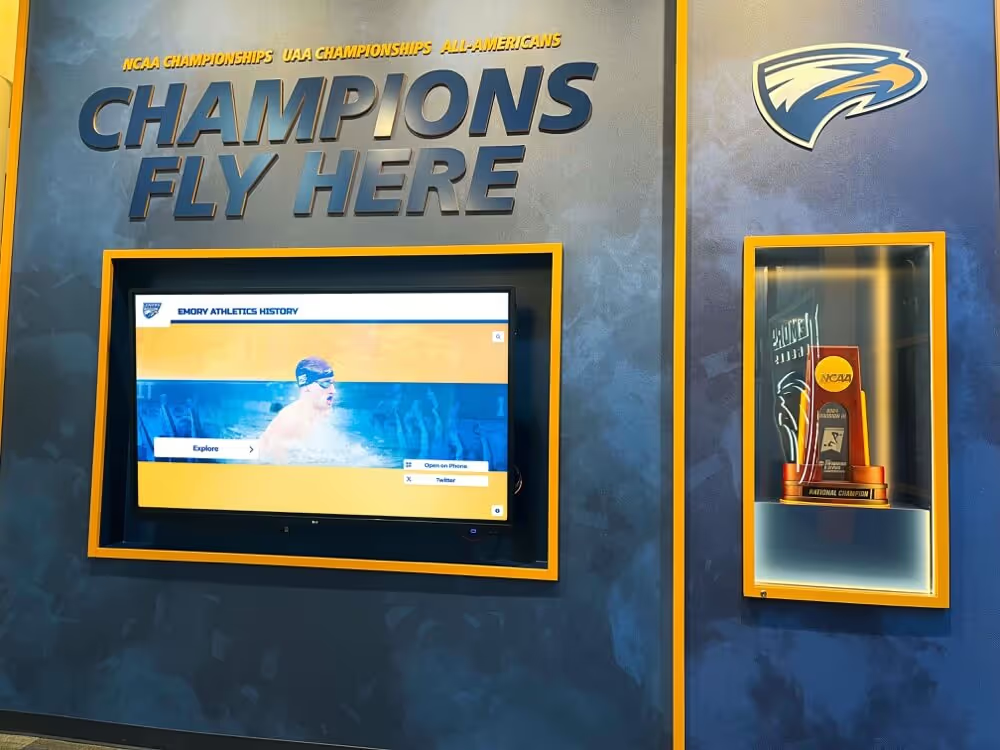
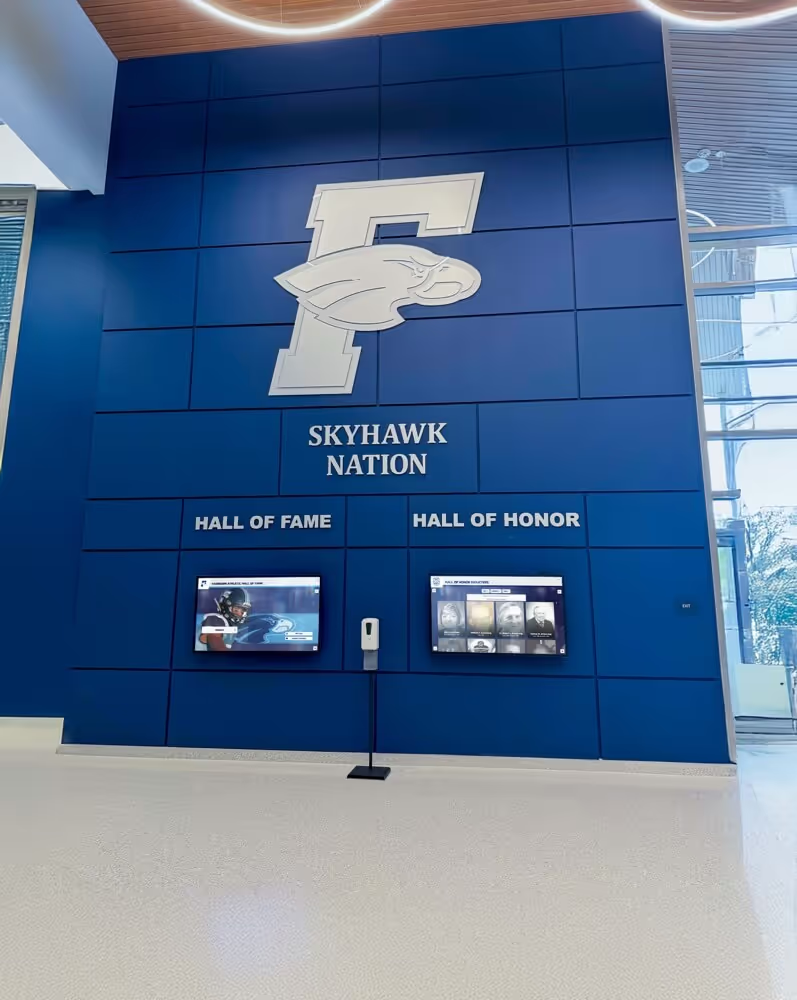
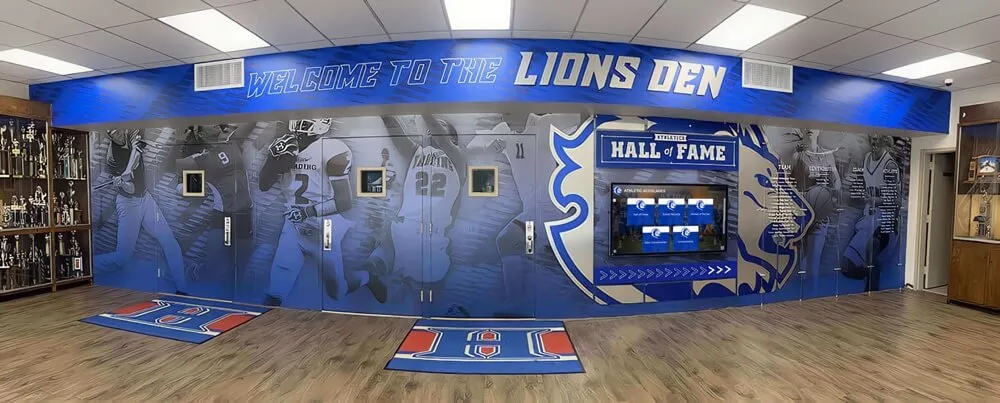
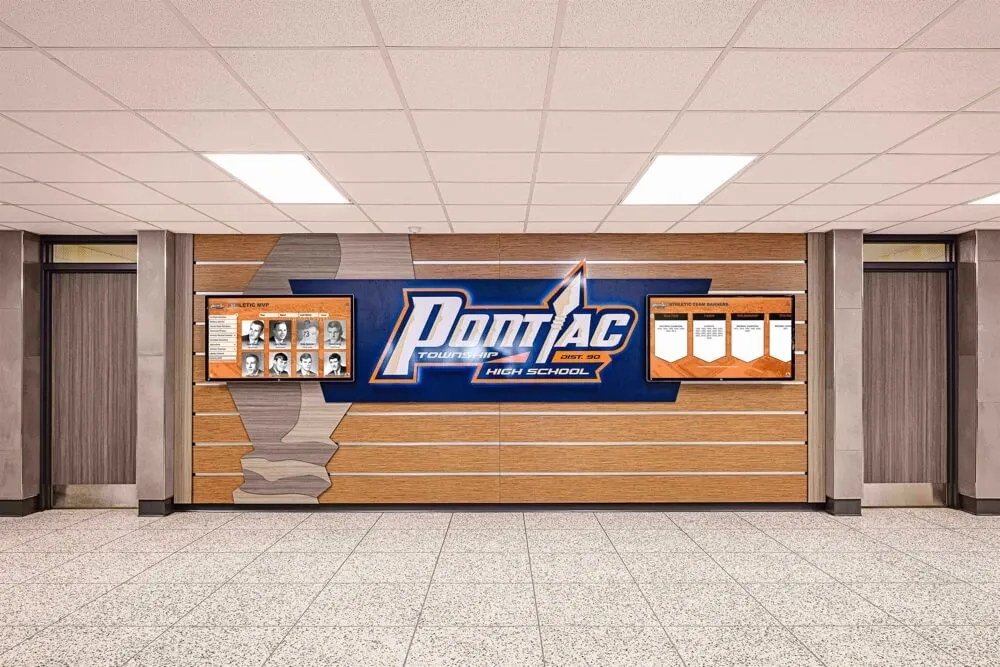
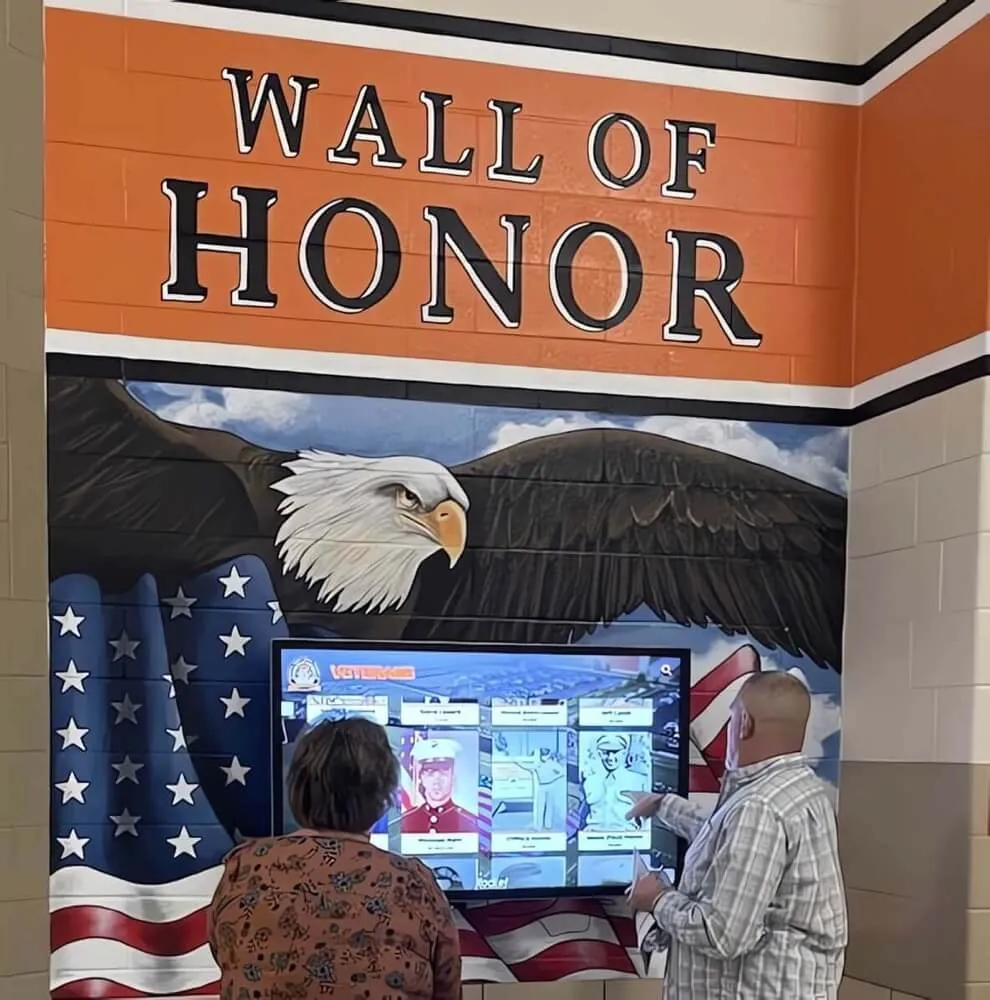
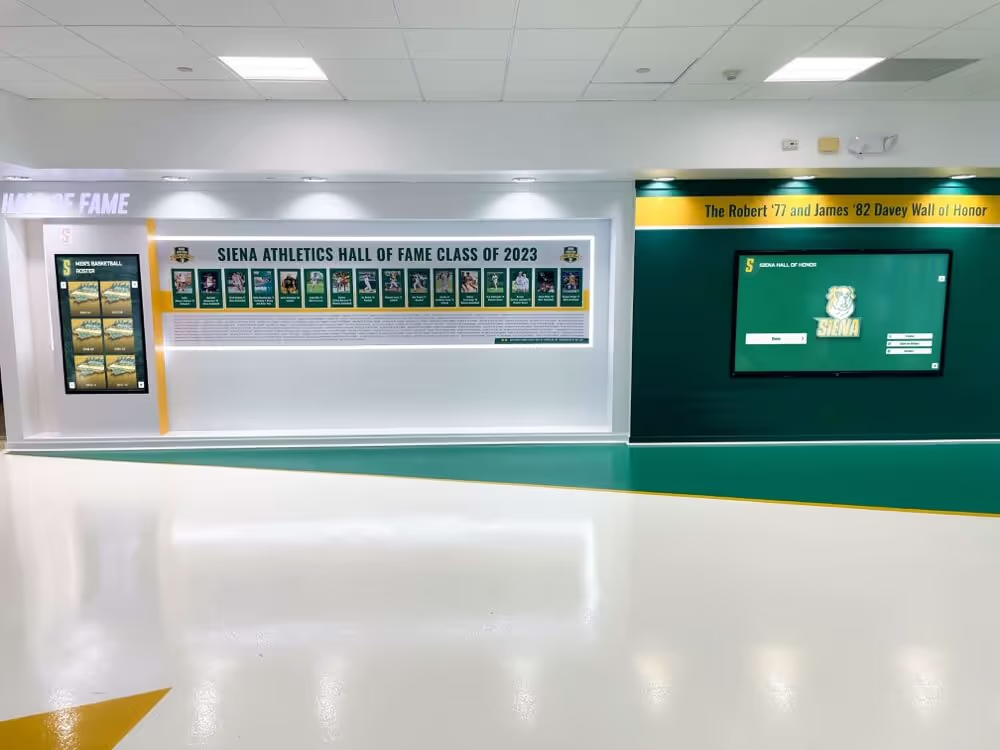
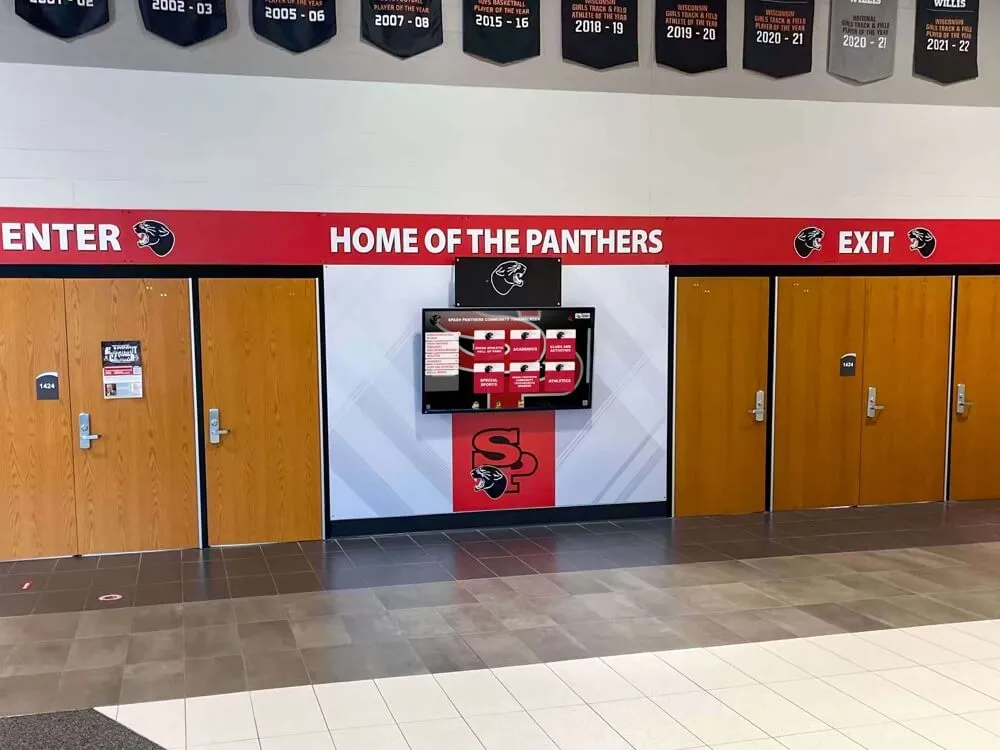
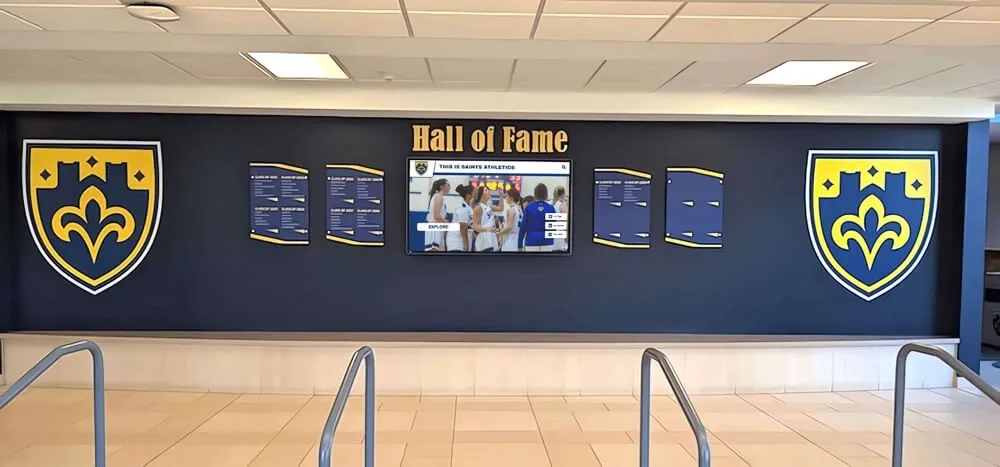
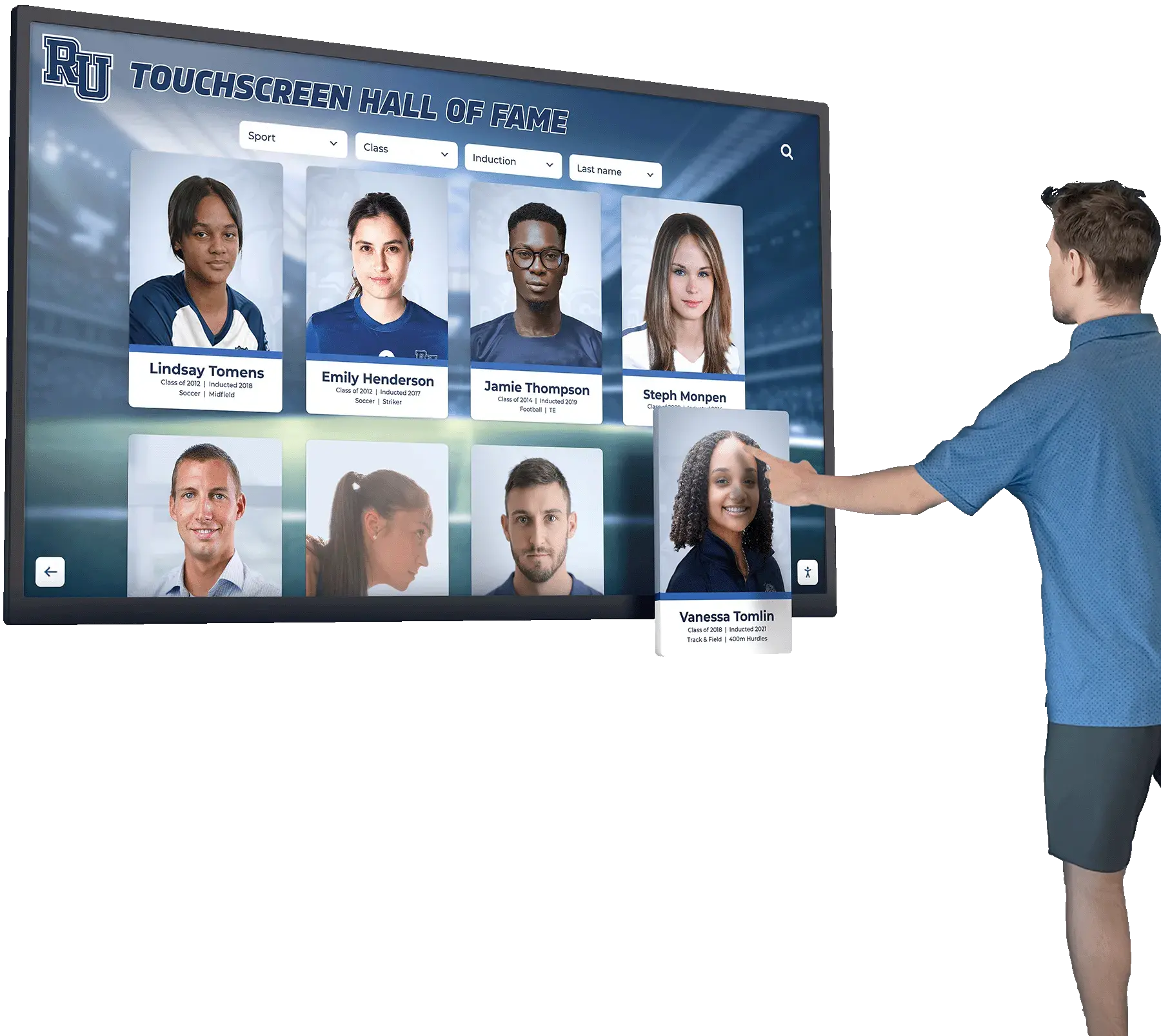
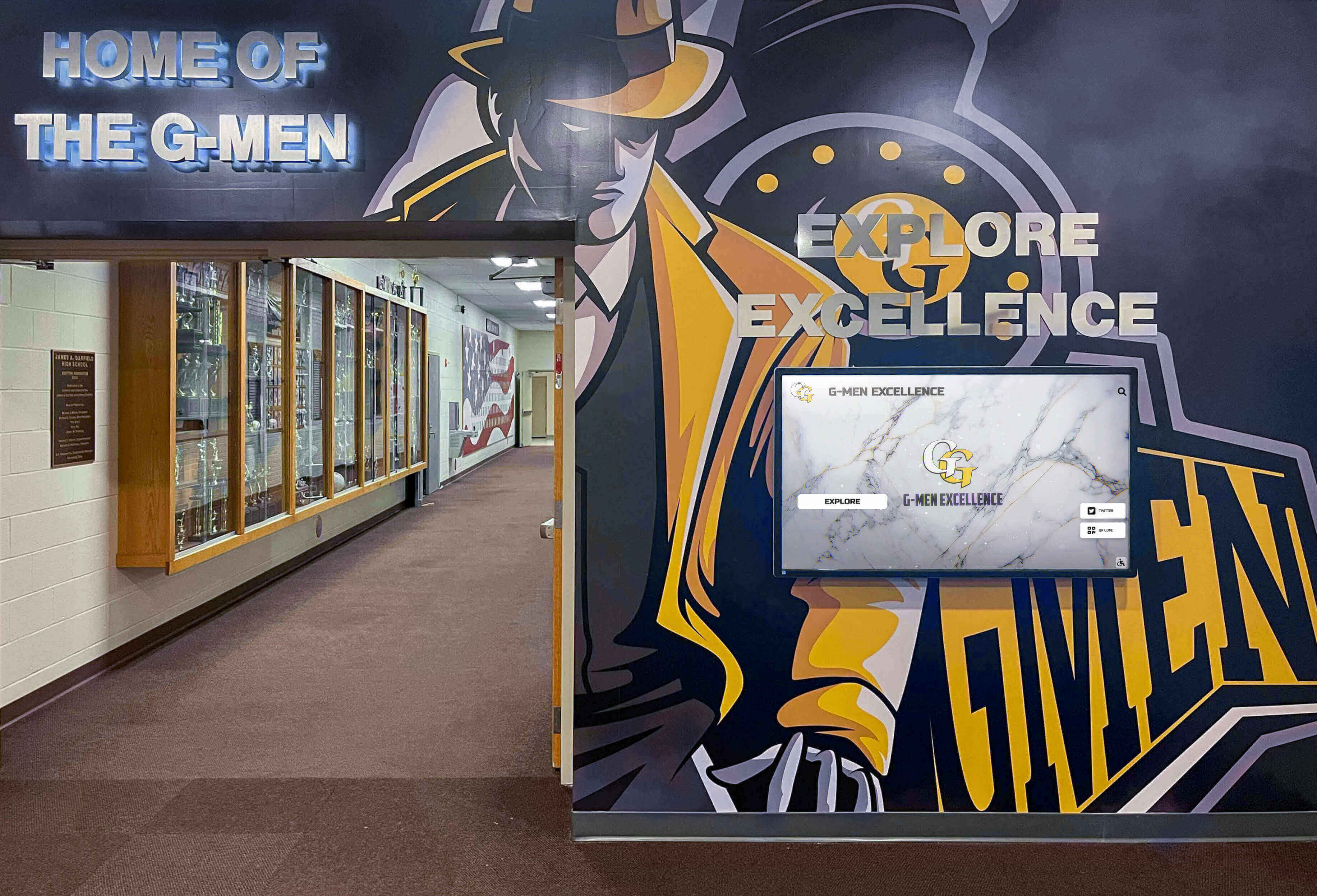
As schools add digital recognition displays to hallways that already contain traditional trophy cases, the combined inspection protocol needs to cover both the digital mounting hardware and the glass-panel cases nearby
Documenting Safety Film Inspections for Year-Over-Year Tracking
A safety film inspection conducted once produces a useful current-condition snapshot. A documented inspection cycle — conducted annually as a baseline, and semi-annually for cases with Priority 2 findings — produces something more valuable: trend data. Trend data allows facilities teams to identify which cases are showing accelerating degradation (edge delamination progressing faster than expected between inspections), which cleaning practices correlate with film deterioration across the building, and which case locations — near HVAC vents, exterior doors, or windows — are producing systematically worse film outcomes.
The documentation format does not need to be complex. A spreadsheet with columns for case location identifier, panel position (left door, right door, back panel, side panel), inspection date, film type if known, ambient light findings, raking light findings, edge adhesion results at each location, corner conditions, glass condition, delamination measurement if applicable, priority rating, and scheduled next action provides a complete record that any facilities staff member can read and update.
Connecting the safety film inspection record to the broader recognition program documentation creates a complete picture of what the school’s physical case inventory requires. Traditional and digital trophy case display options for schools that are expanding their recognition programs will find that documented maintenance records for physical cases — including safety film condition — provide a clear argument for capital budget requests and renovation planning that general statements about case condition cannot support.
When Safety Film Inspection Connects to Digital Recognition Planning
Physical trophy case safety film inspection addresses the immediate protection environment around the school’s existing recognition artifacts. It keeps the physical collection safe and the glass panels performing their safety and preservation function. But a safety film inspection also generates a case-by-case condition assessment that often surfaces a larger question: what is the long-term trajectory of the school’s physical case infrastructure?
Glass panels that require film replacement on a six-to-ten-year cycle, gaskets that require periodic reseating, lighting that requires lamp replacement, and lock hardware that requires service are all maintenance obligations that accumulate with each case in the building’s inventory. Schools that have explored how digital hall of fame displays compare to traditional trophy cases in school hallways and those comparing digital hall of fame and traditional trophy case options find that the maintenance obligation comparison is one of the most practically significant factors in long-term recognition infrastructure planning.
The safety film inspection does not require that conclusion. It requires only that the film condition is documented, that Priority 3 and Priority 4 findings are escalated on the appropriate timeline, and that the school’s recognition program leadership understands what the physical case infrastructure requires to remain safe and functional. What the program does with that understanding — whether it directs investment toward physical case maintenance, toward digital display supplementation, or toward a combination that preserves original artifacts while expanding digital record capacity — is a planning conversation that the inspection record supports.
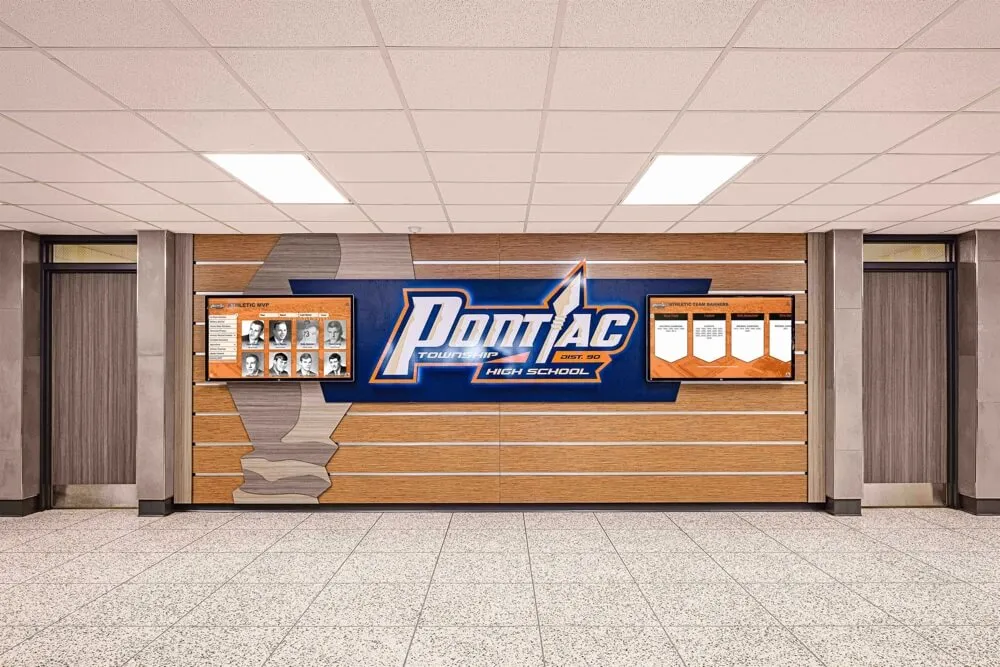
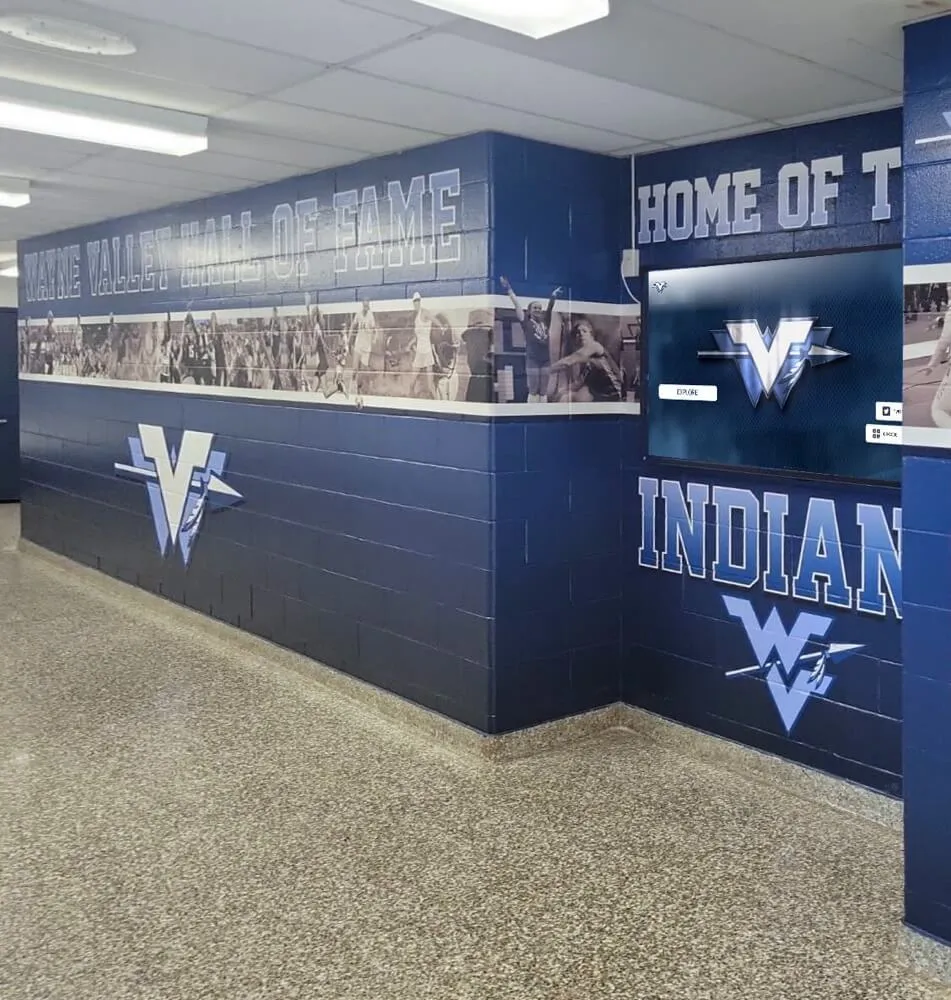
Athletic recognition installations that span multiple corridors and include multiple case types require a documented inspection protocol that covers every glass panel in the building — not only the primary lobby display
FAQ: School Trophy Case Safety Film Inspection
What is safety film on a trophy case, and does every school trophy case have it? Safety film is a polyester or multi-layer adhesive film applied to the interior or exterior surface of glass panels in trophy cases. When the glass breaks, the film holds the fragments together rather than allowing shards to fall onto displayed items or people nearby. Not every school trophy case has safety film — it is a specification choice that may have been included at installation, added as a retrofit, or omitted. The first step of any safety film inspection is confirming whether film is actually present on each glass panel in the building, because panels without film represent an unmitigated glazing hazard that should be reported immediately.
How often should a school safety film inspection be conducted? An annual baseline inspection covering every glass-panel trophy case in the building is appropriate for most schools. Cases identified with Priority 2 findings — minor yellowing or small raking-light bubbles — should be re-inspected semi-annually until the condition is remediated or rated stable. Cases in high-traffic corridors near exterior doors or HVAC supply vents benefit from a semi-annual schedule as their standard interval, because their thermal and humidity cycling is more severe than cases in interior corridor locations. Any case with Priority 3 or Priority 4 findings should be re-inspected quarterly until remediation is confirmed.
Can a school facilities team replace safety film, or does it require a professional? Safety film replacement should be treated as a professional or vendor task rather than an in-house facilities repair. Correct film application requires surface preparation, film positioning, and squeegee technique that eliminates air pockets while achieving full edge adhesion. Improperly applied film may introduce trapped bubbles, fail to adhere at edges, and create optical distortion. For a trophy case on a school corridor that is visible to students, families, and visitors daily, these outcomes are both a safety concern and a presentation concern. Document panel dimensions and current film condition before contacting the case manufacturer or a commercial window-film contractor for replacement.
What cleaners are safe to use on trophy case glass panels with safety film? Plain water with a clean microfiber cloth is the safest approach for regular cleaning of film-covered trophy case glass. If a cleaning product is used, it must be confirmed as ammonia-free — ammonia attacks the adhesive layer that bonds film to glass and is the most common cause of preventable edge delamination in school settings. Many standard glass cleaners contain ammonia; check the product label before use on any film-covered panel. Paper towels should also be avoided — their wood-fiber content is abrasive to film surfaces. This guidance should be communicated to any facilities or janitorial staff who clean trophy cases during regular building maintenance.
What should we do if a glass panel in a trophy case has no safety film? Report the finding immediately to the facilities director and school administration. An unfilmed glass panel in a school trophy case represents a safety gap — if the glass breaks, there is no barrier preventing shards from falling into the case or onto people nearby. The appropriate remediation is either retrofit application of safety film to the existing glass panel (possible in most cases, done by a film-application contractor) or glass panel replacement with laminated safety glass. Do not continue using the case in a high-traffic or student-accessible area until the safety gap is addressed.
Does safety film affect the clarity of the glass and the visibility of trophies and awards inside the case? A properly applied safety film in good condition typically produces minimal visible effect on glass clarity — the display panel appearance is essentially unchanged from unfilmed glass in normal corridor lighting. A film that is yellowing, hazing, or carrying a significant scratch network does reduce optical clarity and changes the appearance of the display from the hallway. This is one reason that a film in Priority 3 condition should be scheduled for replacement on a near-term timeline: beyond the safety function consideration, degraded film affects the visual quality of the recognition display that the school has invested in building.
Is safety film the same as UV-filtering film, or do we need both? Safety film and UV-filtering film are different product specifications, though many safety films incorporate a UV-filtering layer in the same product. A basic safety film provides shatter containment without meaningful UV filtering. A UV-filtering safety film provides both functions. When reviewing what film is installed on school trophy case glass, check whether the existing film includes UV filtering — if it does not, and the cases contain paper documents, photographs, or dyed textiles, adding UV protection at the next film replacement cycle is a meaningful preservation upgrade. The inspection record should document this specification gap as a note, not an immediate priority, unless the case contents are especially sensitive to UV deterioration.
Integrating Safety Film Inspection into Your Annual Facilities Cycle
A school trophy case safety film inspection fits naturally into the same annual facilities walkthrough that covers gasket seal condition, electrical safety, lighting function, panel condition, and lock hardware. Each category addresses a different risk to both the people who use the corridor and the collection the cases protect. Together, they form a complete picture of what the physical recognition infrastructure requires.
The practical implementation is straightforward: inspect safety film as part of the pre-fall walkthrough, before new athletic hardware is added to cases for the fall sports season, and again in early spring before year-end recognition events bring elevated visitor traffic. Both timing points represent the school’s highest-visibility recognition periods — when cases are most frequently viewed, accessed, and physically approached by students, families, and prospective students. Finding a Priority 3 film condition in October, after the display has been populated for the season, is a less favorable outcome than finding the same condition in August and completing remediation before fall installation.
Schools that maintain documented safety film inspection records alongside the broader case maintenance log build a year-over-year picture that supports budget conversations, replacement planning, and capital project justification with specific, dated evidence — the difference between “the trophy cases need glass work” and “seven panels are showing edge delamination that will require film replacement within the next twelve months, representing a defined maintenance scope.”
Ready to Build a Digital Recognition Platform That Grows Beyond What Any Physical Case Can Hold?
Rocket Alumni Solutions builds interactive digital trophy cases and halls of fame for schools nationwide — cloud-managed displays with unlimited record capacity, ADA WCAG 2.1 AA compliant touchscreens, QR code access for mobile viewing, and remote content updates without IT tickets. See how schools are preserving every championship, retired jersey, and alumni milestone on a platform that complements their physical trophy case maintenance program.
Book A Demo