



Intent: research — a school trophy case roller wave distortion inspection is a structured visual assessment that identifies roller-wave surface undulations in heat-treated glazing panels installed in school display cases, distinguishes those periodic distortions from surface contamination, film haze, or mounting deformation, and determines whether each finding represents a cosmetic optical defect or a condition that warrants safety escalation. Roller wave distortion is introduced during the tempering process when softened glass travels through a roller-hearth furnace and sags slightly between roller contact points, producing a repeating sinusoidal pattern perpendicular to the direction of glass travel. The wave is embedded in the glass body — not on its surface — which means cleaning cannot remove it and standard glass bow measurement cannot characterize it. This guide defines roller wave precisely, describes the angled-light inspection method that allows field identification without laboratory equipment, provides a side-by-side comparison of roller wave against the four most commonly confused glass conditions, presents an escalation table separating cosmetic-only findings from safety triggers, and supplies a quick-reference checklist facilities teams and athletic directors can use during routine trophy case maintenance rounds.
Roller wave distortion in school trophy case glass is misidentified more often than it is correctly identified during routine facilities inspections. A facilities team member who notices a subtle wavy distortion in a trophy case panel is likely to attribute it to one of three causes — the glass needs cleaning, the glass is warping from heat, or the case door is misaligned — before considering that the pattern may be a manufacturing characteristic permanently embedded in the glass by the tempering process. That misidentification produces two opposite errors: cleaning or adjusting a panel that cannot be corrected by either action, and dismissing a genuine optical condition that the school’s glazing specification may require be assessed and documented.
A structured roller wave distortion inspection resolves the ambiguity. It establishes, through a defined method, whether the visible pattern is roller wave or something else, and it provides a decision framework for every outcome — monitor, document, assess, or escalate — that is traceable and defensible in the context of the school’s trophy case safety maintenance program.

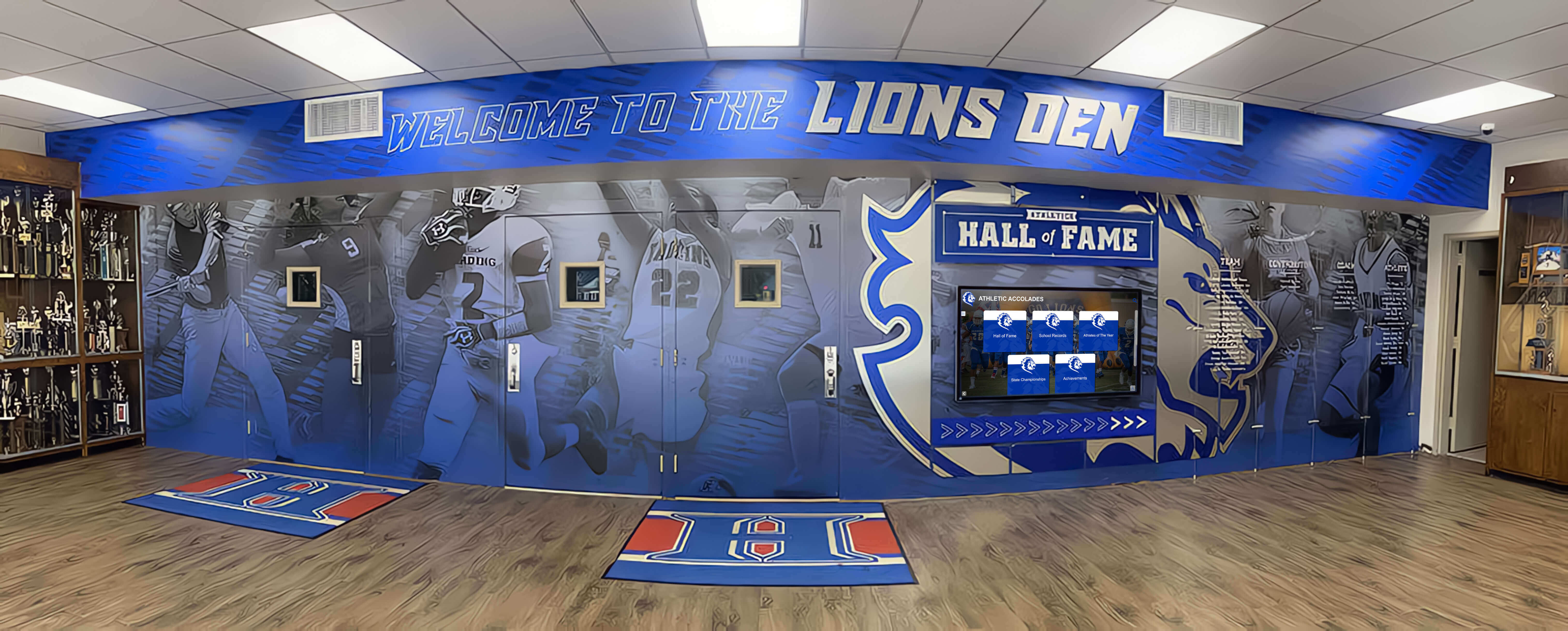
Trophy cases in school athletic corridors hold recognition hardware and safety-glazed panels that may show roller wave distortion — a manufacturing characteristic that looks like warping but cannot be corrected by cleaning, adjustment, or heat exposure
What Roller Wave Distortion Is: A Direct Definition
Roller wave distortion — also called conveyor wave, furnace wave, or simply roller wave — is a periodic sinusoidal surface undulation embedded in heat-treated flat glass during the tempering or heat-strengthening process. It is not a surface coating, a cleanliness condition, or a post-installation deformation. It is a geometric characteristic of the glass body itself, produced by the physics of the roller-hearth tempering furnace.
Understanding what creates roller wave requires a brief description of how tempered glass is made. A flat glass panel enters a roller-hearth furnace and is conveyed through on a series of rotating ceramic rollers spaced at a fixed center-to-center pitch — typically 50 mm to 150 mm apart, depending on furnace design and glass thickness. Inside the furnace, the glass is heated to approximately 620–680°C, close to its softening point. At this temperature, the glass becomes slightly plastic — it can deform under its own weight. As the glass rides across the rotating rollers, the unsupported zones between roller contact points sag microscopically under gravity. When the glass exits the furnace and is rapidly quenched by air jets to develop its compressive stress layer, this subtle, regularly spaced sag pattern is locked into the glass body.
The result is a surface that, examined in cross-section, resembles a shallow sine wave: alternating crests (where the rollers made contact) and troughs (where the glass sagged between rollers). The geometric properties of the wave are:
- Amplitude: the height difference between a wave crest and an adjacent trough, typically 0.1 mm to 0.5 mm in glass meeting ASTM C1048 limits
- Wavelength (pitch): the crest-to-crest distance, corresponding to the roller spacing — typically 50 mm to 150 mm
- Orientation: the wave crests run parallel to the direction of roller rotation, which means they are perpendicular to the direction the glass traveled through the furnace
ASTM C1048-18 (Standard Specification for Heat-Strengthened and Fully Tempered Flat Glass) addresses roller wave as a distinct quality characteristic and specifies limits for the allowable reflected-image distortion associated with roller wave. The standard’s reflected-image test is the industry reference method for quantifying roller wave severity.
Roller wave is not a defect indicator, a safety failure, or a sign of installation error. All heat-treated flat glass — tempered or heat-strengthened — produced in a roller-hearth furnace has some degree of roller wave. The question the inspection must answer is not whether roller wave is present, but how severe it is and whether it is the actual cause of the visual distortion the inspector is observing.
Why Roller Wave Appears in School Trophy Case Safety Glass
Most enclosed school trophy cases that were installed or replaced after 1990 contain tempered glass panels in locations where glazing contact with occupants is possible — door panels in cases located at corridor level, for example, are typically required by applicable building codes and the CPSC 16 CFR Part 1201 safety-glazing standard to be glazed with tempered or laminated safety glass. Tempered glass — by definition a roller-hearth-processed glass — carries roller wave as an inherent manufacturing characteristic.
The wave is rarely visible to students and staff who glance at a trophy case from normal corridor distances. It becomes visible under specific observation conditions: low-angle light (morning or late-afternoon sunlight entering from a corridor window at a raking angle), certain artificial lighting positions that produce a reflected image across the glass face, or close-range inspection by someone looking specifically at the glass surface rather than through it. This conditional visibility means that roller wave distortion in school trophy cases often goes unnoticed for years and then is suddenly “discovered” by a facilities team member who assumes something has changed — when in fact the glass has had that characteristic since it was fabricated.
Schools with active recognition programs — including those that have expanded into sports marketing programs that feature physical display cases prominently — benefit from having a documented baseline for each trophy case panel’s optical condition, so that a newly noticed pattern can be compared to the baseline record rather than treated as a new finding without historical context.
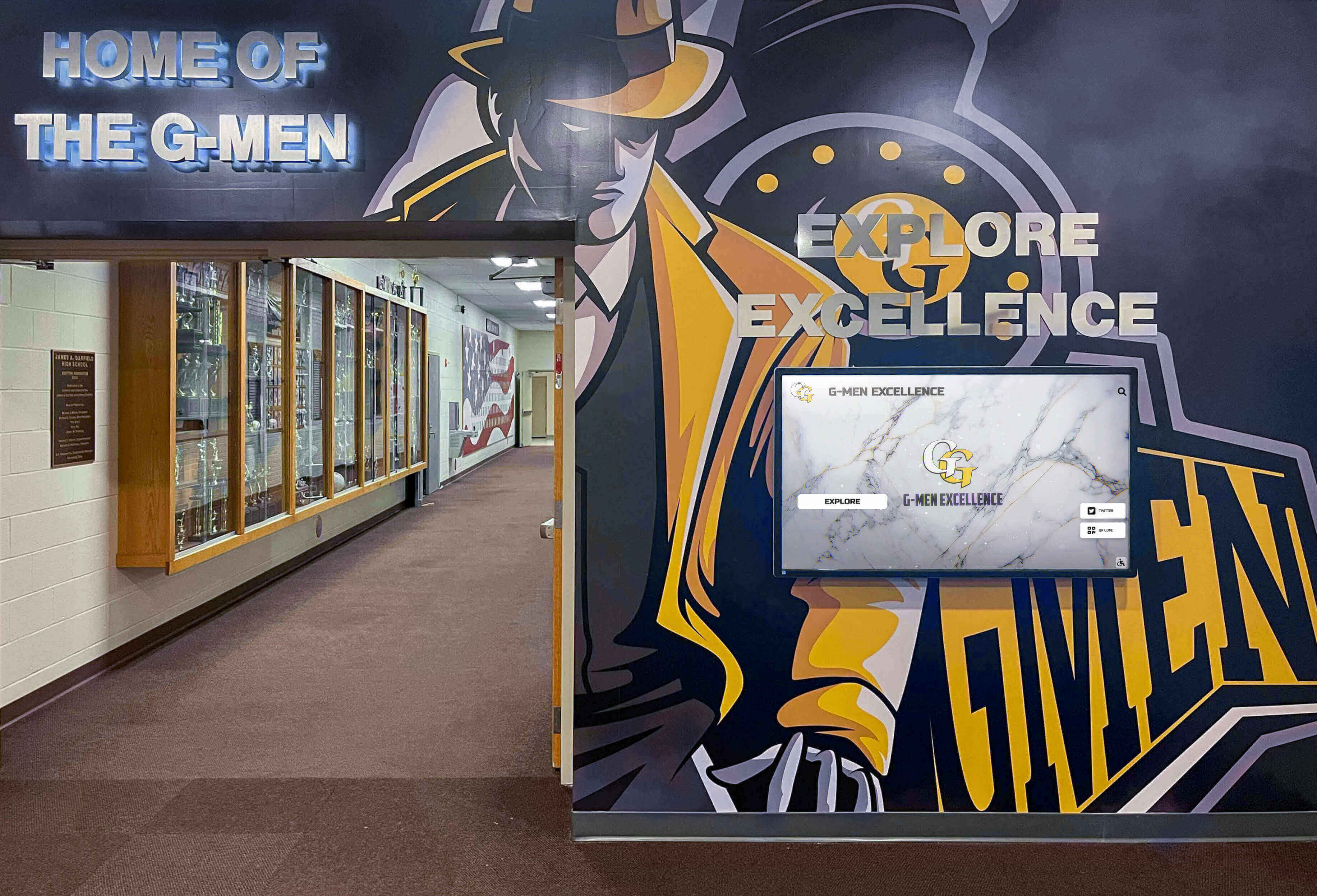
Heat-treated safety glass required in high-traffic school trophy case corridors inherits roller wave from the tempering furnace — the distortion becomes visible under specific lighting conditions that may not have occurred before, not because the glass has changed
Distinguishing Roller Wave from Four Commonly Confused Conditions
The operational challenge in a school trophy case roller wave distortion inspection is not identifying the wave — it is distinguishing it from four other visual conditions that produce similar appearances under certain lighting conditions. Misidentification leads to either inappropriate maintenance actions (cleaning glass that cannot be improved by cleaning) or missed real defects (attributing a genuine optical failure to the tempering process when it is actually edge damage or delamination).
| Condition | Visual Appearance | Pattern Character | Response to Cleaning | Associated Physical Signs | What to Do |
|---|---|---|---|---|---|
| Roller wave distortion | Repeating bands of light and shadow in reflected light; subtle wave across panel face | Periodic, evenly spaced crests and troughs; bands run in one axis only; uniform spacing | None — pattern does not change after cleaning; pattern is inside the glass | No edge damage, no surface film, glass sound when tapped lightly | Document as cosmetic; apply escalation table |
| Surface contamination (dust, debris) | Hazy or spotty distortion; scattered; varies with viewing angle | Non-periodic; irregular; concentrated in soiled zones | Complete resolution after cleaning with microfiber and appropriate cleaner | Visible particulate on surface; smears or streaks consistent with handling | Clean and re-inspect; no further action if resolved |
| Film haze (hard water, chemical film, coating failure) | Uniform milky or iridescent layer; reduces glass clarity globally | Diffuse, not periodic; covers large area without repeating band pattern | Partial improvement with appropriate cleaner; may require professional film removal for coating failure | Possible white calcium deposits at edges; iridescent sheen visible under direct light | Identify film source; clean with appropriate solvent; re-inspect |
| Mounting deformation (frame pressure, hinge load) | Smooth single-curve bow or localized edge distortion; reflected images stretch or compress in one zone | Non-periodic; smooth curvature or localized — no repeating wave | None — deformation is physical, not surface | Frame may show visible racking; door may not close flush; glazing bead may show uneven compression | Apply glass bow measurement checklist (straightedge method); escalate per bow tolerance table |
| Edge damage or micro-cracking | Irregular distortion concentrated near one edge or corner; may show sparkle effect in raking light | Non-periodic; asymmetric; does not repeat across panel | None | Edge chips, surface scratches, or micro-cracks visible on close examination; panel may sound hollow when tapped near damage | Photograph and document; escalate to glazier regardless of roller wave status |
The single most reliable field differentiator between roller wave and the other conditions in this table is periodicity: roller wave produces a pattern with regular, repeating spacing. Surface contamination, film haze, mounting deformation, and edge damage do not produce regular periodic patterns. A facilities inspector who can confirm that the observed distortion consists of evenly spaced parallel bands — not random, not concentrated in one area, not a smooth single curve — has strong evidence that the finding is roller wave rather than one of the four alternatives.
The Angled-Light Inspection Method
The angled-light method — also called the raking-light or grazing-light method — is the field technique that makes roller wave visible and distinguishable from ambient-condition visual assessment. It requires no specialized equipment beyond a flashlight and approximately ten minutes per case unit.
Equipment Required
- Narrow-beam LED flashlight or work light (wide floodlights scatter light too broadly to produce the contrast needed)
- A clean microfiber cloth (to eliminate surface contamination as a variable before the angled-light assessment begins)
- Inspection log for recording findings by panel and date
Preparation: Eliminate Surface Variables First
Before performing the angled-light assessment, clean the panel face with the microfiber cloth. This step eliminates surface contamination as a variable: if the visual distortion is due to dust or a surface film, cleaning will resolve it before the angled-light assessment begins, saving the time and cognitive effort of the full protocol. If the pattern persists after cleaning, proceed with the angled-light method.
Step 1: Position the Light Source
Hold the flashlight at a low angle to the glass surface — approximately 5 to 15 degrees from the plane of the glass, not perpendicular to it. The light should graze the surface rather than illuminate it from the front. Position yourself at one side of the case panel (left edge, right edge, top edge, or bottom edge) and direct the beam across the glass face from that angle.
The objective is to create a situation where the wave crests catch and reflect light toward the observer while the wave troughs fall in shadow. This differential illumination — which requires a raking angle — is the same physical principle used in archaeology to identify surface relief on artifacts that appears flat under direct light.
Step 2: Observe the Pattern
With the light source held at the grazing angle, observe the glass face from a position roughly 1 to 2 meters away. Look for:
Roller wave present: A series of parallel light and dark bands crossing the panel face, evenly spaced, running perpendicular to the direction of the light beam. The bands should have a regular spacing (the roller pitch of the tempering furnace) and should be relatively uniform in width and intensity from one side of the panel to the other.
No roller wave (or below visibility threshold): The panel face shows a generally uniform light distribution under the raking beam with no repeating band pattern.
Other finding: Any pattern that does not consist of evenly spaced parallel bands — irregular patches, localized distortion, a single smooth curve — is not roller wave and should be documented as a separate finding.
Step 3: Rotate the Light Source
After observing from one side, move to the perpendicular edge and repeat the assessment with the light beam now crossing the panel in the opposite direction (90 degrees from the first assessment). Roller wave crests run parallel to the roller rotation axis — meaning the bands appear prominently when the light crosses them and fade when the light runs parallel to them. A pattern that appears as clear bands from one light position and disappears when the light is rotated 90 degrees is consistent with roller wave. A pattern that appears from both light angles is inconsistent with roller wave and may indicate surface contamination or mounting deformation that survived the cleaning step.
Step 4: Assess Severity
Roller wave severity is characterized by how visible the banding is under the angled-light test, and at what observation distance it becomes visible under ambient (non-raking) light conditions.
Threshold severity (within ASTM C1048 tolerance): Bands are visible only under the deliberate grazing-angle light test and disappear under normal corridor lighting conditions. Panel appears optically clear to a corridor observer who is not specifically examining the glass surface.
Moderate severity: Bands are visible under grazing-angle light and may be faintly visible in ambient light when direct sunlight or corridor lighting hits the glass at a favorable angle. Panel may produce noticeable reflected-image distortion visible from normal standing distance under certain lighting conditions.
Severe (potentially exceeding ASTM C1048 tolerance): Bands are visible in ambient corridor light without deliberate grazing-angle setup. Reflected images — the pattern of reflected corridor or window features in the glass face — are visibly distorted at normal standing distance without specialized light positioning.
Step 5: Confirm the Finding Is Roller Wave
After completing Steps 1–4, apply the confirmation test: does the observed pattern:
- Consist of parallel, evenly spaced bands?
- Appear prominently when the raking light crosses the bands and fade when the light is rotated 90 degrees?
- Persist after the surface was cleaned?
- Run in a single consistent axis across the full panel width?
- Show no associated edge damage, surface film, or frame distortion?
If all five conditions are met, the finding is roller wave distortion. Record it as such in the inspection log.
If any condition is not met, document the specific failure and treat the finding as a non-roller-wave condition requiring separate characterization using the appropriate inspection method (cleaning protocol, glass bow measurement, edge damage assessment).
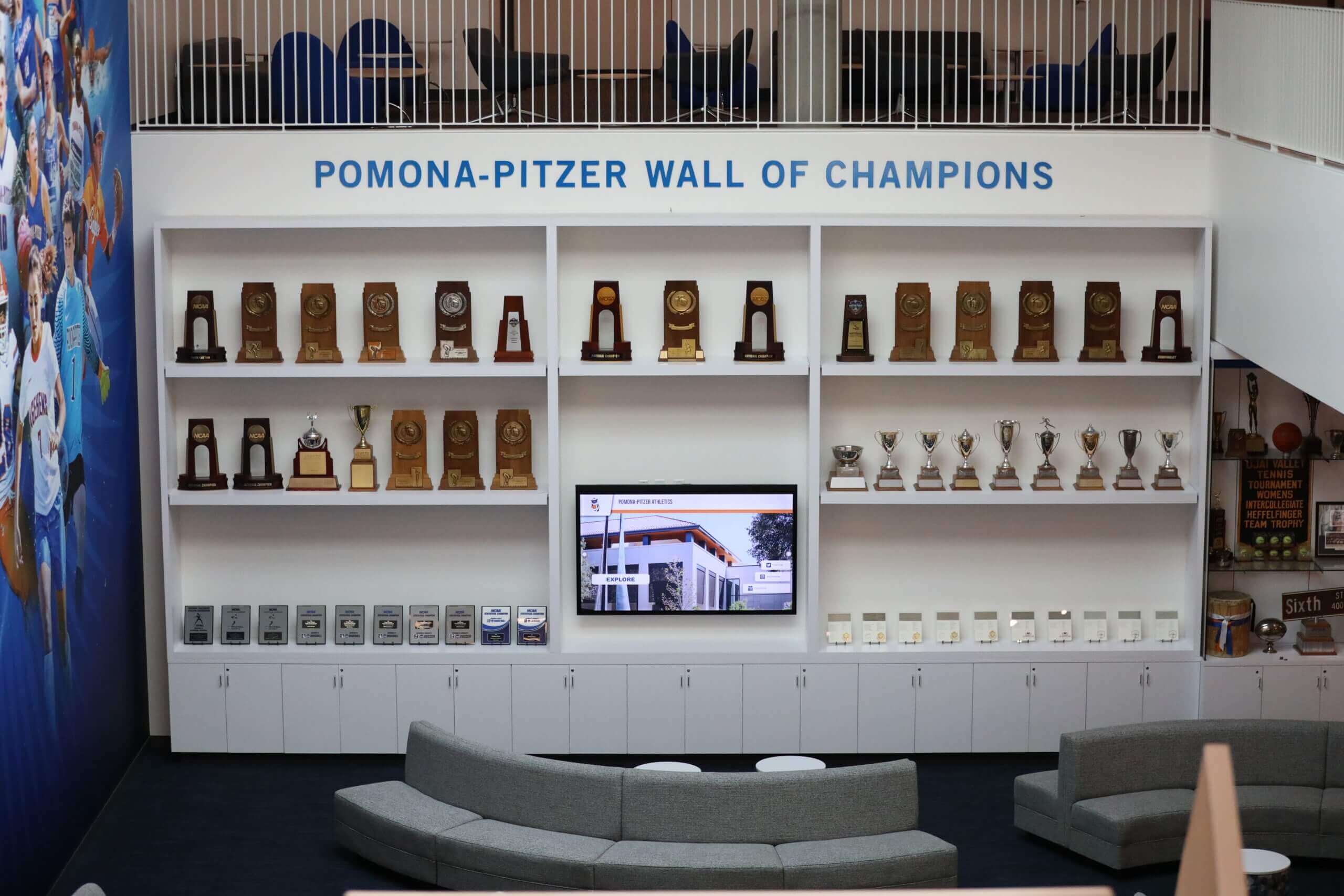
The angled-light method uses a flashlight held at a 5–15-degree grazing angle to make roller wave crests and troughs visible as parallel light and dark bands — a pattern that disappears under perpendicular lighting and is not removed by cleaning
Escalation Table: Cosmetic vs. Safety
Roller wave distortion is primarily a cosmetic and optical quality characteristic, not a structural safety defect. A tempered glass panel with roller wave is still tempered: the wave does not reduce the compressive stress that tempering established in the glass surface, does not create micro-cracks or inclusions, and does not alter the panel’s safety-glazing performance (fragment retention on breakage). However, the roller wave inspection produces findings across a range of severity, and some findings require escalation beyond simple documentation.
| Finding | Severity | Safety Relevance | Action | Timeline |
|---|---|---|---|---|
| Roller wave, threshold — visible only in deliberate grazing-angle test | Cosmetic only | None — within normal heat-treated glass characteristics | Document in inspection log with date, panel ID, and light-test observation; no action required | Annual re-inspection |
| Roller wave, moderate — visible in ambient light at favorable angles | Cosmetic with optical quality impact | None structurally; may not meet original optical specification for high-visibility display cases | Document; photograph under angled light; note whether original procurement specified optical flatness limits; consult glazier if specification compliance is a program requirement | 90-day follow-up if optical specification applies |
| Roller wave, severe — visible in normal corridor lighting at standing distance | Cosmetic with optical quality impact and potential specification non-conformance | Structural safety not affected; however, severe roller wave in a panel that is also showing mounting stress or edge damage elevates risk from the combined conditions | Document and photograph; schedule glazier consultation to assess whether panel meets applicable ASTM C1048 roller wave limits; examine the same panel for edge damage and mounting conditions independently | 30-day glazier consultation |
| Pattern that does not resolve after cleaning, does not show roller wave periodicity, and is associated with edge damage or non-uniform distortion | Potential safety finding — not cosmetic | Cannot be classified as roller wave; may represent micro-cracking, stress fracture precursor, or delamination | Escalate to glazier; restrict case access pending assessment; do not dismiss as cosmetic | Same day |
| Pattern that resolves after cleaning | Surface contamination | None | Document cleaning performed; record resolved condition; schedule next inspection at normal cycle | Annual |
| Smooth single-curve distortion confirmed as glass bow, not periodic wave | Structural — apply bow escalation table | Glass bow carries structural mounting stress implications — see glass bow inspection protocol | Apply glass bow measurement checklist; escalate per bow tolerance table | Per bow protocol |
Critical distinction: Roller wave is a cosmetic finding when it exists in isolation. It becomes a safety-relevant finding only when it appears in combination with a structurally significant condition — edge damage, frame distortion, bead failure, or glass bow that places the panel under mounting stress. The inspection checklist must assess both the roller wave finding and the panel’s overall physical condition, and the escalation decision must reflect the combination, not roller wave severity alone.
Schools that maintain recognition programs which include alumni engagement initiatives tied to physical display cases should coordinate glass inspection schedules with recognition calendar events — ensuring that display cases are in confirmed-assessed condition before events that add new items to the case interior or draw public attention to the case exterior.
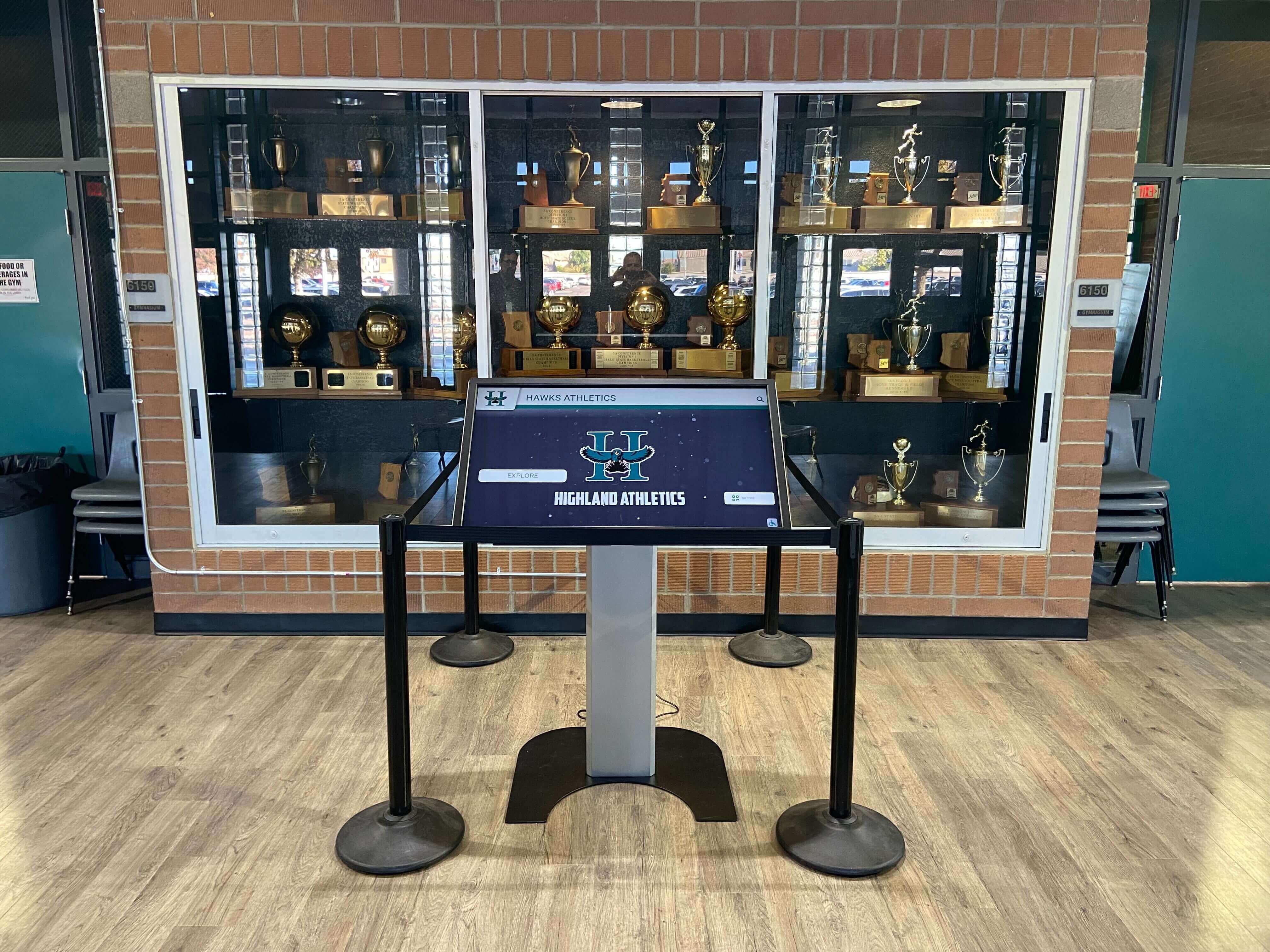
Roller wave inspection must be combined with physical condition assessment — the optical finding is cosmetic in isolation but becomes a combined escalation condition when the same panel shows edge damage, frame distortion, or glazing bead failure
When Cosmetic Becomes Safety: Combined Condition Escalation
The escalation table above separates cosmetic roller wave from safety escalation. This section describes the specific combinations that move a cosmetic finding into safety territory, because the transition is not always obvious to facilities staff encountering roller wave for the first time.
Roller Wave Plus Edge Damage
A tempered glass panel with roller wave distortion that also shows edge chips, surface scratches extending to the edge, or a glass corner with impact marks carries an elevated breakage risk compared to the same roller wave in an undamaged panel. The roller wave itself does not reduce the glass strength — but the edge damage does, and the combination of reduced edge strength with a panel that is already at its manufacturing roller wave limit means that any additional mechanical or thermal load has less safety margin to absorb before the panel fails. Escalate this combination regardless of roller wave severity level.
Roller Wave Plus Glazing Bead Pressure
In some trophy case frames — particularly older cases with rigid aluminum extrusions — the glazing bead presses against the glass face with a contact pressure that varies along the panel edge. If the panel has significant roller wave, the bead contact pattern across the panel will not be uniform: the bead will contact the glass at wave crests and bridge over wave troughs, concentrating contact pressure at discrete points along the edge rather than distributing it evenly. In thick-section glazing beads this is rarely an issue, but in cases where the bead is already narrow or where the frame has been distorted by prior loading, concentrated bead contact on wave crests can create localized stress concentrations. A glazier consulted for a roller wave finding should be asked to assess bead contact uniformity along affected panel edges.
Roller Wave Confused with Frame Deformation
The most important combined-condition scenario is misidentification: a facilities team member who attributes actual frame deformation or glass bow to “just the wave” may not escalate a genuine structural finding. If any element of the visual distortion does not fit the roller wave pattern — if it appears as a smooth continuous curve rather than a series of parallel bands, if it is visible from both raking-light angles, or if it produces distortion that is concentrated in one area rather than distributed uniformly across the panel — do not record the finding as roller wave. Apply the glass bow measurement protocol and treat it as a potential structural condition.
Schools managing athletic hall of fame programs with documented recognition histories often have the same documentation discipline that makes trophy case glass inspection records valuable: consistent identifiers, dated entries, and trend comparison across inspection cycles. That discipline applied to glass inspection records converts a one-time visual check into a multi-year dataset that makes combined-condition escalation decisions more defensible.
School Trophy Case Roller Wave Distortion Inspection: Step-by-Step Checklist
The following steps constitute a complete roller wave inspection for a single trophy case unit containing multiple glass panels. A trained inspector familiar with the angled-light method can complete a full roller wave assessment on a standard single-bay case — typically four to six glass panels — in under twenty-five minutes.
Step 1: Record Case and Panel Identifiers
Before examining any glass, record in the inspection log:
- Case identifier and location (building, corridor, case number)
- Panel identifiers for each panel in the case (door panel left, door panel right, fixed panel upper, etc.)
- Known glass type for each panel if documented (tempered, heat-strengthened, laminated) — record as “unknown” if not confirmed from markings or case records
- Date, time, and inspector name
- Ambient lighting conditions (natural light, artificial only, both; direction of windows relative to case face)
- Previous inspection record status (first inspection, follow-up, or annual re-inspection)
Step 2: Clean Each Panel Before Assessment
Wipe each panel face with a clean microfiber cloth before applying the angled-light test. If visible streaks, haze, or deposits remain after wiping, note the contamination type and apply appropriate cleaning before proceeding. Any visual distortion that resolves after cleaning is documented as surface contamination — not roller wave — and requires no further roller wave assessment on that panel.
Step 3: Apply the Angled-Light Test to Each Panel
For each panel:
- Hold the LED flashlight at the grazing angle (5–15 degrees from the glass surface plane) from the left edge and observe the panel face from approximately 1–2 meters
- Record whether a periodic banding pattern is visible: yes or no; if yes, note approximate band spacing (wide, medium, narrow) and uniformity
- Move to the bottom edge and repeat with the light crossing the panel from the perpendicular direction
- Confirm whether the banding pattern appears from the first direction and fades from the second — confirming roller wave orientation
- Note any finding that does not fit the periodic band pattern (smooth curve, irregular patches, edge-concentrated distortion)
Step 4: Assess Severity
For each panel where roller wave is confirmed:
- Extinguish the flashlight and observe the panel face under ambient corridor lighting from a normal standing distance (approximately 1–2 meters)
- Record whether the banding is visible under ambient light: not visible (threshold severity), faintly visible at favorable angles (moderate severity), or clearly visible from standing distance (severe)
- Photograph the panel under the angled-light test condition for the inspection record
Step 5: Assess Combined Physical Conditions
For each panel, regardless of roller wave finding:
- Examine all four edges for chips, micro-cracks, and surface scratches approaching the edge
- Examine the glazing bead along all four edges for uniform contact, gaps, cracking, or shrinkage
- Examine the frame for visible distortion — bending, racking, or warping — that would indicate mounting stress on the glass panel
- If any edge damage, bead failure, or frame distortion is found on the same panel as a roller wave finding, escalate the combined condition per the Combined Condition Escalation section above
Step 6: Assign Condition and Escalation Action
Assign each panel a condition from the Escalation Table and record the required action and timeline. For any panel assigned to the glazier consultation or combined-condition escalation categories, initiate the glazier contact within the required timeline and document the date of contact in the inspection record.
For panels where the visual distortion was resolved by cleaning and no roller wave pattern was found — record the panel as “surface contamination, cleaned, no roller wave” and schedule re-inspection at the normal annual cycle.
For panels where the visual pattern did not fit roller wave — smooth curve, non-periodic, edge-concentrated — record the specific finding, apply the appropriate separate inspection protocol (glass bow measurement, edge damage assessment), and do not record the finding as roller wave.
Completing the Inspection Record
For each panel, the inspection log entry should include:
- Panel ID, dimensions, glass type
- Pre-cleaning contamination: yes/no; type if yes
- Post-cleaning roller wave test: banding visible from first axis: yes/no; fading from perpendicular axis: yes/no
- Roller wave confirmed: yes/no; if yes, severity (threshold/moderate/severe)
- Combined physical conditions: edge damage, bead failure, frame distortion — any present
- Condition assignment from escalation table
- Escalation action and timeline
- Photo reference (file name and date)
- Inspector signature and date
Frequently Asked Questions About Roller Wave in Trophy Case Glass
Does roller wave weaken the glass?
No. Roller wave is a surface geometry condition — a shape characteristic — not a material strength condition. The compressive stress layer developed during tempering is unaffected by roller wave. A panel with roller wave is still fully tempered and still carries the fragment-retention safety performance required of tempered safety glass. Roller wave is not a structural safety finding unless it appears in combination with edge damage, frame distortion, or another independent structural condition.
Can roller wave be removed or corrected after installation?
No. Roller wave is embedded in the glass body during the tempering process and cannot be altered by polishing, coating, cleaning, or any field treatment. The only way to replace a roller wave finding with a lower-wave-severity result is to replace the glass panel with a new panel produced on a furnace with tighter roller wave tolerances or with the panel oriented differently through the furnace (though the latter option applies to procurement, not field remediation).
Is roller wave the same as glass bow?
No, and the distinction matters for inspection protocol. Glass bow is a one-directional curvature — the panel is dished or arched in one direction across its width or height, measurable with a straightedge and feeler gauge. Roller wave is a periodic undulation — multiple crests and troughs at regular spacing — that does not show as a simple curve under the straightedge. Bow is a structural mounting concern (it loads the frame unevenly and places the glass under bending stress). Roller wave is an optical condition. Both can appear in the same panel, but they require different inspection methods and produce different escalation outcomes.
If roller wave is a manufacturing characteristic, why does it seem to have appeared suddenly in a panel that looked clear before?
Roller wave visibility is highly dependent on lighting conditions. A panel that appeared clear in corridor fluorescent lighting may produce visible banding when morning sunlight enters from a corridor window at a favorable angle, or when a work light is positioned during a facilities inspection in a way that creates raking illumination. The glass has not changed — the observation conditions changed. This is a common source of the impression that roller wave is a new development. If inspection records from prior years show no roller wave finding for a panel that now shows banding, confirm the light conditions at both inspections before concluding that the glass condition has changed.
When is roller wave a reason to contact a glazier?
Three situations warrant glazier consultation: (1) severe roller wave visible in ambient corridor light at standing distance, which may represent a panel exceeding ASTM C1048 optical limits that was accepted or installed below spec; (2) any roller wave panel that also shows edge damage, frame distortion, or bead failure — the combined condition assessment requires professional glazing judgment; and (3) any visual distortion that cannot be confirmed as roller wave through the angled-light test, because an uncharacterized distortion in tempered glass may indicate a structural condition rather than a cosmetic one.
Schools managing booster club programs and related fundraising that support trophy case maintenance budgets can allocate glazier consultation costs more efficiently when the inspection process distinguishes cosmetic roller wave findings — which require documentation but not glazier visits — from structural escalation findings that genuinely require professional assessment.
A documented roller wave inspection protocol helps facilities teams allocate glazier consultations to genuine safety findings — separating the cosmetic documentation tier from the escalation tier reduces unnecessary service calls while ensuring structural conditions receive appropriate professional response
How often should trophy case glass be inspected for roller wave?
Annual inspection is the recommended baseline for all glass condition assessments in school trophy cases, including roller wave. Cases in corridors with significant direct sunlight exposure — where daily thermal cycling may be more pronounced — and cases adjacent to gymnasium or exterior doors that experience frequent pressure-wave loading should be inspected semi-annually. Any case that has experienced an unusual event since the last inspection (corridor collision, water intrusion, or a case access incident that required forcing a stuck door) should be assessed before returning to normal use, with roller wave confirmed or excluded as part of that post-event evaluation.
Are some glass panels more likely to show roller wave than others?
Yes. Thinner tempered glass panels — particularly 4 mm and 5 mm panels sometimes used in older trophy case door glazing — tend to show more pronounced roller wave than thicker panels (6 mm, 8 mm) because thinner glass has less stiffness to resist the sag between roller contact points during furnace processing. Larger panels also tend to show more prominent roller wave than smaller panels because the wave pattern has more area in which to develop without edge constraint. If a case contains a mix of panel thicknesses (which can occur when individual panels have been replaced over time), the thinner panels are likely to show more visible banding under the angled-light test.
Connecting the Inspection to Broader Trophy Case Maintenance
Roller wave distortion inspection is one component of a complete trophy case glass assessment program. Schools performing systematic glass maintenance benefit from running roller wave assessment alongside the other condition checks that address distinct failure modes: glass bow measurement (straightedge method), laminated glass delamination inspection, nickel sulfide inclusion risk stratification, and glazing bead condition assessment. Each check addresses a different glass characteristic; none of them substitutes for the others.
Schools managing complex recognition programs — including year-round award categories such as tennis recognition and court-performance honors — find that coordinating glass inspection cycles with recognition calendar milestones ensures that the cases housing those awards are in documented-safe condition at the moments of highest visibility. An athletic director scheduling a spring awards ceremony who can confirm that trophy case glass has been inspected within the past six months, and that all roller wave findings are documented at cosmetic-only status, carries a different risk posture than one relying on informal corridor observation.
Recognition programs that have also invested in digital recognition infrastructure with accessibility and usability testing demonstrate the same institutional discipline at the digital layer: systematic condition monitoring, documented findings, and clear escalation criteria apply whether the display surface is tempered glass or a touchscreen panel.
The records produced by a structured roller wave inspection program — panel identifiers, severity assessments, finding dates, escalation actions taken — integrate directly with the facilities management documentation that schools maintain for building safety purposes. A finding documented in an annual inspection record that accurately characterizes a panel as “roller wave, threshold severity, no combined structural conditions” is a permanently useful record: it provides baseline comparison data for future inspections, evidence of systematic maintenance attention, and liability documentation in the event that a panel fails between inspection cycles.
Facilities teams and athletic directors who maintain documented glass inspection records — including roller wave assessments with severity ratings and escalation actions — carry a systematic safety maintenance record that supports glazier consultations and informs replacement planning
When Physical Trophy Cases Reach Their Maintenance Ceiling
Roller wave inspection, like all physical glass maintenance work, exists because physical trophy cases have a finite service life governed by materials, thermal cycling, and installation conditions. A school that performs annual glass condition assessments — covering roller wave, bow, delamination, and edge damage — accumulates both safety documentation and a maintenance history that can eventually make the transition decision straightforward: when glazier visits recur annually, when panel replacements are needed more than once per decade in the same case, or when frame distortion from years of bowed-panel loading becomes chronic, the cost of ongoing physical case maintenance begins to compare unfavorably with the cost of a digital recognition platform that does not carry those failure modes.
Digital recognition displays from Rocket Alumni Solutions replace glass panels, glazing beads, and the entire physical maintenance cycle with a cloud-managed touchscreen platform: unlimited achievement display capacity, remote updates without opening a physical case, no glass inspection requirements, and no glazier consultation budget. For athletic directors managing recognition program growth alongside facilities teams managing maintenance schedules, the comparison becomes more favorable each time a glass finding requires professional response.
Schools that are actively evaluating that transition — and simultaneously maintaining the physical recognition cases that will stay in service during any transition period — can explore what a digital recognition environment looks like in parallel with the case inspection work this guide describes.
Ready to move past glass maintenance cycles?
If your trophy case roller wave inspections — and the bow, delamination, and edge-damage assessments that accompany them — are adding up to a maintenance overhead that no longer fits your facilities budget or your recognition program’s growth, see how Rocket Alumni Solutions digital displays replace physical case upkeep with a cloud-managed platform your team controls remotely.
Quick-Reference Roller Wave Inspection Checklist
Use this summary during each inspection round. Transfer full severity assessments and photographs to the detailed inspection record.
Pre-inspection:
- Inspection log prepared with case ID and panel identifiers
- Previous inspection records available for comparison
- LED flashlight with narrow beam available
- Clean microfiber cloth available
Per-panel sequence:
- Panel face cleaned with microfiber cloth; contamination noted if present
- Post-cleaning check: did distortion resolve? If yes — document as surface contamination, no roller wave; skip remaining steps
- Angled-light test from first axis (5–15-degree grazing angle): banding visible yes/no
- Angled-light test from perpendicular axis: banding fades from second angle yes/no
- Roller wave confirmed (periodic parallel bands, visible from one axis, fades from perpendicular, persists after cleaning): yes/no
- If roller wave confirmed: severity assessed (threshold / moderate / severe)
- Ambient-light severity check: visible in corridor light yes/no
- Physical condition assessed: edge damage, bead failure, frame distortion — any present?
- Combined-condition escalation applied if roller wave + physical condition found
- Condition assigned from escalation table; escalation action and timeline recorded
- Photograph taken under angled-light condition for Condition moderate/severe and all combined-condition findings
Post-inspection:
- Inspection records filed alongside prior records for trend comparison
- Glazier contact initiated for any severe or combined-condition finding
- Next inspection date scheduled and calendar entry confirmed
Roller wave tolerance values referenced to ASTM C1048-18 (Standard Specification for Heat-Strengthened and Fully Tempered Flat Glass). The reflected-image test described in ASTM C1048 is the industry reference method for quantifying roller wave severity beyond field visual assessment. Stop-work criteria and escalation timelines in this checklist are guidelines for facilities planning — a qualified glazier is the appropriate authority for replacement and repair decisions on individual panels.