



Intent: research — a school trophy case off-gassing inspection is a structured evaluation that helps administrators, athletic directors, facilities staff, and recognition-program owners identify case materials and interior conditions that release volatile organic compounds (VOCs) capable of damaging championship hardware, medals, paper awards, photographs, textiles, and memorabilia over time. Because off-gassing in enclosed cases concentrates invisible chemical vapors that can tarnish silver, corrode copper alloys, yellow paper, fade photographs, and degrade adhesive labels — often with no visible source — periodic inspection of case materials and artifact condition is the most practical early-warning tool available to a school without an on-site conservator. This guide explains the primary off-gassing sources found in school trophy cases, how to recognize chemical damage on the items inside, how to sequence an inspection, and when findings require professional conservation rather than in-house remediation.
A school trophy case can look perfectly maintained from the outside — polished glass, organized shelves, a fresh paint coat on the hallway wall — while the materials inside the case are steadily releasing vapors that attack everything on display. The MDF backing panel installed during the last renovation may be emitting formaldehyde and acetic acid as it ages. The green felt liner may contain sulfur compounds that react with silver medal surfaces. The foam pad under a vintage championship cup may be off-gassing amines that accelerate tarnish on every adjacent piece. None of these processes is visible in progress. Their effects accumulate slowly, then appear suddenly as accelerated tarnishing, paper brittleness, photograph discoloration, or acrylic crazing near adhesive seams.
A documented school trophy case off-gassing inspection addresses this silent damage category. By assessing the materials present, recognizing the chemical damage signatures they leave on artifacts, and establishing a condition baseline that can be compared across inspection cycles, facilities teams and archivists can catch off-gassing-related deterioration early — when intervention options remain open — rather than after awards have suffered irreversible damage.

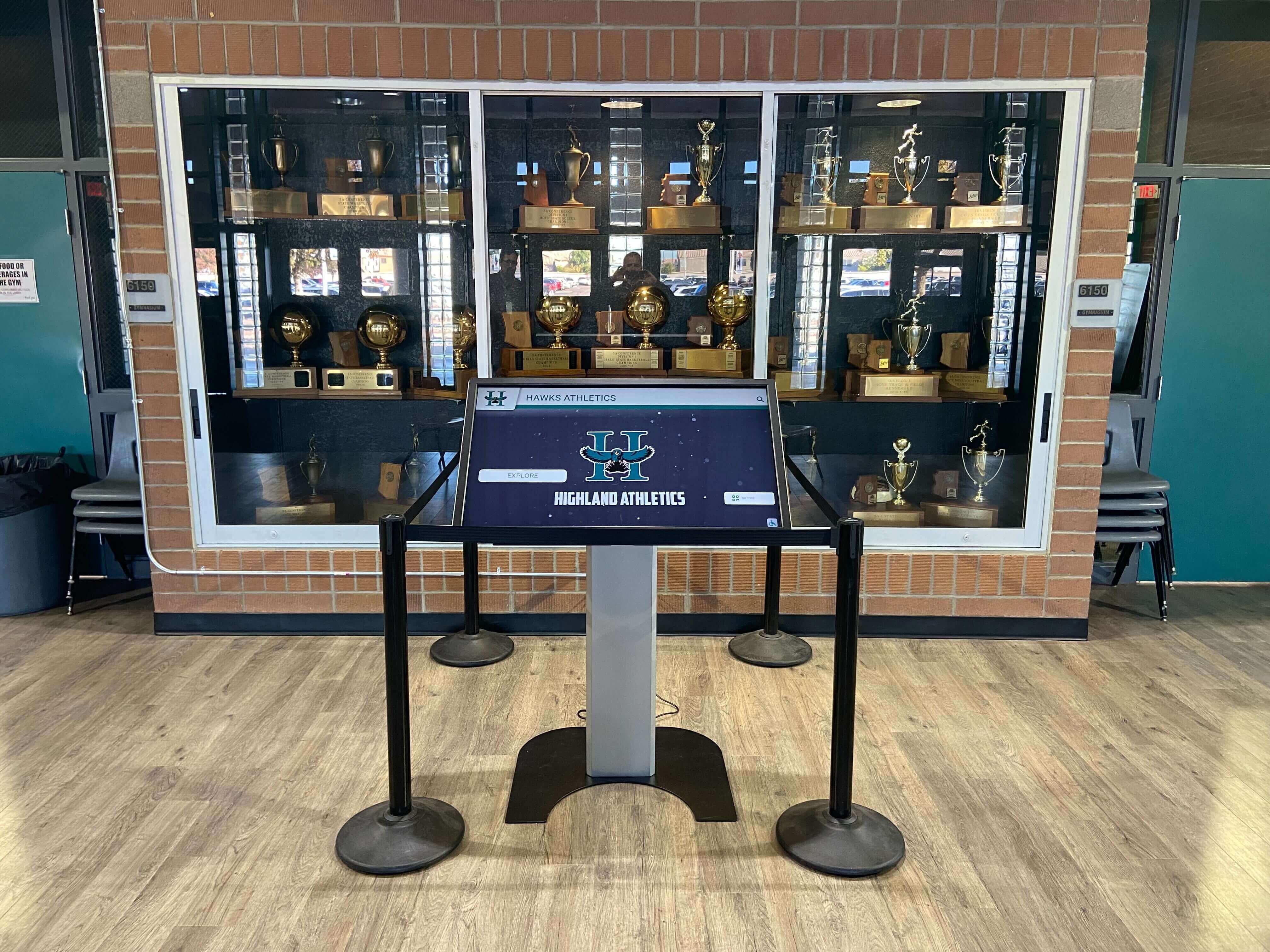
Enclosed trophy cases concentrate the vapors released by interior materials — a structured off-gassing inspection identifies which cases and which materials present the highest risk to the awards and memorabilia on display
What Off-Gassing Means in a Trophy Case Context
Off-gassing — also called outgassing in conservation literature — refers to the release of volatile compounds from solid or liquid materials into the surrounding air. In a museum or archival setting, off-gassing is one of the most studied mechanisms of preventive conservation, because closed display cases trap these compounds around the very objects being protected.
In a school trophy case, the relevant off-gassing compounds fall into several categories based on the damage they cause:
Acidic gases (acetic acid, formic acid): Released by wood, MDF, particleboard, and some adhesives and finishes. Acetic acid attacks lead, calcite, and some metals, and accelerates the overall chemical deterioration of paper and cellulose materials. Its characteristic odor is a sharp, vinegar-like smell — but concentration levels that cause damage can be present before the smell is reliably detectable.
Sulfur compounds (hydrogen sulfide, carbonyl sulfide, organic sulfides): Released by rubber gaskets, some felt liners, certain adhesives, and some older wood finishes. Sulfur compounds react with silver surfaces to form silver sulfide — the black discoloration known as tarnish. Even trace concentrations inside a sealed case can produce measurable tarnishing on silver-plated and solid silver awards over time.
Nitrogen compounds (ammonia, amines): Released by some foam materials, certain adhesives, and biological contaminants. Ammonia and amines are alkaline and can attack certain dyes and inks in paper awards and photographs.
Oxidizing compounds and aldehydes (formaldehyde, acetaldehyde): Released by MDF, particleboard, and some synthetic textiles. These compounds attack paper and photographic materials and contribute to overall indoor air quality concerns in enclosed spaces.
Solvent vapors (esters, ketones, alcohols): Released by adhesives, coatings, and paints that have not fully cured. Fresh or recently refinished case interiors can emit concentrated solvent vapors for weeks to months. Solvent vapors can affect acrylic panels, adhesive label backing, and some photographic coatings.
The enclosed, low-ventilation environment of a traditional trophy case is precisely the condition that amplifies all of these risks. A compound that would dissipate harmlessly in an open space concentrates inside a sealed case and remains in prolonged contact with every artifact on the shelves.
Primary Off-Gassing Sources Found in School Trophy Cases
The starting point for any off-gassing inspection is identifying which materials are present in and around the case. Not all cases contain the same risk profile, and the inspection protocol should weight findings according to the specific materials confirmed in each case.
| Material | Common Location in Case | Primary Off-Gas Compounds | Risk to Awards |
|---|---|---|---|
| MDF (medium-density fiberboard) | Backing panels, shelves, base decking | Formaldehyde, acetic acid | Paper yellowing, photograph degradation, metal corrosion acceleration |
| Particleboard | Structural panels, older case interiors | Formaldehyde, acetic acid | Same as MDF; often higher emission rates than solid wood |
| Solid wood (oak, pine, plywood) | Case frames, shelves, display platforms | Acetic acid, formic acid | Attacks lead and calcite; moderate risk to silver and paper |
| Felt liners and pads | Shelf surfaces, under display items | Sulfur compounds (if wool or rubber-backed felt) | Accelerated silver tarnishing; direct contact increases risk |
| Foam pads and cushioning | Under heavy trophies, behind display items | Amines, acetic acid (polyurethane foam) | Amine compounds attack some dyes; acetic acid risk at contact |
| Rubber gaskets and seals | Door perimeters, sliding panel edges | Sulfur compounds, plasticizers | Direct source of silver tarnish; high risk if gaskets contact awards |
| Adhesives and sealants | Joints, label attachment, panel assembly | Solvent vapors (during cure), acetic acid (silicone types) | Acrylic crazing near adhesive seams; label adhesive degradation |
| Oil-based paints and finishes | Interior painted surfaces | Aldehydes, solvent vapors (during and after cure) | Elevated risk for 6–12 months after refinishing; photograph risk |
| Synthetic textiles (polyester, acrylic fabric) | Display backings, jersey mounts | Low-concentration VOCs; minimal in most cases | Low risk in isolation; additive effect when combined with other sources |
| Photographic prints (acetate base) | Historic photographs on display | Acetic acid (as acetate degrades — “vinegar syndrome”) | Risk extends to adjacent silver and cellulose items in same case |
Practical note on identifying MDF vs. solid wood: MDF has a smooth, uniform surface with no visible wood grain on edges; solid wood shows grain on cut edges. Particleboard shows small wood chips or particles on cut edges. If the case was refinished or renovated in the past ten years, assume MDF or particleboard until confirmed otherwise.
Schools reviewing how physical display materials affect the awards inside them can compare their case inventory against common trophy shelf configurations and their material implications — the material choices that create a visually organized shelf often have direct consequences for the preservation conditions inside the case.
How Off-Gassing Damage Appears on Trophy Case Contents
Visual inspection of the artifacts inside the case is the most practical method for identifying active off-gassing effects in a school environment without testing equipment. Each damage type has characteristic visual signatures:
Silver and Silver-Plated Items
Tarnish pattern analysis: Natural silver tarnish from ambient air typically develops as a general dulling of the surface that is relatively uniform. Off-gassing-related tarnish — particularly from sulfur compounds released by felt, rubber, or certain adhesives — tends to be more localized and more rapid. Look for:
- Heavy tarnishing concentrated on items that sit directly on felt-lined shelves (especially the underside and areas in direct contact with the liner)
- Tarnish that developed noticeably faster than expected since the last inspection
- Dark staining patterns that follow the shape of a nearby rubber gasket or foam pad
- Tarnish that is darker and more chemically resistant than expected on the same item type
Paper Awards, Certificates, and Photographs
Paper brittleness and yellowing: Paper awards in trophy cases exposed to acidic off-gassing develop accelerated embrittlement and yellowing. Look for:
- Paper that is noticeably more brittle or discolored than paper stored outside the case during the same period
- Yellowing that progresses faster at the edges nearest to wooden case components
- Photographs showing fading, color shift (often toward yellow or magenta), or surface blooming in localized areas
Photographic deterioration: Black-and-white silver gelatin photographs — common in sports memorabilia — are particularly sensitive to both silver-tarnishing compounds and oxidizing gases. Look for silvering-out (a blue-silvery sheen on highlight areas), fading, or yellow-brown staining.
Vinegar syndrome in acetate materials: Older photographic prints and negatives on cellulose acetate base emit acetic acid as they degrade — a self-reinforcing reaction commonly called vinegar syndrome. If any photographs stored in the case have a noticeable vinegar odor when the case is opened, those specific items are both a preservation concern and an off-gassing source affecting adjacent artifacts.
Metal Awards: Copper, Brass, and Bronze
Sulfur compounds and acidic off-gases affect copper-containing metals differently from silver. Look for:
- Green or blue-green surface deposits (verdigris) that appear in enclosed areas such as beneath a base, behind an engraved nameplate, or at case-back contact points — not just on exposed surfaces
- Accelerated development of spots or deposits compared to items of the same metal type displayed in open areas
- Powdery green deposits at joints or in engraved areas (an indicator of active corrosion chemistry rather than stable patina)
Plastic and Acrylic Components
Crazing near adhesive contact: Acrylic panels adjacent to adhesive seams or sealant beads may show fine crack networks (crazing) at a faster rate than panels remote from those joints. Solvent vapors from incompletely cured adhesives concentrate at enclosed joints and attack acrylic surfaces.
Label and decal degradation: Self-adhesive labels on trophy bases or plaques may show bubbling, edge lifting, or yellowing adhesive bleed if the case environment contains elevated solvent vapors.
The Off-Gassing Inspection: Step-by-Step
This inspection sequence is designed for school facilities staff, athletic directors, and recognition-program coordinators — not conservators. The purpose is to document observable conditions, identify high-risk materials, and create a record that guides escalation decisions. No testing equipment is required, though a humidity and temperature data logger added to high-risk cases will improve subsequent cycles.
Before You Open the Case
Step 1: Record baseline conditions. Note the date, case location, inspector name, and approximate ambient conditions (temperature, weather). A case inspected on a hot August afternoon will present differently than one inspected in February. Consistency in timing across cycles is more useful than any single precise measurement.
Step 2: Observe the case exterior. Before opening, note any visible discoloration of the glass or acrylic panels from the inside (foggy deposits, streaks), visible condensation residue at seal edges, or any unusual odor near the case exterior.
Step 3: Open the case slowly and pause. Upon opening, stop and note any odor before it dissipates. A sharp vinegar or acidic smell indicates acetic acid accumulation. A faint sulfurous or rubber smell indicates sulfur-compound sources. A chemical or solvent smell indicates adhesives or finishes that have not fully cured. Note the odor type and intensity — “strong,” “moderate,” “faint,” or “none” — in the inspection record.
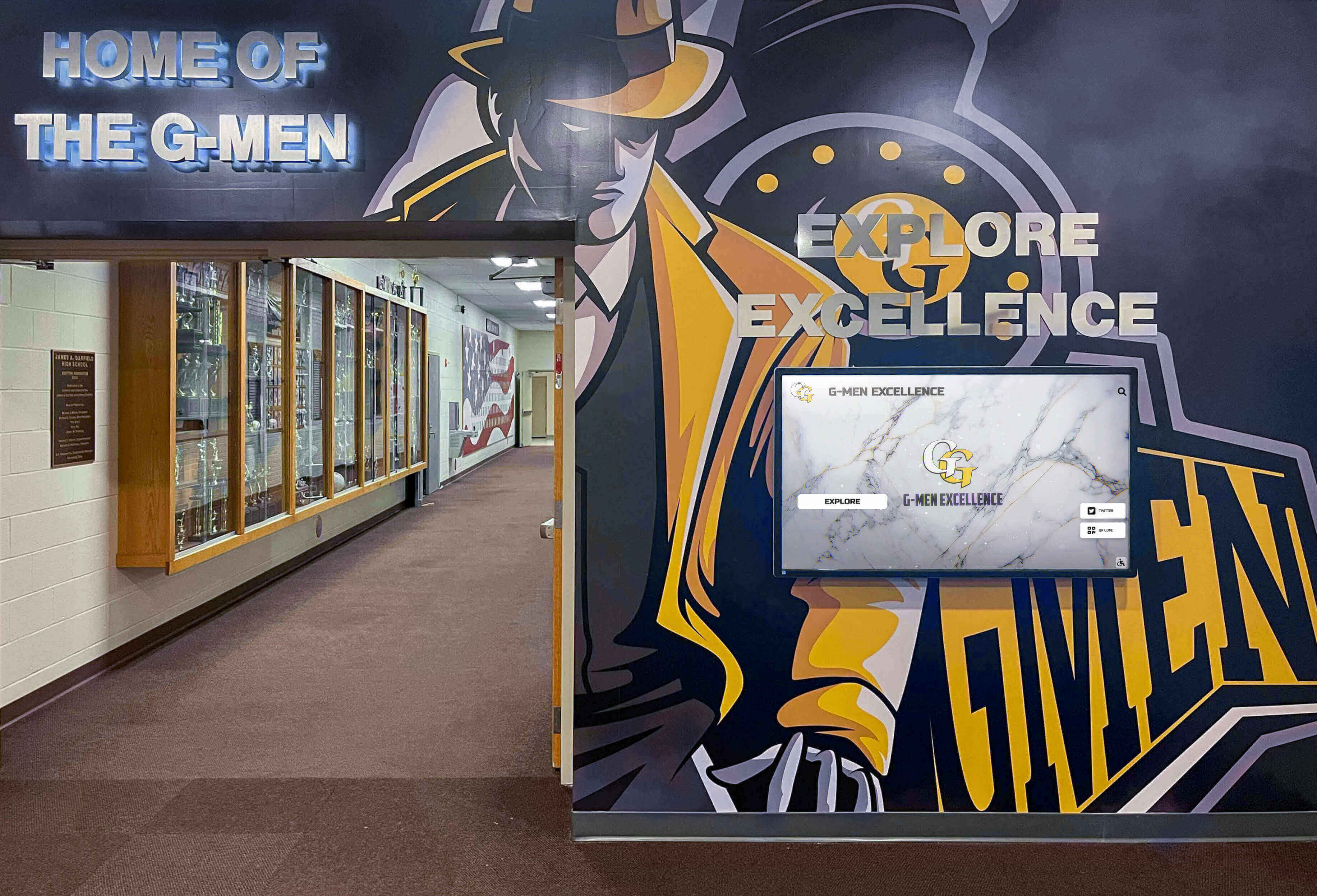
Different trophy cases in the same hallway can have very different off-gassing profiles depending on their construction materials, interior liners, and seal condition — inspect and document each case separately
Section A: Case Material Assessment
| Checklist Item | What to Assess | Flag If… |
|---|---|---|
| Backing panel material | Solid wood, MDF, particleboard, or painted surface? Look at unfinished edges for material identification | MDF or particleboard confirmed — elevated formaldehyde and acetic acid risk |
| Shelf material | Same material assessment; check for cracking, delamination, or moisture damage that increases off-gassing rate | Any delamination or swelling visible — degrading MDF/particleboard off-gasses faster |
| Interior liner material | Felt, fabric, foam, painted wood, or bare panel? Color (some dyes may contribute)? | Rubber-backed felt, polyurethane foam, or unknown foam materials — sulfur and amine risk |
| Door/panel gaskets and seals | Rubber, silicone, foam weatherstripping? Condition — cracking, compression, gaps? | Rubber or neoprene gaskets, especially deteriorating ones — sulfur compound release |
| Adhesive joints and sealant beads | Silicone, acrylic, or unknown sealant? Fresh or aged? | Fresh sealant or adhesive applied within the past six months — solvent vapor risk; note date of application if known |
| Interior finish condition | Any recent repainting or refinishing inside the case? | Oil-based finish applied within the past twelve months — elevated aldehyde and solvent risk; document application date |
| Photographs on display | Any cellulose acetate-base prints present (older photographs, often curled or yellowing)? | Vinegar odor at photographs — vinegar syndrome present; these photographs are both at risk and an off-gassing source |
| Enclosed spaces within the case | Deep recesses, enclosed compartments, base cavities — do they receive less ventilation than open shelves? | Any enclosed sub-area that could concentrate vapors above general case levels |
Section B: Artifact Condition Indicators
| Item Type | Indicator to Examine | Flag If… | Likely Source |
|---|---|---|---|
| Silver and silver-plated awards | Tarnish distribution — uniform vs. contact-pattern; rate of development since last inspection | Heavy tarnish at felt-contact points; faster rate than expected | Sulfur compounds from felt, rubber, or foam |
| Silver awards (continued) | Check undersides and areas not directly visible | Tarnish heavier on concealed surfaces than exposed | Trapped vapor accumulation in enclosed areas |
| Copper, brass, bronze items | Surface deposits at joints, engravings, and backing-contact points | Powdery green or blue-green deposits; rapid development | Acidic off-gases and moisture interaction |
| Paper awards, certificates | Brittleness at edges; yellowing pattern; flexibility compared to reference sample outside case | Brittleness or yellowing notably advanced relative to items stored outside the case | Acidic off-gases, particularly acetic acid |
| Photographs (B&W silver gelatin) | Silvering-out in highlight areas; fading; yellow-brown staining | Any silvering-out or localized fading | Oxidizing gases; sulfur compounds |
| Photographs (color prints) | Color balance change; magenta or yellow shift; surface bloom | Visible color shift or surface haze | Combined VOC exposure |
| Adhesive labels and decals | Condition of adhesive — bubbling, yellowing, edge lifting | Adhesive bleeds or lifts at edges | Elevated temperature or solvent vapor exposure |
| Acrylic panels | Fine crack networks near adhesive joints or sealant edges | Crazing localized to areas near sealant | Solvent vapor from adhesive; see also crazing inspection guide |
| Textiles (jerseys, ribbons) | Color fading or odor absorption — does the textile smell of the case’s interior? | Textiles absorbing acid or sulfur odor; visible dye fade | Direct VOC contact from interior materials |
Section C: Severity and Priority Rating
After completing Sections A and B, assign each case a priority rating using this scale:
Priority 1 — Low Risk: No high-risk materials identified; no observable damage indicators on artifacts; case is older construction with well-cured finishes; no odor on opening. Inspection interval: annual.
Priority 2 — Moderate Risk: One or more high-risk materials identified (MDF backing, rubber gaskets, unknown felt) without observable damage on artifacts yet; or mild tarnish at felt contact points. Inspection interval: semi-annual; consider material mitigation at next inspection.
Priority 3 — Active Concern: Observable artifact damage consistent with off-gassing present (contact-pattern tarnish on silver, accelerated paper deterioration, photograph discoloration); strong or moderate odor on opening; or fresh adhesive/finish applied without ventilation. Inspection interval: quarterly; remediation action required; consider conservator consultation for affected items.
Priority 4 — Immediate Action Required: Vinegar syndrome confirmed in displayed photographs; powdery green deposits actively developing on metal items; strong solvent or sulfurous odor at case opening; or combination of multiple active damage types. Remove highest-risk items from the case pending remediation; consult a conservator before returning items to display.
Mitigation Actions: What Facilities Teams Can Do
Some off-gassing sources can be addressed by facilities staff without professional conservation services. Escalation to a conservator is warranted for artifact treatment, but the case environment itself is within the facilities team’s scope.
Improve case ventilation without compromising security: Drill small-diameter ventilation holes (typically 3–5 mm) in the case back or base, fitted with fine mesh screens to prevent dust and pest entry. Ventilation reduces vapor concentration inside the case. This is appropriate for Priority 2 and 3 cases as an interim measure.
Replace felt liners: Felt liners are a common sulfur-compound source. Replace green or dyed wool felt with archival-grade polyester felt or with acid-free barrier board lined with inert fabric. Archival supply vendors and conservation suppliers carry appropriate liner materials.
Insert absorbent materials: Activated charcoal packets (often labeled as odor absorbers) placed discreetly at the rear of case shelves will adsorb some VOC load. These require periodic replacement — typically every three to six months — and are a supplement to, not a substitute for, removing the off-gassing source.
Add a humidity indicator: A small humidity indicator card or data logger placed inside the case provides ongoing documentation of humidity conditions, which interact with off-gassing chemistry. Relative humidity above 60 percent accelerates most corrosion and deterioration reactions.
Defer refinishing to summer: If the case interior requires repainting or refinishing, schedule it during summer when the building is unoccupied and the case can remain open with maximum airflow for at least four to six weeks before items are returned to display.
Remove photographs identified as having vinegar syndrome: Cellulose acetate photographs showing active deterioration (vinegar odor, curling, loss of image quality) should be removed from the case and from proximity to other archival materials. Contact a conservator or local archive for guidance on appropriate cold storage conditions.
For schools where recognition programs have grown across multiple physical cases and hallways, maintaining consistent inspection cycles across every case is a logistical challenge that structured documentation helps address — the same documentation habit that supports off-gassing inspection also supports the broader recognition program management that recognition board coordinators rely on when tracking condition and content across multiple display locations.
When to Escalate to a Conservator
The off-gassing inspection described here is a preventive monitoring tool, not a conservation treatment protocol. Several findings require professional conservator involvement rather than in-house action:
Artifact treatment of any kind: If silver awards require more than routine polishing, if paper awards show significant deterioration, or if photographs show evidence of chemical damage — do not attempt cleaning or treatment without professional guidance. Off-gassing damage on metals and paper often requires specific treatments; incompatible products can cause irreversible harm.
Vinegar syndrome in any displayed item: Cellulose acetate photographs showing active deterioration require conservator guidance on storage and stabilization. Their presence also indicates that adjacent items have been exposed to acetic acid at elevated concentrations.
Powdery deposits on bronze or copper items: Powdery green deposits (bronze disease, active verdigris) require conservator treatment. Attempting to clean these deposits with household products risks spreading the active corrosion chemistry and causing additional surface loss.
Items with unknown alloy composition and visible damage: Older trophies from before approximately 1980 may contain lead solder, lead-containing pewter, or other materials where cleaning without alloy identification poses additional risk. Flag these for conservator assessment before any treatment.
Any item with historical or institutional significance showing active deterioration: Championship hardware that is irreplaceable — a founding-year trophy, a donated commemorative piece, a retired jersey with historical provenance — warrants conservator consultation at Priority 3 findings, not only Priority 4.

Championship display areas accumulate awards from multiple decades — off-gassing inspection identifies which enclosed cases present the highest chemical risk to historically significant hardware
Off-Gassing Inspection in the Context of the Broader Recognition Program
An off-gassing inspection answers a specific question: are the materials in this case releasing compounds that are damaging what is on display? That question connects to a broader commitment that schools make when they choose to display championship hardware, photographs, and memorabilia — the commitment to preserve them in a condition that continues to represent the achievements they commemorate.
That preservation commitment extends beyond case maintenance. Schools planning recognition ceremonies and award programs for current students and athletes are making the same institutional investment that a well-maintained historic trophy case represents: creating a record of achievement that remains meaningful over time.
Facilities teams that document off-gassing findings alongside condition records for each artifact create an integrated picture of what the recognition collection contains, what condition it is in, and what the environment inside each case is doing to it. That integration is the foundation for making preservation decisions that are proportionate to the significance of what is being preserved — whether that means replacing a felt liner, scheduling a conservator consultation, or evaluating whether certain historically significant items would be better protected in archival storage with digital display records standing in for the physical artifact on the lobby shelf.
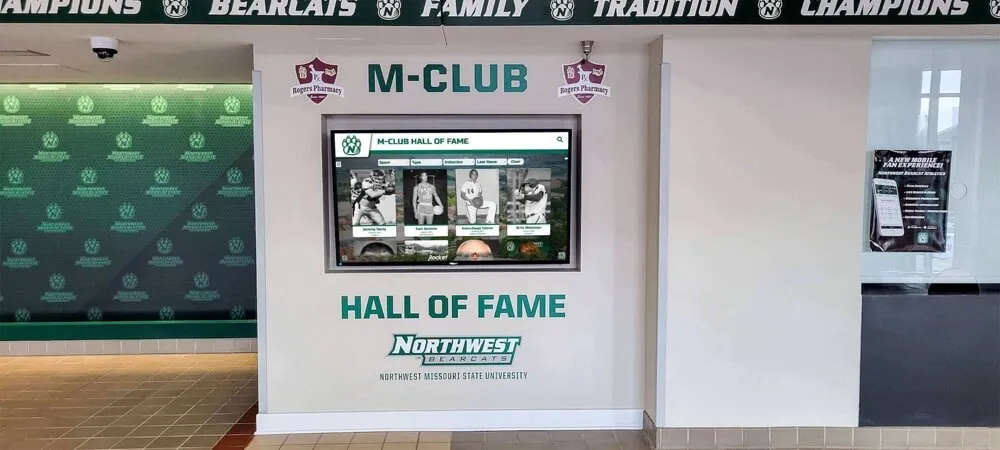
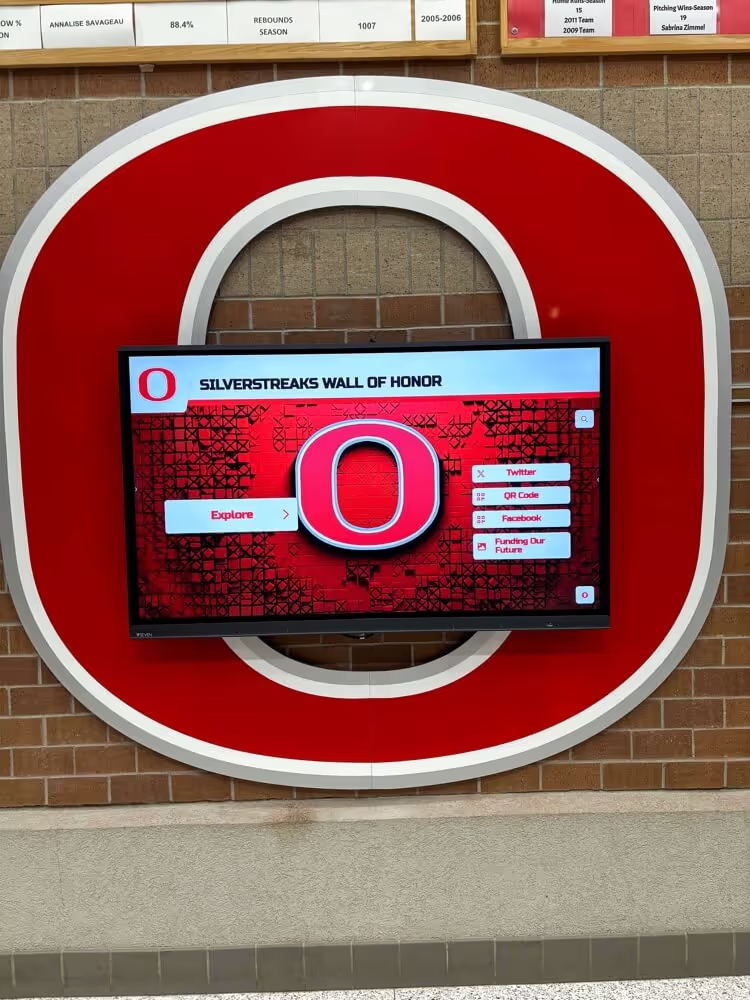
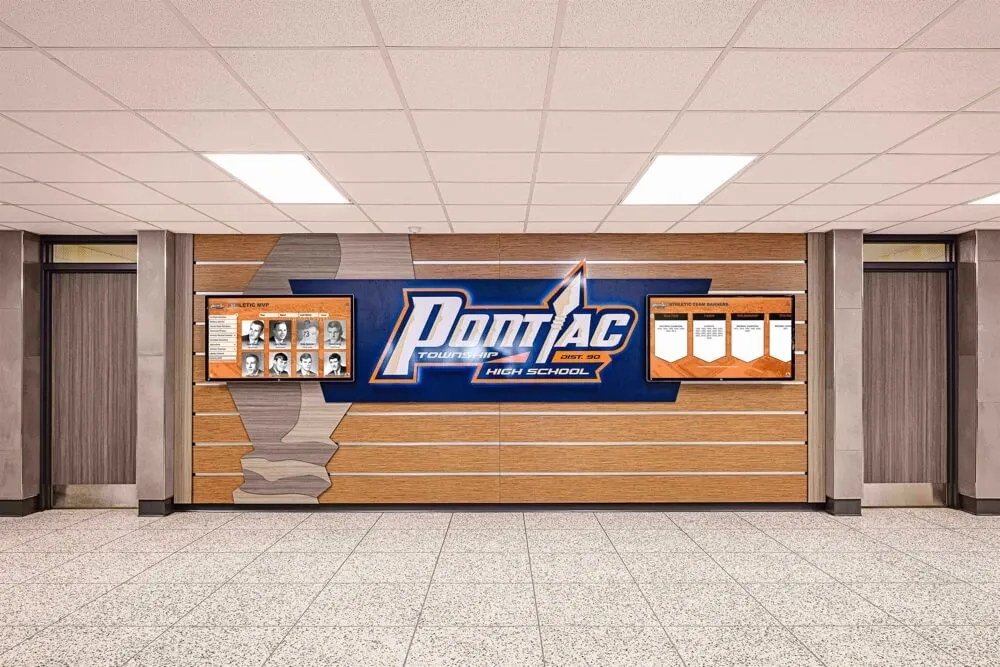
Physical preservation and digital documentation are complementary approaches. For schools whose recognition programs have grown to the point where class reunion events, alumni engagement, and multi-sport athletic archives are all drawing on the same collection, alumni engagement programs increasingly depend on a recognition record that is accessible beyond the building itself — a digital layer that ensures the history these artifacts represent reaches students, families, and alumni who cannot physically visit the display.
A school that maintains both documented physical inspection protocols and a cloud-managed digital recognition record is in a strong position regardless of what any individual trophy case eventually requires. The off-gassing inspection ensures the hardware survives in a condition worthy of display. The digital platform ensures the record it represents is permanent.
FAQ: School Trophy Case Off-Gassing Inspection
What is off-gassing in a school trophy case, and why does it matter? Off-gassing refers to the release of volatile organic compounds (VOCs) from case materials such as MDF panels, felt liners, rubber gaskets, adhesives, and paints. In the enclosed environment of a sealed trophy case, these vapors concentrate against the displayed awards, photographs, and memorabilia rather than dissipating into the broader room. Over time, they cause silver tarnishing, paper degradation, photograph discoloration, and metal corrosion at rates significantly faster than open-air exposure. An off-gassing inspection identifies which materials are present and which artifacts show early signs of chemical damage.
How often should a school conduct a trophy case off-gassing inspection? The interval depends on the case’s material composition and the condition of artifacts inside. A baseline annual inspection is appropriate for all enclosed trophy cases. Cases confirmed to contain MDF, rubber-backed felt, or rubber gaskets — or any case that has been recently refinished — should be inspected semi-annually. Cases showing active damage indicators (contact-pattern tarnish on silver, yellowing paper, visible deposits on metals) warrant quarterly inspection and immediate environmental remediation.
Can facilities staff conduct an off-gassing inspection, or does it require a conservator? The inspection described in this guide — assessing case materials, recording observations, and documenting artifact condition — is appropriate for trained facilities staff, athletic directors, and recognition-program coordinators. No specialized equipment or conservation credentials are required. Conservator involvement is needed for artifact treatment, for handling items with unknown alloy composition, for items showing active deterioration, and for any photographs identified with vinegar syndrome. The inspection documents what requires professional attention; it does not substitute for that attention.
Is MDF always a problem in trophy cases, or does it depend on how old the case is? Freshly manufactured MDF off-gasses at higher rates. Emission rates decrease over time, but do not reach zero in most MDF products. Cases built with MDF in the past ten years present higher formaldehyde and acetic acid risk than those built twenty or more years ago, which have had more time to cure. However, even aged MDF remains a risk factor in enclosed cases because the cumulative chemical environment inside the case is determined by all sources present, not each source evaluated in isolation. Barrier coating the interior surface of MDF panels with an appropriate polyurethane or acrylic finish reduces, but does not eliminate, off-gassing from MDF.
Can activated charcoal or silica gel packets address off-gassing concerns? Activated charcoal packets can adsorb some VOC load inside the case and are a reasonable supplemental measure. They do not eliminate off-gassing, and they require regular replacement to remain effective. Silica gel packets are used to control humidity — a related but separate concern. Together they provide a moderate buffering effect, but they are supplements to, not substitutes for, removing or isolating the off-gassing source material. The most effective remediation steps are replacing high-emission materials (felt liners, rubber gaskets) with inert archival alternatives and improving case ventilation.
What should we do if photographs in the trophy case smell like vinegar? Remove those photographs from the case immediately. The vinegar odor indicates vinegar syndrome — active depolymerization of cellulose acetate base that is irreversible once it begins. These photographs are both at risk of physical disintegration and an active acetic acid source for everything else in the case. Store them separately in a cool, low-humidity environment and consult a conservator about stabilization options. Photograph and digitize the image content before further handling, as the physical material may continue to degrade.
How does a digital trophy case platform relate to off-gassing and preservation? A cloud-managed digital trophy case does not replace physical preservation, but it provides an important complement. When schools digitize their award records — photographing trophies, recording athlete names and championship details, uploading historical photographs — the content those physical artifacts represent is preserved permanently regardless of what happens to the physical case environment over time. A trophy that suffers damage from uncorrected off-gassing becomes a conservation loss; if its record, image, and context are digitized, it is not an information loss. Schools with growing recognition programs that include booster club and alumni funding considerations find that digital display platforms also reduce the long-term maintenance costs associated with physical case upkeep — a practical complement to the preservation investment that facilities inspection represents. For schools evaluating display technology choices, understanding how digital recognition platforms compare to both traditional cases and newer digital alternatives helps put the physical case’s ongoing maintenance requirements in context.
Are there off-gassing concerns specific to newly donated memorabilia? Yes. Items donated by alumni — jerseys, game programs, photographs, newspaper clippings — may arrive with their own off-gassing characteristics depending on how they were stored. Items stored in sealed plastic bags or bins for decades may have accumulated degradation compounds. Items stored with rubber bands, paper clips, or acidic tissue may show localized damage. Before adding donated memorabilia to an enclosed case, allow it to air out in open storage for several days, assess its condition, and isolate any item showing vinegar odor or active deterioration before placing it near your existing collection.
Integrating Off-Gassing Inspection Into Your Facilities Cycle
A school trophy case off-gassing inspection fits naturally alongside other periodic case assessments — electrical safety reviews, acrylic panel inspection, pest inspection, and metal corrosion inspection. Each addresses a different risk category; together they form a complete picture of what a physical trophy case requires to protect what is inside it.
The practical step is scheduling a brief annual review that walks through each enclosed case in the building, assesses the materials present, documents the condition of artifacts inside, and records findings with a priority rating that determines when the next inspection occurs and whether any immediate action is warranted. That documentation does not require specialized software — a shared spreadsheet with case location, inspection date, materials observed, artifacts flagged, and priority rating is sufficient to build the comparison record that makes each subsequent inspection more useful than the one before.
Schools reviewing what digital recognition platforms offer alongside physical case maintenance will find the two systems are genuinely complementary. Physical cases that are inspected, maintained, and properly preserved hold the original artifacts of a school’s athletic and academic history. Digital platforms ensure that history is accessible, searchable, and growing — regardless of what future facility decisions require.
Ready to Build a Digital Recognition Platform That Complements Your Physical Preservation Work?
Rocket Alumni Solutions builds interactive digital trophy cases and halls of fame for schools nationwide — cloud-managed displays with unlimited record capacity, ADA WCAG 2.1 AA compliant touchscreens, QR code access for mobile viewing, and remote content updates without IT tickets. See how schools are preserving every championship, retired jersey, and alumni milestone on a platform that grows alongside their physical trophy case program.
Book A Demo