



Intent: research — a school trophy case nickel sulfide inclusion inspection is a structured risk assessment process that evaluates the probability that tempered glass panels in a school’s enclosed display cases contain nickel sulfide (NiS) inclusions capable of triggering spontaneous breakage — conducted by facilities teams, athletic directors, or school administrators to establish a documented risk profile for each case unit and identify escalation actions appropriate to that risk level. Because NiS inclusions are sub-millimeter particles embedded within the glass body, no visual inspection from the glass surface can confirm their presence or absence: the inspection instead focuses on risk factors that are documentable in the field — glass age and vintage, installation history, heat soak test records, prior spontaneous breakage events in the building, and physical condition indicators — and produces an escalation decision for each case panel based on the combination of those factors. This guide defines NiS inclusions precisely, explains what facilities teams can and cannot identify during a field inspection, provides a risk factor assessment table, and describes the escalation steps available when a panel’s risk profile warrants professional glazier involvement.
Spontaneous glass breakage in a school trophy case — a panel that shatters without visible impact, sometimes in the early morning hours before staff arrive — is an event that facilities teams encounter rarely enough that its cause is often misattributed. Custodial staff may assume a trophy fell against the glass. An athletic director may assume vibration from an adjacent gymnasium door. But in tempered glass panels that have been installed for five or more years, spontaneous breakage without contact is often caused by a nickel sulfide inclusion reaching its phase-transformation threshold — a process that has been progressing invisibly inside the glass since the day it was fabricated.
Understanding nickel sulfide inclusions does not require laboratory chemistry. It requires knowing what they are, why they cause breakage, what the field inspection can and cannot establish, and what to do when a panel’s risk history warrants action. A school trophy case nickel sulfide inclusion inspection is not a pass/fail visual check. It is a documented risk stratification process — one that closes the gap between “glass looks intact” and “glass history is known.”

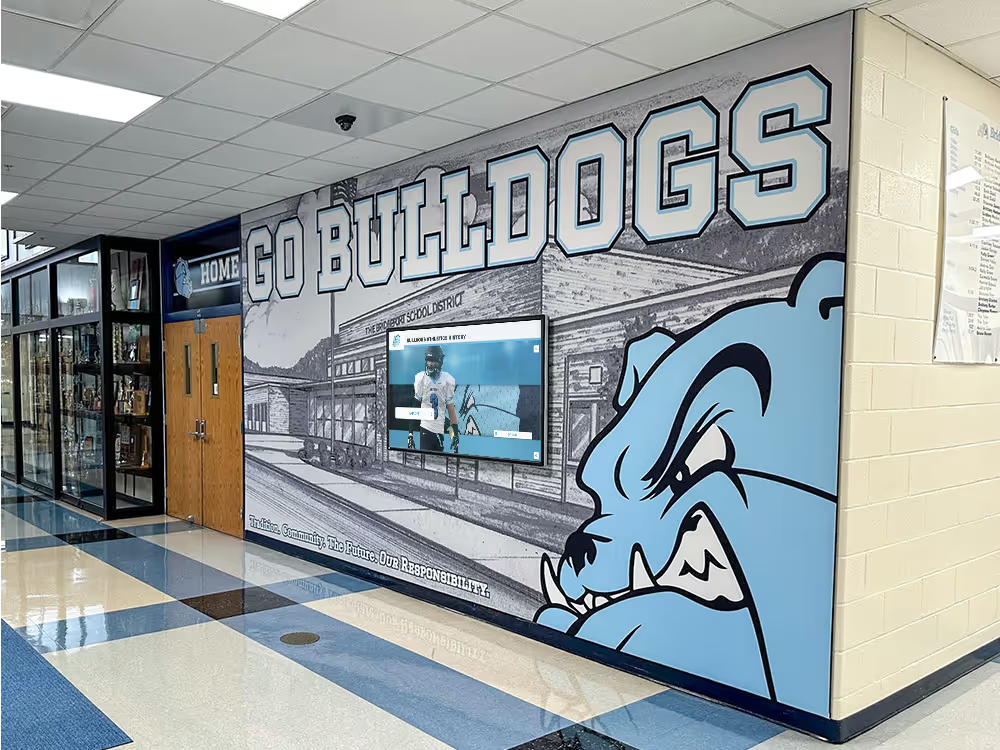
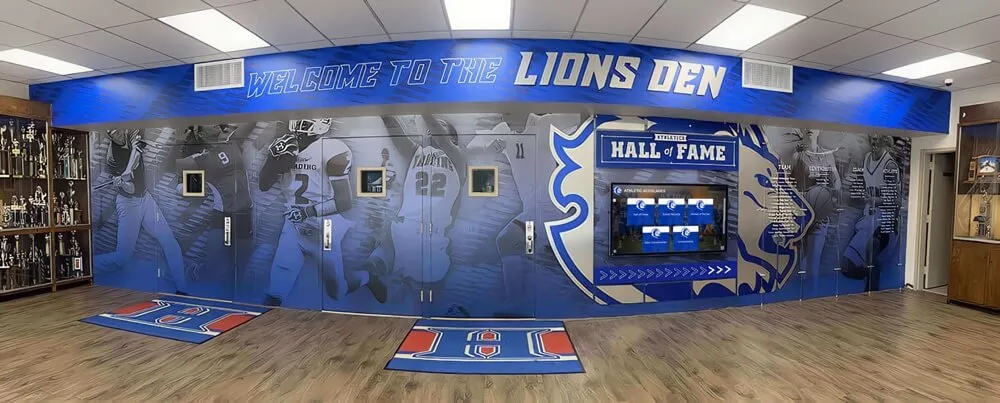
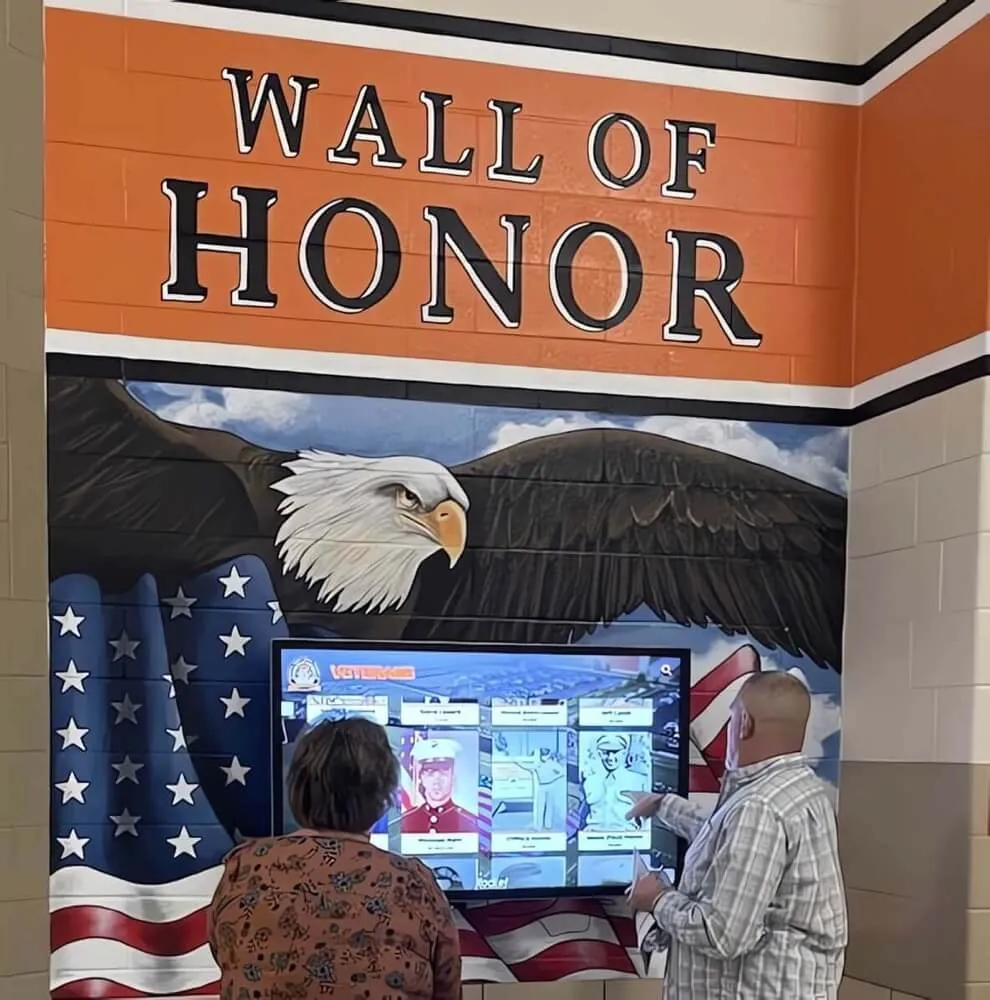
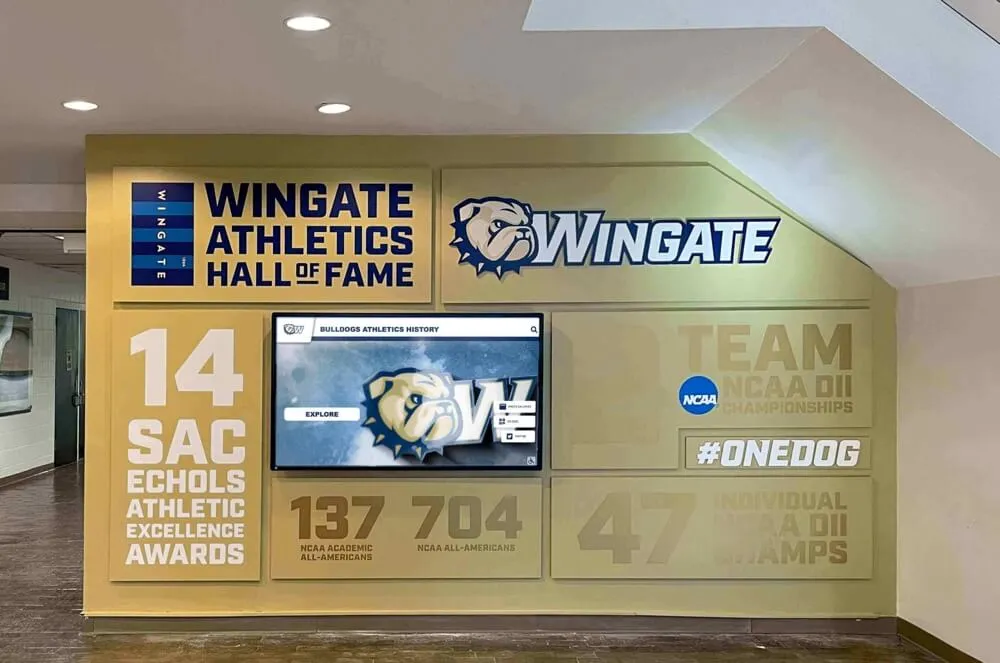
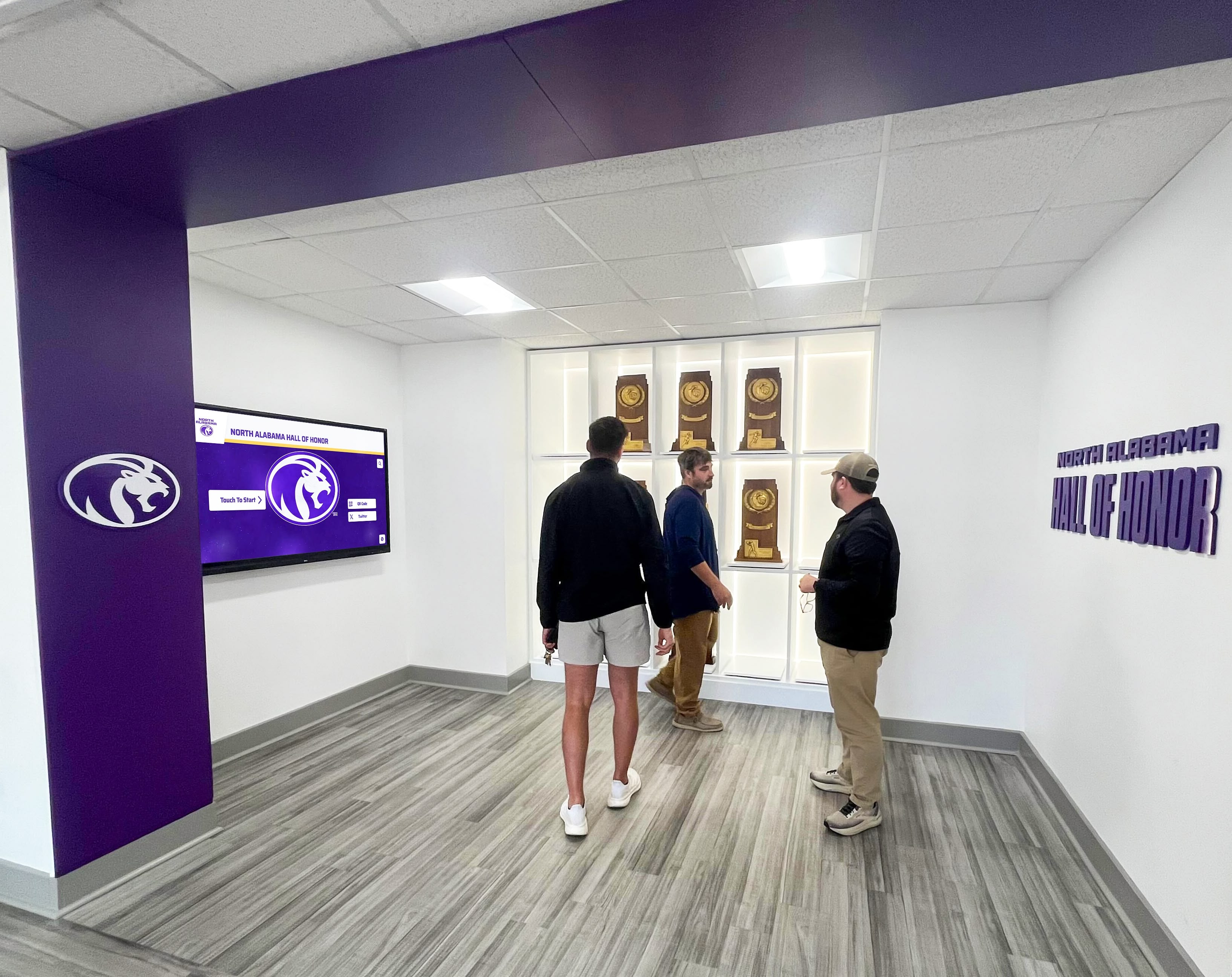
Trophy and recognition displays in athletic corridors contain tempered glass panels installed across multiple decades — nickel sulfide inclusion risk varies with glass vintage, manufacturing origin, and whether heat soak testing was specified at installation
What Is a Nickel Sulfide Inclusion?
Nickel sulfide (NiS) is a mineral compound that forms when nickel and sulfur combine during the raw glass melting process. The raw materials used in glass manufacturing — silica sand, soda ash, limestone, and cullet (recycled glass) — can introduce trace amounts of nickel from contaminated batch materials, refractories, or recycled glass feedstock. Sulfur enters the melt from batch materials and combustion gases. When nickel and sulfur contact each other at high melt temperatures, they form NiS particles that become embedded in the glass.
NiS exists in two crystalline phases:
Alpha (α) phase: stable at high temperatures above approximately 379°C. The glass tempering process heats the panel above this threshold, causing any NiS inclusions present to shift into the α phase configuration.
Beta (β) phase: stable at ambient temperatures. Slower to form than the α phase, but thermodynamically favored at room temperature. The β phase crystal structure has approximately 2–4% greater volume than the α phase.
The problem arises at the quench step of tempering. When tempered glass is rapidly cooled, the glass surface solidifies and develops its characteristic compressive stress layer — but any NiS inclusions in the interior zone may be “frozen” in the α phase configuration before they have time to complete the transition to β phase. These inclusions then exist in the finished, installed glass panel in a metastable state: at ambient temperature, the thermodynamics favor β phase, but the transition is kinetically slow.
Over years or decades, these inclusions gradually complete their phase transition to β phase. The volumetric expansion of the inclusion — occurring inside rigid, already-stressed glass — creates localized tensile stress in the surrounding glass matrix. When that tensile stress exceeds the residual compressive stress that tempering established in the inclusion zone, the panel fractures spontaneously, radiating cracks from the inclusion site.
The resulting fracture pattern is characteristic of tempered glass: small, relatively blunt-edged fragments rather than the large, sharp shards produced by annealed glass breakage. This is the only forensic indicator observable after the fact. The inclusion itself is typically found at the fracture origin point — a distinctive butterfly-shaped fragment pair with the inclusion particle visible at the wing junction under magnification.
What Facilities Teams Cannot Identify Visually
This section is the most operationally important part of the inspection: a clear statement of what the field inspection cannot establish, so that facilities teams do not rely on visual findings to reach conclusions the data cannot support.
NiS inclusions are not visible through the glass surface. The inclusions responsible for spontaneous breakage are typically 0.05 mm to 0.5 mm in diameter — below the resolution threshold of the unaided eye under any lighting condition. Raking flashlight illumination, UV light, and close-range visual examination of the panel surface cannot detect an embedded NiS inclusion. If a facilities inspector reports that a panel “shows no sign of NiS inclusions” based on visual examination, that finding is not meaningful — the absence of visible indicators provides no evidence about inclusion content.
The tempered glass stamp does not indicate heat soak testing. The CPSC 16 CFR Part 1201 and ANSI Z97.1 safety-glazing marks visible in panel corners confirm that the glass was tempered to a recognized safety-glazing standard — they do not indicate whether the glass subsequently underwent heat soak testing (HST), the controlled heating process used to force NiS phase transformation before installation. A stamped panel may or may not have been heat soaked. Only the original procurement documentation can establish that.
Fracture history in other panels does not characterize an unbroken panel. If one glass panel in a trophy case broke spontaneously last season, that event raises legitimate concern about glass vintage and batch origin — but it does not establish that adjacent panels in the same case contain or do not contain NiS inclusions at significant quantity. Each panel was fabricated individually. Batch-level NiS contamination can affect multiple panels from the same fabrication run, but correlation between broken and unbroken panels from the same case cannot be established without records of the panels’ manufacturing origin.
Visual flatness, clarity, and surface condition are unrelated to NiS risk. A panel with high NiS inclusion density may look perfectly flat, optically clear, and surface-pristine. A panel that shows roller wave distortion or surface micro-abrasion has no confirmed relationship to its NiS content. These properties are independent.
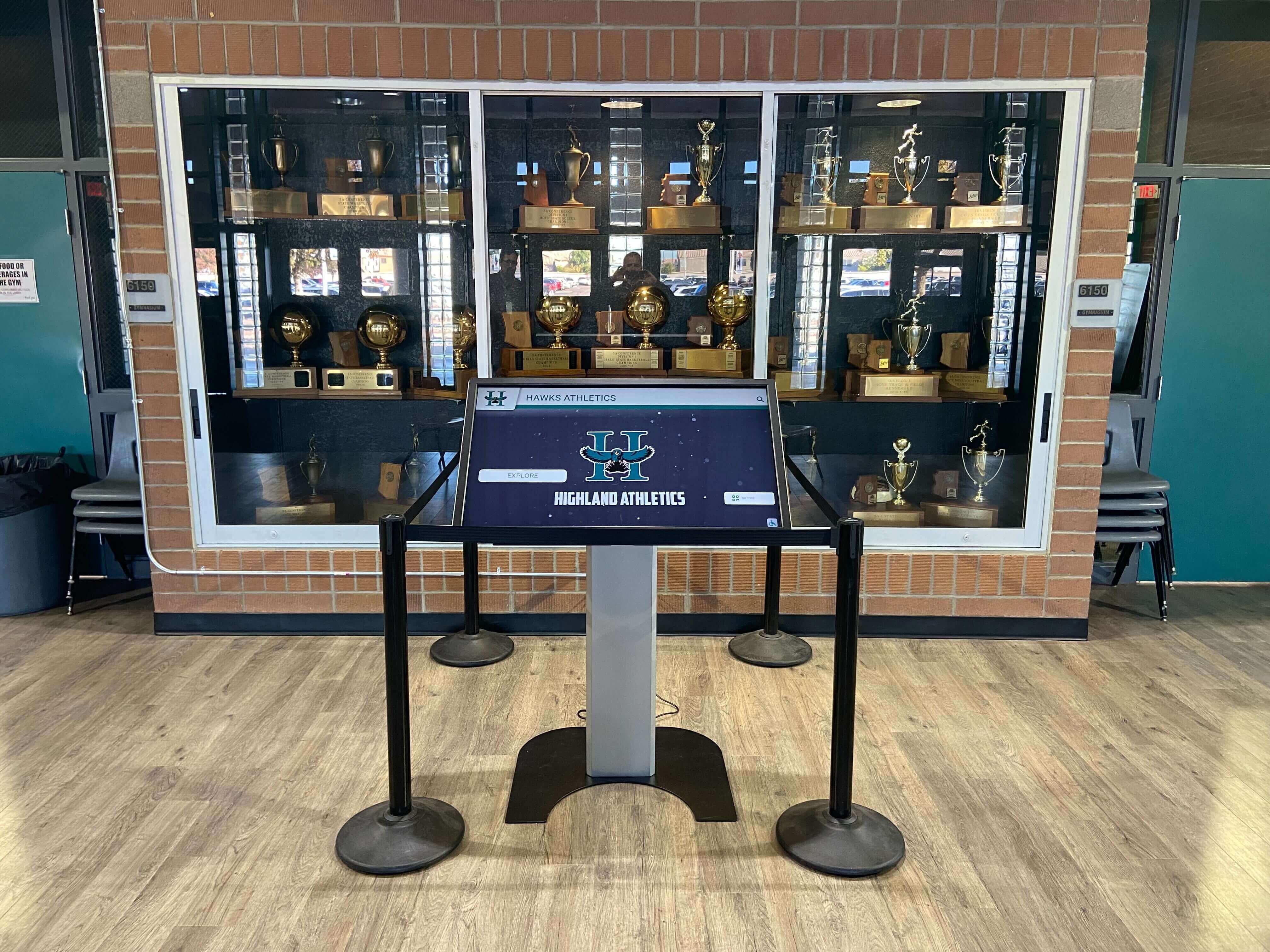
Enclosed glass panels in trophy cases appear intact regardless of their NiS inclusion content — the school trophy case nickel sulfide inclusion inspection focuses on risk factors that are documentable in the field, not visual panel examination
What Facilities Teams Can Assess
While visual inspection cannot detect NiS inclusions directly, a structured field assessment can document the risk factors that determine a panel’s probability of NiS-related spontaneous breakage. The following factors are assessable through records review, case examination, and staff interviews.
Glass Installation Vintage
Older tempered glass panels carry higher NiS spontaneous breakage risk for two compounding reasons. First, glass manufactured before the mid-1990s was produced under less stringent NiS contamination controls — batch material sourcing and cullet contamination management were less systematically controlled, meaning older glass may have higher inclusion prevalence than modern glass from manufacturers with current quality systems. Second, NiS phase transformation is a time-dependent process: a panel installed 25 years ago has had 25 years for inclusions to progress toward phase completion, placing more inclusions closer to their transformation threshold than a panel installed 5 years ago.
Document: estimated or confirmed installation date for each panel, noting whether the case unit was original to the building, installed during a renovation, purchased secondhand, or donated.
Heat Soak Test Documentation
Heat soak testing is the industry method for reducing NiS spontaneous breakage risk. In HST, tempered glass panels are placed in a controlled oven and held at approximately 290°C for a specified dwell period (typically two hours at temperature per EN 14179-1 or equivalent). This accelerates the NiS phase transformation in inclusions present in the glass — panels that survive the heat soak test have had their NiS population partially reduced through induced breakage during the test. Panels that would have broken spontaneously in service break in the oven instead and are discarded.
HST does not eliminate NiS risk entirely — some inclusions survive the test and continue their transformation in service — but it significantly reduces the probability of post-installation spontaneous breakage.
Document: whether heat soak test certification was specified in the original procurement, and whether any certification documentation is available in facilities records, original case purchase records, or renovation project closeout files.
Schools that manage their recognition infrastructure through a structured program — including maintaining documentation for sport end-of-year awards and multi-year display history — often have purchasing records that can confirm whether HST was specified when cases were procured.
Prior Spontaneous Breakage Events
Any previous instance of spontaneous glass breakage — breakage without confirmed physical contact — in the same building, on the same case unit, or on glass procured from the same vendor or renovation contractor is a material risk indicator. These events suggest that NiS-containing glass was present in the facility’s case inventory, and that other panels from the same batch or procurement source may contain inclusions approaching their transformation threshold.
Document: any known spontaneous breakage events, their approximate date, the case identifier, the panel position, and whether the broken fragment was retained or photographed. If the breakage origin was examined at the time, note whether a butterfly fragment or visible inclusion was identified at the fracture center.
Physical Condition Indicators That Correlate With Age and Maintenance History
While these indicators do not directly signal NiS risk, they correlate with case age and maintenance attention — both of which are relevant to the overall risk profile.
Document each of these as present, absent, or unknown for each case unit:
| Indicator | Field Assessment Method | Risk Relevance |
|---|---|---|
| Frame corrosion or oxidation | Visual examination of aluminum or steel extrusions for surface oxidation, pitting, or finish degradation | Indicates extended installation age — older case, potentially older glass vintage |
| Glazing bead condition | Examine retention beads for brittleness, cracking, shrinkage, or gaps at corners | Aged glazing components suggest contemporaneous glass vintage |
| Gasket compression loss | Press gasket material between bead and glass; note whether it has hardened or crumbled | Hardened gasket material indicates multi-decade installation |
| Case finish degradation | Examine surface coating on case frame for chalking, peeling, or UV discoloration | Exterior hallway cases with significant finish degradation may have experienced substantial thermal cycling |
| Hardware corrosion on hinges and locks | Check hinge pins, lock cylinders, and cam mechanisms for corrosion products | Correlates with installation age and maintenance frequency |
| Internal case humidity evidence | Examine case interior for fog staining on glass interior face, mold on display backing, or evidence of desiccant failure | High internal humidity accelerates phase transformation velocity in some models |
Thermal Environment Assessment
NiS phase transformation velocity is temperature-dependent. Panels in higher average-temperature environments — south-facing exterior wall trophy cases, cases in gymnasium vestibules that experience significant HVAC on/off cycling, or cases adjacent to exterior glass entrances — may accumulate phase transformation at a modestly faster rate than panels in climate-stable interior corridor locations. This factor is secondary to age and HST status but is worth documenting for panels in high thermal-cycling positions.
Document: the panel’s location relative to exterior walls, direct solar exposure windows, HVAC supply/return diffusers, and gymnasium or entry door thermal zones.
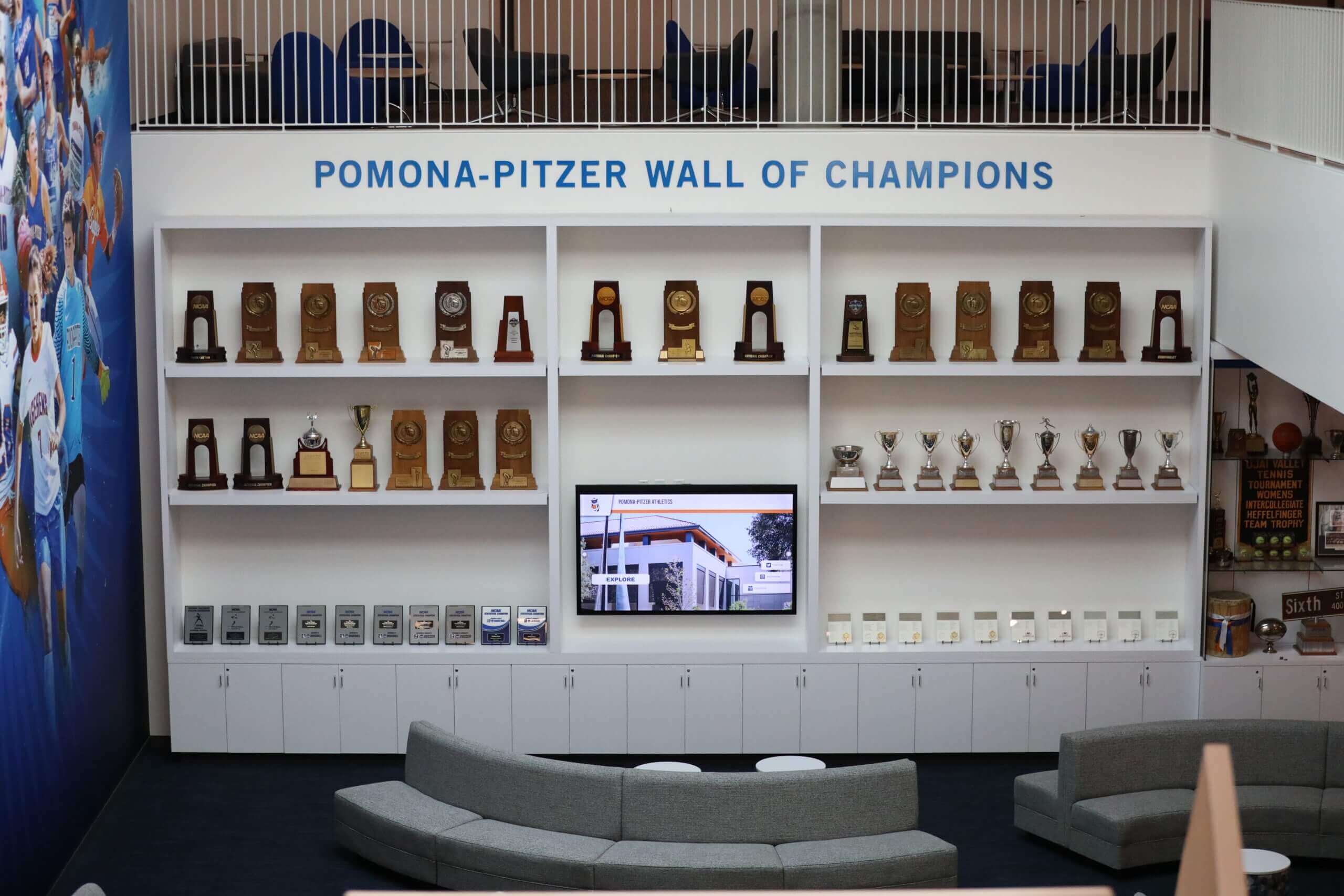
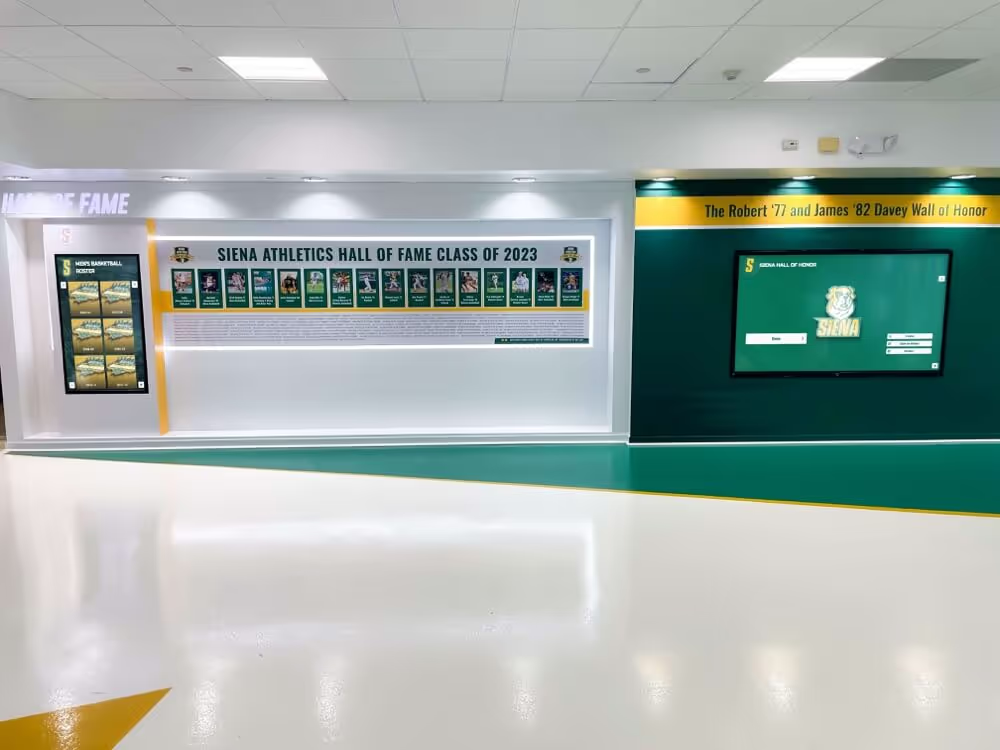
Trophy cases in lounge, lobby, and corridor locations experience different thermal environments — exterior-wall and vestibule cases may accumulate NiS phase transformation slightly faster than interior-corridor installations under equivalent age and inclusion conditions
Risk Factor Scoring Table
The following table provides a structured scoring framework for each panel assessed during the inspection. Assign the applicable score to each factor for each panel, sum the scores, and map the total to the escalation tier.
| Risk Factor | Low (0 pts) | Moderate (1 pt) | High (2 pts) |
|---|---|---|---|
| Installation vintage | Confirmed post-2005 | Estimated or confirmed 1995–2005 | Pre-1995 or unknown vintage |
| Heat soak test documentation | HST certification confirmed in records | Uncertain — records incomplete | No HST documentation; not specified |
| Prior spontaneous breakage in building | No known events | Breakage in unrelated case or wing | Breakage in same case unit or adjacent unit |
| Glazing component age indicators | Fresh glazing, intact gaskets | Moderate wear, gasket softening | Hardened/cracked gaskets, corroded hardware |
| Thermal environment | Interior, climate-stable corridor | Moderate cycling (HVAC proximity) | Exterior-wall or vestibule with direct sun/cold cycling |
| Manufacturer/batch traceability | Known manufacturer, records available | Manufacturer known, no batch records | Unknown manufacturer; donated or secondhand case |
Escalation tiers based on total score:
- 0–3 points: Low risk profile — document findings, schedule re-assessment in 3 years or at next routine inspection cycle
- 4–6 points: Moderate risk profile — consult with a licensed glazier within 6 months; obtain professional assessment of replacement or HST retrofit options; increase inspection frequency to annual
- 7–9 points: High risk profile — remove case from active student and visitor traffic zones pending glazier assessment; do not delay professional consultation
- 10–12 points: Critical risk profile — treat as a stop-work condition; restrict access to the case and adjacent corridor zone; engage a licensed glazier before returning the case to service
These thresholds are a field-assessment guide, not engineering specifications. A glazier with access to the original installation records and the ability to examine the case in person may adjust the assessment based on factors not captured in field documentation.
The Inspection Protocol: Panel-by-Panel Documentation
Conducting a school trophy case nickel sulfide inclusion inspection across a full building inventory requires a consistent documentation protocol applied to each case unit.
Step 1 — Build the case inventory. Before beginning individual panel assessments, identify every enclosed glass case in the building, including secondary corridor cases, faculty wing display alcoves, and auxiliary gymnasium entry cases that may not appear in primary facilities inspection routes. Assign a unique identifier to each case unit.
Step 2 — Retrieve available records. For each case unit, search facilities files, renovation project closeout documentation, and purchasing records for: installation date, glass supplier, whether tempered safety glass was specified, whether HST was specified, and any warranty documentation. Note where records are absent, incomplete, or unavailable — absence of documentation is itself a finding.
Step 3 — Interview facilities staff. Ask custodial staff, the facilities director, and the athletic director whether any glass breakage in the building has occurred without confirmed physical contact. Breakage events from prior years may not appear in formal records but may be recalled by long-tenured staff. Document any recollections with the approximate date and case location.
Step 4 — Score each panel. Using the risk factor scoring table above, assess each panel against the six factors. Panels within the same case unit may score differently if they were replaced at different times — for example, a case where one door panel was replaced three years ago following non-spontaneous breakage while the fixed panels remain original vintage.
Step 5 — Assign escalation tier and document action. Record the total score and the resulting escalation tier for each panel. For panels scoring in the Moderate tier or higher, document the specific action to be taken (glazier consultation timeline, access restriction, or stop-work status) and the responsible staff member.
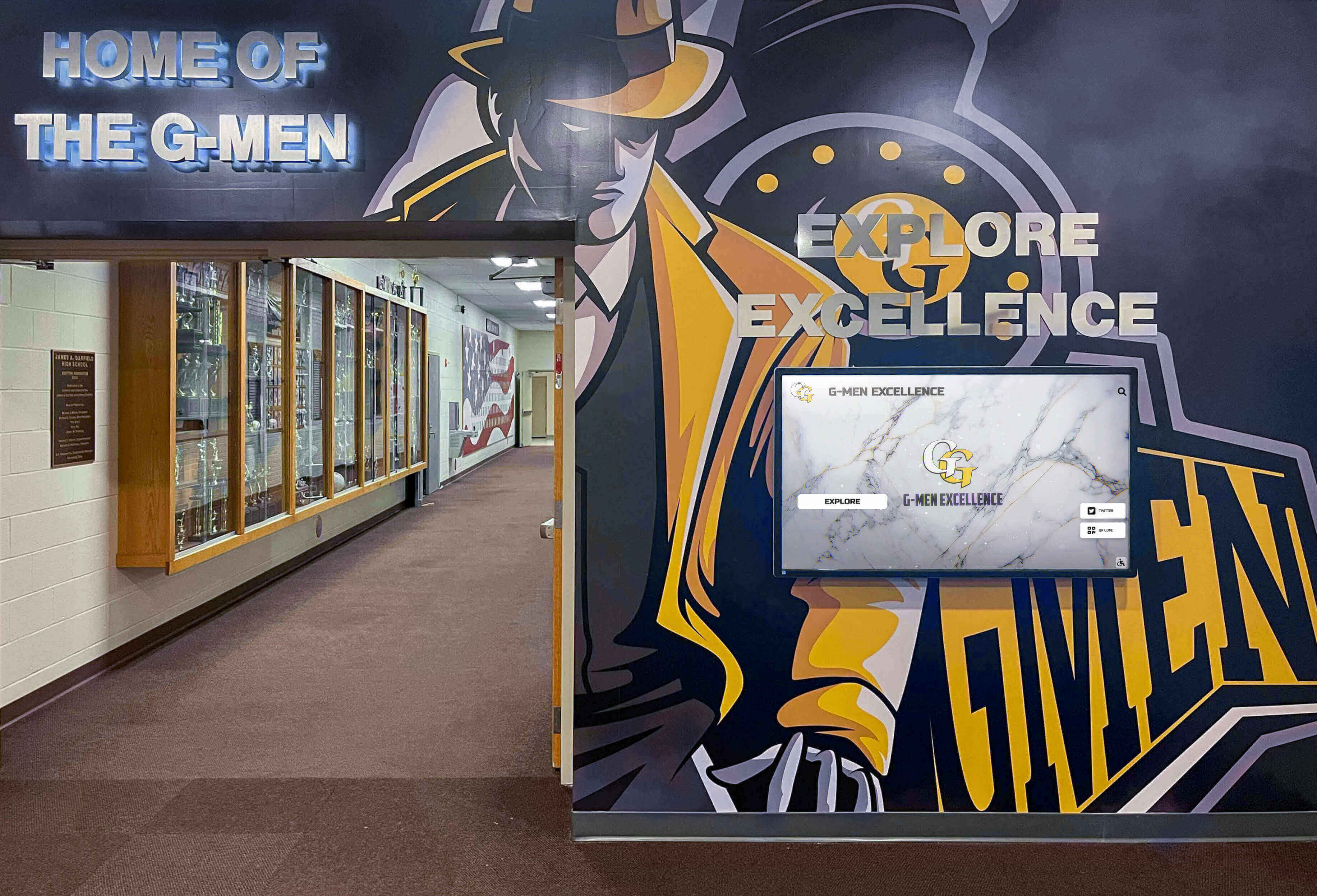
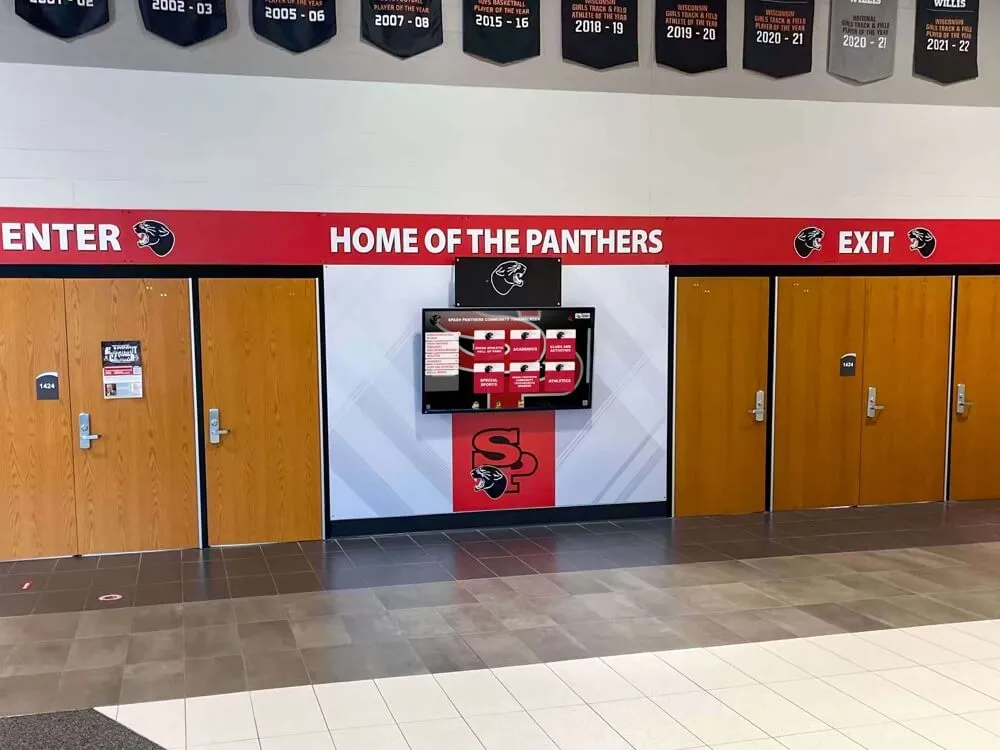
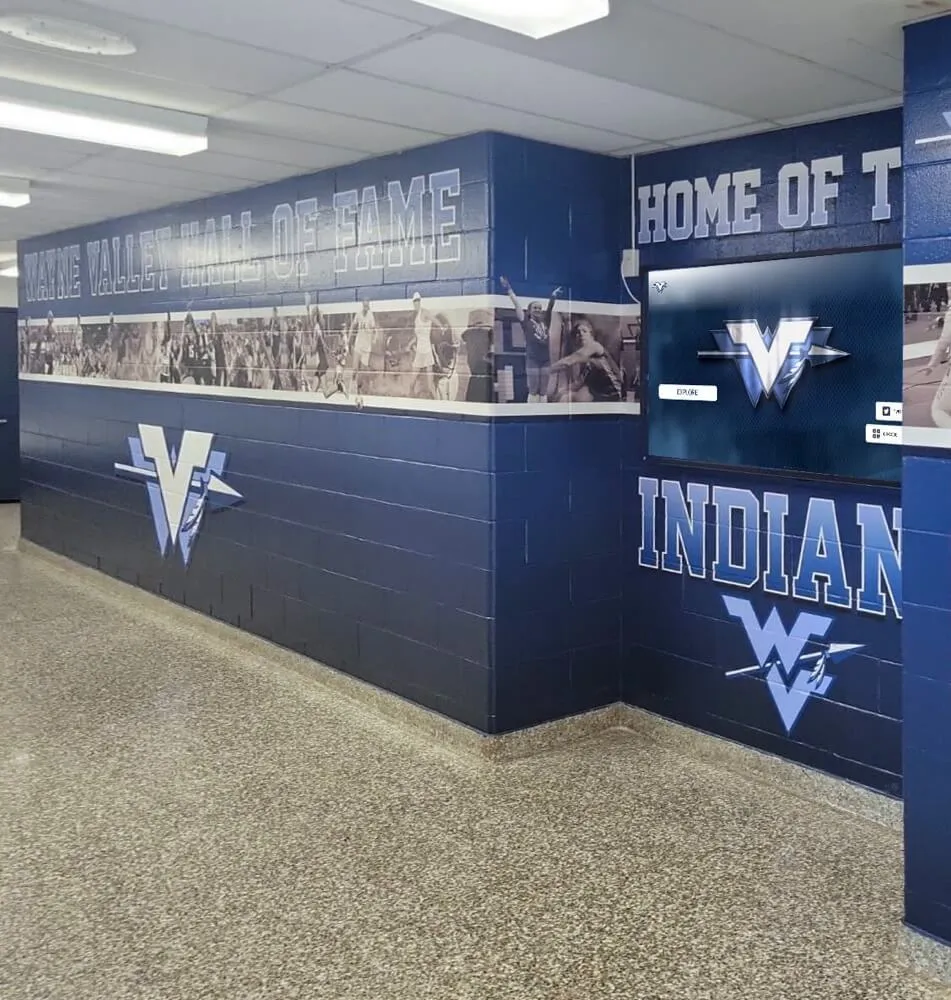
A complete nickel sulfide inclusion inspection covers every enclosed glass panel in the building — corridor cases alongside digital recognition displays receive the same panel-by-panel documentation as dedicated trophy display units
Escalation Steps by Tier
Low Risk Profile (0–3 points)
No immediate action beyond documentation is required. File the completed inspection record in the facilities management system with a scheduled review date. Notify the athletic director that the inspection was completed and the low-risk finding so that they can coordinate future inspection cycles with recognition program planning — particularly when cases are opened for display updates, which provides an opportunity to re-examine physical condition indicators without scheduling a separate inspection.
Schools that coordinate recognition program activity through structured communications — including team update newsletters distributed to athletic directors and facilities staff — can include trophy case inspection status in those communications to keep all stakeholders aligned on maintenance timelines.
Moderate Risk Profile (4–6 points)
Contact a licensed glazier with commercial display case or architectural glazing experience within 6 months. Provide the glazier with your inspection documentation, including the completed risk factor scoring records and any available original installation documents. The glazier will assess whether replacement with HST-certified tempered glass, documented laminated glass, or another safety-glazing alternative is warranted, and will provide a written assessment that can be used to support facilities budget planning.
Annual inspection cycles are appropriate for Moderate-tier panels. Update the panel’s scoring record at each annual inspection — if condition indicators worsen, re-score and escalate if the total moves into the High tier.
For schools coordinating multi-program recognition activities, recognition display planning resources can help athletic directors understand how to integrate physical case maintenance schedules with digital display upgrade planning so that both physical and digital recognition infrastructure are assessed on coordinated timelines.
High Risk Profile (7–9 points)
Restrict active use of the affected case or the corridor zone immediately adjacent to the case until a glazier provides a professional assessment. “Active use” means regular student traffic within the fall zone of the case panel — typically 1.5 meters from the case face. In corridors where routing traffic around the case is not practical, the case should be covered with a protective barrier pending assessment.
Notify the principal and facilities director in writing with the inspection findings and the basis for the access restriction. The written notification creates a documented record that the risk finding was escalated to school administration — this record is important if the escalation is questioned later.
Engage a glazier within 30 days. Provide all available installation records and the inspection documentation.
Critical Risk Profile (10–12 points)
Treat as a stop-work safety condition. Restrict access to the case and the corridor zone adjacent to it immediately. Do not allow trophy case doors to be opened for display updates, photography, or access until a glazier has assessed the panel and either confirmed that it can remain in service or directed its removal.
Notify the principal, facilities director, and school safety officer in writing on the day of the inspection. Document the notification.
Engage a glazier within 5 business days. If the case is in an unavoidable traffic corridor, install a physical barrier around the case face zone before the next school day.
If a glazier’s assessment results in panel replacement, retain the replacement documentation — including the new panel’s HST certification if specified — and file it with the case’s inspection record to reset the installation vintage and documentation status for future inspections.
Schedule a Demo to See How Digital Trophy Cases Eliminate Glass Breakage Risk
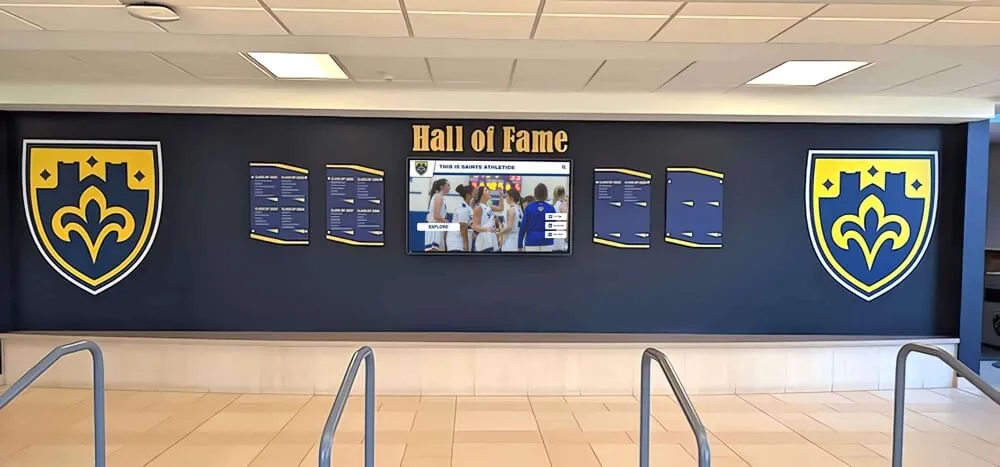
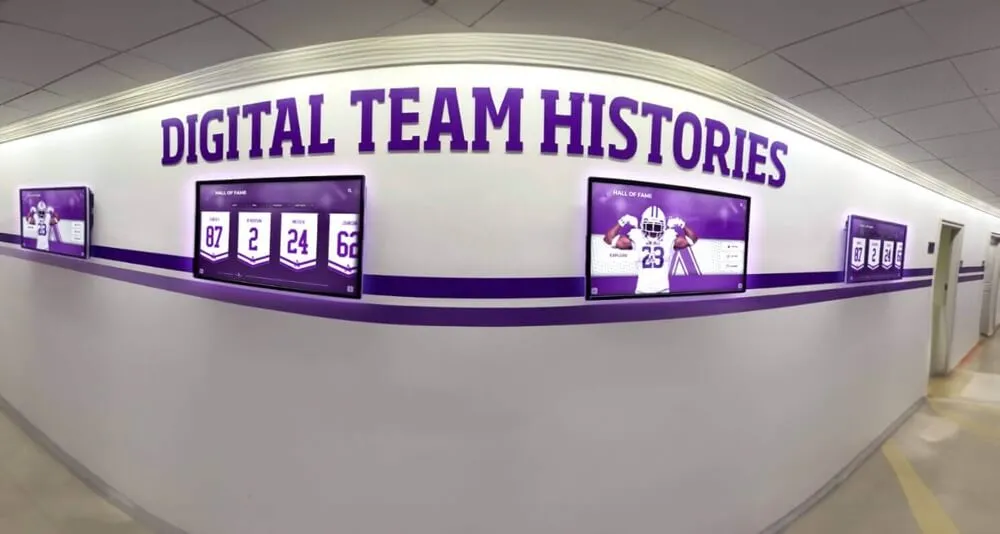
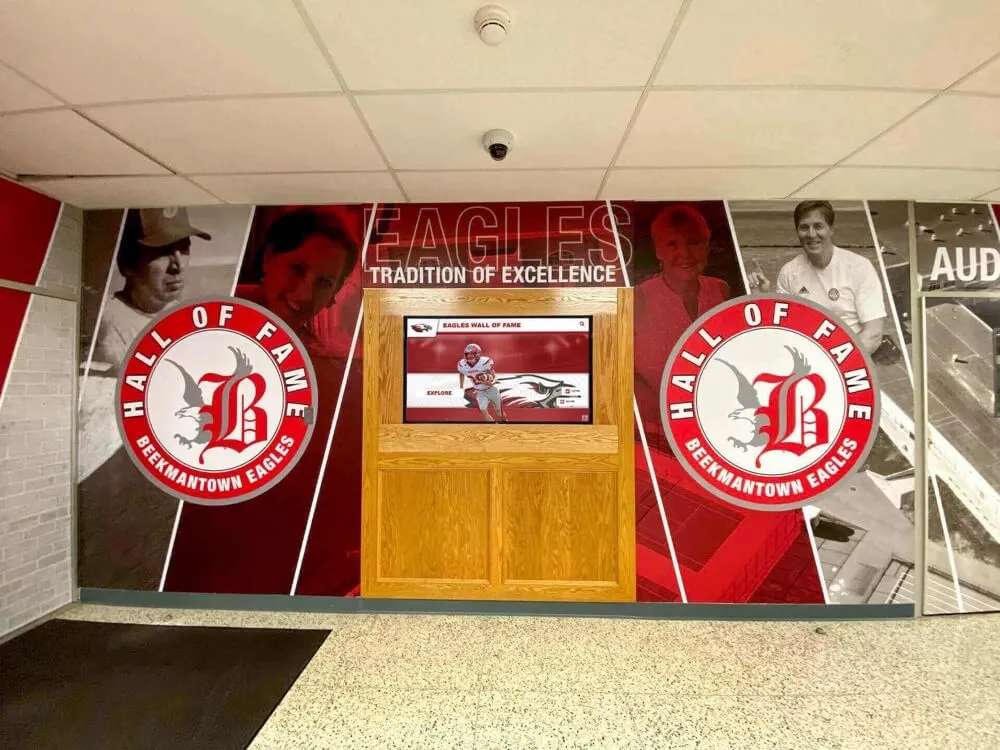
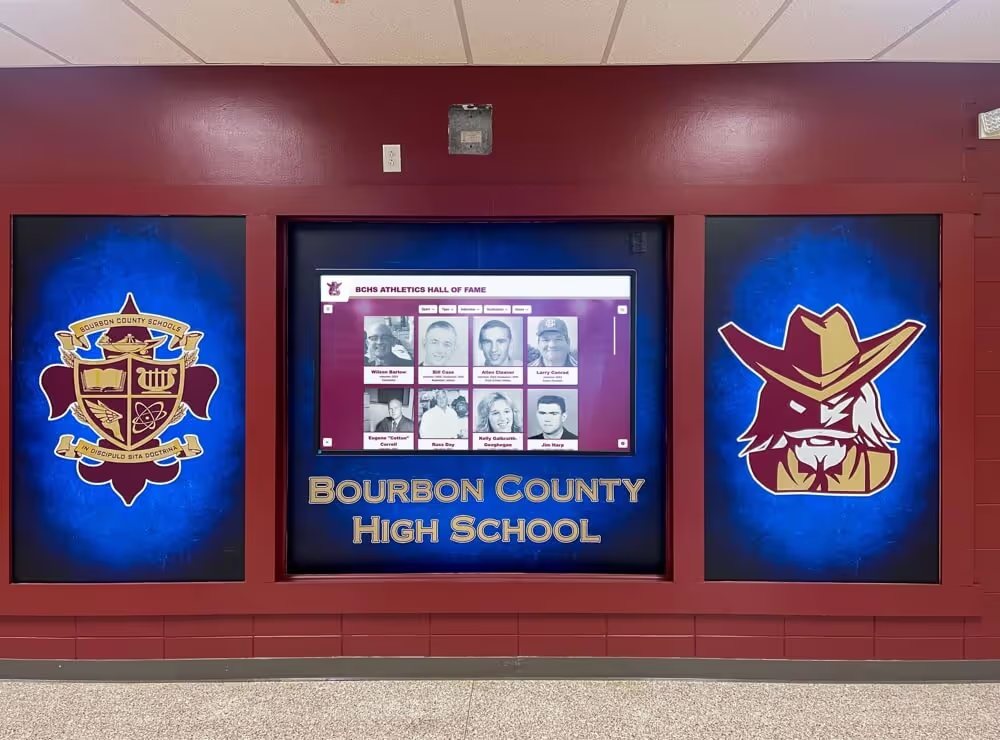
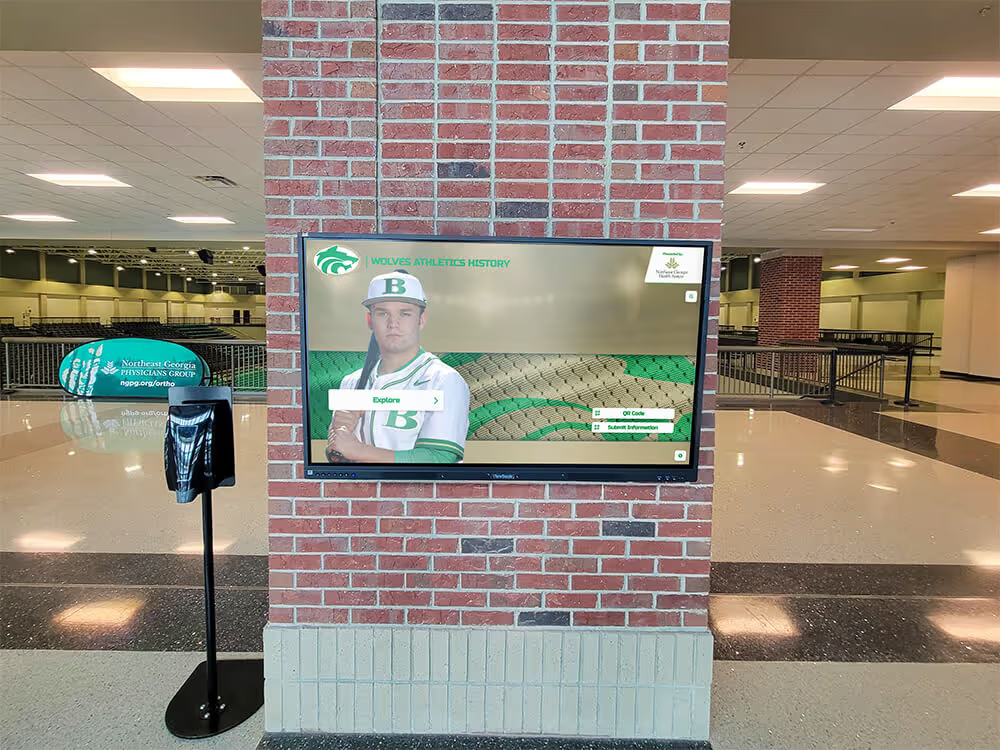
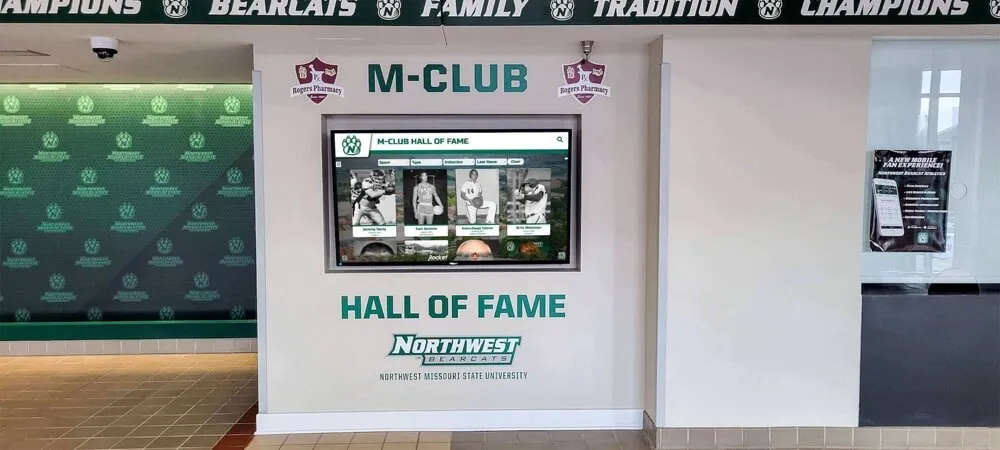
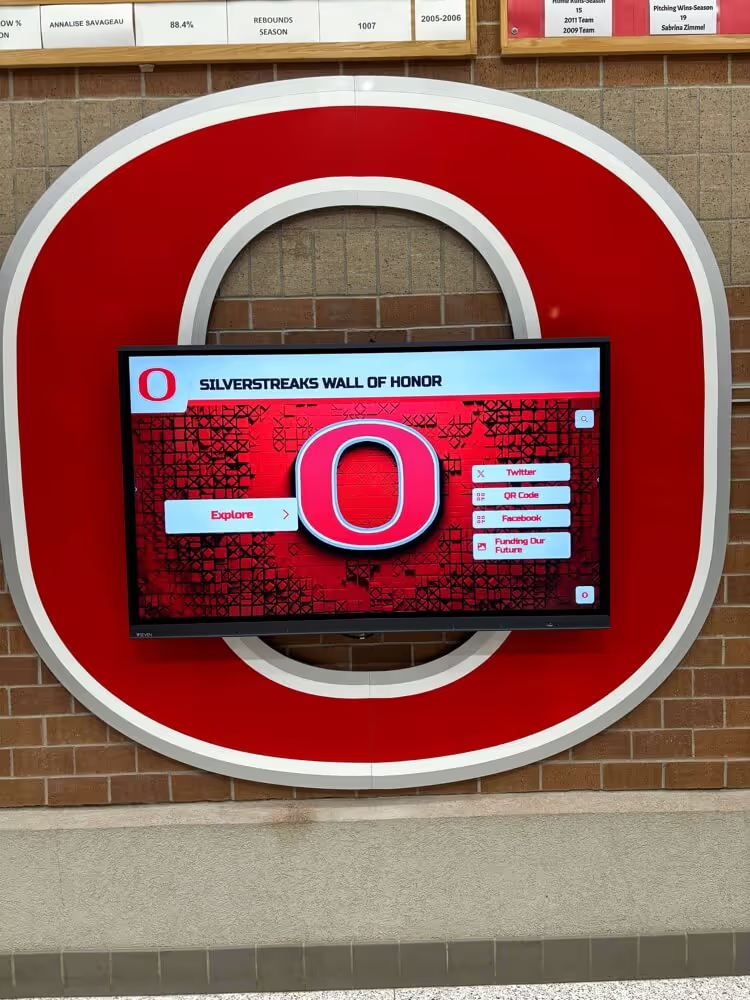
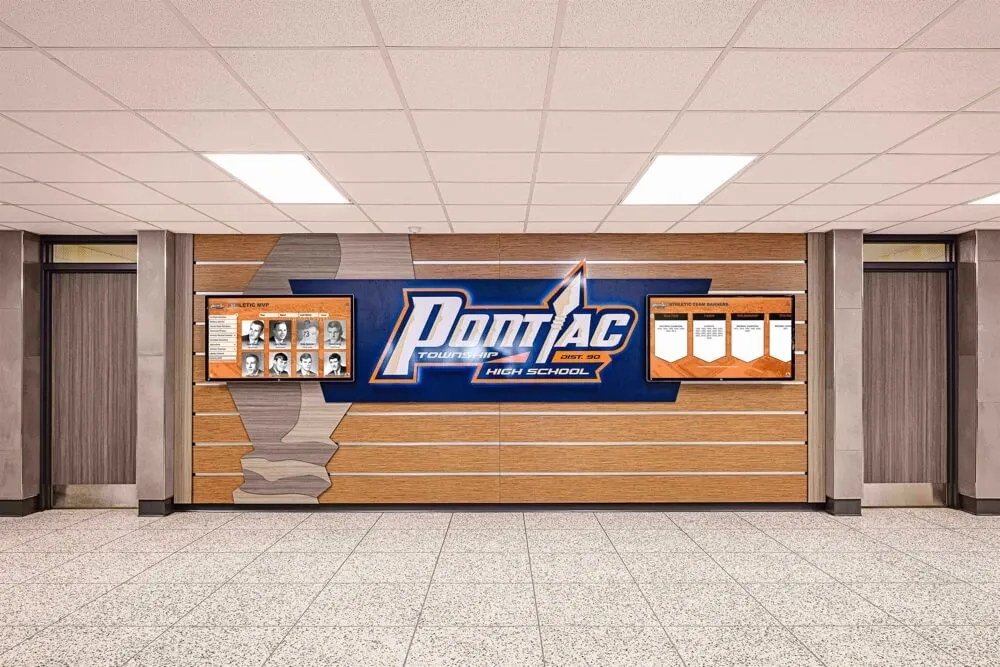
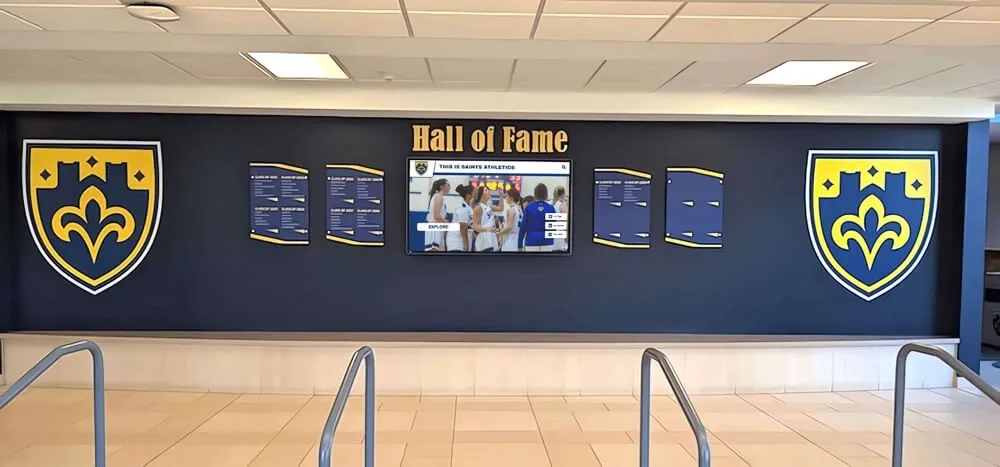
Athletic recognition infrastructure in school hallways combines physical display cases with evolving digital recognition platforms — when NiS risk assessments identify high or critical risk panels, transitioning trophy content to digital display removes the glazing risk from the recognition equation
Documentation Record: Required Fields for Each Panel
The following fields constitute a complete documentation record for each panel assessed. Store records in the facilities management system with cross-reference to the case identifier and the annual inspection schedule.
| Field | Content |
|---|---|
| Inspection date | Date on which the panel assessment was completed |
| Inspector name and title | Full name and role of the staff member conducting the assessment |
| Case identifier | Unique case ID assigned to the display unit |
| Panel position | Door panel (left/right/center) or fixed panel (top/bottom/side); include dimension estimate |
| Installation vintage | Confirmed date, estimated date, or “unknown with basis for estimate” |
| HST documentation status | Confirmed / Uncertain / None / Unknown |
| Prior breakage history | Any known spontaneous breakage events associated with this case or building zone |
| Physical condition score | Score assigned to each condition indicator per the risk factor table |
| Thermal environment score | Score assigned to thermal zone assessment |
| Total risk score and tier | Sum of all factor scores plus resulting escalation tier |
| Action assigned | Specific action (document/re-assess, glazier consultation, access restriction, stop-work) |
| Responsible party and timeline | Named staff member and completion date for assigned action |
| Attachments | Photos of condition indicators, any available original installation documents |
When Physical Case Risk Assessment Connects to Digital Transition Planning
A High or Critical risk profile on a trophy case panel creates a specific facilities decision: repair or replace the glass and return the case to service, or evaluate whether the content those cases protect — championship trophies, retired jersey photographs, honor roll records, athletic records boards — can be migrated to a digital recognition platform that eliminates the glass breakage risk category entirely.
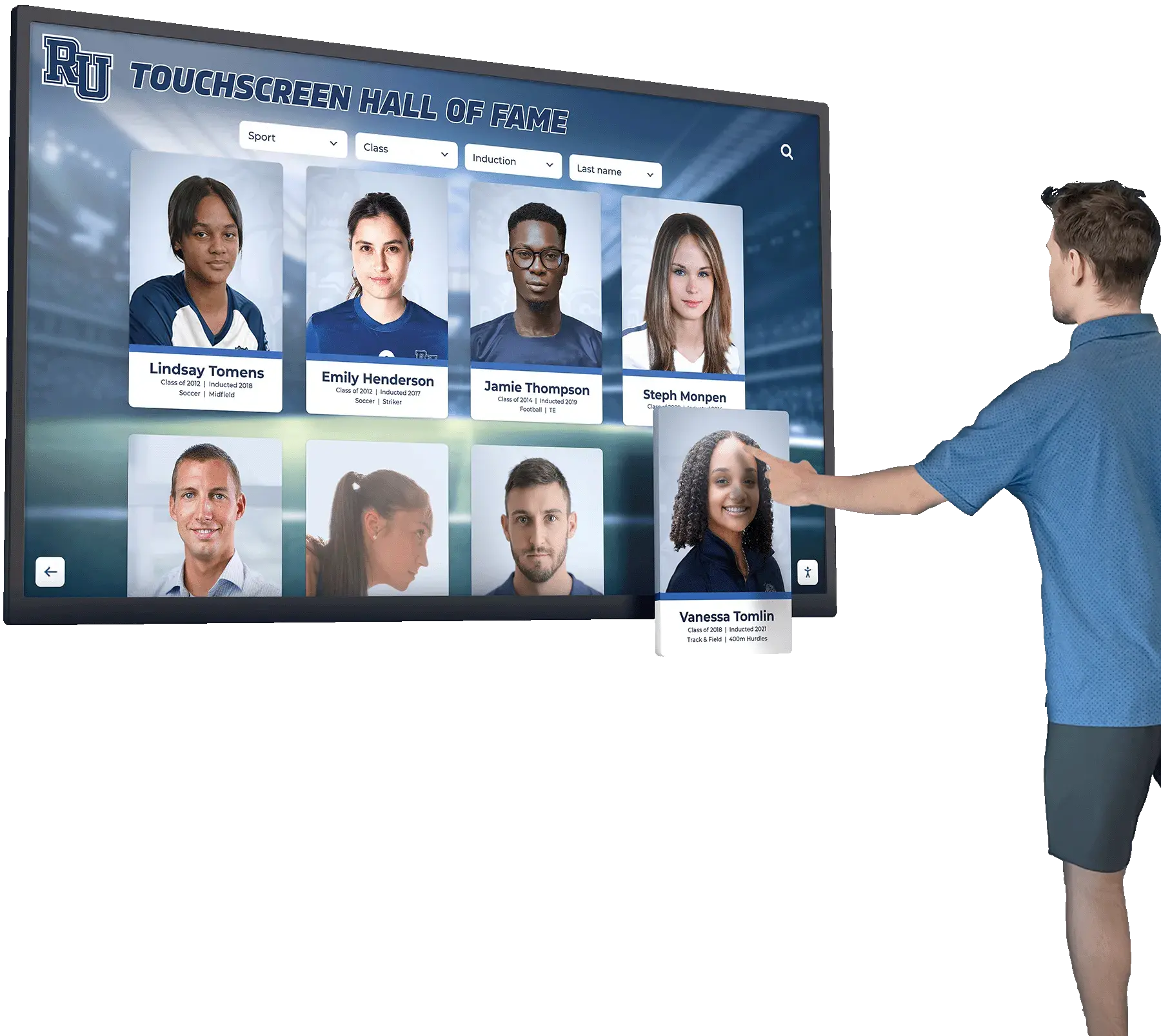
Schools that have already begun transitioning physical trophy recognition to digital platforms report that the facilities maintenance burden associated with glass inspection, gasket replacement, glazing bead adjustment, and lock maintenance is removed from the recognition infrastructure entirely. A digital donor recognition wall and a digital trophy case serve recognition functions that physical glass cases cannot match — unlimited capacity, remote content updates, touchscreen interactivity, and no glazing maintenance — while the physical risk category associated with NiS inclusions, glass bow, and glazing seal failure is simply absent.
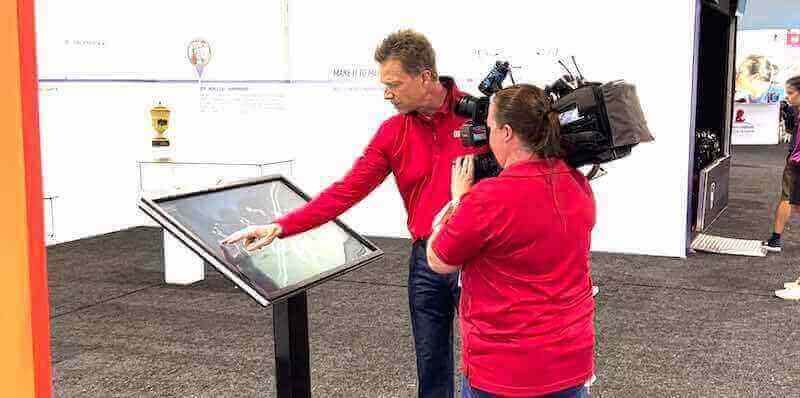
Schools managing athletic recognition through interactive digital displays also find that trophy content migrated from physical cases to digital platforms becomes searchable, filterable by year or sport, and accessible via QR code for visitors who cannot interact with the display in person — capabilities that enclosed glass cases do not offer regardless of how well maintained the glass is.
Facilities teams with Moderate or High-risk panels do not have to choose between glass replacement and digital transition immediately. The escalation steps above address the glass risk on its own terms. But for schools already planning recognition infrastructure upgrades, a High-risk glass assessment provides a concrete facilities driver to include in the budget justification for a digital display platform evaluation.
For schools exploring digital recognition platform options alongside athletic awards programming, Rocket Alumni Solutions offers cloud-managed interactive touchscreen trophy case displays that present unlimited awards, records, and recognition content without any glazing maintenance requirements.
Frequently Asked Questions
Can heat soak testing be performed on glass already installed in a trophy case? No. Heat soak testing requires placing the glass panels in a controlled oven at approximately 290°C — a process that must be performed at a glazing fabrication facility before installation. Glass already installed in a case cannot undergo HST. Replacement with new HST-certified glass is the only option for cases where HST documentation is absent and the risk profile warrants mitigation.
If a tempered glass panel breaks spontaneously and produces the characteristic small-fragment pattern, is NiS confirmed as the cause? The small-fragment breakage pattern confirms that the glass was tempered. The spontaneous nature of the breakage — without confirmed physical contact — is consistent with NiS inclusion failure, but other causes of spontaneous tempered glass breakage exist, including nickel-free inclusions, edge damage that was not detected before installation, and thermal stress breakage. Forensic confirmation of NiS as the cause requires examination of the fracture origin fragment under magnification by a qualified glazing specialist.
Should facilities teams retain broken glass fragments after spontaneous breakage? Yes, if safely possible. Retaining the fracture-origin fragment — the butterfly-shaped paired fragment typically found at the center of the breakage pattern — allows a glazing specialist to examine the fracture origin for evidence of an inclusion. Photograph the full breakage pattern before cleanup, and collect the origin fragment in a labeled bag. Do not handle fragments without cut-resistant gloves.
Is laminated glass an alternative to tempered glass that avoids NiS risk? Laminated glass — two or more glass plies bonded by an interlayer — can be manufactured from annealed or heat-strengthened glass. Laminated annealed glass does not contain NiS in the tempered-glass sense because it is not subjected to the tempering quench that traps inclusions in α phase. However, if the laminate plies are fully tempered rather than heat-strengthened, NiS risk applies to the tempered plies. Confirm the laminate specification with the glass supplier before treating laminated glass as NiS-free.
Summary: What a School Trophy Case Nickel Sulfide Inclusion Inspection Accomplishes
A school trophy case nickel sulfide inclusion inspection does not produce a visual report on inclusion content — it cannot, because inclusions are sub-millimeter particles embedded in the glass body that no field inspection can see. What the inspection produces is a documented risk stratification of each panel based on factors that are assessable in the field: installation vintage, heat soak test history, prior spontaneous breakage events, physical age indicators, and thermal environment.
The result is a risk profile for each panel — scored, tiered, and assigned an escalation action — that supports both facilities decision-making and administrative documentation. Panels in the Low tier are documented and scheduled for re-assessment. Panels in the High and Critical tiers receive immediate access restrictions and professional glazier consultation within defined timelines.
For schools whose physical trophy case inventory includes panels scoring in the Moderate or higher tiers, a parallel evaluation of digital recognition platform options can convert a facilities risk finding into a recognition infrastructure upgrade — replacing glass-enclosed awards displays with interactive, cloud-managed touchscreen displays that engage students and visitors more effectively and carry no glazing maintenance burden at all.
Schools navigating the gap between physical trophy case maintenance requirements and modern digital recognition infrastructure can explore how Rocket Alumni Solutions delivers interactive, cloud-managed trophy display platforms — with unlimited capacity, remote content management, and no glazing risk. Request a demo to assess how digital trophy cases can replace glass-enclosed display units at your school.