



When a visitor walks past your school’s trophy case, their eye notices something wrong before their brain names it: the gold on one championship trophy looks brassy and warm while the identical trophy two shelves up looks cool and slightly silver. The school colors on the banner at the left look vivid while the same banner on the right looks washed out. The culprit is usually invisible—mismatched LED fixtures whose color coordinates fall outside the same MacAdam ellipse.
A MacAdam ellipse lighting check is a structured measurement process that identifies when LED light sources in a trophy display produce visibly different colors even though they carry the same nominal color-temperature label. Running this check annually, or whenever you replace a fixture, is standard practice in museum and gallery lighting—and it deserves the same attention in school athletic and academic recognition spaces.
This guide walks facilities teams, athletic directors, and recognition-program owners through the full school trophy case MacAdam ellipse lighting check: what to measure, what the numbers mean, how to interpret results, and what to do when LEDs don’t match.
Inconsistent trophy case lighting does real damage to the impression your recognition program makes. Award finishes that should look identical look different. School colors appear to shift across the case. Parents photographing a child’s championship banner find that the image never quite captures what they expected to see. A straightforward lighting audit rooted in MacAdam ellipse tolerances fixes these problems before they undermine the credibility of your recognition display.

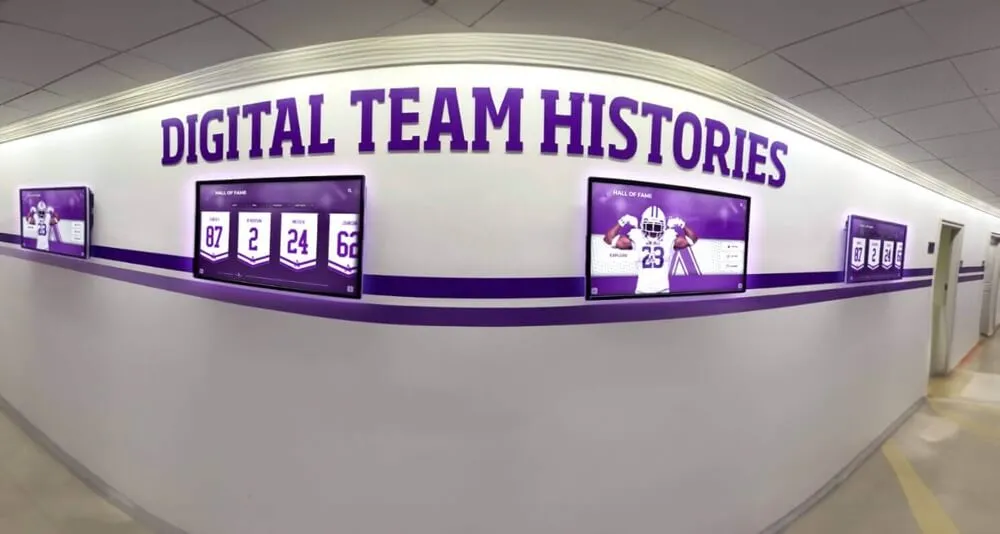
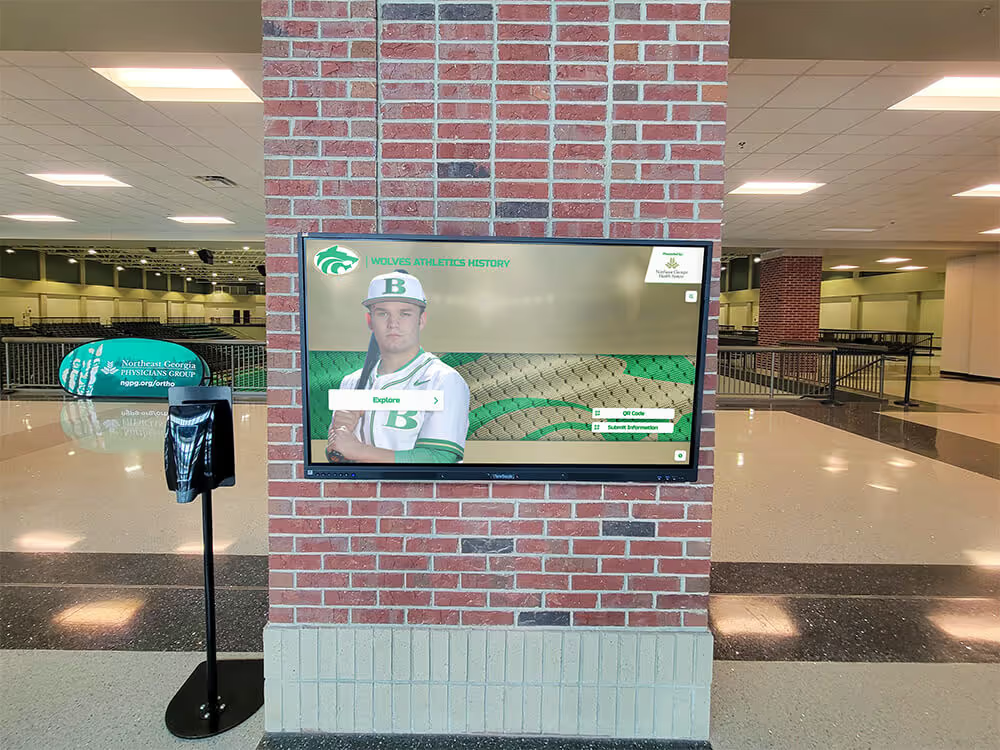
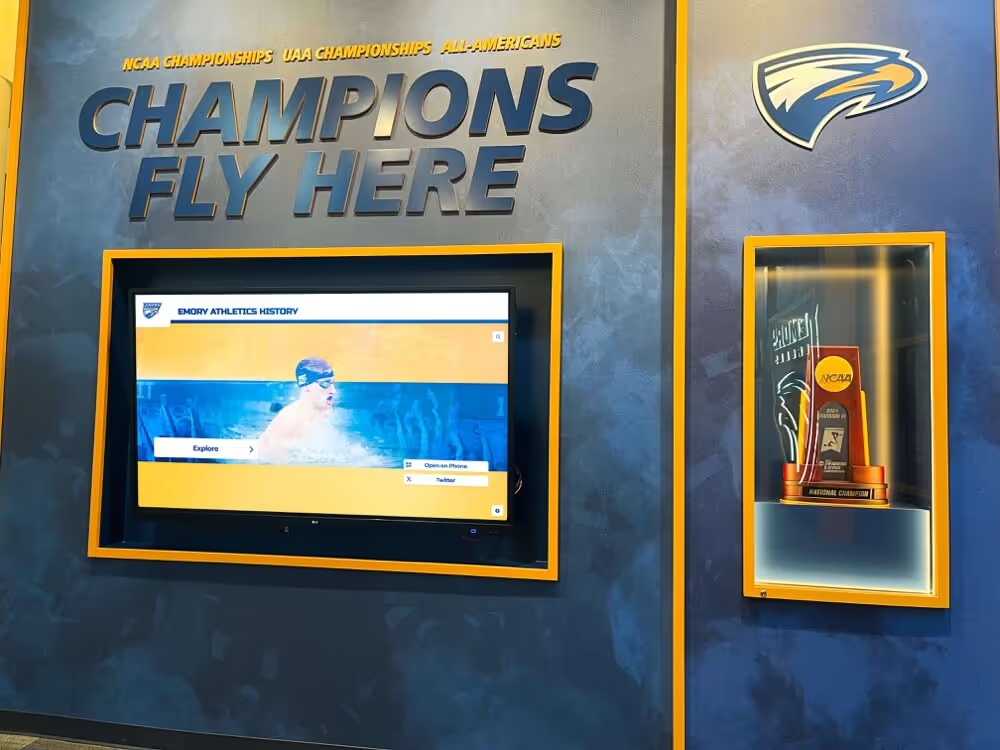
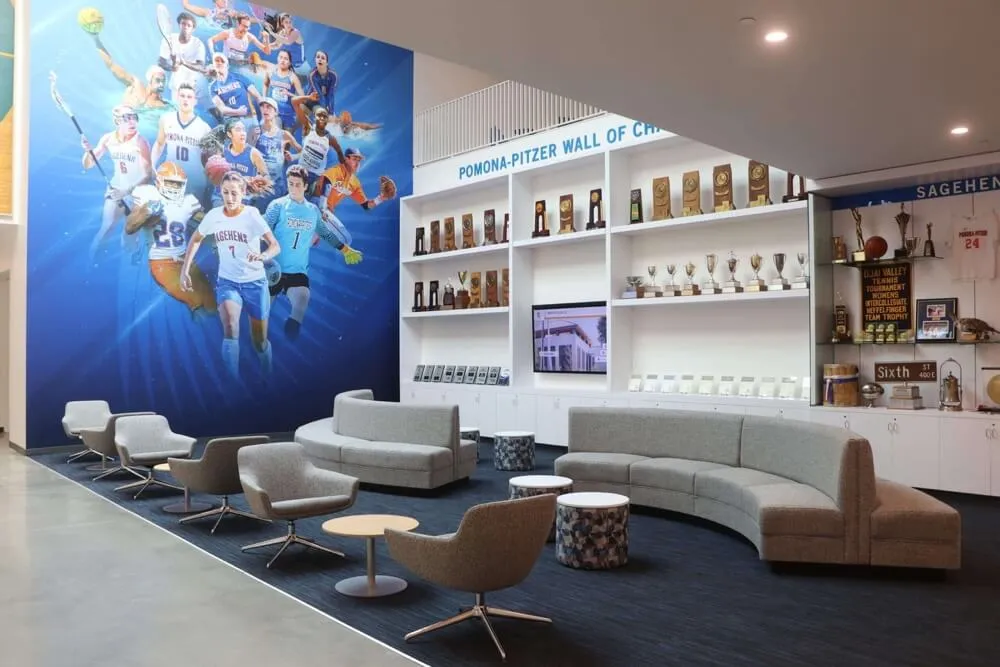
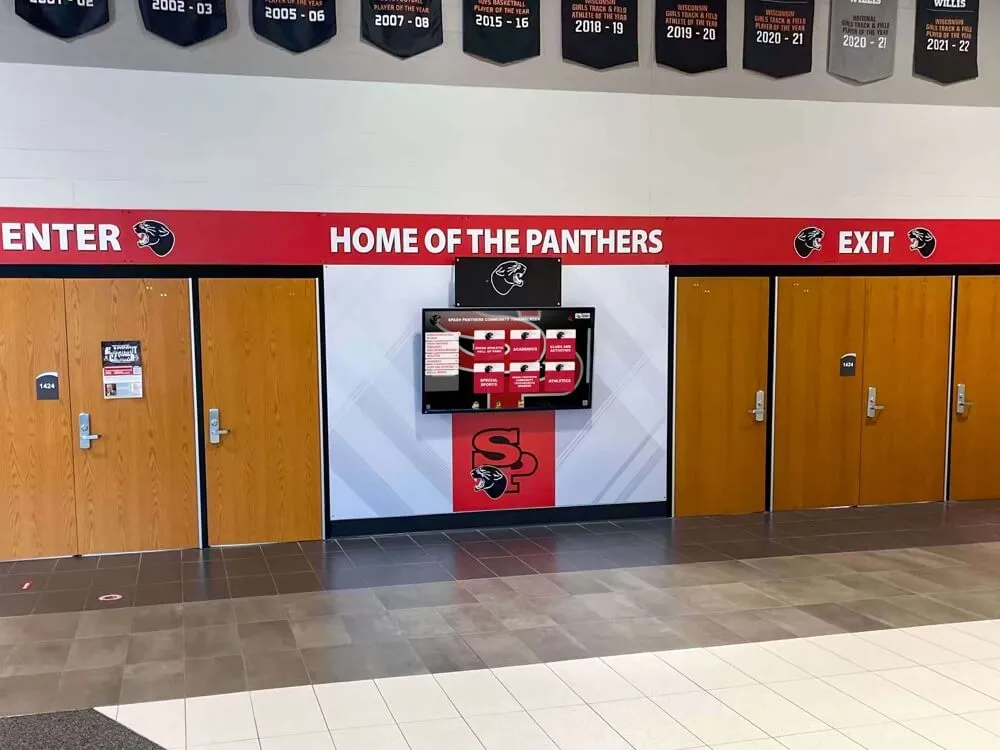
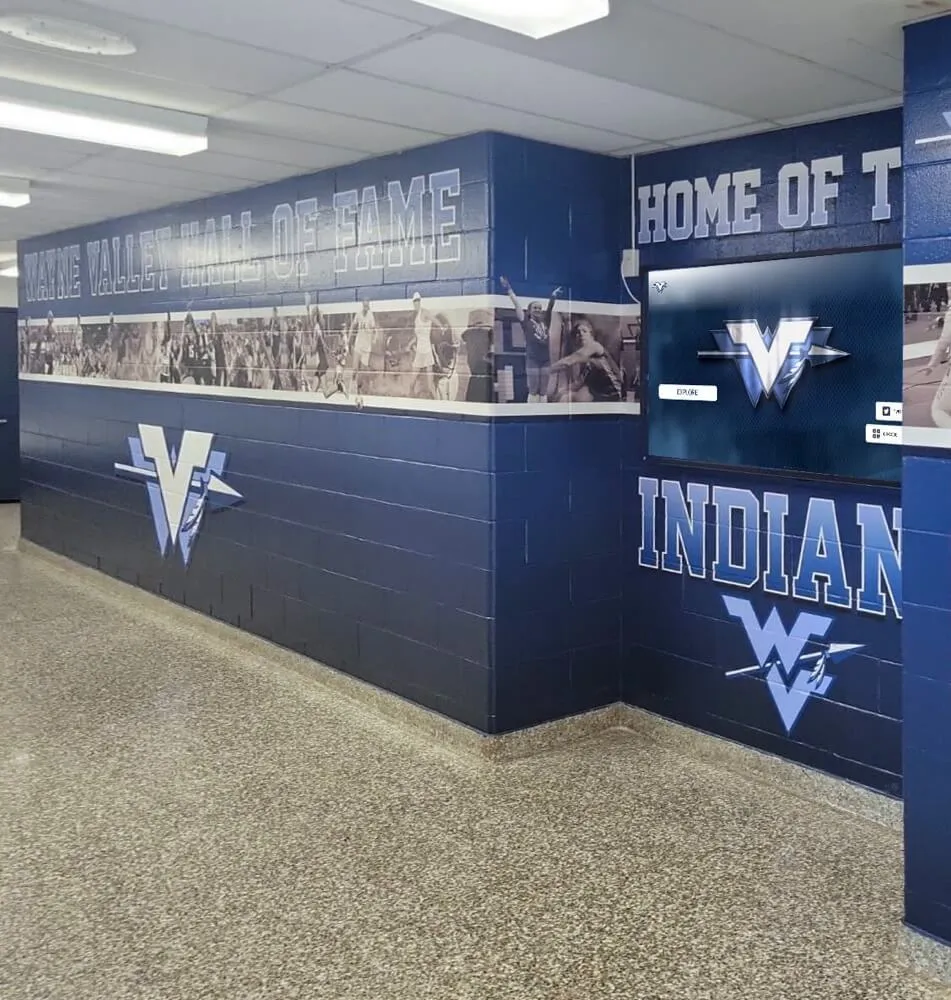
Trophy case displays combine physical awards with modern recognition technology—consistent lighting quality matters for both
What Is a MacAdam Ellipse?
A MacAdam ellipse describes a region in standard CIE color space within which all colors appear identical to an average human observer. Developed by David MacAdam in 1942 through a series of visual perception experiments, the ellipse defines the boundary of just-noticeable differences in color.
In LED lighting, manufacturers rate bulbs by SDCM—Standard Deviation of Color Matching—which measures how many MacAdam ellipses a light source’s chromaticity coordinates are from a target point on a standard reference curve called the Planckian locus.
SDCM in Plain Language
Think of SDCM steps as concentric zones around a perfect color point. An LED at 1 SDCM is nearly identical to the reference. An LED at 7 SDCM is clearly a different color when seen side-by-side with the reference.
The problem in trophy cases: two LEDs can each carry a "3000K warm white" label but sit 5–6 SDCM apart, producing a visible and distracting color mismatch across the case.
Why Trophy Cases Are Vulnerable
Trophy case fixtures are replaced individually as they fail—often with whatever compatible LED a facilities supplier has in stock. Each replacement may come from a different production bin, with chromaticity coordinates several SDCM steps from the original fixtures.
Over several years, a case originally installed with tight-tolerance LEDs can accumulate fixtures spread across a wide color range with no single replacement decision looking obviously wrong at the time.
Why LED Color Consistency Matters for Award Displays
The stakes are higher in school recognition spaces than in hallways or classrooms. Trophy case lighting illuminates objects whose perceived value depends heavily on color rendering:
- Gold and silver finishes shift dramatically under mismatched color temperatures—warm LEDs make gold look rich while cool LEDs make it appear greenish-silver
- School color banners require consistent rendering so that the program’s official colors read accurately across every panel
- Portrait photography displayed in the case may look warm or cool depending on which fixture is positioned above it
- Engraved plaques with painted fill colors can appear to be entirely different hues under fixtures sitting only 4–5 SDCM apart
For recognition programs that care about how class reunion awards and alumni recognition displays reflect institutional identity, the quality of trophy case lighting is a direct extension of brand consistency.
School Trophy Case MacAdam Ellipse Lighting Check: Step-by-Step
The following process assumes access to a colorimeter or spectroradiometer capable of measuring chromaticity coordinates (CIE x, y or u′, v′) and correlated color temperature (CCT). Entry-level instruments suitable for this task are available from lighting equipment suppliers.
Step 1: Document the Existing Fixtures
Before taking any measurements, create a simple fixture map:
- Photograph each fixture position and assign it an identifier (F1, F2, F3, and so on)
- Record the brand, model, and wattage of each lamp currently installed
- Note the approximate age or installation date if known
- Flag any fixtures replaced within the last three years
This map becomes your reference for tracking which fixtures require action after measurement.
Step 2: Allow Fixtures to Stabilize
LED chromaticity shifts during the first 15–30 minutes of operation. Turn on all trophy case lighting at least 30 minutes before taking measurements. Measure with fixtures at operating temperature, not cold—readings taken immediately after switch-on will not reflect steady-state color output.
Step 3: Set Your Measurement Reference
Choose one fixture as your reference point—ideally the newest or the one whose color quality appears most accurate to your eye. Measure and record:
- CIE x, y chromaticity coordinates
- Correlated color temperature (CCT)
- CRI (Color Rendering Index)
Every other fixture in the case will be compared to these target values.
Step 4: Measure Each Fixture’s Chromaticity
Position your colorimeter at the same distance from each fixture (typically 30–50 cm, directly facing the light source) and record chromaticity coordinates for each numbered fixture. For a school trophy case, also note:
- Direct illuminance in lux at the trophy surface below each fixture
- Any visible flicker (a smartphone camera set to 240 fps can detect severe cases if a dedicated flicker meter is unavailable)
Work through the fixture map systematically so every position has a recorded measurement.
Step 5: Calculate SDCM Distance from Reference
Most colorimeter software calculates SDCM automatically once you enter your reference coordinates. If calculating manually, the SDCM distance uses an elliptical distance formula in u′, v′ color space; the specific formula appears in IES TM-30 documentation and from your instrument manufacturer’s resources.
Plot each fixture’s position relative to your reference on a MacAdam ellipse diagram to visualize the spread across the entire case.
Step 6: Evaluate Against Tolerance Thresholds
| SDCM from Reference | Visibility | Recommendation for Trophy Cases |
|---|---|---|
| 1–2 SDCM | Imperceptible difference | Acceptable — no action needed |
| 3 SDCM | Barely noticeable under careful side-by-side comparison | Acceptable; flag for future replacement cycle |
| 4 SDCM | Noticeable on direct comparison | Replace at next scheduled maintenance cycle |
| 5–6 SDCM | Clearly visible difference | Replace promptly — actively degrades award appearance |
| 7+ SDCM | Obvious mismatch visible to any visitor | Replace immediately before next public event |
Industry guidance for museum and gallery applications typically requires 3 SDCM or better. For school trophy cases, 4 SDCM is a reasonable immediate-action threshold given typical facilities budgets and replacement cycles.
Step 7: Document and Prioritize Replacements
Create a prioritized replacement list based on your measurement results:
- Immediate (7+ SDCM): Replace before the next major school event or visitor day
- Next maintenance cycle (5–6 SDCM): Schedule for replacement within 60 days
- Monitor (4 SDCM): Record and check again in six months
- Acceptable (1–3 SDCM): Log and revisit at next annual check
Step 8: Source Replacement LEDs with Bin Specifications
When ordering replacement fixtures, request products rated at 3 SDCM or better from a single production bin. Ask suppliers for the specific chromaticity bin codes to confirm compatibility with your reference fixture before purchase. Purchasing from a single bin eliminates the source of variation that creates mismatches in the first place. Many lighting distributors serving educational institutions can provide this documentation on request.
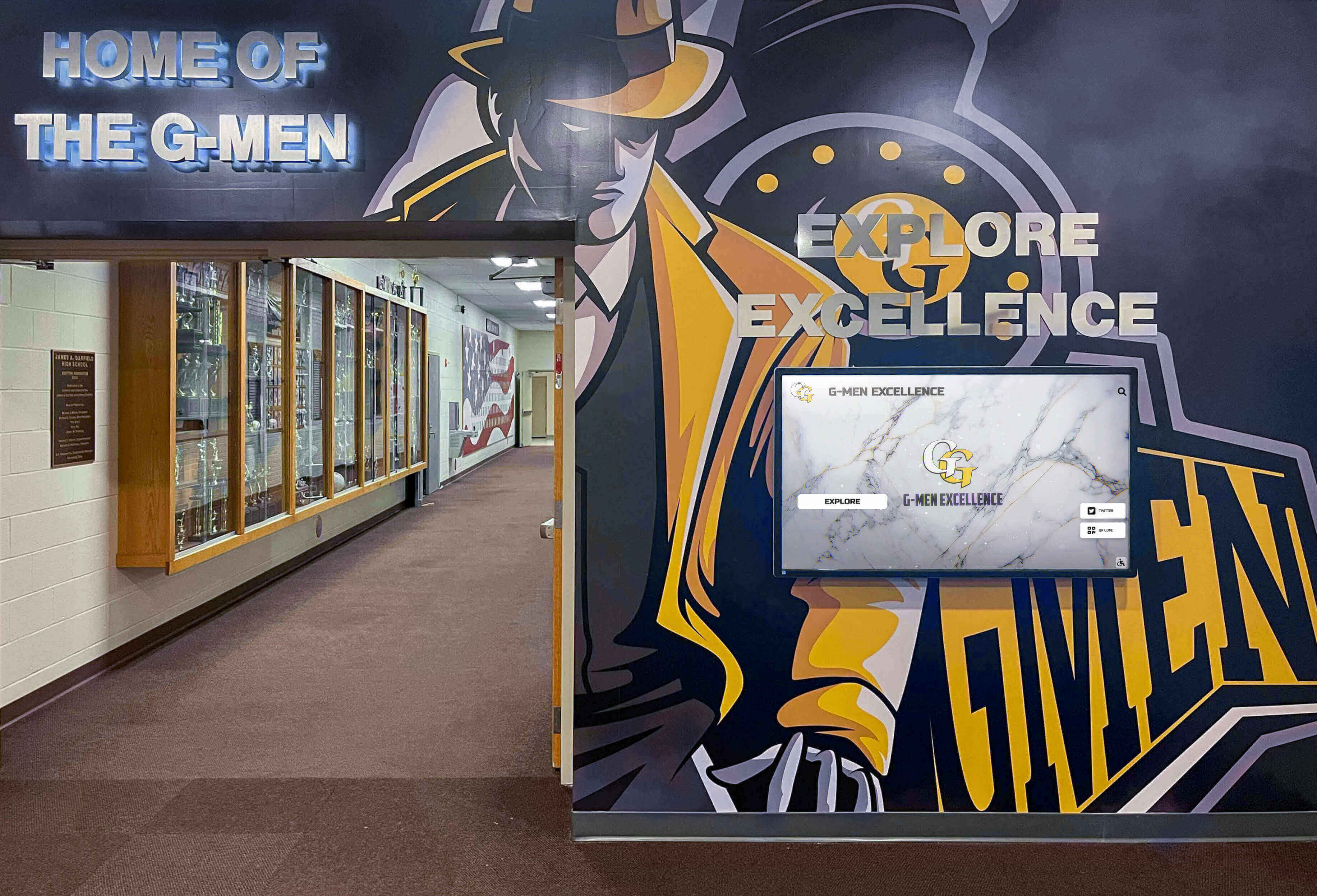
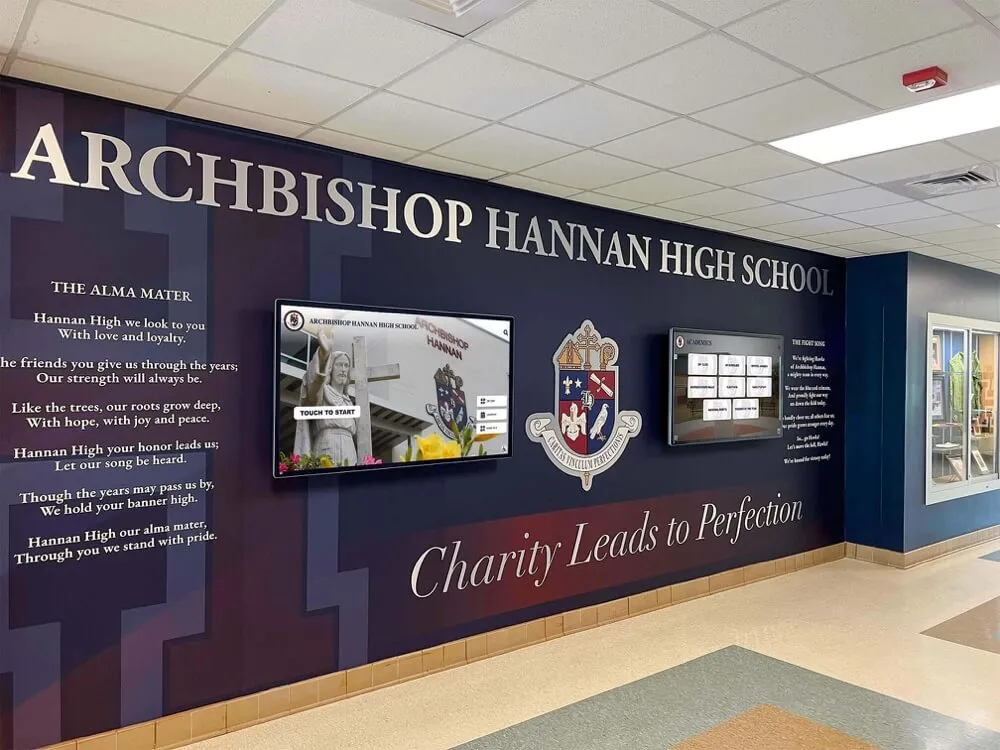
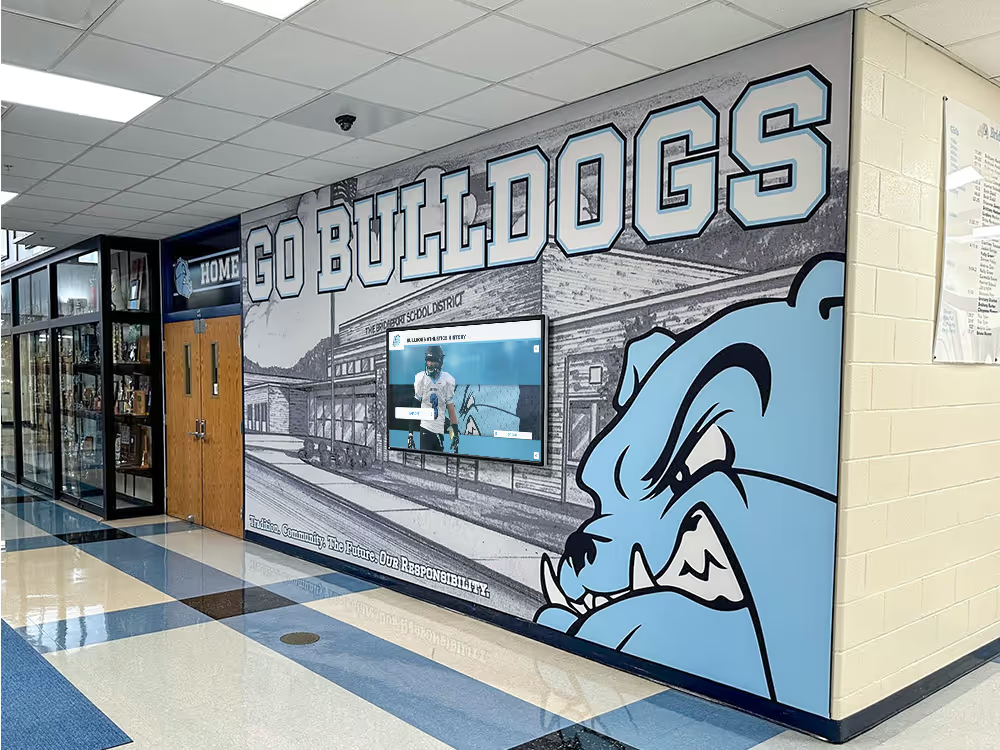
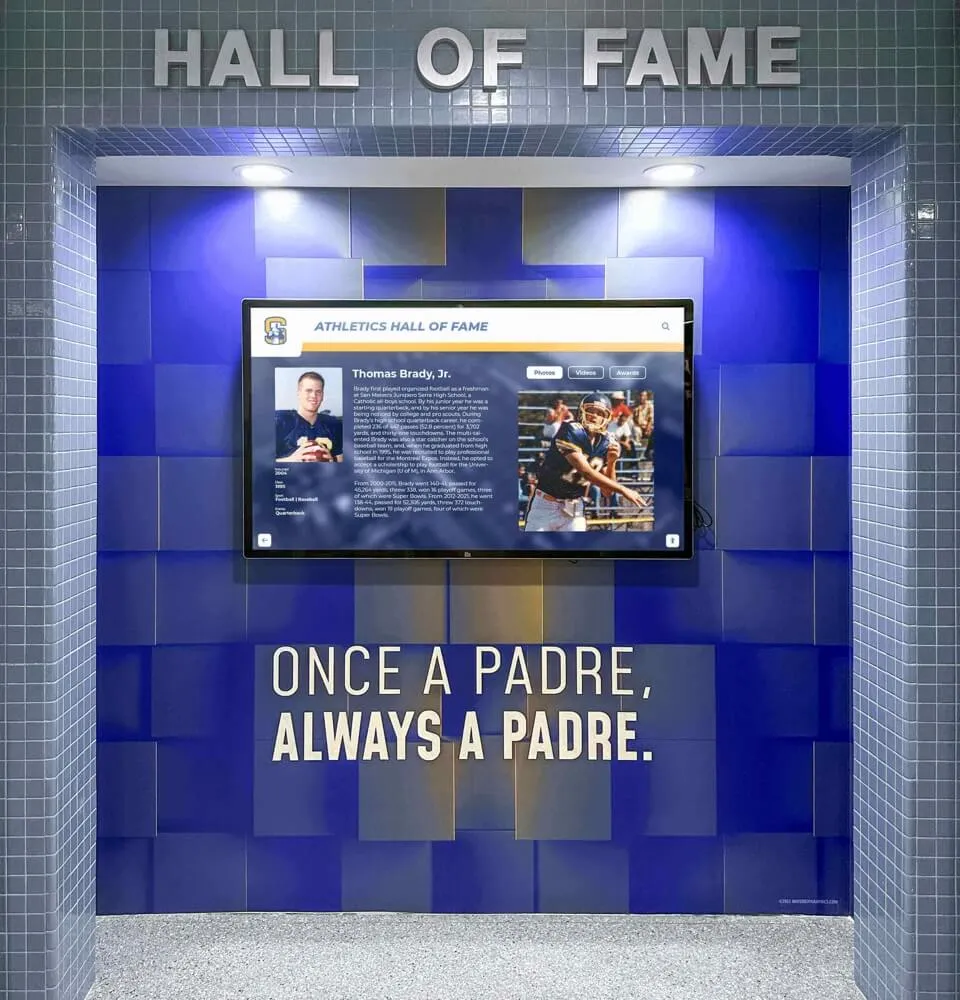
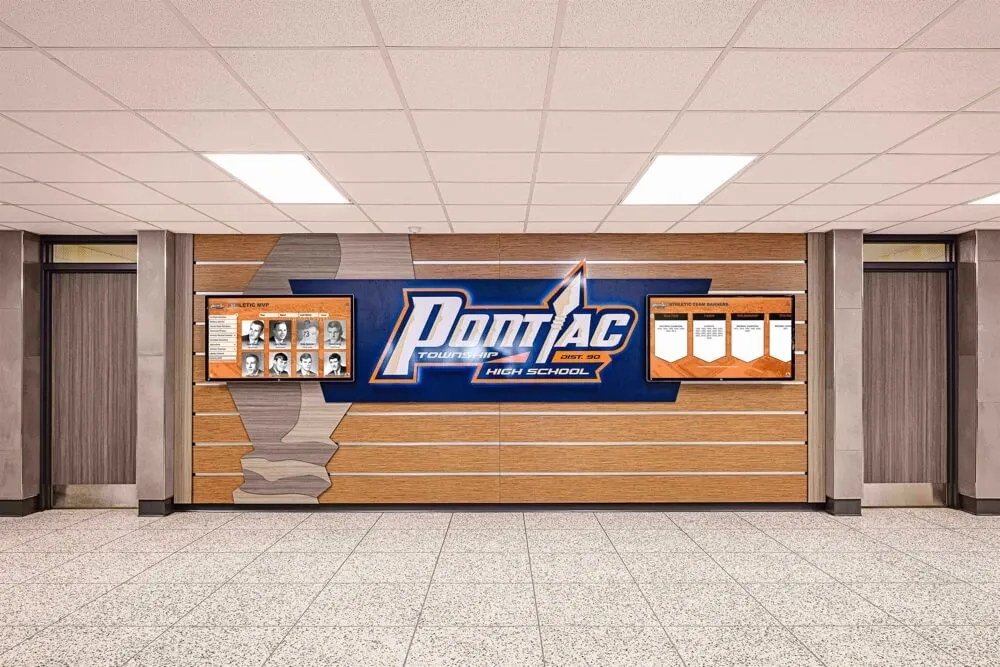
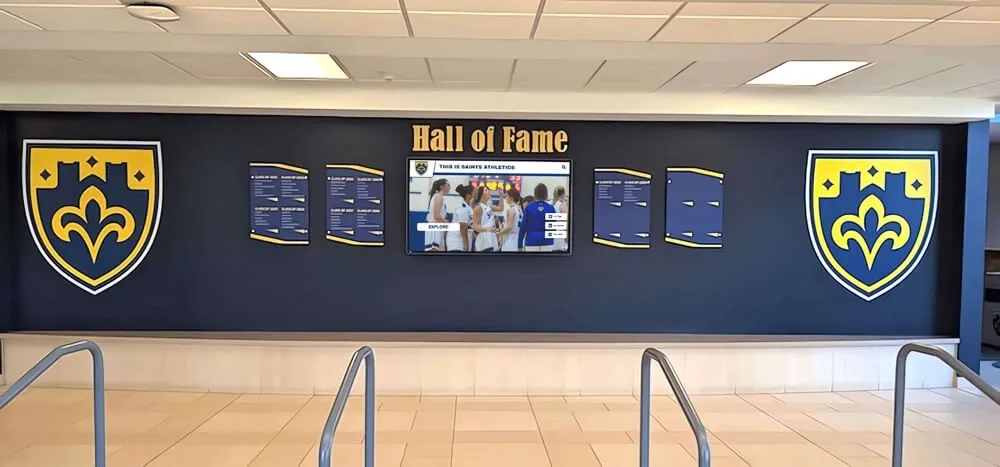
Physical trophy cases and digital displays share hallway space in modern schools—lighting quality affects how both are perceived by visitors
Common Sources of LED Color Mismatch in School Trophy Cases
Understanding where color mismatches originate helps you prevent them at procurement rather than discover them at audit time.
Supplementary Checks: Beyond MacAdam Ellipses
A complete trophy case lighting audit includes several checks alongside the MacAdam ellipse measurement.
CRI (Color Rendering Index): Aim for CRI ≥ 90 for award displays. Lower CRI reduces the vibrancy of trophy finishes and makes printed colors on plaques and photographs look flat. High-CRI LEDs with tight SDCM ratings represent the standard for quality recognition displays.
Illuminance Distribution: Measure lux levels at the trophy surface under each fixture. Ideally, variance across the case should be no greater than 3:1 between the brightest and dimmest points. Extreme variation creates visually disjointed displays even when color consistency is within tolerance.
Glare and UV Content: Glass trophy case fronts can create significant glare from improperly aimed fixtures. Position fixtures so light strikes trophies at 30–45° rather than directly perpendicular to the case front. Verify that fixtures include UV filters if your case holds photographic materials, ribbons, or painted surfaces—UV exposure causes color shift and material degradation over time.
Color Temperature Consistency with Adjacent Spaces: Your trophy case should not look dramatically different in color temperature from the hallway or lobby surrounding it. Fixtures 500K cooler or warmer than ambient lighting make the case look isolated rather than integrated into the space. This is particularly relevant when digital hall of fame displays integrate touchscreen panels alongside physical cases, since screen white points need to harmonize with ambient fixture color temperature.
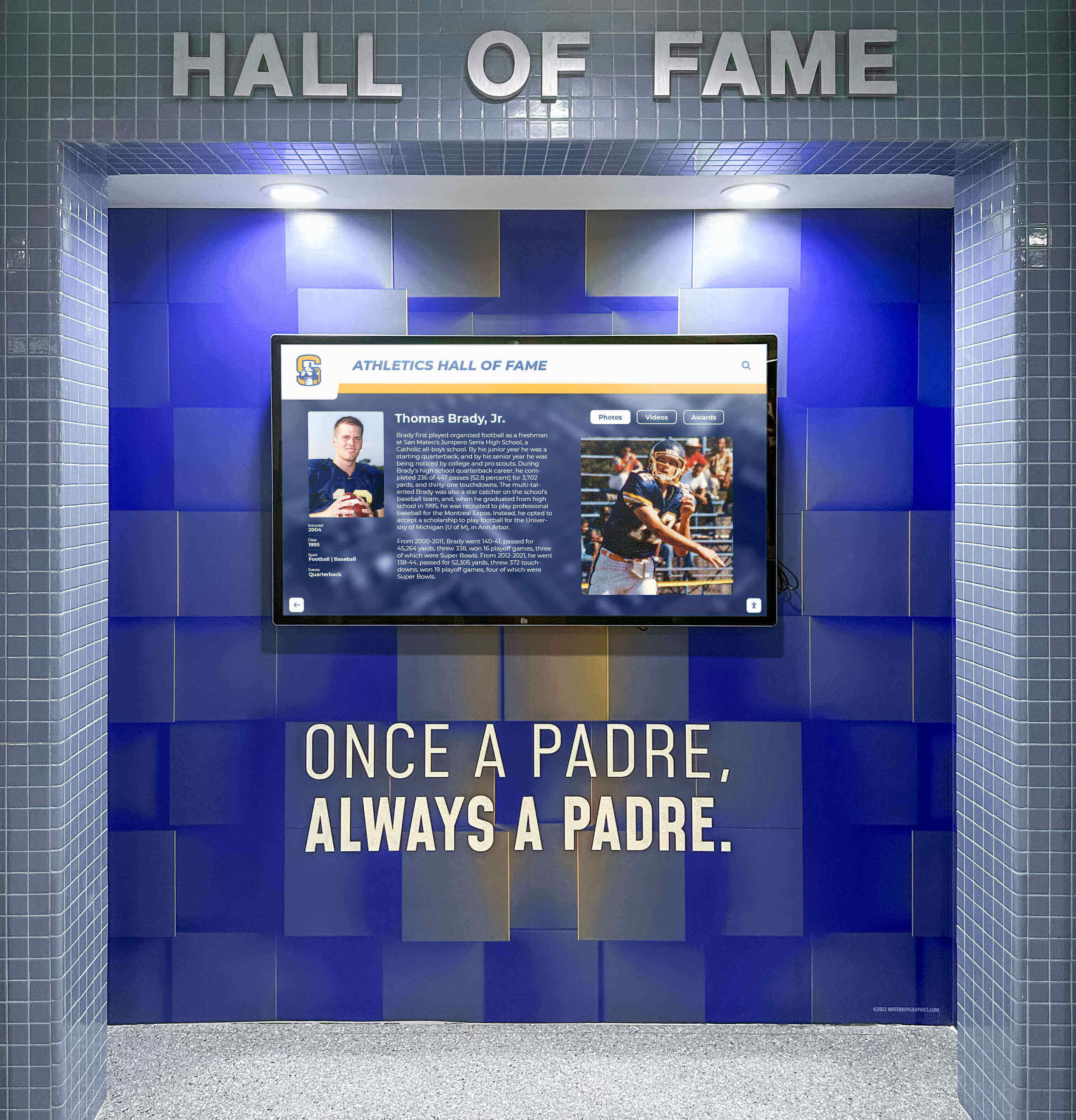
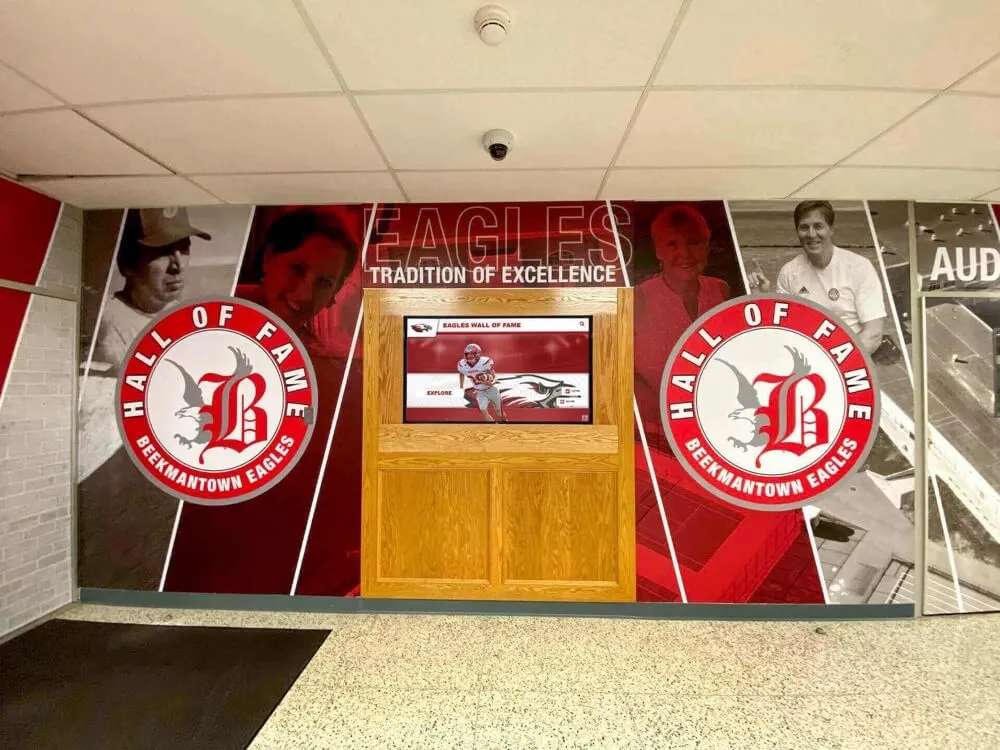
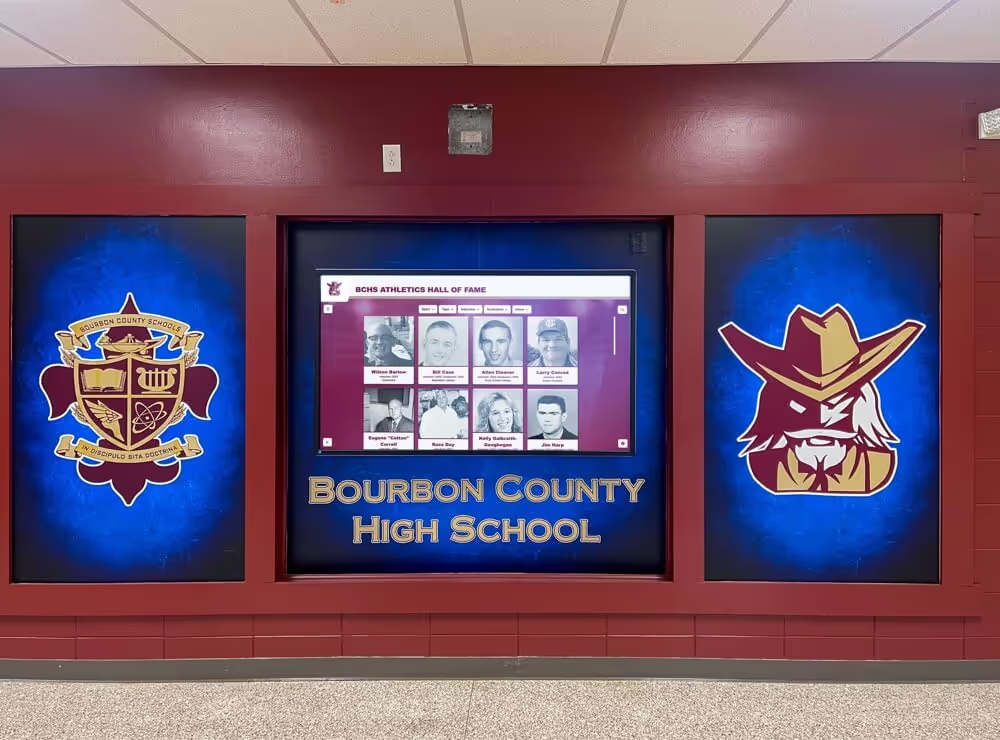
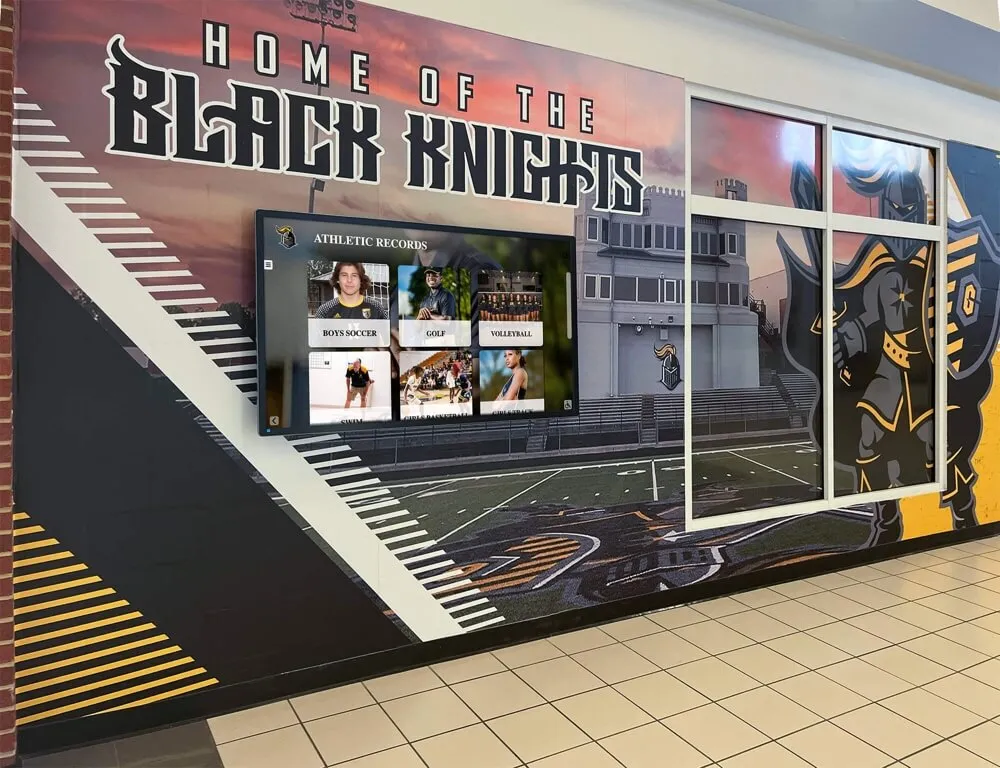
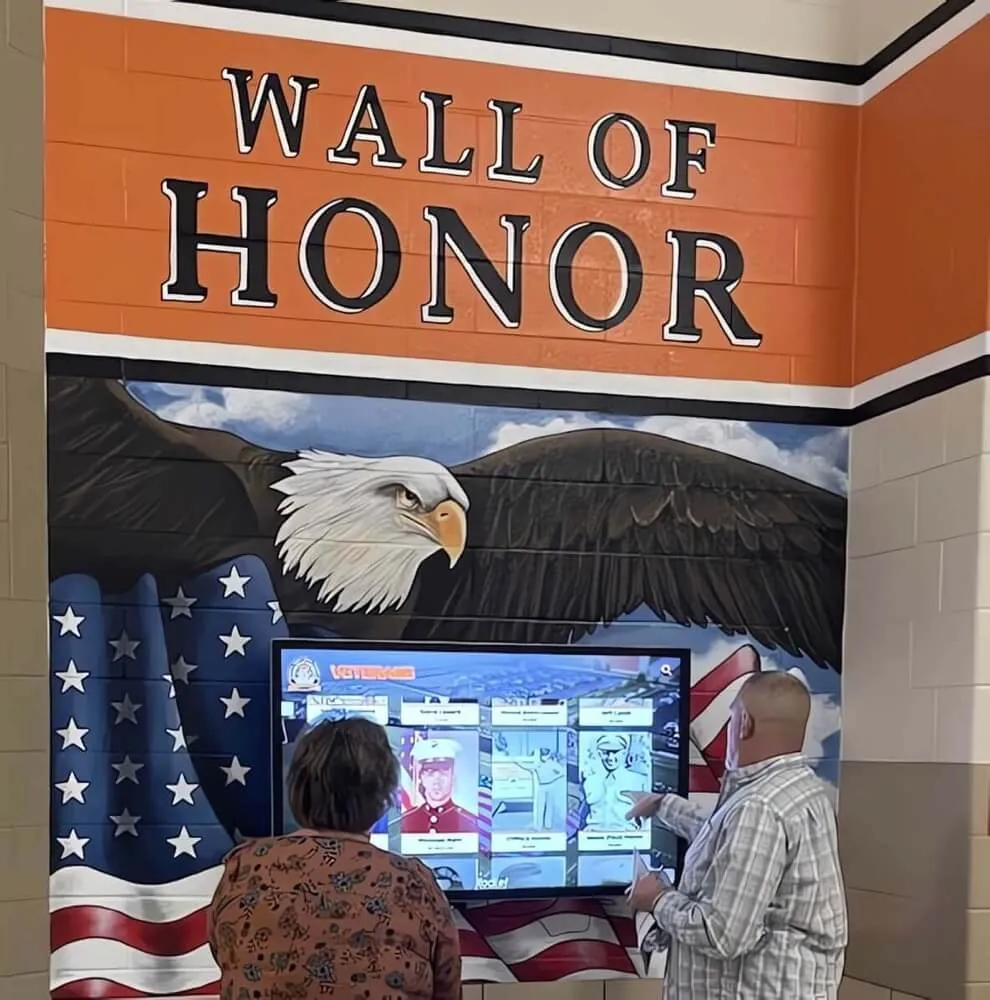
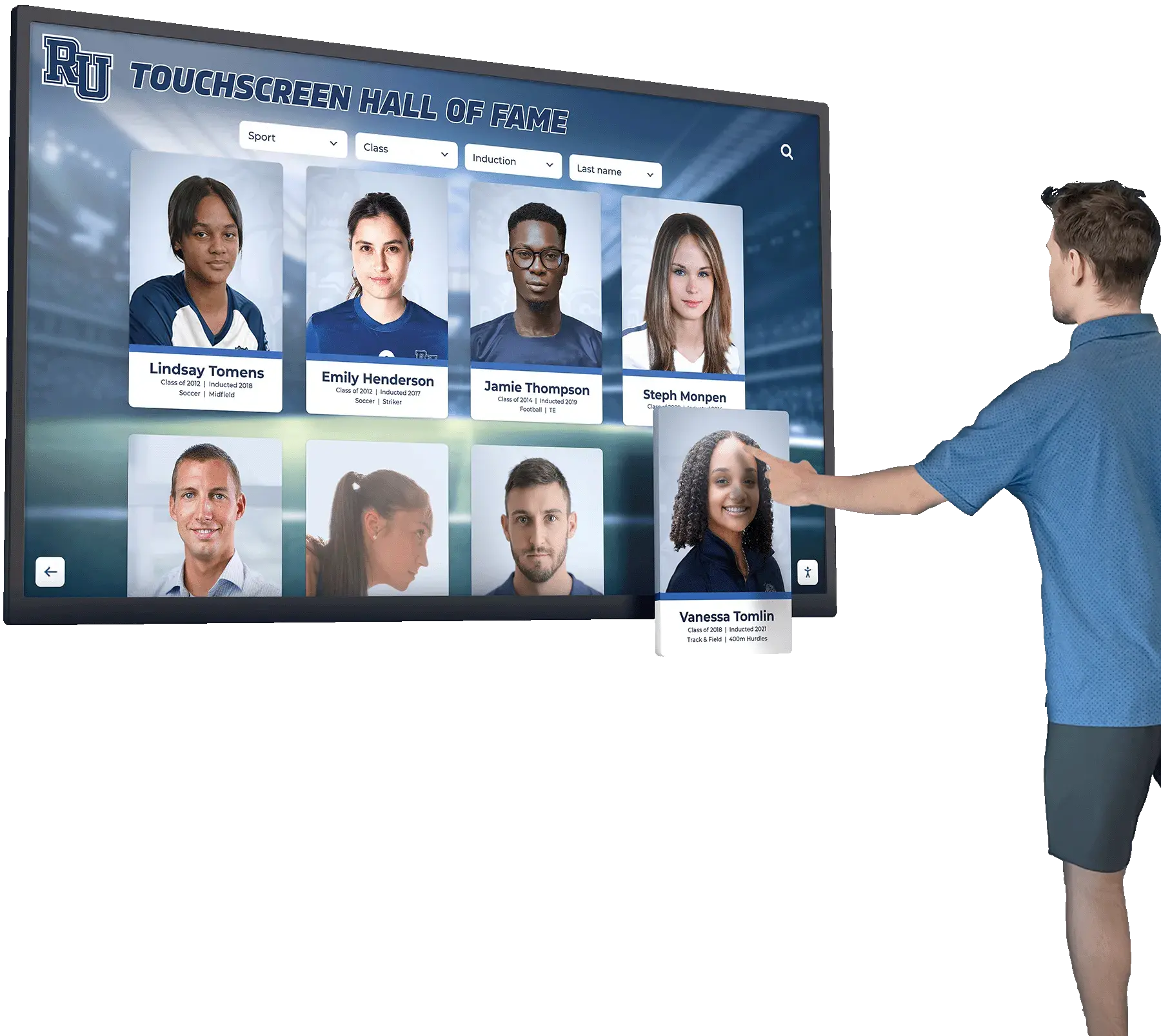
Digital recognition displays maintain consistent color output through factory-controlled backlighting—no SDCM variance between screens in the same installation
Maintaining a Lighting Audit Schedule
One MacAdam ellipse check is useful. A scheduled audit program is transformative. Recommended cadence for school facilities:
| Interval | Check |
|---|---|
| Annual | Full MacAdam ellipse measurement, all fixtures |
| After any fixture replacement | Spot-check new fixture against reference |
| Before major events | Visual inspection plus lux measurement |
| When color complaints are reported | Immediate full measurement |
| Every 3–5 years | Full fixture refresh if case is over 10 years old |
Assign ownership of this schedule to a specific facilities team member rather than leaving it as a shared responsibility with no accountable owner. Pair the audit calendar with your broader school recognition and appreciation event planning schedule so lighting checks happen before recognition events rather than after them.
Recommended documentation to retain after each audit:
- Fixture map with numbered positions and photographs
- SDCM measurements by fixture and measurement date
- Reference fixture specifications including manufacturer bin code
- Replacement parts procurement records with bin documentation
- Next scheduled audit date and assigned responsible party
When Lighting Checks Reveal a Bigger Problem
Sometimes a MacAdam ellipse audit reveals that the underlying trophy case infrastructure is simply too old or too inconsistent to maintain to a high standard. Fixtures may no longer be manufactured. Replacement bins may not be documented. The case design may make measurement and access prohibitively time-consuming. Original installation records have long since disappeared.
This is also the point where many schools evaluate whether continued investment in physical trophy case lighting maintenance is the best use of facilities resources—or whether transitioning to a digital hall of fame recognition platform addresses the underlying recognition goals more effectively and durably.
Digital recognition displays eliminate LED color variance at the trophy case level entirely. Commercial-grade display panels are factory-calibrated to tight color tolerances, and modern panels maintain consistent backlighting chromaticity across the display’s rated lifespan. Schools that find themselves repeatedly chasing color consistency problems in aging physical cases often discover that the economics favor a digital transition—particularly when recognition programs need to scale beyond what physical case space allows.
For programs managing player-of-the-week boards, searchable athlete archives, and ongoing recognition activities that outgrow static displays, digital platforms provide both the visual consistency that physical LED audits try to achieve and the content flexibility that physical cases cannot match.
See How Digital Recognition Handles Color Consistency Automatically
If your school's trophy case lighting audit keeps surfacing the same fixture problems year after year, a digital recognition platform may be the more durable solution. See how schools create vivid, consistent award displays without ongoing LED maintenance cycles.
Book a DemoLighting Audit Documentation and Institutional Continuity
Good lighting documentation serves schools beyond the immediate audit cycle. Fixture maps, SDCM measurements, and procurement records create institutional memory that survives staff transitions. When the facilities director who ran last year’s audit moves on, their successor can pick up a documented maintenance history rather than starting from scratch.
Comprehensive lighting records also benefit JROTC programs and similar recognition displays that house physical medals, insignia, and service awards alongside digital records, where consistent lighting quality affects how those materials are perceived by families and community visitors.
Programs that care about maintaining accurate visual archives of achievements will recognize the parallel value in yearbook archive quality standards—systematic documentation protects the integrity of the record across leadership changes and ensures future administrators can pick up where their predecessors left off.
Frequently Asked Questions
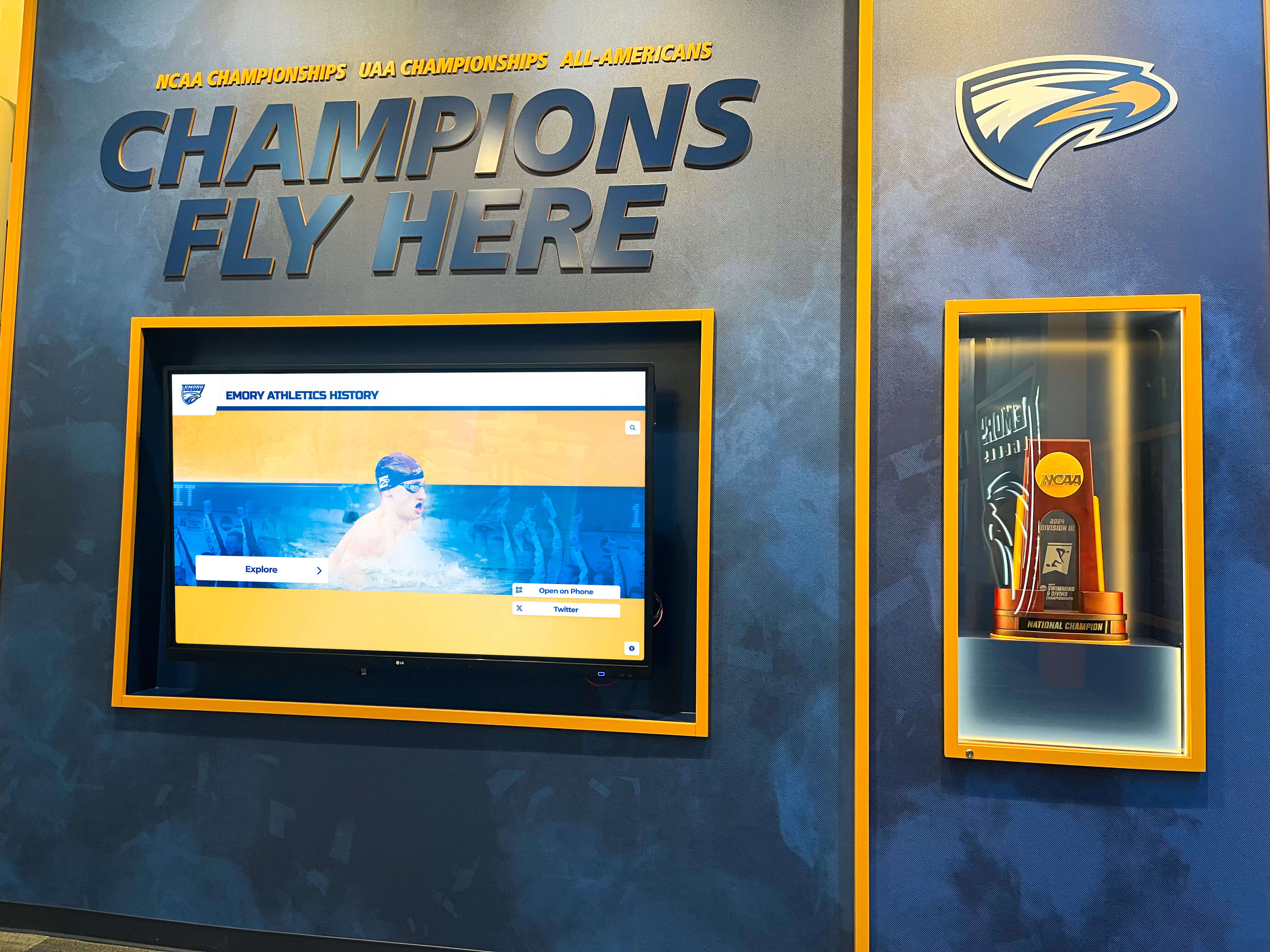
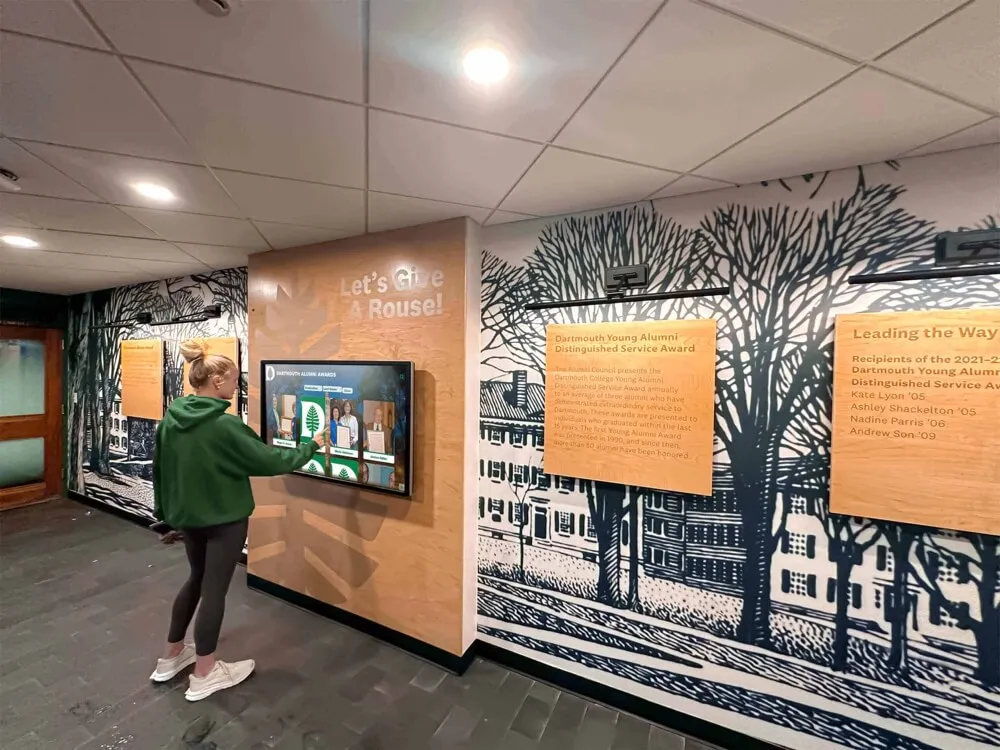
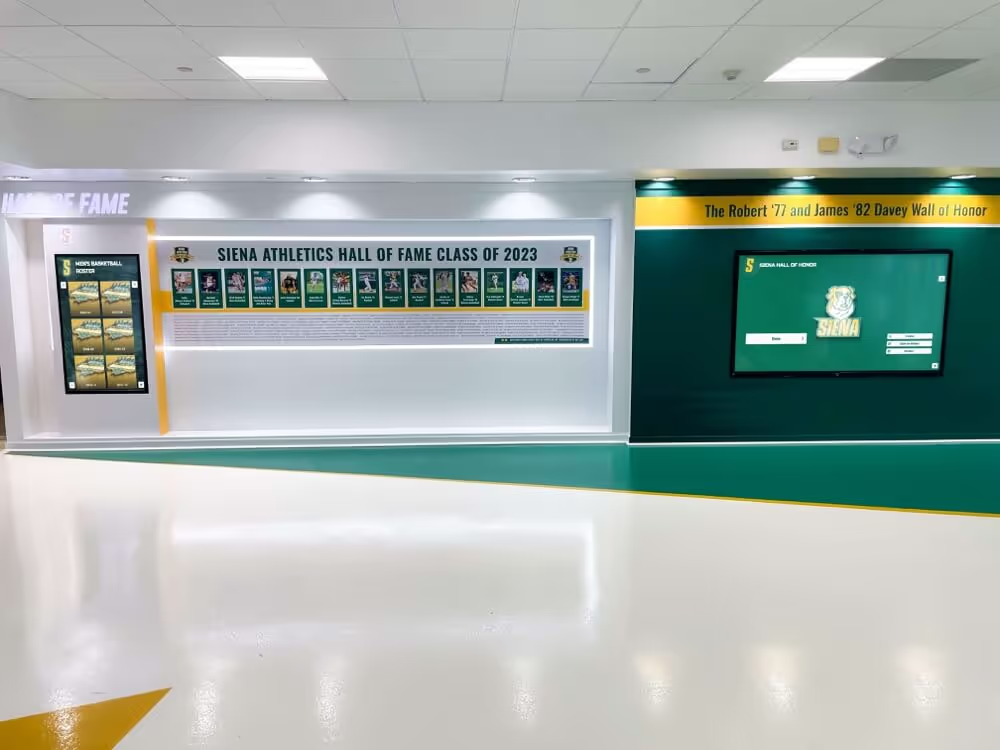
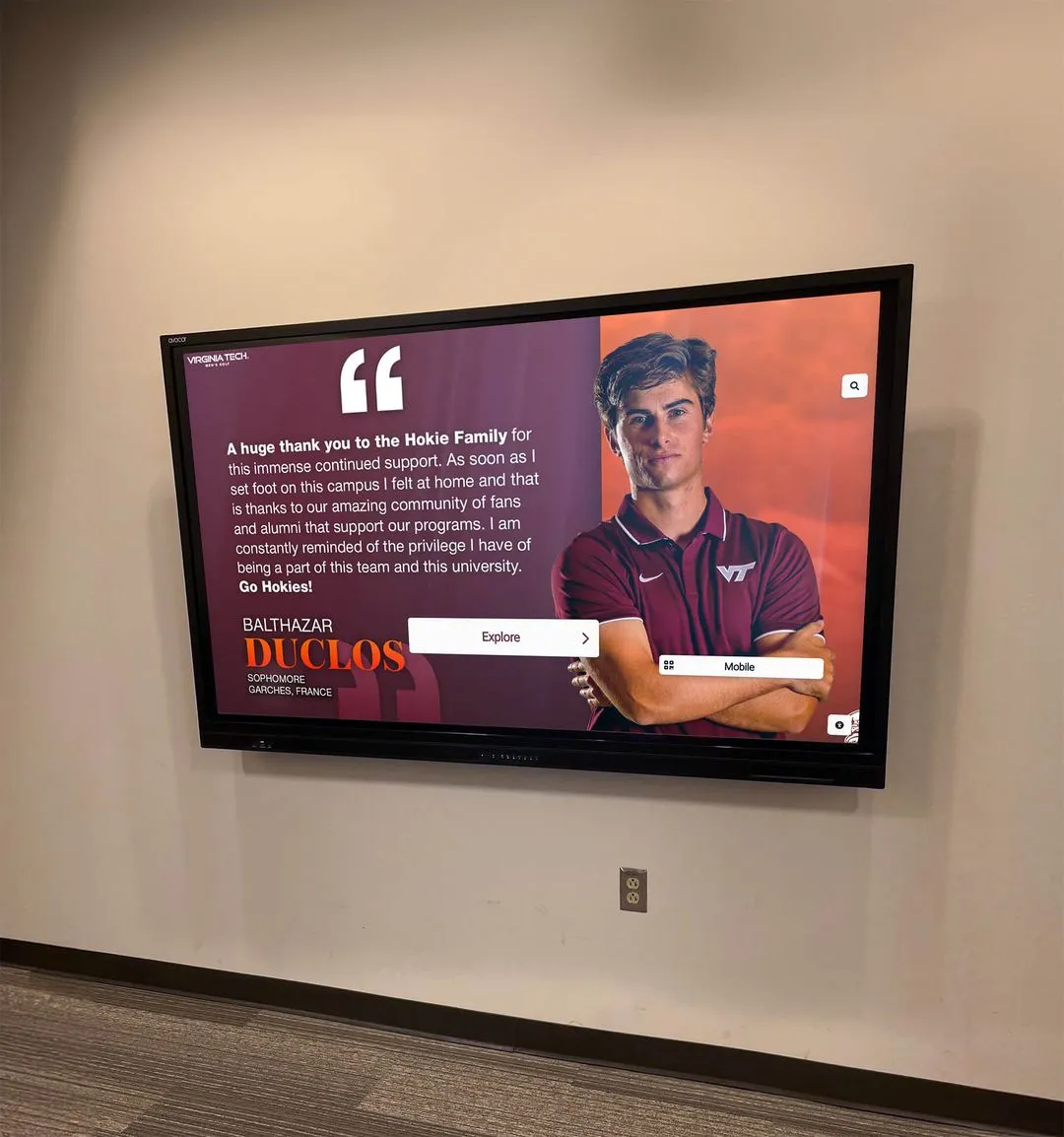
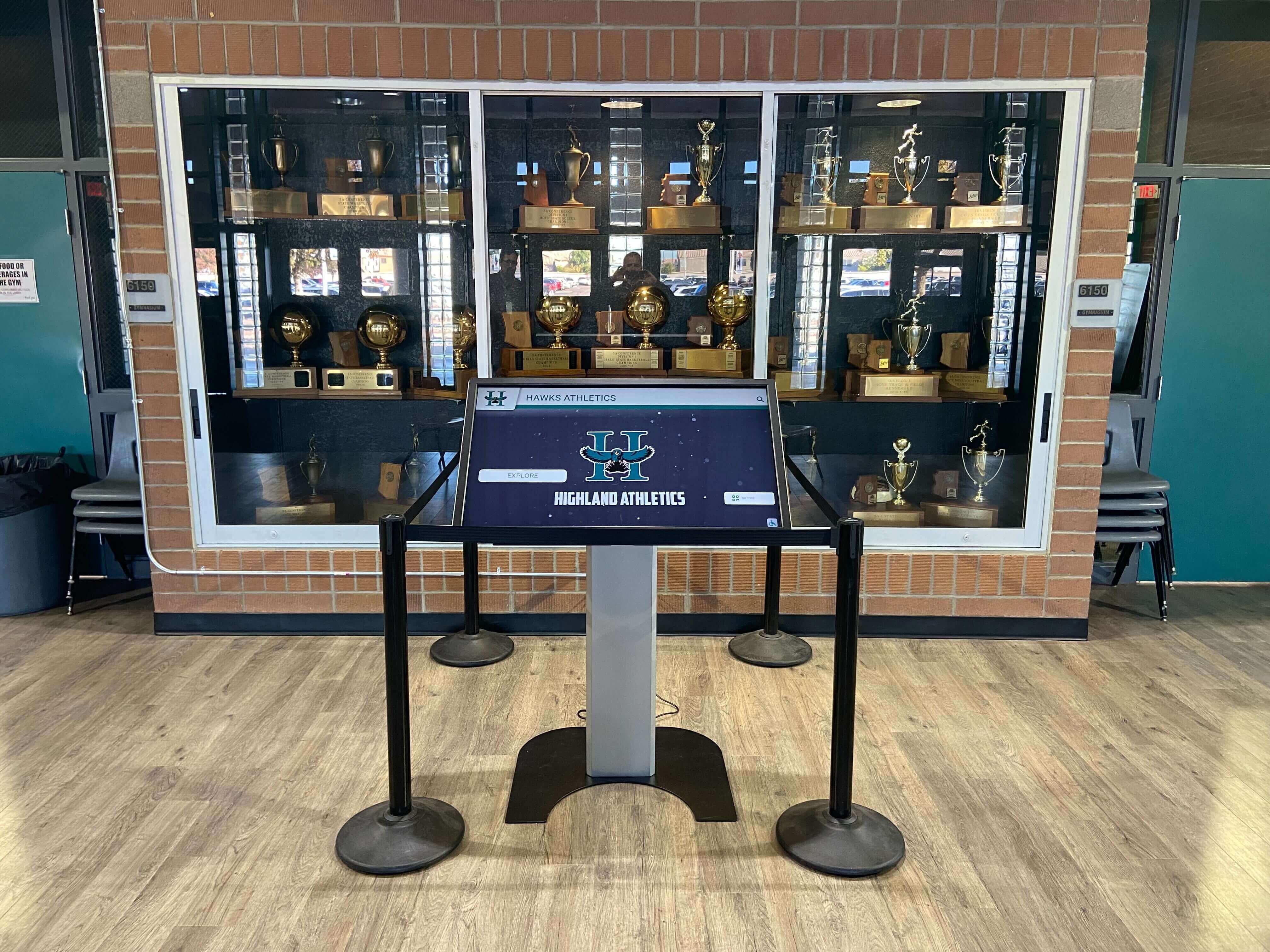
Championship trophy displays require consistent, high-CRI lighting to accurately render award finishes, medals, and school colors for every visitor
Conclusion: Consistent Light, Consistent Recognition
A school trophy case MacAdam ellipse lighting check is a concrete, measurable intervention that protects the visual quality of your recognition program. Inconsistent LEDs accumulate silently over years of individual fixture replacements—each decision looking reasonable at the time—until the cumulative result is a display that no longer presents awards the way they were designed to be seen.
The process is straightforward: document fixtures, let them stabilize, measure chromaticity against a reference, calculate SDCM distances, and replace fixtures that fall outside tolerance with matched-bin replacements rated at 3 SDCM or better. Running this check annually, and after every replacement, keeps your display consistently rendering trophies, school colors, and award finishes with accuracy and professionalism.
For programs where ongoing lighting maintenance proves challenging, or where physical trophy case capacity is reaching its limits, interactive digital hall of fame platforms with built-in accessibility and display auditing offer a complementary or alternative path—with built-in color consistency, unlimited recognition capacity, and features that physical cases cannot replicate.
Explore Digital Recognition for Your School's Trophy Display
See how a digital trophy case platform delivers consistent, vivid award presentation without ongoing LED maintenance. Schedule a demo to walk through how schools are modernizing their recognition displays and expanding what their recognition programs can do.
Schedule Your Demo