



Intent: research — a school trophy case lock cylinder inspection is a structured preventive-maintenance check of the lock mechanism inside each trophy case’s door hardware, performed by facilities or athletics staff to catch wear, debris, and key-control gaps before they become security failures. This guide covers what to inspect and when, how to complete a printable key control log, which wear indicators warrant locksmith escalation, and how connecting physical security discipline to a digital awards system protects the recognition collection beyond what glass and hardware can accomplish alone.
A championship trophy that sits behind locked glass for thirty years is only as secure as the cylinder that controls access to it. Lock cylinders — the removable plug-and-tumbler mechanism housed inside a trophy case door lock — endure years of daily operation, humidity cycles, and accumulated debris without attracting much attention until a key starts sticking or a door refuses to close properly. By that point, the mechanism has been failing quietly for months.
Routine inspection changes that pattern. A systematic school trophy case lock cylinder inspection takes less than twenty minutes per case, produces a documented maintenance record, and catches the early signs of wear that predict failure — before a jammed lock forces an unplanned locksmith call or, worse, leaves a display case inaccessible during a recognition event when the athletic director needs it open.

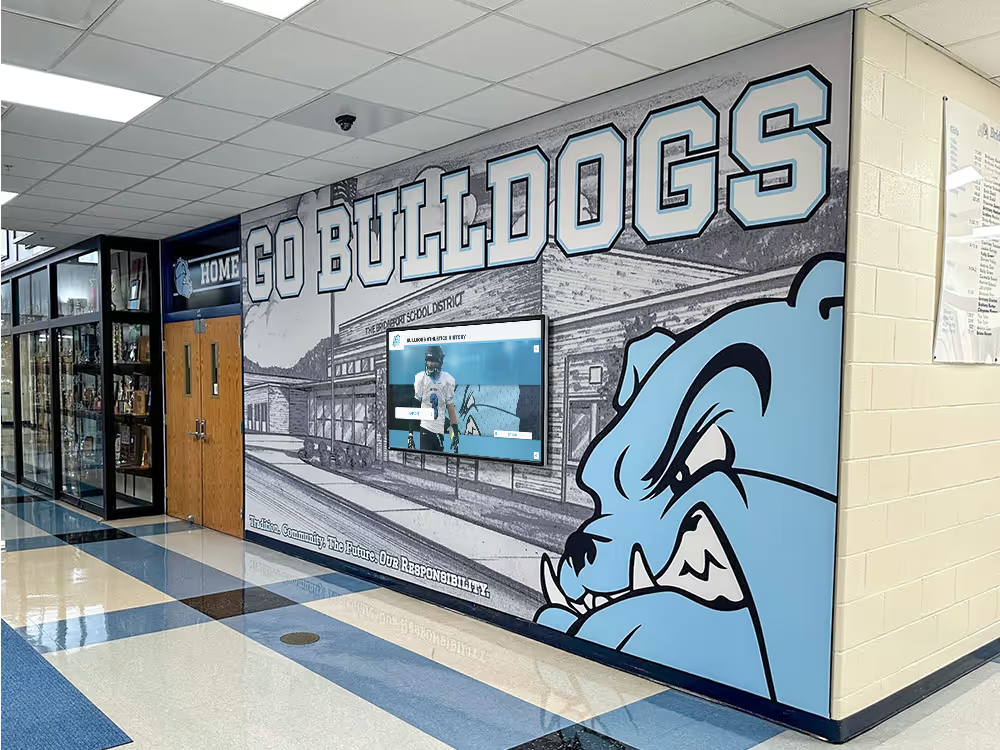
Trophy cases house irreplaceable athletic and academic recognition hardware — the lock cylinders controlling access to each case deserve the same preventive attention as any other critical facility mechanism
What a Lock Cylinder Is and Why It Degrades
The lock cylinder is the cylindrical plug — typically brass or zinc alloy — that sits inside the lock body on a trophy case door. It houses the pin tumbler or wafer stack that the correct key aligns to allow rotation. When aligned, the cylinder rotates and drives the cam or bolt that controls the latch. When worn, contaminated, or corroded, neither a correct key nor a locksmith’s pick can produce smooth operation.
Trophy case cylinders degrade through several mechanisms:
Key-induced wear. Every insertion and withdrawal drags metal across metal inside the keyway. Over hundreds or thousands of operations — in an athletic hallway case that staff open and close for every home game and banquet — the keyway edges round, pin chambers widen, and the rotational feel loosens. Early wear is indistinguishable from normal operation. Advanced wear produces a key that turns with noticeable play, or one that requires extra force to reach the full rotation needed to release the latch.
Debris accumulation. Hallway trophy cases face an environment full of dust, cleaning solution mist, chalk or whiteboard residue, and the fine particulate that collects in any occupied school building. Debris enters the keyway and packs into the shear line between the cylinder plug and housing, increasing friction and eventually binding the mechanism. A cylinder that feels stiff on a Monday after weekend cleaning is often telling you that a cleaning chemical has been sprayed into or near the keyway.
Corrosion. Cases near exterior walls, gymnasiums, or pool facilities experience humidity fluctuations that promote oxidation inside the cylinder. Brass alloy cylinders are relatively corrosion-resistant, but the steel springs and pins inside them are not. A cylinder that has begun to corrode internally will feel gritty on insertion and develop intermittent binding that worsens in humid conditions.
Key proliferation. The lock cylinder cannot protect a display case if copies of the key are circulating without documentation. Key control drift — the gradual loss of accountability for who holds copies of the working key — is the most common security failure in school trophy case management, and it is one that inspection and logging can address directly.
Pre-Inspection Preparation
Before beginning a school trophy case lock cylinder inspection cycle, gather these items:
- The master key (or individual case keys, if the facility does not operate a master system)
- A flashlight or inspection light with a narrow beam
- A clean cotton cloth and isopropyl alcohol (90% or higher) for exterior cleaning
- A graphite lubricant in powder or spray form (not petroleum-based oil, which attracts debris)
- The key control log for the case or suite of cases being inspected
- A camera or phone for photographing any wear or damage found
Do not use WD-40 or any petroleum-based lubricant inside a lock cylinder. These products displace moisture temporarily but leave an oily residue that traps dust and debris, accelerating the fouling that causes future binding.
Eight-Step Inspection Sequence
The following numbered sequence covers a complete inspection of one trophy case lock cylinder. Apply it to every case in your facility on the same schedule — typically once per semester at minimum, or quarterly for cases in high-humidity or high-traffic areas.
Step 1: Document the starting condition. Before touching the lock, note whether the cylinder rotates freely before any cleaning or lubrication. Record the current key operation quality (smooth, stiff, binding, intermittent catch) in the inspection log. This baseline matters because it establishes whether any improvement after lubrication is real maintenance progress or temporary masking of a worn mechanism.
Step 2: Inspect the keyway exterior. Hold the inspection light at an angle to the keyway opening and examine the leading edges of the keyway profile. Early wear shows as a rounding or polishing of the keyway ridges — the brass takes on a burnished appearance compared to the matte finish of an unworn surface. Significant wear produces visible rounding of the bitting warding, sometimes visible without magnification. Photograph any obvious wear for the maintenance record.
Step 3: Check for debris and contamination. Shine the light directly into the keyway and look for compacted dust, dried cleaning solution residue, or discoloration that indicates corrosion entering the mechanism. A keyway that is visibly packed with debris warrants a light compressed-air clearing before further inspection — but direct compressed air into the keyway at low pressure only, and cover the surrounding case surface to catch any expelled material.
Step 4: Insert the key and assess resistance. Insert the working key slowly, noting any point along the travel where you feel increased resistance, gritty feedback, or a catch. Normal pin-tumbler operation produces a smooth insertion with light spring resistance from the pins. Any grit, catch, or sticking point that does not resolve on a second insertion indicates debris or pin damage that lubrication may not fully resolve.
Step 5: Test the full rotation and latch operation. With the key fully inserted, turn through the full rotation required to release the latch. Note whether the rotation is uniform or whether you feel a dead spot, stiff point, or excessive play at any position in the arc. Excess play — where the cylinder rotates slightly before engaging the cam — indicates that the cam slot is worn. Stiff points at the same rotational position on each test indicate debris or a damaged pin at that shear-line position.
Step 6: Inspect the door and frame alignment. A correctly functioning cylinder can still produce a case that feels difficult to lock if door alignment has shifted. Check that the latch bolt engages cleanly with the strike plate on the case frame. Misalignment — caused by case settling, hinge wear, or thermal expansion of the frame — puts lateral stress on the latch bolt that transfers to the cylinder cam. Documenting misalignment separately from cylinder wear prevents misattributing a door-alignment problem to a worn cylinder.
Step 7: Apply graphite lubrication. If the cylinder passes the functional test with acceptable (though not perfect) operation, apply a light application of graphite lubricant directly into the keyway. Insert and withdraw the key several times to distribute the lubricant across the pin chambers. Wipe any excess graphite from the exterior keyway with the cotton cloth. Do not apply lubricant to cylinders that are already binding significantly — lubrication will not restore a cylinder that has worn past the functional threshold, and it will delay the escalation decision that the mechanism actually requires.
Step 8: Record findings and next action. Complete the inspection log entry with: the date, inspector name, cylinder condition rating, any abnormalities found, lubricant applied (yes/no), door alignment status, and recommended next action (no action needed / reinspect next quarter / schedule locksmith evaluation / replace cylinder). File the record in the maintenance log system and flag any cases requiring escalation for scheduling.
Key Control Log: A Copyable Field Table
The key control log is the companion document to the inspection record. Where the inspection log tracks the condition of the mechanism, the key control log tracks every key copy in existence — who holds it, when it was issued, and when it was returned. Together, these two documents cover both the hardware and the access side of trophy case security.
The table below represents a complete key control log for a school trophy case suite. Replicate it in a spreadsheet, a printed binder, or your facility management system. One row per key copy, updated at every issuance, return, or rekey event.
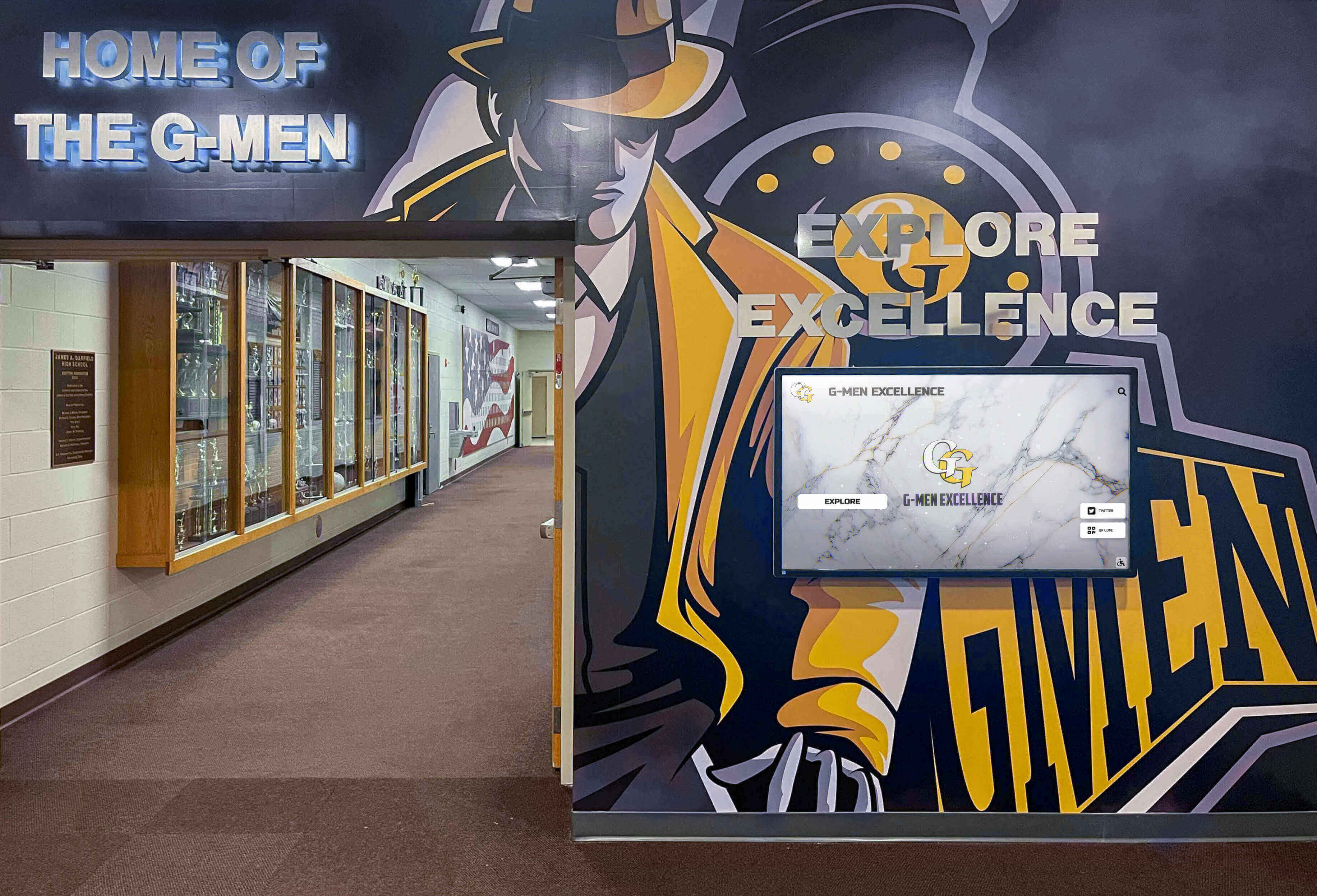
High-traffic athletic hallways with trophy cases require documented key accountability — the key control log tracks every copy from issuance through return or rekey
| Field | What to Record |
|---|---|
| Case / Lock ID | Unique identifier for the case and cylinder: e.g., “MAIN-HALL-CASE-3” |
| Key Copy Number | Sequential copy number (Master / Copy 1 / Copy 2 / etc.) |
| Key Cut Identifier | Key serial or bitting code if recorded by the locksmith at issuance |
| Issued To (Name) | Full name of the staff member receiving this copy |
| Issued To (Title) | Job title: Athletic Director / Head Custodian / Head Coach / Front Office / Other |
| Issue Date | Date and time this copy was issued |
| Issuing Authority | Name of administrator authorizing this key issuance |
| Purpose | Reason this copy is needed: daily access / event setup / maintenance coverage / temporary loan |
| Return Date (Expected) | Agreed return date if this is a temporary issuance |
| Return Date (Actual) | Date the key was physically returned |
| Returned To | Name of staff member receiving the returned key |
| Condition on Return | Key condition: Good / Bent / Worn / Not Returned |
| Copy Destroyed / Retired | Date a copy was cut, destroyed, or documented as lost — and who authorized it |
| Rekey Event | If this log entry is associated with a rekey event, note the rekey date and reason |
| Notes | Any additional context: donor sensitivity, restricted-access cases, temporary deputy authorization |
Conduct a key audit — comparing every issued key copy to its expected holder — at the start of each semester and whenever a staff member with key access changes roles or leaves the school. Any key that cannot be physically accounted for is grounds for scheduling a rekey, regardless of the cylinder’s physical condition.
Schools whose athletic collections include academic achievement awards and high school recognition hardware spanning multiple decades have particular reason to maintain tight key accountability — the awards most likely to attract unauthorized access are the historically significant ones, not the most recent plaques.
Inspection Frequency by Location and Risk Level
Not every trophy case in a school requires the same inspection frequency. Use the following risk-tiered schedule as a starting point, adjusting based on your facility’s specific conditions.
Quarterly inspection (highest priority):
- Cases in or adjacent to gymnasiums, pool facilities, or exterior-facing hallways subject to humidity fluctuations
- Cases that see daily or near-daily operation (athletic office display cases, main lobby cases opened for events)
- Any case with a previously documented history of cylinder problems or key replacement
Semiannual inspection (standard priority):
- Interior hallway cases in climate-controlled corridors with low daily traffic
- Cases that are opened primarily for cleaning and seasonal display rotations
Annual inspection (minimum for any case):
- Rarely accessed storage-adjacent cases
- Cases that have been recently rekeyed or fitted with a new cylinder
Any case that triggers a complaint from a staff member — a key that suddenly feels stiff, a door that does not latch cleanly — should receive an unscheduled inspection immediately, regardless of when the last scheduled check occurred.
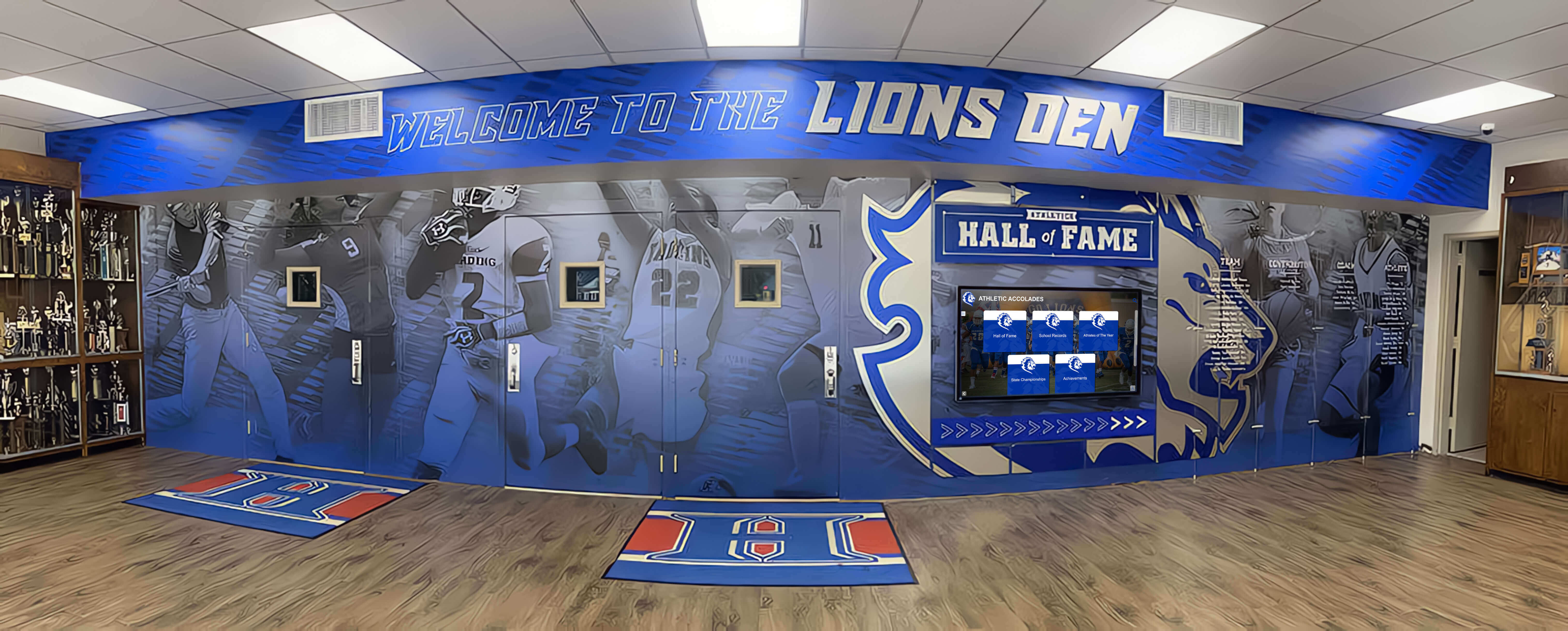
Trophy cases displaying championship legacy across multiple decades require consistent lock maintenance — the mechanism protecting a 1987 state championship trophy should not be the last thing inspected
Wear Indicators That Require Locksmith Escalation
The inspection sequence above identifies three conditions that facilities staff can address with cleaning and lubrication. The following indicators are beyond routine maintenance and require a qualified locksmith’s evaluation before the next use cycle.
Intermittent key failure. If the working key fails to rotate the cylinder consistently across multiple insertions — succeeding on one attempt and binding on the next — the cylinder has likely developed a sheared or deformed pin that is catching unpredictably. Continued operation risks a failed extraction that leaves the key stuck inside the cylinder.
Key insertion requiring above-normal force. If inserting the key requires pushing harder than comparable cylinders in your facility, the keyway has likely accumulated debris that compressed air and a blowing-out attempt did not resolve, or the cylinder housing has deformed slightly. Forcing a key into a binding cylinder risks snapping the key inside the mechanism.
Visible scoring or deformation of the keyway opening. Scoring around the keyway — scratch marks radiating from the opening — sometimes indicates a previous unauthorized entry attempt. Even if the cylinder functions normally after scoring, the mechanism should be evaluated by a locksmith before its next regular use.
Key wobble with the key fully inserted. If a correctly inserted key wobbles laterally or vertically within the cylinder (distinct from the vertical clearance all keys have), the pin chambers have worn to the point that the key is no longer seating properly. The cylinder will continue to function temporarily but will fail unpredictably.
Any situation following a lost or unaccounted key. A key control log that cannot account for an issued copy is a security event, not a paperwork oversight. Standard practice is to rekey the affected lock before the next scheduled use — regardless of the cylinder’s physical condition — and to issue new copies only to verified, documented holders.
Connecting Physical Security to Your Digital Recognition Record
A locked trophy case protects the physical objects inside it. It does not protect the institutional record those objects represent. A championship trophy can be damaged, stolen, or lost to a facility fire; the detailed recognition history it embodies — the athlete names, the season records, the significance of the achievement in the program’s history — survives only if that record exists somewhere other than the glass case.
Schools building comprehensive recognition programs understand that physical security and digital preservation serve complementary purposes. Athletics programs that recognize scholar-athletes beyond the announcement moment with permanent digital records protect the athlete’s recognition regardless of what happens to a physical plaque. Recognition programs that catalog academic All-American award criteria and achievement context give that history a permanent home that does not depend on a lock cylinder functioning correctly.
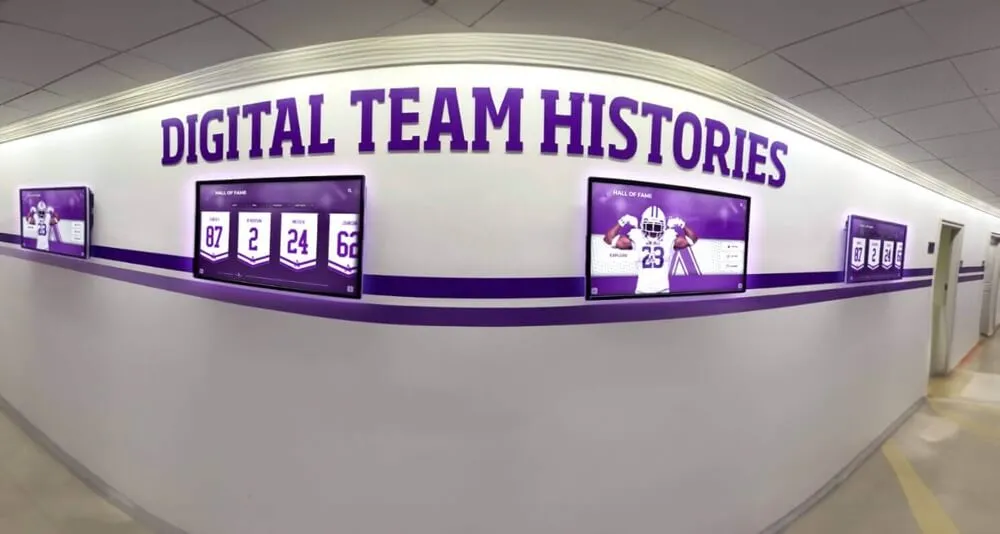
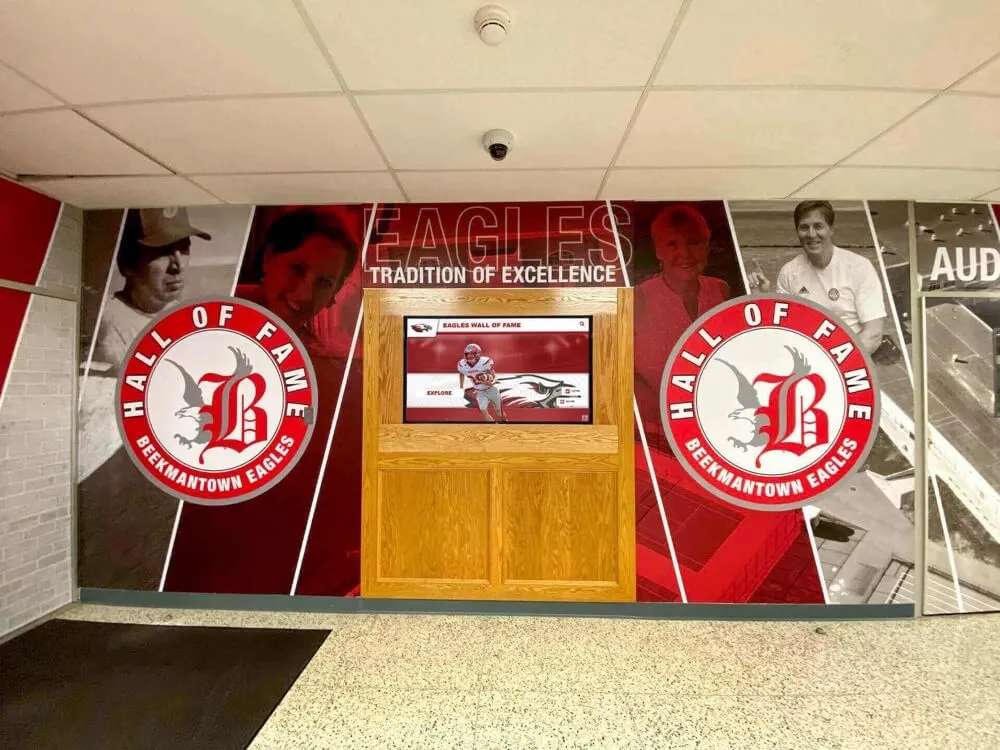
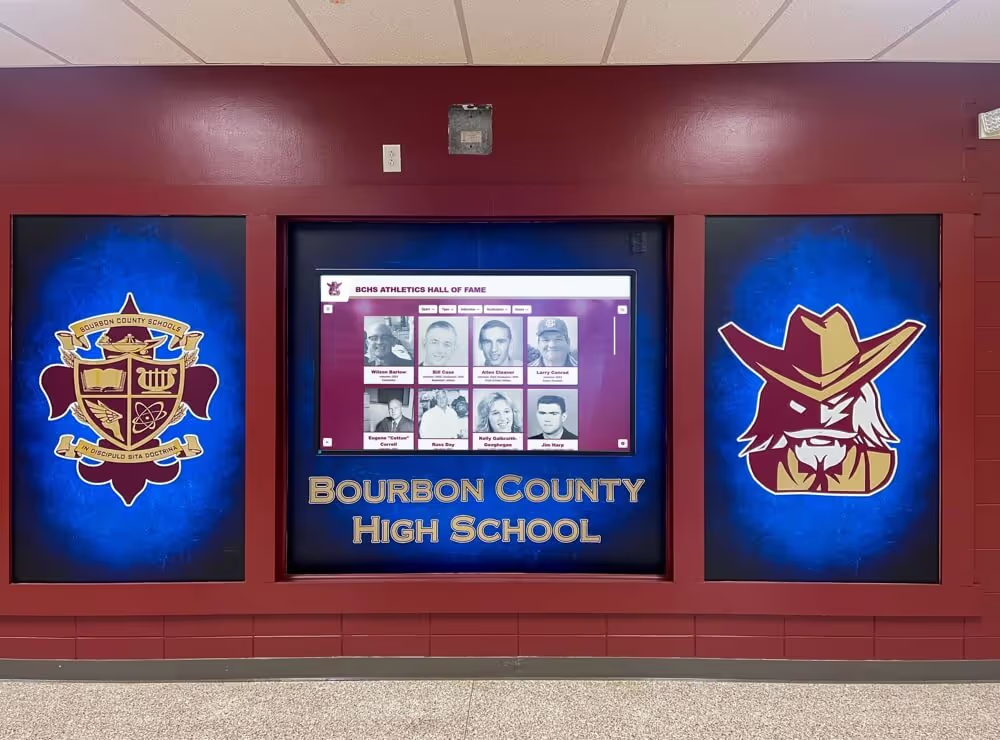
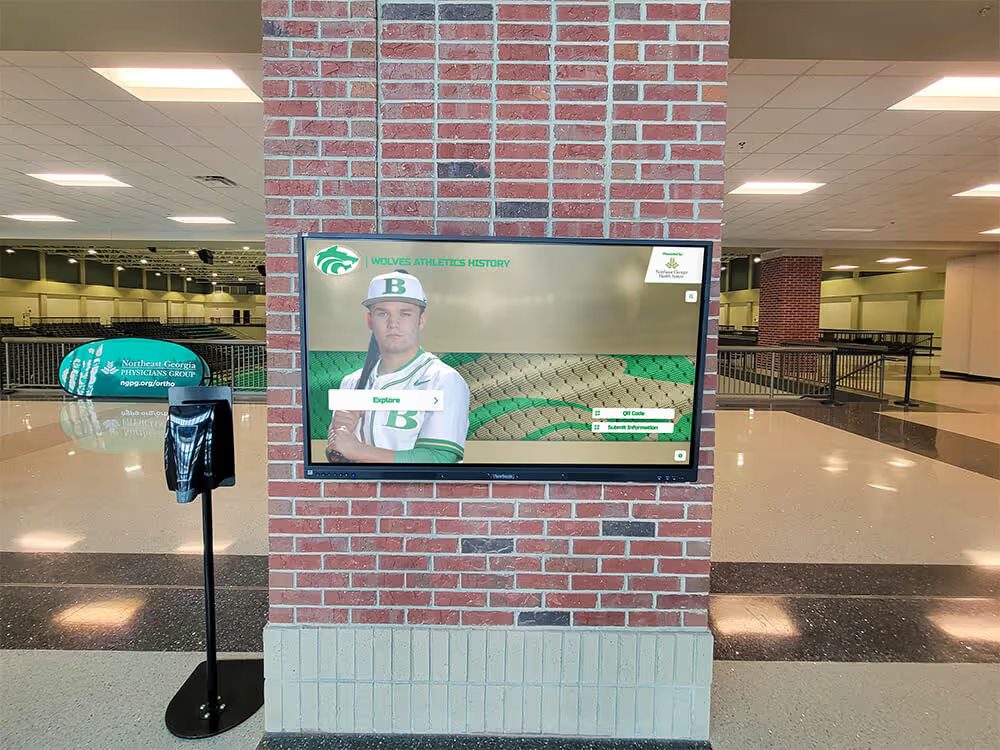
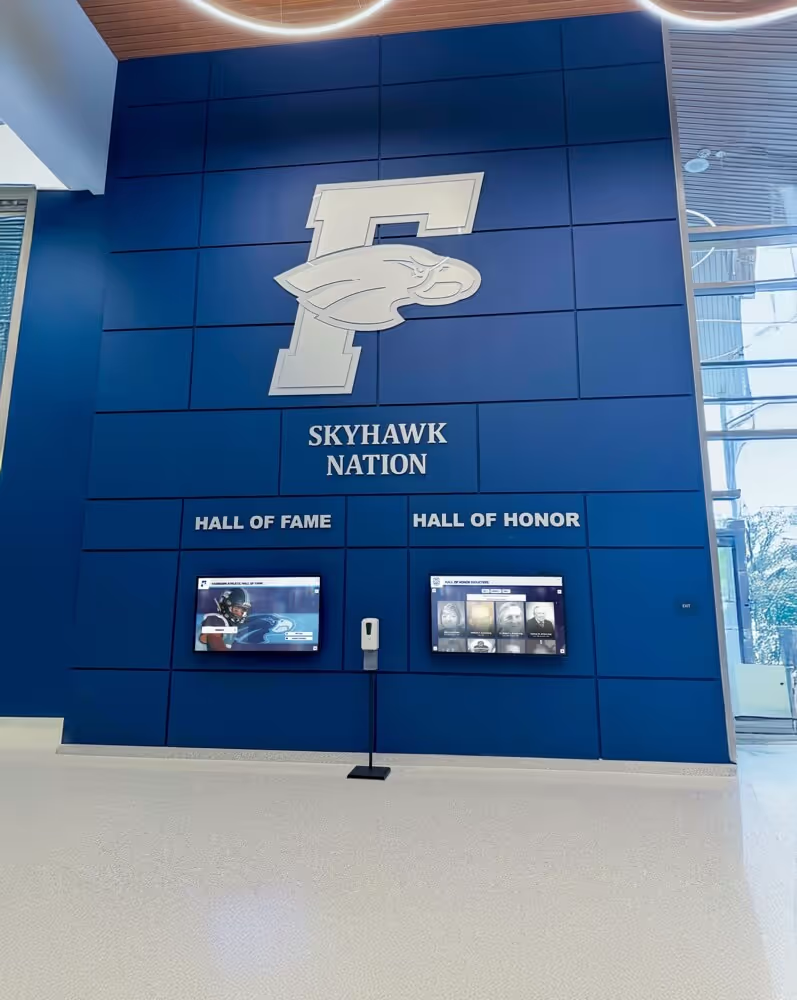
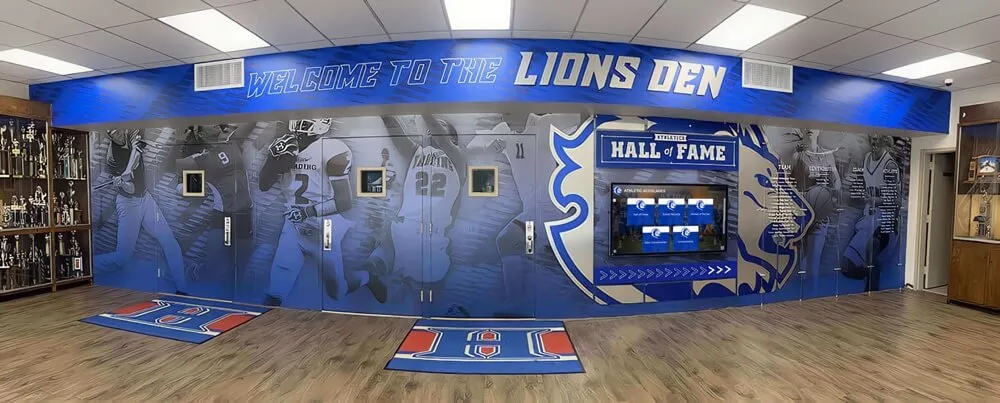
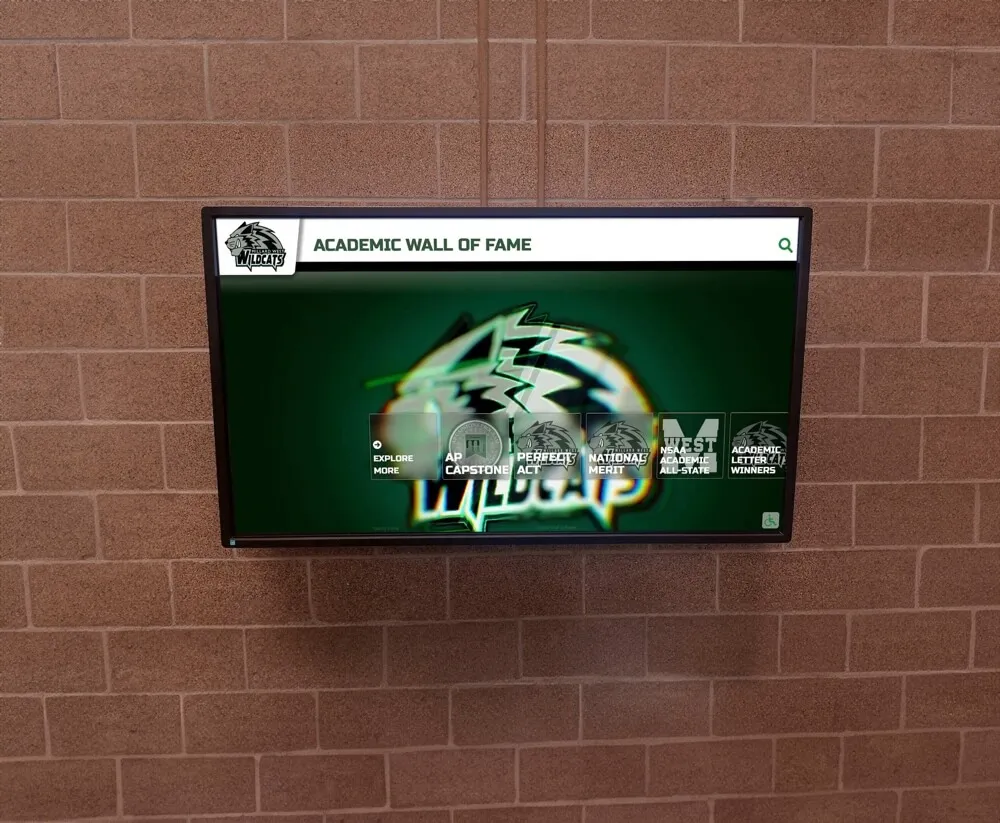
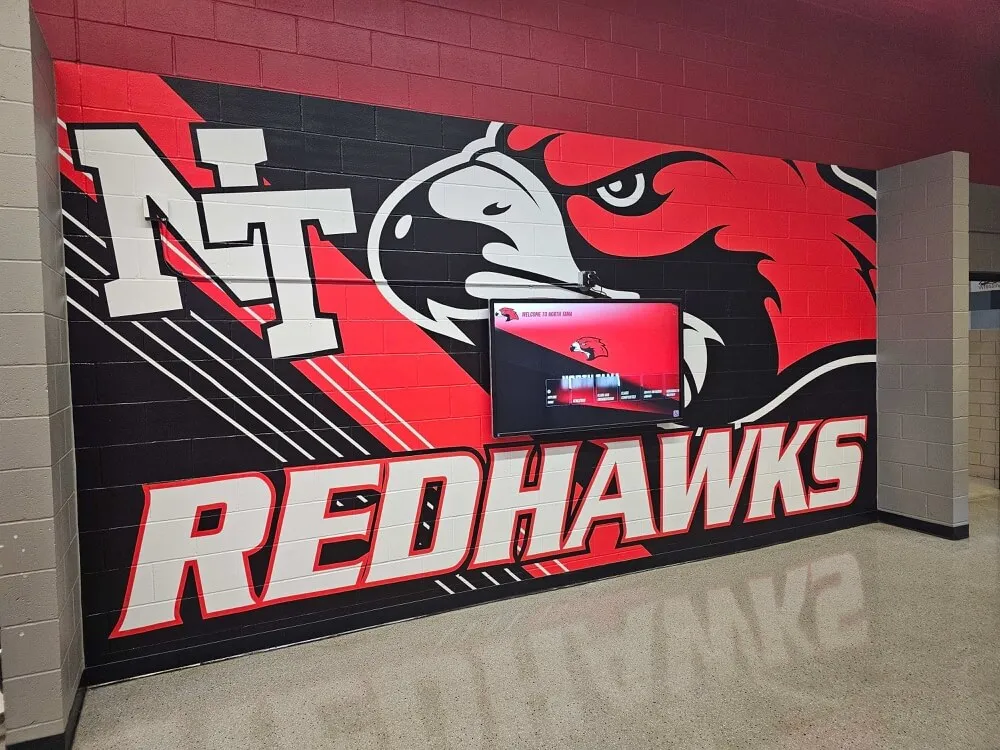
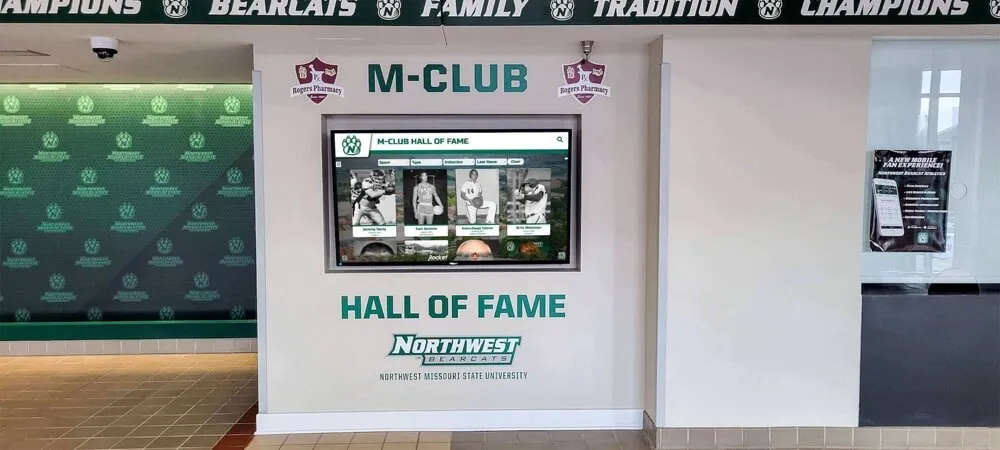
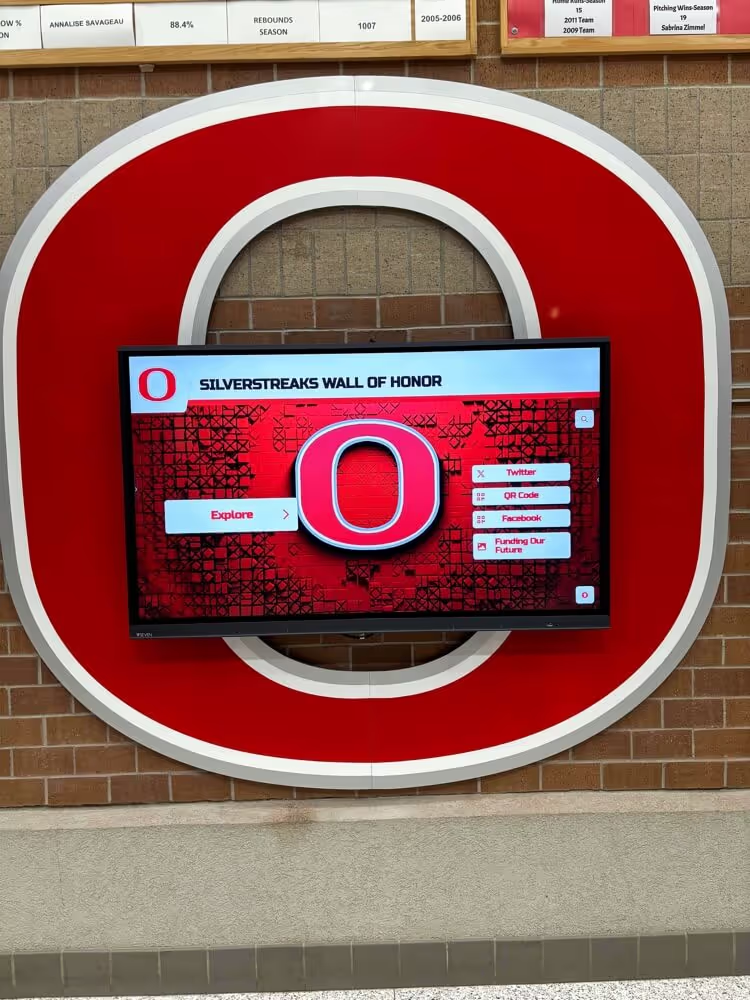
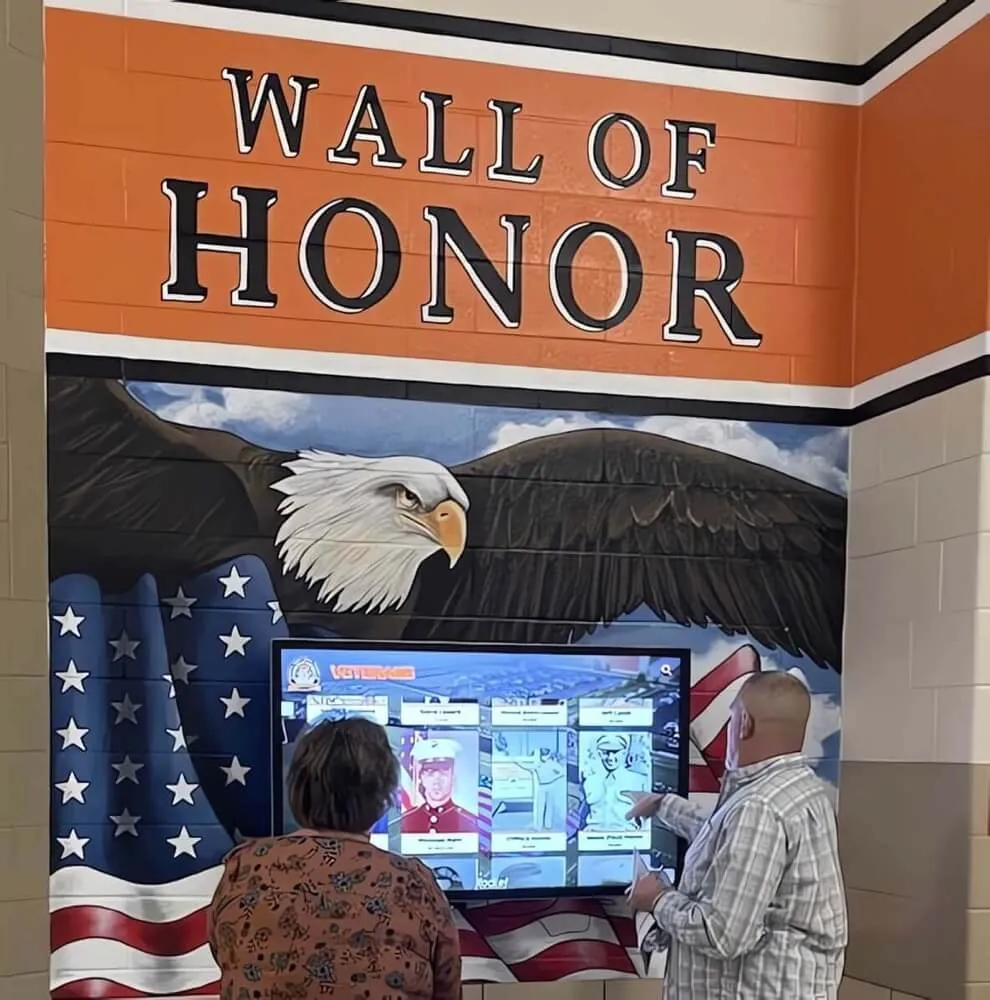
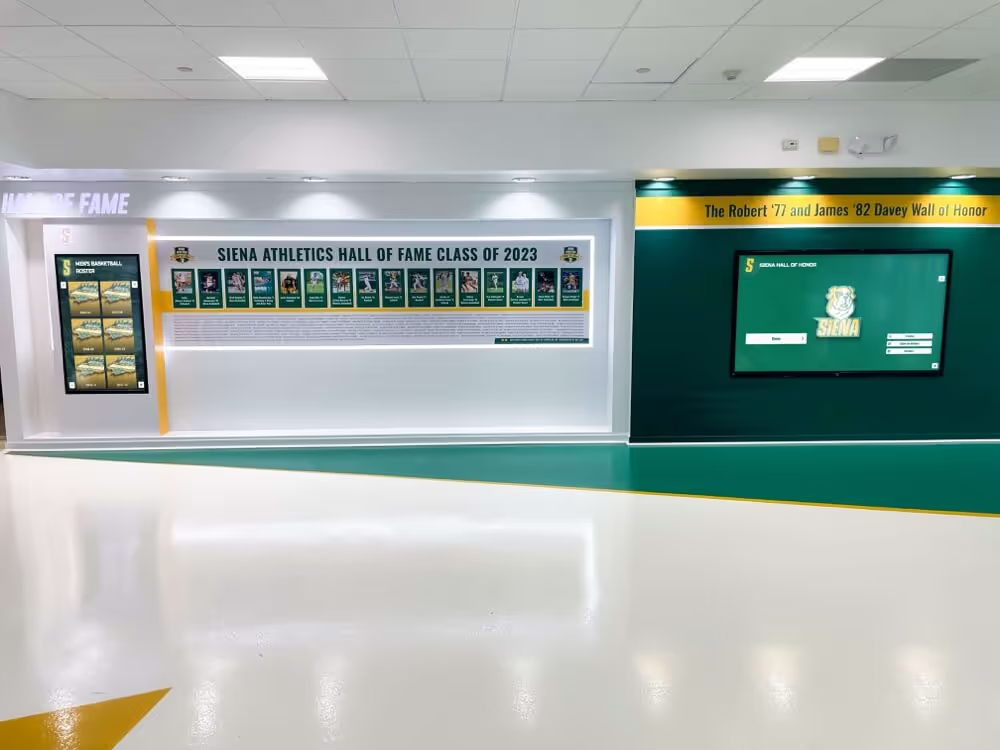
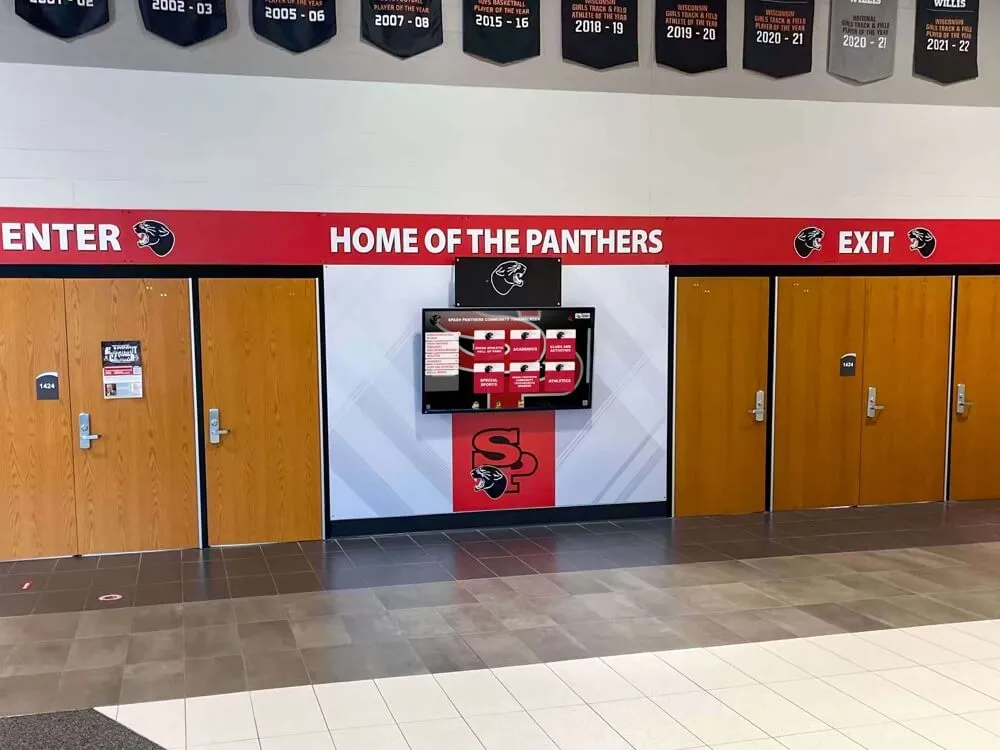
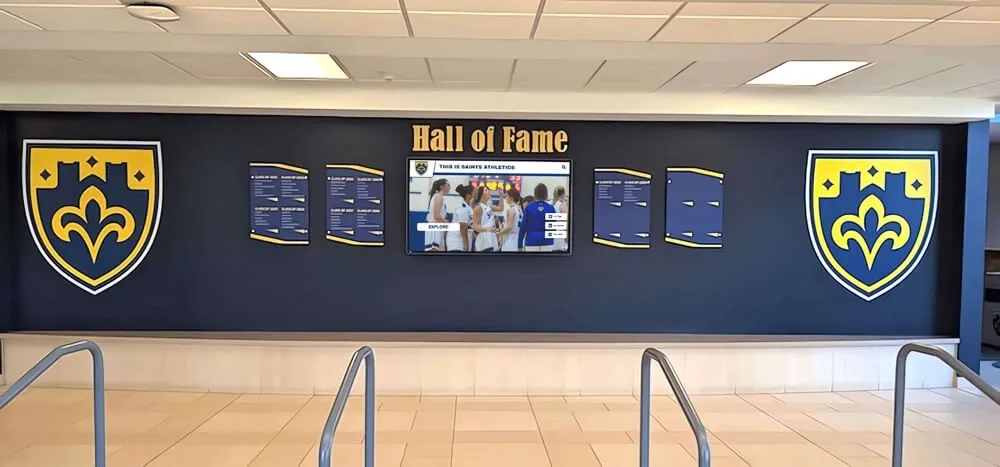
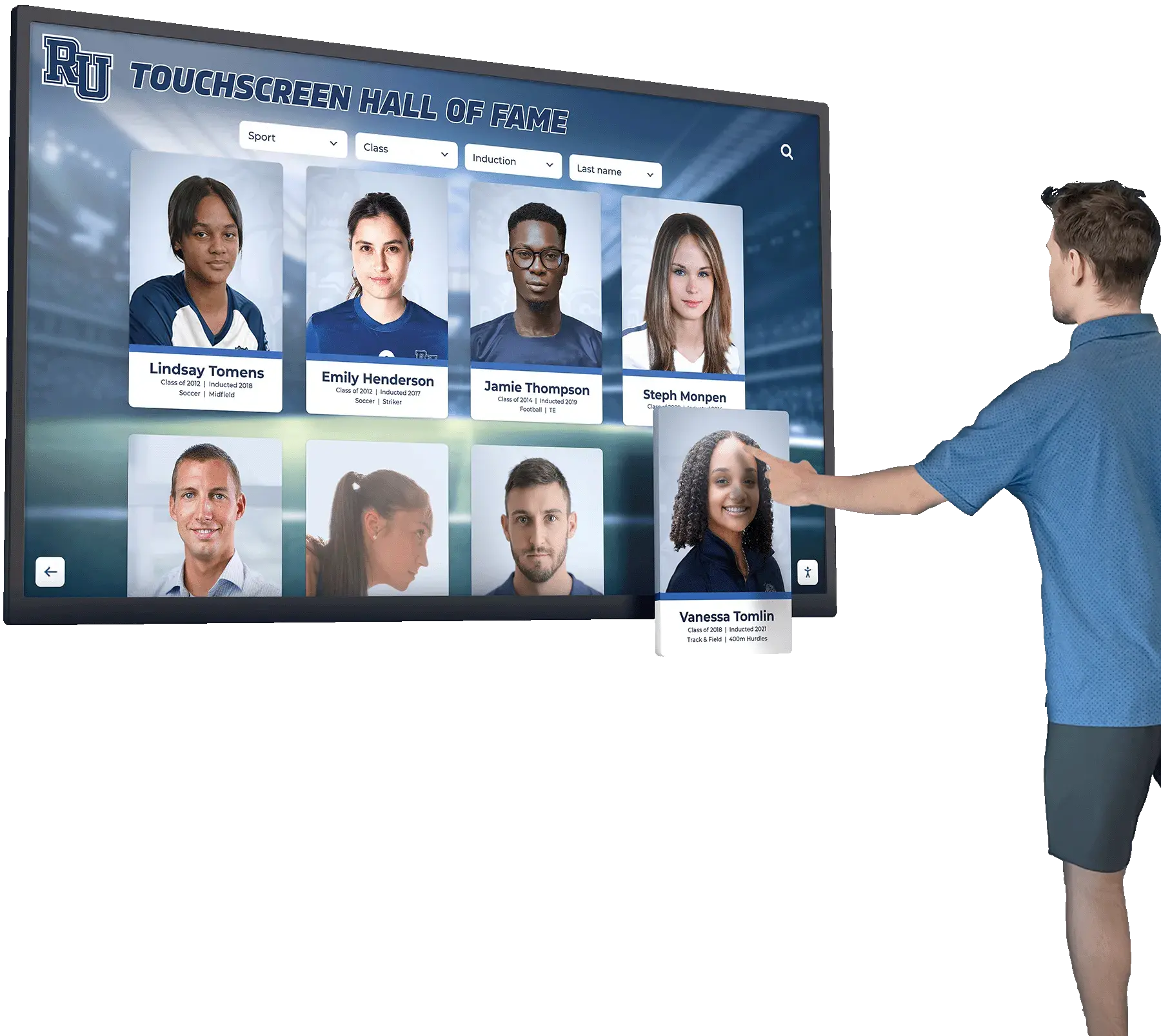
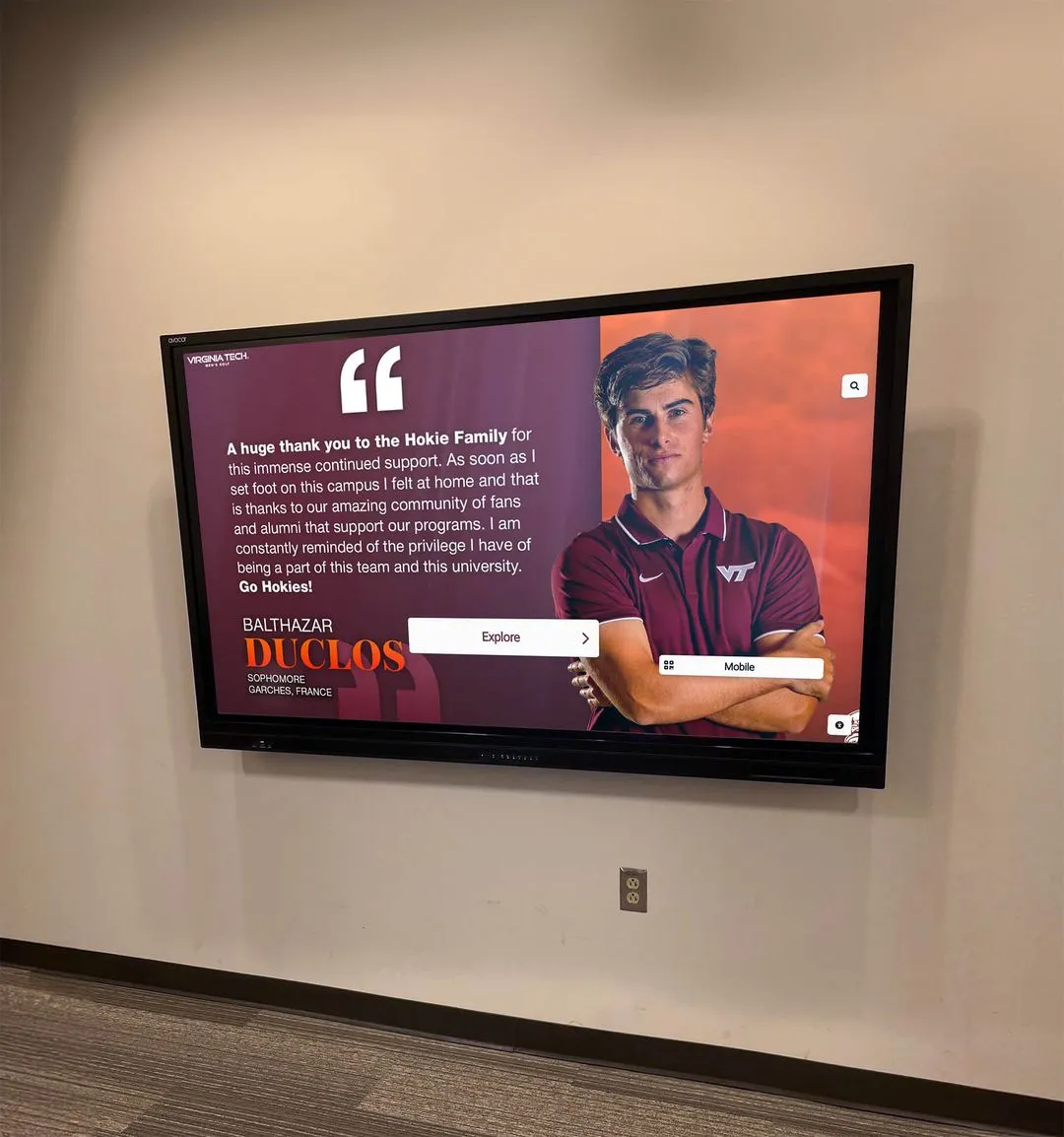
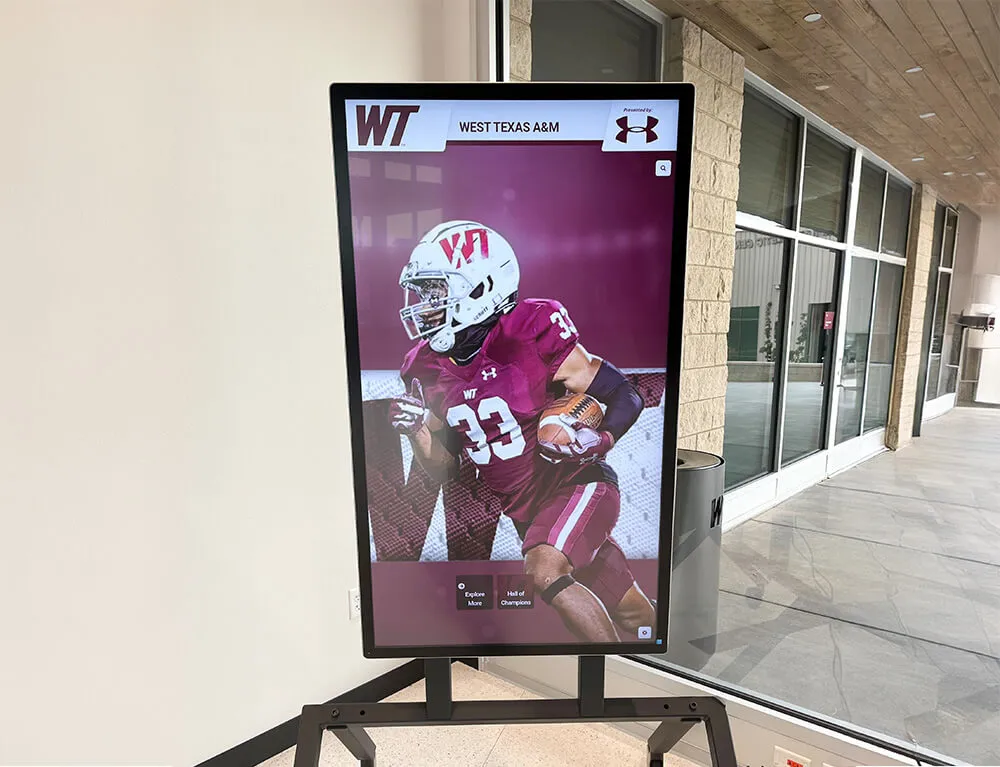
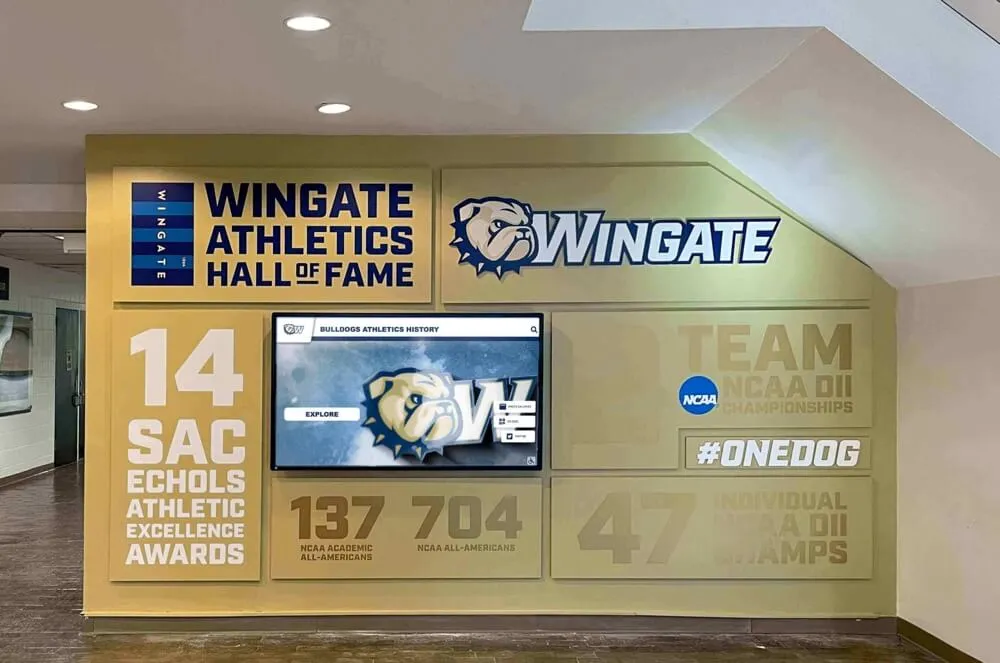
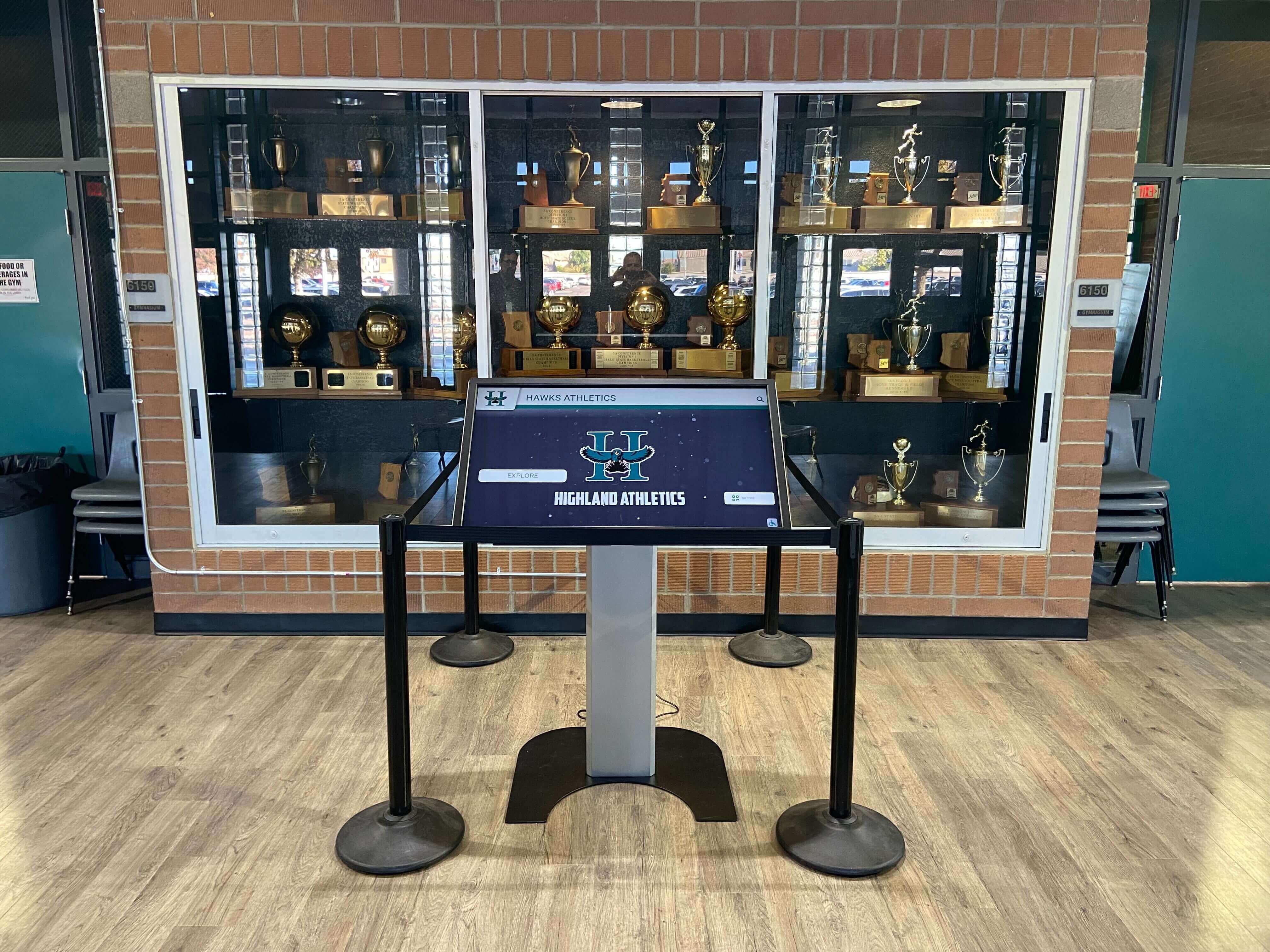
Digital trophy case platforms hold the complete recognition record — championship banners, individual awards, hall of fame entries, academic decathlon achievements and scholar team histories — as a cloud-managed archive accessible through a touchscreen display, a QR code on a mobile device, or a remote CMS login from any connected device. When a physical case is inaccessible for maintenance, renovation, or a lock failure, the recognition history remains available. When a physical artifact is out on loan, the digital entry remains in the display. The two systems are not redundant — they cover different risks.
Schools exploring this pairing often start by documenting their most historically significant holdings: the programs, seasons, and individuals who represent the institution’s identity over time. The full range of hall of fame tools available to athletics, donor relations, and arts programs illustrates how varied digital recognition options have become — the documentation discipline behind a lock cylinder inspection feeds naturally into the same culture of accountability that makes a digital archive trustworthy.
Physical security and digital preservation work together. A cloud-managed digital trophy case keeps your complete recognition history accessible and documented — even when individual cases are under maintenance, rekeyed, or temporarily inaccessible.
See how digital trophy case platforms protect recognition records →
Organizing Inspection and Key Control Records
Completed inspection logs and key control records belong in a structured, accessible filing system — not in a desk drawer that changes occupants when staff turn over.
For paper records: Maintain a dedicated three-ring binder in the athletic or facilities office divided into two sections — inspection logs and key control logs — with subsections by case location. At the start of each academic year, review all open key issuances and any inspection records showing deferred action, and resolve outstanding items before the year’s first recognition events.
For digital records: A shared spreadsheet with restricted editing access — staff who conduct inspections and issue keys can add rows; the athletic director and facilities manager have view access — provides accountability without requiring a dedicated software system. Back up digital key control records at least monthly. Key control logs specifically are sensitive records; restrict access appropriately and do not store them in shared drives with broad access.
Transition planning: When an athletic director, head custodian, or facilities coordinator changes, the key control log for all trophy case locks should be reviewed as part of the formal transition. Any key copies issued to the departing staff member should be collected, documented, and either voided or reissued. Any copies that cannot be accounted for trigger a rekey before the new staff member assumes responsibility.
Schools whose trophy cases house significant collections — records from programs going back decades, artifacts connected to alumni who went on to professional or distinguished careers — may also find value in reviewing their youth sports awards programs and historical recognition frameworks as they build out their catalog, since early-career recognition often feeds directly into the collection that their trophy cases eventually display.
Frequently Asked Questions
What is a lock cylinder in a school trophy case? A lock cylinder is the plug-and-tumbler mechanism inside a trophy case door lock. It is the removable component that the key engages — turning the cylinder rotates a cam or drives a bolt that controls whether the door can open. Most trophy case cylinders use a pin tumbler or wafer design. The cylinder is the mechanical core of the lock; when it wears, corrodes, or becomes contaminated, the lock fails regardless of the condition of the surrounding hardware.
How often should schools perform a trophy case lock cylinder inspection? At minimum, inspect each case once per year. Cases in humid environments (near gymnasiums, pools, or exterior walls) or in daily use should be inspected quarterly. Any case that generates a complaint — a stiff key, an intermittent latch — warrants an immediate unscheduled inspection regardless of the regular schedule.
What lubricant should be used in a trophy case lock cylinder? Use graphite lubricant — either powdered graphite or graphite spray — applied directly into the keyway. Do not use petroleum-based oils, WD-40, or general-purpose spray lubricants. These products attract dust and debris that pack the pin chambers over time, causing the binding they were applied to prevent.
What should be included in a trophy case key control log? At minimum: the case identifier, each key copy’s unique number, the name and title of the holder, the issue date, the authorizing administrator, and the actual return date when a key is collected. Add a column for rekey events so that the log captures when the lock was changed and why. Reviewing this log each semester is more useful than reviewing it annually — gaps in accountability compound faster than they appear.
When should a school rekey a trophy case lock? Rekey when: a key copy cannot be physically accounted for; a staff member with key access leaves or changes roles without returning their copy; visible scoring around the keyway indicates a possible unauthorized entry attempt; or when the cylinder has been in continuous service beyond the manufacturer’s recommended service interval (typically 7–10 years for a standard pin tumbler cylinder in institutional use). Rekeying earlier than necessary is always the lower-risk choice.
How does a digital trophy case system complement physical lock security? A digital trophy case platform protects the recognition record — athlete names, achievement descriptions, historical photographs, championship documentation — as a permanent cloud-managed archive. Physical locks protect the hardware artifacts. If a physical case becomes inaccessible due to a lock failure, renovation, or emergency, the digital record remains fully available to staff, visitors, and alumni. Schools using digital systems for 10-year high school reunion programming and long-term alumni recognition rely on this persistence — the recognition history exists regardless of which physical case happens to be open at a given moment.
Who should be responsible for the school trophy case lock cylinder inspection program? Shared responsibility works best: facilities staff own the mechanical inspection and lubrication; the athletic director owns the key control log and authorization decisions; and the school administrator (principal or assistant principal) authorizes any rekey event or locksmith engagement. Documenting these roles in writing prevents accountability gaps when any of the three positions turns over.
Protect Your School's Recognition History — Beyond the Lock Cylinder
Rocket Alumni Solutions builds interactive digital trophy cases and touchscreen walls of fame for schools nationwide. Cloud-managed updates, unlimited recognition capacity, ADA WCAG 2.1 AA compliant displays, and QR code mobile access — so your complete championship history, hall of fame records, and individual achievement archive stay accessible regardless of what is happening with your physical cases. See how schools are building permanent digital recognition programs that complement their physical trophy case security systems.
Book A Demo