



Intent: research — a school trophy case hinge alignment inspection is a structured evaluation of the pivot hardware, mounting screws, frame attachment points, and door clearance gaps on enclosed display case doors, conducted to confirm that each door hangs at the correct angle, closes squarely against the frame seal, and applies no lateral or torsional stress to its glass panel. Hinges that have shifted from their original position — through screw loosening, mounting-board swelling, repeated door cycling under load, or frame racking from building settlement — place sustained mechanical stress on the glass panel attached to the door. Because trophy case glass is typically not rated for lateral bending, progressive hinge misalignment can produce micro-fractures that propagate without visible indication until the panel fails. This guide explains how to identify hinge misalignment on school trophy case doors, conduct a systematic inspection across the building’s case inventory, and determine which conditions require in-house adjustment versus vendor or glazing-contractor escalation.
A school trophy case door that sags even a few millimeters from its correct hanging position is placing mechanical stress on the glass panel it carries. The stress is not visible under normal corridor lighting, the door often still appears to close, and the hinge hardware may show no obvious sign of loosening — but the glass panel attached to that door is being bent at a small but sustained angle it is not designed to sustain. Over months of repeated thermal cycling and door access, that stress concentrates at the point where glass meets its frame channel and can produce micro-fractures that progress to sudden failure without warning.
A school trophy case hinge alignment inspection addresses this preventable failure systematically. Rather than waiting for a door to drop visibly out of position or for glass to crack during a routine awards update, the inspection establishes the actual alignment state of every hinge point across the building’s trophy case inventory — identifying marginal conditions before they become structural ones and providing facilities teams with a documented basis for prioritizing remediation.

Every glass-door trophy case in a school building — including cases in secondary corridors, gymnasium vestibules, and lobby alcoves — requires a documented hinge alignment assessment as part of the regular facilities maintenance cycle
Why Hinge Alignment Matters on School Trophy Case Doors
Trophy case doors differ from typical interior doors in one important respect: they are carrying glass. A standard wooden interior door can sag several millimeters at the latch-side corner without any structural consequence beyond a cosmetic gap and a draft line. A trophy case door carrying a glass panel transmits that same sag directly to the glass as a bending load — the glass panel is rigidly attached to the door frame, so any rotation of the door from its correct hanging angle becomes a mechanical force on the glass.
Glass panels in trophy case doors are typically tempered or laminated safety glass, selected for resistance to direct impact and for a controlled fracture pattern when broken. Neither tempered nor laminated glass is rated for sustained lateral bending loads. The panels are dimensioned to fit tightly within the door frame with minimal clearance, which means a door rotating out of alignment does not have room to shift without pressing the glass into the frame channel on one side while pulling it away from the channel on the opposite side. The pressure concentrates at the frame contact points, and if the load is sustained through repeated thermal cycling — the door frame expanding and contracting with temperature changes in the building — the glass develops stress concentrations at those points.
Schools managing modern trophy case display installations and athletic showcases will find that hinge alignment is one of the maintenance factors that most directly affects the long-term safety and condition of the display glass — yet it is often less systematically documented than lighting, lock hardware, and seal condition checks.
What Causes Hinge Misalignment on School Trophy Cases
Understanding the causes of hinge misalignment helps facilities teams identify which cases are at higher risk and schedule inspection intervals accordingly.
Screw loosening under repeated cycling: Each time a trophy case door is opened and closed, the hinge screws experience a small shear load as the hinge pivot transfers the door’s weight through the mounting point. Over hundreds of open-close cycles across a school year — during awards updates, display maintenance, and administrative access — this cumulative load gradually loosens the screws in the mounting substrate, allowing the hinge leaf to rotate slightly from its original position.
Mounting substrate swelling: Trophy cases mounted against exterior walls or in corridors near exterior doors are exposed to seasonal humidity variation. If the case body or the wall mounting board absorbs moisture, dimensional changes in the substrate shift the hinge mounting point relative to the door frame. This is most common in buildings without consistent HVAC humidity control and in cases located near gymnasium entryways where exterior air enters regularly during fall and winter sports seasons.
Frame racking from building settlement: Older school buildings with wood-frame construction can experience progressive floor and wall settlement that gradually changes the geometry of door frame openings. A case installed square in a frame that has since racked two or three millimeters will show door-to-frame clearance gaps that are asymmetric — wider at one corner and tighter at the opposite corner — indicating that the frame opening no longer matches the door’s original alignment.
Hinge wear at the pivot barrel: The barrel of a hinge — the cylindrical pin that the two hinge leaves rotate around — wears over time as the door cycles through repeated open-close motion. When the barrel develops play, the door gains vertical slop at the hinge point: it drops slightly each time the hinge reaches the end of its range of motion, and over time that incremental drop accumulates into measurable sag.
Signs That a Trophy Case Door Needs Hinge Alignment Inspection
| Observable Symptom | Likely Cause | Risk Level |
|---|---|---|
| Door bottom corner sags when open | Hinge barrel wear or loose mounting screws allowing pivot play | High — glass is torqued each time the door cycles |
| Clearance gap wider at one corner than opposite | Frame racking or hinge leaf rotation from substrate shift | Moderate to High — sustained glass edge loading at the tighter corner |
| Door requires upward lift to close and latch | Hinge sag sufficient that latch strike is below latch bolt; door weight falling on latch hardware | High — latch hardware not designed to carry door weight |
| Glass panel visibly bowed or convex from door face | Hinge misalignment or frame warping pressing glass out of plane at mounting points | Critical — glass already under load exceeding design tolerances |
| Door frame seal makes contact only at corners, not full perimeter | Door has rotated out of plane — hinge-side top and bottom no longer parallel to frame | Moderate — indicates out-of-plane rotation |
| Hinge leaf has visible gap between face and mounting surface | Mounting screws have loosened and hinge leaf is rotating under load rather than transmitting load through screws | High — gap indicates active hinge movement during cycling |
| Squeaking or grinding at hinge point during door movement | Hinge barrel wear or debris in pivot seat | Moderate — indicates friction and wear that will progress |
| Display items inside case shifted without evidence of access | Door cycling vibration from loose hinge transmitting through case body | Low-Moderate — diagnostic indicator of loose hardware |
School Trophy Case Hinge Alignment Inspection: Step-by-Step
The following inspection sequence is designed for a facilities team member working through the building’s trophy case inventory systematically. The inspection requires no power tools — only a screwdriver, a feeler gauge or business card, a flashlight, and an inspection record form.
Step 1: Document the Door’s At-Rest Hang Angle
Before touching anything, observe the door in its fully closed position and record what you see. A properly aligned door should show uniform clearance between the door edge and the frame on all four sides — typically 1 to 2 millimeters of consistent gap around the full perimeter when the door is closed but unlatched.
What to check:
- Open the door to approximately 90 degrees and observe whether it hangs level — place a small level on the top edge of the door if available, or observe whether the door bottom swings toward or away from the case body as it is held open
- Close the door without latching and check the clearance gap at each corner of the frame perimeter
- Note which corners have wider gaps and which have tighter gaps — asymmetric clearance indicates alignment deviation
Record the at-rest hang assessment before proceeding to hardware inspection, so the observed condition is documented before any adjustment is made.
Step 2: Check Hinge Screw Seating and Leaf Position
With the door in the open position, examine each hinge on the door and on the corresponding case frame.
What to check at each hinge:
- Are all mounting screws fully seated? A screw visibly proud of the hinge leaf surface, or one that turns under finger pressure without resistance, indicates that mounting threads in the substrate are stripped or the screw has backed out
- Is there a visible gap between the hinge leaf face and the mounting surface? Slide a business card along the face of the hinge leaf against the mounting surface — a properly seated leaf should not allow the card to pass between the leaf and the mounting surface at any point
- Does the hinge barrel show visible wear? Grip the door at the hinge-side edge and apply a slight vertical load — any vertical movement of the door at the hinge point indicates barrel wear contributing to sag
Trophy cases positioned in high-traffic school corridors experience more door cycling than cases in administrative areas — higher cycling frequency accelerates hinge screw loosening and barrel wear
Step 3: Measure and Record Door-to-Frame Clearance
After completing the visual and physical hinge assessment, measure the door-to-frame clearance gap at each of the four corners of the door perimeter. Use a feeler gauge for precision measurement, or use business cards as a calibrated reference — a standard business card is approximately 0.3mm thick, which provides a useful reference for detecting whether gaps that appear consistent are actually uniform.
What to measure at each location:
- Top hinge-side corner clearance (typically the tightest point on a sagging door)
- Top latch-side corner clearance
- Bottom hinge-side corner clearance
- Bottom latch-side corner clearance
- Center of each side — hinge side and latch side — to detect bowing of the door or frame between corner measurement points
A properly aligned door shows clearance variation of no more than 0.5mm between the smallest and largest measured gap. Variation greater than 1mm indicates alignment deviation that should be investigated. Variation greater than 2mm indicates misalignment sufficient to be creating frame contact stress on the glass at the tight corner.
Step 4: Assess Glass Panel Condition at Frame Contact Points
After measuring door clearance, examine the glass panel at the frame channel contact points — the locations where the glass edge sits in the rubber or vinyl channel that holds it within the door frame.
What to look for:
- Any visible cracking or chipping at the glass edge where it contacts the frame channel
- Discoloration or compression marks on the channel material at corners — these can indicate that the channel has been compressed by glass movement
- Whether the glass sits uniformly within the channel at all four sides, or whether it appears pressed more deeply into the channel on one side (the side receiving load from hinge misalignment)
- Any visible convexity or bowing of the glass panel face when viewed from outside the case in raking light
If any glass damage is found at a frame contact point, flag the panel for immediate escalation regardless of the hinge condition assessment. Glass with edge damage has a reduced safety margin, and the hinge misalignment causing the damage should be corrected before any further cycling of the door.
Step 5: Inspect the Hinge-Side Frame Mounting Points
The hinge-side frame mounting points — where the case-body hinge leaves are attached to the case cabinet structure — are subject to the same load and loosening dynamics as the door-side mounting points but are less frequently inspected because they are partly obscured when the door is open.
What to check:
- With the door open, examine the case-body hinge leaf mounting screws for seating and play using the same business-card test described in Step 2
- Check whether the case body itself shows any movement at the wall or floor mounting points — a case that rocks or shifts at its structural mounting points is a separate concern that affects overall frame geometry
- Look for any cracking or separation in the case body around the hinge mounting area — this indicates that hinge loads are being transmitted into the case body material rather than into the mounting substrate
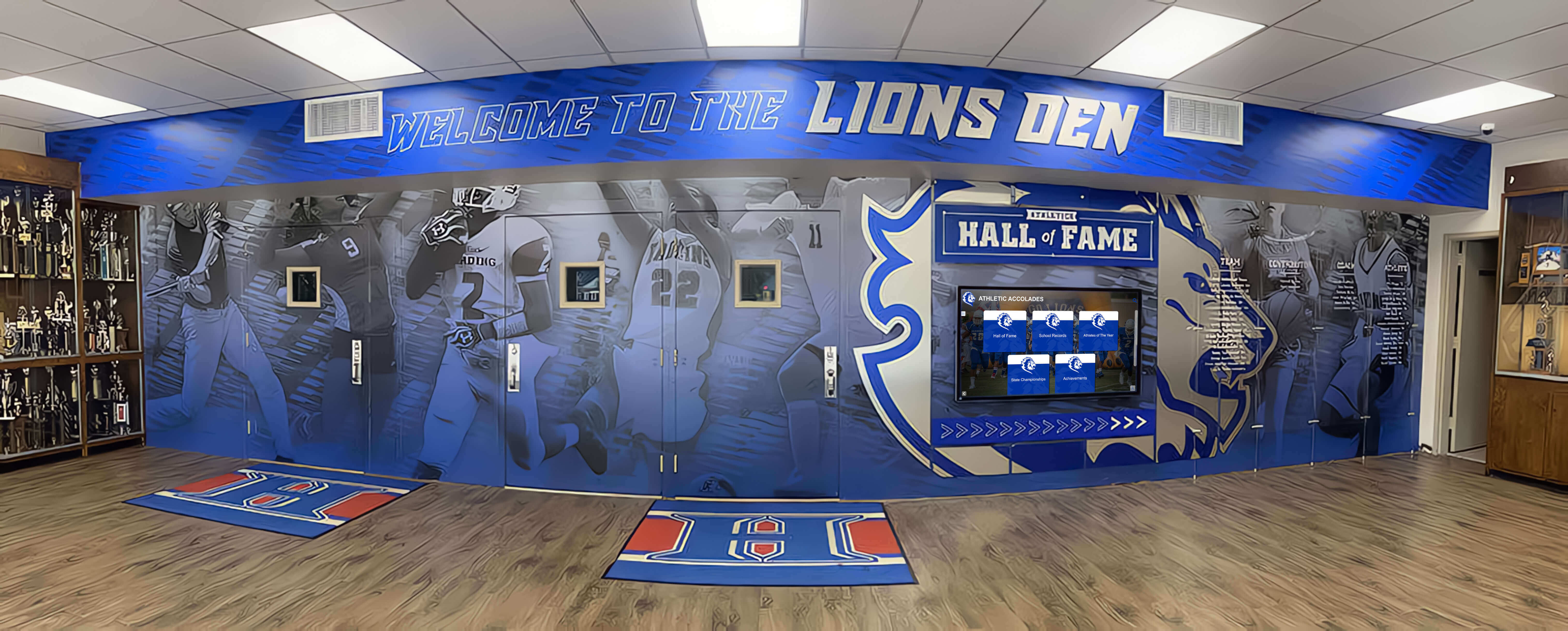
Trophy cases integrated into recognition corridor installations may have less frequent maintenance access — systematic hinge inspection ensures every door in the building's case inventory receives assessment regardless of corridor traffic patterns
Step 6: Rate Each Door and Record Findings
After completing Steps 1 through 5 for each door, assign a condition rating and document the findings in the inspection record.
| Rating | Conditions Present | Recommended Action | Reinspection Interval |
|---|---|---|---|
| Aligned — No Action | Clearance variation ≤0.5mm; all screws fully seated; no barrel play; glass undamaged at channels | No remediation needed; continue standard maintenance cycle | Annual |
| Monitor — Minor Deviation | Clearance variation 0.5–1mm; one or two screws slightly loose but re-engaging threads; no barrel play; glass undamaged | Tighten loose screws; re-measure clearance after tightening; re-inspect in six months | Semi-annual |
| Adjustment Required | Clearance variation 1–2mm; hinge leaf gap confirmed; barrel showing minor play; or door requires lift to close | Tighten or replace screws; assess whether substrate threads need repair or insert reinforcement; re-measure after adjustment; escalate to vendor if adjustment does not resolve clearance | Quarterly until resolved |
| Escalate Immediately | Clearance variation >2mm; glass bowing visible; glass edge damage at frame channel; stripped mounting holes; barrel worn beyond adjustment; or case body movement at wall mounting | Remove high-value display items from case if accessible; do not cycle door further until assessed; contact case manufacturer or glazing contractor before next access | Weekly visual check until resolved |
In-House Adjustment vs. Vendor Escalation
Many hinge alignment issues are within the scope of a trained facilities team to correct. Screws that have loosened but are still engaging threads can be tightened with the appropriate driver — typically a Phillips or square-drive bit in a standard screwdriver. When a screw is tightened but does not hold tension (it turns without resistance even after tightening), the threads in the mounting substrate have stripped and the connection requires repair before the hinge will seat correctly.
Thread repair in trophy case mounting substrates typically involves one of three approaches: a thread-insert helicoil, a larger-diameter replacement screw, or a wood-glue fill-and-redrill for wood substrates. All three are in-house feasible with appropriate tools, but the thread condition must be assessed before the method is selected — forcing a larger screw into a stripped wood pilot hole without clearing the stripped threads first can split the mounting substrate and create a larger repair.
What is not in-house appropriate:
- Hinge barrel replacement on cases where the barrel is integral to the hinge assembly (most commercial trophy case hinges require full hinge replacement, not barrel-only service)
- Glass panel removal and reseating when the glass shows edge damage at frame channels
- Frame geometry correction when the case body itself has racked or the wall mounting has shifted
- Any repair that requires the glass panel to be handled while outside the door frame
Schools reviewing how physical and digital award display options compare for long-term facilities management will find that hinge maintenance complexity is one of the recurring cost factors in physical case lifecycle planning that is sometimes underestimated in initial capital comparisons.
Connecting Hinge Inspection to Your Recognition Program
The trophy cases that require hinge alignment inspection are typically the cases that hold the recognition program’s most significant items — state championship hardware, retired athletic jerseys, multi-decade series of team photographs, and plaques recording the school’s academic and athletic achievements. The cases are high-visibility, high-access installations that the school community approaches regularly during recognition seasons. That regular access is precisely what drives the door cycling that accumulates hinge wear.
Facilities teams supporting schools that maintain structured academic recognition programs for students will find that the periods of highest trophy case door activity — fall awards nights, spring recognition ceremonies, and any period when new hardware is being installed — are also the periods when hinge wear is most actively accumulating. Scheduling the hinge alignment inspection before each major recognition season, rather than at a fixed calendar date, aligns the maintenance cycle with actual use intensity.
For schools displaying memorial plaques and historical records alongside athletic trophies, the hinge alignment check is particularly important for cases that hold framed paper records, photographs, or any document that could be damaged if glass panel failure scattered debris into the case interior. The hinge inspection is the upstream check that keeps the downstream protection environment intact.
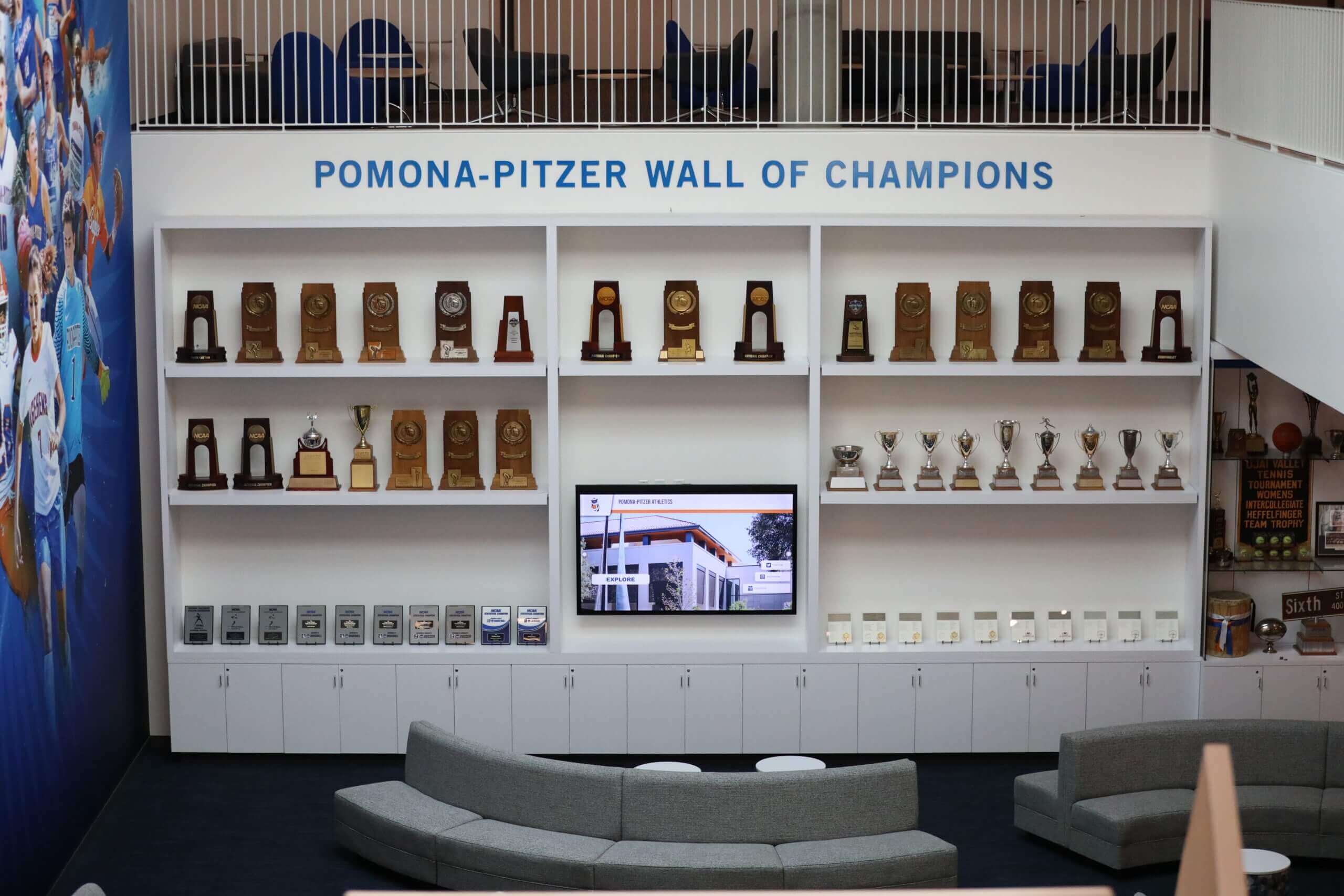
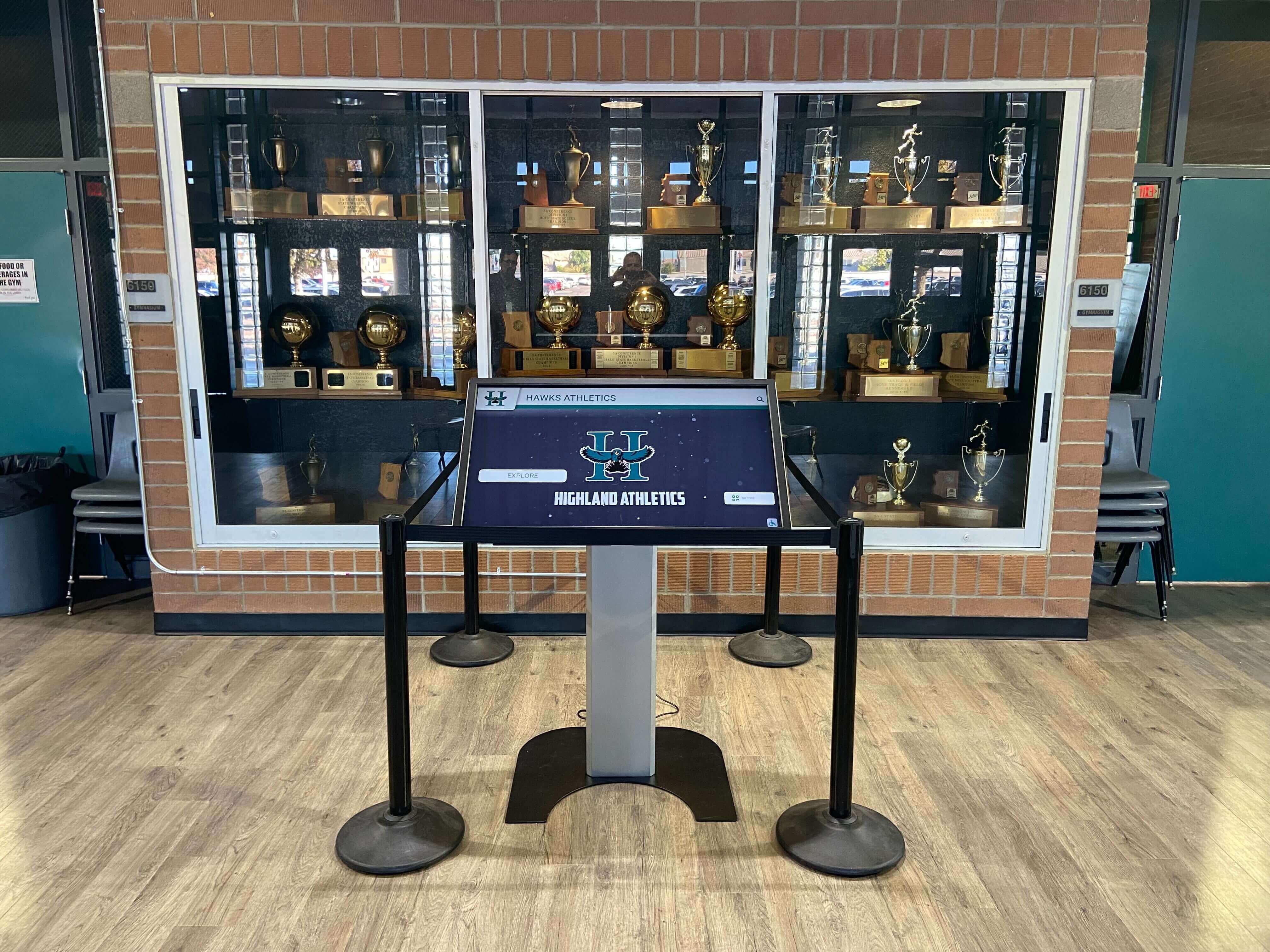
Trophy display installations that include multiple lit cases with glass doors require systematic hinge inspection across the full case inventory — not only the highest-profile cases in the primary display position
Expanding Recognition Beyond Physical Case Capacity
A hinge alignment inspection inventory often surfaces a practical question for recognition program administrators: which cases are in the best structural condition, and which are accumulating maintenance demands that exceed their display value?
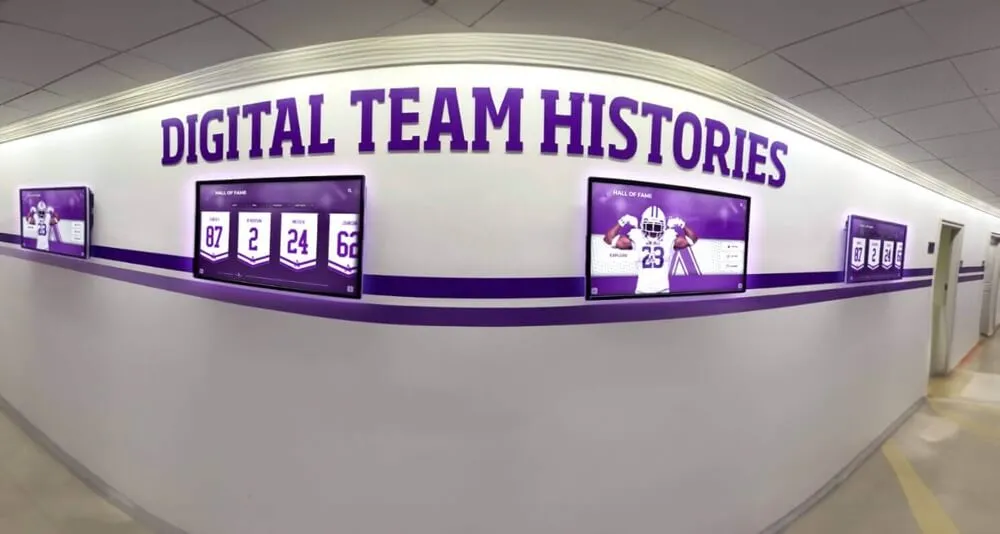
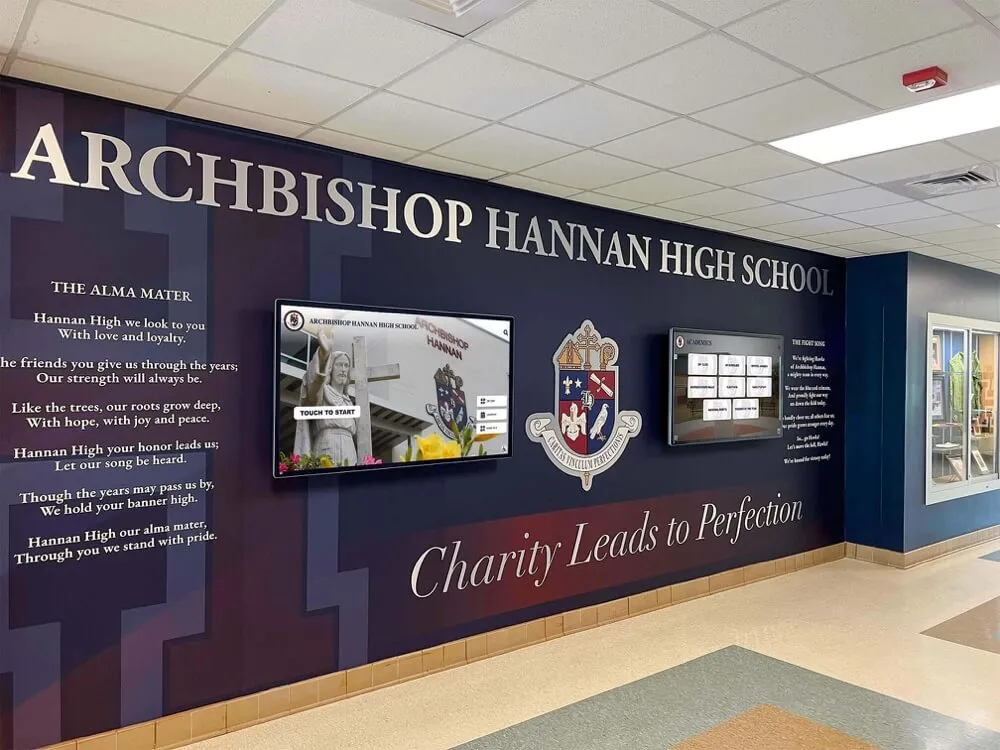
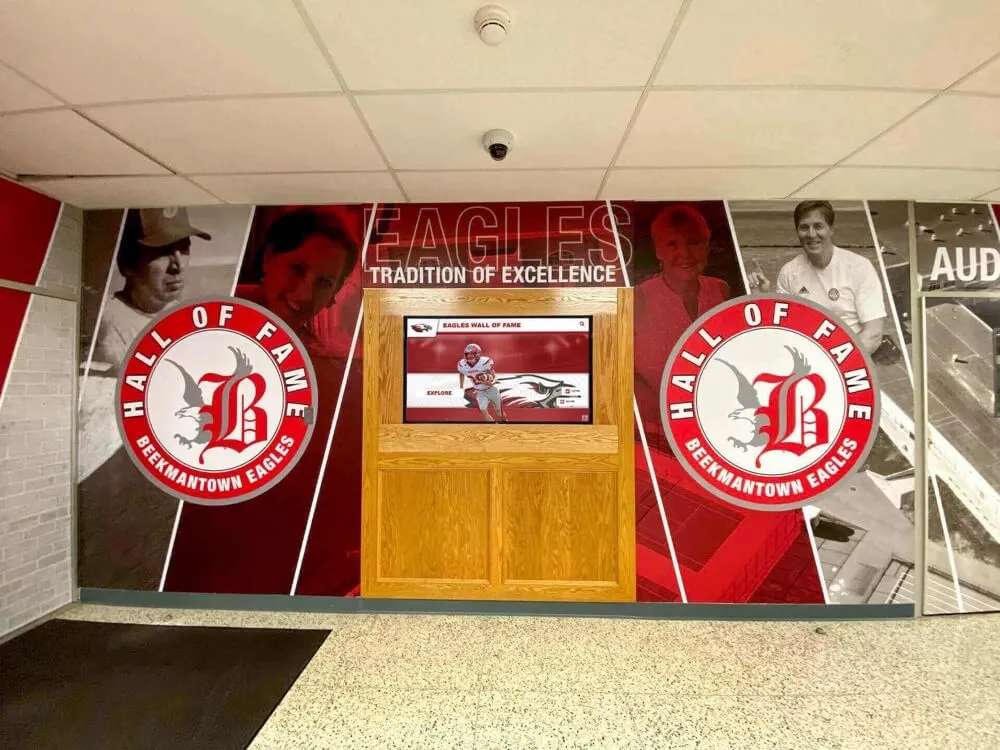
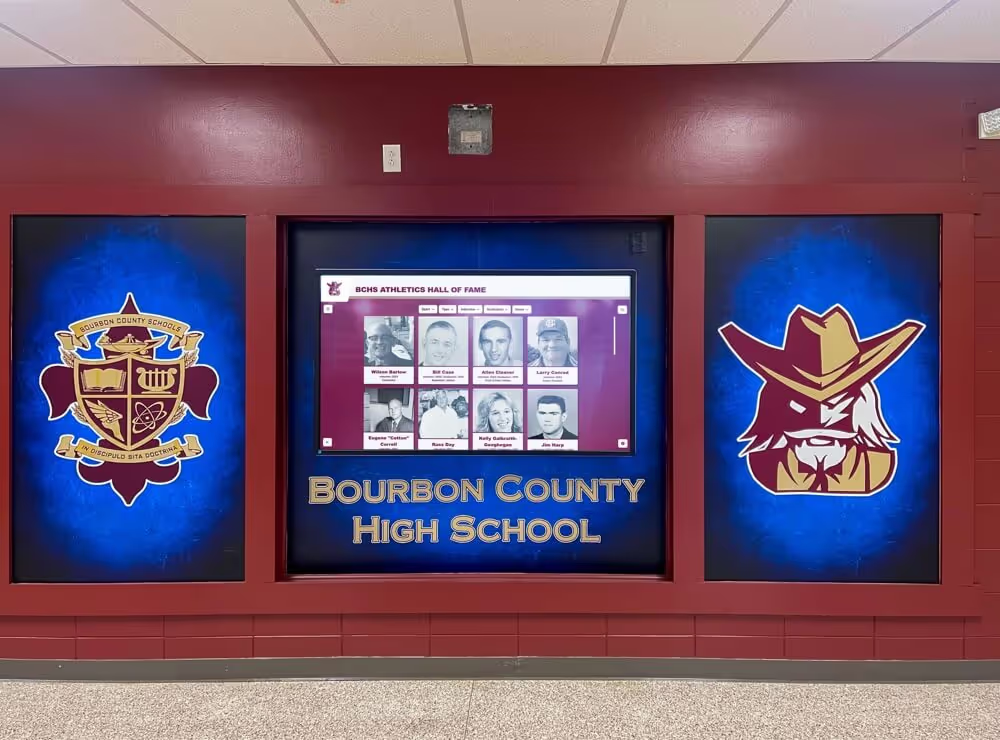
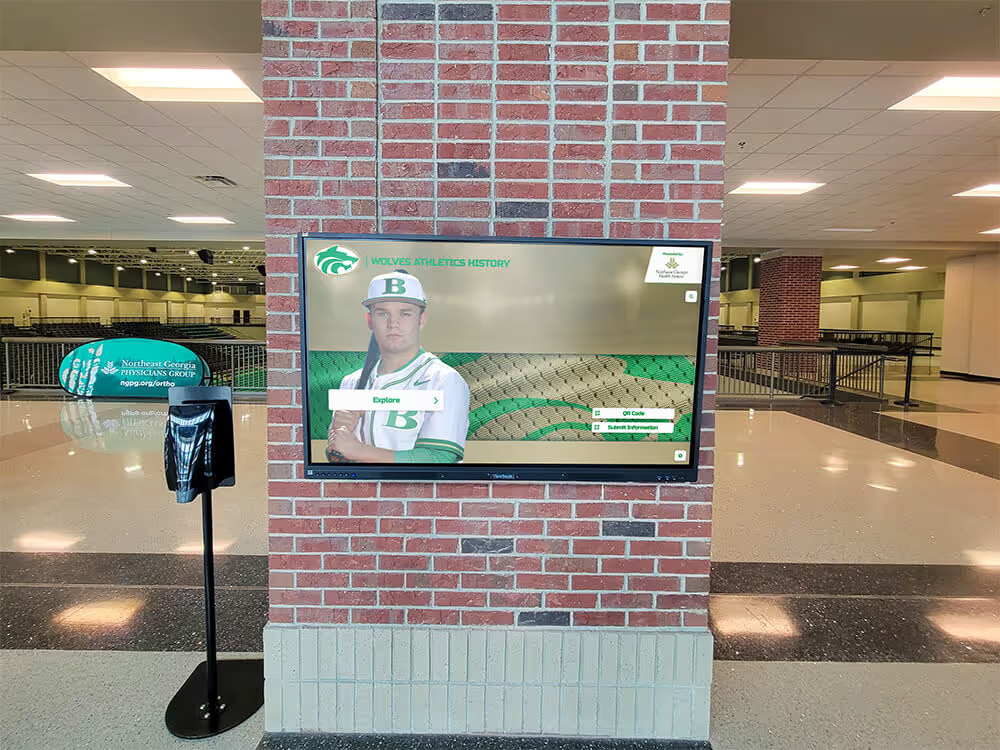
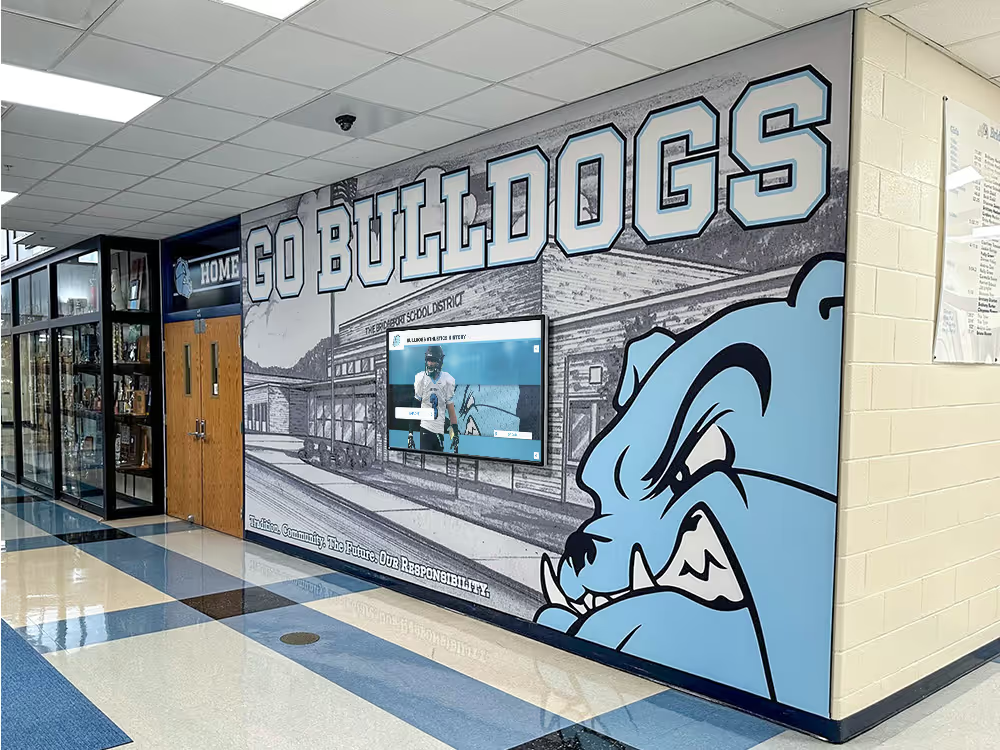
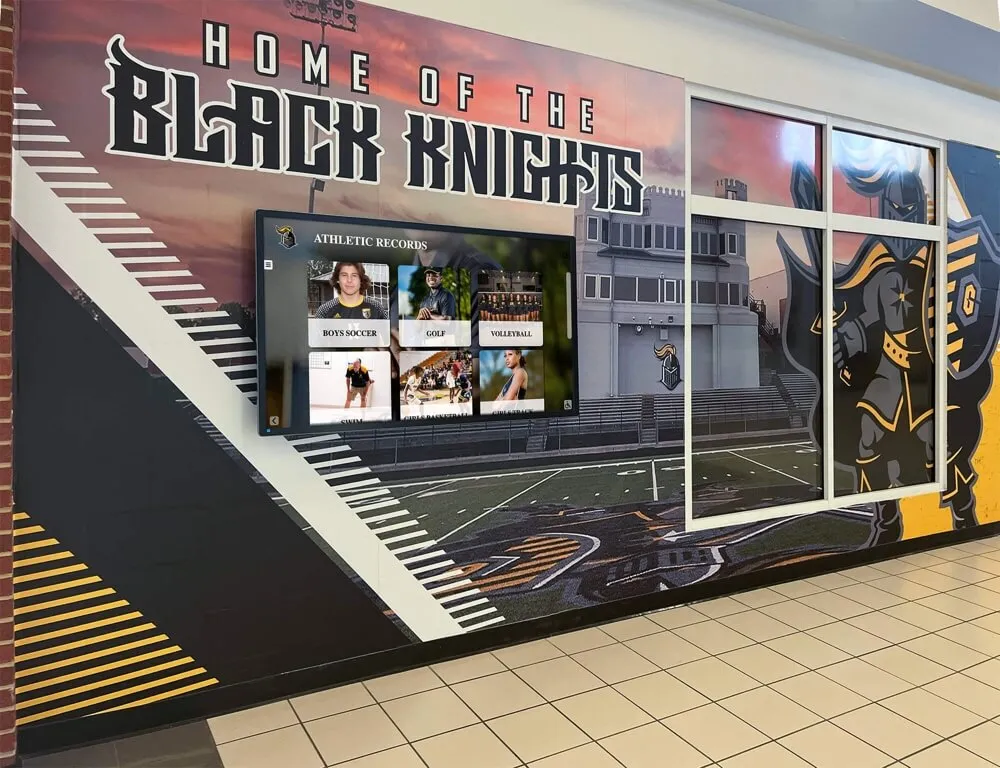
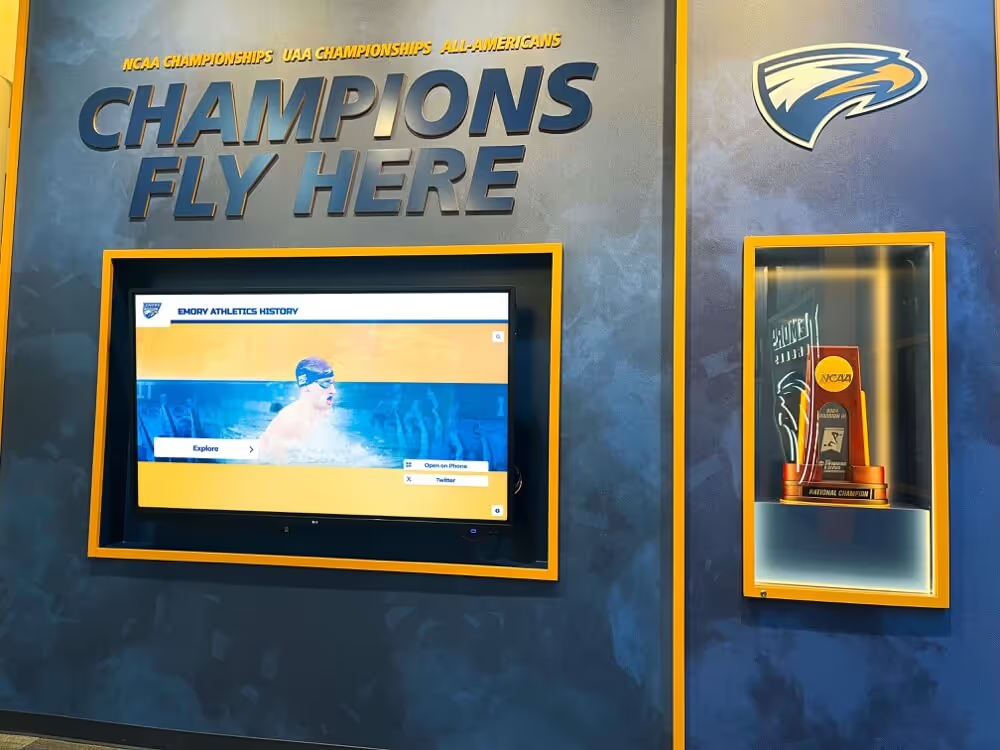
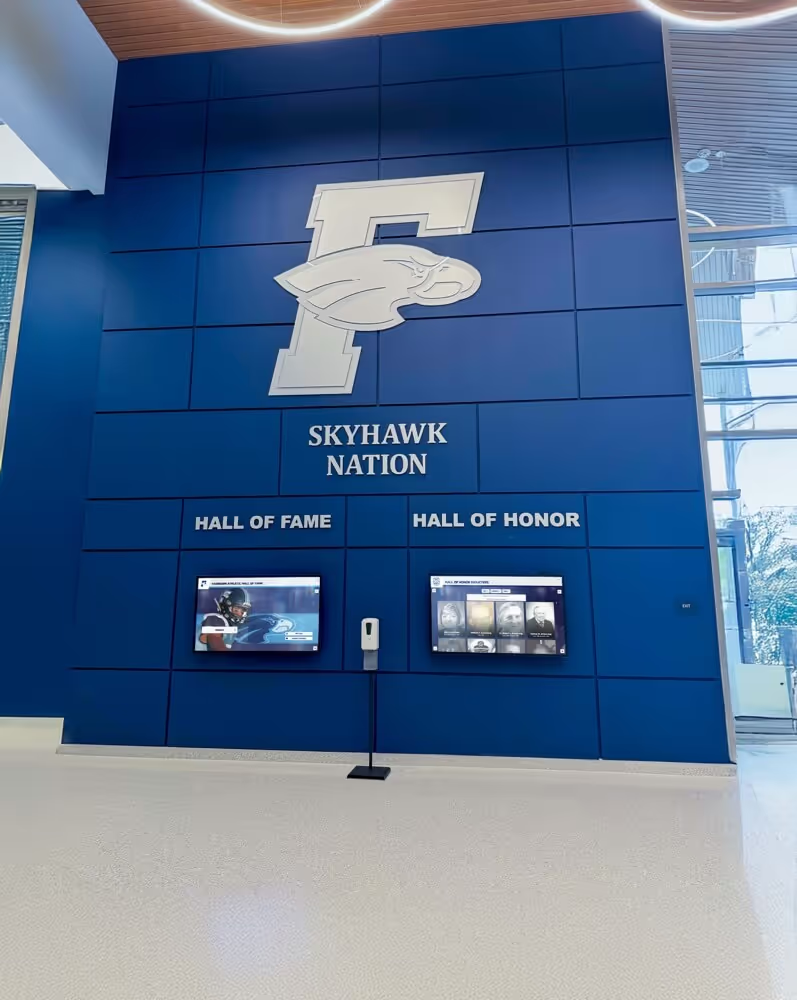
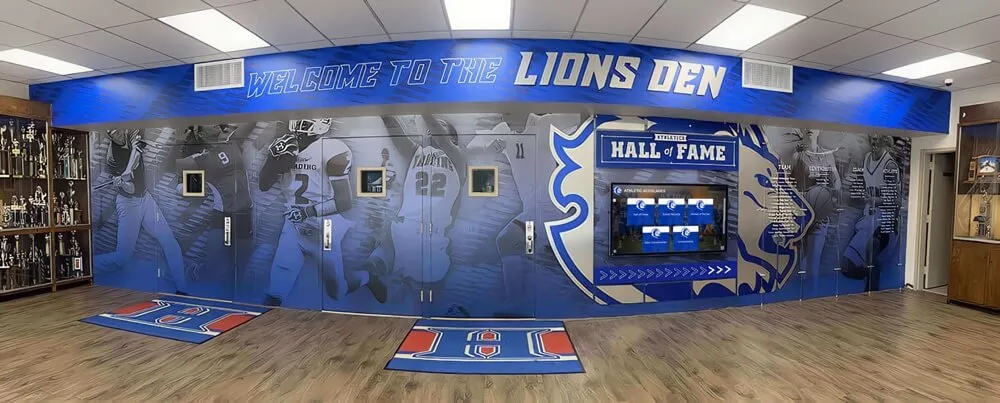
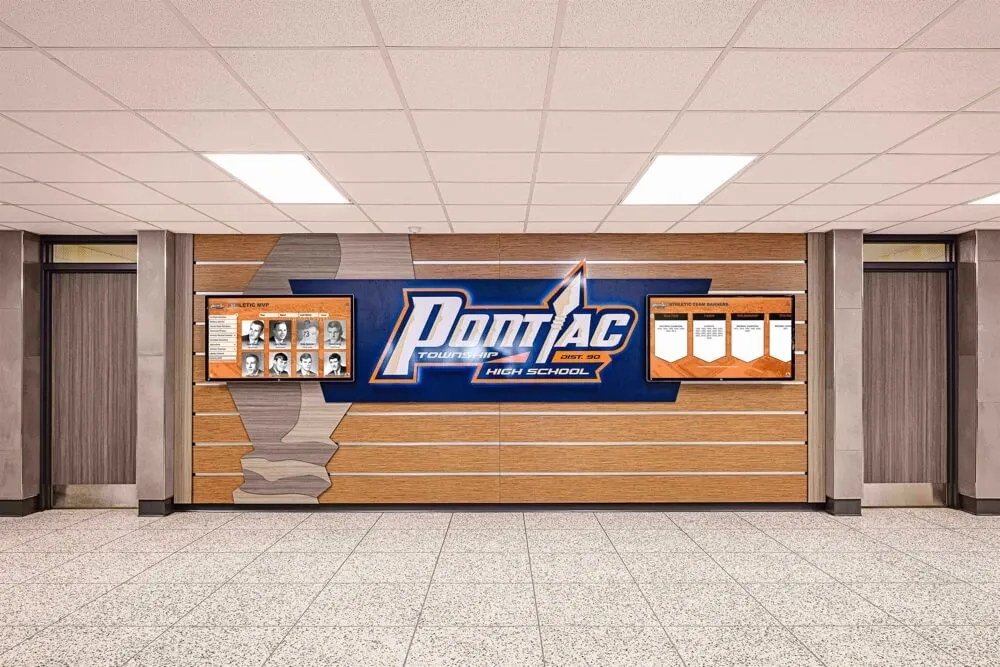
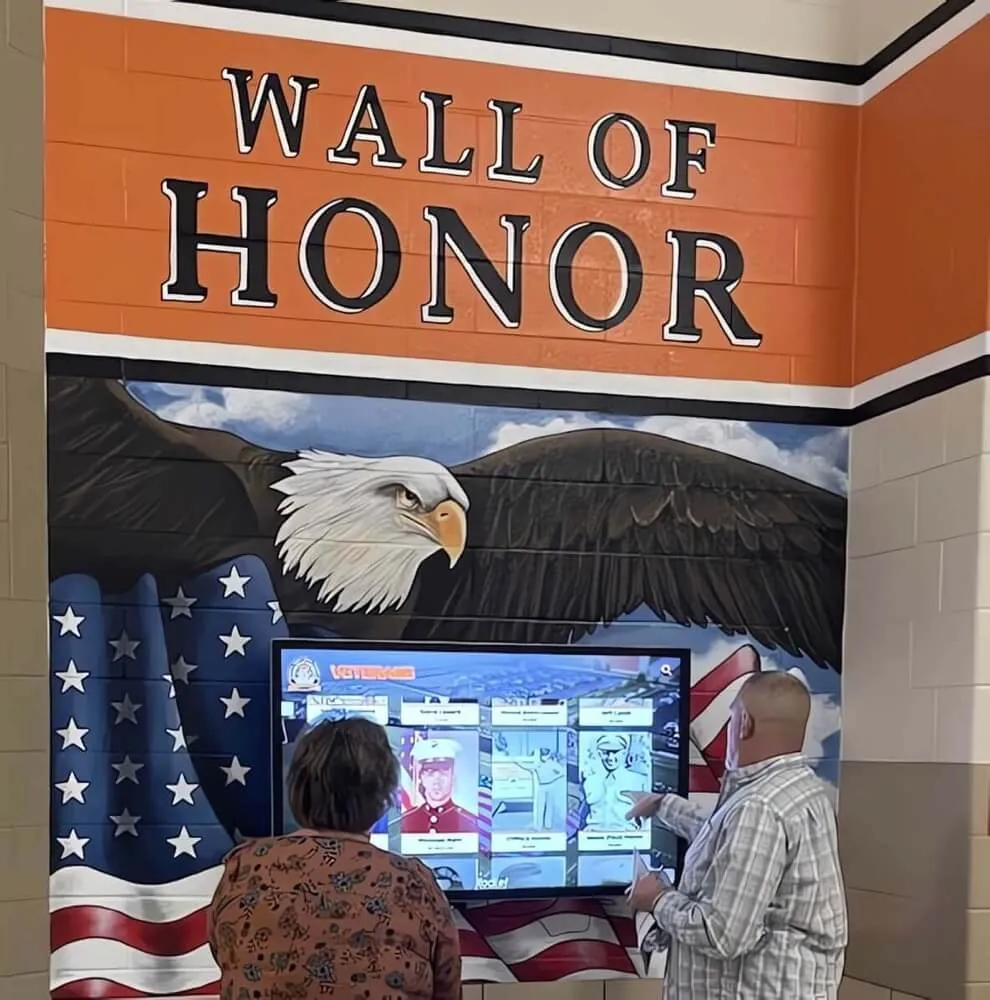
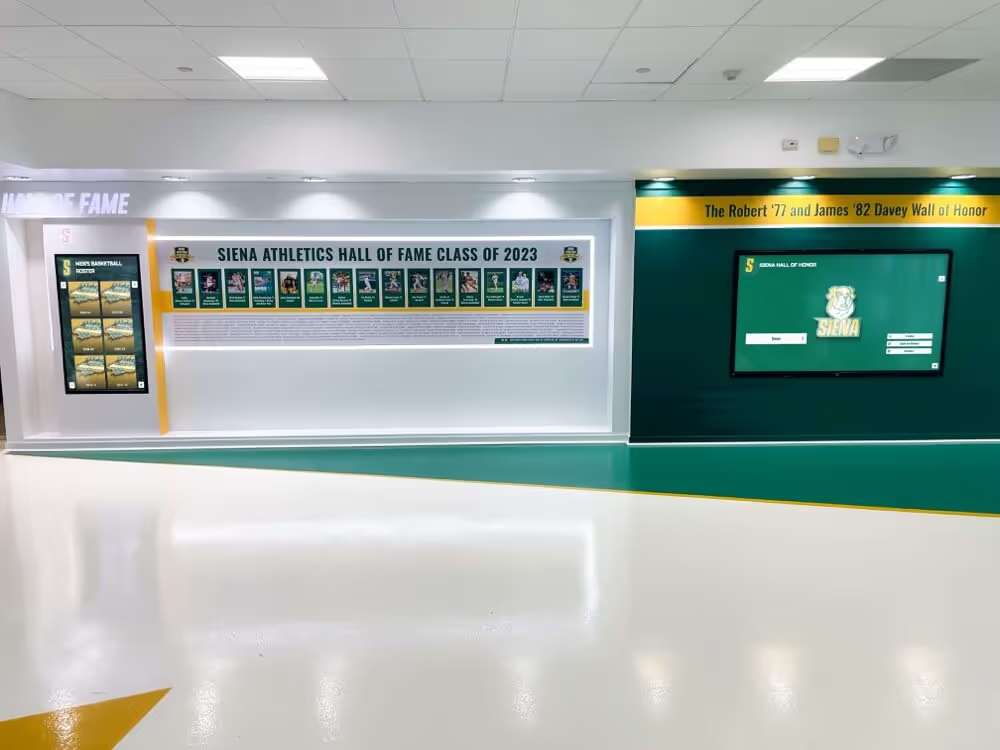
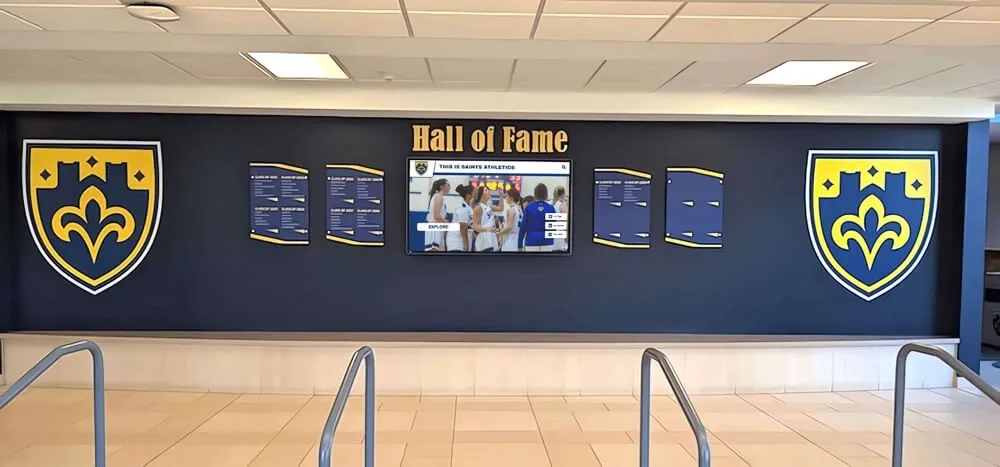
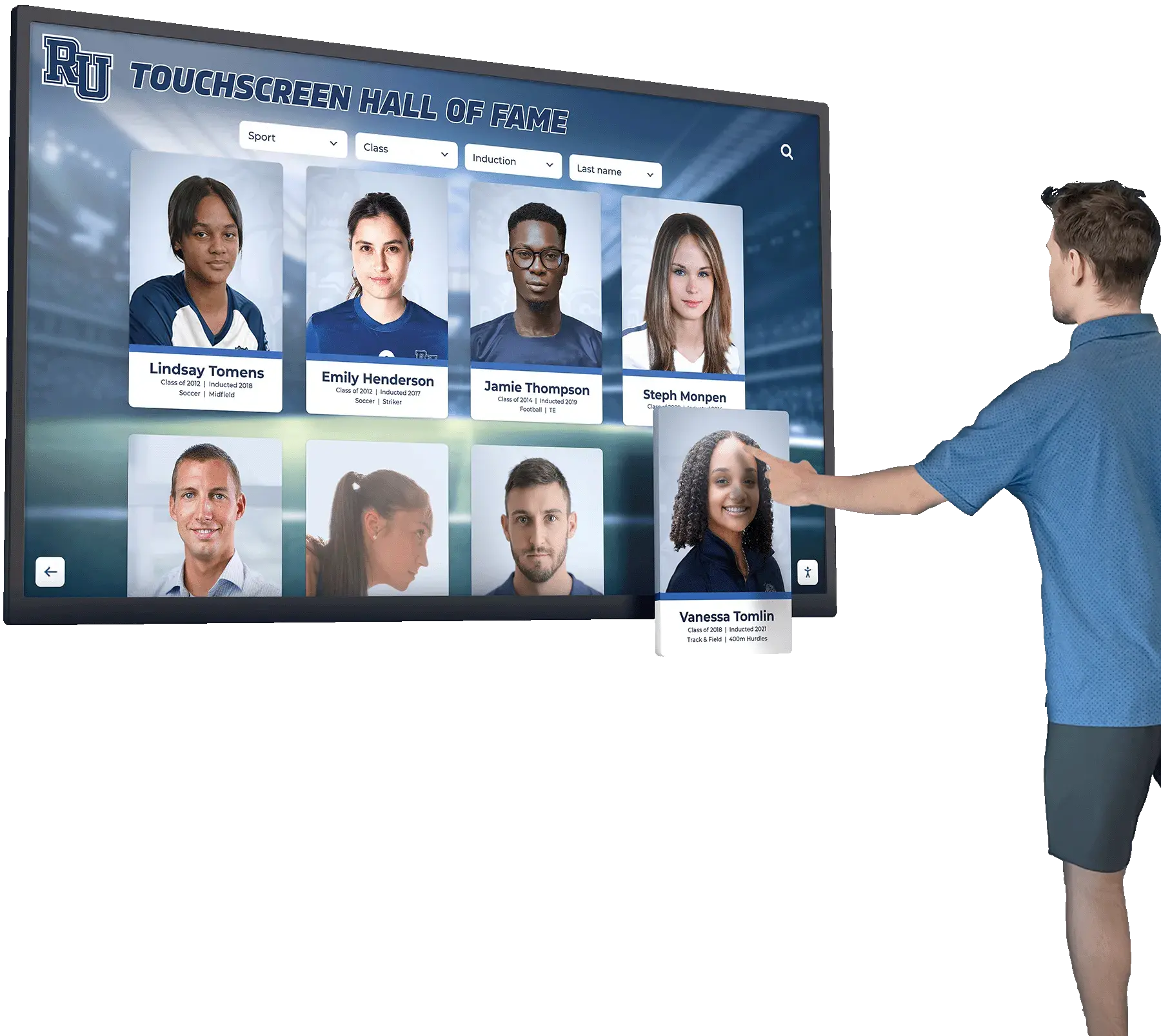
Physical trophy cases require ongoing hinge maintenance, glass management, lighting upkeep, seal replacement, and lock service — all accumulating as the building’s case inventory ages. Schools exploring how to build a comprehensive digital wall of fame alongside their physical trophy case infrastructure find that digital recognition platforms can display unlimited awards, team records, and individual achievements without the structural maintenance obligations that come with glass-door enclosures.
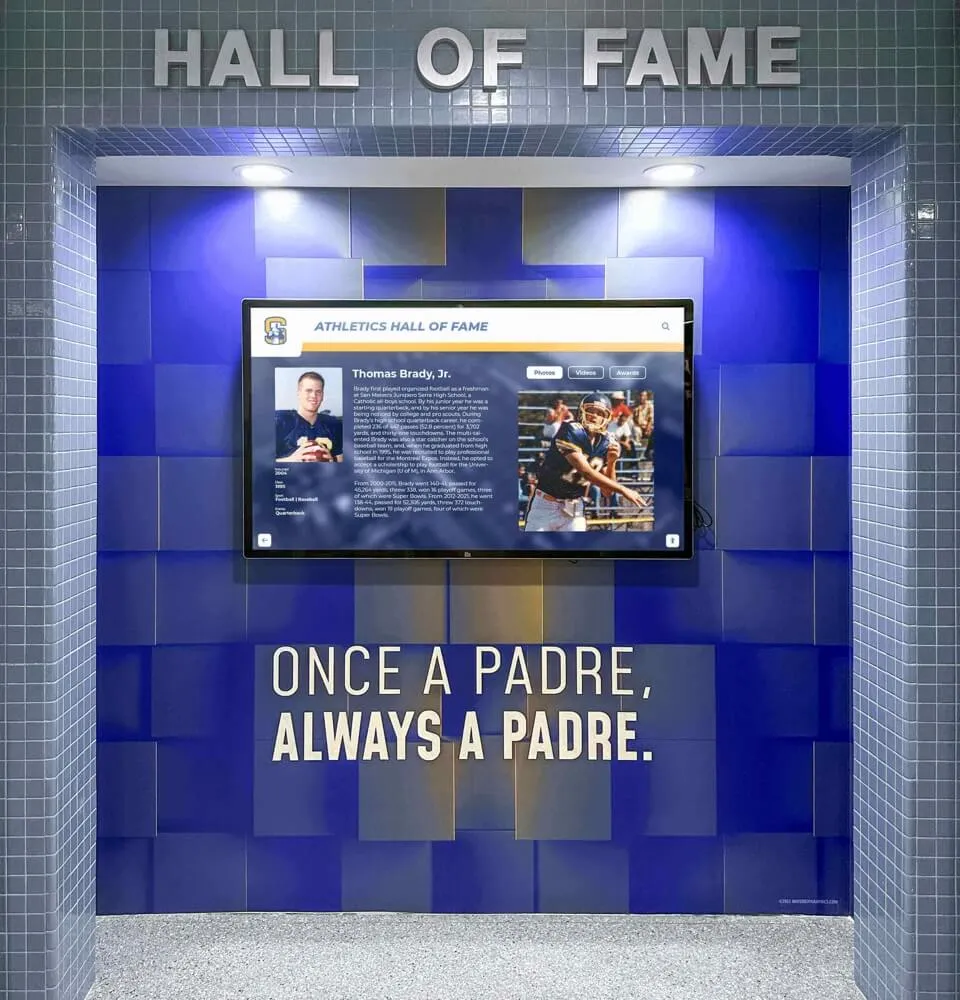
For athletic programs that want to celebrate principal’s honor roll recipients and academic honorees alongside athletic history, touchscreen platforms provide a flexible format that complements maintained physical cases rather than replacing them — expanding what can be recognized without expanding the facilities maintenance scope. Schools evaluating touchscreen hall of fame software options will find that cloud-managed displays can be updated remotely, sorted automatically, and accessed via QR code without requiring any physical access to a display case.
The hinge inspection does not require that conclusion. It requires that each door is documented, each condition is rated, and each escalation is acted on before glass stress progresses to glass failure. What the recognition program does with the maintenance picture that inspection provides — whether it directs investment toward physical case rehabilitation, digital supplementation, or a combination — is a planning conversation that documented inspection findings support.
Athletic recognition installations that span multiple corridors and include multiple case types require a documented hinge inspection protocol covering every glass-door panel in the building — not only the primary lobby display
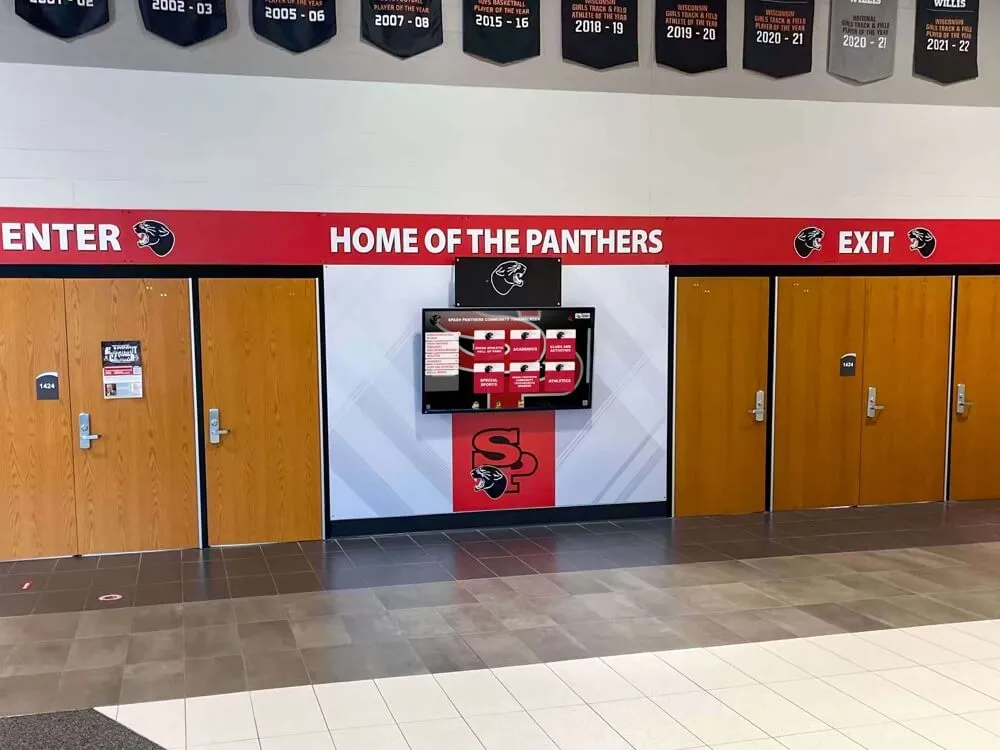
As schools add digital recognition displays to corridors that already contain traditional trophy cases, the combined facilities maintenance protocol should cover both the physical case hardware and the digital mounting infrastructure
FAQ: School Trophy Case Hinge Alignment Inspection
What is a school trophy case hinge alignment inspection? A school trophy case hinge alignment inspection is a structured assessment of the pivot hardware, mounting screws, and door clearance gaps on each trophy case door, conducted to confirm that doors hang at the correct angle without placing bending stress on their glass panels. The inspection evaluates hinge screw seating, barrel wear, door-to-frame clearance symmetry, and glass condition at frame contact points — establishing a documented condition rating for each door that guides remediation timing and prioritization.
How often should school trophy case hinges be inspected? An annual inspection covering every glass-door trophy case in the building is appropriate for most schools. Cases in high-traffic corridors where access is frequent during awards seasons should be inspected semi-annually. Any case with a hinge condition rated “Adjustment Required” should be re-inspected quarterly until the adjustment is confirmed effective and the clearance measurement returns to within 0.5mm variation.
What tools does a facilities team member need to conduct a hinge alignment inspection? The inspection requires no power tools. A standard screwdriver (Phillips and flathead), a feeler gauge or a set of calibrated business cards as a thickness reference, a flashlight, a small level, and an inspection record form with fields for case location, door position, clearance measurements, hinge findings, glass condition, and priority rating are sufficient to conduct and document the full assessment.
Can a school facilities team correct hinge misalignment in-house? Many common causes of hinge misalignment are within in-house capability to correct: tightening loose screws that still engage threads, replacing screws where the head is damaged, and — with appropriate tools — repairing stripped threads in wood substrates using thread inserts or fill-and-redrill technique. What is not appropriate for in-house correction includes hinge barrel replacement requiring full hinge assembly swap, glass panel removal and reseating when edge damage is present, and frame geometry correction when the case body structure has shifted. These conditions require a case manufacturer service call or a glazing contractor.
What is the risk if hinge misalignment is not corrected? Uncorrected hinge misalignment places sustained bending stress on the glass panel attached to the misaligned door. Over time, this stress produces micro-fractures in the glass at the frame contact points where the load concentrates. Because these fractures are not visible under normal corridor lighting and the glass may continue to appear intact, the panel can fail suddenly during a routine access — at any point when thermal cycling or mechanical disturbance provides the additional load the stressed glass cannot sustain. The failure releases the door’s full glass panel into the case interior and potentially outward, creating a safety hazard for anyone nearby.
How does hinge misalignment differ from door seal misalignment? Hinge misalignment refers to the pivot hardware allowing the door to hang out of its correct geometric position, which places mechanical stress on the glass panel the door carries. Seal misalignment — where the perimeter seal material does not make full contact around the door frame — affects the environmental protection of the case interior (humidity and dust ingress) but does not directly stress the glass. The two conditions often occur together, because a door that has sagged from hinge wear typically shows seal contact failures at the corners where the door no longer sits parallel to the frame. Inspecting for hinge misalignment and seal condition together produces a more complete picture of each door’s maintenance status.
Integrating Hinge Inspection into the Annual Facilities Cycle
A school trophy case hinge alignment inspection fits within the same annual facilities walkthrough that covers safety film condition, gasket seal integrity, electrical safety, lighting function, and lock hardware — each assessment addressing a different risk category for both the people who use the corridor and the recognition collection the cases protect.
The practical timing recommendation is consistent: conduct the hinge assessment in late summer before fall recognition events populate the cases with the most recent year’s awards and before elevated student and visitor traffic increases door cycling frequency. A hinge condition found and corrected in August before fall installation is resolved before any additional stress is applied. The same condition found in November, after the case has been populated and cycling has continued for three months, has had time to advance.
Documenting each inspection with case identifier, door position, clearance measurements, hinge findings, and priority rating creates a year-over-year record that makes it possible to distinguish cases degrading predictably from cases that are stable. That record supports capital budget requests, replacement planning, and facilities reporting with specific, dated evidence rather than general condition assessments.
Ready to Build a Digital Recognition Platform That Grows Beyond What Any Physical Case Can Hold?
Rocket Alumni Solutions builds interactive digital trophy cases and halls of fame for schools nationwide — cloud-managed displays with unlimited record capacity, ADA WCAG 2.1 AA compliant touchscreens, QR code access for mobile viewing, and remote content updates without IT tickets. See how schools are preserving every championship, academic honor, and alumni milestone on a platform that complements their physical trophy case maintenance program.
Book A Demo