



Intent: research — Glazing beads are the strips of rubber, vinyl, or aluminum that hold glass panels in trophy case frames. When they loosen, crack, shrink, or go missing, the glass they retain can shift inside the frame — creating a displacement risk that facilities staff can identify visually long before the glass actually moves. This guide explains what glazing beads are, how to inspect them in school trophy cases, and how to separate the checks a facilities team member can perform safely from the repair and replacement work that belongs to a glazier.
A glazing bead inspection takes fewer than ten minutes per trophy case, requires no tools, and produces a written record that protects both students and the recognition materials the case displays. The checklist in this guide covers what to look for, how to document it, and when to escalate — so staff can close the gap between “the glass looks fine” and “the glass is confirmed secure.”

Trophy cases in athletic corridors, lobby entries, and hallway alcoves rely on glazing beads to hold glass panels securely in their frames — visual inspection identifies problems before they become hazards
What Are Glazing Beads?
A glazing bead is a strip of material — most commonly extruded rubber, flexible vinyl, rigid PVC, or aluminum — that is pressed or clipped into the channel of a trophy case frame to hold the glass panel in place. The bead runs along all four edges of each glass panel, creating both mechanical retention and a seal that prevents the glass from rattling or shifting inside the frame.
In school trophy cases, glazing beads appear in several common configurations:
| Bead Type | Material | Common Location | How It Fails |
|---|---|---|---|
| Rubber compression gasket | EPDM or neoprene rubber | Aluminum-frame cases, older institutional units | Hardens, cracks, and loses compression over time; gaps open at corners |
| Vinyl snap bead | PVC or flexible vinyl | Flat-pack display cases, newer units | Becomes brittle in heat; corners pop loose; sections pull away from frame |
| Aluminum snap bead | Extruded aluminum | Commercial display cases, museum-style units | Bends or deforms if struck; retaining clips loosen; corner miters open |
| Glazing tape (compression) | Foam-backed butyl tape | Fixed panel sections in older cases | Compresses permanently, loses adhesion, and allows panel movement |
The bead’s job is to hold the glass against lateral movement — sliding within the frame plane — and to prevent the glass from tilting or displacing forward or backward under contact pressure. When the bead is sound, the glass panel is stable. When the bead is compromised, the glass can shift, tilt, and in severe cases fall free of the frame.
Why Glazing Bead Condition Matters in School Trophy Cases
Trophy cases are not static objects. They are accessed repeatedly: facilities staff open them to dust interiors, athletic directors add new hardware after banquet season, coaches photograph contents for program media, and student aides reposition trophies and plaques during hallway setup events. Each access event applies lateral and vertical load to the glass panels — particularly the door panels, which flex when opened and closed.
Beyond access, the physical environment of school hallways produces ongoing stress on glazing materials. Heating and cooling cycles expand and contract both the metal frame and the glass panel — at slightly different rates, which means beads that fit perfectly at installation may develop gaps as the building cycles through seasons. Cases installed near gymnasium exit doors are subject to pressure waves from door slams. Cases in direct sunlight through hallway windows experience accelerated bead hardening.
Schools that maintain active recognition programs use their trophy cases more intensively than the average facilities inspection schedule assumes. A case that holds championship hardware after a state title run, or one that houses academic honor society plaques for scholar recognition programs that include Latin honors designations, may be accessed multiple times per month — far more than the once-or-twice-per-year access some facilities teams plan around. More access means more cumulative load on glazing beads, and more opportunity for a loosened bead to progress from a minor gap to a glass displacement event.
Signs of Loose or Damaged Glazing Beads
A visual inspection of glazing beads does not require opening the trophy case. Most bead conditions are visible from a standing position in the corridor, though a flashlight and closer examination improve detection of subtler problems.
High-Priority Warning Signs
The following conditions warrant immediate escalation before continuing normal case use:
Glass visibly shifted or cocked in the frame — if a panel sits at a noticeably different angle than adjacent panels, or if one edge of the panel appears to sit higher or lower than the opposite edge, the bead is no longer holding the panel in its design position. Do not open the case door or access the interior until a glazier has assessed the panel.
Visible gap between glass edge and frame channel — a gap wide enough to insert a fingernail between the glass and the surrounding frame indicates that the bead has pulled away from the channel. The glass is no longer mechanically retained on that edge.
Rubber bead section hanging loose or detached — if a portion of the rubber compression gasket has separated from the channel and is hanging free or resting on the interior shelf, the glass panel above that section is unsupported on that edge.
Cracked or fragmenting bead material — rubber beads that have hardened and cracked through their cross-section are no longer capable of providing the compression retention they were designed for. Cracking across the full depth of the bead is different from surface checking (fine surface cracks with no depth), which is a lesser-priority finding.
Secondary Warning Signs
These conditions warrant documentation and scheduled follow-up, but do not require immediate out-of-service action unless combined with a high-priority sign:
Corner gaps — rubber and vinyl beads most commonly fail at the mitered corners. A small gap at one or two corners, with the bead otherwise seated in the channel, indicates early-stage failure. The gap may be 1–3 mm wide and barely visible, but it will grow with seasonal cycling.
Bead sitting proud of the frame face — if a section of bead is pushed out of its channel and sits raised above the surrounding frame surface, the bead has lost its retention in the channel. Light pressure compresses it back; it returns to the raised position when pressure is released.
Discoloration, surface checking, or visible compression set — rubber that has turned gray-white, developed fine cracks across its face, or compressed to a shape noticeably flatter than the adjacent bead has aged past its service life. It will deteriorate faster from this point.
Glazing tape lifting at edges — in cases using foam-backed tape rather than mechanical beads, tape that is visibly lifting at the panel edges has lost adhesion on that section. The glass is no longer bonded to the frame on the lifted section.
The Glazing Bead Inspection Checklist
Run through these steps for each case in the building during a scheduled facilities walk. One inspector can complete a thorough inspection of a standard single-bay display case in under ten minutes. Bring a flashlight and an inspection log.
Step 1: Record Case Identification
Before inspecting, record:
- Case identifier (corridor + sequence, e.g., ATH-03)
- Location (hallway designation, distance from nearest landmark)
- Date and inspector name
- Approximate case age or known installation year (if on record)
Step 2: Visual Survey from Standing Distance
Step back two to three feet from the case face and examine each glass panel from a normal standing position:
- Do all panels appear to sit flush and level in their frames?
- Does any panel appear to lean, cock, or sit at an angle different from adjacent panels?
- Is any bead material visible hanging free from the frame face?
Record any obvious anomalies before moving closer.
Step 3: Close-Up Examination of Bead Perimeter
Move to within 12 inches of the case face. Using a flashlight if available, examine the bead perimeter on each accessible panel:
- Trace the bead along all four edges of each panel
- Look for gaps between the bead and the frame channel at corners and along straight runs
- Look for bead sections sitting raised above the frame face
- Look for cracking, fragmentation, or visible compression damage
Step 4: Corner Examination
Corners are the highest-failure-probability location on every bead type. Examine each corner of each panel with the flashlight angled to illuminate the joint:
- Is the miter joint tight with no visible gap?
- Is the bead material intact through the corner curve, or cracked at the bend point?
- On aluminum snap beads, do the corner clips appear engaged or sprung open?
Step 5: Check Door Panel Movement
For cases with openable door panels, gently press the center of the door glass with one palm — do not push with force, just apply light contact pressure as a user might. The panel should feel solid with no give or rattle. A panel that moves perceptibly under light contact pressure, or that produces an audible rattle, indicates the bead is no longer holding the glass firmly in the frame.
Do not attempt to remove or reseat glazing beads as part of this step. Staff-level inspection does not include bead manipulation.
Step 6: Check Fixed Panel Sections
Fixed side panels, top panels, and back panels are often overlooked because they are not accessed like door panels. Examine the bead perimeter on each fixed panel using the same flashlight technique used on door panels. Fixed panels that have never been replaced are more likely to contain original beads that have aged in place without assessment.
Step 7: Document Findings
For each panel, record:
- Panel position (door, fixed side, fixed top, fixed back)
- Bead condition rating (see the rating scale below)
- Specific finding description for any condition rated 3 or higher
- Whether escalation is required
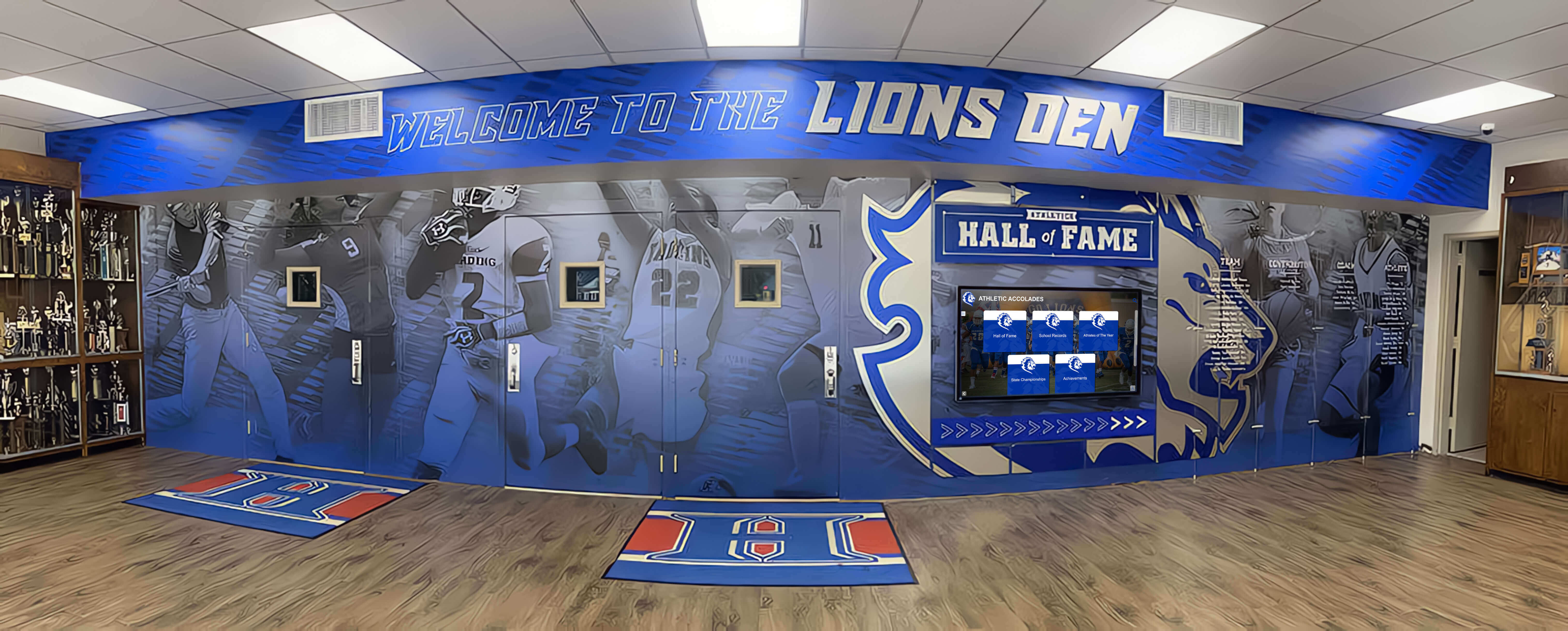
Recognition corridors with multiple case units benefit from a consistent inspection record for each case — bead condition ratings allow facilities teams to prioritize follow-up across the full building inventory
Glazing Bead Condition Rating Scale
Using a consistent five-point rating allows inspection records to be compared across case units and inspection dates, and flags cases where follow-up has been deferred too long.
| Rating | Description | Recommended Action |
|---|---|---|
| 1 — Sound | Bead fully seated in channel on all edges; no gaps, cracks, or displacement; corners tight | Document as confirmed sound; no follow-up required until next scheduled inspection |
| 2 — Monitor | Minor surface checking or early corner gaps (under 1 mm); bead seated in channel; glass appears stable | Document; re-inspect within 60 days or at next scheduled round |
| 3 — Action needed | Visible corner gaps (1 mm or wider), bead sitting proud of frame face, or compression damage affecting bead profile | Schedule glazier assessment within 30 days; note in maintenance work order system |
| 4 — High priority | Bead section partially detached or hanging free; gap wide enough for fingertip contact with glass edge; glass shows any visible movement in frame | Restrict case access; glazier assessment within 5 business days; escalate to facilities supervisor same day |
| 5 — Immediate | Glass visibly displaced, cocked, or tilting; full bead section missing from one or more edges; glass can be moved by hand | Do not open or access case; secure the area; contact glazier same day; notify building administrator |
What Staff Can Check vs. What Requires a Glazier
The line between staff-level inspection and glazier work is the same as it is in any safety-critical building system: trained facilities staff can identify and document conditions, but repair and replacement of glass retention components belongs to a qualified glazing professional.
Staff Can Safely Do
- Visual inspection of all bead perimeters using the checklist above
- Documentation of condition ratings and specific findings
- Light contact pressure check on door panels (no tool use, no bead manipulation)
- Escalation and communication of findings to supervisors and glazing contractors
- Restriction of case access when a rating-4 or rating-5 condition is identified
- Photographic documentation of any condition rated 3 or higher
Glazier Work — Do Not Attempt Without Training
- Removal of existing glazing beads
- Reseating, pressing, or re-engaging beads that have displaced from their channels
- Applying sealant or adhesive to bead joints
- Removing or reinstalling glass panels
- Cutting or trimming replacement bead material to fit
This distinction matters in both directions. Staff who avoid bead manipulation protect themselves from injury and protect the glass from being destabilized by a well-intentioned intervention. Glaziers who receive a documented inspection record — with specific findings, panel locations, and ratings — can scope a repair visit accurately and bring the correct bead profiles and tools for the case type being serviced.
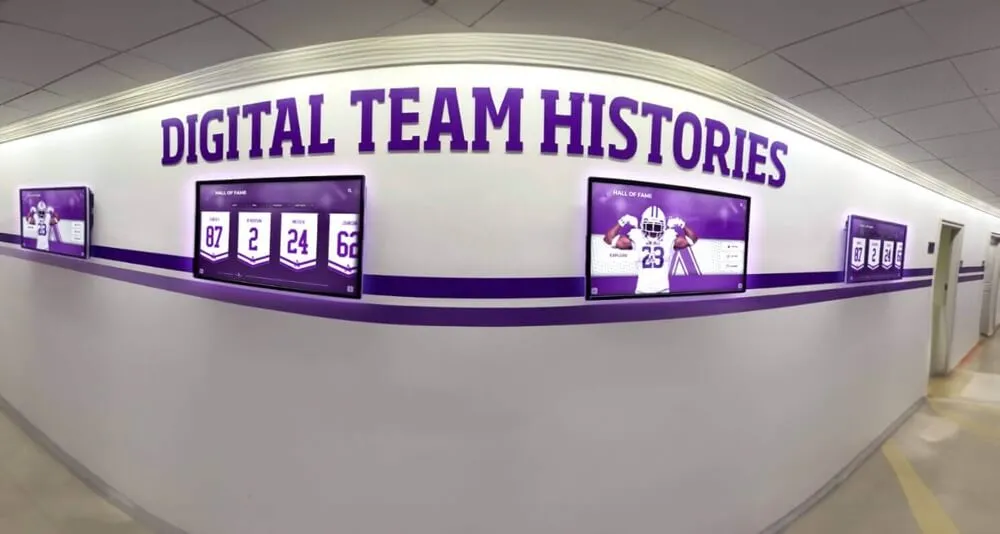
Schools that have also transitioned portions of their recognition program to digital displays will recognize the same principle at work in touchscreen display maintenance: facilities staff document and escalate display anomalies; display technicians handle hardware adjustment and component replacement. The inspection discipline is identical — the medium is different.
Inspection Log Format
A standardized log ensures that multiple inspectors produce compatible records and that future staff can read past inspections without interpretation. The following fields cover the minimum documentation needed to support follow-up and maintenance history.
| Field | Format | Notes |
|---|---|---|
| Inspection Date | YYYY-MM-DD | ISO format to prevent date ambiguity |
| Building / Wing | Text | Include specific corridor or hallway designation |
| Case ID | Text or code | Assign consistent codes if not previously labeled |
| Panel Position | Door L / Door R / Fixed Side L / Fixed Side R / Fixed Top / Fixed Back | Record each panel independently |
| Bead Material (if known) | Rubber / Vinyl / Aluminum / Tape / Unknown | Record from visual appearance |
| Condition Rating | 1 / 2 / 3 / 4 / 5 | Use the five-point scale above |
| Specific Finding | Text | Required for ratings 3, 4, and 5; describe location and extent |
| Gap Measurement (est.) | mm | Estimate corner gaps to nearest mm; not required for ratings 1–2 |
| Photograph Taken | Yes / No | Required for ratings 3–5 |
| Escalation Required | Yes / No | Yes for ratings 4 and 5; judgment for rating 3 |
| Follow-Up Action | Text | Specific next step with responsible party |
| Inspector Name | Text | Full name for accountability |
Keep the inspection log with the facility’s maintenance records and reference its location in the building’s maintenance management system. A paper-only log that lives in a single binder has limited utility when staff turn over. Photographs attached to a digital record allow future facilities staff to confirm bead appearance without repeating a full inspection.
When to Schedule Glazing Bead Inspections
Unlike tempered glass stamp verification — which is a one-time documentation task per panel — glazing bead inspection is a recurring maintenance activity because bead condition changes over time. The following schedule covers most school facilities programs:
At installation or takeover: Document bead condition on all panels when a new case is installed, when an existing case is inherited from a prior facilities team without documentation, or when a building undergoes renovation that may have affected cases.
Annually: A full-building inspection round at the start of each school year establishes baseline condition before the heavy-use fall athletic season. Many schools run this concurrently with the annual locker and hardware inspection cycle.
After significant events: Inspect cases after any renovation work adjacent to trophy case locations, after events that involved high traffic or physical activity near the cases, and after any observed impact to a case unit.
When a related condition is found: A case where tempered glass stamp verification identified panels requiring follow-up should also receive a glazing bead inspection during the same maintenance event. The two checks address different failure modes but affect the same panels.
Connecting Glazing Bead Inspection to the Full Recognition Program
The glass in a school trophy case protects more than hardware. It protects the institutional memory of an athletic program — championship trophies from title seasons, retired numbers in frames, honor boards listing scholar-athletes honored at past sports banquets, regional award plaques, and program photographs that no one has a digital backup of. A glazing bead failure that allows glass to fall does not just create a hazard. It creates a conservation emergency.
Schools that run comprehensive recognition programs for youth athletes accumulate significant hardware in their trophy cases over successive seasons. Each new award added to a case puts weight on shelves and creates another access event where door panels are opened and closed. That cumulative load argues for glazing bead inspections that keep pace with the recognition program’s growth — not inspections that happen only when someone notices a problem.
Integrating Bead Inspection into Existing Facilities Rounds
The most sustainable glazing bead inspection program is one that attaches to existing facilities walk schedules rather than requiring standalone trips through the building. Facilities teams that already conduct monthly safety walks, weekly hallway condition checks, or annual compliance rounds can add trophy case glazing bead documentation to the checklist for those rounds without materially extending the time required.
The inspection checklist above is designed for a single-pass format: one inspector, one case at a time, ten minutes or fewer per standard single-bay unit. A building with twelve trophy cases requires approximately two hours for a complete building round — a commitment that fits within a morning facilities shift when attached to an existing walk schedule.
Digital display infrastructure in the same hallway benefits from the same disciplined approach to regular documented checks. Schools using touchscreen recognition platforms to display athletic records alongside physical trophy cases will find that display HDMI and signal configuration checks and display color calibration reviews fit naturally into the same facilities inspection round — physical glass condition and digital display condition checked together, documented together, and escalated through the same workflow.
When Physical Cases Have Been Fully Inspected — and Are Still Running Out of Space
A fully-inspected, well-maintained trophy case is still a fixed-capacity physical object. Most school buildings have been accumulating recognition hardware longer than their current display cases have been installed, and the math of one new award per season against a finite case inventory eventually produces the same outcome in every building: the current awards can be displayed, and the historical ones cannot.
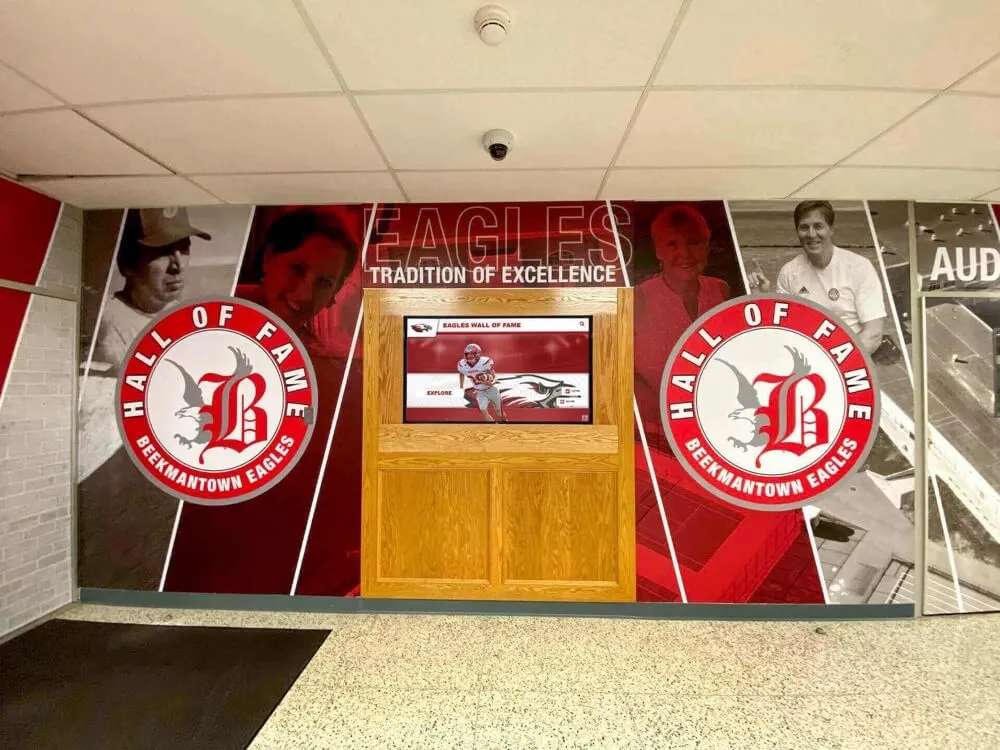
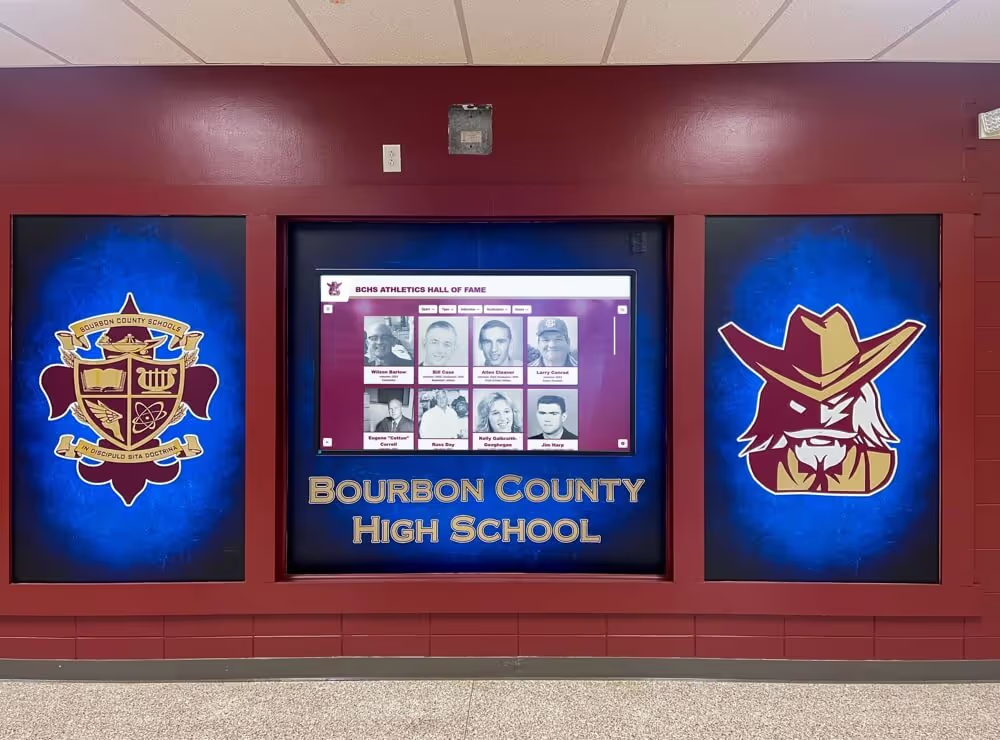
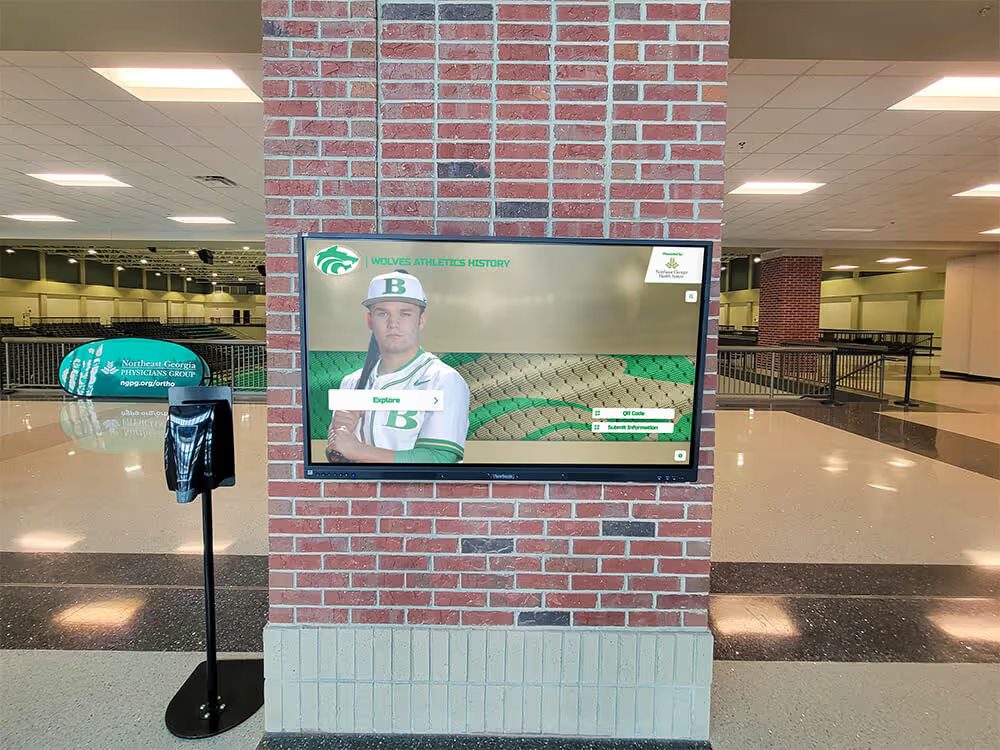
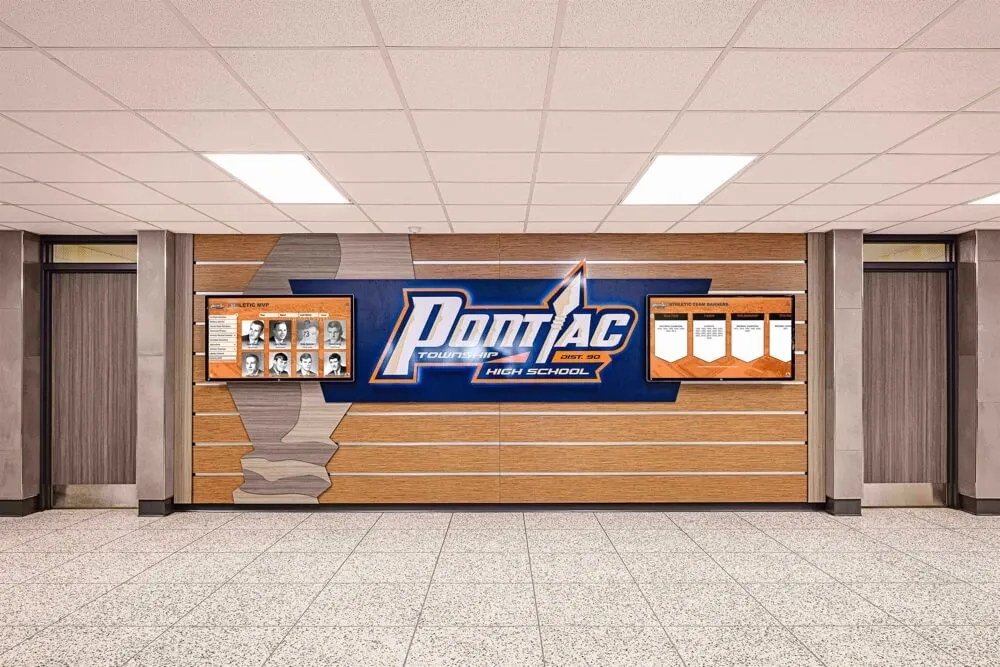
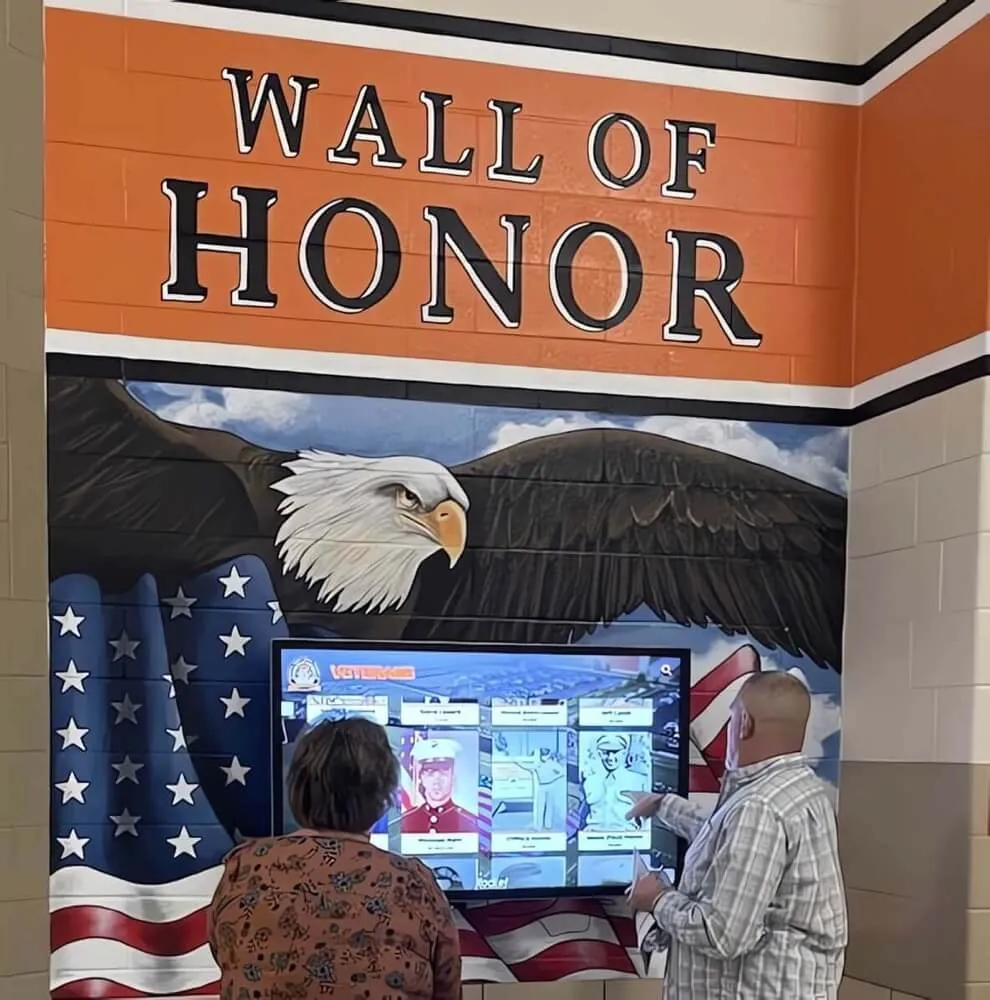
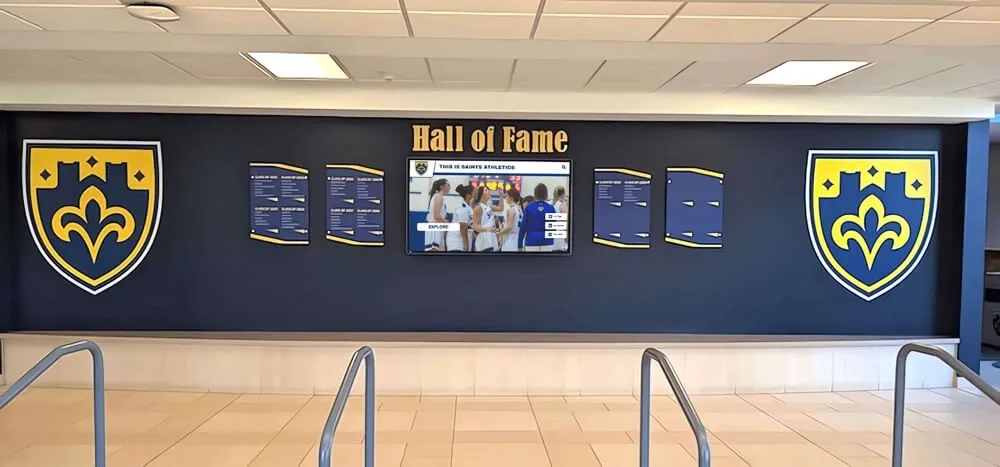
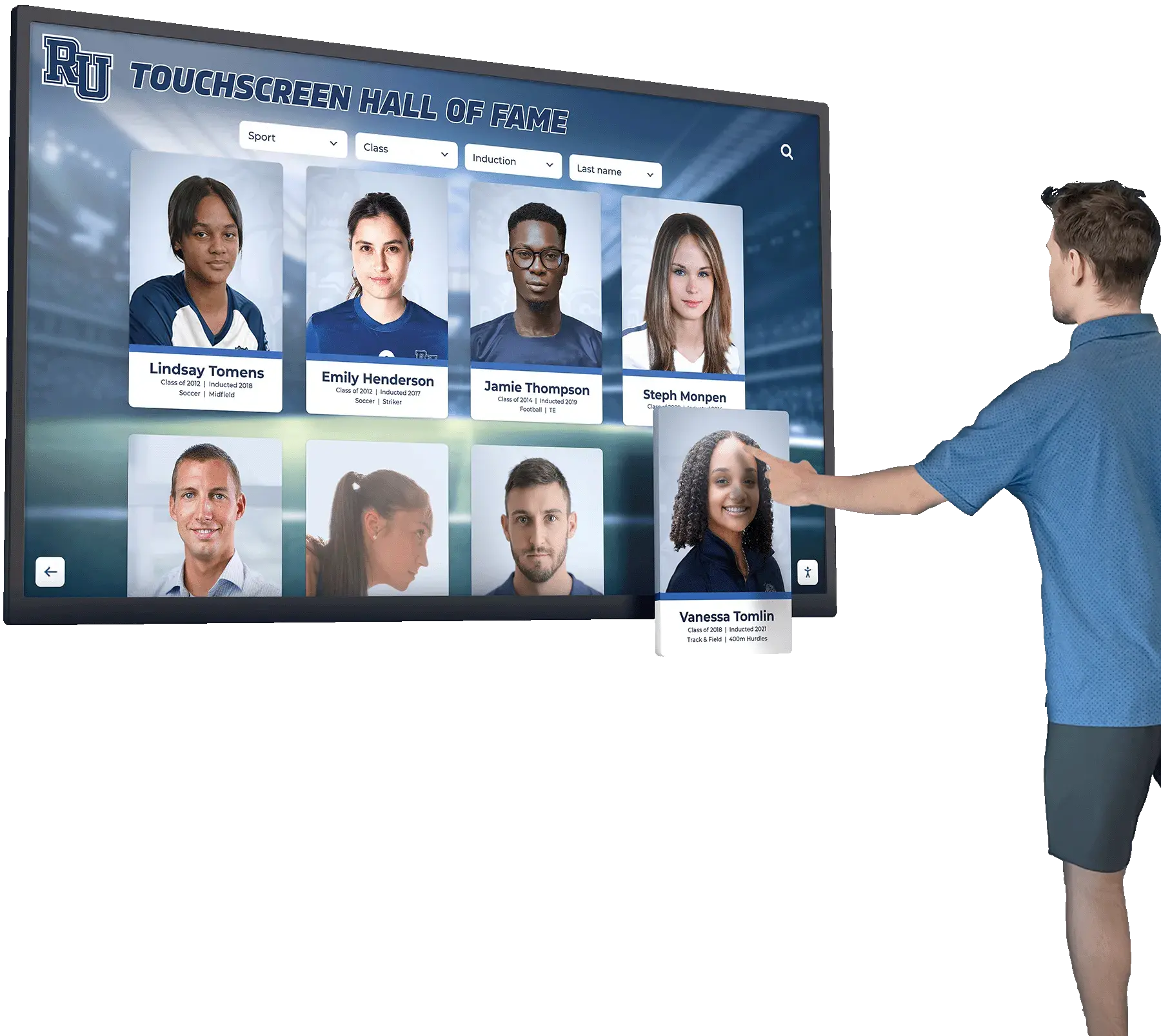
Schools that have resolved the inspection and maintenance question and turned their attention to the capacity question have increasingly moved to supplementing physical cases with digital recognition platforms. A digital wall of honor kiosk places unlimited recognition content — every athlete, every season, every academic honor — in the same hallway as the physical case, accessible via touchscreen interaction and QR code mobile access for families and alumni who visit outside school hours.
The physical case and the digital display serve different functions in this configuration. The case holds the irreplaceable objects — the actual trophy, the original plaque, the framed jersey. The digital display holds the complete institutional record: every honoree, searchable by name, year, sport, or award type, updated remotely without requiring another access event that puts wear on glazing beads.
Frequently Asked Questions
What is a glazing bead on a trophy case?
A glazing bead is the strip of rubber, vinyl, or aluminum that holds a glass panel in its frame within a trophy case. It runs along all four edges of each panel, creating mechanical retention that prevents the glass from sliding, tilting, or falling free. The bead also cushions the glass against the metal or wood frame, preventing edge-to-edge contact that could cause chipping or cracking during normal case use.
How do I know if a glazing bead is damaged?
The most common visible signs of bead damage are: gaps between the bead and the frame channel at the corners, sections of bead sitting raised above the surrounding frame face, cracks running across the bead material, and bead sections that have partially or fully pulled free from the channel. On rubber beads, gray-white discoloration and fine surface cracks indicate material aging. Any of these conditions warrant documentation and, for significant findings, a glazier assessment.
Can facilities staff repair a glazing bead?
Staff-level glazing bead inspection covers visual assessment and documentation. Repair — including reseating displaced beads, removing and replacing sections, or applying sealant — should be performed by a qualified glazing professional. Attempting to reseat a bead without training can shift the glass panel within the frame and create the displacement risk the bead is meant to prevent.
How often should glazing bead inspections be conducted?
Most school facilities programs benefit from annual full-building inspection rounds, with targeted re-inspection after significant events (renovations, high-traffic programs, observed impacts). Cases rated 2 (monitor) during a prior inspection should be re-inspected within 60 days. Cases in high-traffic locations — gymnasium entries, main lobby alcoves, athletic corridor intersections — warrant more frequent attention than cases in lower-traffic secondary corridors.
What should I do if I find a rating-4 or rating-5 condition?
Restrict access to the affected case immediately — do not open the door, and advise students and staff to avoid contact with the case until it has been assessed. Document the finding with photographs. Contact the facilities supervisor and request a glazier assessment within five business days for a rating-4 condition, or the same day for a rating-5 condition. Notify the building administrator that the case is restricted from use.
Do glazing beads affect tempered glass differently than annealed glass?
Glazing bead failure is a glass retention problem, not a glass-type problem — the bead holds any glass panel in its frame regardless of whether the glass is tempered or annealed. However, cases that undergo glazing bead repair or panel replacement present an opportunity to confirm the replacement panel’s safety-glazing status while the case is open and the glazier is on site, which is more efficient than scheduling a separate stamp verification visit.
Are glazing beads the same on trophy cases as on windows and doors?
The function is the same — mechanical retention of glass in a frame — but the profiles, materials, and installation methods differ between trophy case manufacturers and between trophy cases and architectural glazing. Trophy case beads are typically lighter-duty than the beads used in storefront door systems and window curtain walls, and they are usually accessible for inspection without specialized tools. Glaziers who work on school facilities regularly are familiar with both architectural and display-case glazing systems.
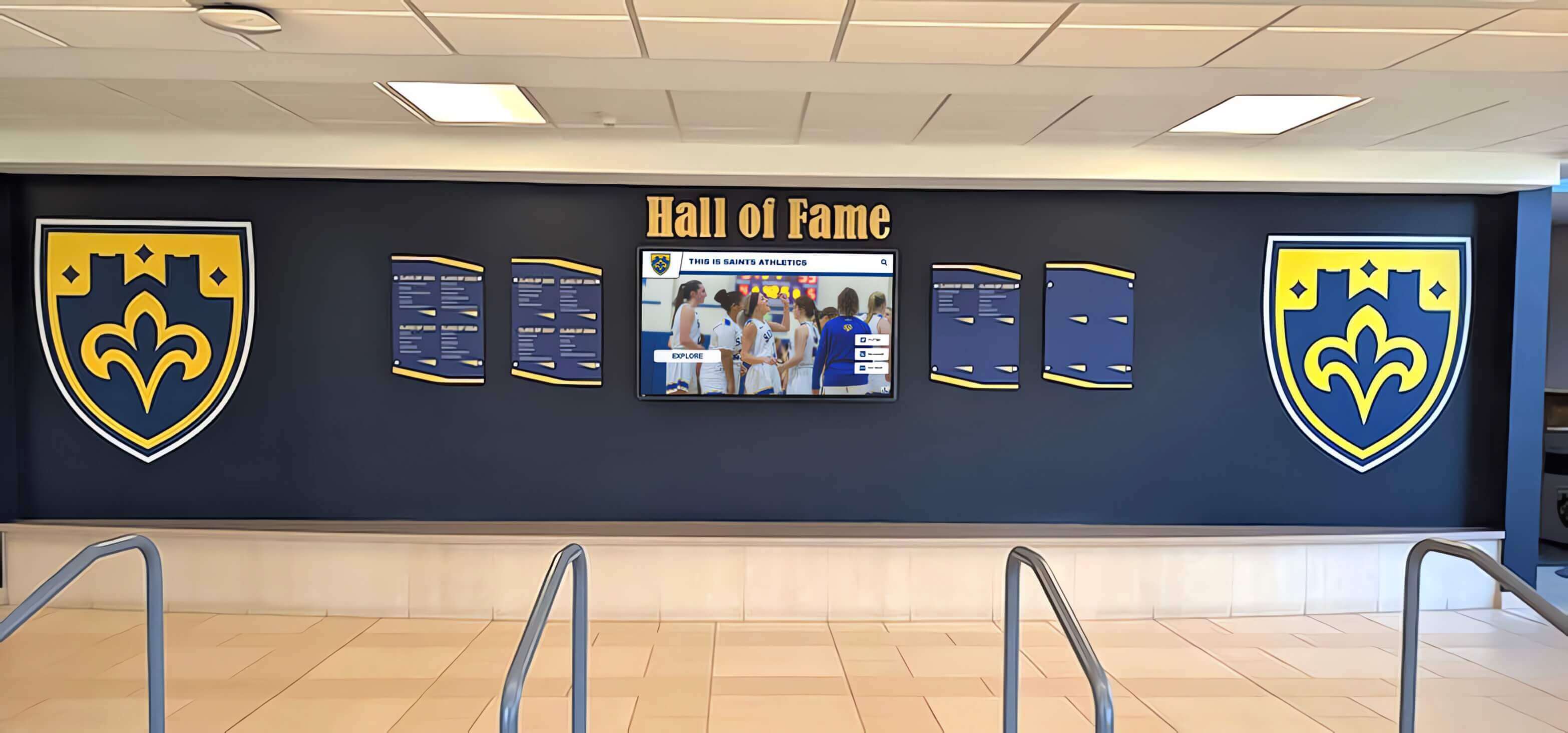
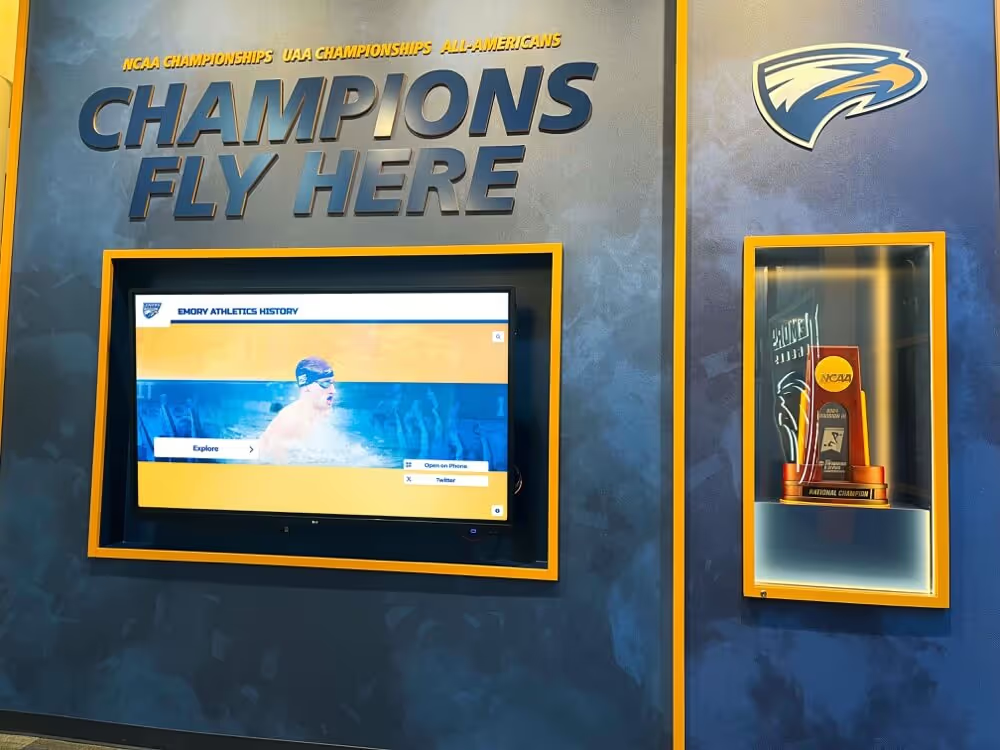
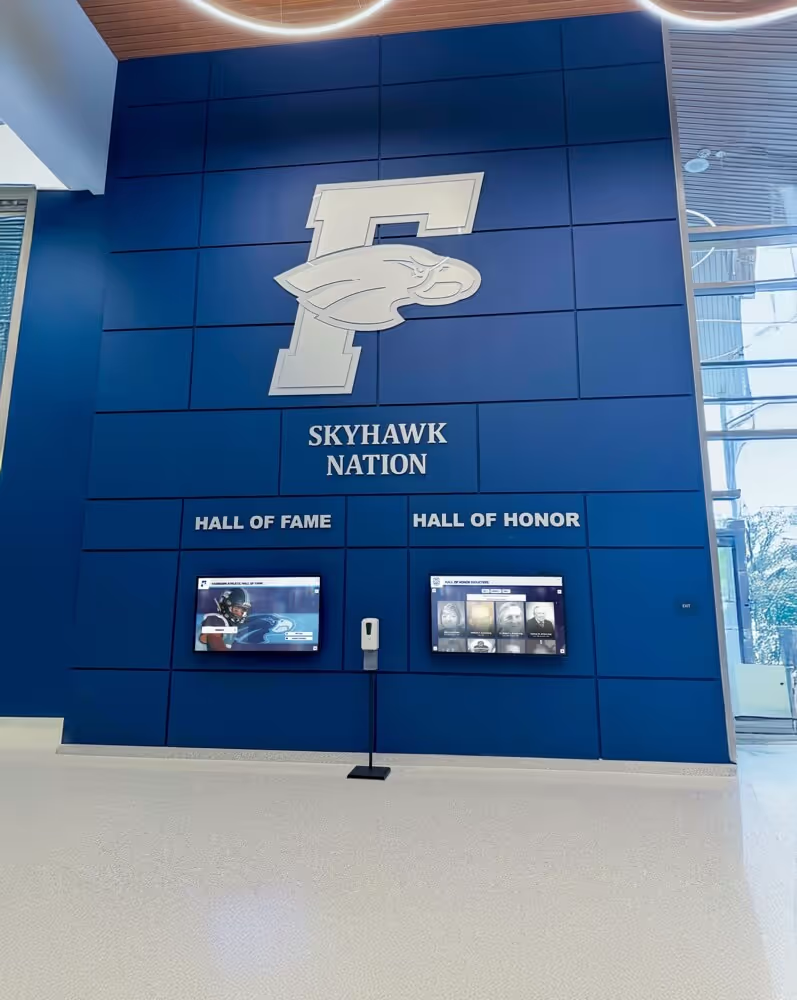
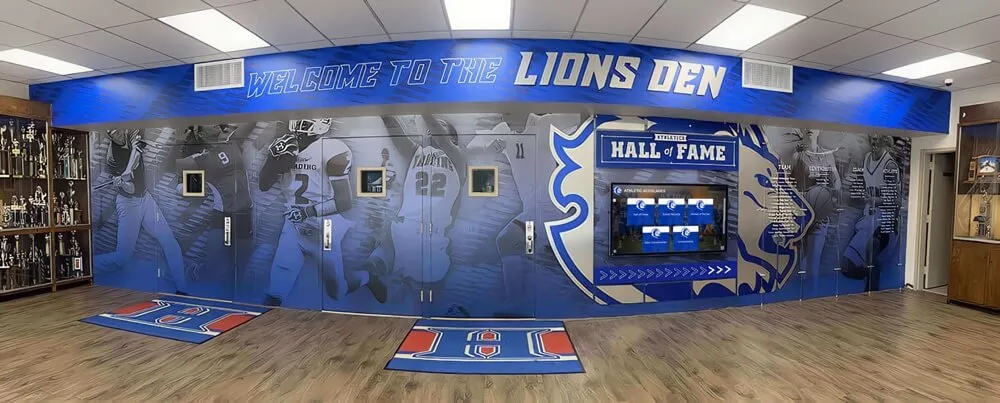
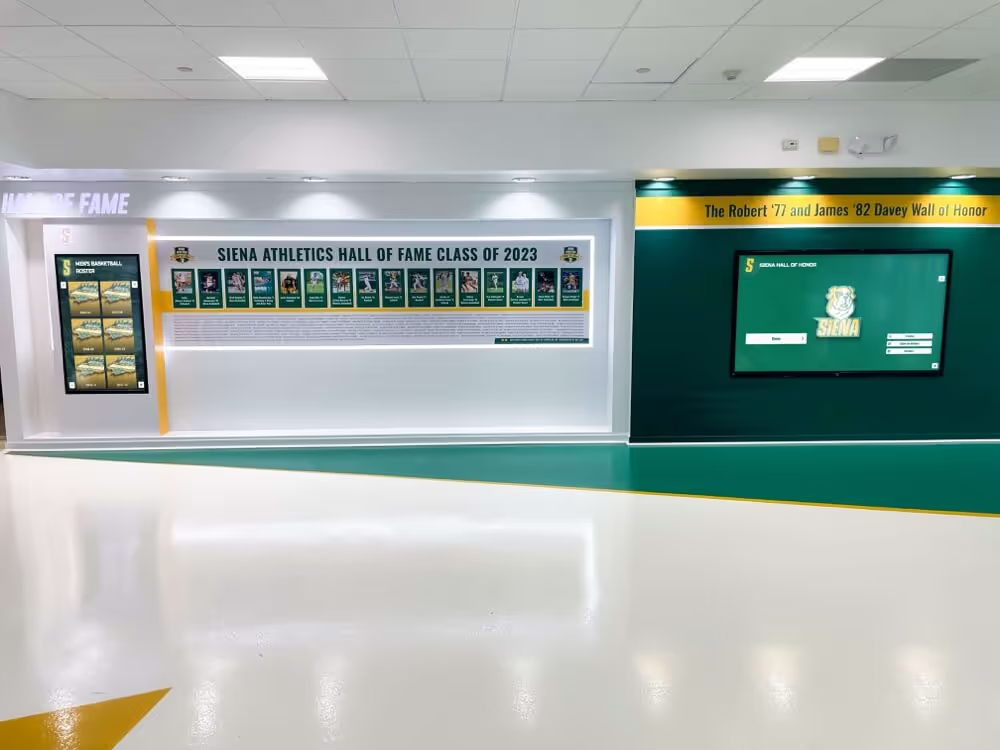
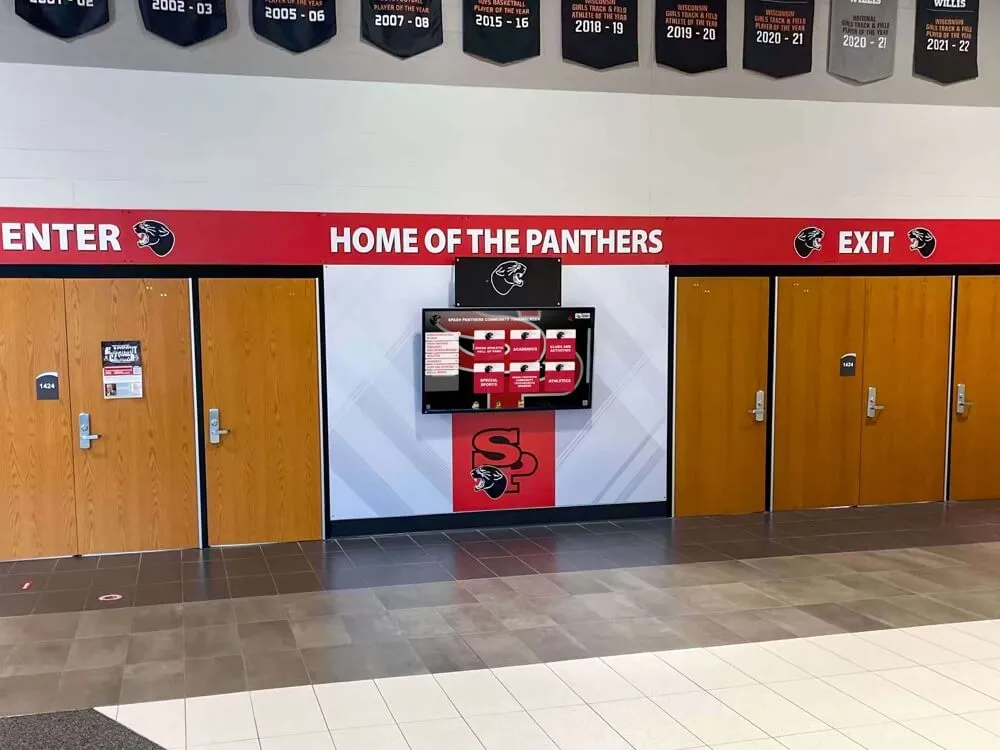
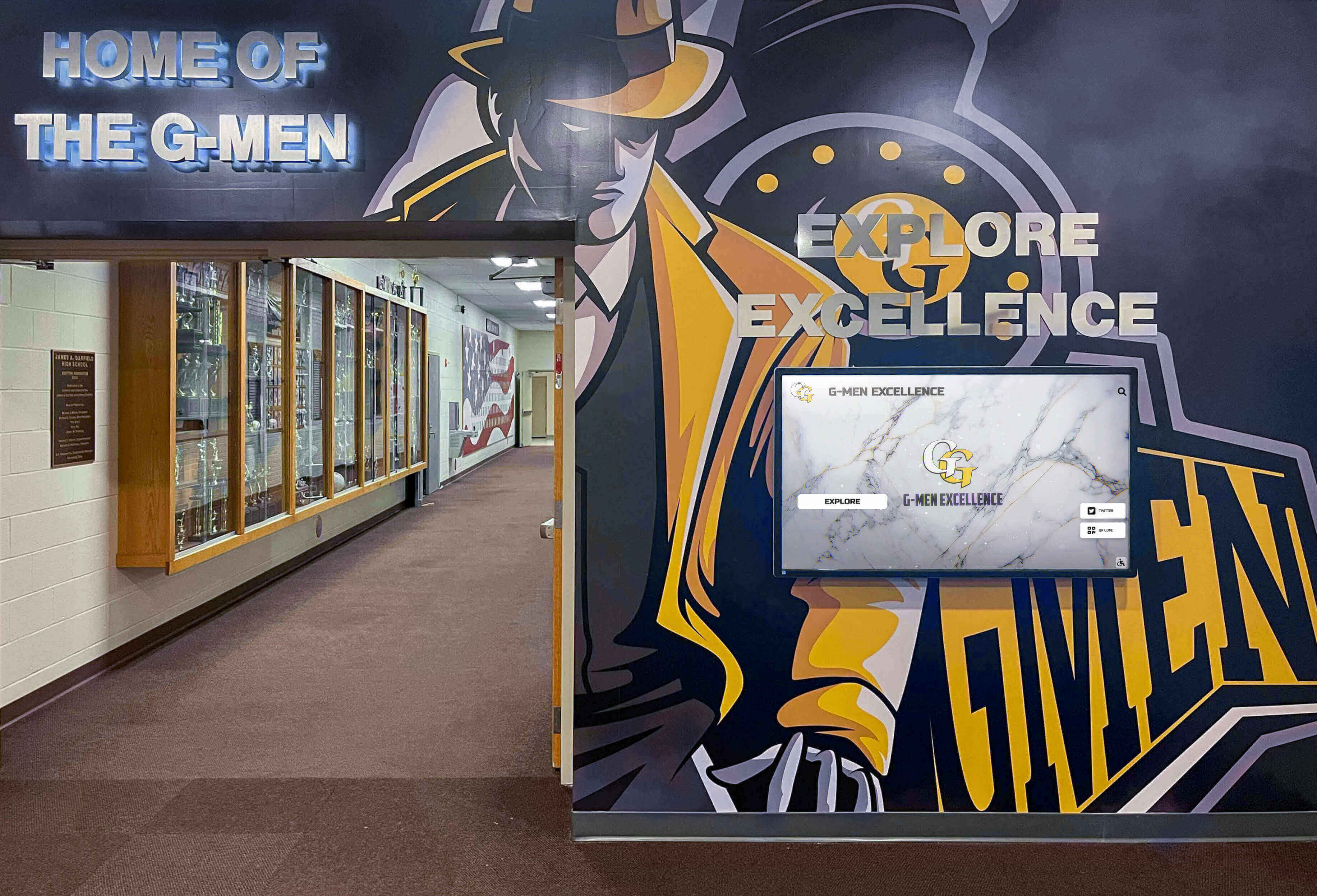
A lobby recognition display that combines physical trophy cases and a digital recognition screen represents two distinct maintenance tracks — glazing bead inspection covers the physical glass; display documentation covers the digital platform
Building a Documentation Culture Around Recognition Infrastructure
The glazing bead inspection checklist is one component of a broader facilities discipline for school recognition infrastructure. Schools that maintain systematic documentation — glass condition, bead condition, hardware inventory, lock and hinge function — treat their trophy cases as the institutional assets they are rather than furniture that gets attention only when something breaks.
That documentation culture extends naturally to digital recognition infrastructure when schools add touchscreen platforms alongside their physical cases. The same facilities team that documents glazing bead condition and schedules glazier follow-up can document display hardware condition and escalate technical issues through the same workflow. The medium differs; the habit does not.
For schools developing recognition programs that span multiple formats and grade levels — including the community events and archive materials that appear in middle school yearbook programs and feed into a building’s long-term recognition history — the investment in systematic documentation pays forward. Cases that are documented, maintained, and escalated appropriately protect both the students in the hallway and the institutional history behind the glass.
Ready to Extend Recognition Beyond the Physical Case?
Rocket Alumni Solutions builds touchscreen digital trophy cases, interactive halls of fame, athletic record boards, and scholar-athlete recognition systems for schools of every size. When physical cases are fully inspected and maintained — and still running out of space — a digital platform gives every athlete, every honoree, and every season permanent, searchable, unlimited visibility.
Book A DemoA completed school trophy case glazing bead inspection log tells the facilities team exactly what the building’s recognition displays contain and what condition their glass retention components are in. Panels with sound beads are confirmed. Panels with damaged or missing beads have a documented status and an assigned follow-up action. No panel is assumed to be fine because it looks undisturbed. That is the value of systematic inspection: not certainty that every bead meets every standard, but documented knowledge of what is confirmed, what needs attention, and who is responsible for the next step.