



Walk into nearly any school in America and you’ll find a trophy case somewhere near the front entrance. Generations of students have stopped in these hallways to find a parent’s old team photo. Coaches have pointed to championship hardware to motivate this year’s roster. Alumni have reconnected with accomplishments that defined their years in these halls. The school trophy case carries real weight in school culture—yet most of them are also running out of room, gathering dust, and struggling to tell a complete story of what the school’s community has actually achieved.
The challenge isn’t the concept of the trophy case. It’s the execution. Physical cases fill up. Awards get rotated to storage. Academic achievements, arts accomplishments, and service recognition rarely receive the same prominent placement as athletic hardware. And when something changes—a new championship, an error on a label, a retiring coach who deserves acknowledgment—updating a physical case requires keys, rearranging, and time that busy administrators rarely have.
This guide covers school trophy case design ideas that work at every budget level, strategies for maximizing what physical displays can accomplish, and modern approaches that eliminate the space and maintenance limitations traditional cases simply cannot solve.
Every school’s recognition challenge is slightly different, but the underlying questions are the same. How do you honor decades of achievement in finite space? How do you keep displays current without constant effort? How do you make sure your trophy case actually inspires students instead of blending into the background?

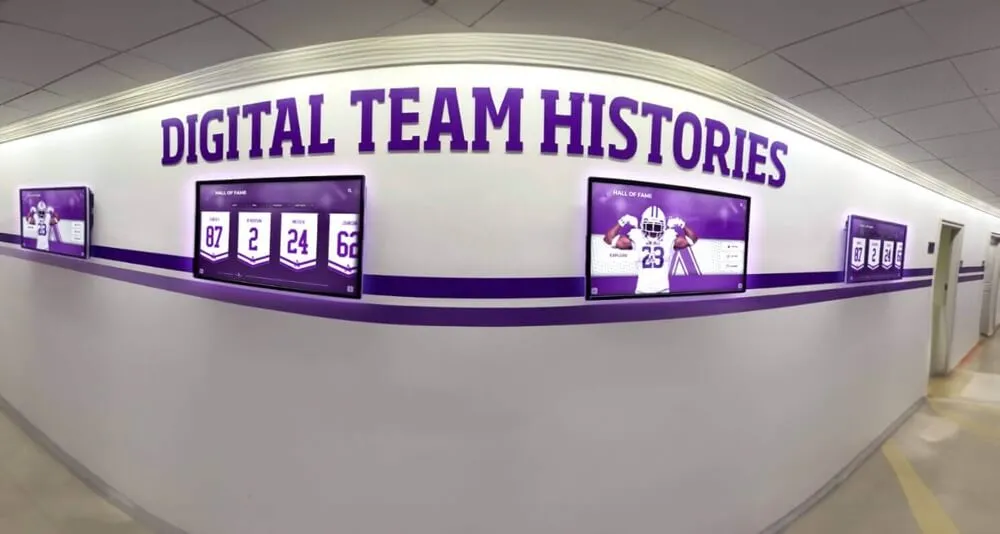
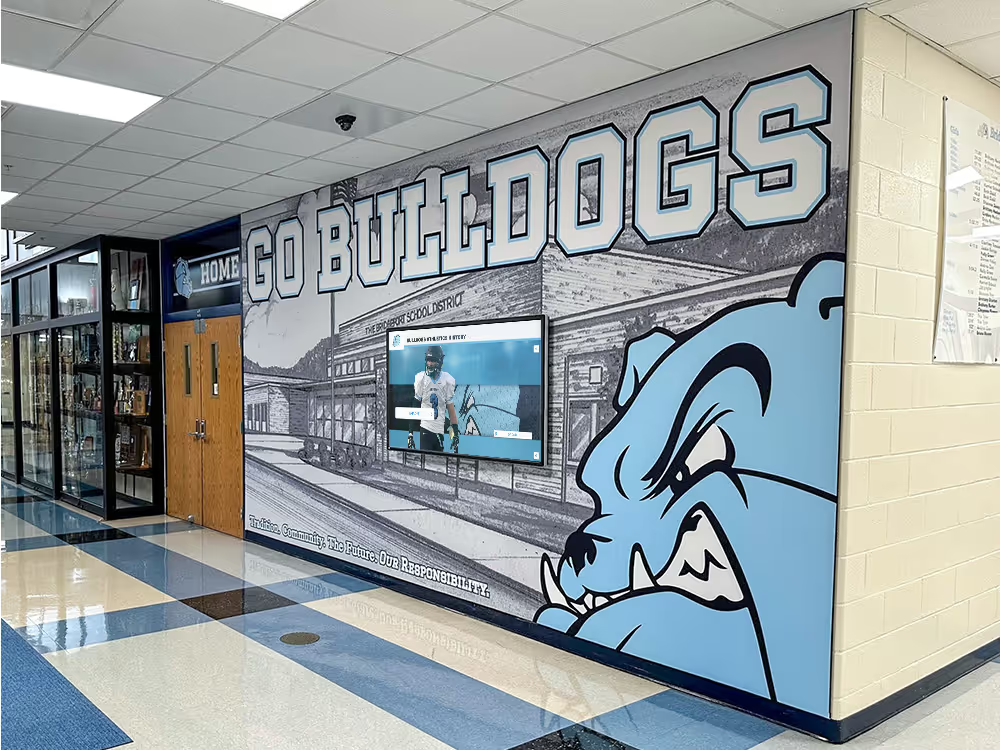
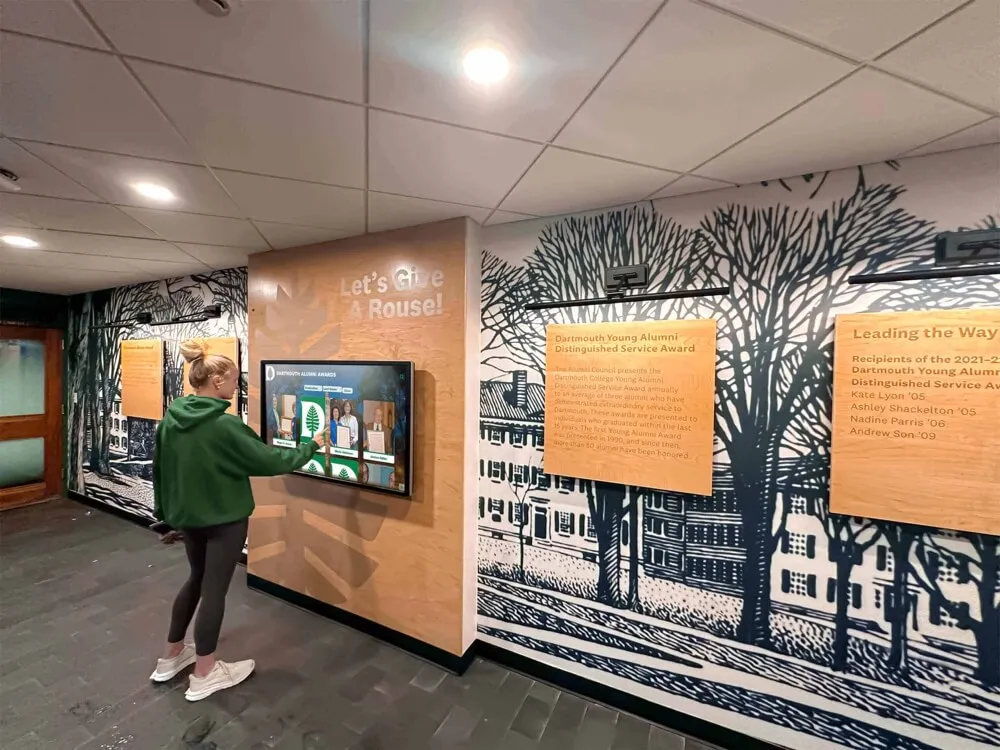
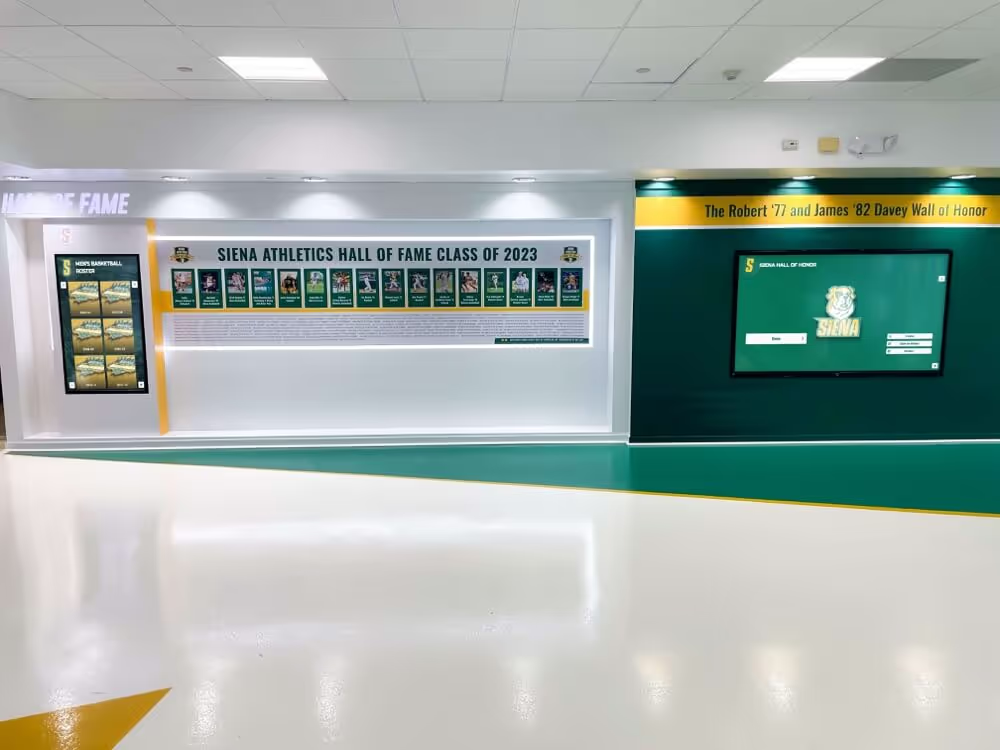
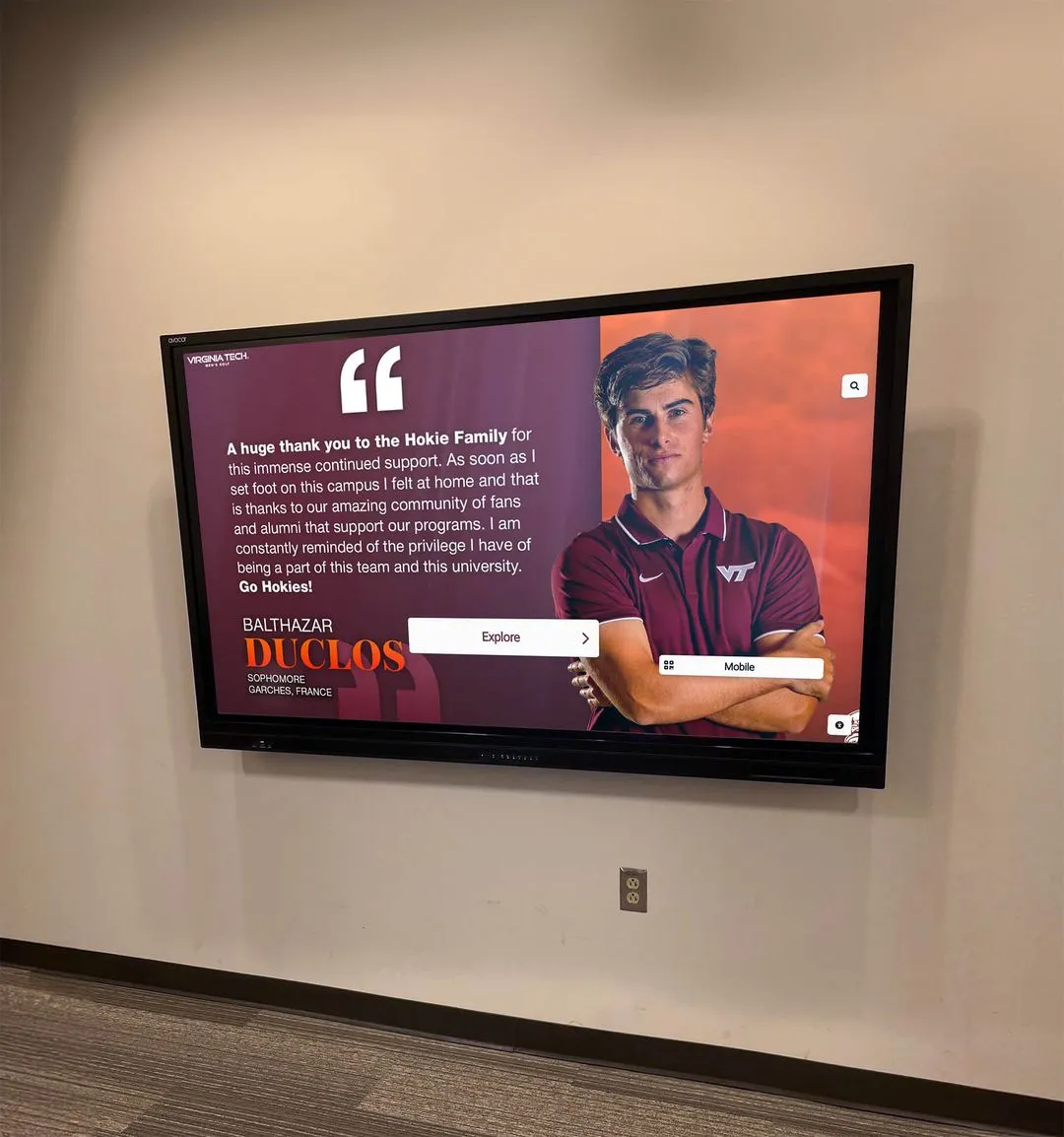
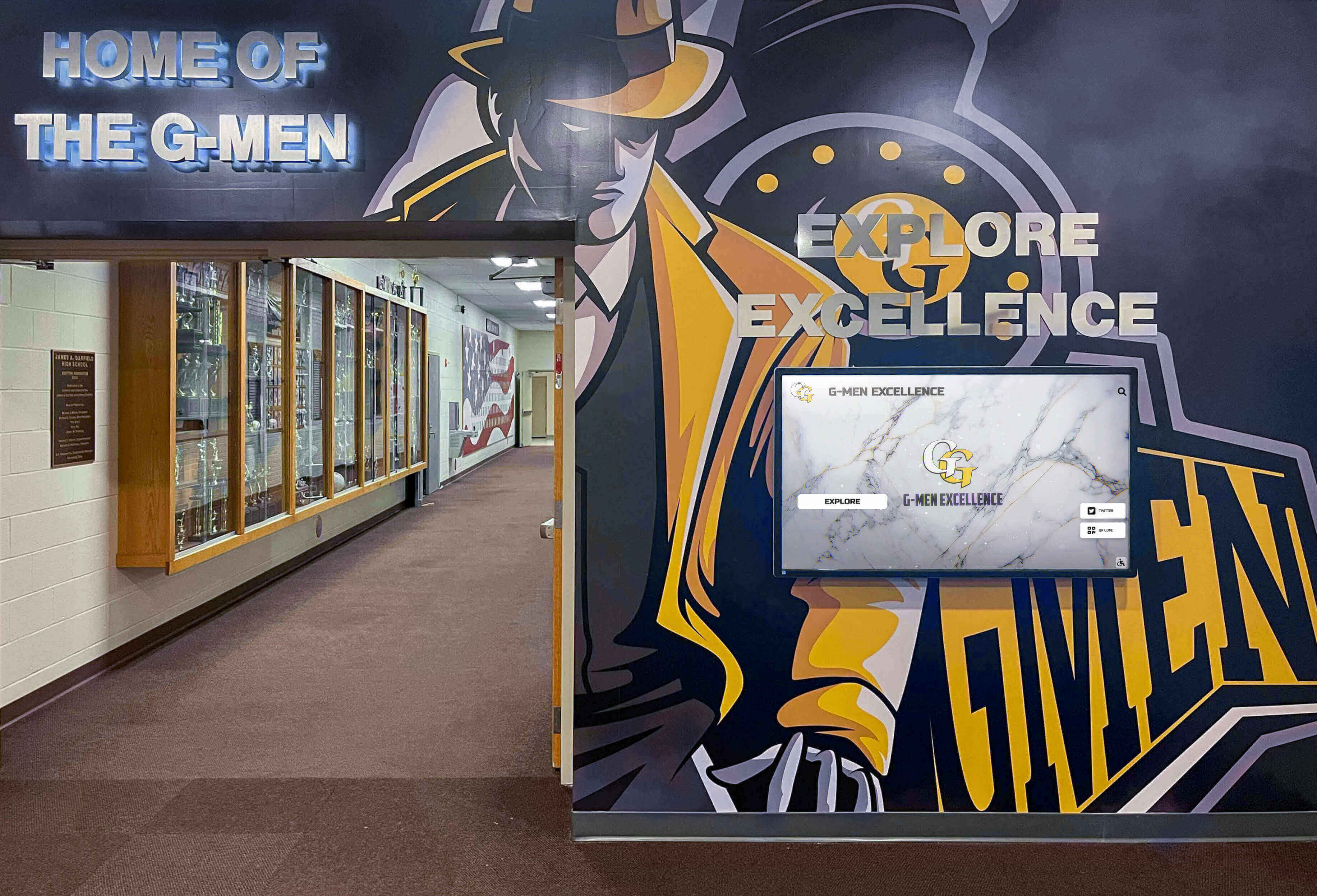
Integrated hallway displays combine traditional trophy cases with digital screens and murals, creating complete recognition environments that celebrate the full depth of school achievement
Why the School Trophy Case Still Matters
Before exploring what to change, it helps to understand what the trophy case actually accomplishes when it works well.
At its best, a well-designed school trophy case:
- Connects generations. Alumni who attended twenty years ago can find their team in the same hallway where current students pass every day. That shared space creates genuine institutional identity that no digital platform alone replicates.
- Motivates current students. Seeing past championships and record holders gives current competitors context for what’s possible. A case showing forty years of state championship runs tells an athlete they’re part of something with real legacy.
- Communicates institutional values. What a school chooses to display—and how prominently—signals what it considers worth celebrating. A case showing only football hardware sends a fundamentally different message than one that includes debate team trophies, National Honor Society plaques, and community service recognition.
- Welcomes visitors. Prospective families, community members, and officials encounter the trophy case early in any building visit. A polished, comprehensive display creates a strong first impression that admissions brochures can’t fully replicate.
None of these functions require recognition to stay physical. But understanding the purpose helps schools design systems—whether physical, digital, or hybrid—that actually serve these goals rather than just filling hallway space.
Traditional Trophy Case Design Ideas That Still Work
Physical trophy cases remain valuable when thoughtfully designed. These approaches maximize the impact of what you already have without requiring major investment.
Organize by Chronology, Sport, or Theme
The most common organizational mistake is arranging trophies however they happen to fit. Intentional organization creates narrative, makes displays easier to navigate, and gives visitors a reason to look beyond the front row.
Chronological arrangements work well for programs with rich competitive histories. Moving left to right from founding achievements to current success, with decade markers or visual dividers, lets visitors trace program development across generations. Schools celebrating milestone anniversaries benefit especially from this approach—it creates a natural storytelling arc that retrospective displays alone can’t provide.
Sport-specific sections help prospective athletes find relevant program histories immediately. Grouping football hardware together, basketball championships in one area, and track records in another creates focused recognition zones. Color-coded backgrounds matching team colors or sport-specific imagery reinforce these divisions without requiring signage overload.
Achievement-type organization works particularly well for schools with balanced multi-sport and multi-program success. Grouping by category—championship trophies, individual excellence awards, sportsmanship recognition, academic achievement—prevents any single dominant program from overwhelming the case while honoring the full range of school accomplishment.
Lighting Transforms How Trophies Look
Most trophy cases are dramatically underlit. A thoughtful lighting upgrade costs relatively little and has an outsized impact on both how displays look and how much attention visitors actually pay them.
LED strip lighting along case edges provides consistent, even illumination that eliminates dark corners where older trophies disappear visually. Spotlights on significant championships or statement pieces create drama and draw the eye toward the achievements that matter most. Back-lit panels behind trophy shelving add depth. Motion-activated lighting that responds to visitors walking past makes displays feel alive rather than static.
Properly lit cases look like showcases rather than storage units. That distinction matters for every audience the trophy case serves.
Add Context to Physical Displays
A trophy on a shelf answers one question: something was won. It rarely answers the interesting questions. Who were the players? What was special about that season? How does this achievement compare to what came before?
Context transforms a static object into a story. Consider adding:
- Team photographs alongside championship trophies, with player names labeled clearly
- Season records and tournament results on engraved plaques or printed context cards
- Newspaper clippings from championship coverage or significant moments in program history
- QR codes linking to digital content—highlight videos, complete team rosters, full season statistics
QR codes are particularly effective because they bridge physical cases to unlimited digital depth without requiring additional physical space or display cabinet investment.
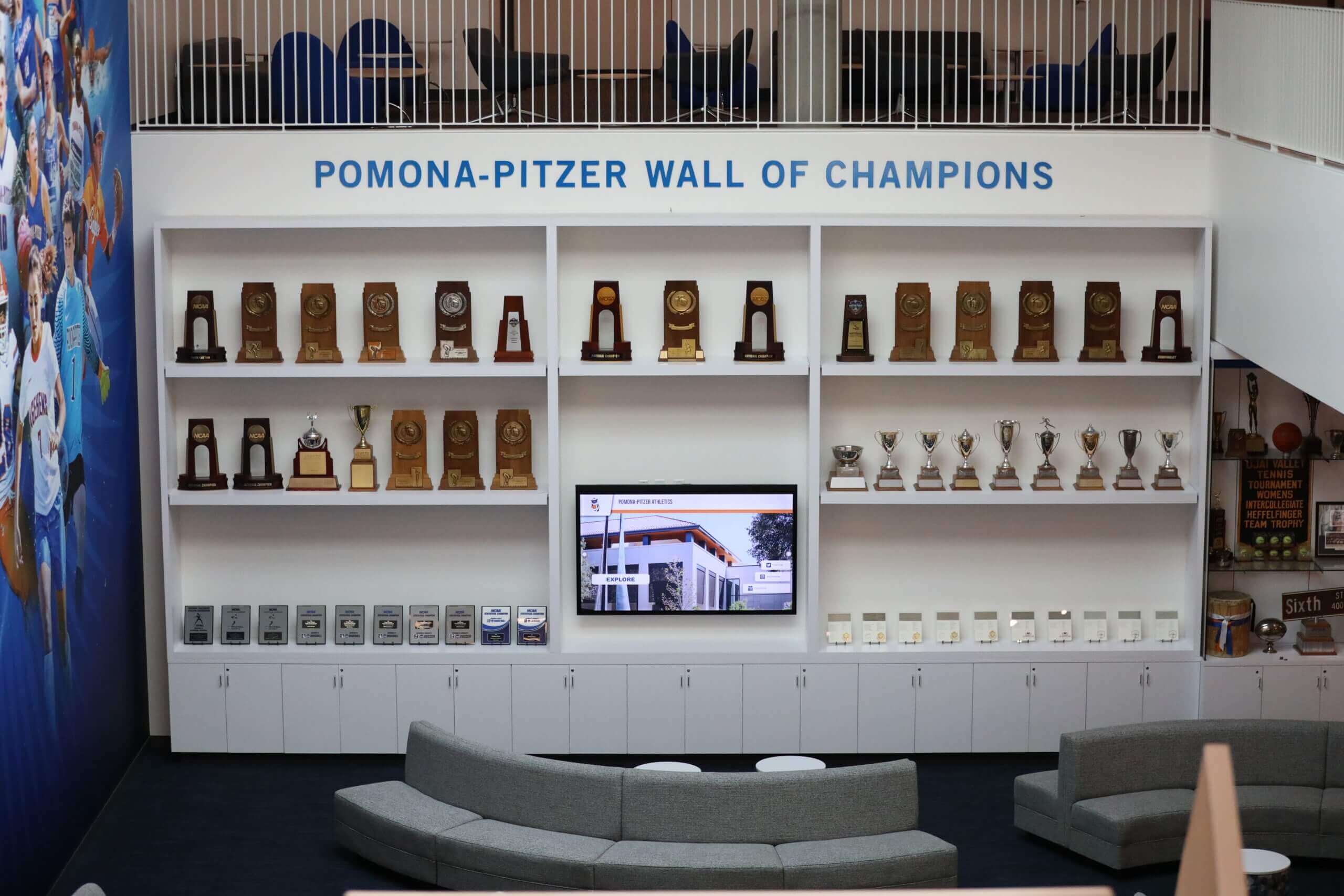
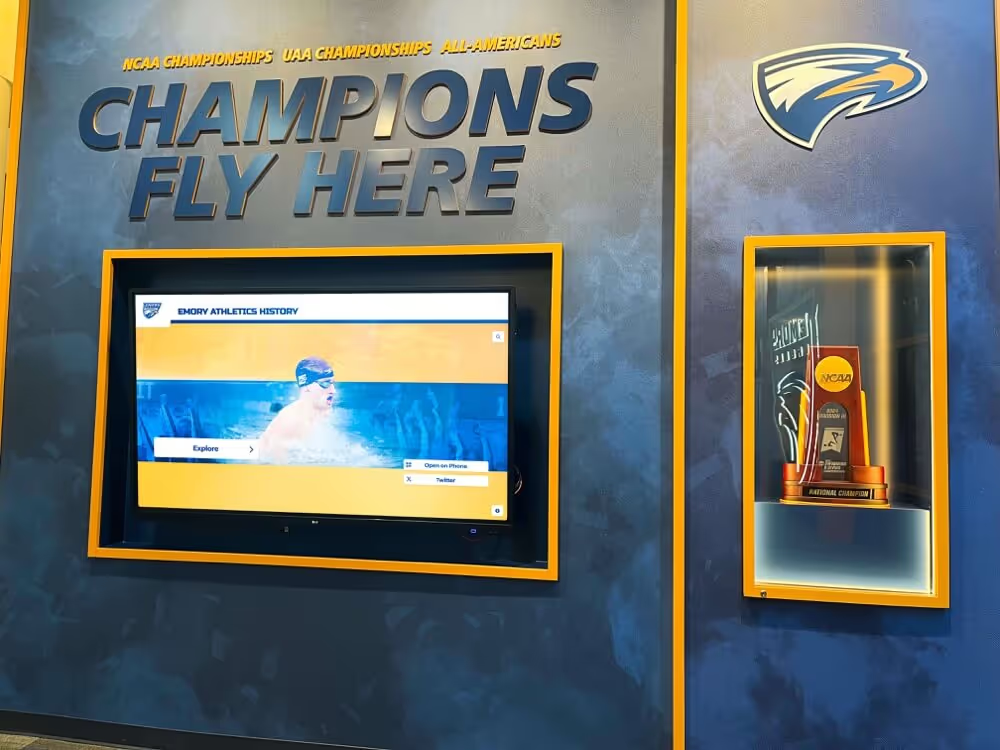
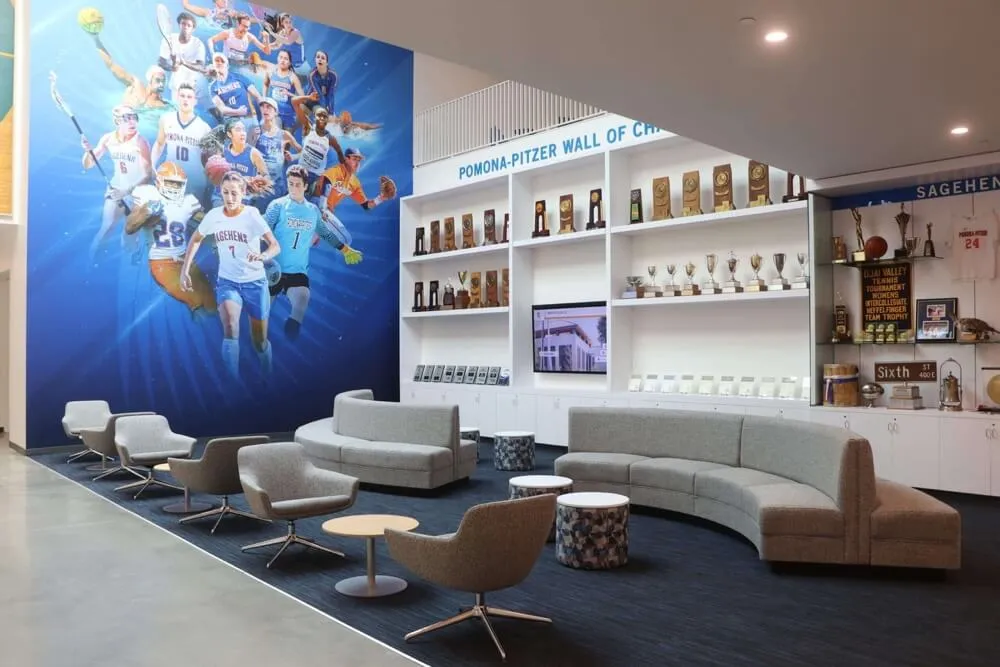
Dedicated trophy display lounges create destination recognition spaces where visitors can spend extended time with championship history in a comfortable setting
Common Challenges Schools Face with Physical Trophy Cases
Understanding these challenges helps schools decide when improvements to physical cases are sufficient and when digital solutions become necessary.
Space Fills Up Faster Than Expected
This is the most consistent complaint from athletic directors and administrators. A school celebrating its twentieth championship year faces the same finite glass case installed decades ago. New achievements crowd out older ones. Conference championship trophies get displaced by state tournament hardware. The program’s full history ends up split between the hallway display and boxes in a storage closet that no one opens.
The math only gets worse over time. Successful programs generate more recognition than fixed display space can hold. Without an expansion strategy, schools face increasingly difficult decisions about which achievements deserve visibility and which get quietly removed.
For perspective on how this challenge plays out across different school types, traditional vs. modern school display cases explores how different approaches handle the space question as programs grow.
Maintenance Requires Consistent Attention
Physical trophy cases need regular care. Glass gets dusty and smudged. Trophies tarnish. Labels fade or contain errors. Lighting burns out. Rearranging displays when new achievements arrive requires physical access, time, and disrupting existing arrangements.
This isn’t an impossible maintenance burden, but it requires clearly designated responsibility and consistent follow-through. When those systems break down—new administrators take over, busy seasons cause delays, budget reductions affect custodial time—displays deteriorate visibly. A neglected trophy case communicates neglect of the achievements inside it.
Physical Trophies Provide Minimal Information
Even well-maintained physical cases communicate only surface information. A plaque confirms a championship happened. It rarely provides the rich context that makes recognition meaningful: the season narrative, the individual contributors, the historical significance, the path through tournament brackets.
This information limitation becomes more significant as schools try to recognize diverse achievements across athletics, academics, arts, and student life. A debate trophy and a football championship trophy communicate roughly equal amounts in a traditional case—neither tells a complete story.
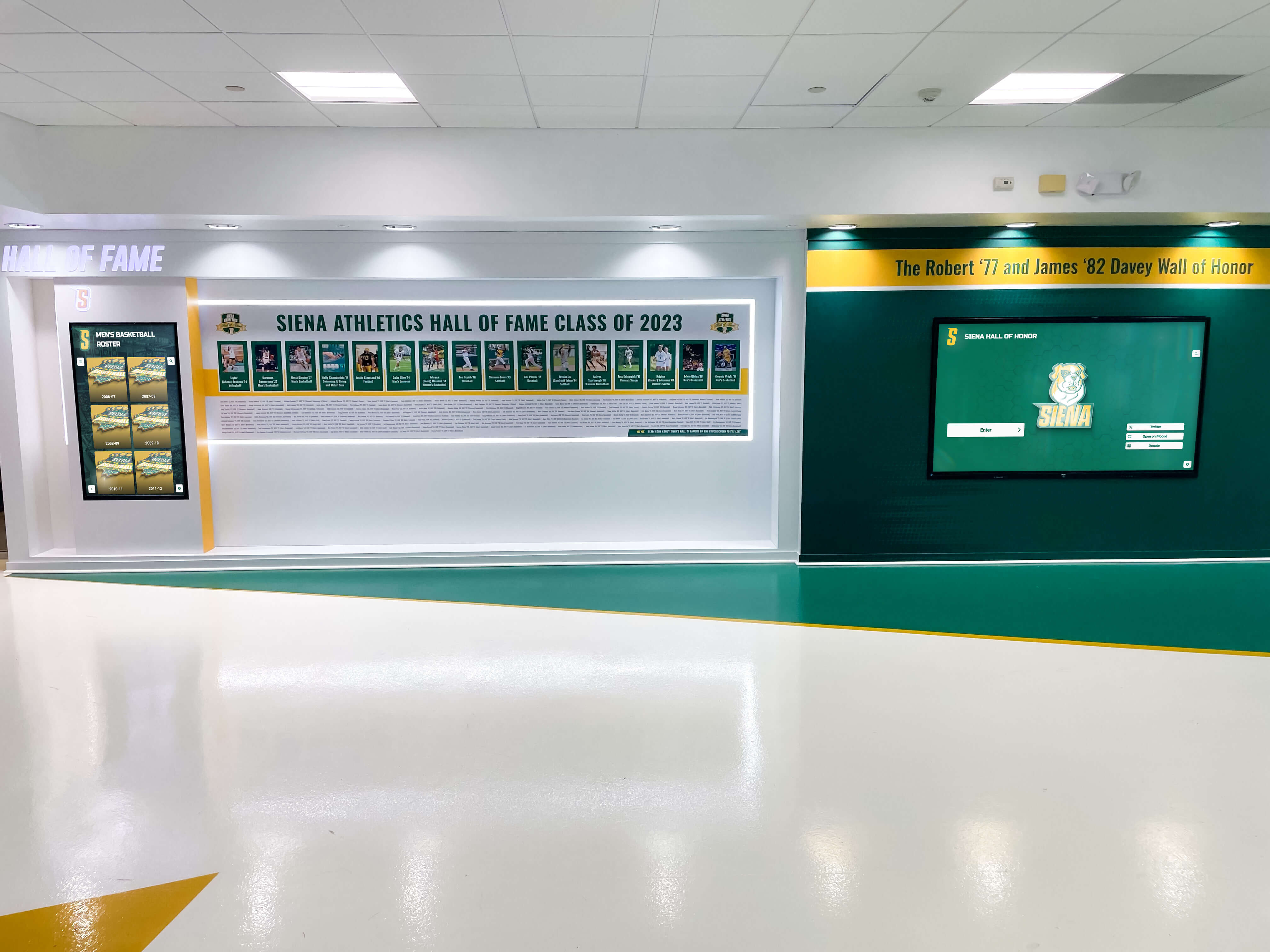
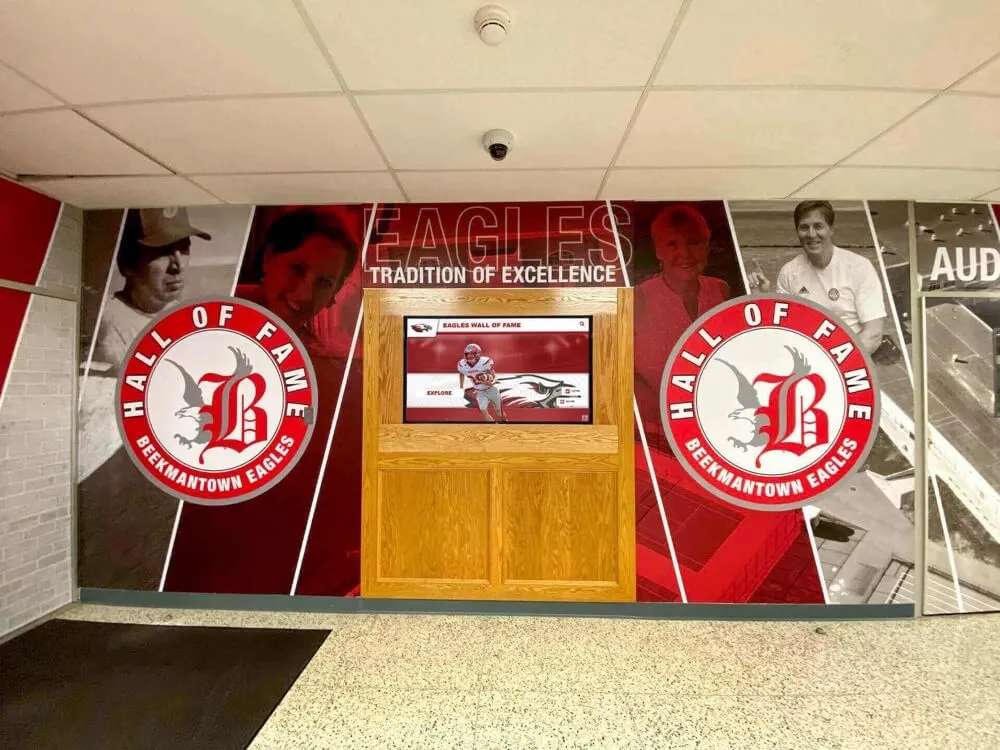
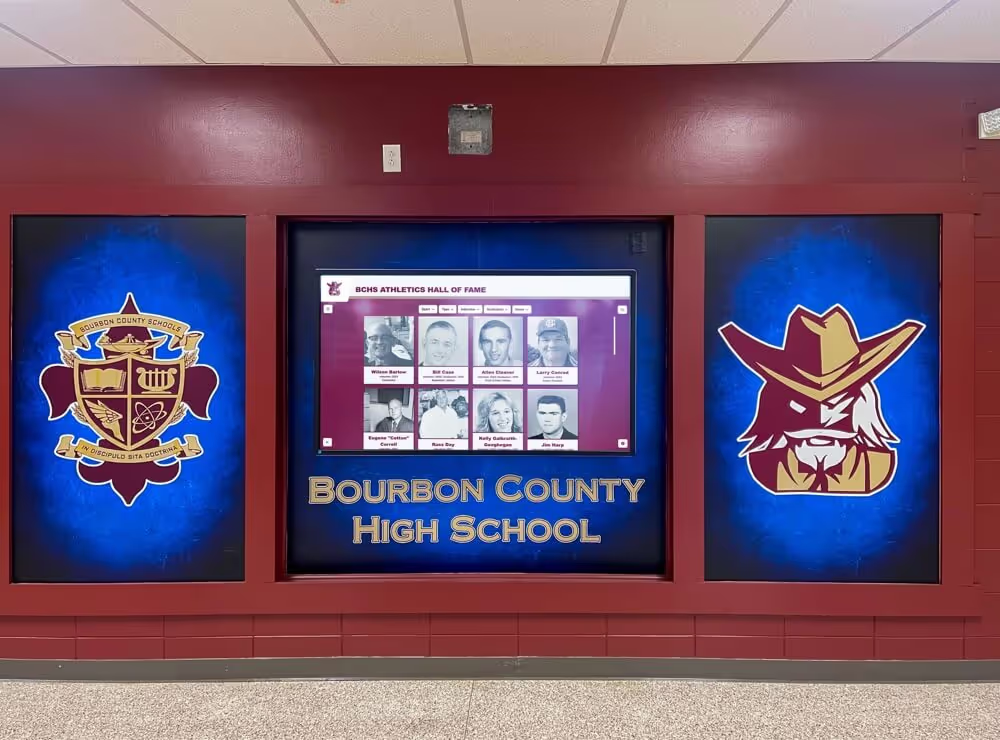
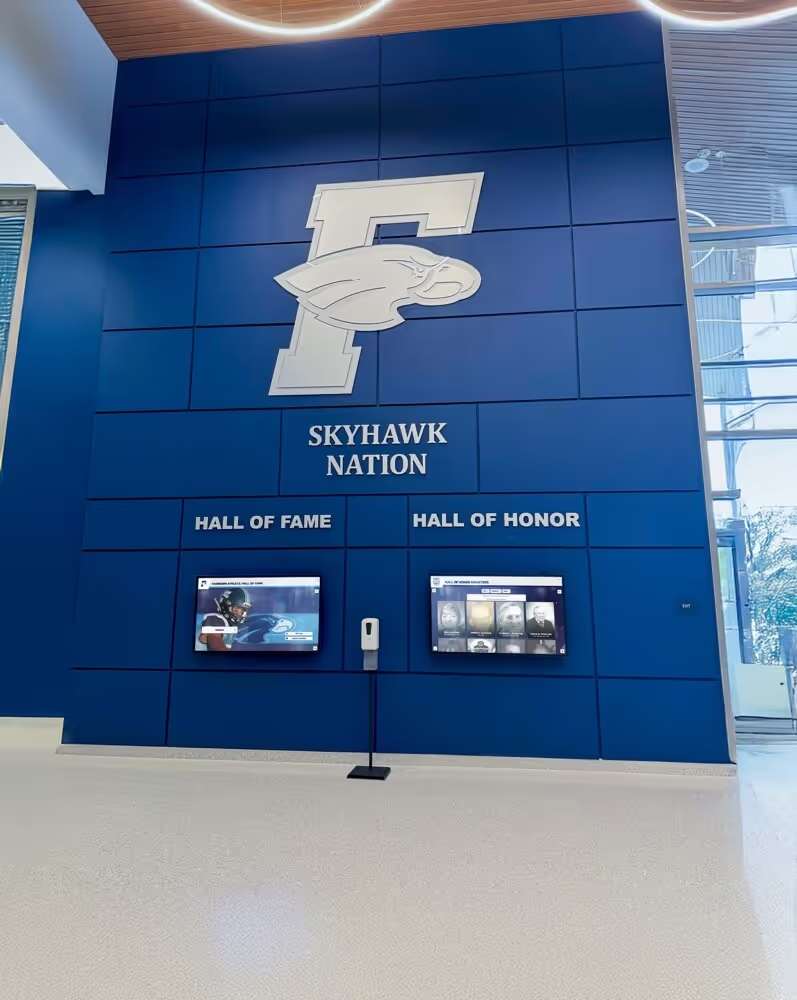
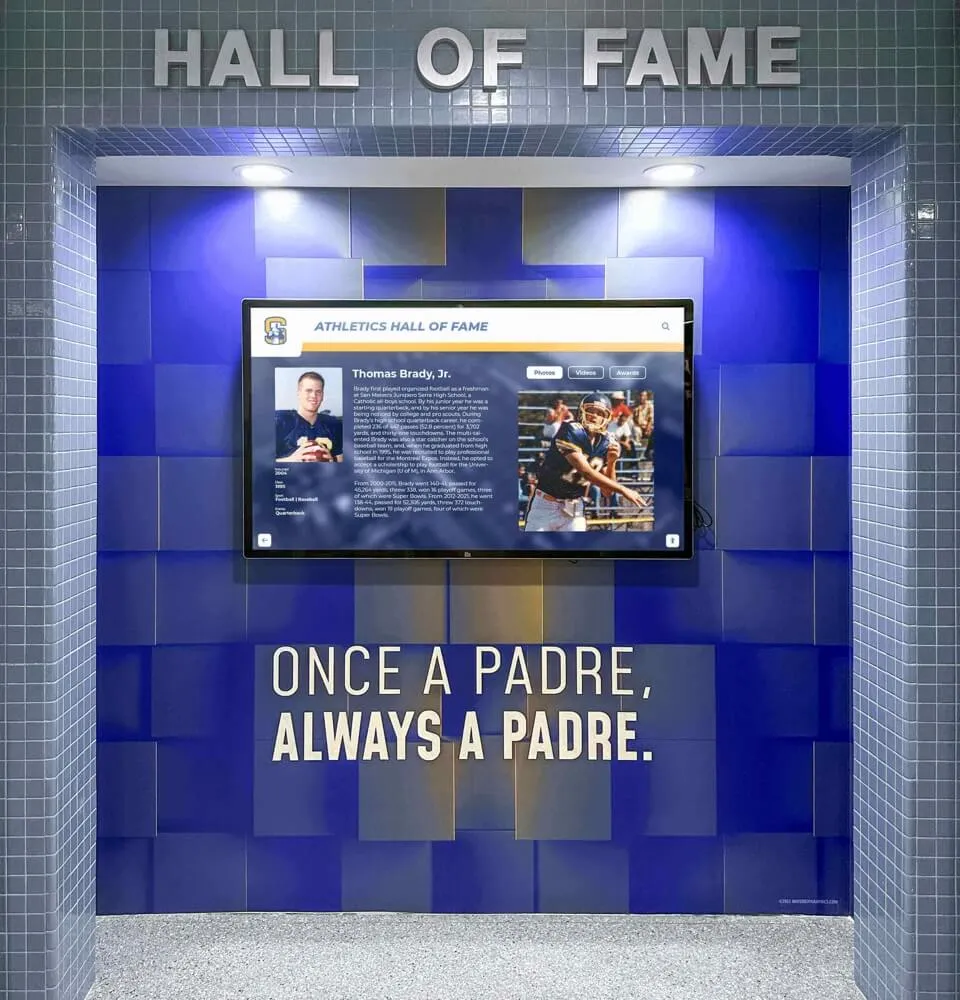
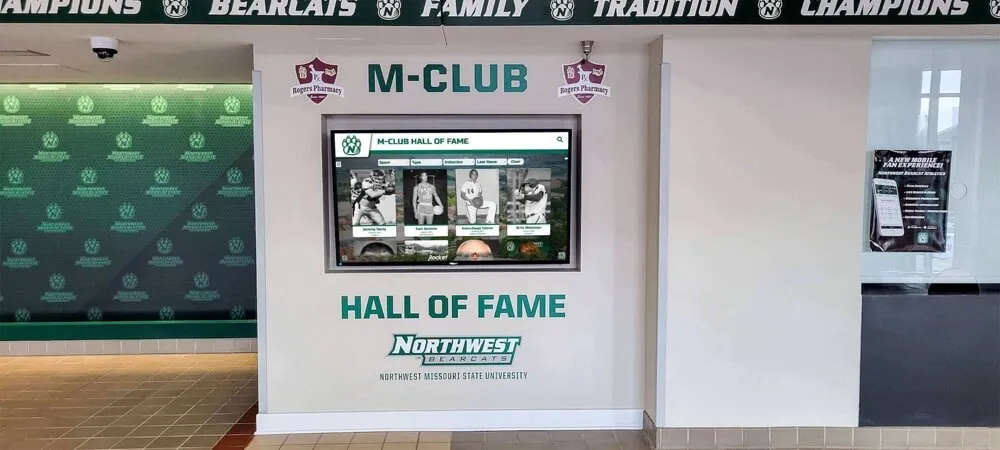
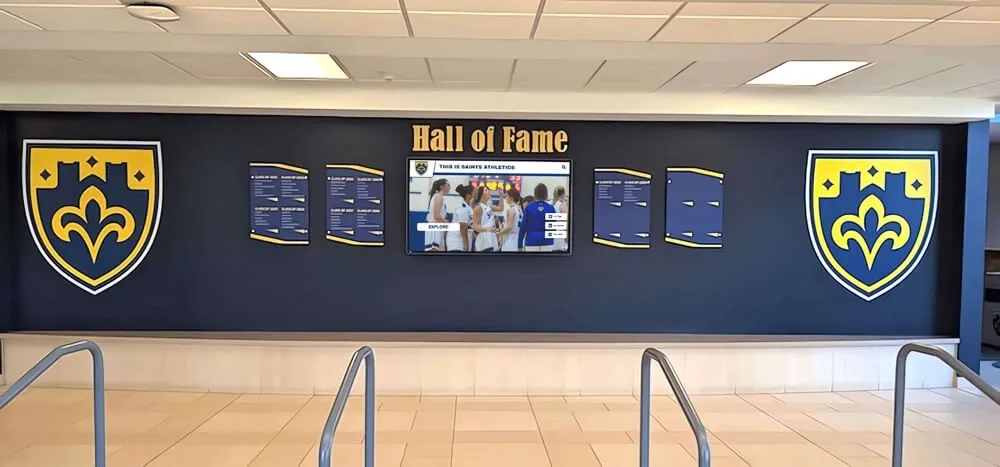
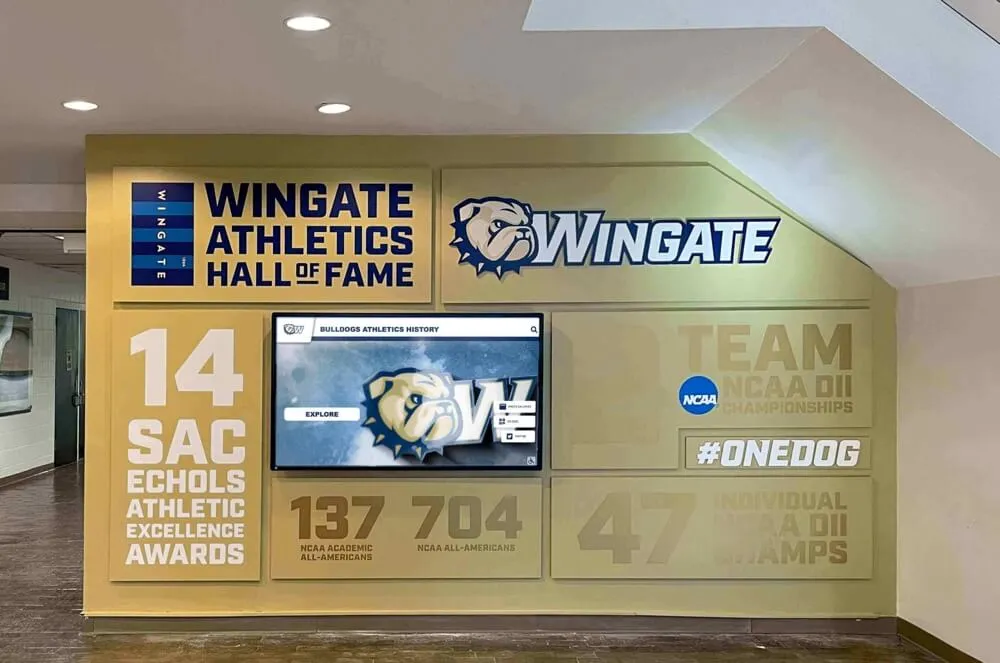
Hall of fame wall displays create dedicated recognition environments that honor program history while providing context traditional trophy cases cannot match
Creative Display Strategies to Maximize Recognition Impact
Whether working within existing physical cases or planning something more comprehensive, these strategies meaningfully improve what recognition displays accomplish.
Create Rotation Systems That Keep Displays Fresh
Rather than a static permanent arrangement that visitors stop noticing, seasonal rotation gives the trophy case new life throughout the year.
Seasonal rotation aligns displays with active programs: fall sports during football and volleyball season, winter programs during basketball and wrestling season, spring achievements during baseball and track season. Each rotation creates a fresh visual presentation while ensuring every program gets featured time during its active period.
Monthly or quarterly spotlights highlight specific achievement categories—a championship showcase month, an individual honors display, a historical legacy feature celebrating the school’s founding decade. These themed rotations give the case purpose and narrative structure rather than simply accumulating objects across years.
Use Multi-Level Arrangement Intentionally
Every display has premium visual real estate and secondary spaces. Eye level is where most visitors focus naturally. Use this prime space for current-year championships, milestone achievements, and featured recognition that warrants immediate attention.
Upper shelving works well for historical context—decade-by-decade timelines, legacy achievements, longstanding records. Lower areas serve items requiring closer examination: team photos with individual identification, competition documentation, detailed records.
This hierarchy creates visual flow and helps visitors understand what’s most significant without requiring them to read every label in the case.
Balance Athletic and Academic Visibility
The physical placement decisions schools make about their trophy case send clear signals about institutional priorities. Schools that designate significant display space for academic honors, arts accomplishments, and service recognition create recognition cultures where students across all programs feel their contributions are genuinely valued.
Comprehensive academic recognition programs address how schools can approach academic achievement with the same intentional visibility given to athletic championships. The trophy case is one of the most visible places to put that commitment into practice.
Modernizing Your School Trophy Case with Digital Technology
Digital displays address the fundamental limitations that physical cases cannot solve. Understanding what they offer helps schools make informed decisions about whether, when, and how to incorporate technology into their recognition strategy.
Unlimited Recognition Capacity
The single most significant advantage of digital trophy case systems is eliminating the space constraint entirely. Every championship, every individual honor, every tournament result, every year of achievement can exist in a digital display without physical space concerns.
Schools transitioning to digital often discover hundreds of stored trophies and awards sitting in forgotten closets—recognition displaced by newer achievements and never given proper visibility. Digital systems let everything surface and stay visible indefinitely, without forcing anyone to choose which decades matter.
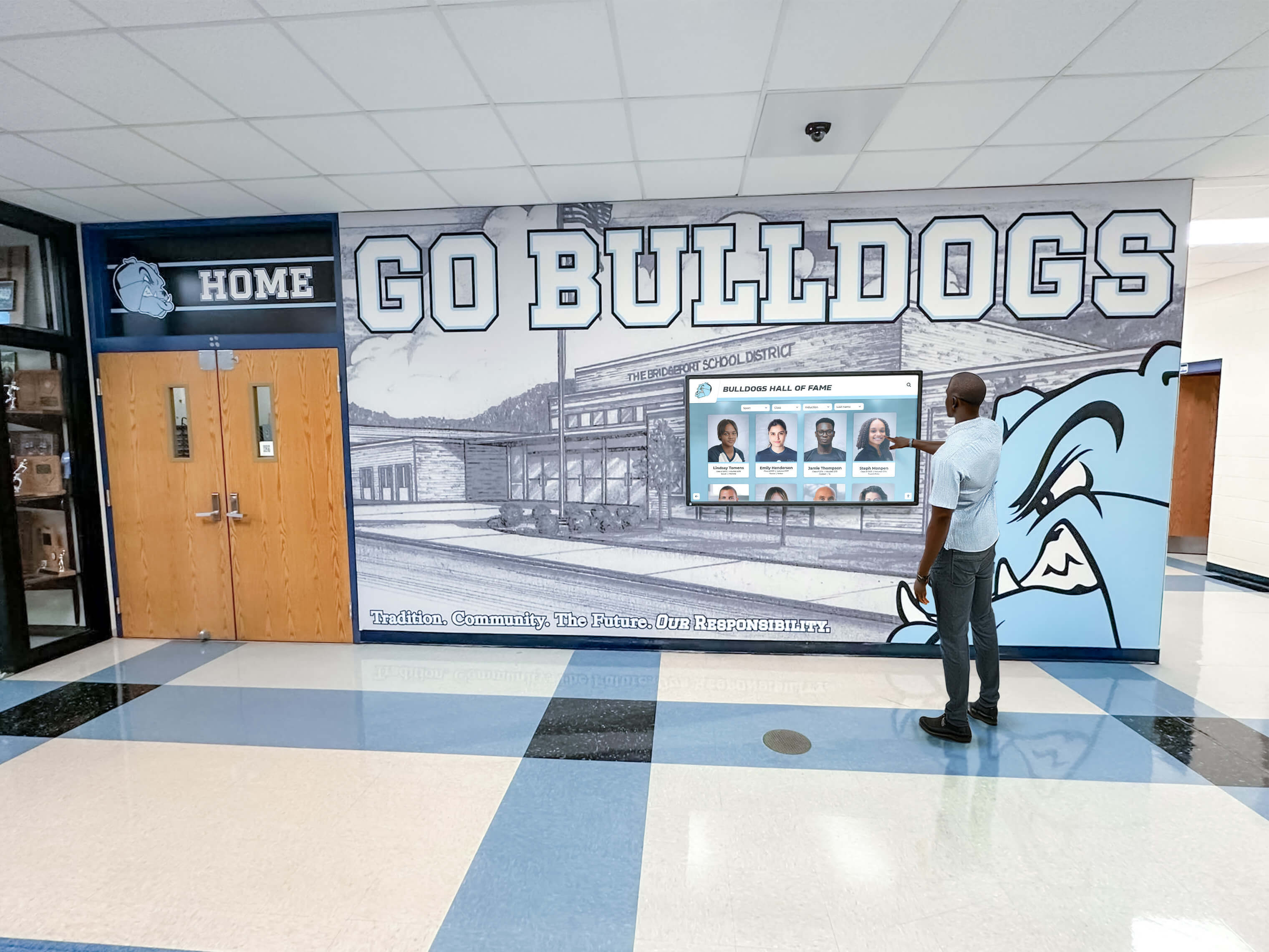
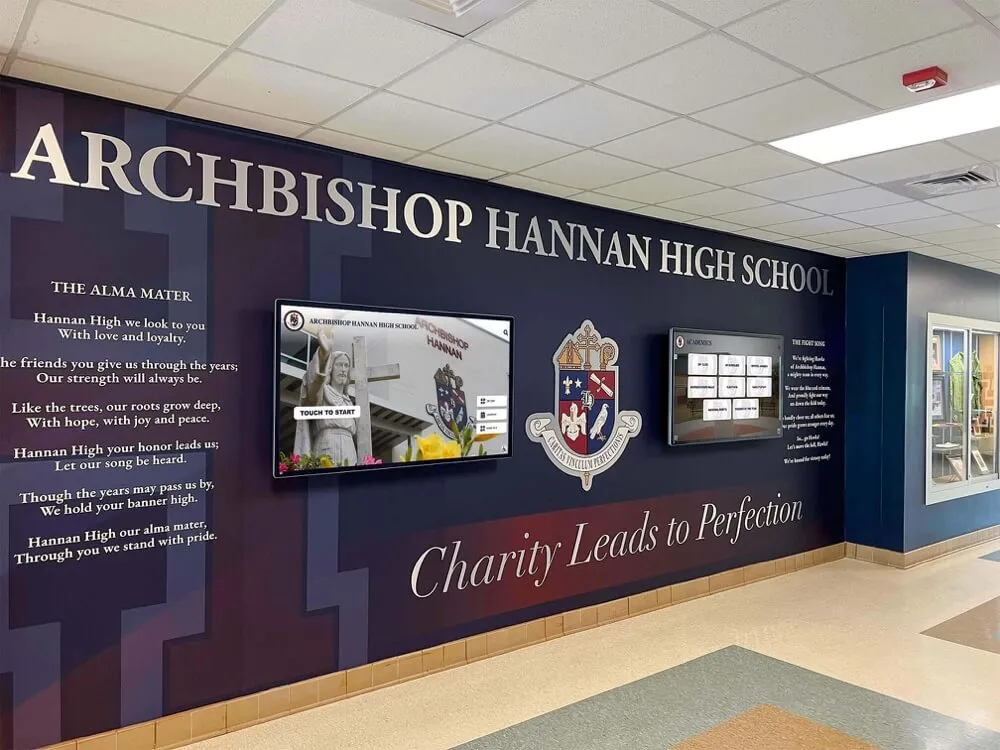
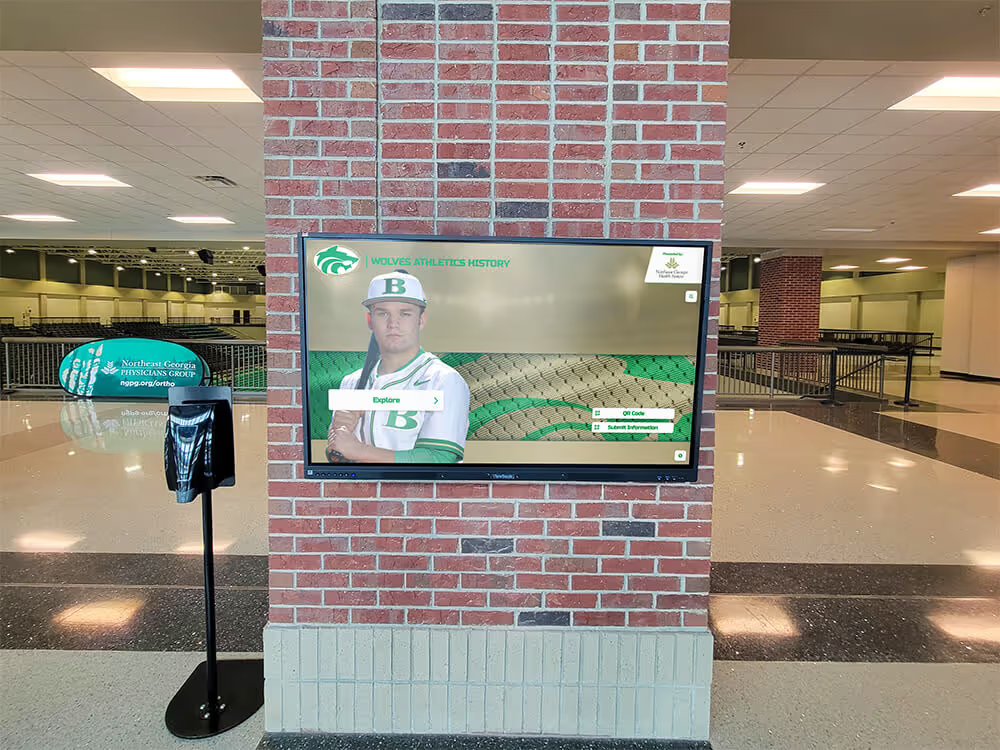
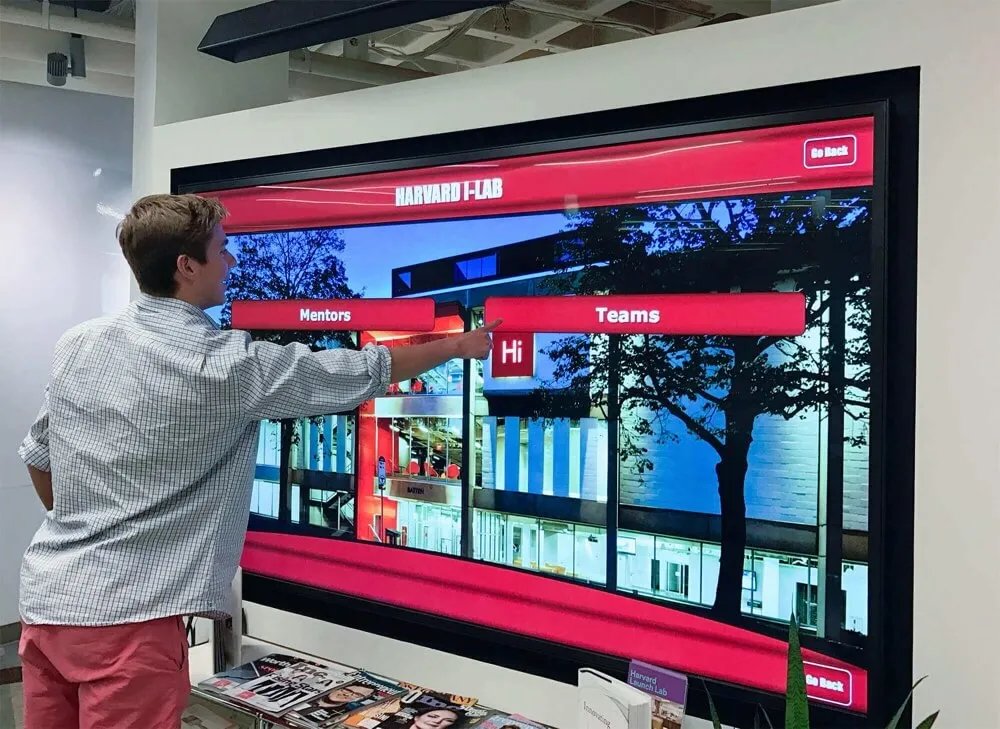
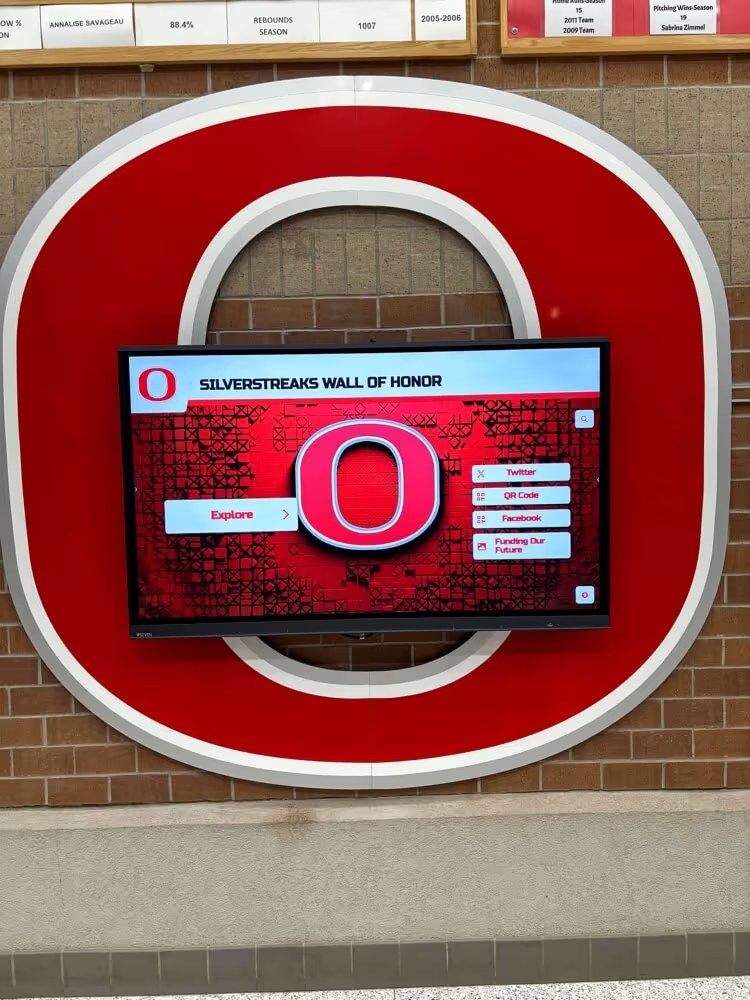
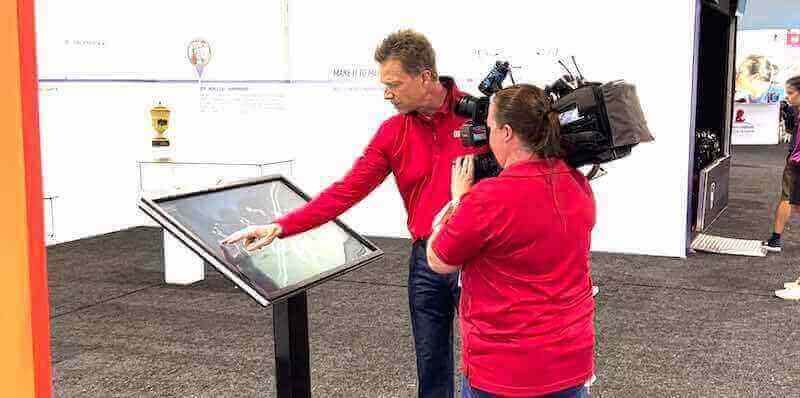
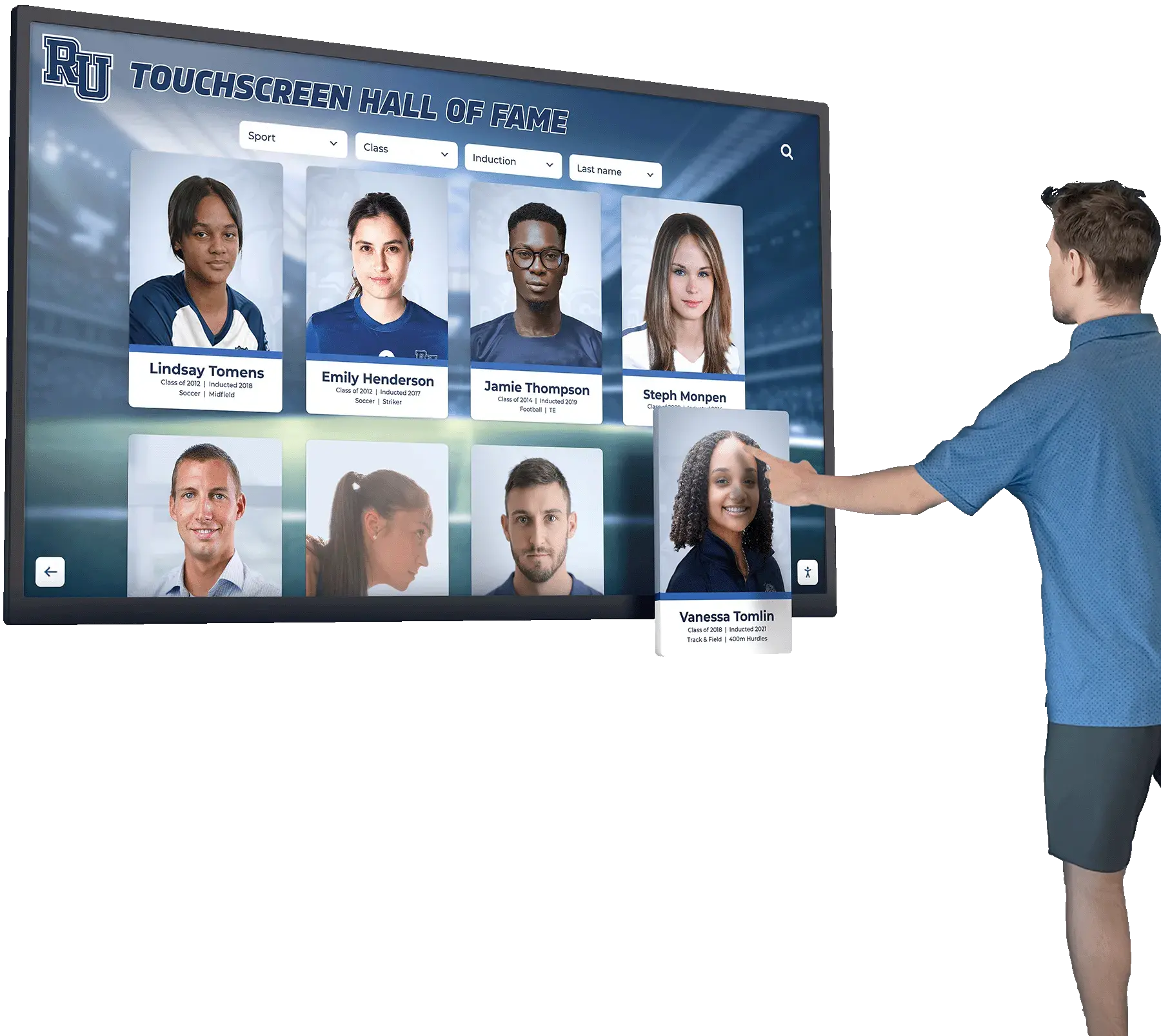
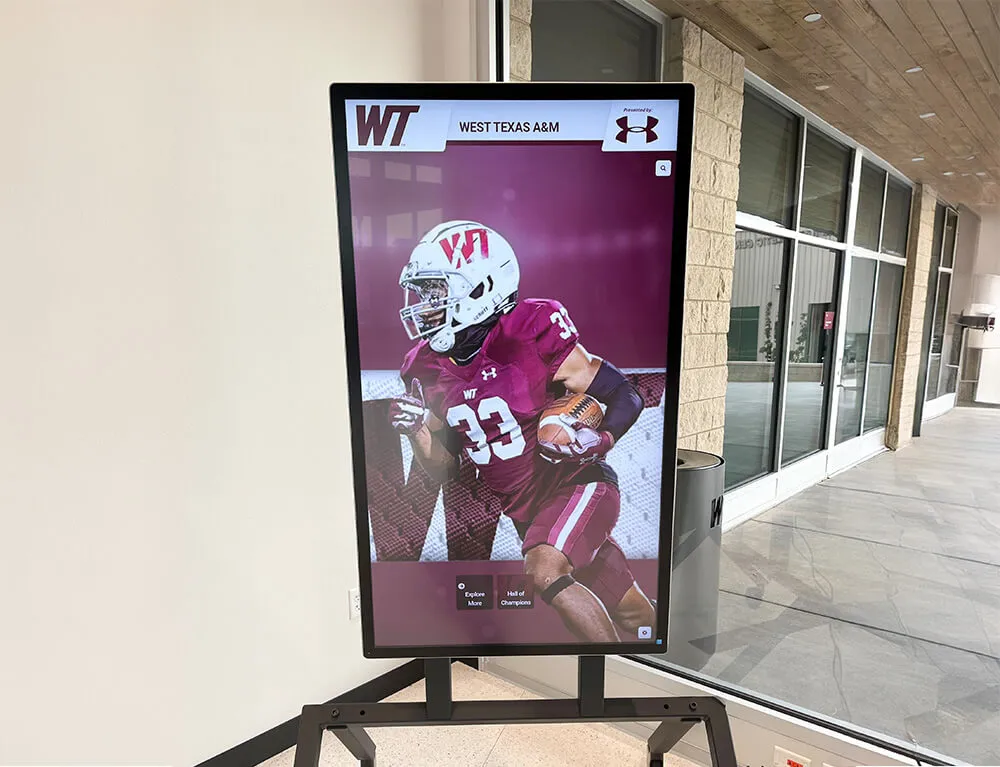
Interactive touchscreen displays transform passive trophy viewing into active exploration, allowing visitors to search, browse, and discover the full depth of school achievement history
Interactive Features That Create Real Engagement
Touchscreen digital displays change the relationship between visitors and recognition. Instead of walking past glass cases and briefly registering a trophy’s presence, visitors can actively explore:
- Browse by sport, year, achievement category, or individual athlete name
- Search for specific teams, individuals, or championship seasons instantly
- Access complete team rosters and season statistics for any year
- View photo galleries from championship seasons
- Watch highlight videos embedded directly in achievement profiles
Students interacting with digital displays spend significantly more time with recognition content than visitors to static physical cases. That extended engagement builds genuine connection to school history and tradition—the primary purpose trophy cases were designed to serve.
For a detailed look at how this works in practice, how digital hall of fame displays differ from traditional trophy cases covers the key functional differences that matter for day-to-day operation.
Remote Management Without Physical Access
Cloud-based digital trophy case management eliminates the operational friction that causes physical cases to deteriorate. Athletic directors can add championship recognition immediately after a win—from the tournament venue, from home, or from any device with internet access—without scheduling time to physically access a locked case.
Content updates happen in minutes rather than requiring keys, rearranging, engraving orders, and physical presence. Scheduled publishing lets administrators prepare seasonal recognition in advance. Multiple administrators can manage content without key distribution logistics or coordinating physical access.
This operational advantage prevents the “we’ll update it when we have time” delays that leave physical cases showing outdated content for months at a stretch.
Accessibility Built Into the Design
Well-designed digital trophy case systems meet WCAG 2.1 AA accessibility standards, ensuring all community members can engage with school recognition. This includes appropriate touchscreen height placement, high-contrast display modes, alternative text for visual content, and audio description capabilities where applicable.
Digital wall of fame UX design principles explains how accessibility-centered design makes recognition displays genuinely usable for all students, families, and visitors. Physical trophy cases often fail accessibility requirements through shelving heights, glass glare, and inadequate lighting—barriers that thoughtfully designed digital systems address by default.
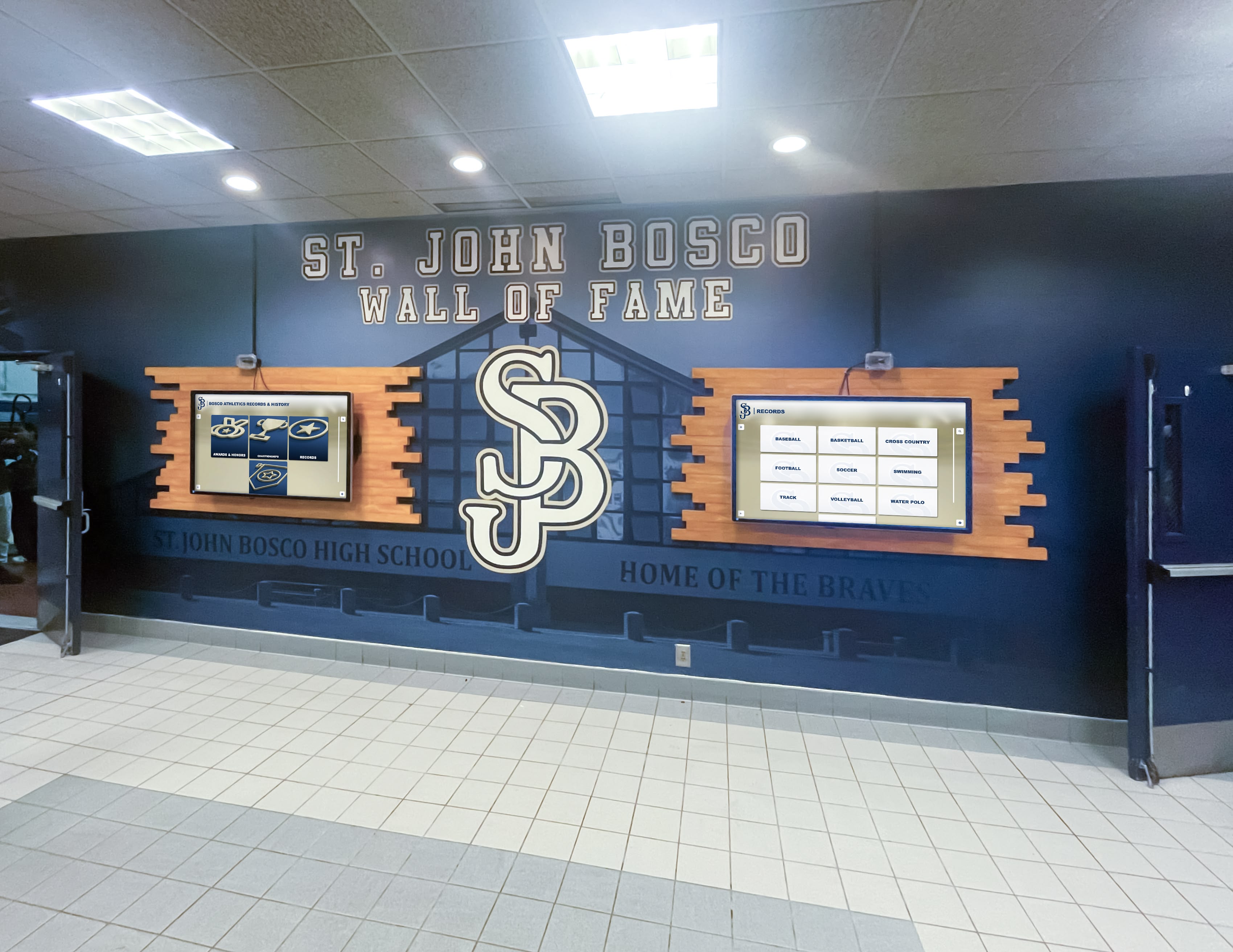
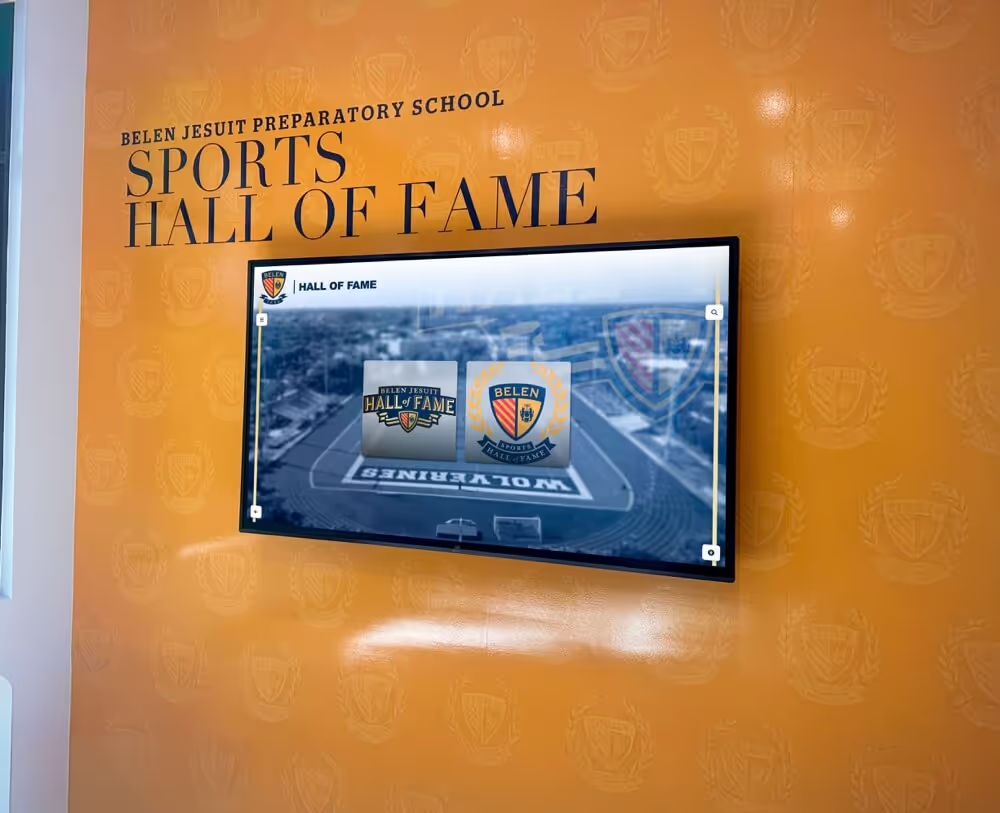
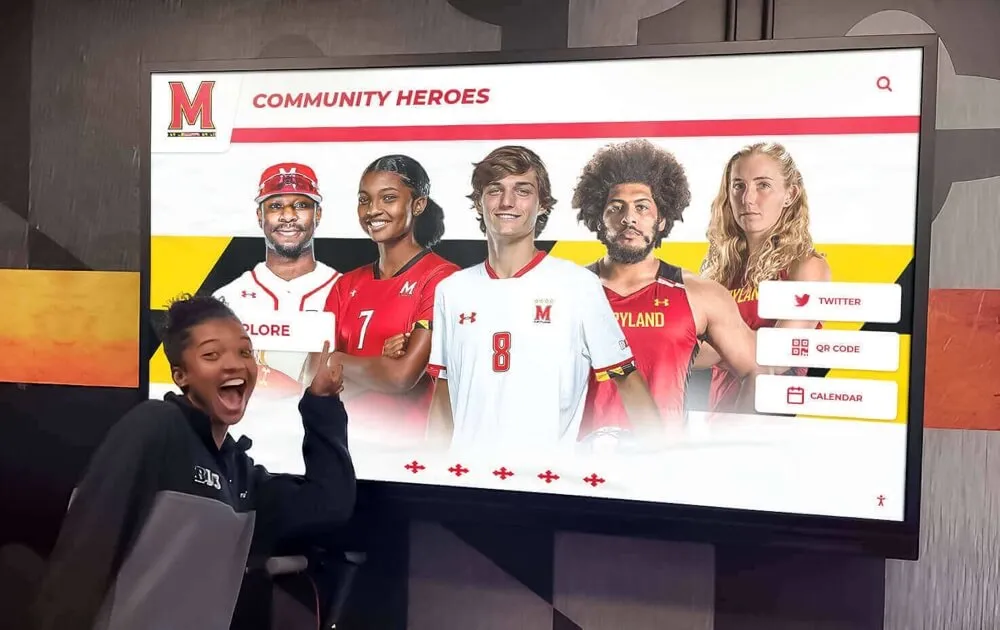
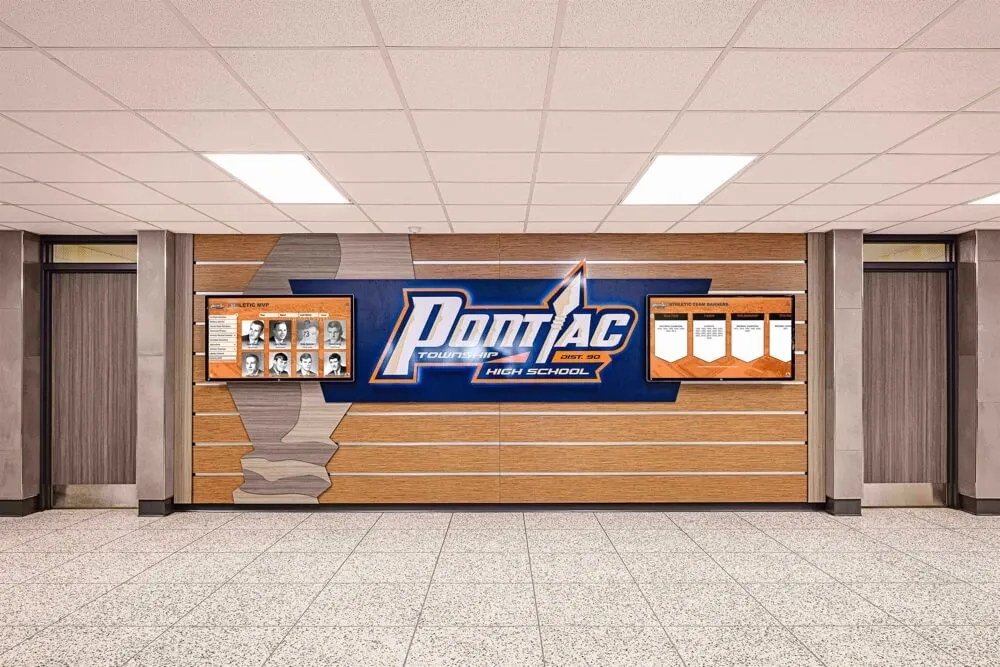
Dual-screen digital installations create immersive recognition environments that simultaneously showcase achievement across multiple programs and eras
Hybrid Approaches: Combining Physical and Digital Recognition
Many schools find the most practical path forward combines both approaches rather than choosing one exclusively.
Physical Centerpiece with Digital Depth
The most common hybrid approach preserves physical trophies for their symbolic value while using digital displays to provide unlimited depth and current content.
State championship trophies remain in physical cases—they carry tangible presence and historical weight that digital representations don’t fully replicate. But digital screens alongside or near the case display complete tournament histories, all-conference individual honorees, team rosters, season statistics, and content from every program year. Not just the years that fit on available shelves.
This satisfies community members who value physical trophy traditions while solving the capacity and maintenance limitations that frustrate everyone who manages those displays.
Rotating Physical Displays with Permanent Digital Archives
Schools with large existing trophy collections can implement seasonal rotation of physical displays while maintaining year-round digital access to everything.
Fall sports trophies occupy cases during football and volleyball season. Winter sport recognition rotates in during basketball season. Spring achievements feature during baseball and track season. The complete archive—every sport, every year—remains accessible digitally throughout, regardless of what physical rotation has placed in storage.
This approach creates fresh physical presentations throughout the year without permanently removing any achievements, and gives digital displays the role they’re best suited for: comprehensive, always-current, unlimited access to the full scope of school recognition history.
What to Display in Your School Trophy Case Beyond Athletic Trophies
Schools that expand recognition scope beyond athletics create more inclusive communities and motivate achievement across all programs.
Academic Achievement Recognition
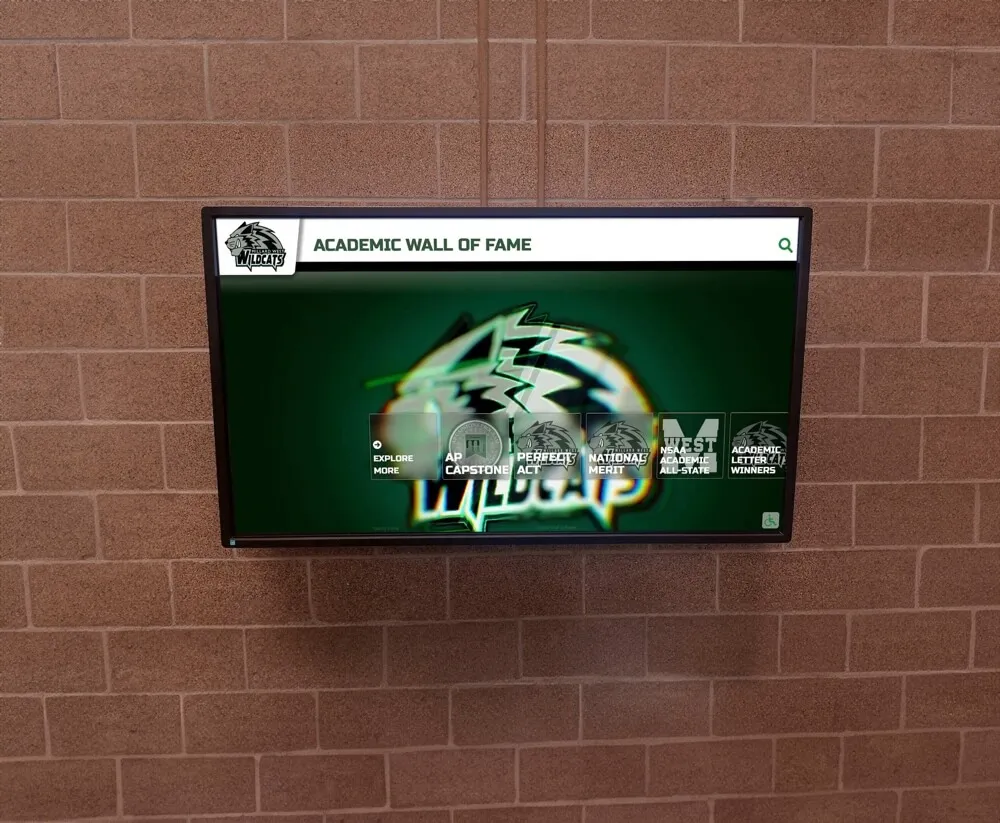
Academic accomplishments deserve trophy case visibility with the same prominence given to athletic championships. Digital honor roll displays show how schools can give academic recognition the same visual impact as athletic hardware—and update it regularly without physical access complications.
Dedicated display space for academic competition trophies (Science Olympiad, debate, math league), National Merit Scholars and scholarship recipients, AP achievement awards, and honor roll recognition signals that intellectual achievement is genuinely celebrated. It motivates students for whom academic competition is the equivalent of the state championship game.
Arts and Performance Accomplishments
Theater, band, choir, and visual arts programs generate real achievements that often receive minimal trophy case visibility compared to their athletic counterparts. Regional and state competition trophies from music ensembles, theater festival recognition, individual performance awards, and arts scholarship recognition all belong in a comprehensive school recognition display.
For schools working to digitize older recognition that’s been sitting in storage, preserving historical yearbook content and program archives through digital systems ensures that arts program history isn’t permanently lost when physical materials deteriorate.
Service, Leadership, and Community Recognition
Community service milestones, student government recognition, volunteer program achievements, and character awards all reflect institutional values worth celebrating in prominent display spaces. These displays communicate that schools value who students are and what they contribute to their communities, not only what they win in competition.
Alumni Achievement Over Time
Alumni who’ve gone on to notable accomplishments in professional sports, business, academia, or public service represent the long-term impact of the school community. Alumni recognition event planning explores how schools can systematically gather and honor the kind of ongoing achievement that traditional trophy cases never capture—because alumni accomplishments continue decades after graduation.
Placement and Location Strategies
Where you position your school trophy case matters as much as what goes in it. Strategic placement maximizes how many people see the display and how often they engage with it.
Main entrance lobbies remain the premier location. Every visitor, prospective family, and official entering the building encounters the display immediately. This placement signals that achievement recognition is central to school identity, not an afterthought tucked in a back corridor.
Athletic facility corridors serve athletes and families who attend games and practices regularly. These locations generate sustained traffic from the community members most invested in and most inspired by program achievement.
Cafeteria and commons areas reach students daily during lunch periods and between-class gathering. Recognition in spaces where students naturally congregate creates regular exposure rather than occasional awareness for students who might not pass the main entrance often.
Multi-location distribution allows larger schools to create sport-specific displays in dedicated facility areas, academic recognition displays in classroom corridors, and arts achievement displays near auditoriums and performance spaces. Distributed recognition reaches the audiences most likely to engage with each type of achievement.
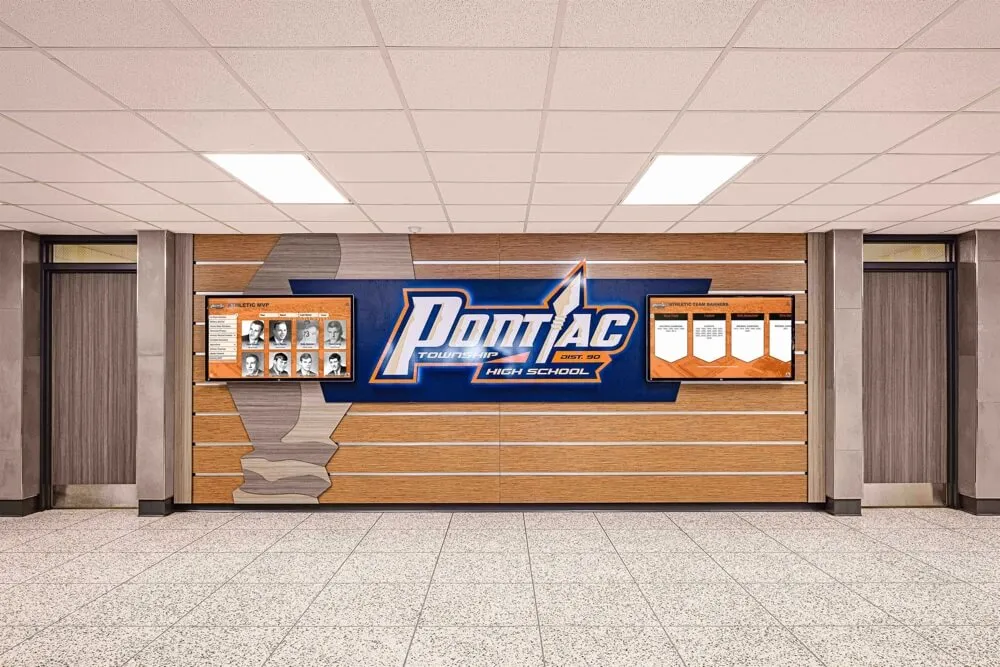
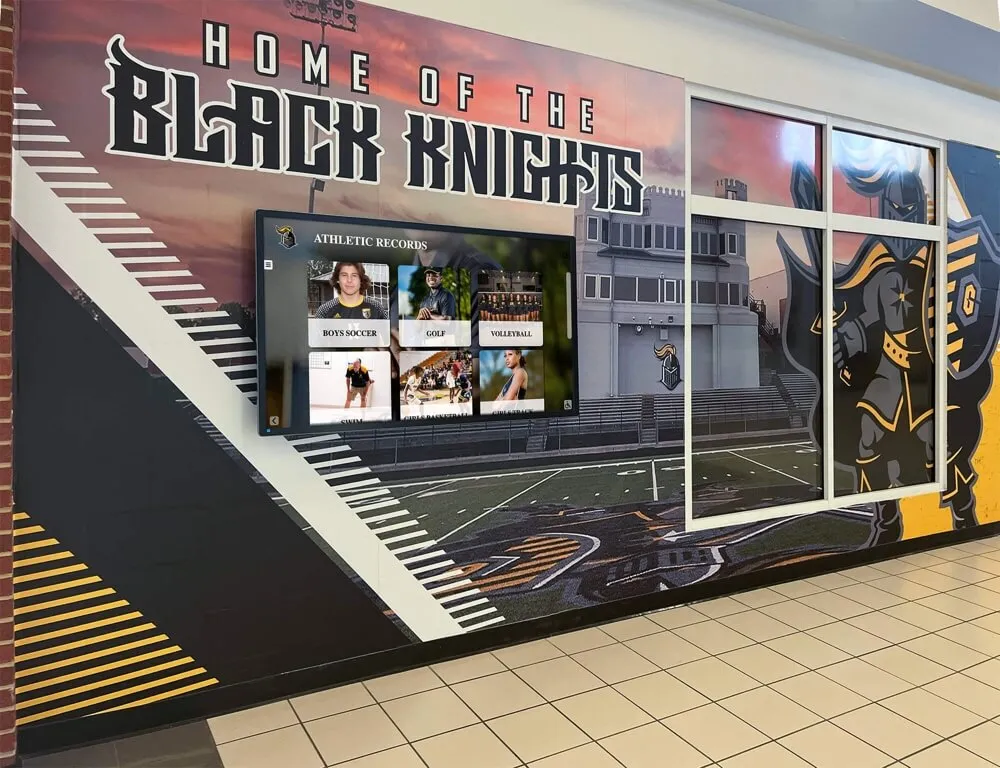
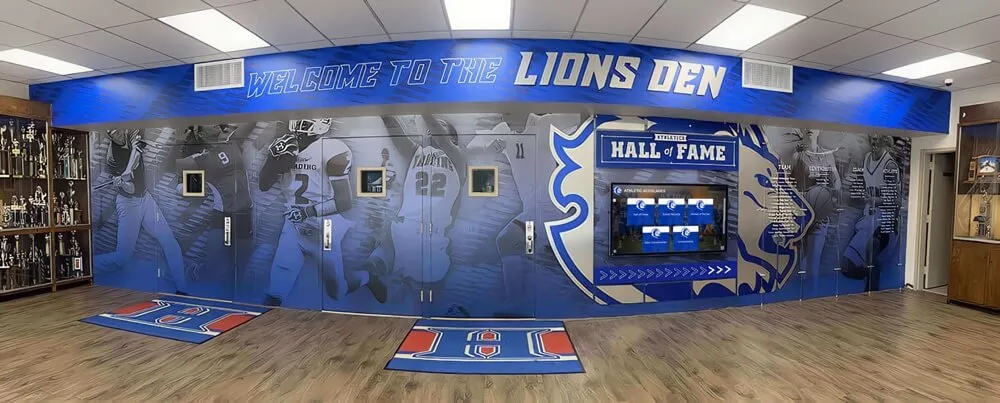
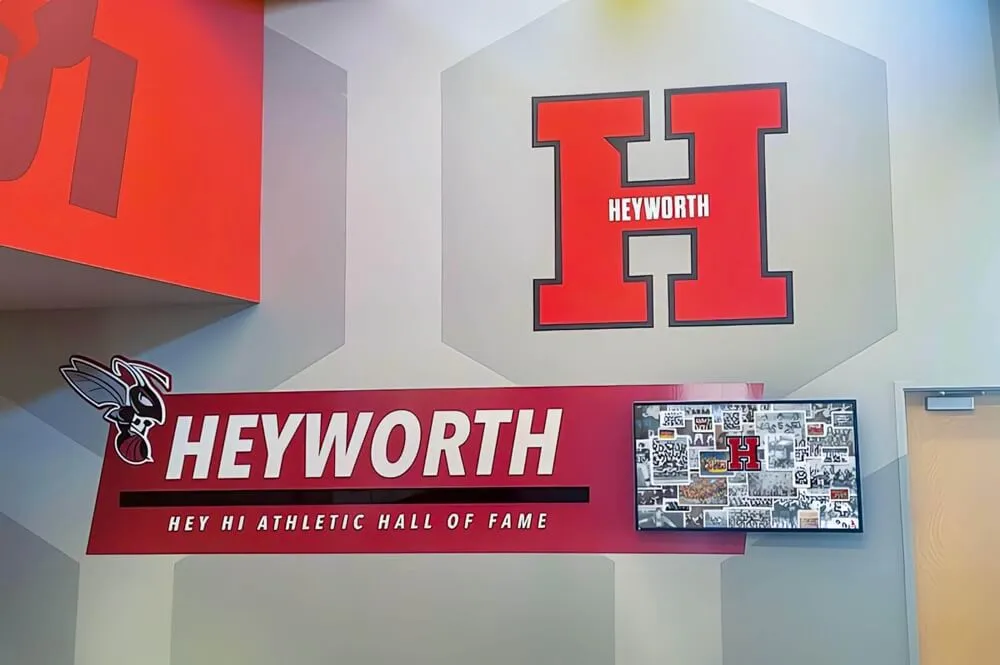
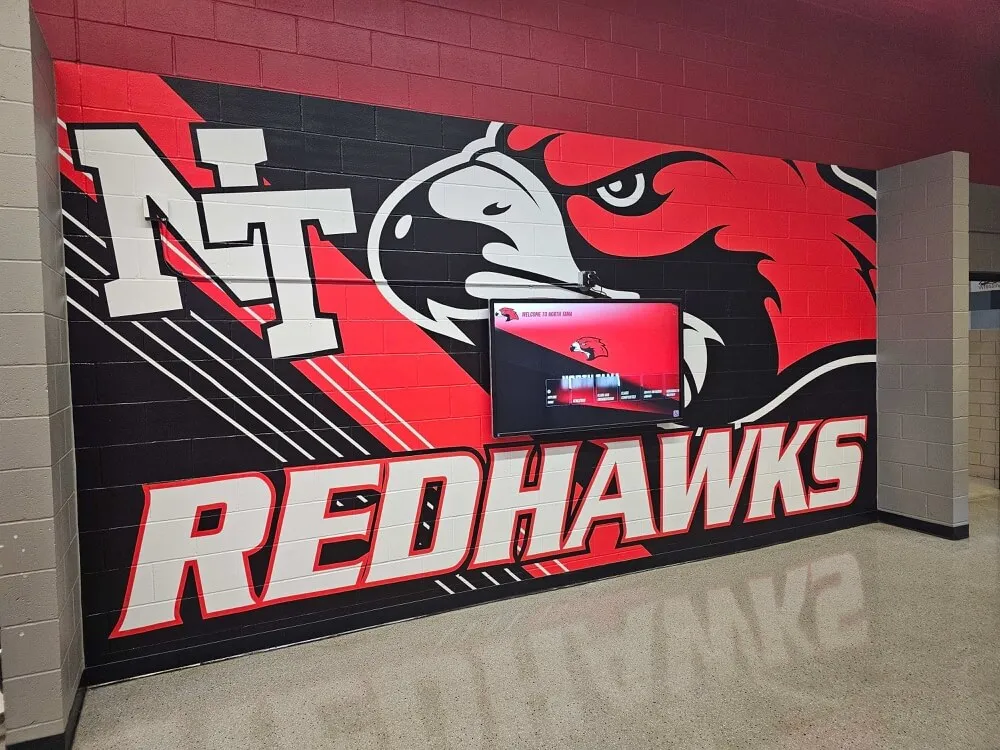
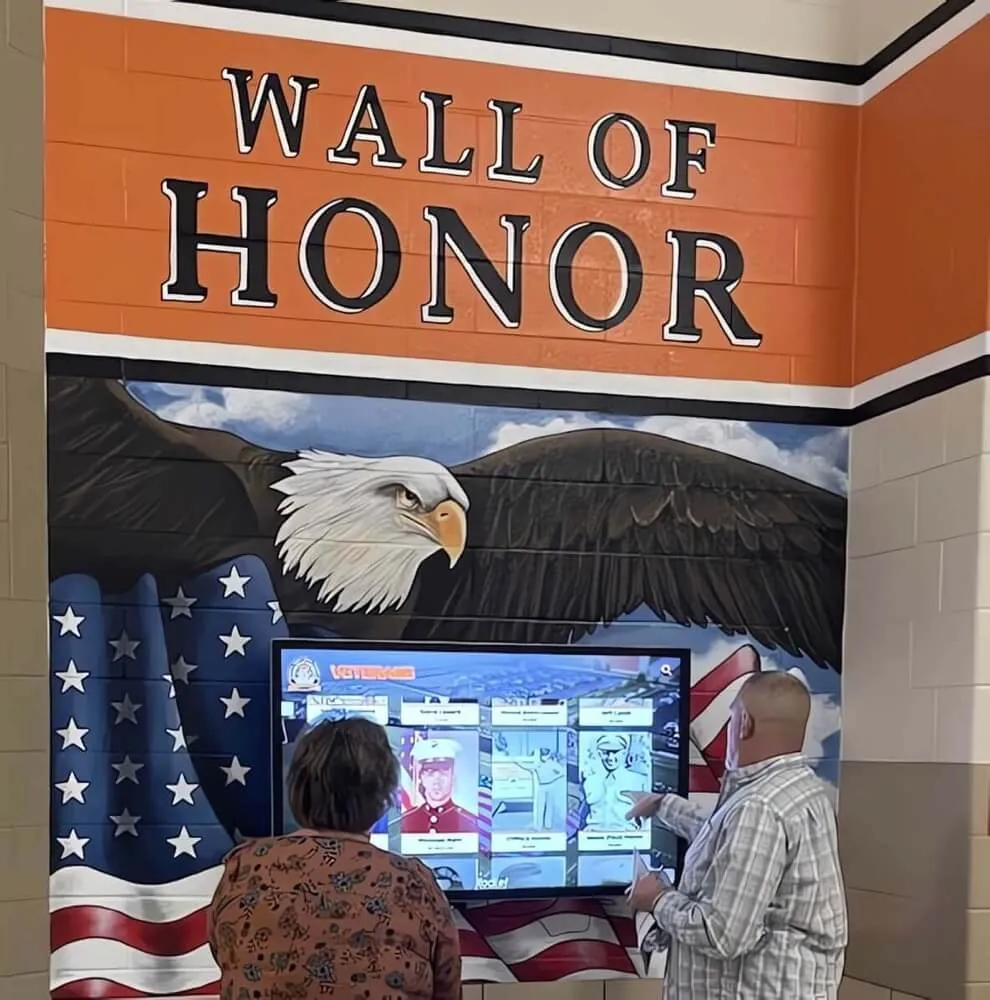
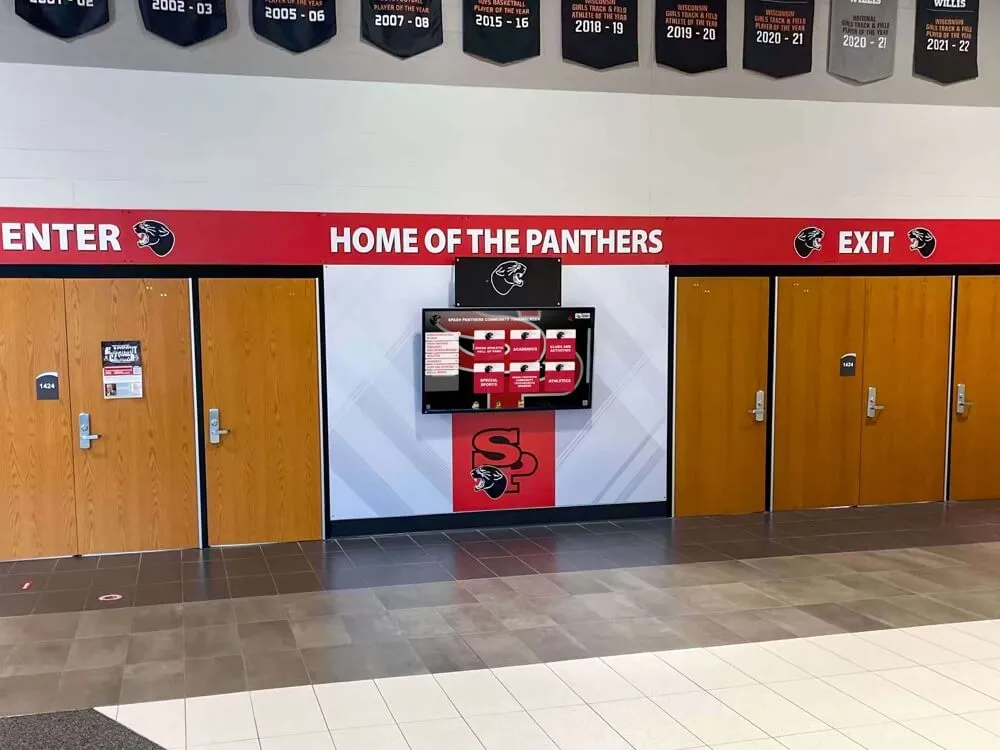
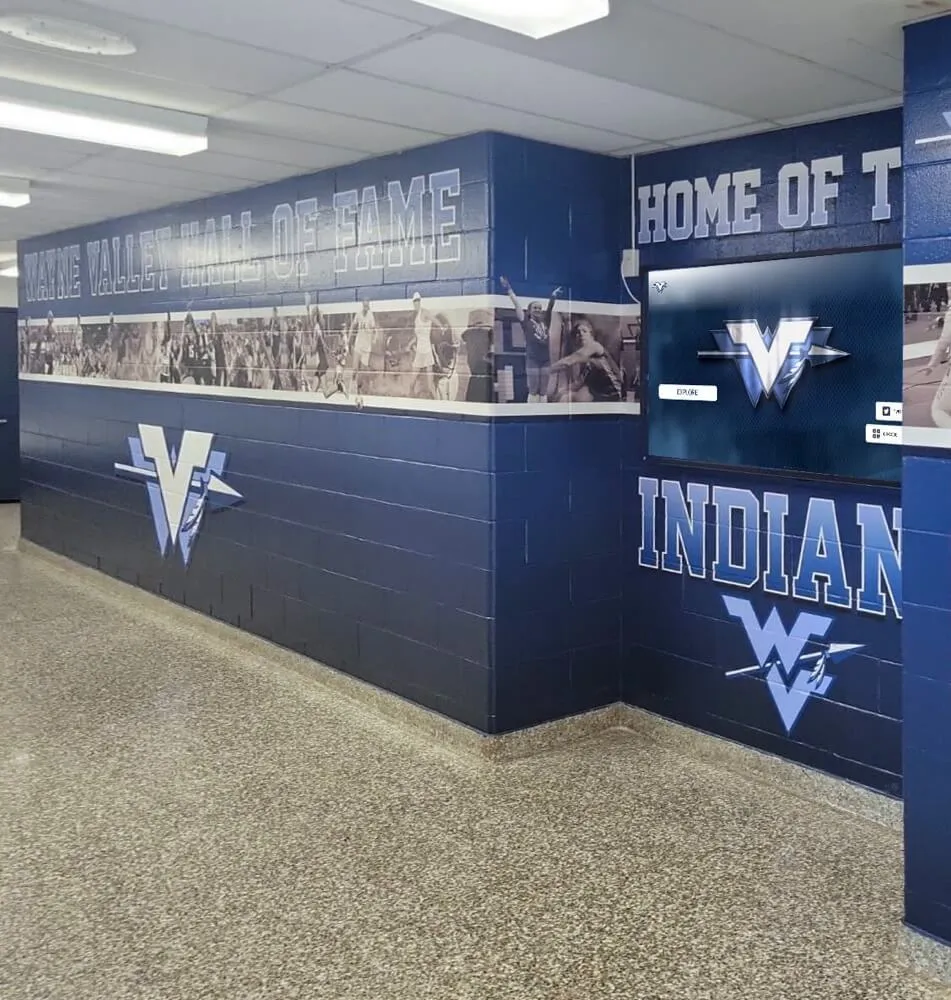
Athletic honor walls in school hallways create high-visibility recognition environments that students encounter as part of their everyday school experience
Implementation Tips for Any Budget
Schools don’t need major capital budgets to meaningfully improve their trophy case situation. Real improvements happen at every investment level.
Low-Cost Physical Improvements
Reorganize and clean existing cases. A fresh arrangement with intentional organization and clean glass significantly changes how displays look without any budget at all. Starting here provides immediate impact and helps identify what additional changes are actually needed.
Add LED lighting. Basic LED strip lighting that dramatically improves case visibility costs a fraction of new case construction investment and can often be installed without an electrician.
Print context cards. Adding season records, team photos with player names, and brief achievement narratives alongside existing trophies adds storytelling depth at minimal cost. This single change transforms objects into stories.
Add QR codes. Linking physical trophies to digital content through free QR code generators bridges the context gap that traditional cases cannot address within their physical constraints.
Phased Digital Implementation
Schools that can’t pursue comprehensive digital overhauls immediately can phase the investment without losing momentum.
Start with a single high-impact screen near the main entrance showing rotating recognition content. Add a touchscreen kiosk at the next budget cycle as value is demonstrated and community support builds. Expand to additional locations as the program proves its impact.
The best digital wall of fame complete guide covers the full range of options and what to prioritize when evaluating digital recognition platforms.
What to Look For in a Digital Trophy Case Platform
When evaluating digital options, the technical features that matter most in day-to-day operation include:
- Cloud-based CMS enabling remote updates without IT tickets or physical access requirements
- Unlimited entries without per-athlete or per-achievement licensing costs that scale against you as recognition grows
- Scheduled publishing for future-dated content and seasonal recognition rotations
- WCAG 2.1 AA accessibility compliance so all community members can engage with the display
- QR code integration enabling mobile access and remote viewing for families who can’t visit in person
- Automatic ranking and sorting so displays stay organized as new entries are added over time
Touchscreen software complete guide covers how to evaluate different platforms, what questions to ask vendors, and what implementation typically looks like for schools at different budget levels.
See How a Digital Trophy Case Works for Your School
Rocket Alumni Solutions helps schools move beyond the limitations of physical trophy cases with touchscreen displays that showcase unlimited achievements, update instantly via cloud CMS, meet ADA accessibility standards, and create interactive recognition experiences that inspire students and engage entire communities. Schedule a demo to see it in action.
Book A DemoBuilding a Trophy Case System That Grows With Your School
The most important shift in thinking about the school trophy case is moving from viewing it as static furniture to treating it as an active communication system. A display case isn’t a finished product the moment trophies go inside it—it’s an ongoing expression of school values, community achievement, and institutional identity.
Physical trophy cases, thoughtfully designed and consistently maintained, remain powerful recognition tools. They provide tangible presence, symbolic weight, and the kind of permanence that communities find genuinely meaningful. But they impose constraints that grow more limiting as schools succeed and achievements accumulate across decades.
Digital systems eliminate the capacity problem, solve the maintenance challenge, and create engagement opportunities that glass cases simply cannot provide. For schools that have outgrown their physical displays, or that want to recognize the full breadth of student achievement rather than just what fits on available shelves, modern digital trophy case platforms provide a practical path forward that doesn’t require abandoning the recognition traditions communities value.
The schools that build the strongest recognition cultures don’t necessarily have the biggest cases or the most expensive hardware. They have displays that tell complete stories, recognize diverse achievement across all programs, update regularly to reflect current success, and communicate clearly that every program and every student’s accomplishment is worth celebrating. That outcome is achievable with physical cases, digital systems, or thoughtful combinations of both—as long as the commitment to comprehensive, accurate, and engaging recognition stays consistent year after year.