



Intent: research — a school trophy case cam lock inspection is a structured preventive-maintenance check of the cam lock hardware securing each display case door, performed by facilities staff, athletic directors, or archives personnel to verify that the cam seats correctly behind the case frame, the key-retention feature operates as intended, the lock body is secure in its mounting panel, and no fastener or tailpiece degradation has compromised the controlled-access function that protects athletic awards and memorabilia. Cam locks — the most common door-securing hardware on enclosed school trophy cases — consist of a tubular lock body installed through a drilled panel hole, a rotating cam plate attached via a tailpiece to the rear of the cylinder, and a key-retention mechanism that governs when the key can be inserted and removed. This guide explains each inspection point, provides a printable key-retention checklist table, and connects the physical inspection discipline to the digital preservation layer that protects a school’s recognition record beyond what hardware alone can accomplish.
Cam locks on school trophy cases rarely fail dramatically. They degrade slowly — a cam that seats a few degrees short of full engagement, a tailpiece set-screw that backs out a half-turn across a semester of operation, a key-retention detent that loses its positive feel until a key can be pulled at any rotational position rather than only at the correct one. The door still appears to close and open. The lock still appears to engage. The problem only surfaces when a championship trophy is discovered moved without authorization, or when a facilities crew attempts to open a case at 7:00 a.m. before a recognition event and finds a cam that has shifted so far from its engaged position that the key no longer functions.
Routine inspection prevents that outcome. A school trophy case cam lock inspection takes fewer than fifteen minutes per case, produces a dated maintenance record, and catches the early signs of cam, tailpiece, and key-retention degradation before they produce either a security failure or an inaccessible case at an inconvenient moment.

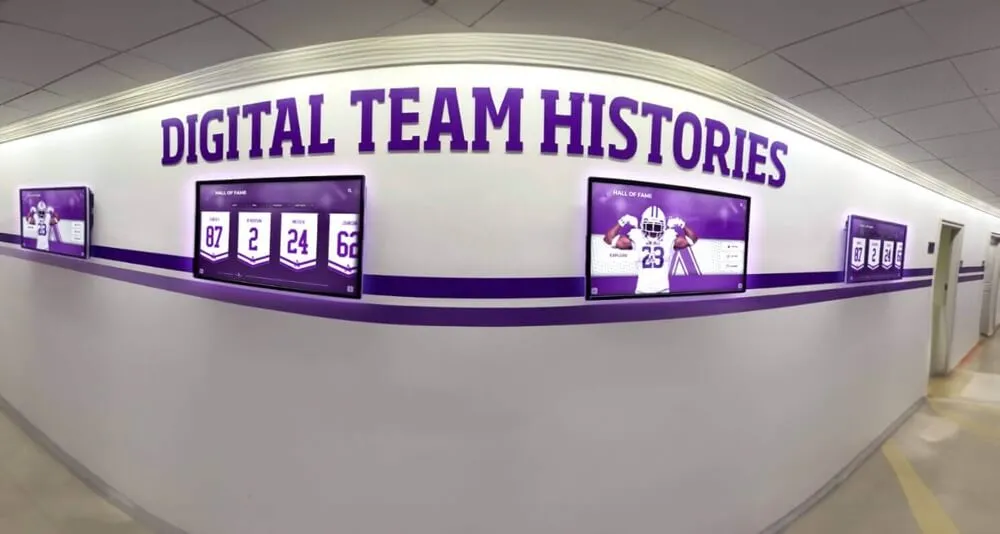
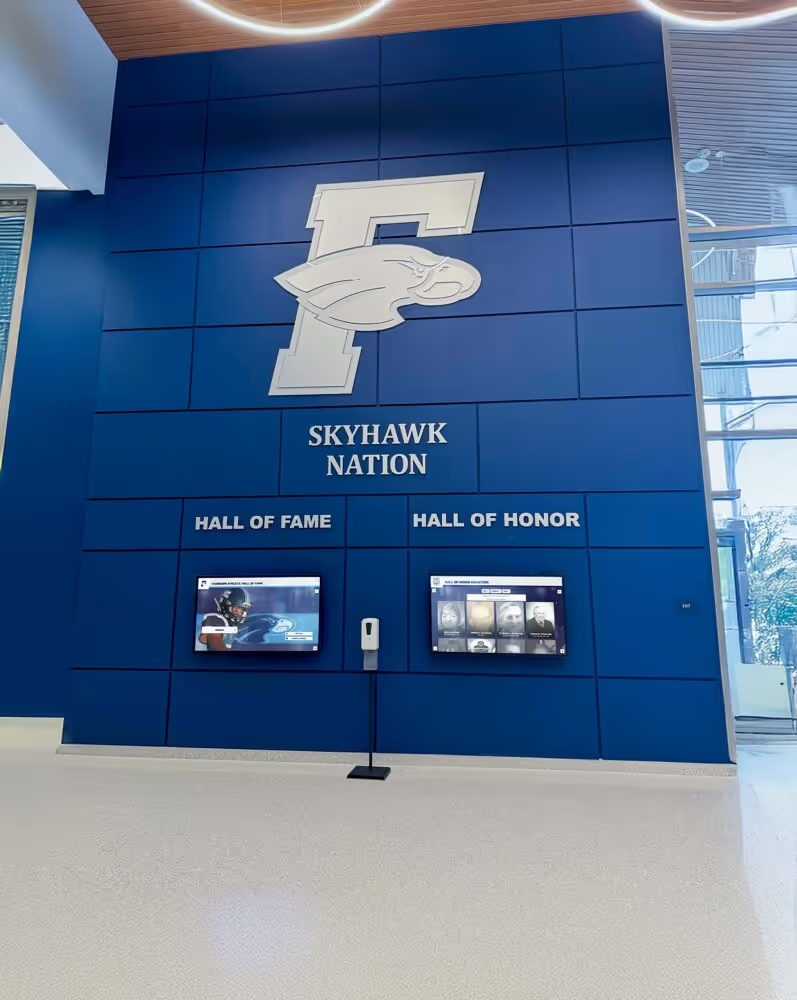
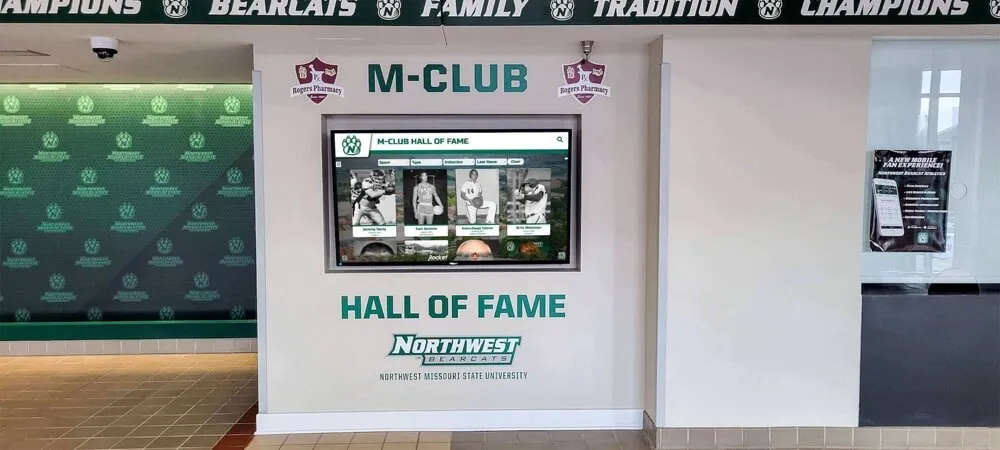
Athletic hallways housing championship hardware and recognition displays rely on functional cam locks to maintain secure, controlled access — inspection confirms every lock is operating at its rated holding capacity
What a Cam Lock Is — and How It Differs from Other Trophy Case Hardware
A cam lock is not a deadbolt, a rim lock, or a magnetic catch. It is a tubular lock body — typically 18 to 22 mm in diameter — that inserts through a circular hole drilled in the case door panel, door stile, or header. A retaining nut or clip on the rear face of the panel holds the body stationary in the hole. The key engages the cylinder from the front face, and when turned, rotates a cam plate attached to the back of the cylinder via a metal tailpiece.
When the cam rotates into the locked position, it swings behind a fixed edge of the case frame — the cam’s edge catches on the interior face of the frame material, preventing the door from opening. When the key returns the cam to the unlocked position, the cam clears the frame and the door opens freely.
This design makes cam locks well suited to trophy cases because:
- They require no strike plate machined into the frame (the frame edge itself serves as the cam stop)
- They can be installed with only a drill and a hole saw — no router, mortise, or frame reinforcement
- They operate without a spring-loaded latch, meaning door operation is quiet and vibration-tolerant
- Key-retention variants prevent the key from being removed until the lock returns to a specified position, adding a layer of accountability to access events
The distinction between a cam lock and the lock cylinder inside it matters for maintenance purposes. The cylinder inspection — covered in a separate lock cylinder inspection workflow for school trophy cases — addresses the internal pin-tumbler or wafer mechanism, keyway debris, and pin wear. The cam lock inspection described here addresses the external actuating system: the cam plate, the tailpiece, the lock body mounting, and the key-retention mechanism. Both inspections are necessary; neither replaces the other.
The Key-Retention Feature: What It Is and Why It Matters
Key retention is a design feature on certain cam locks that prevents the key from being extracted while the lock is in the locked position. The key can be inserted freely, turned to the locked position, and then cannot be pulled out — it is held captive inside the cylinder until the cam is returned to the unlocked position. Only when the cam has fully cleared the frame can the key be withdrawn.
This feature addresses a specific security concern in school trophy case management: a staff member or visitor who accesses a case should not be able to remove the key while the cam is partially engaged, slip the key into a pocket, or remove it while a second person is still accessing the case contents. With key retention active, the key is visibly present in the lock face for the entire duration of an access event — a deterrent to casual misappropriation and a prompt to complete the access event before departing.
Key retention also prevents a common operational error: a staff member who turns the key to an intermediate position that neither fully locks nor fully unlocks the cam, then removes the key because the cylinder feels engaged. Without key retention, this leaves the case in an ambiguous state. With key retention, the key cannot come out unless the cam is definitively back in the unlocked or locked position, forcing the operator to complete the rotation cycle.
Inspecting key retention is straightforward — it takes under two minutes per case and either passes or fails with a clear result.
Pre-Inspection Preparation
Gather these items before beginning the cam lock inspection cycle:
- The working key for each case (master or individual, depending on your facility’s system)
- A flashlight with a narrow beam capable of illuminating behind the door panel
- A small screwdriver (flathead and Phillips) for testing fastener security
- A clean cloth and isopropyl alcohol for cleaning the lock face plate
- The inspection log or checklist form for recording findings
- A camera or phone for photographing any misalignment or damage found
Do not attempt to inspect a cam lock that was recently reported as completely non-functional — operating a jammed cam lock risks snapping the tailpiece or binding the key inside the cylinder. Log it for locksmith evaluation before attempting the inspection sequence.
Nine-Step Cam Lock Inspection Sequence
Apply this sequence to each trophy case in your facility on a consistent schedule. The inspection covers the lock body, cam, tailpiece, key-retention mechanism, and mounting hardware as a complete unit.
Step 1: Record the starting condition. Before touching the lock, note whether the cam lock is currently in the locked or unlocked position based on the key slot indicator (most cam locks have a slotted face that shows rotational position). Record the date, case identifier, and starting position in the inspection log. This establishes the baseline for every finding that follows.
Step 2: Examine the lock face plate. Inspect the face plate — the visible disc on the exterior of the door — for scoring, deformation, or signs of forced entry. Light scratching around the keyway from normal use is expected. Deep radial scoring, a bent face plate, or an off-center keyway opening relative to the face plate ring indicates a past unauthorized manipulation attempt or significant impact damage. Photograph any scoring and flag for locksmith evaluation regardless of current functional condition.
Clean the face plate with the isopropyl cloth. Dried cleaning solution residue around the keyway is common in cases that get frequent surface cleaning; it is not a structural concern but can be pulled into the keyway during normal key insertion.
Step 3: Test lock body security. Grip the face plate firmly and attempt to rotate the entire lock body within the panel hole. On a correctly mounted cam lock, the retaining nut on the rear of the panel holds the body completely stationary — it should not rotate, rock, or shift laterally under hand pressure. Any movement of the body within the panel indicates a loose retaining nut, a stripped panel hole, or a missing clip. A body that spins freely in the panel cannot engage the cam against the frame reliably.
If the body is loose, tighten the retaining nut from the interior face of the door before proceeding. If the panel material around the hole is stripped or crumbling, record the finding for carpentry repair — do not attempt to compress the panel by over-tightening the nut.
Step 4: Insert the key and note insertion resistance. Insert the working key slowly and note the resistance profile. Normal key insertion in a functioning cam lock produces a smooth travel with light spring resistance from the pins. Resistance that increases sharply at a specific point during insertion, gritty feedback, or a catch that requires additional force to overcome indicates debris or pin wear in the cylinder — record this for the separate cylinder inspection and do not proceed with inspection of the cam mechanism until the cylinder issue is evaluated.
Step 5: Test the key-retention mechanism in the locked position. Turn the key to the fully locked position (cam engaged behind the frame). With the key in the locked position, attempt to pull it out with a firm extraction force — approximately the force you would use to remove a key from a normally functioning lock. A correctly operating key-retention cam lock resists this extraction completely. The key should not move toward extraction at all when the cam is in the locked position.
If the key pulls out while the cam is in the locked position, the key-retention detent has worn or is absent. This is a security failure: the lock appears engaged, but the key can be removed. Log it as a key-retention failure requiring either cylinder replacement or locksmith evaluation before the case is returned to service.
Step 6: Inspect cam seating in the locked position. Open the case door to the edge of its travel and examine the cam from the interior. In the locked position, the cam plate should be fully rotated behind the fixed case frame edge — the full cam width seated against the frame interior without visible gap on either side of the cam edge. A cam that is partially rotated (seated at 80 or 90 degrees when full engagement requires 90 to 180 degrees, depending on the lock design) indicates that either the key is not reaching full rotation or the tailpiece has shifted relative to the cam.
Photograph the cam position in the locked state for the inspection record. A partially seated cam may hold a light door load but will fail under deliberate force or accumulated vibration.
Step 7: Test cam clearance in the unlocked position. Return the key to the unlocked position and examine the cam from the interior. The cam should be fully cleared from the frame edge — no portion of the cam plate overlapping the frame stop that it engages in the locked position. A cam that retains partial overlap in the unlocked position will bind when the door is opened, stressing both the cam and the frame edge it is catching on.
Step 8: Confirm key-retention behavior in the unlocked position. With the key in the fully unlocked position, attempt key extraction using normal extraction force. On a key-retention cam lock, the key should now come out freely and cleanly. Resistance to extraction in the unlocked position indicates contamination in the keyway or a bent key stem, not a key-retention feature — log it separately and schedule cylinder cleaning.
Step 9: Test the tailpiece fastener and cam fastener. With the key in the hand and the door open, examine the cam and tailpiece assembly from the interior. Using the small screwdriver, lightly test the set-screw or rivet that secures the cam plate to the tailpiece. A correctly secured cam should show no movement relative to the tailpiece when laterally tested with hand pressure. Any play between the cam plate and tailpiece indicates a loosened or worn fastener — the cam can slip on the tailpiece under operation load, producing inconsistent locking behavior.
Record findings and complete the inspection log entry with: date, case ID, inspector name, each component’s pass/fail result, any photographs taken, and recommended next action.
Key-Retention Inspection Checklist
The table below presents the key-retention inspection checklist as a printable field reference. Complete one row per case during each inspection cycle. A single “Fail” result in any row warrants the action listed in the Notes column before the case is returned to secured service.
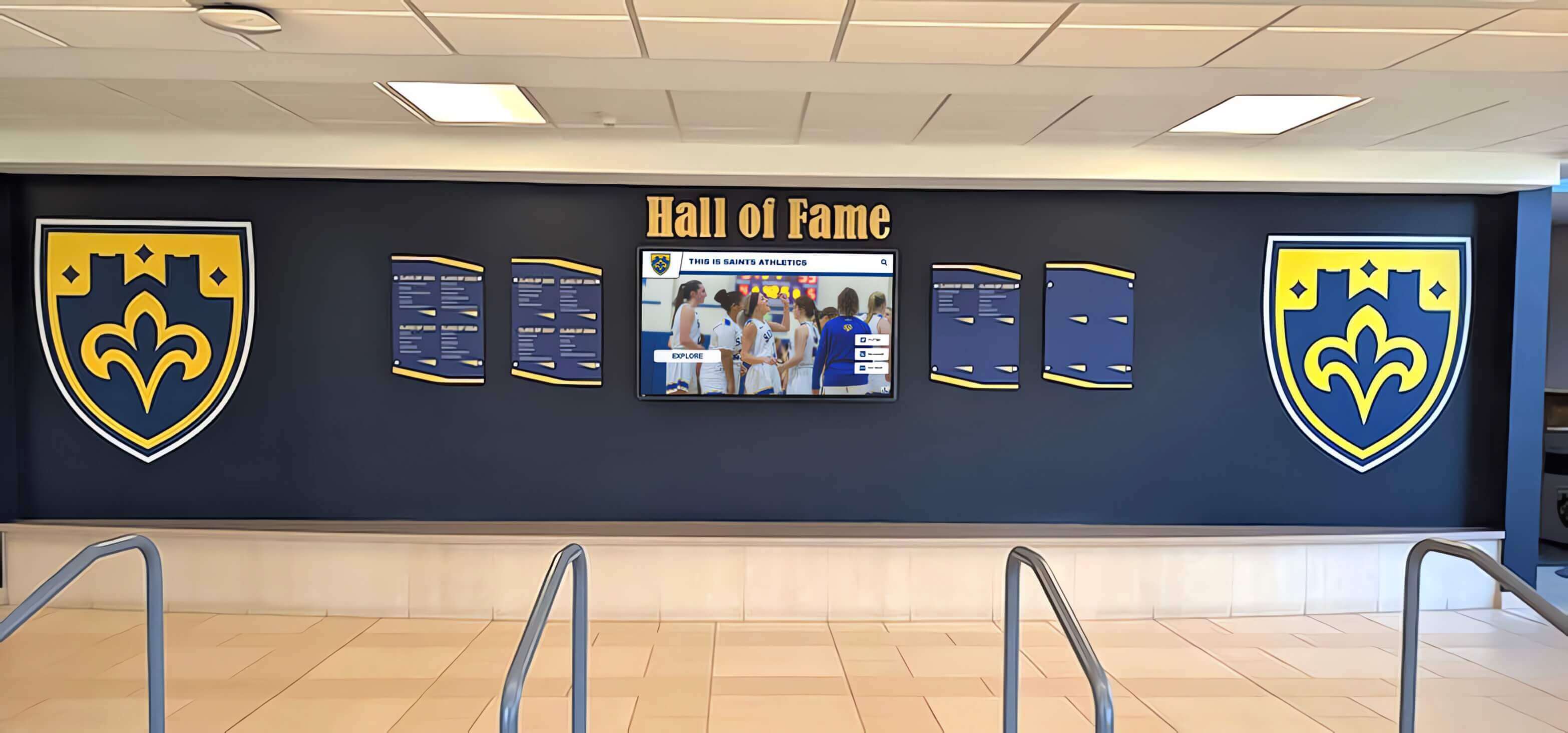
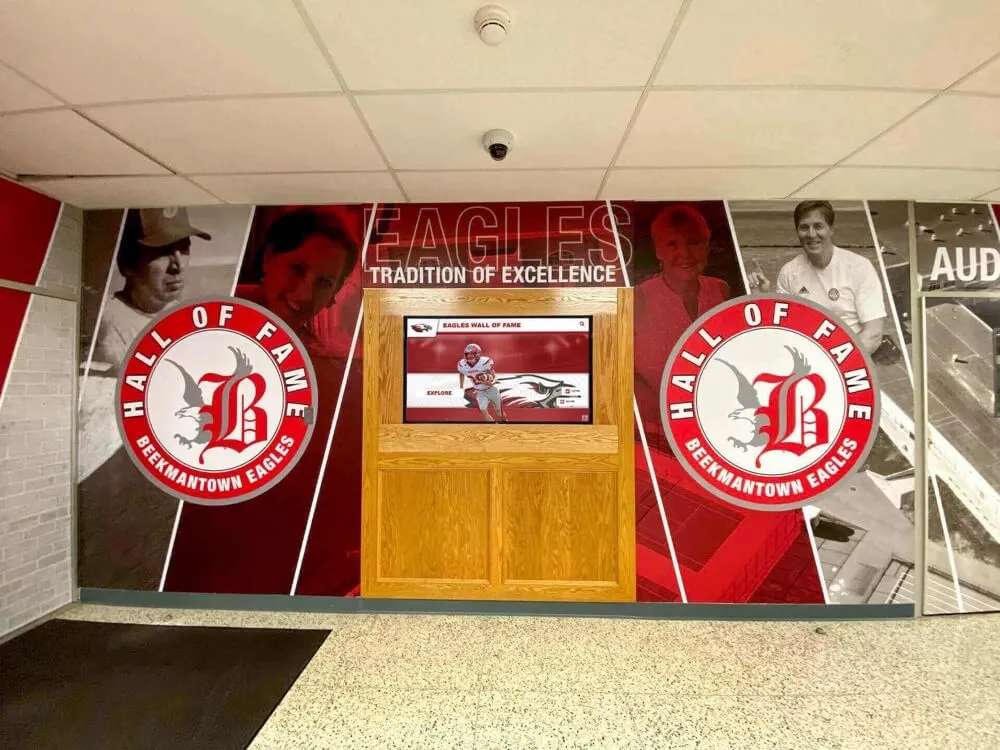
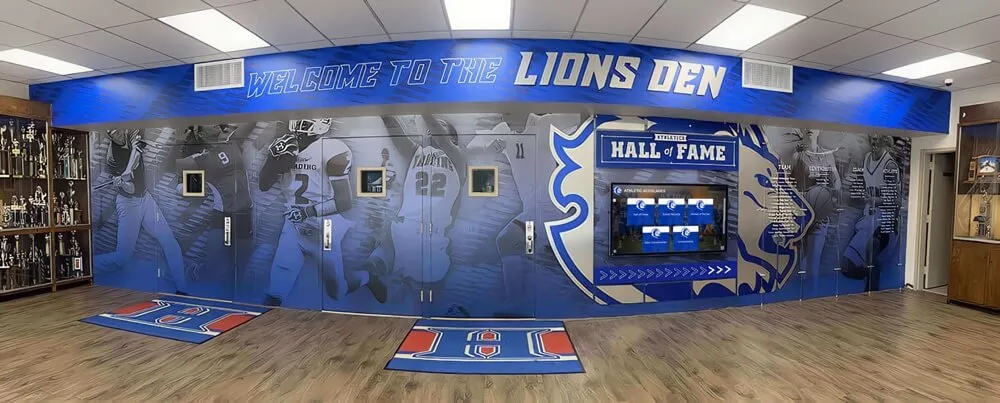
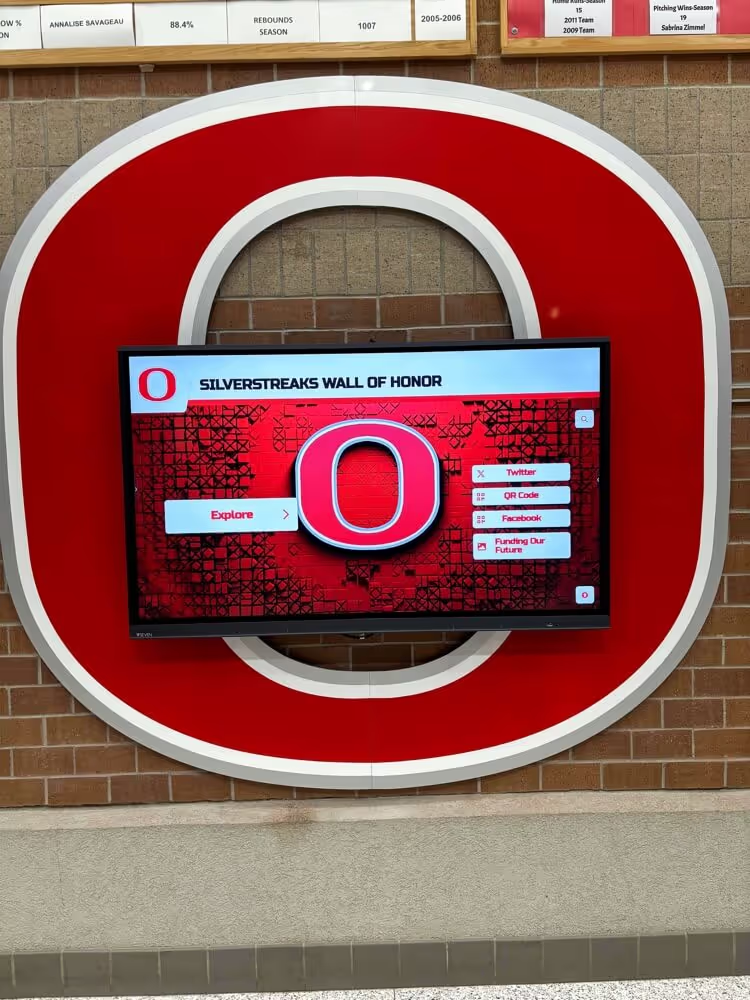
Recognition lobbies housing hall of fame displays alongside trophy cases require functioning cam locks on every secured panel — a key-retention checklist confirms access accountability at each inspection point
| Inspection Point | Expected Result | Pass / Fail | Notes on Failure |
|---|---|---|---|
| Lock body rotation in panel | Zero movement under firm hand pressure | Tighten retaining nut; replace panel substrate if stripped | |
| Face plate condition | No deep scoring or deformation around keyway | Photograph and flag for locksmith evaluation | |
| Key insertion resistance | Smooth travel, light spring feedback only | Schedule cylinder inspection; do not proceed with cam test | |
| Key retention — locked position | Key cannot be extracted while cam is engaged behind frame | Replace cylinder or escalate to locksmith; do not return to service | |
| Cam seating — locked position | Full cam width seated behind frame edge, no visible rotation gap | Adjust tailpiece position or replace cam; test before returning to service | |
| Cam clearance — unlocked position | Cam fully cleared from frame edge, no overlap | Adjust tailpiece; verify door opens without binding | |
| Key extraction — unlocked position | Key withdraws freely with normal extraction force | Schedule cylinder cleaning; separate from key-retention failure | |
| Tailpiece fastener security | Cam plate shows no play relative to tailpiece under lateral pressure | Tighten set-screw or replace fastener; re-test full rotation | |
| Door operation with lock engaged | Door holds without drifting; requires deliberate force to open | Evaluate cam engagement depth; check frame stop for wear |
Complete this checklist for every case in the facility at each inspection interval. Cases with a “Fail” result in the key-retention row — specifically the “Key retention — locked position” check — should be pulled from active service for that lock until the cylinder is replaced. A case whose key-retention feature has failed is functionally unsecured even when the cam is visibly in the locked position.
Cam Lock Condition Rating Scale
Assign a condition rating at the end of each inspection to guide scheduling of follow-up actions. A consistent rating scale prevents ambiguous language (“okay but a little stiff”) from obscuring actionable findings.
| Rating | Criteria | Next Action |
|---|---|---|
| Serviceable | All nine inspection points pass; no abnormalities noted | Reinspect at next scheduled interval |
| Monitor | One minor finding (e.g., face plate light scoring, tailpiece fastener slightly loose but correctable on-site) | Correct on-site finding; reinspect one interval earlier than standard |
| Restricted | Key-retention failure; partial cam seating that cannot be corrected on-site; lock body not securable in panel | Remove from service pending locksmith evaluation or part replacement |
| Condemned | Forced-entry evidence; sheared tailpiece; cylinder that binds and cannot be operated safely | Lock out of service immediately; do not operate; schedule replacement |
The practical implication of the “Restricted” rating is worth stating clearly: a case in restricted status should either be locked with an external padlock through the handle hardware (if the case design permits) or have its contents temporarily moved to a secured case while repairs are scheduled. Leaving a restricted case in service — relying on a cam that partially seats or a key-retention mechanism that has failed — creates a liability that facilities inspection programs exist to prevent.
Inspection Frequency by Location and Use Pattern

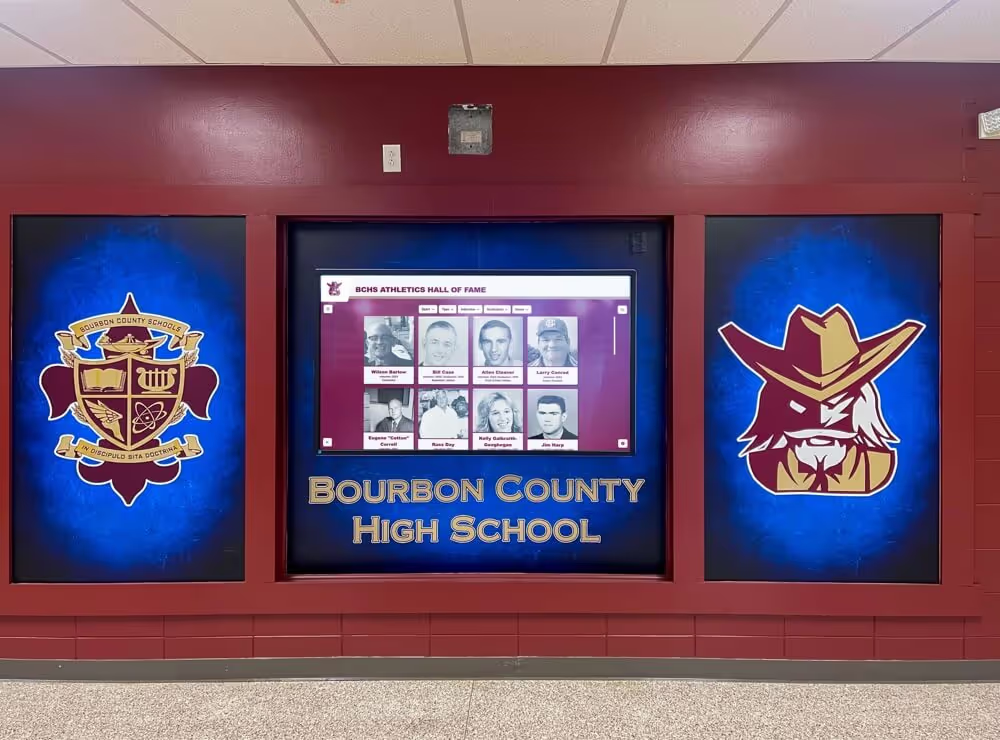
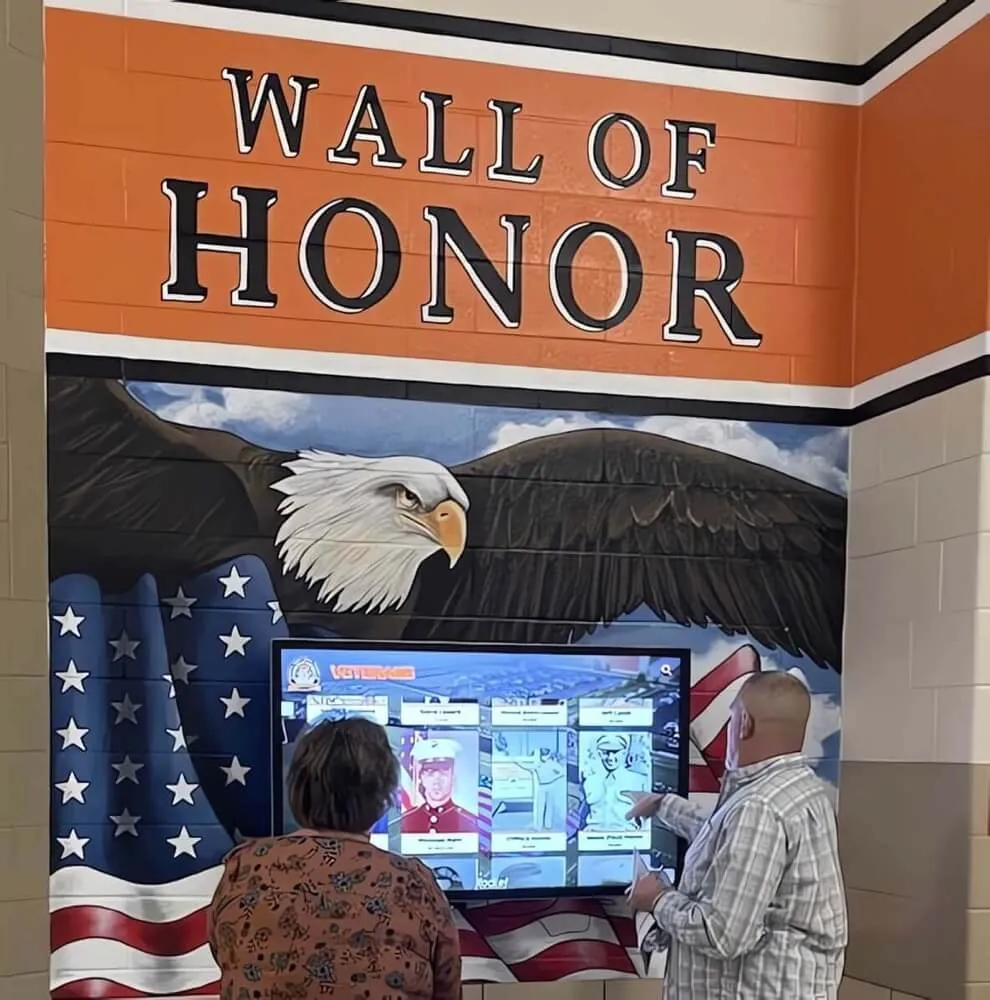
Cases located near active recognition displays and frequently accessed during events accumulate more key cycles per semester — this higher operation rate drives a shorter inspection interval
Not every trophy case warrants the same inspection frequency. Apply a risk-tiered schedule based on where the case is located and how often it is accessed.
Quarterly inspection (highest priority):
- Cases in or adjacent to main athletic lobbies, gymnasiums, or entrance corridors accessed for every home event or banquet
- Cases that have previously shown cam, tailpiece, or key-retention issues in any prior inspection
- Cases adjacent to high-traffic areas where vibration from foot traffic or locker room activity could work fasteners loose
Semiannual inspection (standard priority):
- Interior hallway cases in climate-controlled corridors opened primarily for seasonal display rotations
- Cases that are accessed fewer than 10 times per semester under normal conditions
Annual inspection (minimum):
- Low-access storage-adjacent cases or archive display cases in restricted areas with very few annual access events
- Cases fitted with a new cam lock assembly within the last 12 months
Any case that generates a staff report of unusual key behavior — a key that suddenly requires extra force to reach the locked position, a door that opens without the key being used, or a cam that feels loose when the door is closed — should receive an unscheduled inspection immediately regardless of when the last scheduled check occurred.
Who Should Perform the Cam Lock Inspection
Shared responsibility produces better compliance than single-point accountability. A workable role assignment for most schools:
- Facilities staff own the physical inspection and any on-site corrections (tightening retaining nuts, cleaning face plates, recording findings). They have the tools and access patterns that make routine inspection practical.
- Athletic director owns the key-retention checklist records and makes the service/restricted/condemned call when findings exceed on-site correction. For schools with extensive recognition programs — including awards ceremony planning and athletic hardware display across multiple seasons — the athletic director also coordinates any locksmith scheduling to minimize disruption to event timelines.
- Principal or assistant principal authorizes replacement or major repair expenditures and ensures the inspection program is included in the facilities management calendar. Recognition programs that extend beyond athletics — including principal recognition programs and school leader honor initiatives — often house artifacts in cases that the same cam lock inspection program covers.
Document the role assignments in writing. When any of the three positions turns over, the incoming staff member inherits both the key control records and the inspection schedule — not a verbal summary of what has been done.
Connecting Cam Lock Security to the Digital Recognition Record
A functional cam lock secures the physical artifacts inside a trophy case. It does not secure the institutional record those artifacts represent.
A championship trophy that survives decades of secure storage can still be lost to a facility fire, flood, or the deterioration that affects metal, fabric, and paper over extended time frames. The recognition history embedded in that trophy — the athletes named on the base, the season records it commemorates, the context of the achievement within the school’s program — survives only if a complete digital record exists independent of the physical object.
Schools that connect physical security discipline to digital preservation understand this complementarity. When a cam lock inspection confirms that a case is correctly secured, the digital system confirms that every item inside that case is cataloged, photographed, and accessible to anyone with an internet connection or a phone. The two systems protect different things: the lock protects the object; the digital record protects the story.
For recognition programs covering multiple sports, multiple decades, and multiple categories of achievement — from varsity letter traditions and the history and meaning of athletic letters and jackets through current-season all-conference honorees — the digital catalog provides what no locked case can: unlimited capacity, instant search, and remote access without a key.
Schools that operate alumni recognition programs and alumni-of-the-month initiatives alongside their trophy case collections benefit from digital platforms that hold all recognition categories in a single, searchable archive. When an alum visits campus and cannot find their recognition in a physical case because the case is locked or the item is on loan, the digital display provides the same recognition experience without requiring anyone to unlock anything.
Physical cam locks protect hardware. Digital records protect the history. Rocket Alumni Solutions builds cloud-managed digital trophy cases that hold unlimited recognition records — accessible through touchscreens, QR codes, and remote CMS login — regardless of what is happening with your physical cases. Explore the full platform at Rocket Alumni Solutions’ interactive recognition platform.
Escalation: When the Inspection Requires a Locksmith
Facilities staff can address a meaningful range of cam lock conditions on-site: tightening retaining nuts, cleaning face plates, testing key-retention behavior, recording findings. The following conditions require a qualified locksmith before the case is returned to service:
Key-retention failure that does not resolve after cylinder cleaning. A key that can be extracted in the locked position after a cleaning confirms the retention detent is worn or absent. Cylinder replacement is the correct response — re-lubricating will not restore a detent that has worn past its functional threshold.
Cam that cannot be adjusted to full seating. A cam that seats at 70 or 80 percent of full engagement after tailpiece position correction indicates either a wrong-length cam for the frame depth or a tailpiece that has twisted out of alignment beyond on-site correction. Both require locksmith evaluation.
Lock body that cannot be secured in the panel. A retaining nut that will not hold because the panel substrate is stripped requires either a panel repair (to give the nut fresh material to grip) or a lock body with a larger-diameter retaining nut flange. A locksmith or carpenter should assess which solution applies before re-mounting.
Evidence of forced entry. Deep scoring around the keyway, a bent face plate, a cam that has been driven past its normal travel range, or a door frame with visible damage at the cam stop edge all warrant locksmith evaluation before the next use — regardless of whether the lock appears to function normally afterward. The athletic award appeals process and fair review framework that schools use for recognition disputes relies on documented records; the same documentation discipline applies when forced-entry evidence appears — photograph, log, escalate, and do not return to service until evaluated.
Organizing Cam Lock Inspection Records
Inspection records for cam locks belong in a structured filing system alongside key control logs and cylinder inspection records. A three-ring binder in the athletic or facilities office — divided by case location, with subsections for cam lock inspection and key control — works for most schools. Digital spreadsheets with restricted editing access serve the same function with better searchability.
At the start of each academic year, review all outstanding “Monitor” and “Restricted” findings from the prior year and resolve any that were deferred. Any cases still in restricted status from the prior year that were not repaired over the summer should be addressed before the first recognition event of the new year — not after.
For schools whose trophy case collections include materials that span multiple student generations — digital wall mount displays used by nonprofits and community organizations often model the documentation discipline that serves athletic collections equally well — maintaining both inspection records and a digital recognition archive provides redundancy that a single system cannot.
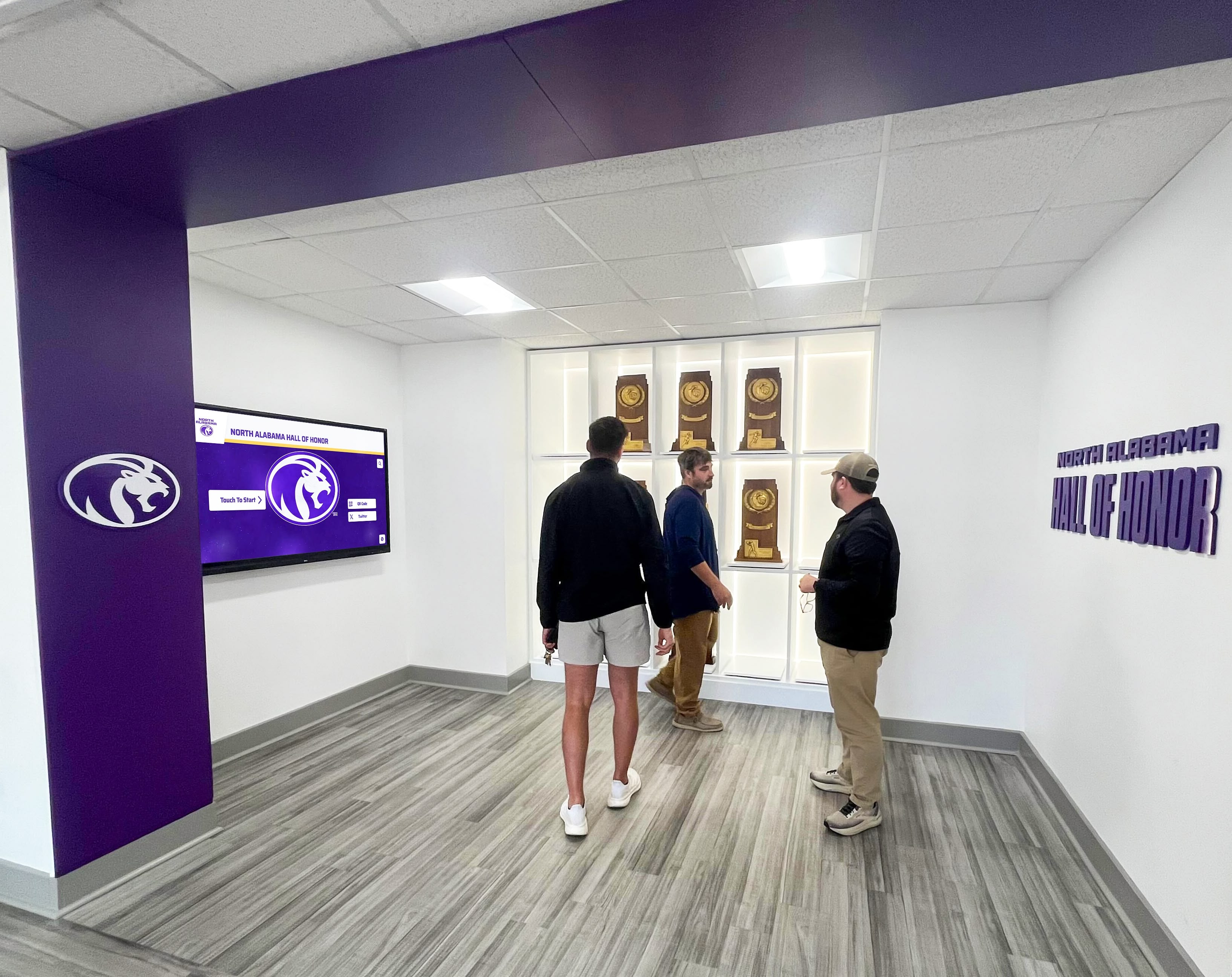
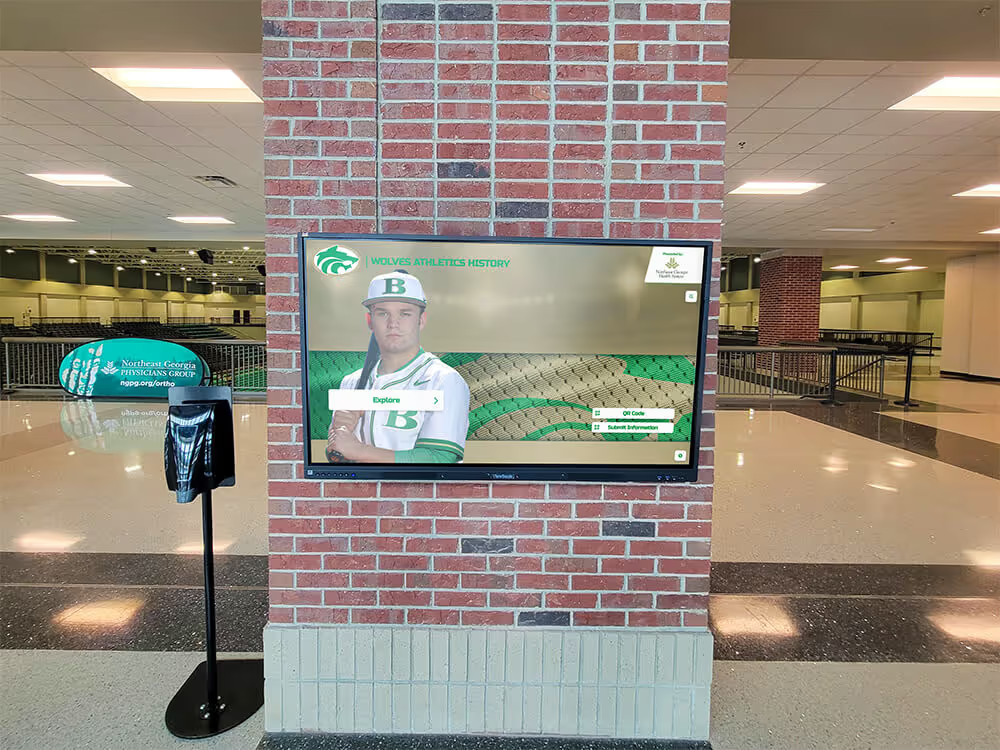
Staff accessing trophy cases for recognition events depend on cam locks operating correctly — pre-event cam lock inspection prevents access failures at the worst possible moment
Frequently Asked Questions
What is a cam lock on a school trophy case? A cam lock is the most common door-securing hardware on enclosed school trophy cases. It consists of a tubular lock body installed through a drilled hole in the door panel, a cam plate attached to the back of the cylinder via a tailpiece, and a key that rotates the cam into and out of engagement behind the case frame. When the cam is in the locked position, it catches behind the frame and prevents the door from opening. Key-retention variants prevent the key from being removed until the cam returns to the unlocked position.
What is key retention on a cam lock, and why does it matter for trophy cases? Key retention is a feature that prevents the key from being extracted from the cylinder while the cam is in the locked position. For trophy case security, this means a staff member accessing the case must keep the key in the lock — visible to any observer — for the entire duration of the access event. It prevents the key from being pocketed while contents are accessed and ensures the lock must be returned to a definitive position before the key can be removed. A cam lock whose key-retention feature has failed should be treated as functionally unsecured and removed from service.
How is a cam lock inspection different from a lock cylinder inspection? A cam lock inspection covers the external actuating system: the cam plate, tailpiece, lock body mounting, and key-retention mechanism. A lock cylinder inspection covers the internal pin-tumbler or wafer mechanism inside the cylinder — keyway debris, pin wear, and lubrication. Both inspections are necessary, but they examine different components. A cam that seats correctly can still be operated by a worn cylinder, and a clean cylinder can still deliver a cam that seats at the wrong angle if the tailpiece has shifted.
How often should cam locks on school trophy cases be inspected? At minimum, inspect every case once per year. Cases in high-traffic locations — main lobby cases, athletic hallway cases opened for every home game or banquet — should be inspected quarterly. Any case that generates a staff report of unusual key behavior warrants an immediate unscheduled inspection regardless of when the last scheduled check occurred.
What should a school do if the cam lock key-retention check fails? Remove the case from service for that lock immediately — do not use it in a state where the key can be extracted while the cam is engaged. Schedule locksmith evaluation or cylinder replacement. If the case must remain accessible during the interim, secure it with an external padlock through the handle hardware or transfer the contents to a functioning secured case. Log the failure, the date, and the corrective action taken.
Can a cam lock cam be adjusted without replacing the lock? Yes, in many cases. If the cam is partially seating because the tailpiece position has shifted, the tailpiece can be repositioned relative to the cam plate — typically by loosening the cam fastener, rotating the cam to the correct position for full frame engagement, and re-securing the fastener. If the cam is undersized for the frame depth or the tailpiece is bent, replacement is more appropriate than adjustment. Facilities staff can make positional corrections on-site; structural issues require a locksmith.
How does a digital trophy case platform support physical cam lock security? A digital trophy case platform does not replace physical cam lock security — it complements it. The digital system holds the complete recognition record: athlete names, achievement descriptions, historical photographs, and championship context. If a physical case is inaccessible due to a lock failure, maintenance, or a restricted-status finding, the digital record remains fully accessible. Recognition programs covering athletic scholarship history and the context behind athletic recognition rely on this persistence — the institutional record does not disappear because one cam lock is awaiting repair.
Who should authorize cam lock replacement or major repair? Best practice is a tiered authorization: facilities staff handle on-site corrections (tightening, cleaning, recording); the athletic director authorizes locksmith scheduling and restricted-status cases; the principal or assistant principal authorizes any expenditure for replacement or major repair. Document the authorization tiers in writing so responsibility is clear when staff change roles. Schools implementing digital hall of fame profile standards and accessibility guidelines for their recognition displays apply the same role-clarity discipline to their physical security program — accountability should be documented in both systems.

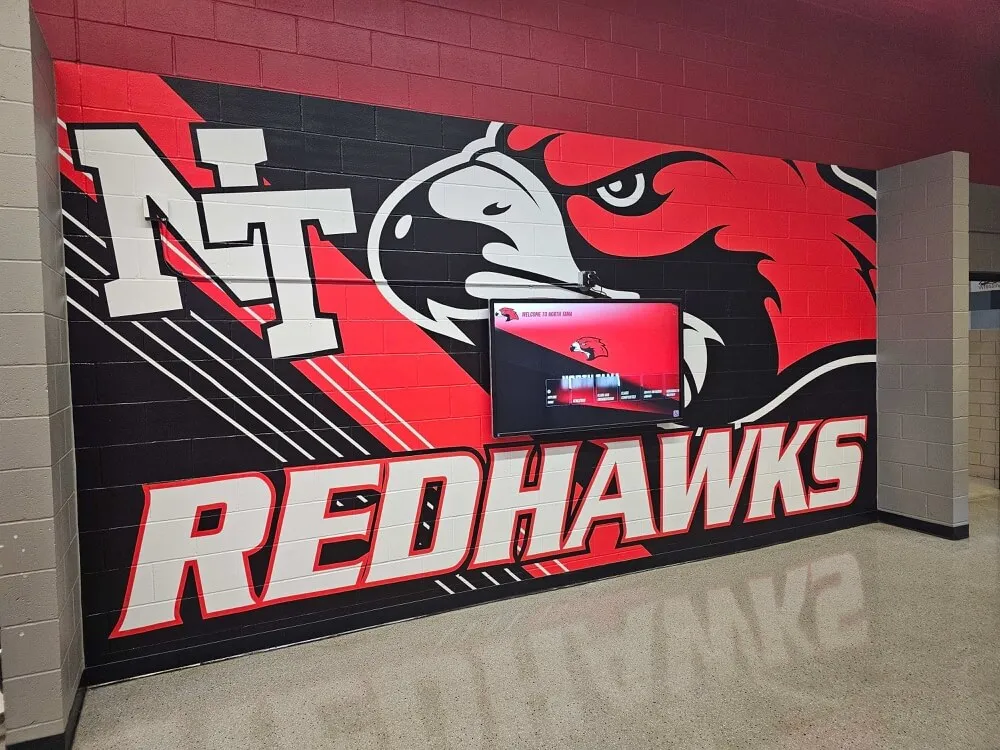
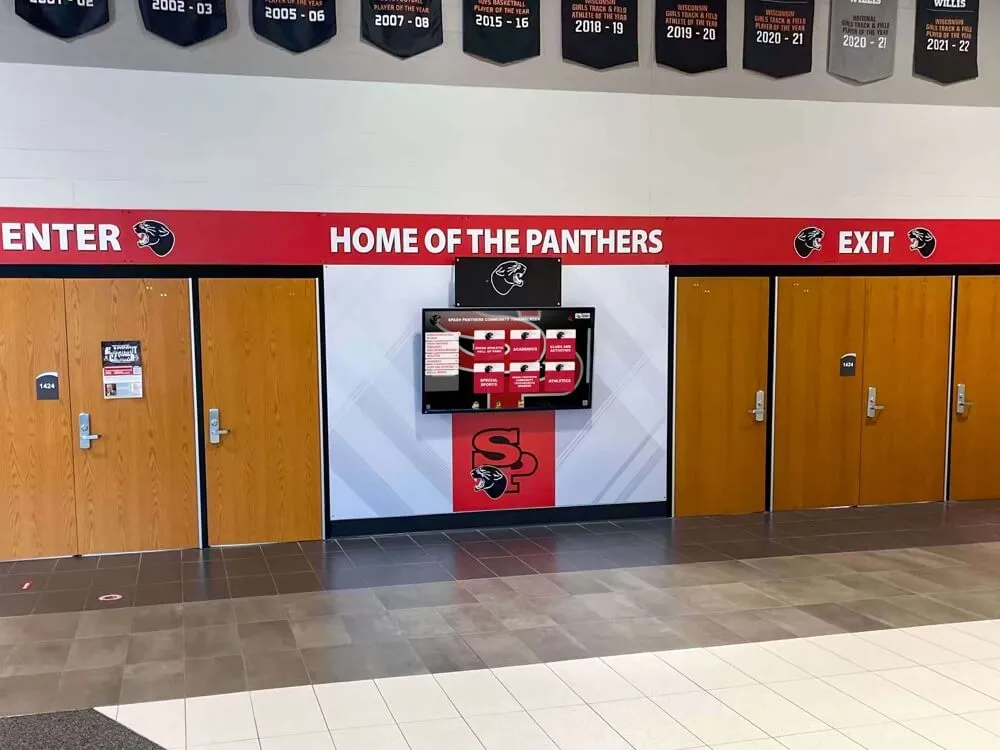
Athletic hallways combining physical trophy cases with digital recognition screens represent the current state of school recognition infrastructure — both the hardware and the digital layer require maintenance disciplines of their own
Protect Your School's Recognition History — Beyond the Cam Lock
Rocket Alumni Solutions builds interactive digital trophy cases and touchscreen walls of fame for schools nationwide. Cloud-managed updates, unlimited recognition capacity, ADA WCAG 2.1 AA compliant displays, and QR code mobile access — so your complete championship history, hall of fame records, and individual achievement archive stay accessible regardless of what is happening with your physical cases. See how schools are building permanent digital recognition programs that complement their physical trophy case security systems.
Book A Demo