



School rivalries represent some of the most powerful traditions in athletic competition—matchups where pride, history, and community identity converge on playing fields and courts. The anticipation builds for weeks, generations of families attend together, and outcomes are remembered for years. Yet many schools struggle to create tangible recognition that captures the significance of these special competitions beyond temporary celebration.
A well-designed school rivalry trophy transforms annual competition into lasting tradition. The right trophy becomes a symbol both schools pursue with intensity, creating stakes beyond conference standings while generating recognition that extends throughout communities. Effective rivalry trophies build anticipation before games, celebrate winners appropriately, and keep traditions alive across coaching changes and graduating classes.
This comprehensive guide explores creative school rivalry trophy ideas that athletic directors, coaches, and school administrators consistently find valuable—approaches that honor competition intensity, reflect community identity, and create traditions strengthening school spirit for decades to come.
The most memorable school rivalry trophies tell stories. They reference shared history, celebrate geographic connections, honor community traditions, or commemorate individuals who shaped both programs. These trophies become larger than the games themselves, creating narratives that alumni share with current students and communities discuss year-round, not just during rivalry week.

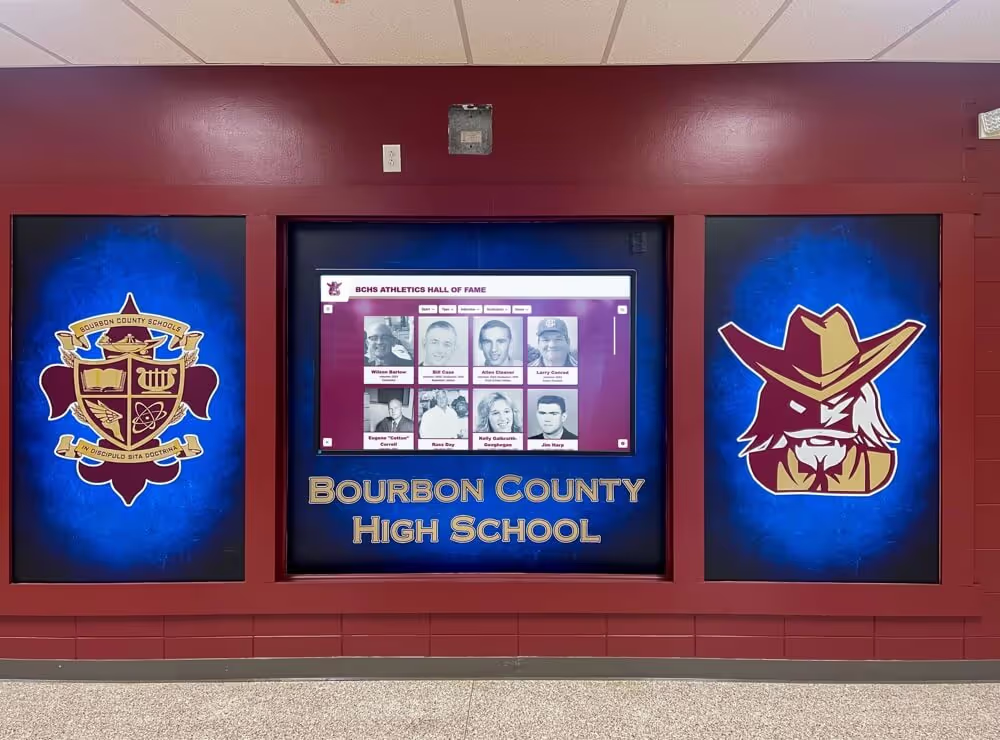
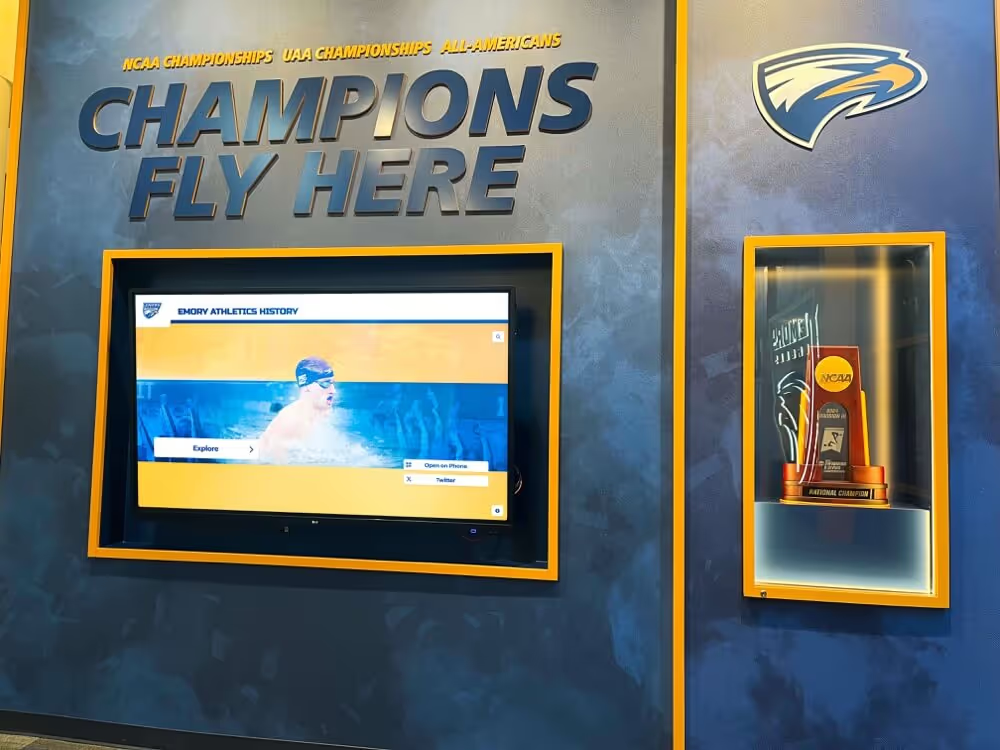
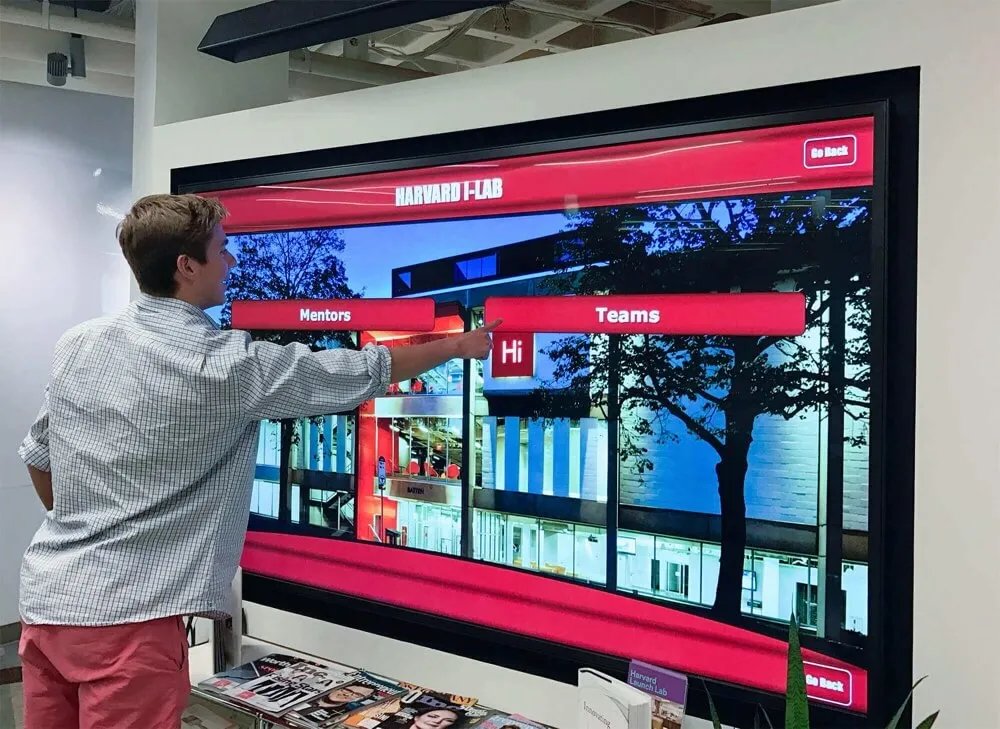
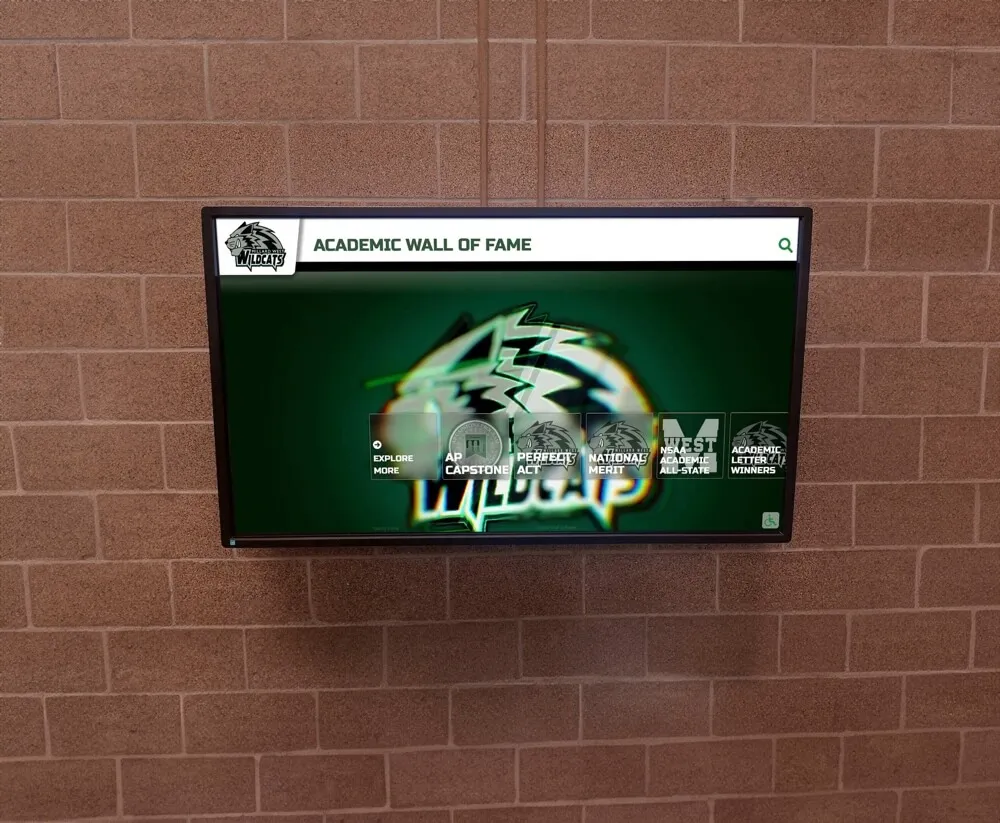
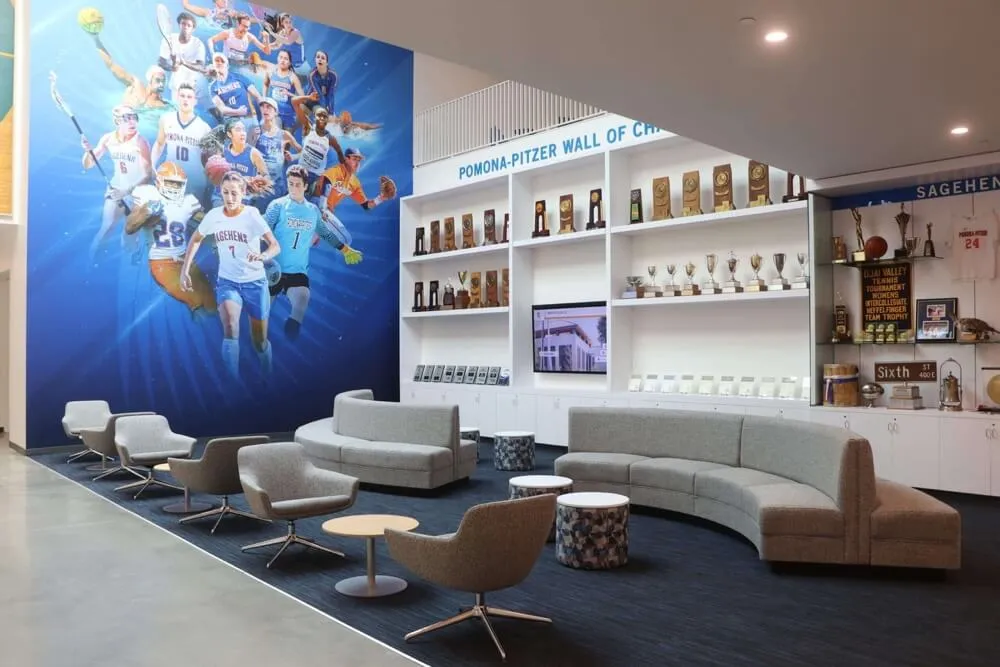
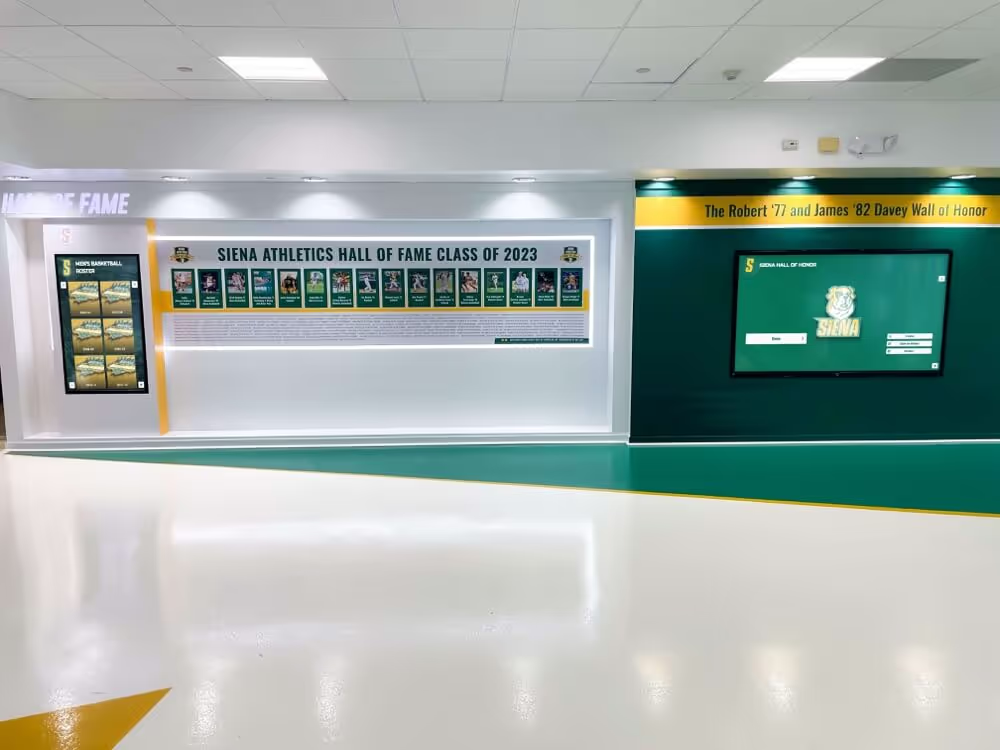
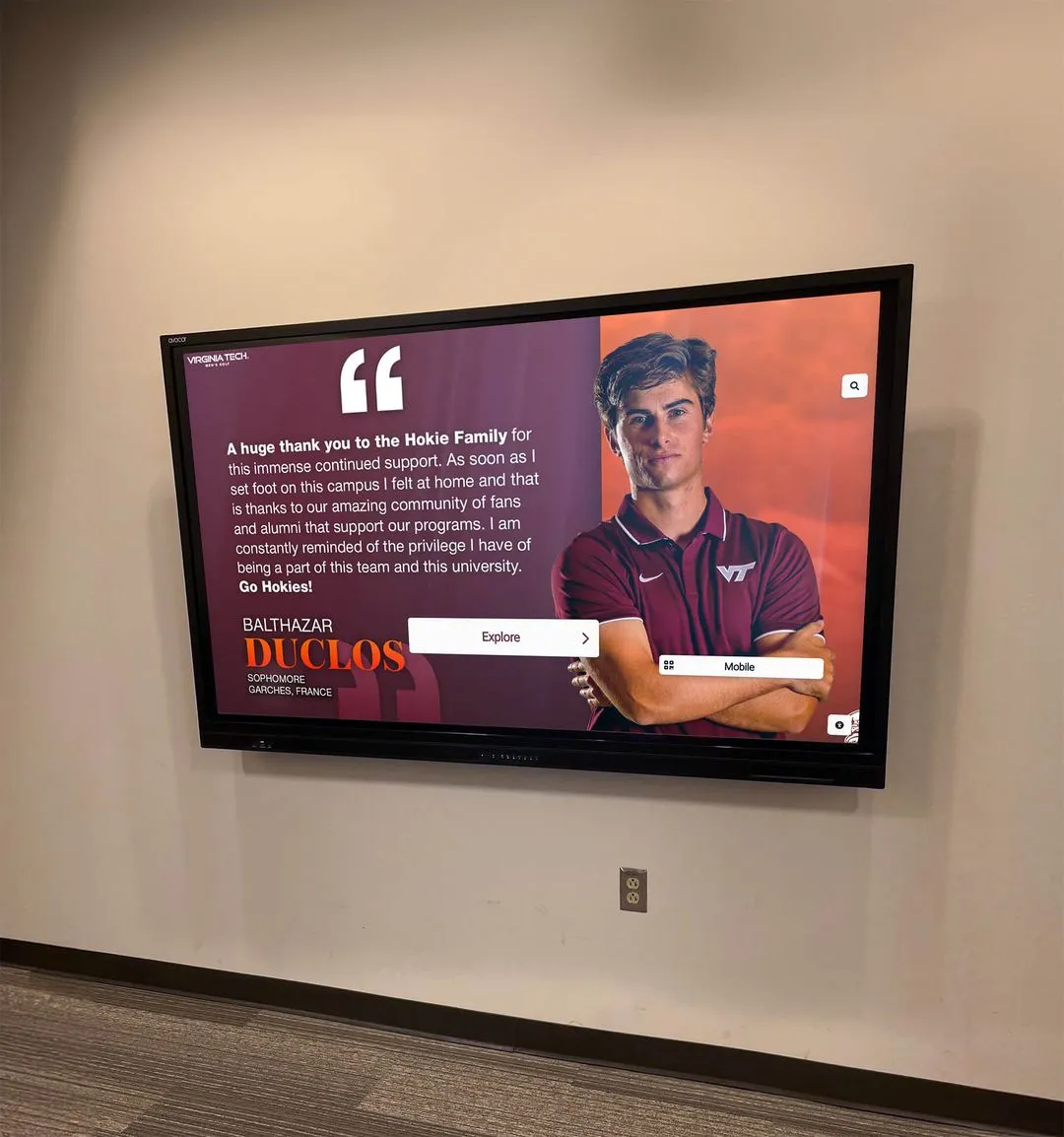
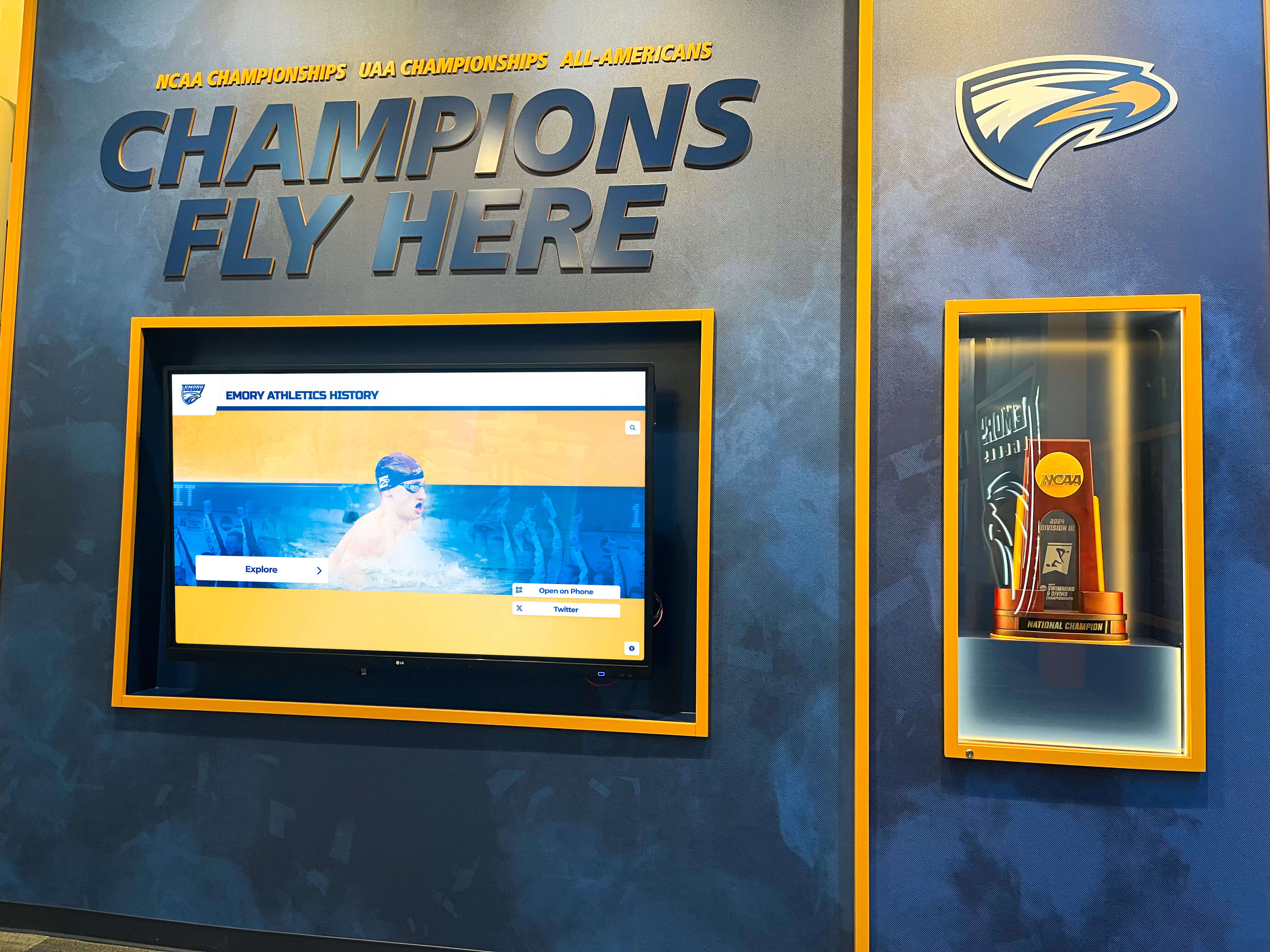
Championship displays create visual reminders of competitive excellence and tradition that inspire current athletes while honoring past achievements
Understanding What Makes Great Rivalry Trophies
Before exploring specific trophy ideas, understanding the elements that make rivalry recognition meaningful helps schools design symbols that truly resonate.
The Purpose of Rivalry Trophies
Rivalry trophies serve multiple important functions beyond simple competition recognition:
Creating Tangible Stakes
Regular season games carry conference implications and playoff positioning, but rivalry matchups deserve additional significance. A traveling trophy transforms competition from another game into a contest with visible, lasting consequences. Athletes know that victory means displaying the trophy in their school for an entire year while defeat means watching rivals celebrate with what should have been theirs.
Schools implementing rivalry trophies consistently report increased practice intensity during rivalry weeks, higher student attendance at games, and greater community engagement surrounding these special matchups.
Building Cross-Generational Connections
The best rivalry trophies create traditions spanning decades:
- Current students learn rivalry history and significance from alumni
- Parents who competed for the same trophy decades earlier bring children to games
- Communities develop shared narratives around memorable rivalry moments
- Traditions survive coaching changes and program transitions
Rivalry trophies become institutional memory preservation systems, ensuring each generation inherits and continues competitive traditions rather than starting fresh without historical context.
Essential Elements of Effective Rivalry Trophies
Successful rivalry recognition incorporates several key characteristics:
Meaningful Symbolism
The most resonant trophies reference elements both schools understand and value:
- Geographic features connecting communities (rivers, mountains, highways)
- Shared historical events or regional heritage
- Industry or economic connections (agricultural traditions, manufacturing history)
- Community values or cultural touchstones
Generic trophies fail to capture rivalry essence. Specific, locally meaningful symbols create emotional connections that generic recognition cannot match.
Appropriate Scale and Quality
Rivalry trophies should command attention without becoming absurd:
- Substantial enough to feel significant and worth winning
- Displayable in trophy cases or prominent school locations
- Durable materials surviving decades of transfers between schools
- Professional quality reflecting the importance both schools place on competition
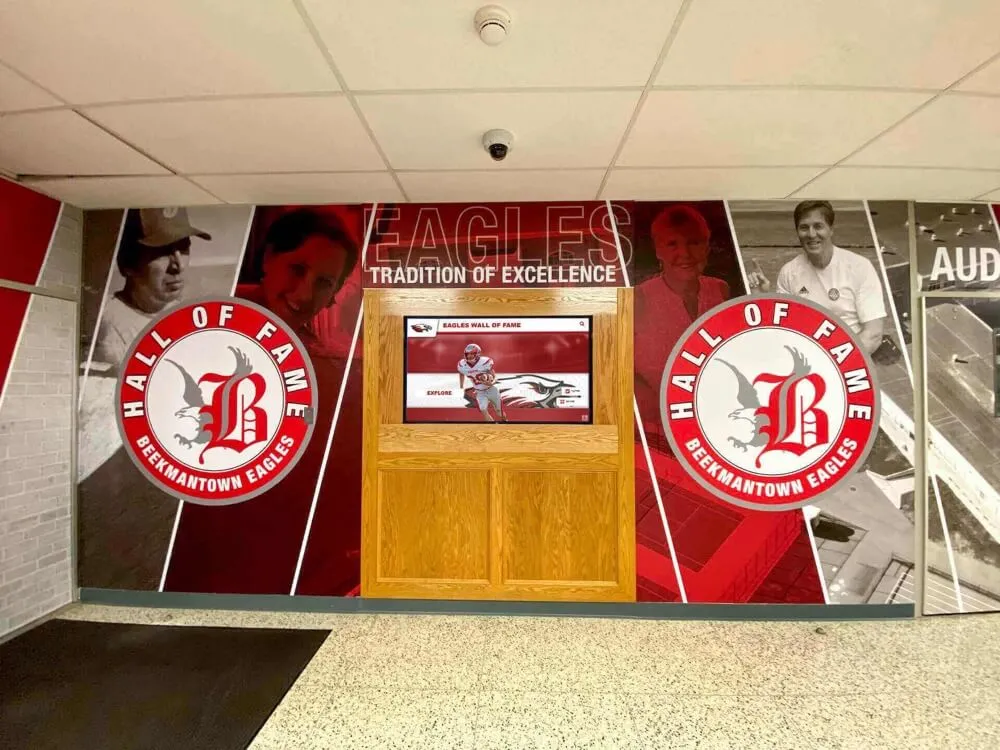
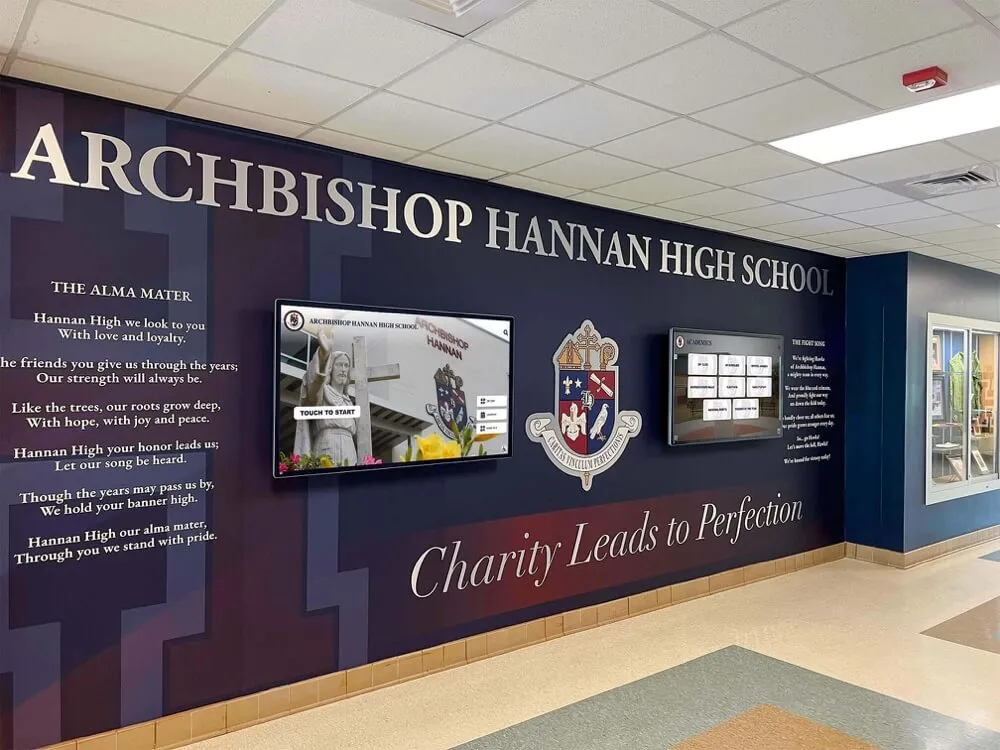
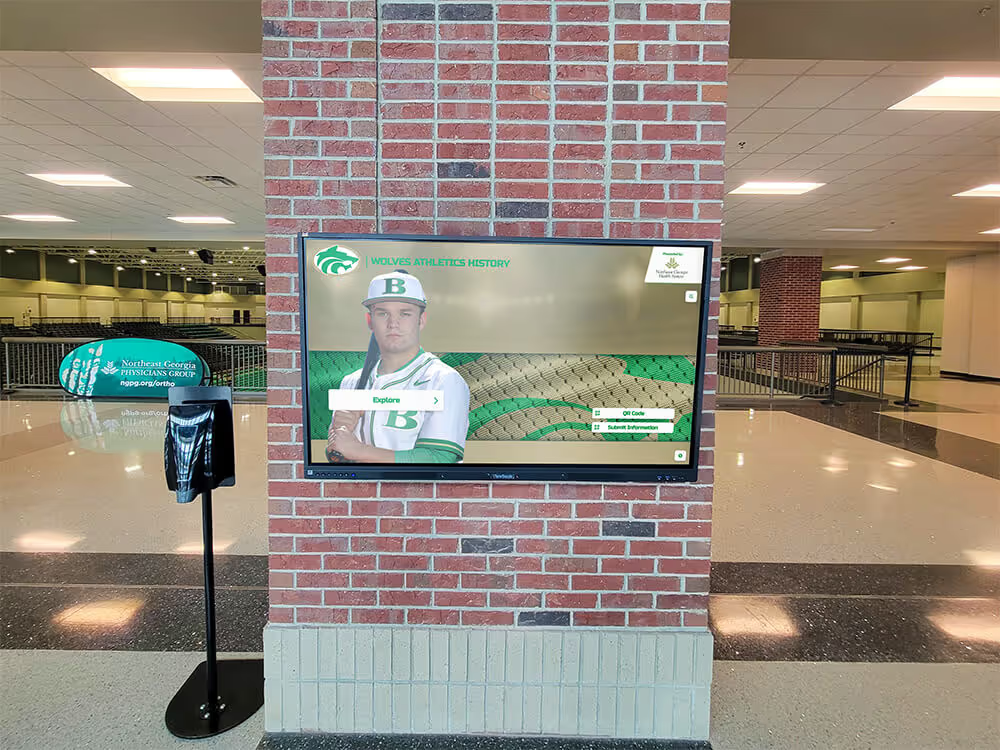
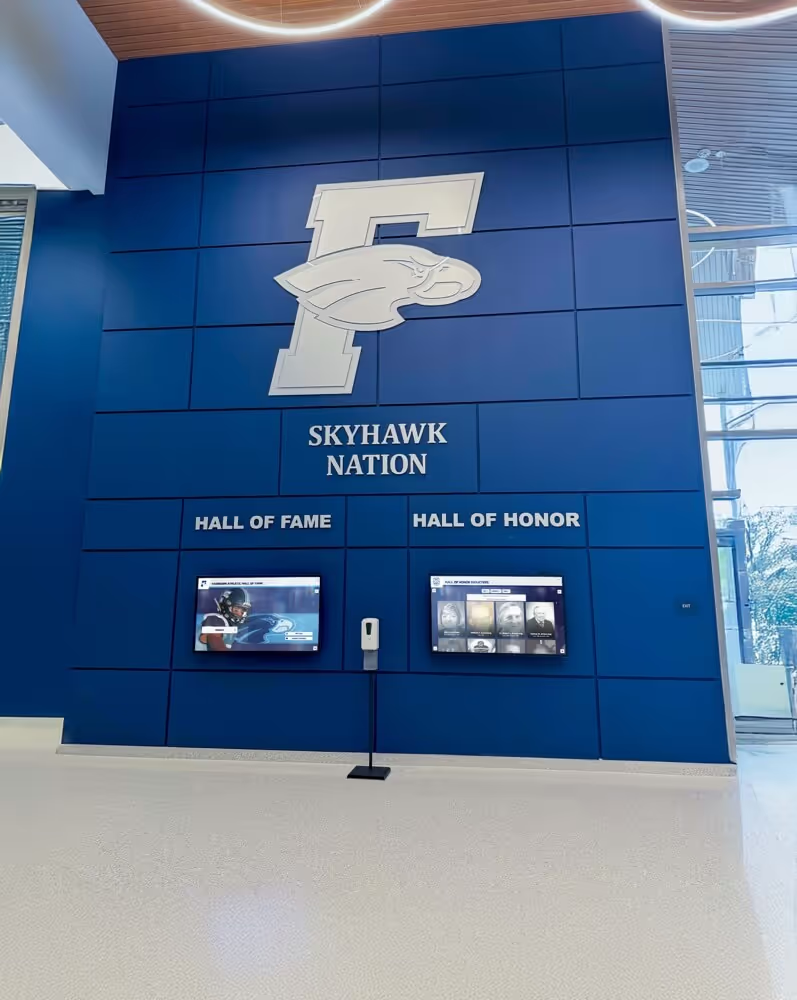
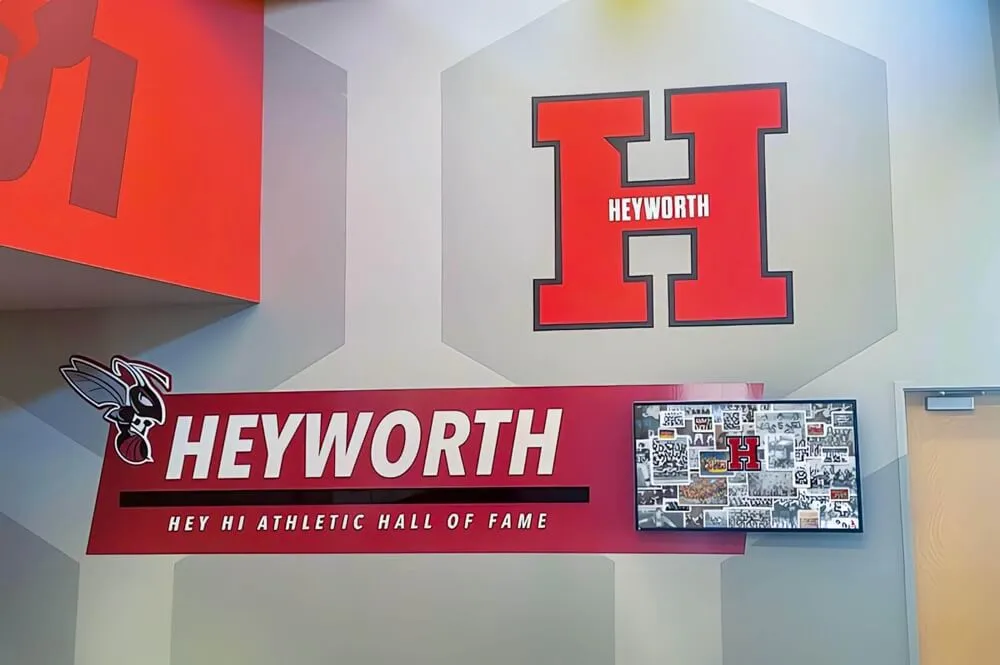
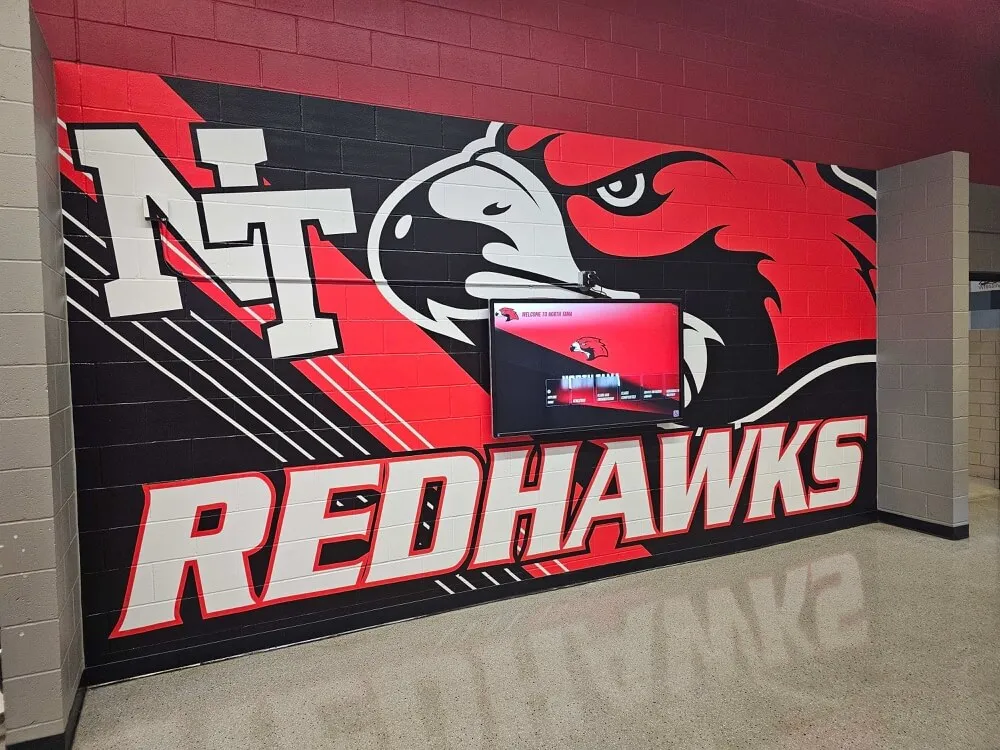
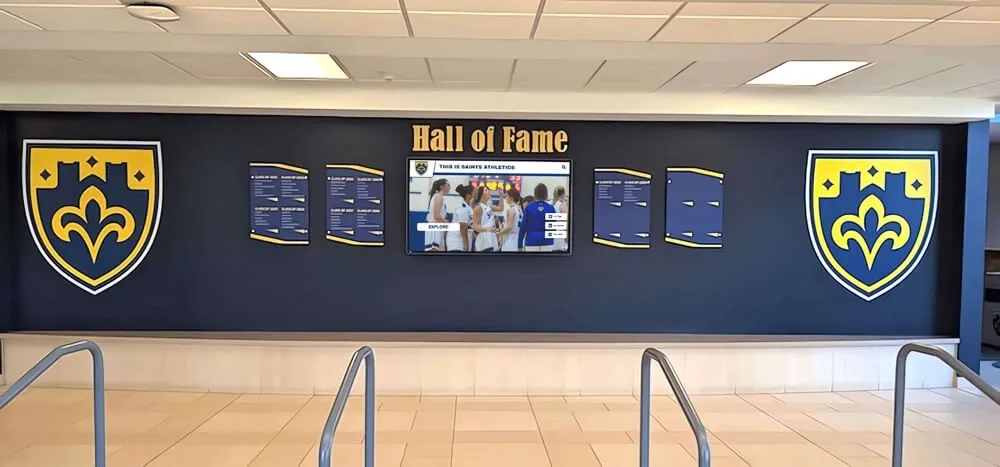
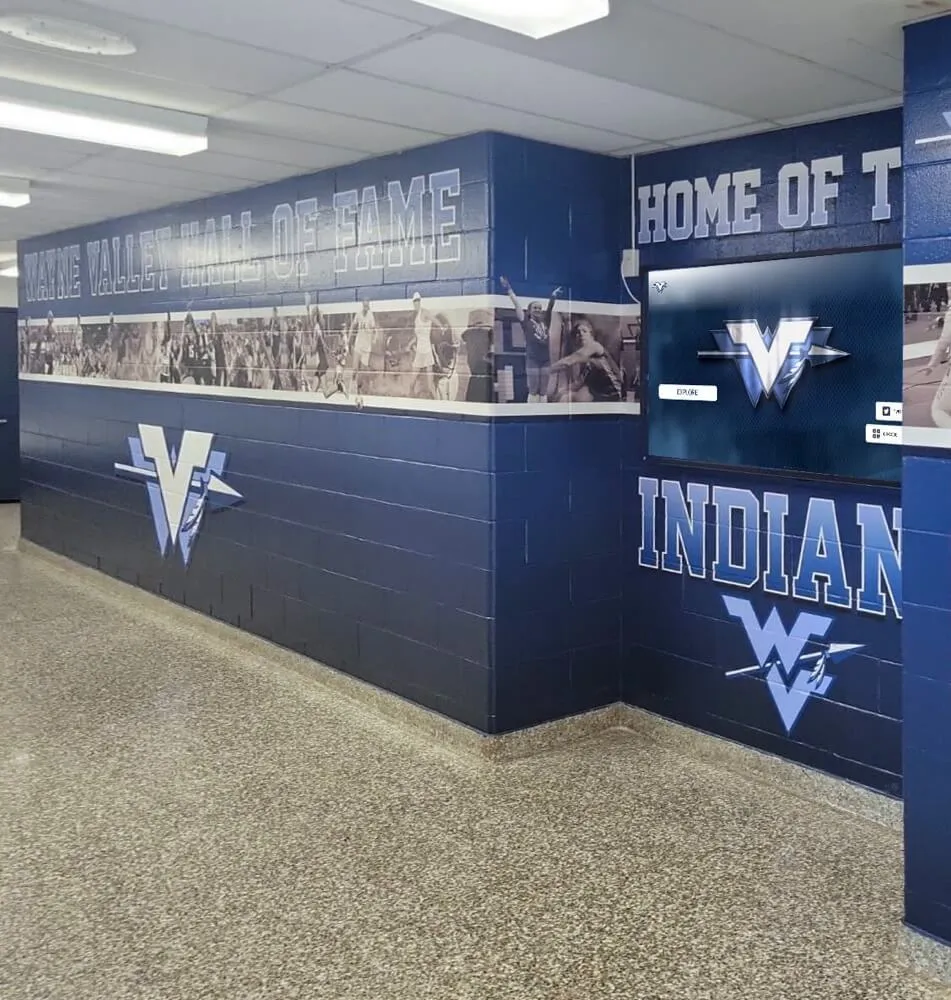
Dedicated recognition walls create prominent spaces where rivalry trophies and championship achievements receive the visibility they deserve
Balanced Design Philosophy
Unlike championship trophies celebrating one school’s achievement, rivalry trophies must feel neutral and fair:
- Both schools’ colors, mascots, or identity elements incorporated equally
- No permanent advantage to either school in design
- Recognition format allowing both schools to claim the trophy with pride
- Design aging well regardless of which school currently holds possession
Programs creating comprehensive athletic recognition systems often find that rivalry trophies become centerpiece attractions receiving premier display placement during possession years.
Creative Rivalry Trophy Concepts and Themes
Specific trophy designs determine whether recognition becomes cherished tradition or forgotten novelty.
Geographic and Regional Rivalry Trophies
Location-based trophies work particularly well for schools separated by distinctive geographic features:
River Crossing Trophies
For schools on opposite sides of rivers:
- Trophy design incorporating bridge elements or river imagery
- Carved wooden paddles or oars representing water crossing
- Bridge replicas marking the geographic boundary between communities
- Historical ferry or crossing references for schools with river heritage
The “Battle for the Bridge” or “River Rivalry Trophy” creates immediate geographic understanding while emphasizing the connection and competition between communities.
Highway and Transportation Trophies
Schools connected by specific highways or routes:
- Miniature road signs or highway markers
- Historic Route markers for schools along famous roads
- Vintage license plates from both communities
- Trophy incorporating the actual highway number connecting schools
These trophies work especially well when the highway has historical significance or connects communities with distinct identities.
County Line and Border Trophies
For schools in different counties or districts:
- Surveys or boundary markers as trophy elements
- County line signs incorporated into recognition
- Split designs showing each community’s identity
- Historical border references or territorial history
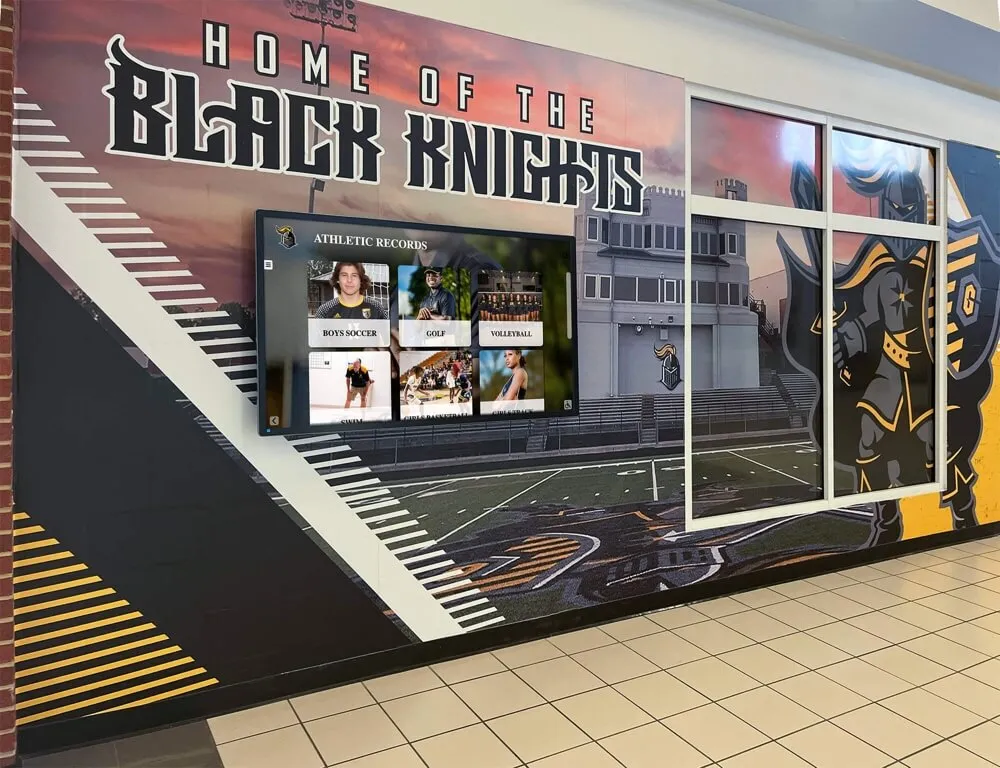
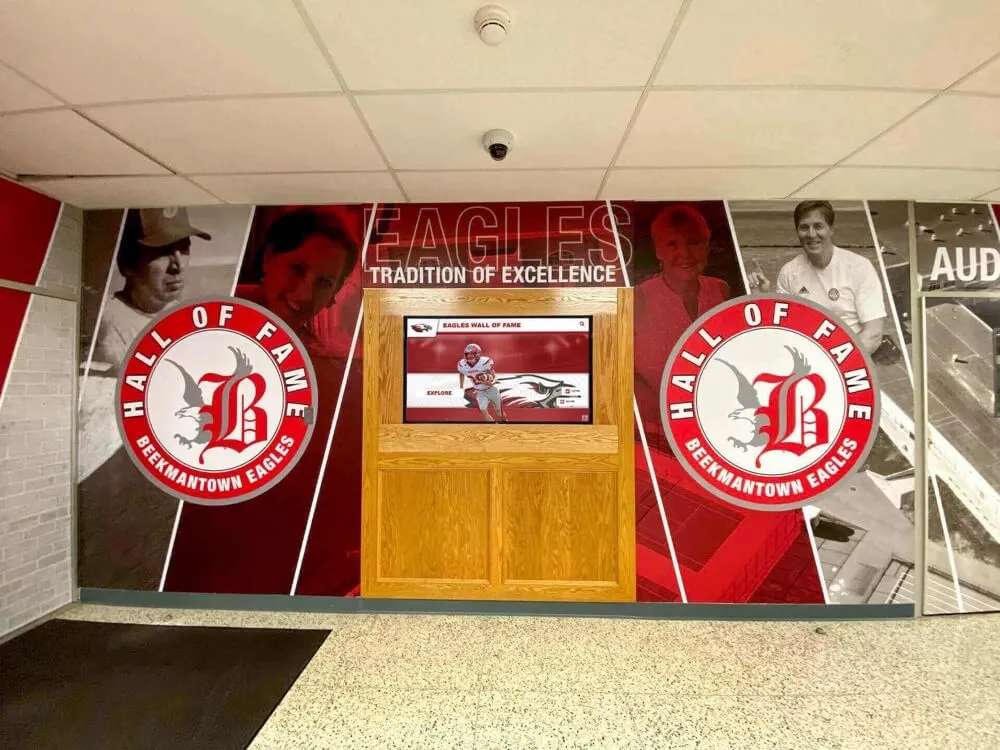
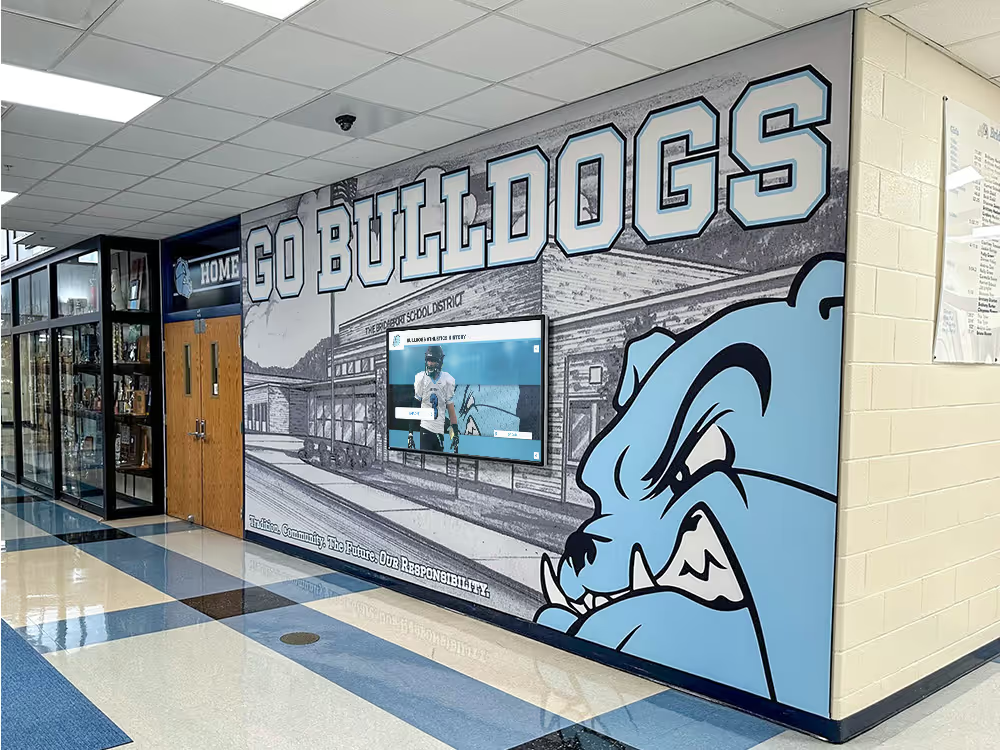
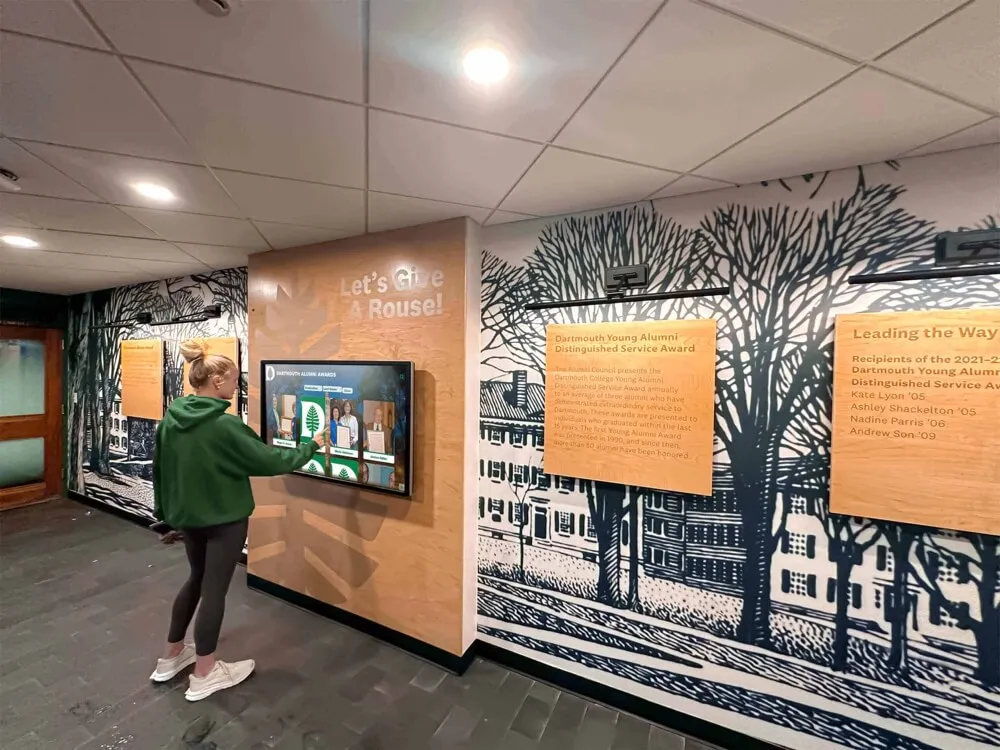
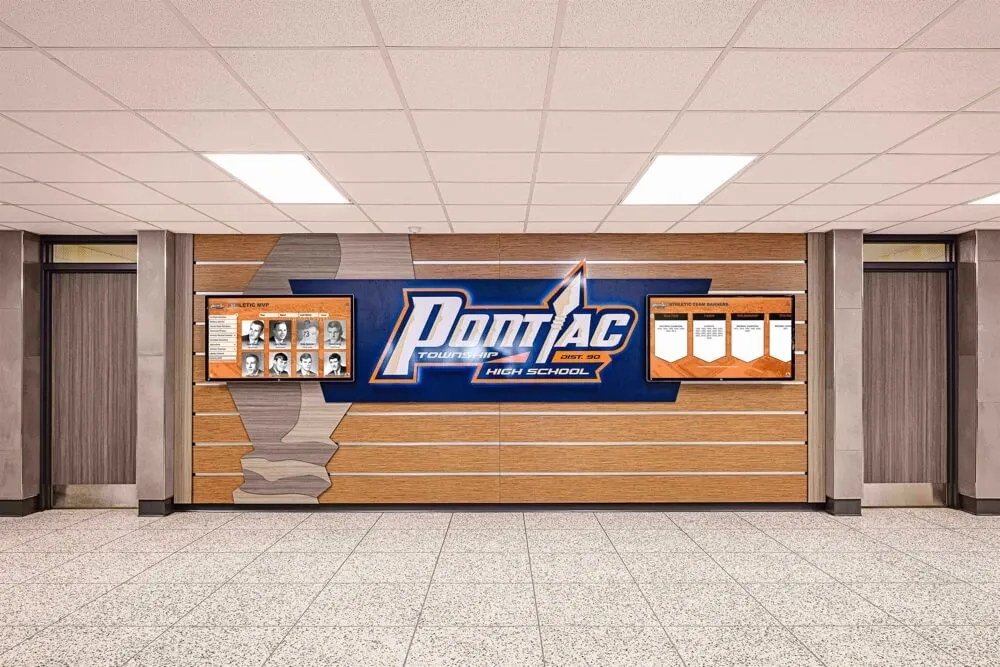
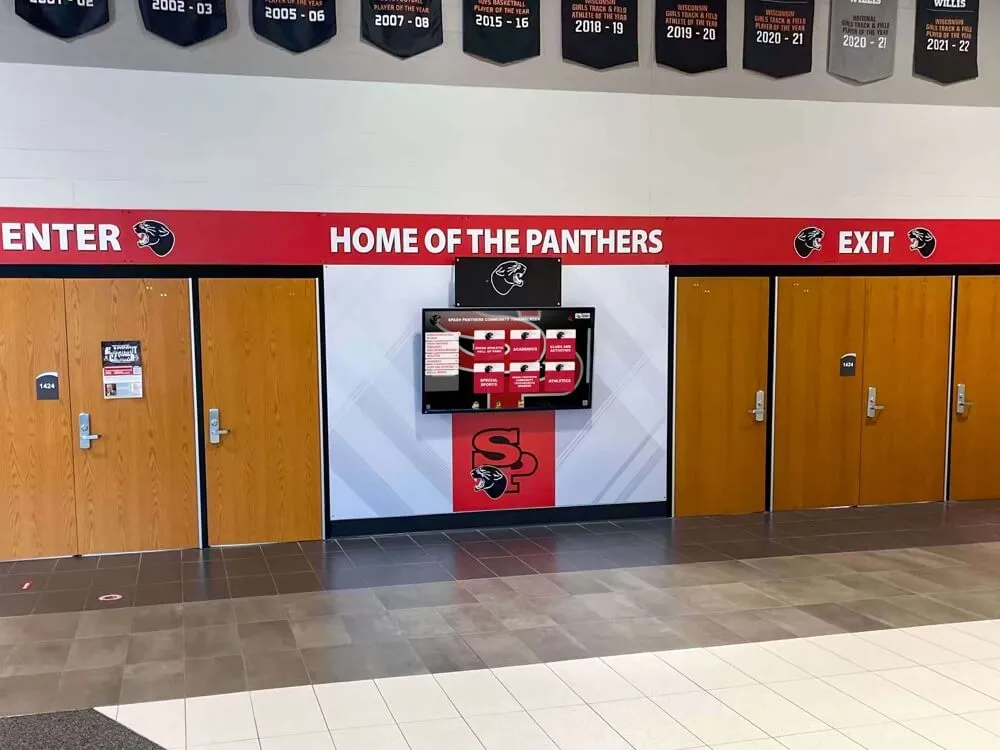
Hallway recognition spaces provide natural settings for displaying rivalry trophies during possession years while celebrating broader athletic achievement
Traditional and Cultural Rivalry Trophies
Trophies referencing shared traditions or cultural elements create meaningful symbols:
Agricultural Heritage Trophies
For schools in farming communities:
- Golden or bronzed agricultural implements (plow, scythe, feed bucket)
- Livestock trophies (prized animal statues reflecting regional agriculture)
- Harvest-themed recognition (corn trophy, wheat sheaf, produce basket)
- Farm equipment elements (tractor steering wheel, wagon wheel)
The “Battle for the Milk Can” or “Wheat Field Trophy” immediately communicates rural identity while honoring community economic foundations. Schools with strong Future Farmers of America programs particularly appreciate agricultural trophy themes.
Industrial and Manufacturing Trophies
For communities with industrial heritage:
- Factory or manufacturing elements (gears, tools, equipment replicas)
- Industry-specific symbols (mining lanterns, steel works, textile equipment)
- Labor and craftsmanship recognition
- Historical company or plant references for communities with shared industrial past
These trophies honor community identity while acknowledging the working-class pride many industrial communities share.
Historical Event Trophies
Commemorating significant local history both schools share:
- Civil War connections or battle sites near both communities
- Settlement history or founding celebrations
- Significant local historical figures
- Regional historical events affecting both areas
Historical trophies work particularly well when accompanied by educational materials helping current students understand the history being commemorated, preventing recognition from becoming meaningless as historical knowledge fades.
Mascot and School Identity Trophies
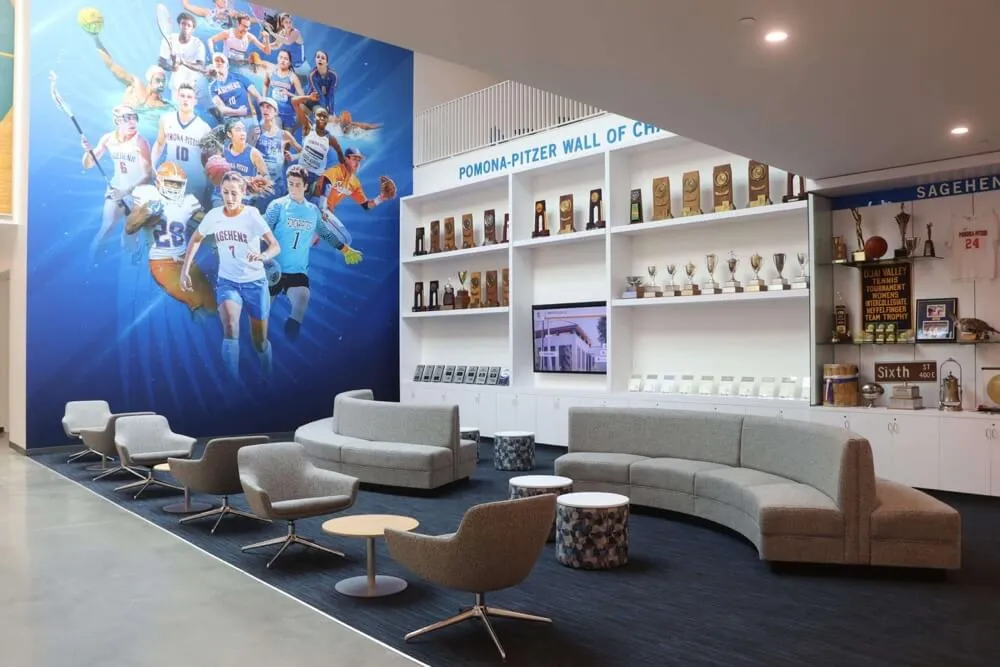
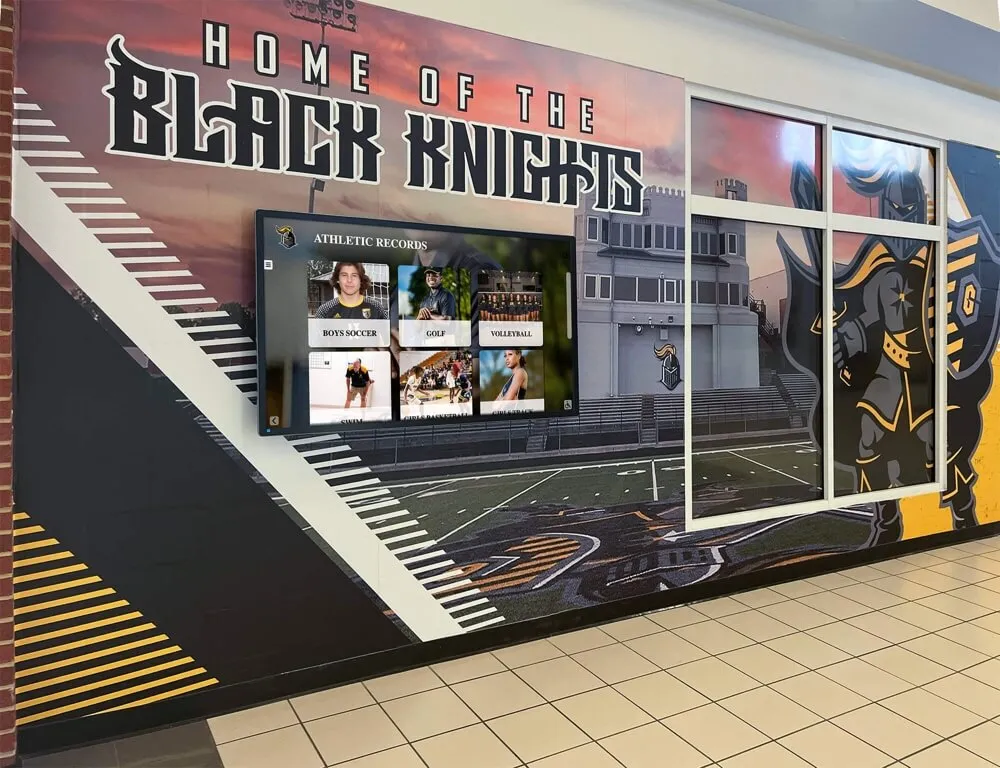
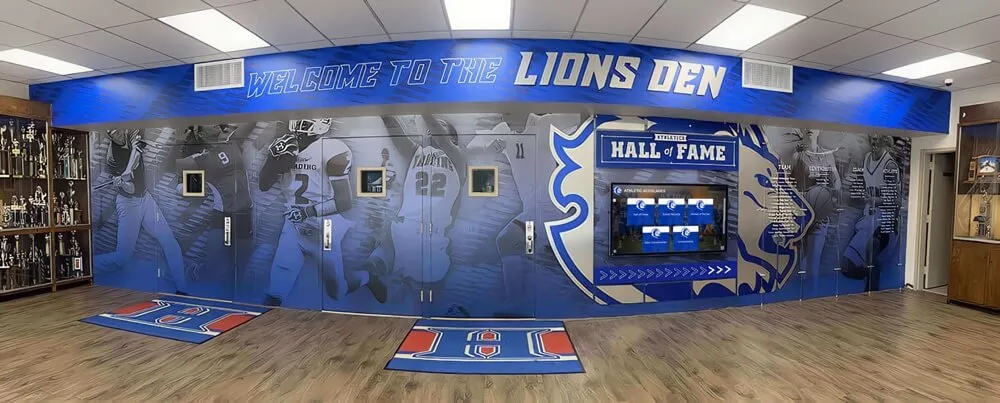
Dedicated athletic spaces provide ideal environments for showcasing rivalry trophies alongside team achievements and program history
Trophies incorporating school mascots create immediate visual connections:
Dual Mascot Trophies
Designs featuring both schools’ mascots:
- Back-to-back mascot sculptures on shared base
- Confrontational pose showing mascots in competition
- Mascots holding or competing for central element
- Split trophy with each school’s mascot on their respective side
Eagles vs. Tigers might compete for a trophy showing both animals in dynamic opposition. Bulldogs vs. Wildcats could have mascots facing off across a central element representing the prize.
Symbolic Competition Trophies
Abstract representations of mascot competition:
- Paw print patterns mixing both schools’ mascot tracks
- Feather and claw elements combining different mascot types
- Territorial markers showing competing claims
- Predator/prey relationships reflected in design
These designs work best when both mascots have natural competitive or complementary relationships that translate visually into compelling trophy designs.
Sport-Specific Rivalry Trophies
Trophies reflecting the actual sport being played:
Football Rivalry Trophies
- Vintage leather football or helmet designs
- Goal post sections or field markers
- Historic game balls from significant past matchups
- Yard markers or chain gang equipment
The “Battle for the Ball” or “Helmet Trophy” immediately communicates football focus while allowing creative design incorporating both schools’ colors and identity.
Basketball Rivalry Trophies
- Vintage basketballs mounted on display stands
- Rim and net designs
- Court floor sections from historic gymnasiums
- Backboard elements or basketball shoes
Multi-Sport Rivalry Recognition
For schools competing across multiple sports throughout the year:
- Cumulative trophy tracking annual series results
- Rotating sport-specific elements added to base trophy
- Points system determining overall rivalry winner
- All-sports trophy combining elements from various competitions
Schools implementing comprehensive athletic recognition programs often develop multi-sport rivalry systems that encourage broad athletic participation while recognizing excellence across entire athletic programs.
Designing Custom Rivalry Trophies
Creating unique trophies requires thoughtful planning and stakeholder engagement.
The Trophy Development Process
Successful custom trophy creation follows systematic approaches:
Phase 1: Concept Development
Involve multiple constituencies in initial brainstorming:
- Student-athlete input on meaningful symbols and themes
- Alumni perspective on historical elements and tradition
- Coach feedback on competitive appropriateness and motivation
- Community member involvement ensuring local relevance
- Administrative guidance on budget and practical considerations
The best trophy concepts emerge from collaborative processes rather than administrative decisions imposed on programs. Student and athlete buy-in proves particularly crucial—if competitors don’t value the trophy, the tradition fails regardless of design quality.
Phase 2: Historical Research
Before finalizing designs, research rivalry history thoroughly:
- Document first competitive meeting between schools
- Identify significant games, moments, or individuals in rivalry history
- Research community connections and shared heritage
- Investigate geographic, economic, or cultural ties
- Review existing trophies, traditions, and recognition at comparable schools
This research prevents designs that inadvertently favor one school, reference controversial history, or miss obvious symbolic opportunities that research would have revealed.
Material Selection and Construction
Trophy longevity depends on appropriate material choices:
Durable Trophy Materials
- Bronze or brass: Traditional, prestigious, ages beautifully
- Stainless steel: Modern appearance, weather-resistant
- Carved wood: Warm, organic feel for agricultural or traditional themes
- Glass or crystal: Elegant for certain themes, requires careful handling
- Mixed materials: Combining elements for visual interest and symbolism
Avoid cheap plastics or materials that deteriorate quickly. Rivalry trophies should survive decades of annual transfers between schools, maintaining appearance and structural integrity throughout.
Size and Portability Considerations
Balance visual impact with practical handling:
- Large enough for prominent display in trophy cases or lobbies
- Small enough for athlete handling during presentation ceremonies
- Secure base preventing tipping during transport
- Protected elements avoiding damage during celebrations
- Weight appropriate for student carrying without injury risk
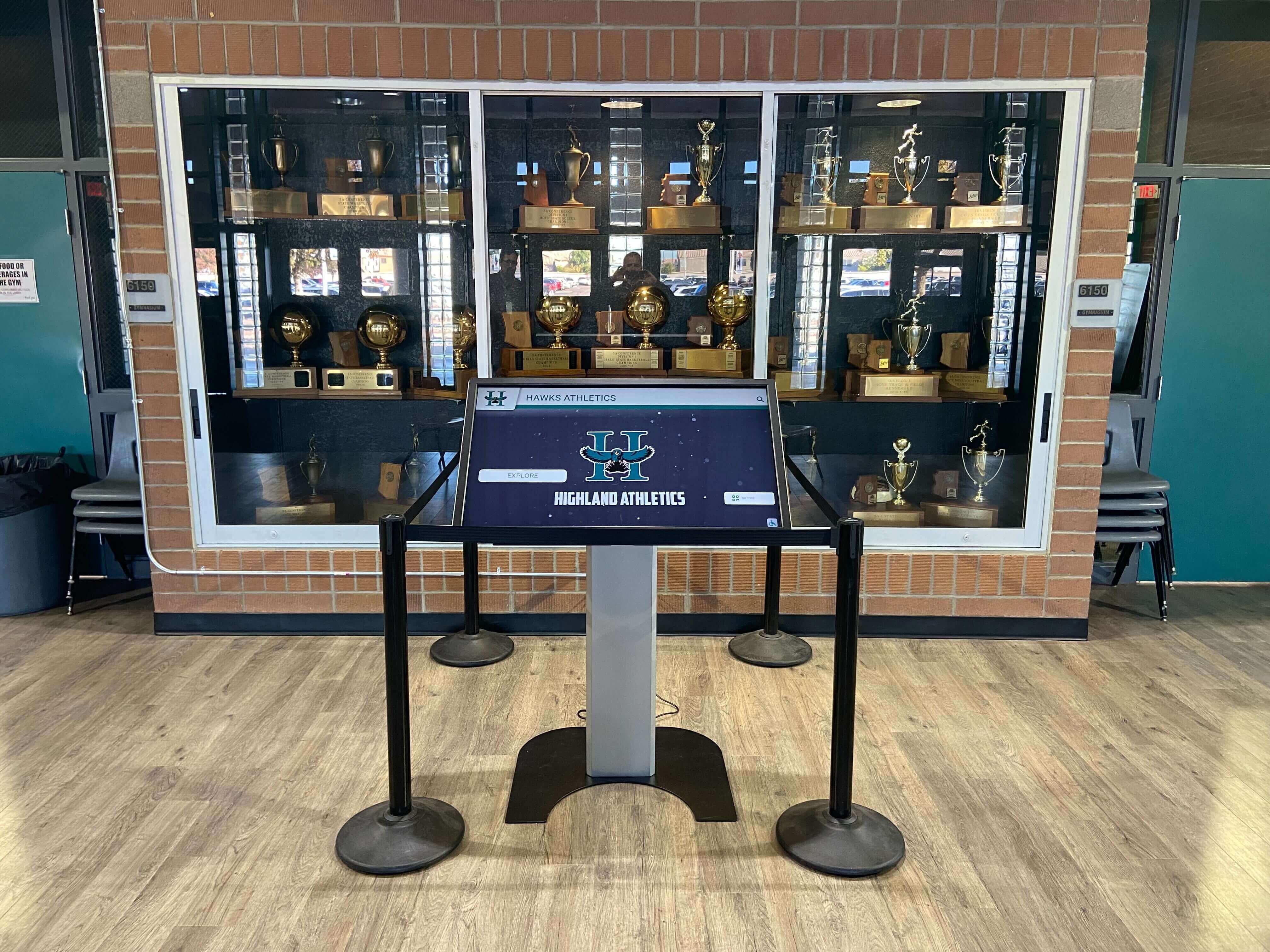
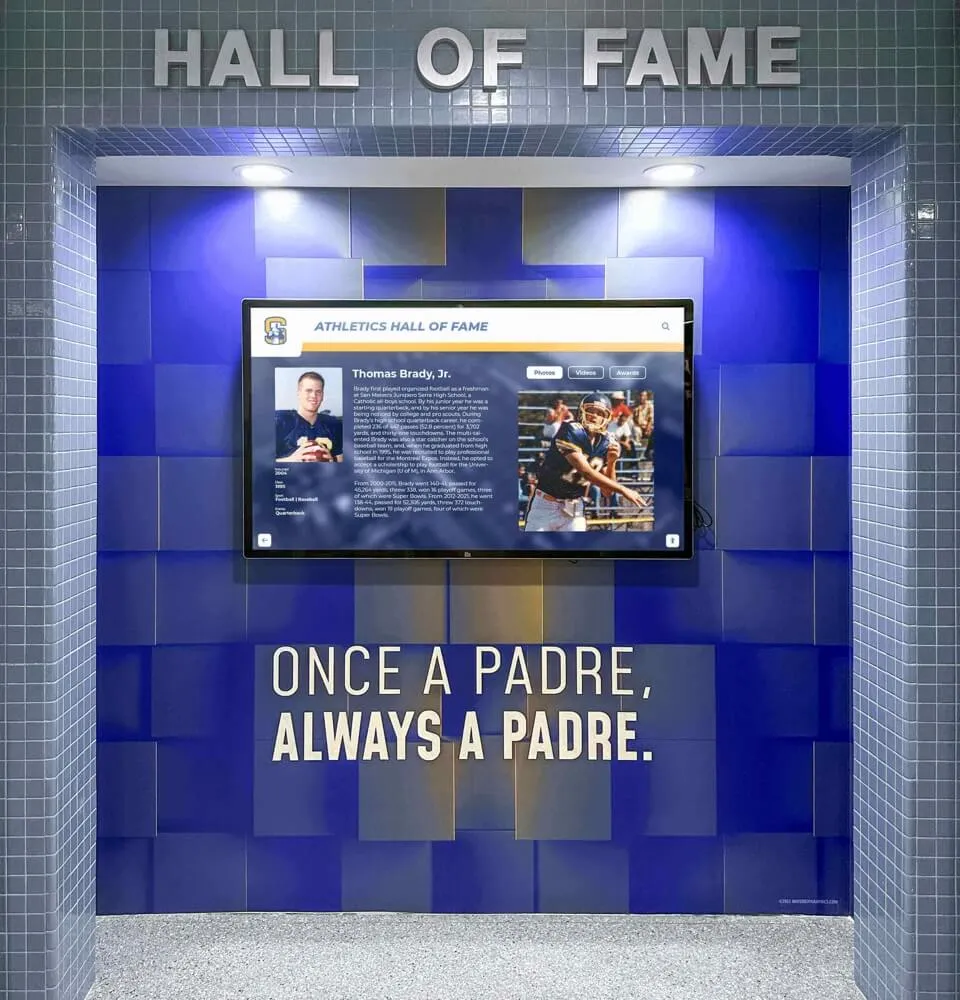
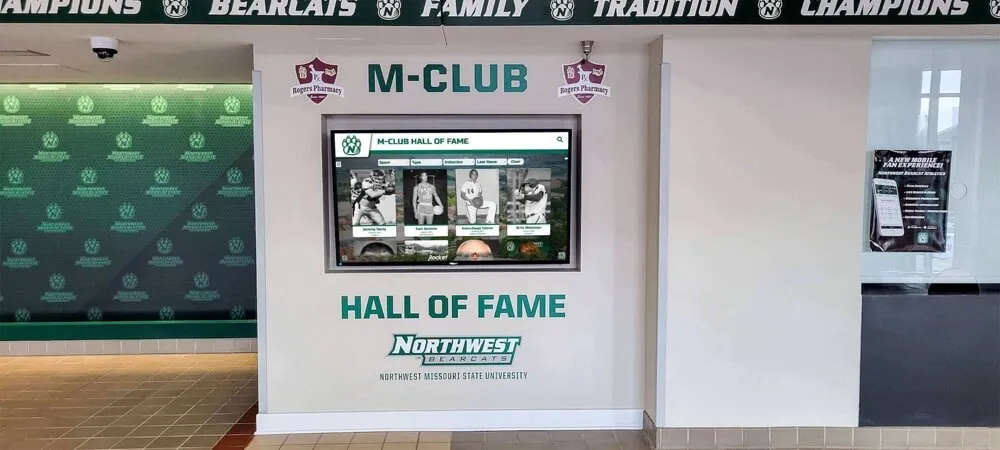
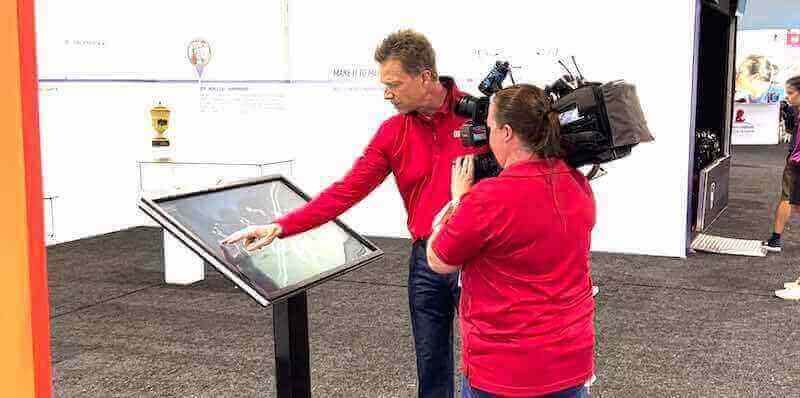
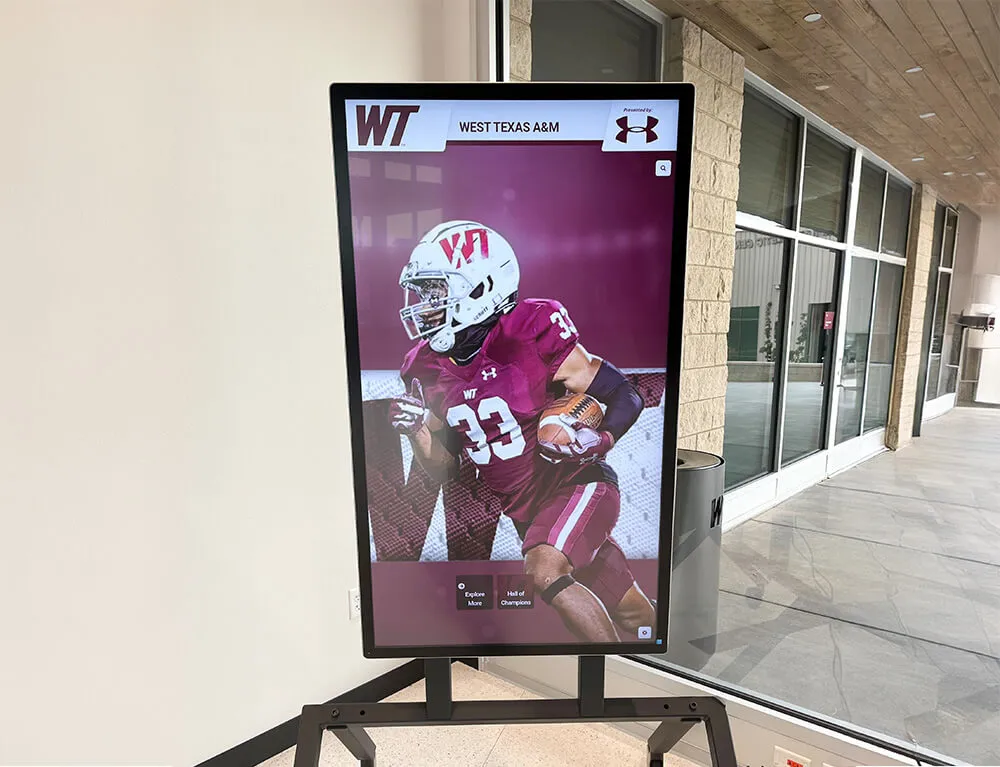
Modern trophy displays combine traditional physical trophies with digital storytelling capabilities that document rivalry history and game outcomes
Trophy Plate and Update Systems
Design trophies accommodating annual updates:
- Removable plates documenting each year’s winner
- Engraving space for scores, dates, and notable details
- Expandable base allowing decades of recognition additions
- Digital companions tracking complete rivalry history
Trophy plates should list year, winner, final score, and potentially notable details like undefeated seasons, record-breaking performances, or championship implications.
Working With Trophy Manufacturers
Professional trophy creation requires selecting appropriate vendors:
Vendor Selection Criteria
- Experience creating custom sporting trophies
- Portfolio demonstrating quality craftsmanship
- Capability working with desired materials and designs
- References from other schools or athletic programs
- Clear pricing and timeline expectations
- Warranty or replacement options for damaged elements
Custom rivalry trophies typically cost $500-$3,000 depending on size, materials, and complexity. Simple designs using standard materials fall toward lower ranges while elaborate custom sculptures or high-end materials cost significantly more.
Request design mockups and material samples before final approval, ensuring the finished trophy matches expectations and represents both schools appropriately.
Establishing Rivalry Trophy Traditions
Creating the trophy represents only the first step—establishing meaningful traditions around competition and recognition makes trophies significant.
Trophy Presentation Ceremonies
How schools handle trophy transfers affects tradition strength:
Post-Game Presentation Rituals
Immediate post-game recognition:
- Presentation on the field/court immediately following competition
- Losing school representative formally presenting trophy to winner
- Team captain or senior leadership receiving on behalf of winners
- Brief speeches acknowledging competition and sportsmanship
- Photo opportunities for winning team with trophy
These immediate presentations capture authentic emotion while both schools’ communities remain present, creating shared moments that become part of rivalry lore.
Formal Trophy Transfer Events
Some schools schedule separate recognition ceremonies:
- Week-before-game assemblies at the defending champion school
- Representatives from challenging school traveling to receive trophy
- Historical rivalry education for student bodies
- Former players and coaches sharing rivalry memories
- Building anticipation for upcoming competition
Separate ceremonies work well when rivalry games occur during low-attendance situations (weeknight competitions, away neutral sites) where post-game presentation would lack appropriate audience.
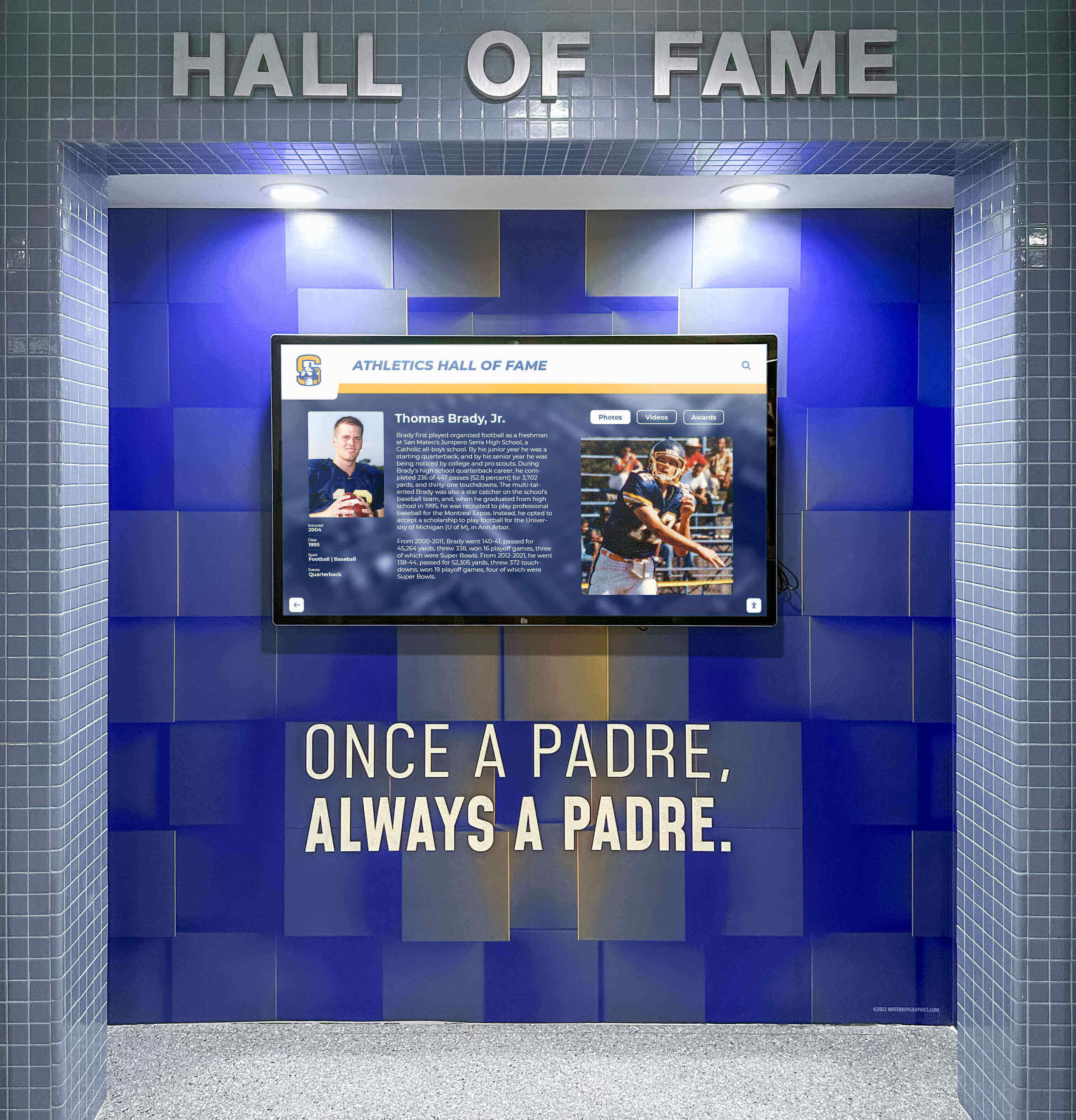
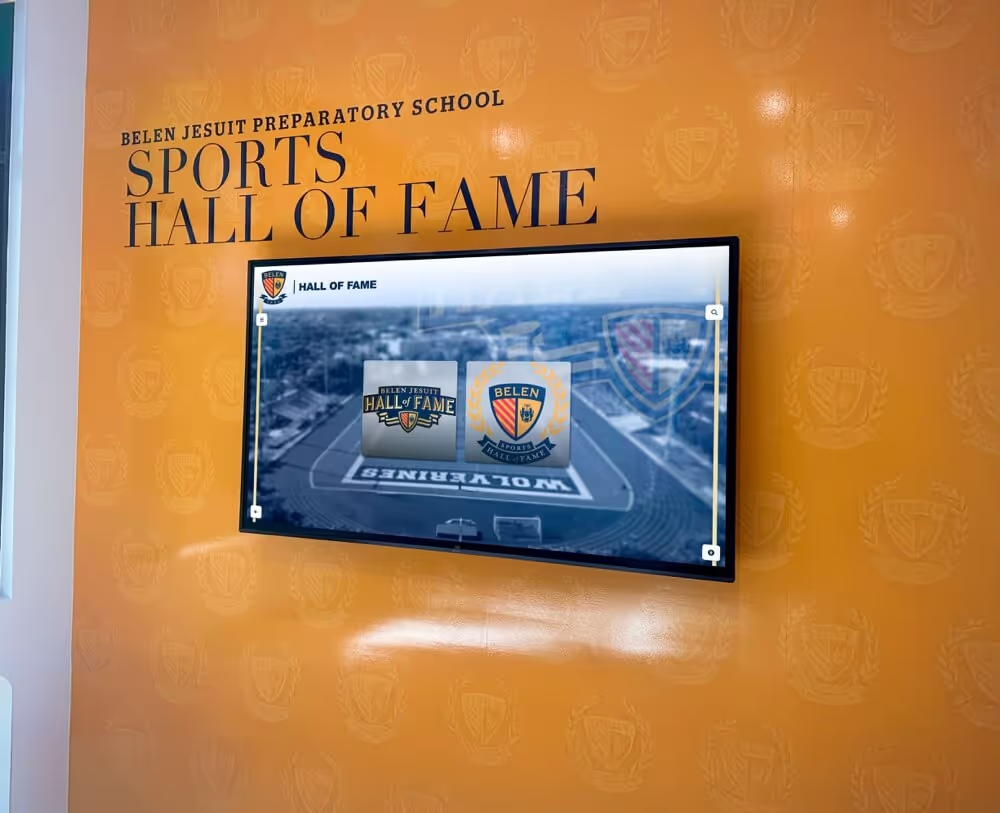
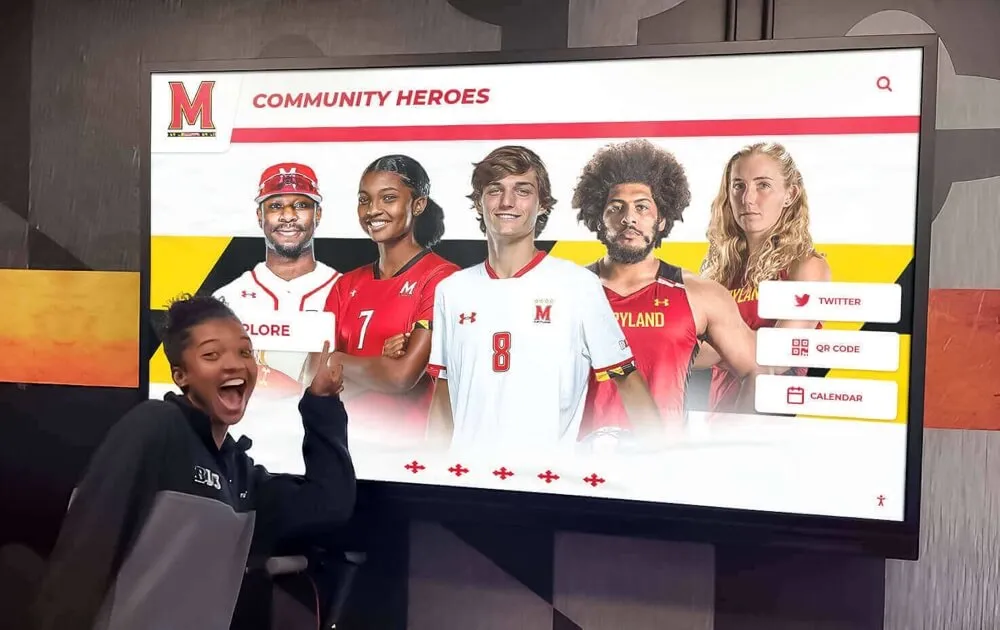
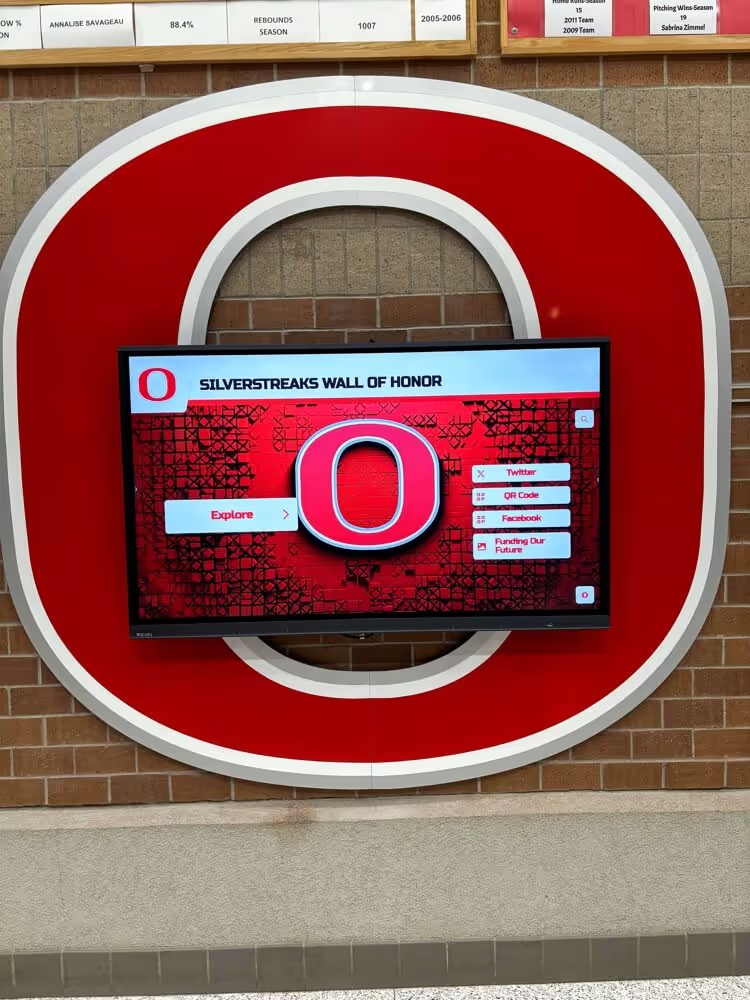
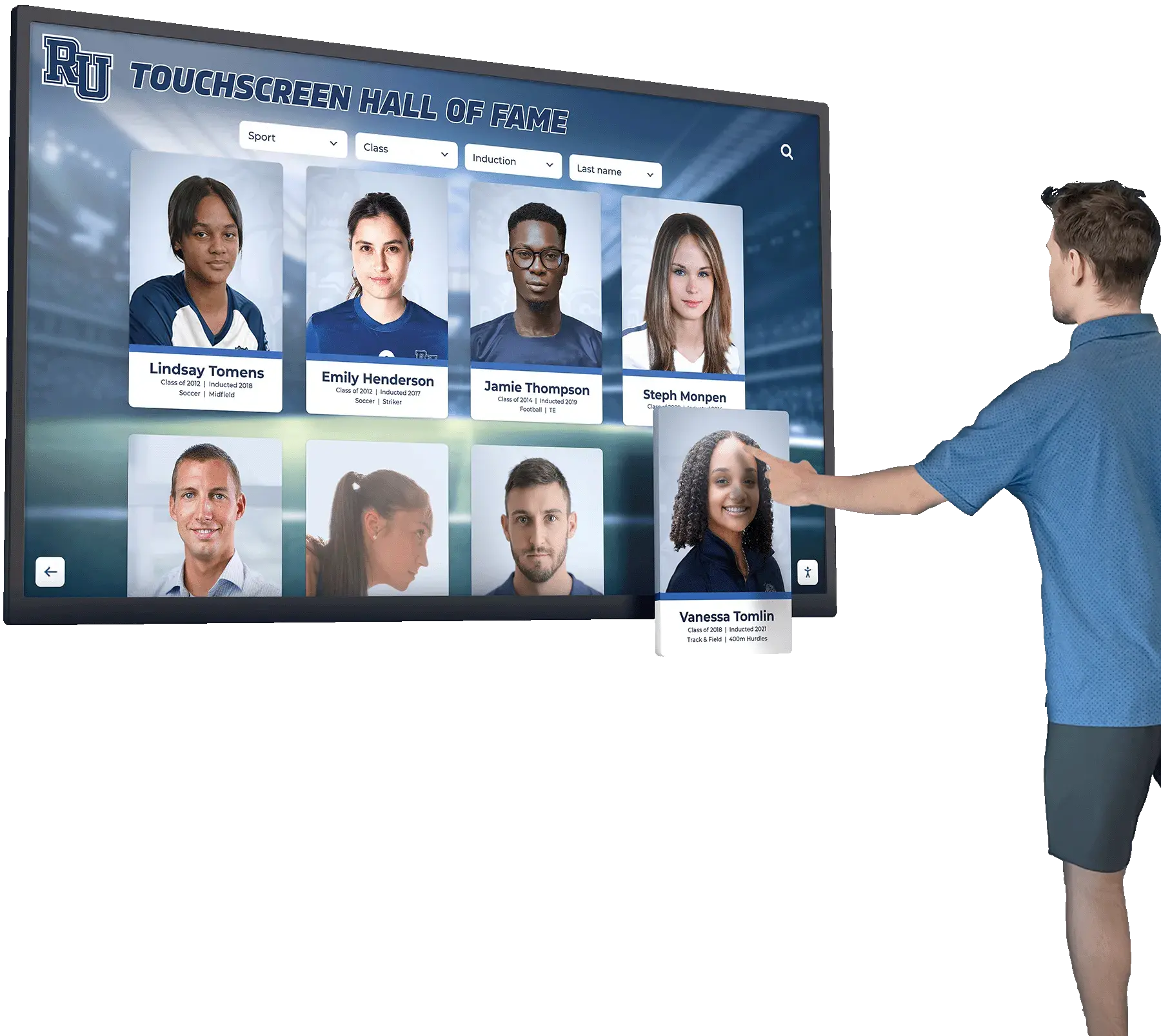
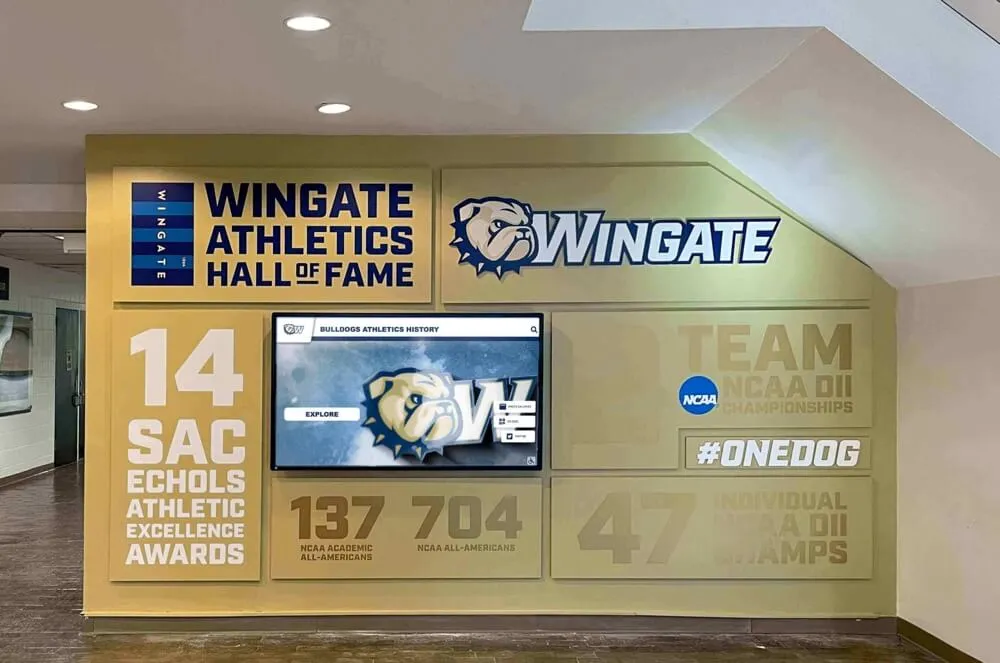
Digital displays complement physical trophies by providing unlimited capacity for documenting rivalry history, game highlights, and statistical records
Display and Recognition During Possession
How schools showcase trophies during possession years matters:
Prominent Trophy Display Locations
Position trophies where they generate maximum visibility:
- Main entrance trophy cases creating immediate impressions for visitors
- Athletic facility lobbies visible during all home competitions
- Student common areas (cafeterias, lounges) ensuring daily student exposure
- Administrative office windows visible to parents and community members
Schools implementing digital athletic recognition systems often pair physical trophy displays with digital screens showing rivalry history, previous game results, and upcoming competition information.
Social Media and Publicity
Modern trophy traditions extend beyond physical buildings:
- Trophy arrival photos after victories
- Student-athletes photographed with trophy throughout the year
- Countdown posts approaching rivalry competition
- Historical throwback content about previous rivalry games
- Trophy journey content showing display locations around campus
Digital engagement keeps rivalry awareness alive year-round rather than limiting recognition to competition weeks.
Educational Components and Storytelling
Help students understand rivalry significance through structured education:
Rivalry History Documentation
Create accessible resources explaining rivalry background:
- Written histories documenting first competitions and trophy origins
- Video interviews with alumni who competed in historic rivalry games
- Statistical databases tracking all-time records and notable games
- Photo archives showing rivalry evolution across decades
- Digital timelines helping current students understand historical context
These educational materials prevent tradition from becoming empty ritual, ensuring each generation understands what they’re competing for and why it matters.
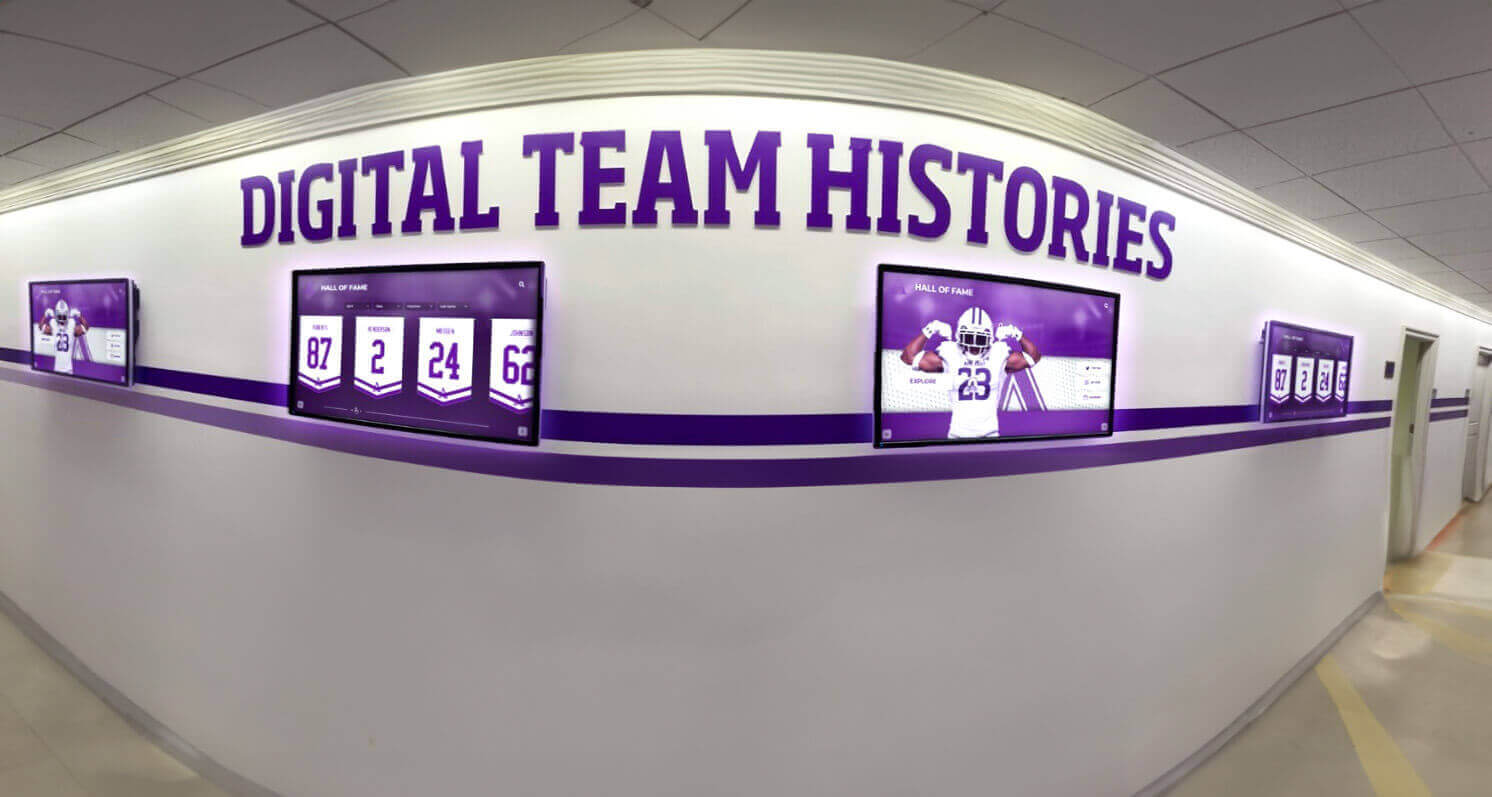
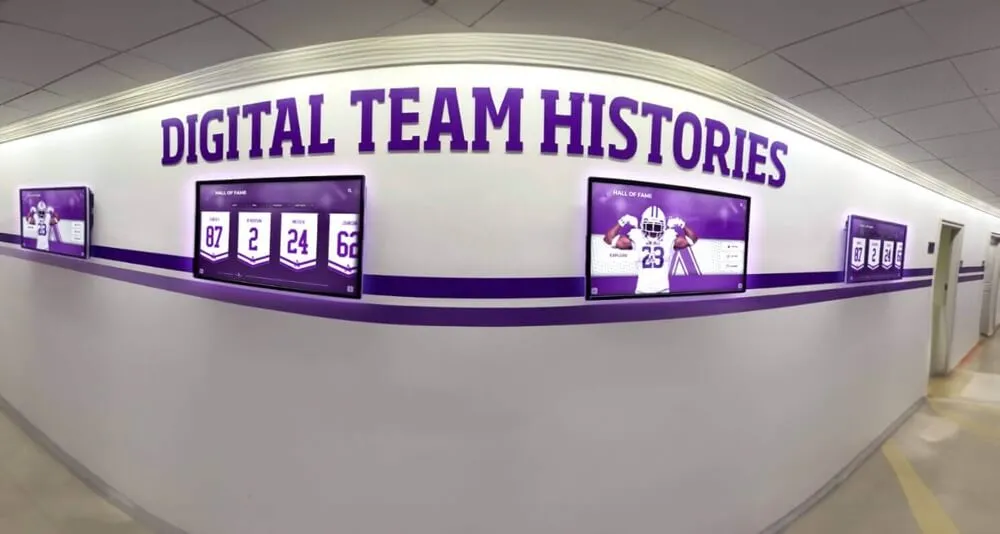
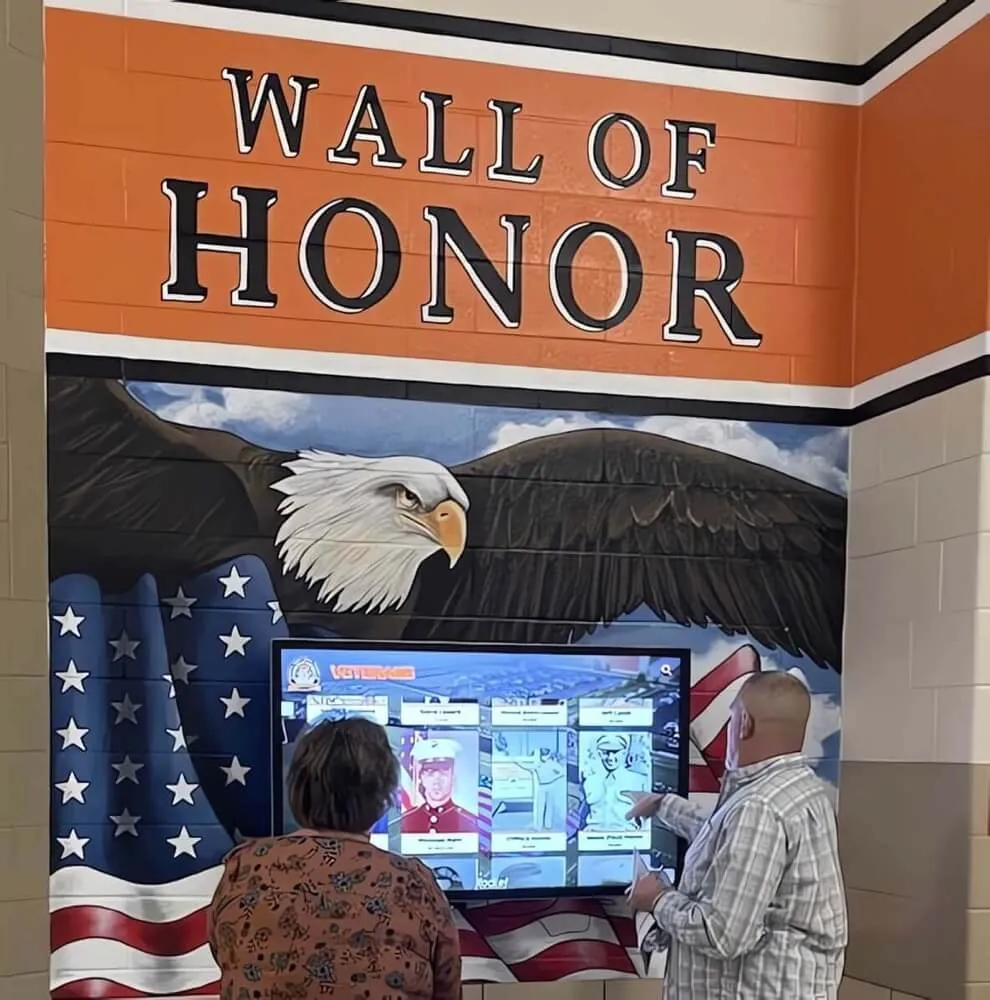
Hallway digital displays provide engaging platforms for rivalry education, showing historical games and statistical comparisons between competing schools
Pre-Game Rivalry Education Events
Build understanding and anticipation before competitions:
- Assembly presentations about rivalry history and significance
- Former athletes visiting to share personal rivalry experiences
- Trophy unveiling ceremonies for first-year students
- Video compilations of greatest rivalry moments
- Student-created content about why rivalry matters to current generation
Schools developing comprehensive school history preservation programs often incorporate rivalry traditions and trophy histories into broader institutional memory initiatives.
Managing Rivalry Trophy Logistics
Successful traditions require practical systems ensuring smooth operations.
Trophy Security and Safekeeping
Valuable rivalry trophies need appropriate protection:
Physical Security Measures
- Locked display cases preventing theft or vandalism
- Insurance coverage for trophy replacement value
- Inventory documentation with photos and descriptions
- Secure storage during off-display periods
- Transportation protocols for presentations and transfers
While trophy theft or vandalism rarely occurs, basic security prevents opportunistic problems and ensures traditions continue uninterrupted.
Condition Maintenance
Preserve trophy quality across decades:
- Annual cleaning and polishing schedules
- Inspection for loose elements or damage
- Professional restoration for aging or damaged components
- Protective measures during handling and transport
- Environmental controls preventing corrosion or deterioration
Well-maintained trophies communicate that both schools value the tradition, while neglected trophies suggest declining significance.
Transfer Protocols and Recordkeeping
Establish clear processes for annual trophy movement:
Trophy Transfer Procedures
Document and follow consistent processes:
- Designated individuals responsible for trophy custody
- Formal transfer documentation signed by both schools
- Transport arrangements ensuring safe delivery
- Verification of trophy condition upon transfer
- New engraving or plate addition immediately following transfer
Written protocols prevent confusion and ensure smooth transitions even when personnel changes occur.
Historical Record Maintenance
Track rivalry results systematically:
- Comprehensive database of all rivalry game results
- Documentation of trophy possession by year
- Statistical tracking of overall record since trophy creation
- Notable achievements or records set during rivalry games
- Digital archives of photos, videos, and newspaper coverage
These records form the foundation for rivalry education and tradition preservation, preventing historical knowledge loss as time passes.
Modern Digital Enhancements for Rivalry Trophy Traditions
Technology expands how schools celebrate and document rivalry competitions.
Digital Rivalry Tracking Systems
Modern displays complement physical trophies with comprehensive data:
Interactive Rivalry Databases
Digital platforms documenting complete rivalry histories:
- Searchable game results showing scores, dates, and locations
- Player statistics and individual performance records
- Photo galleries from rivalry games across decades
- Video highlights from significant matchups
- All-time series records and notable streaks
Programs implementing digital record boards and displays can integrate rivalry trophy information within comprehensive athletic recognition systems that students, parents, and community members engage with year-round.
Real-Time Competition Updates
During rivalry games, digital displays provide engaging content:
- Live scoring and game statistics
- Historical context comparing current performance to rivalry records
- Social media feed integration showing fan reactions
- Countdown clocks to next possession transfer
- Side-by-side school comparisons and competitive matchups
Virtual Trophy Displays
For schools in digital-focused eras:
- 3D virtual trophy models explorable from all angles
- Augmented reality features placing trophy virtually in spaces
- Digital possession certificates for winning teams
- Virtual trophy room spaces accessible online
- Interactive elements impossible with physical trophies
These digital enhancements don’t replace physical trophies but extend recognition and engagement opportunities beyond physical limitations.
Social Media Integration Strategies
Leverage digital platforms building rivalry awareness:
Content Series Ideas
Regular social media content maintains engagement:
- “Rivalry Throwback” posts sharing historic games and moments
- “Trophy Timeline” documenting possession history
- Student takeover days showing trophy from athlete perspectives
- Countdown content approaching rivalry week
- Alumni interviews about personal rivalry memories
User-Generated Content Campaigns
Encourage community participation:
- Photo contests with trophy displayed in unique locations
- Story sharing campaigns where people submit rivalry memories
- Prediction contests before rivalry games
- Spirit week documentation showing campus rivalry preparation
- Alumni challenge current students to maintain trophy possession
These campaigns transform rivalry recognition from passive viewing into active community participation, strengthening tradition through broad engagement.
Addressing Challenges in Rivalry Trophy Programs
Even well-designed traditions encounter obstacles requiring thoughtful responses.
Competitive Balance Concerns
When one school dominates rivalry competition, trophy traditions risk losing meaning:
Maintaining Interest During Droughts
For schools experiencing prolonged possession droughts:
- Emphasize pursuit narrative making challenge achievement more meaningful
- Celebrate near-victories and competitive games regardless of outcomes
- Document improvement trends showing program progress
- Highlight other achievements and successes beyond single rivalry
- Maintain respect for tradition regardless of current results
The best rivalries survive competitive imbalances because both communities value competition beyond simple winning and losing.
Avoiding Trophy Elimination Temptation
When dominance becomes extreme, some schools consider discontinuing trophies:
- Remember that competitive cycles change over time
- Recognize that drought-breaking victories become legendary moments
- Understand that rivalry significance extends beyond annual results
- Consider format modifications rather than elimination
- View long possession runs as historical context adding future drama
Many classic rivalries include multi-year possession runs that, in hindsight, make eventual possession changes more significant and celebrated.
Sportsmanship and Behavior Management
Intense rivalries risk inappropriate behavior without proper guidance:
Establishing Clear Expectations
Define acceptable rivalry celebration and competition:
- Written sportsmanship standards for players, students, and fans
- Consequences for violations of conduct expectations
- Positive rivalry traditions (shared community service, joint recognition events)
- Respectful trash talk boundaries and prohibited behaviors
- Administrative monitoring and intervention protocols
Schools implementing comprehensive student character recognition programs often find that broader character emphasis translates to healthier rivalry behavior and appropriate competitive intensity.
Joint School Collaboration
Both schools working together strengthen positive traditions:
- Annual meetings between administrators addressing rivalry concerns
- Shared sportsmanship initiatives and education programs
- Joint statements emphasizing positive competition
- Collaborative special events (senior recognition, scholarship programs)
- Unified response to any inappropriate behavior from either school
Rivalry strength grows when schools view each other as valued opponents rather than enemies, creating healthy competition that enriches both communities.
Maintaining Traditions Through Change
Ensuring rivalry continuity despite inevitable transitions:
Surviving Conference Realignment
When schools move to different conferences or divisions:
- Maintain rivalry game scheduling as non-conference matchup
- Continue trophy competition despite changed competitive context
- Negotiate scheduling agreements protecting tradition
- Engage alumni and communities advocating for rivalry preservation
- Demonstrate institutional commitment regardless of conference affiliation
Many legendary rivalries persist across different conferences, leagues, or competitive classifications because both schools recognize tradition value beyond administrative convenience.
Personnel Transitions and Institutional Memory
Preventing knowledge loss during coaching and administrative changes:
- Document trophy history, procedures, and significance in writing
- Create transition materials for new coaches and administrators
- Designate rivalry tradition coordinators ensuring continuity
- Engage booster clubs and alumni maintaining institutional knowledge
- Build student leadership ensuring athlete-to-athlete tradition transfer
Schools implementing comprehensive digital archives and documentation systems preserve rivalry information more effectively than systems relying solely on individual memory.
Creating New Rivalry Trophy Traditions
Schools without established rivalry trophies can create meaningful new traditions.
Identifying Natural Rivalries
Determine which matchups deserve trophy recognition:
Existing Competitive Intensity
Look for matchups already generating high interest:
- Games drawing larger-than-average crowds
- Contests where community attendance spikes
- Matchups where players and coaches express special motivation
- Games where students show increased spirit and engagement
- Historic competitiveness and closely matched programs
Rivalry trophies work best when celebrating and formalizing existing organic intensity rather than attempting to manufacture interest artificially.
Geographic and Cultural Connections
Natural rivalries share meaningful connections:
- Geographic proximity creating natural competition
- Shared community boundaries (county lines, region borders)
- Similar community characteristics (size, demographics, economic base)
- Historical relationships or shared heritage
- Overlapping feeder programs and youth sports leagues
Launch Strategy and Introduction
Introducing new rivalry trophies requires thoughtful rollout:
Stakeholder Engagement Campaign
Build support before unveiling:
- Present concepts to student athletes for feedback
- Engage alumni sharing rivalry memories and perspectives
- Involve booster clubs and parent organizations
- Secure administrative support and resources
- Coordinate with rival school ensuring mutual commitment
New traditions succeed when communities feel ownership rather than having recognition imposed administratively.
Inaugural Season Special Events
Make trophy introduction memorable:
- Special unveiling ceremony before first trophy competition
- Historical education about rivalry significance
- Guest speakers (former athletes, coaches, community leaders)
- Media coverage and publicity surrounding introduction
- Enhanced game-day atmosphere for inaugural trophy game
First impressions shape whether new traditions gain traction or fade as failed initiatives. Invest appropriately in launch quality and community engagement.
Building Lasting Rivalry Trophy Traditions
School rivalry trophies represent more than athletic competition hardware—they embody community identity, preserve institutional history, and create traditions connecting generations of students, athletes, and families. The most successful rivalry trophies transform regular season games into cherished events where outcomes echo throughout communities long after final scores are forgotten.
Effective rivalry trophy programs share common characteristics: meaningful symbols reflecting authentic community connections, thoughtful traditions honoring competition while maintaining appropriate sportsmanship, comprehensive documentation preserving rivalry history, and broad stakeholder engagement ensuring tradition continuity across inevitable personnel and institutional changes.
Whether creating new rivalry recognition or enhancing established traditions, schools that invest in rivalry trophy quality, establish consistent traditions around competition and celebration, and leverage modern technology documenting and sharing rivalry history create athletic traditions that strengthen school pride, motivate student excellence, and build community identity for decades to come.
The best time to create or enhance rivalry trophy traditions is now—before another rivalry game passes without appropriate recognition, before more institutional knowledge disappears with retiring coaches and graduating students, and before opportunities to strengthen school spirit and community connection are missed. Your rivalry deserves recognition matching its significance to athletes, students, and communities.
Ready to transform how your school celebrates athletic rivalry and tradition? Explore comprehensive digital recognition solutions that complement physical rivalry trophies with unlimited capacity for documenting game results, sharing historical context, and creating engaging digital experiences that bring rivalry traditions to life for current students while preserving institutional memory for future generations.