



School memories have a way of fading faster than anyone expects. The ribbon from a state championship, the program from the spring musical, a handwritten note from a favorite teacher — these artifacts feel permanent in the moment, but most disappear within a few years of graduation. A school memory box is one of the most straightforward and meaningful ways students, teachers, and schools can preserve what matters before it gets lost.
Memory boxes serve different purposes at different levels. A first-grader’s memory box captures the wonder of an early school year: art projects, a reading log, a class photo. A high school senior’s memory box captures something more layered — the emotional landscape of four years lived in classrooms, gyms, practice fields, and hallways. At the school program level, a memory box project becomes a structured archival initiative that benefits students for years after they graduate.
This guide covers school memory box ideas for every grade, what to include at each level, how schools build program-wide memory preservation systems, and how forward-thinking schools now pair physical memory boxes with digital archival workflows — yearbook digitization, alumni archives, and interactive recognition displays — to ensure their history survives well beyond any cardboard box.
A thoughtfully designed school memory box bridges the personal and the institutional. For the individual student, it becomes a keepsake to revisit decades later. For the school, a memory preservation program signals that achievement, effort, and community matter enough to be documented and honored.

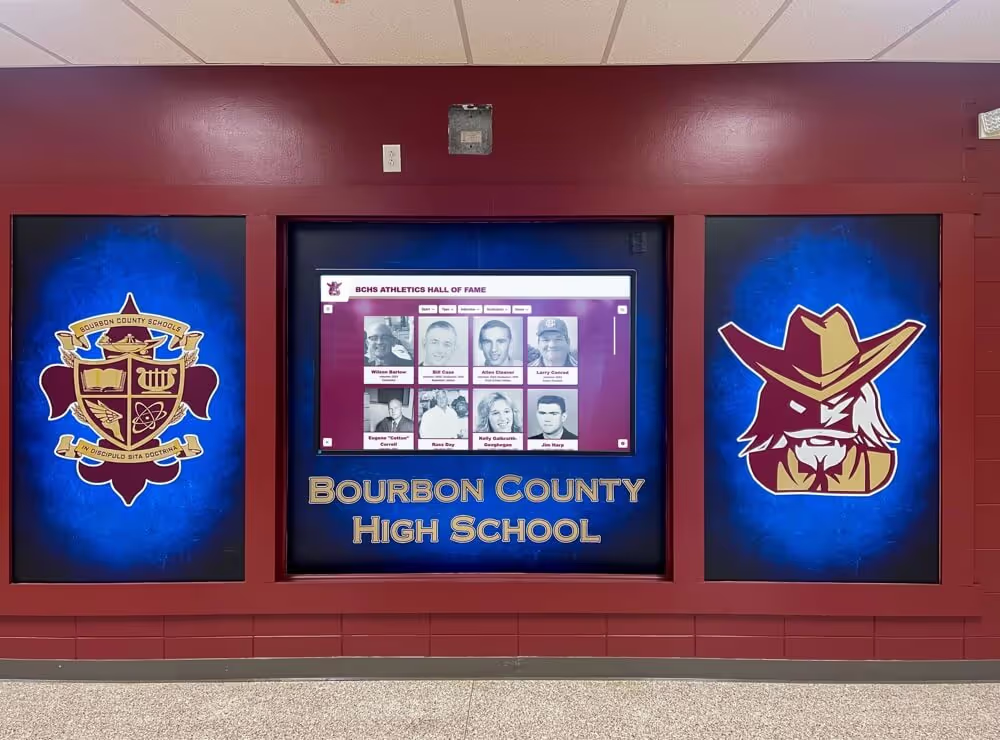
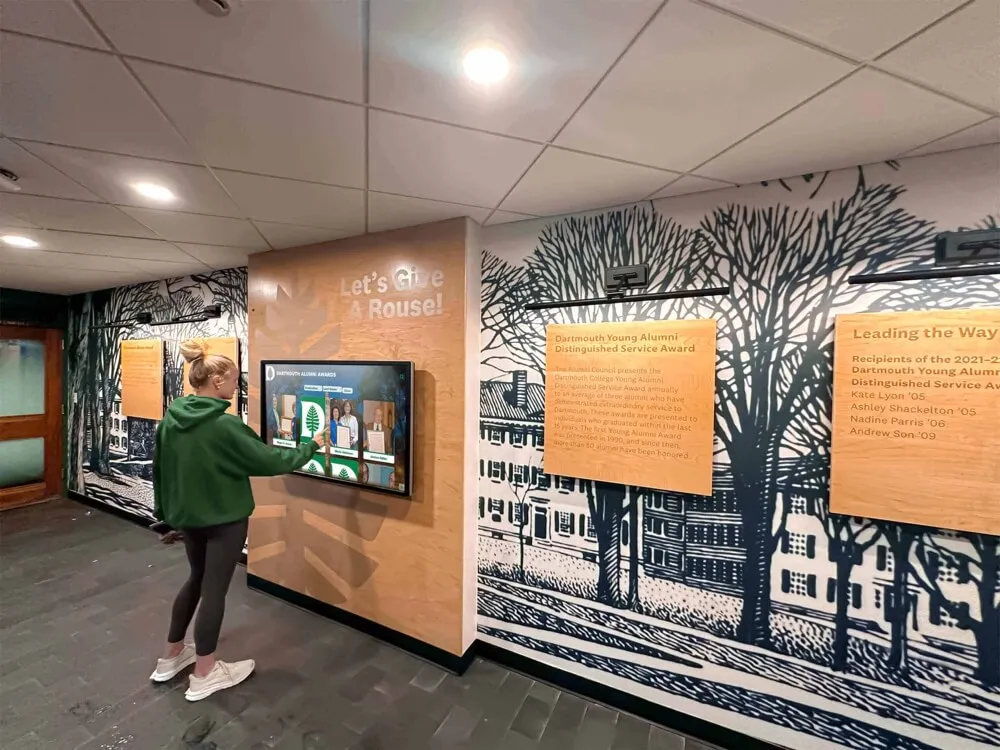
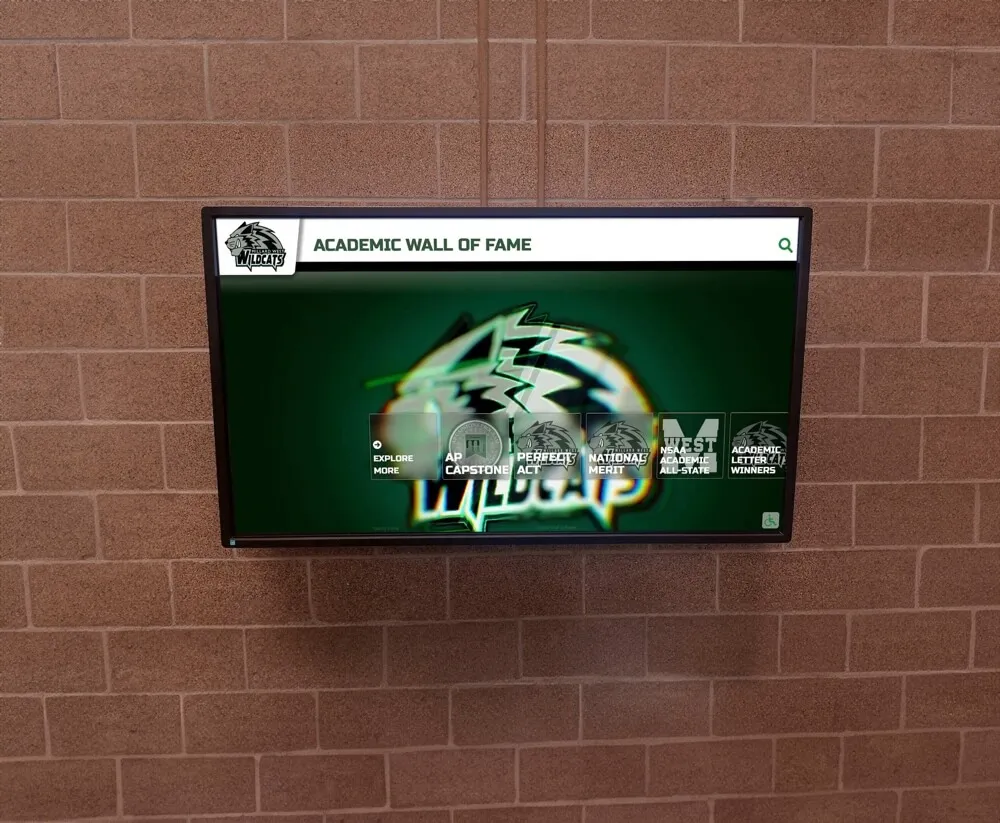
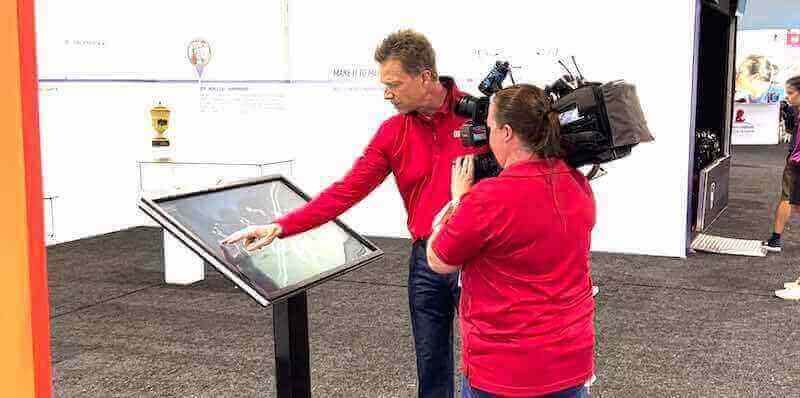
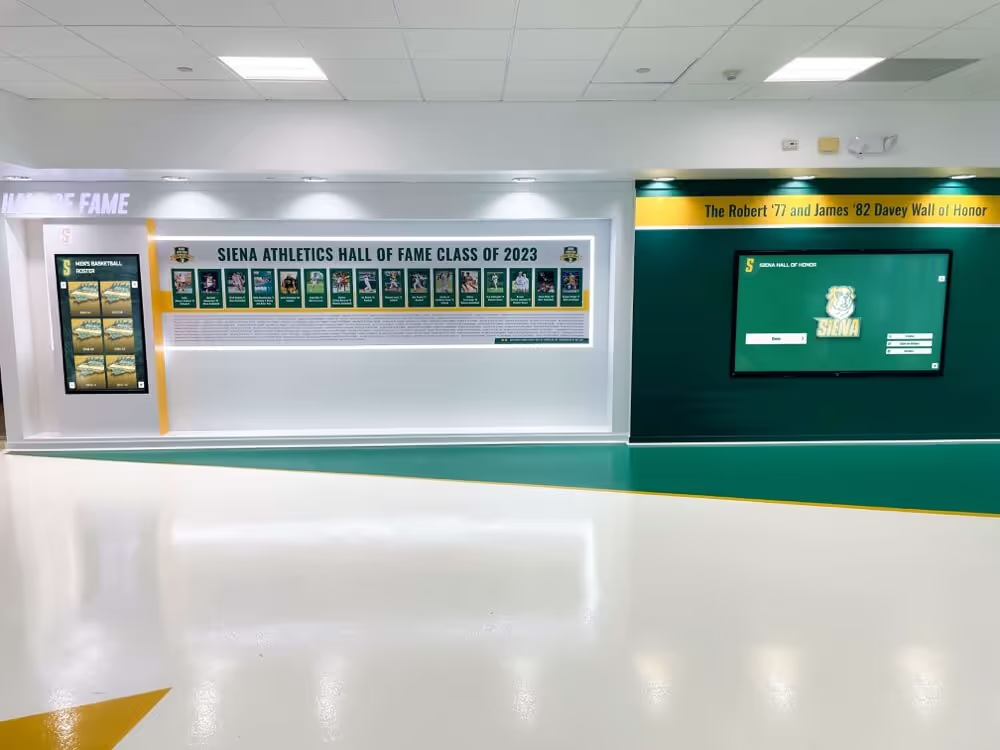
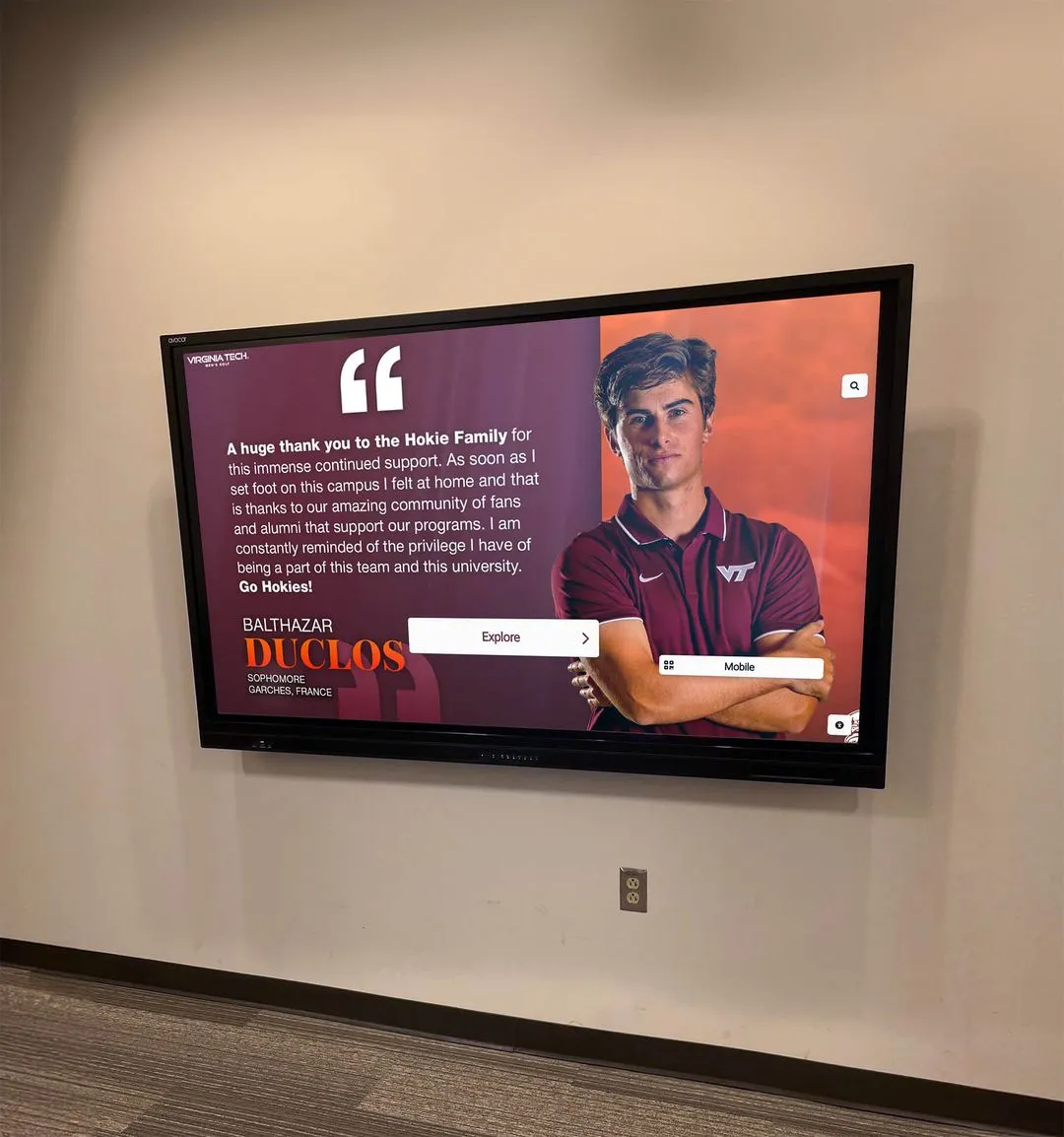
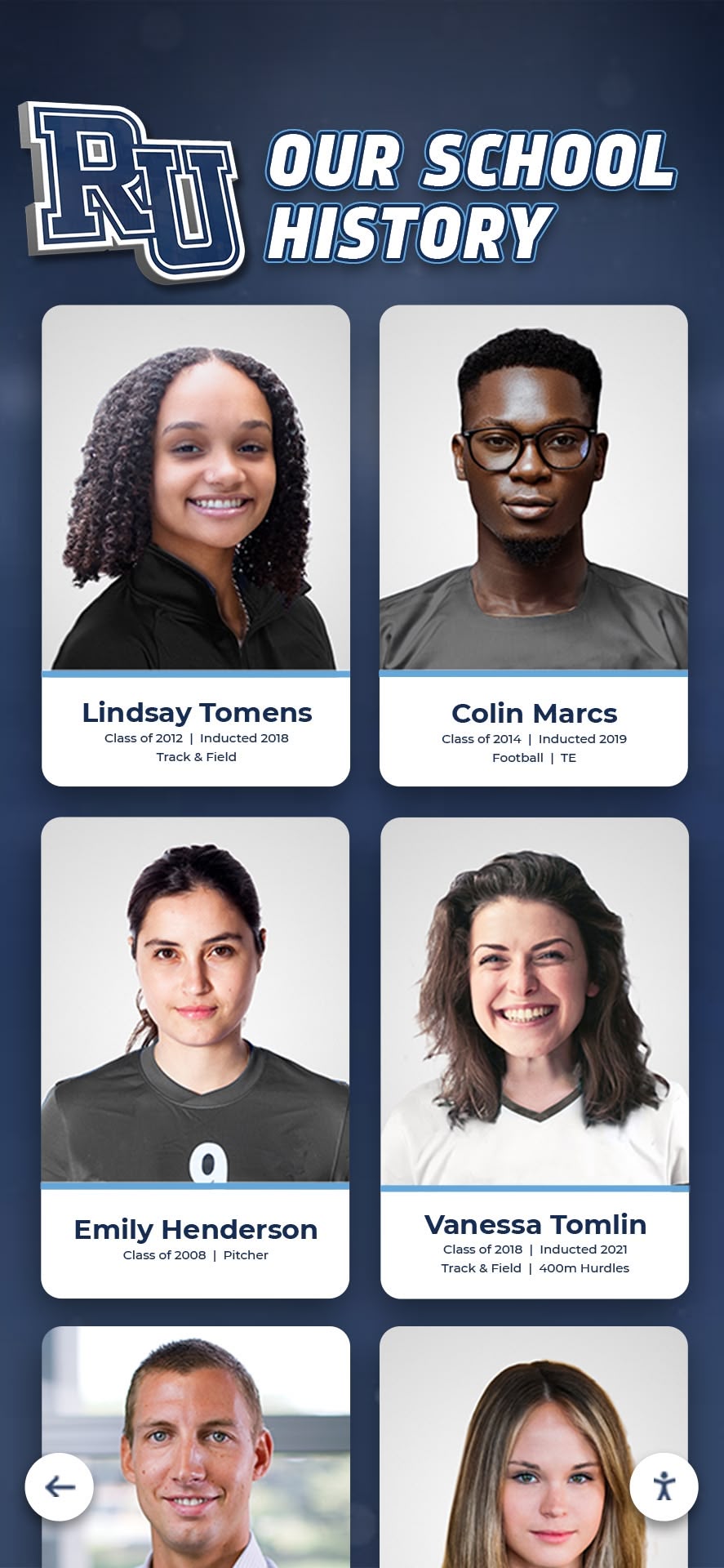
Portrait cards and historical photos form the foundation of any school archive — and the best schools ensure these records exist in both physical and searchable digital formats
What Is a School Memory Box?
A school memory box is a curated collection of physical objects — photos, programs, certificates, artwork, notes, and other mementos — that document a student’s school experience. At the classroom level, teachers guide students through the collection process, helping children choose items that represent meaningful moments from the year. At the program or school-wide level, memory boxes become part of a larger archival initiative that captures institutional history rather than individual experience alone.
The concept is simple, but the results vary enormously based on intentionality. An unfocused memory box becomes a pile of miscellaneous papers. A purposefully built memory box becomes a narrative — a document of who a student was, what they cared about, and what their school valued during a particular window of time.
School Memory Box Ideas by Grade Level
Elementary School: Building the Habit of Memory
Elementary school is the ideal time to introduce intentional memory-keeping. Young students are natural collectors, but they benefit from adult guidance to move from random accumulation toward thoughtful curation.
Grade-by-grade ideas for elementary memory boxes:
- Kindergarten and first grade: Focus on firsts. Include a first-day-of-school photo, a handwriting sample, an early drawing, and a reading record. A note from the teacher about the child’s personality at this age becomes a priceless addition years later.
- Second and third grade: Add academic context. A completed math worksheet from the beginning and end of the year shows growth concretely. Science project summaries, book lists, and spelling tests document the academic journey in a way a report card alone cannot.
- Fourth and fifth grade: Students can begin curating their own boxes with guidance. Introduce prompts: “What is one thing you learned this year that surprised you?” Writing these answers on an index card, dated and signed, creates a personal time capsule within the memory box.
Physical items that work well at the elementary level:
- Class photos (individual and group)
- Artwork samples — two or three pieces representing the student’s best or most meaningful work
- Report cards or progress reports
- Achievement certificates for perfect attendance, reading goals, spelling bees, or math milestones
- A list of the student’s favorite things that year: book, subject, lunch item, teacher’s name
- A self-portrait drawn at the beginning and end of the year, placed side by side
Middle School: Documenting a Period of Change
Middle school is a transitional period that many students later find difficult to remember clearly. The rapid personal and social changes that characterize these years mean that artifacts from this time take on particular value in retrospect — and are among the hardest to reconstruct if not captured at the time.
Middle school memory box ideas:
- Programs from performances, competitions, or athletic events attended or participated in
- Team photos and rosters from every sport or activity each year
- A list of the student’s friend group — names that feel obvious in the moment but are quickly forgotten a decade later
- Awards from academic competitions, club achievements, or service projects
- A letter written to the future self, sealed and included with instructions to open at graduation
- Subject-specific artifacts: a science fair project summary, a history paper cover page, a first composition from music class
The future-self letter deserves particular emphasis. When teachers build this into the classroom routine at sixth or seventh grade, the resulting letters — read four or five years later at high school graduation — are often the most emotionally resonant artifacts in any memory box.
High School: The Culminating Memory Archive
High school memory boxes are the richest and most complex, covering four years of formative experience across academics, athletics, extracurricular activities, friendships, and personal development. The senior year memory box carries a weight that earlier versions do not — it is a document of who a student was at the threshold of adulthood.
Physical items for a high school memory box:
- Yearbooks from each year, not just senior year
- Programs from every significant event: plays, concerts, athletic championships, prom, graduation ceremony
- Senior portrait and candid photos from each year
- Athletic letters, patches, medals, and ribbons earned across all four years
- Honor roll and academic distinction certificates
- Club and organization photos, programs, and leadership credentials
- A “greatest hits” selection of academic work — a paper the student is proud of, a project that required genuine effort
- Notes, cards, or messages from teachers and coaches who had significant influence
Senior-year specific additions:
- Graduation program with the student’s name highlighted
- Senior superlative recognition or yearbook senior page content that families will treasure for decades
- A final letter written to the student’s younger self, reflecting on the full arc of high school
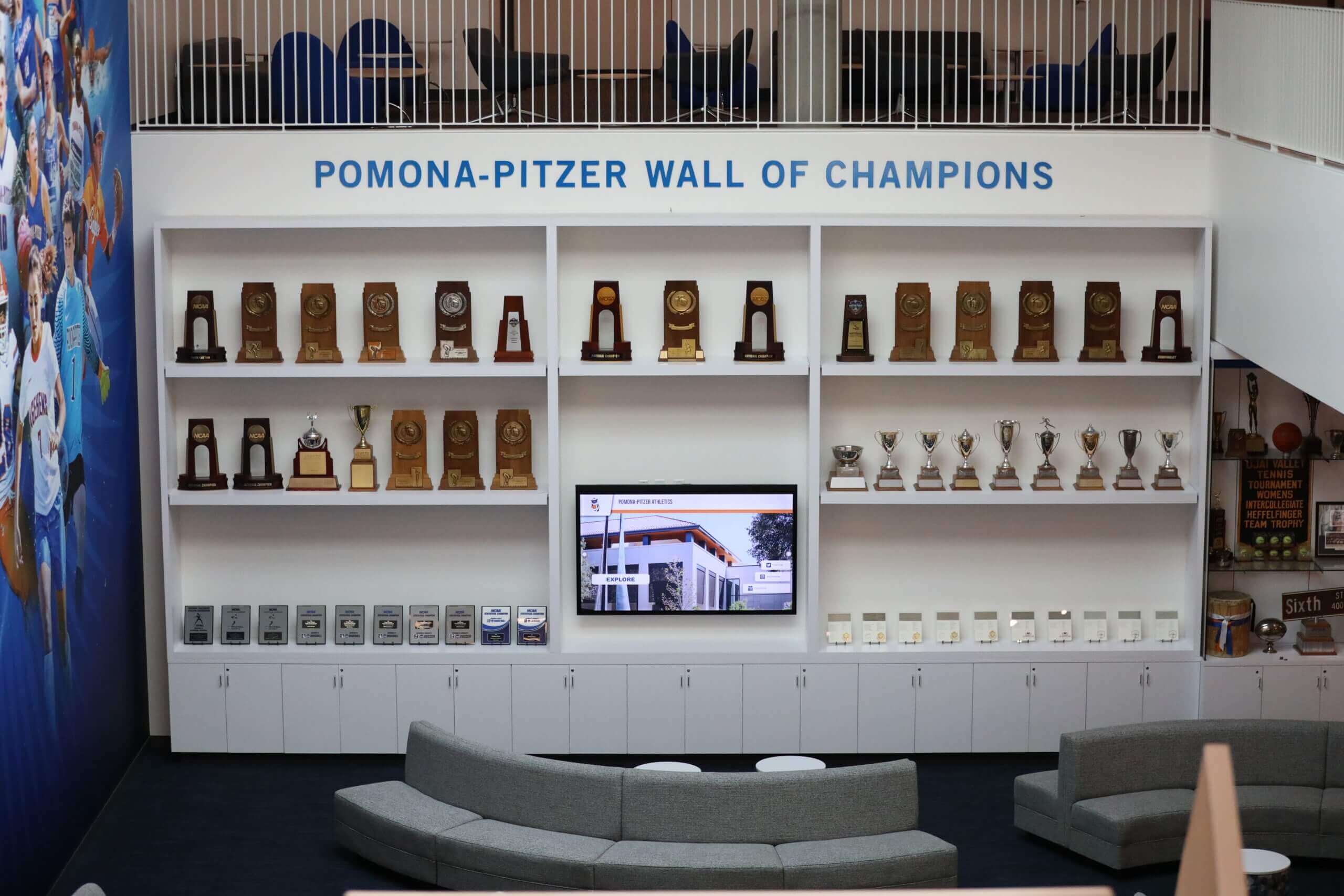
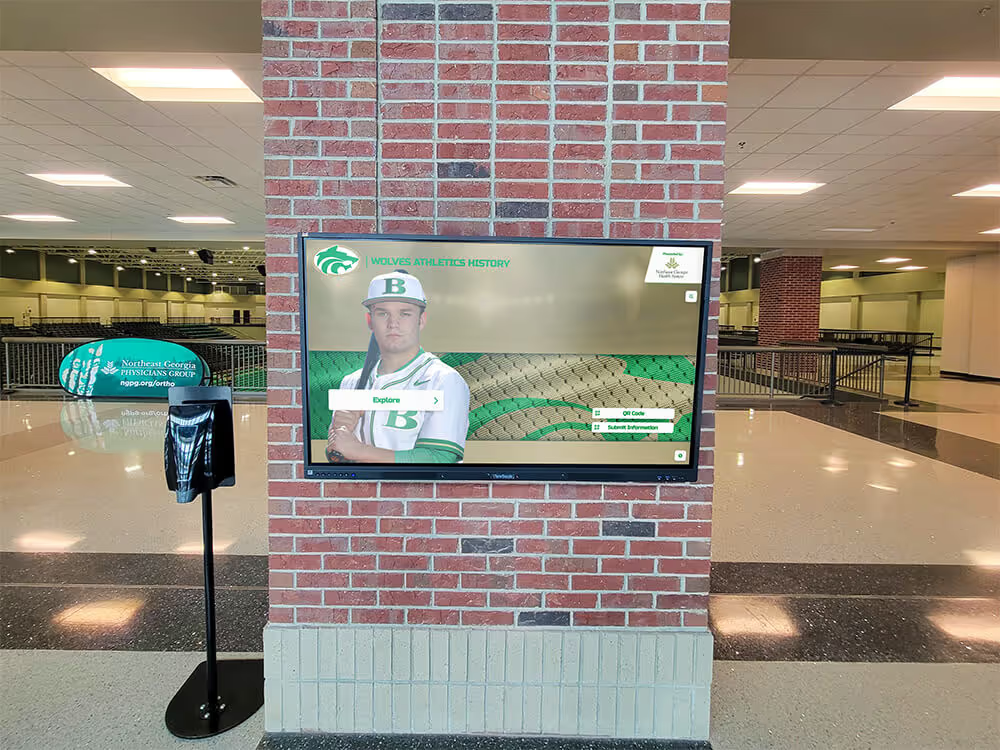
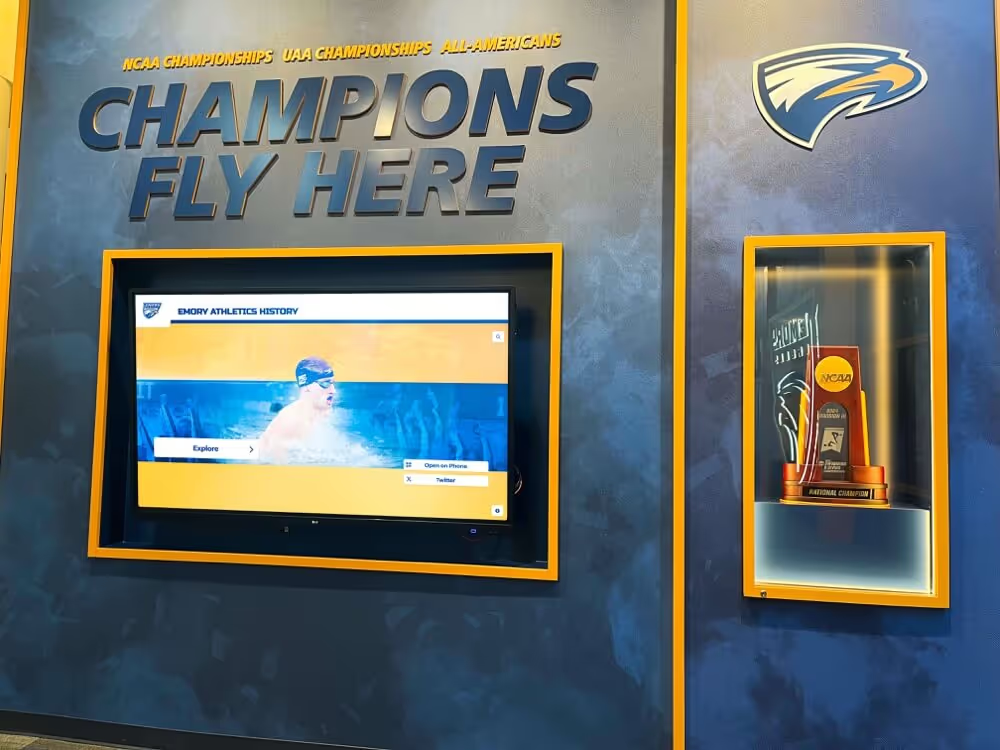
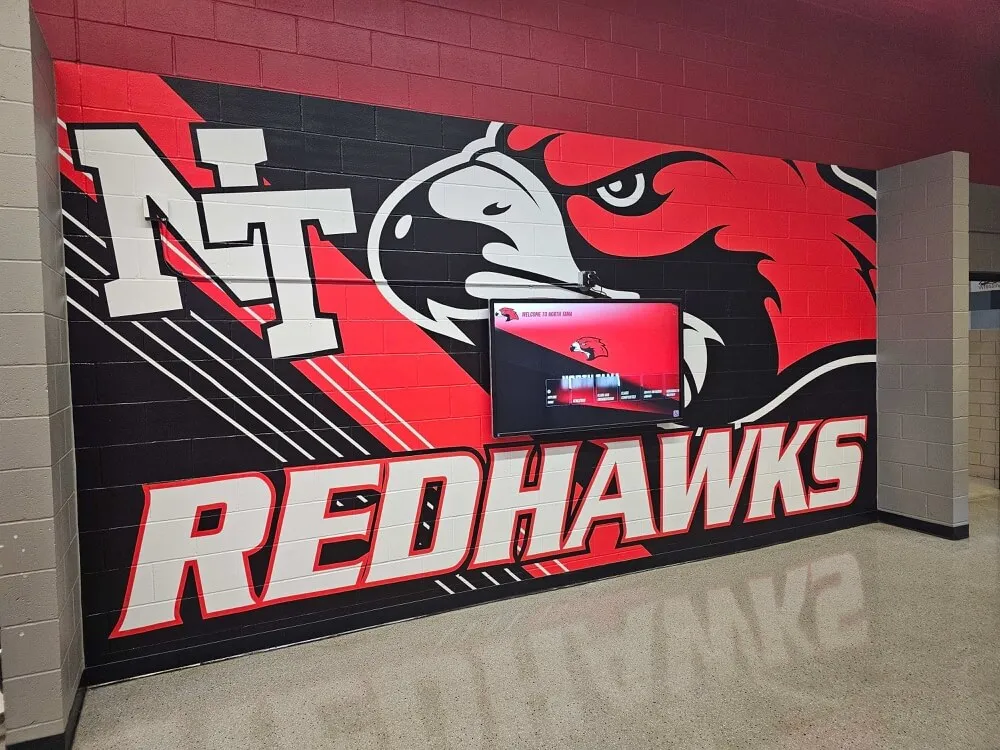
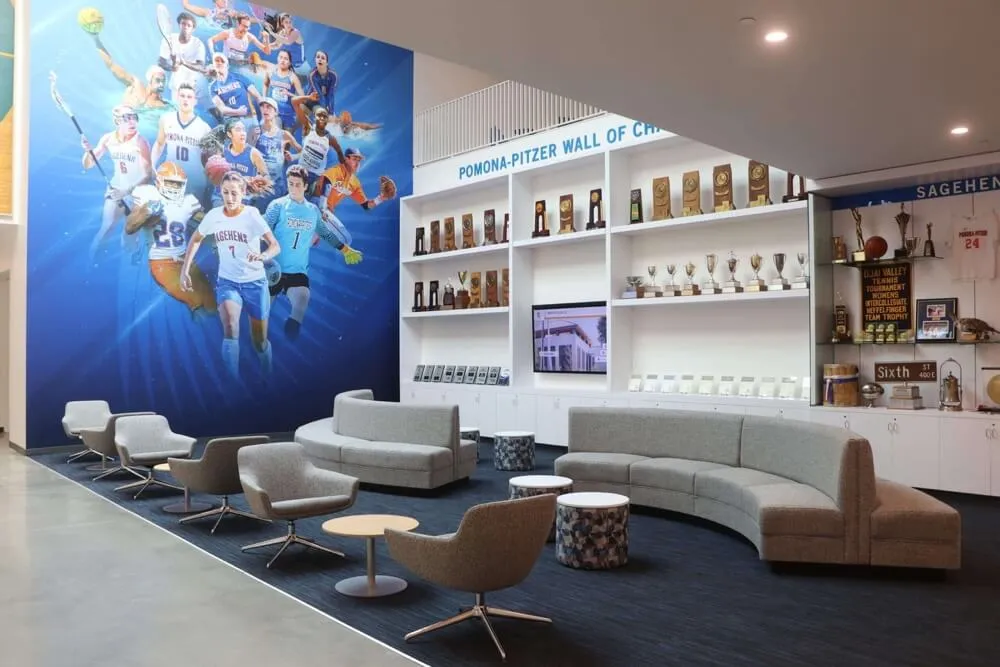
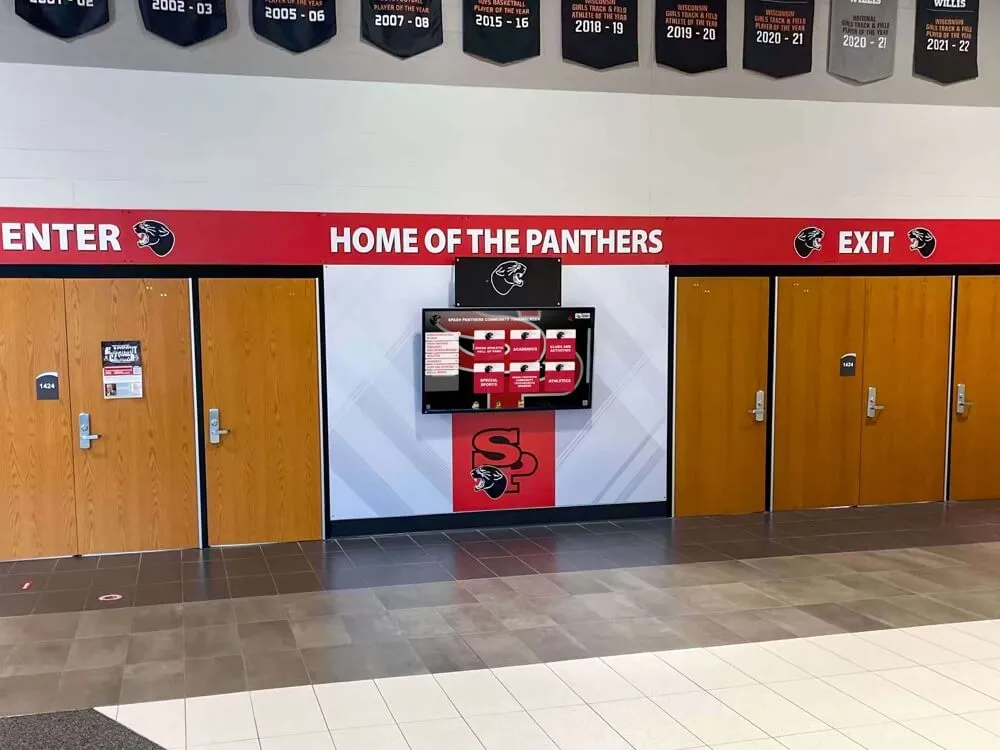
Schools that maintain dedicated recognition spaces give students a permanent institutional record to complement the personal artifacts in their memory boxes
What to Include in a School Memory Box: A Practical Checklist
Regardless of grade level, several categories of items belong in almost any school memory box:
Academic records:
- Report cards or transcripts
- Standardized test results that marked measurable growth
- Subject-specific awards, recognition letters, or honor society certificates
Visual documentation:
- Class photos, both group and individual
- Candid photos from field trips, events, and everyday school life
- Art projects or creative work samples showing the student’s voice at a particular age
Event and activity records:
- Programs from performances, competitions, and ceremonies
- Athletic schedules, rosters, and scorebooks
- Club meeting records, newsletters, or officer credentials
Personal artifacts:
- Notes from teachers or peers that meant something at the time
- Anything handwritten by the student that captures their voice and perspective
- Objects that hold specific memories: a team wristband, a debate pin, a cast-signed show program
Reflective documents:
- Letters to future self, written at key moments in each school year
- End-of-year reflection prompts completed in the student’s own words
- Gratitude lists or “best memories from this year” inventories completed before summer break
Strong yearbook captions and written records give students a guide for writing memory box entries that remain meaningful and contextualized years later, rather than cryptic shorthand that loses its meaning over time.
Class Time Capsule Programs: A School-Wide Approach
A classroom-level time capsule extends the memory box concept into a shared community experience. Rather than each student preserving only personal artifacts, the class collectively documents who they were at a particular moment in time.
Structure for a classroom time capsule:
- Collective snapshot: Every student contributes one written answer to the same prompt — “The thing that surprised me most this year was…” or “Something I want to remember about this school year is…”
- Class-wide artifacts: A full class photo, a copy of the school schedule, a local newspaper front page from the first day of school
- Individual contributions: Each student adds one personal item or written piece that represents their year
- Sealing and storage: The capsule is physically sealed and stored in a specific, documented location, with a planned opening date tied to a reunion or school anniversary
Time capsules work best when the opening date is specific and institutionally supported. A capsule sealed by the class of 2026 with administrative backing has a much better chance of surviving to its planned opening than one stored informally in a teacher’s filing cabinet.
School-Wide Memory Preservation: Beyond Individual Boxes
The most sustainable memory preservation happens at the institutional level. When schools create systematic programs for capturing and displaying their history, individual student memory boxes connect to a larger archive that outlasts any single graduating class.
Memorabilia Display Cases and Trophy Halls
Physical display spaces in school hallways and lobbies serve as the institutional memory box — a curated collection of artifacts representing what the school values and what it has achieved. Well-designed physical display spaces share several characteristics:
- Clear organizational logic: Arranged by sport, decade, or achievement type rather than random accumulation
- Consistent labeling: Every item identified with year, team, and context so visitors understand what they’re looking at
- Rotation plan: A system for moving items to make room for new achievements without losing the historical record
- Connection to a digital backup: Physical items photographed and catalogued so the archive survives if the display is damaged or relocated
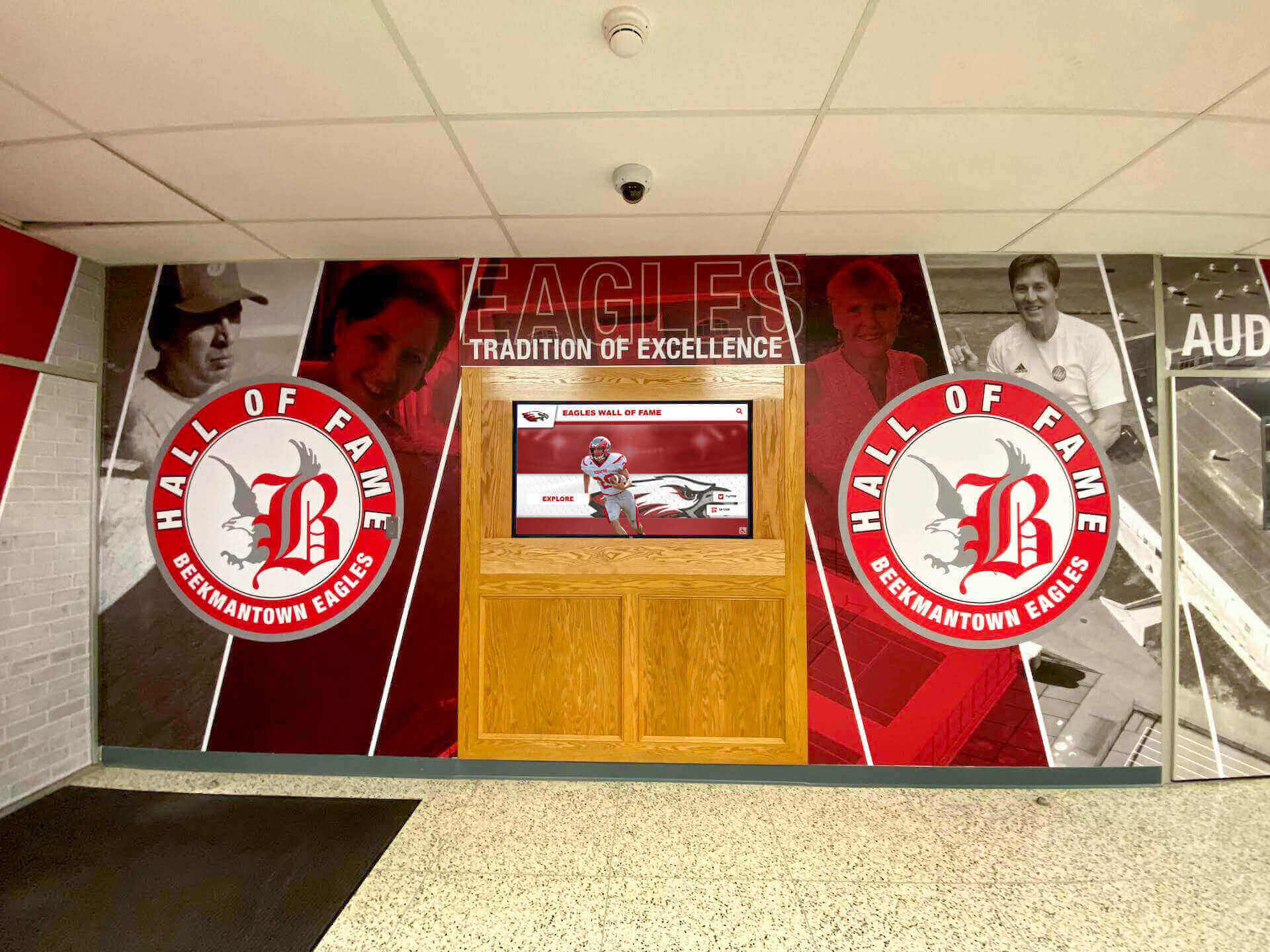
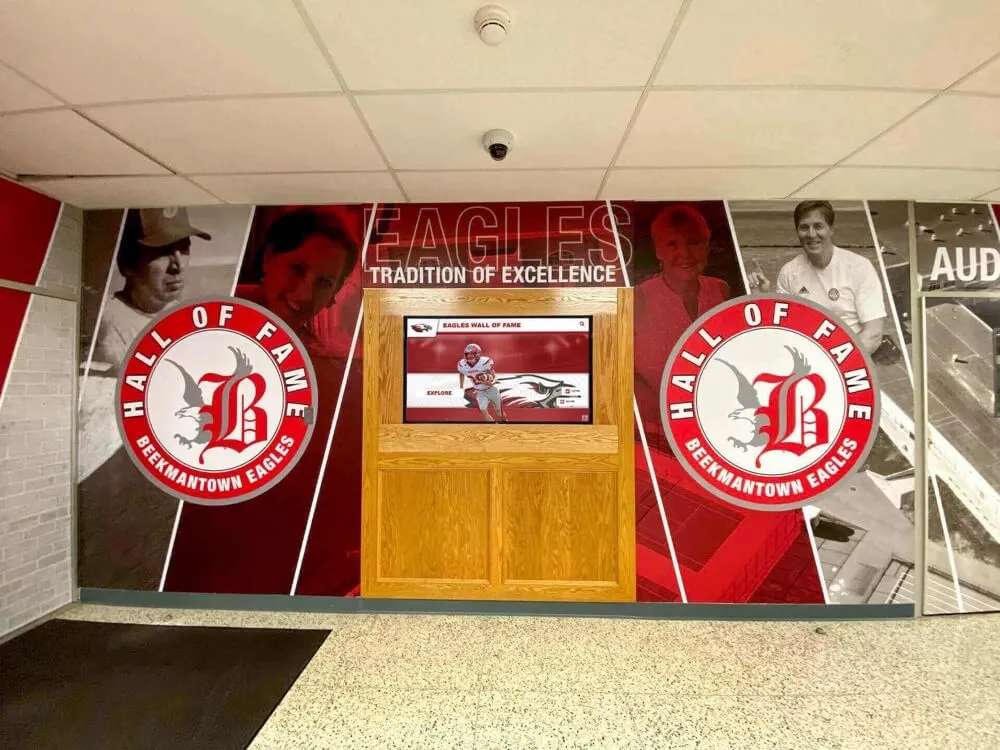
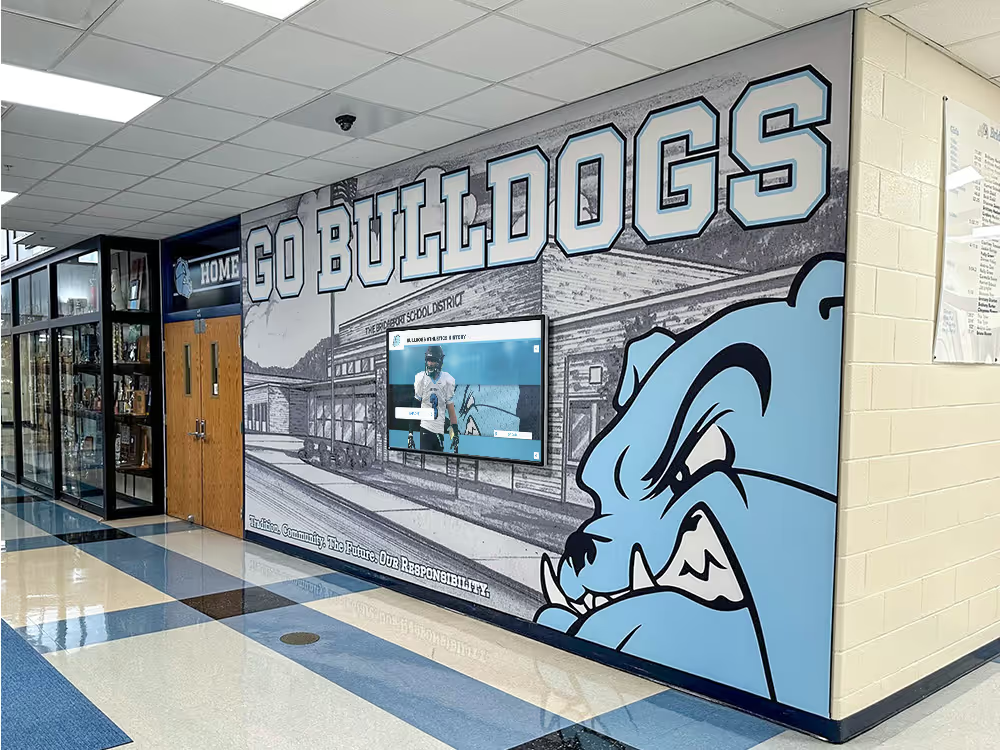
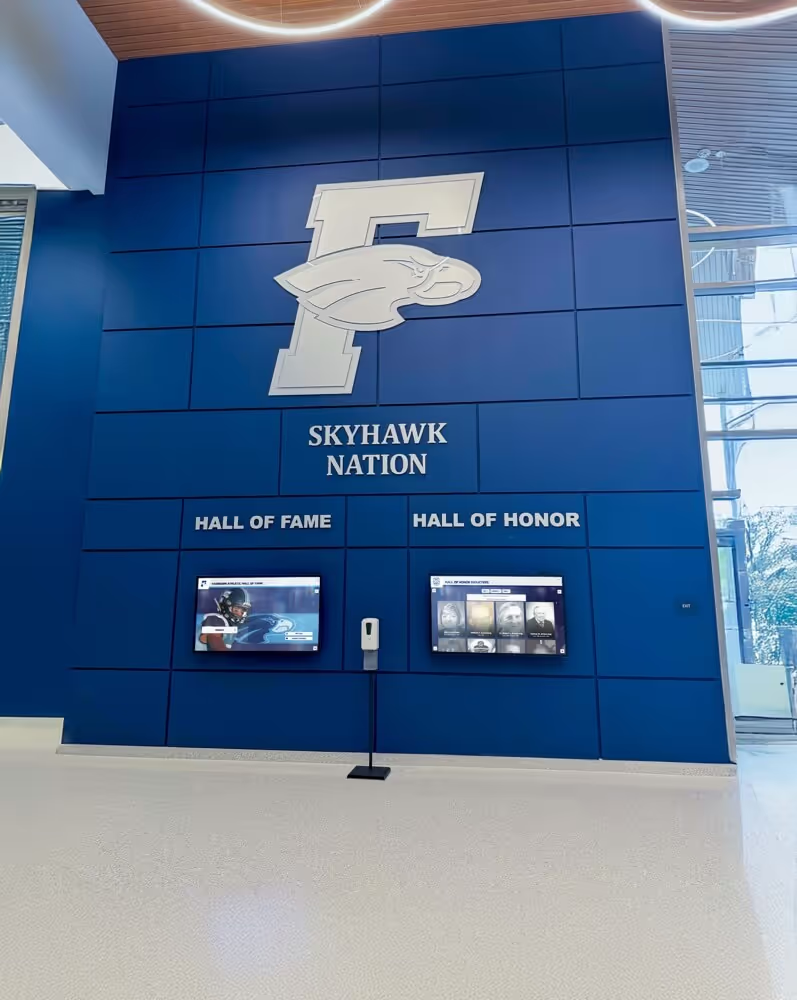
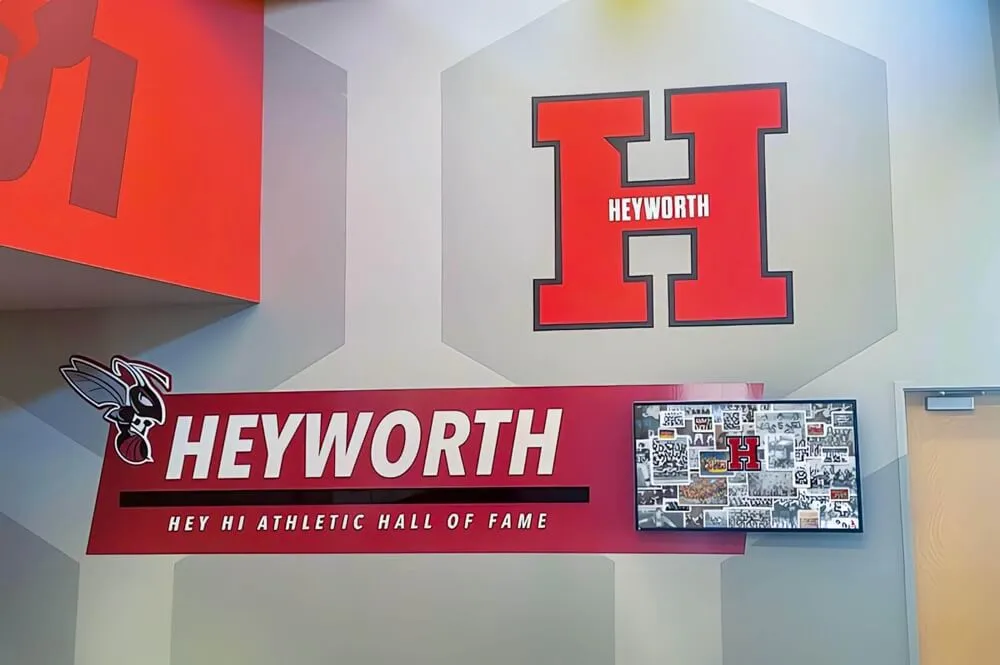
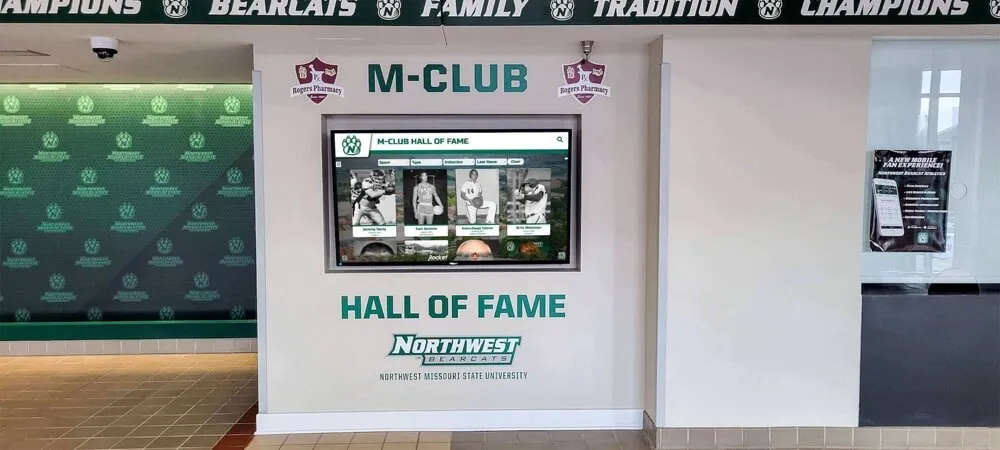
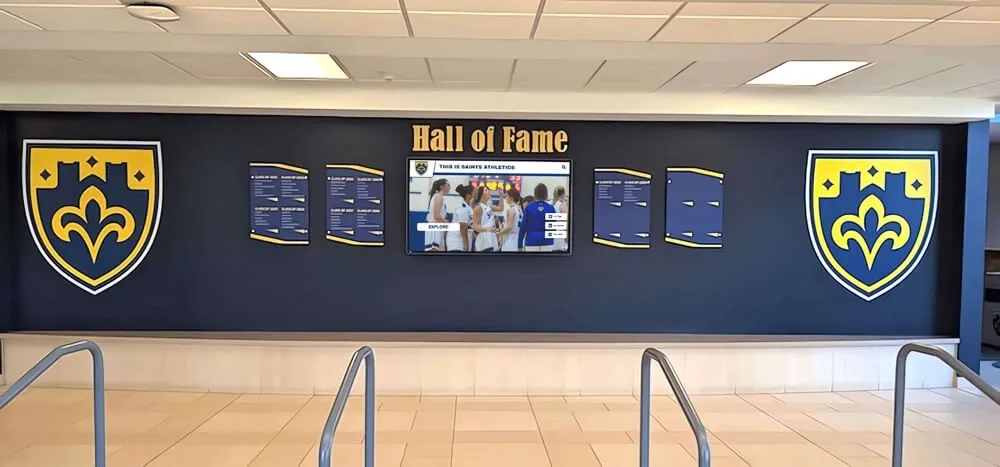
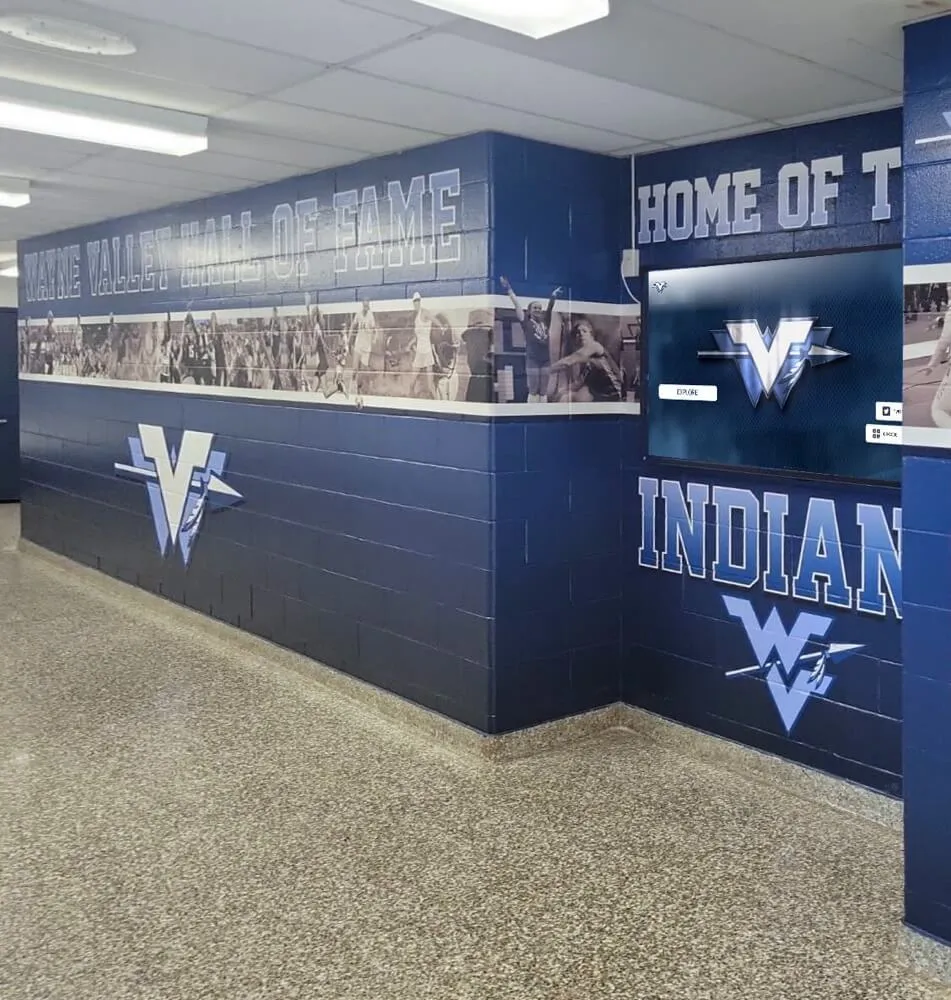
Dedicated hall of fame spaces in school lobbies create institutional memory archives that complement the personal memory boxes students bring home each year
Cataloguing Historical Photos and Documents
One of the most impactful things a school can do is photograph and catalogue every trophy, certificate, and physical document in its collection before those items degrade or disappear. Schools that have completed comprehensive historical photo archive projects consistently report that the process uncovers materials even longtime staff didn’t know existed — photographs from decades-old championship seasons, programs from first-ever performances, letters from founding teachers.
The catalogue itself is a deliverable. A spreadsheet or database that identifies every physical artifact — with location, date, description, and condition — gives future administrators a map of the school’s memory rather than a mystery to untangle.
The Digital Turn: Archiving School History Beyond Physical Boxes
Physical memory boxes and display cases have real limitations. They degrade over time, lose context when separated from labels, cannot be searched, and cannot be shared with alumni who live across the country. The most forward-looking schools now pair physical preservation with digital archival workflows that extend the life and reach of their institutional memory indefinitely.
Yearbook Digitization
Every school’s yearbook collection is its most comprehensive institutional archive — and in most schools, those archives are deteriorating on shelves with no digital backup. Yearbook digitization projects scan and preserve historical yearbooks in formats that are searchable, shareable, and accessible to alumni anywhere in the world.
For schools ready to begin this process, a complete step-by-step guide to digitizing old yearbooks covers equipment selection, file format standards, storage architecture, and how to make the resulting archive accessible to the alumni community.
Key considerations for yearbook digitization programs:
- Prioritize yearbooks from periods where physical copies are known to be scarce or deteriorating
- Use high-resolution scanning to preserve image quality adequate for future reprinting
- Create searchable text layers so names and content can be found by anyone searching them
- Store files in multiple locations — cloud and physical backup — to protect against data loss
- Make the archive accessible to alumni via the school website or a dedicated platform with appropriate access controls
Old School Magazines, Newspapers, and Publications
Beyond yearbooks, many schools published newsletters, literary magazines, sports programs, and newspapers that represent rich, undervalued archives. These publications capture classroom culture, student voices, and community events in ways yearbooks do not. A thorough approach to school magazines and publications preservation covers the specific handling, scanning, and storage protocols for fragile print materials that deteriorate faster than bound yearbooks.
Athletic Photo Archives
Athletic programs generate enormous volumes of photographic content — game photos, team portraits, award ceremonies, banquet events — that document a critical dimension of school identity. Systematic athletic photo archive programs give schools a structured workflow for digitizing, tagging, and storing team photos going back decades, creating a searchable visual record that athletic directors and alumni can access on demand.
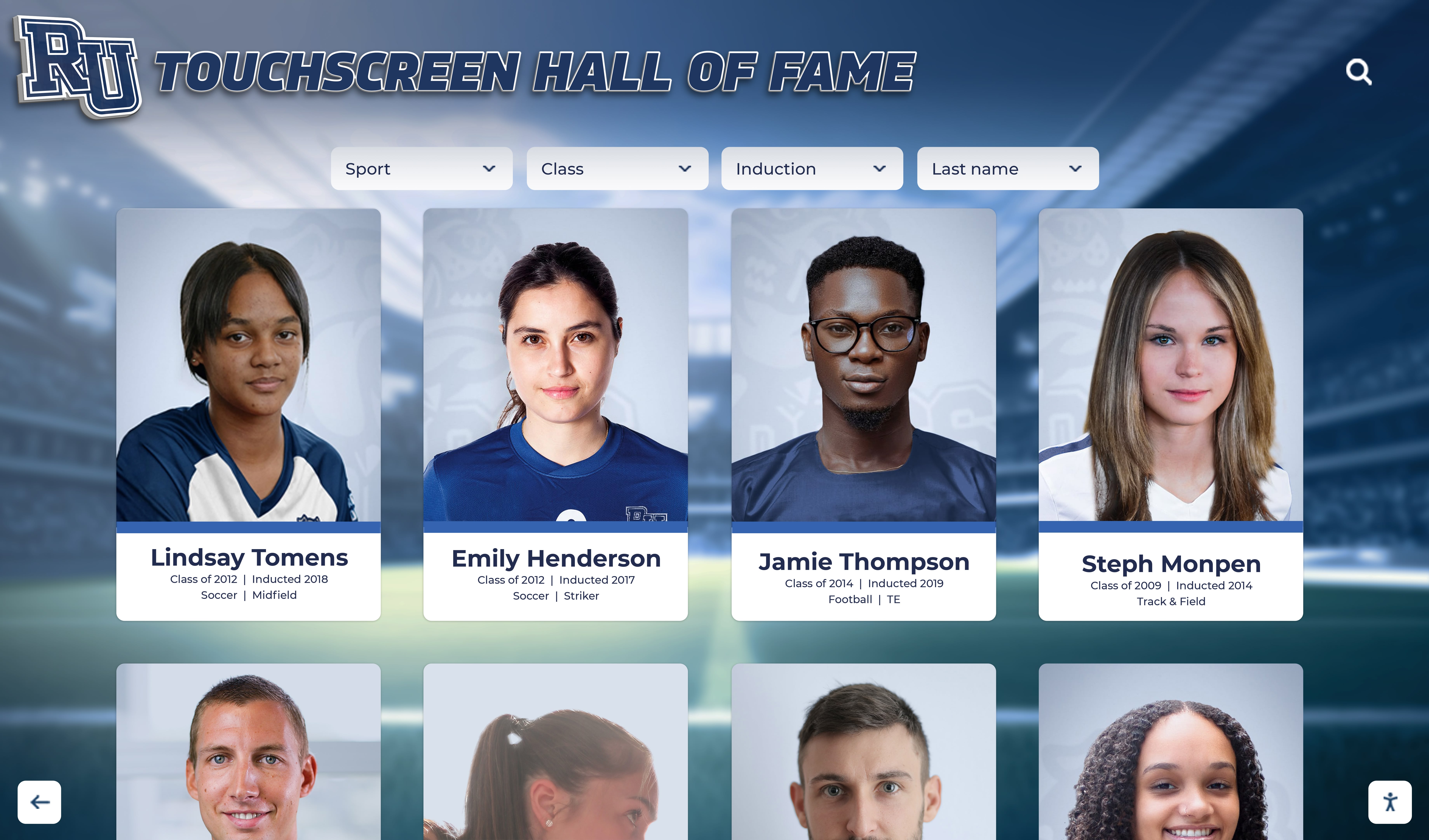
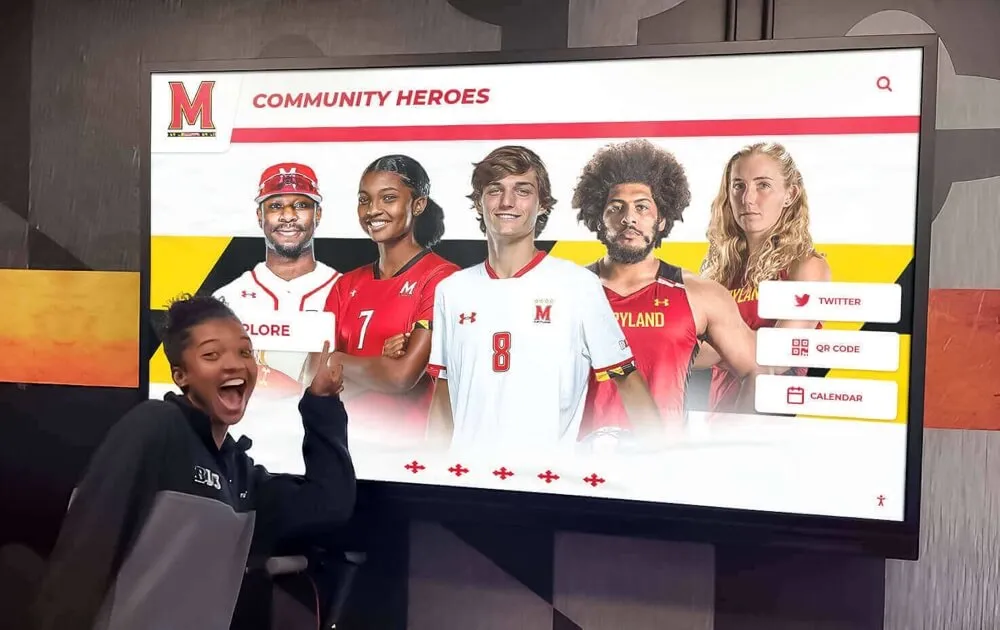
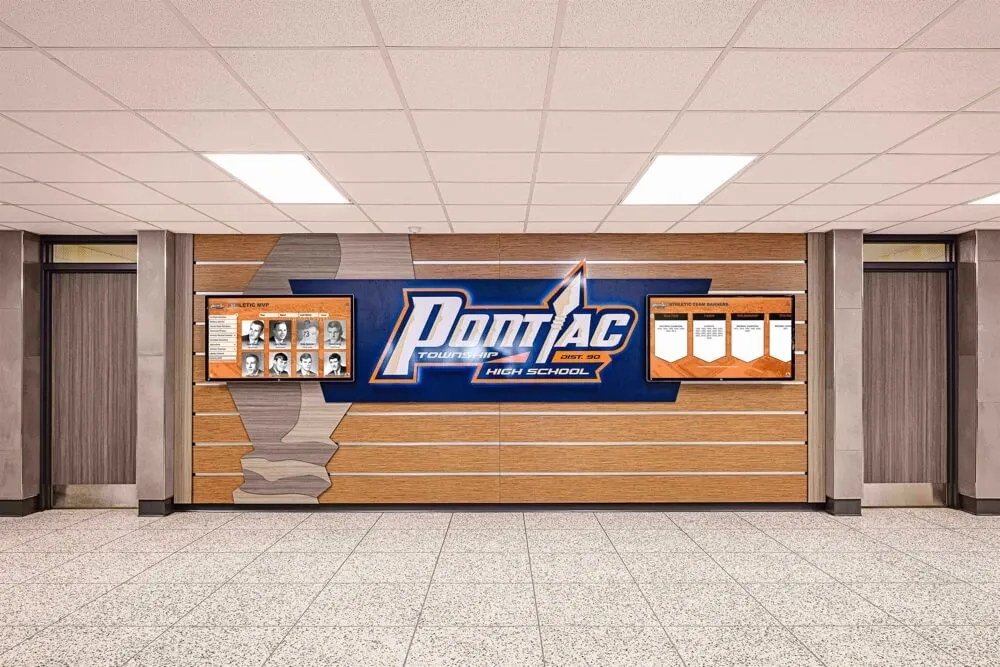
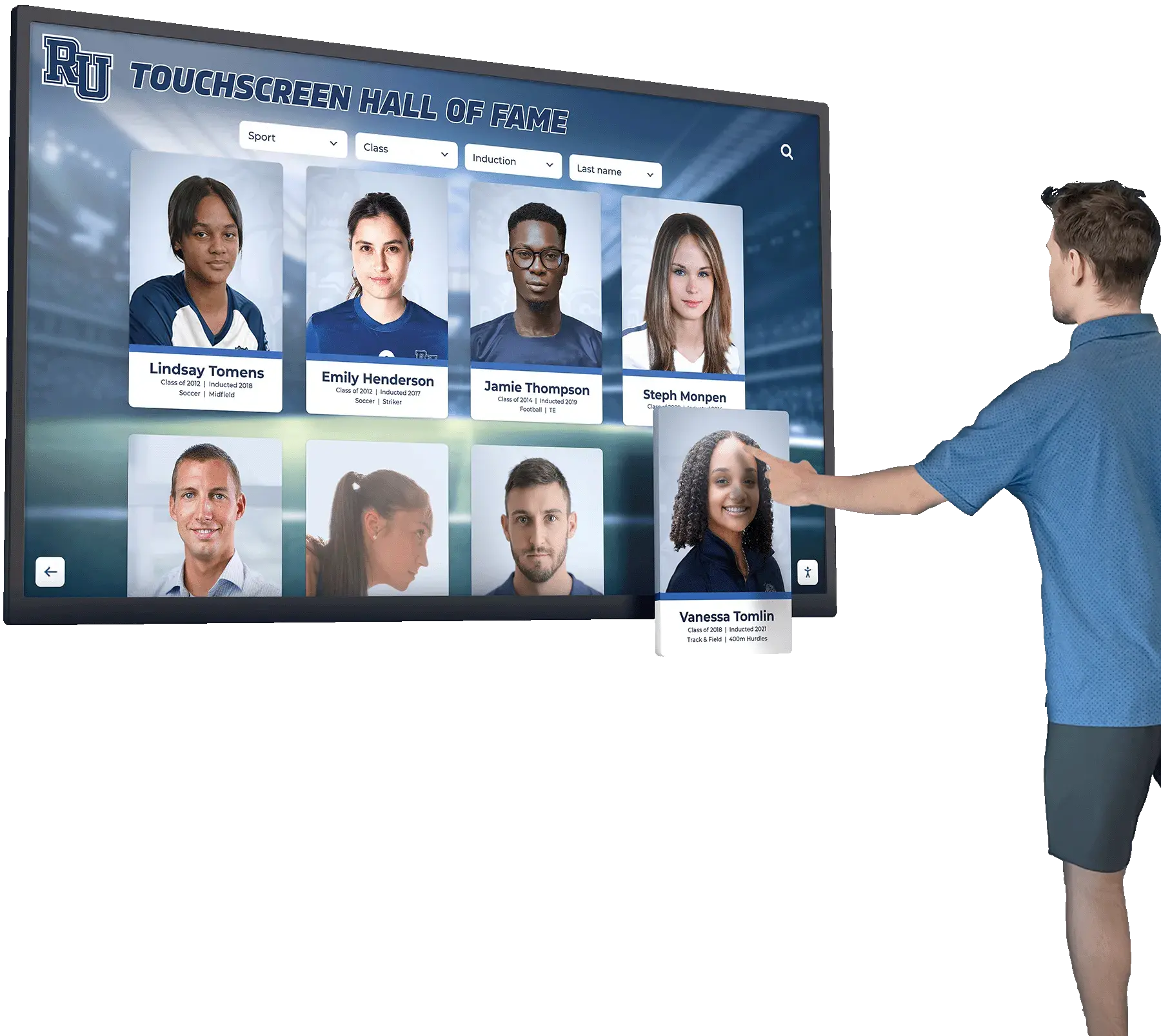
Digital athlete archives allow schools to preserve decades of team photos and individual portraits in searchable, shareable formats that physical display cases cannot match
Digital Recognition Displays as Permanent School Memory Archives
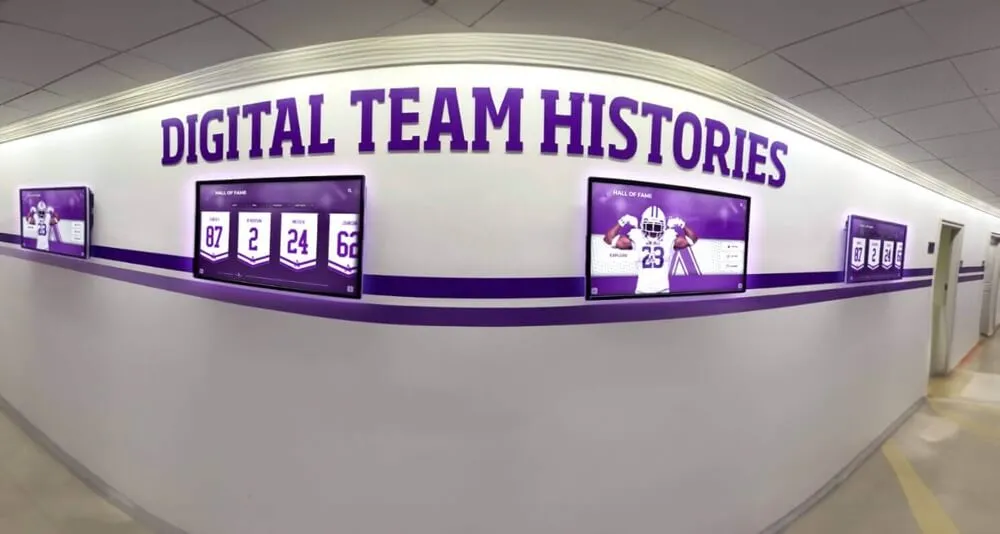
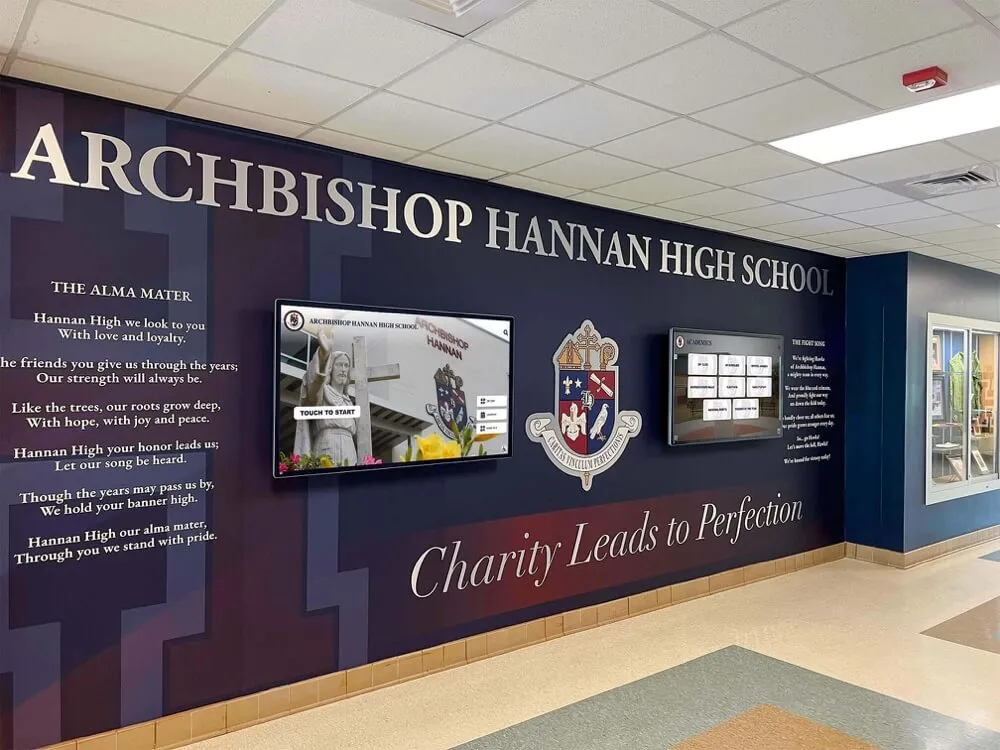
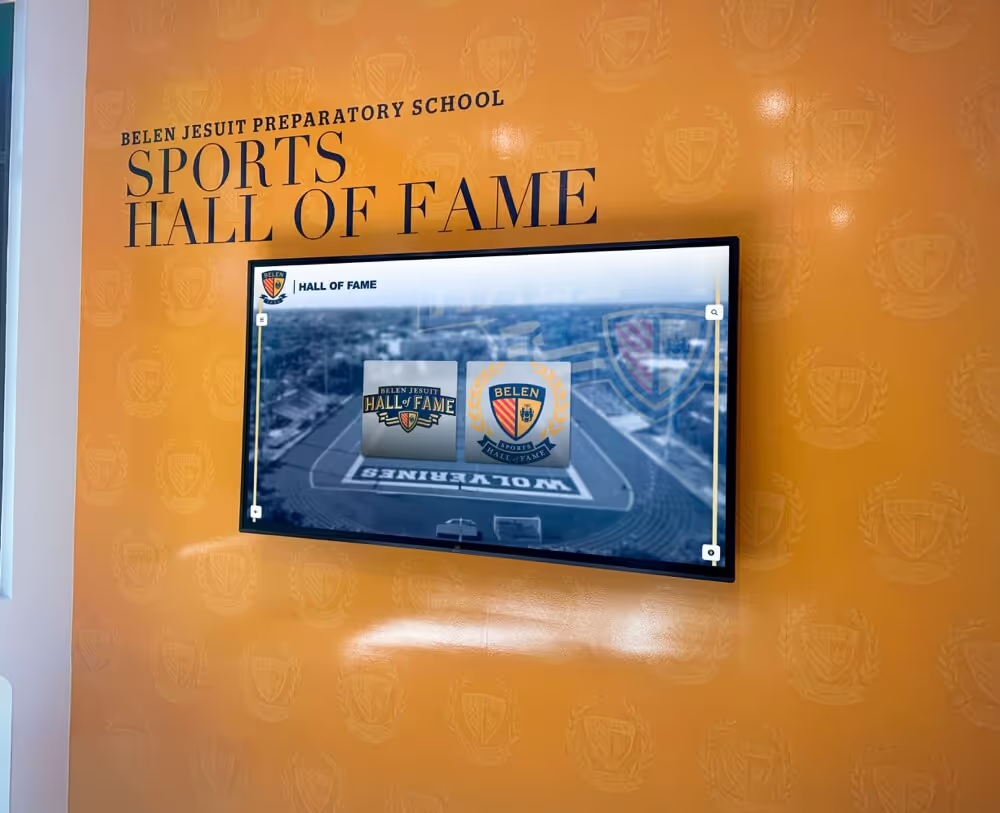
The most significant evolution in school memory preservation is the shift from static physical displays to interactive digital recognition systems. These platforms function as the school’s permanent, living memory archive — holding unlimited content, updating remotely, and engaging students and visitors through touchscreen interaction rather than locked glass cases.
The best practices for displaying old school photos in digital formats have matured significantly as schools learn what resonates with both current students and returning alumni — and the most effective approaches combine historical photos with contemporary achievements in a single continuous archive.
What a digital recognition display can hold that a physical case cannot:
- Complete athletic records by sport, year, and individual athlete — unlimited entries
- Academic honor roll and distinction records across all graduating classes
- Arts and extracurricular achievement archives
- Alumni spotlight profiles that update as graduates’ careers evolve
- Photo galleries from seasons, performances, and events
- Historical yearbook images integrated into a searchable archive
Solutions like Rocket Alumni Solutions provide cloud-managed touchscreen platforms that serve as permanent school memory archives — combining the comprehensiveness of a digital database with the accessibility of an interactive display, requiring no IT expertise to keep updated.
Key capabilities for school memory preservation:
- Unlimited entries: No space constraints mean every graduating class, every season, every achievement can be documented without displacement
- Remote content management: Staff update profiles, photos, and records via browser from anywhere
- QR code access: Alumni who graduated decades ago can scan and access the full archive from their phones
- Scheduled publishing: New content can be queued for future publication, ideal for recognizing each graduating class as they complete their final year
- Searchable history: Every record is searchable by name, year, sport, activity, or any custom category the school defines
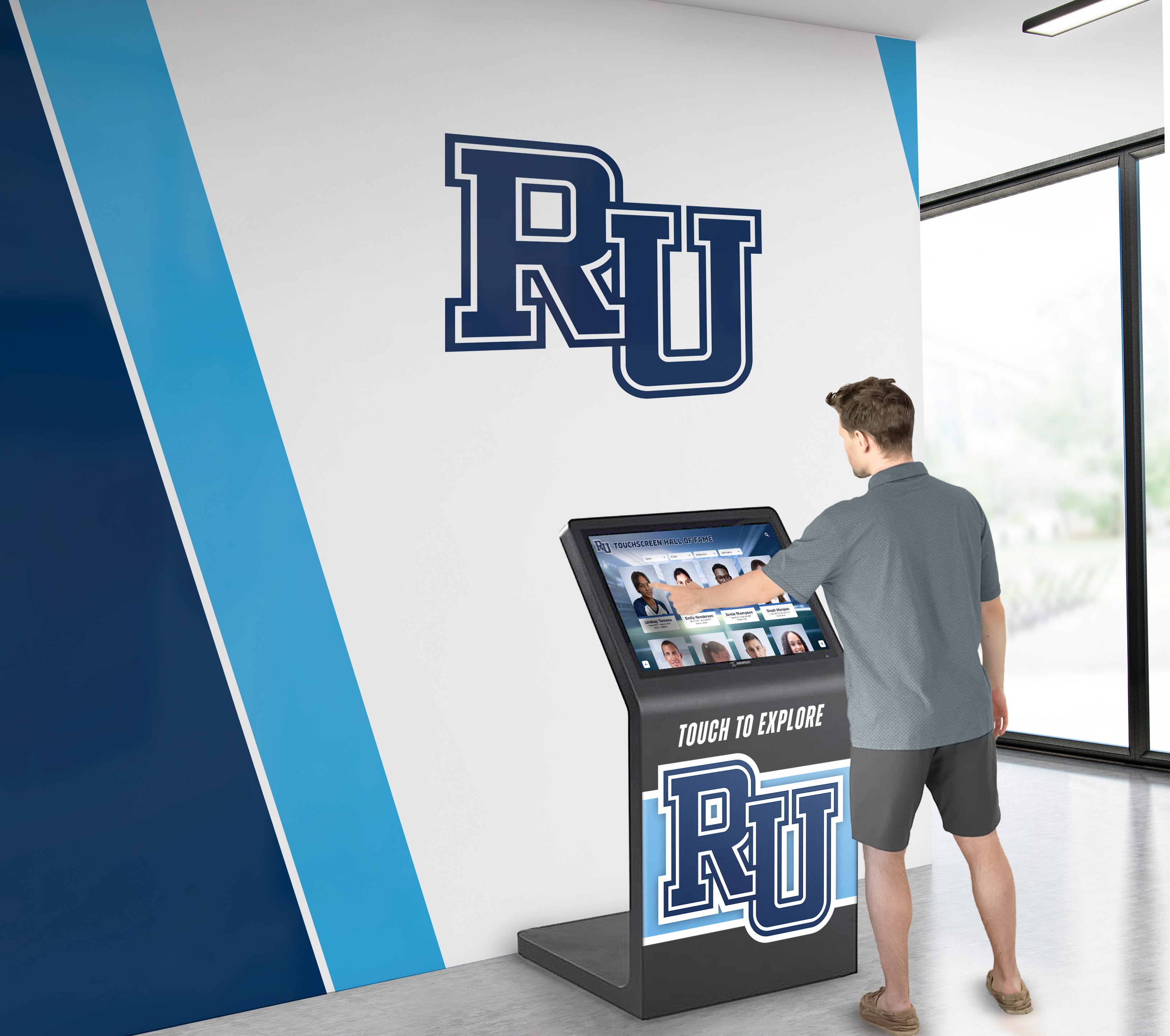
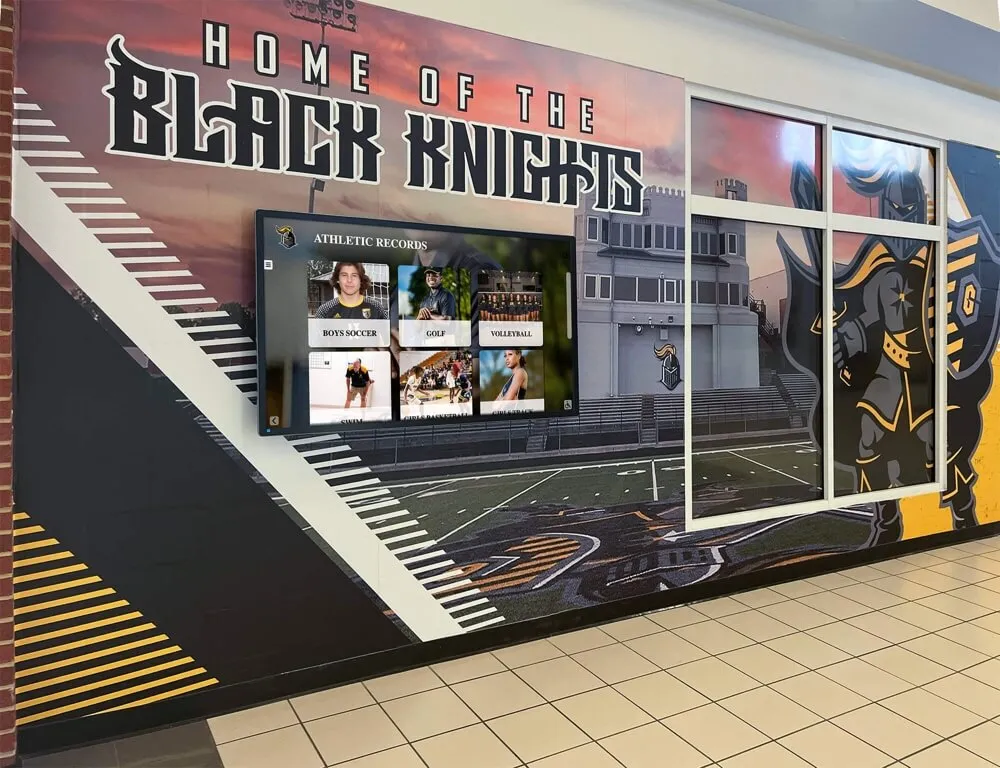
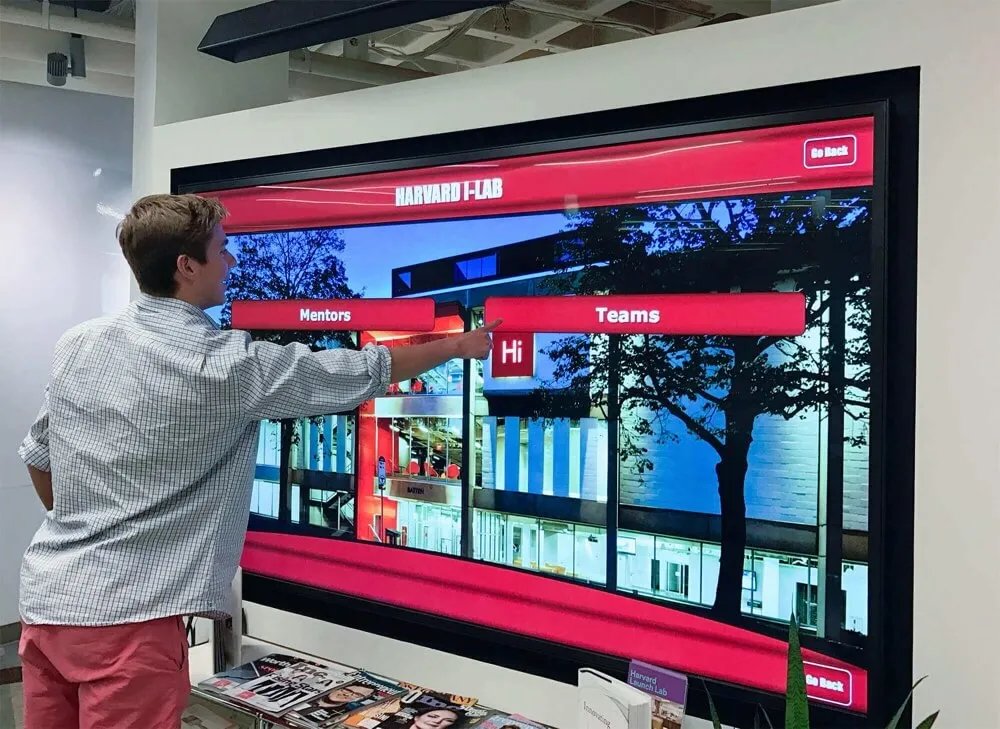
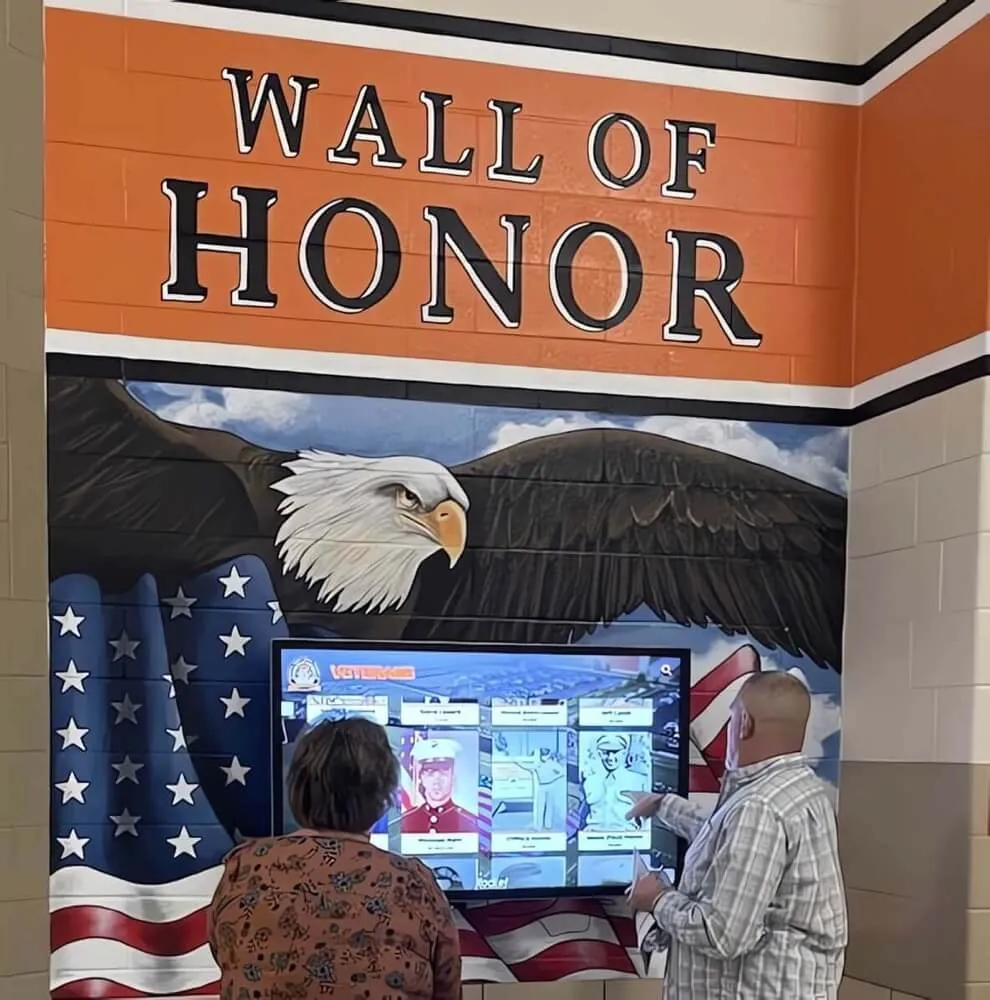
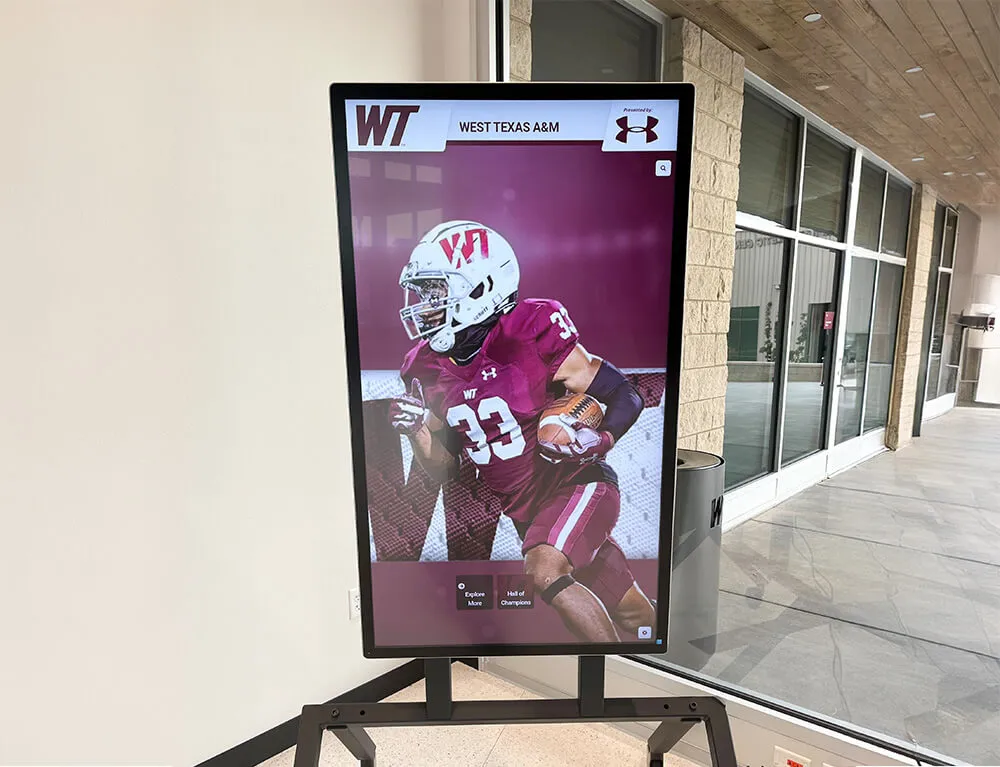
Interactive kiosks in school lobbies transform passive archives into engaging memory systems that students, families, and alumni actively use
Schools that use digital recognition platforms for athletic program storytelling find that the same infrastructure serves the full institutional memory mission — connecting championship seasons to academic honors to alumni career milestones in a single, continuously updated display.
Content Management for Long-Term Memory Archives
A digital archive only delivers its value if it is actively maintained. The technical infrastructure is the easy part; the organizational discipline to keep content current is where most institutional archives succeed or fail.
Effective content management practices for digital recognition displays establish clear ownership, regular update cycles, and quality standards that keep the archive accurate and complete over time. The schools with the best archives treat content management as an ongoing responsibility — assigning staff, setting schedules, and building processes — rather than a one-time project.
Practical content management principles:
- Assign a named staff member as archive owner with dedicated time for quarterly updates
- Establish an annual review cycle where every sport, activity, and graduating class record is verified
- Create submission channels for alumni to contribute photos, updates, and career milestones
- Document the archive’s organizational structure so new staff can maintain it without institutional knowledge gaps
Starting a School Memory Box Program: A Phase-by-Phase Approach
Schools that want to establish systematic memory preservation programs benefit from a phased approach that builds on what is already working.
Phase 1: Classroom-Level Foundation
Begin with a single grade level or department. One teacher champions the effort, implements a structured memory box project during the school year, and documents what works. A successful pilot in one classroom builds the case for adoption across the school.
Phase 2: Grade-Wide Standardization
With a working model, the school standardizes the memory box format across a grade level — consistent container (a box, a folder, a sealed envelope), a consistent checklist of required contents, and a consistent handoff process so boxes transfer with students rather than disappearing in a classroom transition.
Phase 3: Program-Level Archive
At the program level, the school establishes a policy for preserving institutional artifacts: photographing every trophy, scanning every program, creating digital records for every athletic season and academic honor. This archival work feeds the school’s digital recognition system and ensures that the physical record always has a digital backup.
Phase 4: Alumni Integration
Once the institutional archive is established, the school creates channels for alumni to contribute — submitting career updates, donating historical photos or documents, and connecting the alumni network to ongoing memory preservation. Schools hosting alumni events find these gatherings create natural opportunities to solicit contributions to the archive, with attendees often bringing photos and artifacts that the school had no other way to recover.
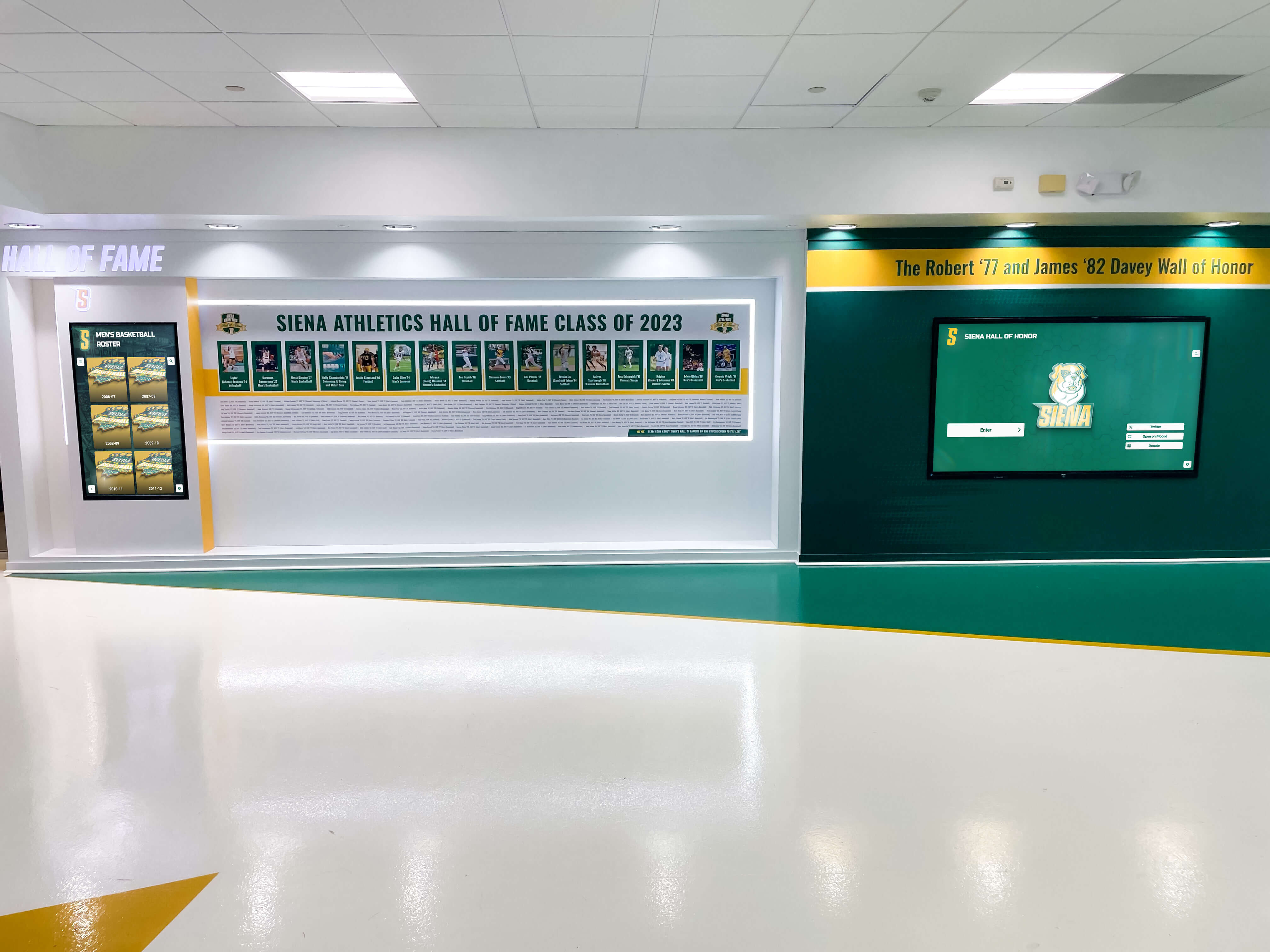
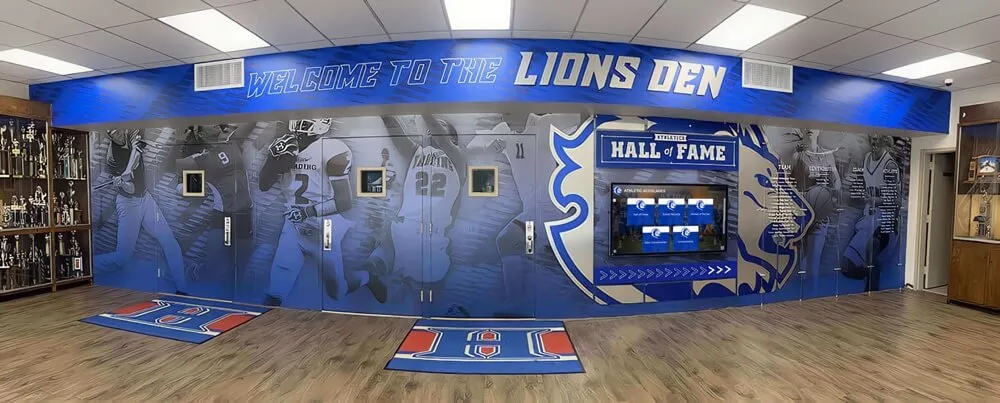
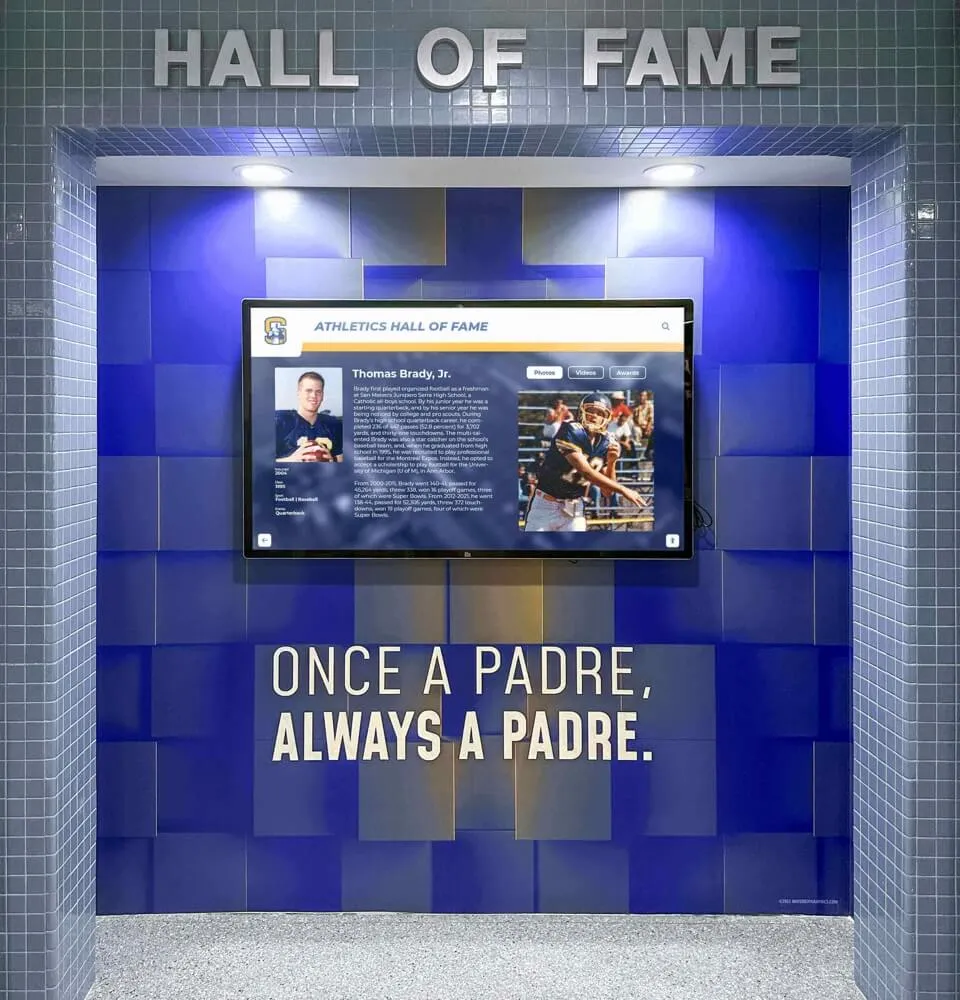
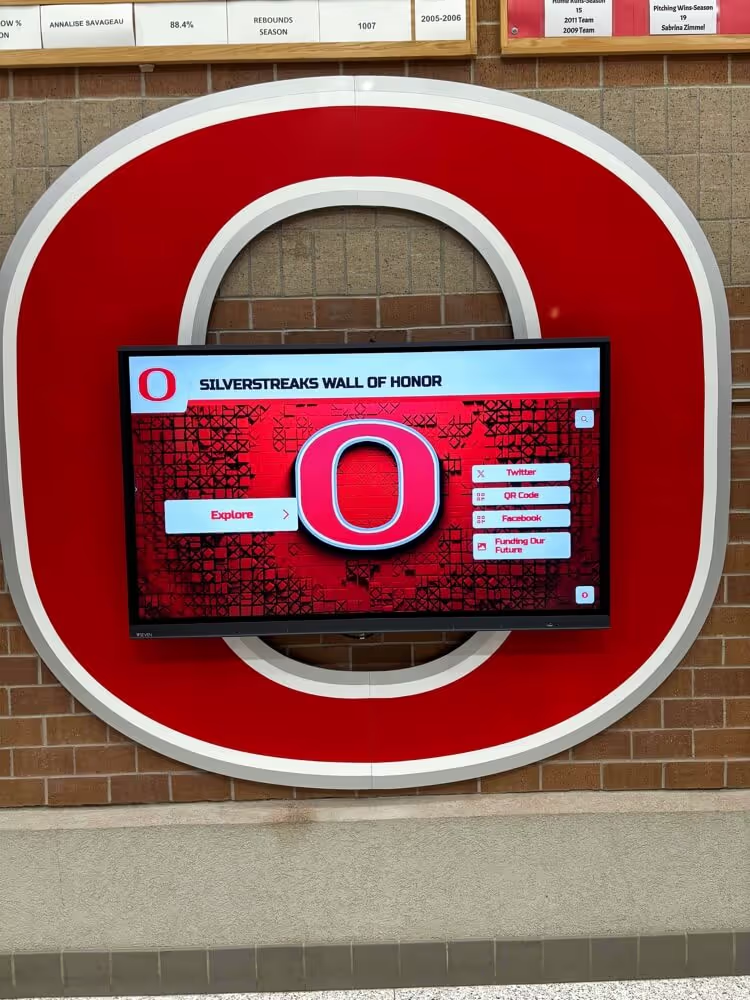
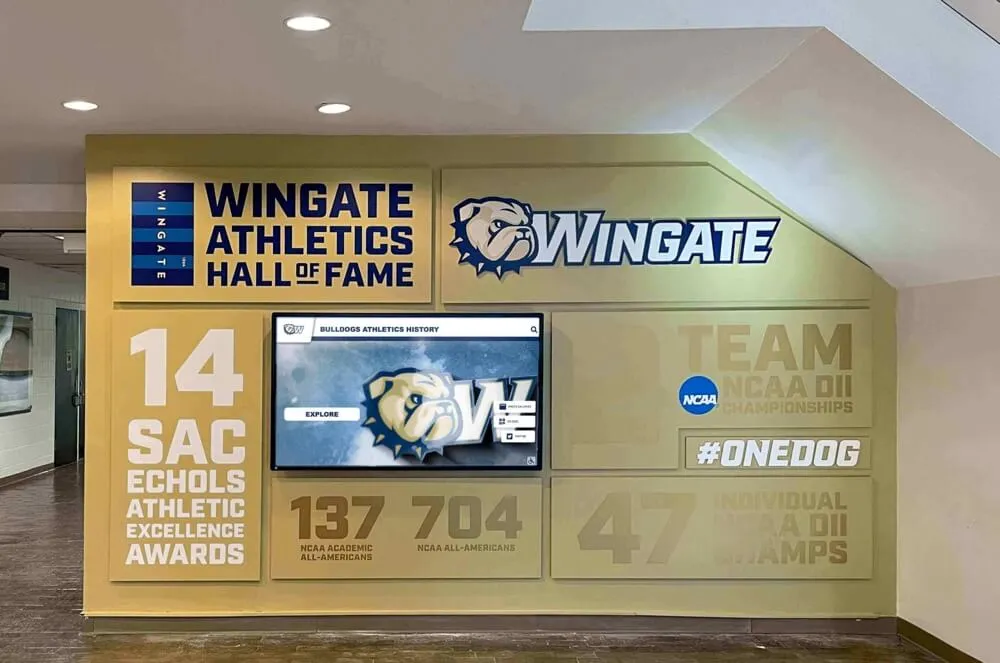
Formal recognition walls and hall of fame displays give institutional archives a visible, prestigious presence that motivates alumni to contribute and current students to aspire
Memory Preservation During School Milestones and Transitions
Several moments in a school’s life create natural urgency around memory preservation: major renovations, anniversaries, principal transitions, school mergers, and significant program changes.
Renovation projects: Physical construction frequently displaces trophies, displays, and archives. Schools navigating renovation should establish a clear chain of custody for all displaced artifacts and use the transition as an opportunity to digitize physical collections before reinstalling them in updated spaces.
School anniversaries: A 50th or 100th anniversary provides obvious institutional momentum for a comprehensive history project — digitizing yearbooks, creating an alumni archive, installing a permanent recognition display, or launching a class time capsule program with a formally planned opening date.
Leadership transitions: When a long-serving principal, coach, or athletic director retires, a window of institutional memory closes. Schools that conduct exit interviews and capture the knowledge these leaders carry — records, stories, context about past decisions — preserve information that cannot be reconstructed afterward.
School closures or mergers: When schools close or combine, their records face the highest risk of loss. Proactive digitization and formal transfer to a hosting institution or alumni association is the only reliable way to protect these archives from permanent disappearance.
Conclusion: Memory Boxes Scale With Intention
A school memory box — whether held by a first-grader or maintained by a school administrator — accomplishes the same fundamental goal: it says that what happened here mattered enough to be preserved. The physical memory box is where this practice begins, personal and tactile and meaningful to the individual student who fills it year by year.
But the most powerful memory preservation happens when schools build systems that extend that intention across graduating classes, across decades, and across formats. Digital archival workflows, yearbook digitization, alumni spotlight programs, and interactive recognition displays turn a school’s history into a living resource — not just a collection of fading items in a cardboard box, but a searchable, shareable, permanent record that current students can explore and returning alumni can reconnect with long after they leave.
The schools that do this best treat memory preservation not as a sentimental side project but as an institutional responsibility — one that begins with a first-grader choosing which drawing goes in this year’s memory box and continues through the alumni touchscreen display that a graduate visits thirty years later.
Build a Permanent Digital Memory Archive for Your School
Rocket Alumni Solutions provides cloud-managed touchscreen platforms that serve as your school's permanent recognition archive — storing athletic records, academic honors, alumni spotlights, and graduating class history in an interactive display that updates remotely and never runs out of space. See how schools are pairing physical memory preservation with digital systems built to last.
Explore Digital Recognition Solutions