



Walk into almost any school and you will find at least one: a glass-fronted cabinet packed with trophies, plaques, ribbons, and team photographs that nobody has touched since the last custodial cleaning. The display case is a fixture of school culture, yet many schools are unsatisfied with what theirs actually communicates. Trophies overflow into back closets, championship seasons from a decade ago are invisible, and academic honors receive half as much wall space as a single football trophy.
Rethinking school display case ideas means examining not just which trophies to put where, but whether a physical case is still the best vehicle for the recognition your school wants to provide. This guide walks through practical ideas for athletic cases, award displays, academic recognition, and library showcases — then compares physical cases side-by-side with digital alternatives so your planning team can choose the approach that fits your space, budget, and goals.
Effective school recognition displays serve three audiences simultaneously: current students who need motivation and role models, prospective families who evaluate programs during campus tours, and alumni who reconnect with their own chapters in a school’s story. Whether you are working with a single trophy case in a gymnasium hallway or planning a complete recognition overhaul across a campus, the ideas below give you a framework for both physical and digital solutions.

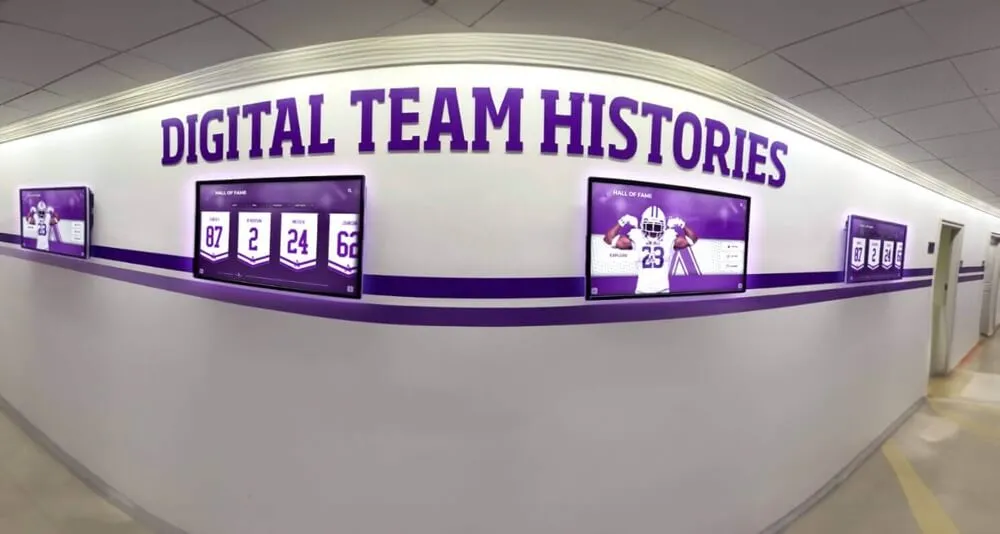
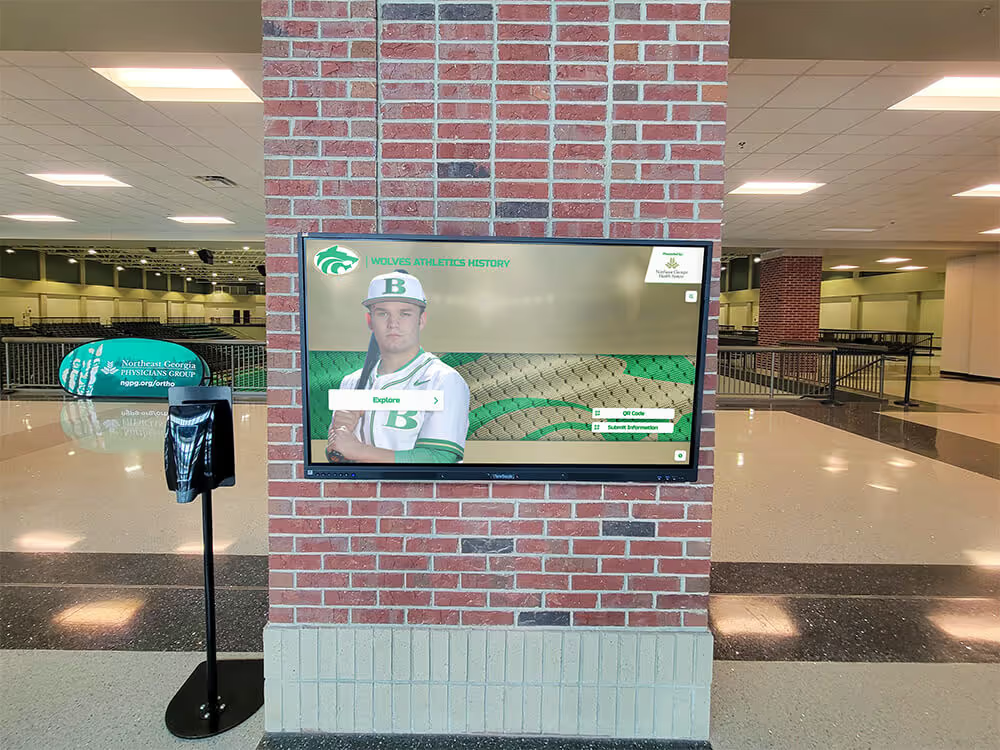
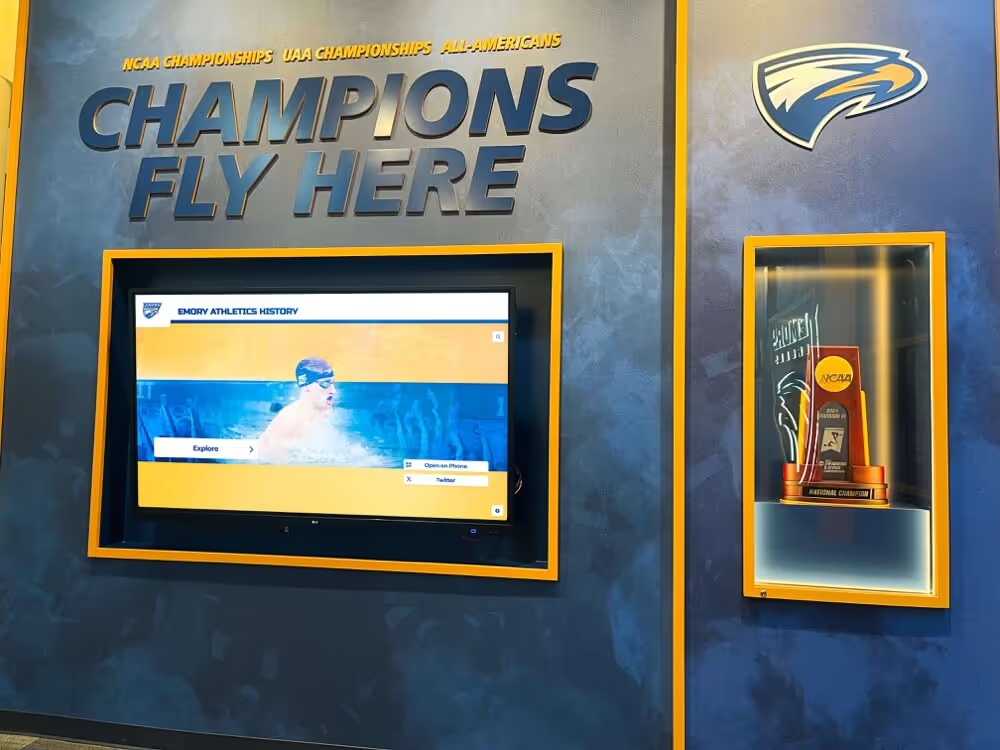
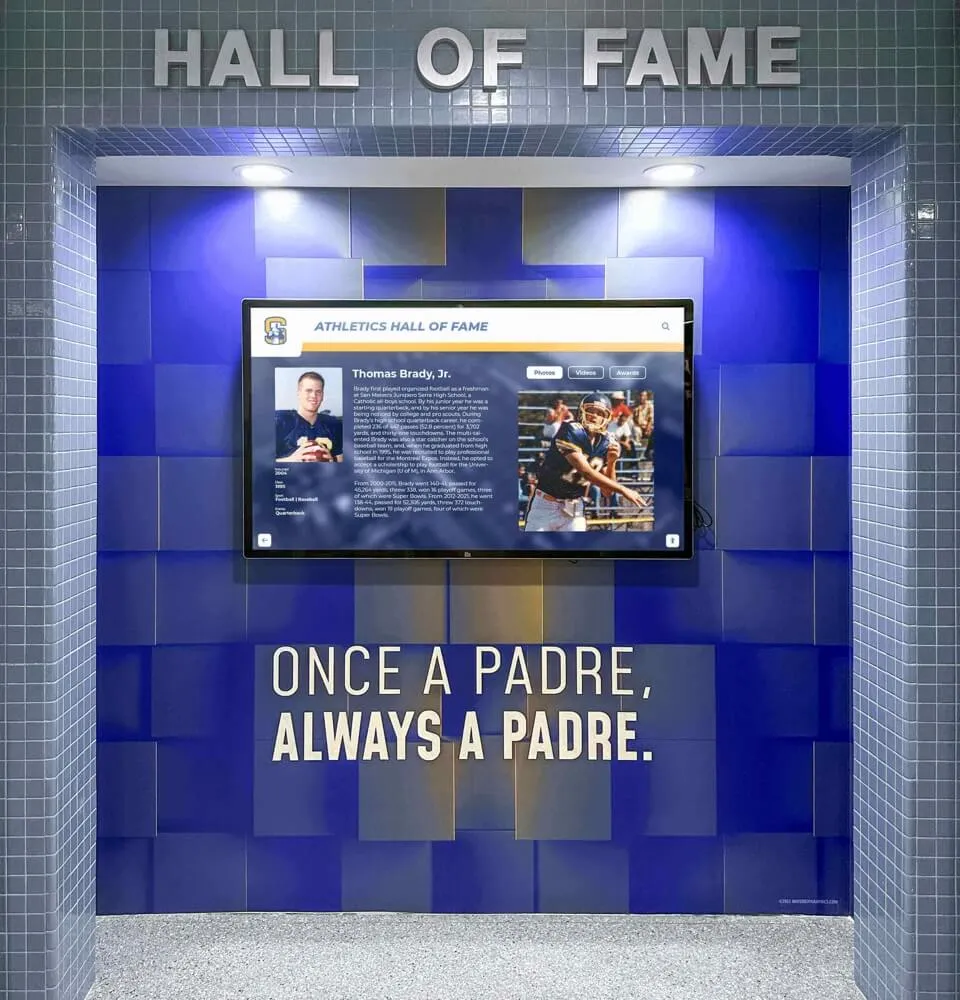
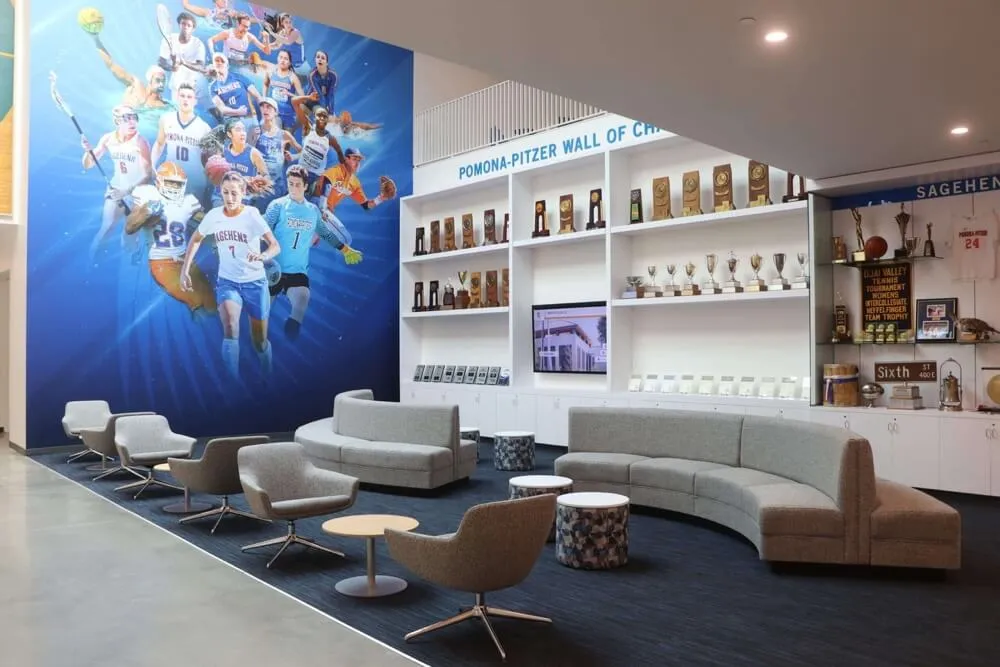
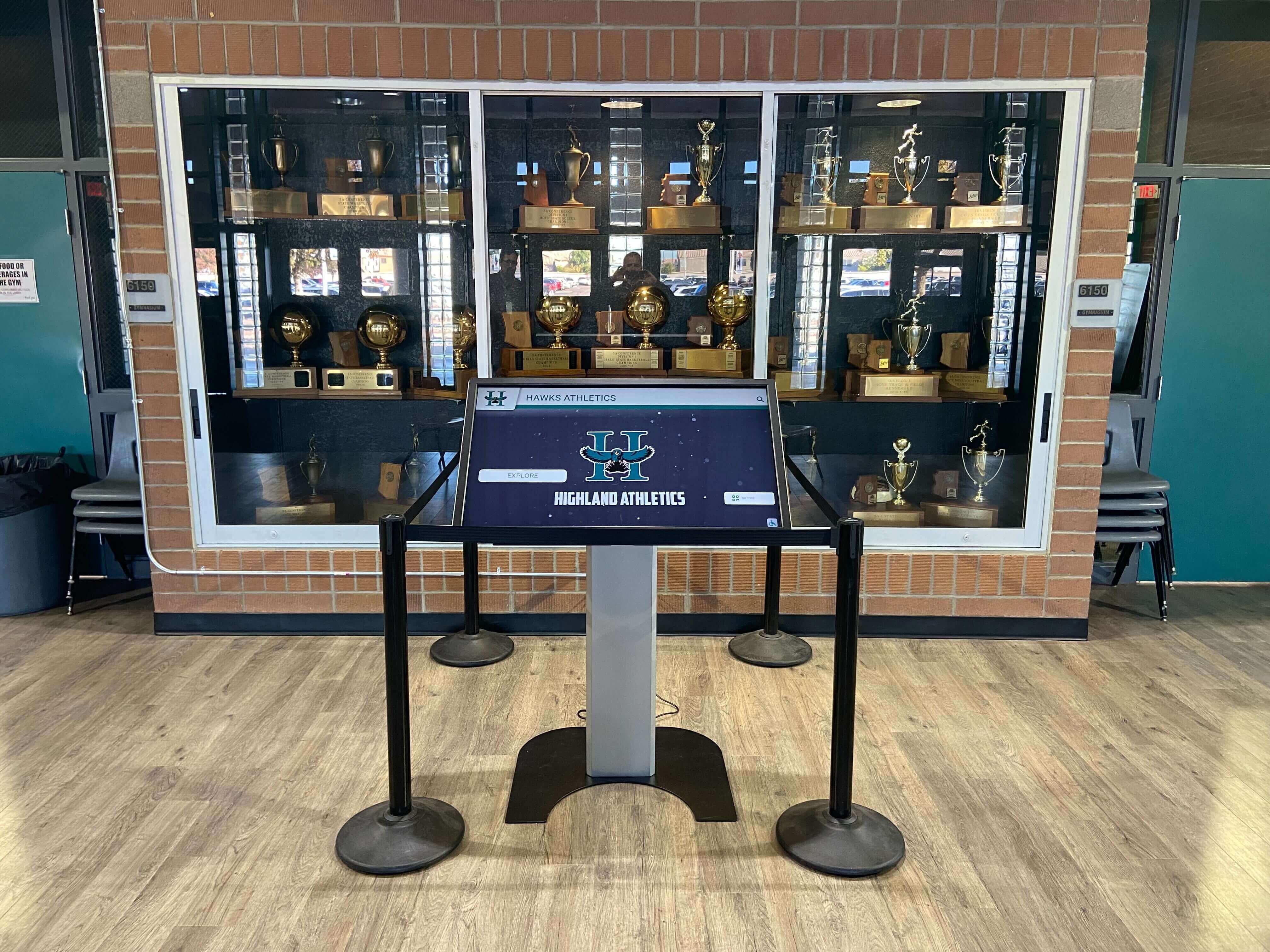
Modern trophy case areas increasingly pair physical hardware with interactive digital displays, extending recognition without requiring additional floor space
Athletic Display Case Ideas
Athletics generate more recognized achievement than any other school program — championships, individual records, all-conference selections, sportsmanship awards, and coaching milestones accumulate quickly. The physical case organizing all of that material shapes how visitors perceive your program’s legacy.
Chronological Championship Arrangements
Organizing athletic trophies from left to right in decade segments creates a visual timeline that rewards longer observation. Visitors can trace a program from its early years through periods of dominance and rebuilding, then connect that arc to current achievement. Add decade labels on the back panel and include a brief note about the coaching staff or program context for each era.
Sport-Specific Case Sections
Dividing a multi-case wall by sport helps prospective student-athletes find relevant recognition instantly. A swimmer scouting your aquatics program will notice immediately whether your display dedicates serious space to swimming accomplishments. Grouping trophies by sport also lets you add supplementary materials — team photographs, record boards, newspaper headlines — that bring each section to life beyond hardware alone.
Coordinating display case recognition with broader team recognition and culture-building practices reinforces the message that achievements belong to entire programs, not just championship squads.
Individual Achievement Sections
All-conference, all-state, record-holder, and player-of-the-year honors deserve dedicated space apart from team championship trophies. Consider a section specifically for individual athletic milestones — framed jersey numbers, record plaques with date and mark, or portrait cards that give each honored student-athlete a face and a story.
For track and field programs, creative recognition ideas that capture individual athletic achievements can inform how you design these sections, translating multi-event excellence into display formats that visitors actually understand.
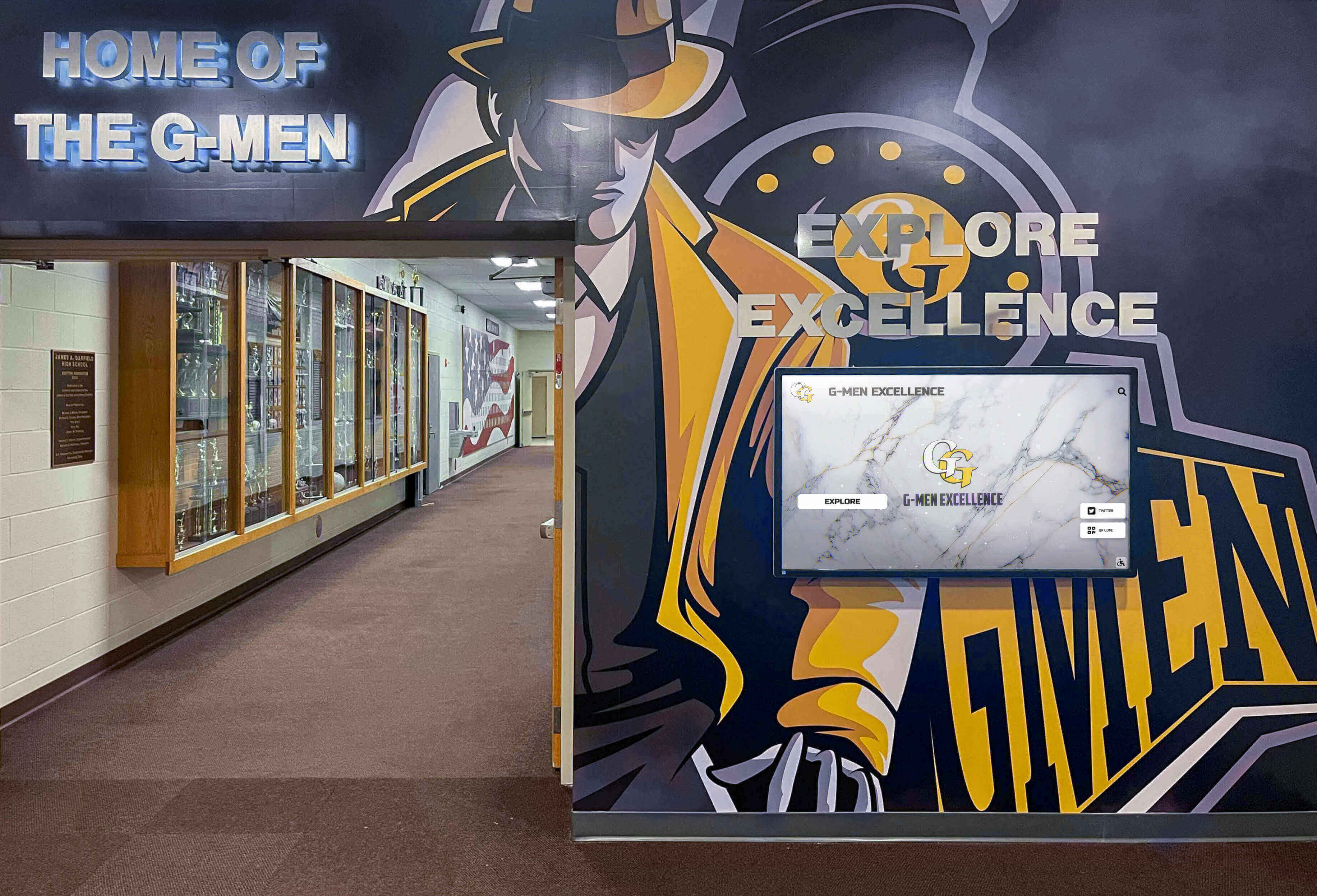
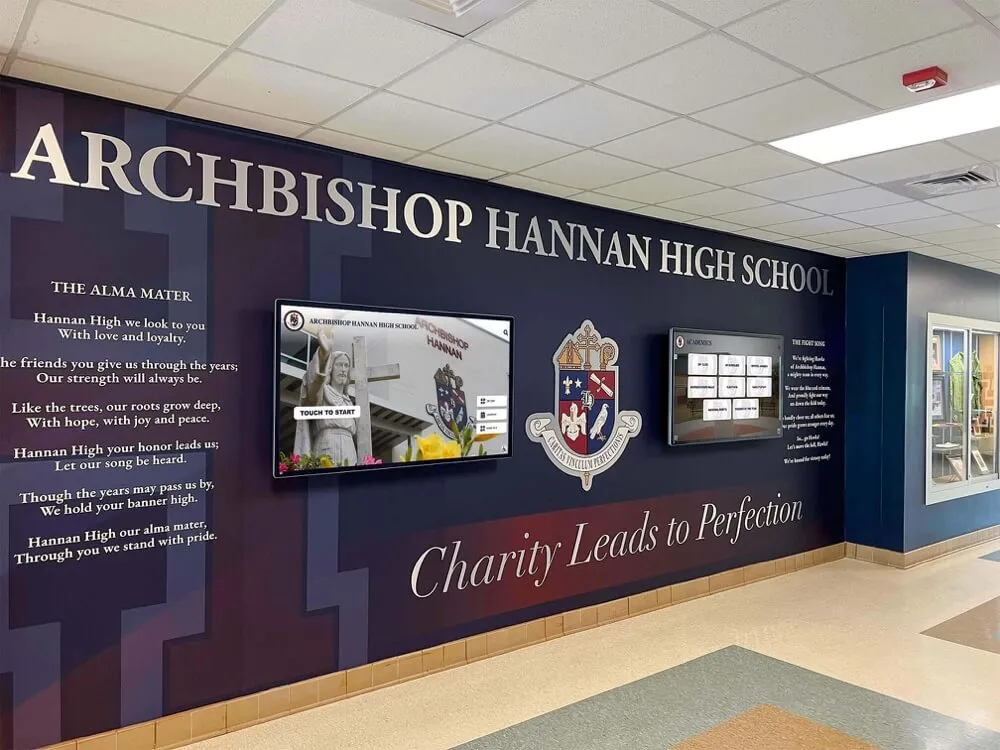
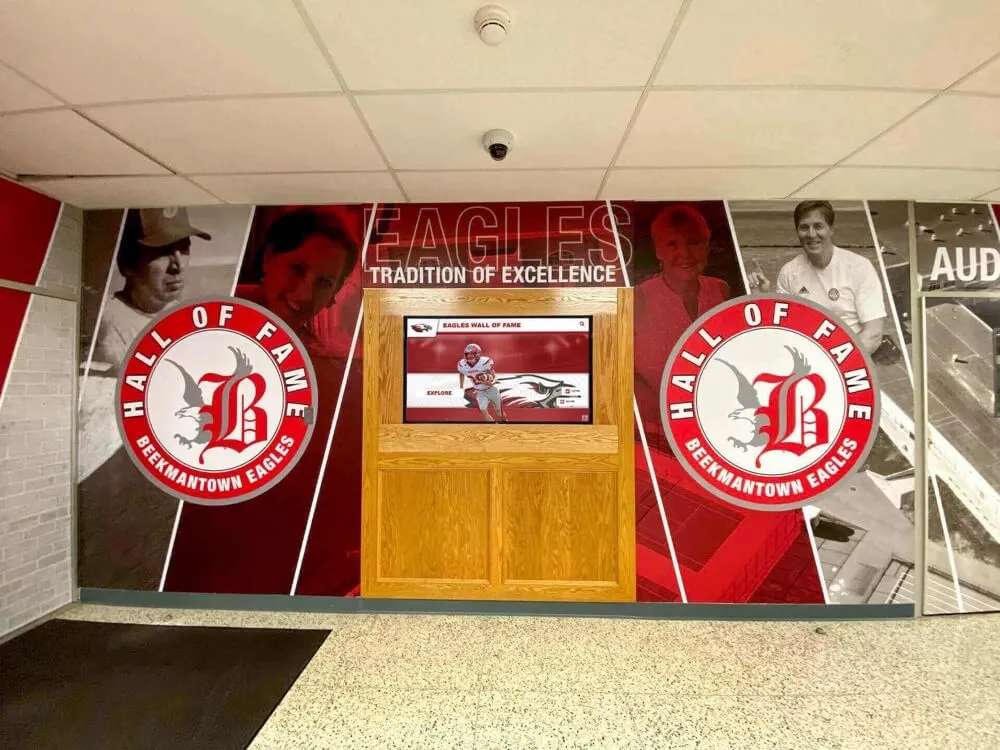
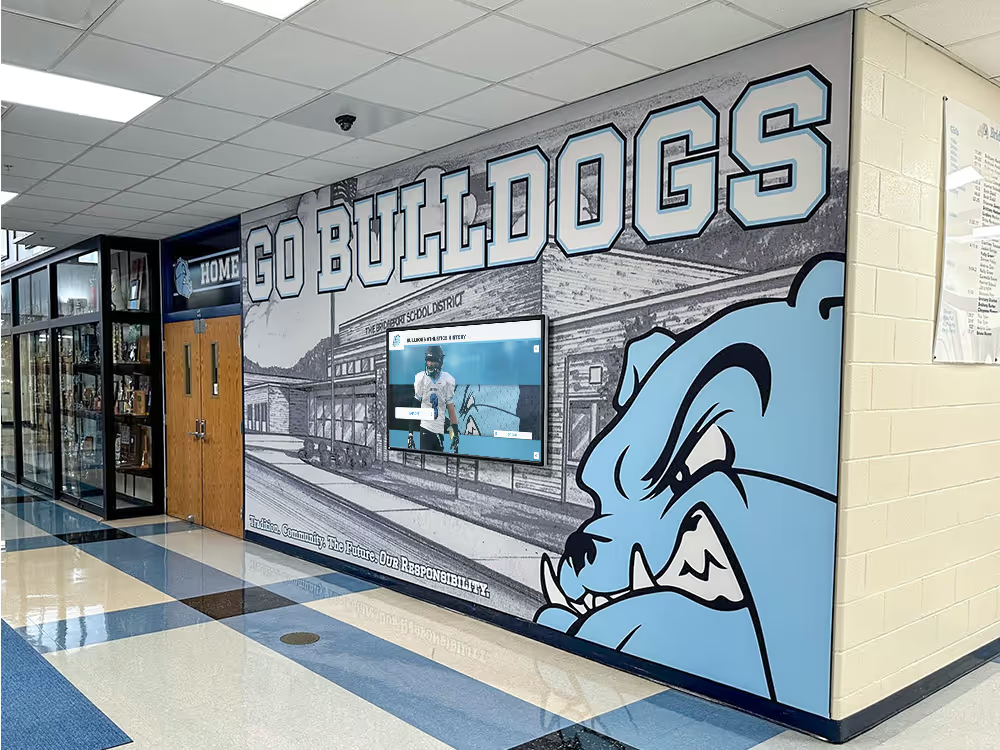
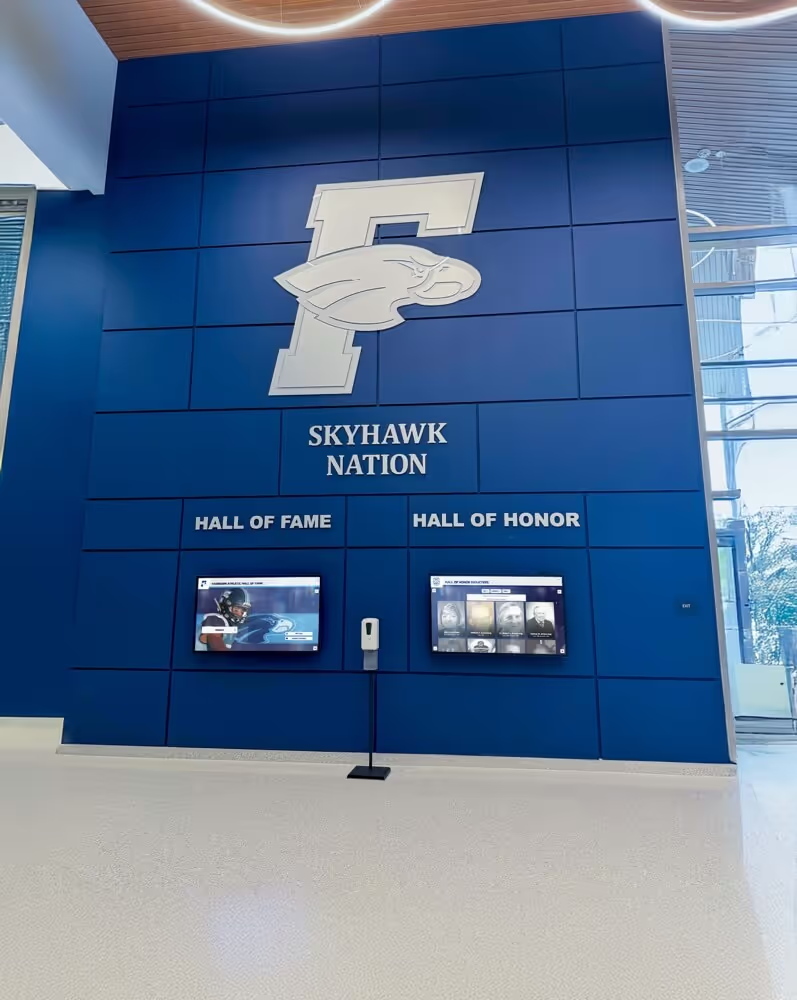
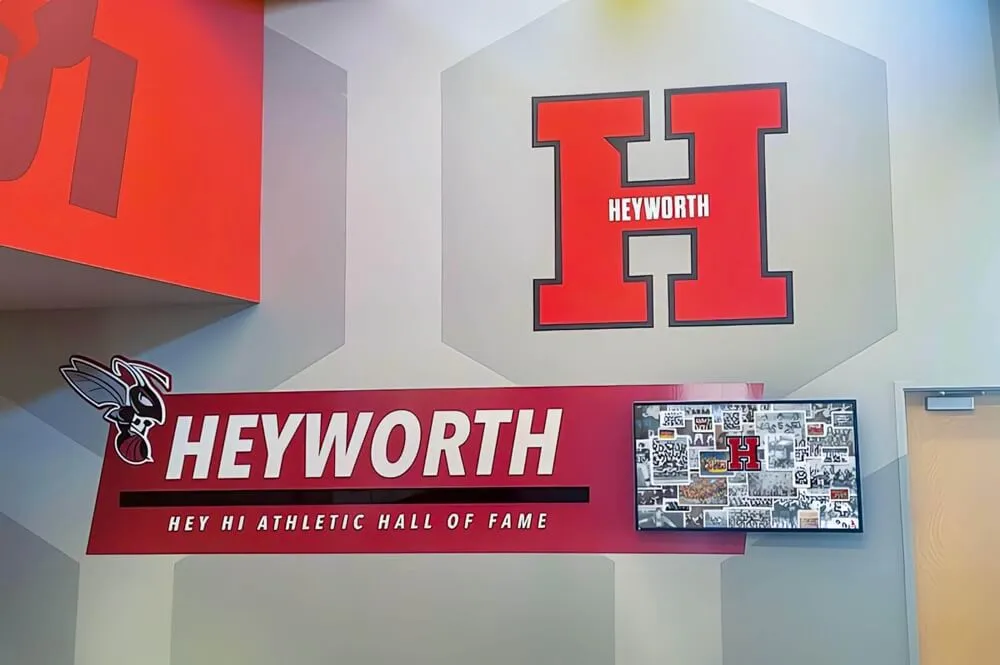
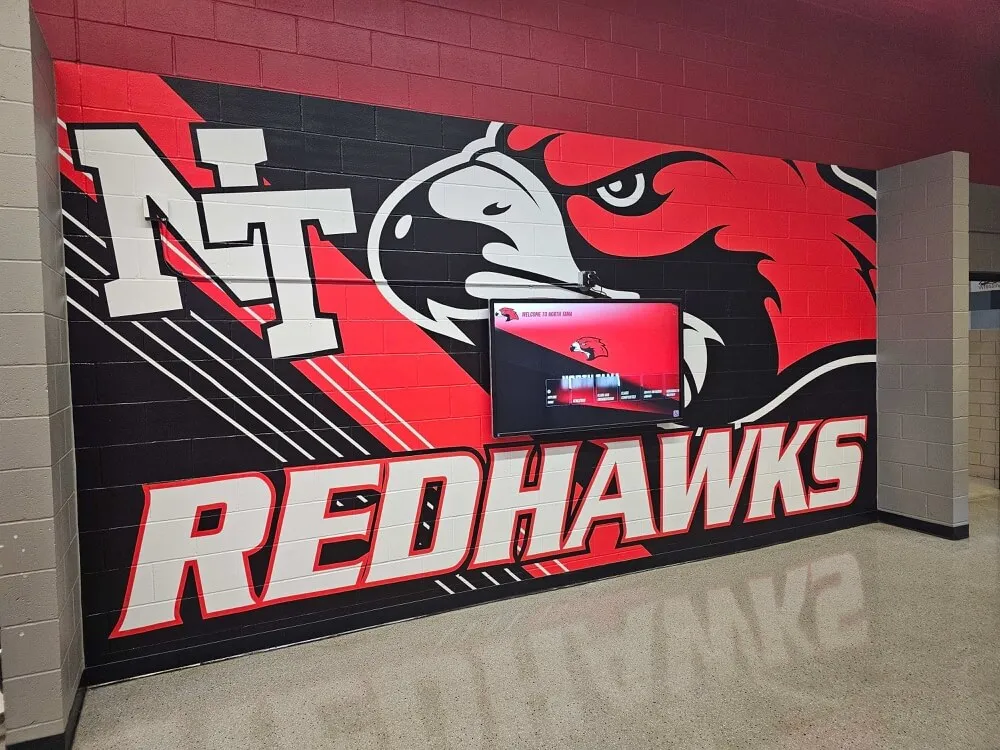
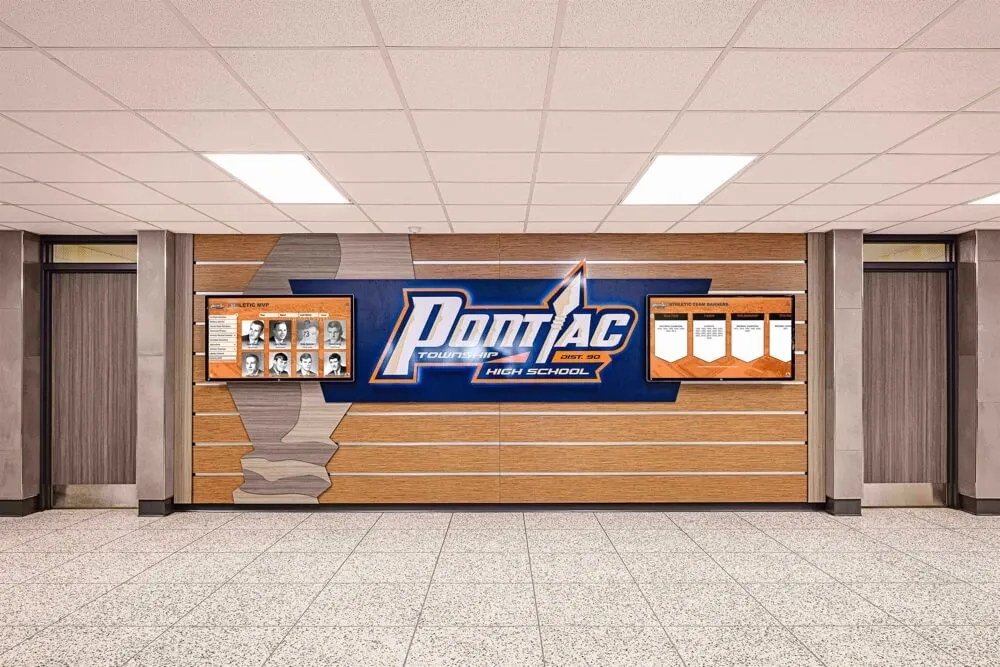
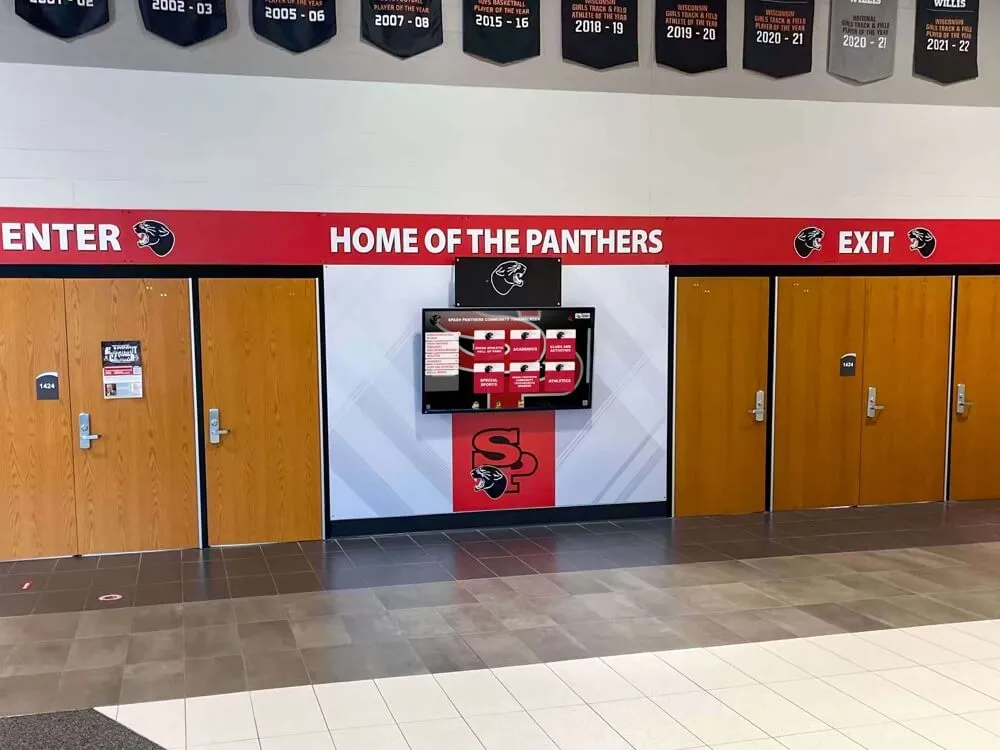
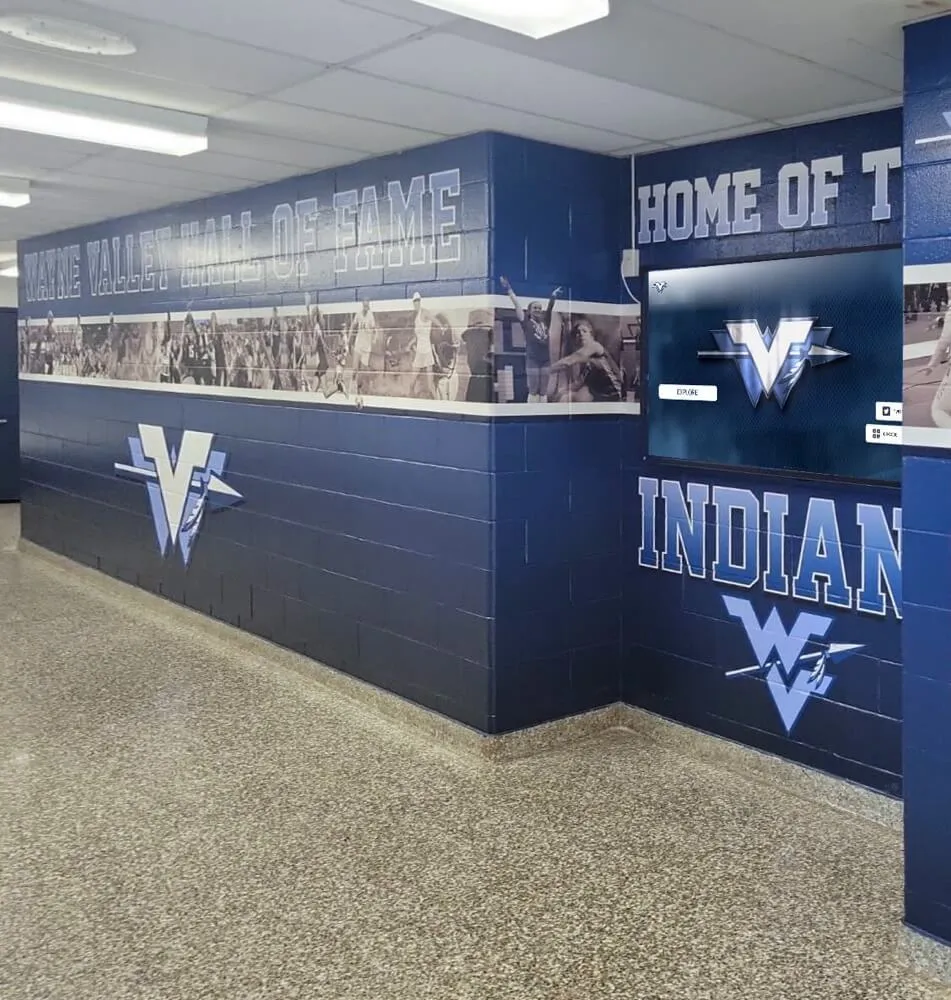
Hallway installations that combine mural branding, physical trophy cases, and digital screens create layered recognition environments
Lighting and Visual Merchandising
The inside of a display case matters, but lighting determines whether visitors actually look. LED strip lights along the cabinet’s interior edge provide even illumination with minimal heat and a long service life. Spotlights over signature trophies — a state championship cup, a storied coach’s commemorative — draw the eye and signal hierarchy. Color temperature around 3000K (warm white) flatters metalwork and wood without washing out photographs.
Consistent backgrounds improve visual cohesion. Replacing mismatched shelving paper with a single color of velvet, acrylic, or painted wood gives every case a polished, intentional look that costs little but changes the impression dramatically.
Academic and Award Display Case Ideas
Athletic trophies dominate most school cases by default, but academic recognition deserves equally prominent treatment. When only athletics fill the showcase nearest the main entrance, the implicit message to students is clear — and limiting.
Honor Roll and Scholar-Athlete Displays
Dedicated academic cases with rotating honor roll portrait cards, AP Scholar plaques, and academic competition trophies communicate institutional values as loudly as any sports hardware. Keep the content current: a case showing last semester’s honor roll in June, when the same students are graduating, still feels current; a case showing three-year-old data signals neglect.
Schools building comprehensive academic awards programs across grade levels benefit most from display cases that update frequently, because the value of the recognition depends on its timeliness.
AP Scholar and Academic Achievement Displays
AP Scholar designations, National Merit recognition, and scholarship announcements often get a paragraph in the school newsletter but no physical display prominence. A dedicated case with professionally printed plaques or portrait cards for each designation level — AP Scholar, AP Scholar with Honor, AP Scholar with Distinction — reinforces that rigorous coursework produces tangible, visible achievement.
AP Scholar recognition board guides outline how to tier these designations clearly so visitors understand the levels at a glance rather than needing to read fine print.
Academic Competition and Decathlon Displays
Academic decathlon, Science Olympiad, math competition, and debate team achievements generate trophies and plaques that rarely receive display space proportional to the effort invested. A dedicated case — even a small one — for academic competition hardware sends a meaningful signal to students who pour the same intensity into academic pursuits that athletes put into championship seasons.
Planning academic decathlon recognition that reflects the effort involved starts with visible, permanent display commitment, not just ceremony acknowledgment.
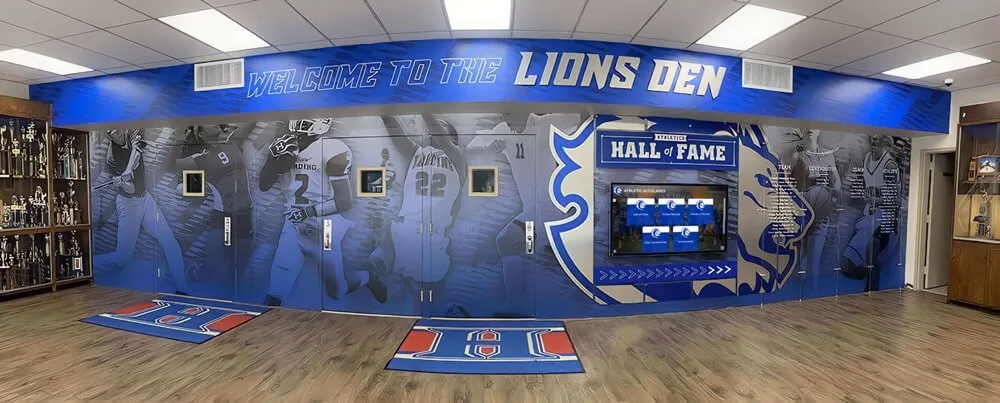
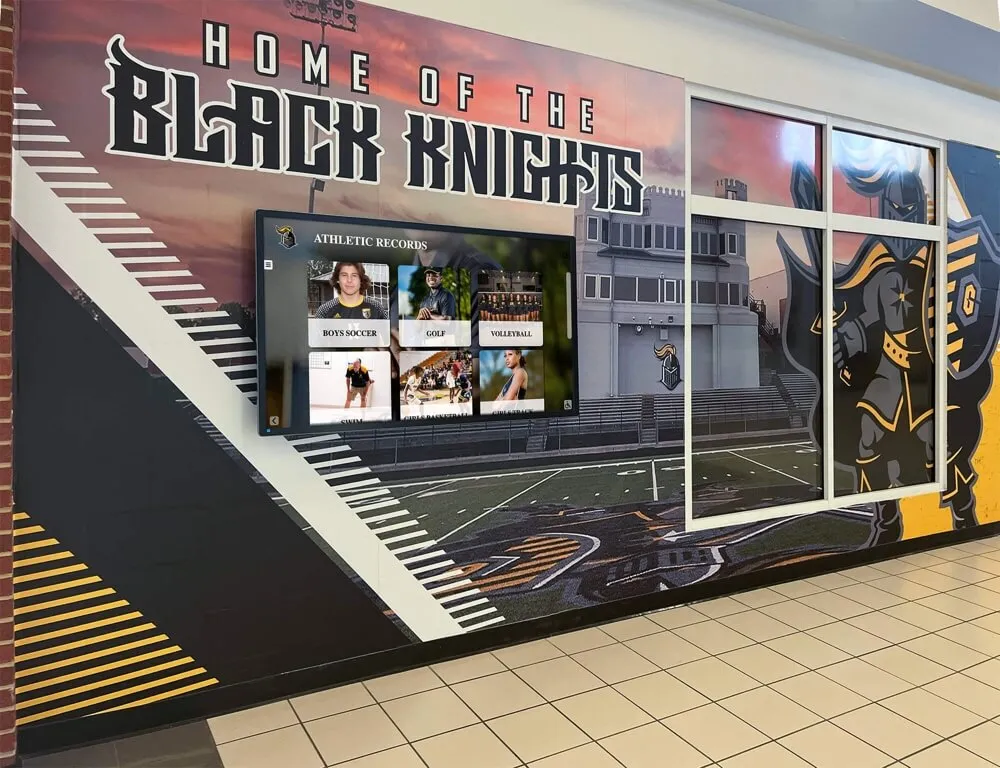
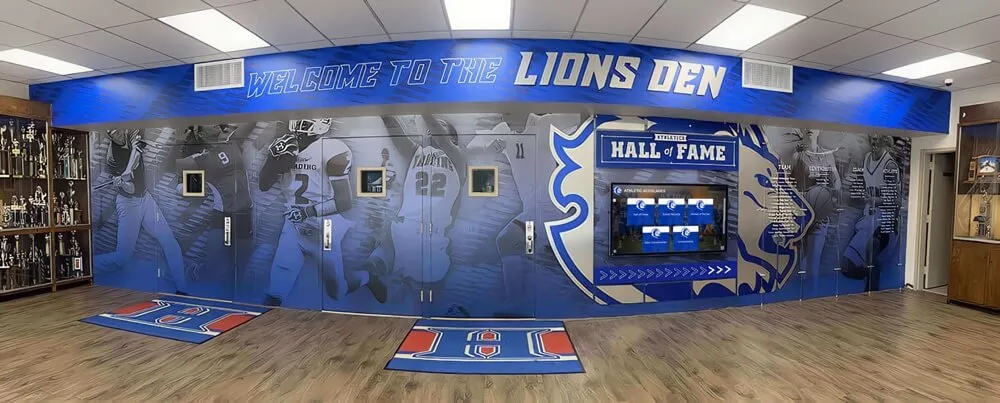
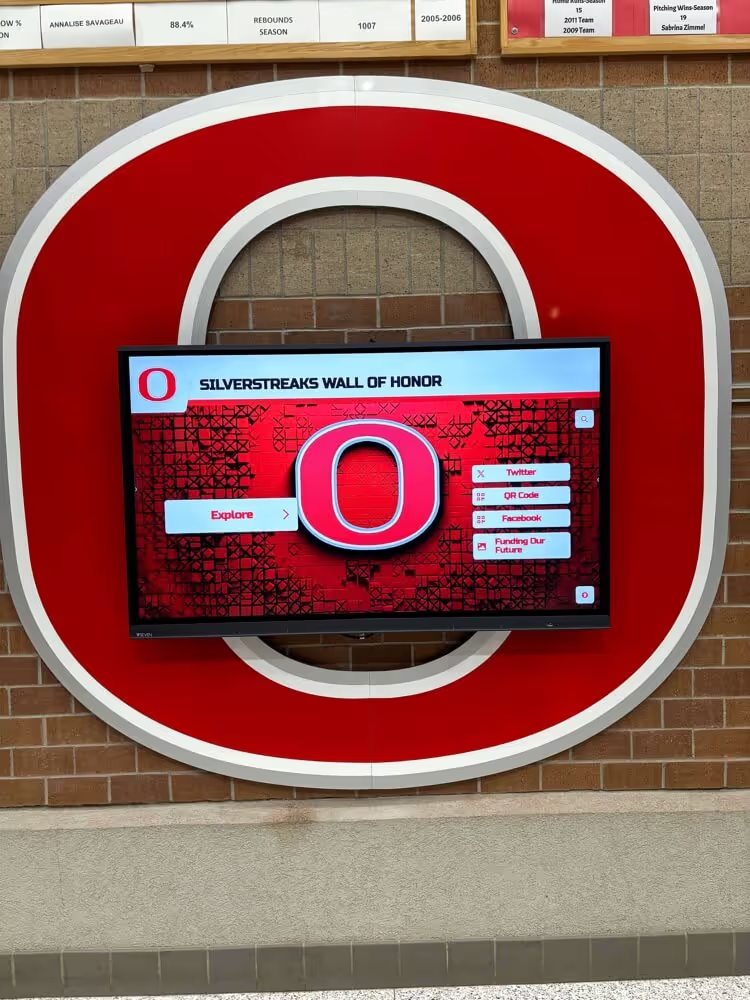
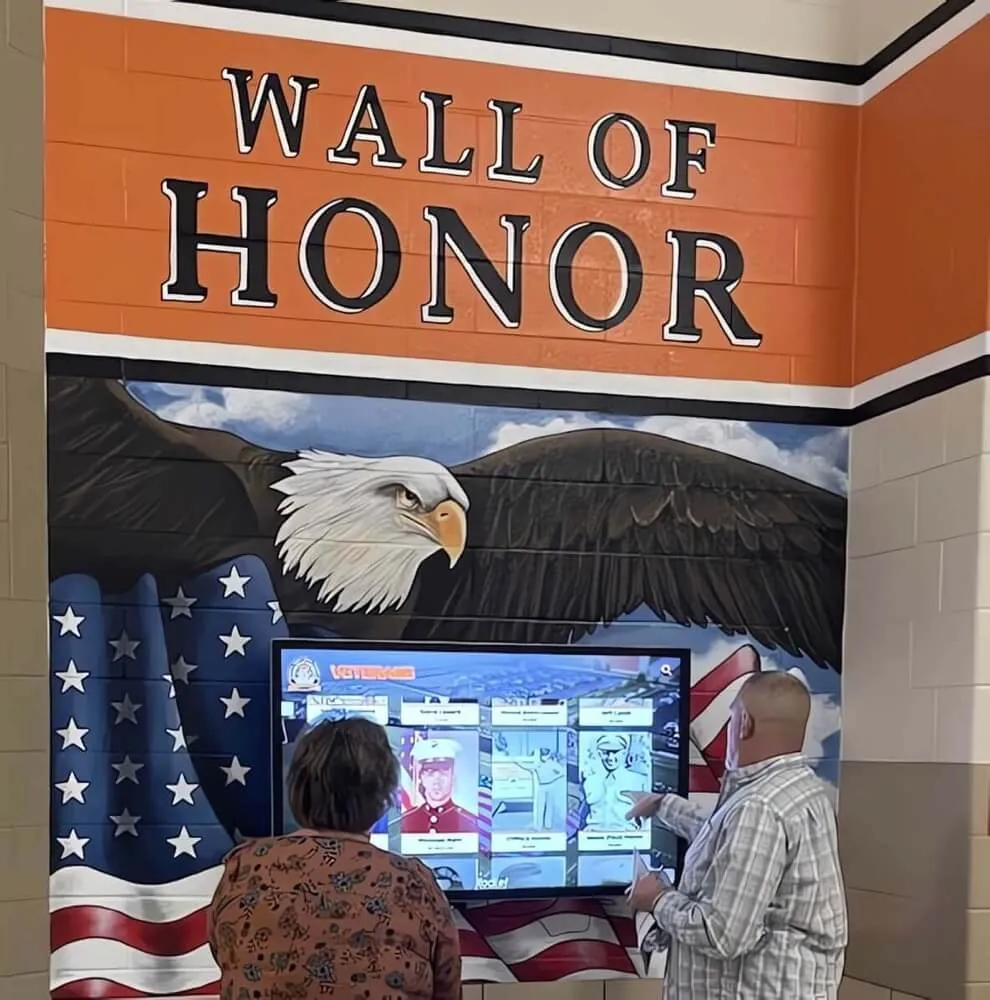
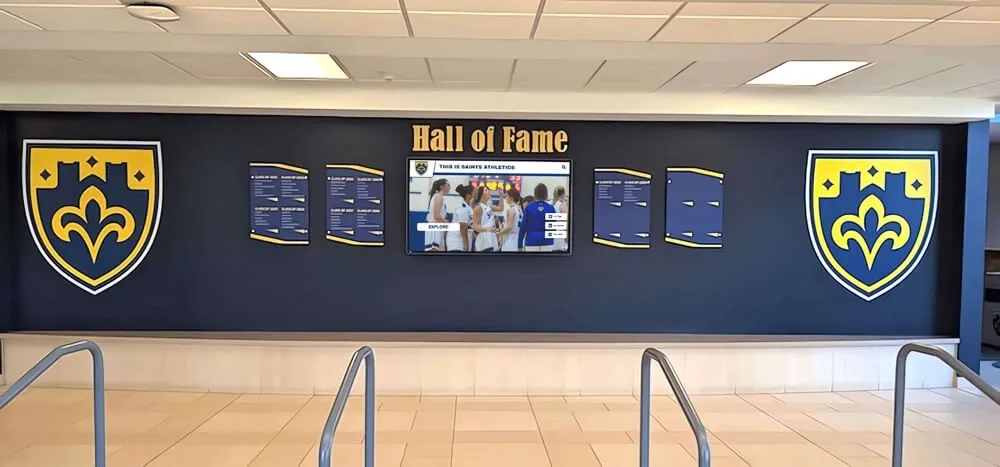
Dedicated recognition spaces that combine themed murals with trophy cases signal to visitors that achievement has a permanent home at this institution
Library and General Achievement Display Cases
The parent topic of school display case ideas is library display cases, and for good reason: many schools keep their most versatile display cases in library or media center spaces where traffic from all student populations — not just athletes — creates broader recognition exposure.
Rotating Subject-Area Achievement Cases
Library cases work well with rotating themes tied to academic cycles: a science showcase during STEM week, a literacy recognition display during reading month, a student art and writing installation for spring. Rotating content ensures the display remains fresh and draws different audiences back to the same physical space.
Historical and Archival Displays
Library cases are natural homes for historical institutional artifacts: founding-year photographs, early athletic programs, original school seals, newspaper coverage of significant milestones. These archival displays require climate-controlled cases with UV-filtered glass if originals are used, or high-quality reproductions framed and labeled for longevity.
Donor and Community Recognition
Cases near the library entrance or administrative offices can acknowledge donors, community partners, and alumni whose contributions funded specific programs or facilities. Engraved nameplates inside a case, or framed recognition certificates alongside photographs, create tangible acknowledgment without requiring a dedicated donor wall installation.
Physical vs. Digital Display Cases: A Direct Comparison
The following table captures the most practical tradeoffs between traditional physical cases and digital or touchscreen recognition alternatives.
| Factor | Physical Display Case | Digital / Touchscreen Display |
|---|---|---|
| Capacity | Limited by cabinet dimensions; new achievements displace older ones | Unlimited entries; complete historical archive accessible on one screen |
| Update process | Physical key access, rearranging hardware, engraving or printing labels | Remote cloud-based CMS update from any internet-connected device |
| Visitor engagement | Passive viewing through glass; limited information per trophy | Touchscreen browsing, search by name or year, photo galleries, video |
| Accessibility | Dependent on case height and glass visibility; no audio or alt text | Meets ADA WCAG 2.1 AA standards with high-contrast modes and accessible heights |
| Maintenance | Glass cleaning, hardware polishing, label replacement, bulb changes | Software updates via cloud; screen cleaning; remote hardware monitoring |
| Initial cost | Lower upfront; cases range from a few hundred to several thousand dollars | Higher upfront investment; includes hardware, software, and content setup |
| Long-term cost | Ongoing engraving, printing, construction for expansion | Annual subscription or maintenance fee; no per-entry costs as archive grows |
| Mobile reach | On-premises only | QR codes unlock mobile viewing for remote audiences; web integration possible |
| Scheduled publishing | Not applicable; changes require physical access at the time | Content can be scheduled in advance, auto-publishing on selected dates |
| Sponsorship display | Limited; static sponsor signage inside case requires reprinting | Integrated sponsorship display rotates alongside recognition content |
The right answer for most schools is not an either/or choice. Physical cases preserve the tangible presence that athletes and alumni associate with championship hardware. Digital platforms solve the capacity and update problems that plague every maturing athletic or academic program.
Digital Display Case Solutions
For schools where physical cases have reached their limits — or where important achievements are literally sitting in storage boxes because no cabinet space remains — digital recognition platforms provide a fundamentally different operating model.
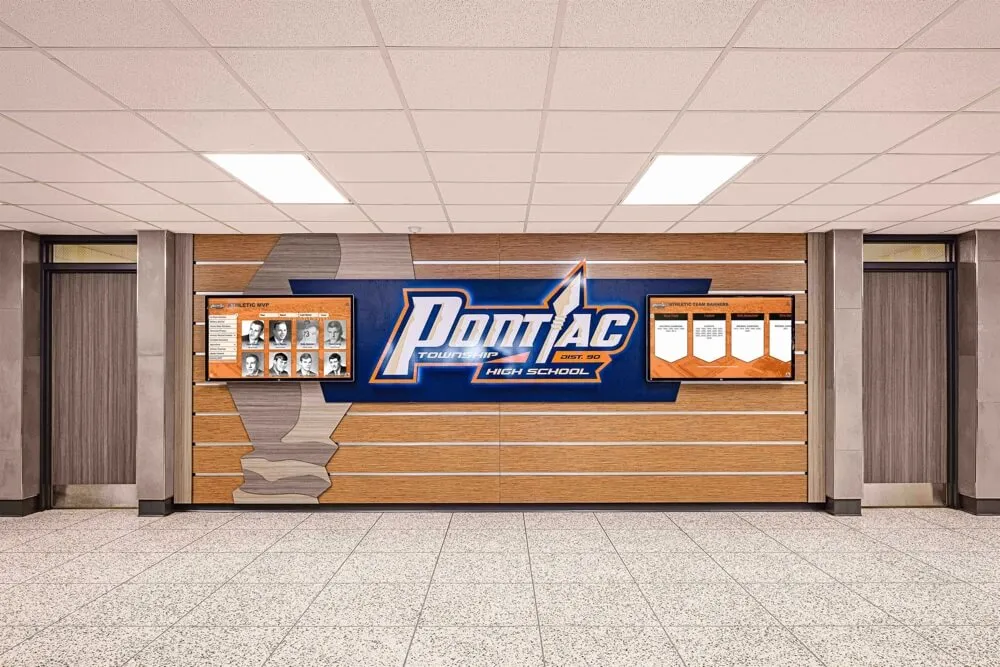
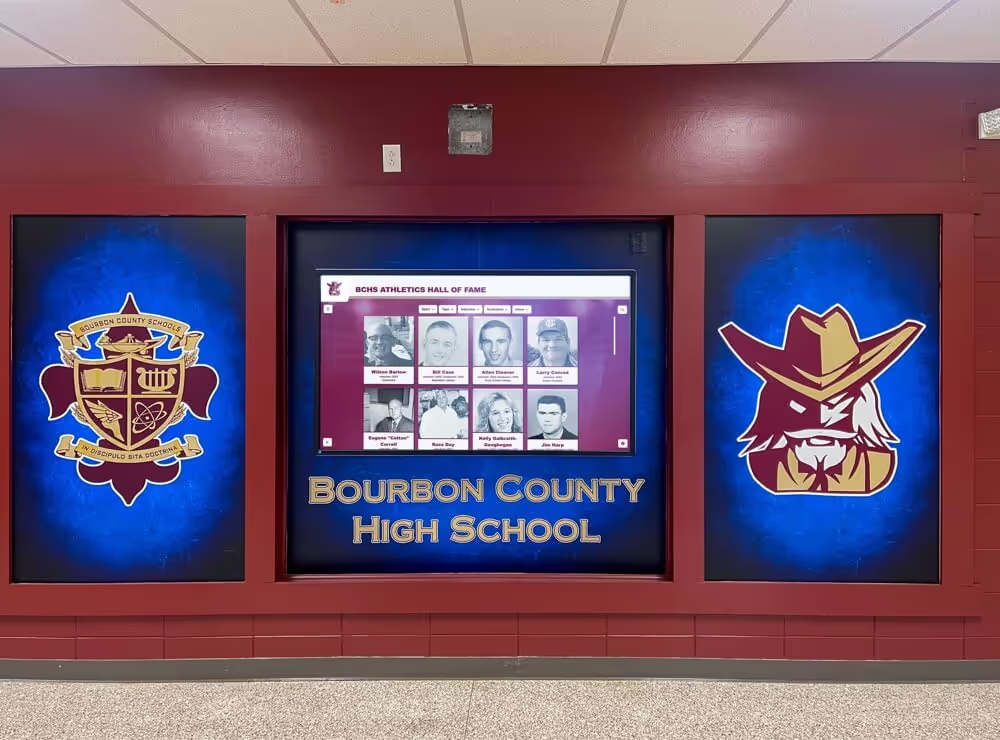
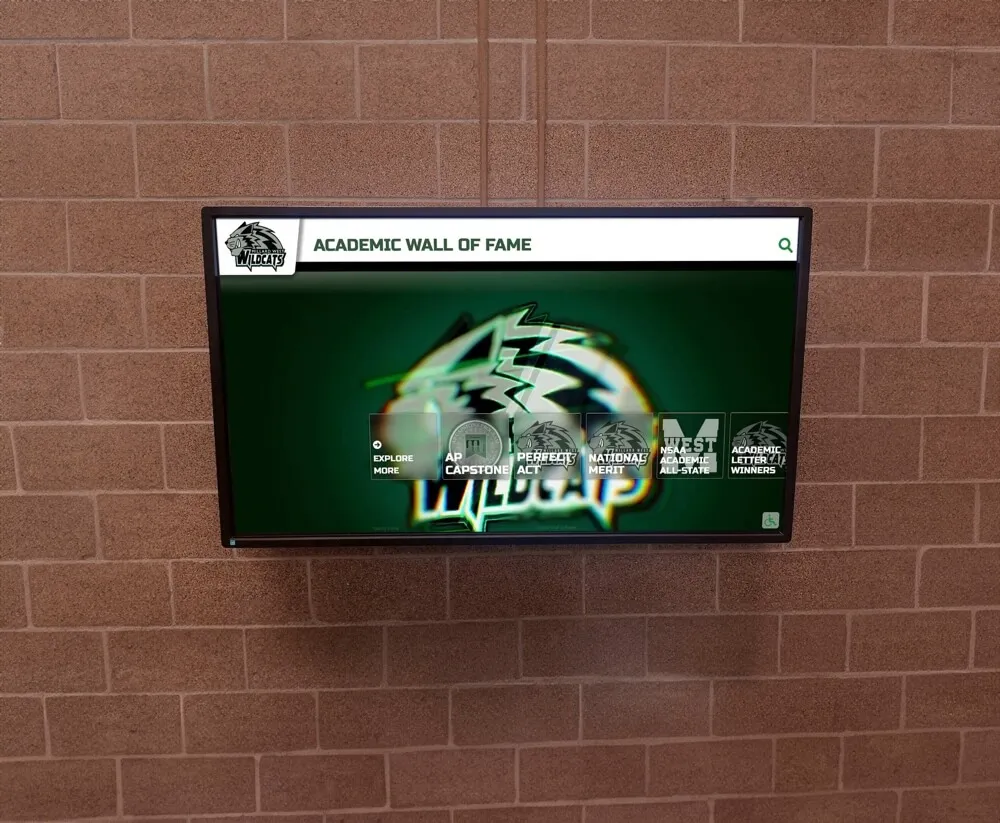
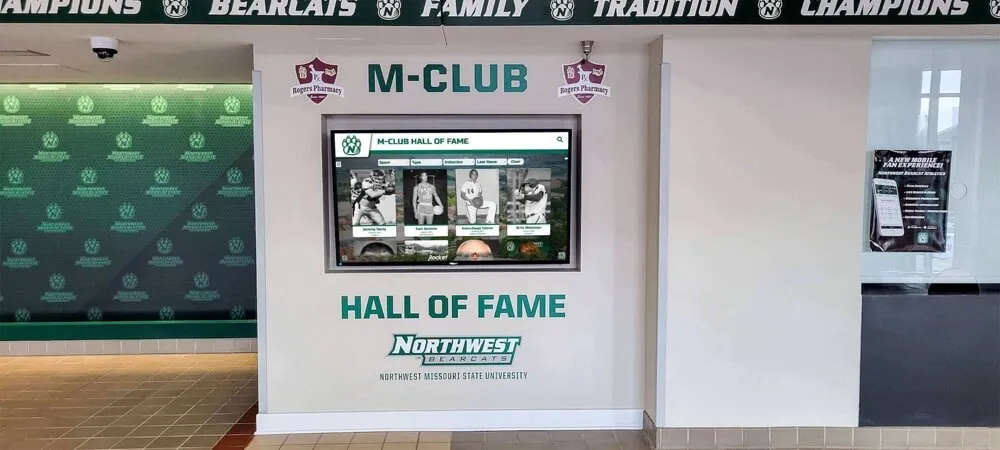
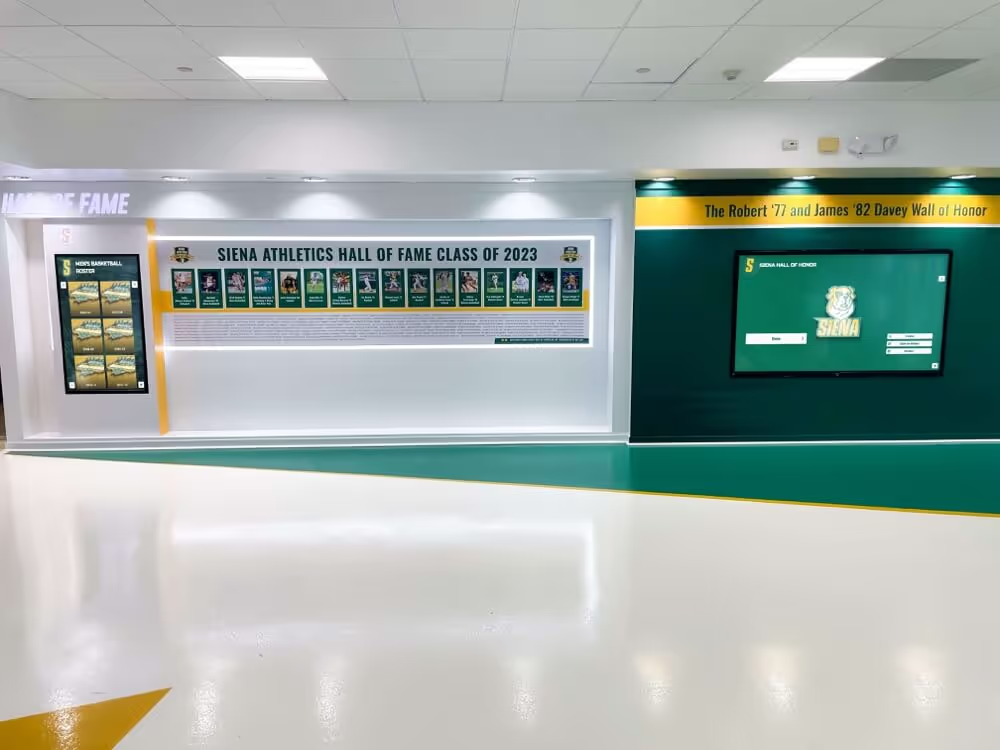
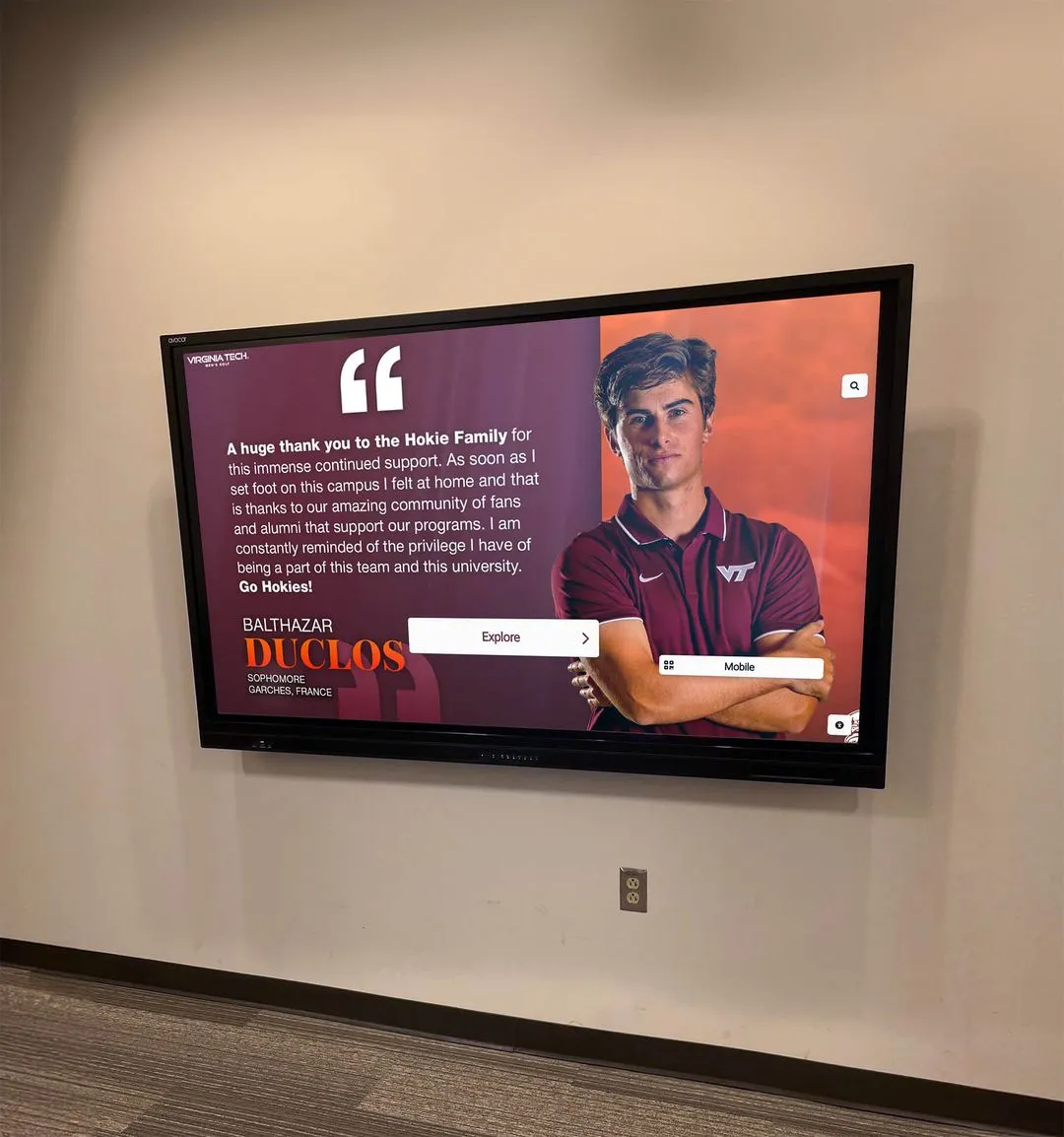
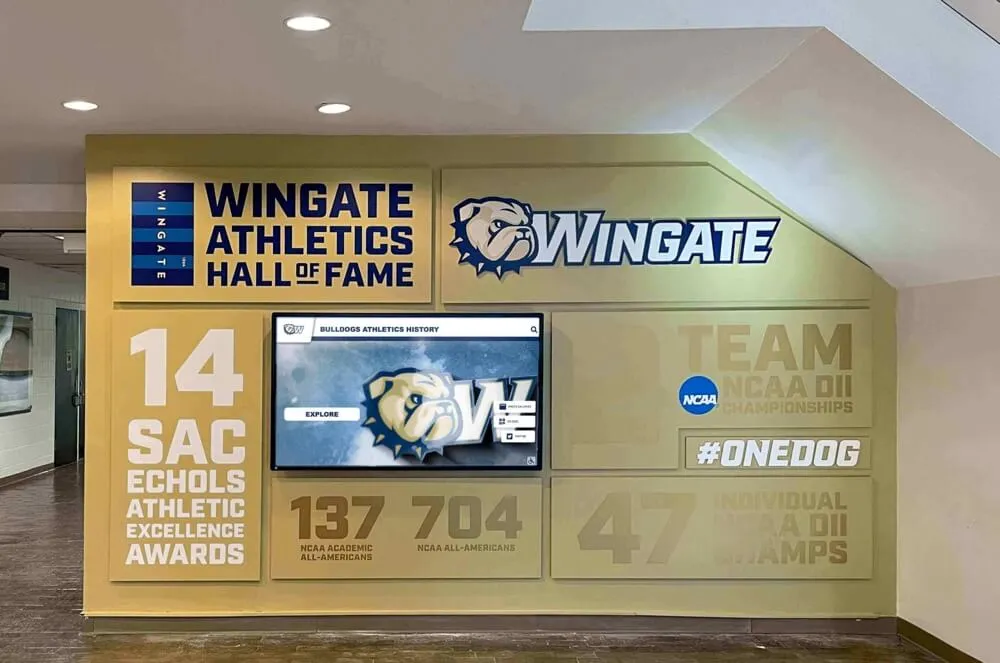
Hallway-mounted digital honor walls replace the physical constraints of glass cases with unlimited recognition capacity and easy content updates
Unlimited Recognition Capacity
Every physical case eventually runs out of room. The most common response — storing older trophies — creates a recognition backlog where achievements from five or ten years ago become invisible while current hardware crowds the display. Digital platforms eliminate this cycle entirely. Every championship season, every all-state selection, every academic honor from the program’s full history can coexist in the same searchable archive without displacing anything.
Remote Cloud-Based Management
Athletic directors do not work nine-to-five office hours. When a team wins a regional championship on a Friday night, updating the recognition display on Monday morning — from the road, from a phone, without waiting for a facility key or an IT ticket — reflects how modern school operations actually work. Cloud-based CMS access means administrators can add new content, update records, and schedule upcoming recognition in under five minutes from anywhere.
Schools that have explored how athletics and alumni recognition pages work on school websites understand the pattern: digital platforms extend physical campus recognition to web and mobile audiences who never enter the building.
Interactive Visitor Experience
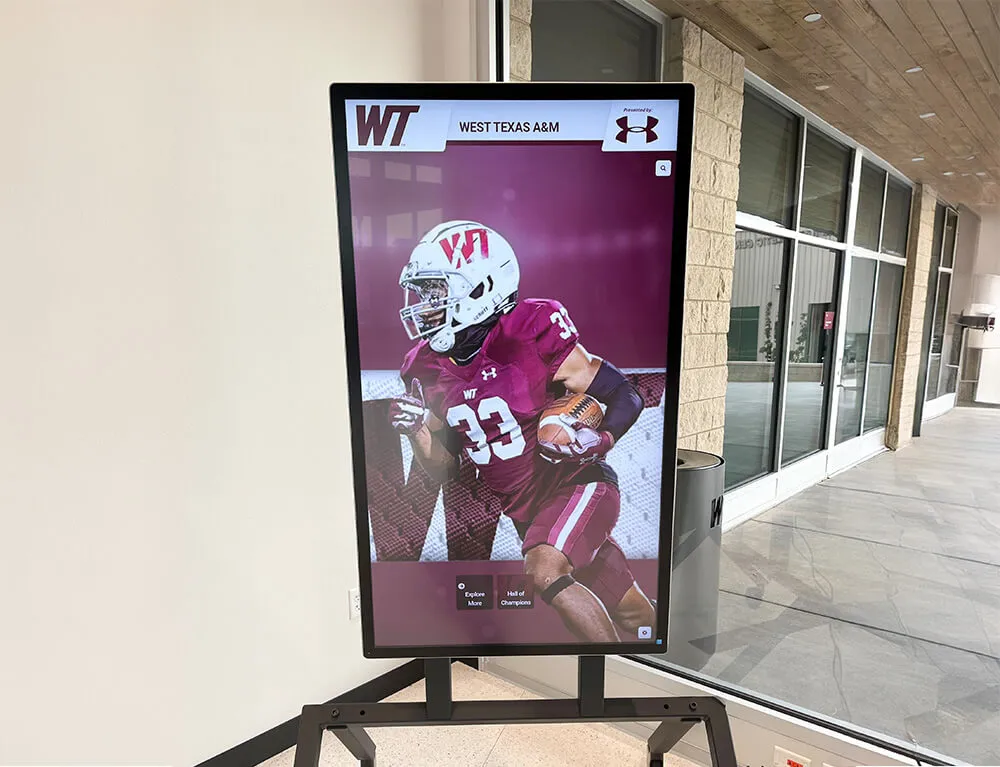
A physical trophy tells you the year, the sport, and the place. A touchscreen display lets visitors search for a specific athlete by name, browse championship seasons by decade, read complete team rosters, view action photographs, and watch highlight video — all from the same kiosk. Students discovering their parent’s or grandparent’s name in an athletic archive create connections to institutional legacy that a trophy behind glass simply cannot produce.
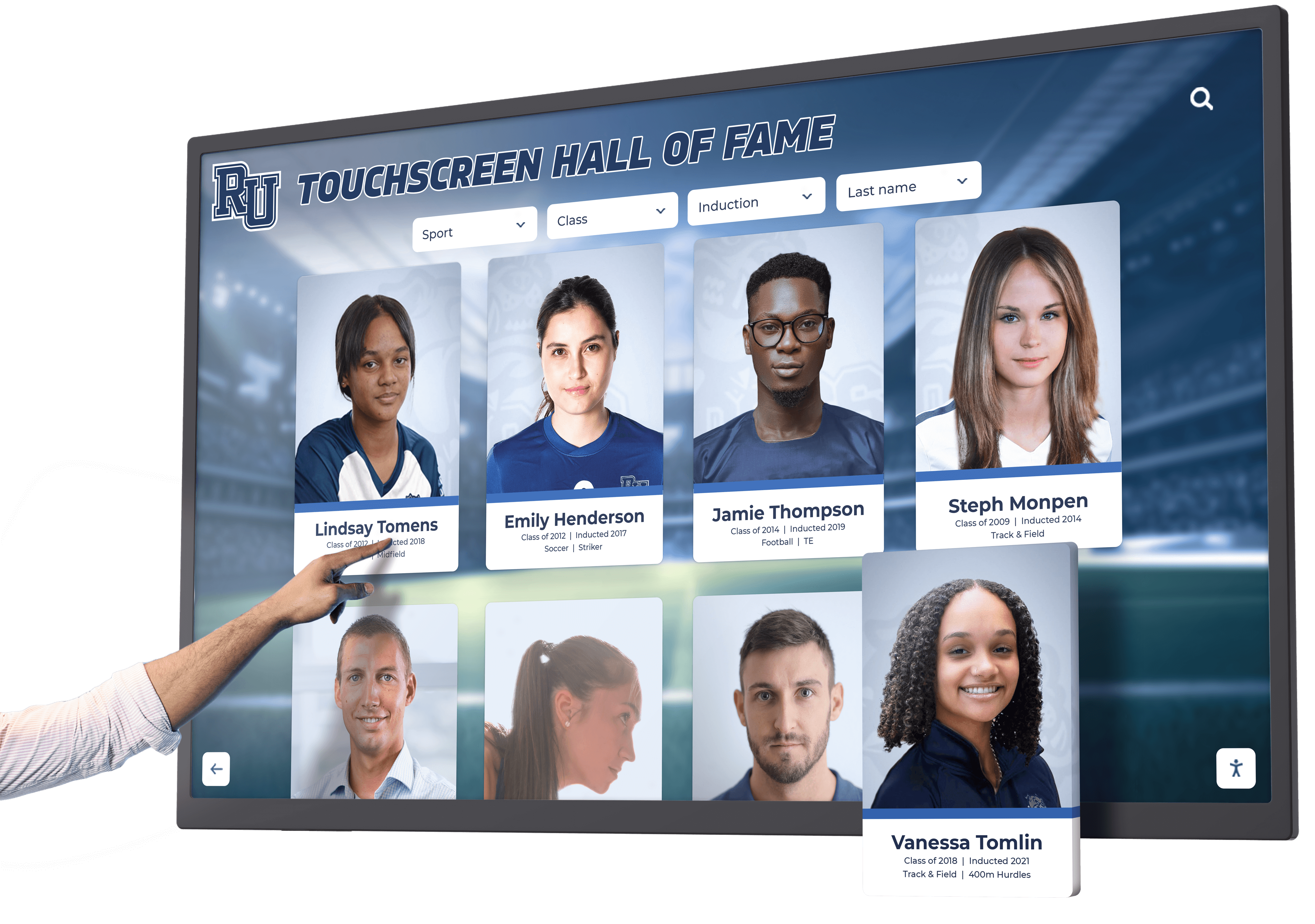
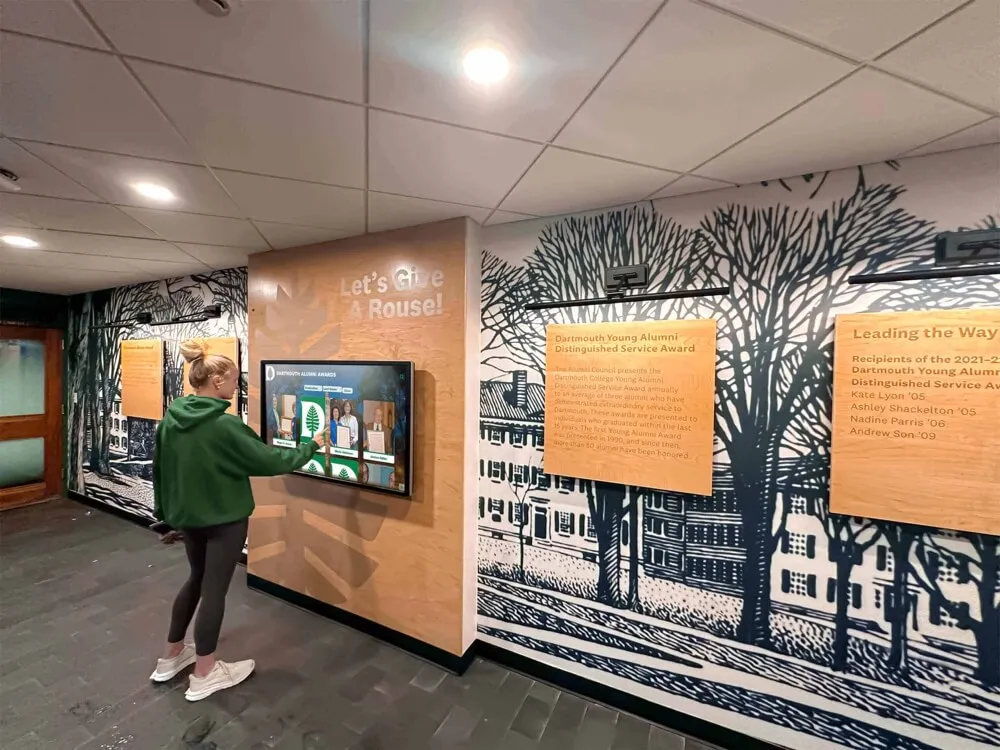
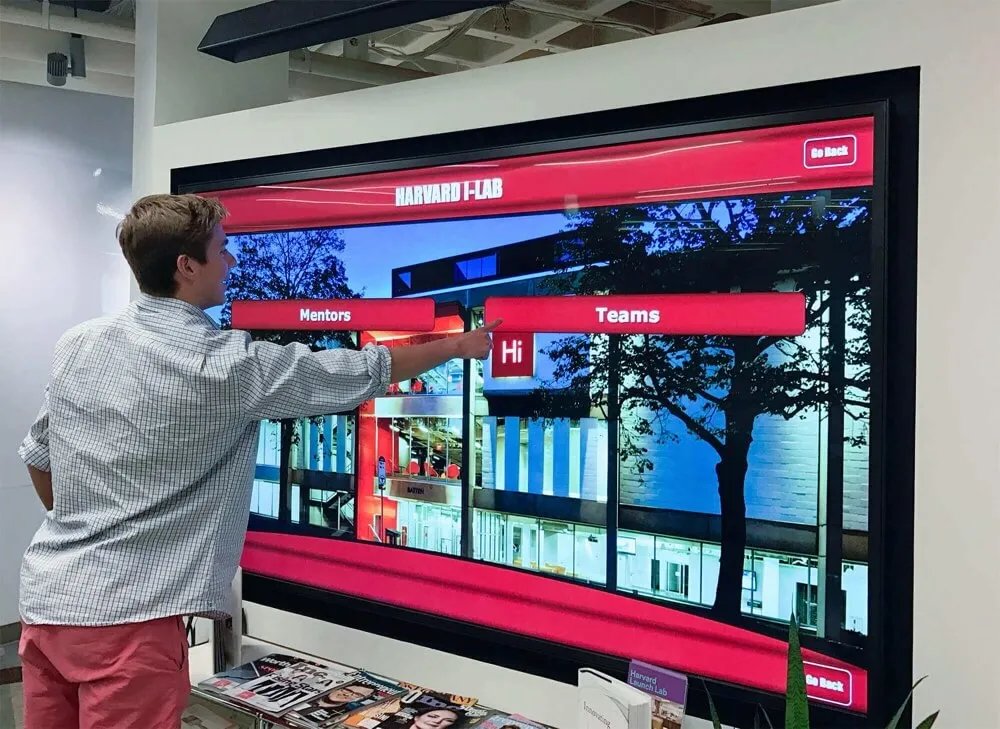
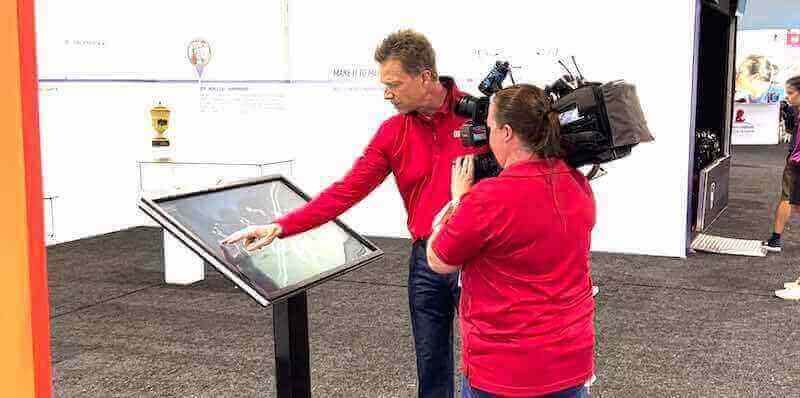
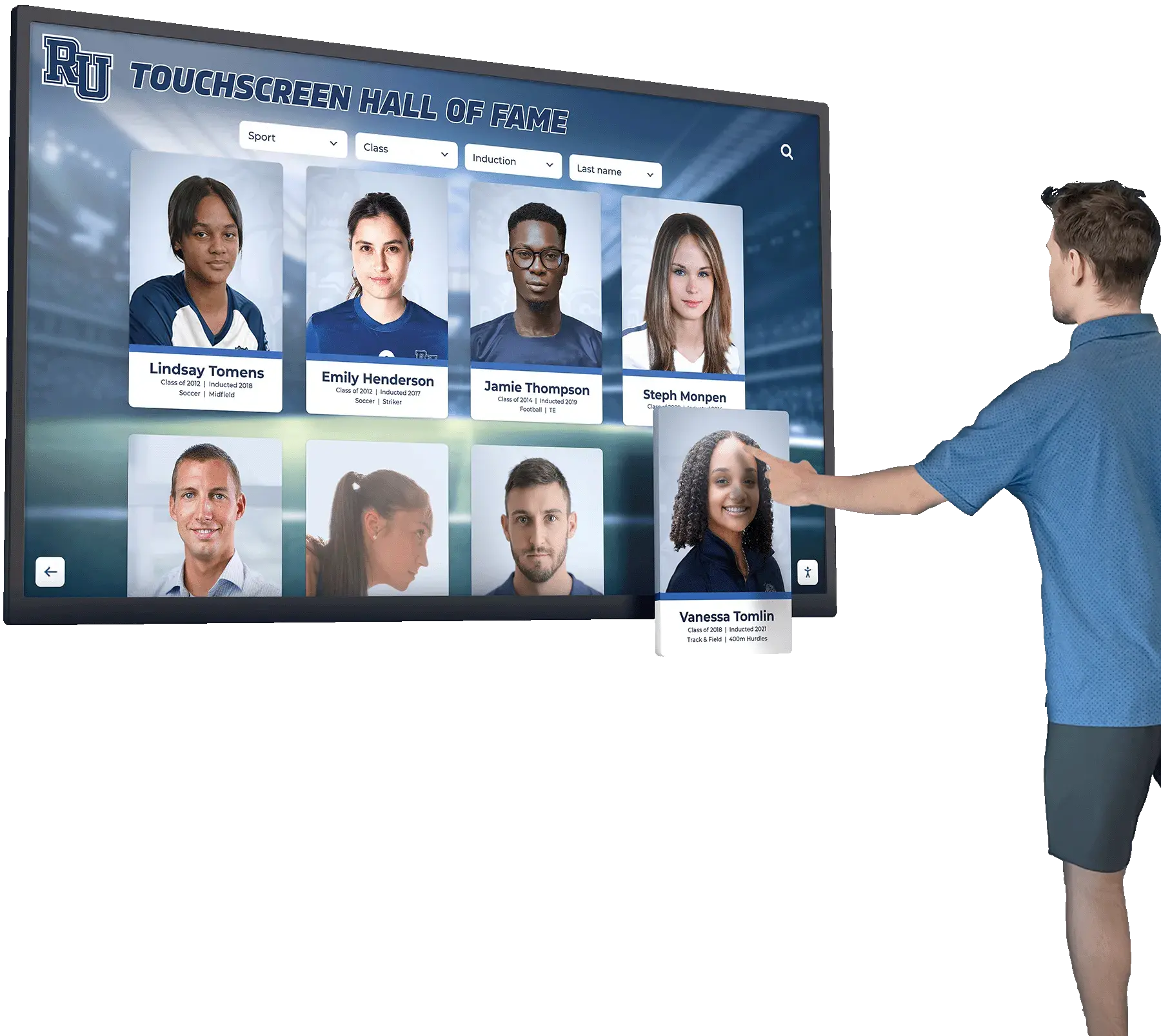
Touchscreen interaction transforms passive trophy viewing into active exploration, keeping visitors engaged far longer than static cases
QR Codes for Mobile Viewing
Physical trophy cases stop serving their audience the moment visitors leave the building. QR code integration on digital display hardware lets students, families, and alumni unlock the full recognition archive on their phones — at home, during reunions, or while sharing a school’s legacy with their own children. This mobile reach turns a local display into a living institutional record accessible from anywhere.
Display Case Dimensions and Placement Considerations
Getting the physical planning right matters whether you are ordering a new case, renovating a hallway wall, or positioning a digital kiosk.
Standard Display Case Dimensions
Freestanding trophy cases typically range from 36 to 72 inches wide, 72 to 84 inches tall, and 14 to 20 inches deep. Wall-mounted cases are shallower (6 to 14 inches) and work in narrower corridors. When planning a multi-case wall, maintain consistent case heights for visual cohesion even if individual widths vary by section.
Accessibility standards require that display content be visible from wheelchair height. Cases with bottom shelves starting below 15 inches from the floor may be inaccessible to wheelchair users; adjusting shelf placement or choosing elevated-base cases improves visibility for all visitors.
High-Traffic Placement Strategy
Main entrance lobbies generate the most consistent exposure across all visitor types — students, families, alumni, and prospective students — making them the highest-value location for recognition displays. Gymnasium lobbies and athletic corridors serve athletic audiences well. Library and common area placements reach academic audiences who may rarely pass through athletic facilities.
For digital kiosks, placement near natural gathering points — the edge of a lobby seating area, the corner nearest the gymnasium entrance, alongside a donor recognition wall — creates organic interaction rather than requiring visitors to detour specifically to see the display.
Award Display Case Ideas for Specific Recognition Types
Sportsmanship and Character Awards
Conference and state sportsmanship awards often share cabinet space with championship hardware, but their significance deserves prominence rather than filler placement. Dedicating a clearly labeled section — or a single focal shelf — to character and sportsmanship recognition signals that your program values how teams compete, not just whether they win.
Coach and Staff Recognition
Head coaching milestone plaques (100 wins, 200 wins), national coach of the year awards, and service acknowledgments for long-tenured administrators rarely receive display attention proportional to their significance. A dedicated coaches’ section within the case — with brief biographical context — humanizes the recognition and gives returning alumni an additional point of connection.
Academic-Athletic Balance Recognition
Scholar-athlete honors, academic all-state selections, and student-athlete GPA recognition boards occupy an intersection between athletic and academic displays. Schools with comprehensive academic awards programs for students increasingly integrate scholar-athlete recognition into both athletic cases and academic honor spaces, reinforcing that the two are not separate identities.
Specific programs like AP Scholar recognition boards and AP Scholar recognition board guides provide detailed frameworks for how to present advanced academic designations in a way that is legible and meaningful to families unfamiliar with the tiering system.
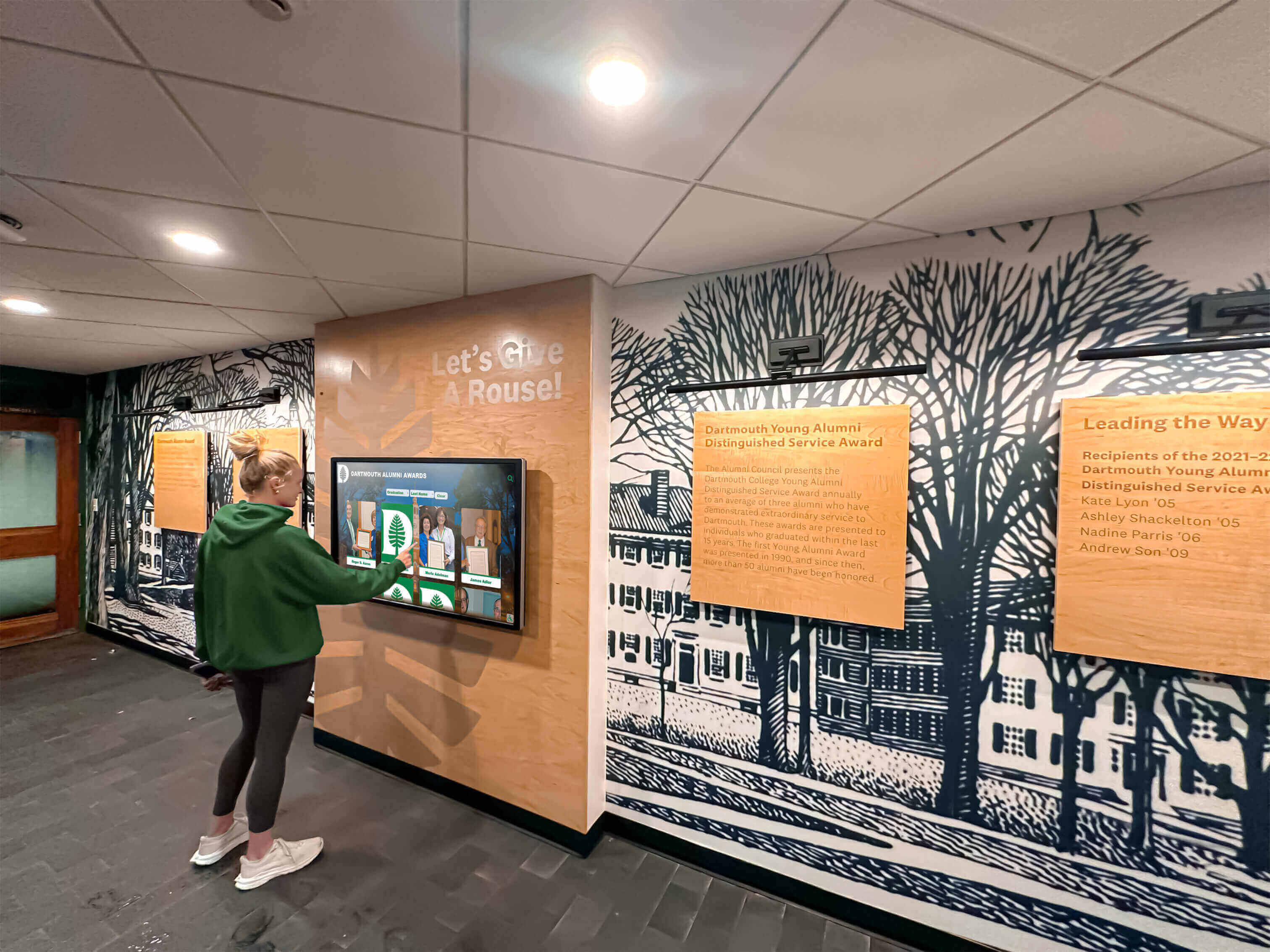
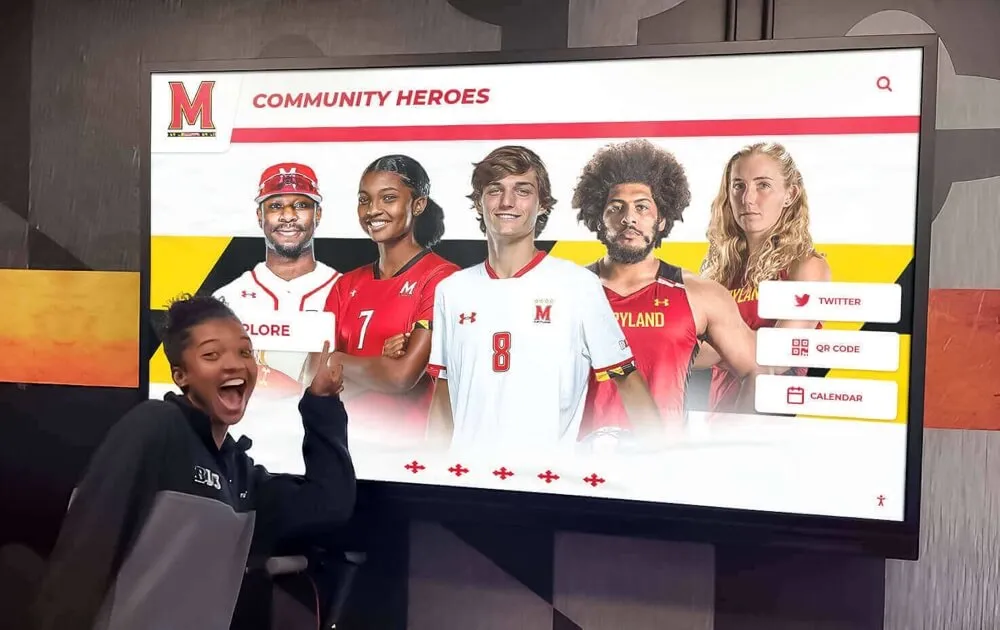
Students exploring digital recognition displays spend more time with achievement content than passive observers of physical cases, building deeper connections to program history
Planning Your School Display Case Project
Audit Before You Purchase
Before ordering new cases or investing in digital hardware, inventory what you actually have. Count every trophy and plaque in current cases and in storage. Measure existing cabinet space against recognition volume. Identify which achievements have no display home at all. This audit typically reveals that the real problem is not the style of the case — it is the ratio of achievement to available space, a problem physical cases cannot solve on their own.
Stakeholder Input and Buy-In
Display case projects that skip input from coaches, athletic directors, librarians, academic department heads, and student representatives often miss the most important gaps. A brief survey or working session before selecting vendors or planning layouts surfaces priorities that budget holders might not anticipate: the swim coach who has forty-years of championship banners with no display home, the librarian who has been asking for a rotating academic achievement case for three years, the alumni coordinator who needs a historical archive accessible to remote graduates.
Phased Implementation
Not every school can replace physical cases and add digital kiosks in a single budget cycle. A phased approach lets you improve physical cases in year one — better lighting, reorganized layouts, added context panels — while building the case for digital investment with stakeholder data from the improved physical displays. Digital kiosks added in year two or three then complement, rather than replace, the physical recognition environment you have already elevated.
Ready to Move Beyond the Physical Case?
Rocket Alumni Solutions builds interactive touchscreen walls, digital trophy cases, and cloud-managed recognition platforms for schools, athletic departments, and alumni offices. Unlimited entries, WCAG 2.1 AA accessible, QR code mobile unlock, and remote updates in under five minutes — no IT ticket required. See how schools nationwide are replacing storage-room overflows with living digital archives that every student, family member, and alumnus can explore.
Book a DemoConclusion: Building a Recognition Environment That Grows with Your School
A single trophy case in a gymnasium hallway made sense when a school had fifty trophies and a graduating class of eighty students. Most schools today have far outgrown that model, with decades of athletic championships, academic honors, individual records, and community recognitions competing for display space that has not expanded to match.
The school display case ideas in this guide — from lighting upgrades and sport-specific sectioning in physical cases, to cloud-managed touchscreen platforms with unlimited capacity — represent a range of options appropriate for different budgets, spaces, and recognition philosophies. Physical cases remain valuable, especially for housing the championship hardware that athletes and alumni associate with tangible achievement. Digital platforms solve the problems physical cases cannot: capacity limits, update friction, historical invisibility, and the inability to reach audiences who never enter the building.
The schools that build the most effective recognition environments are those that treat display cases as institutional communication tools rather than storage solutions — planning thoughtfully for the audiences they serve, the achievements they want to highlight, and the legacy they intend to preserve across generations.
Explore how Rocket Alumni Solutions can help you design a recognition system that handles every trophy, plaque, honor roll, and individual milestone your program has earned — without anyone ending up in a closet.