



School clubs operate on shoestring budgets while delivering outsized impact—band programs need instruments, debate teams need tournament registration fees, robotics clubs need parts, and drama departments need sets and costumes. Every advisor running a club knows the cycle: excitement at the start of the year gives way to the slow realization that ambitions far exceed available funds. The scramble for school club fundraising ideas begins, and too often it ends with the same overworked bake sale table that netted three hundred dollars last spring.
But there’s a bigger problem than just finding ideas. Most club fundraising campaigns fail to recognize the people who make them possible. Students spend weekends selling coupon books or staffing car washes, and then the campaign ends with no acknowledgment of who did the heavy lifting. That invisibility quietly kills motivation—and it means the same ten committed members carry the load every single time while the rest disengage.
The most successful school clubs approach fundraising differently. They treat campaigns as community-building events that deserve to be commemorated, not just completed. They create recognition systems that celebrate every contribution, from the student who sold the most raffle tickets to the advisor who designed the flyer at midnight. And increasingly, they display those contributions permanently—turning fundraising participation into a lasting part of the club’s identity and history.
Whether your club is just starting out or running its tenth campaign of the year, these school club fundraising ideas are organized for practical implementation—with recognition built into every strategy from the start.

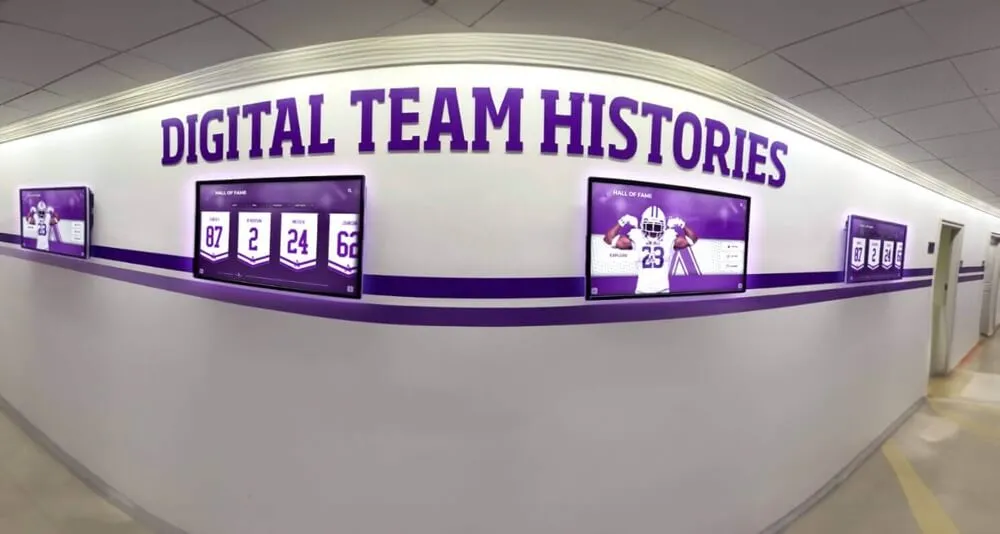
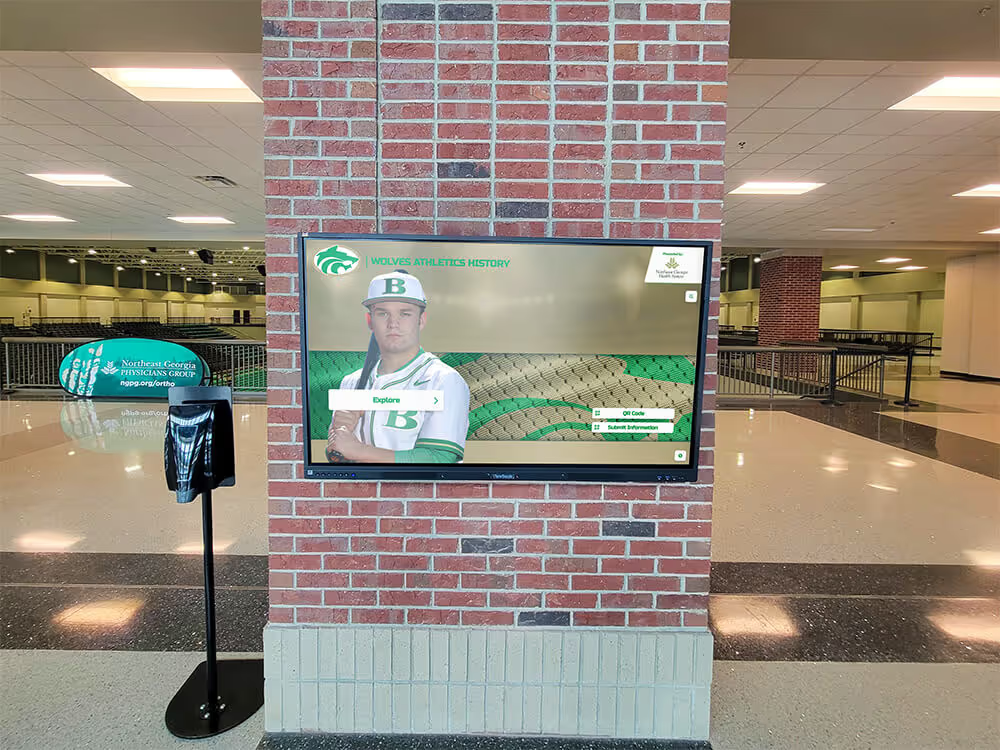
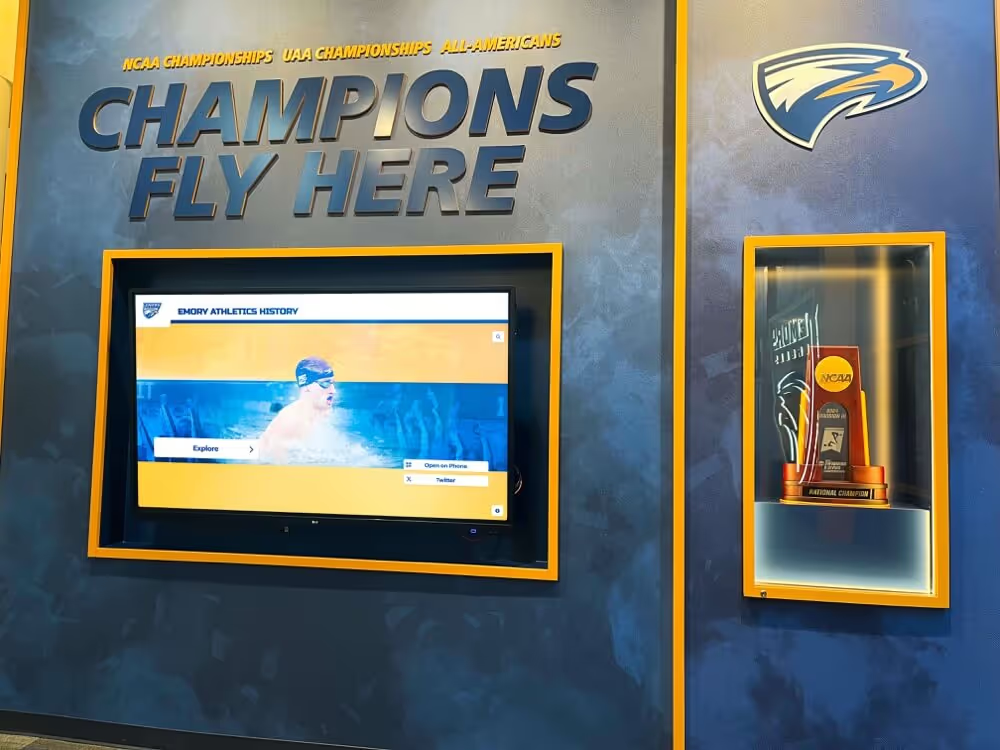
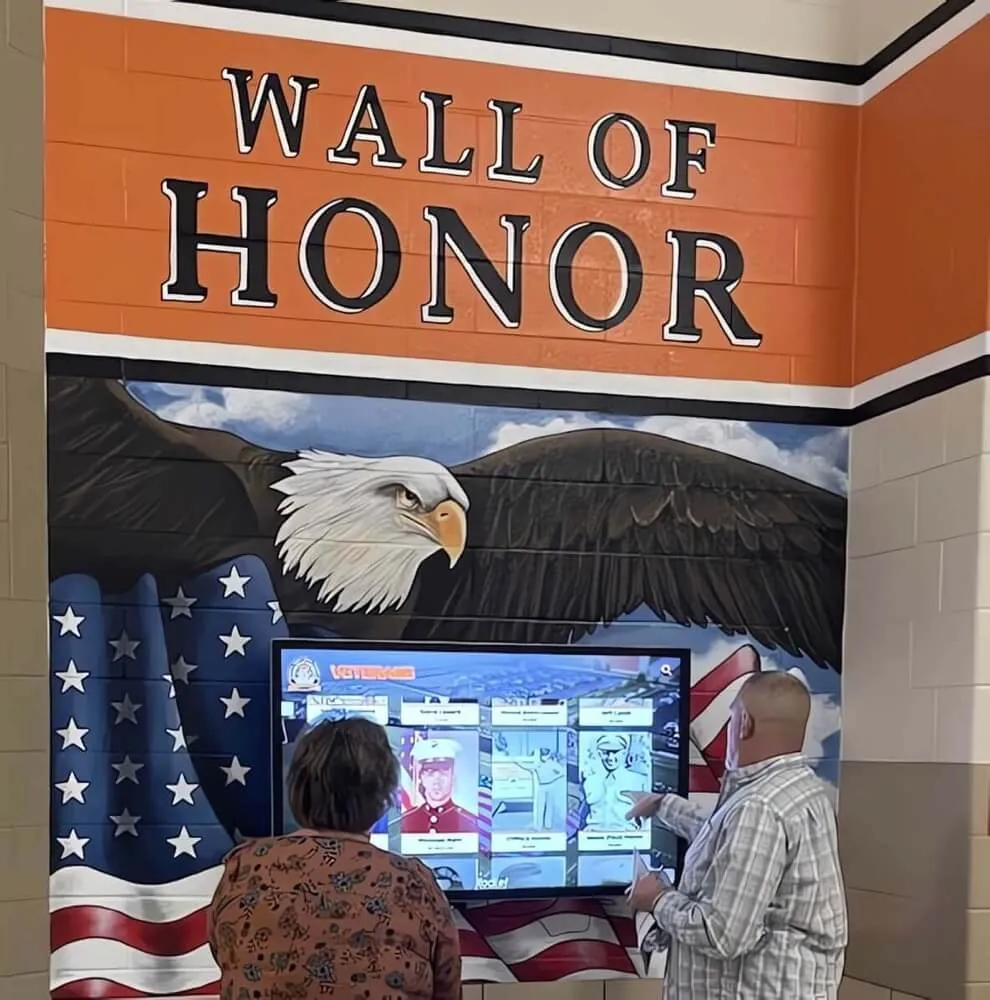
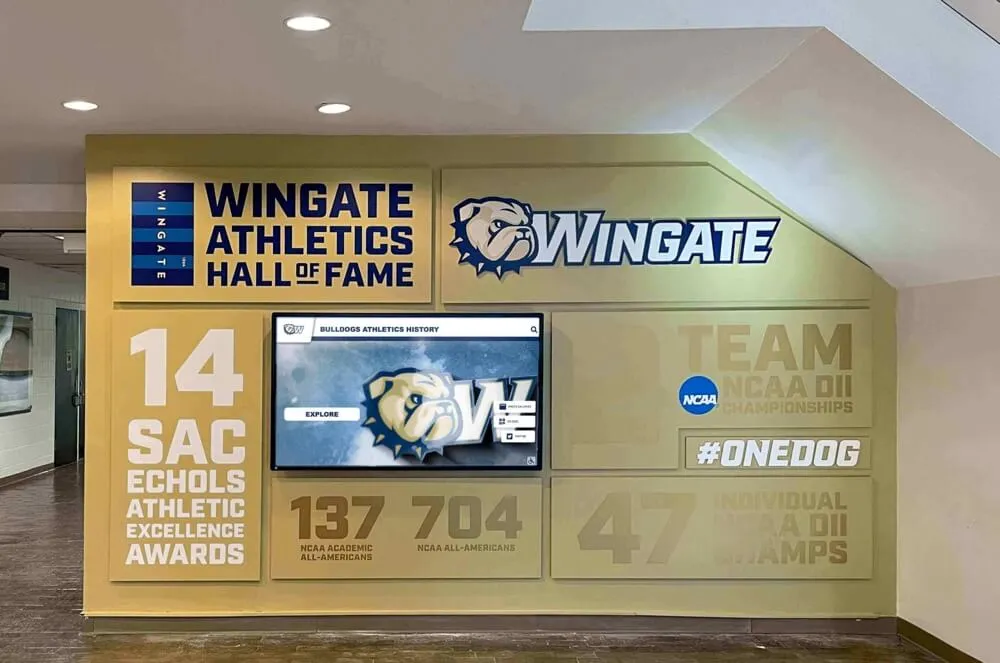
The best school clubs don't just fundraise—they build traditions worth celebrating and displaying throughout the year
Why Recognition Is the Missing Ingredient in Club Fundraising
Before diving into specific school club fundraising ideas, it’s worth understanding why recognition drives results. Clubs that build visible acknowledgment into their campaigns see higher member participation, stronger community support, and more sustainable year-over-year revenue.
Recognition works on several levels. Students who see their names posted, their contributions announced, or their effort commemorated on a display feel genuinely seen—not just used as labor. That feeling translates into willingness to participate again. For alumni recognition event ideas and club-level campaigns alike, systematic acknowledgment creates the loyalty that separates one-time supporters from long-term champions.
Recognition also expands your donor base. When community members see that contributors receive genuine appreciation—not just a thank-you email—they’re more likely to give. A well-designed campaign that visibly honors participants becomes its own marketing engine.
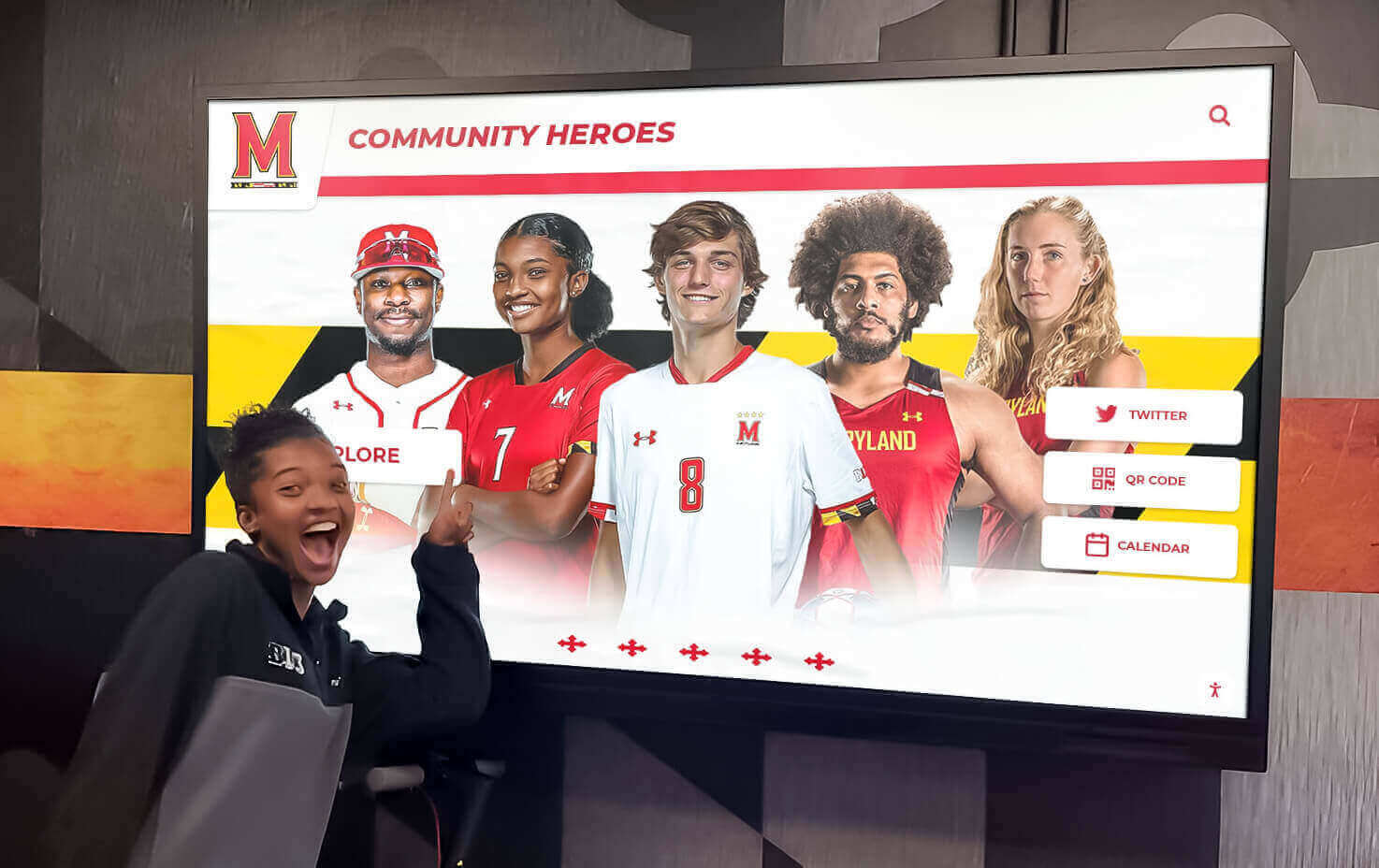
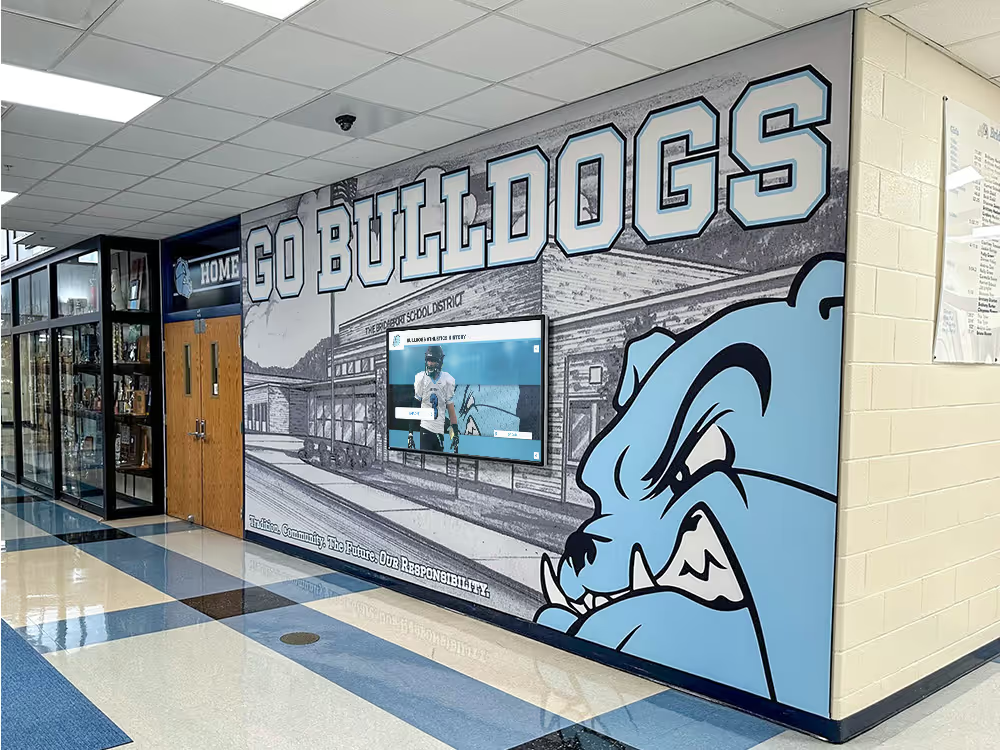
Visible recognition displays generate excitement and motivate broader participation in club campaigns
Product Sales Fundraising Ideas for School Clubs
Product-based fundraisers work when students can authentically promote items they believe in and when sales leaders receive meaningful recognition for their effort.
Food and Beverage Sales
Themed Bake Sales with a Twist Standard bake sales generate more revenue when organized around a theme tied to the club’s identity. A drama club’s “Opening Night Treats” or a science club’s “Chemistry Kitchen” bake sale creates buzz, drives social media sharing, and gives members a story to tell when approaching buyers. Track individual sales totals and recognize top sellers publicly at the next club meeting.
Specialty Drink Stands Lemonade stands, hot cocoa bars during winter events, or smoothie stations at school athletic events generate strong margins. Position stands at high-traffic moments—before morning classes, during lunch, at sports games. Assign members to rotating shifts and post a visible leaderboard tracking station revenue by team.
Pre-Order Meal Sales Clubs partner with local restaurants or catering companies to pre-sell meals for pickup. A fixed margin goes to the club per meal sold. The pre-order model reduces waste, simplifies logistics, and creates natural competition among members to sell the most orders. Recognize the top seller with a dedicated spot on the club’s recognition board.
Branded Merchandise Custom t-shirts, stickers, tote bags, and water bottles bearing your club’s logo generate revenue while building community identity. Work with a school-approved vendor, set your margin, and give recognition to members who sell above threshold amounts. Merchandise fundraisers also create lasting artifacts—members wear their club gear for years, keeping the brand visible.
Non-Food Product Sales
Seasonal Plant Sales Garden clubs, environmental clubs, and biology programs run spring plant sales that consistently outperform expectations. Families and community members purchase seedlings, herbs, and flowers while supporting a visible school program. Track volunteer hours and sales contributions, then recognize top contributors at a club celebration event.
Craft and Handmade Item Sales Art clubs, photography clubs, and maker spaces sell prints, ceramics, handmade jewelry, or custom portraits. These items carry strong emotional value, command higher price points, and showcase member talent. Create a gallery-style display at the sale that names each creator alongside their work—turning the fundraiser into a recognition event for student artists.
Event-Based Fundraising for School Clubs
Events generate community engagement alongside revenue. The best club events are structured so that every member plays a visible, recognized role.
High-Impact Club Events
Talent Shows and Performances Drama clubs, choir programs, and performing arts organizations run talent shows that draw strong attendance. Charge admission, add a concession stand, and sell voting tokens for audience-choice awards. Recognize backstage crew, ticket sellers, and program designers alongside performers—every role gets a curtain call.
A well-organized fundraising gala planning guide can help larger clubs scale their events into formal galas with sponsorship tables, silent auctions, and program recognition for major donors.
Game Nights and Tournaments Quiz bowl nights, trivia tournaments, chess competitions, gaming brackets, and card tournaments draw wide participation and require minimal overhead. Charge entry fees per team, sell snacks, and offer prizes sponsored by local businesses. Publicly rank teams throughout the tournament and display final standings on a poster board or digital screen in the hallway after the event.
5K Runs and Walk-a-Thons Pledge-based races allow every member to participate regardless of sales ability—participants collect pledges based on distance completed. These events generate strong community involvement, create opportunities for sponsor signage, and build school spirit. Use spirit week themes to coordinate costumes or colors that make the event memorable and photogenic.
Auction Events Silent auctions featuring donated items from local businesses, staff experiences (lunch with the principal, reserved parking, off-uniform days), and student-created art generate impressive revenue. Auction items can be themed around the club’s mission—a music program might auction private lessons, a culinary club might auction dinner experiences. After the event, post the names of every business and donor on a public recognition board.
Car Washes and Community Service Days Parking lot car washes remain effective when promoted aggressively before the event. Drive more participation by creating team competitions—which section of the club raises more tips? Post the competition results immediately and recognize the winning team with a pizza party or choice of next club activity.
Carnival and Booth Events Multi-booth carnival fundraisers divide the work across all club members, giving every person a clear role and visible responsibility. Assign members to specific booths, track revenue by booth, and celebrate top-performing teams at the closing ceremony. Back-to-school event planning frameworks translate well to club carnival events scheduled at the start or end of the academic year.
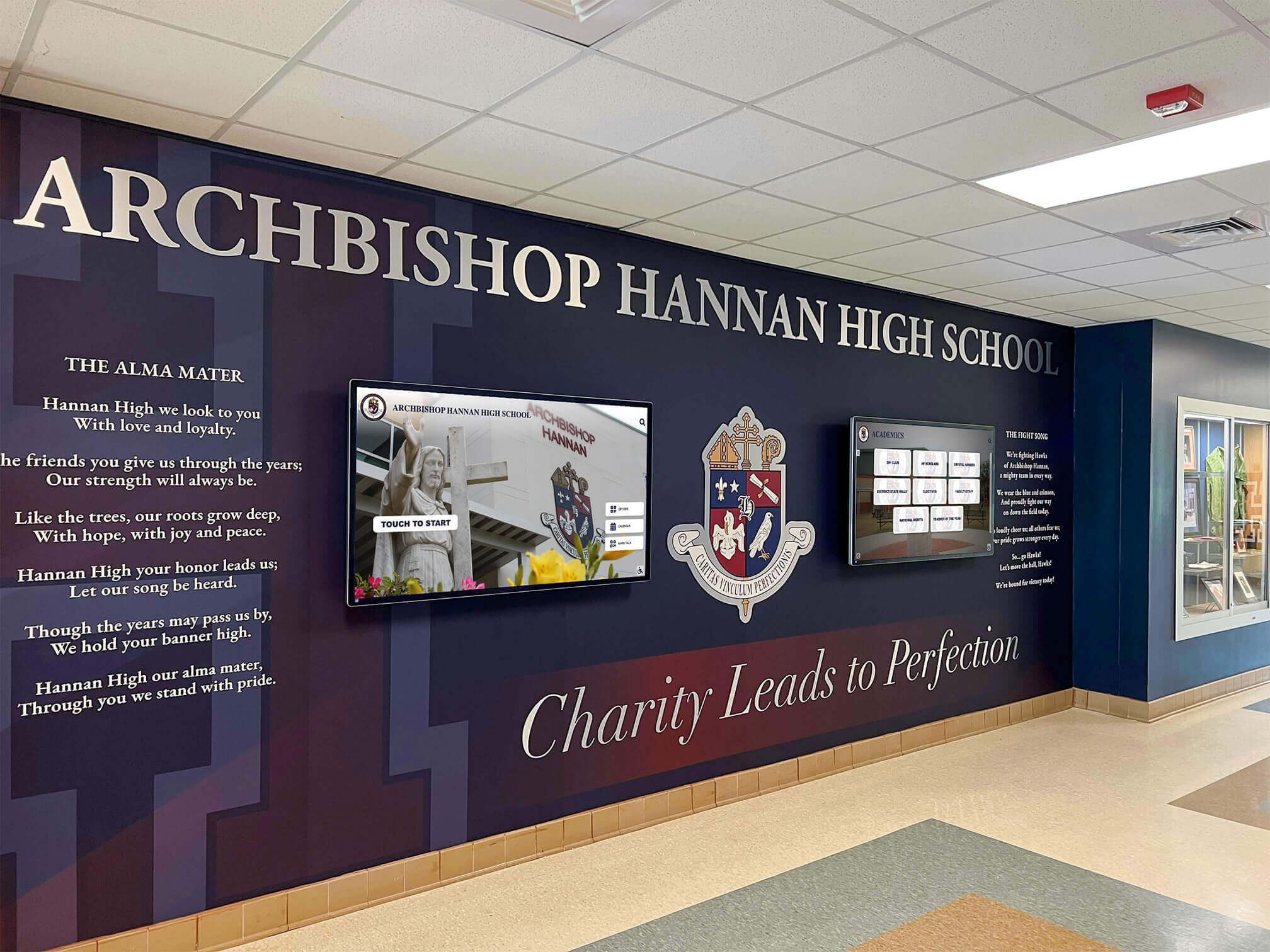
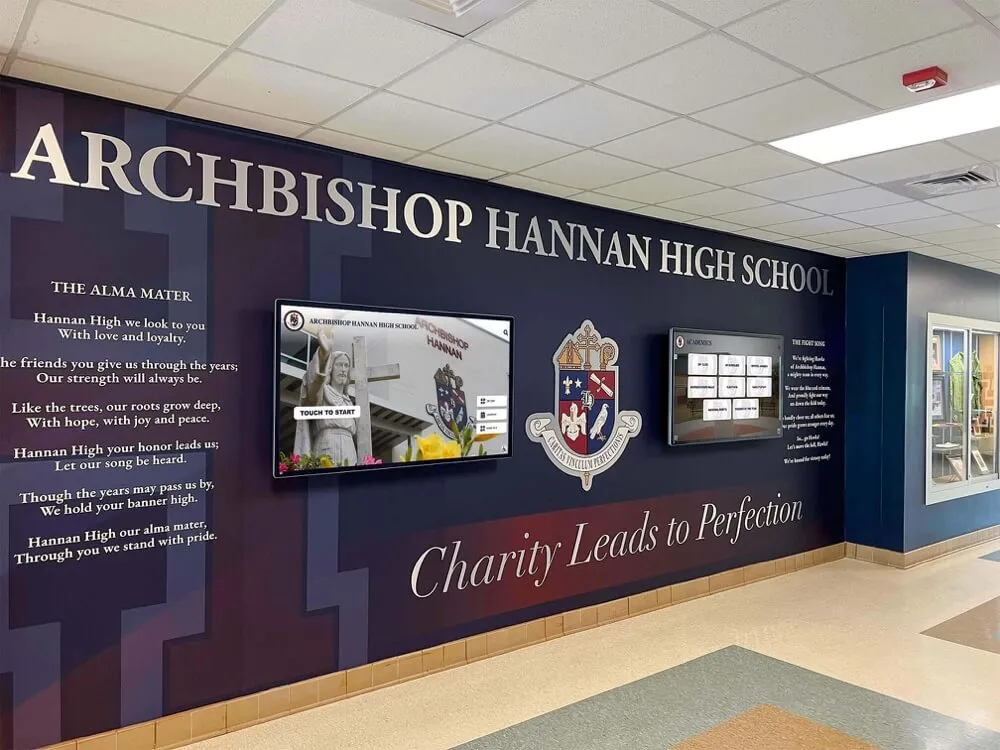
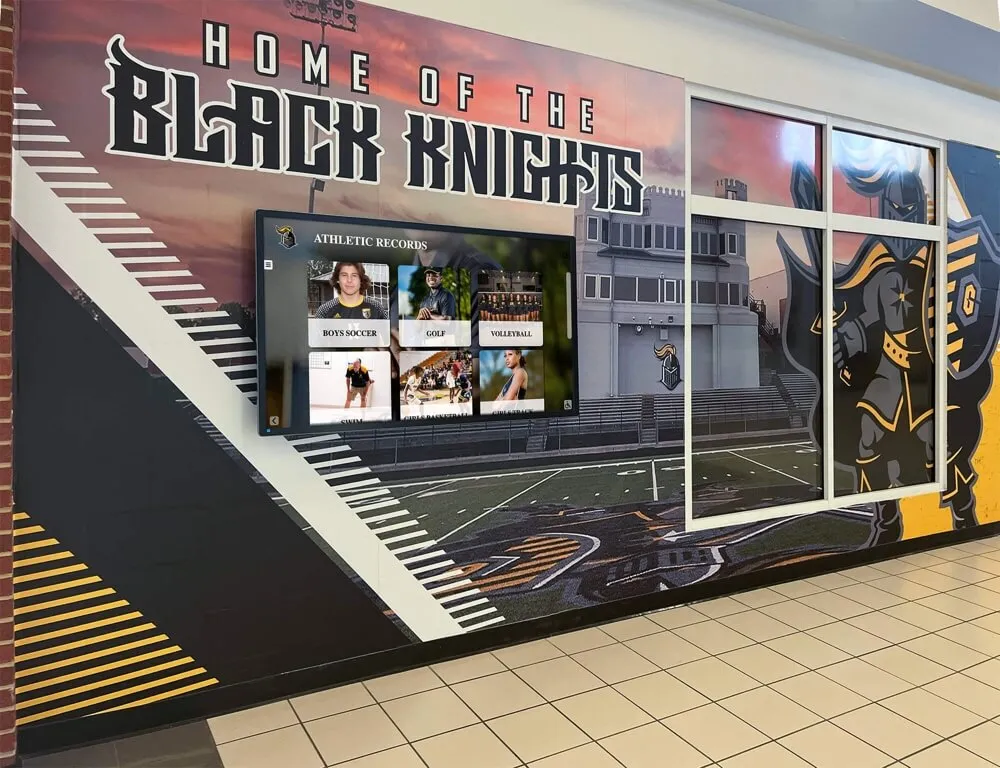
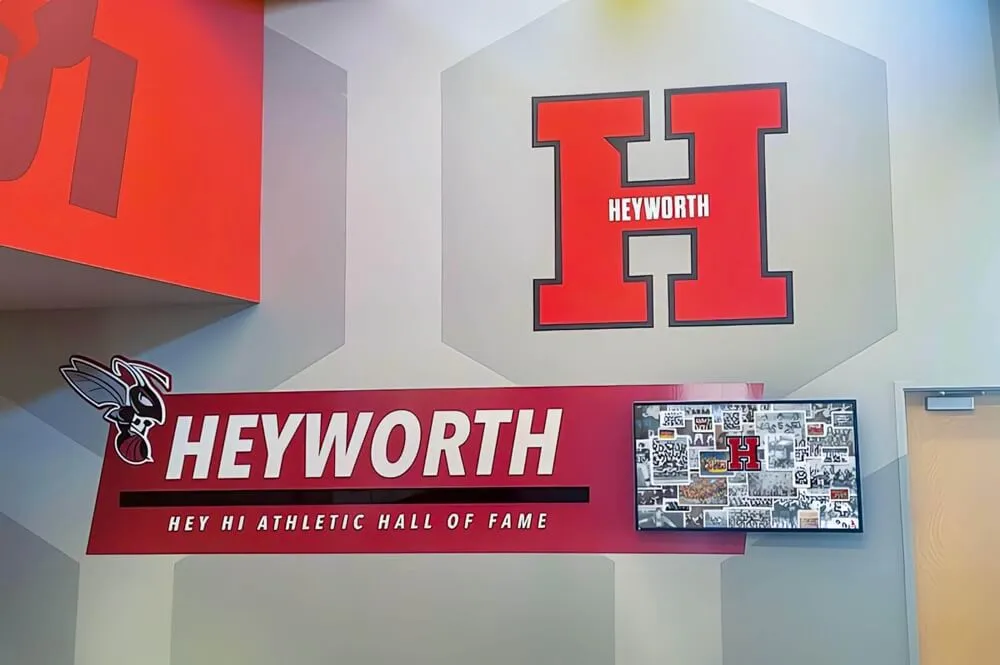
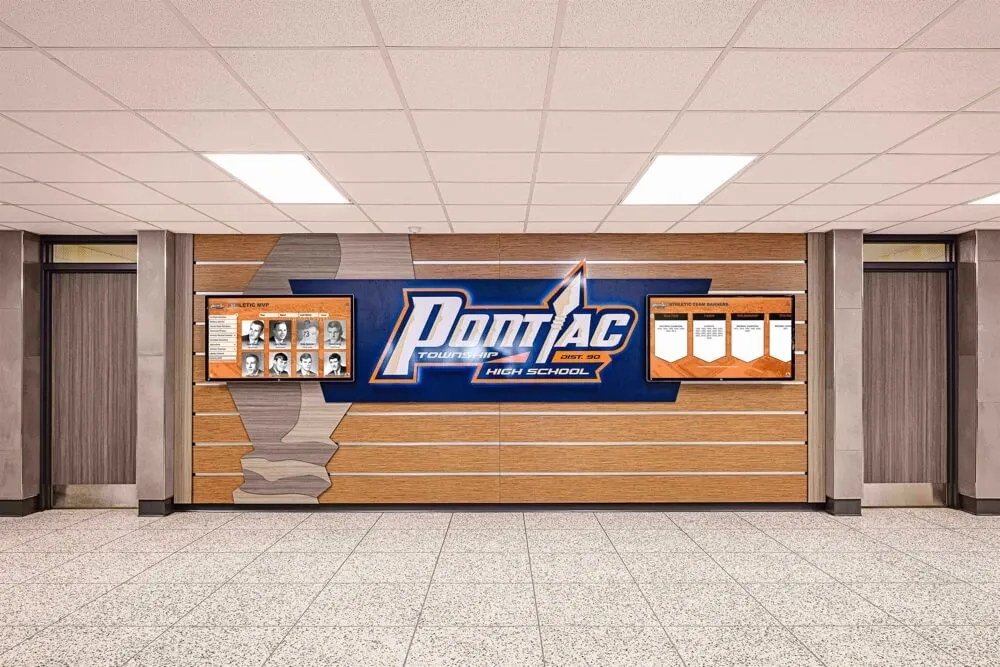
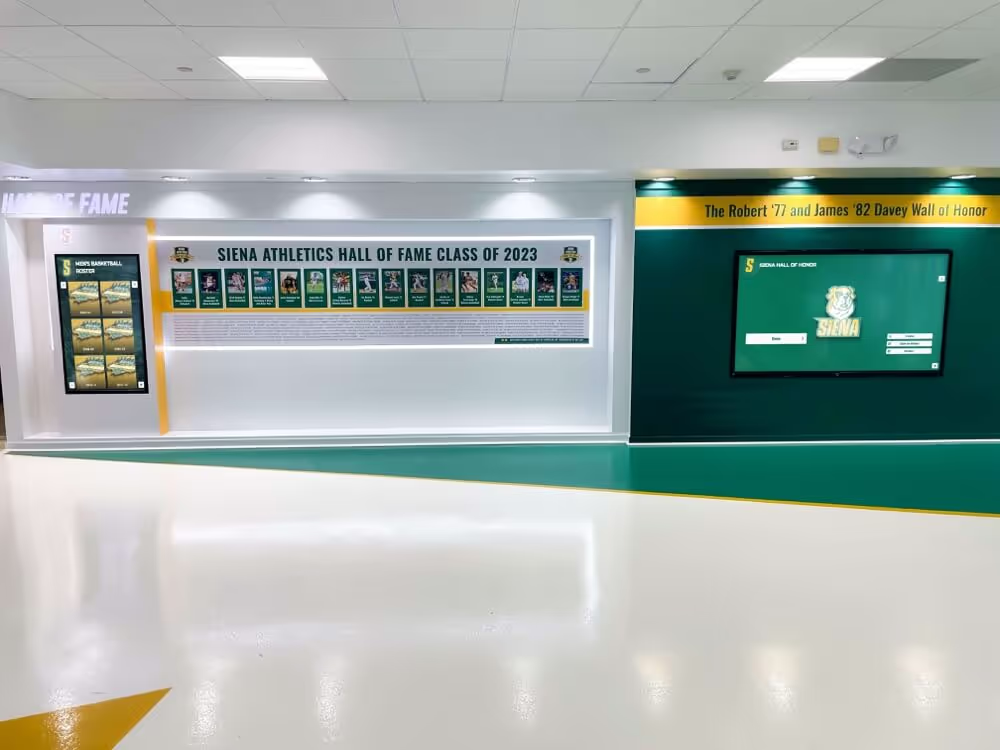
Schools that invest in visible recognition spaces see stronger participation across all club programs and fundraising campaigns
Digital Fundraising Approaches for Modern School Clubs
Online fundraising tools have transformed what small clubs can accomplish without large physical infrastructure.
Online and Crowdfunding Campaigns
Crowdfunding Platforms School clubs can launch crowdfunding campaigns through platforms that specialize in education fundraising. Set a specific, compelling goal tied to a tangible outcome (“We need $800 to attend the regional robotics competition”). Stories with clear stakes and visible progress generate stronger giving. Update your campaign page regularly with photos of members working toward the goal—this transparency builds trust and drives shares.
Social Media Fundraising Challenges Challenge-based campaigns that spread through social networks generate organic reach clubs can’t afford to buy. Participants film themselves completing a task, tag friends, donate, and challenge others to do the same. The key is choosing a challenge that connects authentically to your club’s identity. A theater club’s dramatic reading challenge or a coding club’s debugging race challenge feels earned rather than manufactured.
Text-to-Give Campaigns Many platforms now allow supporters to donate via text message, making impulse giving as frictionless as possible. Promote your text-to-give number during school events, on digital displays in hallways, and through social media. Track which members drove the most new donors through their personal promotion and recognize them publicly.
Matching Gift Programs Some parents’ employers offer matching gift programs for charitable contributions. Clubs that actively identify and pursue matching opportunities can effectively double certain donations. Create a simple handout at your next campaign launch event explaining how families can check whether their employer matches. Recognize donors who successfully activate matches with special acknowledgment at your celebration event.
Service-Based Fundraising Ideas for School Clubs
Service fundraisers leverage member skills and turn them into revenue while demonstrating club value to the community.
Skill-Based Service Sales
Photography and Video Services Photography clubs and media programs offer senior portrait mini-sessions, event photography coverage, or video recap packages for school events. Charge market rates for quality work. Post a gallery of the team’s completed projects in a high-visibility hallway location—recognition that doubles as marketing for the next session.
Tutoring and Academic Help Sessions Honor societies, academic clubs, and subject-specific groups offer paid tutoring clinics. A two-hour exam prep session for twenty students at ten dollars each generates meaningful revenue with zero overhead. Recognize your top tutors at the next club meeting with a “Most Sessions Completed” acknowledgment.
Lawn Care and Neighborhood Services Key clubs, service organizations, and ecology programs run neighborhood service days where members provide yard work, leaf raking, car detailing, or light moving in exchange for donations. Organize by teams, track total service hours completed per team, and celebrate the highest-contributing members. Connecting service hours to recognition creates a culture where community contribution feels valued.
DIY Workshops and Skill Classes Clubs with specialized knowledge charge community members for short workshops. A robotics club runs a beginner coding class, an art club teaches watercolor techniques, or a drama club offers public speaking workshops. Workshop facilitators receive recognition as “guest instructors”—a title that carries genuine prestige with students who care about their expertise.
Recognizing Every Member: The Key to Campaigns That Last
The fundraising ideas above generate revenue. What transforms them into trophy-worthy campaigns is the commitment to recognizing every person who contributed—not just the top performers.
Building Member Recognition Into the Campaign Structure
Effective club recognition starts with deciding in advance how every role will be acknowledged:
Contribution Tiers for All Levels Set multiple recognition tiers rather than recognizing only the top seller. Every member who reaches a baseline participation threshold—attending two events, making any number of sales, completing any volunteer hours—receives acknowledgment. Higher tiers celebrate additional achievement. This structure ensures no member goes unrecognized for genuine effort.
Role-Specific Recognition Different members contribute differently. One student designs the poster. Another handles social media. A third manages the spreadsheet. A fourth stands in the rain for six hours at the car wash. Each of these contributions deserves specific, named recognition—not a generic “thanks to everyone who helped” announcement.
Immediate and Ongoing Recognition Recognize during the campaign, not just at the end. Post weekly updates showing who is leading in sales or hours. Announce milestones in club meetings. Send individual messages thanking specific contributors for specific actions. By the time the campaign closes, members should already feel seen—the closing ceremony is celebration, not the first acknowledgment.
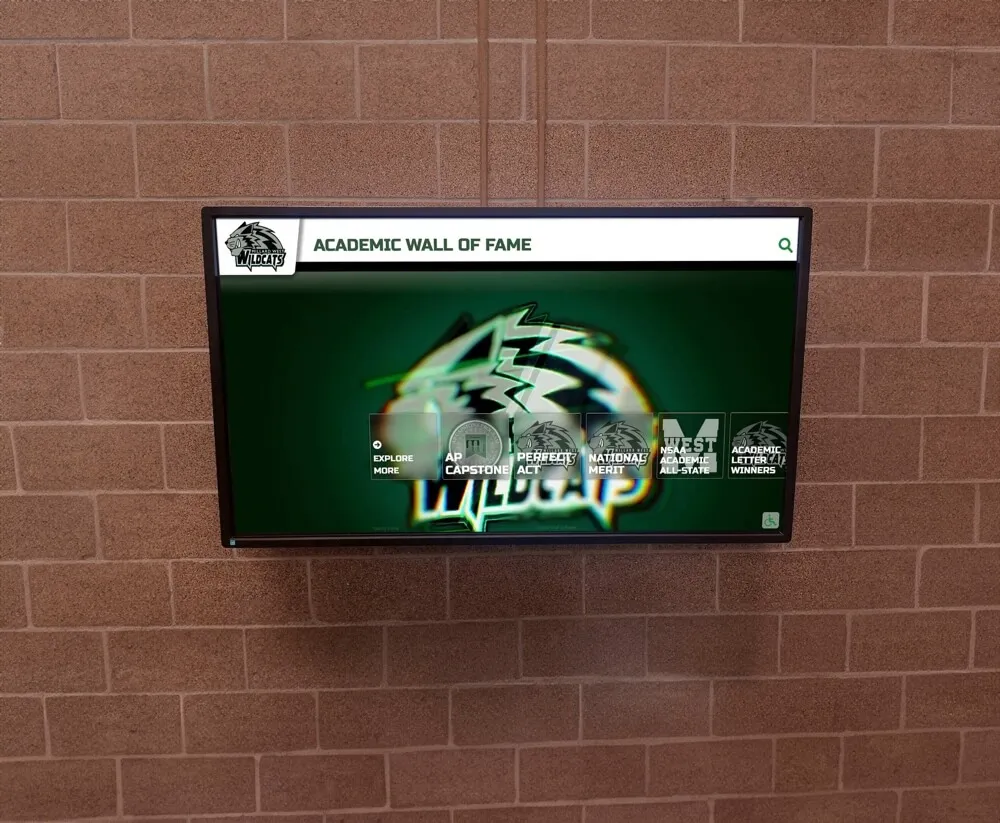
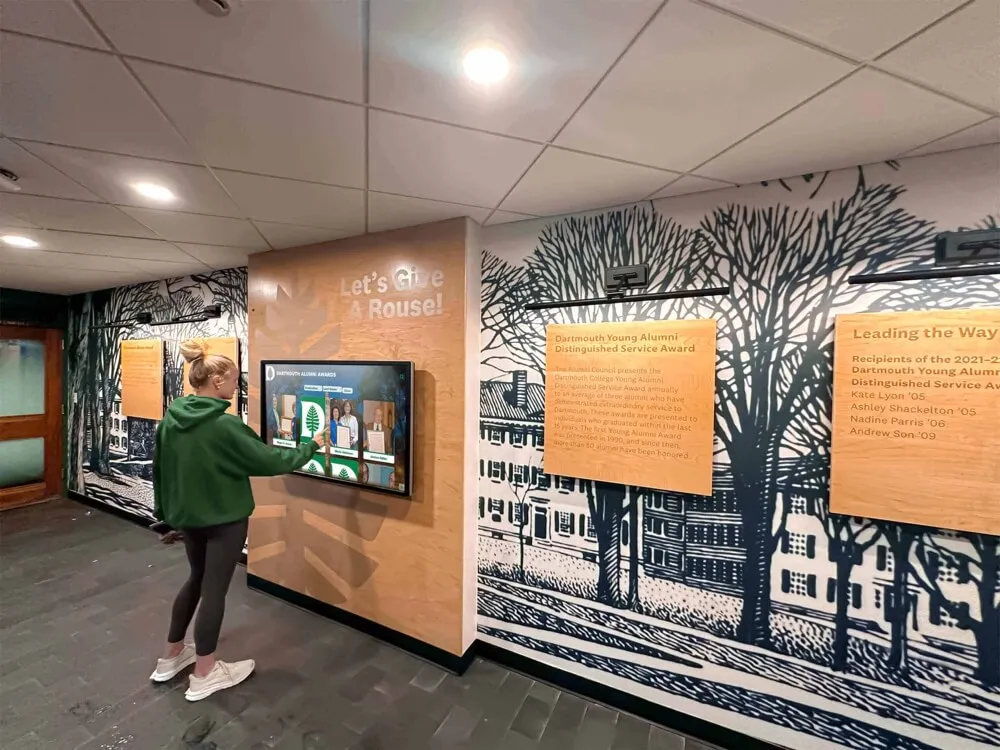
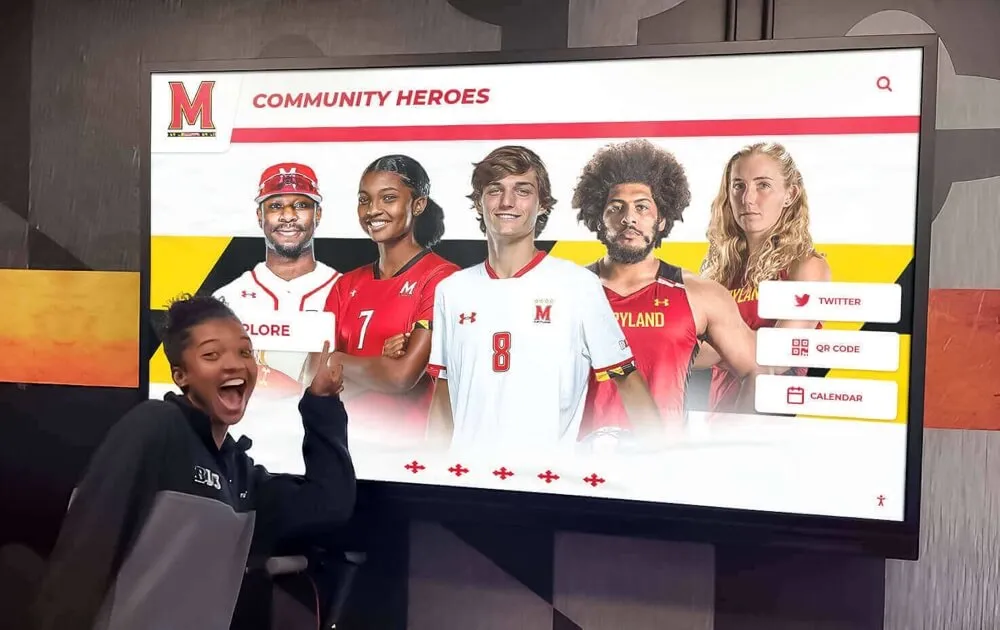
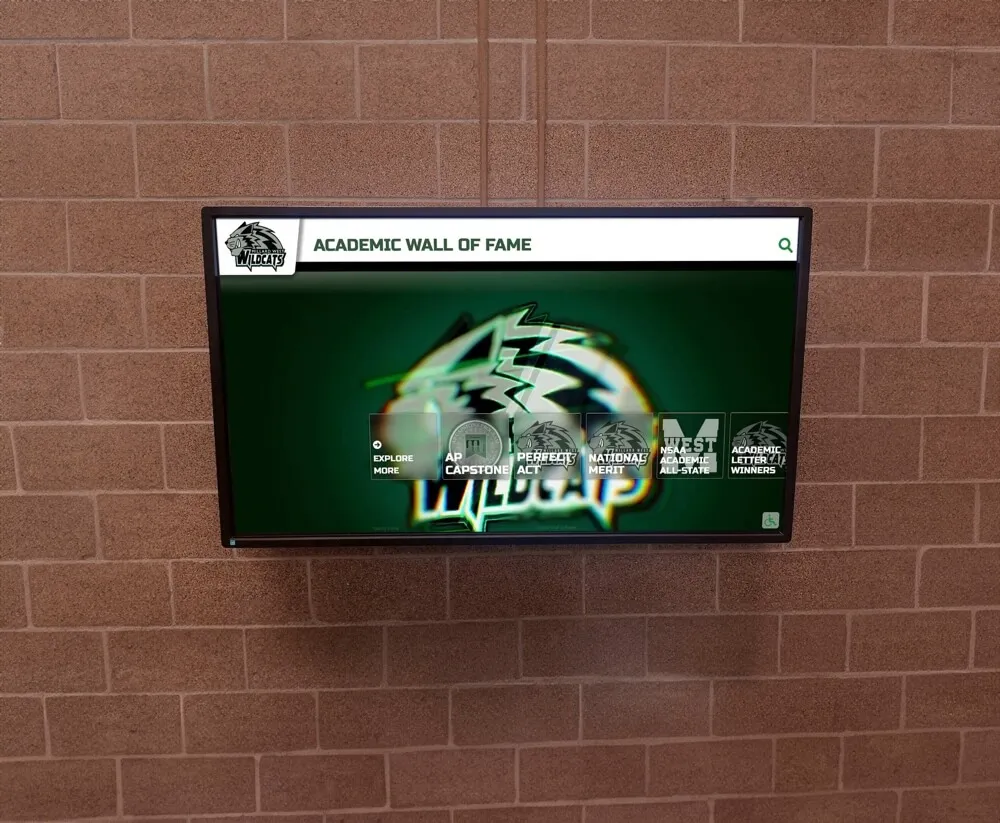
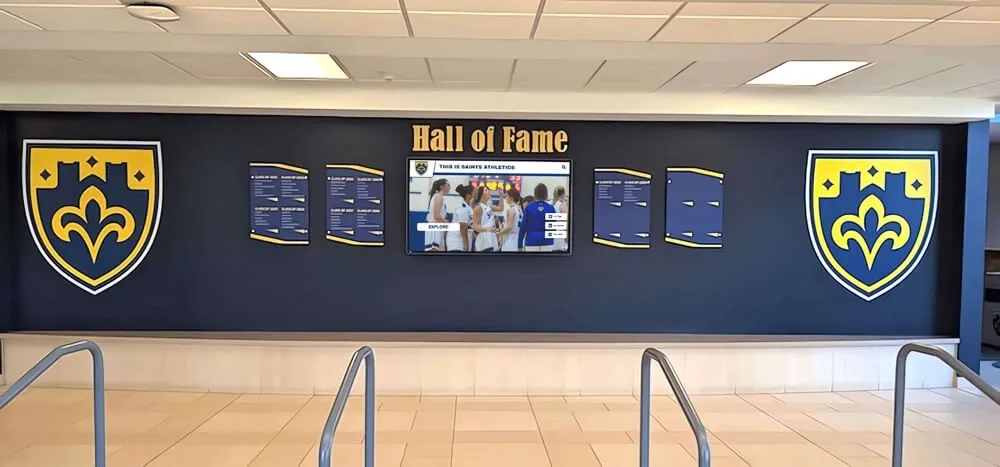
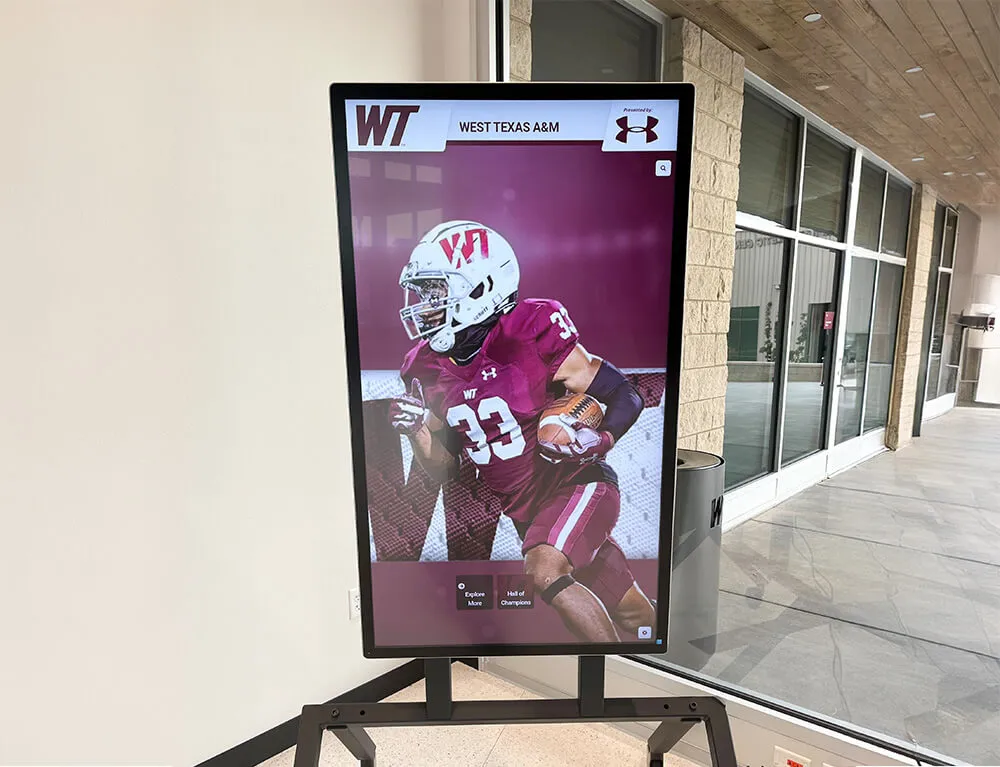
Academic and club recognition displays create lasting monuments to member effort that inspire future campaign participation
Recognition gift ideas don’t need to be expensive to be meaningful. Handwritten notes, certificates, social media features, reserved parking spaces, or choosing the theme for the next club meeting all carry genuine weight when given intentionally.
Displaying Club Achievements: From Campaign to Legacy
The most overlooked component of school club fundraising is what happens to the campaign record afterward. Campaigns that end with a total announced in morning announcements and promptly forgotten represent missed opportunities to build lasting club culture.
The strongest school clubs create permanent recognition for their fundraising milestones—and those records become recruiting tools for future members, motivation for ongoing participants, and a source of authentic school pride.
Creating Permanent Fundraising Records
Physical Recognition Displays Club trophy cases, honor boards, and wall displays can include fundraising milestones alongside competitive trophies and academic honors. A “Campaigns” section documenting each year’s total raised, the goal met, and member names involved creates a physical archive that new members explore during orientation.
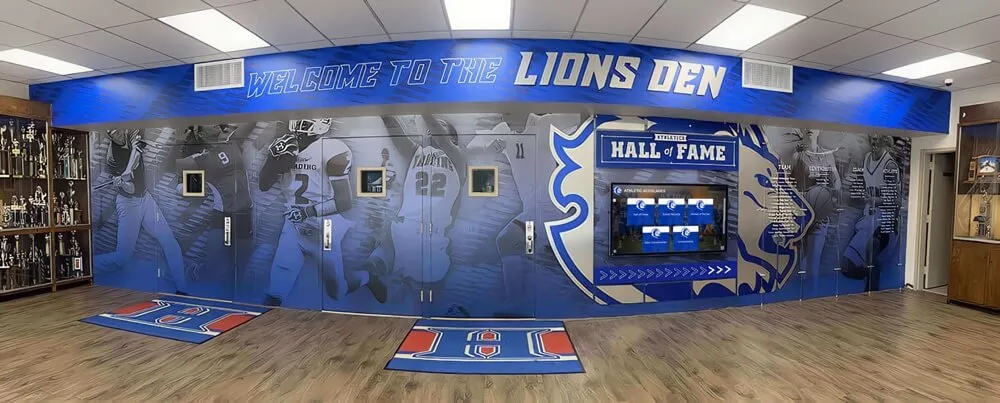
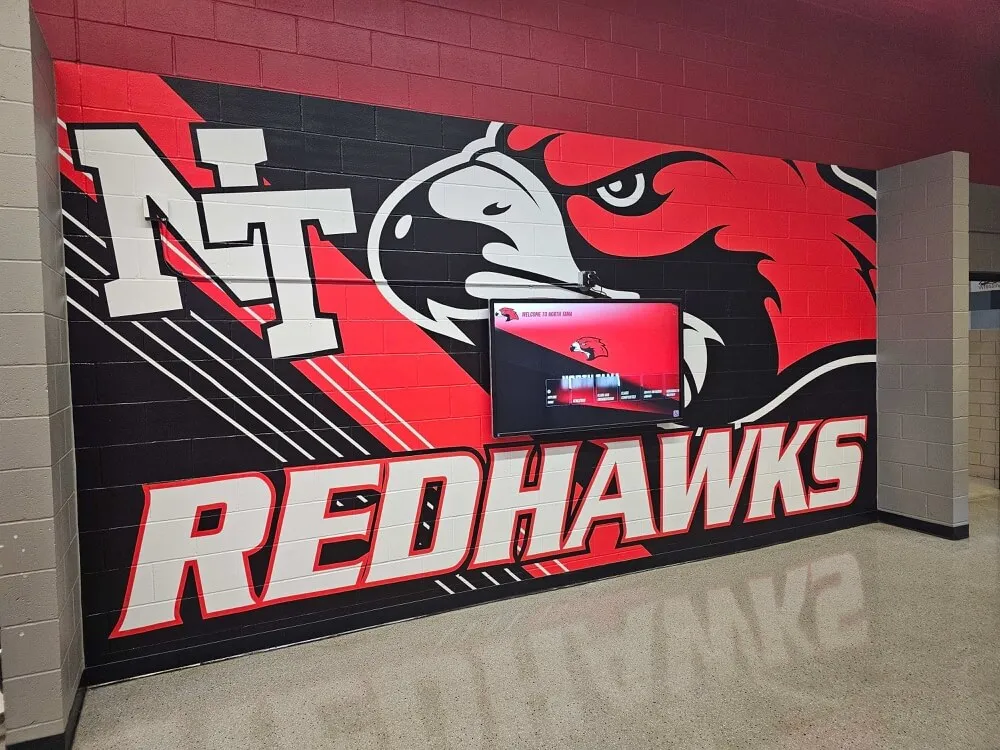
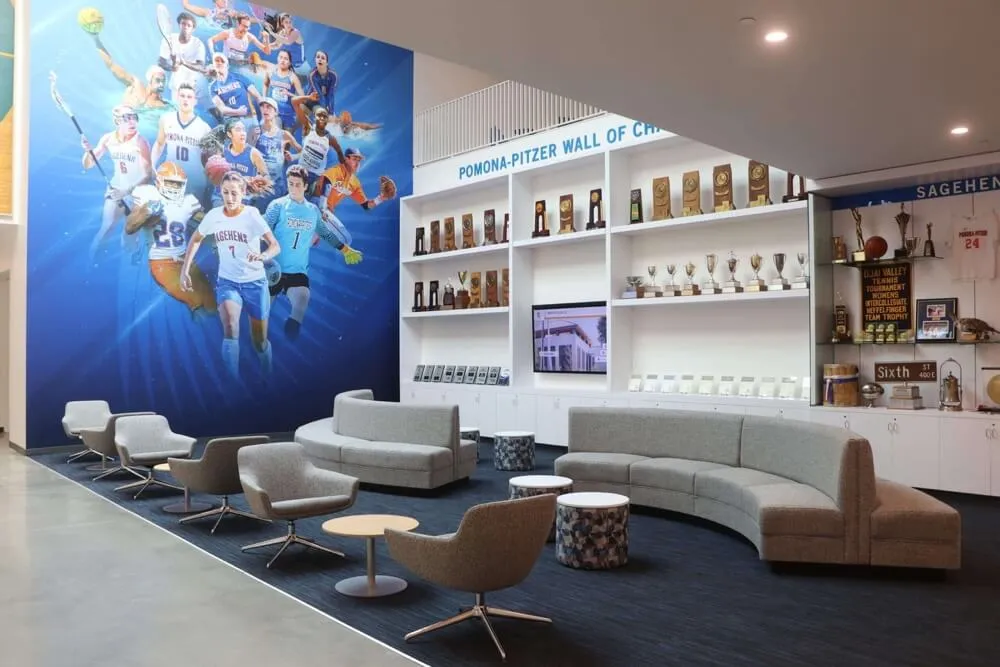
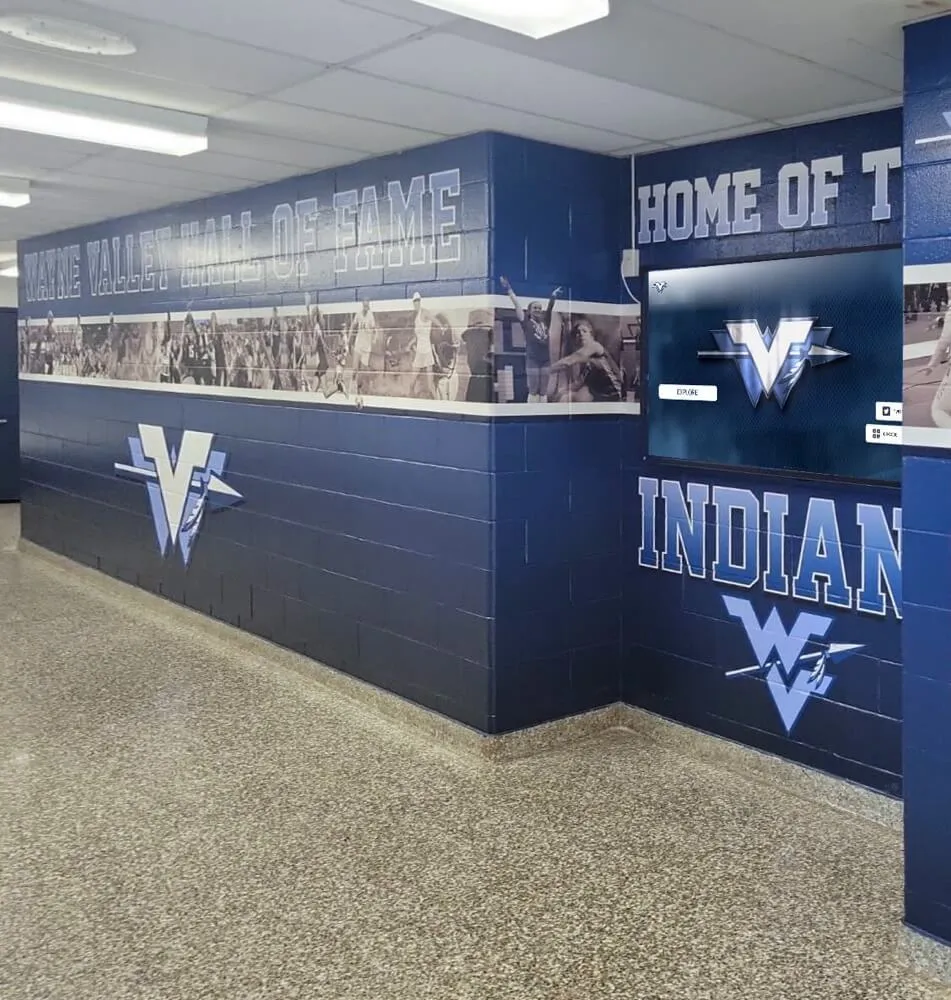
Wall wraps for schools offer another option for clubs occupying dedicated spaces—a full-wall graphic celebrating campaign history alongside program milestones creates a visually striking environment that communicates the club’s seriousness to anyone who walks in.
Digital Archive Systems Physical displays have obvious limits. A digital history archive eliminates space constraints entirely—every campaign, every member, every milestone can be documented and made accessible without displacing older records. Schools implementing digital history archive systems find that clubs become more invested in documentation when they know their records will be permanently preserved and visible.
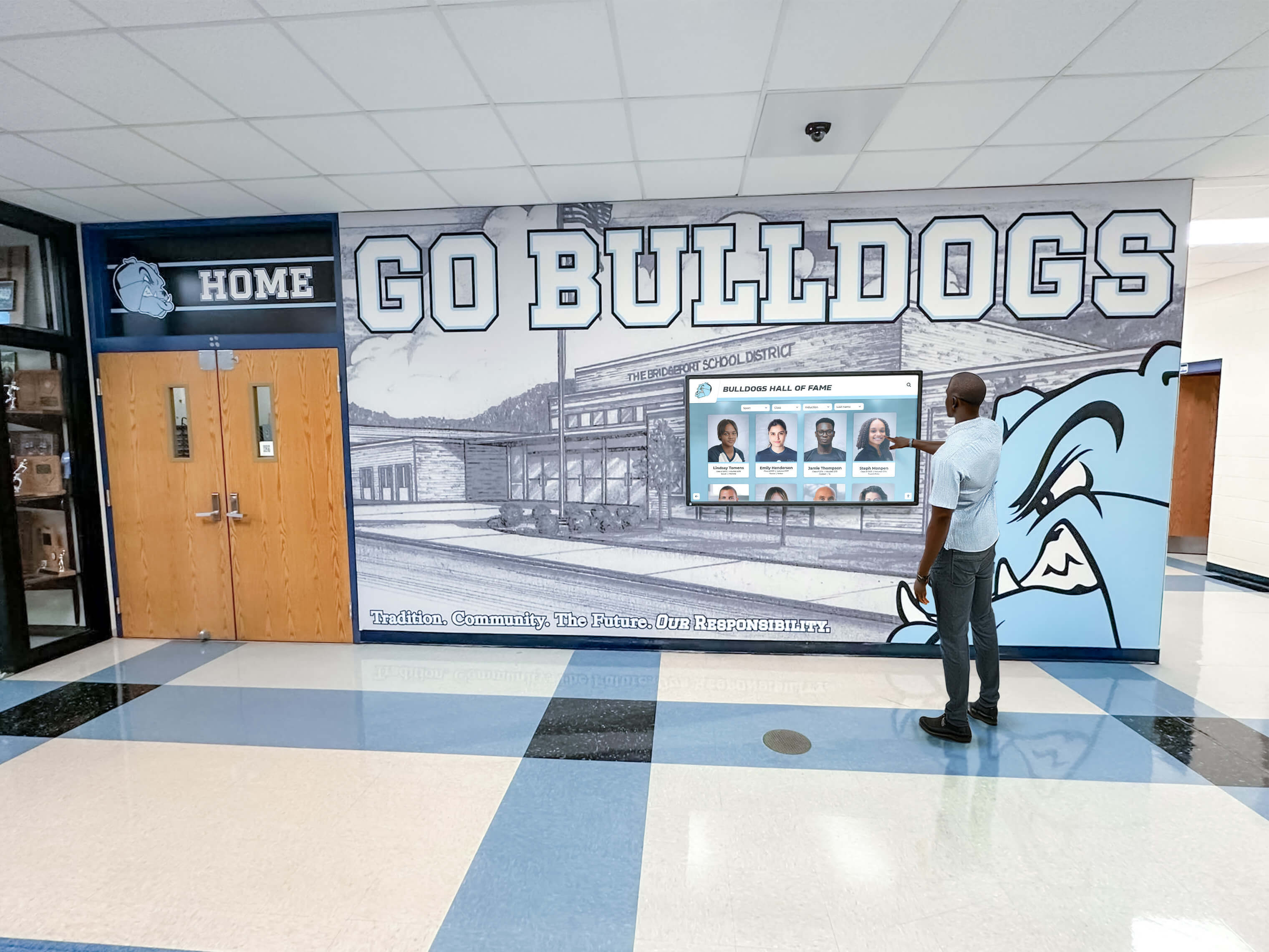
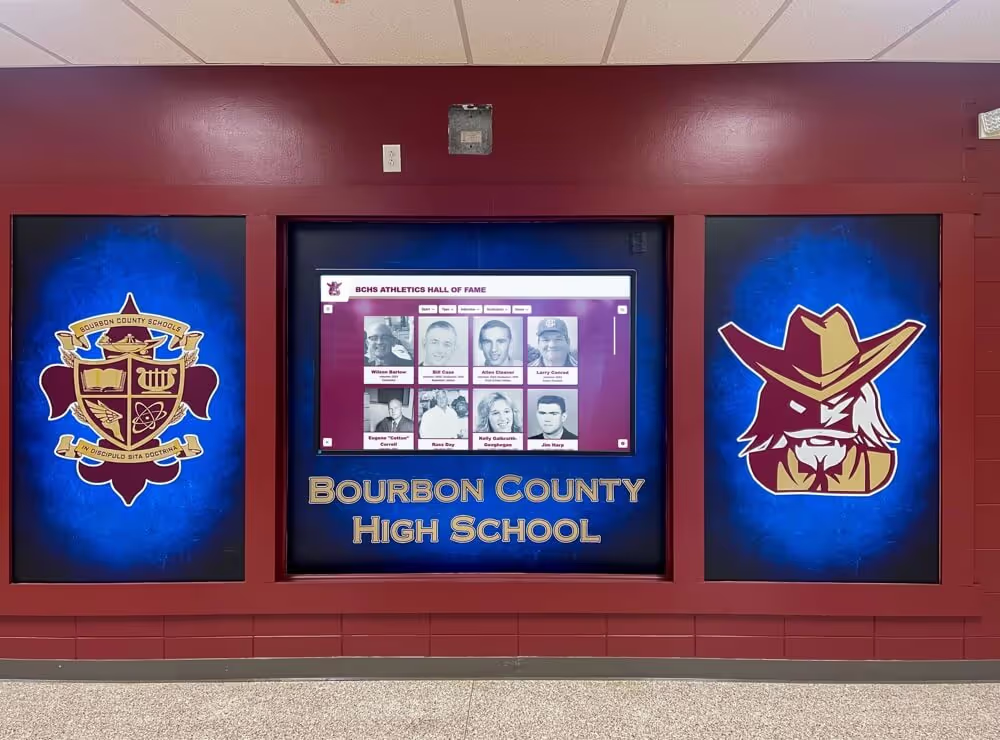
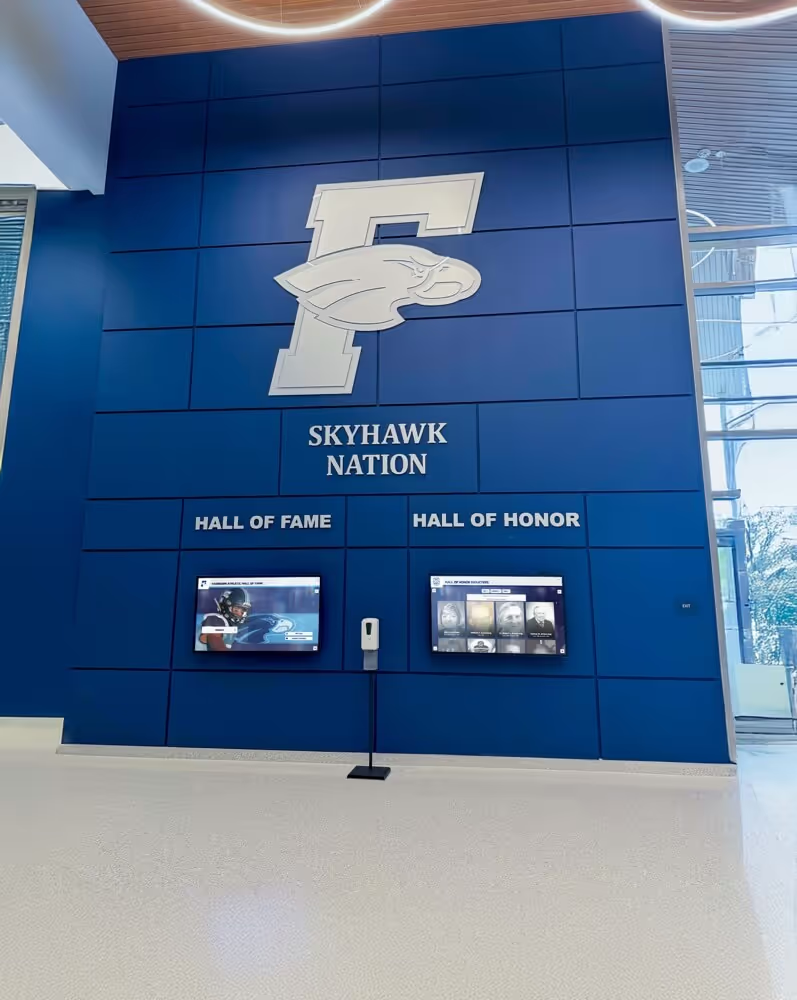
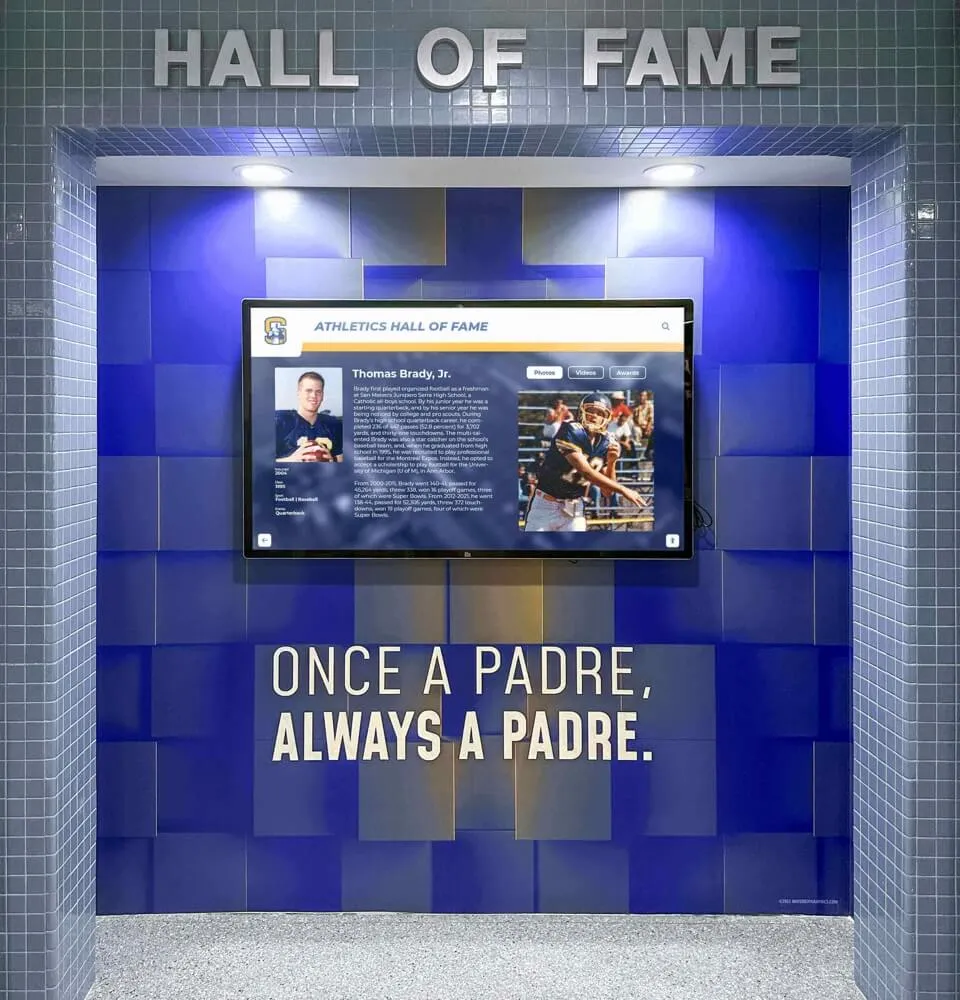
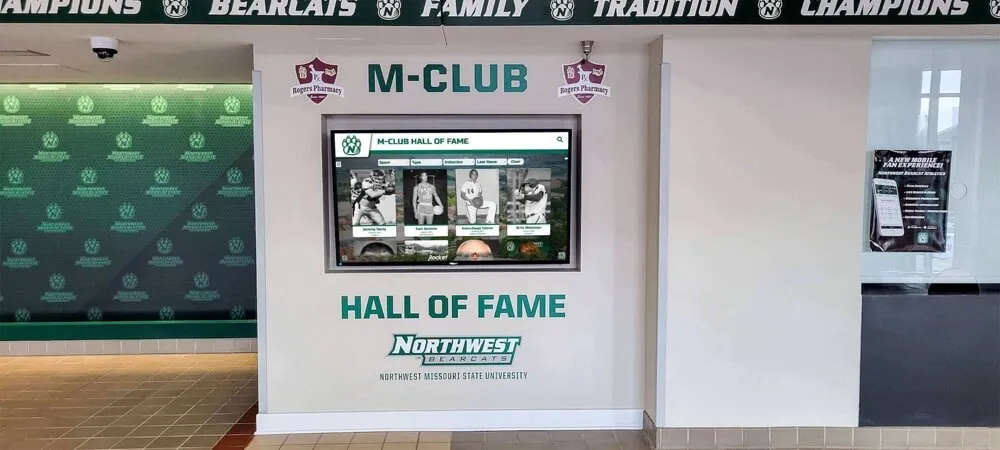
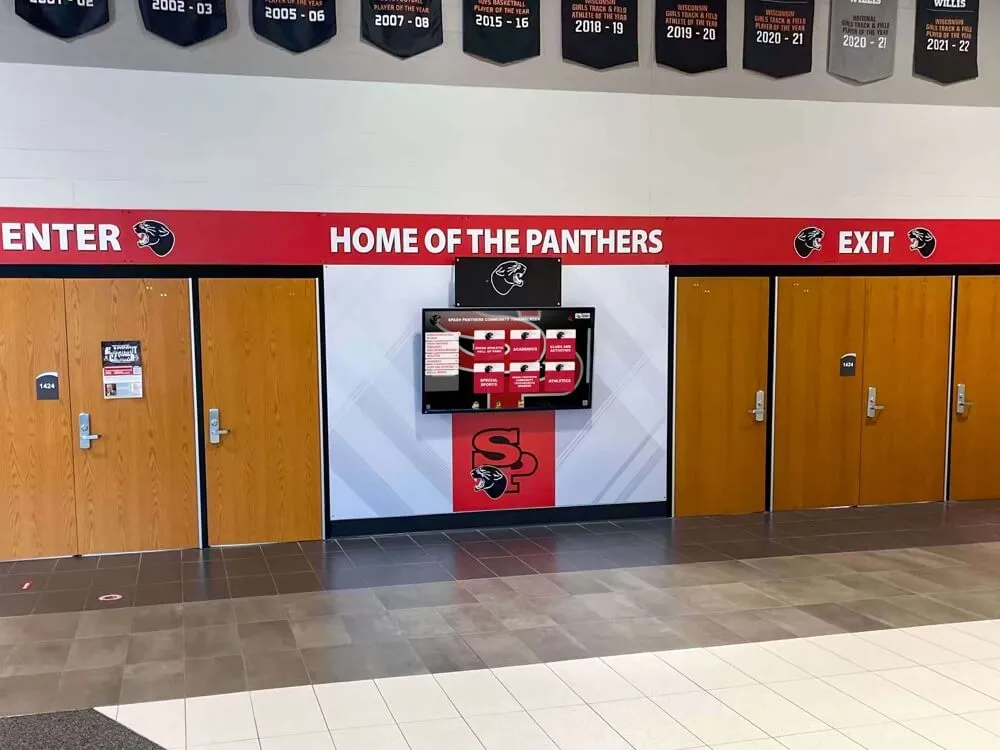
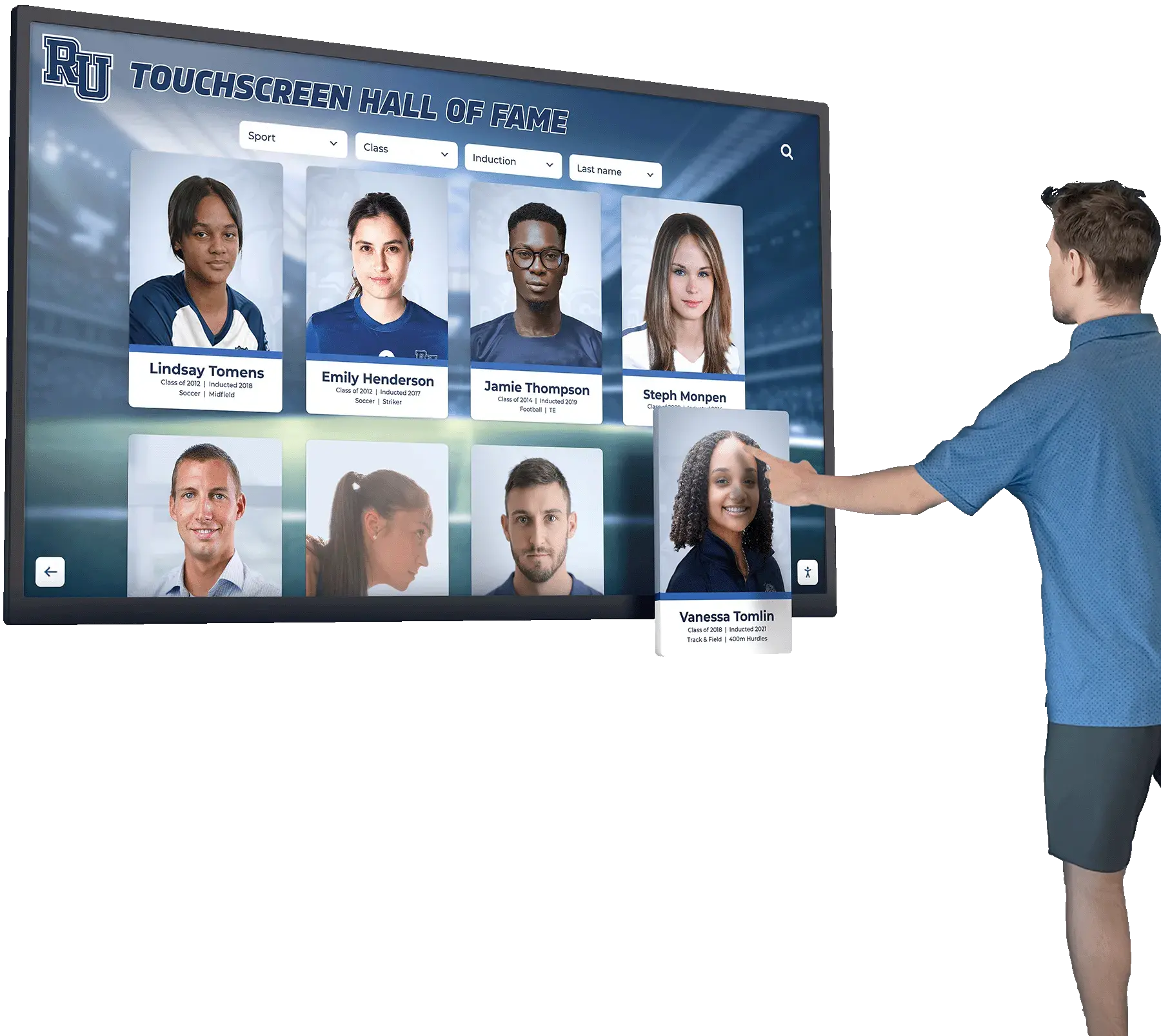
Interactive touchscreen displays let visitors explore club histories, fundraising milestones, and member recognition year after year
Touchscreen Recognition for School Clubs
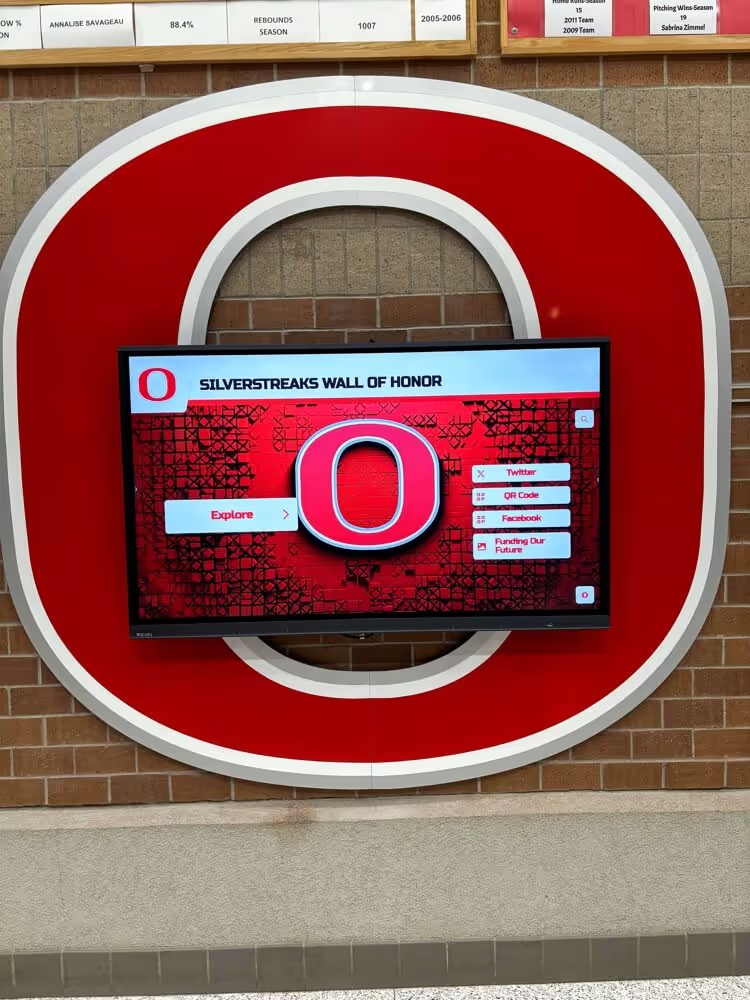
Interactive touchscreen displays, like those offered by Rocket Alumni Solutions, allow schools to create permanent, searchable archives of club achievements—including fundraising records, member rosters, and campaign highlights. Unlike static plaques that go unread, touchscreen displays invite exploration. A prospective member browsing the club’s history can see exactly who built what the program has become.
These systems offer unlimited capacity—no physical space constraints forcing a choice between honoring last year’s club and this year’s. Every campaign gets documented. Every member gets named. And the archive grows without anyone needing to rearrange shelves or order new plaques.
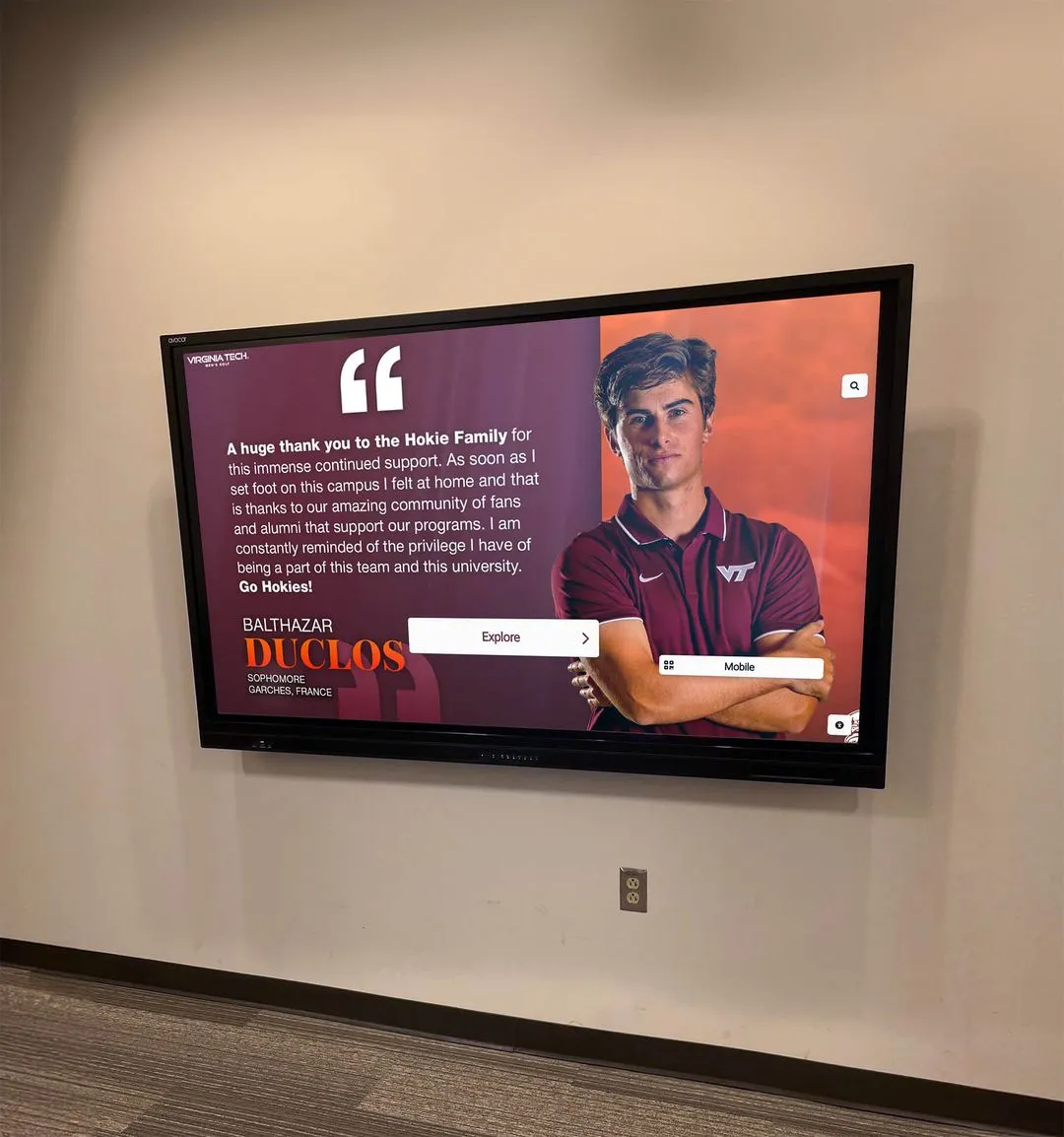
For clubs that want to honor not just campaign totals but individual contributor recognition, a digital display allows profile-level acknowledgment: photos, role descriptions, hours contributed, and personal statements from members about why the campaign mattered to them. That depth of recognition is impossible in a physical trophy case and routine in a cloud-managed display.
Alumni engagement through interactive recognition displays is another advantage clubs unlock when they invest in permanent digital records. Graduates who were part of a campaign that’s still displayed come back to see it. They donate again. They mentor current members. Recognition that outlasts the event creates relationships that outlast the school year.
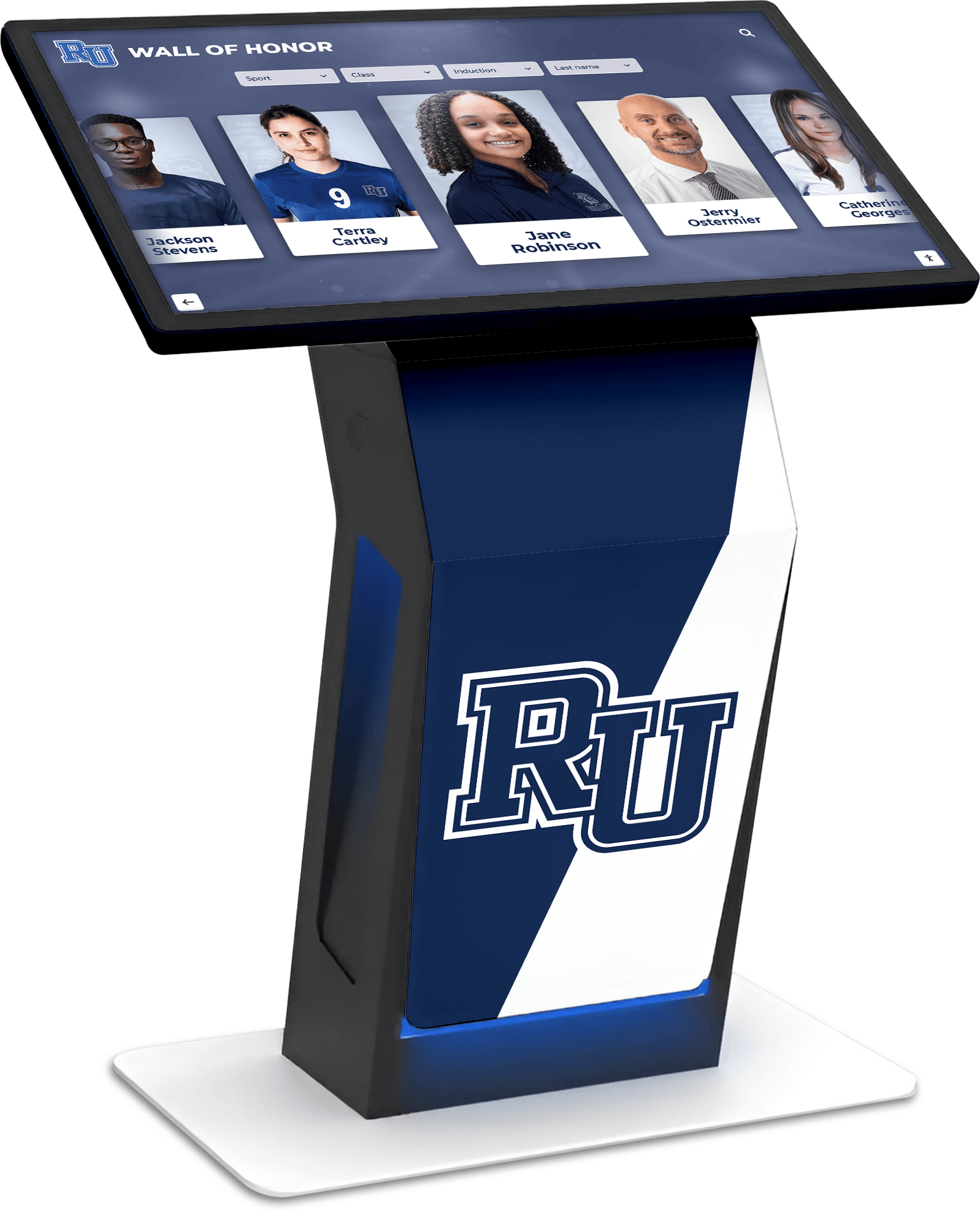
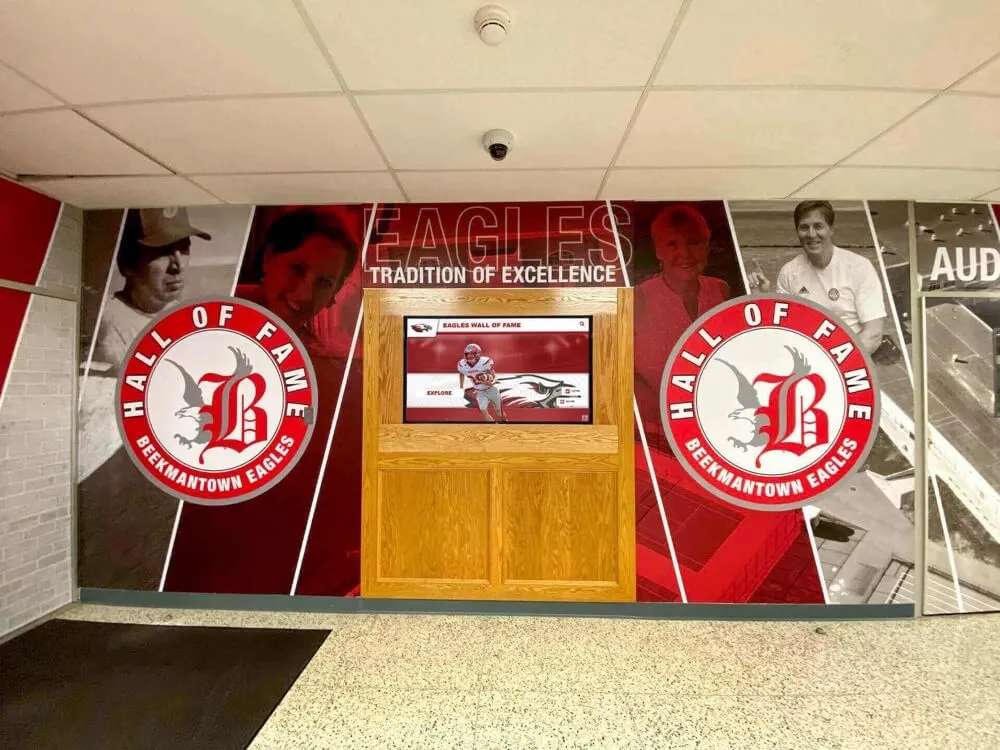
Modern touchscreen kiosks transform club achievement archives from dusty records into engaging, searchable displays that every visitor can explore
Planning Your Club Fundraising Calendar
Sustainable club fundraising doesn’t happen through individual campaigns in isolation—it requires a year-round calendar that sequences events for maximum impact and prevents burnout.
Designing a Full-Year Club Fundraising Approach
Fall Semester Kickoff Campaign Launch with a high-energy event in September or October when student enthusiasm is peaking. Choose an event format that introduces new members to the fundraising culture—something social, low-stakes, and fun. A trivia night or themed product sale works well. Use this campaign to establish your recognition systems so everyone understands how contributions will be acknowledged.
Winter Mid-Year Drive A product sale or digital crowdfunding campaign in November or December leverages holiday purchasing behavior. Keep the campaign short (two to three weeks), set a specific goal tied to a near-term program need, and close with a recognition event before winter break.
Spring Signature Event Your largest event of the year deserves the most visible recognition. End the year with a ceremony that formally honors every member who contributed across all campaigns. Post final fundraising totals, name contribution leaders, and reveal what the funds made possible. This closing celebration becomes part of your club’s culture—next year’s members will look forward to it.
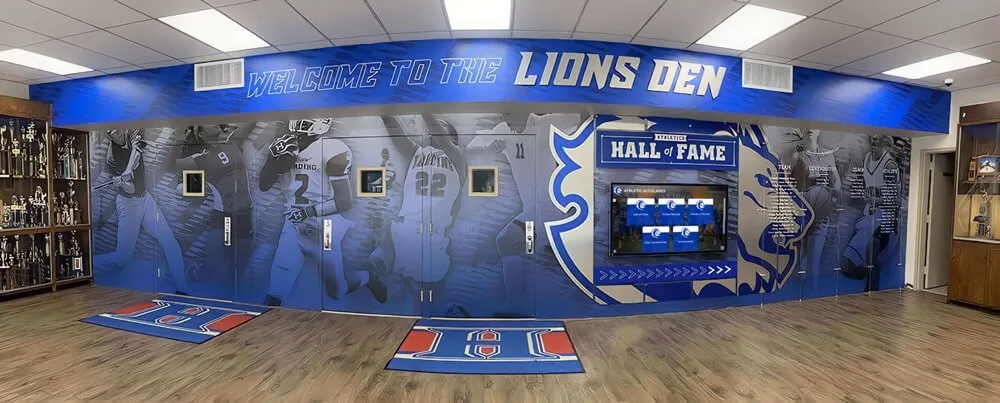
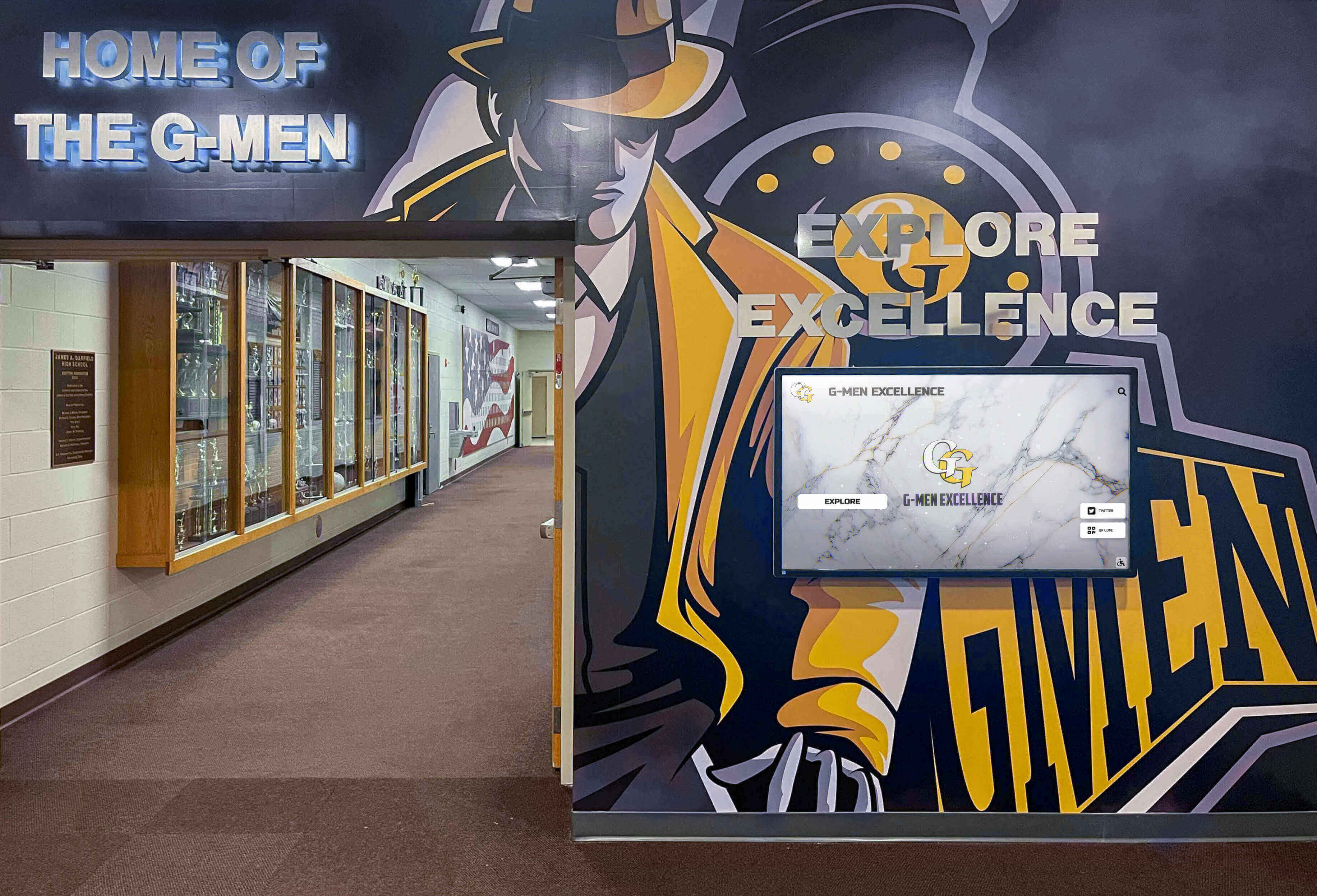
Year-round recognition systems—murals, trophy cases, and digital displays—build the cultural identity that sustains club engagement across campaign seasons
Coordinating With School-Wide Events
Club fundraisers gain significant reach when aligned with existing school events. Homecoming, pep rallies, arts nights, athletic banquets, and school-wide fundraising days all create built-in audiences clubs can leverage for their own campaigns. Coordinate with your school’s activity calendar so club events don’t compete with each other—and so you can maximize cross-promotion with other organizations.
Academic recognition programs that already exist in your school create natural moments to elevate club fundraising recognition alongside academic honors, reinforcing the message that club contribution deserves the same respect as academic achievement.
Teacher appreciation hall of fame displays at your school offer a model for how permanent recognition can live alongside day-to-day campus life—clubs can adapt this same principle for their own member recognition walls.
Measuring Fundraising Success Beyond the Total
Revenue is the obvious metric, but clubs that only measure dollars miss the information needed to improve.
Metrics Worth Tracking
Participation Rate What percentage of club members actively contributed to the campaign? A campaign that raises two thousand dollars with five members isn’t a success—it’s a burnout risk. A campaign that raises twelve hundred dollars with thirty members is a foundation for next year’s stronger campaign.
Member Retention After Campaigns Do members who participate in fundraising campaigns re-enroll the following year at higher rates? Clubs that create meaningful recognition consistently report stronger retention—because members who feel valued stay involved.
Community Reach How many unique donors contributed? How many social media shares did campaign posts generate? How many community members attended your event who weren’t already connected to the school? These reach metrics indicate whether your campaign is building the broader relationships that sustain long-term fundraising success.
Recognition Satisfaction After the campaign, ask members directly: Did you feel recognized for your contribution? The answer to that question predicts more about future participation than any revenue total.
Alumni donors wall of honor programs at schools demonstrate that when donors at any level see their contributions permanently recognized, they return. The same psychology applies to student club members: recognition creates loyalty, and loyalty creates sustainability.
Building a Club Fundraising Culture That Compounds
The highest-functioning school clubs don’t treat each campaign as an isolated event. They build a fundraising culture where participation is expected, contributions are visible, and achievement is celebrated—year after year. New members join because they see the history on the wall. Returning members push harder because they know their effort will be permanently acknowledged.
That culture doesn’t happen by accident. It requires intentional recognition systems, clear documentation of what each campaign accomplished, and a commitment to making every contributor feel that their effort mattered—not just to the club’s budget, but to its identity.
The most powerful school club fundraising ideas aren’t just creative ways to generate revenue. They’re frameworks for building communities worth belonging to, campaigns worth commemorating, and achievements worth displaying.
Ready to Turn Your Club's Campaigns Into Legacy Recognition?
Discover how schools use interactive touchscreen displays to permanently showcase club achievements, fundraising milestones, and member contributions—creating recognition that lasts long after each campaign closes. See how unlimited digital archives replace crowded trophy cases and forgotten spreadsheets with searchable, engaging displays every member can explore.
See Recognition Displays in ActionSchool clubs that integrate recognition into their fundraising DNA—not as an afterthought but as a core design principle—generate more revenue, retain more members, build stronger community relationships, and create legacies that outlast any individual campaign season. Whether you’re starting with a simple contribution leaderboard or building toward a permanent digital display, every step toward visible recognition is a step toward campaigns worth being proud of.
Start with the fundraising idea that fits your club’s current capacity. Build in recognition from day one. Document what you accomplish. And give every member who contributed a reason to come back and do it again next year.