The Easiest Touchscreen Solution

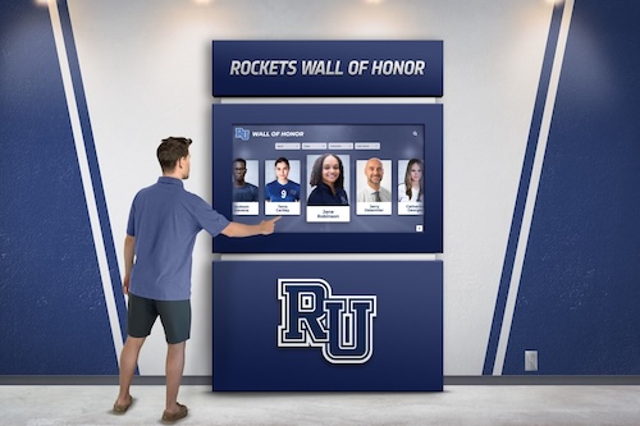
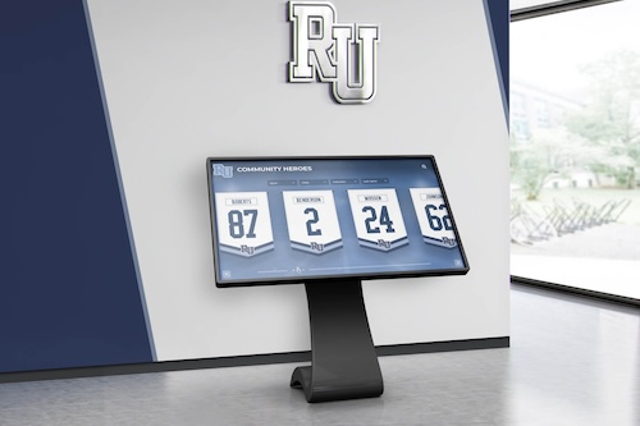

Live Example: Rocket Alumni Solutions Touchscreen Display
Interact with a live example (16:9 scaled 1920x1080 display). All content is automatically responsive to all screen sizes and orientations.
When a school’s crew returns from the SRAA National Championship regatta, an athletic director’s desk fills quickly: medals, shields, possibly a school plaque, and — if the winning crew pulled a Senior Single — a named memorial trophy that belongs to only one event in the entire regatta. Each piece of hardware goes to a different recipient, recognizes a different thing, and belongs in its own display entry. Getting those distinctions right from the start prevents the most common recognition errors: attributing a crew’s finish to an individual, claiming a school plaque for a place that did not earn one, or describing a memorial trophy as though it were an overall team championship.
This guide works through each type of award the SRAA presents under its 2026 rules, identifies the exact conditions under which each is given, explains what the class-year terminology in the rules actually means, and closes with blank caption worksheets your office can fill in from verified race results.
Athletic directors and recognition editors who have worked with other championship formats sometimes carry assumptions that do not transfer to scholastic rowing. The SRAA runs a specific event structure — defined by boat class, class year, and sex — and its awards rules attach to that structure precisely. The source for the claims in this article is the 2026 SRAA Regatta Rules, published at sraa.net/rules.html.
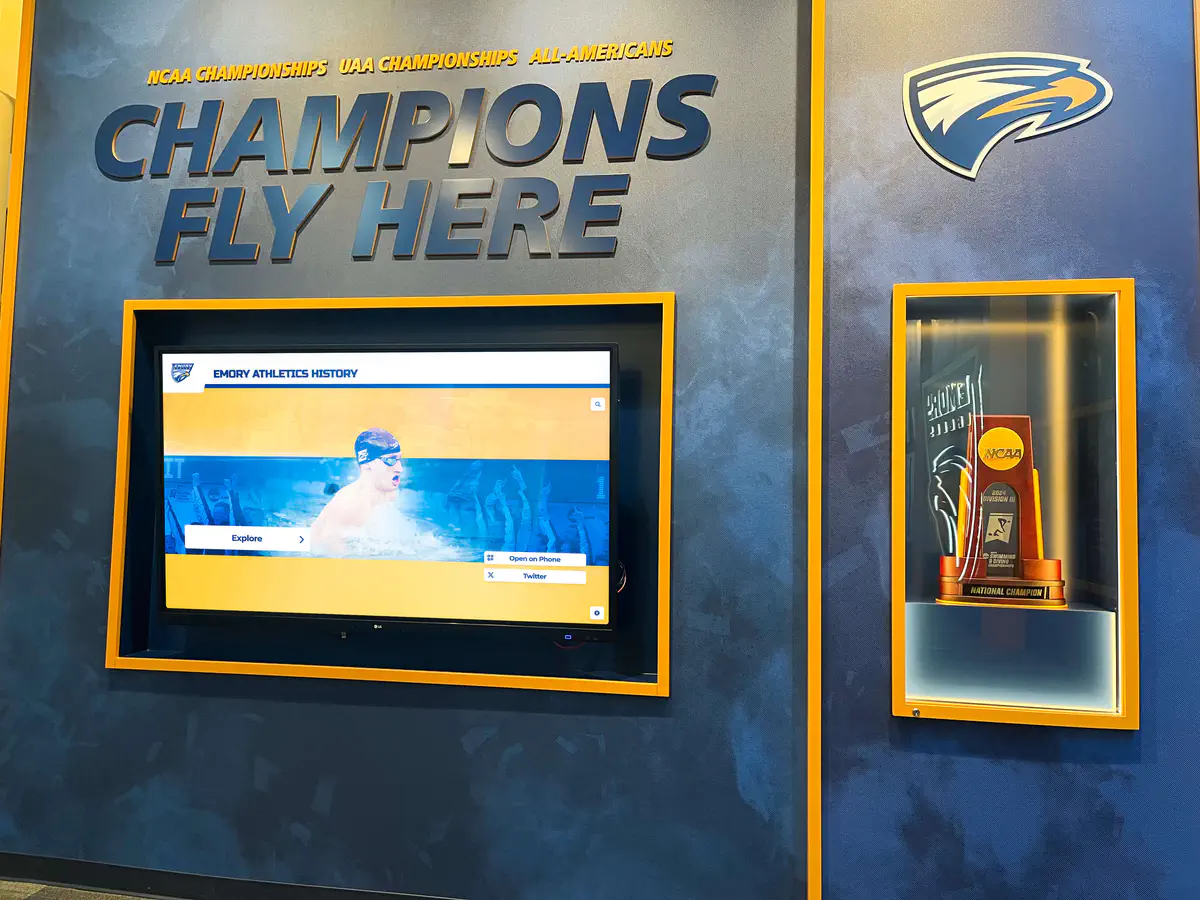
An athletics champions wall that separates award types — team finishes, individual honors, named trophies — keeps each recognition visible and correctly attributed to its actual recipient.
What the SRAA Awards and to Whom
The 2026 SRAA rules establish three distinct hardware categories, each with a different recipient:
Medals and shields go to each member of the winning crew — rowers and coxswain alike, in events that include a coxswain. The rules state: “Medals and shields will be presented to each member of the winning crews.” The recipient is the crew as it competed in the final, not the school’s full program roster or coaching staff.
Award plaques go to the winning school. The plaque recognizes the institution and is distinct from the medals earned by the individual athletes. A school plaque is awarded only for a first-place finish; the rules do not describe a plaque for second or third place.
Second- and third-place medals are provided only in events that attracted six or more entries. The 2026 rules state this condition explicitly: “Medals will be given to second and third place finishers in events with six or more entries.” A display entry for a second- or third-place finish should note which place was earned; it should not describe the hardware as guaranteed for every event in every year.
Named memorial trophies mark two individual events only:
- The Earle P. Baltz Memorial Trophy is awarded to the winner of the Men’s Senior Single.
- The Matthew Ledwith Memorial Trophy is awarded to the winner of the Women’s Senior Single.
Neither trophy represents an overall school championship. Each recognizes the winning crew of its named event — in this case, a crew of one — and belongs to the individual who rowed that race.
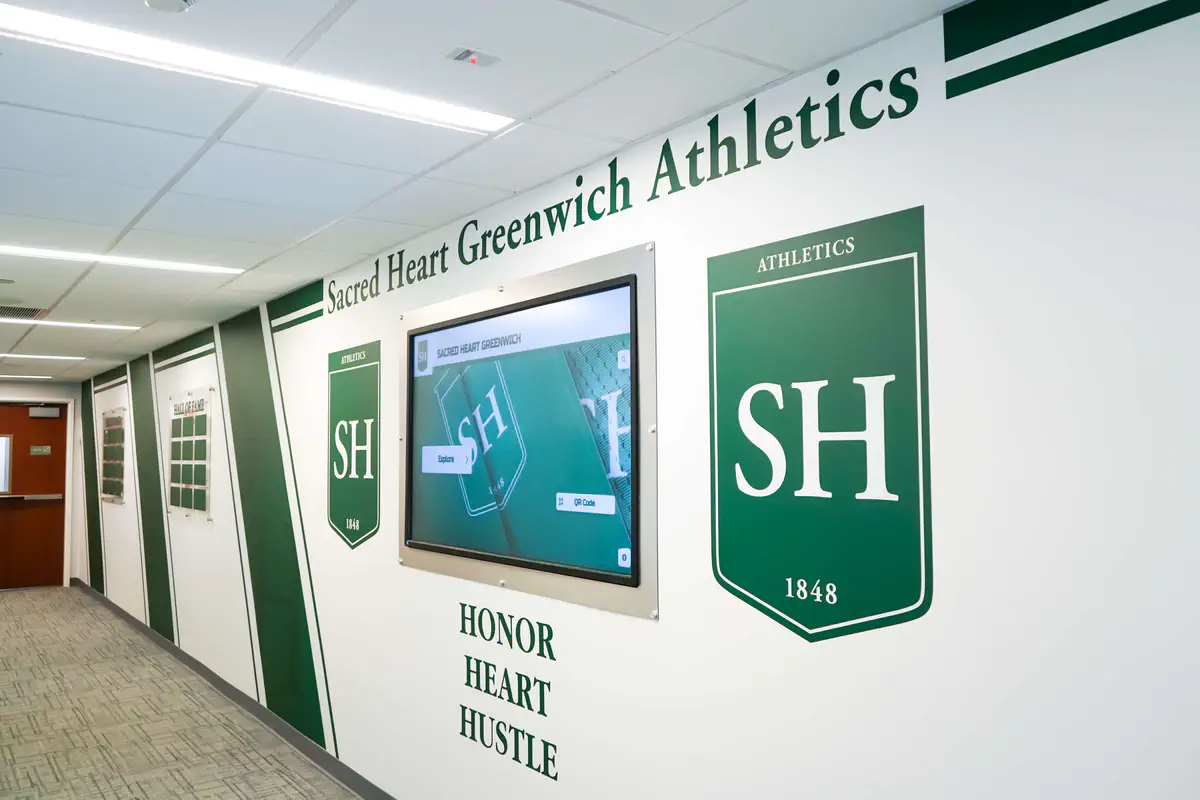
Shield displays in an athletics hallway illustrate how hardware awarded to individual crew members can be shown alongside the institutional record of the event and finish.
The Event Categories: Boat Class, Notation, and Class Year
SRAA events run separately for boys and girls in each boat class. The table below maps each event category to its boat notation and class-year eligibility rules, drawn from the 2026 SRAA rules.
| Event category | Boat classes offered | Class-year eligibility |
|---|---|---|
| Senior | 8+, 4+, 4x, 2x, 1x | Open to all class years (grades 9–12) |
| 2nd Senior | 8+ | Open to all class years; available only if the school's Senior 8+ qualifies and accepts its bid |
| Junior | 8+, 4+, 4x, 2x | Junior, sophomore, or freshman class year only |
| Lightweights | 4+, 2x | Open (with weight certification by deadline) |
| Freshman | 8+, 4x | Freshman class year only |
Boat notation key: The plus sign (+) indicates a coxswain is aboard — 8+ means eight oarspeople with coxswain; 4+ is a coxed four. The letter x denotes sculling (each rower pulls two oars): 4x is a quad scull, 2x a double scull, 1x a single scull.
A display entry that reads only “Junior Four” is ambiguous: it does not indicate whether the boat was a coxed four (4+) or a sculling quad (4x), which are entirely different events. Use the notation the SRAA results publish.
What “Senior” and “Junior” Mean in These Rules
In SRAA rules, these terms describe class-year eligibility — not squad designation, not JV versus varsity, and not graduating status. This distinction is where display editors most often carry incorrect assumptions from other sports.
The 2026 rules state directly: “Junior events are class year boats. All athletes (rowers/coxswains) must be Junior, Sophomore or Freshman Classes. Senior events are open to all class years.”
For display purposes:
- Do not translate “Junior Eight” into “JV Eight.”
- Do not read “Senior Four” as belonging to graduating seniors or varsity rowers only.
- Do not translate “Freshman Eight” into a freshman team unless you have independently verified that all crew members were freshman class year.
Use the event category wording exactly as the official results list it. The organizer’s category name — not an editorial paraphrase — belongs in the display entry.
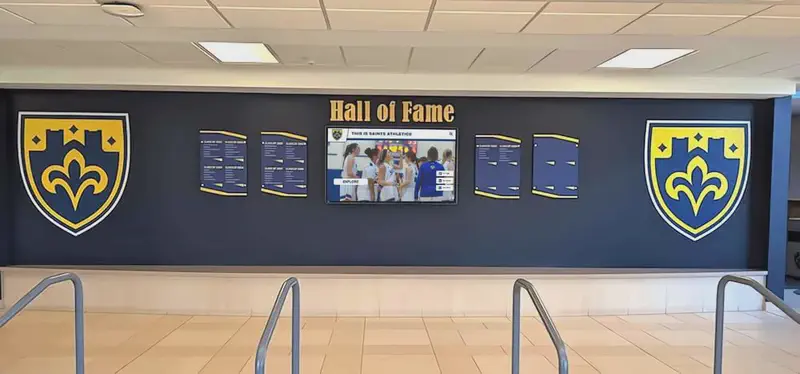
A hall of fame wall organizing shields by event category and year makes it easier for visitors to distinguish among boat classes and avoid conflating different events within the same program.
The Six-or-More Entries Condition
The condition for second- and third-place medals deserves a separate note in any editing workflow. The 2026 rules do not guarantee all three places of hardware in every event. If fewer than six crews entered a given event, only the first-place crew receives medals at that regatta.
Display entries that describe a crew as having “earned a medal” for second or third place should be verified against the actual entry count for that event in that regatta year. If the entry count was below six, the crew’s finish should still be recorded accurately — second place is second place and belongs in the display — but the text should not describe hardware that was not presented.
The reverse also applies: do not omit second- and third-place crew entries simply because you are uncertain about the entry count. Verify the number from the official results, record it in your source column, and caption the entry accordingly.
The Race Distance
All 2026 SRAA races are contested at 1500 meters. The rules state: “All races shall be a distance of 1500 meters.” A display entry for a time or finish recorded at the SRAA Championship reflects a 1500-meter race course. Do not carry a time standard or pace comparison from a 2000-meter or longer race course when captioning an SRAA result.
The Coxswain’s Place in Crew Recognition
In coxed events (8+ and 4+), the coxswain is a member of the racing crew. The SRAA rules cover rowers and coxswains under the same eligibility framework. Medals and shields go to each member of the winning crew — which, in a coxed event, includes the coxswain.
A crew honor entry for a winning 8+ should include the coxswain along with the eight rowers, provided the coxswain’s participation is confirmed from official results. SRAA follows a 50% substitution rule: a qualifying lineup may change up to 50% of its members between the qualifying regatta and the championship race. The racing lineup — not a qualifying or registration roster — determines who is credited.
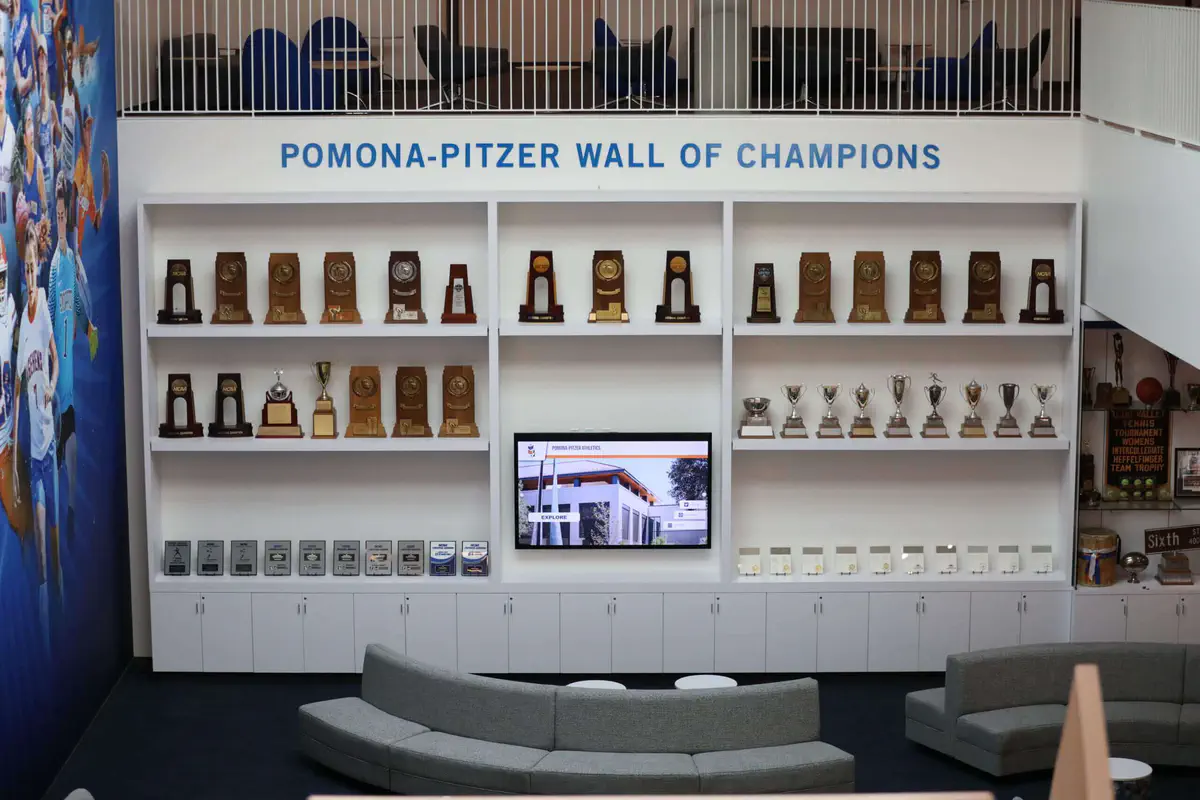
A wall of champions that records each team's hardware and finish keeps institutional memory intact across years and makes the basis for each entry visible to any future editor.
Blank Caption Worksheets
The three worksheets below are editorial planning tools. They are blank by design. Fill each from your verified primary source — official results published by SRAA or the regatta timing service — before creating any display entry. A blank field means more research is needed, not that the field can be inferred.
Maintaining a consistent school sports roster template for your crews before the regatta can shorten the time needed to match a racing lineup against official results once results are published.
Worksheet A — Crew Honor (Medals and Shields)
This worksheet covers individual crew members’ medals and shields for a first-place finish, or second/third-place medals where the six-or-more entries condition is met.
| Field | Your verified entry |
|---|---|
| Event category (e.g., Girls Junior 8+) | |
| Boys or girls | |
| Finish / place (1st, 2nd, or 3rd) | |
| Number of entries in this event | |
| Second/third-place medal threshold met? (6 or more entries: yes or no) | |
| Racing crew member names (from official results) | |
| Coxswain name (if coxed event, from official results) | |
| Regatta name and year | |
| Race distance | |
| Source URL or document |
This table is a blank editorial planning aid for your athletics office. It is not a submission form or required import schema.
Worksheet B — School Award Plaque
A school plaque is awarded only to the winning school (first place) in each event.
| Field | Your verified entry |
|---|---|
| School name (as registered with SRAA) | |
| Event won (category, boat notation, boys or girls) | |
| Place (must be 1st for school plaque) | |
| Regatta name and year | |
| Source URL or document |
This table is a blank editorial planning aid for your athletics office. It is not a submission form or required import schema.
Worksheet C — Named Memorial Trophy
This worksheet covers the two named trophies in the 2026 SRAA rules. Neither trophy is an overall school championship; each recognizes the winner of its specific individual event.
| Field | Your verified entry |
|---|---|
| Trophy name (Earle P. Baltz Memorial Trophy or Matthew Ledwith Memorial Trophy) | |
| Event (Men's Senior Single or Women's Senior Single) | |
| Recipient name (from official results) | |
| School (from official results) | |
| Regatta name and year | |
| Source URL or document |
This table is a blank editorial planning aid for your athletics office. It is not a submission form or required import schema.
Applying the Same Framework Across the Full Event List
The same labeling approach — event category, boat notation, place, entry count, recipient unit — applies to every event the SRAA offers. The table below maps each event to its recipients, so your office can build a consistent template for every entry across the full regatta.
| Event category | Boys / Girls | Boat notation | Recipient of medals and shields | School plaque awarded to | Named trophy |
|---|---|---|---|---|---|
| Senior Single | Boys | 1x | Winning rower (1) | Winning school | Earle P. Baltz Memorial Trophy |
| Senior Single | Girls | 1x | Winning rower (1) | Winning school | Matthew Ledwith Memorial Trophy |
| Senior Double | Boys / Girls | 2x | Winning crew (2) | Winning school | — |
| Senior Quad | Boys / Girls | 4x | Winning crew (4) | Winning school | — |
| Senior Four | Boys / Girls | 4+ | Winning crew (4 rowers + cox) | Winning school | — |
| Senior Eight | Boys / Girls | 8+ | Winning crew (8 rowers + cox) | Winning school | — |
| 2nd Senior Eight | Boys / Girls | 8+ | Winning crew (8 rowers + cox) | Winning school | — |
| Junior Eight | Boys / Girls | 8+ | Winning crew (8 rowers + cox) | Winning school | — |
| Junior Four | Boys / Girls | 4+ | Winning crew (4 rowers + cox) | Winning school | — |
| Junior Quad | Boys / Girls | 4x | Winning crew (4) | Winning school | — |
| Junior Double | Boys / Girls | 2x | Winning crew (2) | Winning school | — |
| Lightweight Four | Boys / Girls | 4+ | Winning crew (4 rowers + cox) | Winning school | — |
| Lightweight Double | Boys / Girls | 2x | Winning crew (2) | Winning school | — |
| Freshman Eight | Boys / Girls | 8+ | Winning crew (8 rowers + cox) | Winning school | — |
| Freshman Quad | Boys / Girls | 4x | Winning crew (4) | Winning school | — |
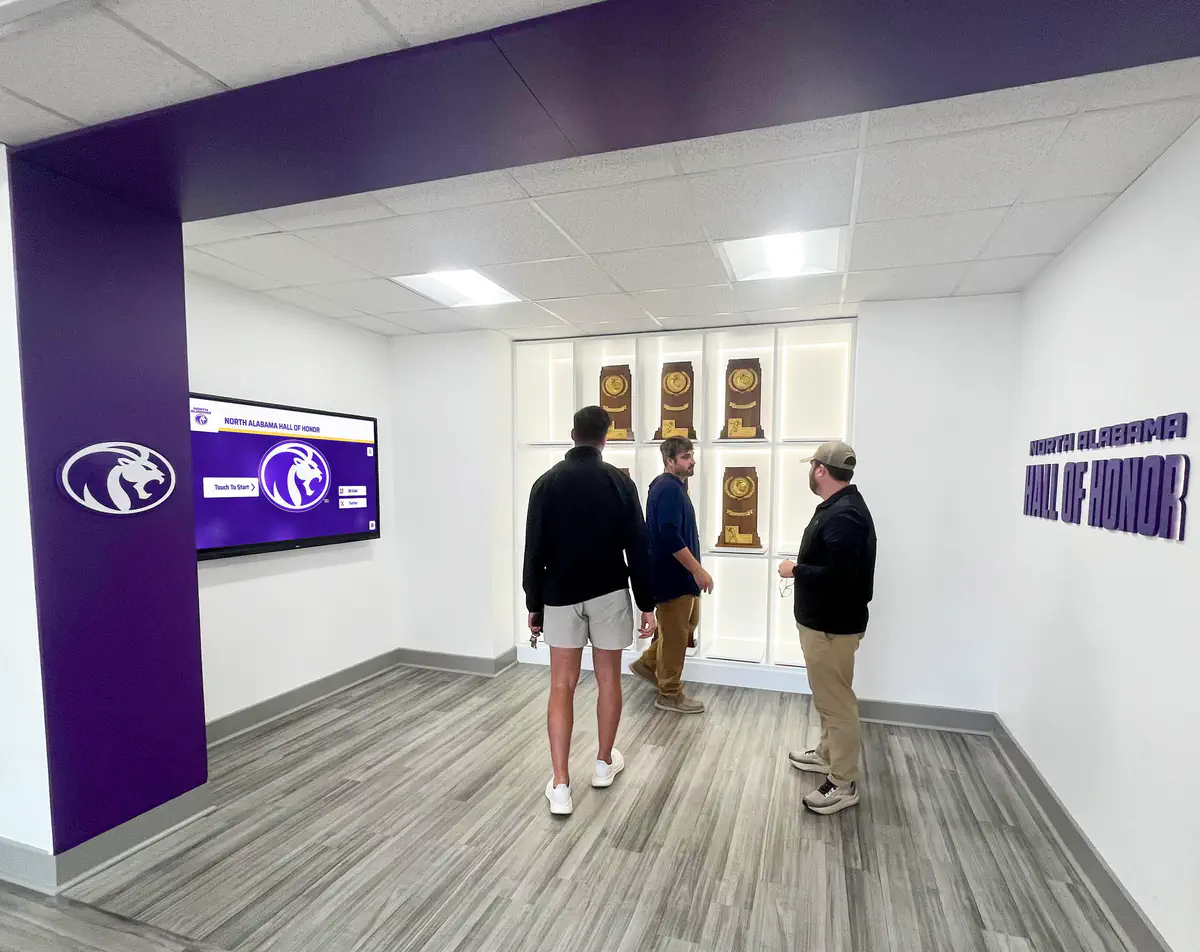
A trophy display that organizes awards by event and year allows visitors to quickly understand what each piece of hardware represents and who earned it.
Preserving Results Over Time
Crew rosters and display entries sometimes degrade — a name misspelled at engraving, a boat class recorded without its notation, a third-place finish entered without noting the entry count that made the hardware possible. Working from primary source documents and saving those source references alongside each entry gives any future editor a path back to the original record.
When a school’s display program grows to cover multiple years of SRAA results, the event structure matters as much as the finish. A Junior 8+ from one year and a Freshman 8+ from another year are different entries, different recipient crews, and different honors — even if the finish was the same and many athletes overlapped across seasons. Each year’s entry should stand on its own sourcing.
Collecting verified details while the regatta is still recent — from the racing crew, the head coach, and official published results — reduces the difficulty of reconstruction later. Resources for collecting alumni memories for team history can help frame the questions worth asking while participants still remember specific details such as exact crew lineups, substitutions made under the 50% rule, and event entry counts.
How Digital Recognition Extends the Physical Trophy Case
A physical engraving or program insert captures what was known at the time it was created. For scholastic rowing recognition, that often means a plaque lists the event and school but crew member names are absent; medals are stored separately from any written record; and the coxswain’s name — which may not appear in the printed program — is never attached to the display.
A digital recognition record can carry each piece of information the physical object lacks: crew member names, the entry count that triggered second-place medals, the 1500-meter race distance, the source document. When a correction is needed — a misspelled name, an incorrect boat notation — it can be made in the digital entry without reprinting or re-engraving.
Each year’s SRAA result can occupy its own entry, indexed by year, event, and boat class, so a school’s history of participation at the national championship remains searchable across multiple decades rather than stored in a trophy room box with no written context attached.
Schedule a conversation about your school’s rowing recognition display
Live Example: Rocket Alumni Solutions Touchscreen Display
Interact with a live example (16:9 scaled 1920x1080 display). All content is automatically responsive to all screen sizes and orientations.