Small schools face a persistent question when evaluating recognition technology: are sophisticated digital platforms overkill for our size? The concern makes intuitive sense. Why invest in database-backed touchscreen systems with analytics, donor tracking, and content management features when a simple photo slideshow or basic digital signage might suffice?
This “too much platform for too little need” objection appears throughout conversations with smaller institutions considering modern recognition displays. Administrators worry about complexity overwhelming limited staff, unused features wasting budget, and sophisticated systems creating maintenance burdens rather than solving problems.
Yet this seemingly reasonable concern rests on fundamental misunderstandings about what creates value in recognition platforms and what actually drives implementation success or failure. The real challenge for small schools isn’t feature depth—it’s finding solutions that reduce ongoing labor, prevent future rebuilding, and provide growth paths without system replacement.
This comprehensive guide examines why digital recognition platforms like Rocket Alumni Solutions serve small schools effectively, addressing the “overkill” objection directly through six critical counterarguments. Whether your school enrolls 200 or 2,000 students, understanding these principles helps you evaluate recognition solutions based on actual operational impact rather than superficial complexity concerns.
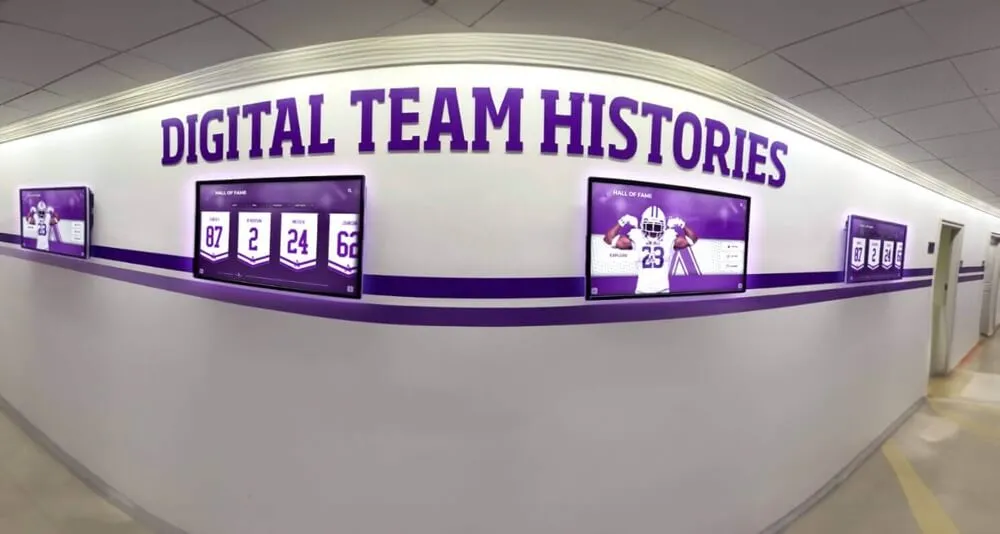
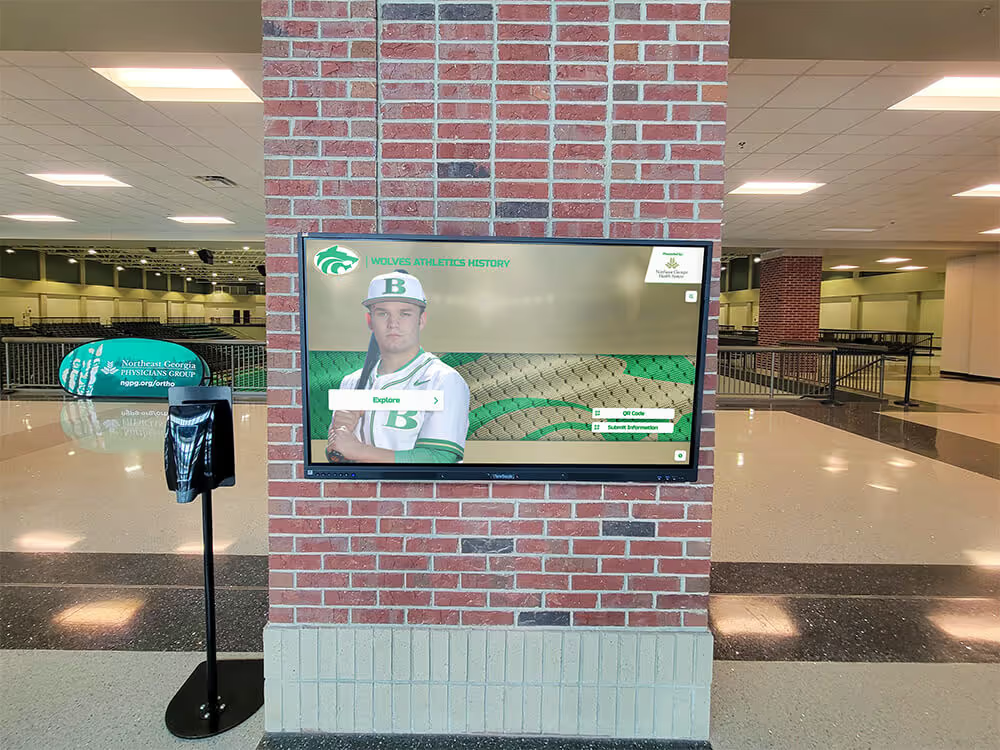
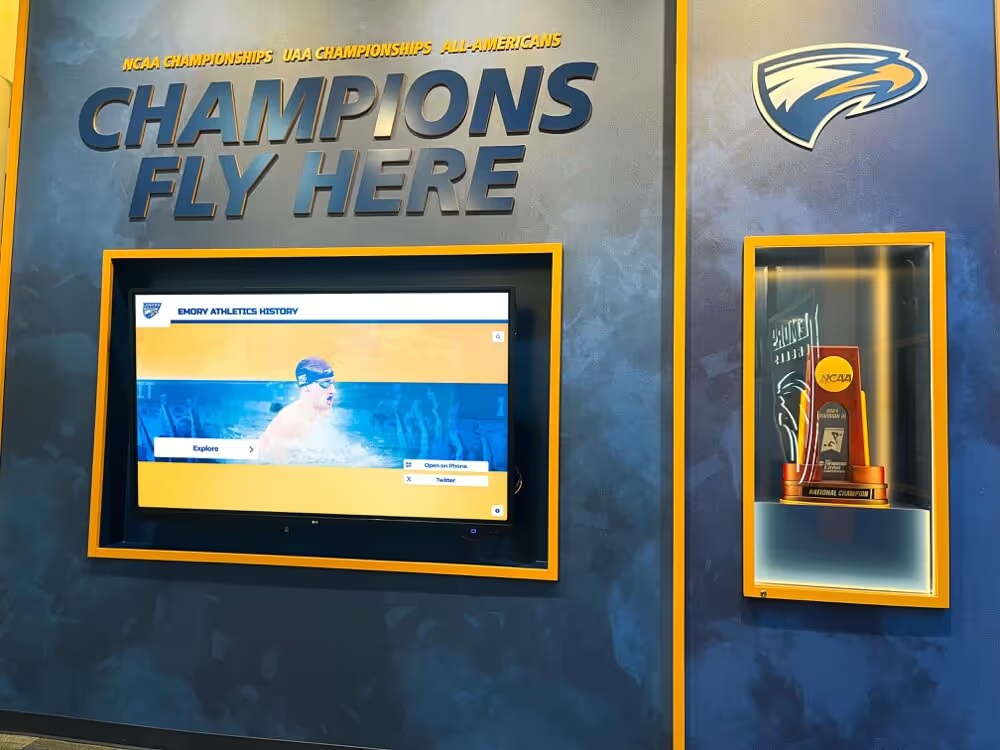
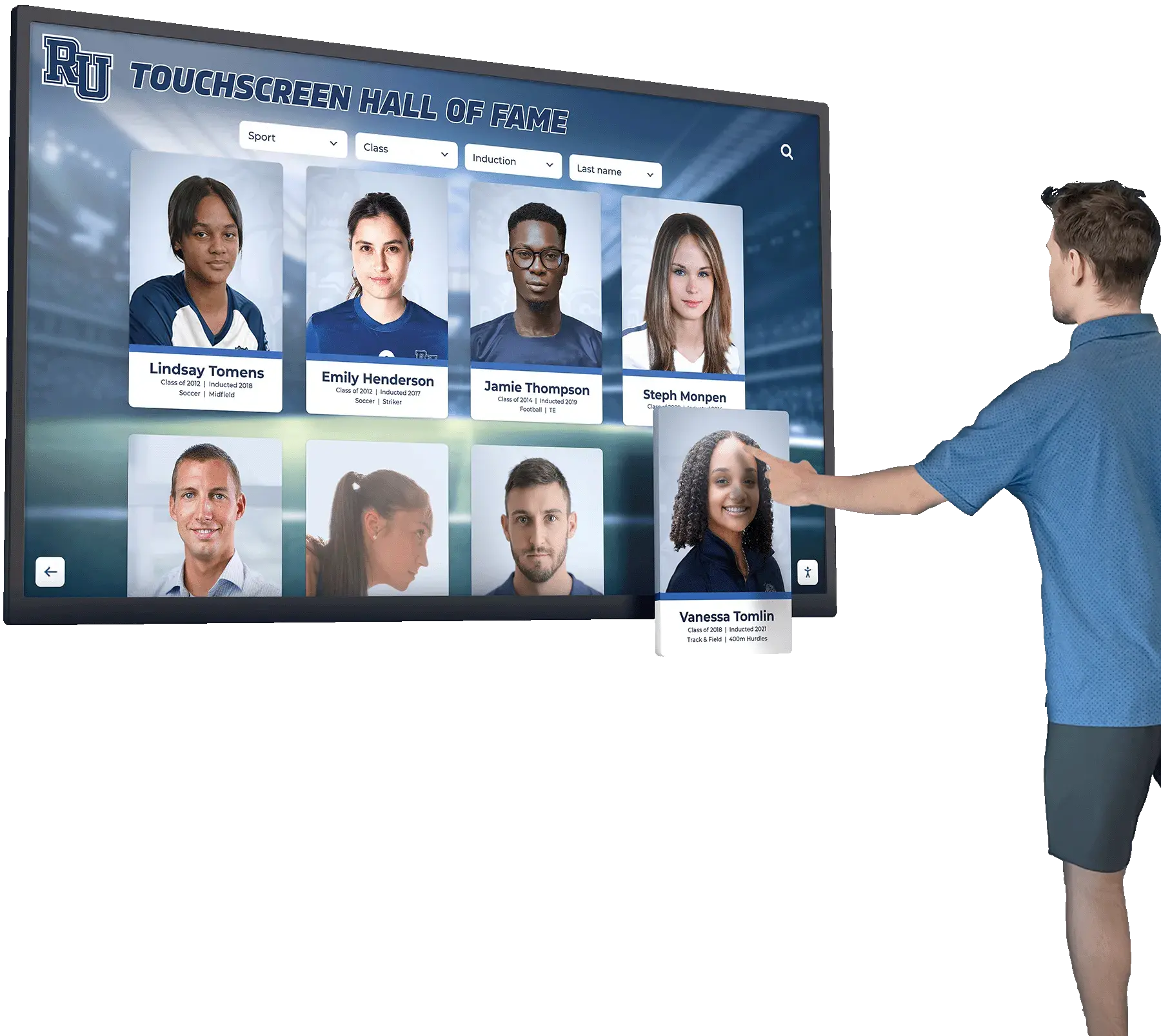
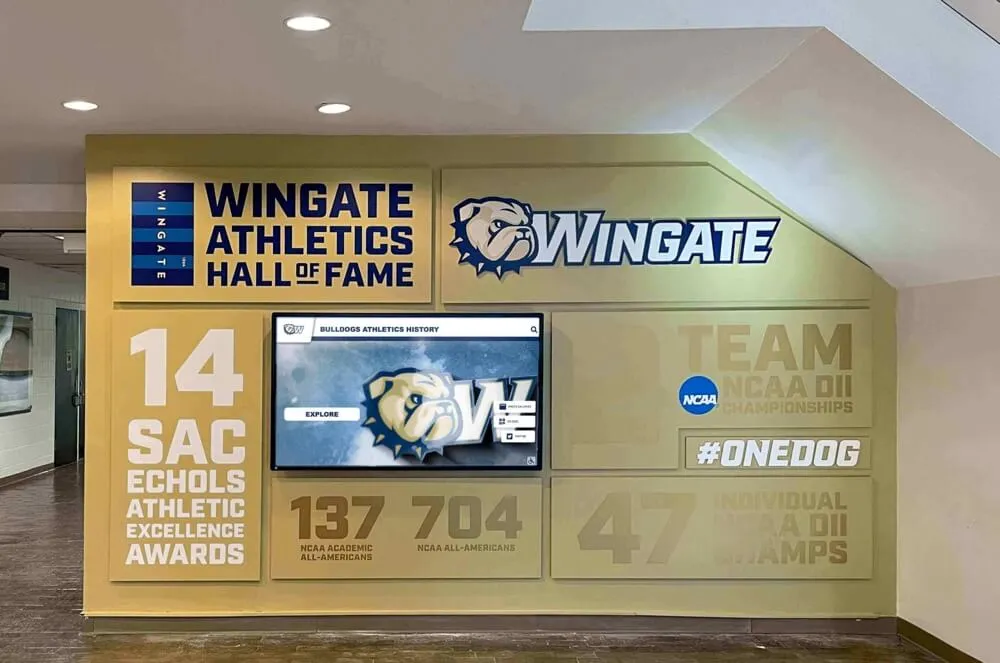
Small schools benefit from professional recognition displays that deliver simple experiences while maintaining capacity for future growth
Understanding the “Overkill” Argument
Before addressing counterpoints, examining why the overkill concern emerges helps clarify what small schools genuinely need versus what they incorrectly assume creates problems.
The Surface Logic
Apparent Feature Mismatch
Small schools looking at comprehensive digital recognition platforms see capabilities far exceeding initial needs:
- Database systems managing thousands of profiles when schools need dozens
- Analytics dashboards tracking engagement across multiple displays for single-screen implementations
- Donor recognition modules when fundraising operates through simple honor roll lists
- Advanced scheduling and publishing workflows for content updated monthly at most
- Multi-administrator permission systems for schools with single technology coordinators
This feature abundance creates understandable skepticism. Why pay for enterprise capabilities serving needs that don’t exist?
Budget Sensitivity
Resource constraints make small schools particularly cost-conscious:
- Total technology budgets measured in thousands rather than tens of thousands annually
- Every dollar competing against instructional materials, facility maintenance, and staff needs
- Board scrutiny requiring clear justification for discretionary technology investments
- Limited fundraising capacity making major purchases require multi-year planning
- Perception that simpler alternatives cost 90% less while delivering adequate functionality
According to research on small school technology adoption, budget considerations represent the primary barrier to implementing sophisticated systems regardless of demonstrated long-term value.
The Real Problem Hidden by Surface Concerns
Maintenance Labor vs. Feature Count
The overkill argument focuses on features when the actual challenge is ongoing operational burden:
- Google Slides loops require manual slide updates, photo collection, typo fixes, and re-exporting
- Simple digital signage needs content creation in external programs, file management, and upload workflows
- Basic photo rotations demand chase-down of coaches for images, resolution formatting, and playlist management
- Static displays require physical updates, printing, mounting, and replacement cycles
- All low-cost solutions shift complexity from software features to human labor
Small schools face the most acute version of this problem—limited staff wearing multiple roles with recognition display updates competing against dozens of higher-priority responsibilities.
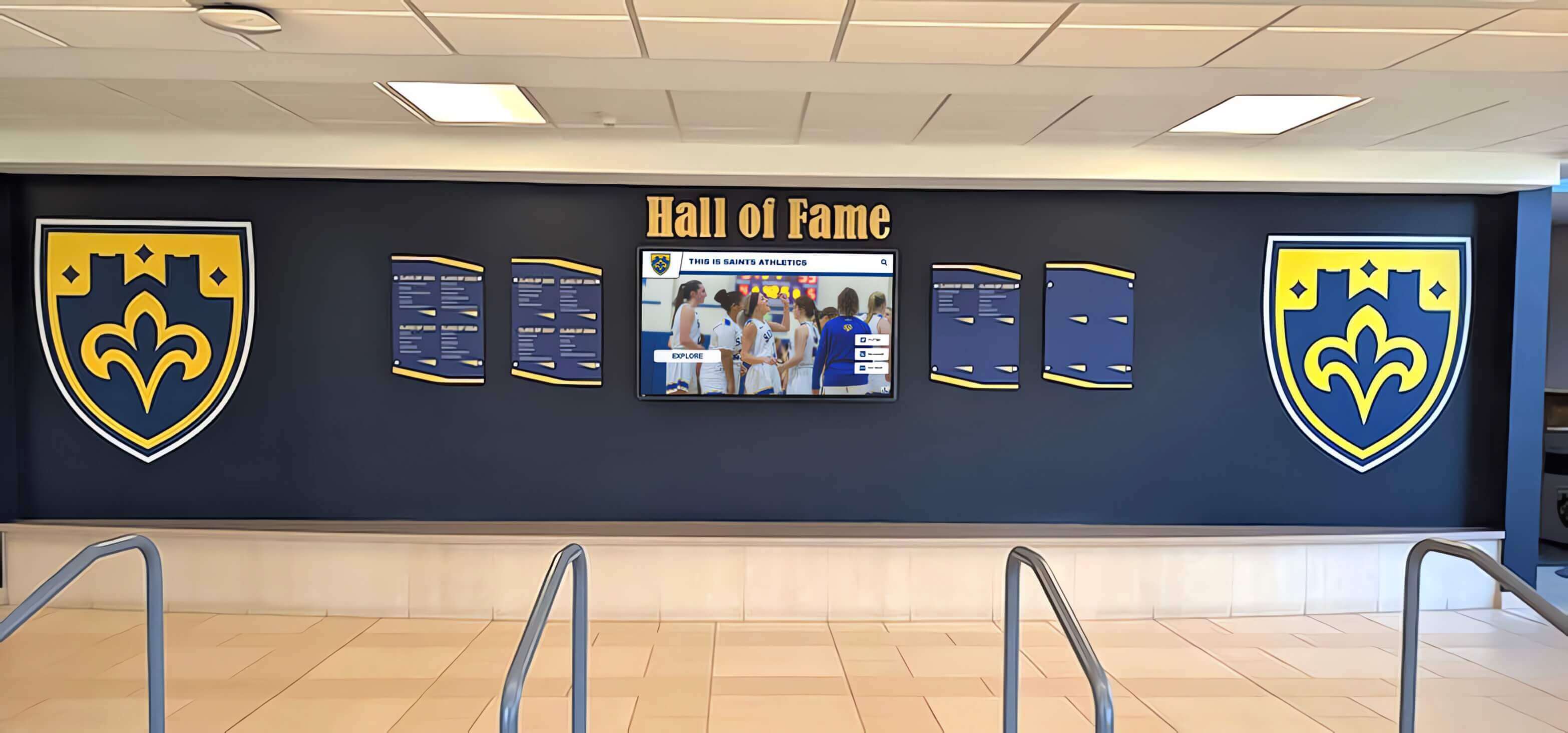
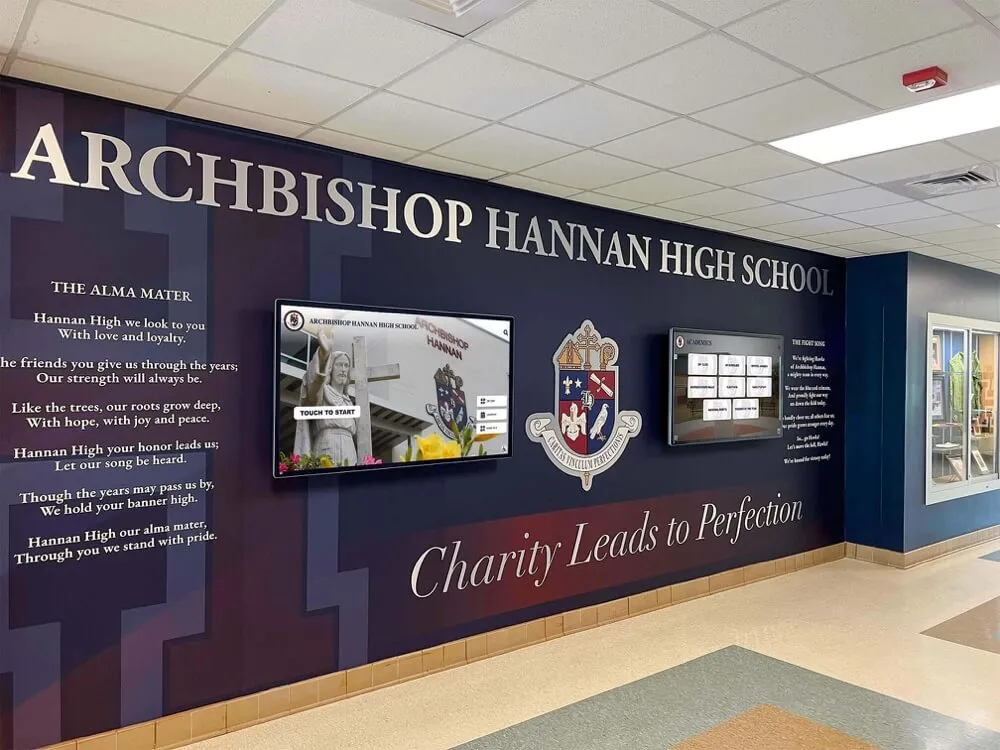
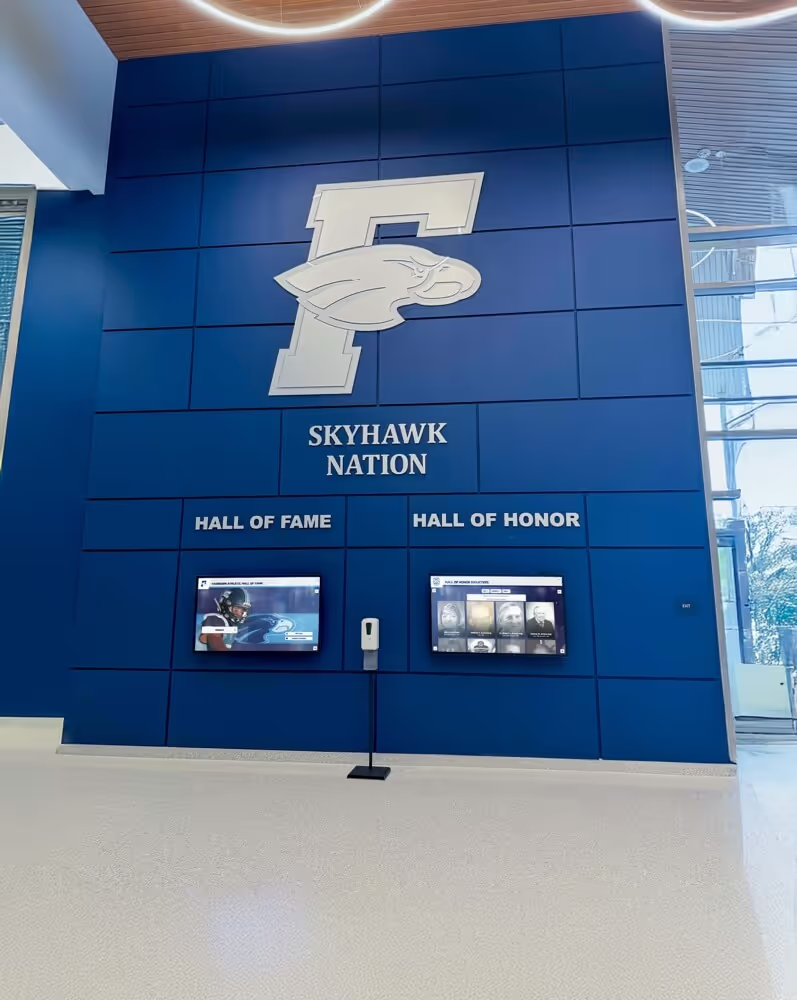
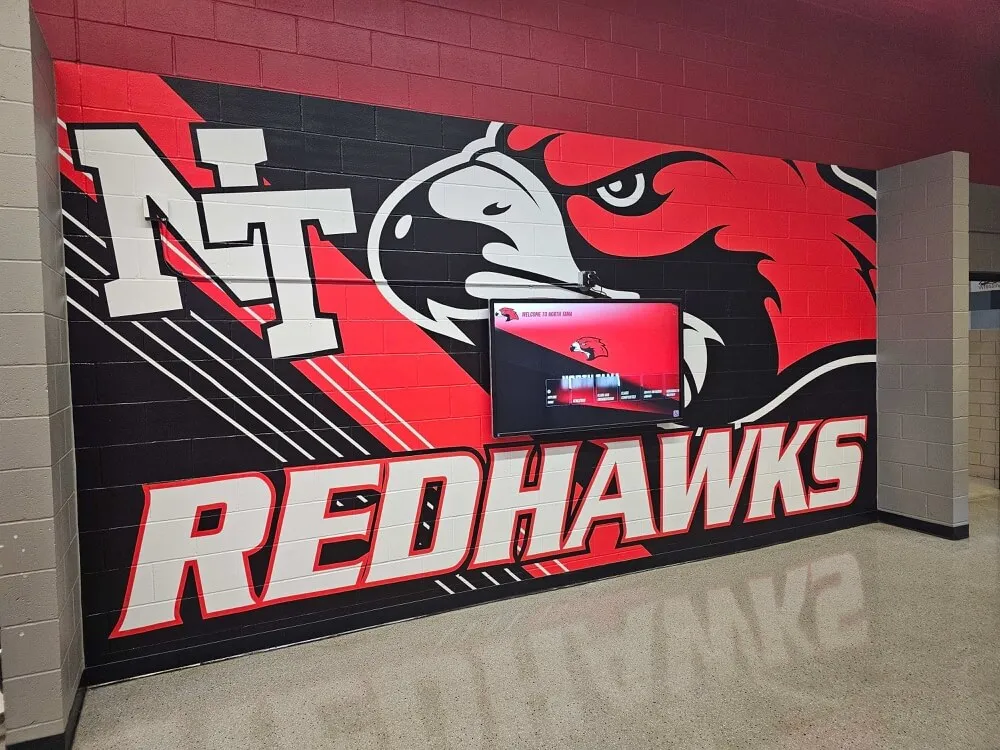
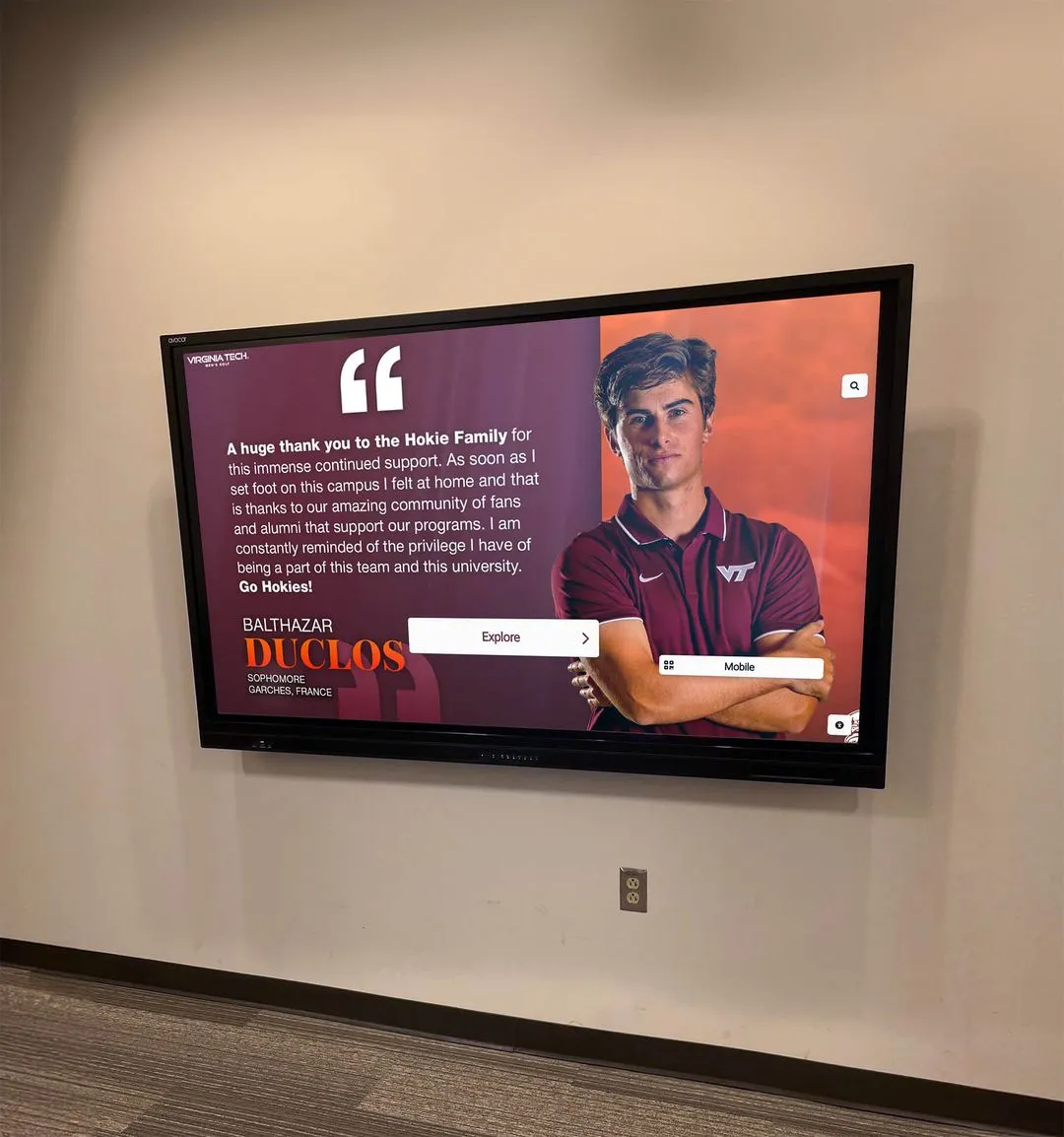
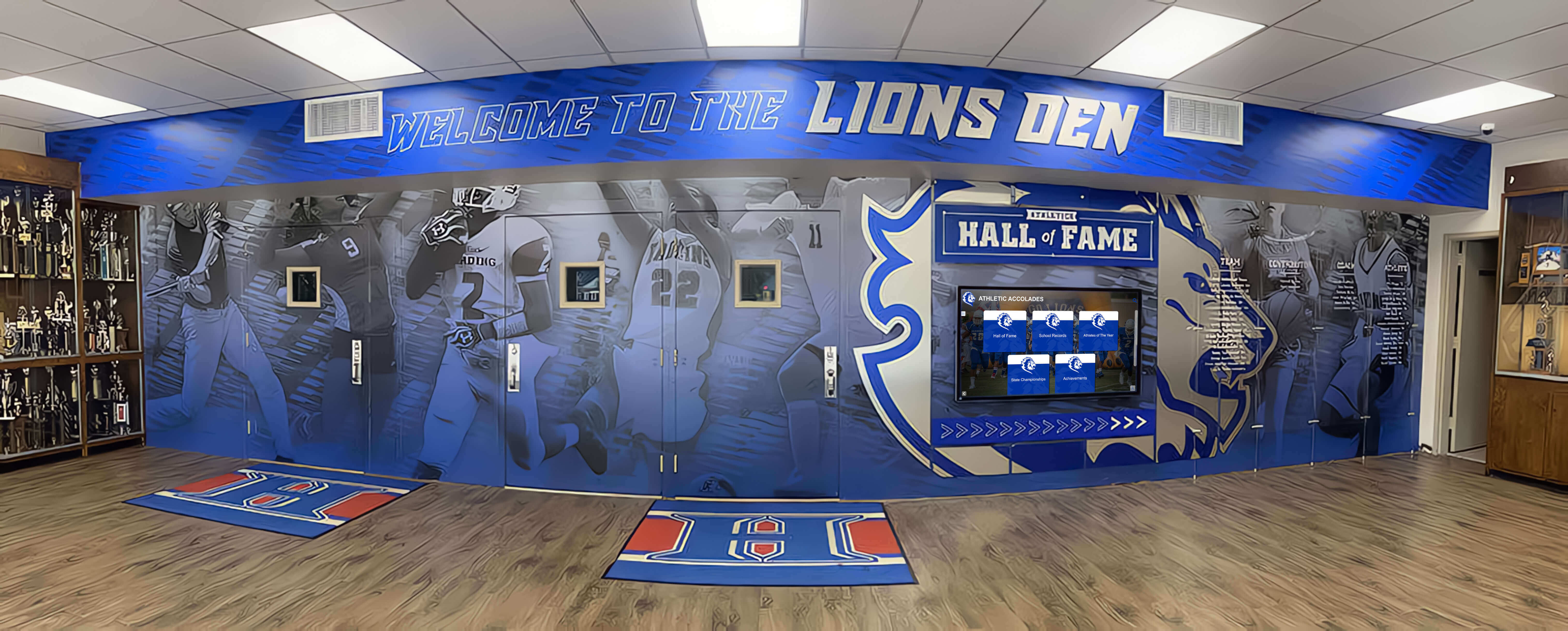
Professional recognition installations in small school lobbies demonstrate institutional commitment to celebrating achievement
The Re-Platform Moment
What appears as “overkill today” often becomes “exactly what we need” within 2-3 years:
- Initial vision: championship photos and current calendar
- Year 2 reality: multiple sports, coaches, senior nights, donor plaques, new sports, tournaments, graduation yearbooks, sponsor rotations, second display, hall of fame nominations
- Result: outgrown simple system requiring painful migration to new platform with data conversion, staff retraining, and duplicated investment
This growth pattern proves remarkably consistent regardless of school size. Recognition displays that engage communities naturally expand as stakeholders recognize possibilities and request additions.
Counterargument 1: Depth Doesn’t Mean Required Complexity
The most fundamental misunderstanding about platform capabilities concerns the relationship between feature depth and operational simplicity.
Optional Capabilities vs. Forced Complexity
Simple Usage of Deep Platforms
Rocket Alumni Solutions and similar comprehensive platforms support lightweight implementations using minimal features:
Basic Configuration Scenarios
- Three content types: team photos, current rosters, season schedules
- Single administrator with simple permissions
- Weekly or monthly update cycles
- No analytics monitoring or optimization
- Minimal content structure and taxonomy
- Standard templates without customization
This basic usage consumes perhaps 10-15% of platform capability while maintaining access to additional features when needs evolve. The platform doesn’t force complexity—it provides options.
UI Curation for School Needs
Sophisticated platforms enable interface simplification hiding unused features:
- Dashboard customization showing only relevant administrative sections
- Template selection eliminating unnecessary content types from workflows
- Permission configuration removing advanced options from view
- Simplified navigation emphasizing most-used functions
- Preset configurations optimized for small school scenarios
- Help documentation tailored to basic implementations
The presence of advanced capabilities doesn’t create mandatory complexity when platforms design interfaces accommodating varying sophistication levels.
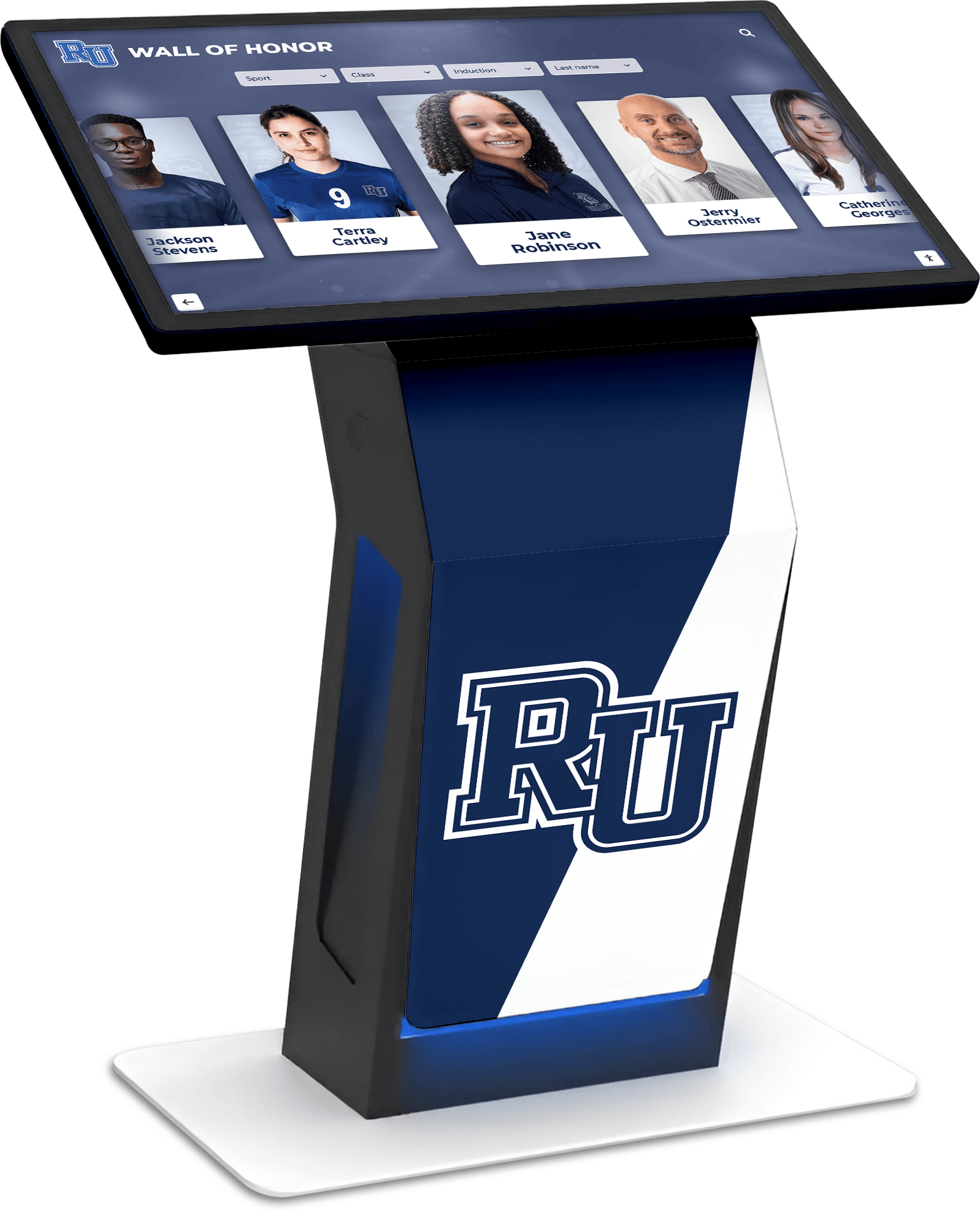
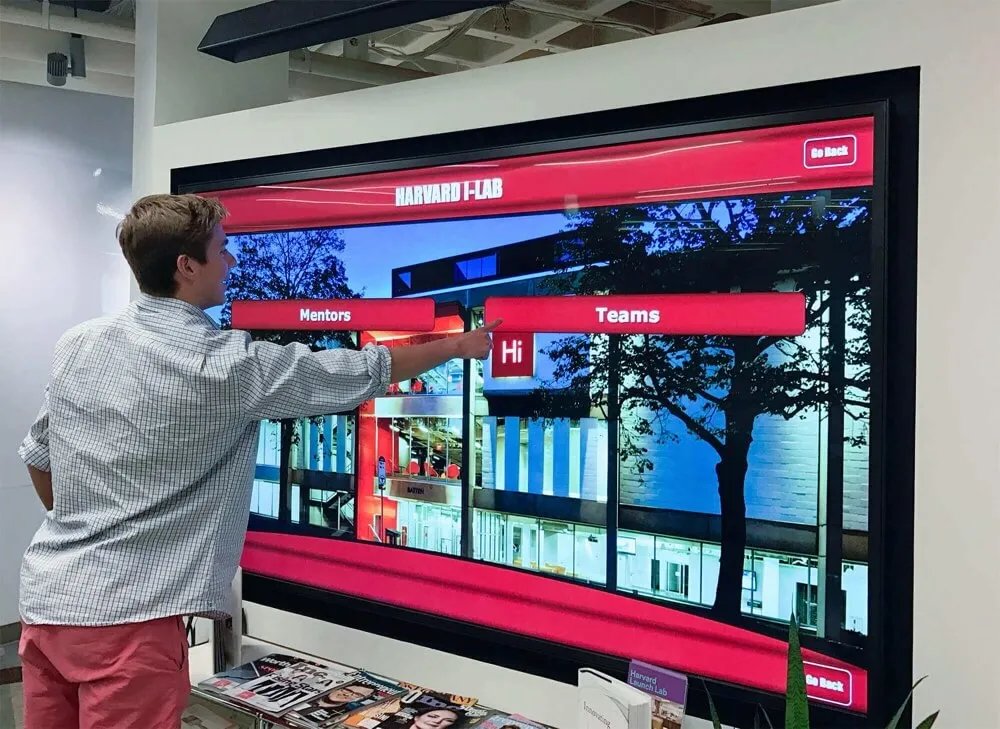
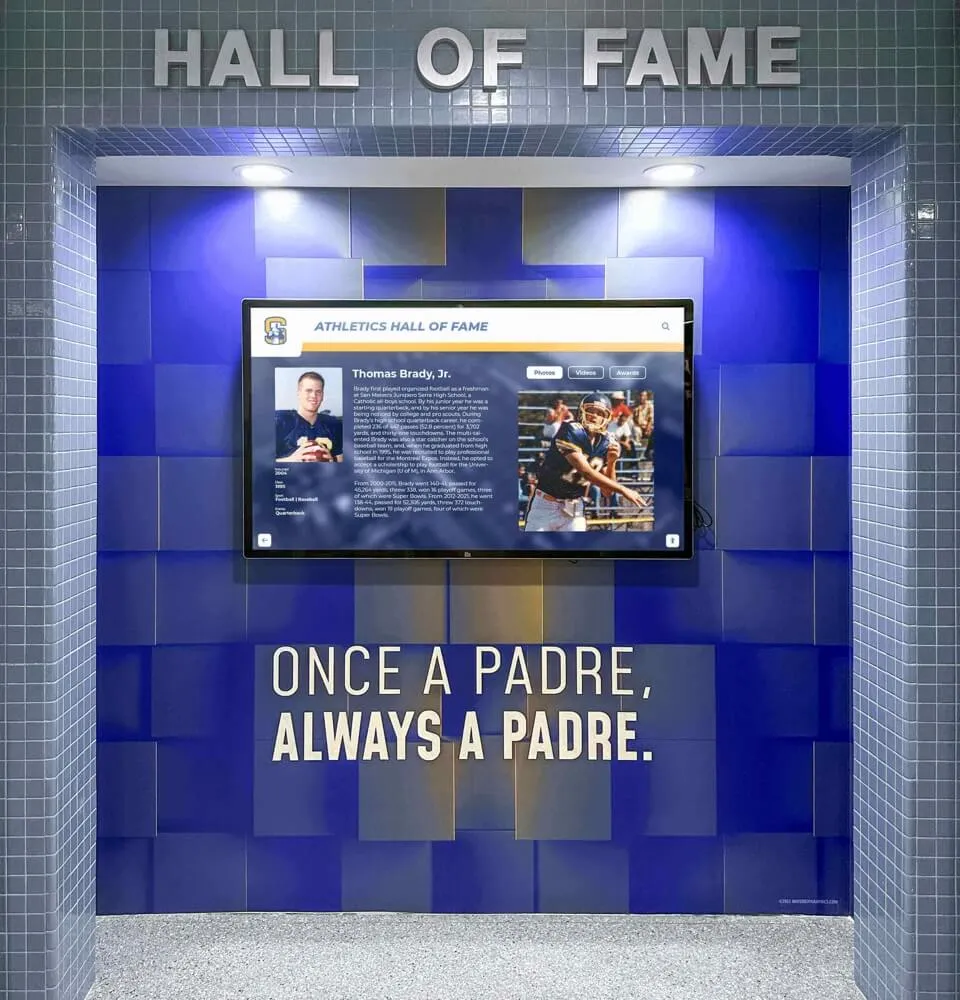
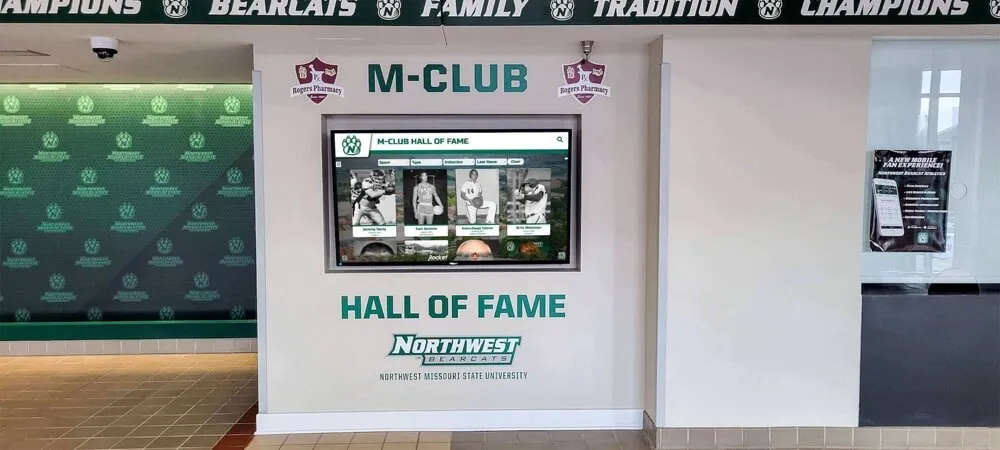
Touchscreen interfaces can present simple photo galleries and schedules while maintaining capacity for richer content as schools grow
The Graduated Learning Curve
Incremental Adoption Patterns
Small schools typically implement digital recognition platforms through phased feature adoption:
Year 1: Foundation
- Set up basic photo galleries and team rosters
- Learn content management fundamentals
- Establish update workflows and responsibilities
- Build initial content library
- Demonstrate value to stakeholders
Year 2: Expansion
- Add historical achievements and hall of fame content
- Implement donor recognition sections
- Introduce schedule and calendar integration
- Enable QR code access for mobile viewing
- Expand to second display location
Year 3+: Optimization
- Use analytics understanding engagement patterns
- Implement advanced scheduling for automated updates
- Use database capabilities for searchable archives
- Integrate with existing school systems
- Train additional administrators across departments
This graduated approach means schools never face overwhelming complexity—they grow into capabilities as capacity and comfort levels increase.
Comparison to Physical Alternatives
Trophy Case Analogy
Physical trophy cases illustrate the depth-vs-complexity principle:
- Cases with adjustable shelving support varying configurations from simple to complex
- Glass door access enables both basic placement and sophisticated arrangement
- Lighting systems accommodate single fixture or elaborate spotlighting
- Lock mechanisms work whether case stores three items or thirty
- Nobody claims adjustable shelving makes trophy cases “overkill” for schools with few trophies
Digital platforms function identically—infrastructure supporting sophisticated use doesn’t prevent simple implementation or create operational burden. Small schools exploring creative trophy display options discover that comprehensive platforms adapt to simple or sophisticated implementations based on institutional needs.
Counterargument 2: Structure Reduces Labor in Resource-Constrained Environments
The “overkill” concern inverts the actual challenge. Small schools don’t need simpler systems—they need systems reducing human labor requirements.
The Manual Labor Trap
Google Slides Workflow Reality
Understanding typical low-cost alternative workflows reveals hidden costs:
Creating Recognition Slides
- Collect photos from coaches and staff (email follow-up, multiple reminders)
- Download images from various formats and sources
- Resize and optimize photos for display
- Create slides in Google Slides with text overlays
- Format consistently across numerous slides
- Proofread all text for errors and typos
- Export to appropriate format for display system
- Upload to digital signage platform or display device
- Test playback ensuring proper display
- Repeat entire process for every update or addition
Estimated time investment: 2-4 hours per update cycle. For monthly updates, this represents 24-48 hours annually of pure administrative work.
Database-Backed Workflow
Structured platforms transform this process:
Creating Recognition Content
- Log into content management system
- Fill simple form: name, photo upload, achievement description
- Publish immediately or schedule future publication
- System handles formatting, optimization, and display
Estimated time investment: 5-10 minutes per profile. For 50 annual additions, this represents approximately 8 hours annually—a 67-83% reduction in administrative labor.

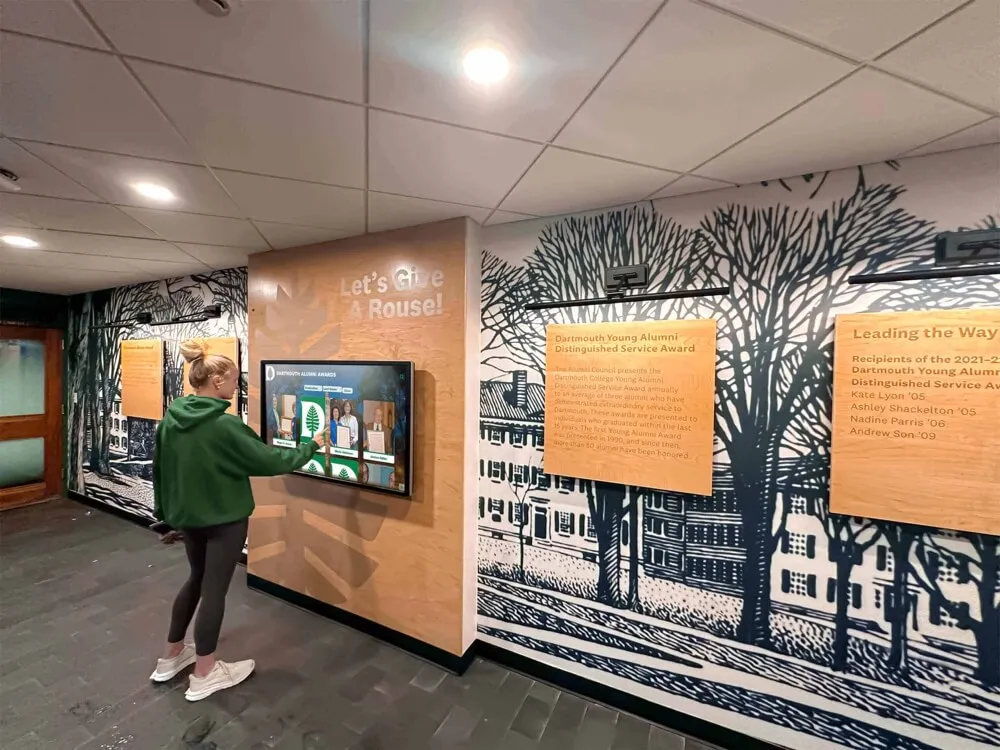
Modern digital platforms enable rapid content updates through simple administrative interfaces requiring minimal time investment
Automation vs. Manual Processes
Structural Benefits of Database Platforms
Seemingly “over-engineered” features deliver practical operational advantages:
Automated Formatting
- Consistent layout automatically applied to new content
- Image optimization handling resolution and aspect ratio
- Text formatting ensuring readability across display sizes
- Color scheme application maintaining visual brand
- Responsive design adapting to different screen configurations
These capabilities eliminate manual design work that simple systems require for every content addition.
Content Reusability
Database architecture enables efficient content reuse:
- Single athlete profile appears across multiple contexts (team roster, individual achievement, historical timeline)
- Championship information automatically populates various views (championship gallery, team page, year summary)
- Coach information links to all associated teams and achievements
- Consistent data prevents duplication and contradictory information
- Updates in one location cascade across all relevant displays
Simple slideshow systems require redundant content creation and manual synchronization across contexts.
Scheduled Publishing
Calendar-based automation reduces ongoing attention requirements:
- Senior night recognition auto-publishes on scheduled dates
- Seasonal content rotates automatically without manual intervention
- Historical anniversary content appears on relevant dates
- Temporary special exhibits expire without removal action
- Schedule synchronization eliminates “forgot to update” failures
These time-savers prove most valuable precisely when staff capacity is limited—the small school scenario. Schools planning senior night celebrations across multiple sports benefit from automated publishing ensuring recognition appears at the right time without manual intervention.
Labor as the Scarce Resource
Reality of Small School Administration
Small schools face unique staffing constraints:
- Athletic directors teaching multiple classes
- Technology coordinators managing instruction and infrastructure
- Secretaries handling front desk, phones, and administrative tasks
- Volunteers contributing limited hours with competing commitments
- No dedicated communications or marketing staff
- Everyone wearing multiple hats with recognition displays as lowest-priority task
According to surveys of small school administrators, available time rather than budget represents the most constrained resource. Solutions creating ongoing labor burdens fail regardless of initial cost advantages.
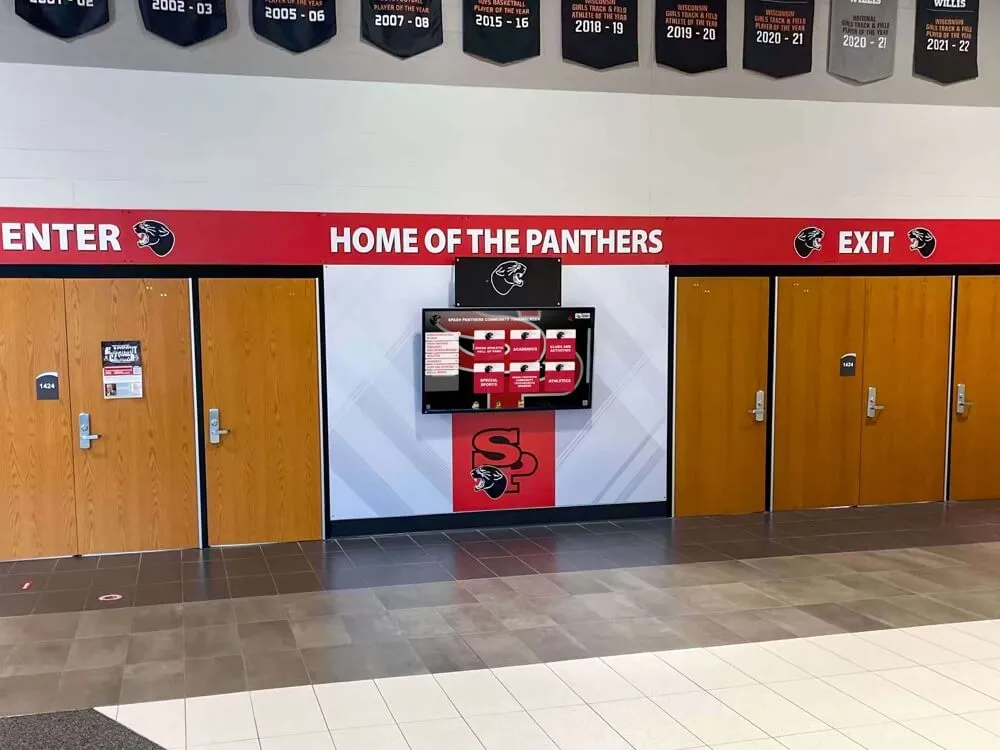
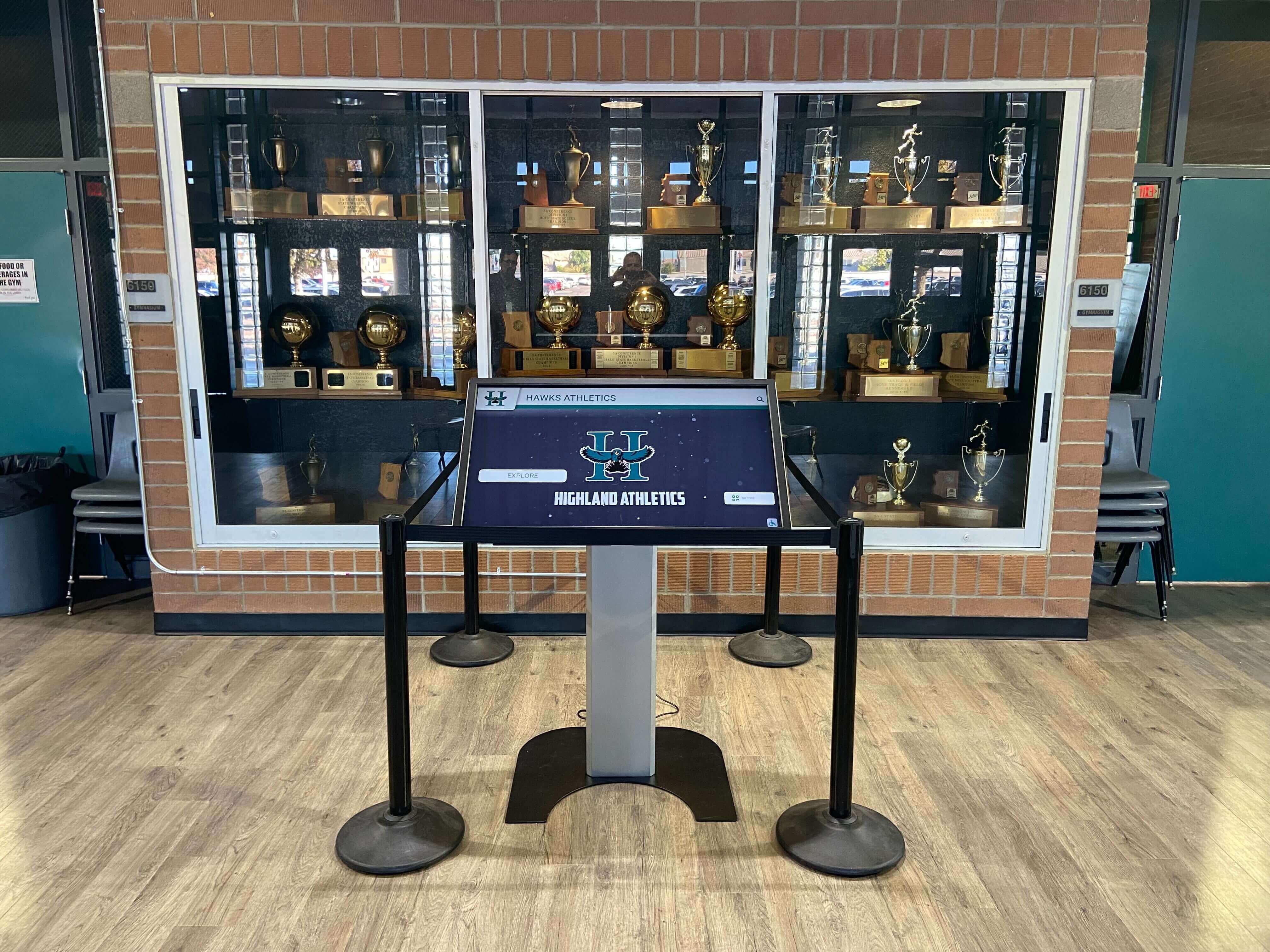
Hybrid installations combining traditional trophy cases with digital displays balance familiar elements with reduced maintenance requirements
Structure Reduces Burden
Database-backed platforms’ seeming over-engineering directly addresses this constraint:
- Templates eliminate design decisions and formatting work
- Automation removes manual update triggers from memory
- Structured workflows prevent “where do I start” paralysis
- Consistent patterns accelerate content creation through repetition
- Error prevention reduces time lost to fixing mistakes
The very features appearing as “overkill” in capability lists translate directly to time savings for staff juggling dozens of competing responsibilities.
Counterargument 3: Growth Trajectories Consistently Exceed Initial Plans
Small schools dramatically underestimate how recognition displays evolve once implemented, making “right-sized for today” decisions create expensive problems within 2-3 years.
The Expansion Pattern
Initial Vision vs. Three-Year Reality
Documented case studies show predictable growth patterns:
Year 1 Launch Vision
- Current championship teams
- Season schedules
- Basic school information
- Perhaps dozen athletes or achievements
Year 3 Actual Usage
- All sports across three seasons
- Individual athlete achievements
- Coach recognition
- Senior night tributes
- Academic honor roll
- Donor recognition
- Historical championships
- Alumni highlights
- Graduation photos
- Club achievements
- Community service recognition
- Student government
- Performing arts accomplishments
- Multiple displays in various locations
What begins as “just show our football championships” consistently expands to comprehensive recognition across programs as stakeholders recognize possibilities and request additions. Resources on sports banquet planning show how recognition displays integrate with year-end celebrations, driving expansion of digital content.
Why Growth Proves Inevitable
Engagement Creates Demand
Visible recognition generates stakeholder interest:
- Soccer coaches see football recognition and request equal visibility
- Academic departments observe athletic celebrations and want academic achievement displayed
- Current season content prompts requests for historical documentation
- Successful implementation creates organizational capacity for expansion
- Parent and community response validates recognition value
- Student engagement demonstrates motivational impact
This positive feedback loop drives expansion regardless of initial intentions to “keep it simple.”
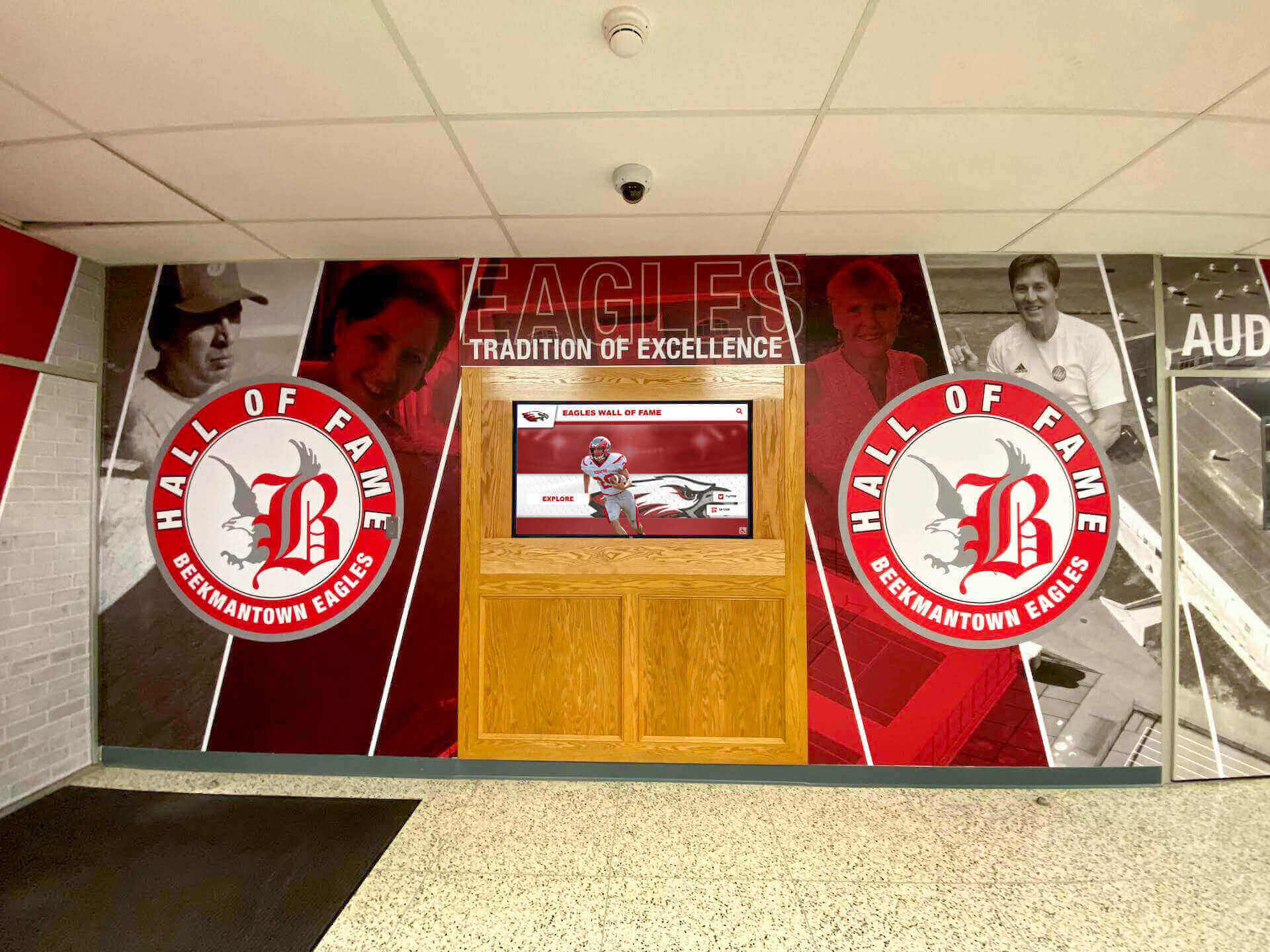
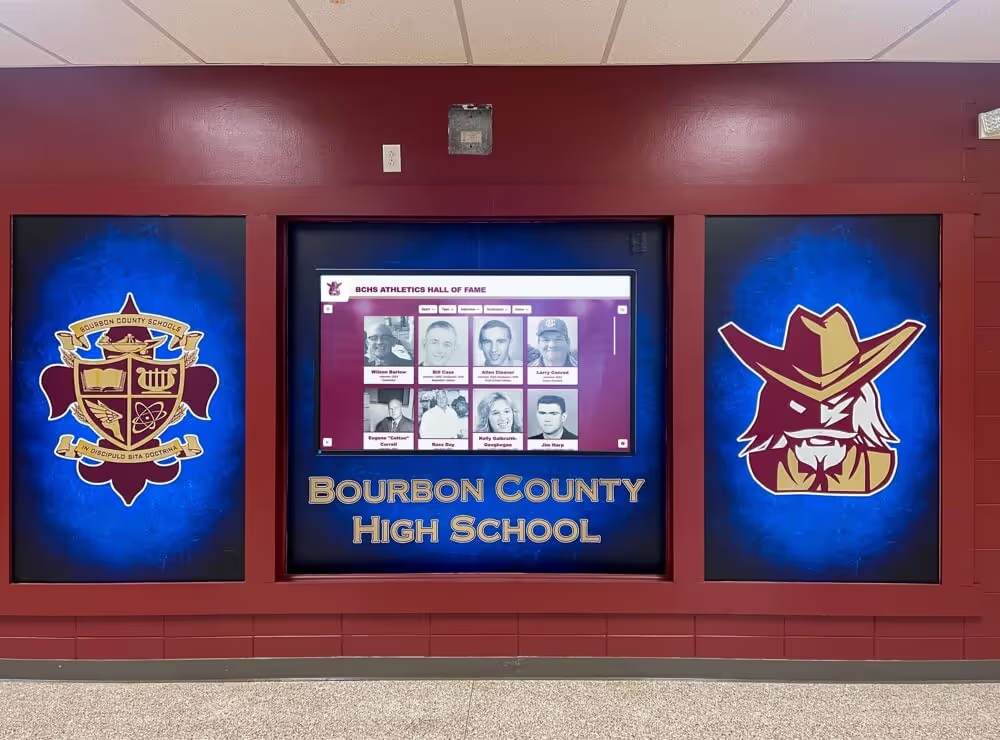
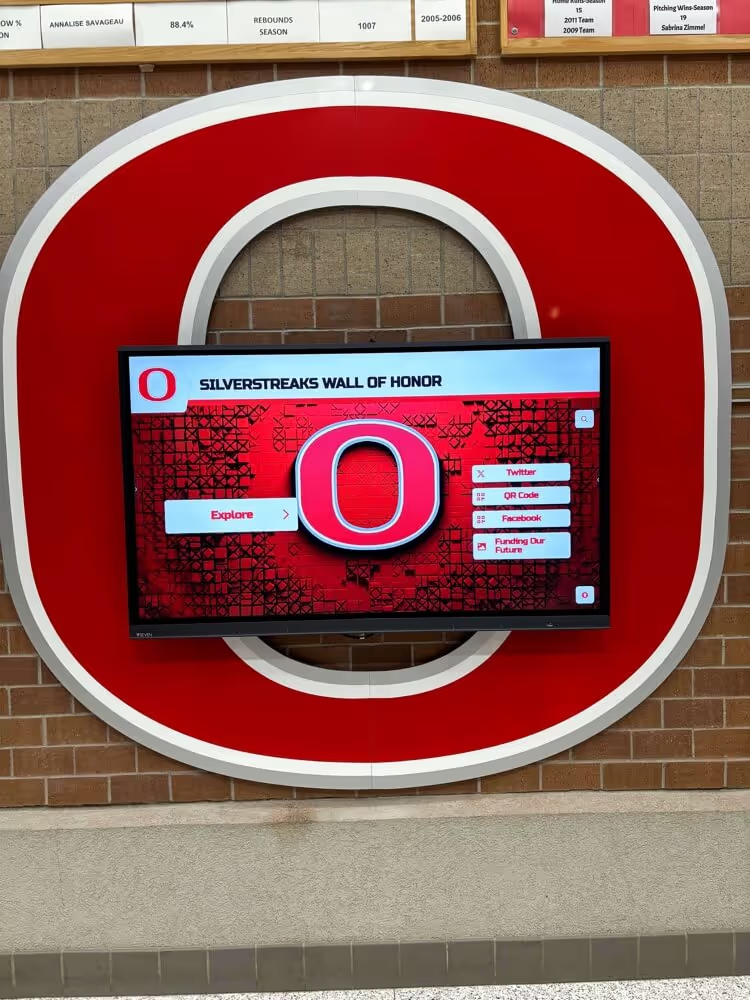
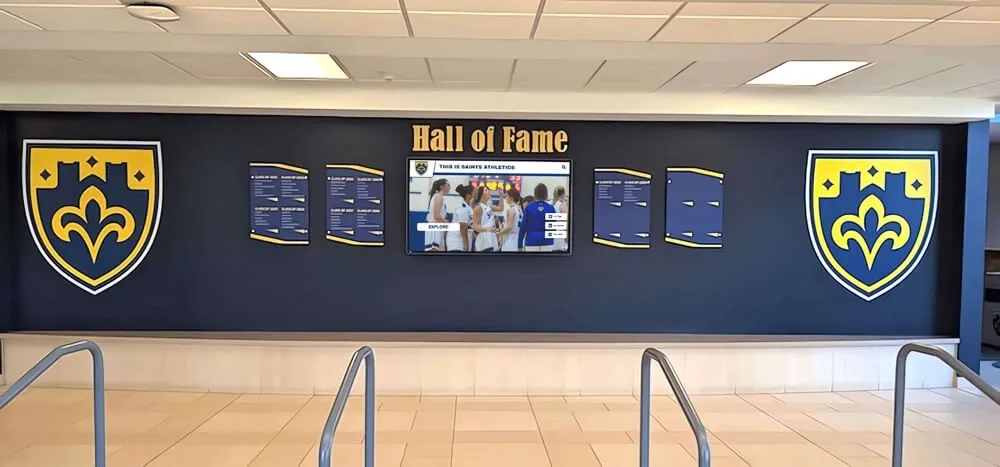
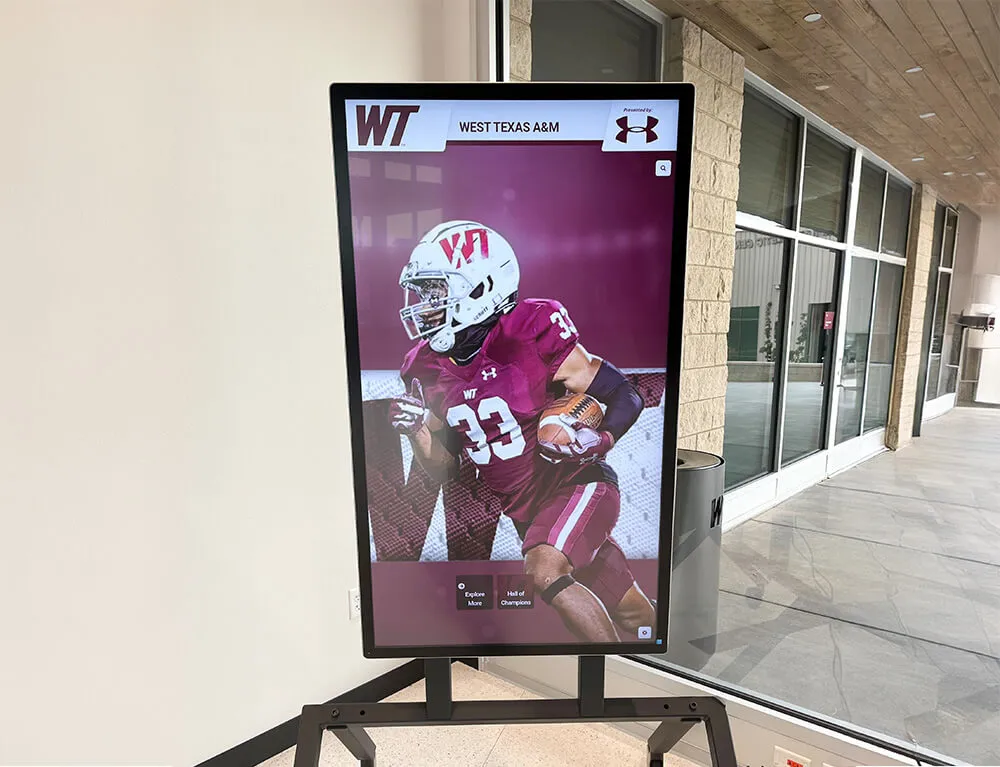
Professional lobby installations in small schools create pride and community connection that drives expanded recognition across programs
Program Evolution
Schools naturally change over time:
- New sports added as interest develops
- Discontinued programs create historical documentation needs
- Staff changes bring fresh perspectives and recognition priorities
- Facility improvements create additional display locations
- Community growth increases program participation and achievement
- Fundraising success creates donor recognition requirements
According to research on small school recognition programs, 85% of schools exceed initial content plans within three years regardless of conservative launch intentions.
Migration Pain Points
Schools outgrowing simple systems face expensive transitions:
Content Migration Challenges
- Export data from limited systems lacking structured export
- Manual re-entry of achievements into new platform
- Photo recollection when images weren’t preserved in usable formats
- Lost historical context and descriptions
- Inconsistent formatting requiring cleanup
- Time investment equivalent to starting from scratch
Stakeholder Disruption
- Staff retraining on new administrative systems
- Student confusion about display location and access changes
- Alumni frustration when familiar systems disappear
- Lost SEO value if web-based recognition changes URLs
- Community perception of wasted investment in failed system
Financial Waste
- Initial system investment with limited usable lifespan
- New platform costs duplicating capability purchases
- Implementation services required for second system
- Staff time diverted from operations to migration
- Lost opportunity cost of delayed comprehensive recognition
Schools frequently report that re-platforming costs exceed initial savings from choosing simpler systems, particularly when accounting for disruption and staff time.
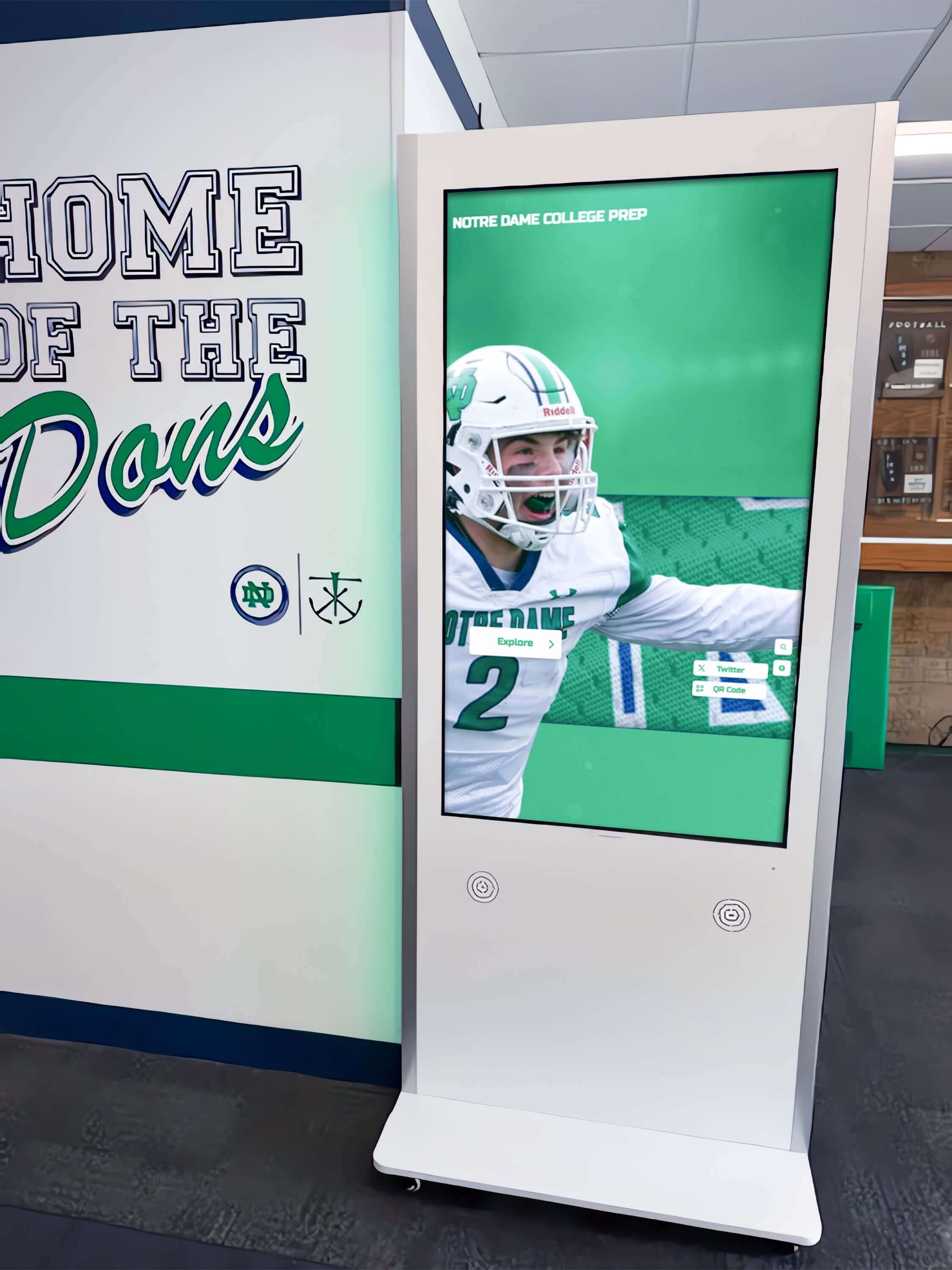
Strategic platform selection prevents costly re-platforming by accommodating growth from simple launches to comprehensive recognition programs
Prevention Through Initial Capacity
Right-Sized for Tomorrow
Platforms with depth prevent re-platform moments:
- Launch with basic content using minimal platform capability
- Expand gradually using existing system’s additional features
- Train staff incrementally on relevant capabilities as needed
- Preserve institutional knowledge and content investment
- Avoid disruption of successful recognition programs
- Maintain stakeholder familiarity with consistent systems
The platform “overkill” for year one proves exactly right for year three—precisely the timeframe when re-platforming becomes necessary if initial systems lack capacity.
Counterargument 4: Total Cost Comparisons Must Include Hidden Expenses
The “90% cheaper” comparison between simple digital signage and comprehensive platforms proves misleading when examining actual operational costs.
The Apples-to-Oranges Problem
What Simple Solutions Exclude
Advertised pricing for basic alternatives omits substantial costs:
Content Development Labor
- Design work creating professional layouts
- Photo editing and optimization
- Text composition and proofreading
- Ongoing updates and maintenance
- Troubleshooting playback issues
- Value calculation: $40-60/hour × 30-50 hours annually = $1,200-3,000
Administrative Burden
- Collecting content from distributed sources
- Coordinating with coaches and staff
- Follow-up reminders and deadline enforcement
- Quality control and accuracy verification
- Community complaint response and corrections
- Value calculation: $30-50/hour × 20-30 hours annually = $600-1,500
Knowledge Churn Costs
- Staff turnover requiring retraining
- Volunteer transitions losing institutional knowledge
- Trial-and-error learning curves
- Repeated problem-solving of similar issues
- Documentation creation for sustainability
- Value calculation: $500-1,500 per transition
These costs remain invisible in software pricing comparisons but represent real resource consumption.
What Platform Costs Include
Professional recognition solutions bundle services lowering total cost:
Implementation Services
- Content strategy consultation and planning
- Initial content development and database population
- Template design and institutional branding
- System configuration and optimization
- Staff training and documentation
- Technical support and troubleshooting
Professional installations include implementation services, training, and ongoing support reducing true total cost of ownership
Operational Efficiency
- Reduced administrative time through automation
- Template systems accelerating content creation
- Structured workflows preventing errors
- Technical reliability reducing troubleshooting
- Professional support resolving issues quickly
Sustainable Infrastructure
- Preserved institutional knowledge in database
- Staff transition resilience through documentation
- Consistent quality regardless of administrator
- Expandable capacity preventing re-platforming
- Long-term platform viability through vendor support
Five-Year Cost Comparison
Realistic TCO Analysis
Comparing platforms over operational lifespan reveals true costs:
“Simple” Digital Signage Approach
- Software: $500-800 annually × 5 years = $2,500-4,000
- Content labor: $1,800-4,500 annually × 5 years = $9,000-22,500
- Re-platforming costs (year 3-4): $3,000-8,000
- Five-year total: $14,500-34,500
Comprehensive Recognition Platform
- Software: $3,000-5,000 annually × 5 years = $15,000-25,000
- Content labor: $500-1,200 annually × 5 years = $2,500-6,000
- Implementation services (year 1): $2,000-5,000
- Five-year total: $19,500-36,000
The cost delta narrows dramatically when including actual operational expenses rather than comparing software subscription prices alone. Many scenarios show comprehensive platforms delivering lower total cost through administrative efficiency.
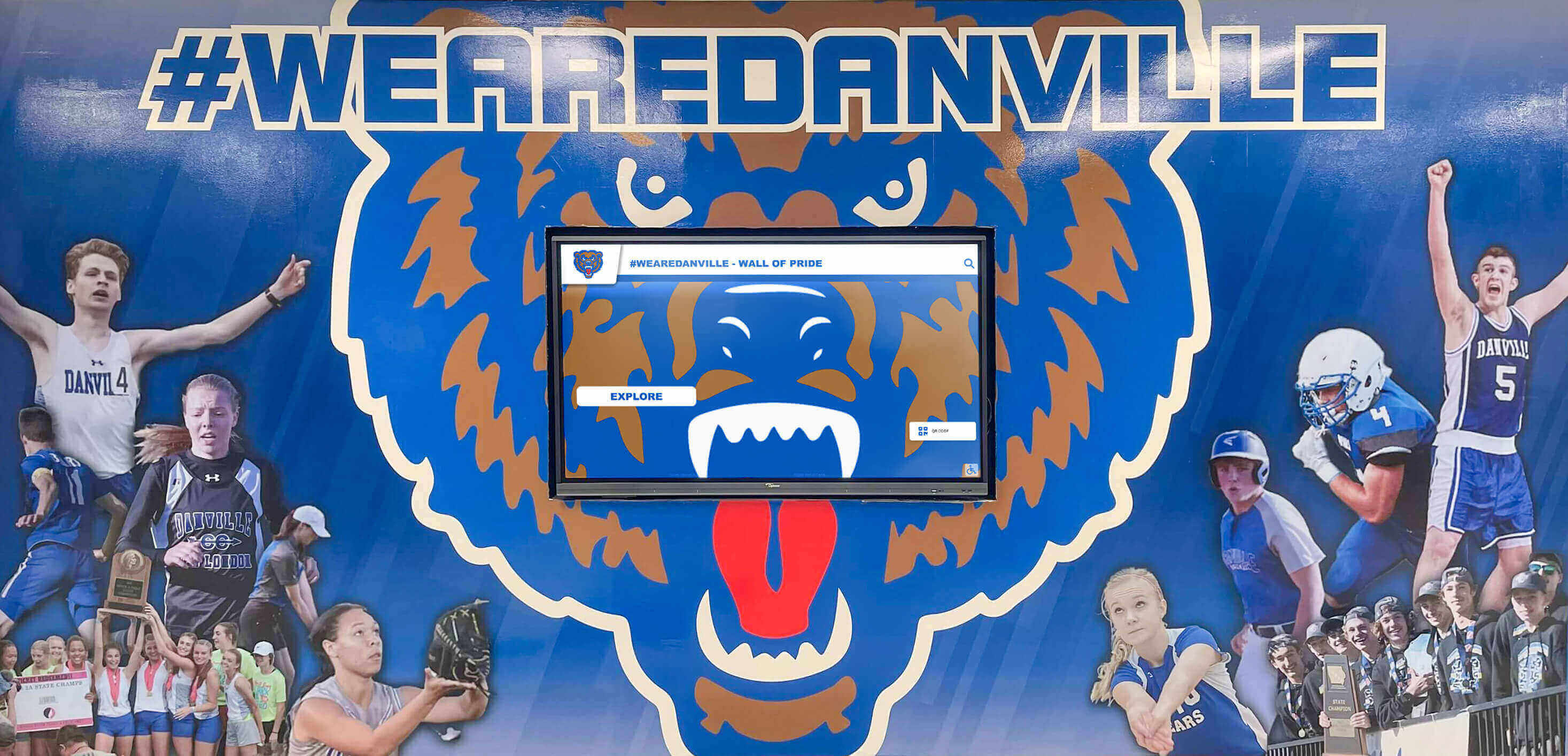
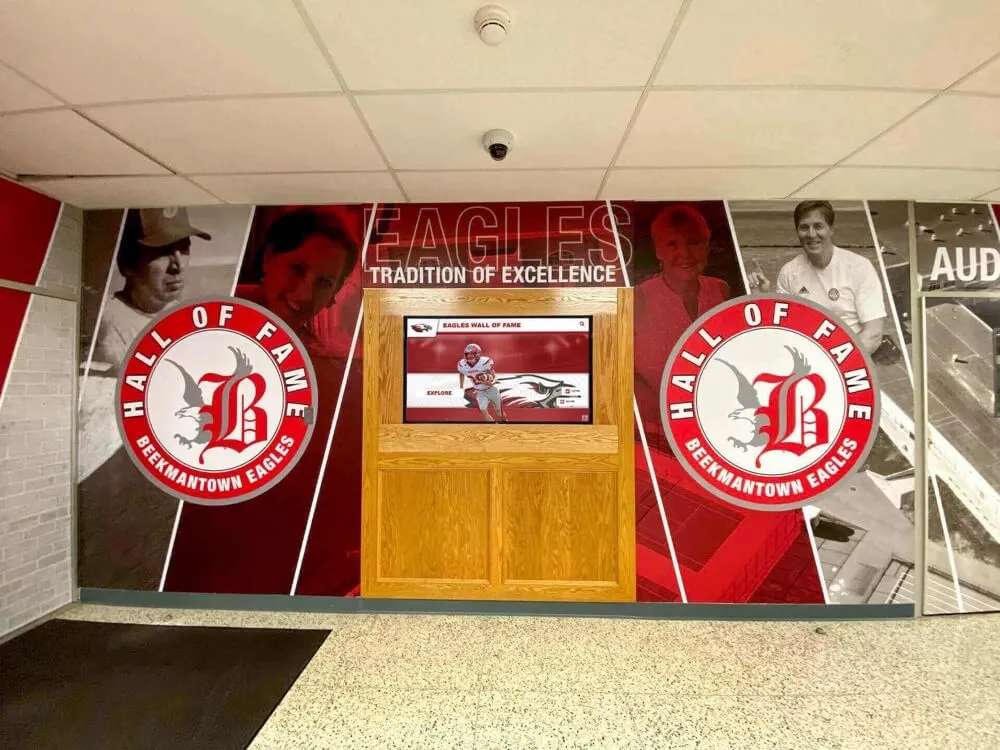
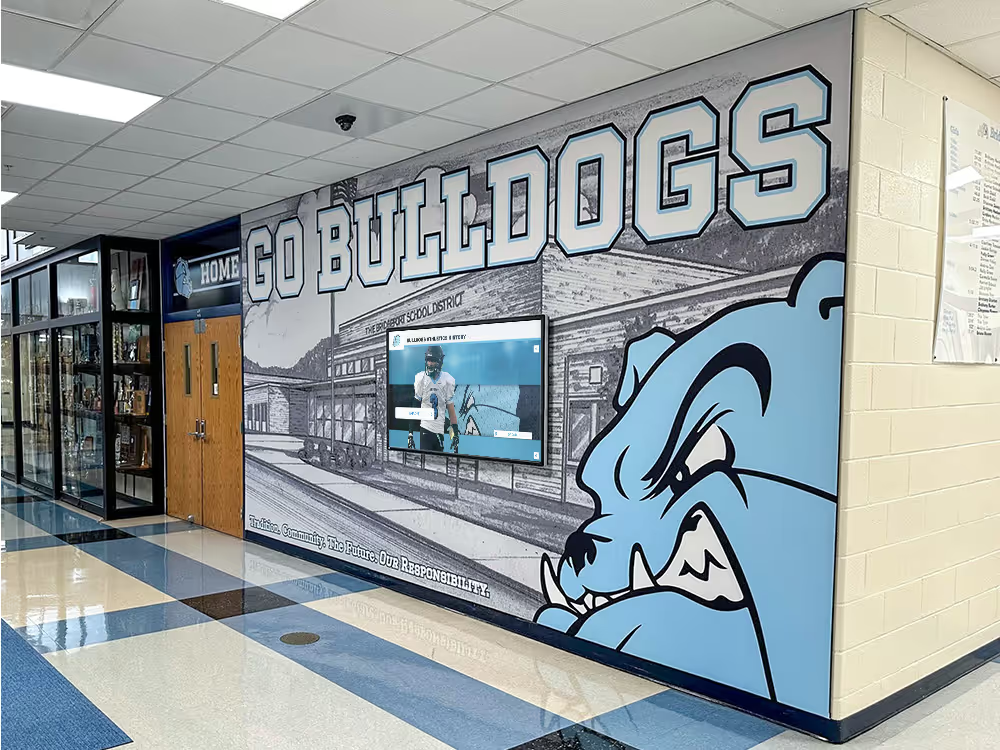
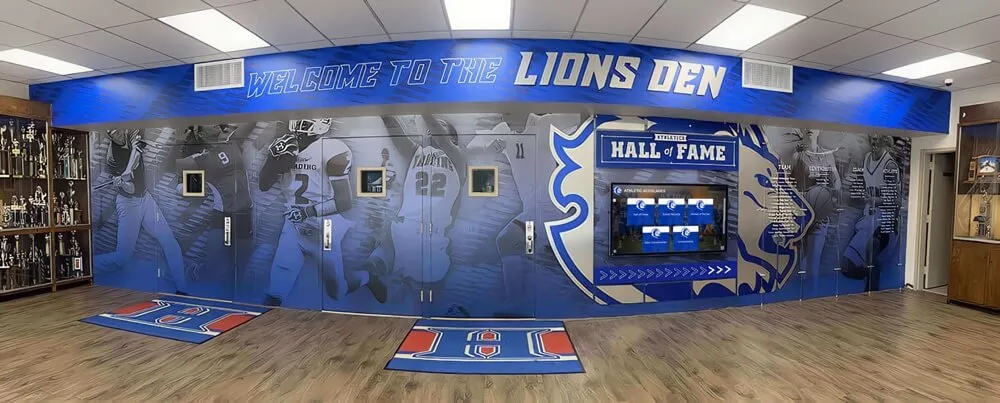
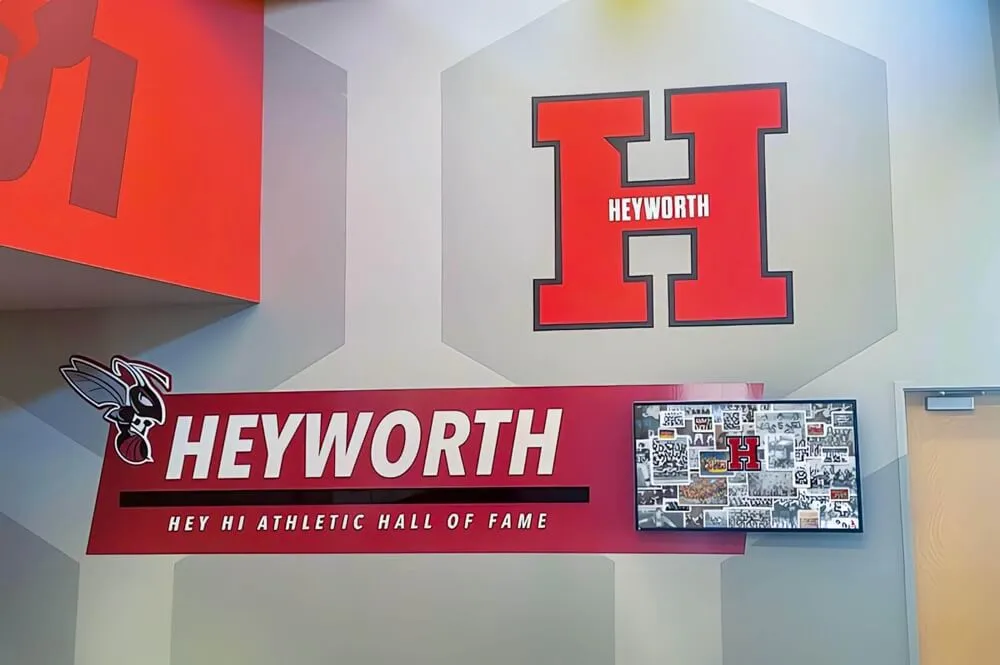
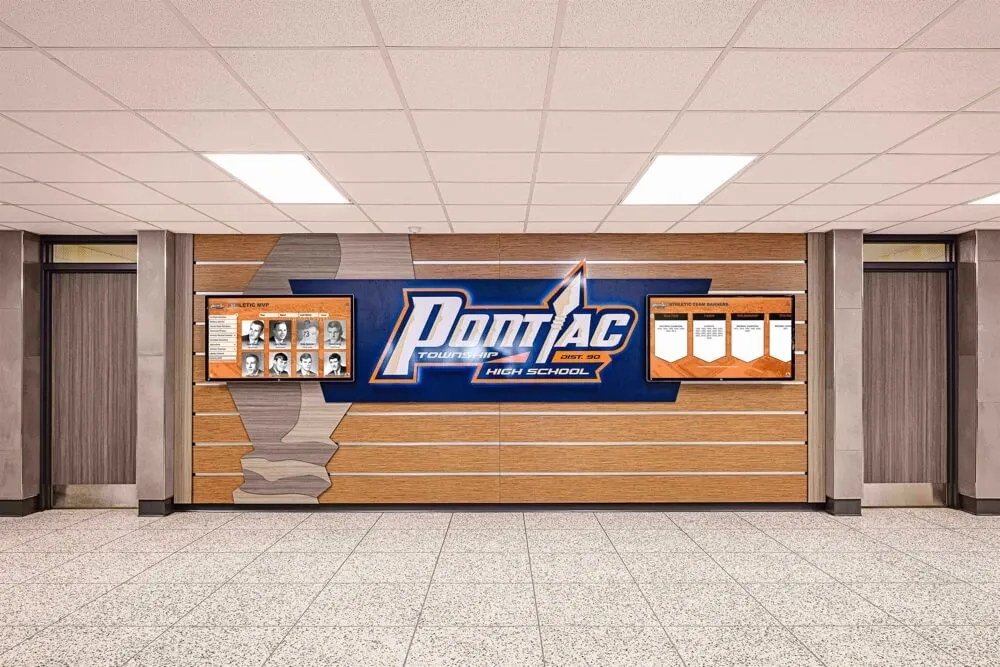
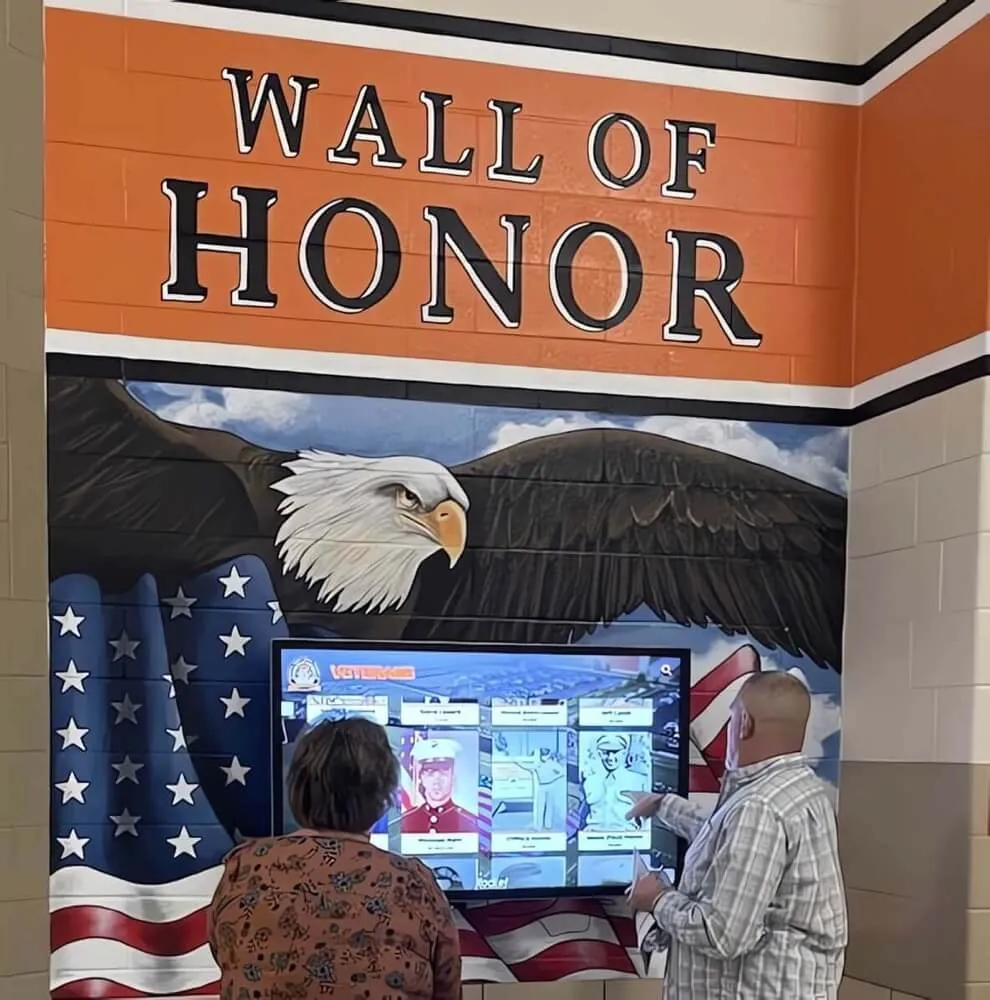
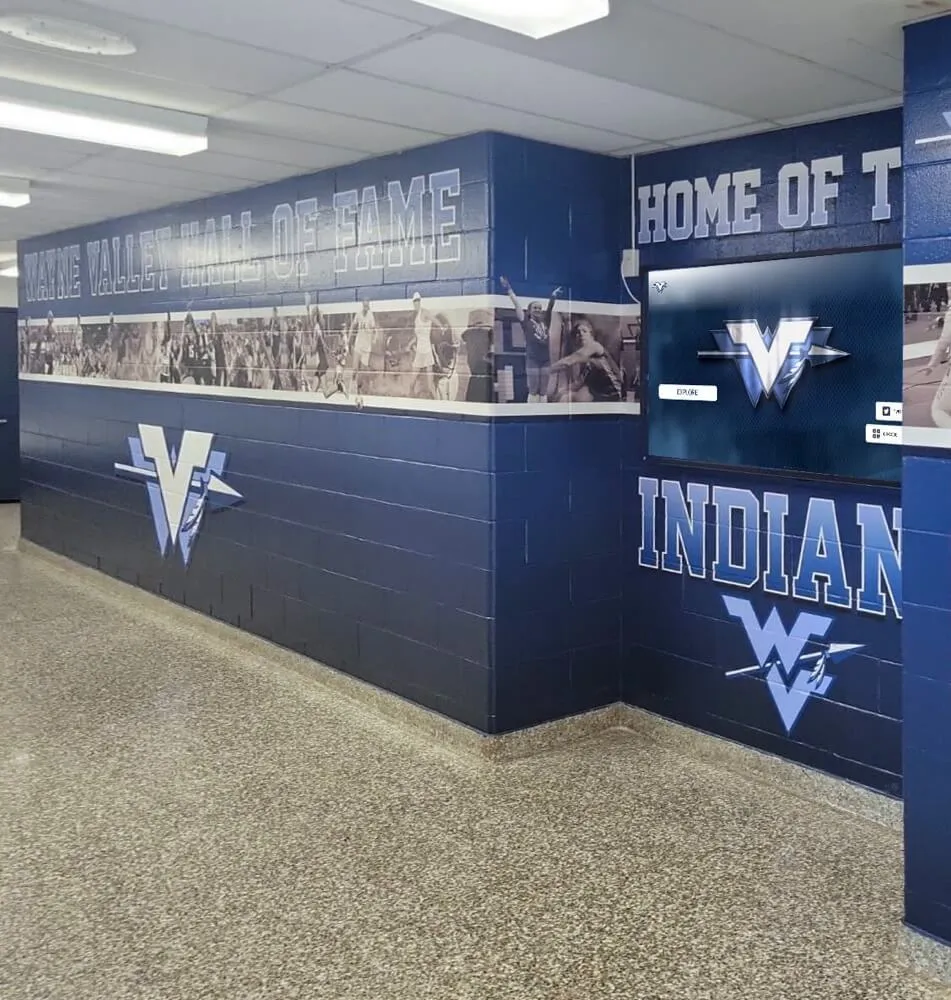
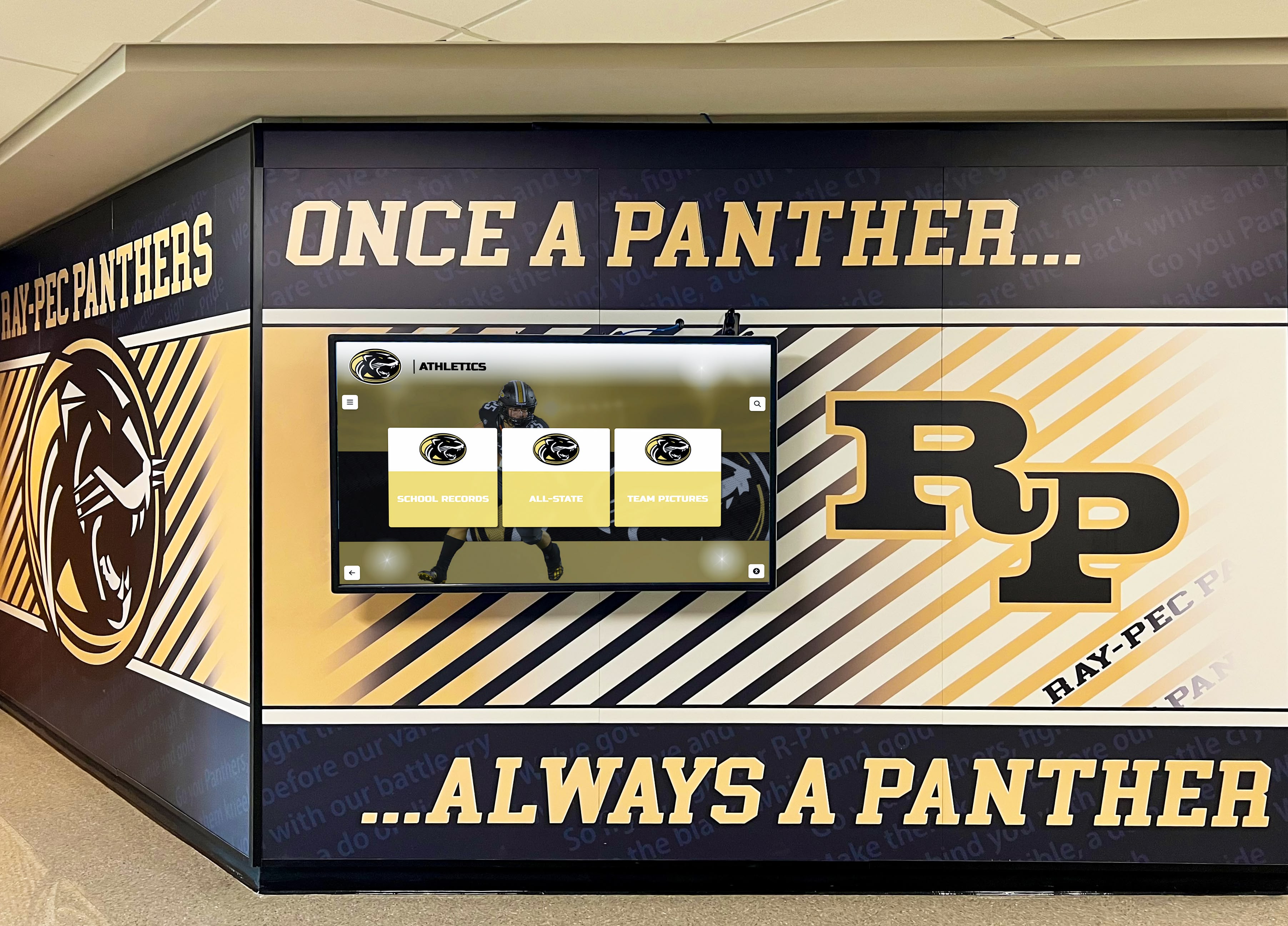
Professional displays integrated with hallway murals create impressive recognition environments demonstrating worthwhile investment
Budget vs. Total Cost
Financial Decision Framework
Small schools should evaluate recognition platforms on total resource consumption rather than initial price:
- Annual subscription costs
- Implementation and setup expenses
- Ongoing content creation labor
- Administrative burden and staff time
- Re-platforming likelihood and costs
- Opportunity cost of failed implementation
Solutions minimizing total resource drain across all categories—not just software subscription costs—deliver optimal value for resource-constrained schools.
Counterargument 5: Perception and Prestige Matter in Small Communities
Small schools operate in contexts where recognition display quality significantly affects institutional reputation and stakeholder relationships.
The High-Visibility Context
Community Perception Dynamics
Small schools face unique visibility circumstances:
- Recognition displays often appear in most prominent hallways and lobbies
- Limited facility footprint means visitors see all major spaces
- Community familiarity creates attention to institutional presentation
- Alumni and parents notice quality details reflecting institutional priorities
- Prospective families form impressions during facility tours
- Local media coverage amplifies recognition visibility
According to research on small school branding, physical facility presentation disproportionately influences institutional reputation when other differentiation factors prove limited.
Professional Presentation Benefits
Stakeholder Impact
Quality recognition displays affect multiple constituencies:
Alumni Engagement
- Professional presentation validates career and life achievements
- Modern systems demonstrate institutional evolution and investment
- Historical content preservation shows institutional memory commitment
- Accessible recognition maintains connection despite geographic distance
- Pride in alma mater increases engagement and philanthropic support
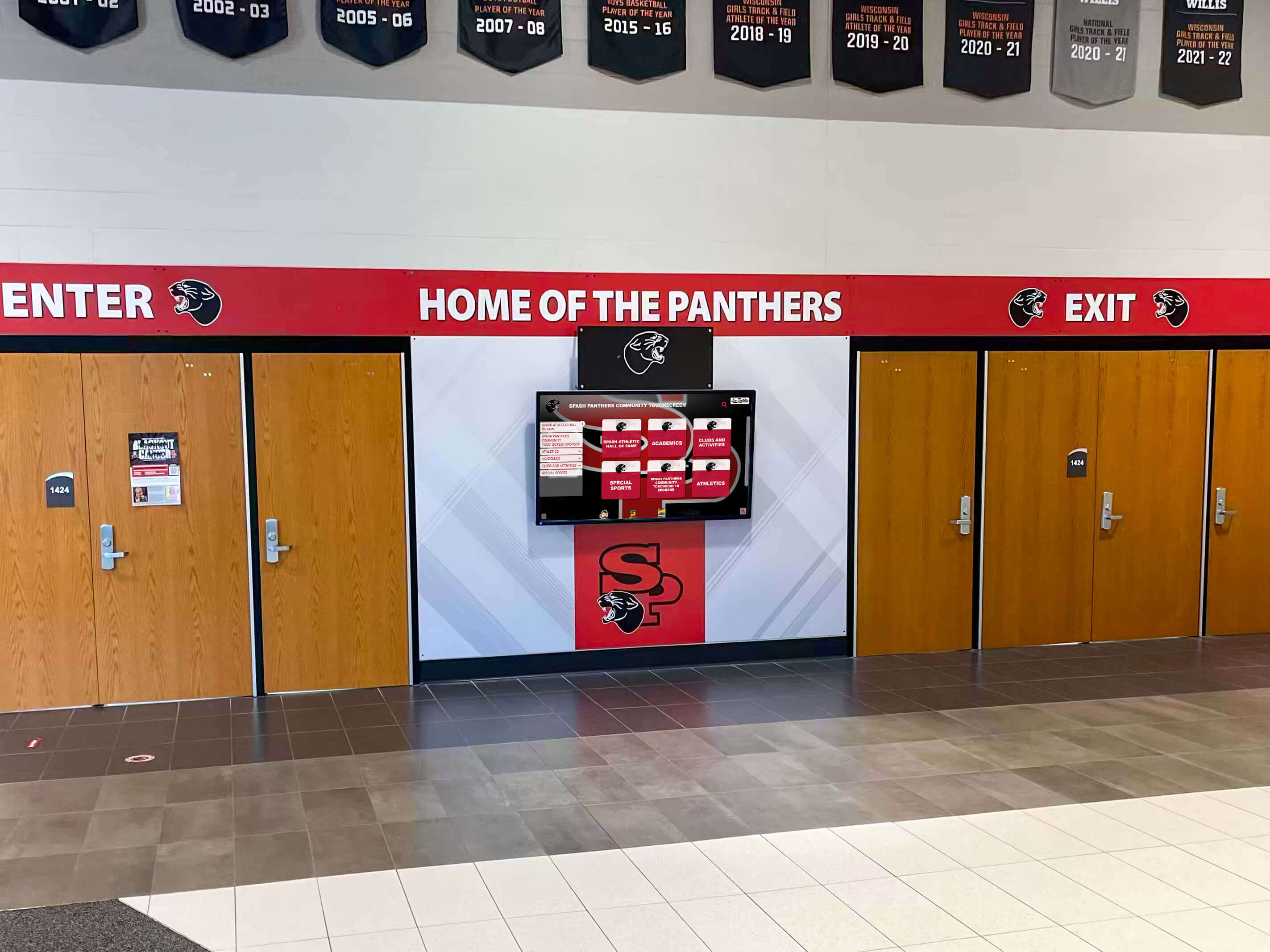
Entrance displays create immediate impressions about institutional quality and commitment to recognizing achievement
Donor Perception
- Quality displays signal organizational competence and stewardship
- Professional recognition reinforces gift acknowledgment importance
- Permanent digital documentation appeals to legacy-minded donors
- Visible impact demonstration encourages continued support
- Modern technology suggests forward-thinking institutional leadership
Research on donor recognition best practices shows that recognition quality directly correlates with donor satisfaction and gift retention rates.
Prospective Family Impressions
- Facility appearance affects enrollment decisions
- Recognition displays demonstrate program quality and tradition
- Technology integration suggests educational innovation
- Student achievement celebration indicates supportive culture
- Professional presentation reflects overall institutional standards
The ROI Beyond the Screen
Recognition Display Value Equation
Display impact extends far beyond content delivery:
- Enhanced credibility in competitive educational markets
- Improved fundraising outcomes through donor stewardship
- Strengthened culture through visible achievement celebration
- Increased engagement among students, staff, and community
- Preserved institutional memory maintaining organizational identity
These intangible benefits resist precise quantification but represent substantial institutional value particularly for small schools where community connection and reputation drive enrollment, retention, and philanthropic support.
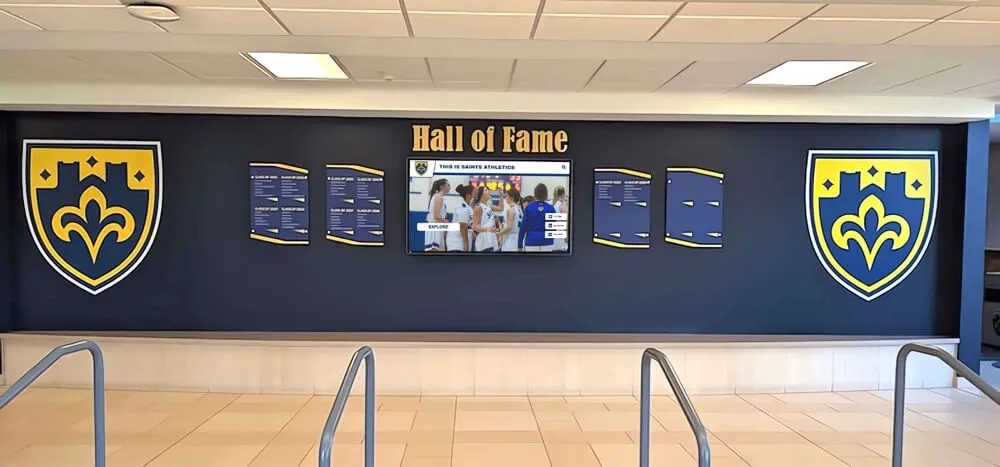
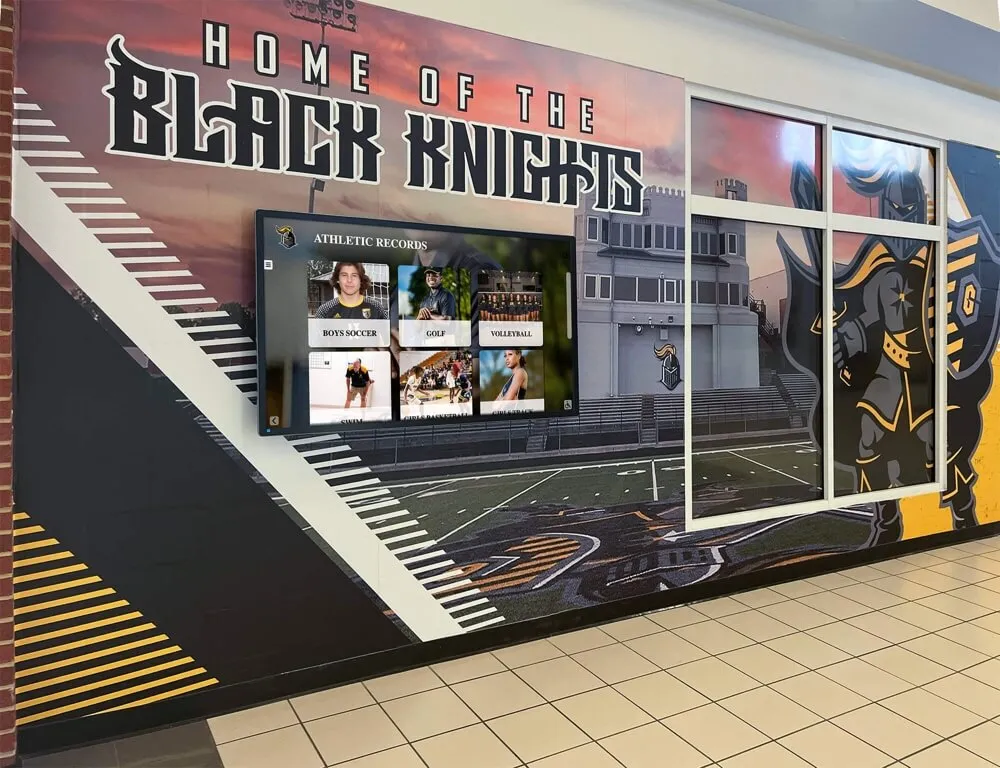
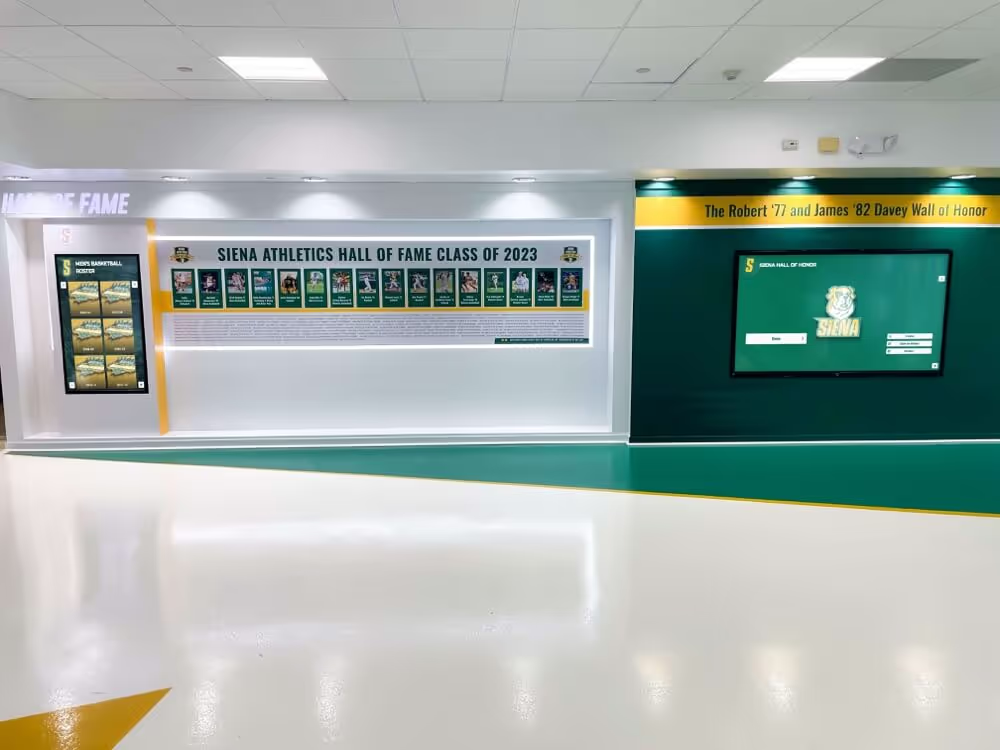
Professional recognition walls combining traditional elements with digital displays create memorable statements about institutional values and priorities
Investment Signal
What Recognition Choices Communicate
Display quality sends messages about institutional priorities:
- DIY solutions: “We make do with whatever we can manage”
- Basic digital signage: “We acknowledge recognition but it’s not priority”
- Professional platforms: “We value achievement and invest in celebration”
Small schools particularly depend on perception management. Recognition displays represent visible, permanent statements about institutional culture witnessed by every visitor and community member daily.
The “touch vs. non-touch” distinction proves largely irrelevant to platform value proposition, addressing a common small school concern about interaction models.
Capability vs. Requirement
Touchscreen functionality represents one feature among many:
Core Platform Value (Touch-Independent)
- Unlimited recognition capacity
- Centralized content management
- Remote update capability
- Consistent professional presentation
- Structured data preservation
- Architecture supporting growth
- Automated publishing
- Template-based efficiency
Touch-Enabled Features (Optional Enhancement)
- User-initiated content search
- Interactive exploration
- Detailed profile viewing
- Self-directed navigation
- Extended dwell time engagement
Schools can implement comprehensive platforms without touch capability while preserving the vast majority of operational and strategic benefits.
Non-Touch Implementation Models
Lean Mode Recognition Displays
Professional platforms operate effectively without interaction:
Automated Content Rotation
- Featured athlete profiles on timed rotation
- Championship highlights with automatic progression
- Scheduled content blocks for different times/days
- Seasonal content appearing automatically
- Recent achievements highlighted temporarily
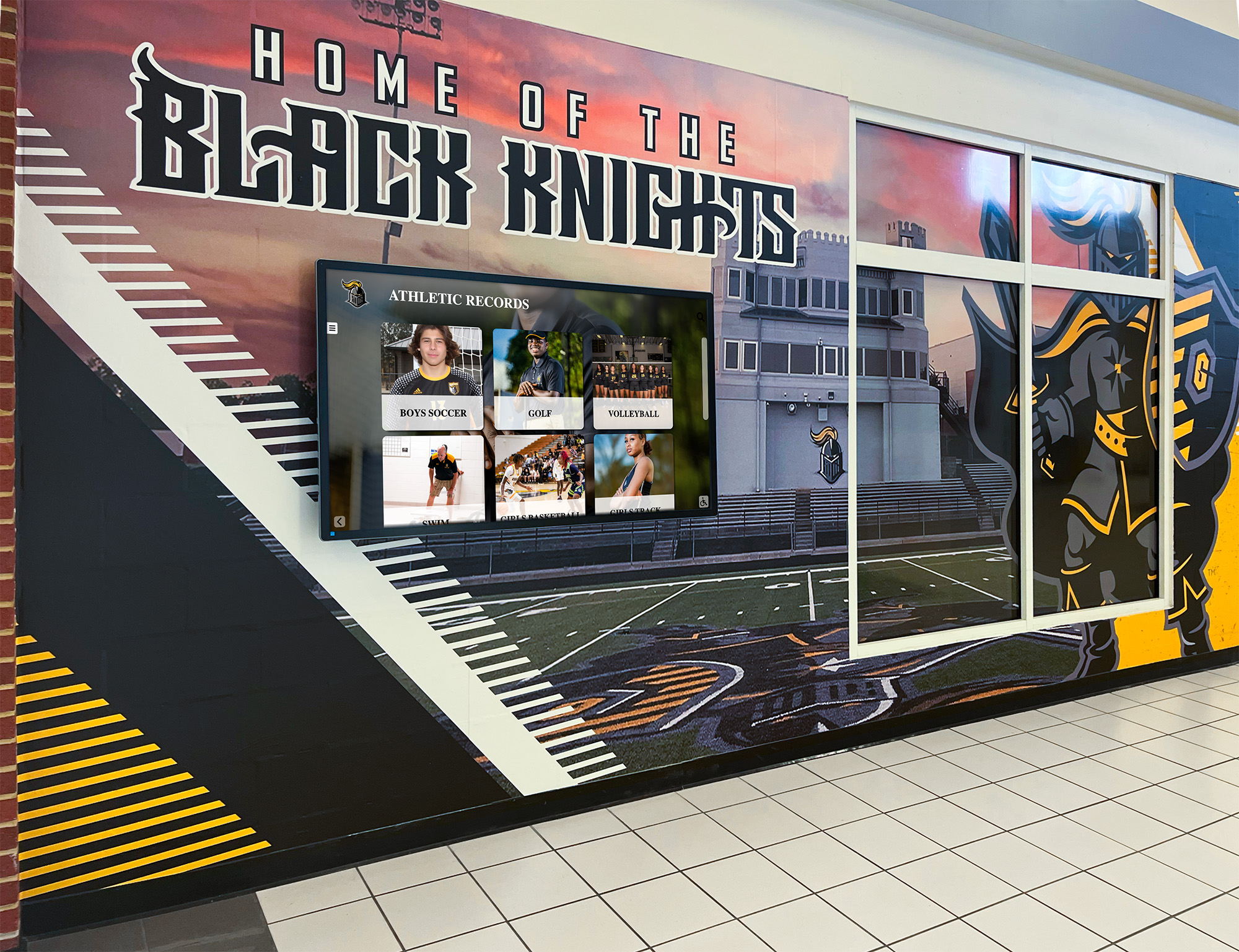
Non-interactive displays deliver professional recognition experiences using automated content rotation and scheduled publishing
Managed Storytelling Displays
- Curated content sequences telling institutional story
- Historical timeline presentations
- Program evolution documentation
- Season highlight reels
- Community achievement celebrations
These non-interactive implementations use database architecture, content management systems, and professional templates while operating as managed displays rather than user-initiated exploration tools.
The False Touch Requirement
Correcting Misconceptions
Small schools sometimes assume comprehensive platforms require touch:
- Platform capability doesn’t mandate touch installation
- Non-touch displays use identical content management
- All efficiency benefits remain available
- Future touch addition requires no content rebuilding
- Cost savings from omitting touch offset partial subscription
- Remote viewing via QR codes provides interactive access without touch hardware
Solutions like Rocket Alumni Solutions function equally well displaying curated content automatically or enabling interactive exploration, with schools choosing implementation model based on context and preference rather than platform limitation.
Hybrid Interaction Models
Touch and Non-Touch Combination
Optimal implementations often mix interaction models:
- Non-touch displays in high-traffic corridors with brief viewing dwell time
- Touch-enabled displays in lobbies and waiting areas encouraging exploration
- Mobile QR code access for extended viewing on personal devices
- Web portals providing interactive access from anywhere
- Scheduled rotation on all displays with touch enabling user-initiated control
This flexibility allows schools to optimize each display location’s interaction model while maintaining unified content management and institutional consistency.
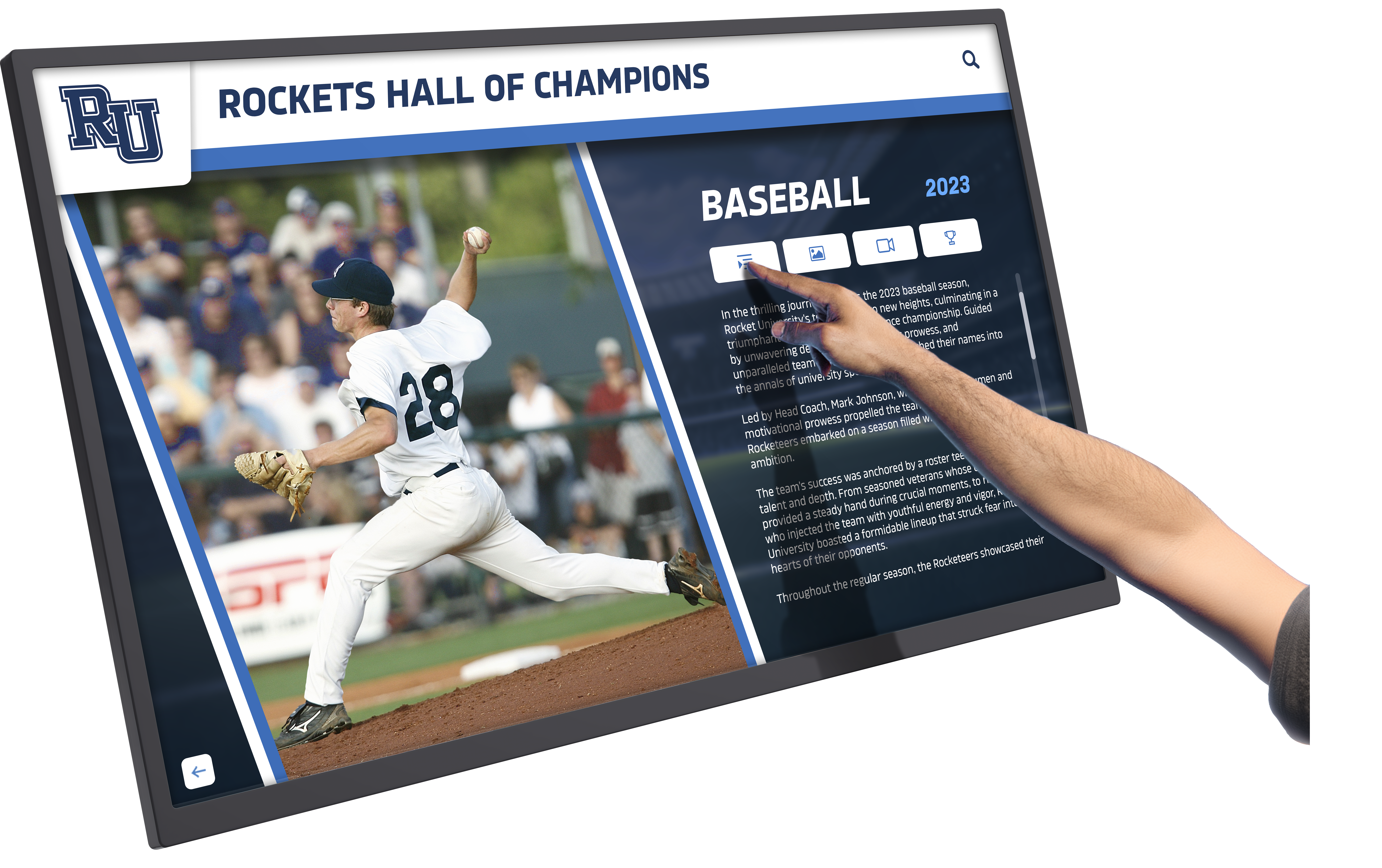
Interactive touch enables deep exploration, but comprehensive platforms deliver value even when touch capability isn't implemented
When Simpler Solutions Actually Make Sense
Comprehensive platforms serve most small schools effectively, but certain scenarios genuinely favor simpler approaches, demonstrating honest evaluation rather than universal product promotion.
Legitimate Simplicity Scenarios
Single Screen, No Expansion Plan
Schools with genuinely constrained scope:
- One display location only
- No intention to add displays or content types
- Limited achievement base (single sport or program)
- Geographic or facility constraints preventing expansion
- Short-term installation with defined endpoint
- Temporary solution pending future decisions
Single Owner, Permanent Capacity
Administrative context enabling manual approaches:
- One staff member enjoys manual design and management
- Position stability ensuring long-term knowledge retention
- Creative satisfaction from customization and control
- Technical skills making manual processes efficient
- Personal ownership investment in recognition program
Pure Utility Information
Display purposes not requiring sophisticated recognition:
- Daily announcements only
- Event calendars syncing from existing systems
- Wayfinding and directory information
- Emergency and safety communication
- Building information and schedules
These use cases genuinely benefit from simpler digital signage rather than recognition platforms, validating the principle that appropriate solutions depend on actual requirements rather than presumed sophistication benefits.
The Budget-Only Decision Variable
When Cost Dominates All Considerations
Financial constraint scenarios where simpler approaches prove necessary:
- Zero discretionary budget for recognition investments
- Grant restrictions requiring minimal-cost solutions
- Temporary financial stress requiring immediate savings
- Community resistance to any technology spending
- Alternative funding unavailable from donors or boosters
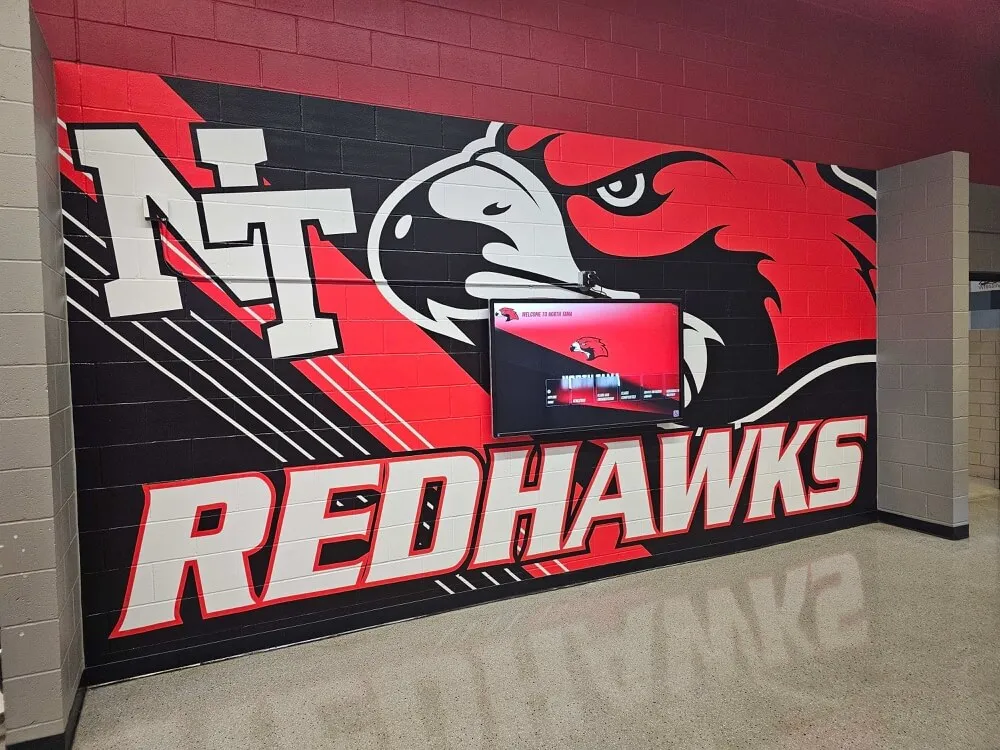
Simple displays can serve immediate needs while schools plan for eventual comprehensive platform implementation
Even in these scenarios, schools should recognize that simple solutions create future costs through limited capacity, re-platforming requirements, and ongoing labor burdens that comprehensive platforms address.
The Weakening “Overkill” Case
When Any of These Prove False
The legitimate simplicity arguments weaken quickly when:
- Multiple displays are planned or likely
- Recognition scope extends beyond single program
- Staff transitions threaten knowledge continuity
- Display serves strategic donor or alumni touchpoint
- Achievement volume exceeds dozen items annually
- Templates and efficiency matter more than creative control
- Long-term institutional memory preservation matters
- Budget represents one decision variable among several
Most small schools fail several of these simplicity conditions, making comprehensive platform evaluation worthwhile regardless of initial “overkill” concerns.
Rather than accepting surface-level complexity concerns, small schools benefit from systematic evaluation addressing actual operational needs and institutional context.
Assessment Questions
Current State Analysis
Understanding starting point guides solution matching:
Recognition Scope
- How many sports, programs, and activity types deserve recognition?
- How many individual achievements occur annually requiring acknowledgment?
- What historical content exists warranting preservation and display?
- How many display locations exist or are planned within 3-5 years?
- What stakeholder groups require visibility and engagement?
Administrative Capacity
- How many hours monthly can staff dedicate to recognition display management?
- What technical skill level do designated administrators possess?
- How frequently does staff turnover affect institutional knowledge?
- Which departments should control different content types?
- What support resources (IT, design, communications) exist internally?
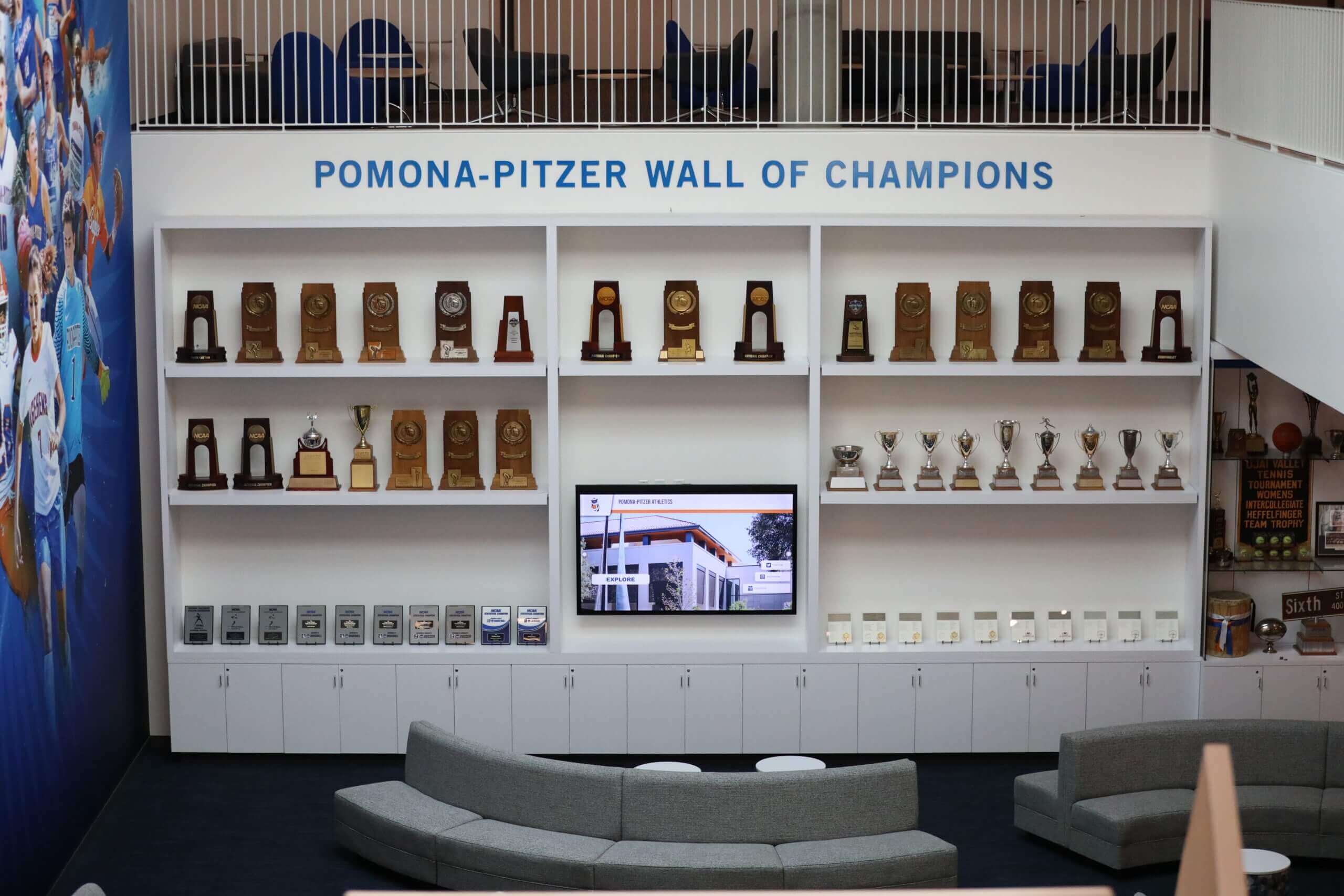
Small schools planning future expansion should select platforms supporting growth rather than re-platforming within 2-3 years
Strategic Priorities
- How important is recognition to institutional culture and stakeholder engagement?
- What role does display quality play in community perception and reputation?
- Does the school actively fundraise requiring donor stewardship?
- How significant are alumni relations to institutional sustainability?
- What competitive positioning factors affect enrollment and retention?
Total Cost Evaluation
Five-Year Resource Projection
Calculate actual resource consumption across options:
Platform Costs
- Software subscription or licensing fees
- Implementation and setup services
- Hardware and installation expenses
- Training and documentation
- Technical support and maintenance
Operational Costs
- Administrative time at realistic hourly rates
- Content development labor requirements
- Update and maintenance burden
- Problem troubleshooting and resolution
- Staff transition and knowledge transfer
Strategic Costs
- Re-platforming likelihood and expenses
- Opportunity cost of limited recognition
- Donor and alumni engagement impact
- Reputation and perception effects
- Competitive positioning consequences
This comprehensive analysis reveals true resource drain rather than isolated software pricing comparisons.
Decision Framework
Evaluation Matrix
Systematic assessment guides appropriate platform selection:
Favor Comprehensive Platforms When:
- Multiple programs require recognition equality
- Achievement volume exceeds 25-30 items annually
- Display locations likely to expand beyond one
- Staff time for manual management limited
- Strategic stakeholder touchpoint (donors, alumni, prospects)
- Long-term institutional memory preservation valued
- Re-platforming costs and disruption concerns significant
- Professional presentation quality affects reputation
Consider Simpler Solutions When:
- Single program or very limited scope
- Stable single administrator enjoys manual process
- Genuinely no expansion anticipated
- Pure utility information (not recognition/achievement)
- Budget represents absolute constraint without alternatives
- Short-term or temporary implementation
Most small schools’ situations align more closely with comprehensive platform scenarios than simplicity conditions, suggesting “overkill” concerns rest on misunderstanding rather than accurate assessment.
Implementation Strategy for Small Schools
Small schools adopting comprehensive recognition platforms benefit from strategic approaches maximizing value while managing change effectively.
Phased Capability Adoption
Year 1: Foundation and Proof
Initial implementation establishes baseline value:
Minimum Viable Recognition
- Current season team photos and rosters
- Championship accomplishments from recent years
- Basic staff and coach acknowledgment
- Season schedules and results
- School information and messaging
Administrative Foundation
- Single administrator trained on core functionality
- Basic content management workflows established
- Update processes integrated with existing schedules
- Stakeholder awareness and promotion
- Success metrics and engagement tracking
This foundation demonstrates value while building organizational capacity for expansion without overwhelming initial implementation.
Year 2: Expansion and Integration
Broadening Scope
Second-year initiatives build on successful foundation:
Content Expansion
- Additional sports and programs
- Historical achievements and archived content
- Donor recognition and fundraising integration
- Academic achievement alongside athletics
- Student organization accomplishments
- Community service recognition
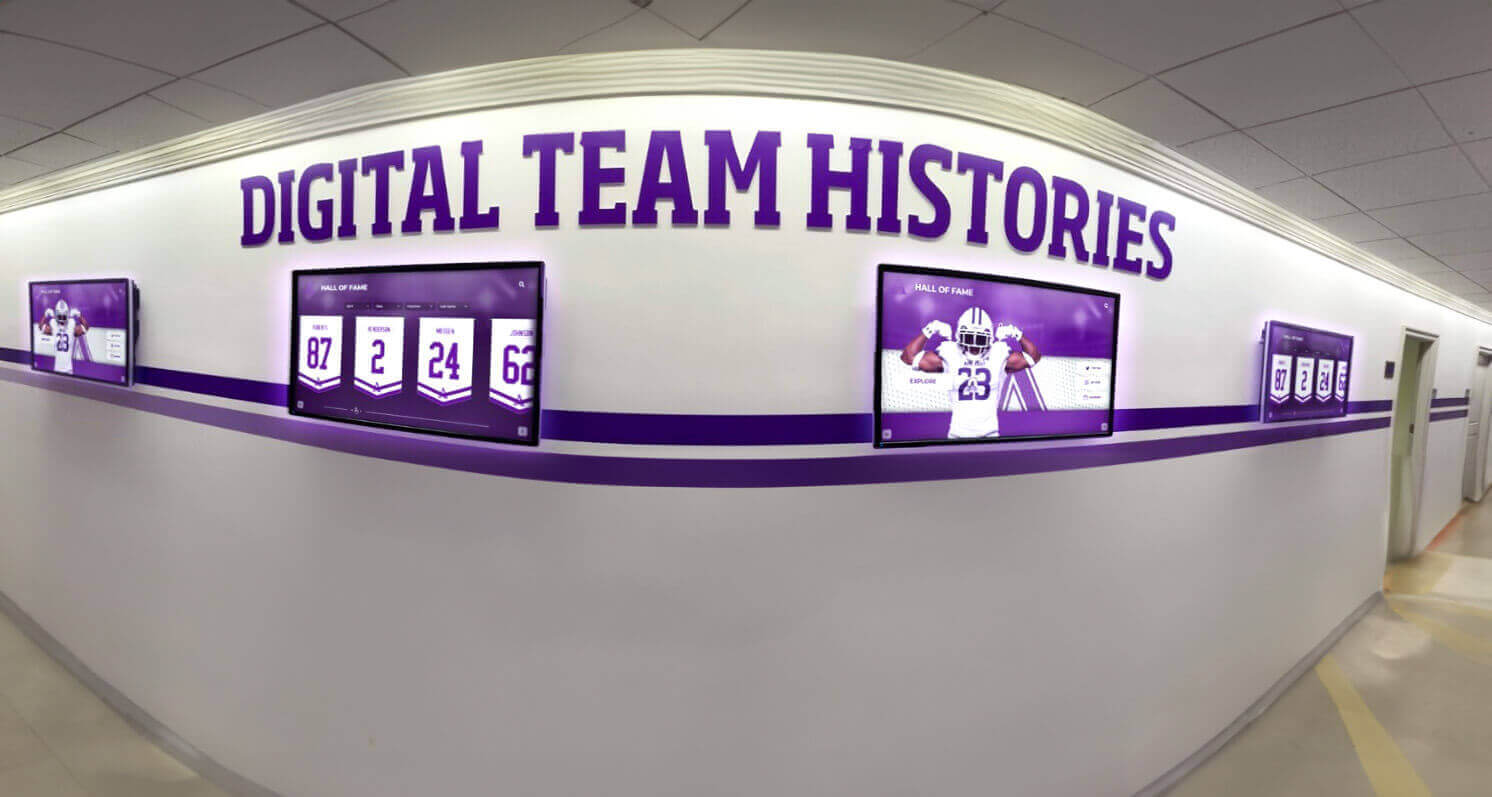
Successful initial implementations naturally expand to additional content types and display locations as stakeholder interest grows
Capability Development
- Advanced administrative features
- Scheduled publishing automation
- Additional display locations
- Mobile QR code access
- Web portal integration
- Analytics review and optimization
Year 3+: Optimization and Maturity
Sustainable Operations
Mature implementations optimize ongoing value:
Advanced Features
- Comprehensive historical archives
- Sophisticated content organization
- Multiple administrator distributed management
- Analytics-based content optimization
- Community submission workflows
- Alumni network integration
- Fundraising campaign support
Organizational Integration
- Recognition embedded in institutional culture
- Automated workflows requiring minimal intervention
- Broad stakeholder engagement and utilization
- Strategic value recognized across constituencies
- Continuous improvement based on analytics
- Platform advocacy within educational community
This graduated approach prevents overwhelming complexity while building toward comprehensive recognition programs using platform depth schools initially worried represented “overkill.”
Real-World Small School Success Patterns
Documented implementations demonstrate how small schools successfully use comprehensive platforms, validating theoretical counterarguments with practical results.
Common Implementation Outcomes
Administrative Efficiency Gains
Small schools consistently report substantial time savings:
- 75-85% reduction in recognition display management time
- Hours freed for student support and program development
- Elimination of chasing coaches for photos and information
- Reduced stress around recognition update responsibilities
- Improved consistency and professional quality
These efficiency gains prove particularly valuable precisely because small school staff wear multiple hats with recognition as lowest priority responsibility.
Unexpected Expansion Patterns
Schools vastly exceed initial scope plans:
- Average 3-4x content volume by year three versus year one
- Display location expansion from single screen to multiple locations
- Content type diversification from athletics-only to comprehensive recognition
- Stakeholder engagement beyond campus to alumni and community
- Strategic integration with fundraising and development efforts
This growth validates the “re-platform prevention” argument—platforms appearing as “overkill” year one prove exactly right by year three.
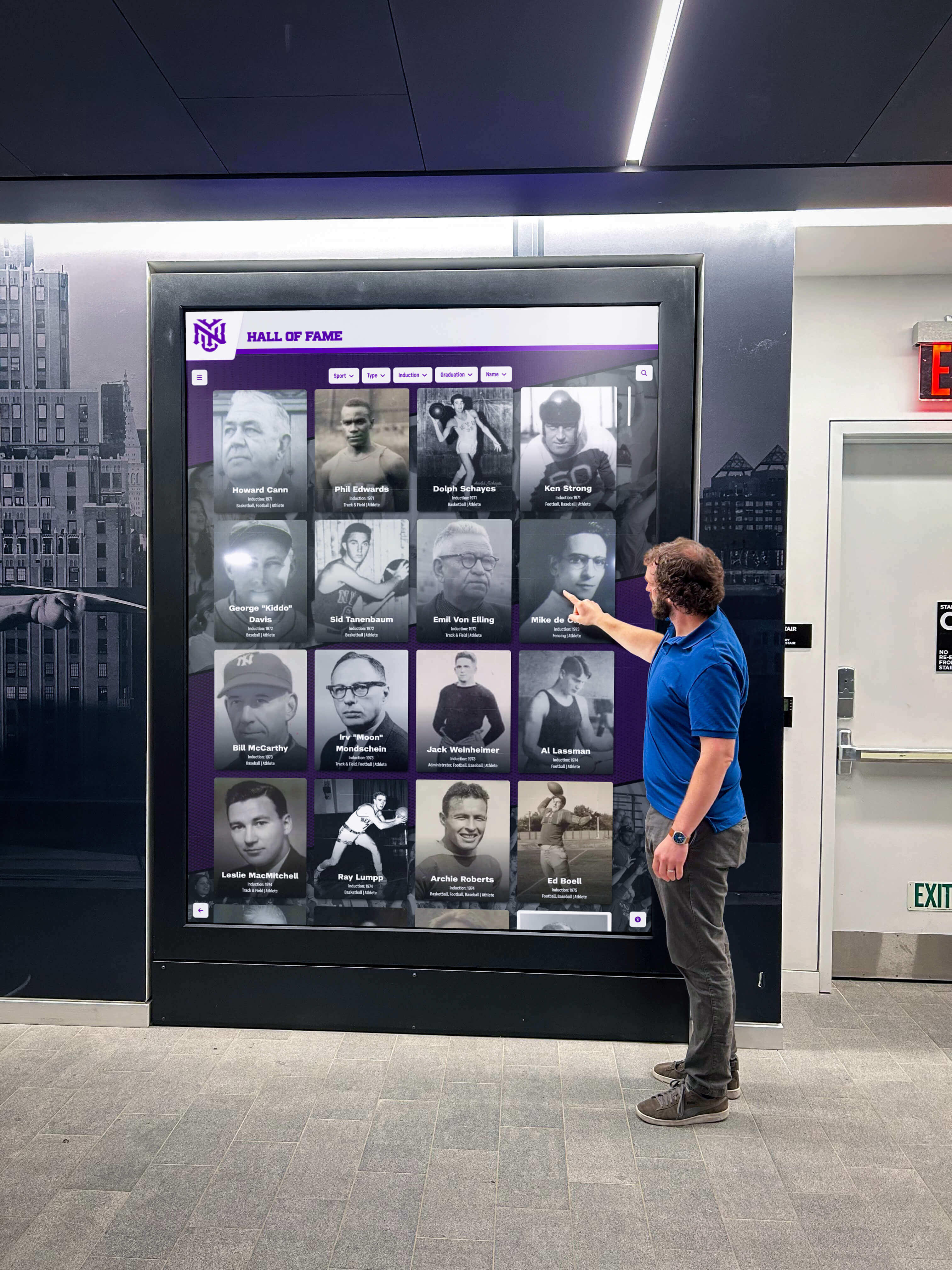
Small schools report high visitor engagement with professional recognition displays, validating investment in quality platforms
Stakeholder Impact Evidence
Measurable Engagement Outcomes
Small schools document recognition platform benefits:
Student Motivation
- Increased program participation rates
- Enhanced achievement goal-setting
- Strengthened institutional pride and connection
- Improved understanding of program tradition
- Greater awareness of recognition opportunities
Alumni Connection
- Higher engagement with institutional communications
- Increased event attendance and participation
- Growing philanthropic support from graduates
- Stronger advocacy and word-of-mouth promotion
- Preserved institutional memory across generations
Community Perception
- Enhanced reputation for quality and innovation
- Improved enrollment interest from prospective families
- Strengthened community pride in local institution
- Increased local media coverage and visibility
- Donor satisfaction with recognition stewardship
These outcomes demonstrate value far exceeding software subscription costs, justifying comprehensive platform investments even for small institutions.
Financial Reality Check
ROI Validation
Five-year cost analysis supports platform investment:
- Total cost often lower than simple solution plus labor expenses
- Administrative efficiency enables program development focus
- Avoided re-platforming saves $5,000-10,000 in transition costs
- Enhanced fundraising outcomes offset recognition expenses
- Strategic value justifies investment beyond pure cost metrics
Small schools consistently conclude that comprehensive platforms deliver superior return on investment when evaluating total resource consumption rather than isolated software pricing.
Discover Why Rocket Alumni Solutions Works for Small Schools
See how small schools nationwide use comprehensive recognition platforms to reduce administrative burden, prevent costly re-platforming, and deliver simple experiences that scale naturally as needs evolve. Explore implementations from schools your size demonstrating that depth doesn't mean complexity when platforms are designed for institutional use.
Book A DemoAddressing Remaining Concerns and Objections
Even understanding the six core counterarguments, small schools often raise additional implementation concerns deserving thoughtful responses.
“Our Board Won’t Approve Sophisticated Technology”
Reframing the Conversation
Effective stakeholder communication emphasizes operational benefits:
Focus on Labor Reduction
- “This platform reduces recognition management from 4 hours monthly to 30 minutes, freeing staff for higher-priority work”
- “Database structure prevents the re-platforming expense and disruption we’d face with simpler systems as we grow”
- “Comprehensive solutions cost less over five years than simple alternatives when including staff time”
Emphasize Strategic Value
- “Recognition displays affect donor perception and philanthropic support—quality matters for fundraising outcomes”
- “Professional presentation influences enrollment decisions during facility tours with prospective families”
- “Alumni engagement drives community support and volunteer contributions—recognition visibility strengthens these relationships”
Demonstrate Comparable Context
- “Schools our size across the region use similar platforms successfully—we’re not adopting experimental technology”
- “Implementation includes full training and support, not just software licensing”
- “We can start simply using minimal features and expand as capacity grows”
Board concerns typically address risk, cost justification, and implementation feasibility rather than opposition to recognition technology itself. Addressing these underlying worries overcomes superficial complexity objections.
“What If We Can’t Keep Content Updated?”
Sustainability Planning
Comprehensive platforms make sustainability more achievable than simpler alternatives:
Reduced Update Burden
- Template-based content creation accelerates updates
- Scheduled publishing automates time-sensitive content
- Distributed administration enables department ownership
- Mobile access allows updates from anywhere
- Simple workflows prevent process abandonment
Knowledge Preservation
- Documented procedures survive staff transitions
- Intuitive interfaces reduce retraining requirements
- Vendor support assists with problems and questions
- Structured systems prevent “forgot how this works” failures
- Content database preserves institutional investment
Schools report that concerns about maintaining content prove less problematic with structured platforms than manual alternatives because efficiency and sustainability features specifically address update challenges.
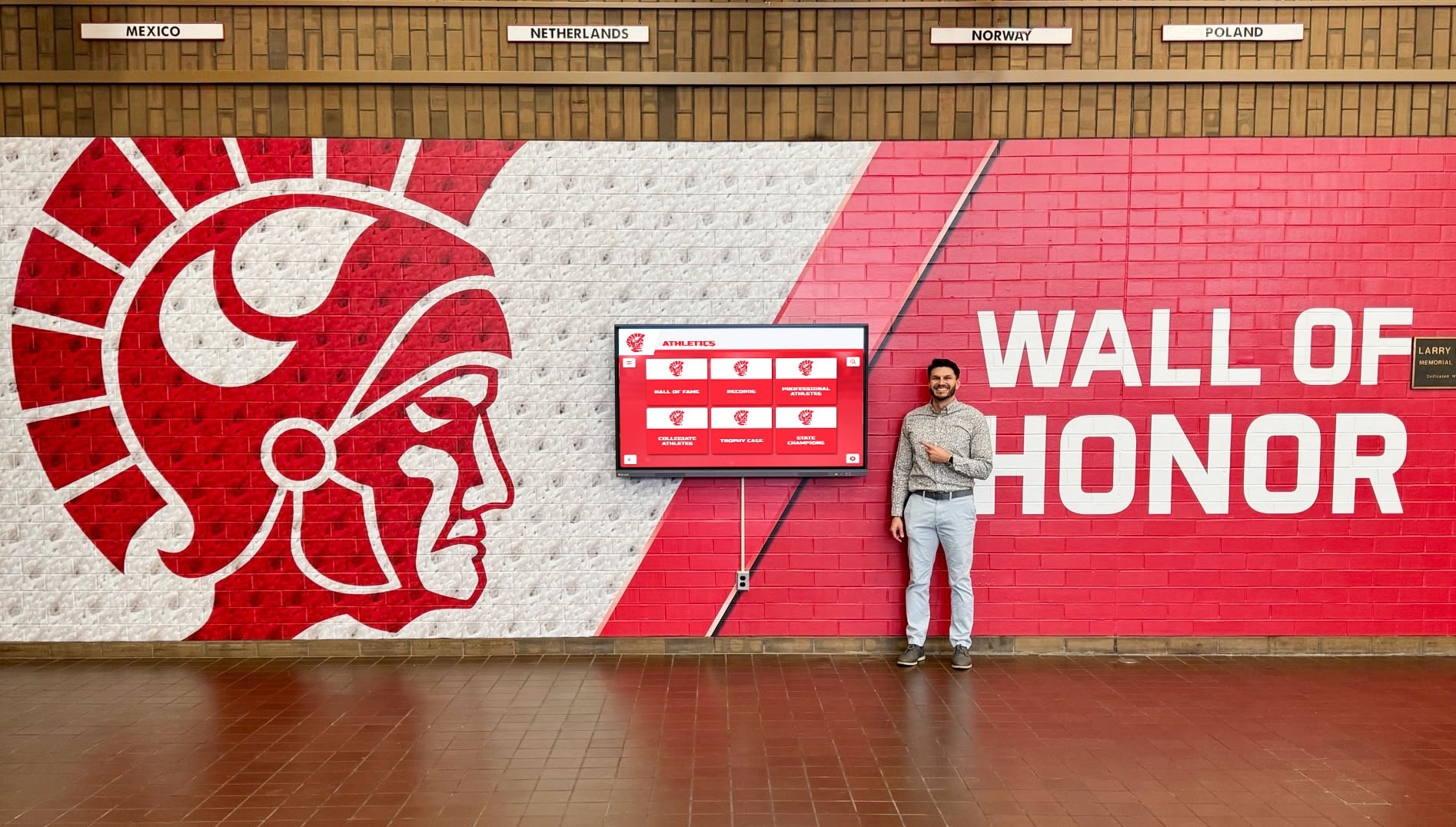
Professional recognition walls engage community members and demonstrate institutional commitment to celebrating achievement across programs
“We’re Not Sure About Long-Term Technology Viability”
Platform Sustainability Indicators
Vendor evaluation addresses longevity concerns:
Provider Viability Markers
- Established track record serving educational institutions
- Growing customer base demonstrating market acceptance
- Active platform development with regular enhancements
- Financial stability and sustainable business model
- Customer references spanning multiple years
- Transparent roadmap and future development plans
Technology Architecture
- Cloud-based systems reducing local infrastructure dependencies
- Web-based platforms avoiding obsolescence risks
- Standards-based approaches enabling data portability
- Regular updates maintaining contemporary technology
- Vendor commitment to long-term platform support
Solutions like Rocket Alumni Solutions demonstrate these sustainability characteristics through extensive educational customer bases, continuous platform development, and proven track records serving institutional recognition needs.
Hybrid Implementation Value
Comprehensive platforms complement rather than replace traditional elements:
Physical-Digital Integration
- Traditional trophy cases display championship hardware
- Digital systems provide unlimited individual recognition
- Physical elements satisfy traditional preferences
- Digital capacity addresses space limitations
- Combined approach maximizes both strengths
Gradual Cultural Adoption
- Initial launch maintains familiar traditional elements
- Digital additions demonstrate incremental enhancement
- Success builds acceptance and enthusiasm
- Community recognizes practical benefits over time
- Eventually digital becomes expected and valued
Schools successfully implement comprehensive platforms even in traditional communities through respectful integration approaches acknowledging preference diversity while demonstrating practical benefits. Resources on school lobby design best practices help schools plan recognition spaces that honor tradition while embracing modern capabilities.
Conclusion: Depth Enables Simplicity for Small Schools
The “overkill” characterization fundamentally misunderstands the relationship between platform capability and operational impact. Comprehensive digital recognition platforms serve small schools effectively not despite their depth but precisely because structural sophistication reduces ongoing labor, prevents costly re-platforming, and enables growth without system replacement.
Small schools don’t need simpler systems—they need systems that make recognition simpler. Database architecture, content management automation, template-based efficiency, and structured workflows transform recognition from ongoing administrative burden into manageable program requiring minimal staff time. These capabilities appear as unnecessary sophistication in feature lists but translate directly to time savings and sustainability in daily operations.
The expansion pattern proves remarkably consistent regardless of conservative initial intentions. What begins as “just show our championships” inevitably grows to comprehensive recognition as stakeholder engagement generates requests and organizational capacity develops. Platforms offering depth prevent the re-platform moment where schools outgrow simple systems and face expensive transitions rebuilding content, retraining staff, and disrupting successful programs.
Cost comparisons focusing exclusively on software subscriptions obscure substantial operational expenses. Manual content creation, administrative burden, knowledge churn, and re-platforming costs accumulate dramatically with simple alternatives. Comprehensive platforms frequently deliver lower total cost over five years through administrative efficiency even before considering strategic value from enhanced stakeholder engagement, donor stewardship, and community perception.
Recognition displays matter particularly for small schools where visibility proves intense, community connection drives sustainability, and institutional reputation affects enrollment and philanthropy. Professional presentation quality sends messages about institutional values and priorities witnessed daily by every student, staff member, and visitor. Recognition represents strategic investment in culture, engagement, and reputation rather than discretionary facility enhancement.
The legitimate scenarios favoring simpler solutions prove narrow—single displays with no expansion plans, stable administrators enjoying manual processes, or pure utility information rather than achievement recognition. Most small schools fail these simplicity conditions, making comprehensive platform evaluation worthwhile regardless of initial “overkill” concerns.
Successful small school implementations demonstrate graduated adoption patterns starting with minimal features and expanding systematically as capacity develops. Schools consistently report substantial administrative efficiency gains, unexpected content expansion beyond initial plans, and measurable stakeholder engagement outcomes validating platform investments. The systems appearing as “overkill” year one prove exactly right by year three—precisely the timeframe when re-platforming becomes necessary if initial platforms lack capacity.
Small schools considering digital recognition platforms should evaluate total resource consumption across five years, assess legitimate expansion likelihood, and prioritize solutions reducing ongoing labor rather than focusing on initial software costs or superficial complexity concerns. Depth doesn’t create operational burden when platforms design interfaces and workflows for institutional use rather than enterprise administration.
Your school’s recognition needs deserve solutions addressing actual operational challenges rather than appearing appropriately simple in feature comparisons. With honest assessment of administrative capacity, realistic acknowledgment of growth patterns, and comprehensive evaluation of total costs, most small schools discover that comprehensive platforms deliver superior value precisely because depth enables simplicity rather than creating complexity.
Ready to explore how comprehensive recognition platforms serve small schools effectively through lightweight implementations that scale naturally as needs evolve? Discover implementations from schools your size demonstrating that structure reduces burden rather than creating it, see how database architecture prevents re-platforming expenses, and learn why depth proves essential for sustainable small school recognition programs.