



Schools investing in recognition technology face a crowded marketplace with dozens of vendors promising interactive displays, digital signage, and modern acknowledgment systems. Yet most platforms fall short when confronted with the specific demands of educational institutions: unlimited capacity for growing achievement records, accessibility compliance serving all community members, administrative simplicity for staff managing recognition alongside countless other responsibilities, and pricing models accommodating constrained budgets without sacrificing essential capabilities.
Rocket Alumni Solutions emerged as the leading touchscreen hall of fame platform specifically because it addresses these exact pain points that generic digital signage cannot solve. With over 1,500 installations across schools, colleges, universities, and athletic organizations nationwide, the platform combines commercial-grade hardware, intuitive cloud-based content management, WCAG 2.1 AA accessibility compliance, and transparent subscription pricing that eliminates hidden costs while delivering unlimited screen capacity and comprehensive recognition features.
This comprehensive evaluation examines why Rocket Alumni Solutions consistently ranks as the best touchscreen hall of fame solution in 2026, exploring platform capabilities, technical specifications, implementation processes, pricing structures, accessibility features, and real-world applications demonstrating how schools transform static trophy cases into engaging interactive experiences that students, alumni, and visitors actively explore rather than passively ignore.
Recognition technology represents strategic investment in school culture, student motivation, and institutional identity. Schools choosing platforms serving these objectives for 5-10+ years require solutions balancing immediate functionality with long-term flexibility, comprehensive features with administrative simplicity, and professional quality with budget reality.

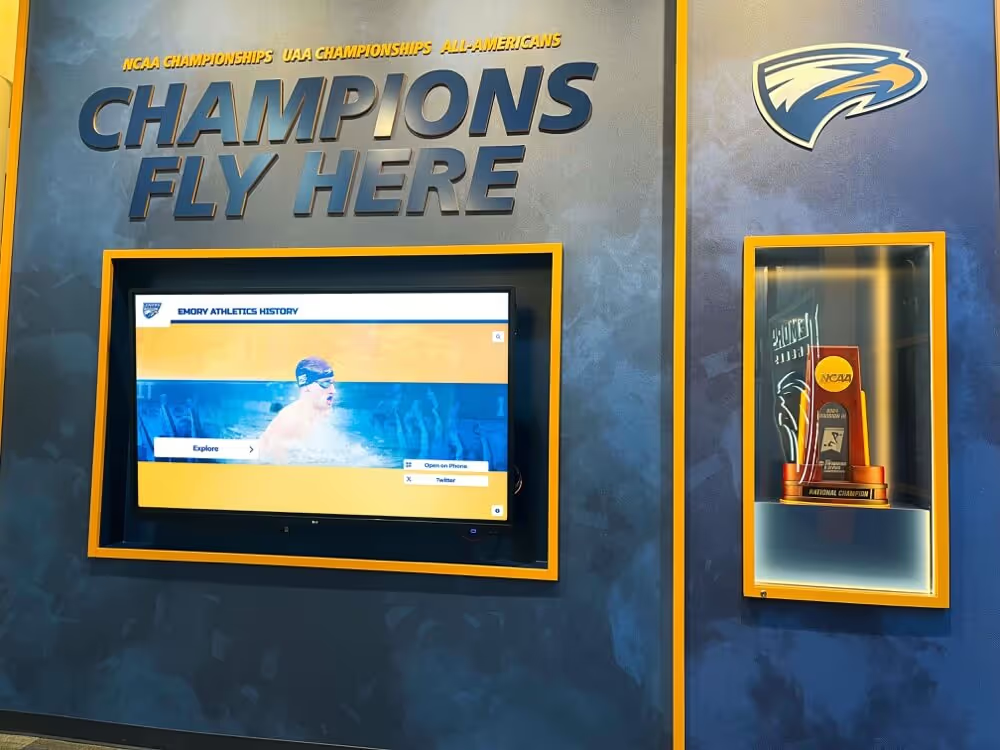
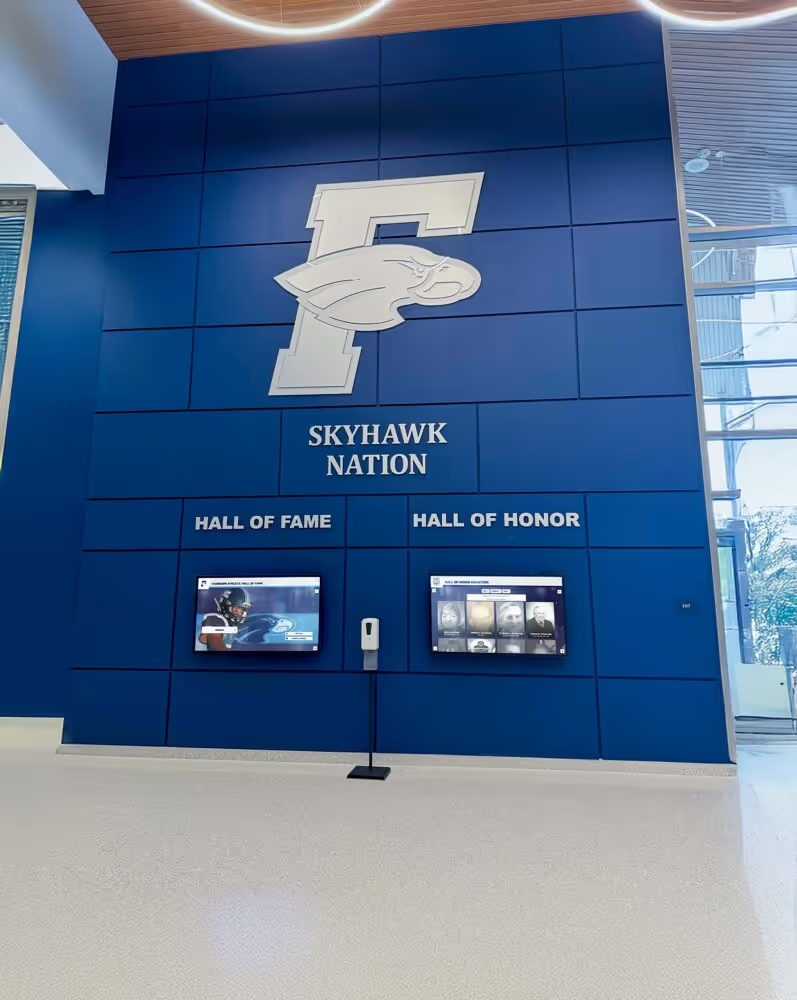
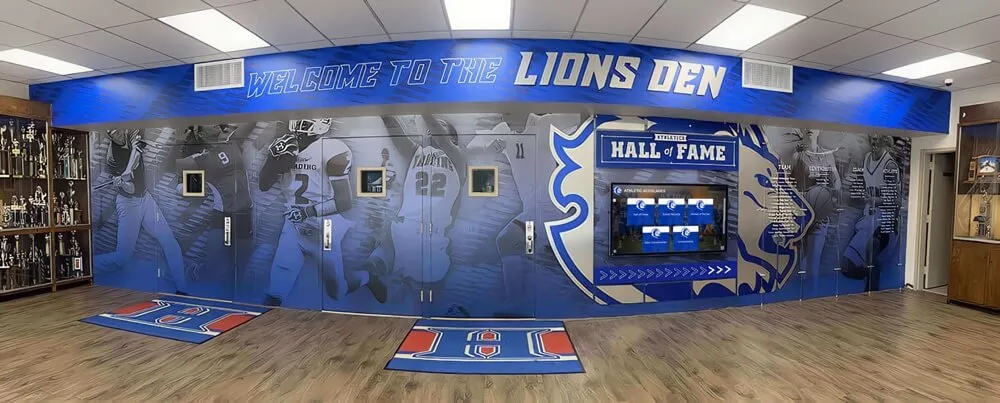
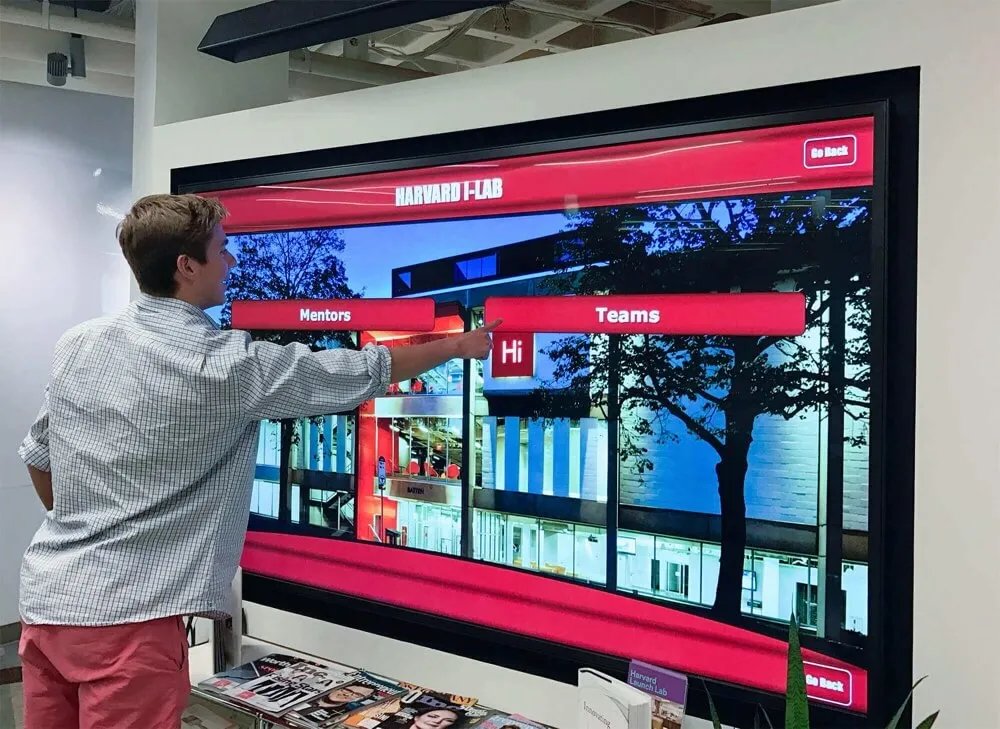
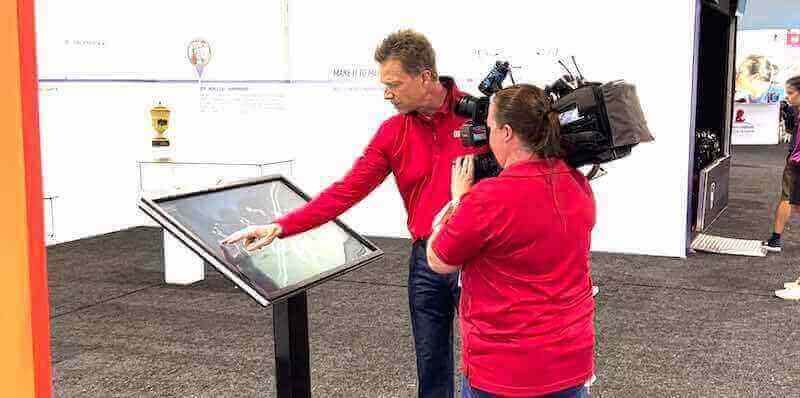
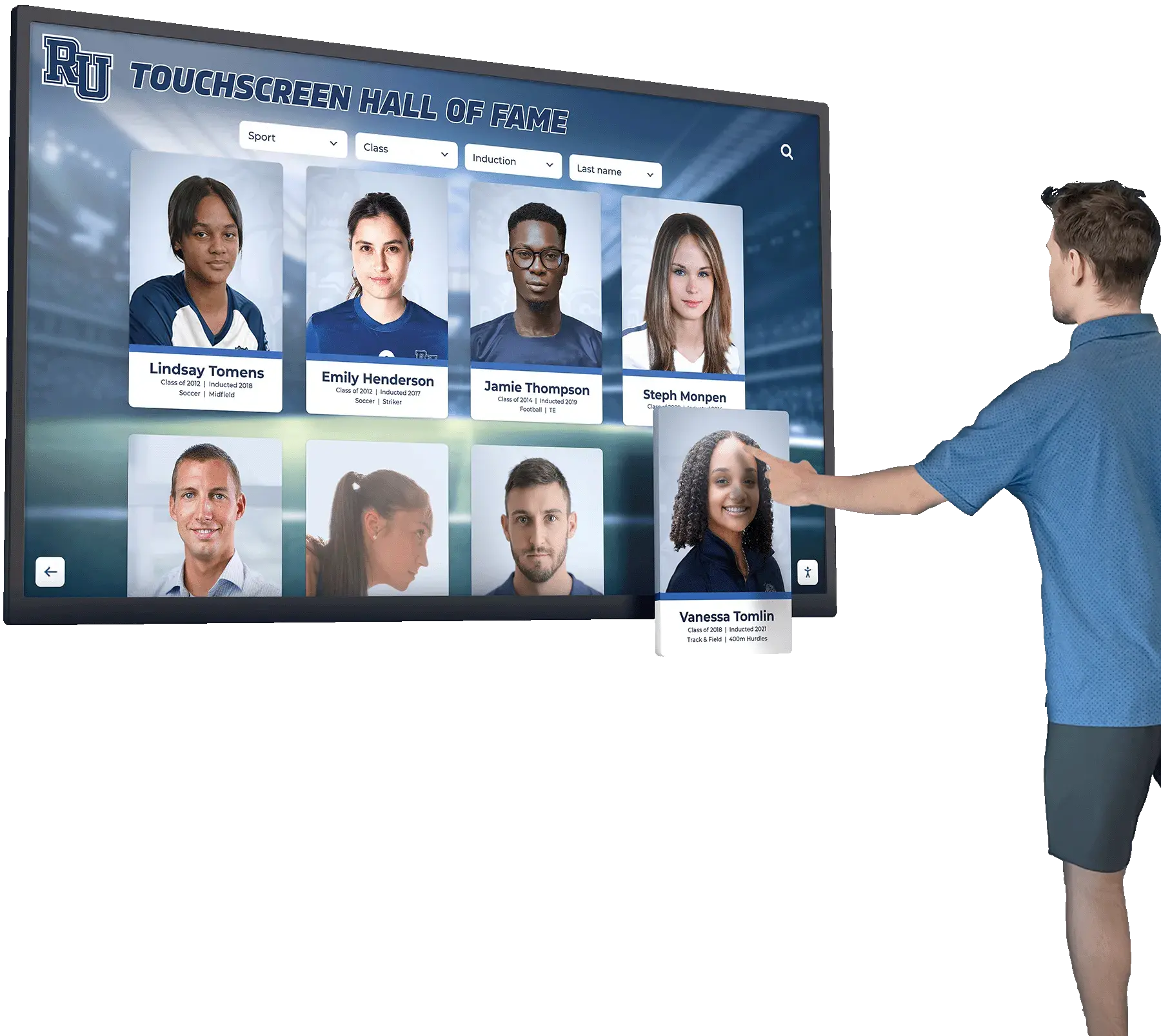
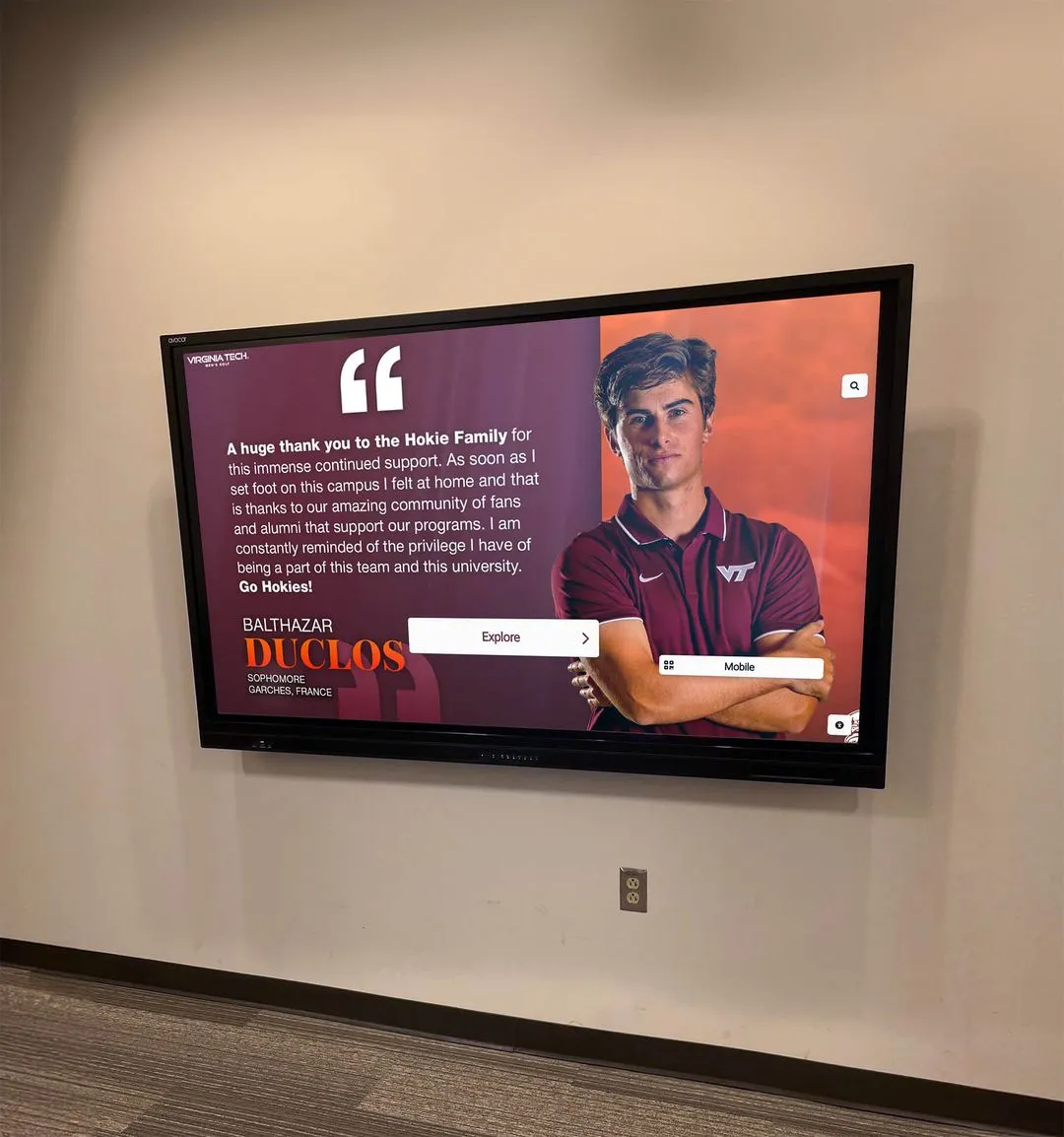
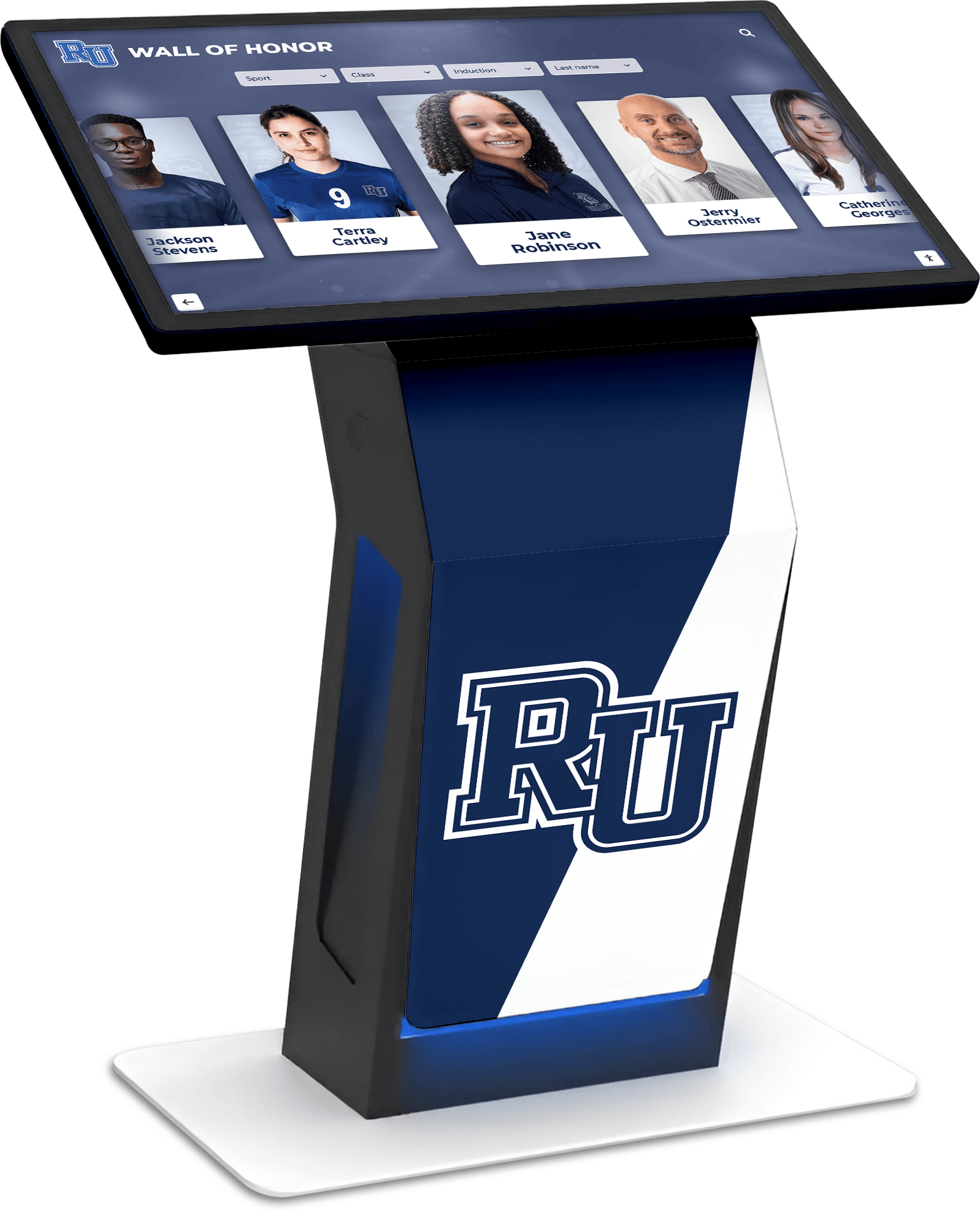
Rocket Alumni Solutions provides professional touchscreen kiosks designed specifically for recognition applications rather than generic digital signage adapted to school use
Why Recognition Technology Matters in 2026
Before exploring specific platform capabilities, understanding the broader context of modern recognition challenges helps schools evaluate whether traditional approaches still serve their communities effectively.
The Traditional Trophy Case Crisis
Physical trophy cases present fundamental limitations that worsen as schools accumulate achievements over decades:
Space Exhaustion and Impossible Choices
Standard 8-foot trophy cases hold approximately 20-30 major trophies comfortably. Active high schools with competitive athletics, robust performing arts, and strong academic programs accumulate 15-25 significant achievements annually—before counting individual recognition, club accomplishments, or alumni honors. Within 2-3 years, cases reach capacity, forcing difficult decisions about which programs receive visibility versus storage.
These constraints create program tensions when coaches perceive unequal recognition, athletes feel undervalued compared to other sports, and advisors advocate for academic achievement receiving equal prominence with athletics. Physical space limitations force zero-sum competition for recognition resources rather than enabling comprehensive acknowledgment.
Update Complexity and Recognition Delays
Adding achievements to traditional cases requires physical access, trophy or plaque ordering (2-4 weeks typical delivery), careful rearrangement of existing items, and coordination with facilities staff managing keys and installation. This complexity creates delays between accomplishments and recognition—state championships won in March may not appear in displays until May or later.
Immediate recognition matters for reinforcing achievement while excitement remains high. Traditional case logistics prevent timely acknowledgment that digital systems enable effortlessly.
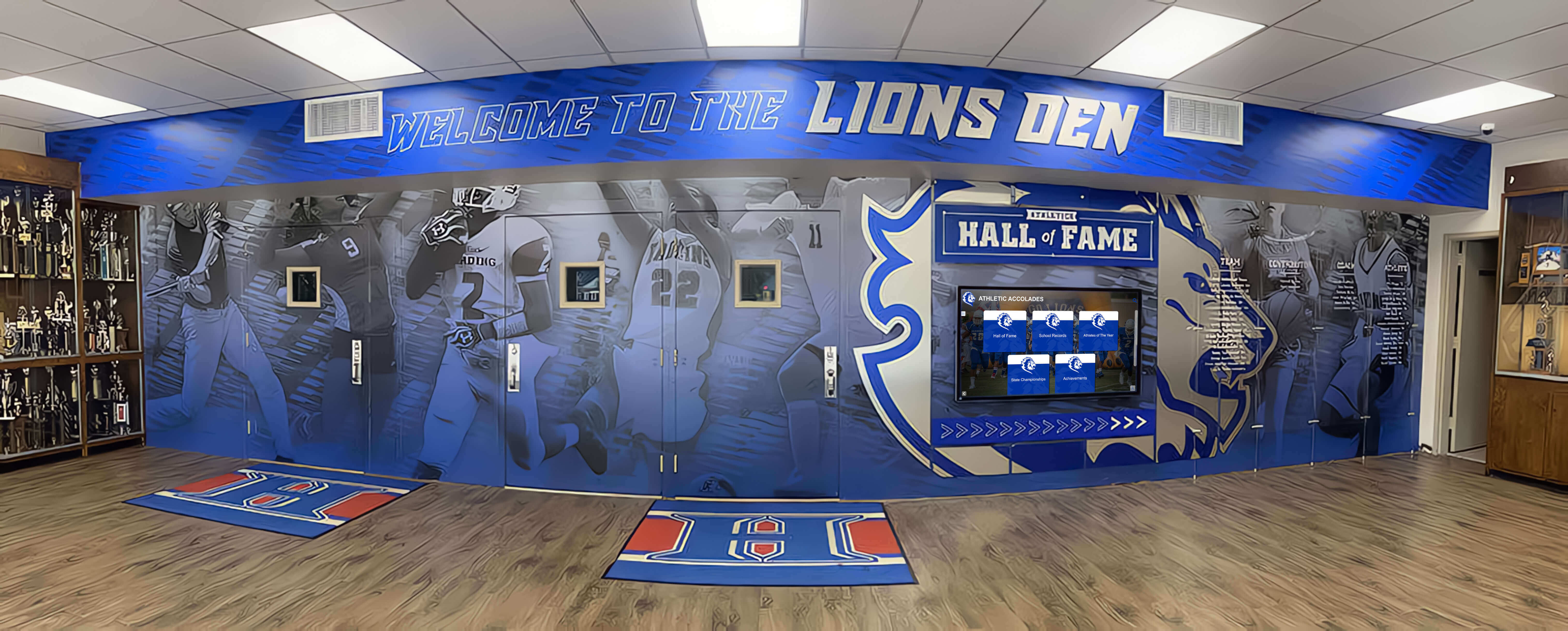
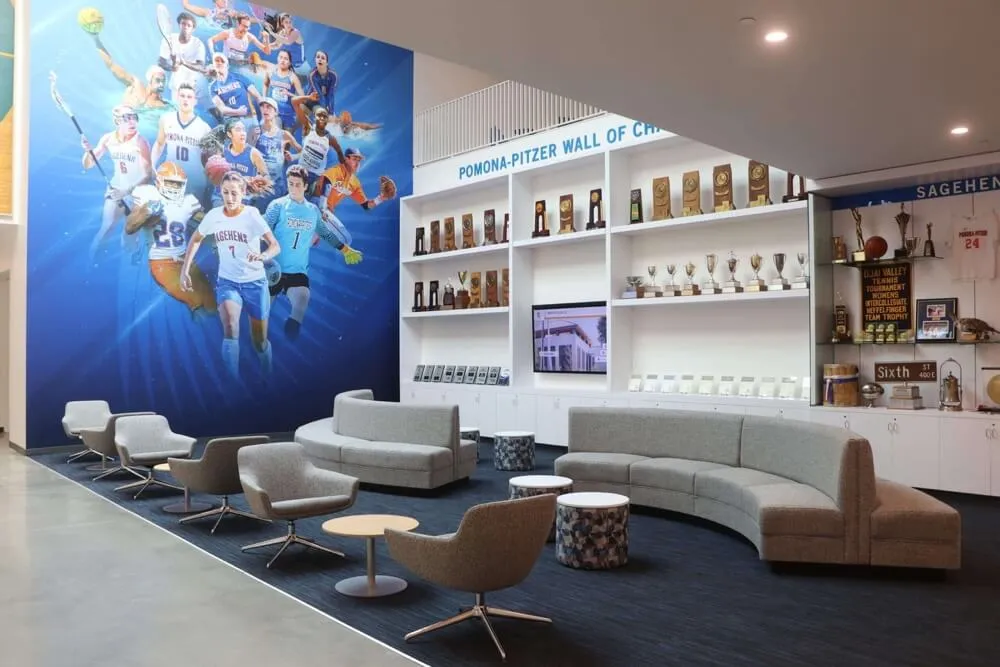
Traditional trophy cases provide familiar recognition but face severe capacity constraints as achievement records grow over years and decades
Static Displays That Students Ignore
Physical cases function as visual backdrops that students pass daily without engagement. No search capabilities help visitors discover specific achievements. No detailed information expands beyond trophy plaques and nameplates. No exploration features encourage students connecting with institutional history.
Research on environmental design confirms that unchanging static elements become “invisible” through habituation—people stop consciously noticing surroundings that never change. Trophy cases fall victim to this phenomenon, particularly with students encountering them daily throughout 4-year high school careers.
The Digital Signage Adaptation Problem
Recognizing traditional trophy case limitations, some schools implement generic digital signage platforms designed for corporate lobbies, retail environments, or advertising applications. These systems create new problems:
Content Management Complexity
Digital signage platforms require technical expertise for content creation, design work, and updates. Schools without dedicated IT staff or media specialists struggle maintaining displays, resulting in outdated content that undermines rather than enhances recognition effectiveness.
No Recognition-Specific Features
Generic signage lacks capabilities recognition requires: searchable directories, individual achievement profiles, roster management, statistical leaderboards, filter options organizing by sport/year/category, and graduated recognition tiers. Schools attempting to build these features through custom development face expensive, time-consuming projects that rarely achieve professional results.
Accessibility Compliance Challenges
Most digital signage fails ADA and WCAG accessibility requirements because these platforms prioritize visual impact over inclusive access. Schools implementing non-compliant systems face legal exposure while failing to serve community members with disabilities.
Pricing Models That Escalate
Digital signage typically charges per screen, creating expensive scaling when schools want multiple displays across campus. Hidden costs for content management modules, technical support, professional services, and hardware replacement compound initial investment into prohibitive long-term expenses.
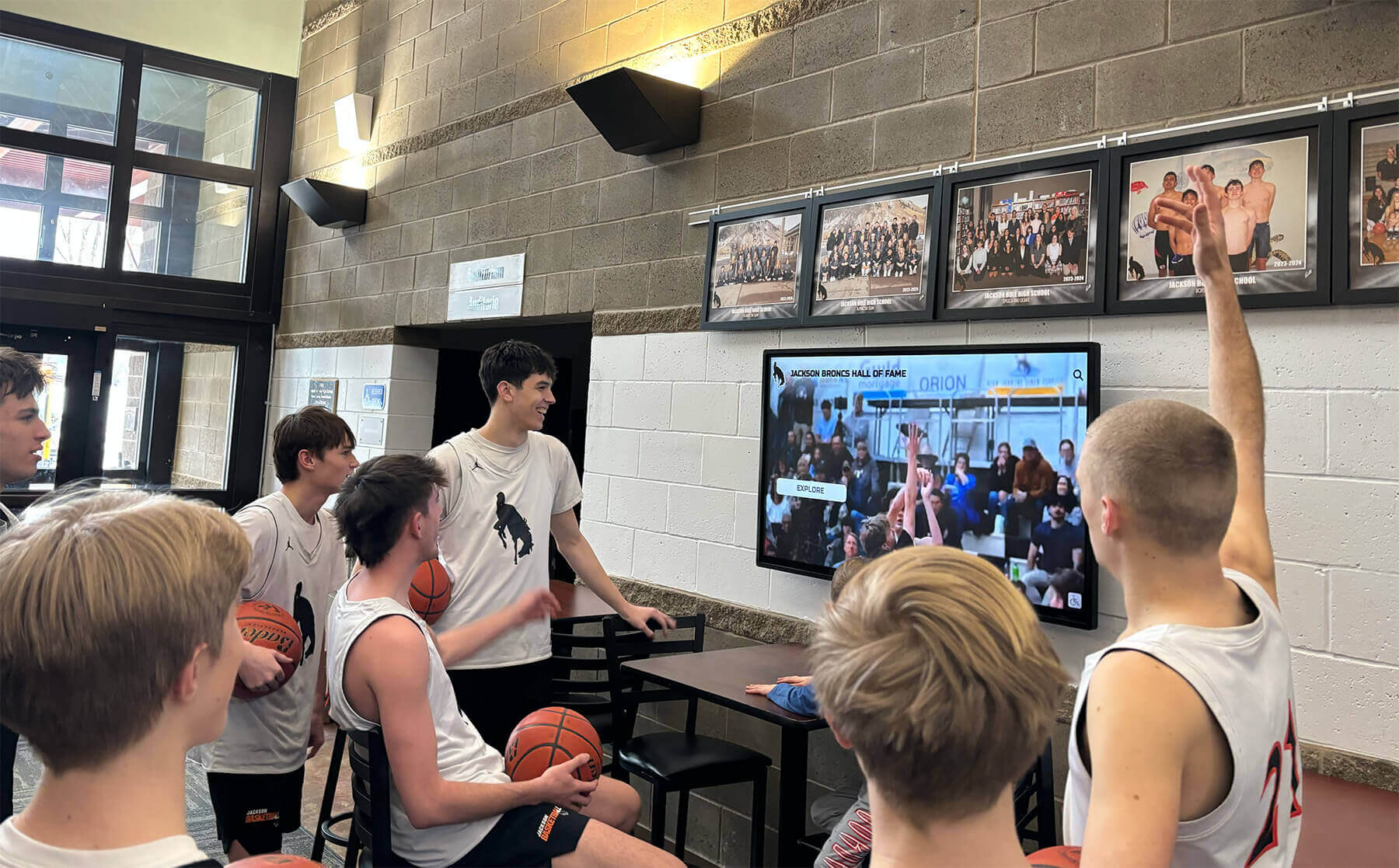
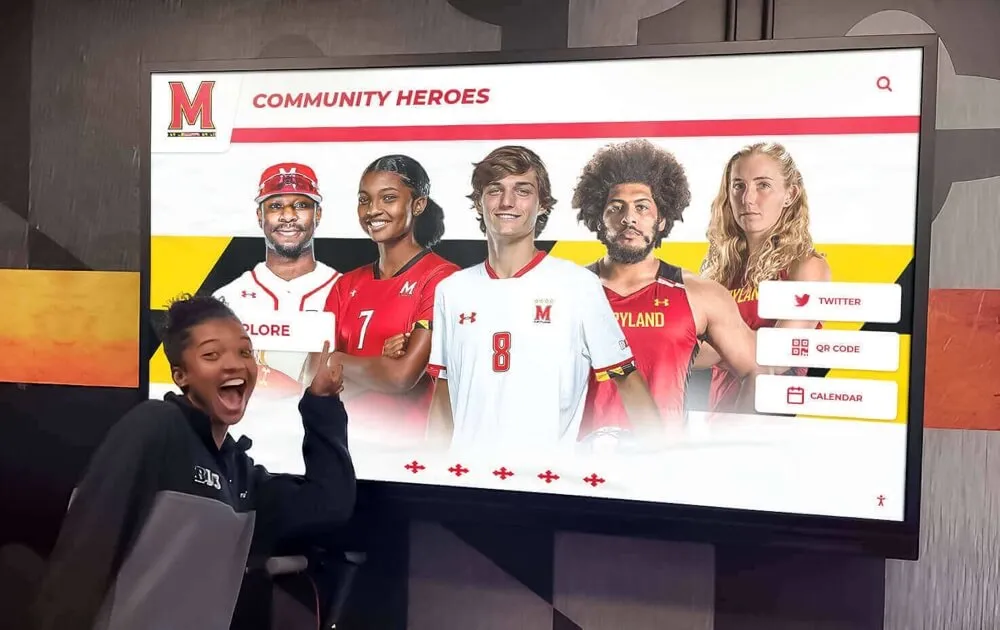
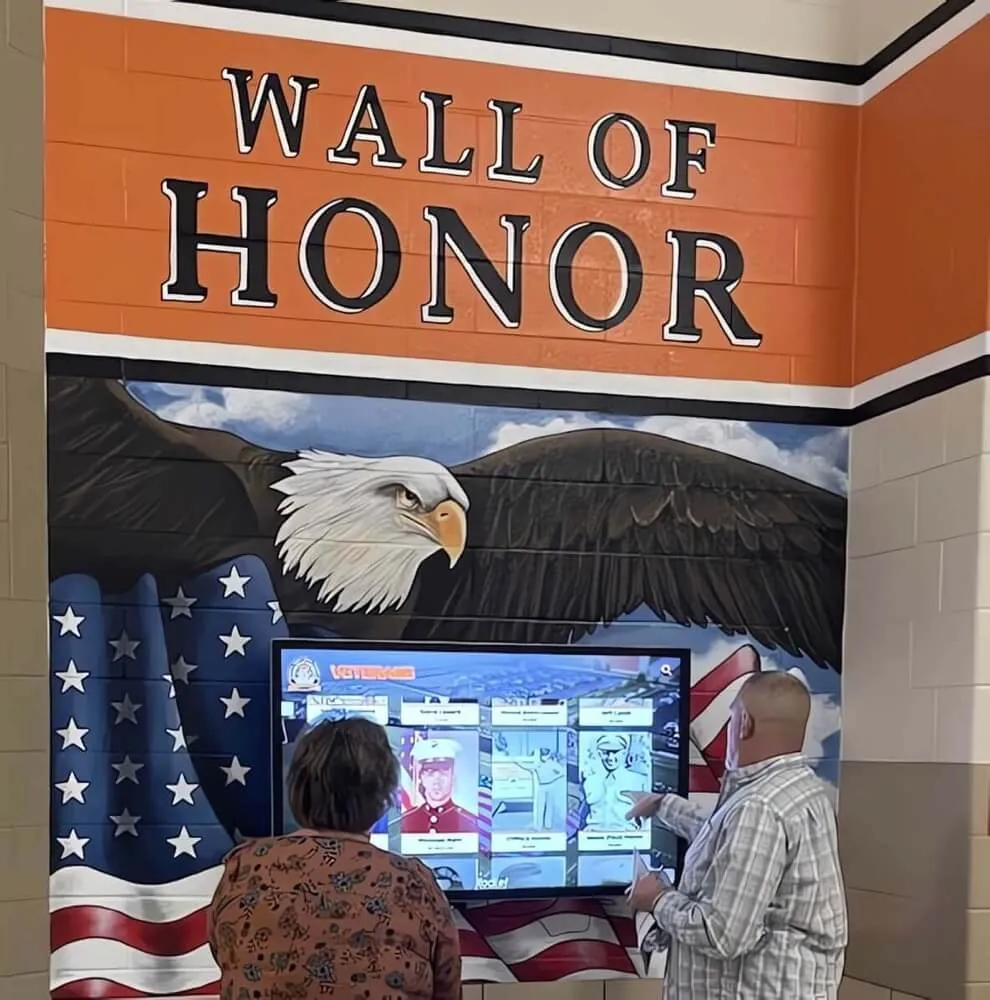
Effective recognition technology creates engagement, with students actively exploring achievements rather than passively viewing static displays
Rocket Alumni Solutions: Purpose-Built Recognition Platform
Rocket Alumni Solutions specifically addresses the gap between limited traditional trophy cases and overcomplex generic digital signage through platforms designed exclusively for recognition applications in educational environments.
Core Platform Philosophy
Three fundamental principles differentiate Rocket Alumni Solutions from alternatives:
Recognition-First Design
Every feature, interface element, and administrative function serves recognition objectives rather than adapting generic tools to acknowledgment applications. The platform provides searchable directories, individual profiles, achievement categories, historical timelines, statistical leaderboards, and graduated recognition tiers because these capabilities matter specifically for celebrating accomplishment—not because they adapt existing digital signage frameworks.
Administrative Simplicity
School staff manage recognition alongside countless other responsibilities—coaching, teaching, advising, facilities management, development work, or athletic administration. Rocket Alumni Solutions enables content updates in 10-15 minutes without technical expertise, design skills, or IT department involvement. The platform prioritizes ease of use over feature complexity because unused capabilities provide zero value.
Unlimited Capacity Philosophy
Physical space constraints force impossible choices about which achievements receive recognition. Rocket Alumni Solutions eliminates capacity as a limiting factor entirely through unlimited profile hosting, unlimited screen licensing, and unlimited content updates included in subscription pricing. Schools recognize every achievement, every student, and every program without artificial restrictions or escalating costs.
Key Differentiating Capabilities
Rocket Alumni Solutions provides capabilities that generic alternatives cannot match:
Cloud-Based Content Management System
The web-based administrative dashboard enables content updates from any internet-connected device without campus visits, physical access, or software installation. Athletic directors update recognition from home after evening competitions. Development professionals add donor profiles from advancement offices. Principals manage hall of fame content while traveling to conferences.
This flexibility transforms recognition from periodic batch updates requiring coordination and physical access into continuous maintenance enabling same-day acknowledgment of recent achievements.
Unlimited Screen Licensing
Unlike competitors charging per screen, Rocket Alumni Solutions includes unlimited displays in subscription pricing. Schools deploying single lobby kiosks initially can expand to athletic facilities, performing arts centers, academic buildings, and cafeterias without additional licensing fees. This unlimited model enables comprehensive campus coverage impossible when each additional screen requires separate payment.
Organizations exploring unlimited screen recognition strategies discover that removing artificial display limits fundamentally changes recognition possibilities and campus engagement opportunities.

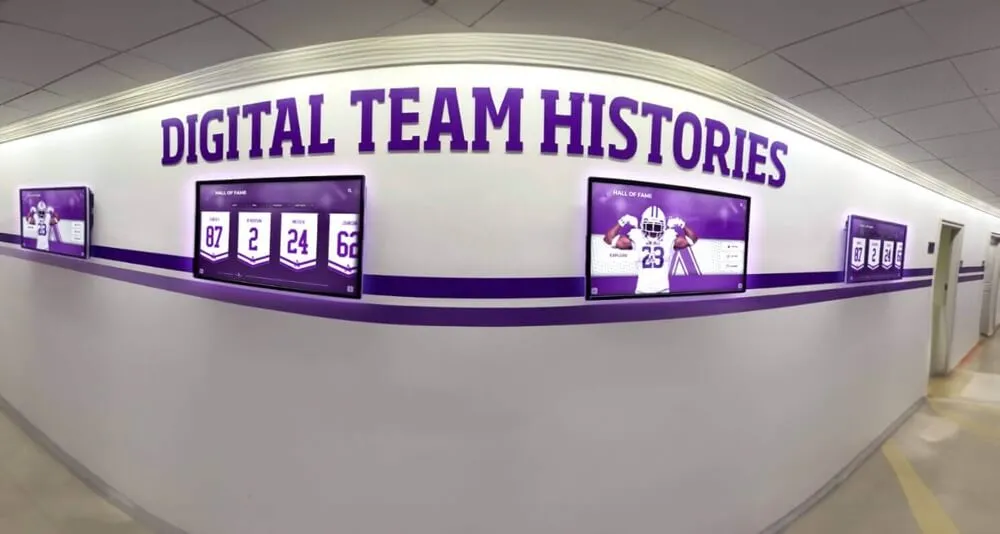
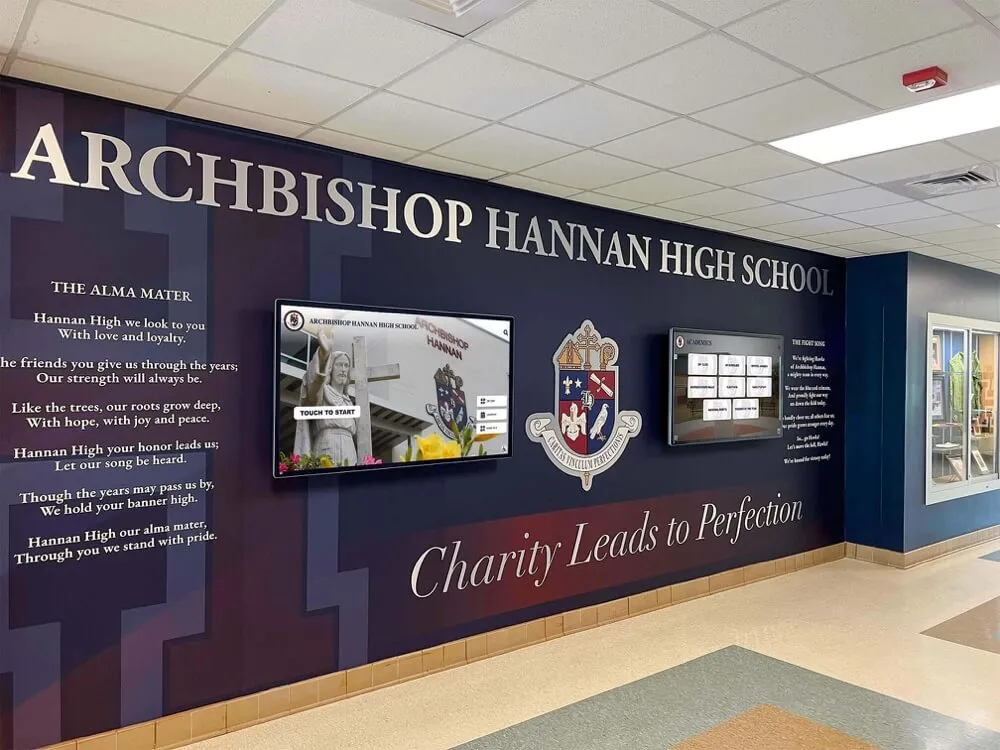
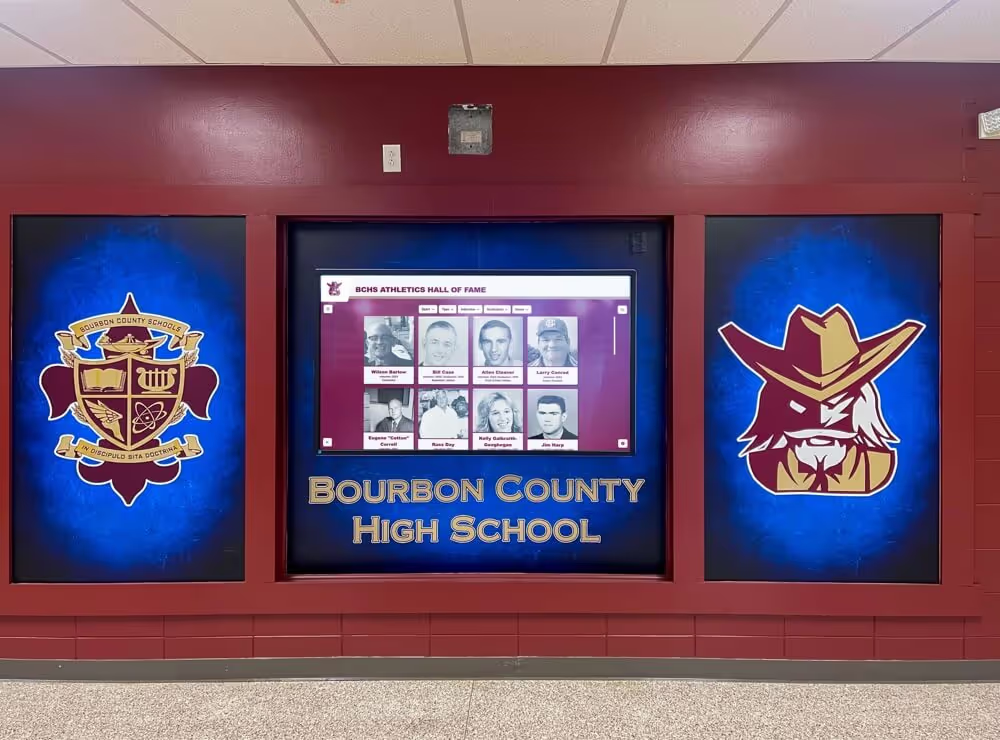
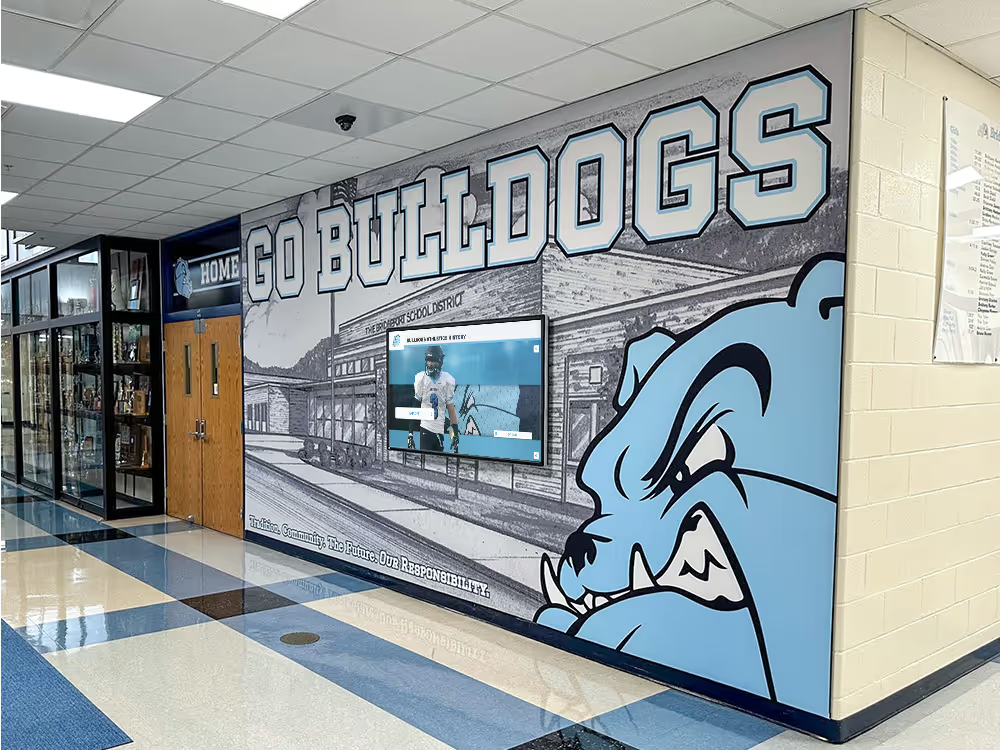
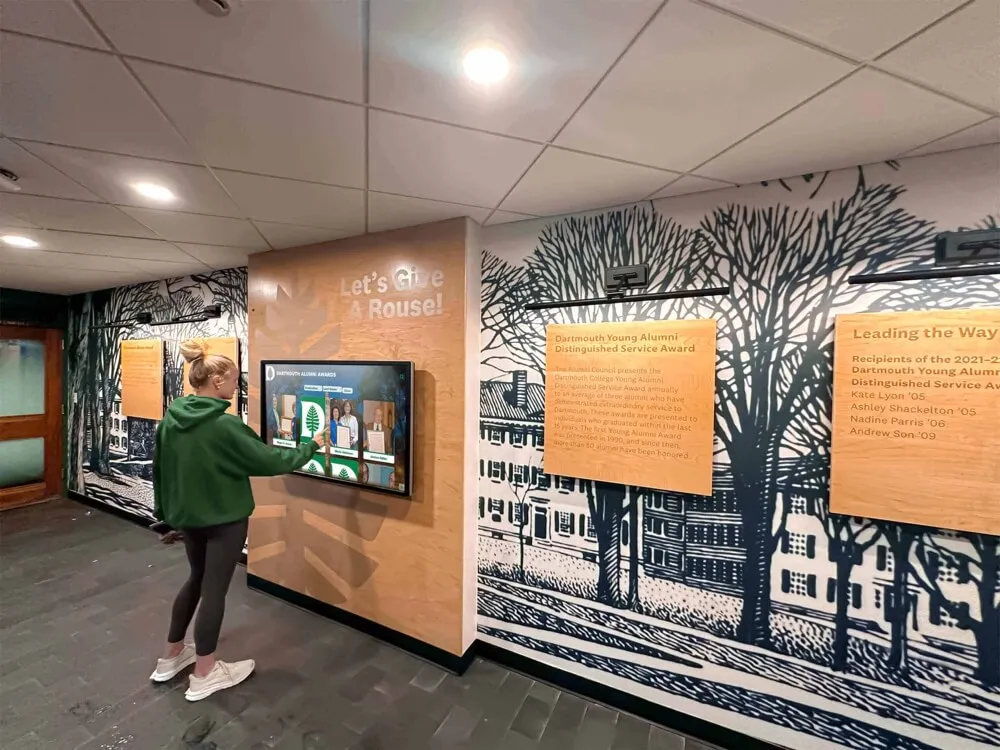
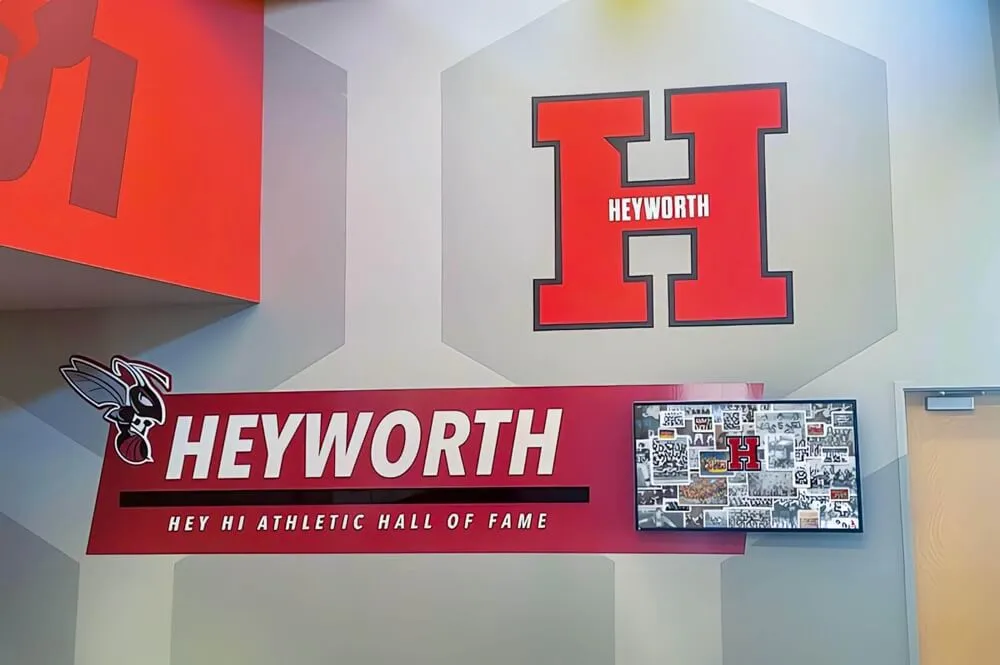
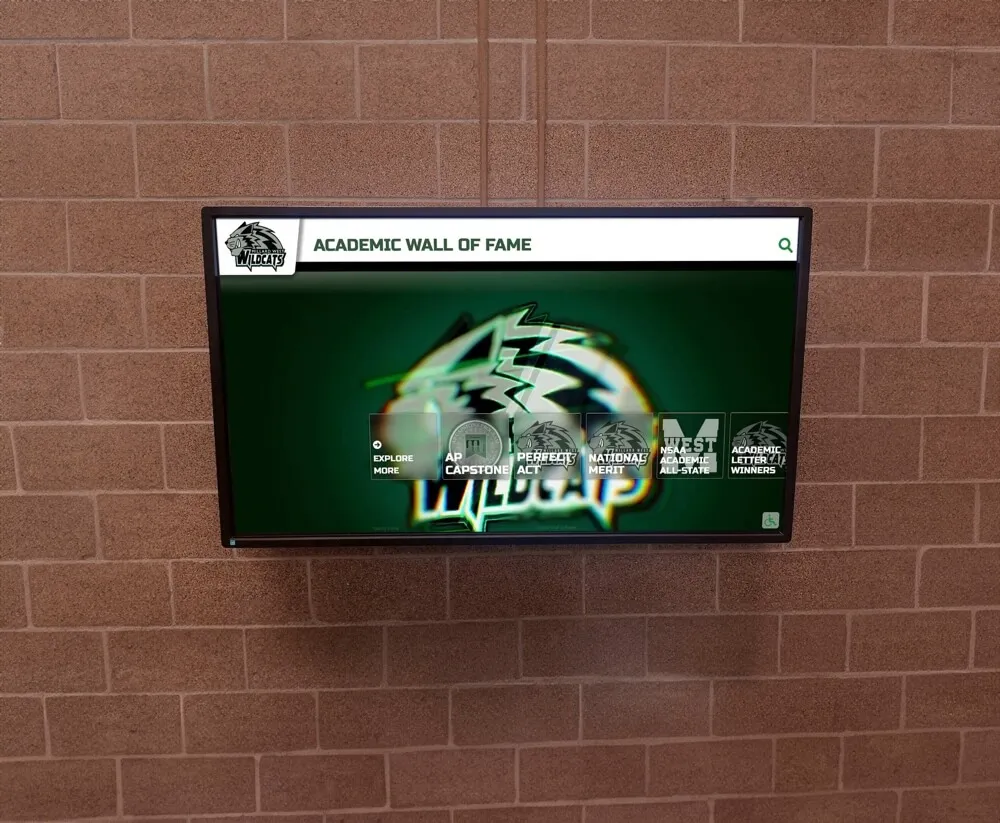
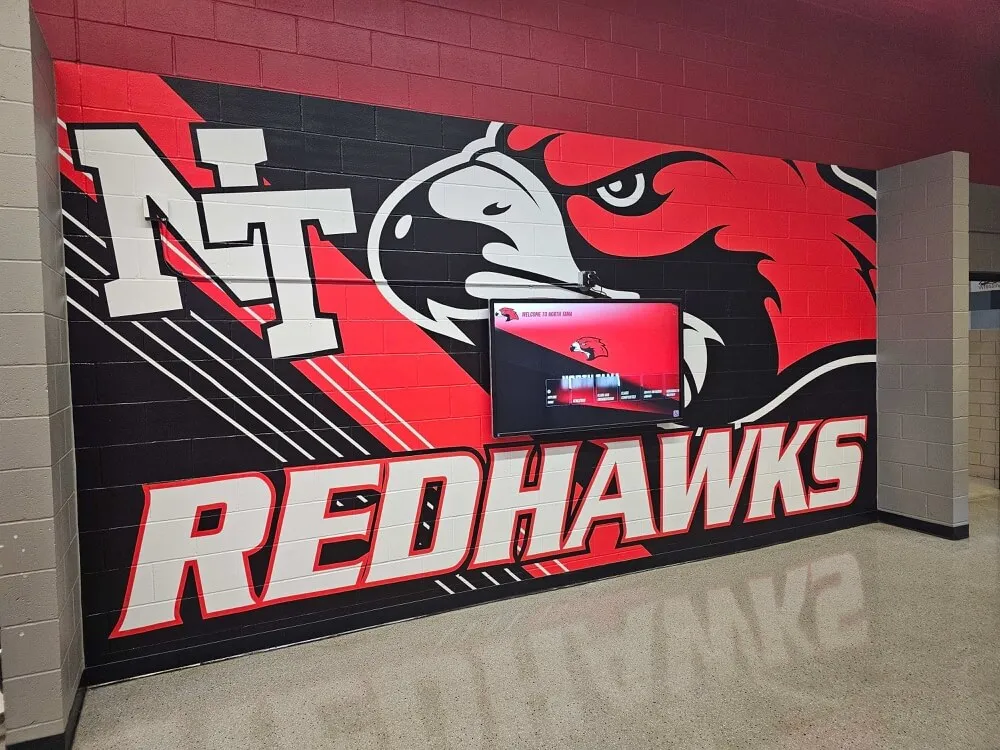
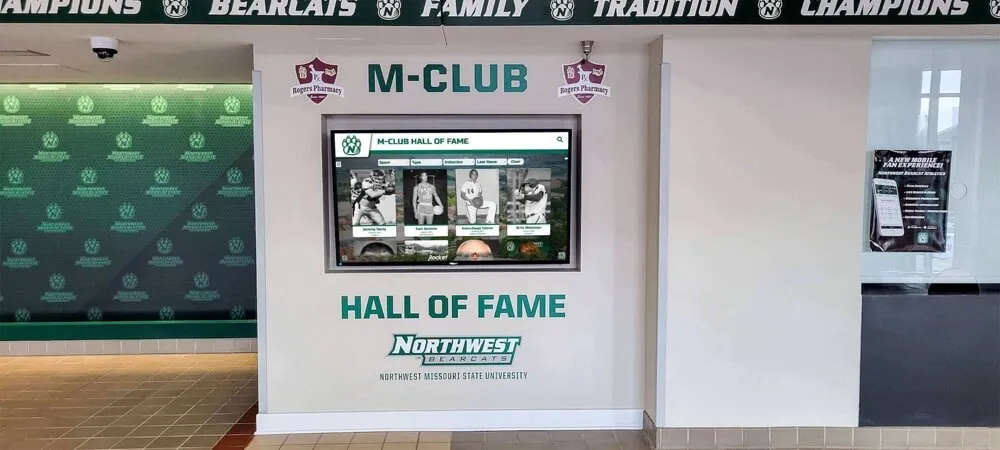
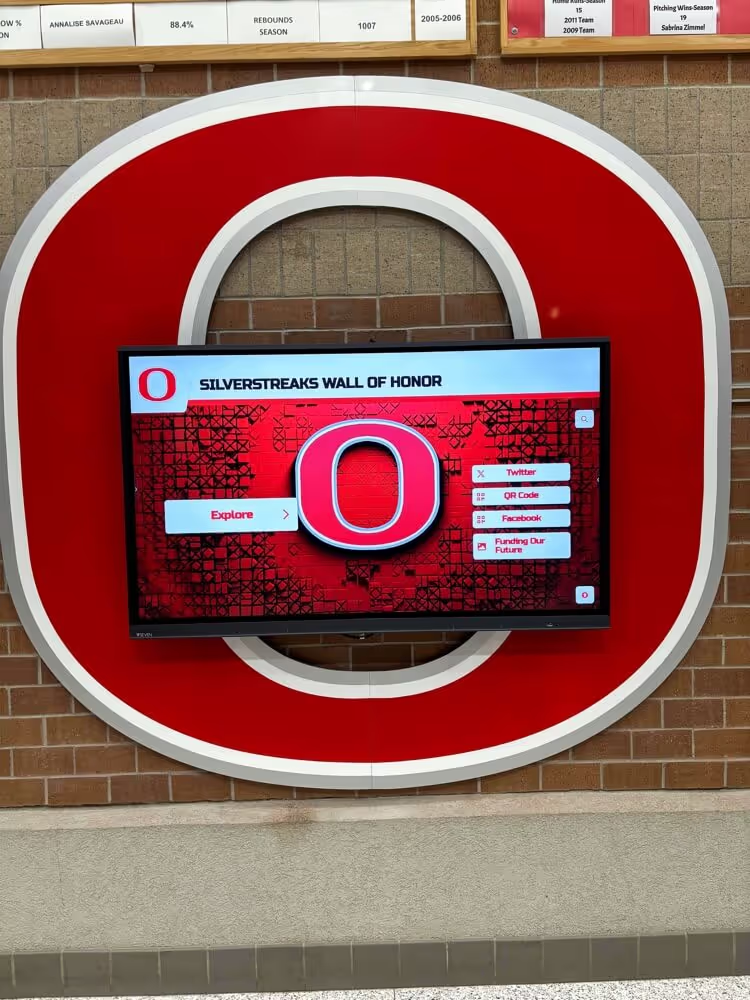
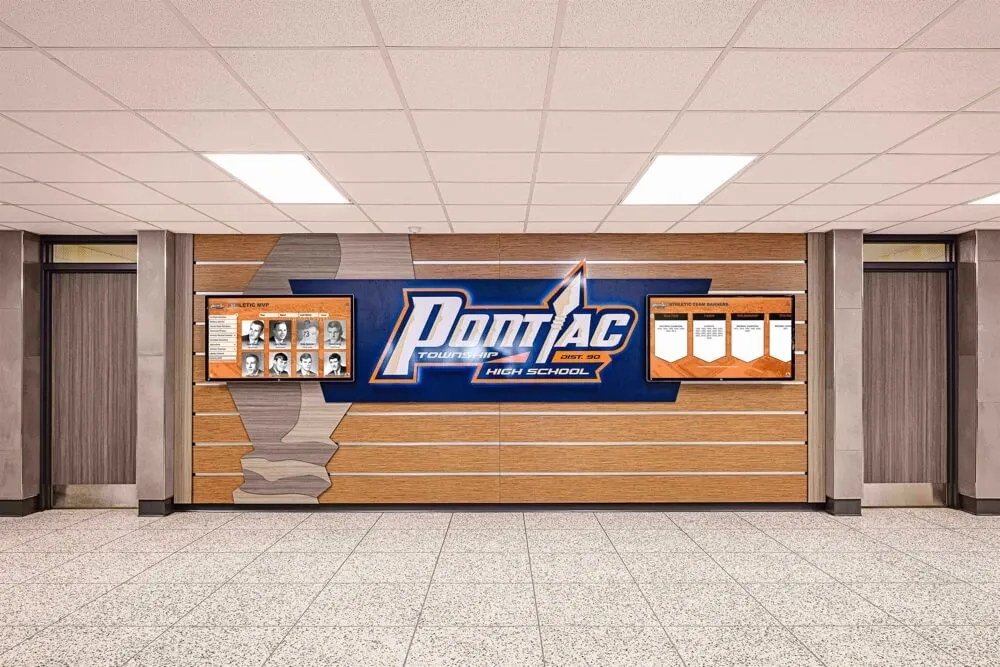
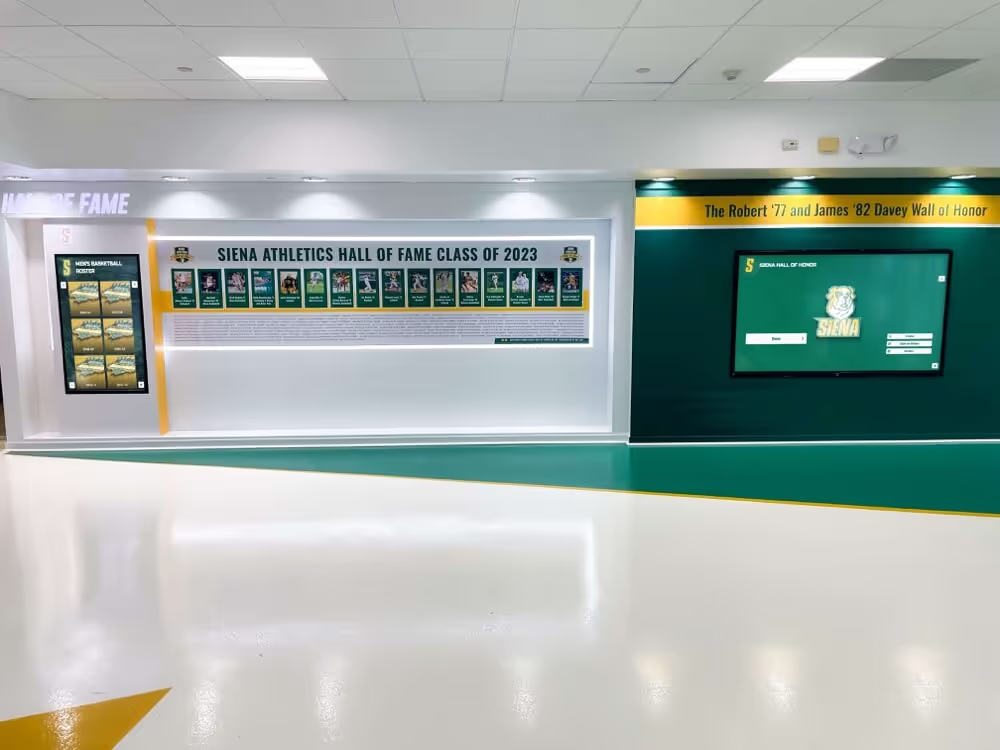
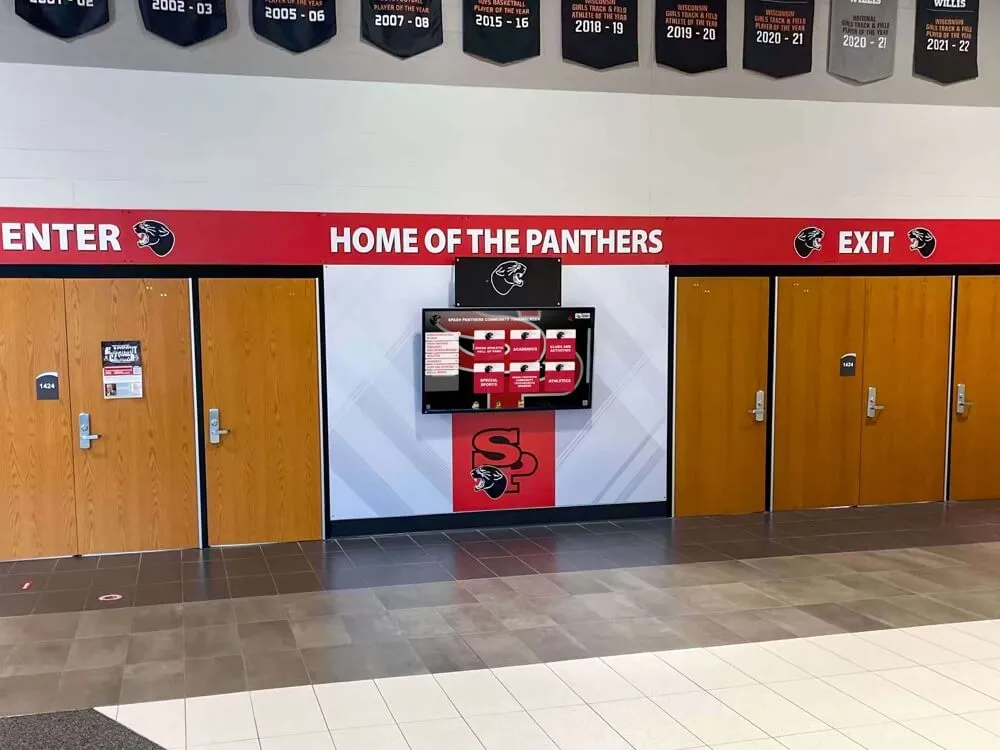
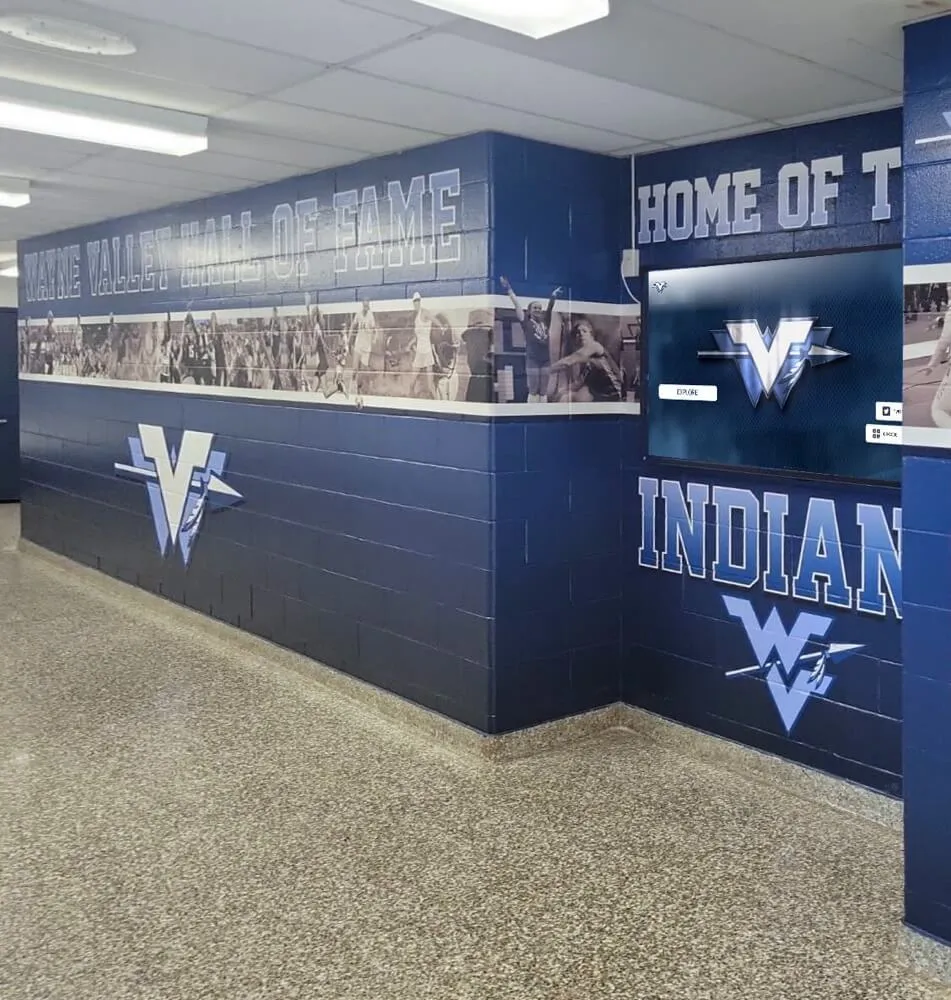
Wall-mounted displays integrate with existing hallway designs while providing unlimited digital recognition capacity and interactive exploration
WCAG 2.1 AA Accessibility Compliance
Rocket Alumni Solutions platforms meet Web Content Accessibility Guidelines (WCAG) 2.1 Level AA standards ensuring recognition serves all community members regardless of disability. Compliance includes adjustable text sizing, high contrast viewing modes, screen reader compatibility, keyboard navigation alternatives, appropriate color contrast ratios, and sufficient touch target sizing.
This compliance represents legal requirements under the Americans with Disabilities Act (ADA) and moral obligations ensuring recognition includes rather than excludes stakeholders. Schools implementing accessible recognition technology demonstrate institutional commitment to inclusion while avoiding legal exposure from non-compliant systems.
QR Code Mobile Extension
Physical displays limit recognition to visitors who can travel to campus and comfortably interact with wall-mounted touchscreens. QR code integration extends acknowledgment to smartphones and tablets, enabling remote viewing for alumni, families, and community members unable to visit facilities regularly.
This mobile extension particularly benefits schools with national or international alumni bases, military families frequently relocating, and community members with mobility limitations preventing comfortable interaction with public touchscreens.
Scheduled Publishing and Automated Updates
Recognition timing matters—acknowledging achievements during award ceremonies, coordinating announcements with public relations efforts, and ensuring accuracy before publication all require content scheduling capabilities. Rocket Alumni Solutions enables future-dated publishing, automatic content activation, and timed updates coordinating recognition with institutional calendars.
Multi-Tier Recognition Structures
Schools organize recognition through varied frameworks: hall of fame inductees receiving highest honors, all-state athletes acknowledging competition excellence, honor roll students celebrating academic achievement, or donor societies recognizing philanthropic support. Rocket Alumni Solutions accommodates complex tier structures with visual differentiation, filter options, and graduated profile depth reflecting recognition levels appropriately.
Technical Specifications and Hardware
Understanding platform technical requirements helps schools evaluate infrastructure needs and implementation considerations:
Display Hardware Options
Rocket Alumni Solutions supports multiple installation configurations:
Wall-Mounted Touchscreen Displays
Commercial-grade touchscreens (43-75 inches) mounted to hallway or lobby walls create prominent recognition focal points:
- High brightness (400-700 nits) ensuring visibility in ambient light
- Hardened tempered glass resisting damage in public environments
- Commercial display panels rated 16-24 hours daily operation
- Portrait or landscape orientation matching space requirements
- Professional installation with secure mounting and cable management
- Typical sizes: 55" (most popular), 65" (large lobbies), 43" (constrained spaces)
Freestanding Interactive Kiosks
Floor-standing kiosk enclosures provide flexibility when wall mounting proves impractical:
- Integrated display stands with built-in computing
- Security features preventing theft and tampering
- Professional enclosures matching institutional aesthetics
- Repositioning capability as needs change
- No construction or wall modification required
- Ideal for temporary installations, rental scenarios, or renovation avoidance
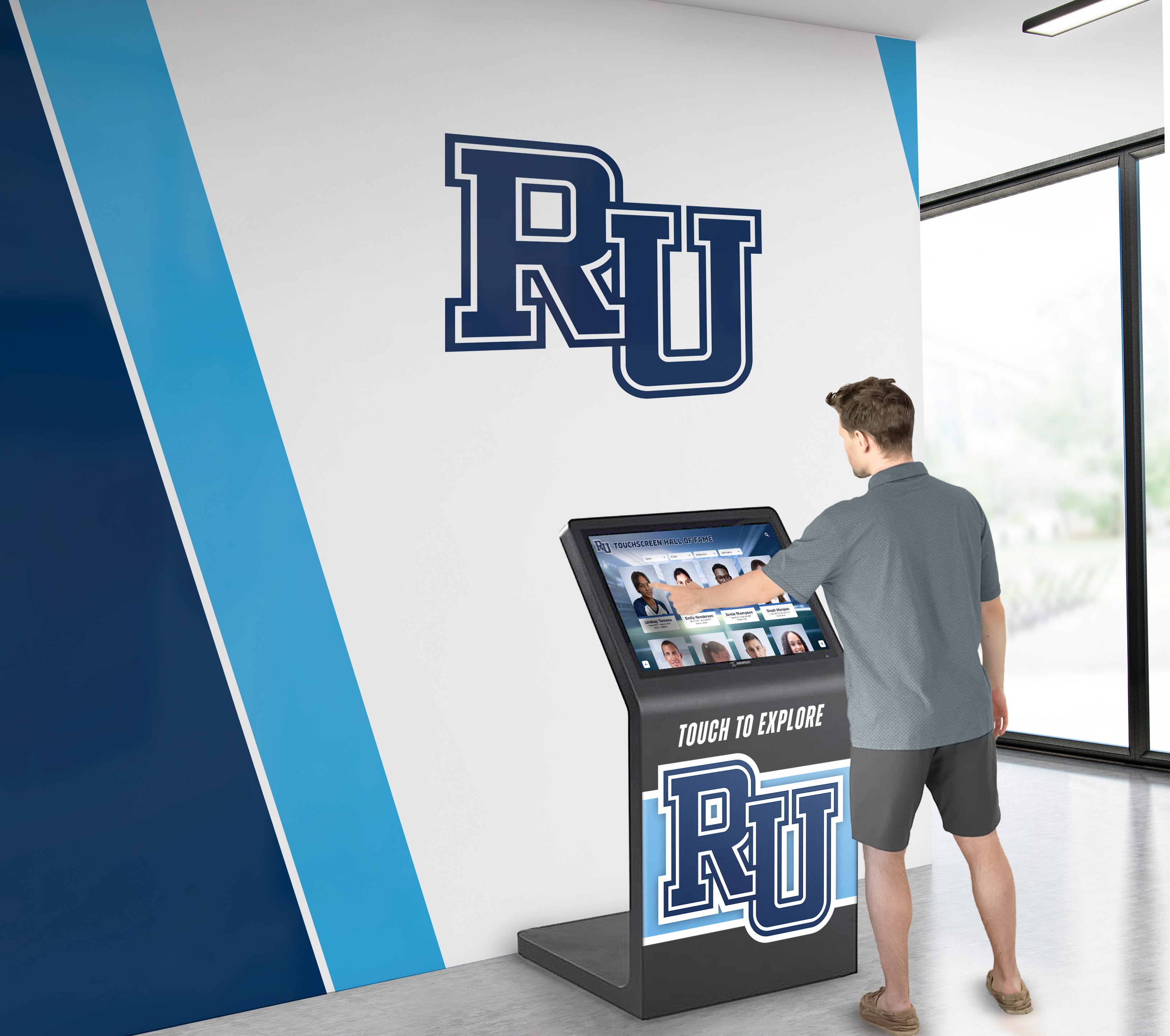
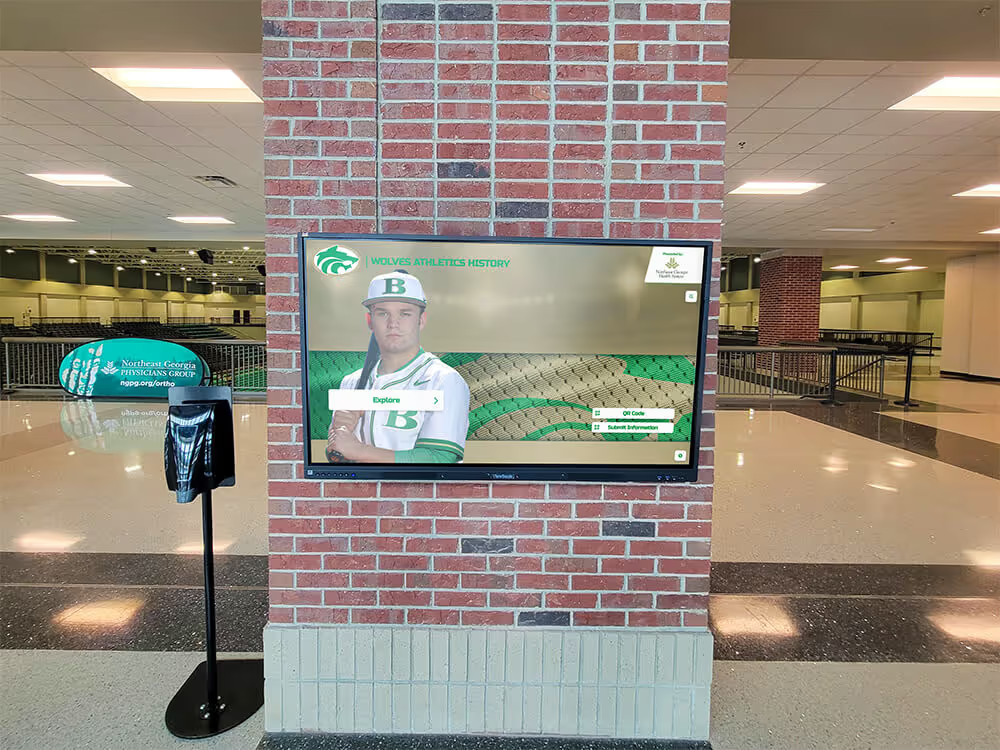
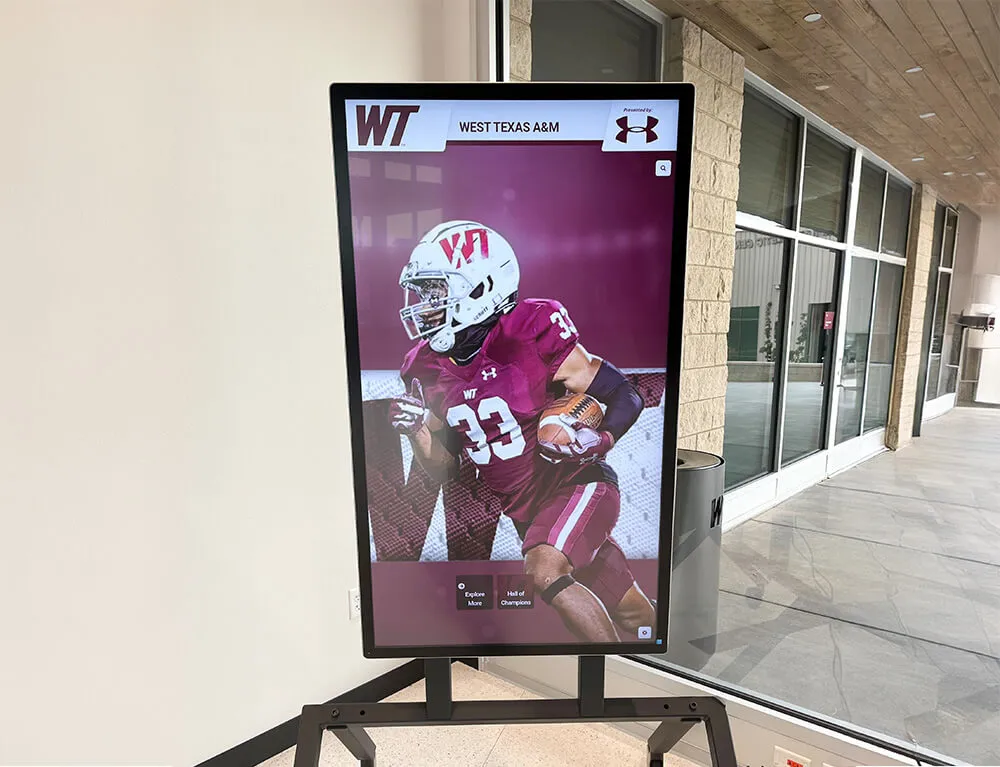
Freestanding kiosks provide recognition flexibility without permanent wall installation, enabling repositioning as campus needs evolve
Multi-Screen Arrays
Schools with comprehensive recognition needs deploy coordinated display networks:
- Sport-specific screens dedicated to individual athletic programs
- Separate displays for academic, performing arts, and athletic recognition
- Coordinated content across multiple locations (lobby, athletic facility, cafeteria)
- Centralized management enabling consistent updates across all screens
- Phased implementation adding displays as budget allows
Computing and Connectivity Requirements
On-Site Computing
Displays connect to dedicated computing devices running recognition software:
- Intel-based mini PCs or integrated display computers
- Windows or Linux operating systems (platform supports both)
- Minimal computing requirements (4GB RAM, 64GB storage typical)
- Fanless designs ensuring silent operation in public spaces
- Low power consumption (15-30 watts typical)
Network Infrastructure
Standard ethernet or WiFi connectivity enables cloud-based content delivery:
- 10 Mbps minimum bandwidth (25+ Mbps recommended)
- Standard network security protocols
- No special firewall configurations required
- Remote management through cloud platform
- Automatic software updates without IT involvement
Power Requirements
Displays require standard electrical service:
- 110V AC standard outlets
- 100-200 watts typical consumption
- Always-on operation without manual power management
- Optional timer controls for energy conservation
- Surge protection recommended
Schools implementing digital recognition hardware benefit from turnkey solutions including display selection, computing configuration, and professional installation rather than attempting component sourcing independently.
Content Management and Administration
Platform value depends substantially on how easily school staff manage recognition without technical expertise:
Administrative Dashboard Interface
The web-based content management system provides intuitive controls:
Profile Creation and Management
Adding recognition entries requires minimal information:
- Basic details: name, achievement type, year, sport/activity
- Optional enhanced content: photos, biographies, statistics, stories
- Template systems accelerating data entry for similar profiles
- Bulk import tools migrating existing databases efficiently
- Drag-and-drop media uploading requiring no technical skills
- Preview functionality reviewing content before publication
Athletic directors report 10-15 minute typical time investment for comprehensive athlete profiles including photos, statistics, and biographical information—dramatically faster than traditional plaque ordering and physical case updates.
Search and Filter Organization
Recognition effectiveness requires visitors discovering specific achievements easily:
- Alphabetical directories organized by last name
- Sport/activity category filtering
- Year/decade timeline views
- Achievement type organization (hall of fame, all-state, academic honors)
- Statistical leaderboards by record category
- Custom tags enabling flexible organization
Media Library Management
Visual content creates engagement impossible with text-only profiles:
- Centralized media library storing all photos and videos
- Automatic image optimization for display performance
- Organized folders by year, sport, or custom categories
- Usage tracking showing where media appears
- Rights management documentation for compliance
- Bulk upload capabilities accelerating historical content migration
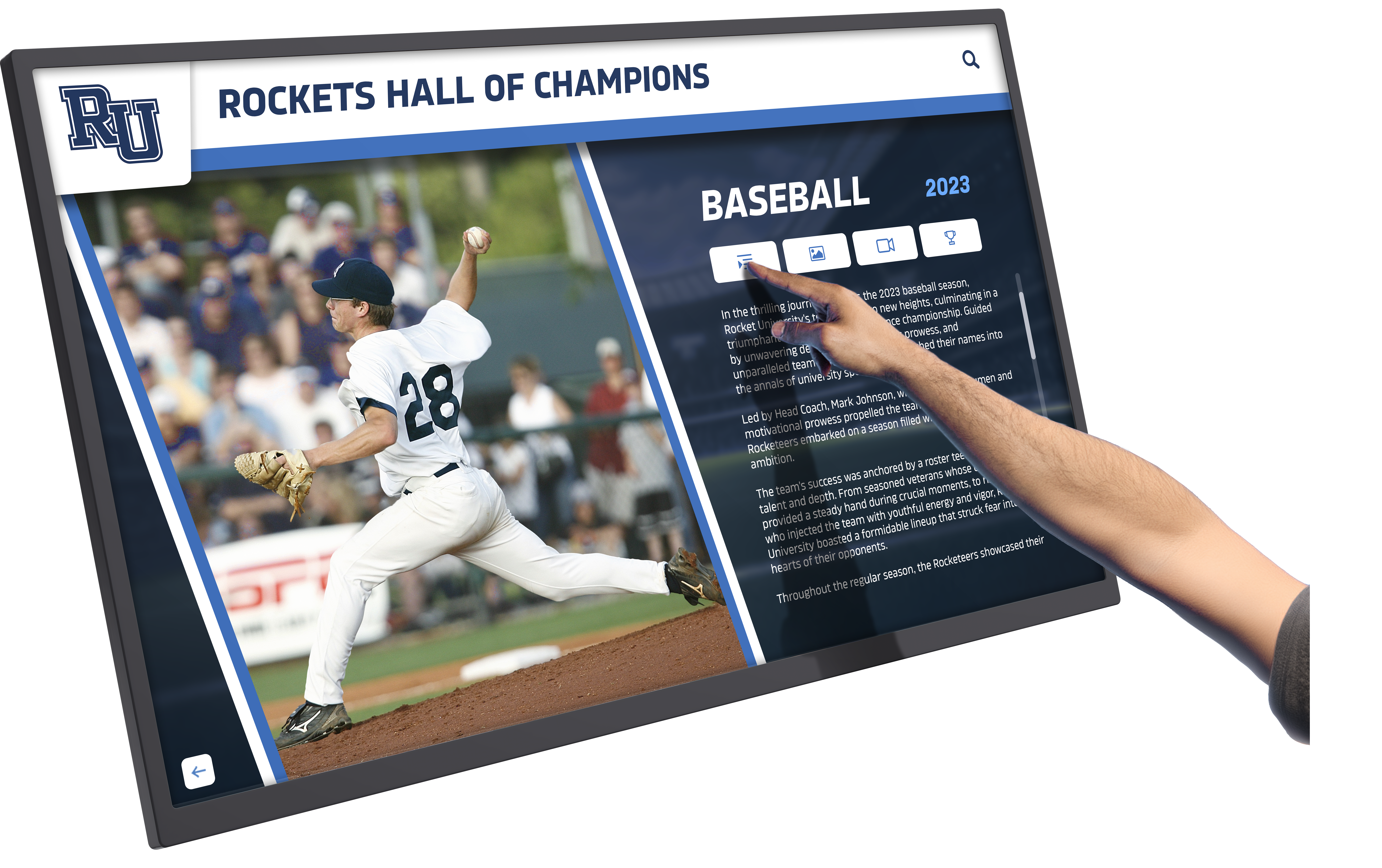
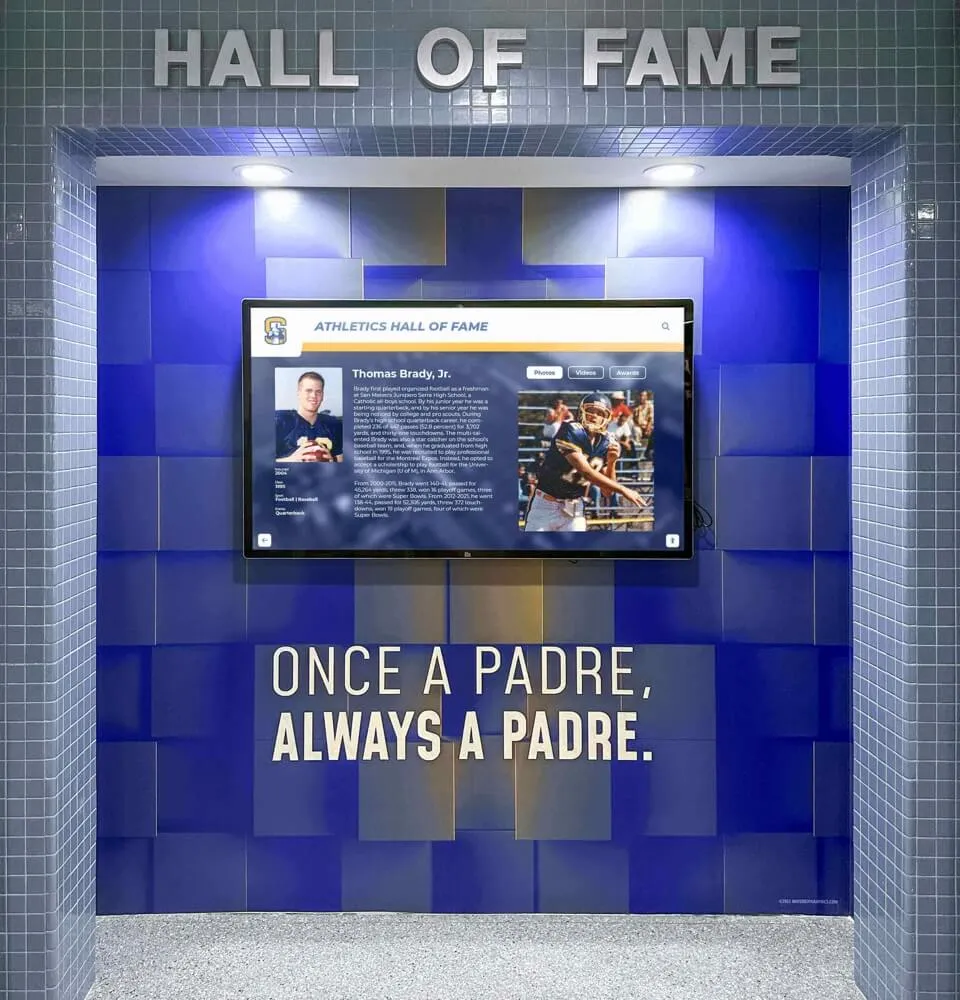
Detailed profiles with photos, statistics, and biographical information transform basic name lists into compelling recognition experiences
Role-Based Permissions and Workflow
Organizations with multiple staff managing recognition need appropriate access controls:
Permission Levels
- Super administrators: full system access including settings and user management
- Content managers: create, edit, publish, and delete profiles
- Contributors: create and edit profiles requiring approval before publication
- Reviewers: approval authority over submitted content
- Viewers: read-only access for stakeholders monitoring recognition
Approval Workflows
Content accuracy matters for maintaining credibility and avoiding embarrassing errors:
- Submission queues holding content pending review
- Email notifications alerting approvers of pending items
- Comment systems enabling reviewer feedback
- Revision tracking showing content change history
- Publication controls coordinating timing with ceremonies or announcements
Content Development Support
Schools without media specialists or design resources benefit from implementation assistance:
Professional Services Packages
- Historical content migration from existing databases
- Photo editing and optimization
- Biography writing and information gathering
- Initial system population (100-500+ profiles)
- Template customization matching school branding
- Training and documentation for ongoing management
Self-Service Resources
- Video tutorials demonstrating common tasks
- Written documentation covering all features
- Template libraries accelerating profile creation
- Best practice guides based on successful implementations
- Community forums enabling peer learning
- Regular webinars covering new features and techniques
Pricing and Total Cost of Ownership
Understanding complete costs enables informed budget planning and vendor comparison:
Subscription Pricing Models
Rocket Alumni Solutions offers flexible pricing accommodating varied school budgets:
Annual Subscriptions
Standard yearly licensing:
- Typical range: $2,500-$7,000 annually depending on school size and features
- Unlimited screens included (no per-display charges)
- Unlimited profile capacity
- Unlimited content updates
- Cloud hosting and software updates
- Technical support included
- Cancel or modify annually
- No long-term commitment required
Multi-Year Subscriptions
Extended commitments provide cost savings:
- 3-year subscriptions: typically 15-20% discount versus annual pricing
- 5-year subscriptions: typically 25-30% discount versus annual pricing
- Budget predictability through locked pricing
- Priority support for long-term customers
- Reduced administrative overhead (fewer renewals)
Organizations exploring flexible pricing options benefit from comparing annual flexibility against multi-year savings based on institutional purchasing practices and budget certainty.
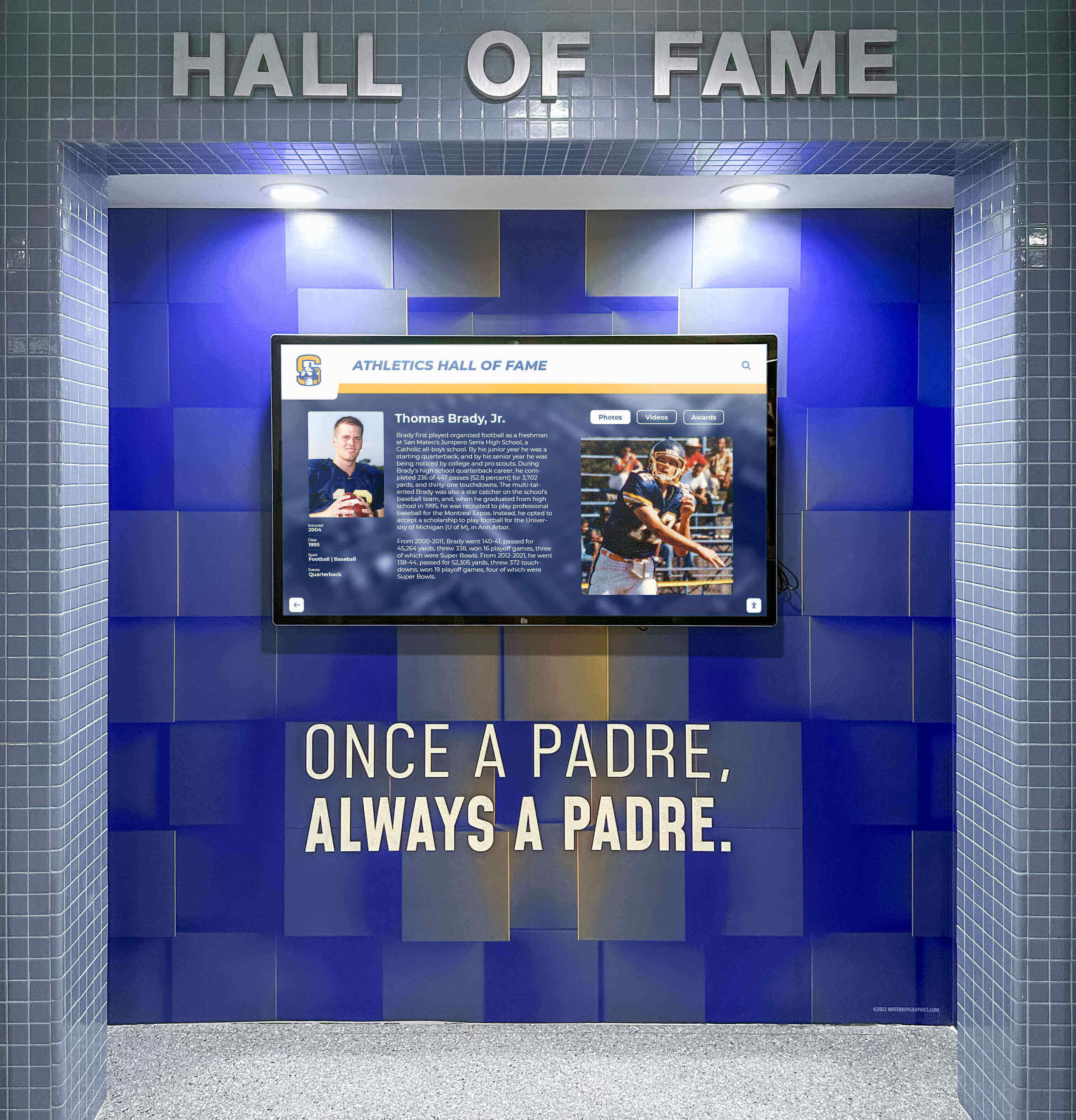
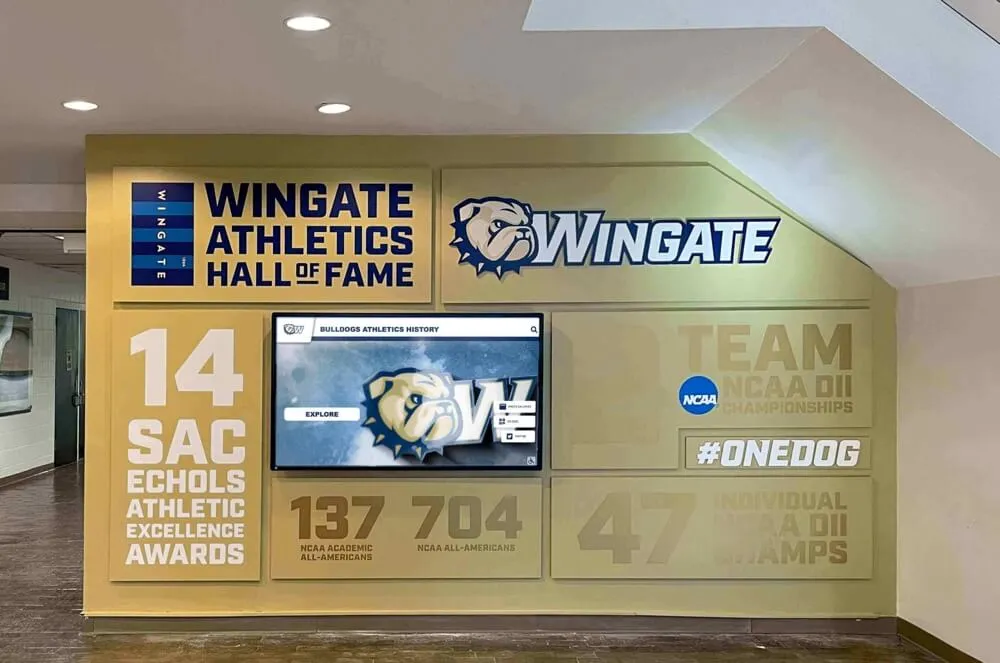
Unlimited screen licensing enables recognition expansion across multiple campus locations without additional per-display costs
One-Time Perpetual Licensing
Schools preferring ownership over subscription:
- Higher initial investment ($15,000-$30,000 typical)
- No ongoing annual fees for software
- Own license permanently
- Optional annual support contracts (20-25% of initial price)
- Self-hosted option for IT infrastructure control
- Less common but available for institutions preferring this model
Hardware Costs
Display equipment represents separate investment:
Basic Wall-Mount Installation (single display)
- 55" commercial touchscreen display: $4,000-$7,000
- Mini PC computing device: $800-$1,500 (if not included)
- Professional mounting and installation: $1,500-$3,000
- Total hardware investment: $6,300-$11,500
Freestanding Kiosk Installation
- 55" touchscreen with kiosk enclosure: $7,000-$12,000
- Computing and connectivity: included in kiosk
- Installation and setup: $1,000-$2,000
- Total kiosk investment: $8,000-$14,000
Multi-Screen Deployment (three displays)
- Three 55" displays and computing: $18,000-$30,000
- Professional installation all locations: $4,000-$7,000
- Total multi-screen investment: $22,000-$37,000
Total Cost of Ownership Analysis (10 Years)
Comparing complete costs provides realistic budget perspective:
Initial Implementation Costs
- Hardware (one 55" display): $8,000
- Software subscription (first year): $4,000
- Professional content development (200 initial profiles): $5,000
- Training and setup: $1,000
- Total initial investment: $18,000
Annual Ongoing Costs (Years 2-10)
- Software subscription: $4,000 annually
- Content management (self-managed): $0
- Technical support: included in subscription
- Display warranty reserve: $500 annually
- Annual ongoing cost: $4,500
Hardware Refresh (Year 6)
- Display replacement: $6,000
- Installation: $1,500
- Mid-lifecycle refresh: $7,500
10-Year Total Cost of Ownership: $66,000
- Breaks down to $6,600 per year average
- Provides unlimited recognition capacity
- Includes all software updates and support
- Eliminates per-achievement costs
Traditional Trophy Case Comparison (10 years)
- Initial built-in cases: $15,000
- Annual trophy/plaque purchases (30 items/year at $300 average): $90,000
- Case expansion (Year 5): $8,000
- Annual maintenance and cleaning: $10,000
- 10-year traditional total: $123,000
Digital recognition delivers approximately 45-50% lower 10-year costs compared to traditional approaches while providing unlimited capacity, superior engagement, and dramatically reduced administrative burden.
Implementation Process and Timeline
Successful recognition technology deployment requires systematic planning:
Phase 1: Planning and Decision-Making (4-8 weeks)
Needs Assessment
- Current recognition volume and anticipated growth
- Budget parameters and funding sources
- Stakeholder input and approval requirements
- Technical infrastructure evaluation
- Location selection and space planning
- Timeline expectations and constraints
Vendor Evaluation
- Platform demonstrations with sample content
- Reference checks with similar schools
- Pricing comparison and total cost analysis
- Contract terms and commitment requirements
- Support quality and responsiveness evaluation
- Customization capabilities assessment
Location and Installation Planning
- Site surveys identifying optimal placement
- Electrical and network infrastructure verification
- Architectural integration considerations
- Accessibility compliance review
- Multiple location evaluation for phased expansion
- School calendar coordination avoiding disruptions
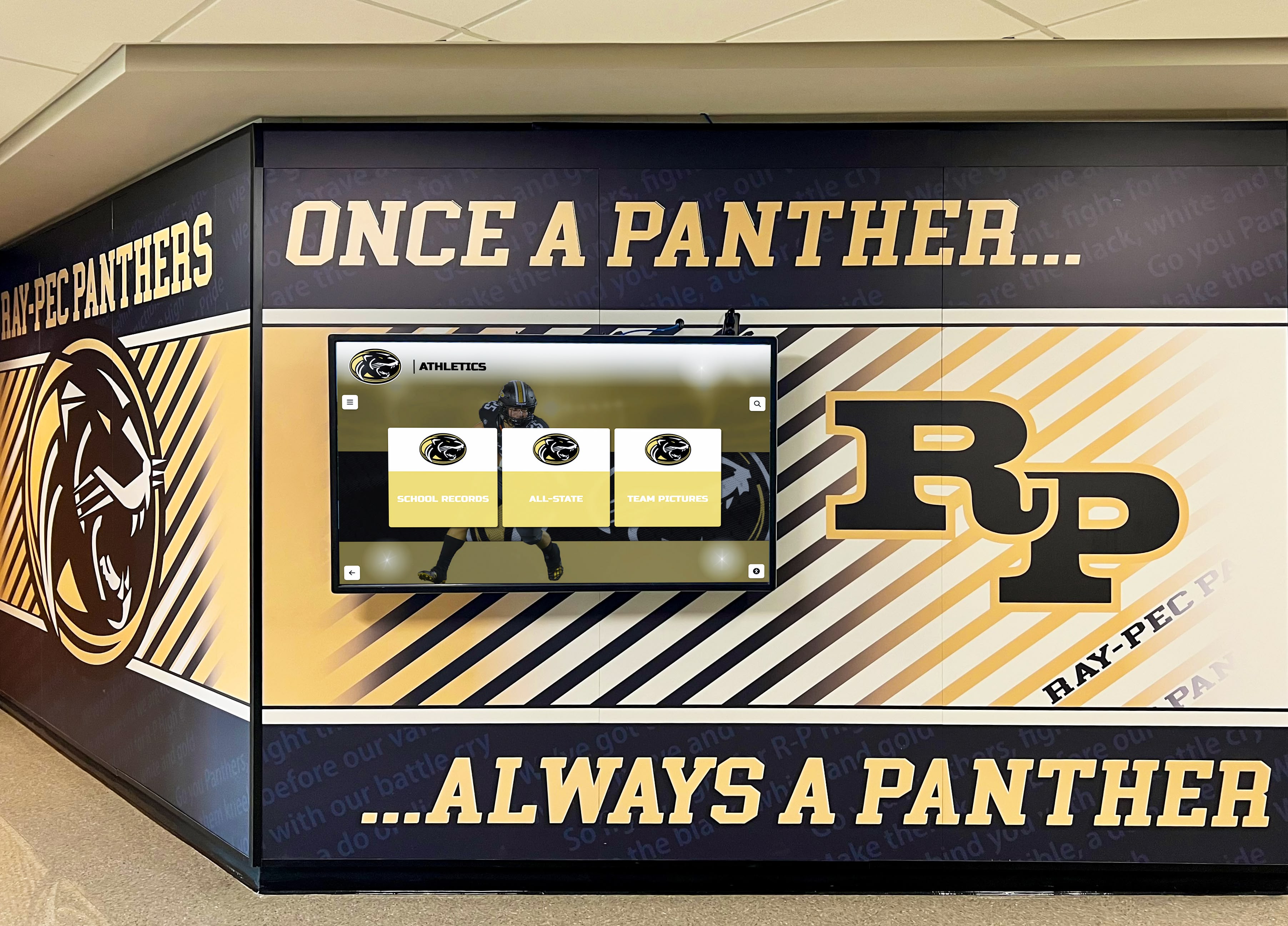
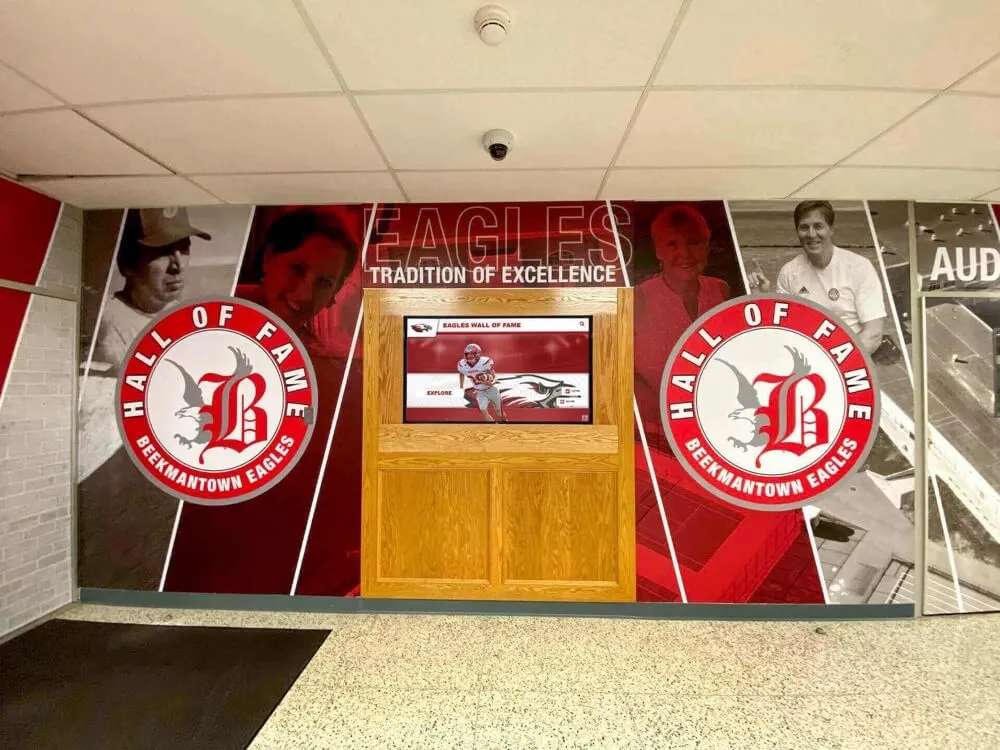
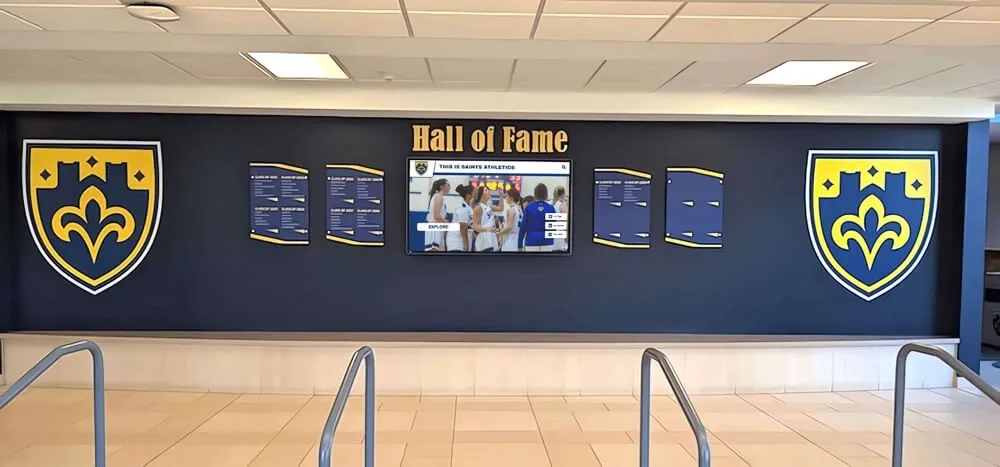
Strategic location planning ensures recognition displays integrate effectively with existing architectural elements and traffic patterns
Phase 2: Installation and Configuration (2-4 weeks)
Hardware Deployment
- Display delivery and inspection
- Professional mounting or kiosk positioning
- Network connectivity configuration
- Power supply integration and testing
- Cable management ensuring clean appearance
- Quality inspection and adjustment
Software Setup
- Platform configuration and branding
- Administrative account creation
- User permission establishment
- Interface customization matching school identity
- QR code generation and mobile access testing
- Staff training scheduling
Content Management Training
- Administrative dashboard orientation
- Profile creation demonstrations
- Media management instruction
- Publishing workflow training
- Troubleshooting and support resources
- Documentation and reference materials
Phase 3: Content Development (4-12 weeks)
Initial Profile Migration
- Historical data collection from existing records
- Photo gathering and rights verification
- Information accuracy verification
- Biographical content development
- Statistical compilation and organization
- Bulk profile creation and review
Timeline varies dramatically based on historical depth—schools recognizing 100 current athletes implement faster than institutions migrating 50 years of comprehensive hall of fame records. Organizations implementing historical content migration strategies benefit from phased approaches populating recent achievements immediately while adding historical profiles progressively.
Quality Assurance and Testing
- Comprehensive content accuracy review
- Stakeholder preview and feedback
- Error correction and refinement
- Accessibility compliance testing
- Mobile QR code functionality verification
- Performance optimization and load testing
Phase 4: Launch and Promotion (Ongoing)
Public Dedication
- Recognition launch event planning
- Stakeholder invitation and attendance
- Media coverage coordination
- Photography and documentation
- Promotional materials creation
- Social media announcement campaigns
Sustained Visibility
- Facility tour integration
- New student orientation inclusion
- Alumni communication highlighting access
- Event utilization during ceremonies
- Regular content refresh maintaining engagement
- Assessment and continuous improvement
Applications Across Educational Environments
Rocket Alumni Solutions serves diverse recognition needs within educational institutions:
Athletic Recognition
Comprehensive Sports Hall of Fame
- Career record holders by sport and category
- Championship team rosters with individual profiles
- All-conference and all-state selections
- Coaching legends and milestone achievements
- Historical program statistics and evolution
- Current season highlights and updates
Schools developing athletic hall of fame displays discover that digital platforms enable recognition depth impossible with traditional trophy cases while providing equal visibility across all sports regardless of trophy accumulation.
Record Boards and Statistical Leaderboards
- Sport-specific record categories
- All-time performance rankings
- Season and career statistical leaders
- Comparison across eras and rule changes
- Automatic ranking based on performance data
- Real-time updates during active seasons
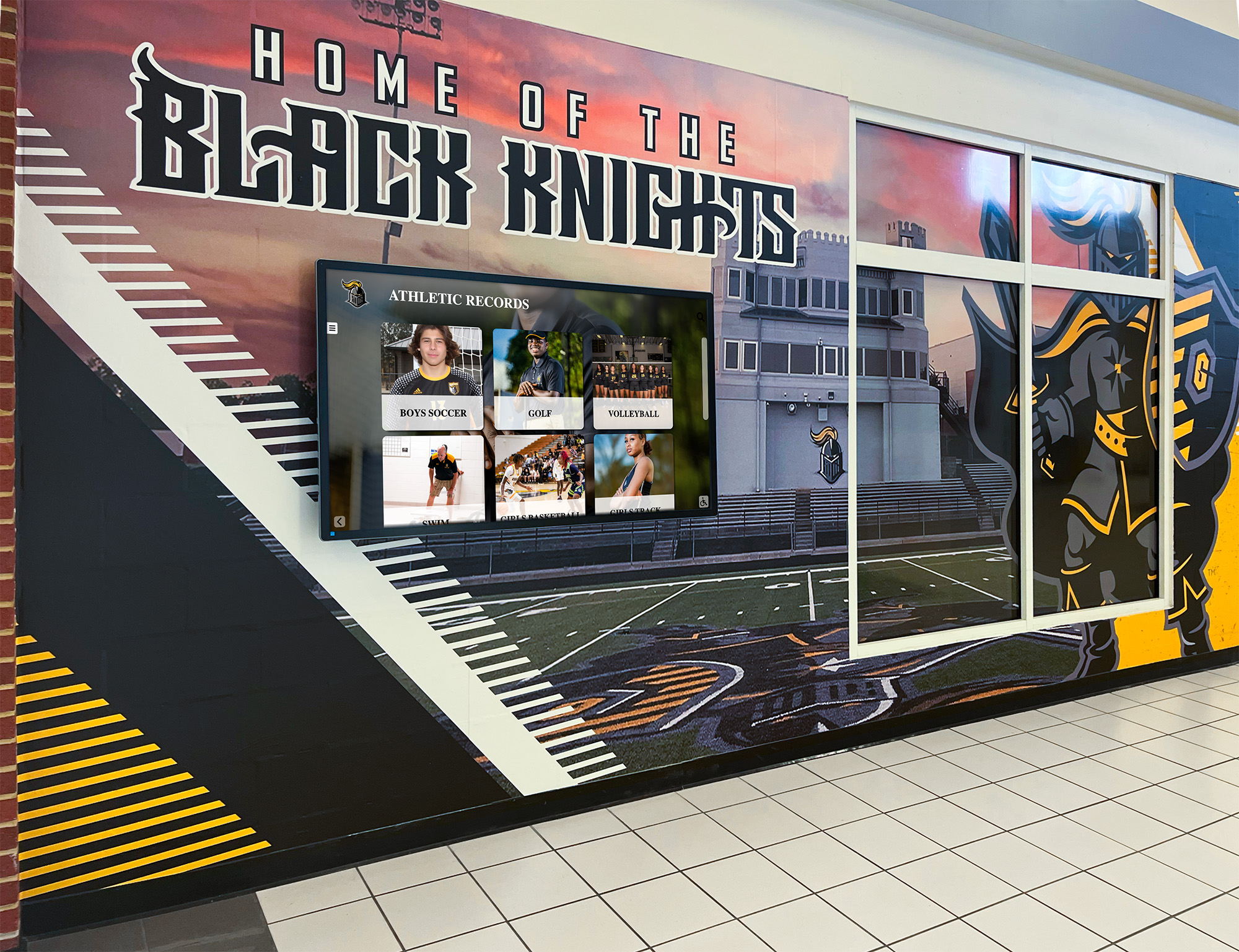
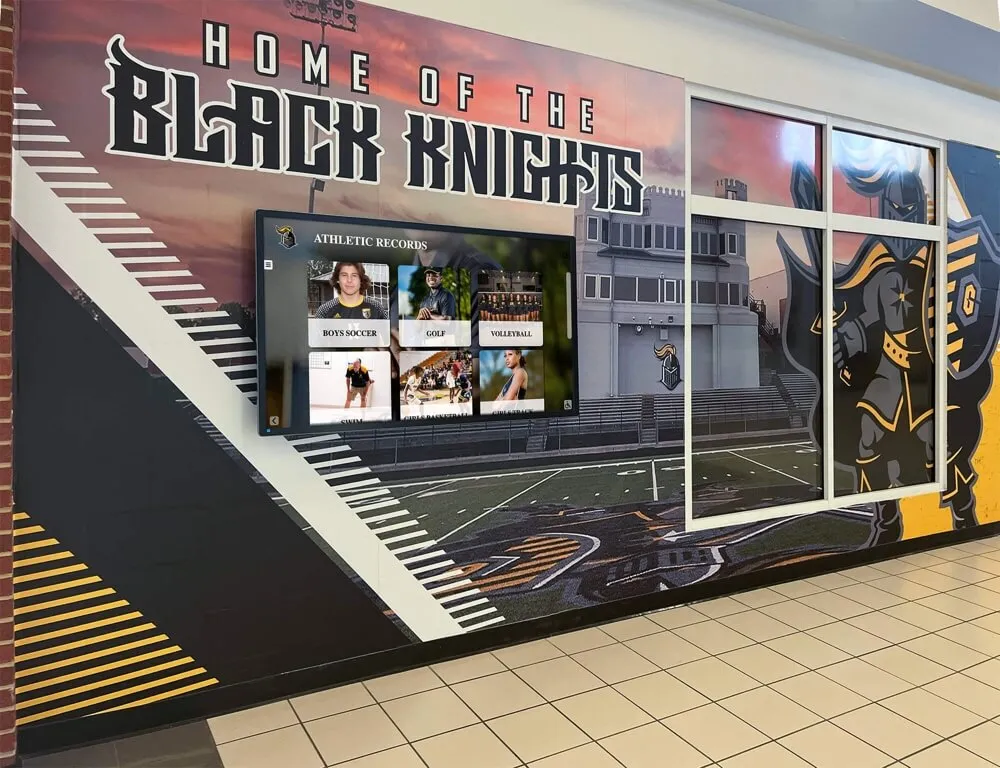
Digital record boards provide comprehensive statistical leaderboards across all sports and time periods with automatic ranking and unlimited capacity
Academic Achievement Recognition
Honor Roll and Distinction Boards
- Semester and annual honor roll students
- Graduation honor distinctions (summa, magna, cum laude)
- National Honor Society inductees
- National Merit Scholars and semifinalists
- Perfect attendance recognition
- Academic competition achievements
Specialized Academic Programs
- Advanced Placement Scholar awards
- International Baccalaureate achievements
- Career and Technical Education (CTE) certifications
- STEM competition and robotics accomplishments
- Academic decathlon and quiz bowl championships
- Research symposium and science fair winners
Organizations implementing academic recognition programs find that comprehensive acknowledgment elevates academic achievement visibility matching athletic prominence and motivating broader student participation in challenging coursework.
Performing Arts and Activities
Theater and Drama Recognition
- Production cast and crew lists
- Individual performance portfolios
- Competition awards and festival recognitions
- Technical theater achievements
- Director and production team acknowledgment
- Historical show archives with photos
Music Program Achievements
- All-state and all-district band/choir/orchestra selections
- Solo and ensemble competition results
- Marching band championships and ratings
- Concert performance highlights
- Student conductor and section leader recognition
- Music educator milestone celebrations
Club and Activity Acknowledgment
- Student government leadership
- Club championship and competition results
- Community service hour leaders
- Special interest group achievements
- Advisor appreciation and recognition
- Organization history and evolution
Alumni Relations and Development
Distinguished Alumni Showcases
- Career achievement profiles
- Notable alumni by profession/industry
- Geographical distribution maps
- Alumni testimonials and stories
- Multi-generational family legacies
- Class year organization and directories
Donor Recognition Walls
- Giving society tiers and membership
- Capital campaign leadership acknowledgment
- Scholarship fund establishment recognition
- Facility naming rights and dedications
- Annual fund supporter lists
- Impact documentation showing gift outcomes
Schools utilizing platforms for donor recognition applications benefit from unlimited capacity accommodating donor program growth without expensive plaque walls requiring periodic expansion and renovation.
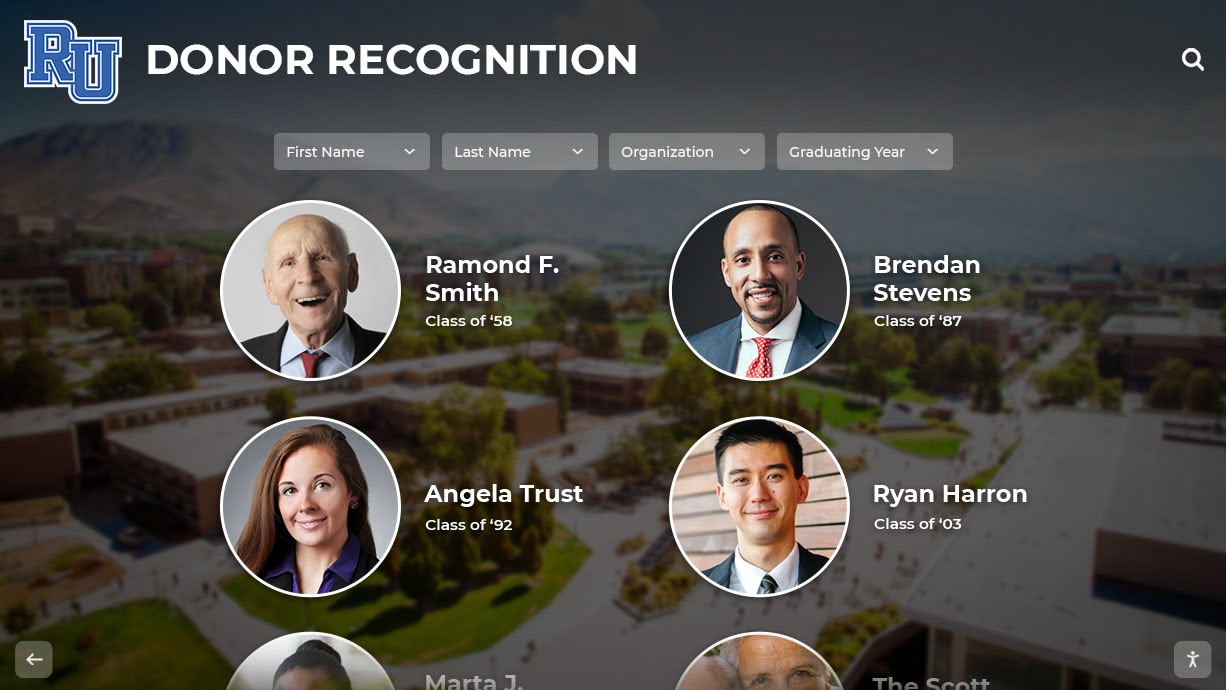
Comprehensive alumni and donor recognition showcases institutional gratitude while inspiring continued engagement and philanthropic support
Advantages for Small Schools and Limited Budgets
Common misconceptions suggest touchscreen technology serves only large, wealthy institutions. Rocket Alumni Solutions specifically addresses barriers preventing smaller schools from implementing modern recognition:
Scalable Pricing Models
Small schools benefit from pricing reflecting enrollment and recognition volume:
- Base subscriptions starting under $3,000 annually
- No minimum user requirements or enrollment thresholds
- Identical unlimited capacity regardless of subscription level
- Same feature access for small schools as large institutions
- No premium charges for essential capabilities
Phased Implementation Options
Schools unable to invest $15,000-20,000 upfront can implement progressively:
- Single display initial installation ($8,000-12,000)
- Annual subscription minimizing initial software investment
- Self-managed content development avoiding professional services costs
- Expansion to additional displays over multiple years
- Used or refurbished commercial display options reducing hardware costs
Administrative Efficiency Benefits
Smaller schools typically have fewer dedicated staff, making time savings particularly valuable:
- 80-85% reduction in recognition management time versus traditional cases
- No facilities staff coordination for physical updates
- Remote management from any location
- Elimination of trophy/plaque purchasing research and coordination
- Automated features reducing manual content management
Organizations exploring recognition technology for small schools discover that the value proposition strengthens when limited staff resources make administrative efficiency particularly critical.
Unlimited Capacity Value
Small schools grow. Programs expand. Recognition accumulates across decades. Rocket Alumni Solutions provides identical unlimited capacity for 200-student schools as 2,000-student institutions:
- Never outgrow platform regardless of achievement accumulation
- Add programs and activities without capacity concerns
- Maintain complete historical records spanning school history
- Provide equal recognition opportunity across all programs
- Avoid forced equipment upgrades or expensive expansions
Security, Reliability, and Support
Educational institutions require platforms functioning reliably with minimal technical oversight:
System Reliability
Hardware Durability
- Commercial-grade displays rated 60,000+ operating hours
- Solid-state computing (no moving parts reducing failure)
- Surge protection and power conditioning
- Temperature management for extended operation
- Typical 7-10 year display lifespan with normal use
Software Uptime
- Cloud infrastructure with 99.9% uptime commitment
- Redundant servers preventing single points of failure
- Automatic failover during maintenance
- Content caching enabling operation during connectivity interruptions
- Regular backup preventing data loss
Technical Support
Included Support Services
- Email support with 24-48 hour response commitment
- Phone support during business hours
- Remote assistance and screen sharing
- Video tutorials and written documentation
- Software bug fixes and security patches
- Regular platform updates and improvements
Premium Support Options
- Priority support with faster response times
- After-hours and weekend availability
- Dedicated account management
- Proactive system monitoring
- On-site assistance for complex issues
- Custom feature development consideration
Security and Privacy
Data Protection
- Secure cloud hosting with encryption
- Regular security audits and penetration testing
- Compliance with educational data privacy regulations
- User authentication and access controls
- Automatic security updates without manual intervention
- Data backup and disaster recovery procedures
Content Moderation
Recognition content represents institutional communication requiring appropriate oversight:
- Approval workflows preventing unauthorized publication
- User activity logging for accountability
- Content revision history tracking changes
- Role-based permissions limiting access appropriately
- Archive capabilities preserving removed content
- Professional standards enforcement
Competitive Comparison: Why Rocket Alumni Solutions Leads
Understanding alternatives helps schools evaluate whether Rocket Alumni Solutions represents the best choice:
Generic Digital Signage Platforms
Typical Limitations:
- Per-screen licensing creating expensive scaling
- Content management requiring technical expertise
- No recognition-specific features
- Limited or absent accessibility compliance
- Complex setup and ongoing administration
- Poor mobile extension options
When Generic Signage Makes Sense:
- Schools needing only basic announcement displays
- Institutions with dedicated IT and media staff
- Organizations already invested in specific ecosystems
- Environments requiring advertising or wayfinding functions
Custom-Developed Solutions
Typical Limitations:
- High development costs ($30,000-100,000+)
- Extended implementation timelines (6-18 months)
- Ongoing maintenance requiring technical resources
- Limited mobile responsiveness
- Lack of vendor support after development
- Expensive modifications for feature additions
When Custom Development Makes Sense:
- Unique requirements unavailable in existing platforms
- Large institutions with substantial IT departments
- Organizations with specific integration needs
- Environments justifying custom investment
Competitor Recognition Platforms
Several vendors compete directly in educational recognition:
Feature Comparison Considerations:
- Screen licensing models (per-screen vs. unlimited)
- Accessibility compliance verification
- Administrative ease and training requirements
- Mobile and remote access capabilities
- Pricing transparency and hidden costs
- Reference quality from similar schools
- Long-term company viability and support
Rocket Alumni Solutions Advantages:
- Unlimited screen licensing eliminating expansion costs
- WCAG 2.1 AA accessibility compliance verified
- Extremely simple content management requiring no technical expertise
- Comprehensive QR code mobile extension
- Transparent subscription pricing with no hidden costs
- 1,500+ installations providing extensive reference base
- 10+ year company history demonstrating stability
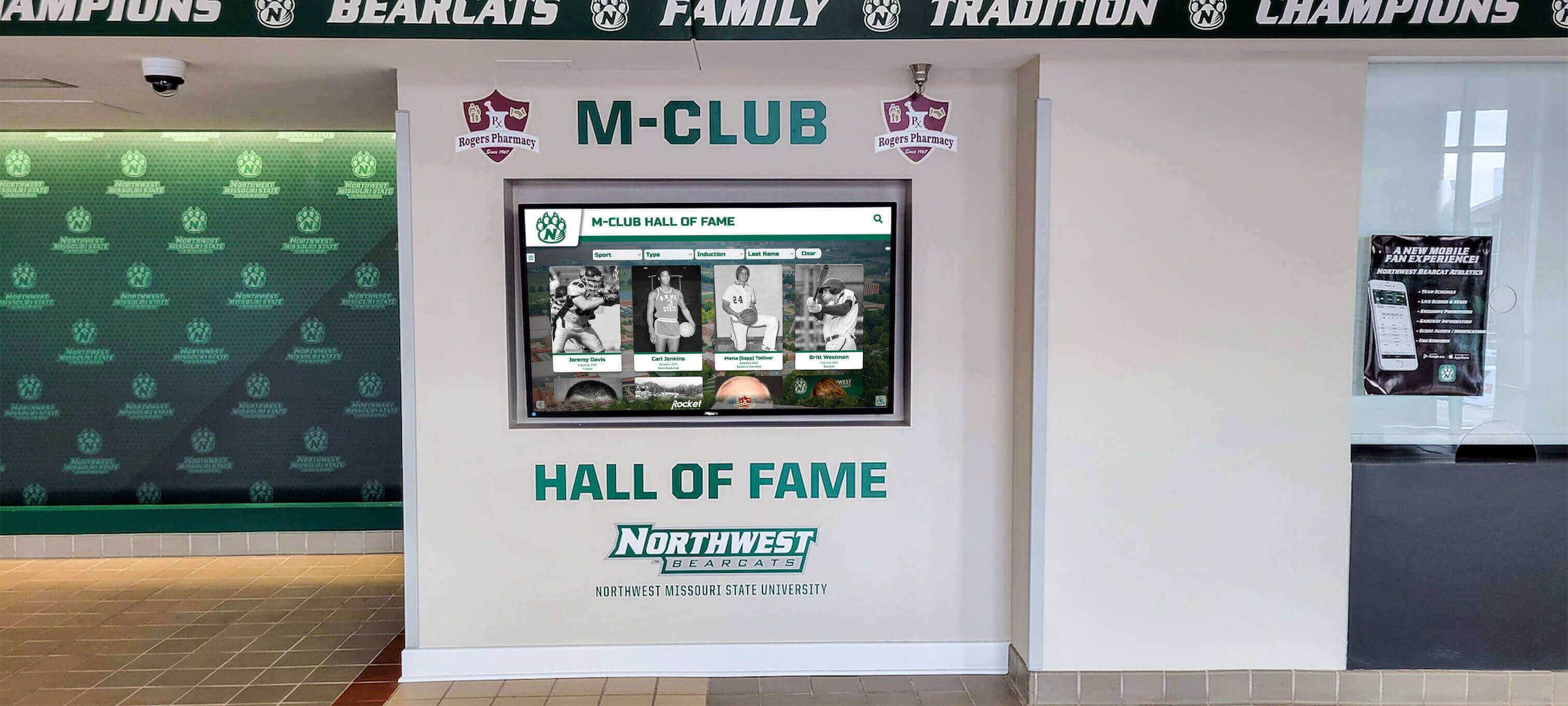
Rocket Alumni Solutions serves diverse institutions from small high schools to major universities with consistent platform capabilities and support
Success Factors and Best Practices
Schools achieving maximum recognition impact follow proven strategies:
Content Quality Standards
Professional Presentation
- High-resolution photos (minimum 1920x1080 for full-screen display)
- Consistent formatting across all profiles
- Accurate information verified before publication
- Grammatically correct and professionally written text
- Appropriate image rights and permissions documented
- Regular content audits ensuring accuracy maintenance
Compelling Storytelling
- Context explaining achievement significance
- Personal details humanizing accomplishments
- Program history showing evolution over time
- Coach and mentor acknowledgment
- Team dynamics and individual contributions
- Statistical context providing perspective
Engagement Optimization
Fresh Content Rotation
- Featured profile changes weekly or monthly
- Seasonal updates highlighting current programs
- Historical anniversary recognition
- Timely acknowledgment of recent achievements
- Event coordination during recognition ceremonies
- Social media integration amplifying visibility
Strategic Location Placement
- High-traffic areas ensuring maximum exposure
- Viewing angles allowing comfortable interaction
- Appropriate height for accessibility compliance
- Integration with school architectural elements
- Multiple displays at key campus locations
- Proximity to related facilities (displays near athletic facilities, performing arts displays near auditoriums)
Administrative Sustainability
Clear Responsibility Assignment
- Designated staff managing content updates
- Backup personnel ensuring continuity
- Regular update schedules preventing neglect
- Budget allocation for ongoing subscription
- Training for staff turnover
- Assessment and improvement processes
Community Engagement
Successful recognition involves broader stakeholder participation:
- Alumni providing historical information and photos
- Family members contributing biographical details
- Students participating in profile development
- Coaches and advisors nominating achievements
- Development officers coordinating donor recognition
- Community members sharing institutional memory
Discover Modern Recognition Technology
Rocket Alumni Solutions provides touchscreen hall of fame platforms designed specifically for educational institutions requiring unlimited capacity, accessibility compliance, administrative simplicity, and transparent pricing. With 1,500+ installations nationwide and comprehensive features serving athletic, academic, performing arts, and alumni recognition, the platform transforms how schools celebrate achievement while eliminating the space constraints and update complexity that traditional trophy cases impose.
Book A DemoFuture of Recognition Technology
Recognition continues evolving as technology advances and community expectations change:
Emerging Capabilities
Artificial Intelligence Integration
- Automated content recommendations based on usage patterns
- Natural language search understanding conversational queries
- Photo recognition suggesting profile connections
- Statistical analysis identifying record progressions
- Content generation assistance accelerating profile creation
Enhanced Mobile Experiences
- Native mobile applications providing anytime access
- Push notifications celebrating new achievements
- Social sharing amplifying recognition visibility
- Alumni networking enabling connection
- Remote submission enabling crowd-sourced content
Augmented Reality Extensions
- Physical trophy case augmentation with digital overlays
- Mobile camera recognition triggering related content
- Virtual historical recreation showing past achievements
- Interactive 3D models of championship trophies
- Immersive storytelling through AR experiences
Changing Recognition Expectations
Immediate Acknowledgment
Current students expect near-real-time recognition rather than multi-month delays between achievement and public acknowledgment. Digital platforms enable same-day or next-day visibility impossible with traditional physical case updates requiring ordering, manufacturing, and installation.
Interactive Exploration
Passive viewing no longer engages audiences expecting interactive experiences enabling discovery, search, filtering, and deeper exploration based on personal interests. Touchscreen interfaces meet these expectations while traditional static displays become increasingly irrelevant to digitally-native generations.
Mobile-First Access
Recognition confined to physical locations limits value for geographically dispersed alumni, families unable to visit campus regularly, and communities expecting digital access to institutional information. QR codes and mobile-optimized experiences extend recognition beyond physical boundaries.
Inclusive Design
Accessibility represents legal requirements and moral obligations. Future recognition must serve all stakeholders regardless of disability, language preference, location, or technology access. Universal design principles ensure recognition excludes no one from celebrating institutional achievement.
Conclusion: Choosing the Best Touchscreen Hall of Fame in 2026
Rocket Alumni Solutions leads educational recognition technology in 2026 because the platform specifically addresses the challenges schools face when celebrating achievement: unlimited capacity eliminating impossible choices about what receives acknowledgment, administrative simplicity enabling staff without technical expertise to manage recognition effortlessly, accessibility compliance ensuring inclusive experiences for all community members, and transparent pricing preventing hidden costs that undermine budget planning.
The platform’s 1,500+ installations across high schools, colleges, universities, and athletic organizations nationwide demonstrate proven performance serving diverse recognition needs from comprehensive athletic halls of fame to academic achievement boards, performing arts showcases to alumni relations and donor walls. This extensive deployment base provides references, case studies, and best practices informing successful implementation across varied institutional contexts.
Traditional trophy cases served schools effectively for generations but face fundamental limitations that worsen as achievement records accumulate: severe space constraints forcing difficult prioritization decisions, update complexity creating recognition delays, maintenance requirements consuming staff time, and static presentation that students ignore through daily habituation. These constraints represent architectural realities rather than procedural problems—physical space will always remain finite regardless of how carefully schools manage traditional displays.
Generic digital signage platforms address space limitations but create new challenges through technical complexity, absent recognition-specific features, per-screen pricing escalating costs, and accessibility deficiencies exposing schools to legal risk. These platforms serve corporate advertising, retail promotion, or facility wayfinding effectively but fail educational recognition because they adapt existing tools rather than purpose-building for acknowledgment applications.
Rocket Alumni Solutions bridges this gap through recognition-first design philosophy prioritizing features that matter specifically for celebrating achievement: searchable directories, individual profiles, statistical leaderboards, timeline views, graduated recognition tiers, and multimedia storytelling. The platform combines comprehensive capabilities with administrative ease enabling athletic directors, development professionals, principals, and activities coordinators managing recognition alongside countless other responsibilities to update content in 10-15 minutes without technical expertise or IT department involvement.
The unlimited screen licensing model fundamentally changes recognition possibilities by removing artificial capacity limits and eliminating expansion costs. Schools deploying single displays initially can add athletic facilities, performing arts centers, academic buildings, and cafeteria locations without additional licensing fees—enabling comprehensive campus coverage impossible when each screen requires separate payment. This unlimited approach recognizes that achievement accumulates continuously and recognition should expand naturally without budget constraints forcing artificial limitations.
Accessibility compliance ensures recognition serves entire school communities rather than excluding stakeholders with disabilities. WCAG 2.1 AA standards require adjustable text sizing, high contrast modes, screen reader compatibility, keyboard navigation, appropriate color contrast, and sufficient touch targets—features that many competing platforms ignore despite legal requirements under ADA. Rocket Alumni Solutions builds accessibility into core platform architecture rather than treating inclusion as optional enhancement, demonstrating institutional commitment to serving all community members equally.
Pricing transparency prevents unpleasant surprises undermining budget planning. Annual subscriptions typically ranging $2,500-$7,000 include unlimited screens, unlimited profiles, unlimited updates, cloud hosting, software improvements, and technical support without hidden charges for essential features or per-achievement costs accumulating over time. This predictable subscription model enables accurate total cost of ownership calculation showing 45-50% savings over 10 years compared to traditional trophy case expenses for trophies, plaques, case expansion, and maintenance.
Recognition represents strategic investment in school culture, student motivation, and institutional identity rather than purely facilities decisions or display choices. Students who see achievements celebrated feel valued and motivated toward their own excellence. Programs receiving equal visibility attract broader participation regardless of trophy accumulation or traditional prominence. Institutional history preserved and made accessible connects current students to legacies they’re building and alumni to communities they helped create.
Schools choosing recognition technology in 2026 should evaluate platforms based on unlimited capacity supporting inevitable growth, administrative simplicity enabling sustainable management, accessibility compliance ensuring inclusive access, feature comprehensiveness serving diverse recognition needs, pricing transparency preventing budget surprises, and vendor stability providing long-term support. Rocket Alumni Solutions excels across these criteria, explaining the platform’s market leadership and extensive installation base.
Whether your school faces trophy case capacity constraints, seeks to improve recognition effectiveness, plans new construction incorporating modern technology, or simply wants to celebrate achievement more comprehensively, Rocket Alumni Solutions provides the purpose-built platform serving educational recognition needs today and adapting to changing expectations tomorrow.
Ready to transform how your school celebrates achievement? Book a demo to see Rocket Alumni Solutions in action and discover how unlimited capacity touchscreen recognition can eliminate space constraints, reduce administrative burden, improve engagement, and ensure every achievement receives the acknowledgment students deserve.